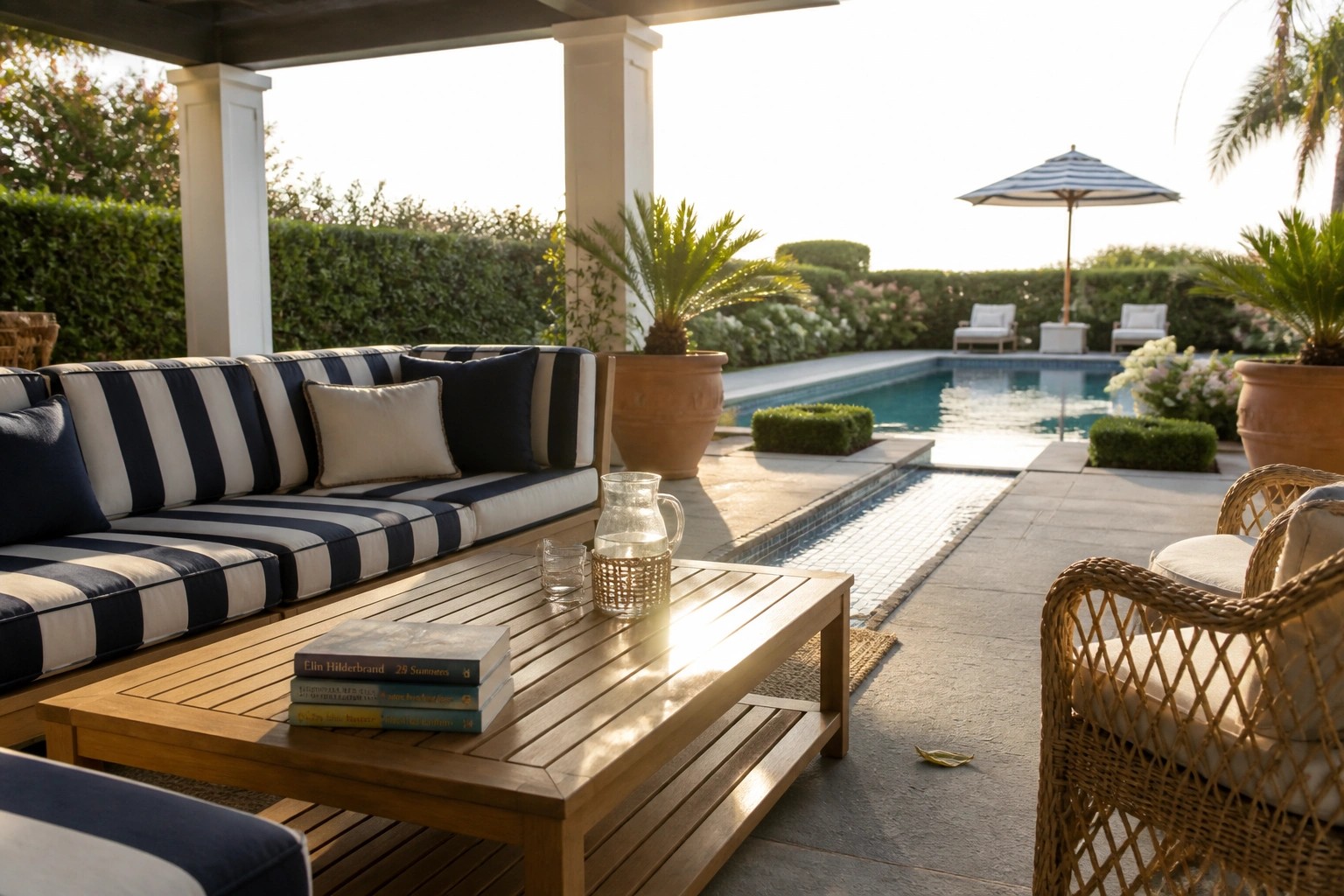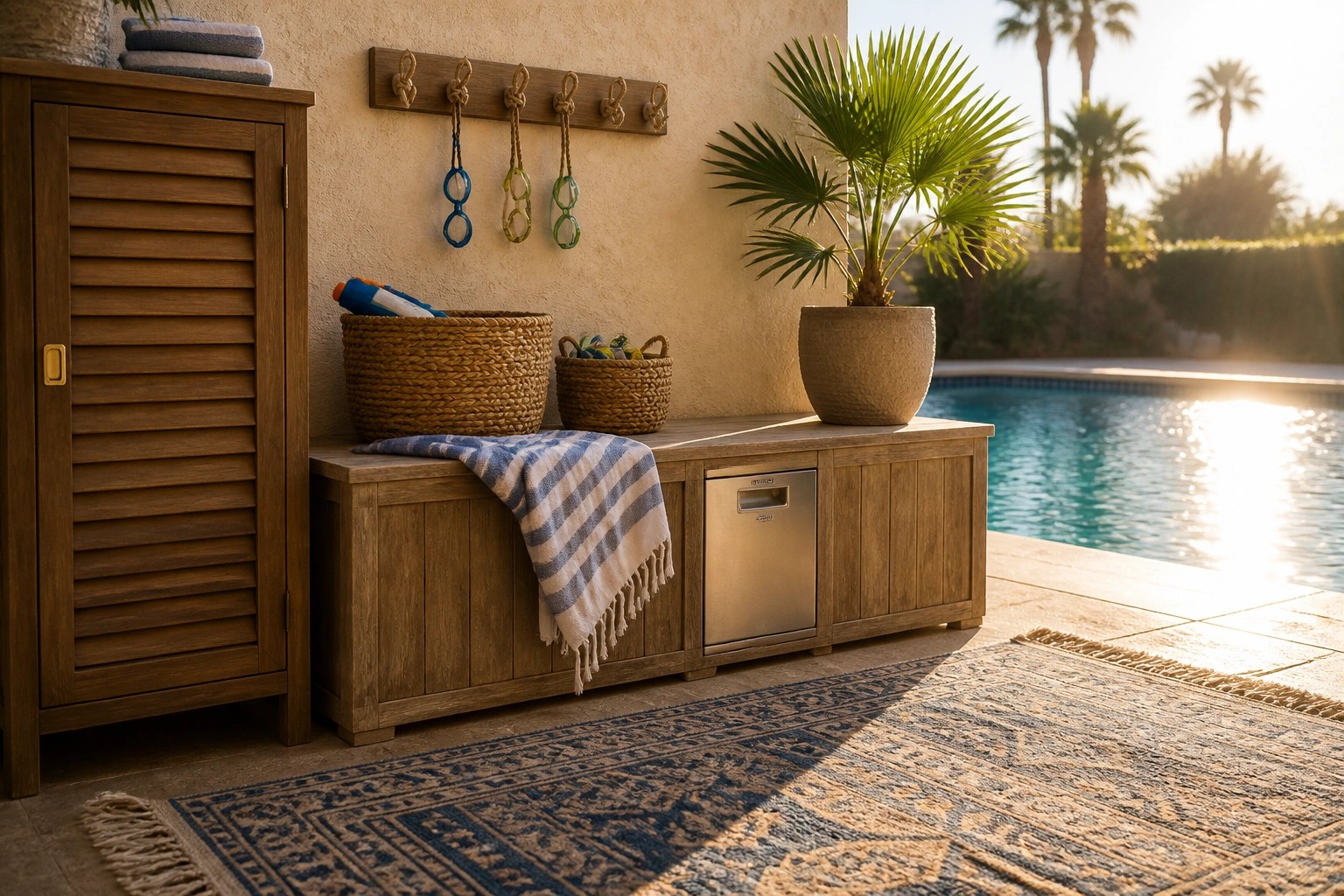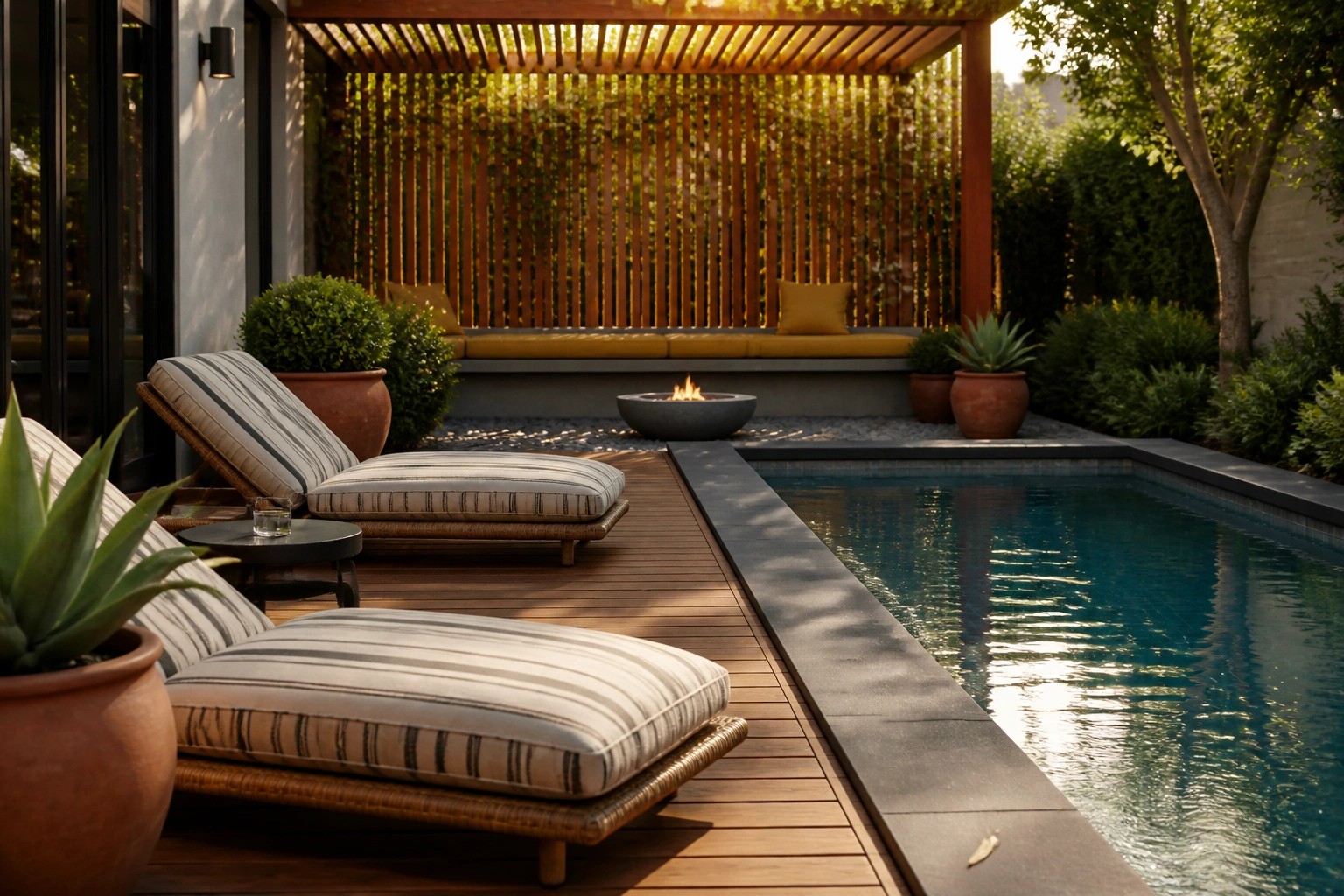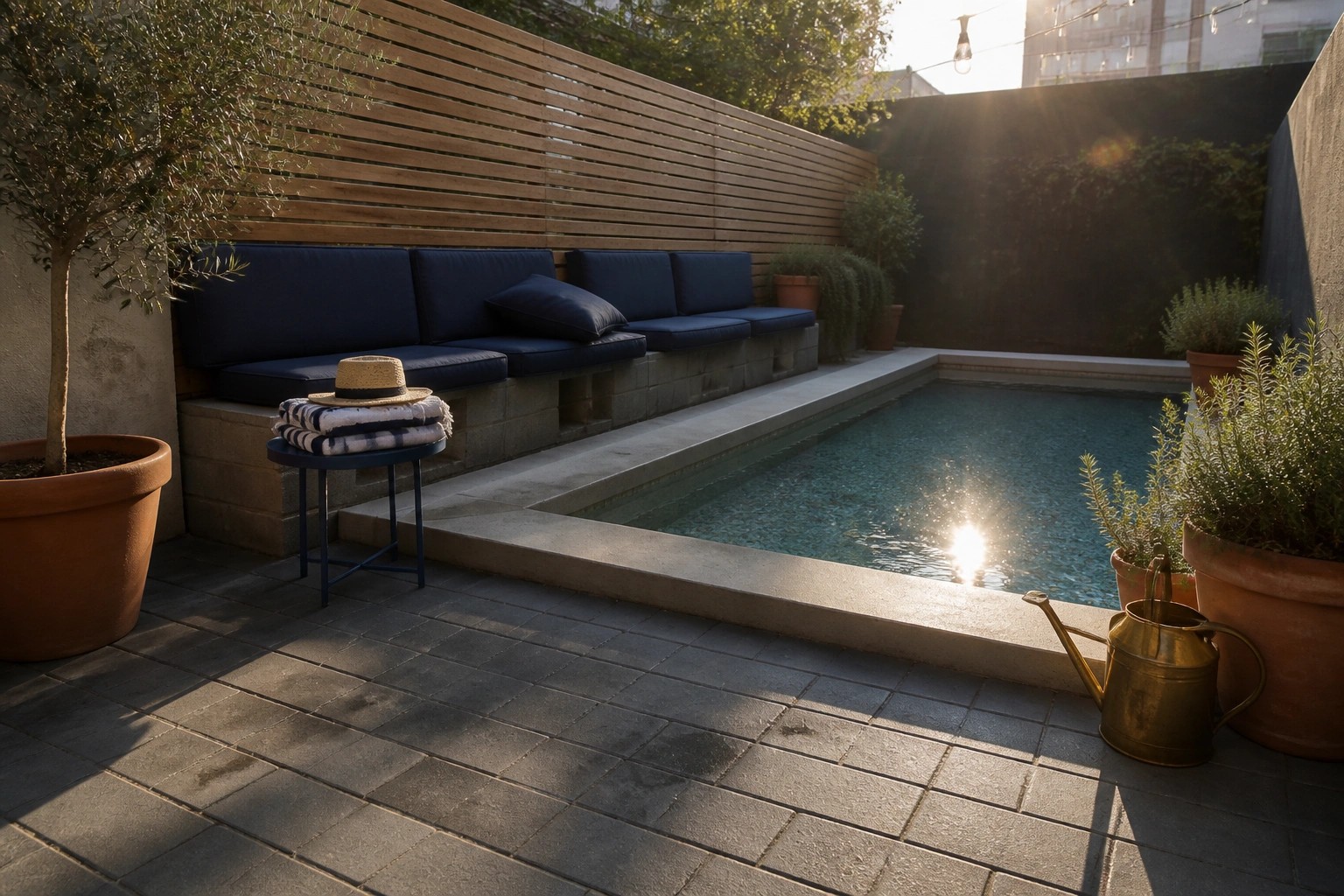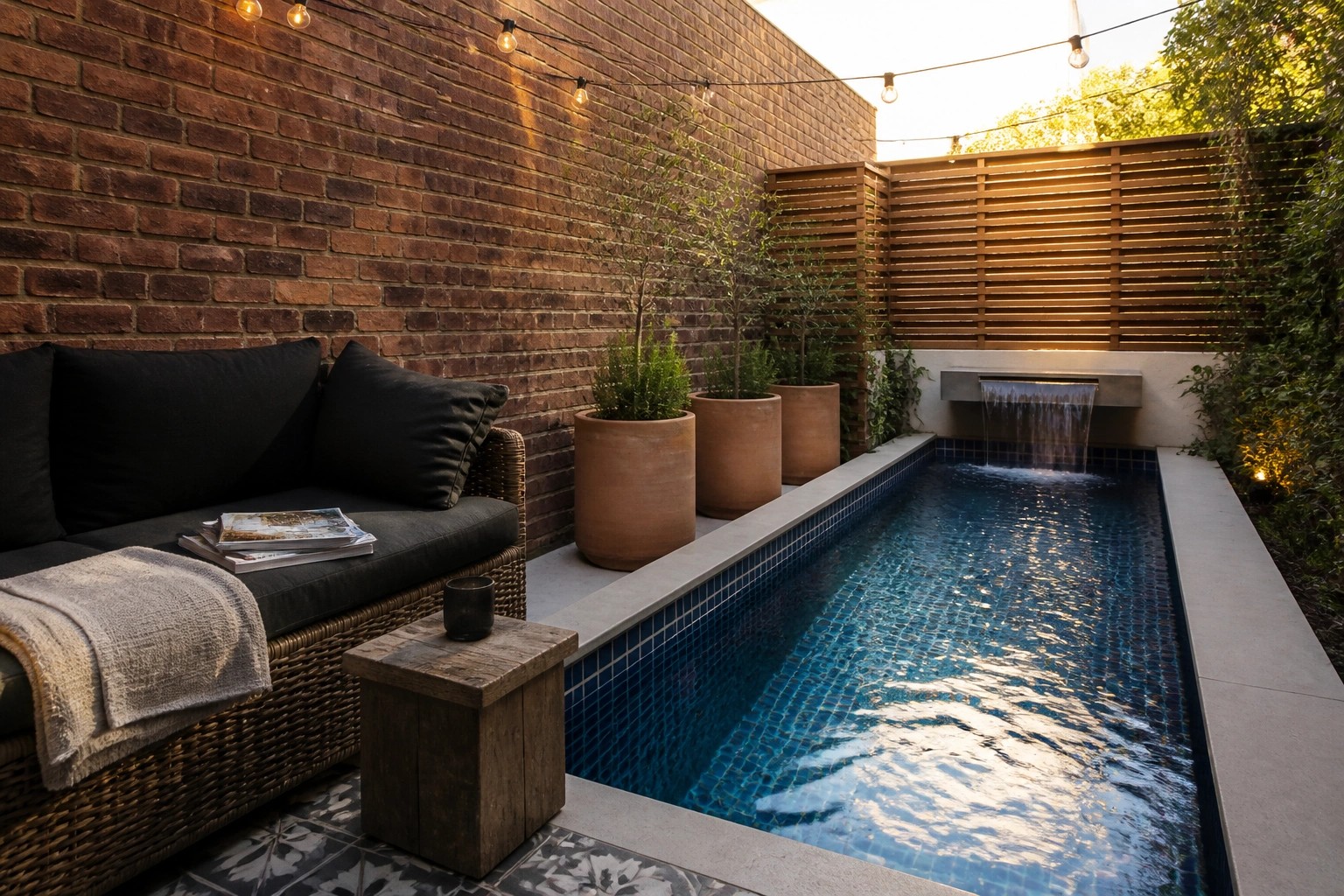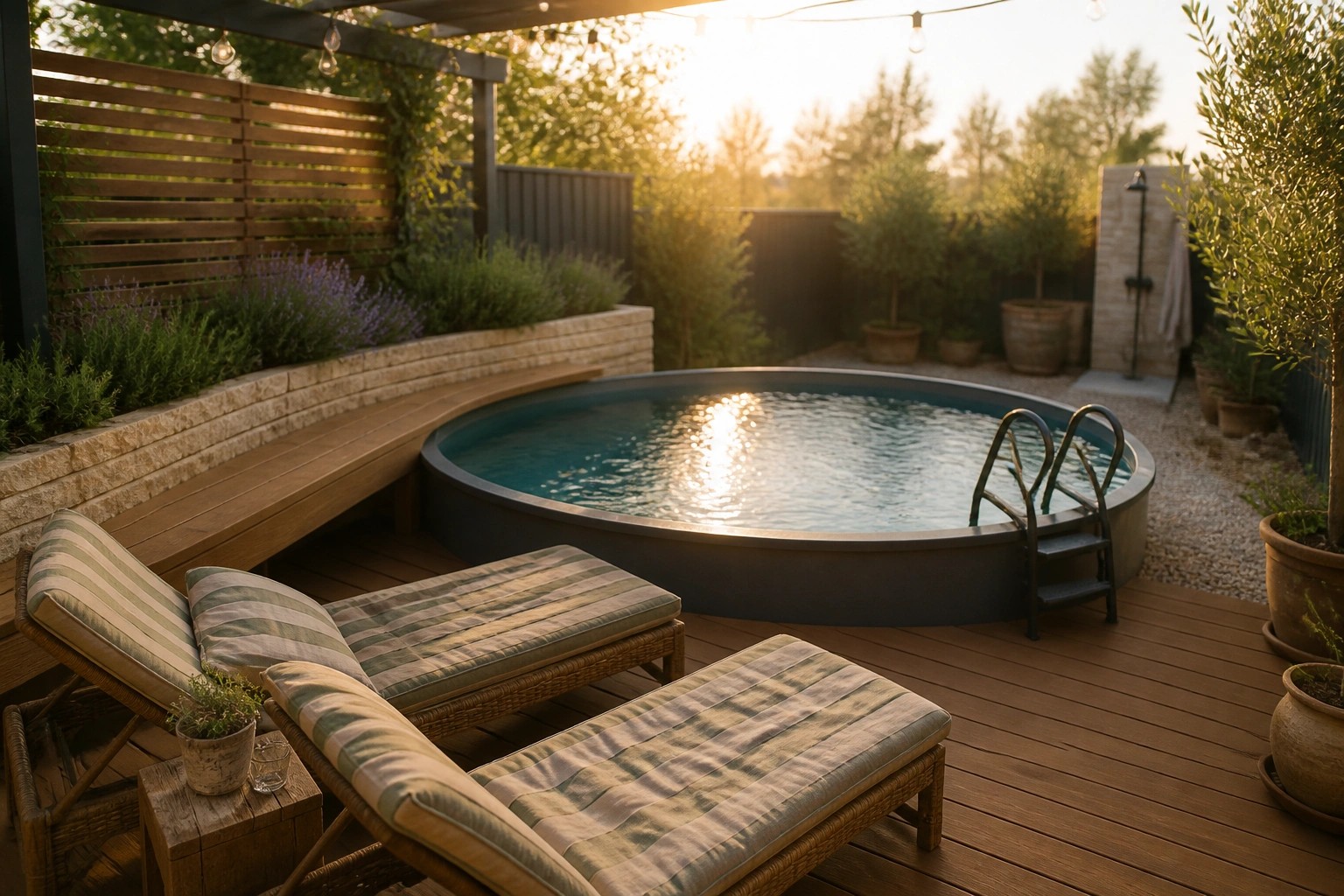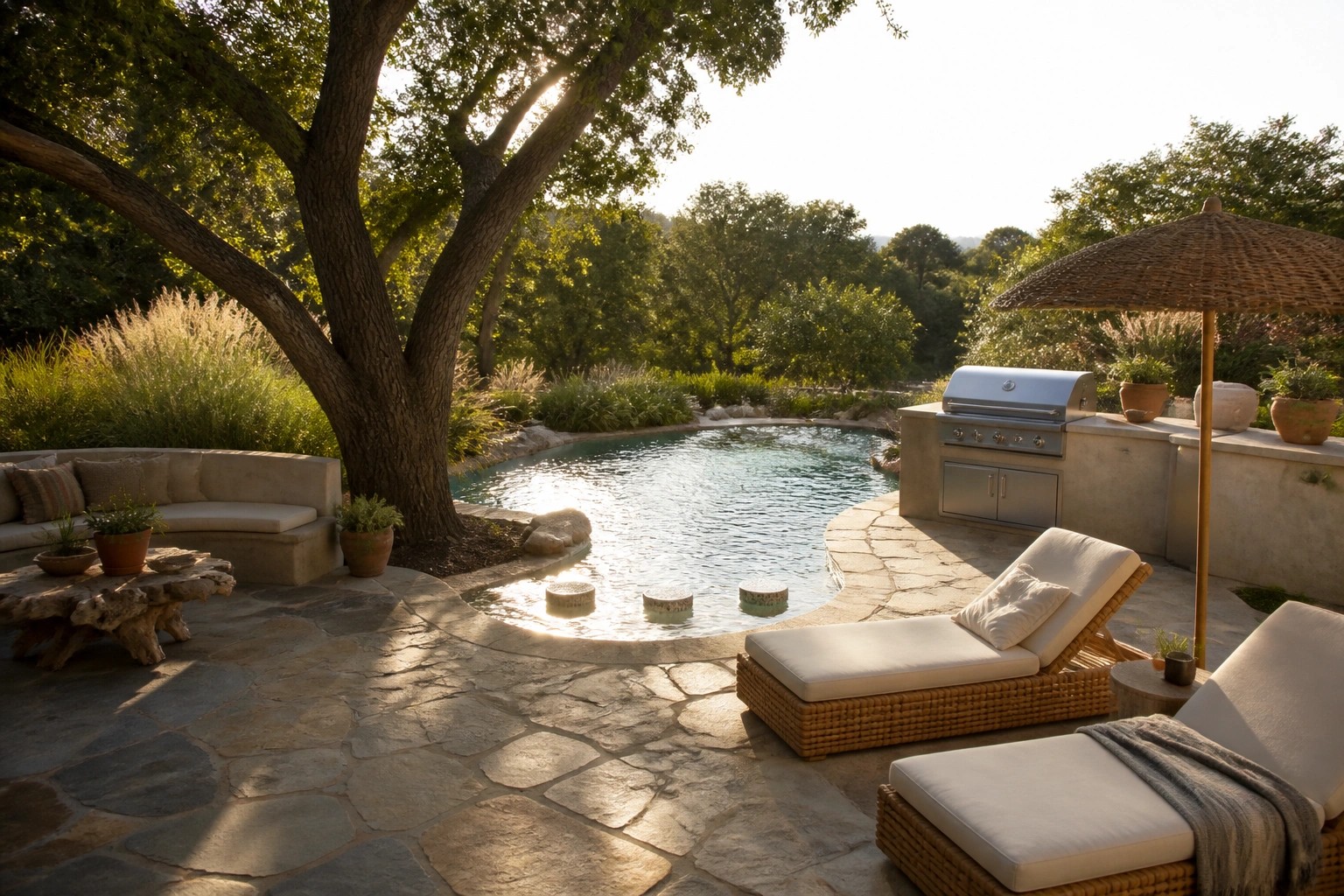
When planning a pool area I find that forcing straight edges against an uneven backyard rarely feels comfortable once everything is built.
The curves that match the land’s natural contours create smoother paths and seating spots that actually get used.
It rarely works the other way around.
I have walked across patios where the shape looked creative in photos but left no good place to set down a drink without leaning awkwardly.
Paying attention to how the ground already wants to shape itself saves a lot of later adjustments.
Work Around The Trees You Already Have
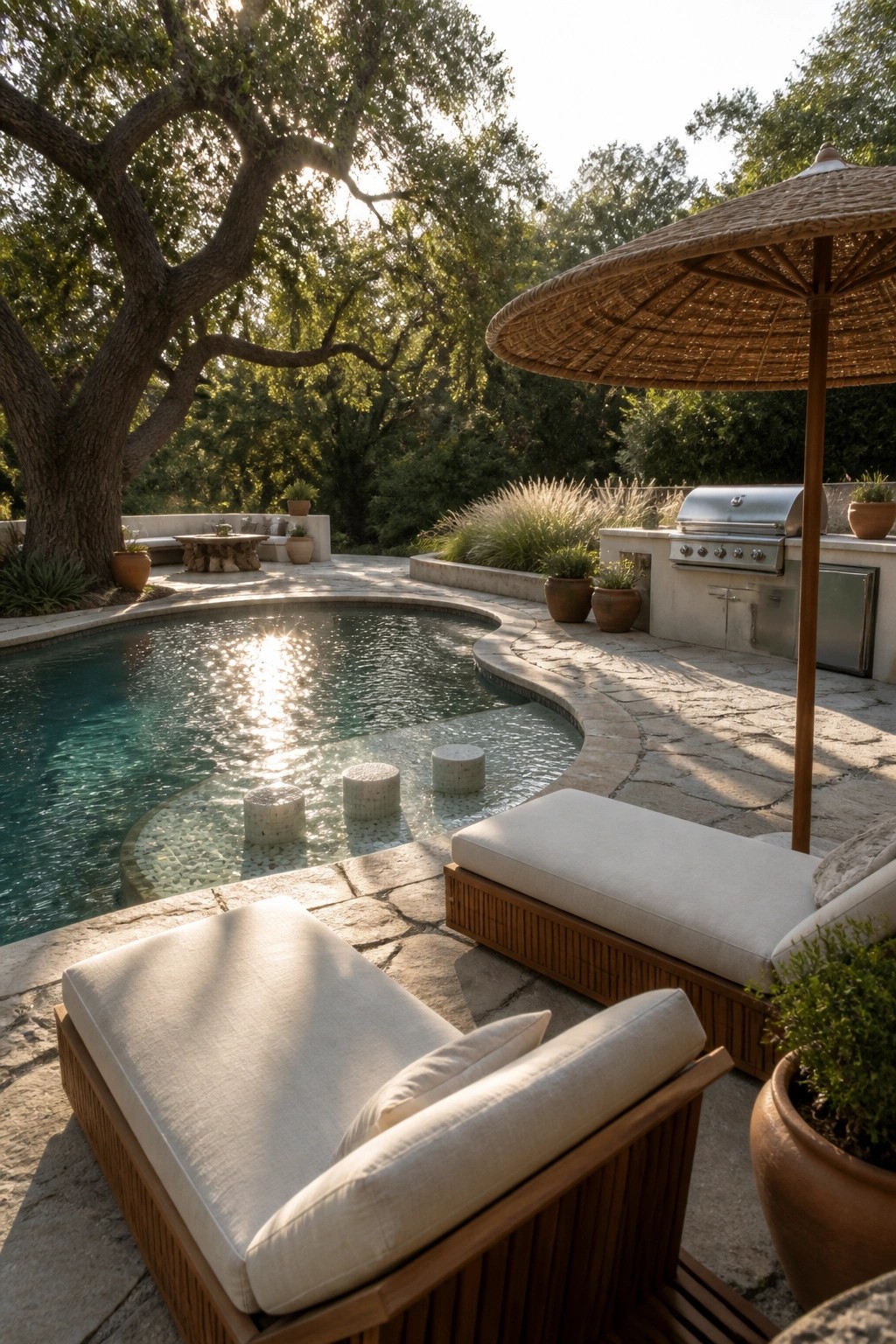
A big tree can shape the whole layout instead of getting in the way. Letting the pool edge curve around it keeps the space from feeling planned out on paper. The paving follows the same loose line so the deck sits comfortably with the land.
This works well on lots that still have mature growth. You get shade without adding structures and the pool feels like part of the yard rather than something dropped in. Check root depth and soil conditions first so the tree stays healthy.
Follow The Pool Edge With Your Patio
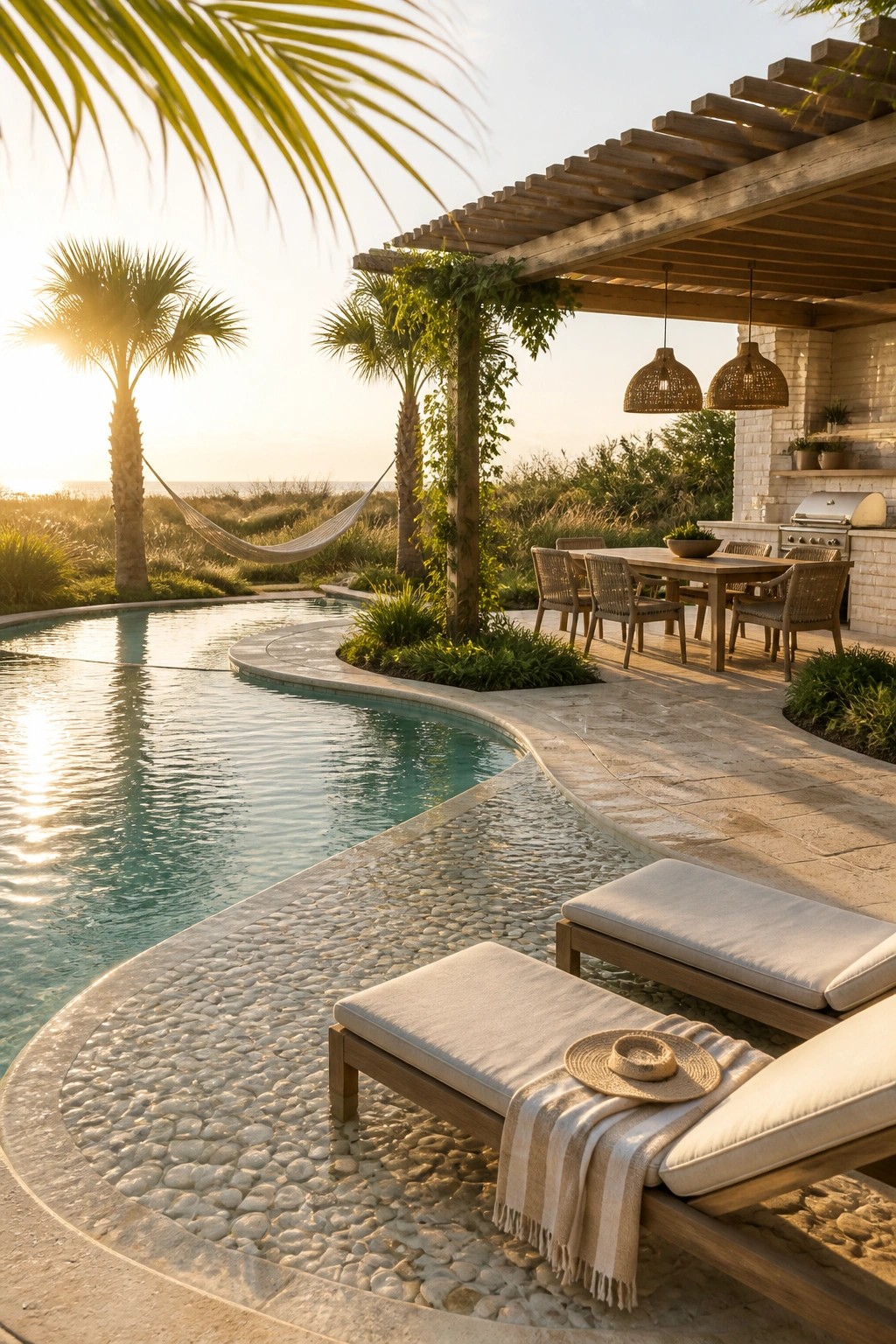
A freeform pool works best when the patio follows its curves instead of fighting them. The rounded stone deck here hugs the waterline and then eases into the surrounding grass and plantings, so the whole area feels like one continuous shape rather than separate pieces.
Try laying out your seating and dining zones along the same gentle arc the pool already makes. This approach suits backyards that slope or have uneven edges, and it keeps the hardscape from looking too rigid. Stick with simple materials like tumbled pavers or pebbles so the lines stay soft.
Let The Deck Follow The Pool Curve
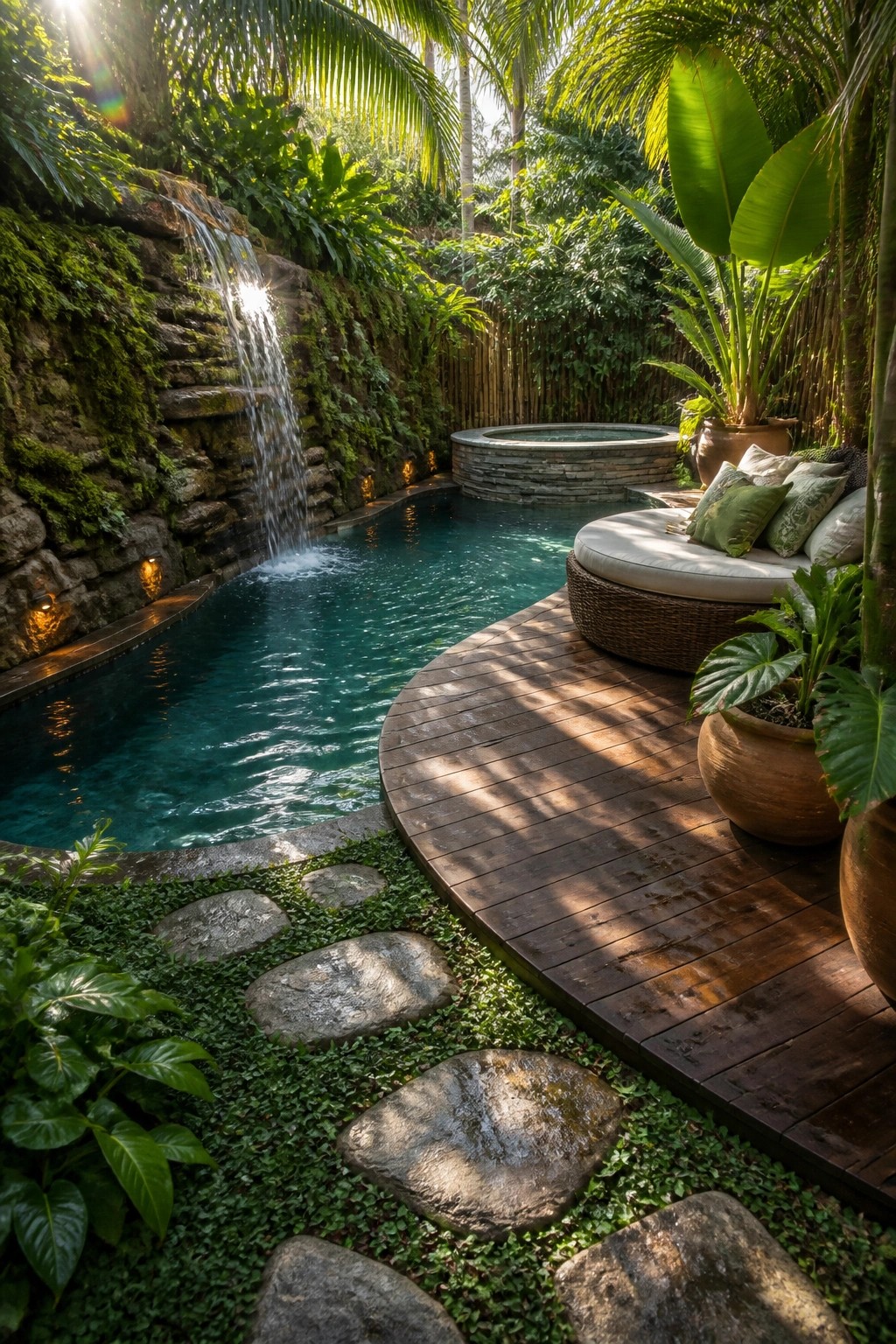
A curved deck that matches the pool edge helps the whole area feel more natural. It avoids the stiff look of straight lines and lets the space blend into the yard instead of fighting it.
This works best in smaller backyards or lots with uneven ground. Keep the deck material simple and let the curve guide seating and pathways so the layout stays easy to walk around.
Follow the Land’s Curve with Your Pool Shape
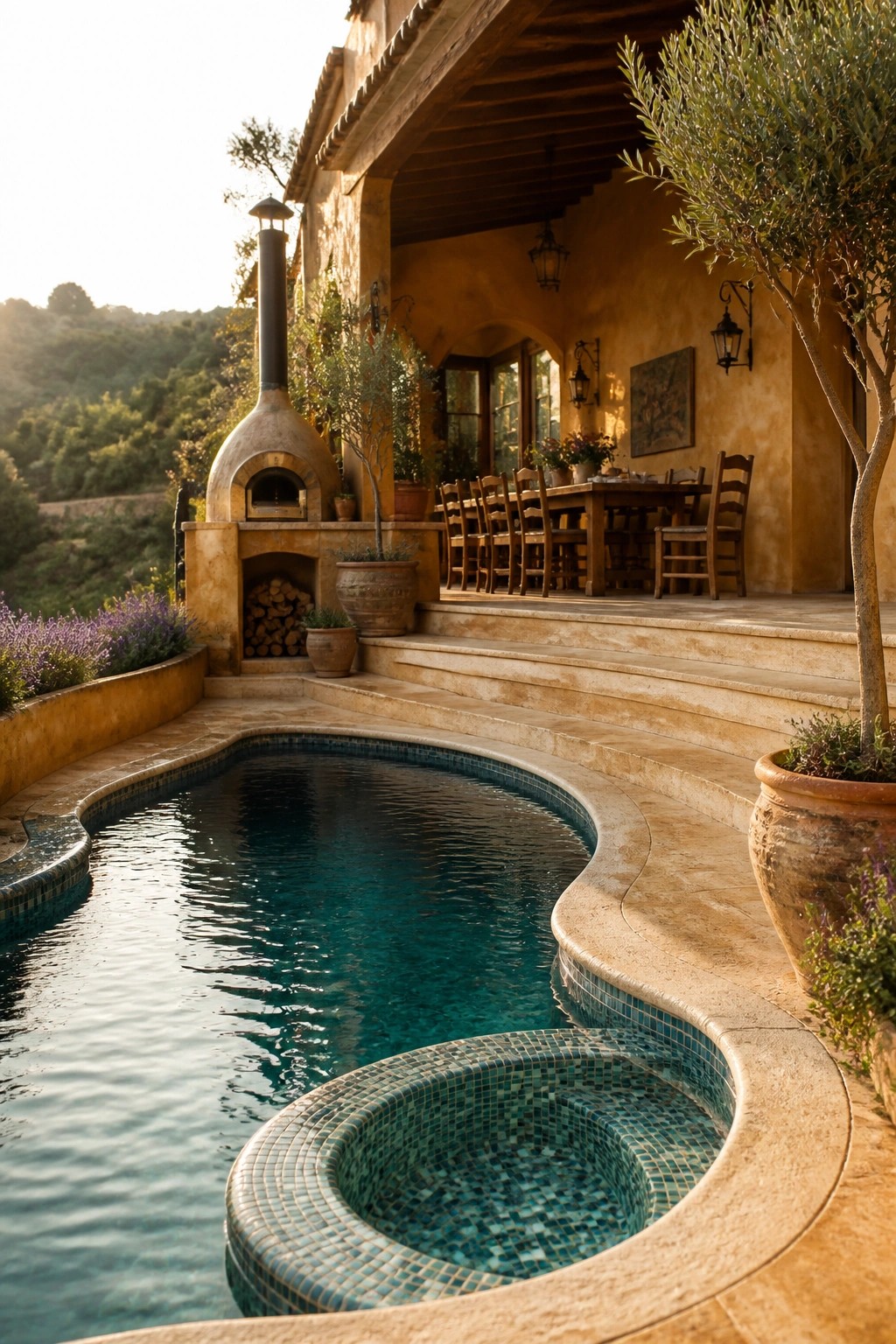
A rectangular pool often fights the natural slope of a backyard. Letting the water edge curve and bend instead makes the whole patio feel like it grew out of the site rather than being dropped onto it.
This works best on hillsides or lots with gentle changes in grade. Keep the hardscape simple and let the pool line do the work of connecting the dining area, steps, and any built-in cooking spot without forcing straight lines where the land wants to turn.
Let The Pool Follow The Yard’s Natural Shape
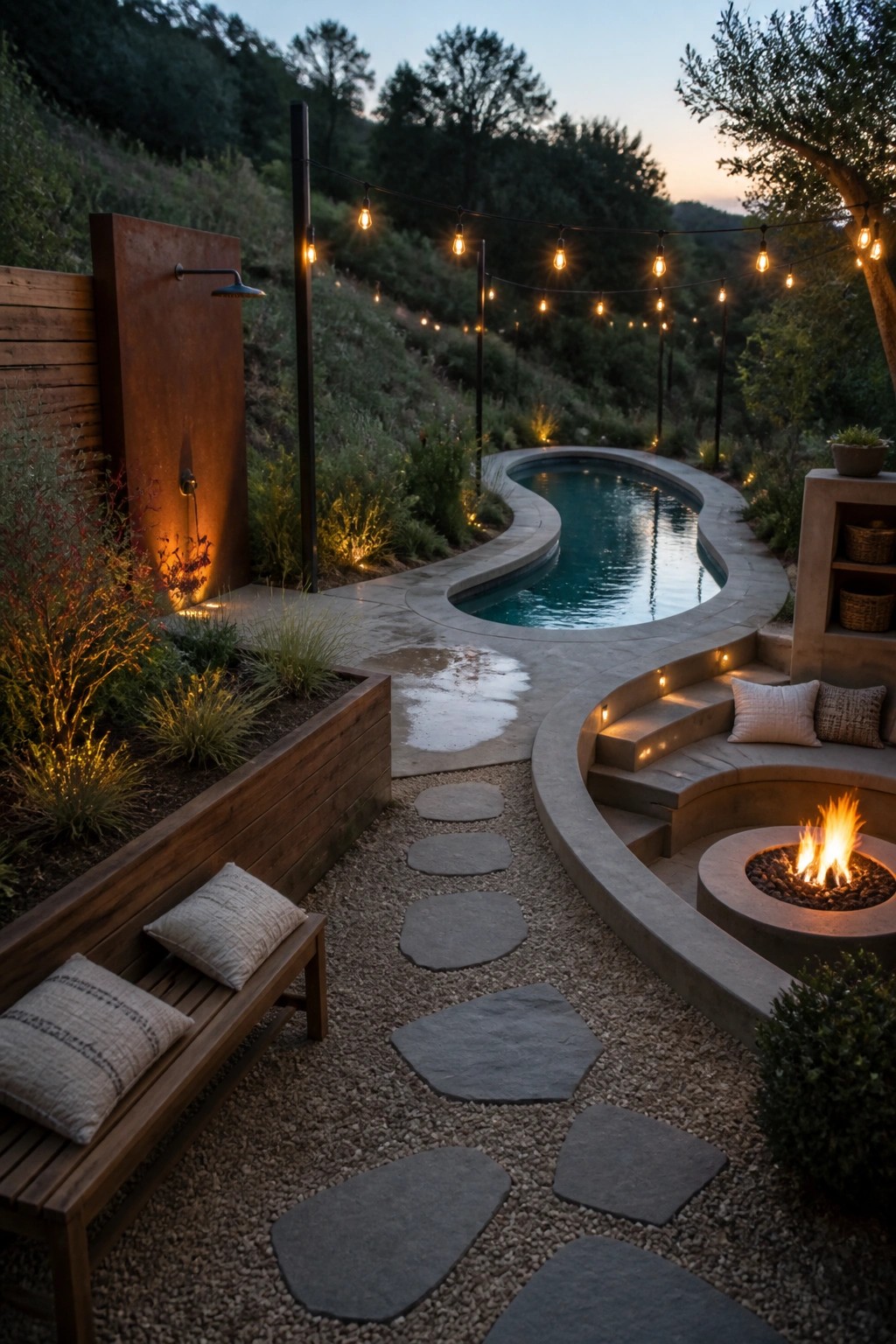
A rectangular pool often fights the land around it. When the yard has its own slopes and curves, a freeform pool can sit more comfortably by tracing those same lines instead of cutting across them.
This works best on lots that already slope or have irregular edges. Keep the patio and seating areas curved as well so the whole layout feels like it belongs there rather than sitting on top of the ground.
Curved Seating Pits That Follow The Pool Edge
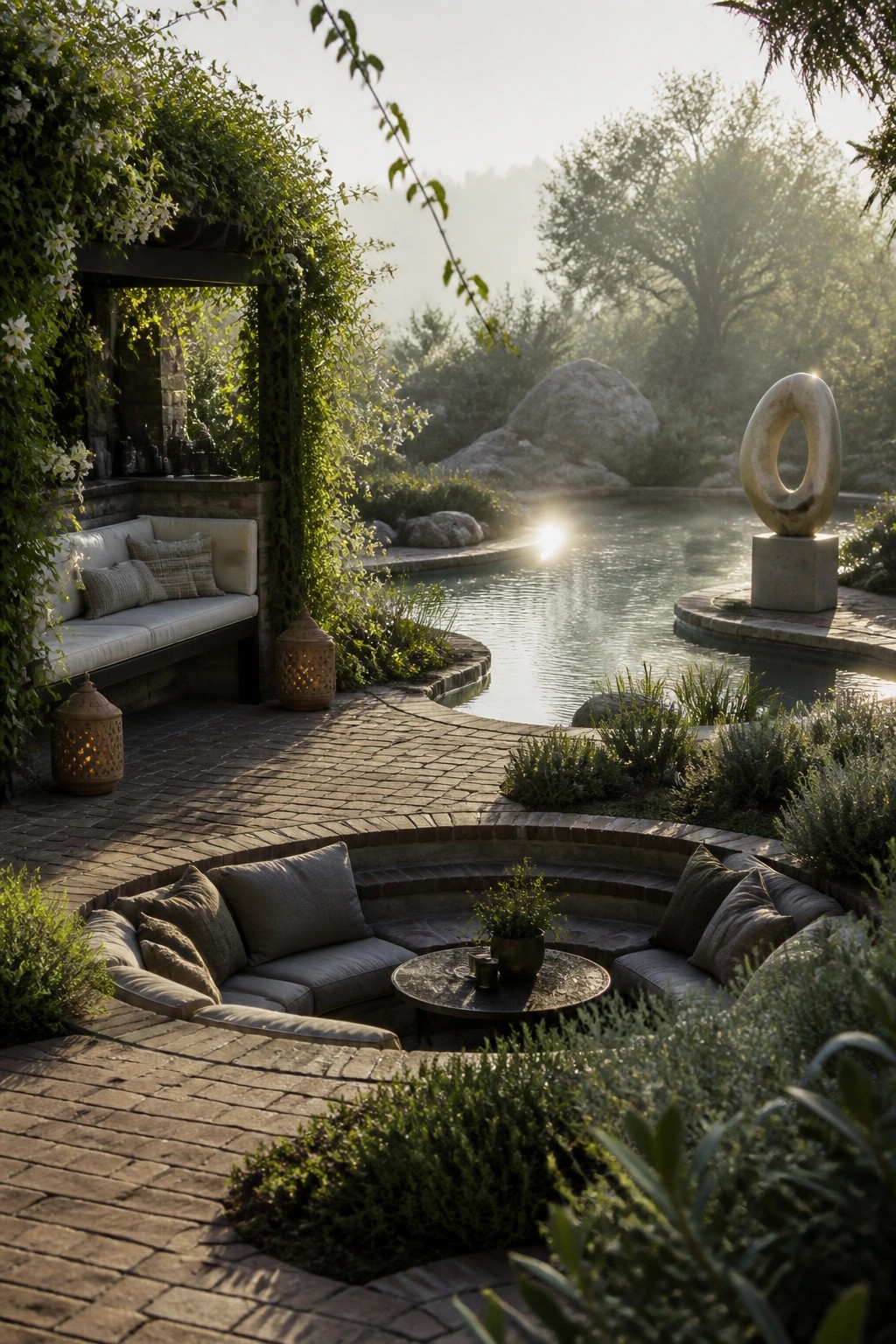
A curved seating area built right into the patio edge works well because it softens the transition between the hard surface and the water. It lets people sit close to the pool without needing extra furniture that might crowd the space or block the view.
This layout suits yards with irregular shapes or natural slopes. Keep the curve gentle so the seating feels like part of the pool border rather than an added feature. Use the same paving material throughout to help everything blend.
Let Natural Stones Shape the Water Edge
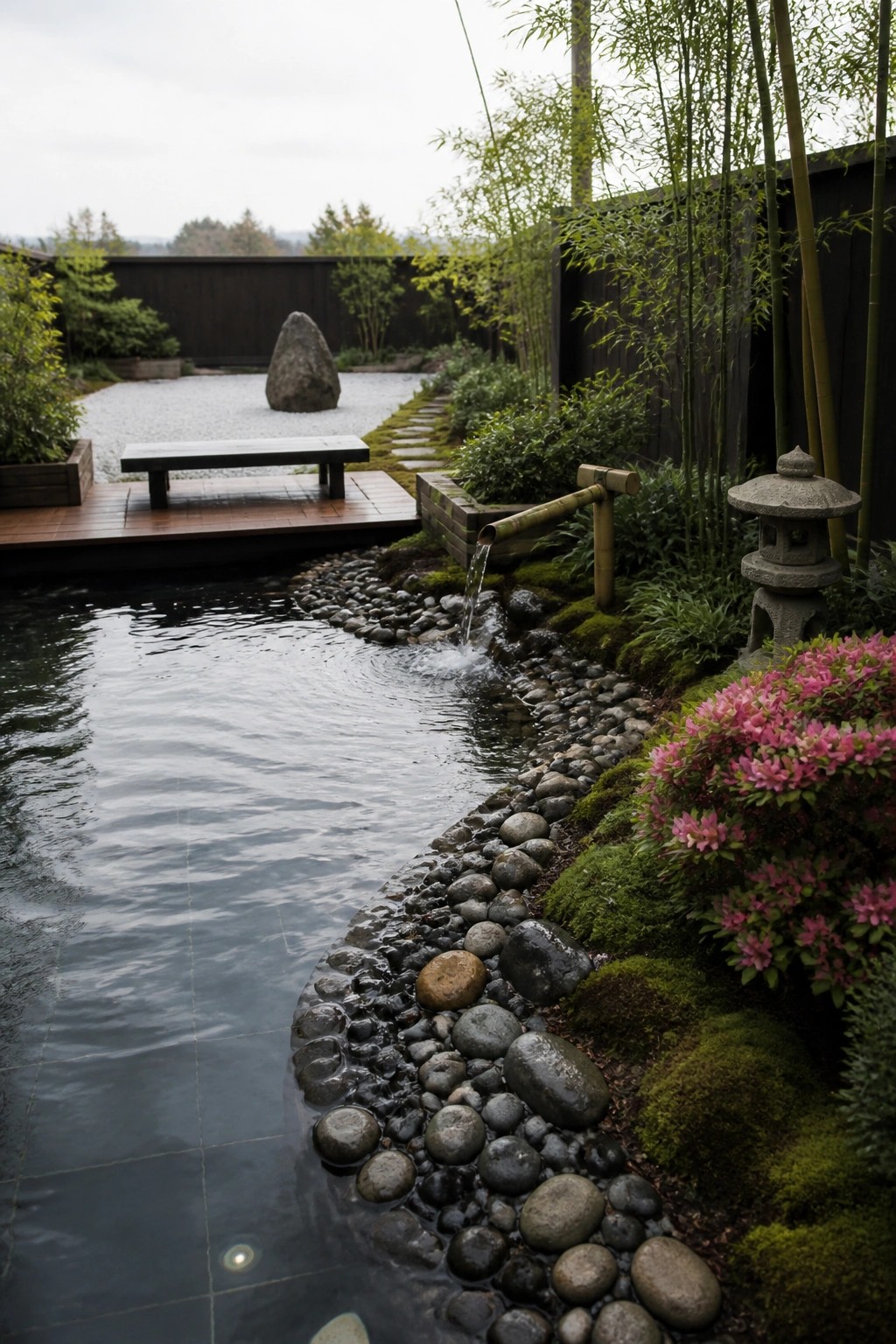
Many backyard water features look better when the edge is allowed to wander a bit instead of running in a straight line. Stones set at different heights and sizes let the water follow the slope of the ground and give the whole area a settled look.
This approach works especially well on smaller lots where you want the pool or pond to feel like part of the existing landscape. Keep the rocks clustered rather than spaced evenly, and let moss or low ground cover fill the spaces so the edge softens over a season or two.
Let The Patio Follow The Pool’s Curves
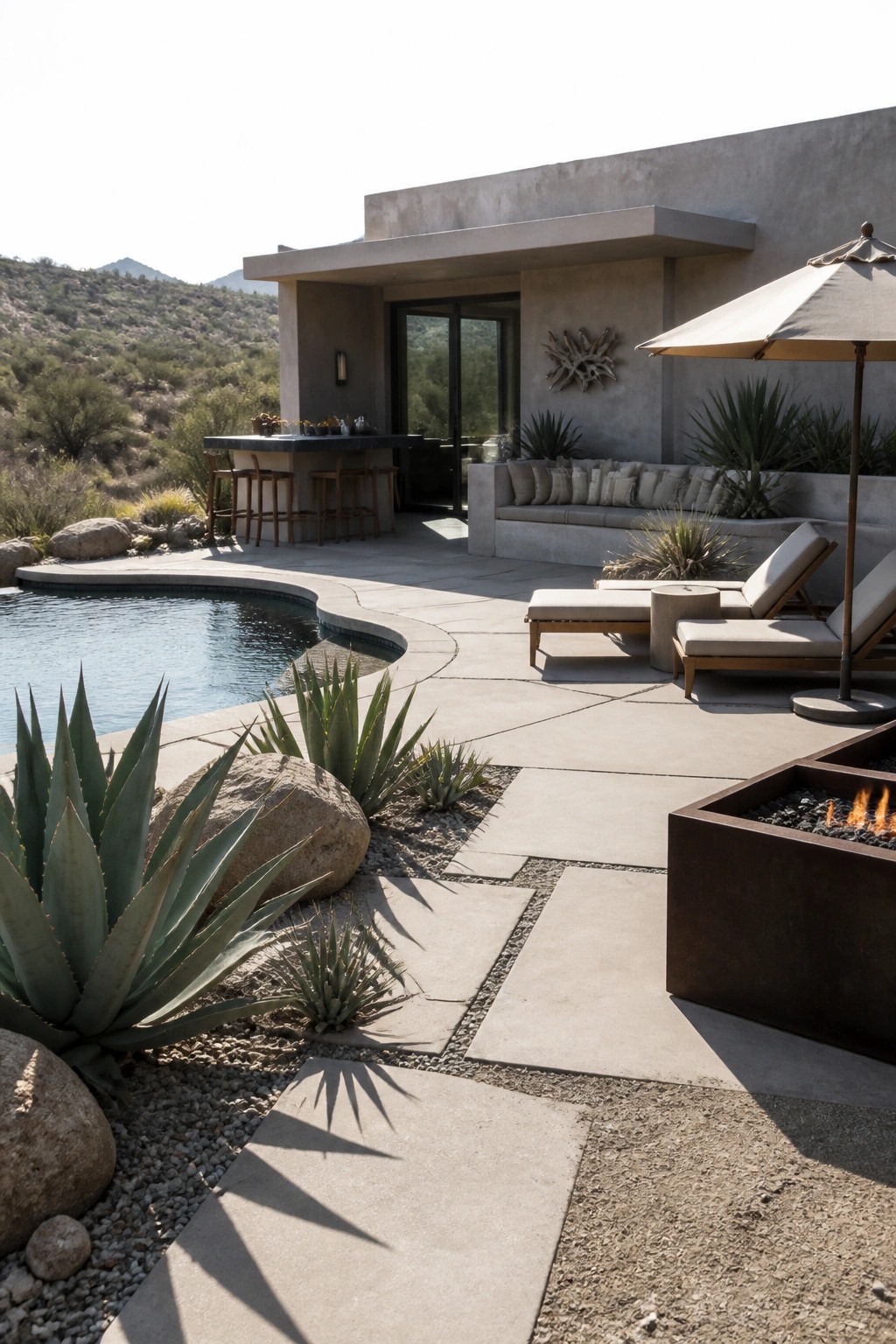
Many pool decks end up with straight lines that fight the shape of the water. Letting the paving curve along with the pool edge creates a smoother flow that feels more connected to the yard around it.
This works best on lots with rolling ground or natural plantings where you want the hard surfaces to sit quietly. Use irregular stones and let a few large rocks sit right at the edge so the transition feels gradual rather than forced.
Follow the Yard’s Natural Curves with Your Pool
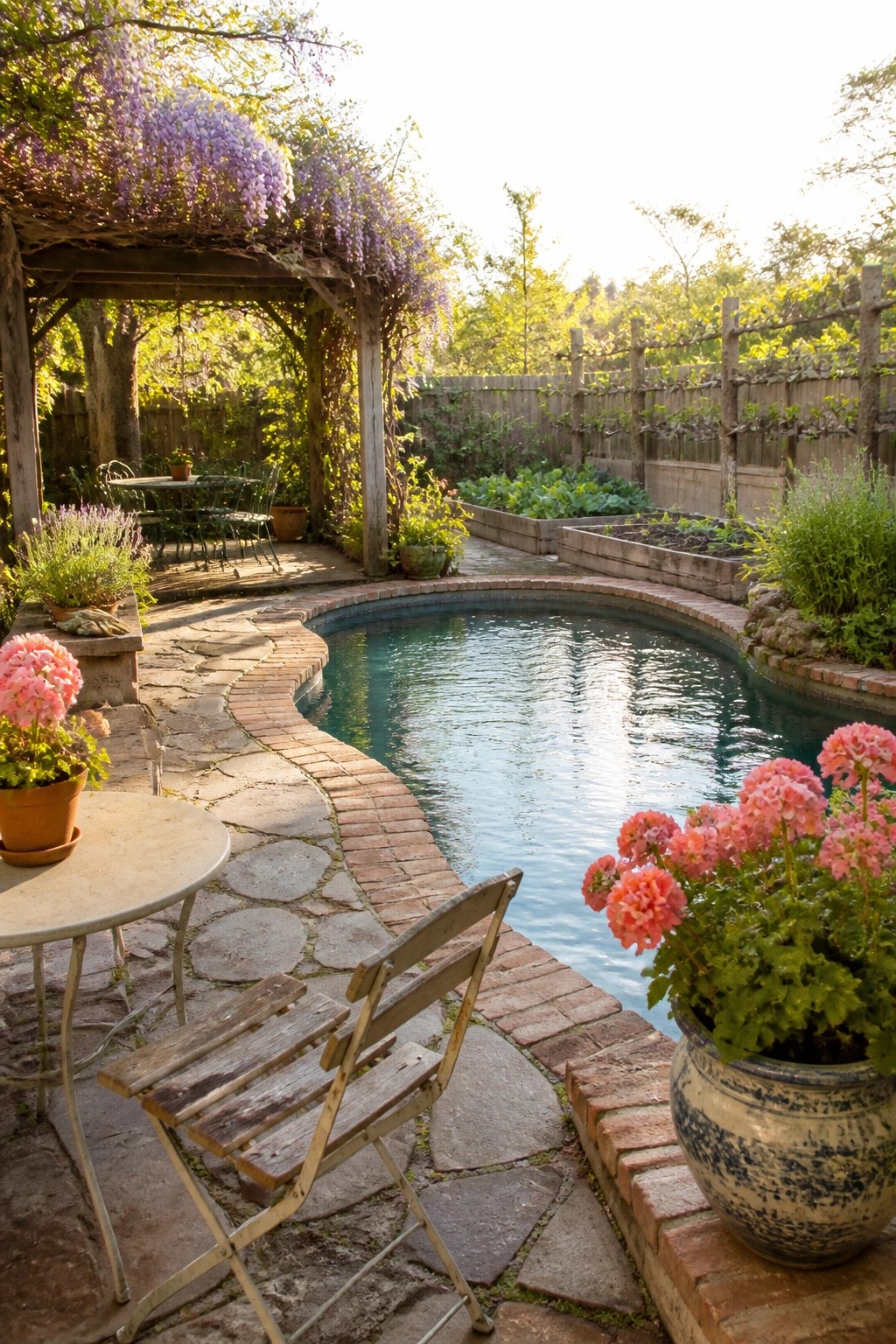
A freeform pool edge can work nicely when it lines up with the curves already in the patio and garden beds. This keeps the water area from feeling like it was dropped in from somewhere else. The stone path and brick border help the shape feel like it belongs.
This approach suits yards that already have winding paths or uneven plantings. Lay out the hardscape first and let the pool edge follow those lines instead of forcing straight walls. Keep the curves gentle so the space stays easy to swim in and maintain.
Match the Deck Edge to the Pool Shape
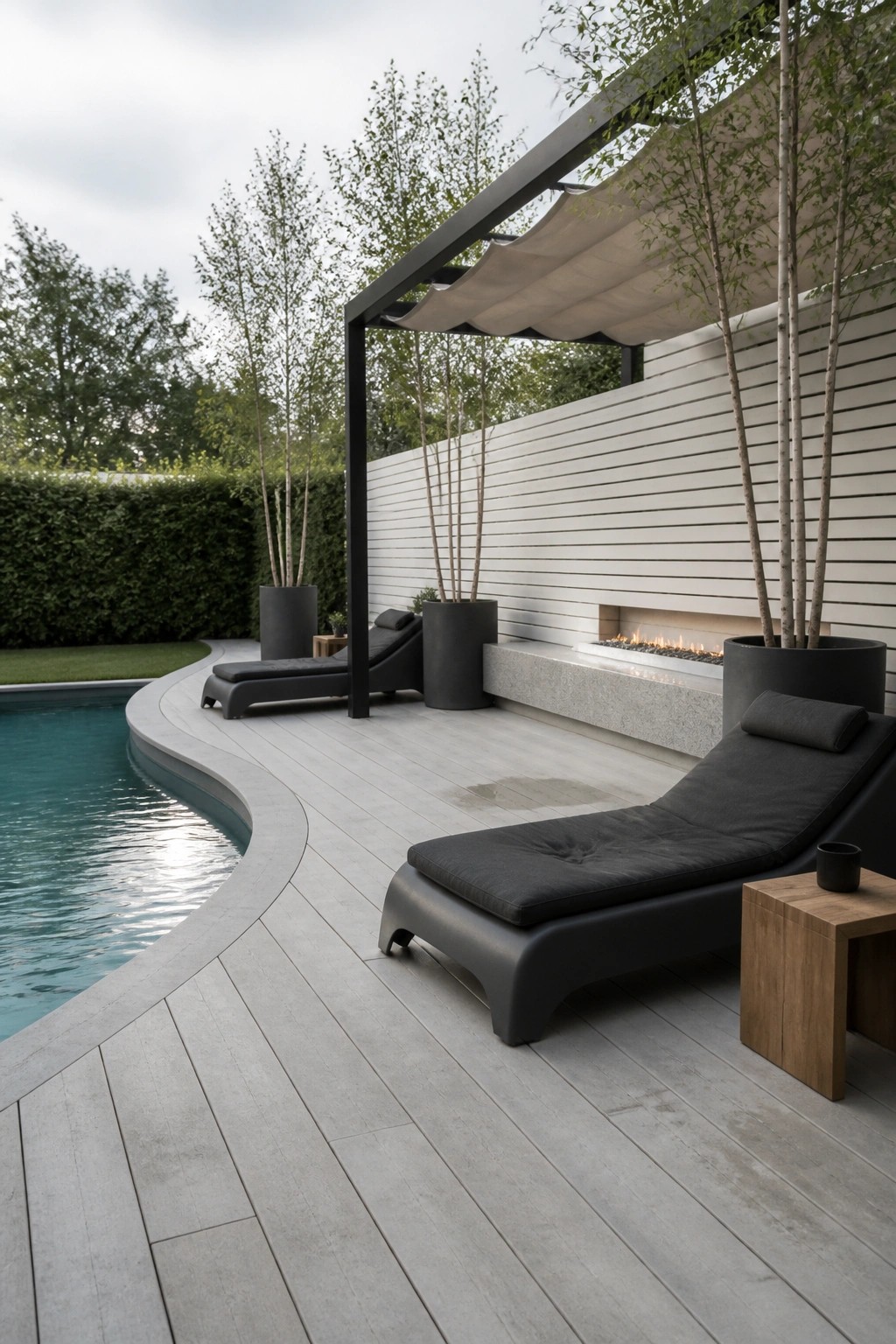
A curved deck edge that follows the pool makes the whole area feel more settled into the yard. It softens the look of the hardscape and avoids the stiff lines that often come with rectangular pools and straight patios.
This works best in backyards that already have some natural slope or irregular borders. Keep the curve gentle so the deck still feels usable, and use the same material throughout so the shape reads as one clean surface rather than separate zones.
Build a Bench Along the Pool Curve
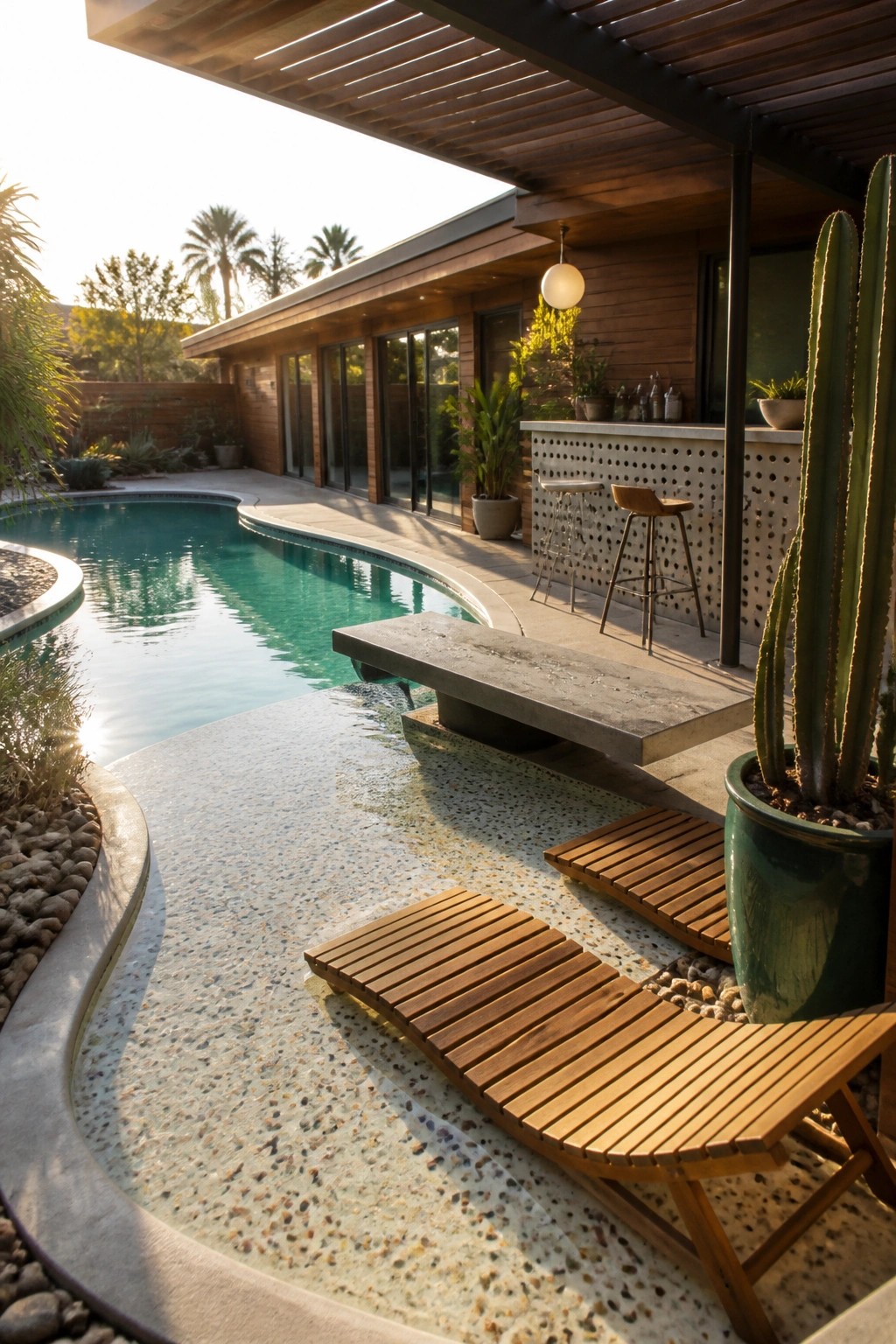
A curved concrete bench that follows the edge of a freeform pool gives the patio a natural place to sit without adding extra furniture. It keeps the layout simple and makes the water feel like part of the seating area instead of something set apart.
This approach works best in yards where the pool already has soft, irregular edges. Keep the bench low and match its curve to the pool so the two read as one shape. It suits homes that want the pool area to blend with the rest of the yard rather than stand out as a separate rectangle.
Let the Deck Follow the Pool Curve
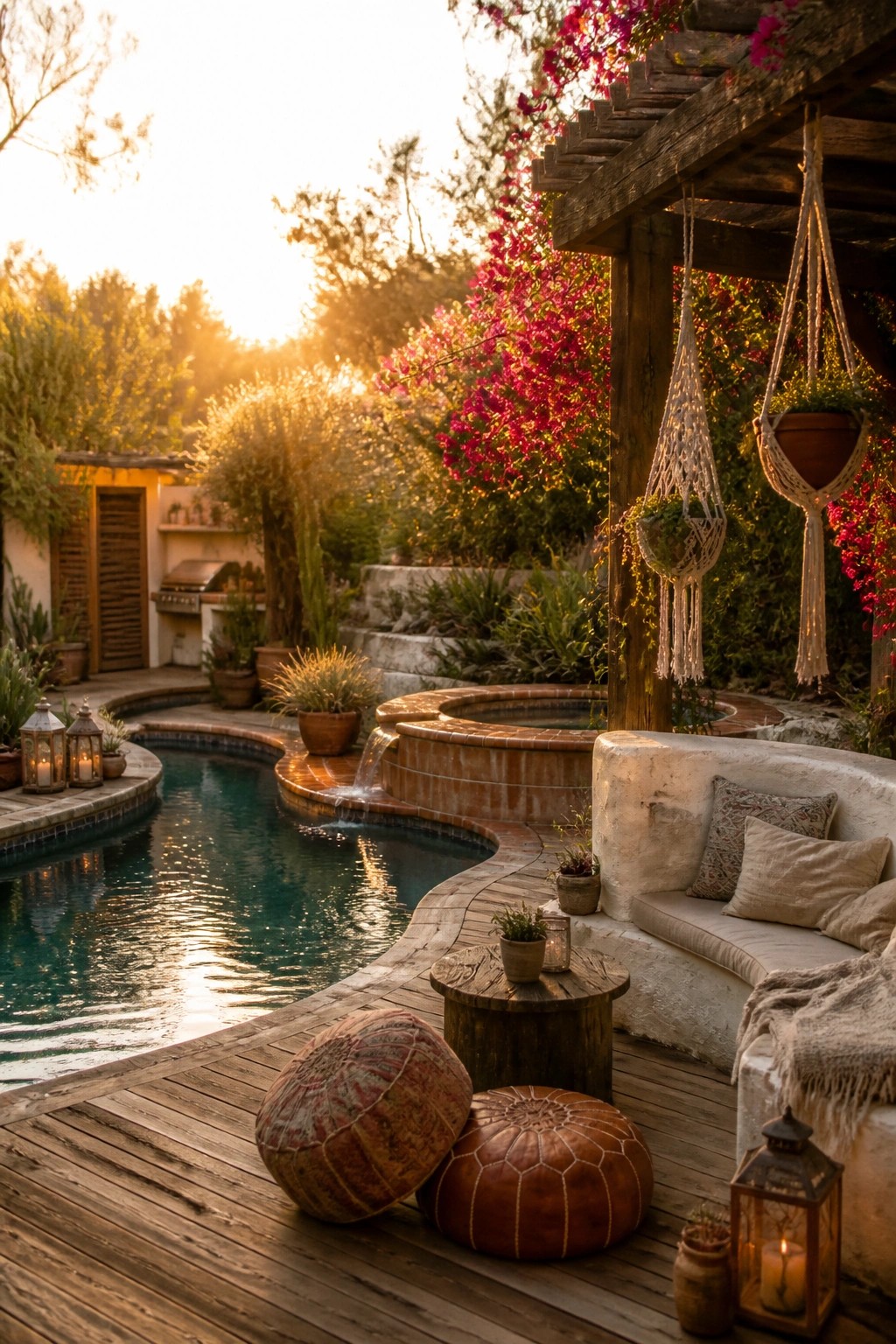
Many pool patios end up with straight edges that fight the shape of the water. Letting the deck curve along with the pool keeps the whole area feeling connected to the yard instead of added on later. The wood wraps right around the water line and creates a natural path without forcing hard corners.
This approach works best in backyards that already have some slope or existing plants. Keep the seating low and simple near the edge so the space stays open and easy to walk around. Avoid sharp turns that would break the flow.
Built-In Seating That Follows the Pool Curve
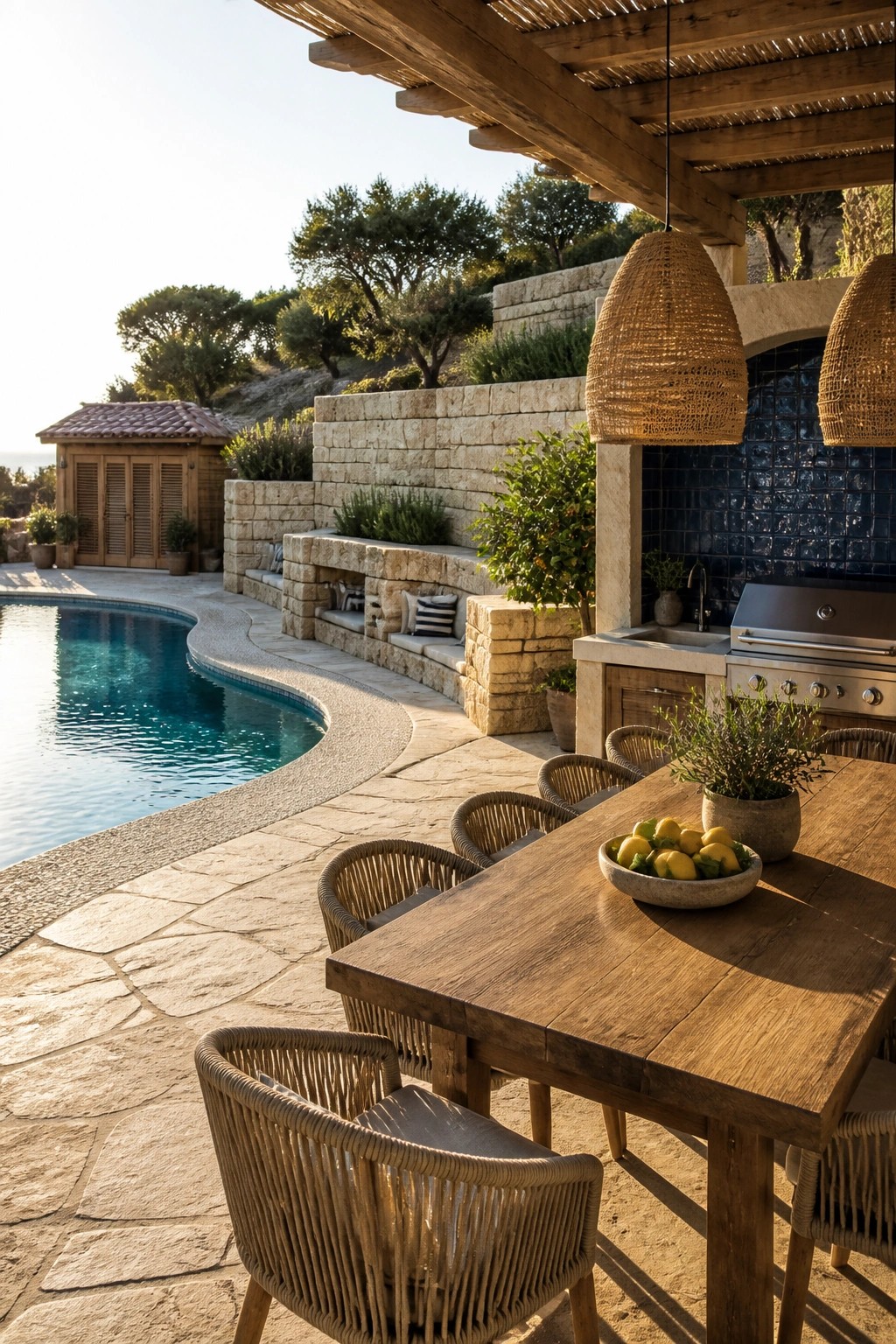
A low stone wall that runs along the edge of a freeform pool can do more than just hold the ground in place. When it curves with the waterline and gets topped with a few cushions, it turns into extra seating without adding separate furniture that might crowd the space.
This approach suits homes where the backyard already has some slope or natural shape. Keep the wall height low so it feels like part of the landscape rather than a barrier, and make sure the material matches the patio so everything reads as one surface.
Let The Patio Follow The Pool Curve
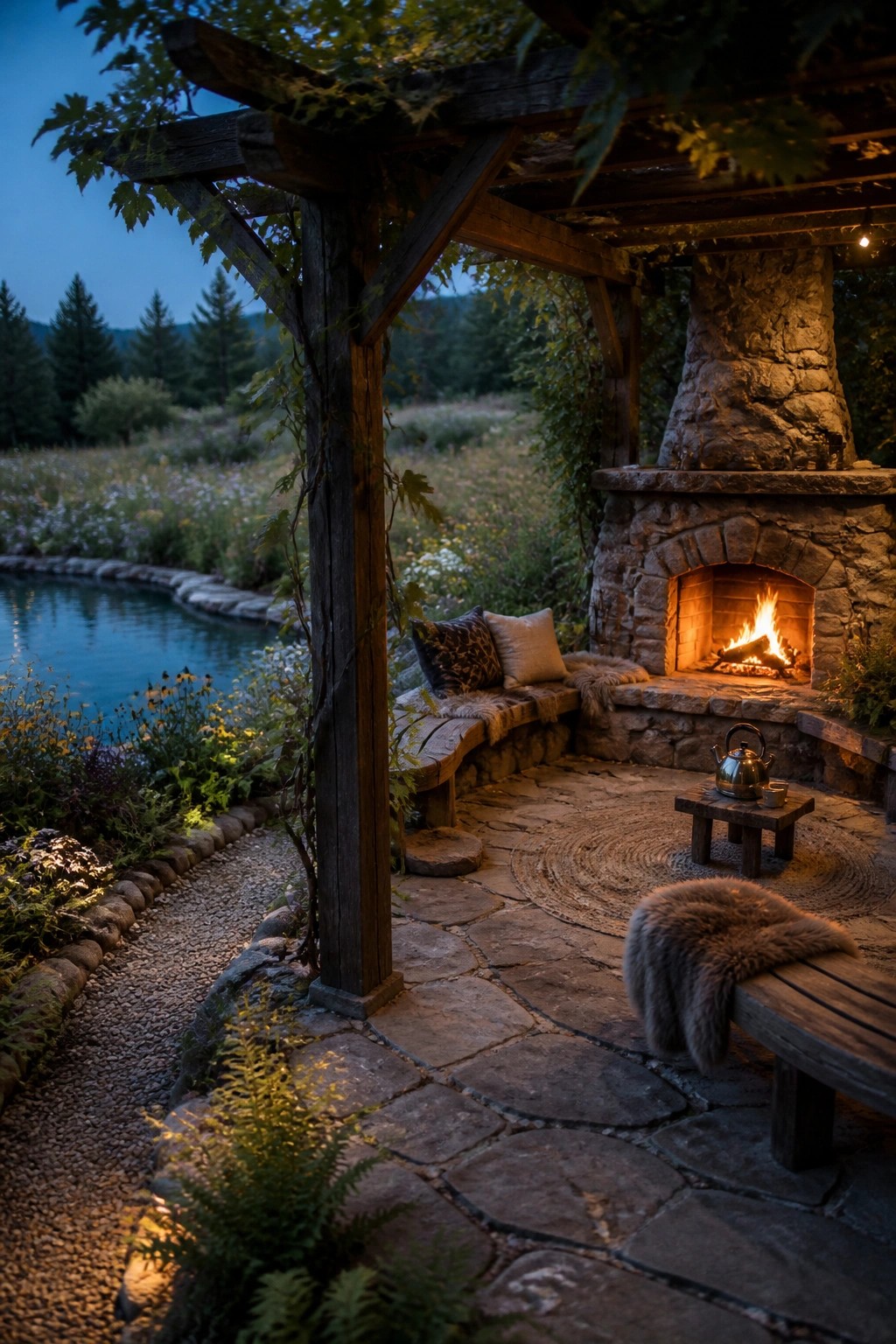
A curved patio edge works better than a straight one when the pool already has a natural shape. The stonework here bends with the water line instead of cutting across it, so the whole area feels connected to the yard rather than added on later.
This approach suits backyards that already slope or curve from trees and plantings. Keep the paving material irregular and let the path widen or narrow where it makes sense. Avoid forcing a perfect circle or oval, since the goal is to match what is already there.
Let The Pool Follow The Yard’s Natural Shape
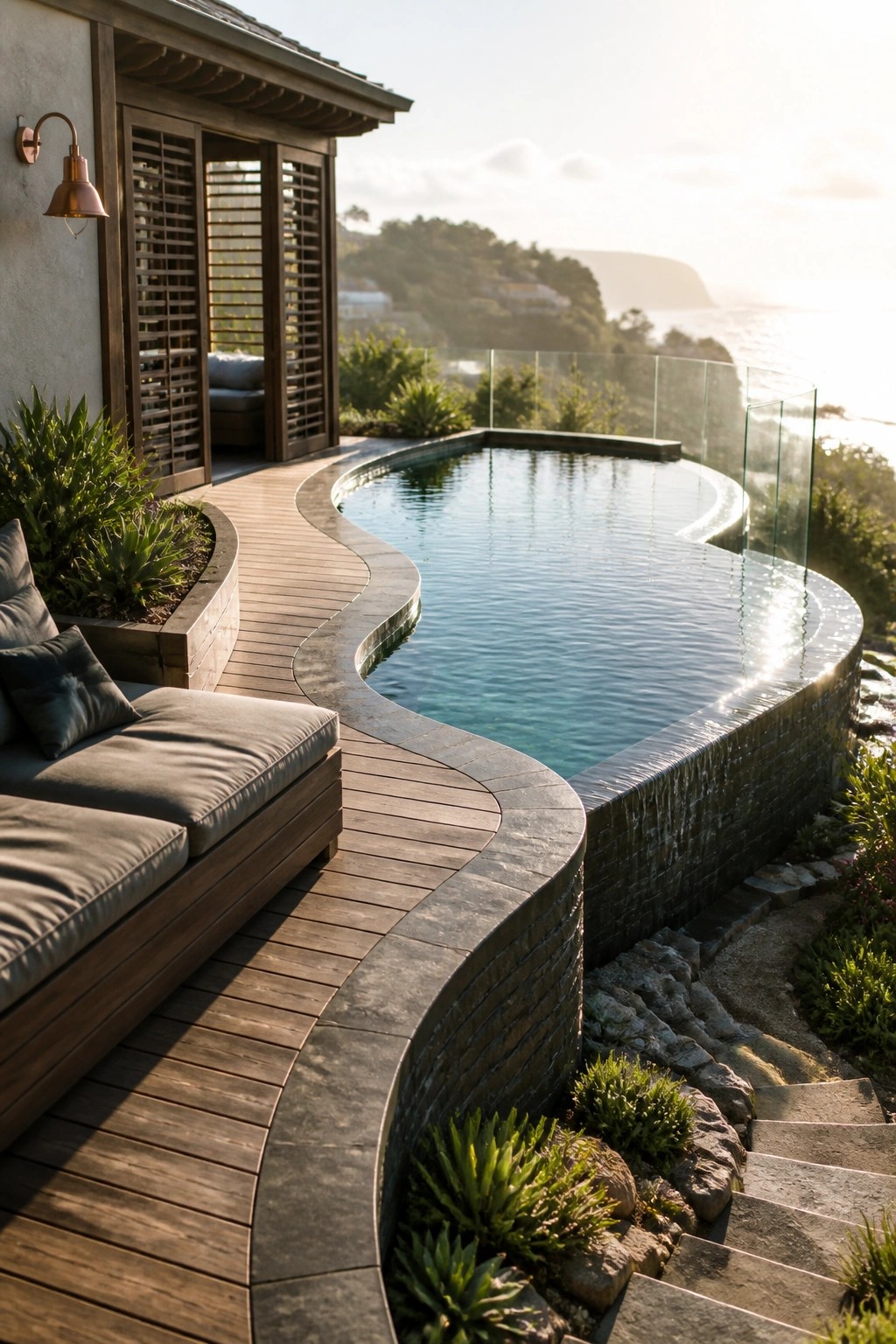
A freeform pool lets the water edge move with the land instead of cutting across it. The result feels less like something added and more like it belongs where it sits.
This works best on sloped or uneven lots where a straight rectangle would fight the grade. Run the deck in soft curves, let the coping follow the same line, and use any existing rock or planting to guide the shape rather than fighting it.
Shape The Pool Around Large Rocks
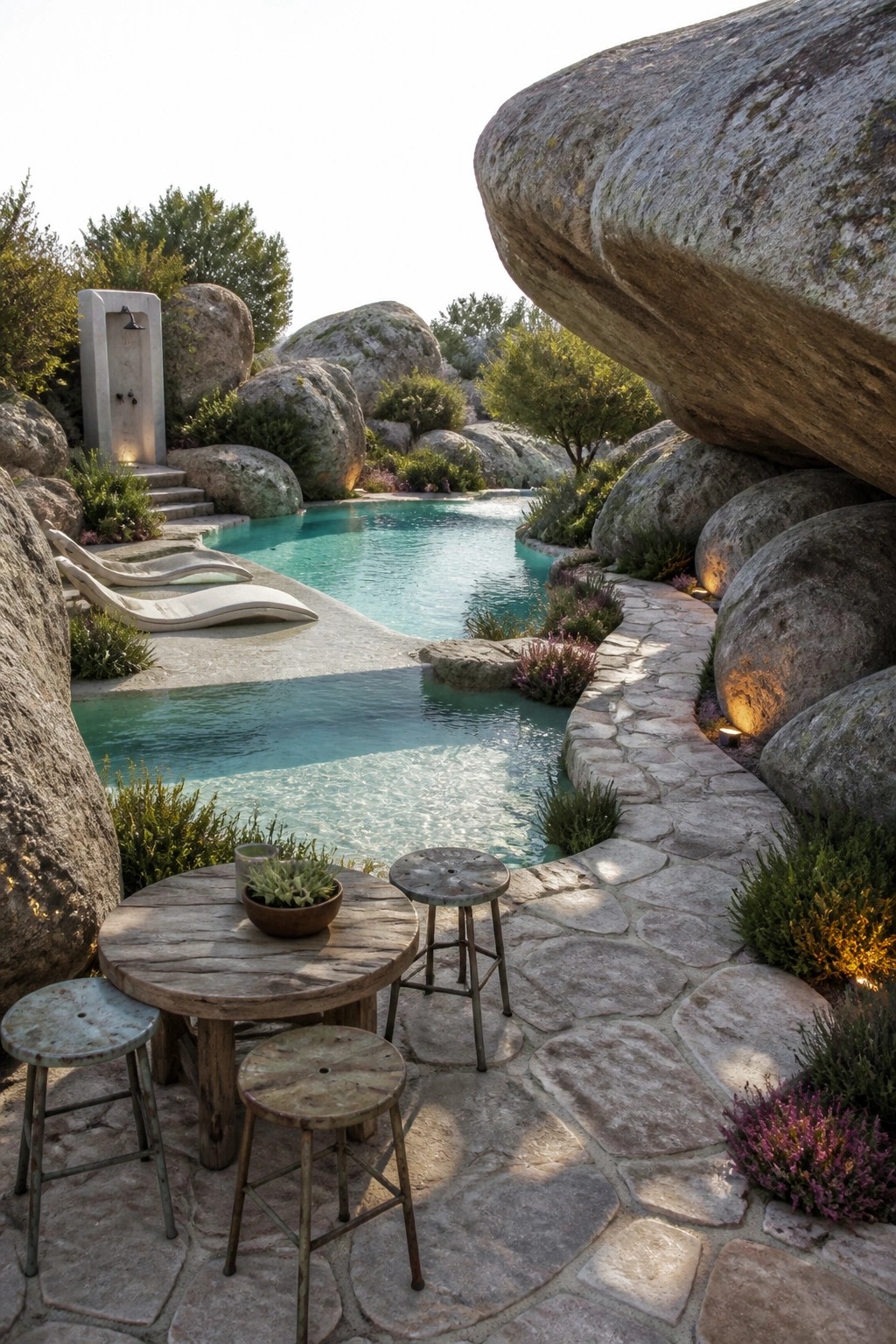
Many backyards already have big boulders or uneven ground that makes a standard pool feel forced. Letting those rocks guide the water edge keeps the layout simple and makes the whole area feel like it grew there naturally.
This works best on sloped or rocky lots where you can tuck the pool between existing stone. Keep the paving irregular and use the same local rock for steps or seating so the hardscape stays quiet and the pool becomes the main feature without fighting the land.
Curved Pool Edges That Follow The Yard
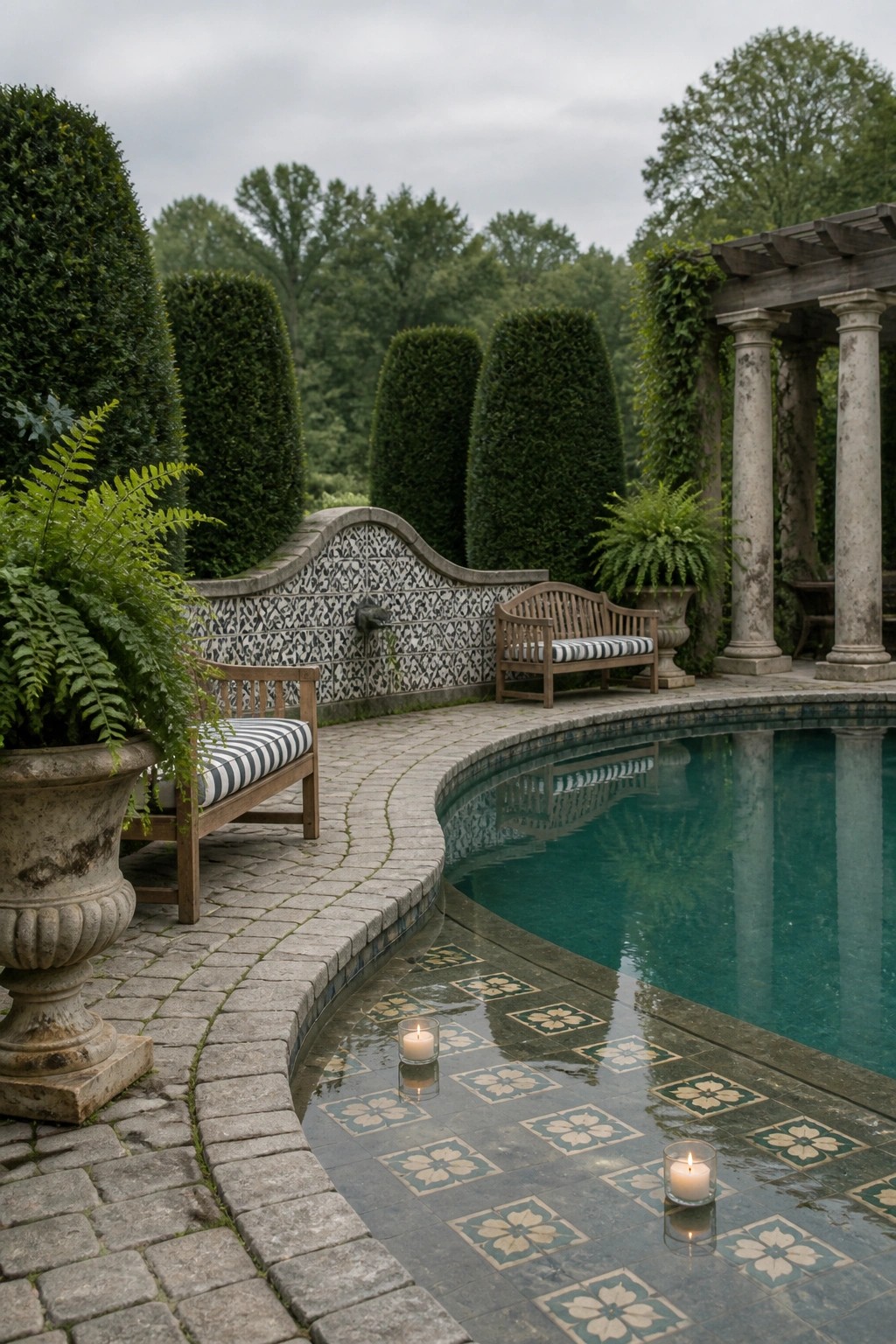
A freeform pool shape works best when the patio follows the same curve instead of fighting it with straight lines. The rounded stone border here lets the seating and planting sit naturally along the water, so the whole area feels like part of the existing landscape rather than something dropped in.
This approach suits yards that already have gentle bends or mature trees. Keep the hardscape simple and let the curve itself create the flow. Avoid adding too many sharp corners or extra paving that would break the line.
Curved Patios That Follow the Pool Edge
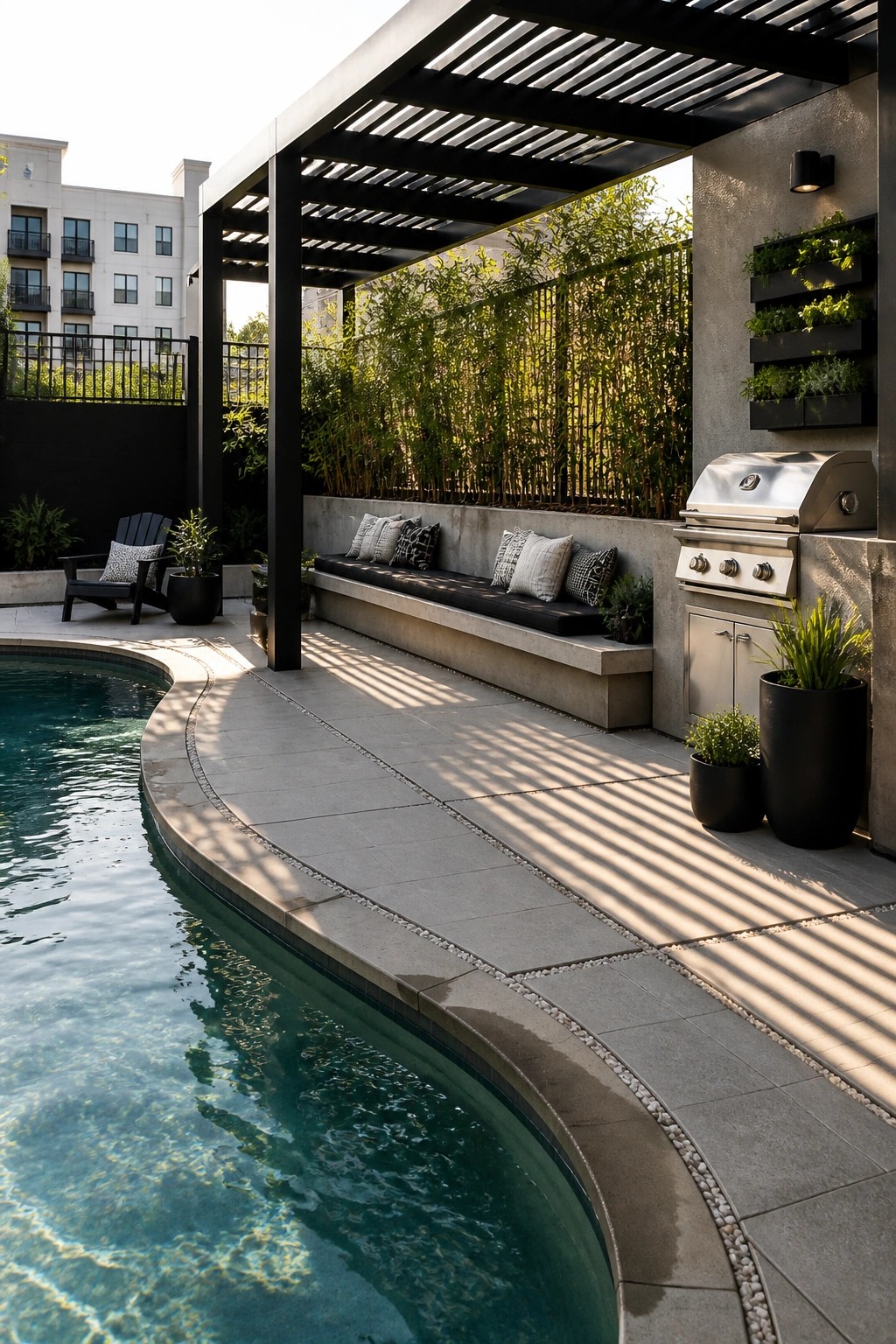
A patio that curves along with the pool feels more natural than a straight rectangle. It softens the whole area and makes the backyard look like it was shaped around the water instead of forcing a hard line against it. The paving in this setup stays simple and follows the water closely, which keeps the space feeling open without needing extra decoration.
This approach works best on smaller or oddly shaped lots where a straight patio would cut off the flow. Keep the materials consistent and let the curve do the work. Avoid adding too many sharp corners or separate zones right next to it, or the natural shape gets lost.
Match Your Patio To The Pool’s Natural Shape
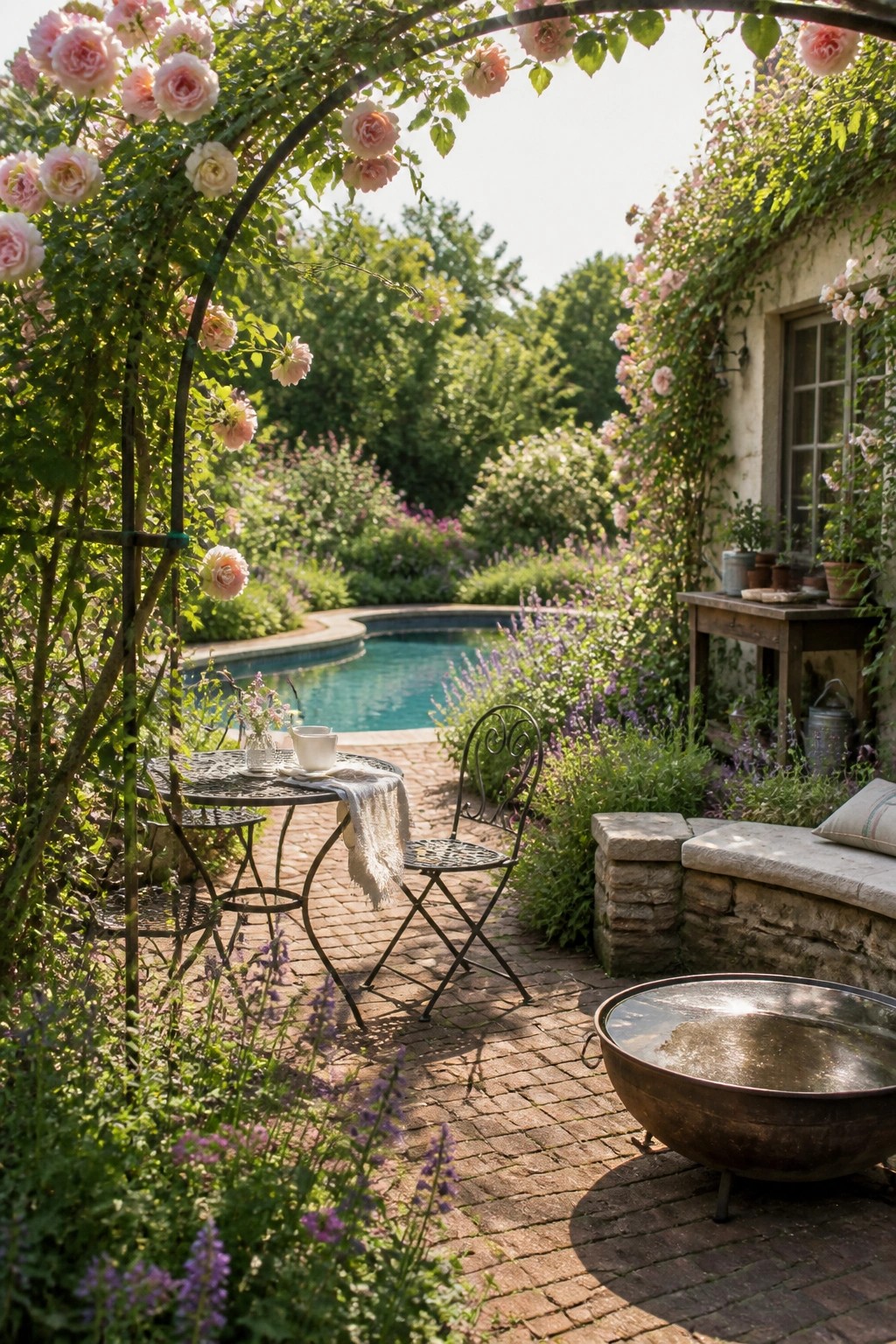
A freeform pool already sets a relaxed tone for the whole backyard. Letting the patio follow that same curve keeps the space feeling open and connected instead of boxed in by straight lines.
Brick works well here because it can be laid in gentle arcs without looking forced. Add planting beds right up to the edge so the hard surface blends into the garden instead of cutting it off. This approach suits older homes or lots with uneven ground where a rigid rectangle would fight the landscape.
Curved Decking That Matches The Pool Edge
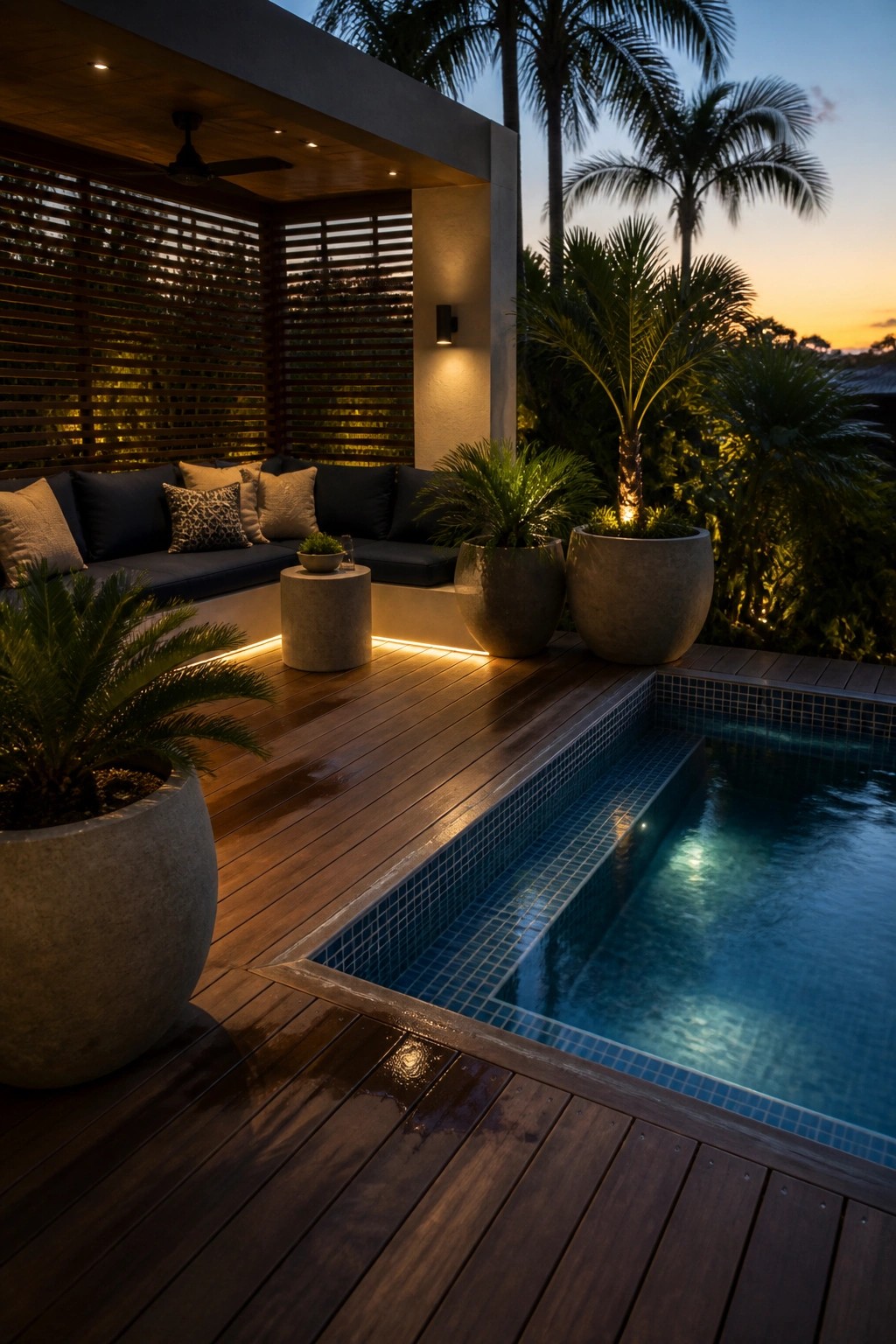
A curved deck edge helps the patio feel like it grew with the yard instead of being dropped in. It softens the hard line between water and wood and makes the seating area feel more connected to the surrounding plants.
This layout works best when the pool already has a gentle shape or when you want to work around existing trees and beds. Keep the boards running lengthwise along the curve and use a few large planters to hide any sharp corners where the deck meets the house.
Follow The Pool Curve With Your Deck
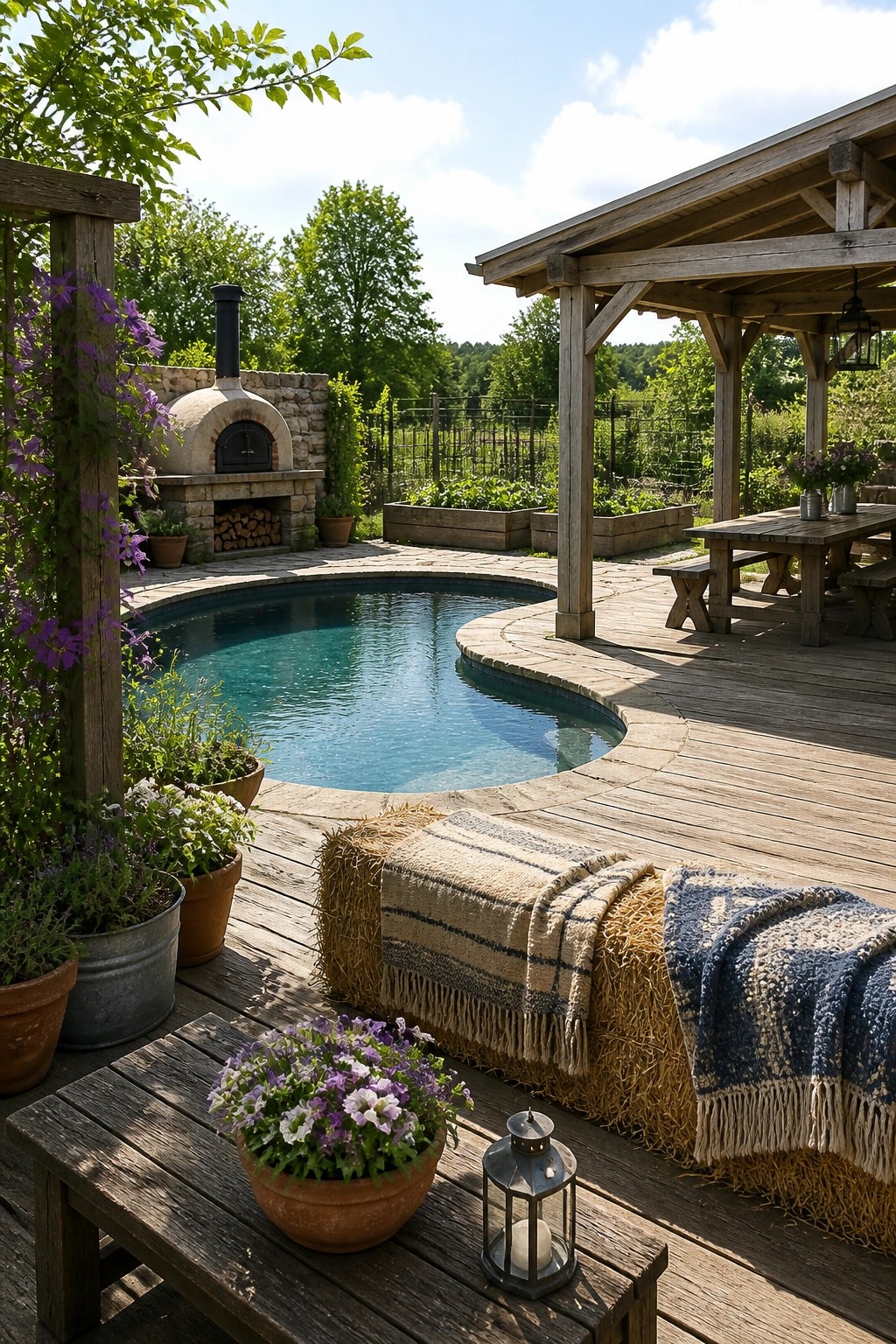
Many pools end up with a deck or patio that fights their shape. Letting the deck follow the pool’s curve instead makes the whole area feel more settled and easy to move around.
This approach works well on smaller or uneven lots where a straight edge would waste space. Run the boards along the waterline and keep furnishings light so the curve stays the main feature.
Follow The Land’s Curve With Your Pool Edge
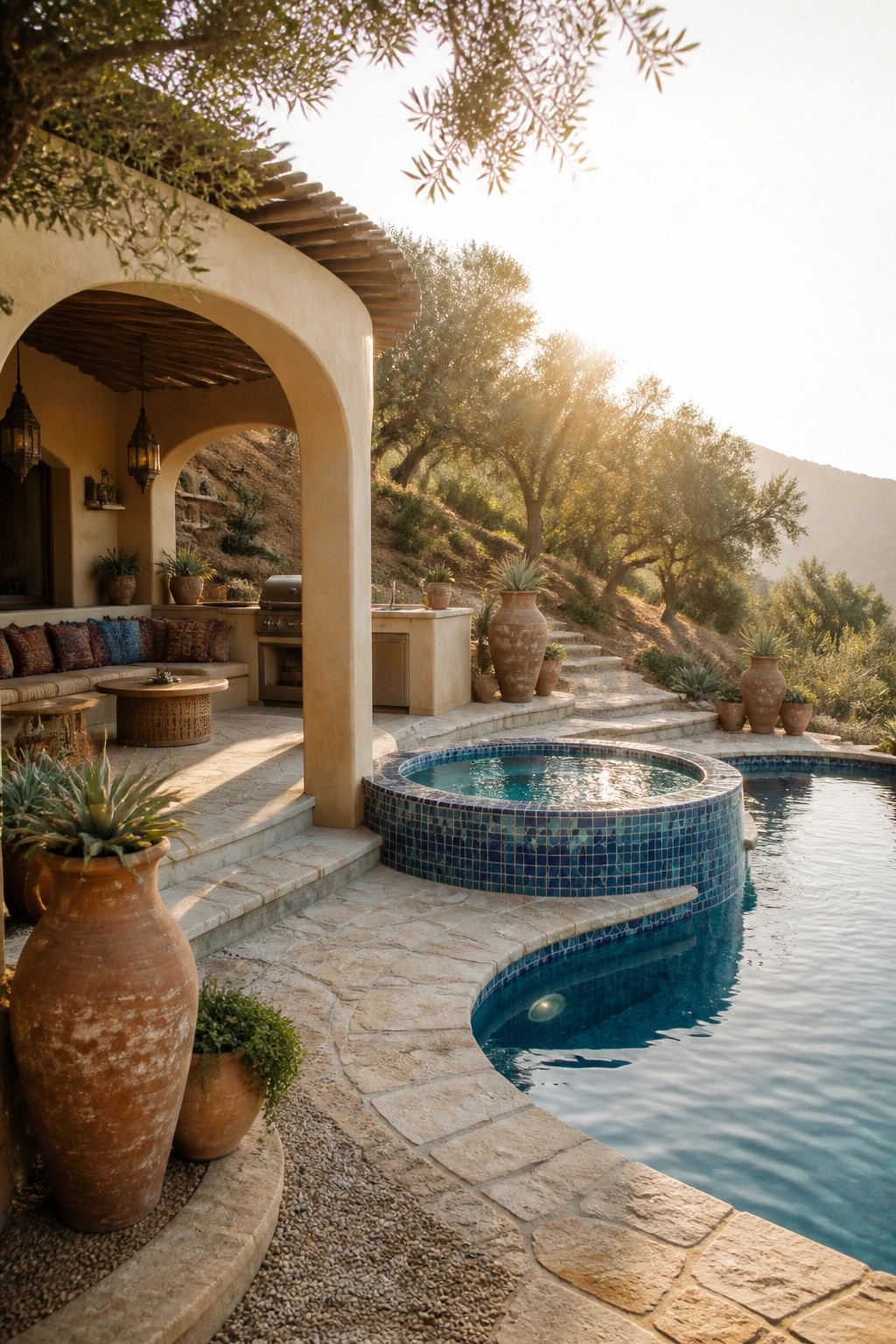
A freeform pool works best when its shape takes cues from the yard itself instead of forcing a rectangle into uneven ground. The rounded spa tucked into the main pool and the way the stone deck steps down with the slope show how the water line can trace the hill instead of fighting it.
This approach suits homes on gentle slopes or lots with natural dips and rises. Keep the paving material consistent with the surrounding paths so the whole area feels like one continuous surface rather than separate zones. Watch the depth changes near the curve so the transition stays safe and easy to clean.
Frequently Asked Questions
Q: How do I choose pavers that curve naturally with my backyard? A: Lay a garden hose along the ground first to test the outline. Pick stones with soft edges so they fit together without gaps. This way the patio follows the land instead of fighting it.
Q: Will a freeform patio work if my yard slopes toward the house? A: Slope the surface slightly away from the foundation during installation. Add a low retaining wall on the downhill side if needed. Water drains properly and you avoid indoor leaks.
Q: How do I stop the grass from invading the patio edges over time? A: Install a simple metal or plastic barrier right at the border. Keep it low so it stays hidden. But check it each spring and pull any strays before they spread.