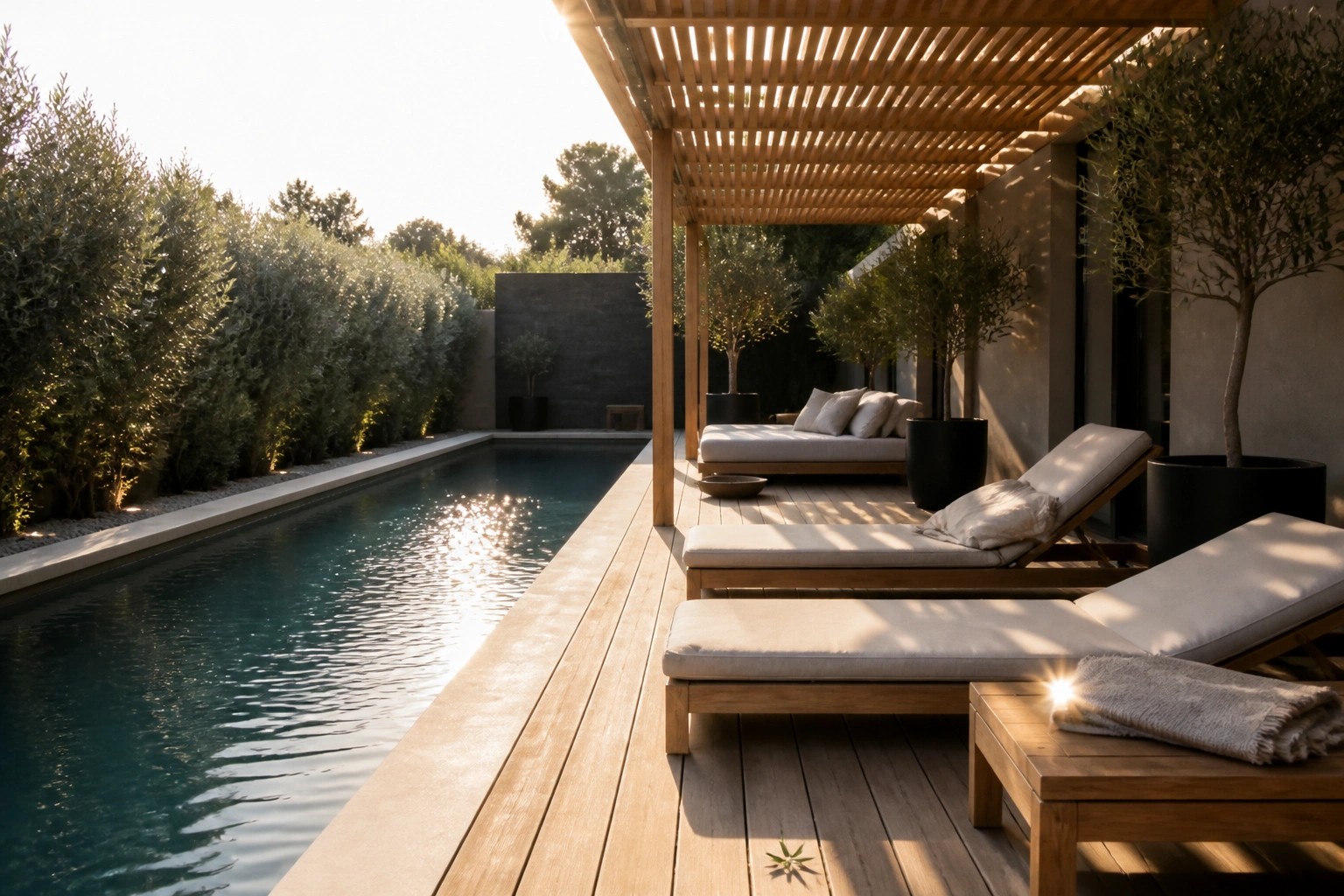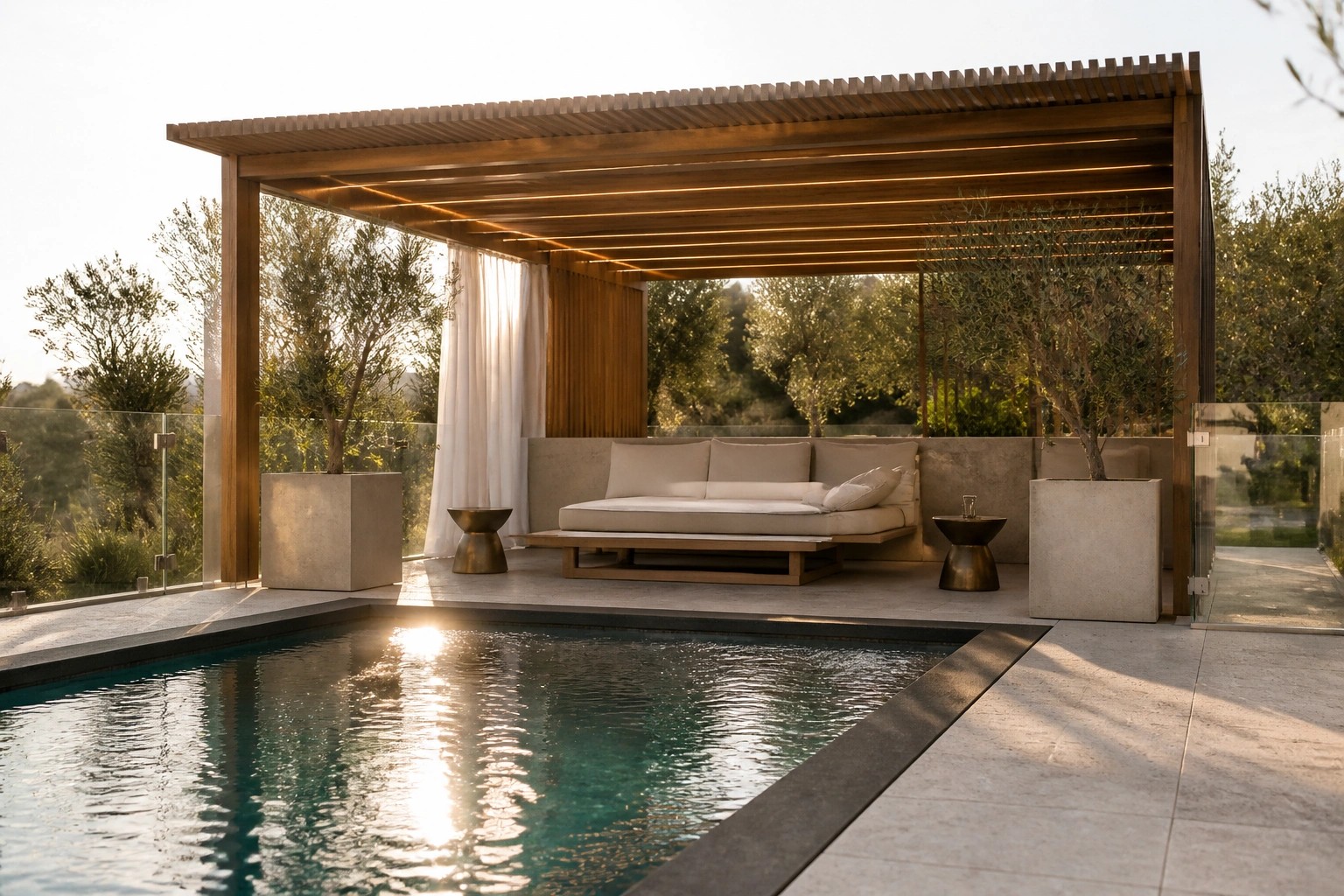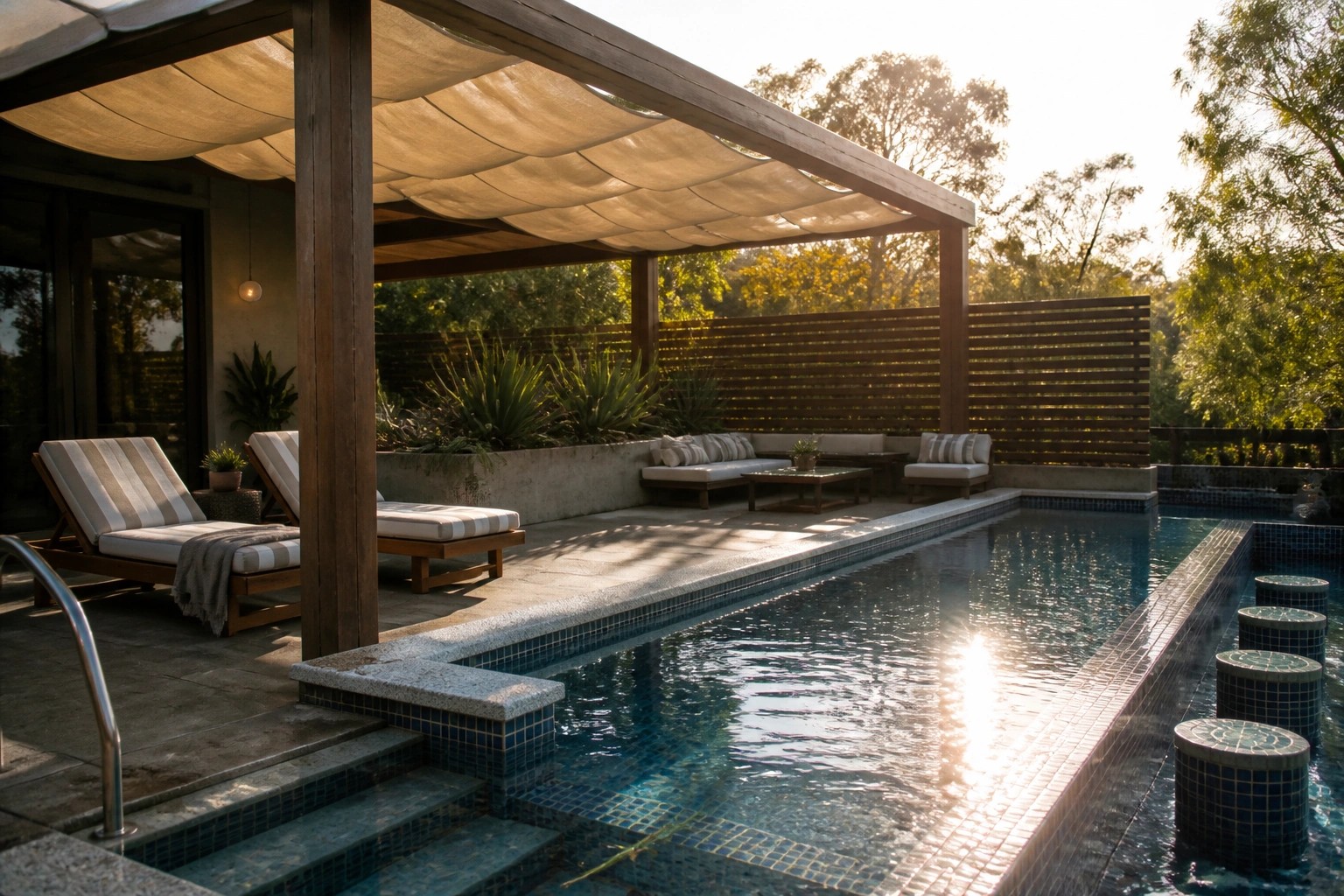
I have noticed that pool areas often end up being the hottest part of the yard on sunny days, which can limit how much time we actually spend out there.
Adding shade in the right spots changes how the whole area feels without needing to redesign everything around it.
Airflow makes the biggest difference in comfort.
I tend to test smaller ideas like movable screens before installing anything permanent because it shows what actually works with the layout we already have.
Choosing options that blend with the existing yard rather than standing out keeps the space feeling open and connected to the rest of the garden.
Table of Contents
- 1 Pergola With Fabric Shade
- 2 Cantilever Umbrellas For Poolside Seating
- 3 Shade Sails Over The Pool
- 4 Thatched Roofs For Natural Pool Shade
- 5 Louvered Pergolas For Poolside Shade
- 6 Pergola Shade With Climbing Vines
- 7 Cantilevered Glass Shades For Pool Areas
- 8 A Pool Cabana For Poolside Shade
- 9 A Covered Pavilion Next to the Pool
- 10 Hang a Fabric Canopy for Pool Deck Shade
- 11 Covered Porches For Poolside Dining
- 12 Pergolas That Shade Lounge Areas
- 13 A Thatched Pergola for Pool Shade
- 14 Cantilevered Umbrellas For Pool Lounging
- 15 Bamboo Pergola Shade Over the Pool
- 16 Retractable Awnings for Poolside Shade
- 17 Hanging Curtains From A Pergola For Pool Shade
- 18 Perforated Overhead Screens
- 19 Extend the Roofline Over the Pool Deck
- 20 Retractable Shades For Poolside Seating
- 21 Woven Canopies for Pool Shade
- 22 Retractable Awnings For Poolside Shade
- 23 Frequently Asked Questions
Pergola With Fabric Shade
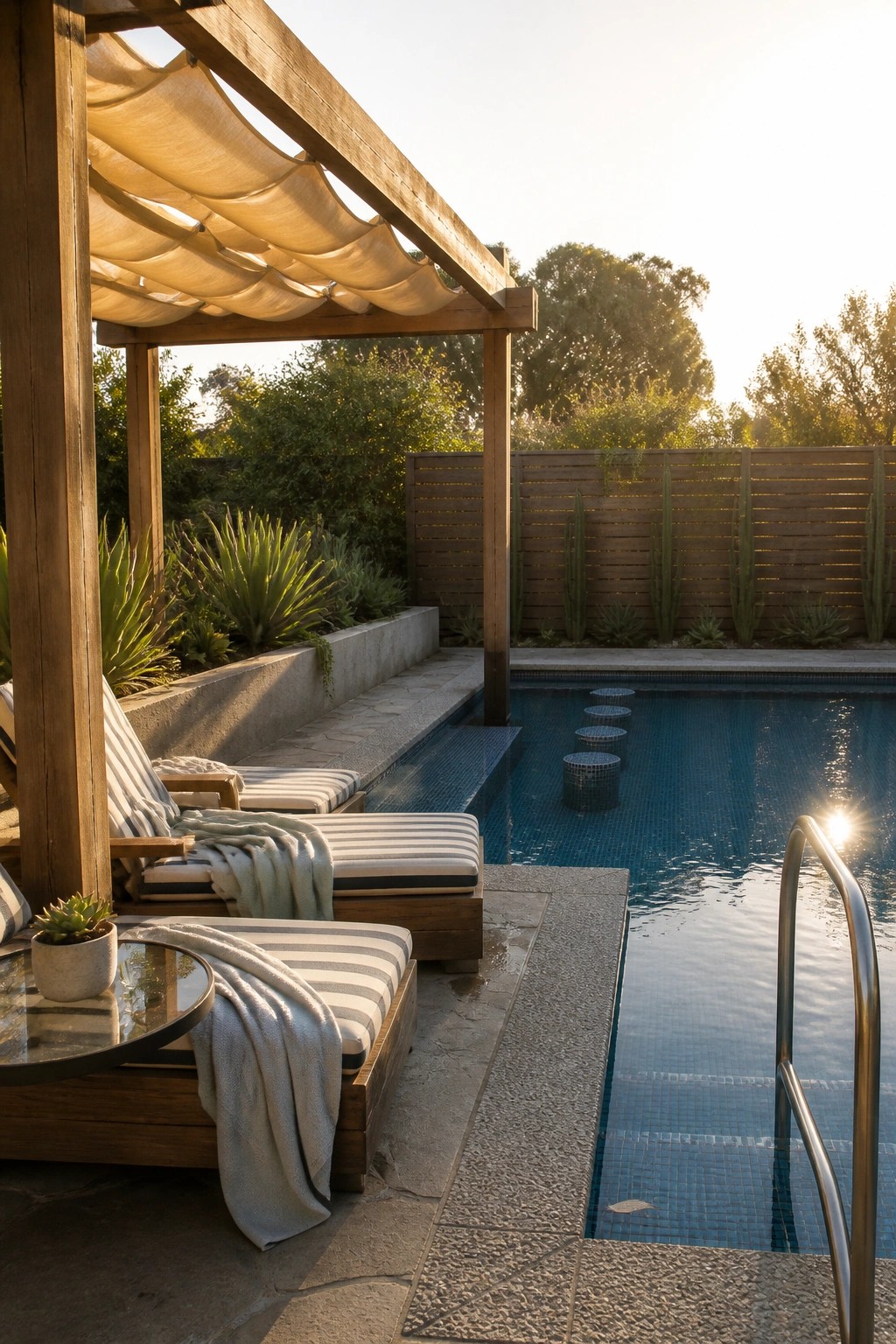
A pergola with fabric stretched across the top creates useful shade right beside the pool. The open sides keep air moving while the fabric blocks direct sun on the seating below.
This setup works best on larger pool decks where you want a defined lounge zone without a full roof. Choose a light-colored, weatherproof fabric and make sure the posts are set back from the water edge so they do not crowd the swimming area.
Cantilever Umbrellas For Poolside Seating
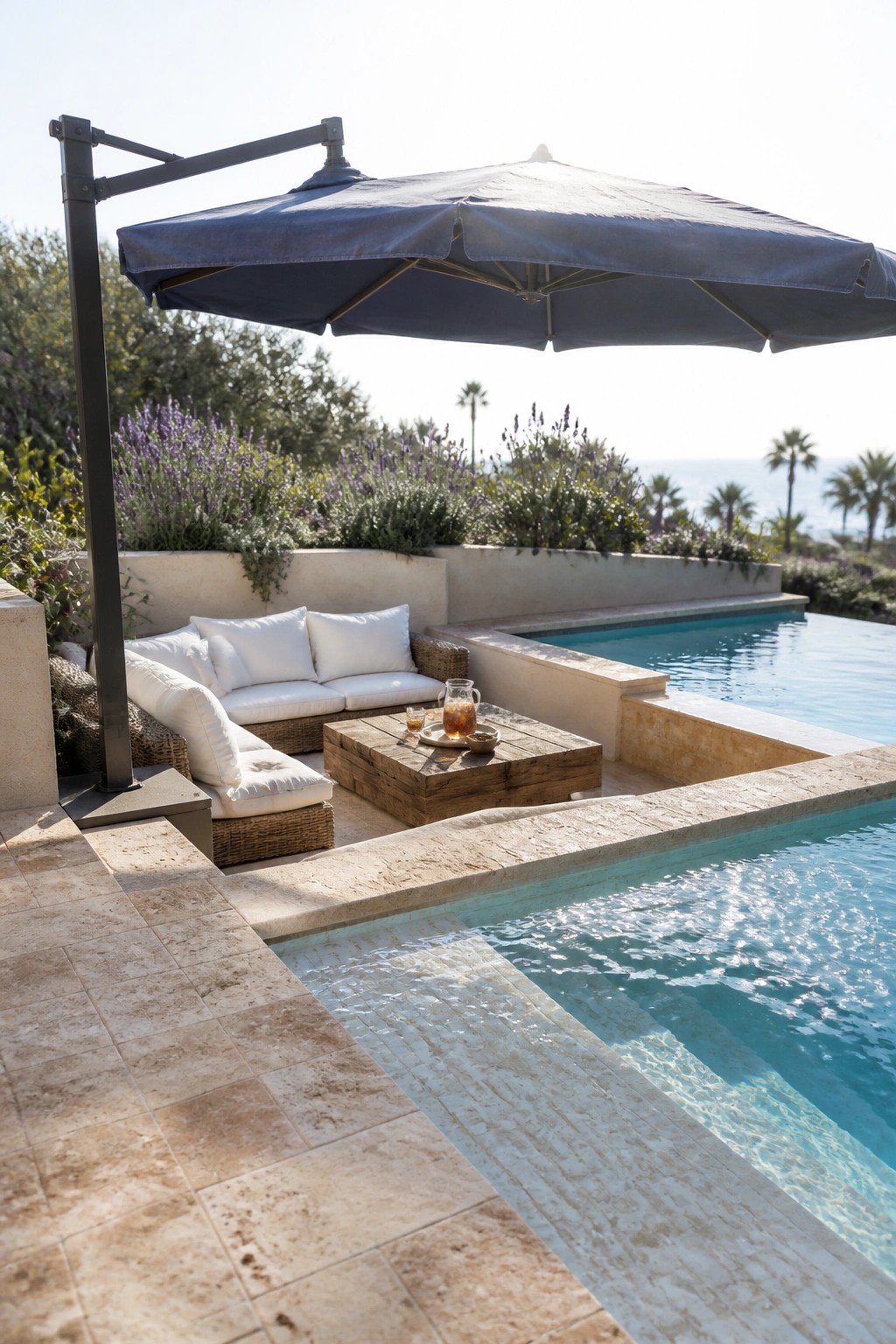
A cantilever umbrella gives shade without a post in the middle of the seating area. The base stays off to the side so the chairs and table stay clear and the view across the pool stays open.
This setup works best on paved pool decks where you want movable shade. Anchor the base well and choose a canopy size that covers the main sitting spot. It suits smaller yards or homes where a fixed pergola would feel too heavy.
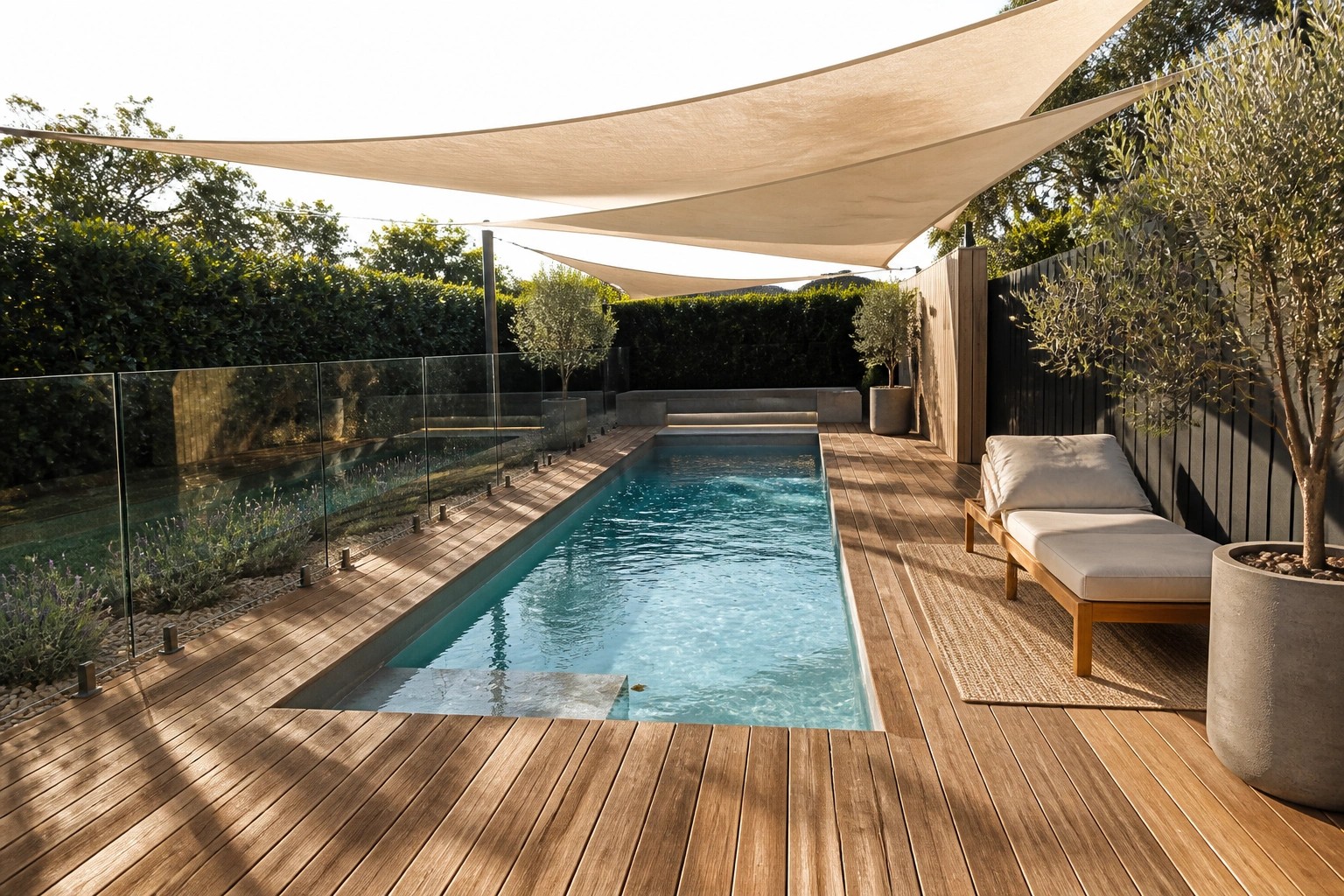
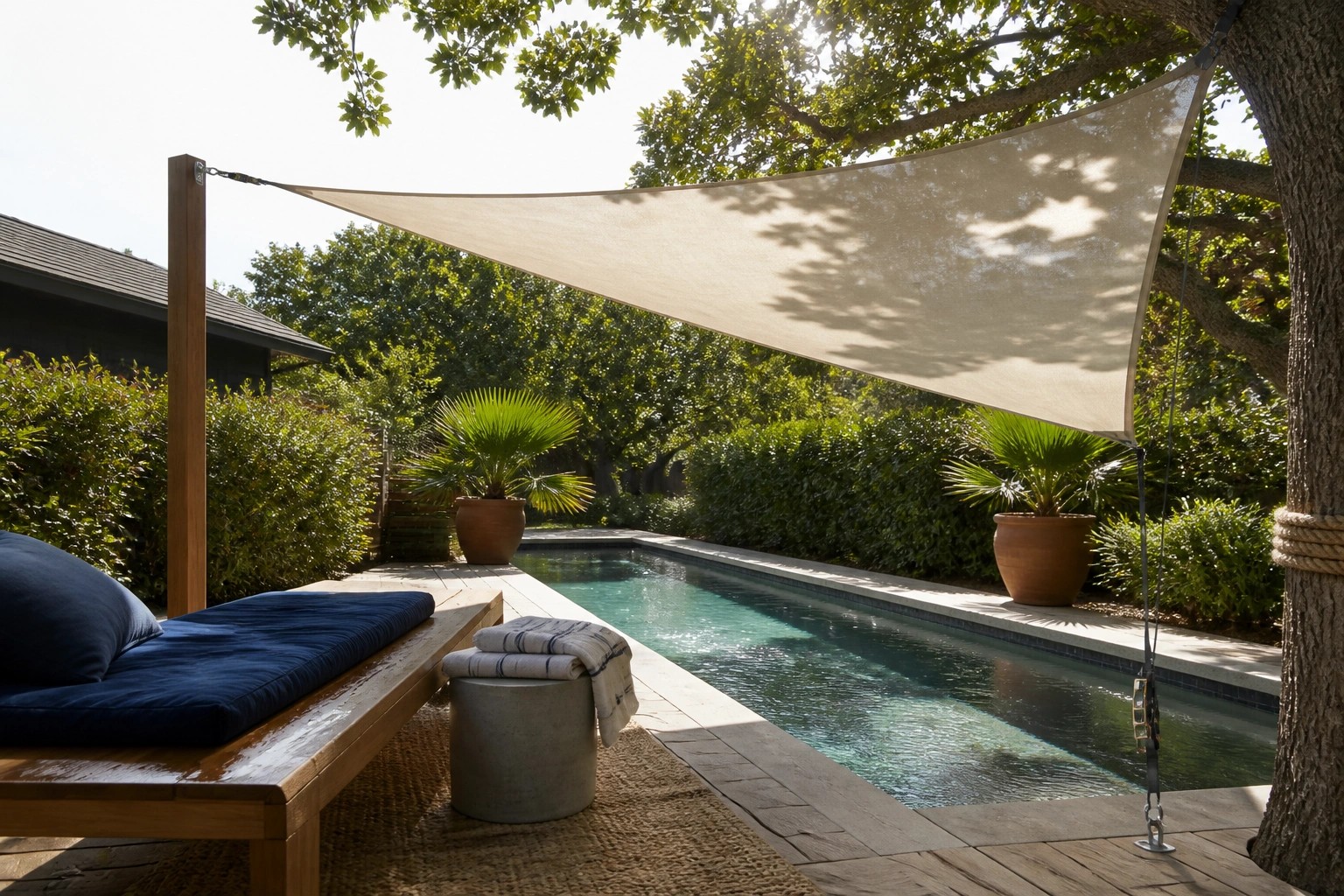
Shade Sails Over The Pool
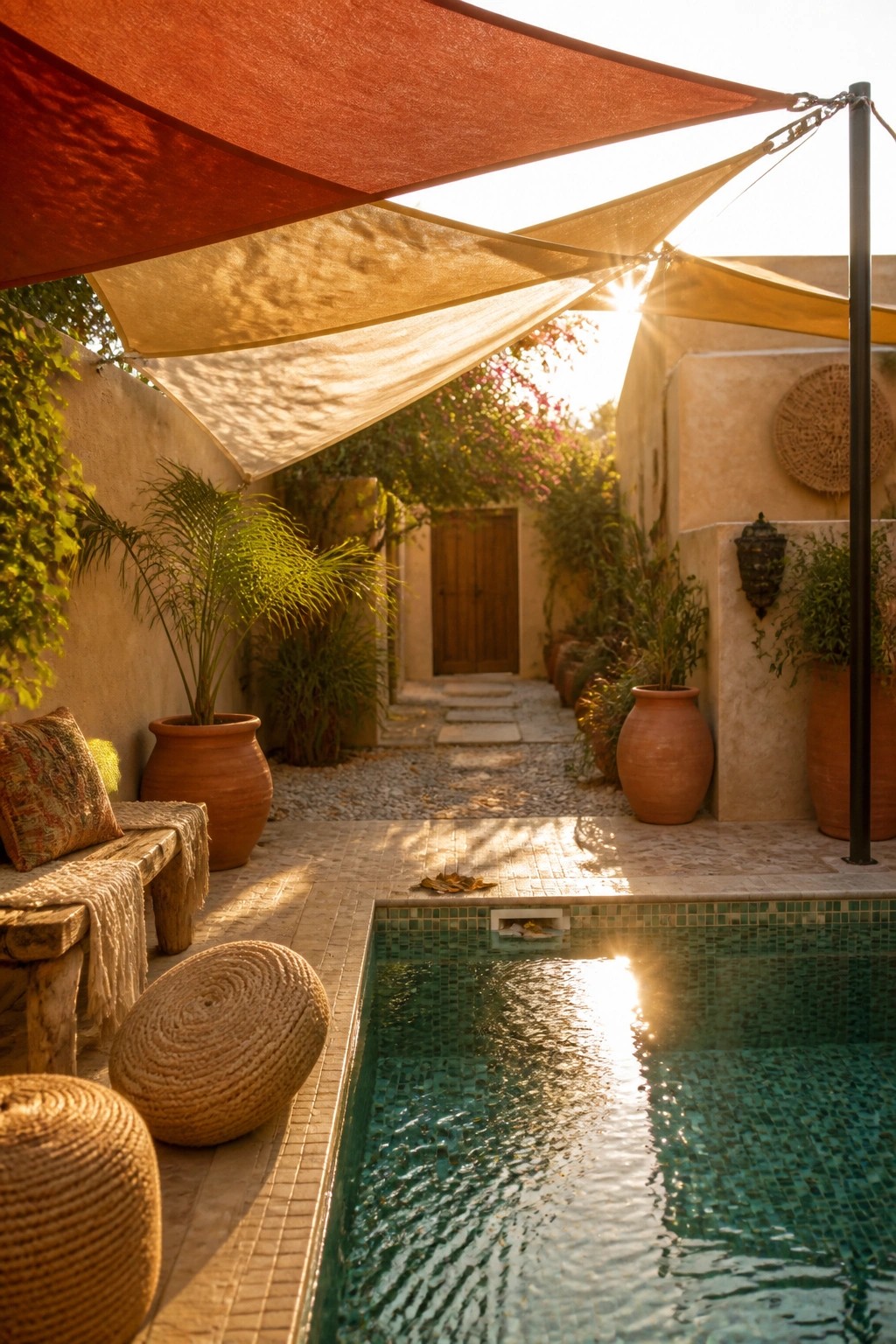
Shade sails give you a simple way to cover a pool area without building a heavy structure. They cut down direct sun while still letting some light filter through, and the fabric moves a little in the breeze so the space does not feel closed in.
They work on most backyard pools and fit a range of home styles. Just make sure the posts or wall mounts are solid, since wind can put real pull on the fabric over time.
Thatched Roofs For Natural Pool Shade
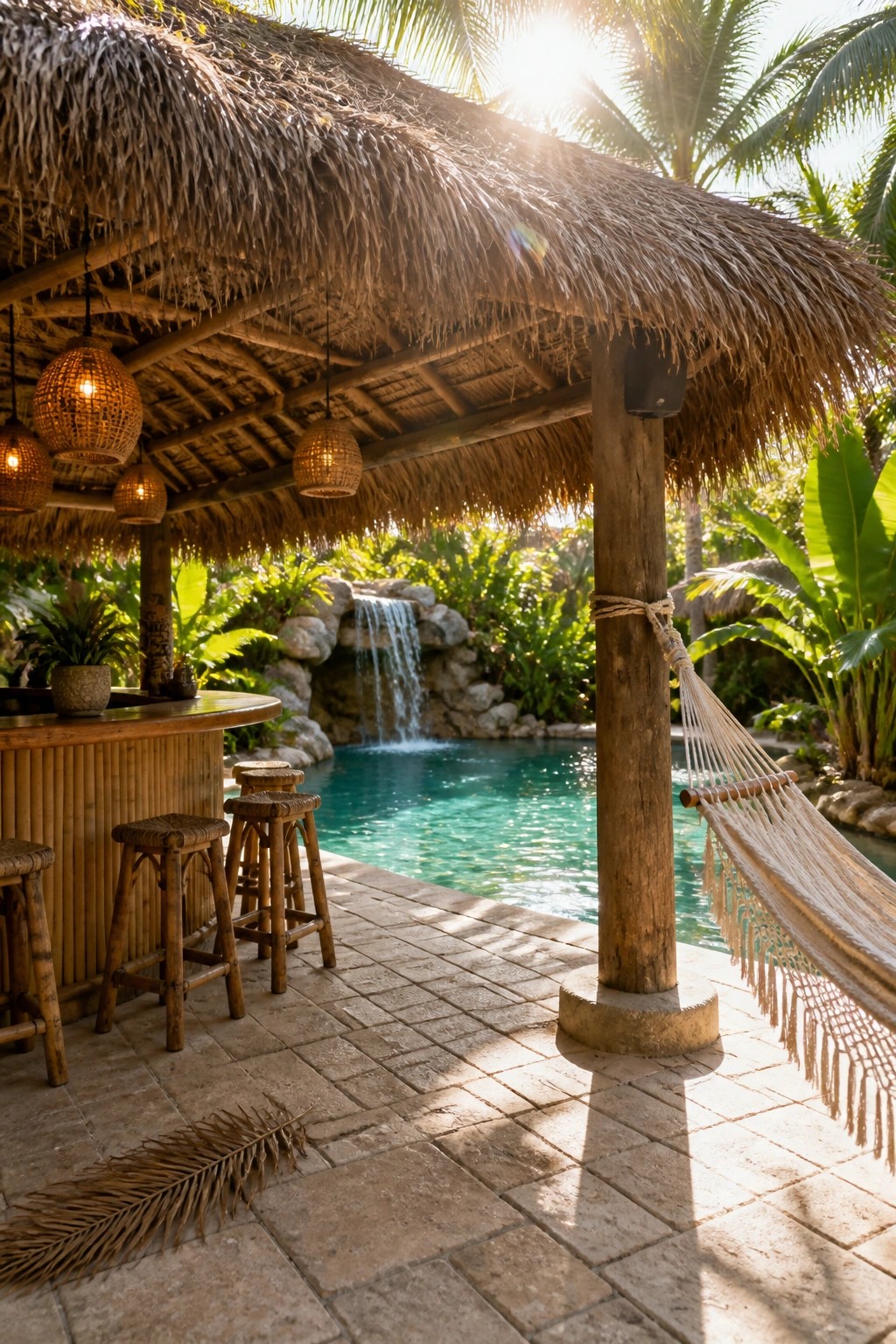
A thatched roof gives steady shade over a pool deck while still letting some light through. The natural material helps keep the space cooler and feels more relaxed than solid roofing.
It works well over a bar or seating area near the water. Try it on homes that already lean tropical or casual, and check that the frame can handle wind and rain where you live.
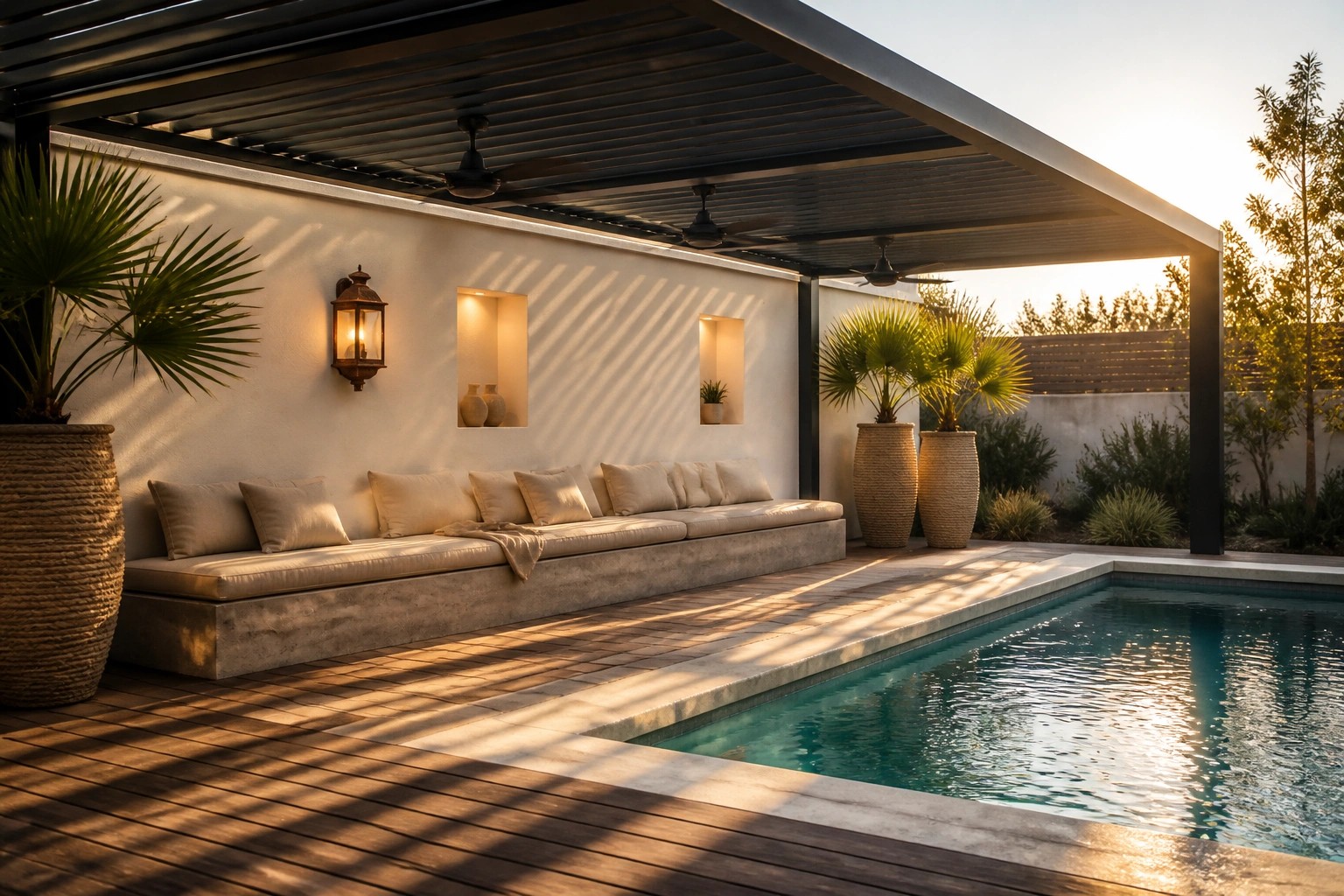
Louvered Pergolas For Poolside Shade
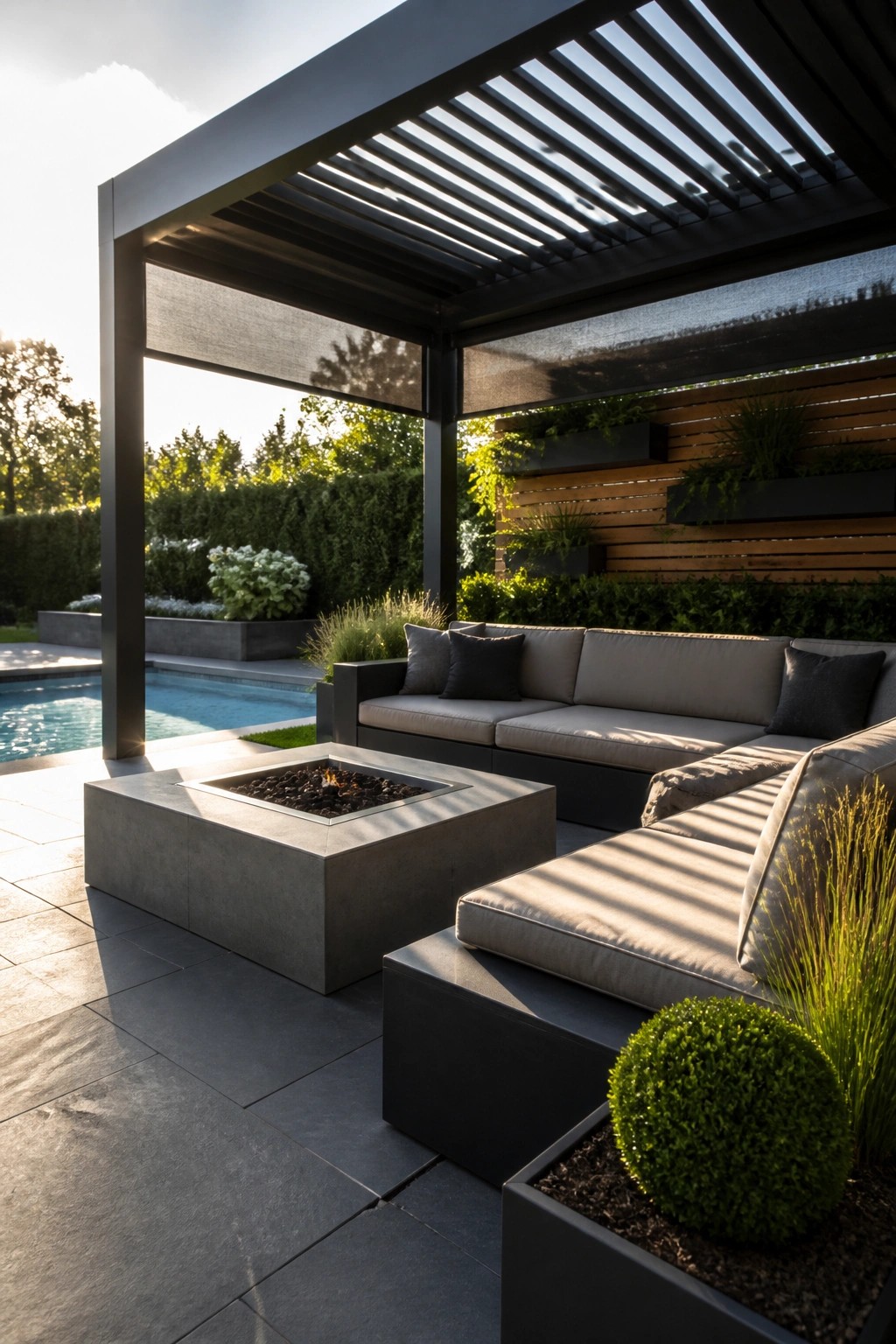
A louvered pergola gives you real control over sun and shade without blocking the open feel of a pool area. The adjustable slats let you angle them for more coverage during peak hours while still keeping airflow, and the side mesh panels add a bit of privacy when needed. It works especially well next to a pool because it creates a defined spot to sit without turning the whole deck into a closed room.
This setup suits homes where the pool sits close to the main living space and you want a place to relax without constant sun exposure. Keep the structure simple in dark tones so it blends with modern landscaping rather than competing with it. Make sure the posts are placed so they do not block the main view from the house to the water.
Pergola Shade With Climbing Vines
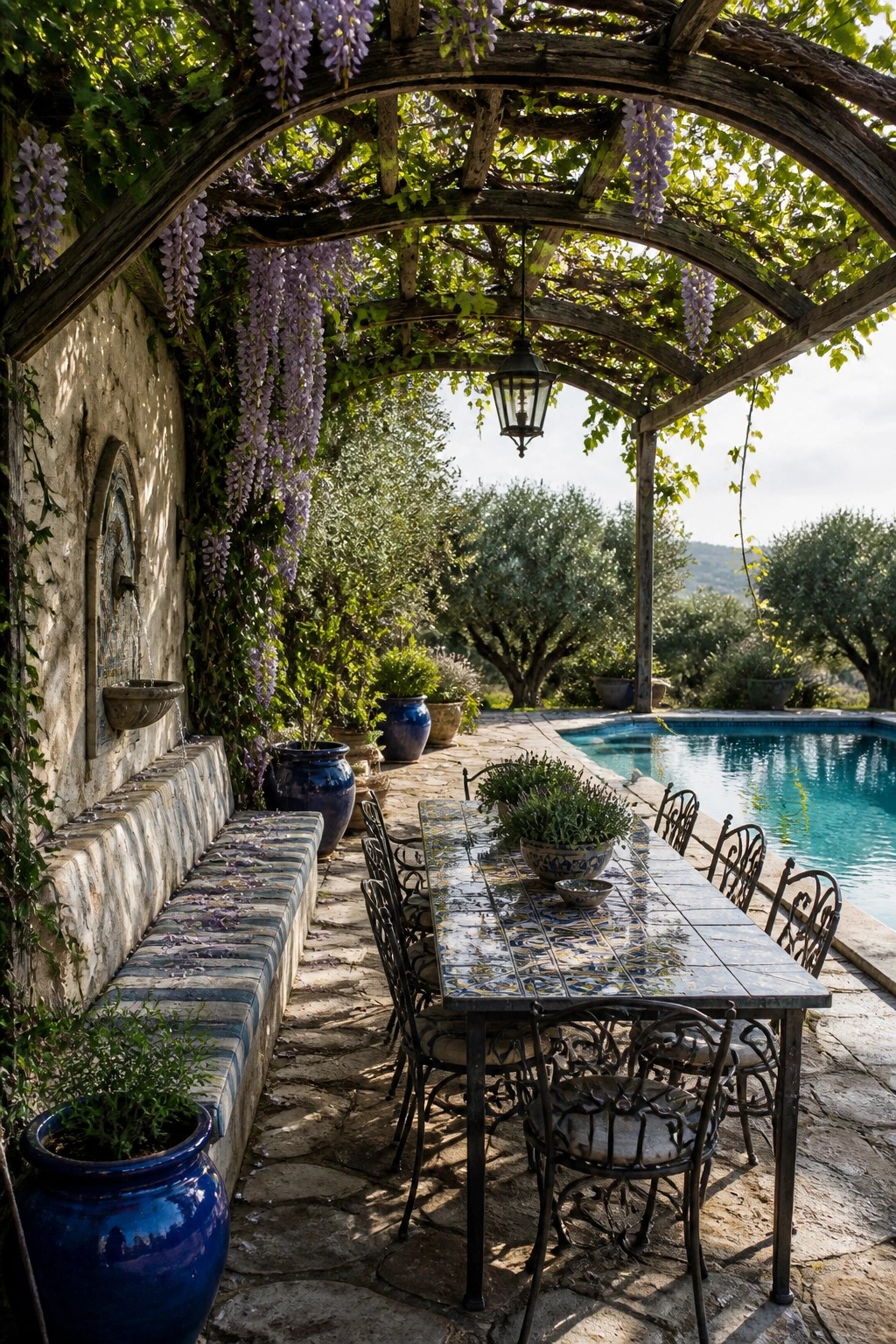
A simple pergola placed next to the pool can give steady shade when you let vines grow across the top. The plants soften the structure and drop the temperature underneath without making the space feel closed in.
This setup works best on patios where you want room for a table and chairs but still need relief from direct sun. Use a sturdy frame and pick vines that handle your climate so the cover lasts through the season.
Cantilevered Glass Shades For Pool Areas
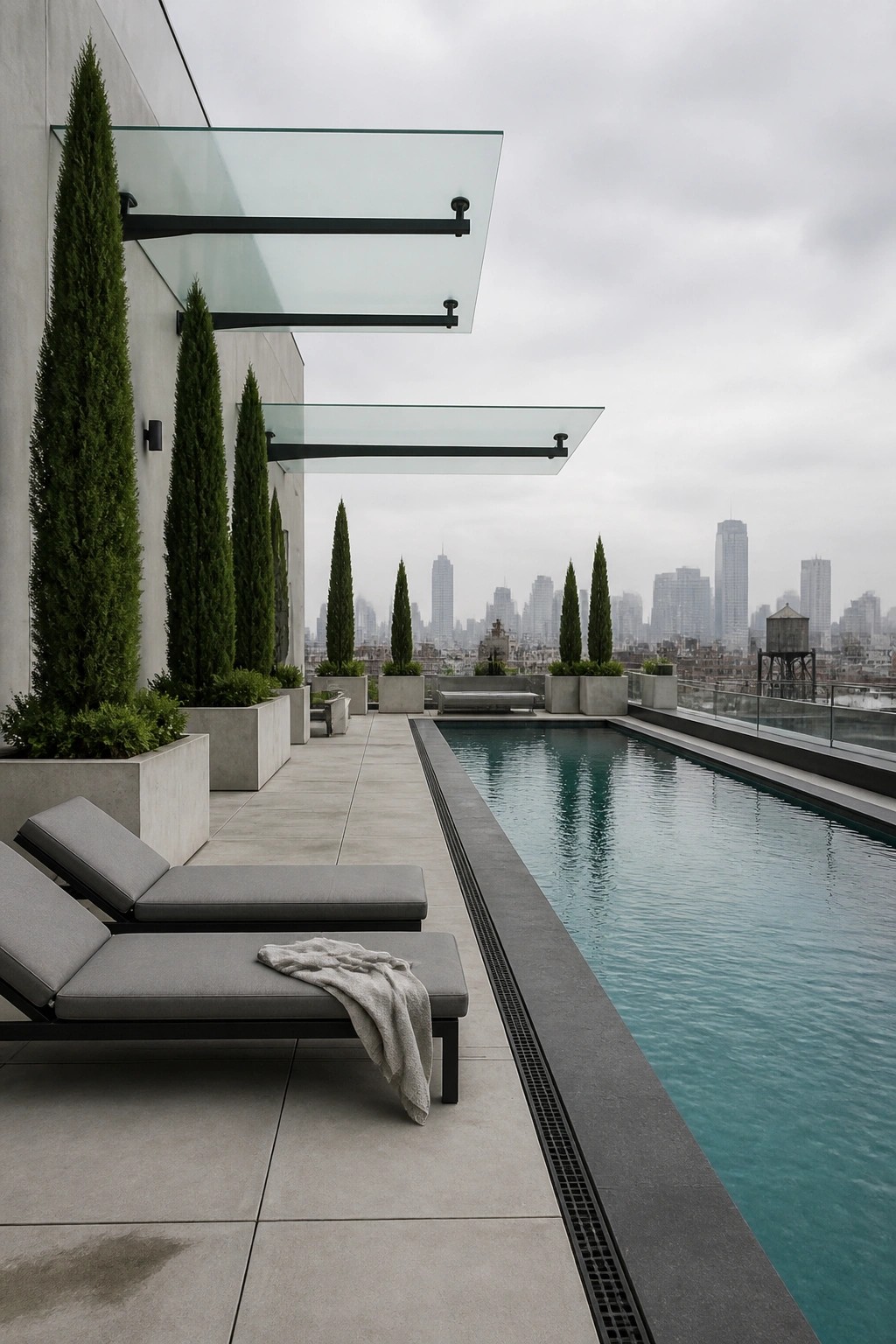
Glass overhangs mounted to a wall or structure give solid shade right where you need it most around a pool. They cut down on direct sun without closing off the view or making the space feel boxed in.
These shades suit flat rooftops or modern homes that already have clean lines. Check local wind loads before installing, and keep the supports simple so the glass stays the main feature.
A Pool Cabana For Poolside Shade
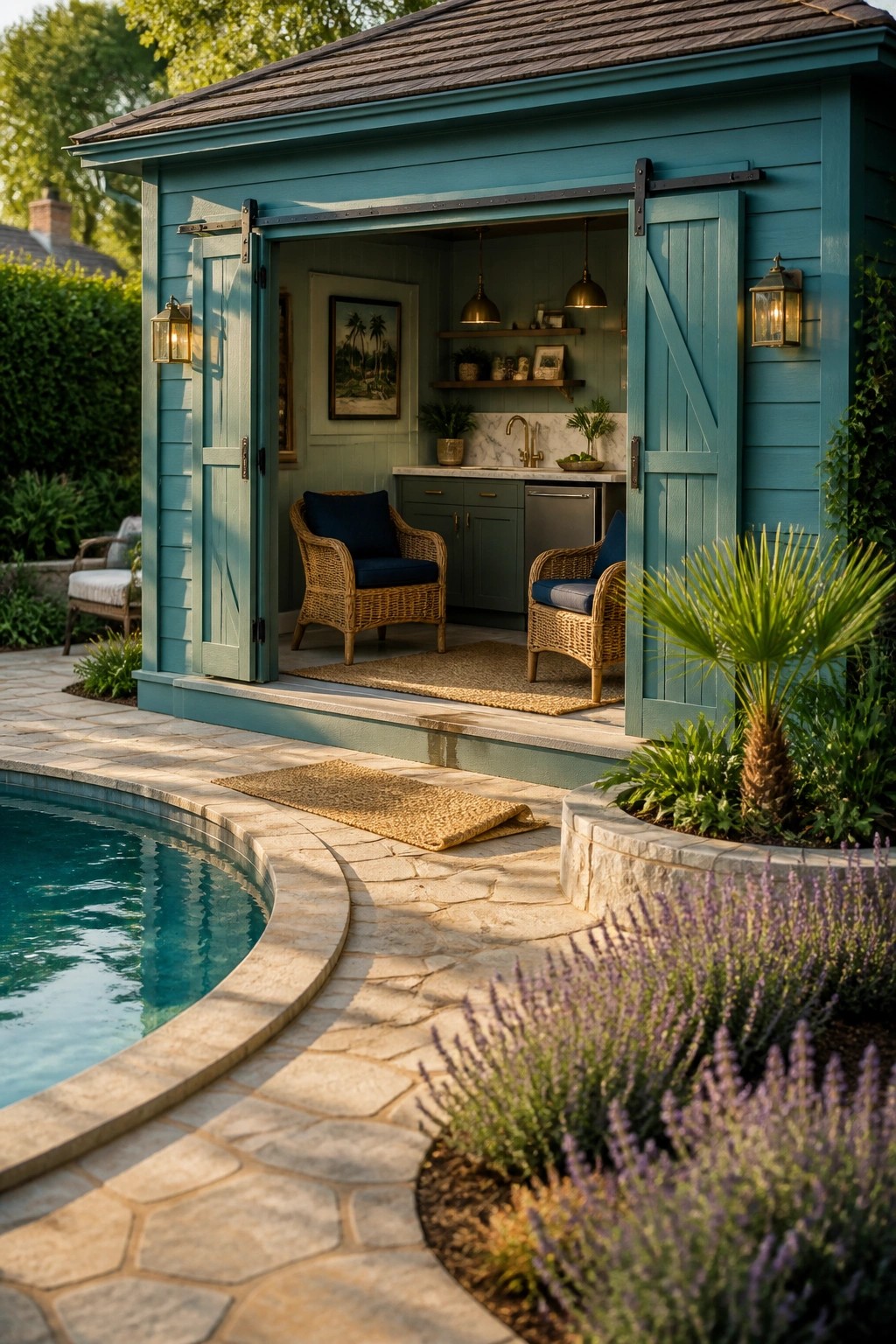
A small structure placed right by the water gives steady shade without relying on umbrellas or sails that need constant adjusting. It also creates a defined spot for sitting or keeping drinks and towels out of the sun, which makes the whole pool area feel more usable on hot days.
This works best on lots that have a bit of room along one side of the pool. Keep the doors wide open during the day so air moves through, and choose a simple finish that matches the house so it does not feel like a separate building.
A Covered Pavilion Next to the Pool
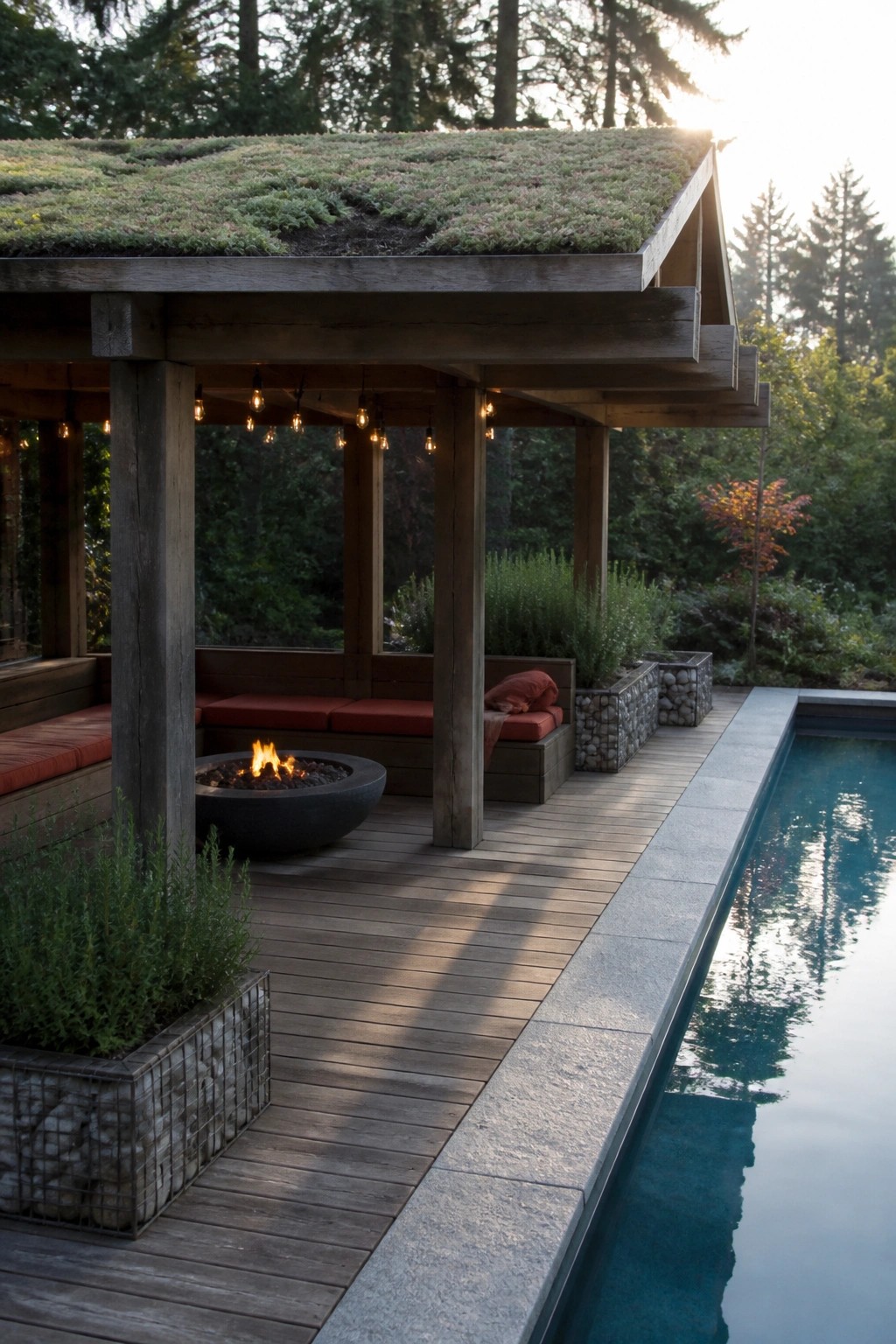
A covered pavilion gives you solid shade right by the pool without making the space feel boxed in. The open sides keep the air moving, and the roof protects seating and a fire pit so the area stays usable even in strong sun or light rain.
This works best on larger decks or patios where you want one clear zone for sitting. Keep the structure simple in wood and match the roof to nearby plantings so it blends in rather than competing with the pool view.
Hang a Fabric Canopy for Pool Deck Shade
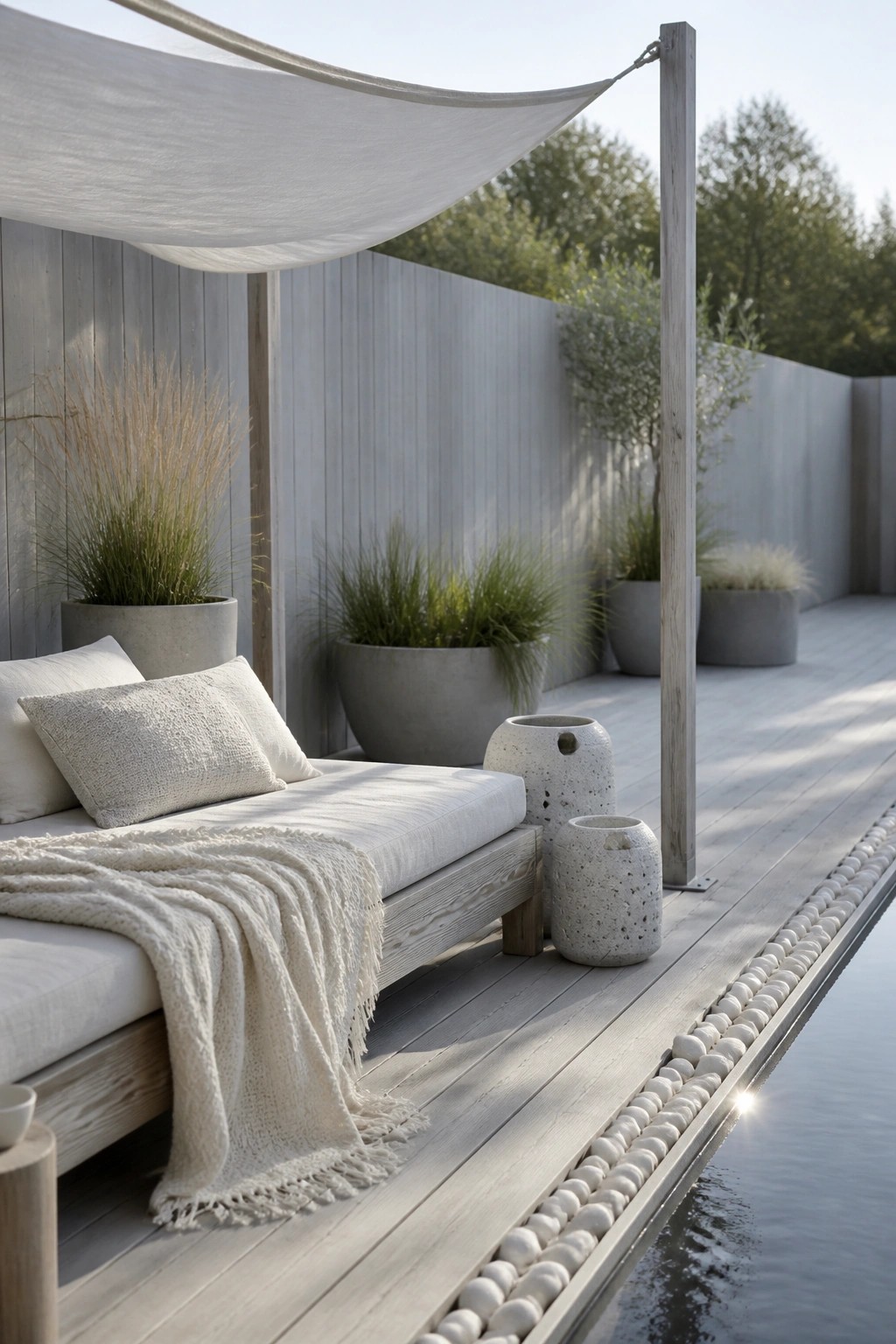
A simple fabric canopy stretched overhead gives shade without closing in the space. It works especially well over a lounge area right beside the water, since it blocks sun while still letting in air and light.
Mount it to posts or nearby structures so it covers the seating below. It fits most wooden decks and suits homes that already have open poolside spots. Check the fabric tension now and then so it stays secure in wind.
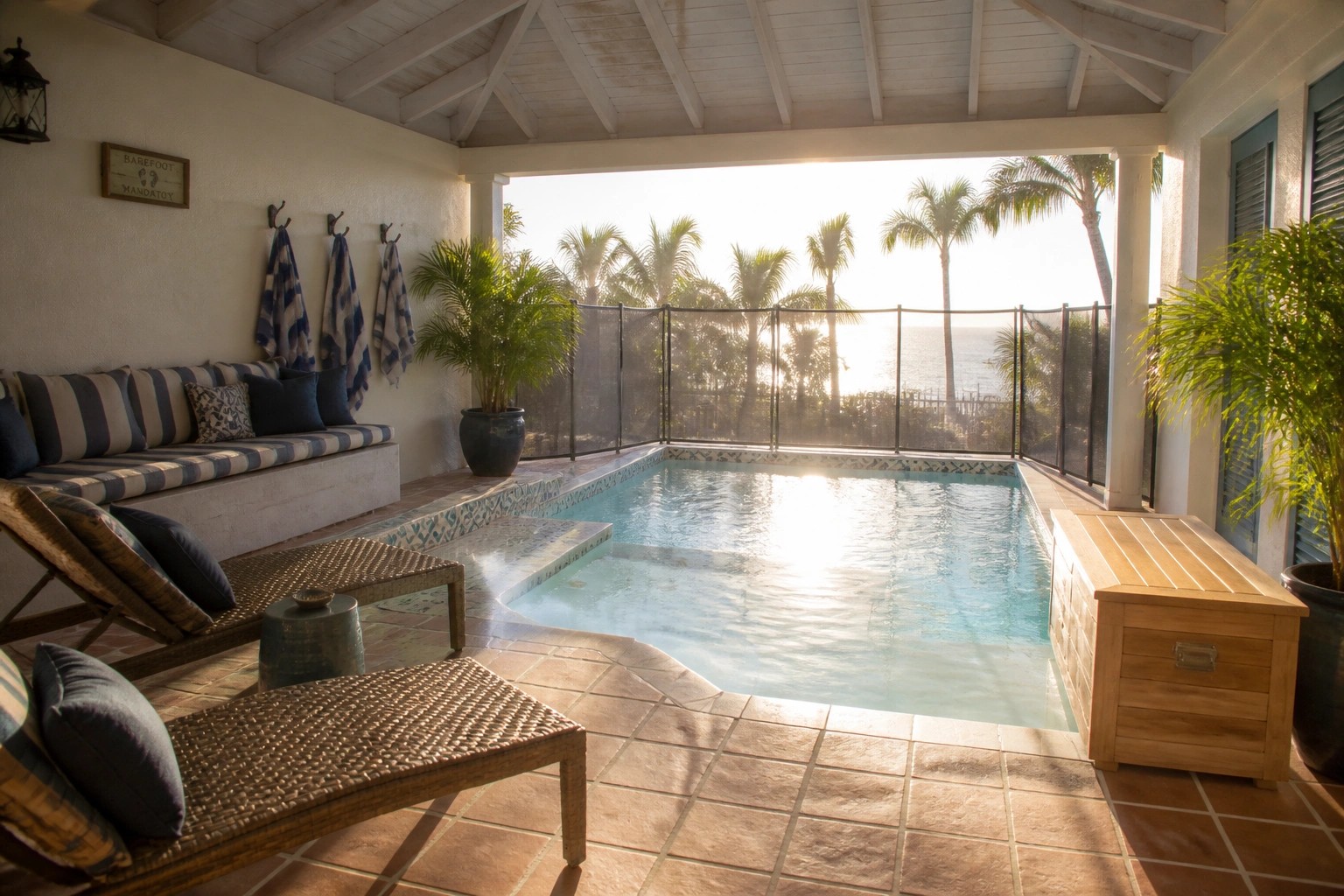
Covered Porches For Poolside Dining
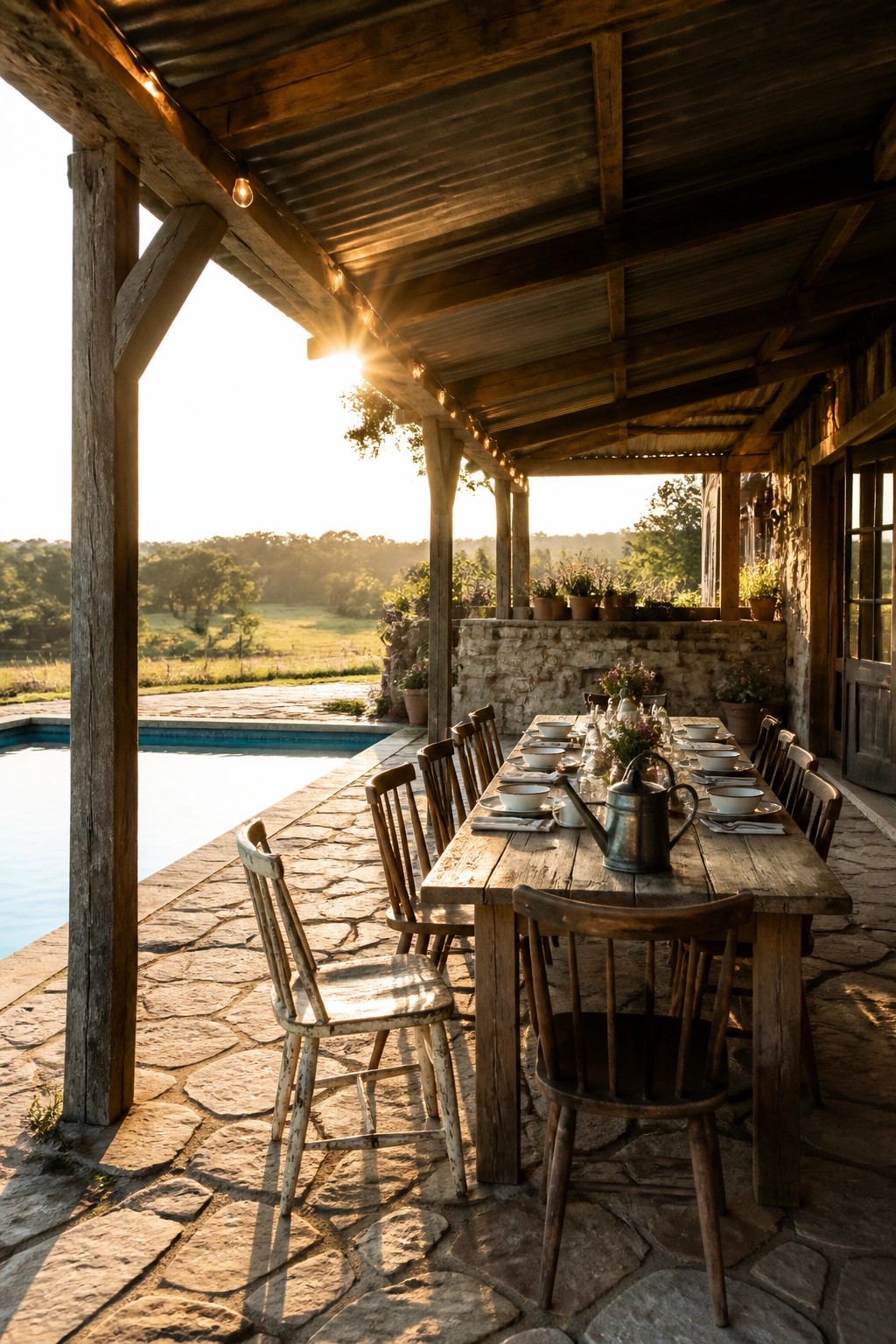
A covered porch right next to the pool gives you a shaded place to sit and eat without moving far from the water. The roof blocks the sun during the middle of the day and makes the space usable even when it is hot out.
This works best on homes where the pool sits close to the back of the house. Extend the roof far enough to cover the full table and chairs so people stay comfortable through lunch or an early dinner.
Pergolas That Shade Lounge Areas
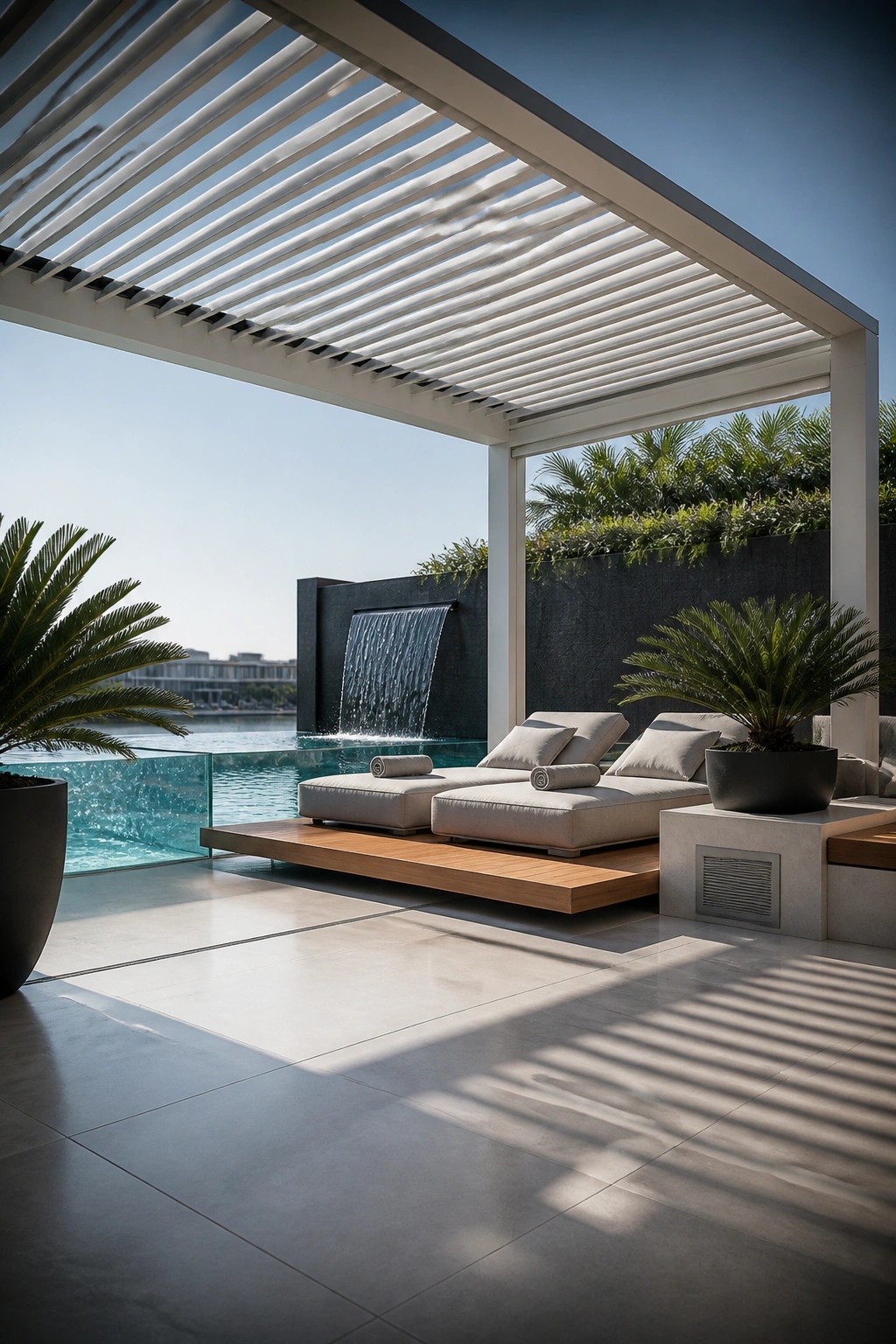
A pergola with wide slats overhead gives steady shade right where you need it most. It cuts the sun without closing off the view, so the space stays comfortable even on bright days. The open structure also lets air move through, which helps keep things cooler than a solid roof would.
This setup works best on modern homes with clean lines and open pool decks. Place the pergola over a low lounge platform so the seating stays usable for longer stretches. Just watch the slat spacing if you want more sun control in peak summer.
A Thatched Pergola for Pool Shade
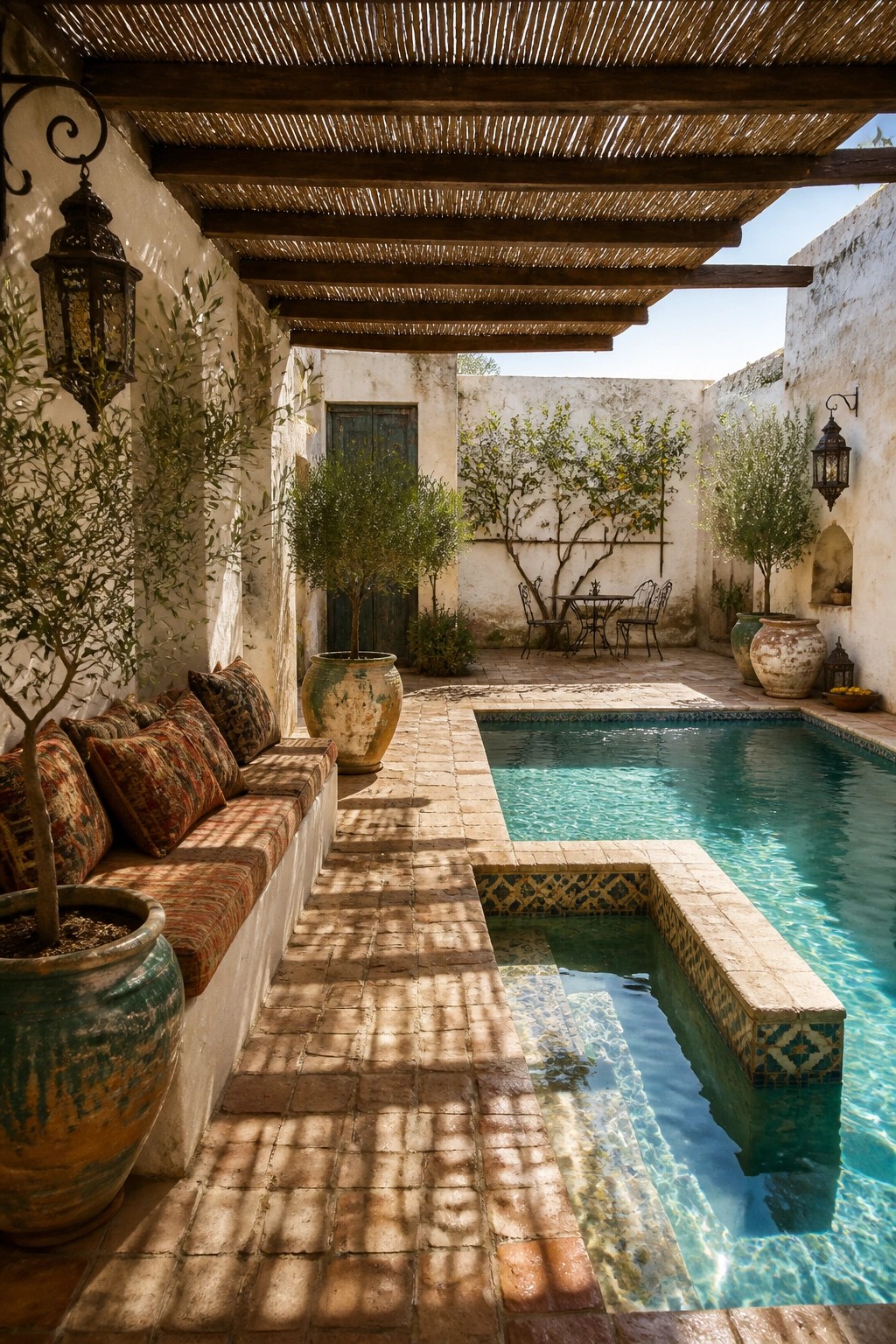
A thatched roof on a wooden pergola gives solid shade right next to the pool without making the space feel closed in. The natural material cuts down on heat while still letting a little light filter through, which keeps the area comfortable during the day.
This kind of cover works best in sunny, dry climates and pairs well with simple seating built along the edge. It suits homes that already lean toward Mediterranean or rustic details, and the main thing to watch is making sure the frame can handle wind and occasional rain.
Cantilevered Umbrellas For Pool Lounging
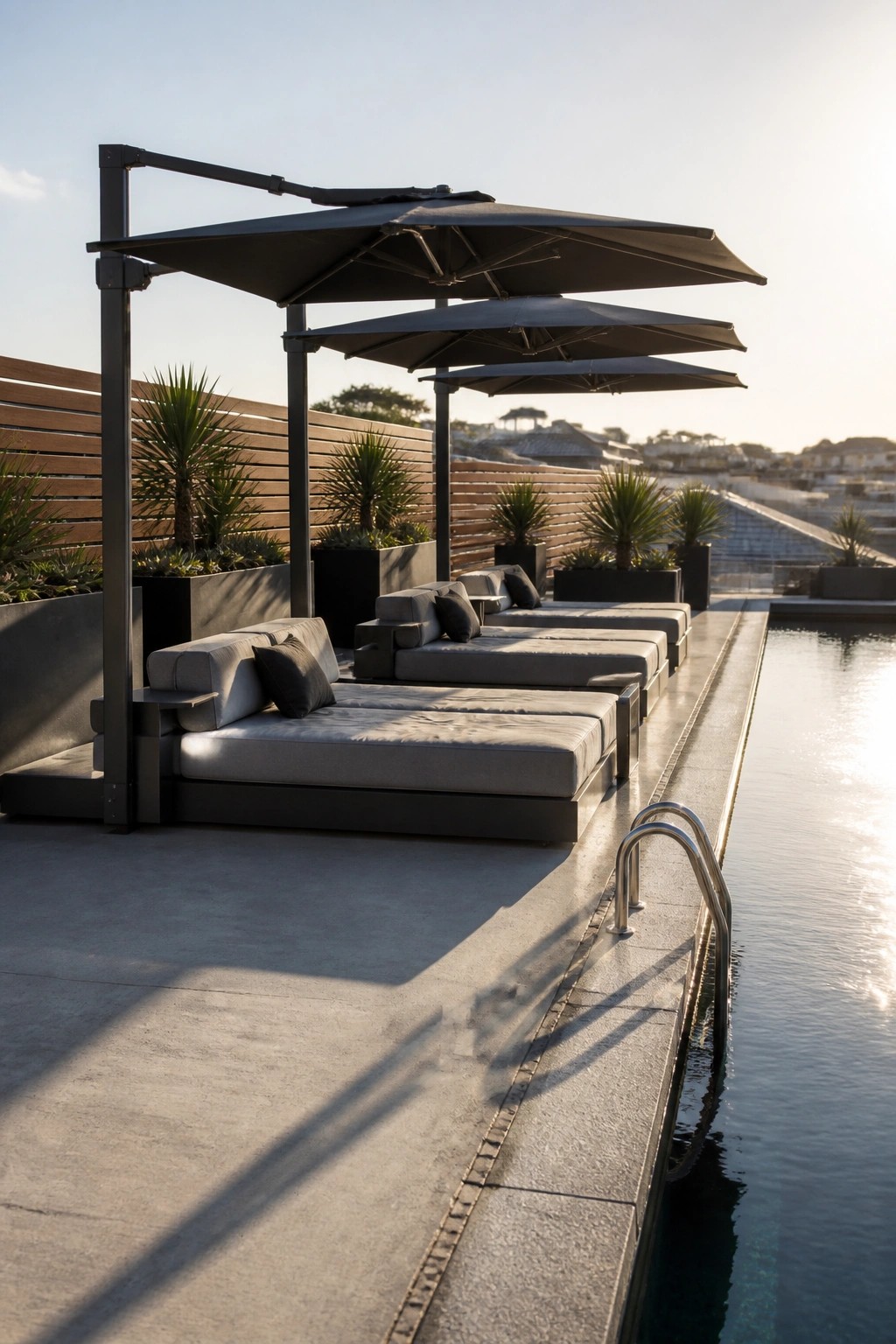
Cantilevered umbrellas give you solid shade over multiple lounge chairs without posts blocking the deck or the view of the water. The offset design keeps the base out of the way so the seating area stays open and easy to walk around.
This works best on larger pool decks where the sun hits at different angles throughout the day. It suits homes that already have clean concrete edges and simple furniture, since the focus stays on the shade itself rather than extra structures.
Bamboo Pergola Shade Over the Pool
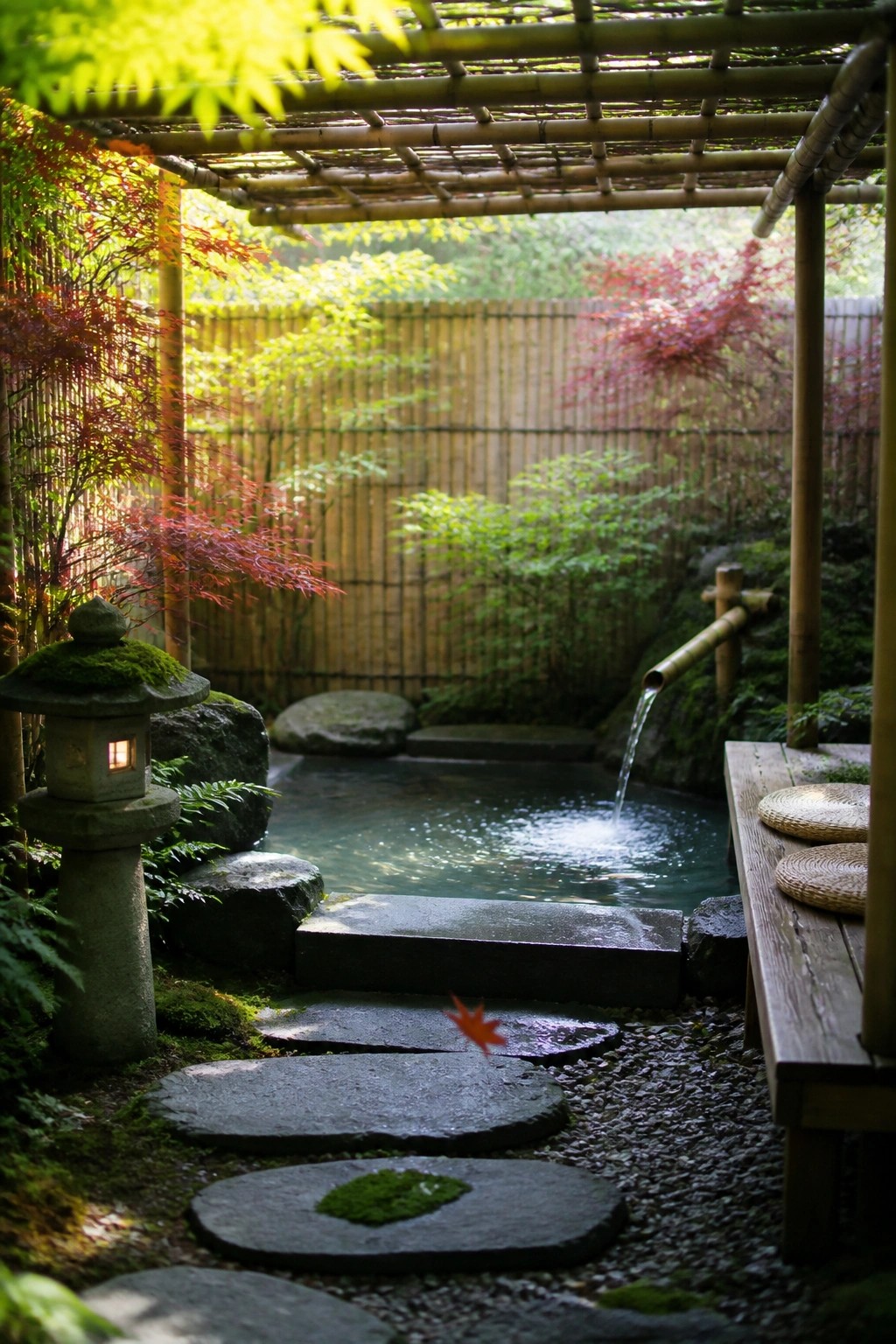
A bamboo pergola adds useful shade right where it is needed most. The open lattice lets some light through while cutting down the heat, which makes soaking more comfortable even in the middle of the day.
This setup works best in smaller backyard pools or garden spas. Keep the structure simple, use natural materials that age well, and make sure the posts sit on solid footings so the whole thing stays steady over time.
Retractable Awnings for Poolside Shade
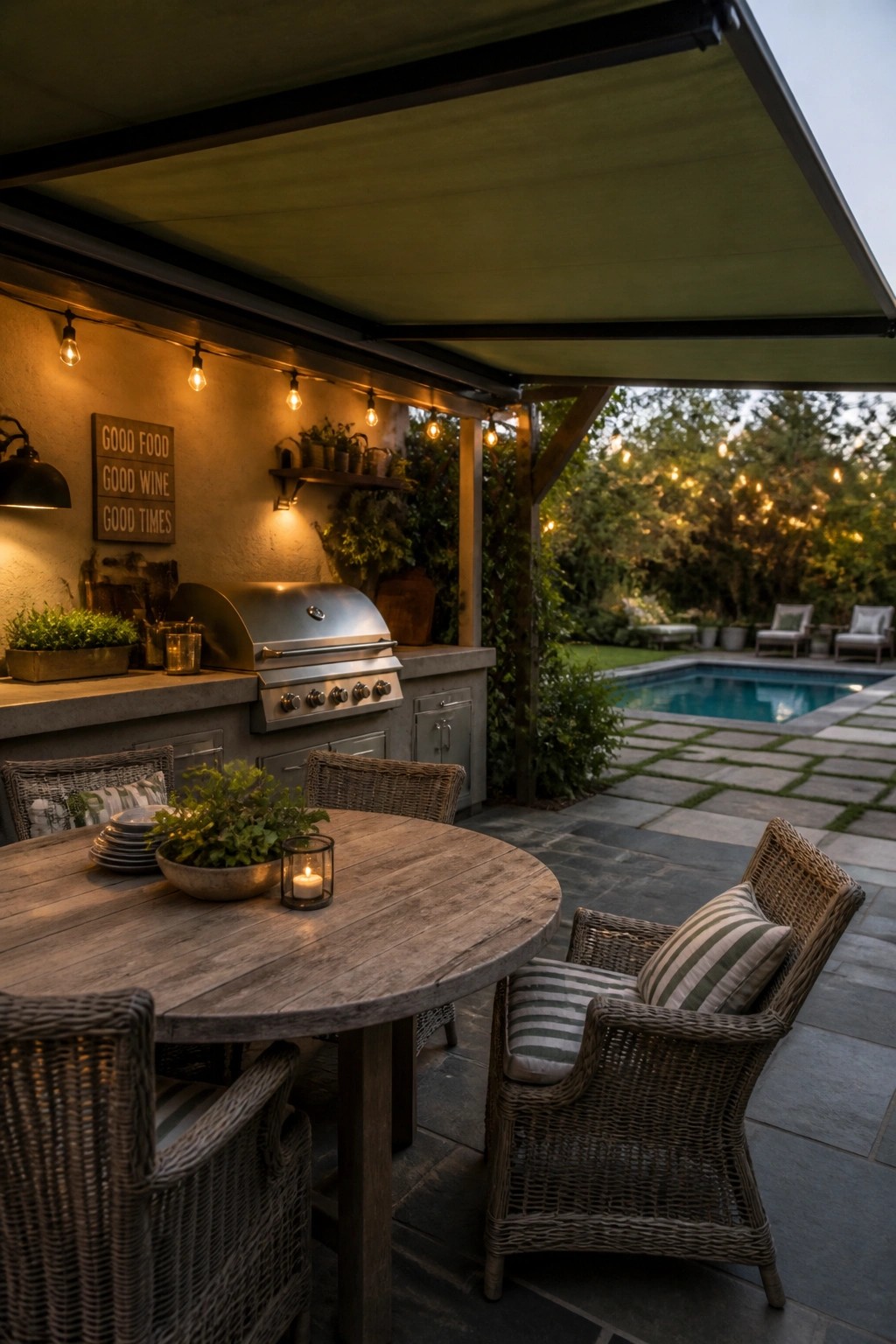
An overhead awning gives steady shade over an outdoor dining area without closing off the space. It keeps the table and chairs usable during the heat of the day while still leaving the pool and yard in view.
This setup works best on patios that sit right next to the water. Many homeowners like the option to roll it back on cooler days or when they want more sun.
Hanging Curtains From A Pergola For Pool Shade
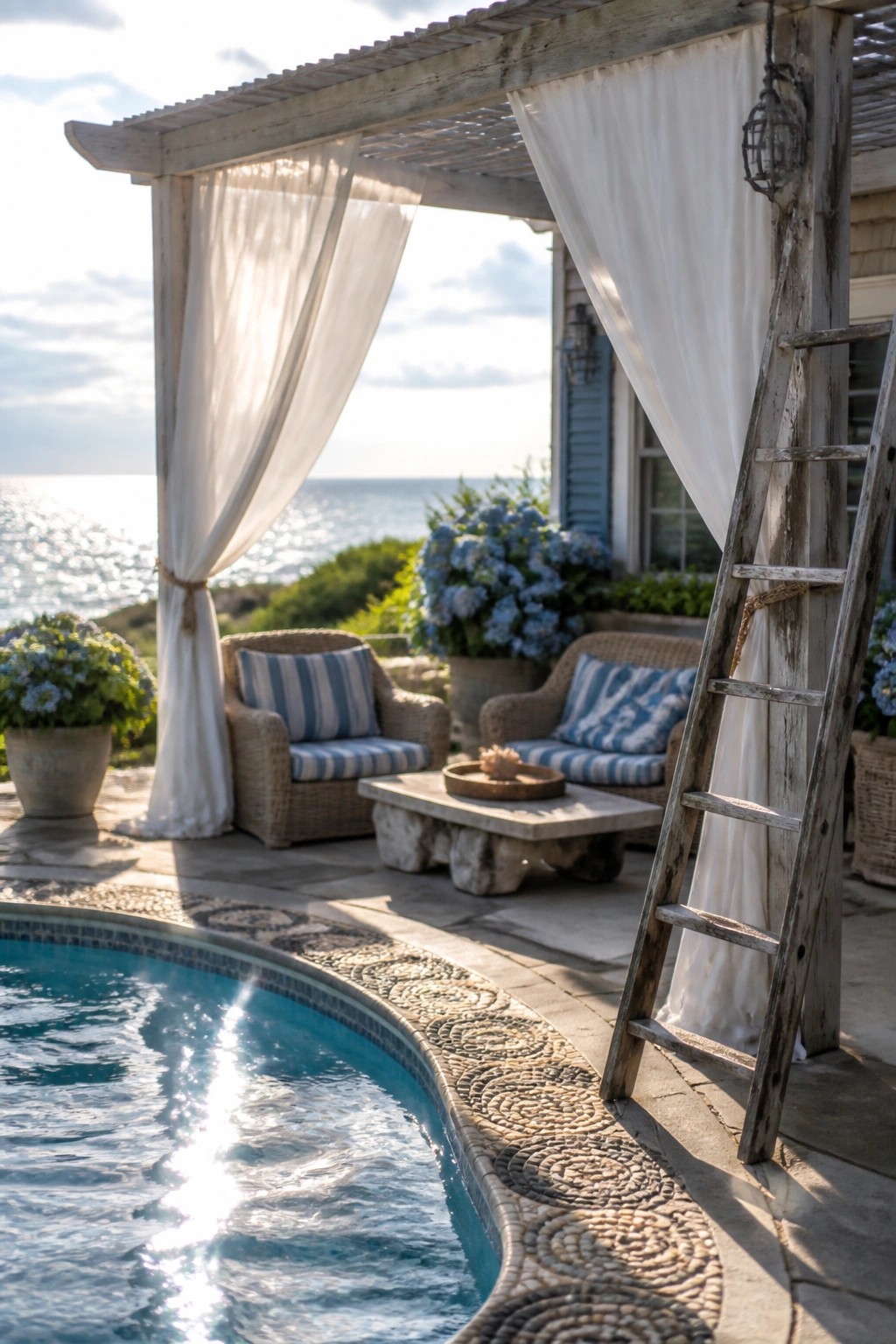
Curtains on a pergola give you a simple way to manage sun around the pool. The fabric can stay tied back most of the time and get pulled closed when the light gets too strong.
This works well on open decks or pool areas that need a bit of privacy without feeling closed in. Outdoor fabric holds up better in sun and wind, and lighter colors keep the space from feeling dark.
Perforated Overhead Screens
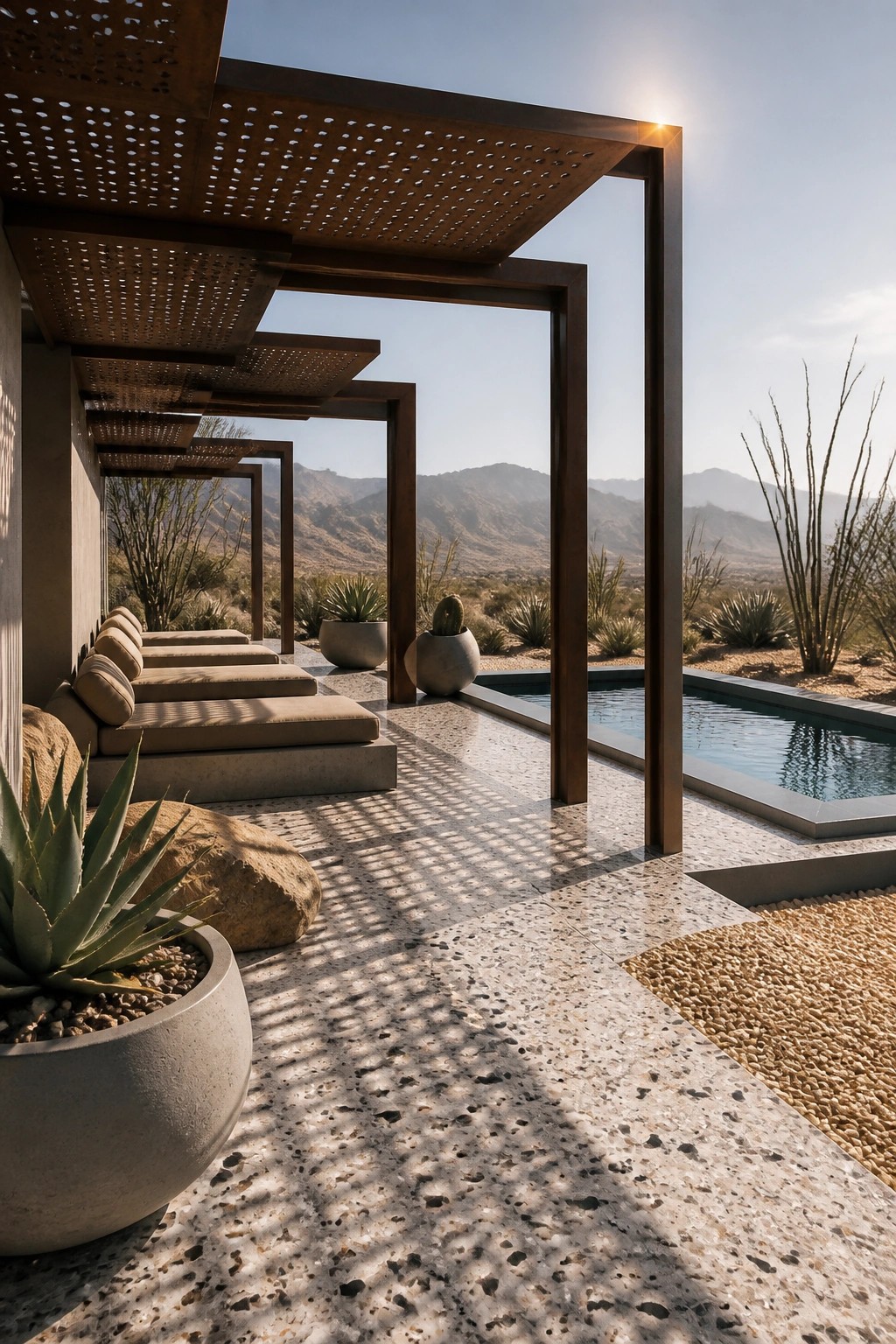
Perforated metal screens overhead work well because they block direct sun while still letting some light through. The small holes create a pattern of shadows on the ground and keep the space from heating up too much during the day. This kind of shade feels lighter than a solid roof and suits pool areas that need cooling without losing the outdoor feel.
It works best on patios or pool decks where you want coverage over seating but still need some brightness. The structure can be built at different heights to create layers, which adds more interest to the shade. Just make sure the holes are not too large or the sun will still hit too hard in spots.
Extend the Roofline Over the Pool Deck
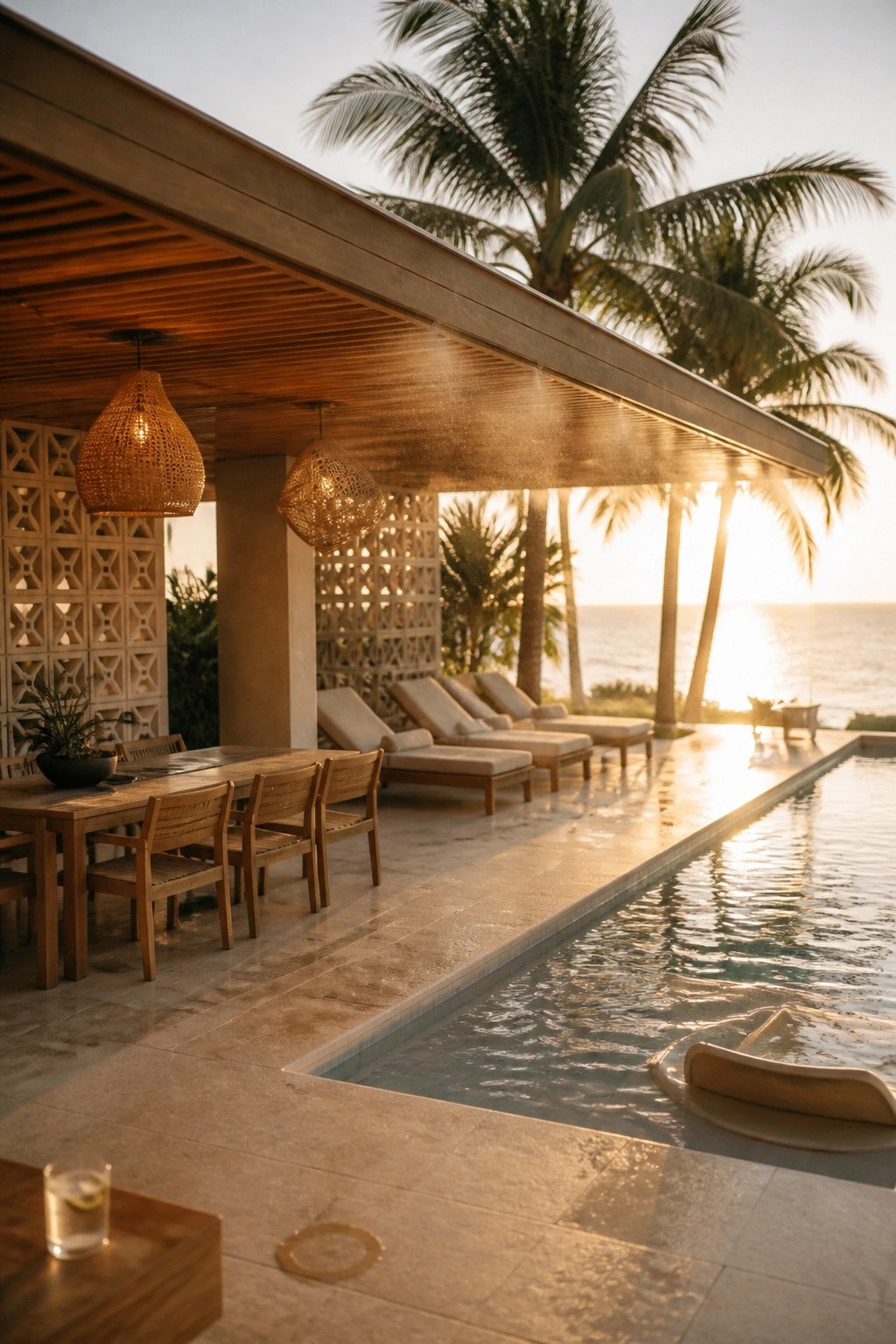
A roof overhang creates steady shade right where you need it most, along the edge of the pool. It covers seating and loungers without the hassle of moving umbrellas or dealing with fabric that fades.
This works best on homes where the main roof can extend outward over the patio area. Keep the ceiling height open enough for airflow and check that the angle still lets in some morning light if you want a brighter feel early in the day.
Retractable Shades For Poolside Seating
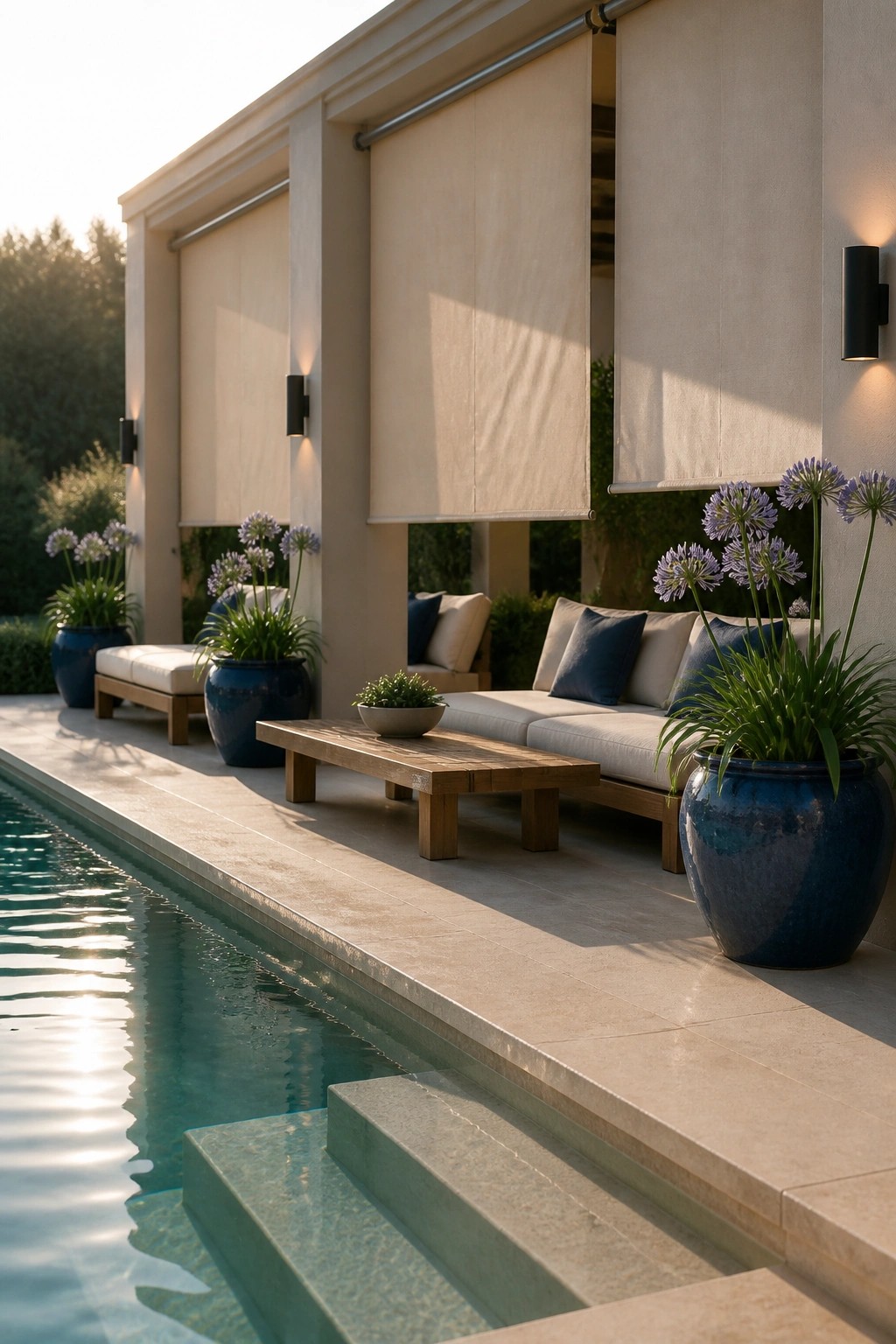
Retractable shades give you shade right where you need it without building anything permanent. They work especially well when you have a wall or covered area next to the pool and want to cover the seating zone quickly on hot afternoons.
They suit homes with a simple outdoor setup and a flat wall surface. Look for outdoor fabric that can handle sun and moisture, and keep the hardware easy to reach so you actually use them.
Woven Canopies for Pool Shade
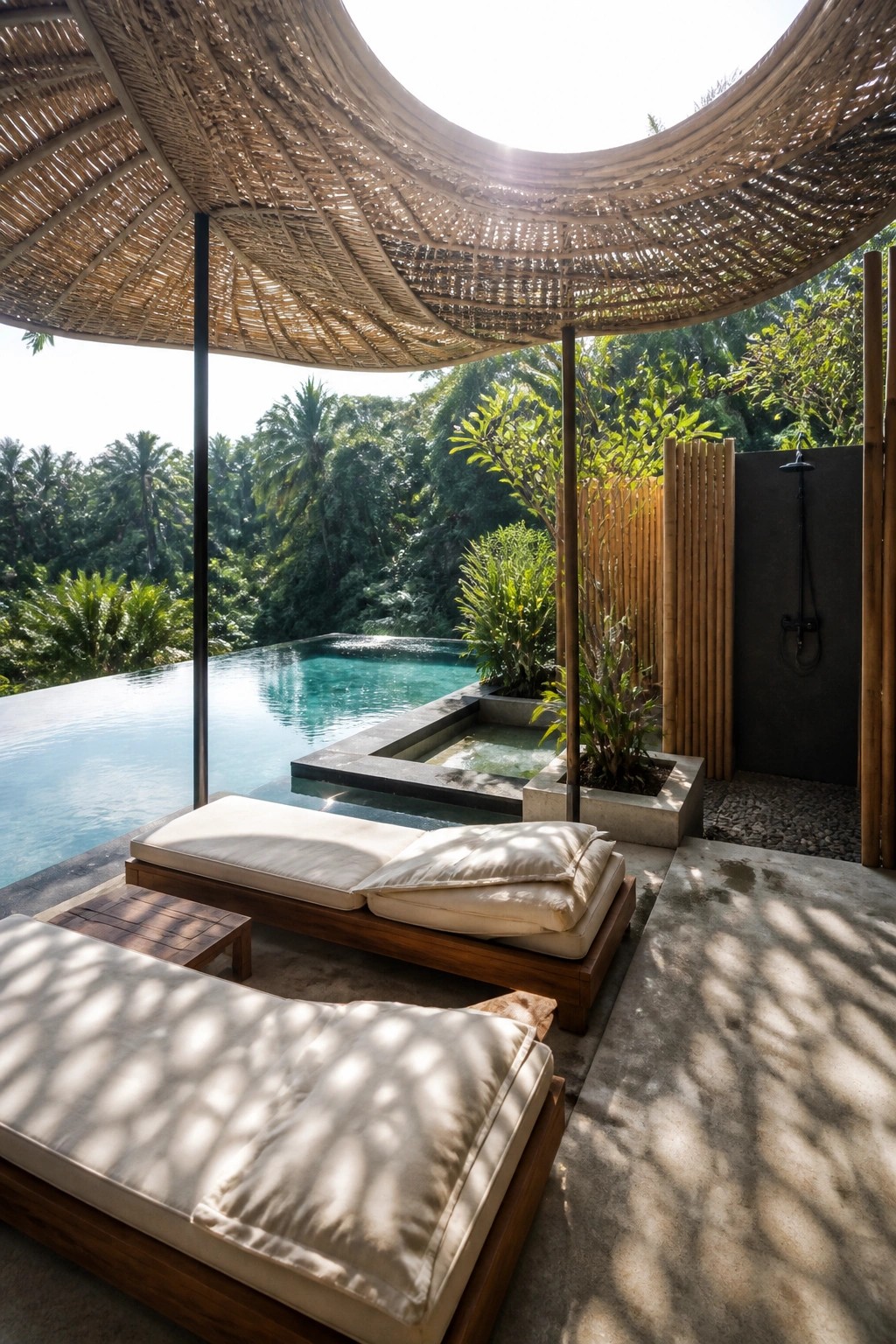
A large woven shade overhead makes a pool deck much more usable during the day. The natural material blocks enough sun to keep the lounges comfortable while still letting some light filter through.
This works best in warm climates where people spend hours outside. It pairs well with simple seating and open views, though it needs solid posts to handle wind.
Retractable Awnings For Poolside Shade
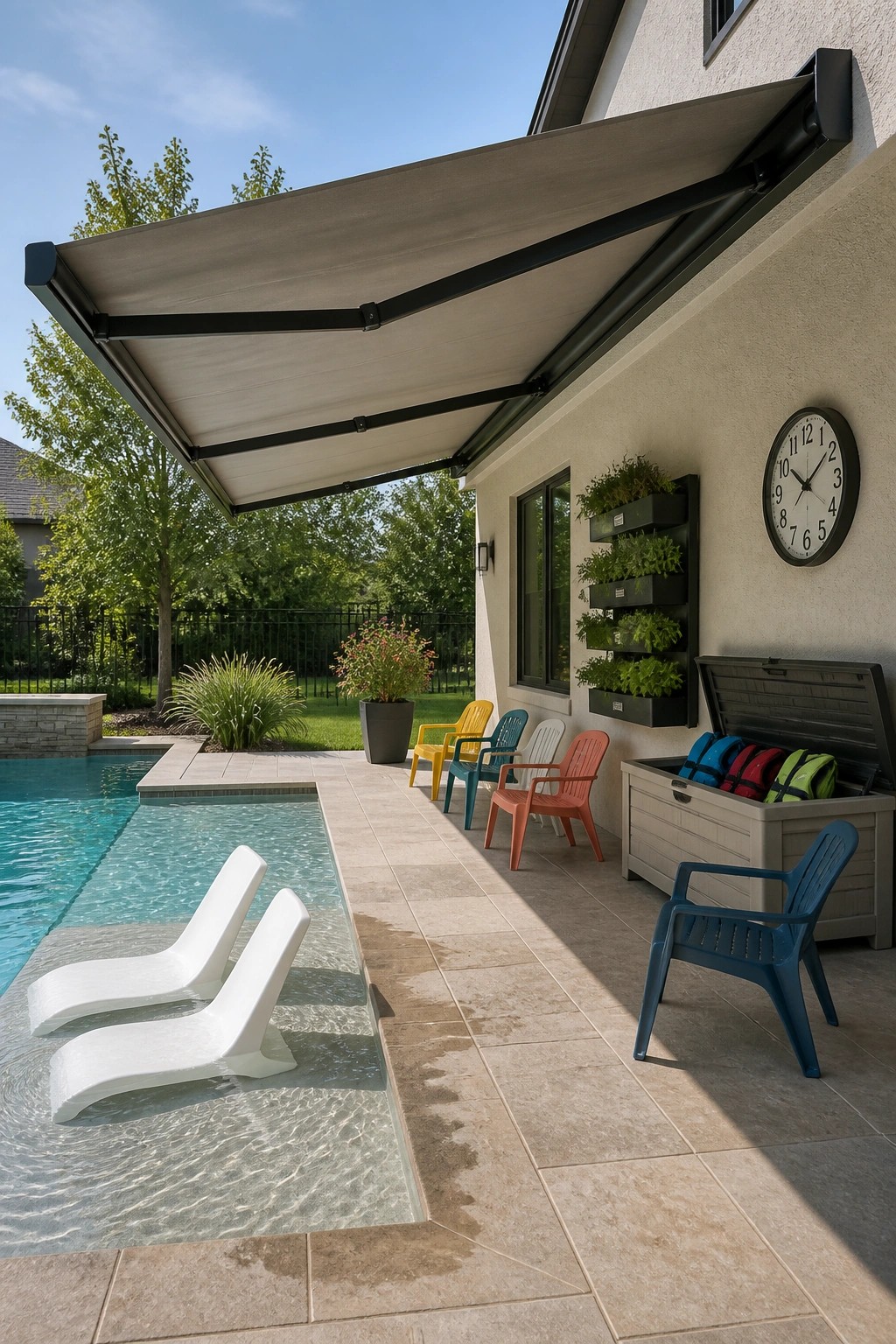
A retractable awning lets you cover part of the pool deck when the sun gets strong and then roll it back when you want more open air. It works especially well on patios that sit right next to the water because it creates usable shade without adding posts or a fixed roof.
This setup fits homes where the pool area gets heavy afternoon sun. Mount the awning on the house wall so it extends out over seating, and choose a fabric that handles weather and wind. Keep the size reasonable so it does not overwhelm the space when fully open.
Frequently Asked Questions
Q: How do I know if a shade sail will hold up in my windy area?
A: Pick one made from heavy duty fabric and anchor it well on all sides. Test the tension after installing to prevent flapping. This simple step saves you from constant fixes later.
Q: What about keeping bugs out while I sit in the shade?
A: Add mesh panels to a cabana or gazebo setup. They let air flow but keep pests away during evening swims. You will enjoy the space more without sprays.
Q: Is it hard to clean these shade covers over time?
A: Most fabric shades just need a quick hose down every few weeks. Avoid harsh cleaners that might weaken the material. Regular care keeps them looking fresh for seasons.