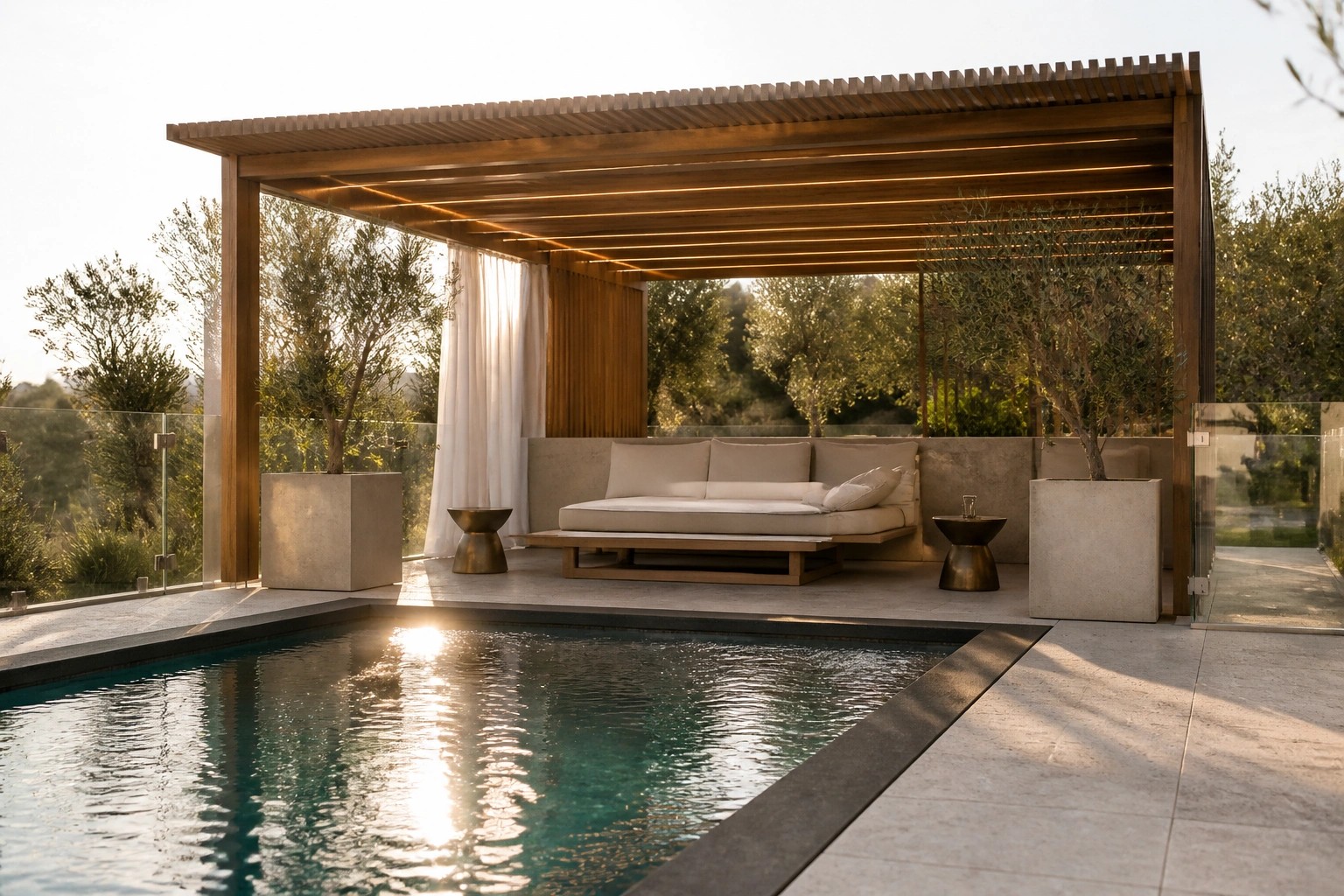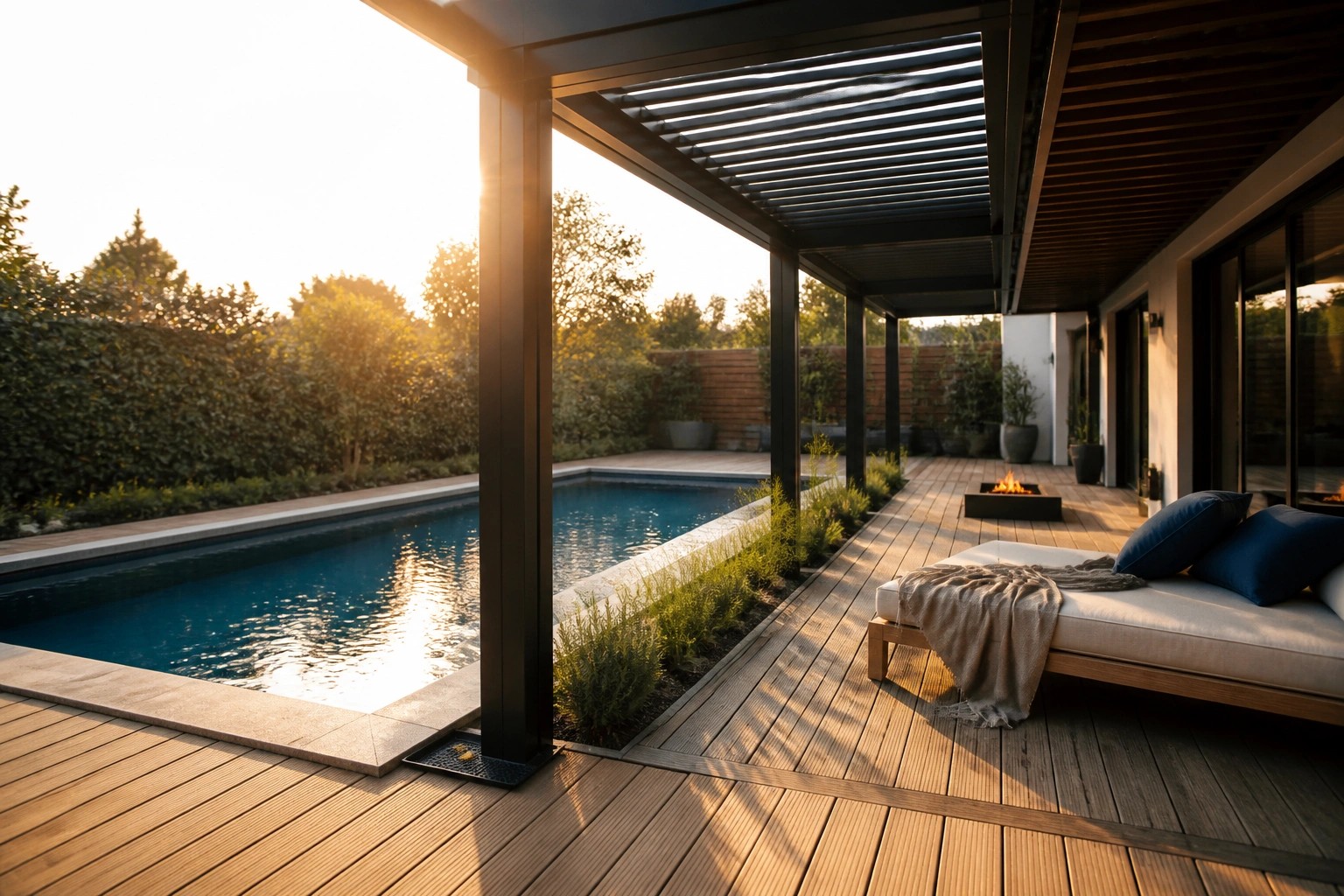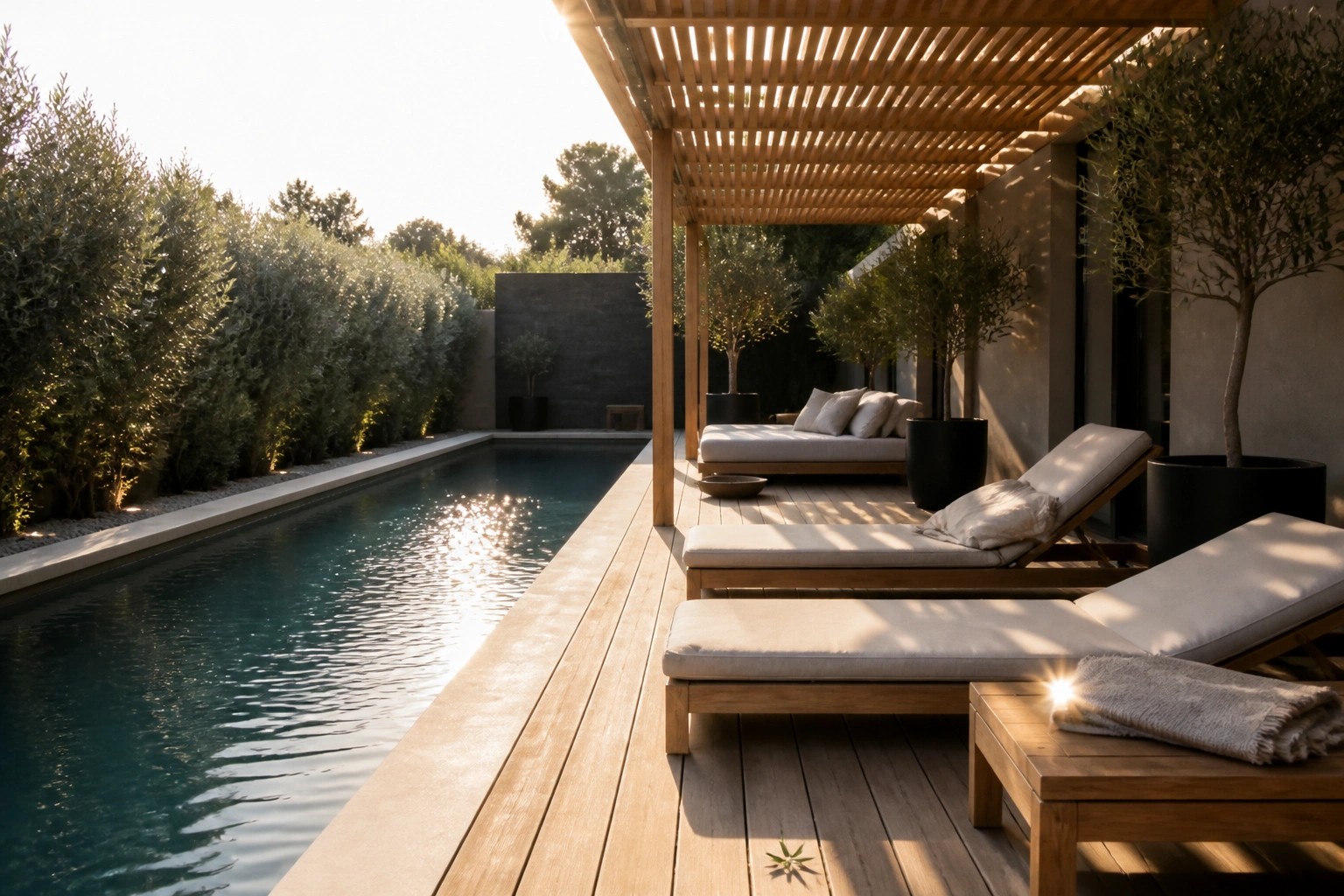
I have found that pool areas tend to feel half finished unless the shade is planned as part of how people actually move through the space.
Many designs look clean on paper but end up casting shadows that make the water itself less inviting to use during the day.
Simple choices in scale often prevent that problem.
When the structure stays low and open, the whole setting keeps its sense of calm without losing function for afternoon swims or evening gatherings.
I usually try out ideas that leave clear paths around the edge first, since those are the ones that hold up once real furniture and daily use are added.
Table of Contents
- 1 Slatted Pergolas For Poolside Shade
- 2 Shade Sails Over Pool Decks
- 3 Slatted Pergolas for Pool Shade
- 4 Slatted Pergolas For Poolside Shade
- 5 Cantilever Umbrellas For Poolside Shade
- 6 Extend The Roofline For Pool Shade
- 7 Layer Multiple Shade Sails Over A Pool
- 8 Pergolas for Poolside Shade
- 9 Louvered Roofs For Pool Shade
- 10 Concrete Overhangs For Pool Shade
- 11 Vertical Slats And Tall Plants For Pool Shade
- 12 Perforated Metal Overhead Screens
- 13 Overhead Slat Shade For Poolside Dining
- 14 Overhead Woven Shades For Pool Areas
- 15 Natural Woven Canopies For Pool Shade
- 16 Overhangs That Shade Poolside Seating
- 17 Vertical Wood Screens For Poolside Shade
- 18 Curved Perforated Screens for Pool Shade
- 19 Perforated Metal Screens For Pool Shade
- 20 Circular Canopies For Pool Shade
- 21 Overhead Grids For Pool Shade
- 22 Large Potted Trees for Poolside Shade
- 23 Frequently Asked Questions
Slatted Pergolas For Poolside Shade
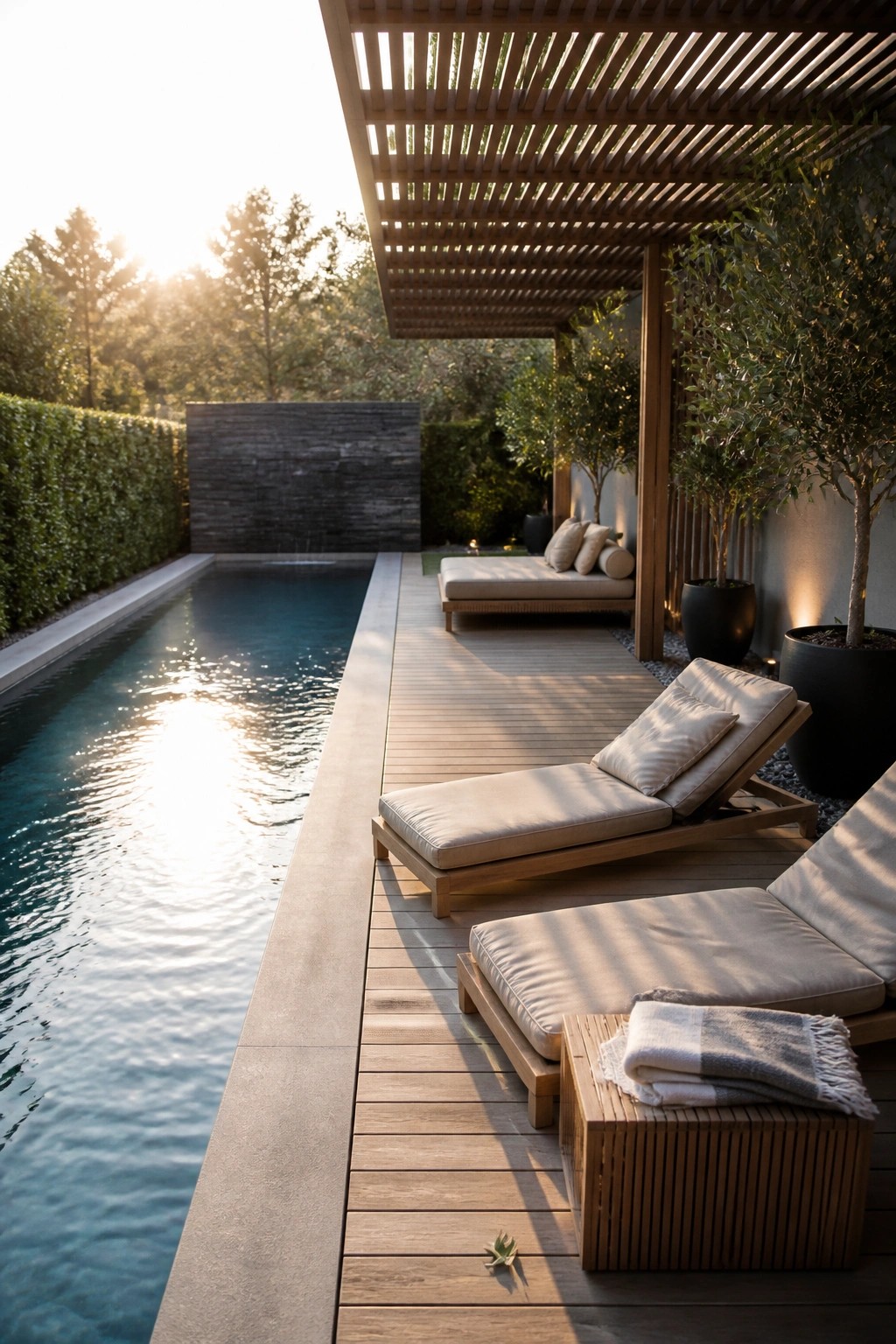
A simple slatted overhead structure gives just enough shade over pool loungers without making the space feel closed in. It cuts the harshest sun while still letting light and air move through, which works well on long decks where people spend time during the day.
This approach suits minimalist yards that already have clean lines and low furniture. Keep the wood tone consistent with the decking and avoid adding too many extra layers underneath so the shade stays light and practical.
Shade Sails Over Pool Decks
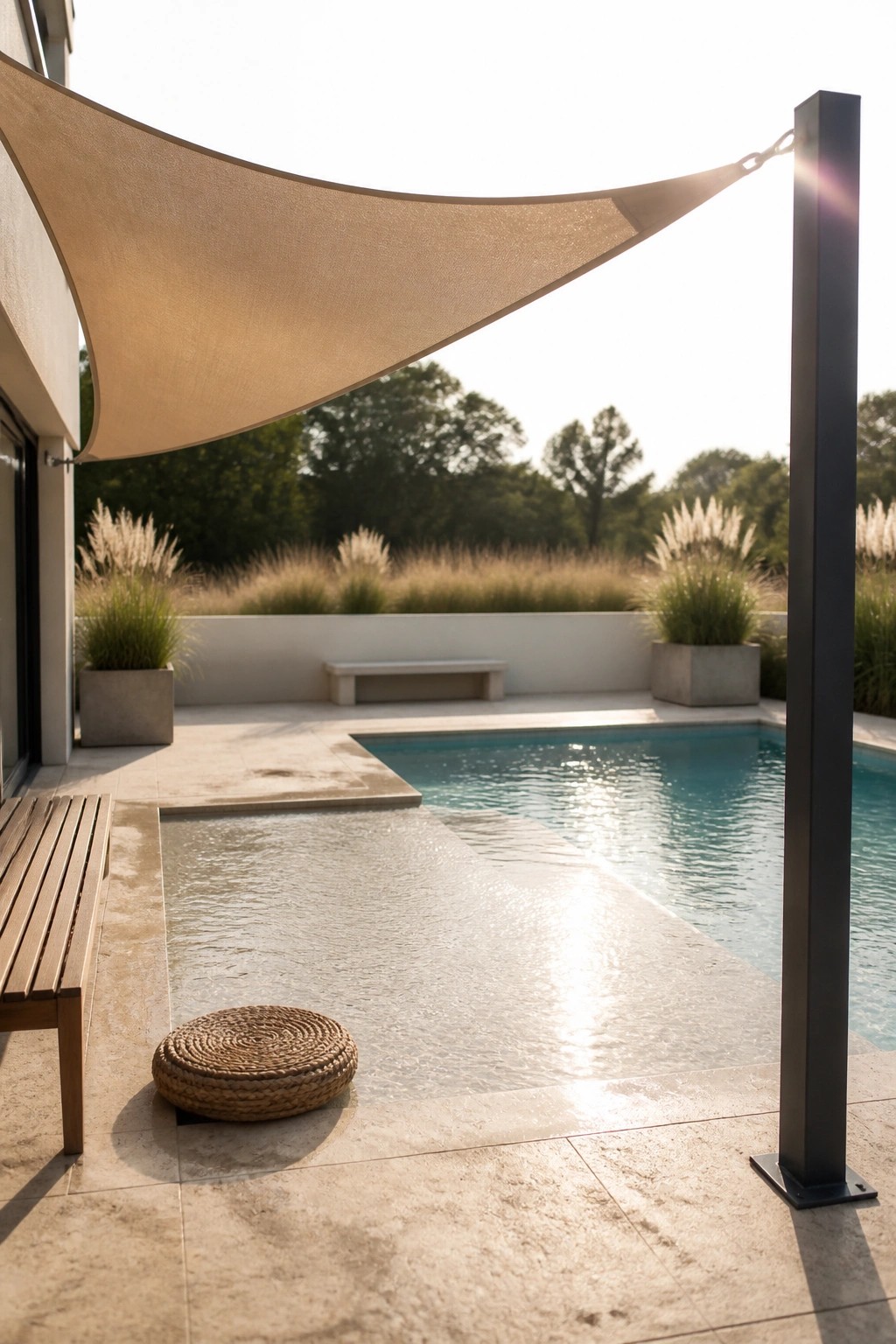
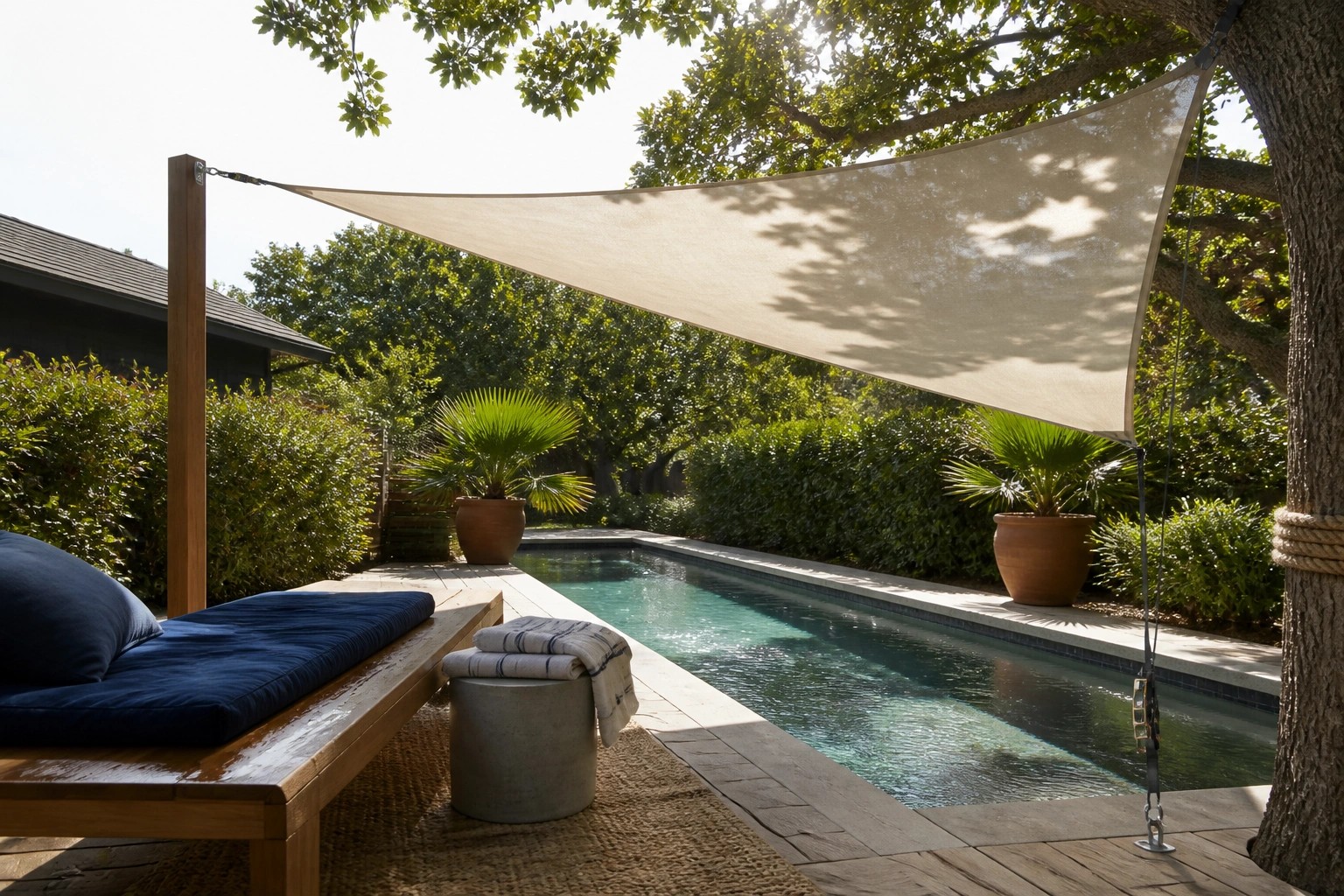
A shade sail gives you solid coverage without adding walls or a roof. The fabric stretches tight between a few points and keeps the sun off the water and seating area while still letting air move through.
This works best on clean, open pool decks where you want minimal visual weight. Anchor the corners to posts or the house at different heights so rain runs off and the sail stays taut. Check the fabric strength if you live in a windy spot.
Slatted Pergolas for Pool Shade
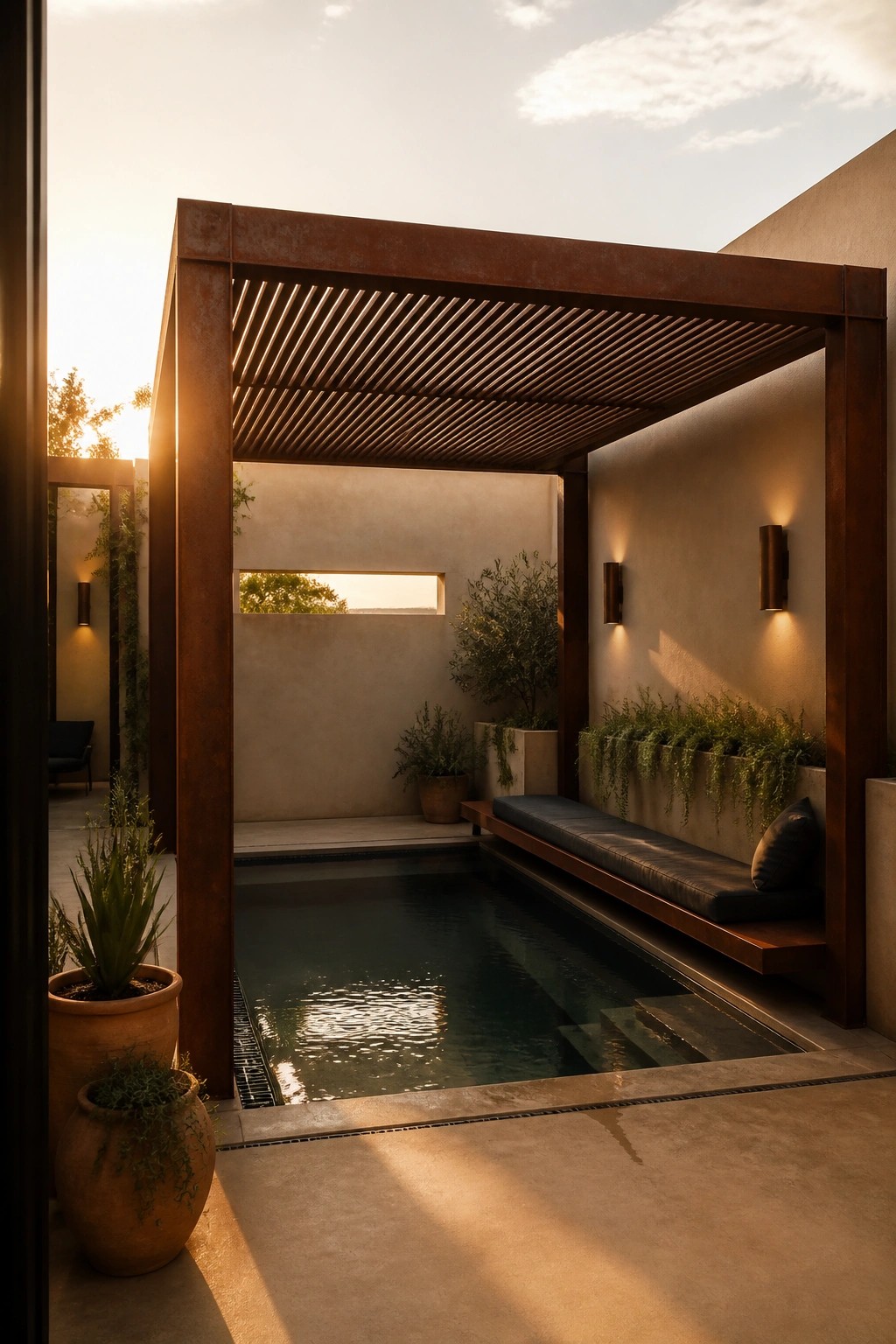
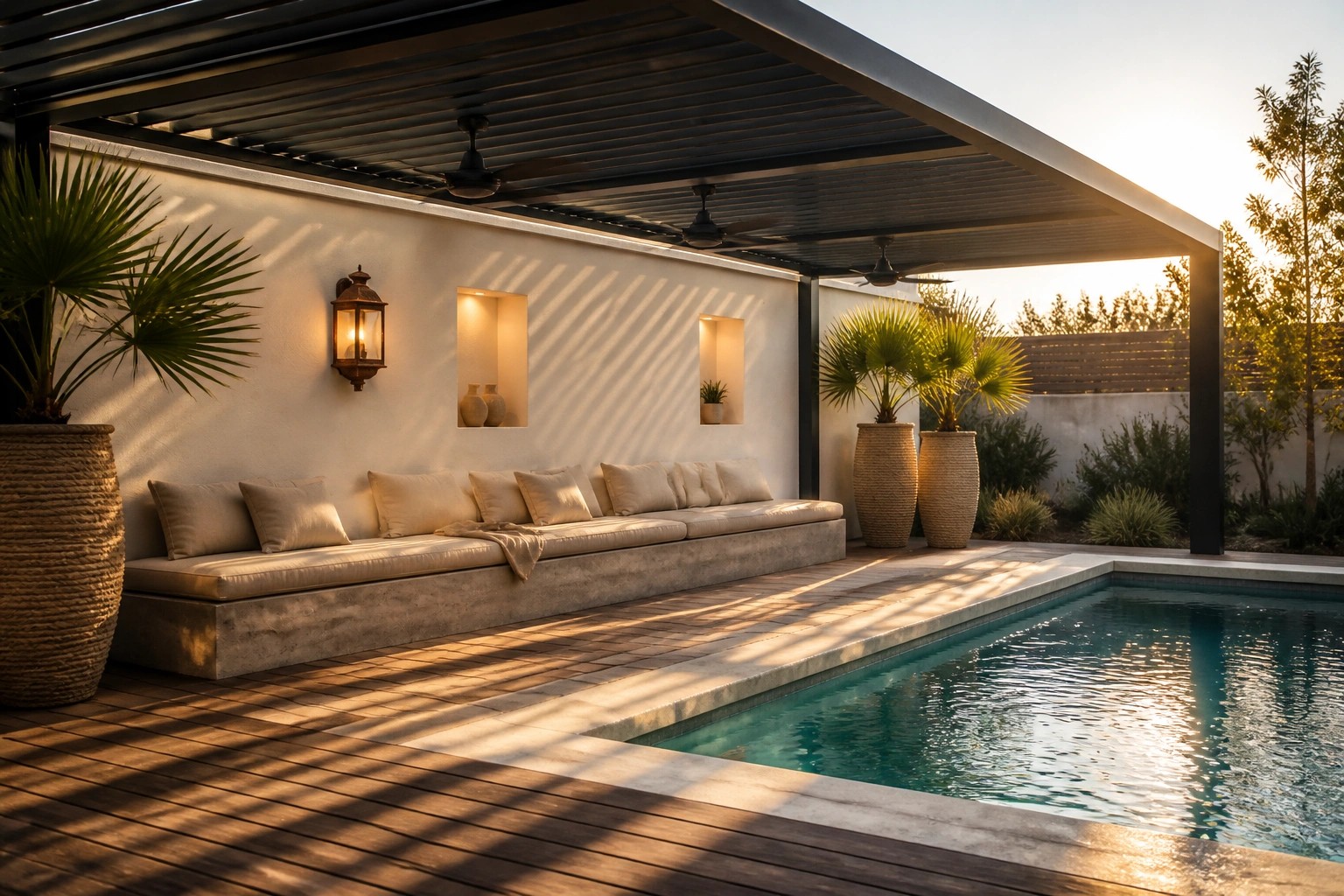
A slatted overhead structure works well over a pool because it gives shade without closing off the space. The gaps let light through in a soft pattern while still keeping the area cooler during the day.
This approach fits minimalist homes with simple walls and clean concrete edges. Build the bench right into the frame so the seating stays part of the structure instead of adding separate furniture that can clutter the look.
Slatted Pergolas For Poolside Shade
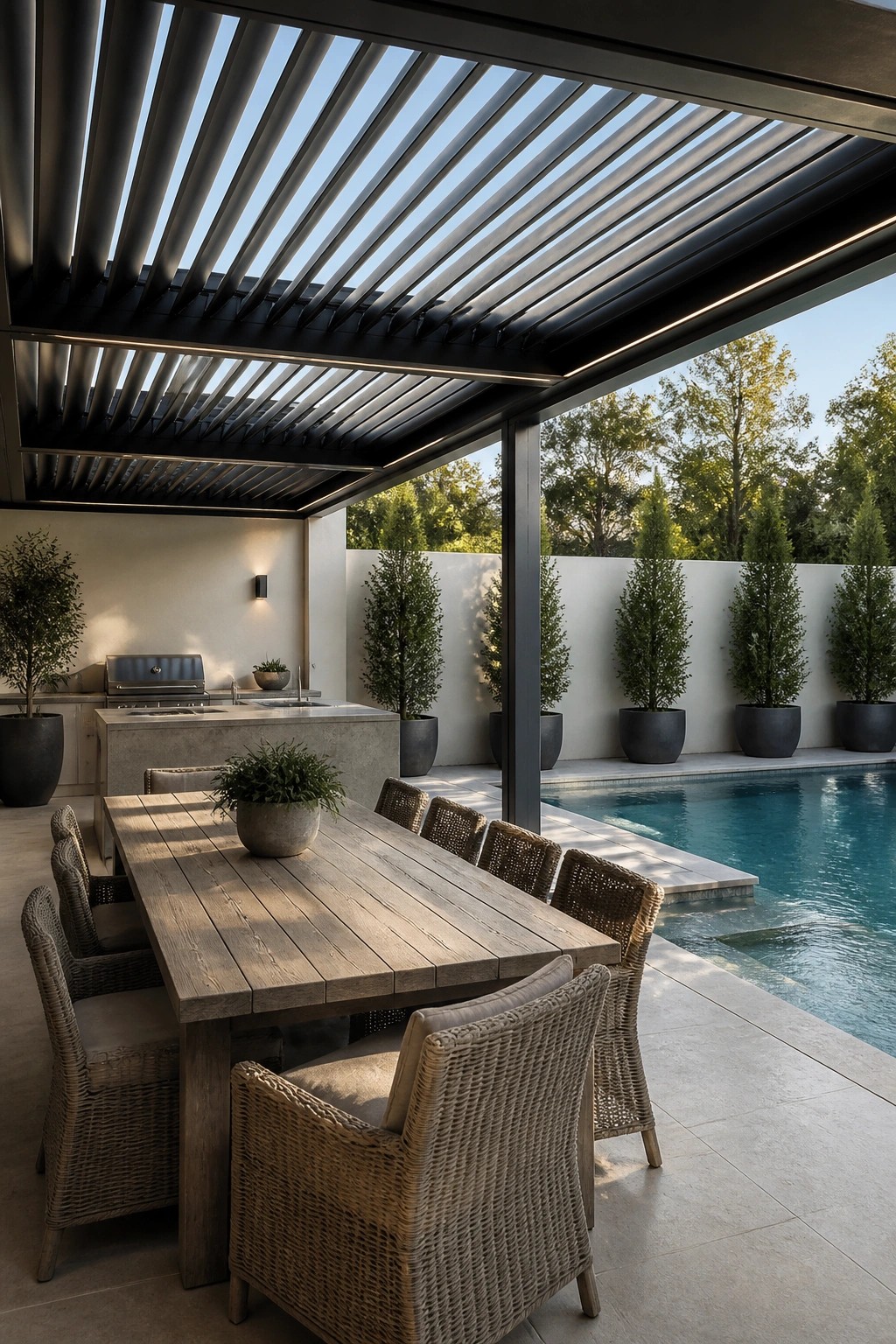
A slatted overhead structure gives shade while still letting in light. It keeps the dining area comfortable next to the pool without making the space feel closed in or too dark.
This works best on simple patios with clean lines. Keep the furniture basic so the focus stays on the shade pattern and the open view to the water.
Cantilever Umbrellas For Poolside Shade
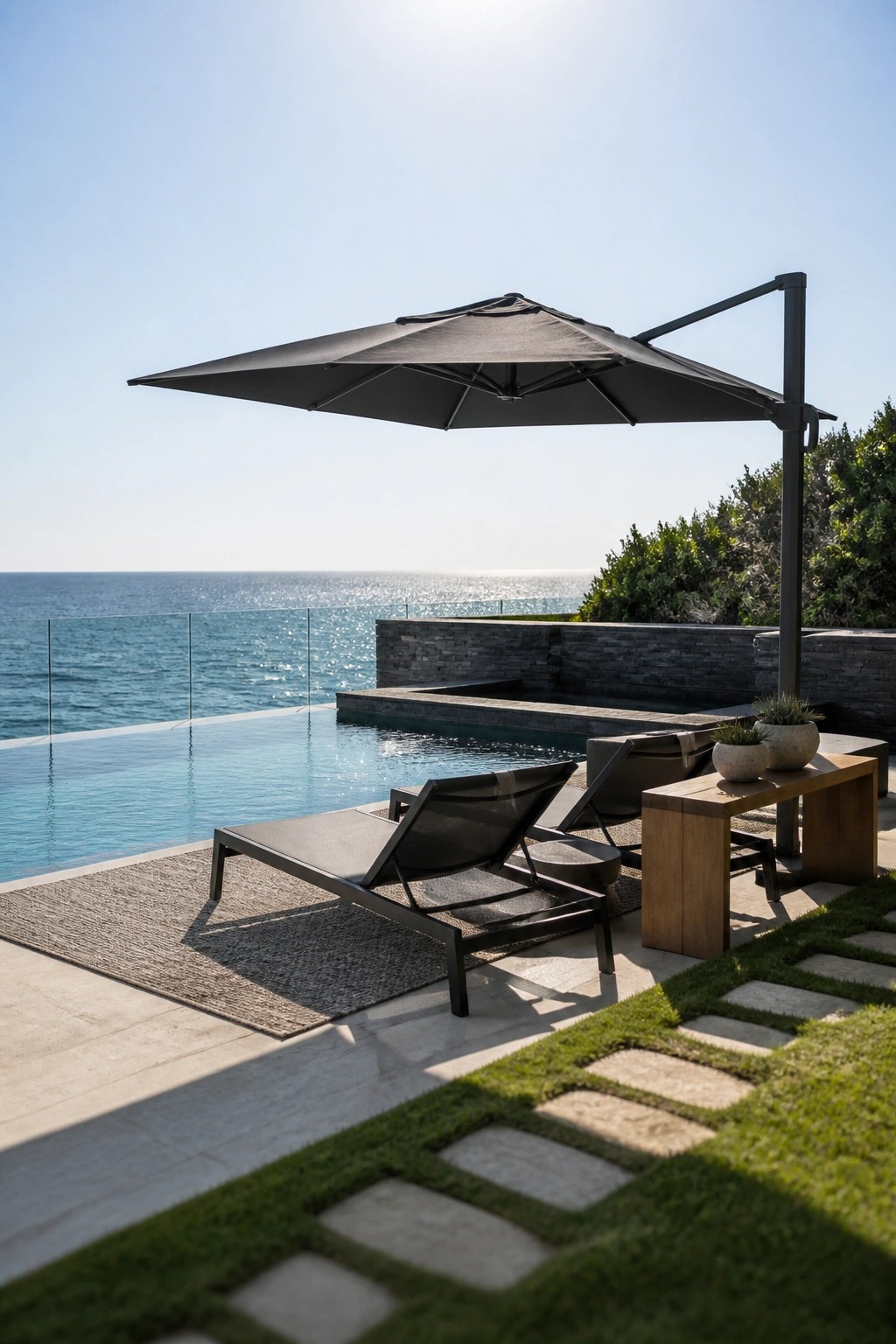
Cantilever umbrellas work well because the post sits off to the side instead of in the middle of the seating area. This keeps the space open and lets you adjust the shade without moving furniture around.
They suit minimalist pool decks that stay simple and uncluttered. Place the base on a solid surface and check that the arm can reach the main lounge spots without blocking the view.
Extend The Roofline For Pool Shade
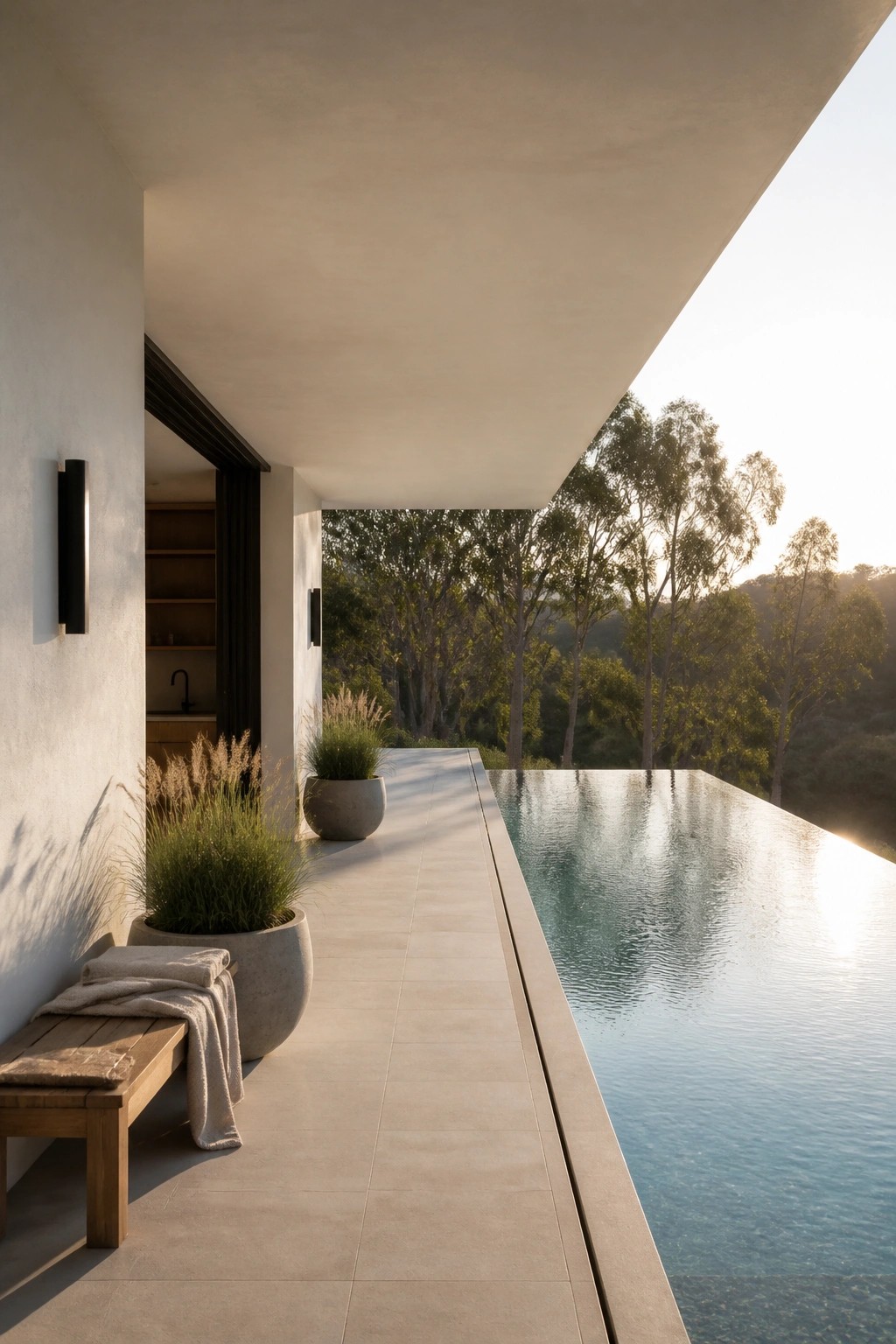
A roof overhang that runs along the pool edge gives steady shade without adding posts or separate covers. It keeps the deck cooler during the day and lets the space feel open at the same time. The simple concrete finish on both ceiling and floor helps the whole area stay calm and uncluttered.
This works best on houses that already have a flat or low pitch roof. Match the overhang depth to how much sun hits the pool deck in your area, and keep the planting low so nothing blocks the shade path.
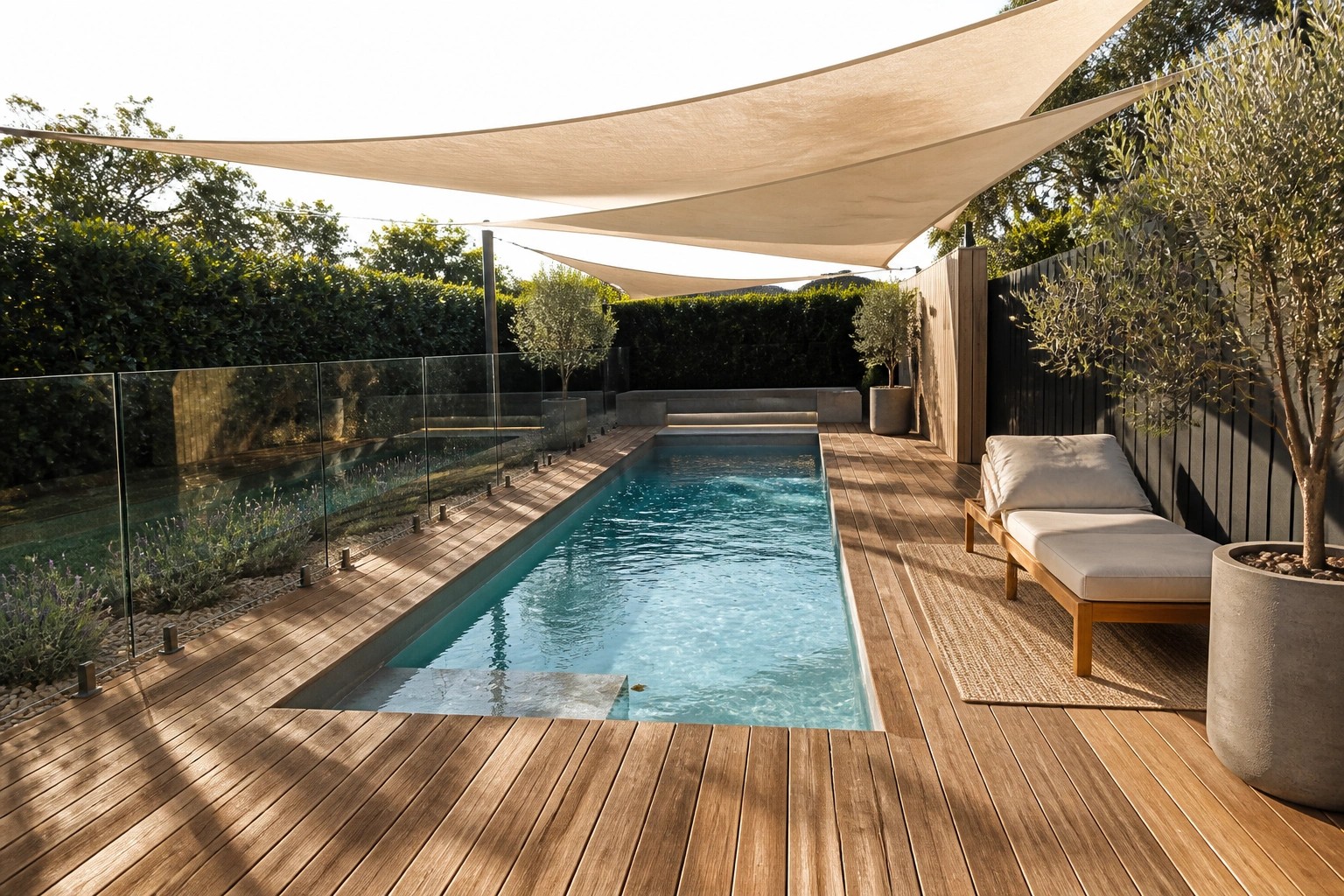
Layer Multiple Shade Sails Over A Pool
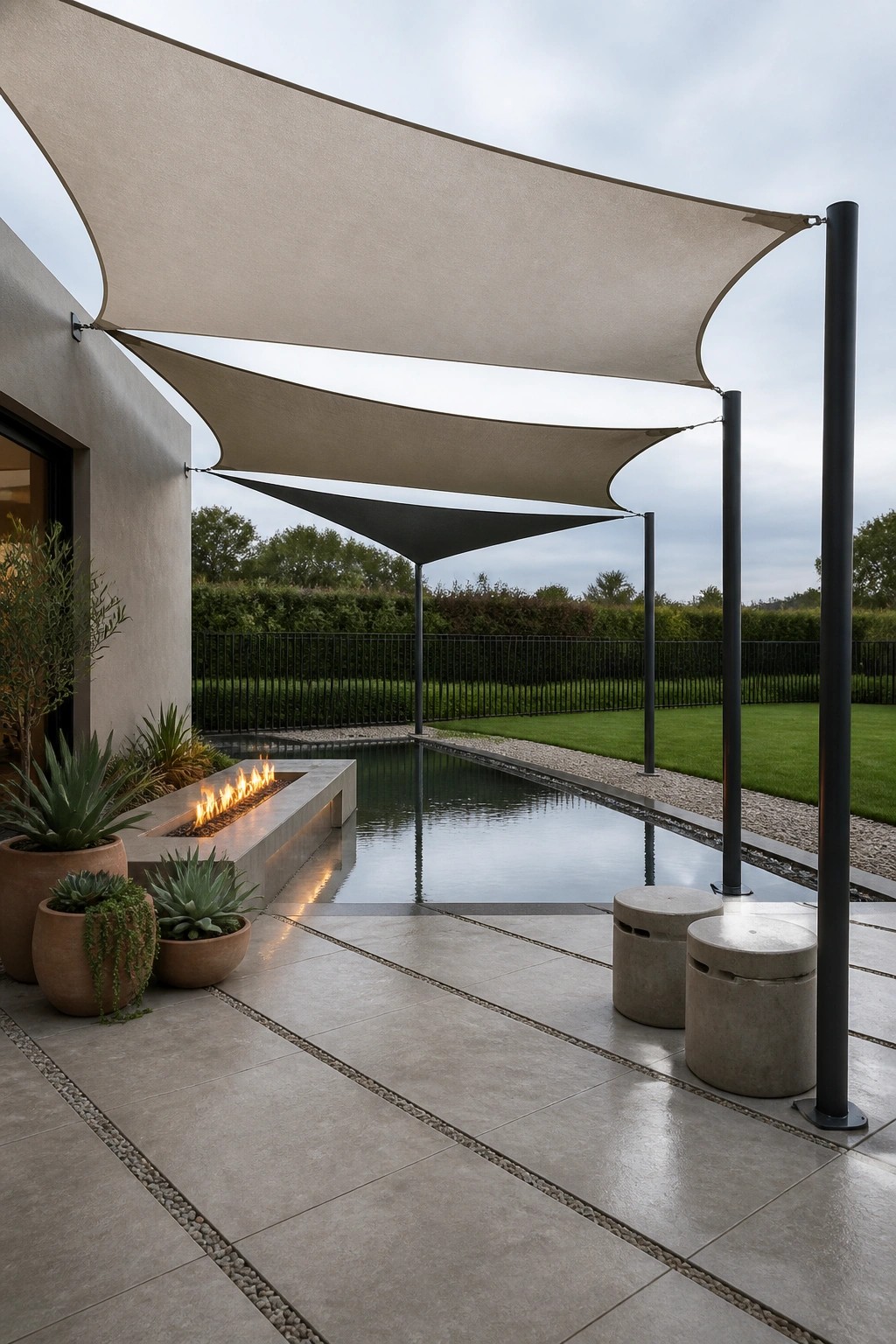
Many people find that one big shade sail can feel too solid over a pool. Using several smaller ones lets you cover different sections at once while leaving some open sky between them.
This approach works best in clean, modern yards where you want shade without blocking the whole view. Place the sails at slightly different heights on simple poles so the coverage shifts as the sun moves.
Pergolas for Poolside Shade
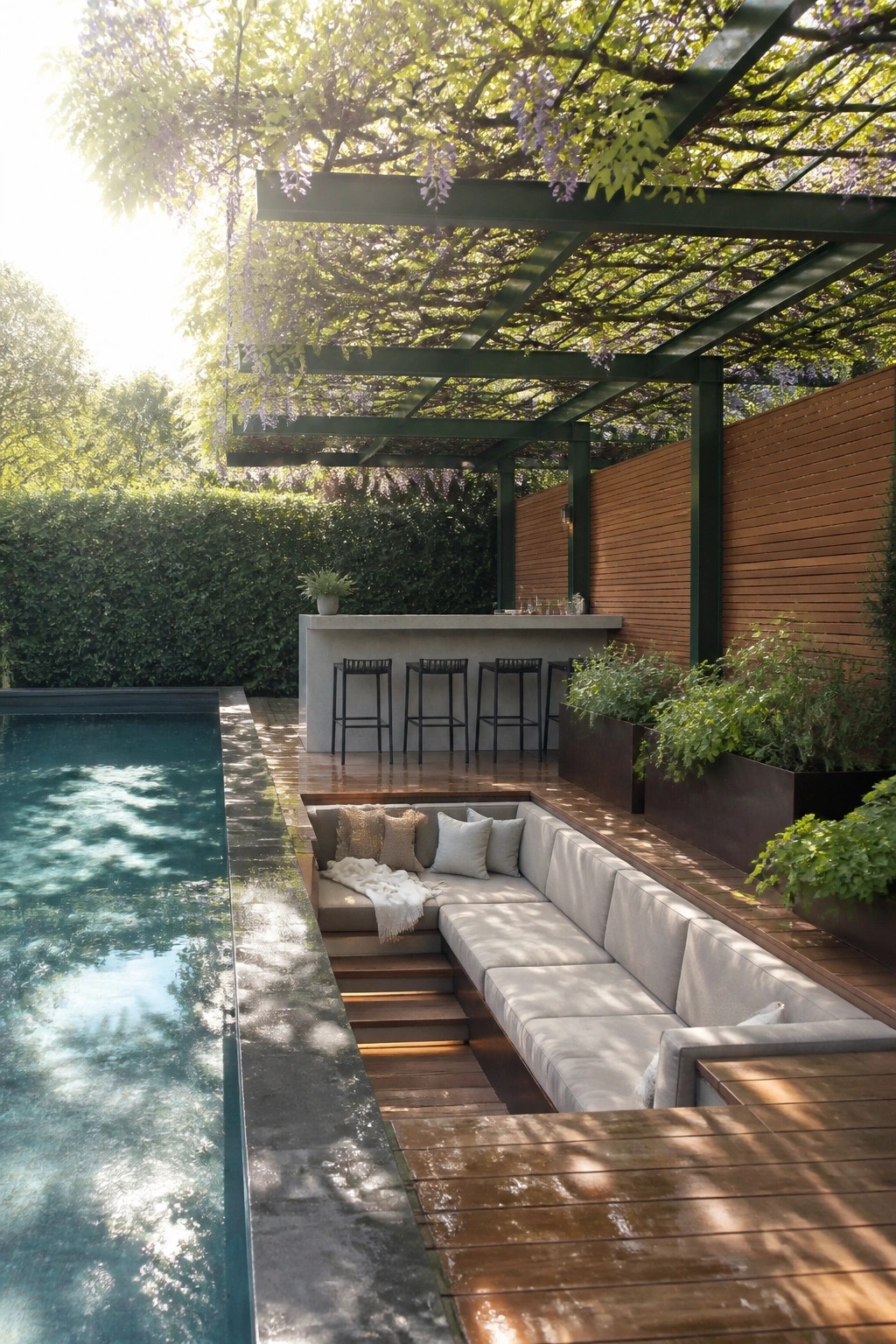
A pergola gives pool areas useful shade without closing off the space. It filters sunlight through the slats and plants while keeping the area open and connected to the rest of the yard. This approach feels lighter than a full roof yet still cuts down on direct heat.
It works best in minimalist settings where the structure stays simple. Position the pergola over built-in seating or a bar right beside the pool so the zone stays usable through the day. Keep the frame color dark and the planting light to hold the clean look.
Louvered Roofs For Pool Shade
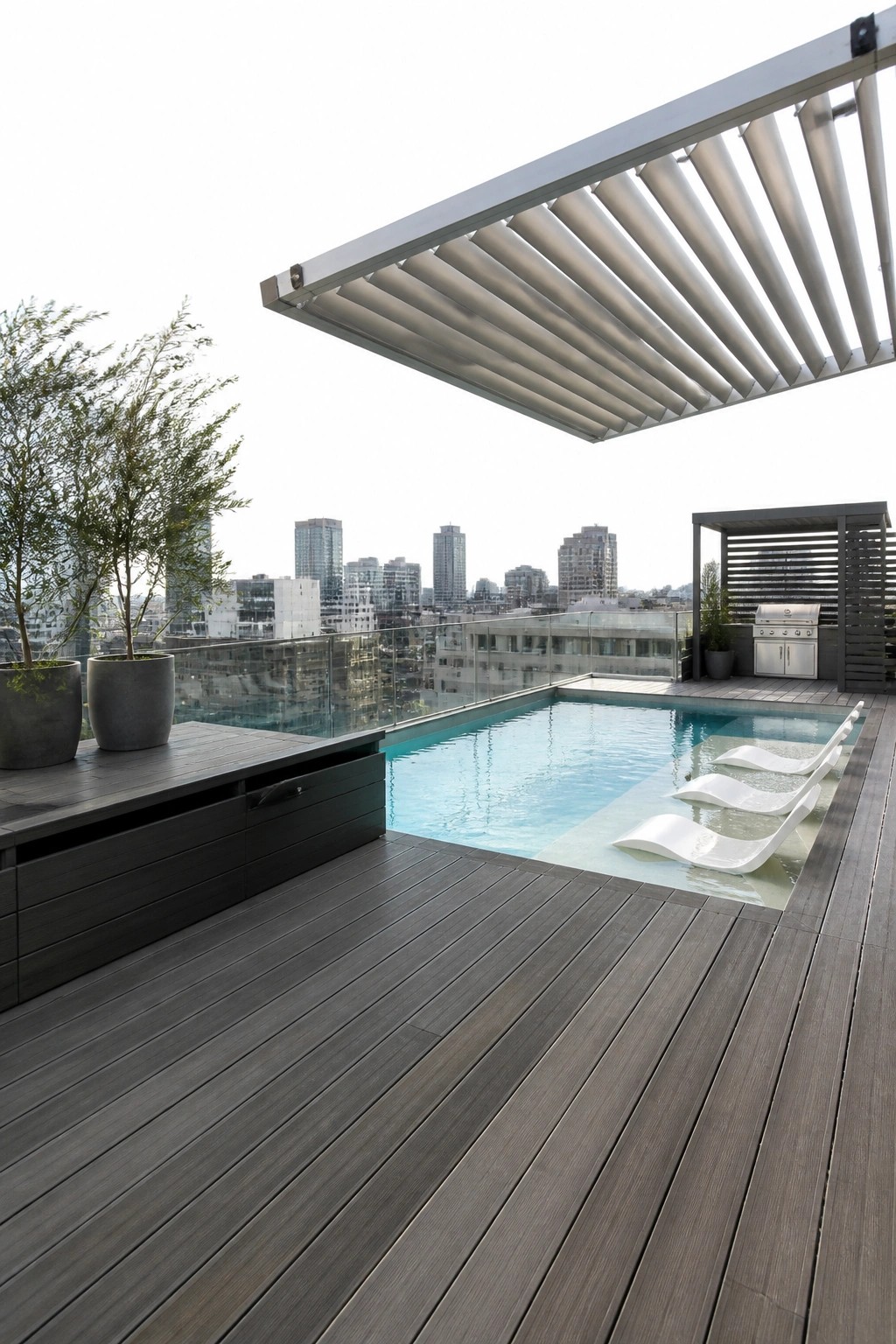
Louvered roofs work well over pools because they let you adjust the amount of sun without adding heavy fabric or solid covers. The open slats keep the space feeling light and open while still offering real shade when needed.
This kind of shade fits best on flat decks or rooftops where you want clean lines and simple materials. It pairs easily with dark decking and minimal furniture, and it stays useful even on days when full sun would make the pool area too hot.
Concrete Overhangs For Pool Shade
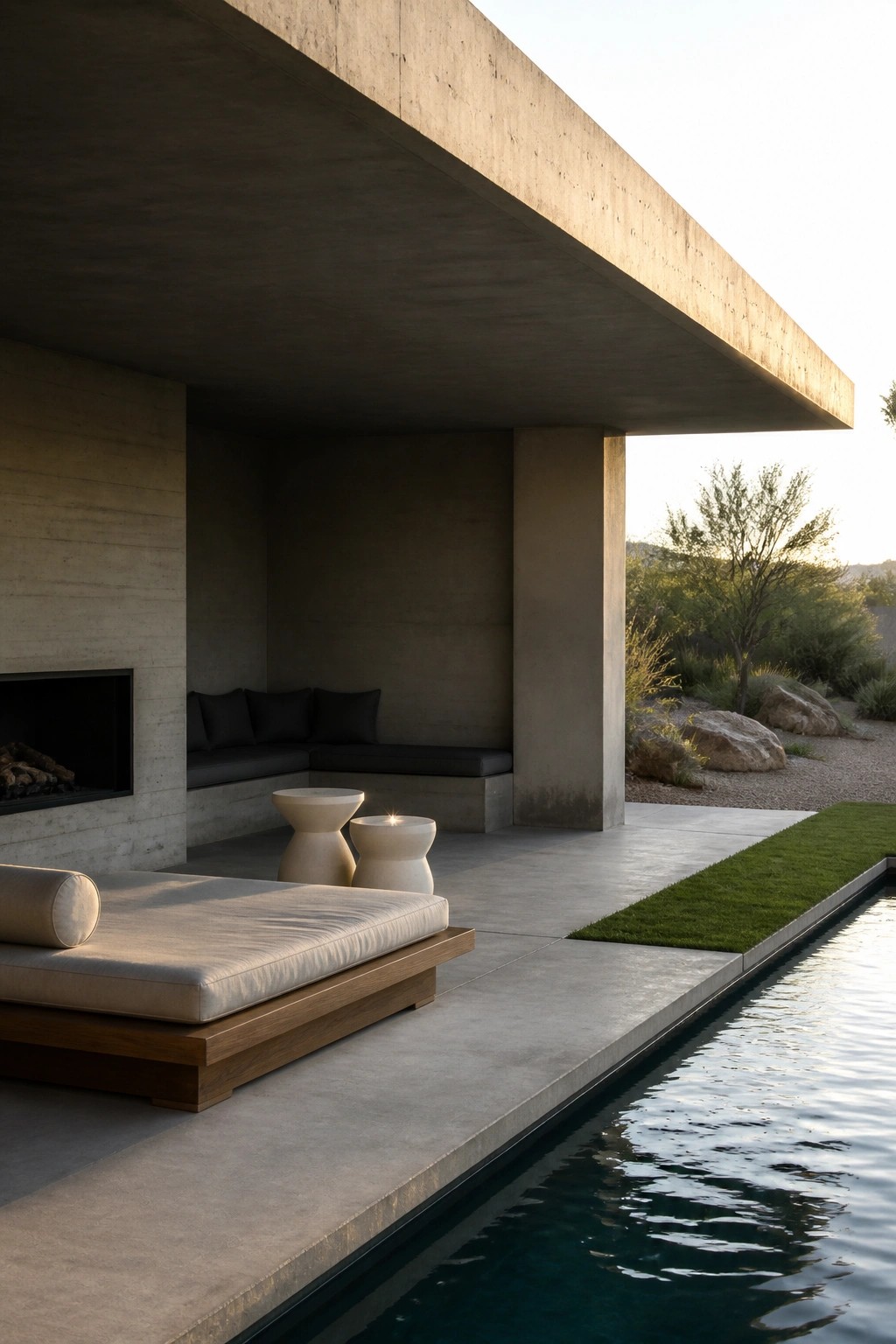
A large concrete overhang works well for pool shade because it becomes part of the house structure instead of an added feature. It blocks sun without posts or fabric that can wear out, and it keeps the space feeling open while still offering real cover for seating and lounging.
This approach suits minimalist homes with clean rooflines and flat or low-pitched roofs. It works best when the overhang extends far enough to cover the main seating zone but leaves the pool itself in light. Make sure the concrete finish matches the rest of the exterior so the shade element feels built in rather than added on.
Vertical Slats And Tall Plants For Pool Shade
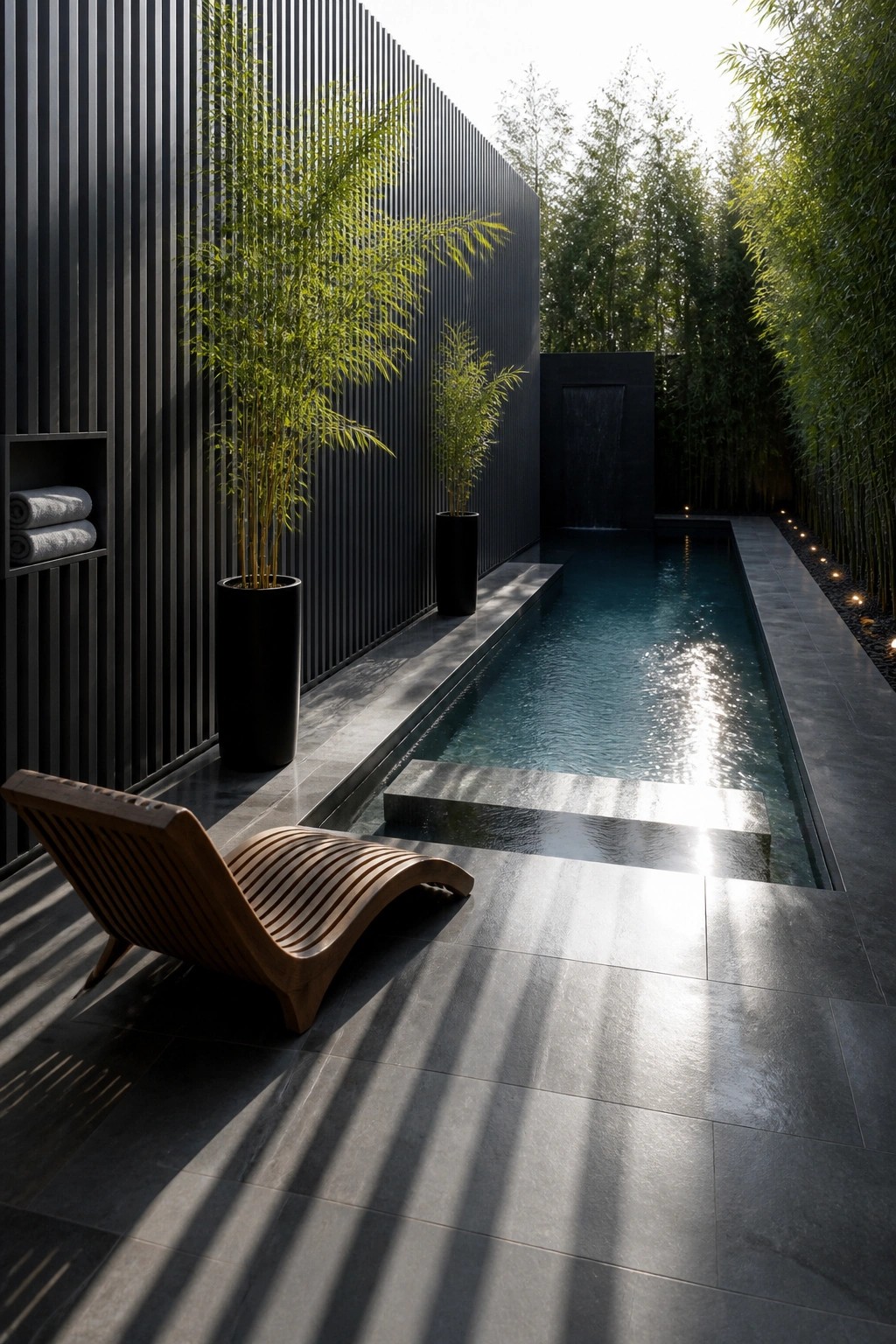
A tall slatted wall with a few large potted plants in front gives poolside shade without blocking the whole view. The gaps in the slats let some light through while cutting down direct sun, and the plants add height and softness at the same time.
This works best along one long edge of a narrow pool or in a small courtyard where you need privacy and sun control. Keep the wall dark and the planters simple so the setup stays clean and low maintenance.
Perforated Metal Overhead Screens
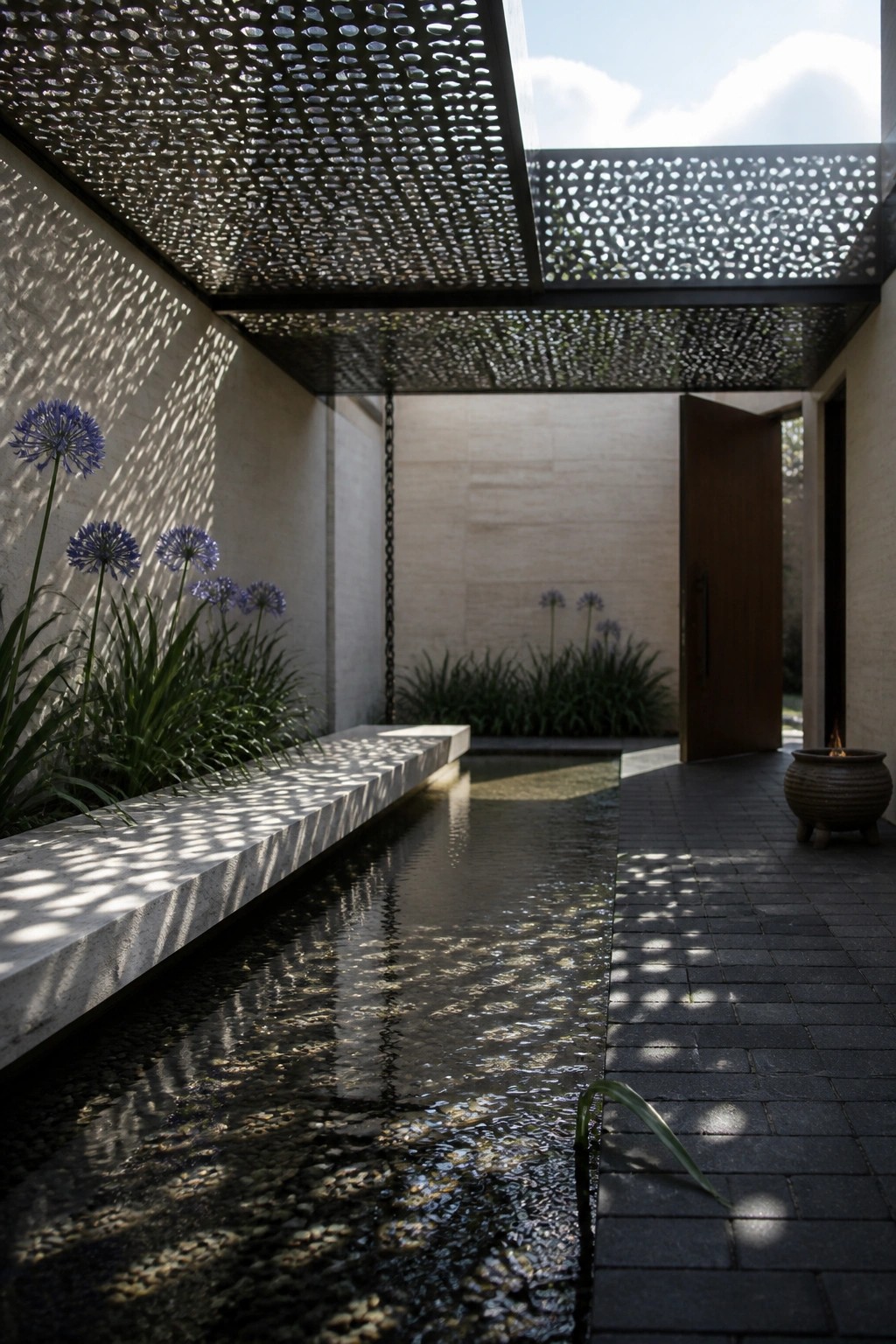
A perforated metal canopy works well over a narrow pool channel because it filters sunlight into soft patterns without blocking the open feel of the space. The cutouts let light reach the water and the stone bench below while still giving real shade during the day.
This approach suits minimalist homes with clean lines and limited planting. Keep the pattern simple and the frame dark so the screen reads as part of the architecture rather than an added layer. Make sure the openings are large enough that the area below does not feel closed in.
Overhead Slat Shade For Poolside Dining
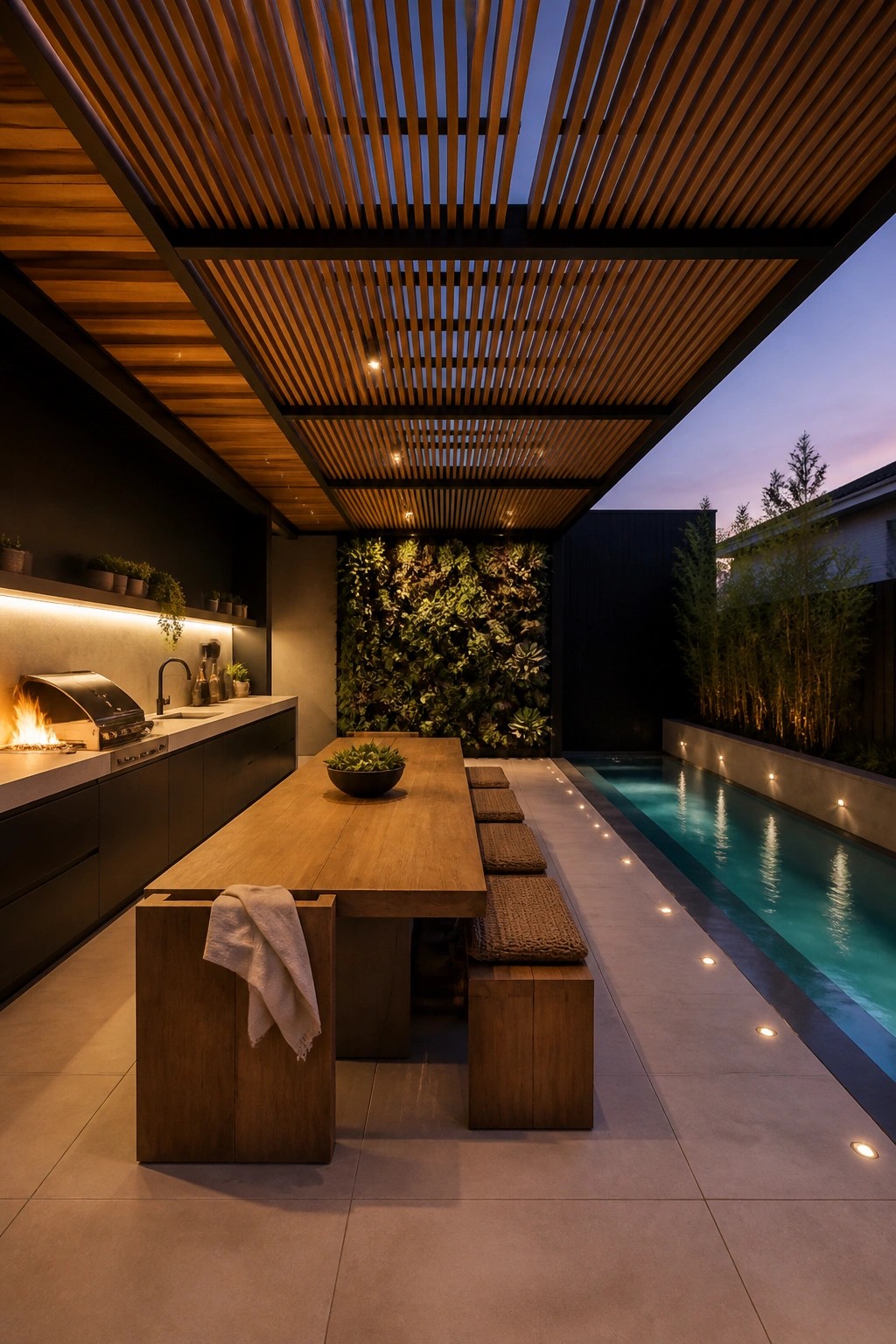
A set of simple wood slats overhead gives shade without making the space feel closed in. The gaps let some light through and keep air moving, which works well when the dining table sits right beside the pool. It keeps the whole area usable even in strong sun.
This kind of cover suits minimalist homes that already use clean lines and few materials. Run the slats in the same direction as the pool edge so the shade feels like part of the layout rather than an added roof. Just make sure the structure is high enough for comfortable seating underneath.
Overhead Woven Shades For Pool Areas
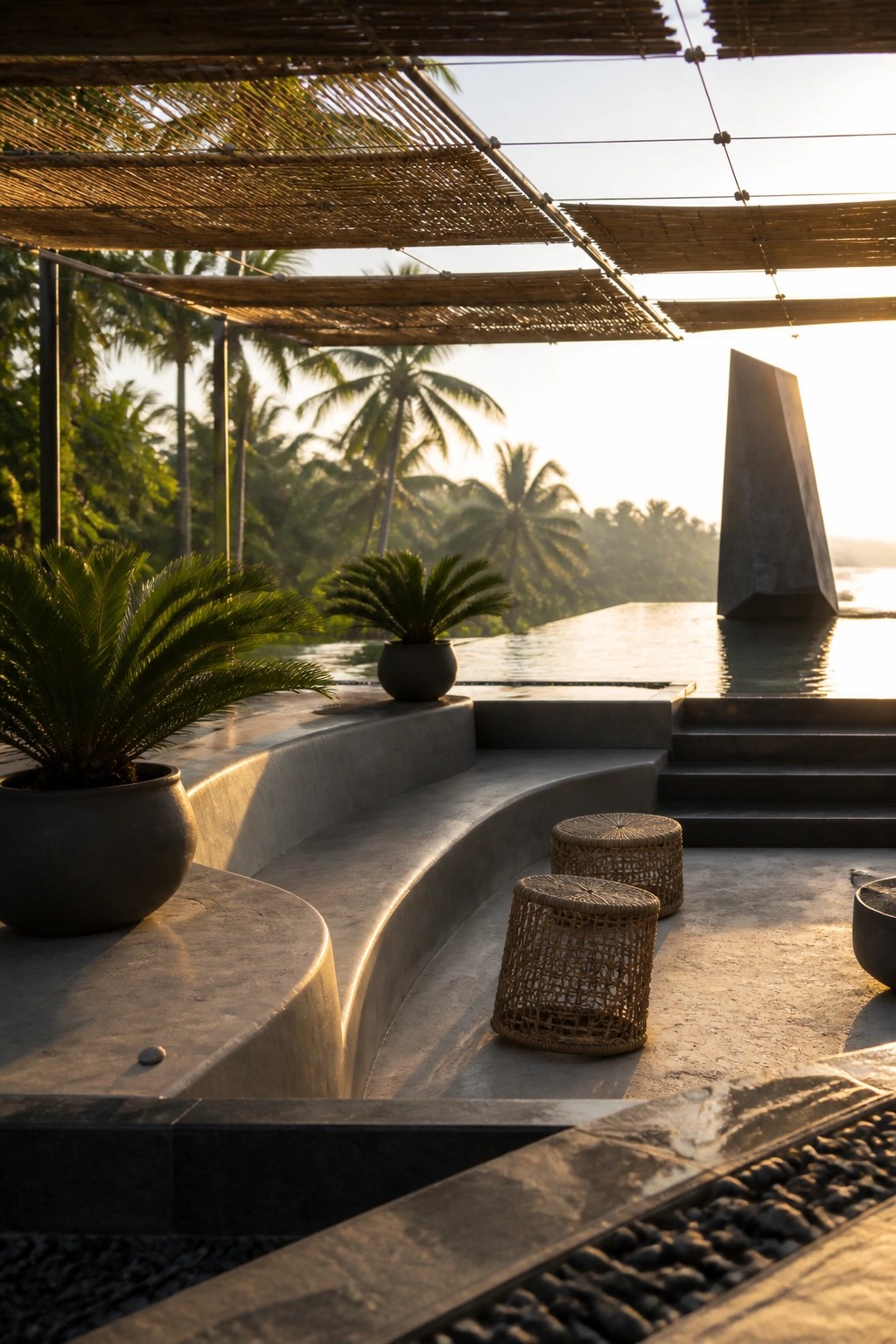
Many pool areas feel too exposed during the day, so overhead woven shades offer a simple way to cut the glare while still keeping the space open. The natural material lets light filter through in a soft pattern that feels easy on the eyes without needing heavy fabric or solid roofing.
These shades suit minimalist homes best when kept in neutral tones and hung in loose layers. They work well over concrete seating or edge areas, and they hold up better if you avoid overcrowding the space with too many extra pieces.
Natural Woven Canopies For Pool Shade
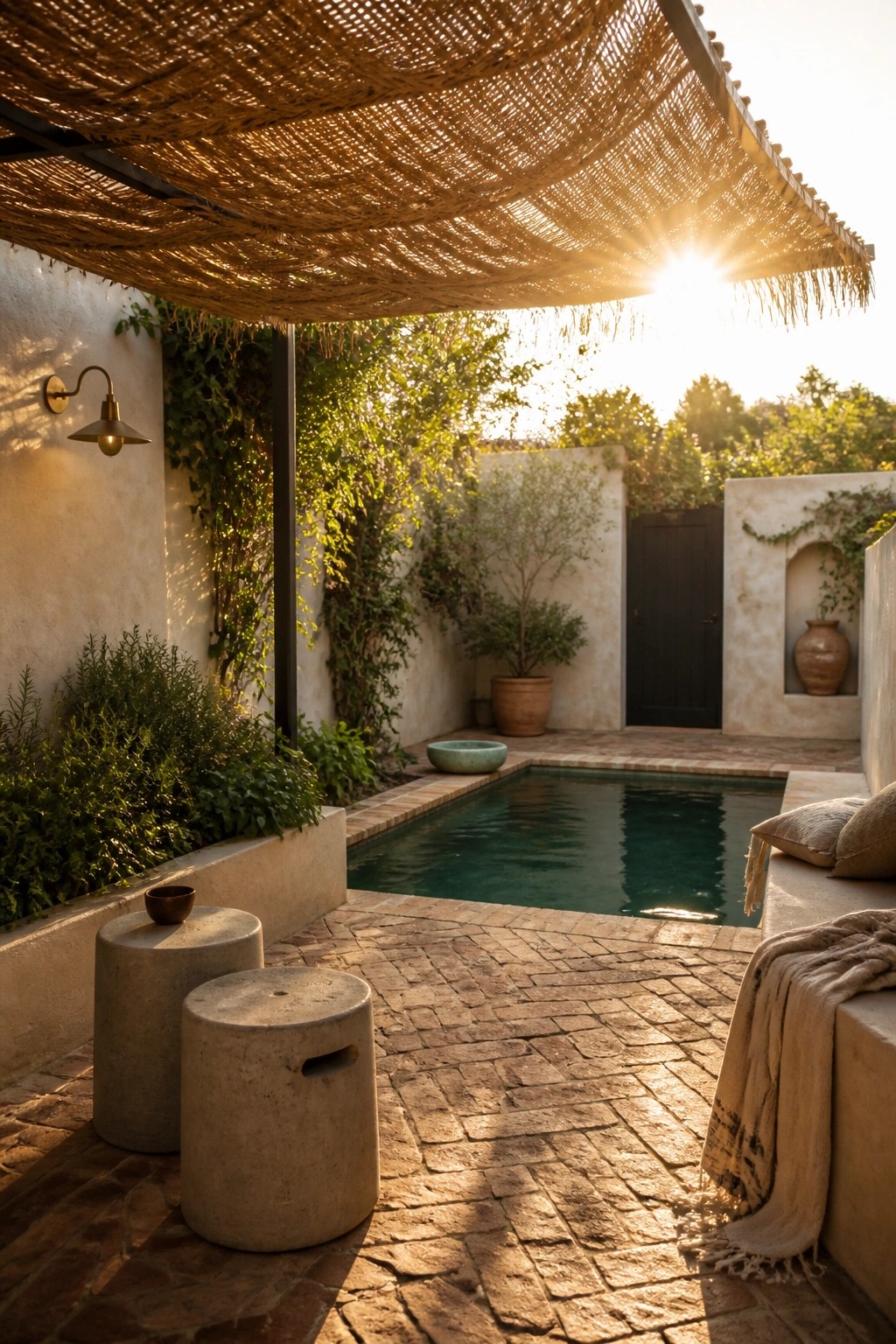
A woven overhead canopy made from natural reeds gives useful shade without making the space feel closed in. It works well in small pool areas because the material filters sunlight softly and adds texture that suits minimalist settings.
This kind of shade fits homes with simple outdoor layouts and compact pools. Place it where you want cover during the day but still keep an open feel, and check that the frame can handle wind and weather in your area.
Overhangs That Shade Poolside Seating
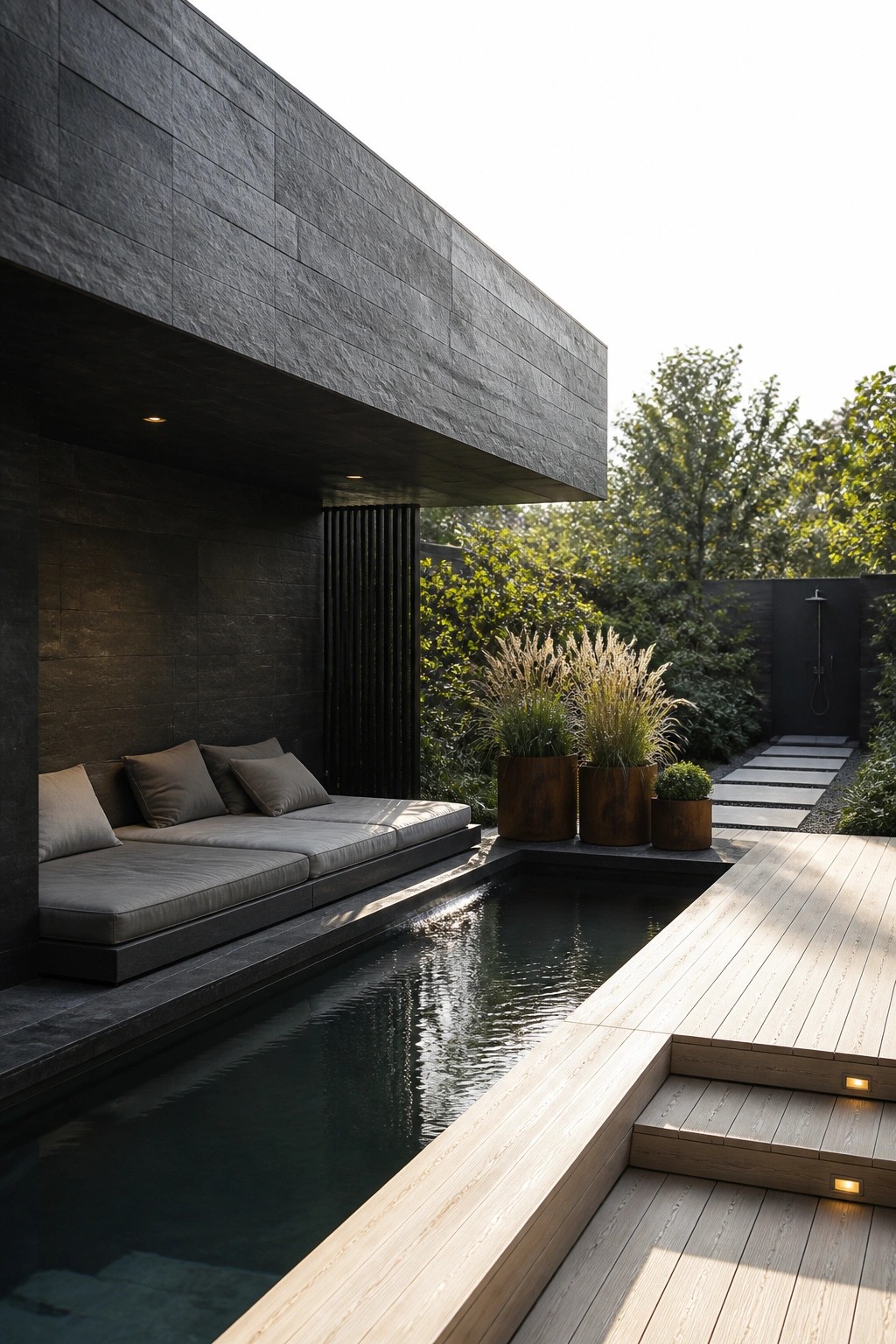
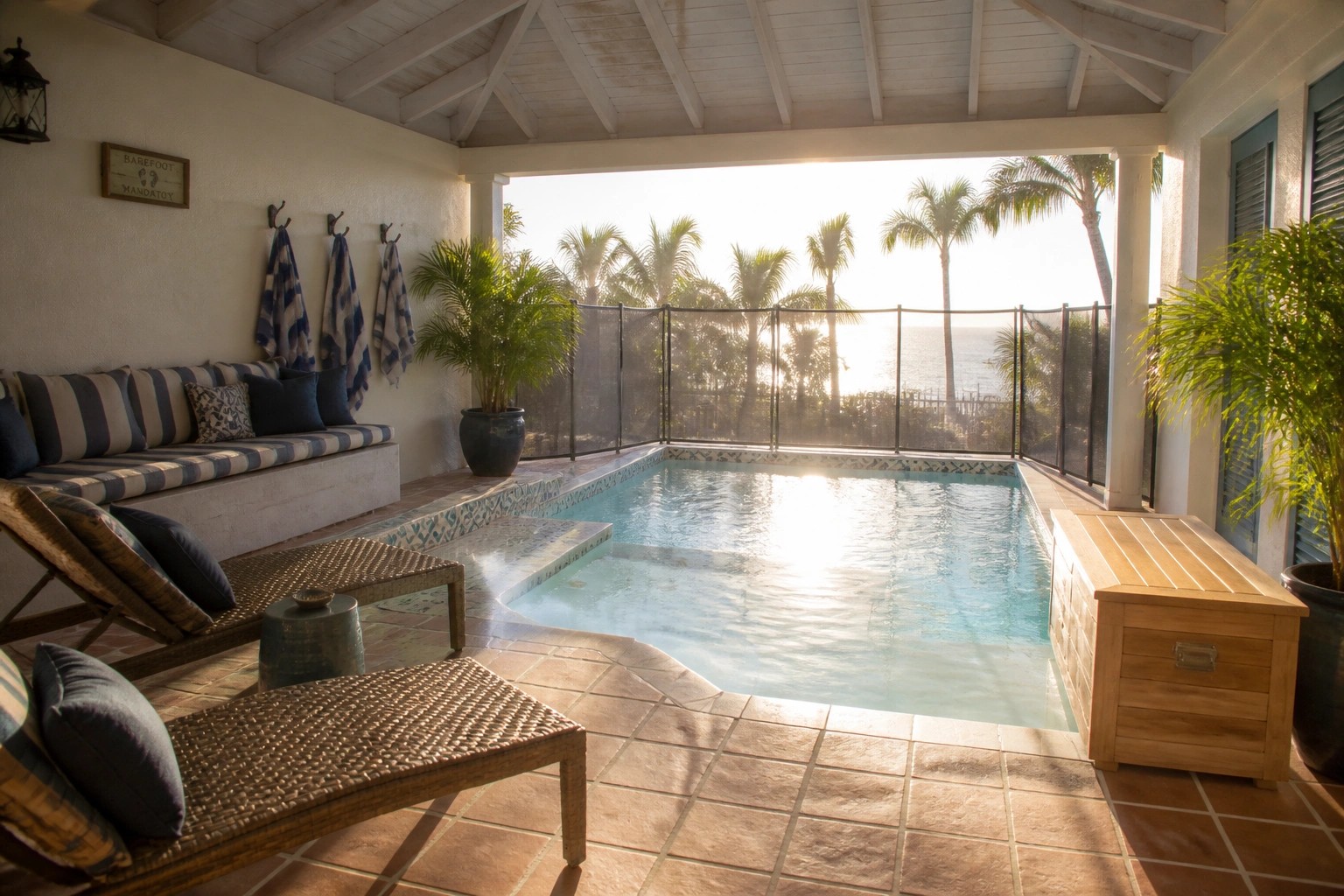
Many pool areas feel more usable when the shade comes from the structure itself rather than added pieces. A solid overhang right above built-in seating keeps the spot cool and protected without cluttering the view.
This works well on homes that already have strong horizontal lines and a minimalist style. Place the seating low and close to the water so the shade lands exactly where people sit and the whole setup stays simple.
Vertical Wood Screens For Poolside Shade
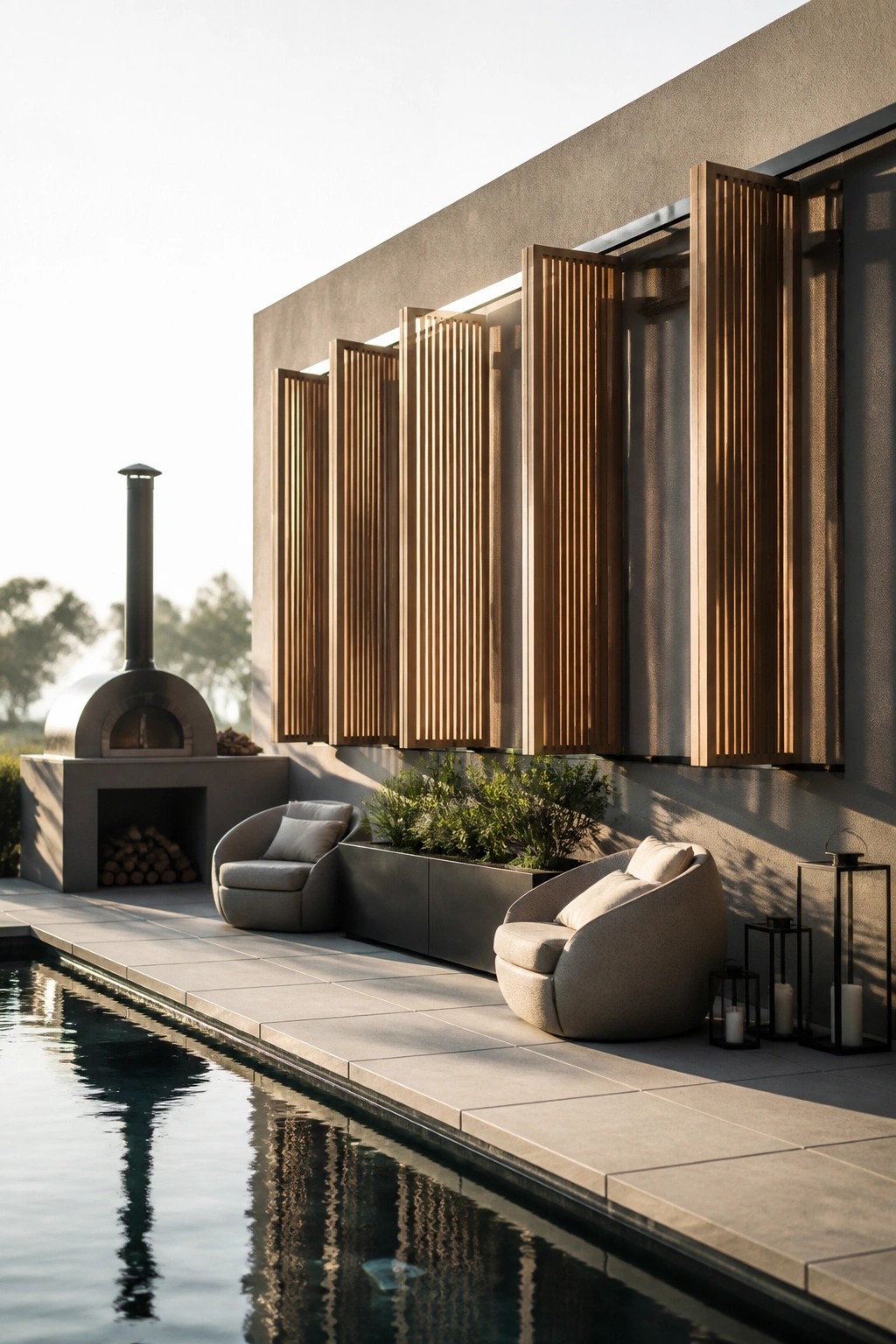
Vertical wood screens give you a simple way to add shade and some privacy without building a full roof or wall. They filter the light and break up the sun while still keeping the space open and connected to the pool.
This works best on flat walls right next to a pool or patio where you need afternoon shade. Mount them so they can be adjusted or fixed in place, and choose a wood that weathers well. Keep the rest of the area simple so the screens stay the main feature.
Curved Perforated Screens for Pool Shade
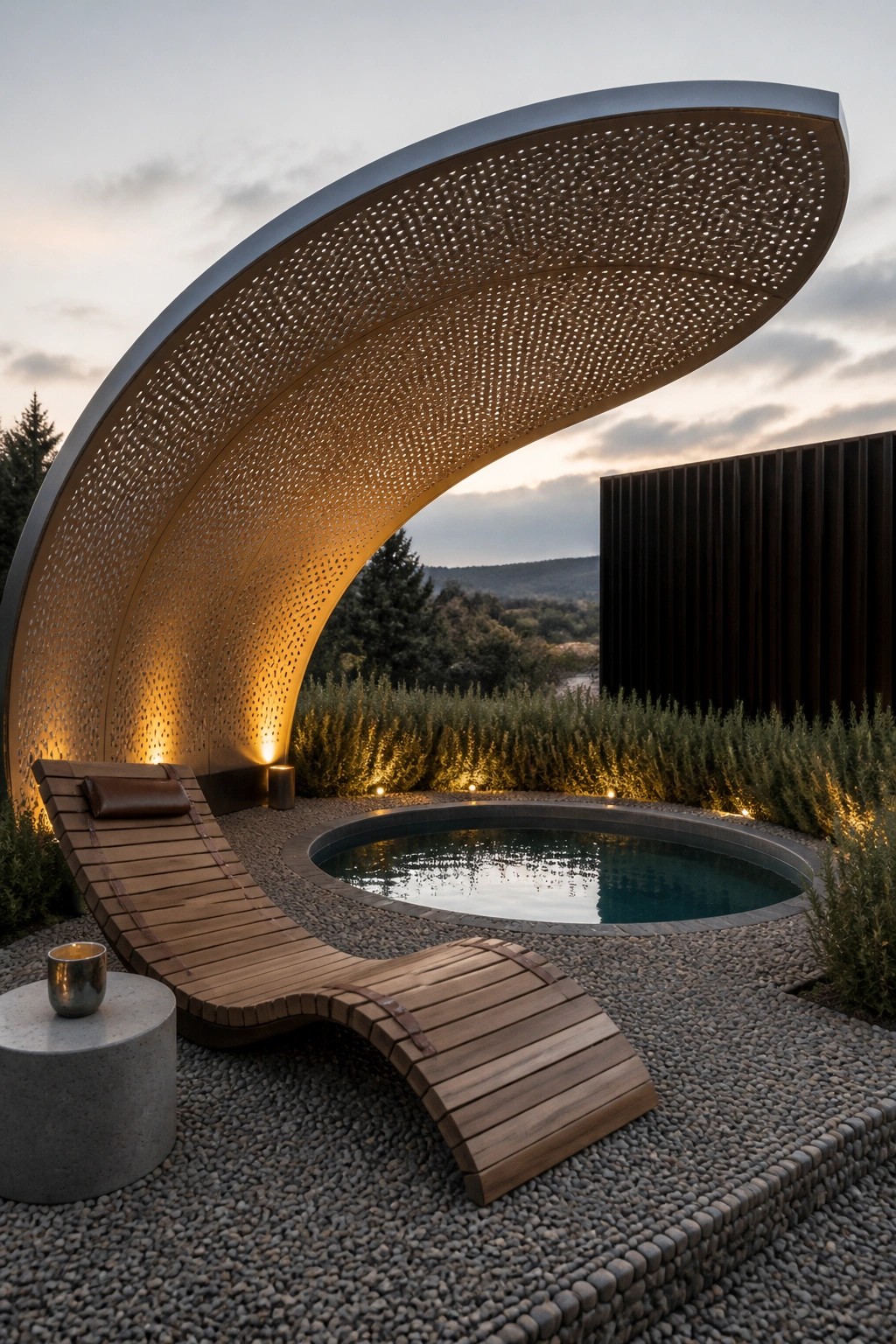
A curved perforated screen gives shade without blocking the space completely. The holes let some light through while cutting down on direct sun, and the shape can wrap around part of the pool and seating area in one clean form.
This kind of screen works best in a small to medium backyard where you want shade over both the water and a lounge spot. It suits minimalist settings because it adds coverage without needing posts or fabric that might feel fussy. Make sure the curve lines up with the main seating so the area stays usable in the middle of the day.
Perforated Metal Screens For Pool Shade
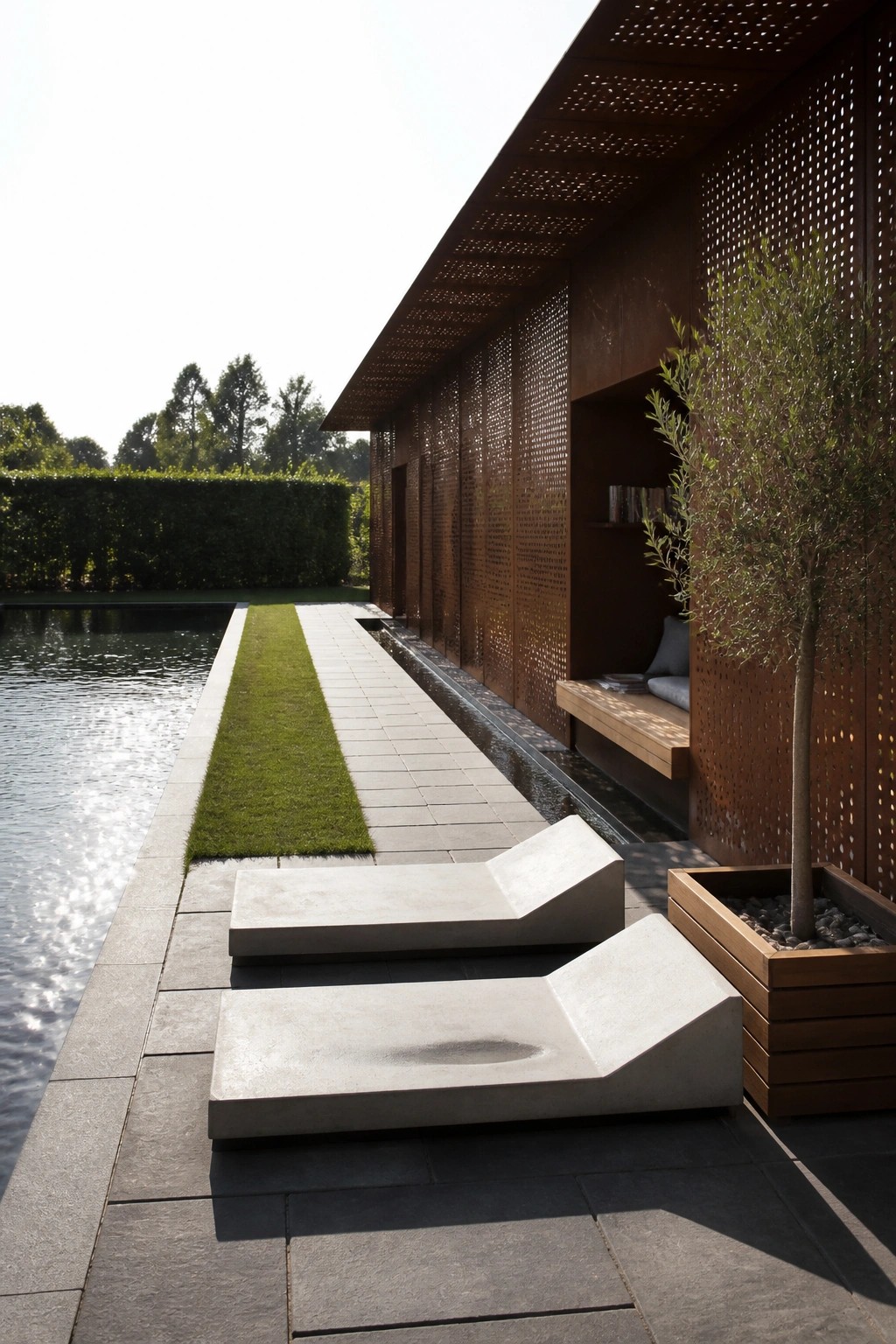
Perforated metal panels work well for pool shade because they filter sunlight without cutting off the view or air flow. The holes let dappled light reach the seating area while still keeping the space cooler on bright days.
This approach suits minimalist homes where you want clean lines along the pool edge. Mount the panels as part of a wall or overhang so they also create a simple privacy screen without adding bulk or extra structures.
Circular Canopies For Pool Shade
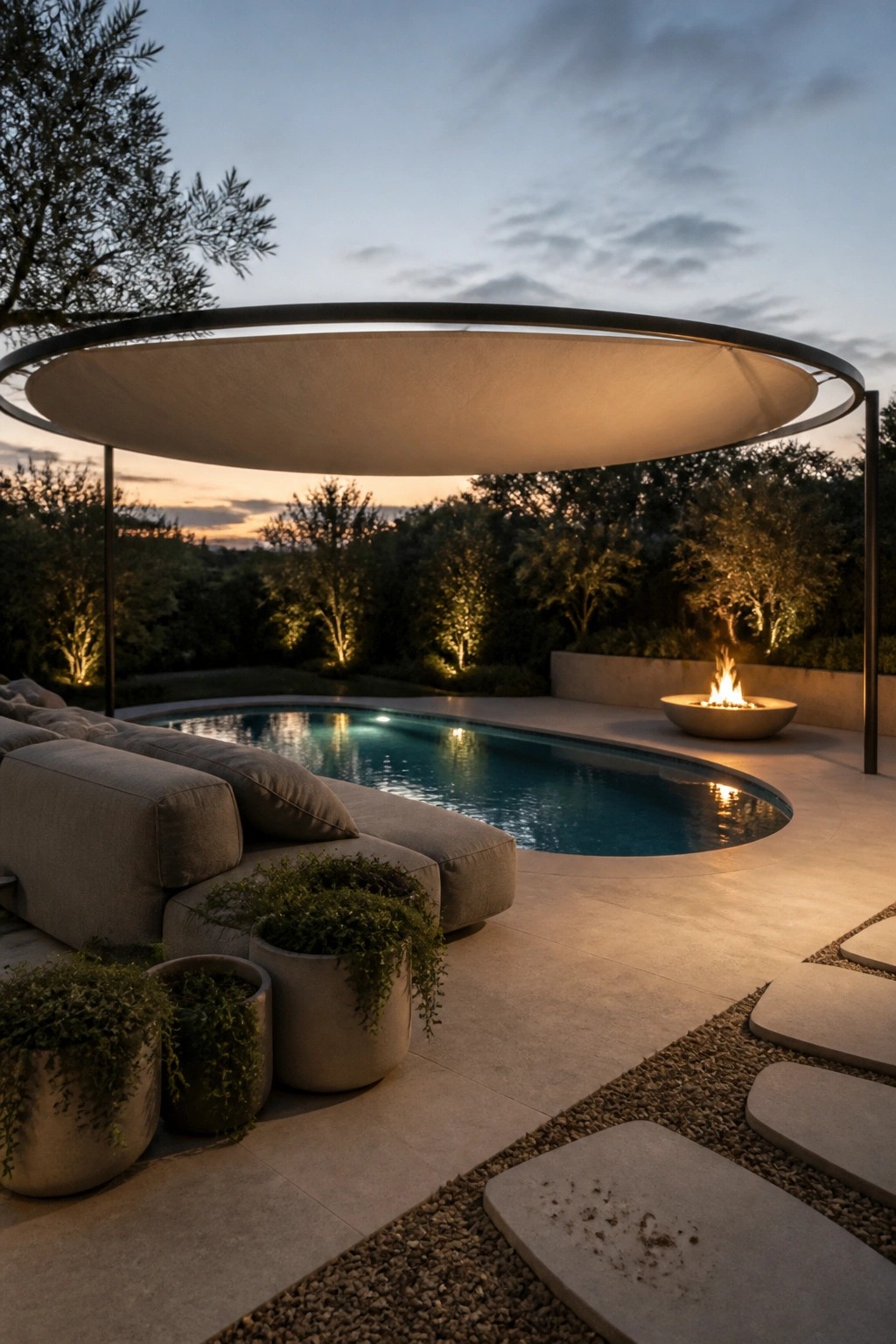
A round overhead canopy gives steady shade across the pool and nearby seating without adding walls or heavy posts. It keeps the space open while cutting down on direct sun during the day.
This works well in flat, minimalist yards where the pool sits close to the house. Use a light fabric on a slim frame so the structure stays simple, and check the height to avoid blocking views from inside.
Overhead Grids For Pool Shade
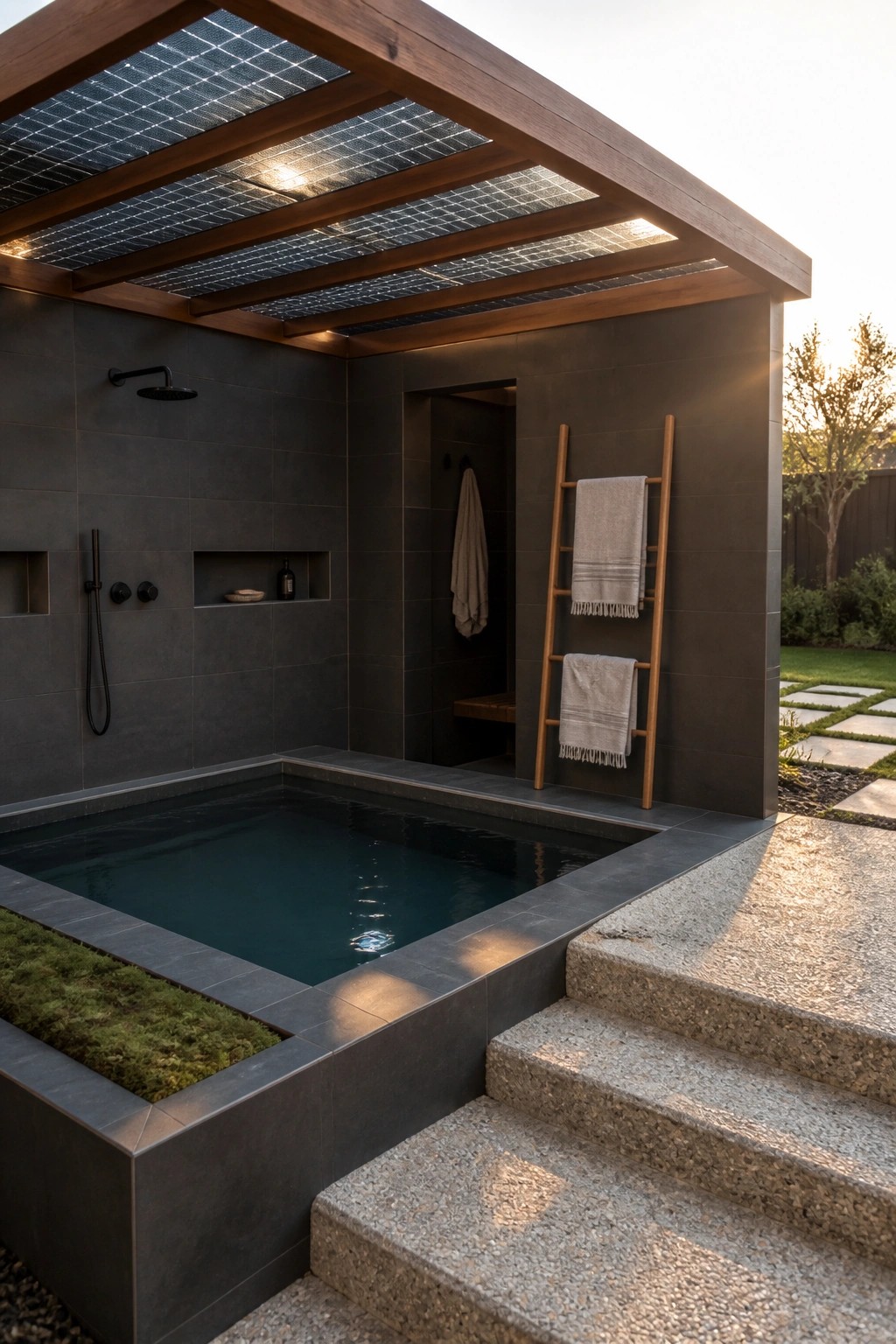
A grid roof built from wood beams gives just enough shade over a pool without closing the space in. It cuts the harshest sun while still letting light through, which keeps the water area cooler during the day and avoids the heavy look of a solid cover.
This works best on small pools or plunge pools set into a simple deck. Keep the frame straightforward and match it to any nearby fencing or planters so the whole area stays calm and uncluttered.
Large Potted Trees for Poolside Shade
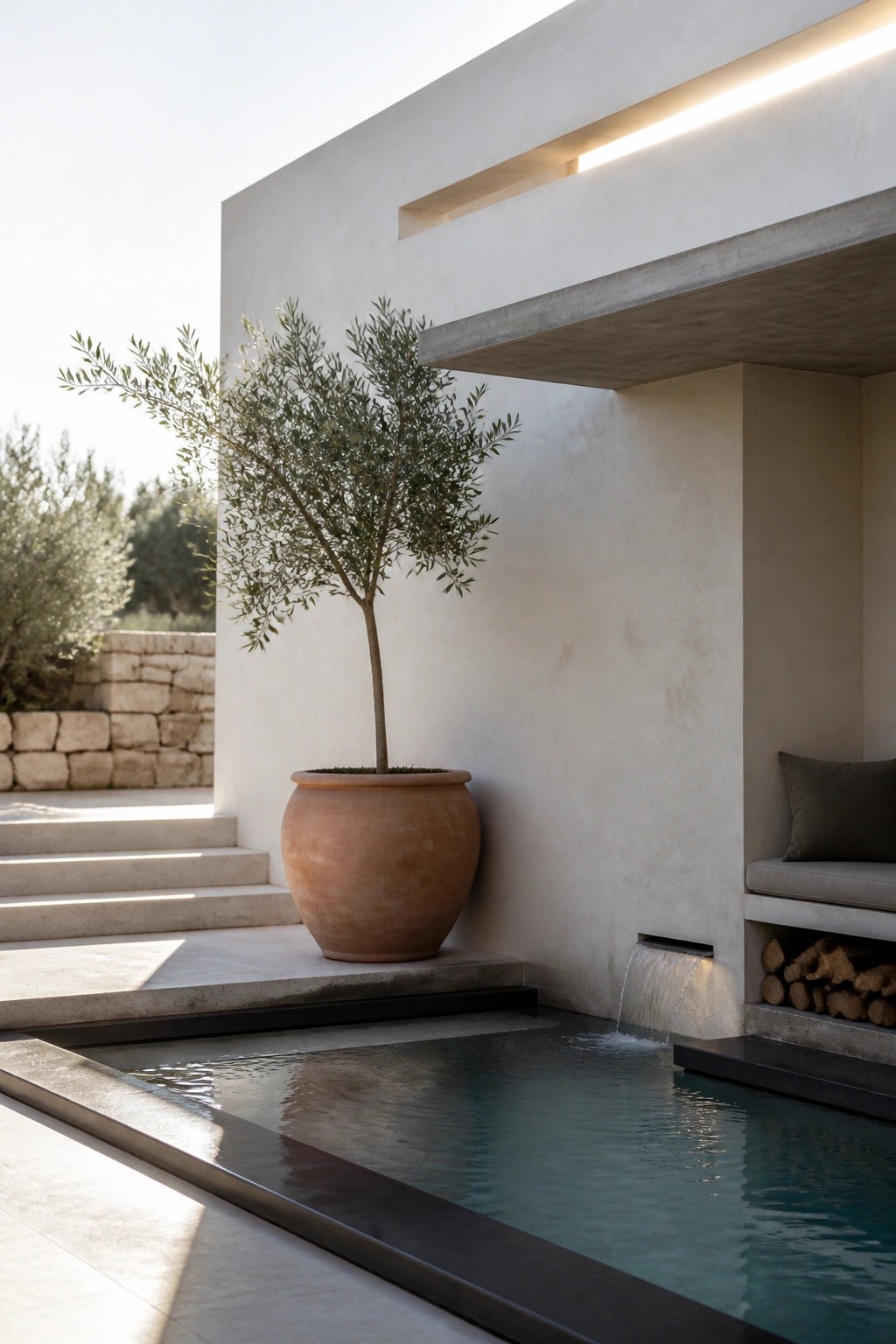
A big potted tree placed right at the water’s edge gives just enough shade without needing a full structure overhead. In minimalist pool areas the solid mass of the pot and the canopy above it break up all the hard surfaces and add a bit of living texture that feels natural rather than added on.
This approach works best on clean concrete or stone decks where you want to keep the lines simple. Set the pot where afternoon sun hits the seating or lounging spot, and choose a tree that can handle reflected heat and occasional splash. Make sure the container is heavy enough to stay put in wind.
Frequently Asked Questions
Q: How do I keep the shade from casting shadows on the water all day? A: Position the structure on the west side of the pool. That way it blocks afternoon glare without covering the surface constantly. Walk the area at different times to test the angle.
Q: Are these minimalist shades easy to take down for winter? A: Most designs use simple clips or ties. You can remove the fabric in under an hour. Store it dry to avoid mildew.
Q: What if the shade fabric fades fast near the pool? A: Choose solution-dyed materials. They hold color better with sun and chlorine exposure.
Q: Can kids play under these shades without issues? A: The open designs let air flow freely. Just secure all anchors well so nothing shifts during games.