When I look at compact backyards the main issue is keeping a plunge pool from taking over the space that people actually use every day.
I have noticed that many pool additions look workable on a drawing but end up blocking paths or leaving no room for a chair and table once they are built.
The layouts that last are the ones that treat the pool as one element among others rather than the only focus.
Size alone rarely solves the problem.
I would test the simpler placements first to see how they affect movement and daily routines before committing to anything larger.
Build Seating Right Up Against the Plunge Pool
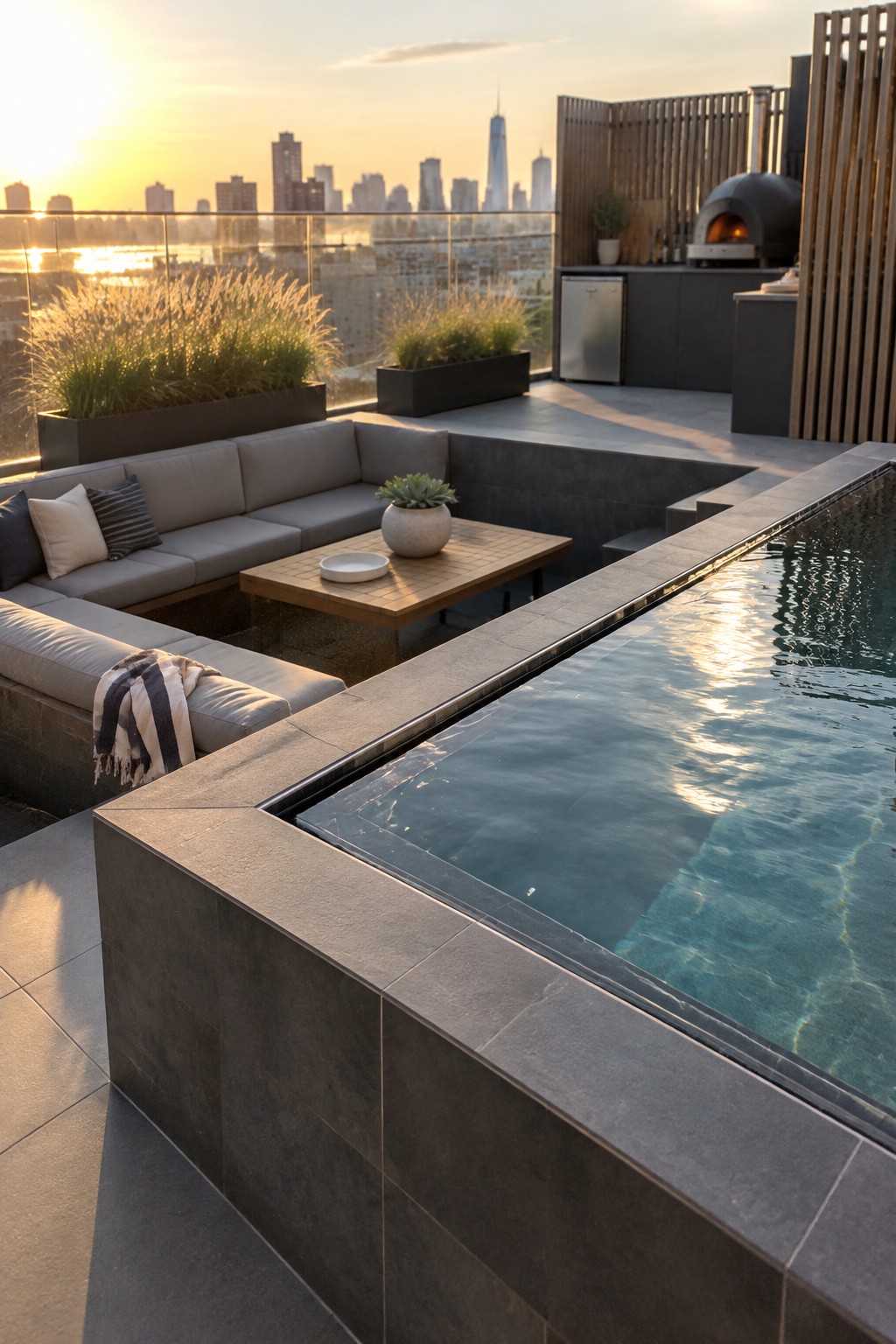
One of the easiest ways to make a small plunge pool feel useful in a tight space is to run your seating right up to the edge. When the pool sits at the same level as the lounge area, the whole spot feels like one connected outdoor room instead of a pool with some chairs nearby.
This layout works especially well on rooftops or narrow patios where you cannot spread things out. Match the pool coping to your seating material so the transition feels natural, and leave enough clear deck space around the other sides for walking and maintenance.
Align the Pool With a Side Wall
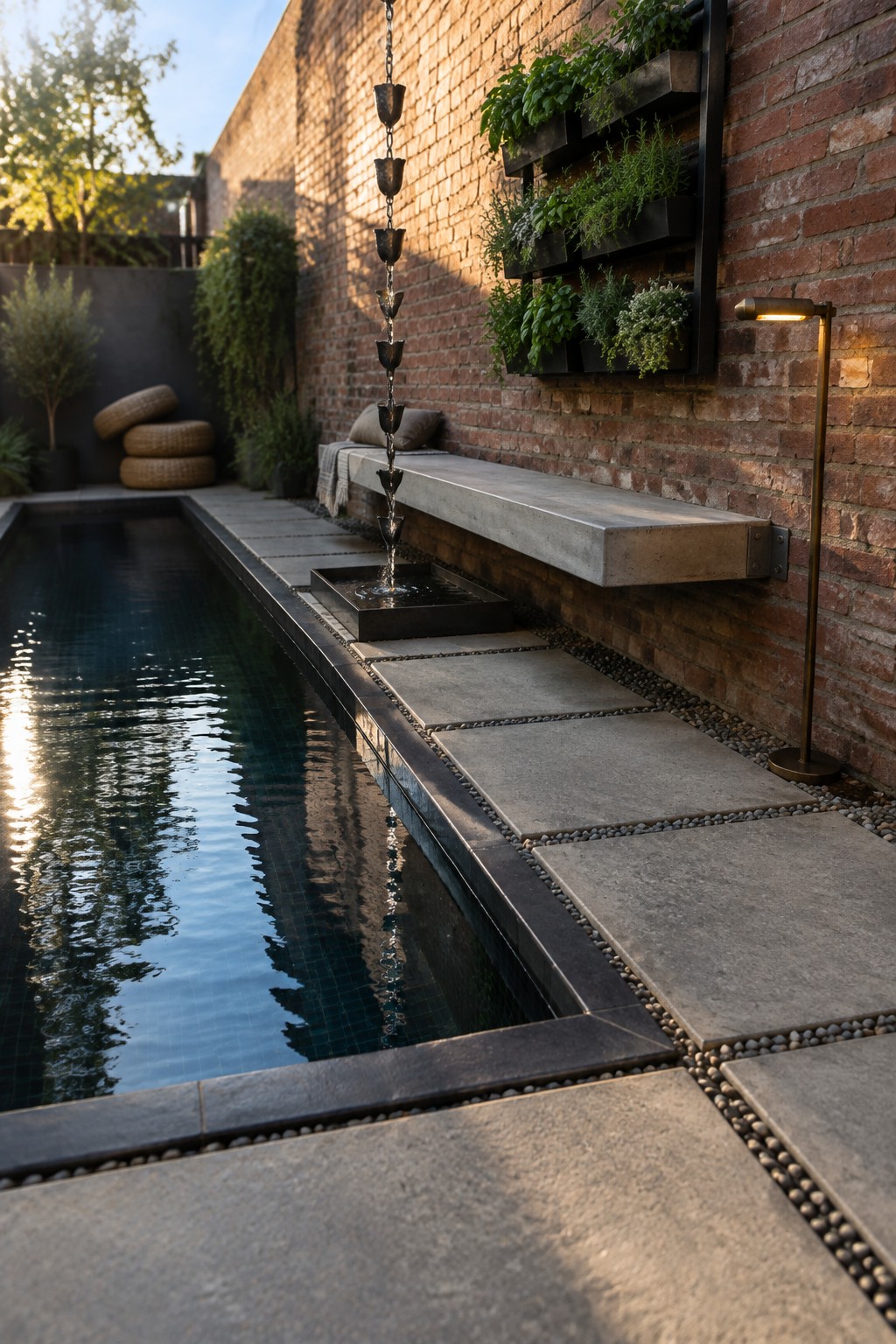
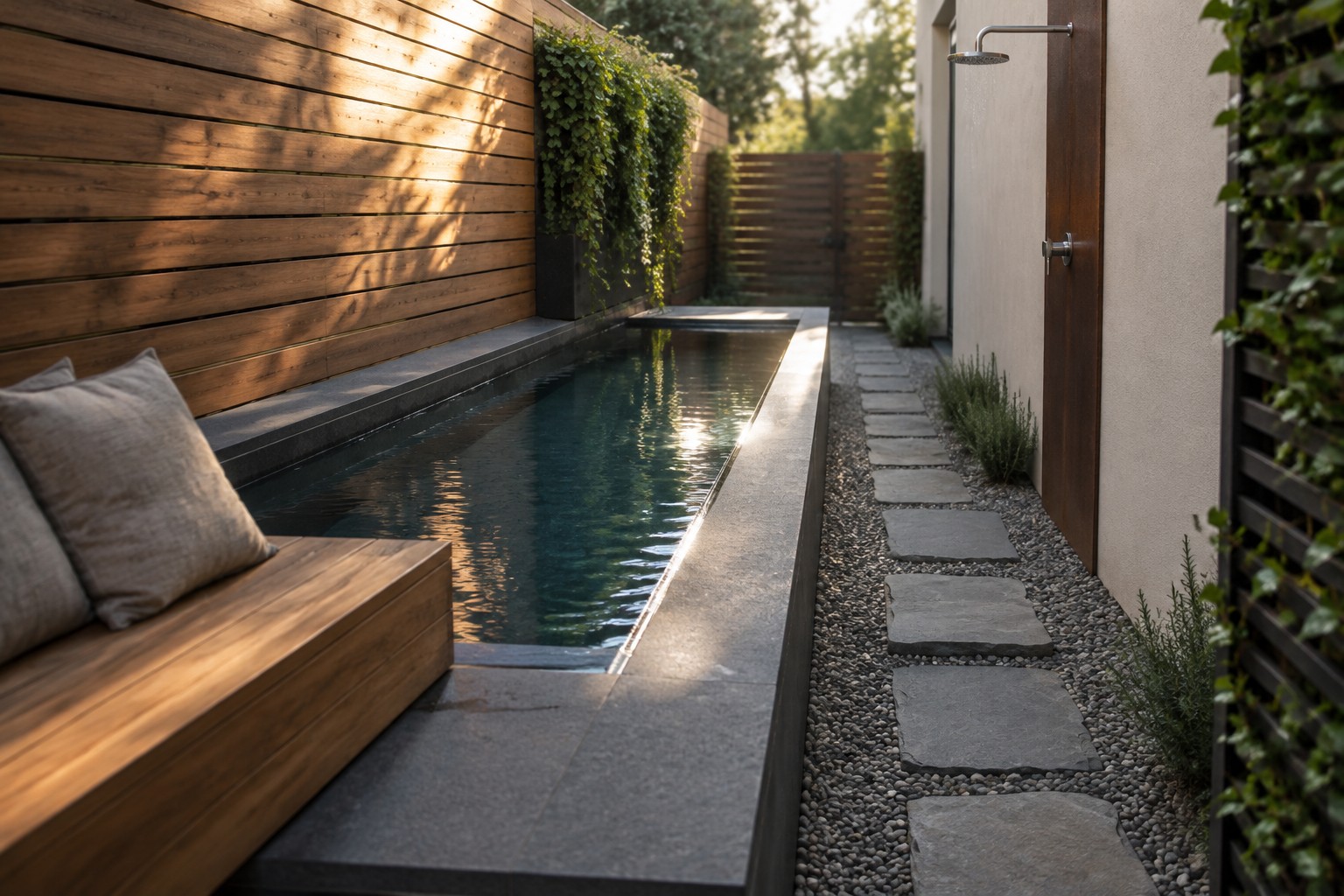
A long narrow plunge pool set right against one boundary wall makes good use of tight backyard space. The layout leaves room for a simple path and seating on the other side without crowding the area or breaking up the floor plan.
This approach works well on urban lots or narrow side yards where width is limited. Keep the pool depth consistent and use a matching hardscape to make the whole strip feel like one clean zone rather than separate pieces.
Position Loungers Right Beside the Pool
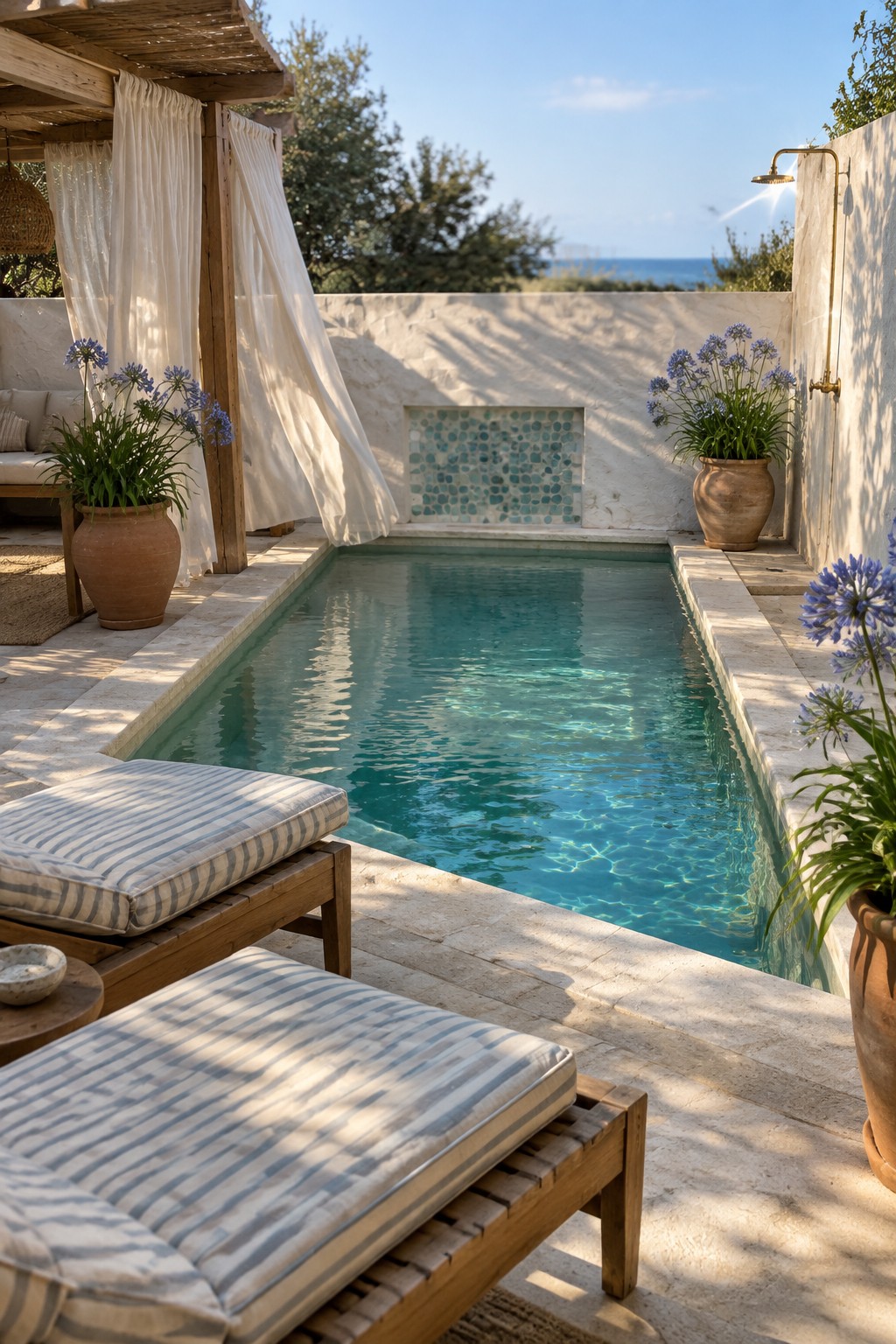
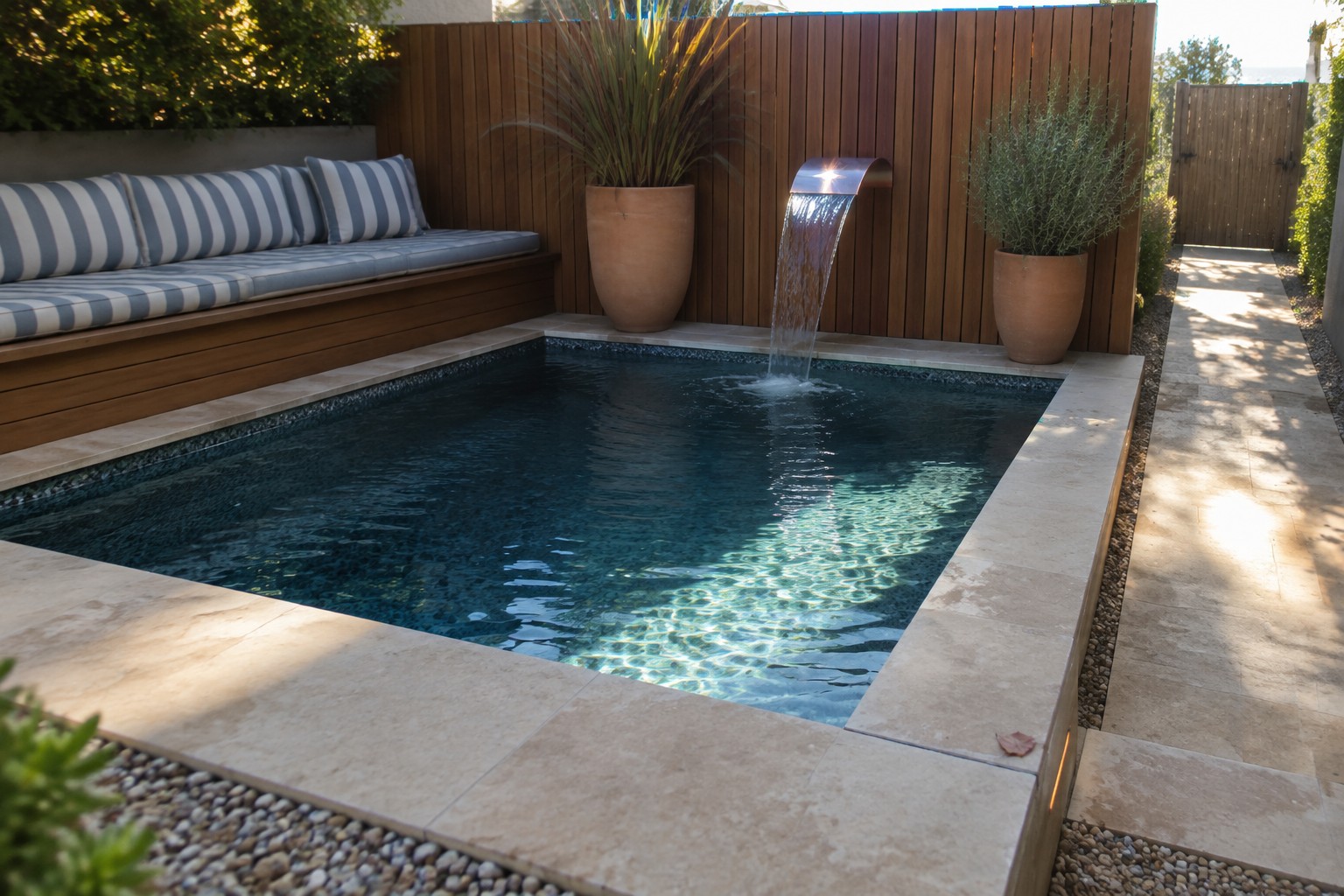
Placing lounge chairs directly along the edge of a narrow plunge pool makes a small backyard feel more usable. You step out of the water and can stretch out without crossing a big deck or losing the connection to the pool. It keeps everything close and simple.
This works best in compact yards where space is tight and you want the pool to double as the main seating zone. Wooden loungers with striped cushions and a couple of large pots help soften the look without crowding the area. Just leave enough room on one side for walking around the pool.
Built-In Seating Along the Pool
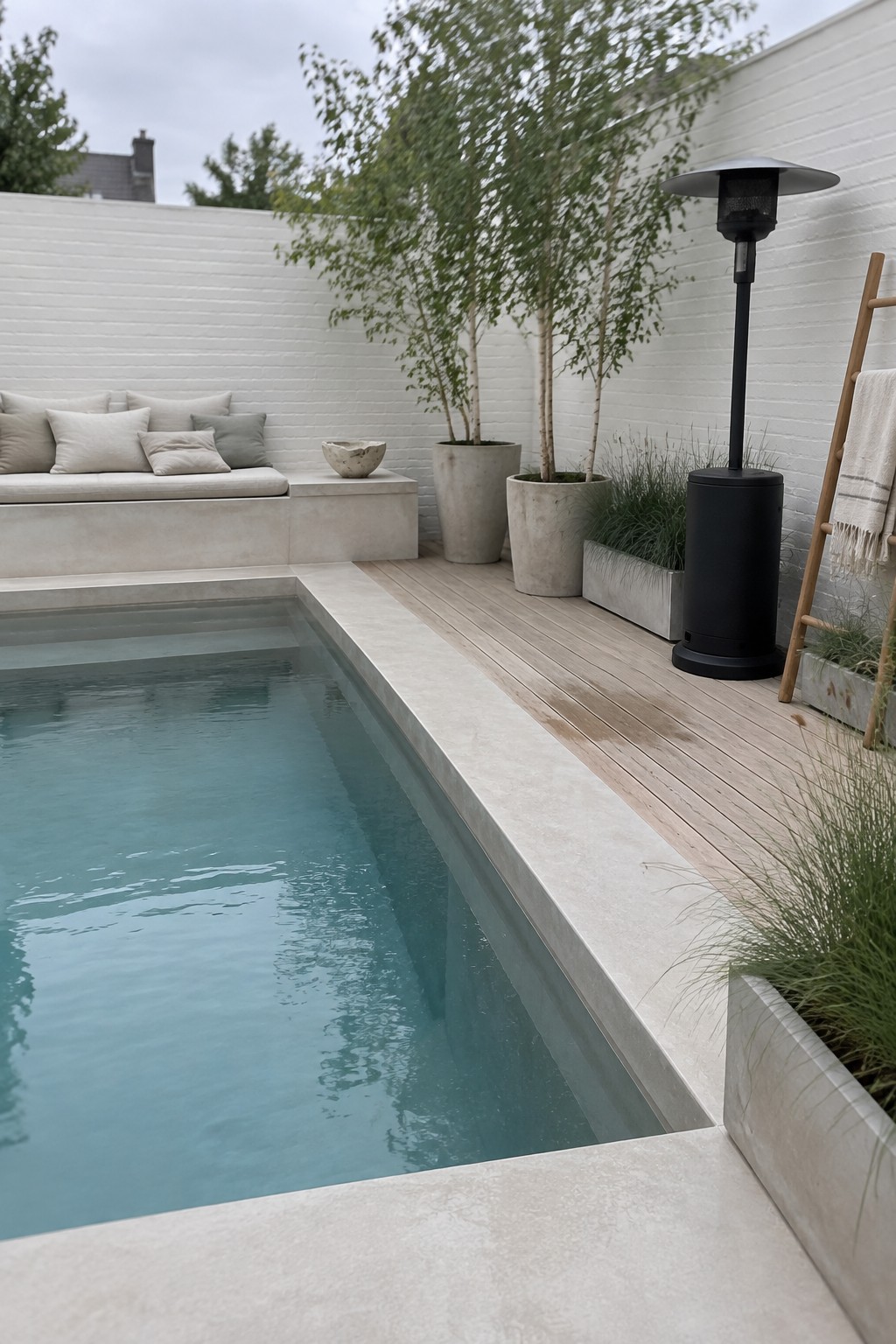
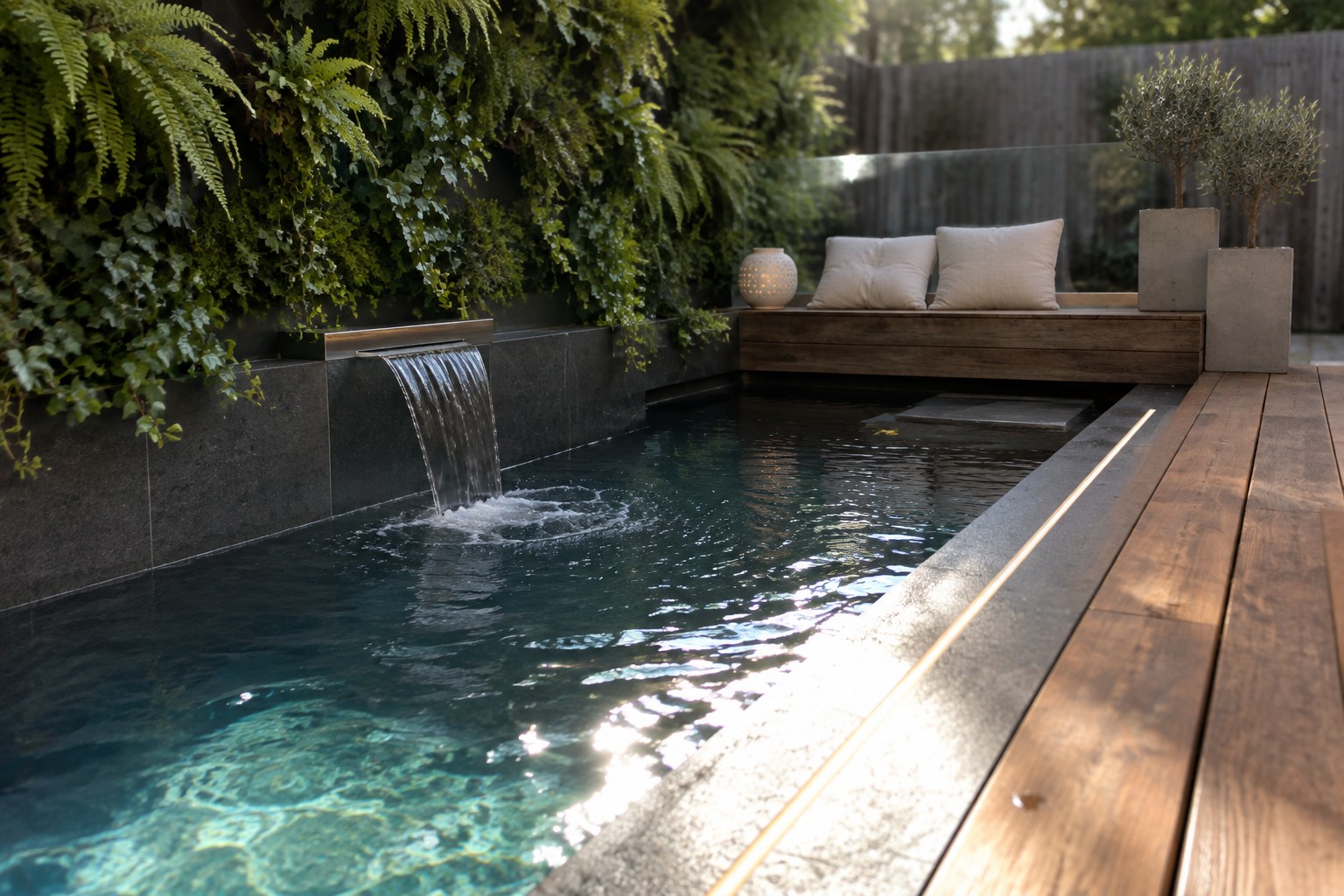
Built-in seating right next to the pool turns a small plunge area into something you can actually use all day. It removes the need for extra chairs or loungers that would eat up deck space, and the fixed bench feels like part of the structure instead of something added later.
This works best in compact backyards where every foot counts. Keep the bench low and wide so it doubles as a step or a place to set towels, and pair it with simple decking so the whole area stays open and easy to move around.
Built-In Concrete Bench With Fire Pit Beside the Pool
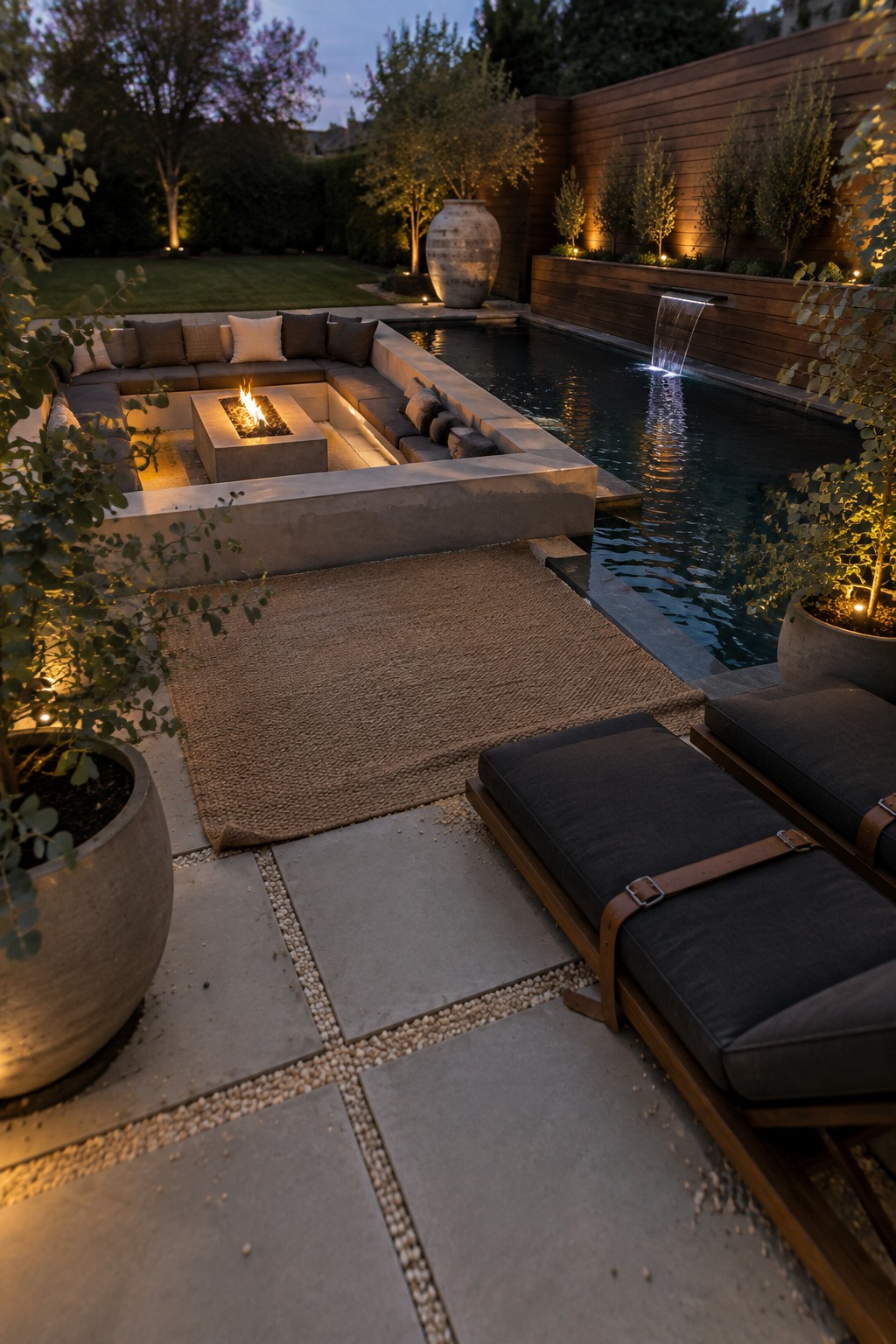
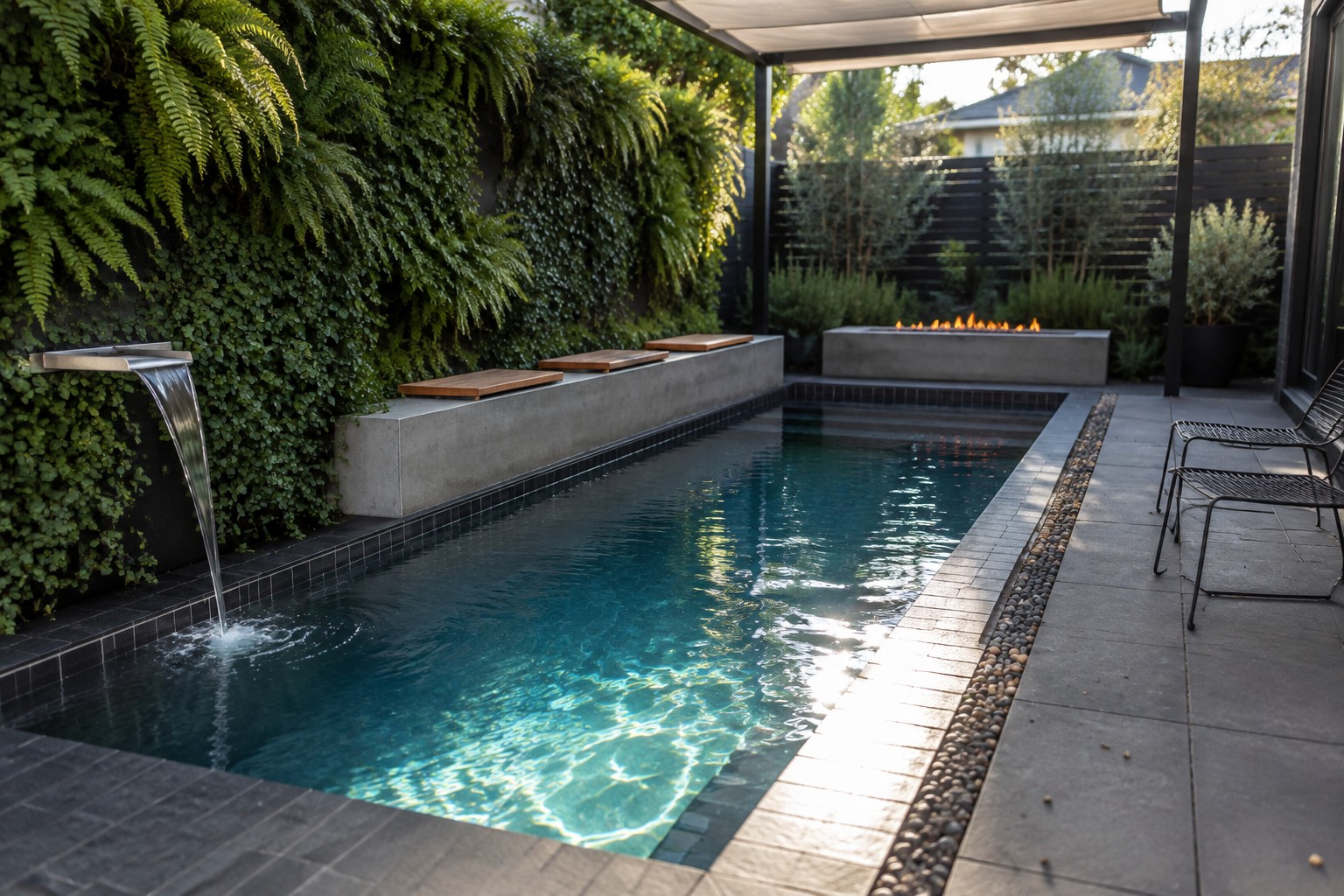
One way to stretch a small backyard is to run built-in seating right along the pool edge. A low concrete bench that wraps around a fire pit turns the water into part of the living space instead of something you just look at from a distance.
This setup works best on tight lots where every square foot has to count. It gives you a place to sit and talk without adding separate furniture that would crowd the patio. Keep the bench height close to the pool coping so the two areas feel like one zone rather than two separate pieces.
Create A Shaded Lounge Area By The Pool
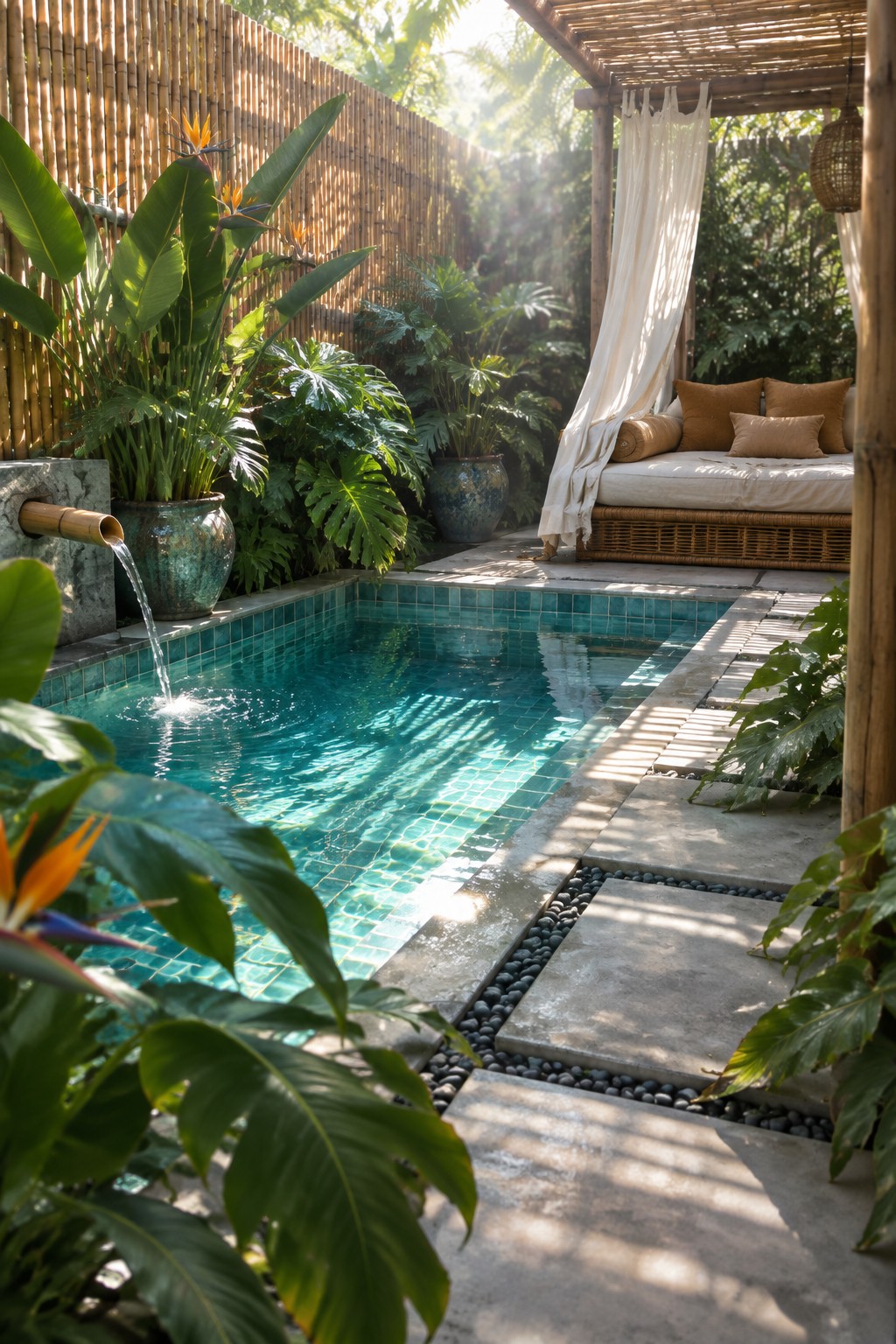
Placing a daybed under a pergola right next to a plunge pool gives you a ready spot to rest without crowding the yard. The shade makes the water more usable during the day, and the setup turns a small pool into a full outdoor living spot.
This works best in compact backyards where space is tight. Keep the structure light, use simple curtains for a bit of privacy, and match the materials to whatever fencing or decking you already have so the whole area feels connected.
Built-In Bench Seating Along One Pool Edge
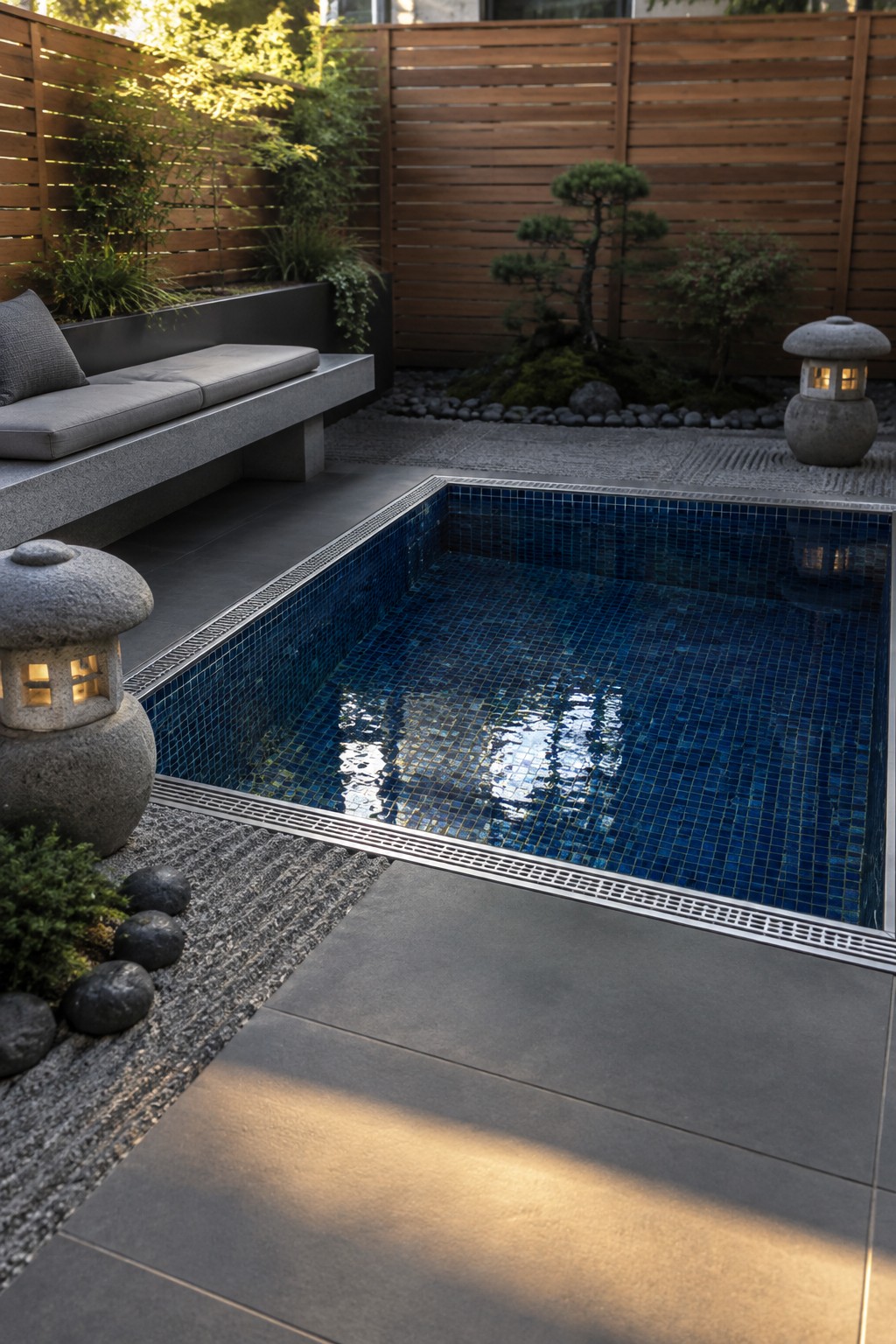
One useful way to stretch a small plunge pool area is to run a built-in bench right along one edge. It turns the poolside into a place to sit and cool off without adding chairs or loungers that eat up floor space. The bench also helps define the edge so the whole setup feels more finished.
This works best in compact backyards where you need every surface to do double duty. Keep the bench material the same as the surrounding deck so it reads as part of the pool rather than extra furniture. Just leave enough room on the other sides for walking and maintenance access.
Integrated Poolside Bench for Narrow Backyards
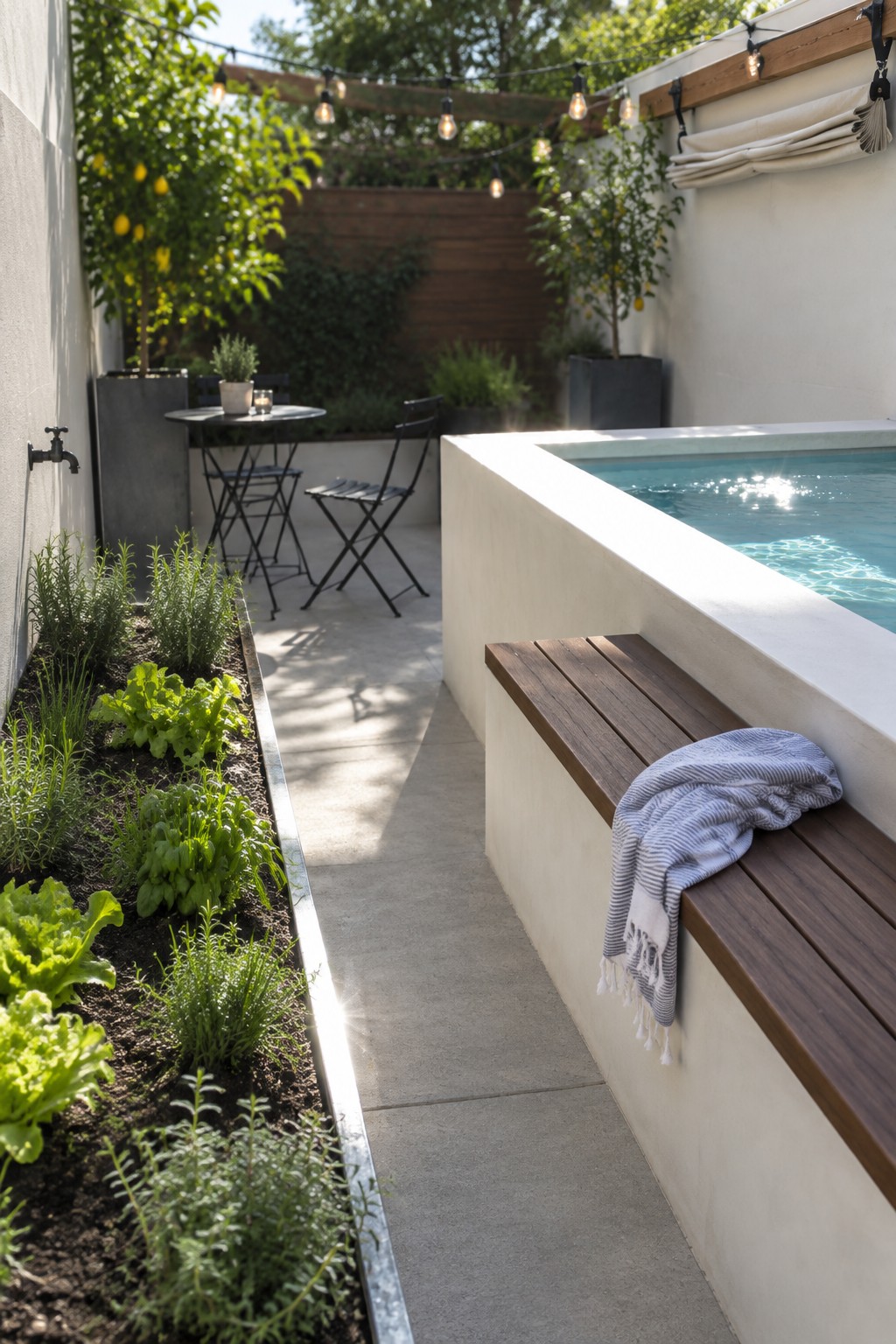
One simple way to get more use out of a small plunge pool is to build a bench right into the edge. It turns the pool coping into a place to sit, rest a towel, or keep a drink, without needing extra chairs that take up floor space.
This approach works best in narrow yards where the pool already runs close to a wall or fence. Keep the bench width modest so it does not crowd the walkway, and choose a material like wood or the same stone as the pool for a clean look that still feels practical.
Built-In Bench Seating Around The Pool Edge
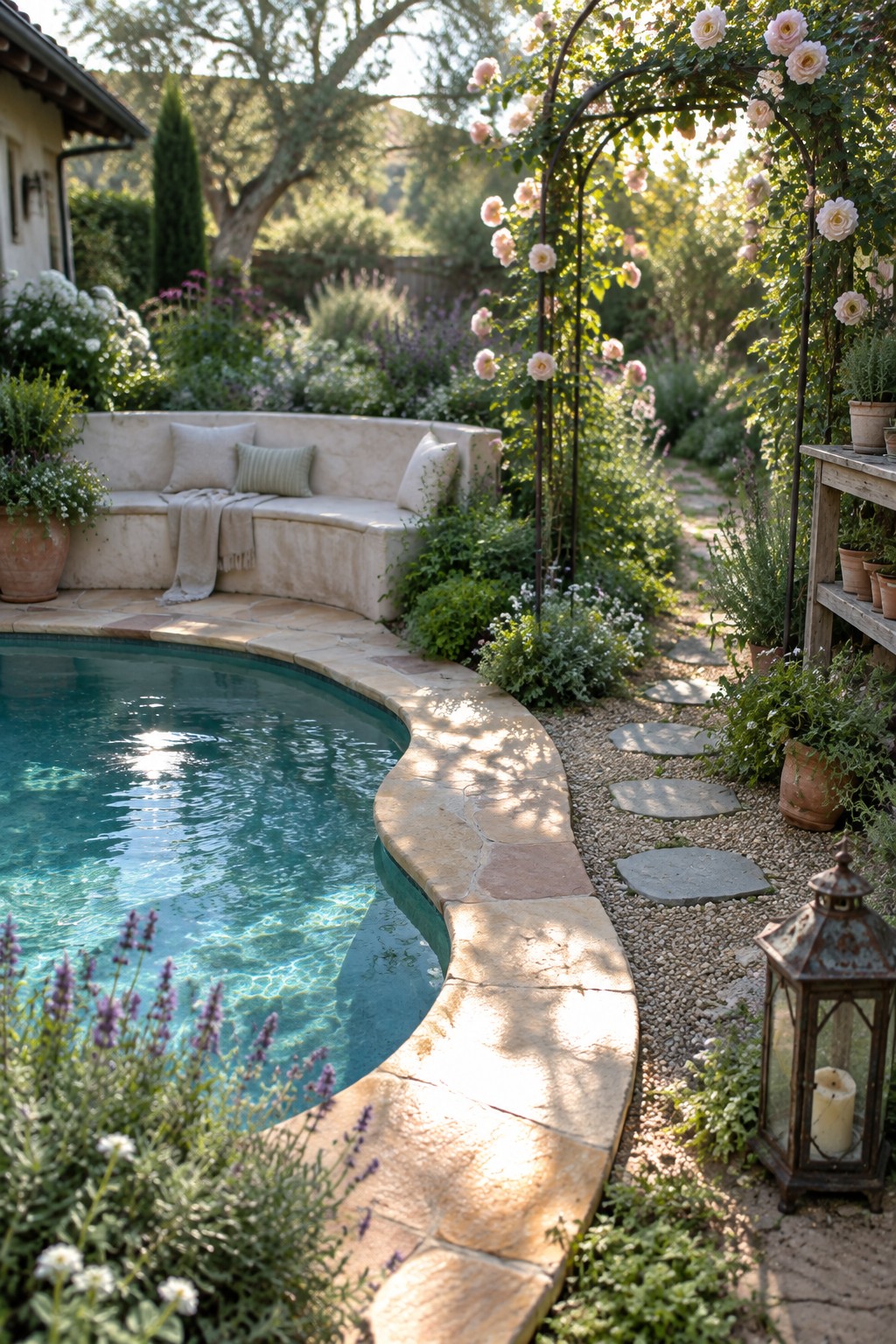
One simple way to stretch a small backyard is to build the seating right into the pool edge. A curved bench that follows the shape of the water keeps everything close together and removes the need for extra chairs or tables that would crowd the space.
This works well on compact lots because the bench takes up almost no extra room and still gives you a place to sit and cool off. Use the same material as the deck so it feels like part of the pool rather than something added later, and keep the cushions light so you can move them when you want more open deck space.
Add A Bar Counter Next To The Plunge Pool
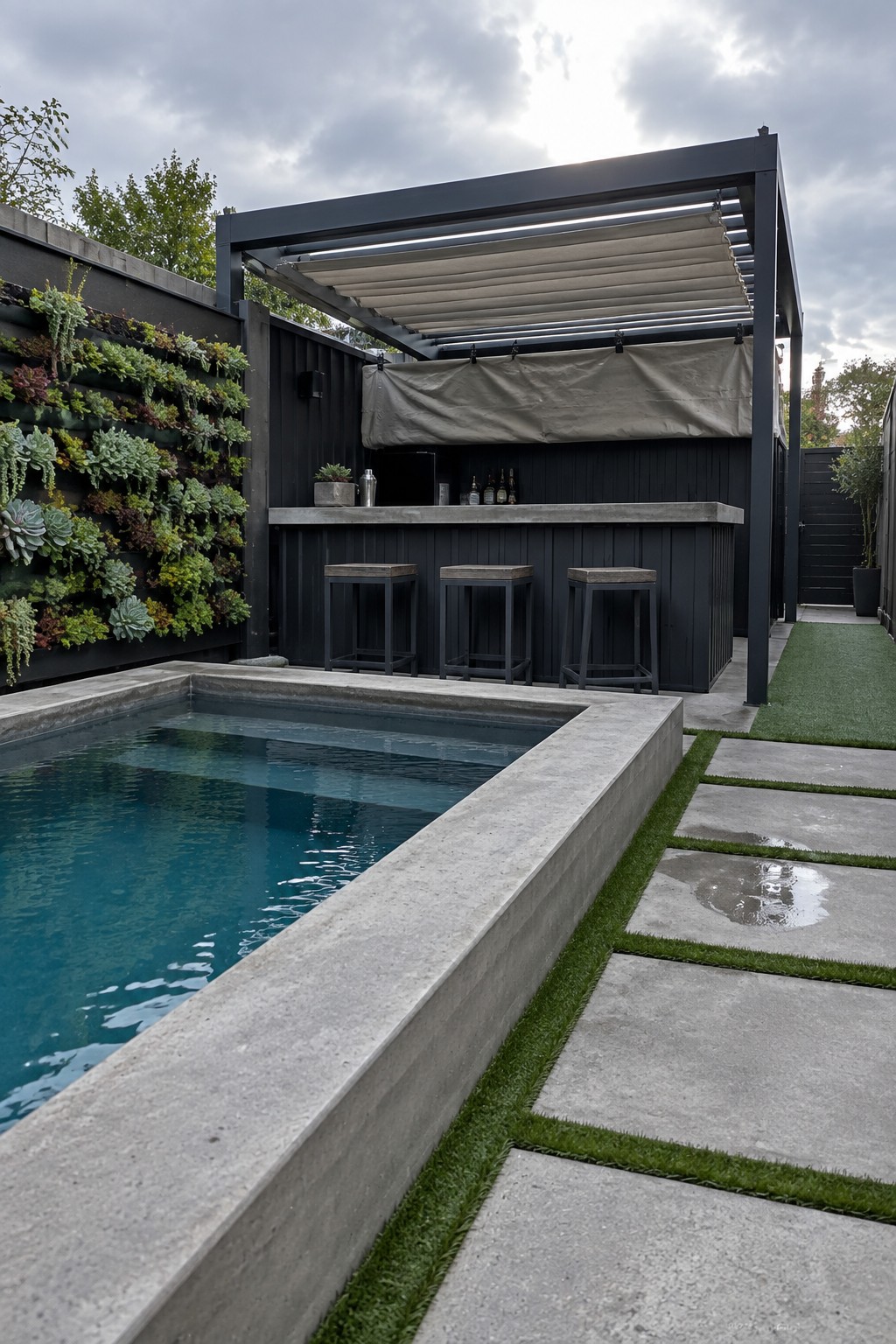
Many compact backyards feel more useful when the plunge pool connects directly to a place to sit and grab a drink. A simple bar counter with stools placed right at the edge keeps everything close together and turns the pool into an actual gathering spot instead of just a small body of water.
This layout works best in tight yards where separate zones would crowd the space. The counter can handle drinks and towels while the stools stay dry enough for everyday use, and the whole area stays easy to maintain if you choose materials that handle water and weather without much fuss.
Integrate Your Plunge Pool with Garden Paths
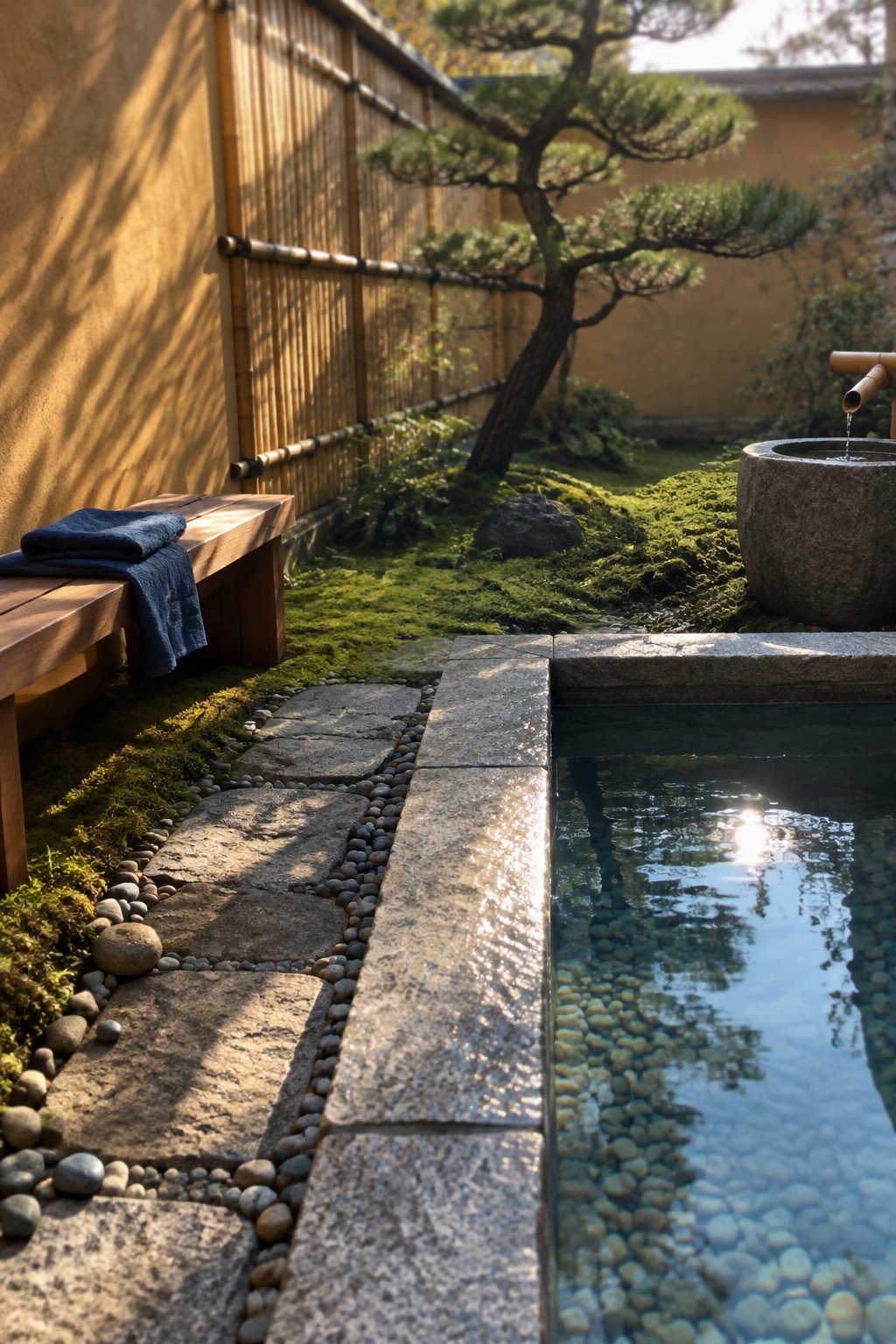
A stone path that runs right up to the edge of the pool helps a small plunge pool feel like part of the garden instead of a separate addition. The path guides the eye and creates a gentle transition between the water and the surrounding ground cover, which keeps the whole space from looking cramped.
This works well in compact backyards where you want to avoid large decks or heavy paving. Keep the path narrow, use the same stone for simple pool edging, and let the planting run close to the water. It suits homes that already have some garden beds or ground cover in place.
Extend the Deck Over the Pool Edge
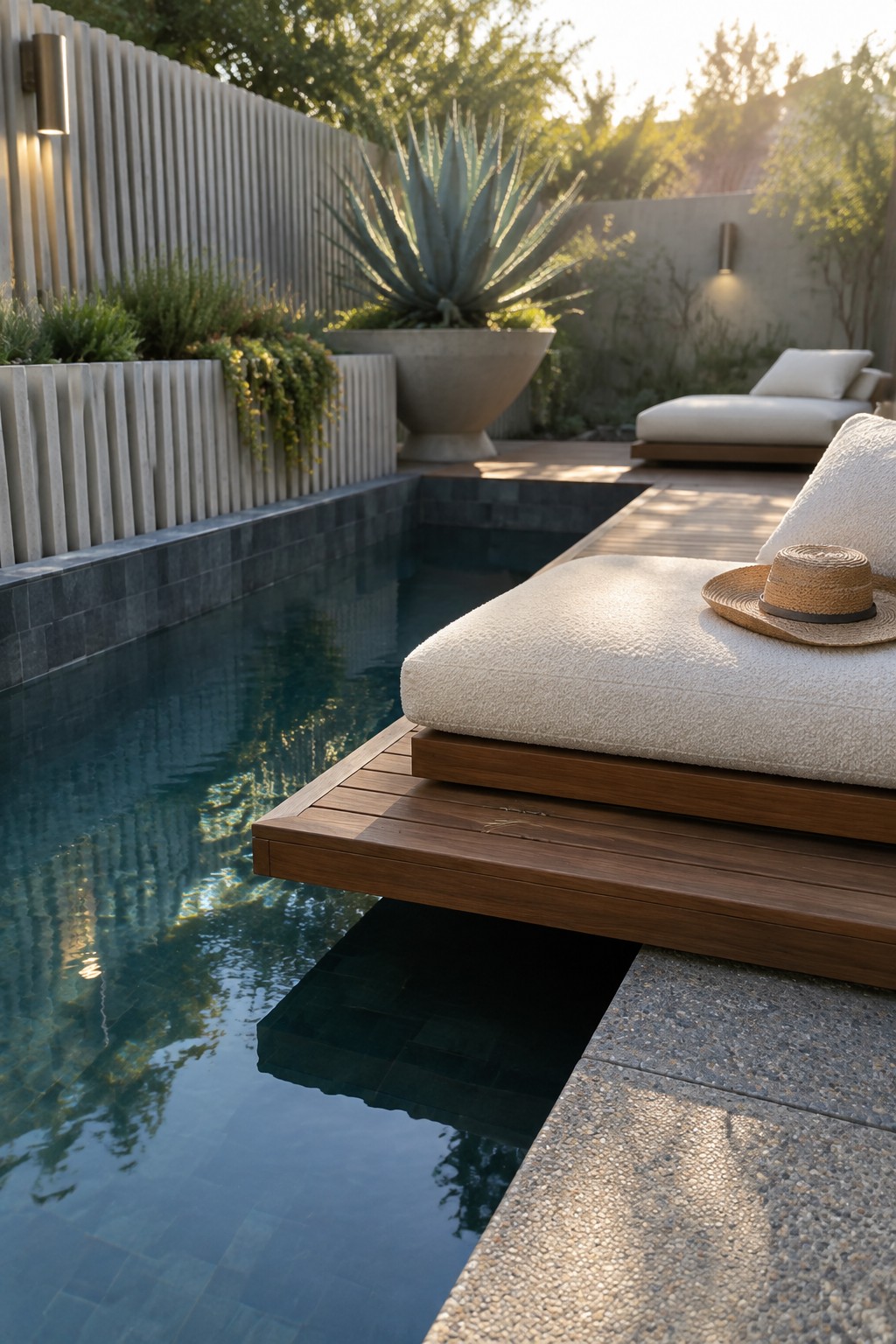
Letting the deck reach out over the water is a simple way to add seating without eating up extra ground space. The wooden platform sits right at the pool edge so a lounge chair can rest partly above the surface. This keeps the whole setup feeling close and connected rather than spread out.
It works best in tight yards where you need every square foot. Keep the overhang modest and use weather-treated wood that can handle constant moisture. The look suits modern homes that already lean toward clean lines and minimal planting.
Built-In Seating Adds Storage Next To A Plunge Pool
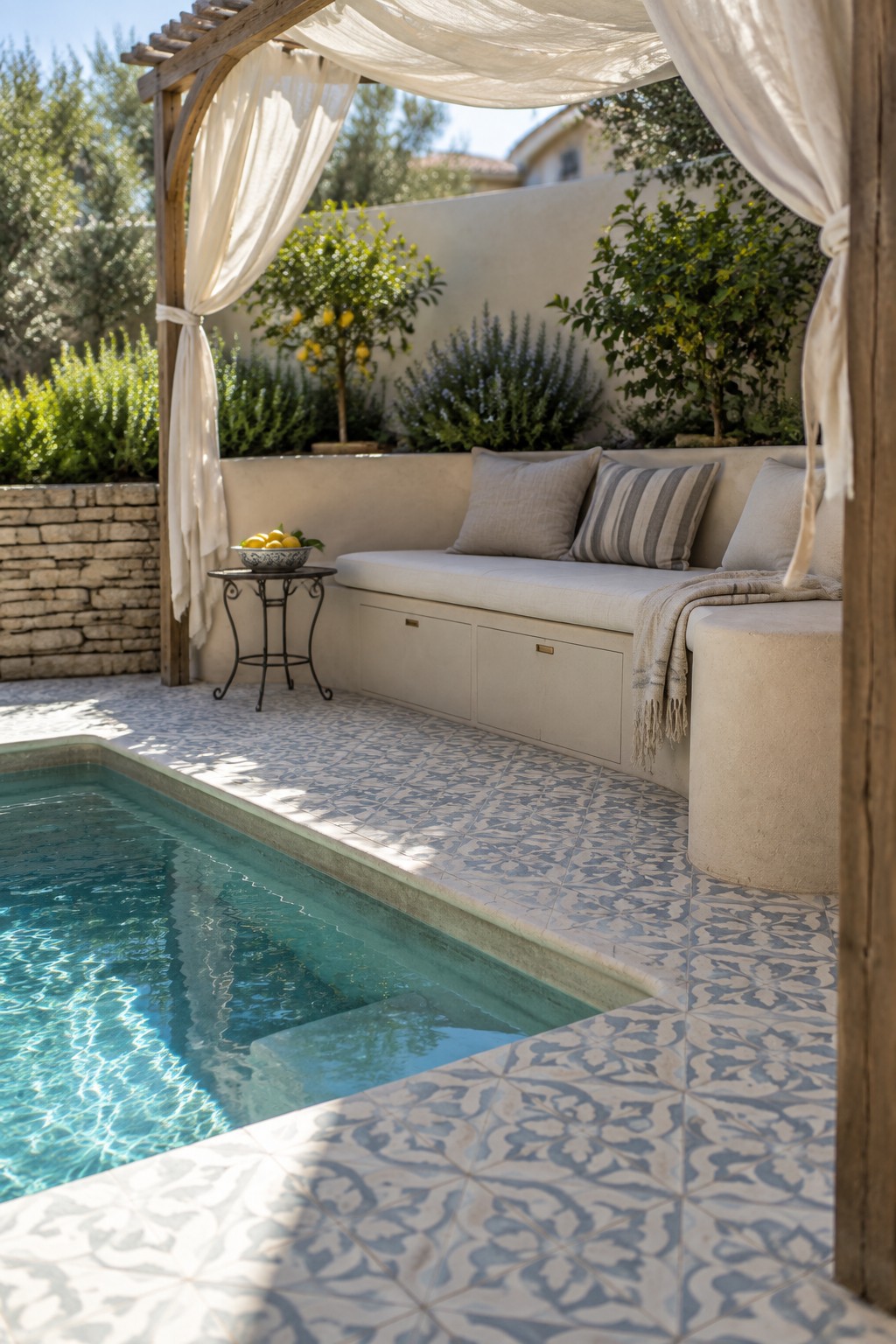
A built-in bench with drawers right beside the pool gives you seating and hidden storage in one piece. It keeps towels and cushions close without adding extra furniture that would crowd a small yard.
This works well in compact backyards where the pool and lounge area share the same tight space. Tuck it under a pergola for shade, and make sure the storage is sealed against weather if you plan to leave things inside year-round.
Dark Accent Wall Behind a Plunge Pool
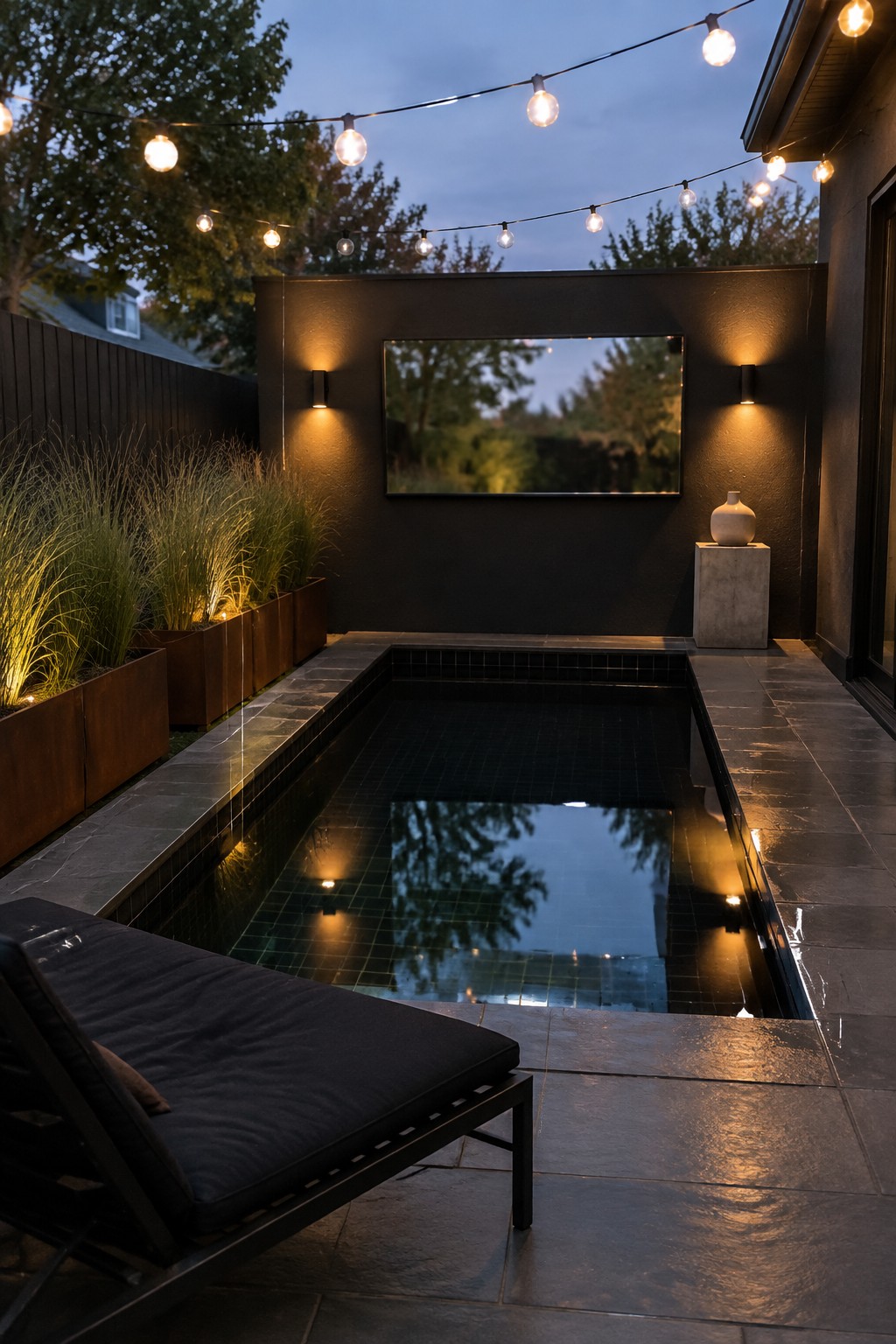
A dark wall at the end of the pool gives the whole area a clear boundary without crowding the space. It makes the water look deeper and turns the pool into the main feature even when the yard is small. The wall also helps block views from neighbors while keeping the layout simple.
This approach works best in compact backyards where you need the pool to feel intentional rather than squeezed in. Paint the wall a deep charcoal or black, add a couple of sconces for evening use, and keep planting low and contained along the sides so the focus stays on the water.
Hang a Swing for Simple Seating
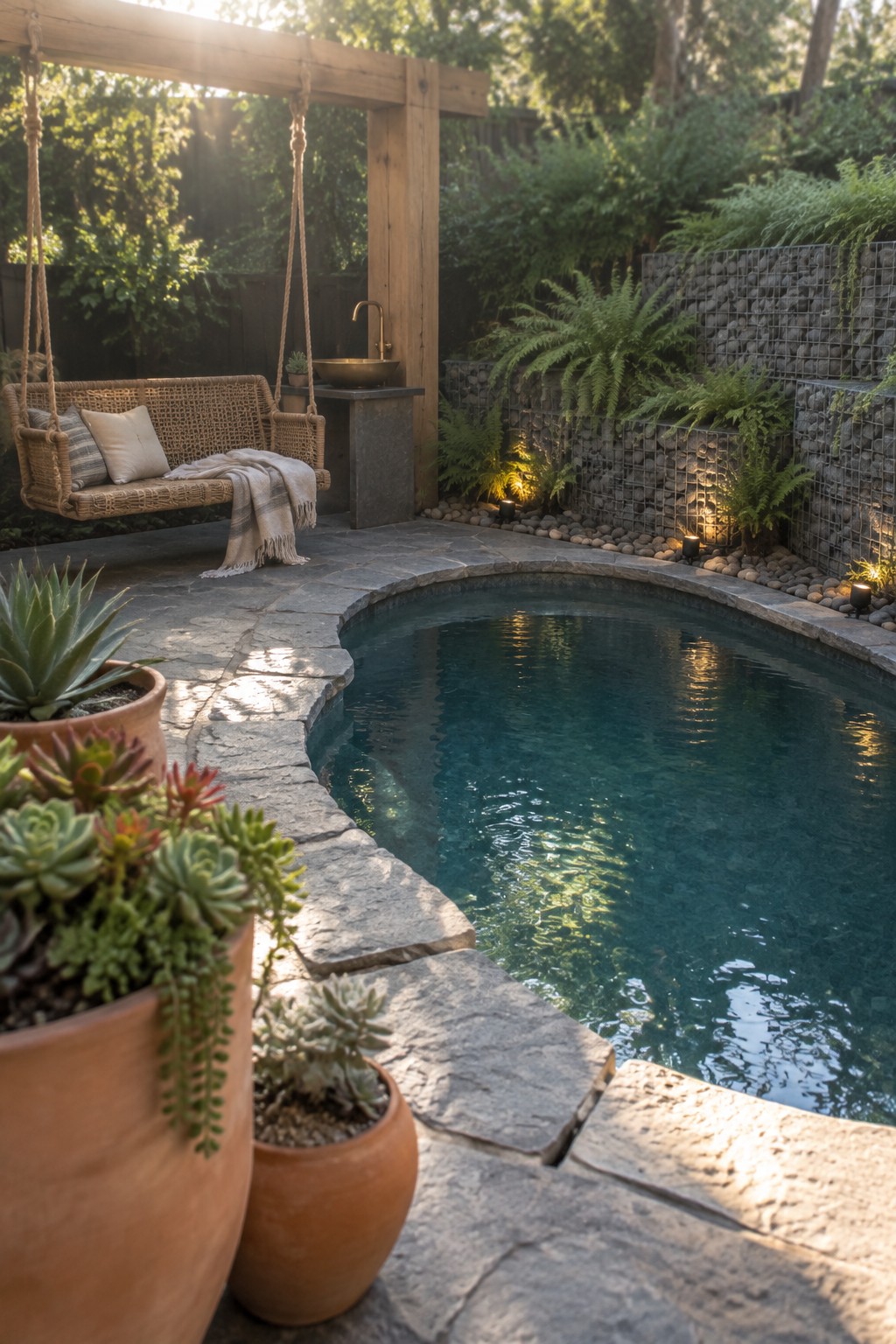
A hanging swing works well next to a small plunge pool because it uses almost no floor space. You get a comfortable spot to sit without crowding the water or blocking the path around the edge.
This setup suits compact backyards where every square foot counts. Build a basic wood frame over the patio and hang a sturdy seat so it stays clear of the pool coping. Keep the area open and add a few pots nearby if you want a bit more greenery.
Combine the Plunge Pool With an Outdoor Kitchen
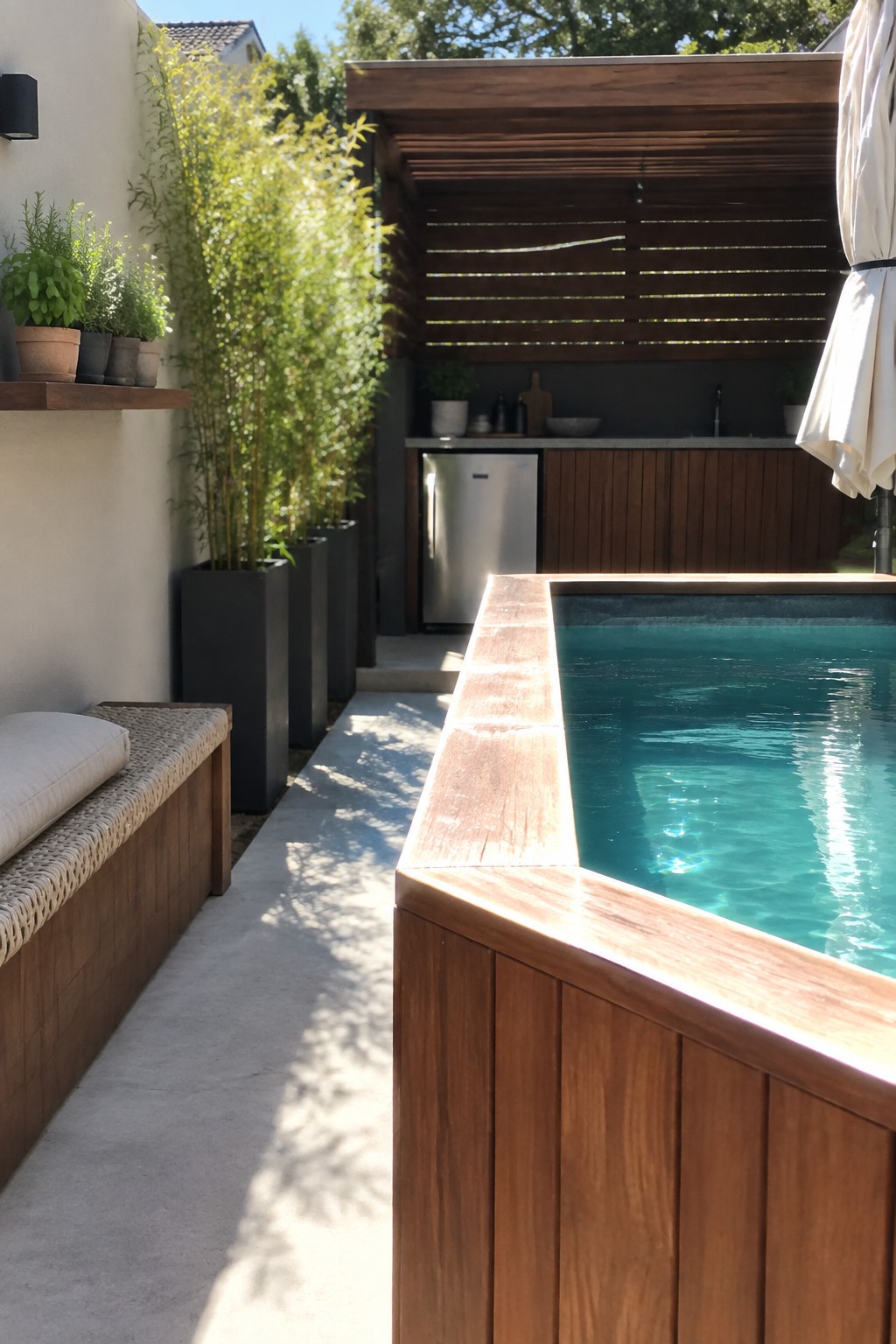
This layout makes sense in a small yard because the pool and kitchen share the same area without fighting for space. The kitchen gets a simple slatted roof for shade while the pool stays open and easy to reach from the cooking side.
It works best in compact backyards where you want both swimming and entertaining in one zone. Keep the pool edge wide enough for people to set down a plate or lean against it, and make sure the kitchen counter faces the water so the cook stays part of the scene.
Add an Outdoor Shower Next to the Plunge Pool
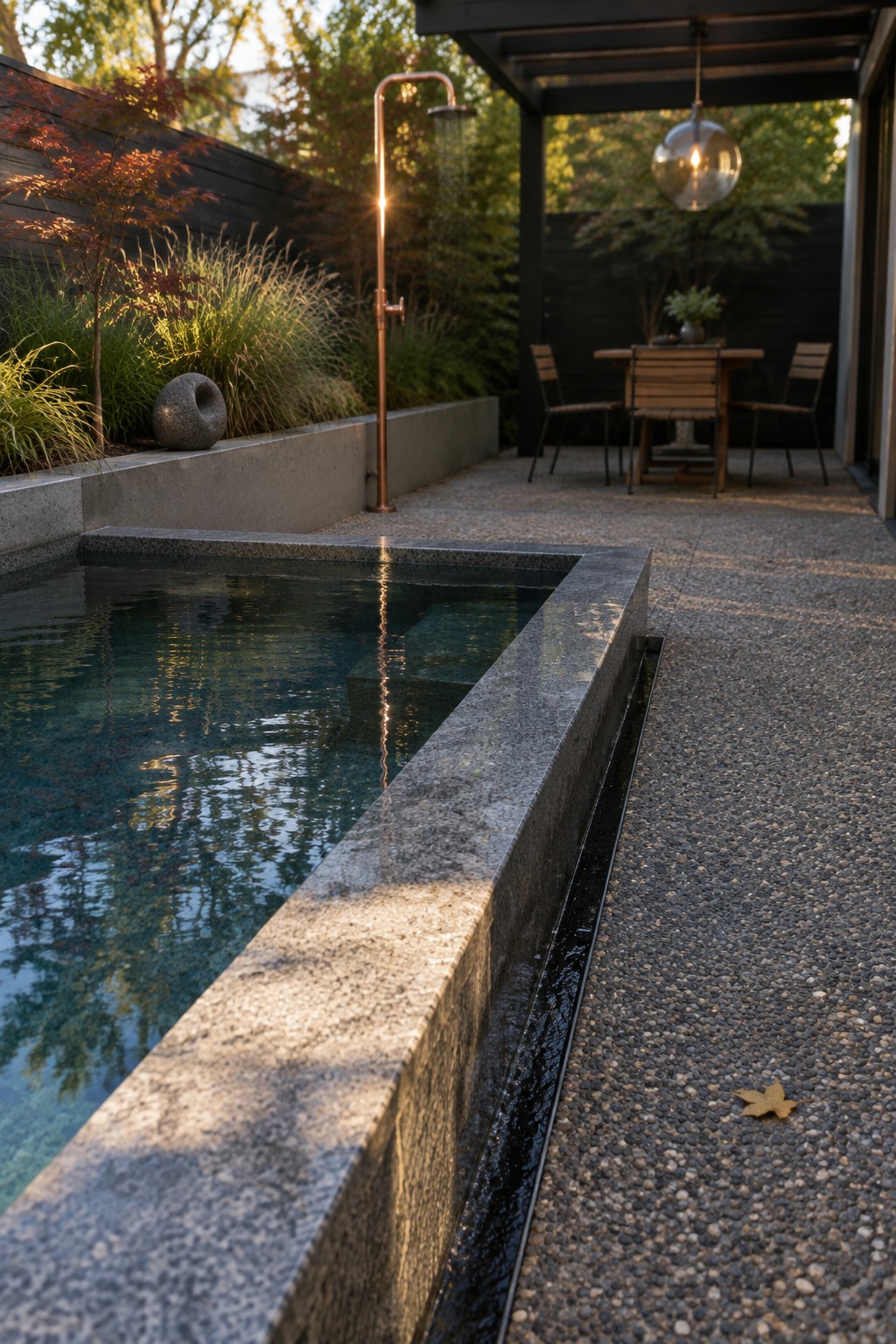
An outdoor shower placed right beside a plunge pool makes the whole setup more practical. You can rinse off before or after a dip without walking through the house, and it keeps the pool water cleaner over time. The copper pipe and simple fixture in this example show how little space it actually takes.
This idea works best in compact yards where every feature needs to serve more than one purpose. Set the shower on the same gravel or paved surface as the pool, and keep the scale modest so it does not crowd the seating or planting areas around it.
Narrow Plunge Pools With A Gravel Path
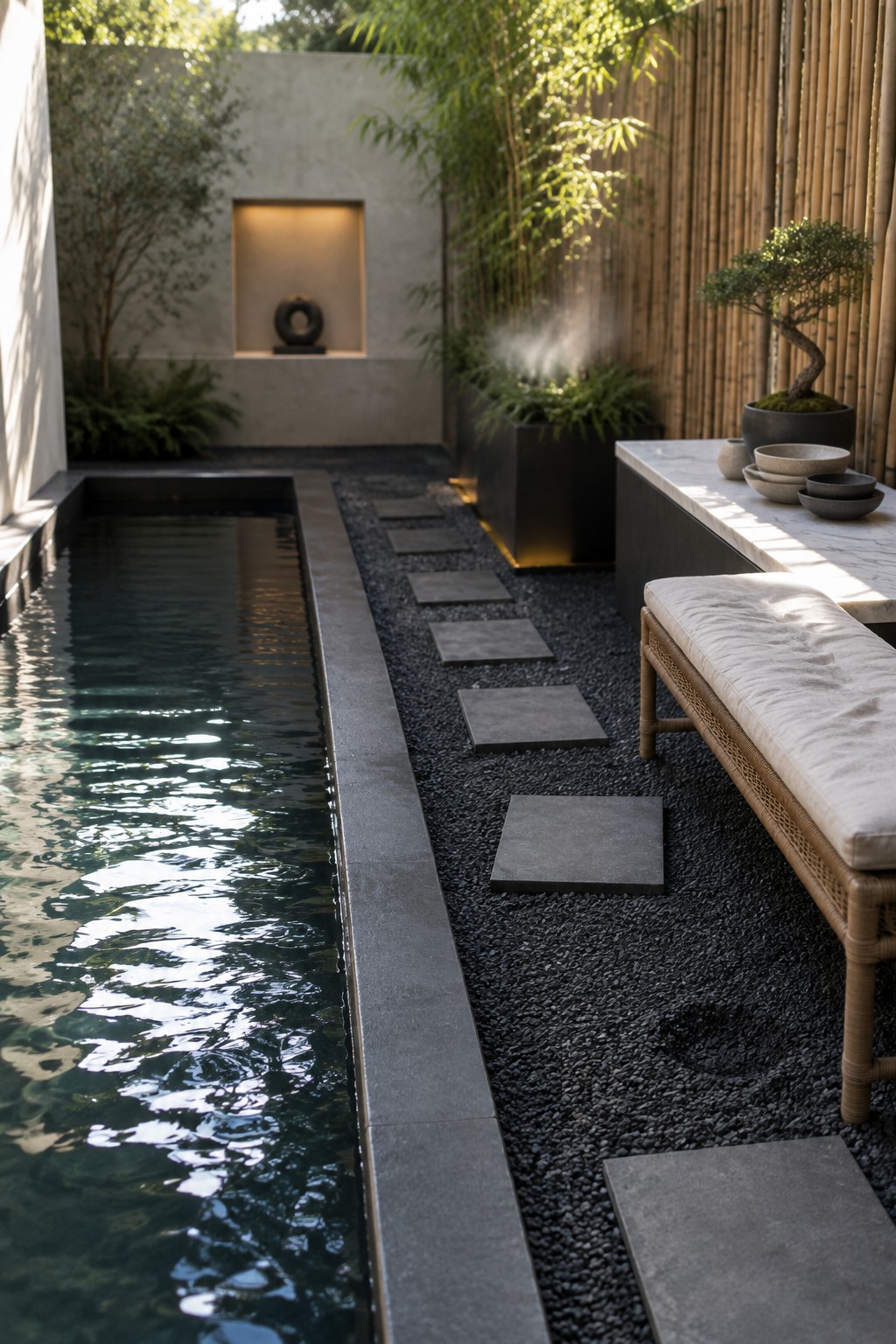
A long narrow pool works well in a tight backyard because it leaves enough room for a simple walkway right beside it. The gravel and stepping stones keep the ground easy to cross without adding a big deck or patio that would crowd the space.
This setup suits homes where the yard is mostly a side strip or a small rectangle behind the house. Keep the path narrow and the pool edge low so the whole area still feels open instead of boxed in.
Frequently Asked Questions
Q: Can I fit a plunge pool into a backyard that’s mostly existing patio? A: Cut out a section of the patio and set the pool into that spot. The rest of the pavers stay put around it. This keeps the project smaller and avoids ripping up the whole surface.
Q: How do I handle leaves or debris without a big skimmer system? A: Toss a cover over the water when you finish swimming. A quick net pass every couple days clears what gets through. Most people find this routine simple enough for daily use.
Q: What if the pump and filter end up eating into my limited space? A: Tuck the equipment into a low cabinet against the fence line. Run the lines under the ground so nothing sits out in the open. The yard stays clear for chairs or plants.