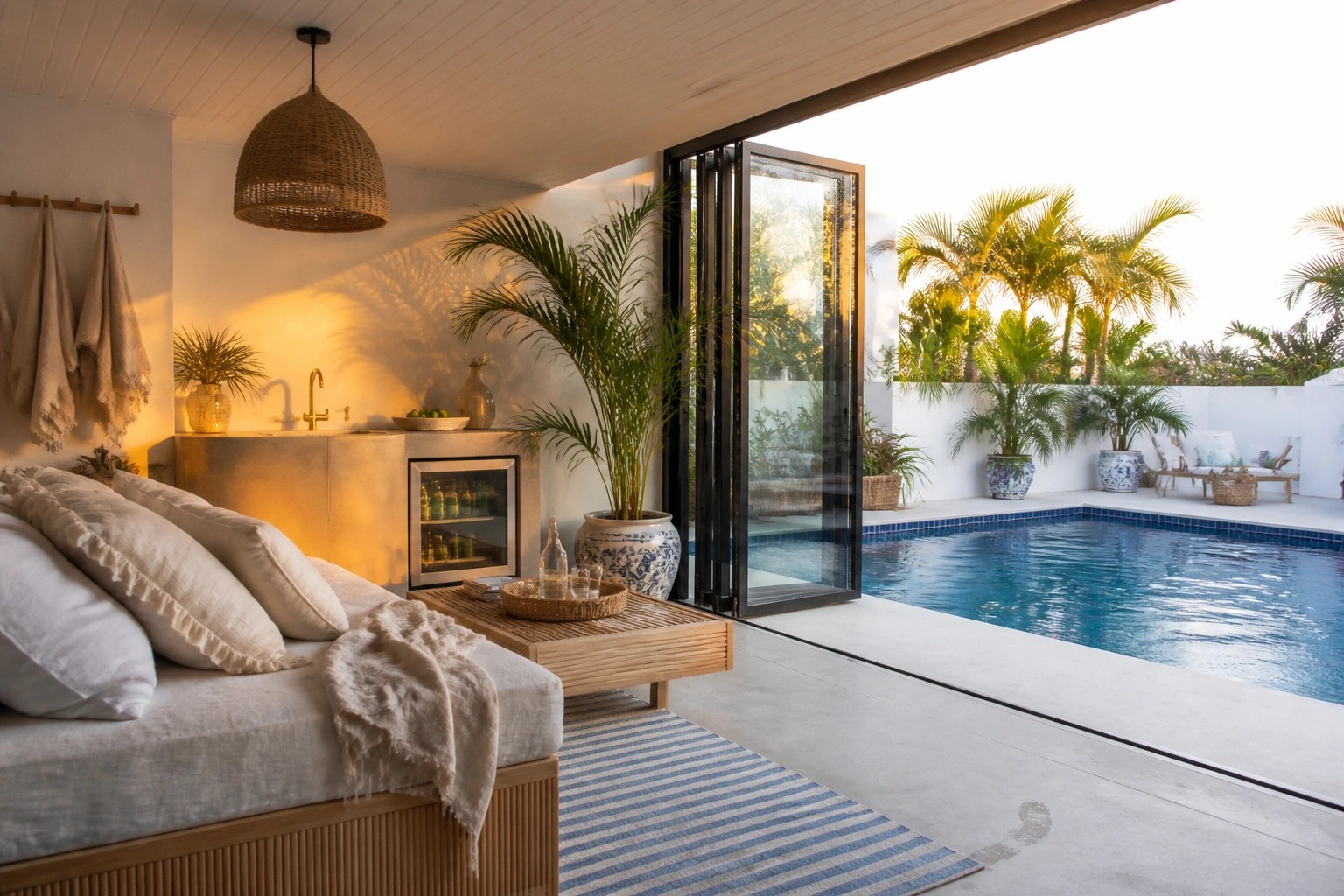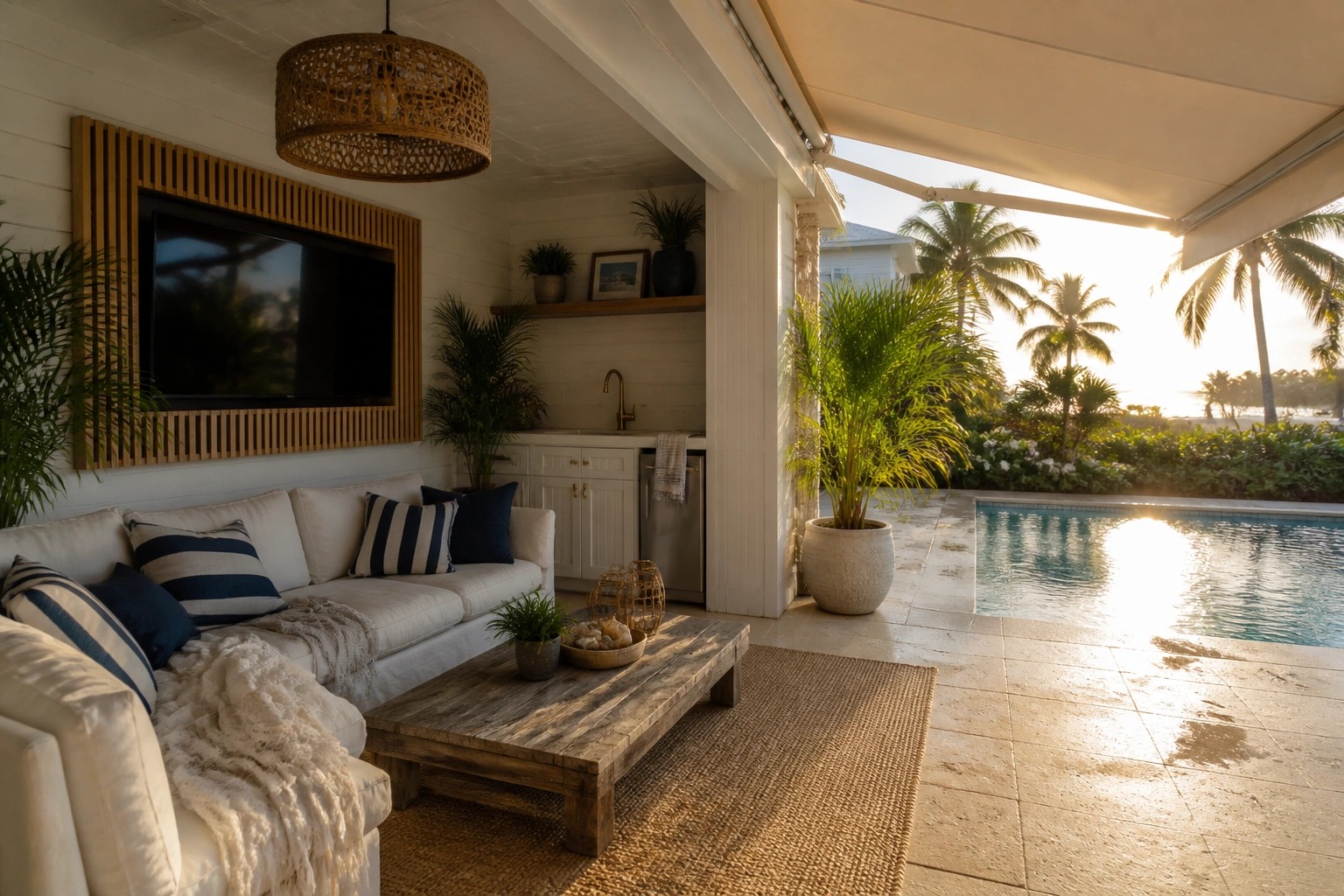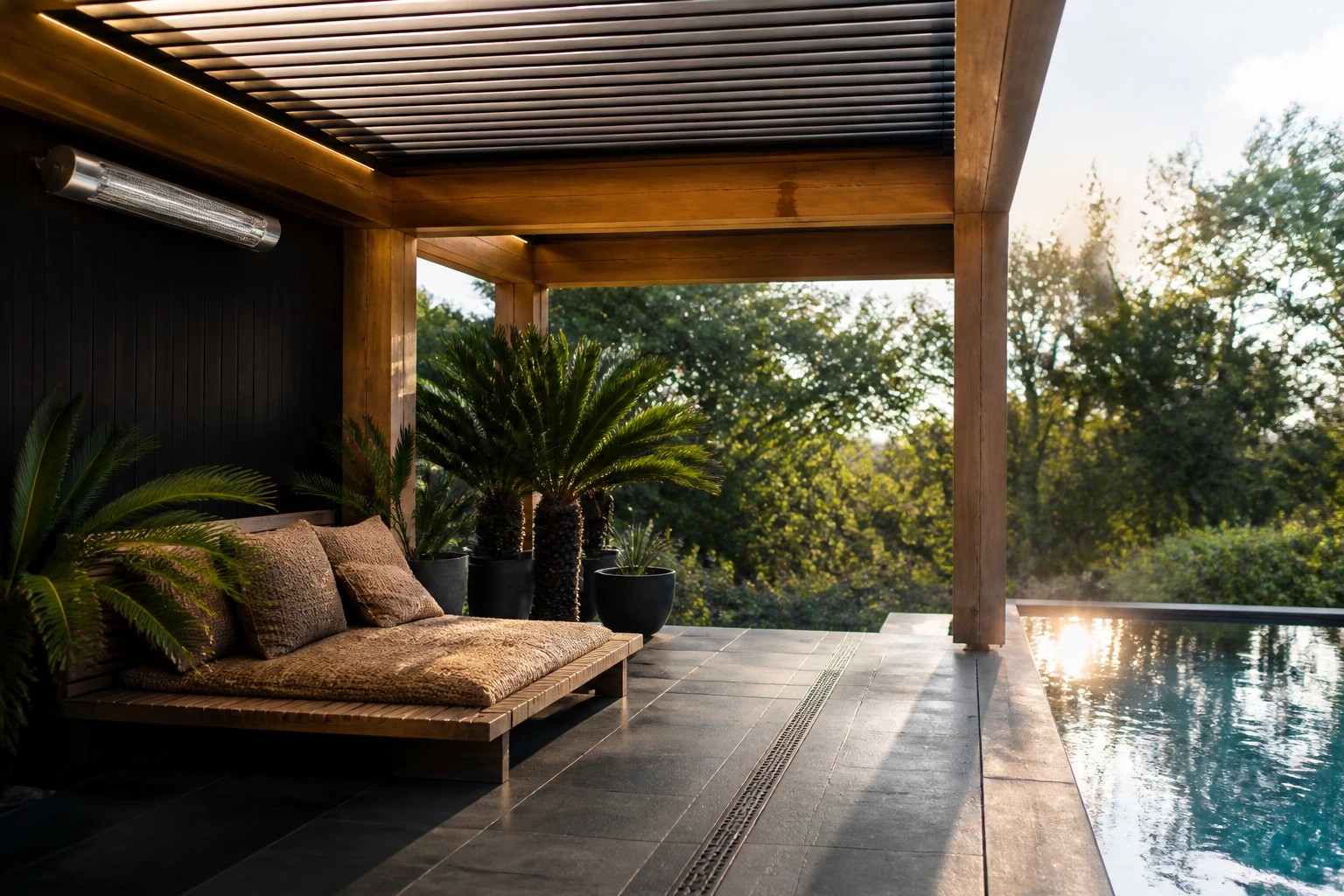
Spending time around a pool in the middle of summer quickly teaches you how important real shade becomes once the sun climbs overhead.
The best setups are the ones where you can actually stay outside without constantly moving to chase the shadows or heading back indoors.
I have learned that a covered structure works best when it feels like a natural extension of the deck rather than something added on later.
Choosing materials that match the house helps the whole area look settled instead of temporary.
Some ideas are worth trying first.
Slatted Roofs For Steady Pool Shade
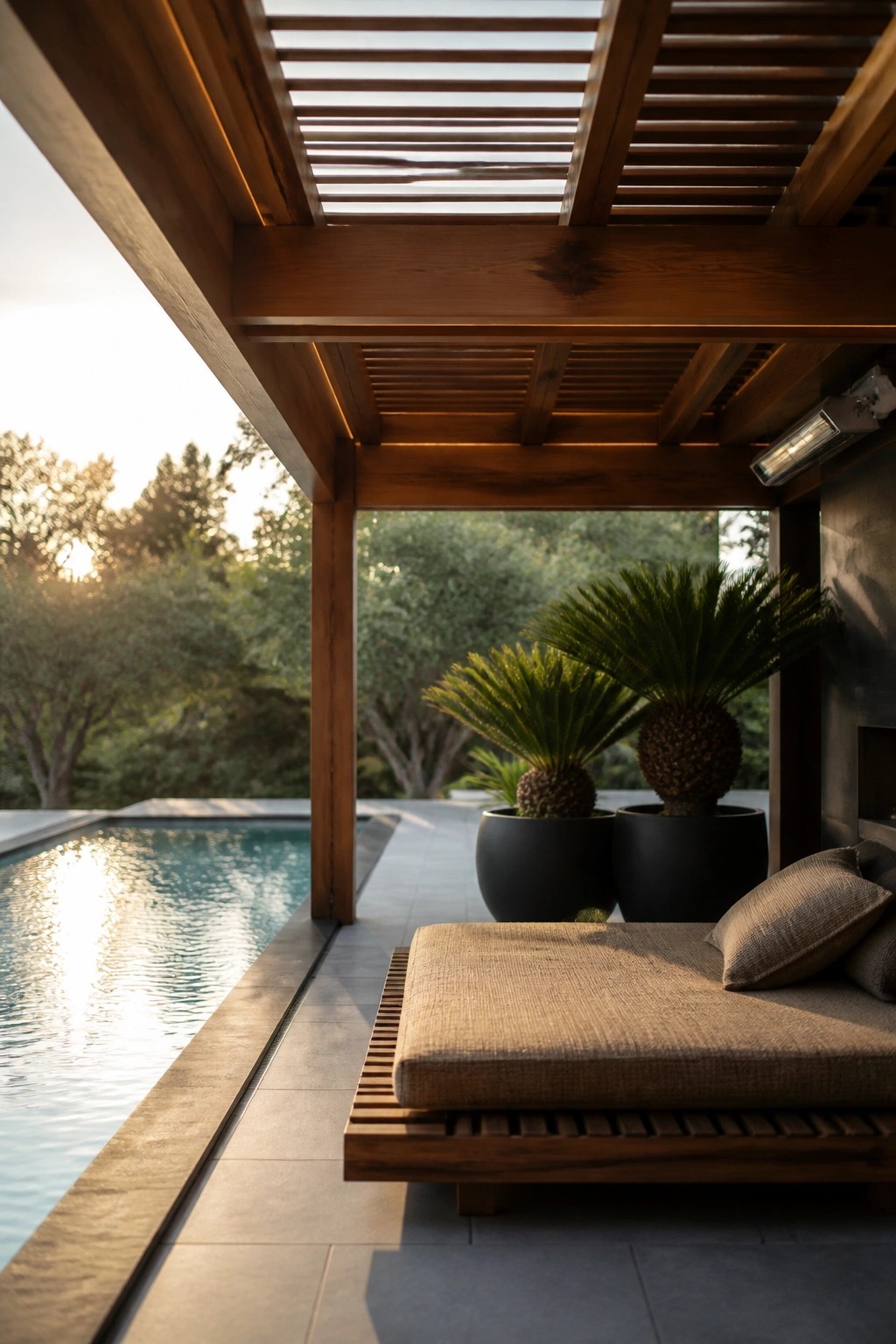
A roof with open wood slats gives poolside seating real protection from the sun without making the space feel closed in. The gaps let some light filter through while still cutting the strongest rays, so the lounge area stays usable from morning until evening.
This approach works best on homes where the pool already sits close to the house or a patio. Keep the slats evenly spaced and use a wood that can handle weather, and the whole setup stays simple to maintain over time.
Shade Your Poolside Table with a Covered Roof
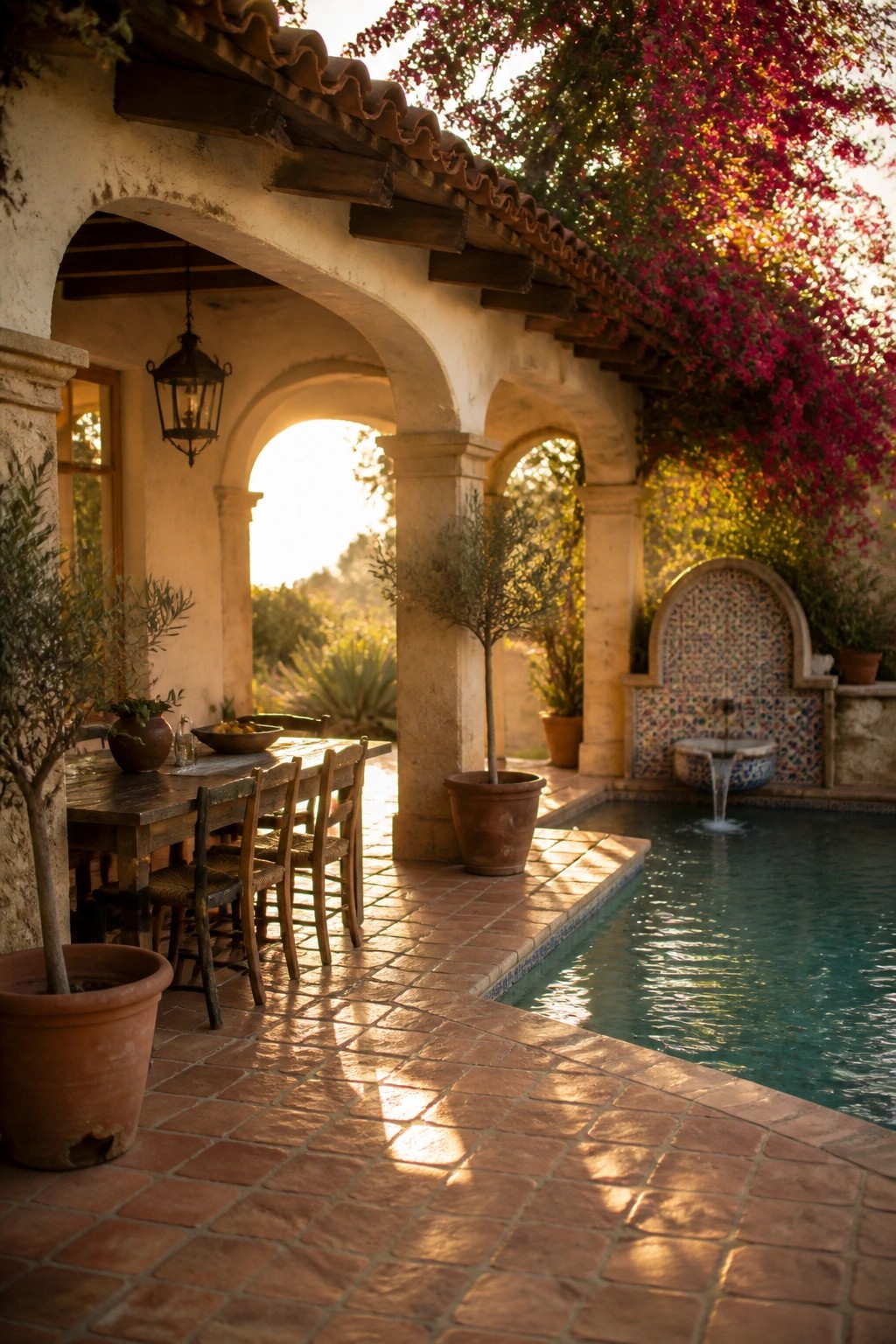
Tucking a dining table under a covered section next to the pool gives steady shade without blocking the view of the water. The roof handles the sun while the open sides keep air moving and the space feeling connected to the rest of the yard.
This works best on pools that already have a straight edge or low wall to build against. Keep the covered area just deep enough for a table and chairs, and line it up so the seating stays useful from morning through late afternoon.
Add a Bar to Your Pool Pavilion
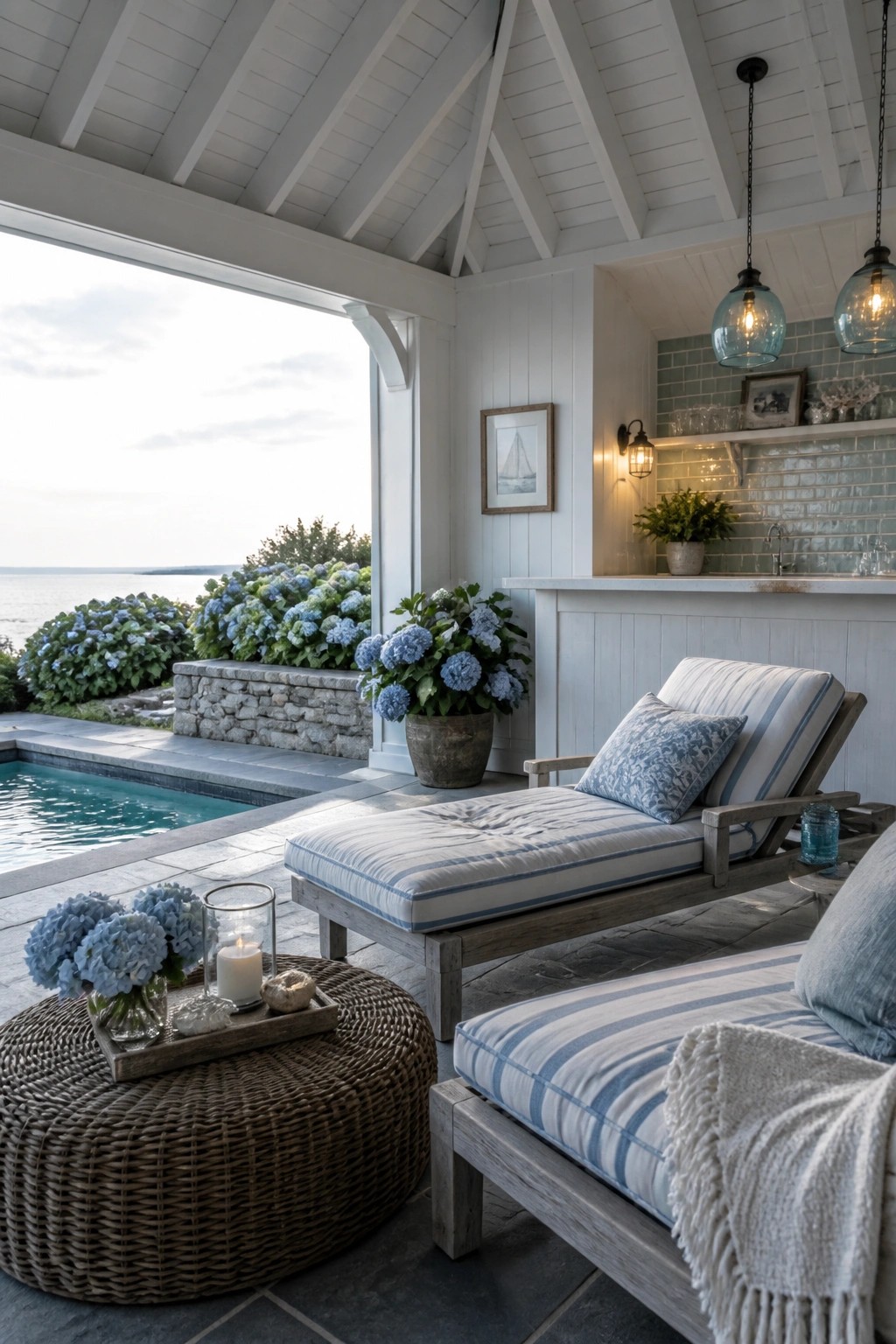
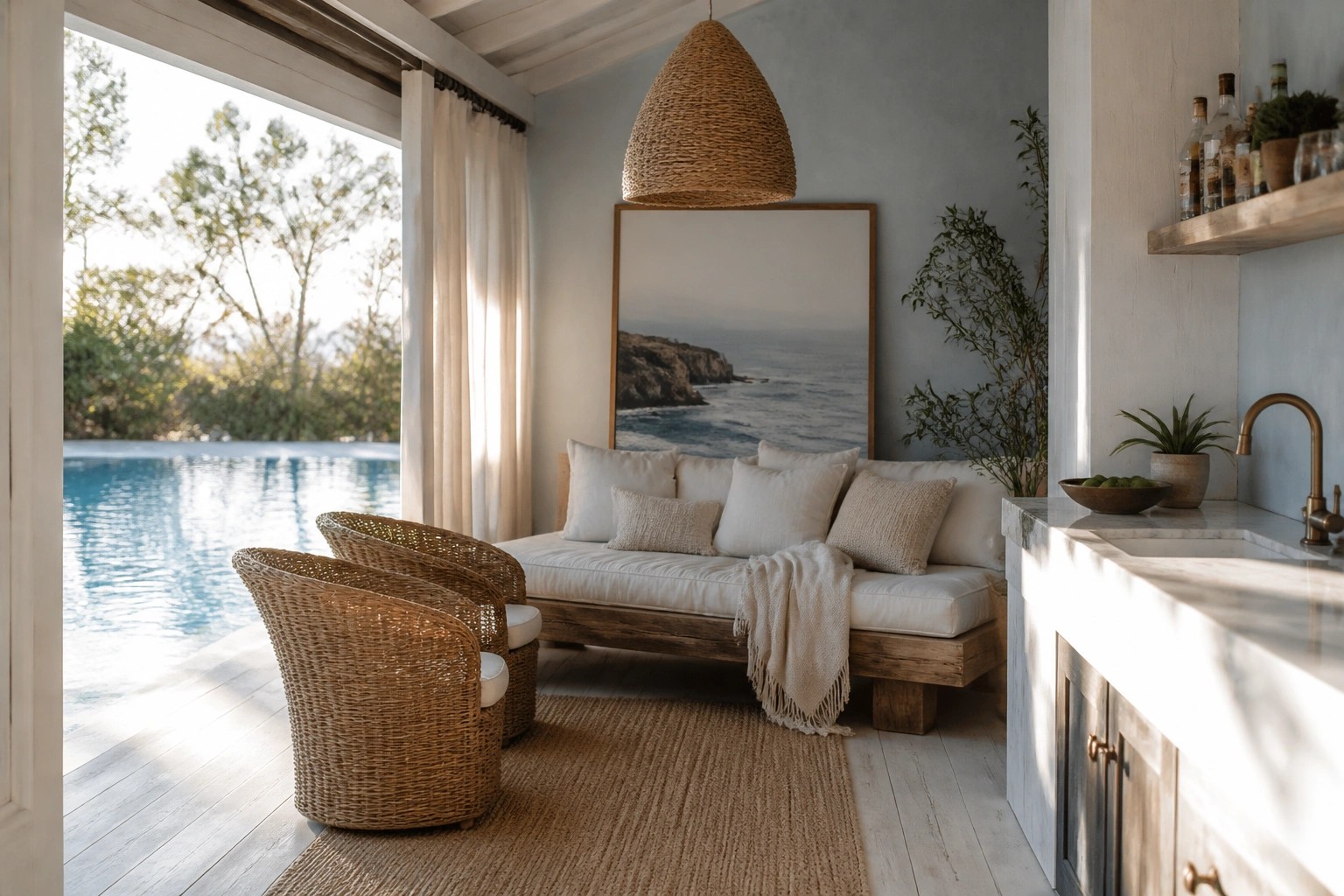
A bar counter tucked under the roof turns a simple covered structure into a spot where people can linger all day. The shade keeps drinks cool and guests comfortable, and the counter gives a natural place to set things down without needing extra furniture.
This works best in pavilions that already have a solid roof and at least one solid wall for backing. Keep the bar height around 36 inches and add a few stools if the space allows. It suits homes with pools that get heavy use in the afternoon, when full sun makes open decks less inviting.
Hang a Daybed for All-Day Lounging
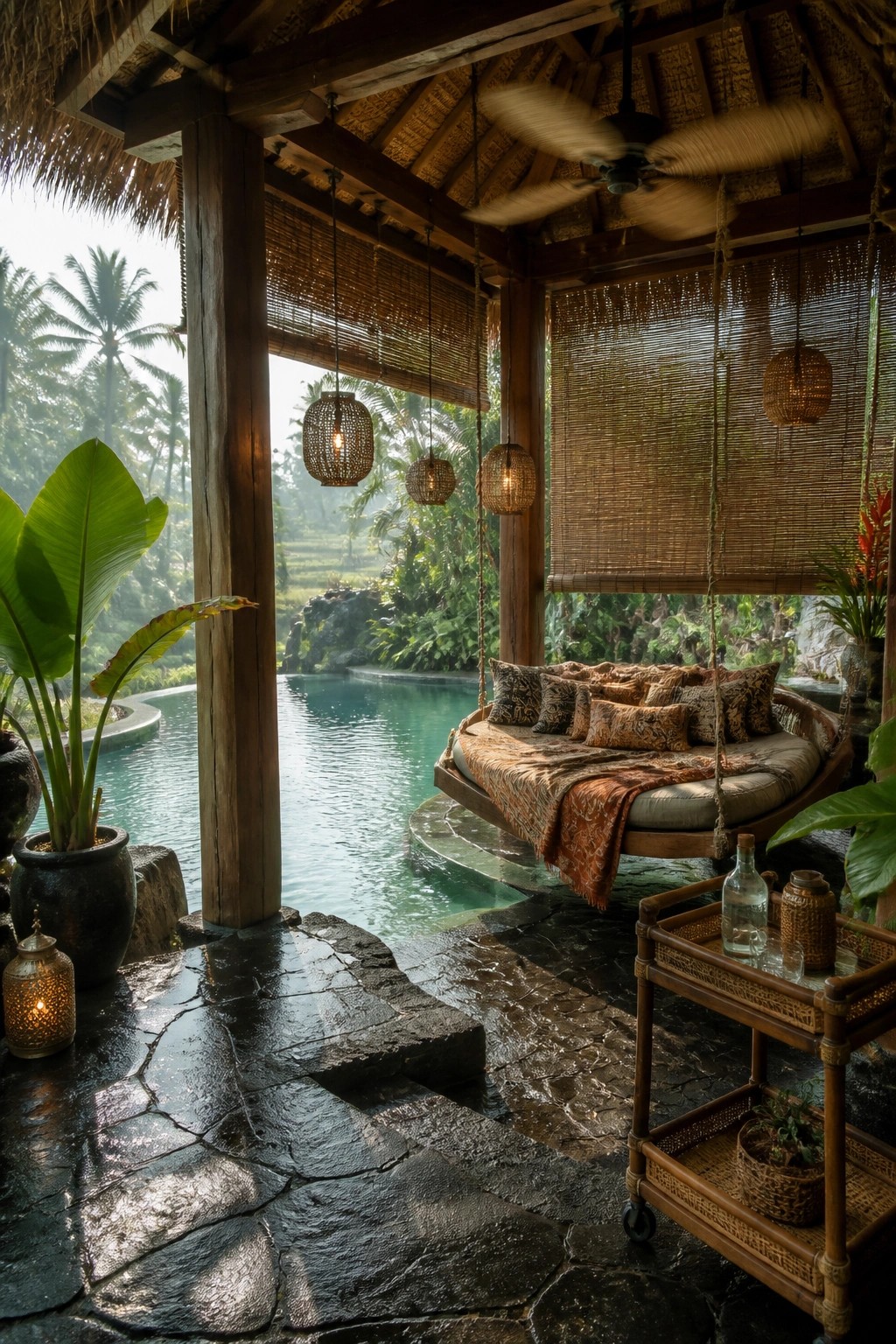
A hanging daybed lets you stretch out under cover without taking up floor space that might block the flow around the pool. It turns the pavilion into a spot where people actually want to stay for hours instead of just passing through.
This idea works best in open-sided structures with strong ceiling beams. Keep the bed simple and add roll-down blinds on a couple of sides so you can control the shade as the sun moves.
A Covered Pavilion For Poolside Shade
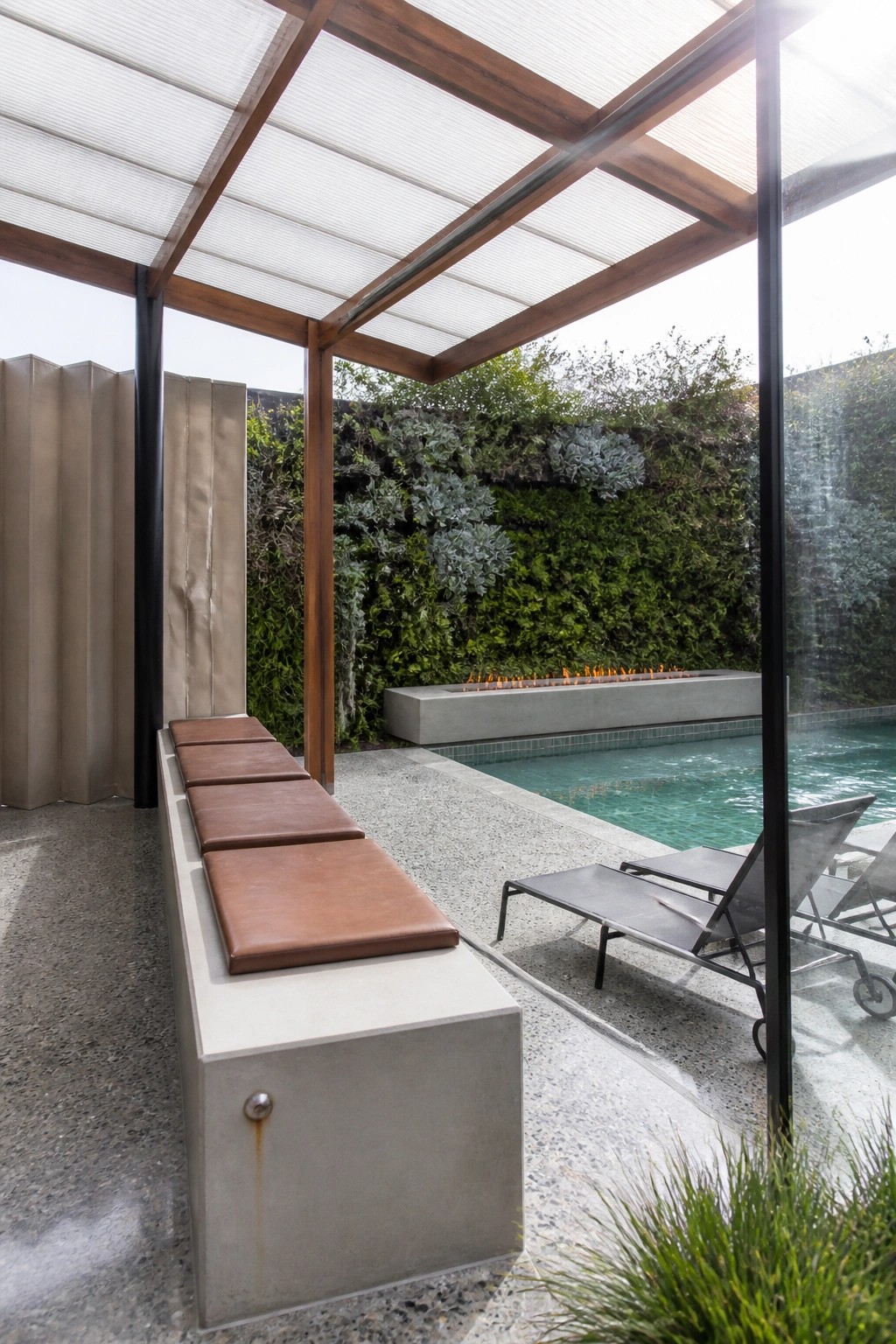
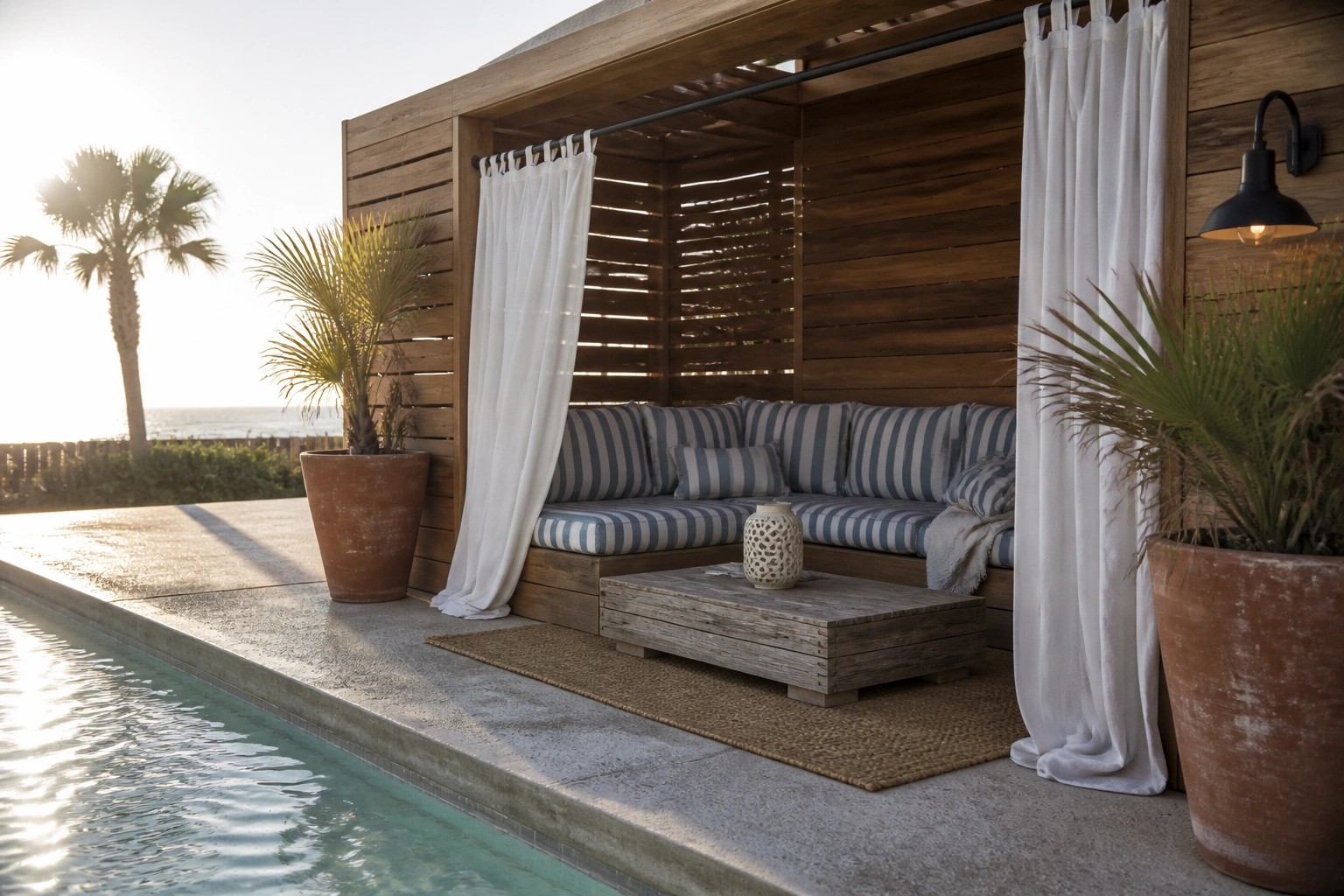
A covered structure with a light roof can turn a pool deck into a space that stays usable through the middle of the day. The roof blocks direct sun while still letting some light reach the seating below, so the area does not feel closed in.
This works best in warm climates where people want shade without losing the open feel of the yard. Keep the structure simple, line up a bench or loungers underneath, and leave the pool side open so the layout stays practical.
Covered Pavilions With an Outdoor Kitchen
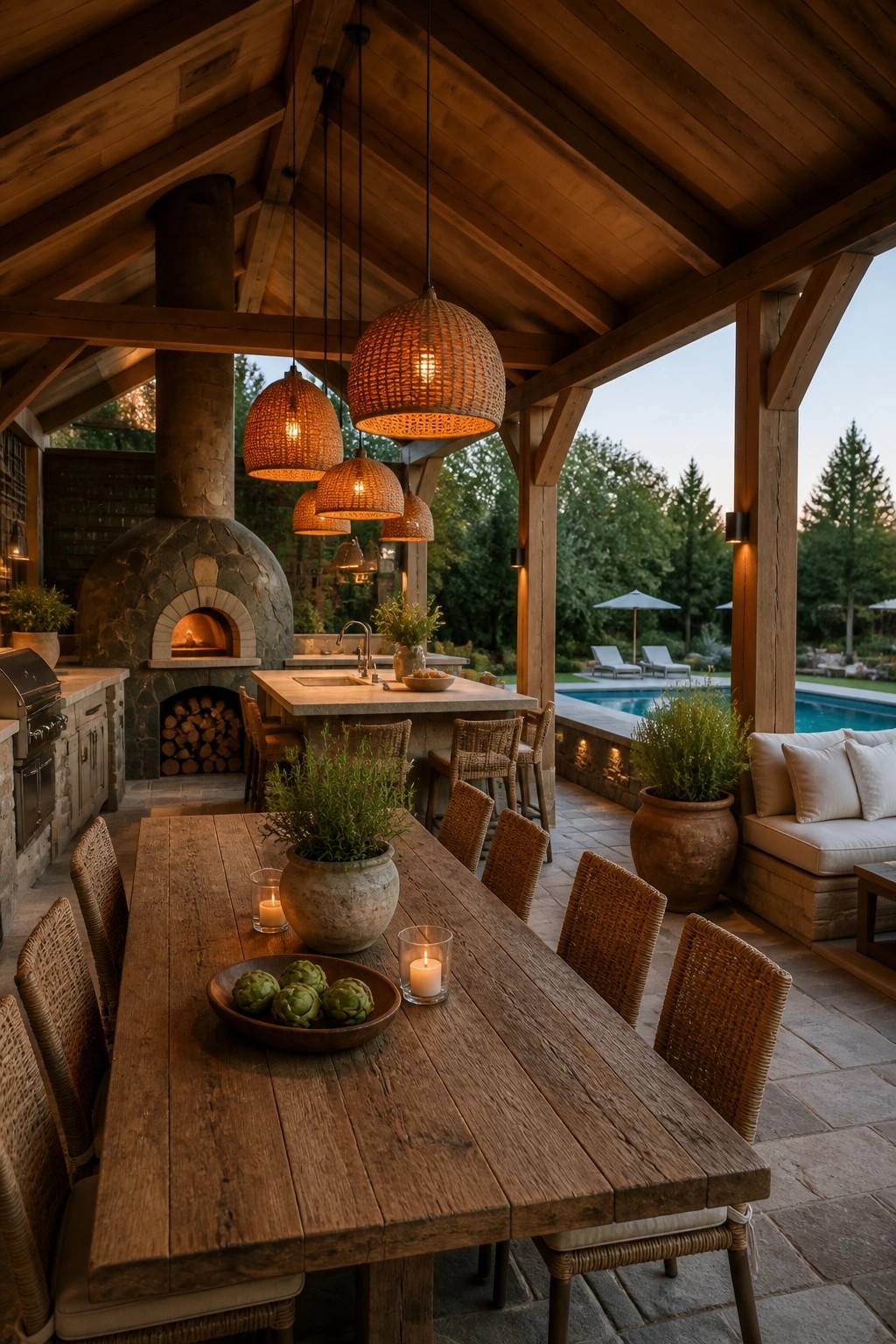
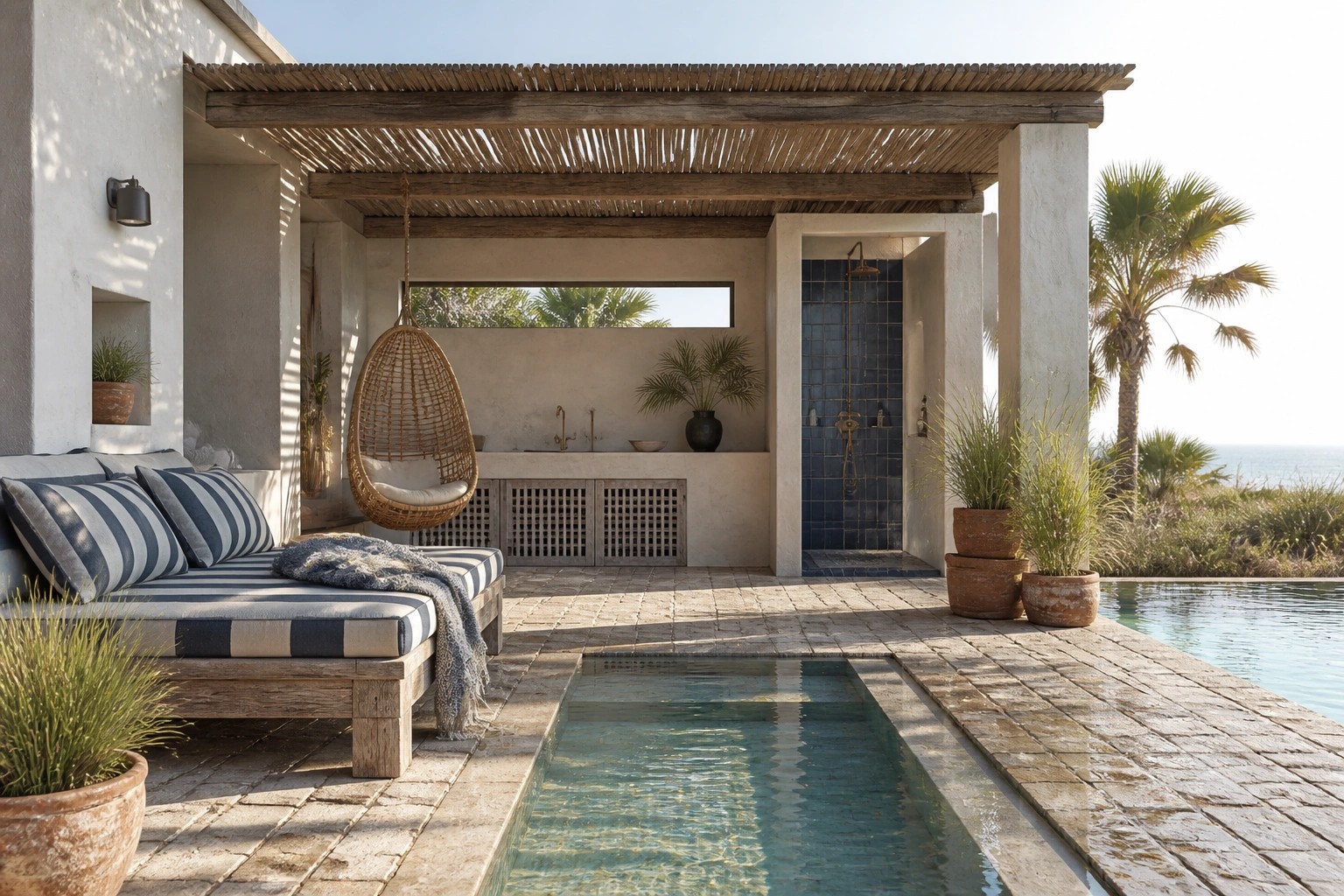
A covered pavilion gains real use when it includes a cooking zone along with seating. The roof keeps the space comfortable through the middle of the day, while the open sides still let you see the pool and garden.
This layout works best on lots where the pool sits close to the house. Keep the cooking area near the back wall and the table in the center so people can move around without crowding the grill or oven. Watch the roof height if you want the space to feel airy rather than closed in.
Include A Bar Counter In Your Pool Pavilion
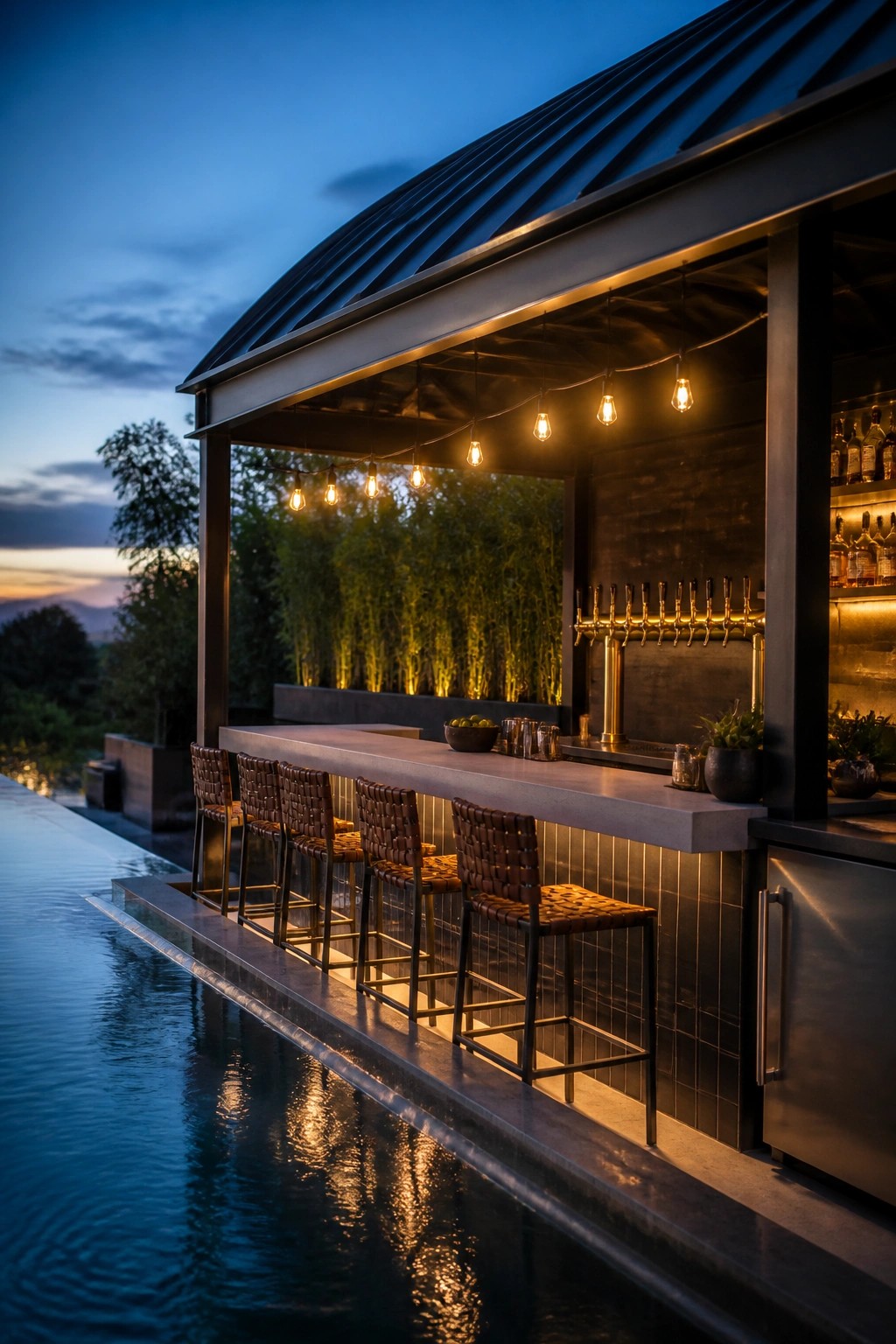
A bar built into the covered structure turns the pavilion into a real gathering spot. Guests can sit and serve drinks without leaving the shaded area, and the setup works well right beside the pool where people already spend time.
Place the bar along one side so the stools face the water. This layout suits homes with smaller yards because it combines seating and serving in one spot. Keep the roofline simple and make sure the bar height matches the stools you plan to use.
A Covered Pavilion With a Deep Roof Overhang
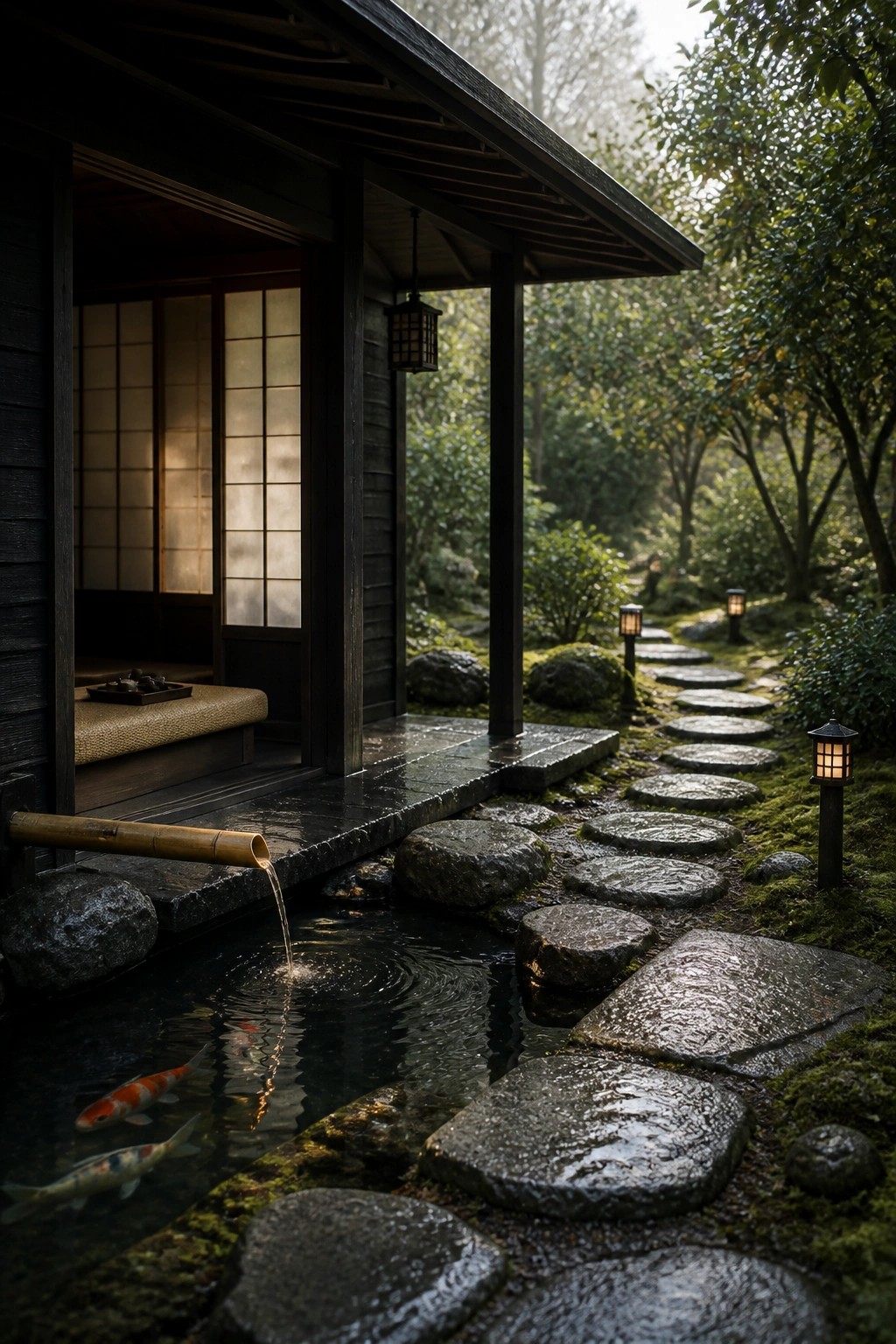
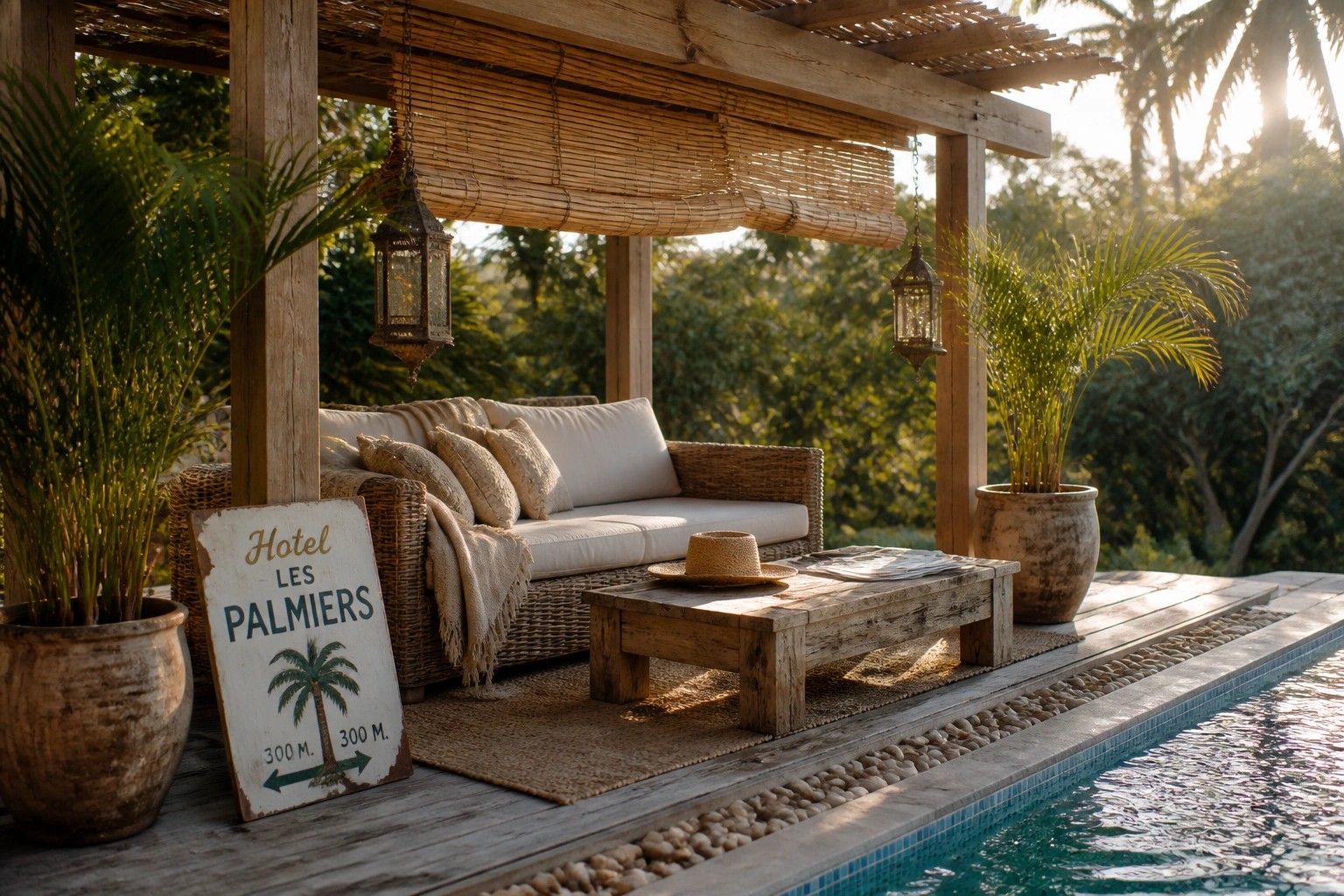
A covered pavilion works well when the roof extends far enough to shade both the seating area and the edge of the water. The simple post-and-beam structure keeps the space open on the sides while blocking direct sun for most of the day, which is exactly what people want next to a pool or pond.
This approach suits smaller backyards or side gardens where you do not want a full building. Place the pavilion so one side faces the water and keep the roofline low enough to feel grounded. The main thing to watch is drainage so water does not pool on the deck or path.
Thatched Roofs for Pool Pavilions
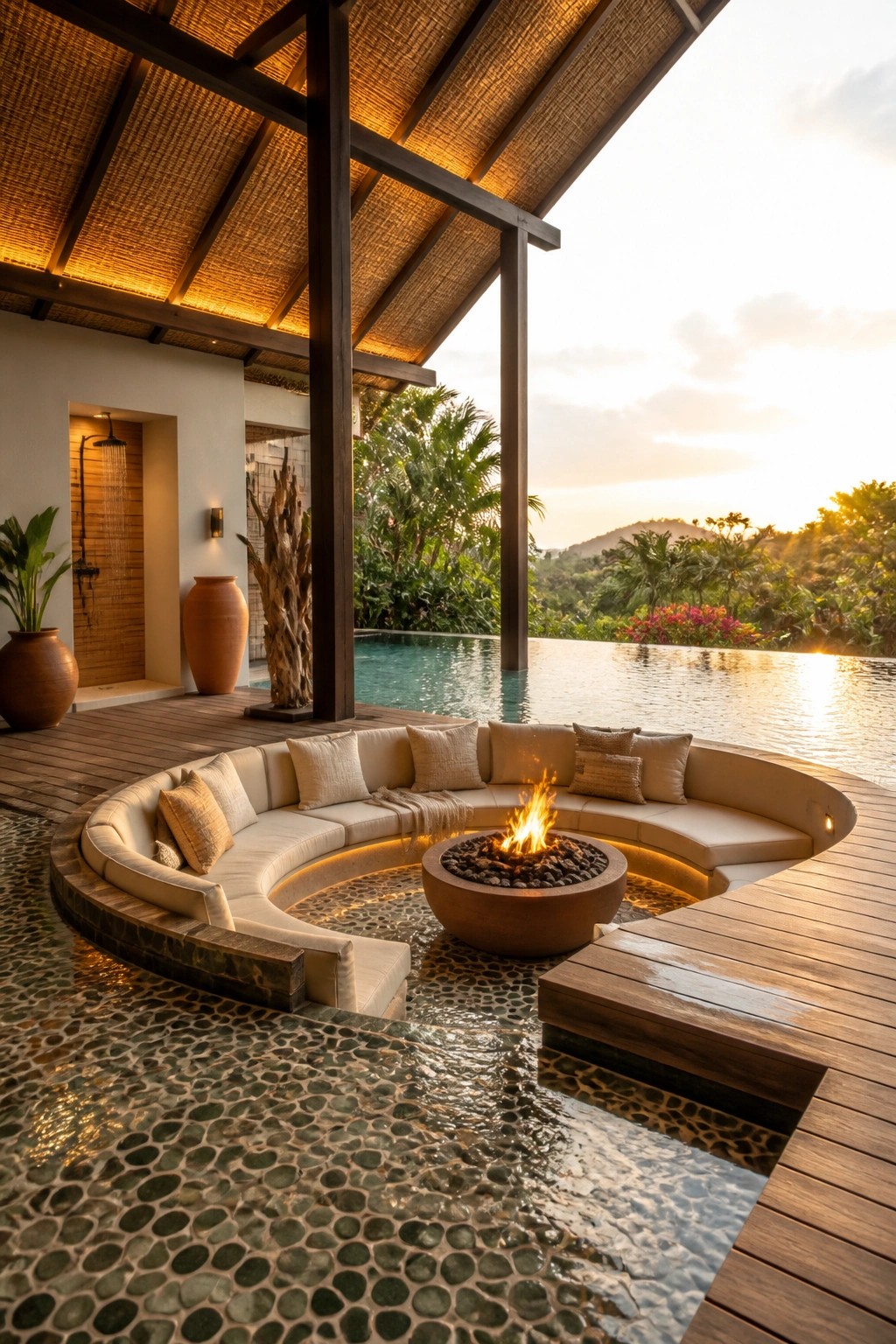
A thatched roof gives steady shade over a poolside seating area without making the space feel closed in. The natural material blocks harsh sun while still letting some light through, so the area stays comfortable for most of the day.
This works best in warm climates on homes that already have a deck or patio right by the water. Keep the seating low and curved around a fire feature so the covered zone feels like a natural extension of the pool rather than a separate room.
Extending A Roof Over The Pool Area
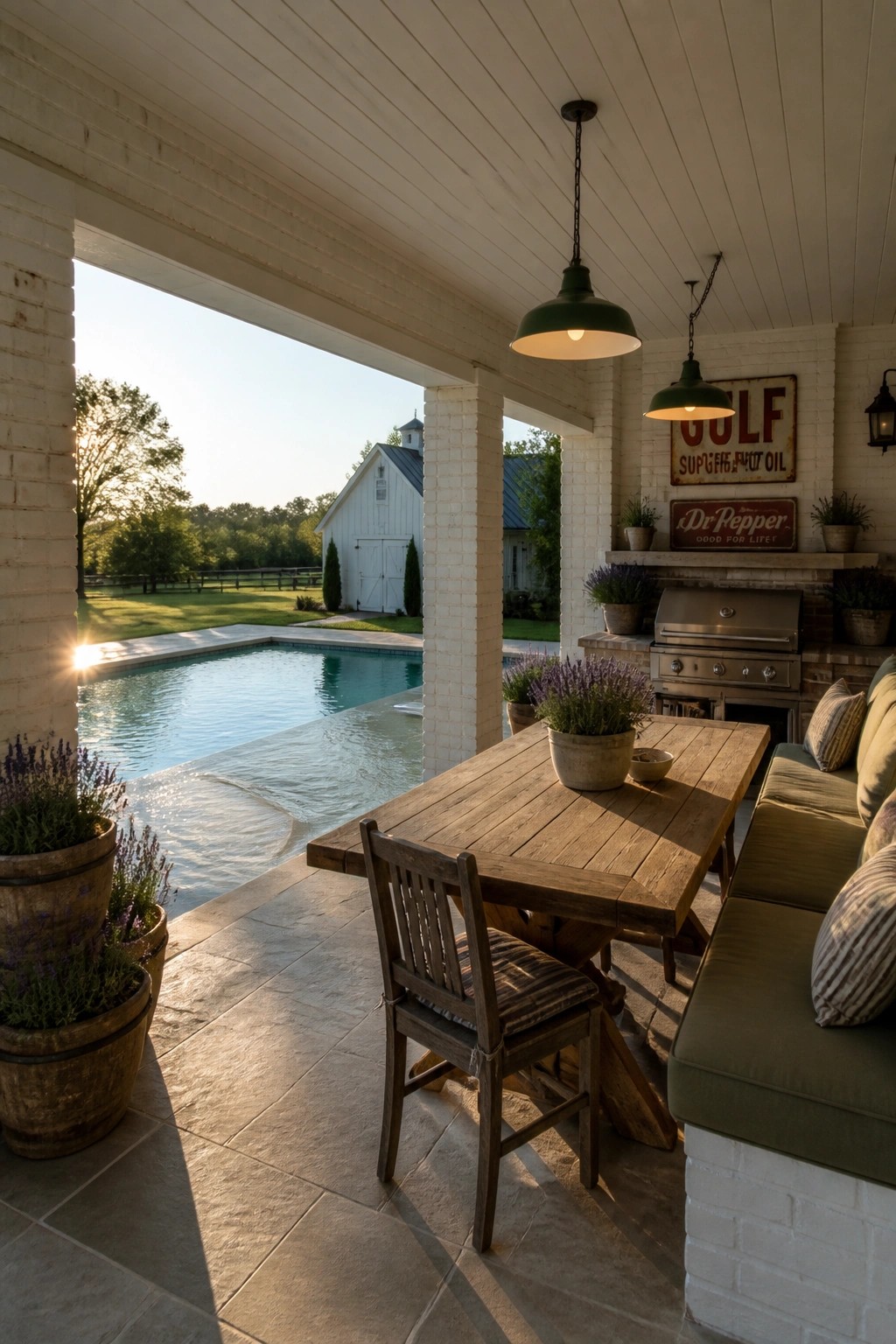
A covered roof right next to the pool makes the space usable for more hours of the day. It blocks direct sun without needing umbrellas or temporary shade, and it keeps the seating and table area comfortable even in the middle of the afternoon.
This setup works best on properties where the pool sits close to the house or an existing structure. Match the roof pitch and materials to the main building so the covered area feels like a natural extension rather than an add on.
Textile Layers For Pool Pavilion Shade
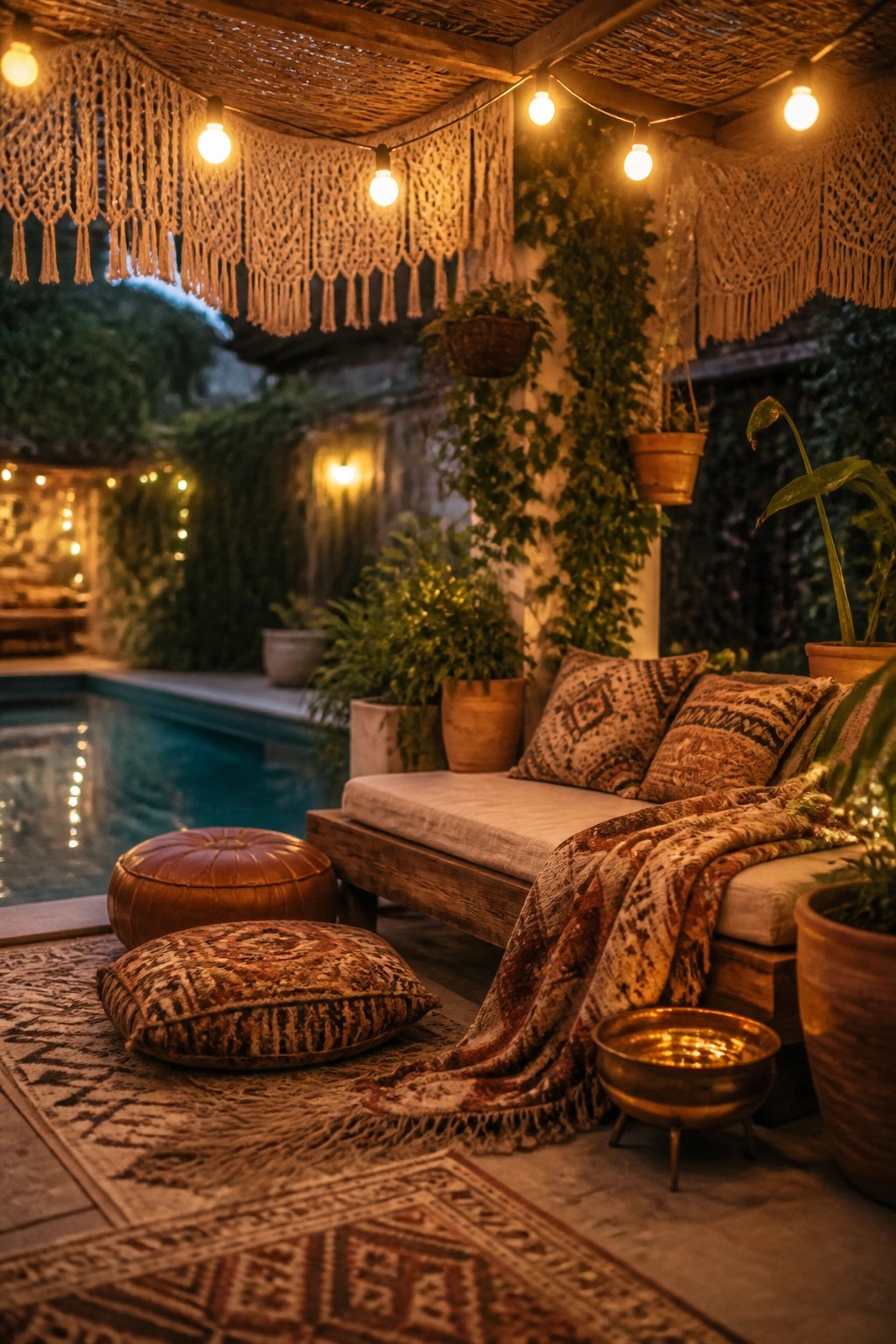
Many pool pavilions start with a simple roof but still need extra shade during peak sun hours. Adding hanging textiles like macrame underneath the structure gives more coverage while keeping air moving through the space.
This approach suits homes with open pool decks that get strong afternoon light. Keep the base seating low and simple so the textiles do the main work of softening the light without closing the area in.
Perforated Ceilings That Filter Sunlight
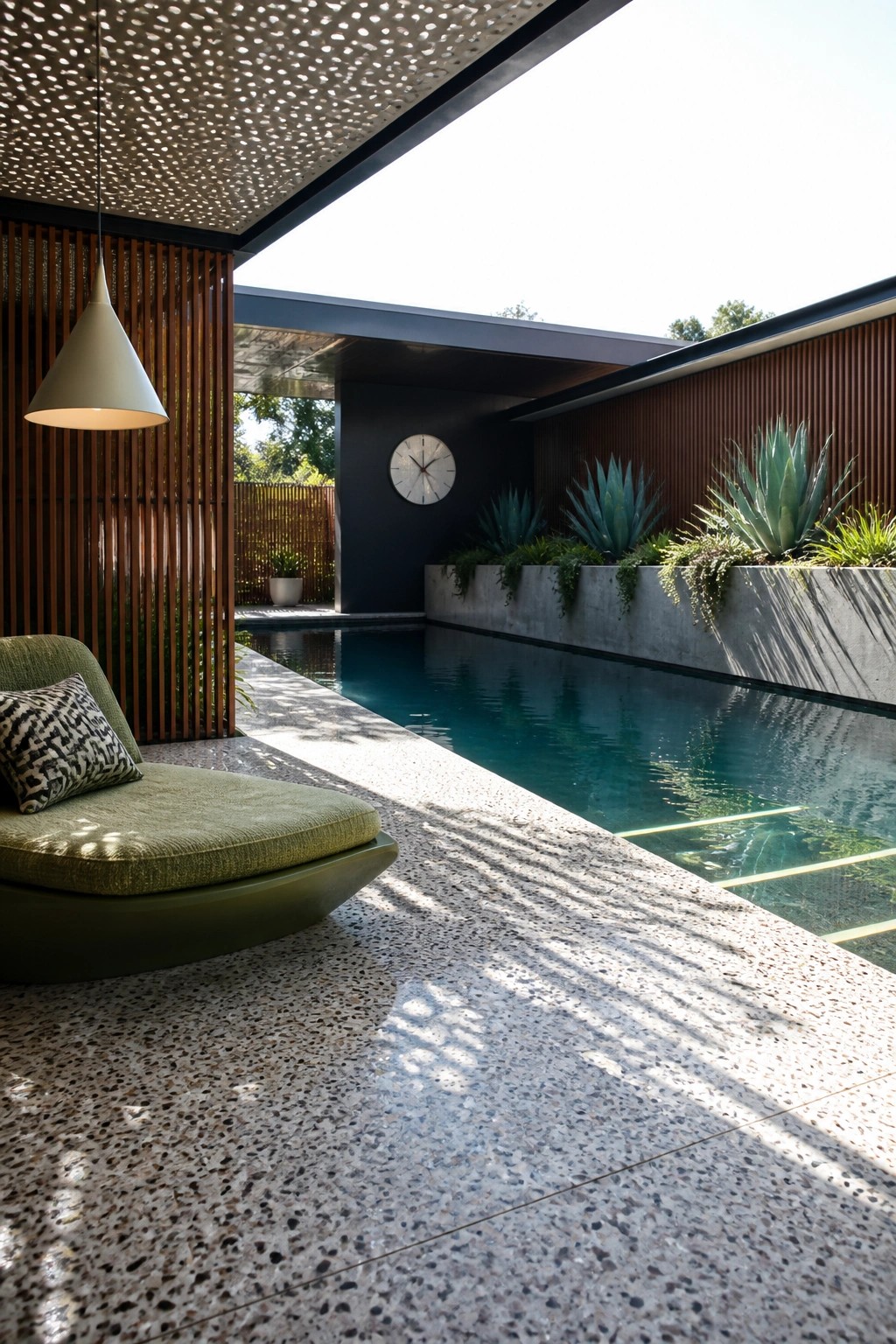
A perforated ceiling overhead gives steady shade without blocking all the light. It cuts harsh sun while still letting enough through to keep the space usable during the middle of the day.
This works best in poolside setups where people want to stay outside longer. Keep the pattern simple and make sure the openings are not too large or the shade will disappear when the sun is high.
Shade The Pool Area With A Covered Pavilion
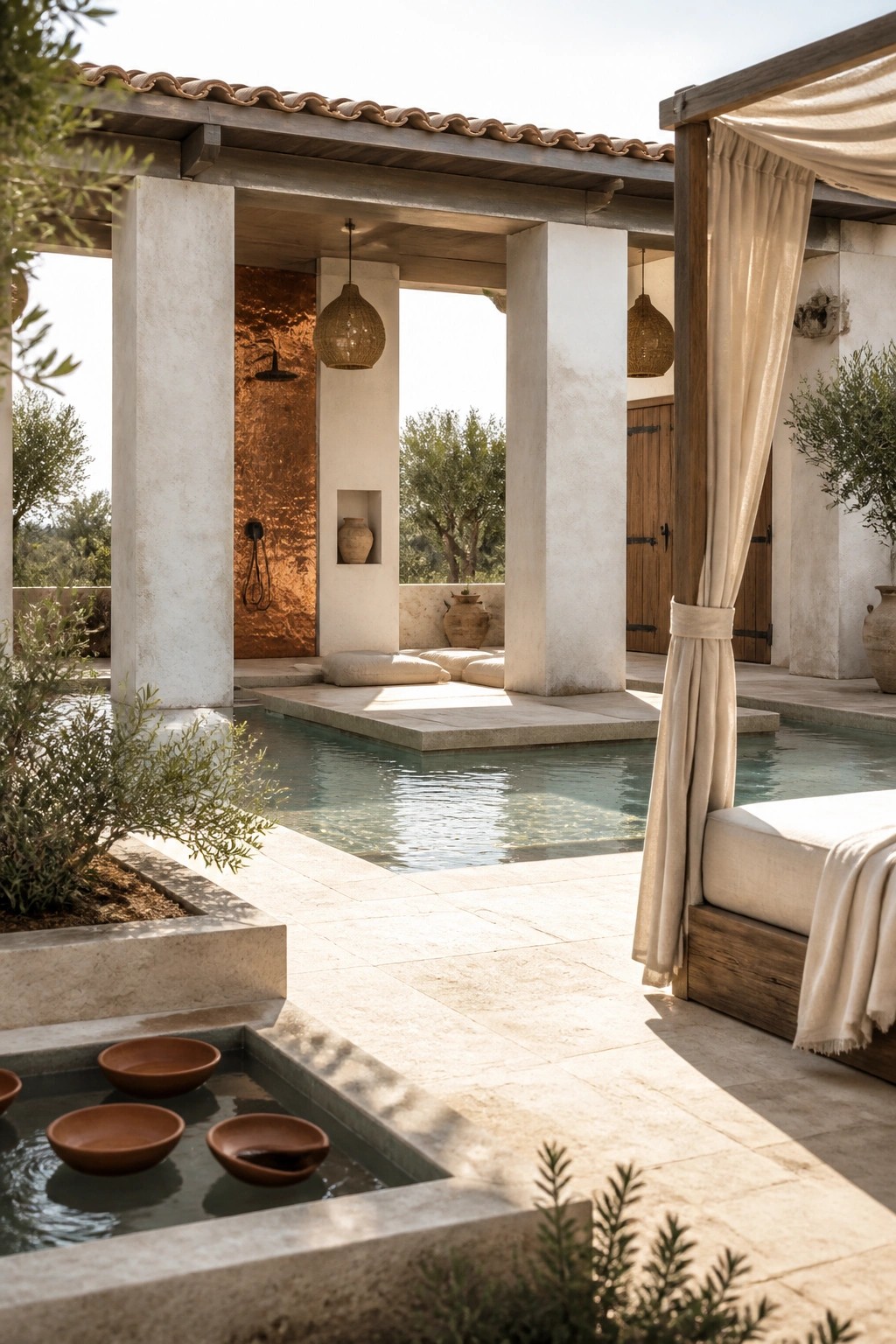
A covered pavilion next to the pool gives steady shade without making the space feel closed in. The open sides and solid roof keep the area usable through the hottest part of the day while still letting in light and air.
This approach works best on homes with sunny backyards and pools that get heavy use. Keep the structure simple with wide columns and a basic roof, then place seating underneath so people can rest in the shade without moving indoors.
Hang Canvas Panels For Adjustable Shade
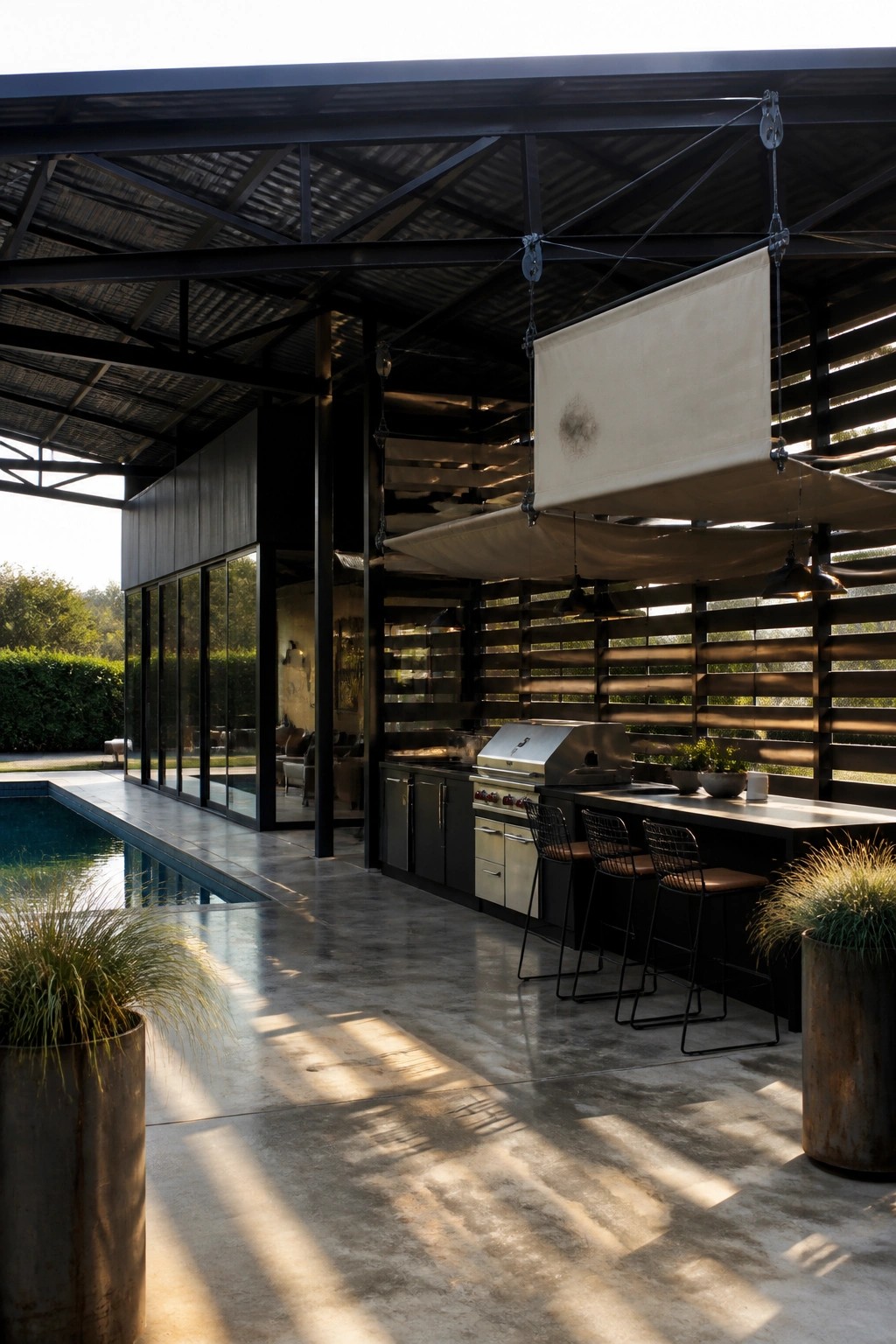
Hanging canvas panels inside a covered pavilion give you a simple way to control shade as the sun moves. They block direct light over the cooking and seating areas without making the whole space feel closed in.
This approach works best in poolside setups where the main structure already provides a roof frame. It suits homes that want flexible coverage rather than fixed walls or full enclosures.
Curved Roofs For Pool Pavilions
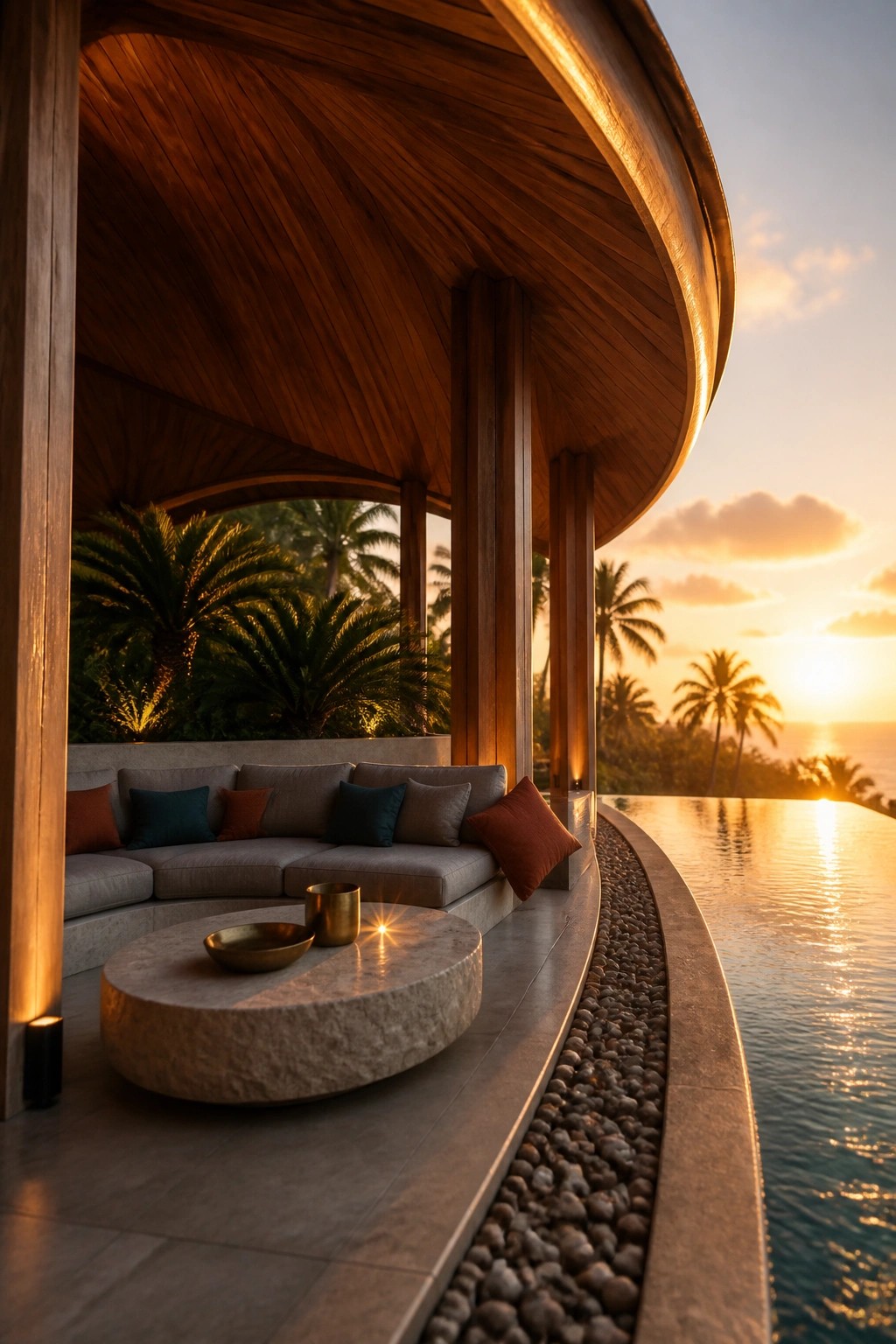
A curved roof works well on a pool pavilion because it extends shade farther out than a flat ceiling while keeping the space open. The shape follows the seating so the whole lounge area stays protected without closing off the view toward the water.
This layout suits homes where the pool sits close to the main structure. Run the curve along the edge so the seating gets steady coverage through the day. Keep the height comfortable so the space still feels easy to use rather than heavy.
Add a Bar Counter Under the Pavilion Roof
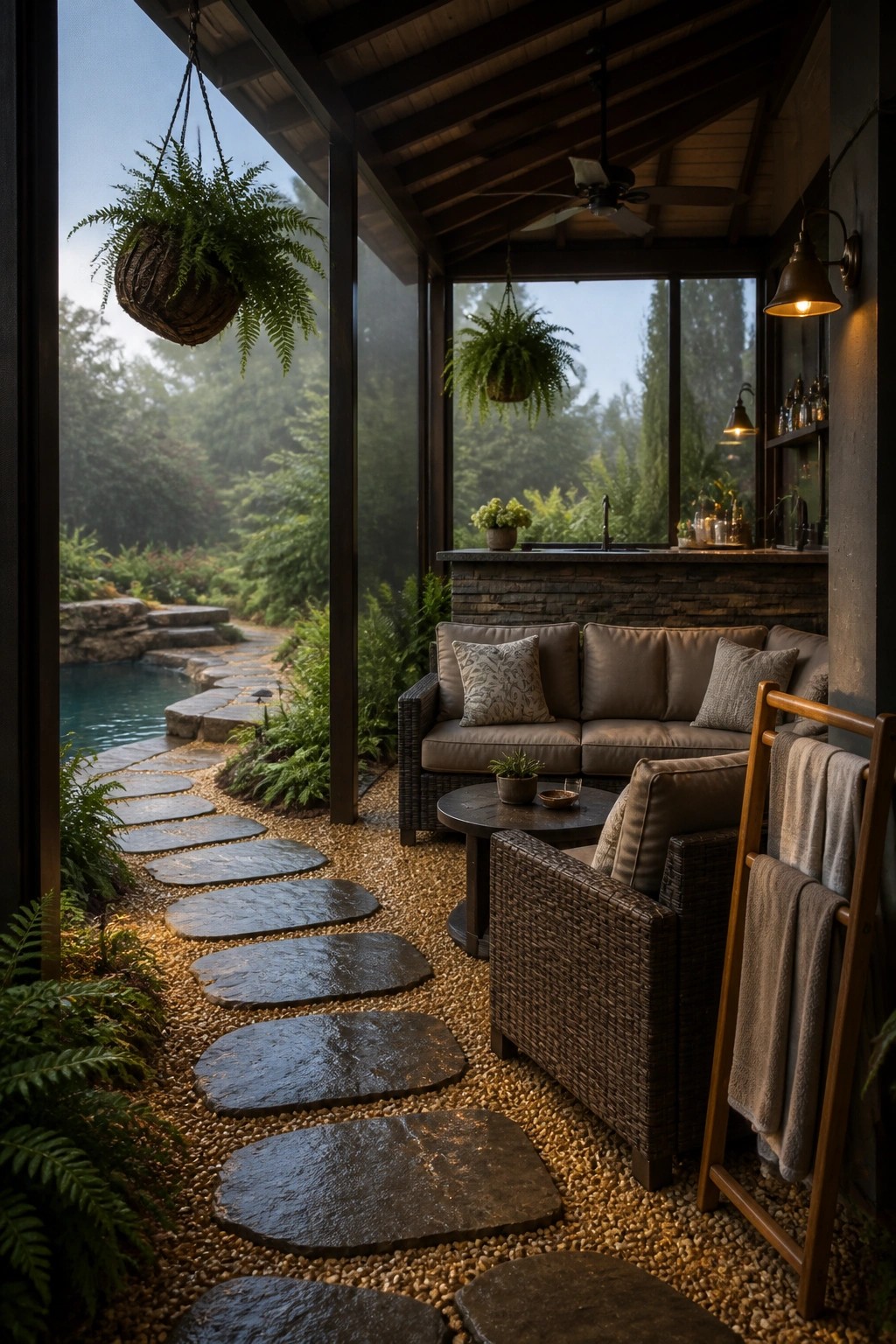
A bar counter turns the covered space into a spot where people can linger without needing to run back to the kitchen. It keeps drinks and simple prep within reach while the roof handles the shade all day long.
This setup suits homes that already have a pool and want the outdoor area to handle real use instead of just looking nice. Keep the counter height comfortable for standing or pulling up a stool, and make sure it faces the seating so the whole area feels connected.
Covered Dining Areas That Offer All Day Shade
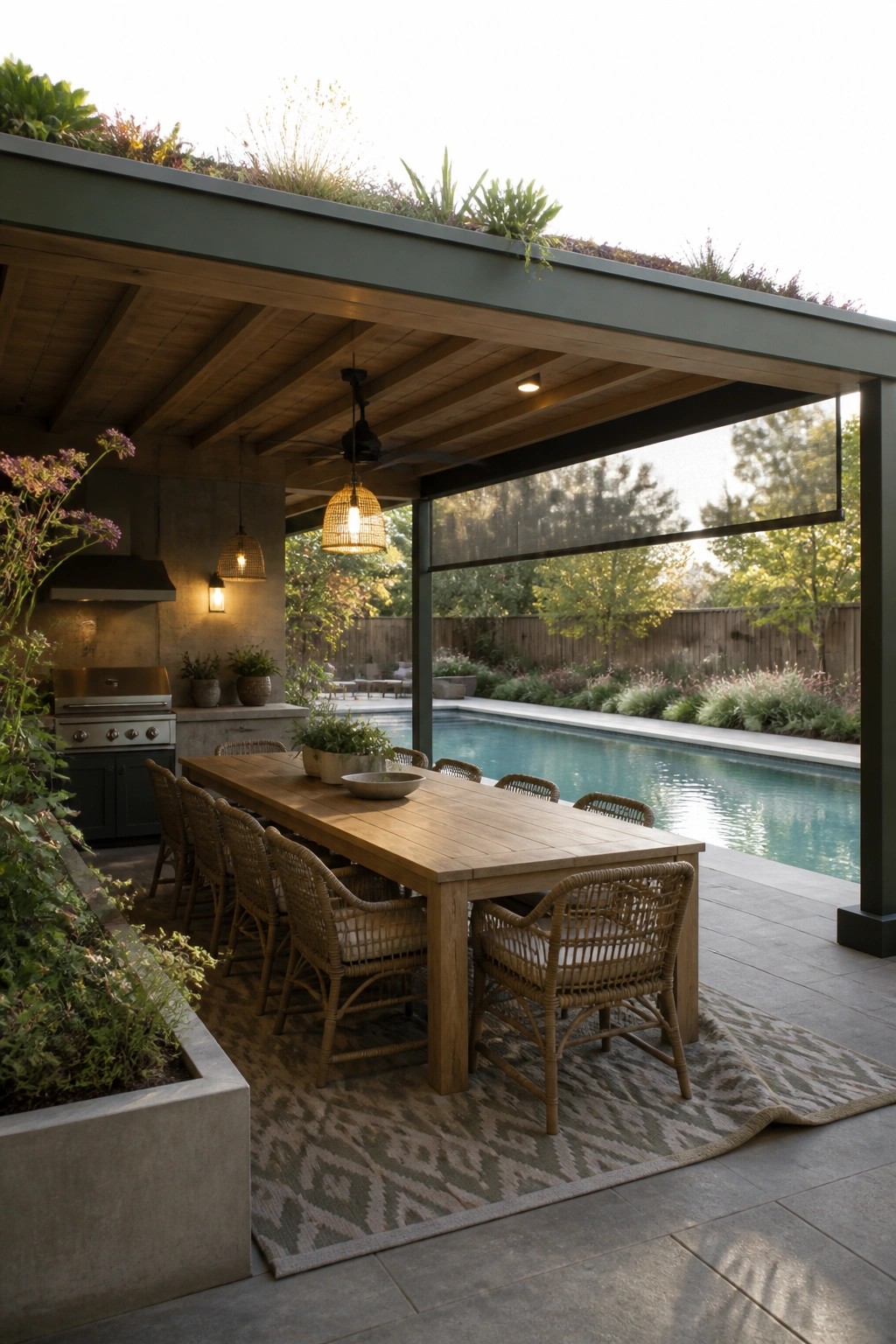
Placing a dining table under a covered structure right next to the pool makes the space usable even when the sun is high. The solid roof blocks direct light while the open sides keep the view and breeze intact.
This setup works best on lots where the pool sits close to the house or garden. Keep the ceiling height generous and add a fan or two so the area stays comfortable through the afternoon.
Overlapping Shade Sails for Pool Areas
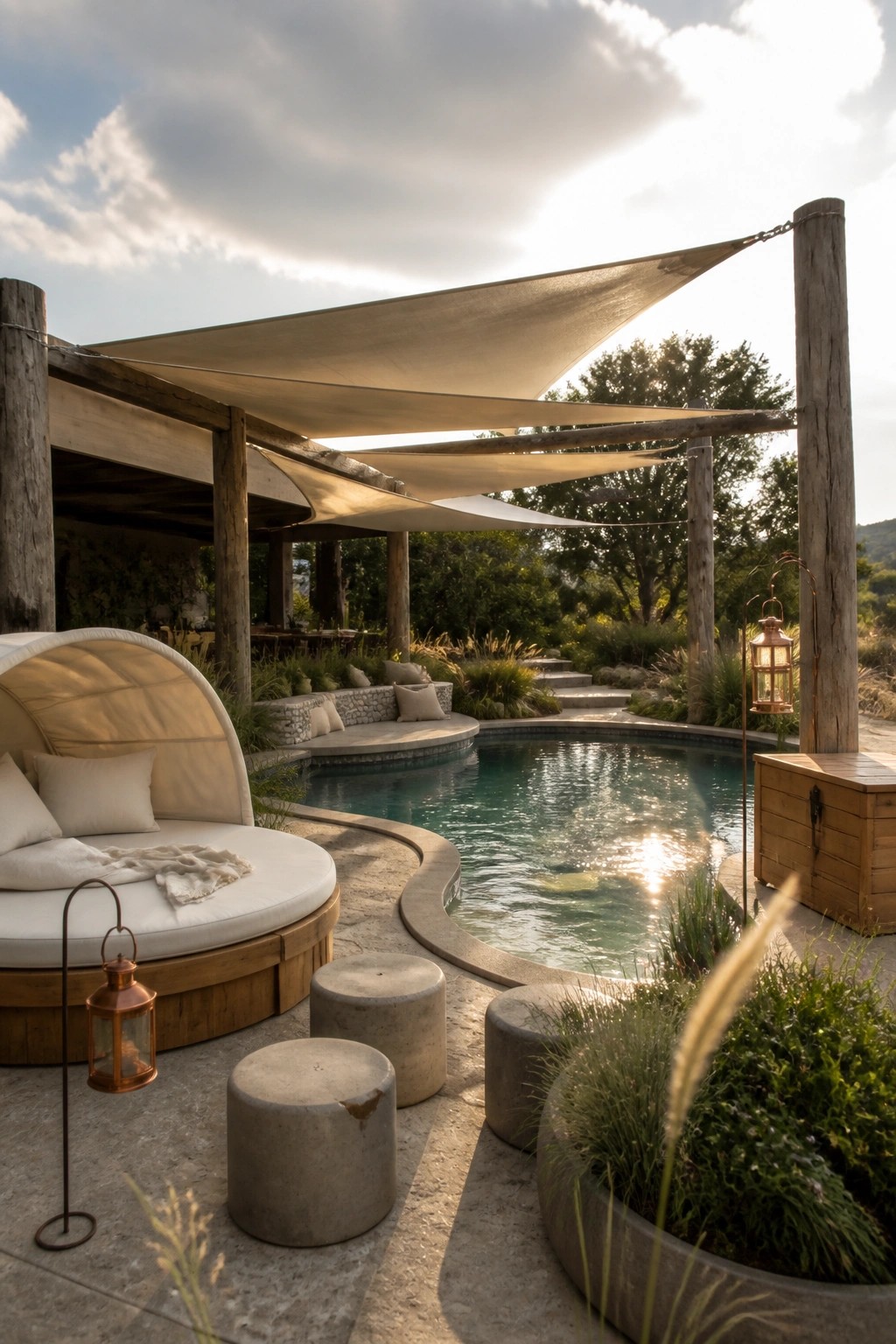
Layered fabric sails stretched between wooden posts give a pool pavilion plenty of shade without closing off the space. The overlapping layers let you cover a wide area while still allowing some light through, which keeps the water and seating comfortable even in strong sun.
This approach works best on larger outdoor spaces where a solid roof would feel too heavy. Use sturdy posts set at different heights so the sails can slope and shed water, and choose a neutral fabric that blends with the surroundings rather than standing out.
Frequently Asked Questions
Q: Where should I place the pavilion to block the hottest sun? A: Set it along the west or southwest edge of the pool so the roof cuts the afternoon glare. Watch how the light moves across your yard for a few days first. That simple shift keeps the seating area usable from morning until evening.
Q: What works best for keeping rain off the furniture underneath? A: Choose a solid roof panel instead of open lattice if storms hit often. Angle it slightly so water runs away from the pool deck. Add a gutter along the low side to stop drips from soaking cushions.
Q: How do I add shade without losing the open feel around the pool? A: Hang lightweight curtains on two sides that you can pull back on calm days. This gives flexible cover when the sun angles in low. Keep the front and pool side open so the space still feels connected to the water.