Yards on sloped lots often leave owners wondering how to add any kind of pool without losing the few flat spots that actually get used.
Raised plunge pools can solve that problem by turning the slope itself into part of the layout instead of fighting it.
Not every design works once the ground is actually dug.
I tend to pay attention first to how the raised edge meets the surrounding deck or path because those connections decide whether the space feels open or boxed in.
Trying one modest version on paper for my own yard would show quickly which details hold up once people start walking around it every day.
Raised Plunge Pools With Attached Seating
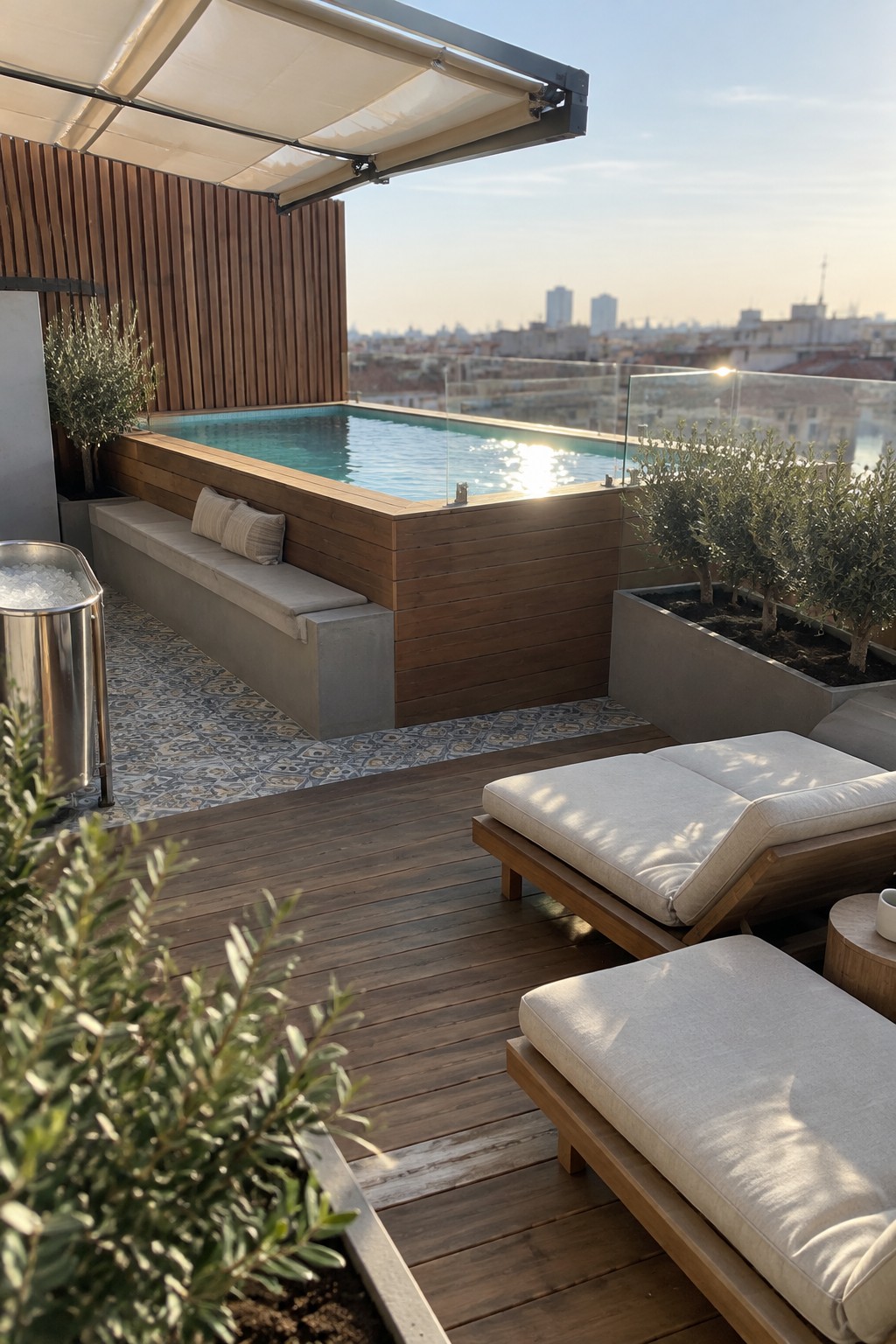
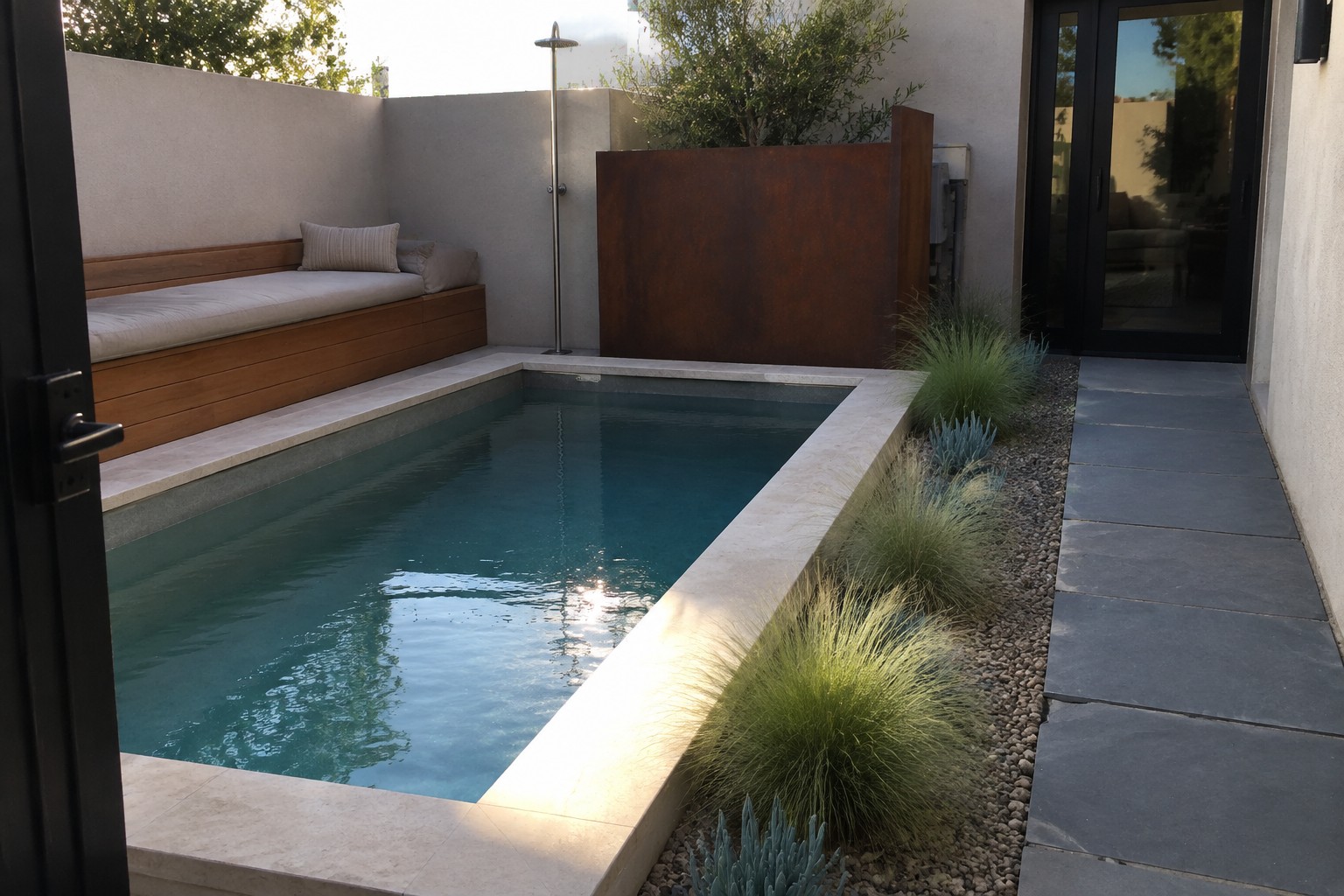
One useful way to handle a small terrace or rooftop is to build seating right into the side of a raised plunge pool. The pool structure stops being just a water feature and starts working as a bench too. This keeps the space from feeling crowded with extra furniture while still giving people a place to sit close to the water.
This setup works best on decks or paved areas where the ground level already changes or where you need to zone off the pool from the rest of the seating. Match the bench material to the pool surround so it reads as one piece. Just check that the bench height stays comfortable and the structure can support people sitting on it without any issues.
Raised Plunge Pools Along Narrow Side Yards
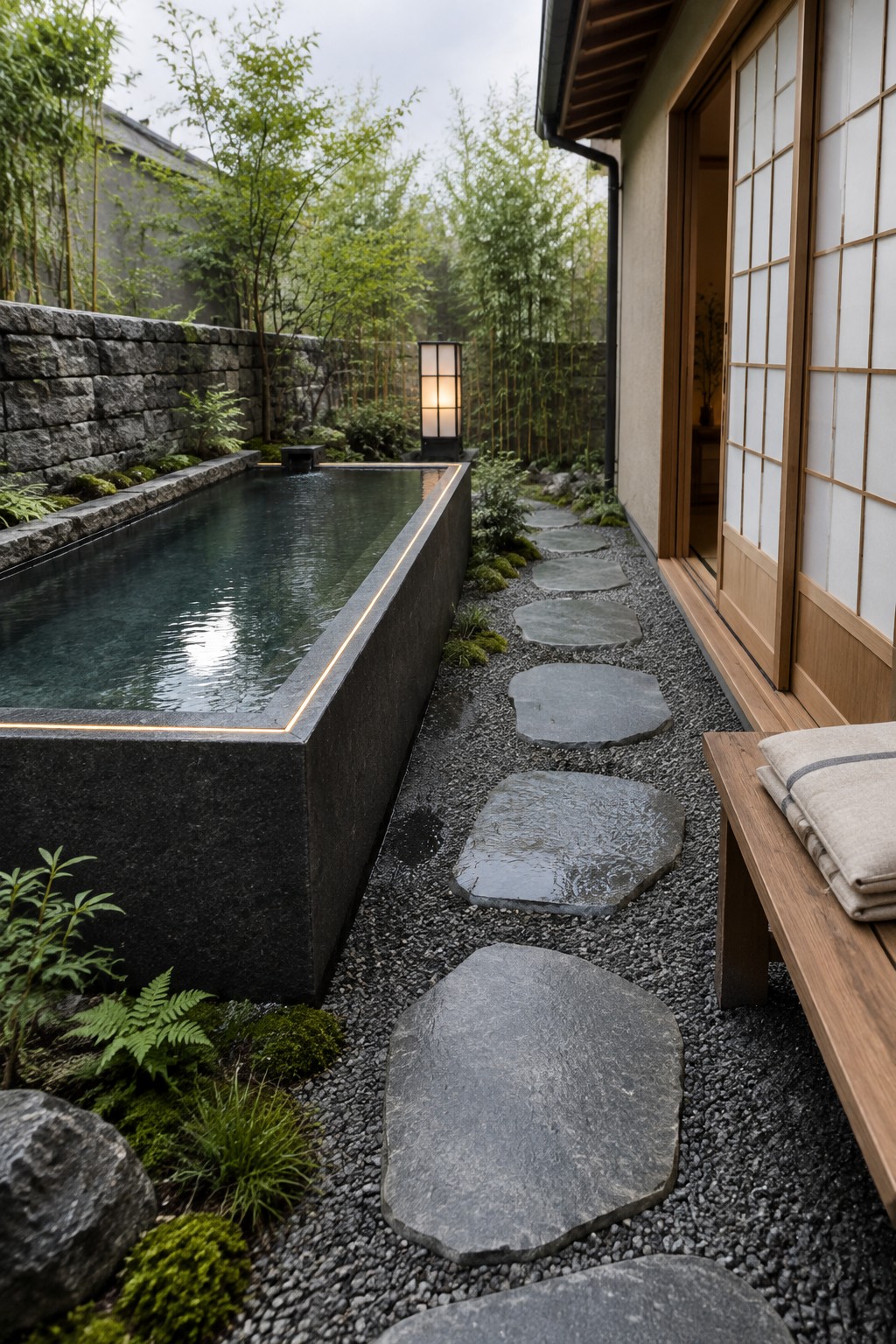
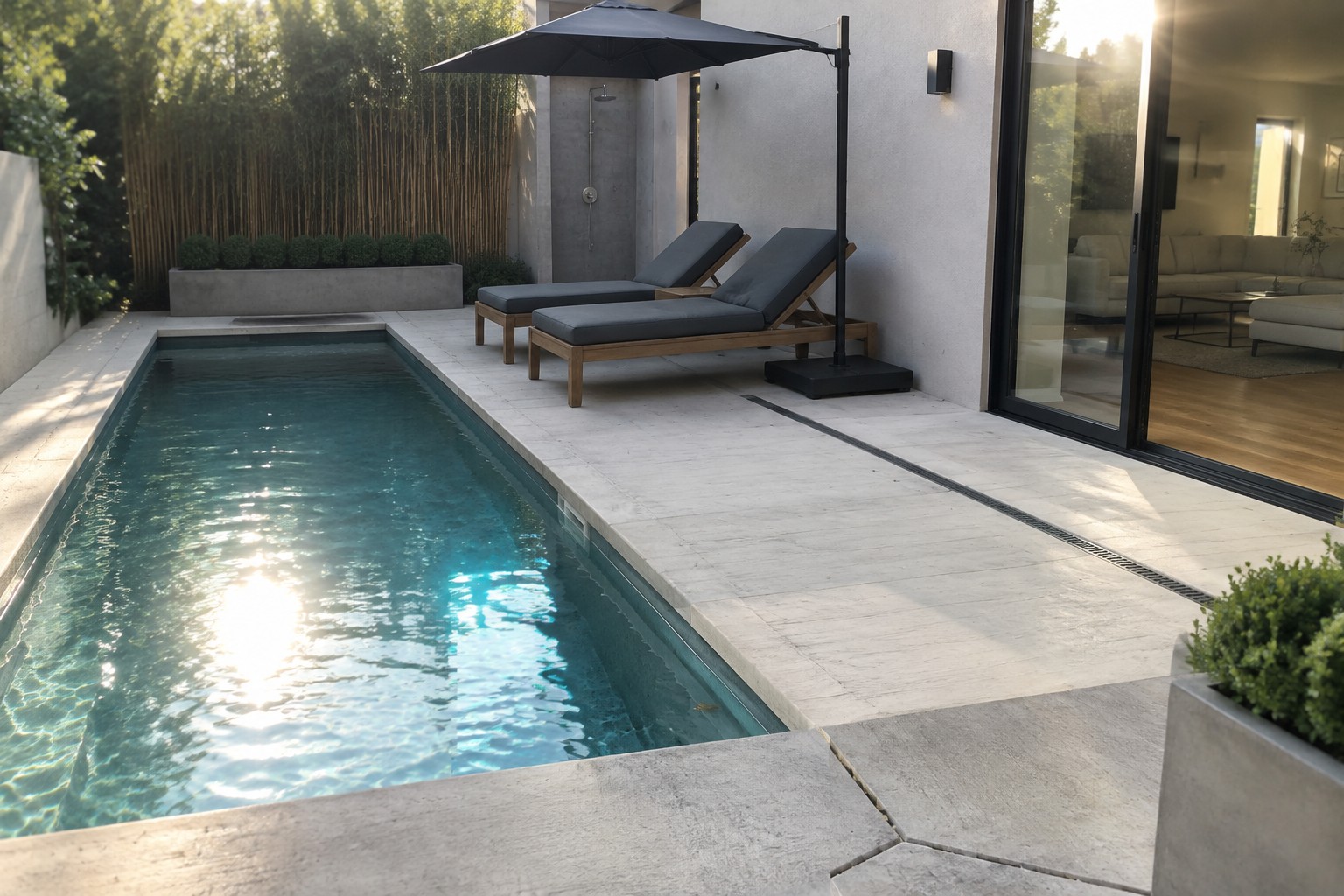
A raised plunge pool works especially well when the yard is narrow and you need to keep a clear walking path. The elevated edge creates a simple border that keeps the water contained while the ground beside it stays dry and usable for stepping stones or gravel.
This layout suits older homes or tight urban lots where digging a full in-ground pool is not practical. Place the pool along one side, match the height to any existing walls or planters, and keep the surrounding planting low so the space does not feel crowded.
Raised Plunge Pools With Terraced Courtyard Steps
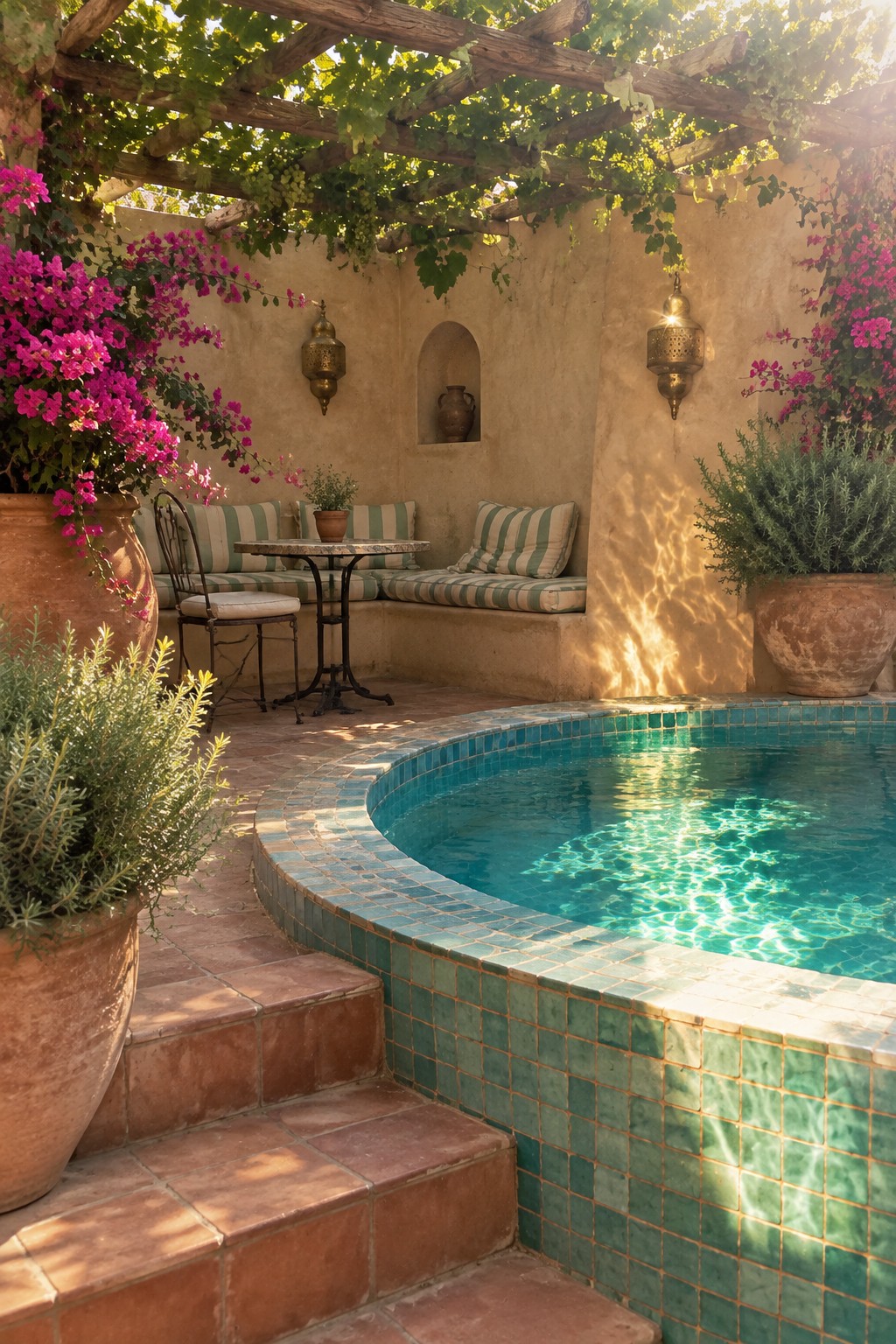
A raised plunge pool lets you turn a small drop in the yard into a useful feature instead of a problem. By lifting the pool and adding steps around it, the grade becomes part of the layout rather than something that needs heavy grading or retaining walls.
This approach suits compact yards where space is tight and the ground is not flat. The steps double as circulation and casual seating, while the raised edge keeps the pool visible and easy to maintain without losing the surrounding patio area.
Raised Pools With Steps For Level Changes
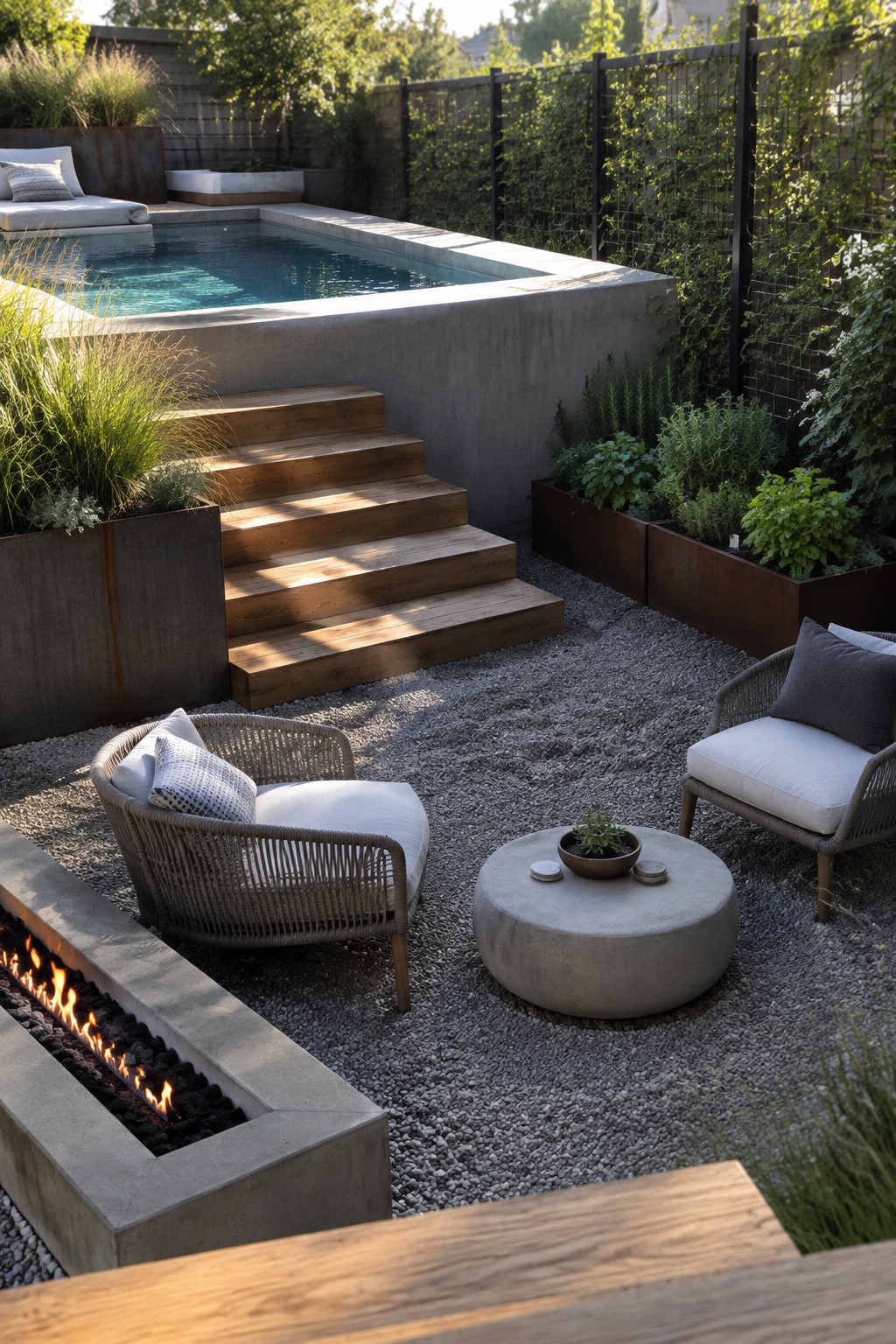
Raising a plunge pool above the main yard level gives you a clear focal point without eating up all the ground space. Wide wooden steps make the drop feel easy and natural, so the lower area stays open for seating and a fire pit on gravel.
This works best in smaller yards that have a gentle slope or where you want the pool visible from the house but still need room to sit below it. The steps also double as extra places to perch when guests arrive.
Raised Concrete Walls For Compact Plunge Pools
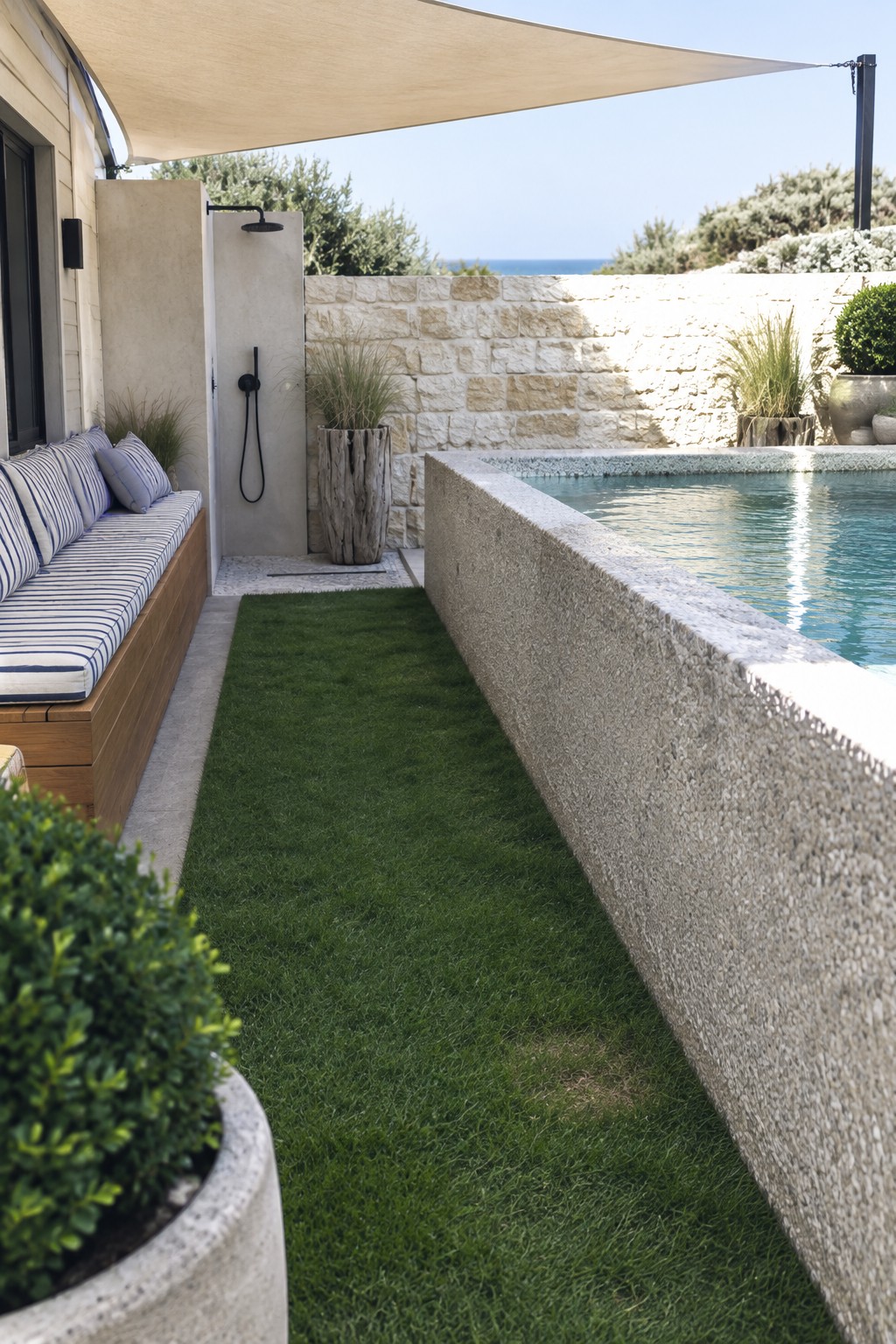
A raised concrete wall gives a small plunge pool clear definition and helps manage slight level changes in the yard. It turns what could feel like a cramped spot into a structured area that still leaves room for a narrow strip of turf and basic seating nearby.
This works best on tight lots or properties with minor slopes where a full in-ground pool would not fit. Match the wall texture and height to other hardscaping on the site so the whole setup stays simple and connected.
Circular Raised Plunge Pools With Pebble Paths
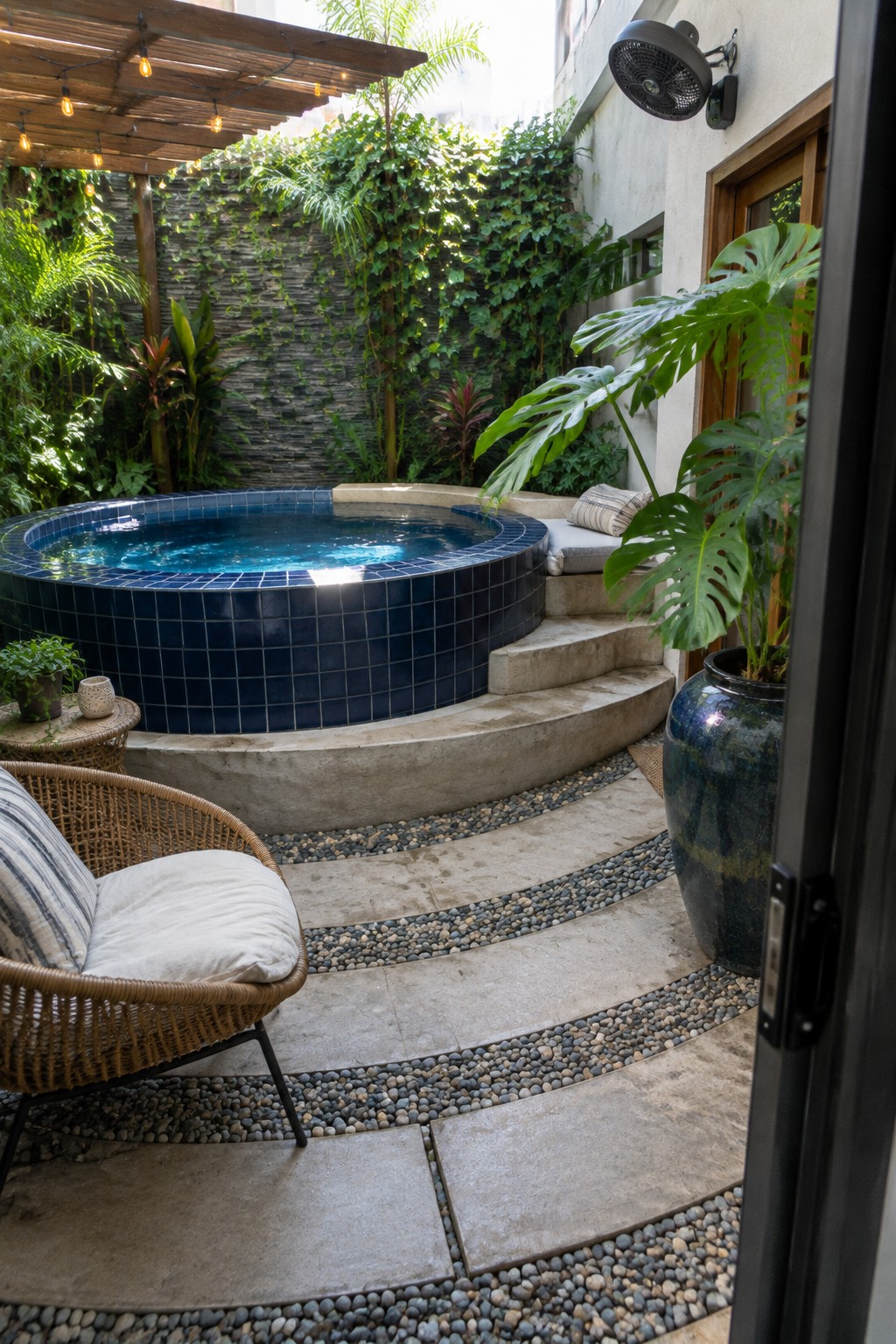
A raised plunge pool makes sense when the yard already has a drop or slope. Instead of fighting the terrain, the pool sits higher and uses simple concrete steps to connect the different levels. The result feels settled rather than forced into place.
This setup suits compact urban yards where flat space is limited. Keep the surrounding paths narrow but consistent, and let the raised edge do the work of separating the pool zone from the rest of the garden. It avoids major excavation while still giving the pool a clear presence.
Raised Plunge Pools With Overflow Water Channels
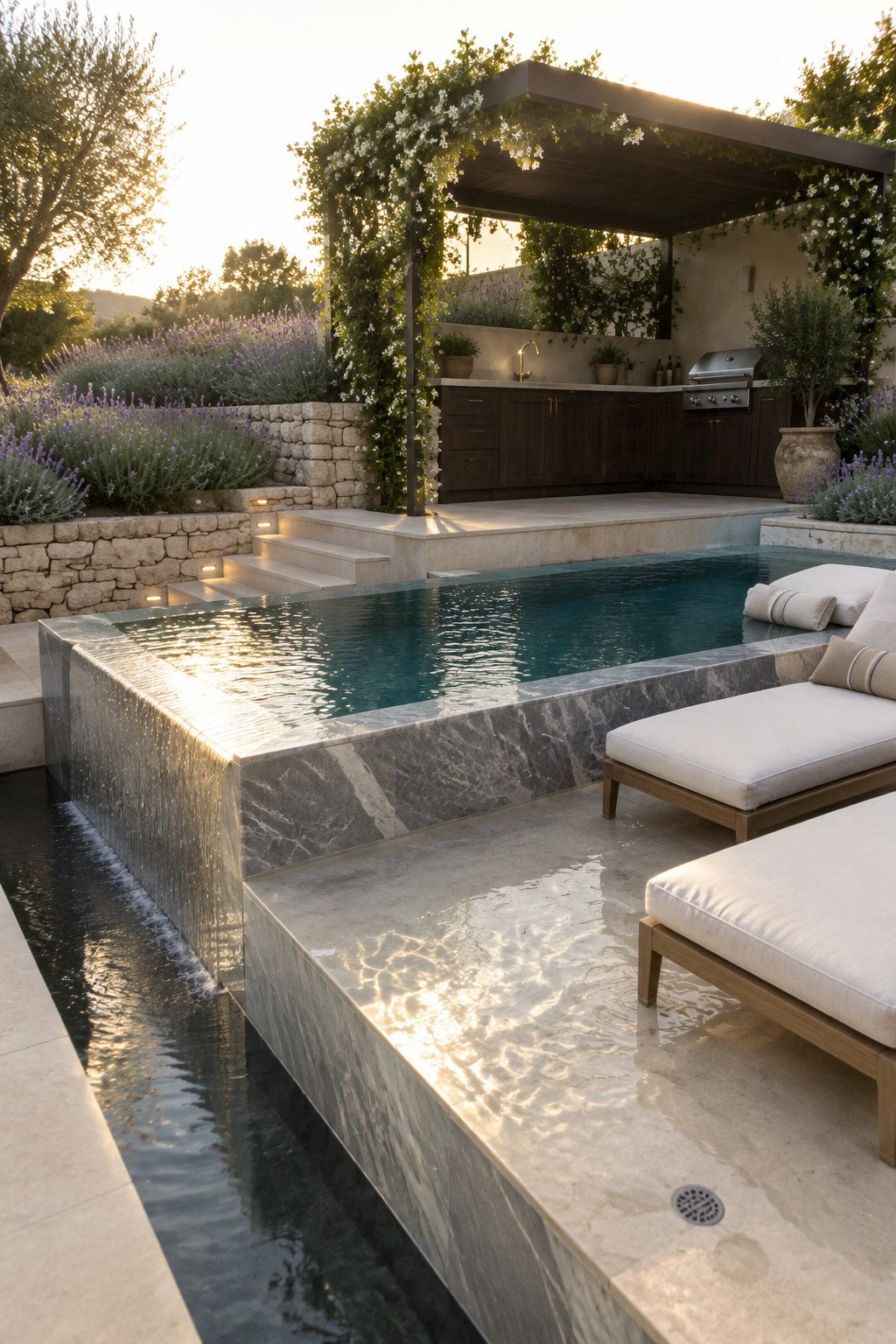
A raised plunge pool with an overflow edge gives you a way to work with uneven ground instead of fighting it. The structure sits higher on one side, which keeps the water surface flat and creates a clean spill that moves water down to a lower channel. This keeps the whole setup compact while still giving the space a focal point.
It works best in smaller yards where a full-size pool would crowd the layout. The raised form also lets you add seating right up against the pool edge without losing usable ground level below. Just make sure the base has solid drainage so the lower areas do not stay wet.
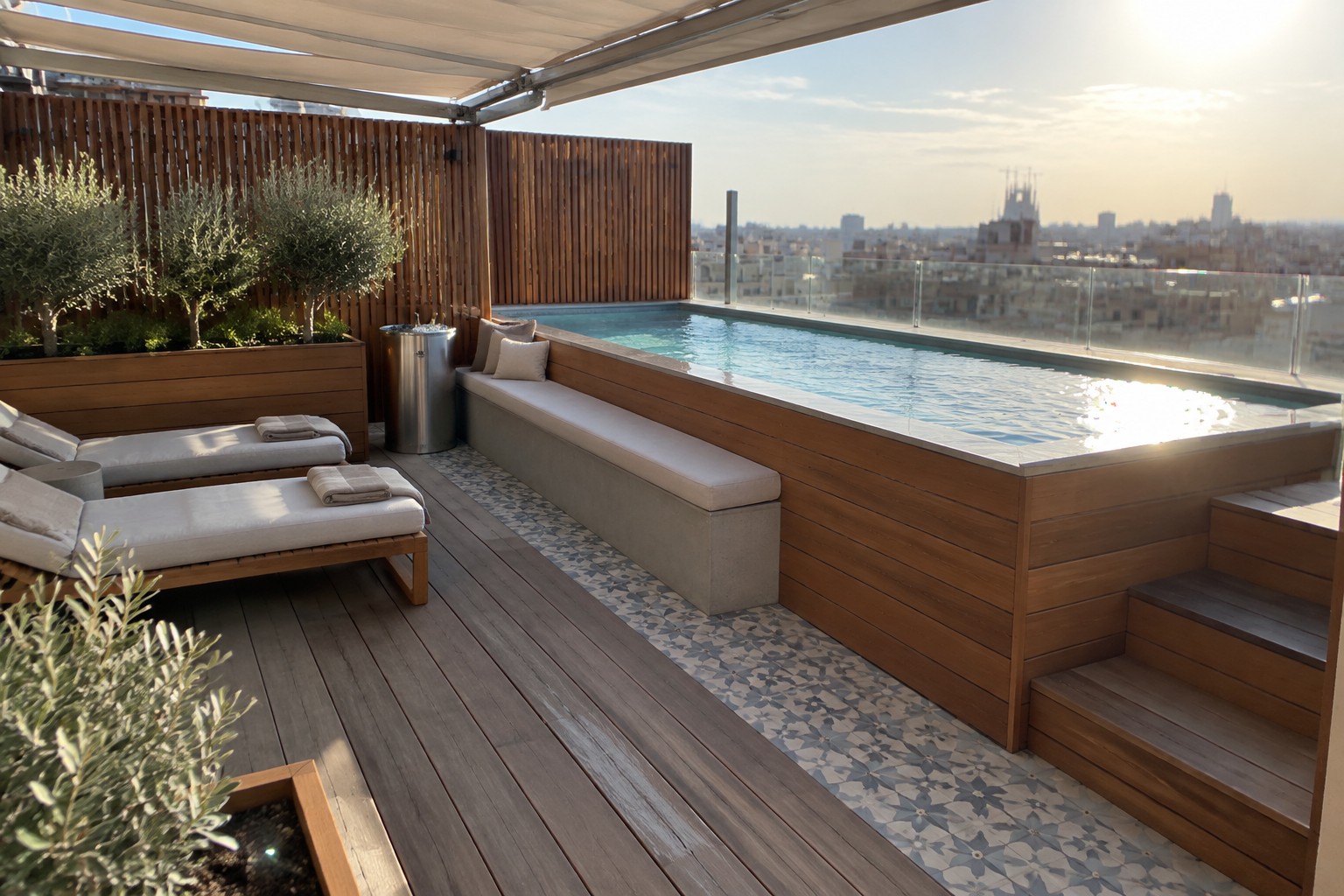
Rooftop Raised Pools With Wooden Bench Seating
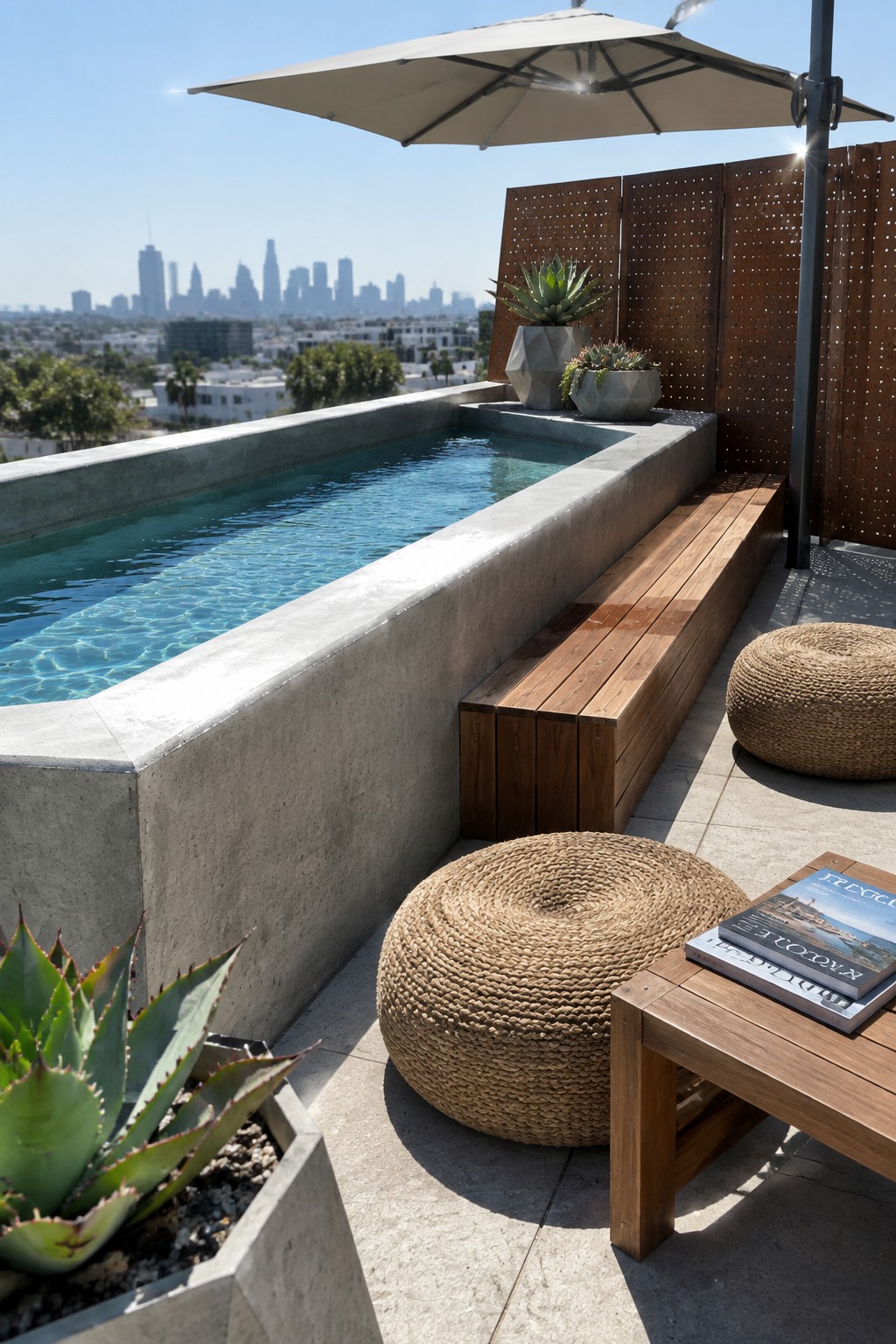
One simple way to stretch a small outdoor space is to run a bench right along the side of a raised plunge pool. The pool edge becomes usable seating instead of just a barrier, which cuts down on the need for extra chairs or loungers that would crowd the area.
This setup works best on rooftops or compact yards where the ground sits at different levels. Choose a material like wood or composite that handles weather and splashing, and leave enough room on the bench so people can actually sit without their feet dangling in the water.
Raised Plunge Pools With Terracotta Coping
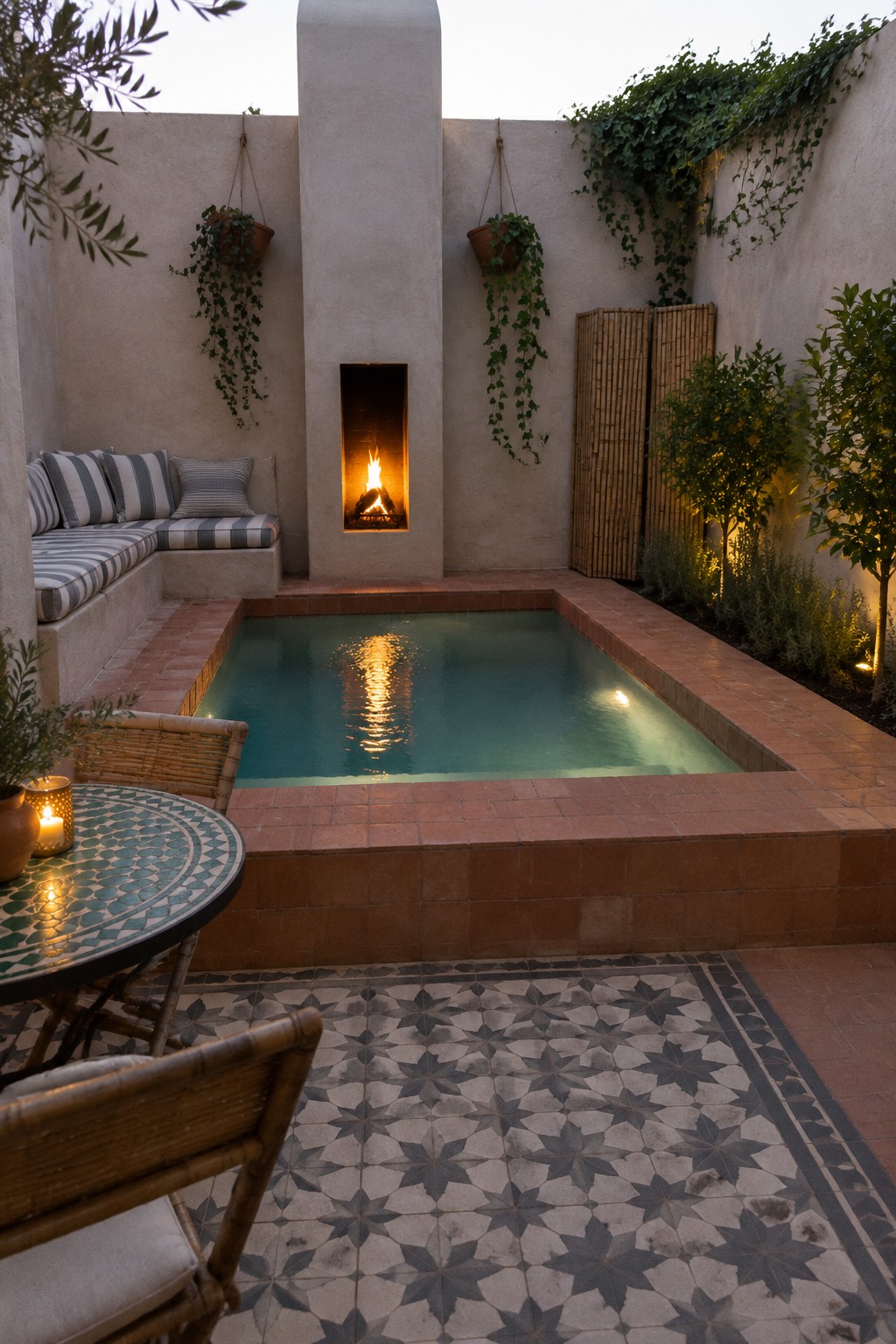
A raised coping around a plunge pool gives the water its own clear boundary, which helps the whole setup feel intentional instead of squeezed into a small space. The terracotta border here lifts the pool just enough to separate it from the lower patio floor while still keeping everything connected.
This works well in compact courtyards or on lots with minor level changes because the extra height adds presence without needing extra width. It suits homes where the outdoor area has to handle both swimming and everyday seating, as long as the rim is wide enough to feel stable and the surrounding paving matches the material.
Curved Steel Raised Plunge Pools With Garden Steps
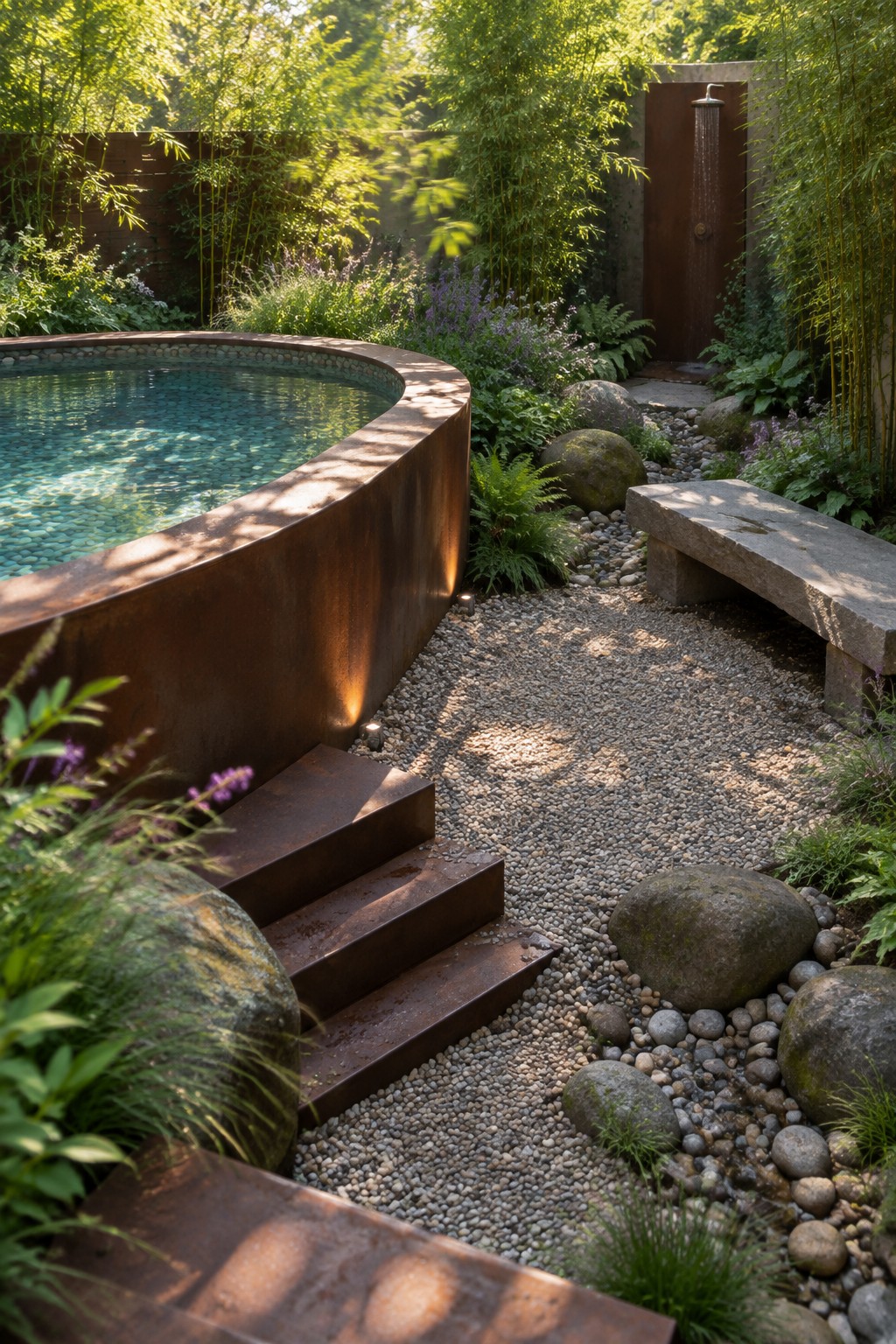
A raised plunge pool with a curved steel shell works well when the yard has a gentle drop or uneven ground. The metal sides act as both retaining wall and finish material, so you avoid a big excavation and still get a clean edge that sits above the lower section of the garden. Steps built into the same steel make the height change easy to cross without adding extra structures.
This approach suits compact yards where flat space is limited and you want the pool to feel like part of the landscape rather than a separate box. Keep the surrounding gravel or path simple so the pool edge stays the main line. Watch the height though. Too tall and the metal starts to feel like a wall instead of a pool.
Raised Concrete Plunge Pools With Cascading Water
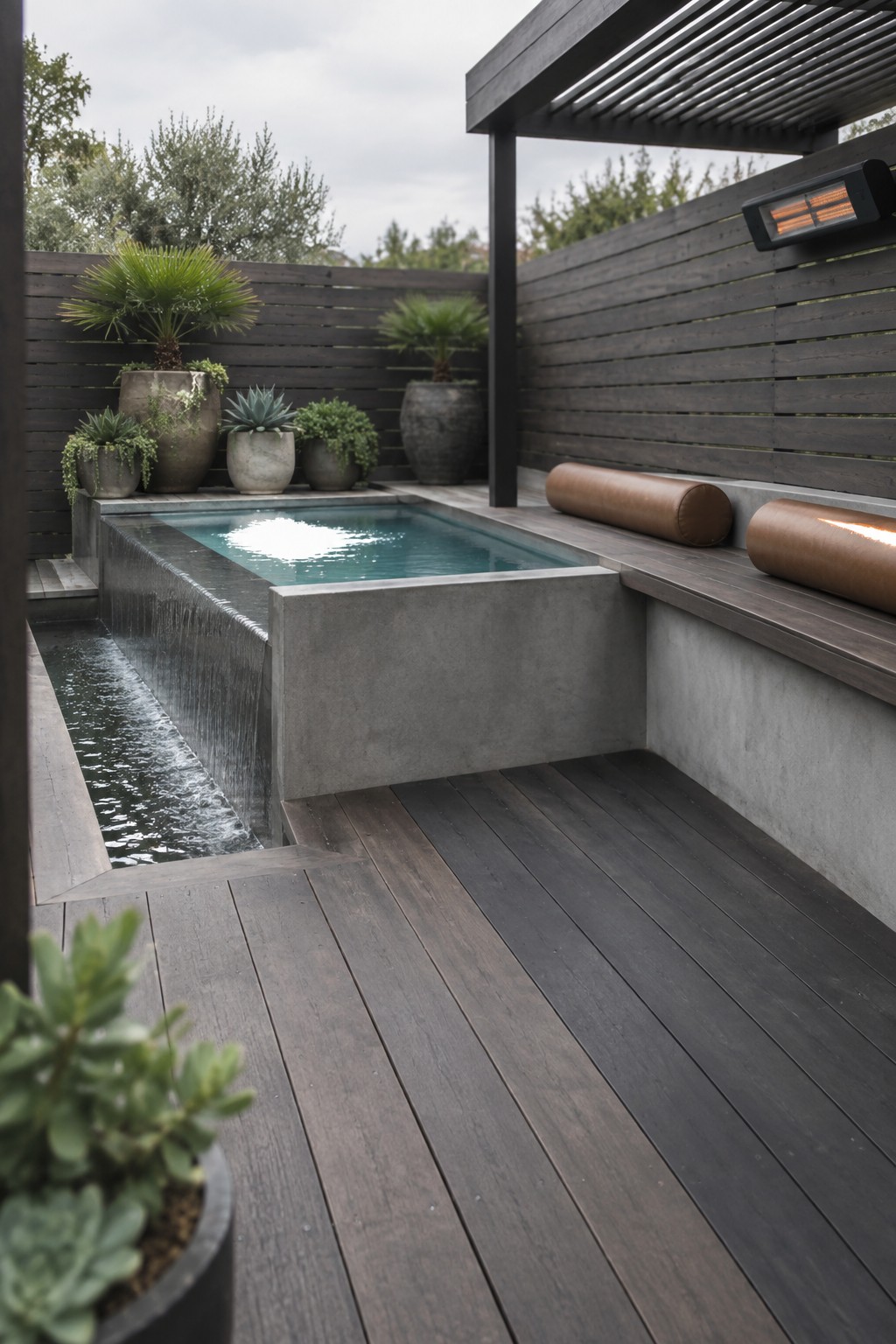
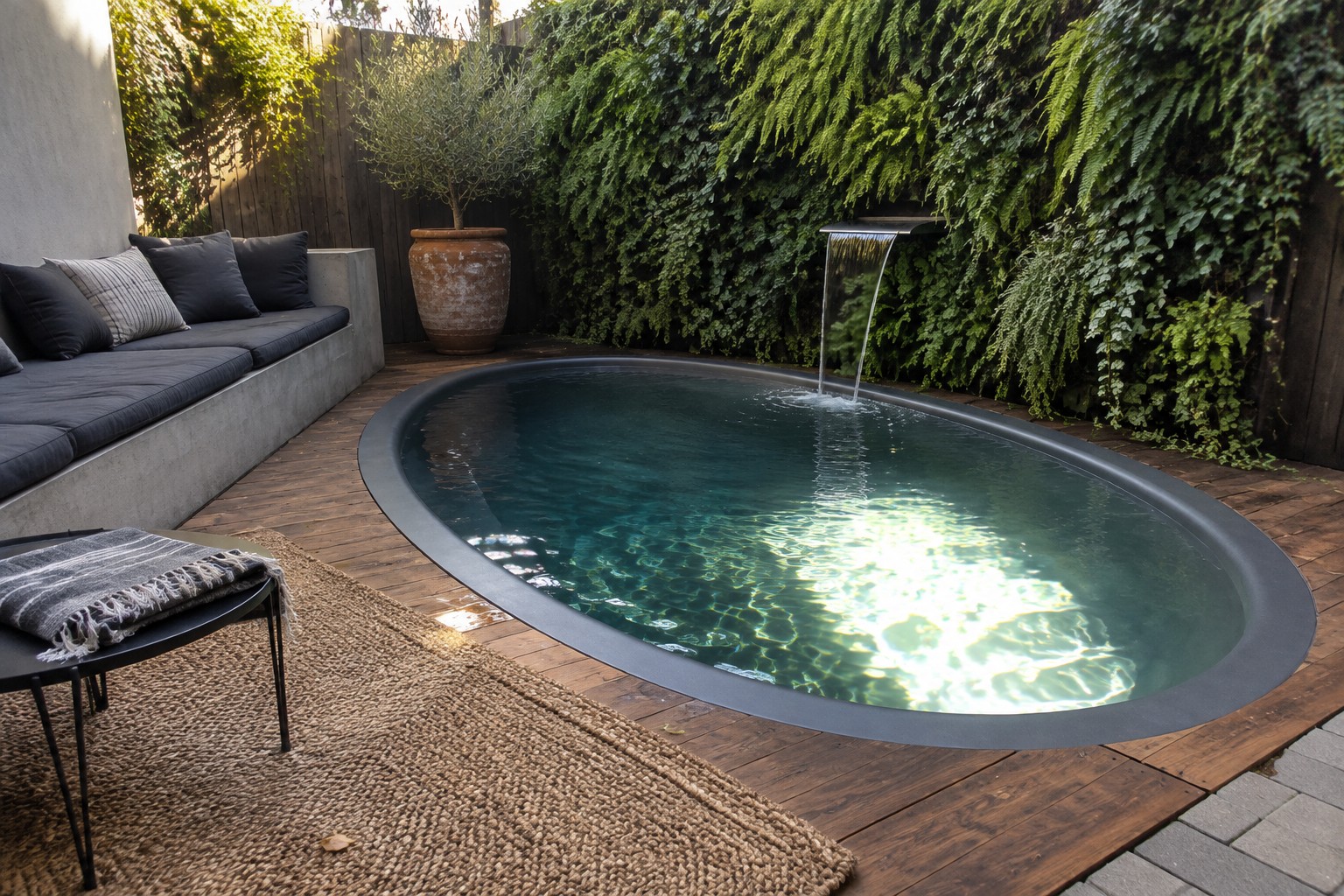
A raised plunge pool with an overflow edge gives you moving water without adding extra equipment. The water spills over one side and drops into a lower trough, which turns a simple level change into something you can enjoy from the deck. It keeps the pool looking clean while handling the slope in a compact space.
This works best in smaller yards where a flat pool would feel boxed in or require too much excavation. Pair it with built-in seating along one side so the area stays usable even when the pool is not in use. Just make sure the edge height lines up with how you plan to sit or walk around it.
Raised Stone Plunge Pools With Wide Seating Coping
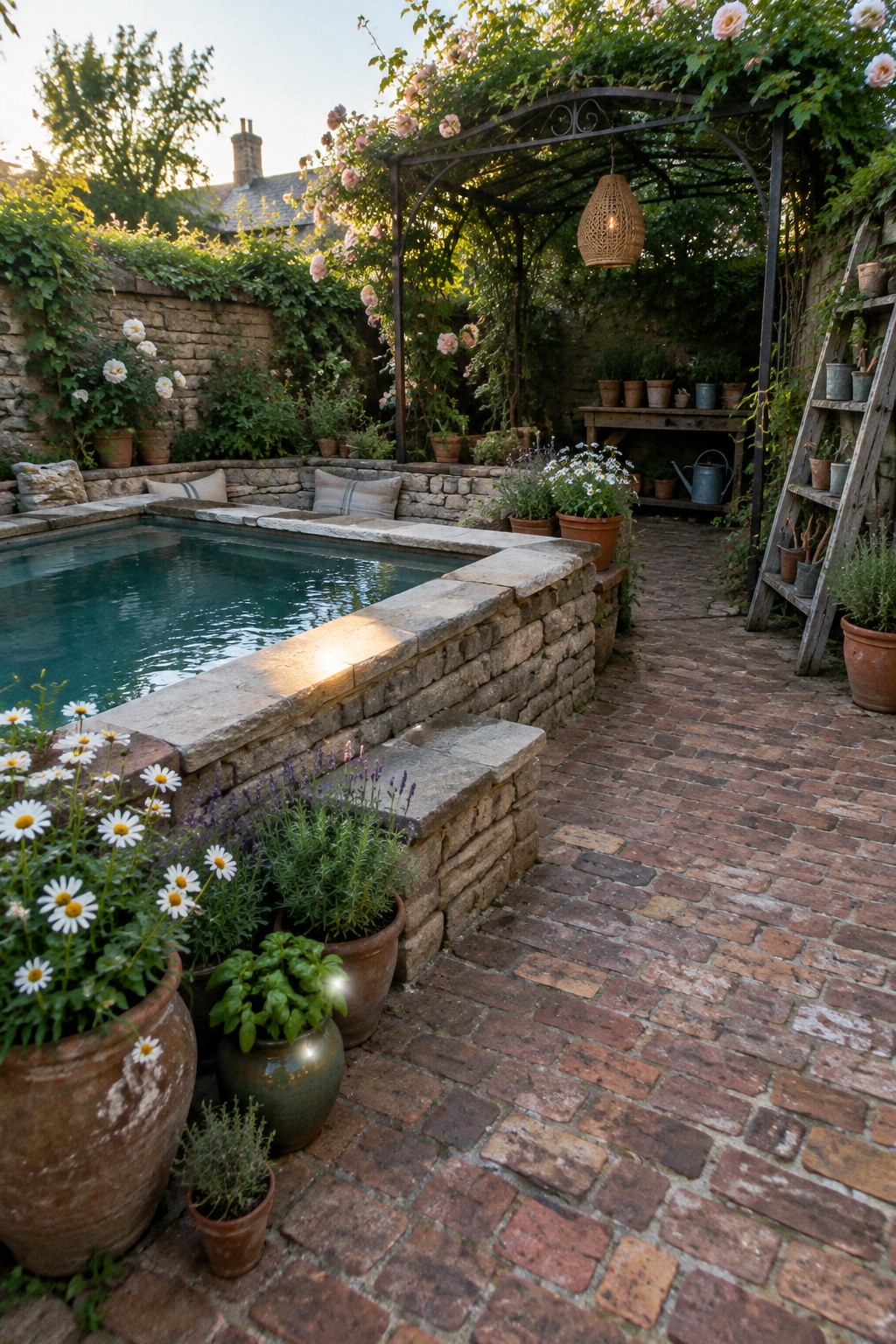
Raising the pool just enough for the coping to become a bench is a practical way to add seating without crowding a small yard. The wide stone edge gives people a spot to sit close to the water, and it removes the need for separate chairs that take up floor space.
This setup works best on sites with gentle slopes or tight layouts where you need to create a clear level change. Stone or brick holds up well outdoors and can tie into nearby paths or garden walls so the whole area feels connected.
Dark-Tiled Raised Plunge Pools for Rooftop Terraces
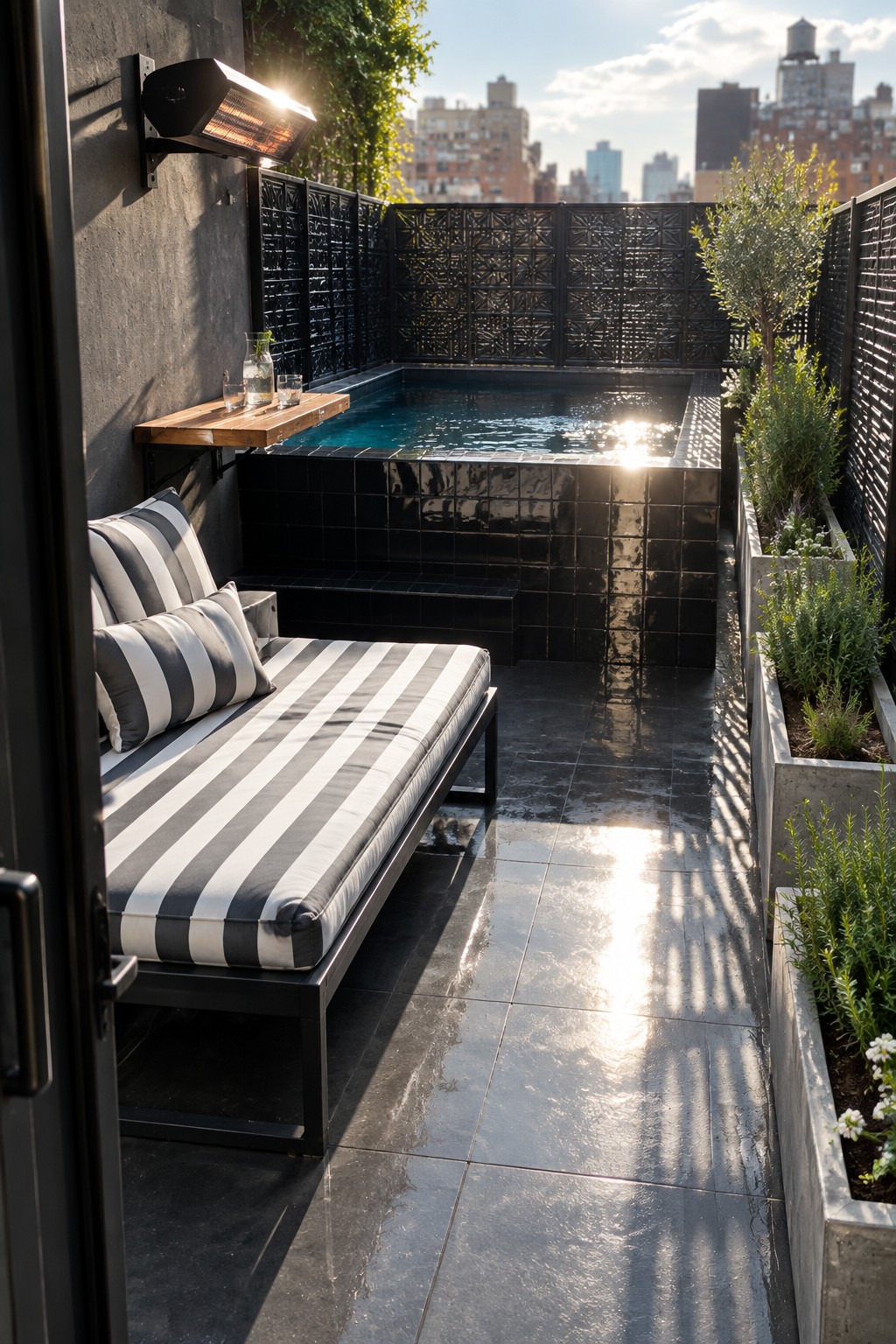
A raised plunge pool gives a small terrace or yard a clear sense of order. It turns what could feel like a flat open space into something more defined, especially when the surrounding deck sits at a slightly different level. The dark tile helps it feel grounded rather than like an afterthought.
This approach works well on urban rooftops or narrow side yards where space is limited. Keep the surrounding area simple with one or two lounge spots and some planters so the pool stays the main feature without crowding the rest of the space.
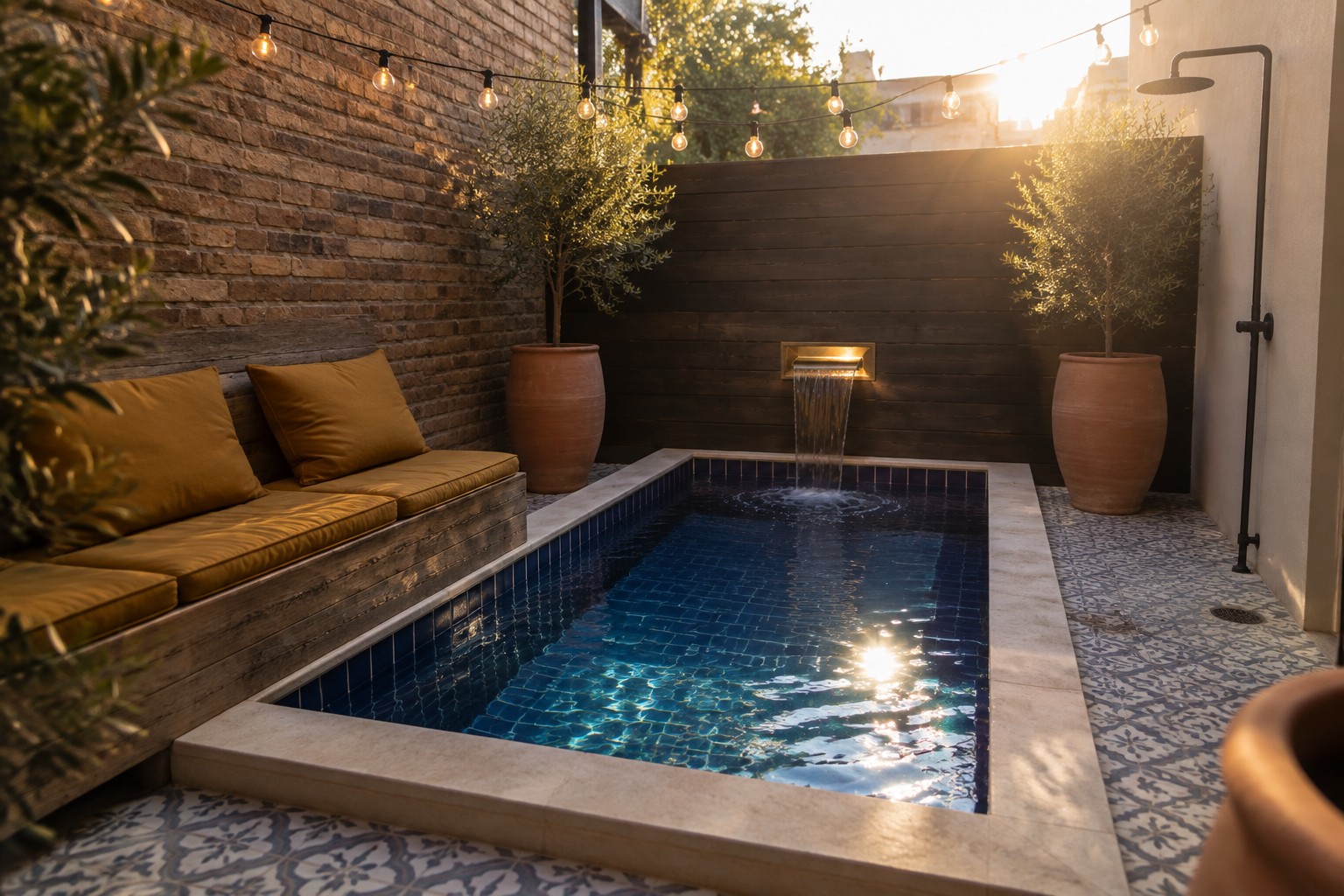
Raised Plunge Pools With Patterned Tile and Bench Seating
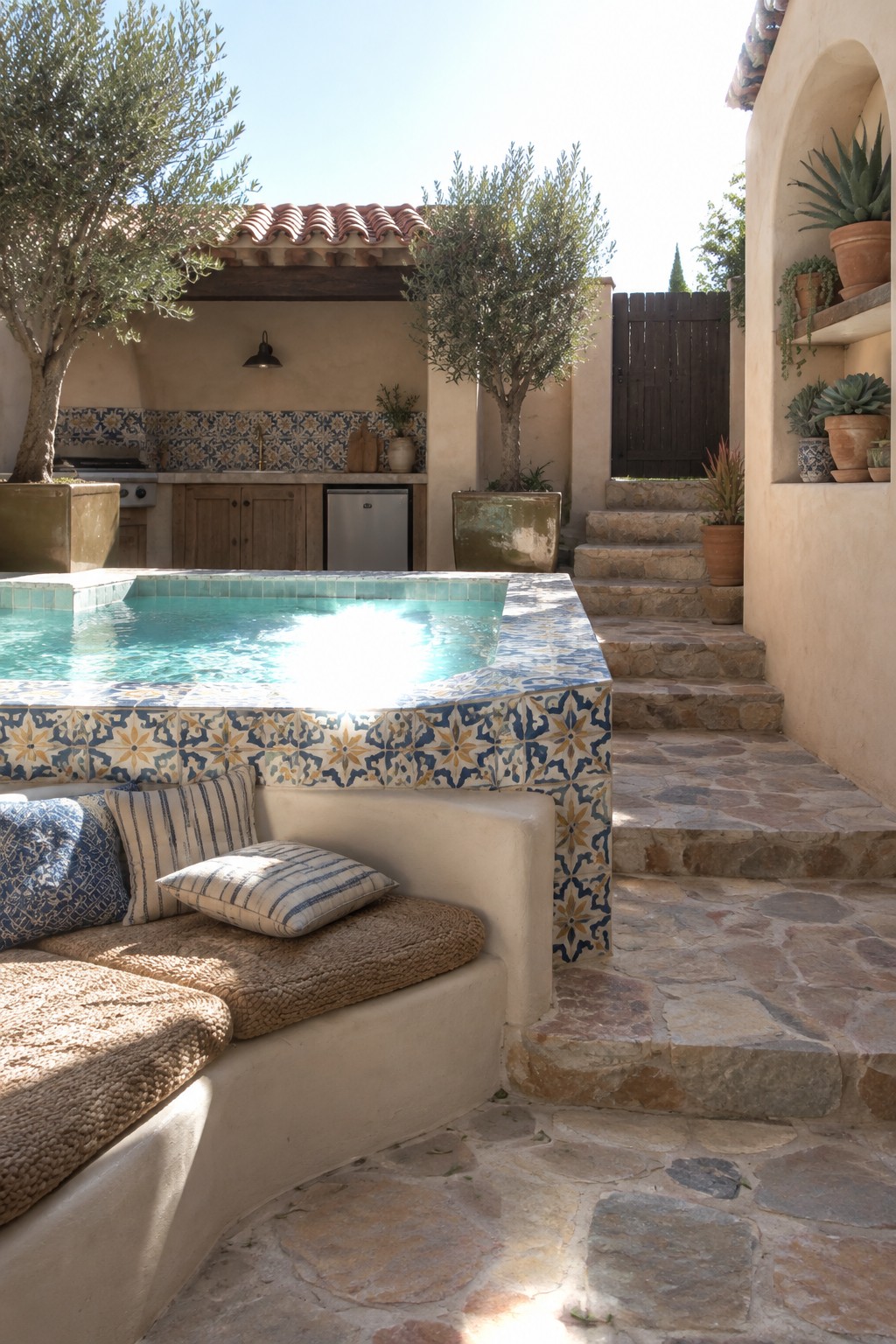
A raised plunge pool works well when the yard has a slope or drop in level. The higher edge of the pool creates a natural bench along one side, while steps lead down to the lower patio area. This keeps the layout simple and avoids the need for separate walls or railings.
It suits compact yards where space is tight and every change in height needs to serve more than one purpose. The tile on the pool rim adds color without extra decoration, and the built-in seating stays useful even when the pool is not in use.
Raised Wooden Plunge Pools With Matching Deck Surrounds
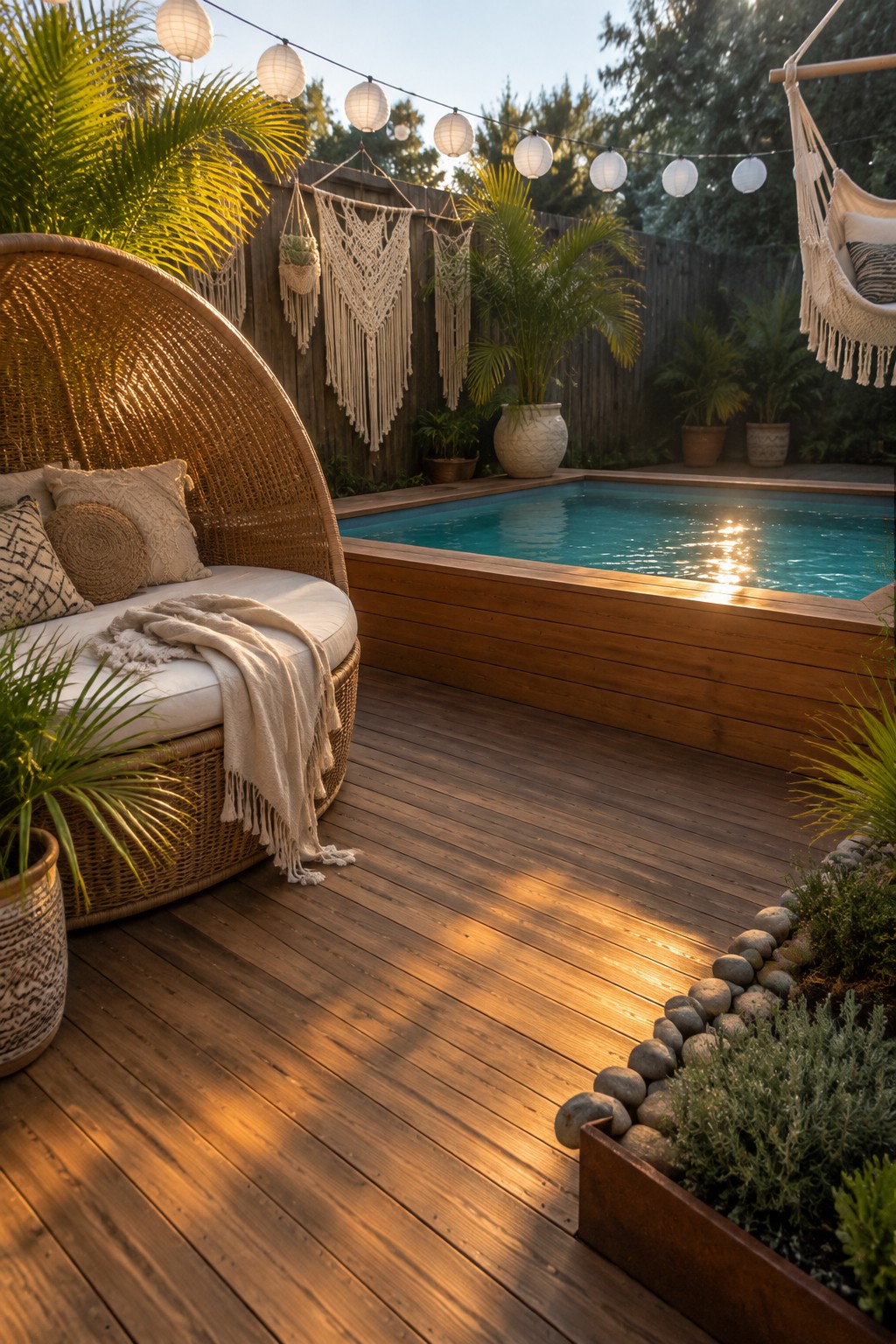
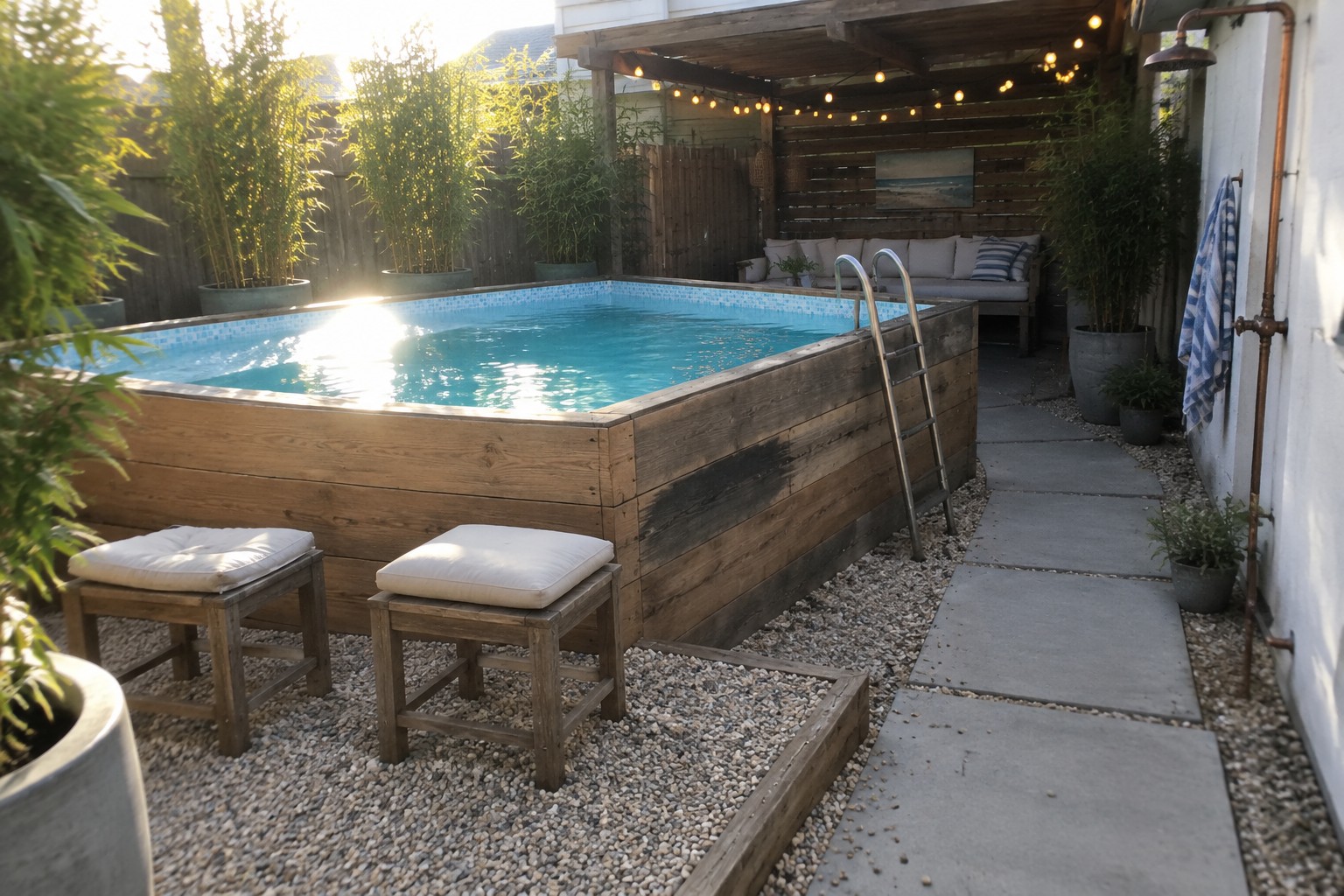
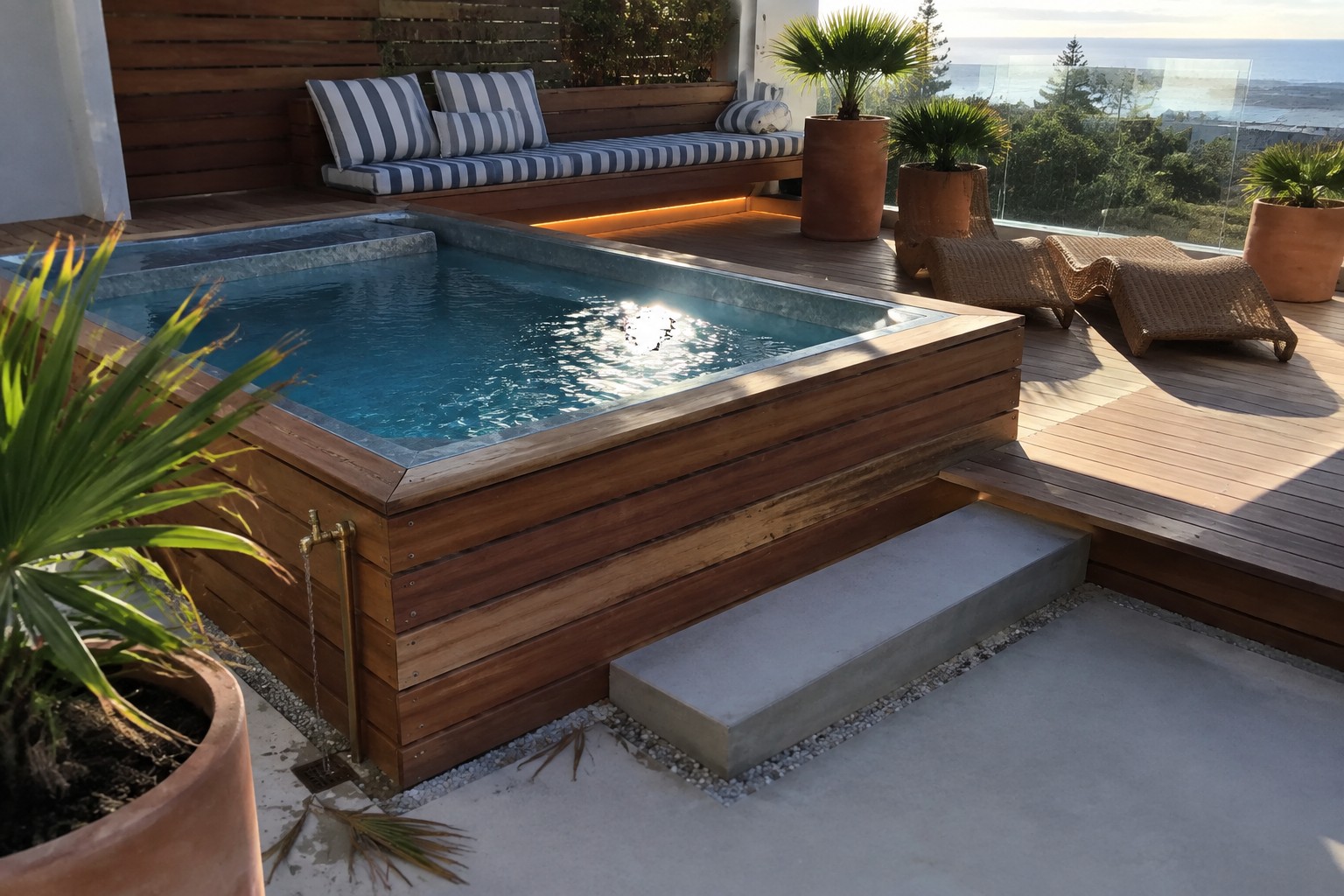
A raised plunge pool with a wooden surround can sit right on top of an existing deck instead of requiring a full excavation. This approach works especially well in compact yards or on sites with minor level changes, since the pool structure creates its own flat base while the deck extends around it.
The wood facing matches the deck boards, so the pool feels like part of the floor rather than a separate addition. It suits smaller properties where digging deep would disturb too much of the yard or where the ground slopes gently. Just keep the raised edge height modest so it does not dominate the space.
Circular Raised Plunge Pools on Rooftop Decks
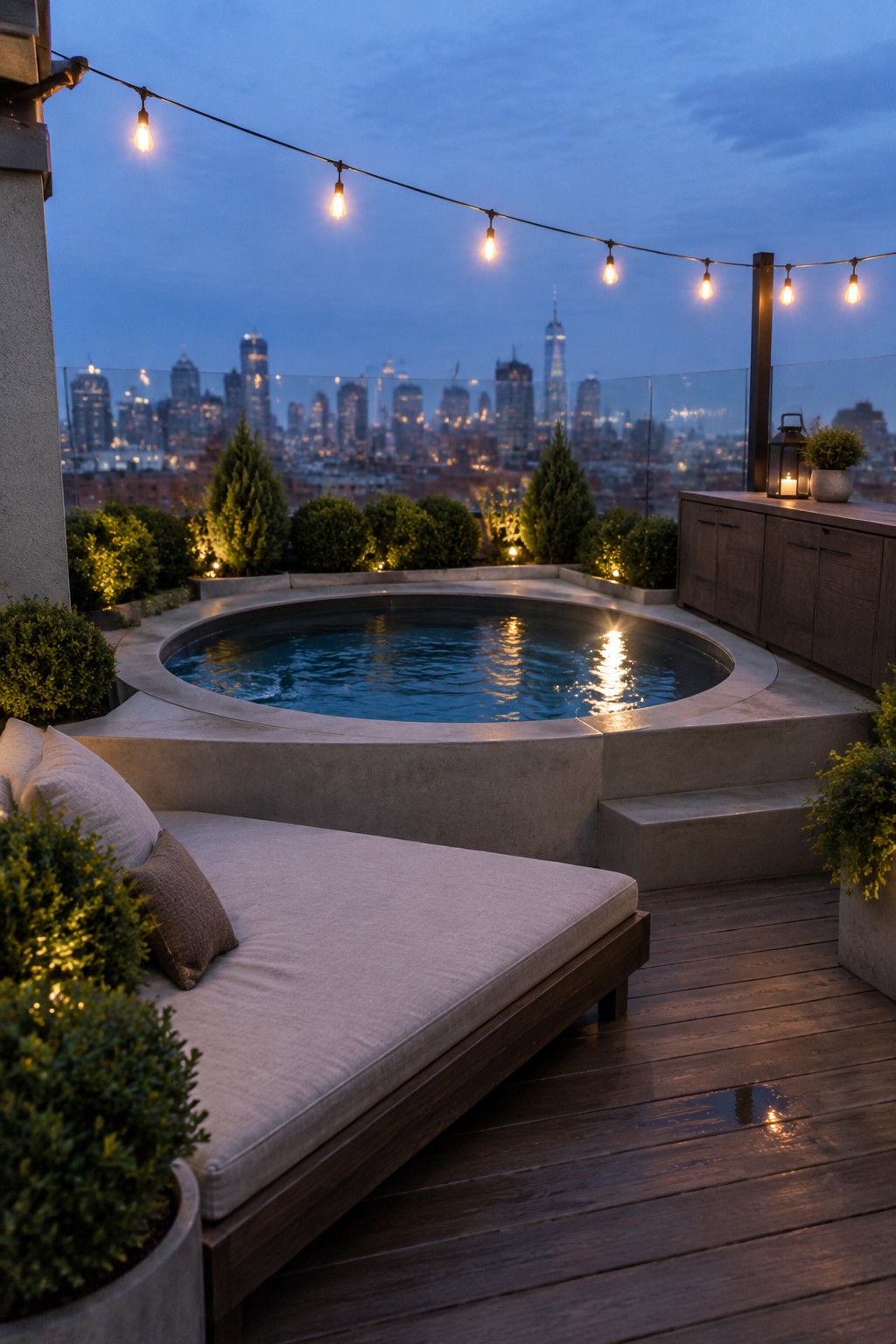
A raised plunge pool works well when it sits just above the deck surface instead of dropping down into it. The concrete edge creates a clean border that keeps the water contained while the surrounding wood deck handles foot traffic and seating around the sides. This setup avoids major excavation and turns a small rooftop or backyard into a usable swimming spot without eating up floor space.
It suits compact urban terraces or yards with slight slopes where a flat pool would feel cramped. Add a few planters along the edge to soften the concrete and keep the area from looking too hard. Watch the height though. Too tall and it starts to feel like a separate structure instead of part of the deck.
Frequently Asked Questions
Q: How do I handle a steep drop in my yard without the pool looking stuck on? A: Build the raised pool into the slope by stepping the ground around it. This turns the level change into built-in seating or a deck that flows naturally with the rest of the yard.
Q: Will a compact raised pool take up too much space for plants or seating? A: Place the pool against one edge of the yard and use the raised wall as a planter base. That leaves the rest open for a couple of chairs without crowding everything together.
Q: What about cleaning and winter care in a small setup? A: Run a basic skimmer and cover the pool when not in use. Emptying it halfway each season keeps the water fresh without much extra work.
Q: Is it worth adding steps if the pool sits higher than the ground? A: Yes. Wide steps built into the raised side make getting in easy and double as extra seating when the pool is not in use.