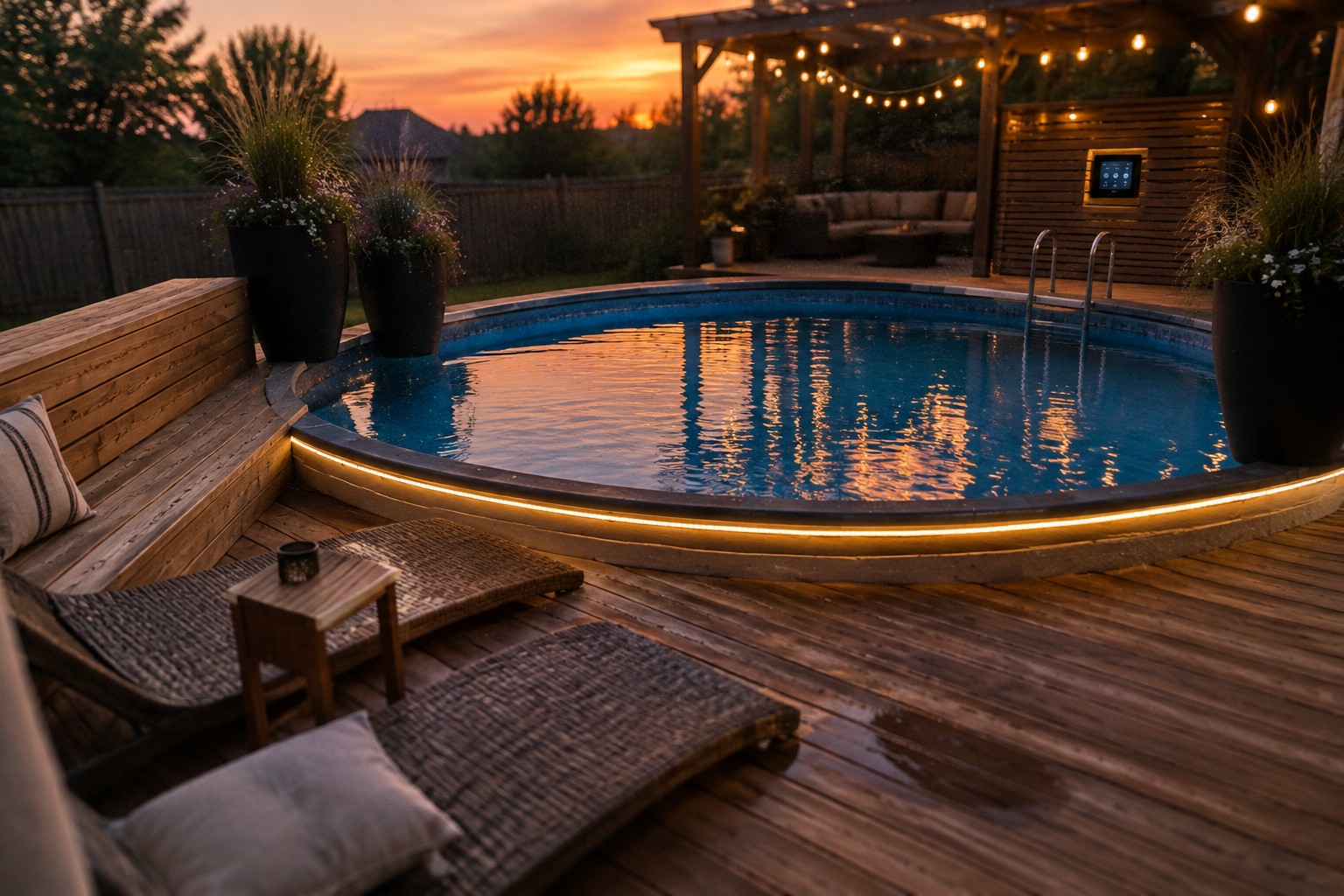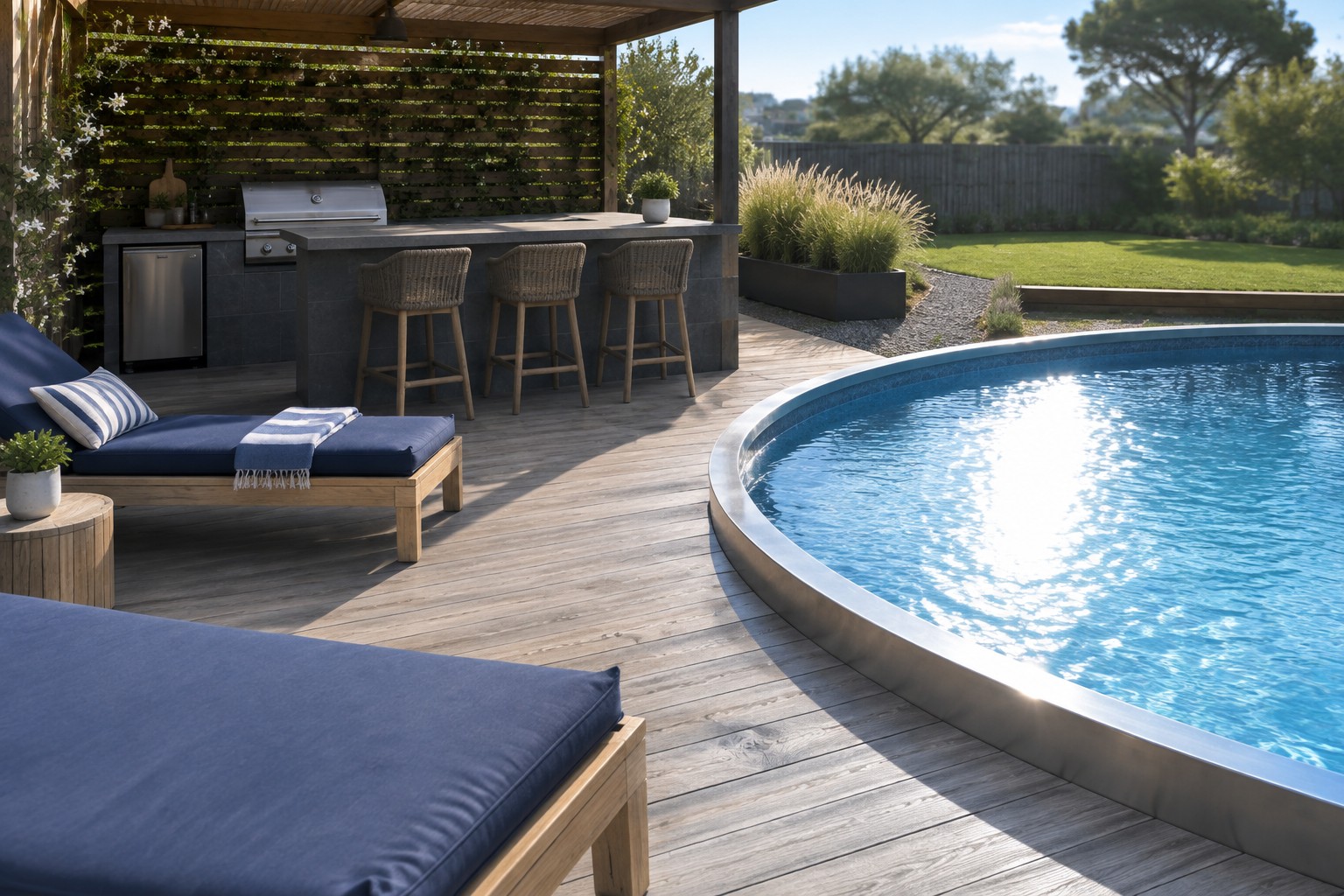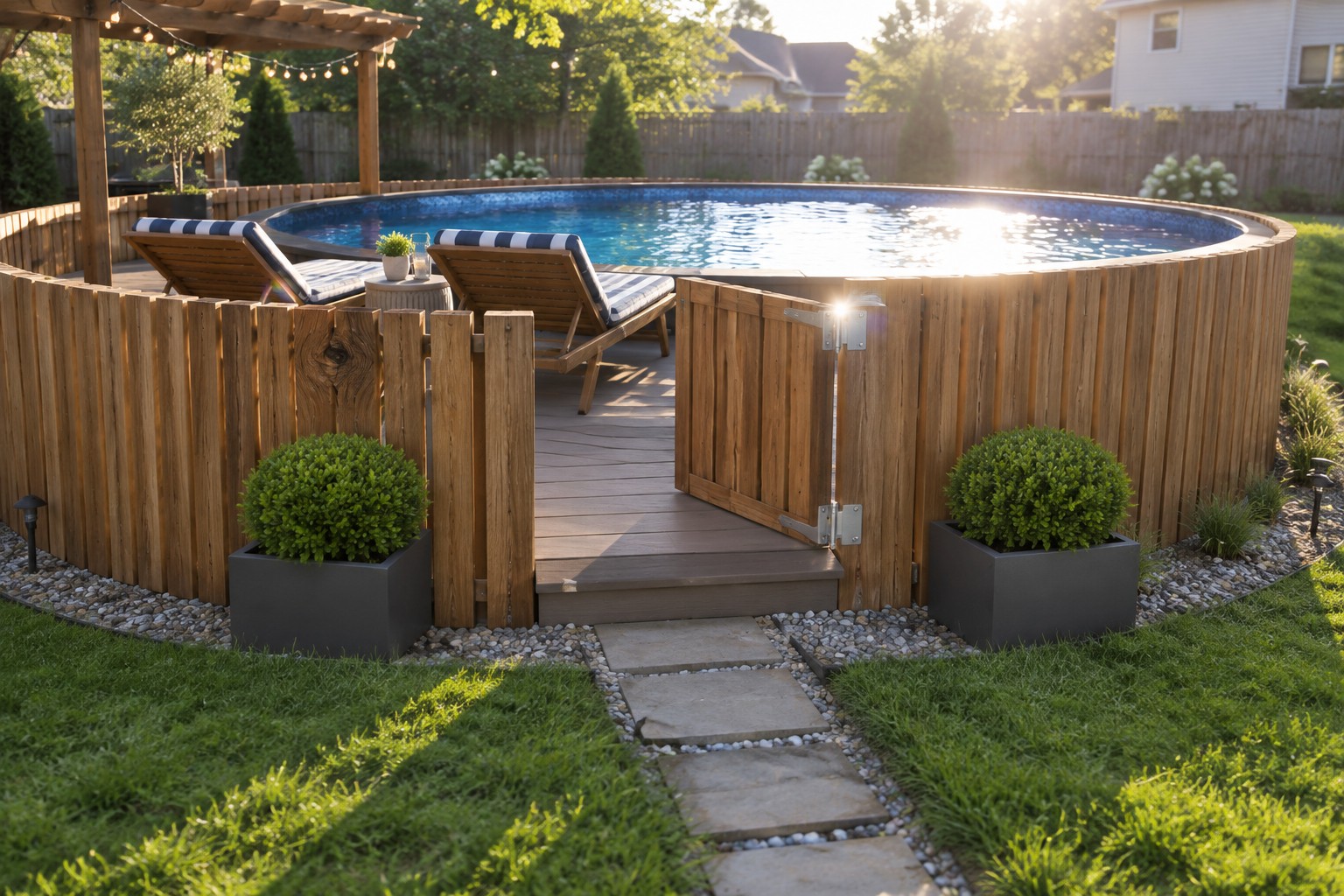
I have seen plenty of above ground pools where the fence ends up blocking the easiest path to the water or the equipment.
When the gate forms part of the fence itself it removes the extra step of walking around or lifting a latch that never quite lines up.
One season I dealt with a separate gate that kept sagging and that experience made clear how much smoother daily checks become when everything sits in one solid run.
The height and the way the panels meet the ground also shape how open the whole backyard still feels once the pool is in place.
A few of these setups are worth trying on paper first before committing to the build.
Deck-Connected Pool Fence With an Integrated Gate
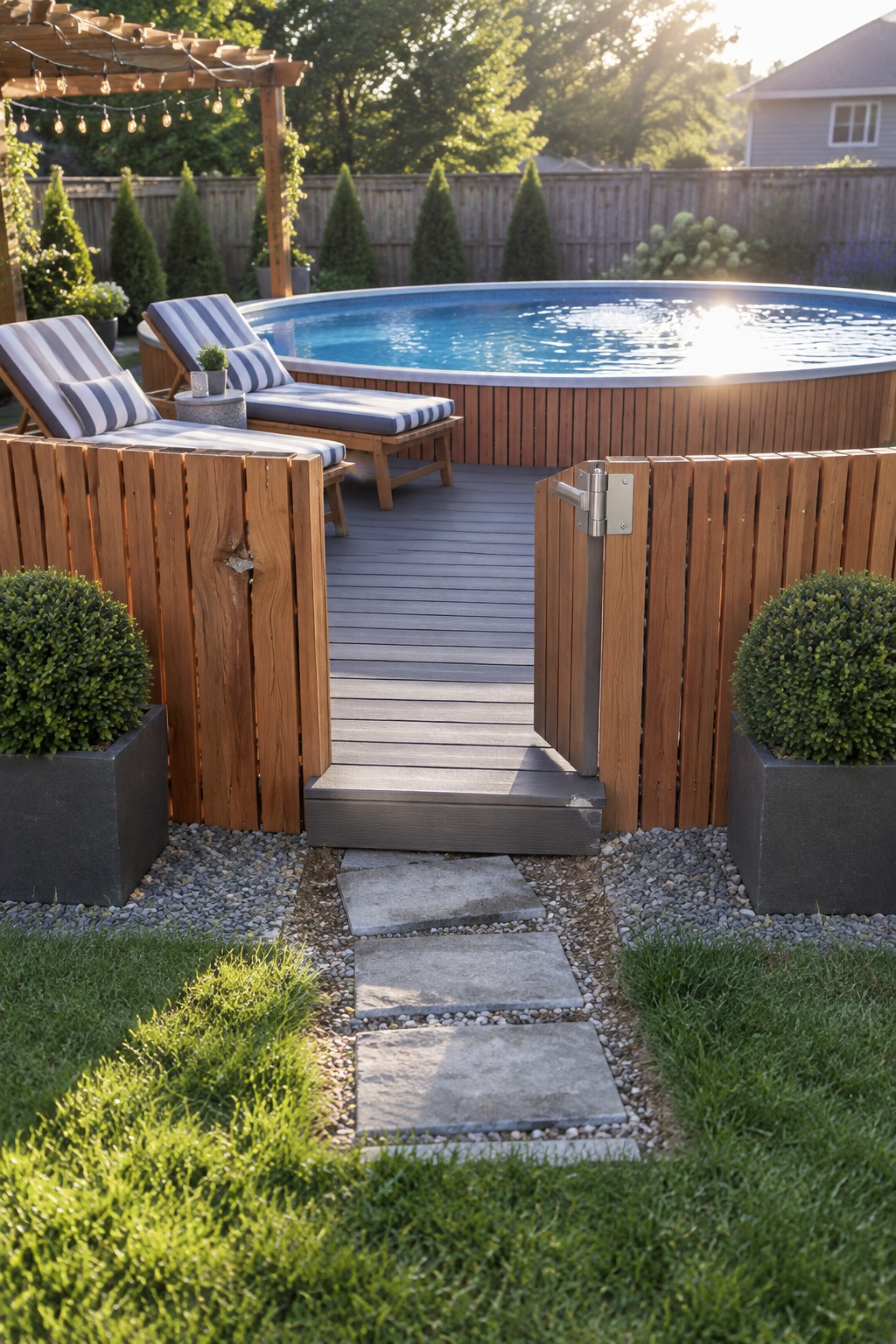
A fence around an above ground pool is mostly there for safety, but without a gate it can feel like a hassle to get in and out. Adding one that matches the fence style keeps the look consistent while making daily use much simpler.
This approach works best when the fence sits on a deck or connects to a path, since the gate can open right onto the walking surface. It suits homes where the pool area needs to stay separate from the lawn without creating extra barriers.
White Picket Fencing With A Simple Gate
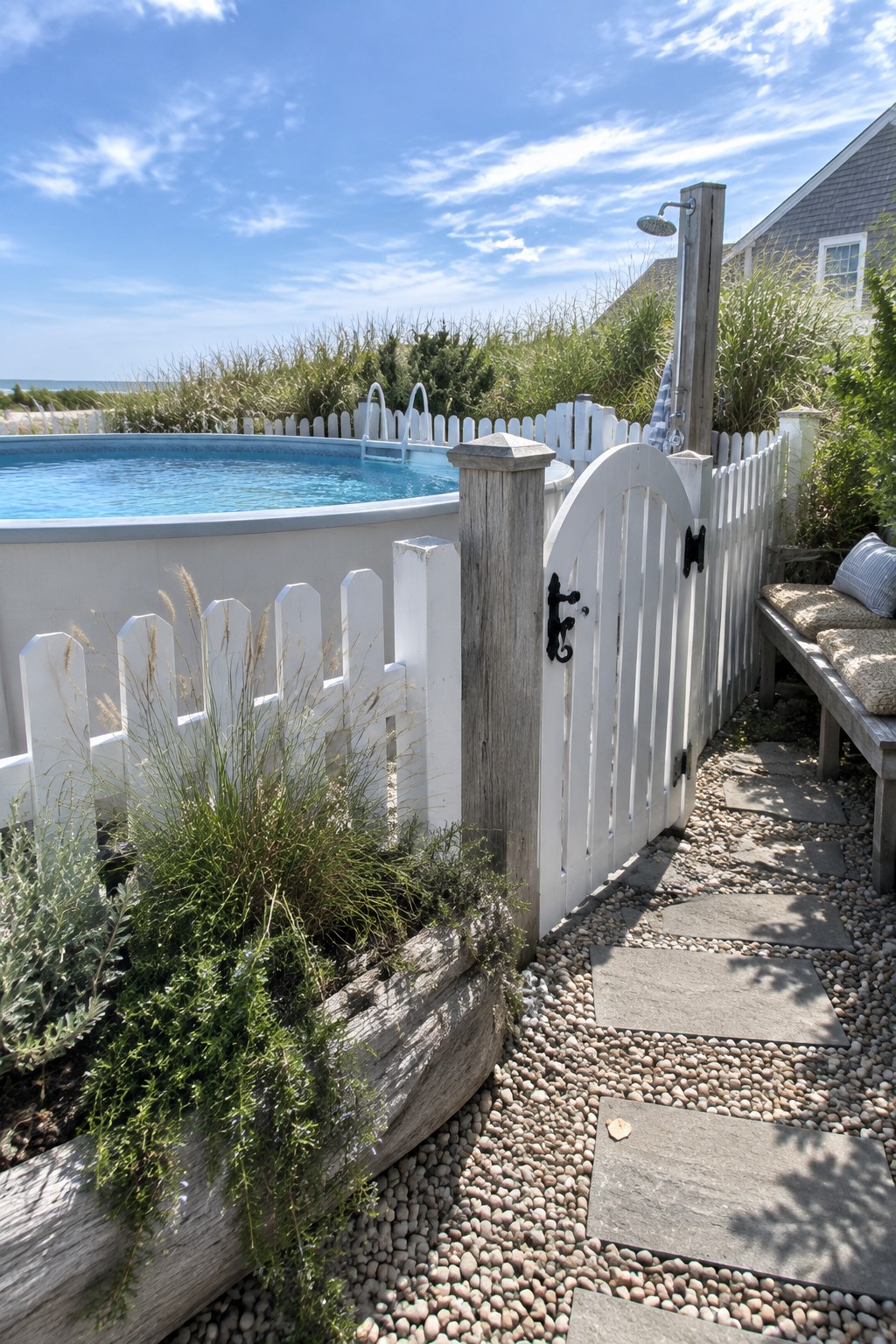
A white picket fence with an integrated gate gives an above ground pool a clean, familiar look without making the space feel closed off. The gate lets you move through easily while still keeping the pool area defined and secure. This style works especially well in smaller yards where you want something light rather than heavy or modern.
It suits homes with a cottage or coastal feel and pairs nicely with gravel paths or simple plantings along the fence line. Just check local codes for fence height and gate latch requirements before installing.
Glass Fencing Keeps Views Open Around An Above Ground Pool
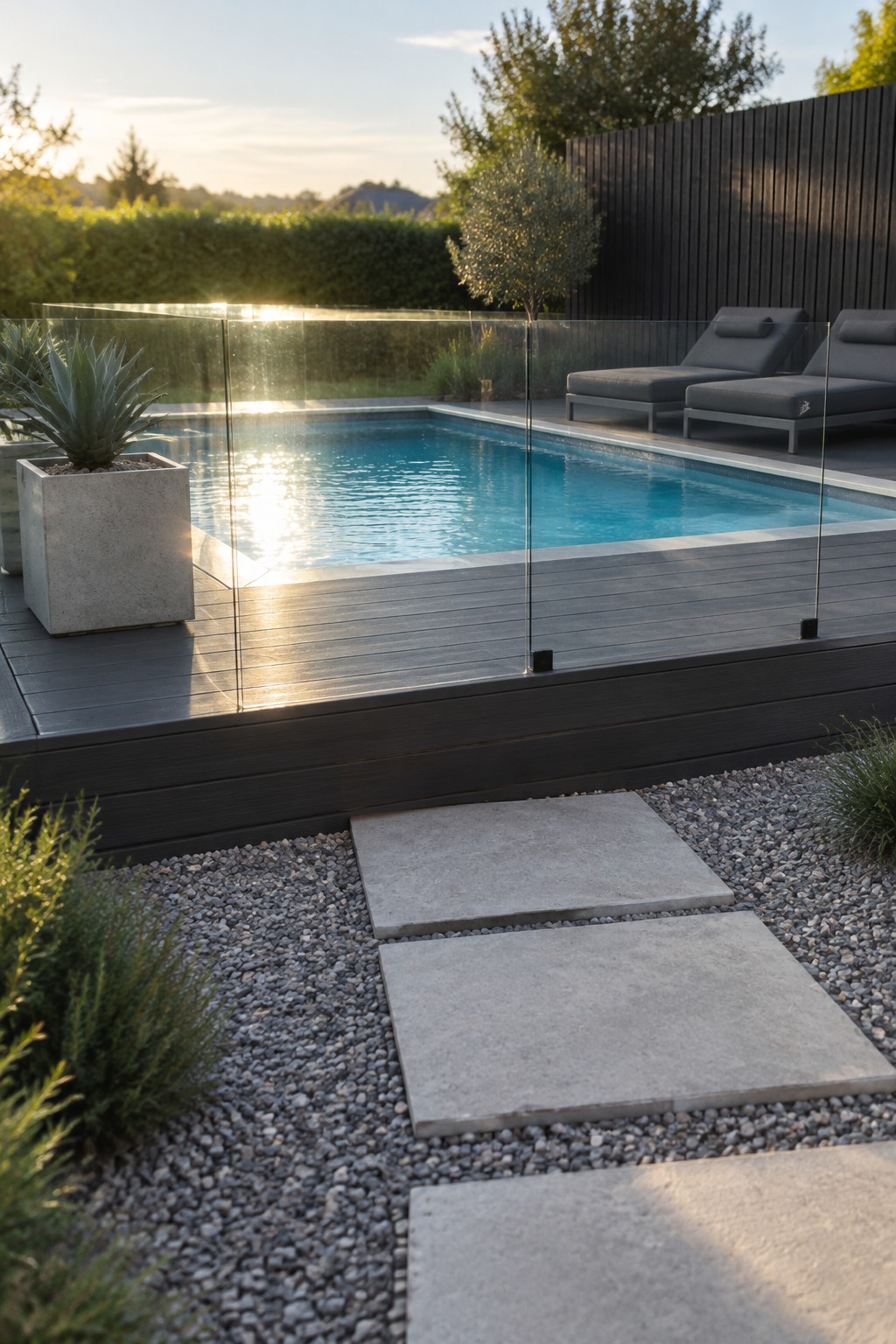
Glass fencing along the edge of a deck gives an above ground pool the safety barrier it needs without cutting off the view of the water. The clear panels sit low enough to stay out of the way visually, so the pool still feels connected to the rest of the yard.
This works best on raised decks where you want to keep sight lines to surrounding trees or open space. It suits homes that already have a modern or simple outdoor setup, though the glass does need regular cleaning to avoid looking streaky over time.
Brick Posts With Lattice For Pool Fences
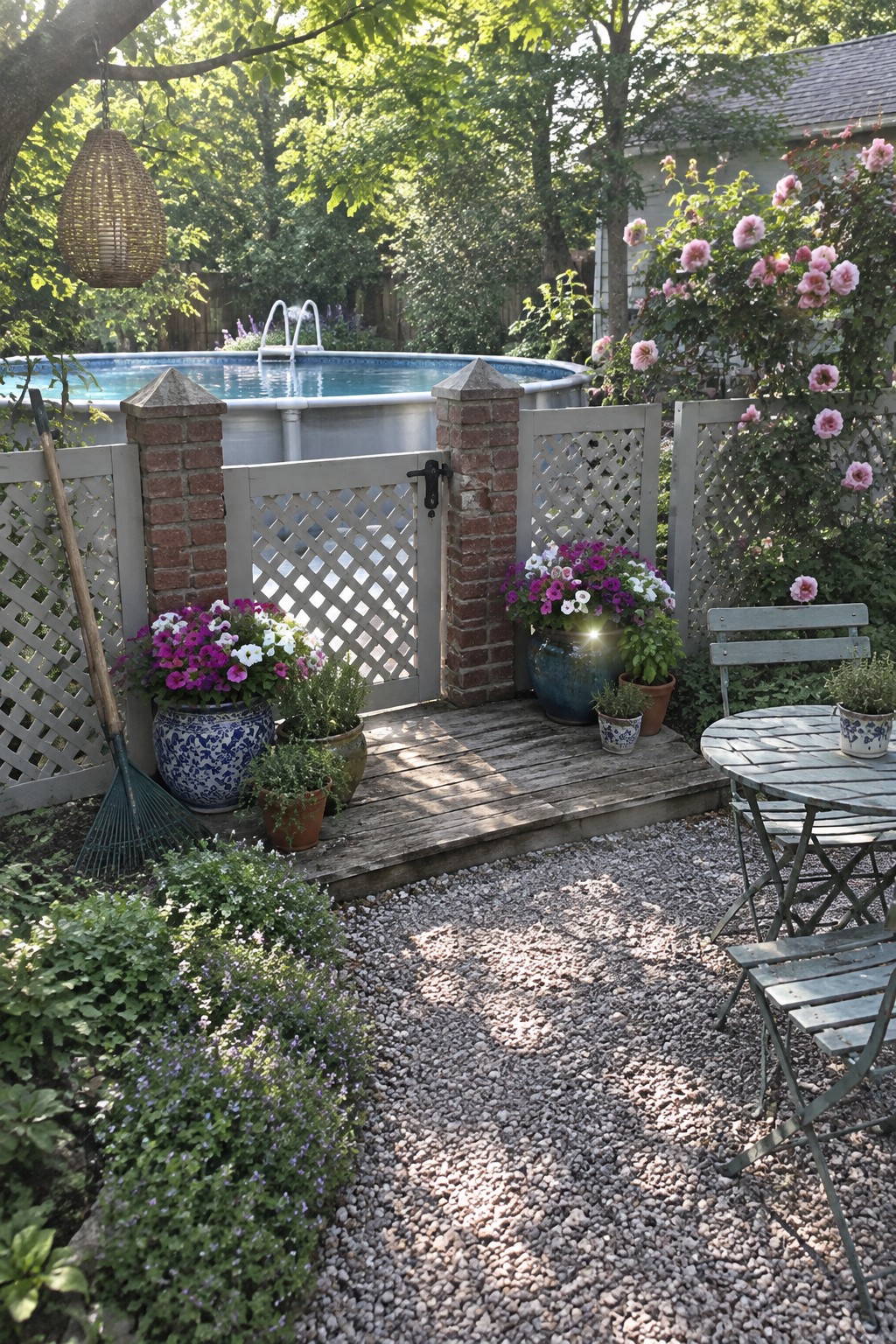
Brick posts give a pool fence real structure while still letting the garden feel like part of the space. The lattice panels between them keep the look light, and the gate swings open without breaking the line of the fence. Many people like this setup because it turns a basic safety requirement into something that actually fits the yard instead of standing out as an afterthought.
This works best in backyards where you already have some brick or traditional garden details. Keep the posts low enough that they do not block the view of the water, and let vines or pots soften the base. Just make sure the gate latch is sturdy and easy to use every day.
Bamboo Fencing With An Integrated Gate
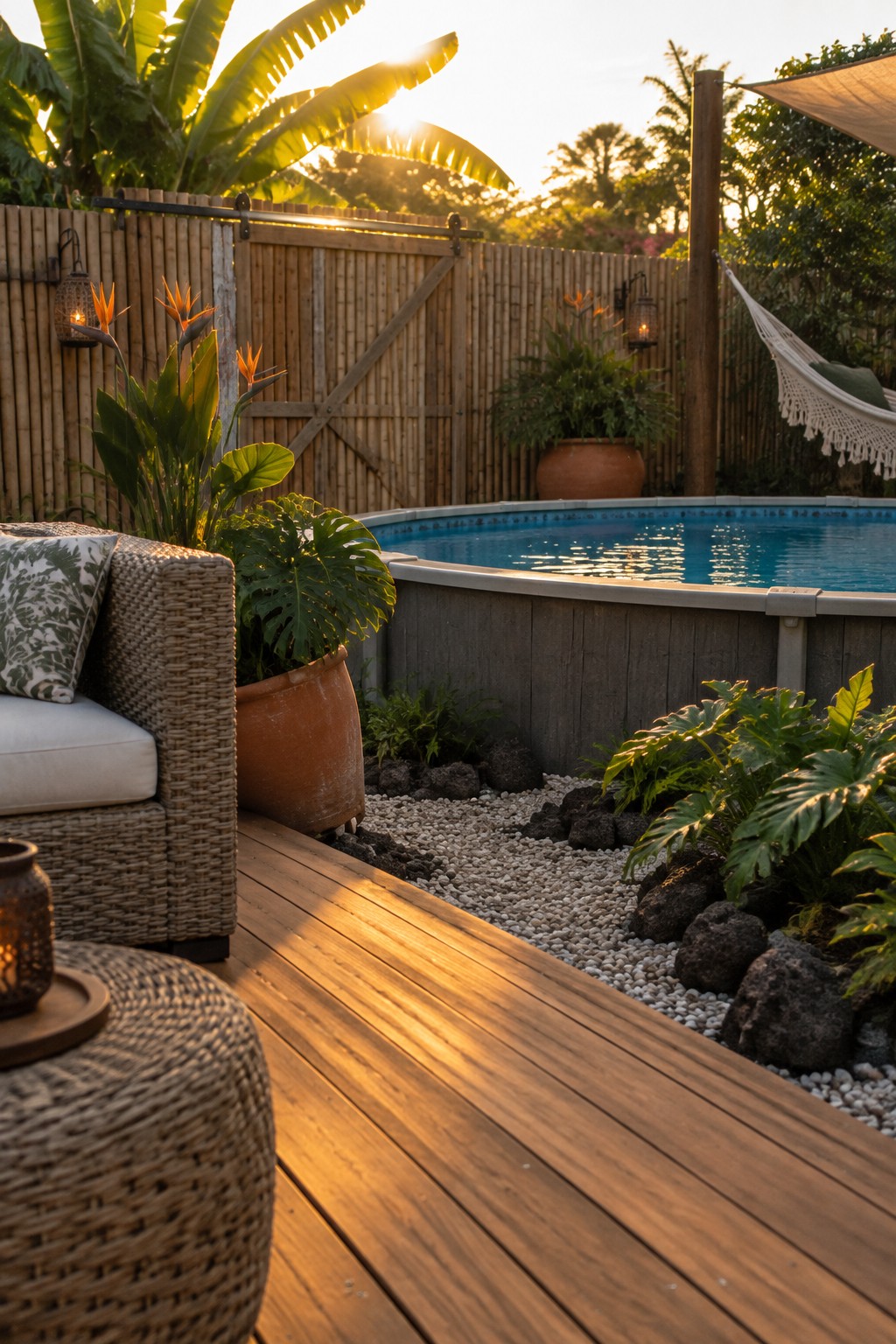
A bamboo fence with a simple gate gives an above ground pool a softer boundary than metal panels or plain wood. It blocks the view from outside while still letting air move through, and the natural material fits right in with garden plants instead of standing out as a hard barrier.
This works best in smaller backyards where you want the pool to feel connected to the rest of the space. Place the gate near the deck or steps so it stays practical for daily use, and keep the fence height just tall enough for privacy without cutting off all sightlines to the surrounding greenery.
Seamless Gate Design for Raised Pool Decks
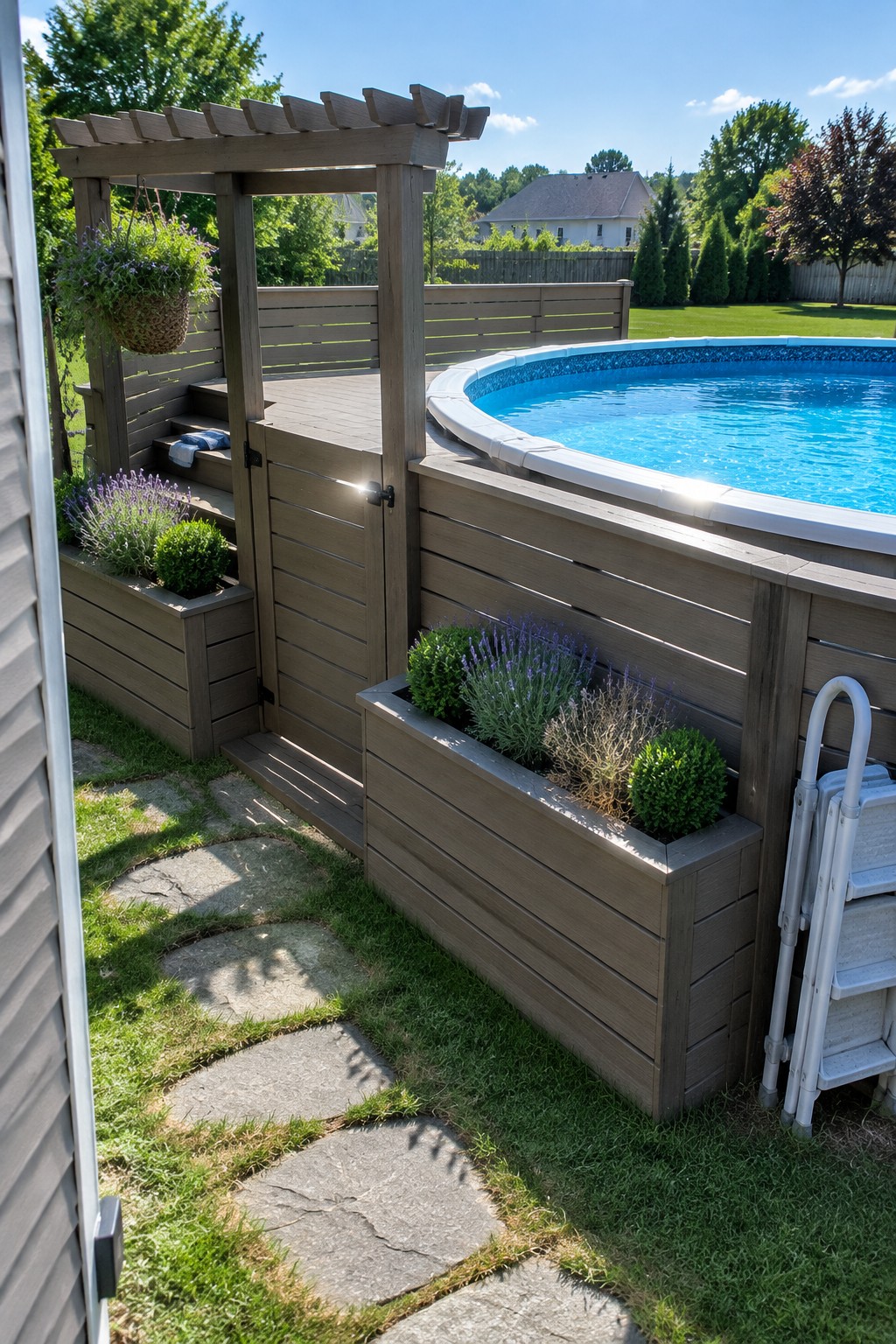
A gate that sits right in the fence line keeps the whole enclosure looking clean and consistent. It avoids the add-on look you get when you tack a separate gate onto the side, and it still gives you easy access to the pool deck without extra hardware or awkward gaps.
This setup works best on raised decks or small yards where space is tight. Keep the fence height consistent all the way around, use the same material for the gate, and add a simple latch that meets safety codes. The planters along the fence help soften the look without getting in the way of the gate swing.
Flush Wood-and-Metal Pool Fence Gate
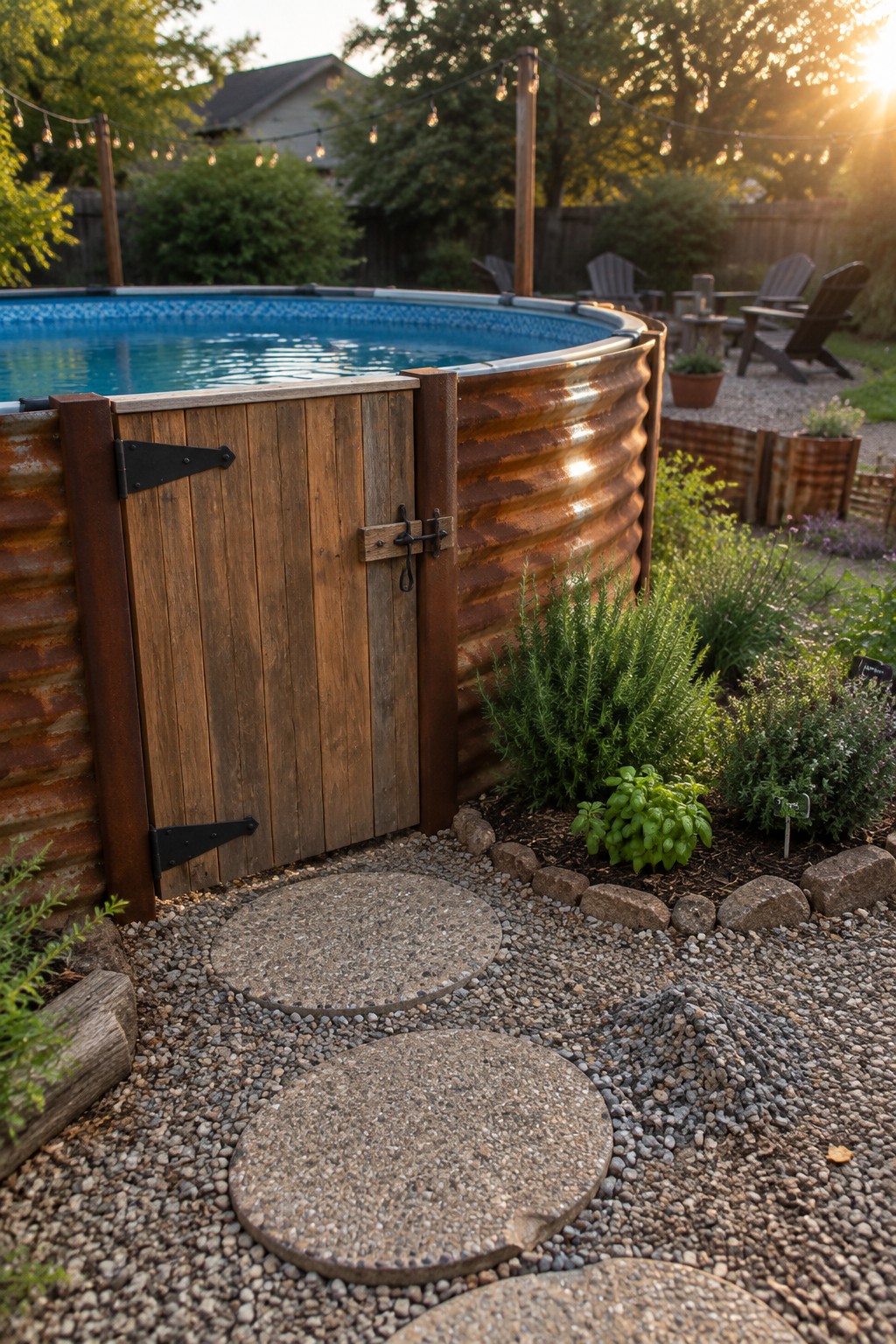
One simple way to manage access around an above ground pool is to build the gate straight into the wall. The wood panel sits flush with the metal siding and gives the whole fence a more finished look without extra posts or separate framing.
This approach works best in smaller yards where you want to keep the layout tight. It lets people step through easily while the rest of the fence stays low and consistent. Just make sure the hinges and latch are heavy enough to handle daily use around water.
Private Above Ground Pool Deck With a Matching Gate
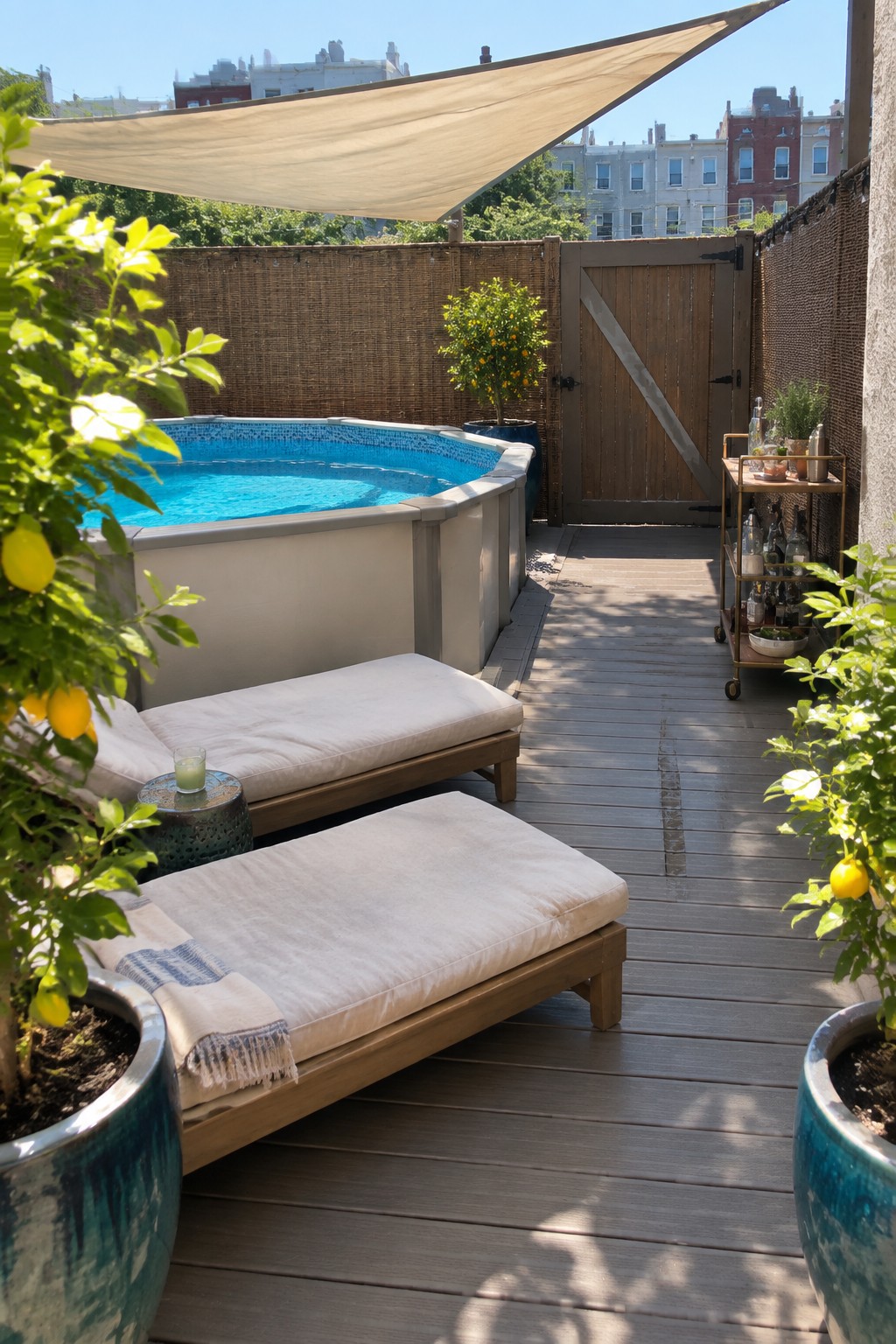
One simple way to make an above ground pool feel more private and secure is to run a fence around the deck and build a gate into it. The gate gives you a clear way in and out without turning the fence into a barrier you have to work around every time.
This approach works best on smaller decks or tight backyards where you want to keep the space contained. Match the gate style and material to the fence so it reads as one structure, and make sure the latch is easy to reach from both sides.
Decorative Dark Metal Gate for Pool Fencing
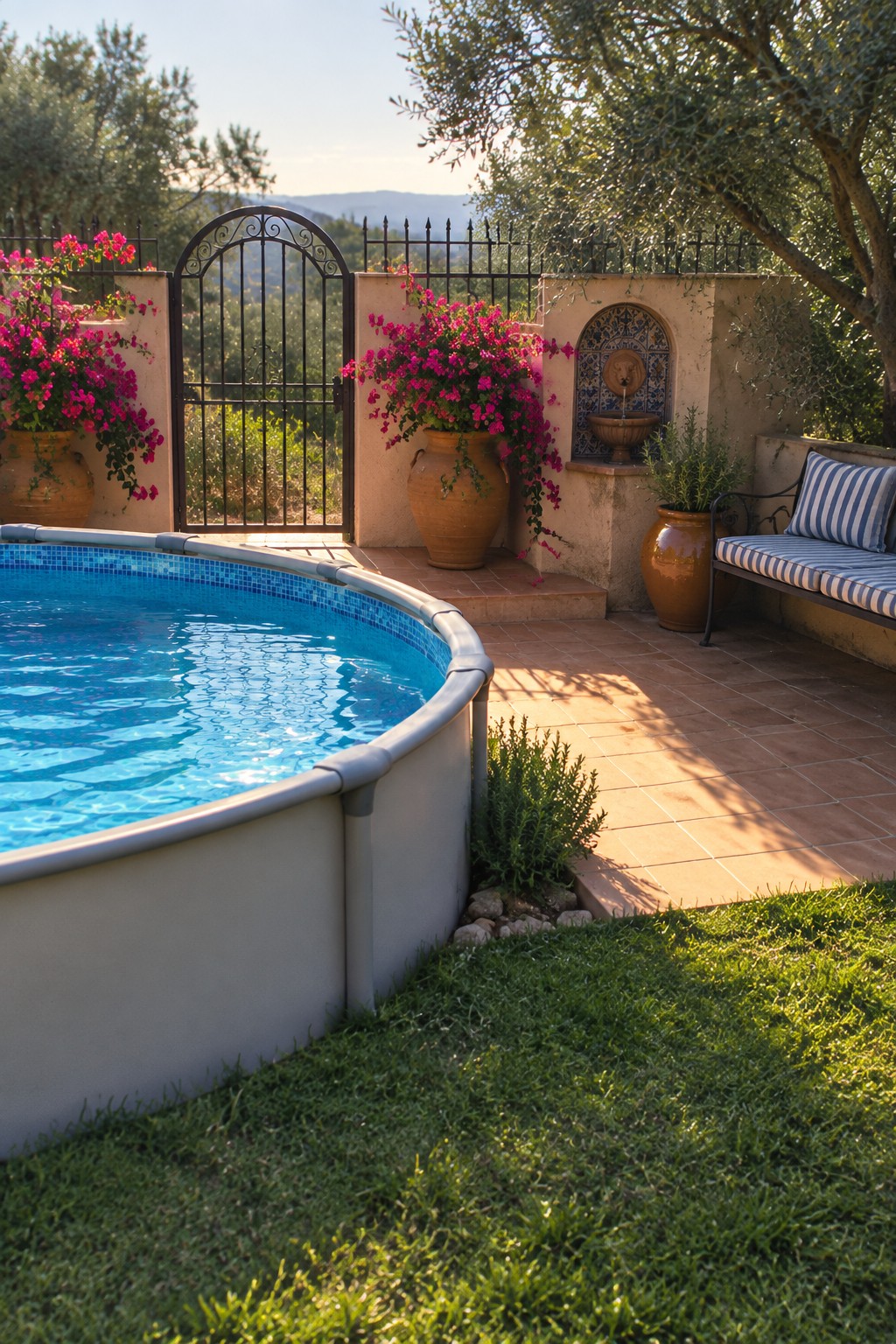
A gate that blends right into the fence line keeps the whole pool area looking pulled together instead of patched on later. The dark metal here works because the scrollwork adds just enough detail without making the enclosure feel heavy or closed off.
This style suits yards that already have some structure, like stone walls or potted plants along the edges. It gives clear access while meeting basic safety needs, and the same fence and gate can run along the rest of the pool without fighting the garden around it.
Mesh or Perforated Metal Fence With a Lockable Gate
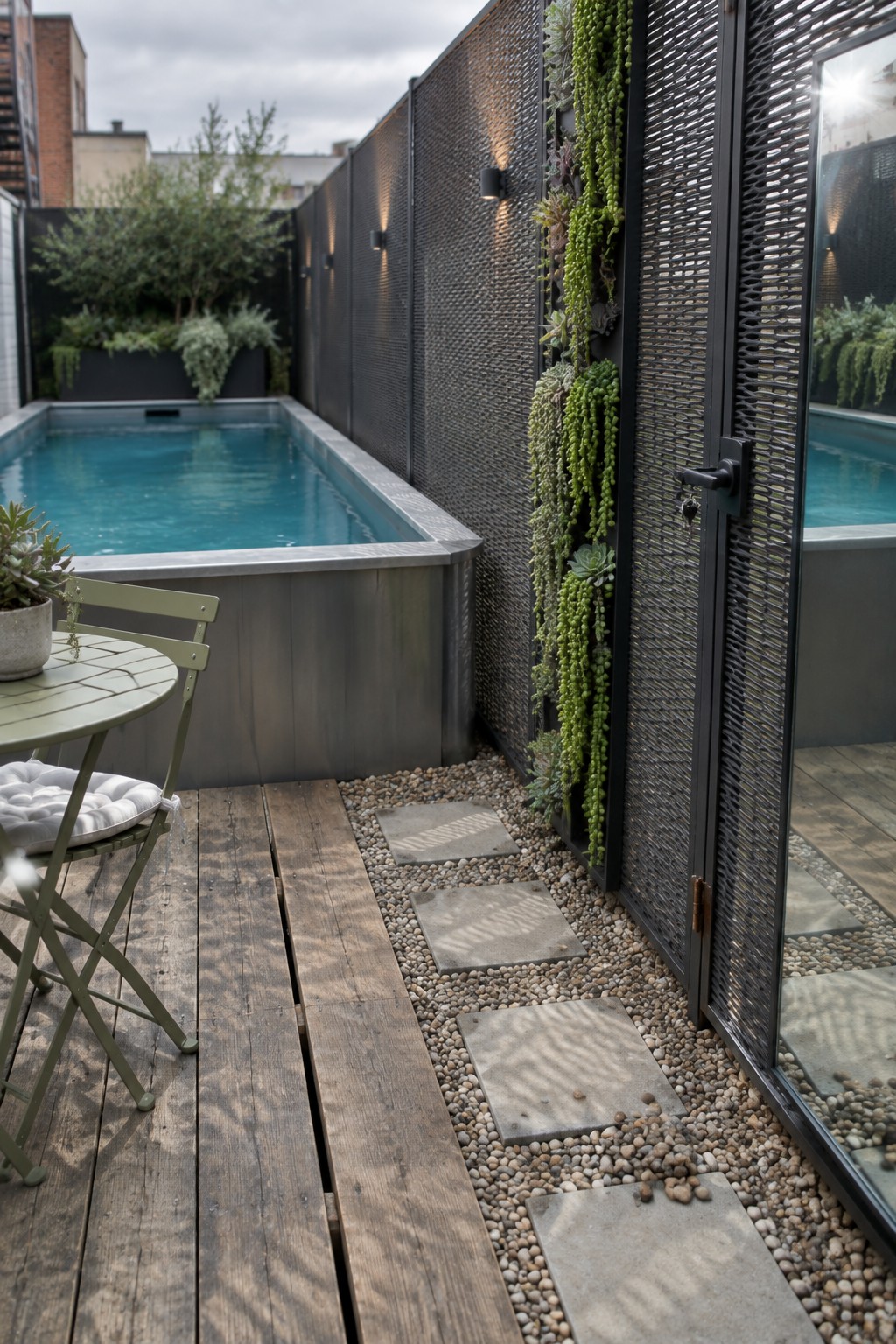
One practical way to keep an above ground pool secure is to build the gate straight into the fence panel. This avoids adding a separate opening that can weaken the enclosure or look out of place. A single locked gate also makes it easier to control access without extra hardware.
This setup works best with mesh or perforated metal that still lets some light and air through. It suits smaller yards where you want privacy around the pool but need quick entry from the house or deck. Just make sure the gate swings freely and the latch stays simple to use every day.
Keypad Gates On Pool Fences
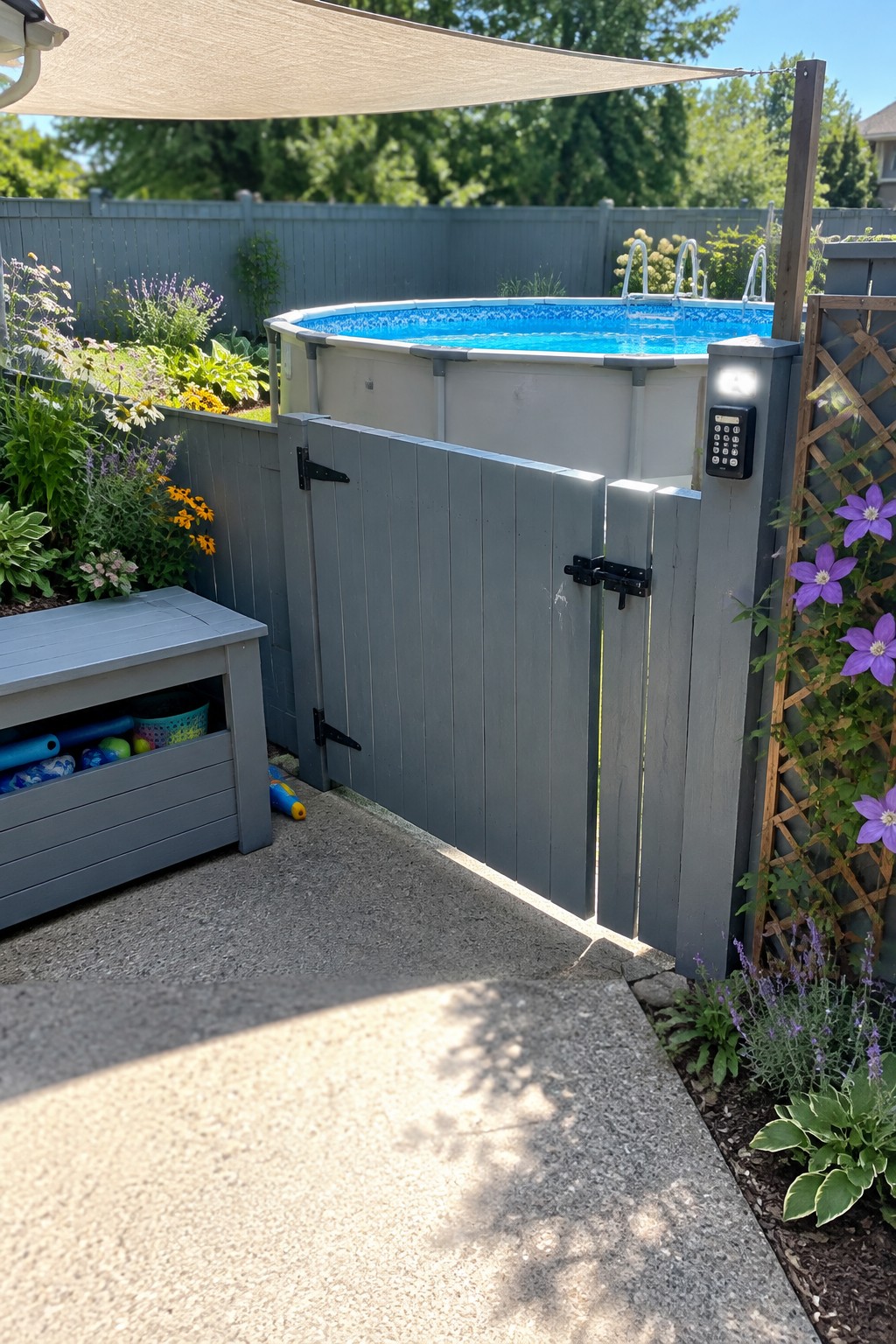
A keypad lock on the gate turns a basic fence into something more practical for daily use. It keeps the pool secure without needing to carry keys around, and it still gives quick entry when you want it. Many families like this setup because it reduces the chance of the gate being left open.
This works best on above ground pools where safety codes require a self closing gate. Place the keypad at a comfortable height on the latch side, and pick a model made for outdoor weather. It suits homes with kids or frequent visitors who need independent access.
Wood Slat Fences With Built-In Gates
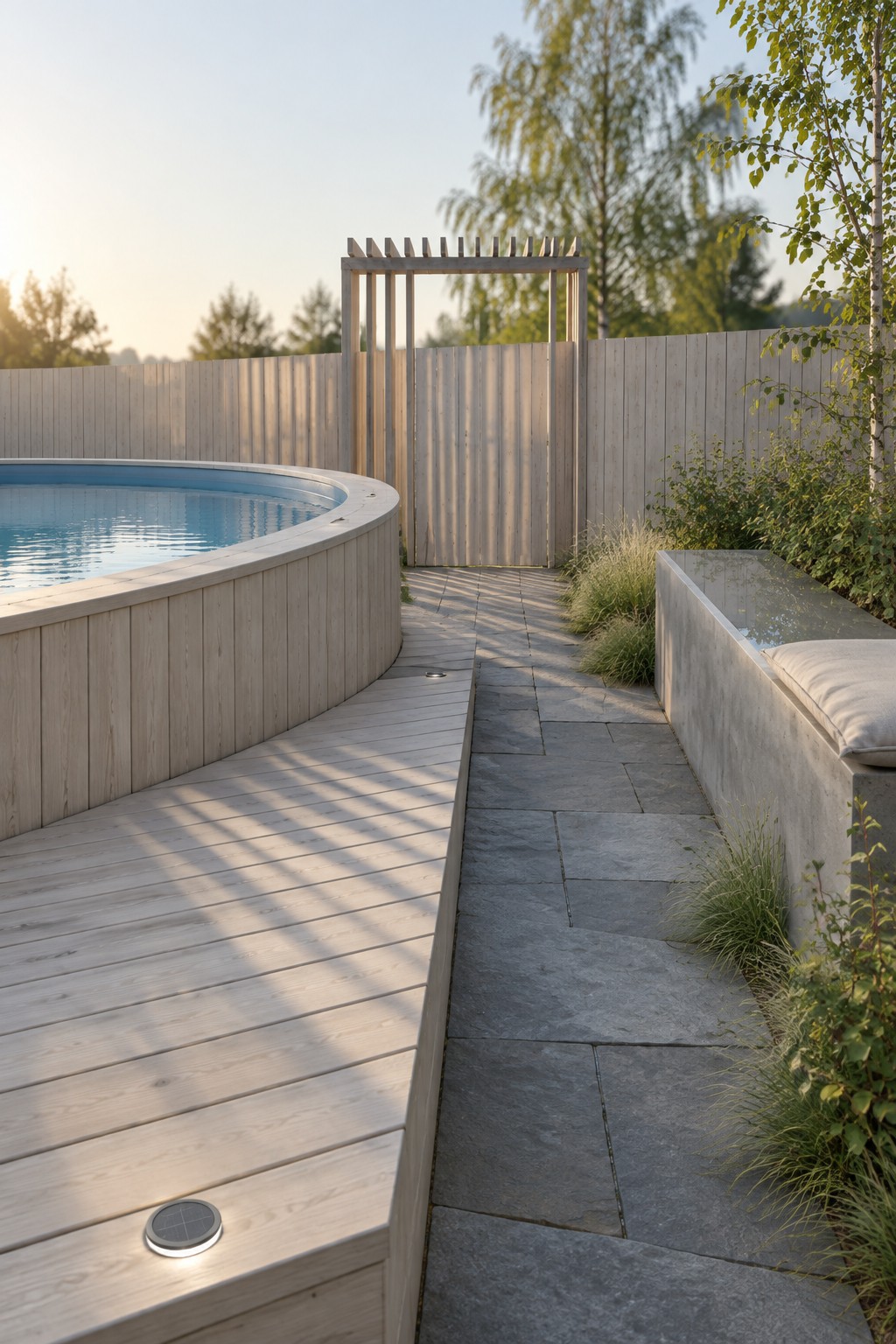
A simple vertical wood fence can do a lot around an above ground pool. The slats give privacy while still letting some air and light through, and the matching gate keeps the whole thing looking clean instead of like an afterthought. When the fence and deck use the same wood tone, the pool area feels more like one space instead of separate pieces thrown together.
This setup works best on decks where you want a clear entry point without adding a separate gate structure later. It suits homes that already lean toward natural materials and simple lines. Just make sure the wood is rated for outdoor use and the gate hardware is sturdy enough for daily swings.
Lattice Fencing With A Woven Gate

Many people like this setup because the white lattice gives structure while the woven reed gate softens the look and keeps the pool area from feeling closed off. It creates a clear boundary without blocking all the light or making the space feel too formal. The seating area right next to it shows how the fence can double as a backdrop for everyday use.
This works best on smaller lots or in neighborhoods where you want privacy without a tall solid wall. The natural material on the gate helps it blend with plants and wood tones around the pool. Just make sure the gate hardware is sturdy enough for regular use and that the lattice is set at a height that meets local safety rules.
Match the Gate to Horizontal Fence Slats
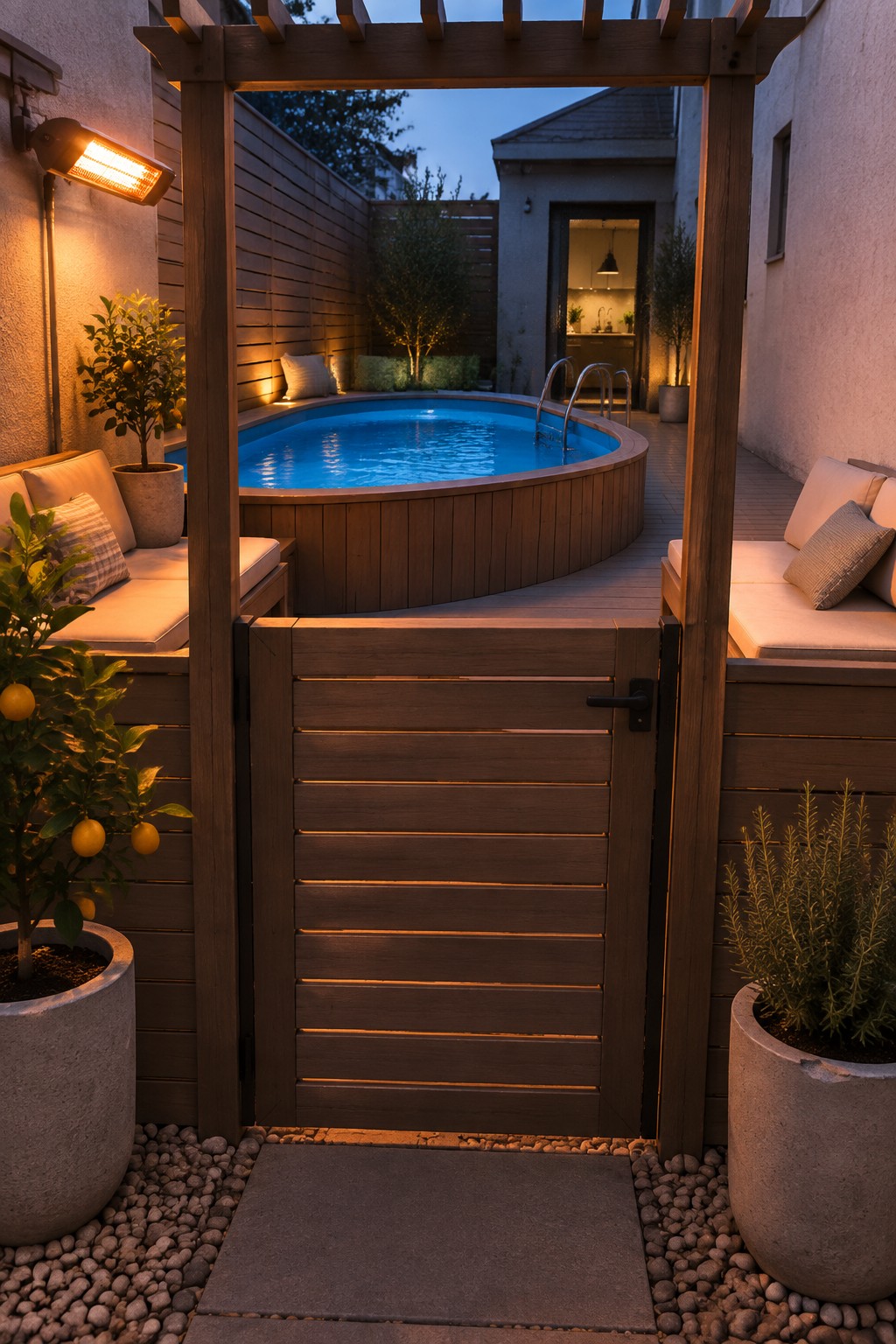
A gate that lines up with the rest of the fence feels more natural than one that stands out as a separate piece. Horizontal slats keep the look clean and let the gate disappear into the structure until you need it open. This approach works especially well around above-ground pools where you want security without adding visual clutter to the deck area.
It suits smaller backyards that already use wood fencing for privacy. Keep the hardware simple and match the wood tone so the whole run reads as one surface. Just make sure the latch is easy to reach from both sides and the posts are set deep enough to handle regular use.
Compact Cottage-Style Pool Fence With a Built-In Gate
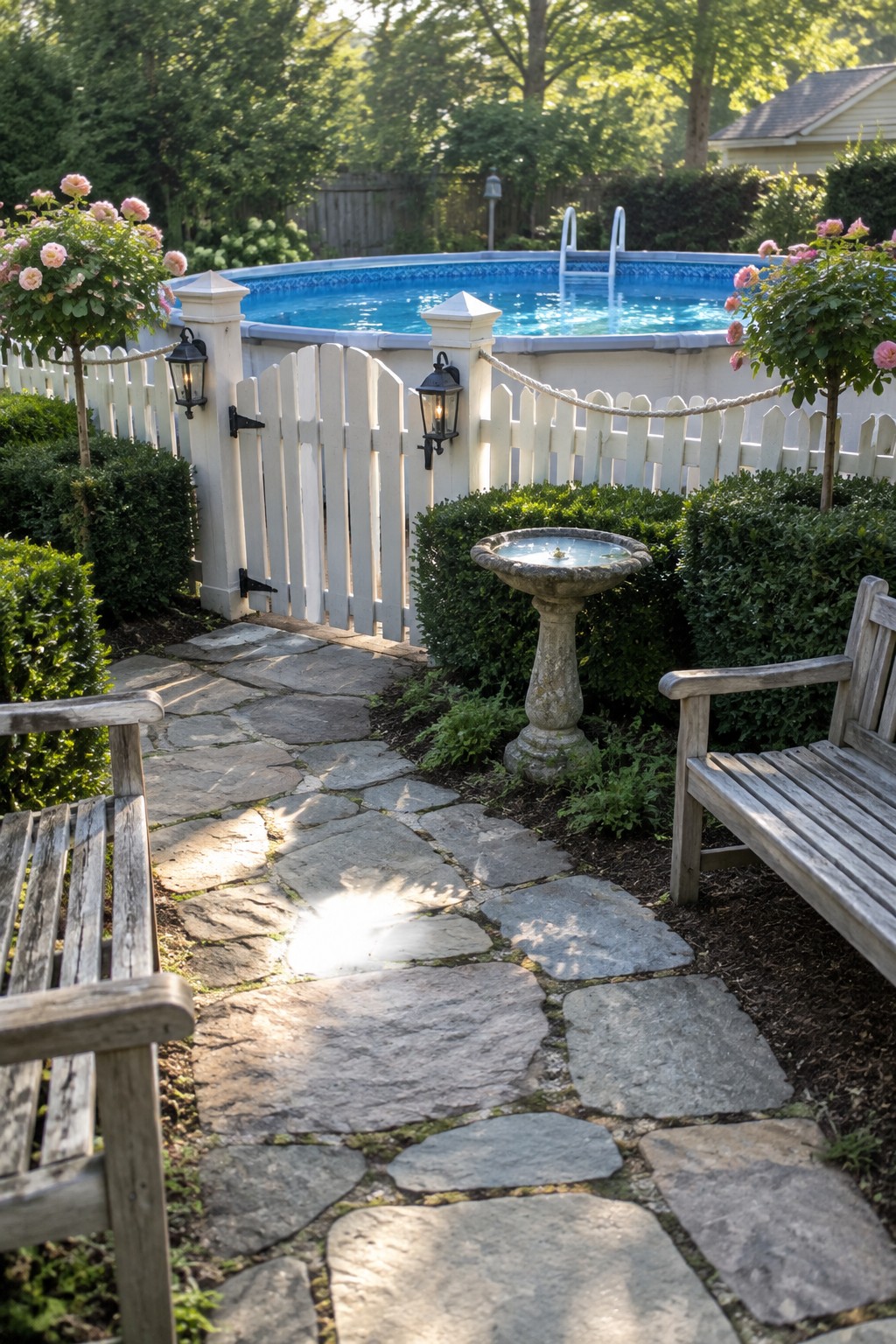
A white picket fence with a built-in gate gives an above ground pool a clean border that feels finished rather than temporary. The gate lets you control access without adding a separate structure that might look out of place next to the pool wall.
This setup works best in smaller yards or on homes that already lean toward cottage or traditional styles. Set the posts close to the pool edge so the fence sits tight, then choose a gate width that lines up with your main walkway for daily use.
Horizontal Slat Fencing For Pool Privacy
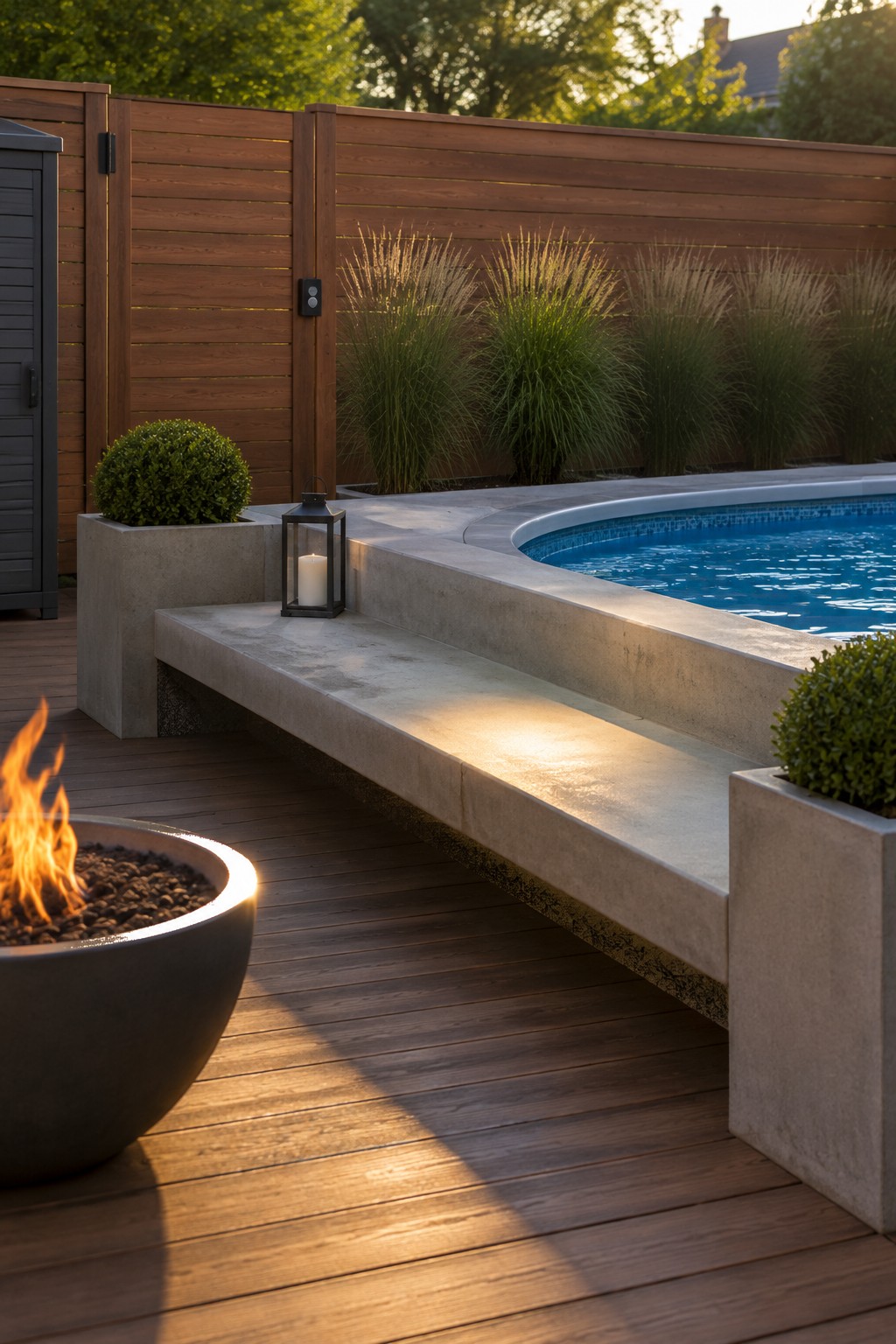
Horizontal wood slats give a pool area a clean, contained look while still letting light and air move through. The even lines feel modern but not cold, and they block the view from the street or neighbors without needing a tall solid wall.
This fence style works best on decks or patios where you already have built-in seating and plants along the edge. It pairs well with wood tones and concrete, and it gives you a spot to add a gate that matches the rest of the fence without breaking the pattern.
Raised Pool Fence With a Gate Aligned to Steps
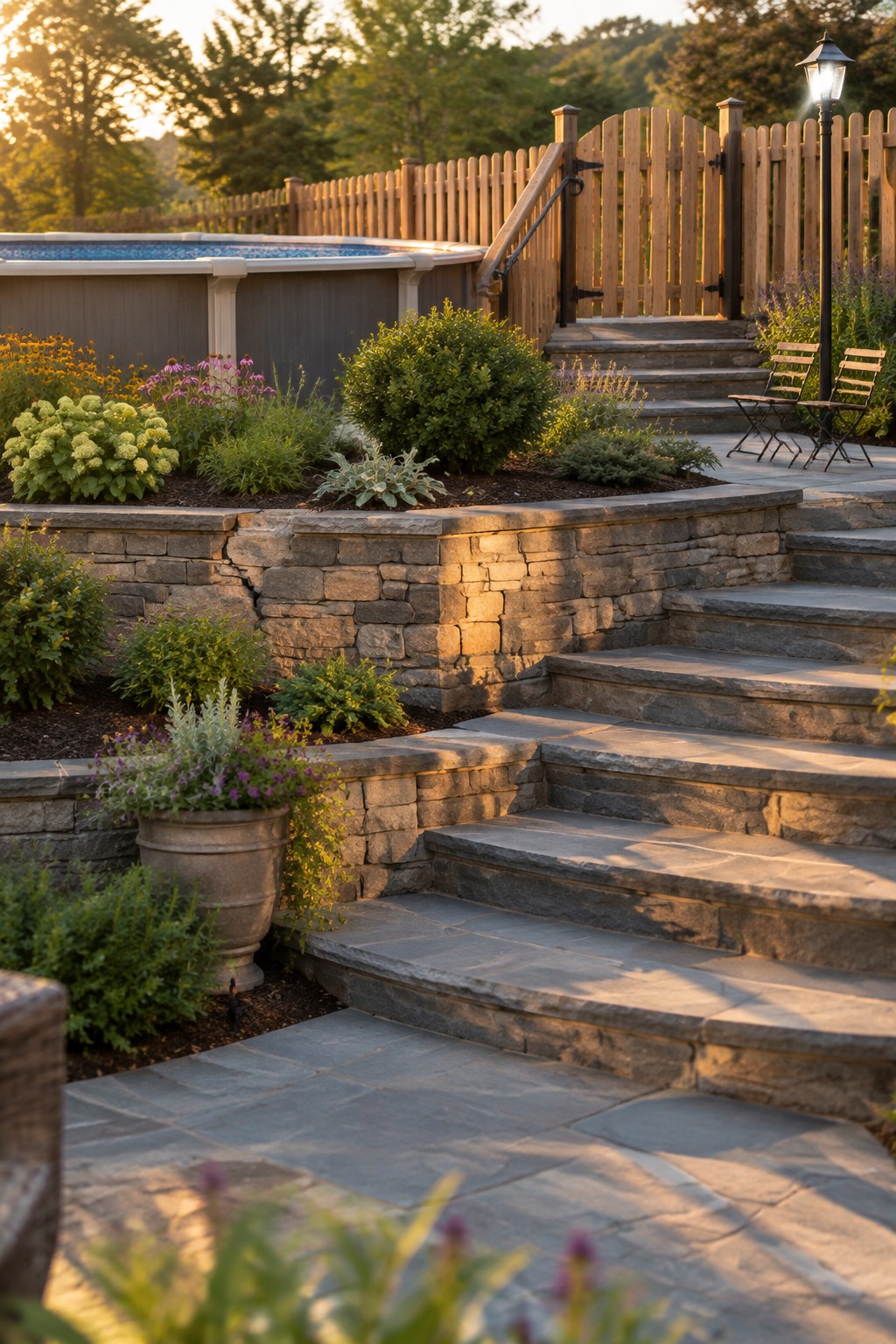
One practical way to handle pool fencing is to build the gate straight into the fence line instead of adding it as a separate piece later. This keeps the barrier solid all the way around while still giving you a normal way to walk in and out.
It works especially well when the pool sits higher than the rest of the yard. You can line the gate up with steps or a small deck so the whole area feels connected without extra railings or awkward gaps. Just check that the latch is sturdy and the height meets your local rules.
Add Vertical Gardens to Your Pool Fence Gate
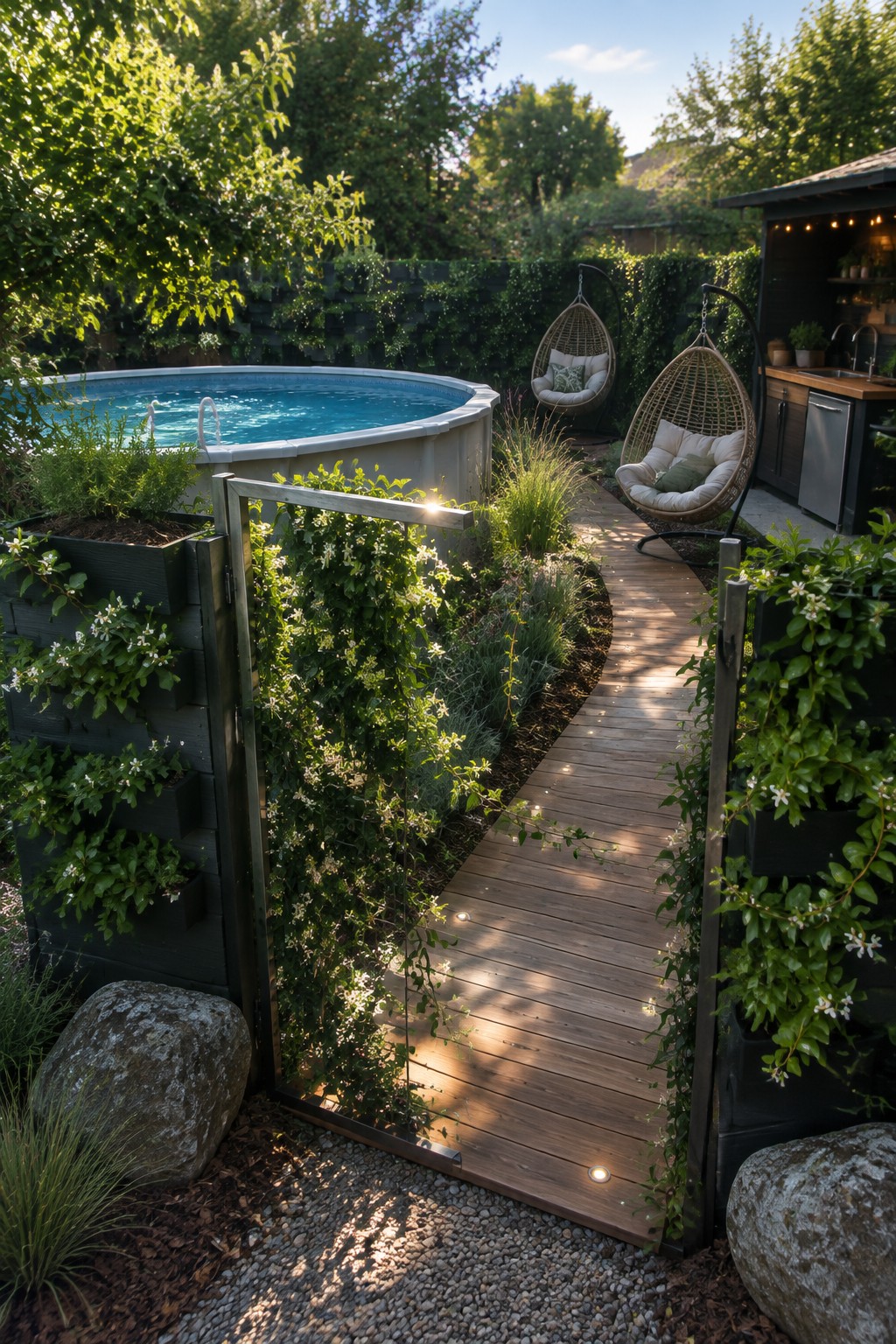
Many above ground pools need a fence for safety, but that barrier can feel plain or out of place. Adding vertical planters on either side of the gate turns the fence into part of the garden instead. The plants soften the look and help the whole area feel more connected to the rest of the yard.
This works best in smaller backyards where you want the pool to blend in rather than stand out. Choose sturdy planters that attach to the fence posts and pick vines or trailing plants that can handle the sun. Just make sure the gate itself stays easy to open and close, since that is the main point of having it there in the first place.
Frequently Asked Questions
Q: What height works best for stopping little kids from climbing over?
A: Go with at least four feet high. Pick panels with no easy footholds like horizontal bars on the outside. This setup keeps the pool area secure without blocking your view.
Q: How do I add a gate without weakening the whole fence?
A: Build the gate frame to match the fence sections exactly. Use sturdy hinges and a self-closing latch that meets safety codes. Test the swing a few times to make sure it closes tight every time.
Q: Which materials hold up best around pool water and sun?
A: Aluminum or vinyl resist rust and fading well. Avoid wood unless you seal it yearly. These choices cut down on repairs over time.