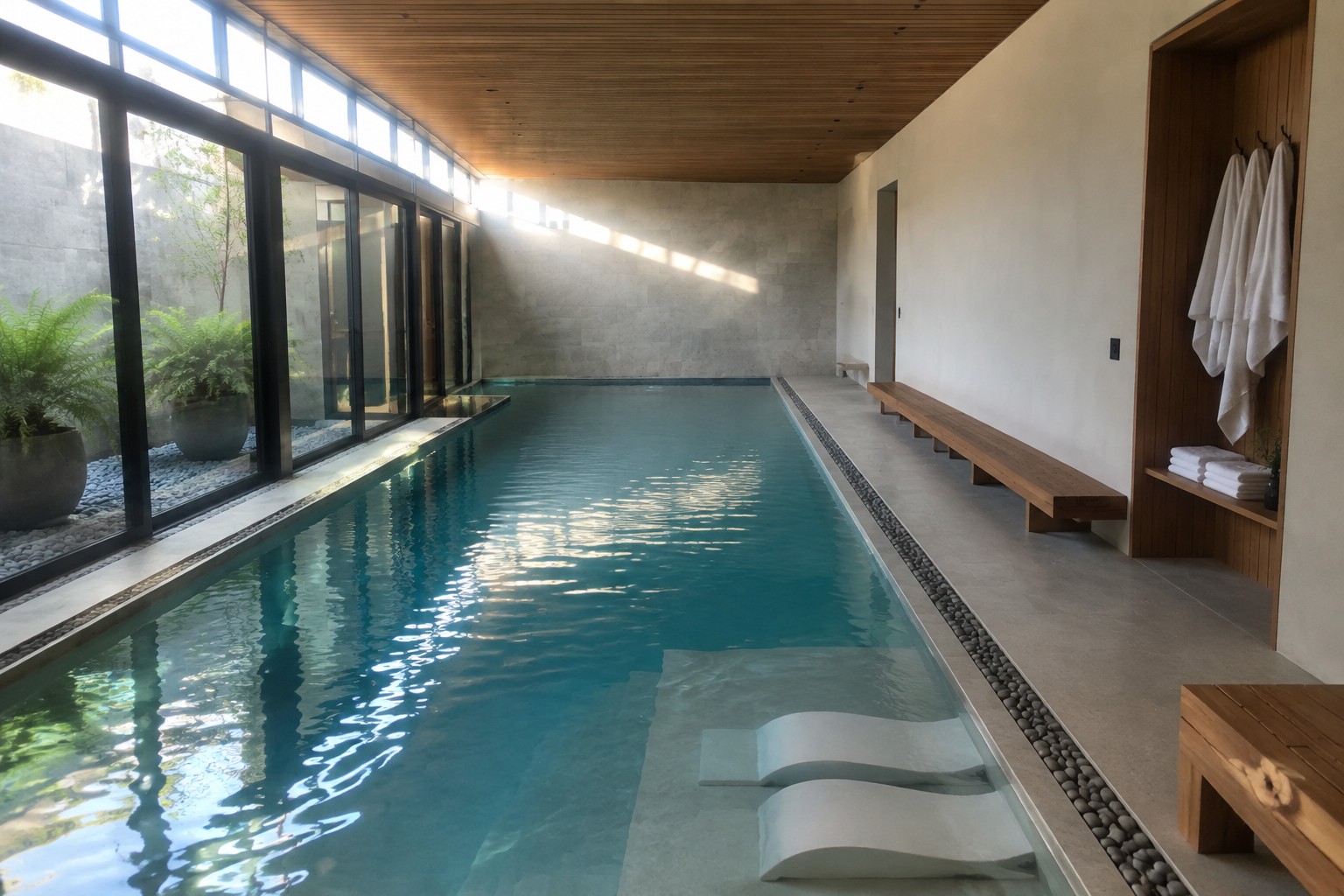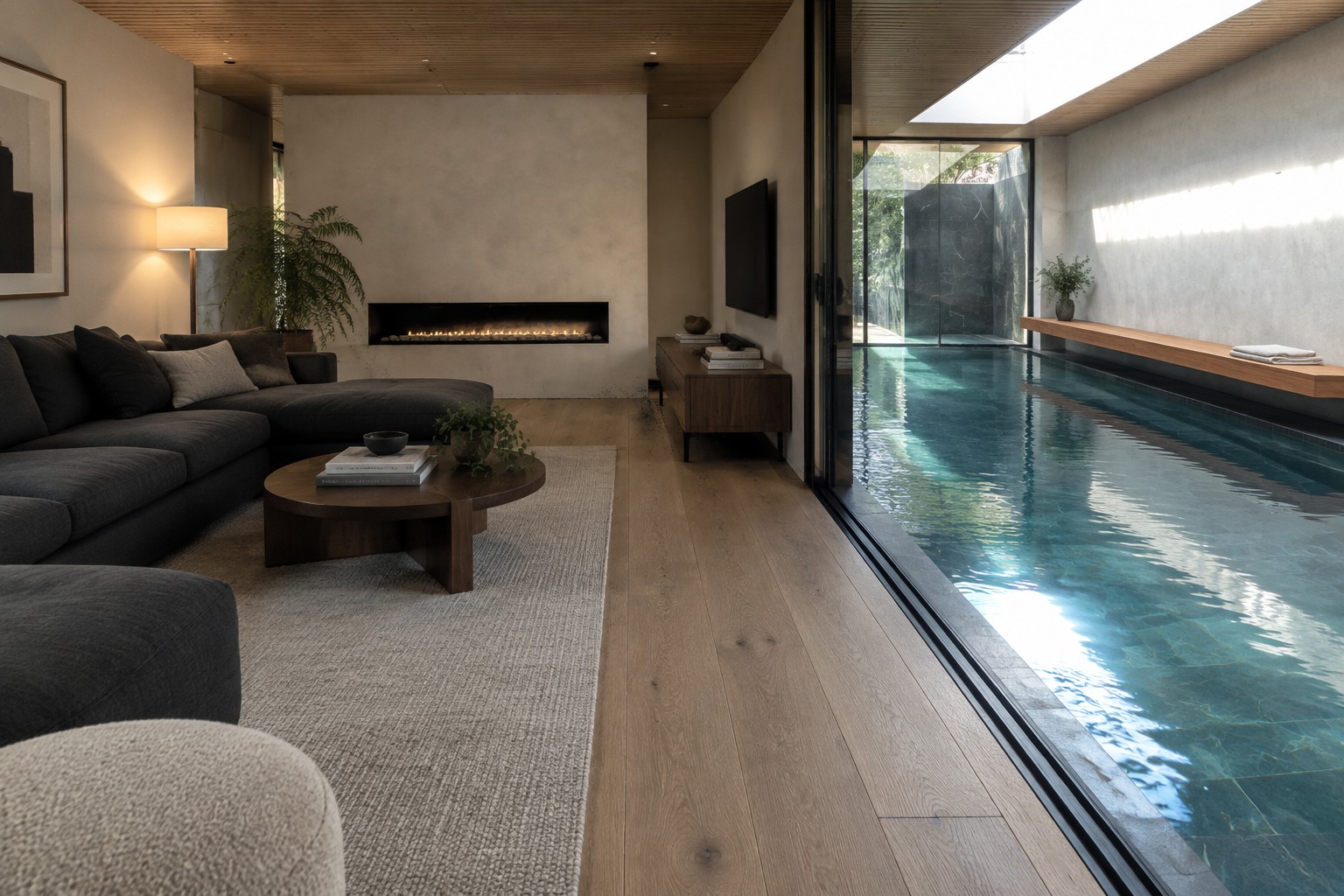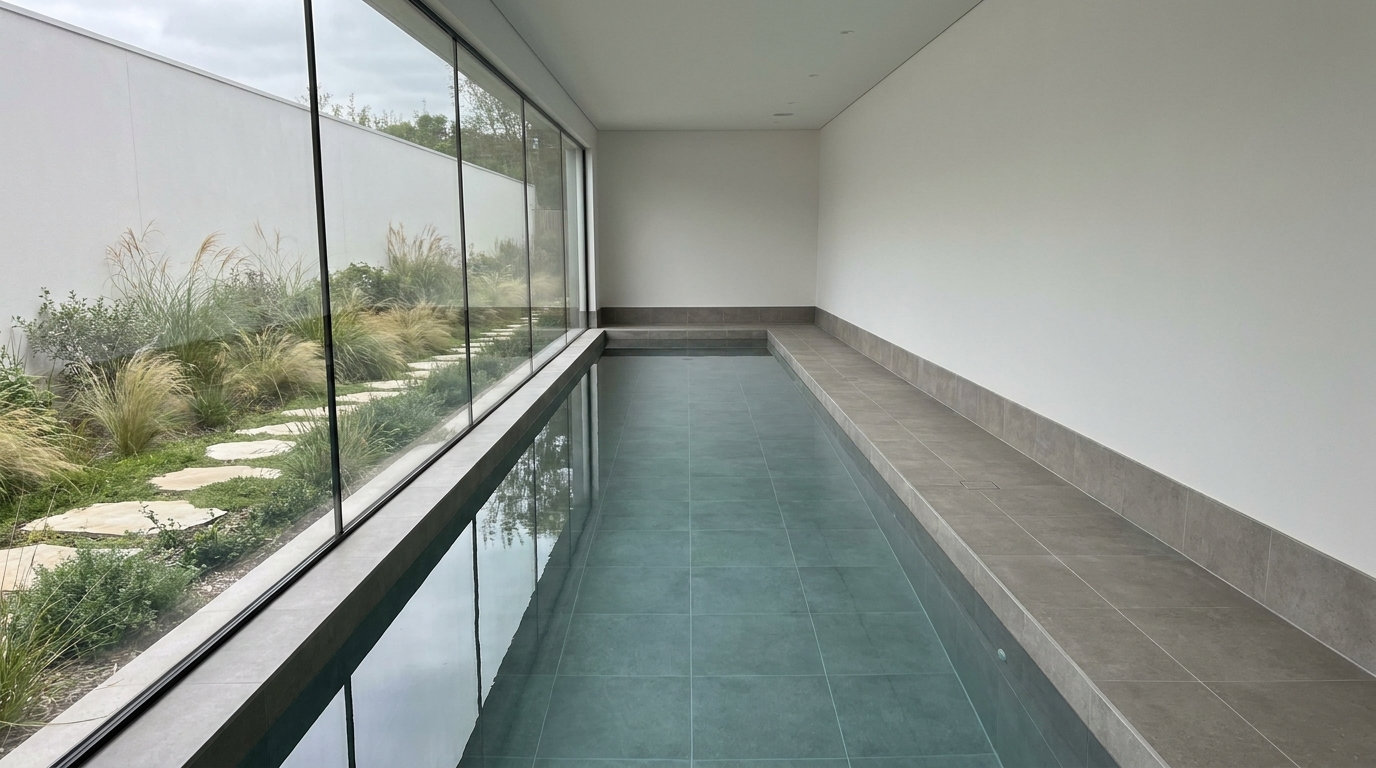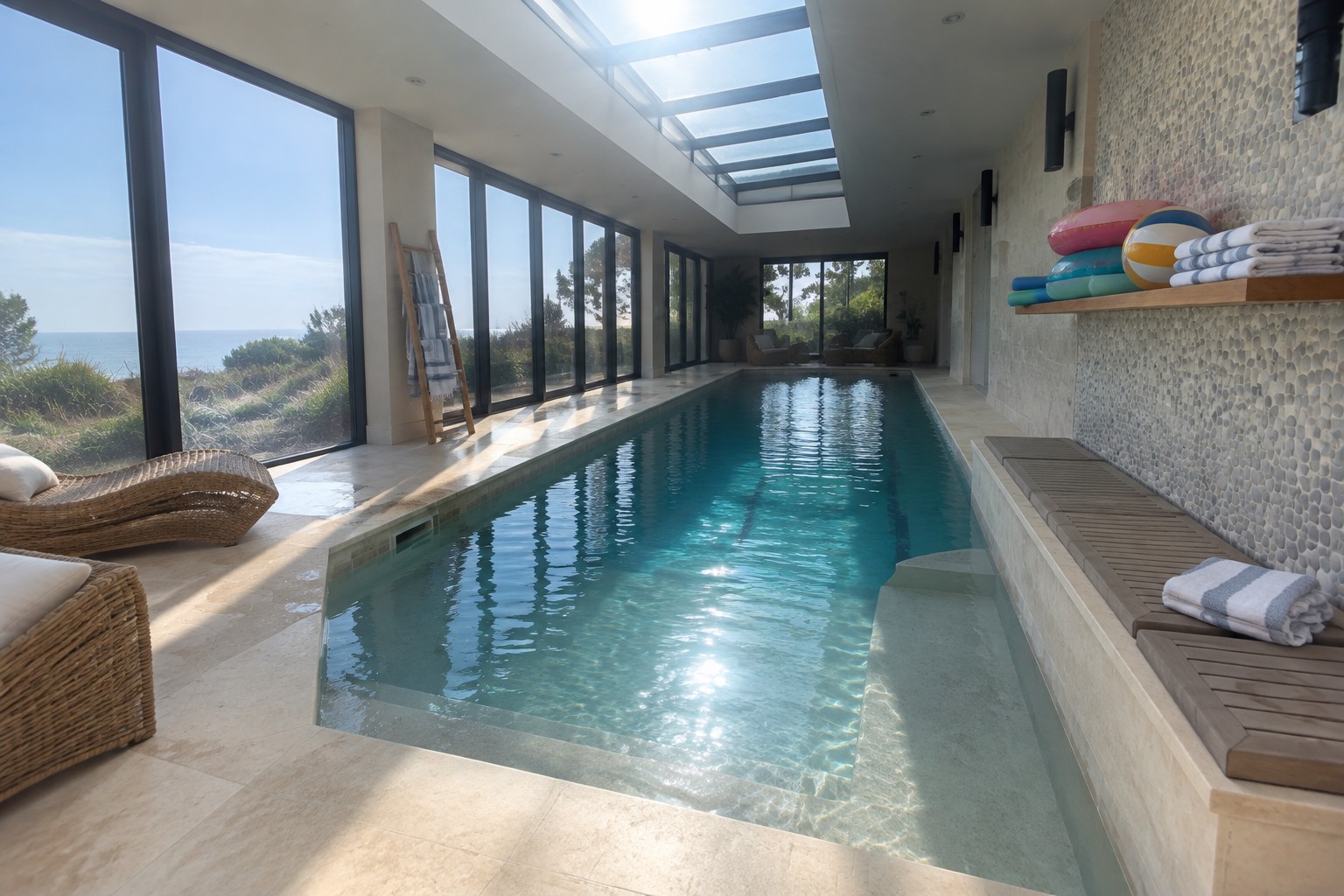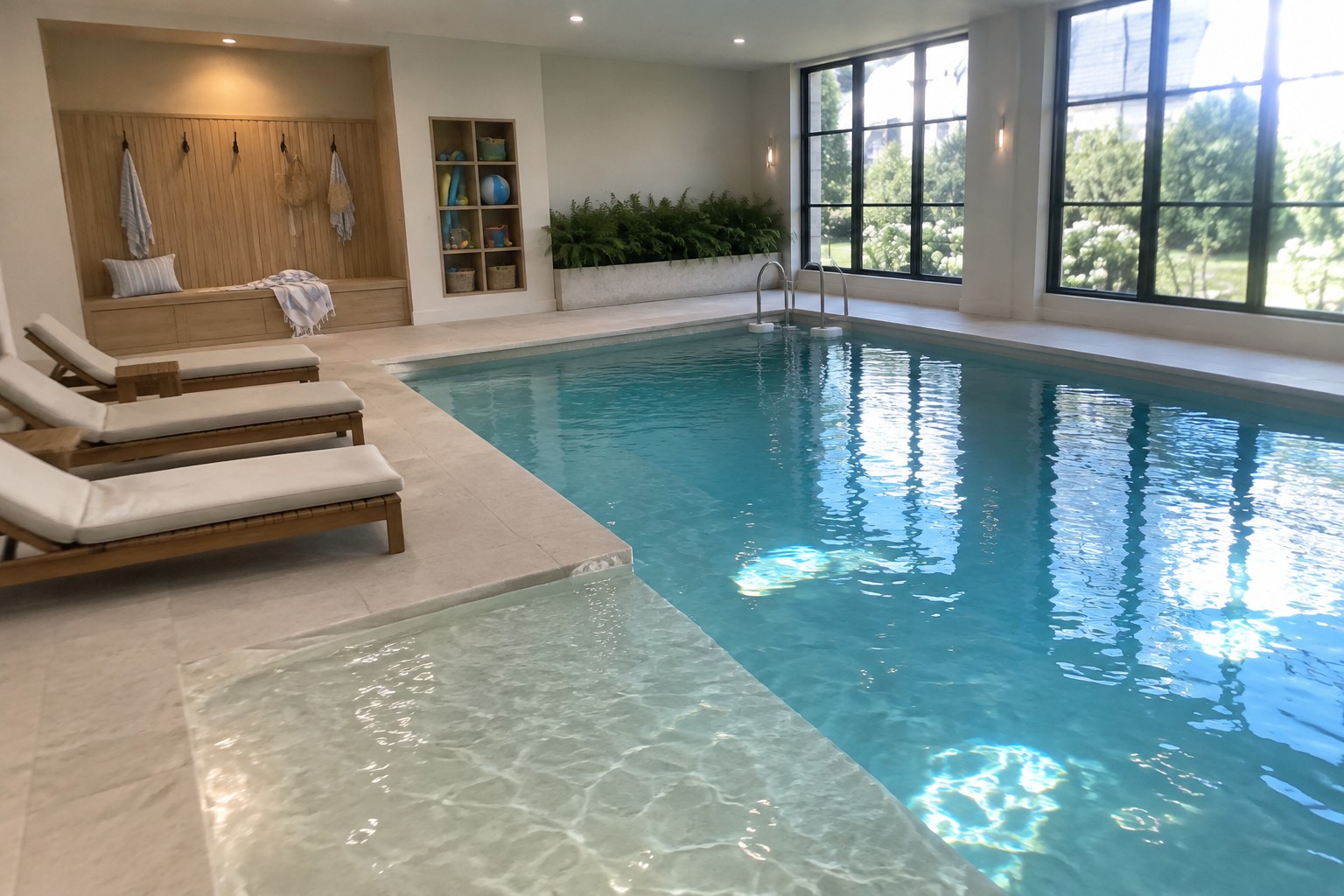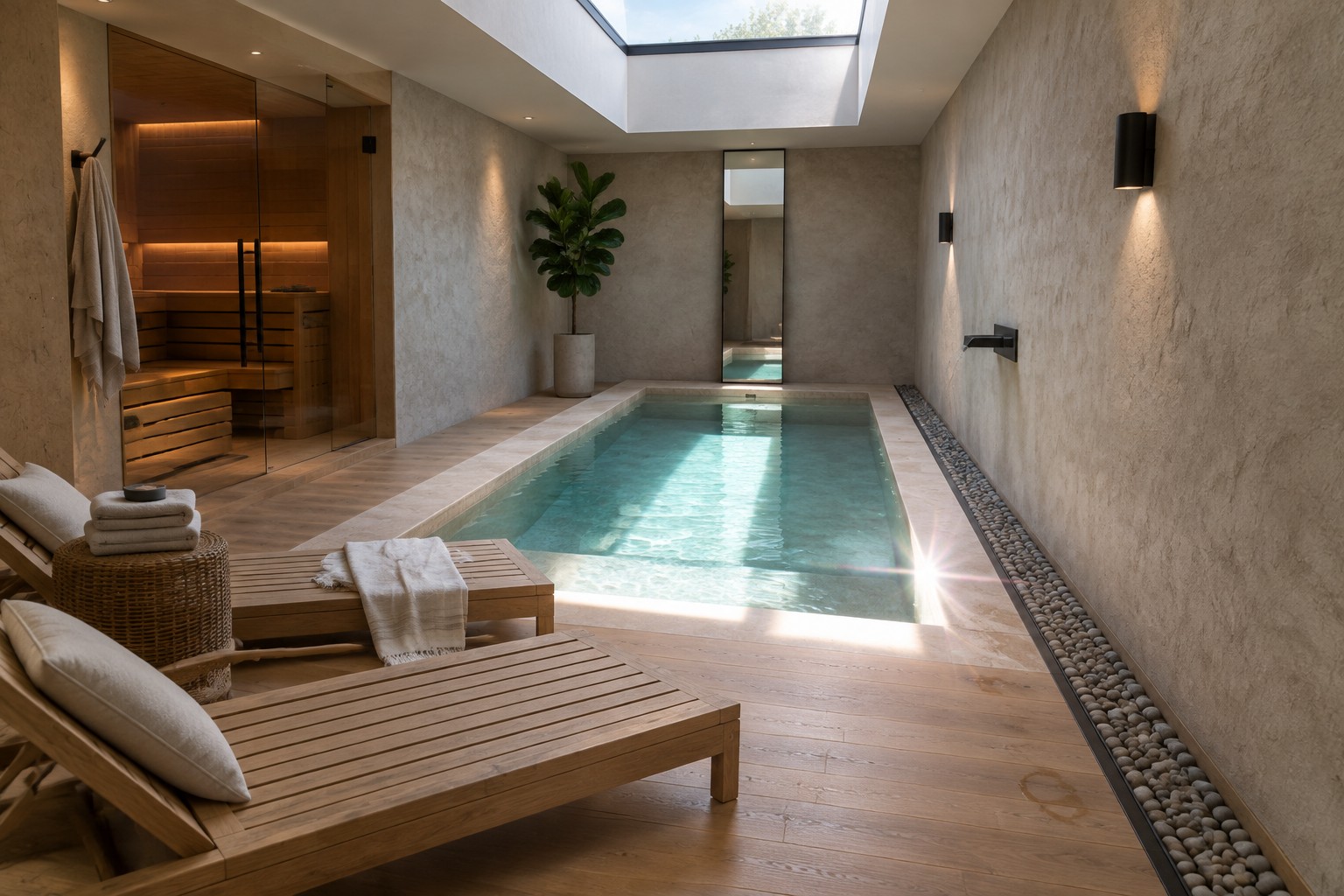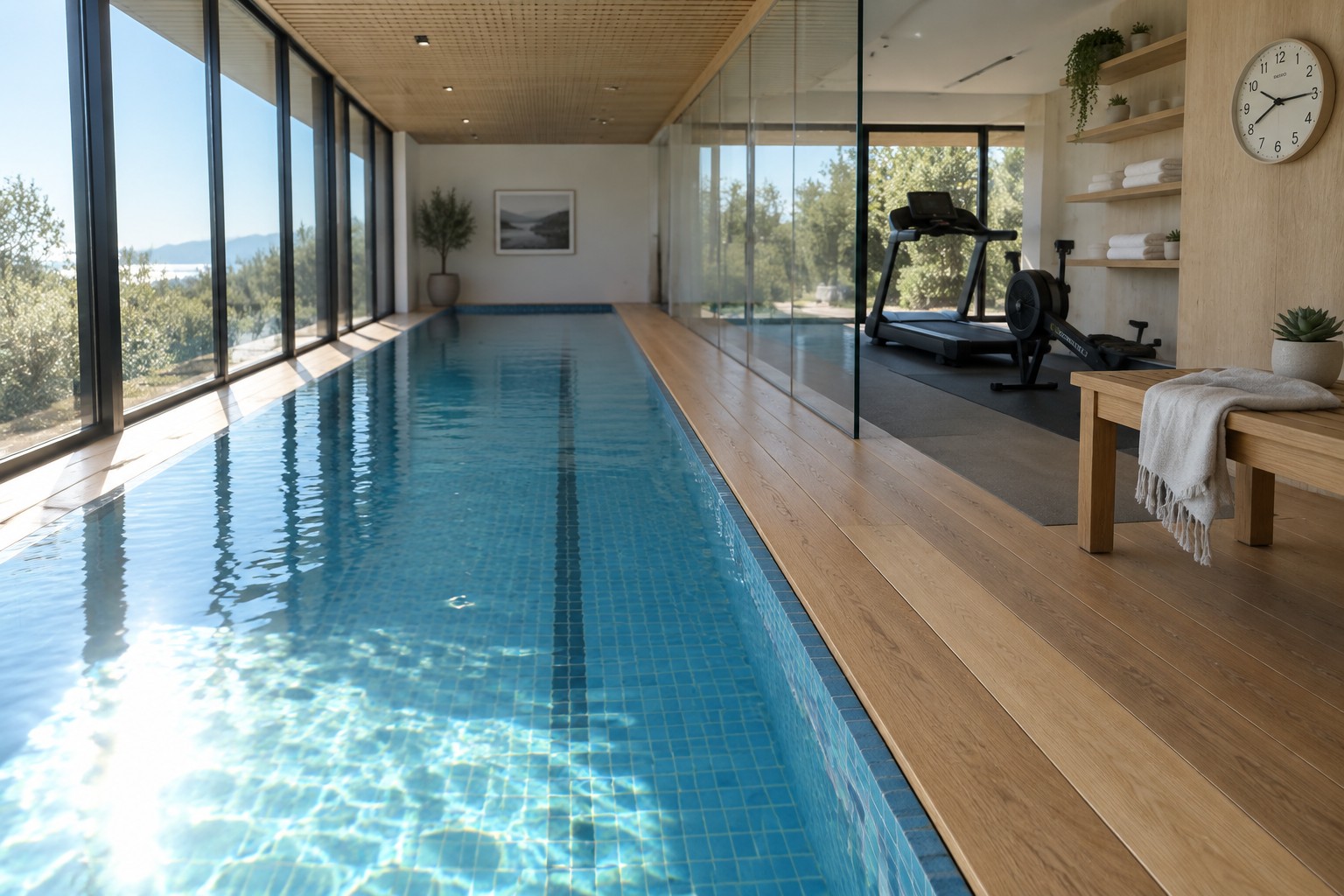
I have noticed that indoor pools often create humidity issues that can make an attached gym feel uncomfortable if the ventilation is not planned carefully from the start.
Many homeowners overlook how the two spaces need to share light and access without one overpowering the other.
The real test comes when you try to move between swimming and lifting weights in the same session.
Some combinations work because they place the gym on a slightly raised platform that stays dry and separate from the pool deck.
I would probably try adapting the ones with clear zoning first if I were updating my own space.
Glass Walls Separate The Pool And Gym
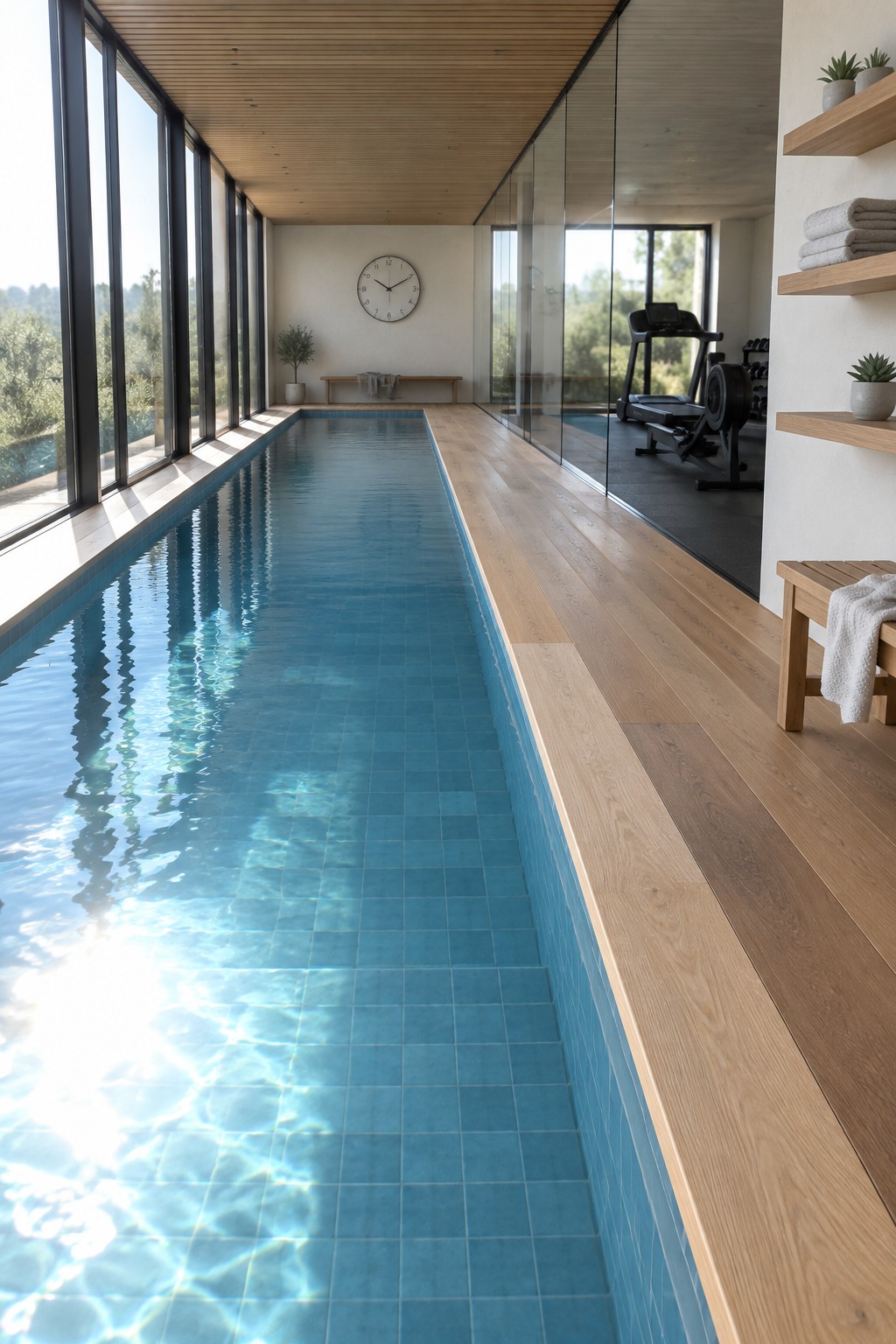
Glass walls let the pool and gym share the same space without blending into each other. The divider keeps the wet area contained while still letting natural light reach both sides and giving users a clear view across the room. It is a simple way to handle two very different activities in one area.
This approach works best in homes with enough length for a lap pool and a dedicated gym zone on the other side. It suits active households that want to use both spaces at once without noise or moisture crossing over too much.
Placing Weights and Benches Beside the Indoor Pool
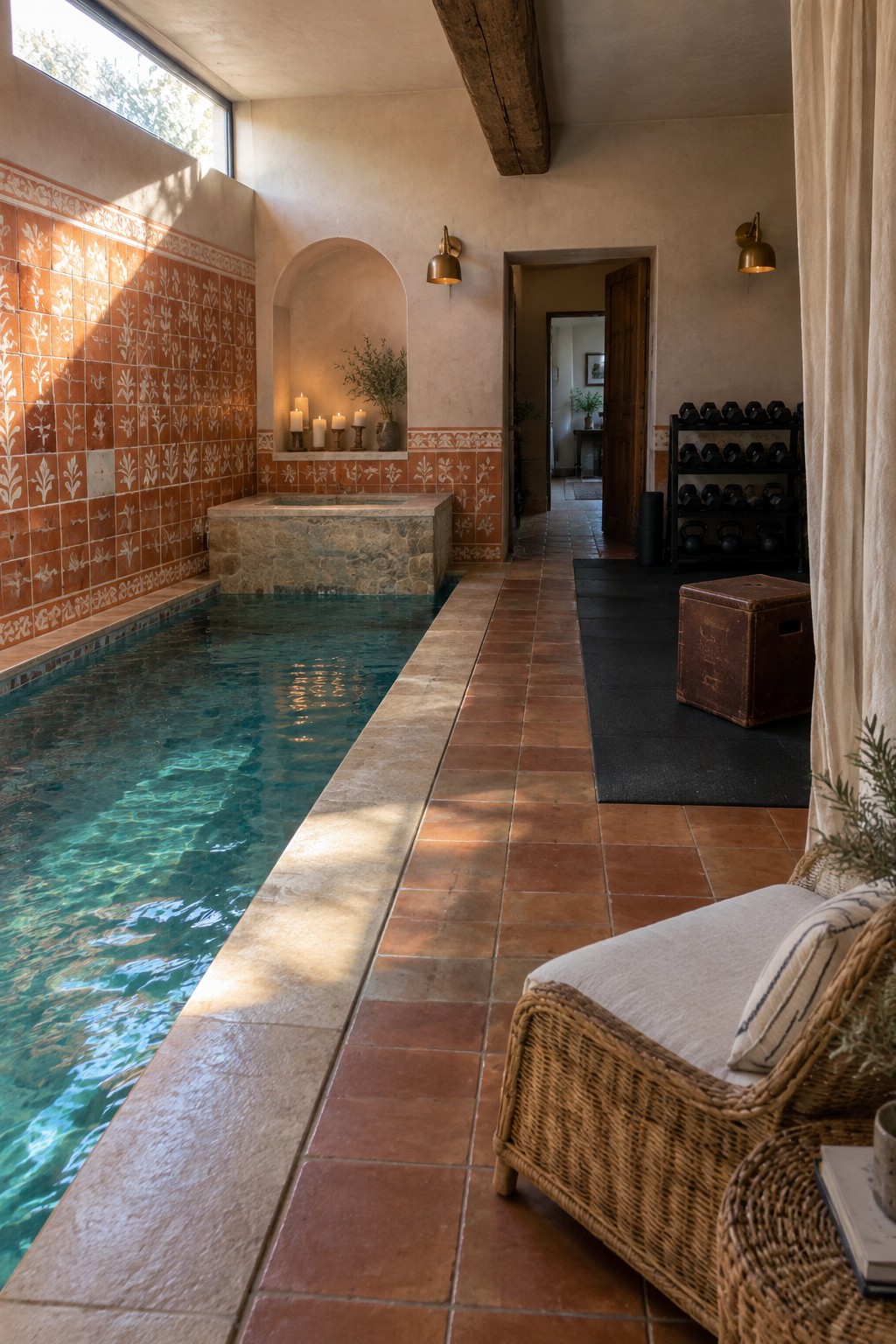
Many homes with indoor pools find it useful to keep a few weights and benches right next to the water. This setup lets someone finish a swim and move straight into lifting without needing a second room or extra travel across the house. The same floor surface carries through both areas, which helps the space feel like one practical zone instead of two separate ones.
This works best in homes where the pool already sits in a larger room with enough open floor left along one side. A simple rubber mat can mark the workout area while still letting the overall room stay open and easy to clean. It suits active households that want both swimming and strength work without building out more square footage.
Mezzanine Gym Over an Indoor Pool
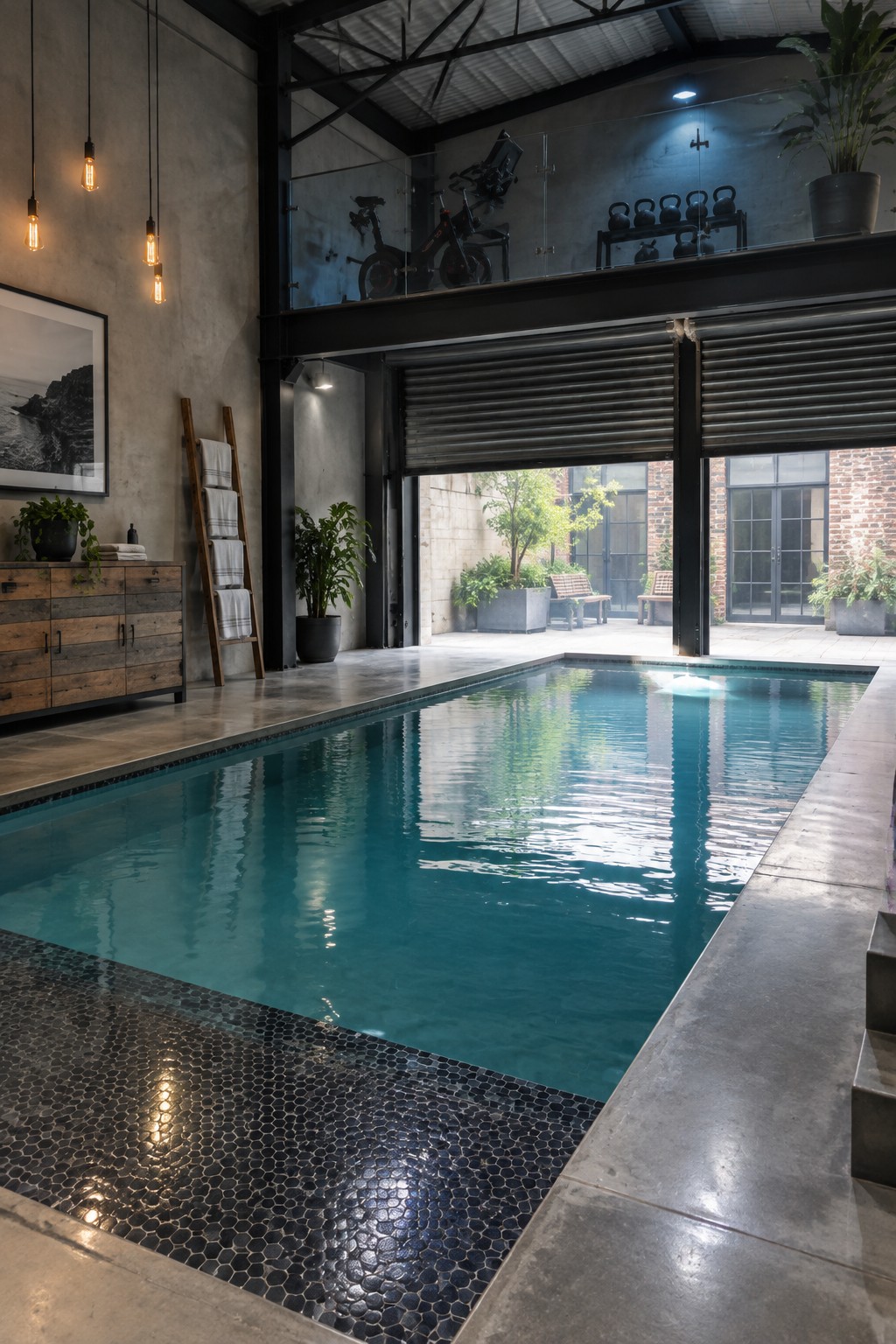
Placing the gym on a mezzanine level keeps the pool deck clear and open. The upper area holds bikes and weights without taking up any of the main floor space, which makes the whole room feel larger and easier to move through.
This layout suits homes with tall ceilings or converted industrial spaces where you already have the height to work with. Just make sure the railing stays solid and consider sound control if people will be dropping weights while others swim below.
Pool And Gym In One Room
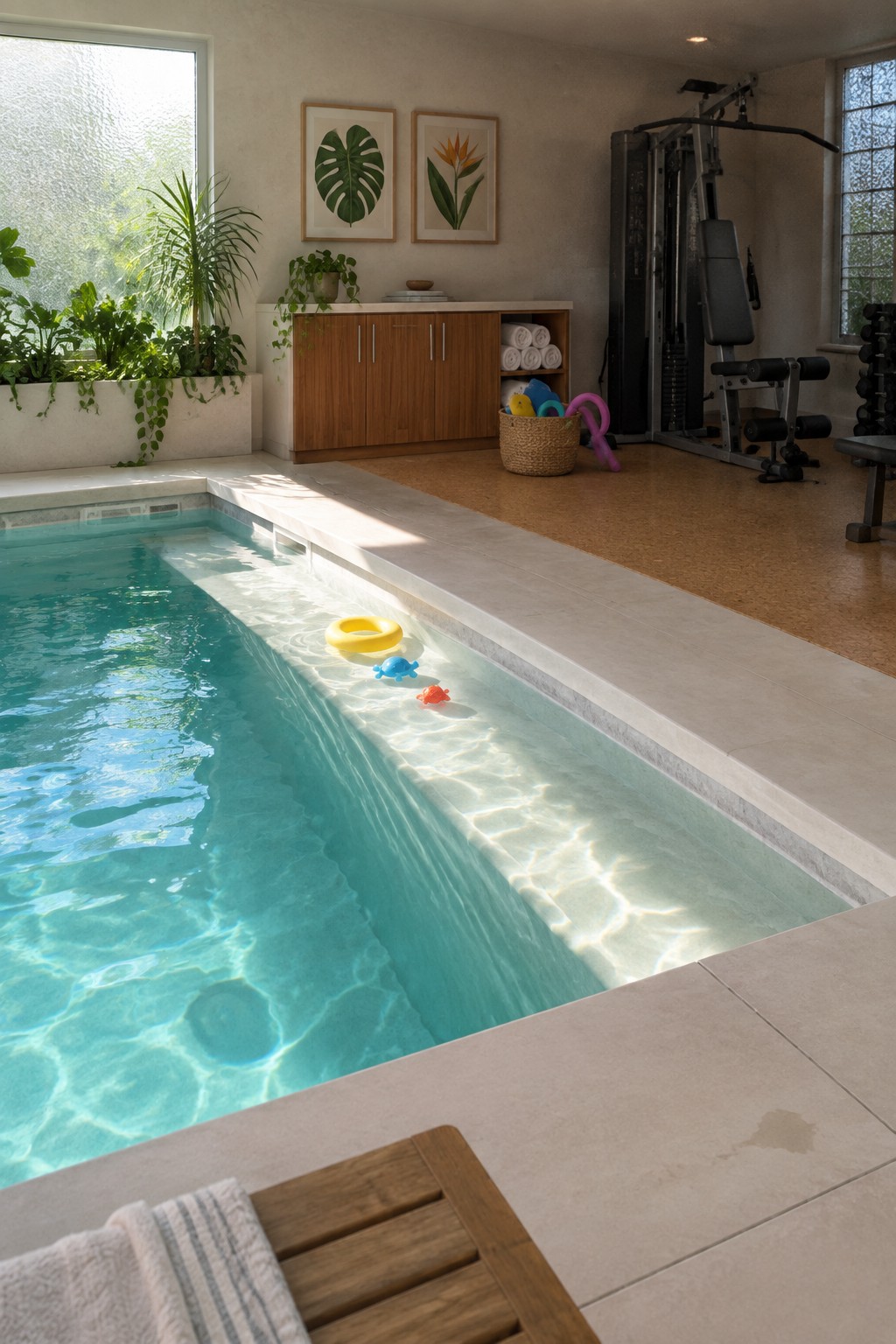
Many active homes are placing the pool and the gym in the same open space so swimming and strength work happen without extra steps. The setup keeps everything in one climate controlled area and makes it easier to move from laps to weights in the same session.
This layout works best in basements or ground floor additions where the floor can handle both water and heavy equipment. Keep the gym machines along one wall so they stay dry and add simple storage for towels and gear near the pool edge.
Creating a Convenient Poolside Training Area
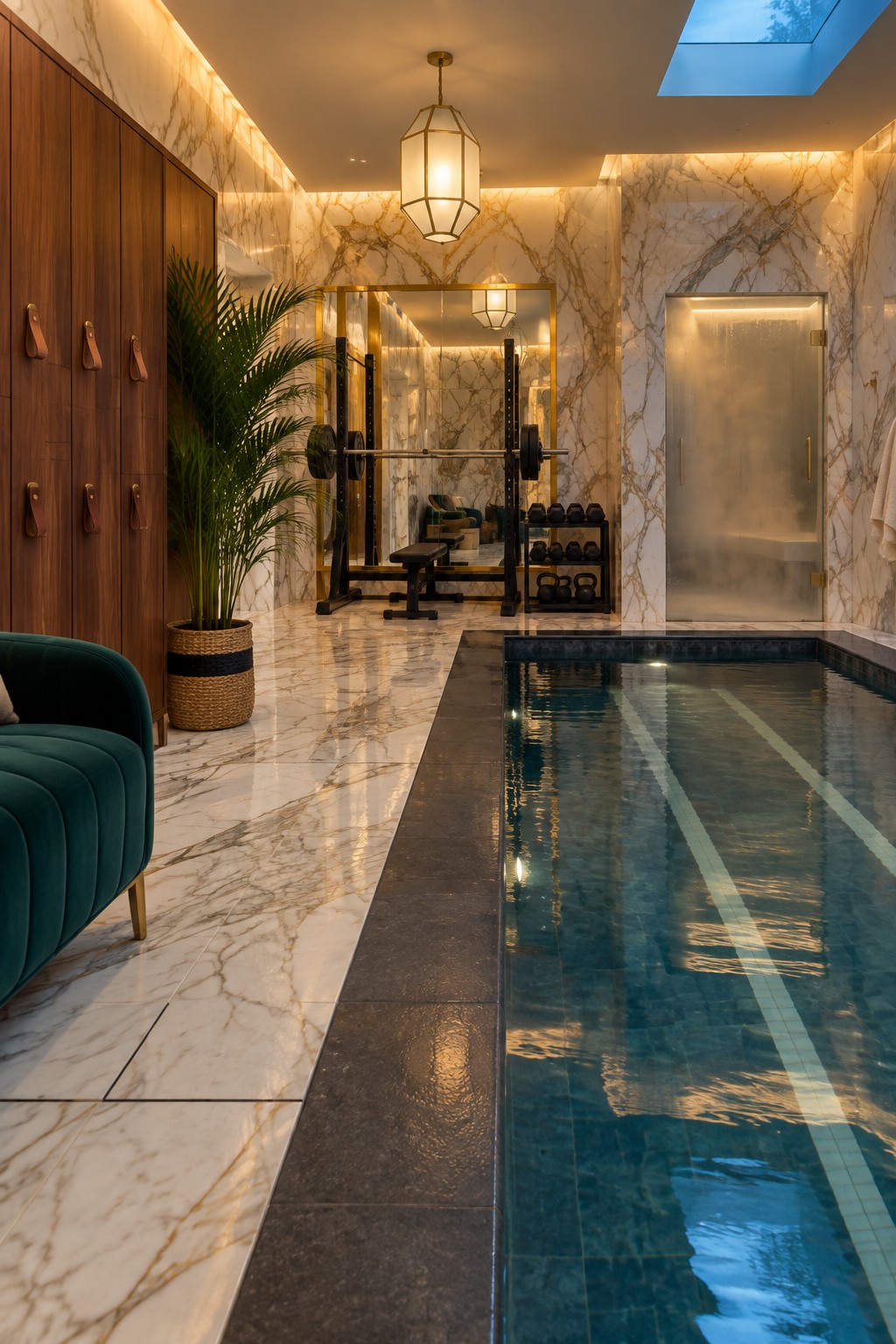
Many homes gain a lot from keeping the gym equipment close to the indoor pool. It turns the space into one practical zone where you can lift, row, or stretch and then cool down with a swim. The setup feels efficient because you stay in the same area instead of moving between separate rooms.
This works best in homes that already have the square footage for both features. Add simple storage like wall hooks or a bench with cubbies so towels and weights stay off the floor. Marble or tile surfaces help with moisture, but make sure the flooring has good grip near the water edge.
Designing a Long Poolside Workout Zone
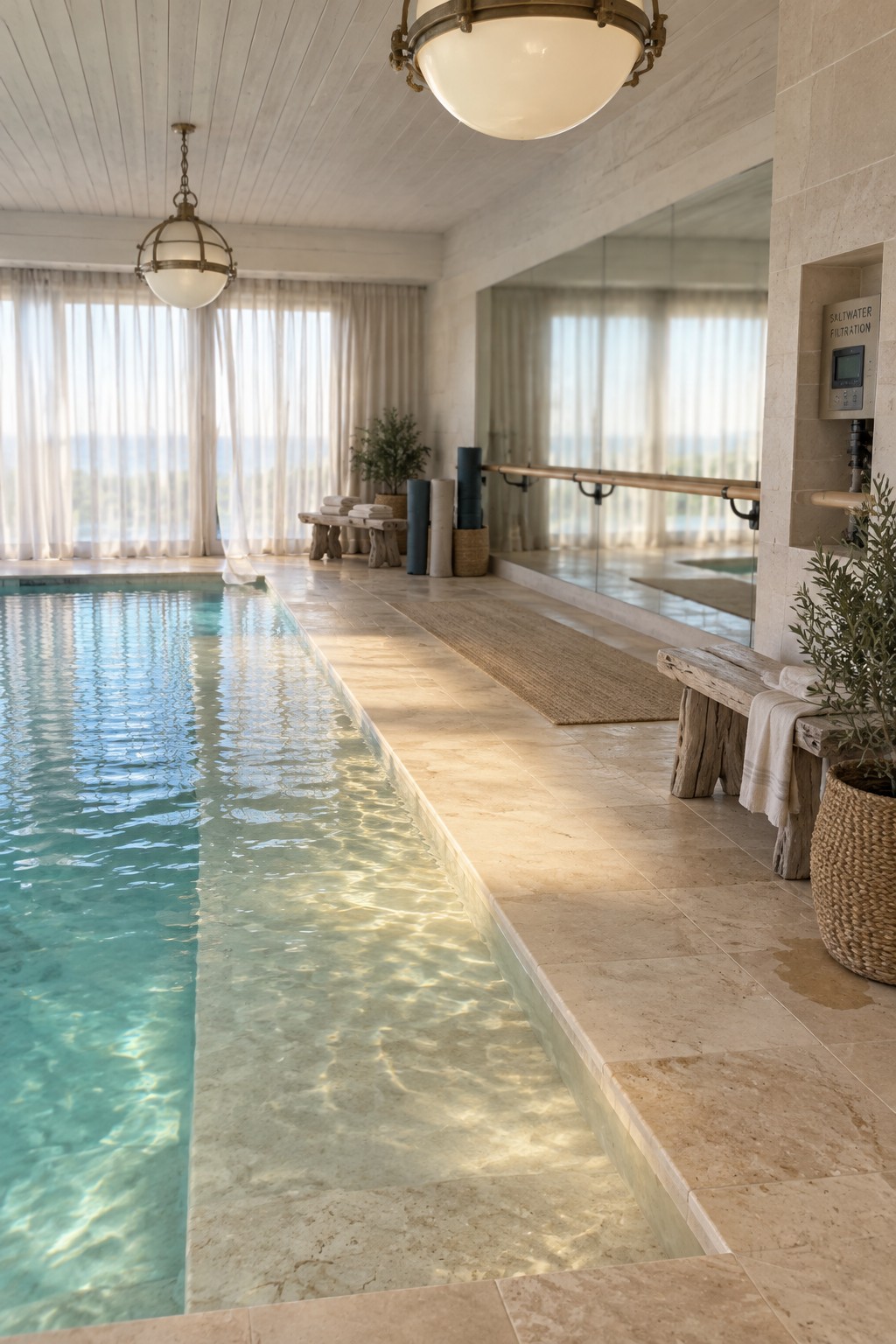
Many homes now place a gym zone right beside the pool so users can move easily between swimming and other exercises. The long narrow layout leaves a clear strip of decking for a bench, weights, and a barre, which keeps the two activities connected without crowding either one.
This works best in houses that already have a large basement or ground floor room set aside for active use. Choose durable stone or tile that handles water and foot traffic, and leave enough open floor so the space stays practical rather than cluttered.
Arranging Fitness Stations Along the Pool Wall
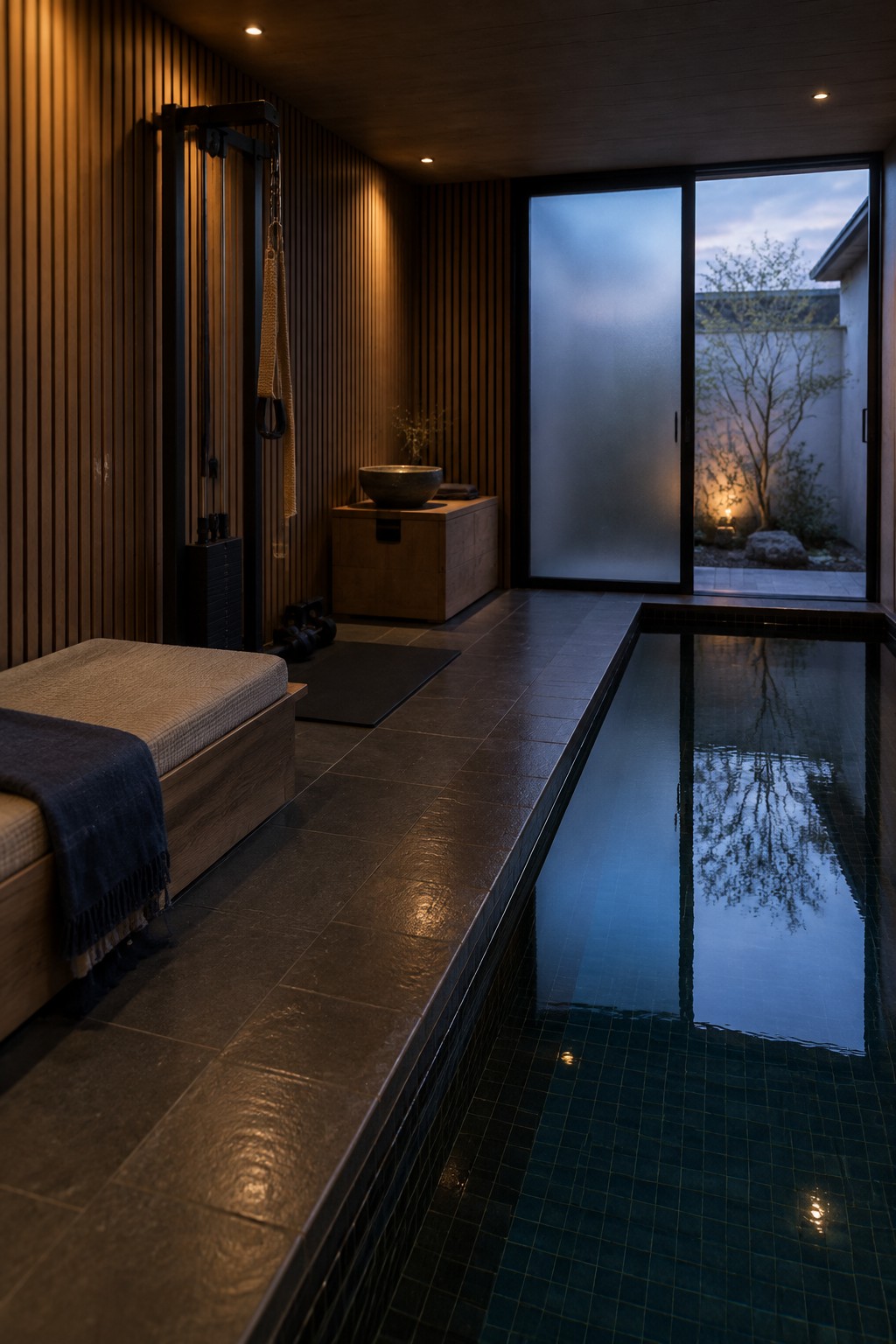
One practical way to build an active home is placing gym stations right beside the pool instead of in a separate room. This setup lets you switch between swimming and strength work in the same space without extra steps or travel between areas.
It works best in homes that already have a long narrow room or basement section to spare. Keep the gym gear on one wall so the pool edge stays clear and the floor stays easy to maintain around the water.
Saving Space with Poolside Strength Equipment
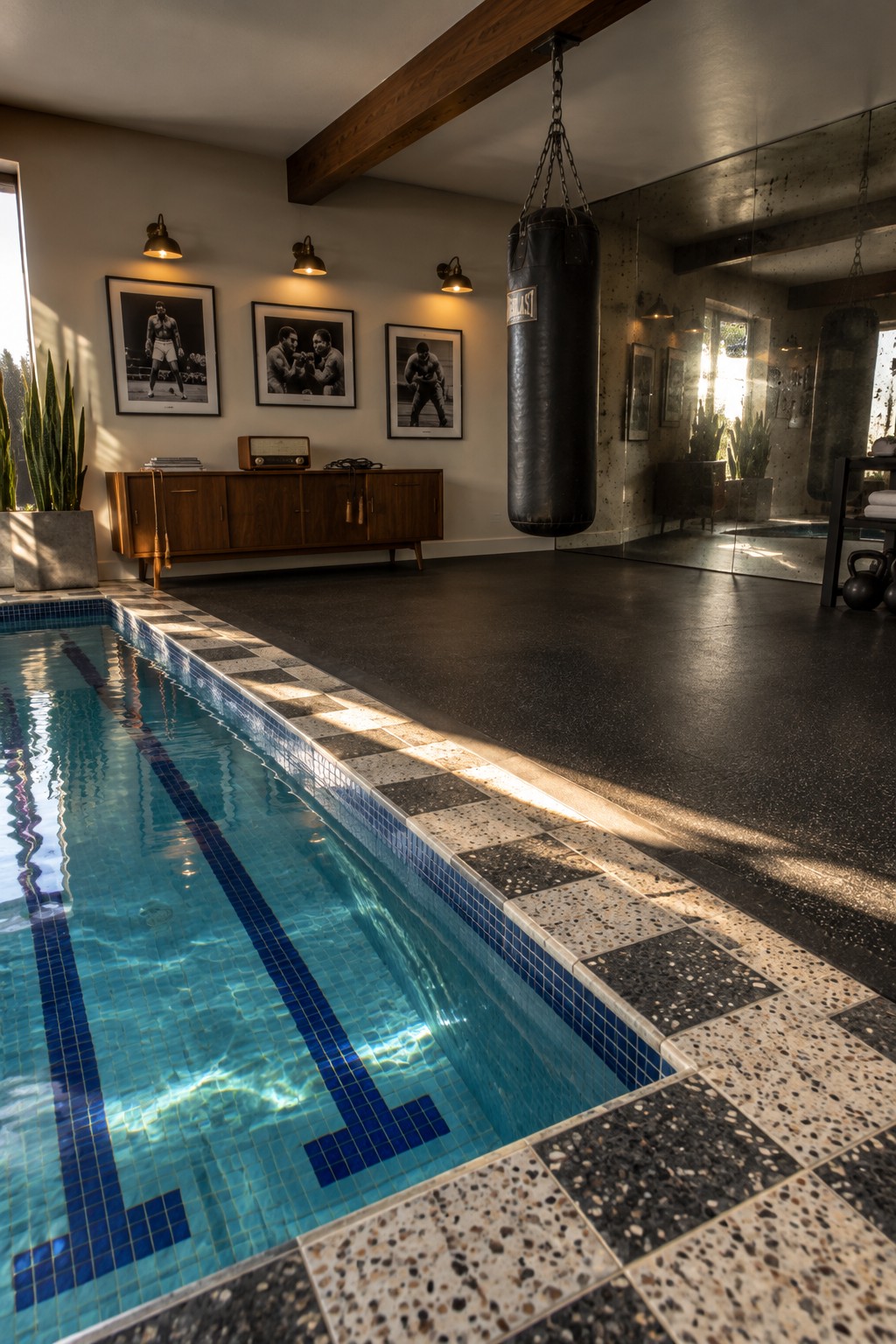
Some homes make good use of space by placing gym equipment right beside the pool. This lets people switch between swimming and strength work in the same area without extra rooms or long walks between activities.
It works best in houses that already have room for an indoor pool. Keep the flooring slip resistant and give the equipment enough distance from the water so it stays in good shape over time.
Designing a Narrow Lap Pool with a Dedicated Gym Area
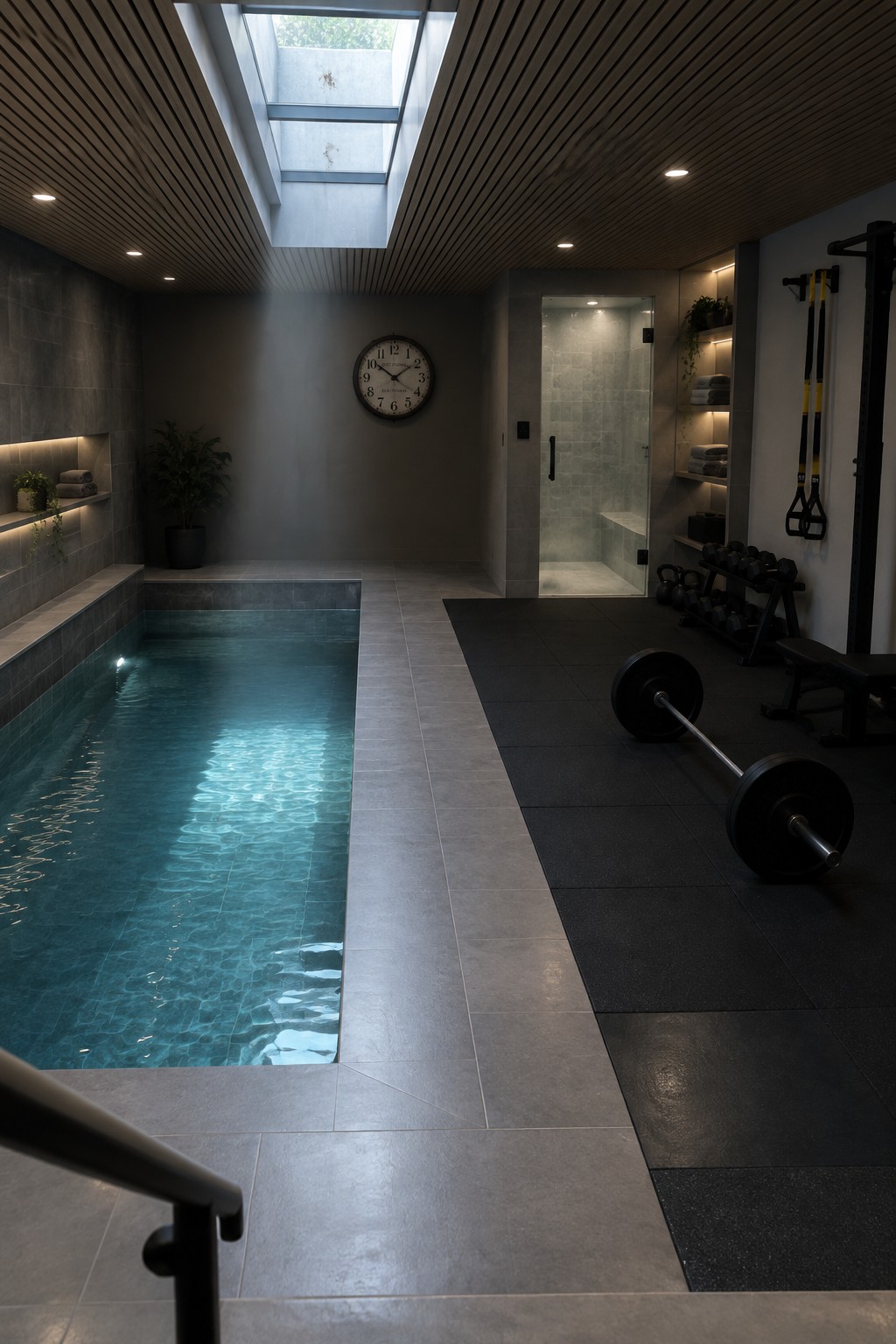
Running a narrow lap pool along one side of a room and leaving the rest open for weights and benches creates a simple dual-purpose space. You can swim laps and then step right over to the gym floor without changing rooms or heading outside. The setup works especially well when there is overhead light to keep the whole area from feeling closed in.
This layout suits homes with a finished basement or lower level that already has the height and drainage for a pool. Keep the gym side clear of extra furniture so the floor stays usable, and plan for solid ventilation since the moisture from the water can affect the equipment over time.
Creating a Mirrored Stretching and Barre Zone
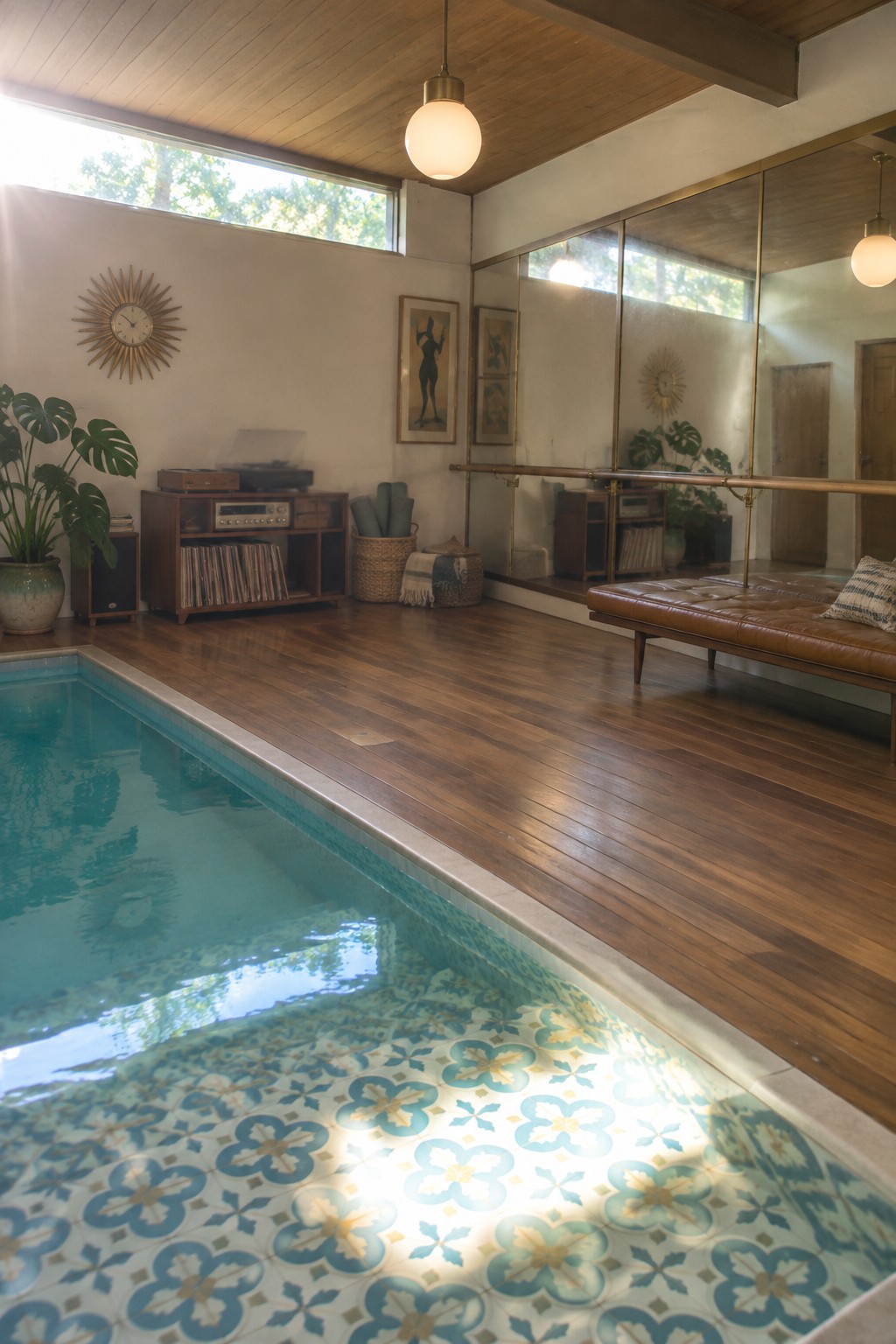
Many homes with indoor pools end up using the surrounding space just for lounging. Adding a simple workout area changes that. A mirrored wall with a ballet barre and a bench turns the pool deck into a place for stretching, yoga, or light strength work without needing a separate room.
This setup works best in homes where space is limited or the pool already takes up most of the floor. Keep the exercise zone along one wall so swimmers still have clear access to the water. The mirrors help the room feel larger and let you check form during exercises. Just make sure the flooring stays non-slip near the pool edge.
Setting Up a Dedicated Yoga Space Beside the Pool
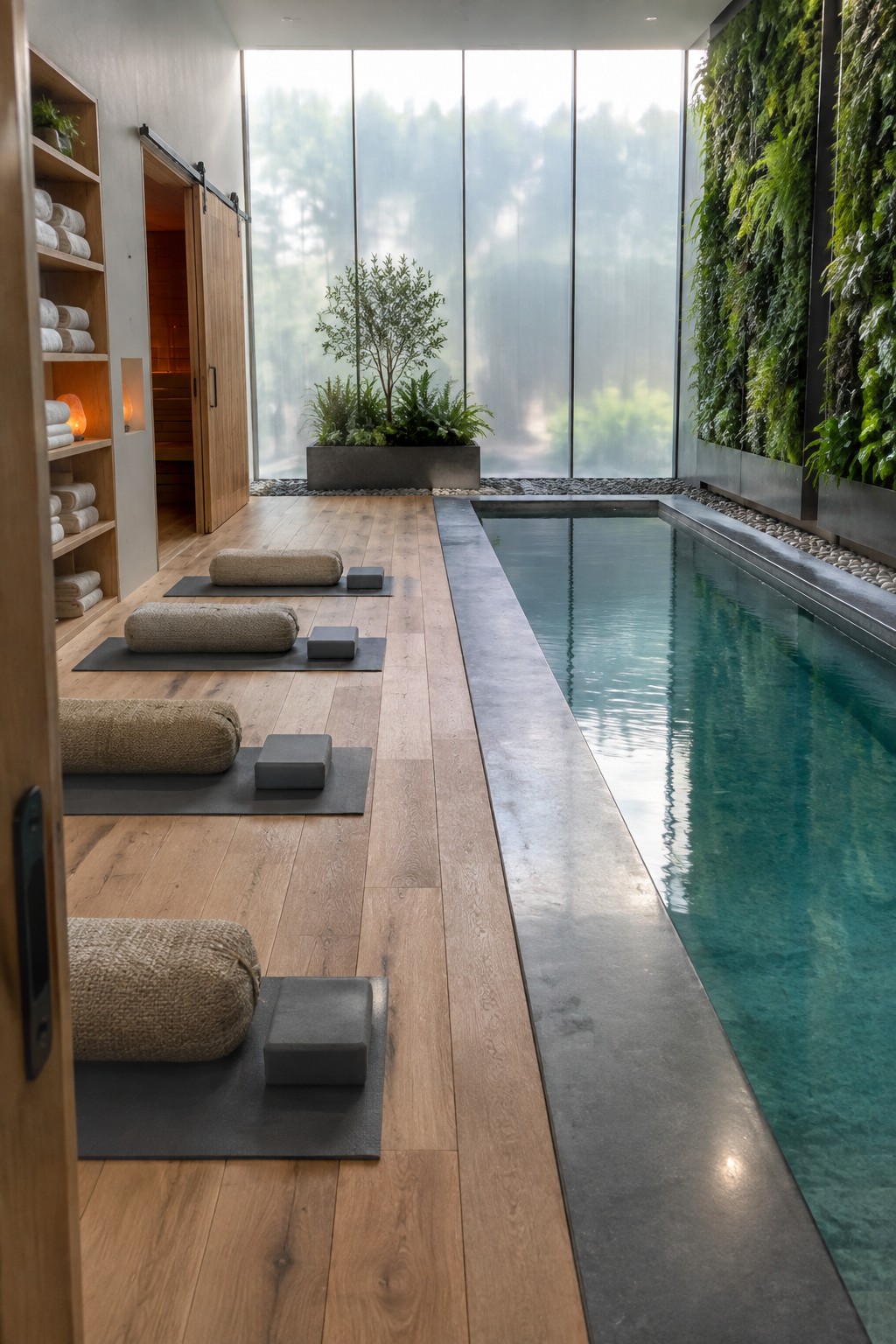
Many homes with indoor pools end up with extra floor space along one side. Turning that strip into a simple yoga zone keeps everything in one room and makes the pool feel more useful for daily movement instead of just laps.
This layout works best when the pool runs long and narrow. Place mats on wood flooring on the dry side, leave the pool edge clear, and add a sauna door nearby if you have one. It suits active houses that want swimming and floor work without needing a separate gym room.
Positioning the Pool and Training Stations Alongside Each Other
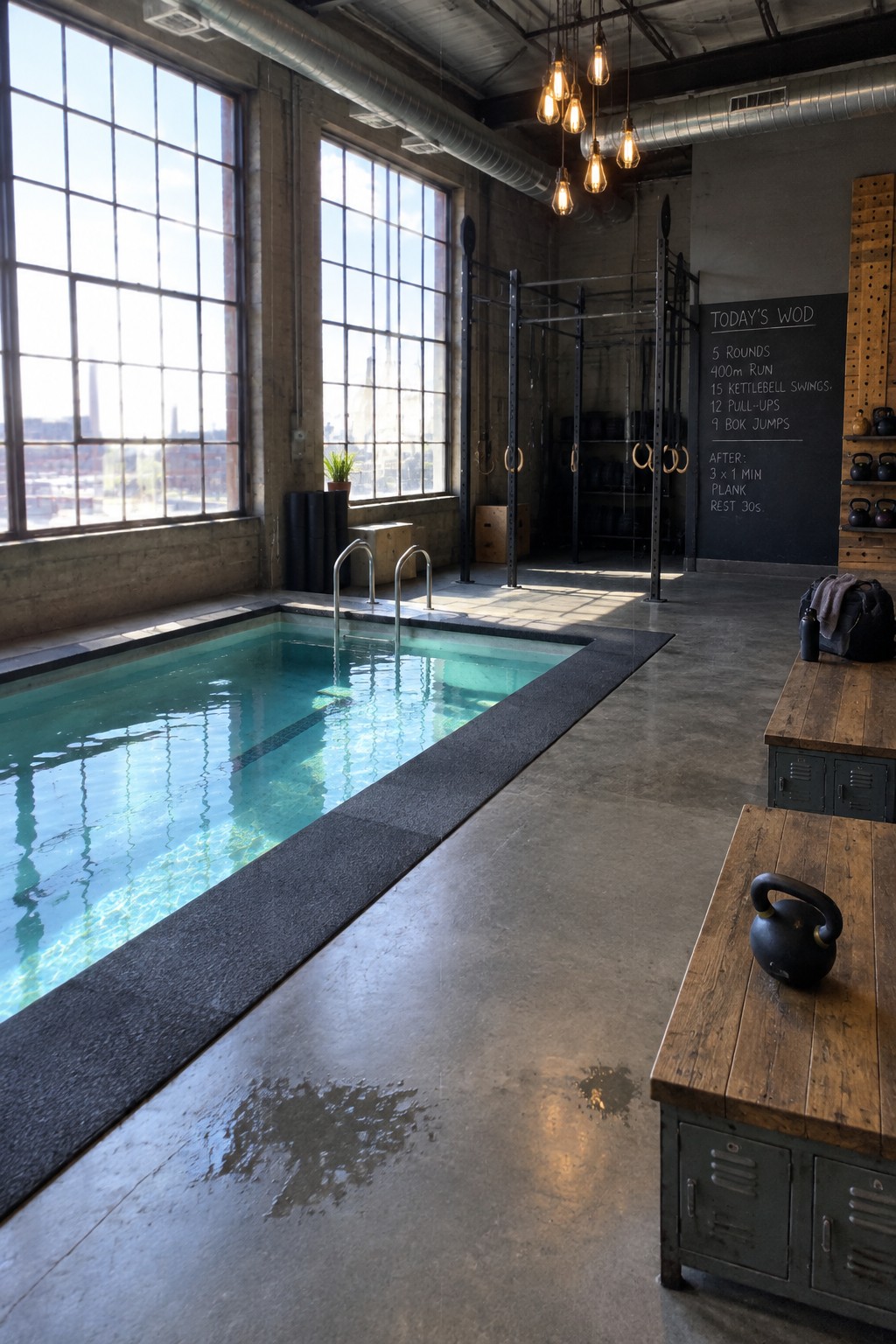
Having the pool right next to the training area makes it easy to move from swimming to lifting without changing rooms or losing momentum. This setup works well for people who like variety in their workouts and want everything in one place.
It fits best in homes with extra square footage and good ventilation, since moisture from the water needs to be handled. Keep the gym equipment on a dry zone with durable flooring and make sure the pool edge stays clear for safety.
Planning an Open-Concept Pool and Fitness Area
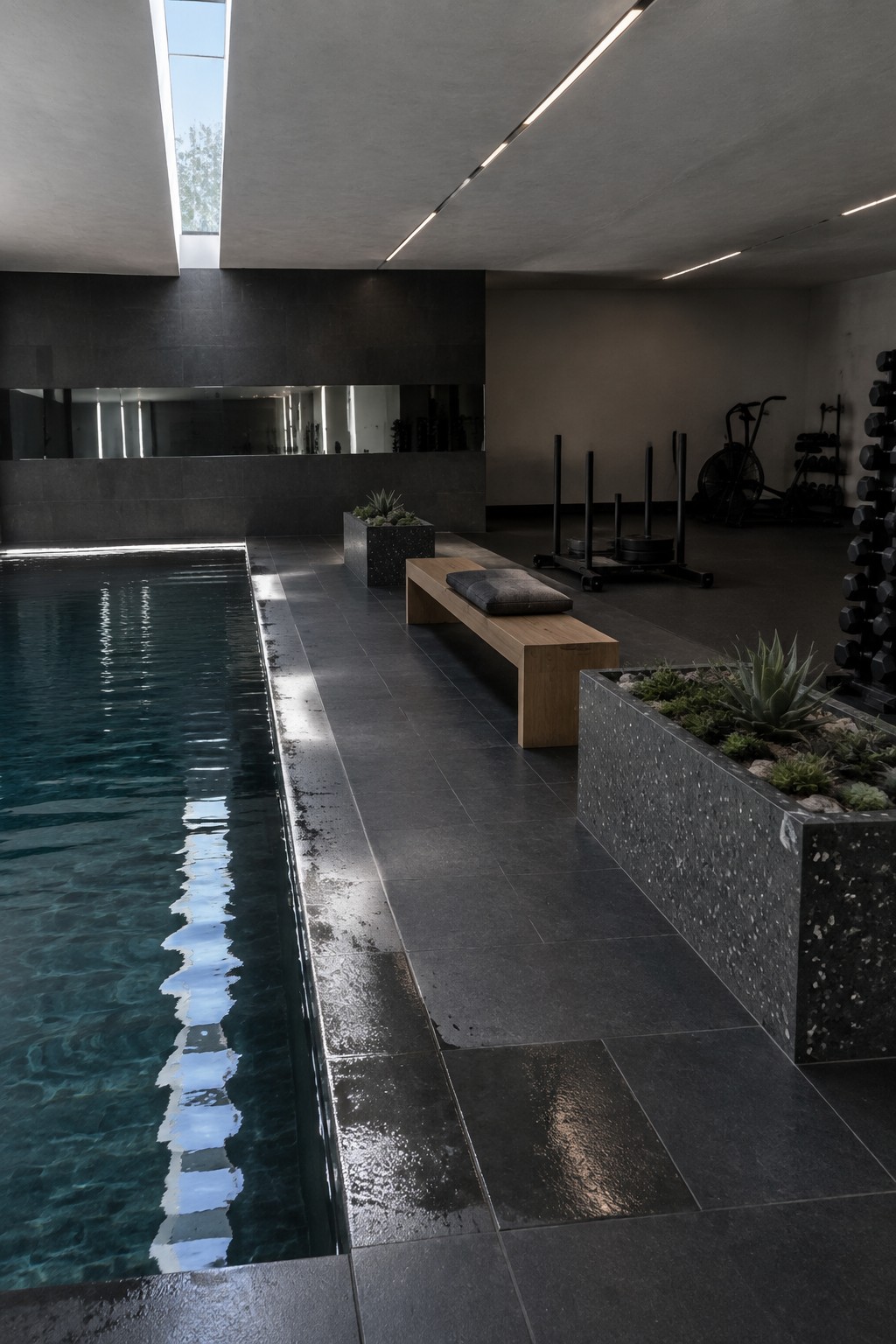
Many active homes benefit from keeping the pool and gym equipment in the same open area. This layout lets you switch between swimming and strength work without moving to another room or floor.
It suits larger spaces where the pool runs along one side and the weights or machines stay on the other. A simple bench between them helps mark the two zones without blocking the flow.
Keeping Poolside Strength Equipment Compact and Accessible
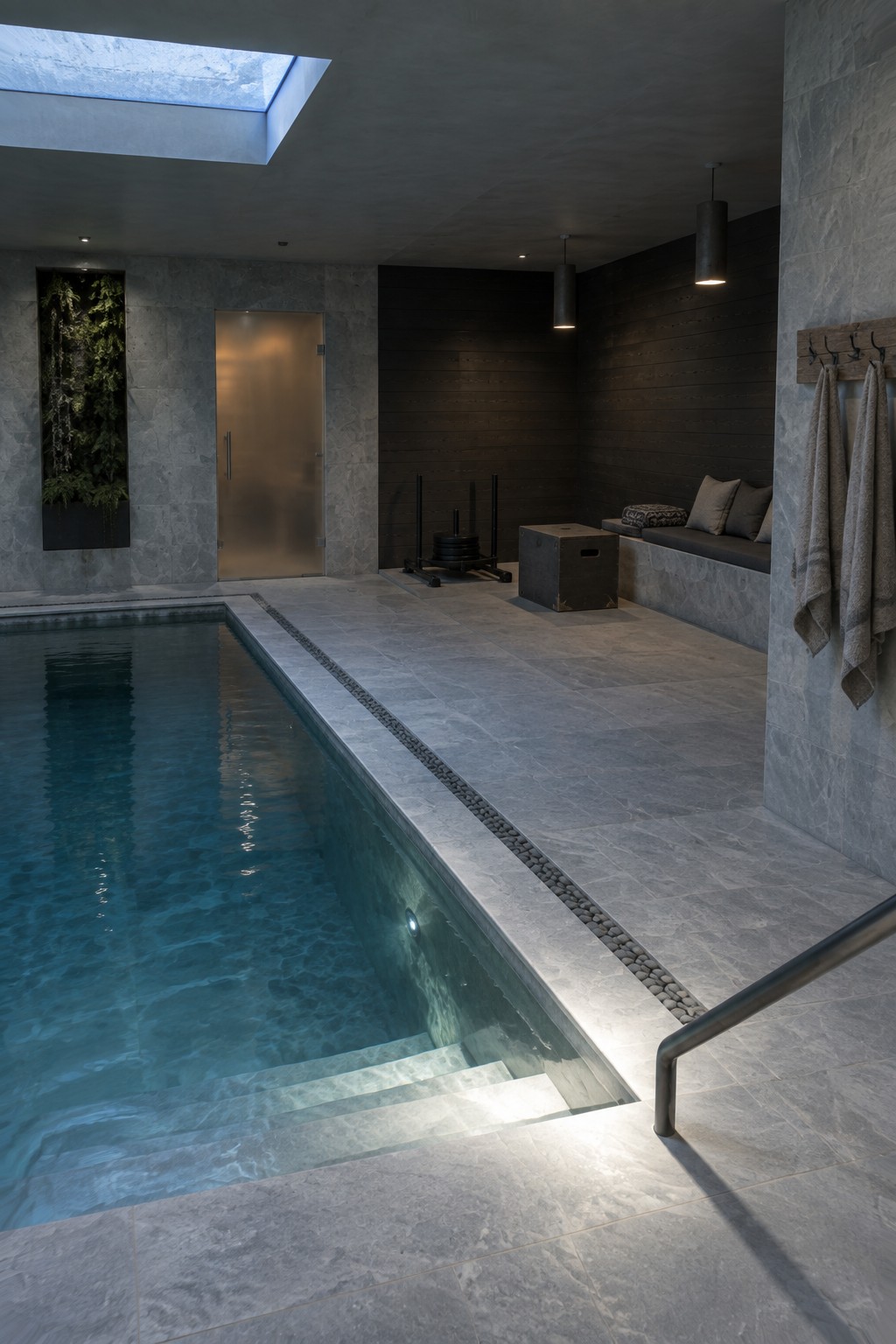
Many homes with indoor pools benefit from keeping the surrounding deck fairly open. This leaves room for a few pieces of strength equipment without crowding the space or getting in the way of swimming. The simple layout works because the pool itself takes up most of the room, so any added gear needs to stay along the edges.
This approach suits active households that want both cardio and lifting in one visit. Place weights or benches along a side wall where they stay dry but remain easy to reach. Just make sure the pool coping stays clear so people can move around the water without tripping over anything.
Organizing Towels and Fitness Accessories with a Slim Console
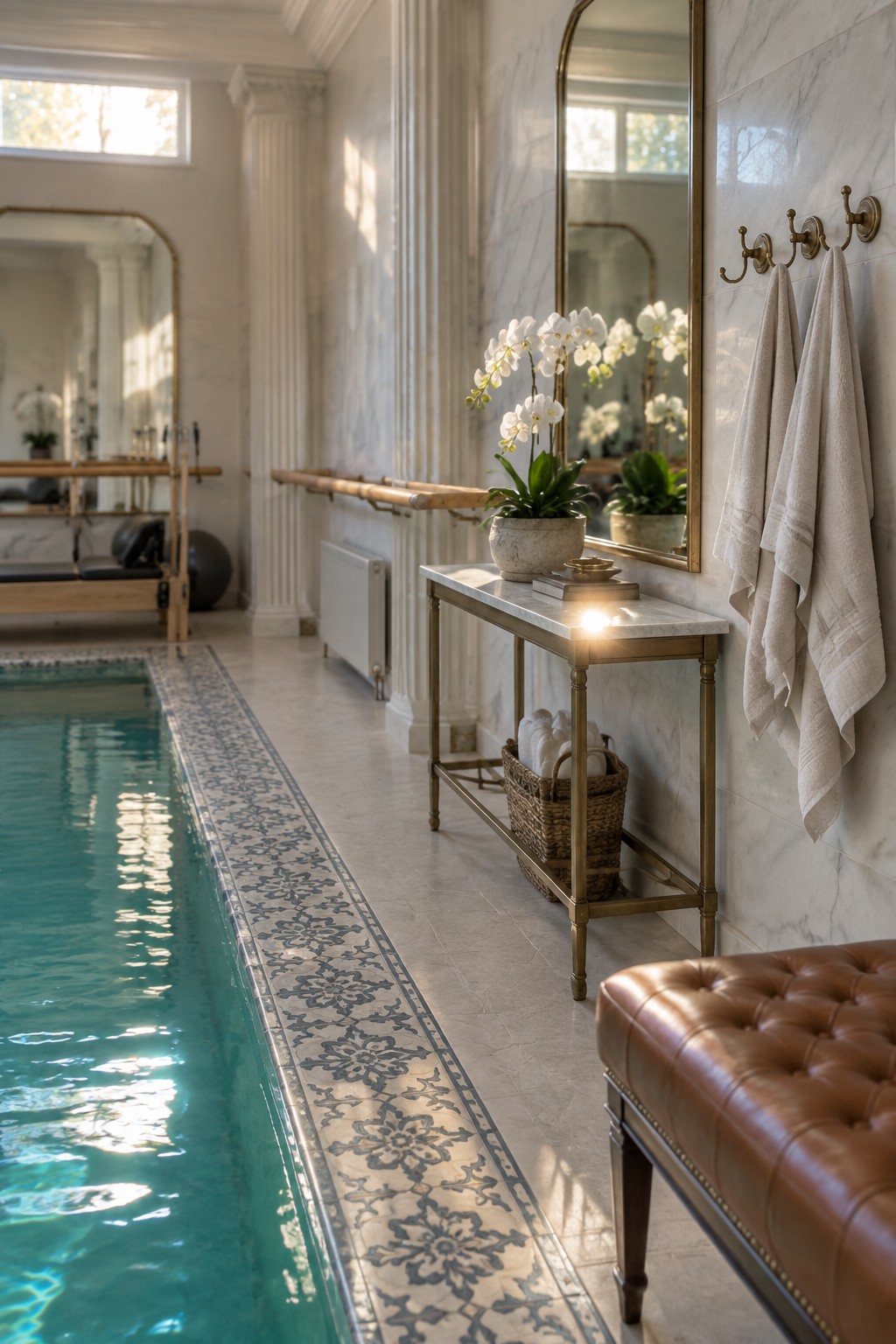
A long, slim console placed along the pool edge gives you a practical spot for towels and small items without crowding the floor. This keeps the space feeling open while making daily use much easier in a combined pool and gym setup.
It works best in homes where the pool sits close to workout equipment. The table acts as a quiet divider, holds a basket underneath, and pairs well with wall hooks and a bench nearby. Just choose a sturdy frame and a sealed stone top that handles moisture without fuss.
Creating a Moisture-Resistant Pool and Gym Layout
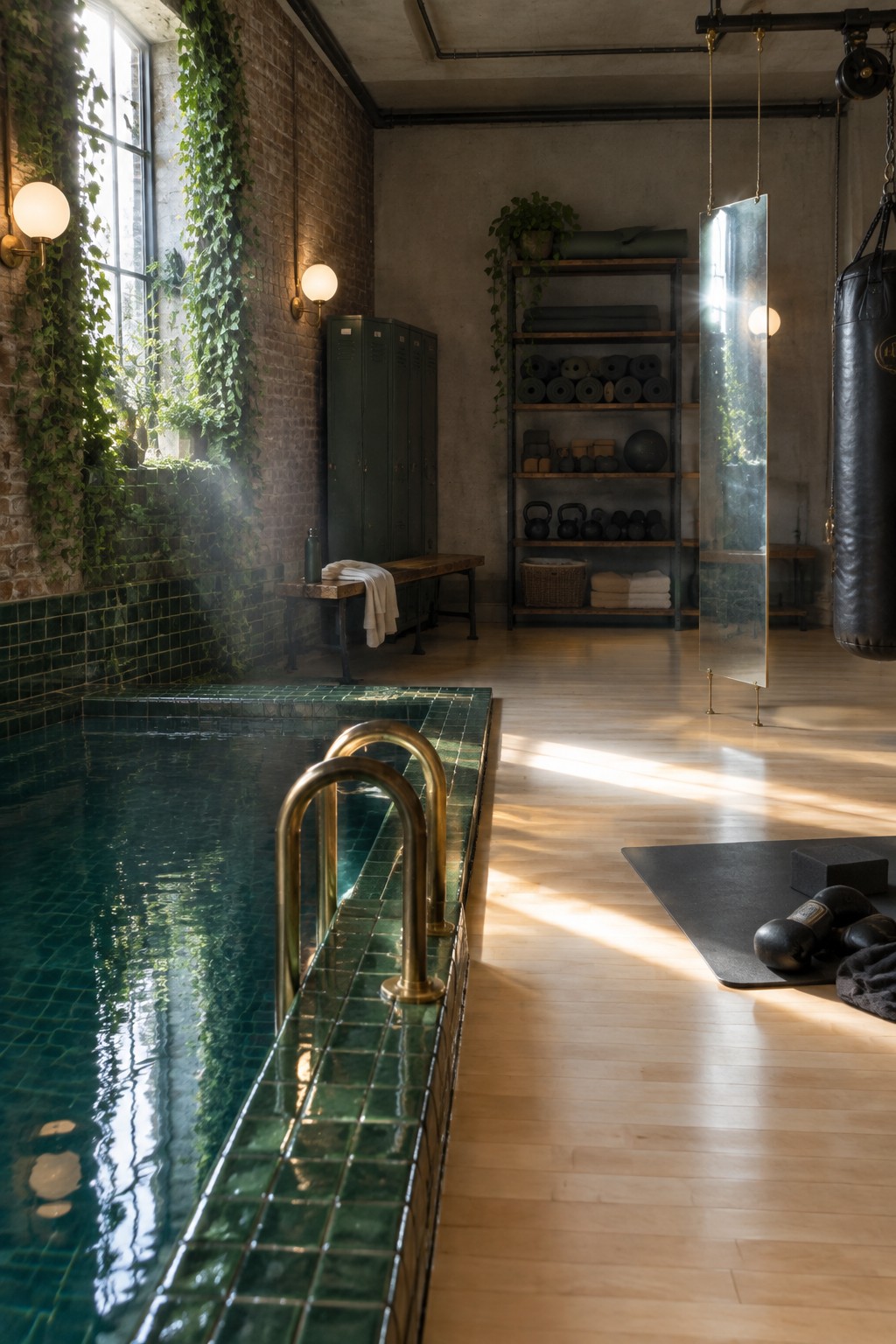
Placing a pool right next to the gym area makes daily workouts simpler. You can swim a few laps then move straight into weights or other training without changing rooms or tracking down different spaces. This layout works especially well in homes that already have the floor area and ceiling height to handle both.
It suits older buildings or basements where moisture resistant finishes and open floor plans already exist. Keep storage for mats and gear nearby so the space stays usable rather than cluttered. Good ventilation and a solid transition between the wet and dry zones matter most.
Connecting the Pool and Gym Through a Wide Opening
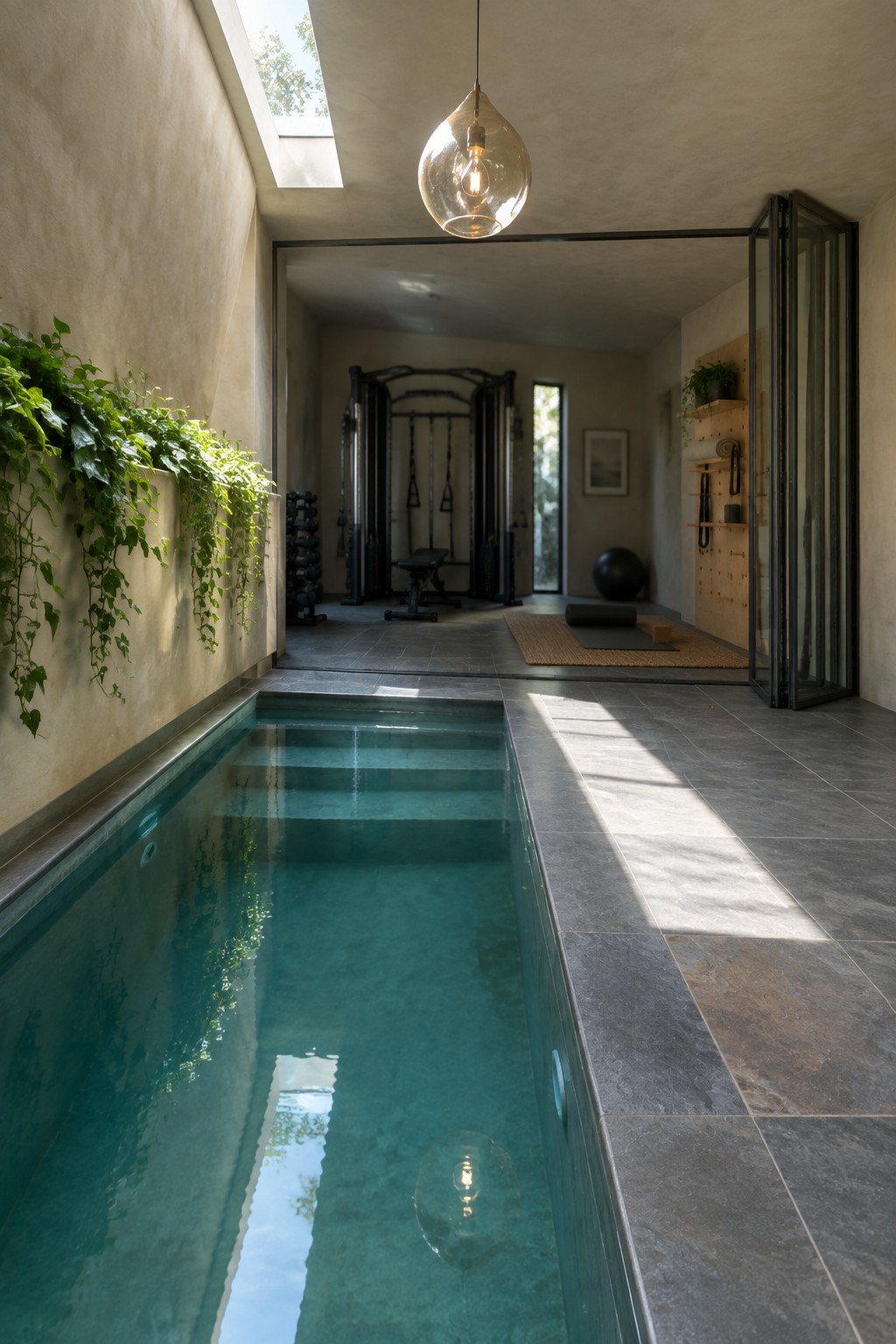
One layout that keeps an active home moving smoothly is placing the pool right beside the main gym area. The two spaces stay connected through a wide opening so you can finish a swim and step straight into weights or stretching without extra doors or hallways in the way.
This works best in homes that already have a lower level or basement set aside for fitness. It helps when more than one person wants to use the space at once, though you will want solid ventilation and slip-resistant floors to handle the extra moisture from the water.
Frequently Asked Questions
Q: How much room do I actually need to fit both a pool and gym gear without it feeling tight? A: Measure your space first and sketch a simple layout with the pool on one long wall. Leave a clear strip of floor beside it for mats and equipment so you can switch from laps to lifts in just a few steps.
Q: Will the pool moisture ruin my weights and machines over time? A: Run a dehumidifier daily and keep all metal equipment on a raised platform away from the water. Wipe down bars and plates after sessions to stop rust before it starts.
Q: What kind of floor works for both wet feet and workouts? A: Pick textured tiles that drain fast yet give solid grip during squats or stretches. Many setups use the same material throughout so you never have to change shoes or worry about slipping.
Q: How do I stop the air from feeling heavy when the pool and gym share one room? A: Add ceiling vents that pull moist air out and bring fresh air in from another part of the house. This simple airflow keeps everything drier and more comfortable during longer sessions.