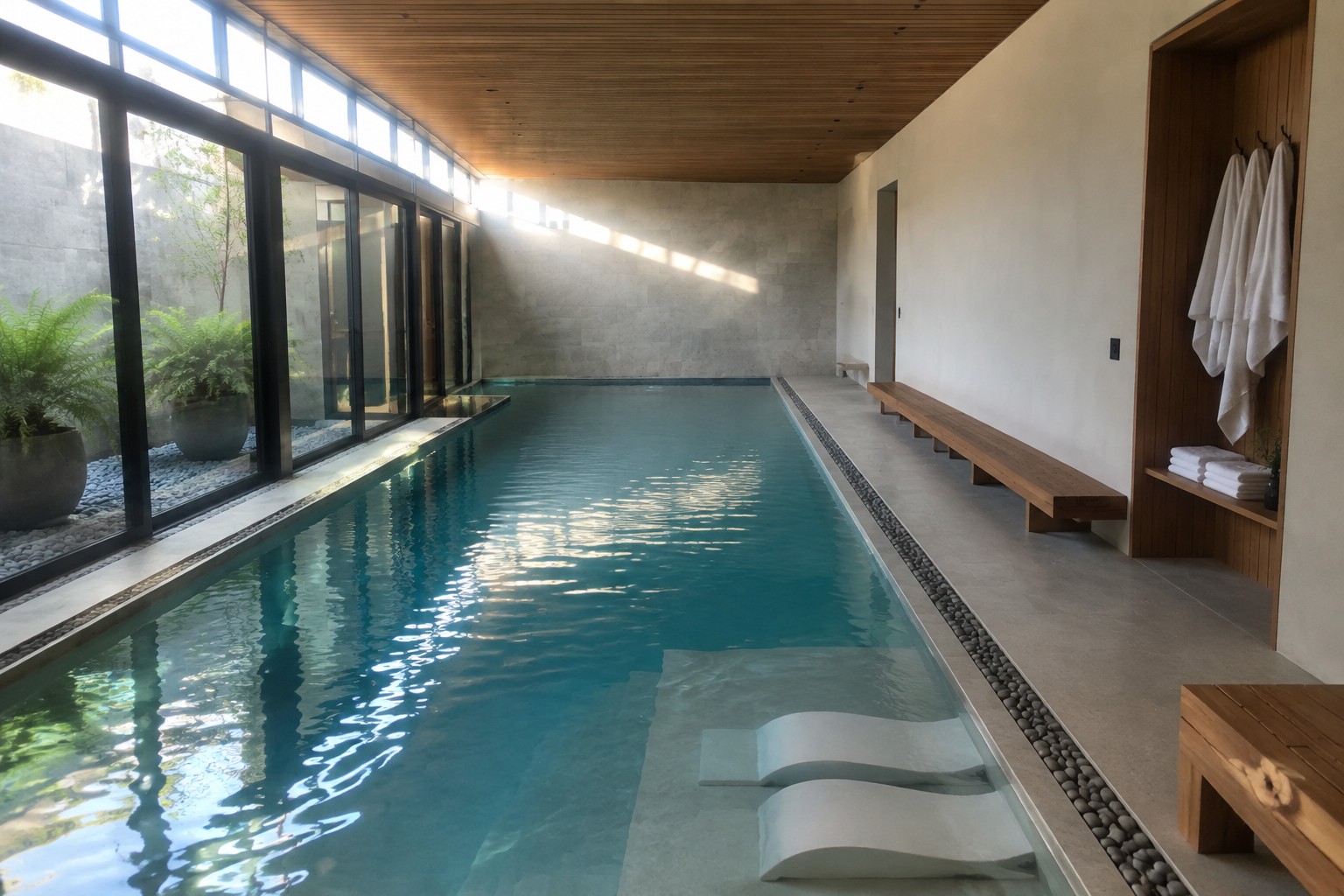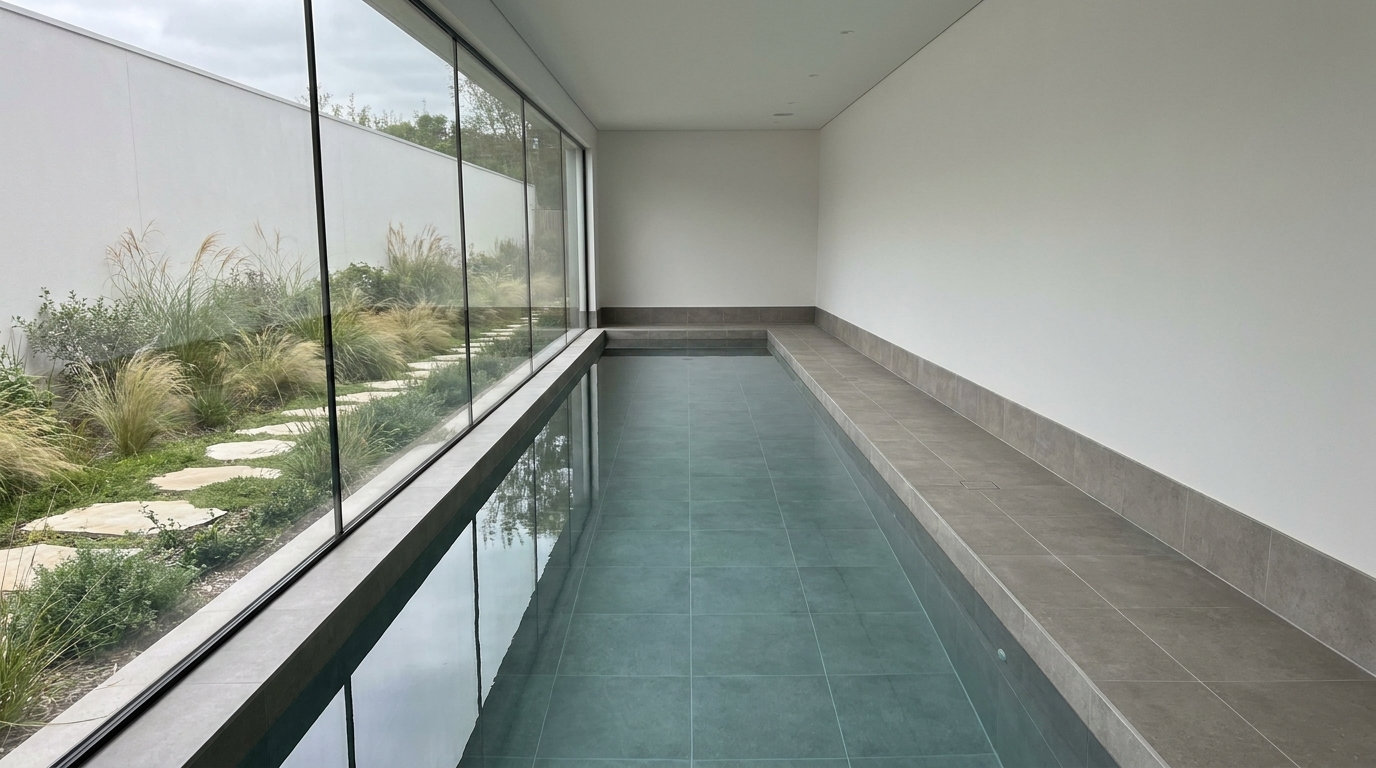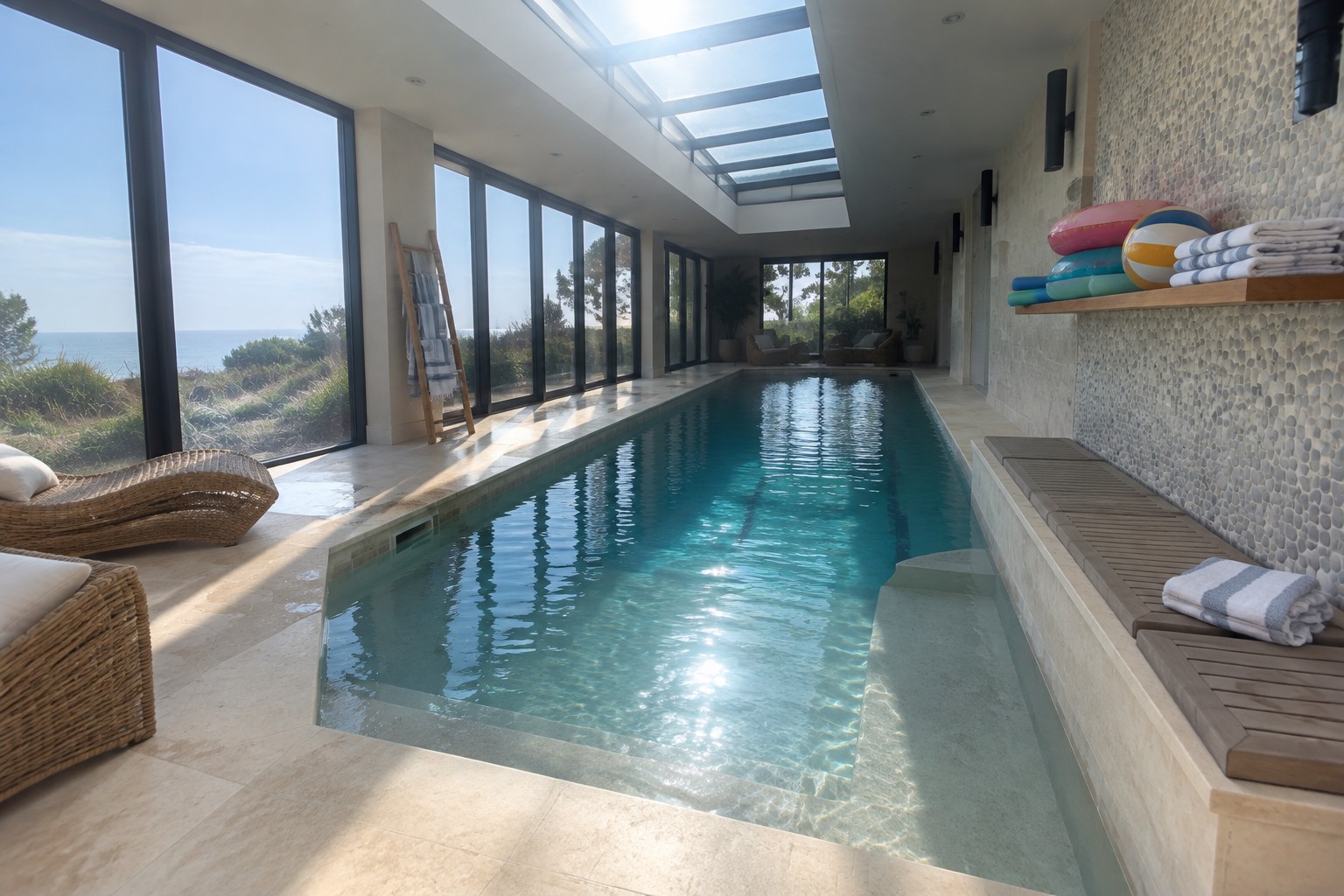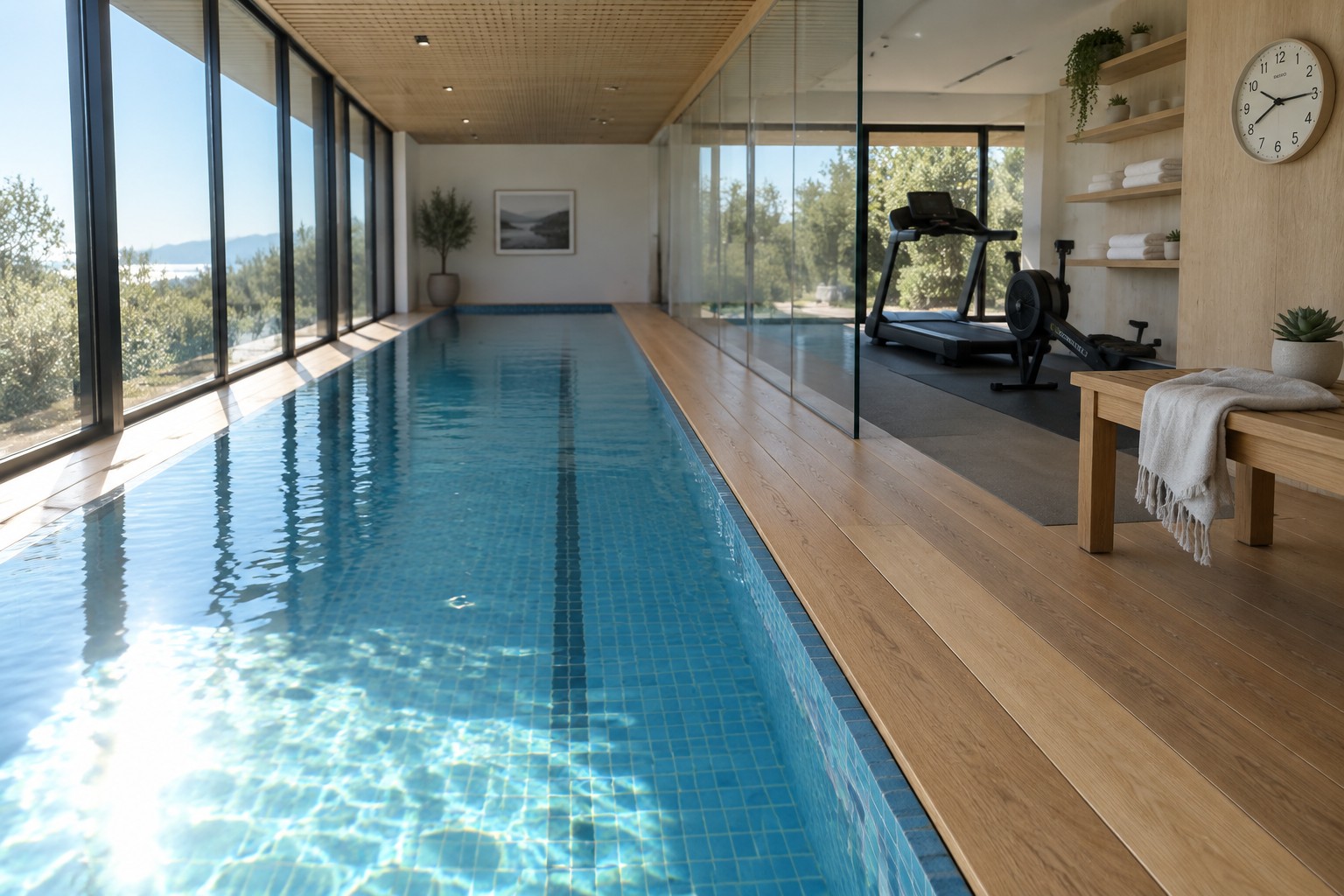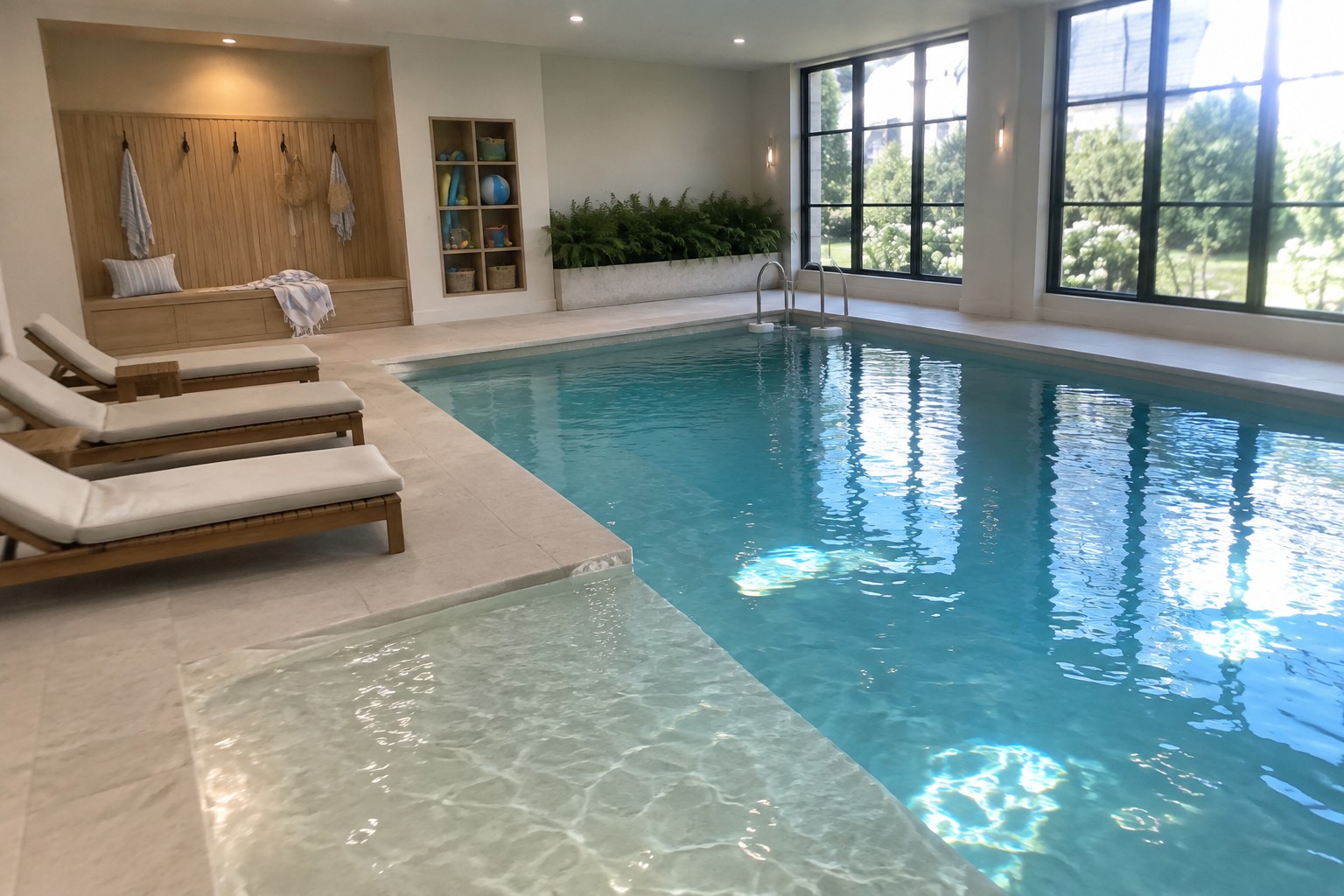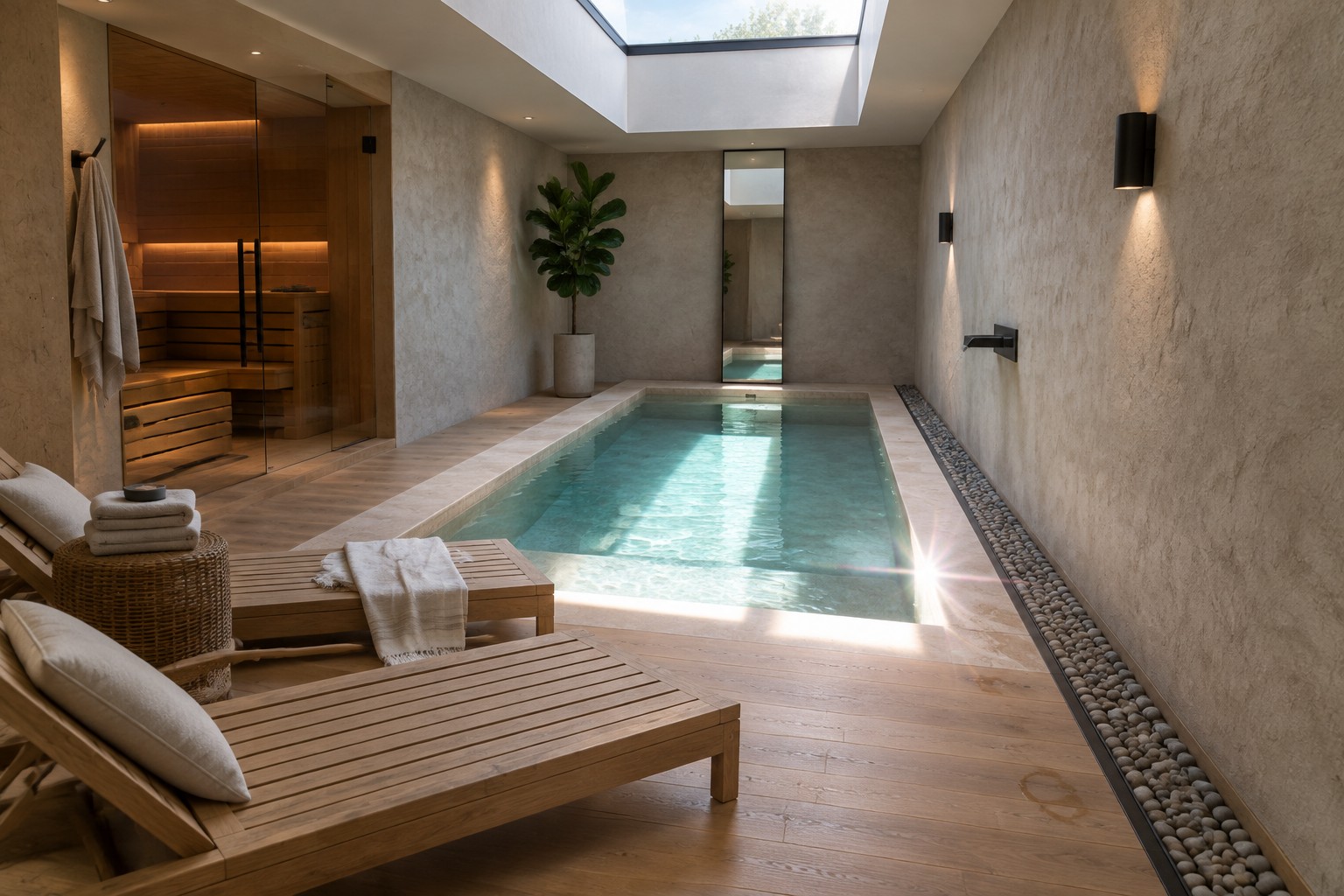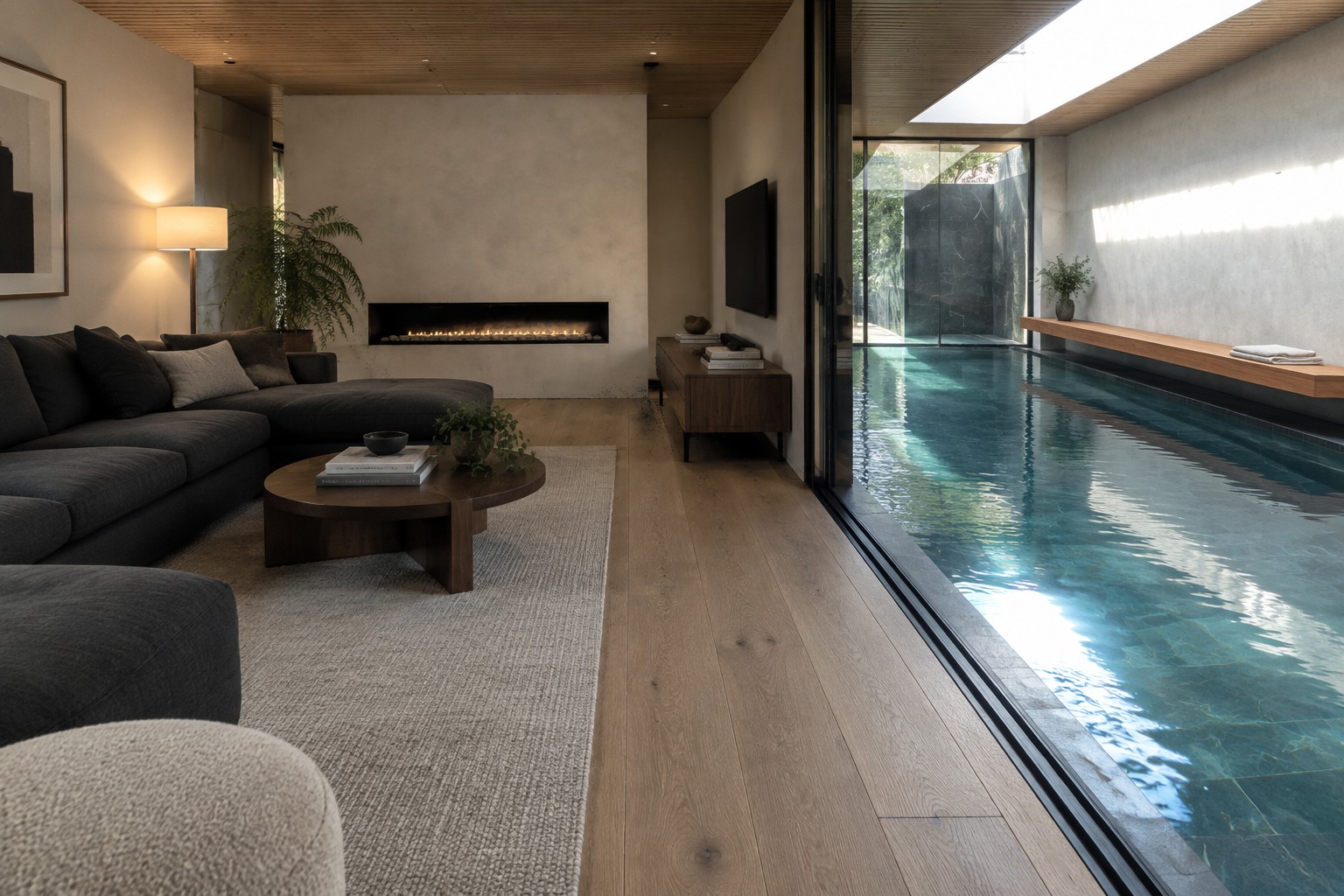
When an indoor pool sits right next to the main living spaces, the flow of the house changes in ways that go beyond just adding water.
I notice that successful designs keep the pool from feeling like an afterthought by matching materials and keeping pathways clear.
Layout matters more than most people expect.
In homes where the connection works well, daily routines shift naturally toward the water without the space becoming too humid or loud.
I always check how these setups handle practical issues like ventilation before considering them for a real home.
Connecting the Living Room Directly to an Indoor Pool
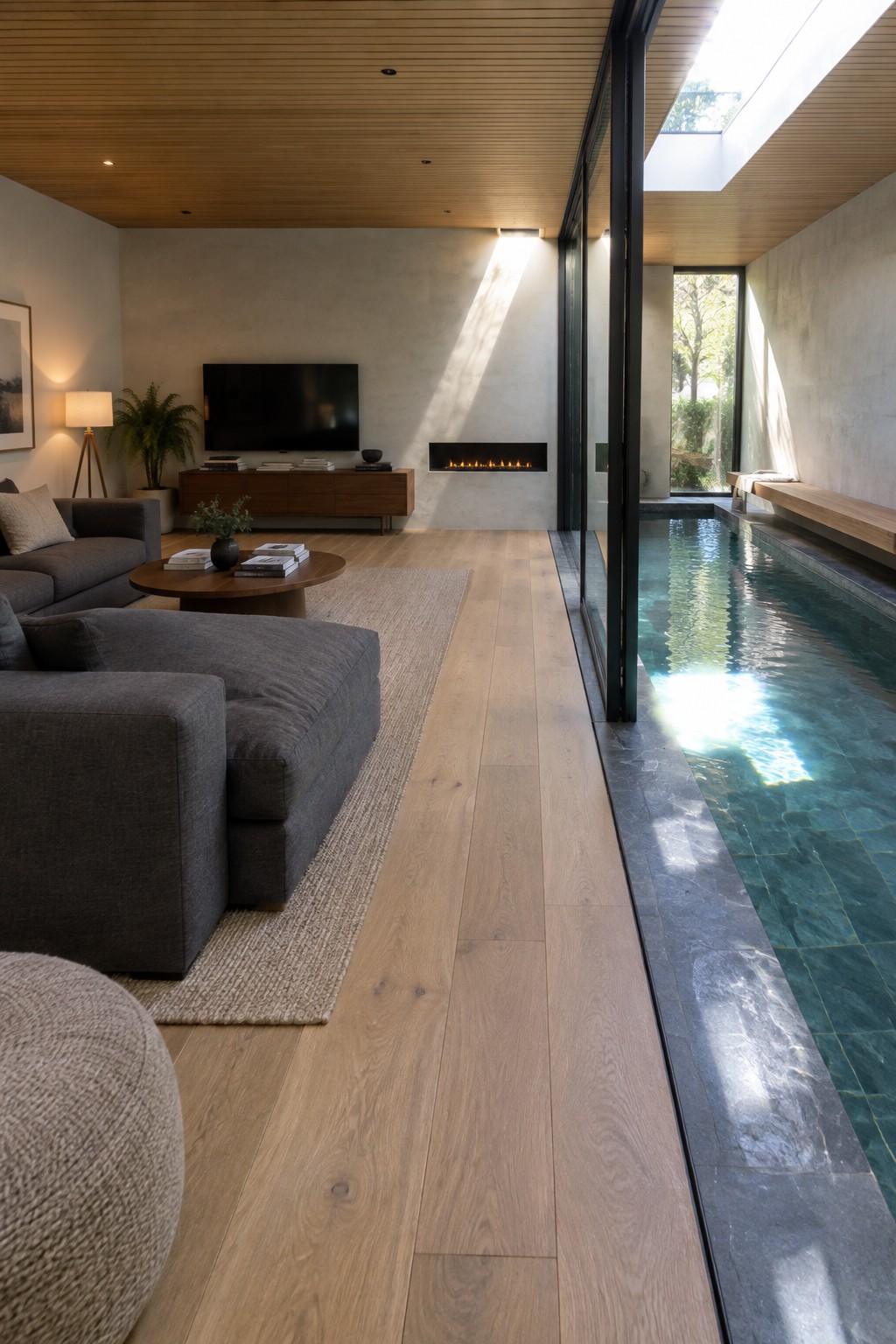
One simple way to make an indoor pool feel like part of daily life is to place it right beside the main seating area. Large sliding glass doors can stay open most of the time, so the water sits just a few steps from the sofa and the room feels bigger without any extra square footage.
This works best in homes with enough width to keep the pool lane clear of furniture. Use the same flooring material on both sides of the opening and keep the wall color light so the space stays bright even when the doors are closed.
Glass Doors That Link the Indoor Pool to Living Spaces
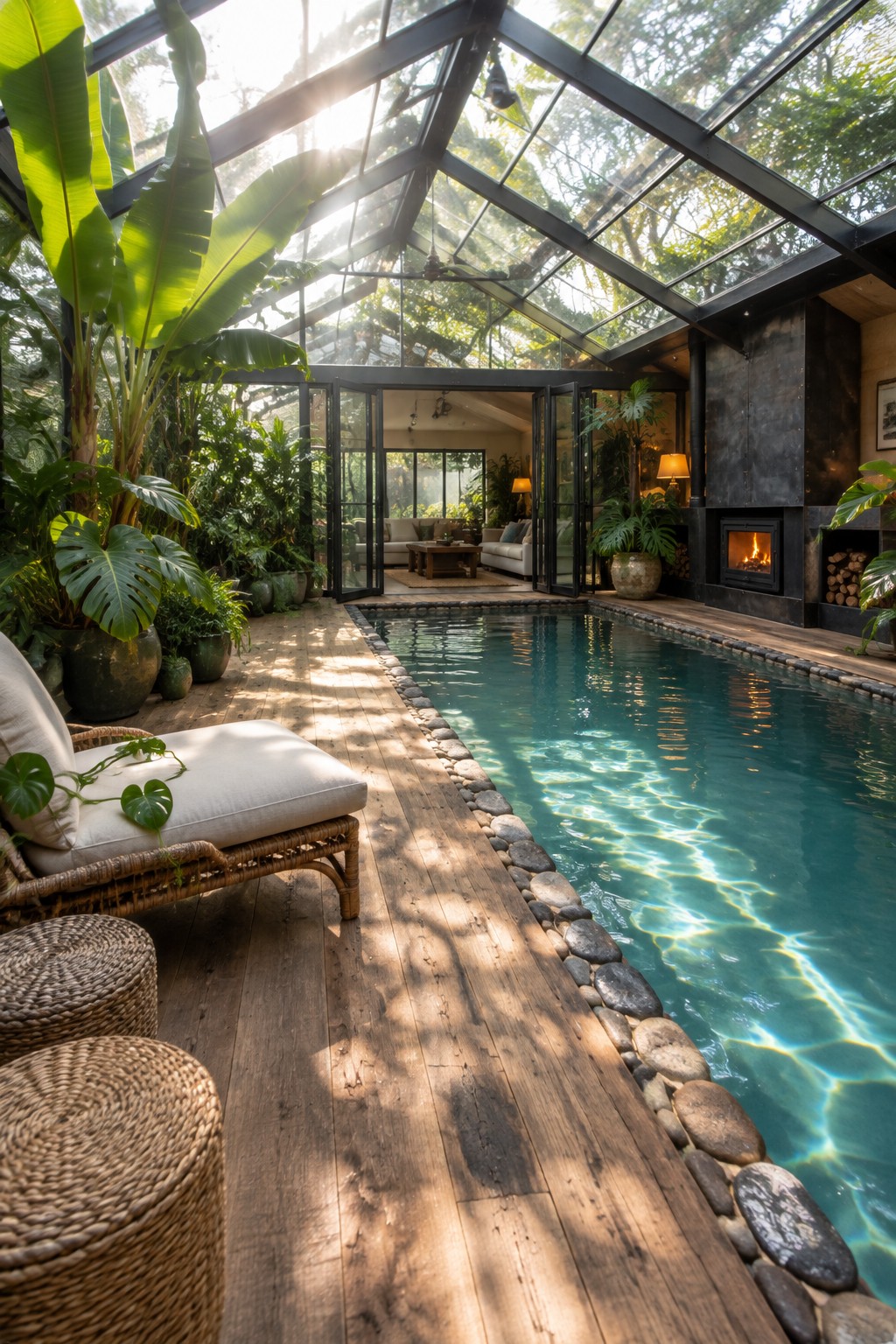
Large glass doors make the biggest difference when an indoor pool sits right next to main living areas. They turn what could feel like a separate wet zone into something that flows straight into the rest of the house. The doors let light reach deeper into both spaces and keep the pool from feeling closed off or hidden away.
This setup works best in homes where the pool can sit on the same level as the living room without major height changes. Keep the surrounding deck simple, use the same or similar flooring on both sides of the doors, and make sure the doors open wide enough for easy movement. It suits houses with decent ceiling height and good ventilation so the pool area does not feel humid when the doors stay open for long periods.
Glass Walls That Keep the Pool Part of the Living Space
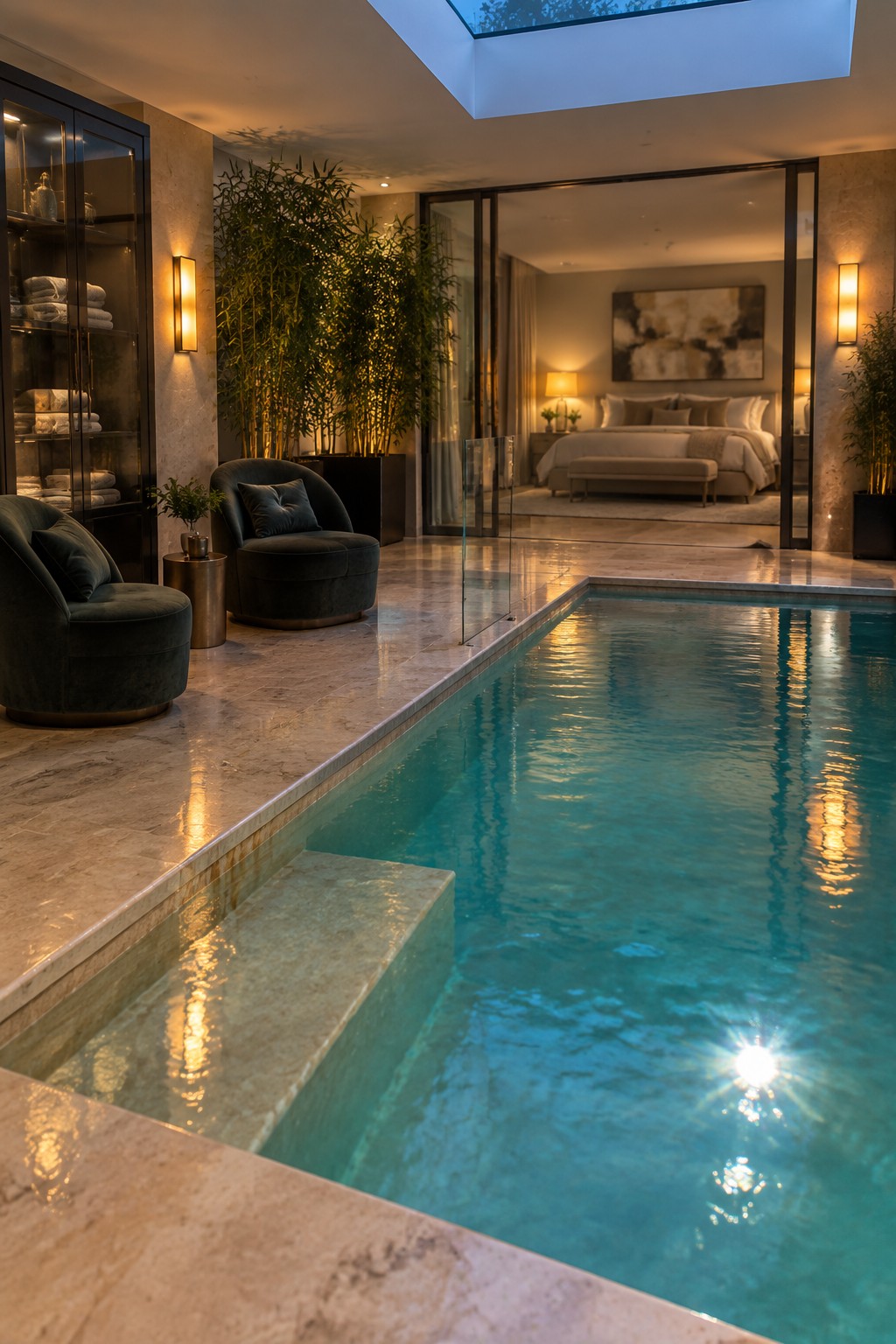
Many indoor pool setups feel cut off from the rest of the house, but glass walls change that. They let the pool area stay visually connected to nearby rooms like the bedroom without letting in the cold or losing climate control. The open sightline makes the pool feel like an extension of daily living rather than a separate facility.
This works best in homes where the pool gets regular use and sits on the same level as main living spaces. It suits layouts that want an open feel while still handling humidity and temperature differences. Make sure the glass is tempered and sealed well, and think about how noise from the pool carries into quieter rooms.
Stepping Stones Link the Pool to Living Areas
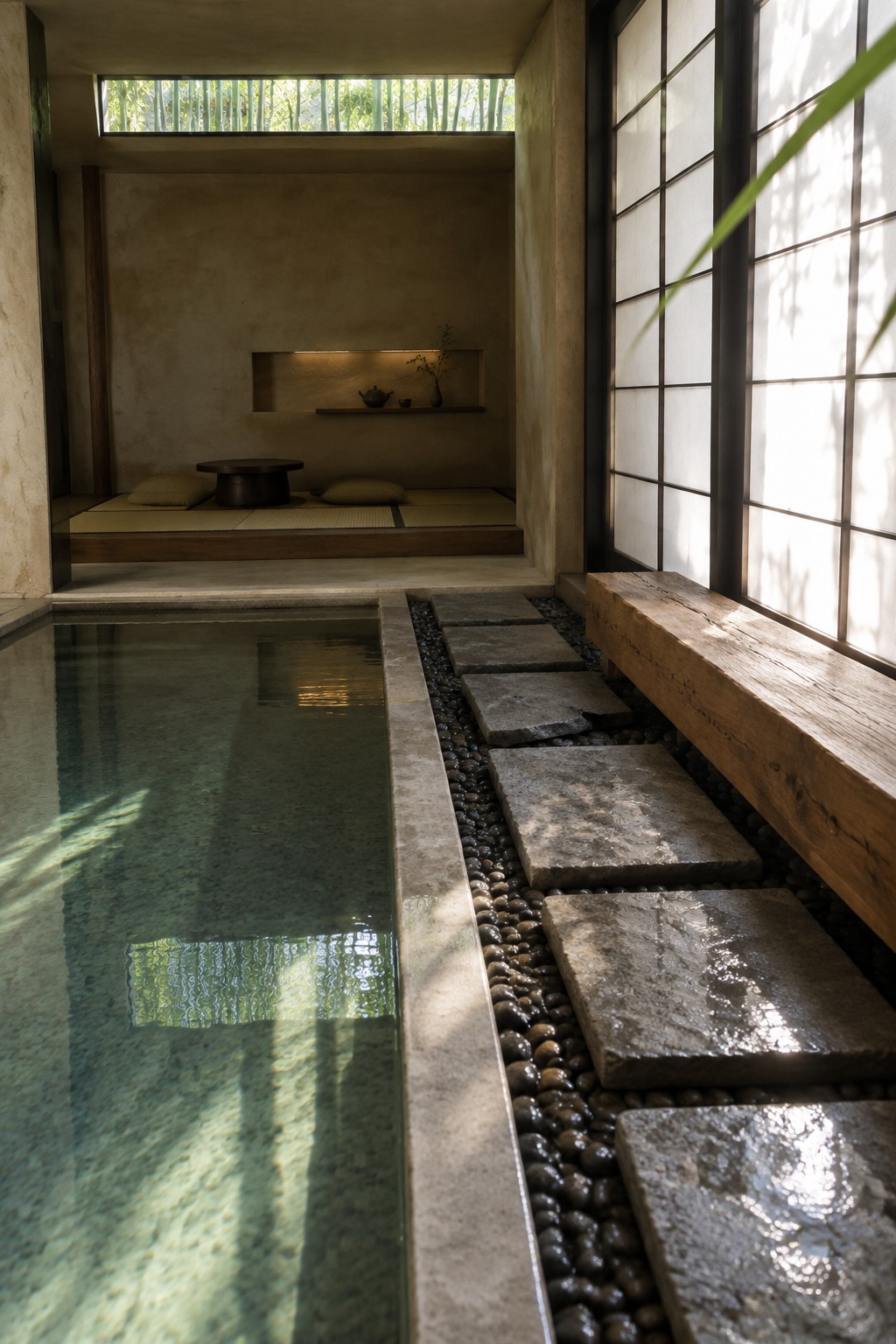
Stepping stones set into pebbles give an indoor pool an easy connection to the rest of the home. The path keeps the water close without turning the space into a closed-off pool room, and the low profile lets the living area feel like it belongs right next to the water.
This layout works well in homes that have room for a modest indoor pool beside a main seating zone. It suits people who want the pool to feel usable rather than decorative. Keep the stones level and the pebbles contained so the transition stays practical day to day.
Running the Pool Right Next to the Seating
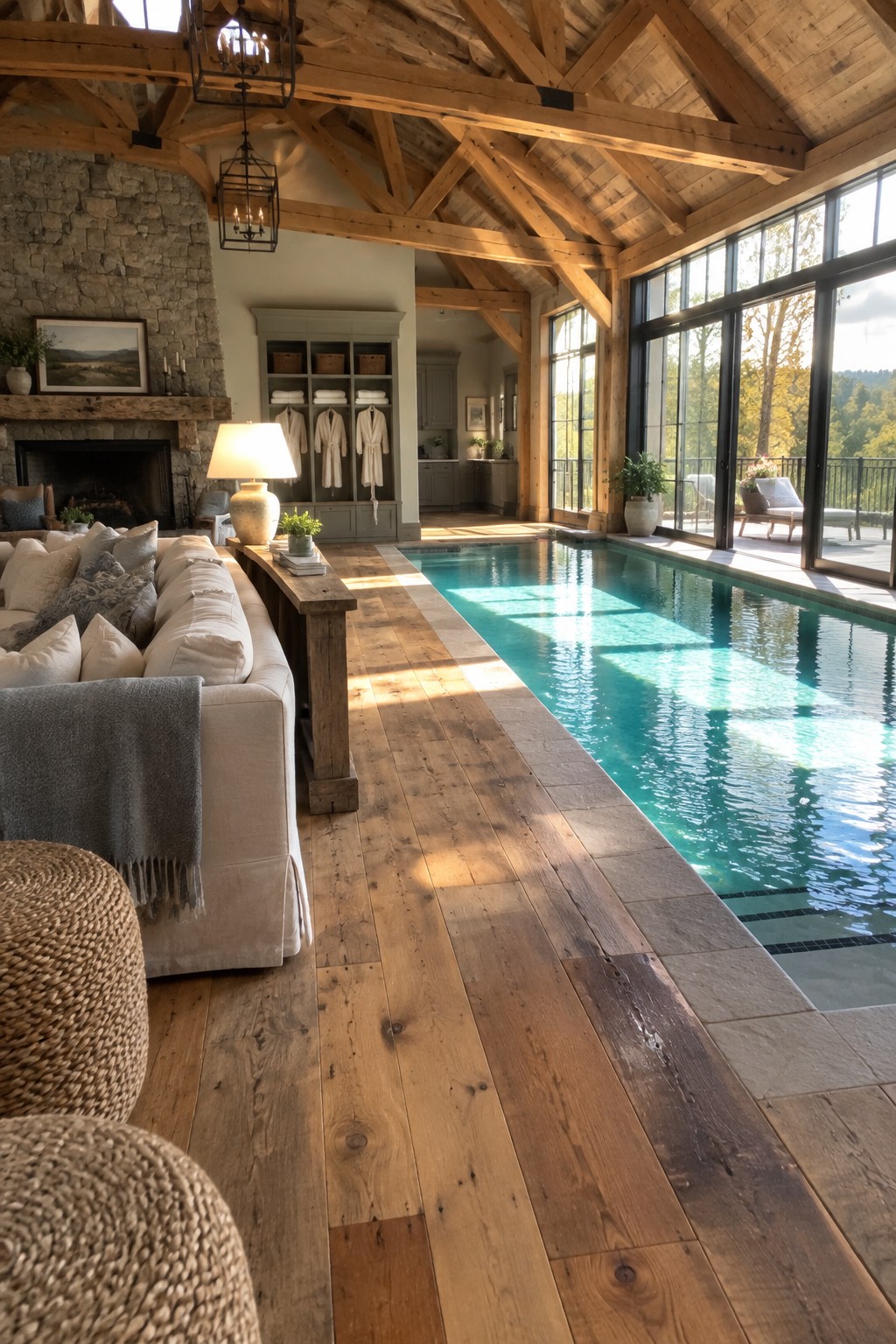
One approach that feels natural in bigger homes is to let the indoor pool share the same floor level and open space as the main seating. The wood planks run straight alongside the water, so the sofa and pool sit in one continuous room instead of being separated by walls or changes in level.
This works best when the house already has high ceilings and plenty of light from large windows. It keeps the pool from feeling like a separate facility, though you do need solid ventilation and flooring that can handle the extra moisture near the edge.
Connecting the Indoor Pool to Everyday Living Areas
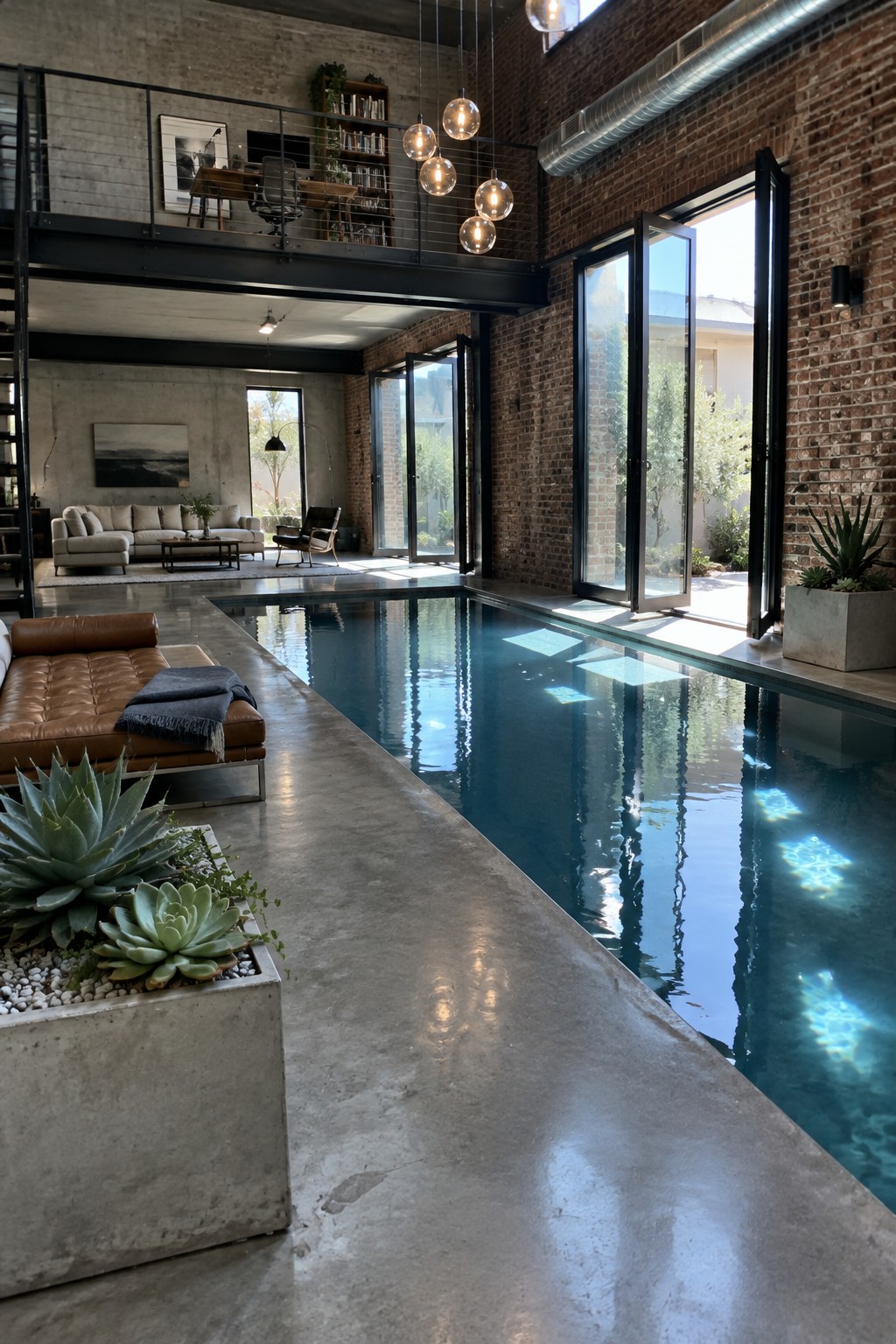
Placing the pool right next to the main seating and walking areas turns it into part of daily life instead of a separate destination. The same concrete surface runs straight up to the water’s edge, so the space feels open and continuous rather than divided into wet and dry zones.
This layout suits larger homes with high ceilings where the pool can sit parallel to the living space without crowding it. Keep the transition simple and level so movement between the two areas stays natural and the pool does not feel like an afterthought.
Running The Pool Right Beside The Dining Table
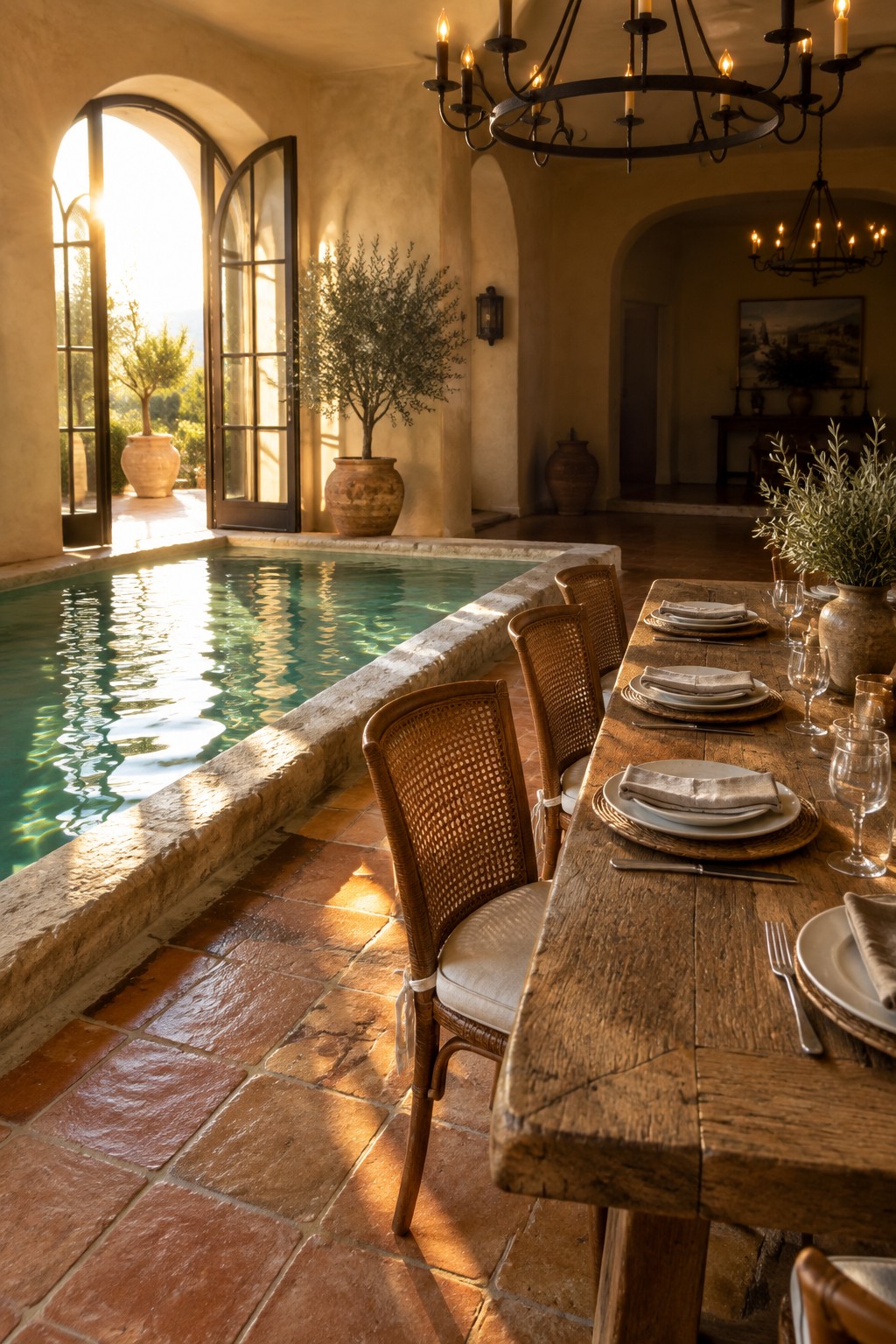
This layout keeps the pool edge right next to the dining area so the water becomes part of the daily living space instead of a separate feature. The continuous floor and open connection to the outdoors help the pool feel like a natural extension of the room rather than something added later.
It works best in homes where the pool gets used often and the owners want it to feel casual. Make sure the flooring and wall finishes carry through both areas so the pool does not break the flow of the room.
Extending Home Flooring Right To The Pool Edge
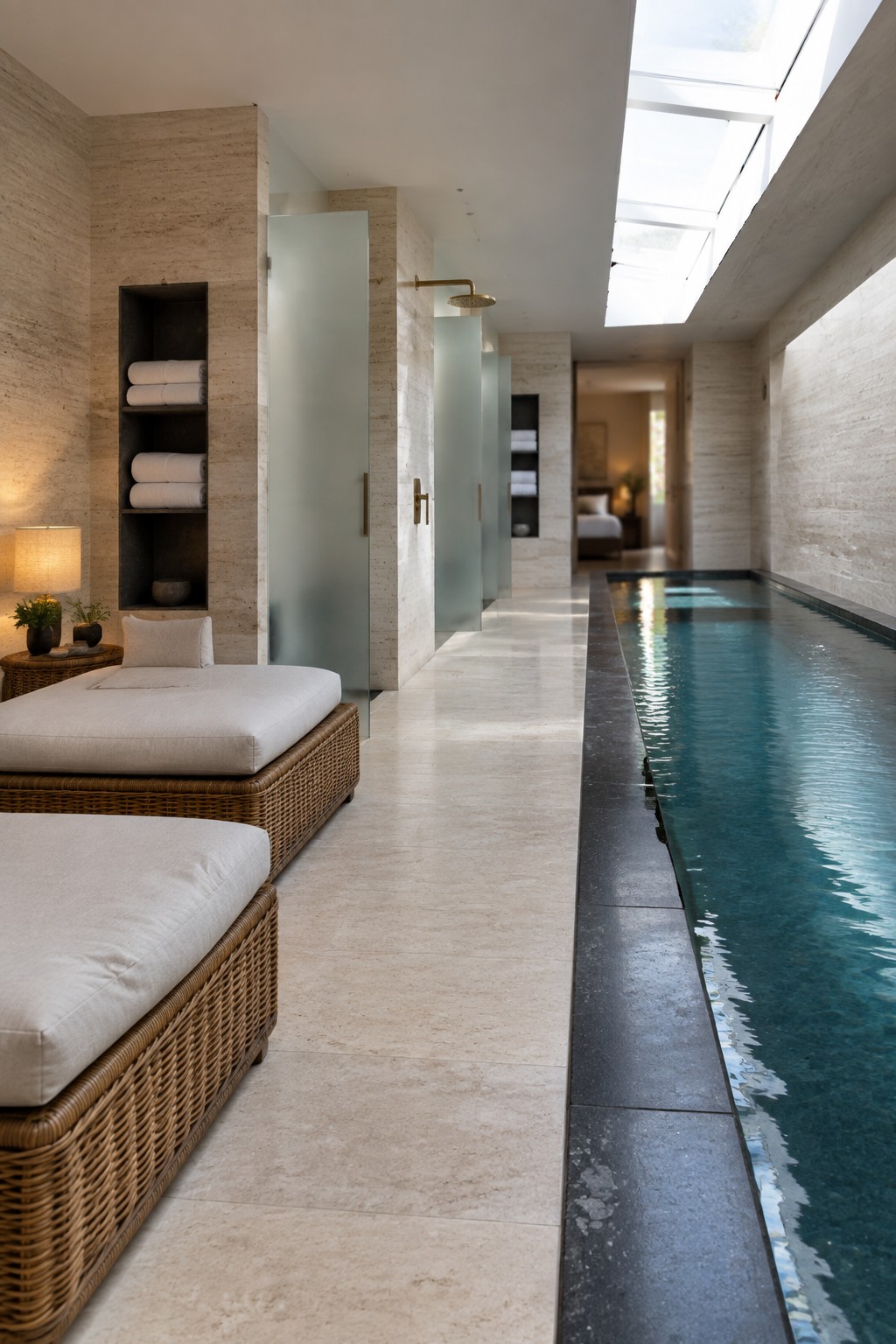
One of the simplest ways to make an indoor pool feel like part of the house is to keep the same floor material running straight up to the water. In this space the light stone continues without a break, so the pool does not read as a separate zone. It just becomes another part of the room.
This approach works best in homes where the pool sits close to living or lounging areas. The matching surface keeps the eye moving and avoids the hard stop you get with different decking or tile. Just make sure the stone you choose holds up to moisture and looks right in the rest of the house too.
Large Glass Doors That Connect the Living Area to the Pool
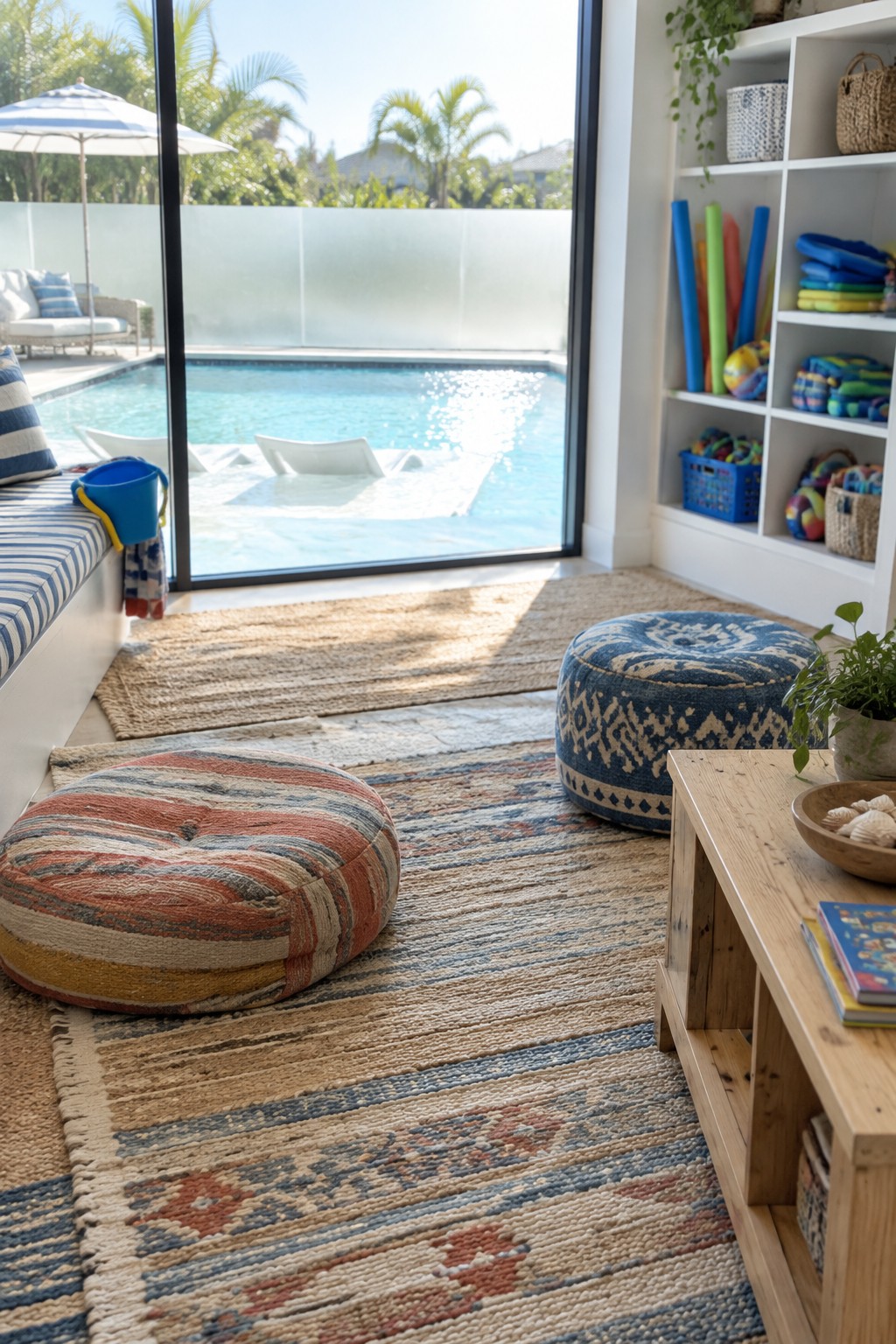
Large glass doors work well when you want the pool to feel like part of the main living space. They remove the visual barrier so the room stays bright and the water stays in view, which makes the whole area feel more open without any major construction.
This setup suits family homes where people move between inside and out often. Keep the seating low and casual so it does not block the view, and check that the doors can open wide on good days.
Glass Walls That Connect The Office To The Pool
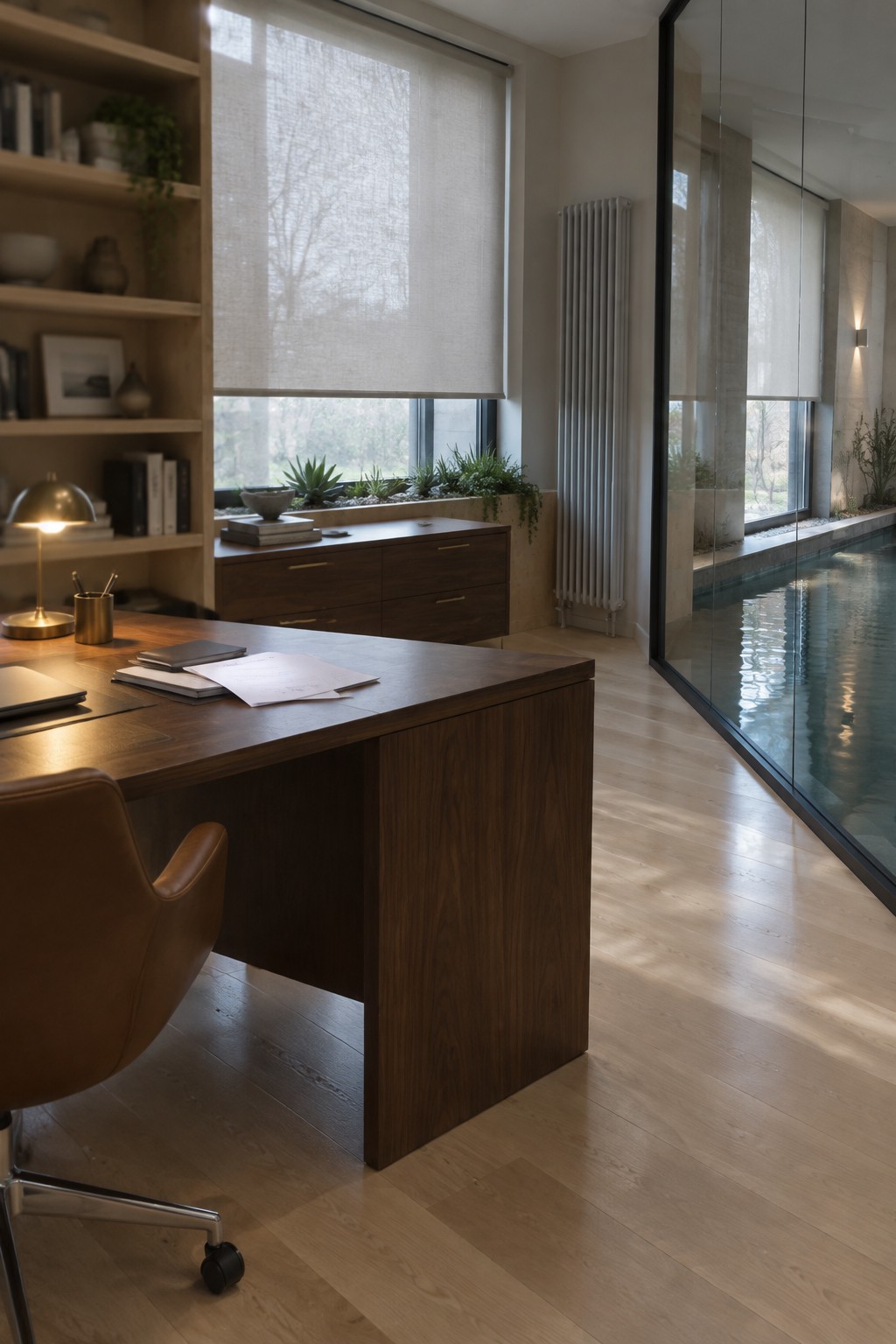
Placing a desk right up against a glass wall that looks straight into an indoor pool keeps the water visible without turning the workspace into a wet zone. The separation still feels open because the pool runs the full length of the glass, so the view stays consistent whether you are working or just glancing up.
This setup works best in homes where the pool sits on the same level as the main living areas. The glass needs to be sealed well against humidity, and the floor should handle any occasional moisture near the edge. It suits people who want the pool present in daily life without making the whole room feel like a pool house.
Adding Seating Along An Indoor Pool
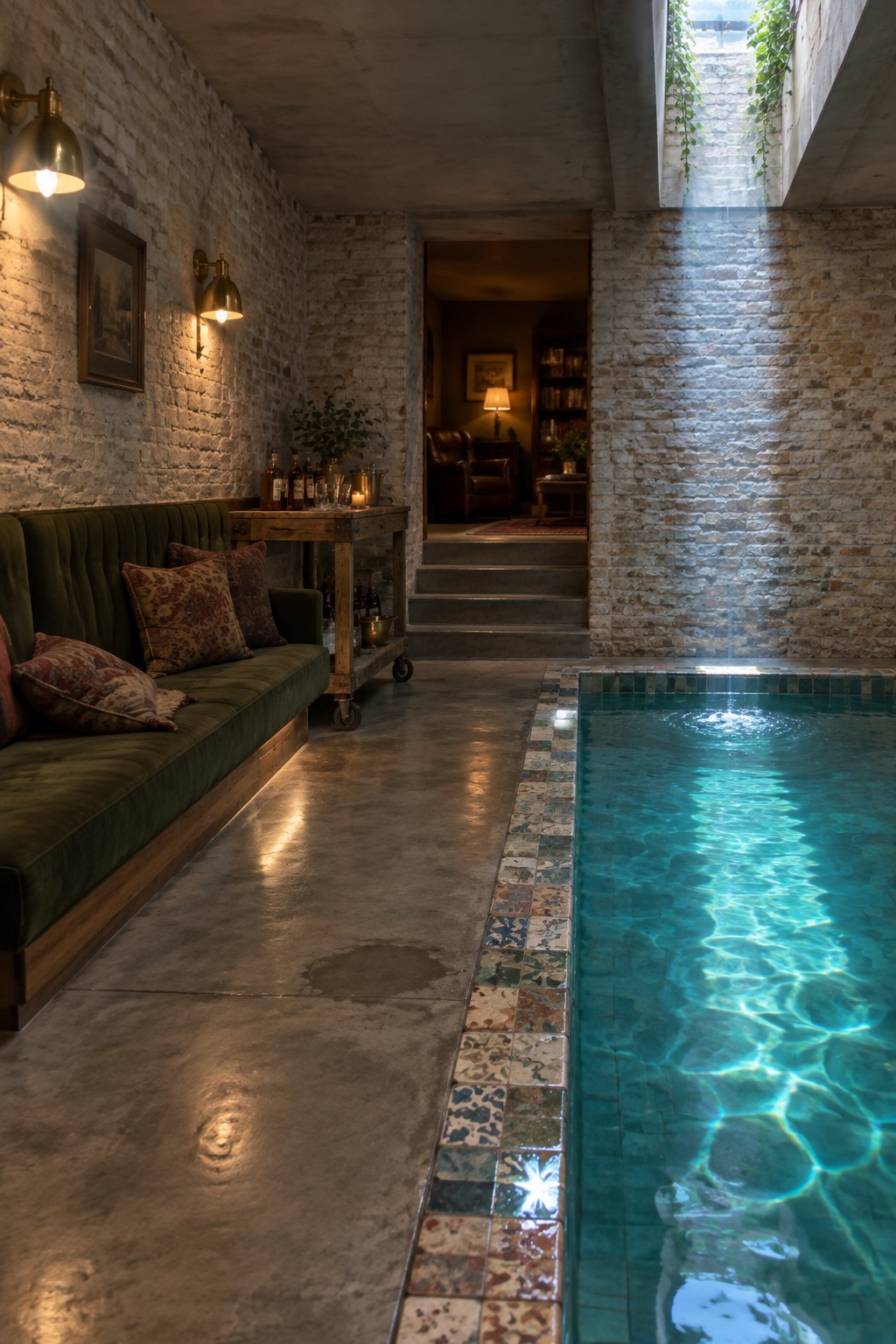
Many homes benefit from placing a bench or sofa right beside the pool. It makes the water feel like part of the everyday living area rather than a separate feature tucked away.
This setup works best in spaces where the pool sits at the same level as the main rooms. Keep the seating simple, use moisture-friendly fabrics, and leave enough room along the edge for easy movement.
Extending an Indoor Pool Down a Hallway
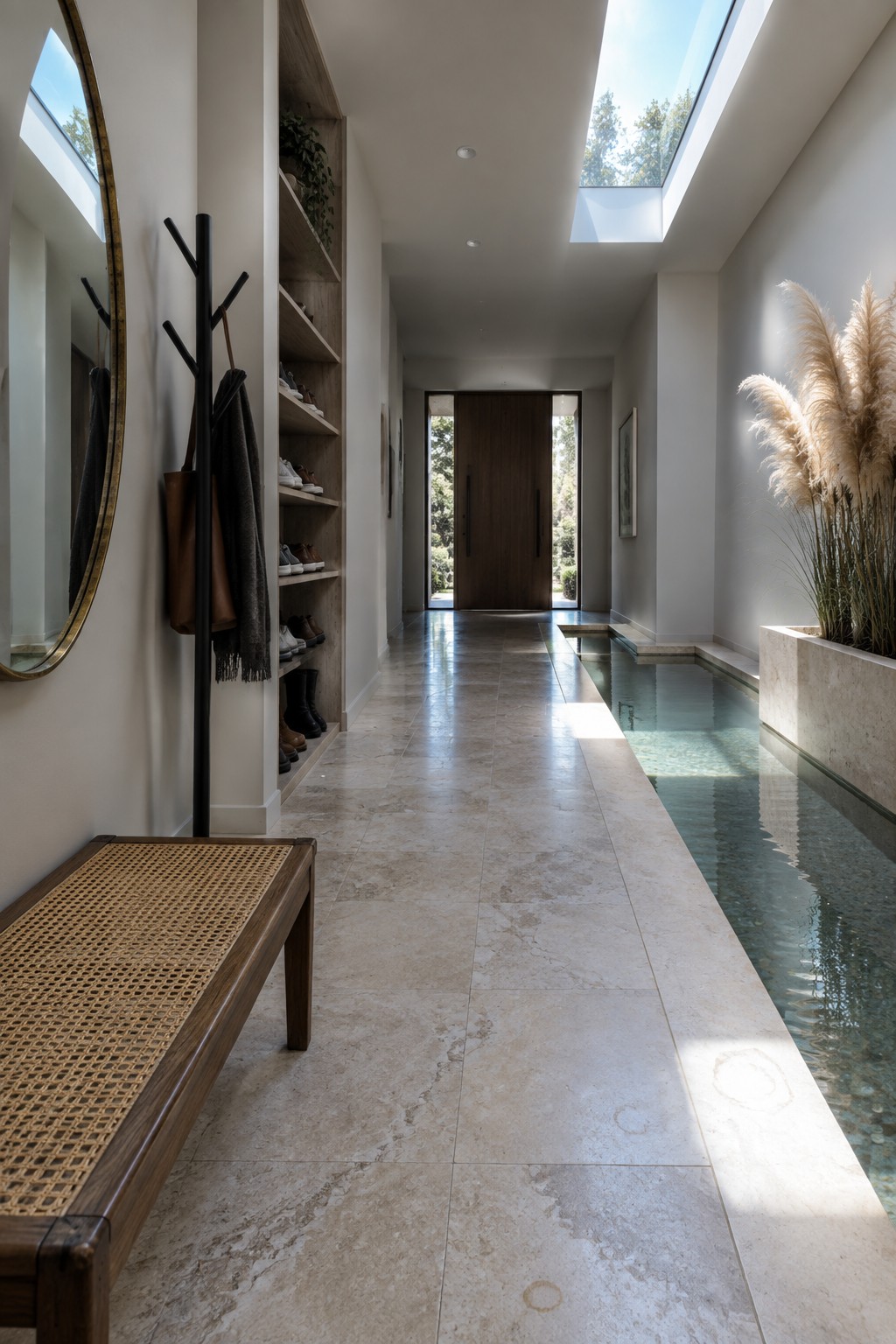
A narrow water channel can turn a basic hallway into part of the living space rather than just a walkway between rooms. The steady presence of water adds a quiet rhythm to the house and makes the whole area feel more open and connected to the outdoors beyond the far door.
This works best in homes with long, straight passages that already have good natural light. Keep the channel shallow and contained so it stays low maintenance, and use stone or tile flooring that can handle occasional splashes without fuss.
Connecting Pool And Living Areas With Continuous Flooring
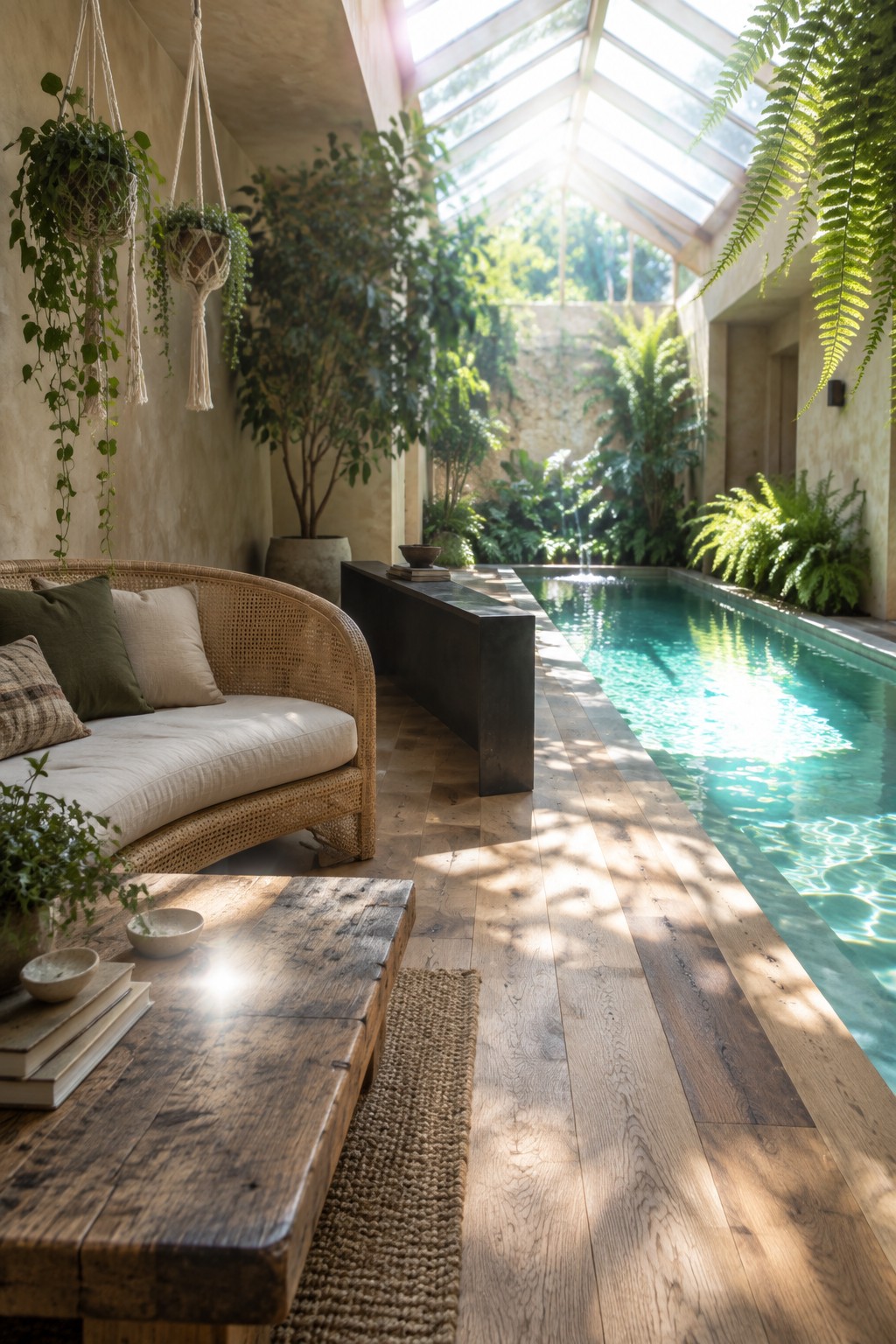
One of the simplest ways to make an indoor pool feel like part of the actual home is to run the same floor material from the seating area straight to the water. It removes the hard break that usually happens between the pool deck and the rest of the room.
This approach works best in spaces where the pool sits level with the main living zones. The wood here carries through without any change in height or material, so the sofa and pool edge read as pieces of the same room rather than separate zones.
Frequently Asked Questions
Q: How do I stop moisture from the pool reaching my living room couches? A: Run a dedicated ventilation system that cycles air directly from the pool area outside. This setup pulls humidity away before it drifts into shared spaces.
Q: Is it hard to keep the pool clean when it is open to the house all the time? A: Skim the surface daily and use an automatic cleaner that runs on a schedule. The key is consistent water treatment so dirt does not build up fast.
Q: What if the pool takes up too much floor space in a smaller home? A: Tuck it into a corner with a narrow deck that doubles as seating. This way the water blends into the room without eating all the walking area.