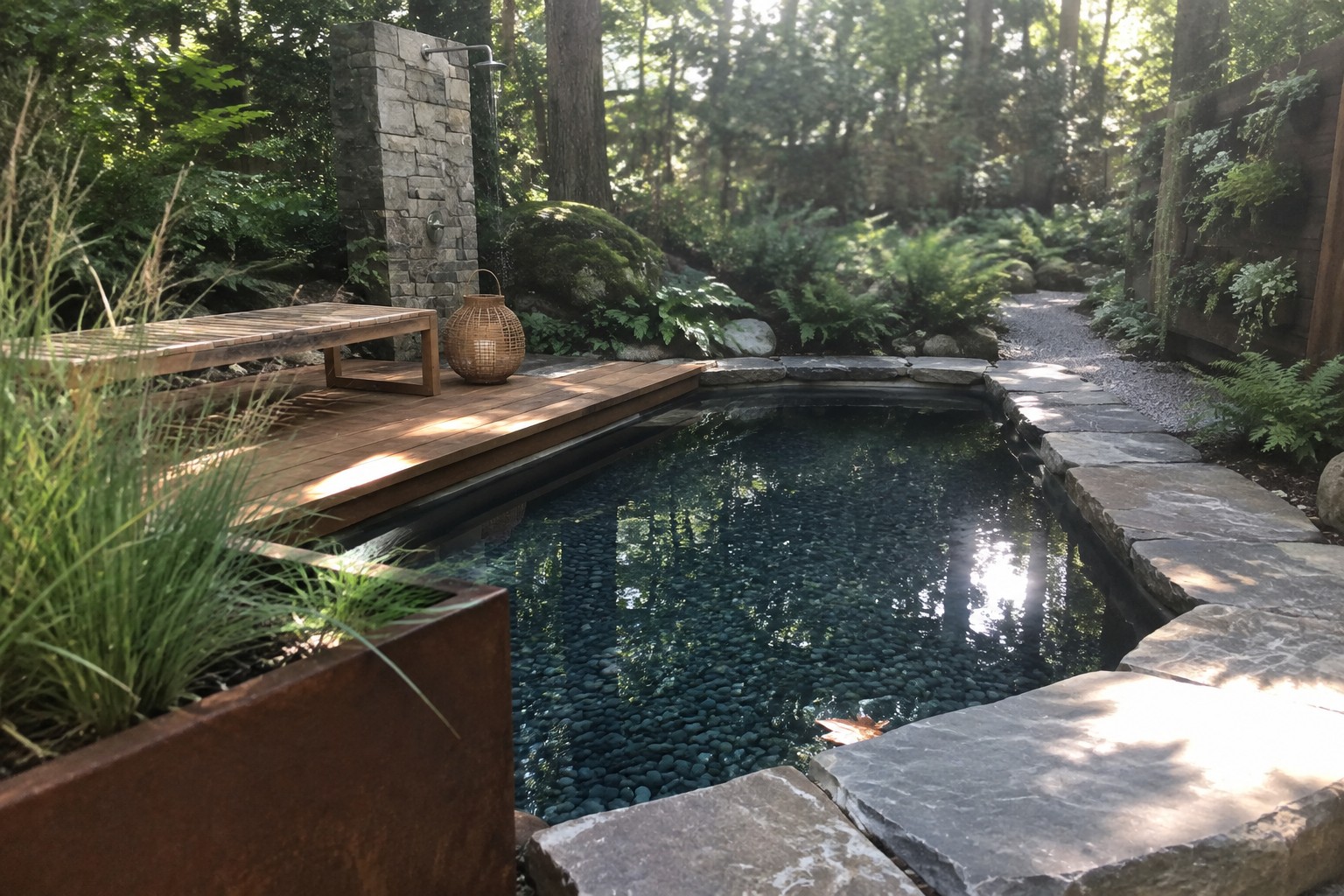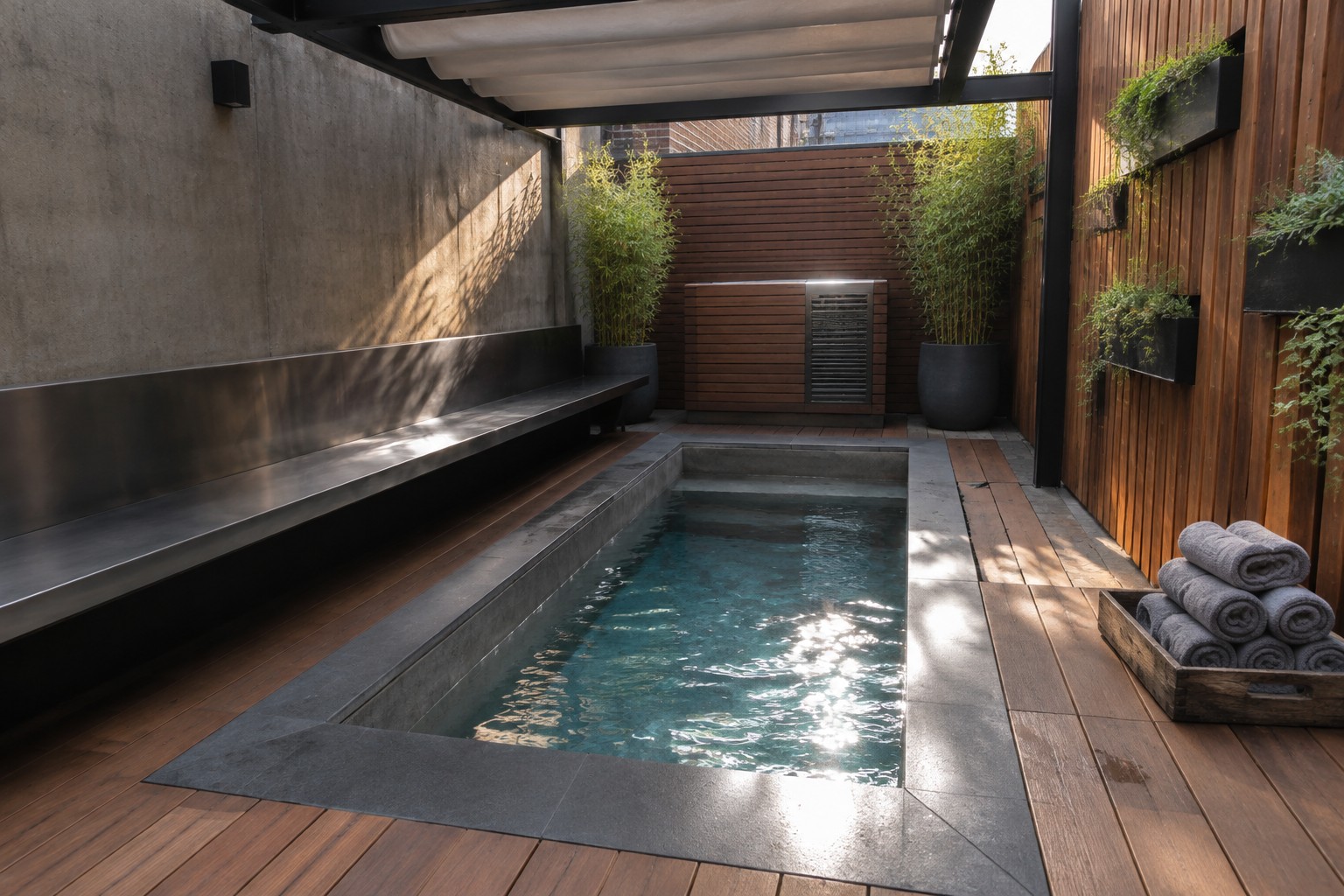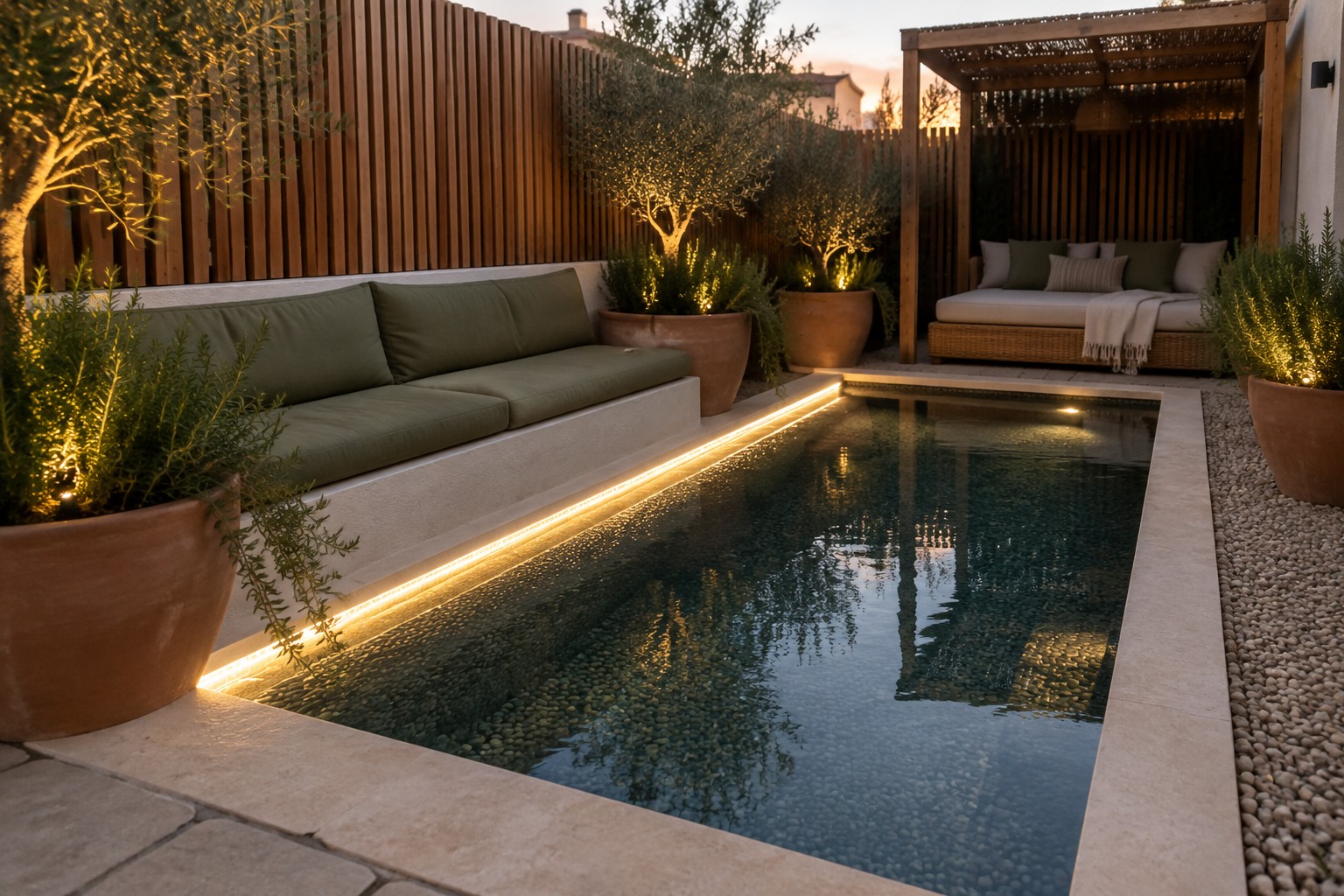
I have found that plunge pools tend to feel more usable when the surrounding deck and seating areas are planned around them from the start.
Lighting that runs along the edges or steps often makes the biggest difference once daylight fades, turning a daytime feature into something people linger around after dinner.
Many designs fall short on that last part.
I usually check how the pool sits with the existing paths and plantings before I consider any lighting options at all.
Over time those small adjustments keep the space from looking added on later.
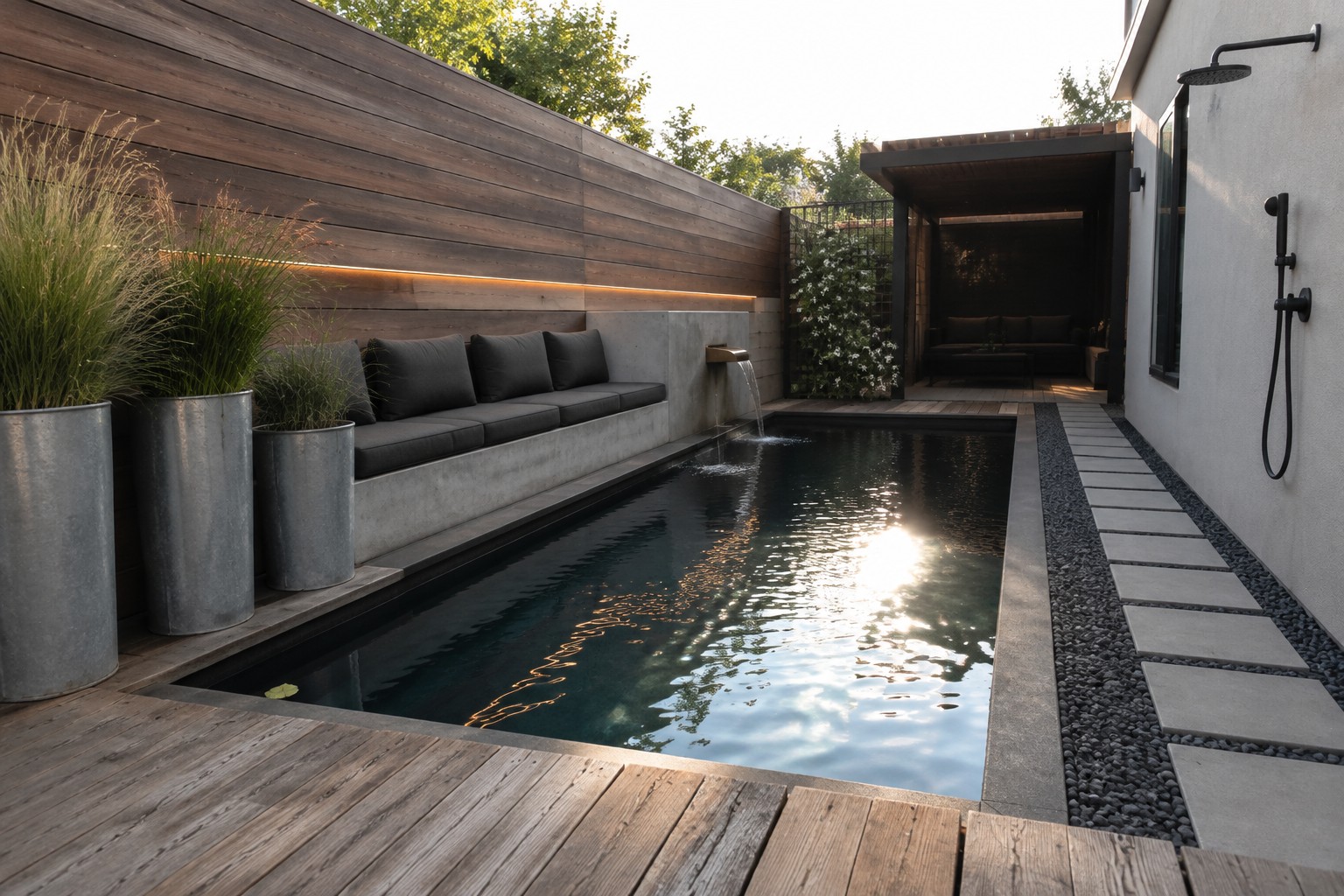
Linear Lighting Along The Pool Edge
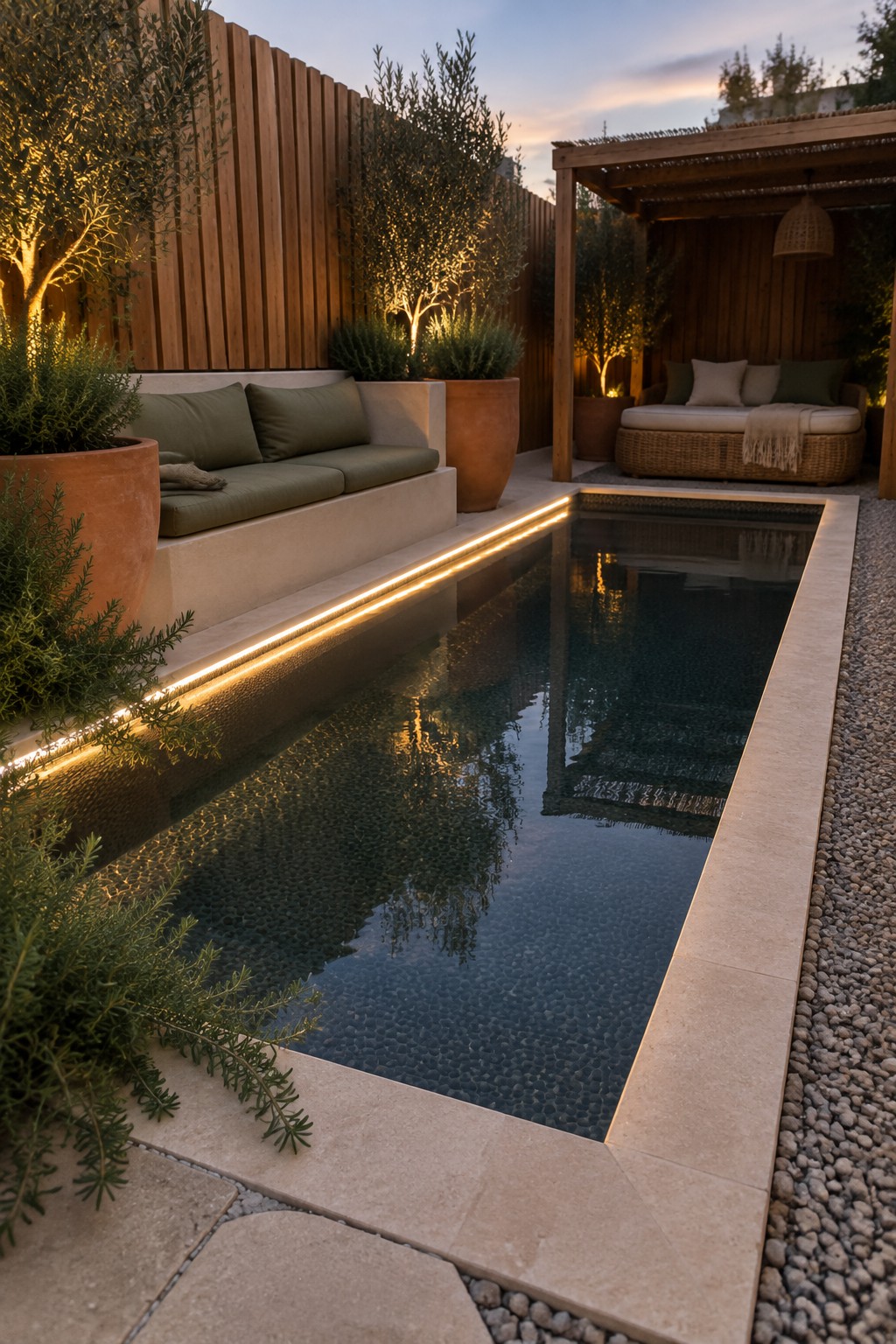
A simple strip of LED lights set into the coping can change how a plunge pool looks at night. The line stays low and clean, so it does not compete with the water or the surrounding plants. It just marks the edge and lets the reflection do the rest of the work.
This approach works best on narrow or rectangular pools where you want to avoid extra lamps or clutter. It suits concrete or stone surrounds and pairs well with built-in seating nearby. Make sure the channel sits flush and choose a warm color temperature so the glow feels soft rather than harsh.
Integrated Pool Coping Lighting
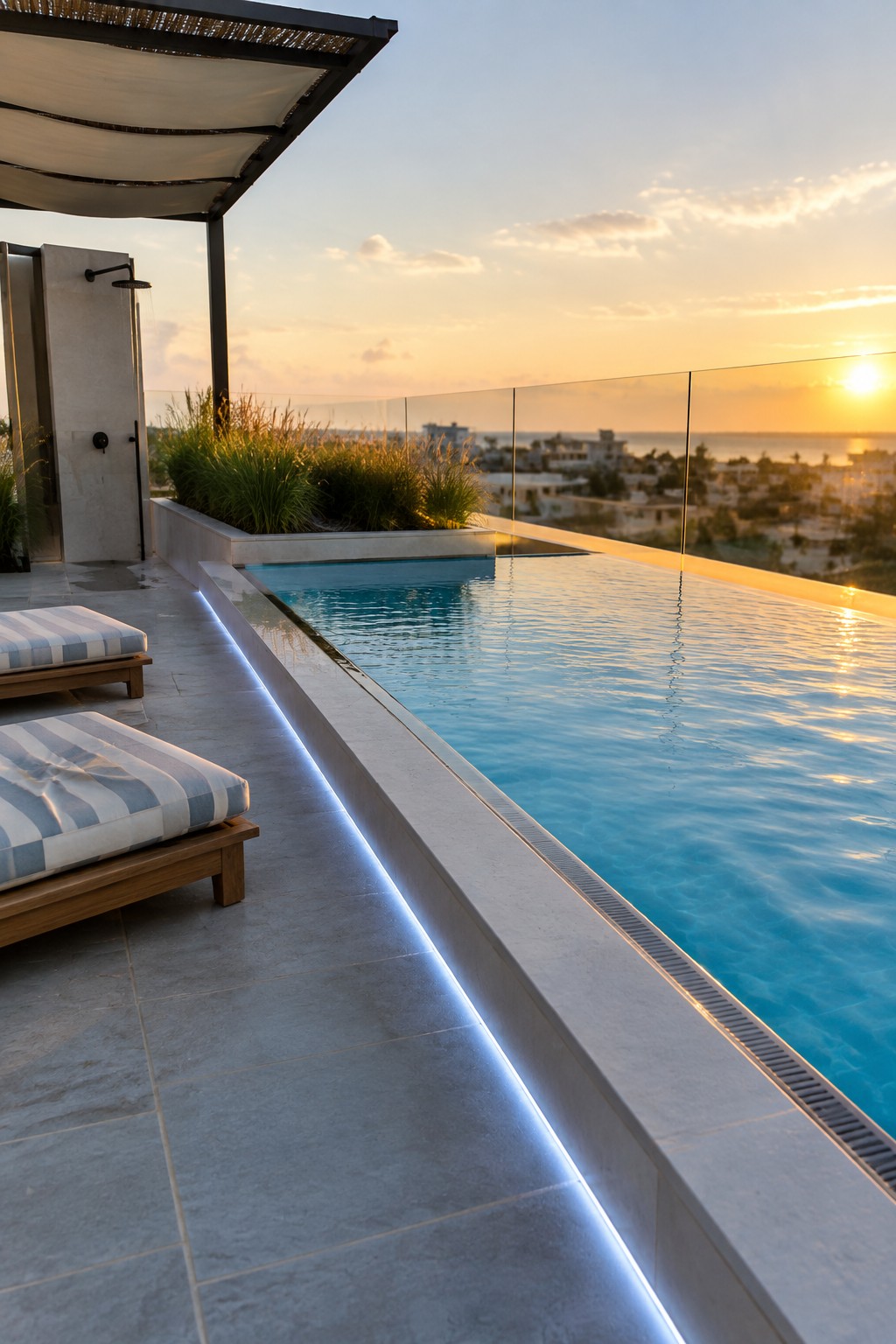
Running a slim line of light directly into the coping turns the pool into its own light source after dark. It keeps the deck clear of extra lamps while still making the water easy to see and use at night.
This works best on compact plunge pools where every inch counts. Use a low, steady output so the glow stays soft and does not compete with the view past the railing.
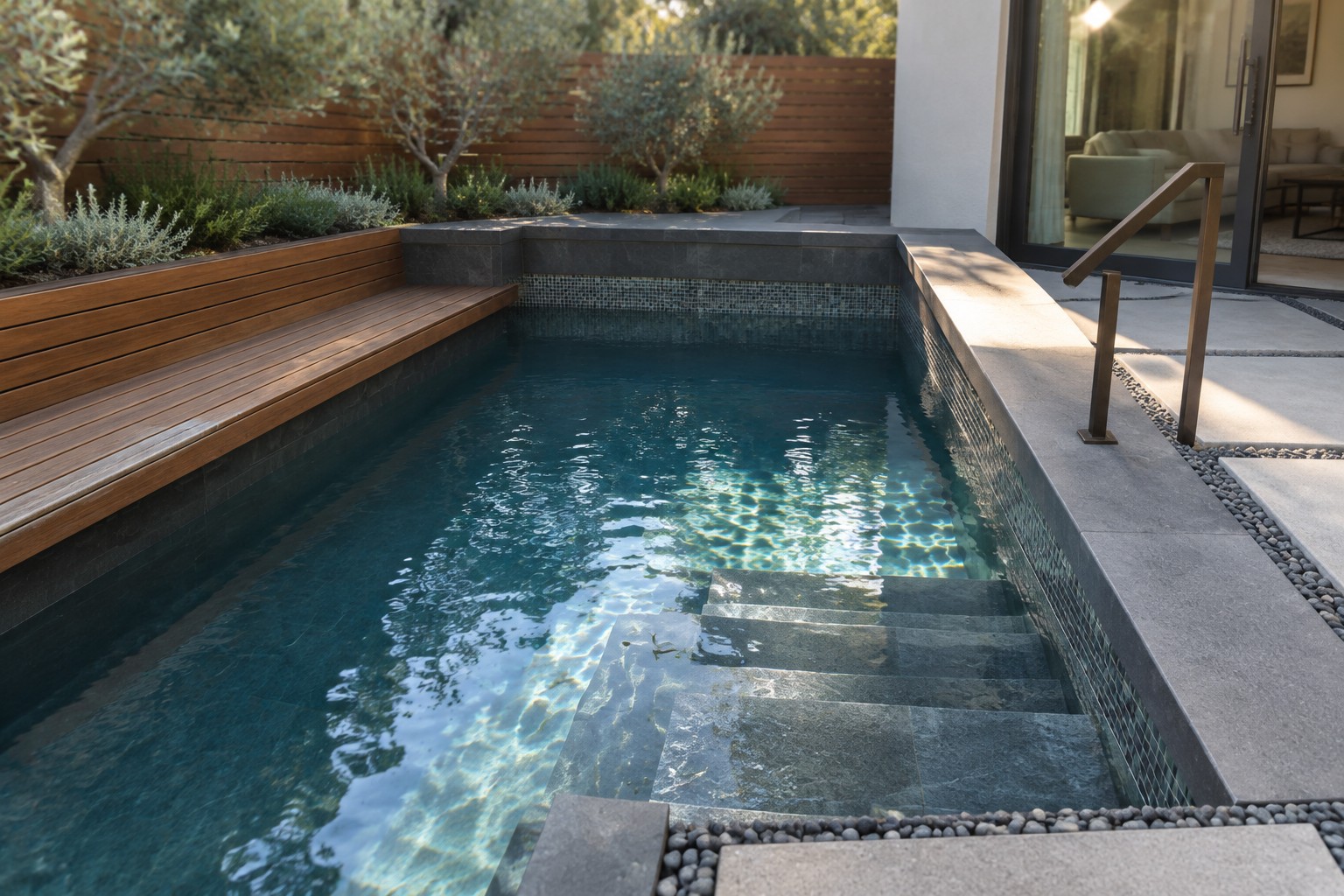
Recessed Step Lights Around A Plunge Pool
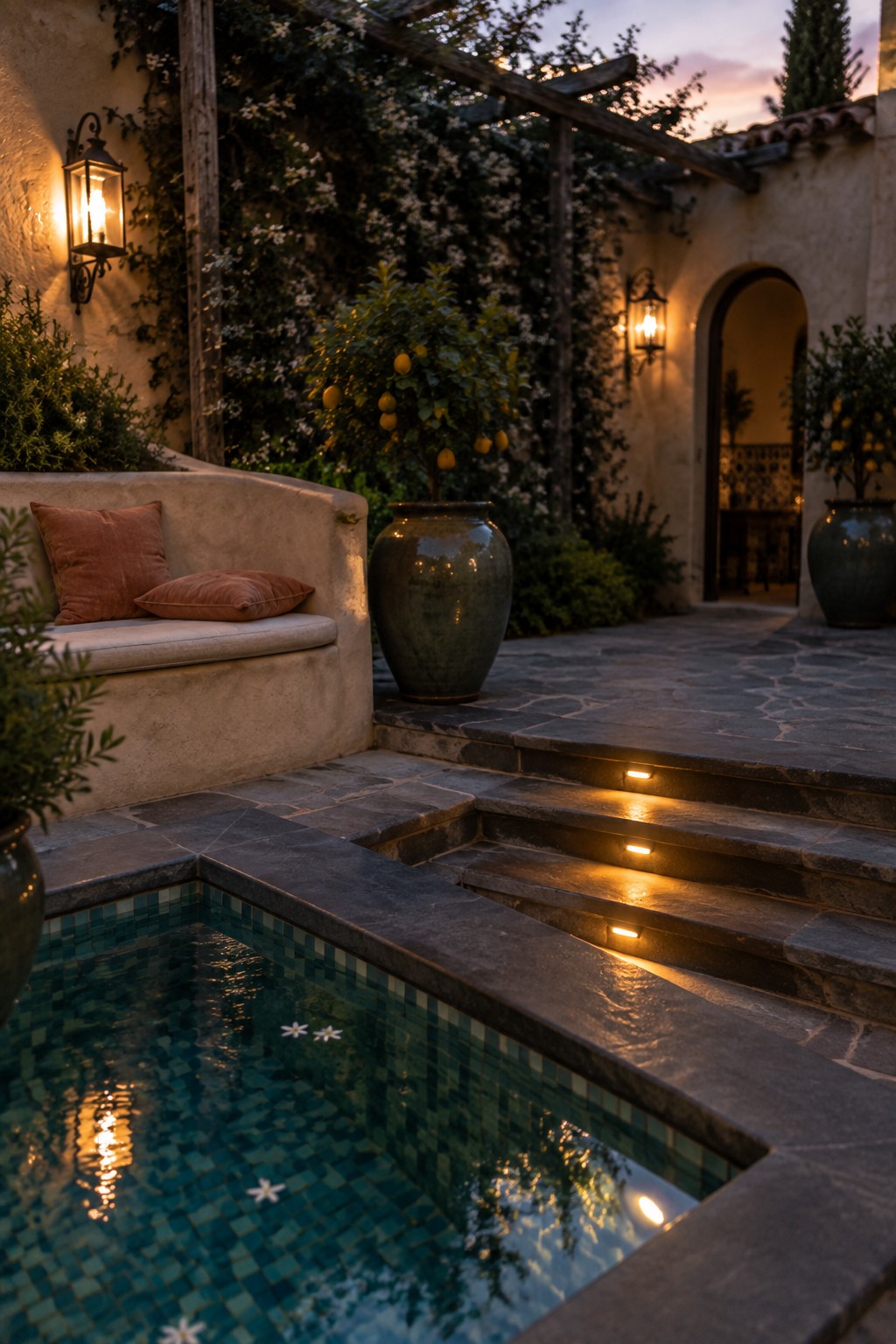
Recessed lights built into the steps make a plunge pool area feel finished and usable once the sun drops. The low glow marks the edge clearly without extra fixtures or cords cluttering the space.
This setup suits small courtyard pools or compact patios where big lighting would feel out of scale. Place the lights evenly along the treads and test the angle so the beam stays on the steps and water rather than shining straight up.
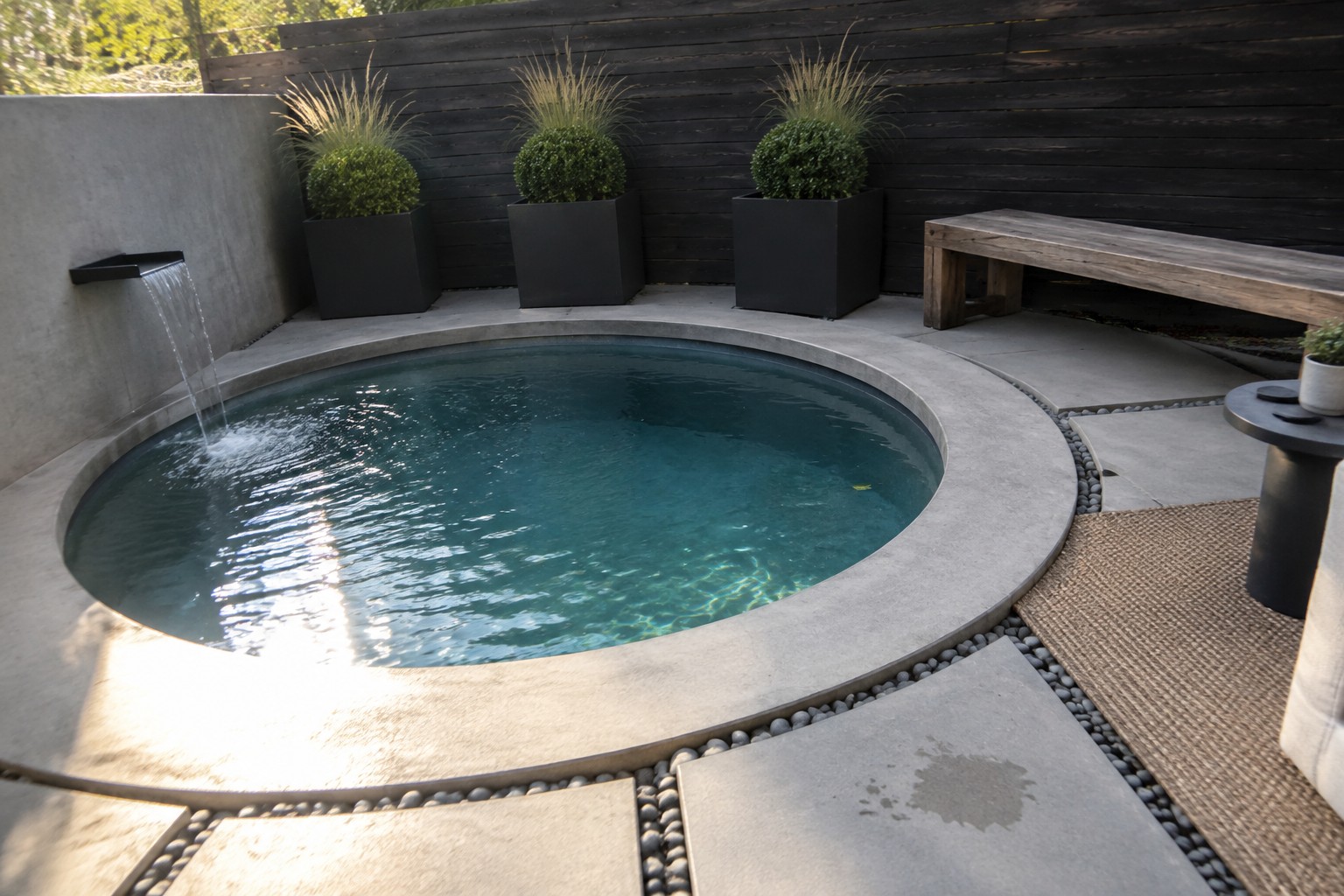
Continuous LED Strips In Stone Pool Coping
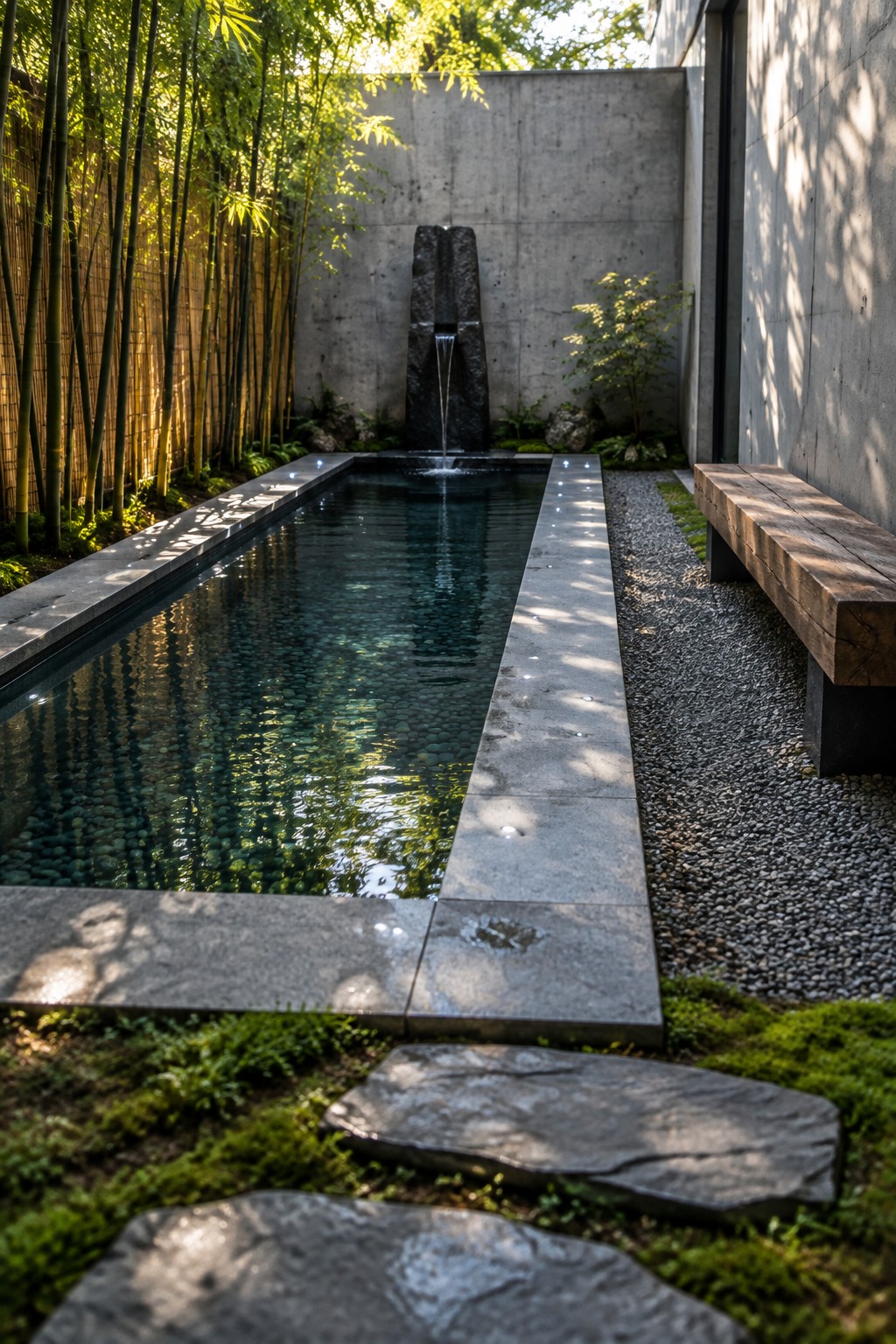
One simple way to make a plunge pool stand out after dark is to build a continuous line of small lights directly into the coping. The lights sit flush with the stone and throw a steady glow across the water without adding any extra fixtures or clutter.
This approach works best in smaller outdoor spaces where clean lines matter. It suits modern concrete or stone surrounds and pairs well with a simple water feature at one end. Just make sure the lights are rated for constant water exposure and easy to access for maintenance later on.
Soft Pool Edge Lighting For Dark Tile
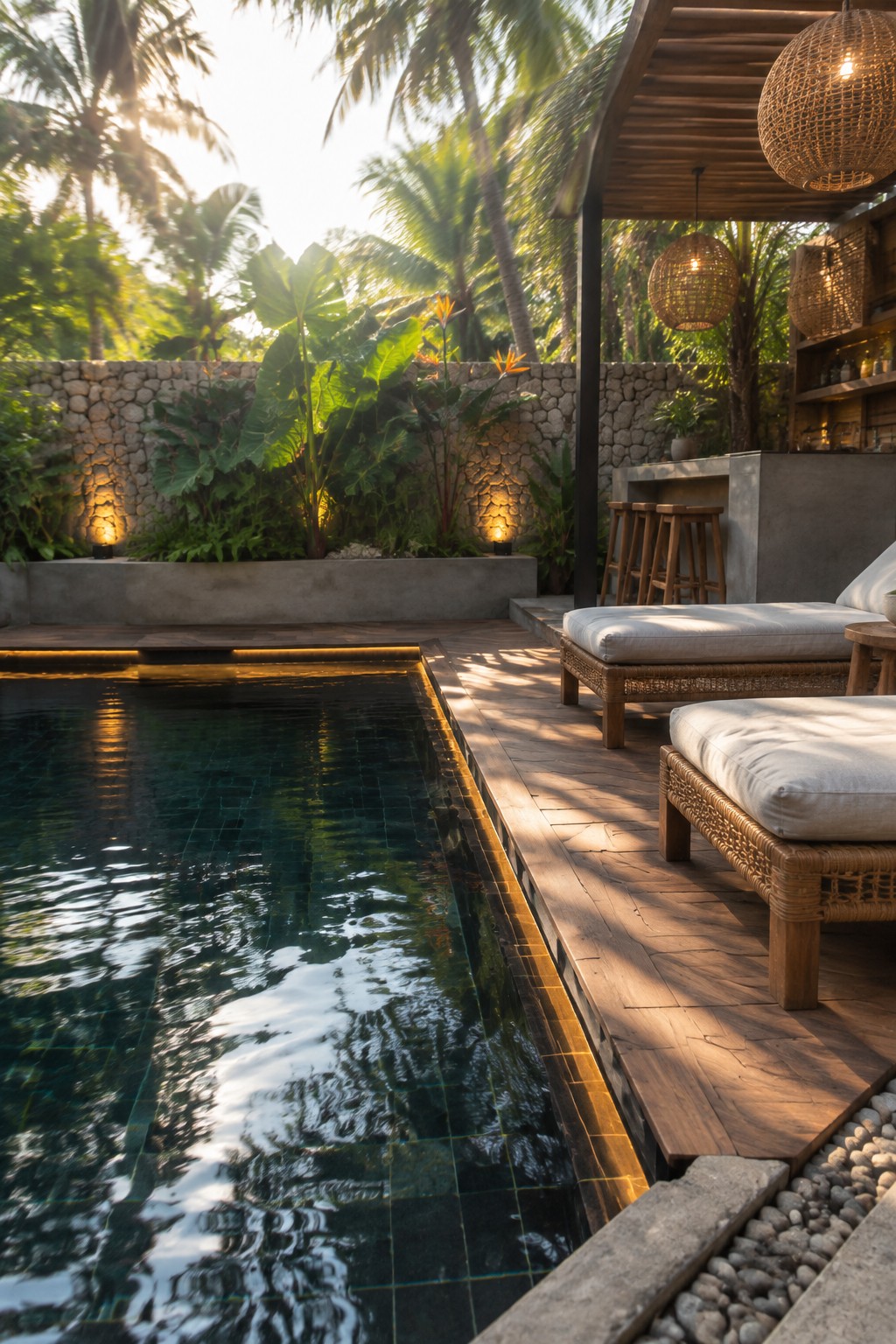
Edge lighting built right into the coping turns a plunge pool into something you can enjoy after sunset without needing big lamps everywhere. The glow stays low and even, outlining the water and making the whole area feel calm rather than brightly lit. It works especially well with darker tile because the light reflects off the surface instead of getting lost.
This approach suits compact backyard pools where you want to keep the deck clear for seating. Place the lights on a dimmer so they can run softly through the evening, and pair them with a few low uplights on nearby planting if the space has a backdrop wall. Just make sure the fixtures sit flush so no one trips on them during the day.
Minimalist Lighting For Compact Pool Decks
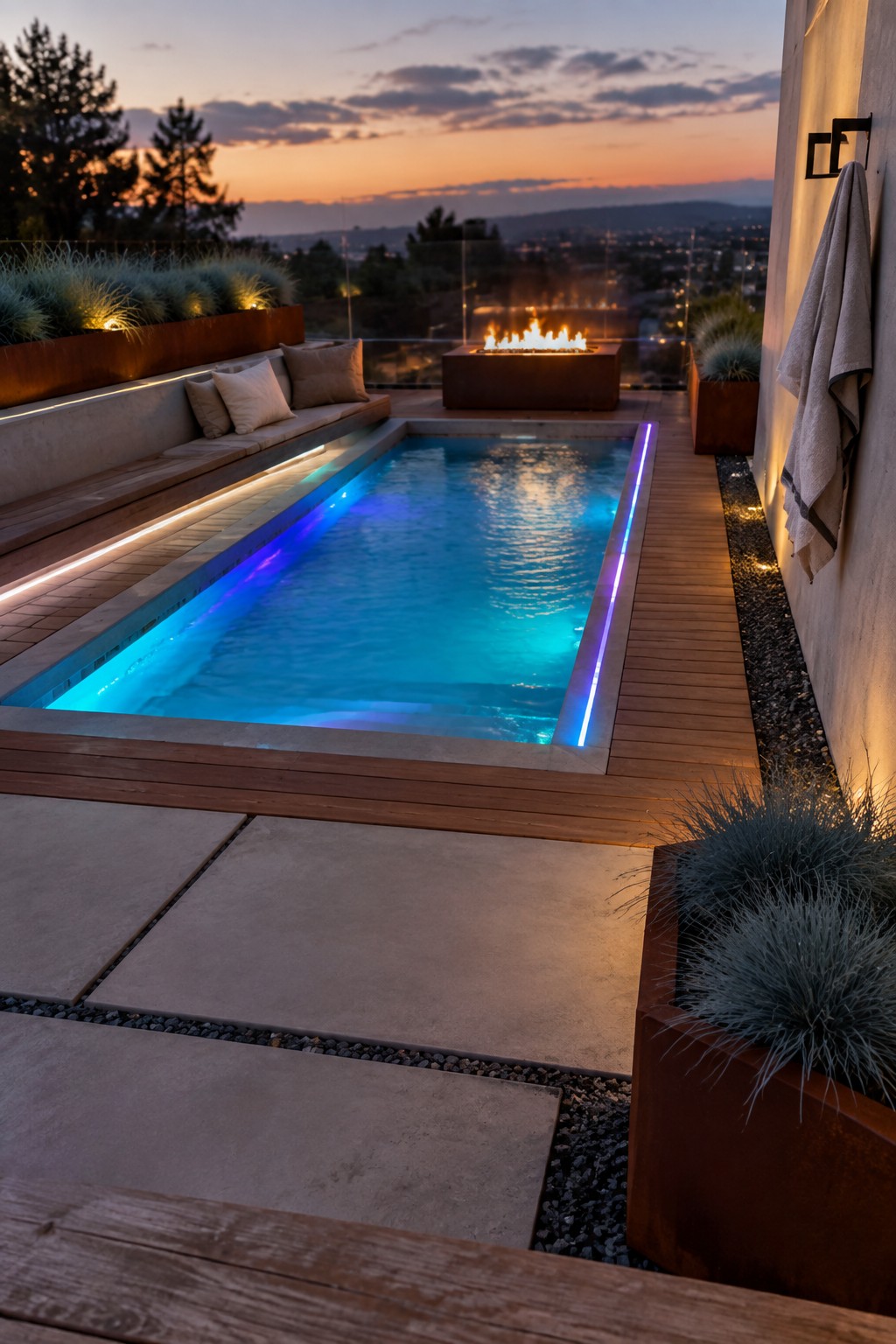
Linear lights set right into the pool coping give a small plunge pool a clean, finished look once the sun drops. The glow follows the waterline without extra fixtures or visible cords, so the surface itself becomes the main feature at night.
This works best on compact decks or terraces where you want the pool to read as a calm focal point rather than a bright spot. It suits homes with simple modern lines and keeps the lighting plan minimal since the pool edges do most of the work.
Layered Lighting Around A Narrow Plunge Pool
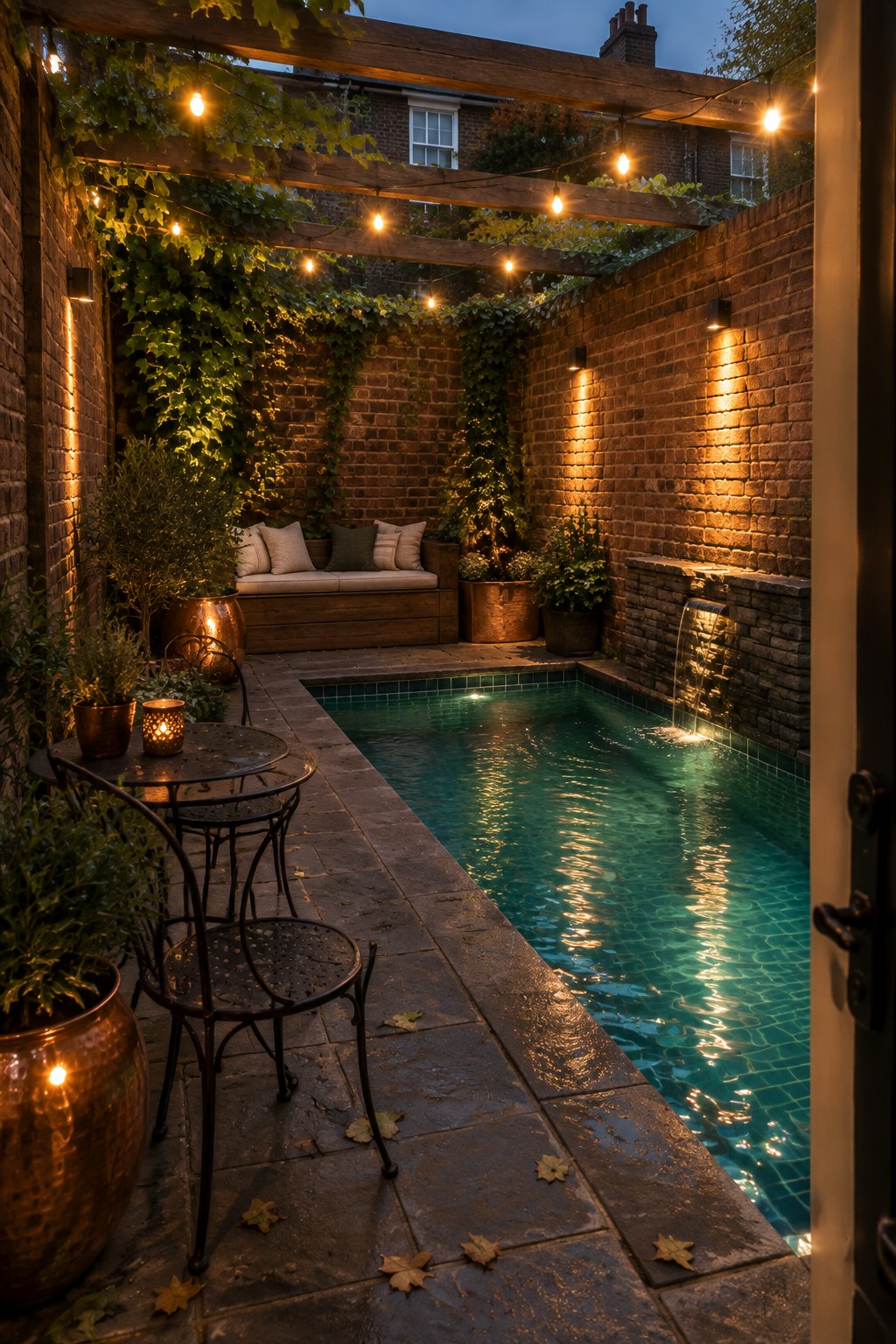
String lights hung overhead combined with wall sconces create a gentle evening glow that makes a small plunge pool feel usable after dark. The setup avoids harsh overhead spots and instead spreads light across the water and surrounding walls in a way that feels calm rather than dramatic.
This works best in enclosed courtyards or tight urban yards where space is limited. Keep the fixtures simple, use warm bulbs, and place them so the light reflects softly on the pool surface without shining straight into seating areas.
Illuminated Entry Steps For Nighttime Safety
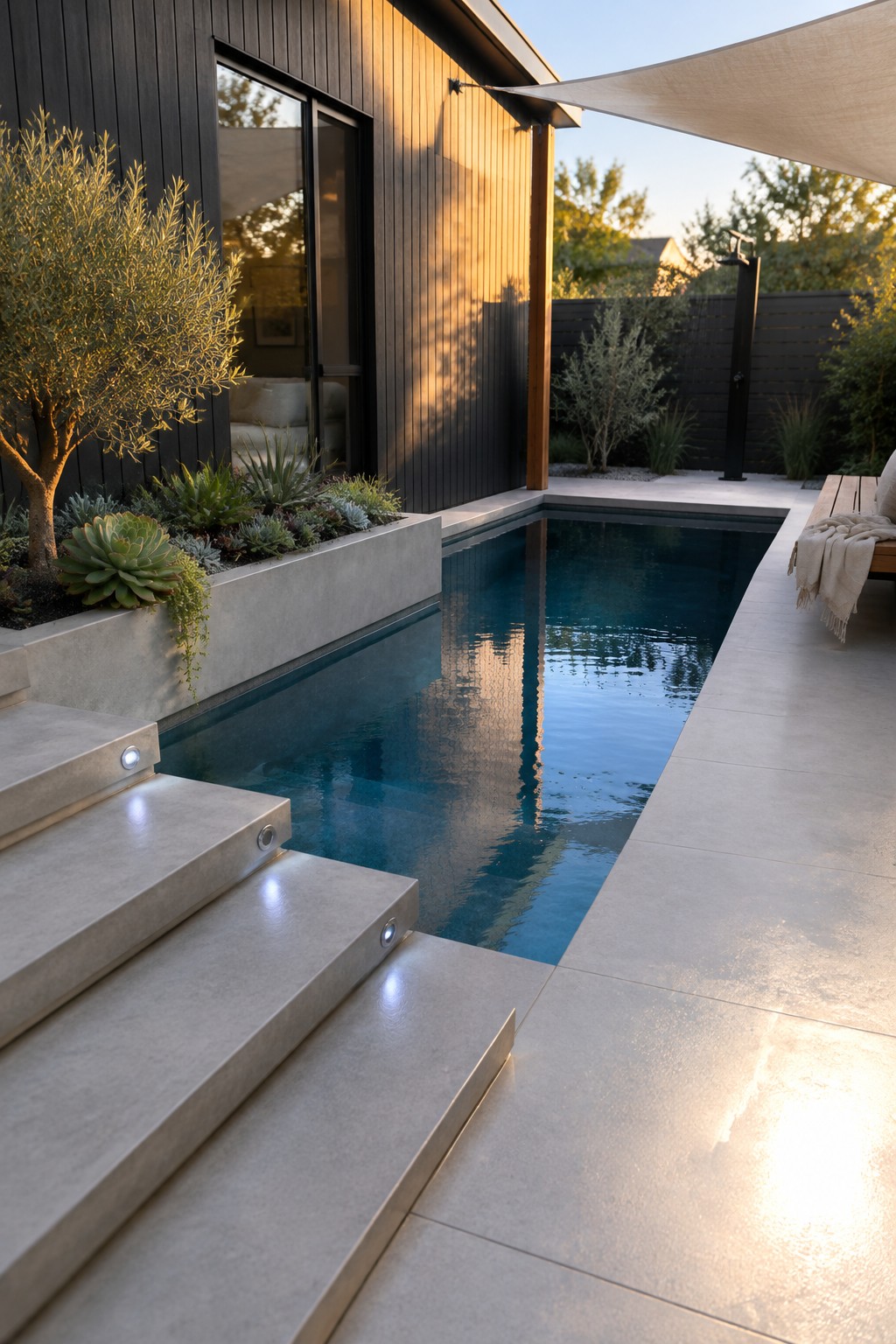
Putting lights directly into the steps that lead into a plunge pool keeps the area usable after dark without adding extra poles or lamps. The glow stays low and close to the water, which helps with safety while still feeling calm rather than bright.
This approach works best on modern homes where the pool sits right against the house or deck. Just check that the fixtures are properly sealed for wet areas and angled so they do not shine straight into anyone’s eyes when they walk down.
Underwater Lighting For Built-In Pool Steps
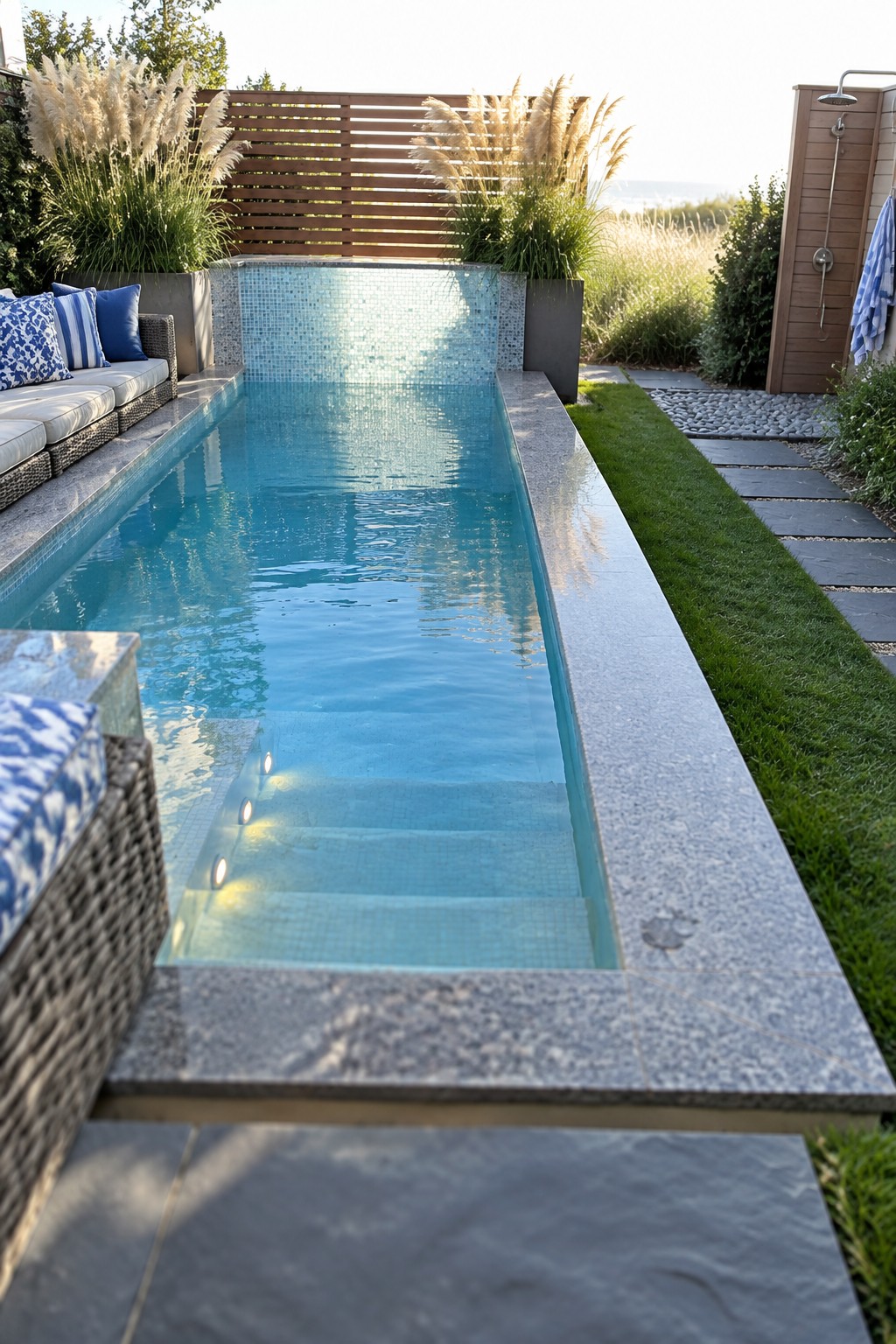
Many plunge pools look better at night when the steps have lights built right into them. The glow comes from below the waterline and outlines the entry without needing separate fixtures or extra wiring along the edge. It keeps the whole area looking clean while making it easier to see where you are stepping after dark.
This setup works especially well in smaller backyards or narrow lots where you cannot add much else. It suits modern homes that already use simple materials and want the lighting to feel like part of the pool rather than an add-on. Just make sure the lights are rated for constant water contact and placed evenly so the steps do not end up in shadow.
Waterline LED Lighting In Gravel And Stone Settings
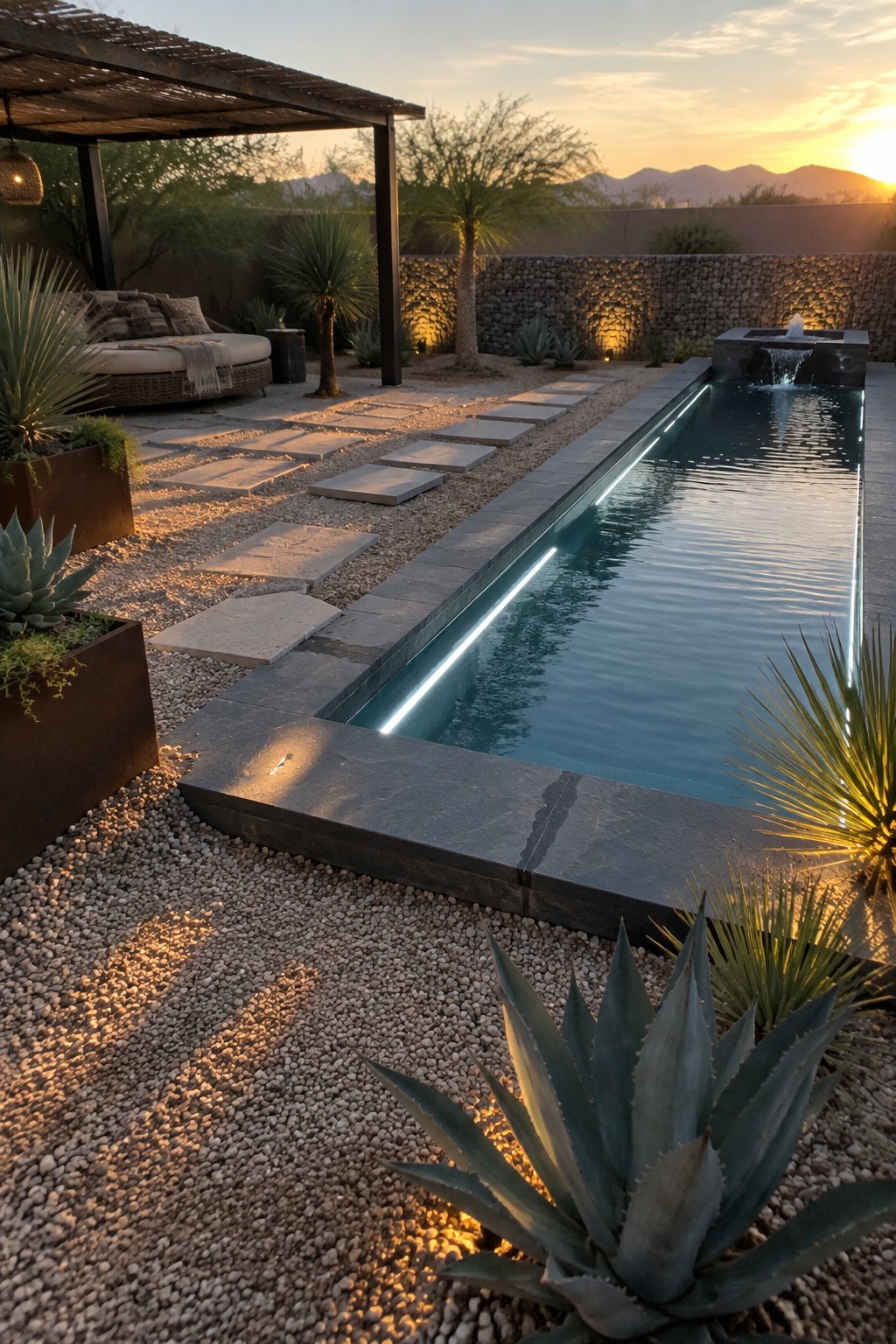
This setup runs a thin strip of light right at the waterline so the pool keeps a clear shape after dark. It avoids the scattered look of separate fixtures and instead gives the whole length one steady line that follows the water. The result feels calm rather than busy, which suits smaller plunge pools that sit in open yards.
It works best in dry climates where people use the pool mostly in the evening. Keep the housing low profile so it does not catch feet or garden tools, and choose warm white LEDs that match any nearby path lights. In a gravel and stone setting like this one, the glow stays soft instead of bouncing off too many hard surfaces.
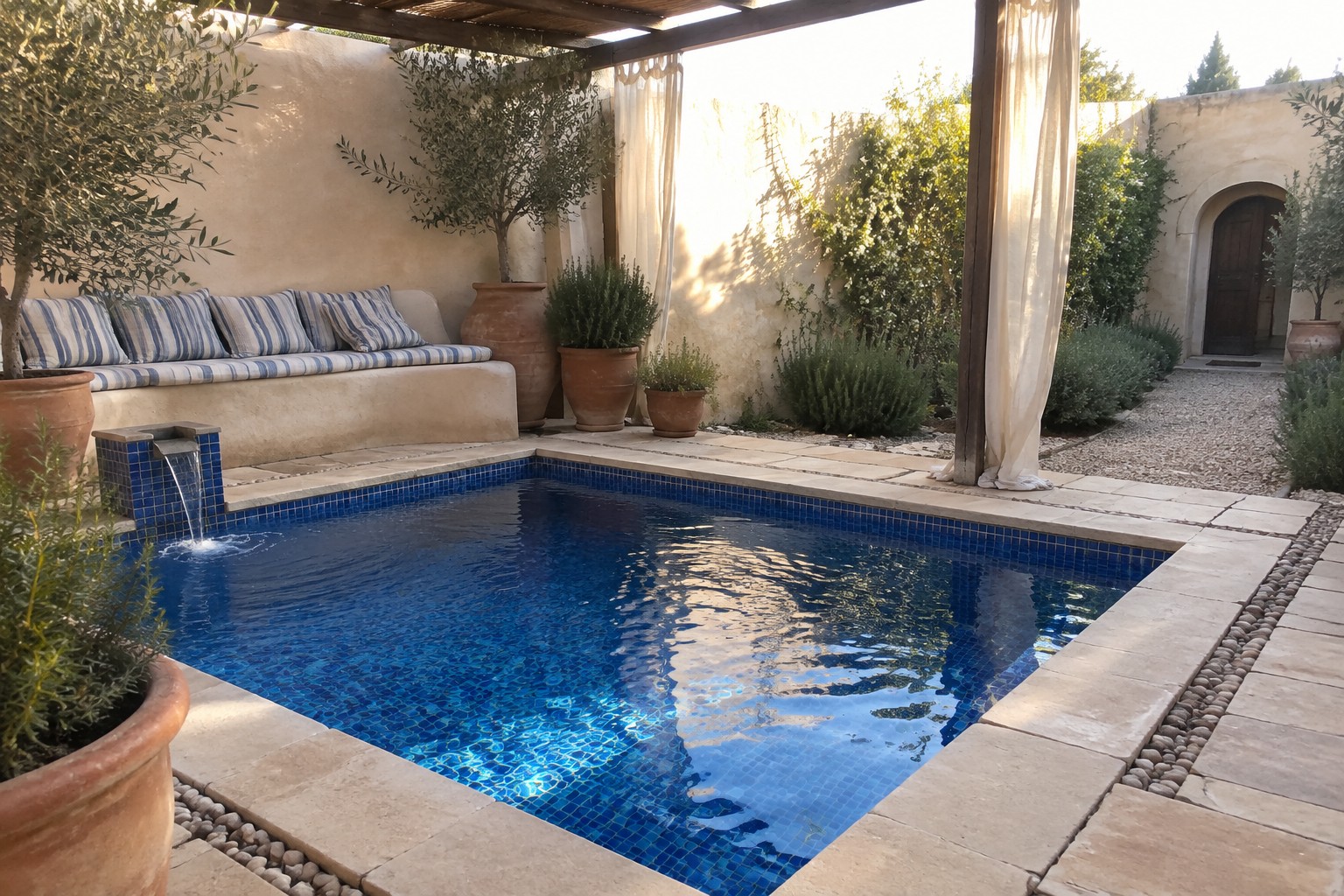
Small Lights Set Into The Stone Around The Pool
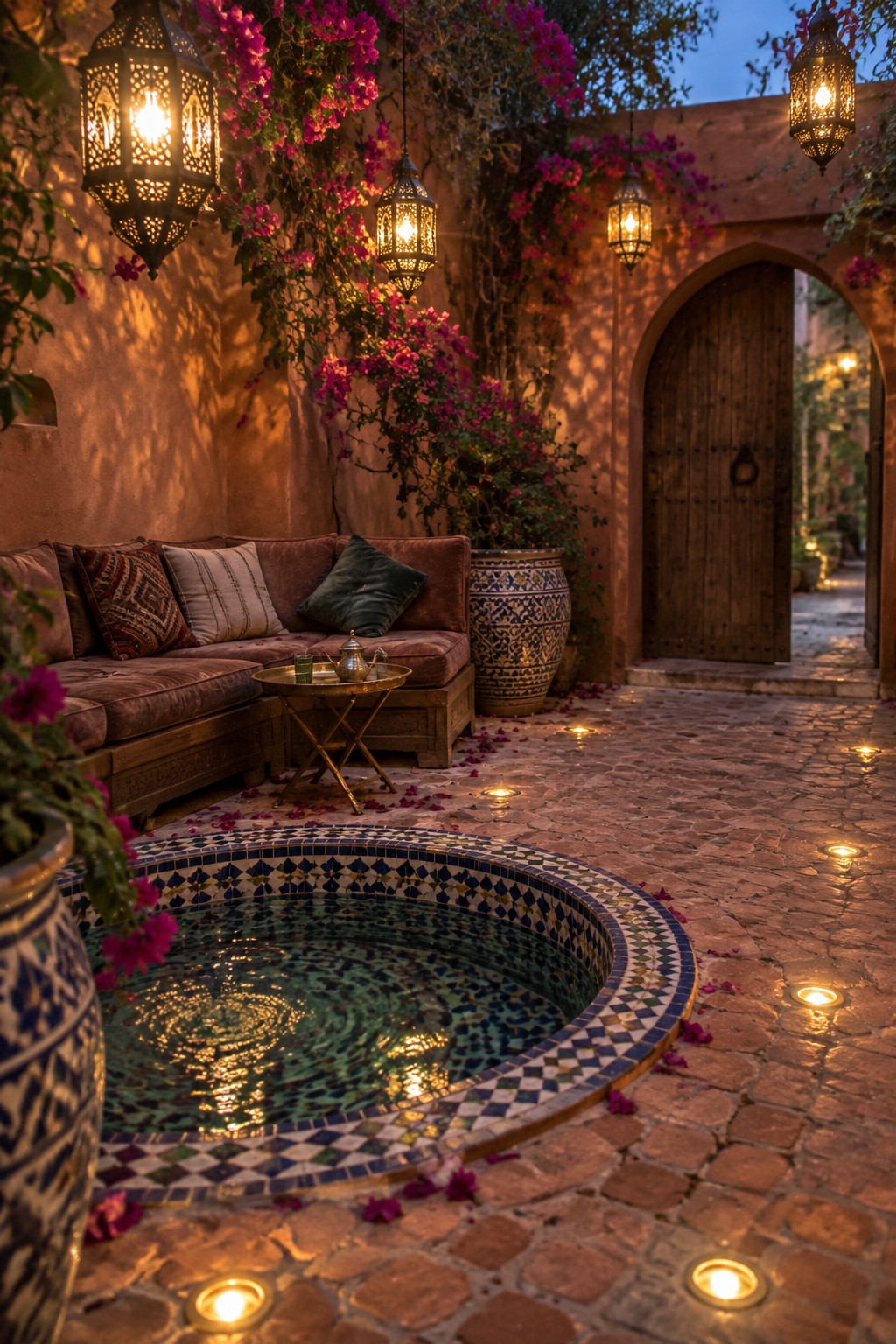
Small lights tucked right into the paving make a plunge pool feel special after dark. They sit low and close to the water so the glow stays gentle instead of flooding the whole area. The effect is simple and steady, and it works especially well in small courtyards where big fixtures would feel too much.
This approach suits homes with stone or brick patios that already have a warm, textured surface. Place the lights a foot or two apart along the pool edge and keep the bulbs warm rather than cool. It is worth testing the spacing at night before you fix them in place, since too many can start to look busy.
Low-Profile Edge Lights For Gravel Pool Surrounds
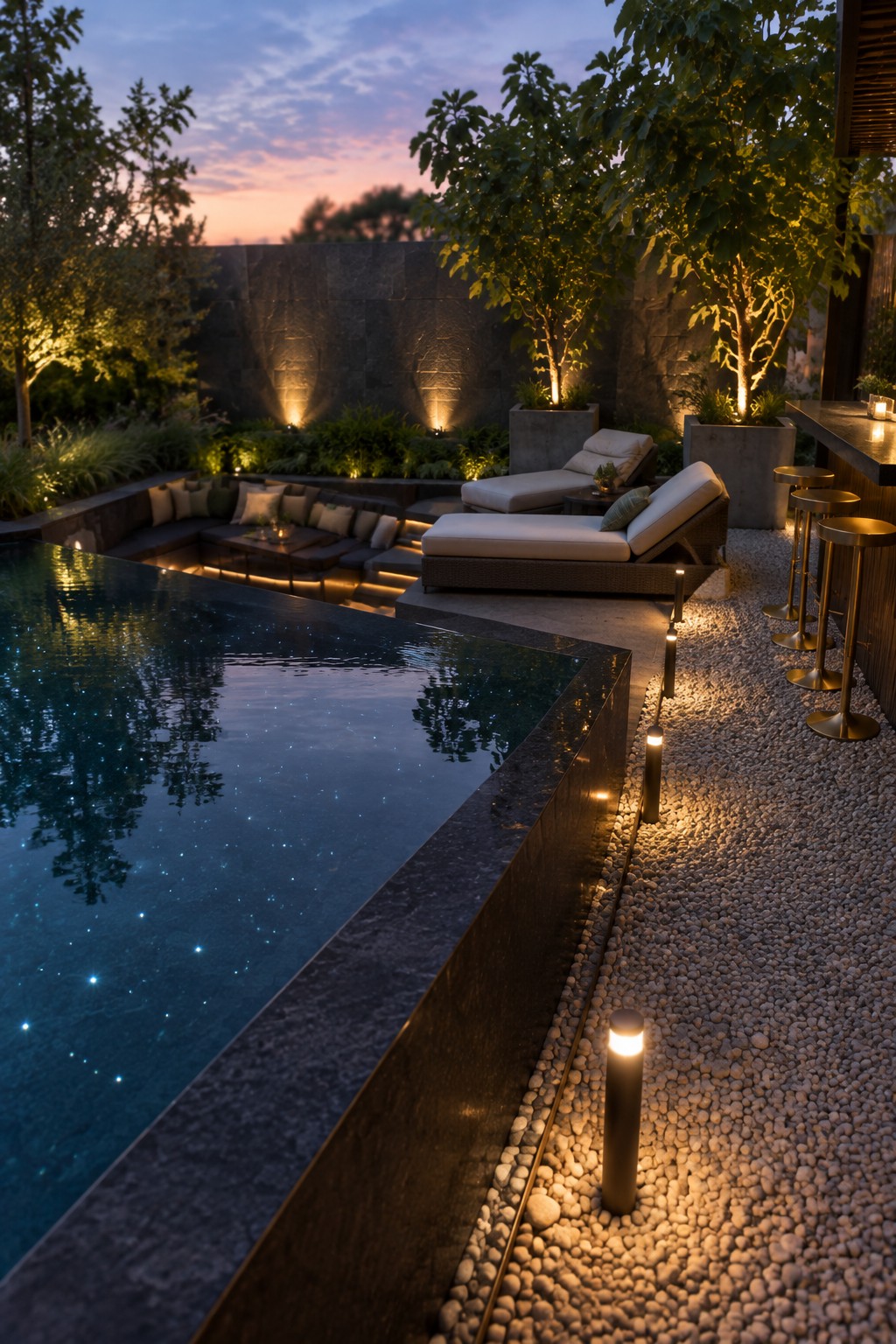
Placing small lights right at the pool edge changes how the whole area feels once the sun goes down. The low fixtures set into the gravel and tucked along the dark coping keep the water visible without flooding the space with bright light. It turns the pool into a calm focal point instead of something that disappears at night.
This approach works especially well with smaller plunge pools that sit close to seating areas. It suits homes that already use gravel or stone around the water since the lights can follow the same material lines. Just keep the fixtures low and warm so they do not create glare when people are sitting nearby.
Glowing Tile-Rim Lighting For Evening Pool Use
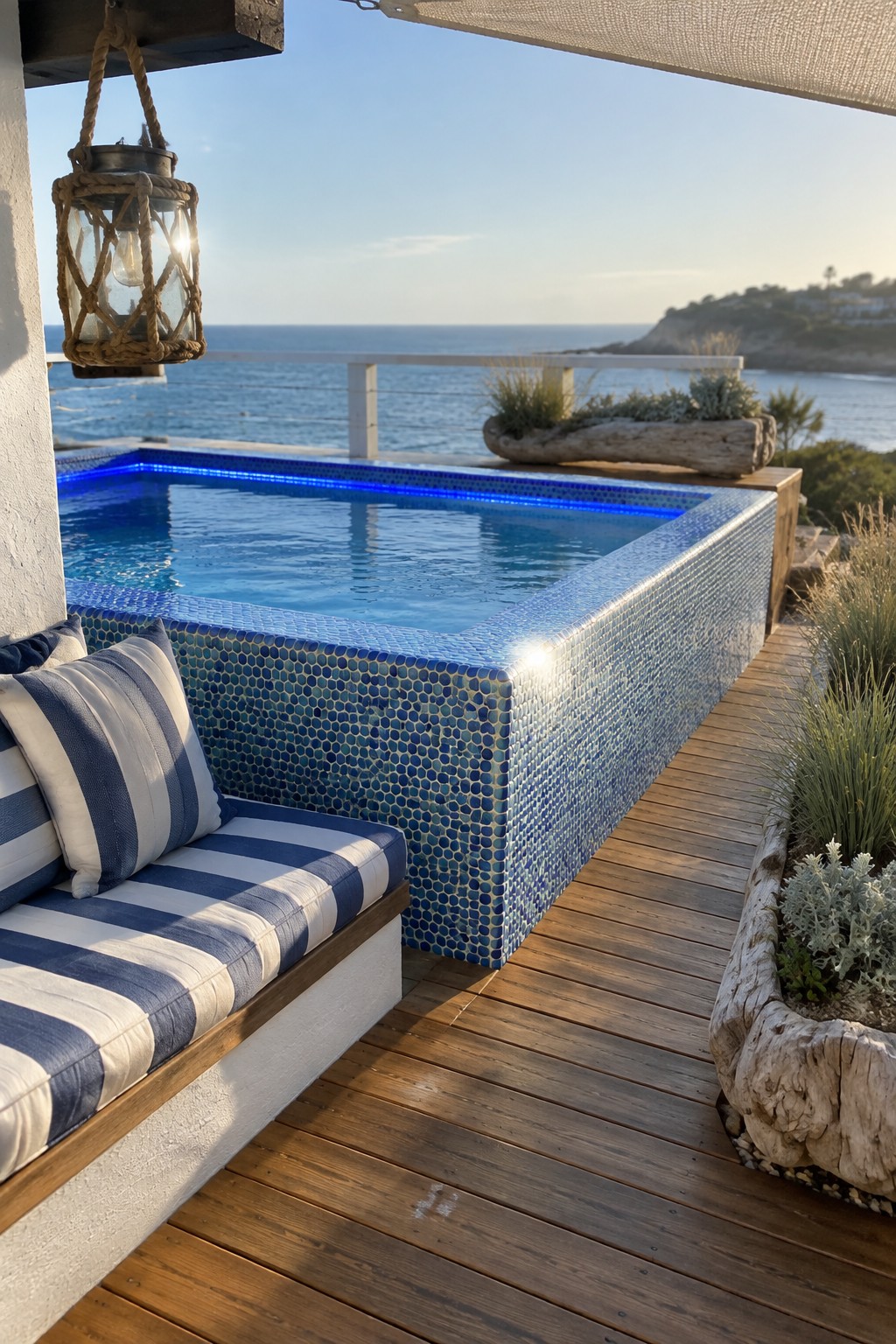
Embedding lights right into the tile rim lets the water glow from within once the sun drops. It removes the need for separate lamps or harsh overheads and keeps the whole setup clean and simple. The effect feels especially strong on smaller plunge pools where every detail shows up clearly.
This approach works best on decks or terraces that already have seating nearby so the light doubles as both safety and atmosphere. It suits homes near the coast or in warmer climates where people use the pool into the evening. Just make sure the lighting system is rated for constant water contact and that the color temperature matches the rest of your outdoor lights.
Pool Rim Lighting With Fire Pit Seating
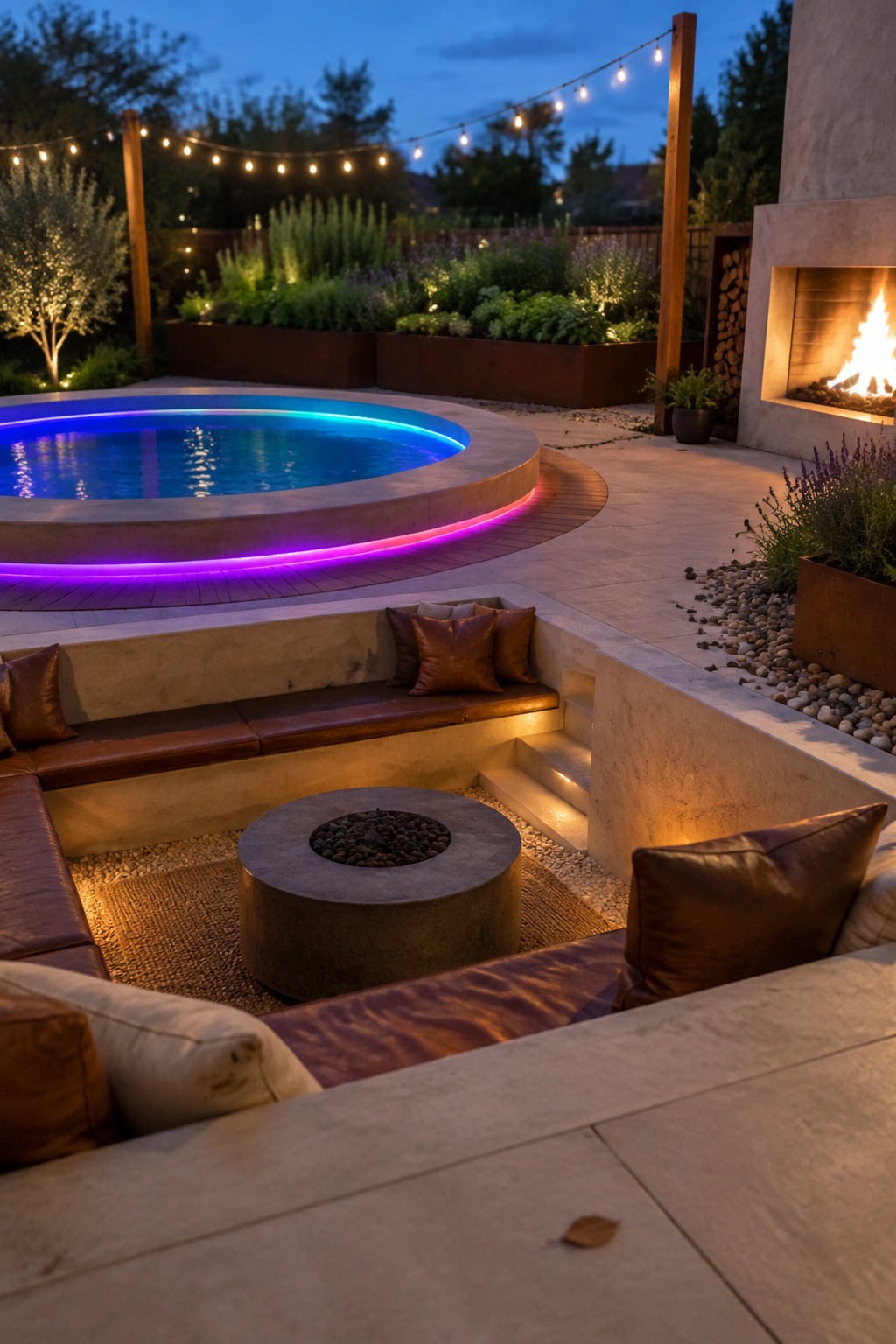
Building lights right into the rim of a plunge pool gives the water a steady glow after dark without extra lamps cluttering the deck. The effect works because the light sits just below the surface, so it reflects across the water and highlights the shape of the pool itself.
This approach suits compact backyards where the pool needs to stand out at night and pairs easily with a nearby fire pit so the whole seating area stays usable. Keep the colors simple or use a soft shift between two tones, and make sure the housing is rated for constant water contact.
Balcony Plunge Pool Lighting With Under-Seat LEDs
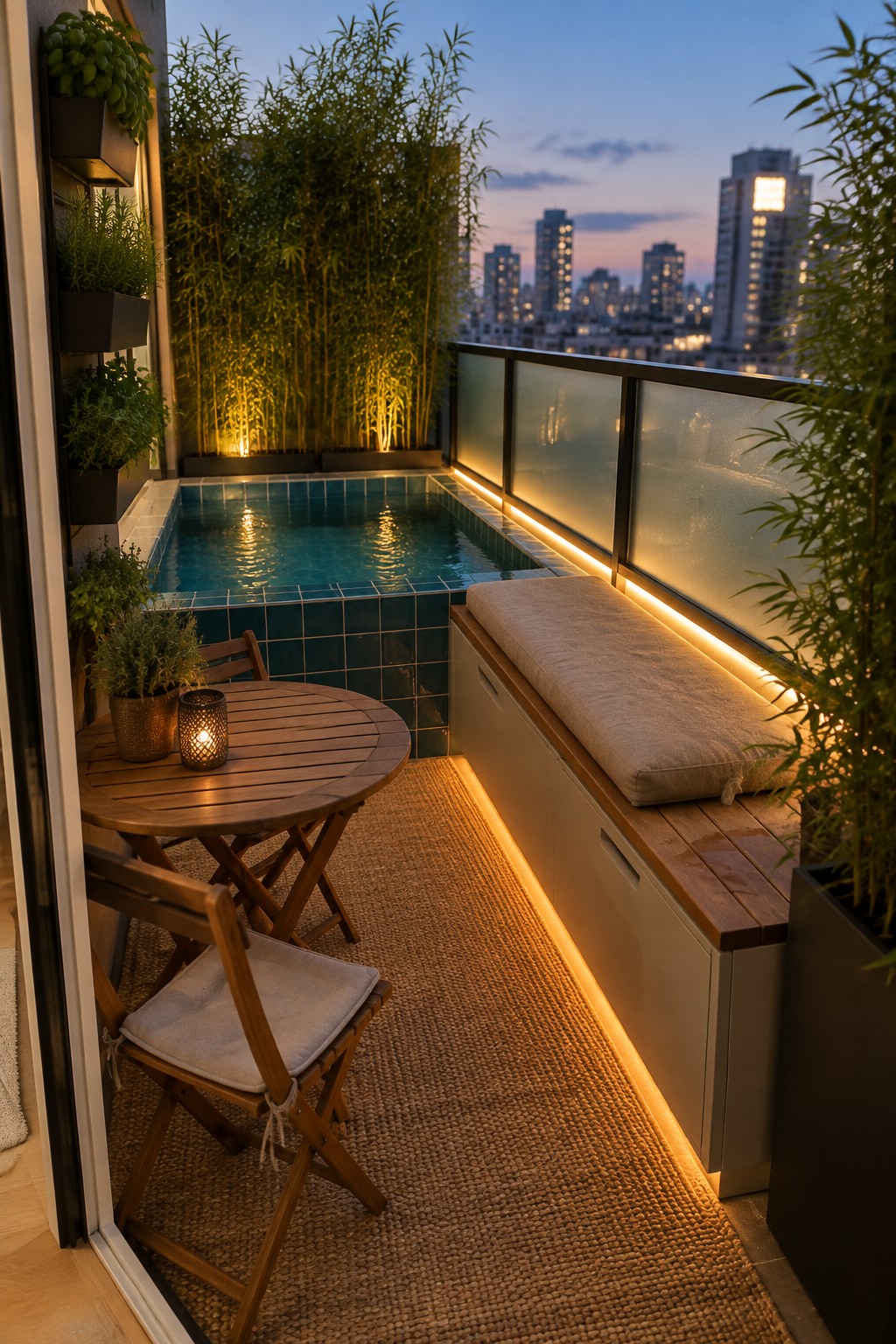
Many small plunge pools on balconies end up underused once the sun goes down. Running a slim line of LED lighting right along the pool edge and under nearby seating gives just enough glow to keep the water visible and the space usable without adding bulky fixtures.
This works best on tight urban terraces where you want the pool to feel like part of the seating area rather than a separate feature. Keep the light warm and low so it does not compete with surrounding city lights, and make sure the housing sits flush with the tile so no one trips on it later.
Frequently Asked Questions
Q: How do the lights hold up against pool chemicals and weather? A: Rinse the fixtures monthly with fresh water to clear any chemical buildup. This keeps the seals intact and prevents corrosion. Check the connections once a season too.
Q: Can I add lighting to my plunge pool without tearing up the deck? A: Run the wiring through existing conduits if your pool already has them. Otherwise mount small fixtures along the edge with minimal digging. A pro can usually handle this in a day or two.
Q: Do the lights stay cool enough for kids to touch? A: Most modern LED options run cool to the touch (unlike older bulbs). Pick ones rated for pool use and they won’t heat up the surrounding area.