I’ve noticed that plunge pools settle into a yard best when the planting follows the natural slope and soil rather than forcing straight borders around the water.
In my own space I have tried edging the pool with layered shrubs and ground cover so the hard surface disappears under growth after a couple of seasons.
Planting structure changes everything.
Watching how paths and seating areas shift once the greenery matures has shown me which layouts stay usable instead of turning into maintenance headaches later on.
A couple of the softer approaches here look like they could be tested first around an existing water feature to see how the plants handle both sun and runoff.
Tie The Pool Into The Garden With Stone
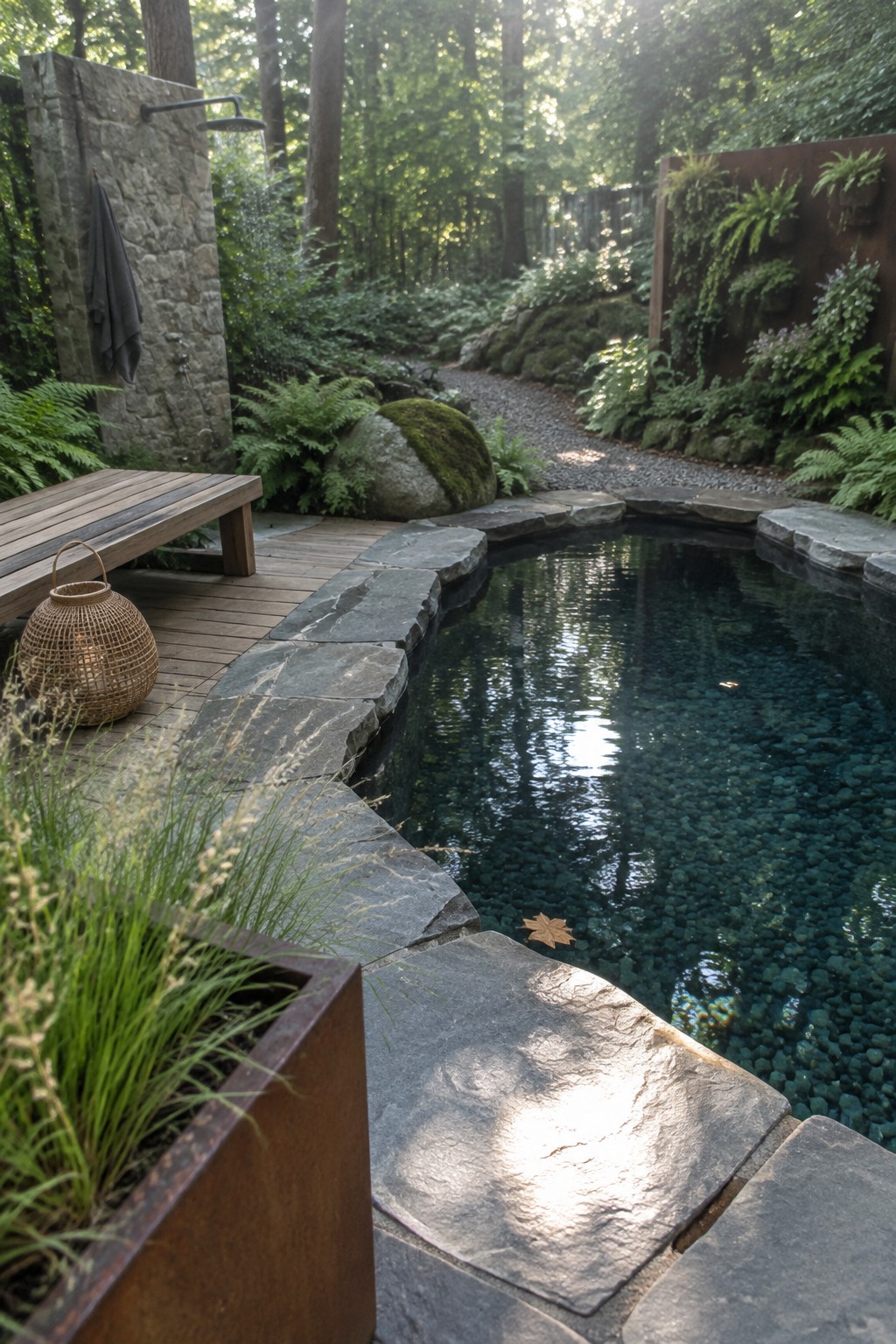
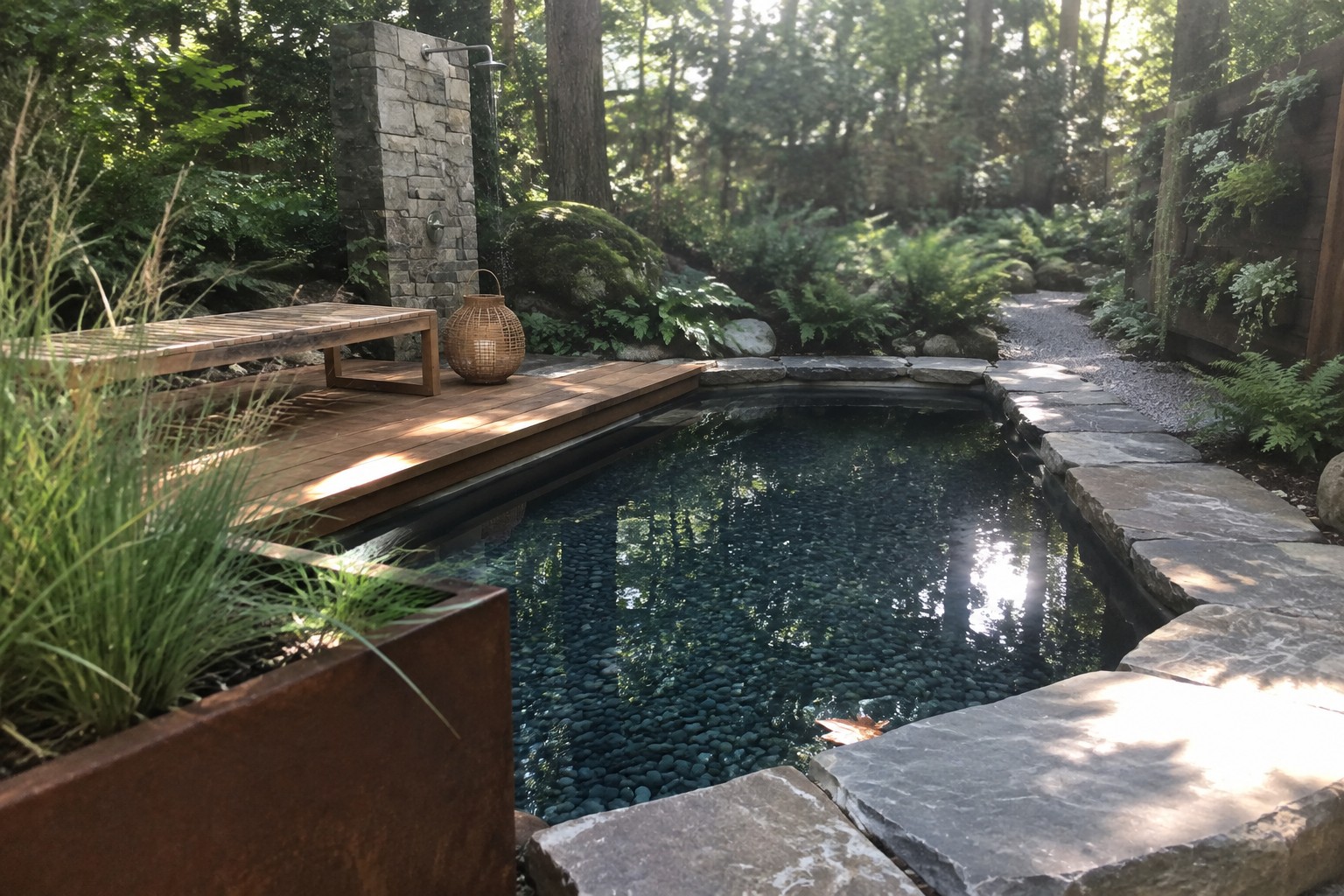
Using the same local stone for the pool edge that already shows up in the garden makes the water feel like a natural part of the site. The irregular slabs sit low and uneven, so the line between water and land stays soft instead of sharp.
This approach works best on wooded or rocky lots where you already have stone and shade plants. Let the surrounding ferns and grasses grow right up to the edge so the pool reads as part of the ground rather than a separate feature.
Defining Pool Lounging Areas with Woven Rugs
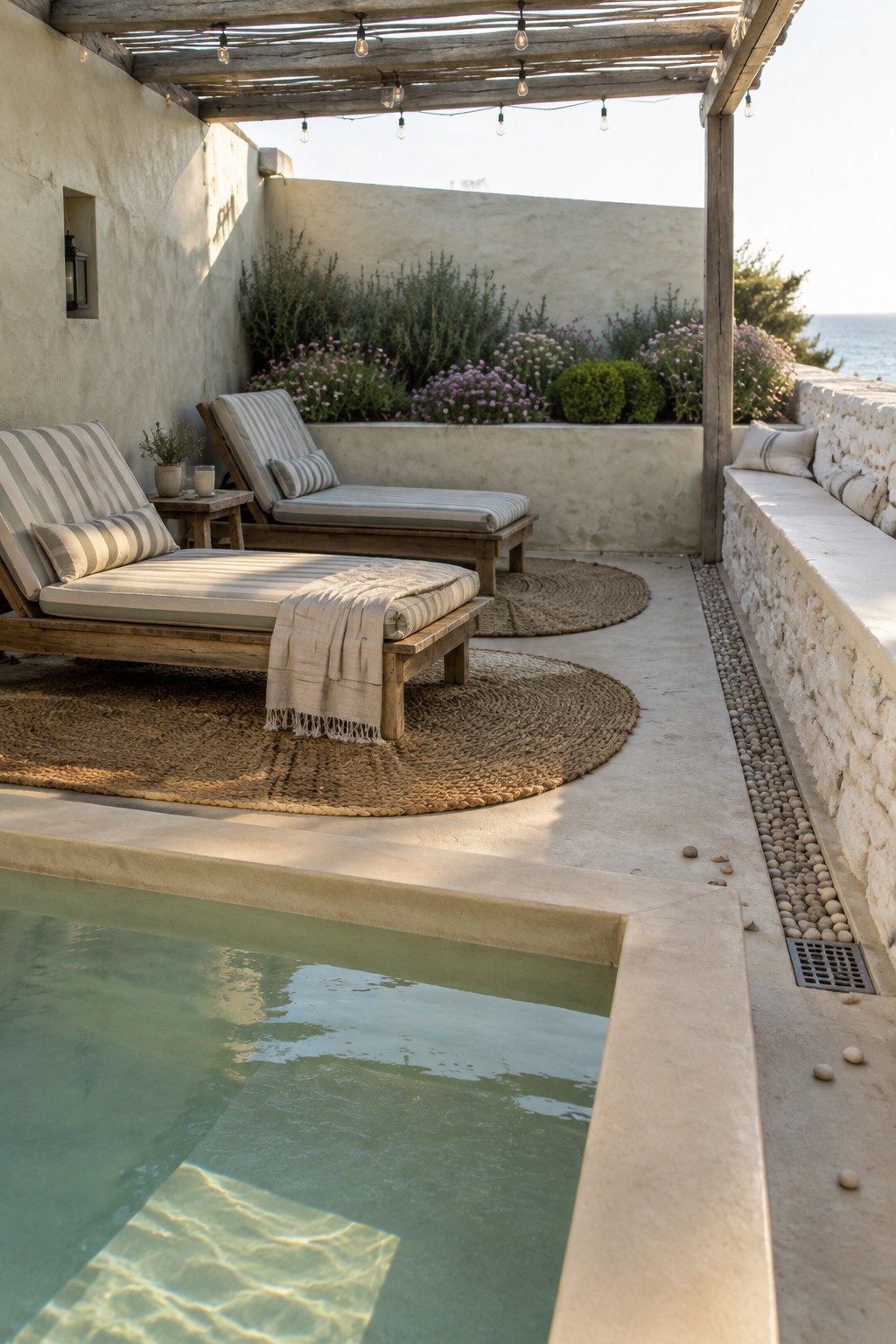
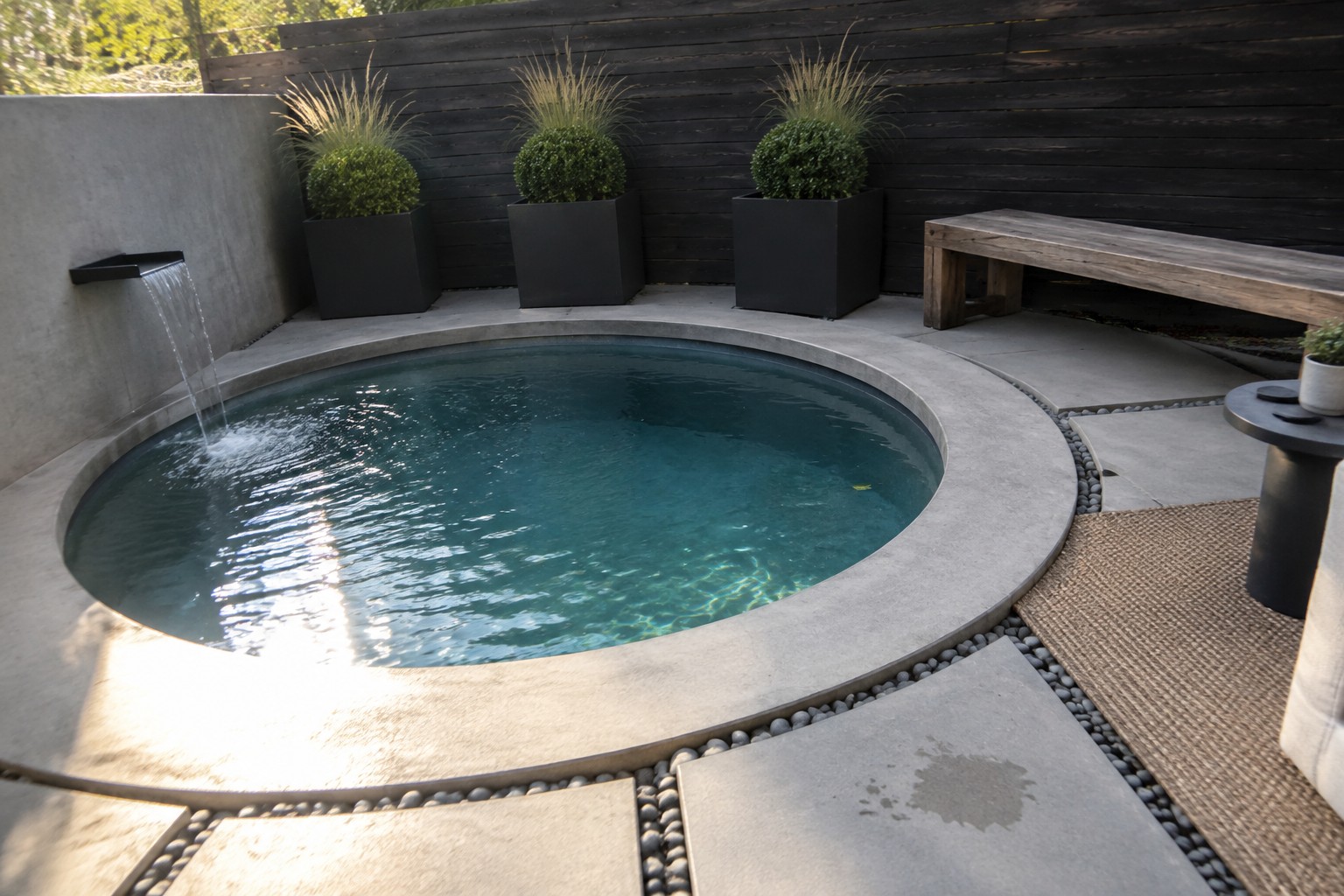
Round natural fiber rugs work well under lounge chairs because they break up the hard surface of a pool deck without adding much structure. They bring a soft texture that feels right next to water and planting, and they are easy to move if the layout needs adjusting later.
These rugs suit smaller plunge pools best, where the goal is a simple seating spot rather than a full patio. Keep the rug size just large enough for the chairs and a small table, and stick to neutral tones so the focus stays on the pool and the surrounding greenery.
Container Planting Around Plunge Pools
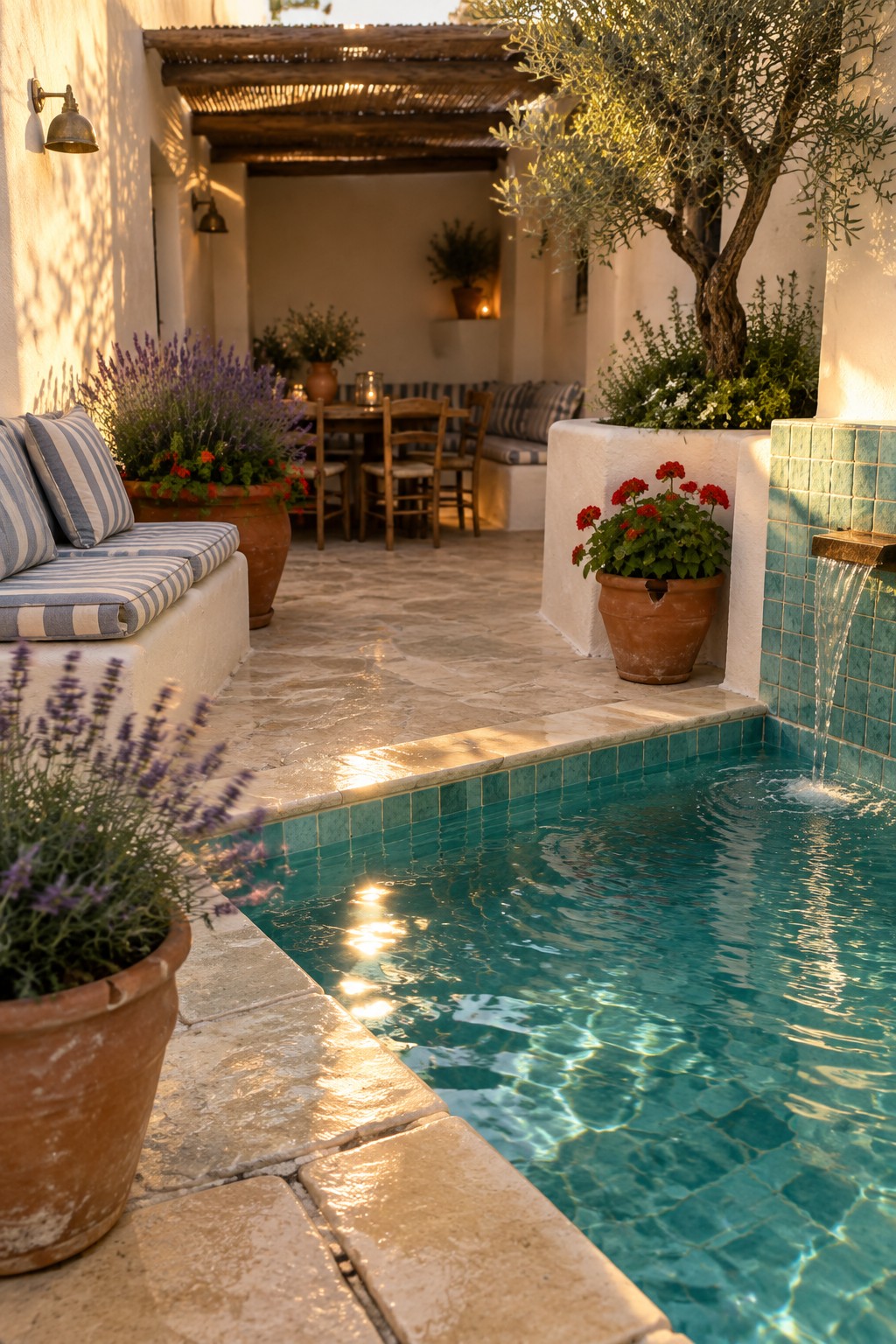
Large pots make it easy to bring plants right up to the edge of a small pool without committing to permanent beds. The terracotta containers hold lavender and flowering plants that soften the hard surfaces and let you move things around as the seasons change.
This approach suits compact yards or patios where a fixed garden might feel too heavy. Keep the pots in one or two materials and repeat a few plant types so the space stays calm instead of cluttered.
Gravel Paths With Stepping Stones
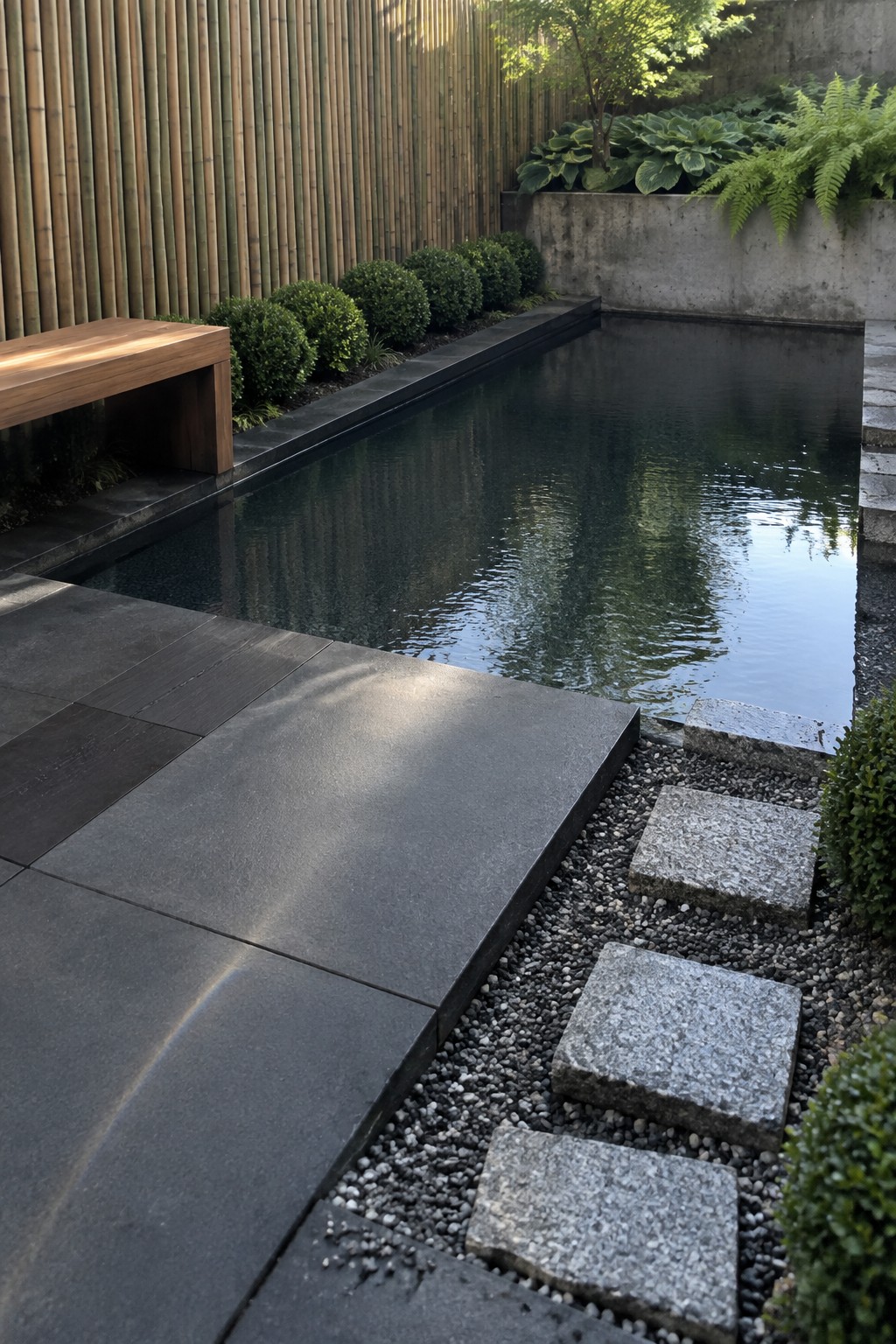
Gravel works well around a plunge pool because it drains fast and feels less rigid than full paving. The square stepping stones keep the surface practical while letting the loose gravel do most of the softening.
This approach suits smaller yards or homes that already lean modern. Keep the gravel depth even so the stones stay level, and choose a darker stone tone if the pool edge is dark too.
Terrace the Slope With Stone Walls
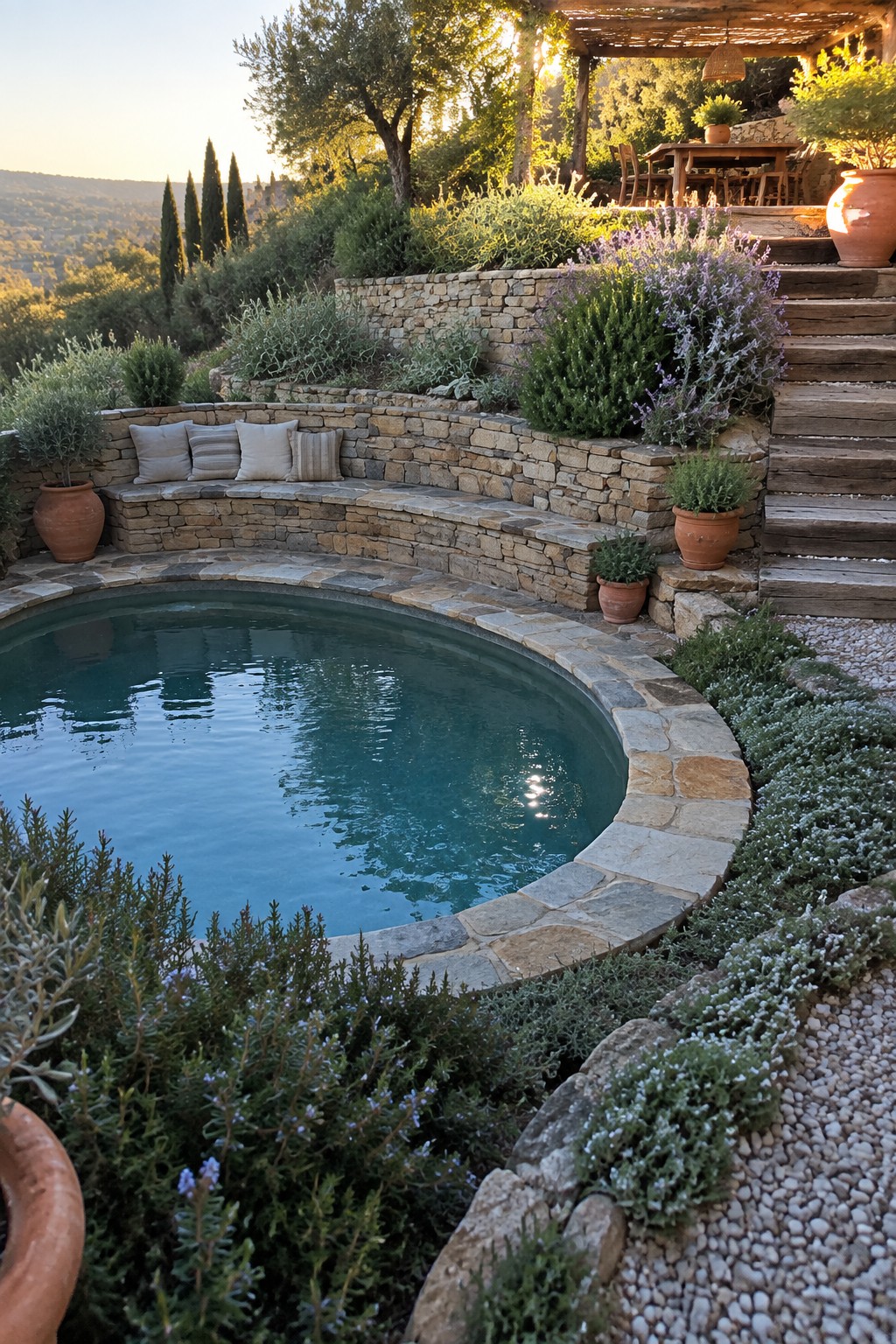
Stone terracing turns a tricky hillside into a calm, settled spot for a plunge pool. The low curved walls create natural seating while giving the pool a firm edge that still feels soft because of the planting tucked into every level. It keeps the water from looking dropped in from somewhere else.
This works best on lots that drop away from the house. Keep the walls low, use the same local stone throughout, and let the shrubs and perennials spill over the edges so the whole thing reads as garden first, pool second. On flatter ground you can skip the full terraces and just use a single low wall to define the space.
Surround The Pool With Garden Layers
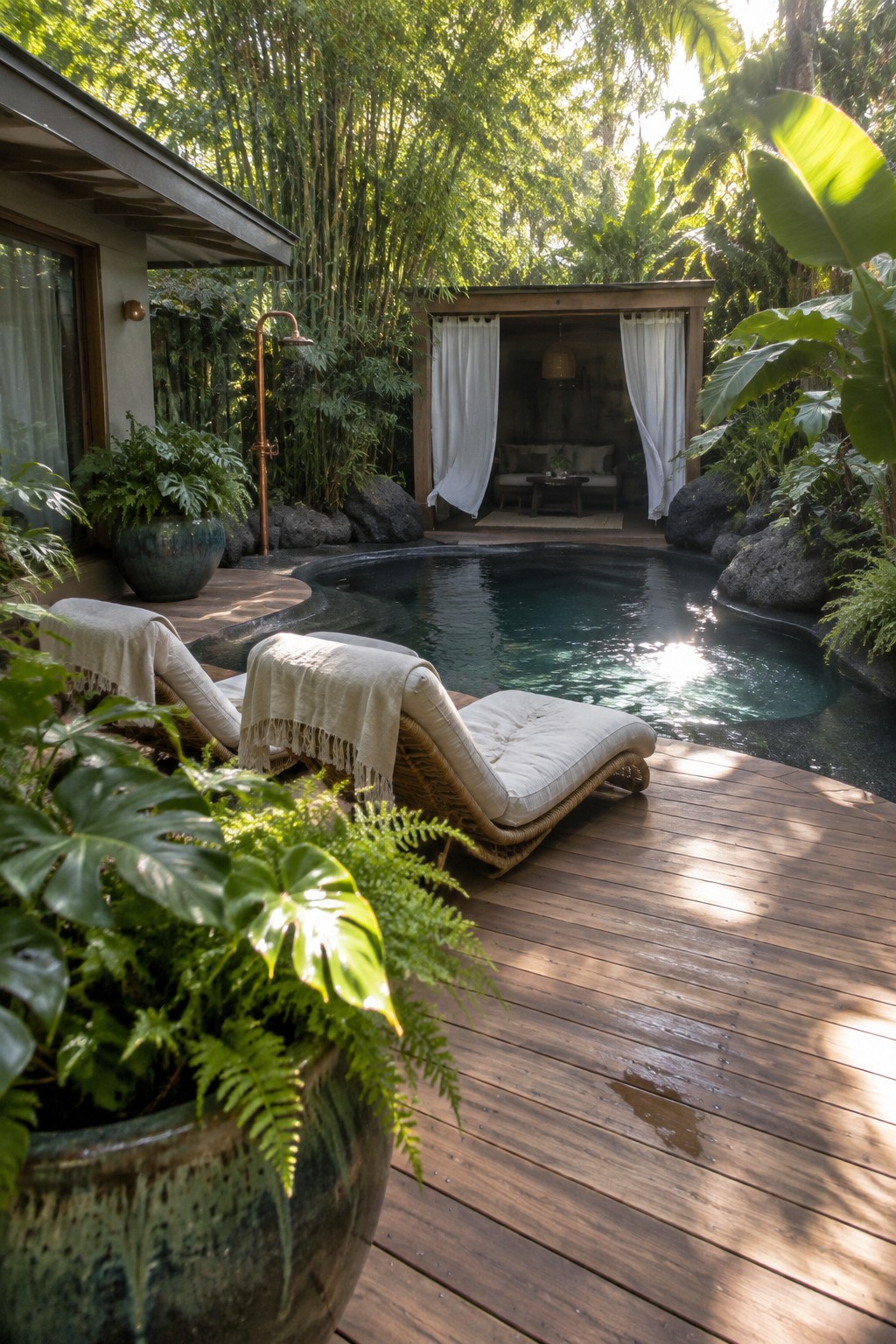
One simple way to make a plunge pool feel more natural is to bring the planting right up to the edge instead of leaving a hard border. A curved wood deck helps the water shape blend into the surrounding beds and pots, so the whole area reads as garden first and pool second.
This approach suits homes where the yard already has good tree cover and you want the pool to feel tucked in rather than added on. Keep a few large pots on the deck itself so the greenery can shift with the seasons and the space stays easy to maintain.
Add Raised Planters Beside The Pool
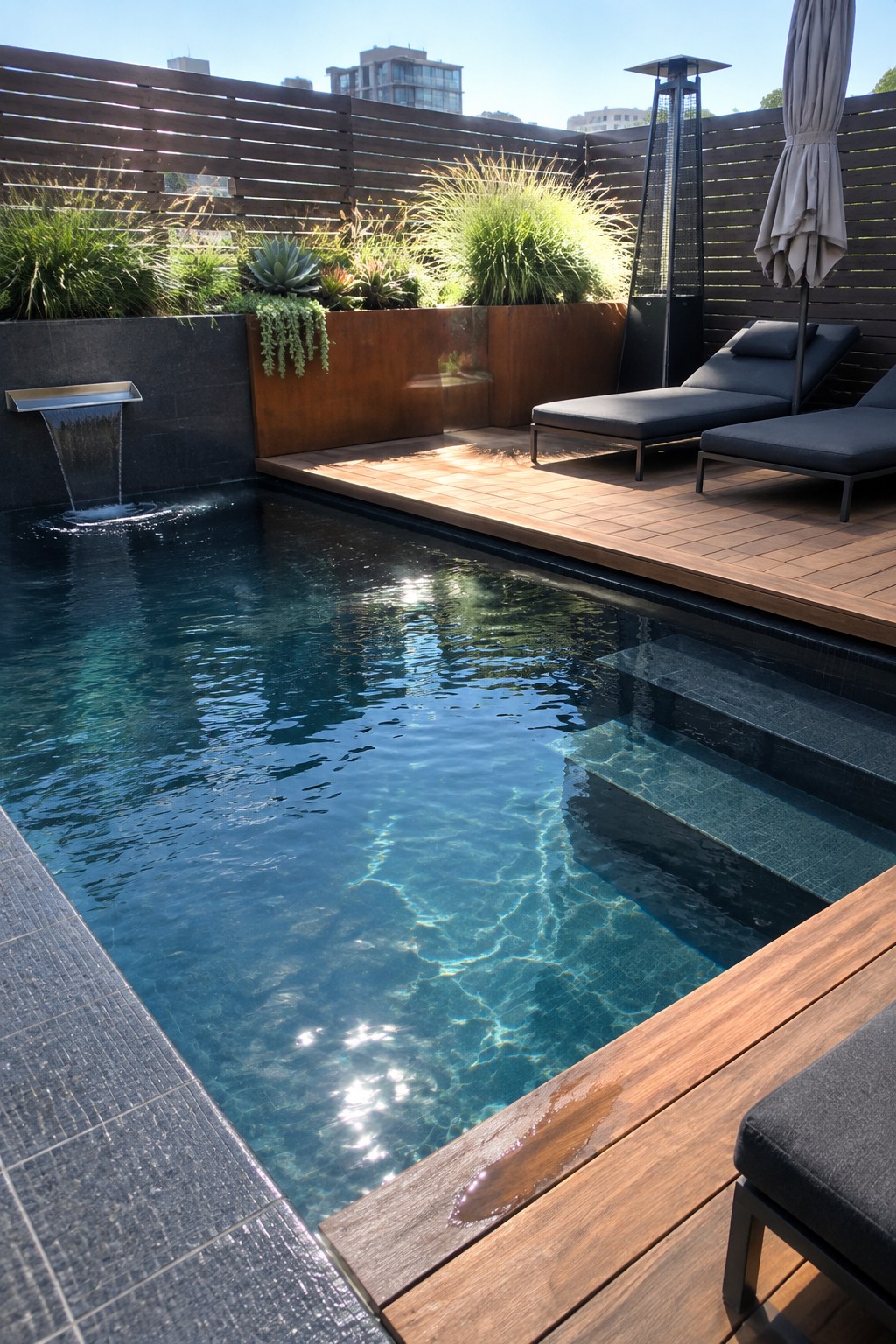
Raised planters give a plunge pool a more natural feel without taking up much extra space. They let you bring in grasses and other plants right up against the water, which helps the whole area blend into the garden instead of looking like a separate box of water.
This works best on smaller yards or decks where you want the pool to feel tucked into the landscape. Keep the planters low enough to match the deck height so the plants read as part of the seating area rather than a separate wall.
Adding a Pergola Beside the Plunge Pool
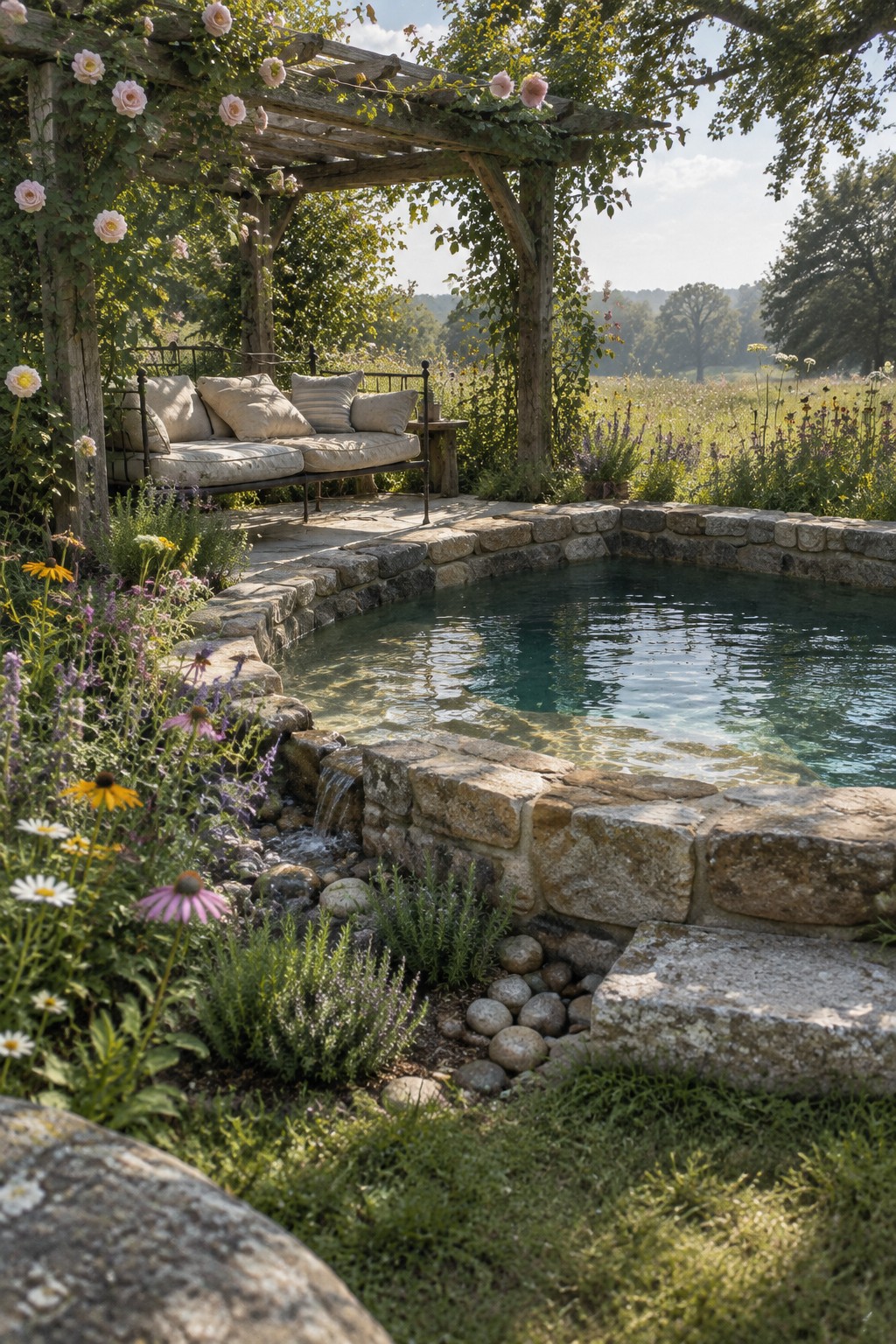
A pergola placed right next to the water gives you a shaded spot to sit without losing the feeling of being in the garden. The simple wooden structure and bench turn the pool into a place where you can actually spend time rather than just swim and leave.
This setup works best in a backyard that already has room for planting beds around the pool. Keep the pergola low and use weathered wood so it blends with the stone coping and surrounding flowers instead of competing with them.
Container Plants Around A Plunge Pool
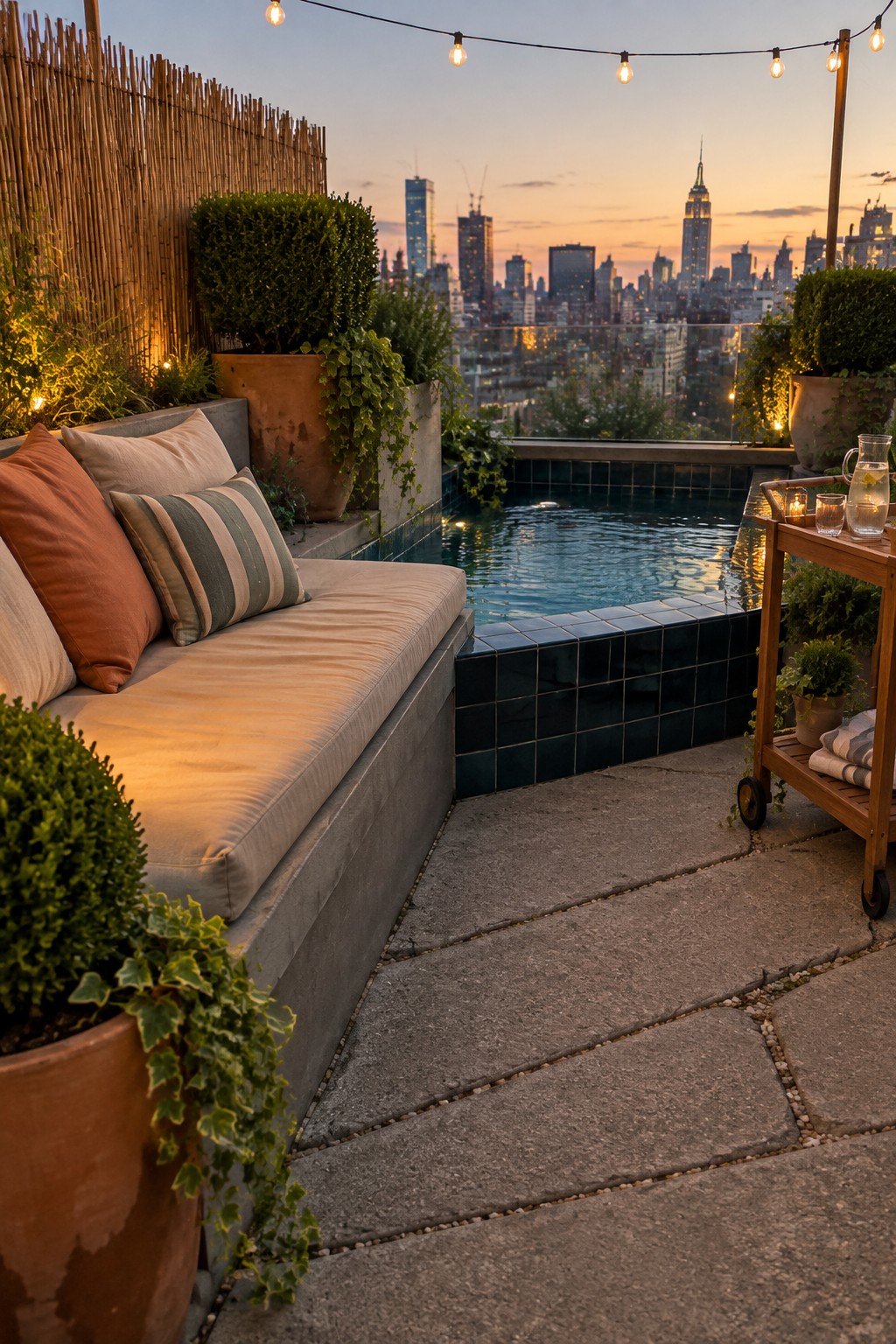
Plunge pools on rooftops often need help feeling connected to anything natural. Large pots filled with shrubs, trailing vines, and leafy plants do that job without requiring soil beds or major construction. The greenery softens the hard edges and makes the water look more like part of a garden instead of a separate feature.
This works best on terraces or decks where digging isn’t an option. Group the pots at different heights near the pool edge and seating so the planting feels layered rather than lined up. Choose sturdy containers that can handle wind and sun, and pick plants that stay full without constant trimming.
Pebble Borders Soften The Pool Edge
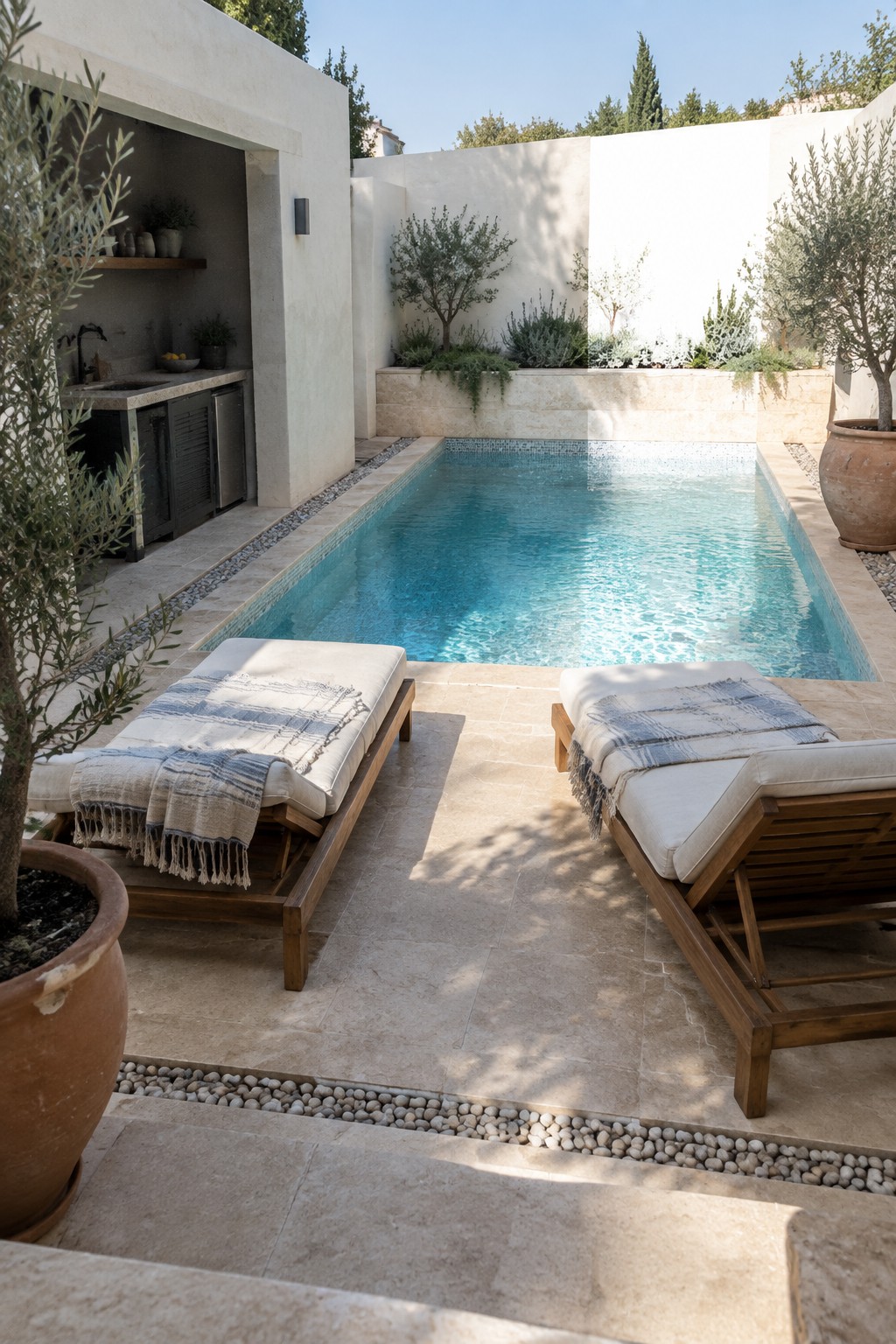
Pebble strips along the pool deck give the whole area a lighter, more relaxed feel than a solid paved surround. They break up the stone without adding much work, and they let a few plants spill over naturally from the raised beds.
This approach works well in smaller courtyards or on sites where you want the pool to sit quietly in the landscape rather than dominate it. Just keep the gravel bands narrow so they stay neat and do not turn into a tripping hazard or a place for weeds to settle.
Gravel Beds Around A Plunge Pool
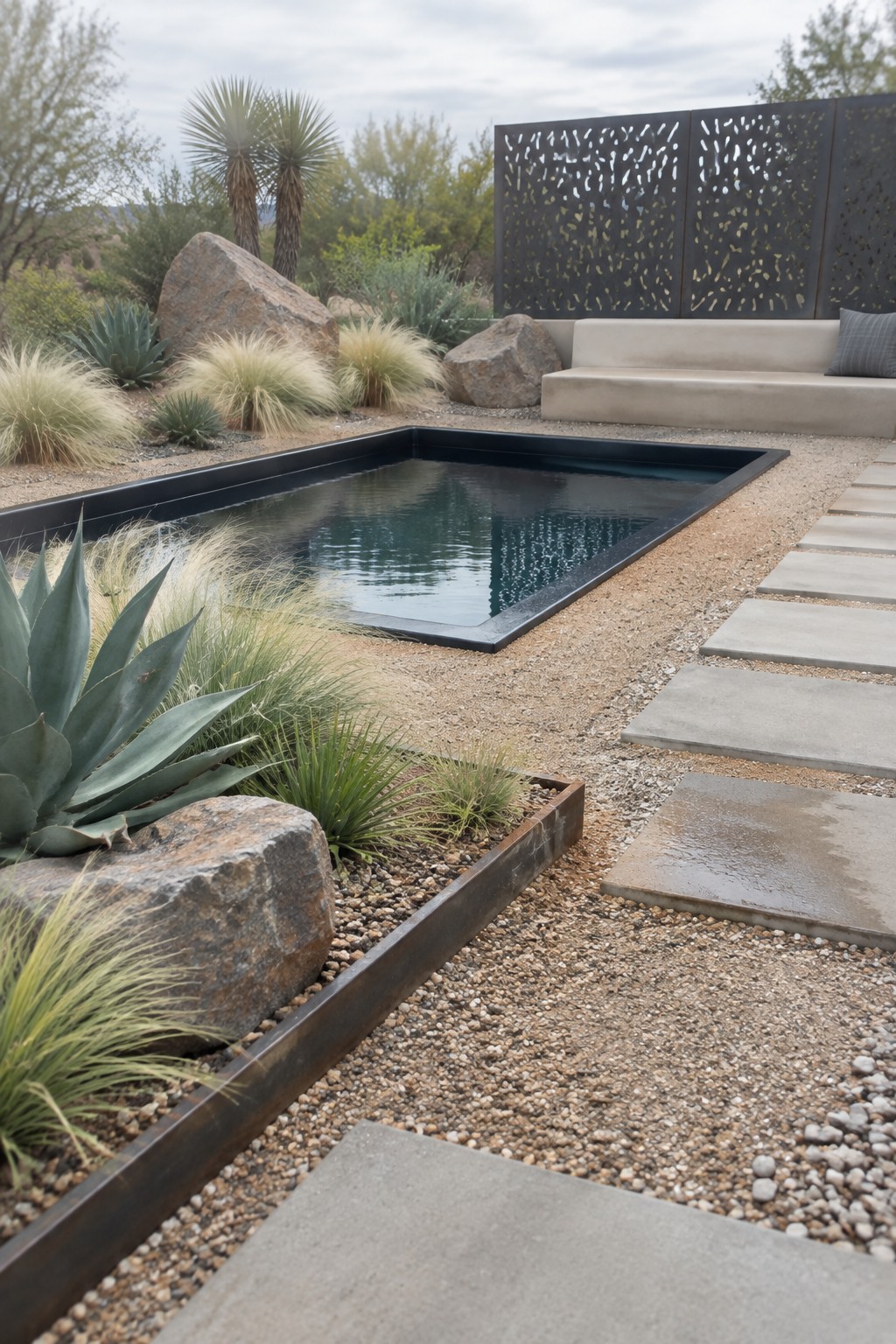
Many people are skipping the usual concrete deck and letting gravel run right up to the pool edge instead. It keeps the whole setup feeling lighter and more connected to the ground around it, especially when the pool is small.
This works best in drier climates where you already use gravel or decomposed granite for paths and beds. Add a few big rocks and tough plants like agave or bunch grasses so the gravel does not look too flat or empty on its own.
Set the Pool Into Stone Walls
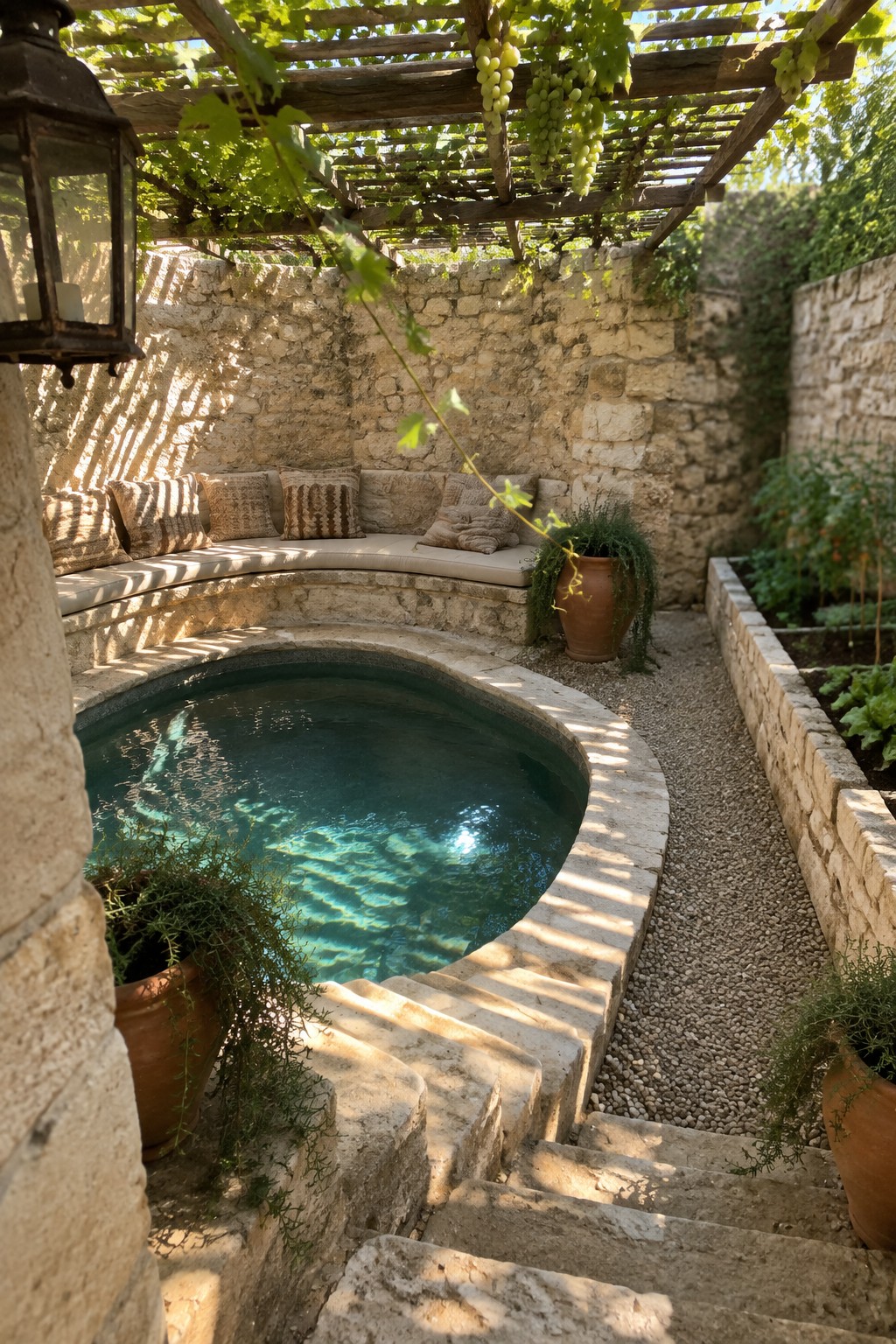
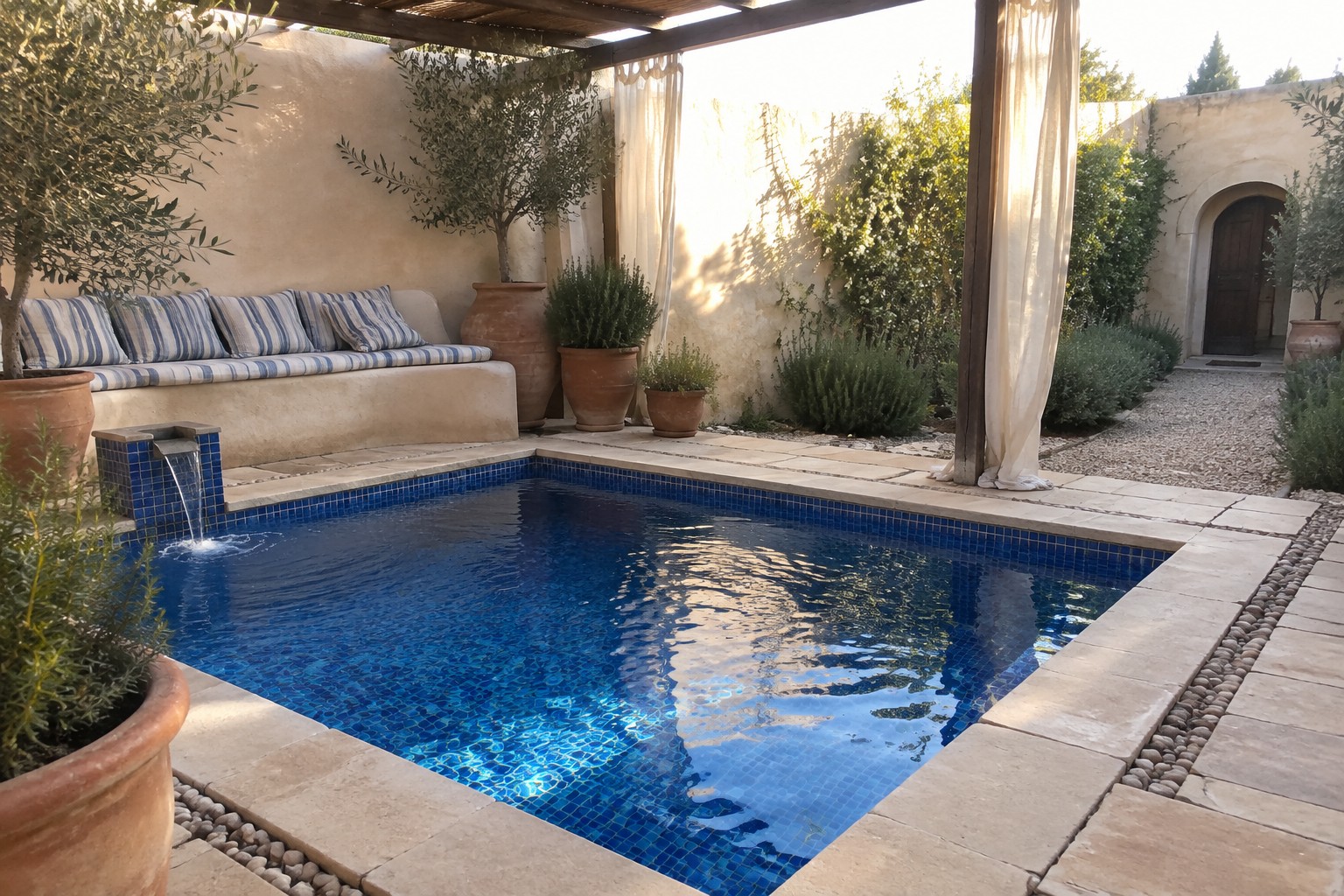
One simple way to make a small plunge pool feel natural is to build it right against existing stone walls. The stone gives the pool a solid edge without extra materials, and the whole thing blends into the garden instead of sitting on top of it like an add-on.
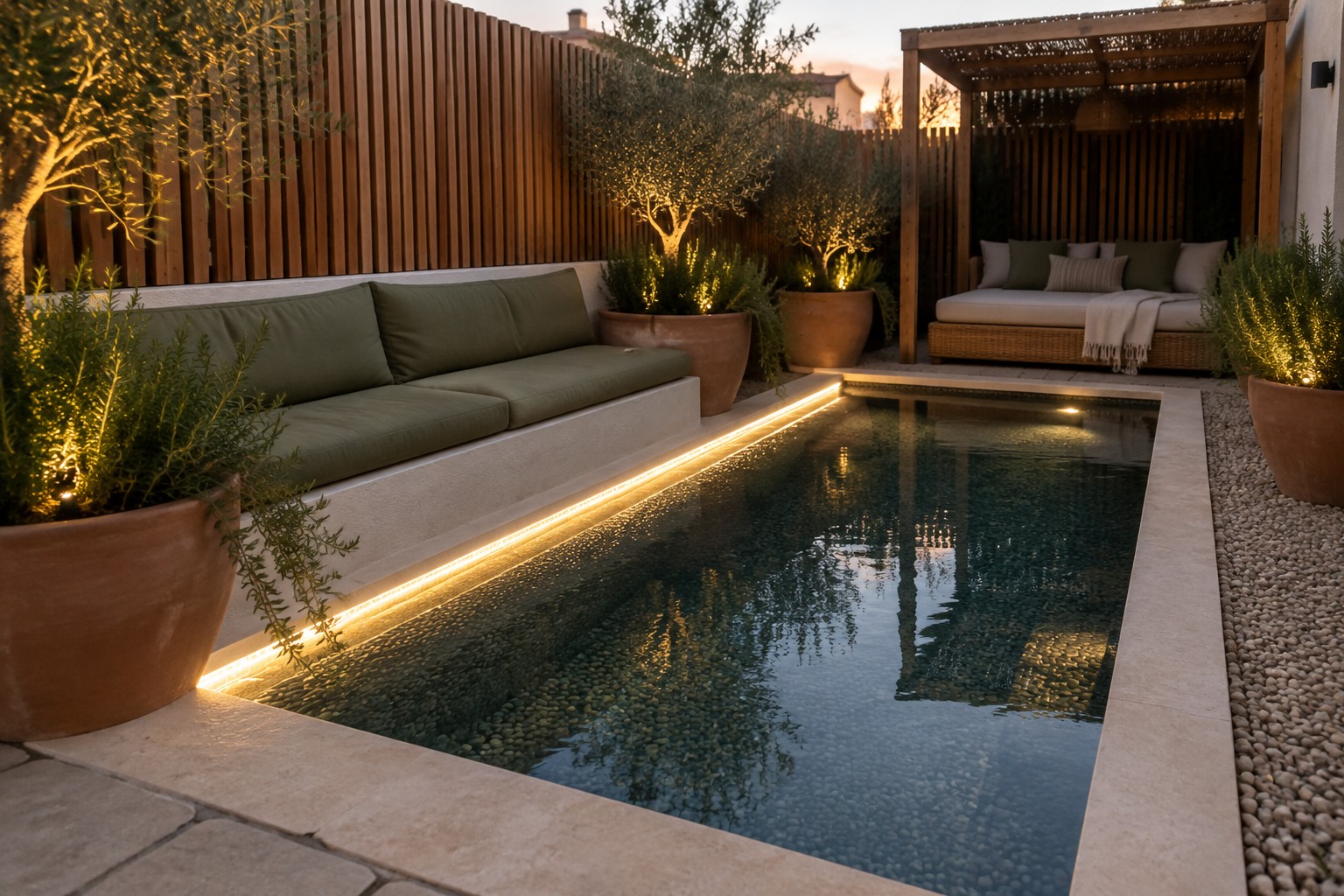
This approach works best in courtyards or tight side yards where walls already exist. Match the coping to the stone, keep the shape compact, and add vines or a light pergola overhead for shade. Just make sure water drains away from the base of the walls so the stone stays sound over time.
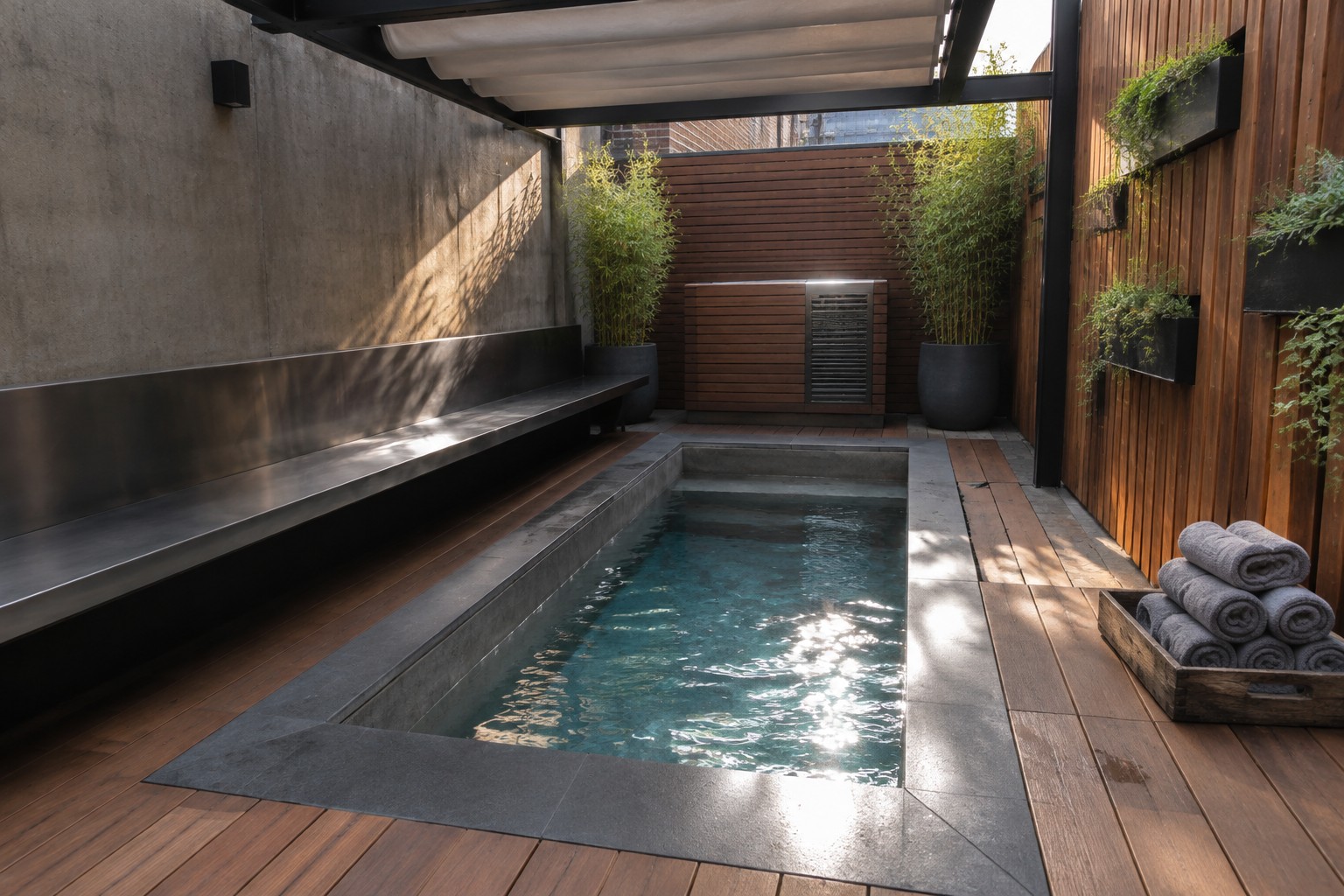
Integrate Planters Into the Pool Wall
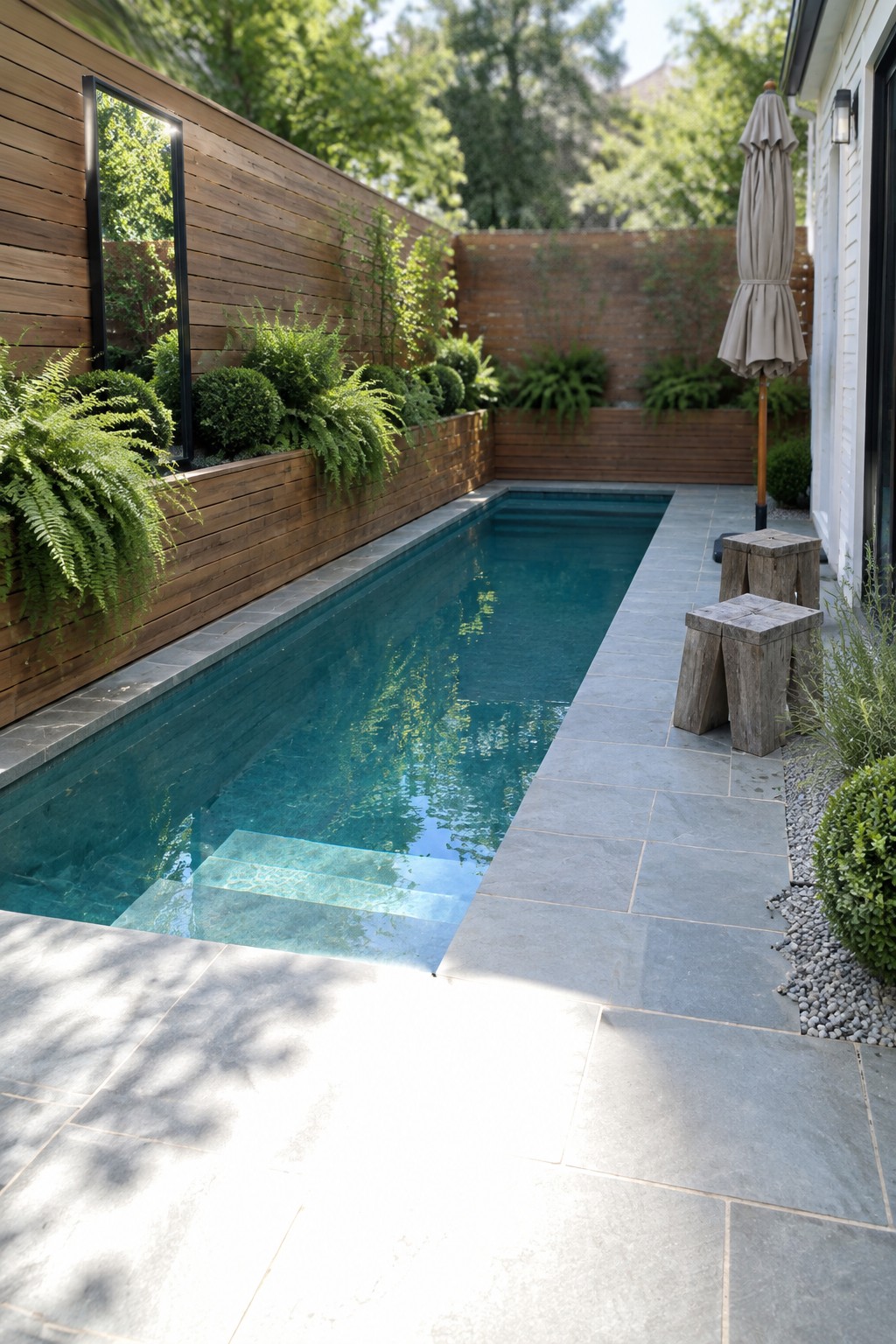
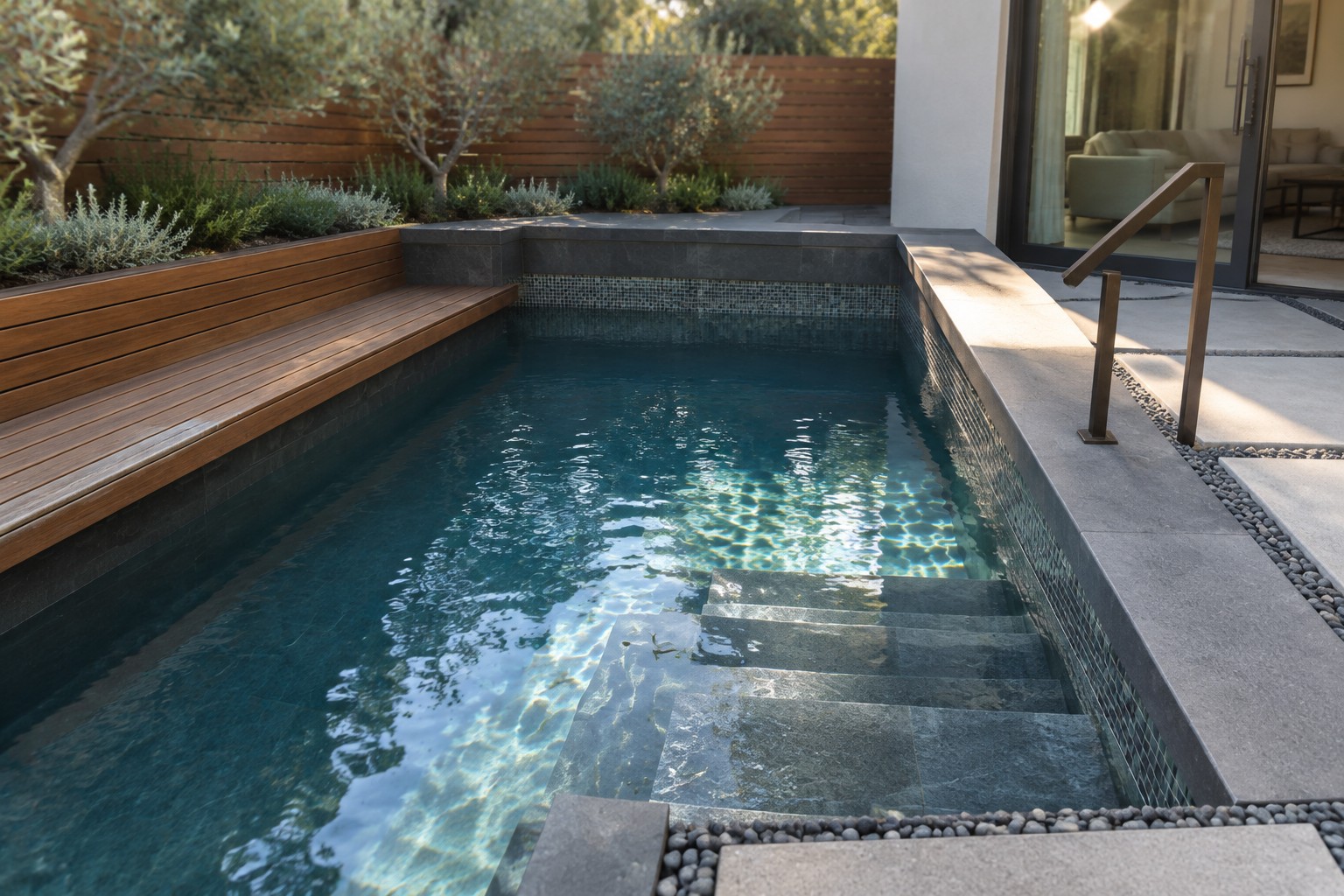
One simple way to give a plunge pool a more natural feel is to build planting beds straight into the surrounding structure. Here the wooden wall runs the full length of the pool and holds a long planter box packed with ferns and shrubs that soften the edge without adding extra beds on the ground.
This works best on tight lots where you want greenery close to the water but still need room to walk and sit. It suits homes that already use wood siding or fencing, since the same material ties everything together. Just keep the soil depth and drainage in mind so the plants stay healthy through the seasons.
Plant Right Up to the Pool Edge
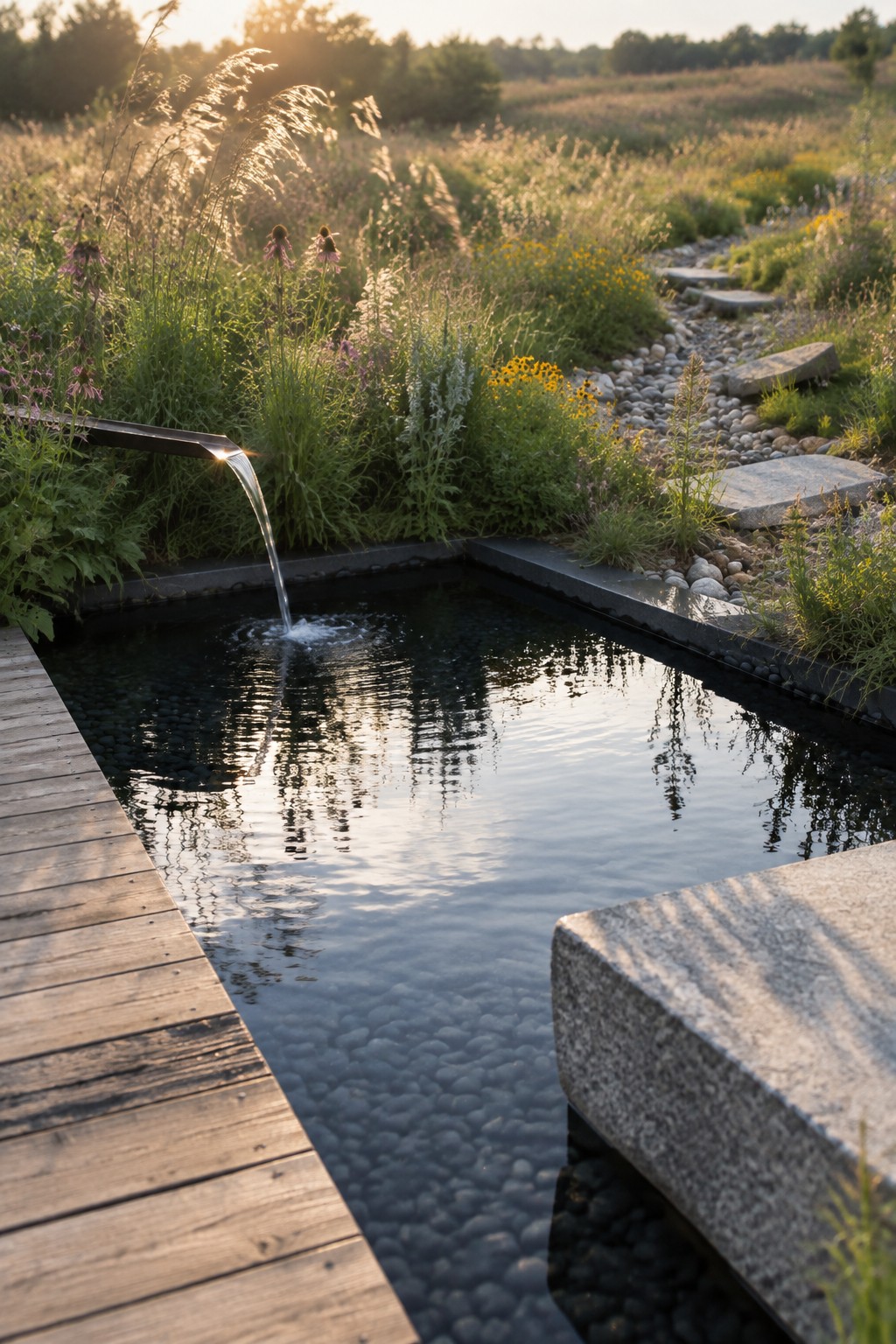
A plunge pool feels more natural when you skip the wide paved deck and bring the planting in close instead. Tall grasses and wildflowers soften the hard lines of the water and make the whole feature look like it belongs in the garden rather than sitting on top of it.
This works best on properties that already have room for loose beds and informal paths. Use a simple wood deck on one side for access and let the plants handle the rest. Just keep an eye on root growth near the liner and choose species that will not drop too much debris into the water.
Blend the Pool Into the Landscape With Planters
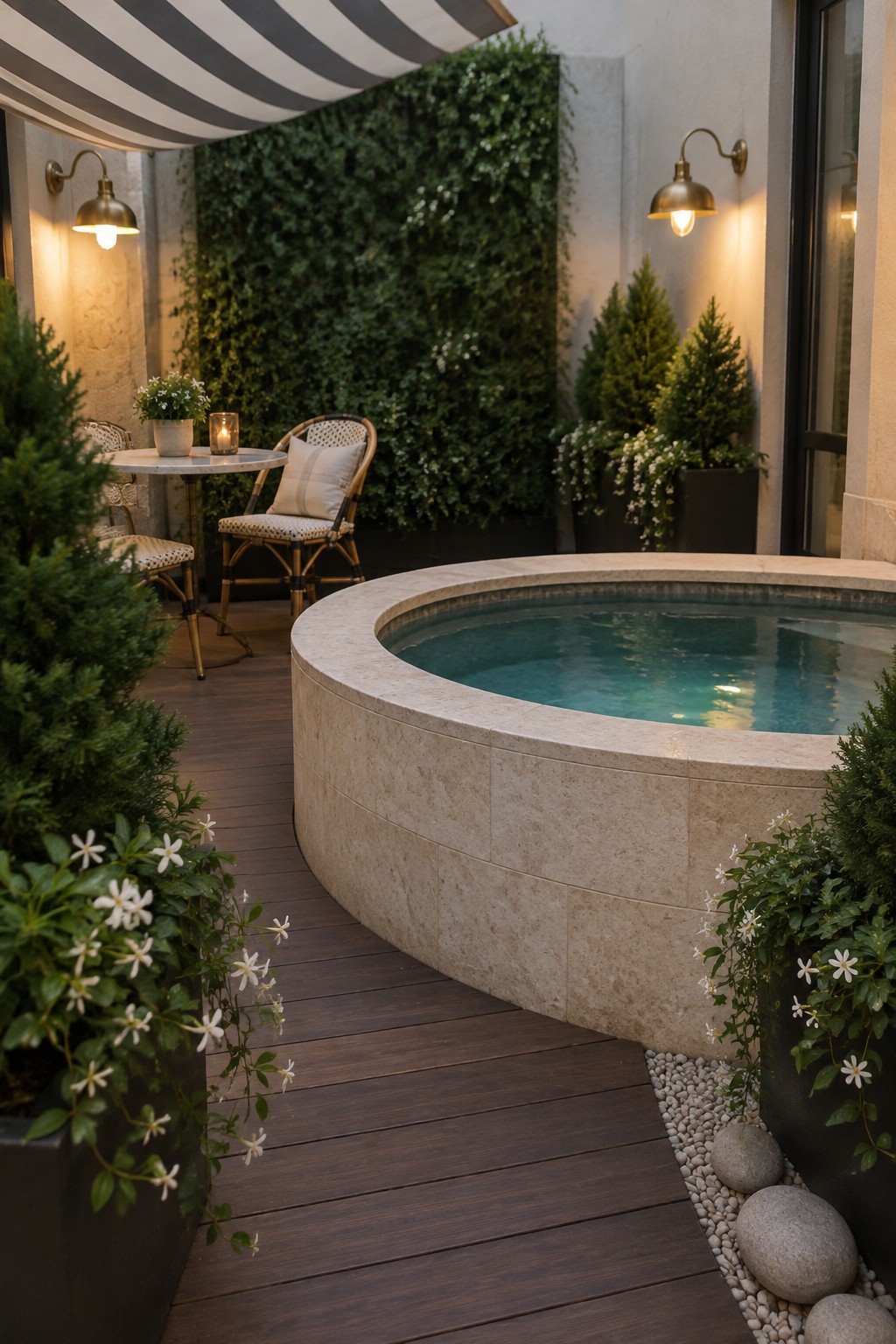
A plunge pool can easily feel like it was dropped onto a deck without much thought. Using large planters filled with trailing plants and flowers around the edges helps the water tie into the rest of the garden instead of standing apart from it.
This approach works best on smaller outdoor spaces where you still want room for seating and greenery. Keep the pots fairly large so they read as part of the layout rather than afterthoughts, and choose plants that can handle some sun and occasional water from the pool.
Place Concrete Seating Right Next to the Plunge Pool
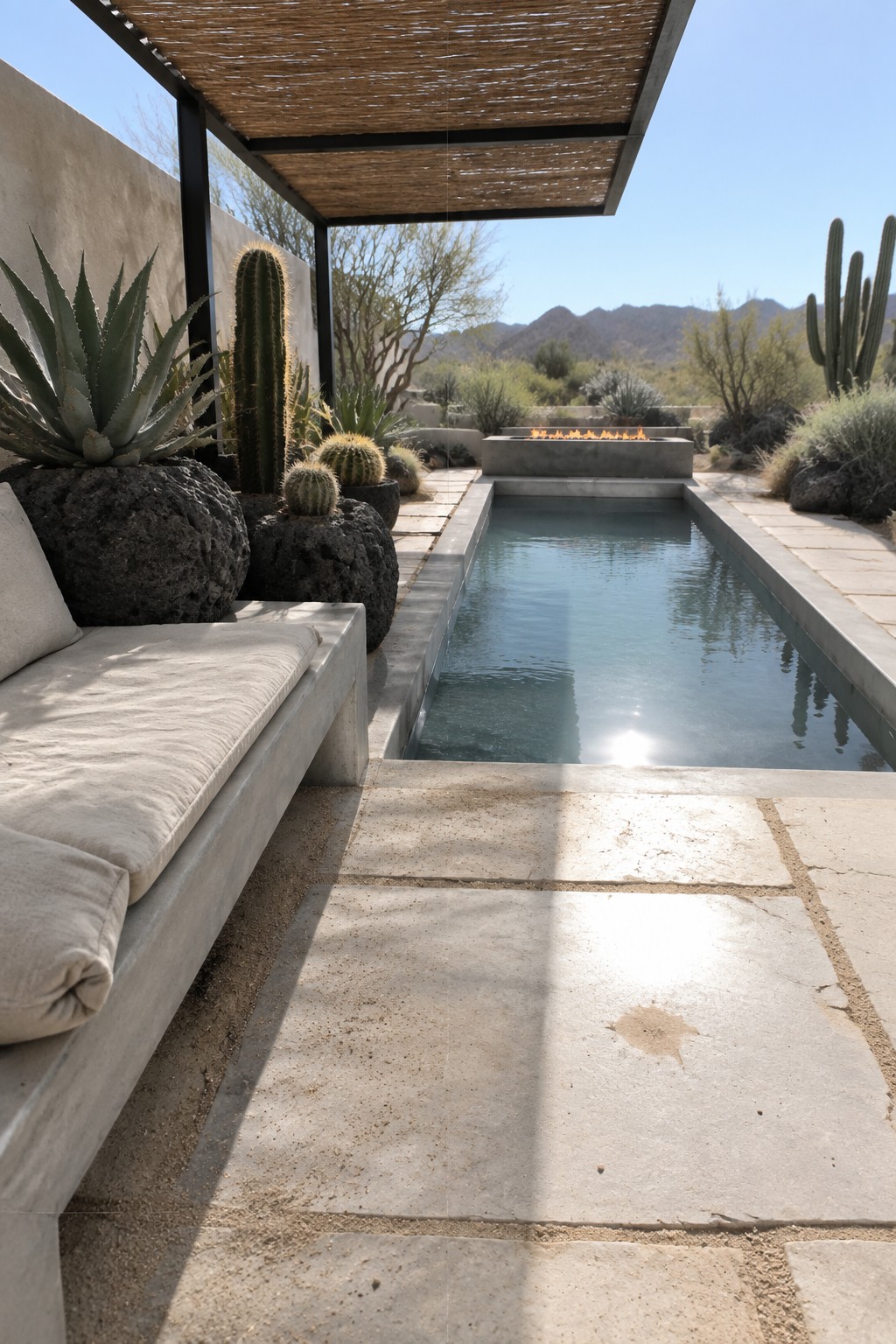
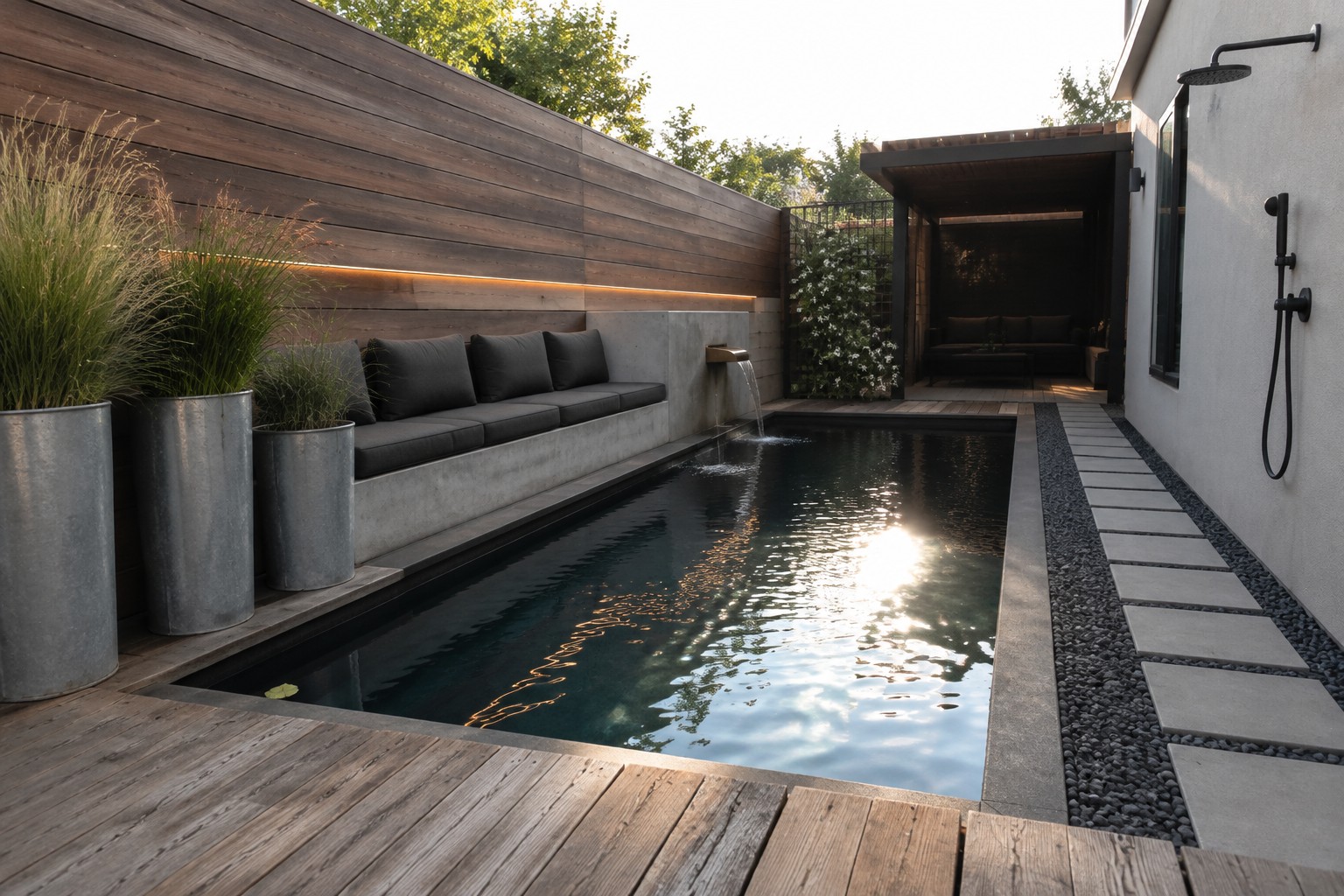
A bench built right along the pool edge turns the water into an easy spot to linger. You can sit, dip your feet, or just stay close without dragging over extra chairs or loungers.
This setup works best in smaller yards or dry climates where you want clean lines and low upkeep. Match the bench material to the pool coping so the whole area feels like one piece instead of separate parts.
Frequently Asked Questions
Q: Which plants blend best around a natural plunge pool? A: Go with native ferns and moisture loving grasses that already grow in your area. They soften the edges and need little extra water once established. Trim them back only when they crowd the rocks.
Q: How do I keep the water clear without adding chemicals? A: Skim debris every few days and run a small pump to keep things moving. Beneficial bacteria and a few aquatic plants handle most of the work. Change out a portion of the water every couple of months if it starts to cloud.
Q: Can a small yard still feel like a real natural pool setting? A: Yes. Shape the pool to fit the existing contours and tuck it beside shrubs or a low bank. The organic edges and simple ground cover do the rest without extra structures.