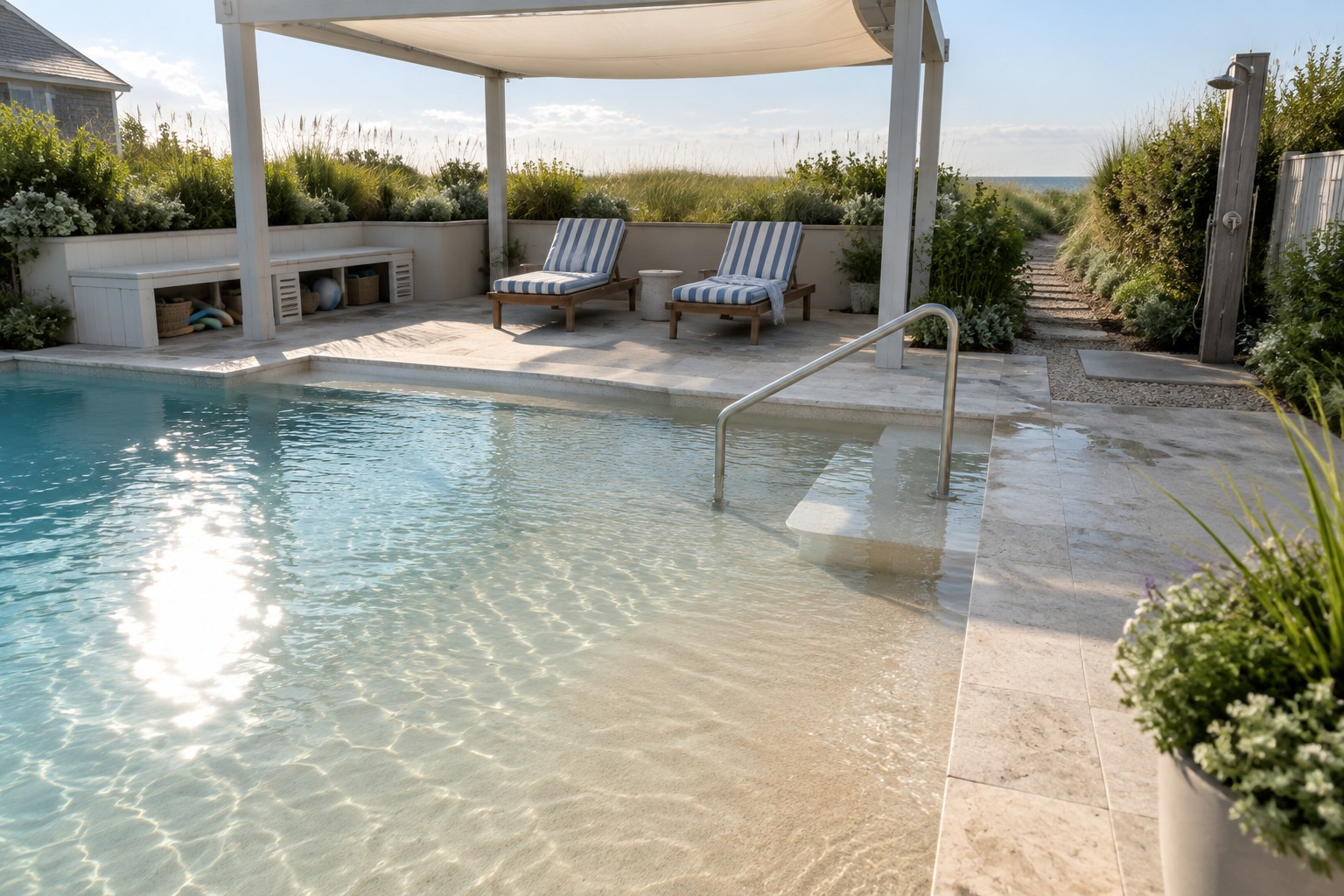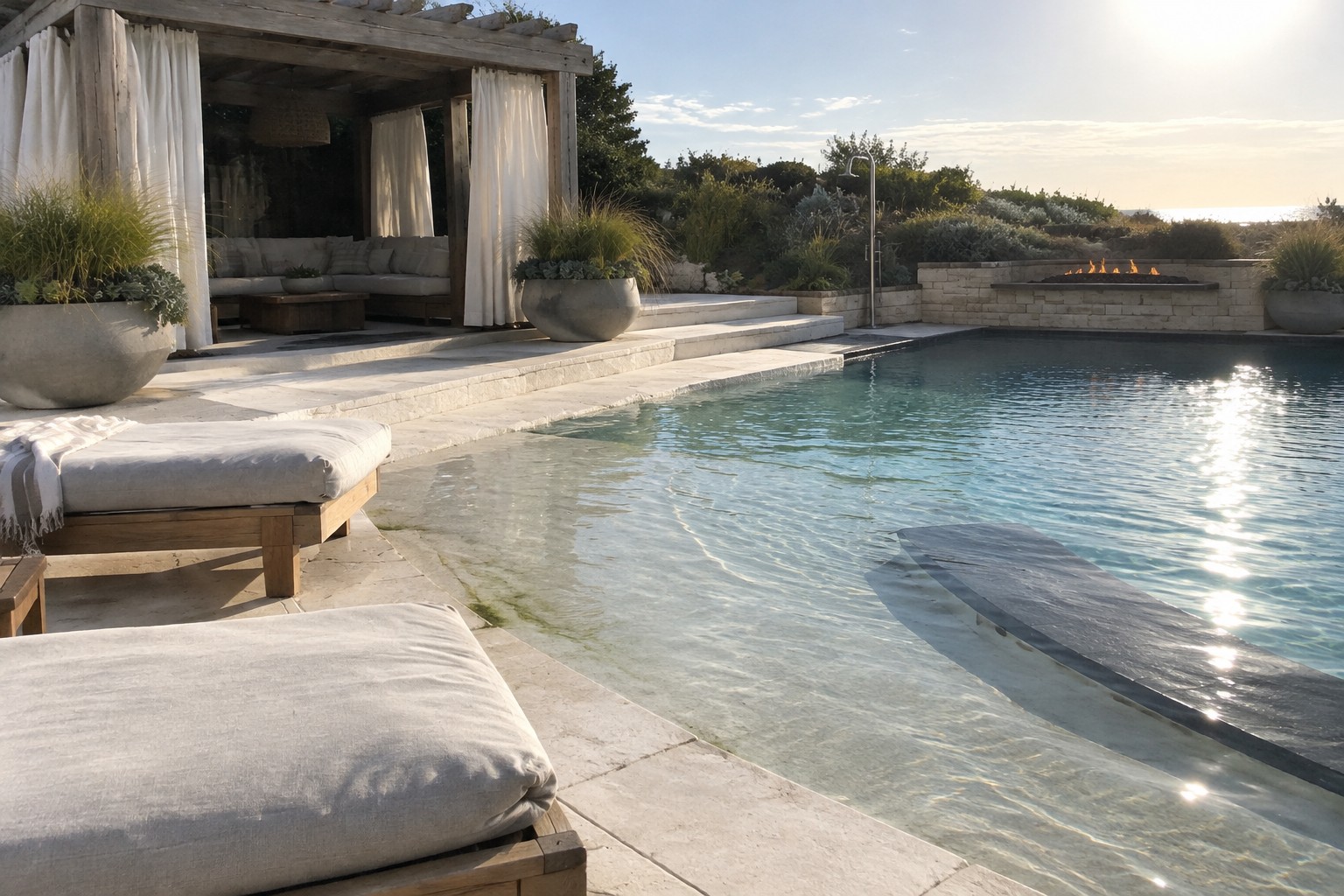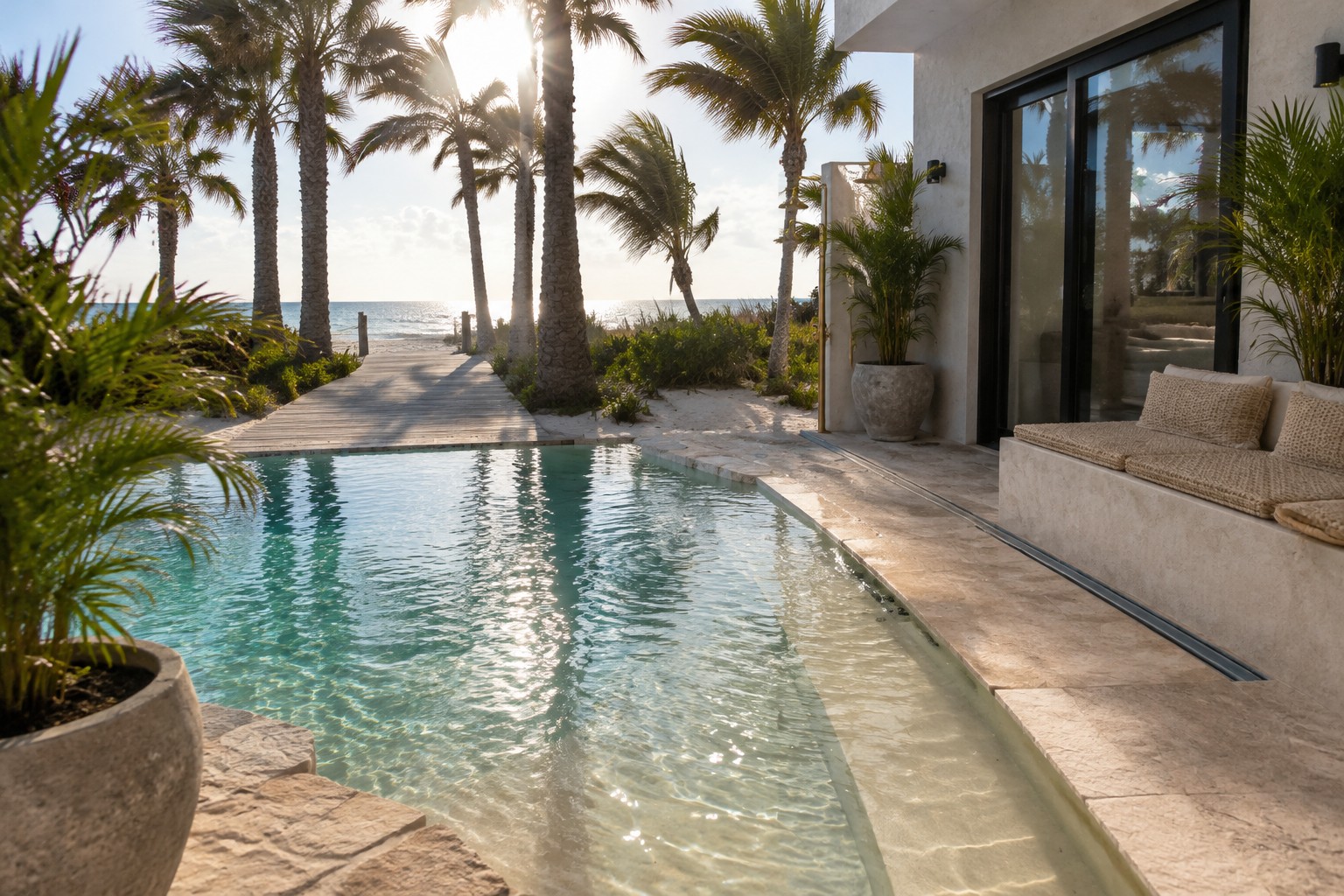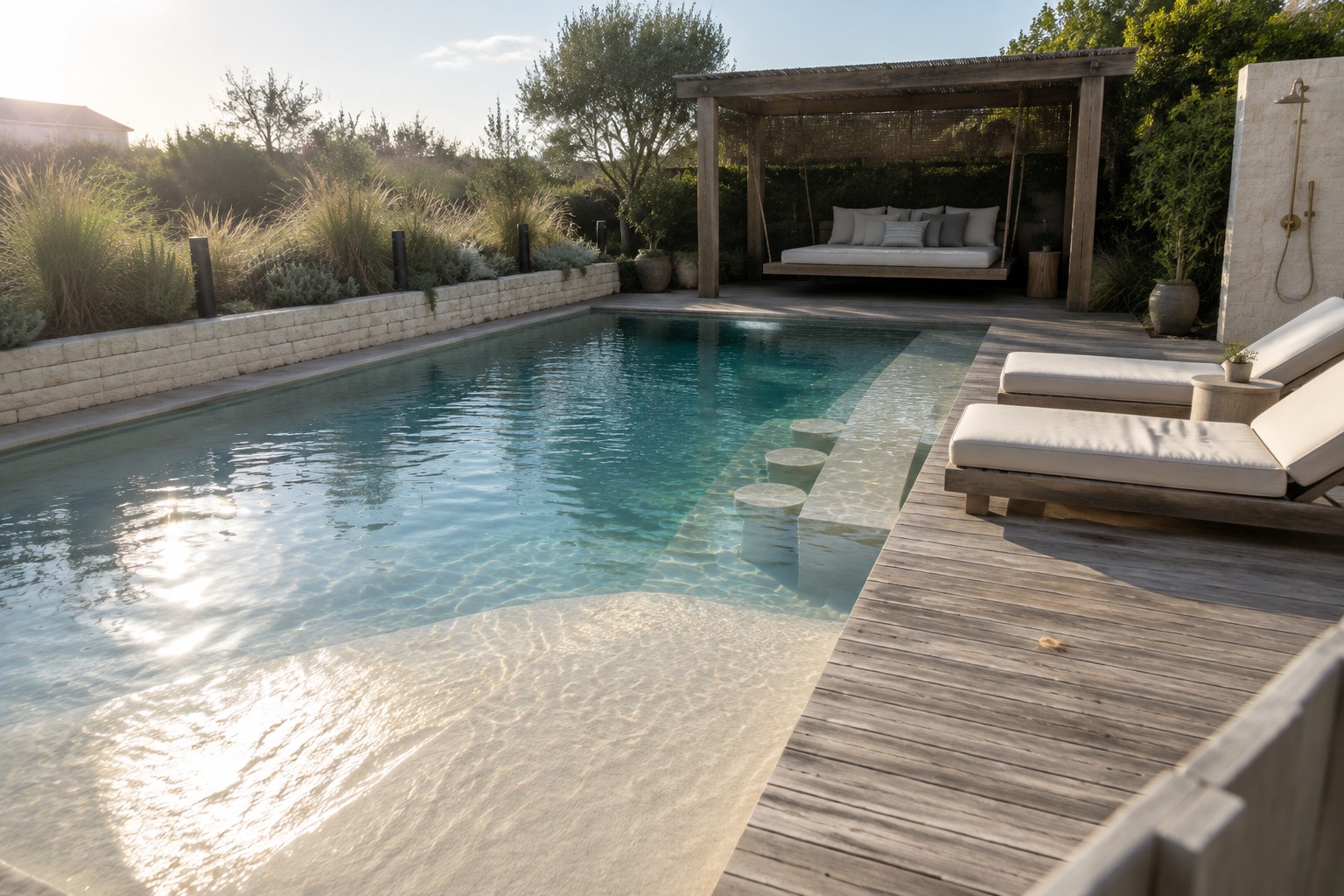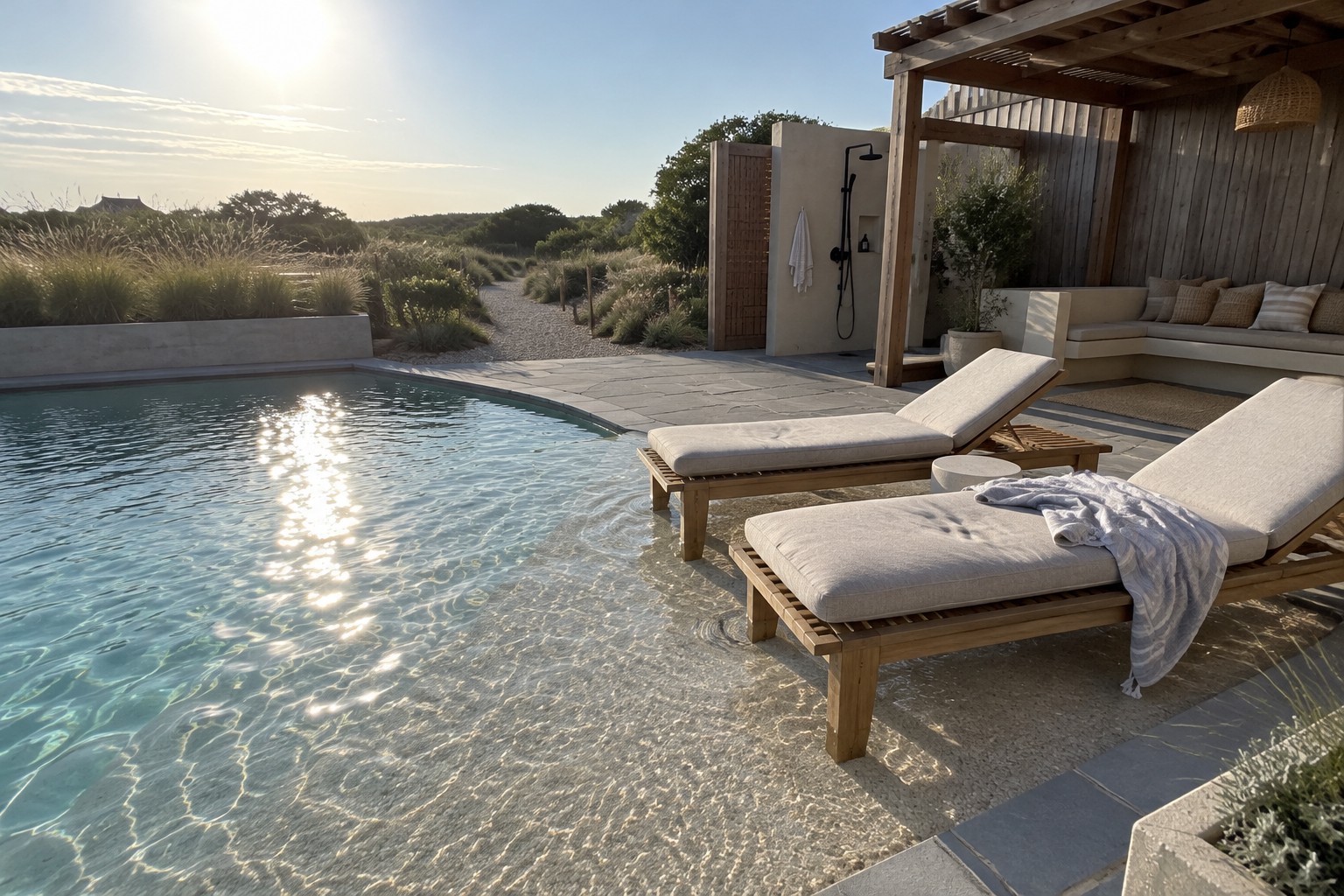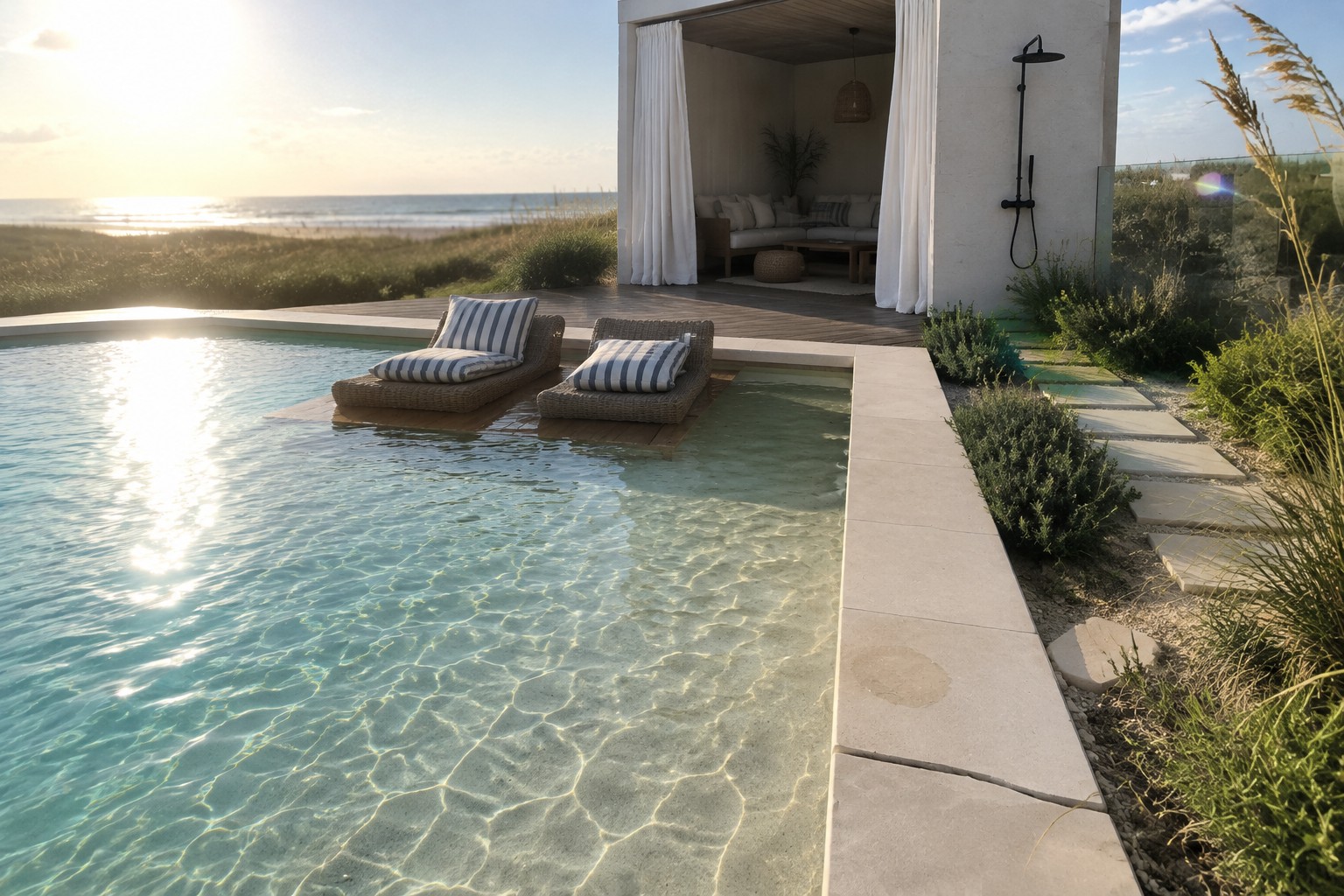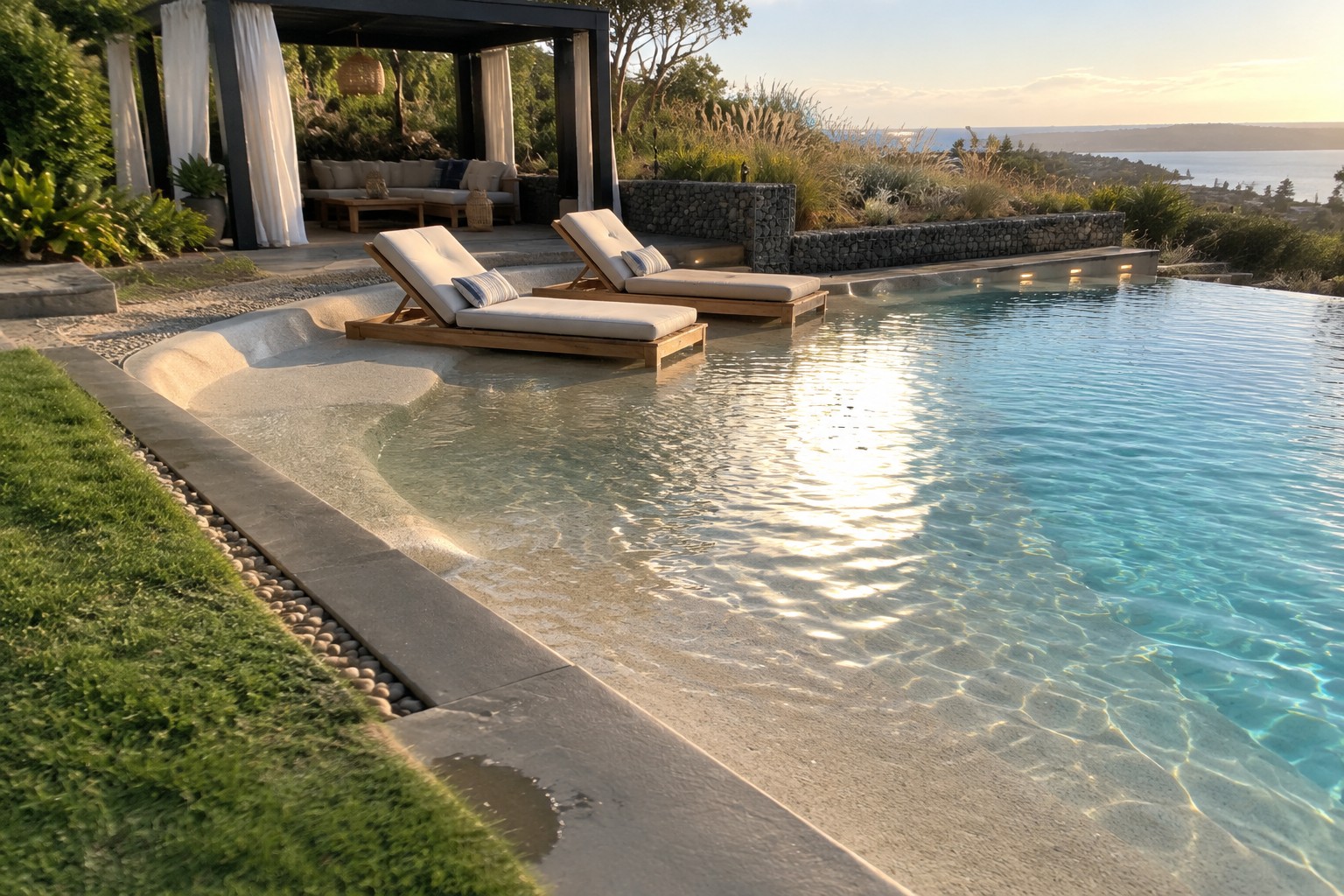
A zero-entry pool can make a sloped yard easier to use, but the grading often determines whether the finished space feels natural or awkward.
I’d start by looking at how water moves across the site and where people will approach the pool, since those choices shape both safety and the surrounding landscape.
Gentle transitions, well-placed retaining walls, and clear paths can help connect the pool to the rest of the yard without making the slope feel like an obstacle.
Some grading solutions look simple in a plan but need careful adjustment to suit the ground, drainage, and daily use.
I’d save the ideas that work with the site rather than forcing the yard into a shape that does not fit.
Grade the Pool for a Gentle Zero-Entry Shelf
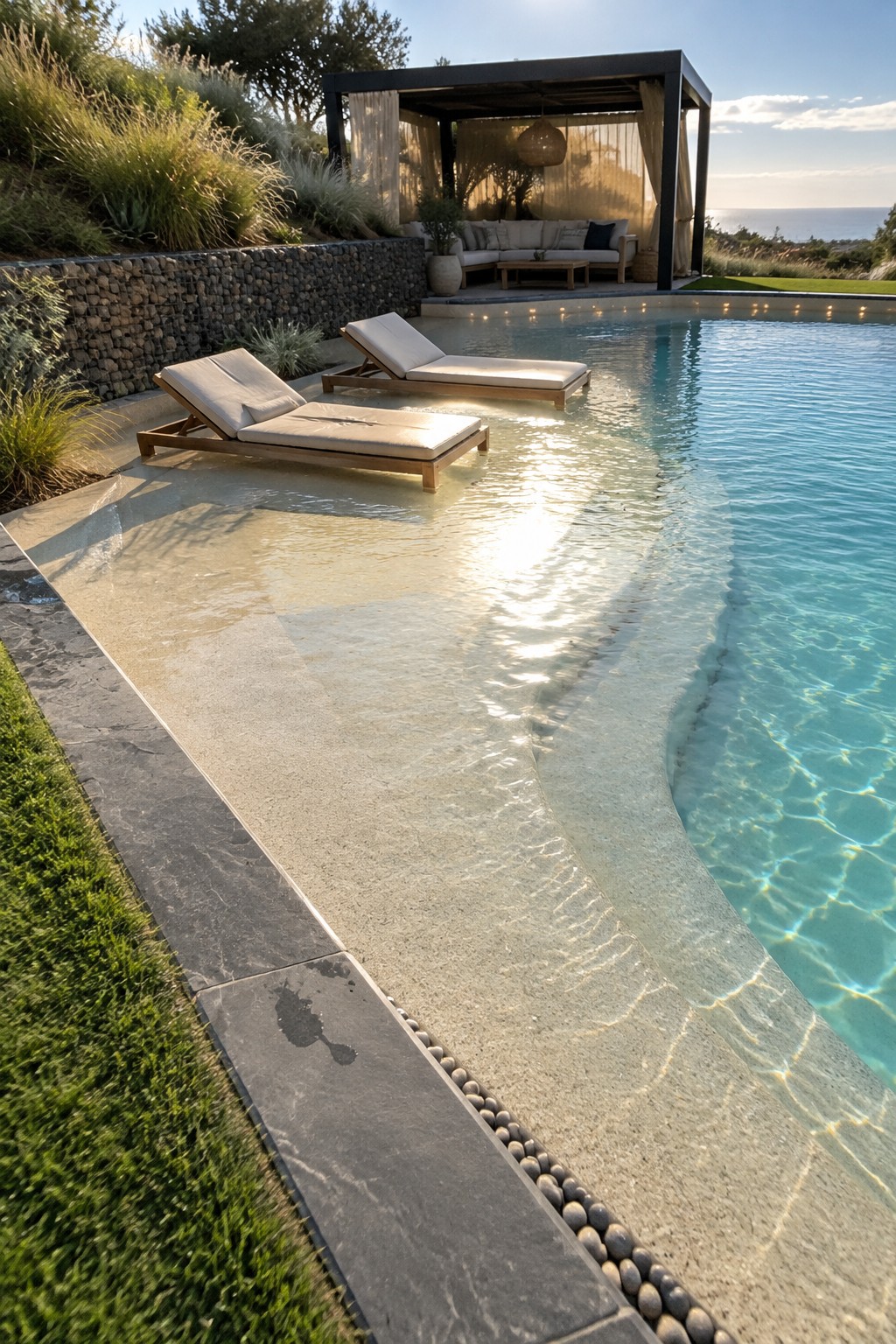
A zero-entry pool works best when the surrounding ground and pool floor meet in a gradual, planned slope. The broad shallow shelf here gives loungers a place to rest in the water, while the deeper section begins farther out.
When planning a similar pool, check the yard’s natural slope and set elevations before construction. A gradual transition can suit family pools and relaxed outdoor seating areas, but the grading and drainage need careful planning to prevent runoff from washing toward the pool.
Use a Raised Pool Basin to Manage a Slope
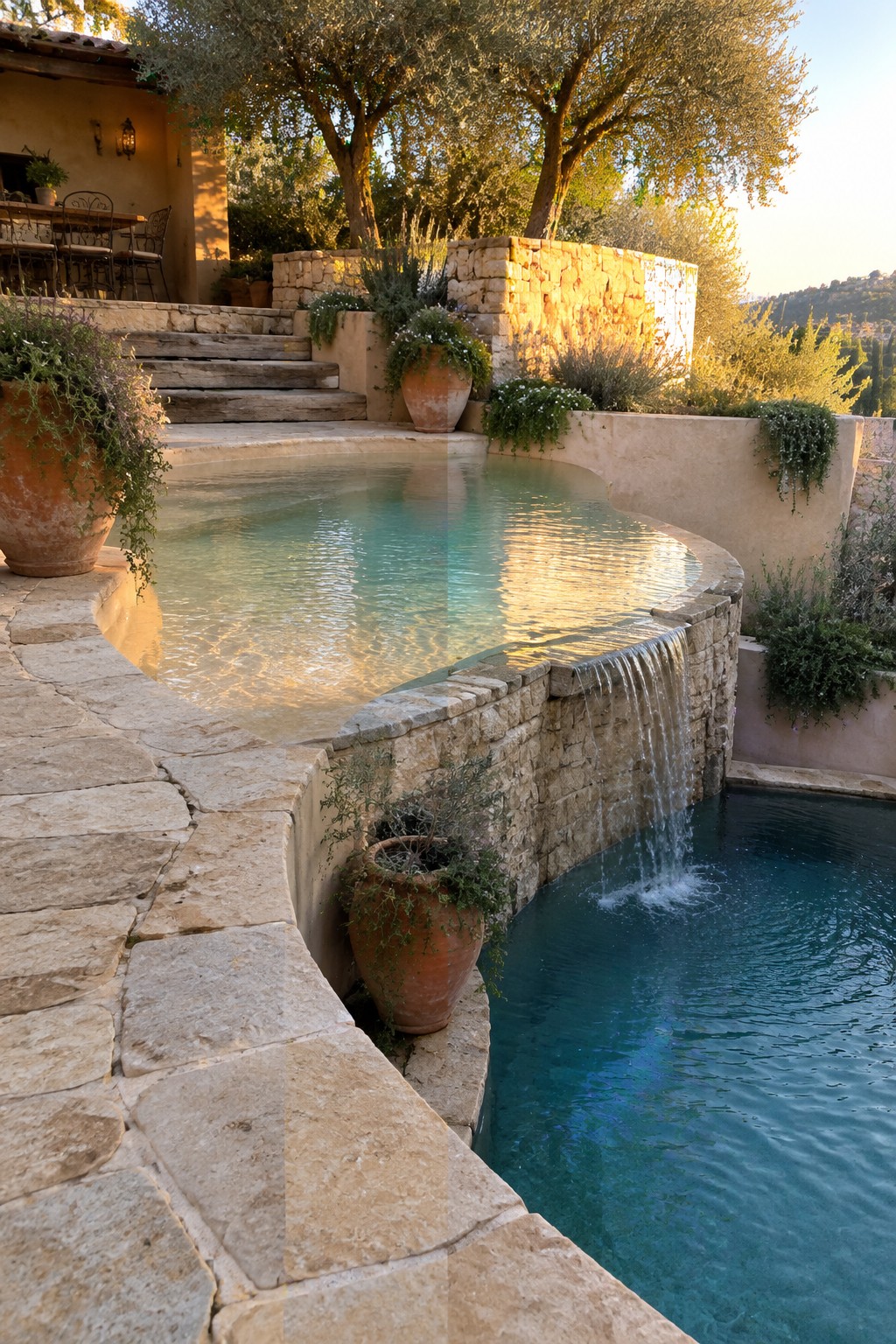
A pool on a sloped site does not have to sit at one level with the surrounding yard. A raised stone basin can hold the shallow pool above the lower grade, while a short spillway lets water flow into a deeper basin below. This approach makes the change in elevation part of the pool layout.
Plan the grading and retaining walls together so the upper pool has a stable, level base and the lower area can collect overflow safely. It works especially well where a steep grade makes a single-level pool difficult, but careful drainage planning is essential.
Grade the Pool Into the Slope
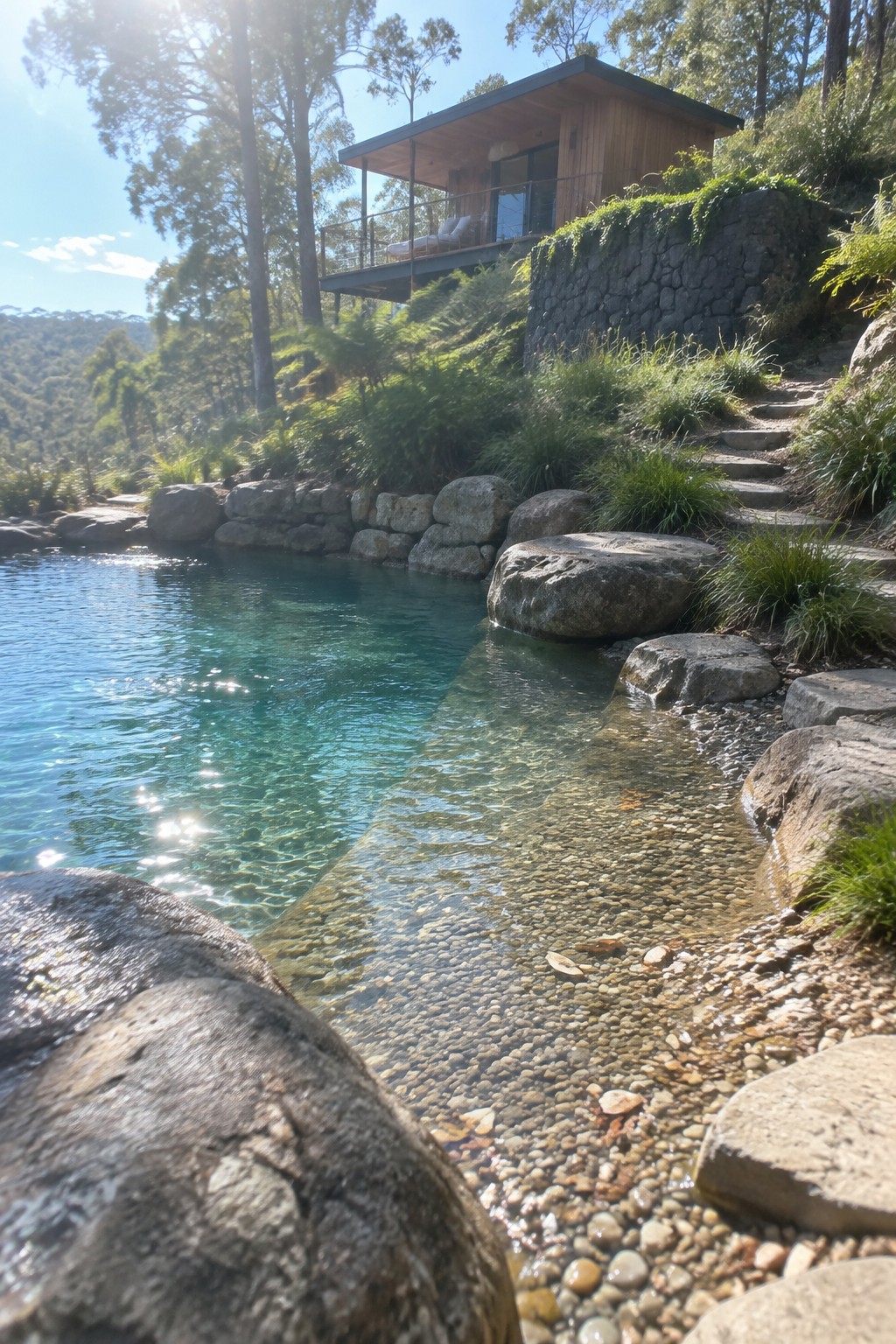
A pool set into a hillside can feel like a natural part of the yard rather than a feature that sits on top of it. Here, the shallow pebble edge meets larger rocks, while steps climb beside the pool to reach the higher ground.
When planning a similar design, grade the surrounding land in gentle levels and use sturdy stone edges to manage the change in height. Keep the entry shelf gradual and the route to the house easy to walk, especially where the ground may get wet.
Grade the Pool for a Zero-Entry Edge
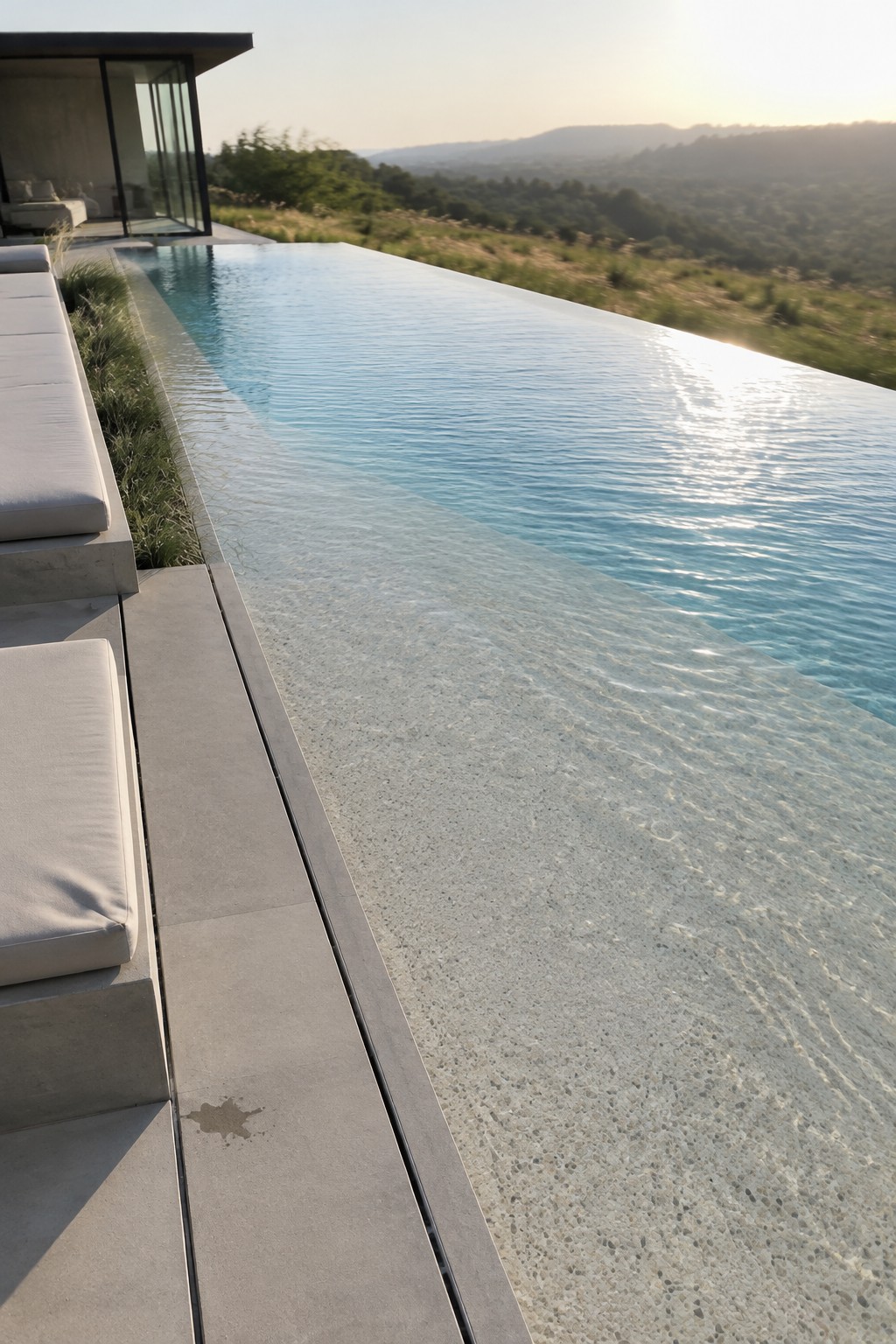
A gradual pool entry can work well on a sloped site because it gives the water a shallow start without forcing the whole pool to sit at one level. Here, the pale, gently sloping pool floor makes the entry feel like part of the pool rather than a separate set of steps.
Before building, have the slope surveyed and plan how much soil needs to be cut or retained. Keep the entry gradual and check that the finished surface drains safely away from the pool.
Add a Shallow Sun Shelf to the Pool
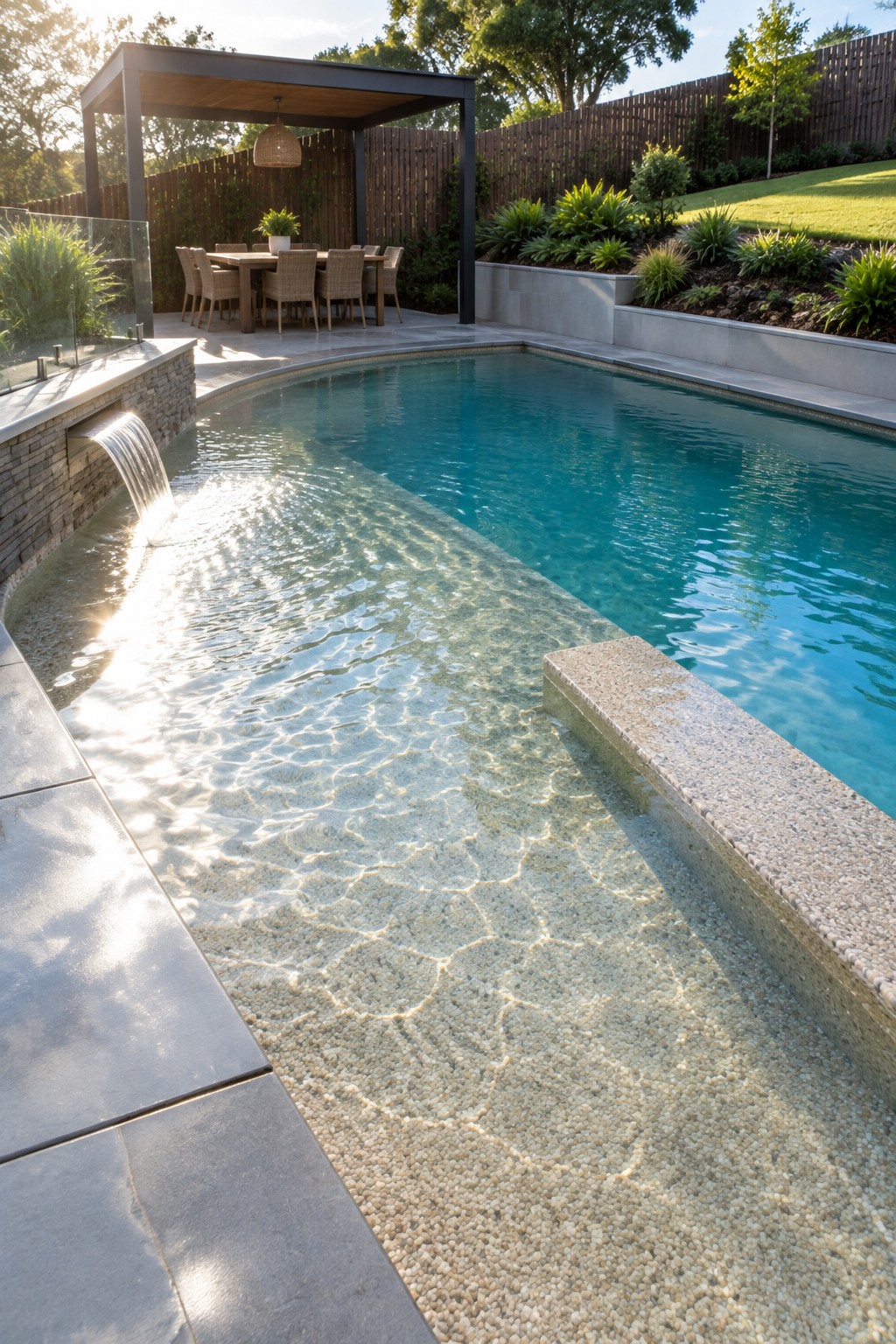
A shallow shelf makes it easier to enter the pool gradually and gives people a place to sit or cool off without swimming into deeper water. Here, the shelf extends along the pool’s edge, so it feels like a useful part of the layout rather than a separate step.
On a sloped site, plan the shelf as part of the pool’s overall grading and keep the transition into deeper water gradual. Check that the finished shelf stays level and drains properly before building around it.
Add Stepping Stones Through the Shallow Pool
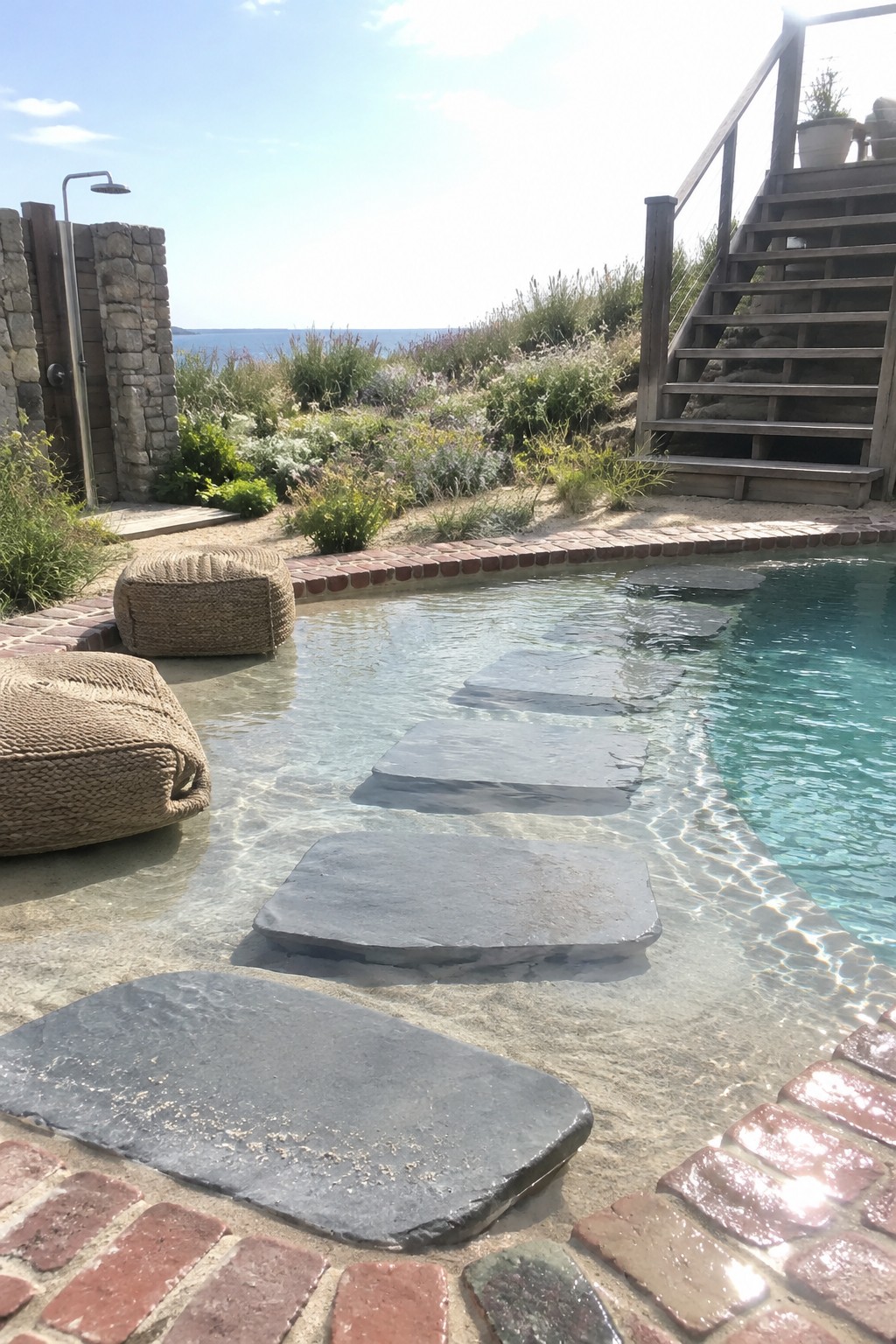
A shallow entry can be easier to use when broad stepping stones lead from the pool edge into deeper water. The stones give swimmers a firm route across the gradual shelf, while keeping the entry open rather than filling it with steps.
Set each stone level and leave enough space around it for water to flow and for safe footing. This approach suits a pool built into a sloped yard, but the stones need a stable base so they do not shift over time.
Build a Shallow Entry Into the Pool
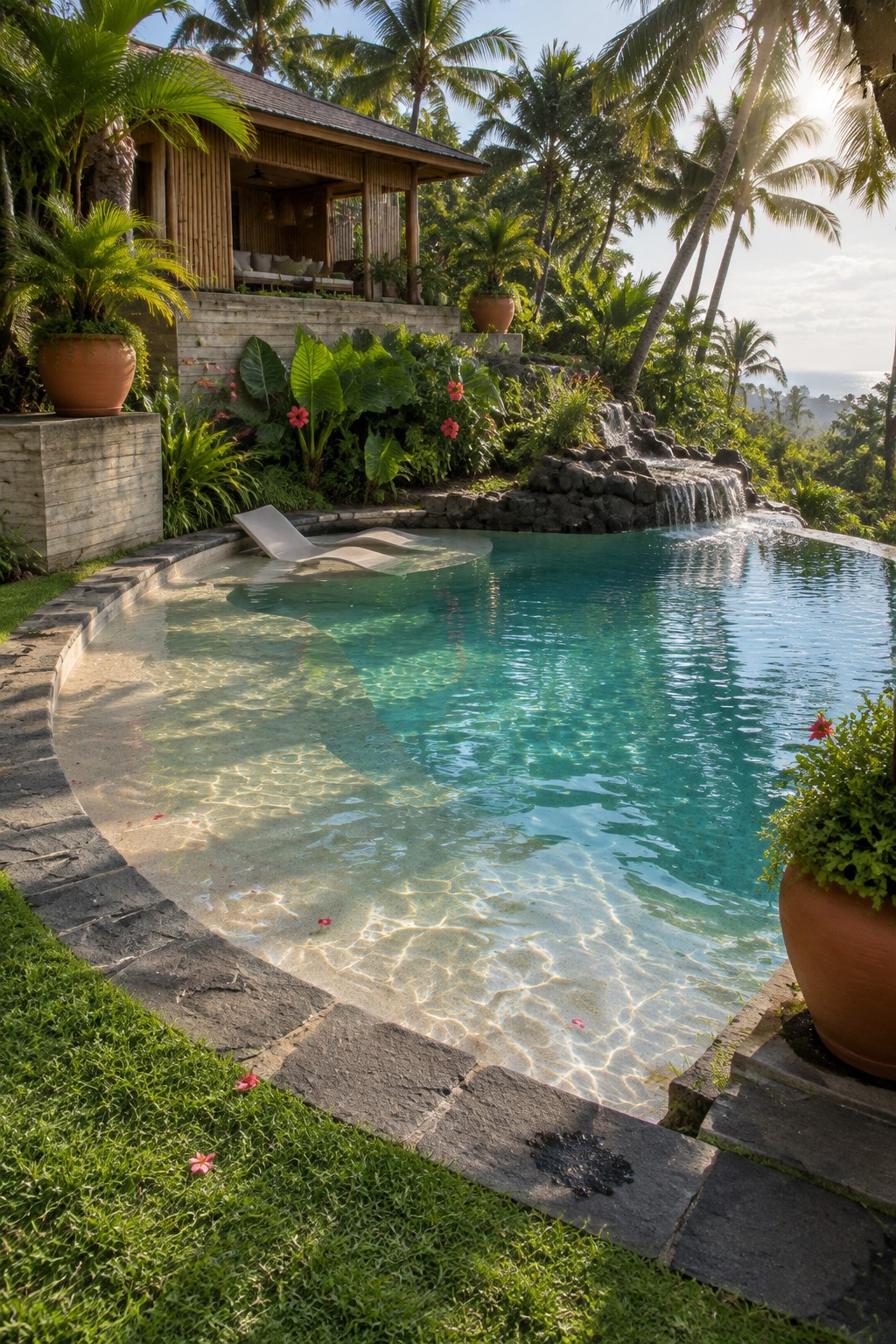
A broad, gently sloped entry makes a pool easier to step into and gives people a place to cool off without heading straight to deeper water. Here, the shallow shelf follows the pool’s curved edge, so it feels like part of the layout rather than a separate step.
On a sloped site, plan the entry shelf as part of the grading and set its depth before shaping the deeper basin. A stone edge can help hold the surrounding grade in place, but make sure water drains away from the pool and the shelf stays level enough for safe use.
Use Terraced Pool Edges on a Sloped Patio
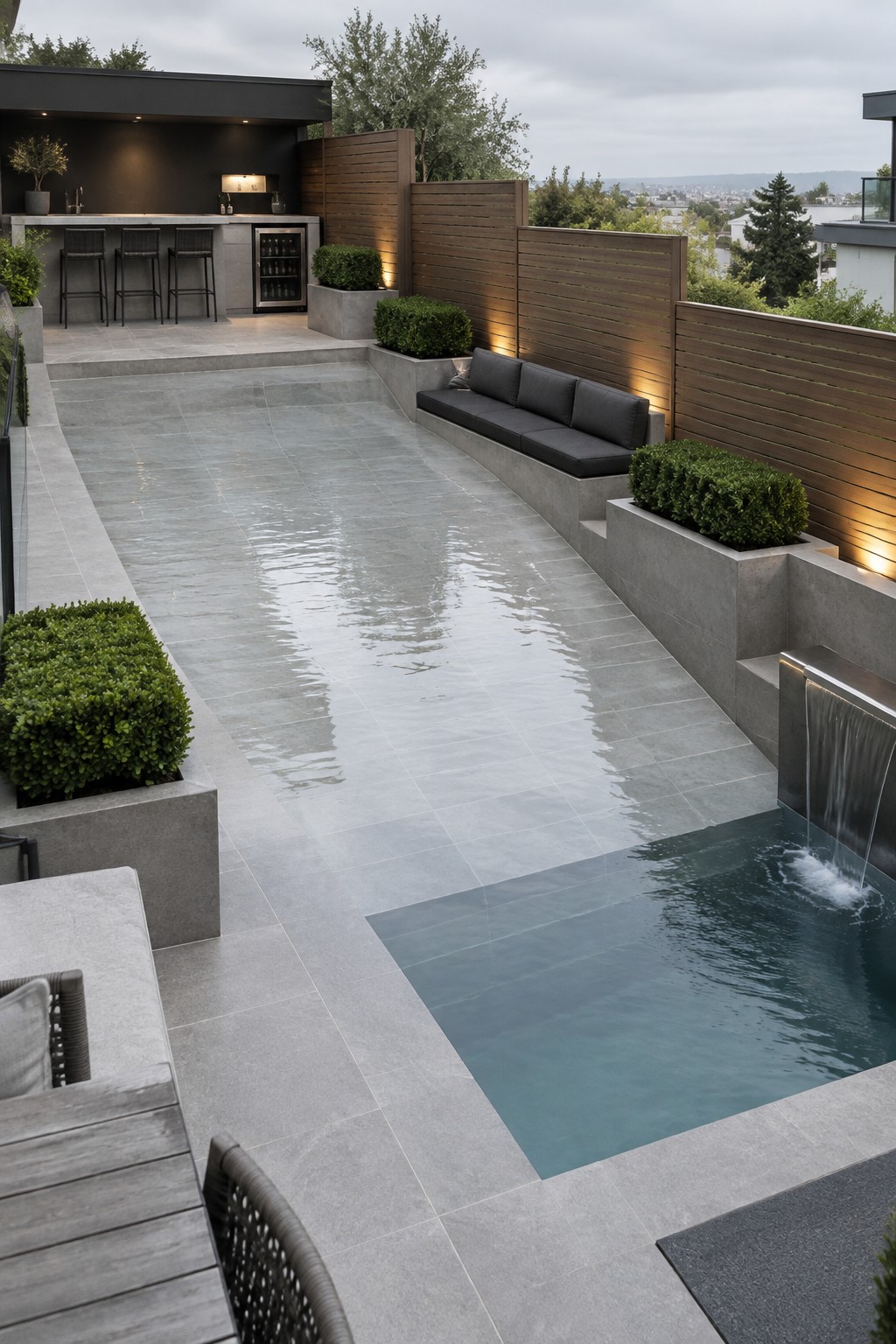
A sloped yard does not have to mean one long, steep pool deck. Breaking the grade into broad terraces can make the pool area easier to walk through and give each level a clear purpose. Here, raised planters and a built-in bench follow the pool edge without crowding the main path.
Use retaining walls to create level sections, and keep the route to the pool as direct as possible. For a zero-entry design, plan the shallow entry and the terrace heights together so the transition stays gradual and safe.
Use a Raised Pool Deck to Work With the Slope
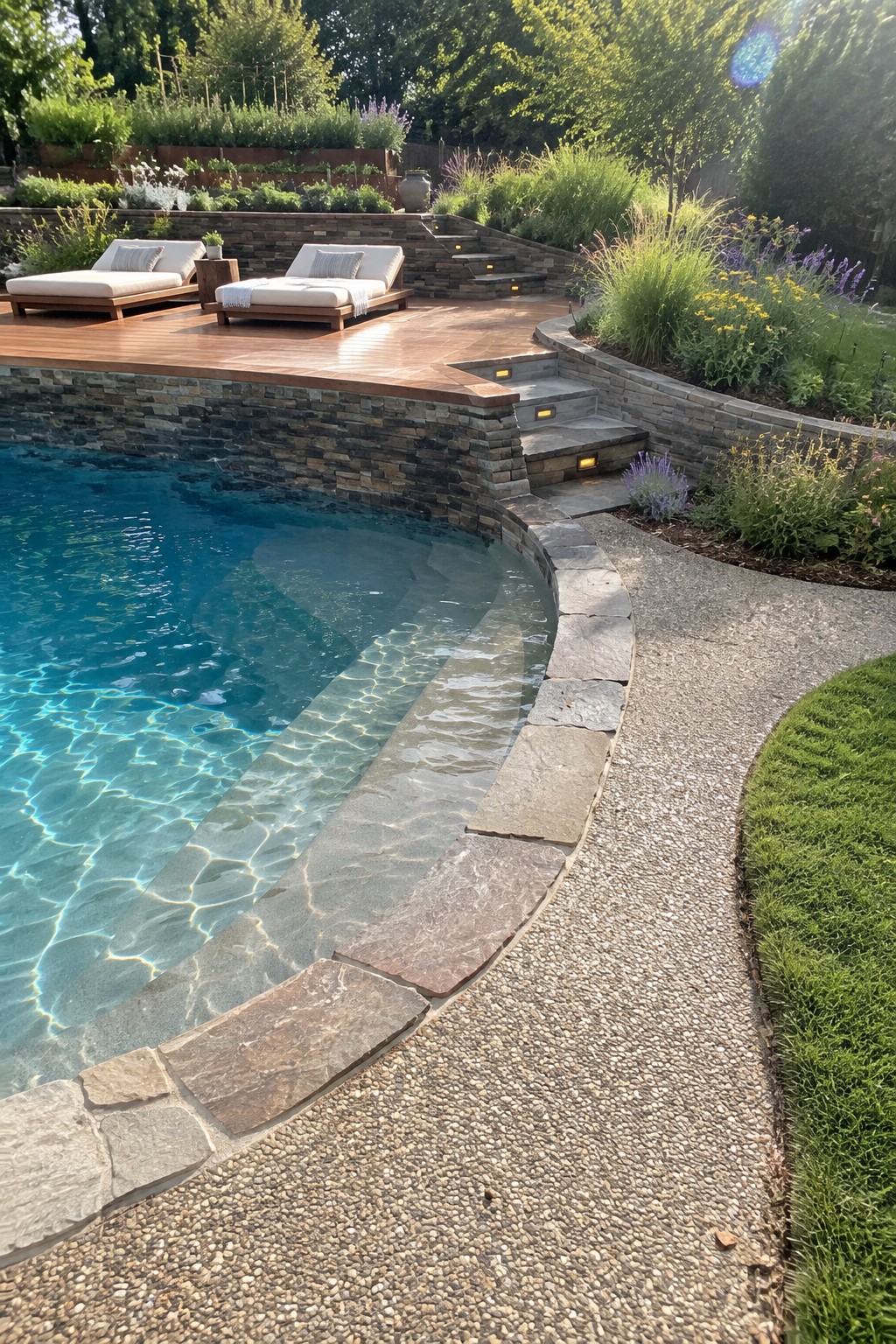
A raised deck can make a sloping yard easier to use without forcing the whole space to be level. Here, the pool sits below a timber deck, while a short run of steps connects it to the higher garden. The change in height feels planned rather than awkward.
This approach works well when the grade drops beside the pool. Keep the deck broad enough for lounging, and make sure steps and transitions are easy to navigate. For a zero-entry pool, grade the shallow entry separately so the raised deck does not mean a steep or abrupt way into the water.
Use a Gradual Pool Entry on Sloped Ground
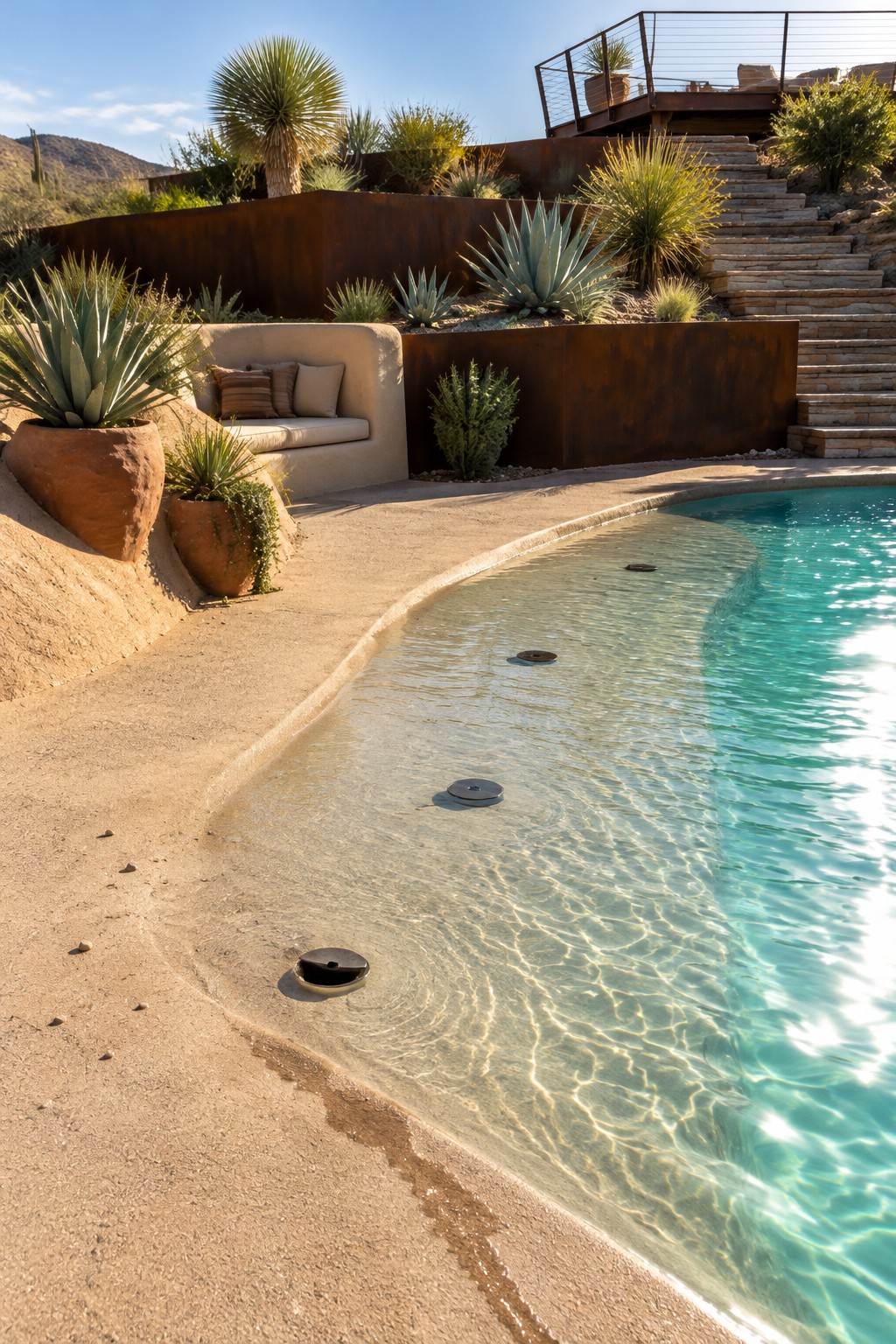
A zero-entry edge lets the pool floor meet the surrounding deck gradually, instead of requiring a ladder or abrupt drop. It works especially well on sloped sites, where careful grading can make the shallow area feel like a natural extension of the pool deck.
Plan the slope before construction so water depth changes evenly and the deck drains away from the pool. This approach suits a curved pool edge like the one shown, but the transition still needs a slip-resistant finish and enough space for safe movement.
Use a Waterfall to Connect Pool Levels
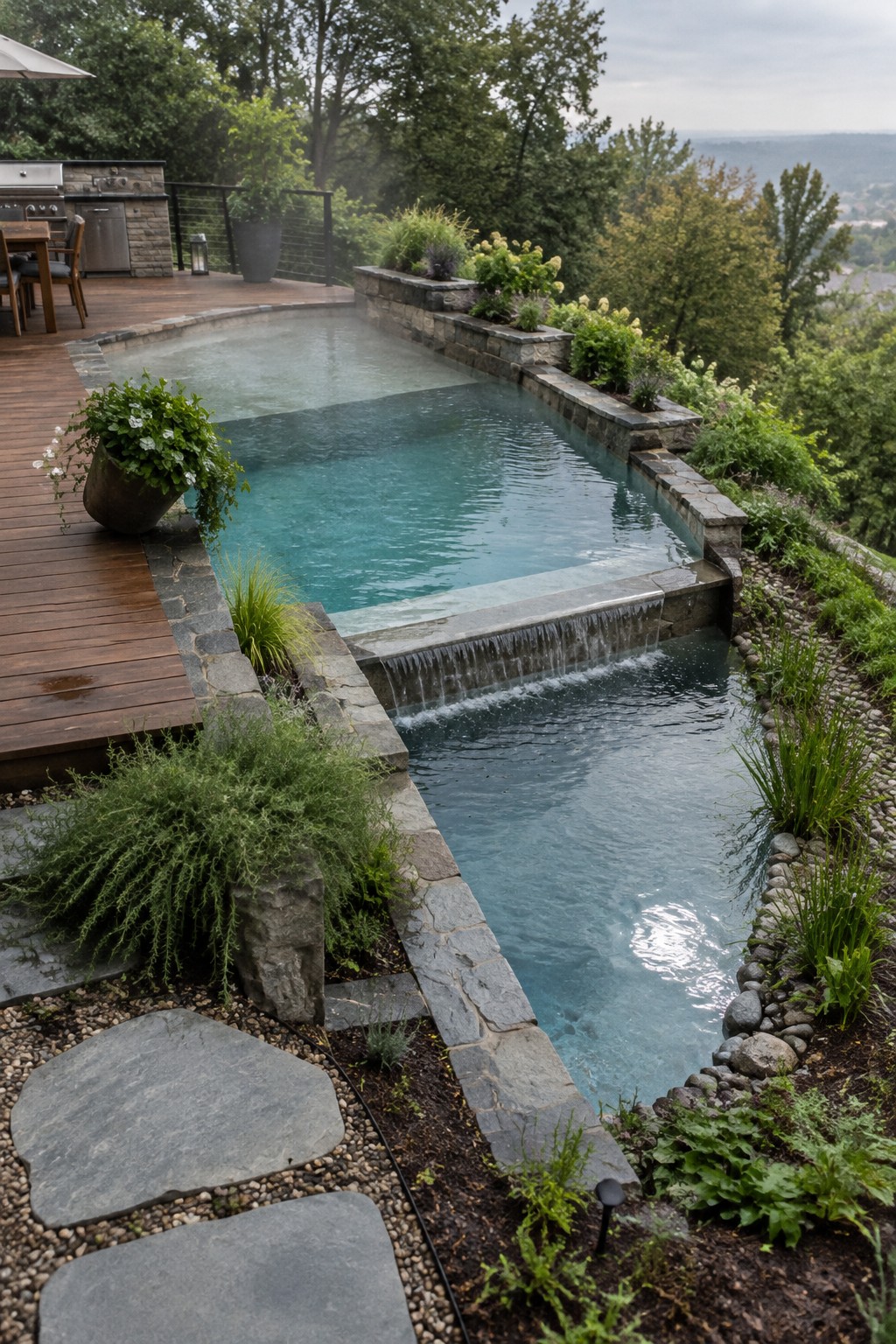
A small waterfall can link a raised pool to a lower basin on a sloped yard. It gives the change in elevation a practical purpose, while helping the two water areas feel like parts of one pool design.
When planning the levels, make sure the upper pool has a clear overflow point and the lower basin can handle the returning water. A stone spillway like this suits yards where a single flat pool would require extensive grading, but it needs careful construction and access for maintenance.
Connect a Zero-Entry Pool to the Patio
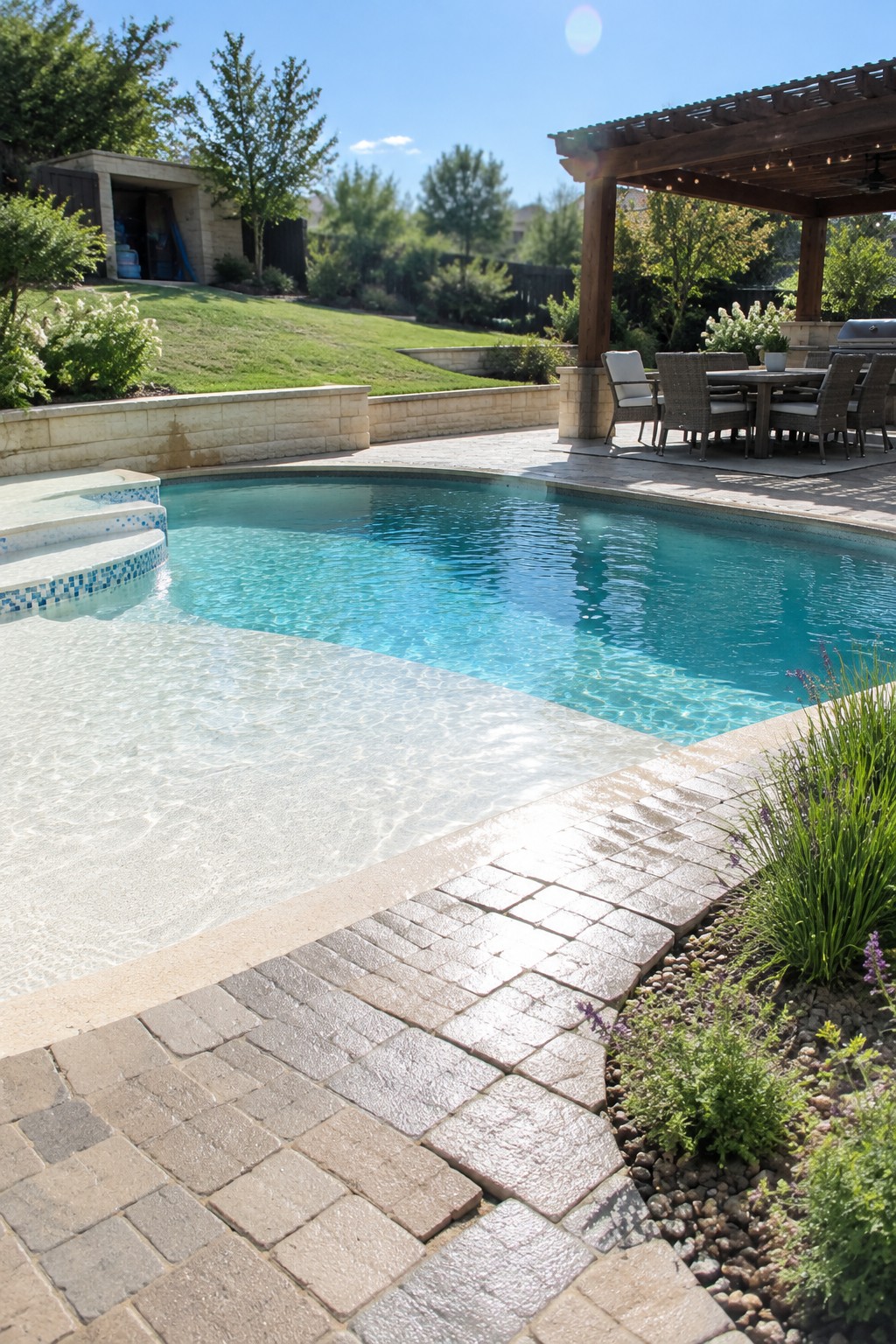
A shallow entry can make a pool easier to use while helping it sit naturally beside a sloped patio. Here, the broad, gently sloping shelf leads into deeper water, so the transition feels gradual rather than abrupt.
When planning one, coordinate the shelf height with the finished patio grade and leave enough shallow area for safe wading. It works especially well where the yard already steps down toward the pool, but the slope and drainage should be planned before construction.
Use a Beach Entry to Ease Into the Pool
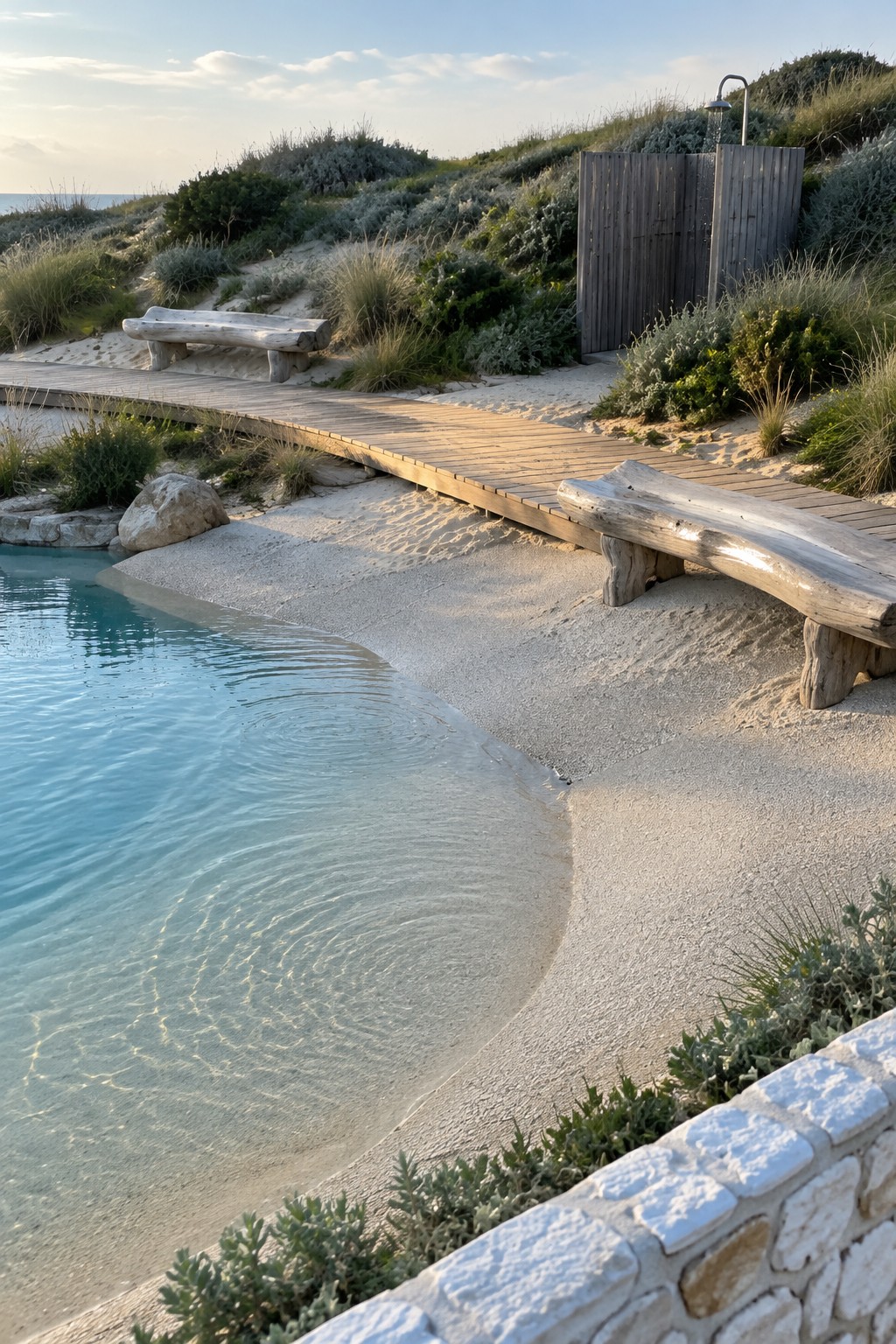
A gently sloped, shallow entry makes a pool easier to step into than a standard drop-off. It also works naturally with a graded site, letting the pool edge meet the surrounding ground without a tall wall.
For a similar layout, shape the pool floor into a steady slope and keep the entry broad enough to walk across comfortably. A curved edge can help it feel like a natural extension of the pool, but make sure the surface stays slip-resistant.
Add a Shallow Shelf Along the Pool Edge
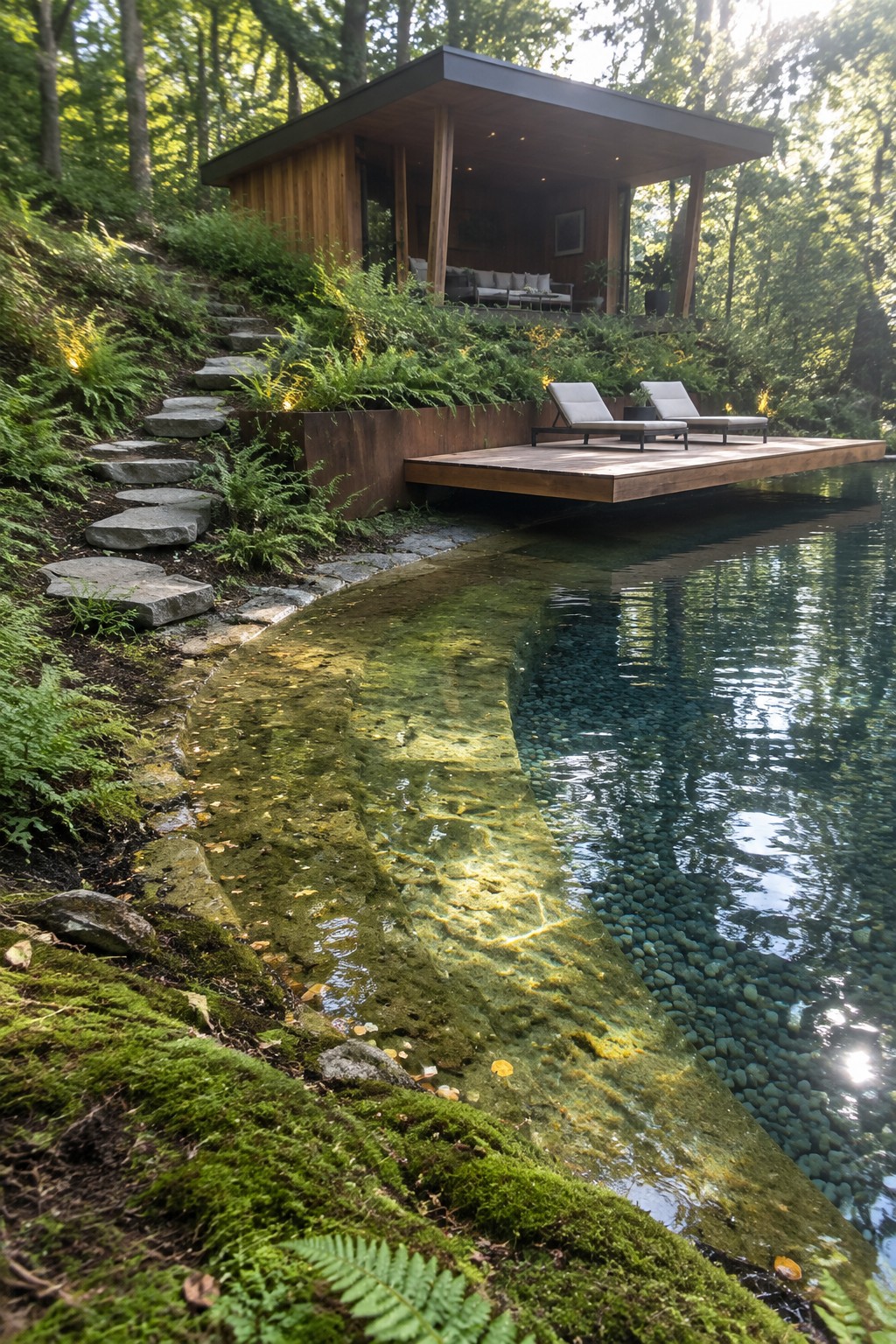
A shallow shelf can make a pool easier to enter and provide a comfortable place to sit or lounge in the water. Here, the broad stone shelf slopes gently beside the deeper pool, making the transition feel gradual rather than abrupt.
On a sloped site, plan the shelf as part of the pool’s grading so water depth stays predictable and the edge remains safe to walk on. Use a slip-resistant finish, and check that the slope does not become steep enough to feel unstable.
Use a Shallow Pool Shelf to Ease the Entry
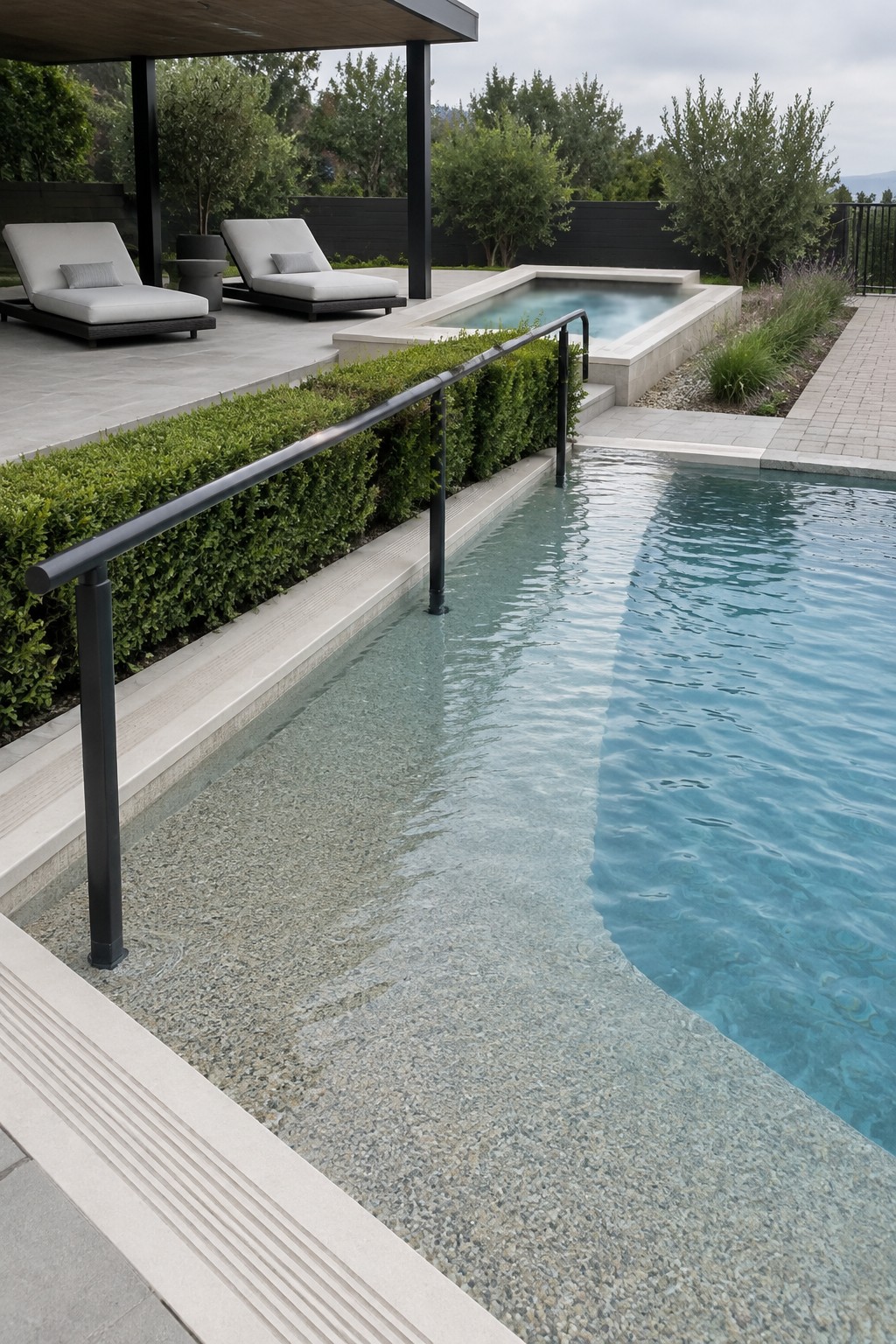
A wide, shallow shelf gives swimmers a gradual way into the deeper part of a pool. It also provides a spot to sit or cool off without using a ladder, which can make the pool more comfortable for different ages and abilities.
On a sloped site, the shelf can be built into the pool’s graded entry, with the deeper basin set lower. Plan the transition carefully so the shelf stays level and the change in depth is easy to see. The image shows a pale, textured shelf beside the deeper blue water.
Shape the Pool Around the Slope
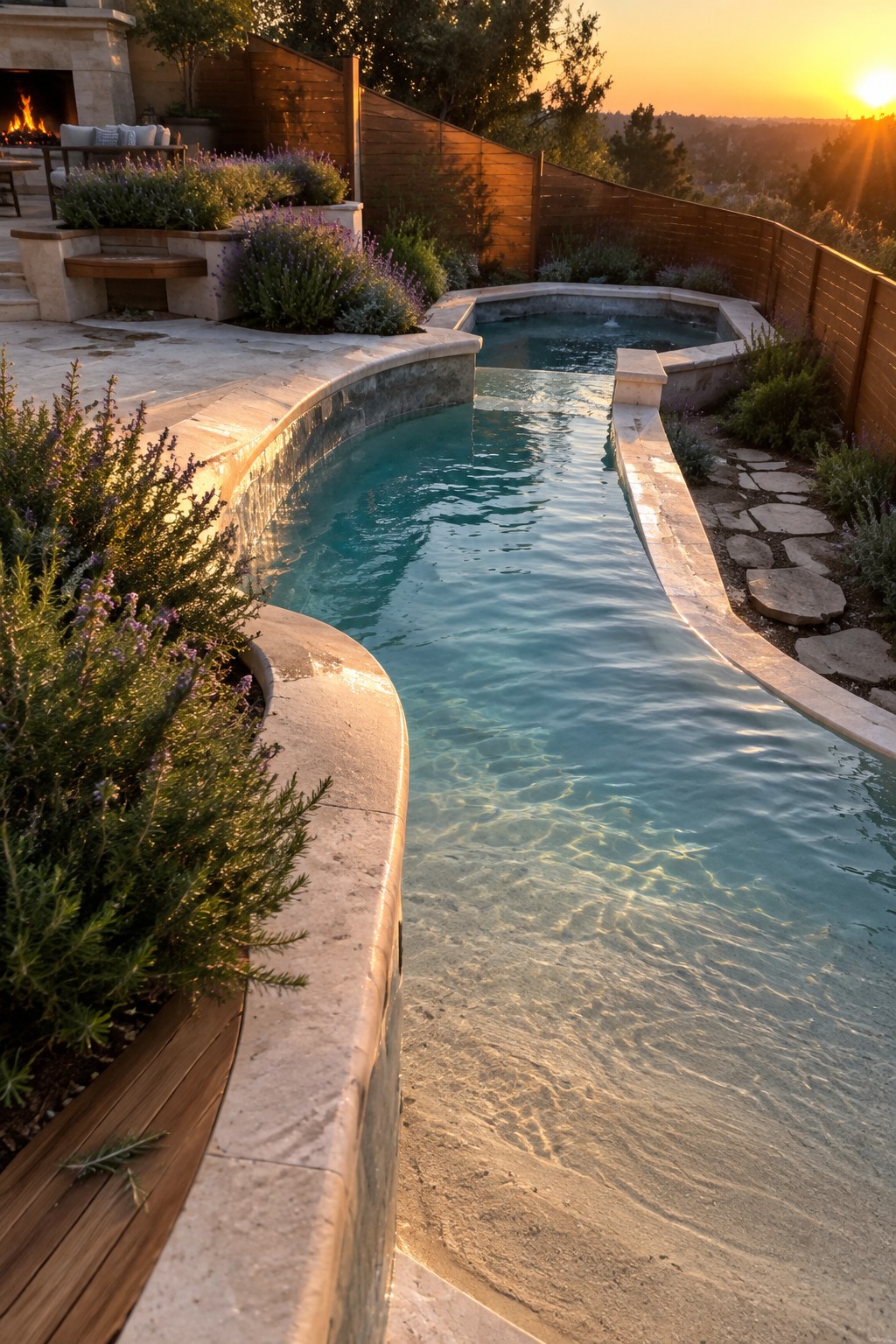
A curving pool edge can help a zero-entry pool fit a sloped yard without forcing the whole space into a rigid rectangle. Here, the rounded outline follows the available terrace and gives the shallow entry a natural place to meet the deeper section.
Use this approach when the grade changes across the yard, and let the pool’s shape respond to the site rather than cutting one flat platform. Plan the slope and drainage carefully so water moves away from the pool and nearby paving.
Shape the Slope With Low Stone Terraces
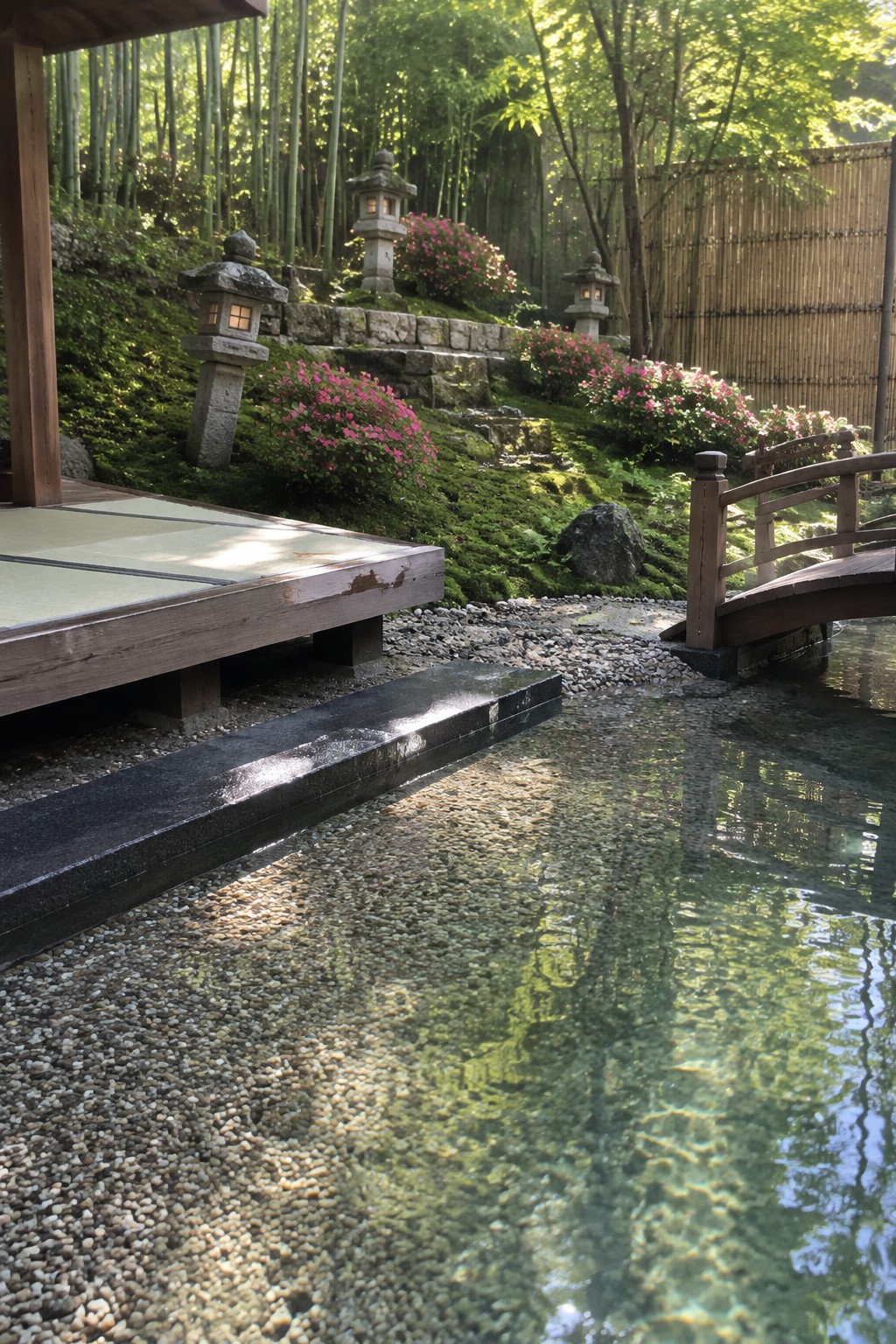
Terraced stone edging can turn a sloped poolside garden into a series of level planting areas. It helps hold back soil and gives a gradual grade a more orderly shape without making the yard feel overly built up.
For a similar setup, keep each retaining edge low and use broad, stable steps between levels. This approach works best where the slope is gentle enough to grade safely, with proper drainage planned so water does not collect behind the stone.
Use Poolside Planting to Follow the Slope
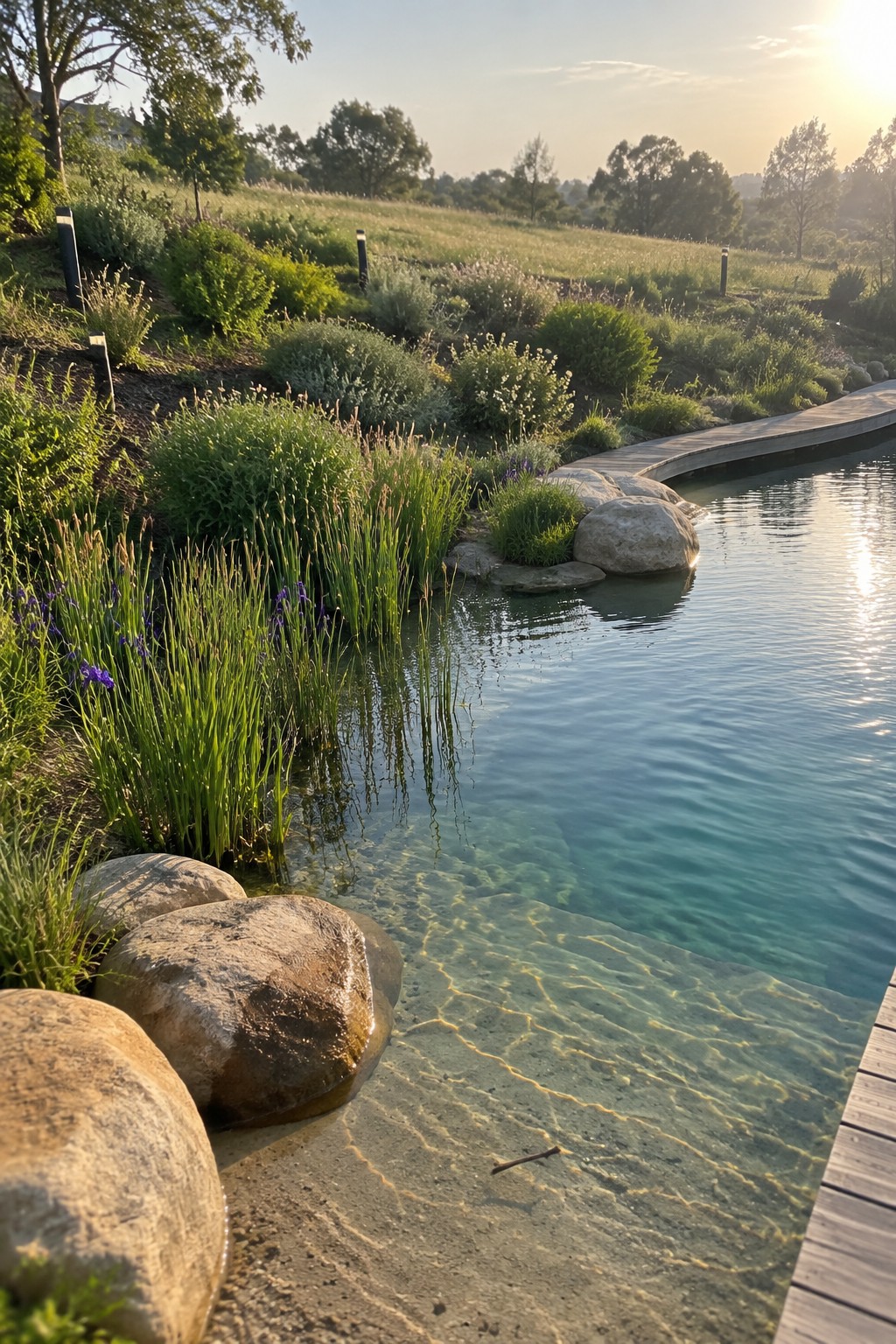
A gently graded pool edge can feel more natural when planting follows the change in height instead of stopping at a hard, straight border. Here, tall water-loving plants sit close to the shallow edge, helping the pool blend into the surrounding garden.
Use this approach where a sloped yard meets a zero-entry pool, but keep plants far enough back that roots and loose soil cannot wash into the water. A clear, stable edge is important, especially where the grade drops toward the pool.
Use a Sun Shelf to Ease Into the Pool
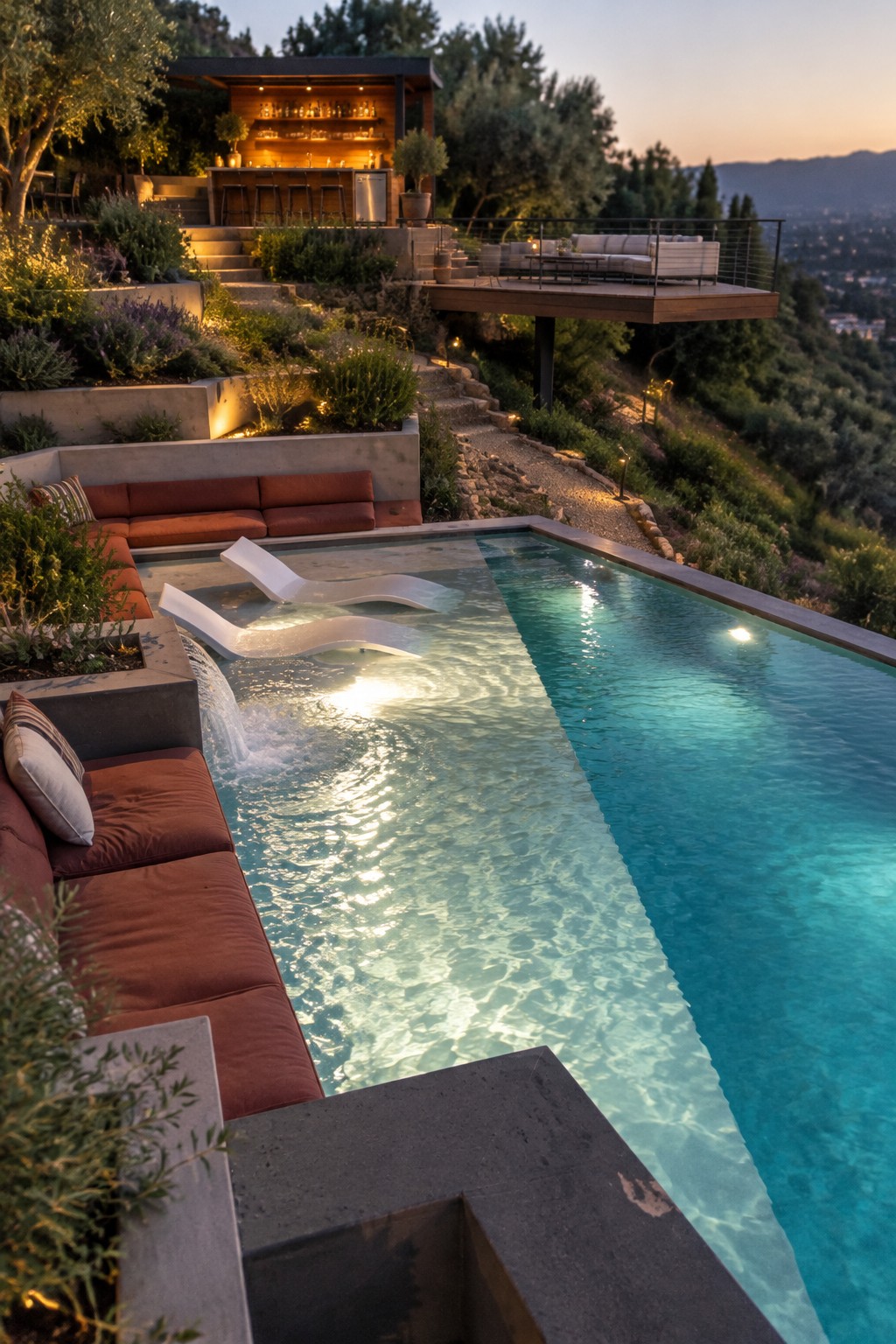
A broad, shallow shelf makes a pool easier to enter and gives people a place to sit or stretch out in the water. Here, the shelf runs beside the deeper swimming area, so it feels like a useful part of the pool rather than a separate feature.
On a sloped site, plan the shelf as part of the pool’s overall grade and check that the transition to deeper water feels comfortable underfoot. A pair of in-water loungers shows how the shallow area can be used, but leave enough open space for people to move through it.
Frequently Asked Questions
Q: Can I build a zero-entry pool on a steep slope?
A: Yes, but the slope needs a plan before excavation begins. A retaining wall, stepped foundation, or carefully shaped terraces can create a stable pool area without trying to flatten the whole yard.
Q: How do I keep rainwater from washing soil toward the pool?
A: Direct runoff away from the entry and pool edge with graded swales or drains. Plan the drainage before setting the pool elevation, and make sure water has a safe route downhill.
Q: Will a retaining wall make the yard feel boxed in?
A: Not necessarily. A low, curved wall or a few smaller terraces can follow the land more gently than one tall wall. Planting along the edges can soften the transition.
Q: What should I plan first, the pool or the slope grading?
A: Plan them together, starting with a survey of the yard. The pool’s entry height, excavation, drainage, and retaining structures all affect one another, so changing one late can mean reworking the rest.