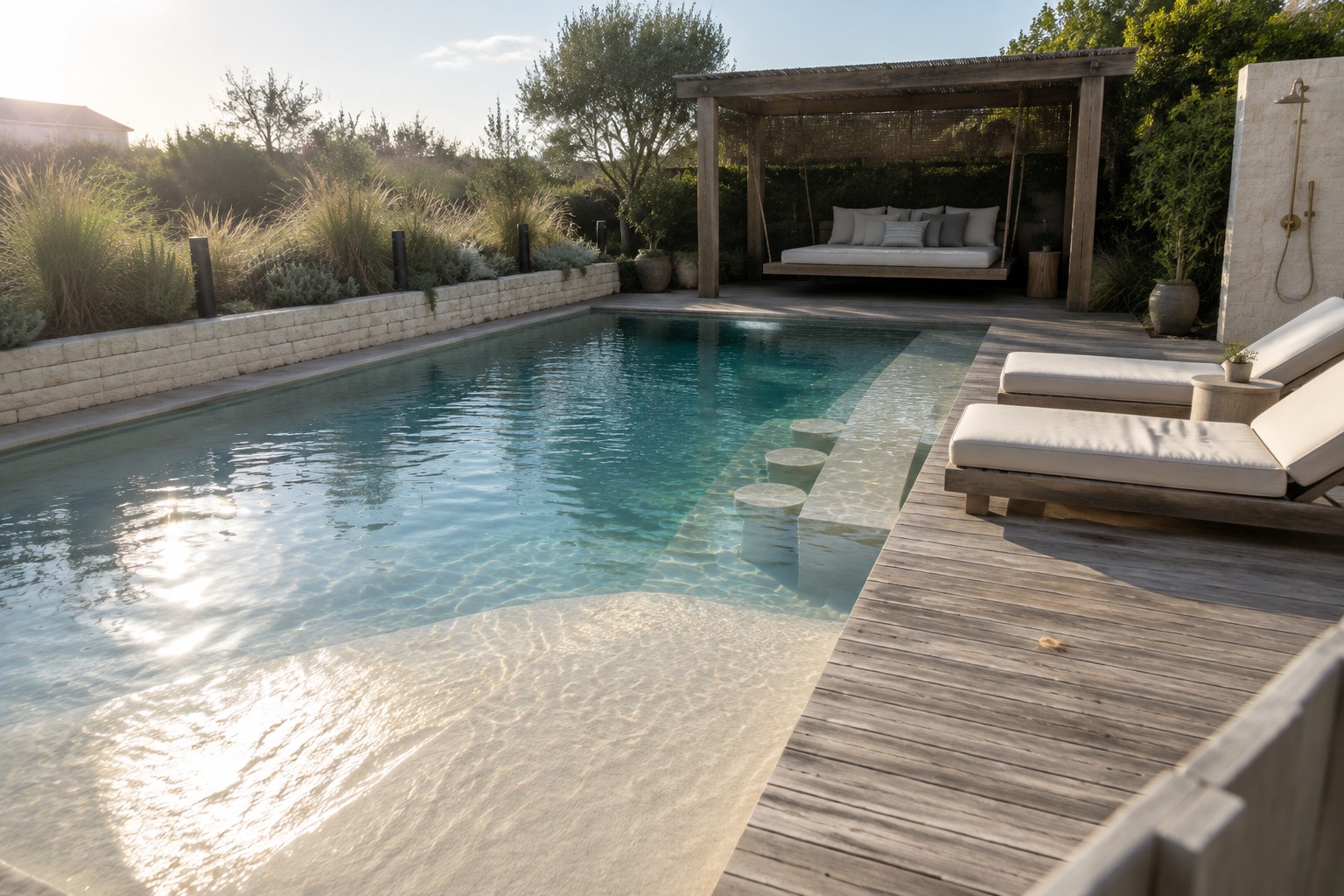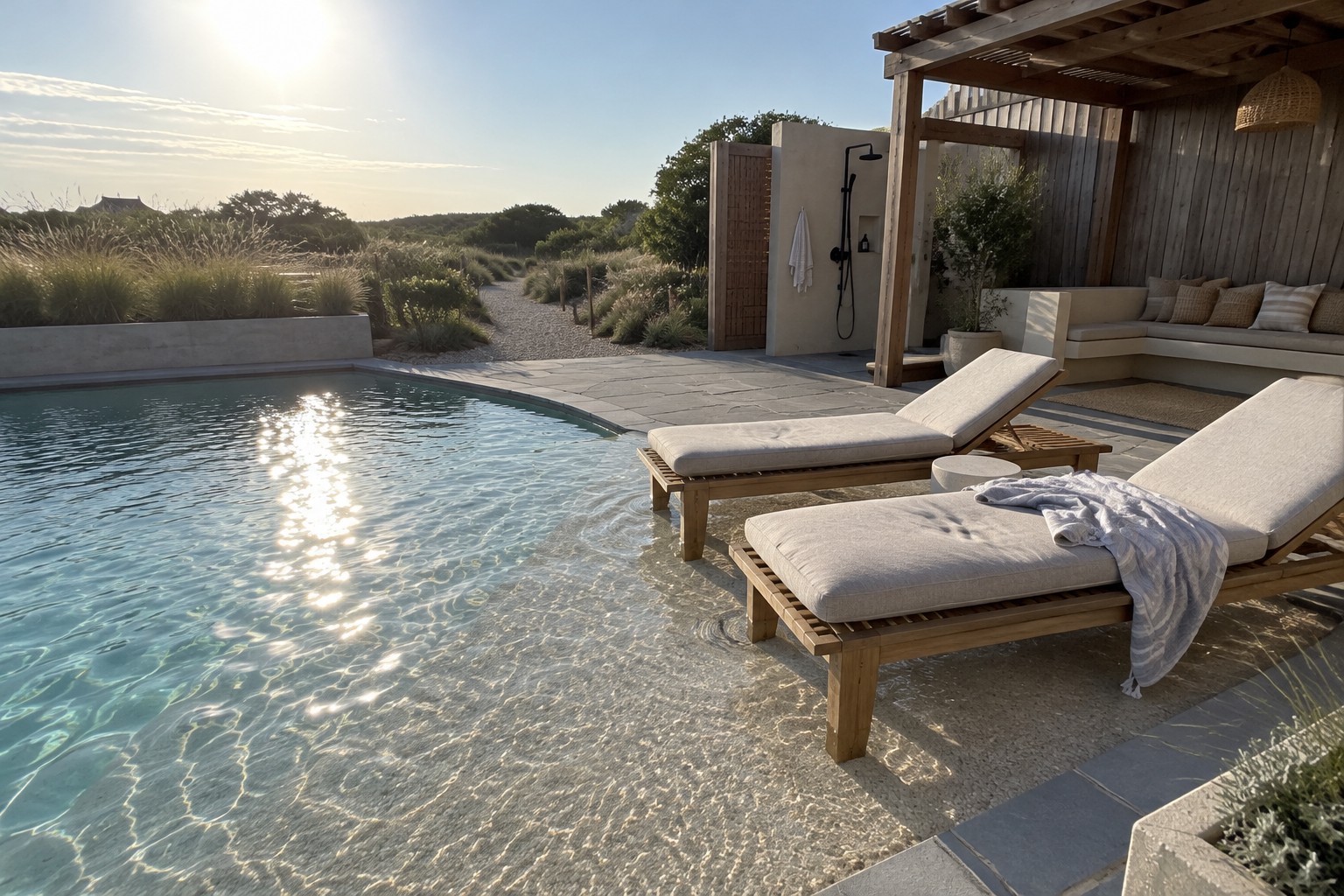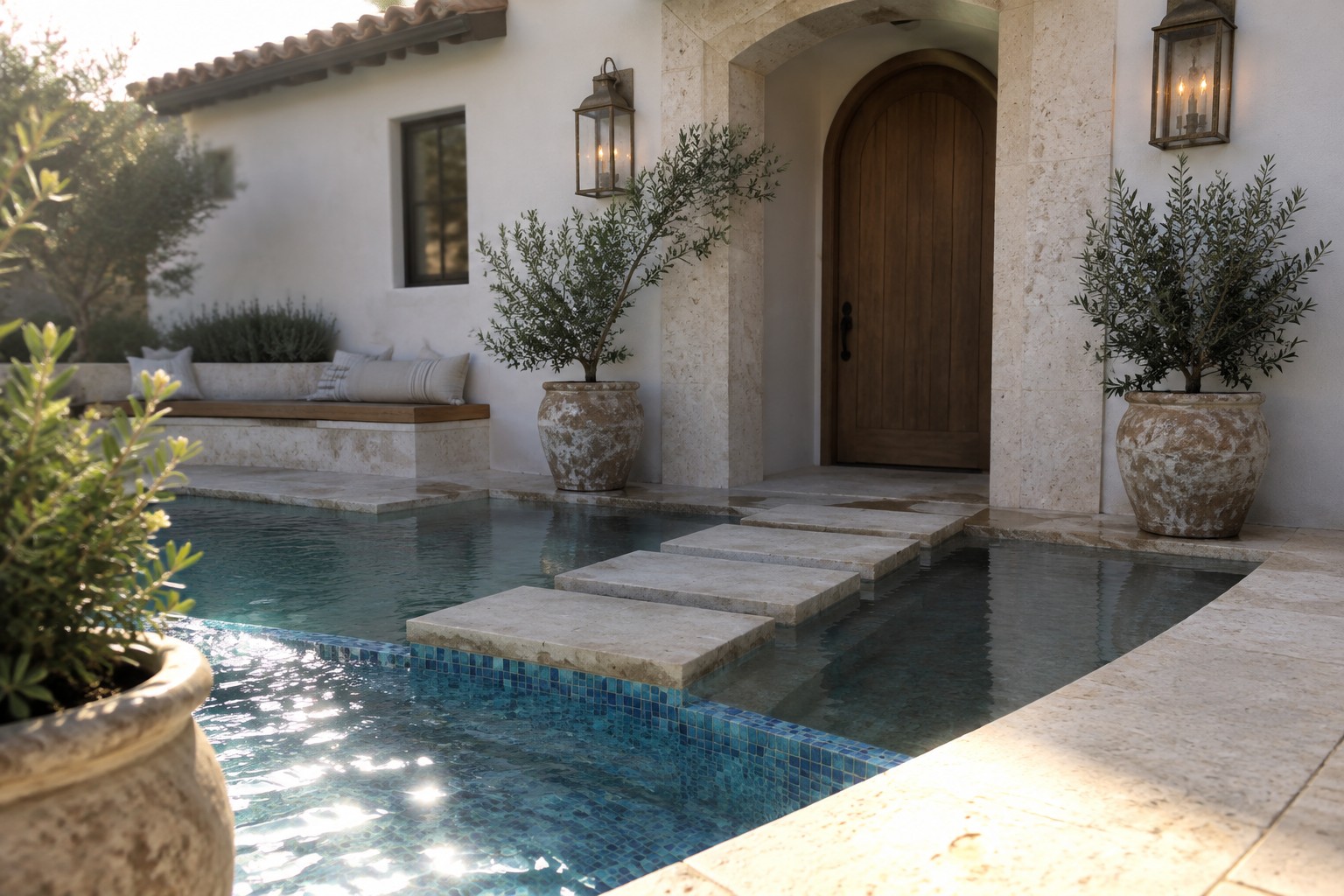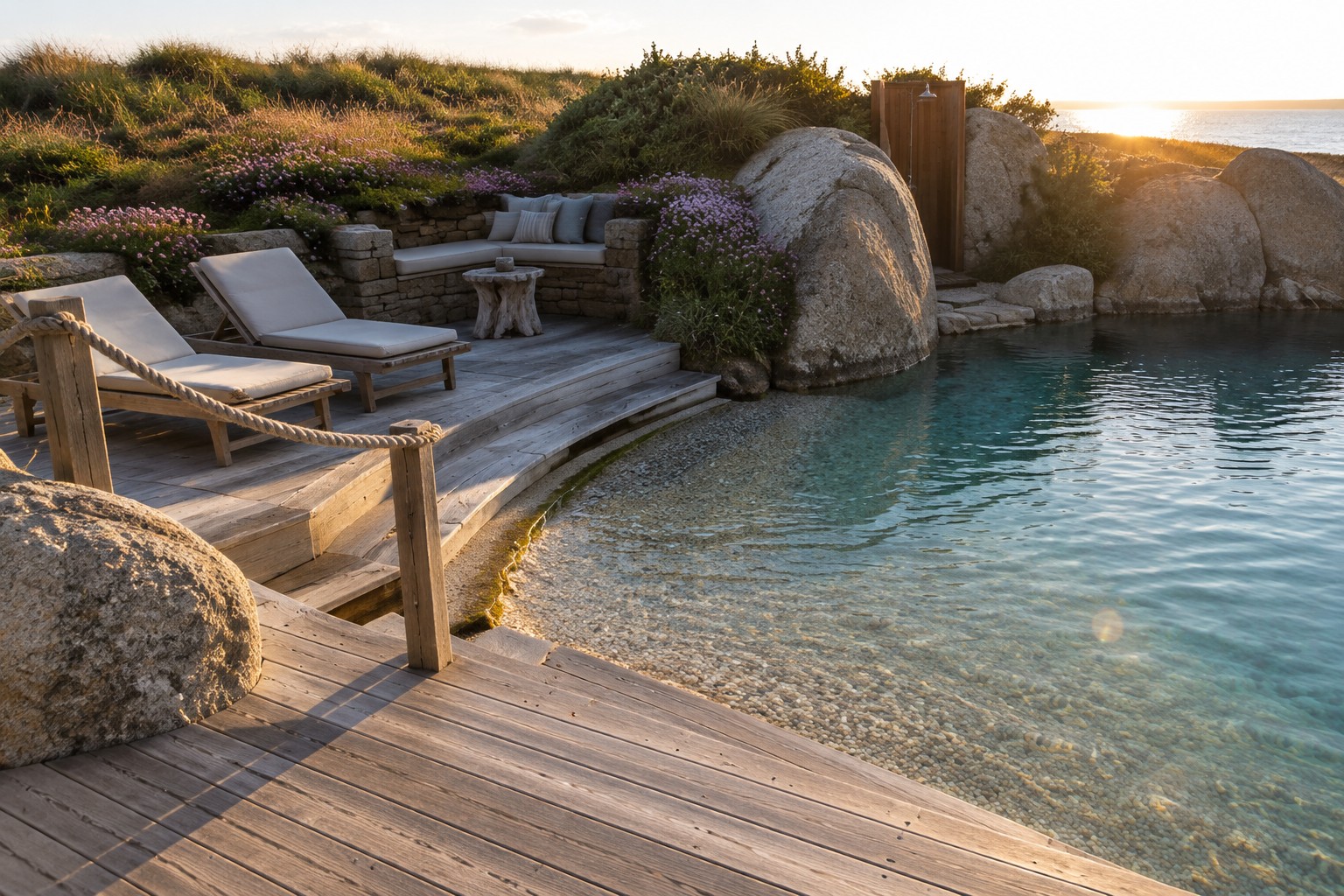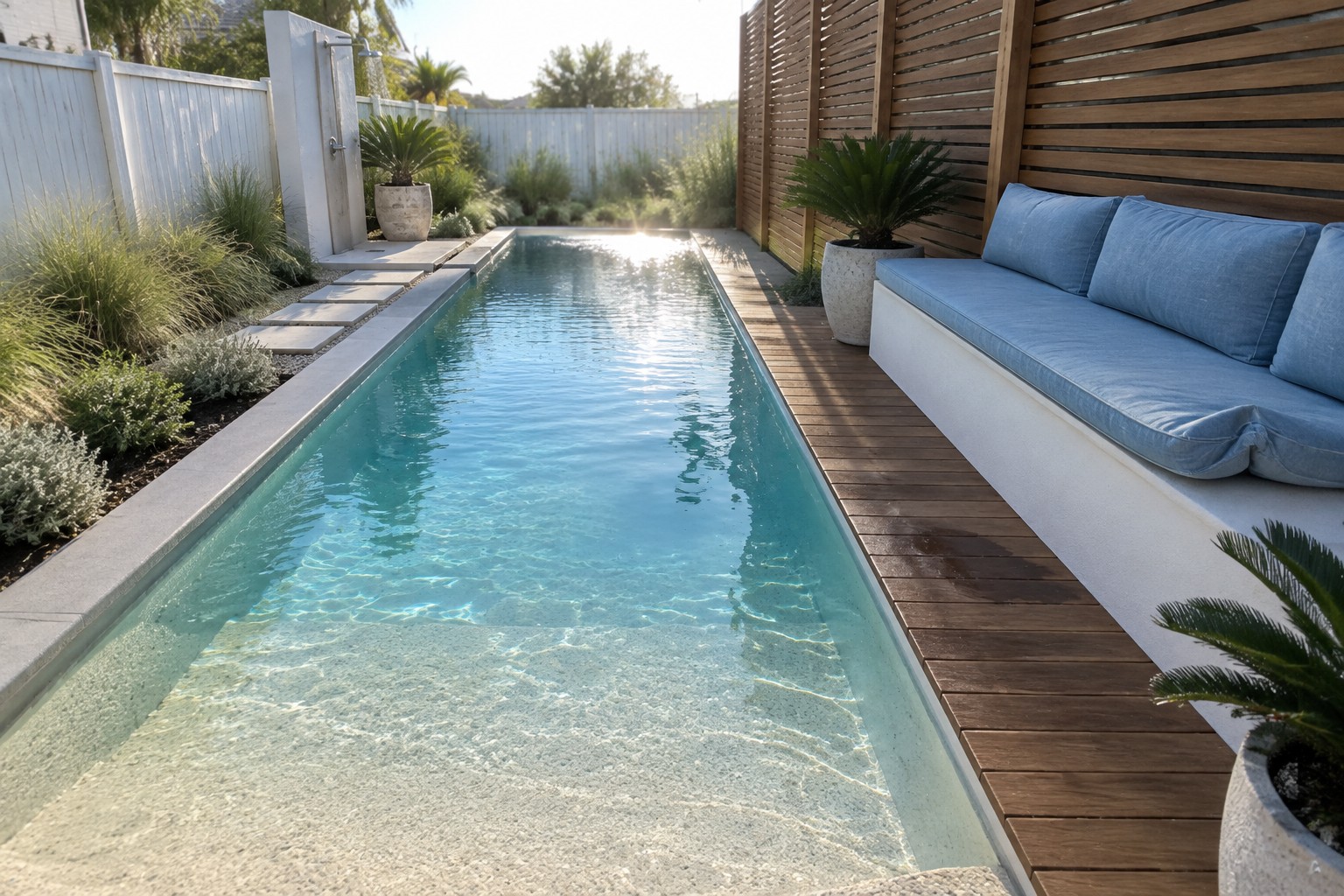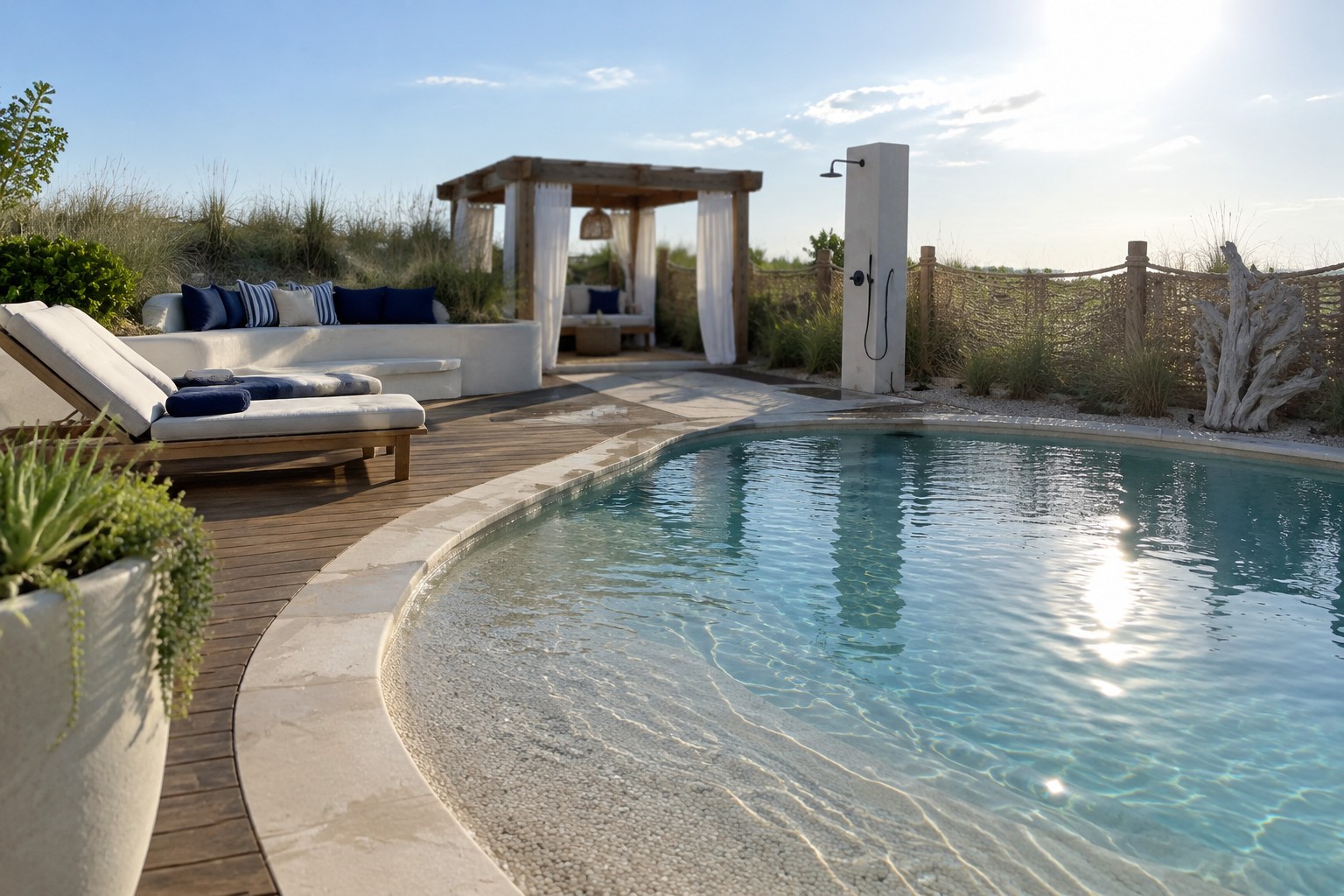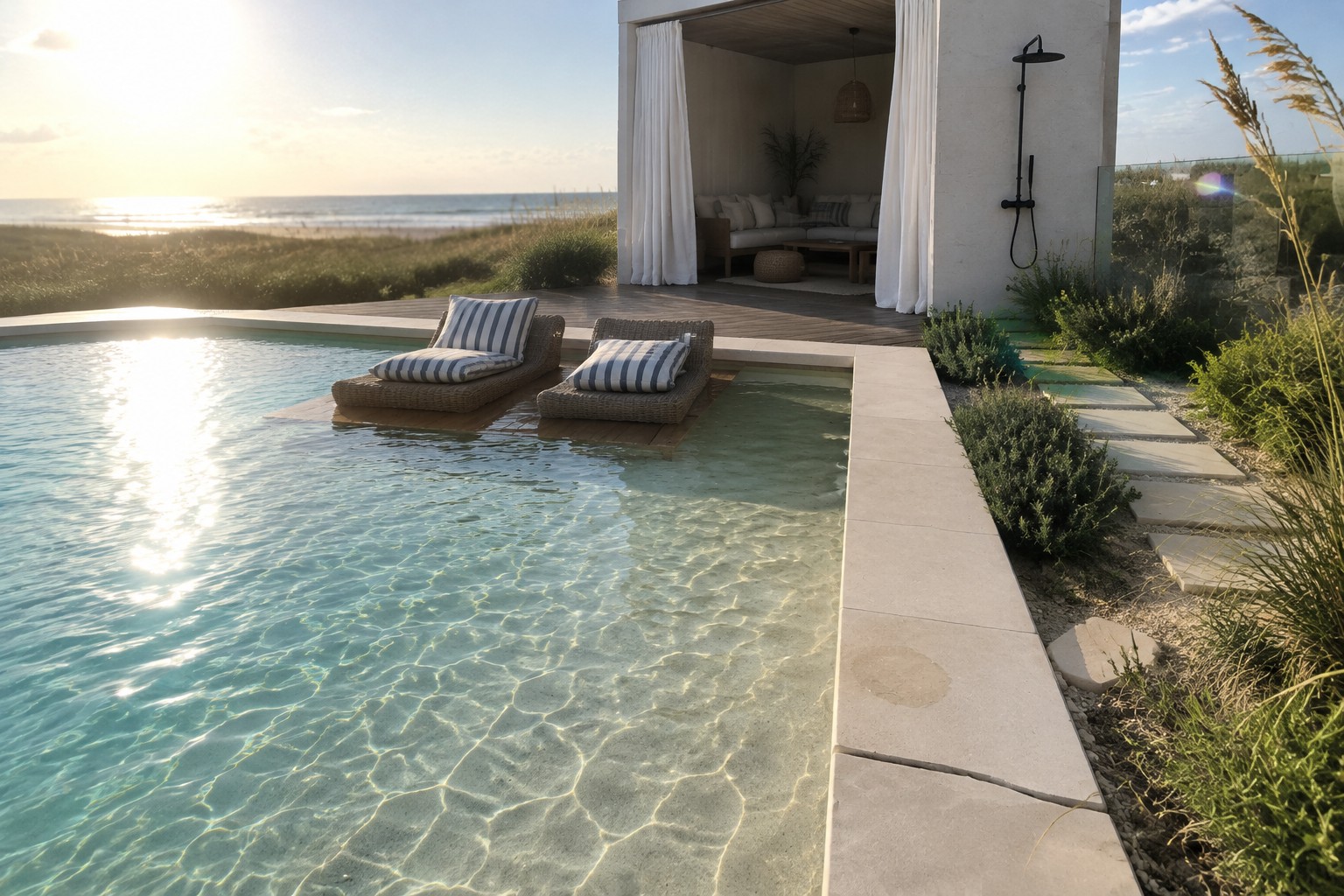
A beach entry can make a pool feel easier to use, especially when the shallow slope gives kids a place to play and adults a comfortable spot to cool off.
I find the turquoise water works best when the surrounding stone, tile, and planting choices support it rather than compete for attention.
The edge of the pool matters too, since a gentle entry needs enough room to move around without making the rest of the yard feel cramped.
Some designs lean tropical, while others use cleaner lines and restrained materials to keep the water as the main feature.
I’d save the ideas that suit your yard’s shape and think about how you’ll use the shallow area before settling on a look.
Make the Pool Part of the Outdoor Living Space
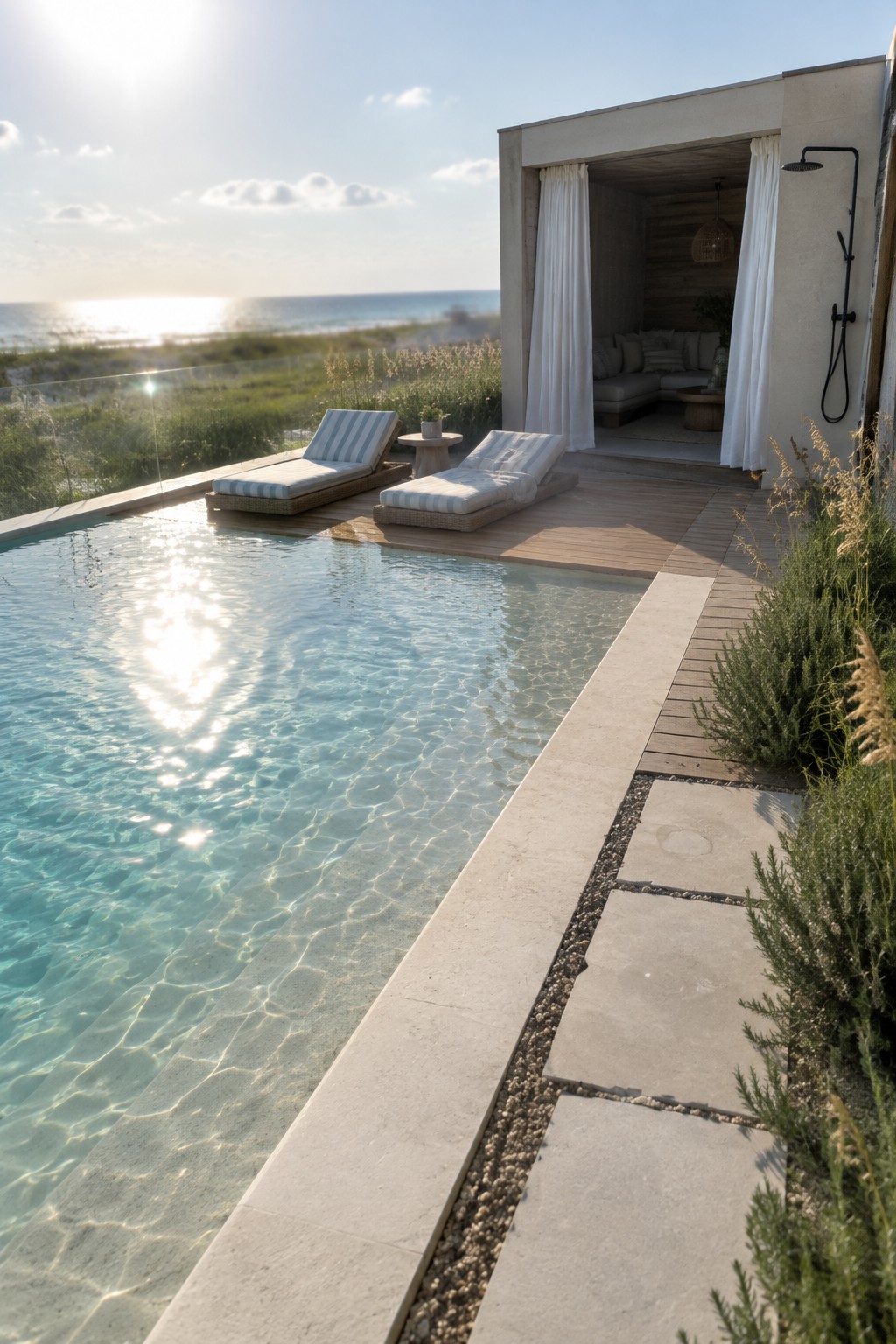
A pool works especially well when it feels connected to the places where people sit and relax. Here, the deck leads to a small covered lounge, so the pool area can serve as more than a spot for swimming.
For a similar setup, keep the route between the pool and seating area clear and use surfaces that can handle splashes. A compact lounge beside the water suits a narrow coastal yard, but leave enough room to move safely around the pool.
Use Turquoise Water as the Pool’s Main Color
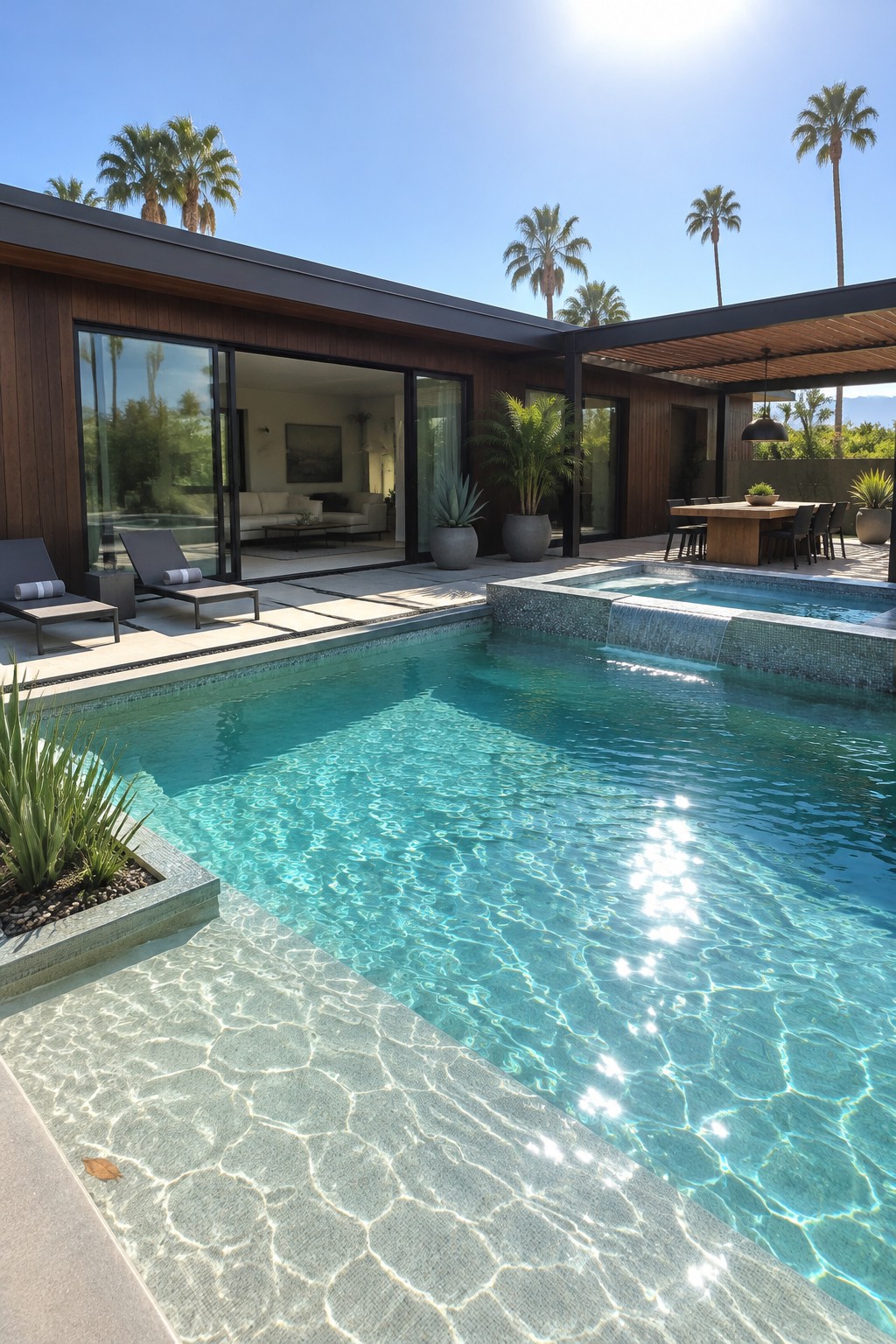
A turquoise pool can give an outdoor living area a clear focal point without needing much extra color. Pale stone around the water helps the blue-green shade stand out and keeps the pool edge looking calm.
This approach works well in a courtyard pool or beside a simple patio. Choose a finish that brings out the water’s color, then use light, slip-resistant paving around the edge for comfortable footing.
Use a Shallow Entry To Make the Pool Easier to Enjoy
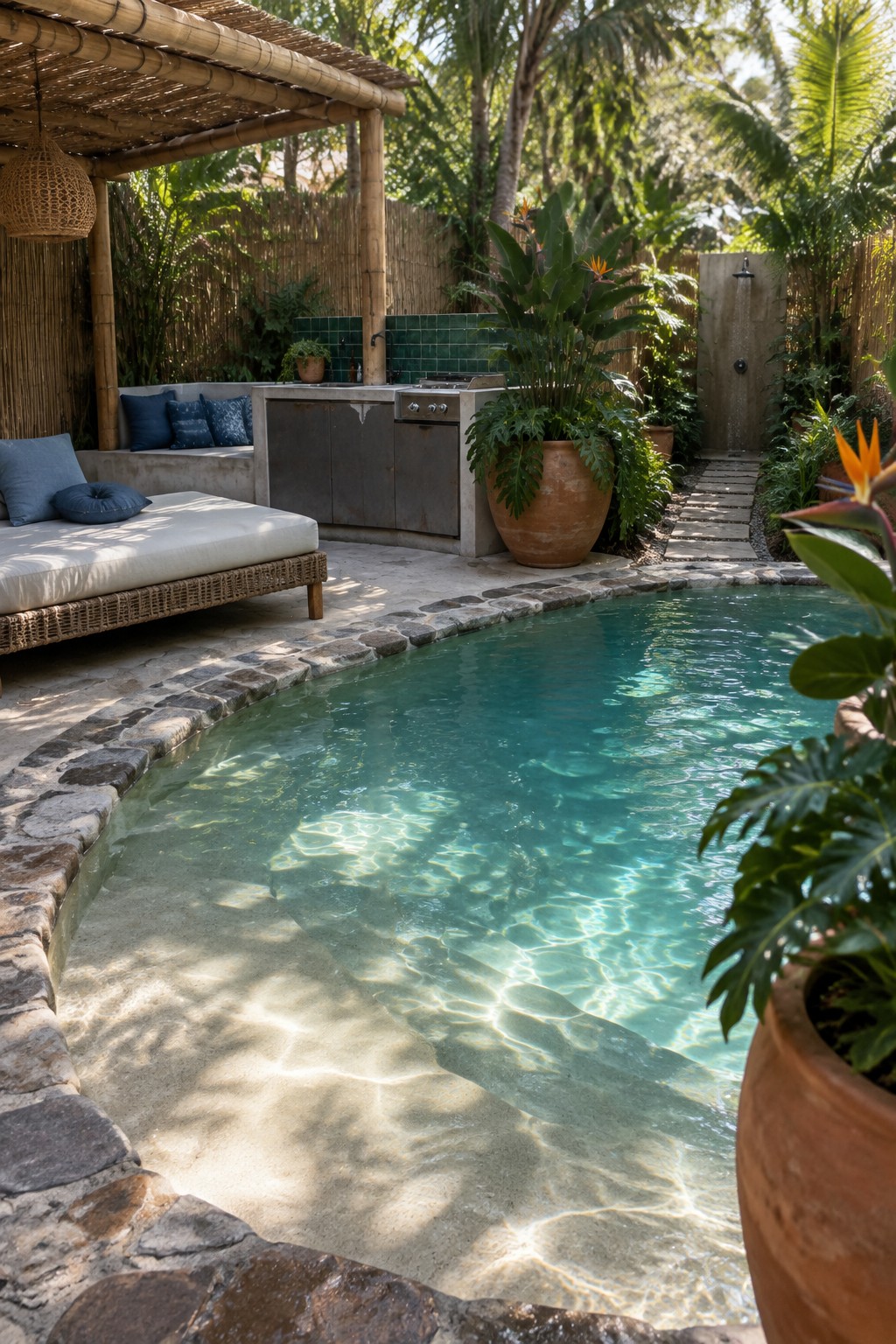
A shallow entry gives a pool a more gradual, beach-like feel and makes it comfortable to sit or wade in the water. It also offers a practical spot for cooling off without heading straight into the deeper end.
For this look, keep the entry wide enough to use comfortably and choose a pale, slip-resistant finish that shows the water clearly. It works especially well in a small pool where a gradual transition can make swimming feel less abrupt.
Use a Curved Pool Edge
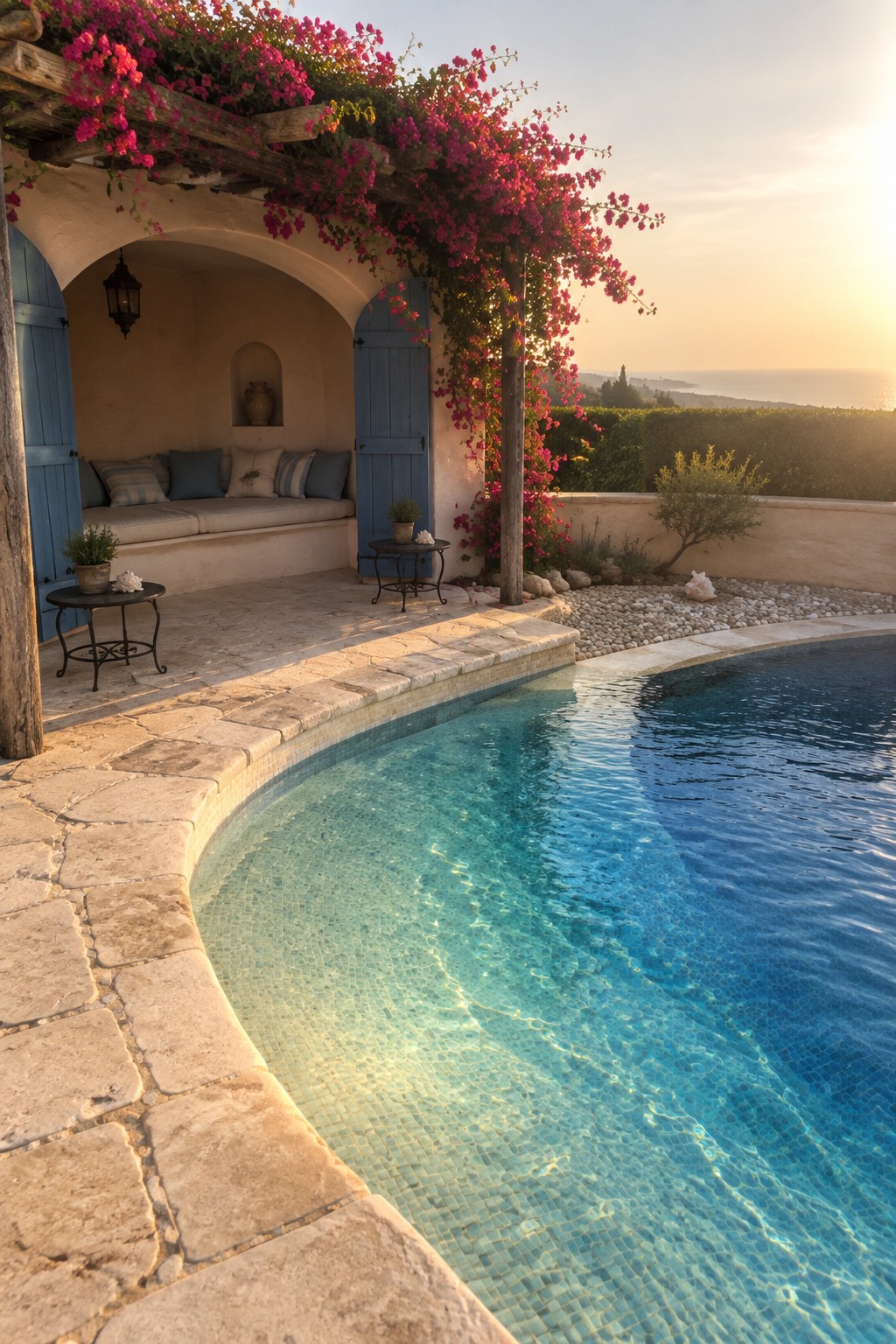
A curved pool edge can make a beach-entry pool feel more relaxed and easier to move around. The rounded outline also gives the shallow end a gentle transition, rather than making the pool feel like a plain rectangle.
This shape works well beside a stone patio, especially when there is room to walk around the curve. Choose a slip-resistant coping material, and keep the curve broad enough to be practical to build and maintain.
Add a Built-In Bench Along the Pool
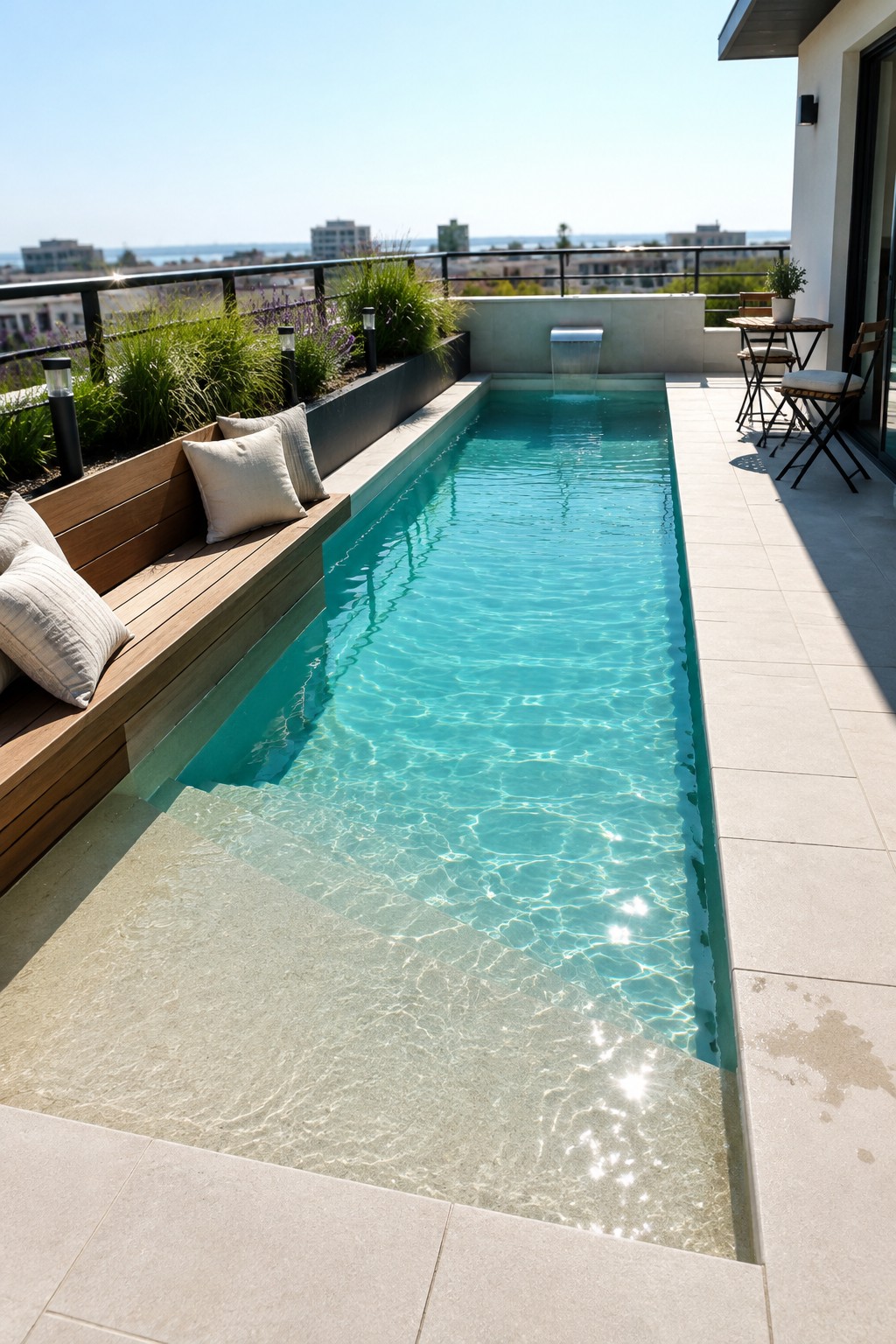
A built-in bench makes a narrow pool area more useful without taking up extra floor space. Here, the wooden seat runs beside the water, giving people a place to rest close to the pool.
This setup works well on compact terraces where loose loungers might crowd the walkway. Choose outdoor-safe materials and cushions, and leave enough room to move comfortably around the pool.
Add a Rock Waterfall Beside the Pool
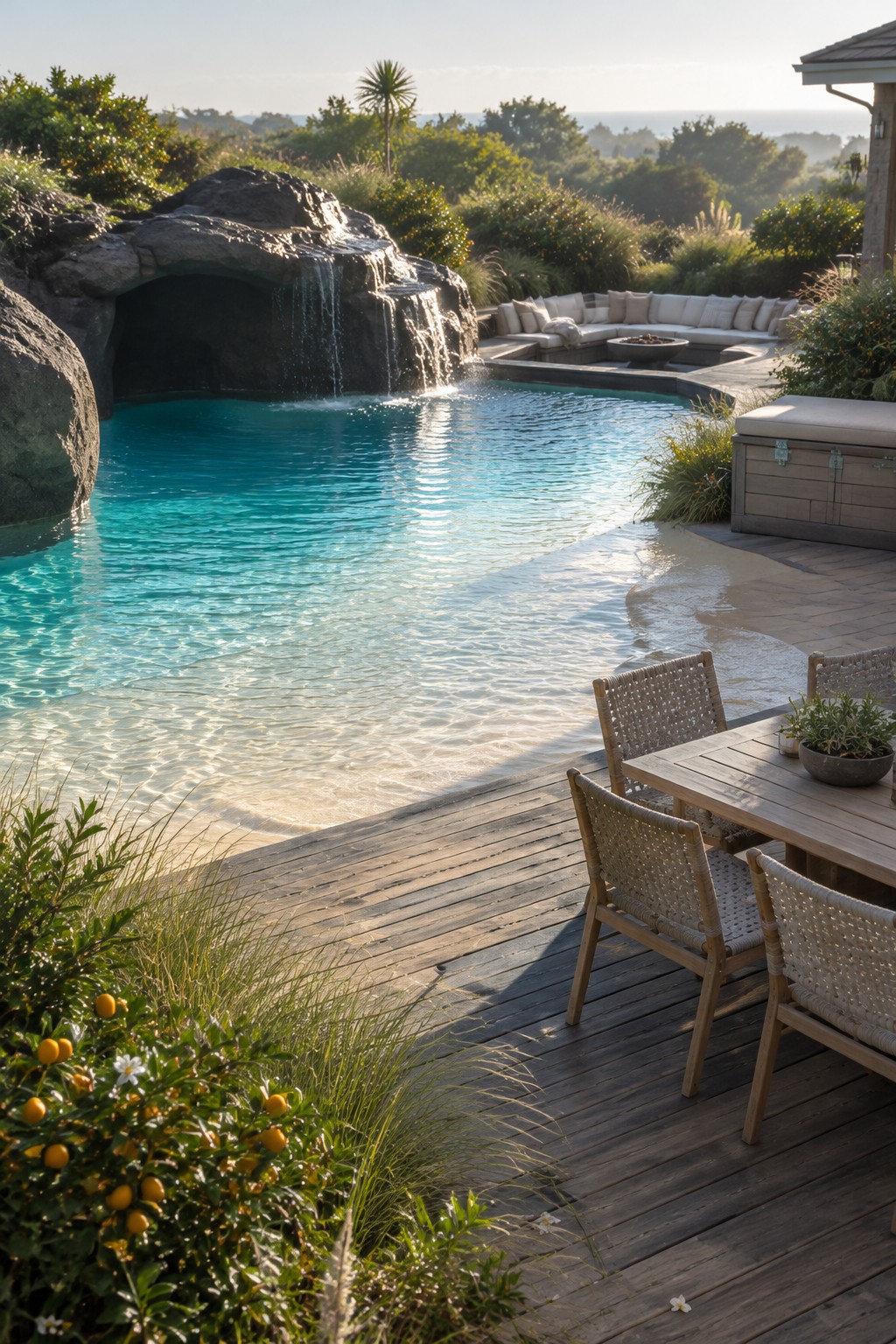
A rock waterfall gives a pool a more natural edge and makes the water feature part of the swimming area. Here, water spills from a large rock formation directly into the turquoise pool, so the feature feels built into the layout rather than added on later.
This works especially well in a backyard where you want the pool to feel connected to the garden. Keep the rocks in proportion to the pool, and plan for a secure footing and easy access for cleaning and repairs.
Add a Beach Entry to the Pool
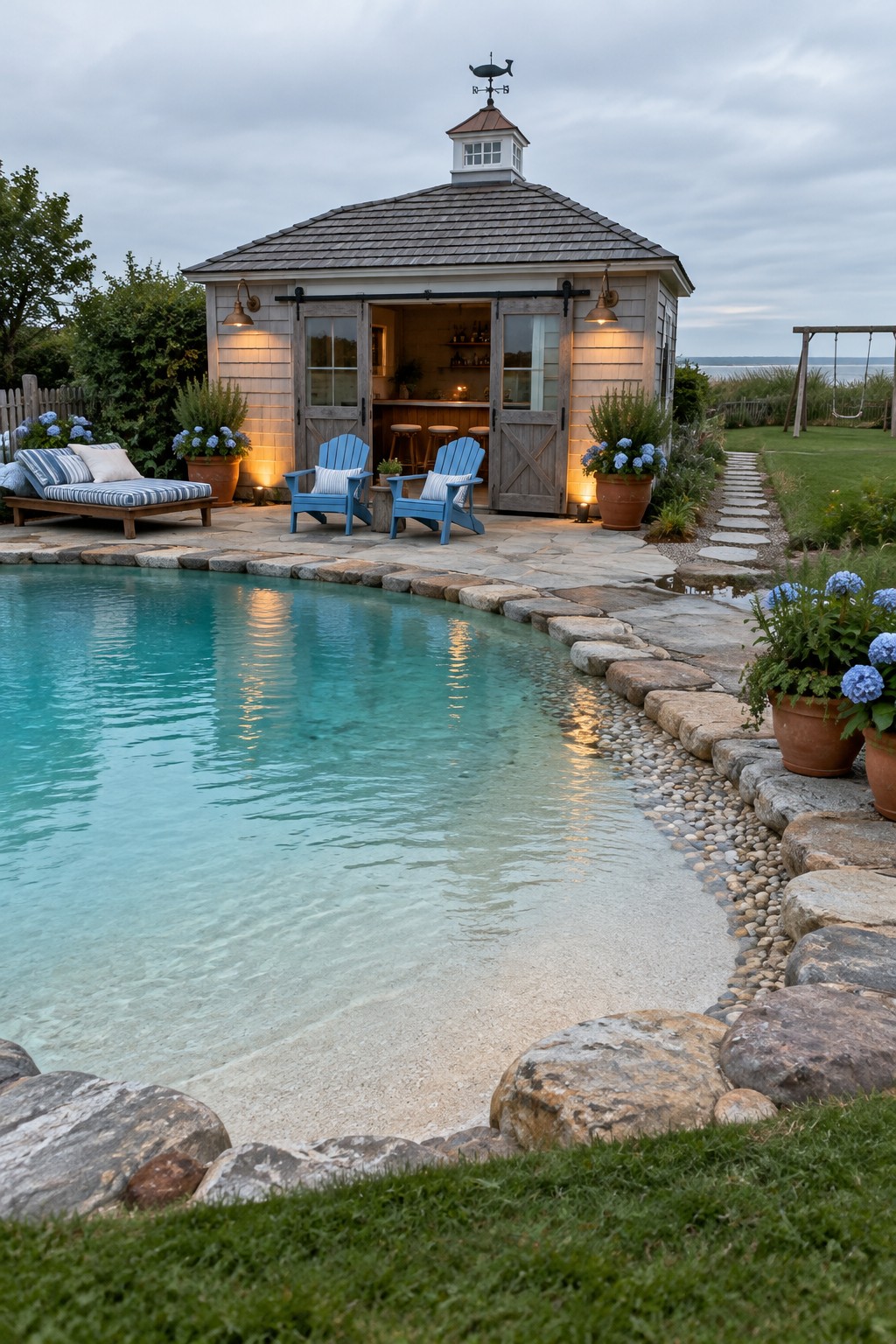
A beach entry gives a pool a gradual, shallow edge instead of a step down into deeper water. It suits a relaxed outdoor living area and makes it easier to wade in or sit at the water’s edge.
Use a textured, pool-safe surface for the sloped entry, and keep the transition gradual enough to walk comfortably. Here, the pale entry shelf lets the turquoise water remain visible around it.
Extend the Pool Into a Sunken Seating Area
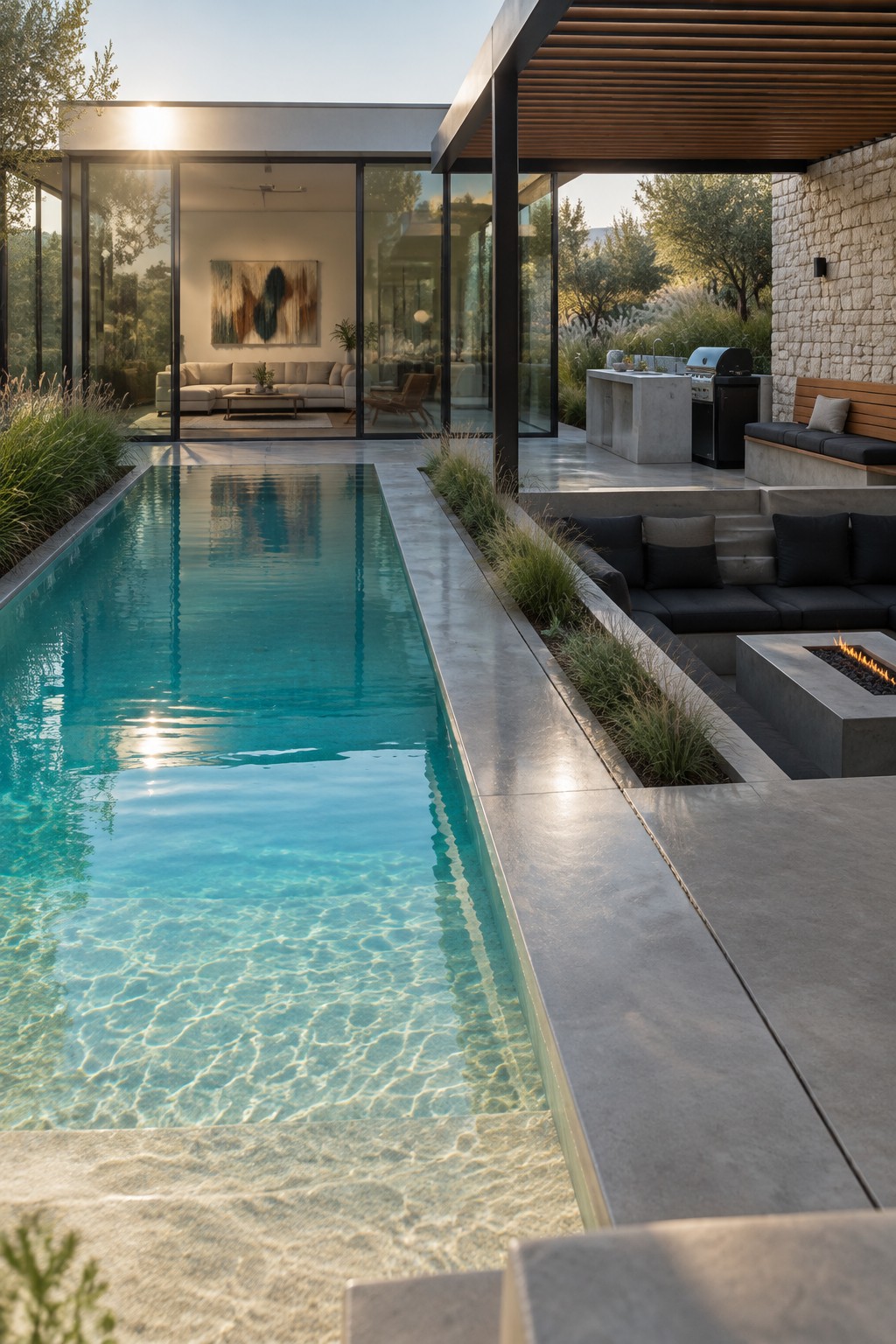
A pool can feel more connected to the rest of the patio when it sits beside a separate place to sit and gather. Here, the sunken lounge and fire pit make the pool area useful even when nobody is swimming.
This layout works best when there is enough room to keep clear paths around the water. Use a change in level to define the seating zone, and make sure the steps are easy to see and navigate.
Add a Pebble Shelf Along the Pool
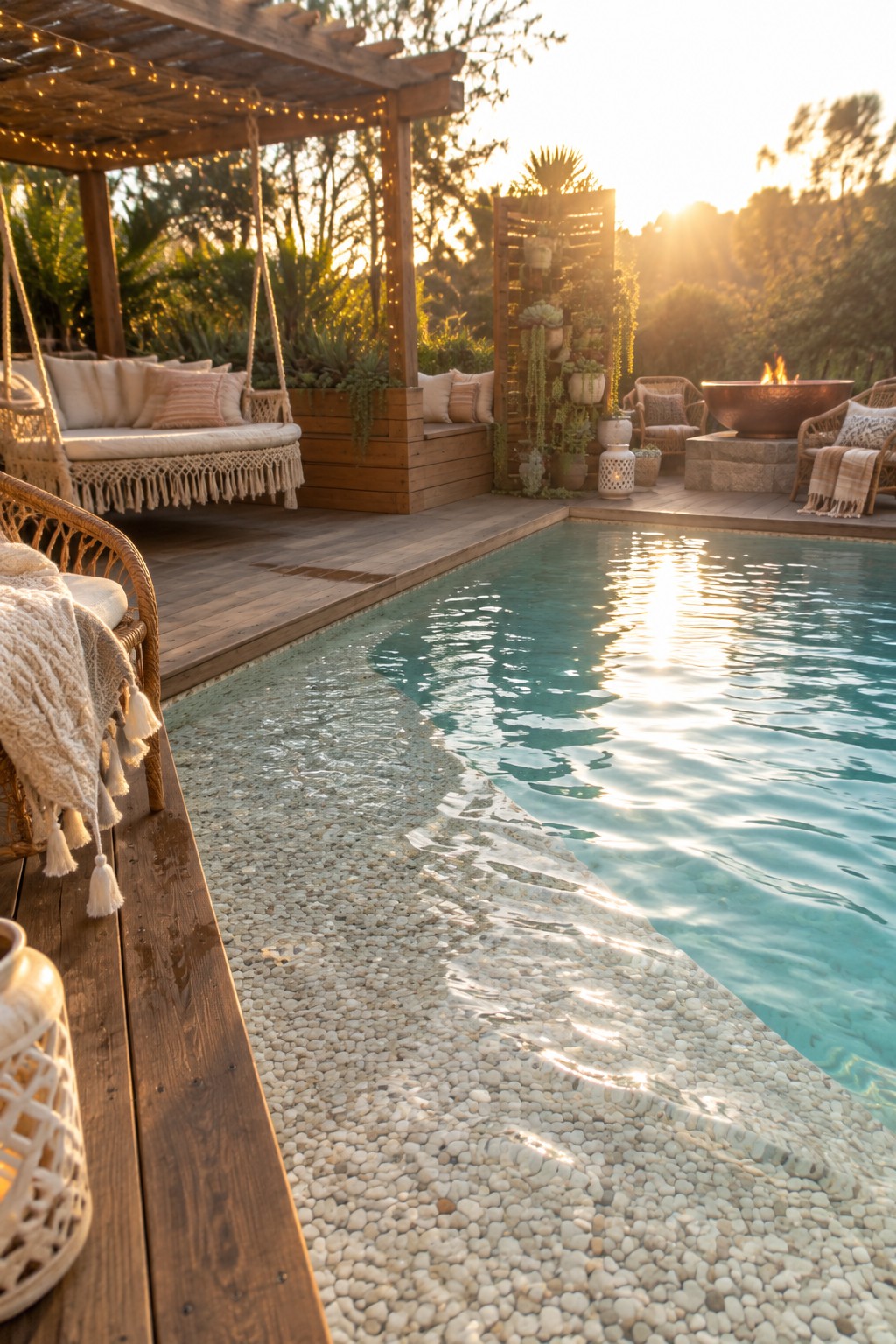
A shallow, pebble-finished entry gives a pool a gentler way in and a place to sit in the water. The gradual slope also makes the edge feel less abrupt, which works especially well for a pool meant for relaxed lounging.
Use pale, smooth stones in the shallow section, and keep the transition into deeper water easy to see. This approach suits a pool with room for a broad entry shelf, but the stones should be firmly set so they stay comfortable and safe underfoot.
Add a Pergola for Poolside Dining
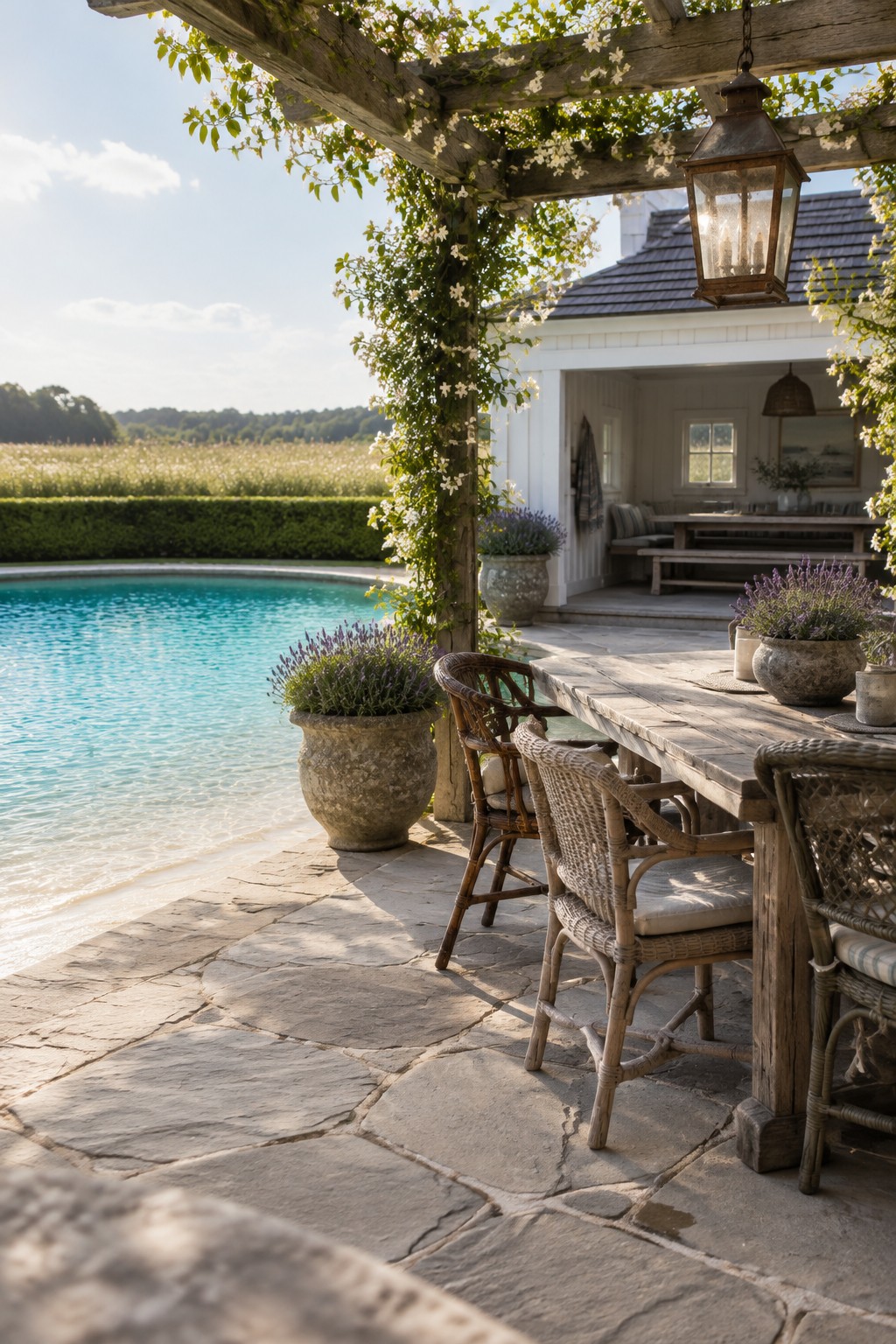
A pergola can make a poolside dining area feel like a natural part of the pool space. It gives the table some shade and helps define a spot for meals without closing it off from the water.
For a similar setup, place the dining area close to the pool but leave a clear path along the edge. A vine-covered timber pergola suits a relaxed garden setting, though it will need occasional pruning and upkeep.
Add a Pebble Shore Along the Pool
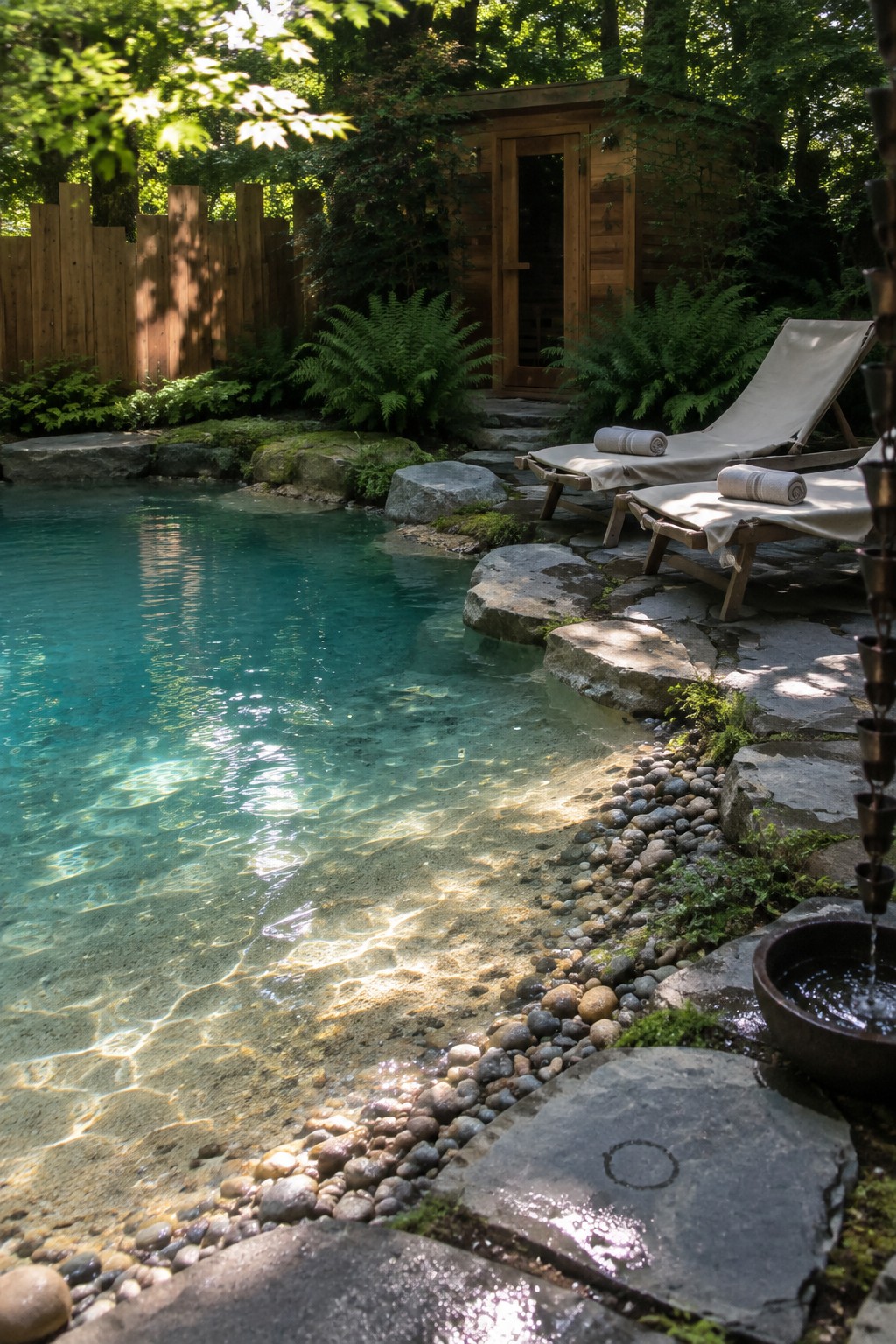
A strip of smooth pebbles along the pool edge gives the water a more natural, beach-like feel. It also makes the transition from the shallow water to the stone patio look less abrupt.
This idea works well for pools with a gradual entry or shallow ledge. Choose rounded stones that are comfortable underfoot, and keep them contained so they do not spread into the swimming area.
Add Shade to a Narrow Pool Area
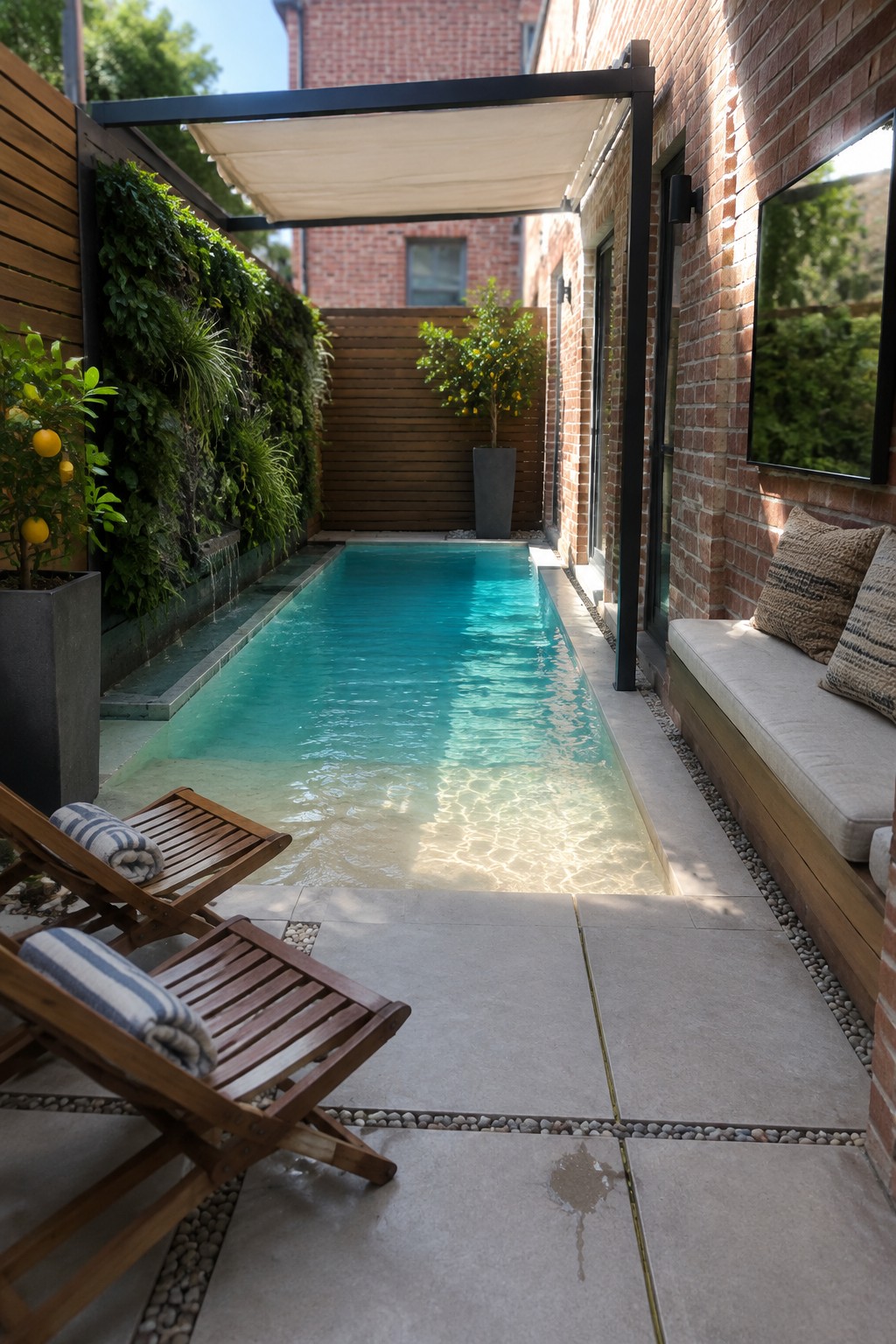
A simple overhead shade can make a long, narrow pool more comfortable to use during the day. Here, a retractable canopy covers part of the turquoise water without closing in the space.
This approach works well in a courtyard where there is little room for a separate covered seating area. Choose a canopy that can be opened when you want more sun, and make sure its frame is securely fixed.
Add a Fire Feature Beside the Pool
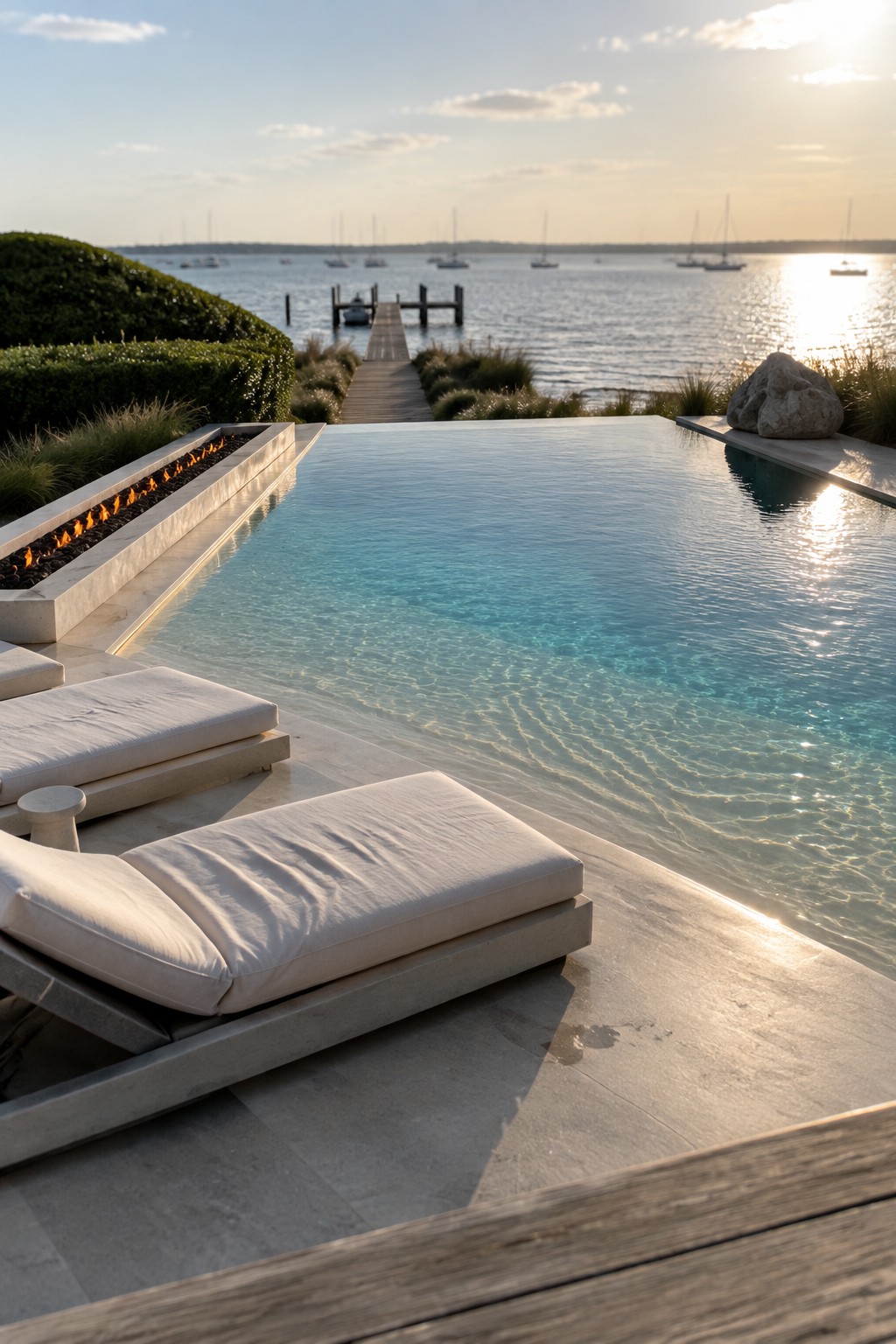
A long, built-in fire feature gives the pool area a place to gather when people want a break from the water. It also helps define the edge of the seating space without separating it from the pool.
Place a narrow fire trough along one side of the pool, leaving enough room for loungers and a clear walking path. Choose materials suited to outdoor use, and keep the flames a safe distance from cushions and splash zones.
Arrange the Poolside as an Outdoor Living Area
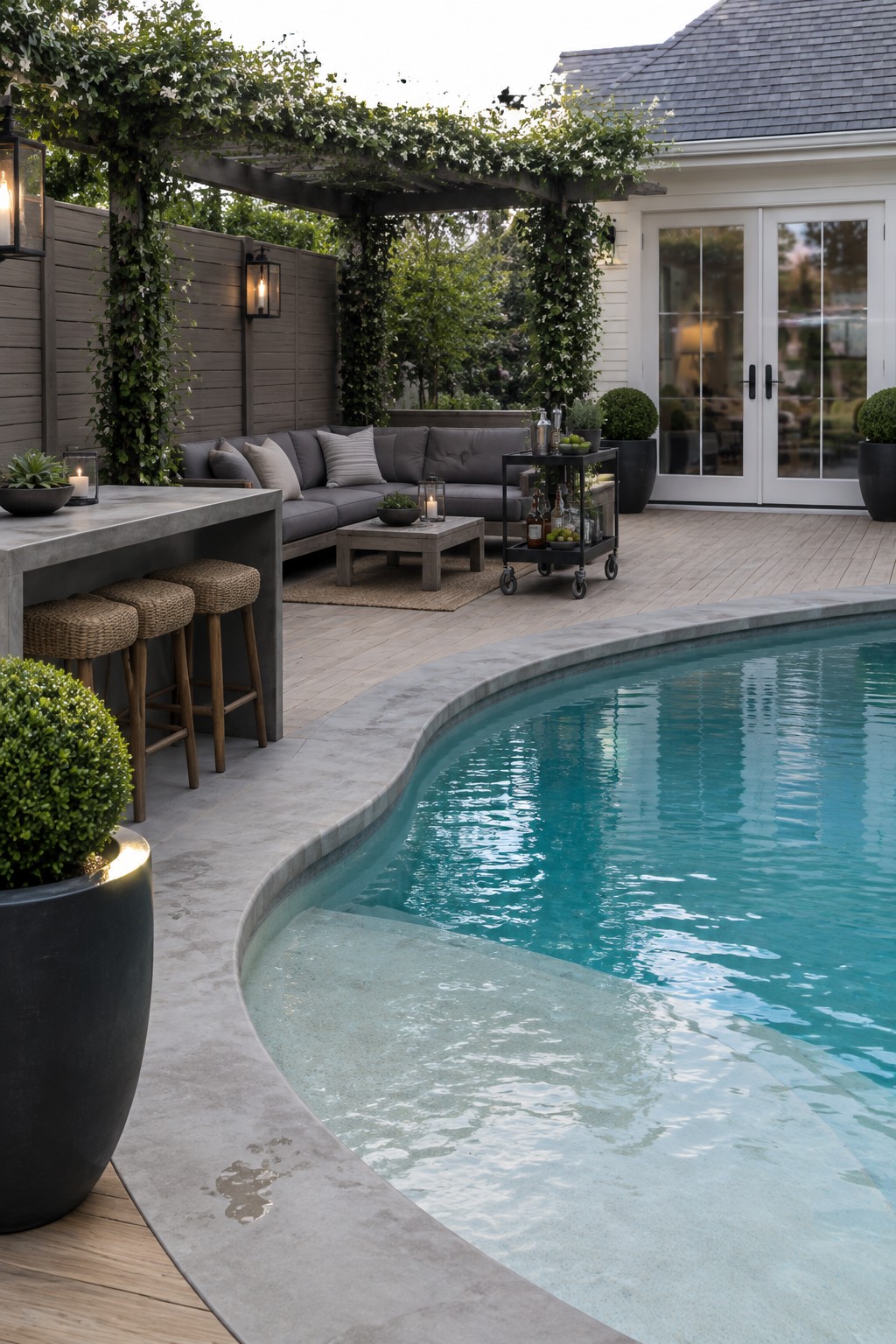
A pool area is more useful when it has a comfortable place to sit and relax, not just room to swim. Here, the seating sits close to the water, making it easy to move between lounging and taking a dip.
For a similar setup, group a sofa and a small table on a level deck beside the pool. Leave a clear path along the water’s edge, and choose outdoor furniture that can handle splashes.
Use a Built-In Seat Beside the Pool
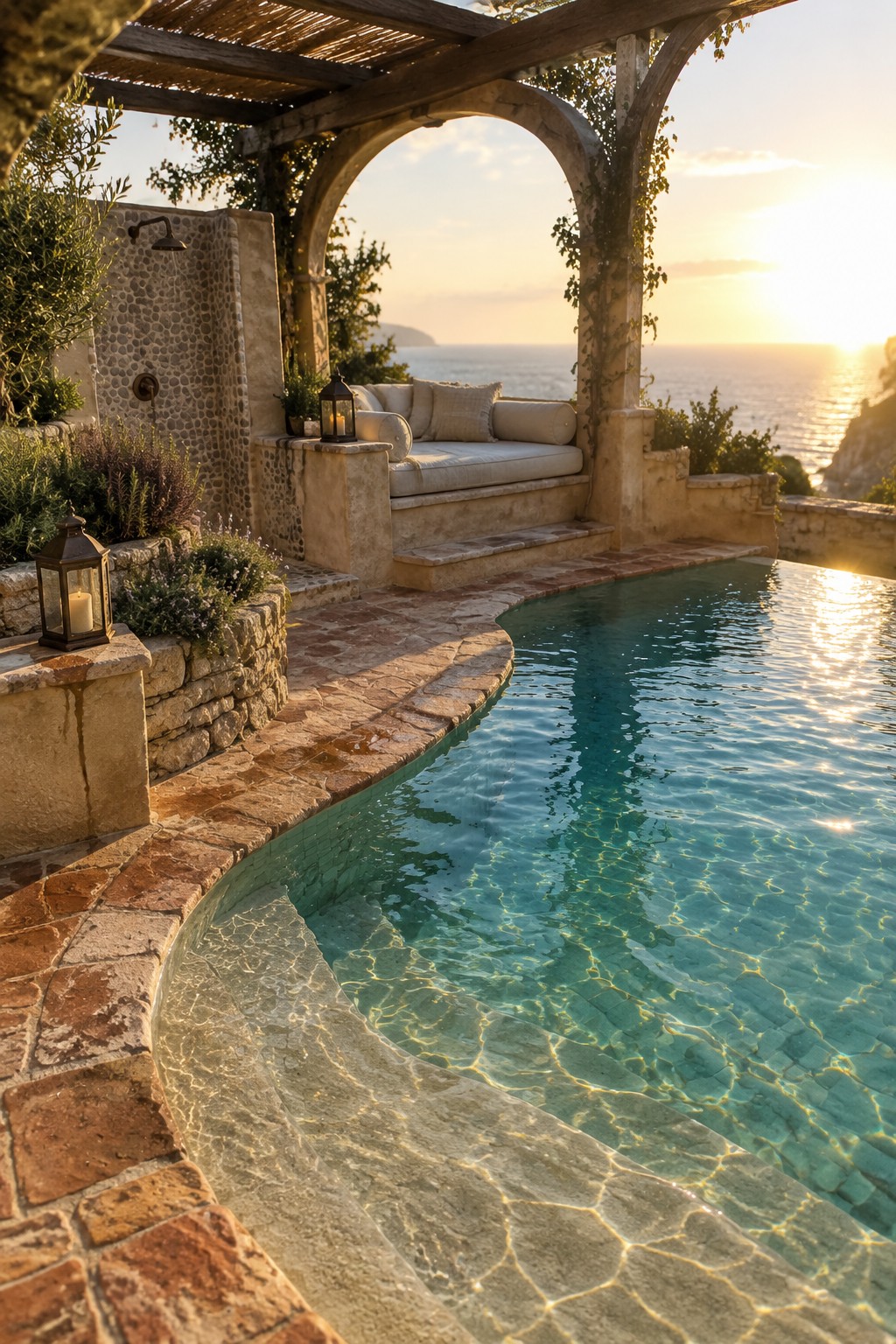
A built-in seat gives a pool area a place to pause without adding another piece of furniture. Here, the cushioned bench sits right beside the turquoise water, making it easy to move between swimming and sitting.
This works especially well in a compact pool area, where a permanent bench can make better use of the edge than loose chairs. Add weather-resistant cushions, and leave enough room around the seat for people to get in and out of the pool comfortably.
Use Dark Stone Around the Pool
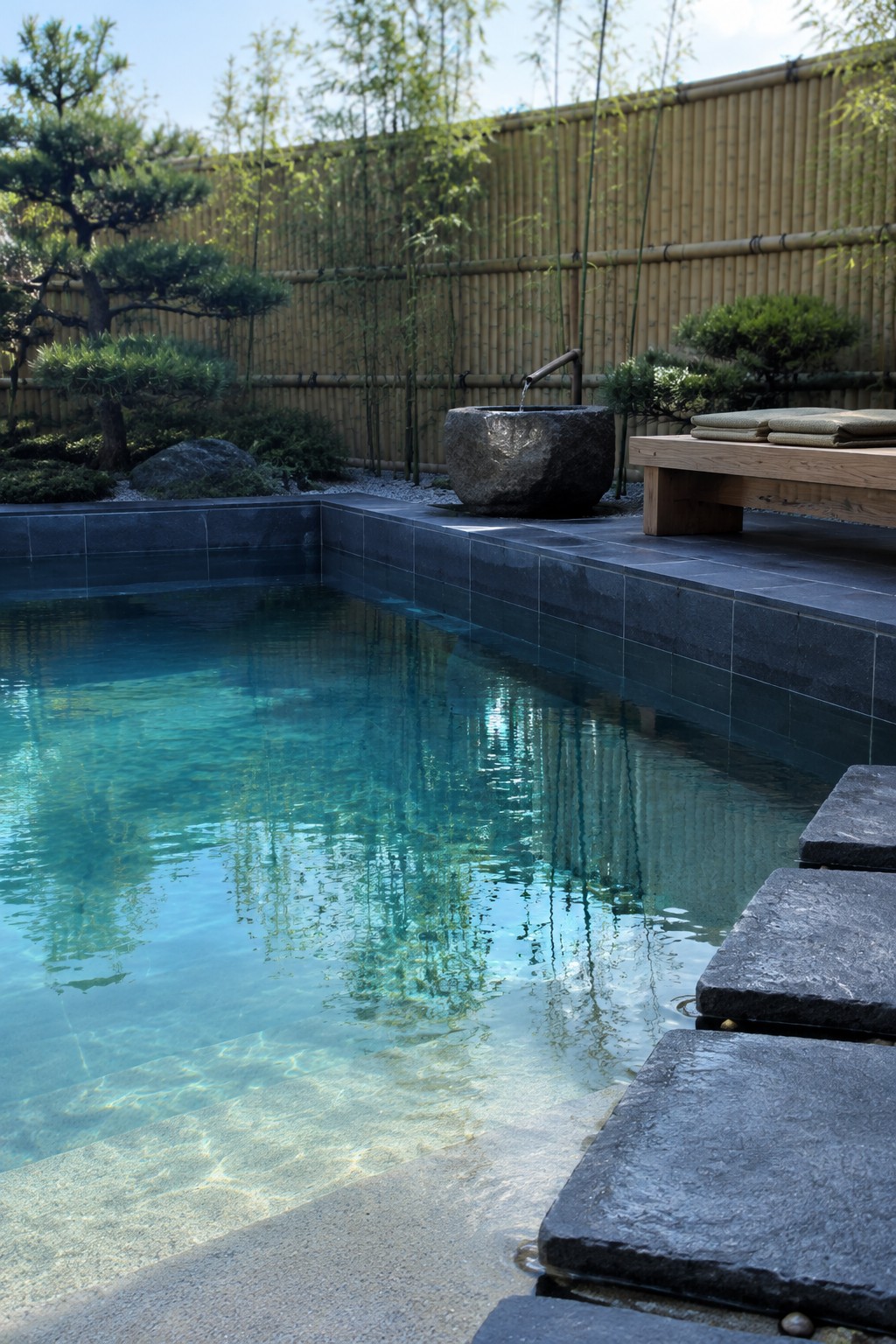
Dark stone coping gives a pool a clear, finished edge and makes turquoise water stand out. It also suits a simple, natural-looking outdoor space without needing much extra decoration.
For a similar look, use stone that stays comfortable underfoot and has a textured, slip-resistant surface. A narrow border can define the pool without taking up much room.
Make a Poolside Bar Part of the Patio
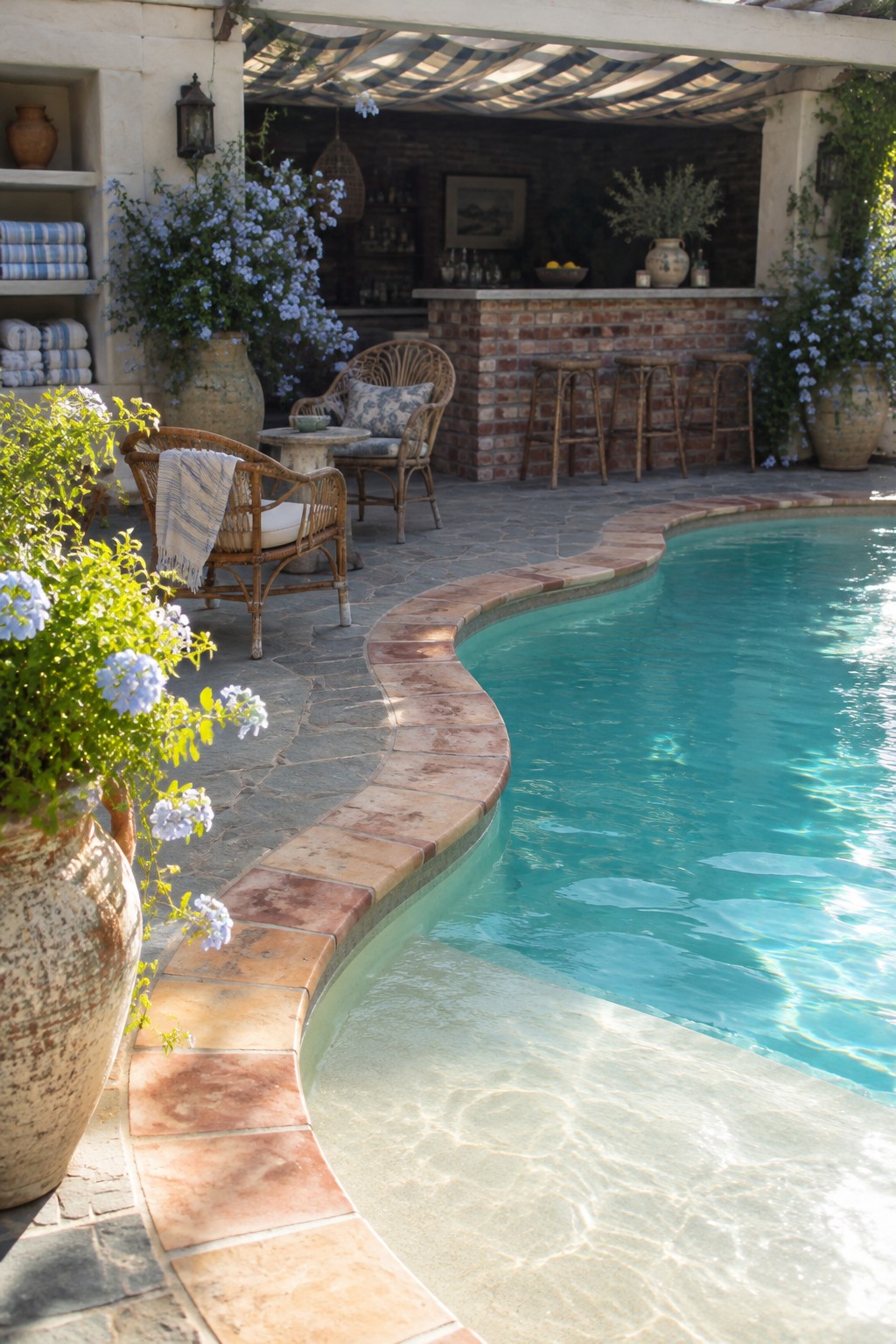
A small bar beside the pool gives people a place to gather without taking over the seating area. The brick counter in this patio makes the poolside feel useful for more than swimming, while still keeping the water close by.
This setup works well in a covered outdoor living space where shade makes lingering more comfortable. Leave enough room around the counter for stools and a clear path to the pool, and choose materials that can handle splashes.
Set Up Poolside Seating for Easy Relaxing
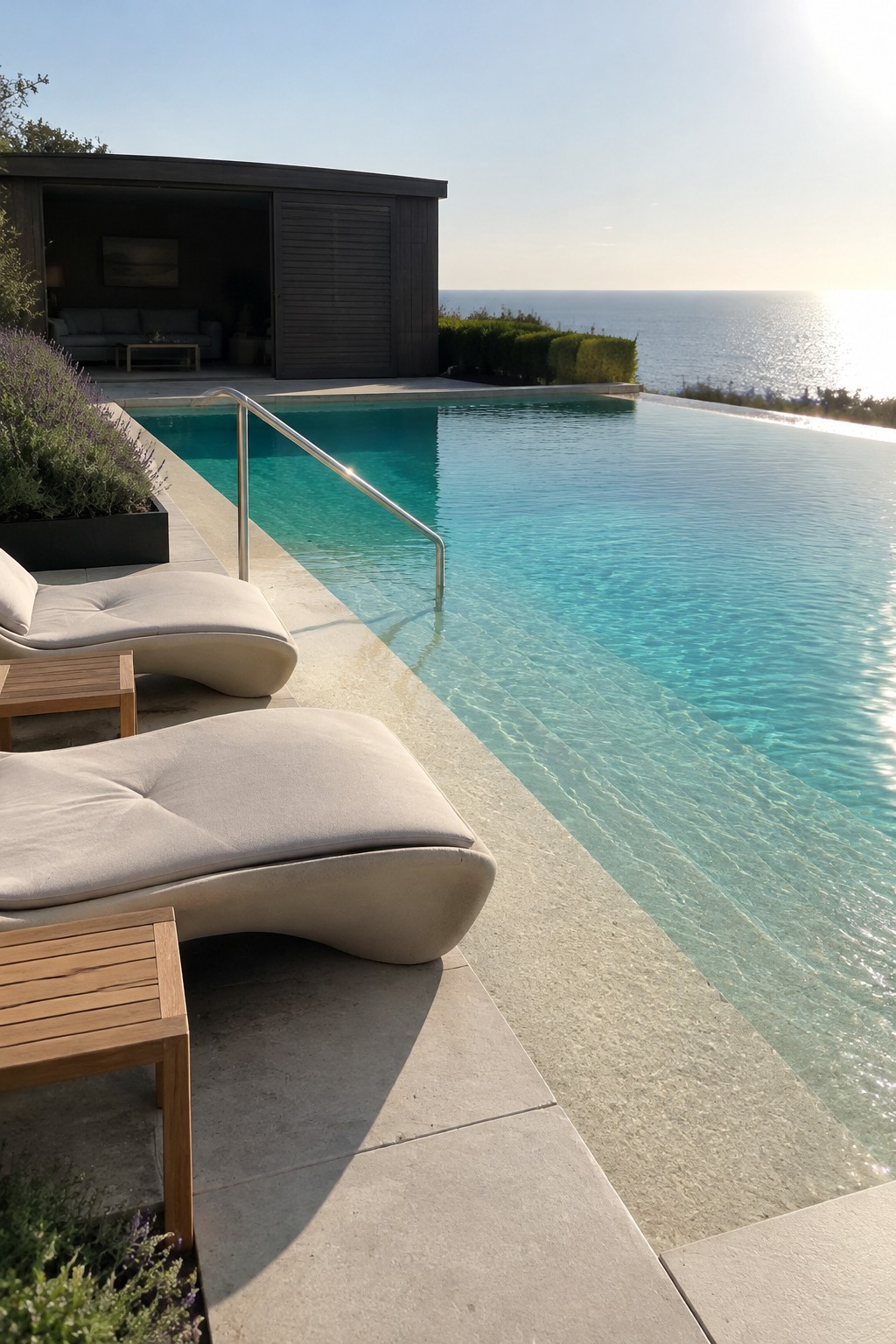
A pool feels more useful when there’s a comfortable place to sit right beside it. Low cushioned loungers keep the seating close to the water, so it’s easy to take a break without leaving the pool area.
This layout suits a patio with enough room for a clear walking path along the pool. Leave space around the loungers, and choose outdoor cushions that can handle regular splashes.
Shape the Pool Like a Natural Cove
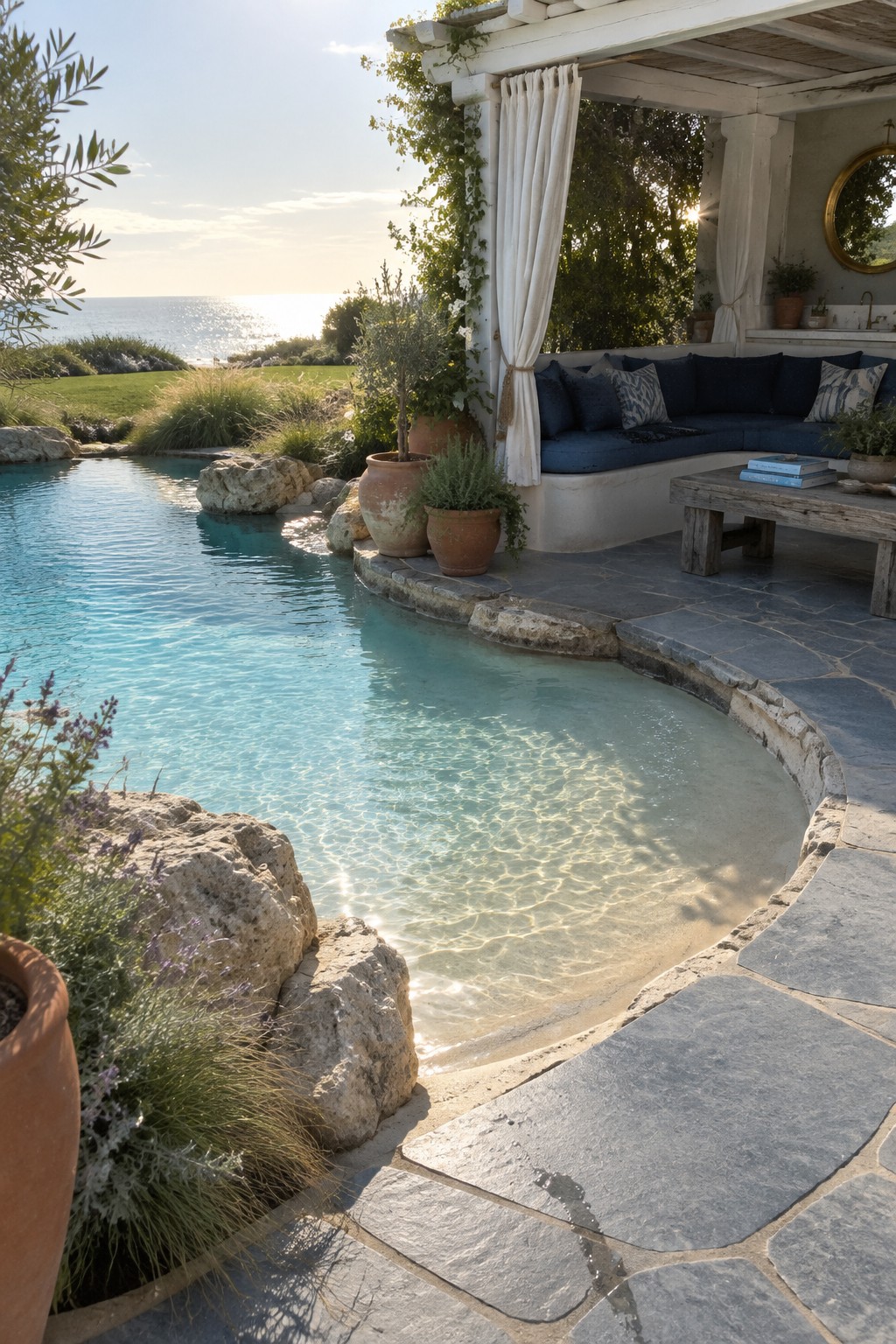
A gently curved pool edge can make a beach entry feel more like part of the garden than a standard rectangular pool. The rounded shoreline also gives the shallow end an easy, gradual look.
This shape works well in smaller pools where a broad entry shelf can lead into deeper water without taking over the whole pool. Use stone around the edge to keep the curve neat, and leave enough clear paving for people to walk around it.
Frequently Asked Questions
Q: Will a beach entry pool work in a small backyard?
A: It can, but the gradual slope takes up more room than steps. A compact design can still feel beachy if you keep the entry area simple and let the pool’s shape do the work.
Q: Is turquoise water hard to keep looking clear?
A: Not if you stay on top of basic pool care. Regular cleaning and balanced water help keep the color bright, while a light-colored interior can make turquoise tones stand out.
Q: Does a beach entry get slippery?
A: It can, especially where water and sunscreen collect. Choose a textured pool finish and keep the entry clean so it feels more secure underfoot.
Q: Can I add a beach entry to an existing pool?
A: It’s possible, but changing the pool’s floor and structure can be a major renovation. Ask a pool contractor to check the layout and explain what the work would involve before settling on a design.