Ever wondered how long it takes to heat your pool by 20 degrees? You’re not alone. Many pool owners face this question, especially when the weather starts warming up and you want to enjoy a refreshing swim.
Table of Contents
Key Takeaways
- Heating Methods: Different heating options like gas heaters, electric heat pumps, solar heaters, and electric resistance heaters have varying heating speeds and efficiencies. Choose the one that best suits your needs.
- Pool Size Matters: The size and volume of your pool greatly affect heating time. Larger pools require more energy and longer heating durations compared to smaller pools.
- Ambient Conditions: Warmer ambient temperatures enhance the heating process, while cooler weather can prolong the time it takes to heat your pool by 20 degrees.
- Efficient Heating Strategies: Implement strategies such as using pool covers, scheduling heating during warmer parts of the day, and ensuring proper water circulation to optimize heating efficiency.
- Regular Maintenance: Keeping your heating system well-maintained, including regular checks on filters and pumps, ensures optimal performance and prevents unexpected heating delays.
- Calculate Heating Time: Use the formula involving your pool’s gallon capacity and the BTU rating of your heater to accurately estimate how long it will take to raise the water temperature.
Understanding Pool Heating
Heating your pool by 20 degrees requires understanding different heating options and methods available for pool owners. Knowing the right equipment and techniques can optimize your heating process.
Types of Pool Heaters
- Gas Heaters: Gas heaters use natural gas or propane. They heat water quickly and efficiently, reaching the desired temperature in a short time. Ideal for pools used infrequently or for quick heating.
- Electric Heat Pumps: Electric heat pumps capture heat from the air and transfer it to the water. They’re energy-efficient and most effective in warm climates. Expect slower heating compared to gas heaters.
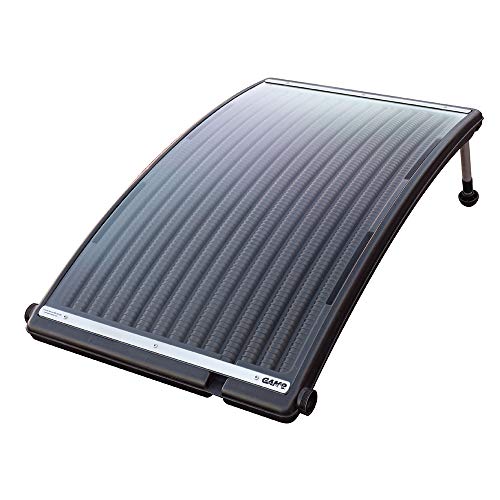
- Solar Heaters: Solar heaters harness energy from the sun. These systems are eco-friendly and cost-effective over time but depend on sunlight availability. Expect gradual warming and longer heating times.
- Electric Resistance Heaters: Electric resistance heaters use electric coils to heat water. They’re suitable for smaller pools or spas but can be costly to operate. Heating times can vary based on pool size.
- Covering Your Pool: Using a pool cover significantly reduces heat loss during the night and cool days. Covers can enhance heating efficiency.
- Scheduling Heating: Set your heater to operate during the warmest parts of the day. This maximizes heat absorption and minimizes heating costs.
- Water Circulation: Running your pool pump while heating helps distribute warm water evenly. This promotes uniform heating throughout the pool.
- Regular Maintenance: Maintain your heating system for optimal performance. Regular checks on filters, pumps, and heat exchangers prevent heating delays.
- Monitoring Temperature: Use a reliable thermometer to check pool temperature. Adjust your heating schedule based on real-time temperature readings to prevent overuse of energy.
Optimizing your pool heating strategy enhances your swimming experience, allowing you to enjoy a comfortable swim sooner.
Factors Affecting Heating Time
Heating a pool by 20 degrees involves several factors that can significantly impact the duration of the heating process. Understanding these elements helps you manage expectations and optimize your heating strategy.
Recommended Products

Extend Your Swim Season: The pool heat pump features a dual-mode heating and cooling system that maintains optimal water temperatures year-round. Precision control ensures heating from 47–104℉ and cooling from 47–83℉, allowing you to enjoy extended swimming sessions through autumn’s crisp chill and spring’s cool mornings.

Extend Your Swim Season: The pool heat pump features a dual-mode heating and cooling system that maintains optimal water temperatures year-round. Precision control ensures heating from 47–104℉ and cooling from 47–83℉, allowing you to enjoy extended swimming sessions through autumn’s crisp chill and spring’s cool mornings.
Pool Size and Volume
Pool size and volume play crucial roles in heating time. Larger pools require more energy and longer periods to reach the desired temperature compared to smaller pools. For example, a 20,000-gallon pool takes longer to heat than a 10,000-gallon pool. When estimating heating time, consider both the surface area and water volume.
Ambient Temperature
Ambient temperature affects how quickly your pool heats. Warmer air temperatures allow for faster heating, while cooler temperatures slow the process. For example, heating a pool on a sunny day at 75°F (24°C) is more efficient than heating it at night in colder conditions. Pay attention to weather forecasts and choose optimal heating times to maximize efficiency.
Calculating Heating Time
Understanding how long it takes to heat your pool by 20 degrees involves a few calculations and considerations. You’ll find that various factors affect the overall time.
Recommended Products
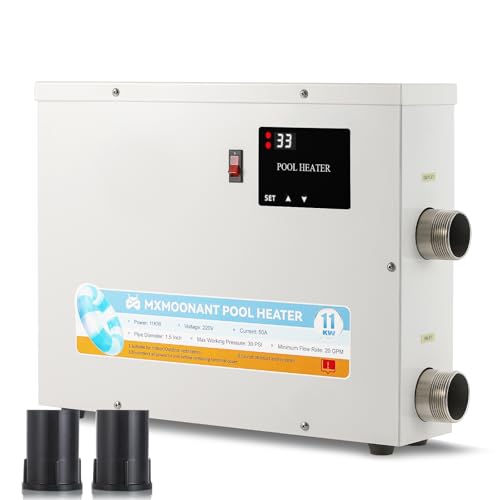
[Automatic Circulating Heating]: The spa heater cycles on and off based on the preset temperature. It will automatically shut off when the water temperature reaches or surpasses the preset level. Conversely, if the temperature falls below the preset level, the electric spa heater will automatically switch on again.

ADVANCED INVERTER TECHNOLOGY: This pool heat pump inverter automatically adjusts compressor speed to match demand. The electric heat pump pool heater reduces energy use, operating noise, and component wear during heating cycles.
Mathematical Approach
To calculate heating time, use this formula:
[
\text{Time (hours)} = \frac{\text{Gallons of water} \times \text{Temperature increase (°F)}}{\text{BTU heater rating (BTUs per hour)}}
]
- Determine Your Pool’s Gallons: Find the volume of your pool in gallons. This can usually be calculated based on shape and dimensions.
- Identify BTU Rating: Check the BTU (British Thermal Units) rating of your heating system. Common gas heaters range from 75,000 to 400,000 BTUs.
- Insert Values: If your pool has 20,000 gallons and your heater is 100,000 BTUs:
- Time = (20,000 gallons × 20°F) ÷ 100,000 BTUs = 4 hours.
Real-world Scenarios
Consider these practical examples to illustrate how heating times differ:
- Scenario 1: A 15,000-gallon pool heated with a 150,000 BTU gas heater.
- Calculation: (15,000 gallons × 20°F) ÷ 150,000 BTUs = 2 hours.
- This scenario shows a quick heating time, ideal for spontaneous swimming.
- Scenario 2: A 30,000-gallon pool using a solar heater, typically lower BTU output. Assuming 60,000 BTUs:
- Calculation: (30,000 gallons × 20°F) ÷ 60,000 BTUs = 10 hours.
- This indicates longer heating time, emphasizing sun exposure and weather conditions.
Using this information, you can predict heating times more confidently, helping optimize your pool enjoyment.
Tips for Efficient Heating
Efficient heating maximizes comfort while minimizing energy costs. Implement these strategies for the best results.
Recommended Products

[Perfect 6 ft Round Size for Universal Pool Fit]: Designed specifically for 6-foot round above ground pools, spas, and hot tubs, this solar cover provides a snug and reliable fit without excess overlapping or gaps. It can also be lightly trimmed for irregular layouts, making it versatile for most residential outdoor water setups.

【Heat up Your Pool Water】Solar pool covers use the power of the sunshine to heat up the water So you can swim by warming the water earlier or keep the water warm after swim. and keep enjoy your swimming in the whole season.

Helps Conserve Water & Energy: This Natural Chemistry cover free is an advanced mono-layer technology that helps save water and money by decreasing evaporation.
Insulation Strategies
Consider improving insulation for your pool. Insulated walls and covers reduce heat loss, keeping your pool warmer. Some common insulation materials include:
- Pool Blankets: These floating covers trap heat and reduce evaporation during the night.
- Insulated Walls: Installing insulated panels can enhance thermal retention.
- Heating Elements: Look for models with better insulation to maintain temperature effectively.
Evaluate insulation materials specifically designed for pools to ensure maximum efficiency and longer heat retention.
Covering the Pool
Covering your pool plays a crucial role in heating efficiency. Use these types of covers:
- Solar Covers: These clear covers absorb sunlight and transfer this heat into the water, increasing the temperature naturally.
- Thermal Covers: These thicker, insulated covers minimize heat loss, especially at night.
- Safety Covers: While primarily for safety, multi-purpose safety covers also help retain heat.
Always keep your pool covered when not in use. Doing so prevents heat loss and reduces heating time significantly.
Conclusion
Heating your pool by 20 degrees doesn’t have to be a daunting task. By implementing the right strategies like using covers and ensuring proper maintenance you can enjoy a warm swim in no time. Remember that a little effort in insulation and circulation goes a long way in reducing both heating time and energy costs.
So whether you’re gearing up for a pool party or just want to relax on a sunny afternoon make your pool heating experience efficient and enjoyable. Happy swimming!
Frequently Asked Questions
What are the best heating options for pools?
There are several effective heating options for pools, including gas heaters, electric heat pumps, and solar heaters. Each method has its benefits and costs, so consider your budget, climate, and usage frequency when choosing the best option for your needs.
How can I reduce heating time by 20 degrees?
To effectively reduce heating time by 20 degrees, use a high-quality pool cover. Maintaining proper water circulation and ensuring regular maintenance can also enhance heating efficiency.
What role do pool covers play in heating?
Pool covers play a crucial role in heating by trapping heat and significantly reducing evaporation. Utilizing solar, thermal, or safety covers can help maintain optimal temperatures and shorten heating times.
What insulation strategies can I use for my pool?
There are several insulation strategies you can implement, such as using insulated walls, installing pool blankets, and utilizing covers designed for heat retention. These measures can greatly enhance your pool’s temperature stability.
How can I reduce energy costs while heating my pool?
To minimize energy costs while heating your pool, combine efficient heating methods with proper insulation and covers. This allows you to maintain desired temperatures without overusing energy resources.