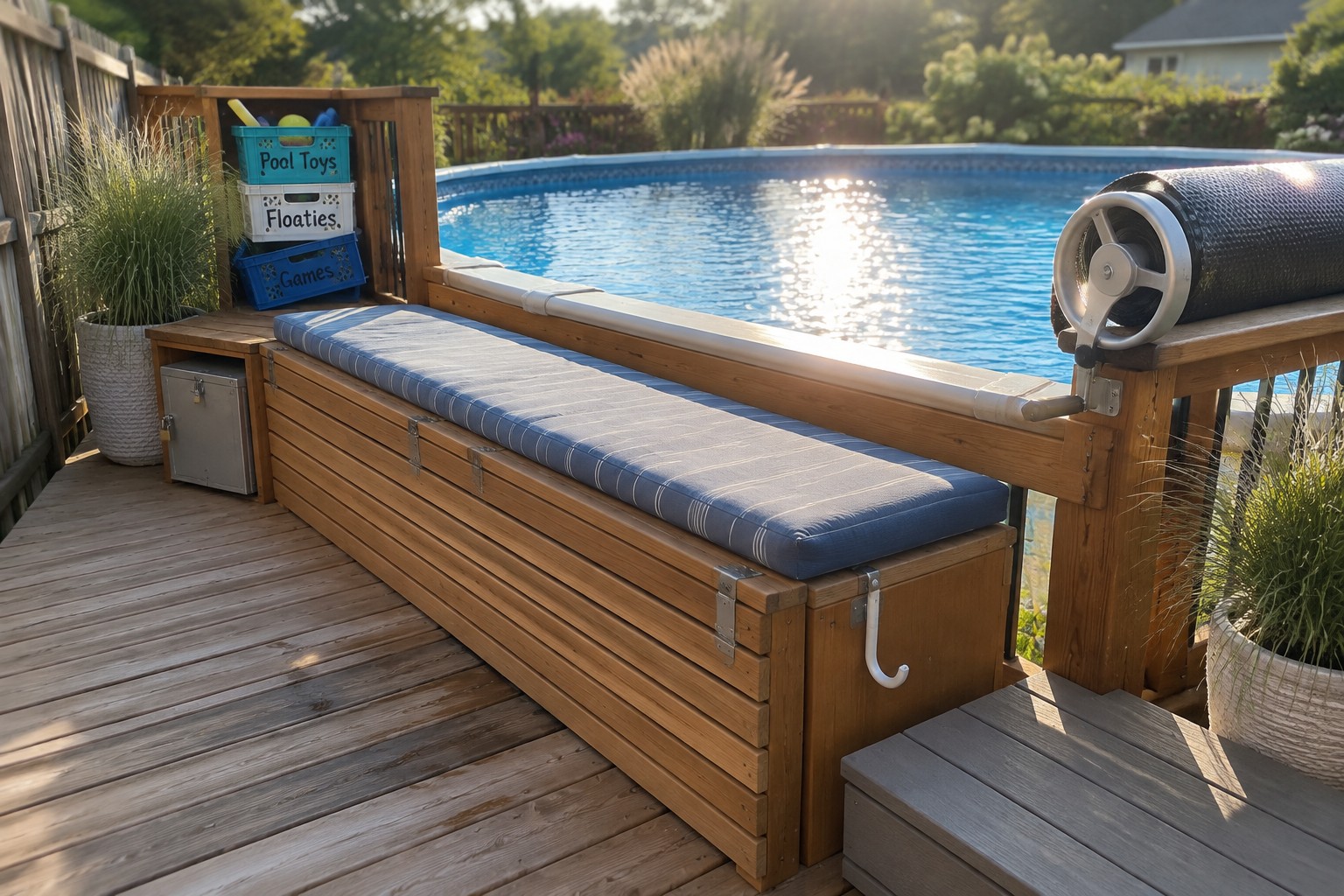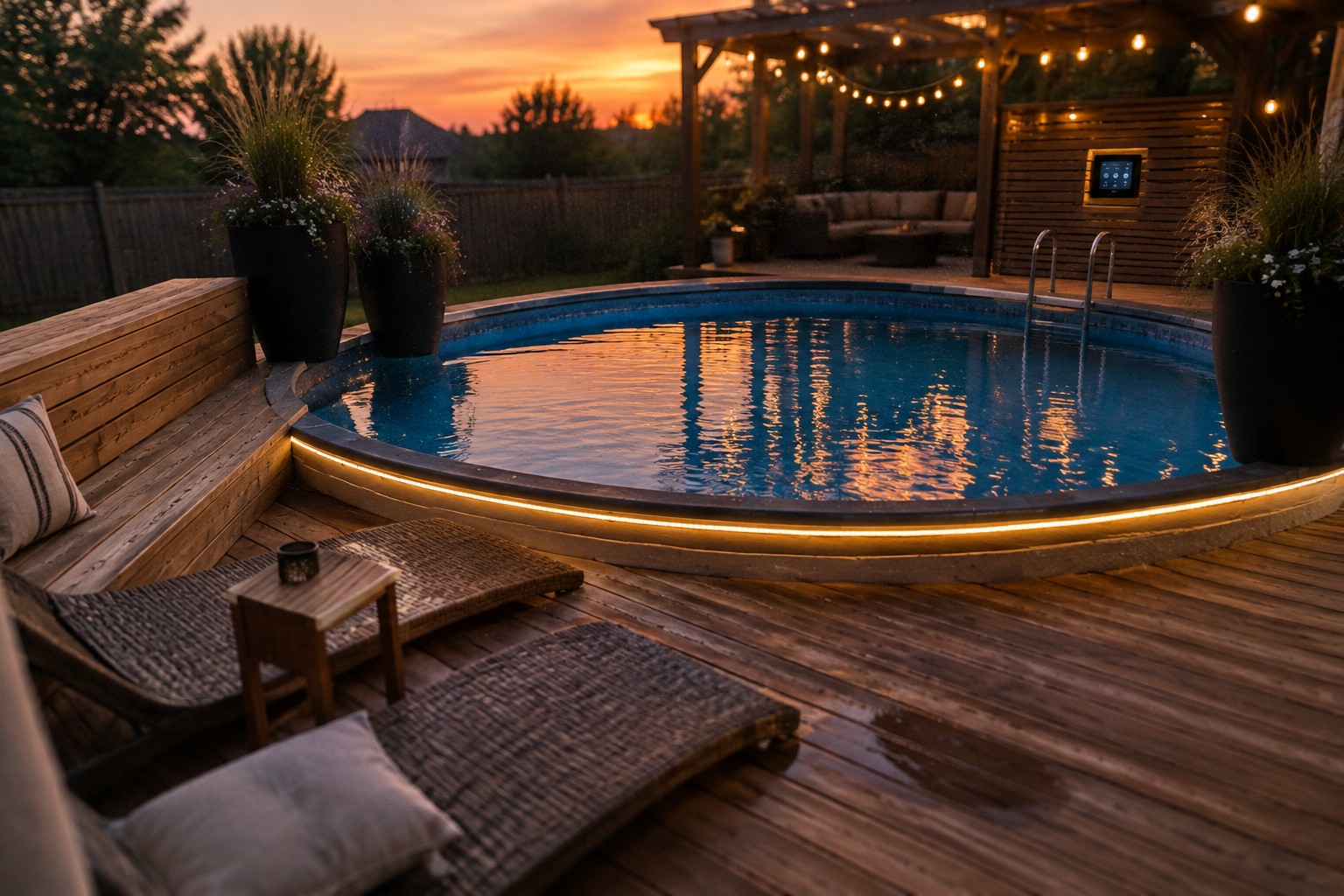
I have seen plenty of above ground pools where the area right around the edge ends up feeling more like an afterthought than a real part of the yard.
Pavers can change that by giving you a solid surface that handles foot traffic and weather without turning into a muddy mess.
Drainage matters more than most people expect.
Some setups work better than others when it comes to keeping the whole surround level and safe for kids running around.
I would probably start by testing a simple border layout before committing to anything more complex around my own pool.
Stone Pavers Give an Above Ground Pool a Solid Base

Stone pavers work well around an above ground pool because they create a flat, stable surface that feels connected to the rest of the yard. The irregular shapes and natural tones help the pool edge sit lower visually instead of standing out as a separate structure.
This idea suits homes with existing stone or gravel areas since the same material can run right up to the pool wall. Keep the pavers level and well compacted so the pool frame stays supported and walking around the edge feels safe.
Brick Pavers Around An Above Ground Pool

Brick pavers give an above ground pool a finished look without making the whole yard feel too formal. They handle splashing water and heavy foot traffic well, and the warm color softens the white pool wall while blending into a wooden deck.
This works best in smaller backyards where you need a clear walking surface that still feels casual. Stick to a simple running bond pattern and let the pavers stop a foot or two from the pool wall so the surround stays easy to clean.
Wide Paver Surrounds For Pool Areas

Large pavers work well around above ground pools because they create a flat, solid surface that feels connected to the rest of the yard. The light stone color helps reflect heat and keeps the area from getting too hot underfoot, which makes the whole space more usable during the day.
This approach suits homes with open outdoor space and a simple layout. Stick with bigger paver sizes so there are fewer joints to maintain, and make sure the base is solid so the surface stays level over time.
Paver Coping That Frames The Pool

Running the same pavers right up to the water as a coping gives an above ground pool a finished edge. It turns the pool into part of the patio instead of something set on top of it.
This approach works best on homes with warm stucco walls and clay roofs. Seal the pavers well so they hold up to water and sun, and keep the coping wide enough to sit on comfortably.
Stone Paver Paths Around Above Ground Pools

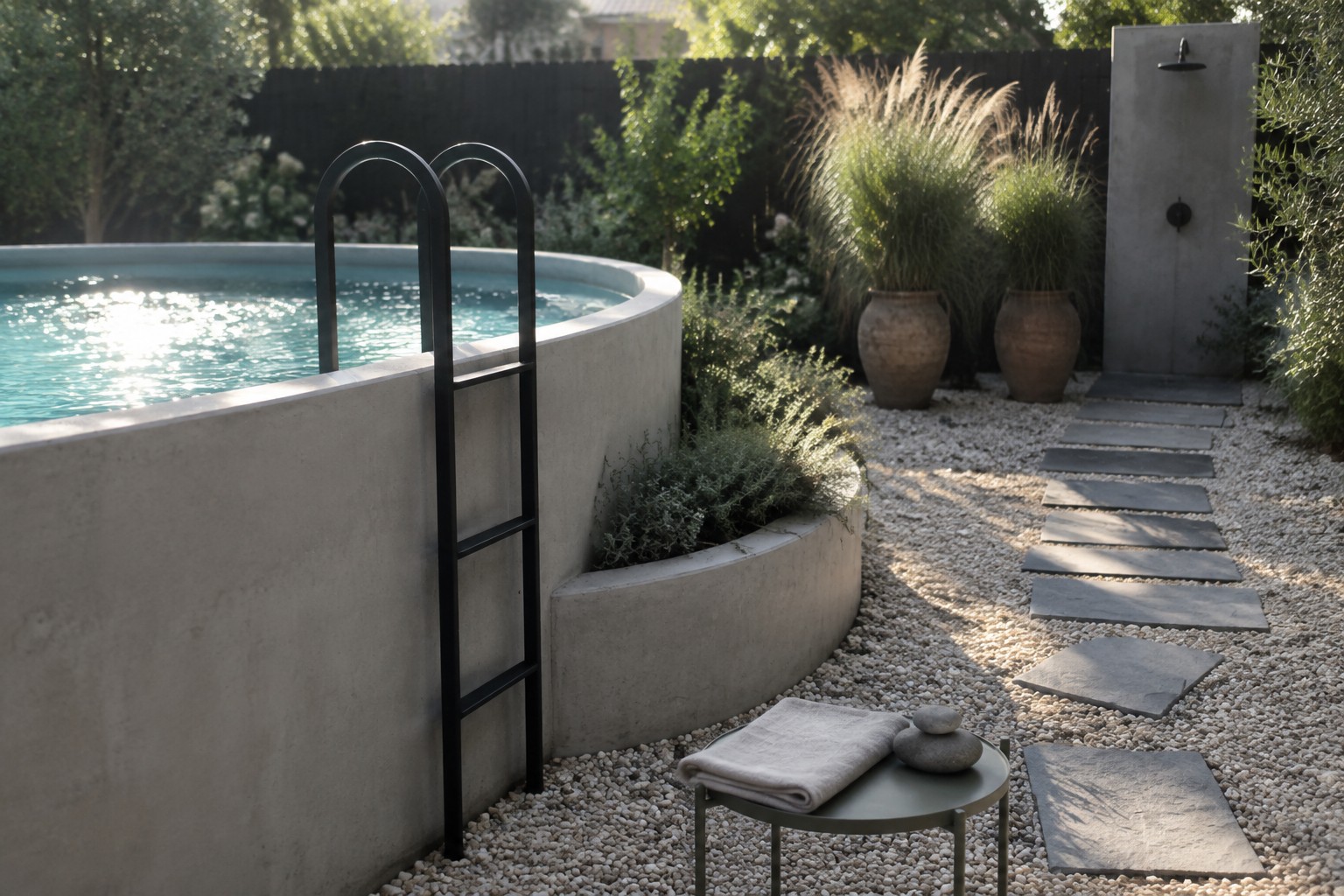
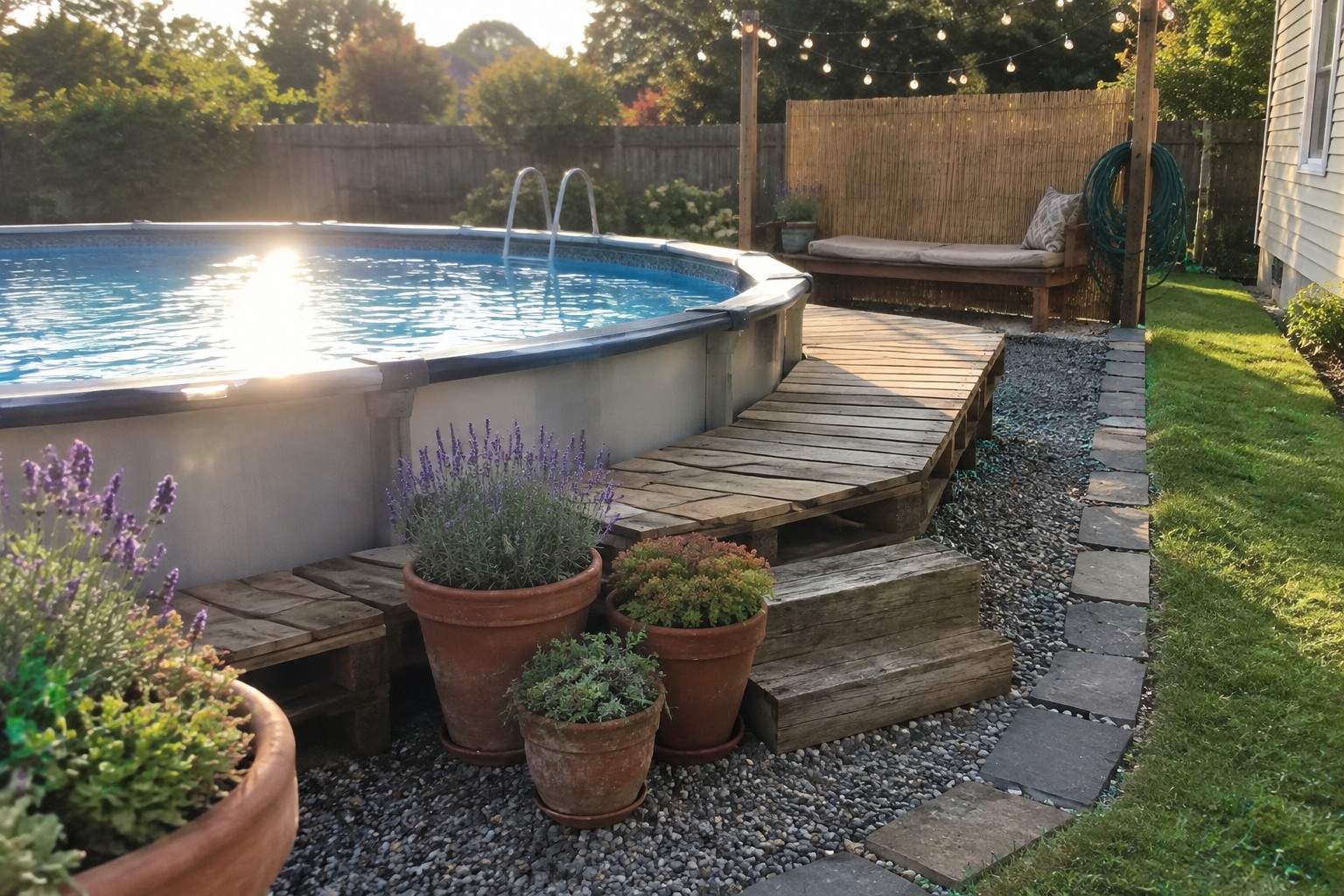
Irregular stone pavers work well when you want the pool area to feel more like part of the garden instead of a separate structure. The uneven shapes and natural tones help break up the straight lines of the pool wall and create a path that feels comfortable underfoot.
This approach suits smaller backyards or spaces where you want a relaxed look without a full deck. Lay the pavers in a loose pattern with gravel or pebbles filling the gaps, and keep the path wide enough for easy walking around the pool. It works best with simple planting nearby so the hardscape stays the main feature.
Large Pavers With Gravel Joints

Large pavers set with gravel between them give a pool surround a clean but relaxed look. The gaps break up the hard surface and let a little planting soften the edge without much work. This setup also helps water drain away from the pool deck instead of pooling on the surface.
It fits best on level ground where you want something more interesting than a solid slab. Homes with gravel beds or low-water gardens nearby tend to look the most natural with this choice. Keep the joints filled so the pavers stay stable and the small plants have room to spread.
Patterned Pavers Give An Above Ground Pool A Finished Look

Patterned pavers turn the area around an above ground pool into something that feels like a real patio instead of just a deck. The mix of colors and shapes helps the pool sit better in the yard and gives you a solid surface that holds up to water and foot traffic.
This approach works best in smaller yards where you need the pool zone to connect with the rest of the outdoor space. Lay the pavers first for a level base, then add rugs in the seating areas if you want something softer underfoot.
Large Stone Pavers For The Pool Deck

Carrying the same large stone pavers across the entire pool deck and right up to the waterline keeps everything feeling connected. The material flows from the open deck area into the hot tub surround without any jarring change, which makes the whole space read as one clean zone rather than separate pieces.
This works best on homes where the pool sits near other stonework or hardscape. Choose pavers with enough texture to stay safe when wet, and keep the joints tight so the surface feels solid underfoot.
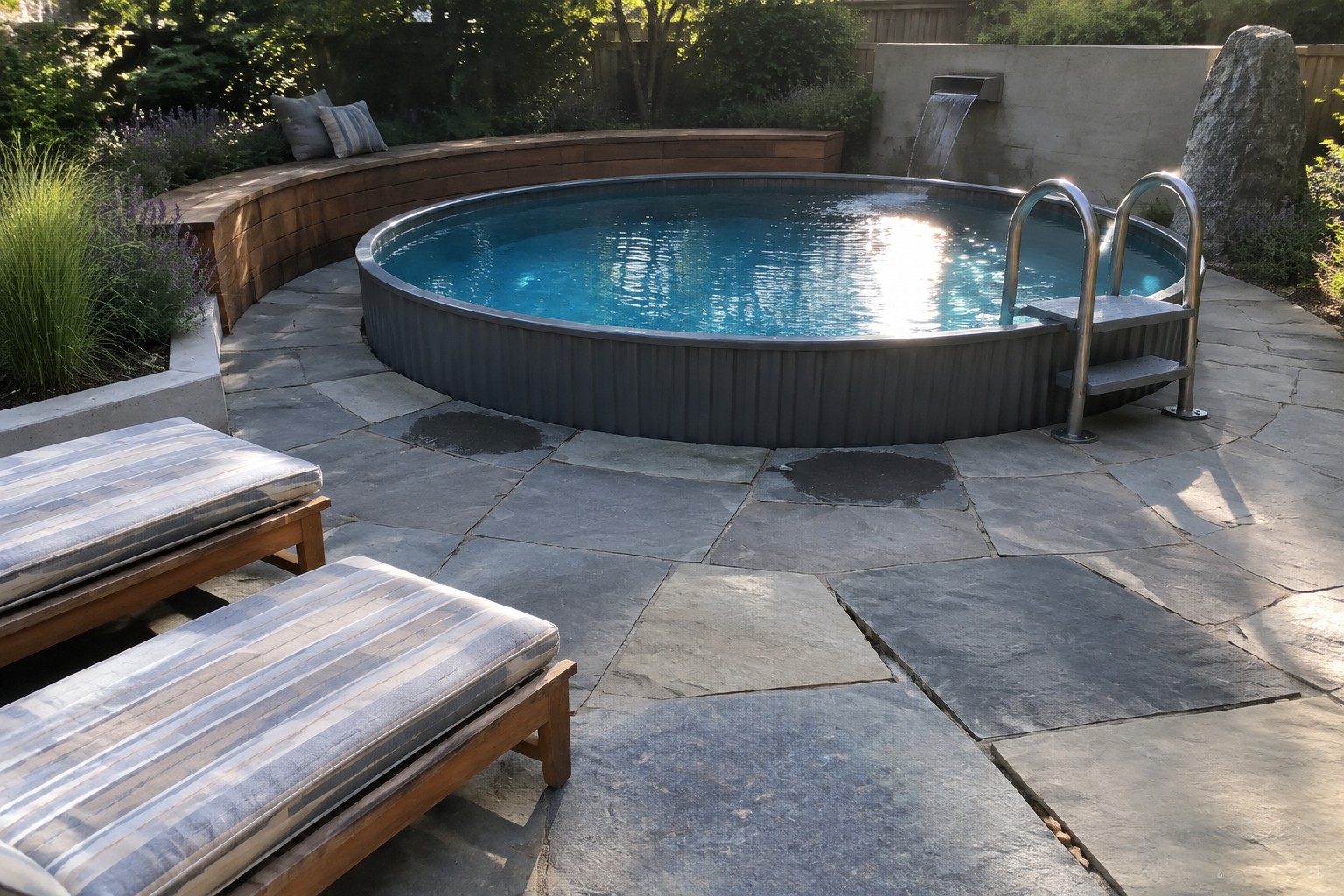
Pavers Level the Area Around a Raised Pool

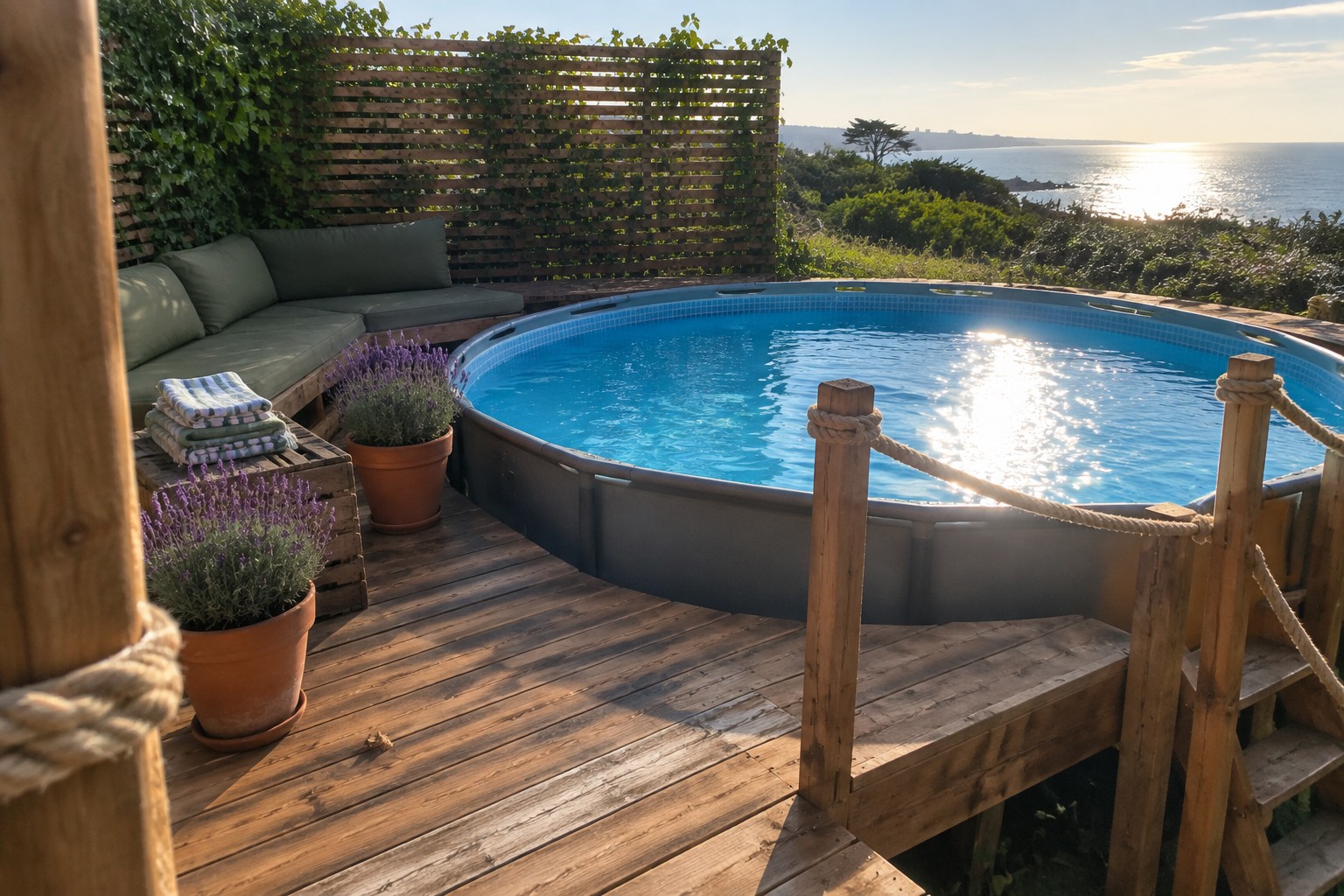
Pavers work well here because they turn the space right next to a raised pool into one flat, usable surface. You can set out loungers, add a bench, and still have room to walk without the ground feeling uneven or cramped.
This approach fits homes where the pool sits higher than the rest of the yard. The pavers bridge the height difference and keep the whole area feeling connected instead of like two separate zones. Just make sure the base is solid so the surface stays even over time.
Use a Grid of Pavers Around the Pool

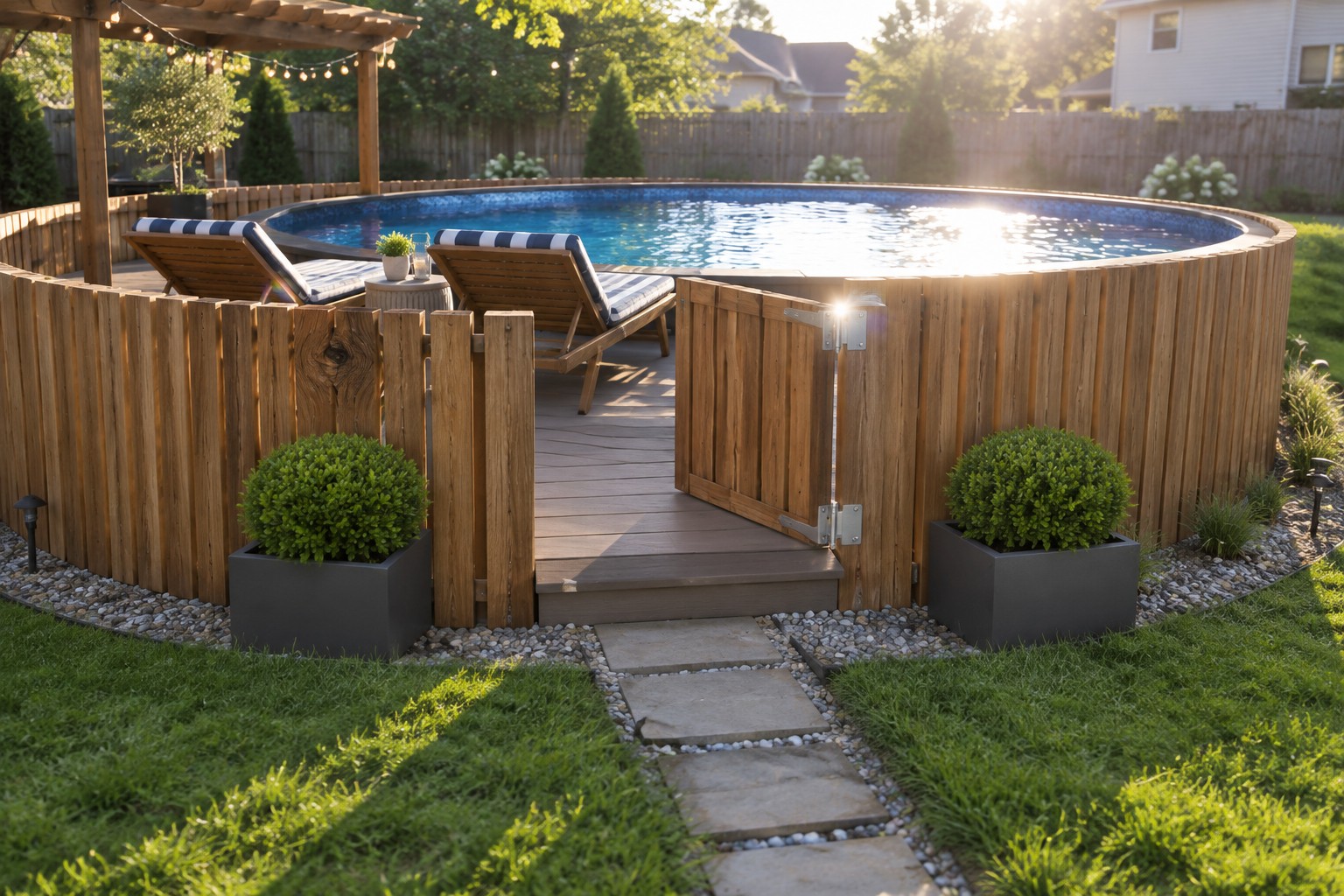
One simple way to tie an above ground pool into the rest of the yard is to run a grid of pavers through the grass right up to the edge. The stones sit low so the lawn still flows around them, and the path feels like part of the garden instead of something added on later.
This layout works best in open yards where you can let the pavers stop and start naturally. Keep the spacing even and let the grass fill the joints so the whole thing stays soft instead of looking like a hard patio pushed up against the pool wall.
Checkerboard Pavers Around An Above Ground Pool

A checkerboard layout with dark and light pavers creates a simple but bold look around an above ground pool. The pattern adds structure to the space and keeps the focus on the pool itself instead of scattered details or extra decor.
This works best on larger patios where the grid can be seen clearly from the house or seating areas. Stick with two tones that contrast enough to show the pattern but still feel calm, and choose pavers made for wet outdoor conditions so the surface stays safe and easy to maintain.
Large Gray Pavers for a Low-Maintenance Pool Surround

Pavers let you shape the area around an above ground pool without making it feel stiff or overly planned. A loose pattern of small stones creates a path that curves past the pool edge and opens into a quiet seating spot, which makes the whole space feel more like part of the garden than a separate deck.
This works best on pools that sit a little above ground, where you can build the pavers right up to the base. Keep the path narrow in spots and wider where you want a bench or chairs. It suits yards with existing plants and gives you walking room without covering everything in a solid surface.
Turn a Small Above Ground Pool Area Into an Outdoor Living Space

Large pavers work well around above ground pools because they create a flat, solid surface that feels intentional rather than temporary. The light gray tones in this setup help the dark pool walls blend into the rest of the yard instead of standing out as an afterthought.
This approach suits homes with existing patios or those wanting a low-maintenance deck that still looks finished. Stick with larger formats and simple grout lines so the space stays easy to clean and open for furniture or cooking areas nearby.
Create a Comfortable Paver Area for Poolside Seating

One easy way to make an above ground pool feel more settled in the yard is to bring pavers right up to the edge. The flat surface gives you room to walk around the pool, set out chairs, and keep everything level without dealing with grass or soft ground right next to the water.
This approach works especially well in smaller or urban yards where space is tight. Keep the paver area simple and wide enough for a couple of seats, and the whole setup starts to read as a real outdoor living spot instead of just a pool sitting on its own.
Compact Paver Pool Surround for Small Yards

Pavers give an above ground pool a more finished look by turning the area right around it into a proper patio. The flat surface makes it easier to place chairs or walk barefoot without dealing with grass or mud right at the edge.
This works especially well if you also want a fire pit or extra seating nearby. Just keep the paver area wide enough for people to move around the pool comfortably and make sure the base is well compacted so it stays even.
Level and Stable Paver Base Around an Above Ground Pool

Pavers give you a flat, solid surface that turns the area right next to an above ground pool into actual seating space. The stone style shown here runs close to the pool wall and holds up well under chairs and foot traffic without sinking or getting muddy.
This approach works best in smaller yards where the pool needs to feel like part of the main patio rather than a separate feature. Make sure the base is compacted and leveled first so the pavers stay even after rain and freeze cycles.
Frequently Asked Questions
Q: Should the pavers slope away from the pool? A: Give them a gentle tilt so water runs off instead of collecting at the base. A small drop of about one inch per foot keeps everything drier and more stable. You can check the slope with a level as you lay each row.
Q: How do I keep pavers from sinking over time? A: Dig out the area and pack down a layer of gravel first. Then spread sand on top before setting the pavers in place. This setup handles foot traffic and pool splashes without shifting much.
Q: Do pavers turn slippery after a swim? A: Textured pavers give better grip when wet. Skip the smooth ones if kids run around the pool. A quick rinse now and then also cuts down on algae buildup.