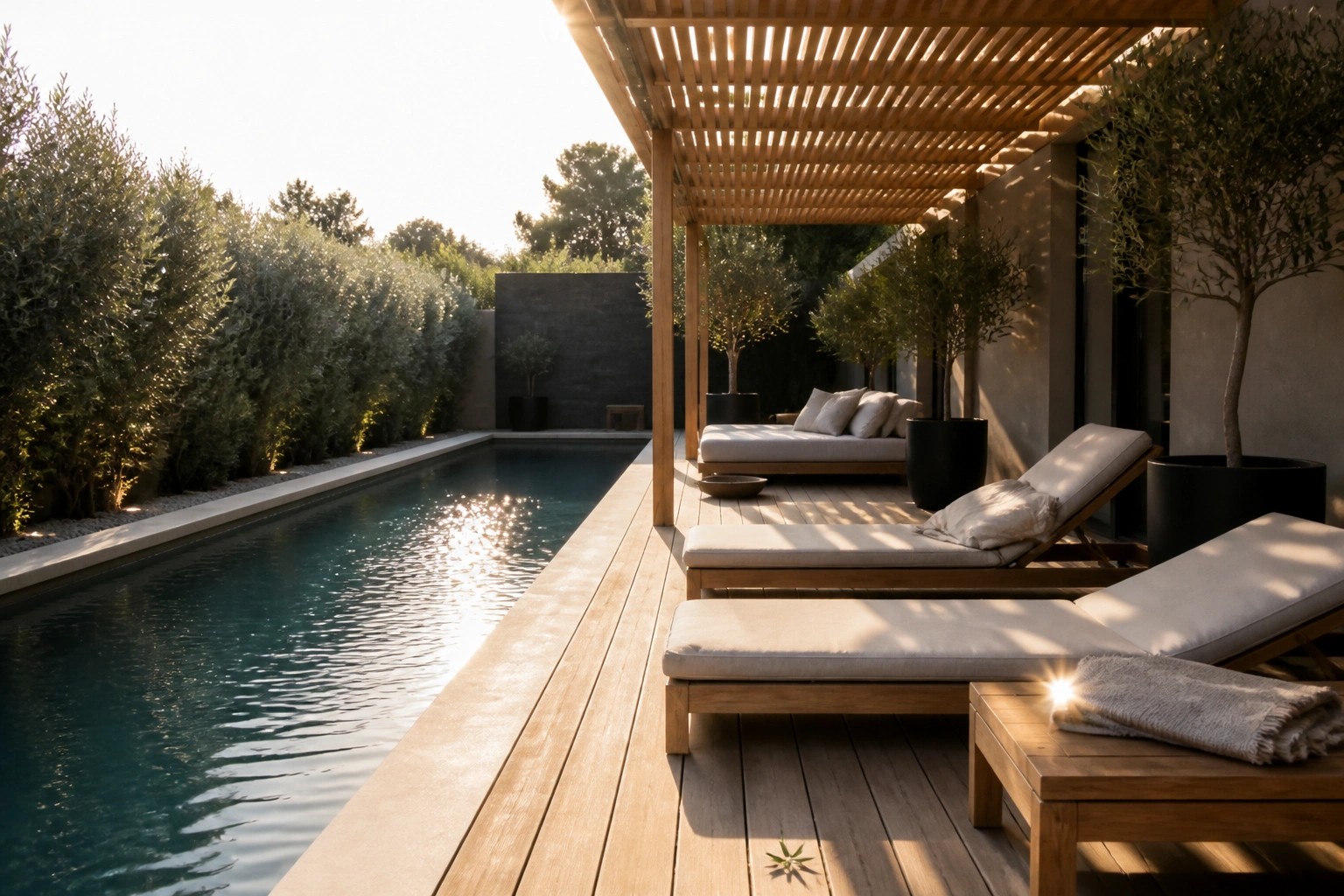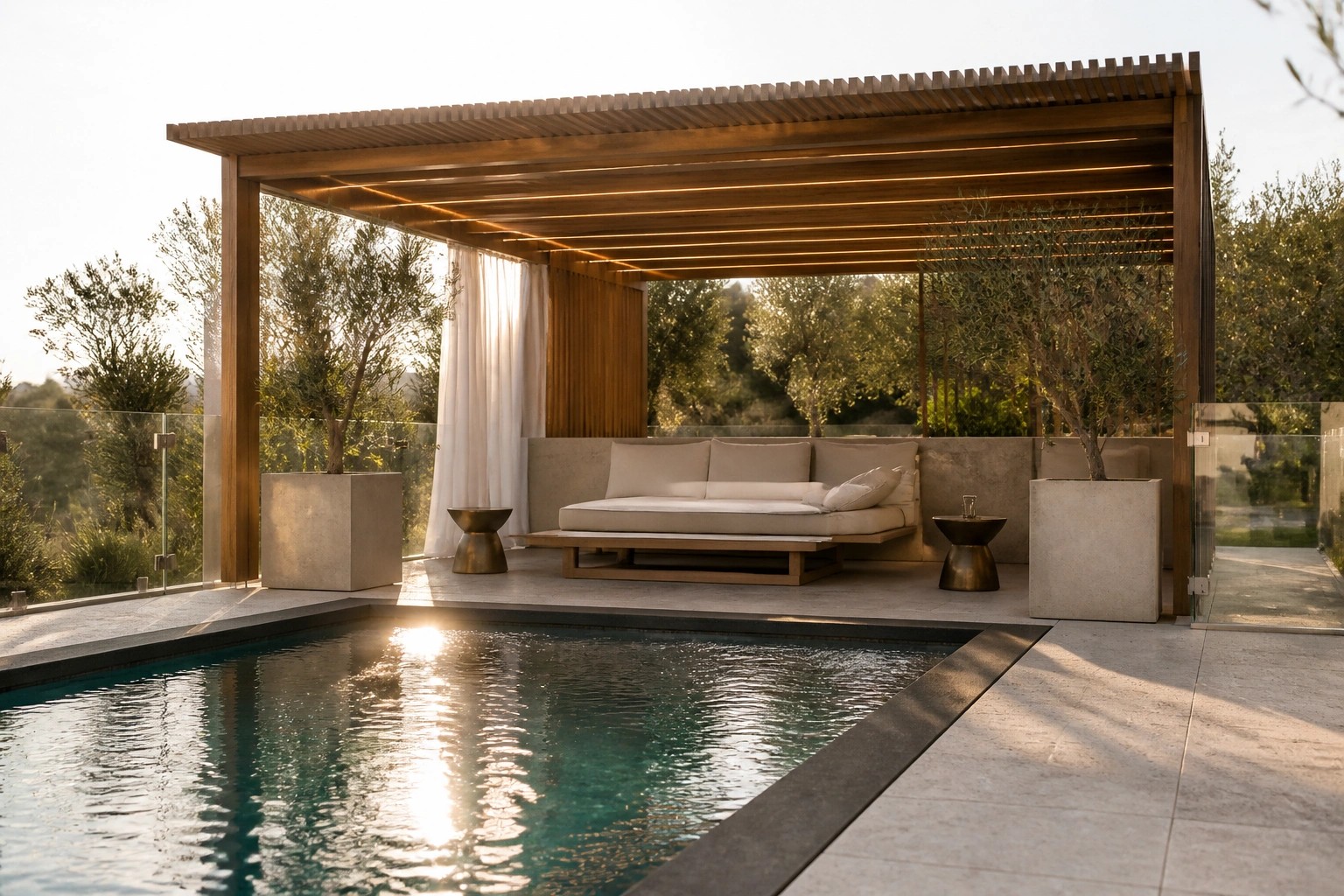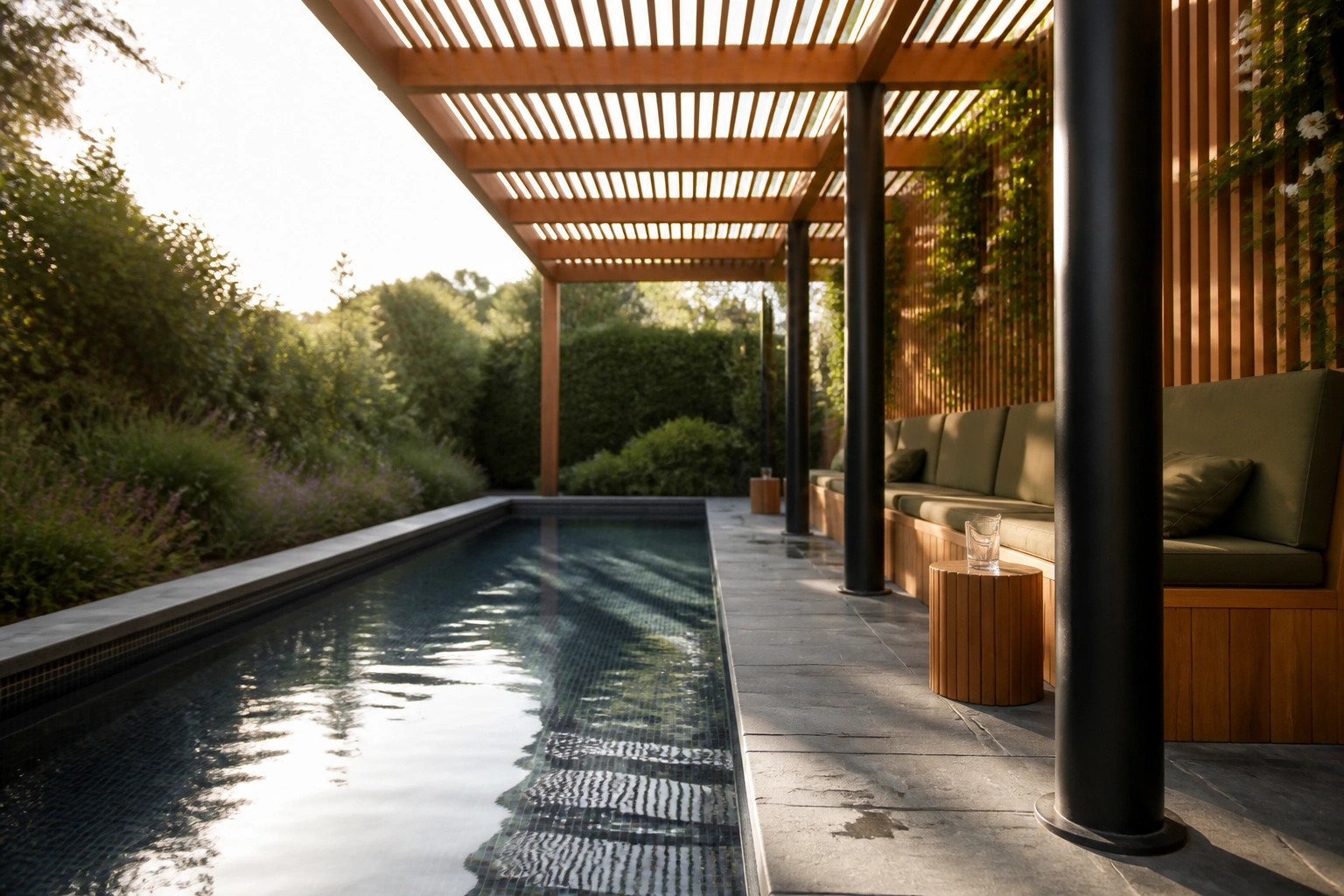
I have spent more time than I care to admit trying to keep a pool area comfortable once the sun sits high and the concrete starts to hold heat.
The setups that hold up best usually leave enough open air so the space still feels connected to the rest of the yard instead of turning into a separate room.
Shade changes the whole experience.
When I consider wood metal or fabric options I tend to picture how each material will weather and whether it will demand more upkeep than I actually want to give it.
A few of the simpler approaches have stayed with me as the ones worth trying first because they focus on daily use rather than just how the area looks from a distance.
Wood Slat Pergolas For Pool Areas
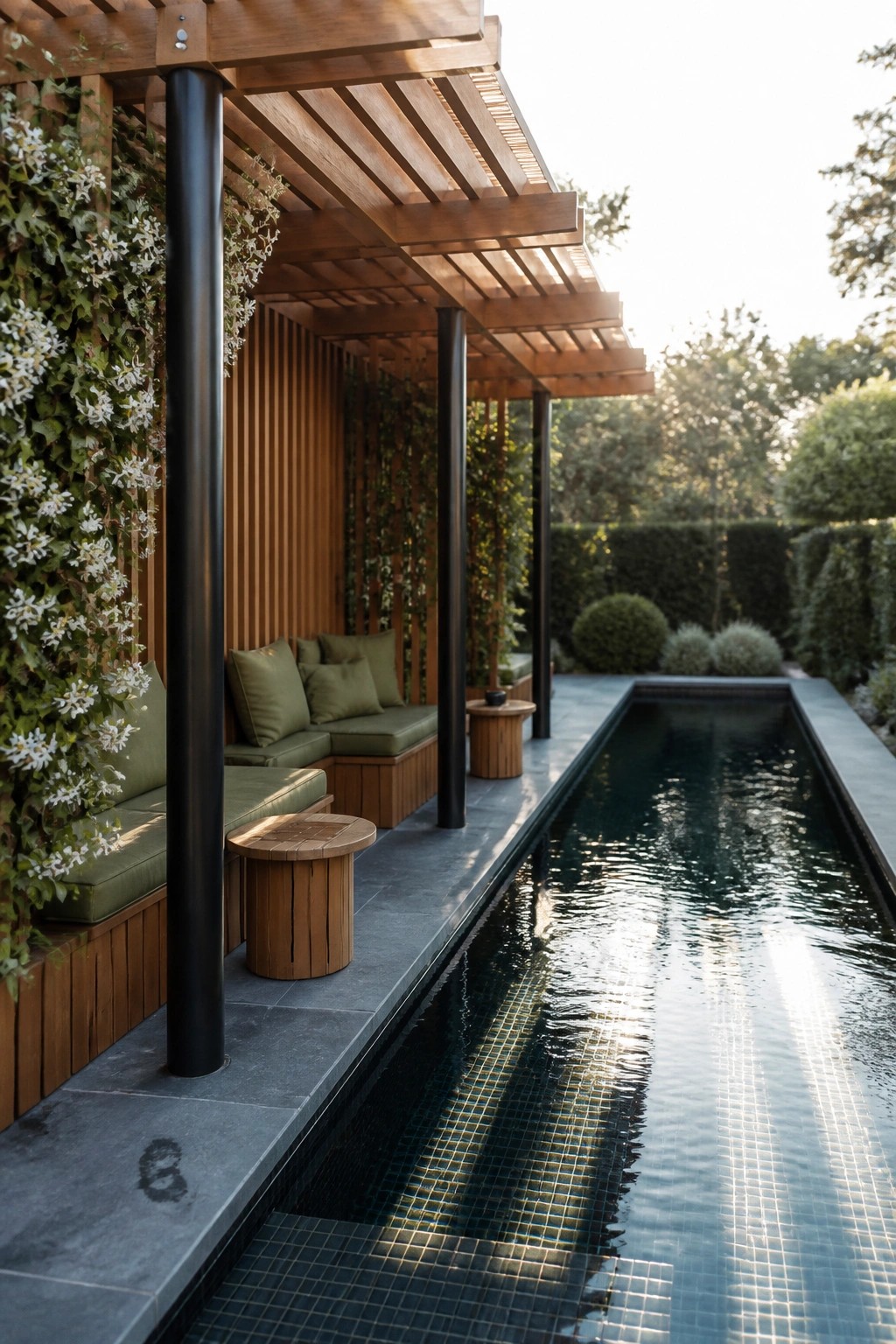
A simple wood pergola with spaced slats overhead gives steady shade right beside the pool without blocking all the light. The open roof keeps air moving and prevents the space from feeling boxed in, which makes it easier to sit outside for longer stretches during the day.
This kind of structure works best on straight pool edges where you can run seating along one side. Match the wood tone to any nearby decking or fences so it feels like part of the same build rather than something added later.
Fabric Shade Sails For Pool Areas

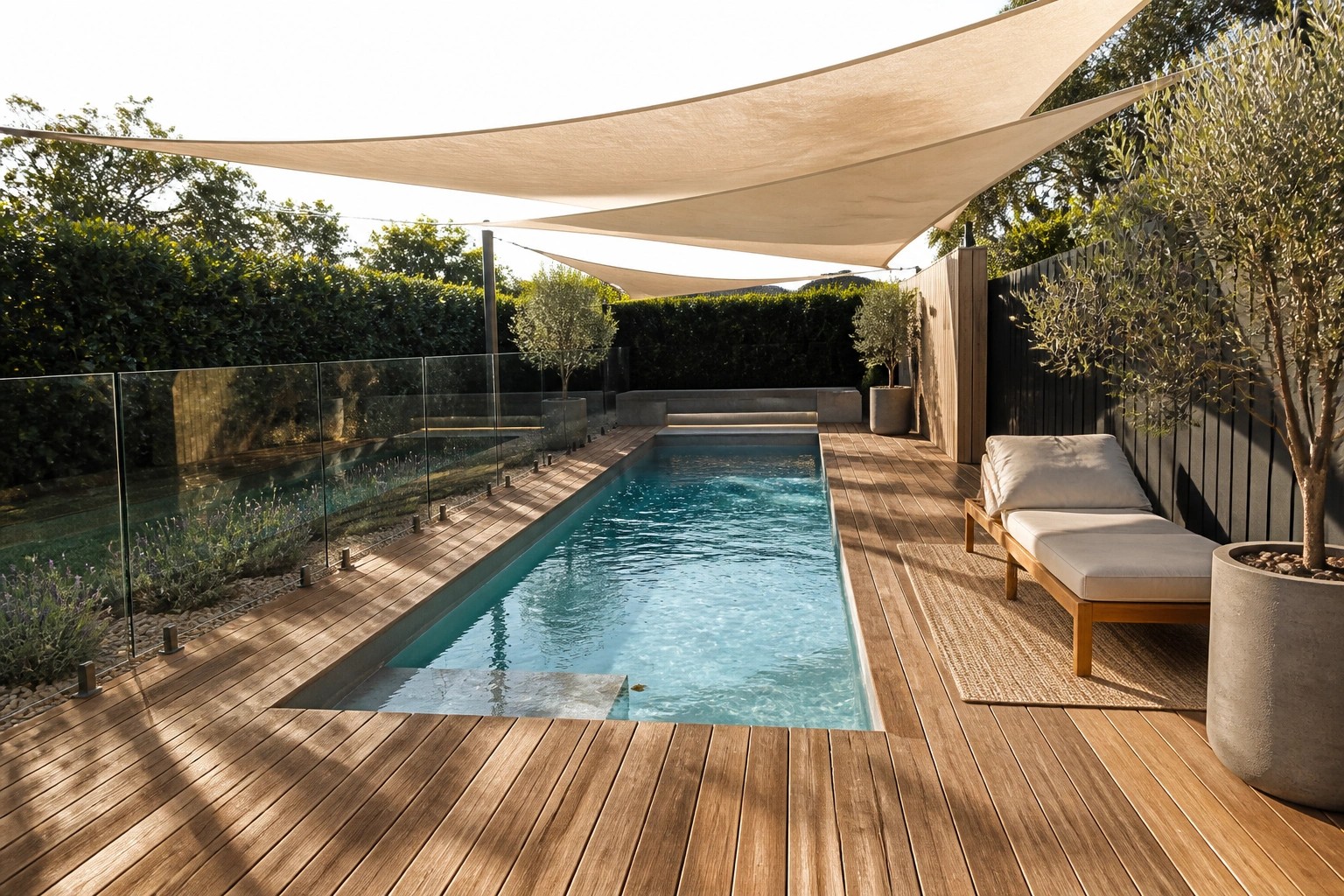
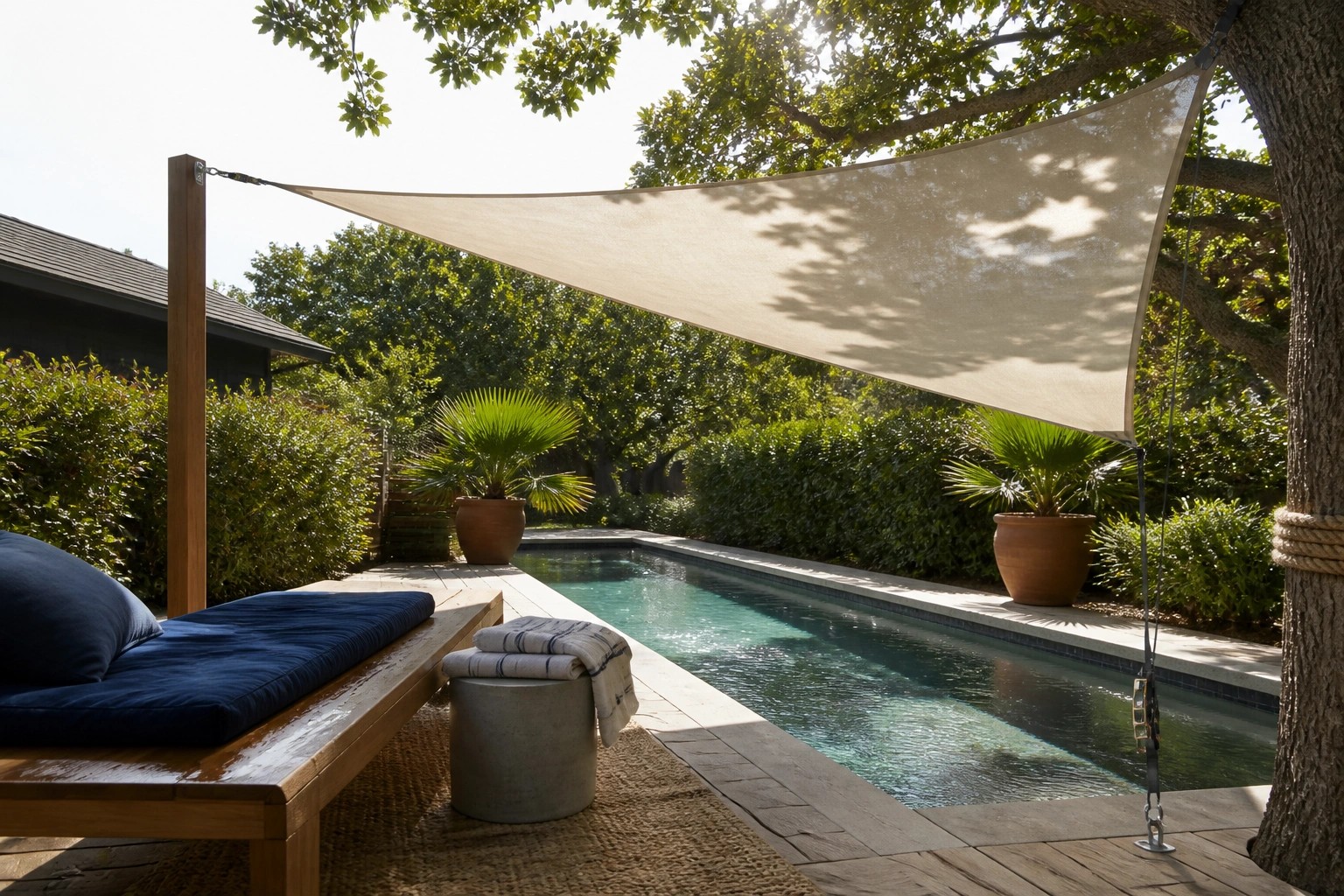
A fabric shade sail gives poolside space real relief from the sun without closing it in. The light material stretches across the area and still lets you enjoy the view around the pool.
This approach works best on open patios where you want coverage but no heavy posts or beams in the way. It suits homes in warm climates and pairs easily with simple seating and hardscape.
Metal Shade Structures For Pool Areas
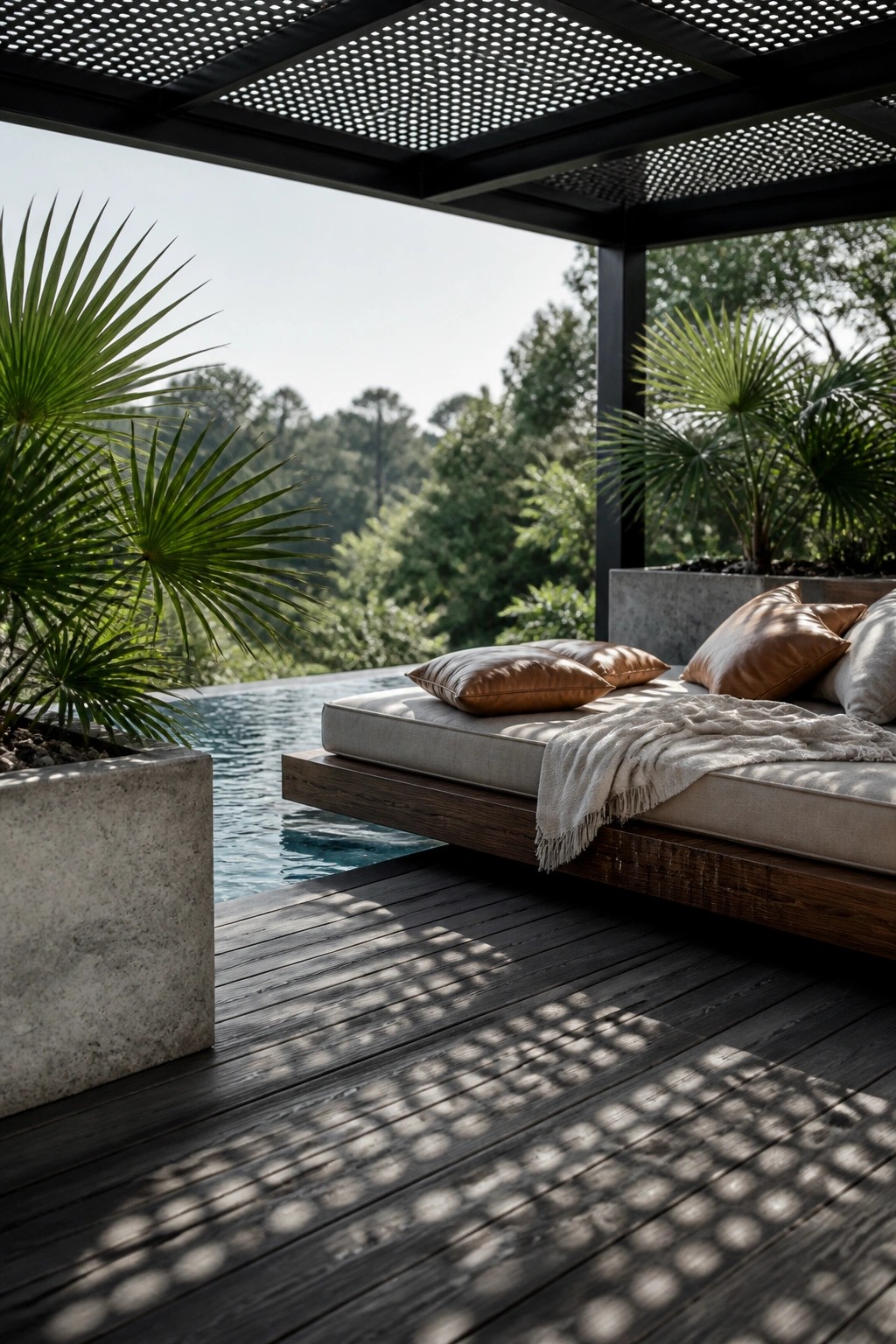
A metal roof with a pattern of small openings gives steady shade over a pool lounge spot without making it feel closed in. The holes let some light through in a soft pattern, which keeps the area cooler during the day while still feeling open to the sky.
This kind of structure works best on decks right next to a pool, especially when you want cover but do not want a solid roof. It pairs well with wood decking and simple seating, and it holds up in most climates with little upkeep.
Wood Posts With Fabric Canopy For Pool Shade
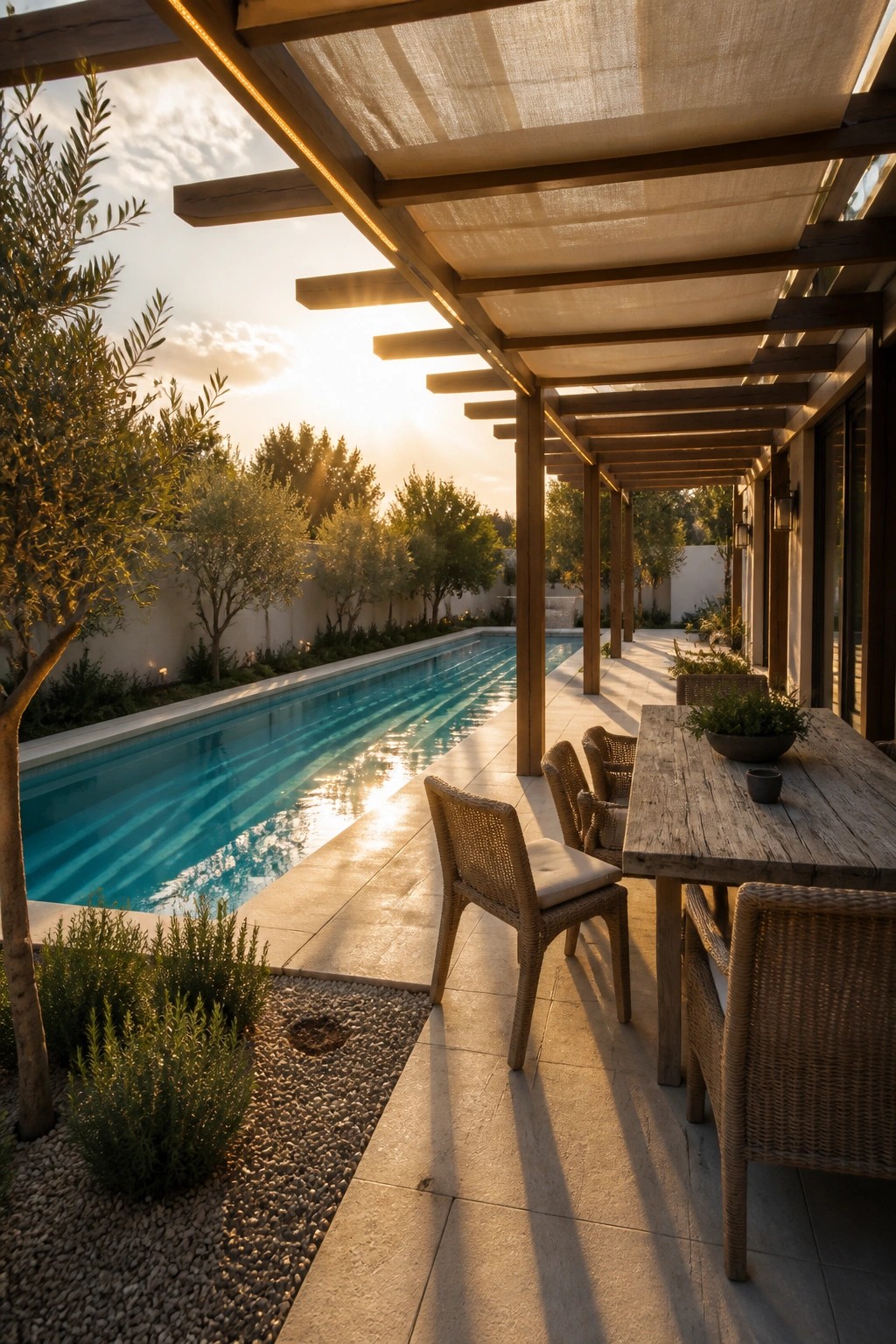
A basic wood frame paired with fabric overhead works well for poolside dining spots. It creates usable shade right next to the water without making the space feel closed in or heavy.
This approach suits homes with long patios or straight pool edges where you want a table and chairs nearby. Keep the wood simple and choose a light fabric that lets some light through so the area stays bright but protected during the day.
Wood Frames And Fabric Curtains For Pool Shade

A basic wooden frame with loose fabric curtains gives you shade that you can adjust as the sun moves. The wood feels sturdy and natural next to water, while the curtains soften the look and let you open or close the space depending on the time of day or how much privacy you want.
This setup works well on smaller pool decks or patios where a full roof would feel too heavy. Keep the wood simple and weathered, and choose curtains that tie back easily so the area stays usable even on cooler days. Just make sure the frame is anchored well if you get strong winds.
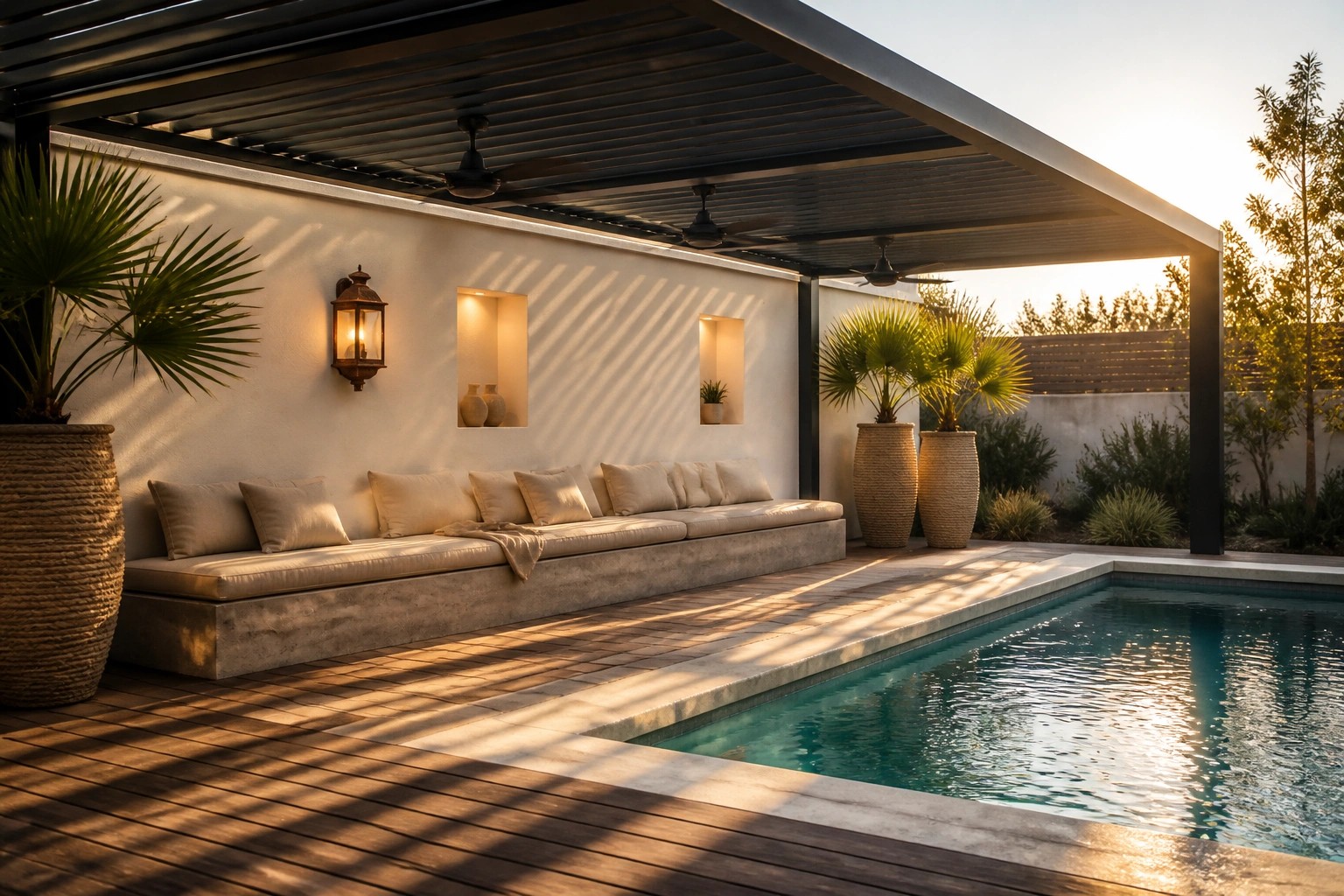
Metal Slatted Pergolas For Pool Shade

A metal slatted pergola gives pool areas steady shade without blocking all the light. The open gaps in the slats cut down on harsh sun while still letting air move freely, which helps keep the space from feeling stuffy on warm days.
This approach fits homes that already lean modern or minimalist. It pairs well with simple hardscaping and works best when the structure is sized to cover the main seating or lounging spots rather than the whole pool.
Arched Wood Frames With Woven Shades
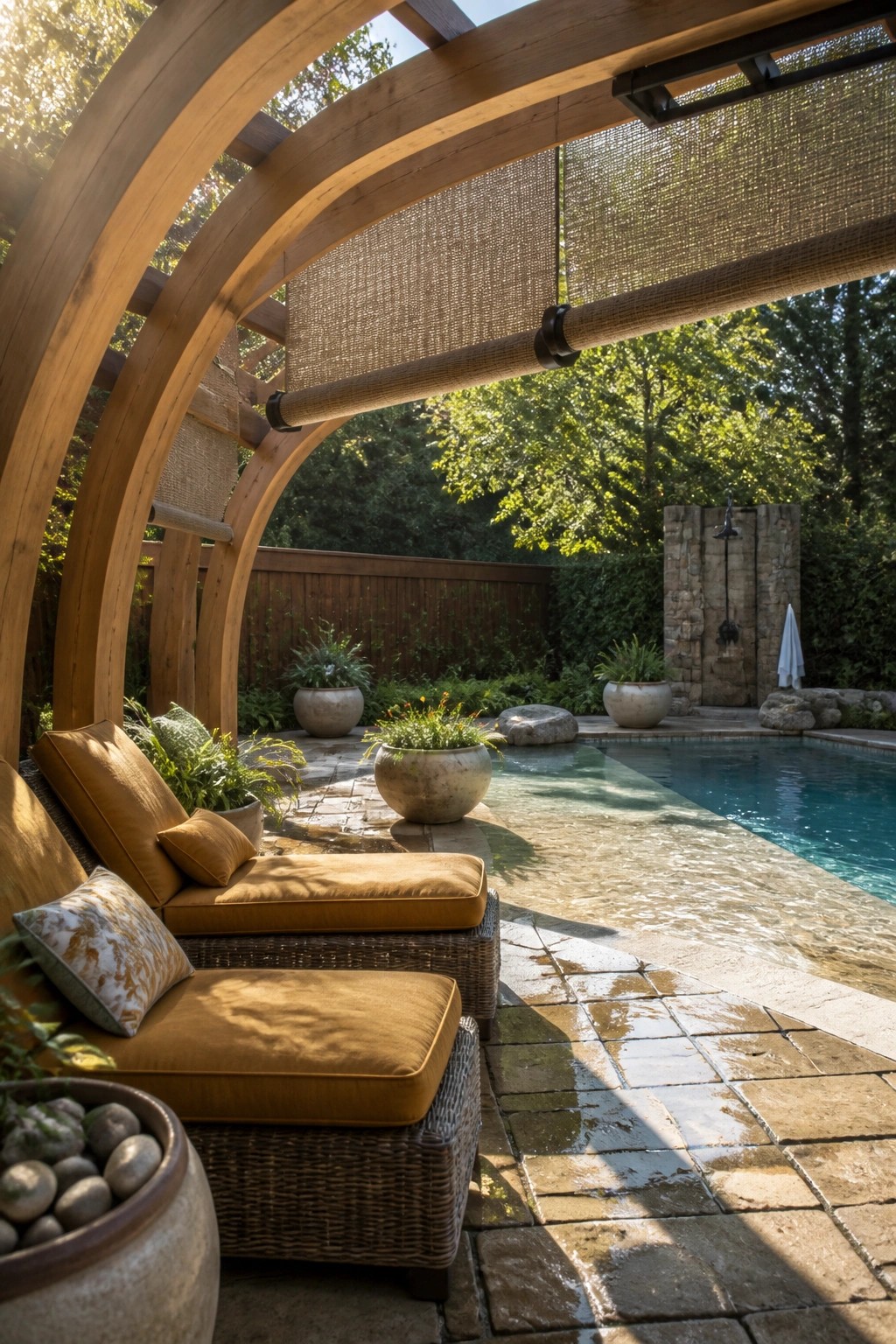
A curved wood frame paired with woven fabric gives shade that feels light instead of heavy. The wood supplies the structure and some permanence while the fabric can be adjusted or left open depending on the time of day. This mix works especially well next to water because it softens the bright reflections without blocking the view completely.
It suits most backyard pools that already have a stone or concrete deck. Keep the wood tone simple so it blends with fencing or decking already in place. Make sure the fabric is outdoor grade and can be taken down for winter if you live in a cold climate.
Wood Frames With Fabric Canopies For Pool Shade
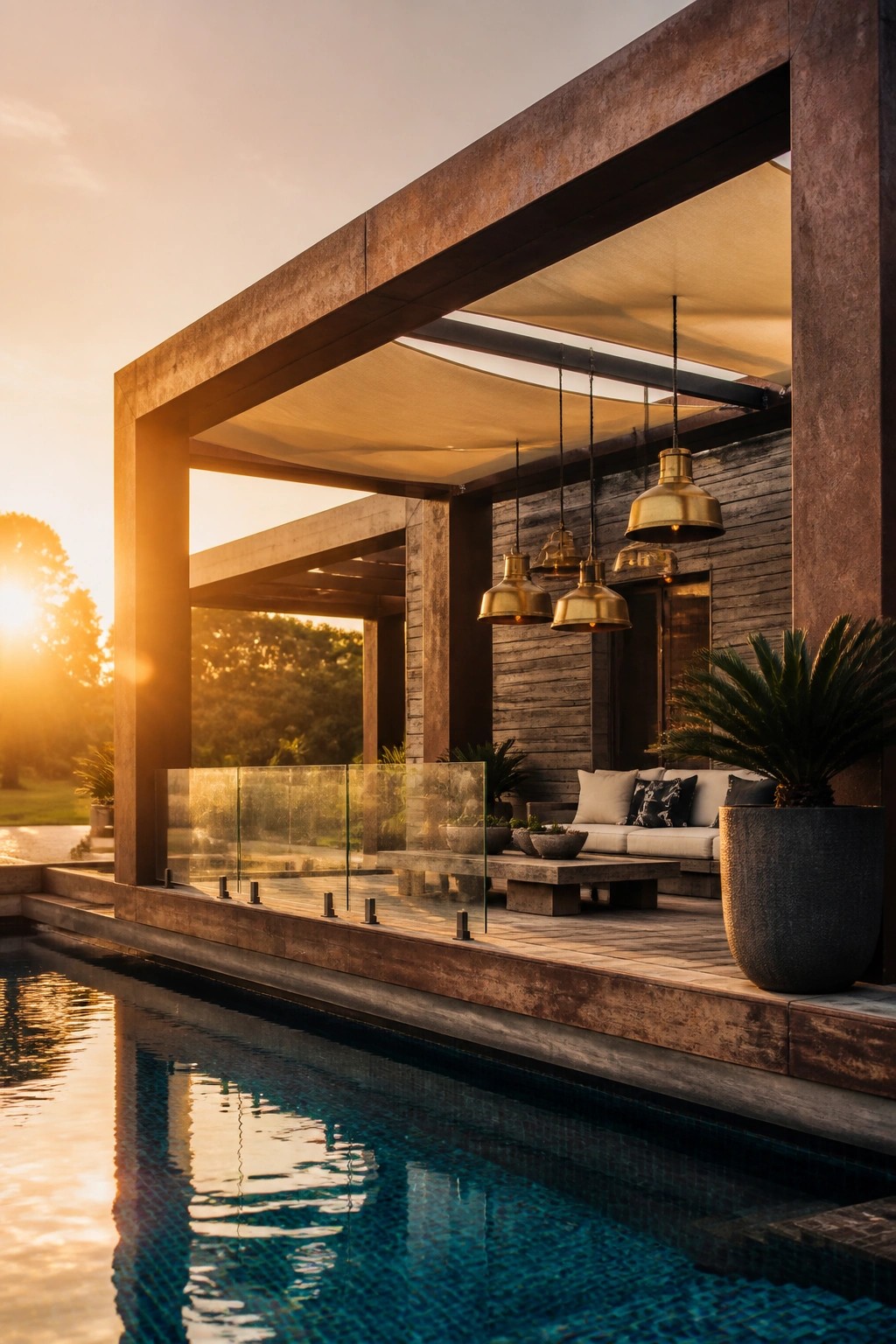
A wood frame with a fabric canopy overhead works well when you want solid shade right next to the pool. The structure feels sturdy but still open, and the fabric keeps the seating area cooler without blocking views of the water.
This approach suits homes with larger pool decks where you need a defined spot for lounging or dining. Anchor the frame properly and choose a light fabric so it does not feel too heavy in the space.
Fabric Shade Sails Over the Pool

Fabric shade sails give pool areas solid coverage while keeping the space open and bright. The material blocks most of the sun without turning the deck dark, and the colors add a simple pop that feels easy rather than busy.
They work best when hung at different heights so the shade overlaps in a few spots. This setup suits homes that already have open pool decks and metal posts ready for anchoring. Just make sure the fabric is rated for strong sun so it holds up over time.
Wooden Pergola With Fabric Shade Panels

A wooden pergola fitted with fabric panels overhead gives steady shade while still letting some light through. This setup works especially well over a long pool because it covers the water without making the space feel closed in. The fabric diffuses sunlight and keeps the area cooler during the day.
This idea fits homes with modest backyards or narrow side yards where a full roof would feel too heavy. Use a simple wood frame and choose a light-colored fabric that can be swapped out when it fades. Keep the sides open so air moves freely and the pool stays the main focus.
Build a Poolside Pavilion for Extra Shade
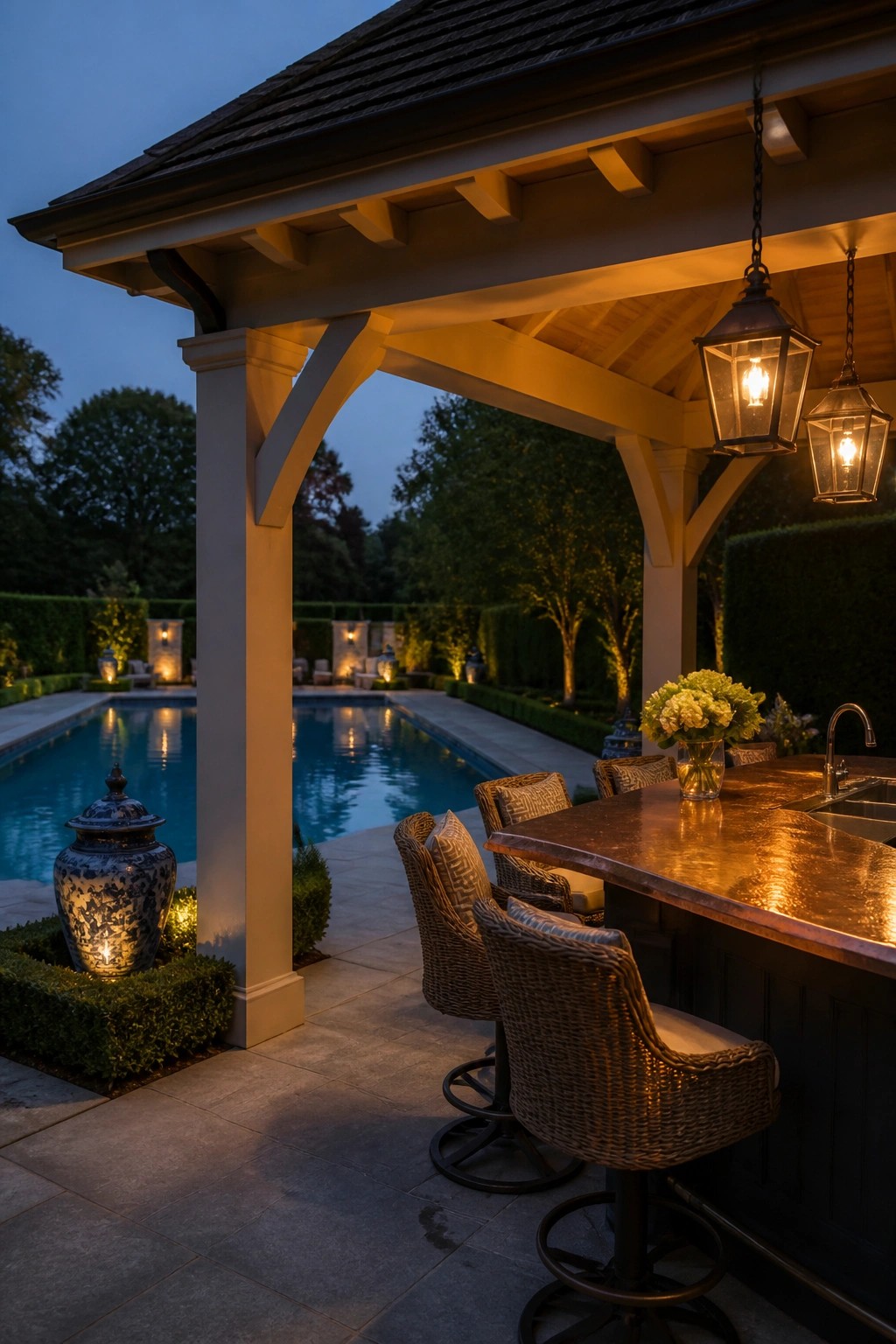
A wooden pavilion gives you a solid shaded spot right next to the pool without blocking the view of the water. It turns an open patio into a usable living area that stays comfortable even in full sun or light rain.
Place the structure so the bar faces the pool and the roof overhang covers the seating. This setup works well on medium to large yards where you want a permanent outdoor entertaining zone that feels connected to the house.
Fabric Shade Canopies on Metal Frames
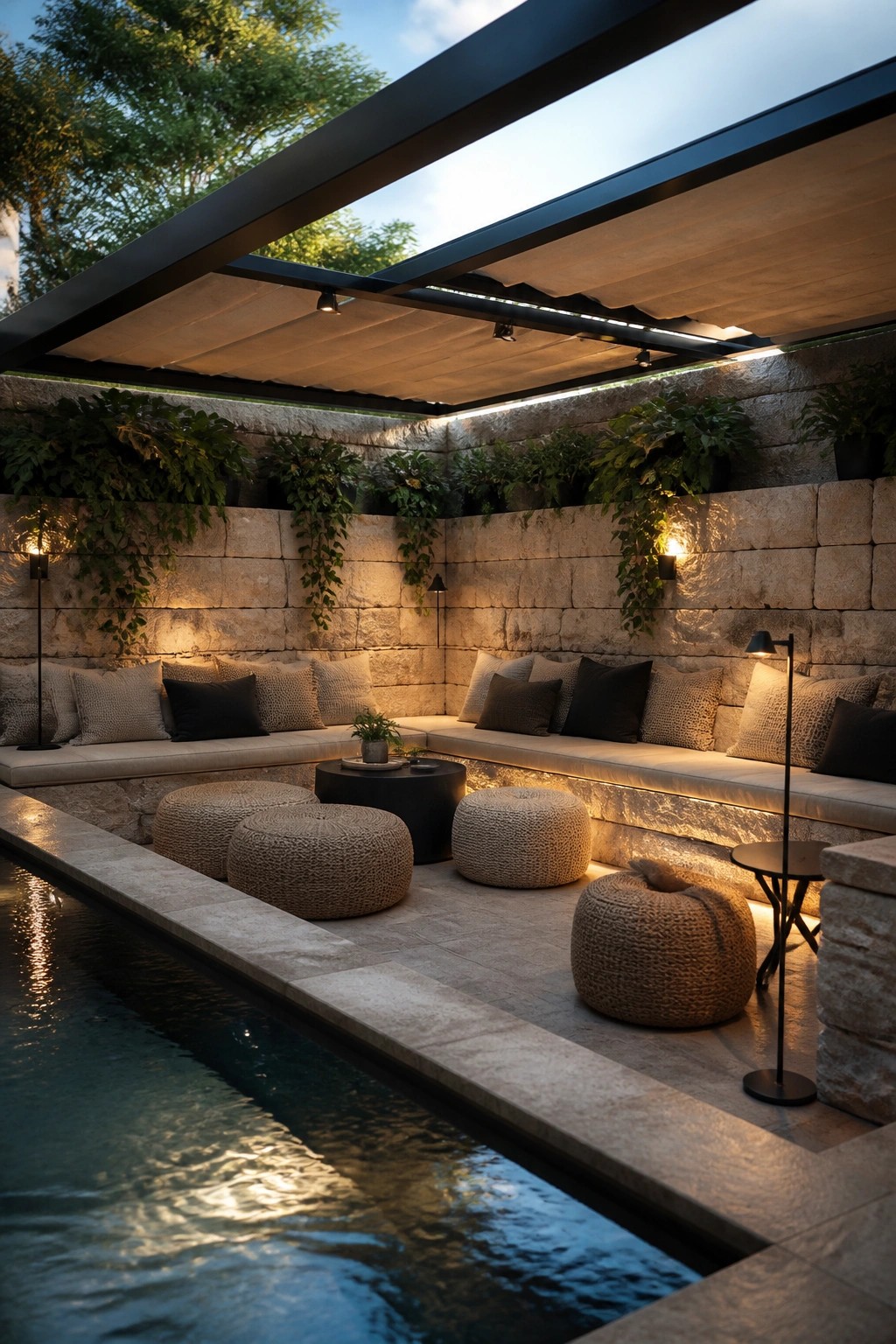
A simple fabric shade stretched across metal beams works well over pool seating because it blocks sun without closing off the space. The structure stays light and lets air move through while giving people a cooler spot to sit right by the water.
This setup fits homes with existing stone or concrete walls around the pool because the metal frame can attach to those surfaces without much extra building. Keep the fabric color neutral so it blends with the surroundings, and add a few low lights along the beams if you want to use the area after dark.
Bamboo Thatch Roofs For Pool Shade

A thatched bamboo roof gives solid shade right over a pool deck while keeping the whole area feeling open. The natural material works well in hot weather because it blocks sun but still lets air move through. Many homeowners choose it when they want something that blends into the garden instead of standing out like a solid metal frame.
This kind of structure suits homes with a tropical or relaxed outdoor style. Place a simple lounge piece underneath and keep nearby plants low so the space does not feel crowded. Treated bamboo holds up better near water, so check the finish before you build.
Metal Frames With Fabric Shades Over Built-In Seating
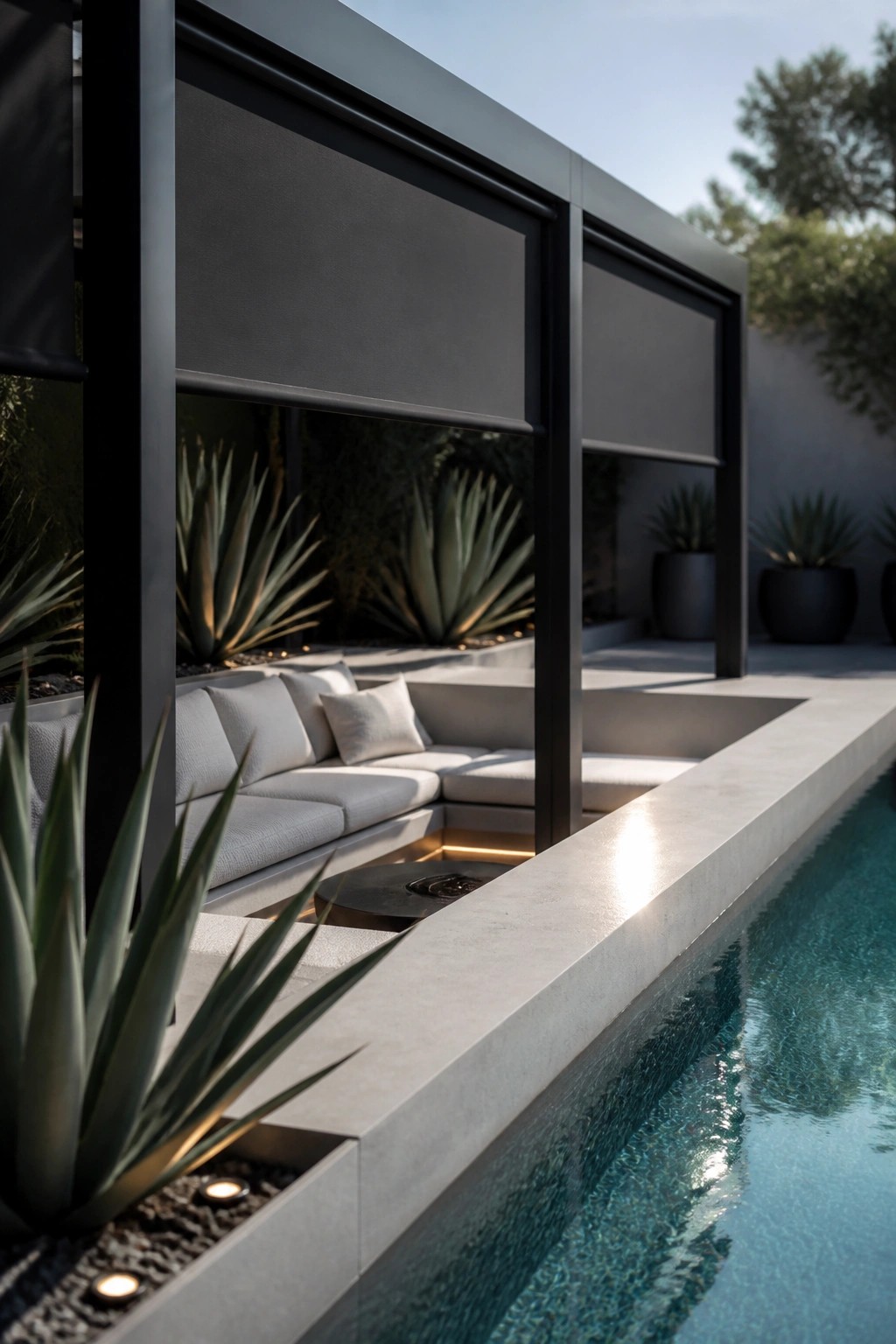
A simple metal frame with fabric roller shades can cover a built-in seating area right next to the pool without making the space feel boxed in. The structure gives steady shade during the day while still letting in light and keeping the connection to the water open.
This approach works well on modern homes where the pool deck stays fairly open. Keep the frame height in check so the seating below does not feel overshadowed, and choose a fabric that rolls up cleanly when shade is not needed.
Metal Pergola With Climbing Vines

A metal pergola with vines growing over it makes a simple shade solution for a pool area. The frame gives structure while the vines fill in and create a natural layer of cover that filters sunlight without making the space feel closed in.
This approach works best in warm climates where you want some relief from the sun but still like an open layout. Keep the vines trimmed so they do not get too heavy on the metal, and choose a sturdy frame that can handle the added weight over time.
Curved Wood Shade Structures For Pools
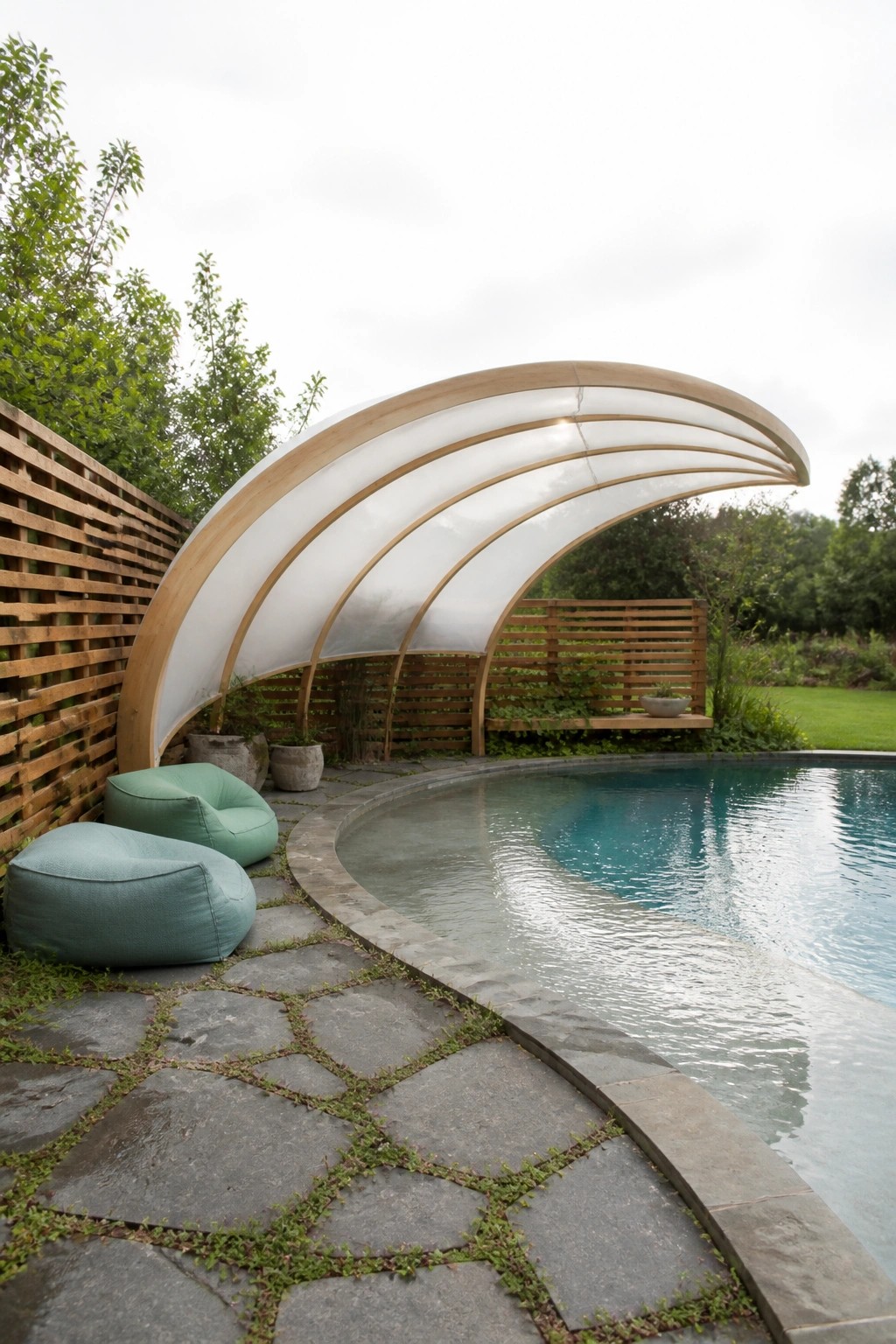
A curved wood frame with a light covering gives pool areas shade without blocking the view or making the space feel closed in. The shape keeps rain and sun off the seating while still letting in plenty of light, and the wood adds a natural look that fits many backyard styles.
This works best on larger patios or pool decks where you want a single structure to cover both the water edge and a lounge spot. Keep the curve gentle so it does not feel heavy, and use a translucent panel or fabric that lets some light through. Stone paving around the base helps the whole area feel grounded and easy to keep clean.
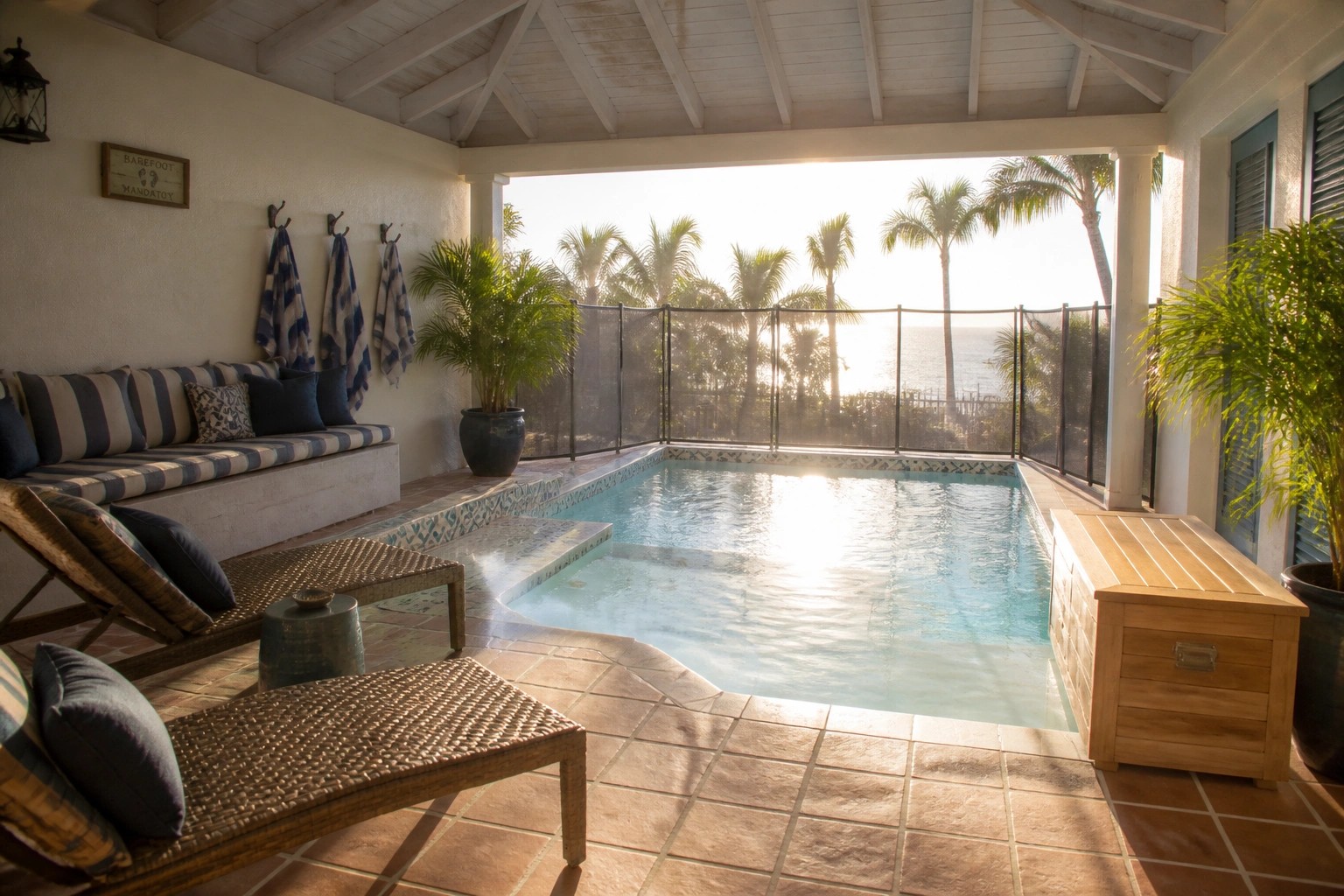
Shade Structures Built Right At The Pool Edge
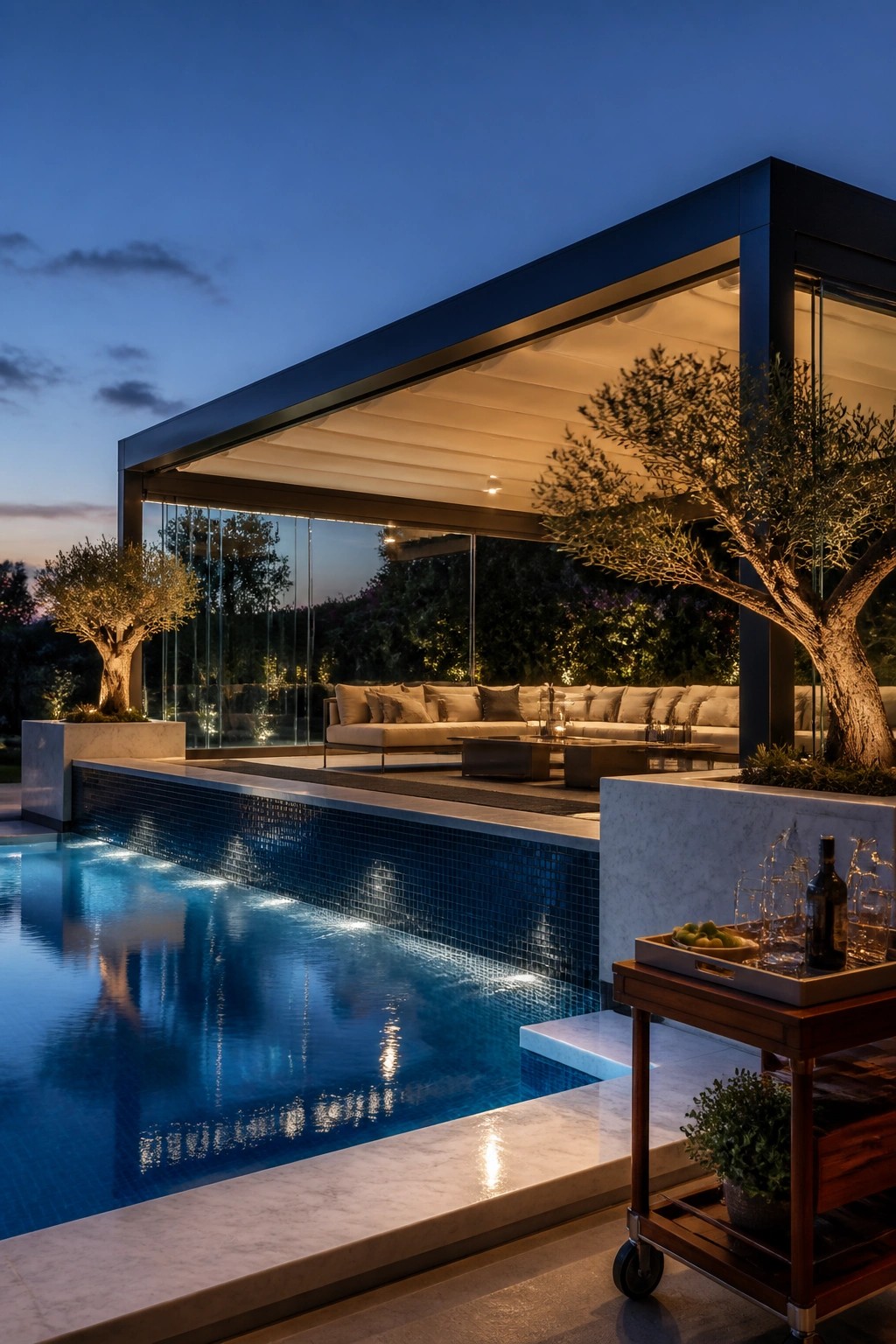
A covered seating area right beside the pool lets people stay outside longer without moving back and forth for shade. The metal frame here holds a solid overhead cover that lines up with the pool edge, so the lounge feels like part of the water zone rather than something added later.
This approach works best on modern homes with clean roof lines. Keep the structure low enough to feel connected to the pool but high enough for comfortable movement underneath. Make sure the posts sit outside the main walking path so they do not get in the way during daily use.
Fabric Shade Sails Over Pools
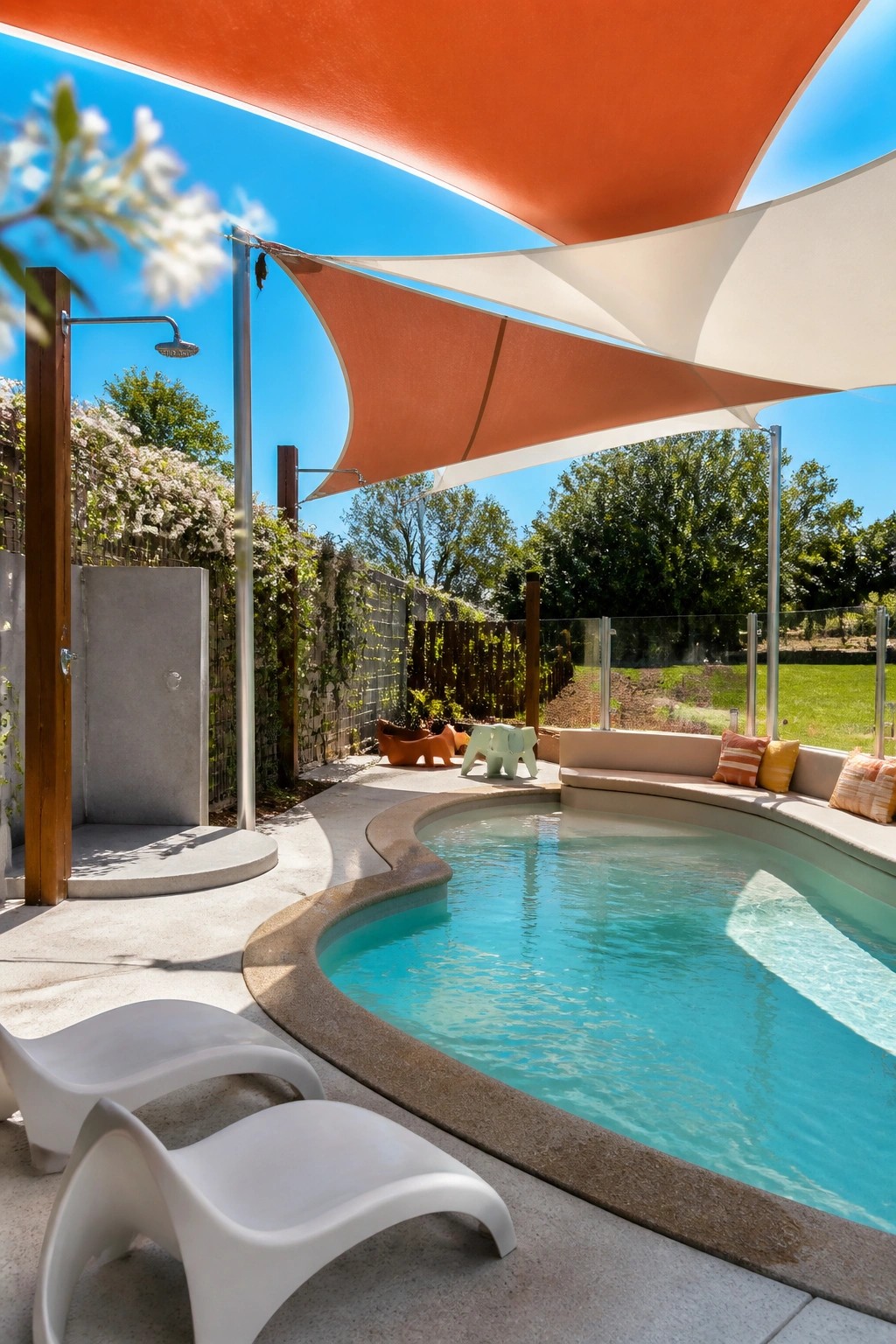
Fabric shade sails give pools a simple way to add coverage without building a full roof. They stretch across open spaces and let air move through, which helps keep the area from feeling too hot or closed in.
These sails work best on pool decks that already have a few solid posts or poles in place. Homeowners can pick neutral tones or add a bit of color, and the fabric can be taken down in winter if needed. Just check that the anchors are strong enough for local wind.
Wood And Fabric Shade Structures
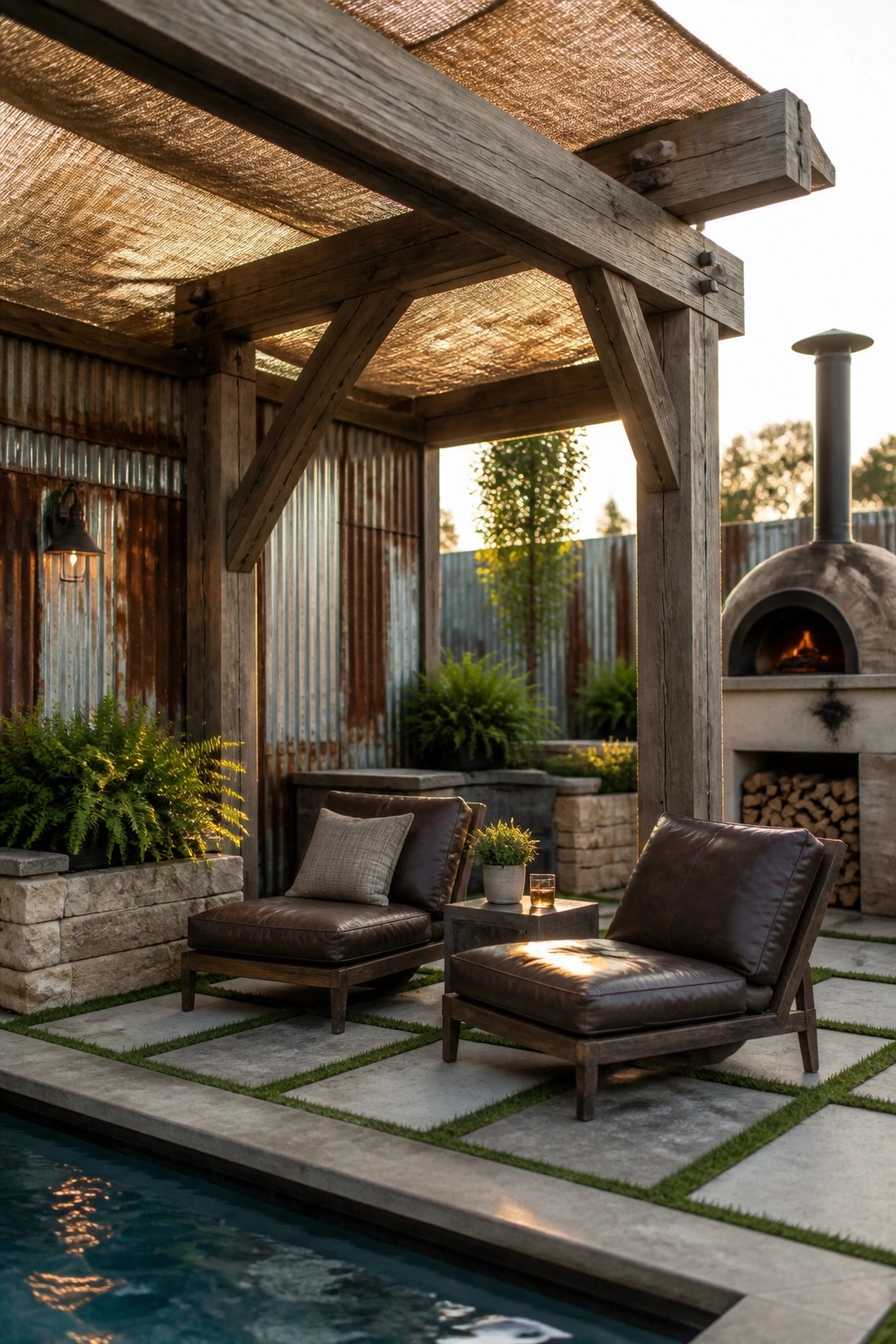
A wood frame with fabric stretched across the top gives steady shade without blocking all the light. It works especially well next to a pool because the fabric keeps the seating area cooler while the wood frame feels sturdy and blends with outdoor materials.
This setup suits homes that already have wood decking or fencing. Keep the fabric tensioned so it does not sag after rain, and choose a weave that lets some breeze through. The simple combination holds up in most climates and needs little upkeep beyond occasional cleaning.
Metal Frame Shade Roofs For Pool Decks

A metal frame with translucent panels overhead gives solid shade without turning the pool deck into a dark cave. The structure blocks direct sun during peak hours but still lets light through, so the area stays usable even on bright days.
This works best on modern homes or clean-lined backyards where the frame can match other black or dark metal details. Keep the furniture simple underneath and make sure the roof sits high enough for air to move through. Watch the angle of the panels if your pool faces west so the shade actually covers the lounging spots when you need it most.
Curved Canopies With Built-In Seating
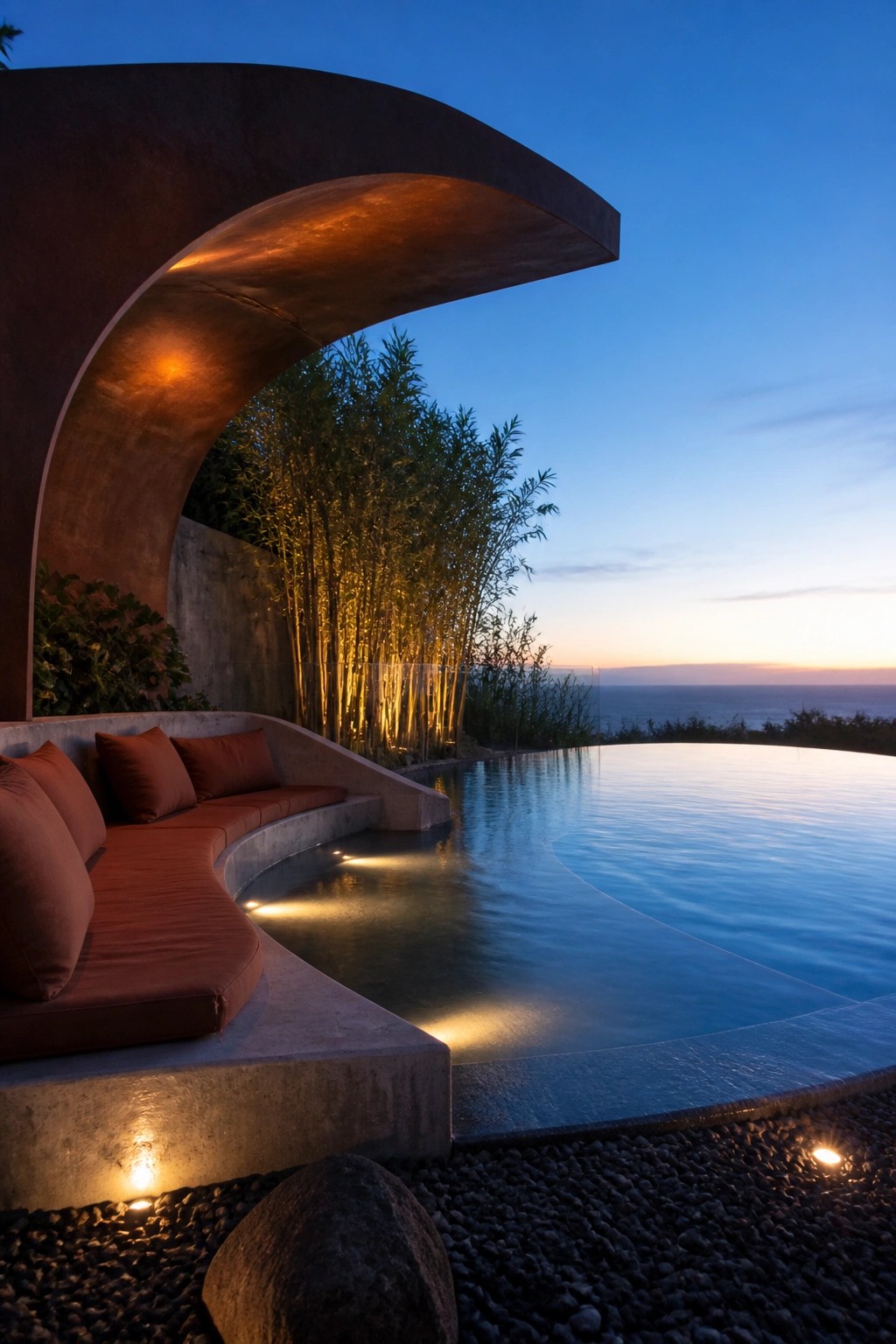
A curved overhead structure can give real shade while also creating a place to sit right at the edge of the pool. The shape helps the canopy feel like part of the space instead of something added on later.
This works best on larger lots where the curve can follow the pool line without crowding the water. Make sure the material is sturdy enough for your climate and that the seating height feels comfortable for everyday use.
Metal Louvered Roofs Over Pools

A metal louvered roof gives steady shade over a pool without making the space feel closed in. The slats let some light through while cutting down on direct sun, which keeps the water and deck cooler during the day.
This works best on long narrow pools where you want coverage along most of the length. Check the angle of your sun and the spacing of the slats before you build so the shade lands where you actually sit and swim.
Frequently Asked Questions
Q: How do I know if fabric will last through strong summer winds?
A: Choose a heavy-duty shade cloth rated for outdoor use. Secure it well at all corners so gusts do not rip it loose. That setup holds up fine for most backyard pools.
Q: Is it worth mixing wood and metal in one structure?
A: Wood gives a warm look while metal adds strength at key spots. Bolt them together with proper brackets and the combo stays solid.
Q: What size shade works best without making the pool feel closed in?
A: Cover just the seating area and a bit of the water edge. Full coverage can turn the space dark and stuffy. Start smaller and add more if you need it later.