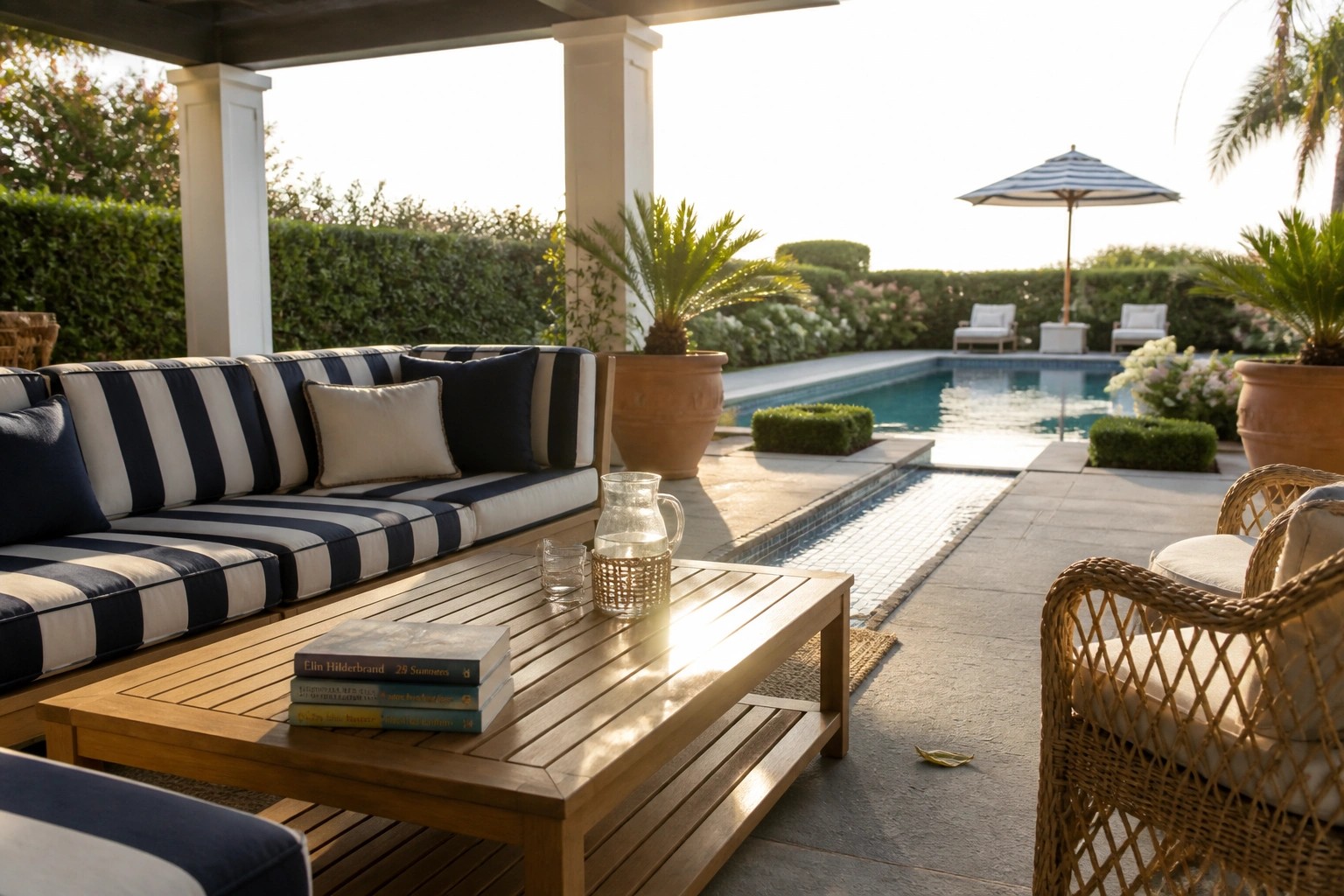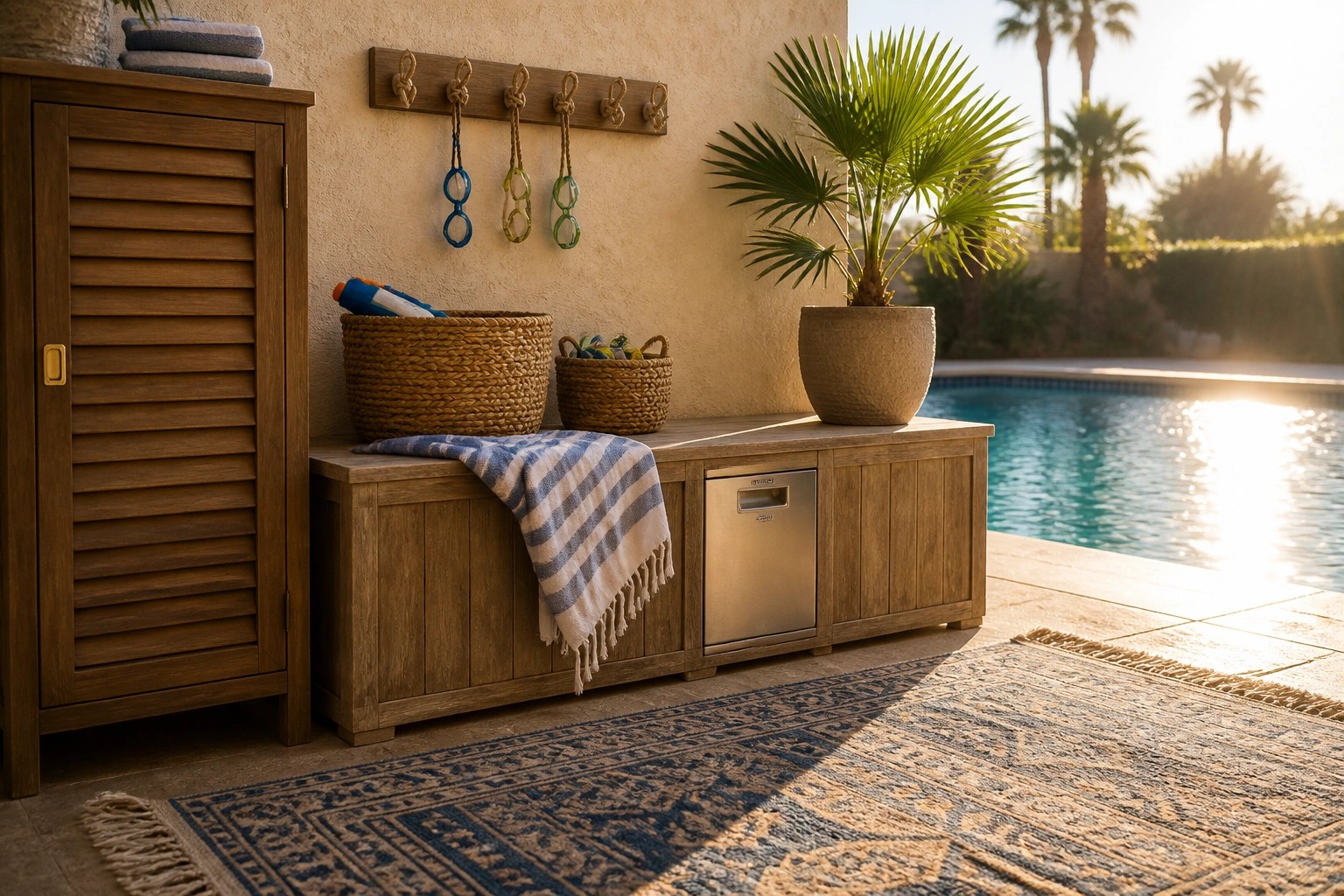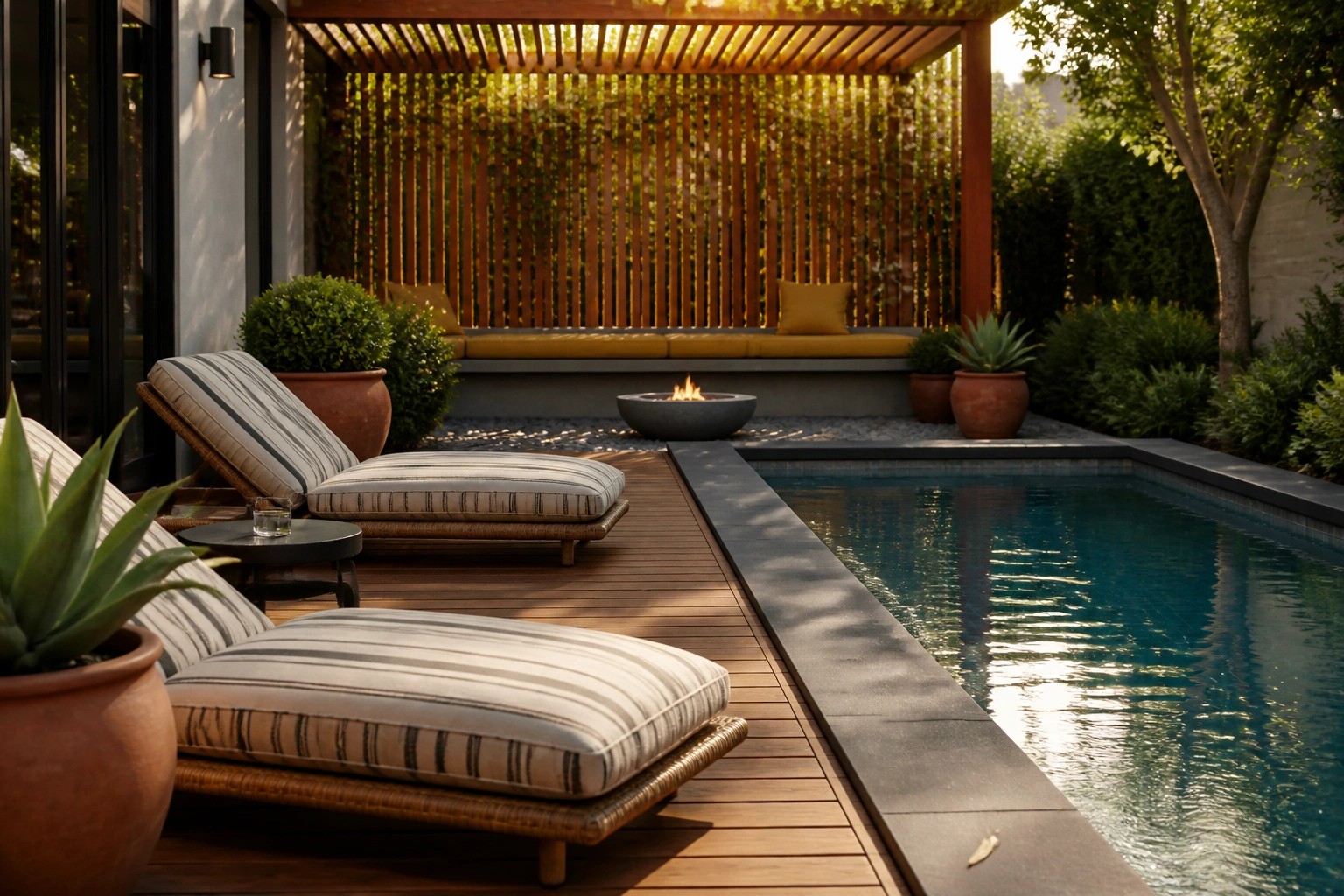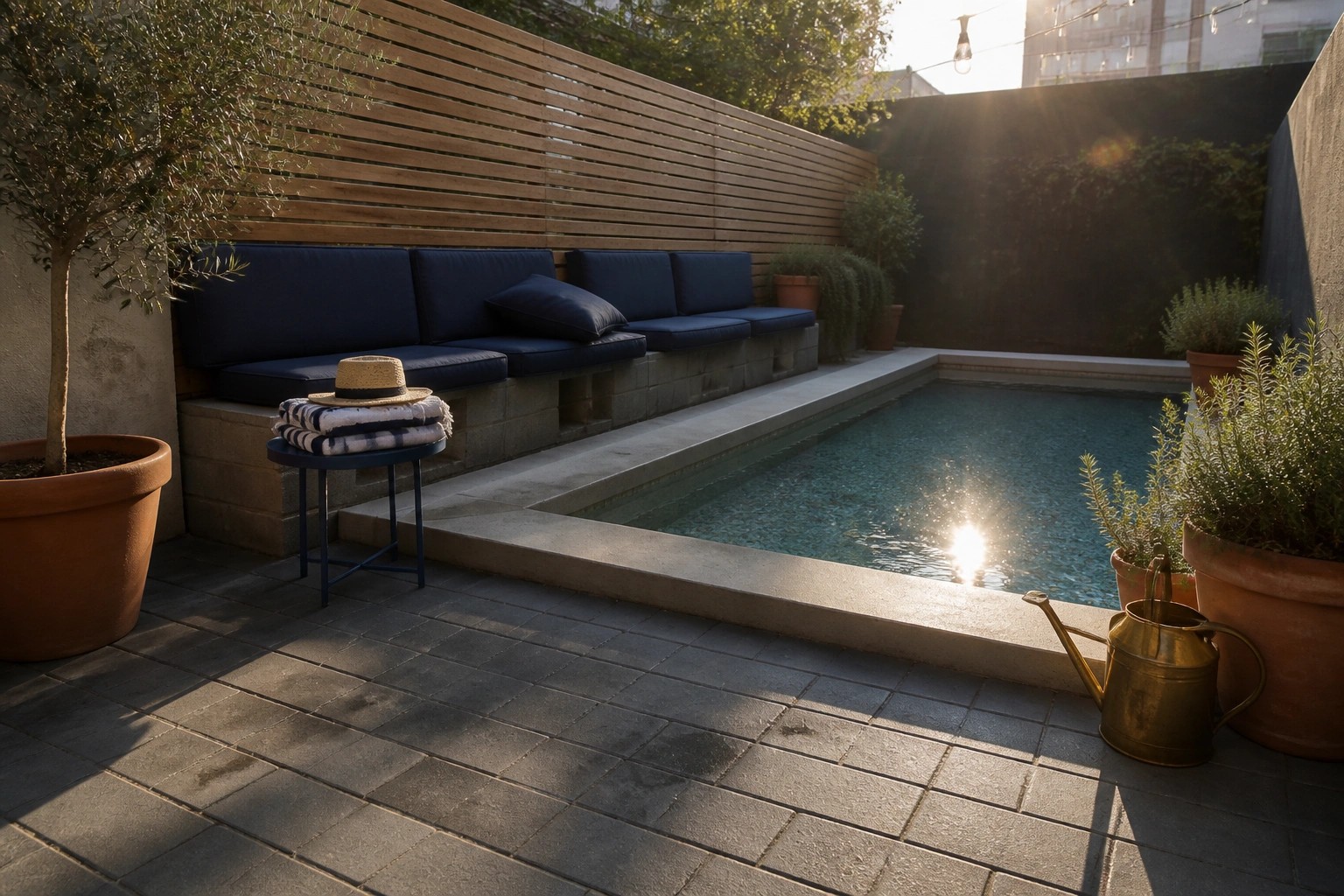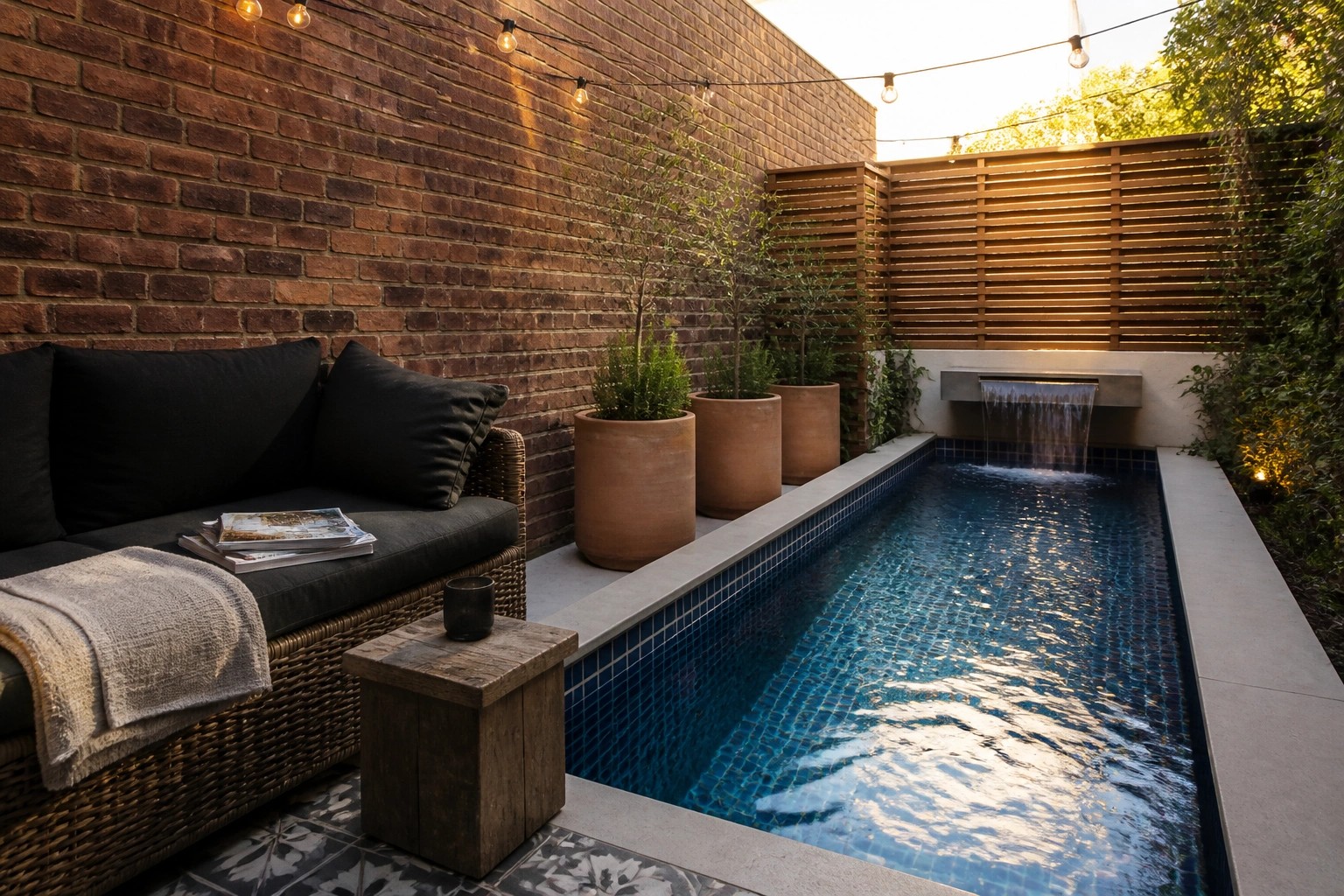
When I look at pool patios around different homes the ones that hold together tend to have paving that sets clear boundaries without crowding the space.
It is easy to choose materials that photograph well yet feel off once people start using the area every day.
I tried a couple of basic layouts in my own yard and saw how the right paver placement can keep the surface practical while still guiding the eye toward the water.
Some patterns simply work better than others once you live with them.
The ideas worth keeping are the ones that treat the patio as an extension of daily routines rather than just a surface to cover.
Large Stone Pavers For Pool Patios
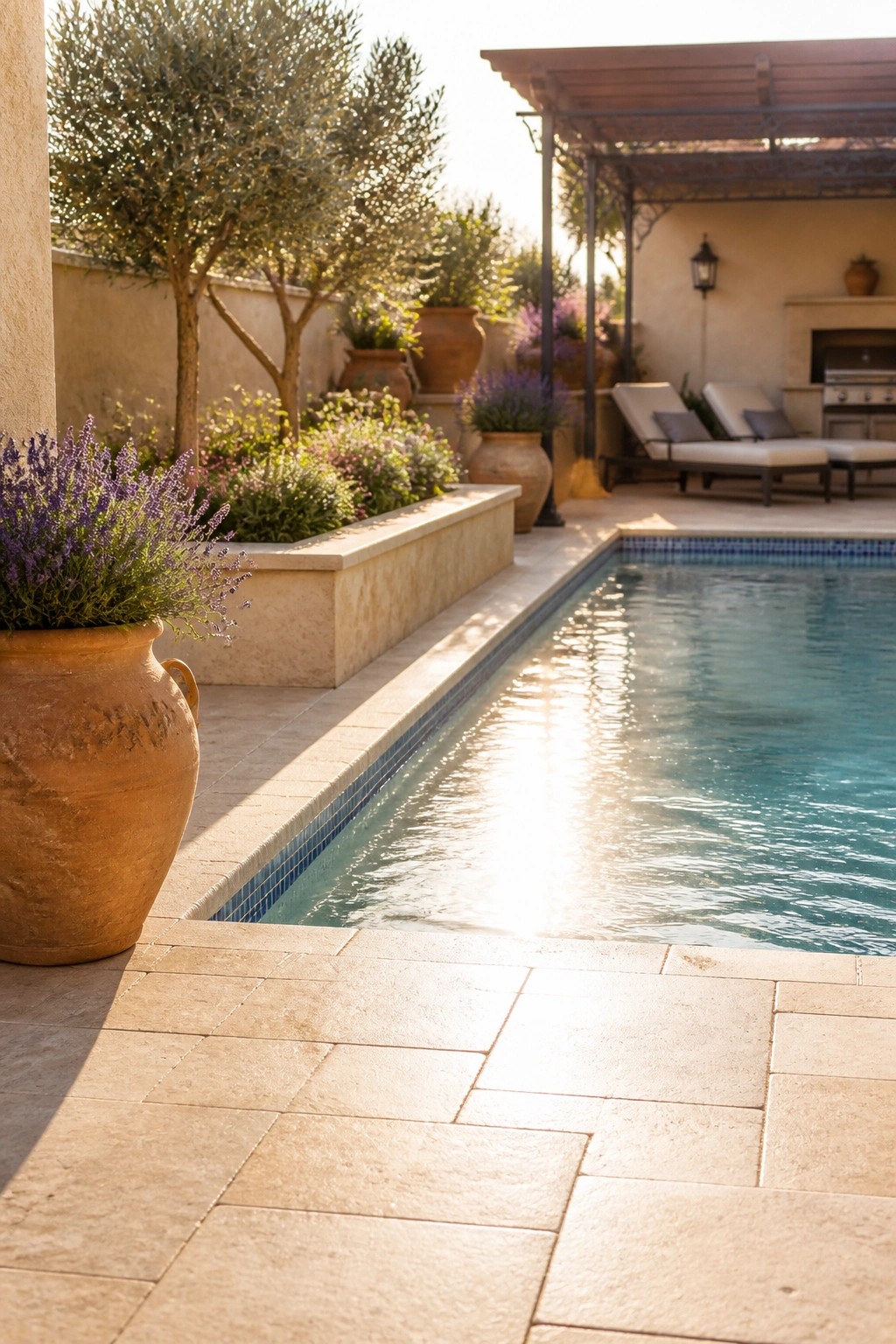
Large pavers help define the pool area by creating fewer lines and a more open surface. The light color also reflects heat, which keeps the space from feeling too hot underfoot during the day.
This approach works best on homes where the pool sits close to the house or main seating areas. It gives the patio a simple, lasting look that pairs easily with most landscaping styles and does not require constant upkeep.
Stone Pavers With Grass Joints
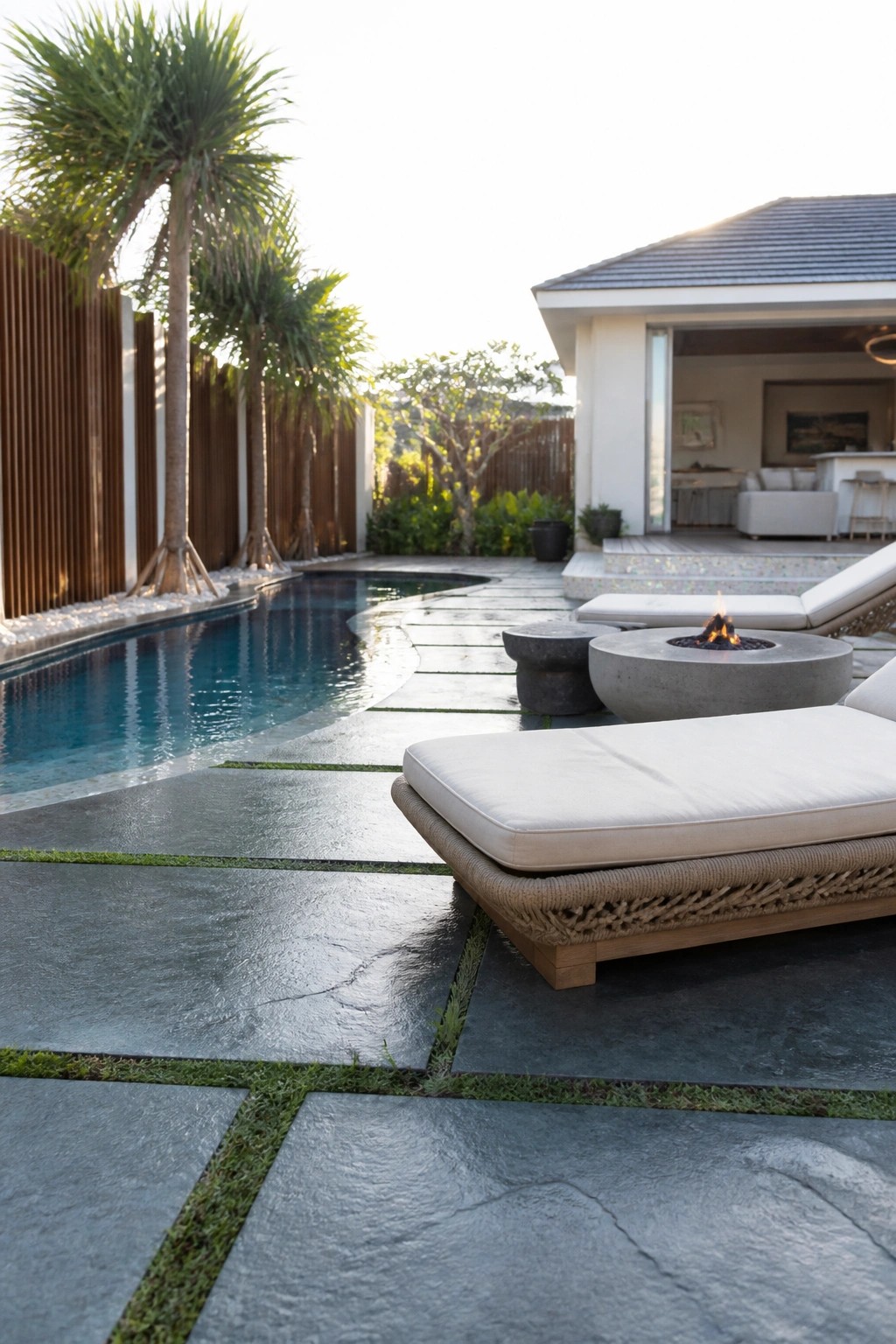
Large stone pavers set with narrow strips of grass between them give a pool patio a defined edge while still feeling open and natural. The grass lines help break up the hard surface and keep the area from looking like one solid slab.
This layout works best on flat sites where the pavers can follow the pool shape without too many cuts. It suits homes that already have some lawn nearby since the grass needs regular care to stay looking neat.
Herringbone Pavers for a Defined Pool Patio
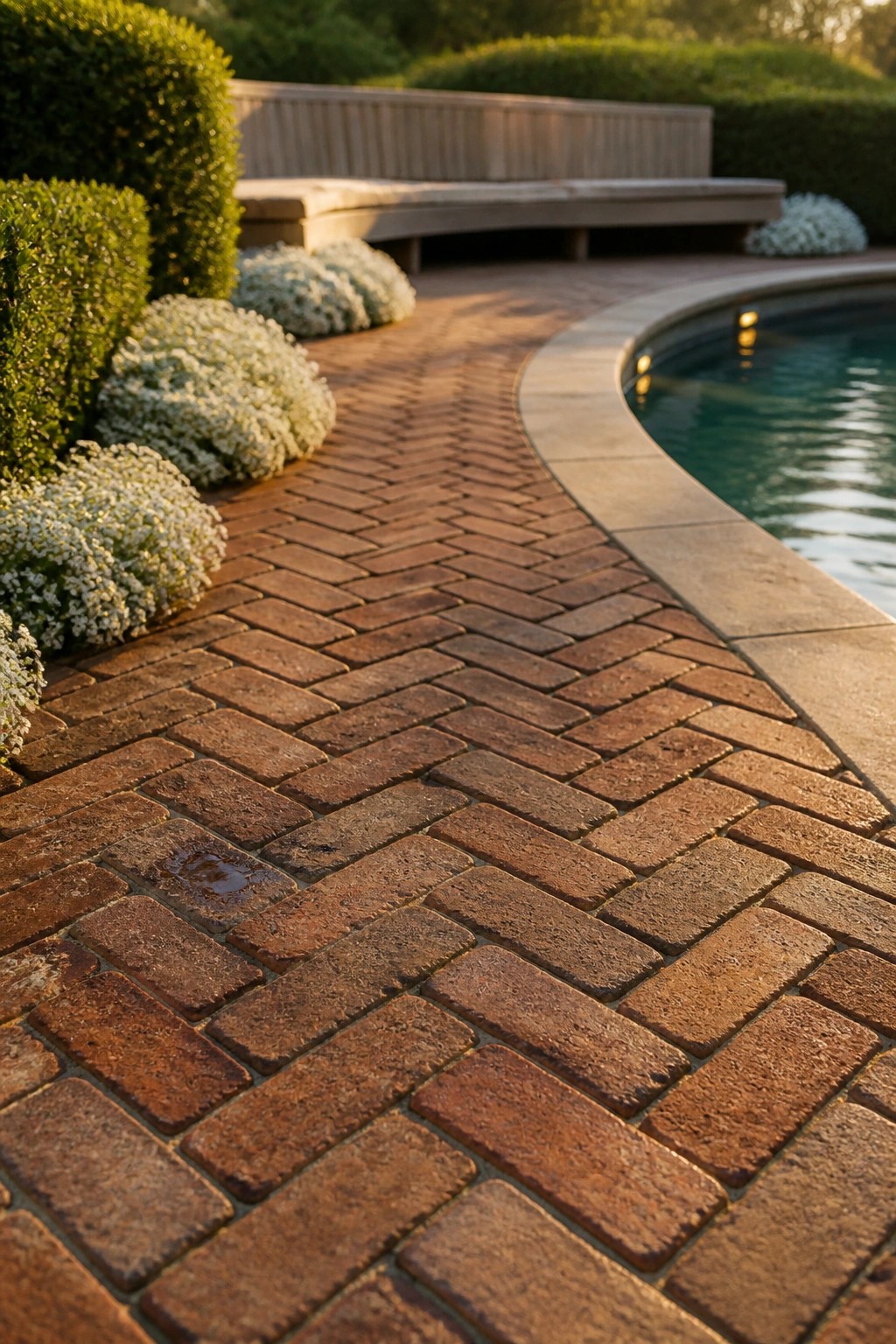
A herringbone layout in brick pavers gives the area right around a pool a clear edge without needing extra borders or walls. The pattern holds together well under foot traffic and stands out against the water and planting beds. It works especially well on curved pool decks because the angled bricks follow the shape without looking forced.
This approach suits homes where the patio gets regular use and needs to feel finished rather than just open decking. Keep the same brick and pattern on connecting paths so the whole space reads as one. Avoid mixing too many paver colors or it can start to feel busy.
Large Neutral Pavers For Pool Patios
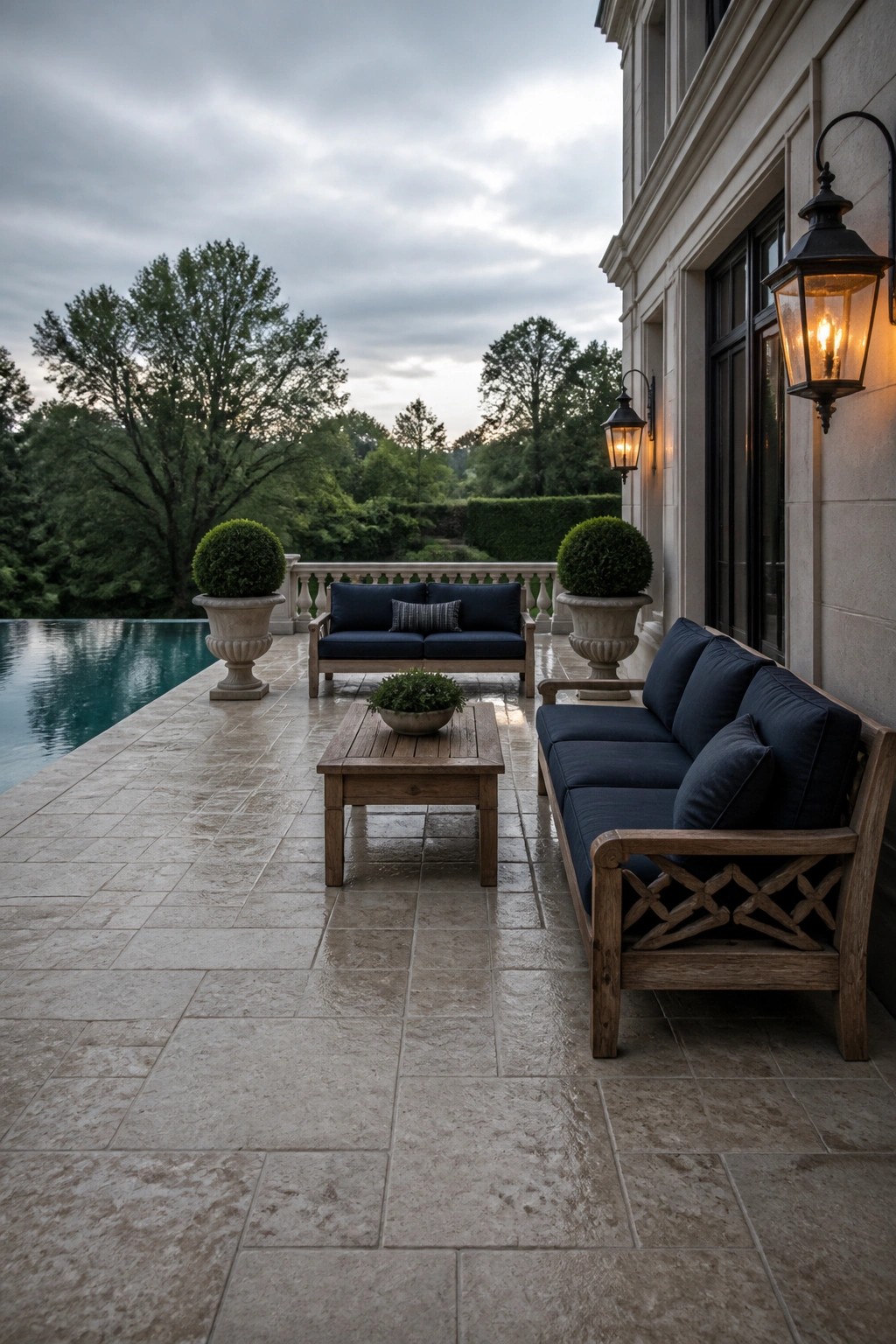
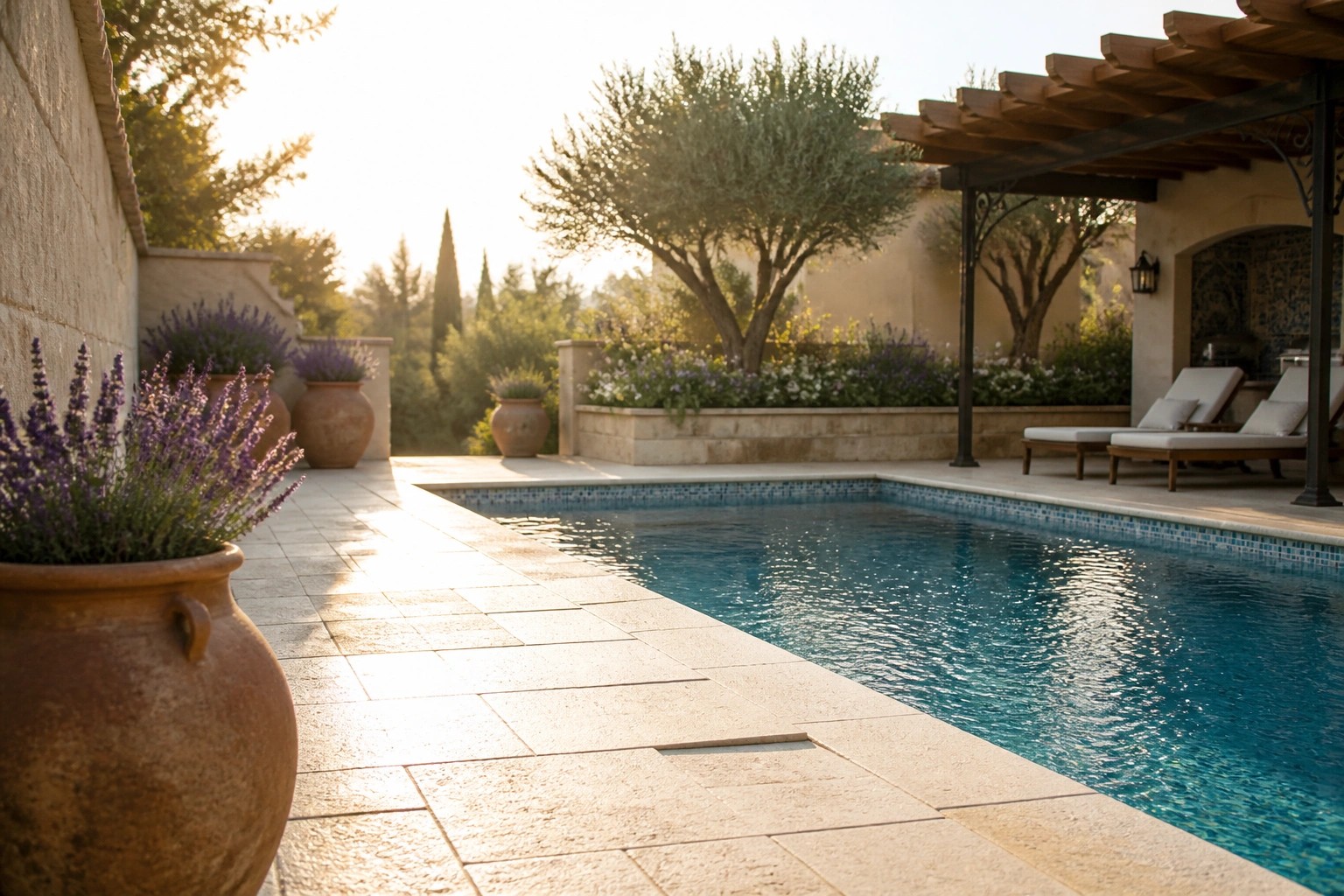
Large pavers give the patio a clean, open look that works well next to water. They cut down on the number of grout lines, so the surface feels more like one solid area instead of a patchwork.
This choice fits homes with traditional details and enough room for seating zones. Keep the color light and matte so the pavers stay comfortable underfoot and do not show every bit of dirt.
Stone Pavers That Follow the Pool Curve
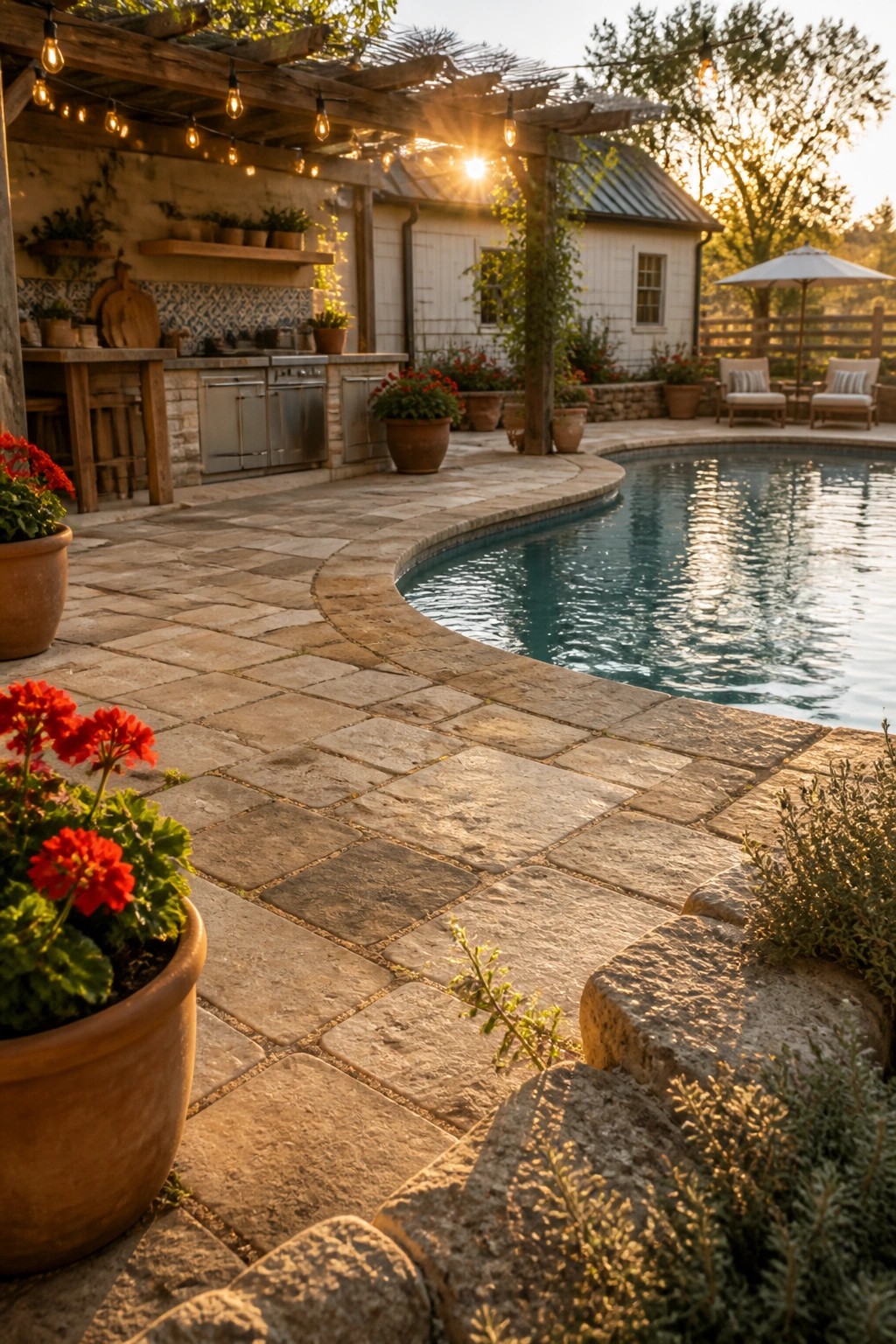
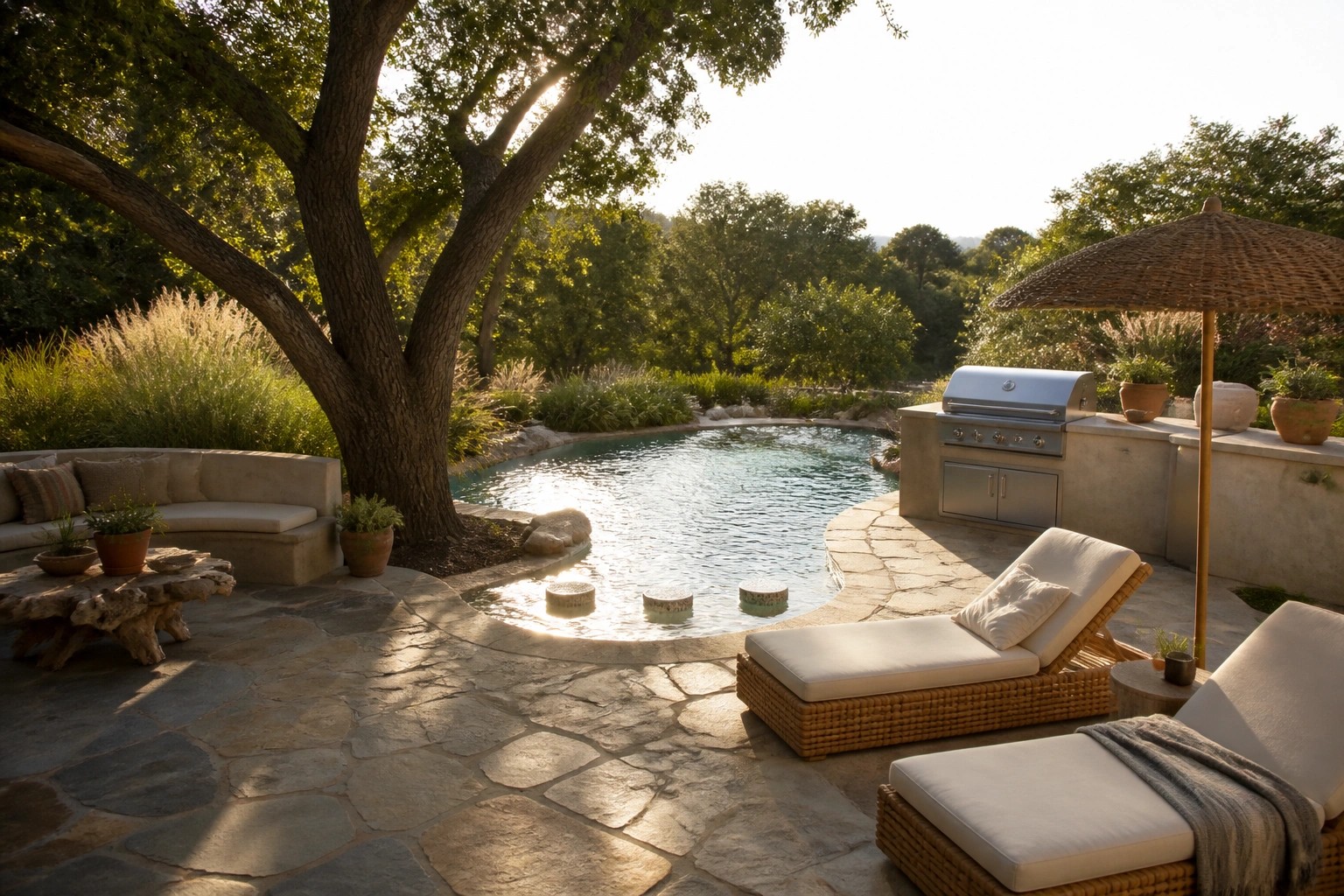
Natural stone pavers work well around pools because the irregular shapes let the patio edge follow the water line without looking forced. The slight color variations in the stone also help the hard surface feel a little softer next to all that water.
This layout suits homes that already have a casual garden or older architecture. Just keep the joints tight enough to avoid tripping hazards and choose a stone that can handle constant moisture.
Large Pavers With Pebble Joints
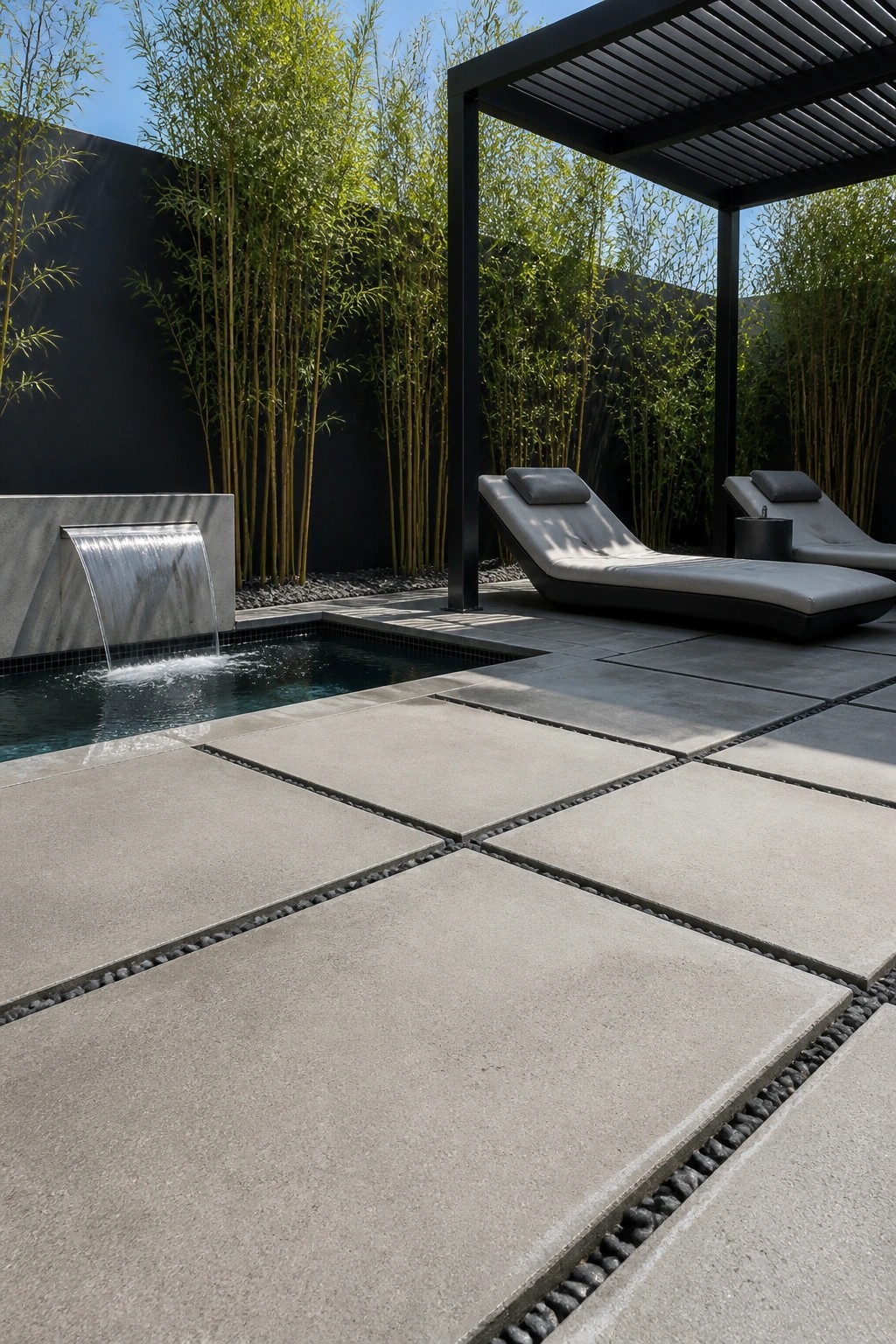
Large pavers help a pool patio feel more open because they cut down on the number of seams. Fewer lines keep the surface looking calm instead of busy, which works well when you want the area around the water to feel simple and clean.
The pebble-filled joints add just enough contrast to define each slab without drawing too much attention. This approach suits most modern or minimalist homes and works best when the pavers sit level with the pool coping so water drains easily.
Center a Fire Pit on Your Paver Patio
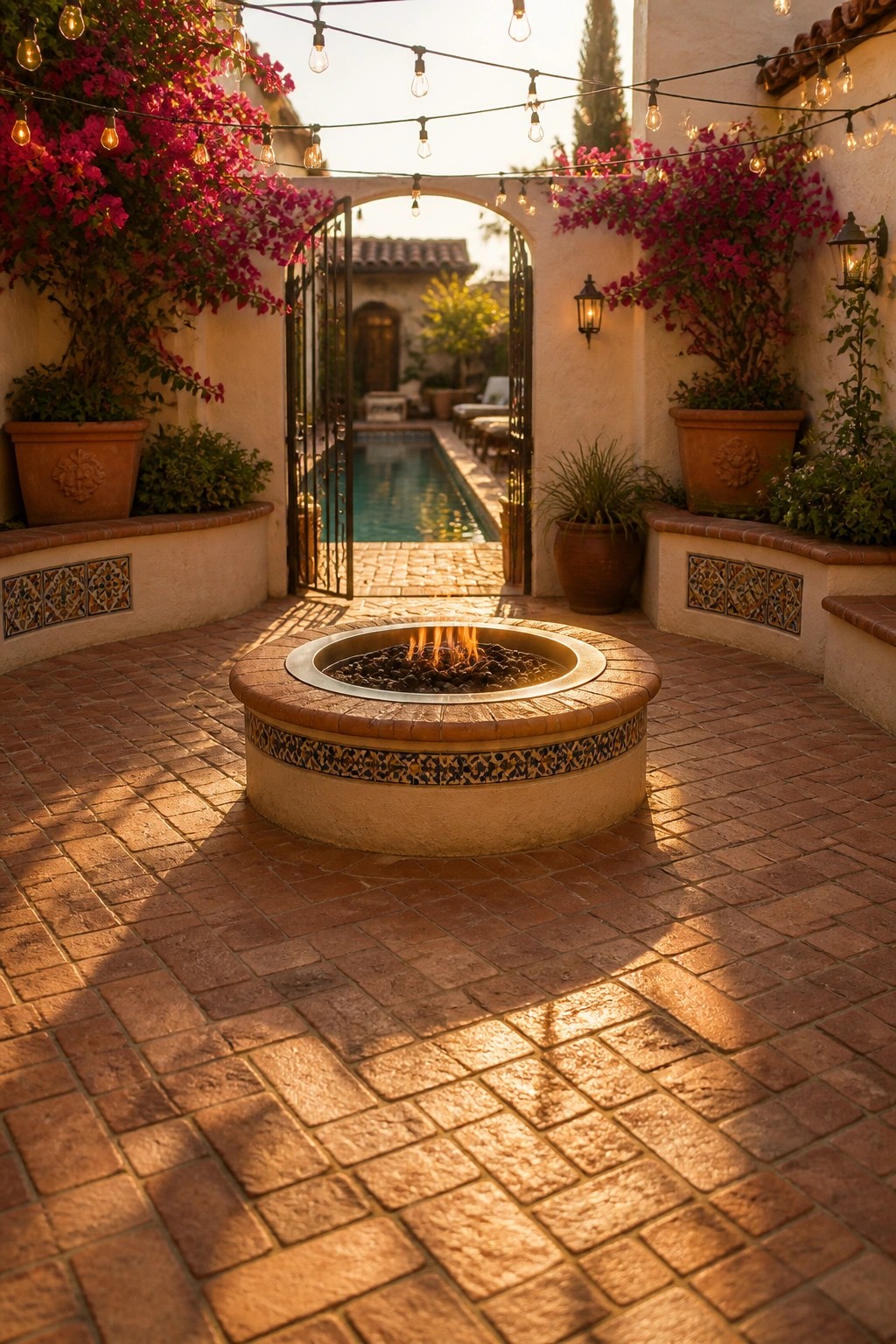
A fire pit built into the pavers creates a clear gathering point that helps break up a large patio surface. The round shape stands out against the rectangular bricks and gives people a reason to linger near the pool without blocking the view or the walkway.
This layout works best on medium to large patios where you want one defined zone for evening use. Match the fire pit edging to the paver color so the whole surface stays cohesive and the bricks do most of the visual work.
Flagstone Pavers for Pool Patios
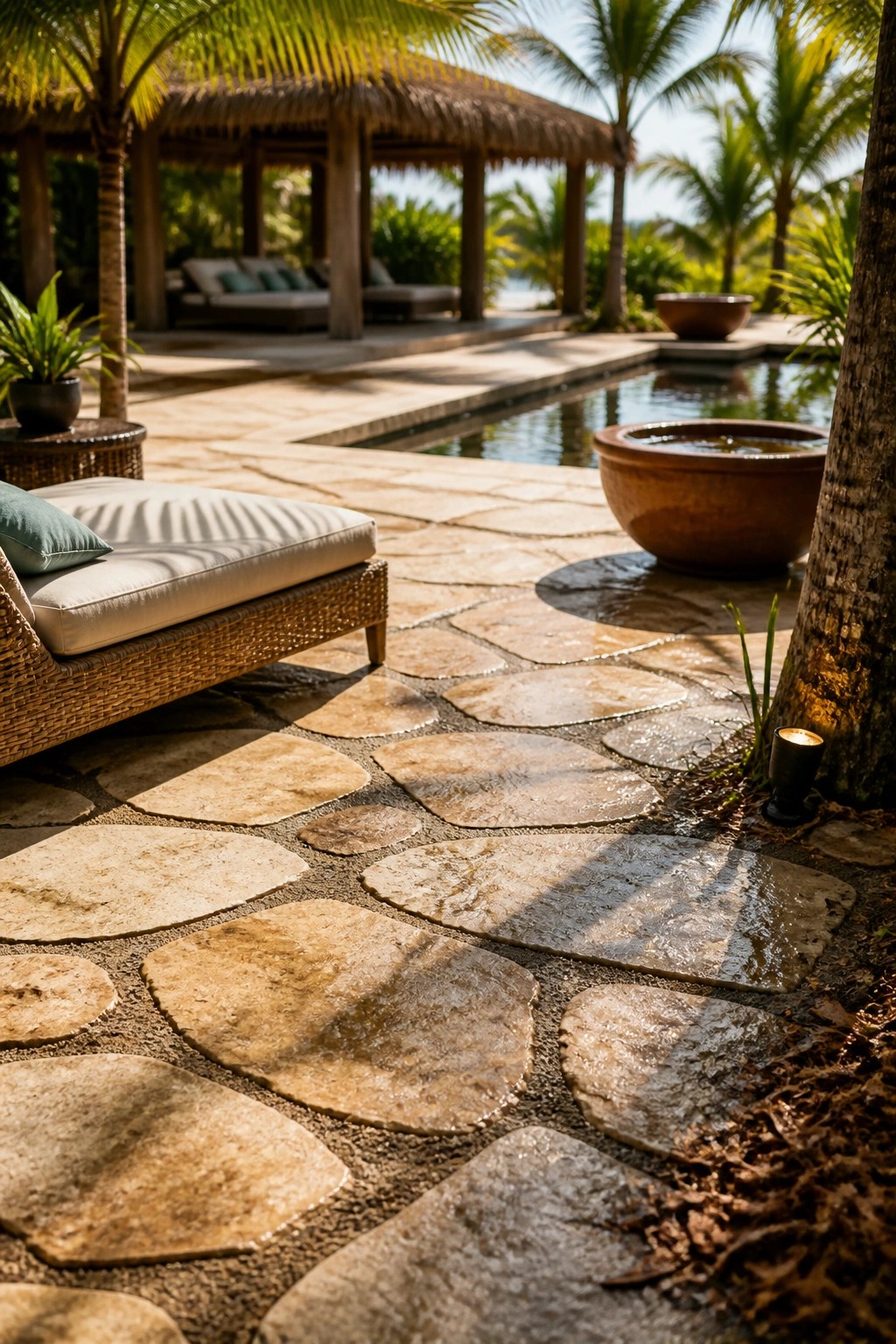
Irregular flagstone pavers give a pool deck a relaxed look that feels more connected to the ground than smooth concrete or uniform tiles. The varied shapes and sizes break up the surface without looking too planned, which helps the whole area feel like part of the landscape rather than a separate surface.
This approach works best on homes with a natural or tropical style where the patio needs to handle water, sun, and heavy use. It pairs well with simple seating and low planting, but the stones should be sealed to keep them from getting too slippery when wet.
Irregular Stone Pavers For Pool Patios
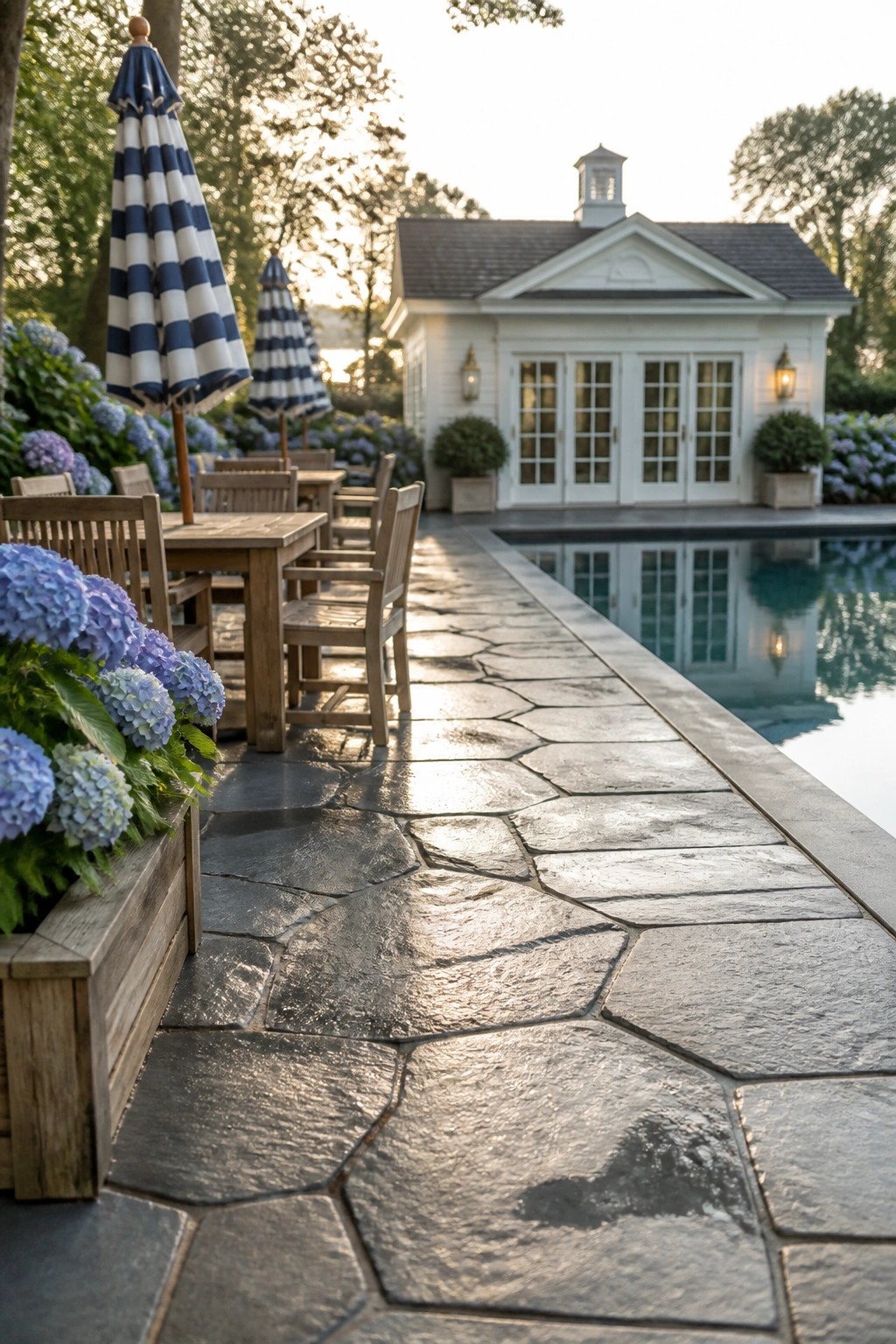
Irregular stone pavers give a pool patio a settled, natural look that still feels structured. The uneven shapes and sizes break up the surface so the area does not read as one flat slab, and the joints add just enough texture to keep the space interesting without extra decoration.
This approach works best on traditional or cottage style homes where the stone can echo other hardscaping on the property. Keep the furniture simple and let the pavers carry the visual weight. Make sure the stones are set on a solid base so they stay level over time, especially right at the pool edge where water can collect.
Terracotta Pavers For Classic Pool Patios
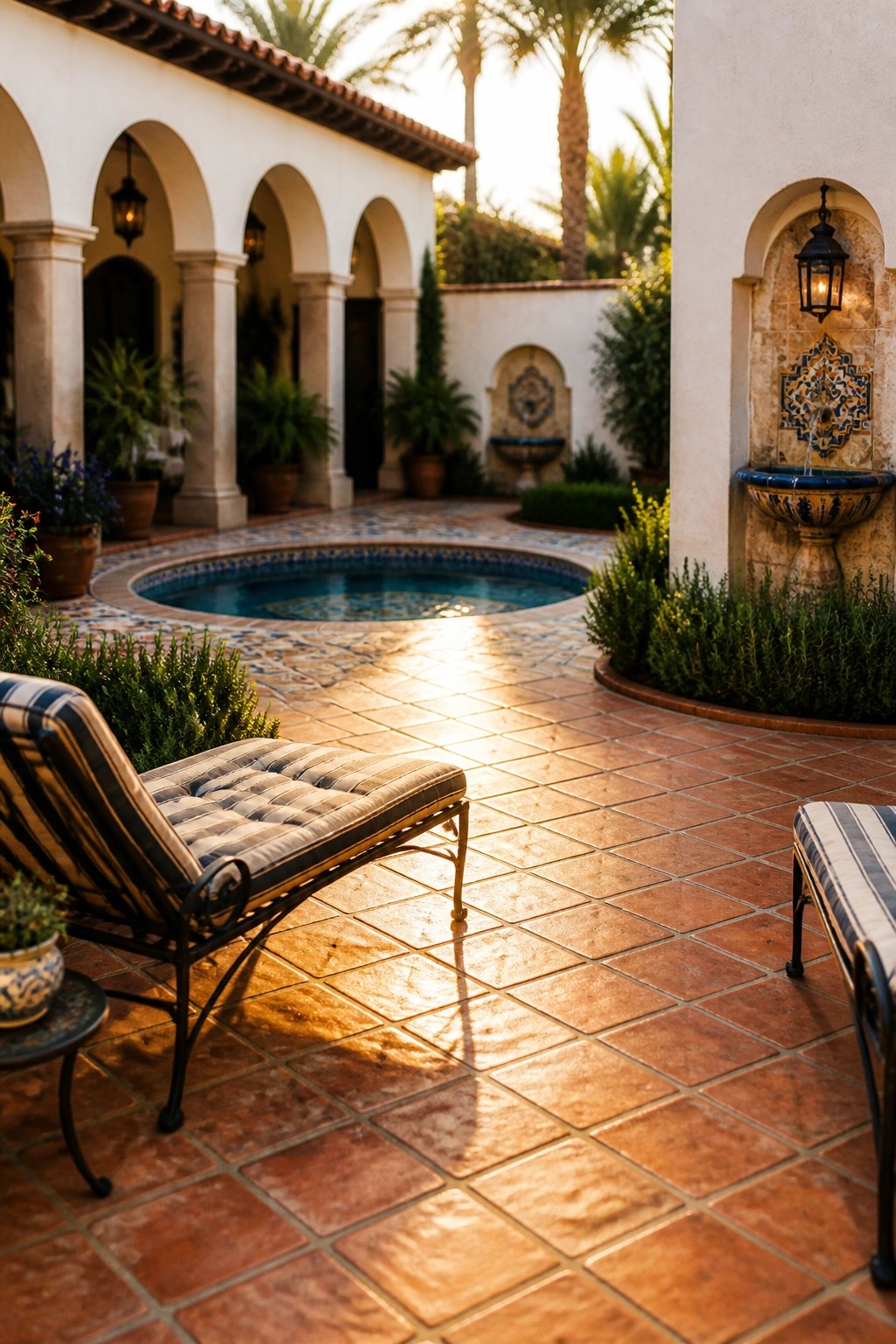
Terracotta pavers give a pool patio a settled, warm look that holds up well in sunny climates. The material feels natural underfoot and helps the space read as an extension of the house rather than a separate deck.
They work best on homes with stucco or tile details where you want the ground plane to match the overall style. Just check that the finish stays safe near water and that the color still looks good after a few seasons of sun and pool chemicals.
Define the Pool Edge with a Contrasting Border
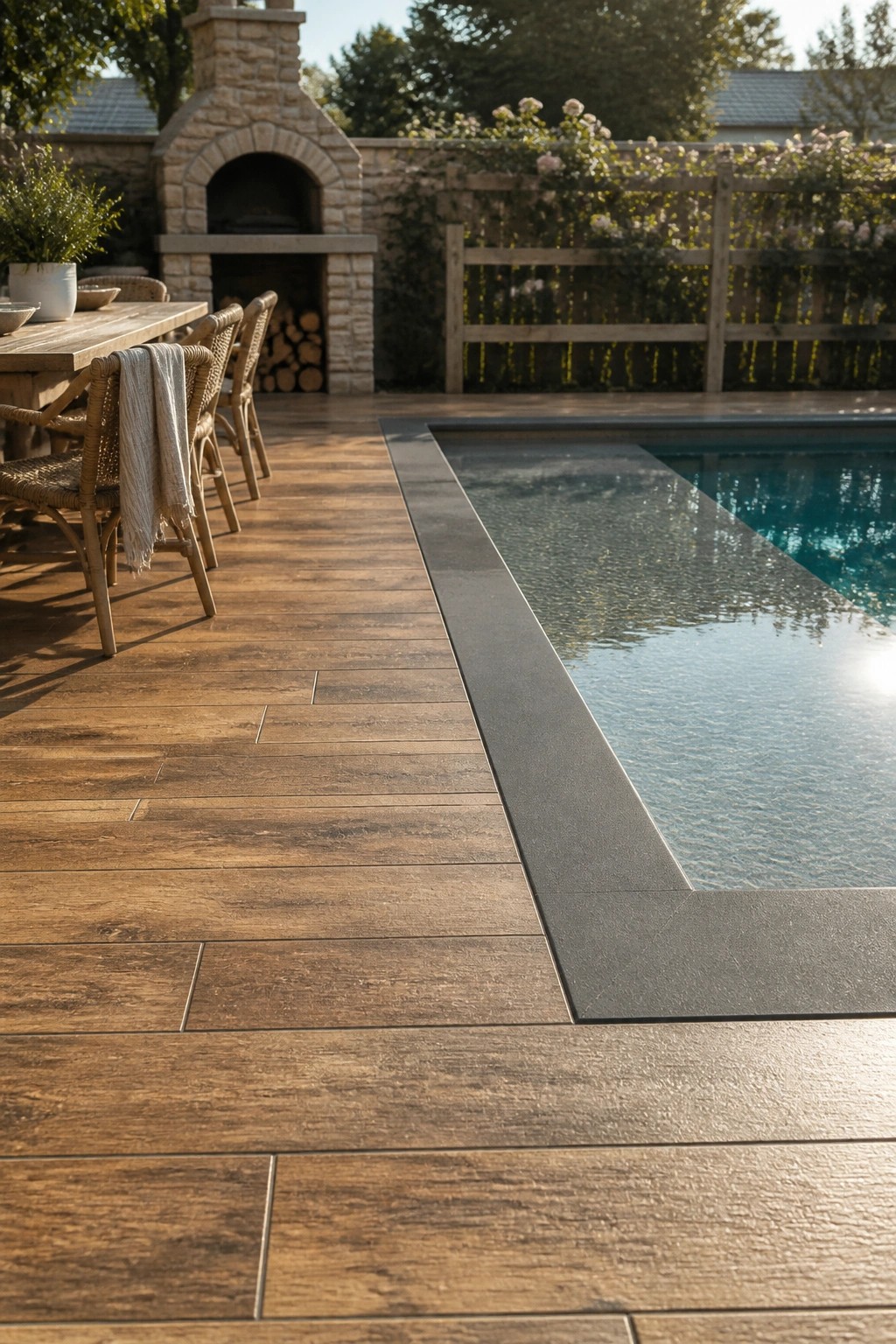
A dark border around the pool helps separate the water from the surrounding deck and gives the whole patio a more finished look. It creates a clear line that makes the pool feel like its own zone instead of just blending into the pavers.
This works especially well with wood-look tiles or planks because the contrast keeps the space from feeling too flat. It suits most backyard setups where you want the pool to stand out without adding extra structures or furniture.
Pavers Laid In A Grid With Grass Joints
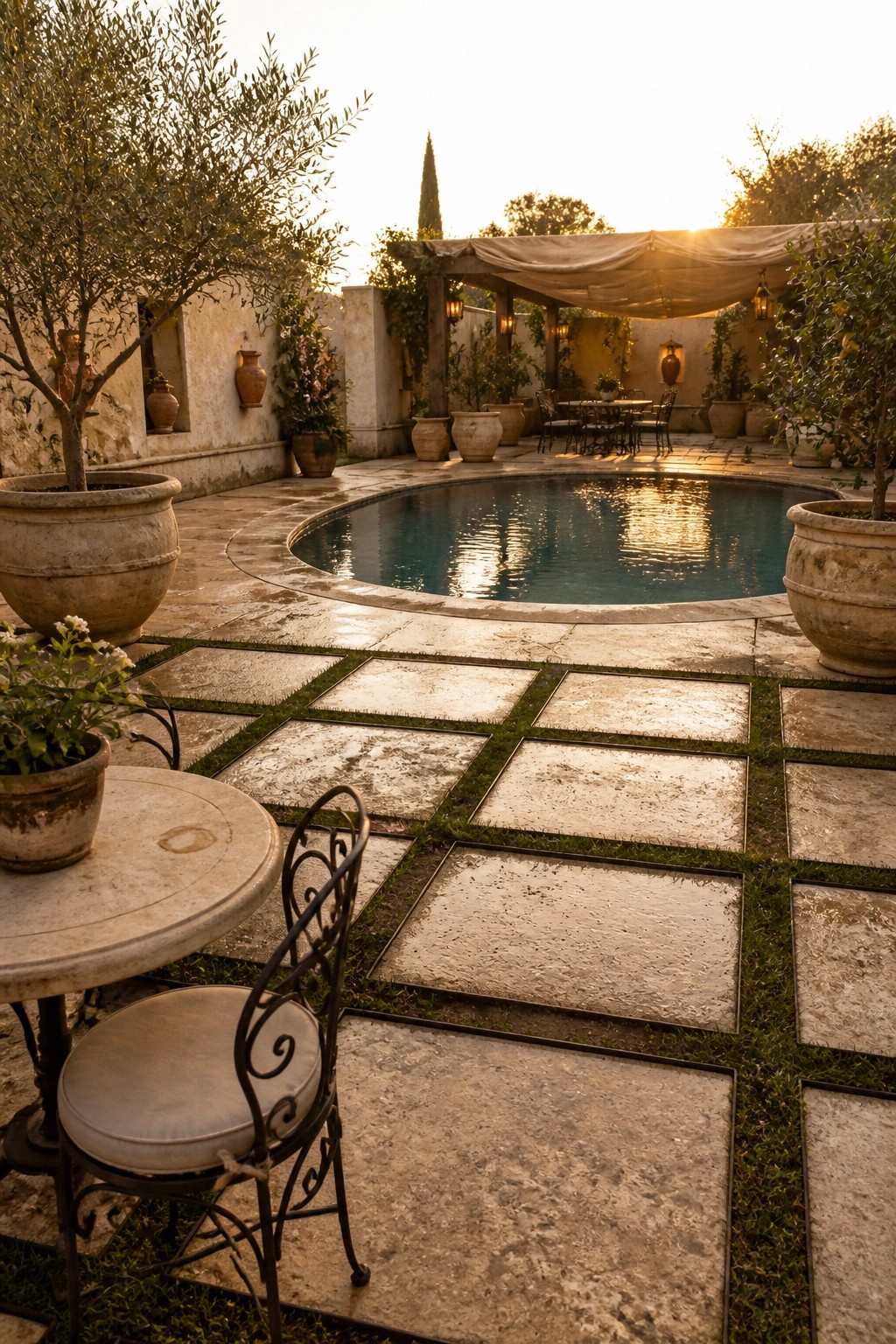
Large pavers set in a simple grid with grass running between them create a patio that feels both structured and open. The pattern keeps the surface from looking like one solid slab while still giving the pool area clear boundaries and easy walking space.
This works best in warmer climates where the grass can stay green without much extra care. It suits older homes or Mediterranean styles and pairs well with stone pots and simple furniture rather than anything too modern.
Light Marble Pavers for Pool Patios
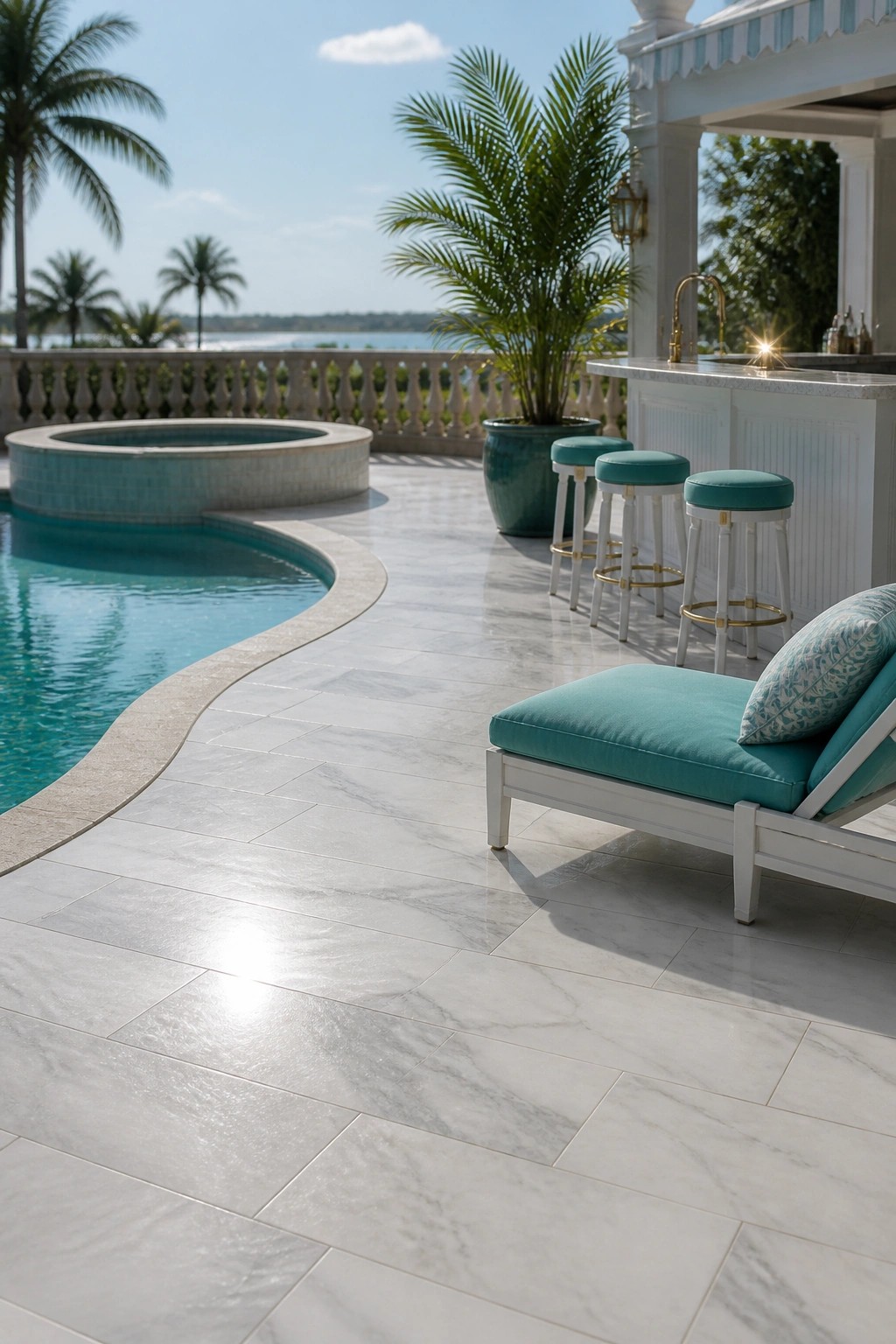
Large light marble pavers give a pool patio a clean and open look that feels easy to keep up with. They reflect light well and help tie the water edge to the rest of the seating area without extra borders or patterns.
This style suits homes that already lean classic or coastal. It works best when the pavers run in a simple grid and stay consistent from the pool surround out to any bar or lounge zone.
Rectangular Pavers For A Defined Pool Patio
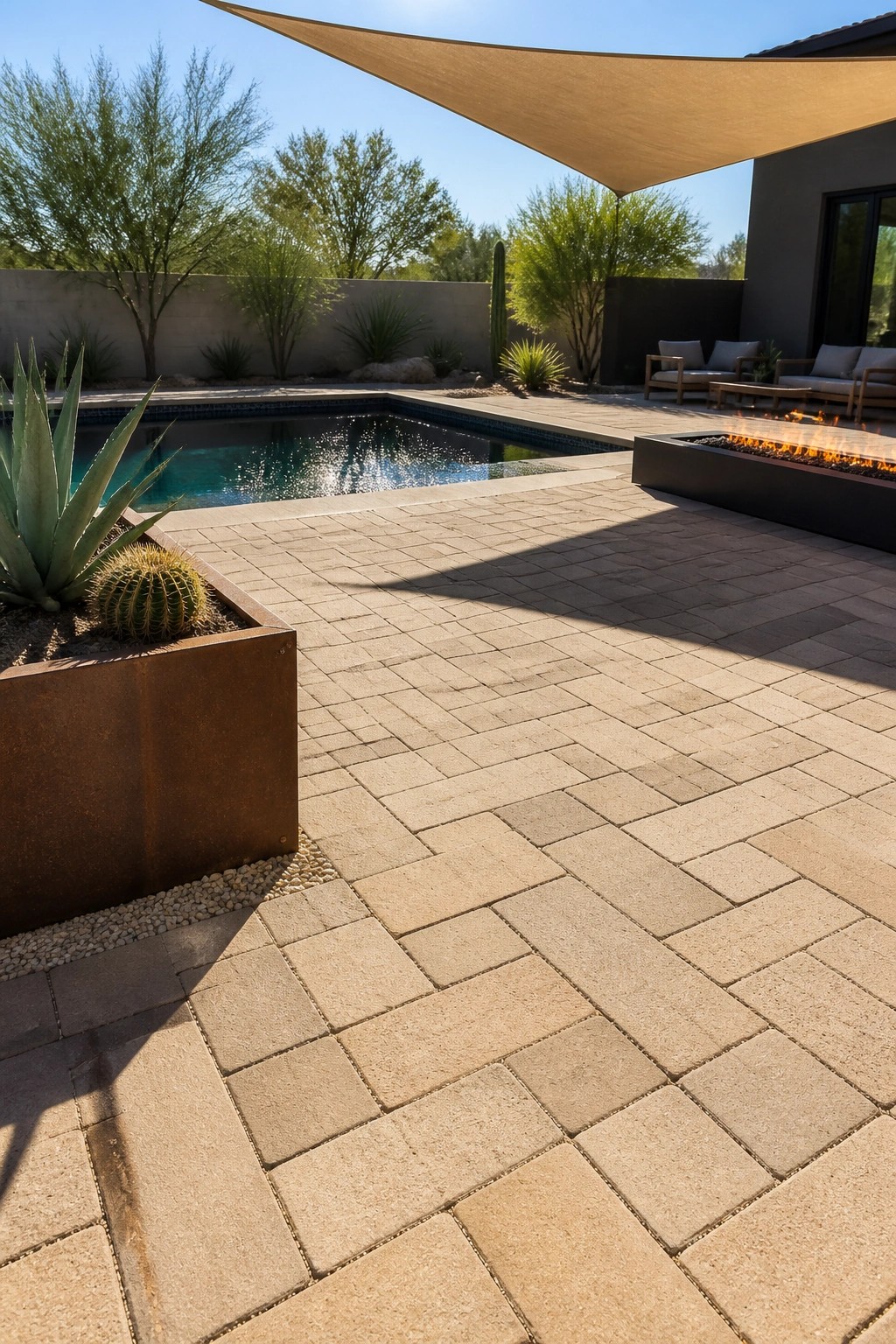
Rectangular pavers give a pool patio a steady, clean surface that holds up well under heavy use. They create clear edges around the water and make the whole area feel more organized without needing extra borders or trim.
This approach works best on larger yards where the patio needs to link the pool with seating or a fire pit. It suits homes that already have simple landscaping and gives you a practical base that stays cooler than darker materials in hot sun.
Curved Stone Paver Pool Edges
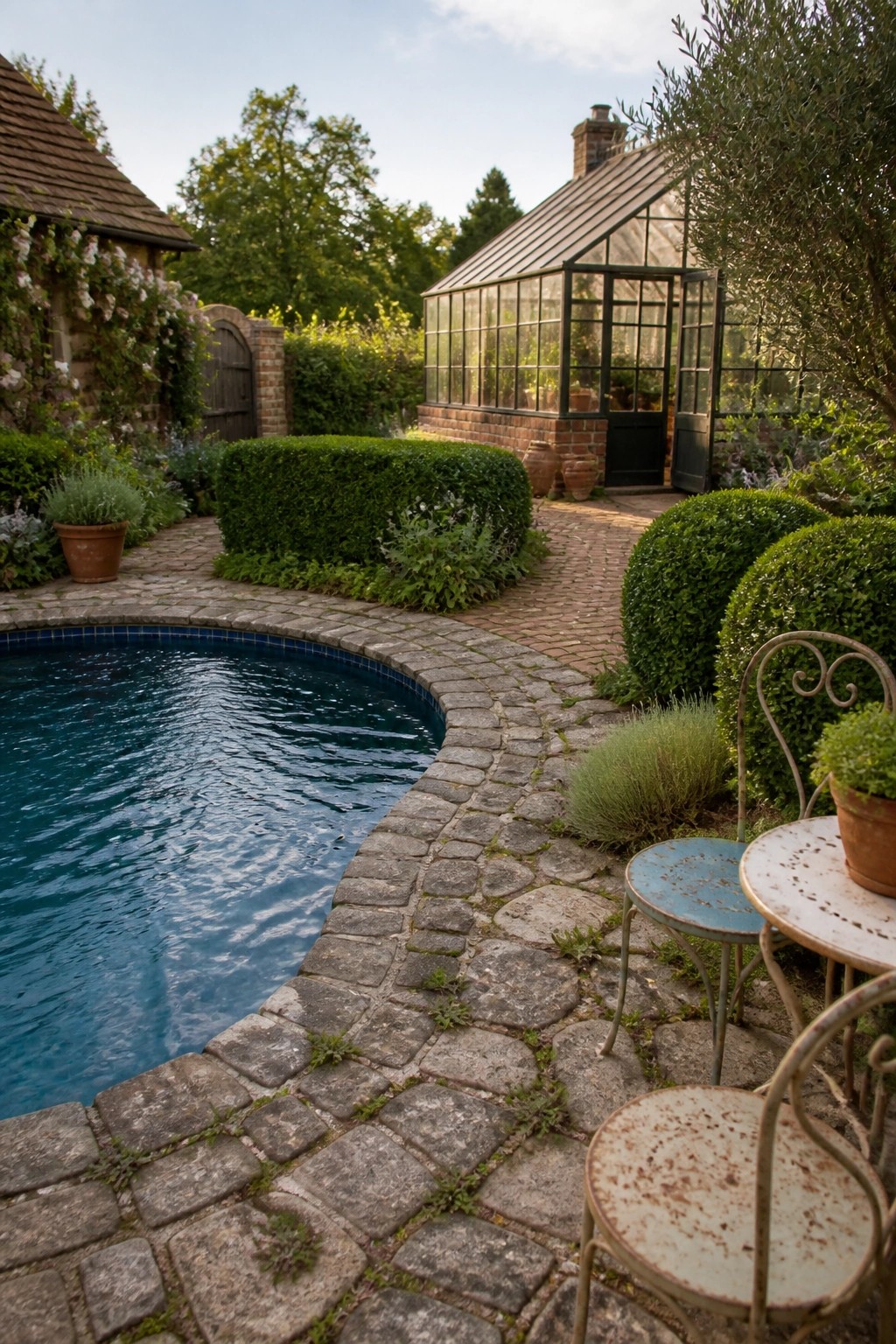
Stone pavers laid in a gentle curve give the pool a clear border without making it feel boxed in. The irregular shapes and slight variations in color help the hard surface blend into the surrounding garden instead of cutting it off. This approach works especially well when the patio needs to feel like part of the landscape rather than a separate deck.
It suits older homes or any yard where you want the pool to sit lower and softer in the setting. Keep the curve generous so the edge does not fight the natural shape of the water, and let a few plants spill over the pavers to soften the line further.
Pool Pavers With Inlaid Lighting Strips
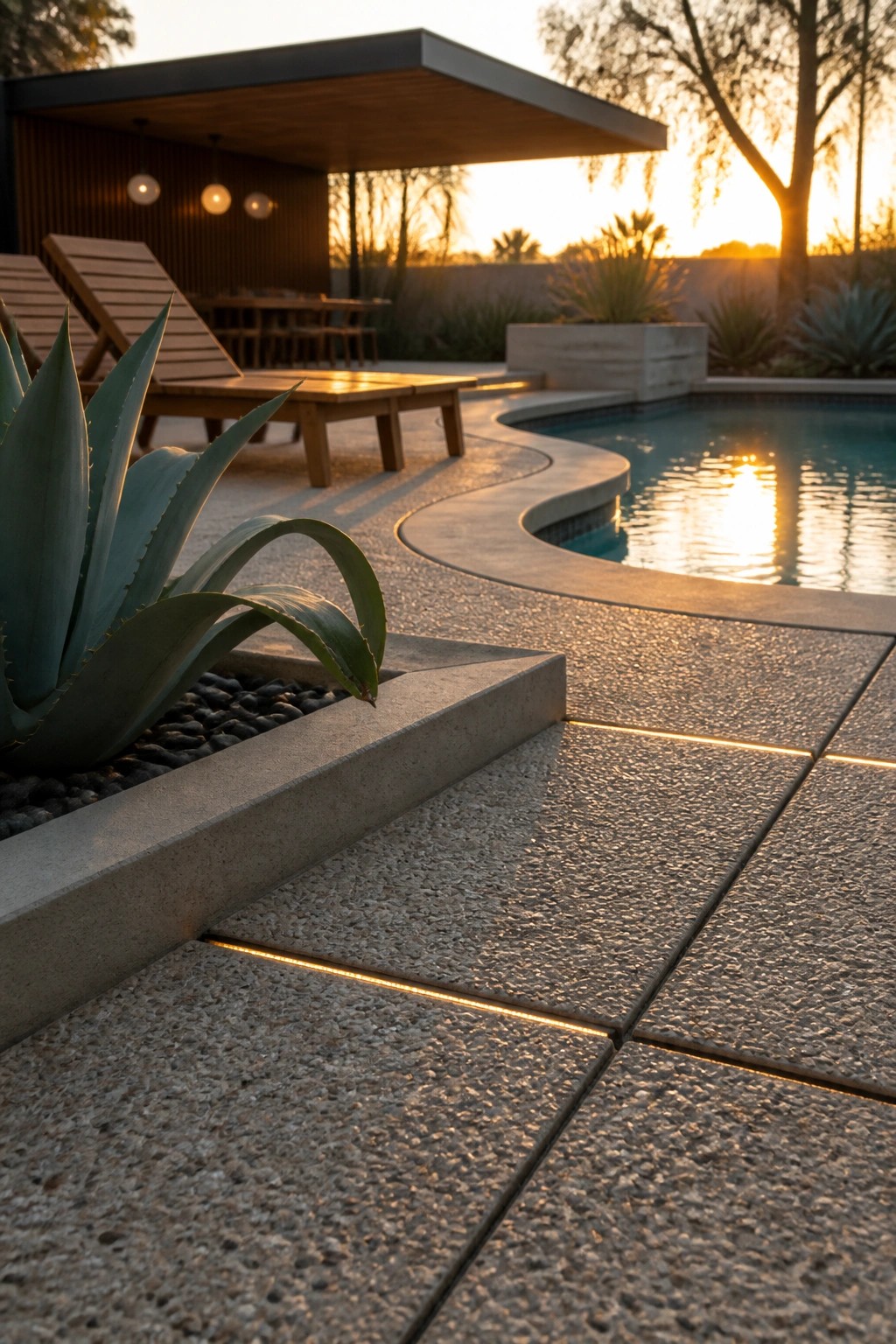
Many pool decks benefit from thin lighting strips set into the joints of the pavers. The effect marks the edge clearly at night and keeps the surface looking simple during the day without extra fixtures scattered around.
This approach suits larger patios where you want the pool shape to stand out after dark. Use low voltage LED strips rated for wet areas and keep the spacing consistent so the lines read as part of the paving pattern rather than an afterthought.
Large Neutral Pavers for Pool Patios
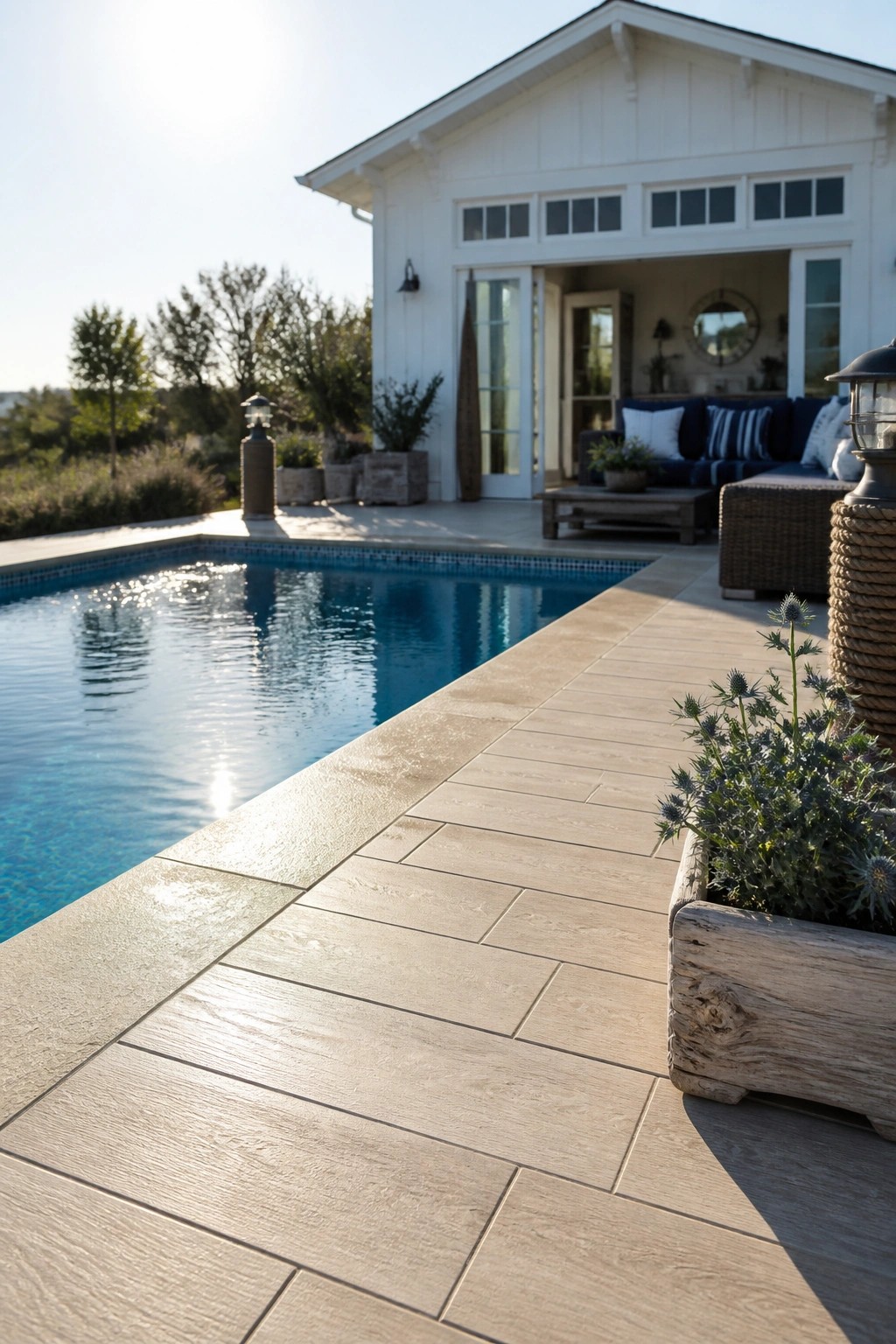
Large rectangular pavers in a soft neutral tone work well for framing a pool and giving the surrounding space a clean, open feel. The light color helps reflect heat and keeps the whole area from looking too busy next to the water.
This layout suits homes with a simple exterior and a fairly level yard. Use a bigger paver size to cut down on joints right at the pool edge, and keep nearby plantings low so the surface stays the main focus.
Irregular Stone Pavers For Pool Patios
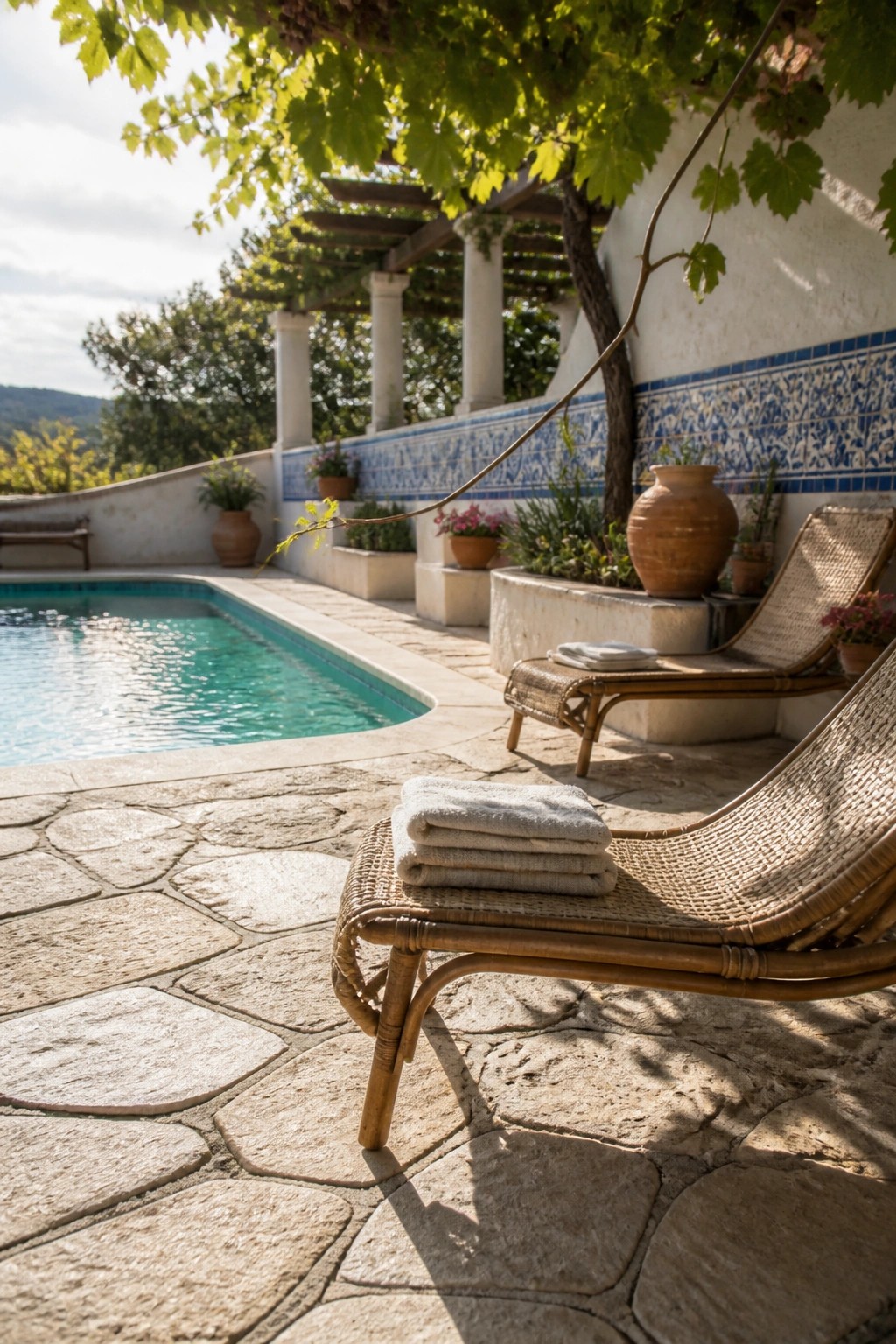
Many people like irregular stone pavers around a pool because the natural shapes keep the space from feeling too rigid. The varied sizes and soft edges help the patio sit comfortably with the landscape instead of standing out as a separate surface.
This approach works well on homes with a relaxed or older style. Lay the pavers in a loose pattern and keep the grout lines simple so the whole area reads as one connected space.
Dark Paver Edging For Clear Pool Definition
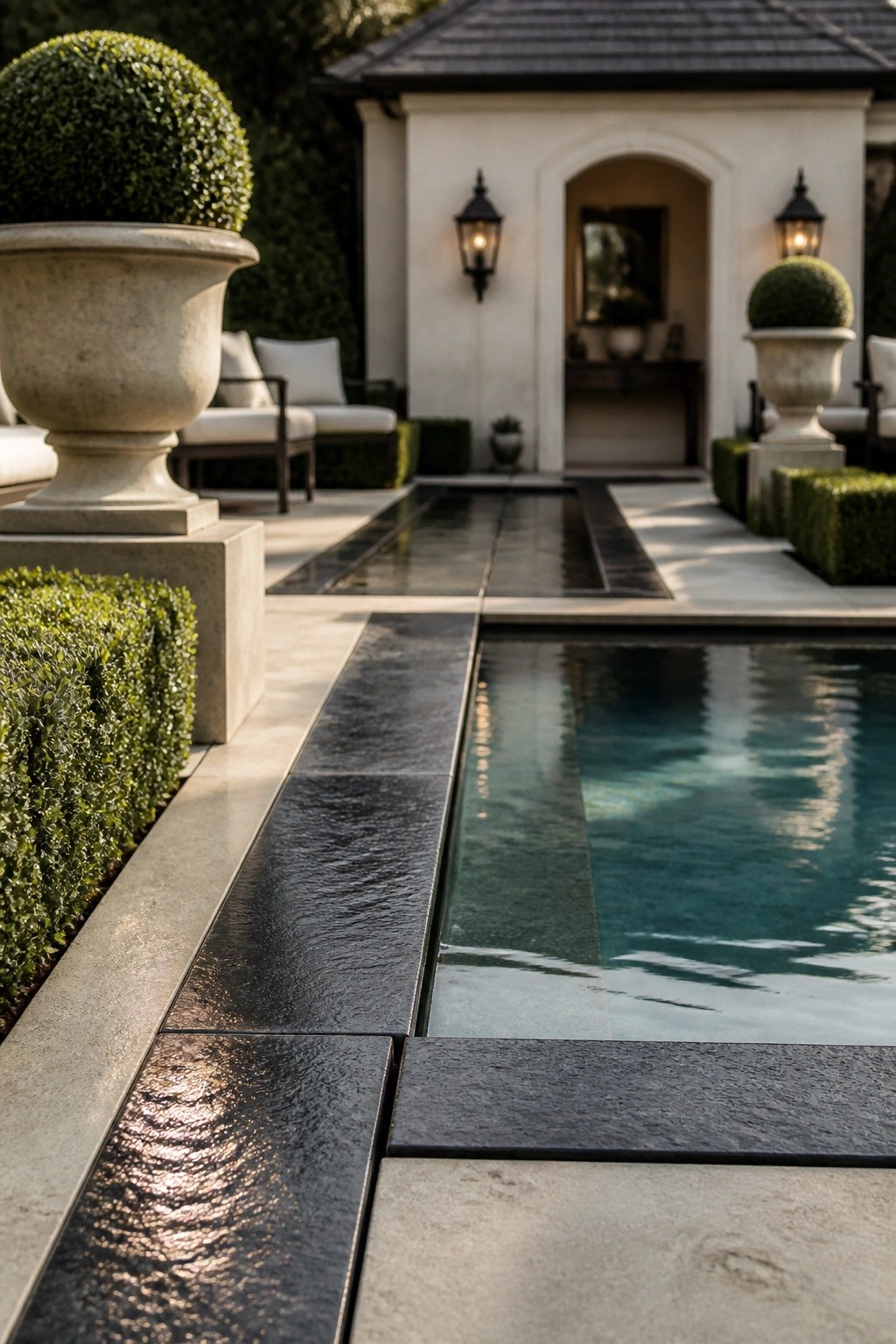
Many people use a dark stone border right along the pool to make the water stand out. It creates a clean line that separates the swimming area from the rest of the patio without needing extra structures.
This approach works best on light-colored decks where the contrast can do the work. Keep the dark strip narrow and run it consistently around the edge. It suits both small backyards and larger layouts as long as the rest of the paving stays simple.
Terracotta Pavers For Built-In Seating
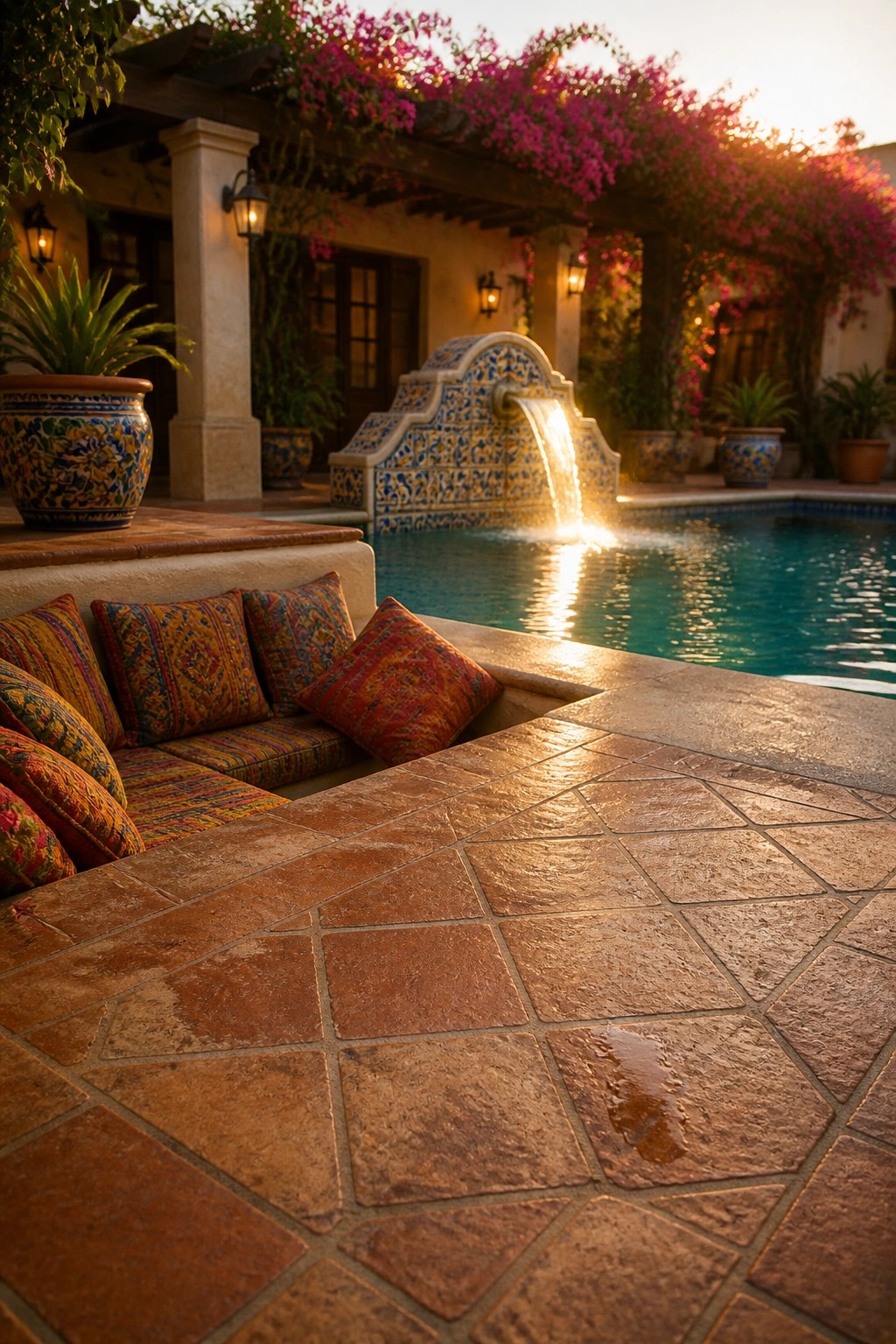
Terracotta pavers give a pool patio a grounded, cohesive feel. When the same material runs right into built-in benches, the whole space reads as one solid surface instead of separate pieces added later.
This works best on homes with warm stucco or tile details. Seal the pavers well so they hold up to water and foot traffic, and keep the cushions simple so the paver lines stay visible.
Large Pavers Define Pool Patios
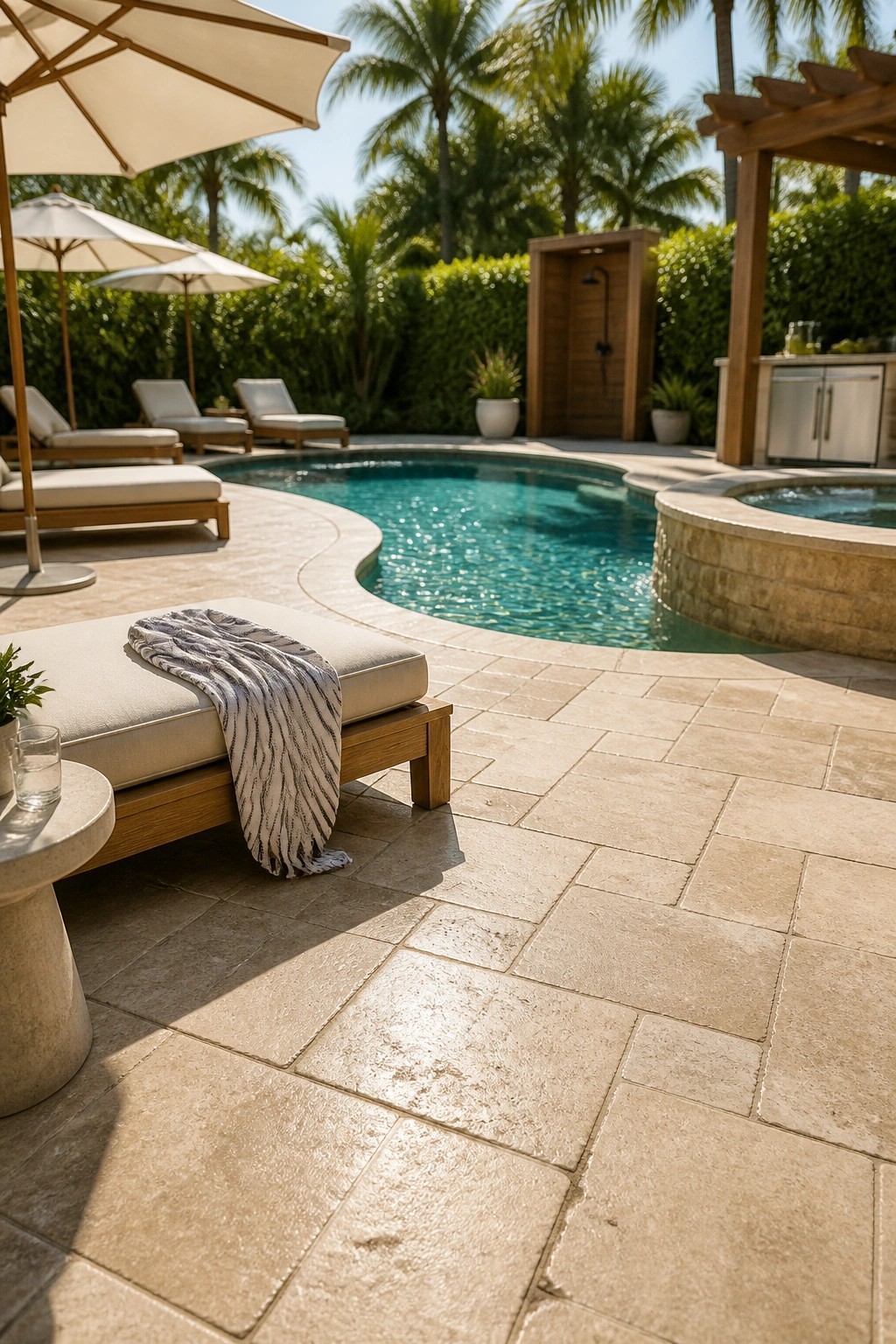
Large pavers work well around pools because they create a solid, even surface that feels finished without a lot of extra detail. The light stone color also helps reflect heat and keeps the area from looking too busy next to the water.
This approach suits homes with simple outdoor layouts where you want the pool to stay the main focus. It works best when the pavers run right up to the pool edge in a clean line, and it pairs easily with basic lounge furniture and shade options.
Large Format Stone Pavers For Pool Patios
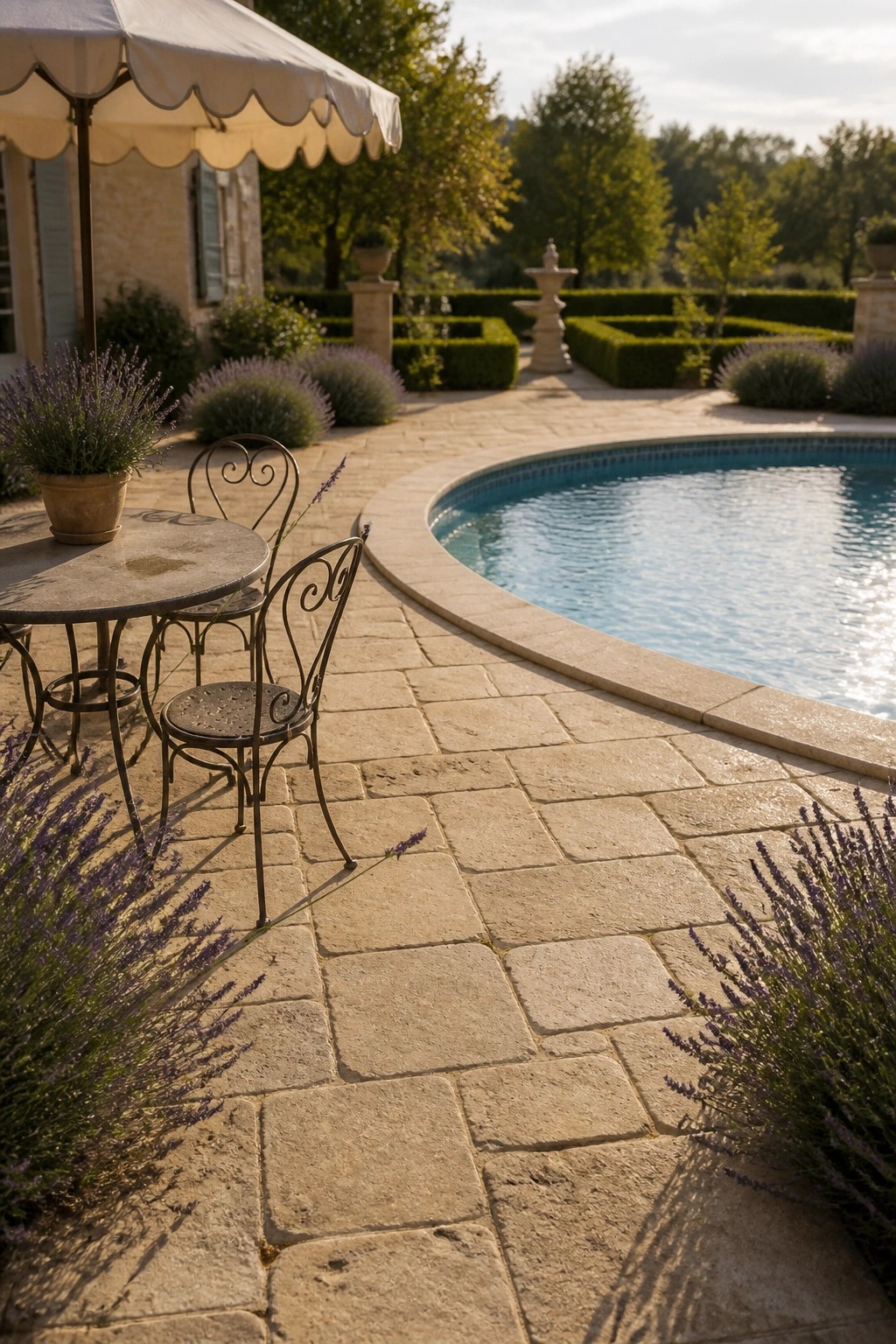
Large stone pavers give a pool patio that solid, settled look that smaller tiles often miss. They hold up well under heavy use and create a clear boundary between the water and the surrounding garden without needing extra edging.
This style suits homes with some age or traditional landscaping already in place. Stick with light natural tones so the surface does not get too hot, and keep the layout simple so the pavers do not fight with nearby planting beds.
Linear Lighting In Dark Pavers
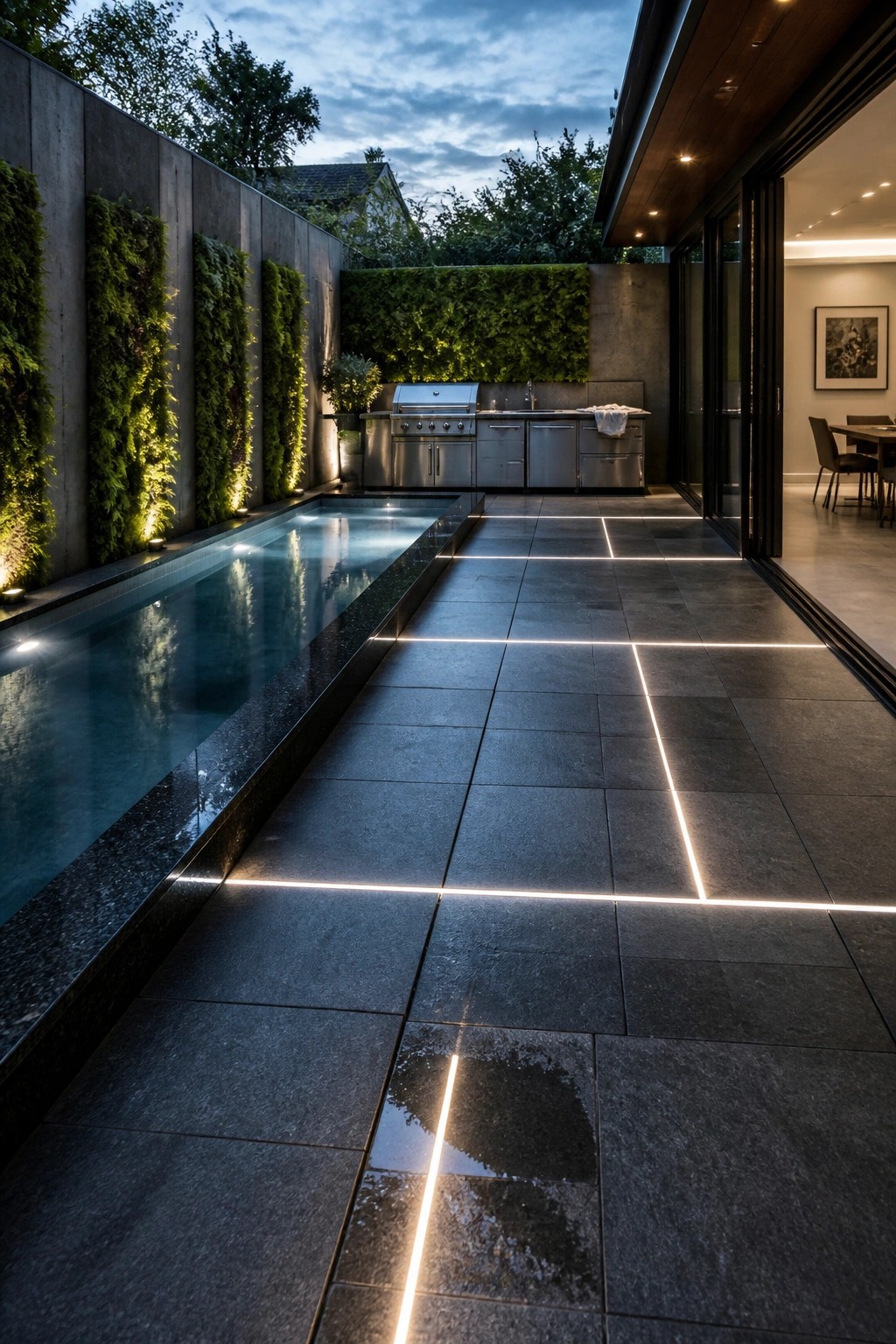
Many people add thin lines of light right into their patio pavers. It creates clear paths and edges at night without adding extra lamps or clutter around the pool.
This approach works well on larger stone patios where you want simple definition between the pool, cooking area, and seating. Dark pavers make the light show up better, and the lines stay low so they do not get in the way during the day.
Patterned Pavers to Define the Patio
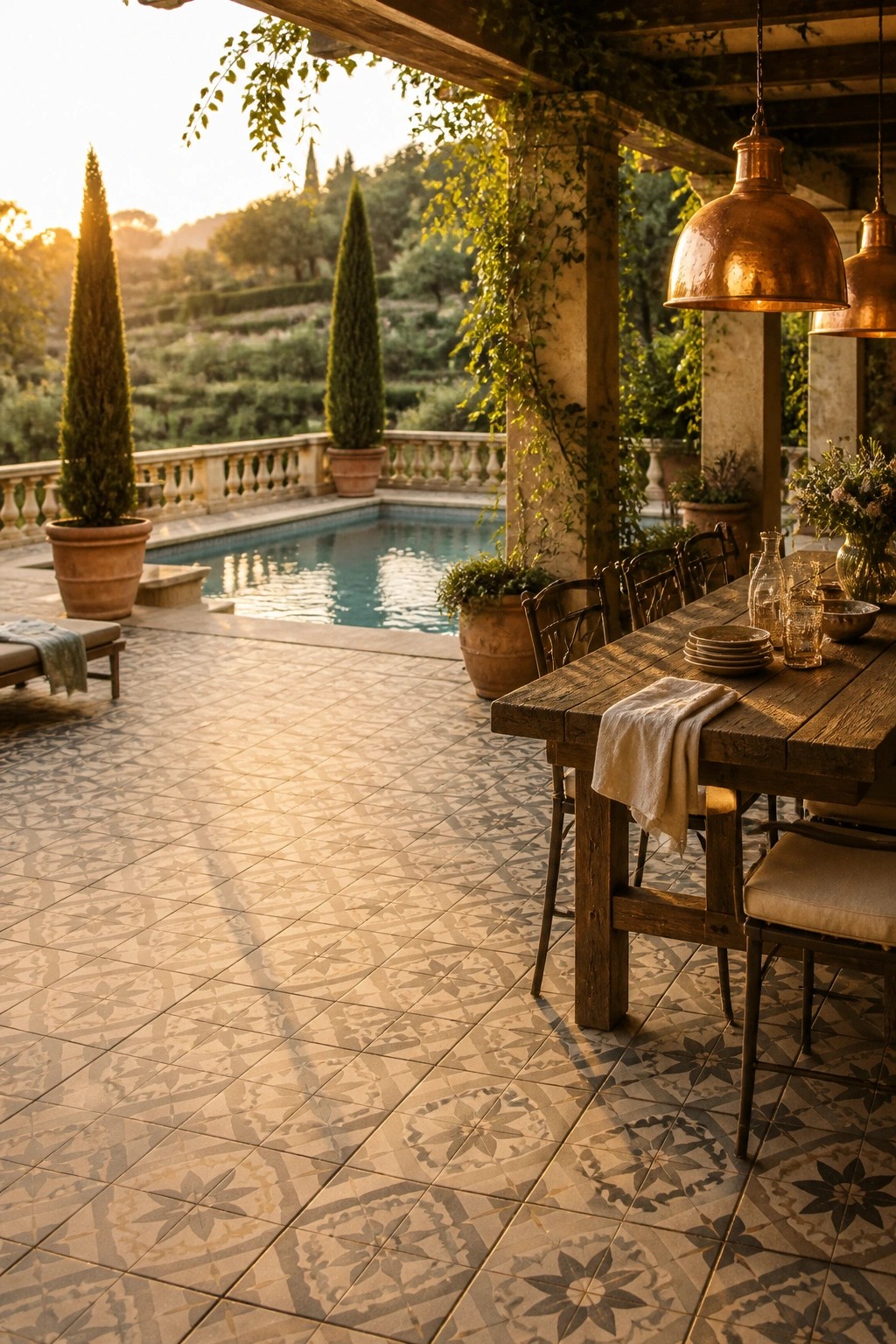
Many poolside patios gain better structure when the floor itself carries a repeating pattern. The design marks off the dining area from the pool edge without adding walls or extra borders, and it gives the whole space a finished look that still feels open.
This approach suits homes with larger outdoor areas where a plain slab can start to feel empty. Choose a classic motif that stays subtle under furniture and foot traffic, then keep the rest of the setting simple so the pavers remain the main detail.
Frequently Asked Questions
Q: Which pavers stay coolest under bare feet during hot afternoons?
A: Choose light colored concrete or travertine that reflects heat instead of soaking it up. Dark options turn scorching by midday and make the whole deck uncomfortable. Test a sample in full sun before you commit.
Q: How do I stop weeds from popping up between the pavers?
A: Lay a solid base of compacted gravel first and fill every joint with polymeric sand. This blocks seeds from settling and keeps the surface level over time. Reapply the sand every couple of seasons as it settles.
Q: Can I add a border to make the patio feel more defined without extra cost?
A: Use the same pavers turned on edge or a simple soldier course along the perimeter. It frames the space cleanly and takes just an afternoon to finish. Skip fancy edging stones that drive up the total price.