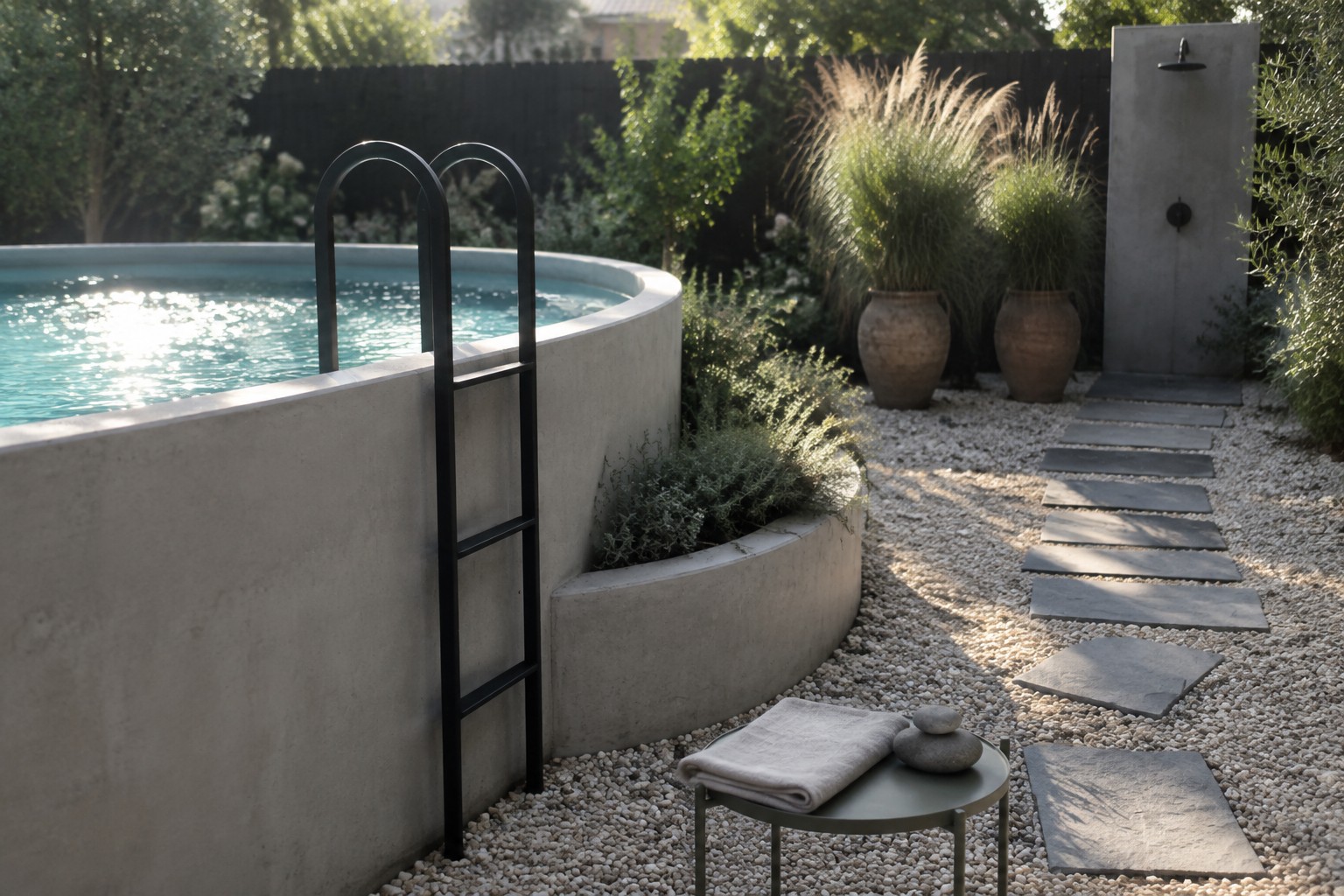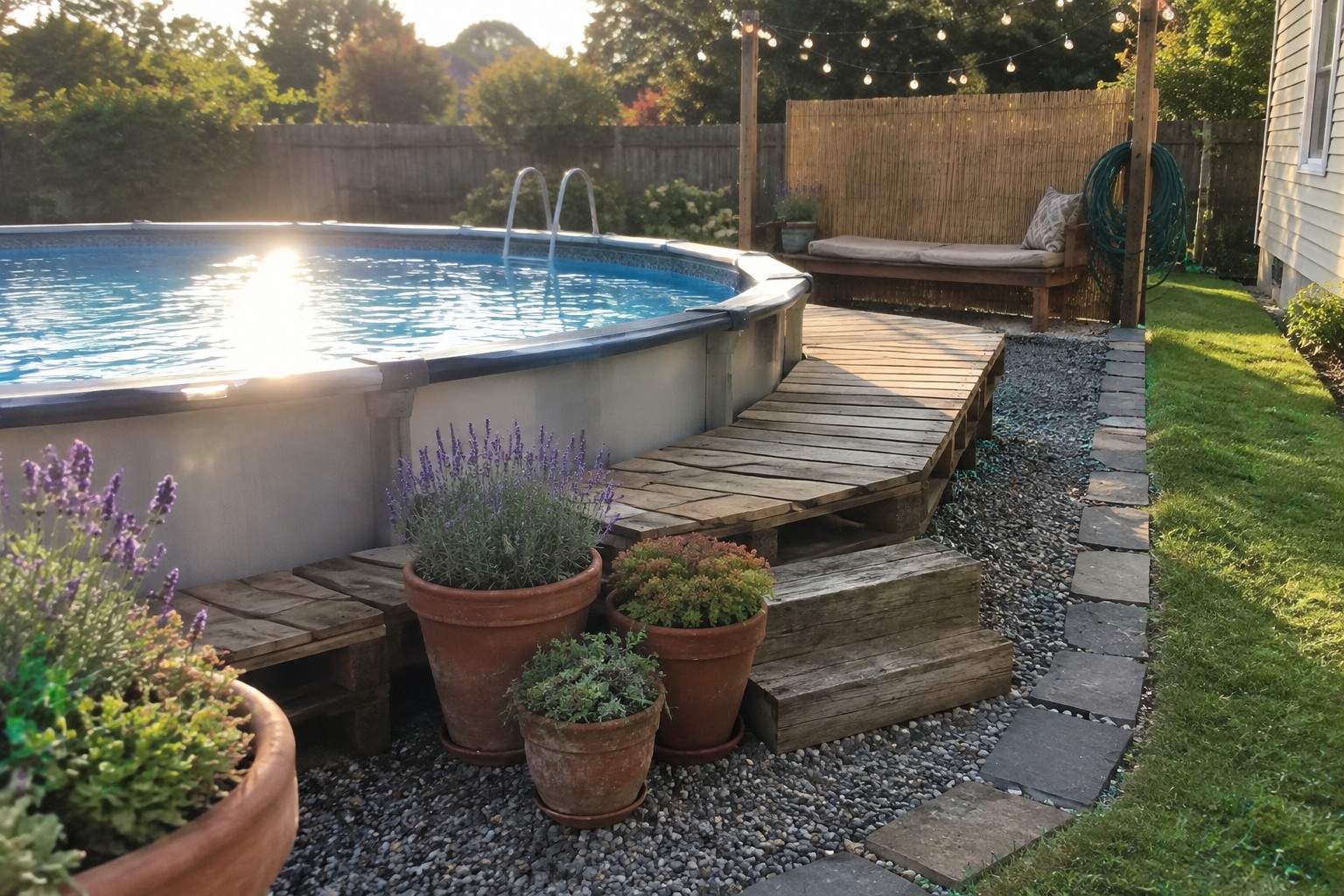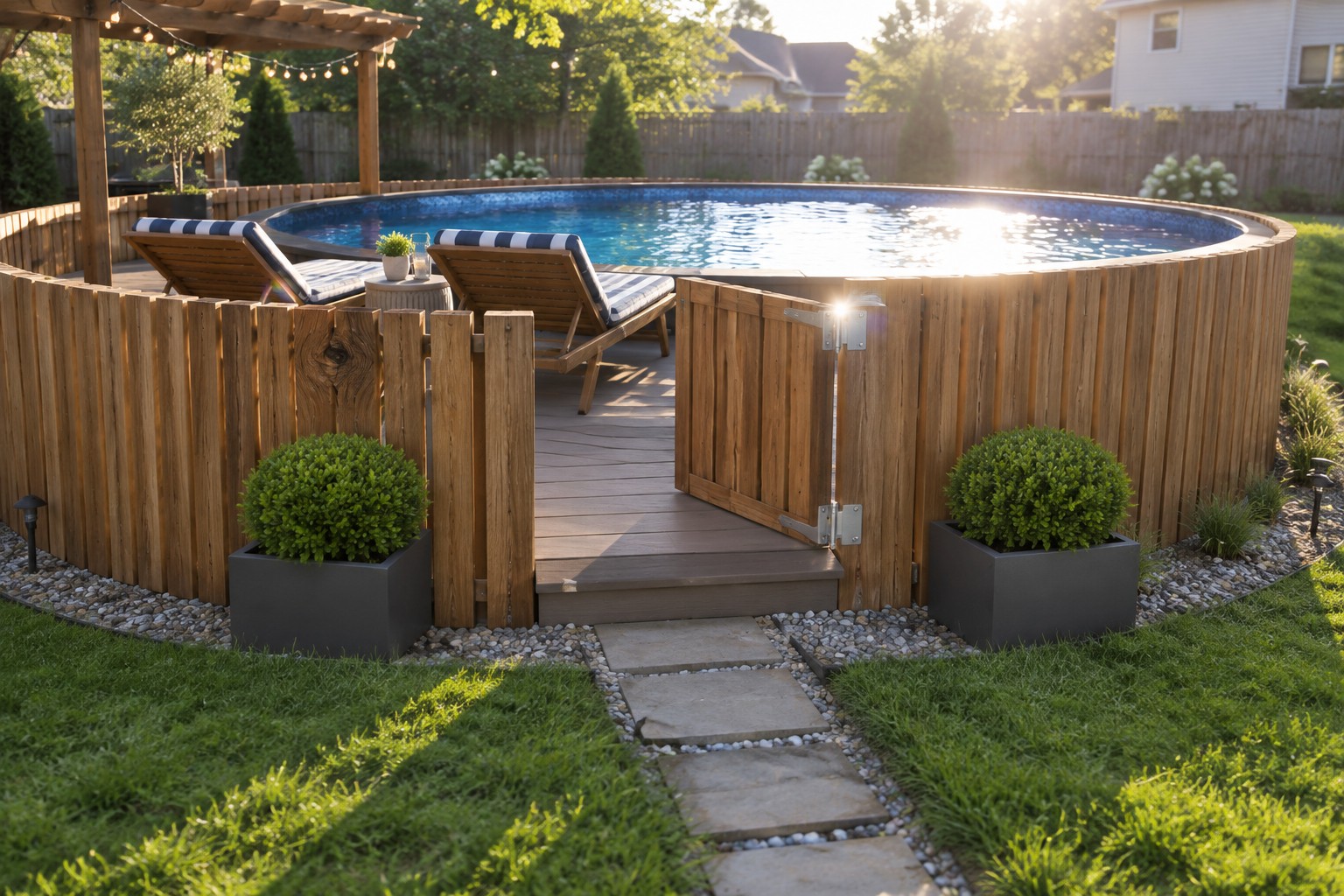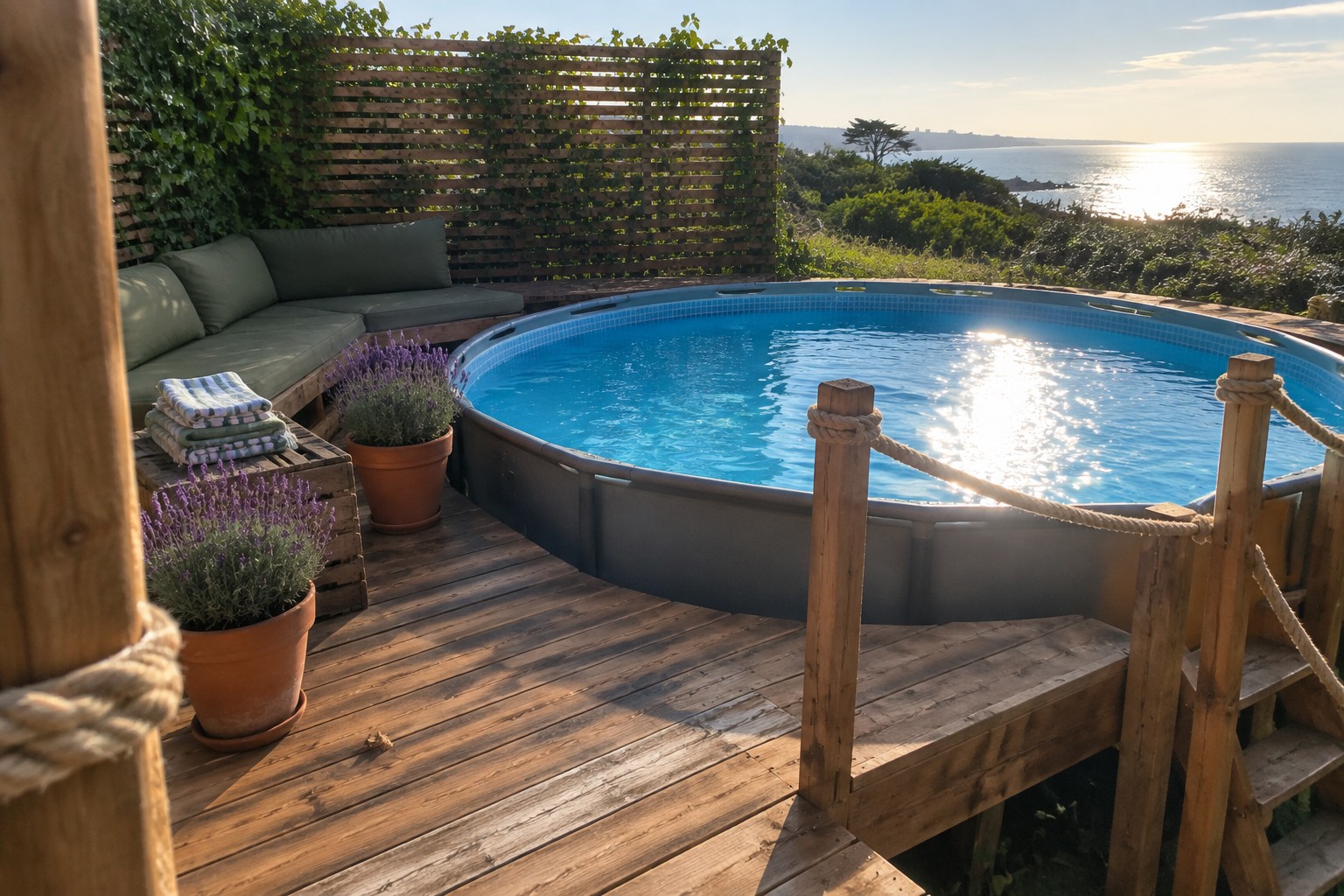
My backyard slopes down toward the fence line, and placing a semi above ground pool there meant thinking through how the ground would affect both the structure and the space left for walking around it.
The slope can make the pool feel separate from the rest of the yard unless the surrounding area stays flat enough for chairs or a small table.
I noticed that designs using partial decking or low retaining elements tend to keep the spot practical instead of turning it into something you only glance at from the house.
Level changes matter more than they first appear because uneven footing quickly makes a backyard less inviting for regular use.
I would try the versions that work with the natural drop first since they seem less likely to create extra drainage problems down the line.
Terrace The Slope With Steps And Pavers

Terracing works well when a pool sits on a slope because it turns the drop into usable flat space instead of fighting it. The steps and continuous paving keep the pool deck connected to the upper seating area without looking like an afterthought.
This approach suits homes where the backyard falls away from the house. Match the pool coping to the patio material so the levels feel like one surface rather than separate zones. Watch the height of each riser so the steps stay comfortable to walk on daily.
Use Concrete Walls to Create a Level Pool on a Slope

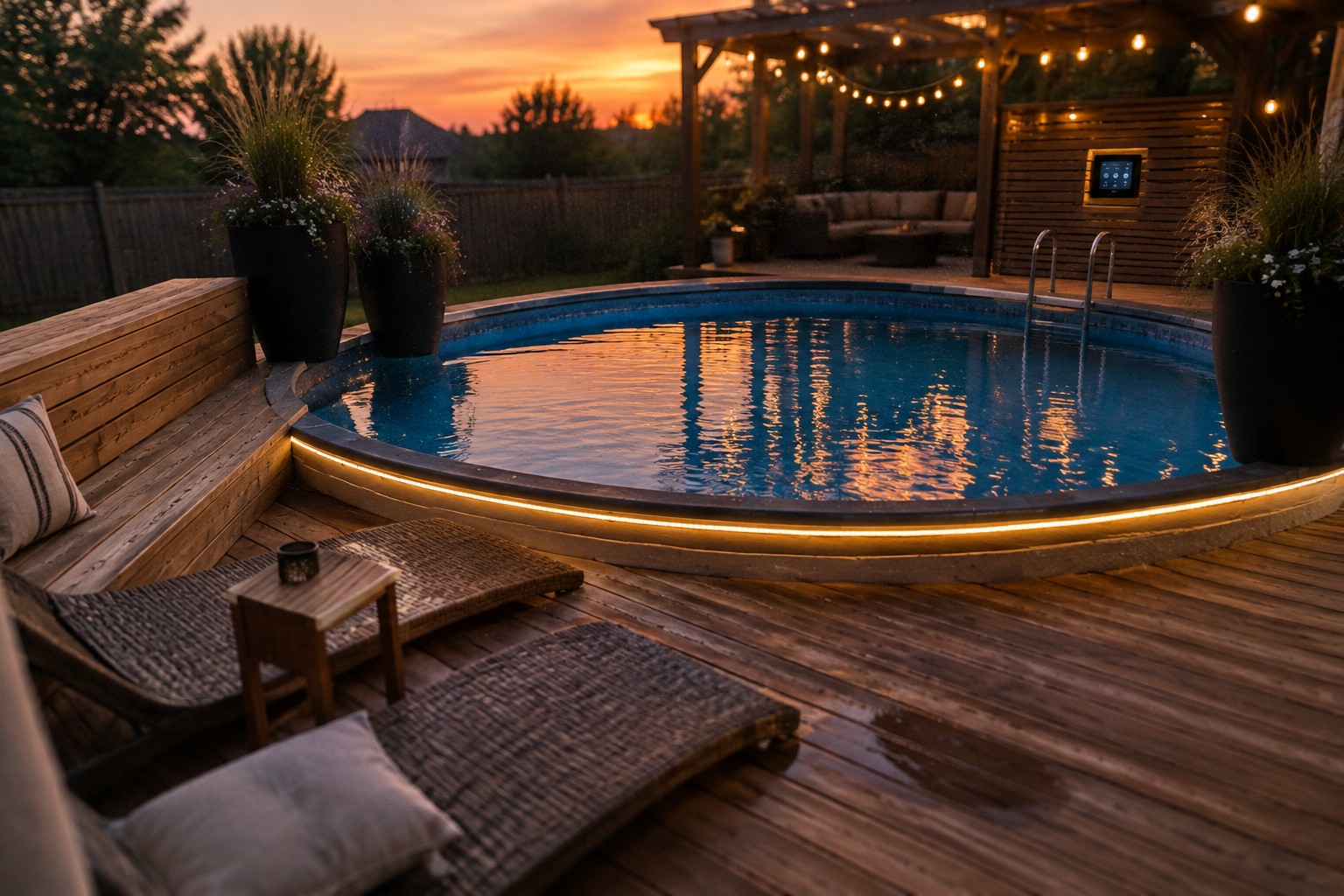
A concrete retaining wall lets you set a semi above ground pool into a sloped yard without fighting the grade. The wall holds back the higher ground, gives the pool a clean flat edge, and creates a solid base that feels built in rather than added on. The long strip of LED lighting along the top of the wall also helps mark the edge at night and makes the steps beside it easier to see.
This setup works best on yards that drop a few feet from the house or fence line. Keep the wall height modest so the pool still reads as raised rather than fully above ground, and use the same material on the steps below to tie everything together. On steeper slopes you may need extra drainage behind the wall, but the basic idea stays simple and practical for most suburban backyards.
Built-In Benches Along the Pool Deck

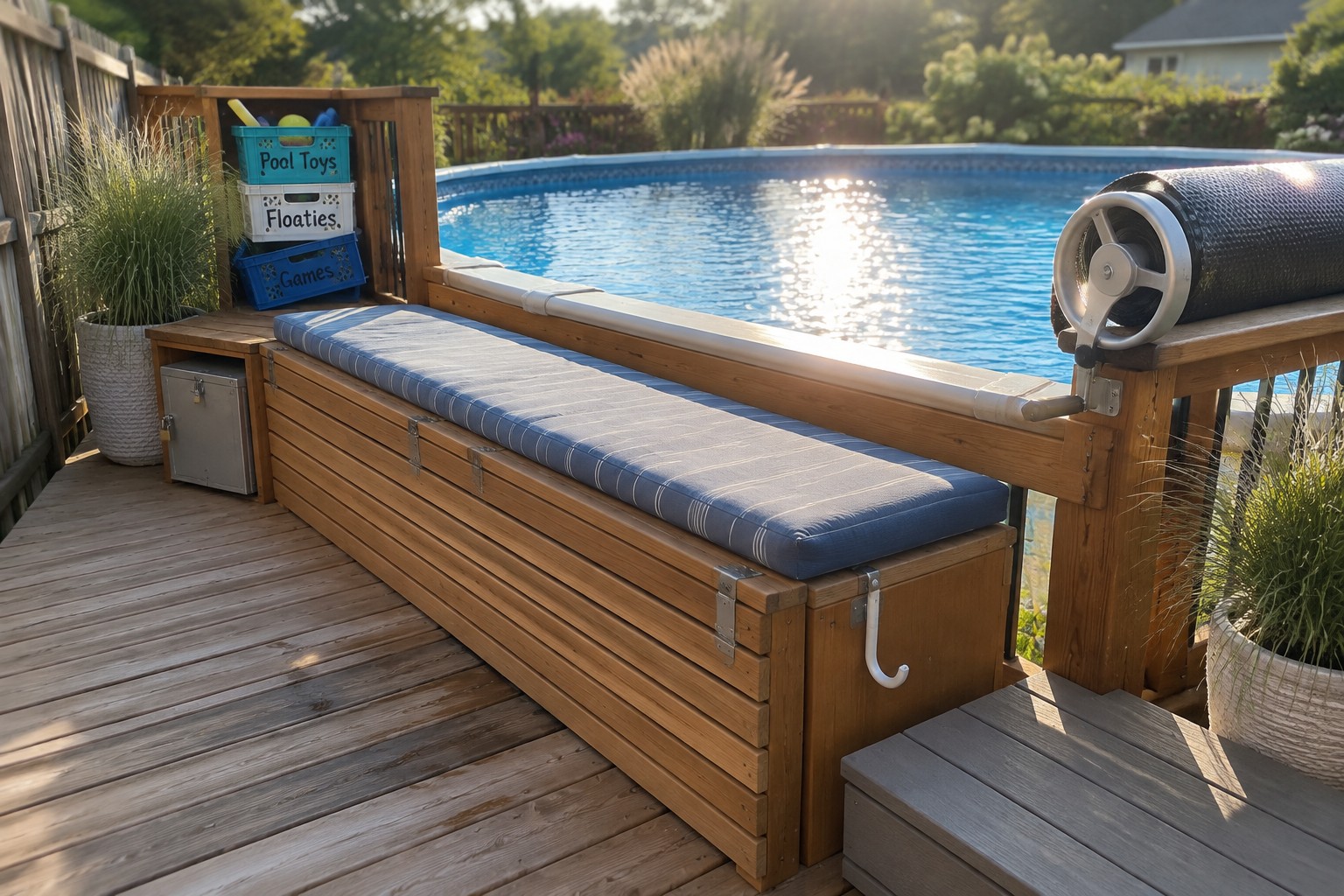
One way to handle a sloped backyard is to build seating straight into the deck that supports the pool. The bench becomes part of the structure instead of something added later, so it stays solid and takes up little extra room.
This works especially well when the deck sits on the lower side of the slope. You can keep cushions simple and weatherproof, and the seating stays useful without crowding the walking area around the water.
Use a Retaining Wall to Set a Stock Tank Pool on a Slope

A stock tank pool sits well on uneven ground when you hold the low side in place with a stone wall. The wall keeps the pool from shifting while the deck extends out from the higher ground to create a flat area for chairs and tables. This approach turns a tricky slope into usable space without major excavation.
This works best on gentle to moderate drops where you want the pool close to the house or main seating area. Keep the wall low and match the deck boards to the rest of your outdoor wood so everything feels connected. Avoid steep grades that would need tall walls or extra bracing.
Support The Pool With A Retaining Wall

A retaining wall lets you place a long pool along a slope without fighting the grade. The wall holds back the higher ground on one side and gives the pool a clean edge that feels built into the hill rather than dropped on top of it.
This works best on backyards that drop away toward a view. Match the wall material to the pool deck so the two read as one structure, and make sure the wall height stays low enough that the pool still feels connected to the seating area beside it.
Match the Deck Height to the Pool

Building the deck at the same level as the pool edge makes the whole area feel like one flat space, even on a slope. It cuts down on stairs and lets people move easily between the water and the seating. The glass barrier keeps kids safe without cutting off the view of the yard beyond.
This setup works best when the ground drops away from the house. You can tuck storage under the deck and add a simple shade sail overhead. Just check that the framing is tied securely into the slope so it stays solid over time.
Use A Retaining Wall To Create Terraced Seating

A low curved retaining wall can turn the drop below a semi above ground pool into a usable seating spot. It holds back the slope, gives you a flat patio area, and creates a natural backrest for chairs without adding much extra structure.
This setup works best on yards that fall away from the house. Keep the wall height modest so it feels like part of the landscape rather than a barrier, and match the stone to the pool surround for a simple look.
Deck the Pool Area to Create a Flat Spot on a Slope

A wide deck can turn a tricky slope into usable space around a semi-above-ground pool. Instead of fighting the grade, the deck builds out a level platform that supports the pool and gives you room to move comfortably on both sides.
This setup works best on moderate slopes where full excavation would be too costly. The deck hides the lower edges of the pool while the raised section stays visible, and it leaves room for simple seating or plants right at the waterline without extra retaining walls.
Built-In Bench Seating Along The Pool

A built-in bench right beside a narrow pool adds a spot to sit without eating into the rest of the yard. It keeps the space simple and gives people a place to dangle their feet or just rest near the water.
This works best in tight or sloped backyards where a full deck would feel cramped. Pair the bench with a few large planters to soften the edge and keep the area from looking too bare.
Wrap the Pool with Wood Decking

A deck that curves around a semi above ground pool gives you a level surface on a slope and pulls the whole area together. Instead of the pool sitting apart, the wood ties it into the rest of the yard and creates space for seating right beside the water.
This works best on backyards that drop away from the house. Keep the decking material consistent so the pool edge does not stand out as much. Watch the height of the pool wall and make sure the deck sits at a comfortable step up.
Cantilever The Pool Over The Slope

One way to handle a steep backyard is to let the pool extend past the edge of the slope. This keeps the water surface level while the ground drops away underneath. A glass side on the pool helps the view stay open instead of cutting it off with a solid wall.
Pair the pool with a wood deck that steps down into the yard. The setup works best on hillsides where you still want to use the lower levels for seating or a fire pit. Check the footing and support structure first since the weight sits out over open space.
Use Retaining Walls To Hold The Pool On A Slope

Stone retaining walls can turn a tricky slope into a usable spot for a pool. They create a level platform that keeps the water surface steady and lets the pool sit naturally in the yard instead of jutting out awkwardly. The walls also double as built-in seating and spots for plants right along the edge.
This setup suits homes where the yard drops away from the house. Match the stone to other walls or paths so the whole area feels connected. Just have the walls engineered properly for soil and water pressure before you build.
Stepped Decking Follows The Slope

Stepped decking lets a semi-above ground pool sit naturally in a yard that drops away. Instead of forcing a flat pad, the wood follows the grade in clean levels, so the pool edge meets the deck at one end and the lower lawn at the other.
This layout suits yards with a gentle drop of a few feet. Keep the steps wide for easy movement and add low lights along the risers so the change in height stays visible after dark.
Built-In Seating That Connects the Pool and Fire Pit

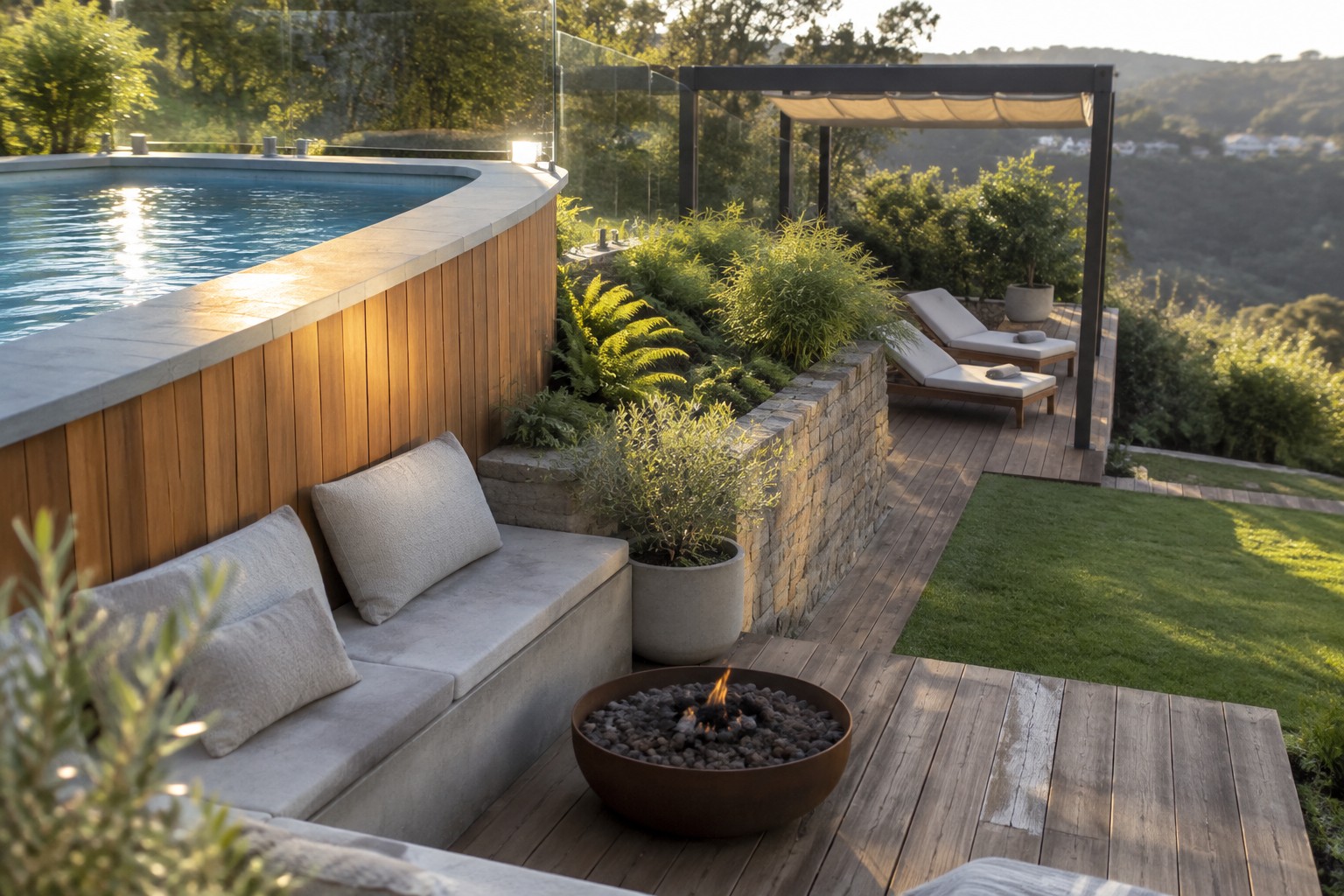
One of the smarter moves on a sloped backyard is to run a long curved bench right along the pool edge and let it wrap partway around a fire pit. It turns two separate features into one usable zone instead of leaving the pool sitting alone on the hill. The concrete base does the heavy work of holding everything steady on uneven ground.
This setup works best on sites where the yard drops away and you need to build a level terrace anyway. Keep the bench low and wide so it doubles as extra poolside perching, and place the fire pit close enough that the seating serves both areas without feeling crowded. Just watch the slope and make sure the structure drains well during rain.
Frequently Asked Questions
Q: Can I install one of these pools without digging into the slope at all? A: You can build up the lower side with retaining walls instead. This keeps the ground intact and still levels the pool area. Check soil type first to make sure it holds.
Q: What happens if rain washes dirt under the pool frame? A: Add a solid base of gravel and landscape fabric before setting it down. The slope makes water run off faster so you need good drainage around the edges too. Recheck the level after the first few storms.
Q: Do these ideas work on very rocky slopes? A: They do if you anchor the supports into the rock. Skip the digging heavy ideas and go for the raised deck styles instead.