When dealing with a sloped yard and an above ground pool, the deck has to do more than just sit there nicely because people actually need to move around it safely every day.
I remember looking at plans that ignored how the ground drops away and realizing later that the finished space would have felt off balance in real life.
Some ideas handle the slope by stepping the levels or using supports that blend into the yard, and those stand out to me as worth trying.
The key seems to be making sure the deck stays level where it counts without turning the whole thing into a construction project that never ends.
Usability wins every time.
Building A Deck Around An Above Ground Pool

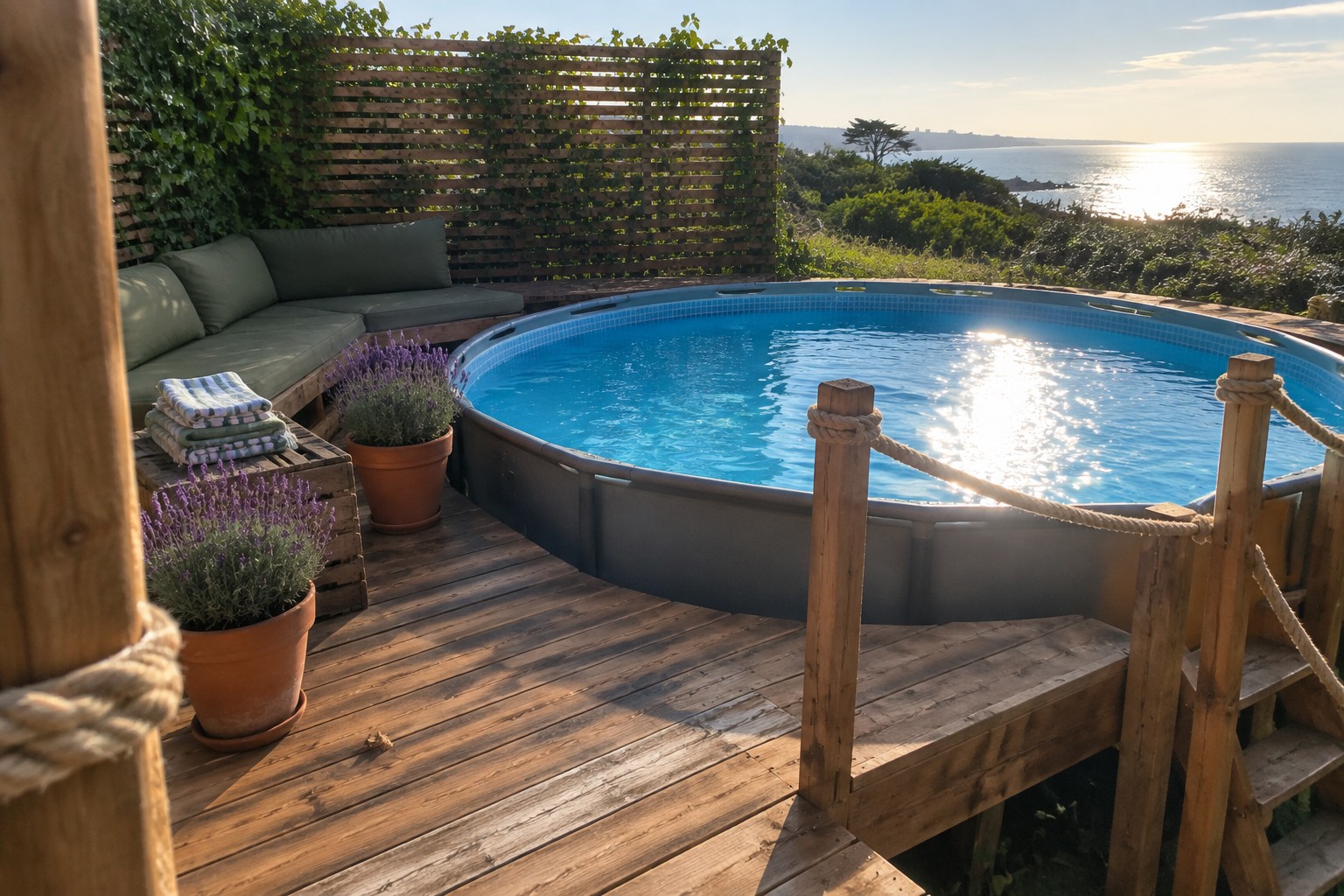
One practical way to handle an above ground pool on a sloped yard is to build a full deck platform around it. This creates a flat, usable surface that makes the pool feel like it belongs with the rest of the outdoor space rather than sitting on top of uneven ground. The deck also gives you room for seating and walking areas without adding more structures.
This approach works especially well on coastal lots or hillsides where the ground drops away. You can keep the pool at its natural height and let the deck rise to meet it, which avoids major excavation. Just make sure the framing is solid enough to handle the weight and that you leave access points for maintenance.
Terrace the Deck With Stone Walls

One simple way to deal with a sloped yard is to build the deck in terraced levels held by stone retaining walls. This approach gives you flat space for the pool without having to level the entire hillside, and it keeps the structure from feeling like it is fighting the land.
The same walls create a natural drop to a lower seating area, which works well for a fire pit or extra chairs. It suits homes where the yard drops away from the house, and the stone helps the whole setup blend into the surroundings instead of looking like an add-on.
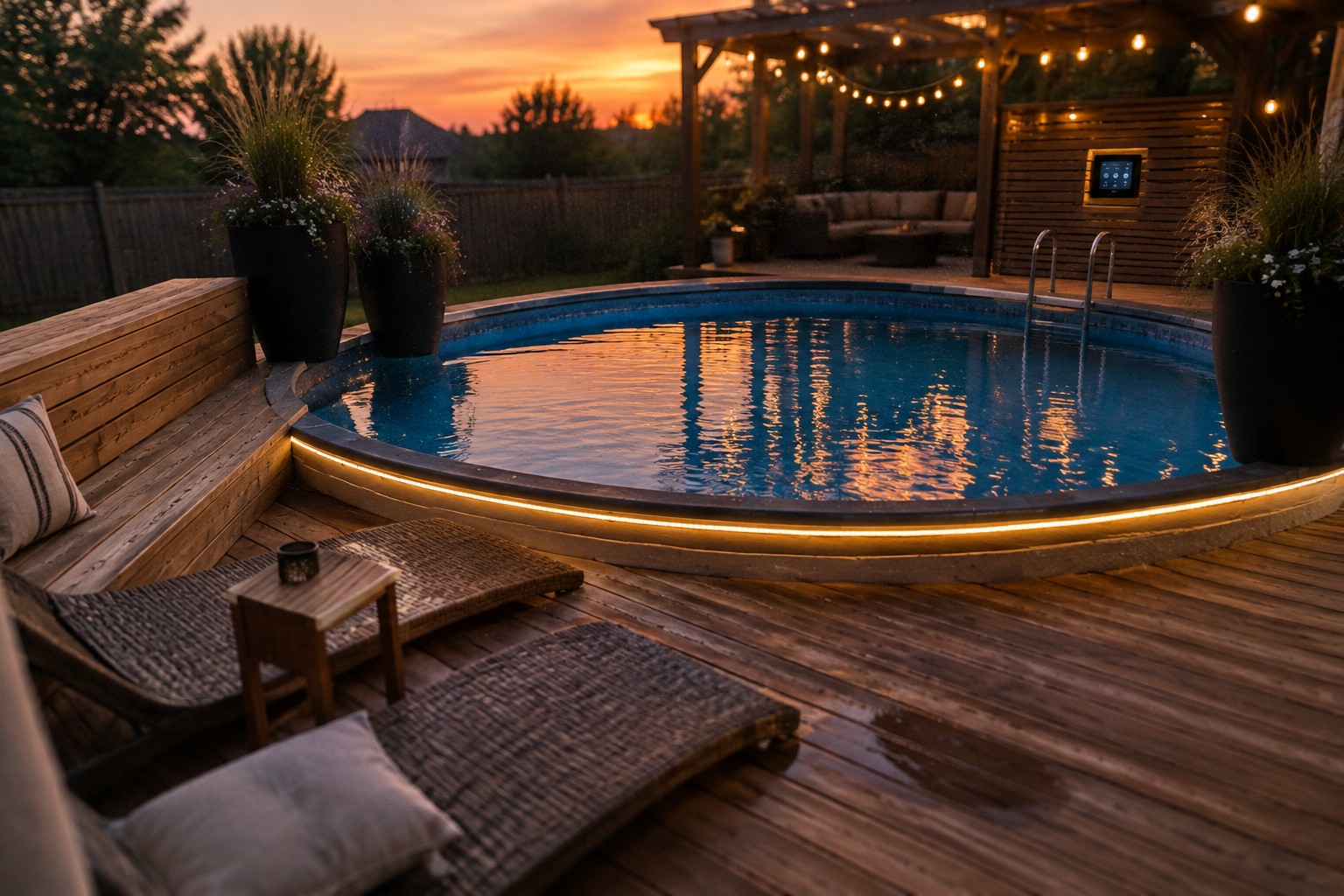
Built-In Bench Seating Around The Pool

Adding a built-in bench right along the edge of an above ground pool turns the deck into a real seating area instead of just a walkway. It gives people a place to sit without crowding the space with loose chairs, and the bench can follow the curve of the pool so everything feels connected.
This setup works well on sloped yards because the deck already needs to be raised to create a level surface. You can build the bench as part of the same structure, keep the wood consistent, and add a few cushions for comfort. Just make sure the bench height stays practical for sitting and that the deck has enough room behind it for people to walk past.
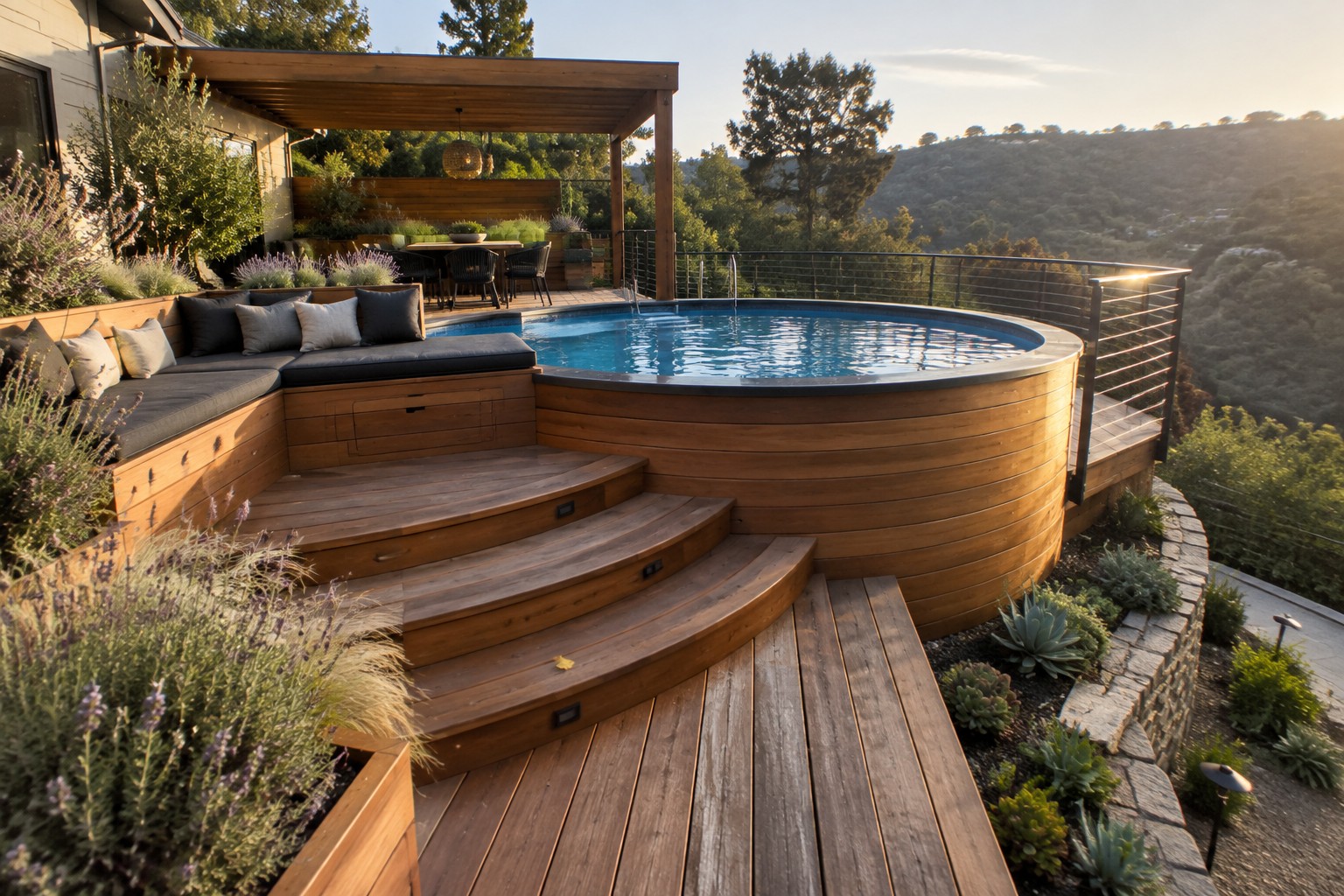
Terrace the Deck to Follow the Slope

Terracing lets the deck step down naturally with the yard instead of fighting the slope. It keeps the pool area level and safe while creating separate spots for lounging and cooking without adding tall retaining walls.
This approach works best on yards that drop away from the house. Build the main deck at pool height, then add lower platforms connected by wide steps. Use the same tile or wood throughout so the levels read as one space rather than separate patches.
Level A Sloped Yard With Decking Around An Above Ground Pool

Building a deck around an above ground pool is one of the simplest ways to deal with a sloped yard. Instead of fighting the hill, the deck creates a flat surface that makes the pool feel settled and easy to use. The wood decking also gives you space for seating right next to the water without needing a perfectly flat lawn first.
This approach works best on gentle to moderate slopes where you can step the deck down in stages. It suits homes that want the pool to feel connected to the rest of the yard rather than sitting on its own. Just watch how the deck meets the ground at the edges so it does not look like it is floating.
Raise the Deck to Create a Level Outdoor Area

A raised deck solves the main problem with sloped yards by giving you a flat surface for the pool and seating without major grading. It lets the pool sit at a comfortable height while the deck extends out over the drop, so the whole area feels stable and easy to use.
This works best on yards that slope away from the house, where you can build the deck structure to match the pool height. Keep the railing simple and use the same decking material throughout so the pool blends in rather than sitting on top of the slope like an afterthought.
Use Multi-Level Decking to Work With the Slope

A flat deck right around an above-ground pool makes the water easy to access and keeps the main seating area level. On a sloped yard, you can hold that level by building the deck structure up where needed, then letting the ground drop away in steps below it.
This works best when the drop is not too steep. Add planted beds or a gravel path at the lower level to soften the change and keep the whole space feeling connected instead of split into separate zones. The wooden deck itself stays simple and practical for walking and furniture placement.
Build A Deck With Steps Around The Pool

Wrapping an above ground pool with decking helps on sloped yards because it turns the uneven ground into usable space. The wood deck creates a flat area for sitting right next to the water while steps handle the drop in the yard so you can walk down without any awkward gaps.
This works best on smaller lots where the pool sits higher than the main outdoor area. Match the deck boards to any existing wood and keep the steps simple so the whole setup feels like it belongs instead of looking added on later.
Tiered Decking Follows The Slope

One way to handle a sloped yard around an above ground pool is to build the deck in tiers instead of forcing a single flat surface. The wood planks step down gradually and connect with short runs of stairs, which keeps the whole area usable without major regrading.
This approach works best on yards that drop away from the house or pool edge. Keep the levels fairly shallow so the steps feel natural, and use a simple railing on the steeper sections for safety.
Let the Deck Follow the Slope

One practical way to place an above ground pool on a sloped yard is to let the decking wrap around the pool and step down naturally with the land. This avoids fighting the slope with tall walls and instead turns the drop into usable space for seating and access.
The approach works best on yards that fall away from the house. Build the deck in sections so each level sits flat, then connect them with stairs built into the structure. Keep the pool itself level and let the decking create the transition.
Build Your Deck in Levels to Match the Slope

Stepping a deck down a slope keeps the pool area flat while giving you extra usable space lower down. The levels create natural zones for seating or plants without making the whole structure feel like it is fighting the yard.
This works best on gentle slopes where you can keep the pool on the top section and let the deck follow the drop. Plan the supports early so each level feels solid, and make sure the steps are wide enough to move between areas without crowding the pool edge.
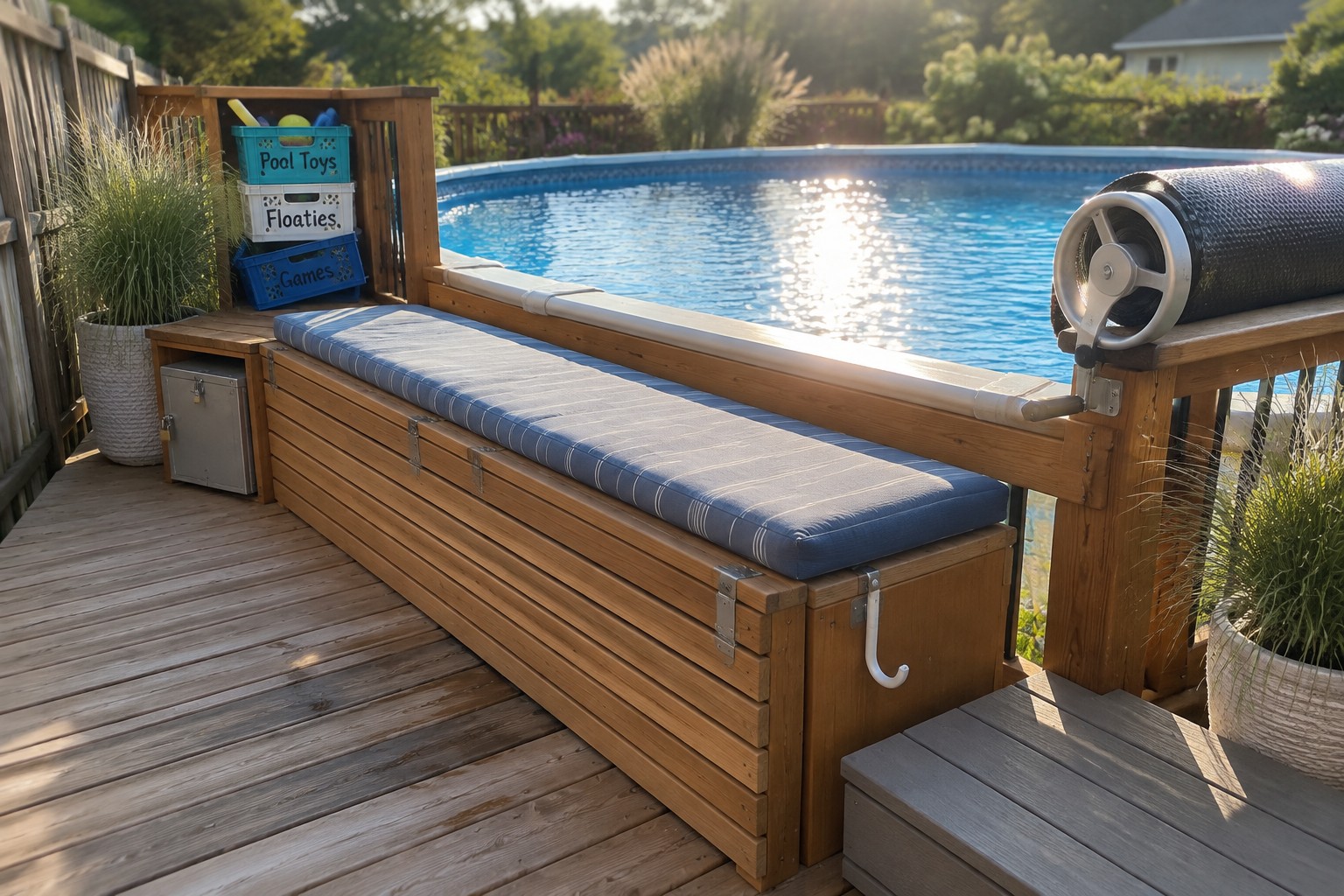
Add Under-Deck Storage Drawers

One useful move on a sloped yard is to build storage drawers right into the deck frame around an above-ground pool. This keeps towels, floats, and cushions close at hand without cluttering the walking surface or needing extra sheds. The drawers tuck neatly under the deck boards, so the main area stays open for seating and walking.
This approach works especially well when the deck sits higher on one side due to the slope. It gives you usable storage without eating into the yard below. Just make sure the drawers are sealed against weather and sized to hold the things you actually use most days.
Colorful Picket Fencing Defines the Deck

A row of bright painted fence boards can turn a basic above ground pool deck into something that feels more finished and playful. On a sloped yard the fence also helps mark the edge of the usable space without needing a tall wall that would block the view.
It works especially well in family yards where you want the pool area to feel separate but still open. Paint old fence pickets in several colors or buy them ready made, then keep the rest of the deck simple so the fence stays the main feature.
Build a Deck Platform to Handle the Slope Around the Pool

An above ground pool on a sloped yard often needs extra support to feel stable and usable. Adding a wide wooden deck around it creates a flat surface for seating and walking, so the pool does not sit alone on uneven ground.
This approach works well on backyards that drop away from the house. You can frame the deck to the height of the pool walls and add planters or benches along the edge without major regrading. Just make sure the footings are set deep enough to stay solid over time.
Raised Decks for Level Pool Surfaces on Sloped Yards

Building a solid deck platform lets you place an above ground pool on a hillside without fighting the grade. The deck extends out from the higher ground and creates a flat, stable surface while the slope below stays mostly untouched. This approach keeps the pool area usable and avoids major excavation.
It works best on yards with a moderate drop where you can tuck a simple path or steps underneath. Keep the deck material consistent with any railings or screens so the whole setup feels like one structure rather than an add-on. Watch how water will drain around the base so the lower garden stays dry.
Retaining Walls Level Pool Decks on Slopes

Above ground pools often sit on uneven ground, and a simple stone retaining wall can fix that problem fast. The wall holds back the slope right at the pool edge, giving you a flat deck surface without needing to regrade the whole yard.
This setup works best on moderate slopes where you want the pool to feel built in rather than perched on top. Keep the wall height low, match the stone to your site, and run the deck off the top so everything reads as one level space.
Building a Level Deck Around an Above Ground Pool

One way to deal with a sloped yard and an above ground pool is to run a full deck around the pool at one consistent height. This creates a flat, walkable surface that ignores the drop in the ground below it. The deck becomes the main living area instead of fighting the slope.
This approach suits homes where the yard falls away from the house or pool. You can add steps at the edge to reach lower garden areas, and the deck itself gives you room for seating without needing to level the whole site. Just make sure the structure is properly supported on the low side so it stays solid over time.
Terraced Steps Help With Sloped Pool Decks

Many sloped yards make it hard to create a flat, comfortable spot next to an above-ground pool. Terraced steps let the deck follow the land instead of forcing everything onto one level. This keeps the space usable without major grading work.
The steps also become part of the seating area when you add lighting along the edges. This setup works well on yards that drop away from the pool or house, and it keeps foot traffic safe once the sun goes down. Just make sure the materials match the deck so everything feels connected.
Tier the Deck to Work With the Slope

Building the deck in tiers lets you keep an above-ground pool level even when the yard drops away. The wood platforms step down gradually, so you get flat seating areas and easy access without fighting the hill. It feels more natural than forcing everything onto one flat plane.
This approach works best on moderate slopes where you still want the pool as the main feature. Use pressure-treated lumber or composite boards that handle moisture, and make sure the lower tiers have good drainage so water does not pool under the structure.
Frequently Asked Questions
Q: How do I make sure the deck stays level on a slope?
A: Dig post holes at varying depths so the tops all sit even. Brace them with concrete at the base for extra hold. Then lay your joists flat across the top.
Q: Will rain cause problems under the deck?
A: Grade the soil to direct water away from the pool area first. Lay down landscape fabric and gravel before the deck boards go on. This stops puddles from forming and keeps the wood dry.
Q: How can I add steps without wrecking the look?
A: Build steps from the same boards on the low end. Keep them narrow to match the deck style.