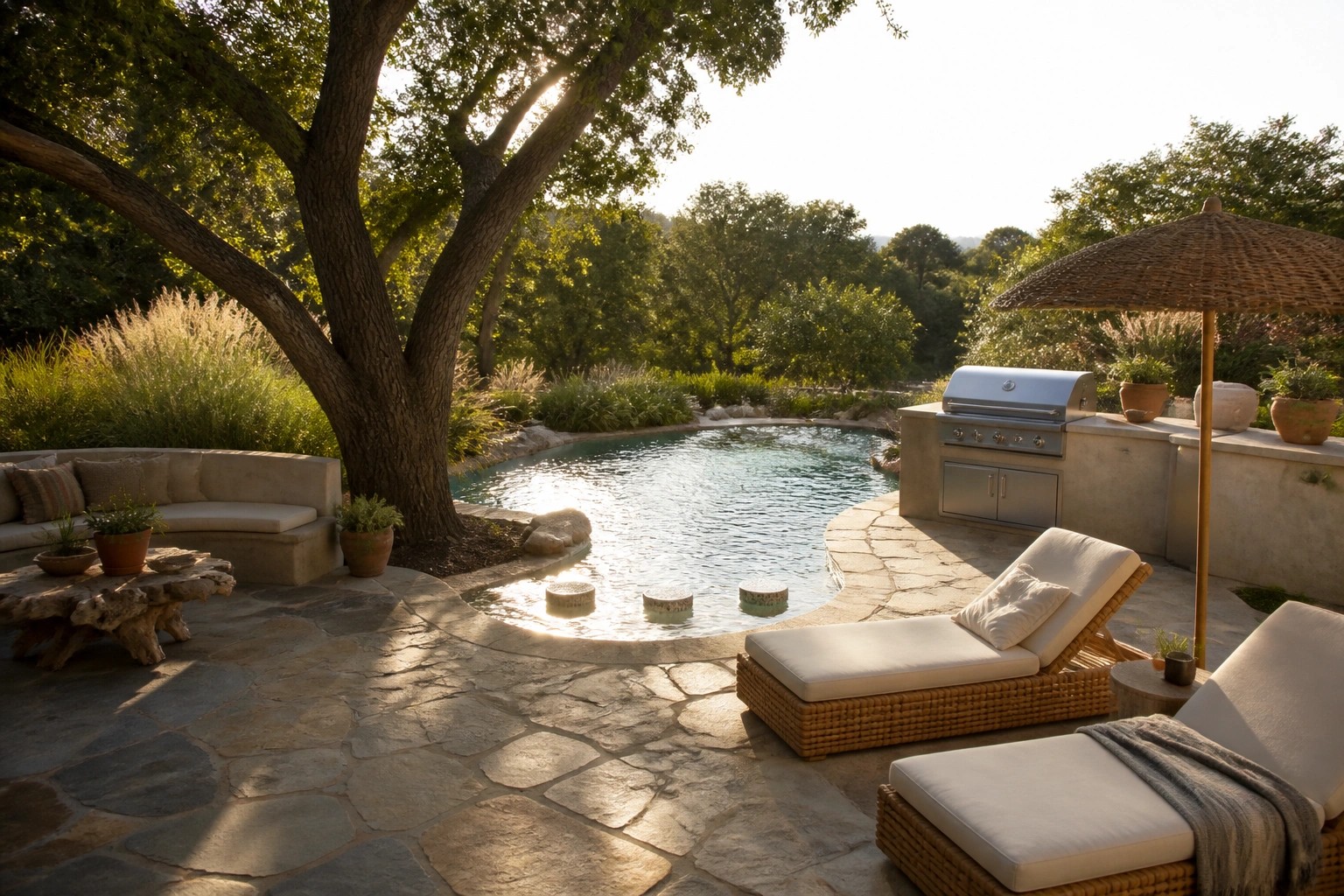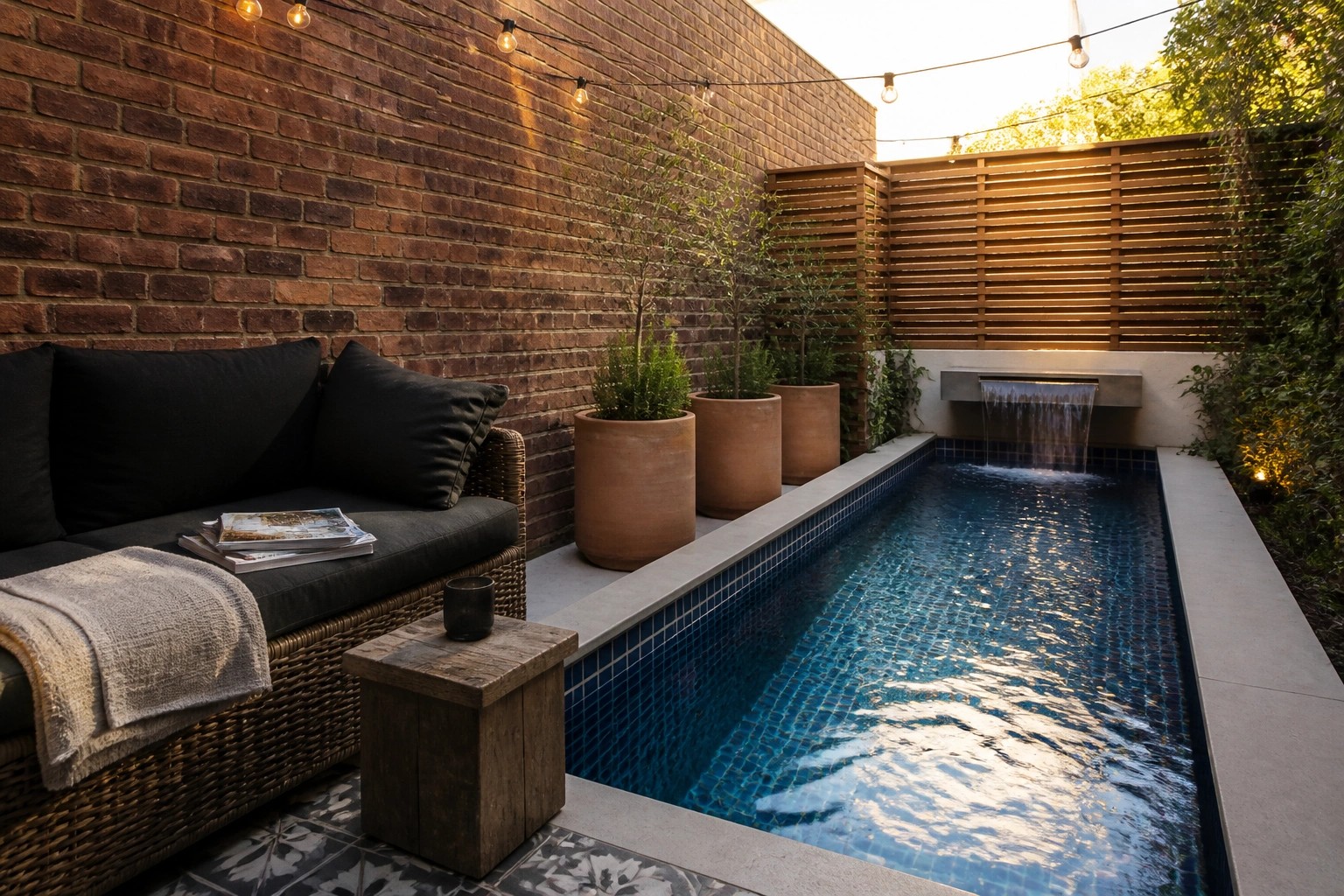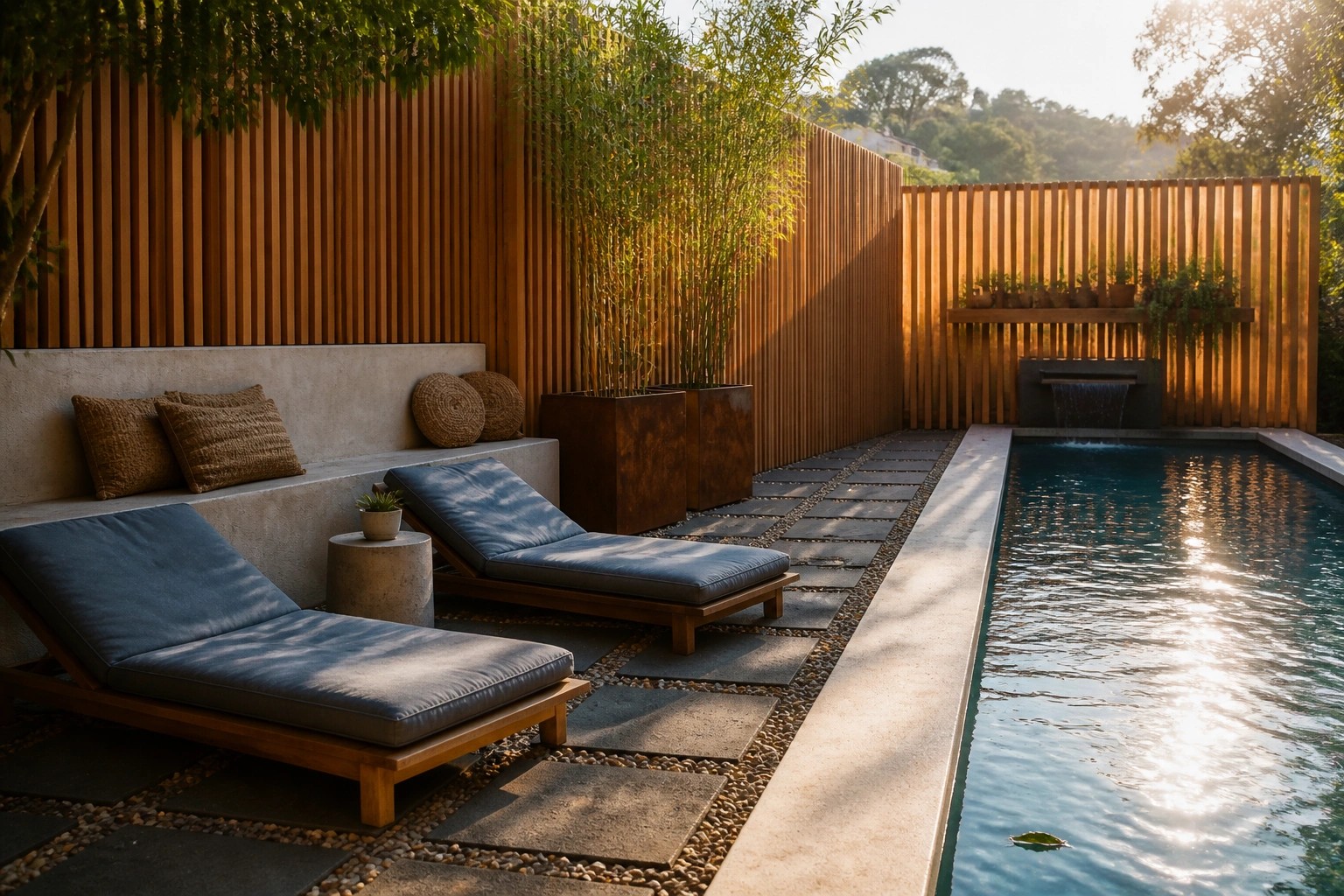
I have found that pool patios often lose their appeal when privacy screens cut off too much daylight and make the space feel enclosed during the day.
Many setups look fine on paper yet end up blocking the very light that keeps the area comfortable for lounging or swimming.
Light matters more than most expect.
When I adjust my own patio I check how each screen option casts shadows at different hours before committing to anything permanent.
Solutions that filter views while letting light through tend to stay practical once the space sees daily use through changing weather.
Vertical Slat Screens For Pool Privacy
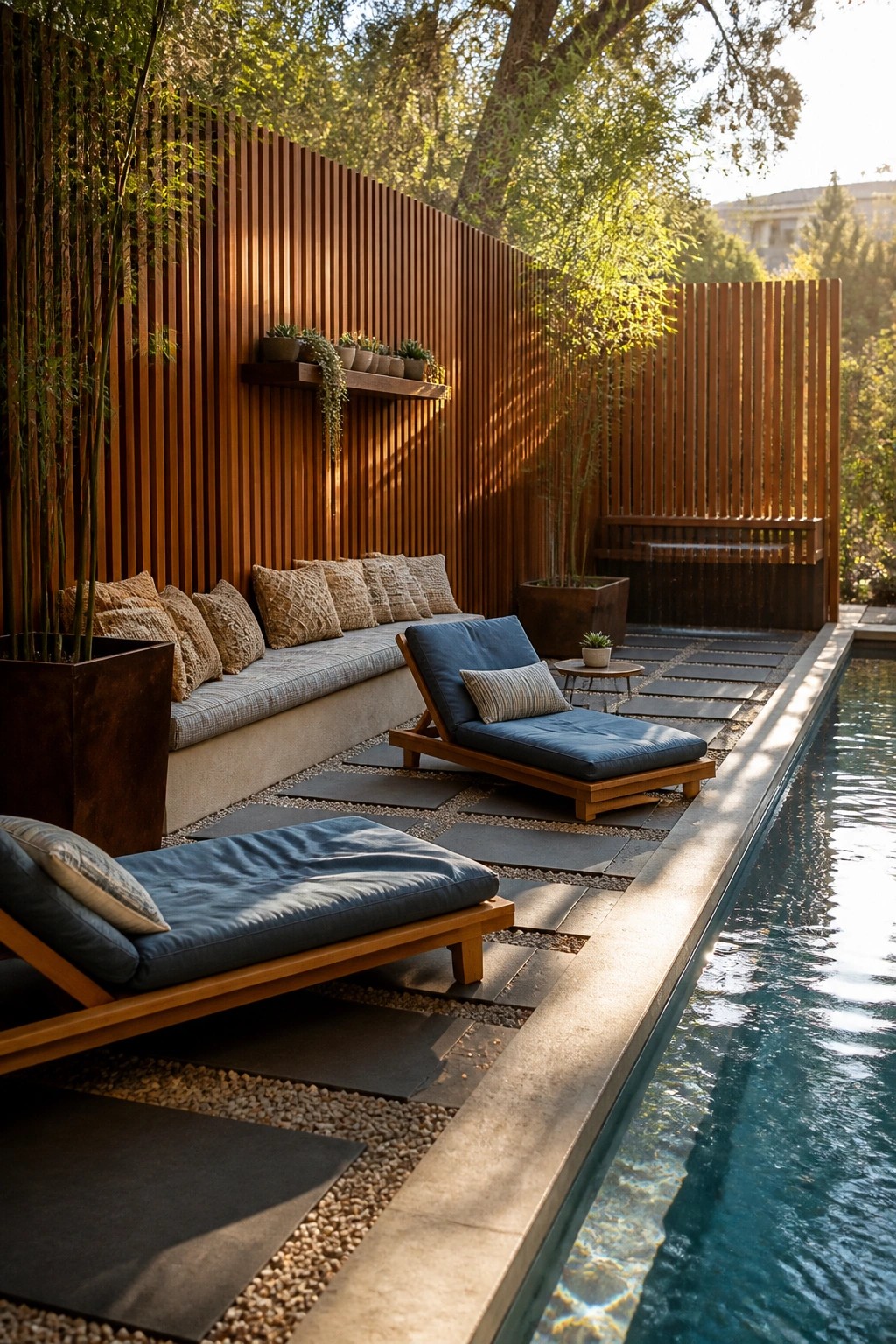
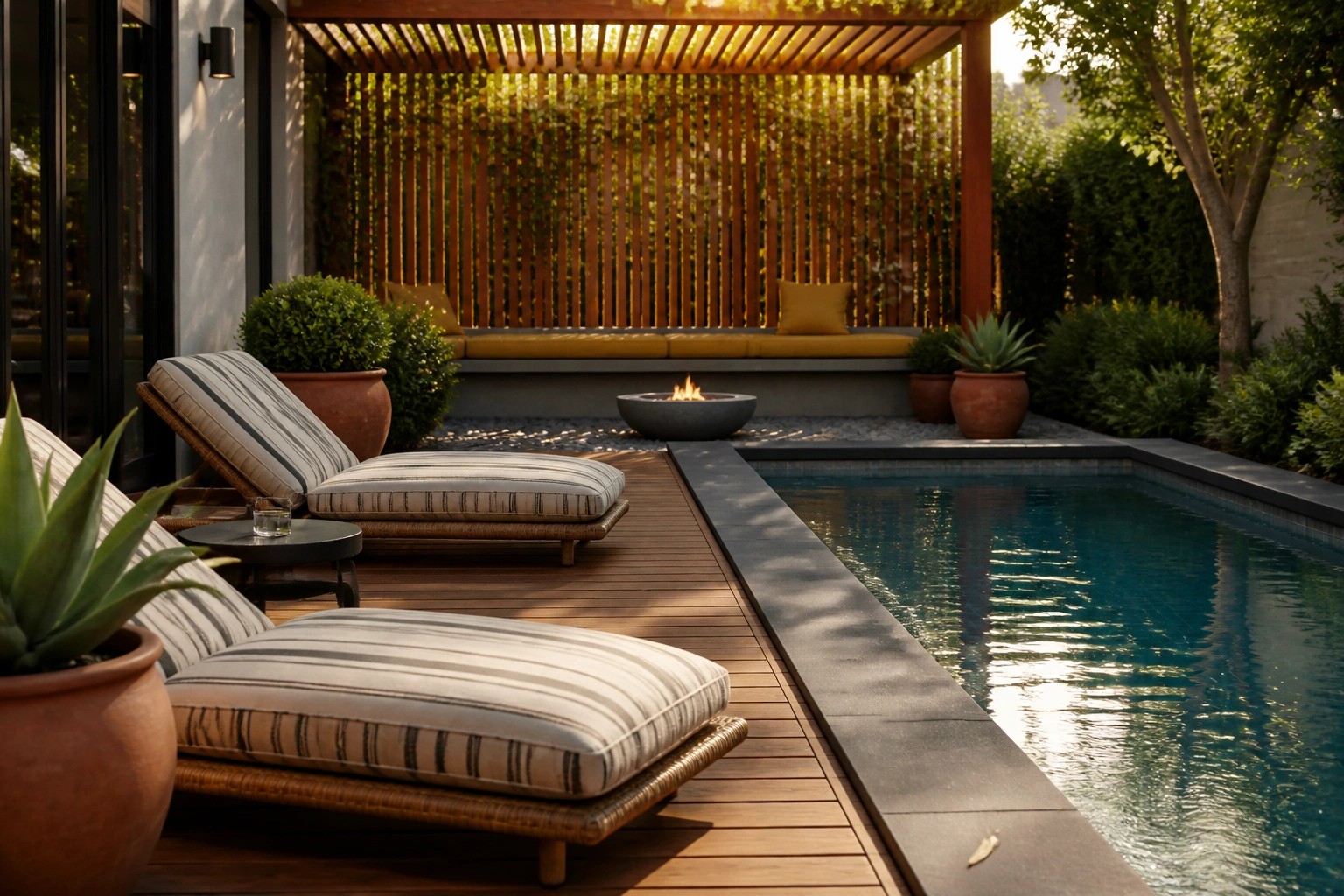
Many pool areas sit too close to neighboring homes or streets, so some kind of screen helps the space feel usable. Vertical wood slats handle this without creating a solid wall that blocks sun or air.
Set the slats on the side that needs the most coverage and leave gaps between the boards. They pair well with a few tall plants in large pots so the screen feels less harsh over time.
Horizontal Slat Fencing for Pool Privacy
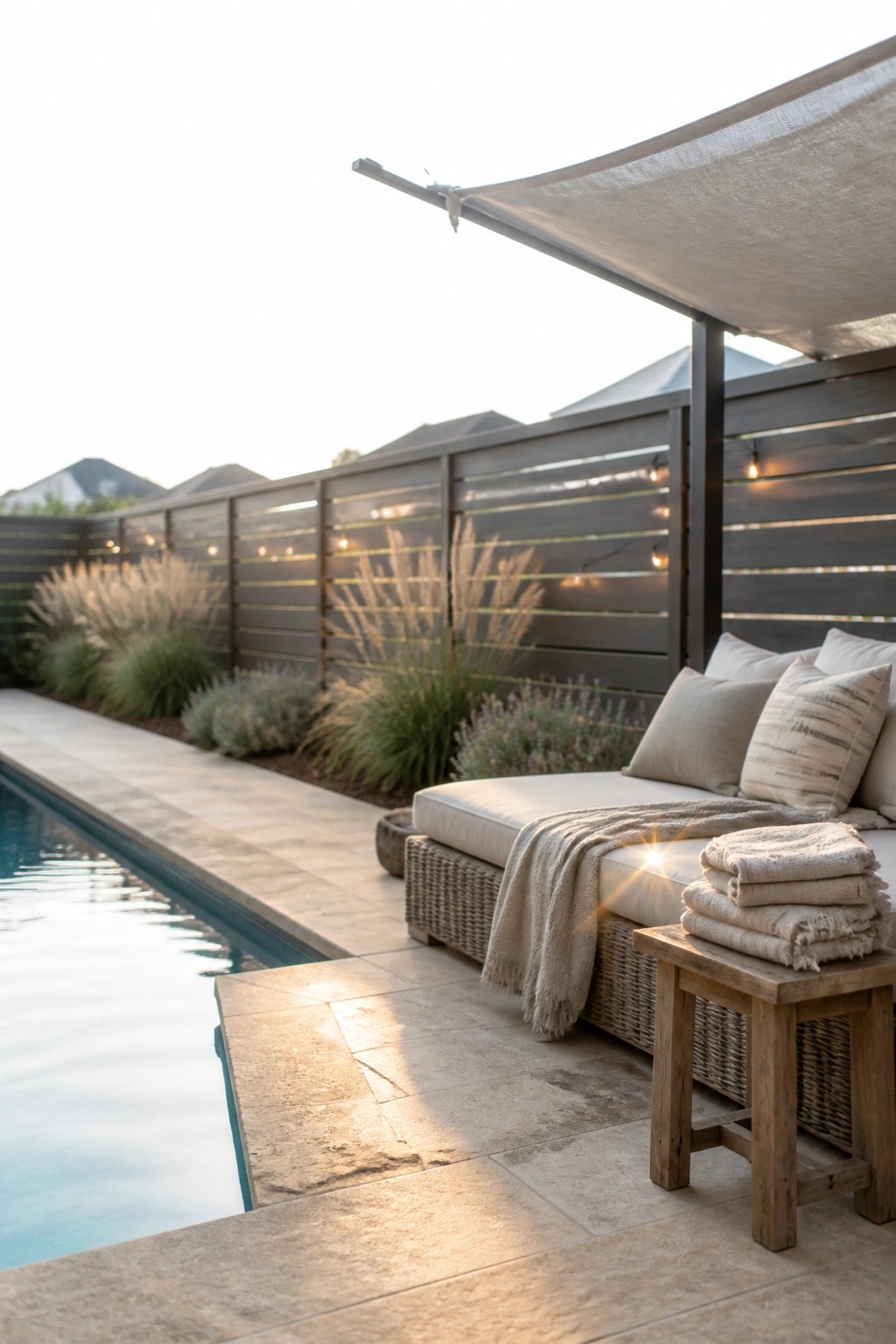
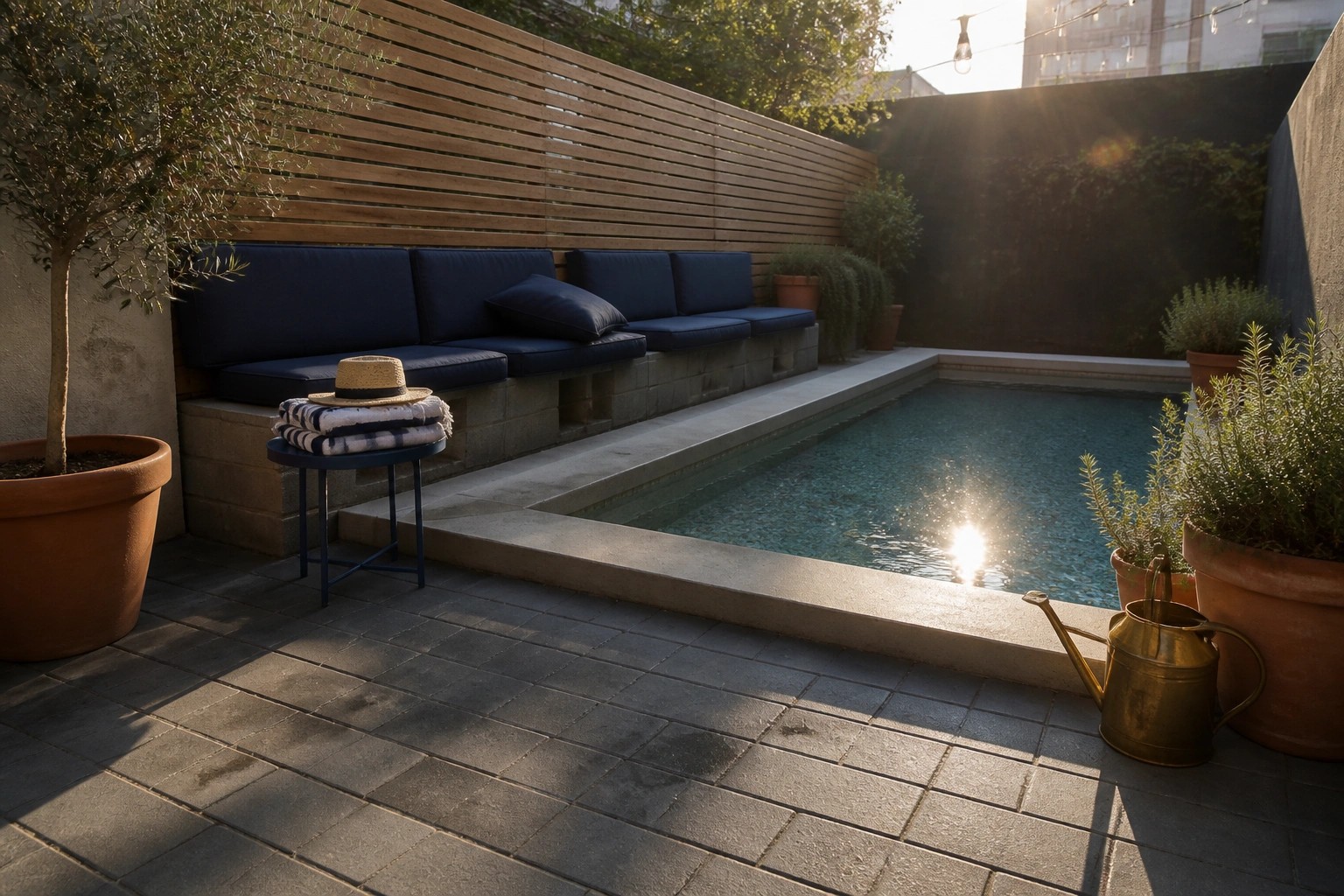
Horizontal slat fencing works well around pools because it blocks the view from the street or neighbors without making the space feel closed off. The gaps let light and air move through, so the patio stays bright even when the fence runs along the full length of the yard.
This style suits homes with smaller lots or close neighbors. Keep the slats a dark color so they blend into the background, and add a few low shrubs in front if you want a bit more screening without losing the open feel.
Use a Translucent Roof Over the Poolside Walk
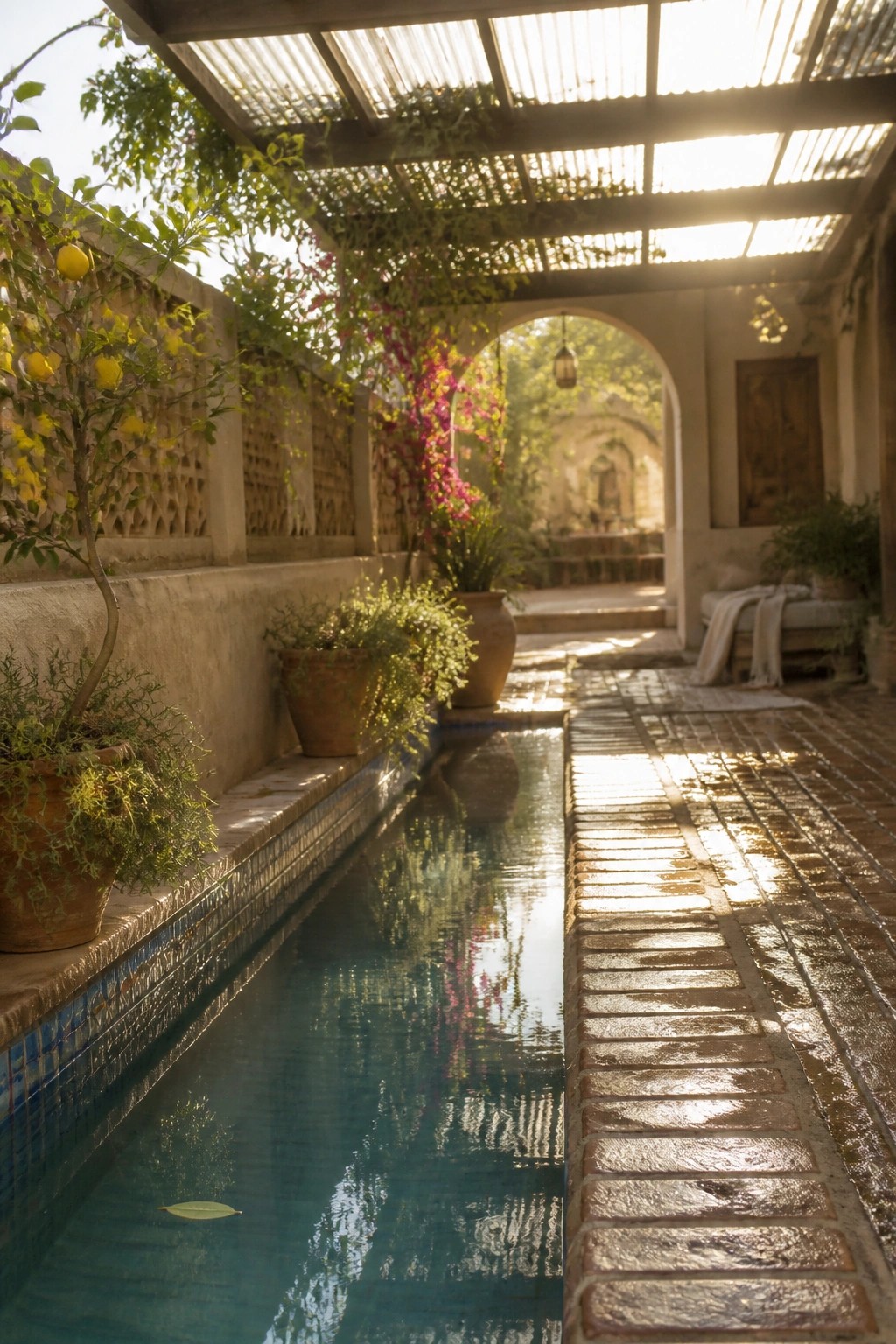
A translucent roof works well when you want to define the pool area and cut down on direct overhead views without turning the space dark. It lets sunlight reach the water and the paving while still giving a sense of enclosure along the length of the pool.
This approach suits narrow courtyards or side-yard pools where full shade would feel too closed in. Place the structure along one edge so plants and low walls can handle side screening, and keep the roof material simple so light stays bright throughout the day.
Bamboo Slat Fencing for Pool Privacy
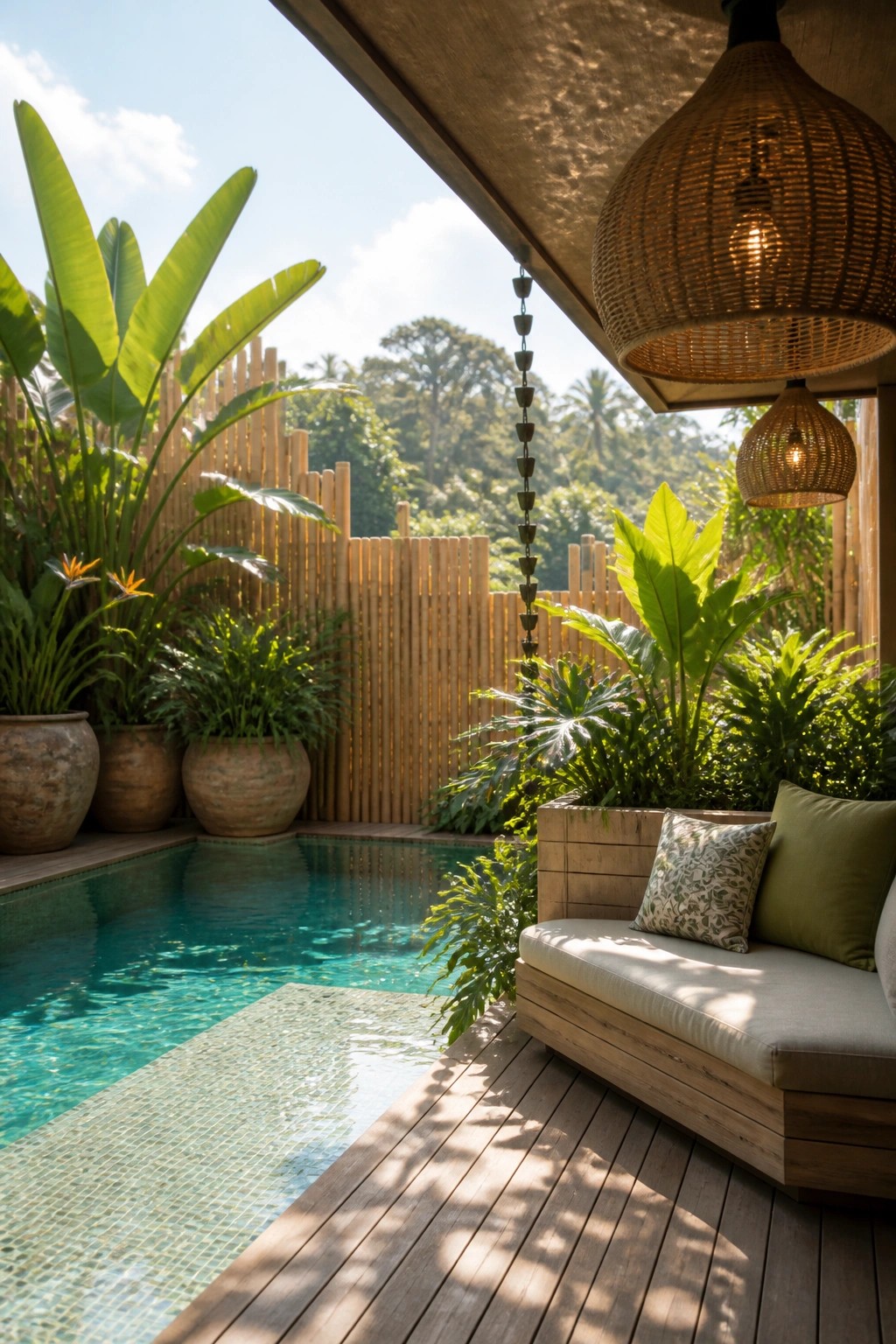
A simple vertical bamboo screen can give a pool patio real privacy without turning it into a closed-off space. The gaps between the poles let sunlight and breezes pass through while cutting off the view from outside.
This works best in backyards that already have some natural planting around the edges. Add a few taller pots in front of the fence if you want a bit more coverage, but keep the structure open so the area still feels light.
Perforated Metal Screens For Pool Privacy
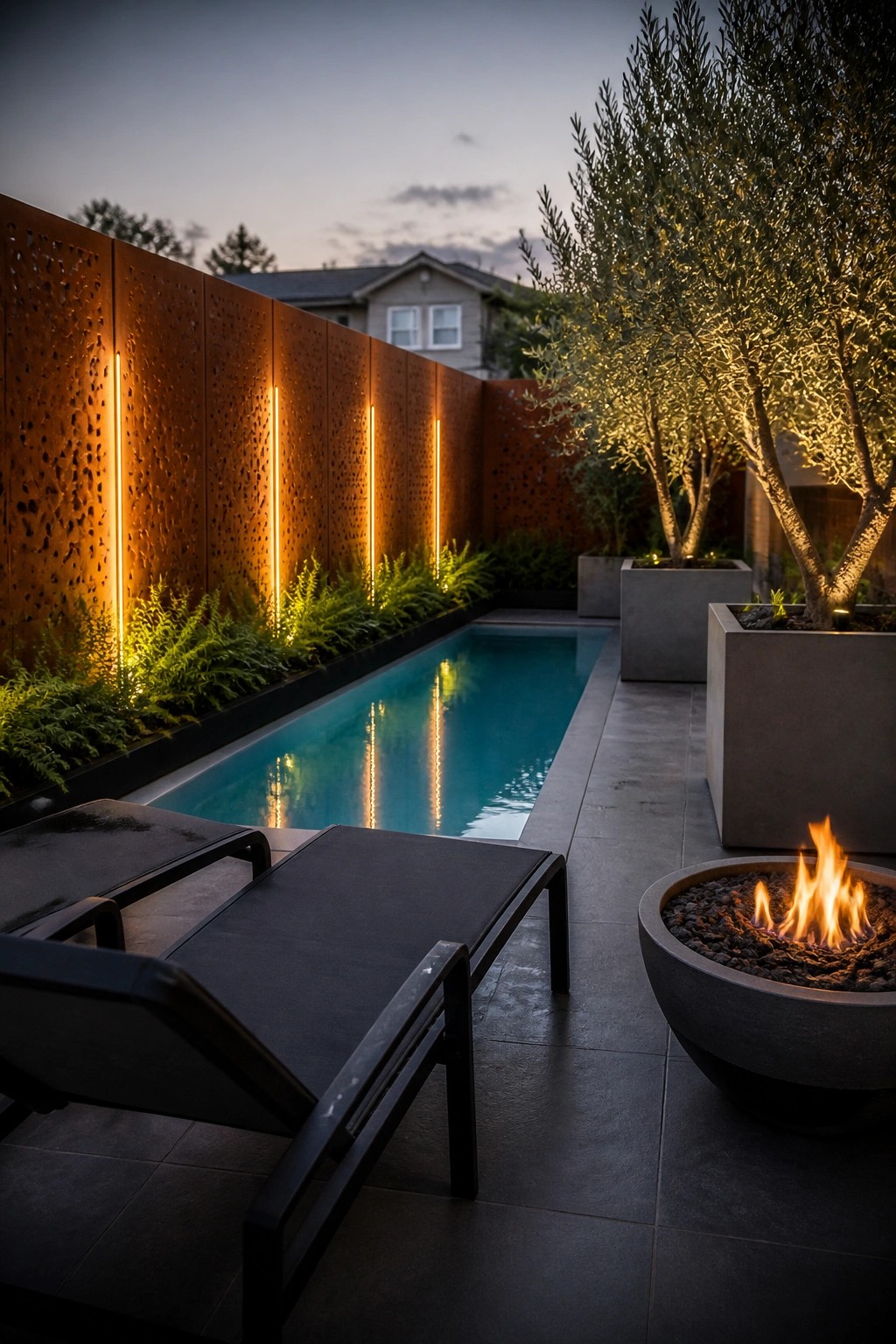
A perforated metal wall works well when you want privacy around a pool without making the space feel closed in. The holes let light and some view through while still blocking the direct line of sight from neighbors or the street. Vertical lights tucked into the panels add a soft glow at night that keeps the area usable after dark.
This approach fits best on narrow side yards or small backyards where a solid fence would feel too heavy. Use a rust finish or dark tone so it blends with the landscape rather than standing out. Make sure the holes are not too large or the privacy effect drops off quickly.
Raised Planters For Pool Patio Privacy
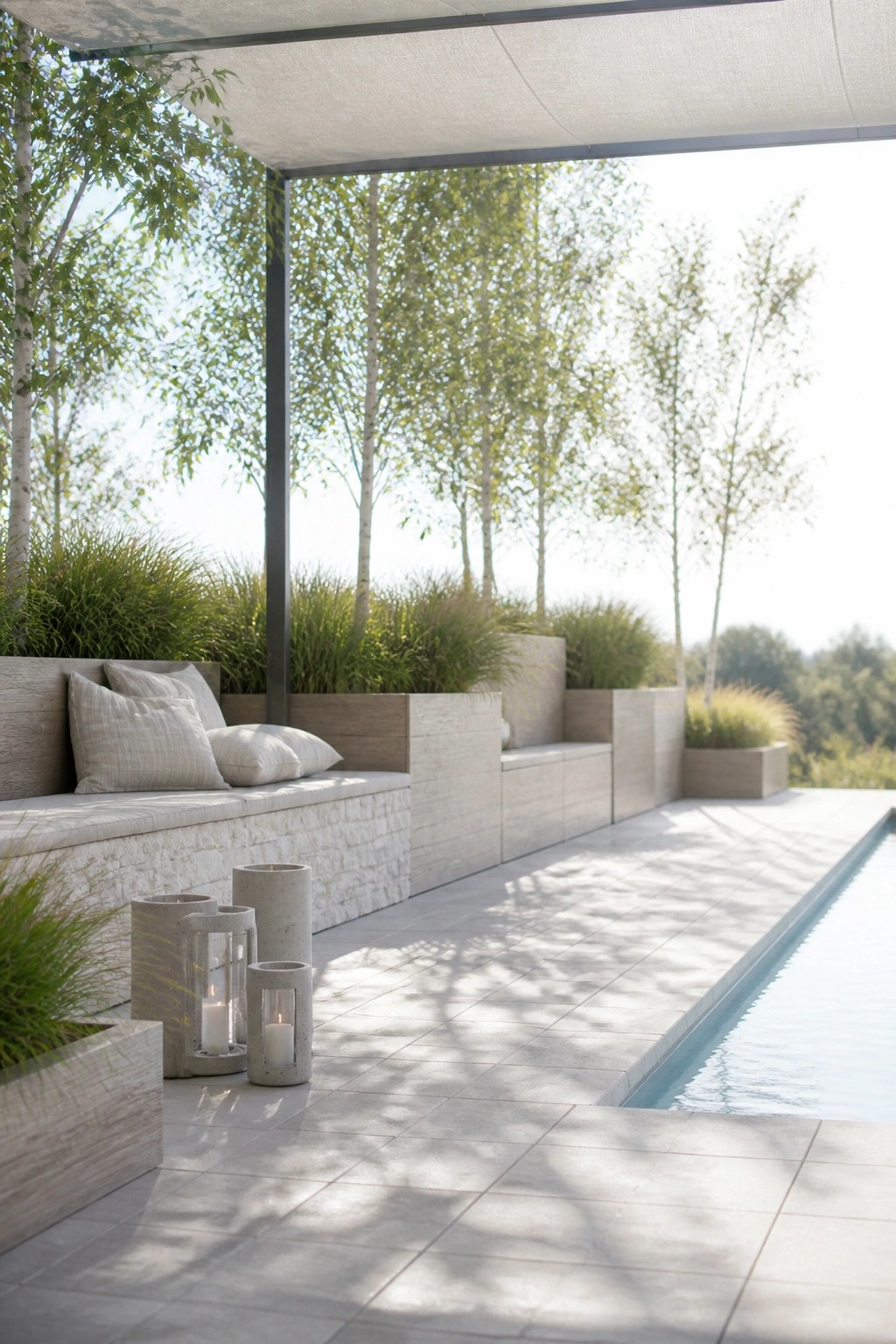
Raised planters work well along the edge of a pool patio because they block unwanted views without putting up a solid wall. The concrete boxes hold tall grasses and small trees that grow just high enough to screen the space while still letting light through and keeping the area feeling open.
This setup suits homes with flat lots or side yards that sit close to neighbors. Place the planters to follow the shape of the seating or deck edge so the plants become part of the layout instead of an afterthought. Keep the boxes low enough that they do not cast heavy shade on the pool.
Lattice Fencing With Vines
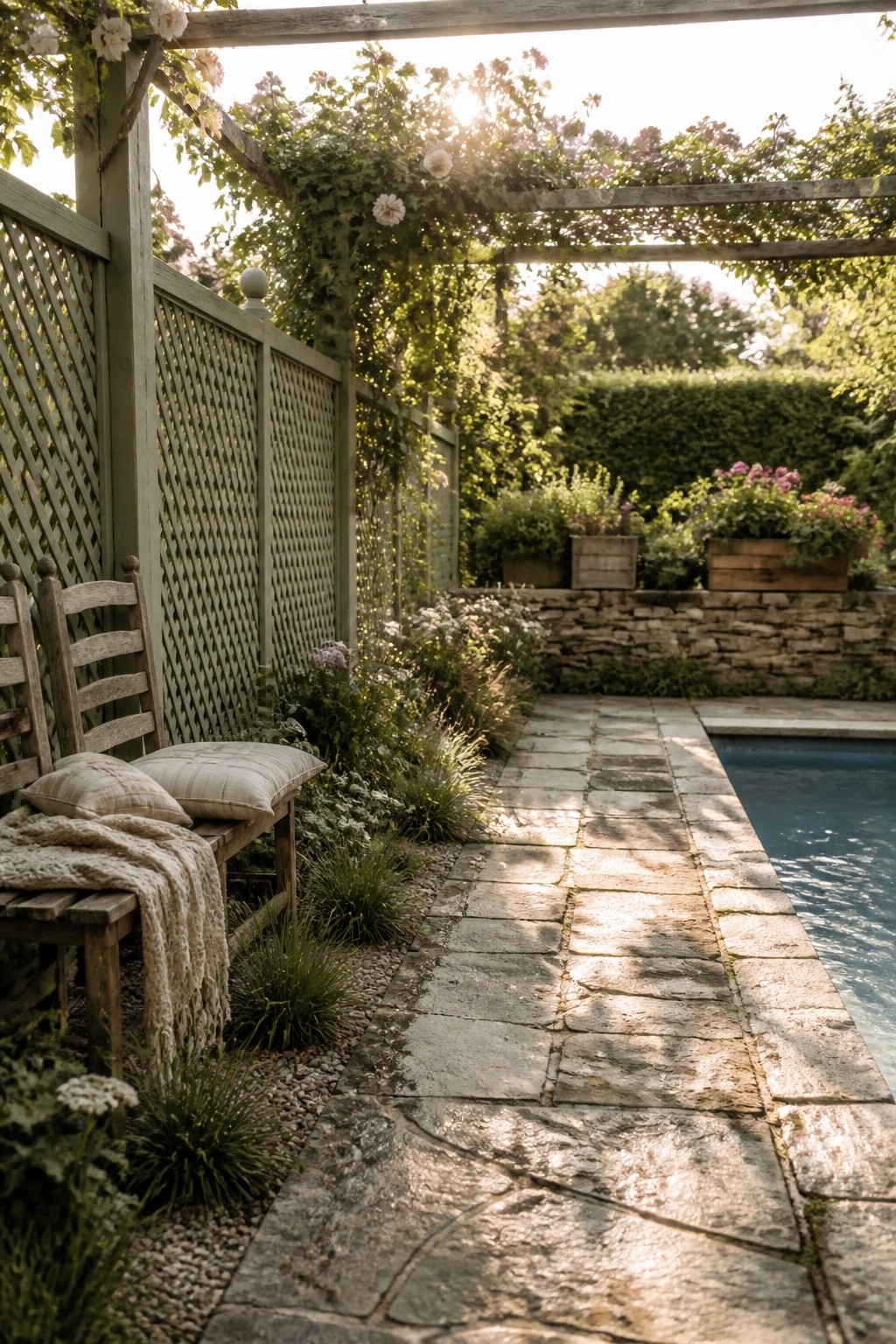
Lattice panels paired with climbing vines give you privacy around a pool without cutting off the light. The open grid lets sun and air move through while the plants slowly fill in to block the view from outside.
This setup works best along one edge of the patio or beside a path where you need a soft screen rather than a solid wall. Choose vines that stay manageable and check that the fence is sturdy enough to hold them as they grow.
Frosted Glass Panels For Poolside Privacy
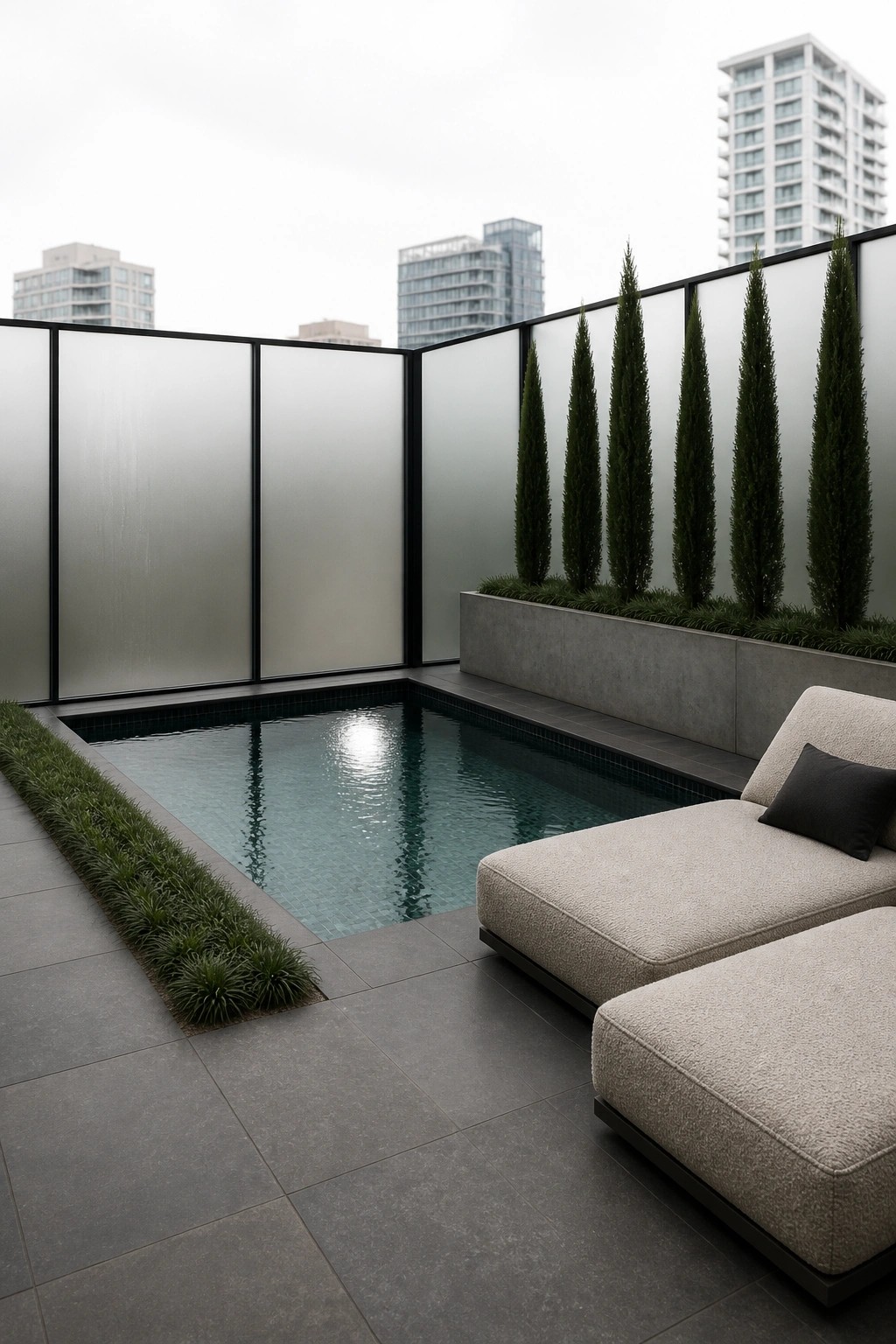
Frosted glass panels work well along the edge of a pool patio when you want to block views from nearby buildings without losing all the natural light. They create a clean screen that still feels open, especially on rooftops or tight urban lots where full walls would make the space feel closed in.
This approach suits modern homes with small outdoor areas or anyone who wants a bit more seclusion while keeping the pool area bright. Pair the panels with a few tall plants in front if you want extra softness, but keep the overall layout simple so the space does not feel crowded.
Lattice Panels For Pool Privacy
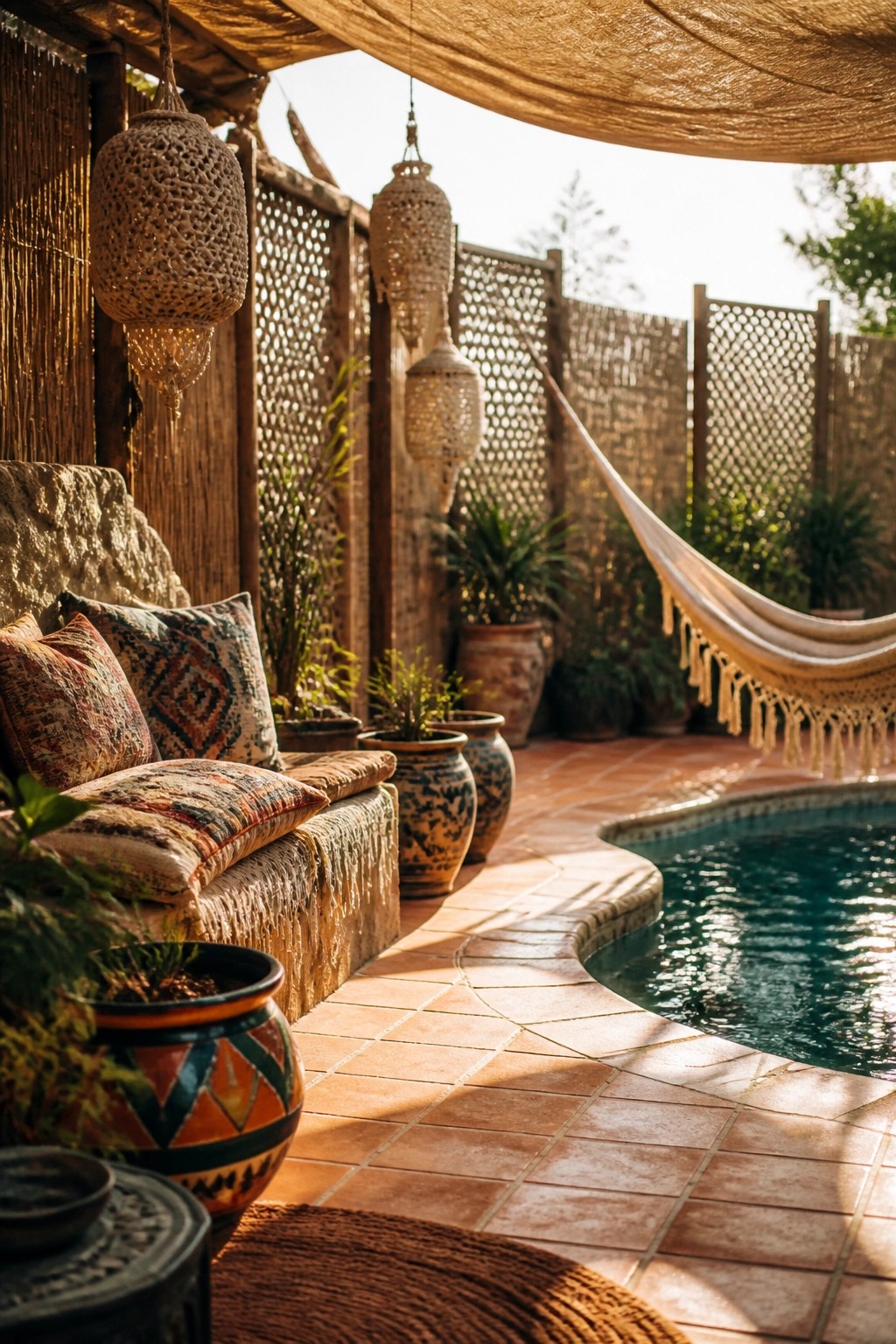
Lattice fencing gives you a simple way to screen a pool patio without cutting off all the light. The open pattern blocks direct views from outside while still letting sunlight and air move through the space. It feels more open than a solid wall but still creates enough privacy for most backyards.
Run a few panels along the sides or back of the patio where you need the screening most. This works especially well in smaller yards or when neighbors are close. Pair it with a few hanging lights or plants if you want a bit more softness without adding bulk.
Lattice Fencing With Layered Planting
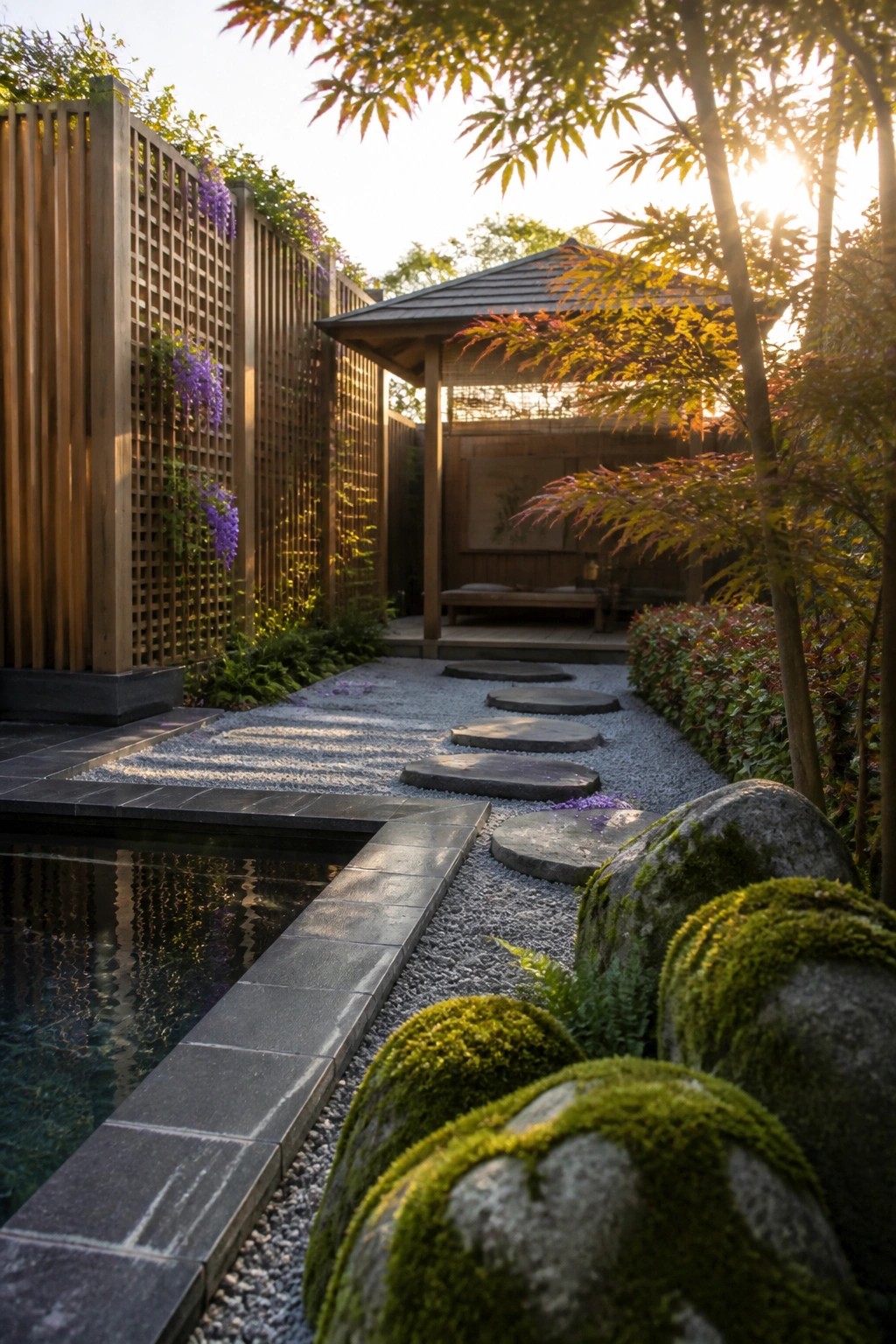
Lattice panels combined with climbing plants give pool areas a soft screen that still lets plenty of light through. The open grid keeps the space from feeling boxed in, while the vines and layered shrubs build enough coverage to block views from outside.
This approach works best along the edges of a pool patio or garden path where full solid fencing would cut off too much sun. Keep the planting dense at the base and let it grow upward so the screen feels natural rather than built.
Use A Fabric Screen With Tall Plants
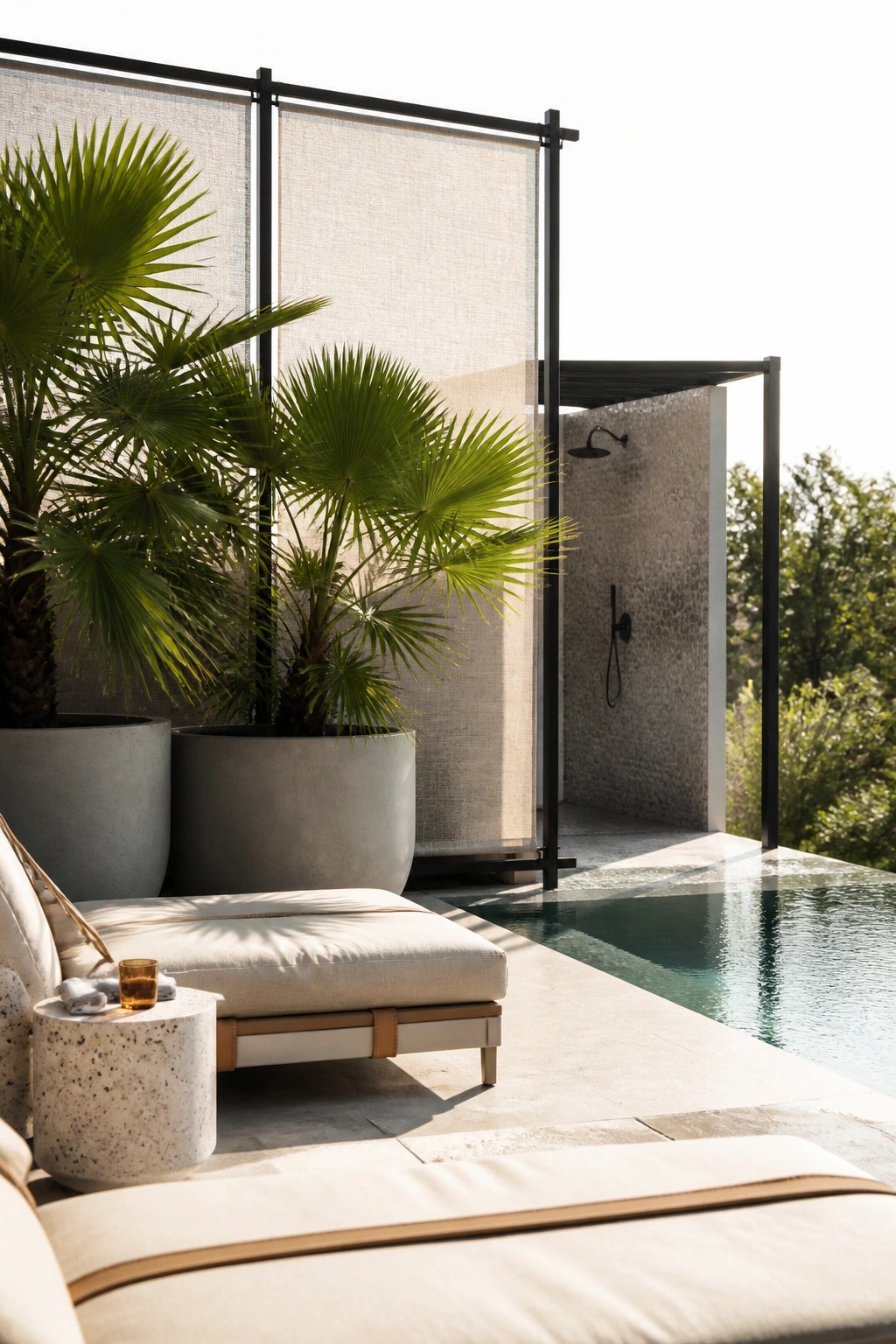
A simple framed screen paired with large potted plants gives pool areas privacy without turning them dark. The fabric lets light pass through while the plants add height and block direct views from outside.
This setup works well on patios that sit close to neighbors or open yards. Place the screen where you need the most coverage and set the plants in front or behind it so the two layers work together. Keep the frame slim so it does not feel heavy.
Lattice Screens For Pool Patio Privacy
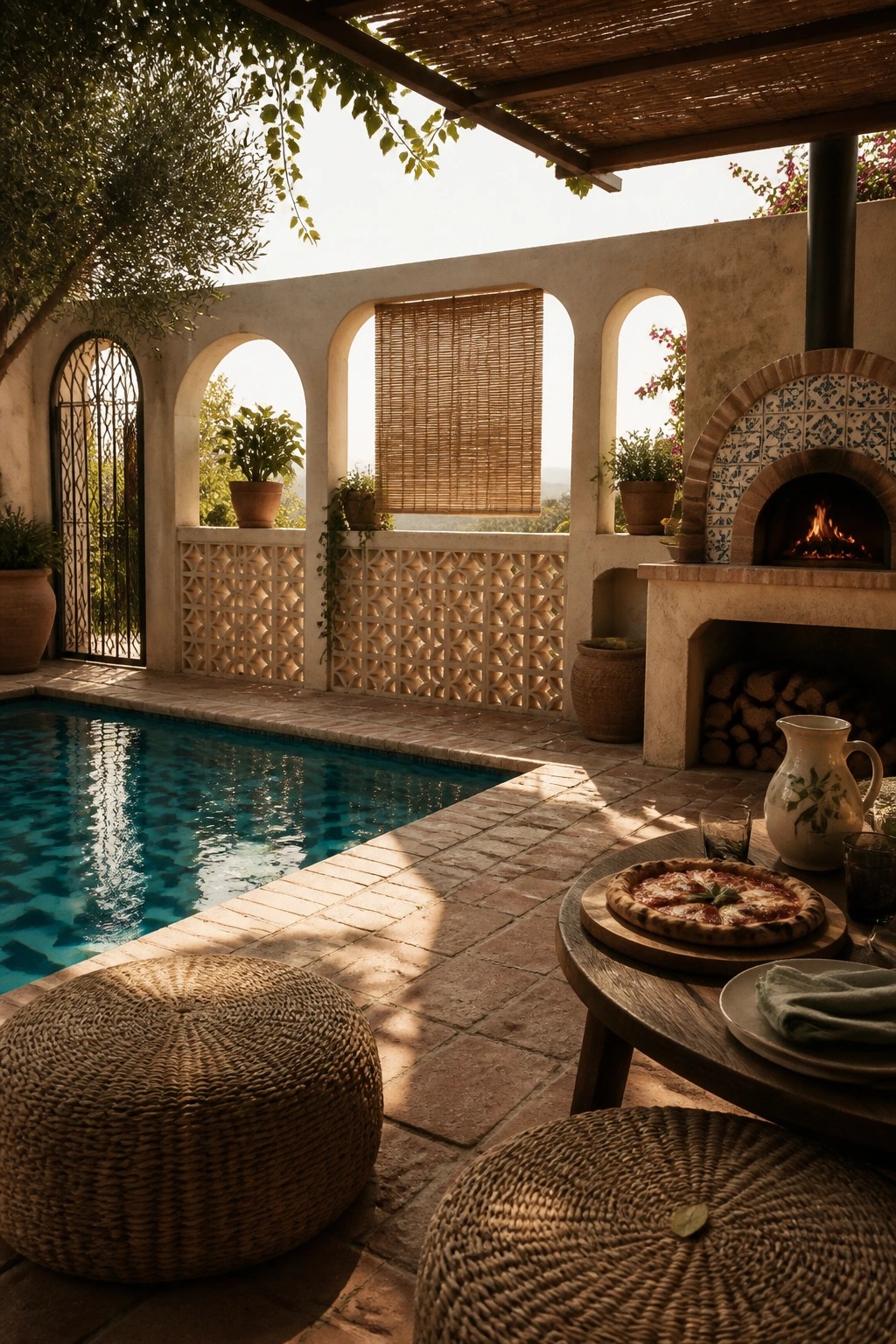
Lattice walls work well along pool patios because they break the line of sight without turning the space into a closed box. The open pattern lets sunlight and breezes pass through while giving enough cover from neighbors or the street. Many people like this approach because it feels lighter than solid fencing yet still creates a clear boundary.
This works best on patios that already have some architectural structure, like arches or low walls. Place the lattice where it lines up with seating areas or the pool edge so the privacy feels intentional rather than added on. Keep the openings above the lattice clear or use a light roll down shade only when needed so the light stays consistent throughout the day.
Slatted Screens With Tall Planters
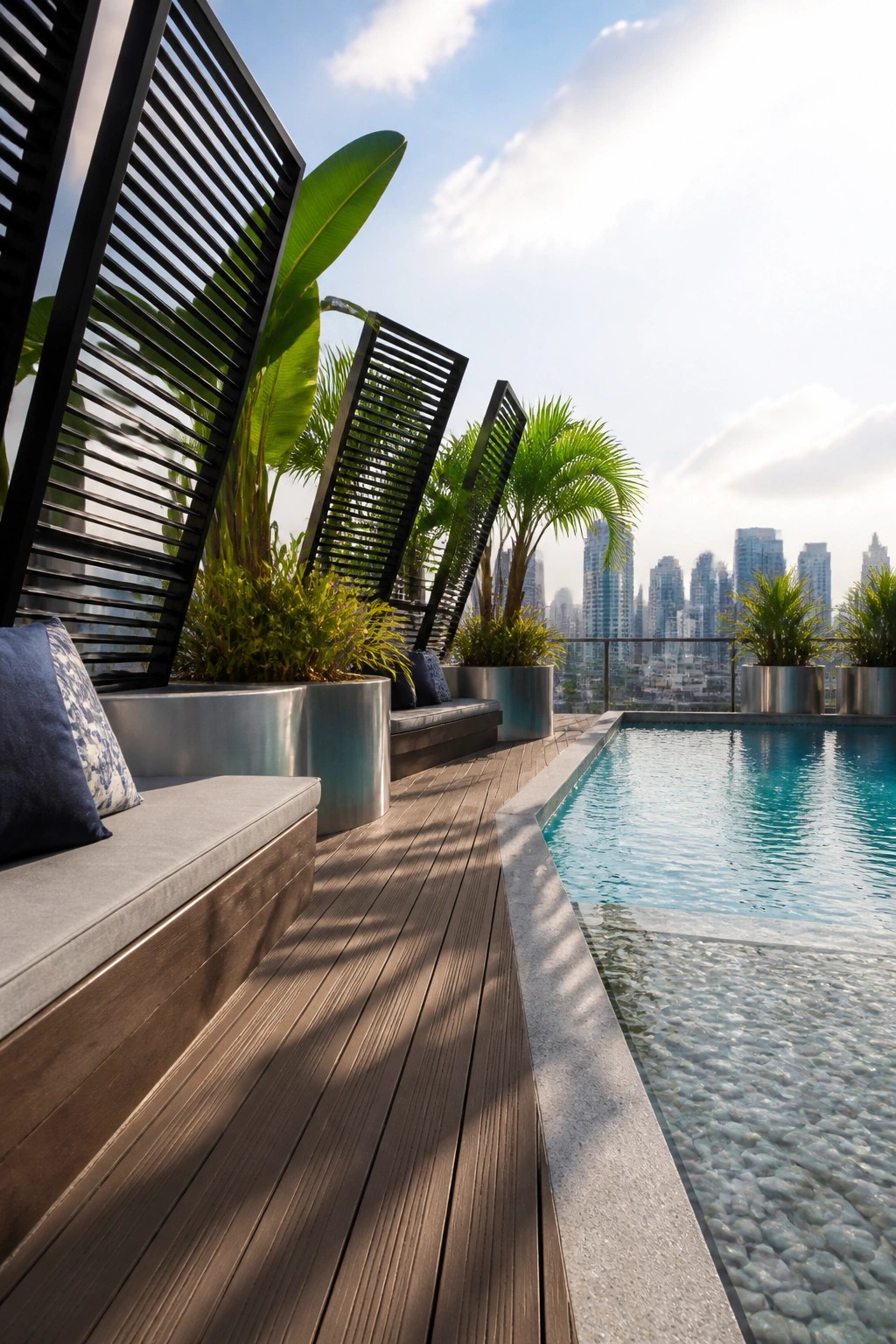
Tall planters paired with slatted screens give you privacy along a pool edge without turning the space dark. The slats let light and air through while the plants add height and softness that feels more natural than a solid wall.
This setup works best on rooftops or decks where you need to block neighboring views but still want an open feel. Keep the planters wide enough for larger plants and angle the slats so they sit slightly behind the foliage for the best screening effect.
Grow Living Arches for Poolside Privacy
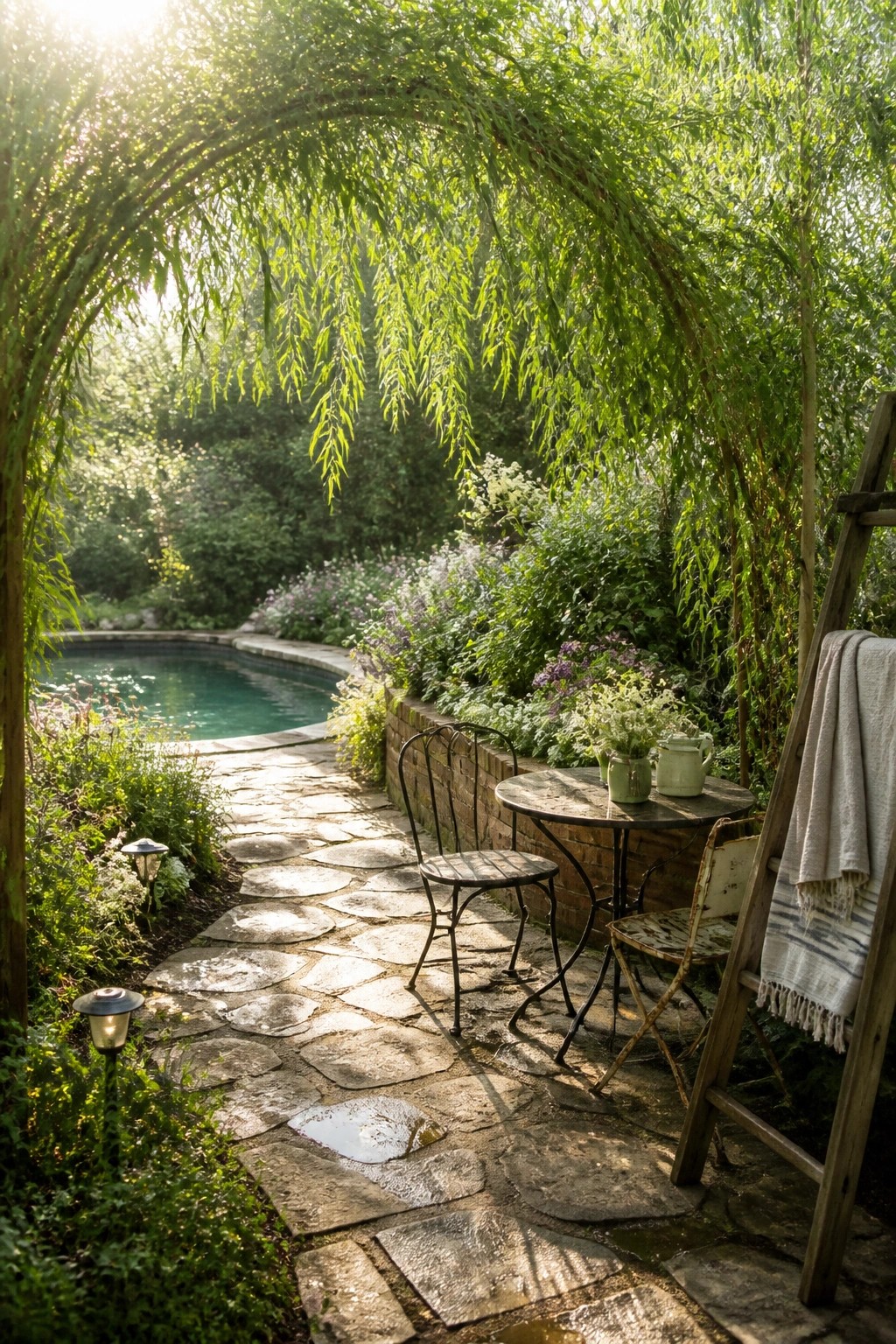
Planting trees that naturally arch over a seating area gives you a soft screen without putting up solid walls or heavy structures. The branches filter sunlight so the space stays bright while still cutting down on direct views from outside. This works especially well next to pools where you want a bit of enclosure but still need light for plants and people.
It suits homes with room to let branches spread and a stone or gravel path to guide the eye. Keep the lower growth trimmed so the arch stays open underneath, and choose varieties that leaf out enough to block sight lines but not so dense they turn the spot dark. A few well-placed lights along the path help at night without adding fixtures overhead.
Patterned Concrete Screens Work Well Around Pools
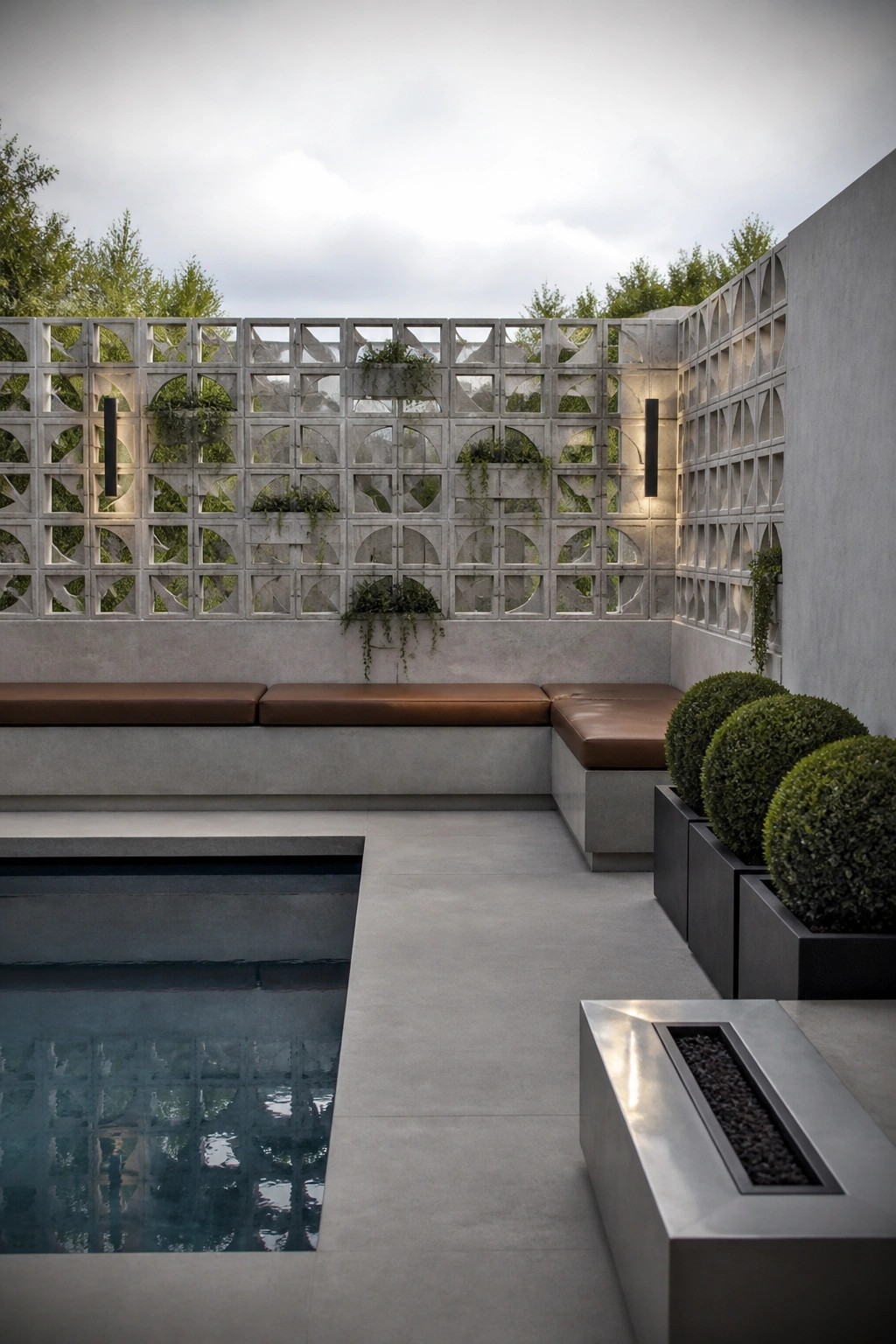
A patterned concrete screen like this gives you solid privacy while still letting plenty of light reach the patio. The open geometric blocks filter views from outside without turning the space into a dark corner. It also creates a nice backdrop for seating and plants without needing extra fencing or tall hedges.
This approach works best on pool patios or side yards where you want separation but still need daylight. Keep the blocks in a light tone so they reflect light instead of absorbing it. Add a few hanging plants through the openings if you want a softer look, but do not overfill the pattern or it starts to feel closed in.
Screen Pool Views with Layered Planting
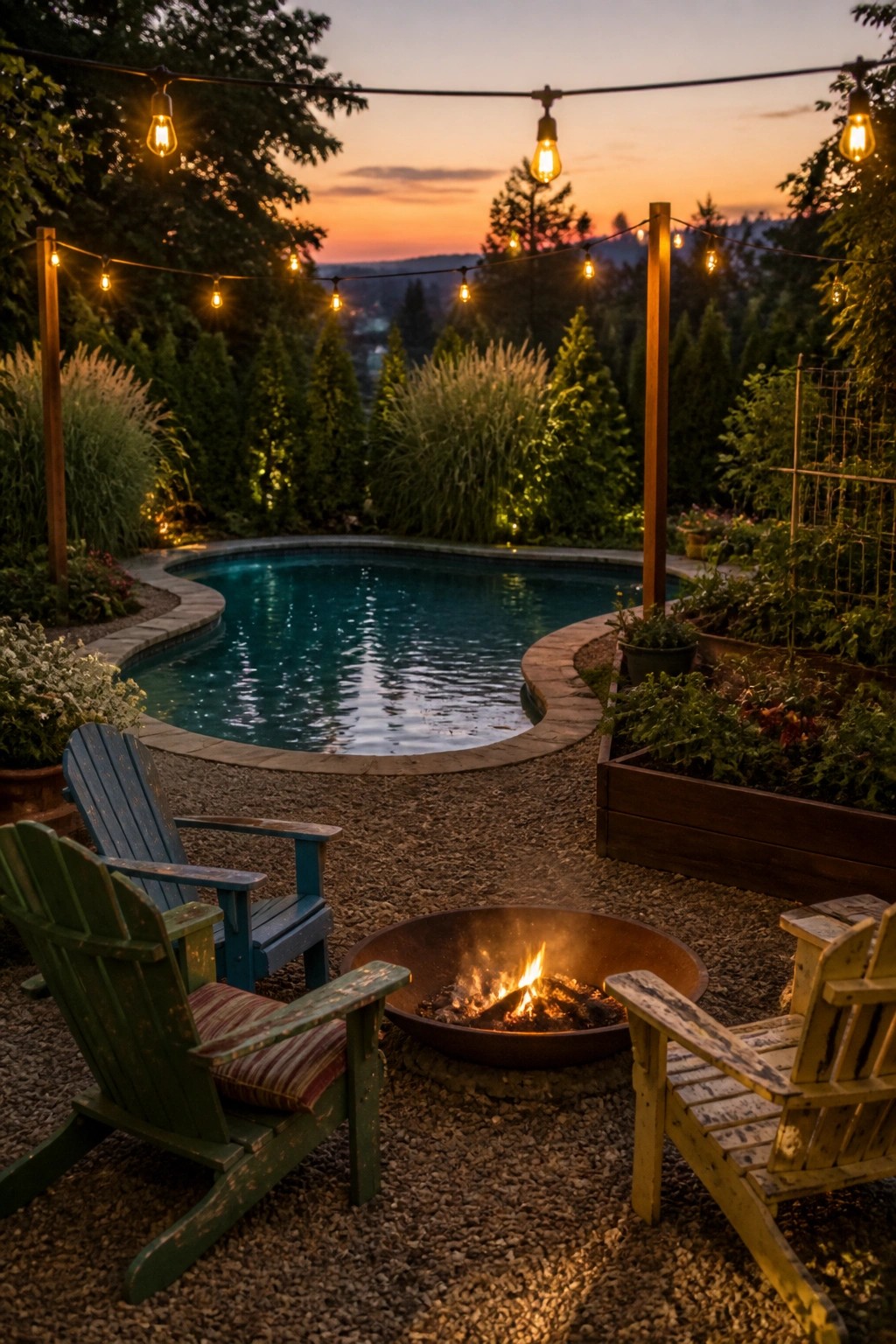
Tall plants placed around the edges of a pool patio can block unwanted views from outside without creating a heavy barrier. The mix of shrubs, grasses, and trees in this setup lets light move through while still giving a sense of enclosure, which works well when you want the space to feel private at night but open during the day.
This approach suits homes with nearby neighbors or open yards where solid fences would feel too closed in. Place the tallest plants toward the back and keep lower beds closer to the seating area so the view stays clear from inside the pool. String lights on simple posts can add a bit more definition without adding bulk.
Slatted Wood Screens
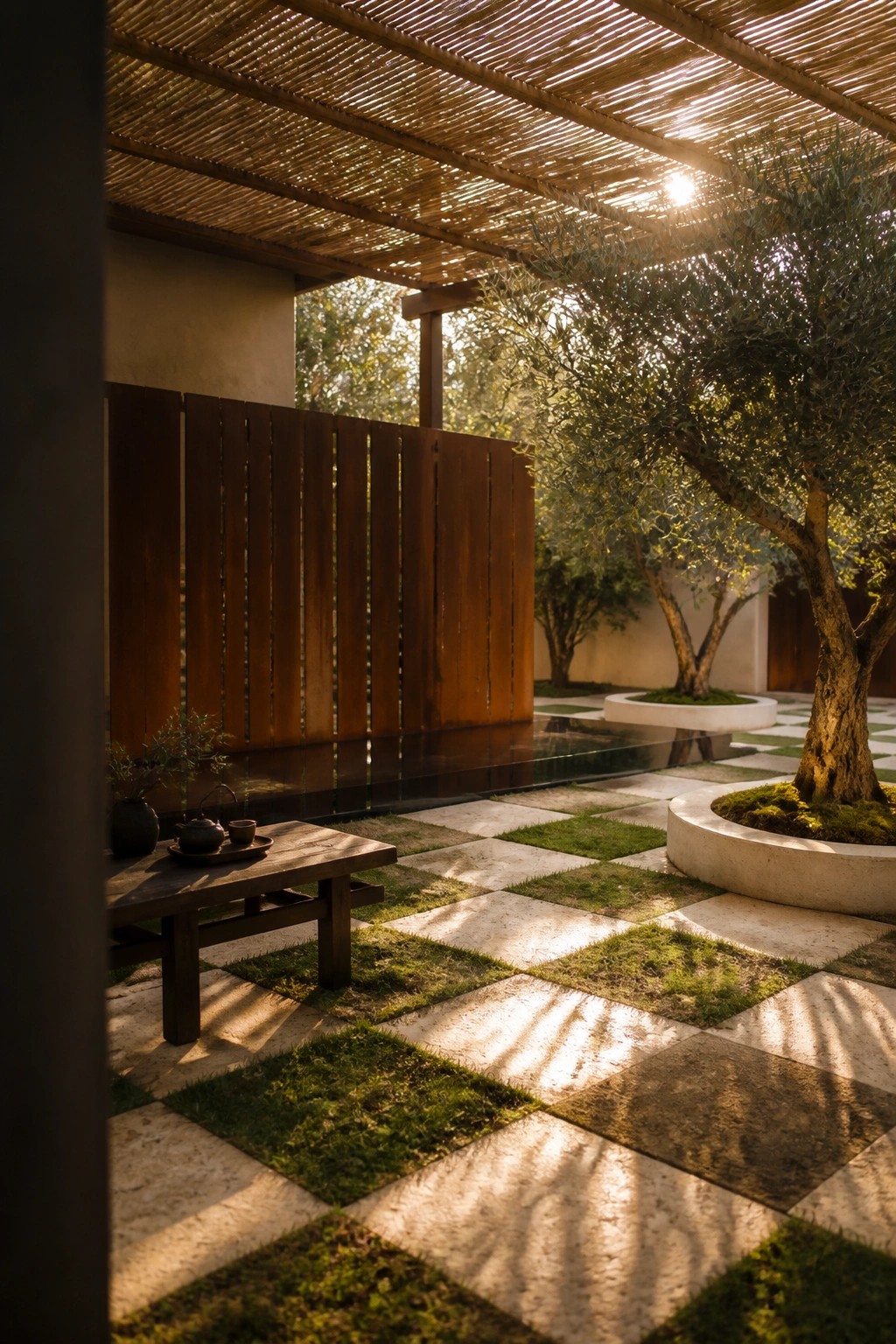
A slatted wood screen gives you privacy on the patio without turning the space dark. The vertical gaps let light and air pass through, so the area still feels open while blocking direct views from outside.
Place one along the side of a seating zone or next to the pool edge. It works best in simple outdoor layouts where you want a natural material that will weather over time.
Slatted Fencing With Planting Beds
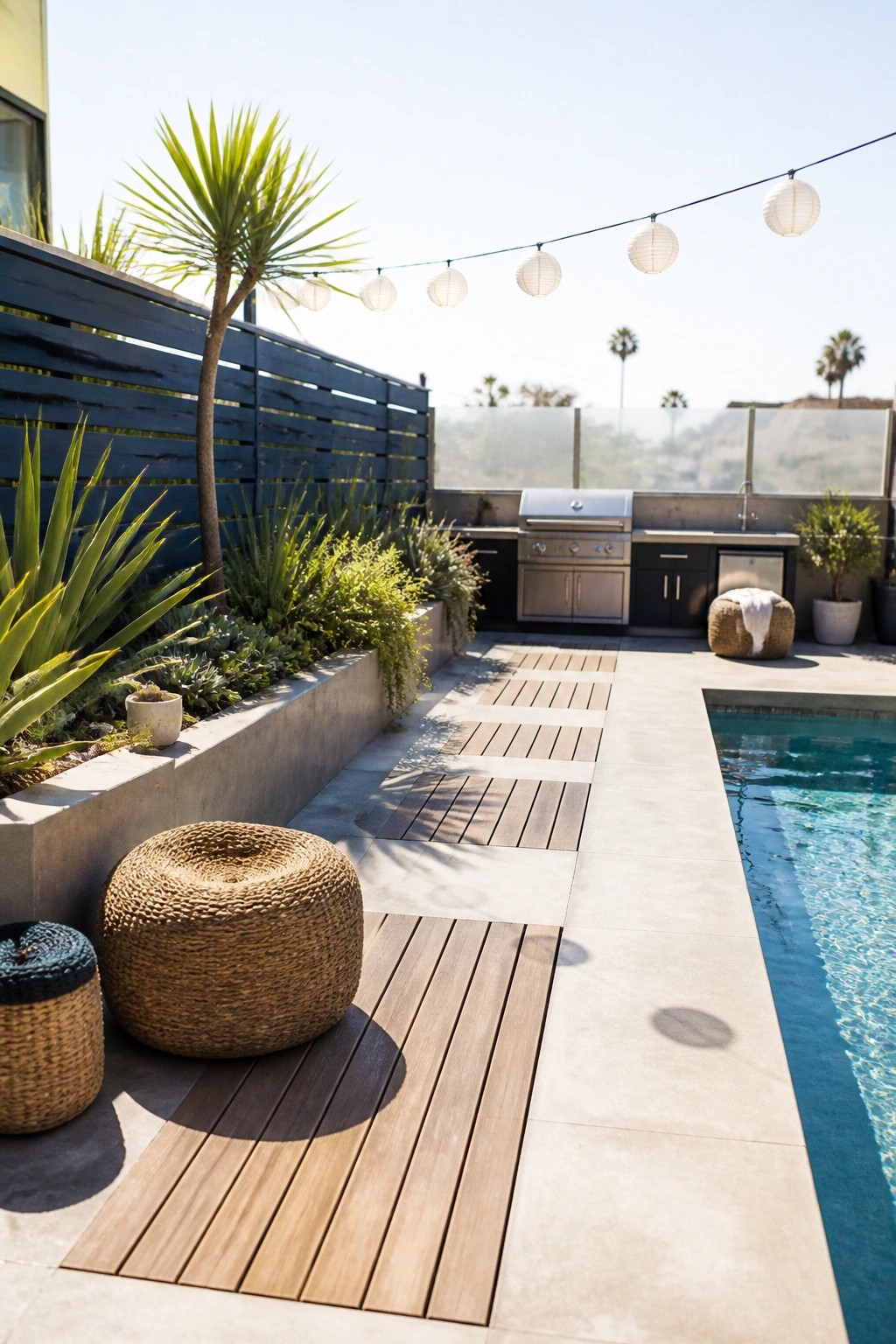
A slatted fence works well along a pool patio because it blocks the view from outside while still letting light and air move through the gaps. The dark color blends into the background so it does not feel heavy.
Place a raised concrete bed right in front and fill it with tall grasses and shrubs. The plants add another layer of screening and soften the look of the fence. This setup suits homes that need privacy on one or two sides without closing off the whole space.
Living Walls For Pool Patio Privacy
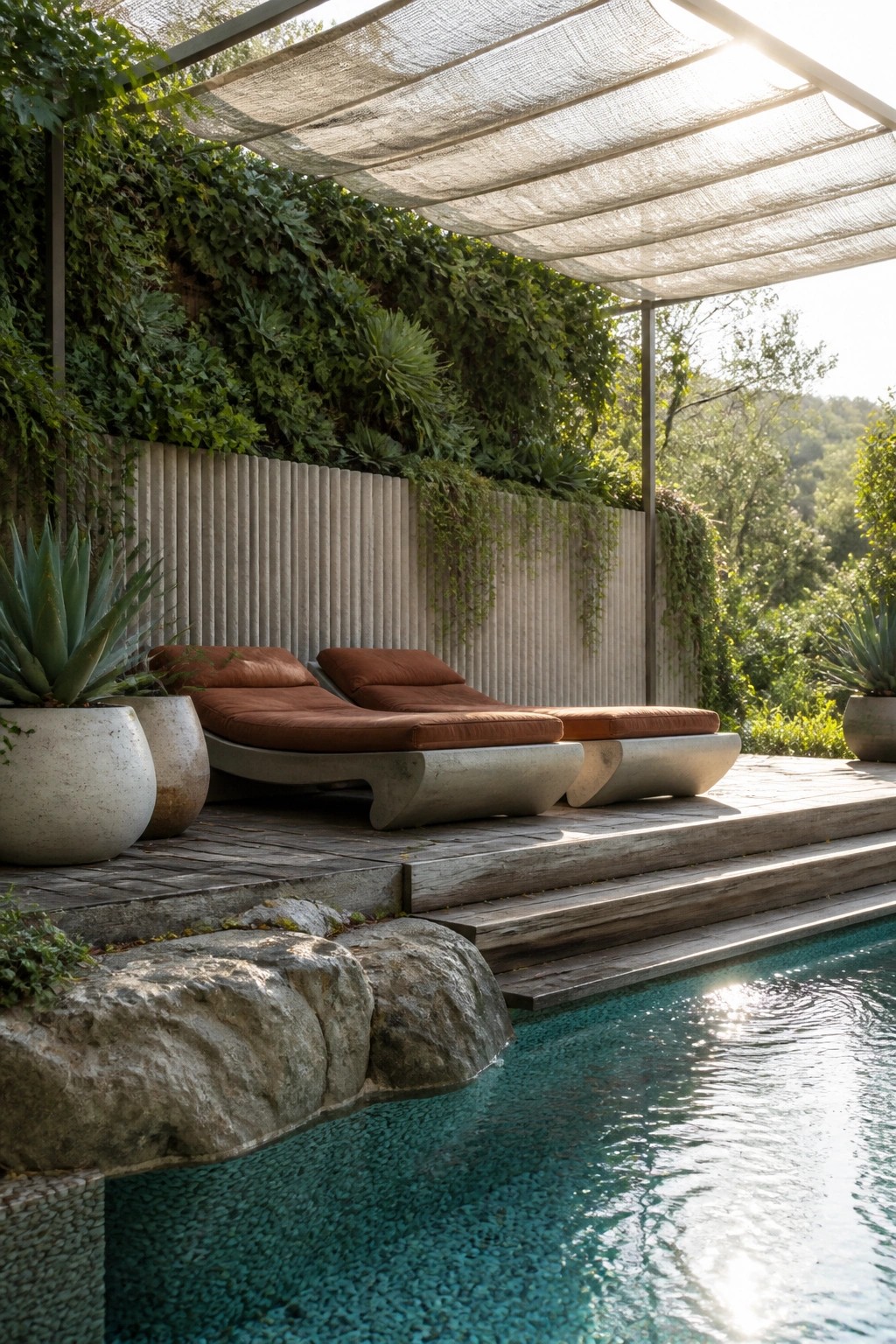
A living wall tucked behind seating gives the patio a natural screen that feels softer than a fence or hedge. It blocks views from the side without casting heavy shade over the pool or loungers, which keeps the space bright during the day.
This approach works well on patios that sit close to neighboring properties or a street edge. Keep the planting mix simple with vines and upright greens so the wall stays full but not overgrown, and make sure there is easy access for watering.
Slatted Screens With Built-In Planters
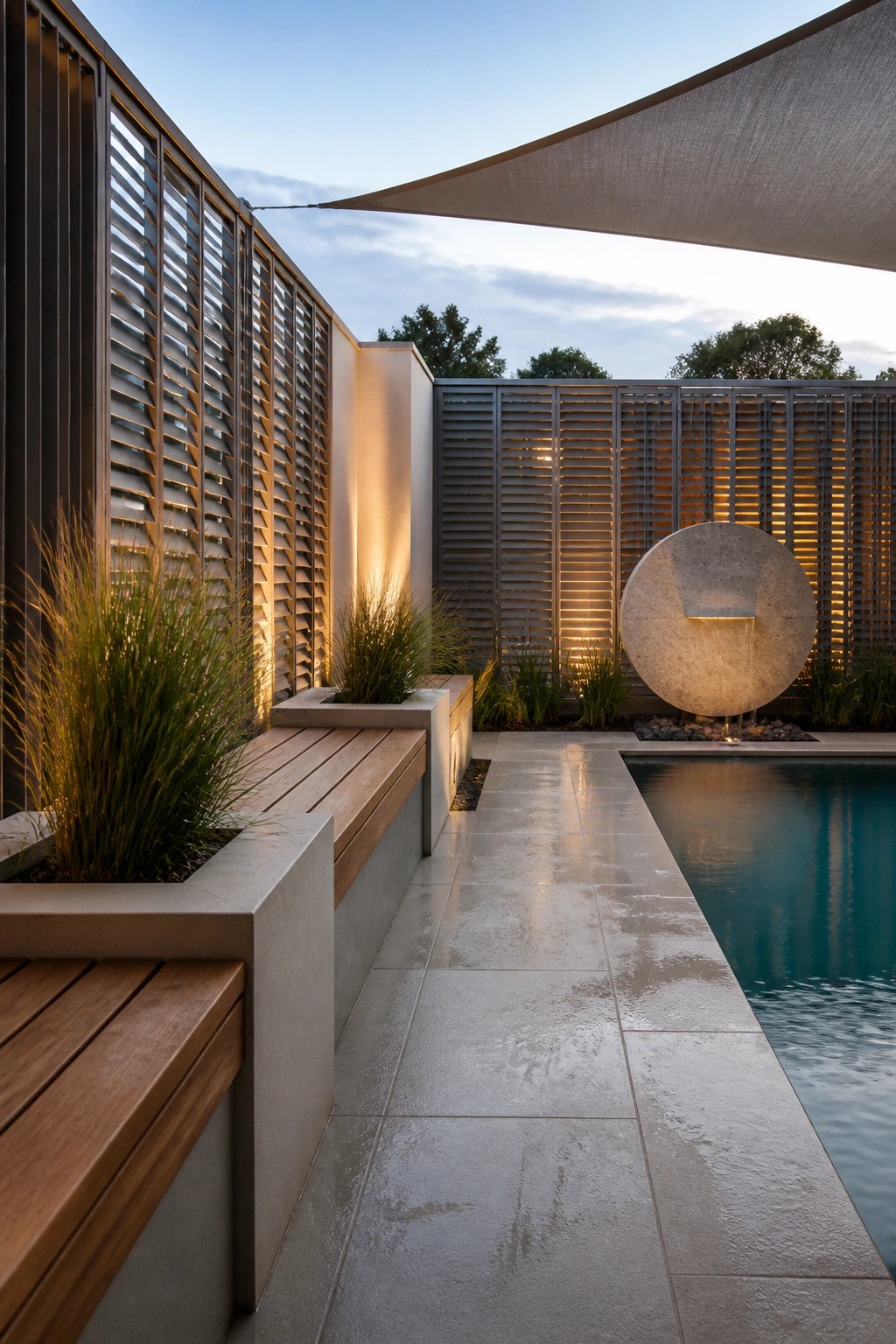
Slatted screens work well for pool patios because they block the main view while still letting light pass through the gaps. The backlighting behind the slats adds a soft glow in the evening without making the space feel enclosed.
This setup suits homes where the patio sits close to neighboring yards. Place the screens along the back or side edge and add tall grasses in front in the same planter boxes so the planting fills the lower gaps and softens the lines.
Frequently Asked Questions
Q: What if my plants grow too thick and start cutting down the light I wanted to keep?
A: Prune them back every few weeks during the growing season. Pick varieties that naturally stay open and airy rather than dense. This keeps the view blocked at eye level while sunlight still filters through.
Q: How do I add privacy fast if I cannot build or plant anything right now?
A: Set up a few tall containers with quick-growing grasses or roll out a freestanding screen on wheels. Move them around until you find the spots that block the main sight lines. You can refine the setup later once you decide on longer-term options.
Q: Will these screens hold up if wind hits the patio hard most afternoons?
A: Secure the base with ground stakes or heavy pots so nothing tips. Go with open-weave fabrics or lattice that lets air pass instead of fighting it. That single choice usually prevents most damage without extra hardware.