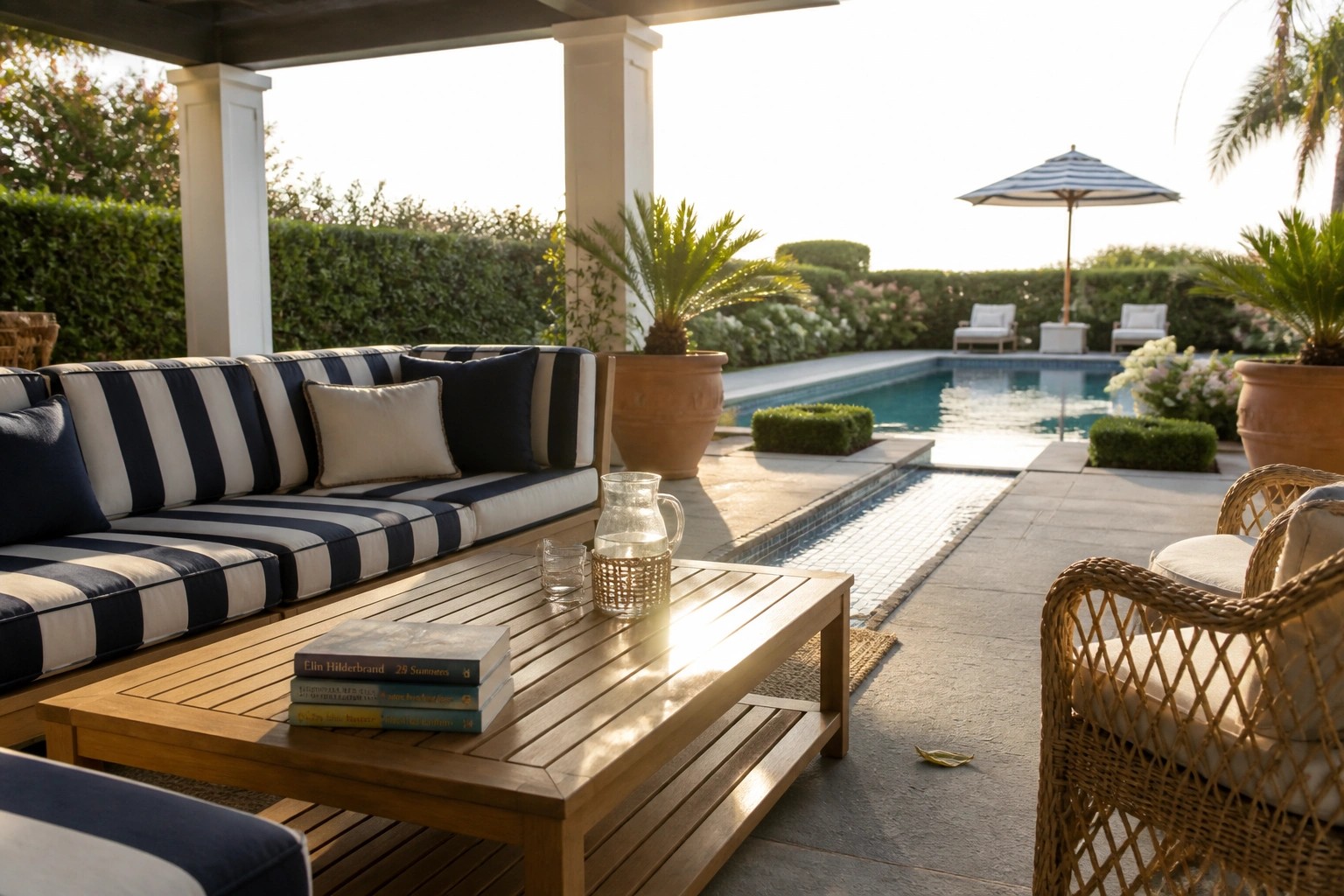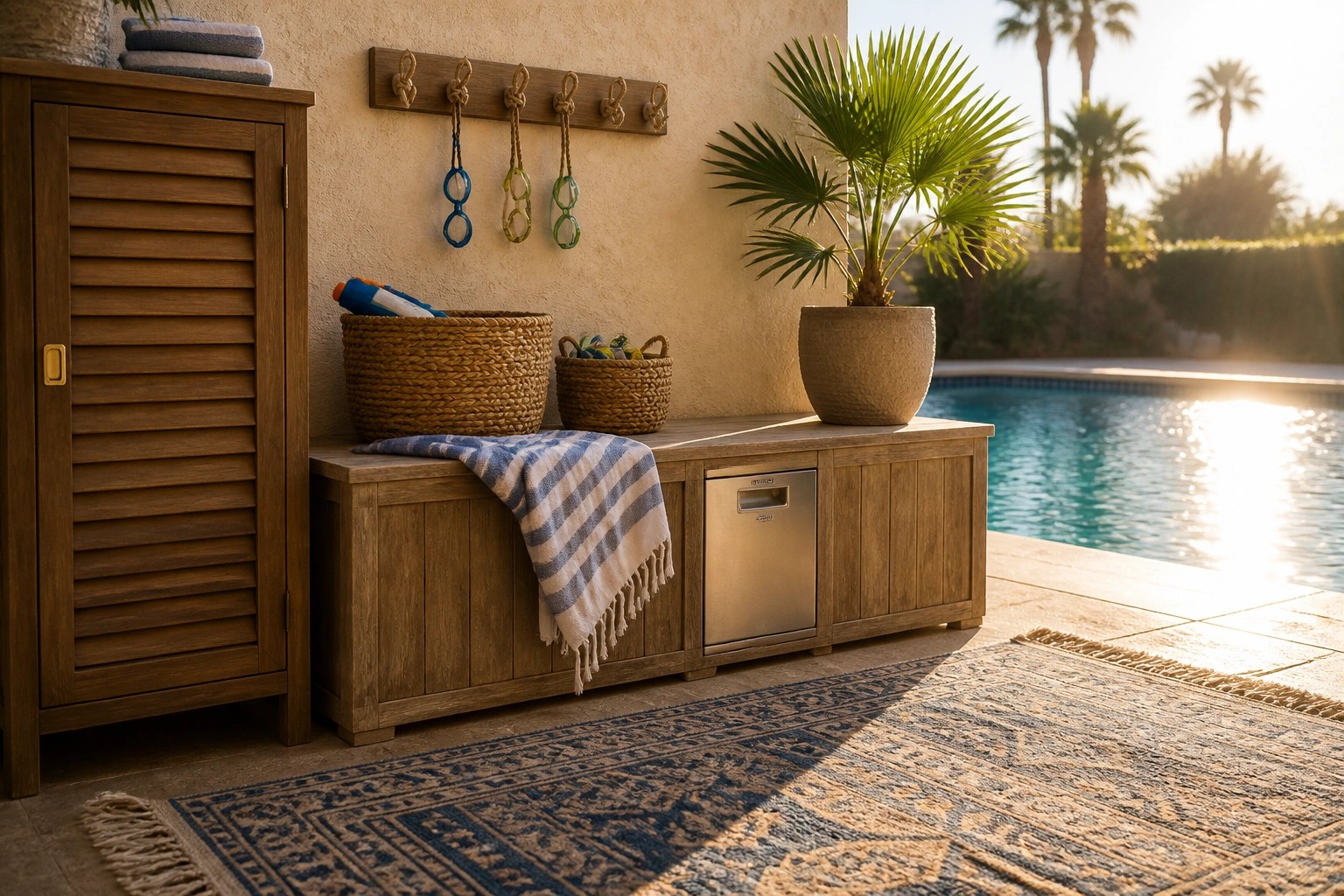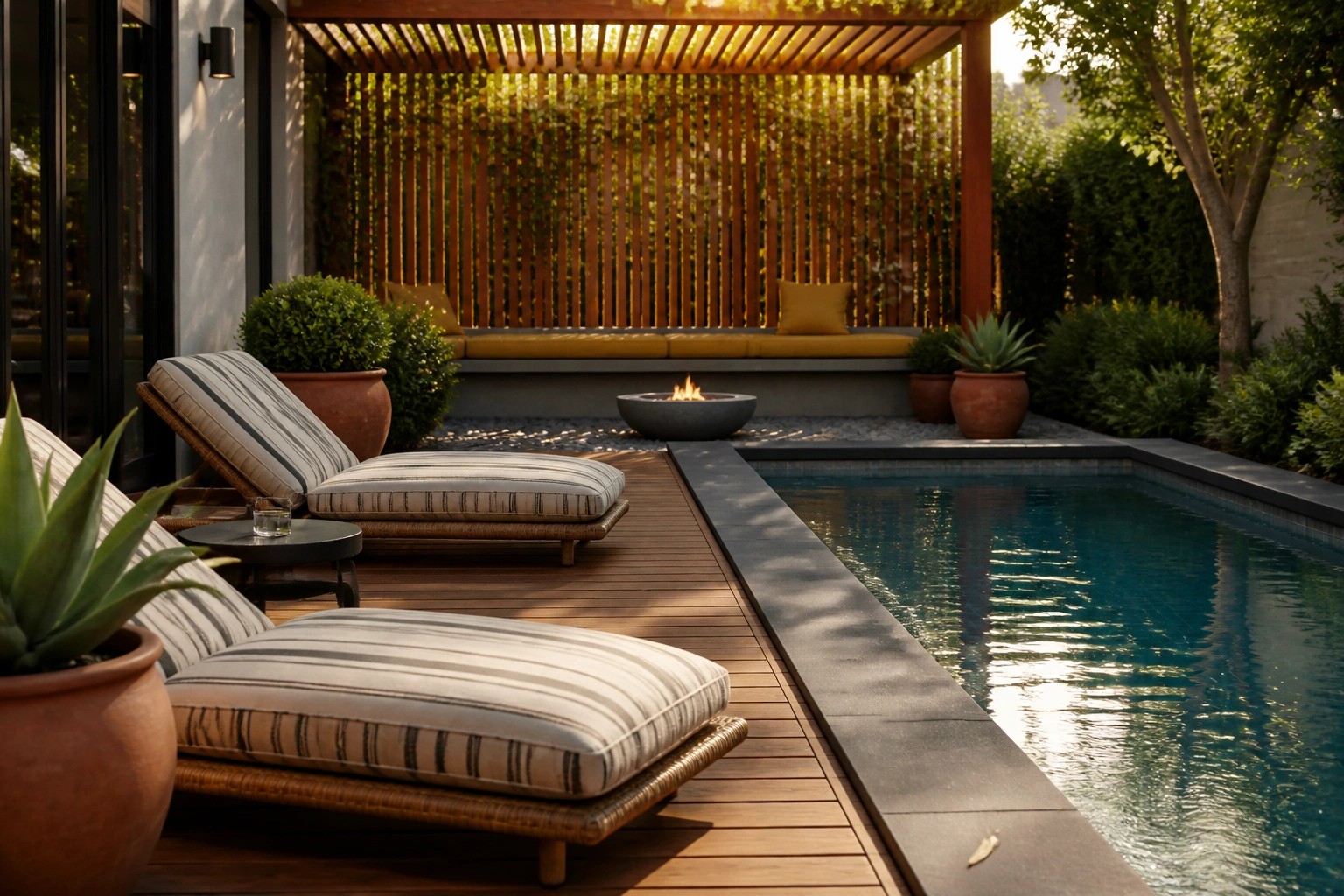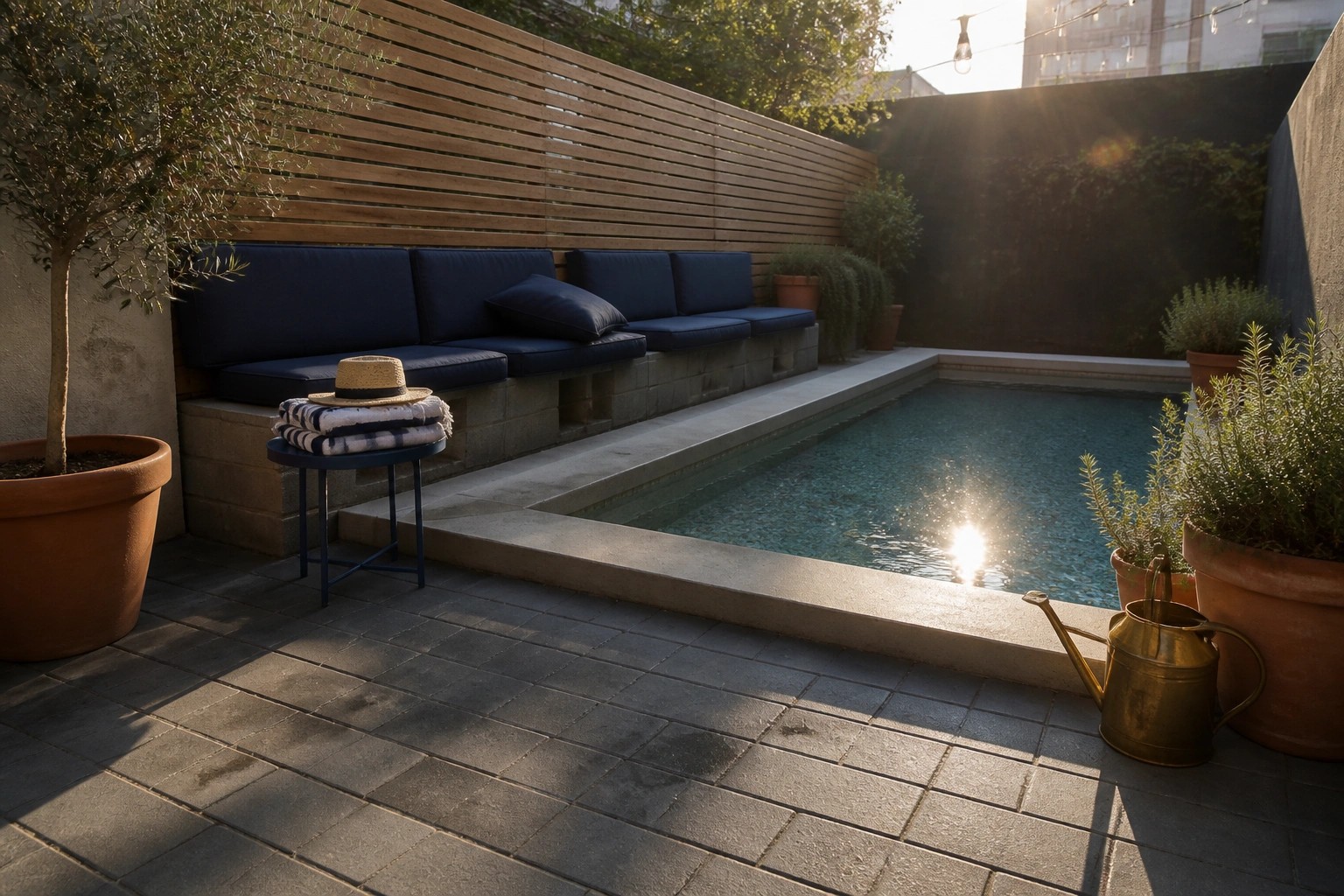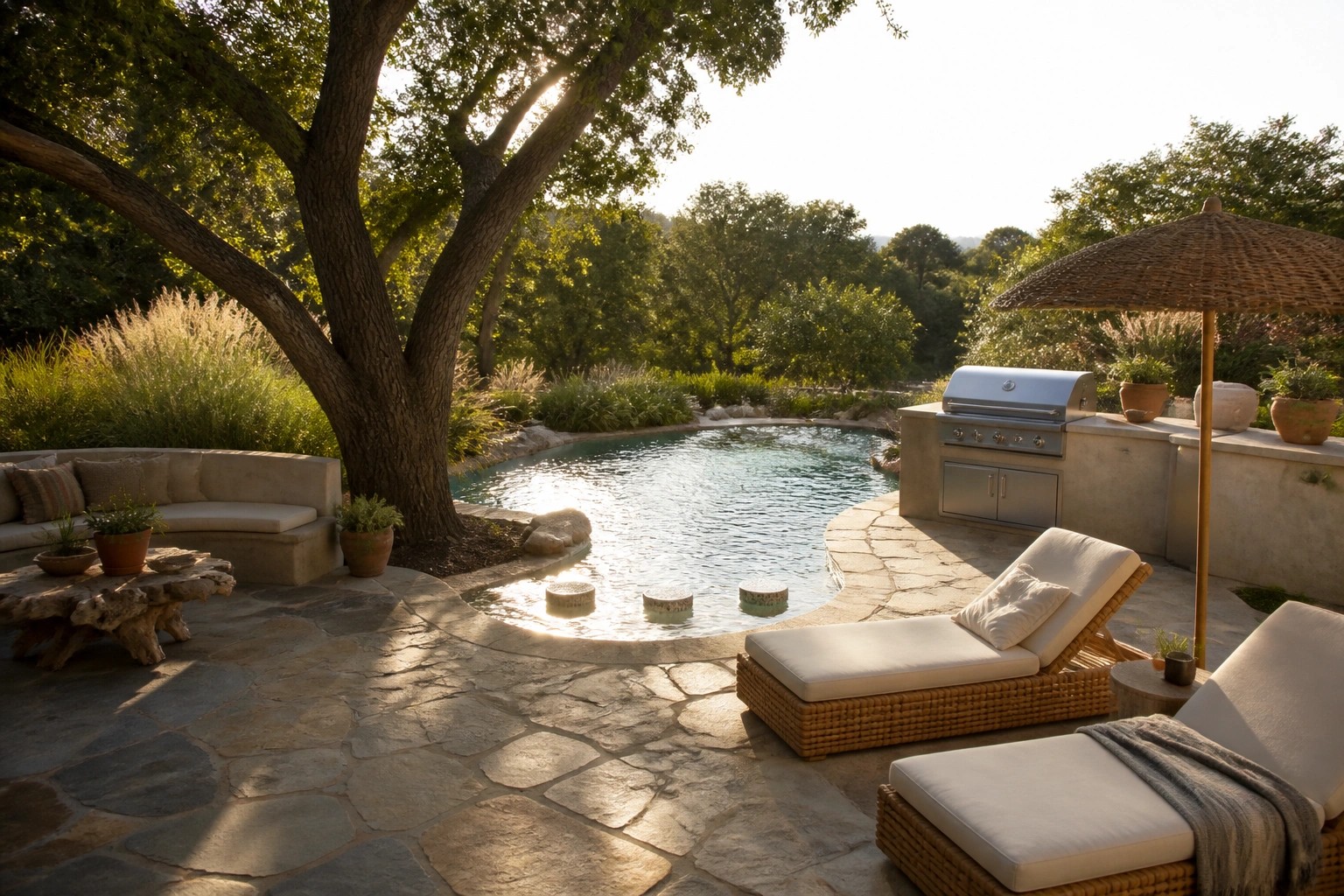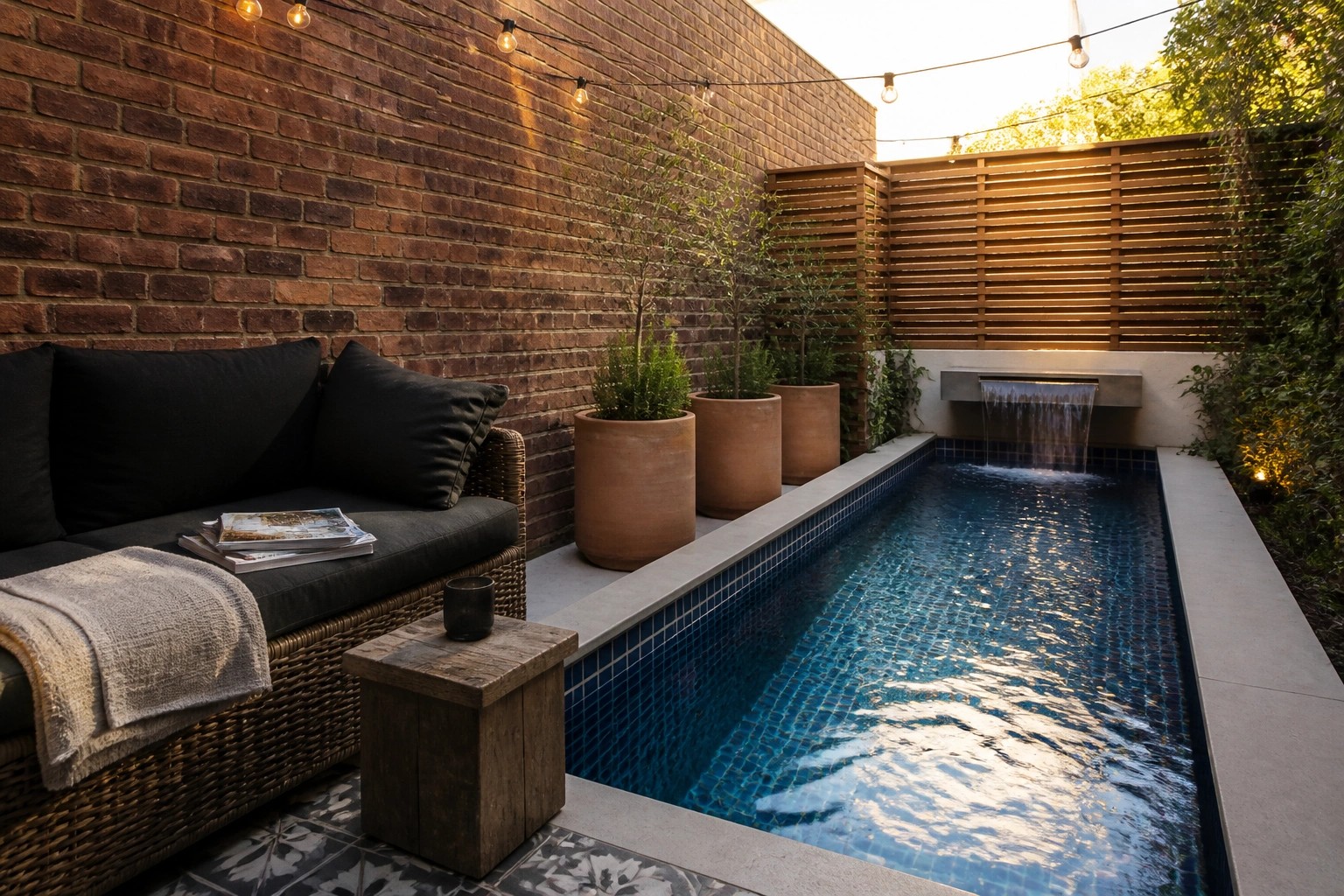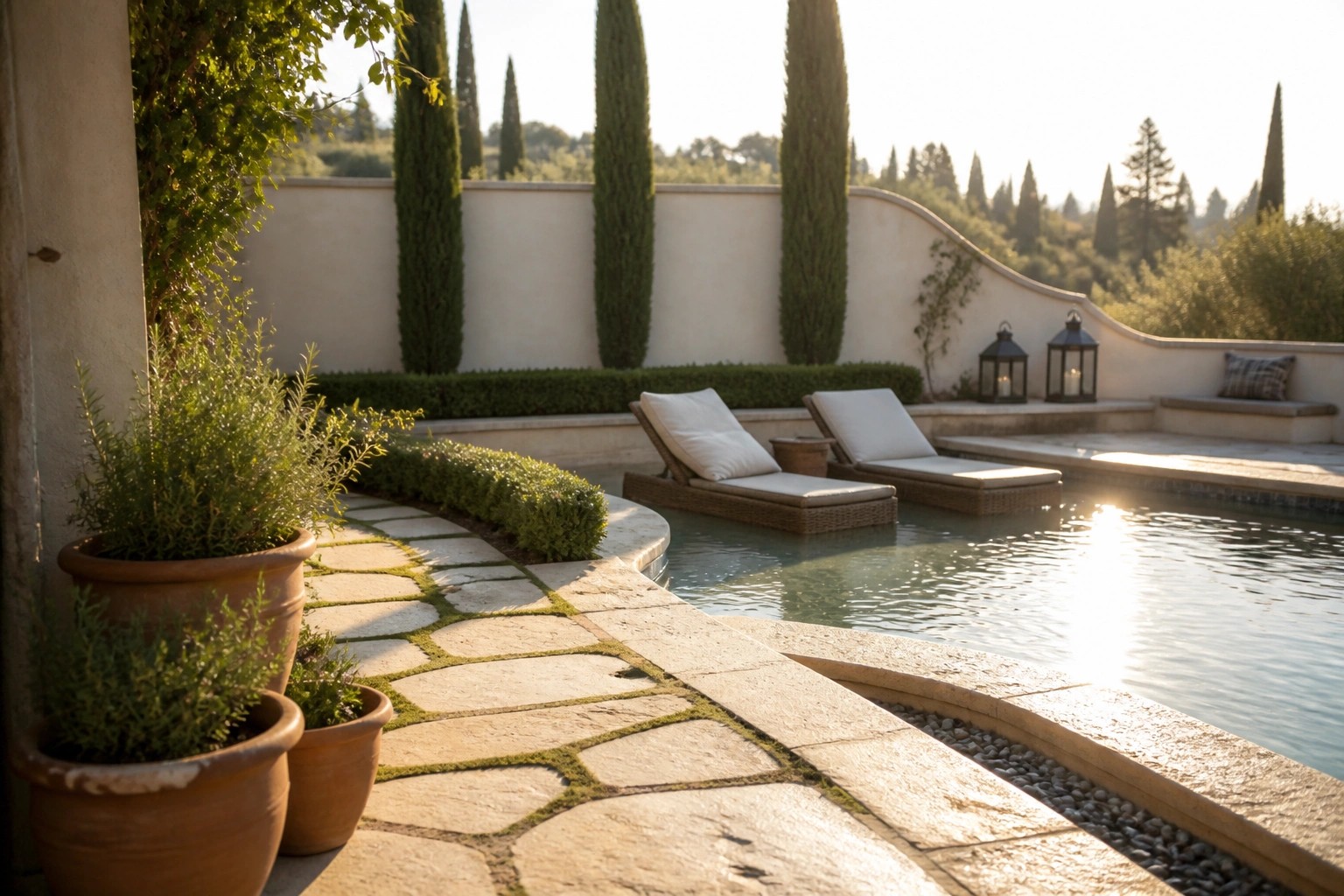
I’ve noticed that pool areas tend to feel more settled when the stonework and plantings are chosen to work with the slope and drainage rather than fighting against them.
Greenery placed near the water line can soften the hard edges of coping and decking, but only if the roots have room to spread without lifting anything later.
Texture is what keeps the space from looking flat once the initial planting fills in.
I usually walk the perimeter a few times at different times of day before deciding where to add any new edging or ground cover.
Over a couple of years the combination of materials starts to show whether the layout actually holds up to regular use and weather.
Stone Paths That Connect Pool and Garden
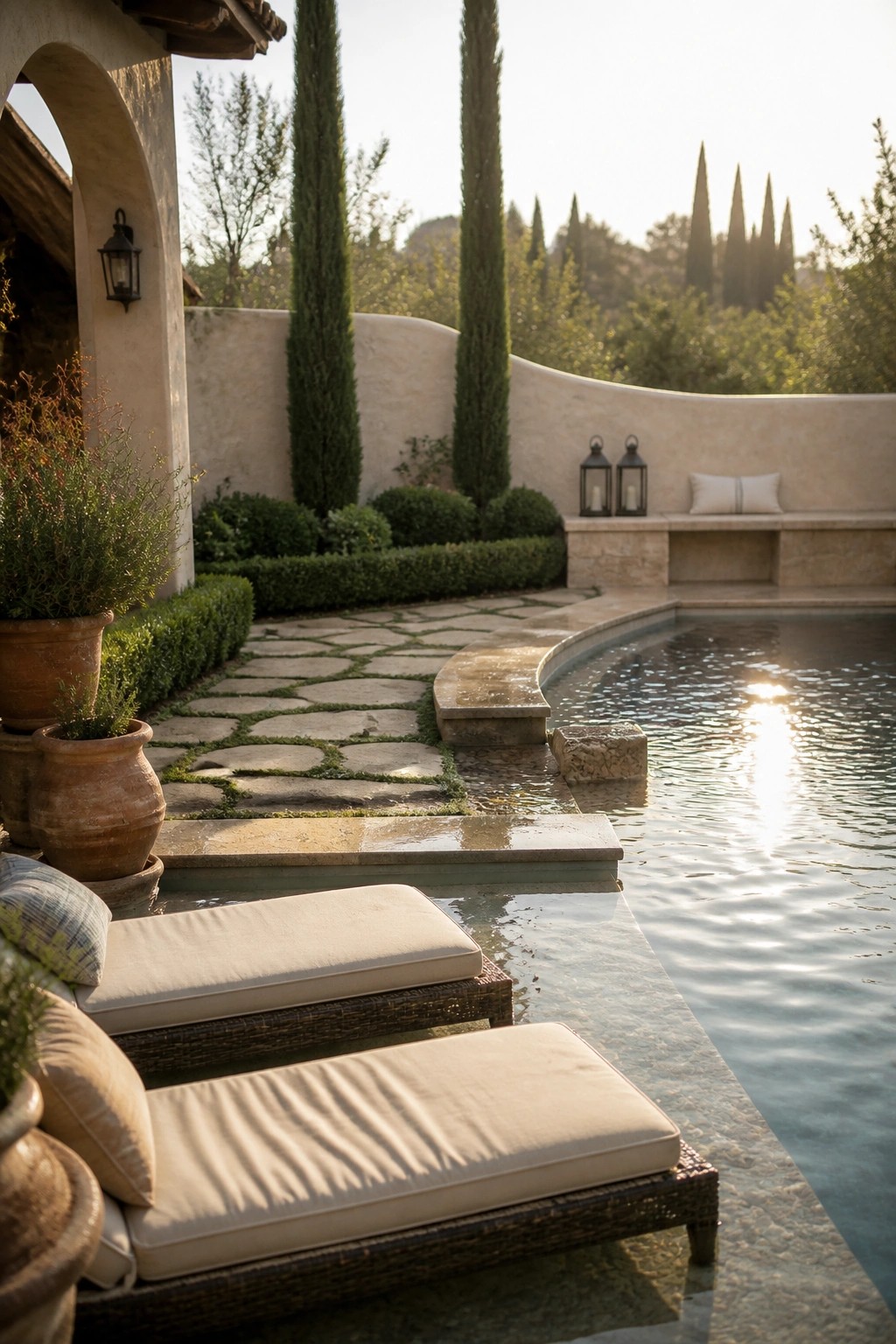
Stone paths work well around pools because they give a natural way to move through the space while keeping things grounded. The irregular shapes and gaps with grass soften the hard edge of the water and make the whole area feel more like part of the yard instead of a separate zone.
Place the path so it curves gently along the pool and add a few large pots with shrubs at the edges. This approach suits homes with warm climates and simple architecture where you want the landscaping to feel relaxed and easy to maintain.
Living Walls Add Texture Next to the Pool
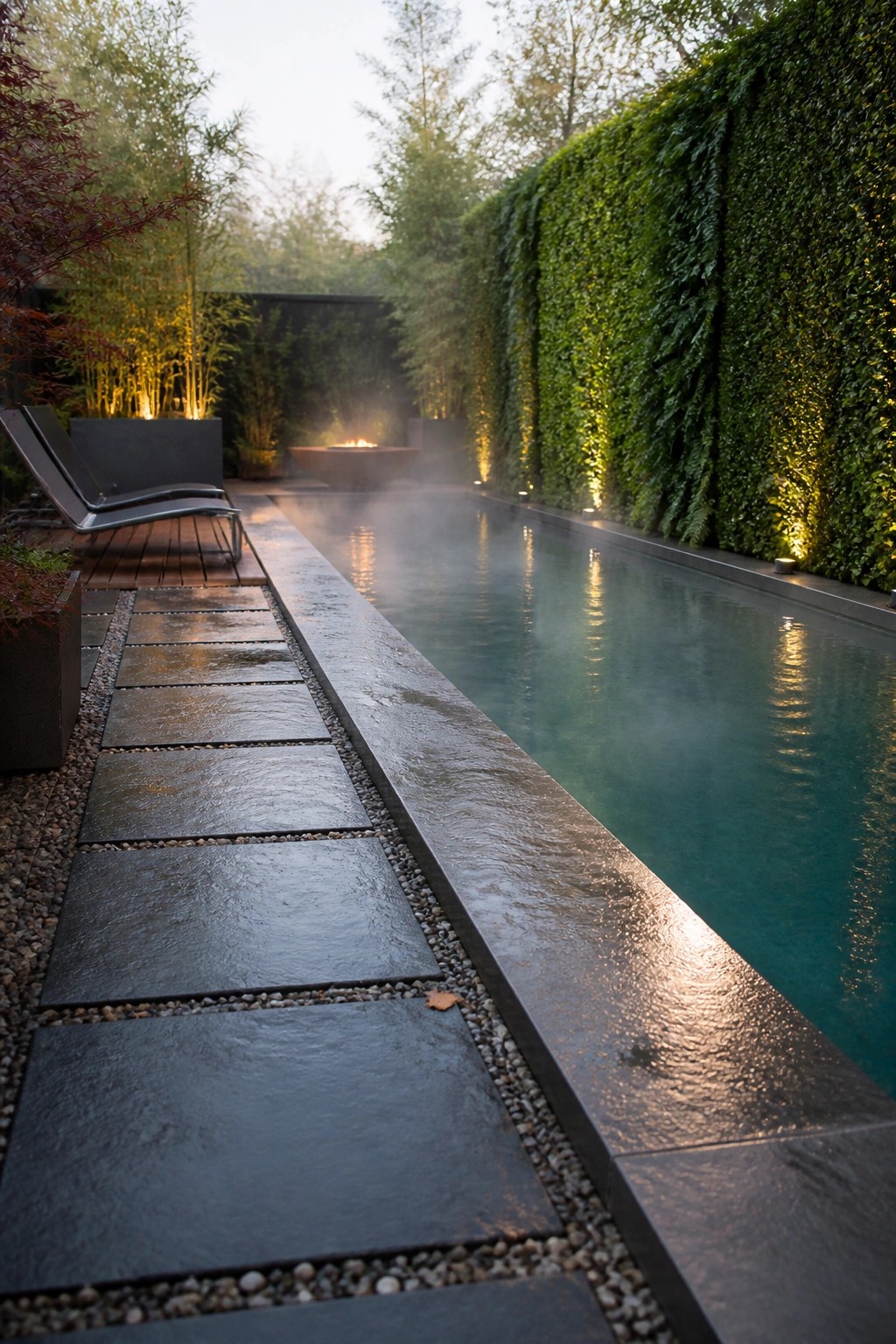
A tall green wall covered in ivy gives the pool area softness and height without crowding the space. It creates a natural backdrop that contrasts with the hard stone edges and water.
This approach works well in smaller or more enclosed yards where you need privacy and visual interest. Choose evergreen vines that can handle the local climate and keep the planting bed narrow so it does not compete with the pool deck.
Shape the Pool with Natural Stone
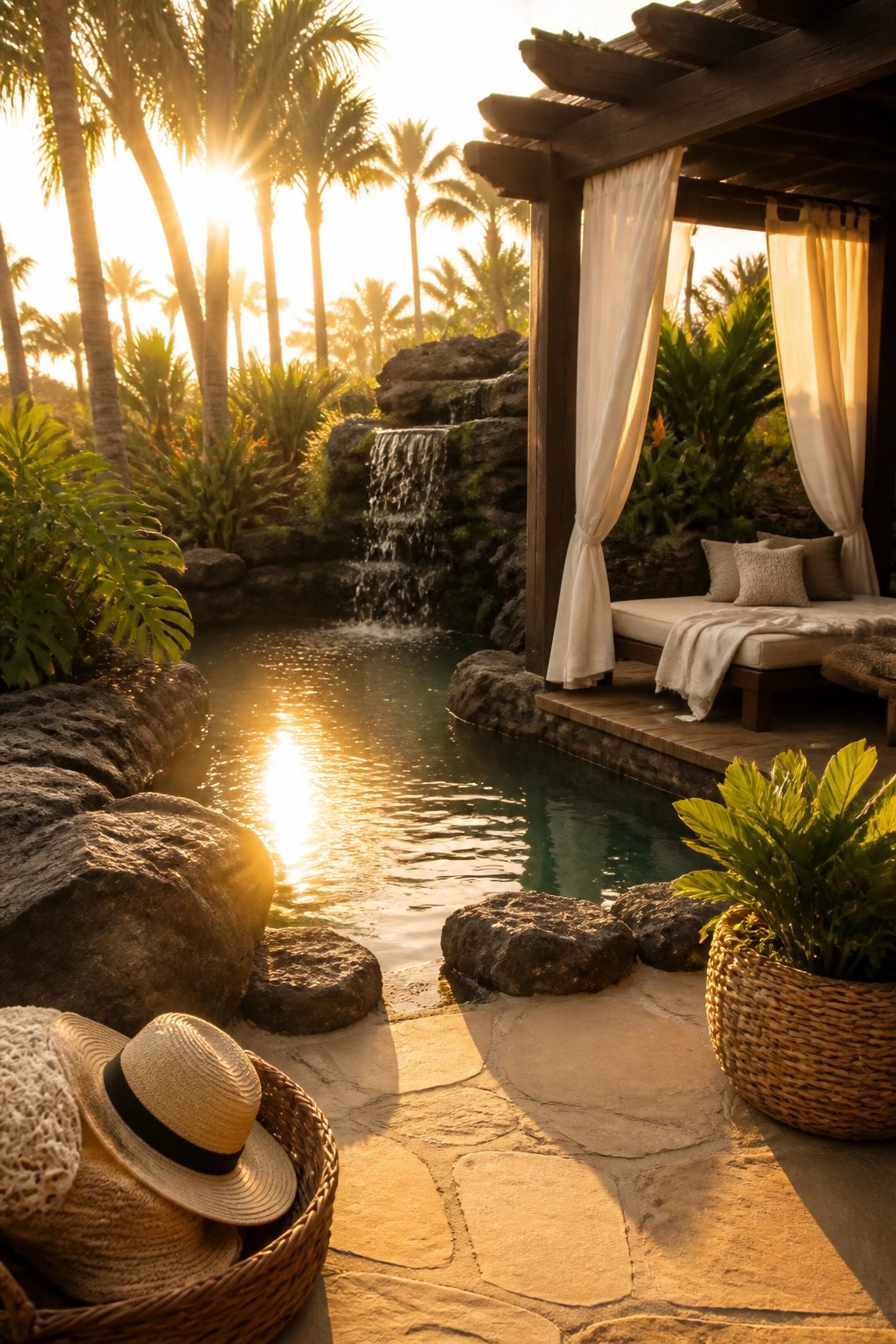
Natural stone gives a pool a settled, grounded look that concrete decks often miss. The rocks here create a soft, uneven edge that blends right into the water and plants around it. That simple change makes the whole area feel more like a natural pond than a built feature.
This approach works best on properties with room for planting right up to the water. Keep the stones varied in size and leave gaps for greenery to creep in. Avoid lining everything up too neatly or the effect starts to look forced.
Try a Living Wall Along Your Pool
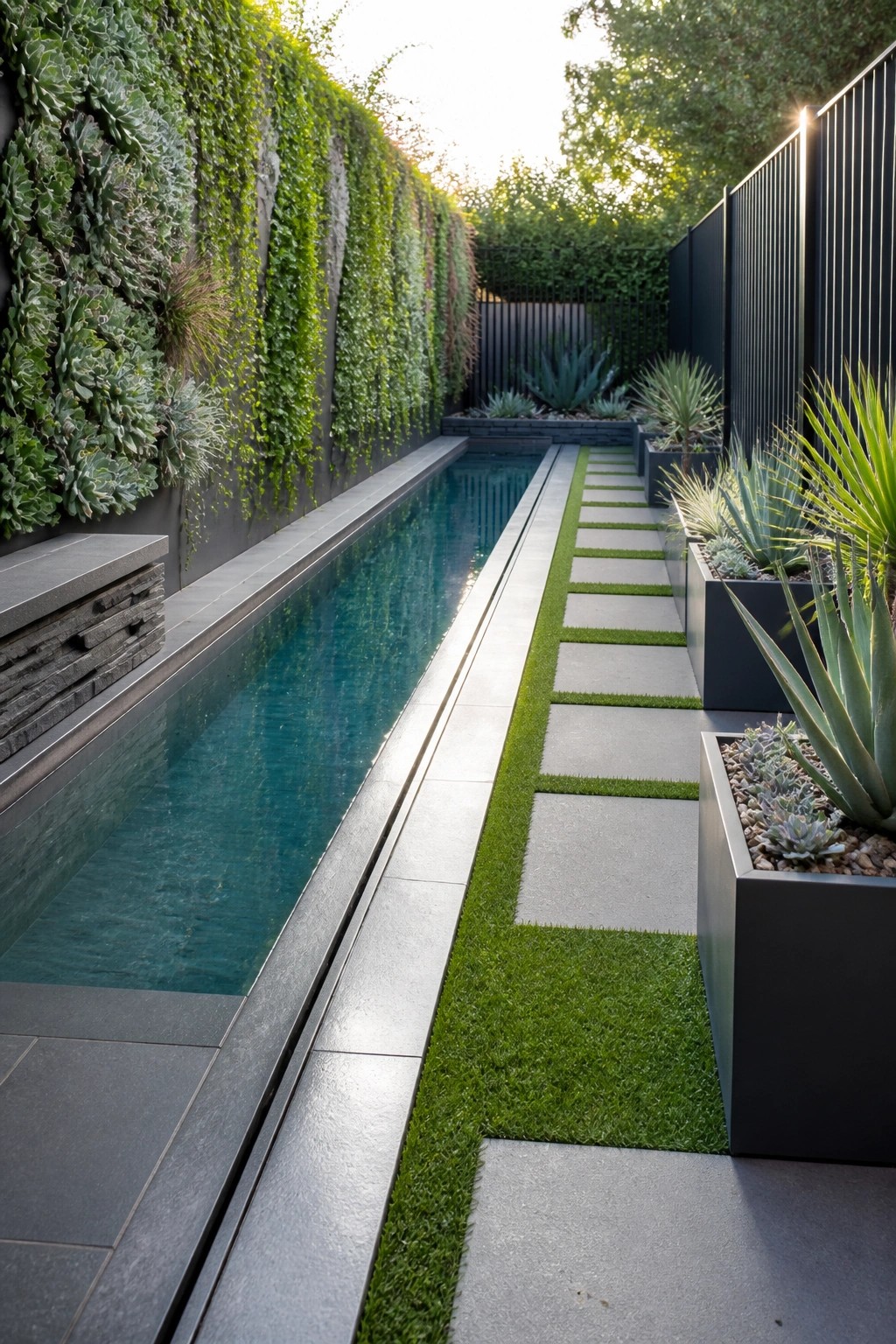
A living wall filled with succulents and trailing plants gives a pool edge height and softness without eating into the ground space. It works especially well when the area is tight and you still want plenty of greenery.
This setup suits modern homes where beds would feel cramped. Pair the wall with simple stone and grass pavers so the hard surfaces stay clean while the plants add the main texture.
Stone Edging For A Natural Pool Border
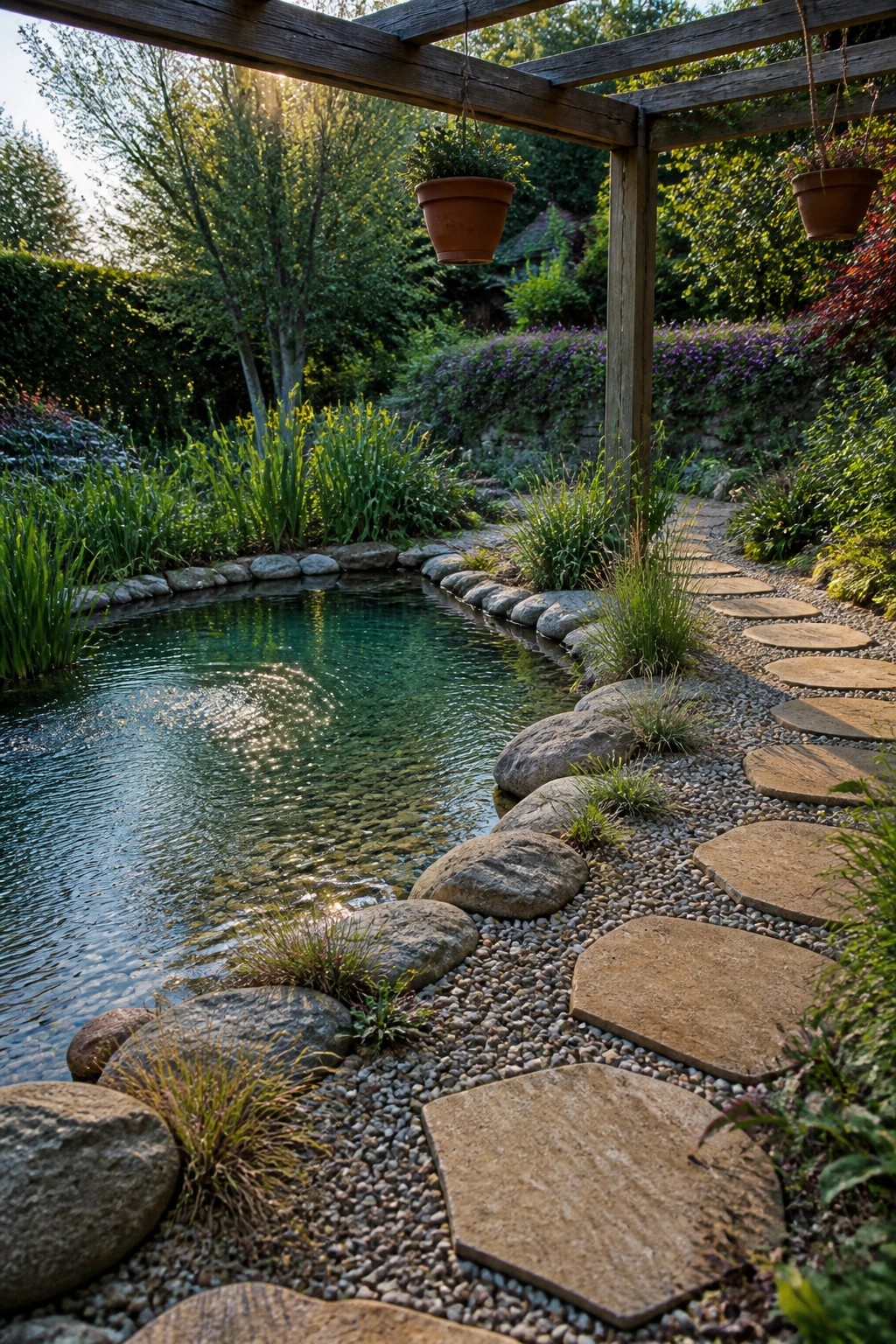
Large stones set right at the waterline help the pool blend into the rest of the garden instead of looking like a separate feature. The gravel and stepping stones then carry that same material language along the path so everything feels connected.
This approach works best in smaller backyards where you want the pool to feel like part of the landscape rather than the main event. Keep the stones irregular and let low plants spill over the edges in a few spots so the line stays soft.
Edge Pools with Stone Planters and Layered Greenery
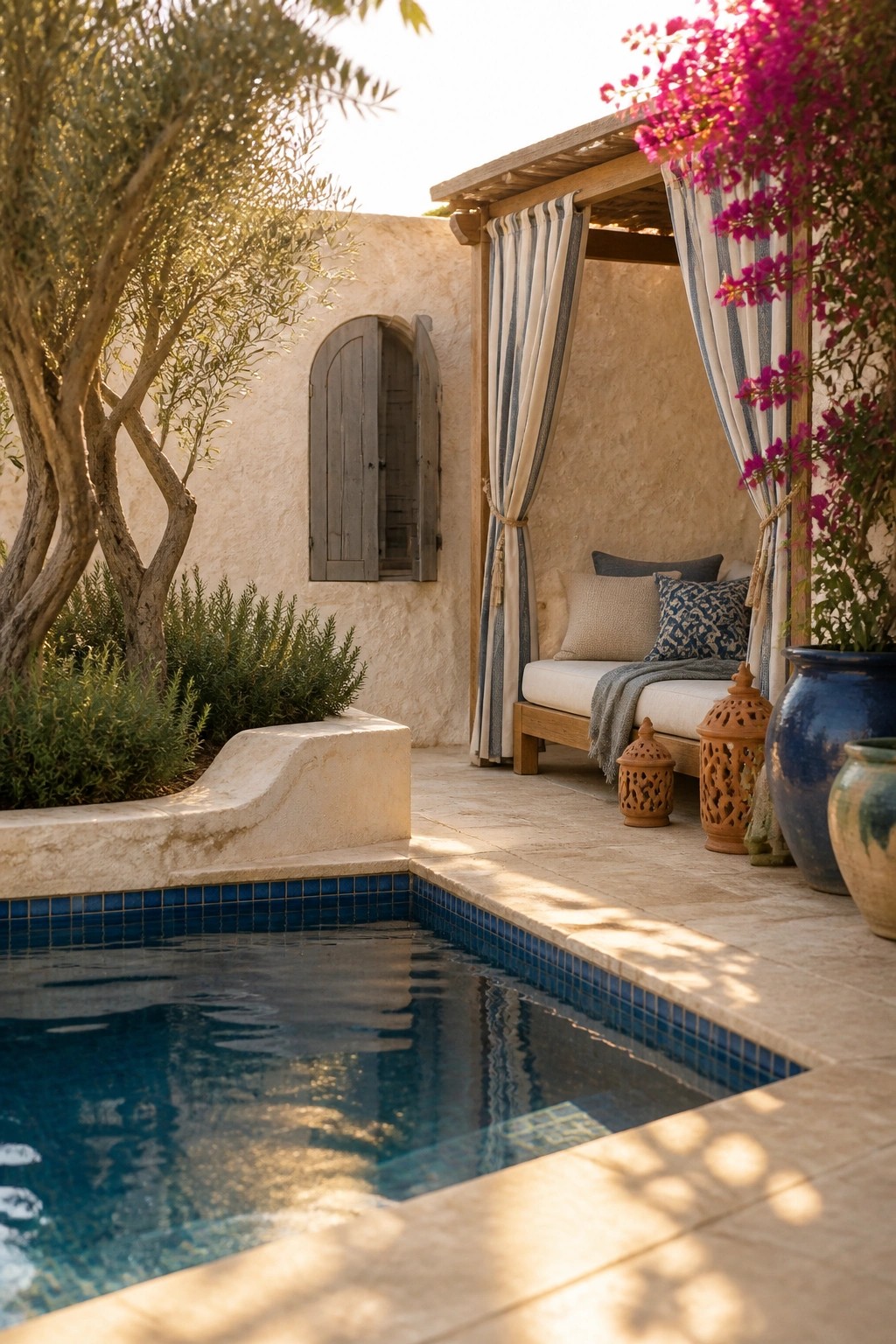
Stone planters built right along the pool edge help the water feel more connected to the garden. The raised stone creates a clean border while the plants soften the look and add height without blocking the view. This setup works especially well when you want the pool to feel like part of the landscape instead of a separate feature.
It suits sunny climates and homes with a relaxed outdoor style. Keep the planter depth reasonable so the trees and shrubs do not crowd the water, and choose plants that tolerate heat and occasional splash.
Stone Waterfalls Built Into The Pool Edge
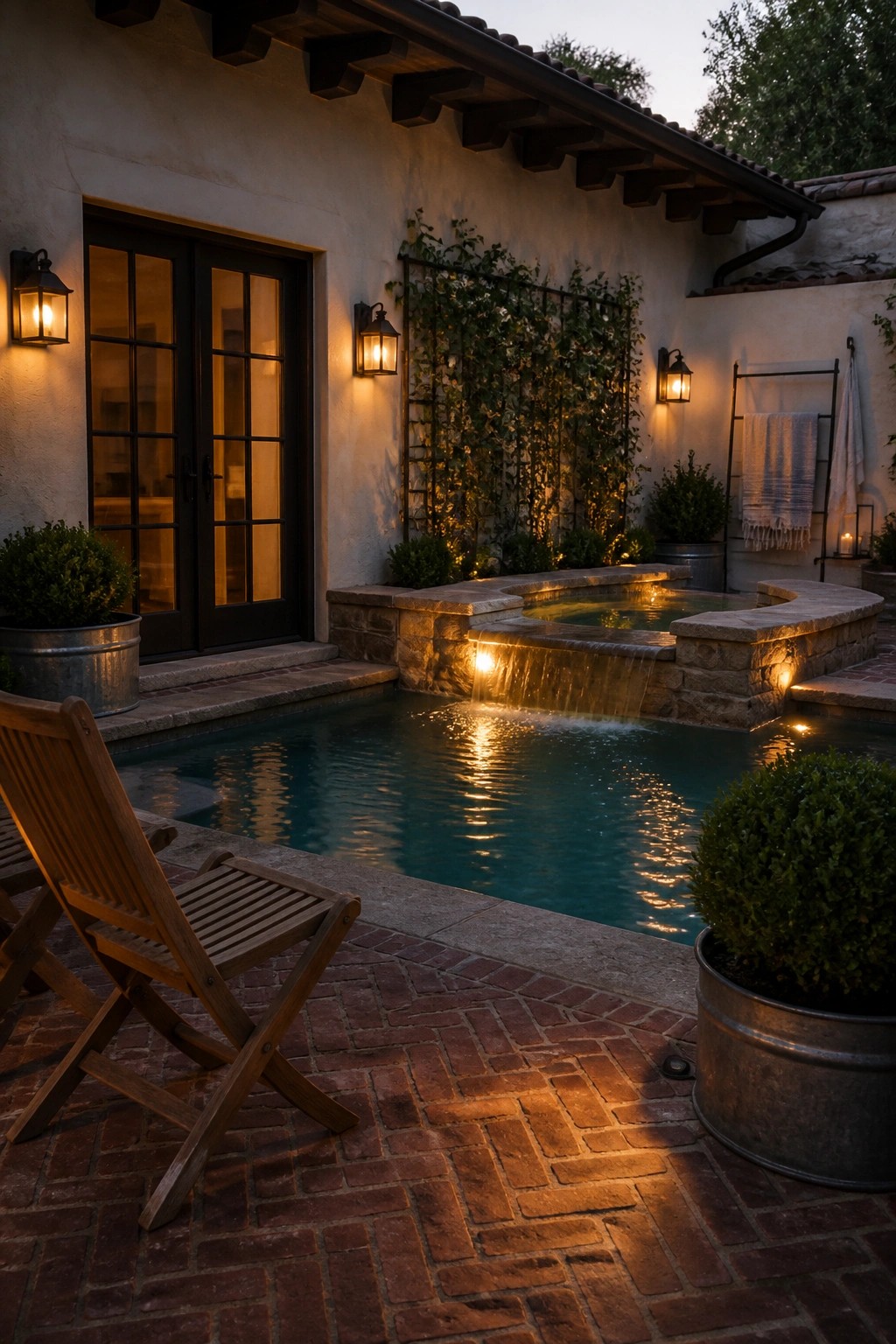
A stone waterfall adds movement and texture without needing a lot of extra space. It turns the pool wall into something more interesting than a flat edge and helps the water feature feel connected to the rest of the yard.
This approach works best on smaller lots or when the pool sits right next to the house. Keep the stone simple and match the material to any nearby walls or paving so the whole area feels pulled together.
Gabion Walls With Layered Planting
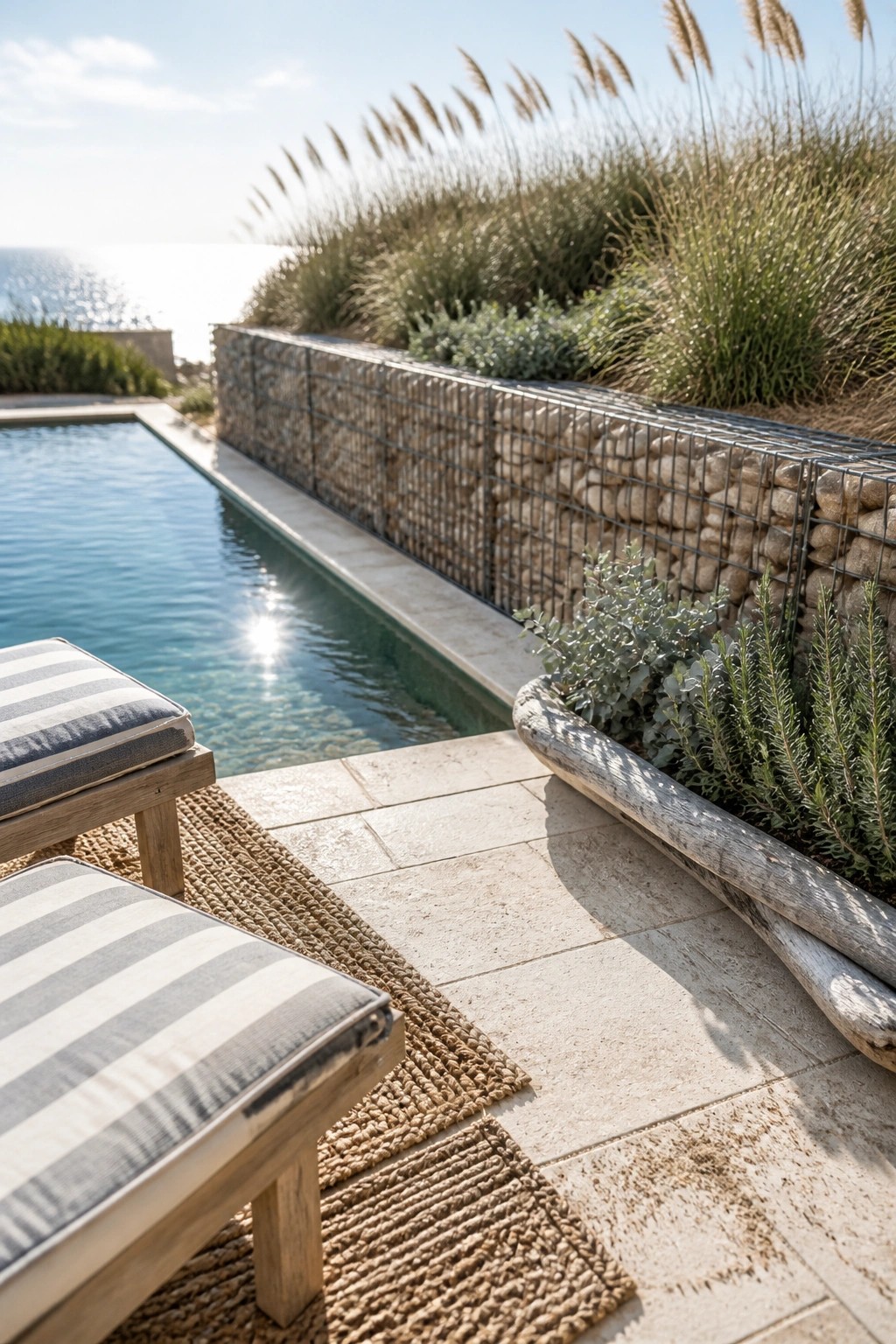
Gabion walls give a pool area solid structure without looking too built up. The wire cages hold stones in place while allowing plants to grow around and over them, which adds texture and softens the hard edge right next to the water.
This approach works best on sloped lots or where you need a retaining wall anyway. Keep the planting simple with a mix of taller grasses at the back and lower shrubs in front so the wall stays visible but does not feel bare.
Line The Pool With Formal Hedges
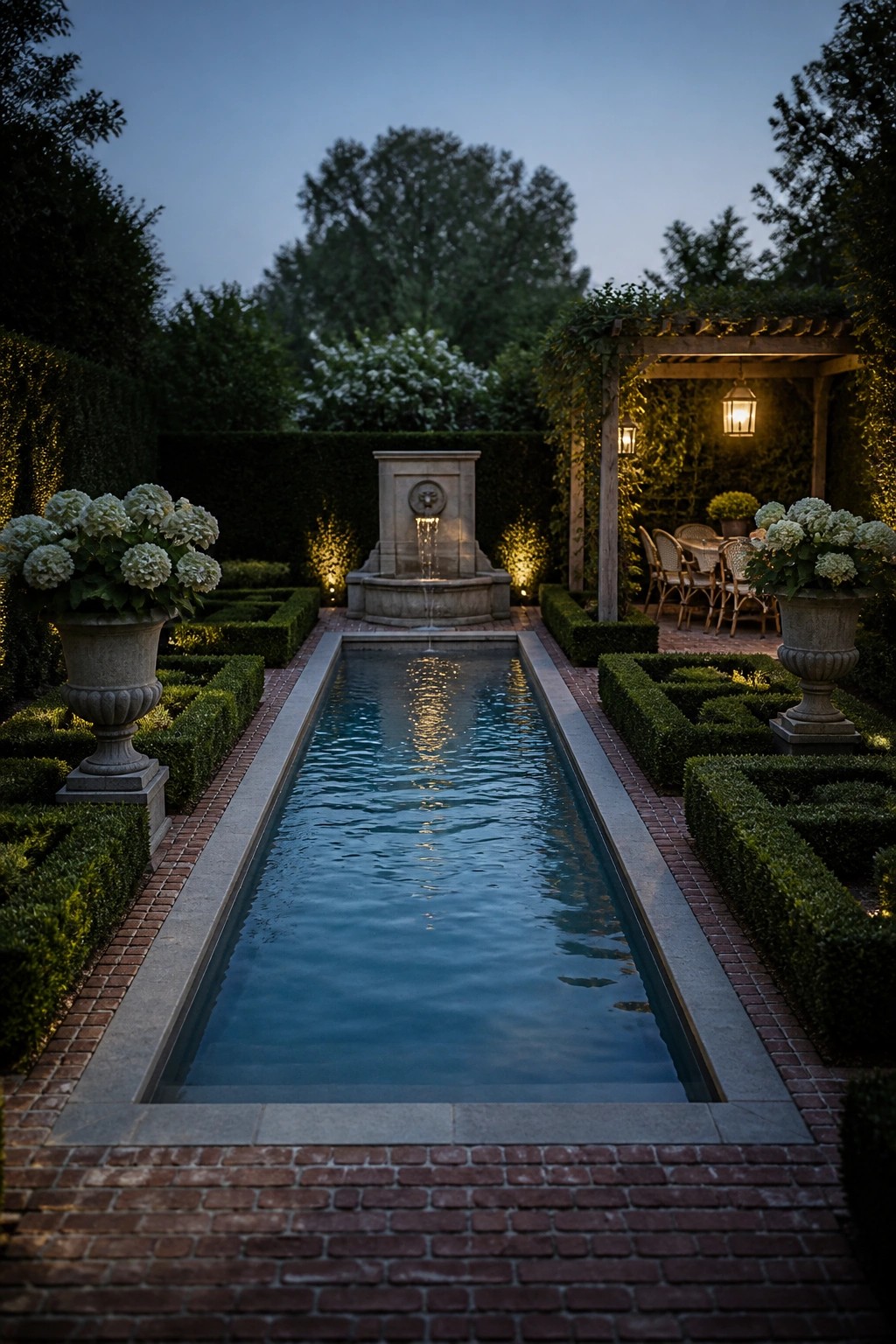
Low hedges give a pool a finished edge without crowding the water. They turn the area into a clear garden space and keep the layout looking neat year round.
This approach works well on straight or rectangular pools where you want some order. Boxwood or similar evergreens stay compact with just a couple of trims each season. Avoid it if your pool already has a loose or natural border.
Blend Boulders With Plants To Shape The Pool
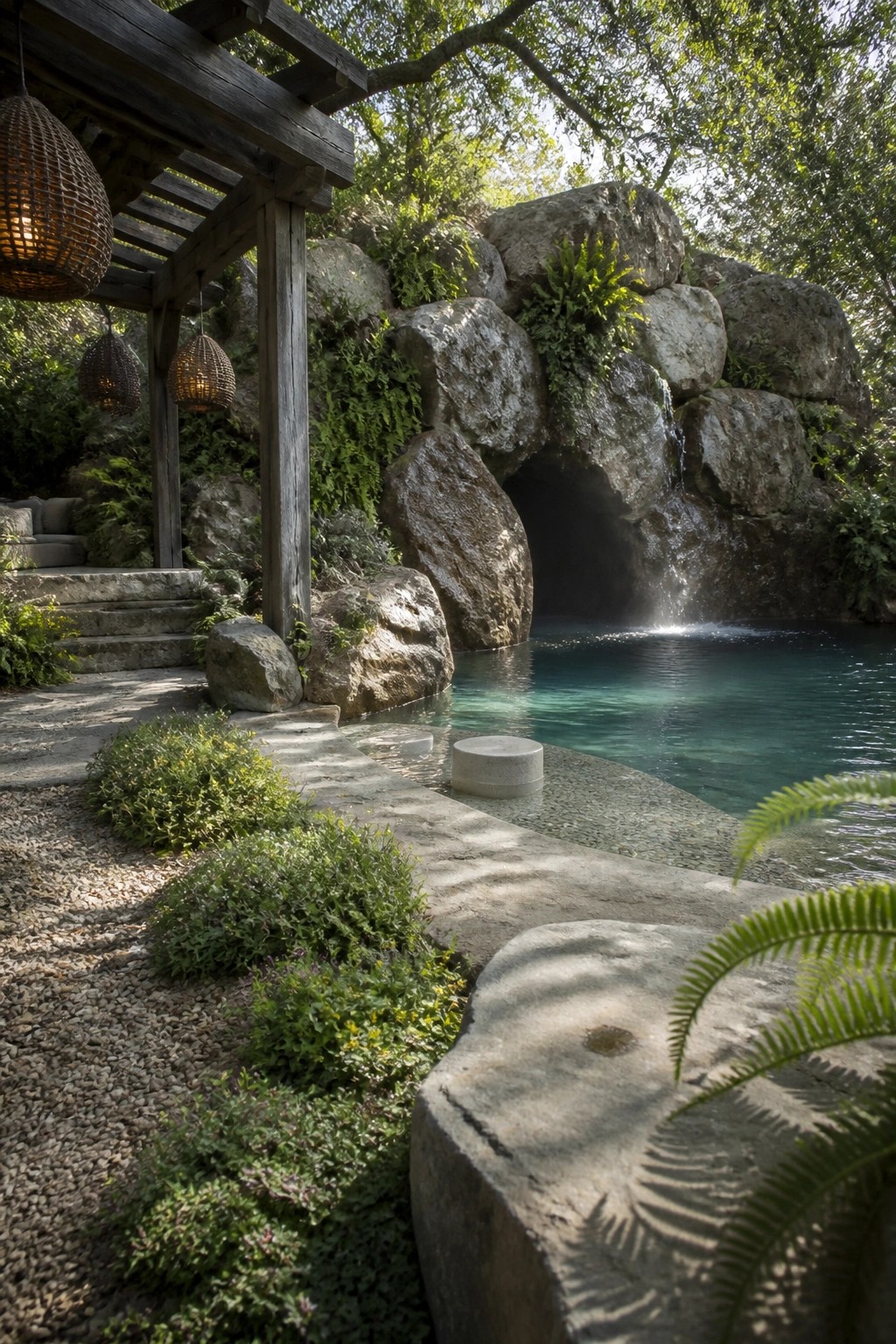
Large rocks give a pool a grounded feel that concrete decks often miss. When you tuck ferns and other greenery into the crevices, the whole edge starts to look like it belongs with the land instead of sitting on top of it. The mix of rough stone and soft planting also adds texture without needing lots of extra decor.
This approach works best on properties that already have some slope or room for bigger stones. Keep the plantings simple and repeat a few varieties so the look stays calm rather than busy. Watch the scale though. Too many small rocks can start to feel cluttered next to one big pool.
Stone Steps And Built-In Seating By The Fire Pit
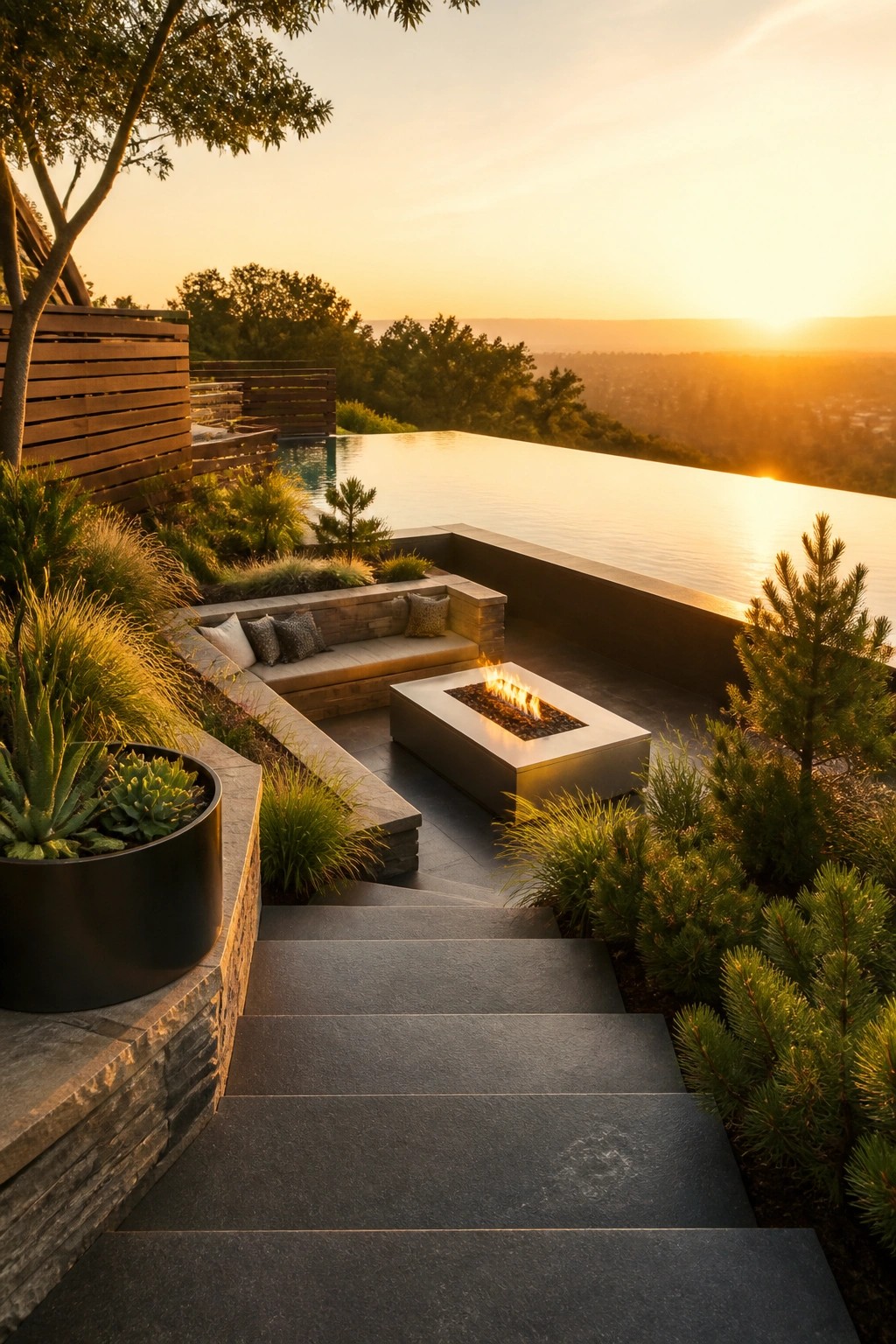
Stone steps work well here because they create a clear path down to the fire pit while also forming the edge for the built-in seating. The same material carries through the low walls and the fire pit itself, so the whole corner feels connected instead of like separate pieces added later.
This setup suits homes with a pool already in place, especially on a slope where you need to manage levels. Keep the stone simple and let the surrounding plants soften the edges over time. Just watch the scale so the steps do not feel too wide or the seating too deep for normal use.
Raised Metal Planters Along Pool Paths
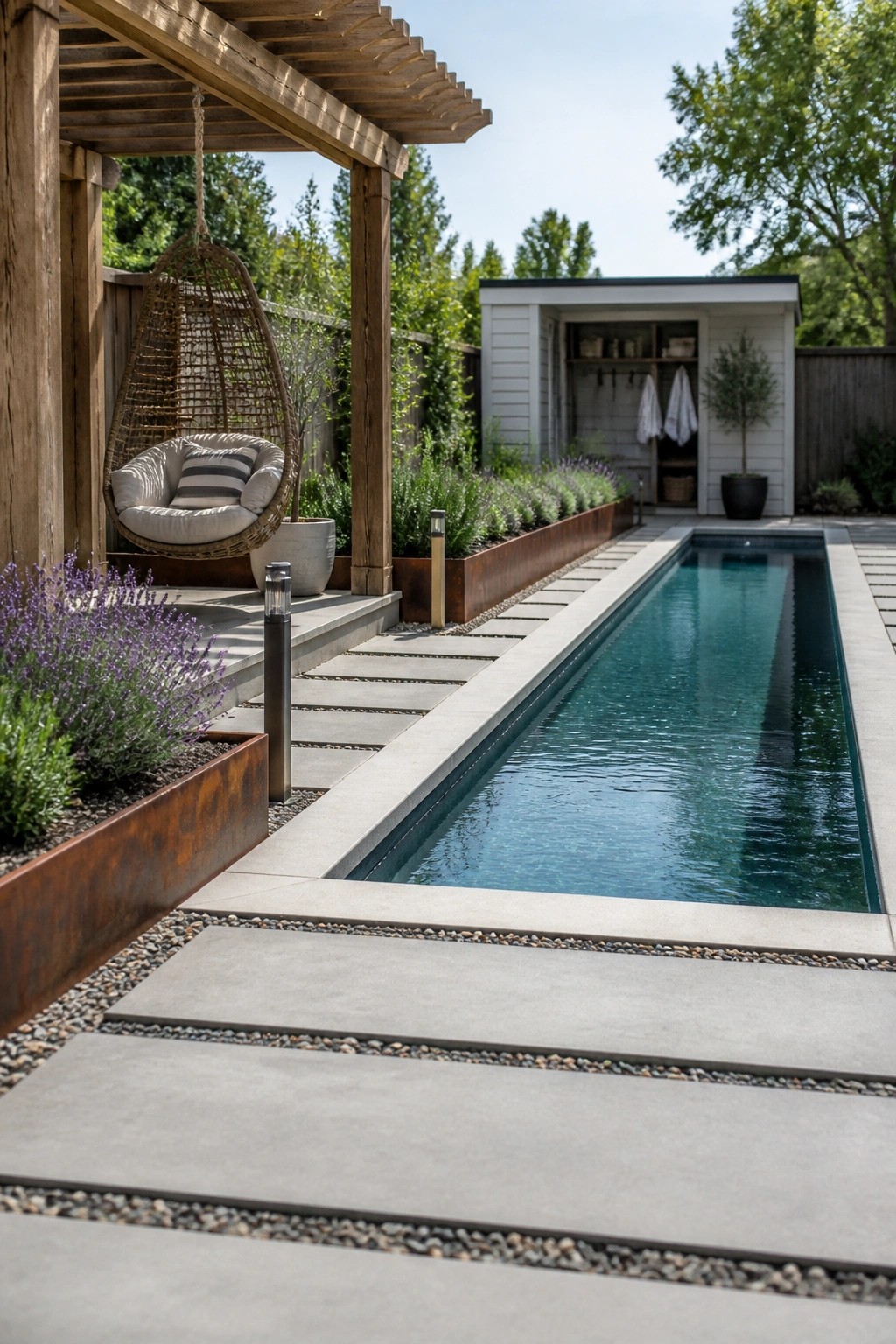
Raised metal planters give pool areas a clean edge without making the space feel boxed in. They hold plants at a good height so the greenery shows up well against the water and hard surfaces. The rusted finish adds texture that pairs naturally with stone pavers and gravel.
This setup works best on longer or narrow pool decks where you want planting without losing walking room. Keep the beds narrow and repeat the same metal along both sides so the path feels intentional rather than cluttered. Make sure the planters sit on a gravel base so water drains away from the pool deck.
Stepping Stones Over Water
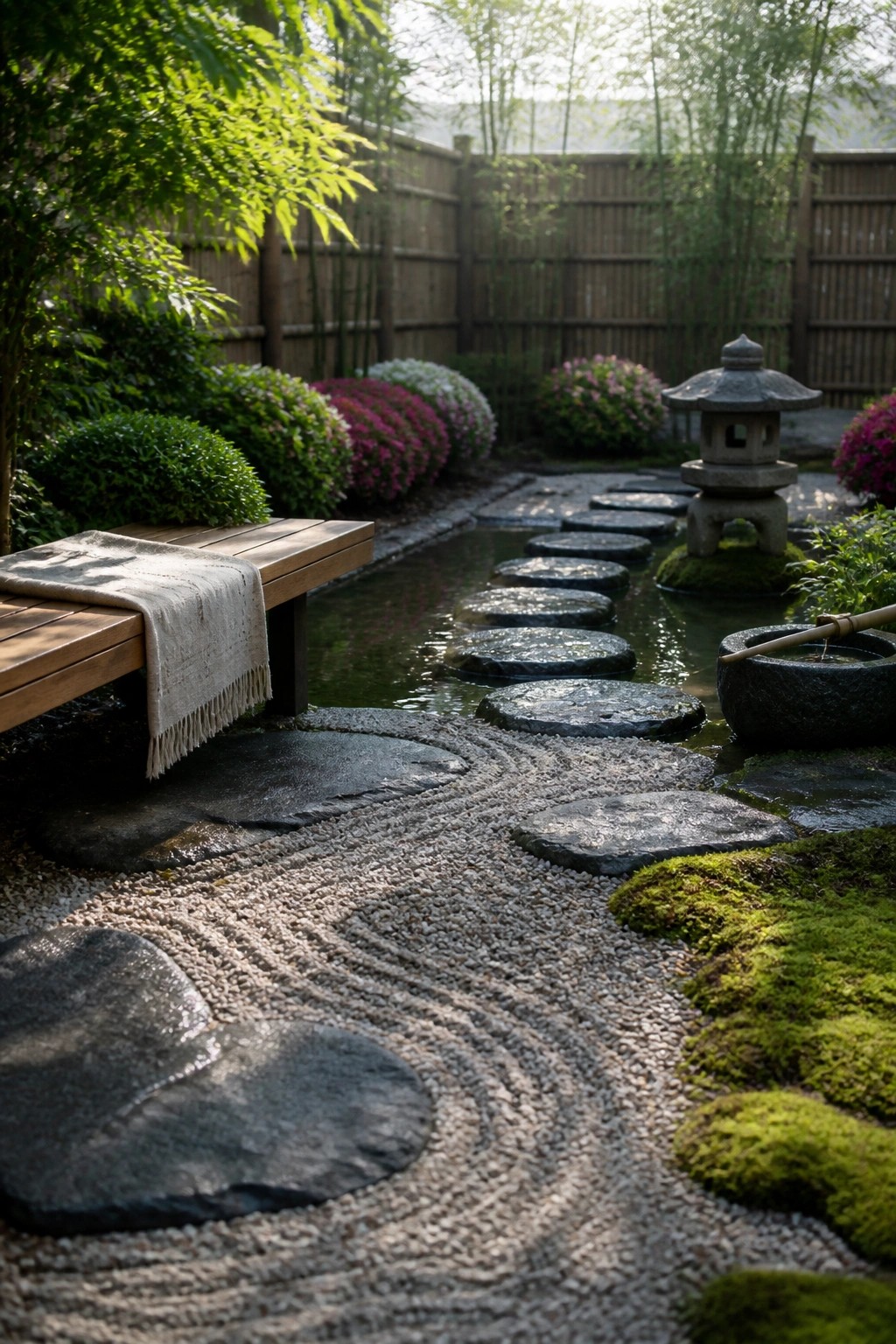
One simple way to add movement to a garden is to run a path of stones right across a shallow pool. The stones give you a clear way through while the water and surrounding gravel keep the whole area feeling open and light.
This layout works best in smaller yards where you want to stretch the space without crowding it. Use low plants along the edges and keep the gravel raked so the stones stay easy to follow.
Stone Paths That Blend Into Planting Beds
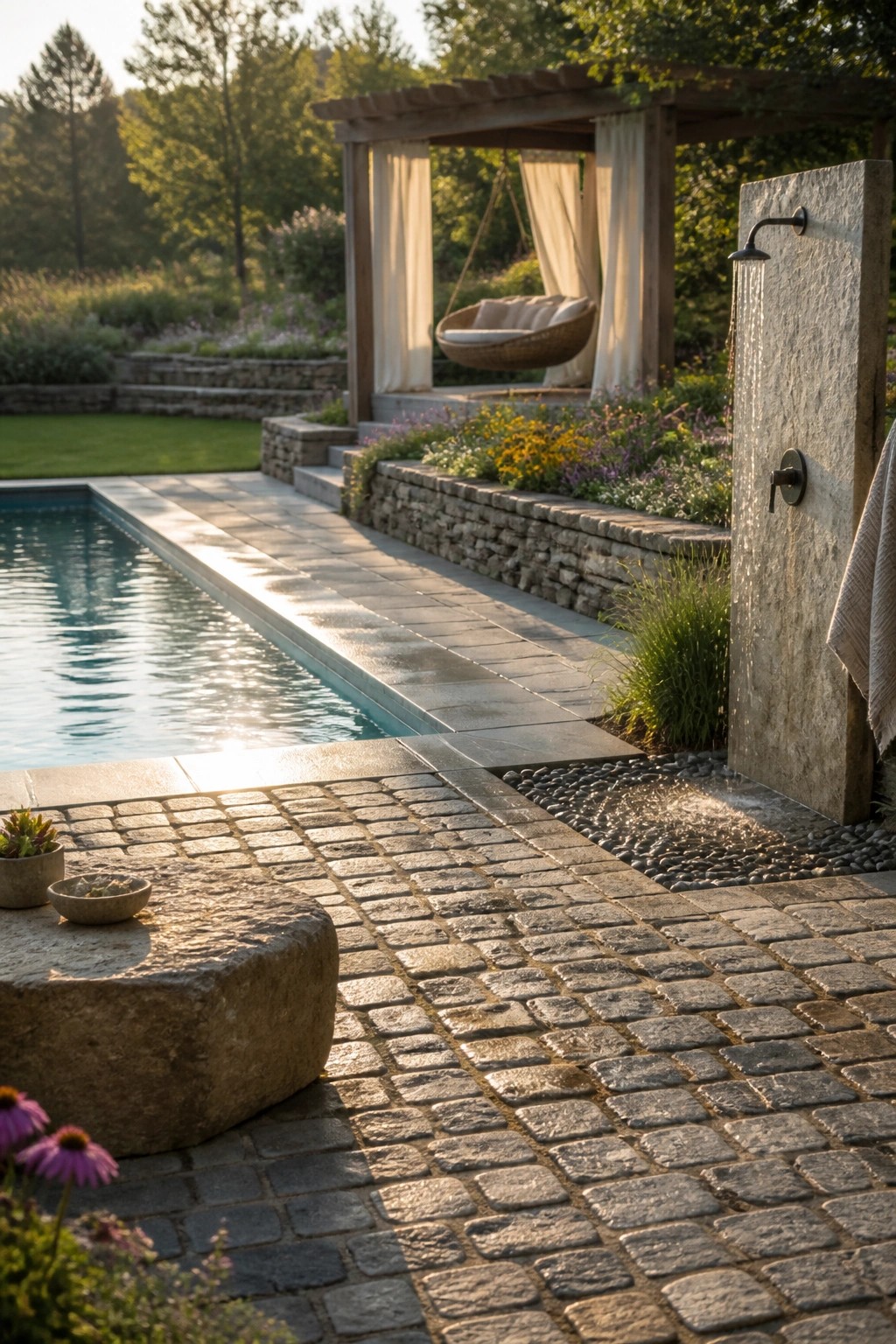
Stone paths work especially well when they sit right next to garden beds instead of cutting them off with a hard edge. The change in texture from cobblestone to pebbles and then into soil and plants keeps the whole area feeling connected.
This setup suits homes with room to spread out the pool zone. Match the stone tones to the surrounding walls or ground so the path looks like it belongs there instead of sitting on top of the landscape.
Terracotta Tiles For Pool Decking
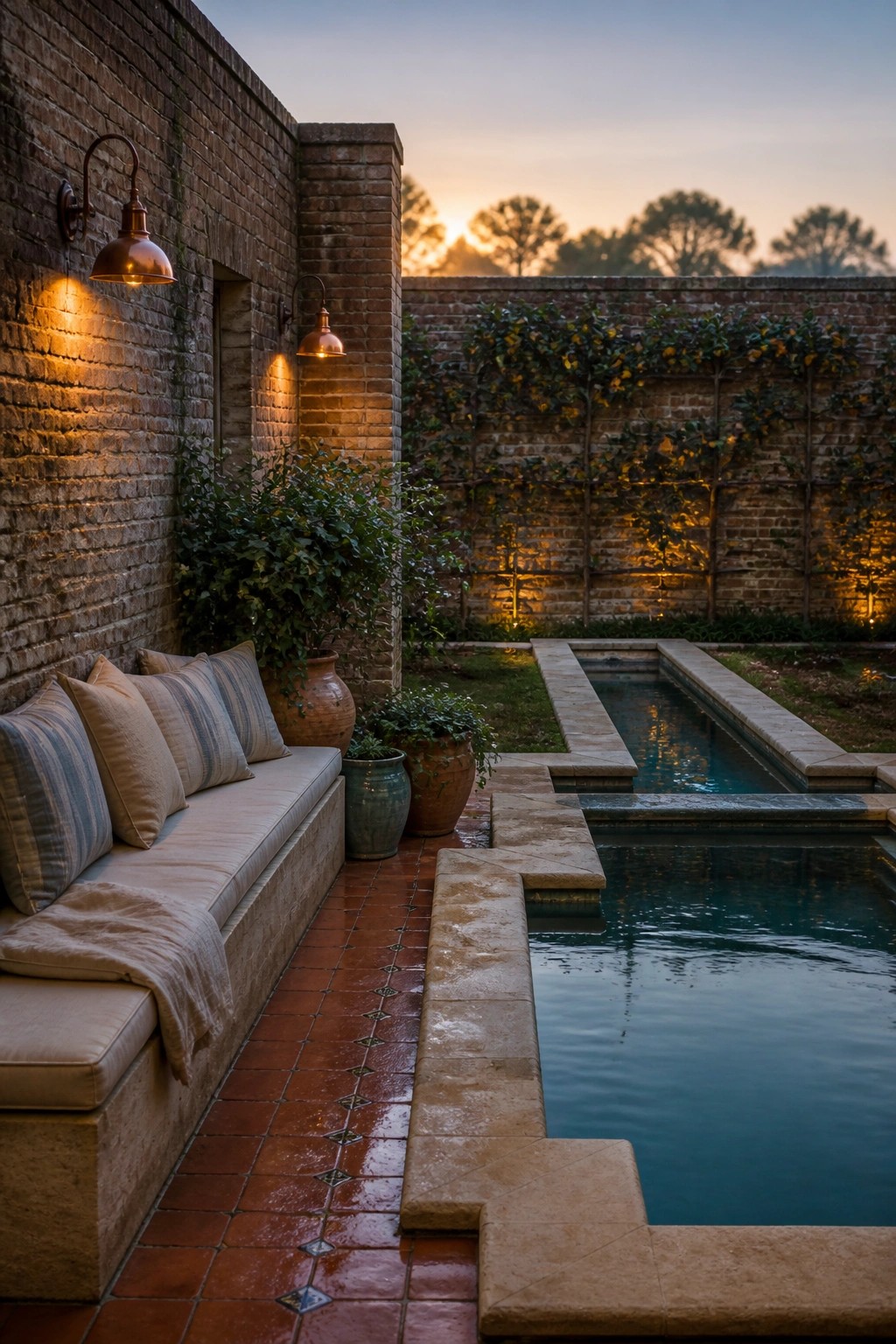
Terracotta tiles bring a warm, grounded feel to pool areas that stone alone can miss. The material holds up well outdoors and pairs naturally with both hard edges and soft planting, which is why it shows up often in older garden designs. It also ages gracefully, picking up a bit of character over time without looking worn out too fast.
This approach works best on homes with a traditional or Mediterranean lean where you want the deck to feel like part of the garden rather than a separate surface. Keep the layout simple so the tiles do not compete with the plants, and make sure the area drains properly since the surface can stay damp after rain.
Stone Fire Pits That Work With Pool Landscaping
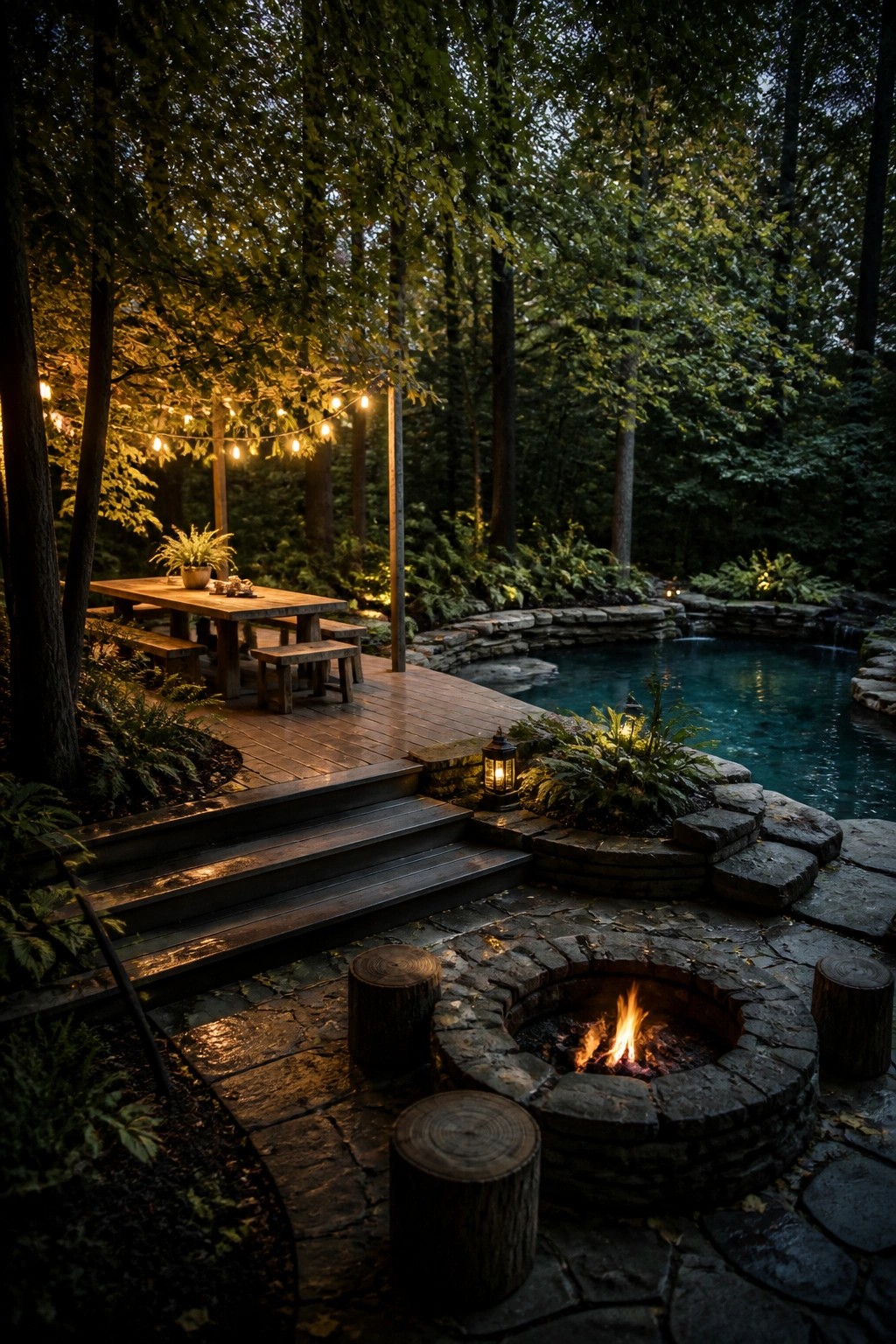
A stone fire pit adds a natural gathering spot right next to the pool without fighting the surrounding greenery. The rough texture of the stone ties into the pool edging and paths, while the plants soften the edges and keep the whole area from feeling too built up. It works especially well in wooded settings where you want the pool zone to feel like part of the landscape rather than something added on.
This setup suits homes with existing trees or sloped yards where you need a defined spot for seating. Keep the stone consistent with any paths or retaining walls so everything reads as one surface. Avoid crowding the fire pit with too many plants right at the edge, since you still need room to walk around it safely at night.
Stone Borders Around the Pool
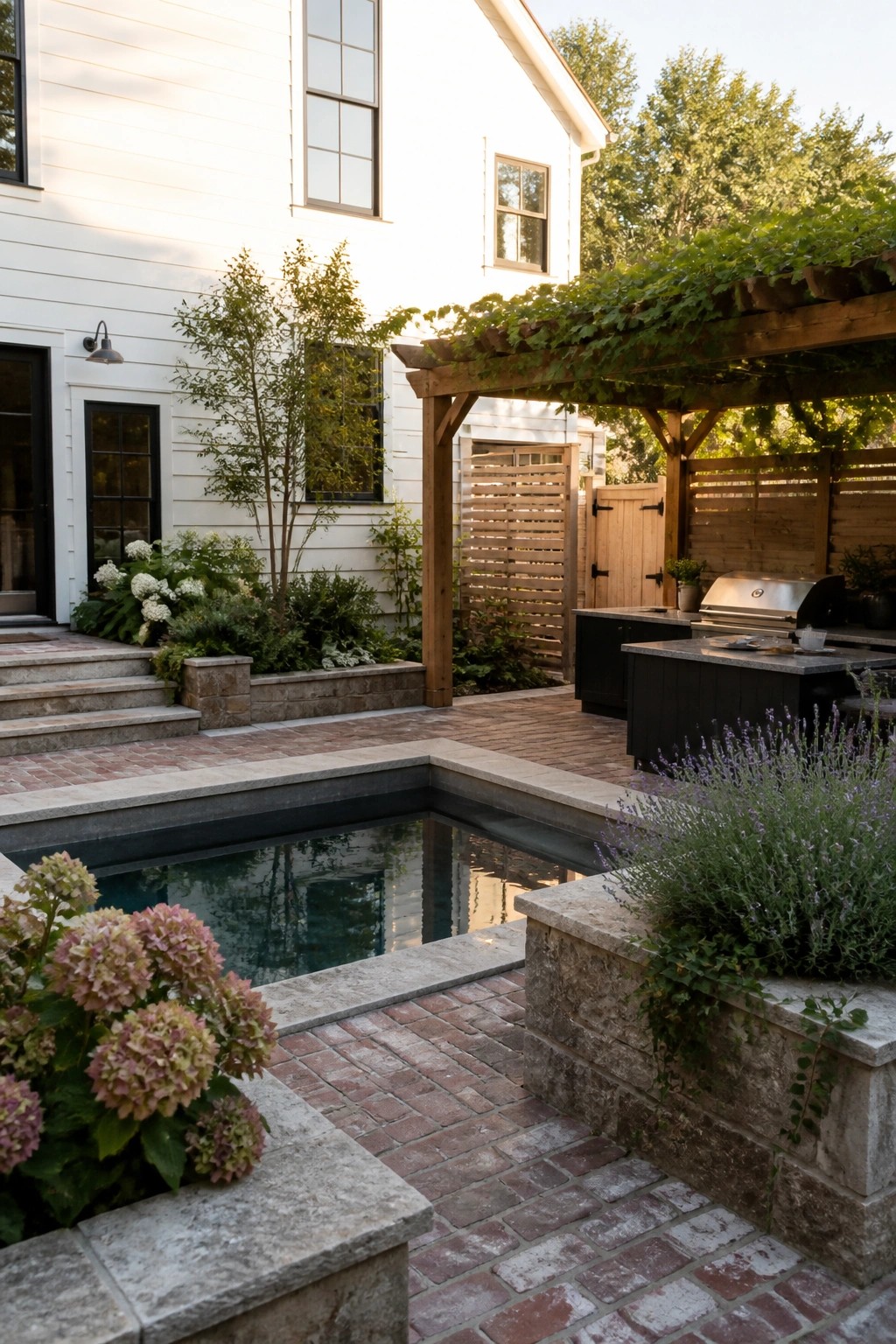
Stone edges give a pool a settled, finished look that still feels connected to the garden. The material holds the shape of the water while plants spill over the sides and soften the line.
This approach works best on smaller yards where you want clear boundaries without building walls. Keep the stone simple and match the color to your paving or house so the whole area reads as one space instead of separate pieces.
Raised Planters Add Texture Around The Pool
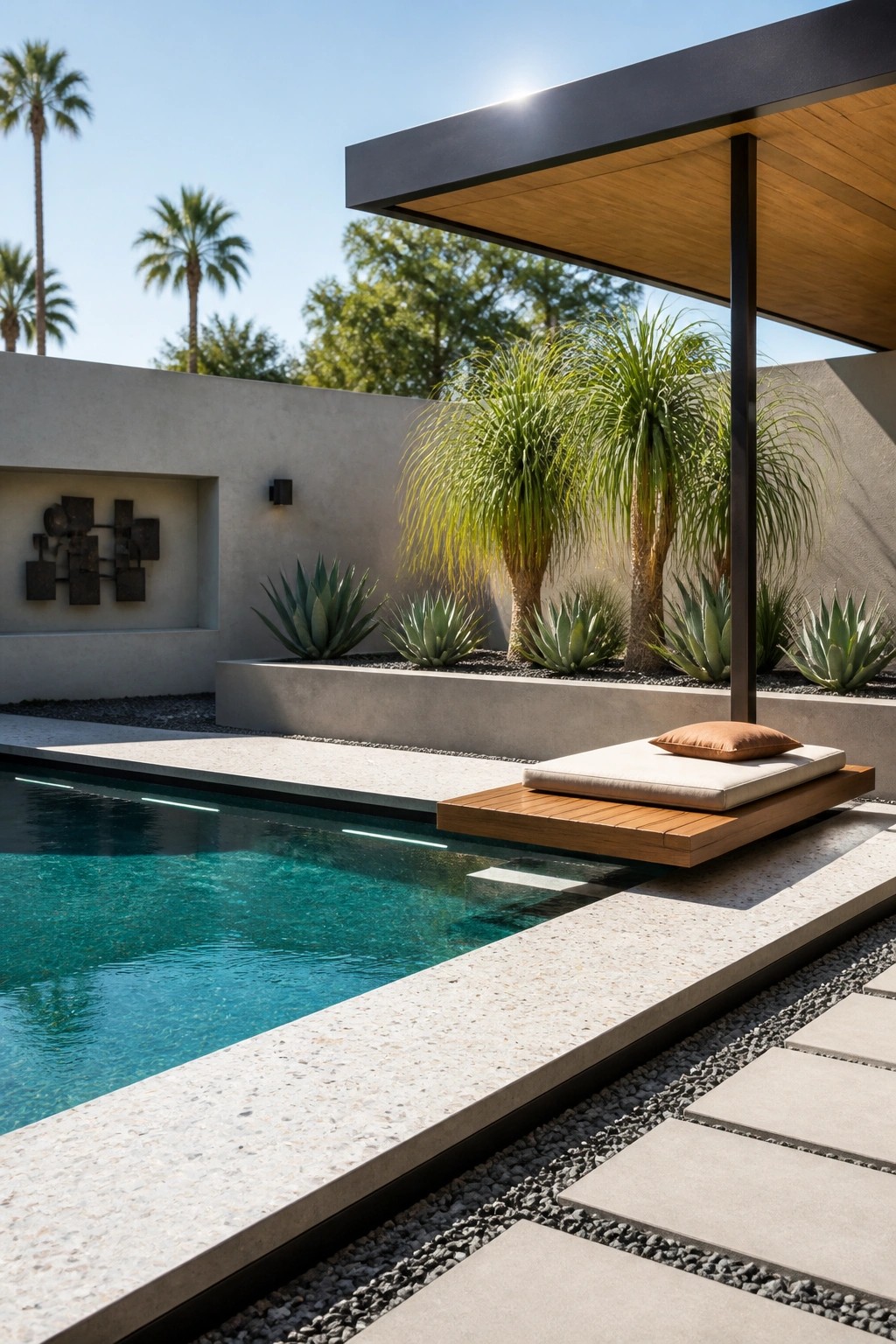
Raised planters give pool landscaping some real structure while letting you mix plant heights and textures in one spot. The concrete edges keep everything neat and lift the greenery just enough to make the space feel layered instead of flat.
This setup works best on modern homes where the architecture is simple. Keep the beds low and use gravel or stone to tie them into the deck. Just watch the proportions so the planting stays in scale with the pool itself.
Potted Plants On Stone Pool Decks
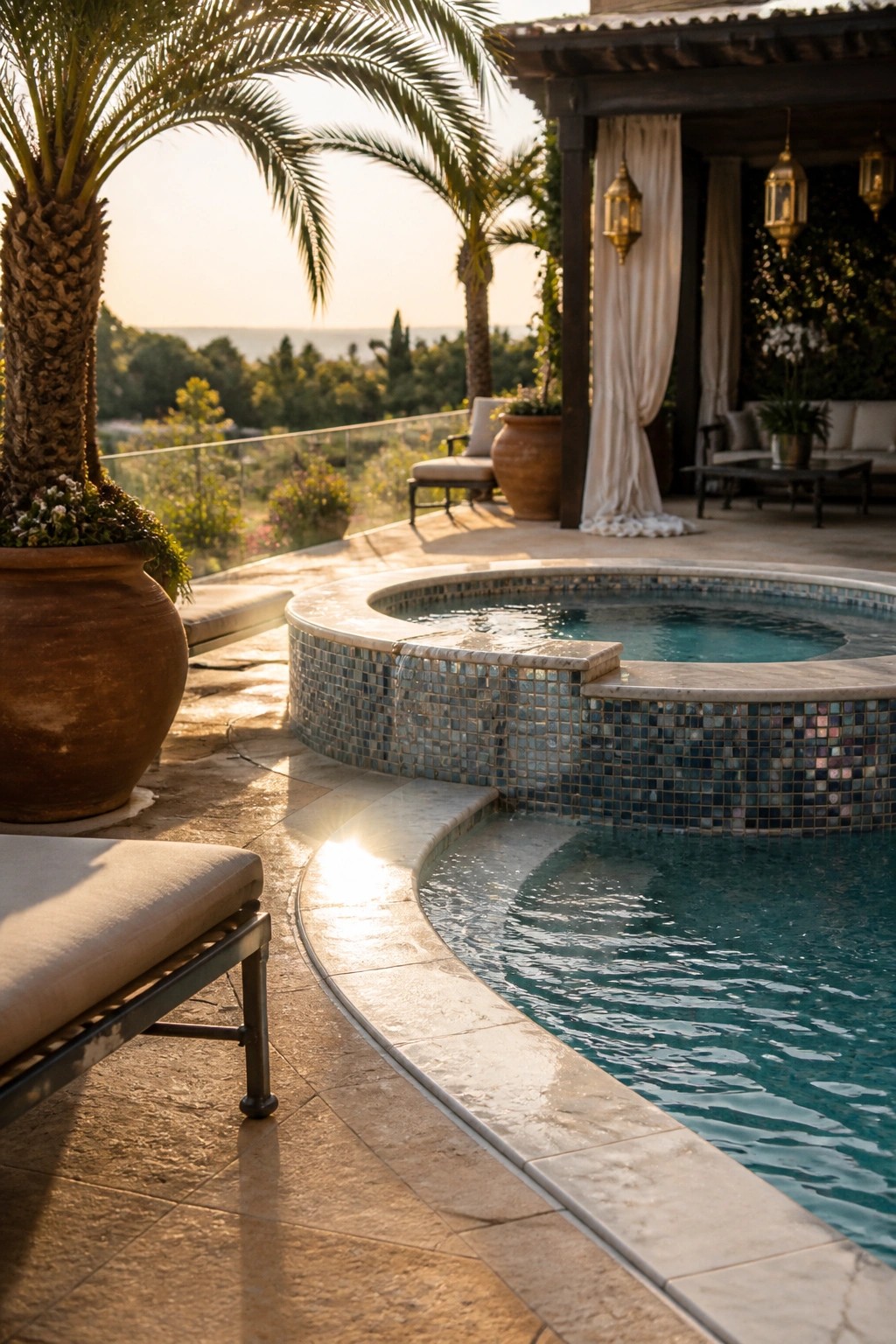
Large pots give you an easy way to add greenery and texture right next to a stone pool deck. They let you bring in height and softness without digging up the hardscape or committing to permanent beds. The mix of rough terracotta against smooth stone and water creates contrast that feels natural rather than designed.
This approach works best on patios or decks where space is tight or where you want the option to move things around with the seasons. Keep the pots simple and group a few different sizes together so the planting feels full without crowding the walking areas. Avoid overcrowding the edge of the pool itself so the stone stays the main surface underfoot.
Stone Edging Blends Pool Into The Landscape
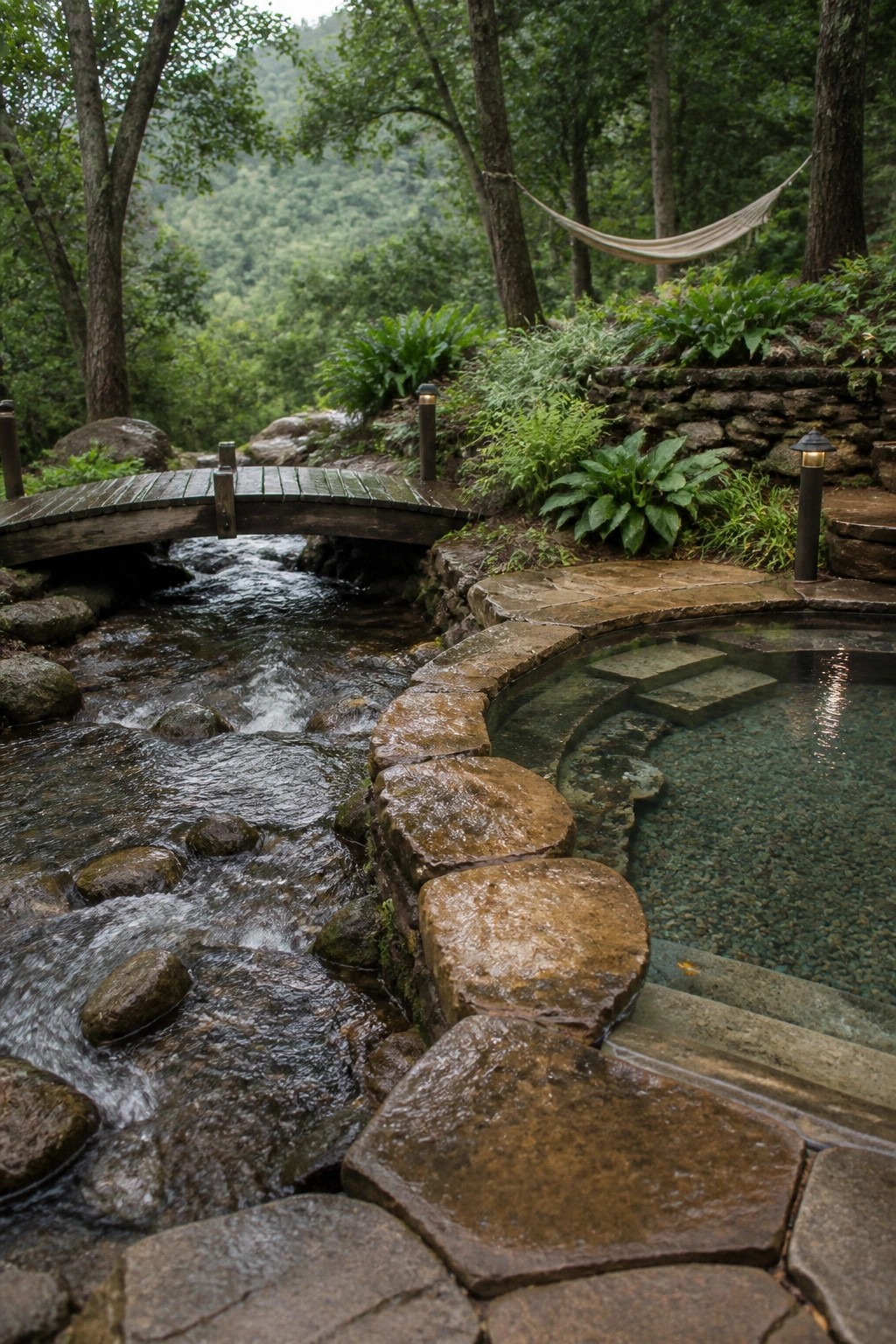
Stone edging helps a pool feel like it belongs in its setting instead of sitting on top of it. When the same rock runs along the waterline and continues into the surrounding ground, the whole area reads as one piece rather than separate parts.
This works best on lots that already have rock or moving water nearby. Match the size and color of the stone to what is already there, and let some plants spill over the edges so the line stays soft.
Raised Wooden Planters Around the Pool
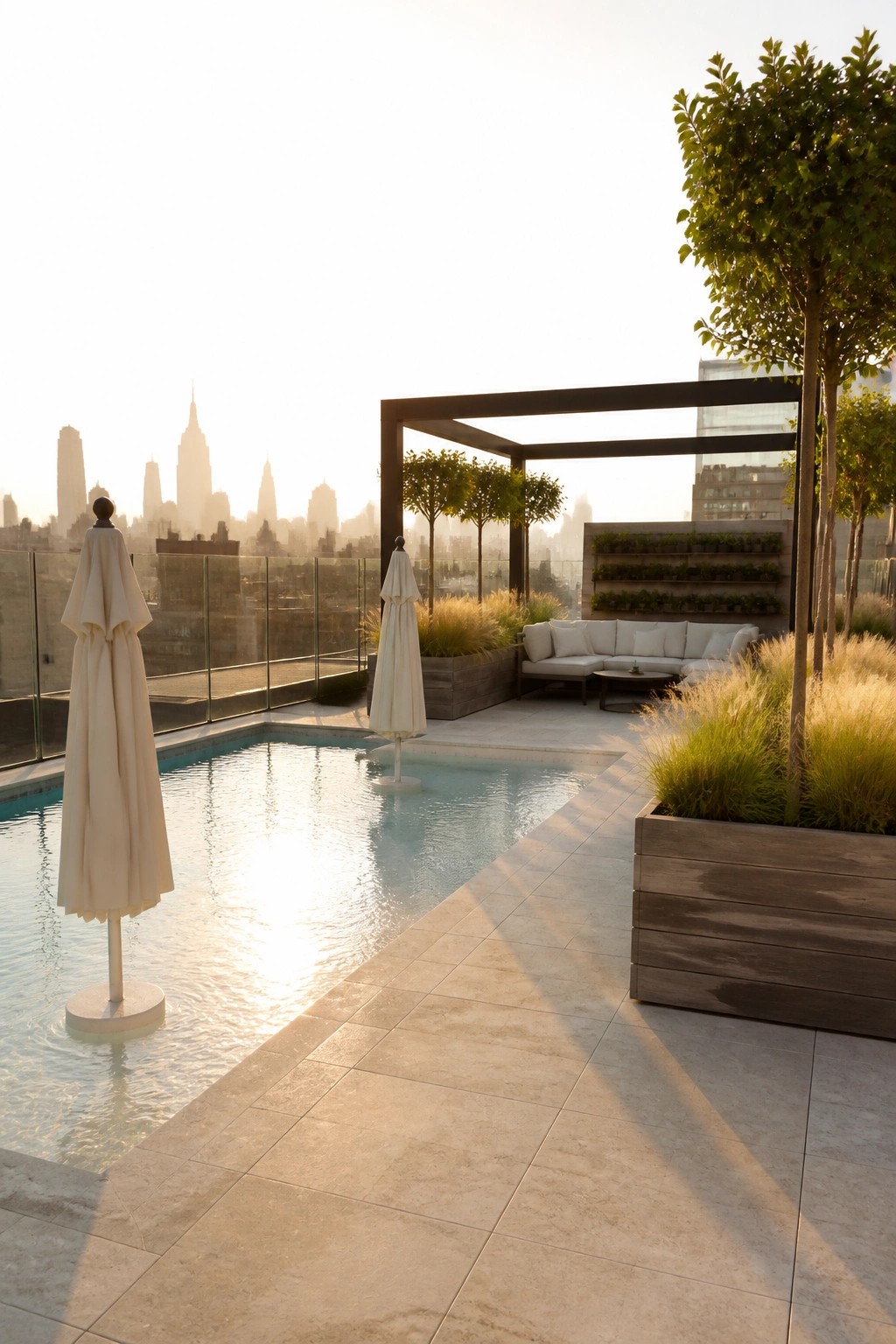
Many pool decks end up looking flat because of the large areas of stone or concrete. Raised wooden planters let you add height and texture without needing to dig, and they work well for holding taller grasses or small trees that soften the edges.
This setup suits rooftops and paved yards where soil is limited. Keep the planters in a similar tone to the decking so they blend in, and group a few different plant heights together for better balance.
Brick Edging Around Narrow Pools
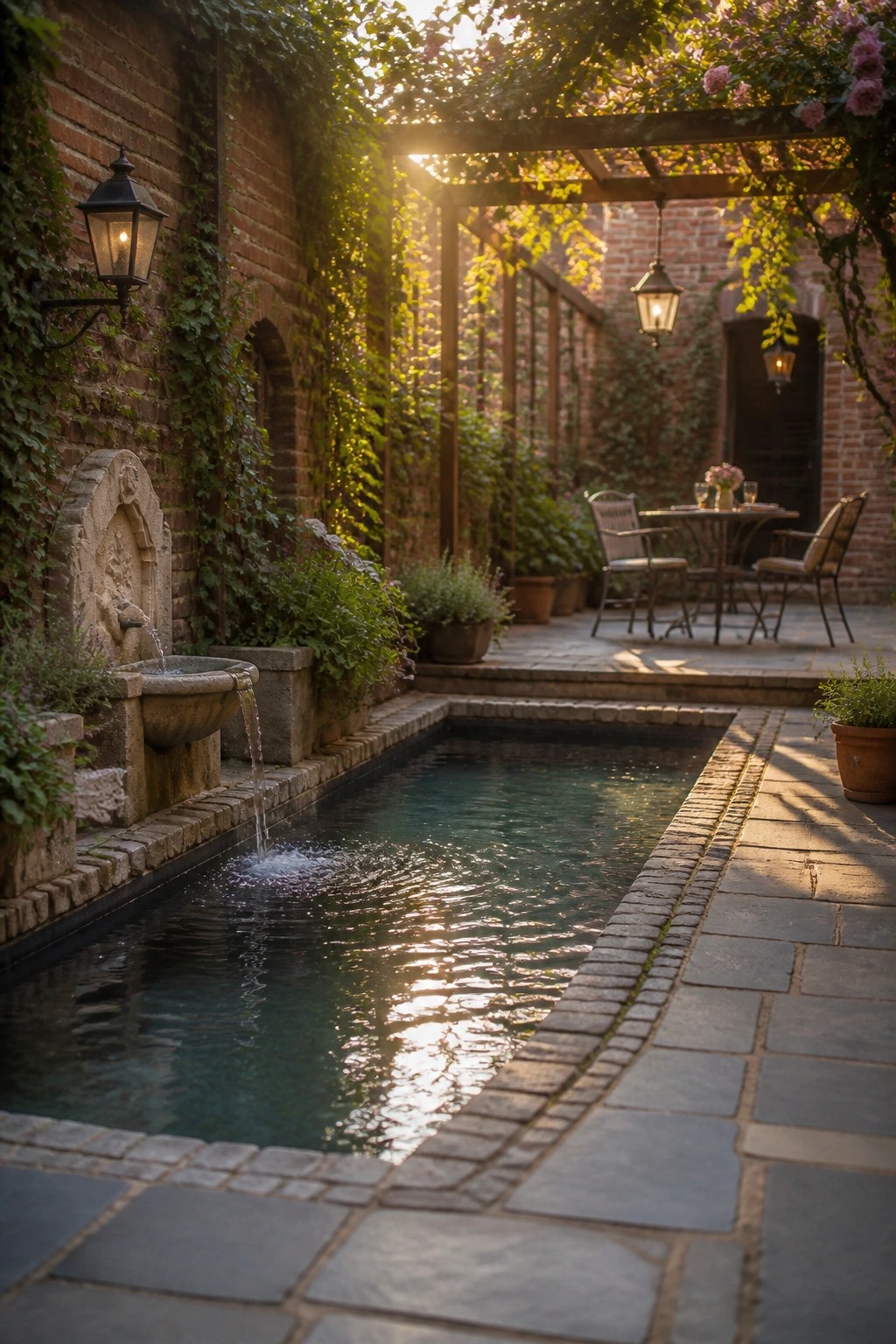
Brick edging gives a pool a clean border that holds up well over time. It also ties the water into the surrounding walls and paving without needing extra materials. The look works especially well in smaller or enclosed spaces where you want the pool to feel like part of the garden rather than a separate feature.
This approach suits older homes or courtyards with existing brickwork. Keep the edging low and simple so the focus stays on the water and any nearby planting. Avoid wide borders if the space is already tight.
Frequently Asked Questions
Q: What stone holds up best if kids run around the pool all day?
A: Pick something with a bit of grip like natural flagstone or honed granite. It stays cooler under bare feet and resists chips from dropped toys. Skip anything polished since it turns slick fast.
Q: How do I keep leaves and petals out of the water when I plant right up to the edge?
A: Stick with evergreens like boxwood or dwarf palms that drop very little. Place them in large pots instead of open beds so debris stays contained. A quick weekly sweep with a net usually handles the rest.
Q: Can I add texture on a small patio without crowding the space?
A: Layer one rough stone wall section with smooth river rock at the base. Tuck in a couple of tall grasses for height and movement. That mix adds depth while leaving room to walk.