Do you ever wonder how much chlorine liquid you should add to your pool? Keeping your pool water clean and safe can feel overwhelming, especially with all the conflicting advice out there. You want to enjoy crystal-clear water without worrying about harmful bacteria or chemical imbalances.
Key Takeaways
- Maintain Proper Chlorine Levels: Regularly monitor chlorine levels to prevent issues like algae growth and harmful bacteria, ensuring a safe swimming environment.
- Adjust for Various Factors: Calculate chlorine dosage based on pool size, water temperature, swimmer load, sunlight exposure, and recent rainfall for optimal sanitation.
- Use Test Strips: Employ test strips for accurate chlorine level readings; properly collect, dip, and compare to make informed adjustments.
- Follow Dosage Guidelines: Refer to recommended chlorine amounts based on pool size, increasing dosages during high swimmer activity, hot weather, or after rain.
- Proper Chlorine Application: Test water before adding chlorine, dilute large doses when necessary, and ensure even distribution by adding it with the pump running.
- Safety First: Always wear protective gear when handling chlorine, store it properly, and never mix it with other chemicals to prevent harmful reactions.
Understanding Chlorine Levels
Maintaining proper chlorine levels ensures your pool remains clean and safe. Knowing the right levels helps prevent issues like algae growth and harmful bacteria.
Recommended Products

AFFORDABLE 7-IN-1 POOL TESTING KIT: Our 100 pool test strips provides an affordable, all in one pool water testing kit for various chemicals including Free Chlorine, Alkalinity, pH levels and more!

LAB-TESTED FOR ACCURACY: Take the guesswork out of routine water checks with our lab-tested pool test strips. Compare the strip colors with the bottle chart to monitor water chemistry and help guide pool and spa maintenance.

7 IN 1 TEST STRIPS: Simplify your pool and spa maintenance with Varify’s versatile test strips, capable of monitoring seven essential water quality parameters: Total Chlorine, Free Chlorine, Bromine, Total Hardness, Total Alkalinity, pH, and Cyanuric Acid. This all-inclusive kit ensures your swimming pool or spa water remains pristine and safe for use.
Importance of Chlorine in Pools
Chlorine acts as a powerful disinfectant. It kills bacteria, viruses, and algae, keeping the pool water safe for you and your guests. Chlorine also helps remove organic contaminants from the water, ensuring a clear swimming environment. Regularly monitoring chlorine levels helps maintain a healthy balance for optimal swimming conditions.
Signs of Low Chlorine Levels
Low chlorine levels can lead to several issues. Watch for these signs:
- Cloudy Water: Water becomes murky when chlorine isn’t effectively killing contaminants.
- Strong Chlorine Smell: An overpowering smell often indicates chloramines, a byproduct of ineffective chlorine in the water.
- Algae Growth: Green or slimy algae develop in the absence of sufficient chlorine.
- Skin Irritation: Low chlorine can lead to skin rashes or irritations, signaling that the water isn’t properly sanitized.
Regular testing of chlorine levels helps address these signs quickly. Consider using test strips or kits to stay informed about your pool’s water quality.
Calculating Chlorine Dosage
Calculating the right amount of liquid chlorine for your pool is essential for effective sanitation. Several key factors influence how much chlorine you should add.
Recommended Products

Effective Sanitization: Champion Liquid Chlorine provides powerful sanitization, effectively eliminating harmful bacteria, algae, and other contaminants from pool water, ensuring a safe and hygienic swimming environment.

Liquid Pool Shock: Champion Pool Shock is commercial-grade liquid chlorine made with 12.5 percent sodium hypochlorite, supplied as four 1-gallon jugs for residential and commercial pools.

Factors Affecting Chlorine Requirements
- Pool Size: Larger pools need more chlorine. Measure your pool’s volume in gallons to determine the correct dosage.
- Water Temperature: Warmer water increases chlorine demand. Higher temperatures allow bacteria and algae to survive longer, requiring additional chlorine.
- Swimmer Load: More swimmers introduce contaminants like sweat and sunscreen. Increase chlorine dosage based on the number of bathers.
- Sunlight Exposure: UV rays break down chlorine quickly. If your pool is in direct sunlight, add more chlorine to maintain desired levels.
- Algae Presence: If algae appears, a significant shock treatment might be necessary. Test and increase chlorine levels accordingly.
- Rainfall and Debris: Rain introduces organic matter, affecting chlorine levels. After heavy rain, consider checking and adjusting chlorine amounts.
Using Test Strips for Accurate Measurement
Using test strips simplifies monitoring chlorine levels. Follow these steps to ensure accurate results:
- Collect Water Sample: Take a sample from elbow depth for more accurate readings.
- Dip the Test Strip: Immerse the strip into the water briefly. Let it sit according to the package instructions (usually 15 seconds).
- Compare Colors: Match the strip’s colors to the packaging chart. This indicates current chlorine levels.
- Adjust Chlorine as Needed: If levels are low, calculate how much liquid chlorine to add based on your pool’s volume.
By keeping these factors in mind and regularly testing your pool, you maintain safe and clean swimming conditions with the correct chlorine levels.
Recommended Chlorine Liquid Amounts
Knowing how much chlorine liquid to add to your pool is essential for maintaining safe and clean water. Factors like pool size and usage greatly influence the required amount.
Recommended Products

Pool Algae Treatment: Our Pool Algaecide and Clarifier is specially formulated to treat existing algae while providing long-lasting defense against stubborn growth, ensuring that your pool remains clear and algae-free for an extended period of time.

The 2 standard testing solutions that are used for measuring and maintaining the proper Chlorine, Bromine and pH chemical levels in swimming pools and spas
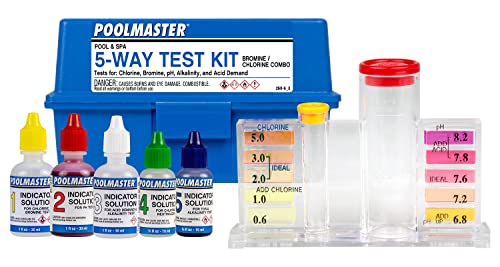
5-WAY WATER TESTING: Accurately tests chlorine, bromine, pH, acid demand, and total alkalinity to help maintain clean, balanced pool and spa water
General Guidelines for Different Pool Sizes
- Small Pools (up to 10,000 gallons): Add 1 pint of chlorine liquid to increase levels by 1 ppm (parts per million). This amount effectively handles typical swimmer load and debris.
- Medium Pools (10,000 – 20,000 gallons): Use 1 quart of chlorine liquid to achieve a similar 1 ppm increase. Adjustments may vary based on usage patterns.
- Large Pools (20,000 – 30,000 gallons): Apply 2 quarts of chlorine liquid for a 1 ppm boost. Higher volumes may be necessary during peak swimming times.
- Hot Weather: Increase chlorine by 10-20% due to faster depletion from sun exposure. Consider adding 1 extra pint for small pools or an additional quart for larger ones.
- Heavy Swimmer Load: In cases with more than 10 swimmers, add 1-2 pints more than usual. Swimmers introduce contaminants that require additional chlorine.
- Rainfall: After heavy rain, check chlorine levels. If they drop below 1 ppm, add the appropriate amount based on your pool’s size and consider increasing by 1 pint for every 5 inches of rain.
- Algae Presence: If green or cloudy water occurs, double the recommended chlorine amount. For a medium pool, this means adding 2 quarts instead of 1 quart for a 1 ppm increase.
Regular testing using test strips ensures accuracy in measurements and keeps your pool sparkling clean.
Applications of Chlorine Liquid
Chlorine liquid plays a vital role in maintaining pool water quality. Understanding how to use it effectively ensures a clean and safe swimming environment.
How to Properly Add Chlorine to Your Pool
- Test the Water: Use test strips to determine the current chlorine level before adding more.
- Calculate the Dose: Refer to your pool’s volume. For example, a typical recommendation is to add 1 gallon of chlorine liquid for every 10,000 gallons of water to raise chlorine levels by 5 ppm.
- Dilute if Necessary: For large doses, consider diluting chlorine liquid in a bucket of water before adding it to the pool. This helps prevent damage to pool surfaces.
- Add Chlorine: Pour the diluted chlorine around the perimeter of the pool while the pump is running. This ensures even distribution.
- Allow Circulation: Let the pump run for at least 30 minutes after adding chlorine to mix it thoroughly.
- Wear Protective Gear: Use gloves and goggles to protect your skin and eyes from splashes.
- Store Properly: Keep chlorine in a cool, dry place, away from direct sunlight and heat sources.
- Avoid Mixing: Never mix chlorine with other chemicals, especially acid. This can create dangerous gases.
- Ventilation: Ensure good ventilation when handling chlorine indoors to avoid inhaling fumes.
- Keep Out of Reach: Store chlorine out of reach of children and pets to prevent accidents.
Conclusion
Maintaining the right chlorine levels is key to a safe and enjoyable swimming experience. By following the guidelines for your specific pool conditions you can ensure your water stays clean and clear.
Remember to regularly test your water and adjust your chlorine levels as needed. Taking the time to properly dose and distribute chlorine will make all the difference.
Stay safe while handling chlorine and keep your pool in top shape. With a little care you’ll have a sparkling oasis ready for fun all season long. Enjoy your swimming!
Frequently Asked Questions
What is the importance of maintaining chlorine levels in pools?
Maintaining proper chlorine levels in your pool is crucial for cleanliness and safety. Chlorine acts as a disinfectant, killing harmful bacteria and pathogens in the water, thus providing a safe swimming environment.
How can I tell if my pool has low chlorine levels?
Signs of low chlorine levels include cloudy water, unpleasant odors, and increased algae growth. If you notice any of these signs, it’s essential to test your chlorine levels and take action immediately.
How do I add chlorine to my pool?
To add chlorine, determine your pool size and follow guidelines based on water temperature, swimmer load, and existing chlorine levels. Use liquid chlorine for effective dosing and pour it evenly around the pool perimeter for proper distribution.
What safety measures should I take when handling chlorine?
Always wear protective gear, ensure proper ventilation, and store chlorine away from children and pets. Avoid mixing chemicals and follow the manufacturer’s guidelines for safe handling and application.
How often should I monitor chlorine levels in my pool?
Regular monitoring of chlorine levels is recommended at least once a week. However, you may need to check more frequently during heavy use, after rainstorms, or when algae are present to ensure the water remains safe for swimming.