Wondering how much sand you need for your above ground pool filter? You’re not alone. Many pool owners face this question when setting up their filters for the first time. Getting the right amount of sand is crucial for keeping your pool water clean and clear, and using too little or too much can lead to problems down the line.
Key Takeaways
- Correct Sand Quantity: Use approximately 100 to 200 pounds of sand for most above ground pool filters, as specified by the manufacturer’s guidelines.
- Sand Types Matter: Common options include silica sand, zeolite, glass sand, and specialty sands, each with distinct filtration benefits that can impact water clarity.
- Maintenance is Key: Periodically check and replace sand every 3 to 5 years, and backwash the filter every 4 to 6 weeks to maintain optimal performance.
- Installation Tips: Ensure the installation site is level, follow the manufacturer’s instructions, and securely connect hoses to prevent leaks for effective filtration.
- Monitor Pool Chemistry: Regularly test and balance the pool water chemistry to support the sand filter’s efficiency and improve overall water quality.
Understanding Pool Filtration Systems
Above ground pool filtration systems keep your water clean and clear. Understanding how these systems work helps you make informed decisions about maintenance and sand requirements.
Types of Pool Filters
- Sand Filters: Use sand to trap dirt and debris. Sand filters are popular for their simplicity and effectiveness. You need a specific amount of sand for optimal performance.
- Cartridge Filters: Employ a replaceable cartridge that captures debris. It’s easy to clean, making them a low-maintenance option. You’ll replace the cartridge periodically, depending on usage.
- Diatomaceous Earth (DE) Filters: Utilize diatomaceous earth to filter out smaller particles. These filters provide excellent clarity. However, they require more maintenance than sand or cartridge filters.
Importance of Sand in Filtration
Sand plays a crucial role in sand filters. It captures dirt, leaves, and other particles, helping maintain clear pool water. Using the correct type and amount of sand ensures the filter performs effectively.
- Alleviates Strain: Proper sand quantity reduces the strain on the pump, prolonging its lifespan.
- Prevents Bypass: Too little sand can lead to unfiltered water returning to the pool. This results in cloudy water and potential problems with chlorine levels.
- Promotes Efficiency: The right volume of sand maximizes the filter’s efficiency, ensuring clean water circulation.
Choosing the right sand and understanding its role can enhance your pool experience and simplify maintenance.
Determining the Right Amount of Sand
Understanding the right amount of sand for your above ground pool filter is crucial for optimal filtration. Several factors affect this quantity, ensuring your pool water stays clean and inviting.
Recommended Products

High-Quality Filtration: 50 pounds of pre-washed, kiln-dried natural silica sand for pool filter captures dirt, leaves, hair, and debris without clogging or clumping

Clear Pool Water: Designed for above ground and inground pools, this filter sand captures leaves, dirt, dust, sunscreen oil, hair, and small particles to help maintain clean, inviting water.

50-pound bag of quality angular-shaped sand provides maximum entrapment of solids, optimizing your pool's filtration abilities
Factors Influencing Sand Quantity
- Filter Size: The size of your sand filter directly impacts how much sand you need. Larger filters require more sand for effective operation.
- Manufacturer Recommendations: Always check the manufacturer’s guidelines. They provide specific amounts based on their filter models.
- Sand Type: Different sand types vary in density. Standard pool filter sand typically has a density of around 100 pounds per cubic foot. Using the correct type ensures the filter works efficiently.
- Pool Size: The volume of water in your pool can influence the required sand amount. Larger pools often need more sand to maintain proper filtration.
- Standard Amount: Most above ground sand filters require about 100 to 200 pounds of sand. Refer to your filter’s manual for exact figures.
- Filling Guidance: When filling the filter, pour sand gently to avoid damaging the filter laterals. Level the sand evenly within the tank.
- Maintenance Check: After installation, monitor your filter’s performance. If you notice decreased flow or clarity, consider adjusting sand levels according to the guidelines.
- Periodic Replacement: Replace sand every 3 to 5 years or as needed. Regular maintenance is vital for your filter’s effectiveness.
Using these guidelines, you ensure your pool filter operates at peak performance, leading to clearer, cleaner pool water.
Choosing the Right Sand
Choosing the correct sand for your above ground pool filter significantly affects water clarity and filter efficiency. Understanding the types of sand and ensuring its quality can lead to optimal filtration results.
Recommended Products

POWERFUL 3/4 HP PUMP FOR POOLS UP TO 15,000 GAL – With a high-flow 3,100 GPH circulation rate, this 16" sand filter system keeps your above-ground pool crystal clear all season long. No more green water, cloudy days, or excessive chemical use—let the pump do the heavy lifting.
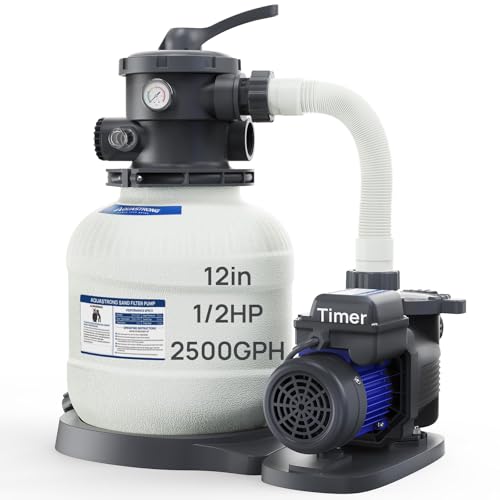
24-Hour Programmable Timer: The Aquastrong sand filter pump for above-ground pools features a customizable timer with 9 settings (2 to 24 hours), allowing you to automate filtration cycles for optimal efficiency. Enjoy crystal-clear, while saving energy and reducing maintenance
Types of Sand for Pool Filters
- Silica Sand: Silica sand is the most common type used for pool filters. It has a fine texture and effectively traps particles in the water.
- Zeolite: Zeolite offers a natural alternative to silica sand. It’s more porous and captures smaller particles, improving water clarity.
- Glass Sand: Glass sand is an eco-friendly option that lasts longer than traditional sand. Its smooth texture prevents clumping and enhances filtration.
- Specialty Sands: Specialty sands, such as polymer-based options, provide unique filtration capabilities. These sands cater to specific water conditions and can improve overall performance.
Sand Quality and Cleanliness
Quality plays a critical role in filtration efficiency. When selecting sand, consider the following:
- Particle Size: Ensure the sand grain size matches your filter’s specifications. Typically, a grain size of 0.45 to 0.55 mm works best for most filters.
- Purity: Choose sand that is free from impurities. Contaminants can reduce filtering effectiveness and clog the system.
- Pre-Washed Sand: Opt for pre-washed sand to minimize dust and debris. This leads to immediate filtration efficiency upon installation.
- Regular Maintenance: Periodically check and clean the sand. This practice prolongs its life and maintains optimal water clarity.
By selecting the right type of sand and ensuring its quality, you enhance your pool’s filtration system, leading to cleaner, clearer water and a more enjoyable swimming experience.
Installation and Maintenance Tips
Correct installation and regular maintenance ensure your above ground pool filter operates efficiently, providing clean water. Follow these tips for optimal performance.
Recommended Products

✔ EXCELLENT FILTRATION – SX2100 provides excellent water filtration with the 6-function valve that allows you to filter, backwash, rinse, re-circulate, drain and close the system.

✔ EXCELLENT FILTRATION – SX2800 provides excellent water filtration with the 6-function valve that allows you to filter, backwash, rinse, re-circulate, drain and close the system.

Sand Filter System - The Filter are perfectly engineered to provide optimum flow rates that promotes clean water quality
Proper Installation Techniques
- Level the Ground: Ensure the ground where the pool sits is level. An uneven base can stress the pool structure and affect the filter’s performance.
- Follow Manufacturer Instructions: Always refer to the filter’s manual for specific setup instructions. Each model may have unique requirements.
- Use the Right Sand: Choose the appropriate sand type as specified by the filter’s manufacturer. Typically, you’ll need 100 to 200 pounds of sand. Ensure the sand is clean and free from debris.
- Check connections: Secure all hose connections tightly to prevent leaks. Use clamps where necessary to ensure a watertight seal.
- Test the System: After installation, run the filter for a few hours. Check for leaks and make any necessary adjustments.
- Backwash Regularly: Backwash the filter every 4 to 6 weeks or when the pressure gauge indicates a rise of 8 to 10 psi above the normal operating level. This clears out trapped dirt and debris.
- Inspect Sand Quality: Check the sand quality at least once a year. Look for clumping or breakdown of particles, which can affect filtration effectiveness.
- Replace Sand Periodically: Change the sand every 3 to 5 years or when you notice poor water clarity. Removing old sand promotes better filtration efficiency.
- Monitor Pool Chemistry: Regularly test the pool water chemistry. Keeping pH and chlorine levels balanced supports the filter’s performance.
- Clean the Filter: Clean any pre-filters or skimmers associated with the system. This helps reduce the load on your sand filter, improving its lifespan.
By following these tips, you ensure your above ground pool filter works efficiently, making your swimming experience more enjoyable.
Conclusion
Getting the right amount of sand for your above ground pool filter is key to keeping your water crystal clear. By considering factors like filter size and type of sand you choose you can enhance your pool’s filtration system. Remember that regular maintenance and monitoring are just as important as the initial setup.
With the right approach your pool filter will work efficiently allowing you to enjoy those refreshing swims without a hitch. So take the time to get it right and your pool will thank you!
Frequently Asked Questions
How do I determine the amount of sand needed for my above ground pool filter?
To determine the amount of sand you need, check the filter’s size and manufacturer recommendations. Typically, above ground pool filters require 100 to 200 pounds of sand based on pool size and filter model.
What type of sand is best for pool filters?
Silica sand is commonly recommended for pool filters due to its effectiveness in trapping debris and improving water clarity. Specialty sands are also available for specific filtration needs.
How often should I replace the sand in my pool filter?
It’s recommended to replace the sand in your pool filter every 3 to 5 years. However, this can vary based on usage and maintenance practices.
What maintenance should I perform on my pool filter?
Regular maintenance includes backwashing the filter, monitoring the sand quality, and checking the pool chemistry. This ensures optimal filtration and keeps your pool water clean.
Can I add more sand to my filter if the water isn’t clear?
Adding more sand isn’t always the solution. First, ensure proper backwashing and check the sand’s condition. If the sand is old or clumped, it may need to be replaced for better filtration.
Does pool size affect the type of filter sand I need?
Yes, pool size impacts the amount of sand needed. Larger pools typically require more sand to properly maintain water clarity and filter efficiency, so follow manufacturer guidelines for specific recommendations.