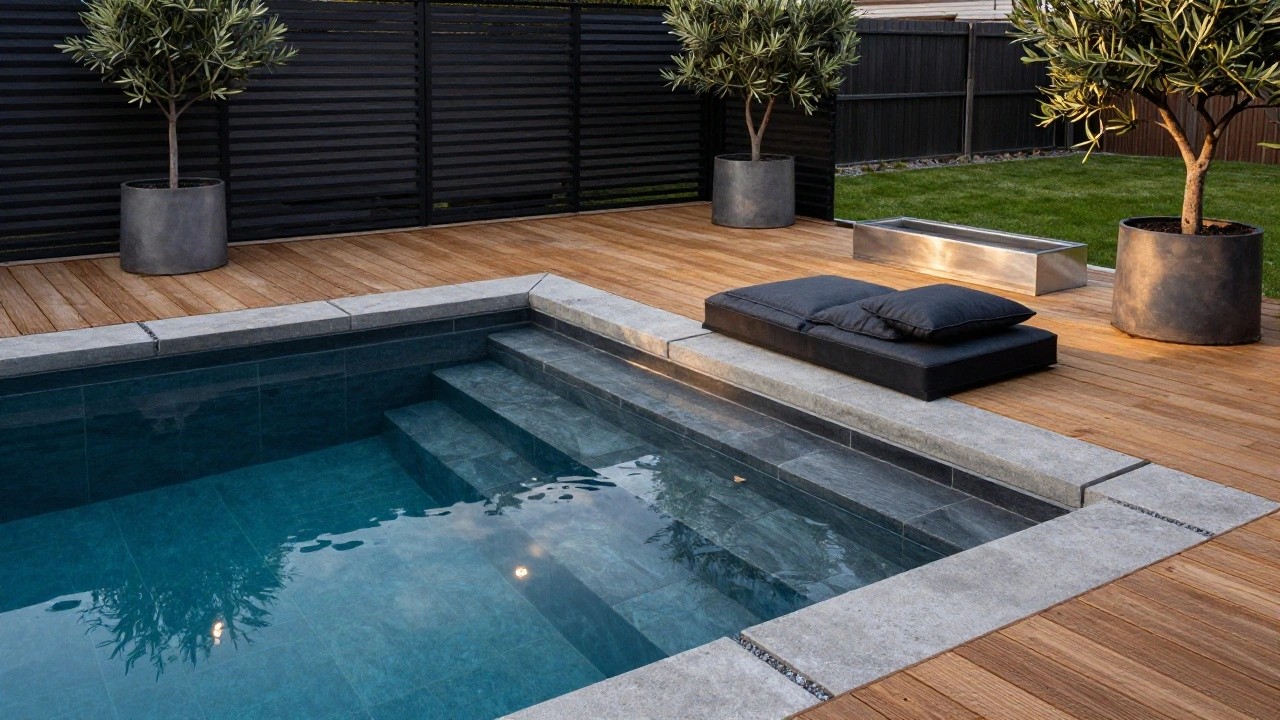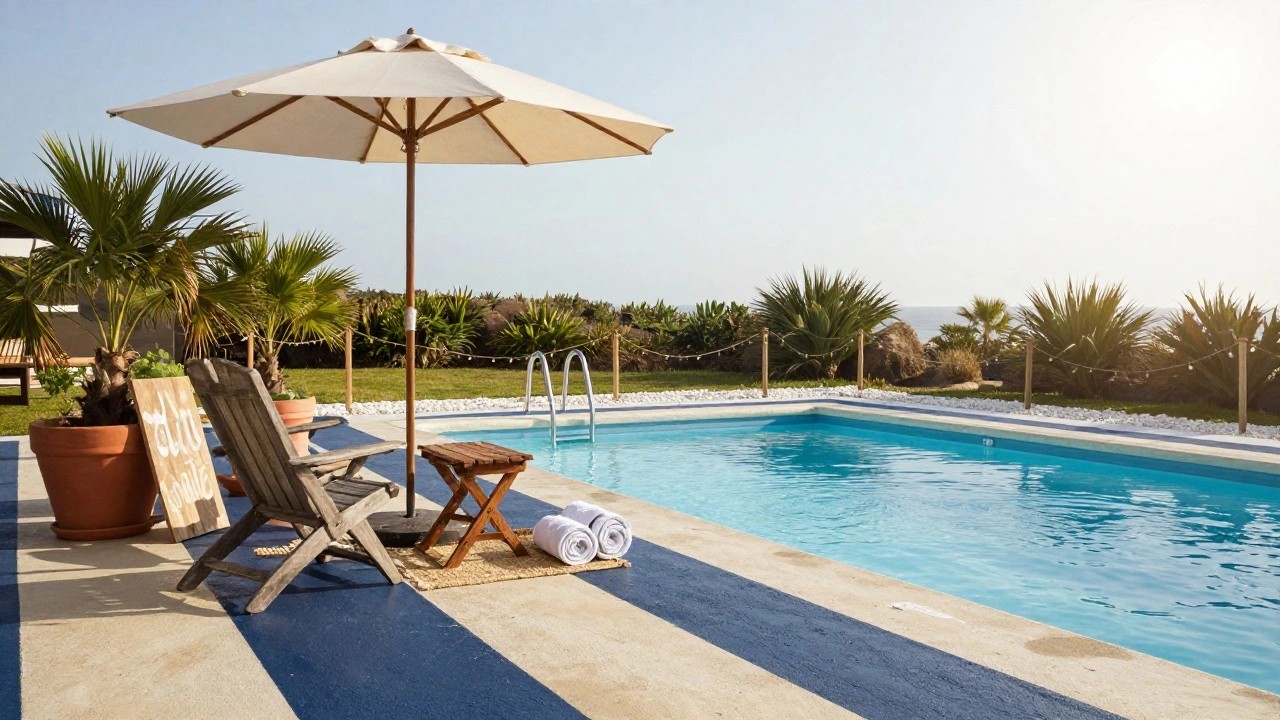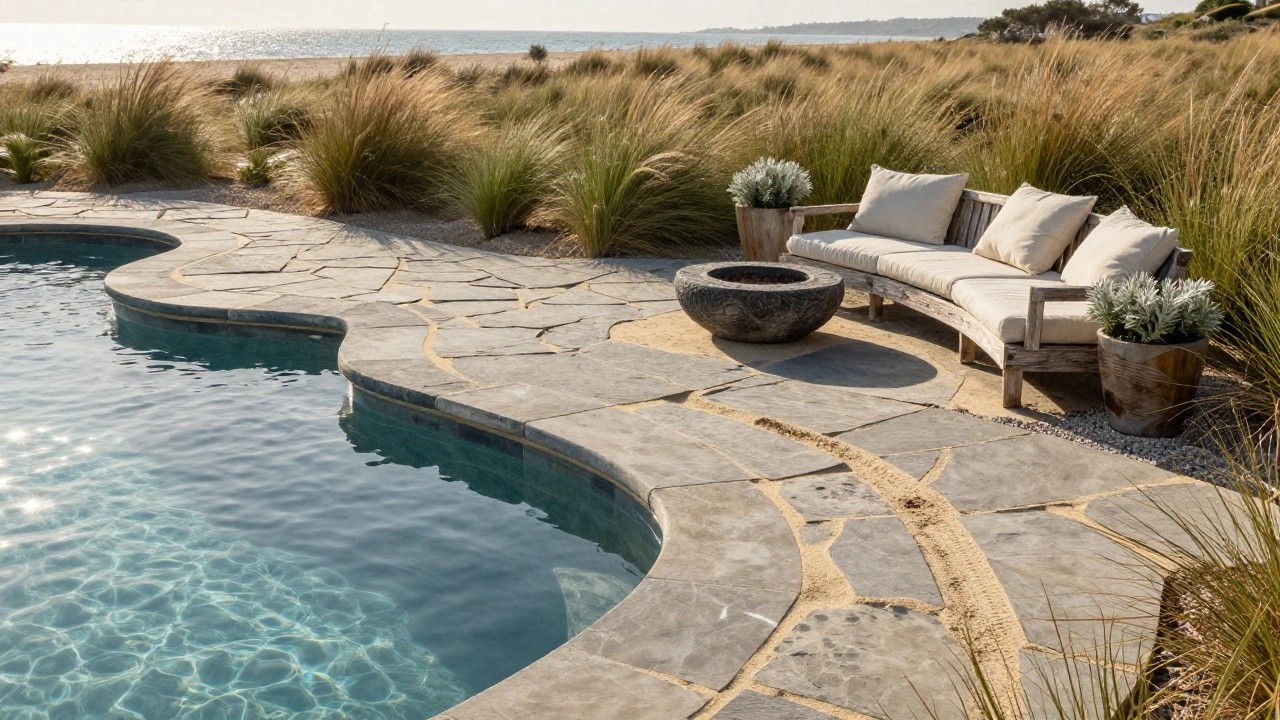
I’ve noticed over the years that pool decks pull the whole backyard together best when their stones mimic the natural rocks scattered through the yard. Those seamless transitions make the space feel like it grew there instead of getting slapped on later. What grabs people first is usually how the deck edges meet the plantings without a harsh line. I keep coming back to flagstone patterns that weather over time and let moss creep in around the edges. A few of these ideas are the kind worth sketching out for your own setup before committing.
Table of Contents
- 1 Coastal Pool Decks in Irregular Stone
- 2 Creamy Travertine Pool Deck
- 3 Textured Gray Stone Pool Coping
- 4 Flagstone Paths That Blend into the Garden
- 5 Travertine Stone Decks in Desert Settings
- 6 Mossy Stone Pool Coping
- 7 Stone Pool Decks Matching Local Rocks
- 8 Rustic Stone Pavers for Pool Decks
- 9 Tumbled Travertine Pool Decks
- 10 Curved Stone Paths Through Native Grasses
- 11 Stone Pavers with Pebble Inlays Around Pools
- 12 Natural Stone Pool Coping Blended into the Site
- 13 Grey Stone Pavers for Poolside Paths
- 14 Stepping Stone Paths Around Natural Pools
- 15 Pale Stone Pool Decks in Rocky Settings
- 16 Natural Stone Pavers Around the Pool
- 17 Rough Stone Slabs with Pebble Joints for Pool Decks
- 18 Frequently Asked Questions
Coastal Pool Decks in Irregular Stone

One simple way to make a pool deck feel like part of the yard is to use large irregular stone slabs around the edge. In this setup, the beige and gray tiles fit right in with the sandy tones of nearby beach grasses and dunes. They give the area a rugged, natural look without much upkeep, and the uneven edges keep it from looking too built-up.
This works best for homes near the water or in dry spots where you want low-water plants like dune grass. Lay the stones in a sand set for drainage, or mortar them if you need stability. Just size them big enough so they don’t feel busy, and keep plantings loose around the borders to tie it all together.
Creamy Travertine Pool Deck
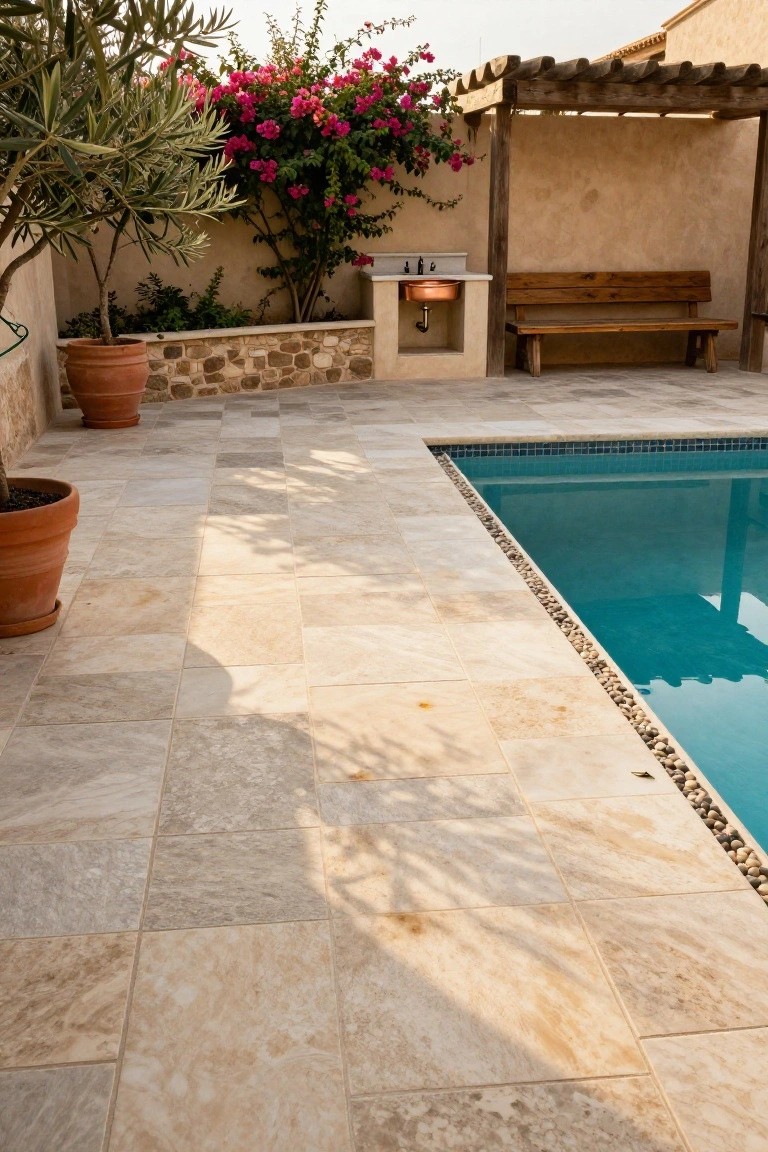
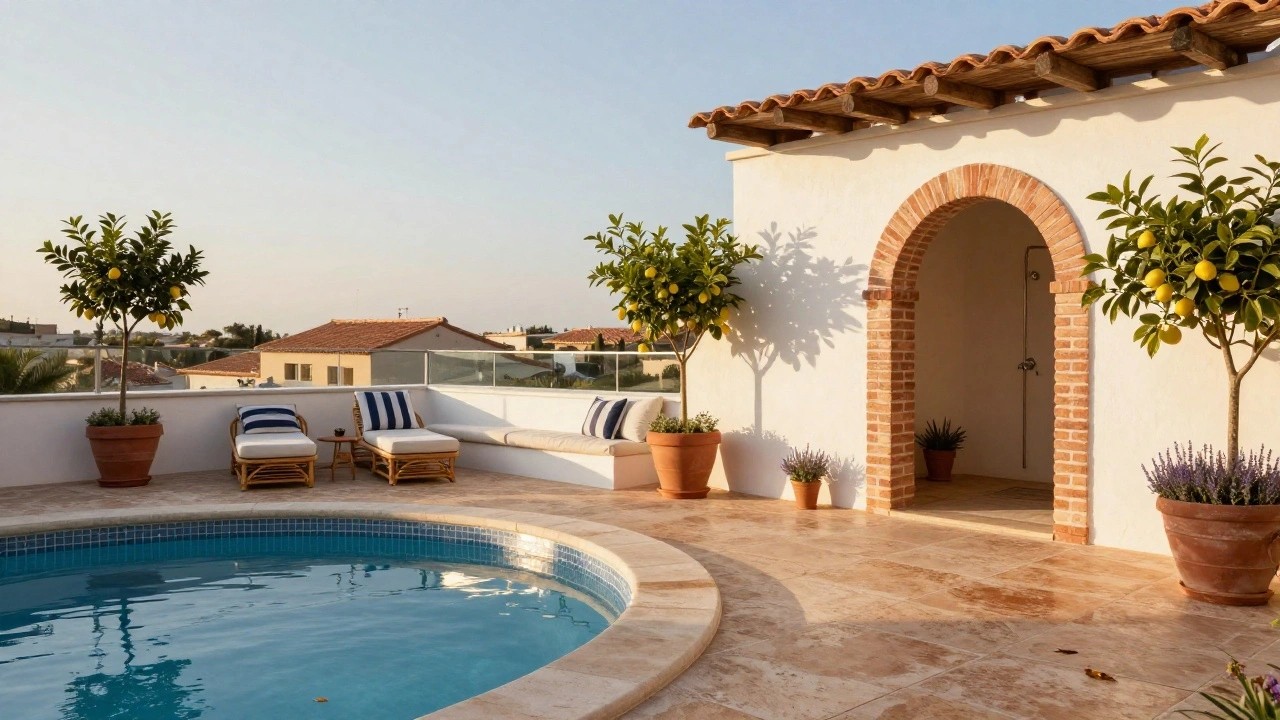
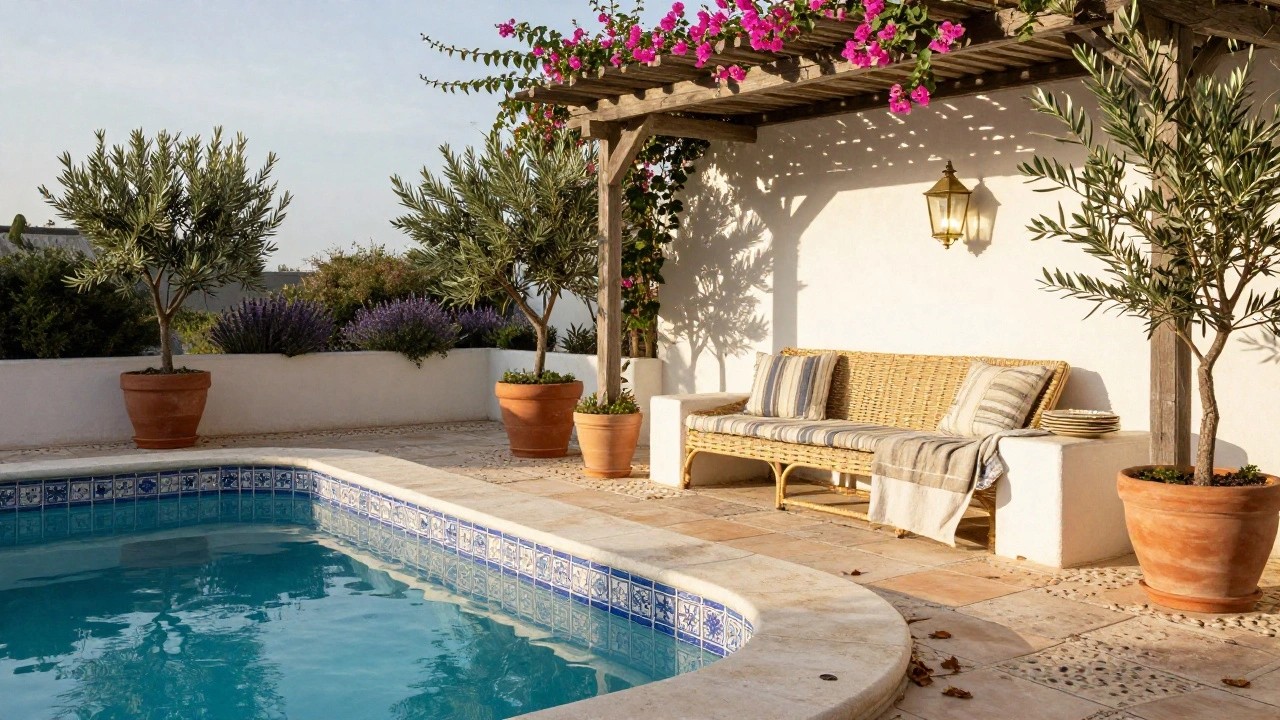
A pool deck covered in creamy travertine tiles looks right at home next to plants and stone walls. The light beige color pulls in the warm earth tones from olive trees, bougainvillea, and terracotta pots. It keeps everything feeling connected instead of chopped up.
This works best around sunny pools in dry climates or Mediterranean style yards. Go for large format tiles to cut down on grout lines and make cleaning simpler. Add pebbles along the pool edge for that extra natural tie-in… just watch for slipperiness when wet.
Textured Gray Stone Pool Coping
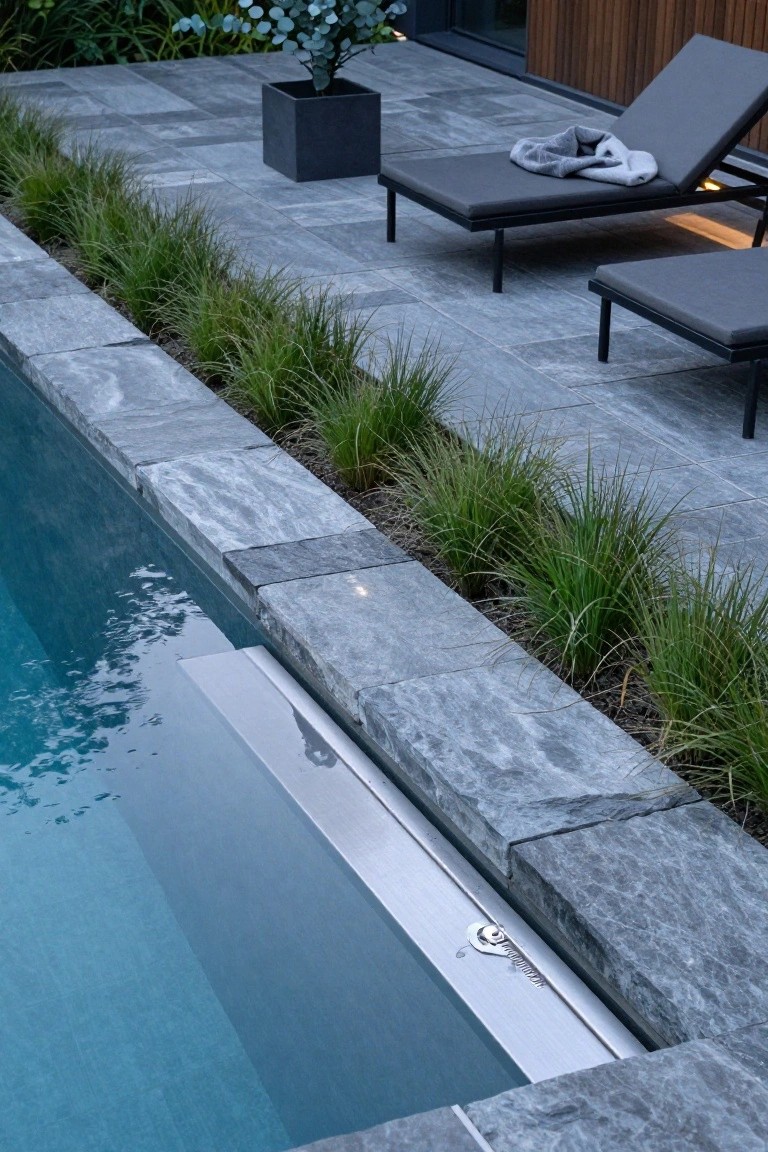
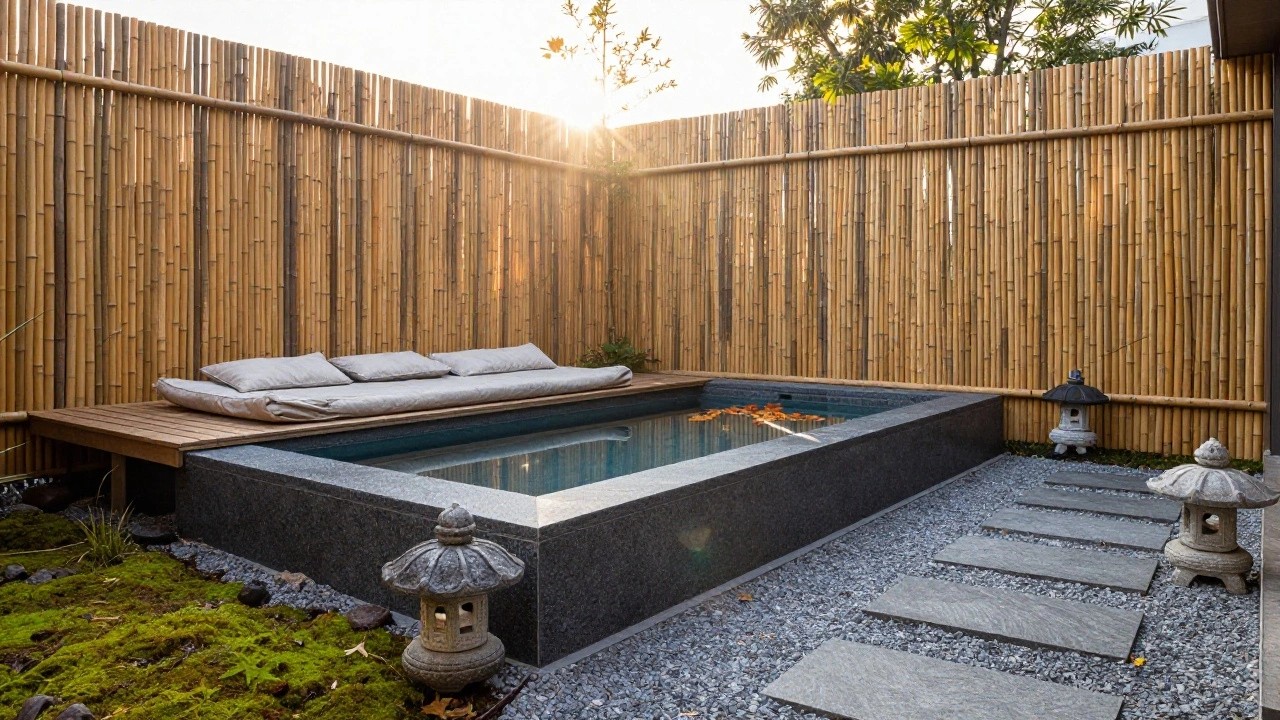
Gray stone like this gives pool edges a rugged, natural feel that ties right into the landscape. The veined slabs run along the coping and deck, with tall grasses tucked in close. It keeps things low-key and modern, without looking too polished or fake.
Try it on sleek infinity pools where you want the water to seem endless. It suits homes with wood and glass accents. Just pick stone with some grip, especially near the water, and keep the planting simple so it doesn’t overwhelm.
Flagstone Paths That Blend into the Garden

Large irregular flagstone slabs make a path that feels like it grew right there with the plants. You see spots of moss between the stones and a bit of water adding to that lived-in look. It works because the stones aren’t cut too perfect. They match the rough stone walls and the ferns pushing up nearby. Keeps everything looking natural instead of forced.
Use these paths around a pool deck or leading to an outdoor shower. They suit sloped yards or wooded spots where you want low upkeep. Pick local stone so it weathers the same. Just space the slabs enough for grass or moss to fill in. Watch for slippery spots after rain though.
Travertine Stone Decks in Desert Settings
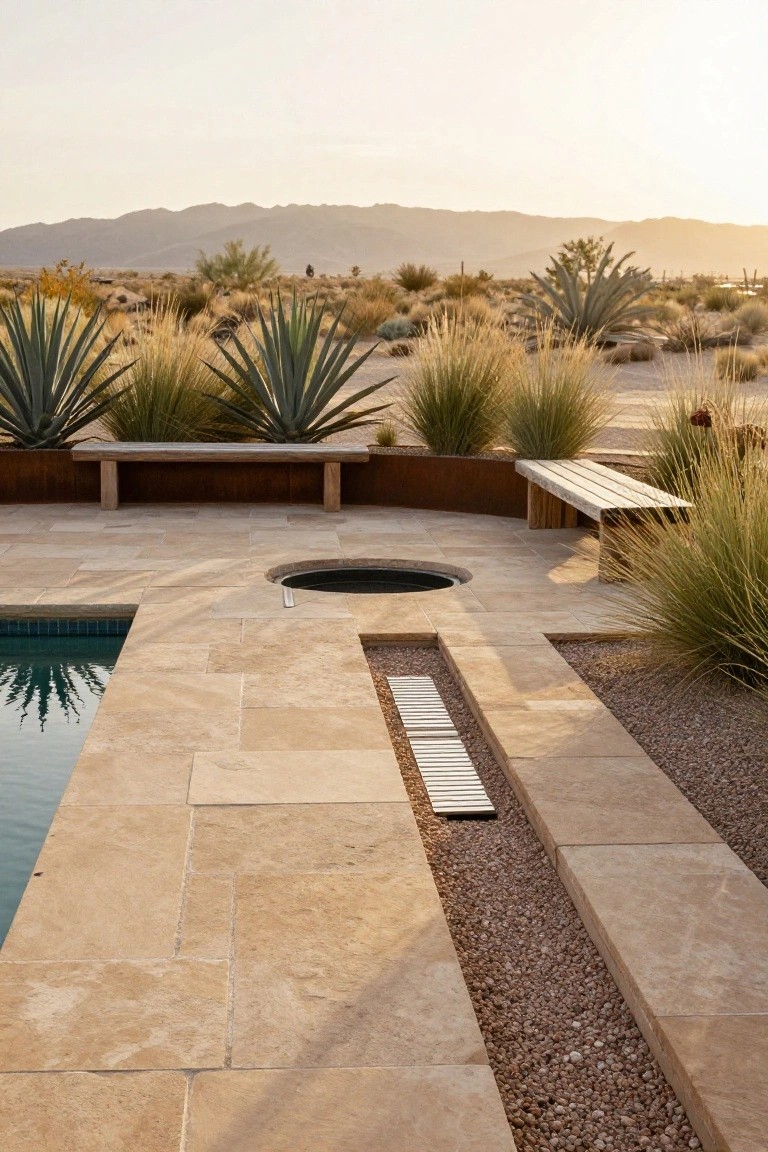
Travertine pavers in a warm beige tone work great around pools in dry, sandy areas. They pick up the colors from the ground and native plants like agave, so the deck doesn’t stick out. Instead, it just flows right into the landscape. That circular fire pit cut into the stone keeps things practical for evenings outside.
This setup suits modern homes with big yards or anyone wanting low upkeep. Lay the tiles in a simple grid pattern along the pool edge, and add gravel strips for drainage. It holds up to sun and heat… just seal it now and then to avoid stains.
Mossy Stone Pool Coping

One simple way to make a pool deck feel like part of the yard is with rough, moss-covered stone coping. Here, the irregular beige and gray stones along the pool edge look aged and natural, almost like they grew right out of the ground. Tucked-in lavender plants add to that soft, blended look without much fuss.
This works best around smaller pools in cottage-style yards or older homes where you want everything to tie together quietly. Pick limestone or similar local stone that can handle some moss over time. Just make sure the surface stays safe for walking, especially if it’s near gravel paths like this one.
Stone Pool Decks Matching Local Rocks
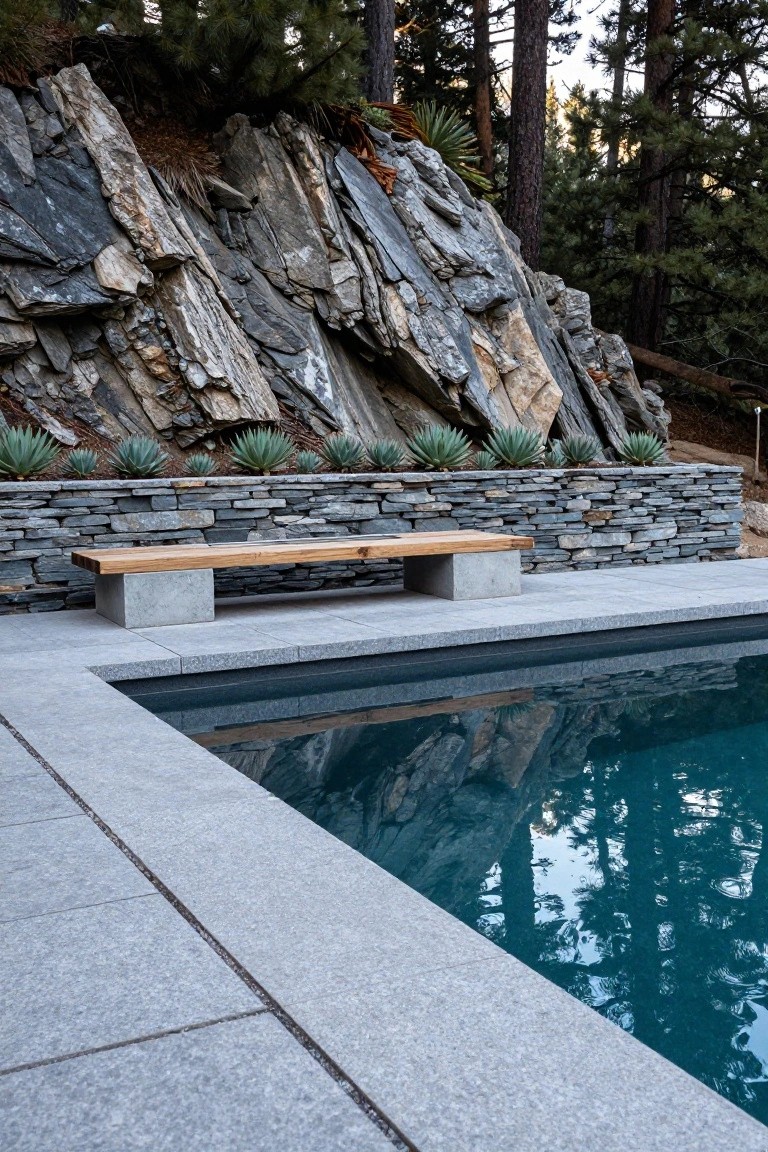
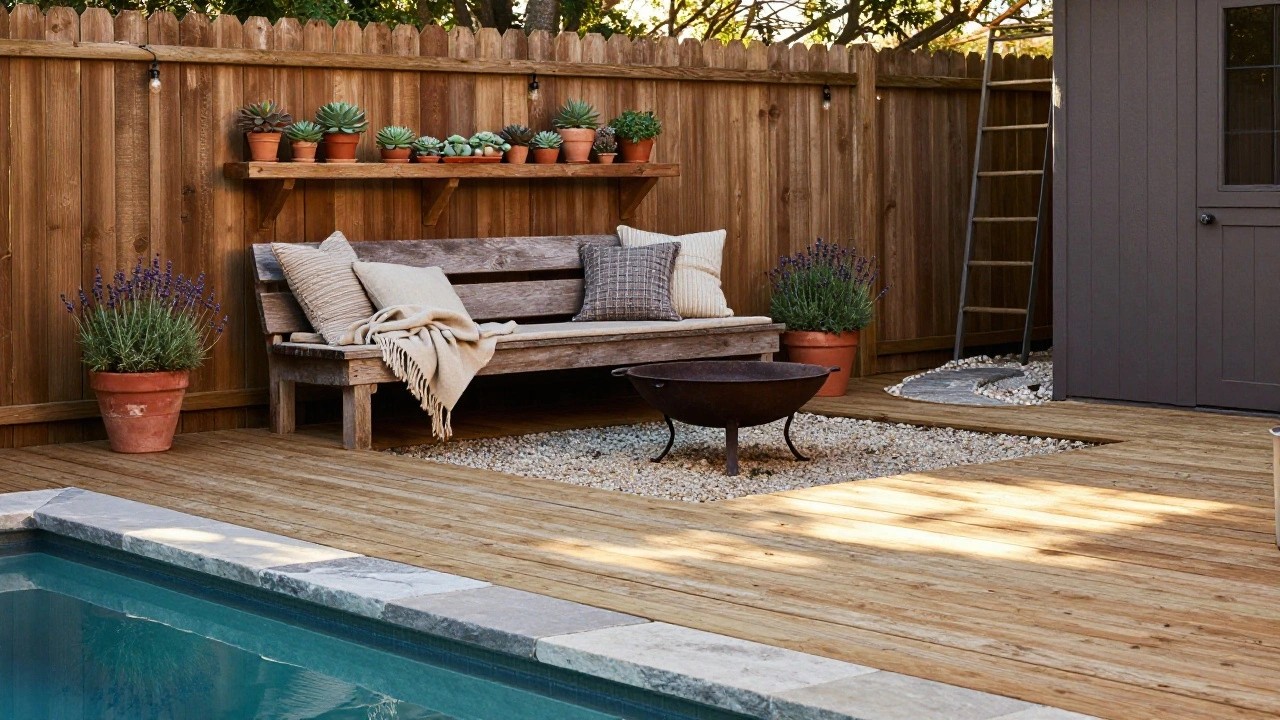
One smart way to make a pool deck feel at home is to pick stone pavers that copy the rocks already on your site. Here, the gray slabs around the pool look like they came straight from the hillside behind it. That rough texture and color tie everything together without much effort. It keeps the pool from standing out like an add-on.
This works best on sloped or rocky lots where you want low-key blending. Hunt for pavers in the same stone type as your land, maybe in big formats for the deck edges. Pair it with a simple bench like this one on concrete bases. Skip it if your yard is flat and open, since the rugged look might feel too heavy there.
Rustic Stone Pavers for Pool Decks
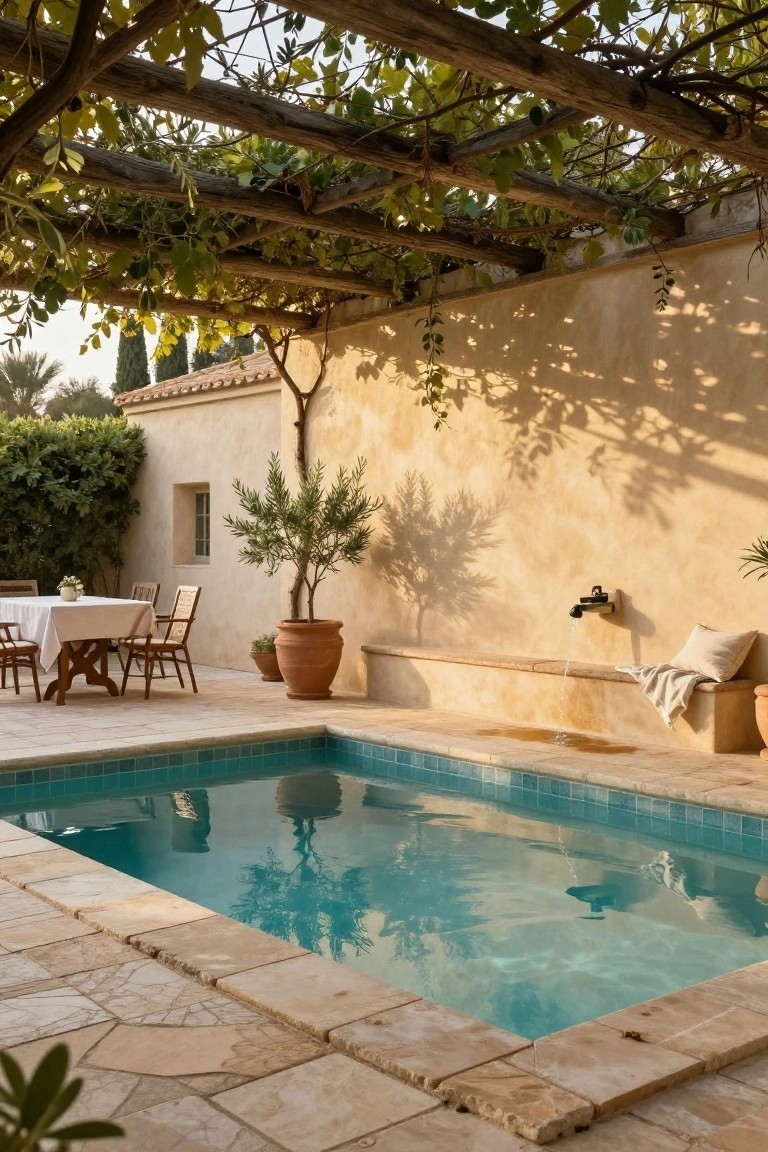
Rustic stone pavers like these warm beige slabs make a pool deck disappear into the landscape. The irregular shapes and rough edges match the nearby stucco walls and olive trees so well that the whole area feels like one continuous outdoor space. It’s a simple way to keep things grounded instead of stark.
You can pull this off around smaller pools in sunny yards with a Mediterranean vibe. Set the pavers in a loose pattern over a solid base, and they’ll handle foot traffic fine. Seal them yearly though… wet stone can get slick fast.
Tumbled Travertine Pool Decks
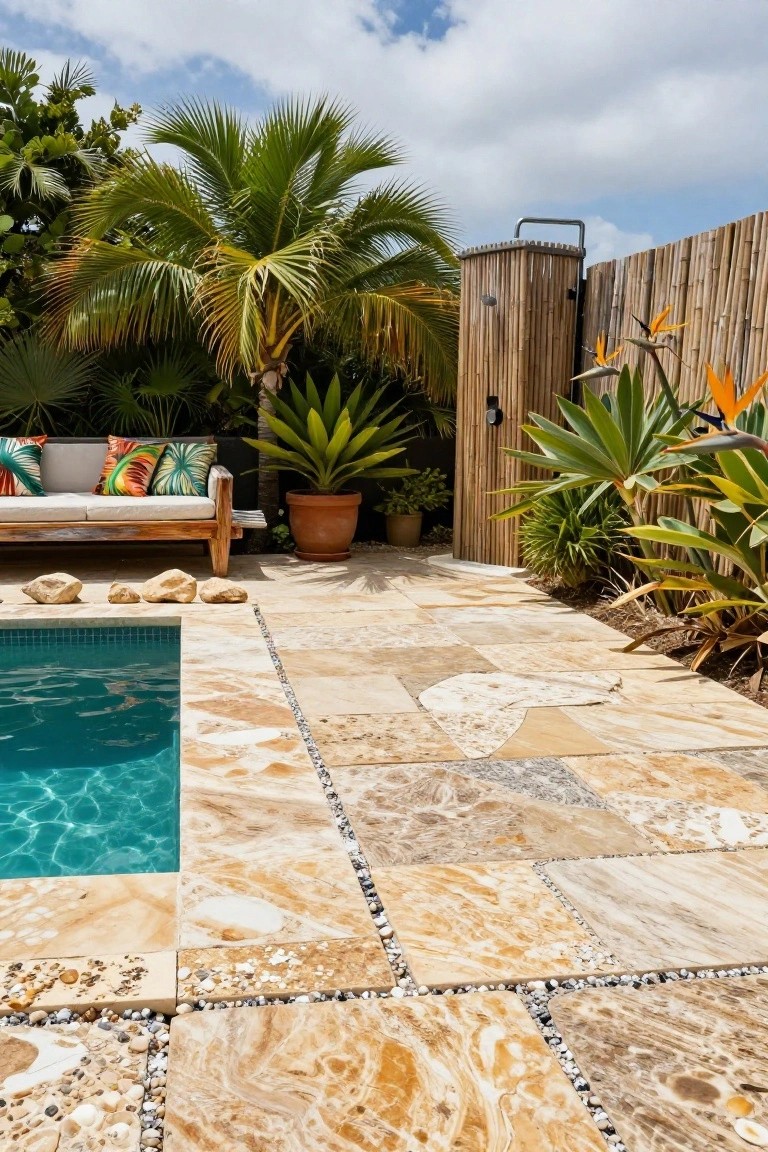
Tumbled travertine pavers make a pool deck look like it belongs right there with the yard. The rough edges and soft beige tones with those natural swirls match up with nearby rocks and pebbles. In this setup, they run smooth up to the pool edge and let water drain fast between the joints.
These work best in warm spots with a bit of slope for runoff. Go for them around smaller pools in coastal yards or anywhere plants grow thick. Skip grout lines. Just fill joints with pebbles and seal the stones now and then to keep stains away.
Curved Stone Paths Through Native Grasses
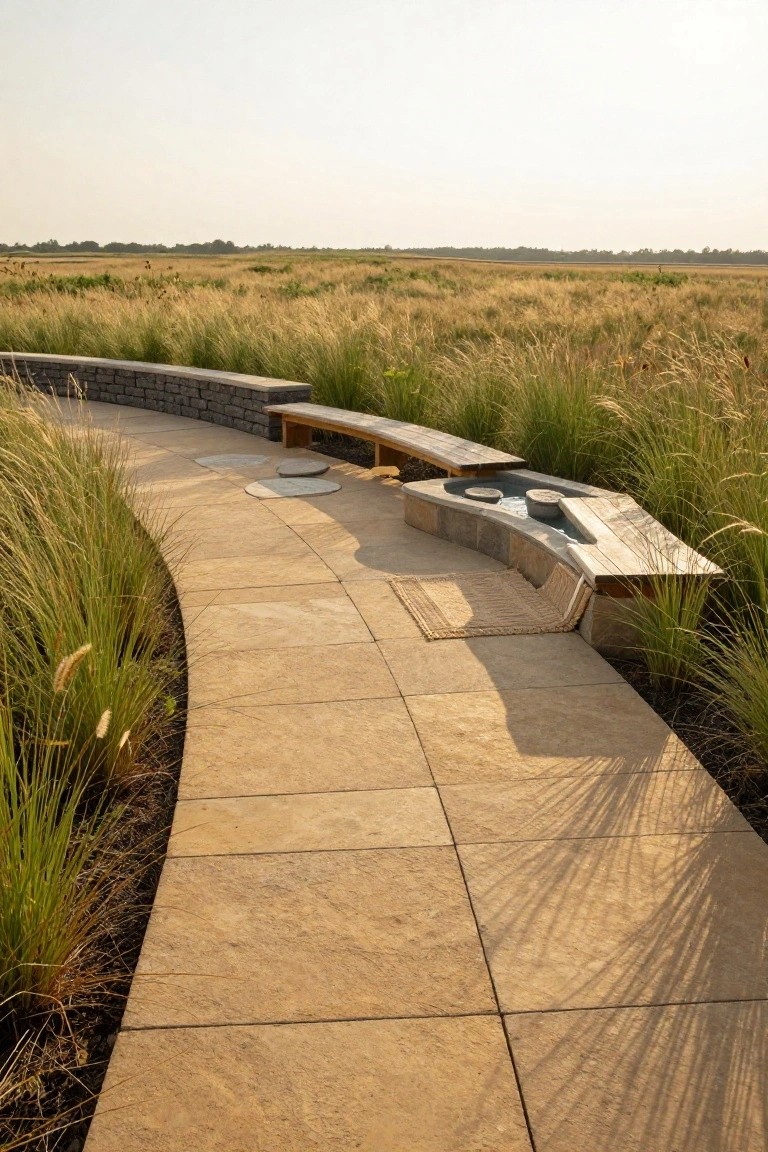
One simple way to make a pool deck feel like part of the yard is to lay out the stone in gentle curves that follow the natural flow of the land. Here, beige pavers wind along with low stone walls and spots for benches, all edged by tall grasses that sway in the breeze. It keeps things from looking too rigid or built-up. The tones match right in with the dry field colors too.
This setup works best around natural pools or in open yards where you want low upkeep. Use wide pavers for easy walking, and plant tough grasses like switchgrass along the edges to hold soil and add movement. Skip straight lines unless your space is super formal. Just make sure the stone drains well so water doesn’t pool up.
Stone Pavers with Pebble Inlays Around Pools
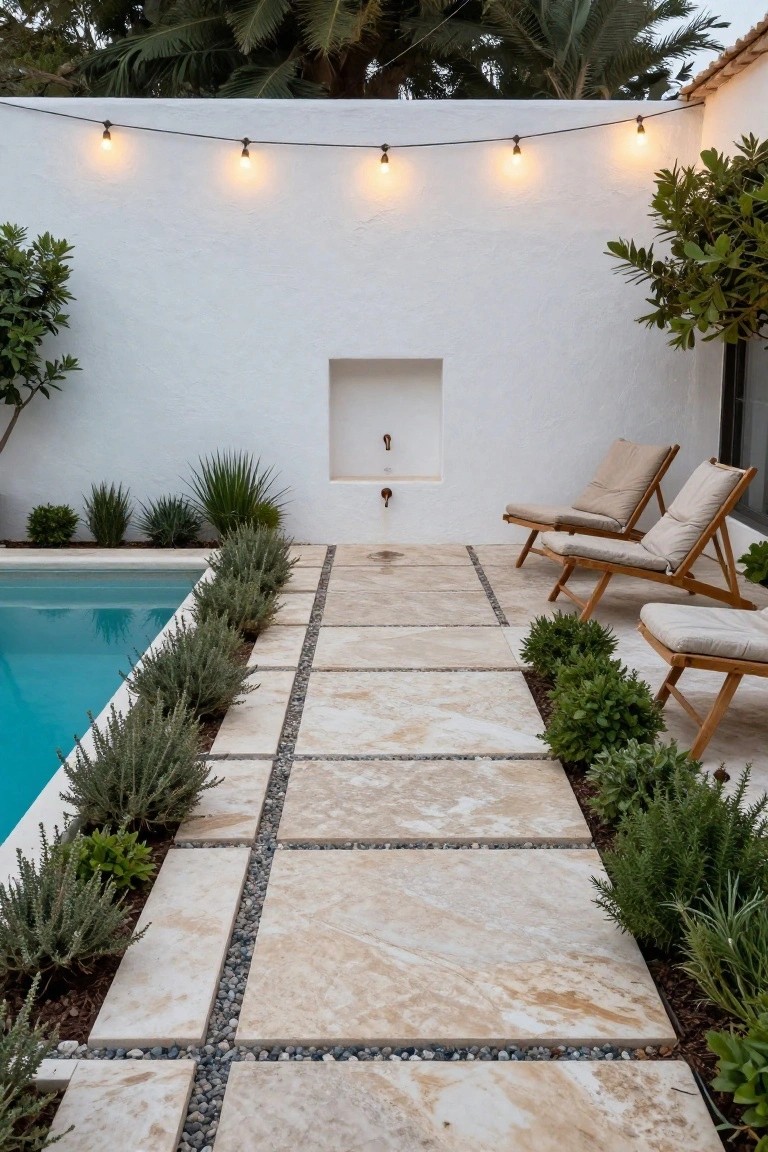
One simple way to make a pool deck feel part of the yard is to lay large beige stone pavers with thin strips of dark pebbles between them. Those pebble lines let the path breathe a bit, and they echo the gravelly feel of natural ground. Here, low lavender bushes tuck right up against the edges, so the whole walkway blends into the planting without any harsh lines.
This works well in sunny spots like southern yards or anywhere with a relaxed outdoor vibe. The stones stay cool-ish underfoot, and the pebbles help with drainage after swims or rain. Skip it if your pool area gets heavy foot traffic, though. Go for wider slabs there to avoid shifting.
Natural Stone Pool Coping Blended into the Site
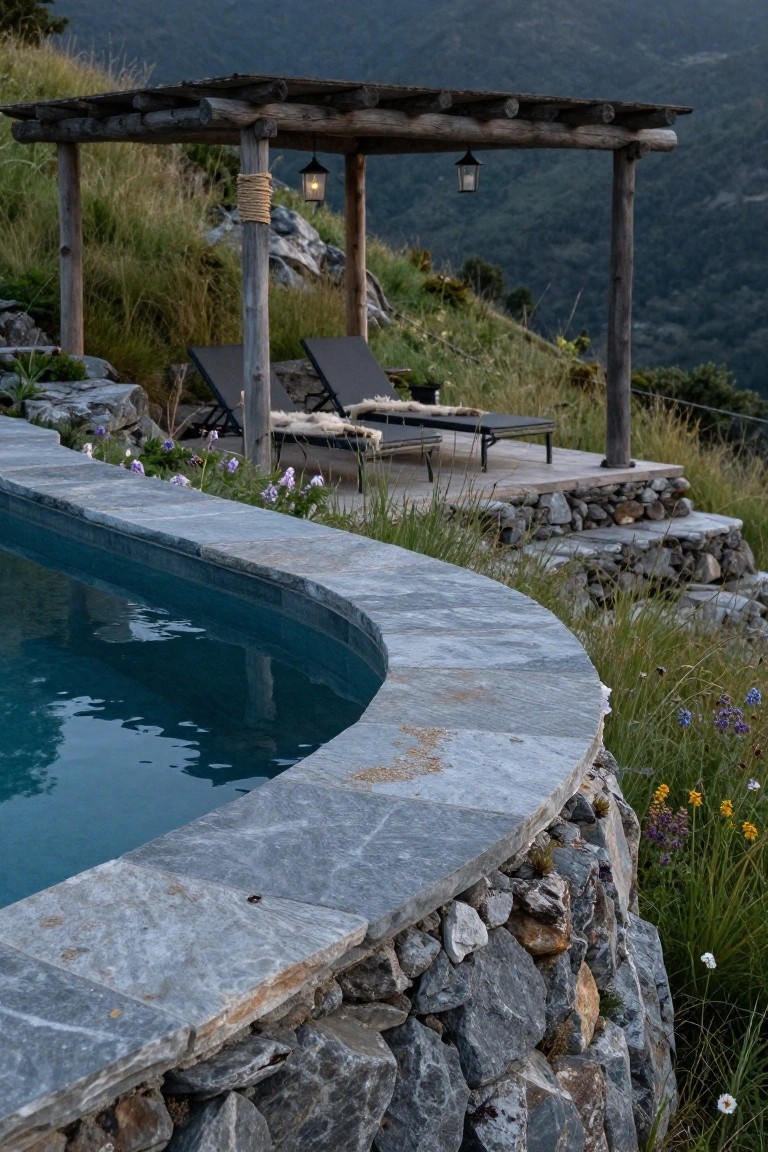
One smart way to make a pool deck disappear into the landscape is picking rough gray stone for the coping that matches the local rocks exactly. Here the curved pool edge uses that same rugged slate, tying right into the dry-stacked walls below. It keeps things from looking built or out of place. Instead the water just flows out from the hill.
This works best on sloped lots where you have natural stone outcrops already. Hunt for material from nearby quarries so colors and textures line up. Pair it with simple wood decks and native plants along the edge. Skip polished finishes. They stand out too much.
Grey Stone Pavers for Poolside Paths
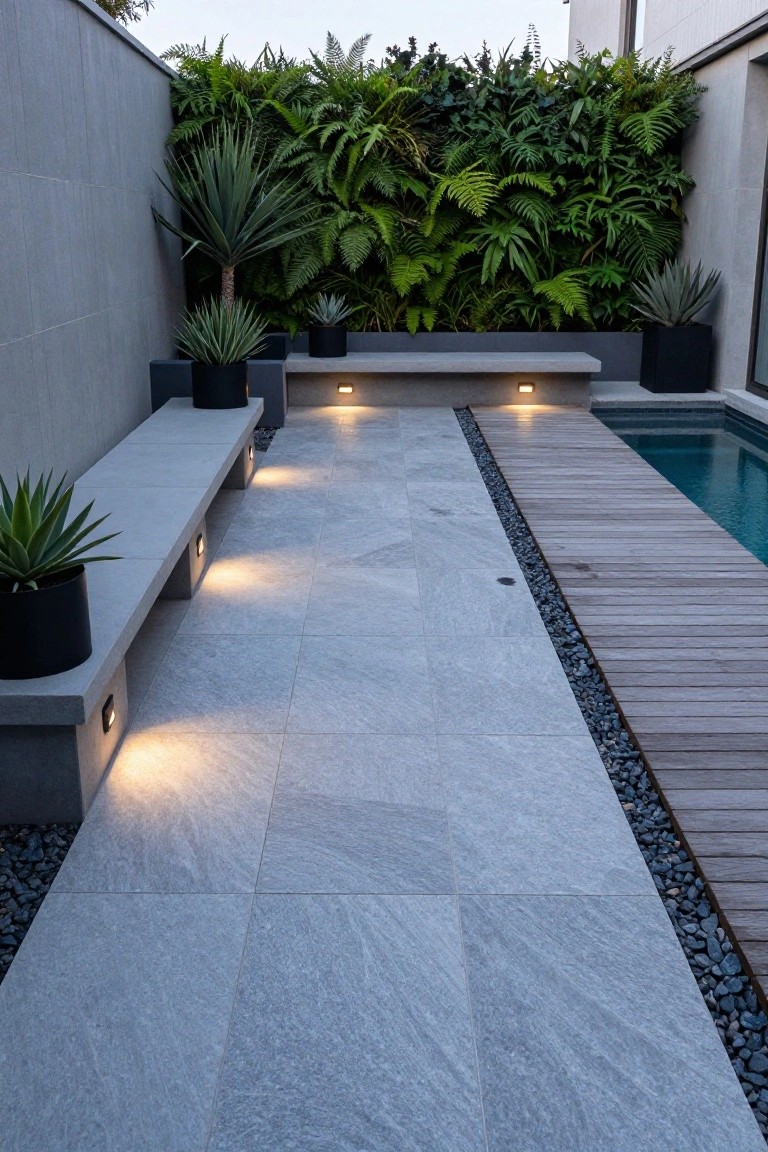
A simple grey stone paver makes a clean path right up to the pool edge. These large tiles in a light shade keep things looking sharp and modern without overpowering the space. They pair well with the green plants and wood accents nearby, letting the natural bits stand out more. Low built-in lights along the benches add a soft glow at night too.
This setup works great in tight backyards or along narrow pools where you want easy walking room. Go for matte grey porcelain or natural stone that’s slip-resistant for wet areas. It suits modern homes with lots of greenery, but watch the grout lines so they don’t collect dirt. Just hose it down now and then to keep it fresh.
Stepping Stone Paths Around Natural Pools

Large irregular stone slabs make a simple path right to the water’s edge. Here they curve along the pool, set into a bed of pebbles with big rocks nearby. It feels like you’re stepping through a natural stream bed instead of a built deck. The light beige tone picks up the surrounding grasses without standing out.
This works best in smaller yards where you want easy access without a full solid deck. Lay them loose or mortared on gravel base for drainage. Pair with tall plants like irises for screening. Skip if you have heavy foot traffic. Local stone keeps costs down and ties into the landscape.
Pale Stone Pool Decks in Rocky Settings

A light beige stone deck runs right up to this turquoise pool, picking up the rough texture and color of the big boulders scattered around. It pulls the whole pool area into the sandy coastal backdrop without any hard lines. Folks notice how the stone makes the space feel settled in, like it’s always been there among the dunes.
This works best at beach houses or spots with natural rock outcrops. Go for limestone or a similar pale stone quarried nearby to match those pocked boulders. Lay it in large slabs for a clean edge, then run a simple wood walkway alongside for footing. Skip glossy finishes. They fight the rough look.
Natural Stone Pavers Around the Pool

Large limestone slabs in soft beige tones make up this pool deck path. They have a rough, weathered texture that pulls the hard surface right into the garden beds and gravel areas. Notice how the stone wall nearby picks up the same material. It keeps everything looking settled and natural, not too fussy.
You can use these pavers on any backyard pool where you want a low-key walkway or lounging spot. Lay them randomly for that path-like feel, and edge with brick if you like. They suit older homes or rural settings best. Watch for uneven spots though, especially near the water.
Rough Stone Slabs with Pebble Joints for Pool Decks
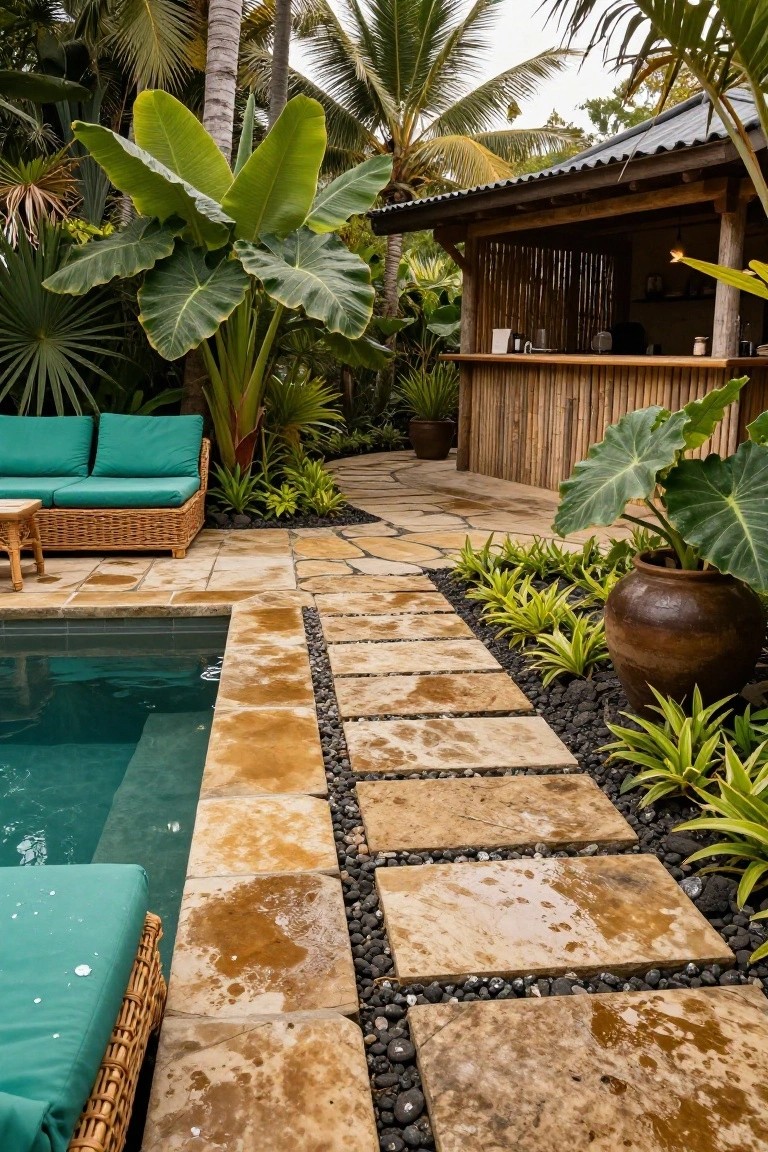
One straightforward way to make a pool deck feel part of the yard is to lay big, rough-cut stone slabs with gaps filled by dark pebbles. Those tan slabs look like they grew right out of the ground, and the black pebbles between them let water drain easy while keeping everything stable. It pulls in the tropical plants around the edges without any fussy lines.
This setup works great around smaller pools or in sloped yards where you want paths that wander naturally from seating to the water. Go for local stone to match your soil color, and keep the pebbles coarse so they don’t wash away. Skip it on super flat spots though, since the uneven slabs might trip folks in flip-flops.
Frequently Asked Questions
Q: How do I pick stones that actually match my yard’s natural vibe?
A: Walk around your space and grab samples of nearby rocks or soil. Lay them next to stone options from the supplier. That quick test shows you what blends right in.
Q: Will these stones get too slippery when the pool area is wet?
A: Choose textured options like flagstone or river rock. They grip better underfoot than smooth polished stones. Add a light sealant if you want extra traction without shine.
Q: What’s the easiest way to clean natural stone decks?
A: Sweep off debris daily and hose them down weekly. Scrub tough spots with a soft brush and mild soap. Skip harsh chemicals. They eat into the stone over time.
Q: Can I handle a small stone deck install myself?
A: Start with a level base of compacted gravel. Lay stones tight with sand joints you can sweep in. But call a pro for curves or slopes.