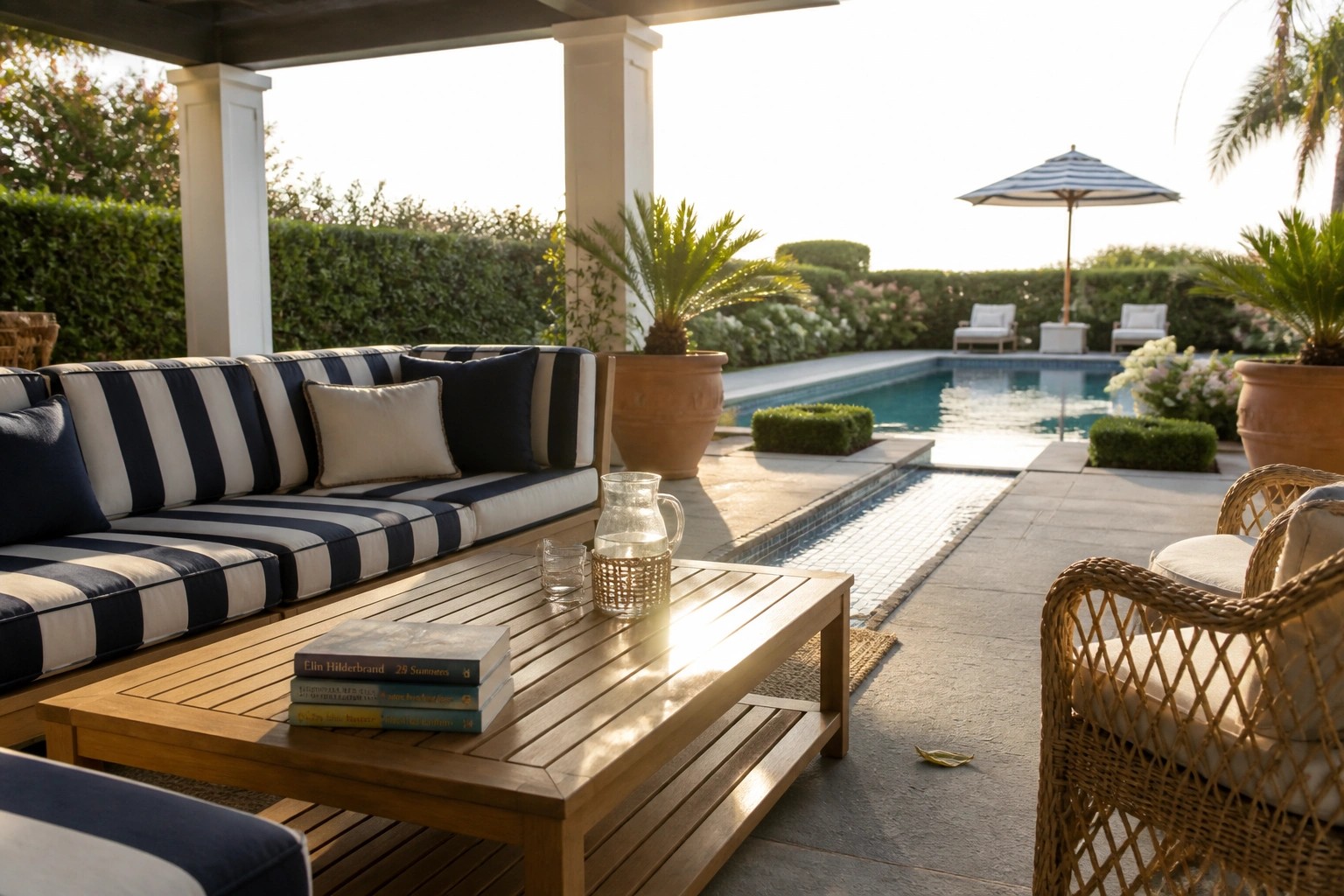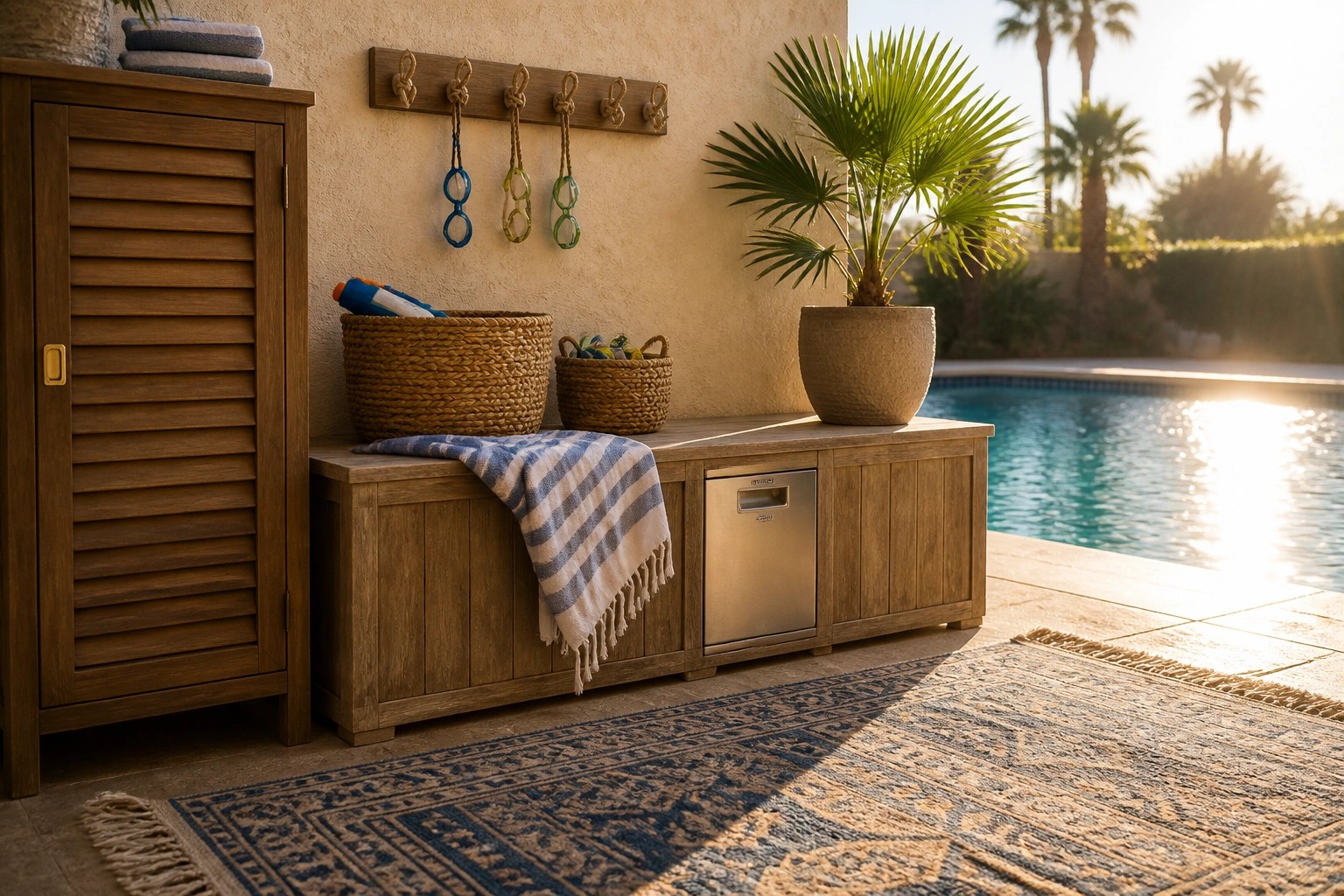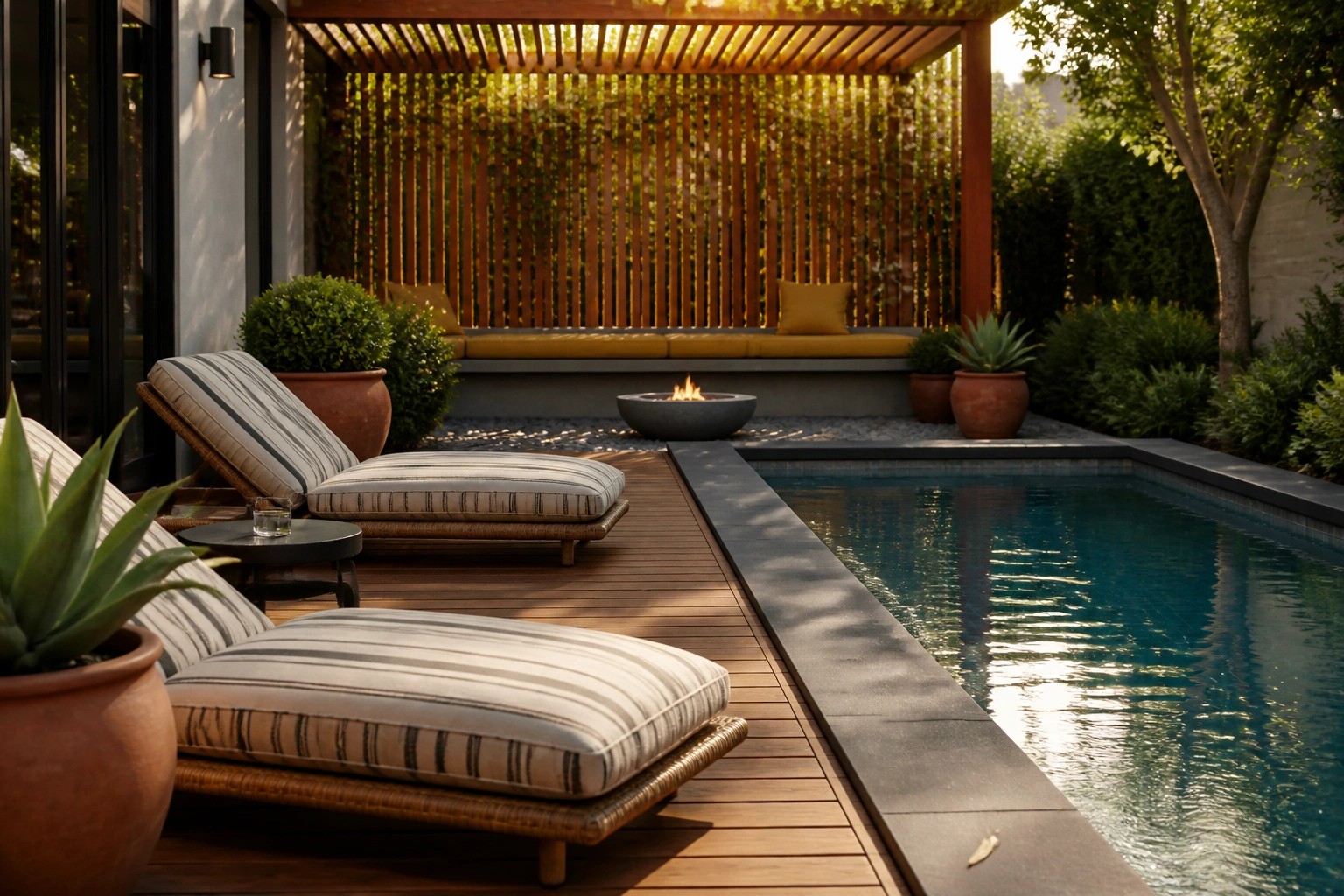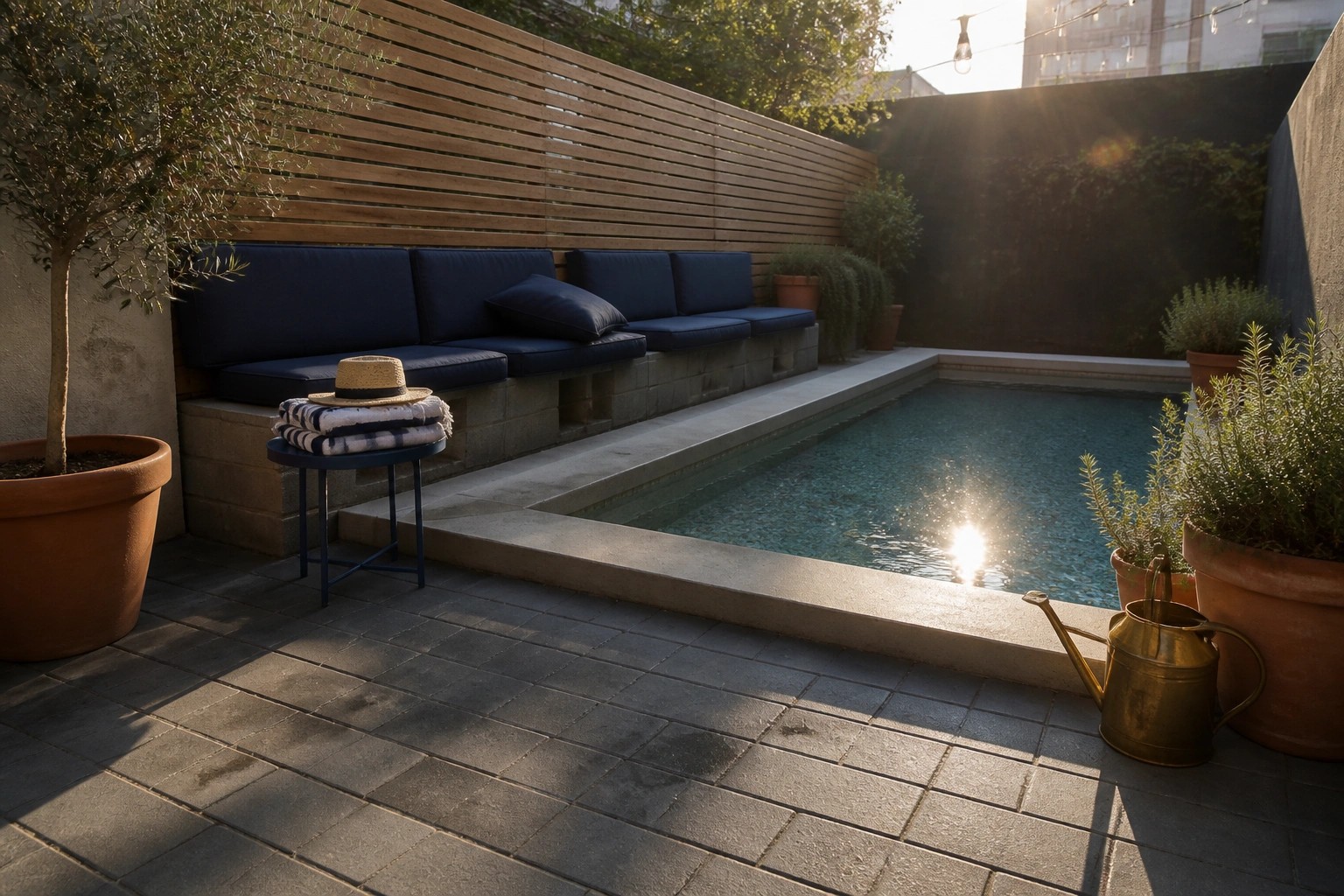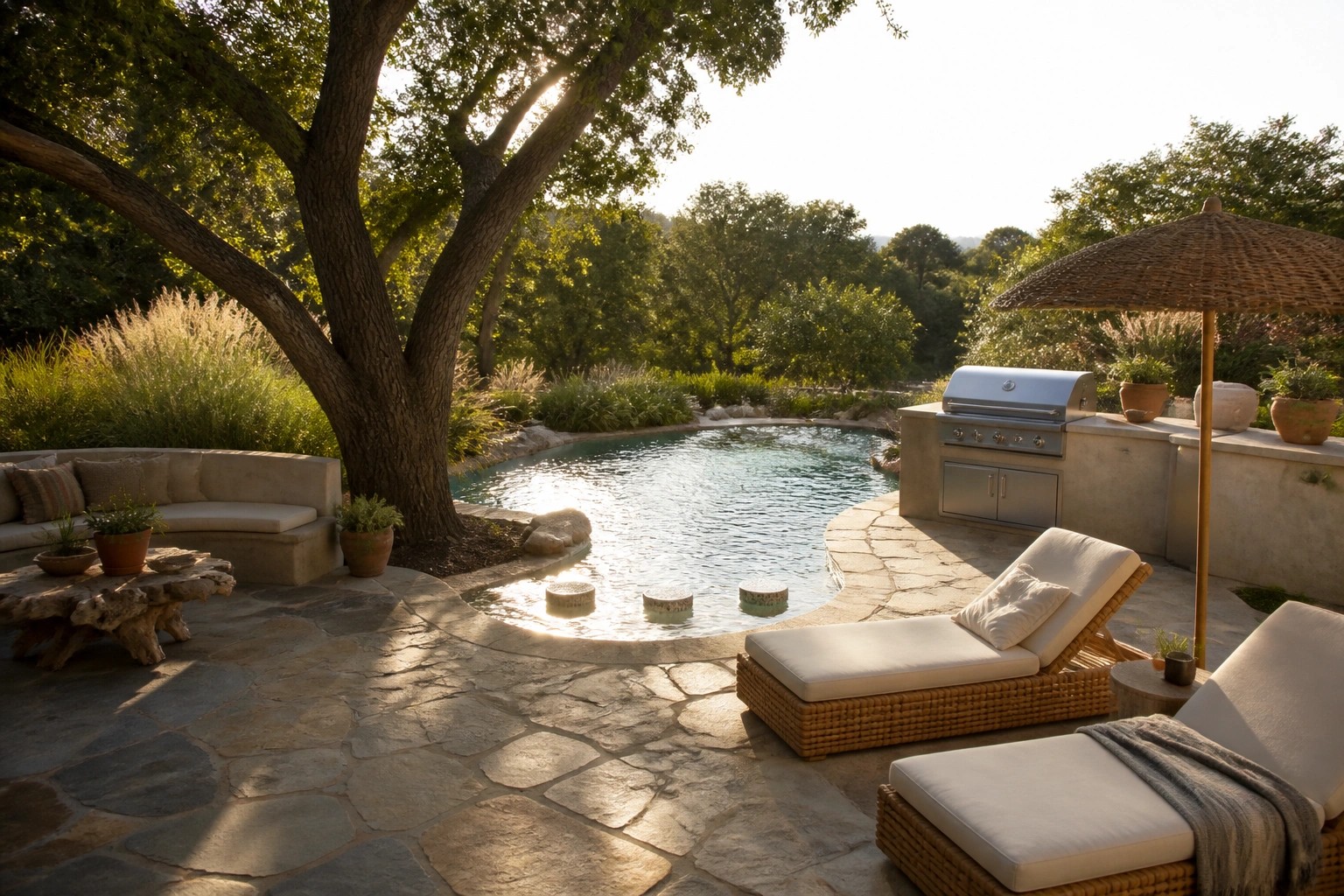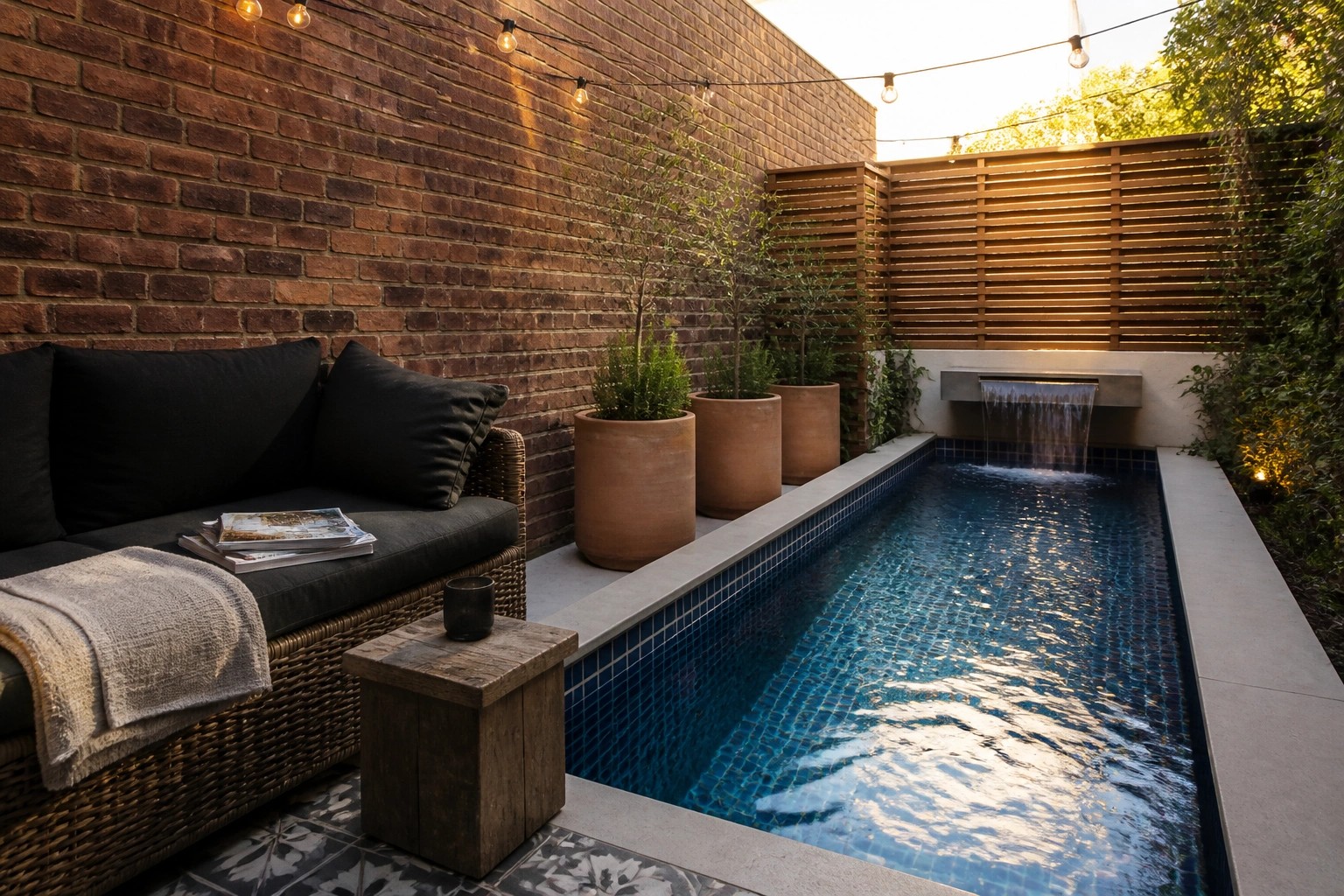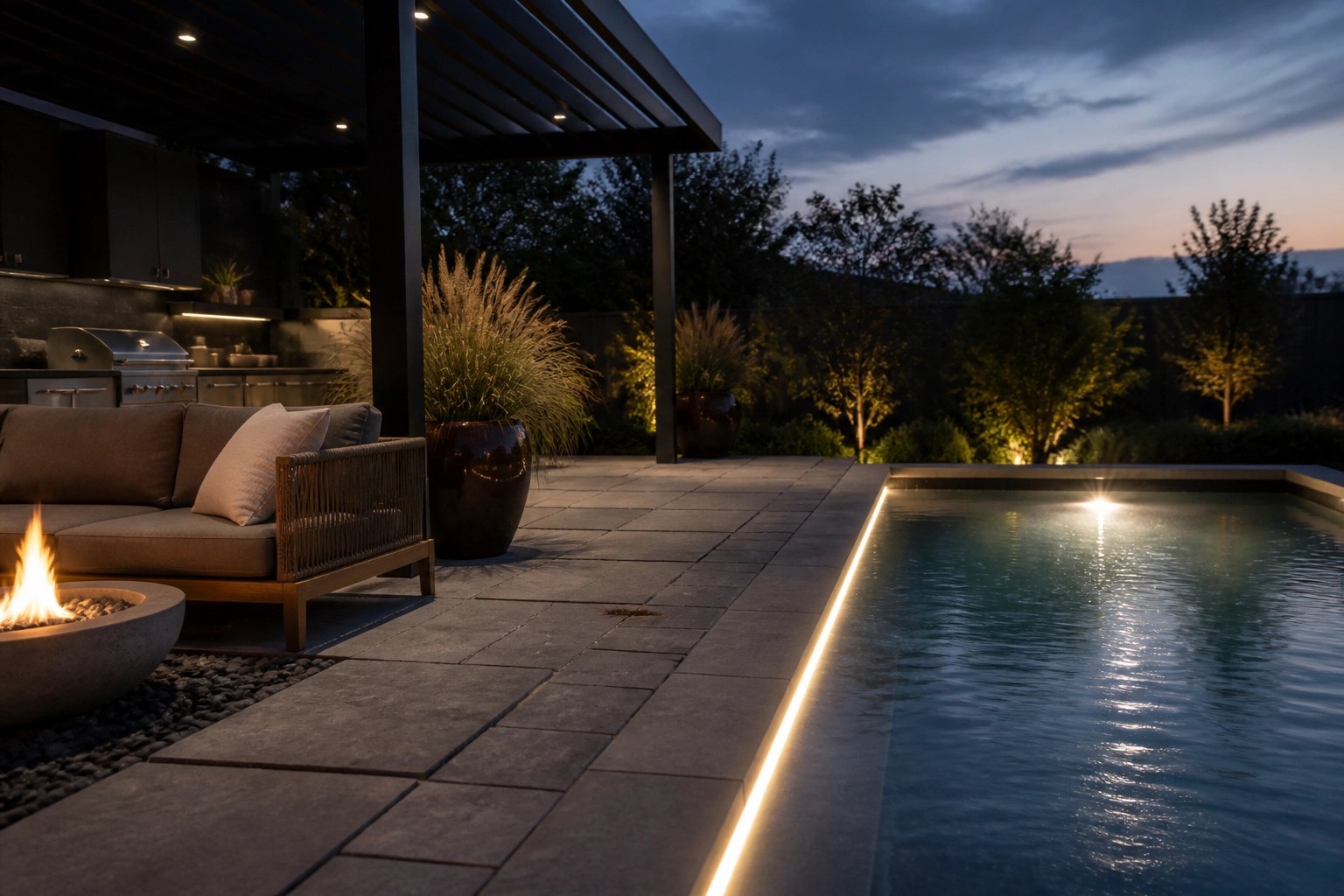
Evenings on the patio tend to wind down once the sun drops because the space loses its sense of comfort and safety without the right light.
I have found that lighting choices matter most when they keep walkways clear and seating areas usable instead of just adding a glow for show.
When I look at options for my own pool area I always start with pieces that avoid strong glare on the water or leave shadows where people actually sit.
Many lighting plans look workable in photos but fall short once you try to spend real time outside after dark.
Small adjustments often change how long the space stays part of the evening.
Linear Lighting Along the Pool Edge
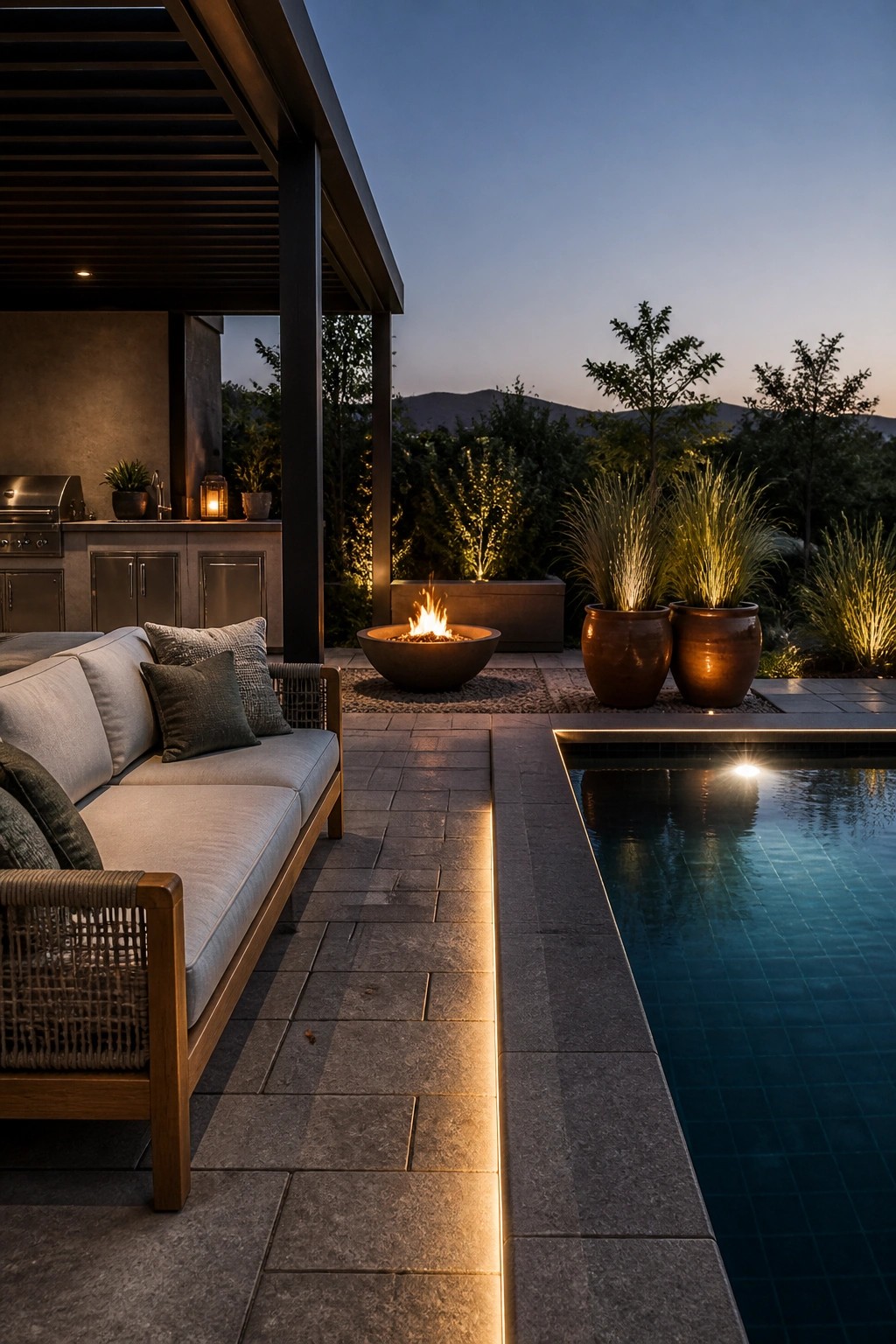
Linear lighting set into the patio surface gives a simple way to mark the edge of the pool after dark. It creates a low, steady glow that helps with safety while keeping the overall look calm instead of overly bright.
This type of lighting works best on larger pool decks where you want a clear path without adding tall fixtures. It suits homes with stone or concrete paving and pairs well with a fire pit or seating area nearby. Make sure the fixtures are rated for outdoor use and angled to avoid direct glare on the water.
Hang Pendant Lights Over Outdoor Dining Areas
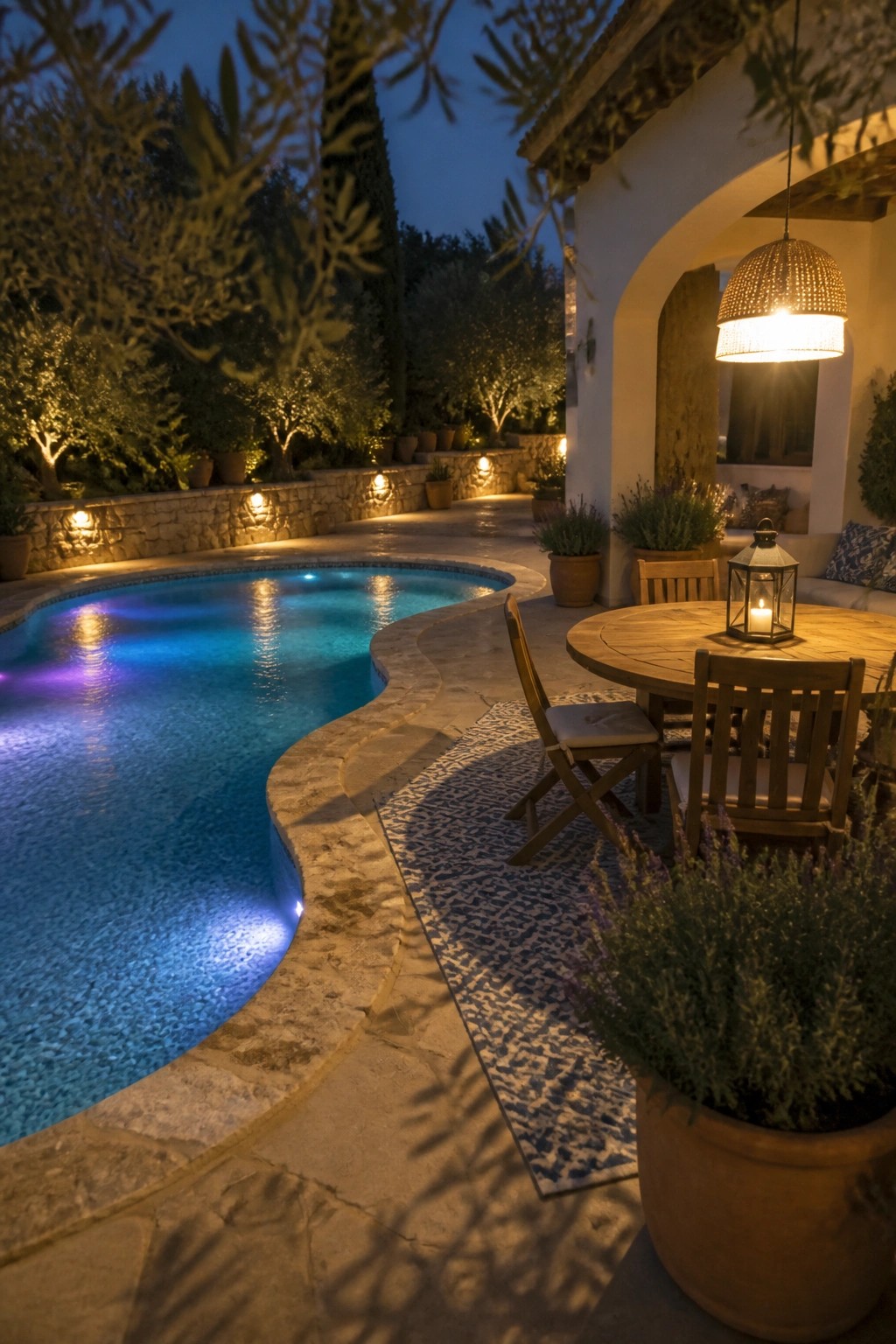
Hanging a pendant light above a patio table gives you steady, useful light right where people sit. It turns the table into a real gathering spot after dark instead of leaving it dim and unused once the sun drops.
This works especially well on pool patios with some overhead structure like an arch or beam. Keep the shade fairly open so the light spreads softly across the table, and add one smaller lantern on the surface for a warmer layer without overdoing it.
Line the Pool Edge With Low Path Lights
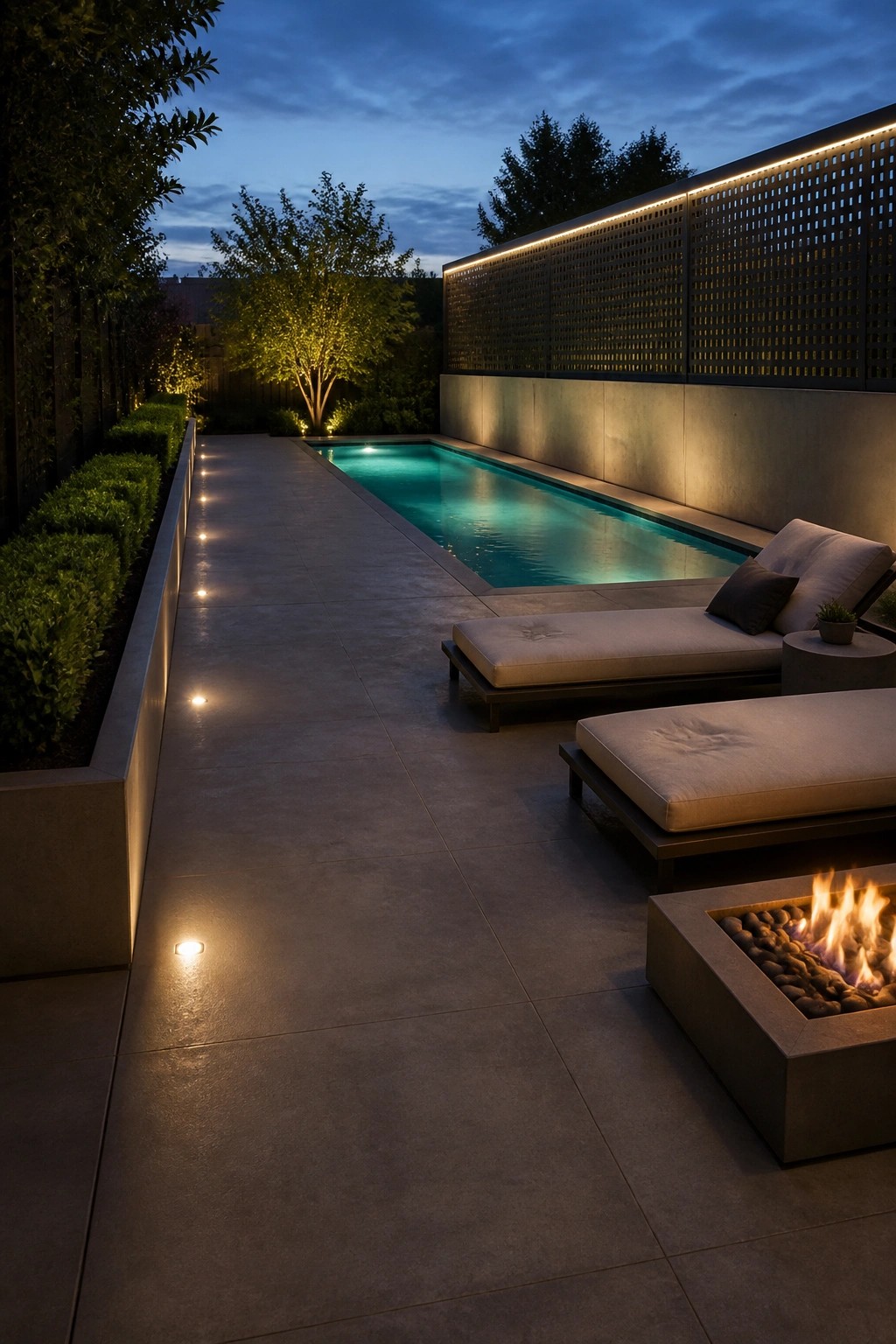
Low path lights make a pool patio much easier to use once the sun goes down. They mark the walking surface without flooding the whole area with bright light or creating glare on the water.
This setup works best on long narrow decks where people move between seating zones and the pool itself. Space the lights a few feet apart along the edge and keep them low so they guide feet without competing with a fire pit or other features.
Floating Lights Add Evening Glow to the Pool
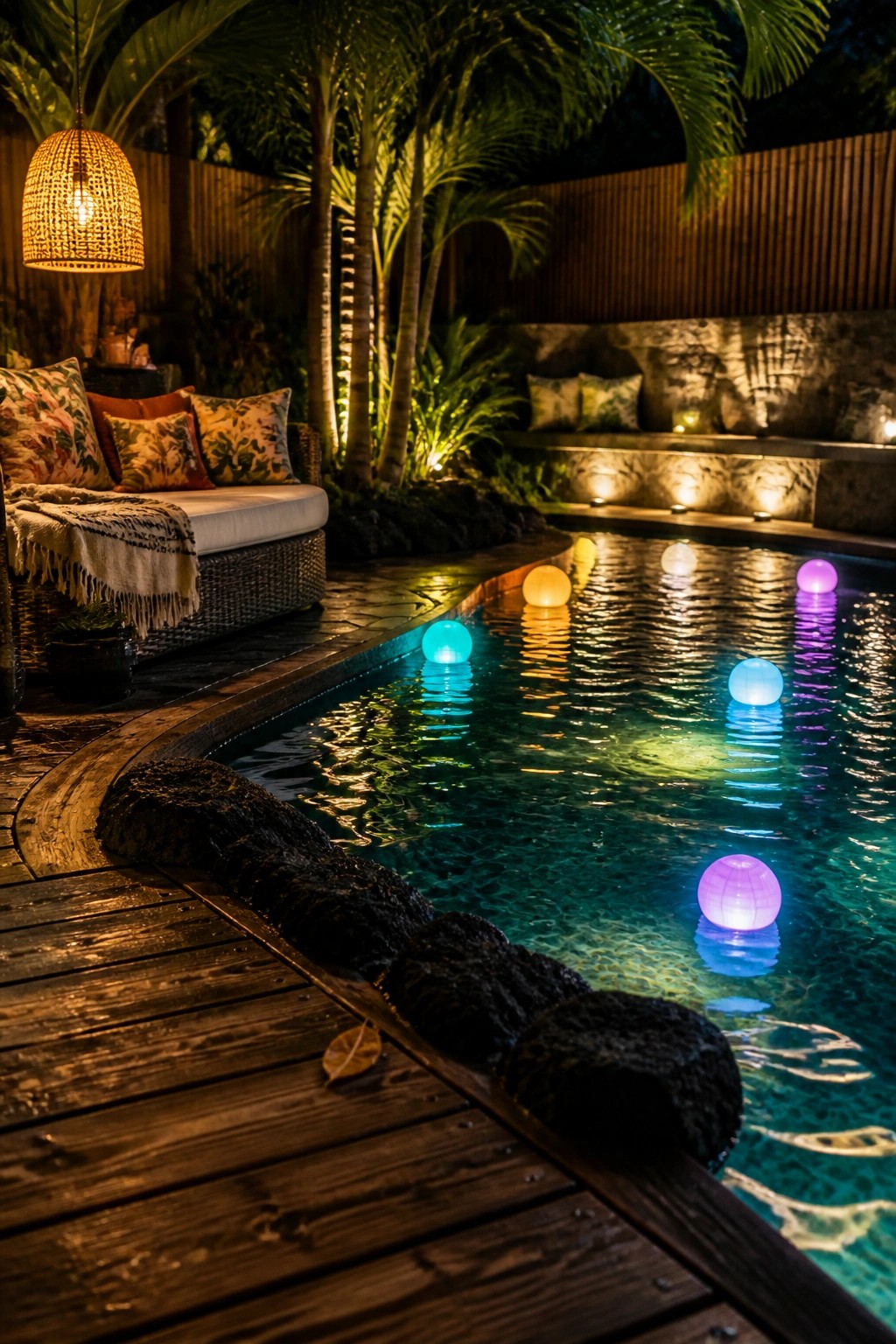
Floating lights in the pool give off a soft glow that keeps the water looking calm and usable after dark. They sit right on the surface and reflect gently without needing any extra fixtures along the edge.
These lights suit smaller pools or patios where you want relaxed lighting rather than strong overhead beams. They work best in casual outdoor setups and can be moved or swapped out easily when you want a different color or brightness.
String Lights And A Lantern
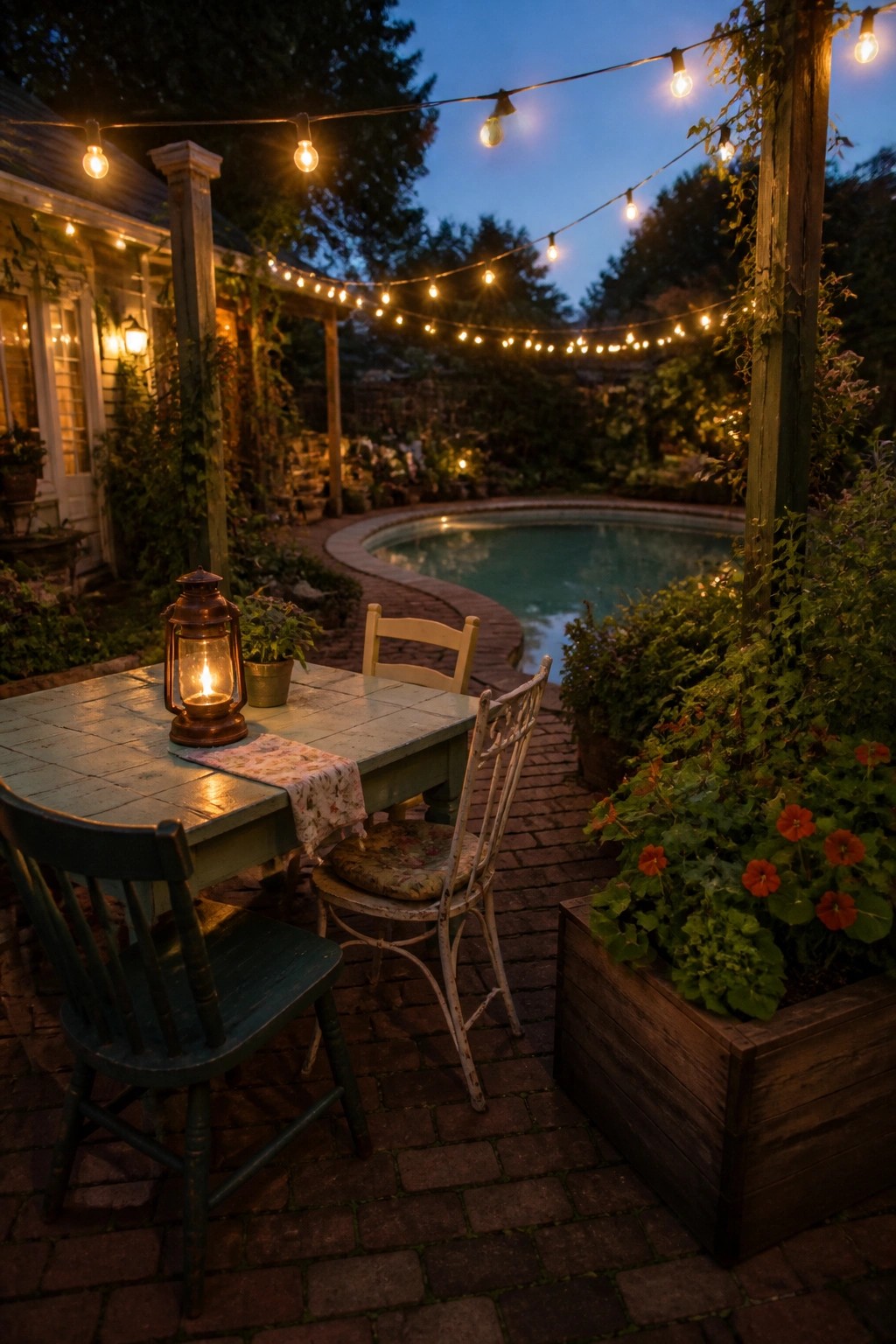
Many patios feel more usable at night when string lights run overhead and a lantern sits on the table. The two together give a soft spread of light that reaches both the seating and the area right around it.
This setup works best on smaller brick or stone patios beside a pool. Hang the strings at a moderate height so they do not glare, and choose a lantern that gives a steady flame or bulb rather than a bright spotlight.
Use Linear Lighting Along Pool Edges
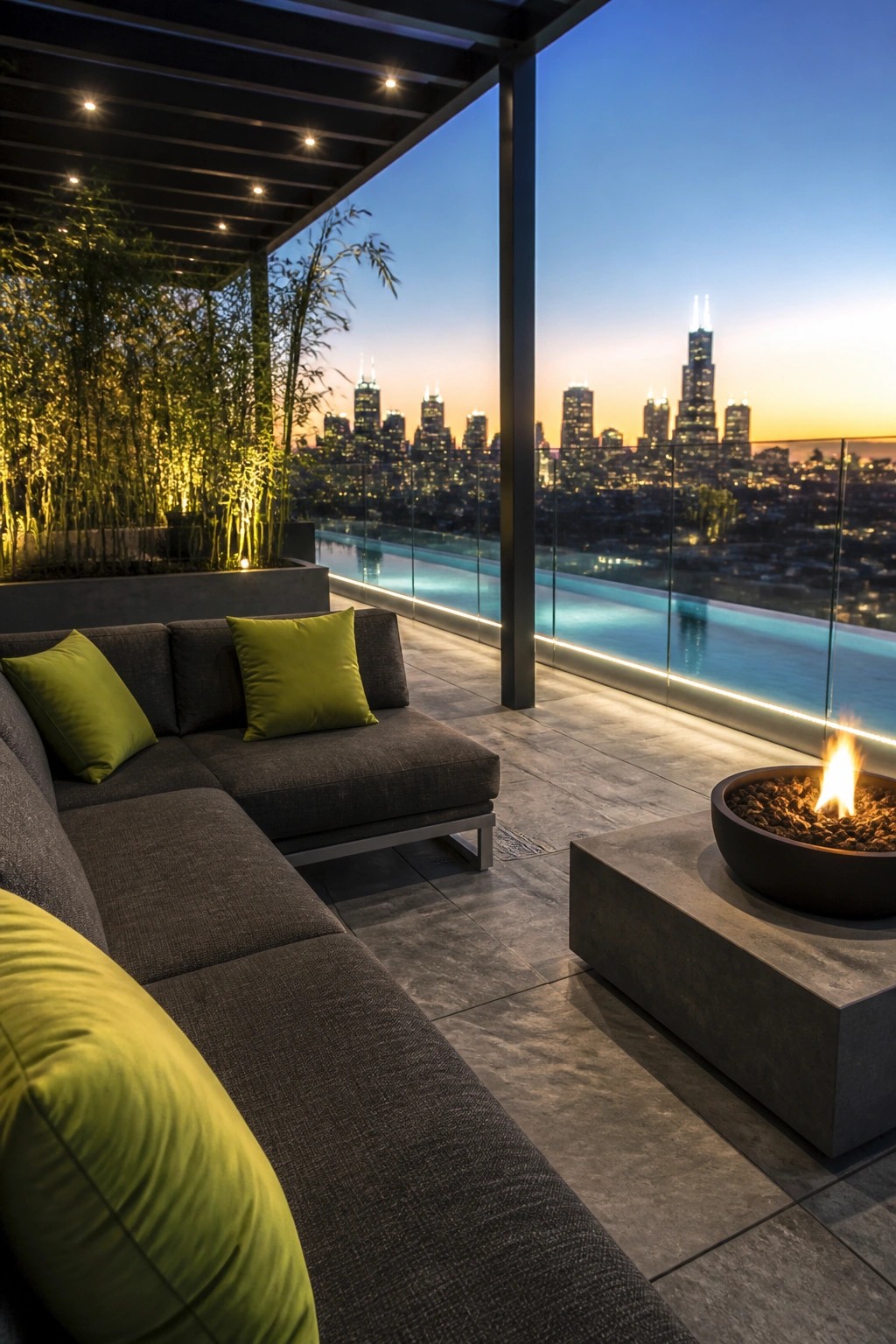
Linear lighting tucked under the pool coping or along a glass railing gives the patio a clear boundary once the sun goes down. It keeps the space usable without flooding the area with bright overhead lights that can wash out the view.
This approach suits rooftops and raised decks where safety matters and the horizon stays part of the experience. Place it low so the glow stays subtle, then add a fire pit nearby for warmth and a second layer of light that draws people to seating areas.
Step Lights Keep Nighttime Stairs Safe
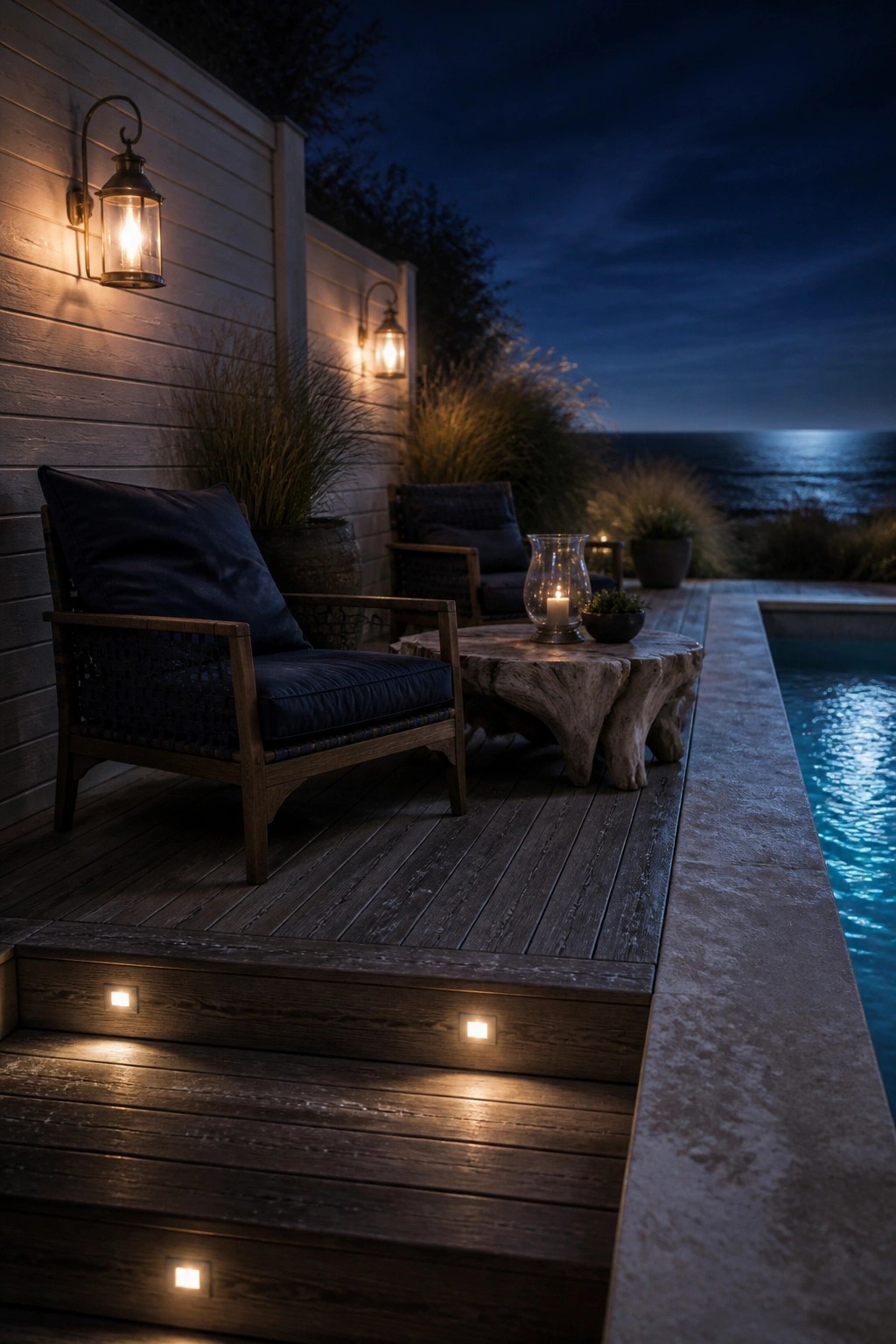
Small lights built into the steps make it easier to move around the patio after dark without needing big fixtures everywhere. They give just enough light to see where you are going while the rest of the space stays calm and dark.
This setup works best on decks that lead right to a pool or lower seating area. Use weatherproof fixtures and space them evenly so the path stays clear without creating glare.
Hang Lanterns From Trees Over The Patio
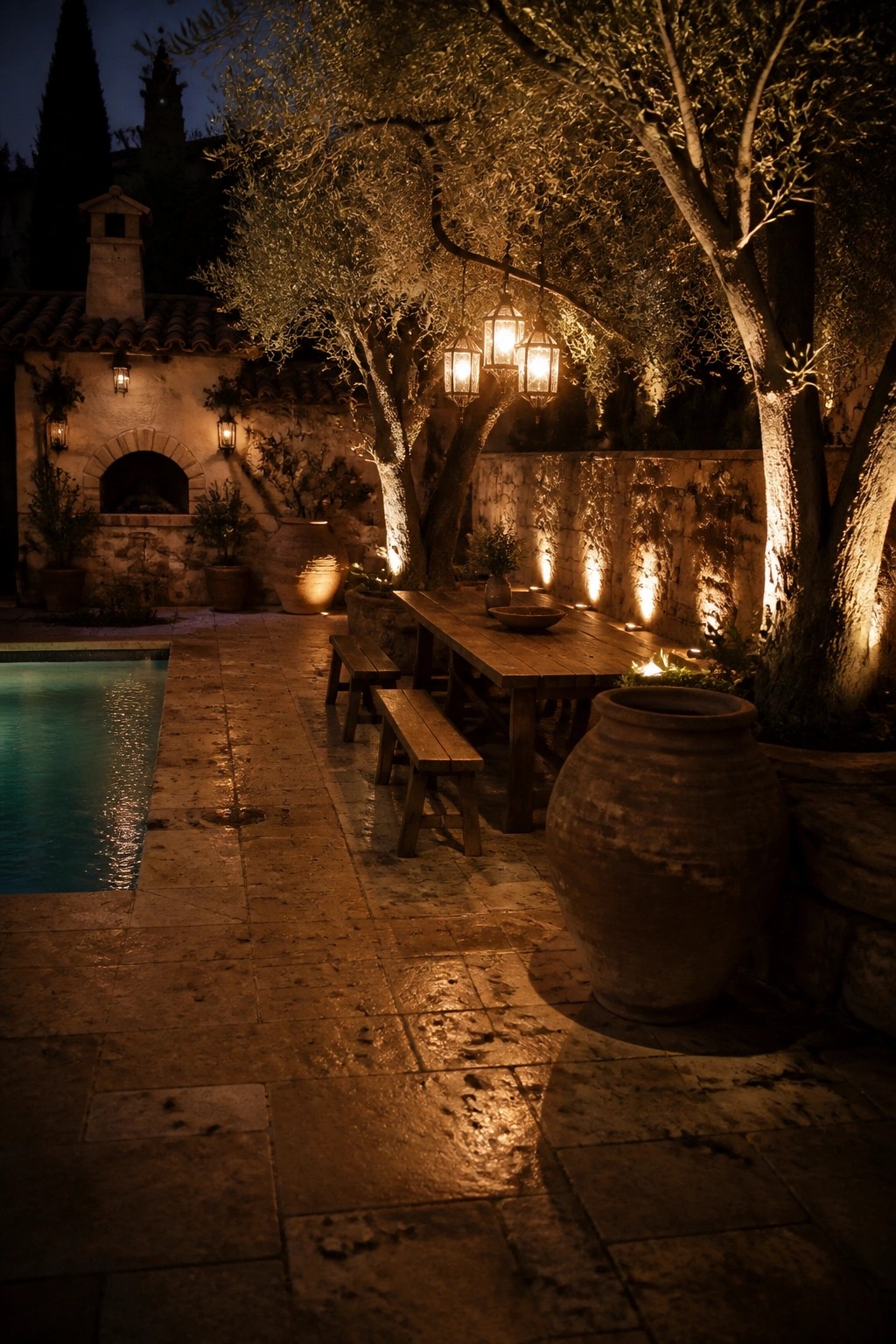
Hanging lanterns from tree branches gives the patio a soft overhead glow without adding poles or fixtures that take up space. It works especially well when the dining area sits close to the pool, since the light stays high and spreads gently across both the table and the surrounding paving.
This approach suits homes that already have mature trees near the outdoor seating. Position the lanterns at different heights so the light feels natural rather than staged, and choose ones that are rated for outdoor use.
Light the Bar from Below
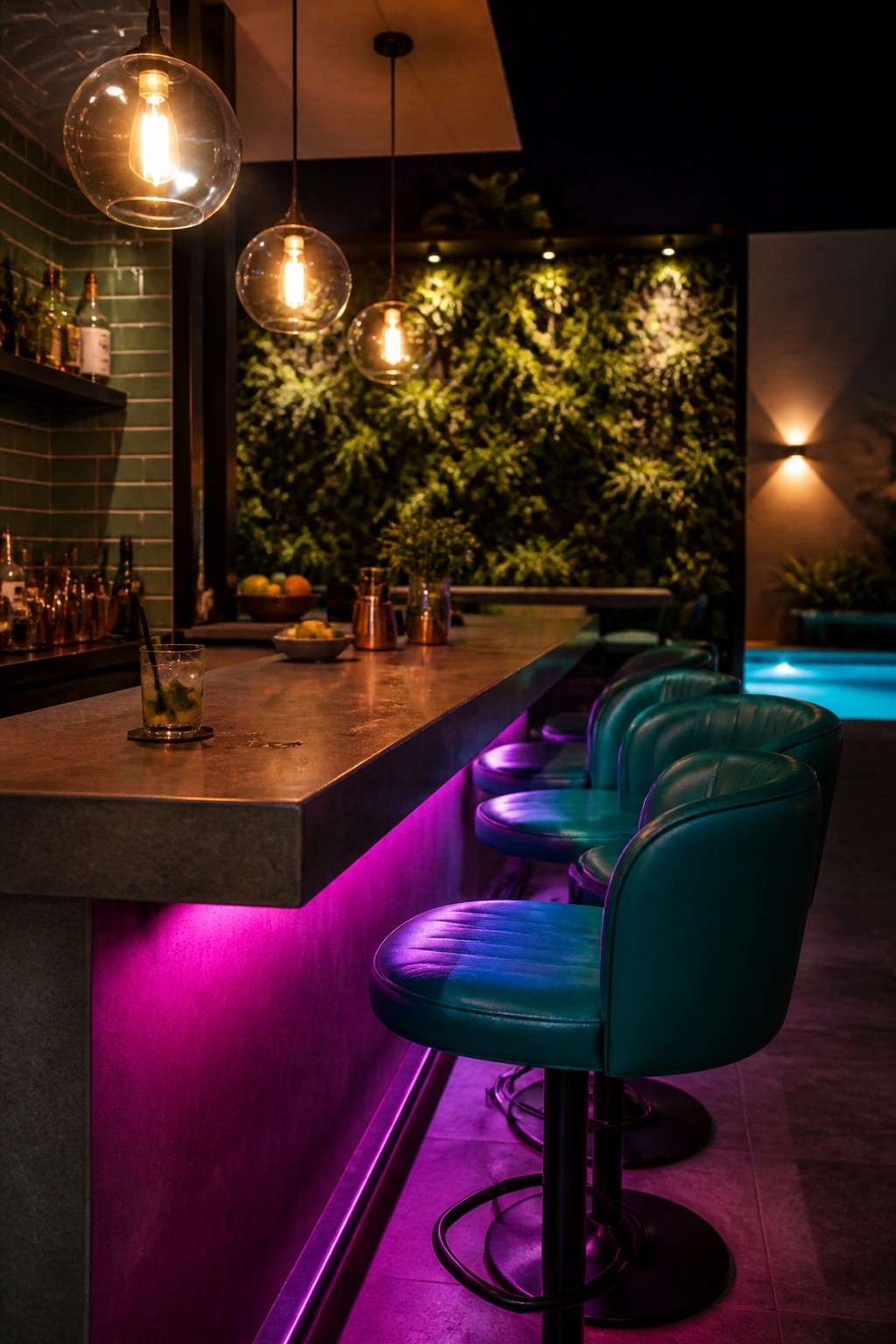
Running a strip of LED lights under the front edge of an outdoor bar counter gives the seating area a soft glow that stays visible after dark. It helps define the space without relying on bright overhead lights that can feel too harsh next to a pool.
This works best on bars that face the water and get regular evening use. Place the strip so it lights the floor and lower stools rather than shining upward, and choose a color temperature that matches the rest of the patio lights.
Layer Hanging Lanterns With String Lights
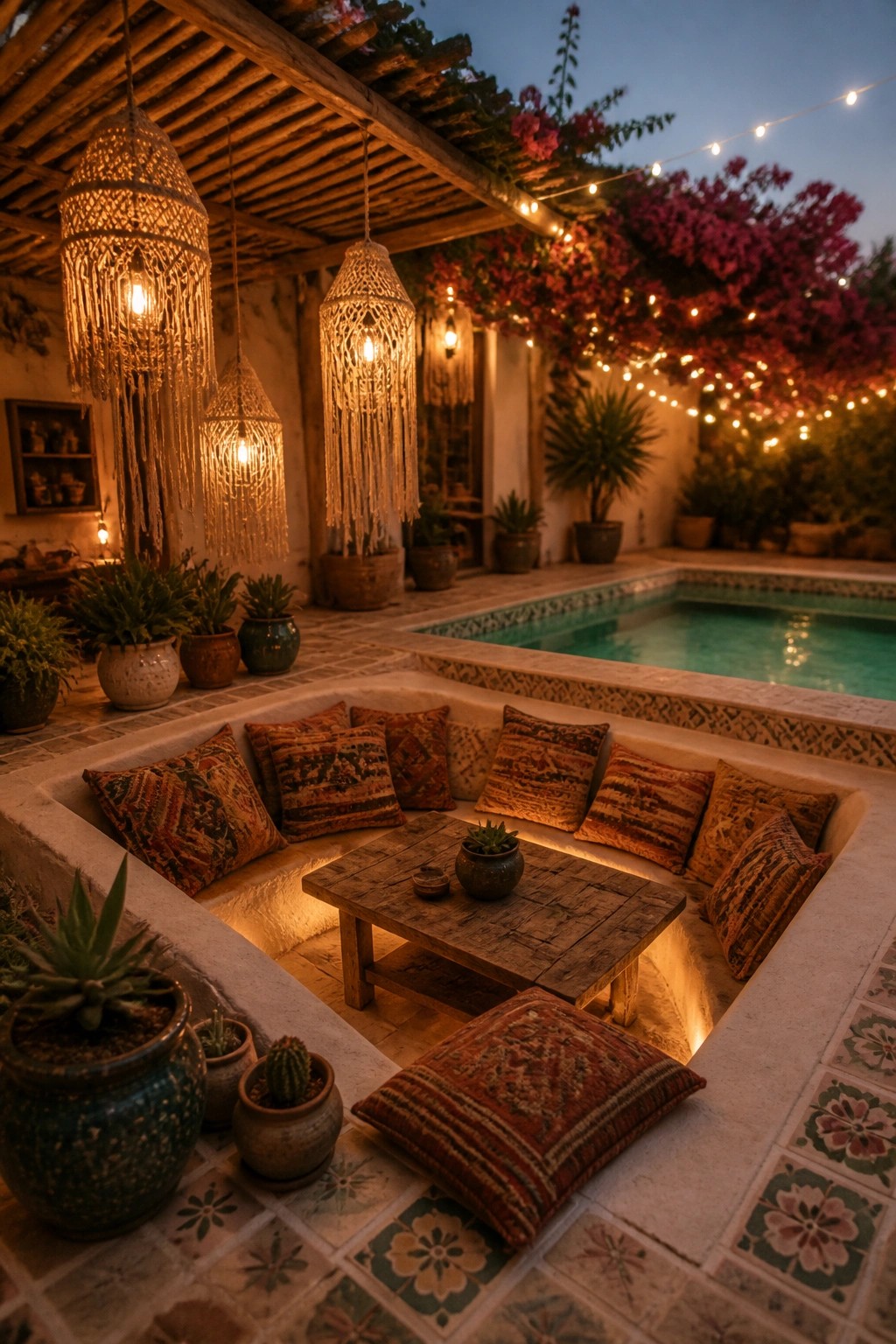
Mixing hanging lanterns with string lights gives a pool patio a warm, usable glow after dark without feeling harsh. The lanterns provide focused light over seating while the strings add gentle overhead sparkle that keeps the whole area from going flat.
This works best on spaces with a pergola or roof edge near the water. Run the strings along the beams and hang the lanterns at different heights so the light feels even rather than spotty. Keep the bulbs warm white and avoid overdoing the number of fixtures.
Pool Edge Lighting
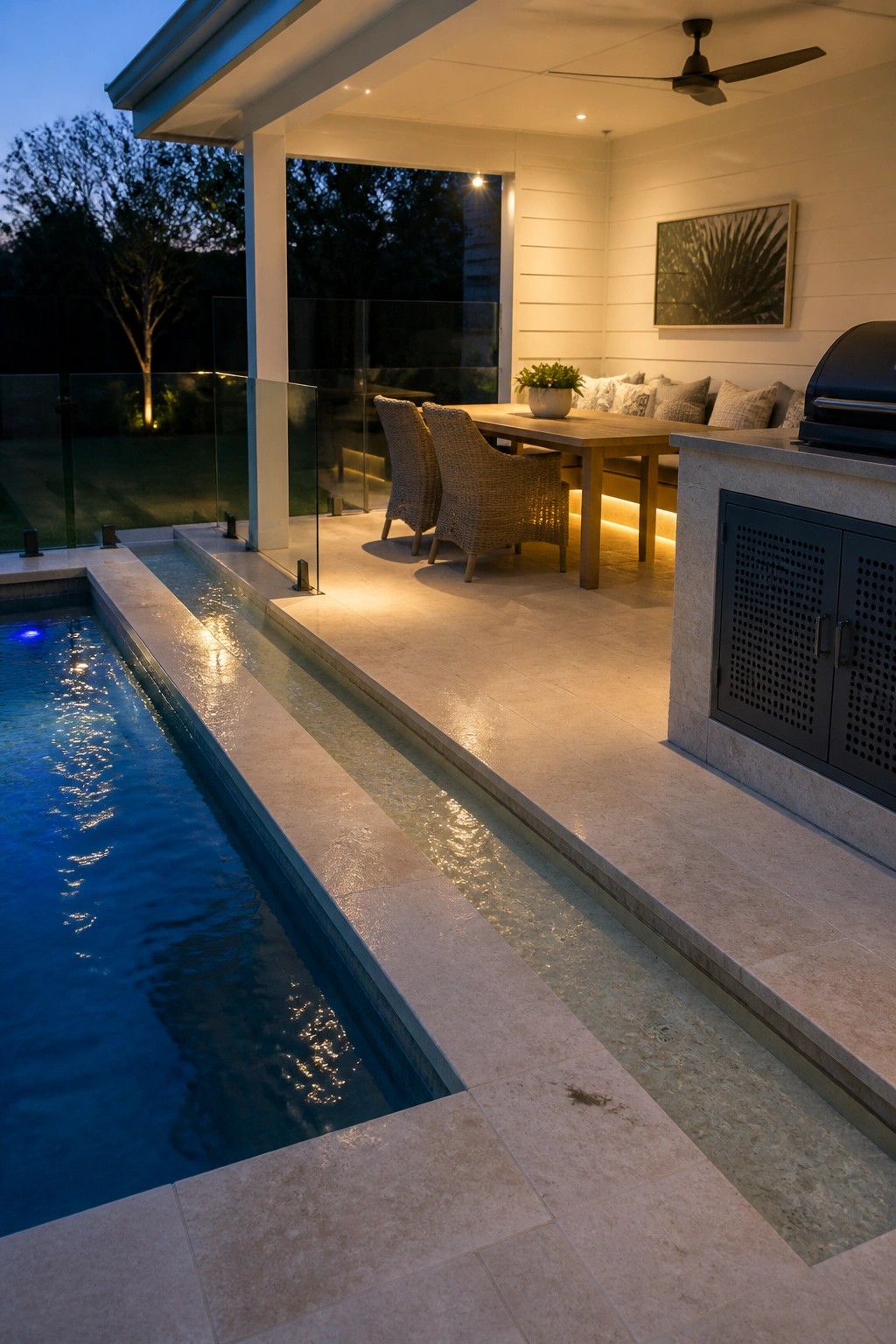
A narrow strip of light tucked right along the pool coping gives the water a soft glow after dark. It turns the edge into a clear boundary without needing tall fixtures or bright overheads.
This setup suits long or narrow pools on patios that already have seating and dining areas. Keep the fixtures low and waterproof, and test the angle so the light stays on the water rather than shining into eyes.
Path Lighting Along The Pool Edge
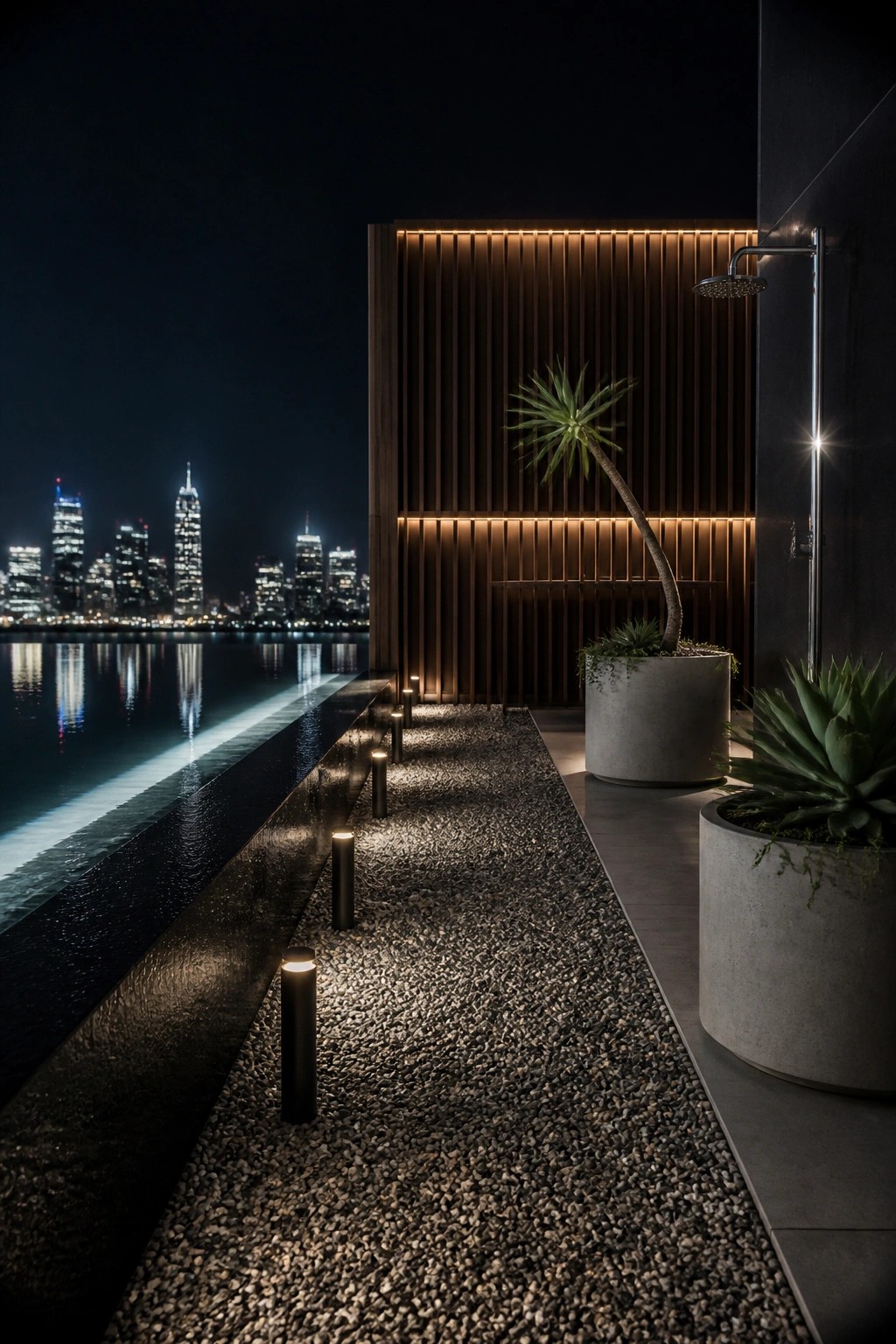
Low bollard lights placed along the pool edge give just enough light to walk safely at night. They mark the boundary without washing out the view or making the space feel like a parking lot.
This setup works best on gravel or stone paths where the light stays low and even. Space the fixtures a few feet apart and keep the bulbs warm so the glow blends with the surroundings instead of standing out.
Recessed Lights Along the Deck Path
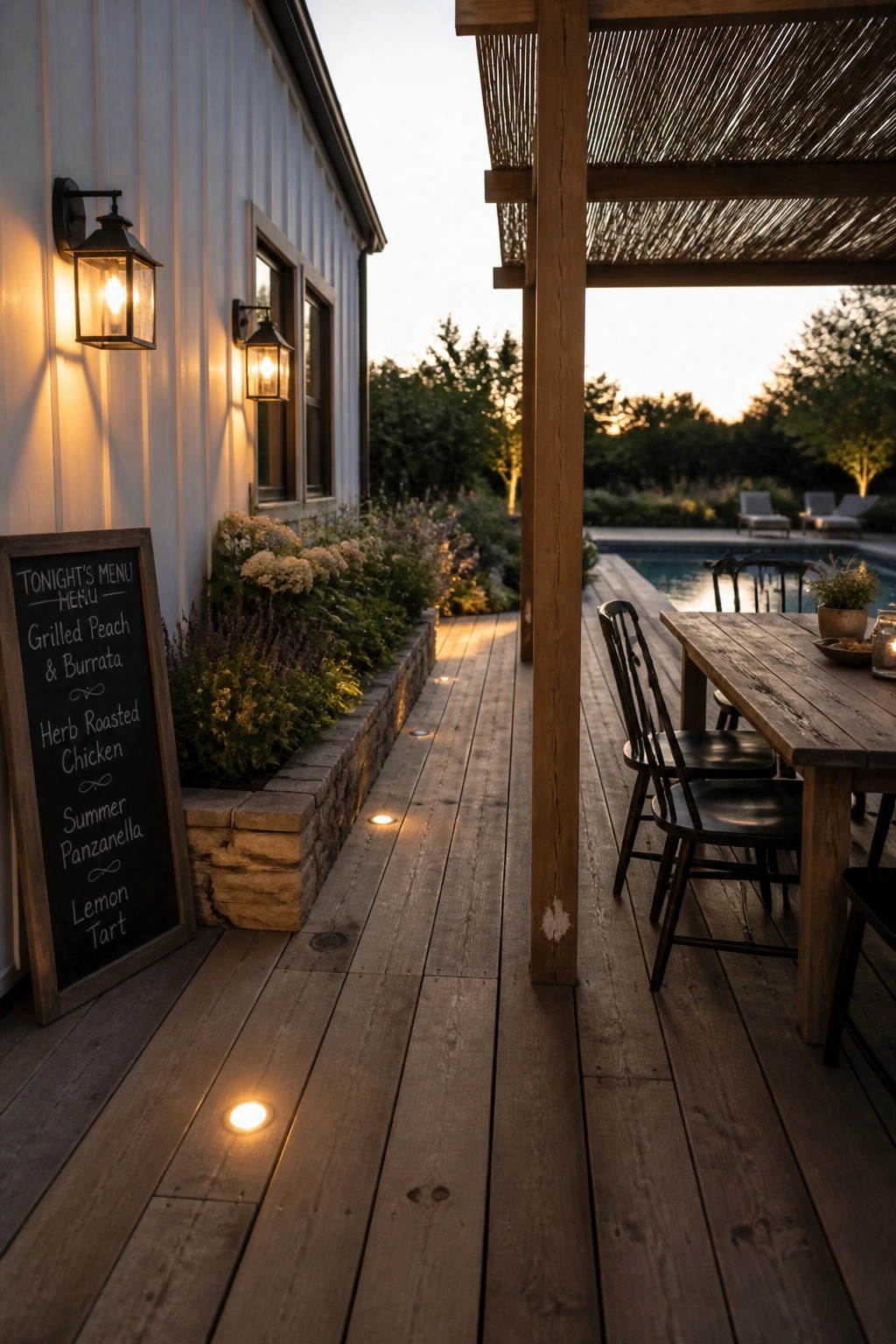
Recessed lights set into the deck boards give a soft line of light that shows the way without making the whole space feel bright. This approach keeps the evening mood while still making it easy to walk safely around the pool area.
These lights work best on wooden decks where you can space them evenly along the main path. They suit homes that already have some wall lanterns or overhead fixtures, since the low lights handle the ground level while the others cover seating spots. Just check that the fixtures are rated for wet locations and placed where they will not shine directly into people’s eyes.
Lighting Along The Pool Edge
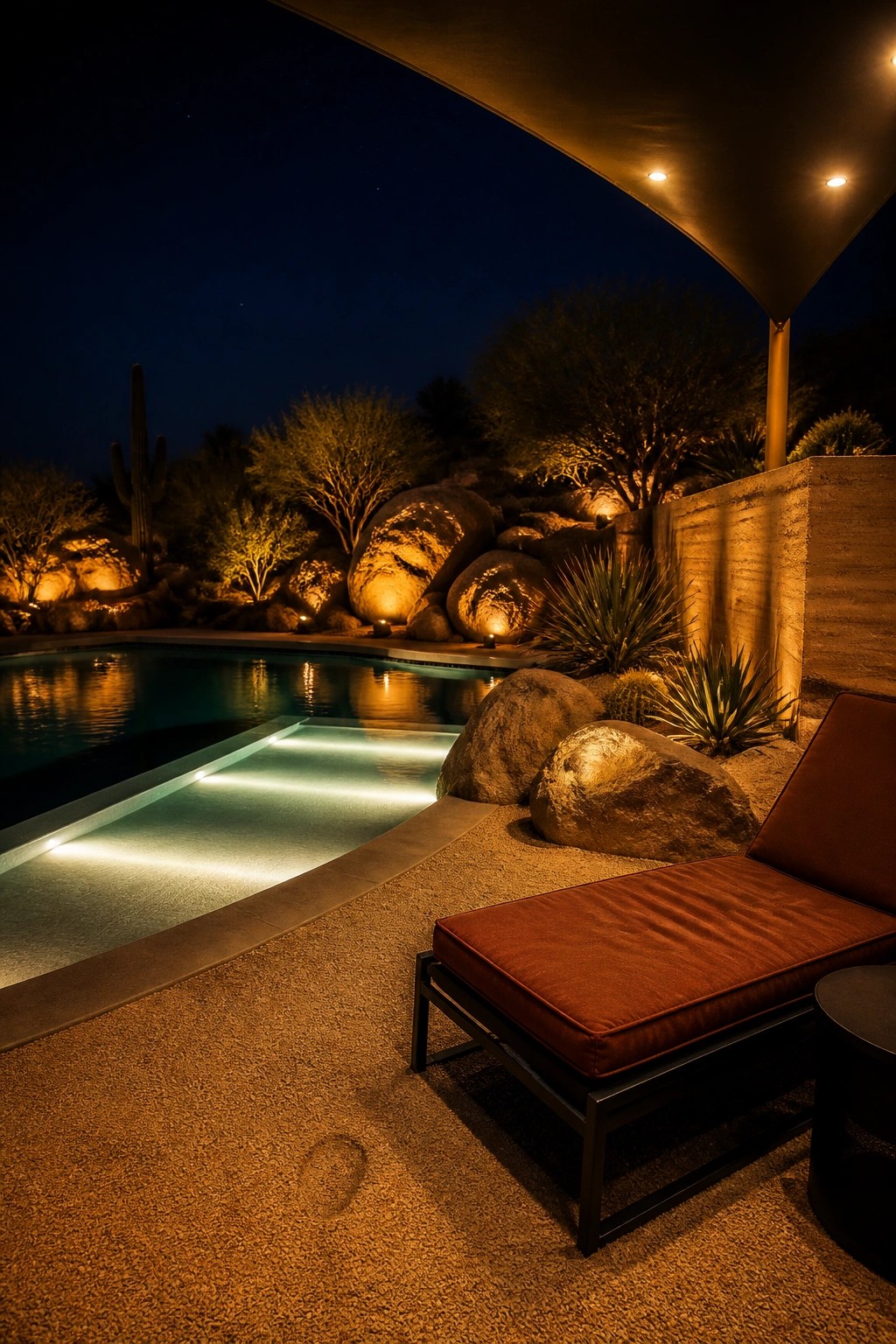
A thin strip of light right at the waterline makes the pool area easier to use once the sun goes down. It marks the edge without flooding the whole space with light and lets people sit nearby without feeling like they are under a spotlight.
This works best on patios that stay simple and low to the ground. Set the fixtures flush with the coping so they stay out of the way, and keep the output low enough that it does not compete with the surrounding plants or rocks.
Mix Wall Sconces With Pool Lighting
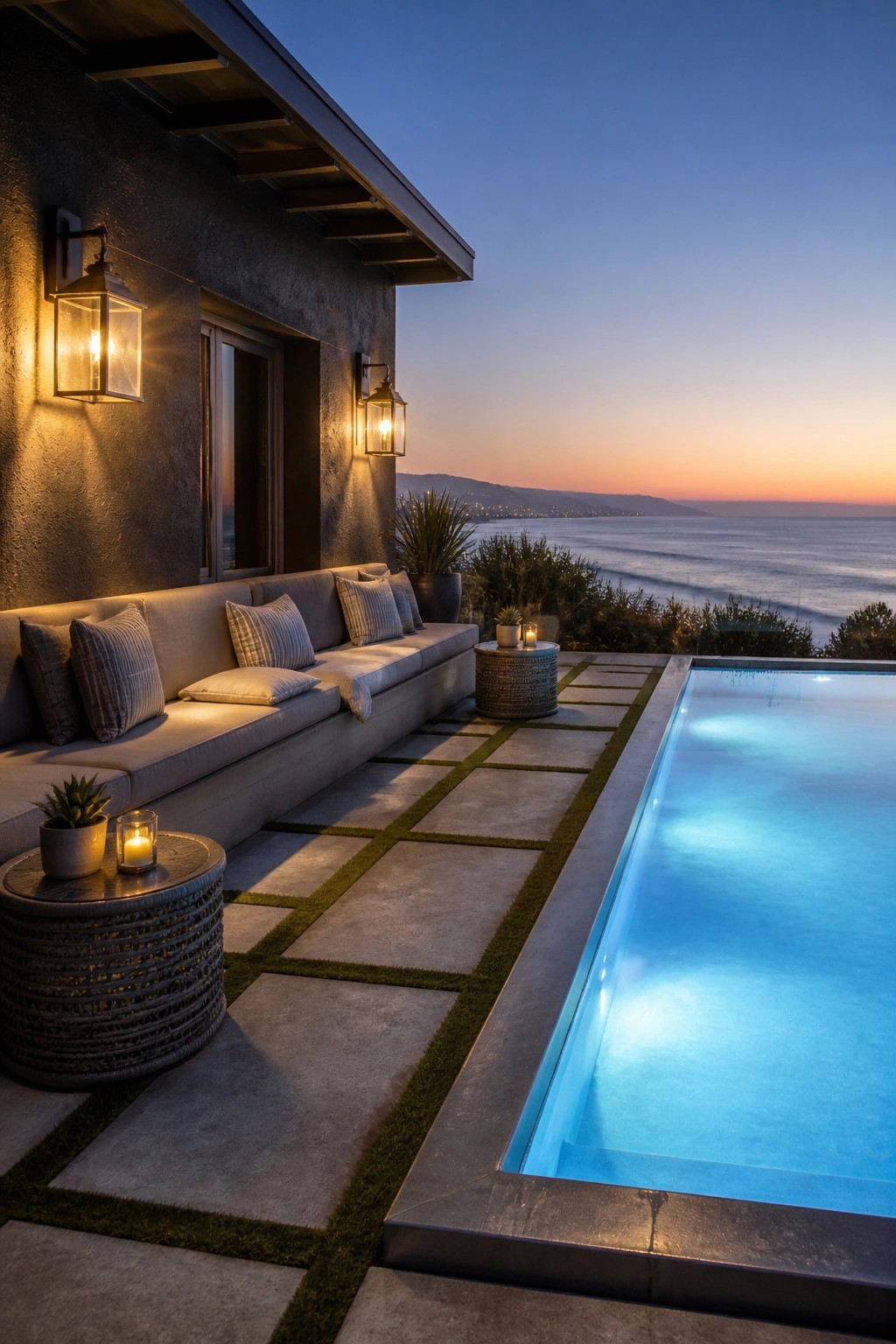
Wall sconces give a pool patio steady light right where people sit. They keep the seating area usable after dark without adding clutter from freestanding lamps.
Pair them with the soft glow coming from the pool water. This works best on open patios that face a view, since the two light sources balance each other and let you stay outside longer without needing everything brightly lit.
Overhead Beams That Let Moonlight Through
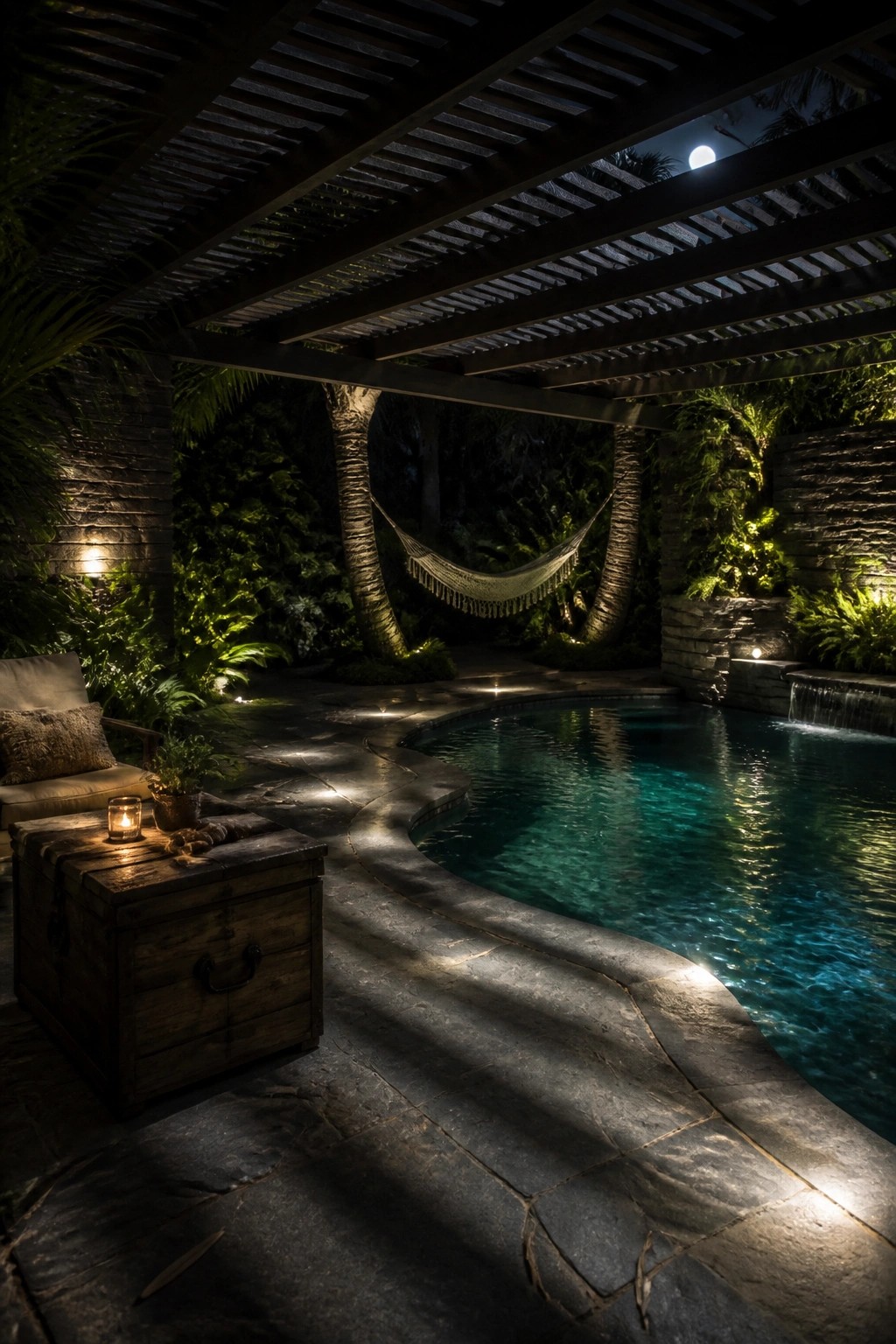
A slatted overhead structure keeps the patio from feeling closed in after dark. Moonlight slips through the gaps and casts soft lines across the stone, while low lights along the path add just enough visibility to move around safely.
This approach suits pool areas that already have some tree cover or open sky. Keep the electric lights low and focused on the ground so the moonlight stays the main source of light overhead.
Step Lighting Along Pool Edges
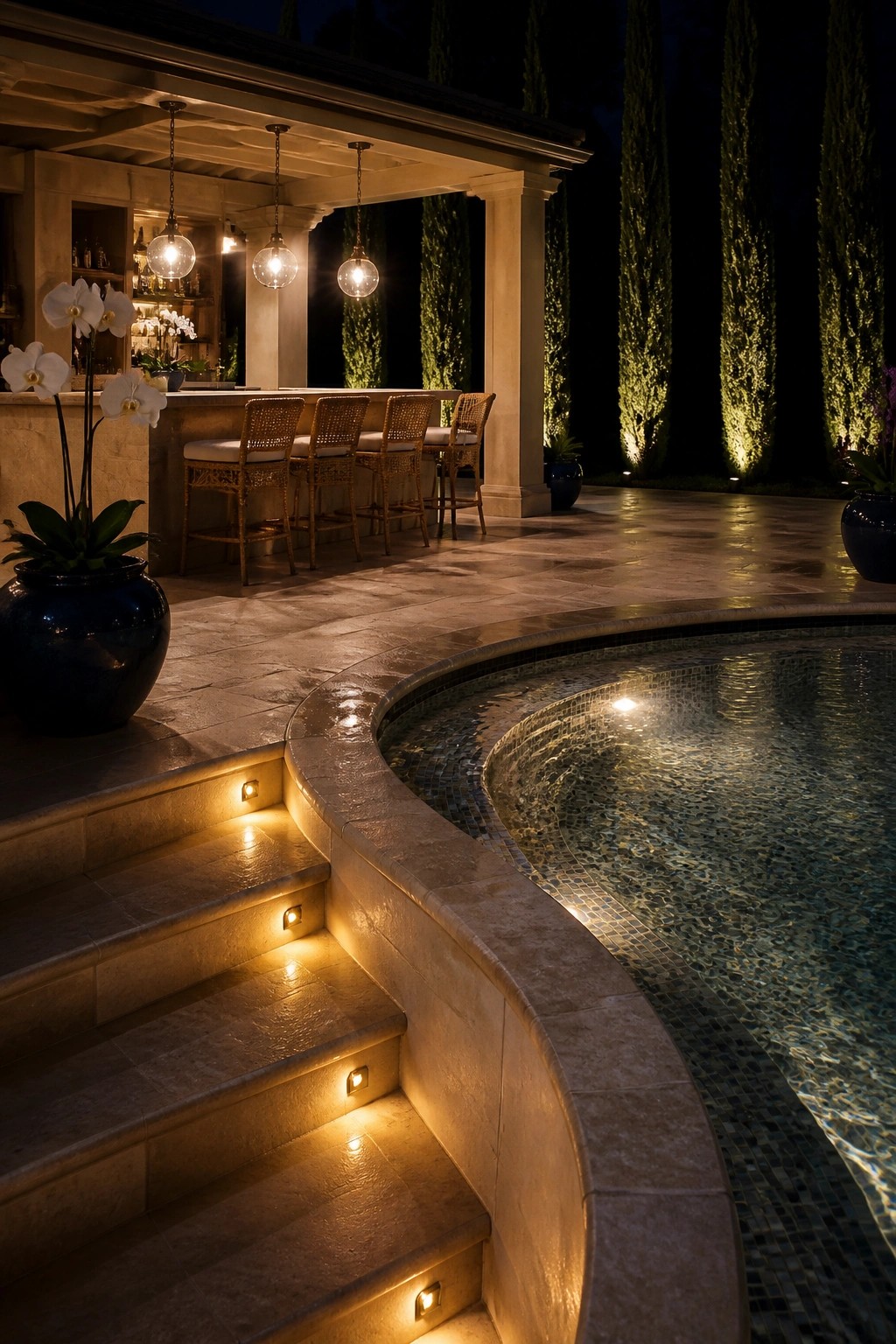
Small lights built into the steps make it much easier to move in and out of the pool once the sun goes down. They keep the path clear without shining bright beams across the water or creating harsh reflections.
This setup works best on pools with raised decks or curved edges where people walk often at night. Space the fixtures evenly and keep them low so they guide feet without overpowering the rest of the patio lighting.
Floating Lights In The Pool
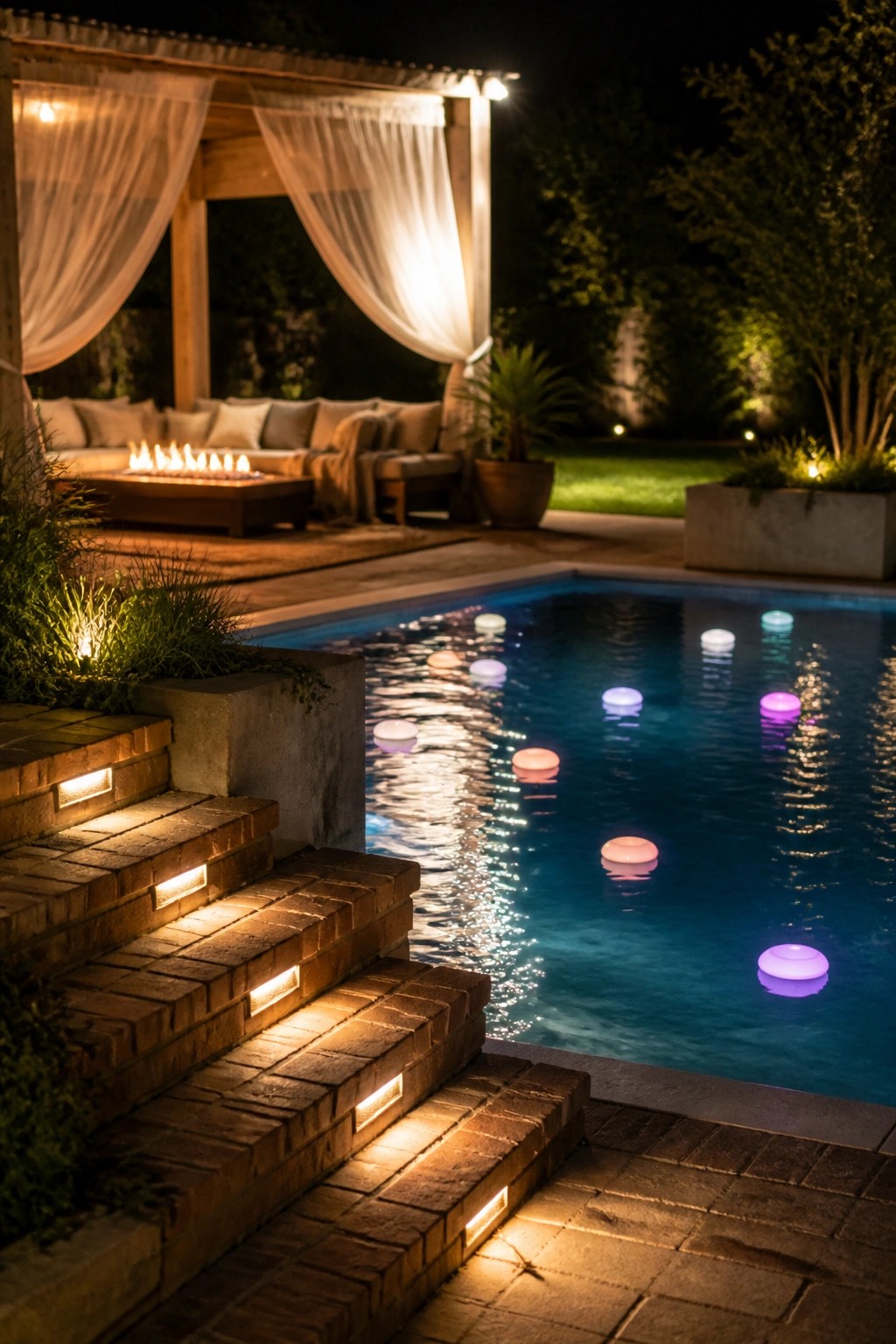
Floating lights give the pool its own gentle glow after dark. They sit right on the water and spread a soft color that feels calm without overpowering the rest of the patio.
These work best in medium to large pools where you can spread a few orbs around. They are easy to move, come in different colors, and pair well with simple step lights or a fire pit nearby.
Combine Pool Lighting With Uplights On Vertical Screens
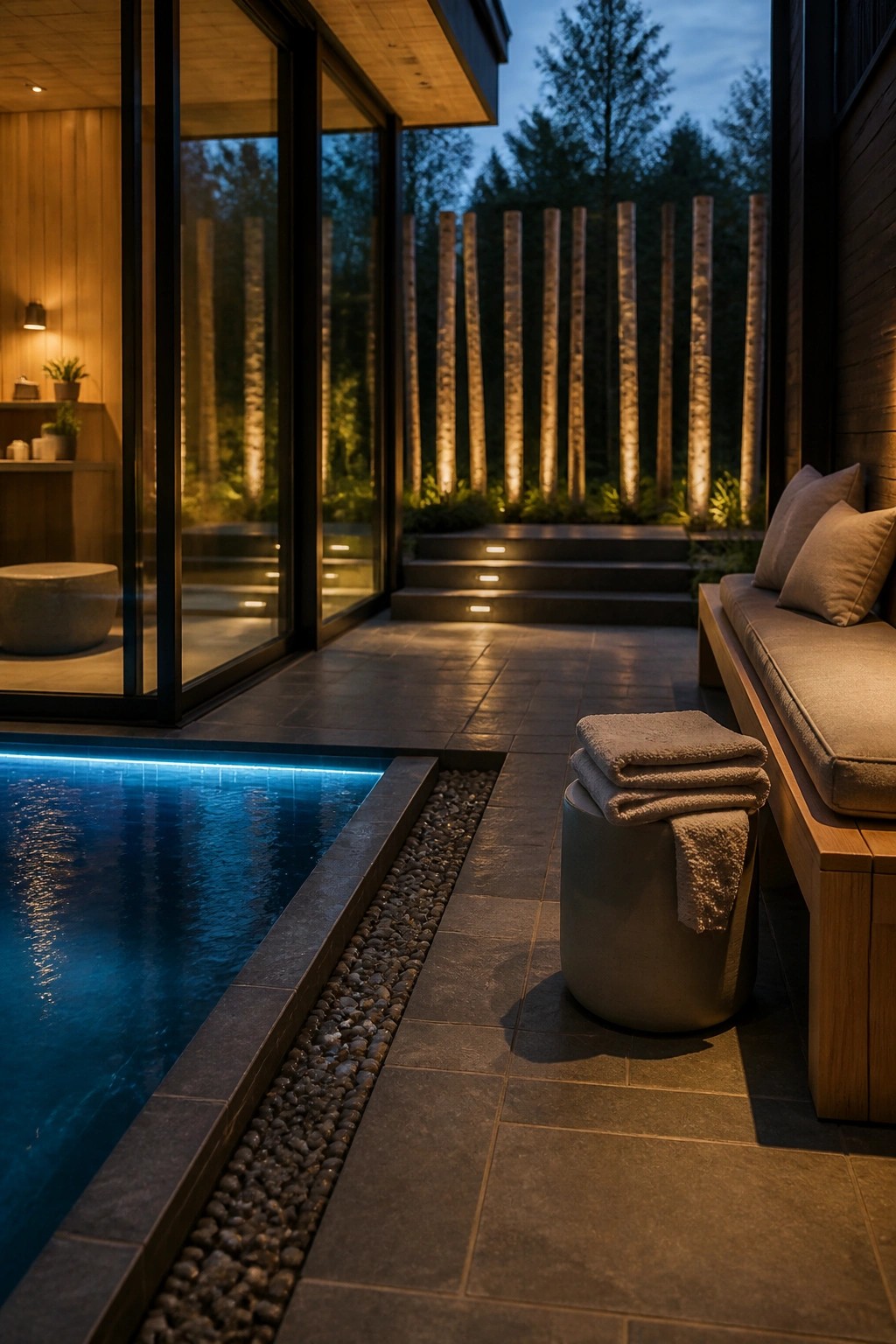
Many people light the pool itself but forget the area right around it. Adding uplights to the poles or screens that border the space gives the whole patio a more finished look after dark and makes it feel safer to walk around.
This setup works best on smaller patios or side yards where you want the pool to stay the main focus without adding tall fixtures. Keep the uplights warm and low so they do not compete with the glow coming from the water.
Frequently Asked Questions
Q: How do I stop the lights from reflecting too much on the pool water at night?
A: Aim fixtures downward from the sides or mount them low along the deck edges. Test the angles once the sun sets and tweak them until the surface stays calm. This keeps the water looking inviting instead of blinding.
Q: What works best if I want lighting but hate dealing with outlets outside?
A: Go with solar lights that soak up sun during the day and glow on their own once it gets dark. Set a few along paths or planters first to see what feels right. You can always add more without running any cables.
Q: How often do these outdoor lights really need checking?
A: Wipe them down a couple times a year and swap bulbs when they start to dim. That keeps everything working without much effort.