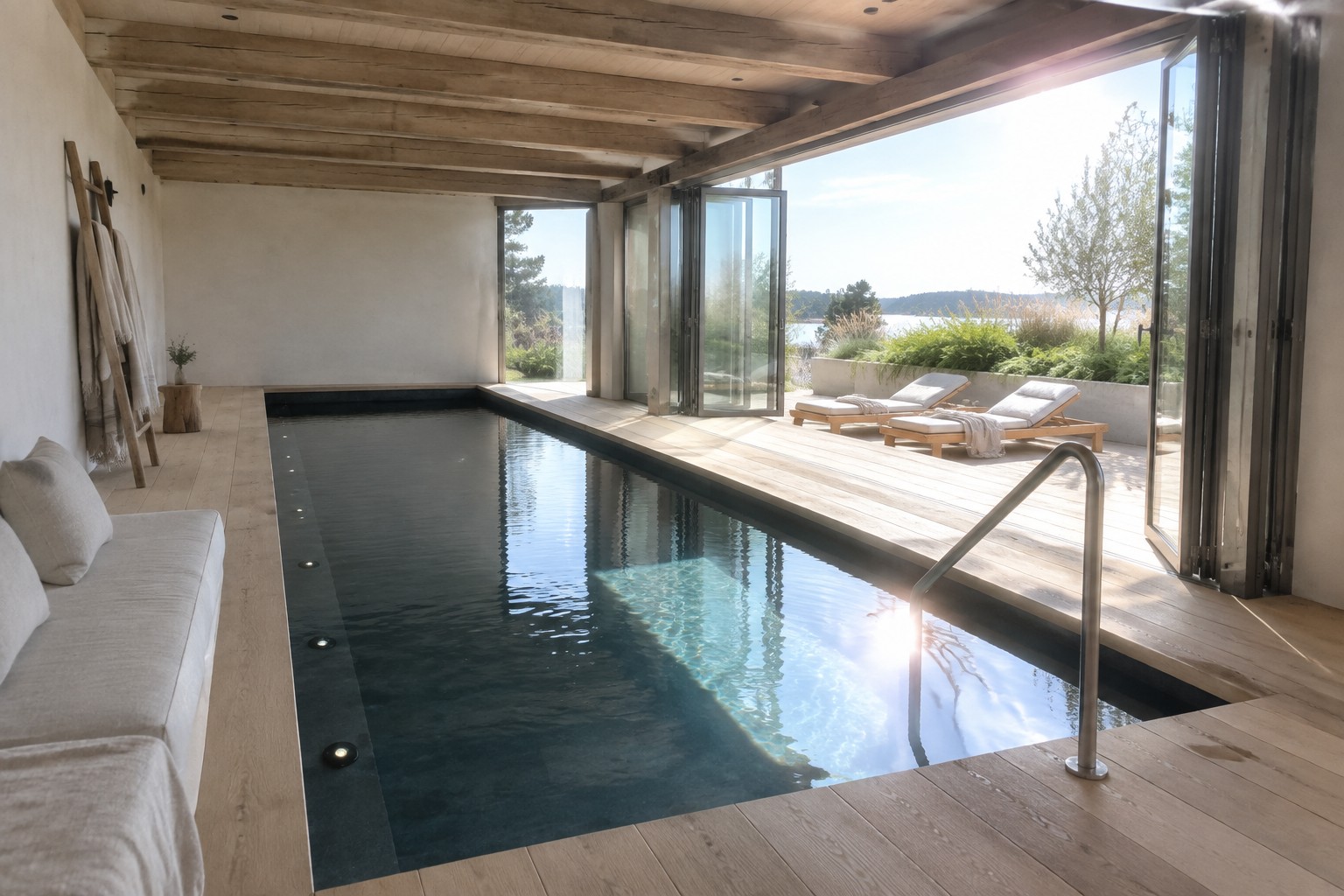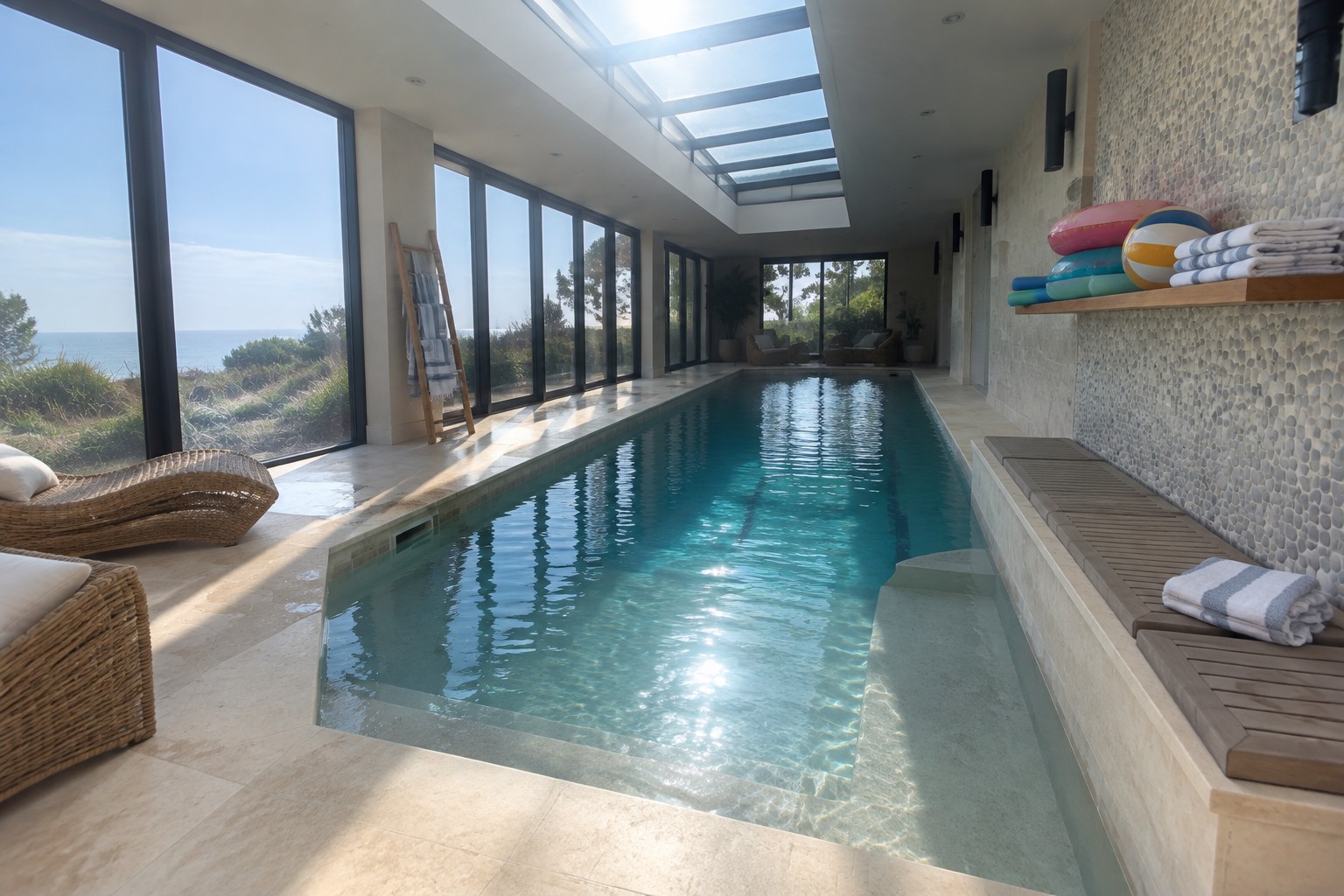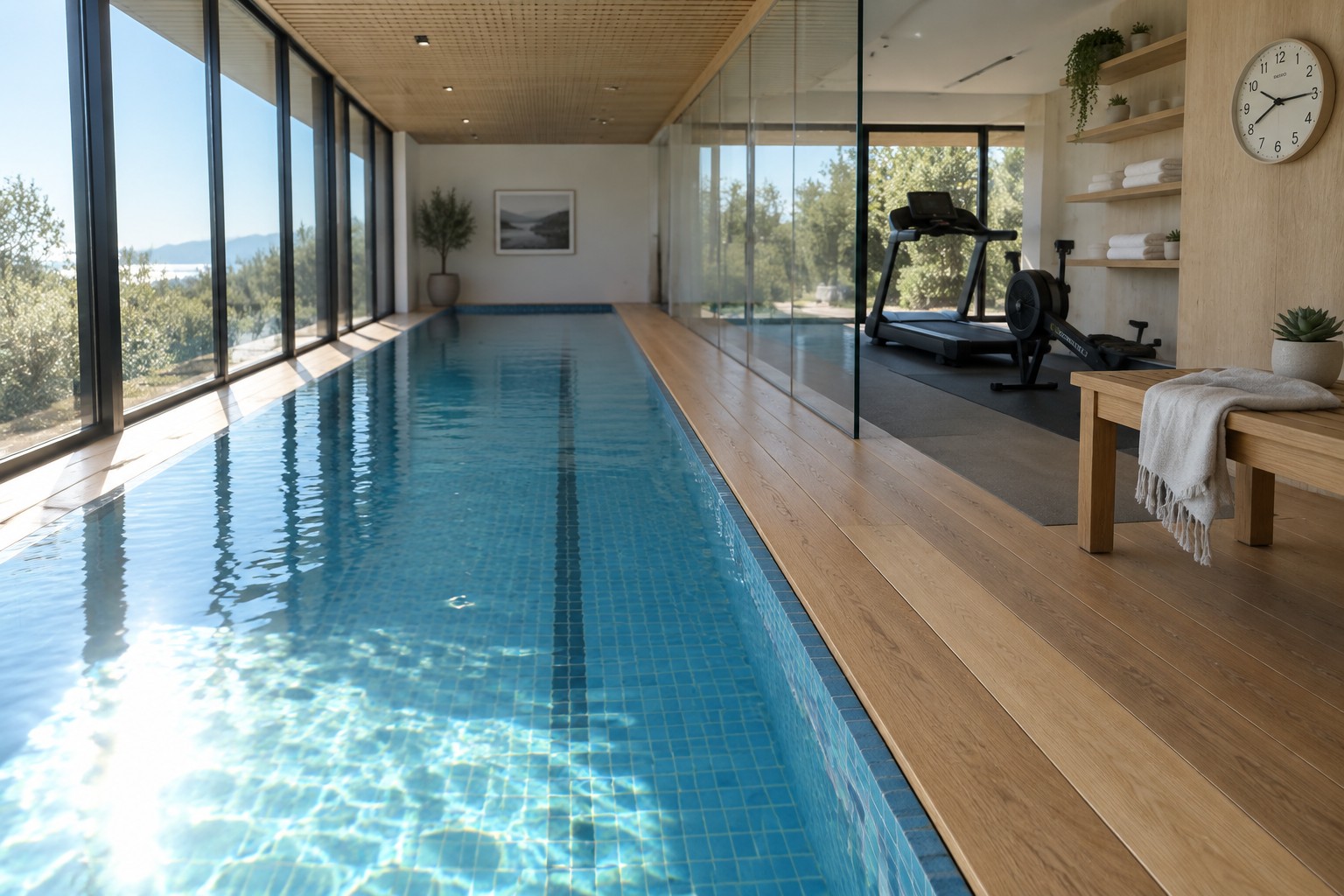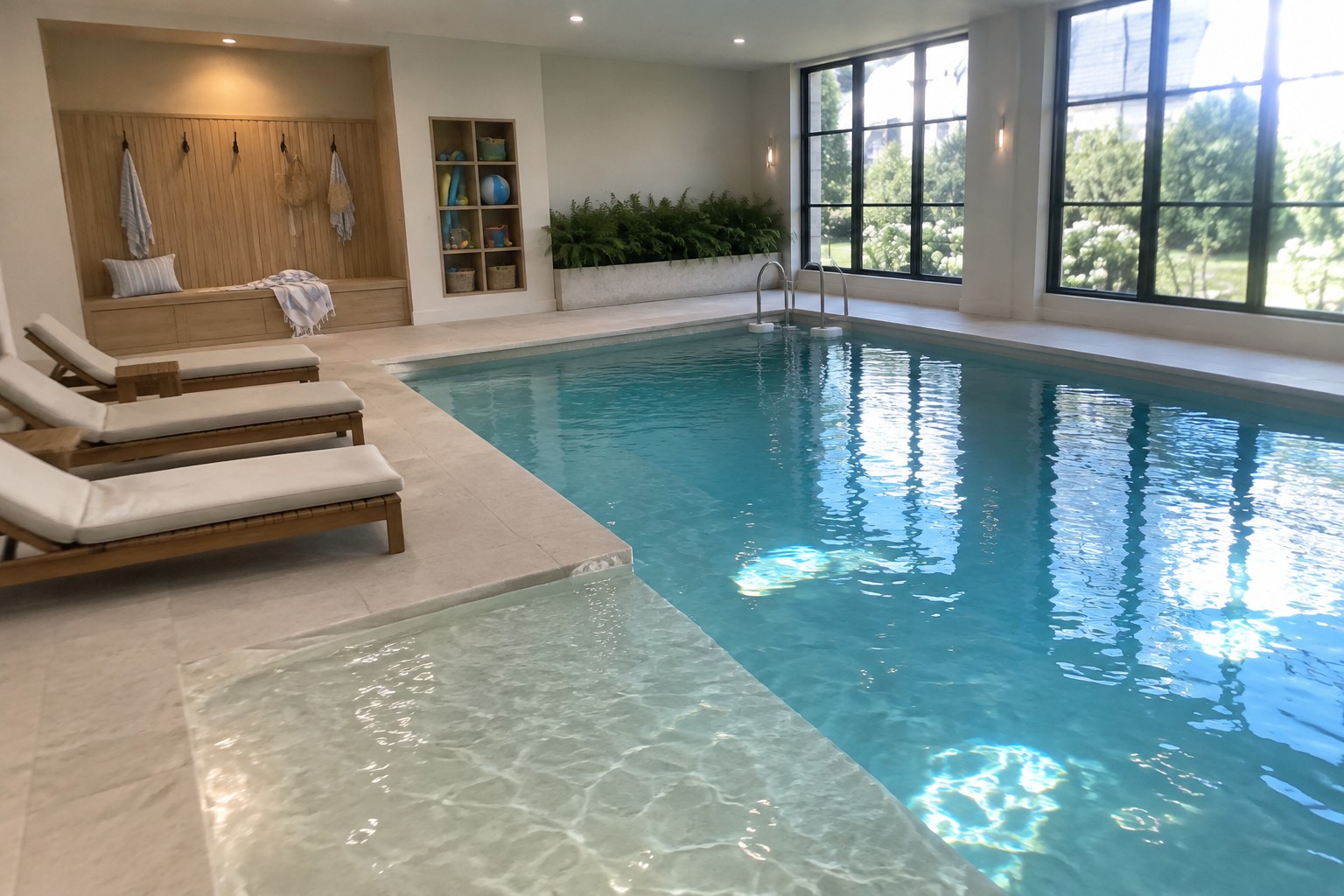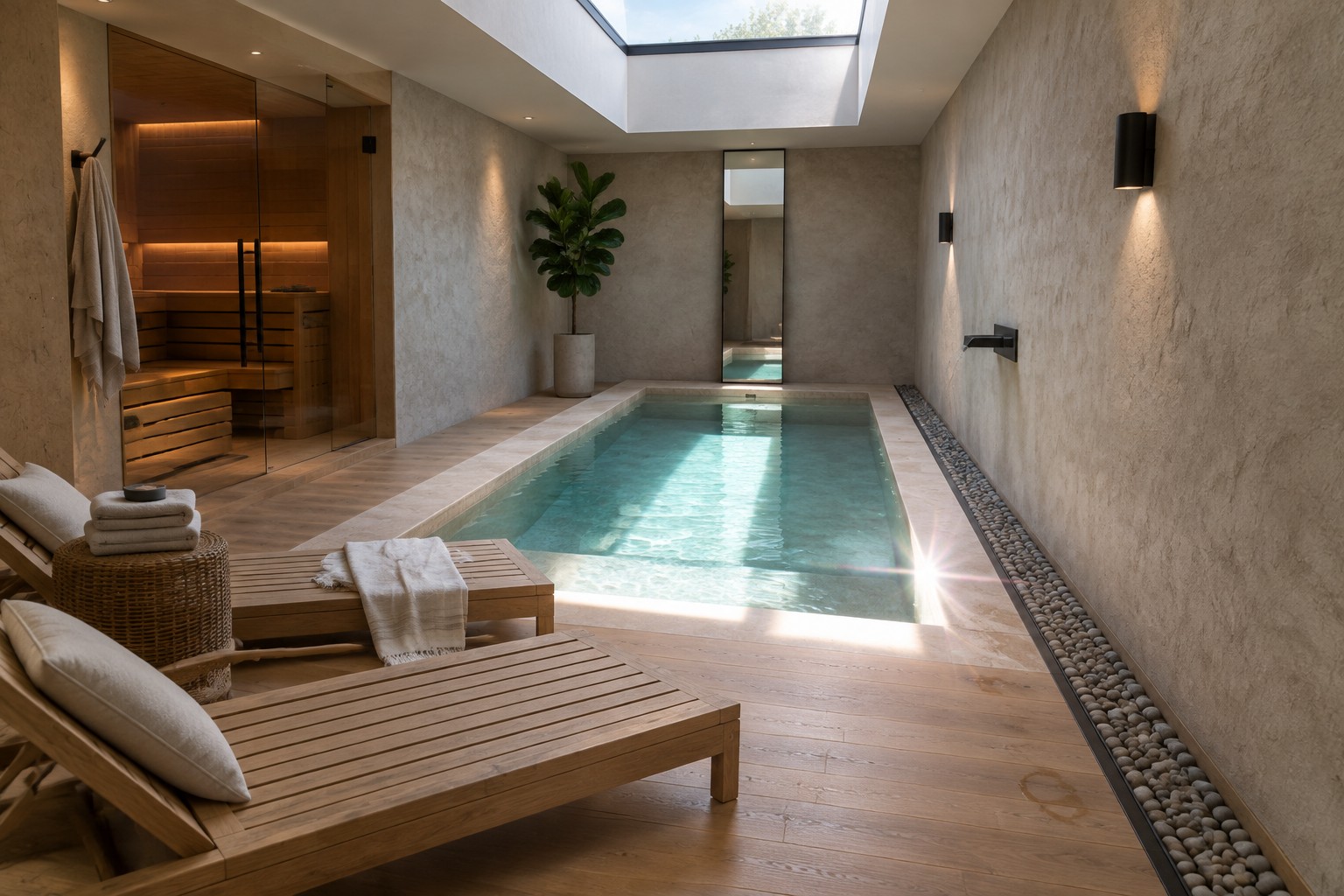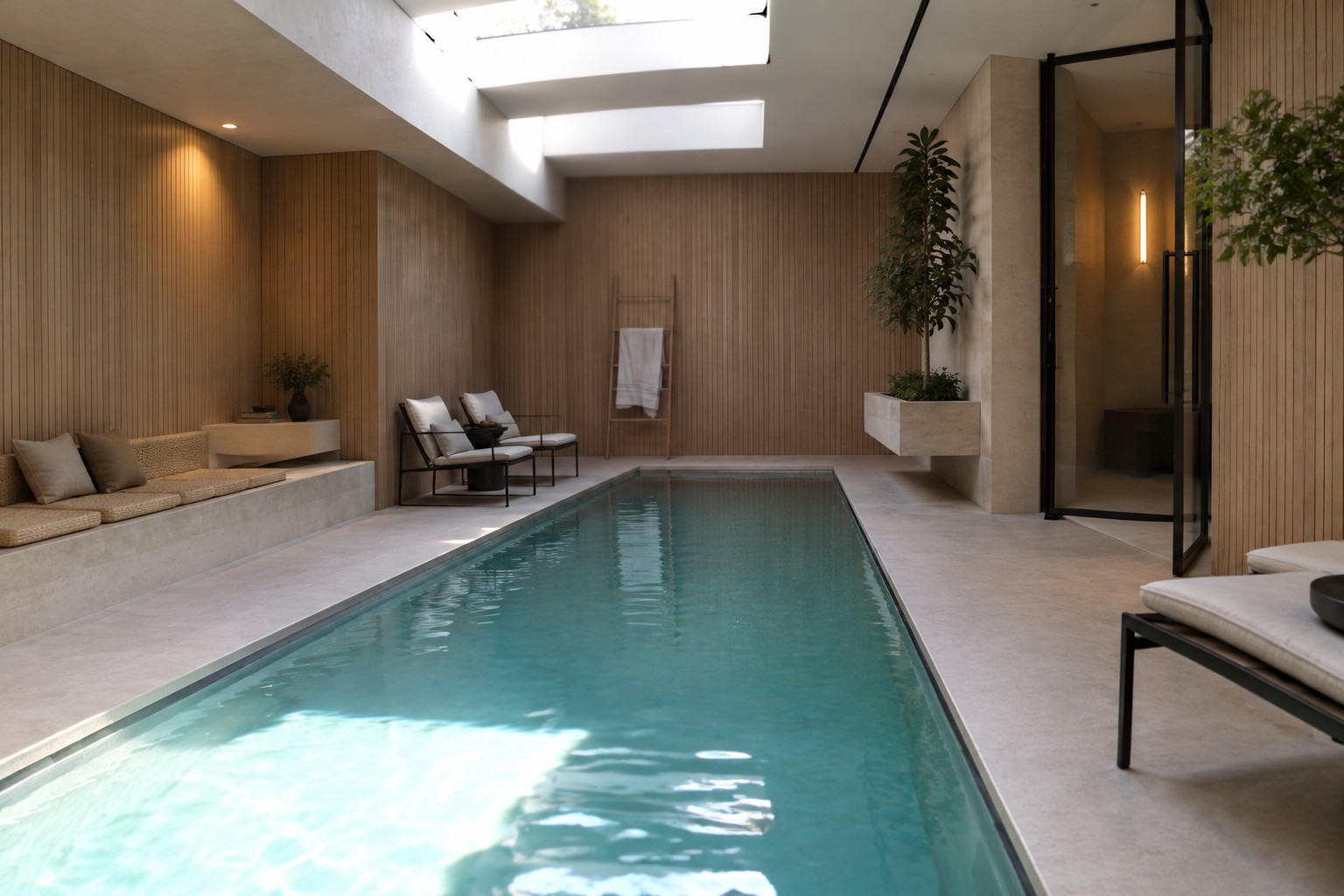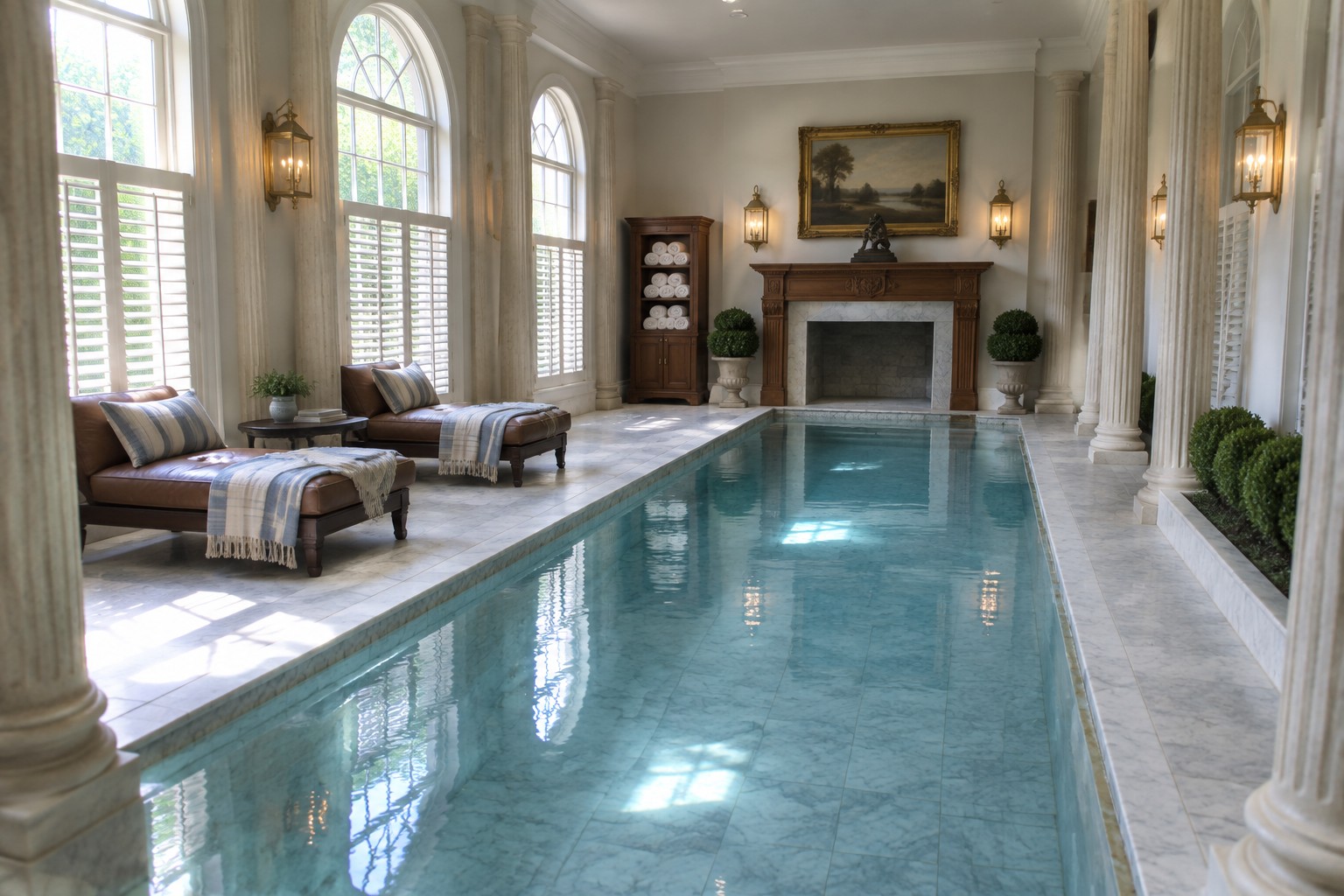
Indoor pools often end up feeling disconnected from the rest of the house when the architectural details do not carry through from the main rooms.
Classic elements like built-in seating or matching stonework can make the water feel like a natural extension of the home rather than a separate feature.
The scale of the room matters more than most people expect.
I have found that proper airflow and durable finishes determine whether a pool room gets used regularly or simply sits closed off after the first few months.
When those choices line up the space tends to feel calm and purposeful instead of overwhelming.
Columns in Traditional Indoor Pool Rooms
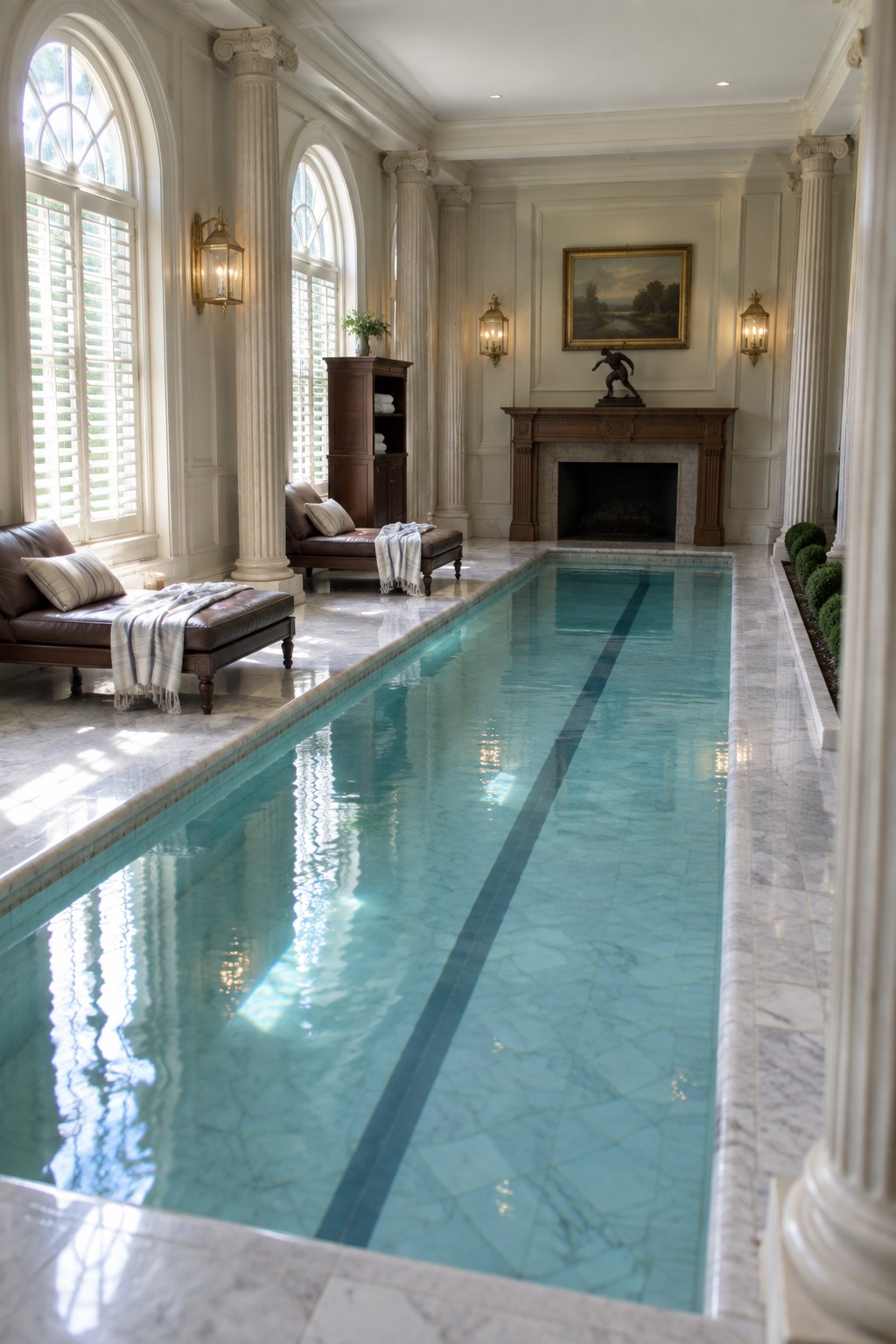
Columns can turn an indoor pool into something that feels like a real room instead of a separate addition. In this setup they run along the edge of the water and help tie the pool into the rest of the house with their height and detail.
They work best when the room already has other classic trim like moldings or paneled walls. Keep the spacing even and make sure the bases sit on the same flooring material so the whole space reads as one.
Patterned Tile Borders For Indoor Pools
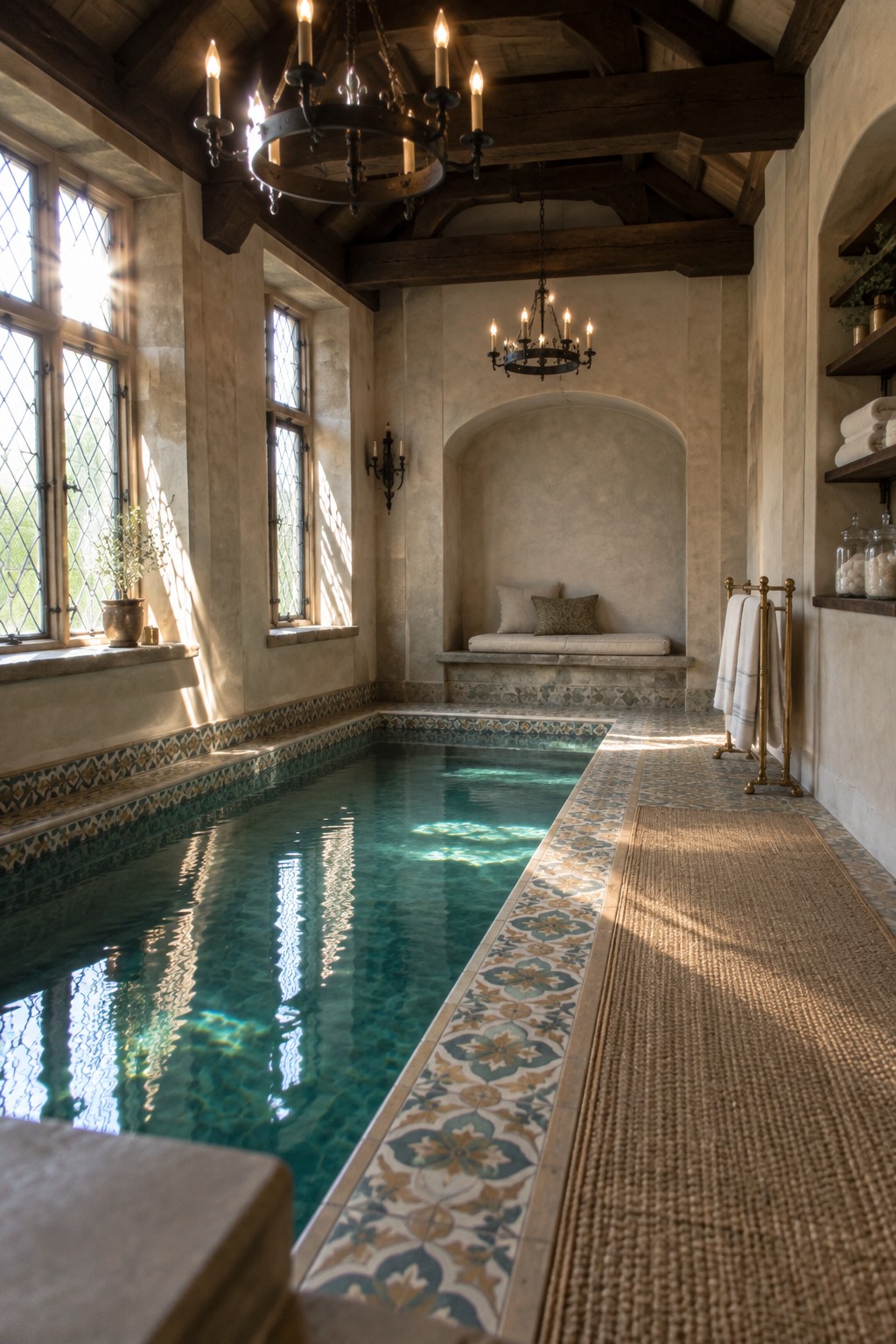
Patterned tile borders give an indoor pool that finished, traditional look without needing a lot of extra decoration. The tiles create a clear edge that makes the water stand out while adding color and detail along the length of the room. This approach works especially well in spaces with plaster walls and wood ceilings, where the pattern keeps things from feeling too plain or stark.
It suits homes that already lean toward classic or Mediterranean styles. Keep the tile design to a border rather than covering the whole floor, and match the colors to other elements like the bench cushions or wall sconces. Avoid overly busy patterns if the room already has strong features like heavy beams or multiple chandeliers.
Potted Trees in Traditional Pool Rooms
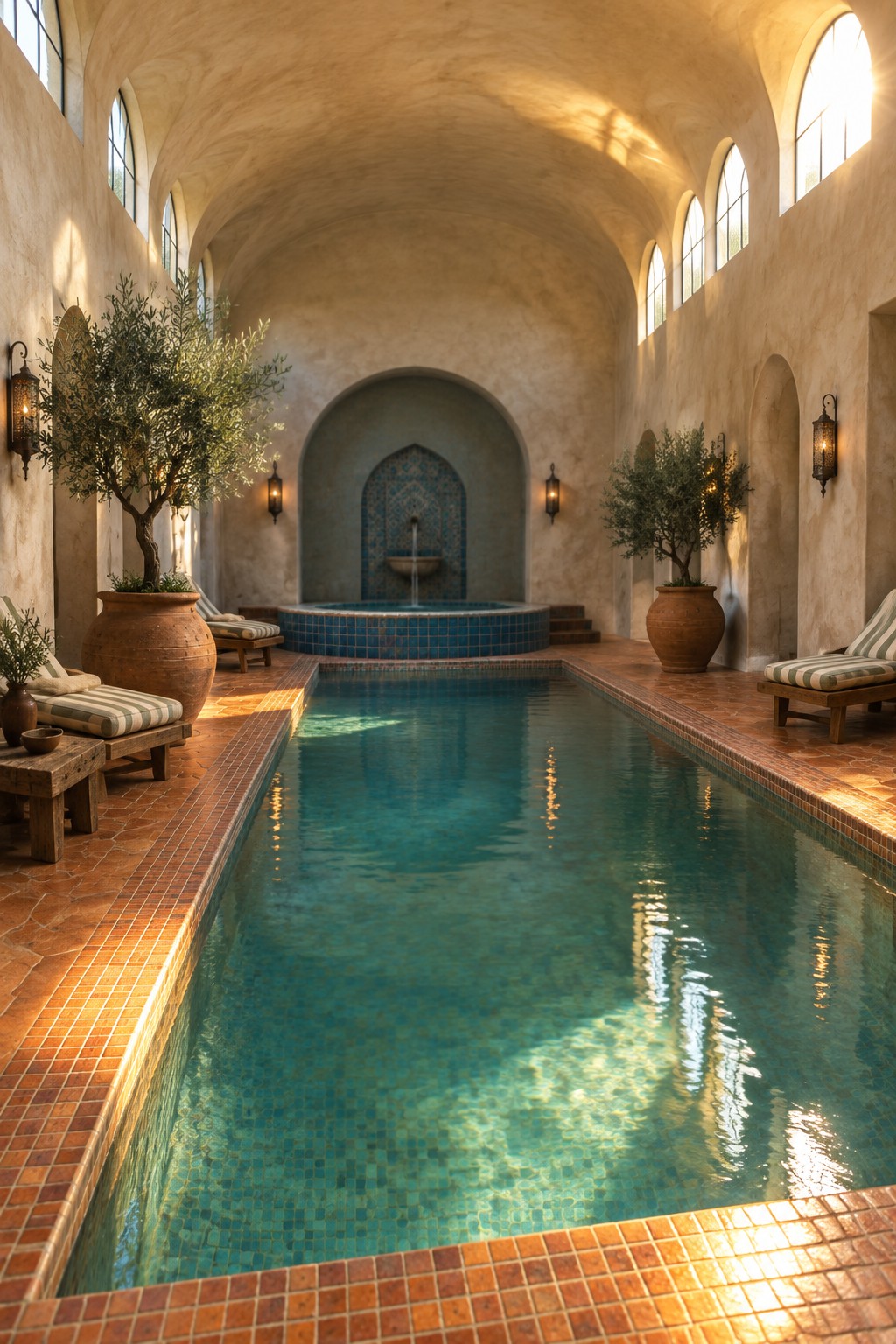
Large potted trees work well in classic indoor pool rooms because they add life and a bit of softness to spaces that can otherwise feel hard and formal. The terracotta pots and olive trees here sit right along the pool edge and help the whole room feel more grounded without taking away from the arches and tile details.
This approach suits homes with Mediterranean or traditional architecture where you have room to place a few big pots without crowding the walkway. Keep the number of trees limited so the focus stays on the water and the built-in features rather than turning the space into a greenhouse.
Library Shelving In Traditional Pool Rooms
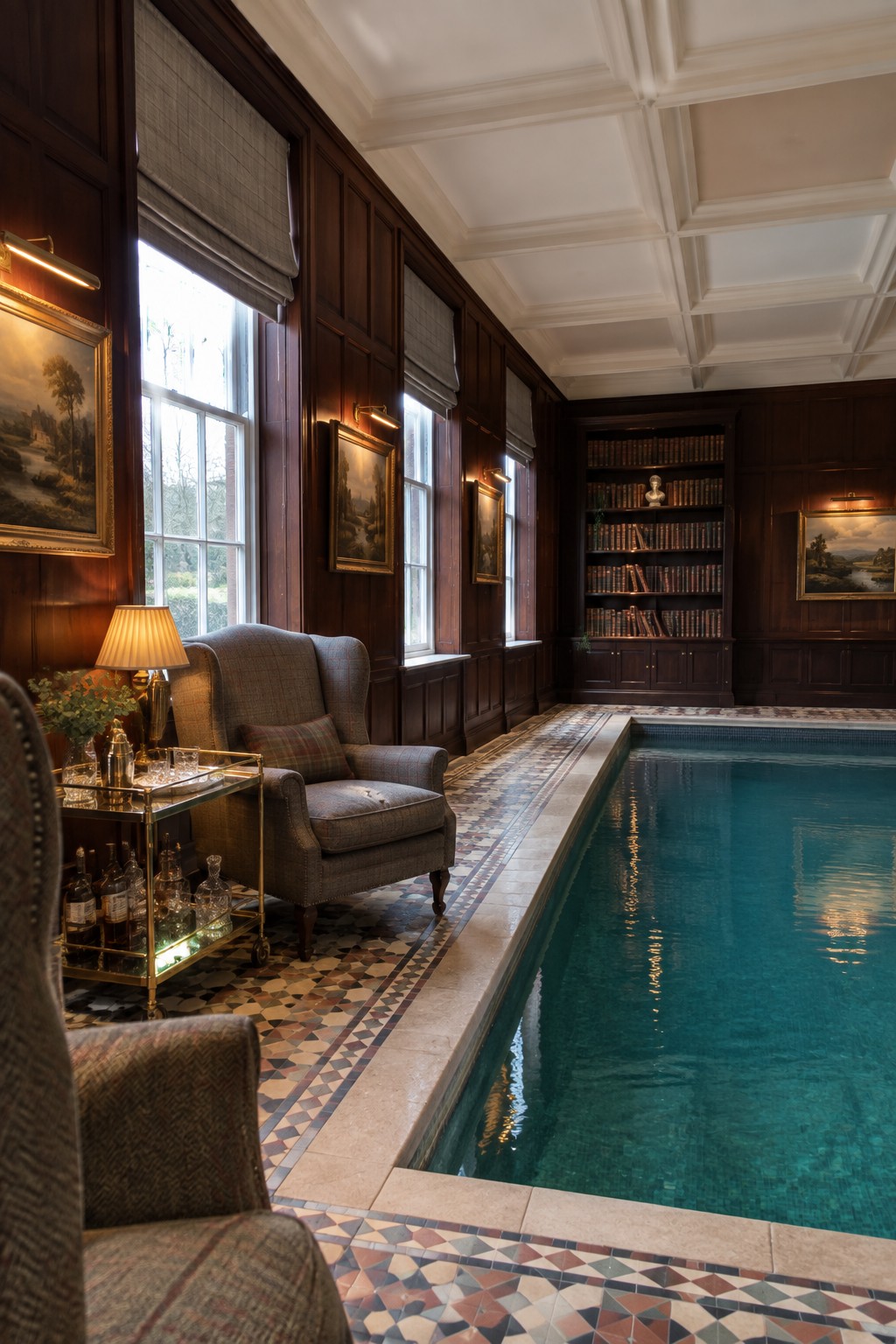
One idea that holds up well is wrapping an indoor pool with built-in bookshelves and full wood paneling so the space reads more like a library than a typical pool room. The dark paneling and rows of books give the water a settled, indoor feeling that fits older homes or new traditional builds.
This works best when the shelves run the full length of one wall and the furniture stays low and simple. It keeps the room from feeling like a big empty hall while still leaving plenty of open floor around the pool edge. Watch the scale though. Too many small pieces can make the wood and books lose their impact.
Built-In Seating Fits Naturally in Traditional Pool Rooms

One way to keep an indoor pool room from feeling like a separate addition is to run built-in seating along the windows. The bench matches the wall paneling and gives the space the same settled look you see in other rooms of an older home.
This approach works well in houses that already have traditional trim and millwork. It keeps the deck area clear, gives people a place to sit without adding freestanding furniture, and holds up better to the humidity than most pieces brought in from elsewhere.
Stone Fireplaces In Indoor Pool Rooms
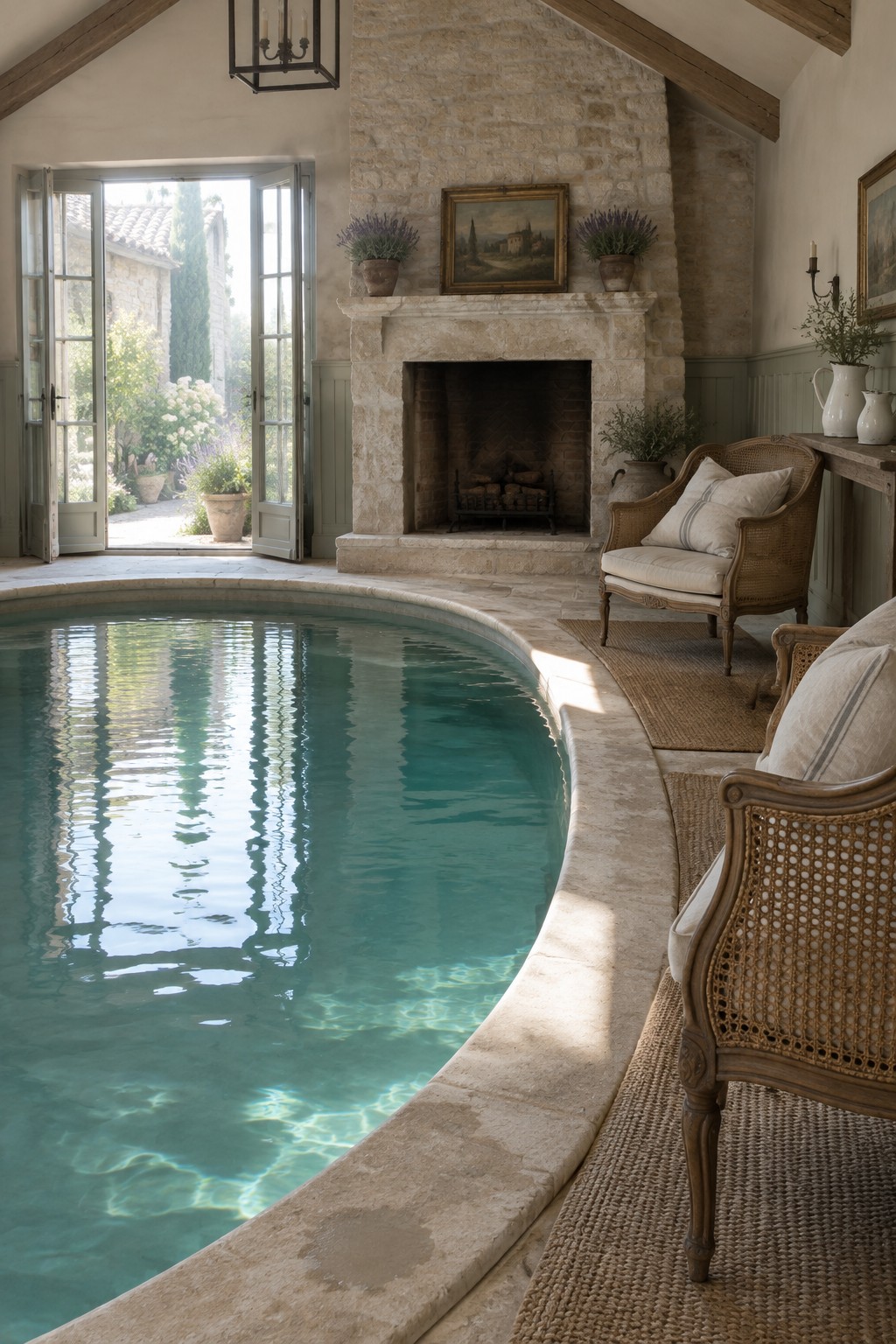
A big stone fireplace can make an indoor pool feel less like a modern add-on and more like a natural part of a traditional home. The rough texture and solid mass of the stone give the room weight and keep the water from dominating the space.
This approach works best in homes that already use stone or similar materials outside, since the fireplace helps connect the pool room to the rest of the house. Keep the rest of the finishes simple so the stone stays the main feature.
Stone Arches and Masonry Details in Traditional Pool Rooms
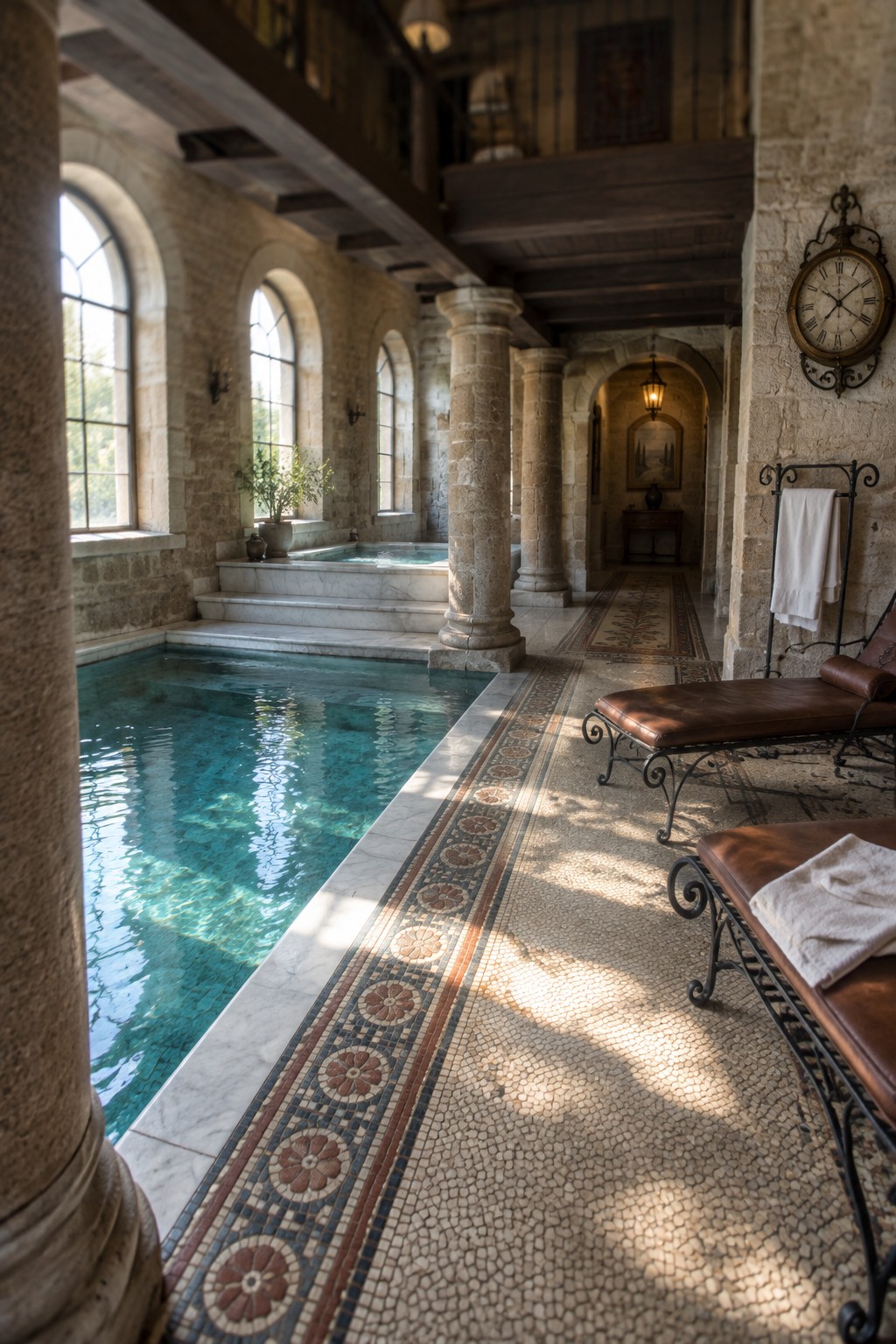
Stone columns and arches give an indoor pool a clear sense of structure. They turn the space into something that feels built to last rather than added on later. The repeated arches also help break up the long wall of water so the room does not feel like one big open tank.
This works best in homes that already have stone or masonry details elsewhere. Keep the rest of the finishes simple, such as plain tile or wood, so the columns and arches remain the main feature. Avoid crowding the edges with too much furniture or it starts to lose the quiet, ordered look.
Checkerboard Marble Floors
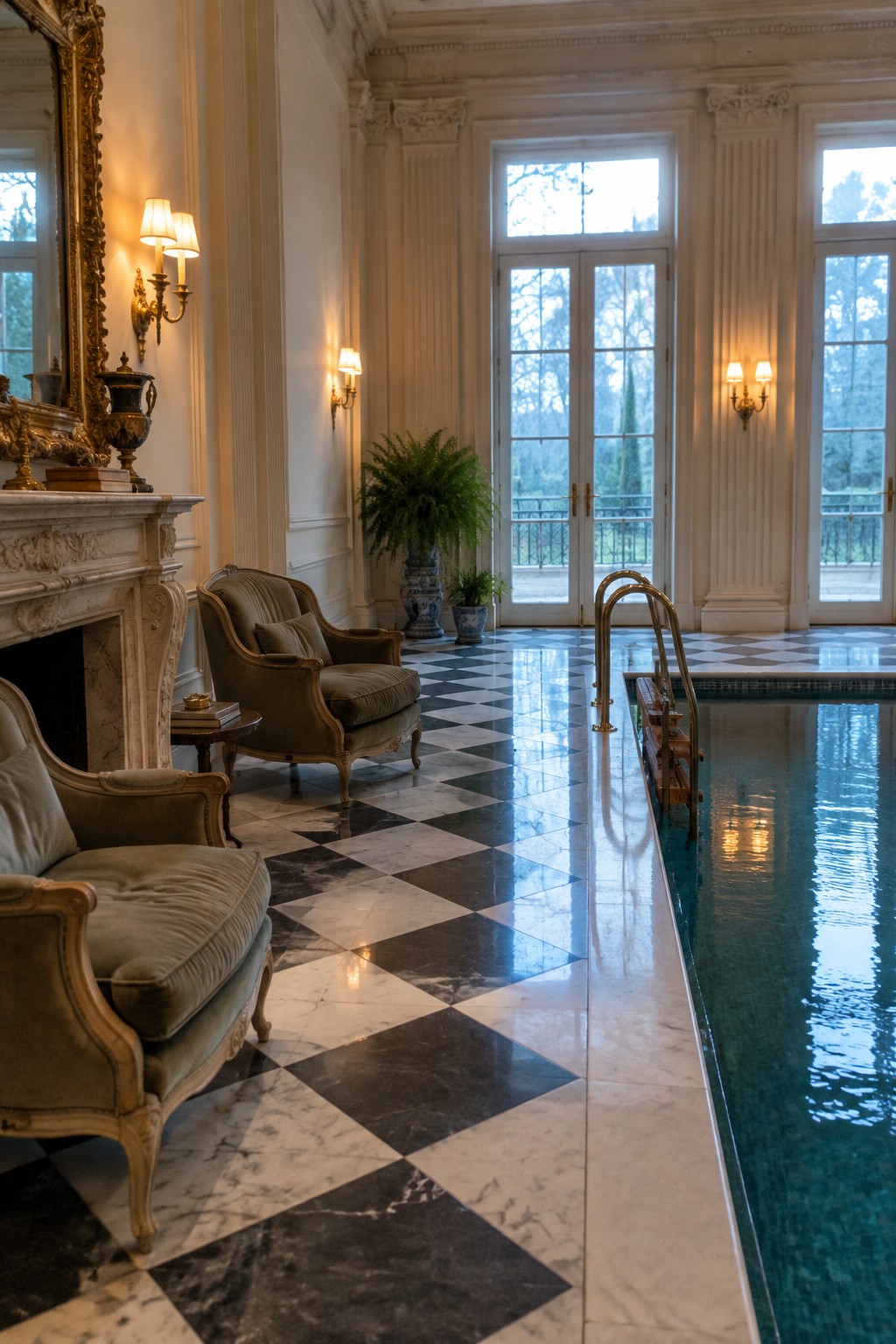
A checkerboard marble floor gives the room a strong traditional base that holds up next to both the pool and the upholstered seating. The bold pattern keeps the space from feeling too formal while still looking classic.
This floor works best in larger rooms where you already have other traditional details like a fireplace or tall doors. Use it when you want the pool to feel like part of the main living area instead of a separate feature.
Skylights With Exposed Wood Ceilings
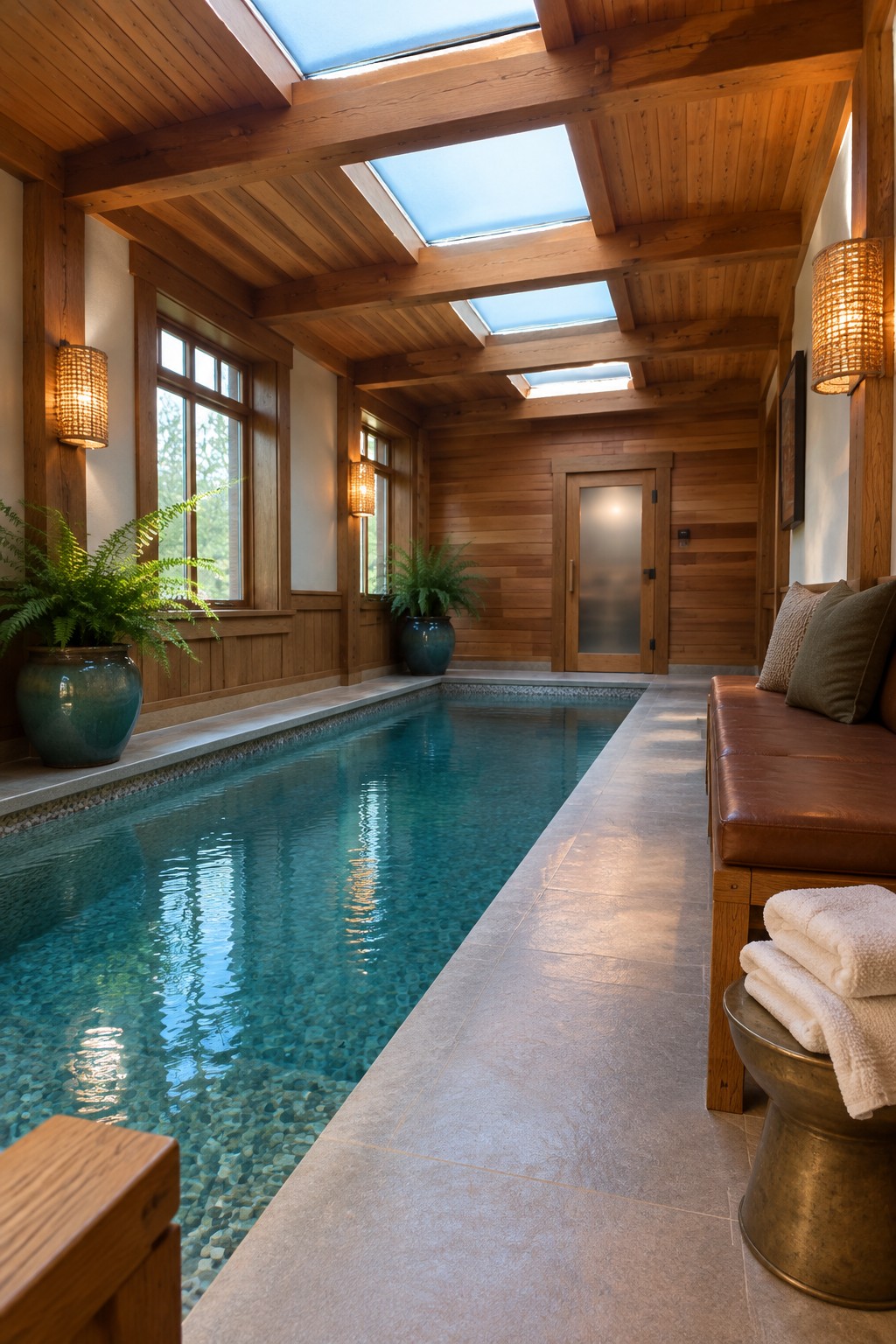
Many indoor pool rooms feel closed in because of the need for privacy and climate control. Adding skylights to a ceiling with exposed timber beams changes that without losing the traditional look. The wood keeps the space grounded and classic while the glass overhead brings in steady daylight and a bit of sky.
This approach works best in homes that already lean traditional or have room for structural beams. It suits larger spaces where the pool runs long and narrow. Just make sure the skylights are properly sealed and shaded in summer, since too much direct sun can affect water temperature and glare on the surface.
Arched Doorways In Traditional Pool Rooms
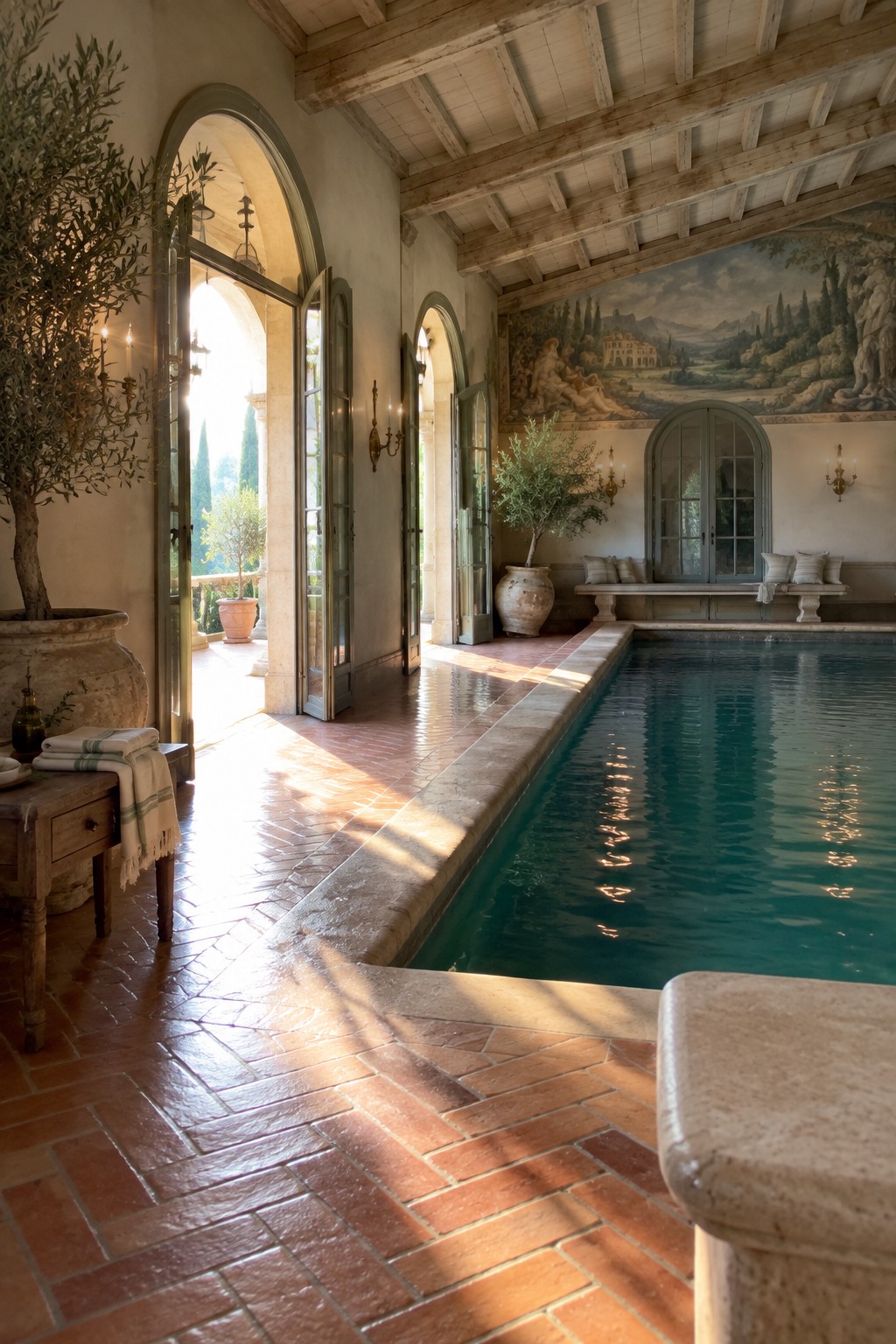
Arched doorways give an indoor pool room a quiet sense of architecture that feels settled rather than added on. They break up long walls, let light move through the space, and create a natural link between the water and whatever sits just outside. In this room the repeated arches keep the scale feeling balanced even with a large pool taking up most of the floor.
This detail works best in homes that already lean traditional or that want to add weight without turning the room into a formal ballroom. Use the same arch shape on both exterior and interior openings so the eye reads the whole space as one. Make sure the doors seal tightly, though, because pool humidity will find every gap.
Window Benches With Concealed Storage for Pool Essentials
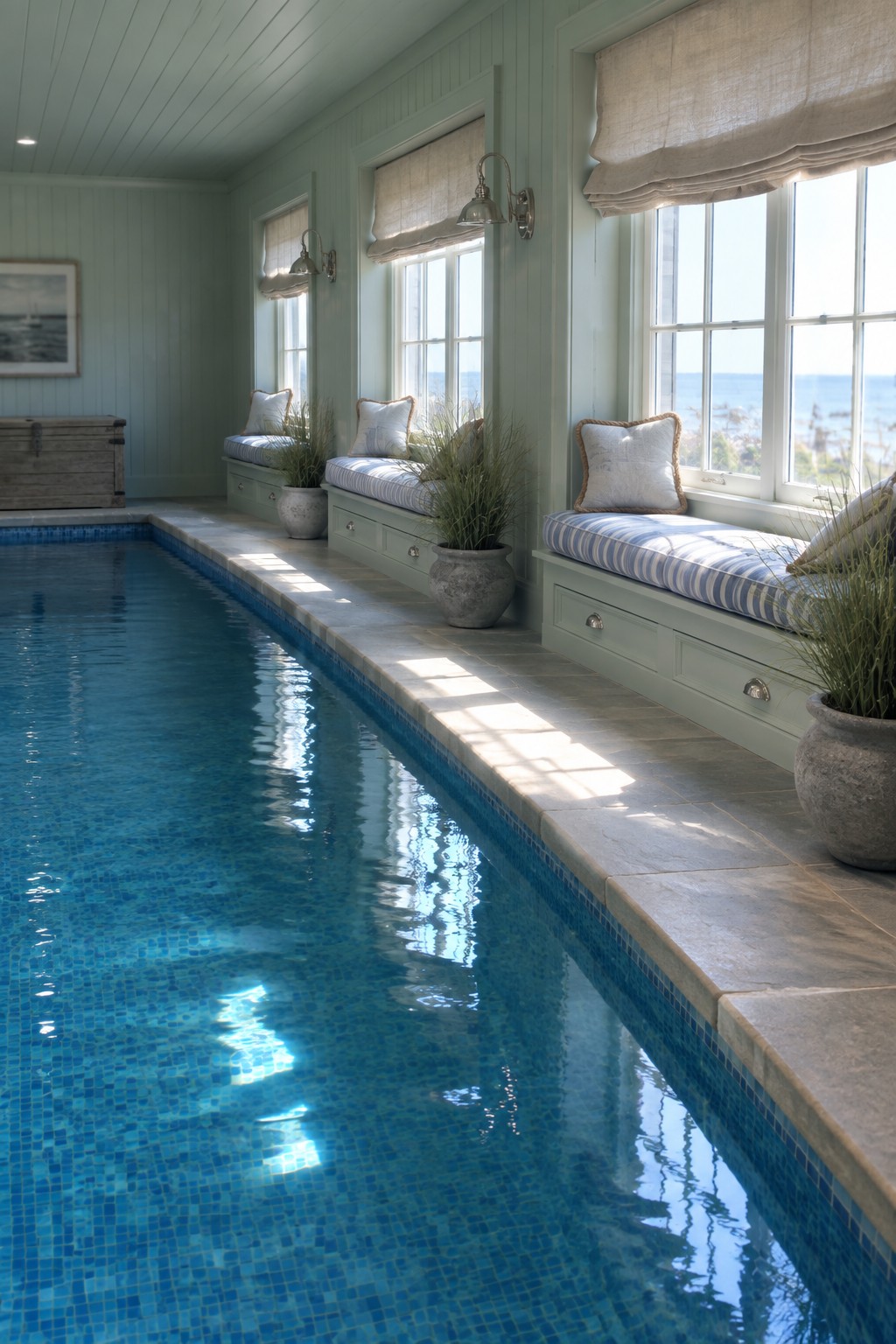
Built-in seating along the windows turns an indoor pool room into a more usable space. The benches give people a place to sit and watch the water or rest between swims, while the drawers underneath keep towels, toys, and pool supplies out of sight.
This setup works best in traditional homes that already have deep window sills or a long wall facing the pool. It adds a custom architectural detail without crowding the floor, and it helps the room feel finished rather than just functional.
Glass Roofs For Light-Filled Indoor Pools
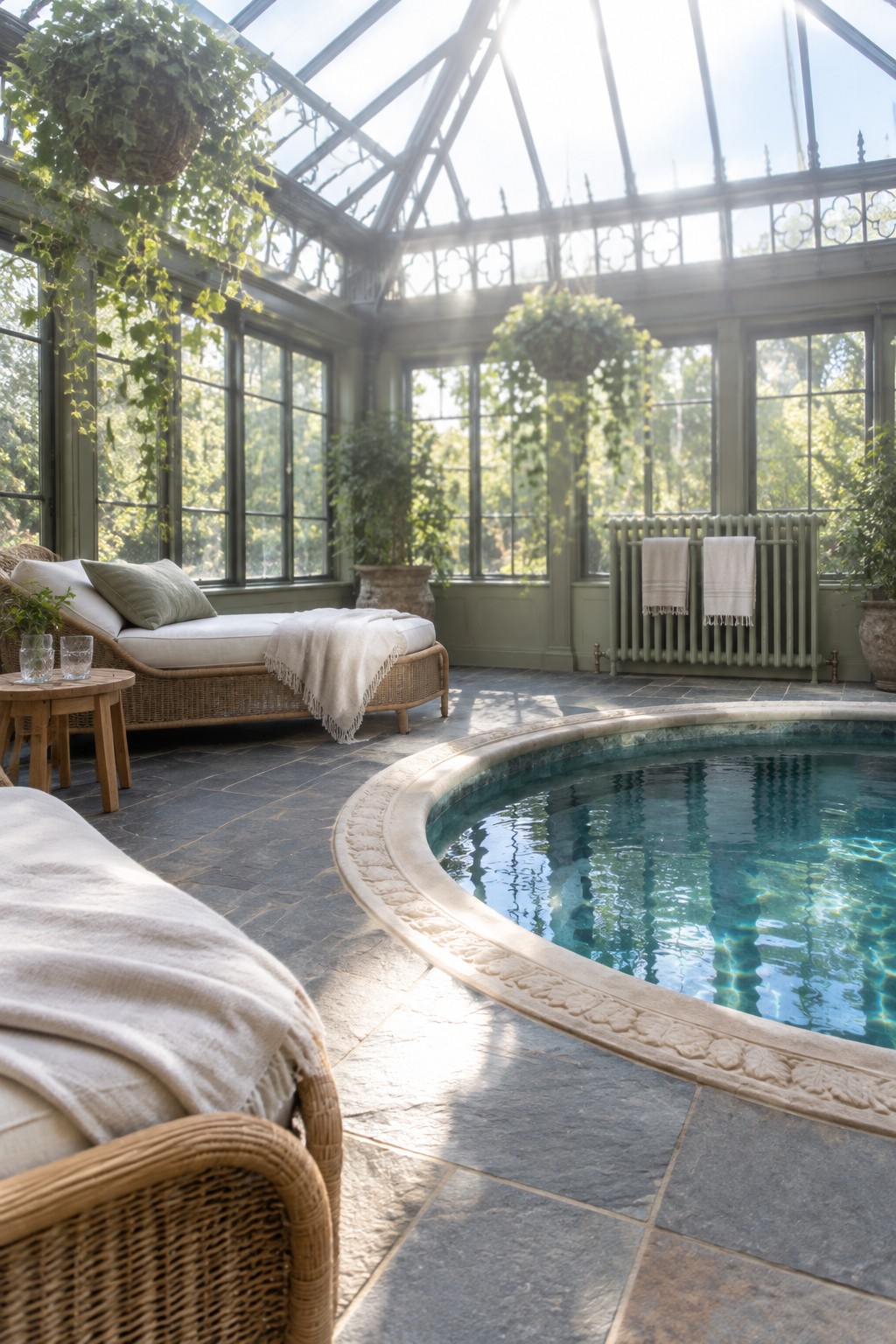
A glass roof can make a traditional indoor pool room feel much more open and pleasant. Sunlight reaches the water all day, plants stay healthy, and the whole space avoids that closed-in feeling many pool rooms get.
This approach works well in homes that can add a conservatory-style structure. Keep the metal framework simple and classic so it fits older architecture, and use stone or tile around the pool edge to balance the brightness.
Classical Details In Traditional Pool Rooms
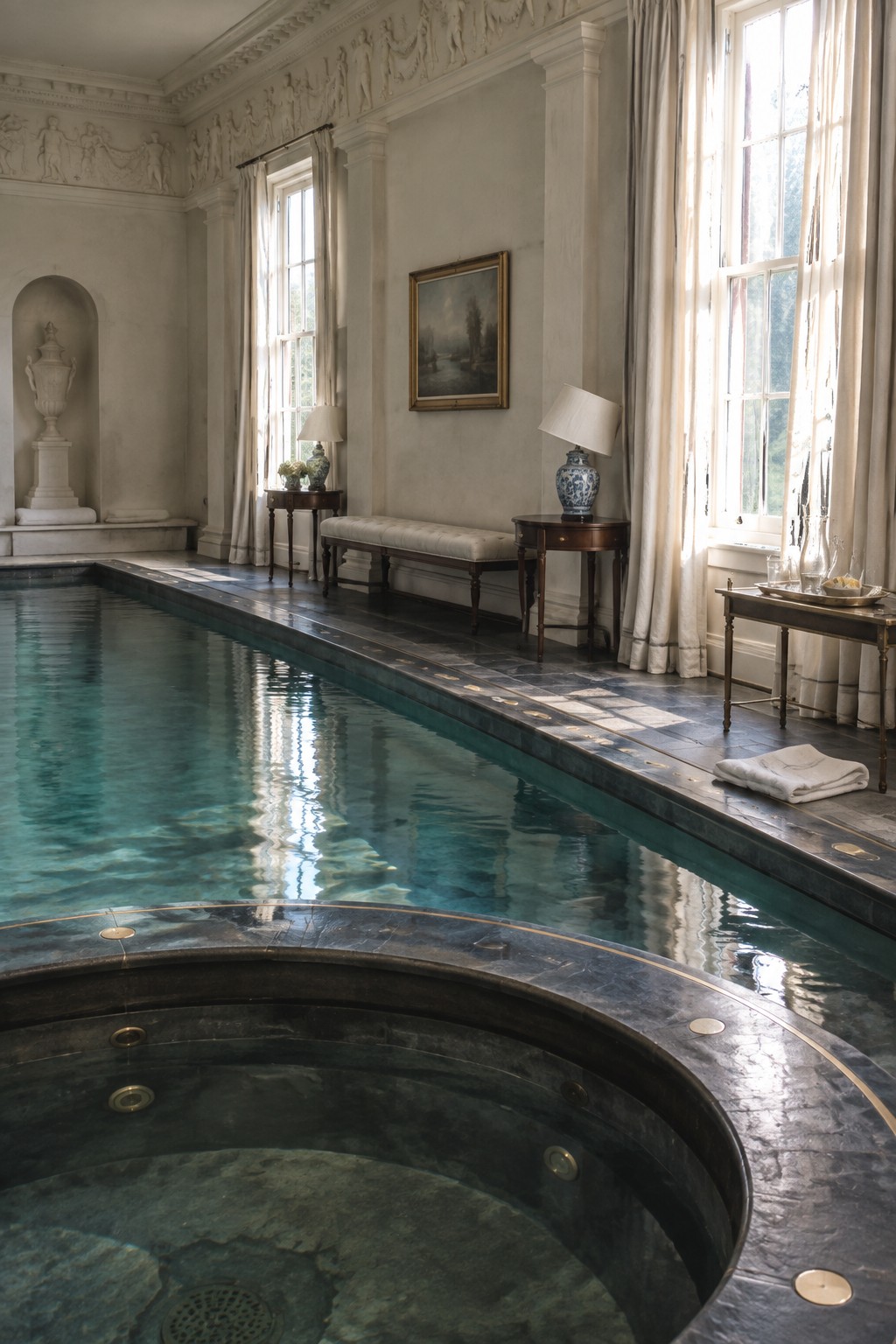
Many older homes use classical architectural details to give an indoor pool a more permanent and grounded feel. A running frieze along the upper walls and a recessed niche with an urn can turn a simple pool into something that feels like part of the original house rather than a later addition.
This works best in larger spaces where the details have room to read from a distance. It suits homes already built in a traditional style and pairs well with stone or plaster surfaces that can carry the same level of ornament without looking busy.
Brick Fireplace Surrounds and Mantels for Indoor Pools
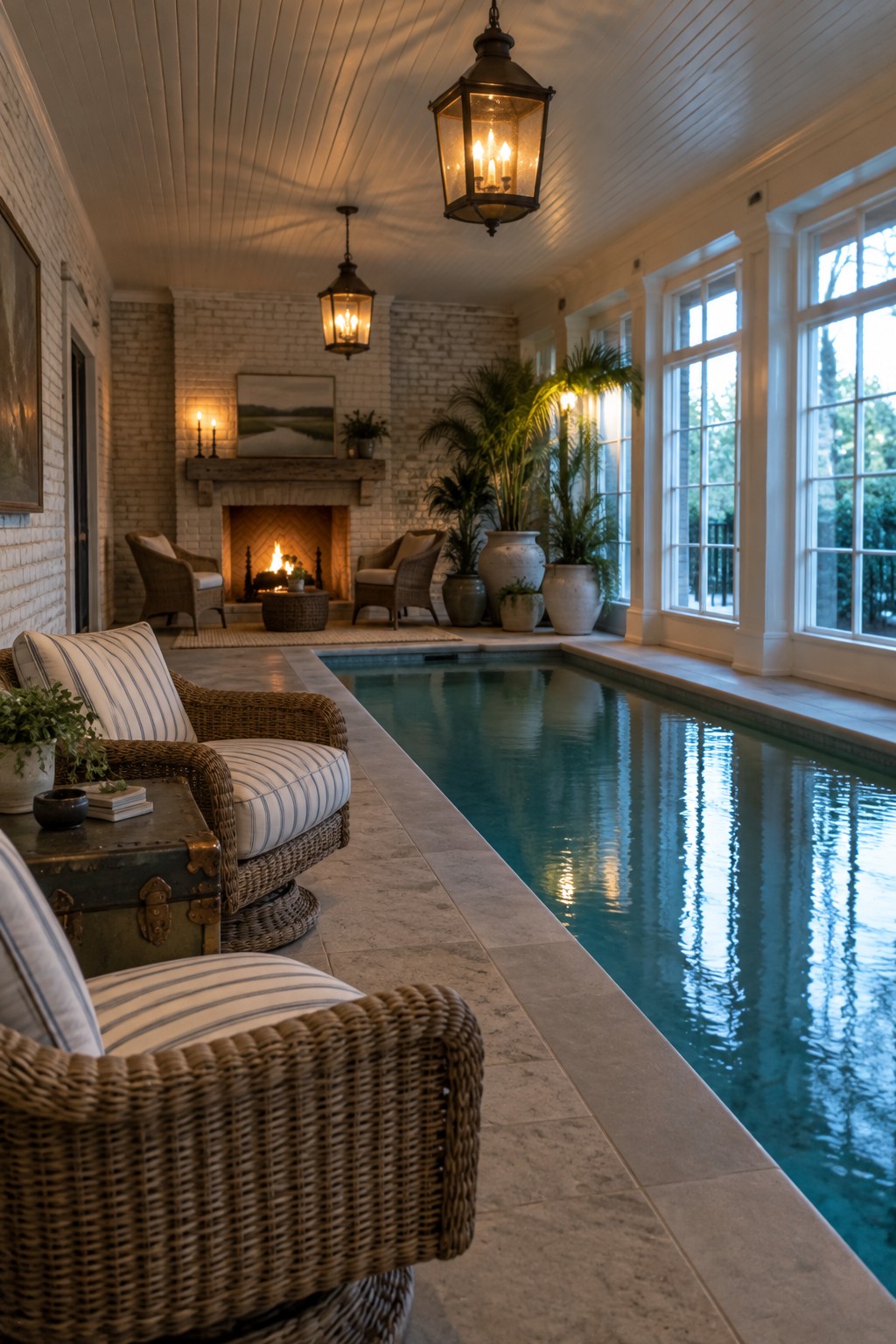
A fireplace gives an indoor pool room the kind of classic detail that keeps the space from feeling too bare or purely functional. The brick surround and simple mantel create a focal point that works with the water rather than competing with it.
This approach suits homes that already lean on traditional materials like brick and wood. Place seating nearby but keep it low and simple so the fire remains the main feature without crowding the pool edge.
Stained Glass Windows in Traditional Pool Rooms
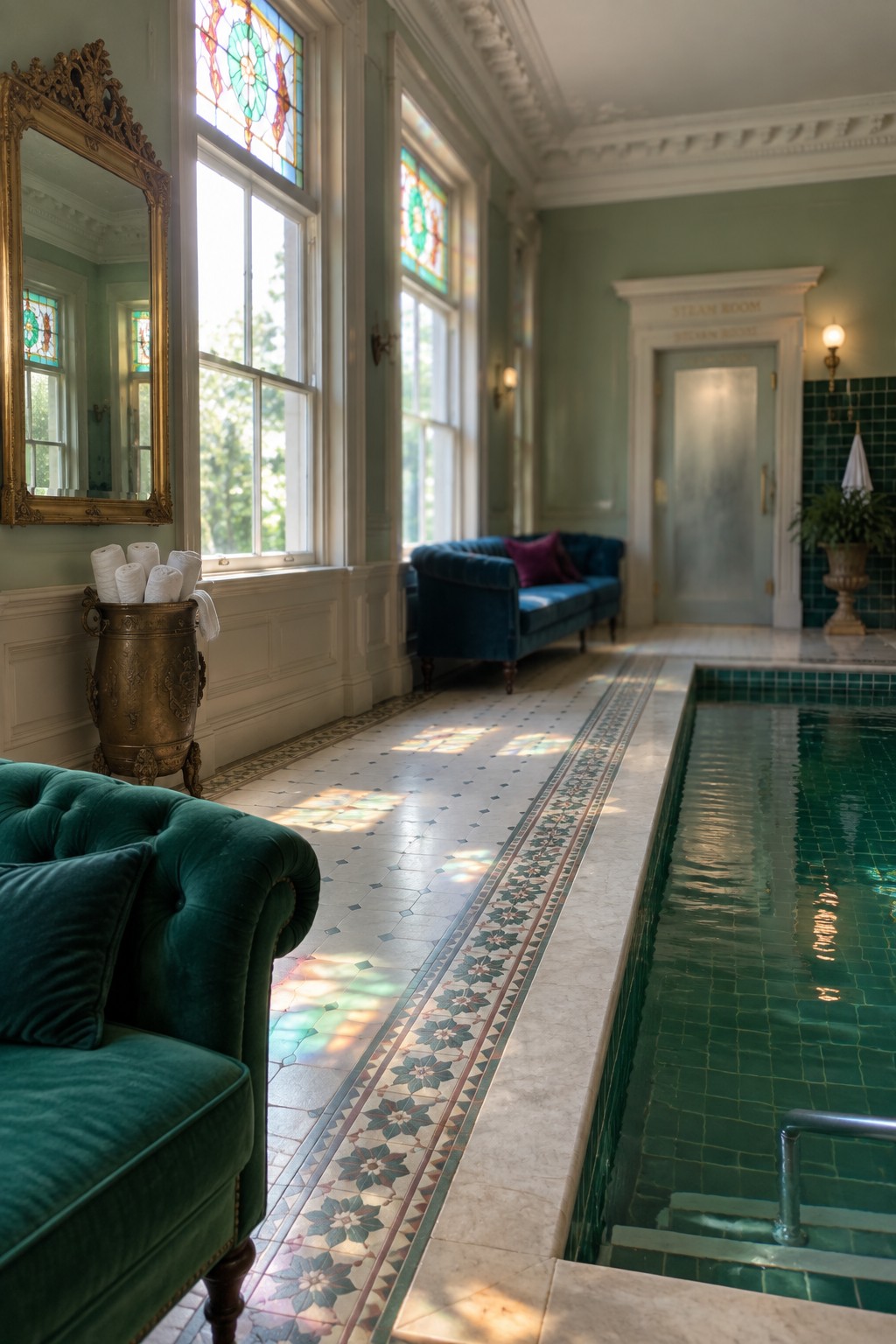
Stained glass windows bring a quiet sense of history to an indoor pool room. The colored panes catch the light and cast soft patterns across the water and floor, which helps the pool feel like it belongs in an older home rather than something added later.
This detail works best when the rest of the room stays fairly simple. Stick with painted walls, classic trim, and a few pieces of traditional furniture so the windows stand out without the space feeling busy.
Solid Stone Supports for Traditional Indoor Pool Architecture
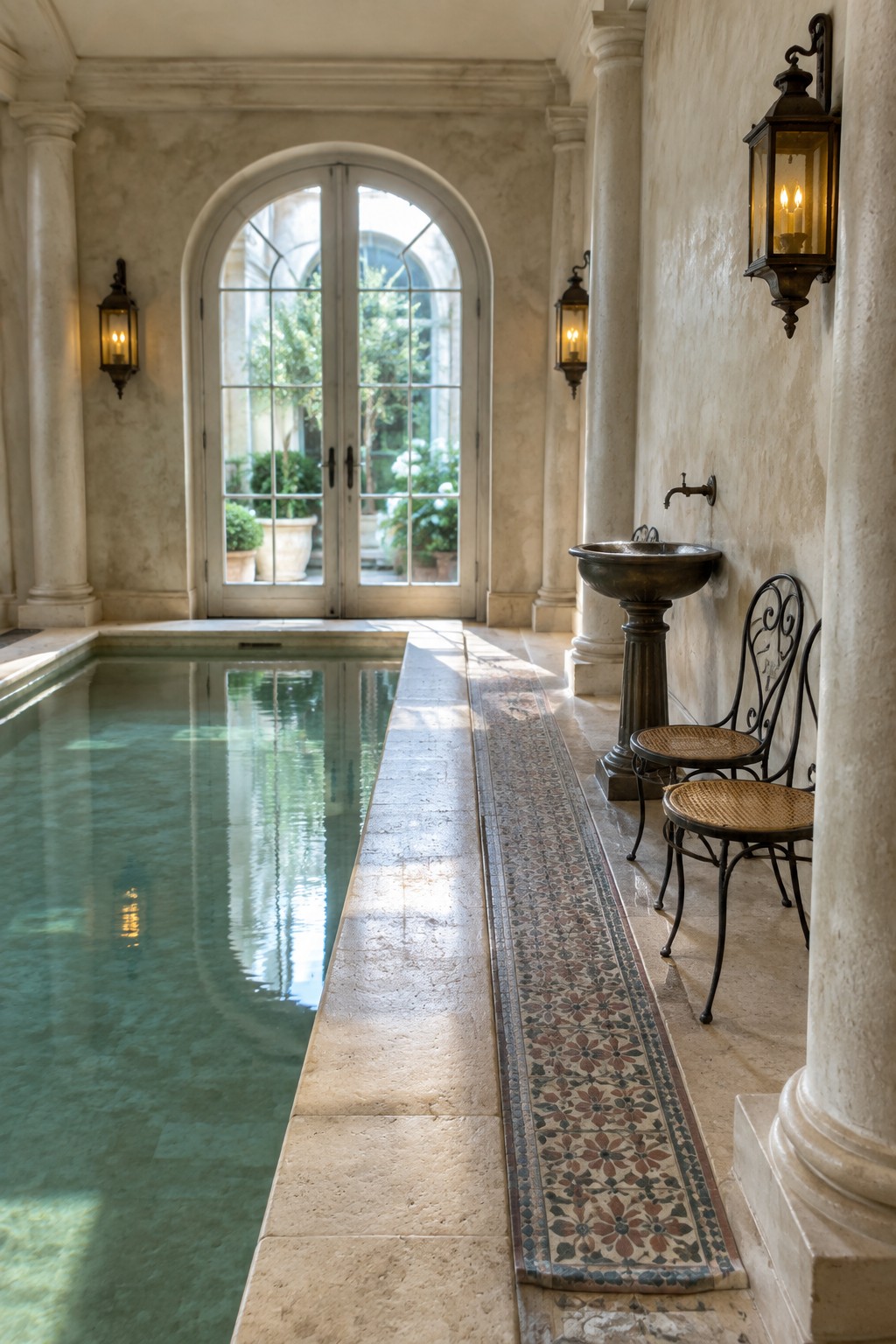
Stone columns help an indoor pool room feel grounded and connected to the rest of a traditional home. They break up the long lines of the pool and give the space a sense of structure without closing it in.
This approach works best in homes that already use natural stone or plaster finishes. Keep the columns simple and let them support arches or beams so the room stays open and light.
Incorporate a Bar Into the Pool Room
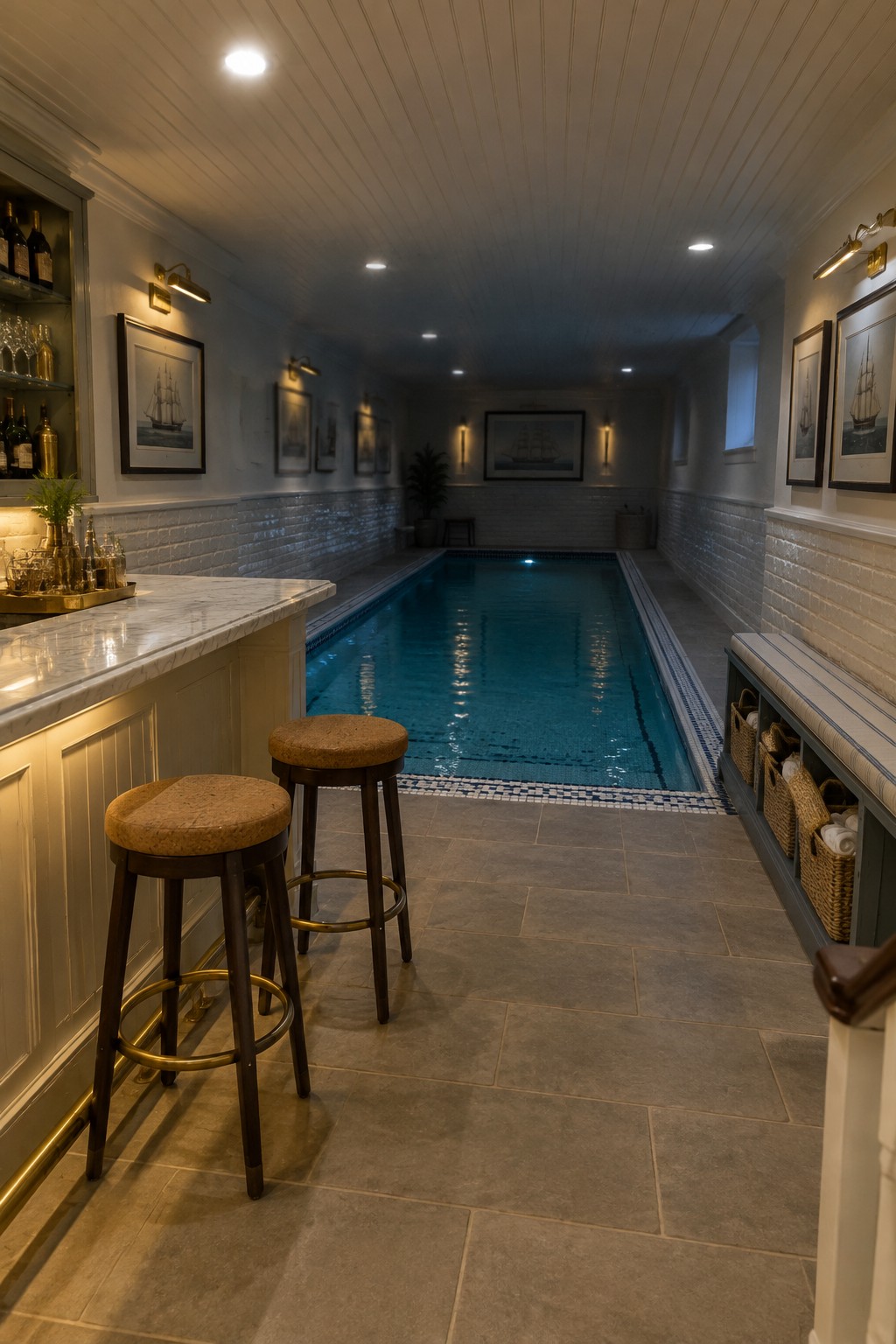
Adding a bar along one side of an indoor pool room gives the space a clear purpose beyond just swimming. The marble counter and a couple of stools turn the area into somewhere people can gather without needing to go upstairs or into another room. It keeps the traditional feel while making the pool room more usable on a regular basis.
This works well in homes that entertain often or have family members who like to linger near the water. It suits longer, narrower rooms where the pool stays the main feature and the bar sits quietly along the edge. Keep the bar height and seating simple so the layout stays practical rather than crowded.
Symmetrical Columns and Sculptural Niches in Pool Rooms
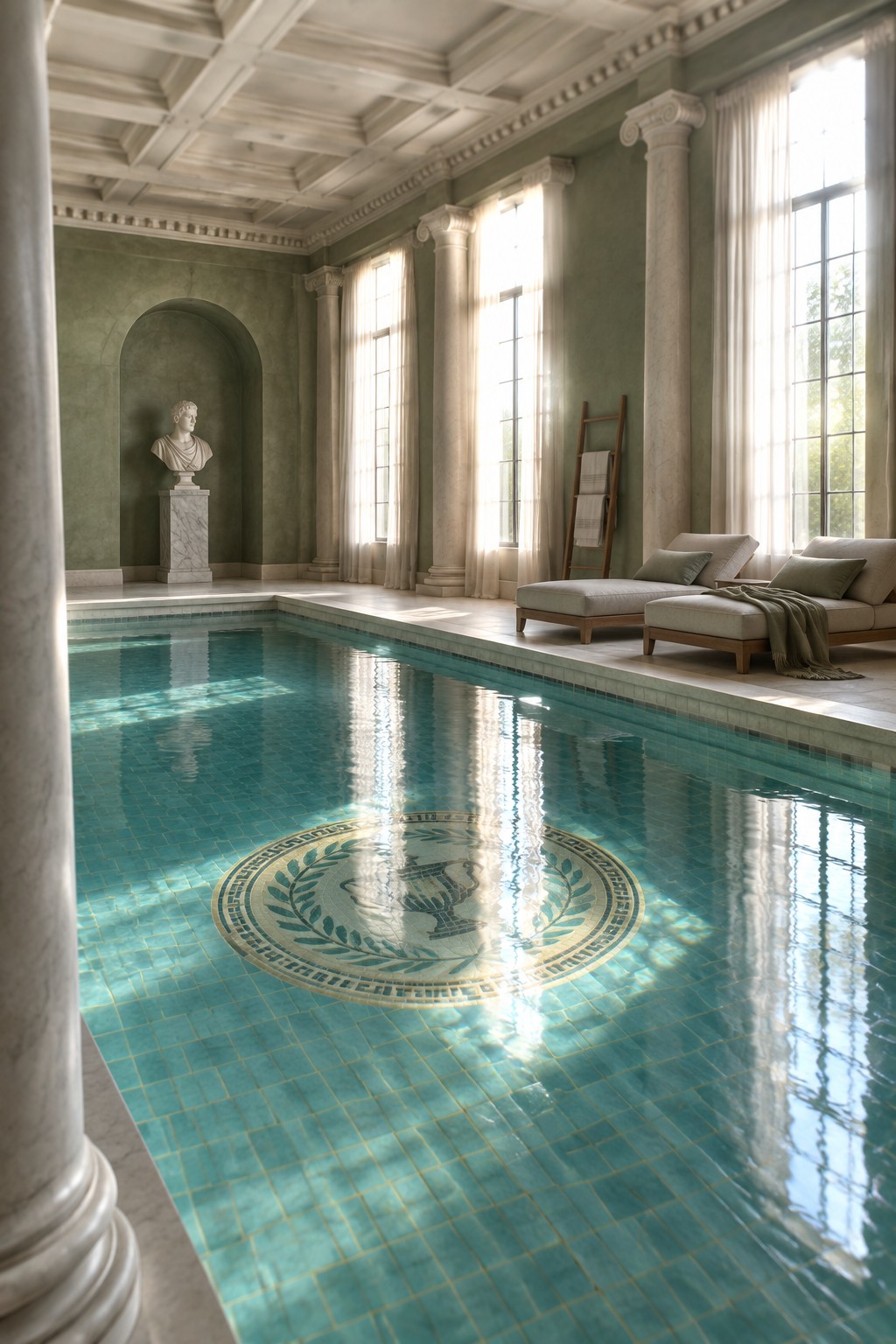
Many indoor pools feel more settled when classical columns are brought in to define the edges and give the space a sense of order. The columns break up the long lines of the pool and help the room read as part of the main house rather than a separate addition.
This approach works best in homes with higher ceilings and traditional or transitional architecture. A few well placed columns, along with a simple niche for a piece of sculpture, can anchor the room without adding much clutter.
Frequently Asked Questions
Q: My ceilings are lower than the ones in the photos. How can I still get that classic pool room feel without it feeling cramped? A: Use tall narrow windows and vertical paneling to pull the eye upward. Keep the trim simple and painted the same color as the walls so it does not add visual weight. Light colored stone on the floor also helps the space feel taller.
Q: What flooring actually lasts around an indoor pool without looking too modern? A: Sealed limestone or honed marble holds up to water and still reads traditional. Lay it in a straight grid pattern rather than anything fancy. A few feet of the same stone up the walls at the base protects the woodwork from splash.
Q: How do I bring in enough light for evening swims while keeping the room enclosed and timeless? A: Add wall sconces with simple shades that match the architectural details already there. Place them high so the glow spreads across the ceiling. This gives usable light without needing overhead fixtures that break the classic lines.