Have you ever jumped into a pool and felt that sting in your eyes? Or maybe you’ve noticed the water looking cloudy? These issues often boil down to one key factor: pH levels. Knowing the ideal pH for your swimming pool can make a world of difference in keeping the water clean and comfortable.
Key Takeaways
- Ideal pH Range: The optimal pH level for swimming pools is between 7.4 and 7.6, ensuring effective chlorine performance and swimmer comfort.
- Impact of pH Balance: Proper pH levels prevent irritation to skin and eyes, maintain water clarity, and avoid equipment corrosion or scaling.
- Factors Influencing pH: Rain, bather load, chemical use, water temperature, and organic matter significantly impact a pool’s pH balance.
- Testing pH Levels: Regular testing using test strips, liquid kits, or digital meters is essential to monitor and maintain proper pH levels.
- Adjusting pH Levels: Use sodium carbonate to raise pH and muriatic acid or sodium bisulfate to lower pH, while retesting to ensure adjustments are effective.
- Consistent Maintenance: Frequent testing and adjustments help keep your pool water clean and comfortable, enhancing the overall swimming experience.
Understanding pH Levels in Swimming Pools
Maintaining the proper pH level in your swimming pool is essential for water quality and swimmer comfort. A balanced pH ensures a safe, enjoyable experience and helps prevent common issues.
Importance of pH Balance
Maintaining pH balance protects swimmers from irritation and keeps the water clear. The ideal pH range for swimming pools is between 7.4 and 7.6. Within this range, chlorine works effectively, germs are eliminated, and your skin feels good. When pH levels drop below this range, water can become acidic, leading to potential eye irritation and skin discomfort. Conversely, pH levels above this range can cause scaling, cloudy water, and ineffective sanitization.
Factors Affecting pH Levels
Several factors influence pH levels in your pool:
- Rain: Rainwater can lower pH by introducing acidic compounds.
- Bather Load: More swimmers contribute to higher levels of contaminants, affecting pH.
- Chemicals: Adding certain chemicals, like chlorine or algaecide, can shift pH levels.
- Temperature: High water temperatures can lead to pH increases; heated pools tend to have more evaporation, affecting balance.
- Organic Matter: Leaves, dirt, and other debris can interact with water chemistry and alter pH.
Consistent testing and regular adjustments to your pool’s chemistry help maintain a safe pH level for you and your family.
What Is the Ideal pH for a Swimming Pool?
Maintaining the right pH level in your swimming pool is essential for water clarity and swimmer comfort. The ideal pH range for pools sits between 7.4 and 7.6, where chlorine operates effectively and keeps your pool sparkling clean.
Recommended Products

AFFORDABLE 7-IN-1 POOL TESTING KIT: Our 100 pool test strips provides an affordable, all in one pool water testing kit for various chemicals including Free Chlorine, Alkalinity, pH levels and more!

LAB-TESTED FOR ACCURACY: Take the guesswork out of routine water checks with our lab-tested pool test strips. Compare the strip colors with the bottle chart to monitor water chemistry and help guide pool and spa maintenance.
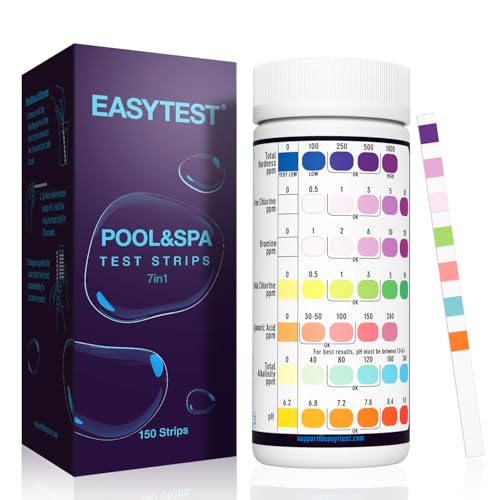
AFFORDABLE 150 STRIPS: This water chemical testing kit contains 150 test strips. Enough balanced for your swimming pool, hot tub, spa and other water testing. At least testing twice a week is recommended to keep your pool sparkling clean and safe.
Recommended pH Range
Aim for a pH level between 7.4 and 7.6. This range promotes optimal chlorine efficiency, ensuring that your pool remains free of harmful bacteria and viruses. Additionally, water in this range feels comfortable on the skin and does not cause eye irritation. Use test strips or a digital pH meter regularly to monitor levels. Adjustments can be made with pH increasers (sodium carbonate) or decreasers (sodium bisulfate) based on your test results.
Consequences of Improper pH Levels
Improper pH levels can lead to various issues. Acidic water (below 7.4) can corrode equipment and irritate skin and eyes. Alkaline water (above 7.6) can cause cloudy water and reduce chlorine effectiveness, allowing bacteria to thrive. Both scenarios increase maintenance costs and decrease overall swimming enjoyment. Being proactive in testing and adjusting pH levels helps prevent these complications.
Testing pH Levels in Your Pool
Testing pH levels in your pool is essential for maintaining water quality and swimmer comfort. Regular checks ensure that your pool stays clean and safe.
Recommended Products

Enjoy Crystal Clear Pool & Hot Tub & Spa Water: Are you concerned that the levels of certain chemicals(especially chlorine or bromine) in your pool, spa or hot tub water may be too high or too low? Which may cause skin irritation, skin problems, or safety issues for you or your family, especially children. If so, just choose our pool test strips. Let everyone enjoy crystal clear & healthy water is our original intention

QUICK AND EASY USE: Tests and adjusts the 6 key chemicals in your swimming pool whenever you need; Uses Google Cloud Vision technology for accurate results, fast.

Fresh, Accurate Pool Test Strips - AquaChek Yellow Chlorine 4-in-1 includes 50 precision test strips—perfect for a full season of reliable water testing for pools and spas that use chlorine. No expired extras, no bulky packs—just fresh, accurate results from AquaChek, the most trusted brand in pool and spa water testing.
Tools for Measuring pH
You can use several tools to measure pH levels effectively:
- Test Strips: Use color-coded strips that change shades based on pH. Dip one into the water and match the color with the provided chart.
- Liquid Test Kits: Mix a water sample with reagents in provided vials. Compare the resulting color to the chart for accurate readings.
- Digital pH Meters: These devices offer precise pH measurements. Calibrate them before use, and dip the probe into the water for an instant reading.
How to Test pH Properly
Testing pH properly involves a few simple steps:
- Gather Tools: Collect your chosen pH testing tool, a clean sample container, and a stirrer if needed.
- Take a Water Sample: Scoop up water about 12 inches below the surface to avoid surface contaminants.
- Follow Instructions: If using test strips or a liquid kit, follow the product instructions for accurate results. If using a digital meter, rinse the probe with pool water before submerging it in your sample.
- Compare Results: Match the resulting color or digital reading to the ideal pH range of 7.4 to 7.6.
- Record and Adjust: Document the pH reading to track changes over time. If levels fall outside the ideal range, consider using pH increasers or decreasers to adjust appropriately.
Regular testing makes maintaining optimal pH levels straightforward and helps you enjoy a better swimming experience.
Adjusting pH Levels
Maintaining proper pH levels in your swimming pool ensures cleaner water and a more enjoyable swimming experience. When pH strays from the ideal range of 7.4 to 7.6, adjustments may be necessary.
Recommended Products


In The Swim pH increaser raises the total alkalinity and pH levels in your pool.

Increase pH & Protect Your Pool - AquaDoc pH Plus raises pH levels in swimming pools, helping prevent corrosion of metal parts and pool surfaces. Fast-dissolving sodium carbonate formula keeps water balanced, clear, and comfortable for swimming.
Raising pH Levels
If your pool’s pH dips below 7.4, you can raise it with a few simple steps:
- Use Sodium Carbonate: Add sodium carbonate (also known as soda ash) to increase pH levels quickly. Follow the manufacturer’s instructions for the correct dosage based on your pool size.
- Test Frequently: After adding chemicals, retest the water after a few hours. You’ll want to ensure it’s within the ideal range.
- Consider a Bicarbonate Boost: If alkalinity levels are low, using sodium bicarbonate will help raise both pH and alkalinity together.
Lowering pH Levels
For pools with a pH above 7.6, lowering it is essential for water quality:
- Add Muriatic Acid: This is a common way to lower pH. Gradually pour the acid into the pool while the pump runs to help distribute it evenly.
- Use Sodium Bisulfate: Another effective solution, sodium bisulfate, can also lower pH without strong fumes. Follow dosage guidelines based on the pool volume.
- Test After Treatment: Always retest your water after treatment to make sure pH adjustments achieved the desired balance.
- Adjust Frequency: Various factors like heavy rains or increased bather loads can impact pH. Test your water weekly to stay ahead of any fluctuations.
Keeping pH levels in check is essential for safety and comfort, and these adjustments can help maintain the perfect balance for your swimming enjoyment.
Conclusion
Keeping your pool’s pH within the ideal range of 7.4 to 7.6 is key to enjoying a safe and pleasant swim. Regular testing and adjustments will help you maintain that balance and ensure your water stays clear and inviting.
By staying proactive with your pH management you’ll not only enhance swimmer comfort but also protect your pool equipment and surfaces. So grab those test strips and make it a routine. Your pool will thank you for it, and you’ll enjoy every splash even more. Happy swimming!
Frequently Asked Questions
What is the ideal pH range for swimming pools?
The ideal pH range for swimming pools is between 7.4 and 7.6. Maintaining this pH level ensures good water quality and comfort for swimmers.
How can pH levels in a pool be affected?
Several factors can influence pH levels in a pool, including rain, bather load, and chemicals added to the water. Regular monitoring is essential to address these fluctuations.
How often should I test my pool’s pH levels?
It’s recommended to test your pool’s pH levels at least once a week. More frequent testing may be needed during heavy usage or after rain.
What tools can I use to test pH levels?
You can use test strips, liquid test kits, or digital pH meters to test your pool’s pH levels. Each tool provides accurate readings for proper maintenance.
How can I increase my pool’s pH level?
To raise your pool’s pH level, use sodium carbonate. Follow the dosage instructions based on your pool’s volume to effectively adjust the pH.
How can I lower my pool’s pH level?
To lower your pool’s pH level, you can use muriatic acid or sodium bisulfate. It’s crucial to follow the recommended dosage for safe and effective adjustment.