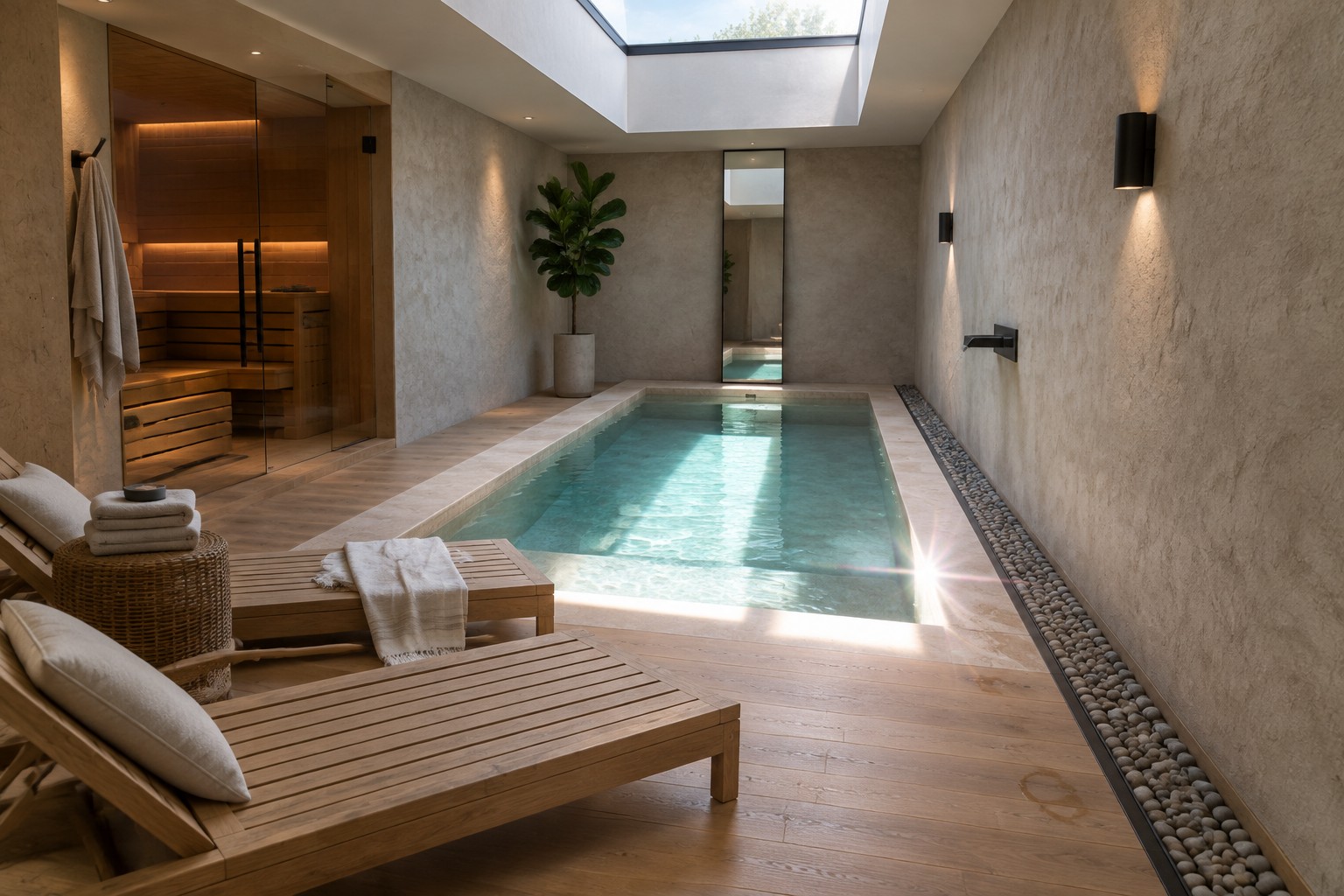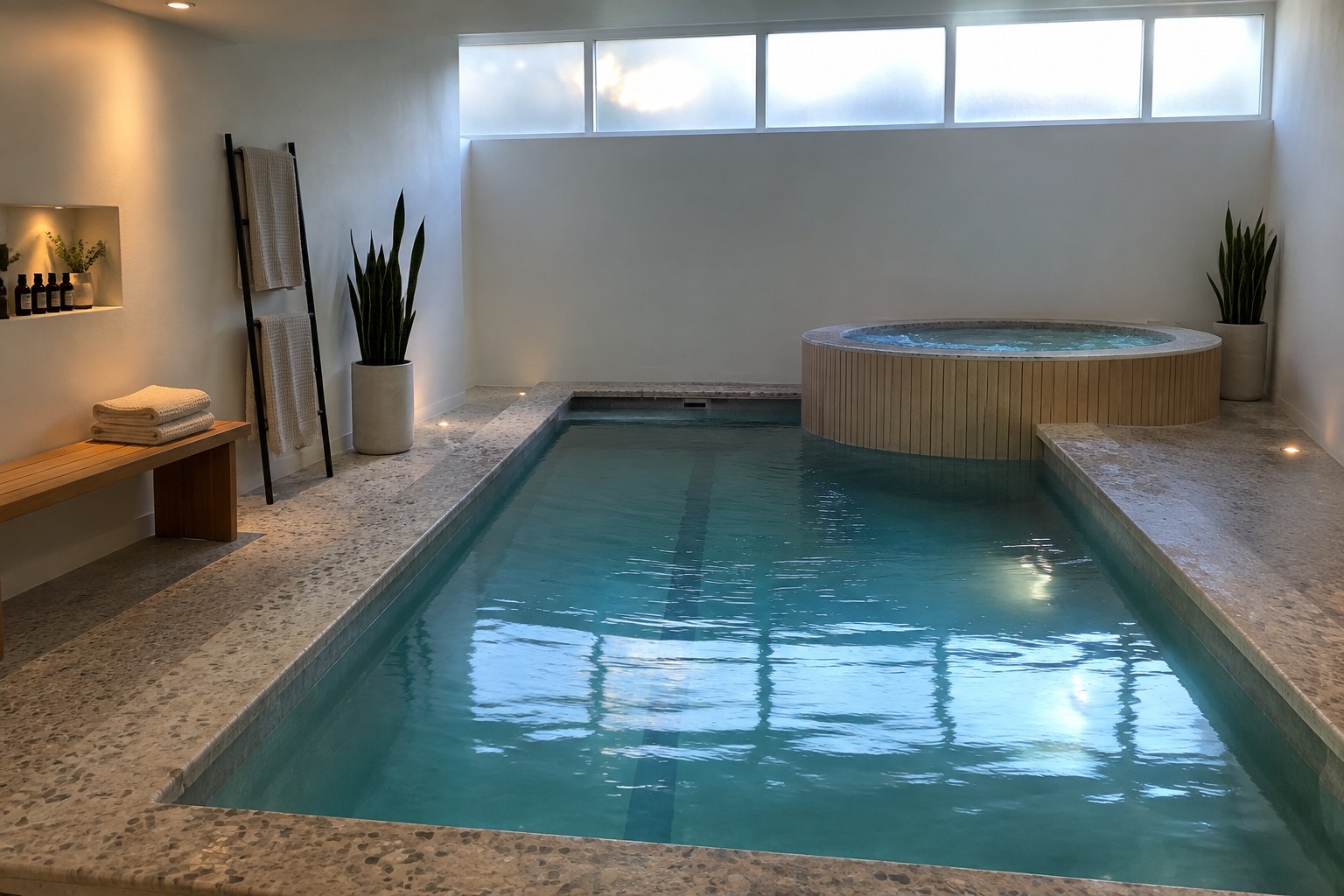
I have noticed that indoor pool rooms only feel right when the ventilation system is planned as part of the layout rather than added later.
In practice this means thinking through air flow and dehumidification before choosing finishes or furniture.
Some of the ideas worth testing involve how the pool edge meets the seating areas so the transition stays practical.
Materials matter.
The ones that hold up best tend to use surfaces that can be wiped down easily while still looking like part of the home rather than a utility space.
Build a Raised Deck Along the Pool Edge
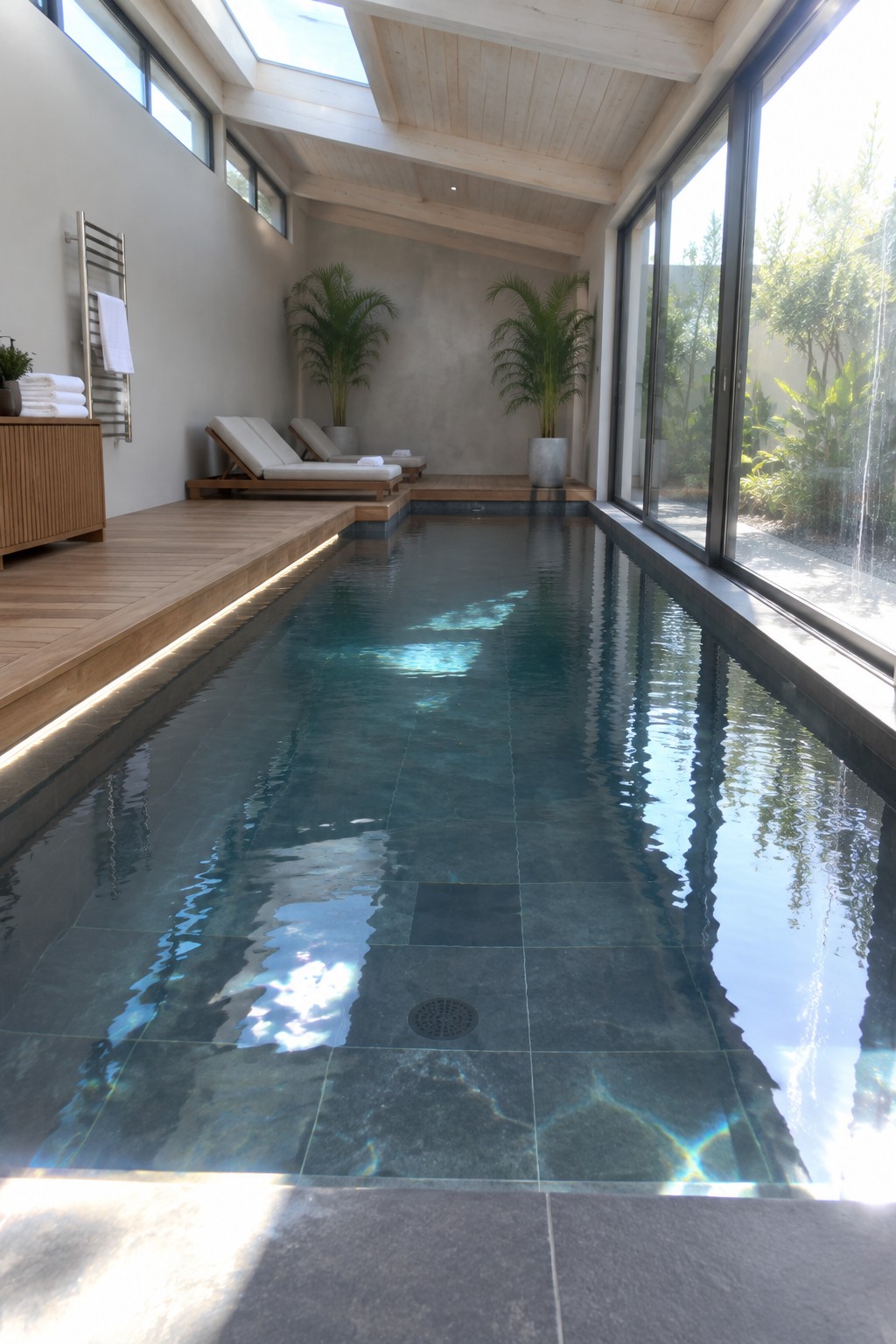
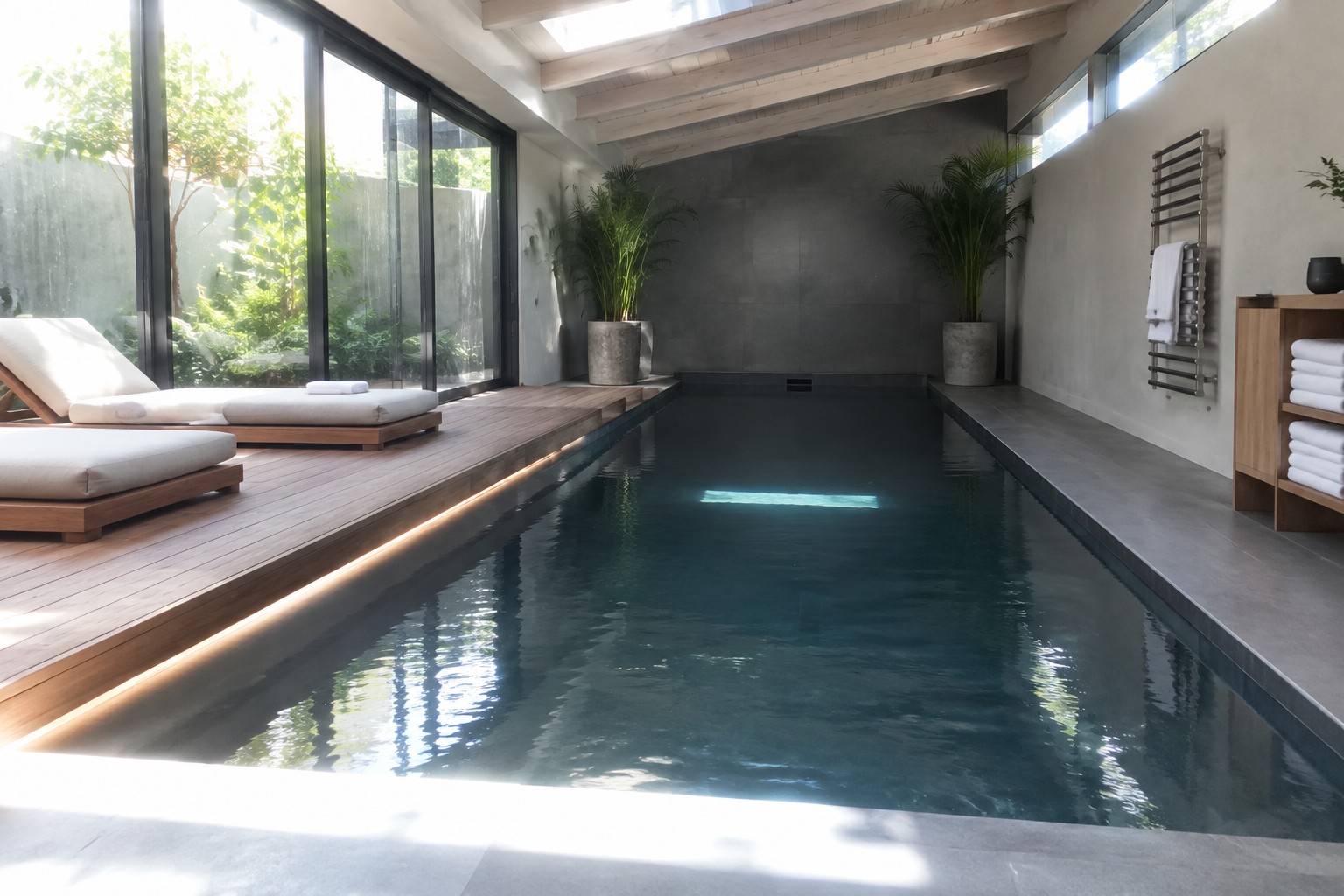
A raised wooden deck running alongside an indoor pool gives you a clear spot for loungers and storage without crowding the water. It keeps the wet zone separate while still feeling connected, and the height makes the seating feel more comfortable and intentional than just placing chairs on the same level as the pool surround.
This setup works best in longer, narrower pool houses where you have room on one side for the platform. It suits homes that want a simple way to add function without adding walls or extra rooms. Keep the wood tone light if your pool tile is dark, and make sure the deck has good drainage so it stays dry.
Built-In Seating Next to the Pool
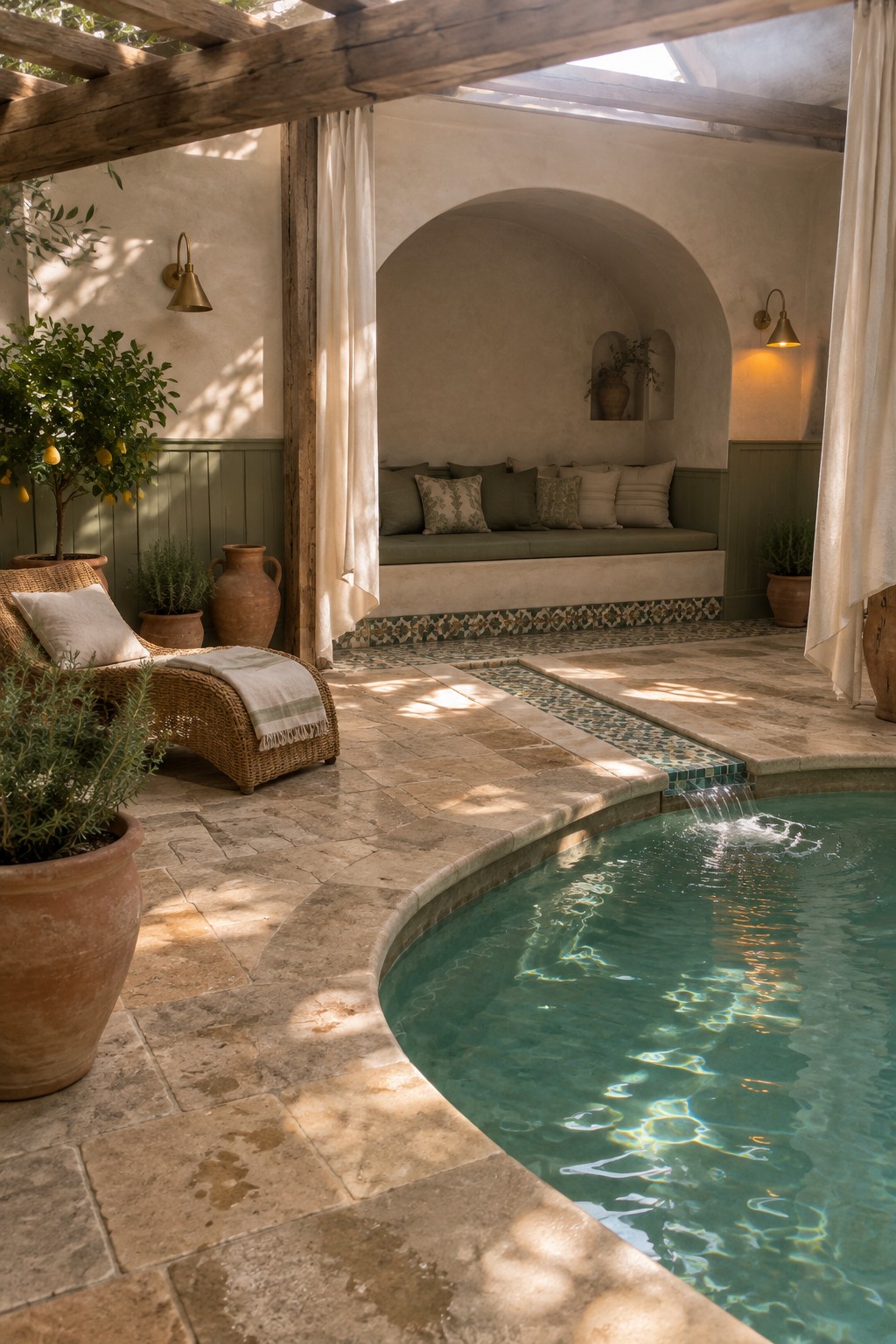
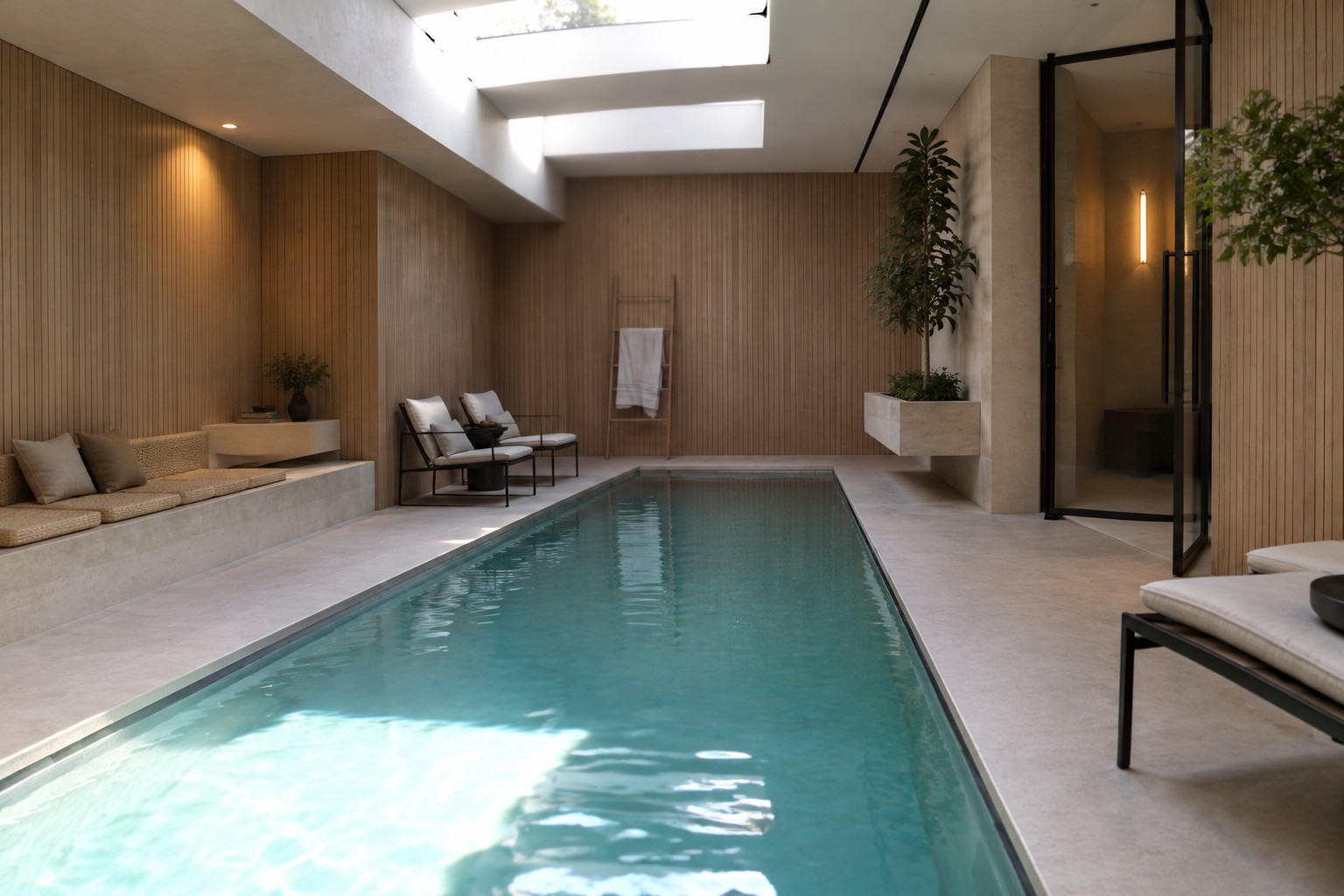
A built-in bench tucked into an alcove gives the pool area a settled, permanent spot for sitting without crowding the deck with extra furniture. It works especially well when the bench sits under cover, so people can stay comfortable even when the sun is strong or the air turns cooler in the evening. The cushions and simple tile trim keep it looking clean while still feeling relaxed.
This kind of seating suits homes where the pool sits close to the main living areas and you want the whole space to feel connected. It works best in milder climates where you use the pool often and need a place to rest without hauling chairs in and out. Just make sure the bench depth and back height feel comfortable for actual lounging, not just looks.
Built-In Poolside Bench for Relaxing
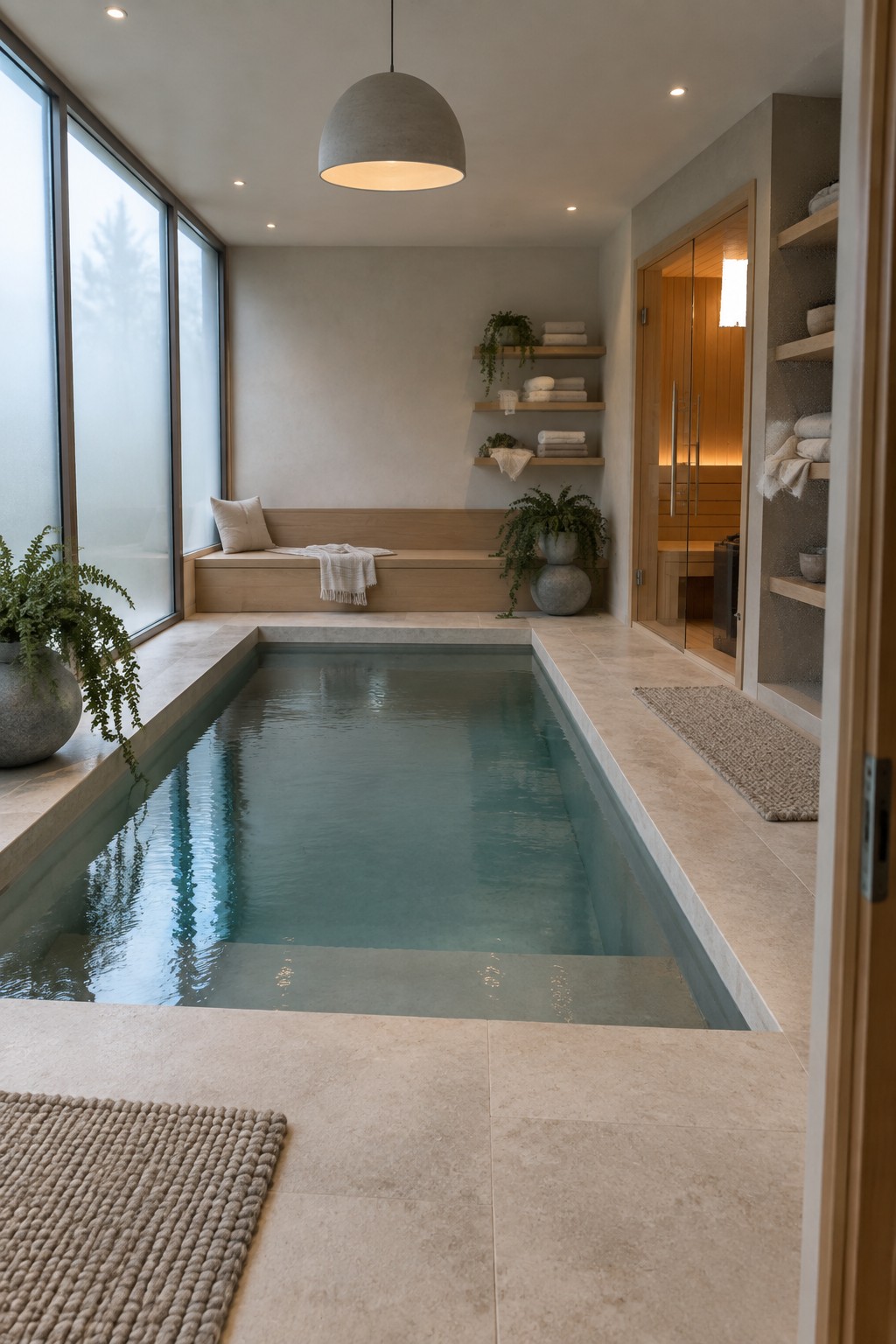
A built-in bench right beside the water turns the pool into a place you actually use instead of just swim in. It gives you somewhere to sit with your feet in, read, or rest without dragging in extra furniture that would crowd the room.
This setup works best in smaller pool houses or homes where the space needs to feel calm and open at the same time. Keep the bench in the same material as the surrounding woodwork and add a few open shelves above it for towels so everything stays simple and within reach.
Built-In Bench Seating With Storage
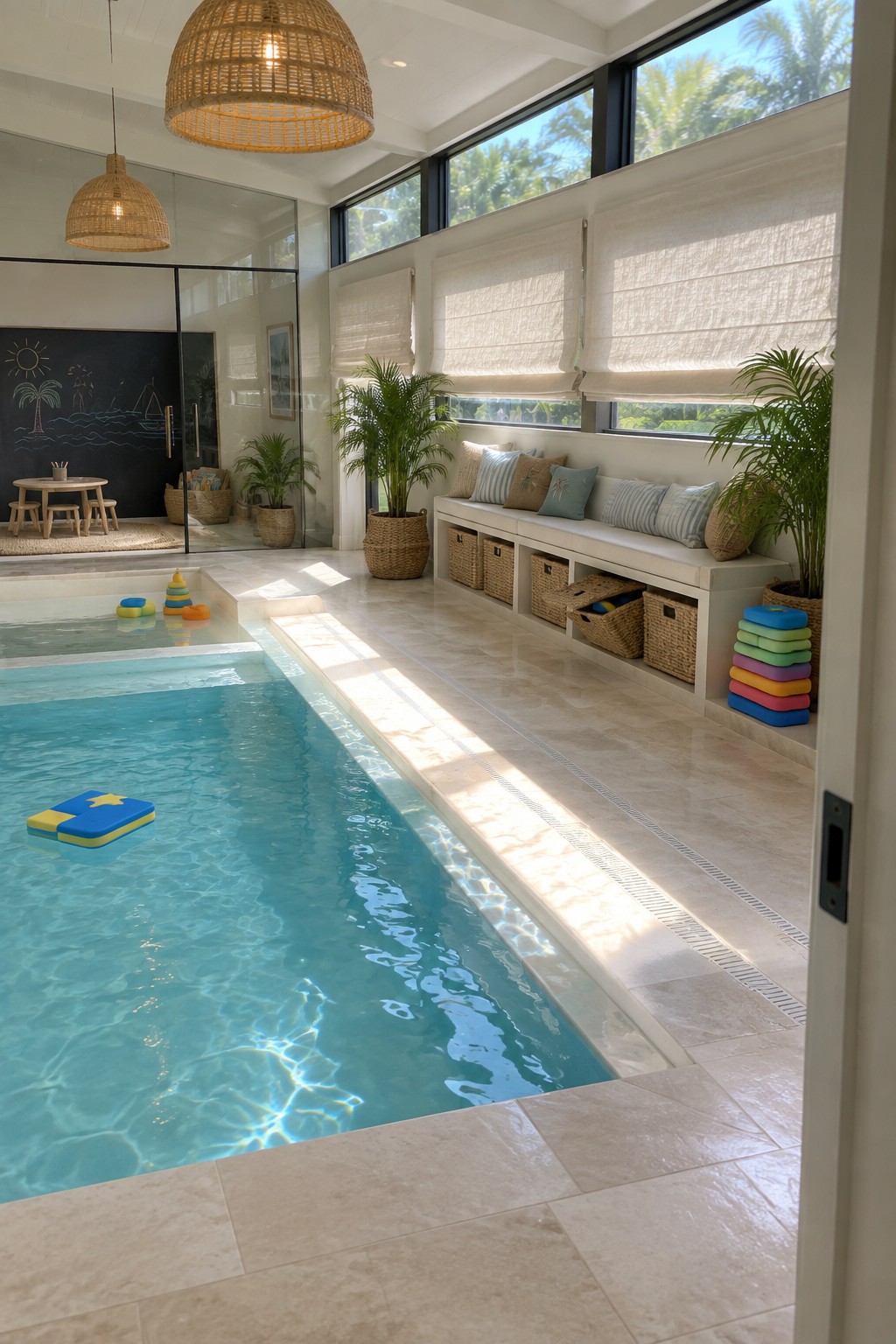
A built-in bench along the edge of an indoor pool gives you a simple way to add seating without taking up extra floor space. The open cubbies underneath make it easy to store baskets of toys, towels, or pool gear so the area stays clear and usable.
This works especially well in family homes where kids use the pool often. Keep the baskets open and easy to pull out so cleanup stays quick and the space feels practical rather than fussy.
Wood Stoves in Indoor Pool Rooms
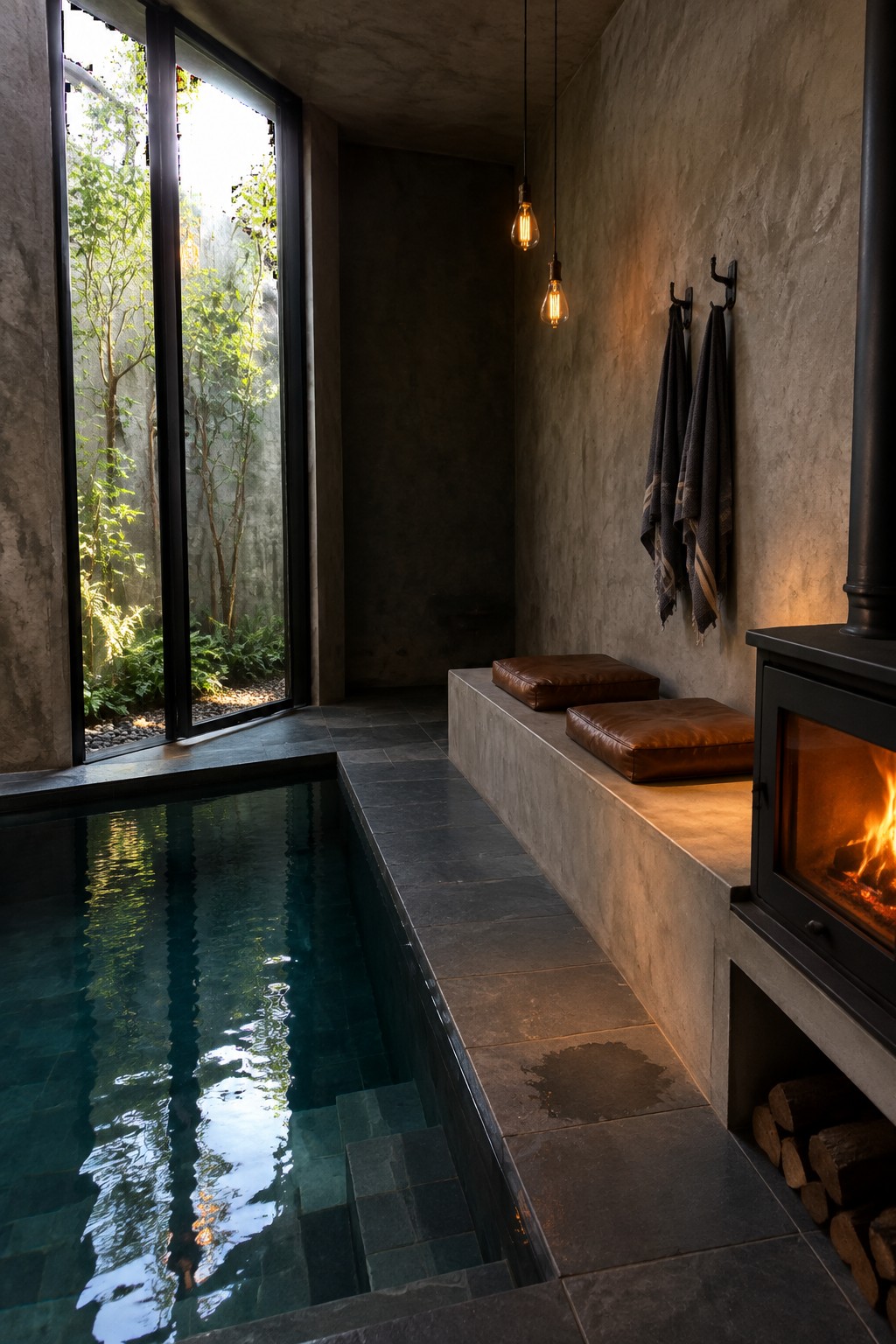
A wood stove brings real warmth to an indoor pool, both literally and in how the space feels. Most pool rooms stay cool by nature, so the fire gives a steady heat source that makes the water more inviting during colder months. It also creates a simple focal point without needing much else in the way of decoration.
This works best in purpose-built spaces where the pool sits close to an exterior wall, making venting straightforward. Keep the stove on a raised hearth and leave enough clearance around it for safety. The look suits homes that already lean toward natural materials and want the pool area to feel more like an everyday living space than a strictly recreational one.
Daybeds Right Beside an Indoor Pool
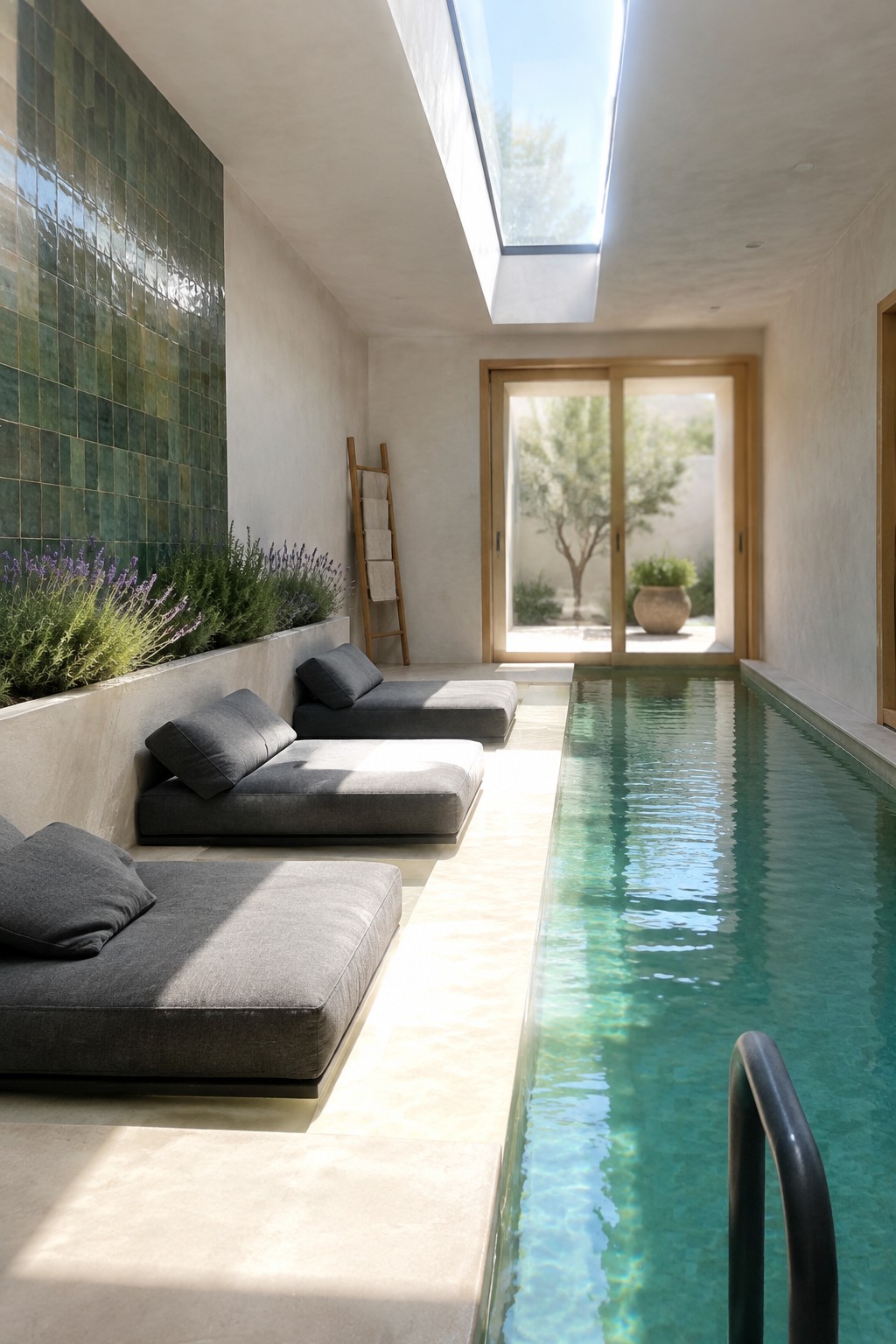
Low daybeds placed along the edge of an indoor pool make the whole space feel more usable. People can swim for a bit then lie down without tracking water across the room or hunting for a chair. The setup keeps everything simple and close at hand.
This works best in a dedicated pool house or a room built for this purpose. Choose fabric that handles moisture and keep the beds low so they do not block the view of the water. It suits homes that want a quiet spot for both swimming and resting without turning the space into a full living room.
Add Plants Around an Indoor Pool
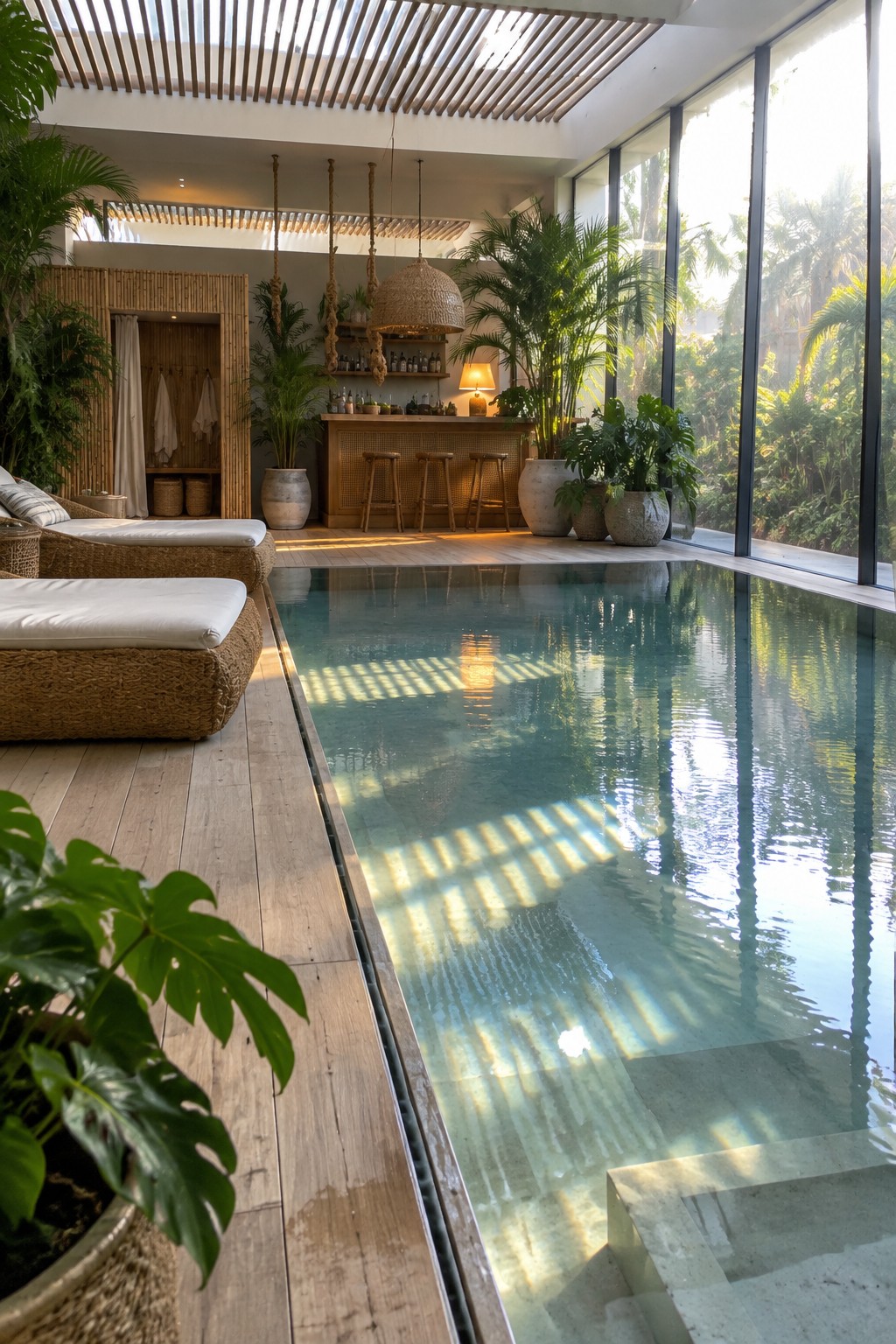
One simple way to soften an indoor pool is to bring in plenty of potted plants. The greenery breaks up the hard surfaces and water, and it gives the space a calmer, more natural feel that works well for daily use.
This approach suits homes with good light and some extra floor space beside the pool. Mix taller palms with lower leafy plants, and keep the planters simple so the focus stays on the greenery rather than the containers.
Rustic Materials Around An Indoor Pool
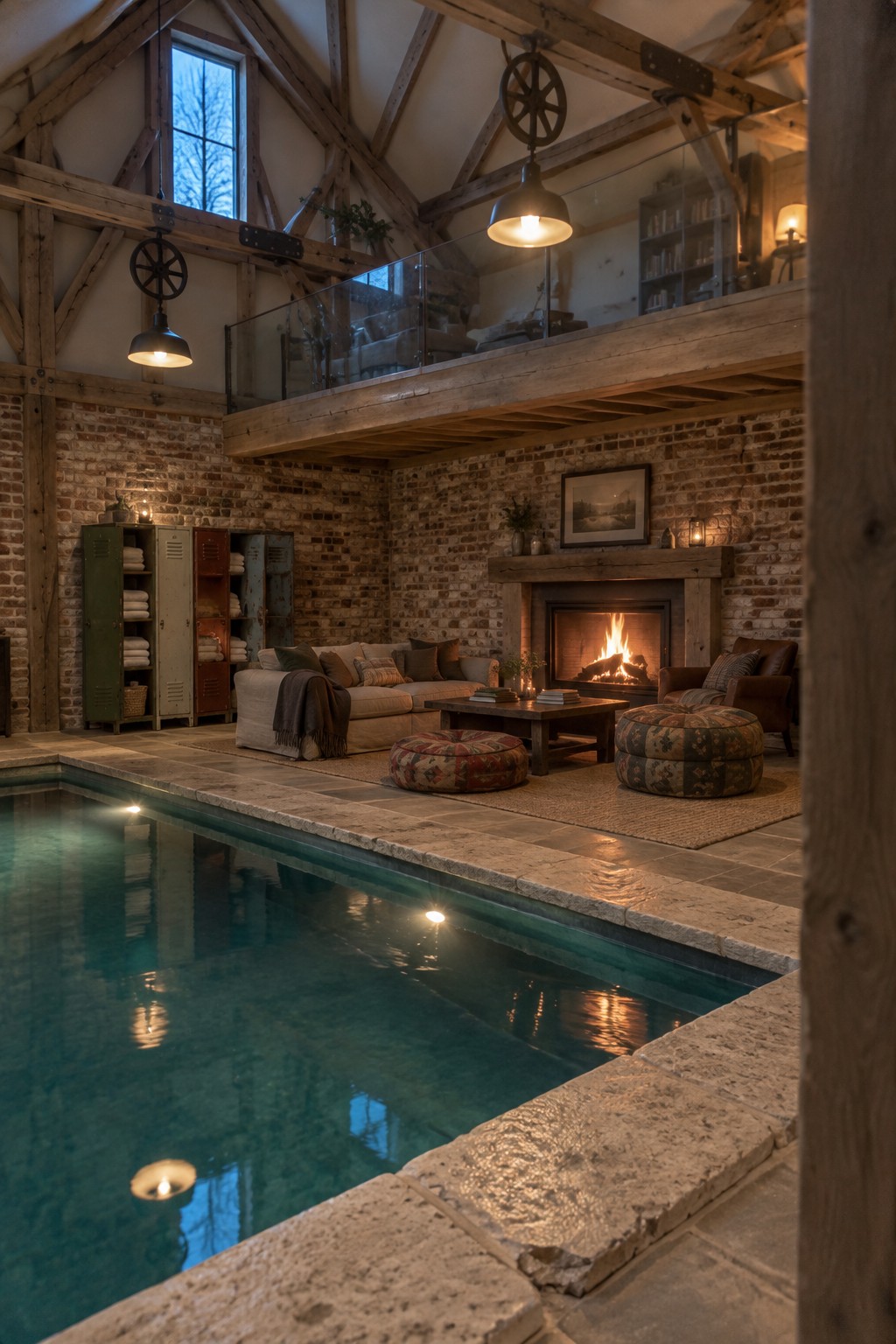
One way to keep an indoor pool from feeling cold or clinical is to wrap it in warm, textured materials like brick and heavy timber. The contrast between the water and those rough surfaces makes the whole room feel more like a regular living space than a dedicated pool room.
This works best in conversions where the structure already has some age and character. Place seating and a fireplace right at the edge of the pool so the area functions as one connected room rather than separate zones.
Mosaic Tile Borders for Indoor Pools
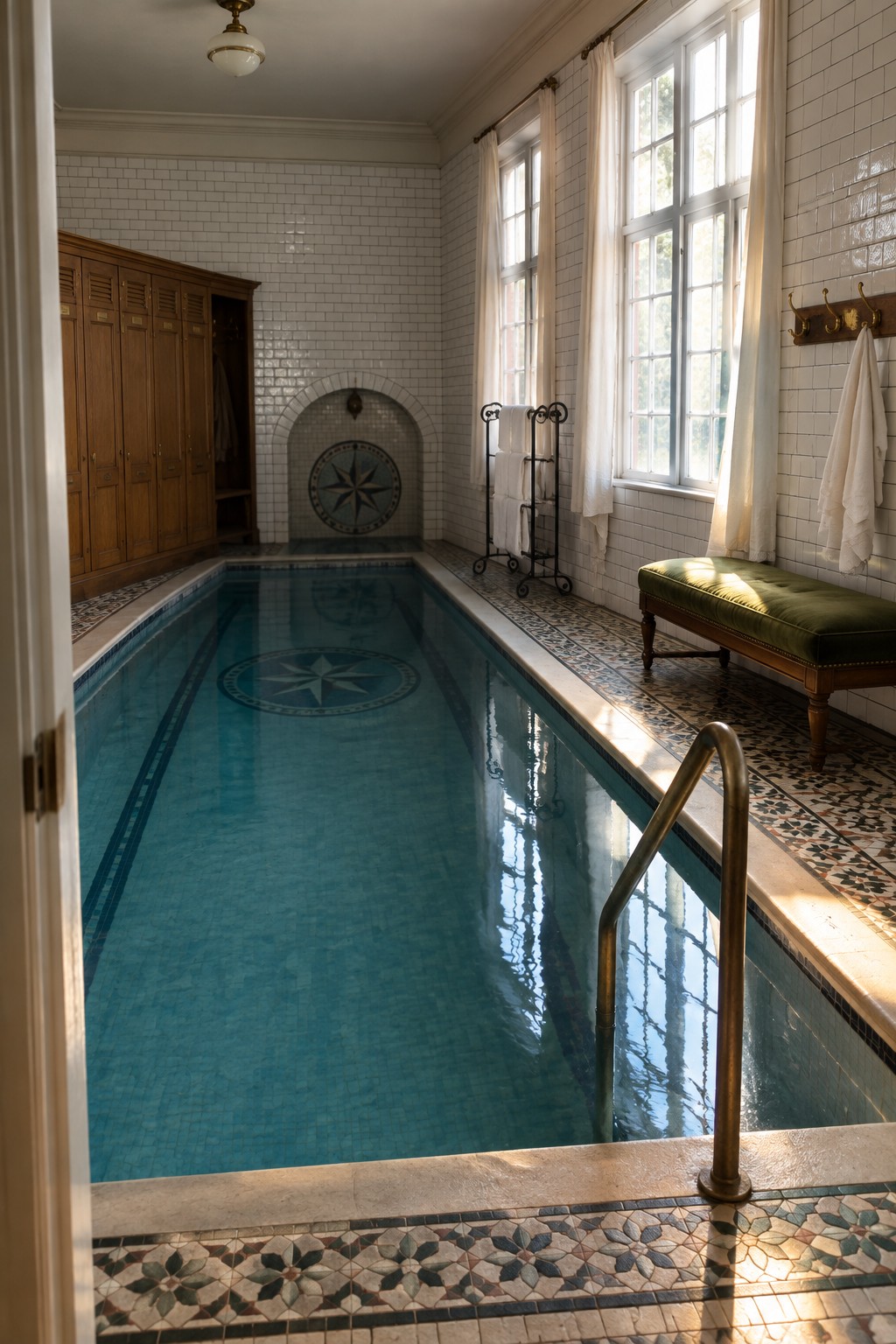
Mosaic tile borders give an indoor pool a finished, intentional look that plain tile just does not match. The compass rose designs and patterned edges here break up the long stretch of water and make the whole room feel more like a proper space rather than a big tank in a basement.
This approach works best in homes that already lean traditional or classic. Keep the main pool tiles simple and let the borders do the work. Too many patterns at once can feel busy, so one or two strong motifs are usually enough.
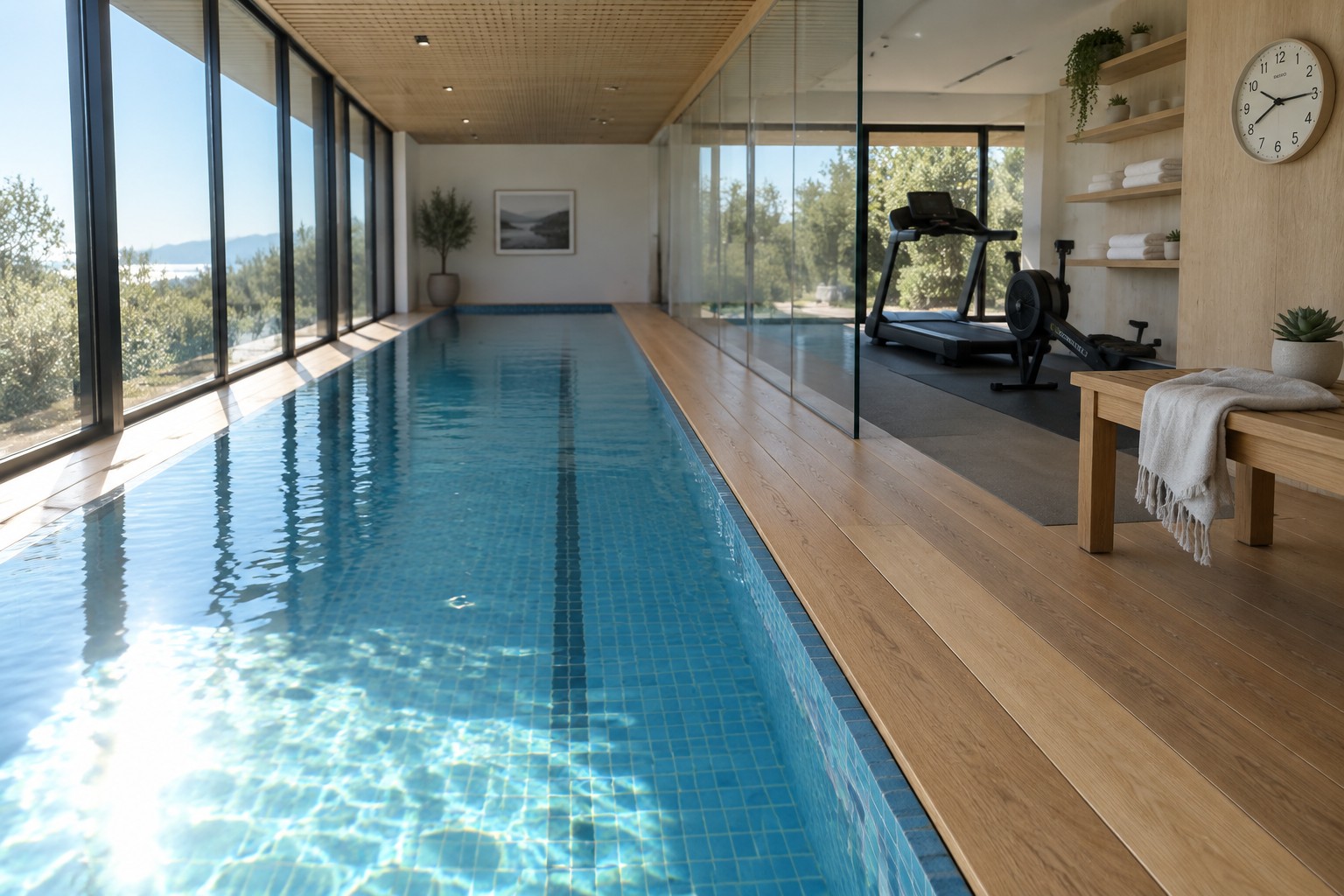
A Narrow Indoor Pool Beside A Wooden Platform
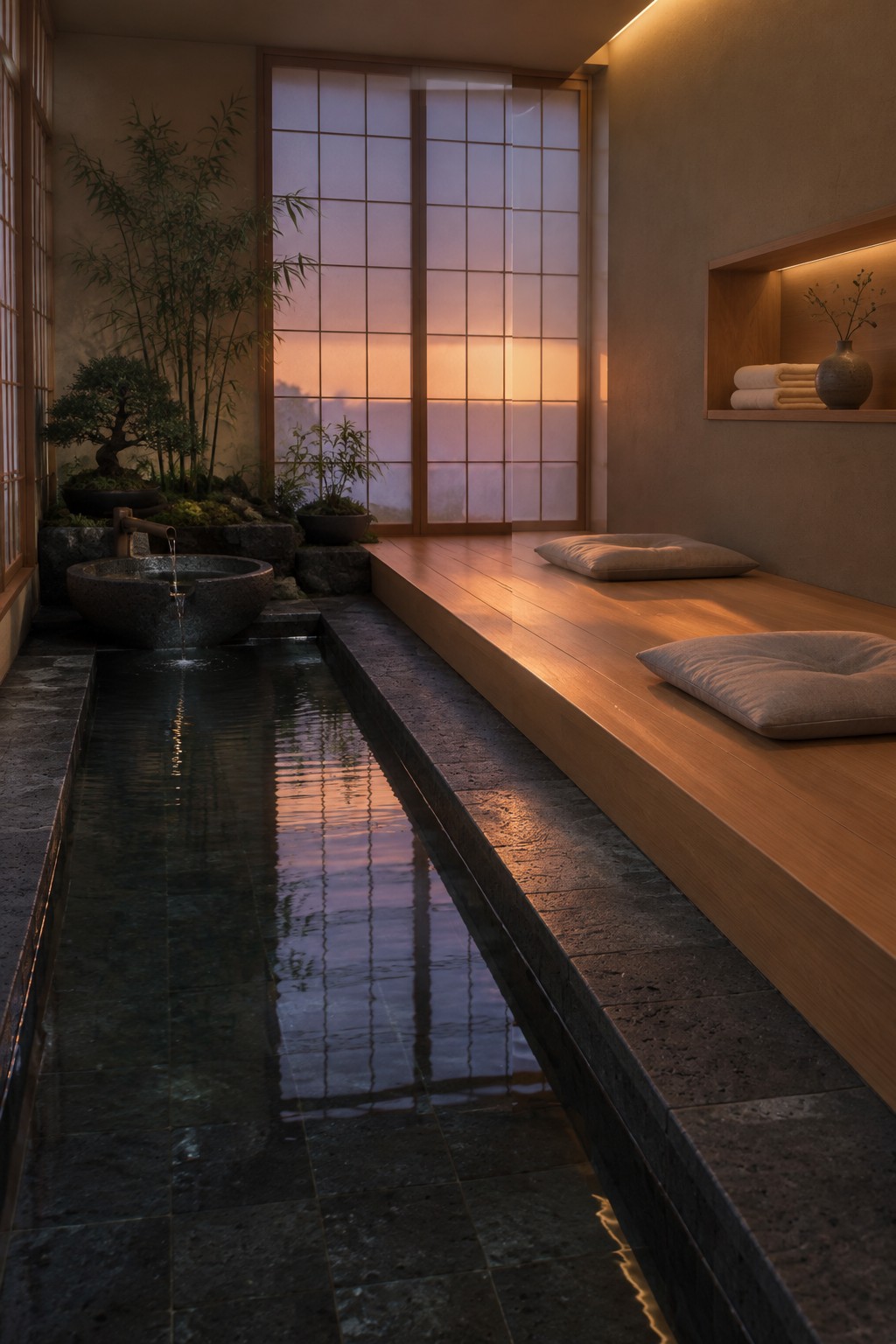
A long narrow pool works well when it runs right next to a simple raised deck instead of sitting in the middle of the room. The water stays close enough that you can sit on the platform and feel connected to it without needing to get in. This layout keeps the space calm and gives the room a clear purpose without filling every corner.
It suits homes that already have solid flooring and good drainage built in from the start. Use plain wood for the platform and keep cushions low so nothing blocks the view across the water. Avoid adding too many plants or decorations right at the edge or the quiet feeling gets lost.
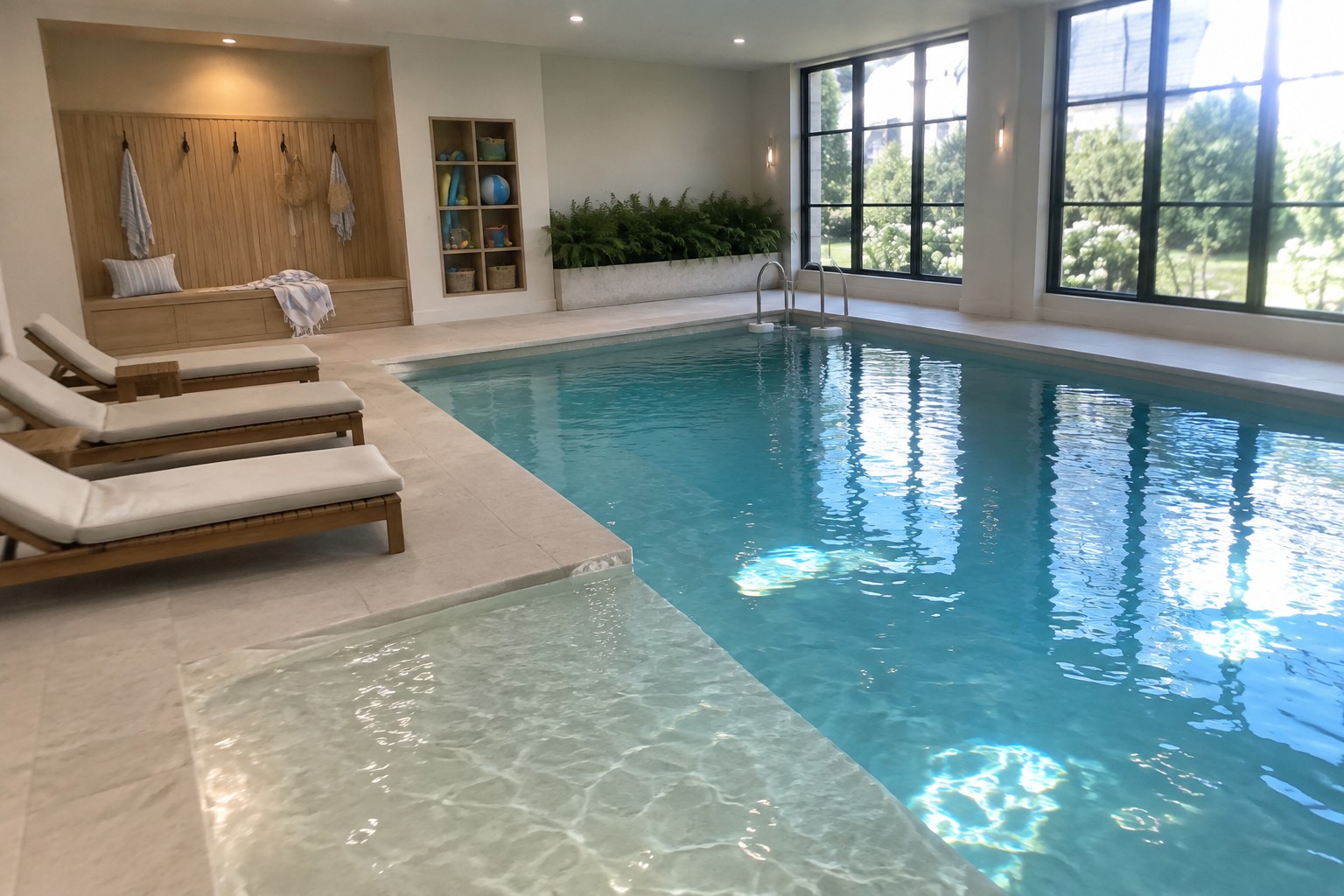
Add a Shallow Shelf for Lounging
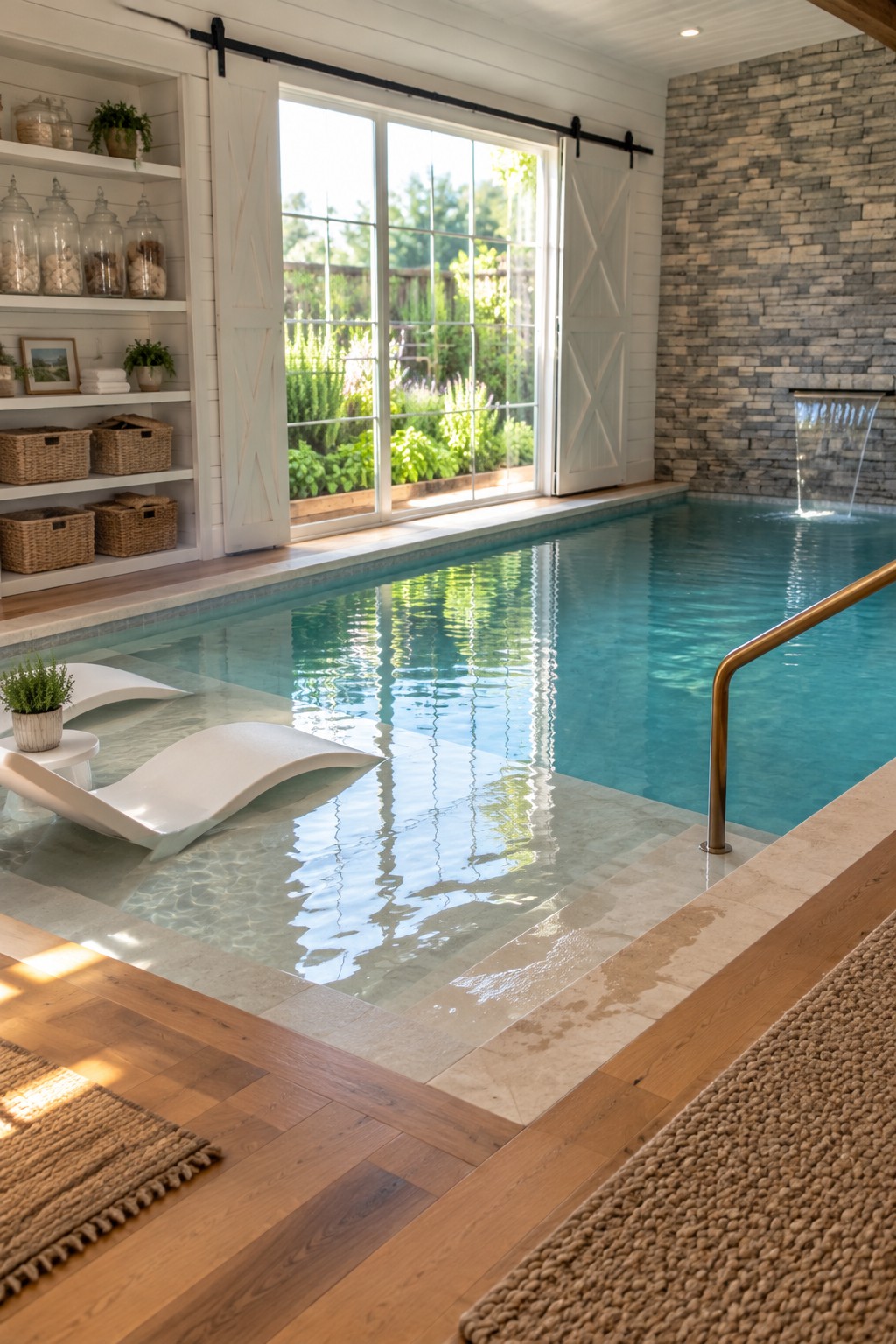
A shallow shelf built into the pool turns the space into more than just a place for laps. It gives people a spot to sit in the water without needing to swim or stand, which makes the pool feel more usable for everyday relaxing.
This setup works best in indoor pools that stay in use through different seasons. Keep the shelf wide enough for a couple of lounge chairs and place it near the edge so the transition from water to deck stays simple. It suits homes where the pool serves both exercise and downtime rather than one purpose alone.
Built-In Seating Around Indoor Pools
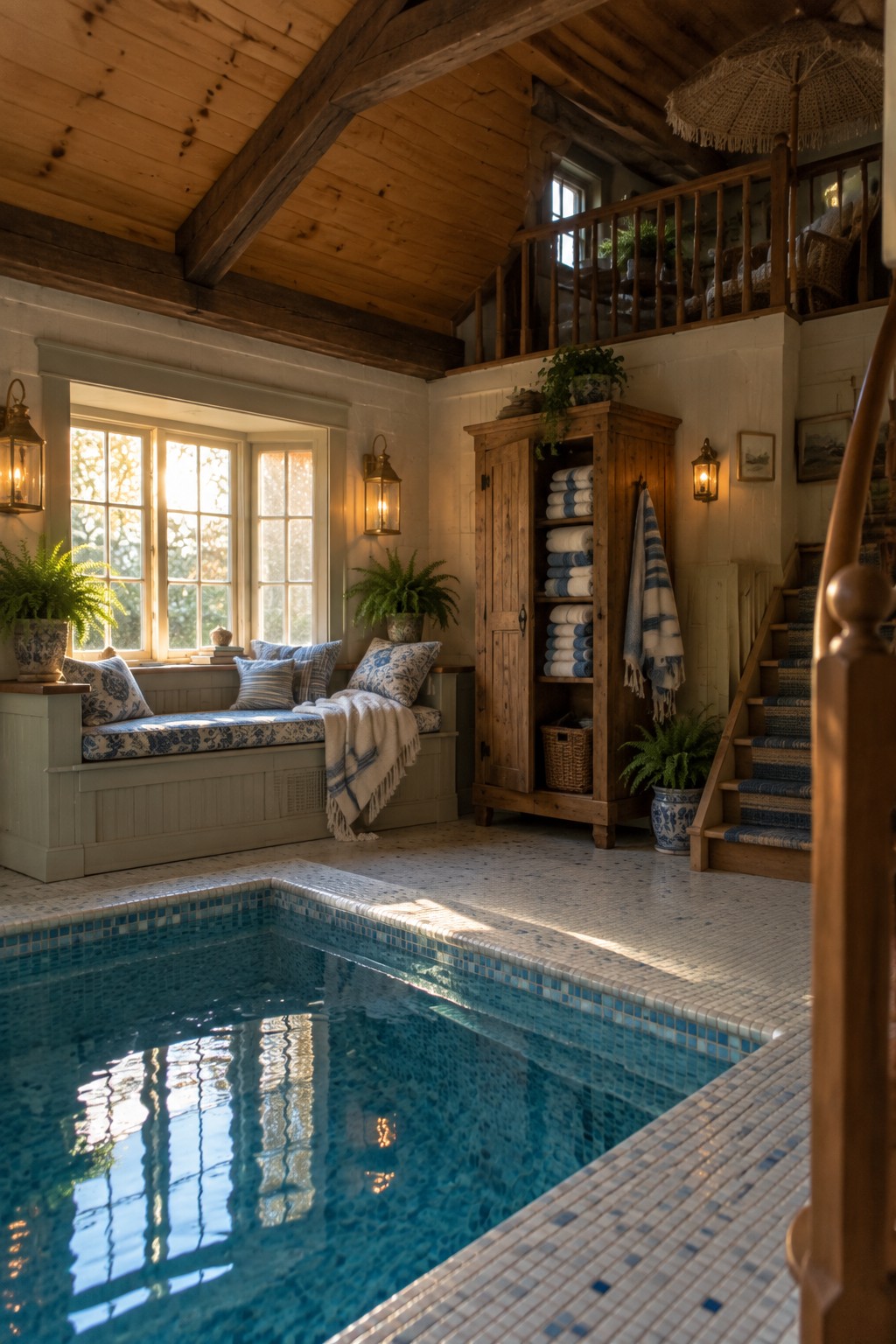
A window seat built right into the wall gives people a dry, comfortable spot to sit and relax without dragging in extra furniture. It keeps the floor clear around the pool and makes the whole room feel more like a regular living space instead of just a place to swim.
This setup works especially well in pool houses that get used for more than just swimming. Choose cushions in simple fabrics that can handle some moisture, and use the space underneath for towels or pool supplies. It suits homes where the pool room doubles as a family hangout or guest space.
A Slide Turns an Indoor Pool into a Play Space
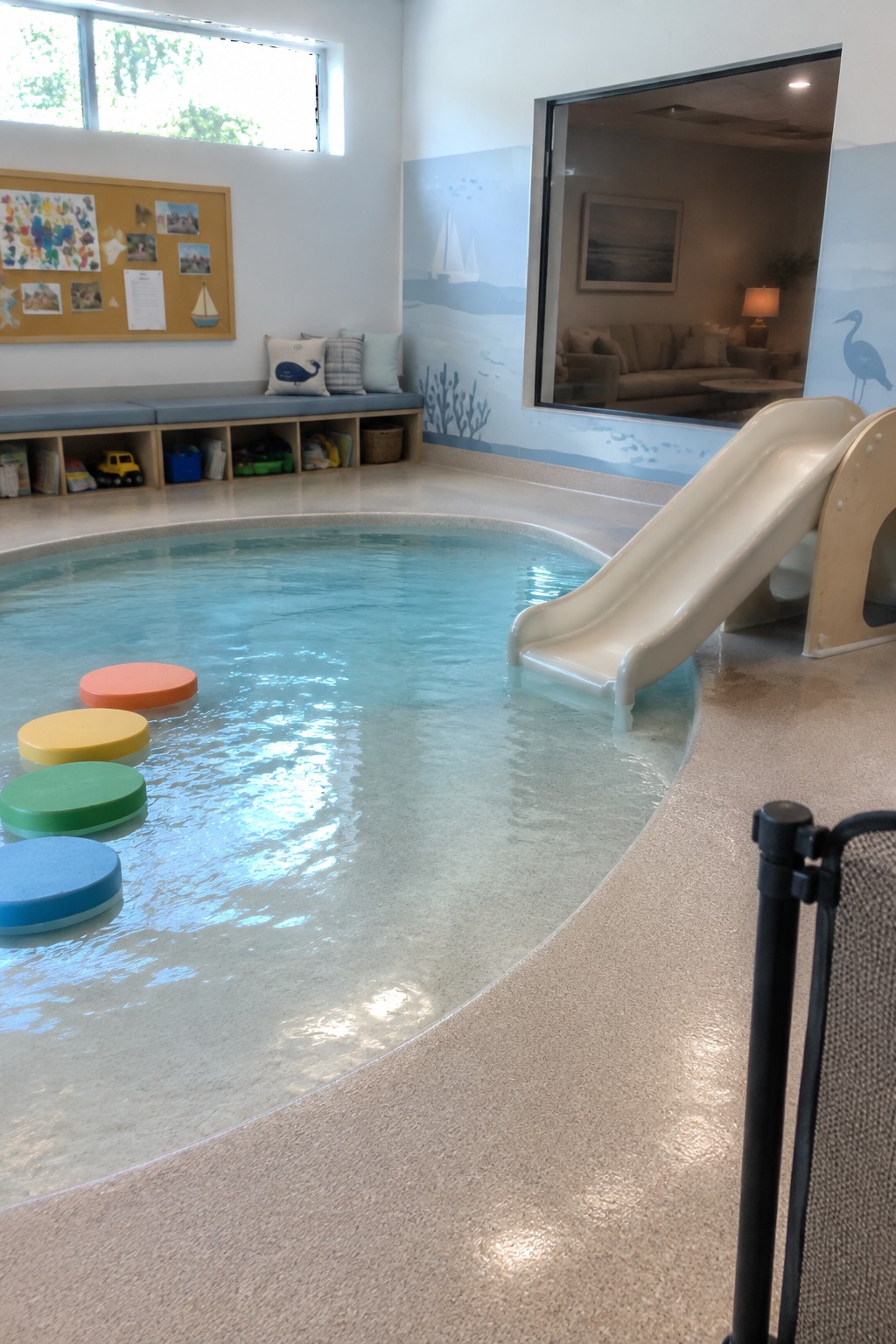
Adding a slide to an indoor pool gives kids a clear reason to get in the water. It turns a basic pool into something they actually want to use on repeat, especially when paired with simple floating pads that let younger children move around without needing to swim.
This works best in homes with children or frequent young visitors. Keep the slide modest in size so it fits the room without crowding the water, and make sure the pool edge stays easy to watch from nearby seating.
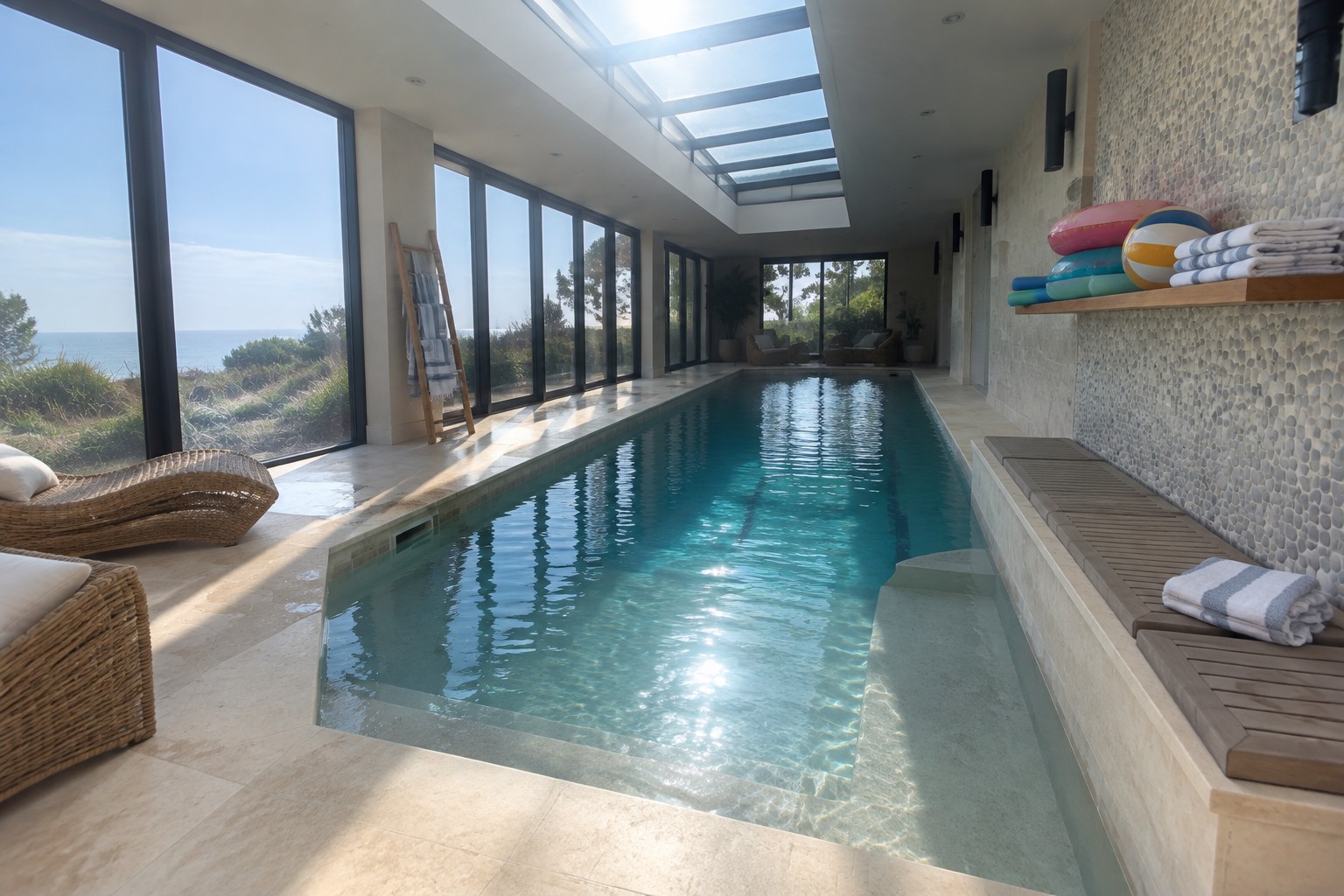
Skylights Over Long Indoor Pools
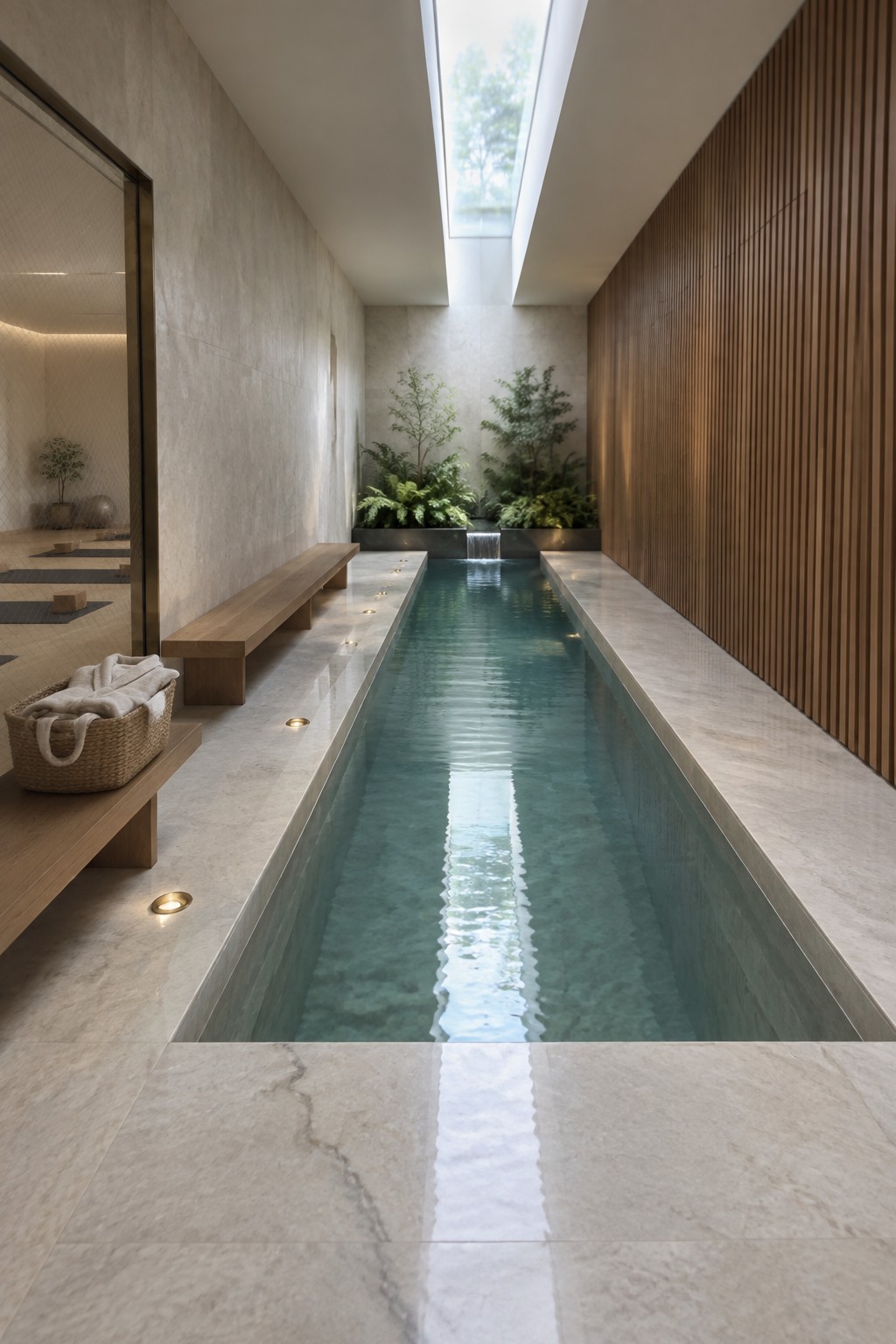
A narrow lap pool running the full length of a room gets most of its light from a skylight placed directly overhead. This setup keeps the water bright and the space from feeling closed in, even when there are few windows on the side walls.
It works best in homes that already have a dedicated pool wing or spa area. The main thing to check is whether your roof structure can take a long opening without extra supports.
Dark Tiles Around an Indoor Pool
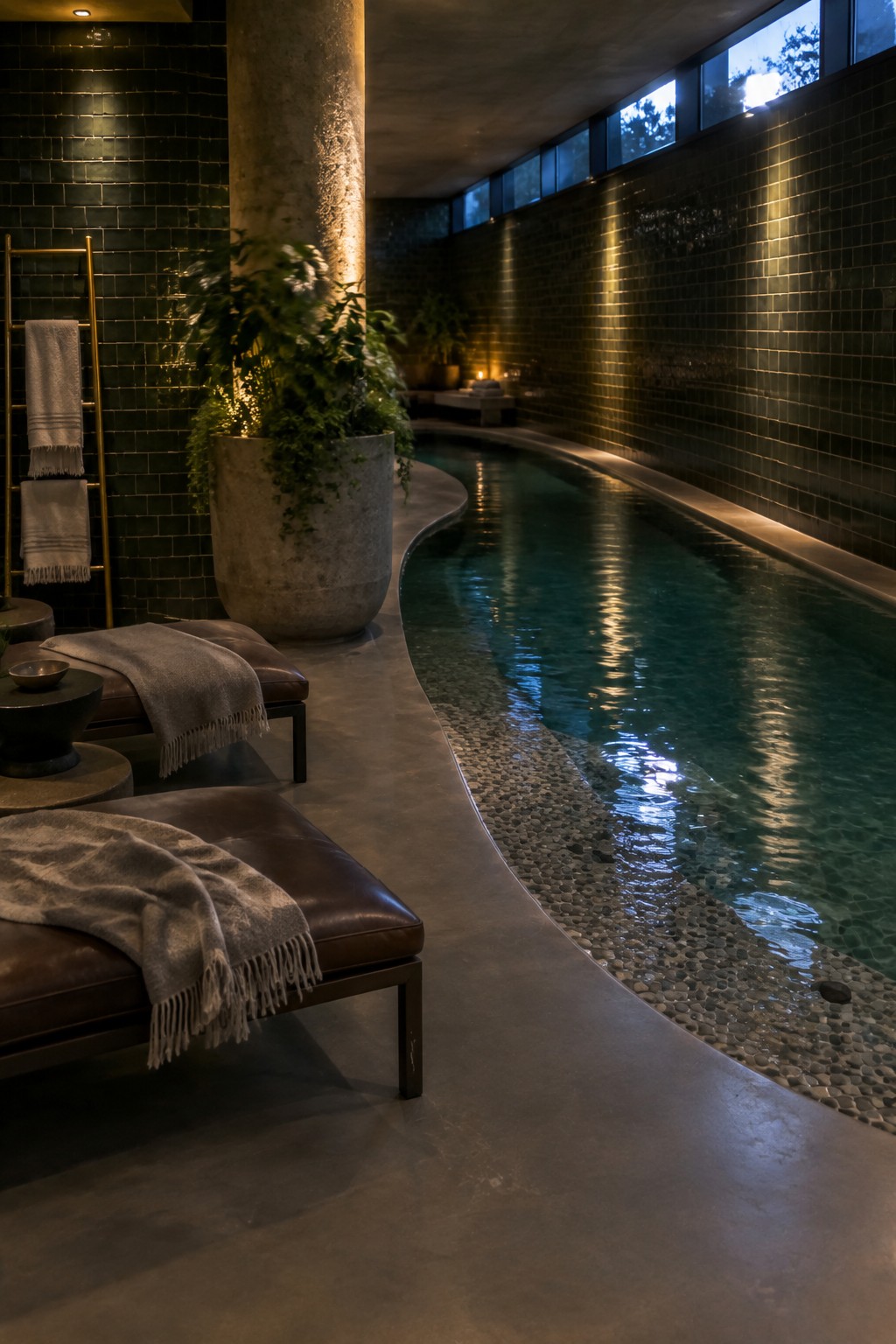
Dark tiles on the walls give an indoor pool a more enclosed and settled look. The glossy surface catches light from the water and turns what could feel like a bright open room into something quieter and more contained.
This works well in larger spaces that need a bit of visual weight. It suits homes where the pool sits inside the main structure rather than in a separate bright addition, though you want to keep some lighter materials nearby so the room does not feel too heavy.
Moisture-Resistant Bench Seating Along the Pool Wall
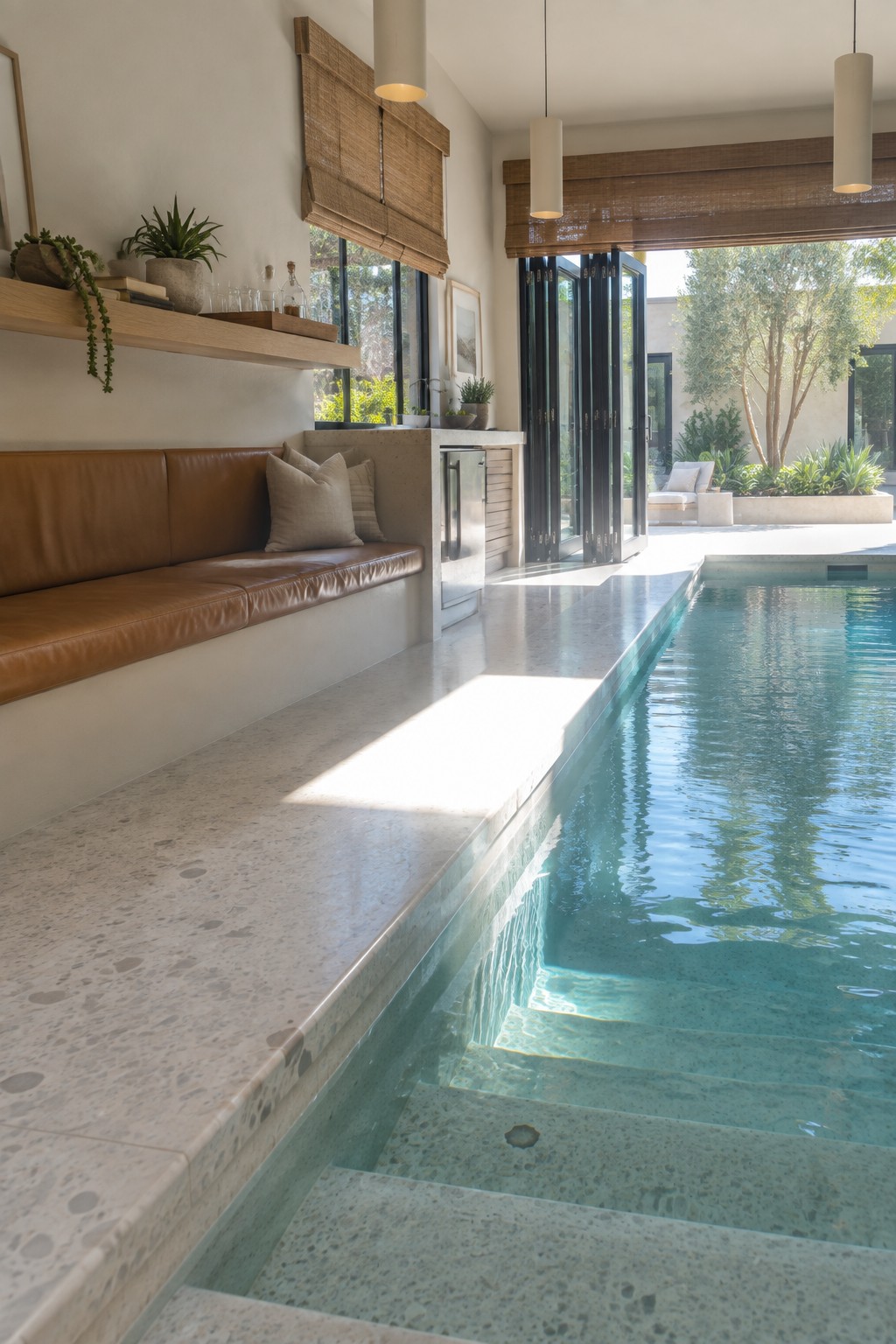
A built-in bench gives you a practical place to sit right next to the water without crowding the space with extra furniture. In an indoor pool house it keeps the area feeling open while still offering somewhere comfortable to rest or watch others swim.
This setup works best when the bench runs the length of a long wall and uses a material that handles moisture well. Leather or vinyl holds up better than fabric in humid conditions, and simple pillows can be swapped out or stored away when not needed. It suits homes where the pool area doubles as casual living space rather than staying strictly functional.
Narrow Pools With Adjacent Wooden Decks
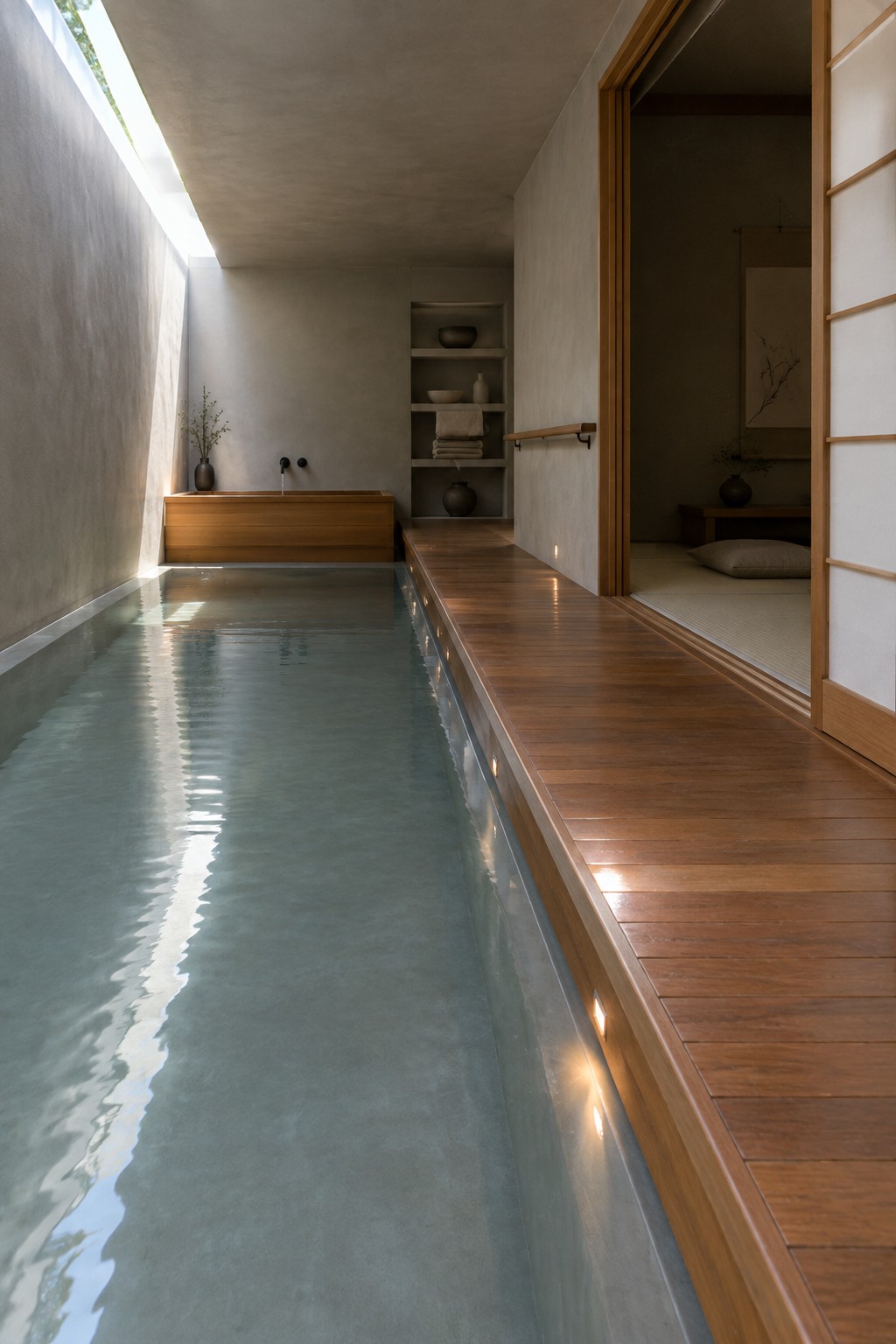
A narrow lap pool set beside a simple wooden deck gives the space a clear purpose without feeling crowded. The deck provides a dry walking path and a spot for shelves or seating right next to the water, which keeps the whole area easy to use day to day.
This setup works best in homes where the pool room needs to connect to other quiet spaces. The open doorway in this example shows how the deck can lead straight into an adjacent room, making the pool feel like part of the living area rather than a separate zone.
Frequently Asked Questions
Q: Can I add an indoor pool house to a house that already has a finished basement? A: Start by checking the foundation and ceiling height first. Many people reinforce the floor slab and add a separate entrance to keep the pool area from feeling like an afterthought. A small bump-out addition often works better than trying to squeeze everything inside the existing footprint.
Q: How do I stop moisture from creeping into the main living areas? A: Install a dedicated ventilation system that pulls air straight outside instead of recirculating it through the house. Run the exhaust fan on a timer so it keeps working even when the pool is not in use. Sealing the doors between the two spaces also helps a lot.
Q: What if my lot slopes and I want the pool on the lower level? A: Build the pool house into the hill so the roofline stays low from the street. This keeps the structure from towering over the backyard while still giving you full headroom inside. Drainage around the lower walls needs extra attention during construction.