When I think about indoor pools the ones that feel right usually tie the lounge area directly into how the rest of the room gets used each day.
That link affects everything from where people drop their towels to whether the space stays comfortable after a swim.
I would check the seating distance first if I were planning one.
The setups that keep the lounge close enough to feel part of the activity without crowding the water edge hold up better once real life starts happening in the room.
Small choices like floor materials and ventilation often decide whether the whole area stays pleasant or turns into something you avoid.
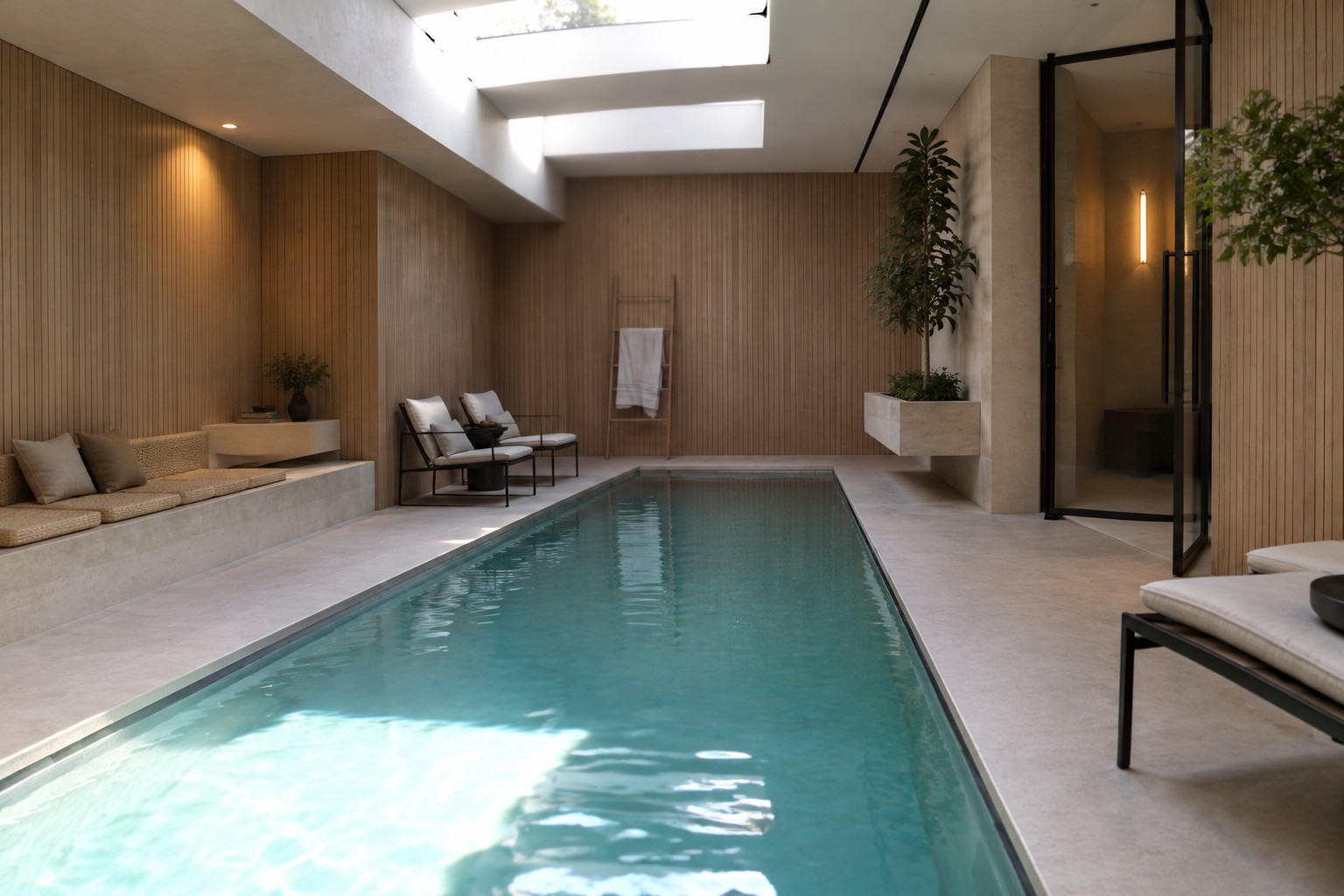
Built-In Seating Beside An Indoor Pool

One idea that stands out here is tucking a cushioned seating area into its own recessed spot right next to the pool. The built-in bench with pillows creates a natural place to sit and unwind without needing extra furniture that might crowd the space. It keeps the room feeling open while still giving you a dedicated lounge zone.
This works well in homes where the pool room has a bit of extra depth along one wall. You can use the same material on the bench as the surrounding stone or tile so it blends in, and add a few pillows for comfort. Just make sure the seating stays a step or two back from the water so it does not get splashed constantly.
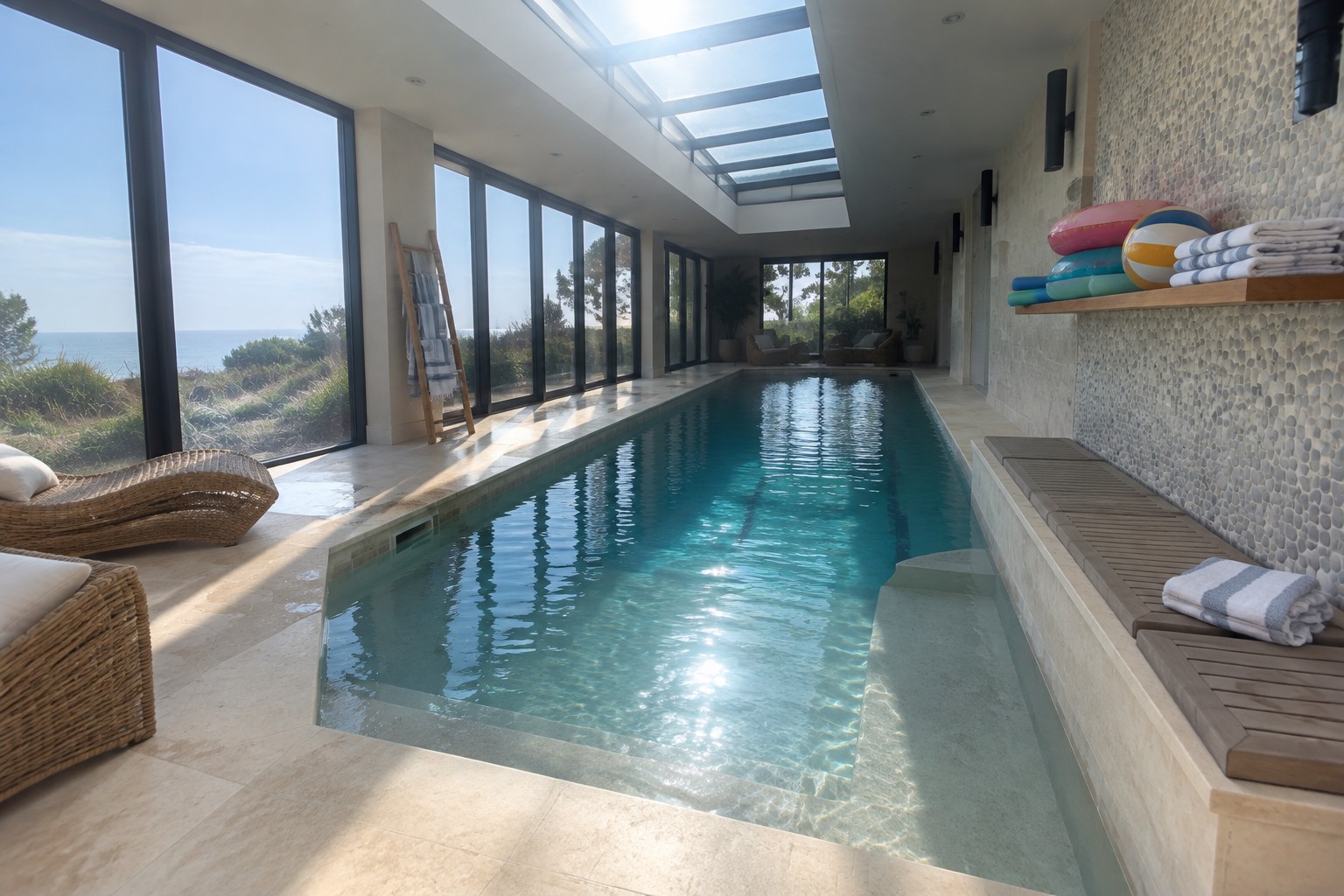
Lounge Chairs Right At The Pool Edge
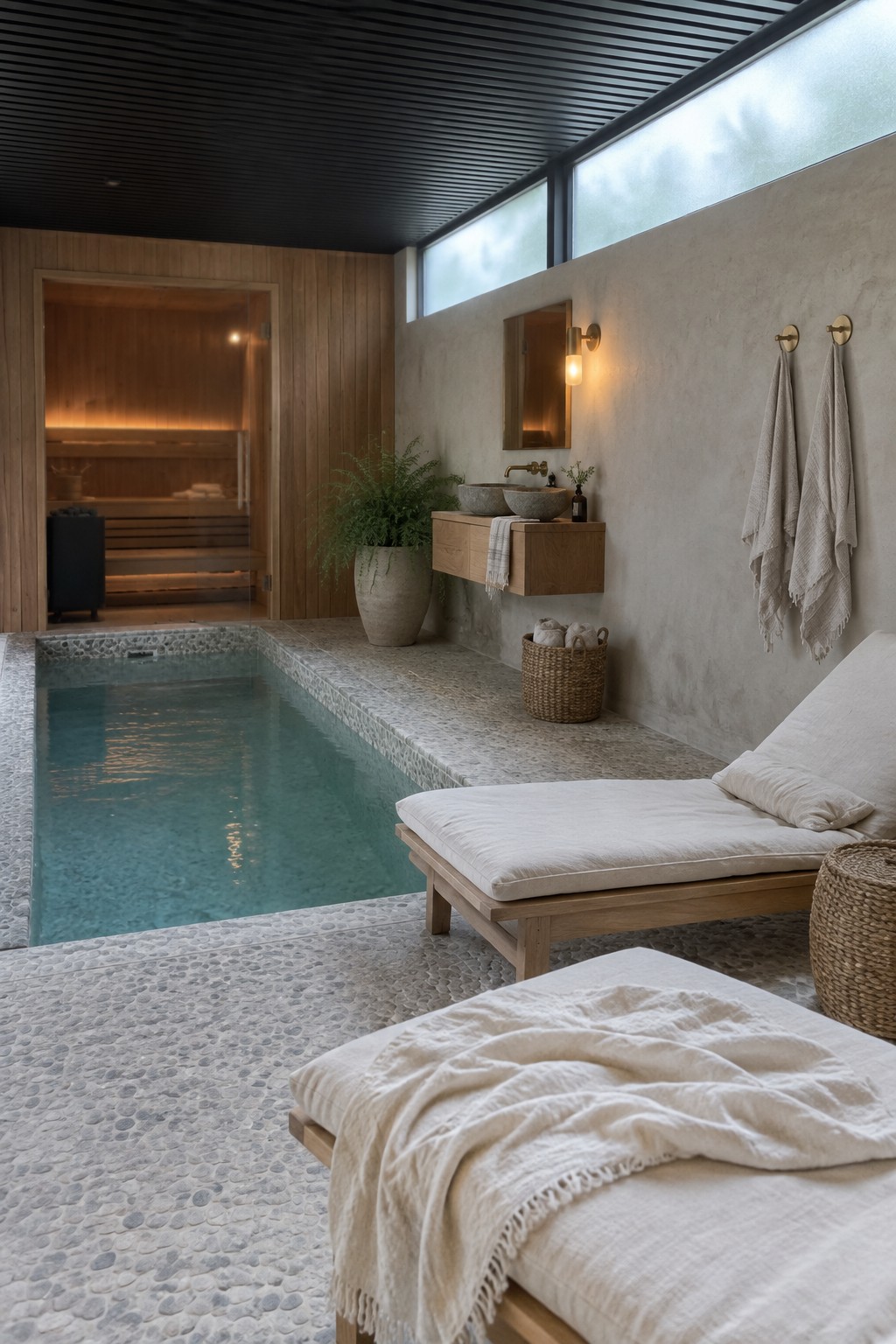
Placing lounge chairs right next to an indoor pool makes the whole space feel more usable. You can swim a few laps and then stretch out without needing to cross the room or grab a towel from somewhere else. Light wood frames and simple white covers help the area stay calm instead of feeling crowded.
This works best in homes that already have a pool room or a large open basement space. Keep the chairs low and the fabrics easy to wash so the setup stays practical day to day. Avoid adding too many extra pieces around the water since the main goal is easy access and quick rest.
Brick Poolside Seating For A Connected Living Space

Placing a bench or daybed right along the pool edge makes the water feel more like part of the living space. People tend to linger longer when they can sit comfortably without moving to another room, and the setup works especially well in homes where the pool shares space with everyday areas.
This approach suits rooms with brick or similar warm materials that can carry over to the seating. Stick with low, simple pieces so the water stays the main focus and the area does not feel crowded.
Layering Plants Around An Indoor Pool
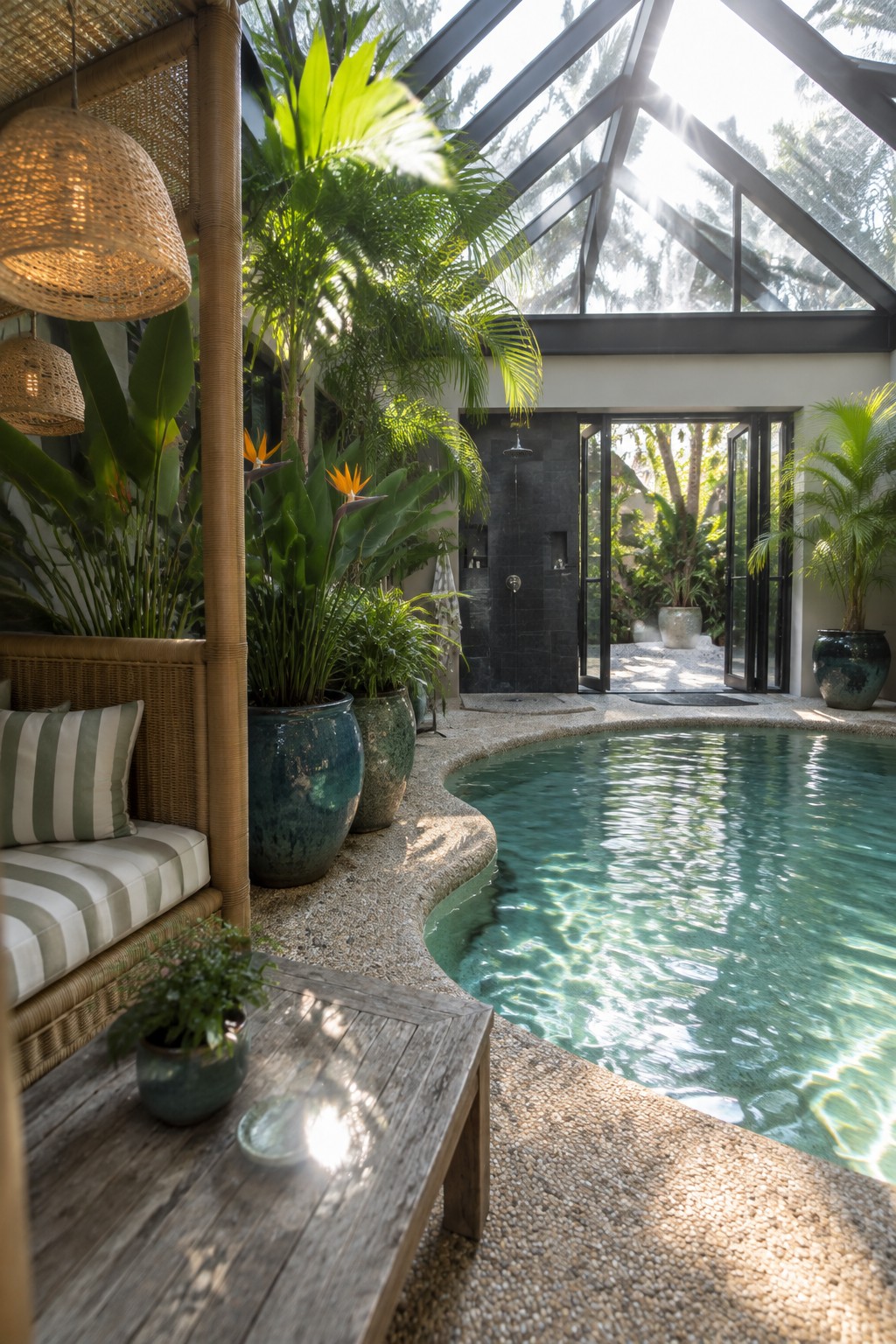
Plenty of homes with indoor pools end up feeling a bit stark because the water and hard surfaces take over. Adding clusters of big potted plants breaks that up and makes the whole space feel softer and more like a place you actually want to spend time. The greenery also helps tie the pool to the view outside when doors are open.
This approach works best in rooms that already get strong natural light, since the plants need it to stay healthy. It suits homes that lean tropical or relaxed rather than formal. Just keep in mind that the pots will need occasional rearranging for watering and that fallen leaves can end up in the water if you are not careful.
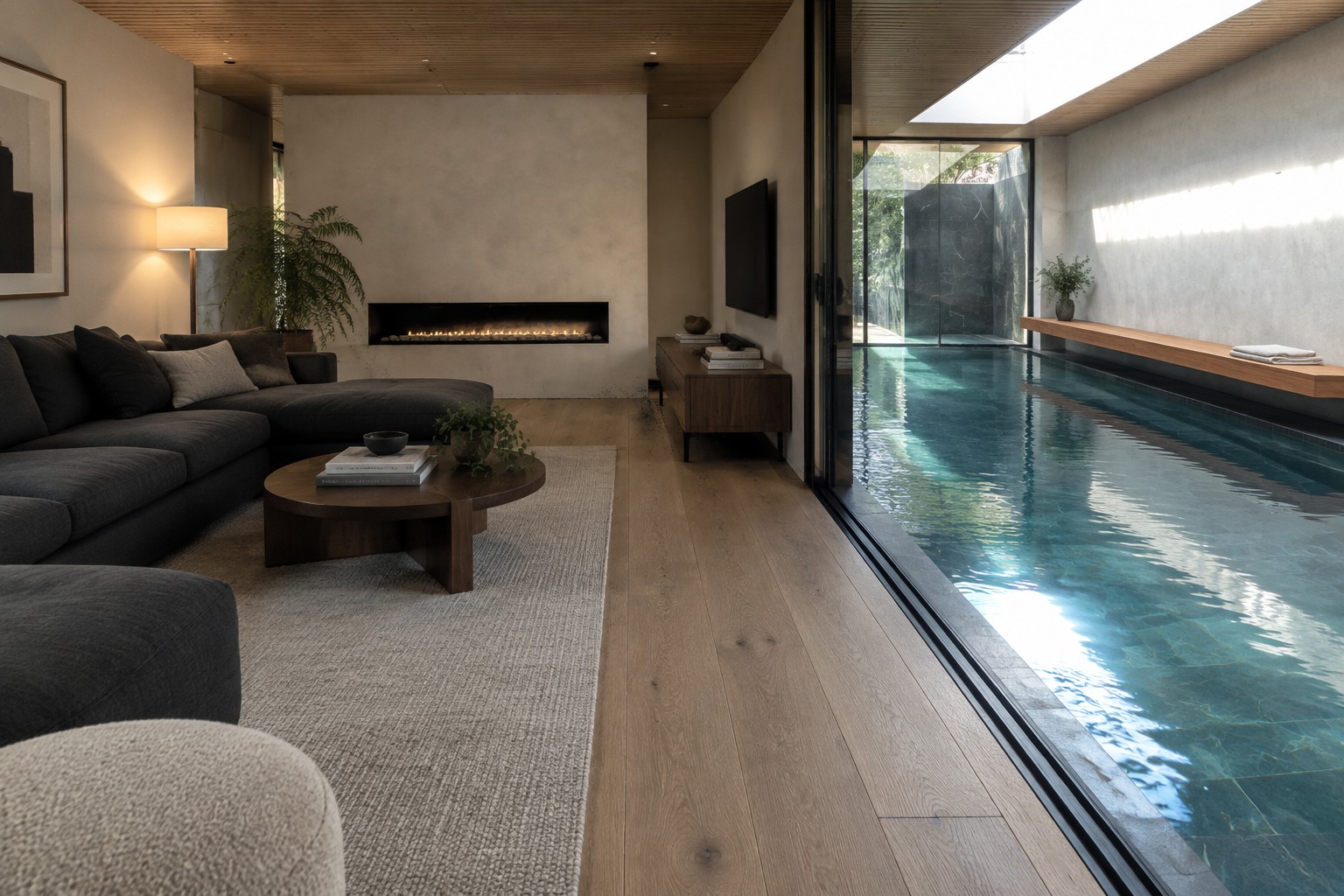
A Sofa That Turns Your Indoor Pool Into A Living Space
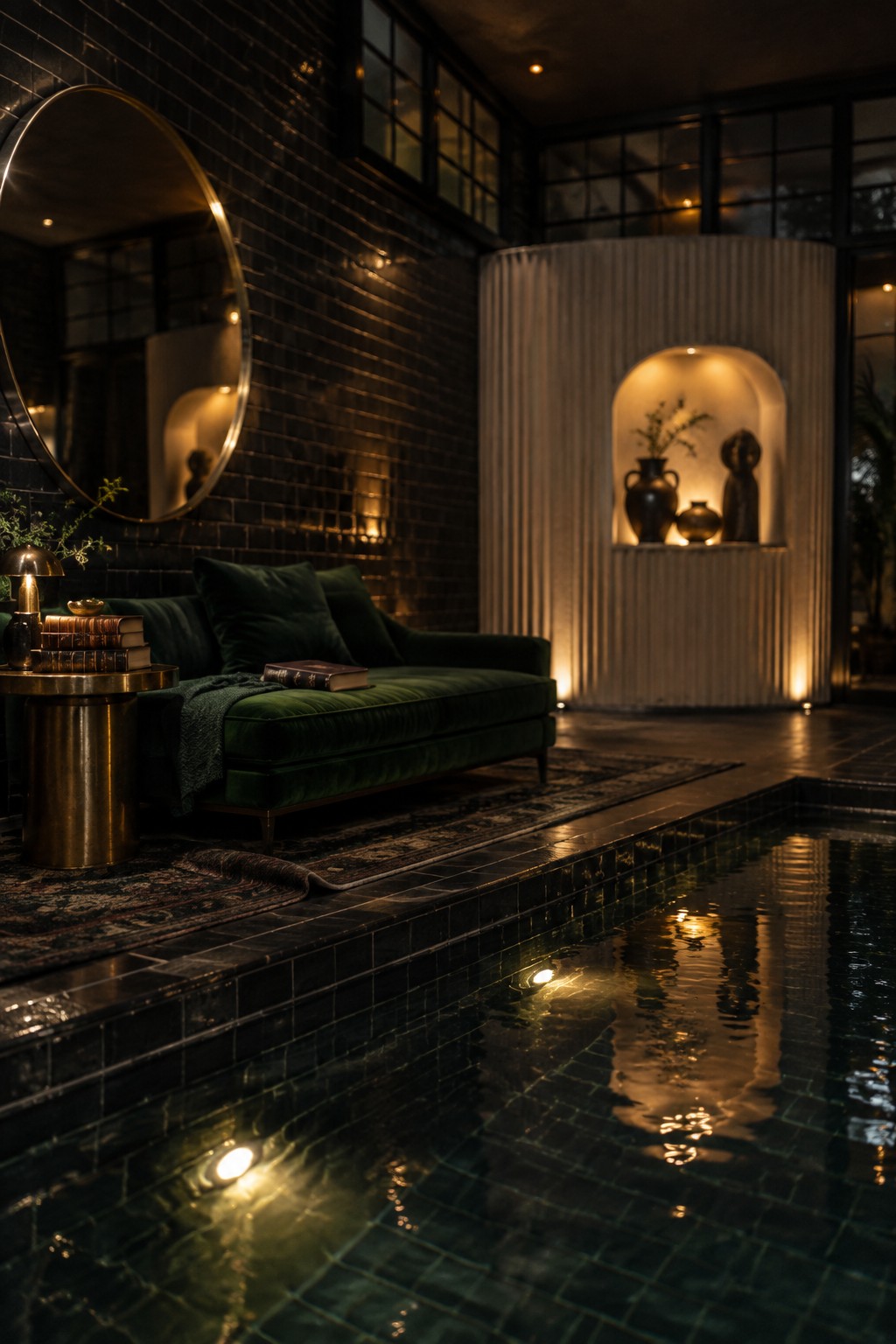
Many indoor pools end up feeling like a separate zone because there is nowhere comfortable to sit once you get out of the water. A sofa placed right at the edge changes that. It turns the pool into an actual living space instead of just a place to swim.
This setup works best in homes where the pool sits inside the main floor plan rather than in a separate wing. Choose a fabric that can handle a little humidity and keep the surrounding pieces low so the seating does not crowd the water. The goal is simply to have a place to land without walking back to another room.
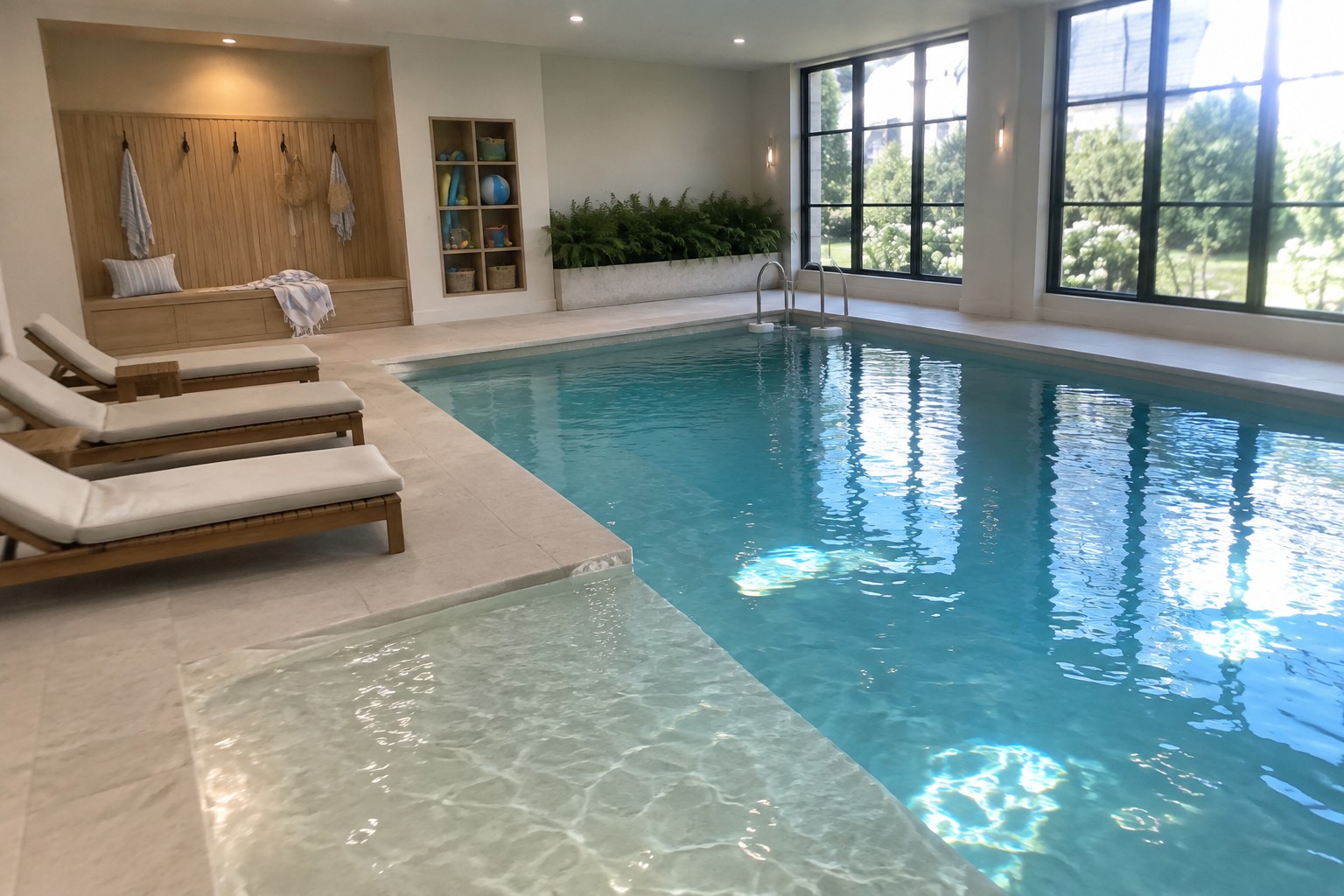
Built-In Window Benches With Storage
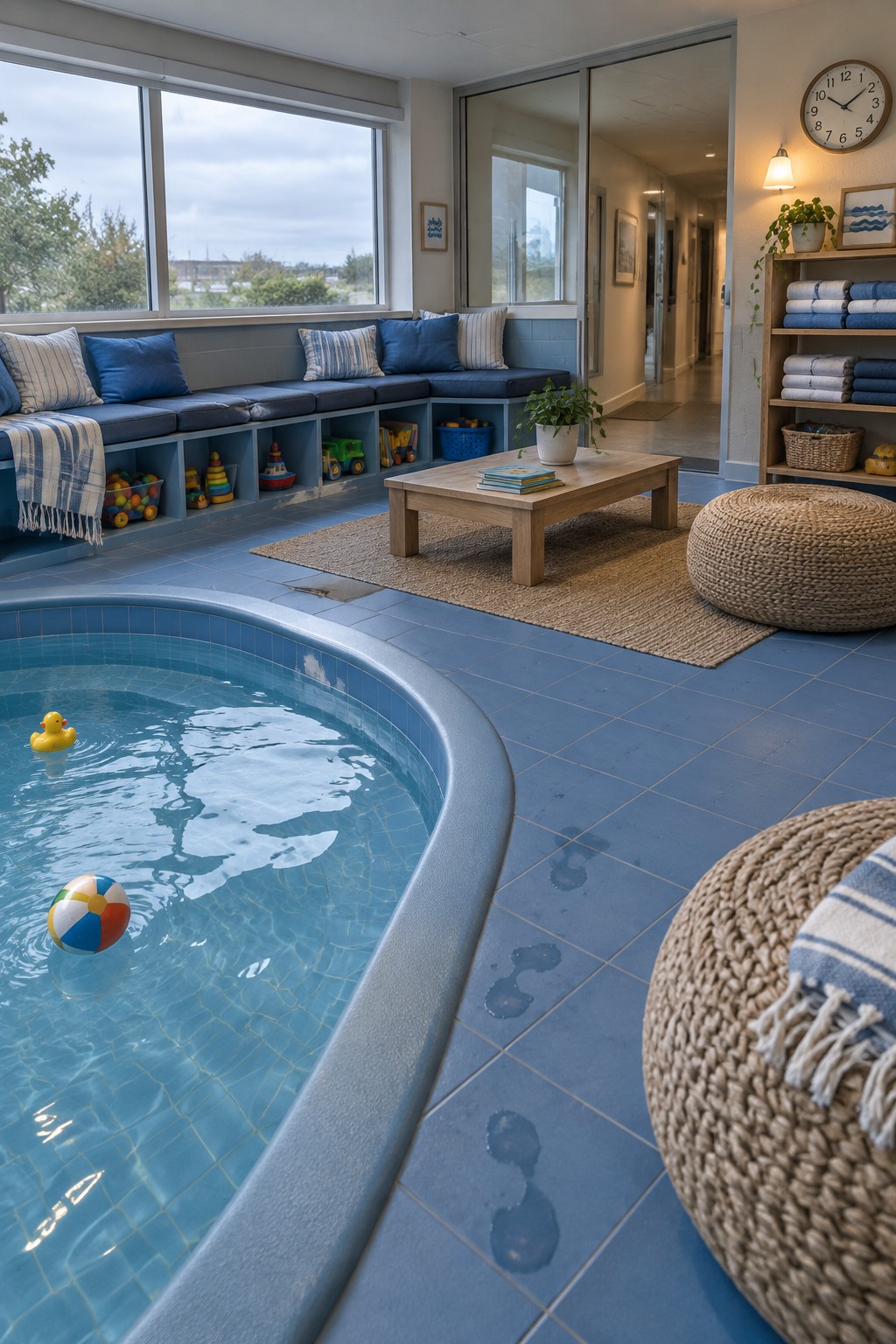
Many indoor pools feel more usable when seating runs right along the windows. A built-in bench gives people a place to sit without crowding the deck, and open cubbies underneath keep toys, towels, and pool gear from scattering across the floor.
This setup works best in homes with kids or frequent swimmers. The bench can stretch the full length of the wall so storage stays handy but out of the way, and the seating doubles as a casual lounge spot once the swimming is done.
Curved Seating To Shape A Pool Lounge
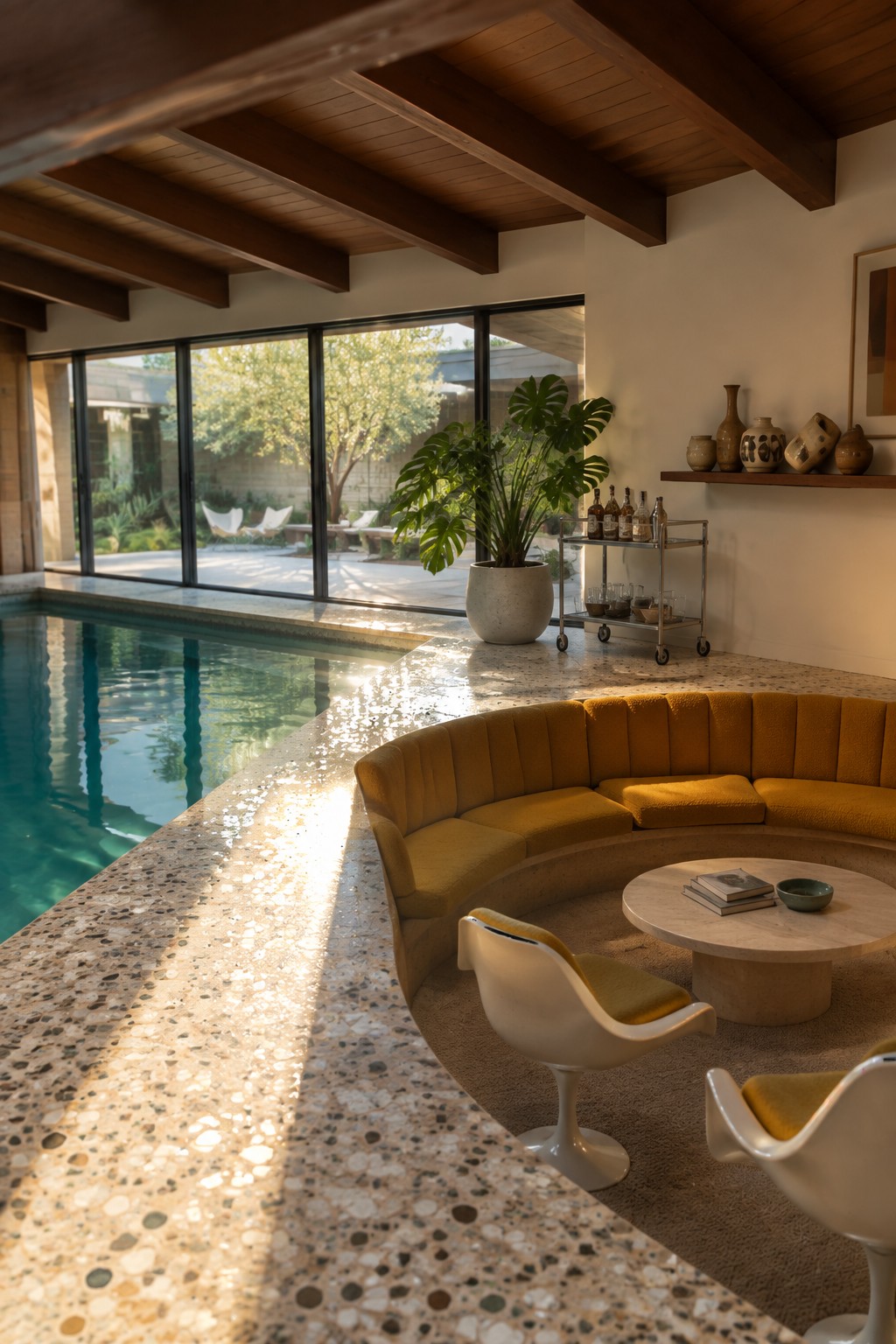
A curved sectional placed right beside an indoor pool turns the edge of the water into a real sitting area instead of just a walkway. The shape helps the furniture feel like it belongs there, wrapping the space so people can face the pool without needing extra chairs or awkward angles.
This layout works best in rooms that already have open floor space and a simple floor material like terrazzo or concrete. Keep the curve low and the fabric durable so it holds up to humidity and still feels like part of the living area rather than patio furniture moved indoors.
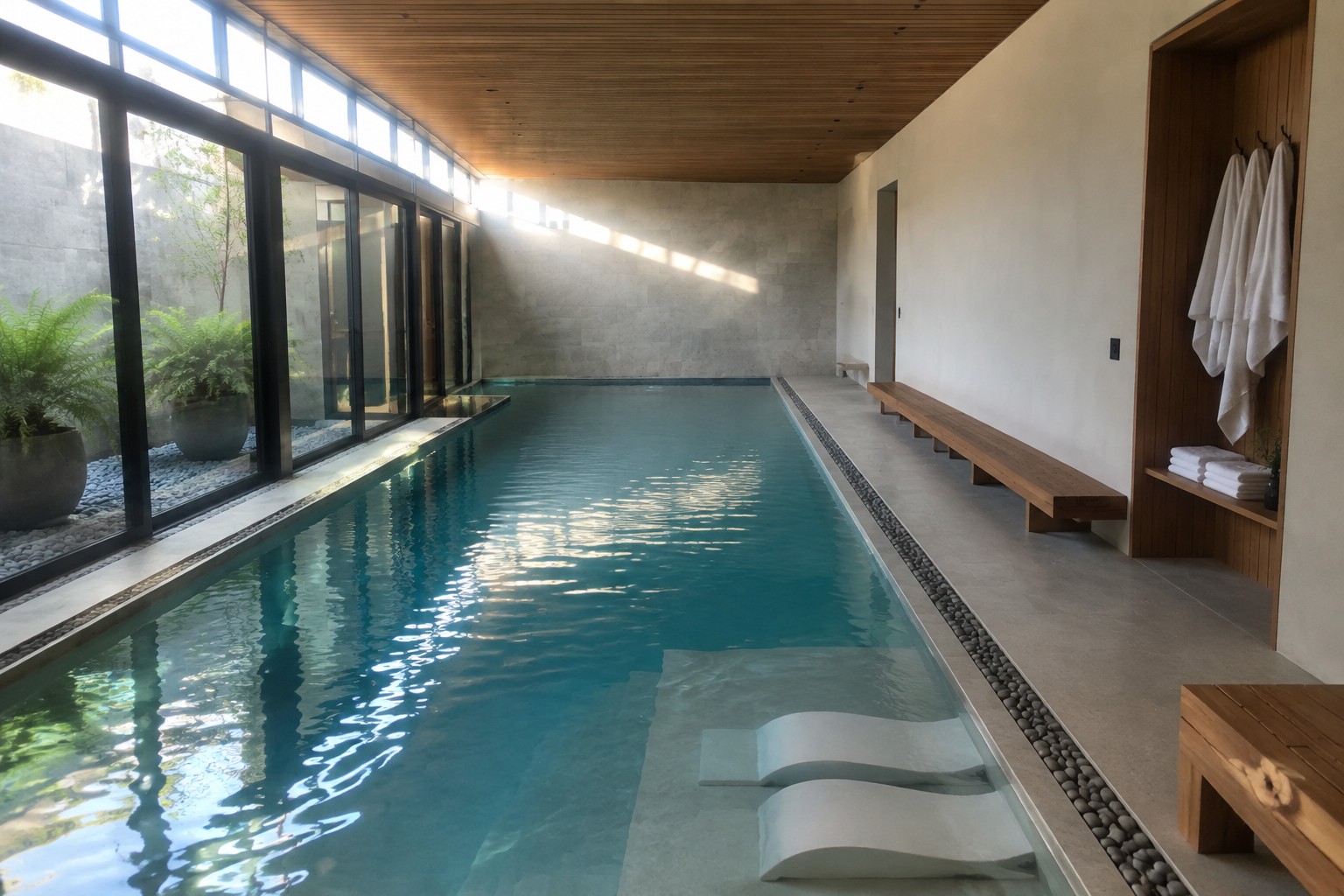
A Wooden Bench Gives You An Easy Pool Lounge
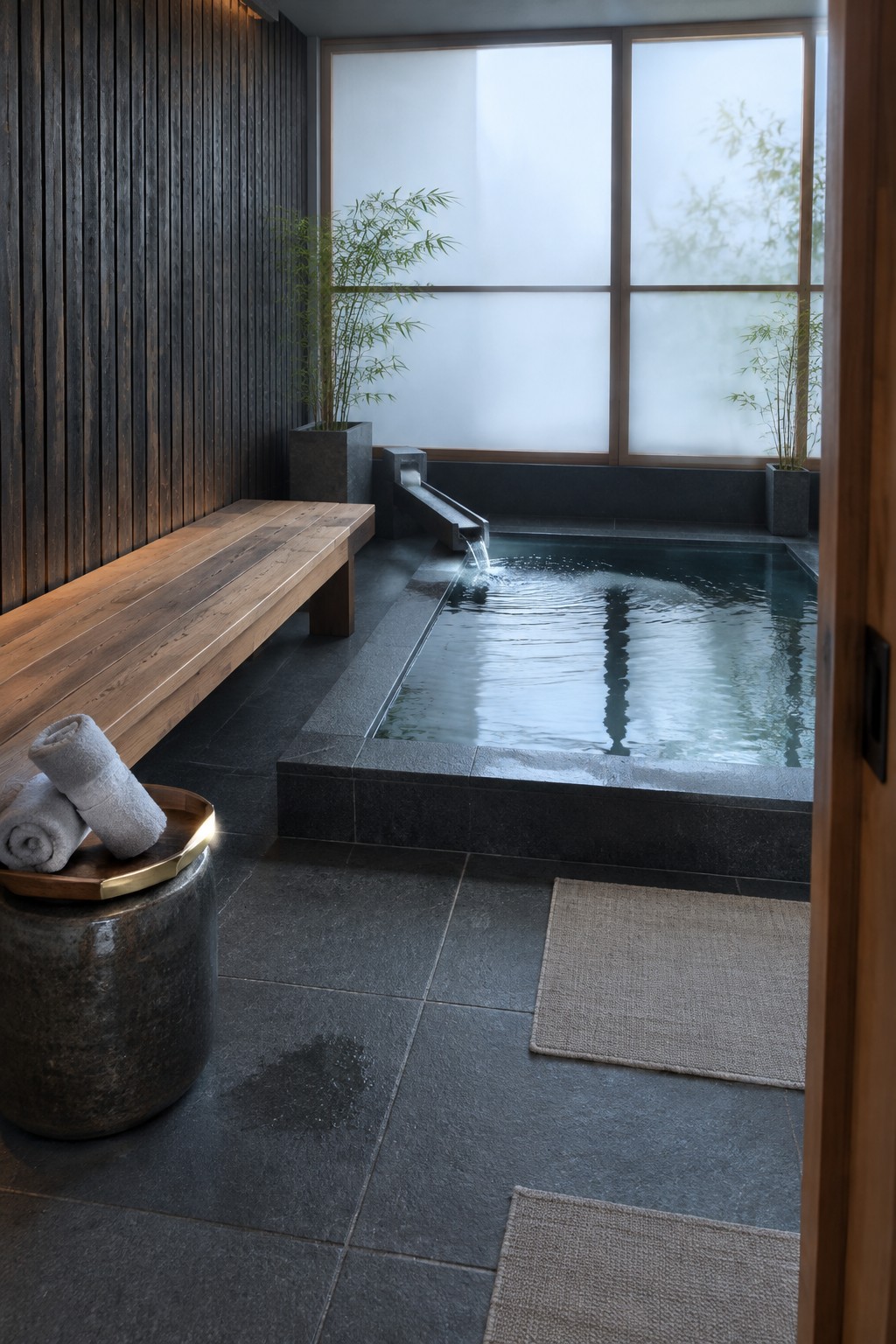
Many indoor pools feel more usable when there is a simple place to sit right beside the water. A long wooden bench placed along the wall does the job without taking up much space or adding clutter. It keeps towels and robes within reach and creates a spot to rest between swims.
This setup works best in rooms that already use natural materials like stone and wood. The bench stays low so it does not block the view of the pool, and it suits homes that want a quiet, practical space rather than a big lounge setup. Just keep the bench clear of too many extras so the area stays open and easy to move around.
Curved Sofas And Low Chairs For A Relaxed Pool Retreat
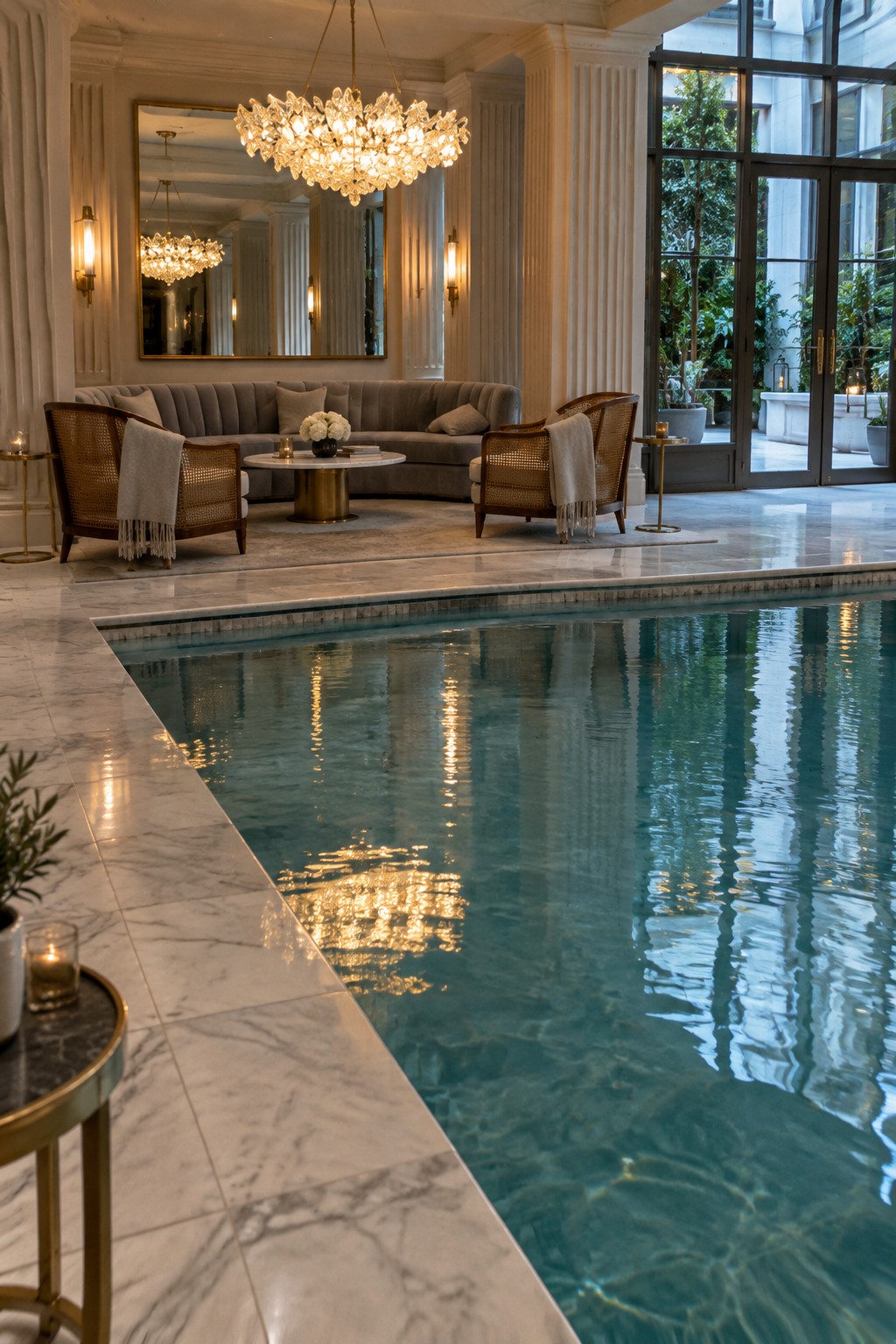
One simple way to make an indoor pool feel more usable is to add a real lounge area right next to it. A curved sofa and a couple of low chairs with soft throws turn the space into somewhere you can sit and relax without leaving the room. The seating stays dry and comfortable while still keeping the water close.
This works best in homes that already have the floor space for both the pool and furniture. Keep the pieces low and the materials easy to maintain so the area stays inviting instead of feeling like a separate zone. Avoid crowding the edge, but do bring the seating close enough that the pool and lounge read as one connected space.
Space-Saving Built-In Benches For Small Indoor Pools
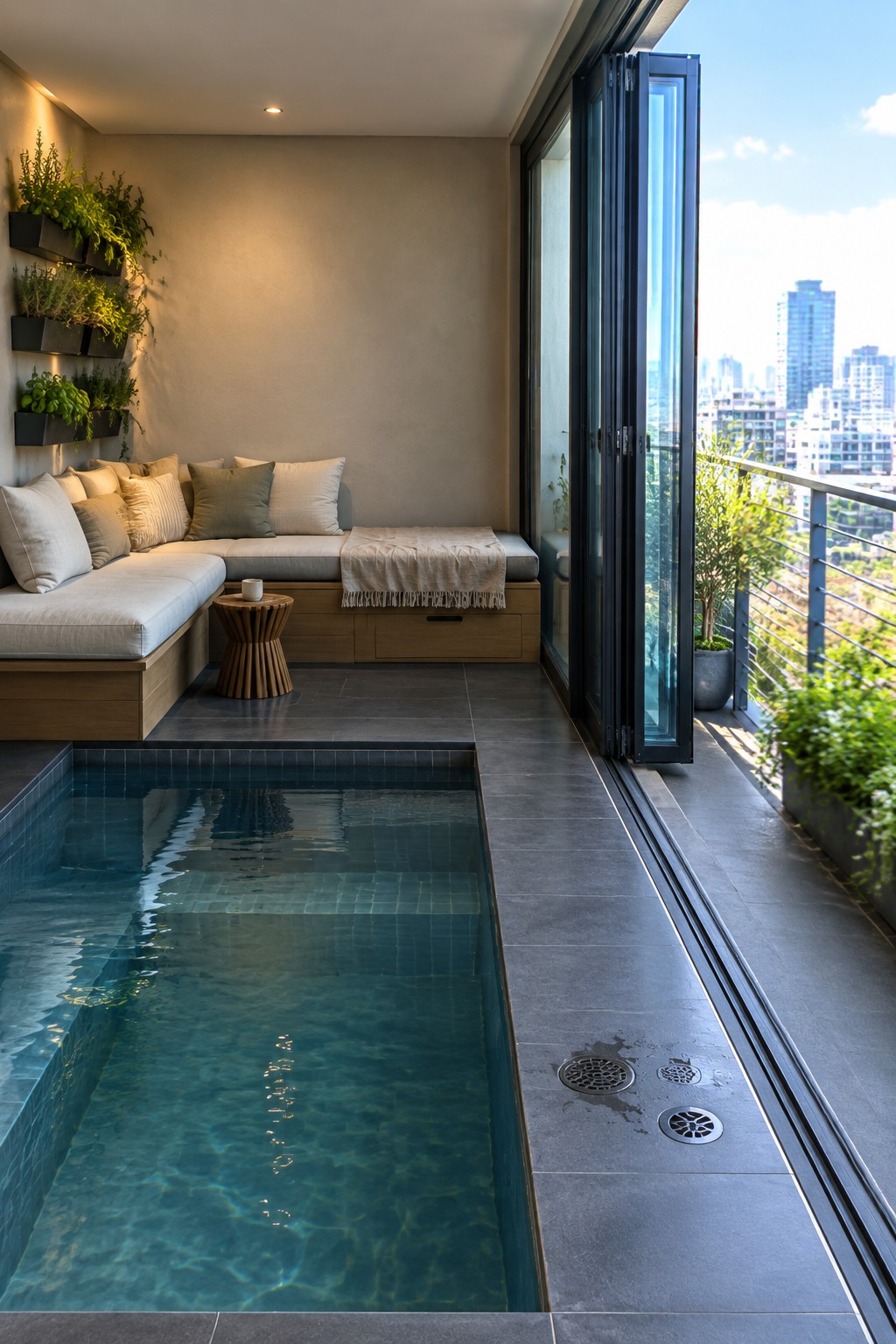
Many indoor pools end up feeling a bit empty without a clear place to sit and relax right by the water. A built-in bench along one wall solves that by creating a dedicated lounge zone that stays out of the way while still feeling connected to the pool.
This setup works especially well in smaller homes or apartments where floor space is limited. The bench can include hidden storage underneath for towels and supplies, and simple cushions keep it comfortable without adding clutter.
Poolside Recliners With A Convenient Side Table
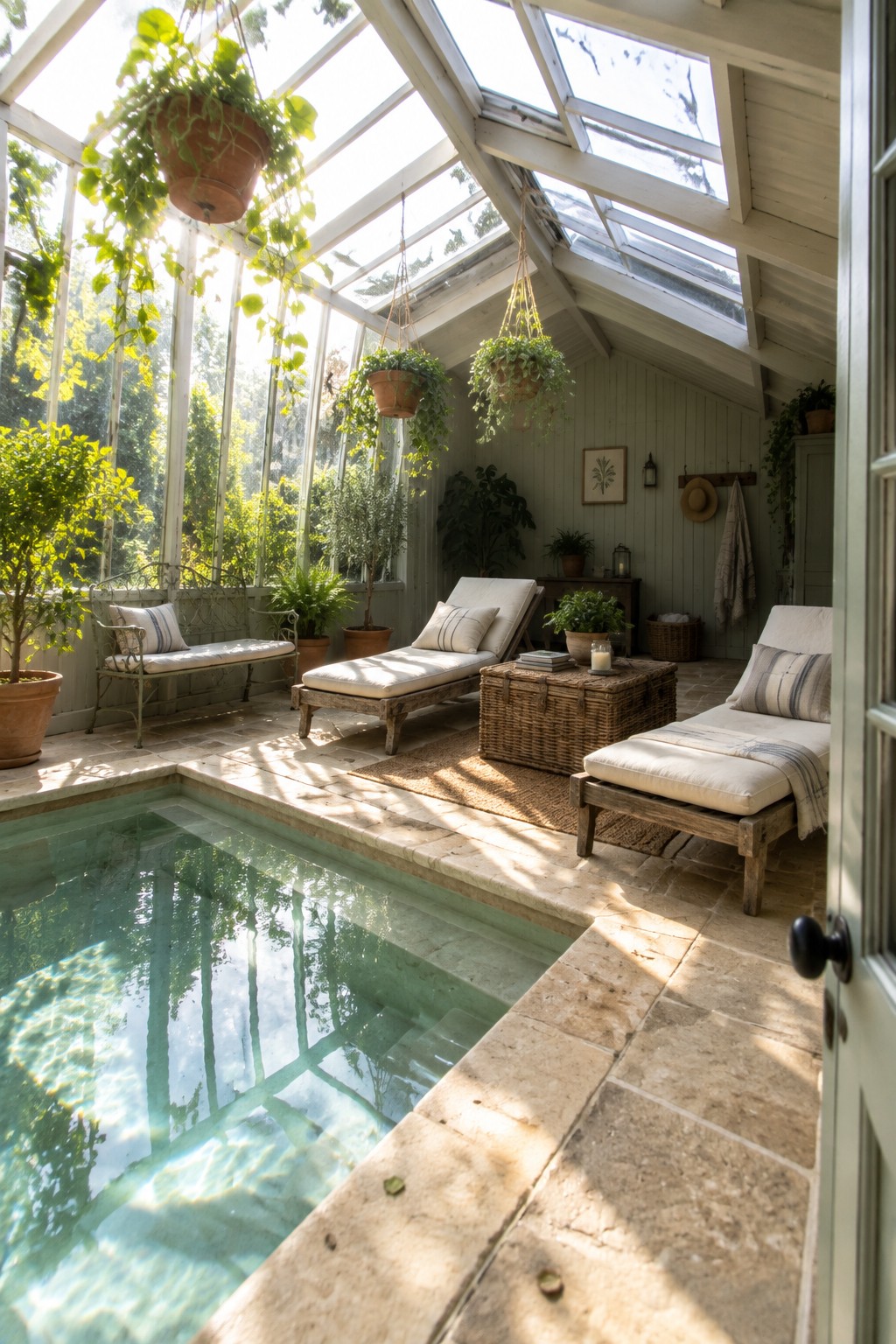
Placing a couple of lounge chairs right at the edge of an indoor pool makes the whole space feel more usable. You can swim a few laps and then stretch out without needing to go to another room. It turns the pool from something you look at into something you actually spend time around.
This setup works best in rooms that already get steady daylight, since the chairs invite people to linger. A simple side table between them, like a low trunk, keeps towels and a book close without crowding the deck. It suits homes that want a relaxed pool area rather than a formal one.
Wooden Tables And Moisture-Resistant Chairs For Casual Pool Lounging
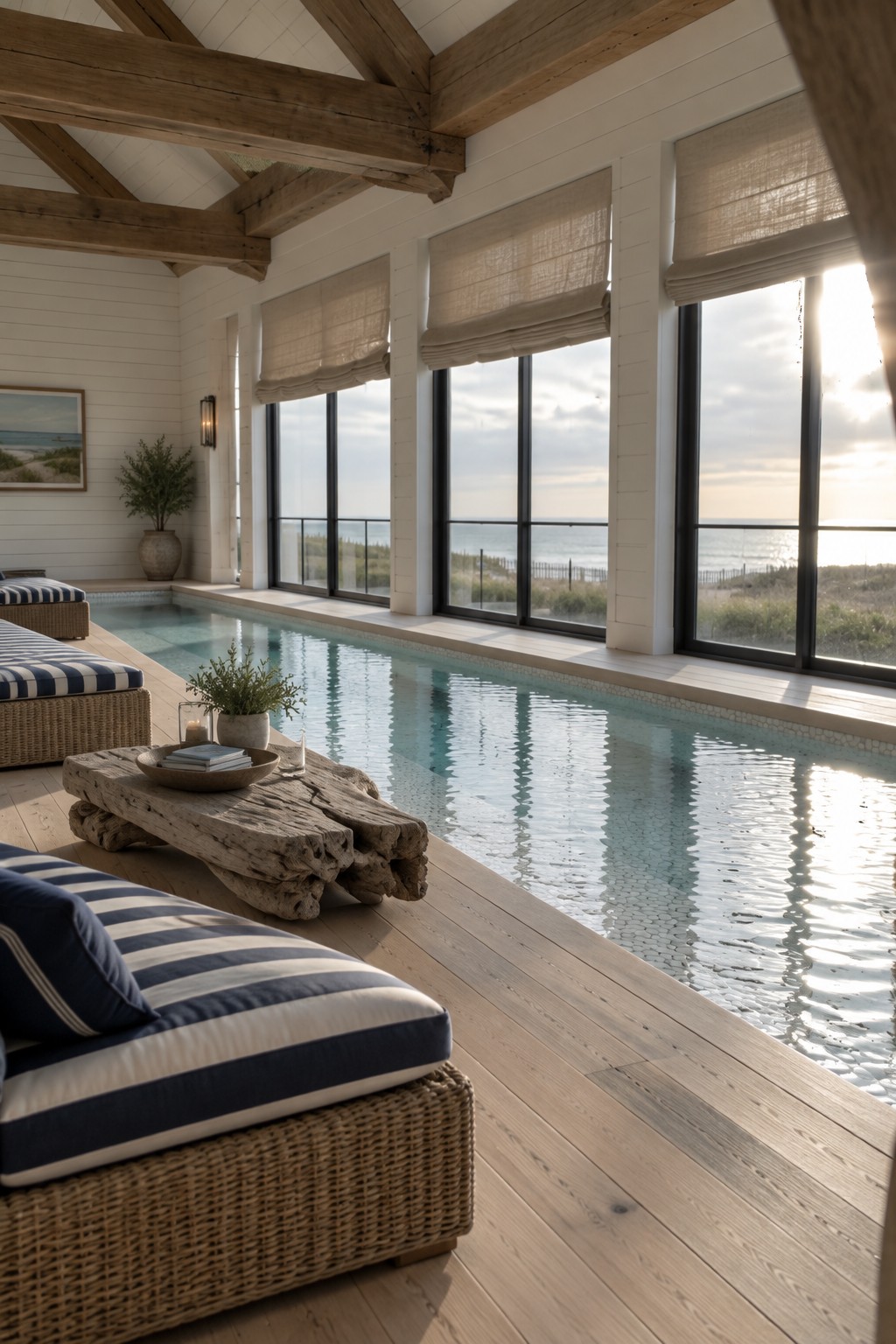
Placing lounge chairs and a low table right next to an indoor pool makes the whole room feel more usable. People can swim, then sit and rest without needing to go to another part of the house. The simple wood table and soft cushions keep the area relaxed instead of stiff or overly styled.
This layout works best in pool rooms that double as everyday living space. Use fabrics that handle moisture and choose furniture low enough that it does not block the view across the water. Avoid crowding the edge so the pool itself stays the main feature.
Creating Dedicated Lounge Areas With Draped Canopies
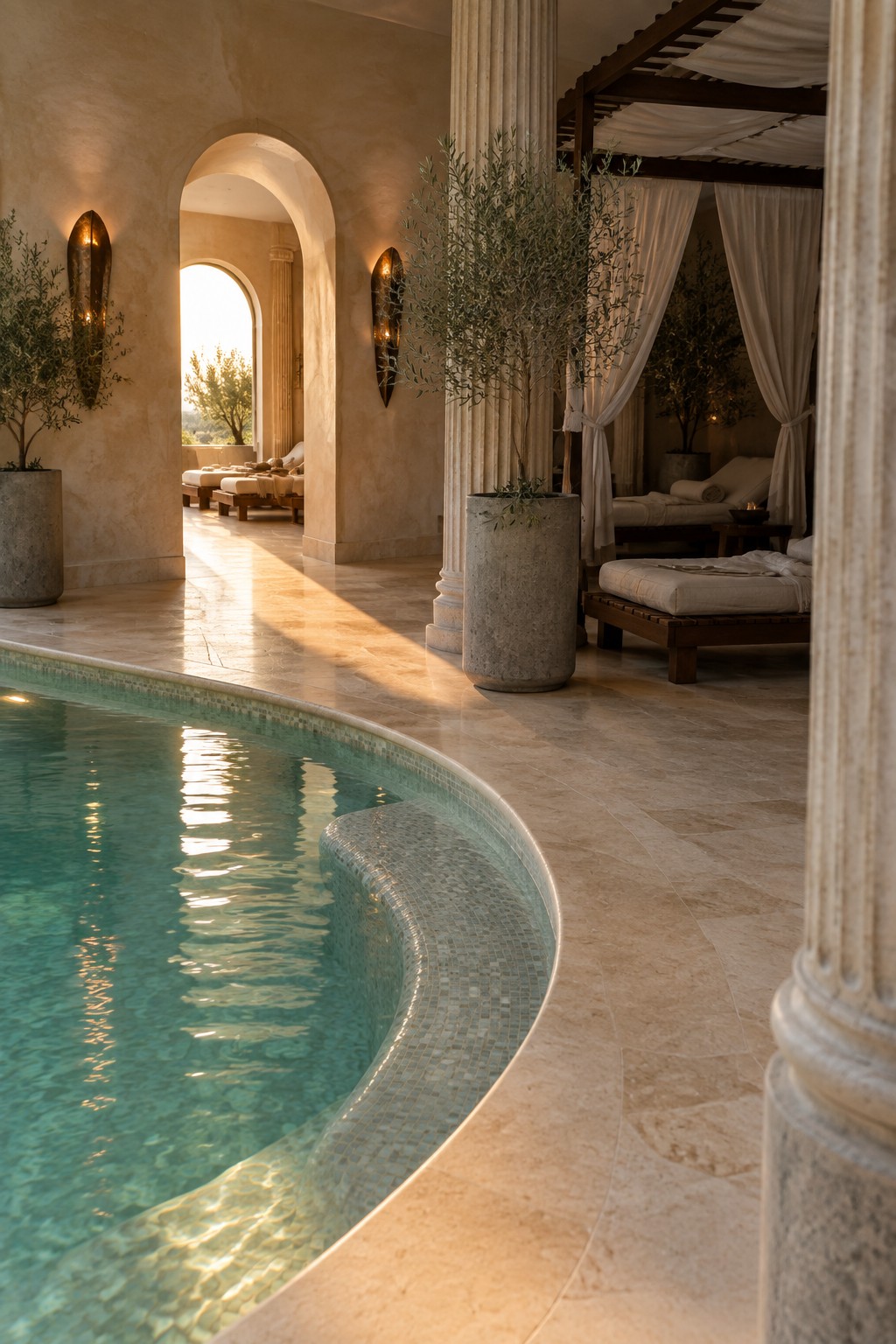
Placing canopied daybeds right beside an indoor pool helps turn the space into something more than just a place to swim. The draped fabric marks out clear spots for resting and gives a softer feel to the hard surfaces around the water.
This works best in larger pool rooms where you have room to spread things out without crowding the edge. Keep the canopies in light fabrics so air still moves through, and add a few big plants nearby to make the lounges feel more settled.
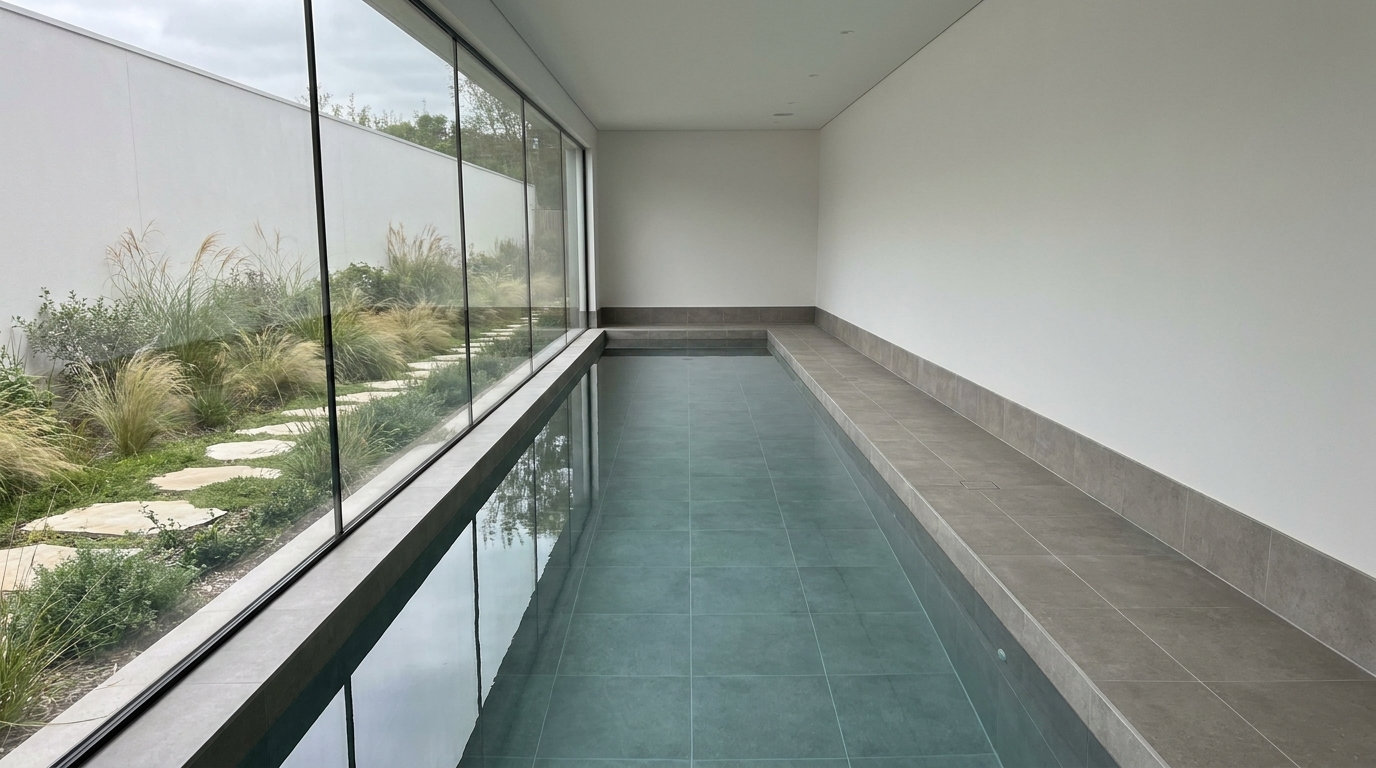
Low Platforms For A Simple Poolside Lounge
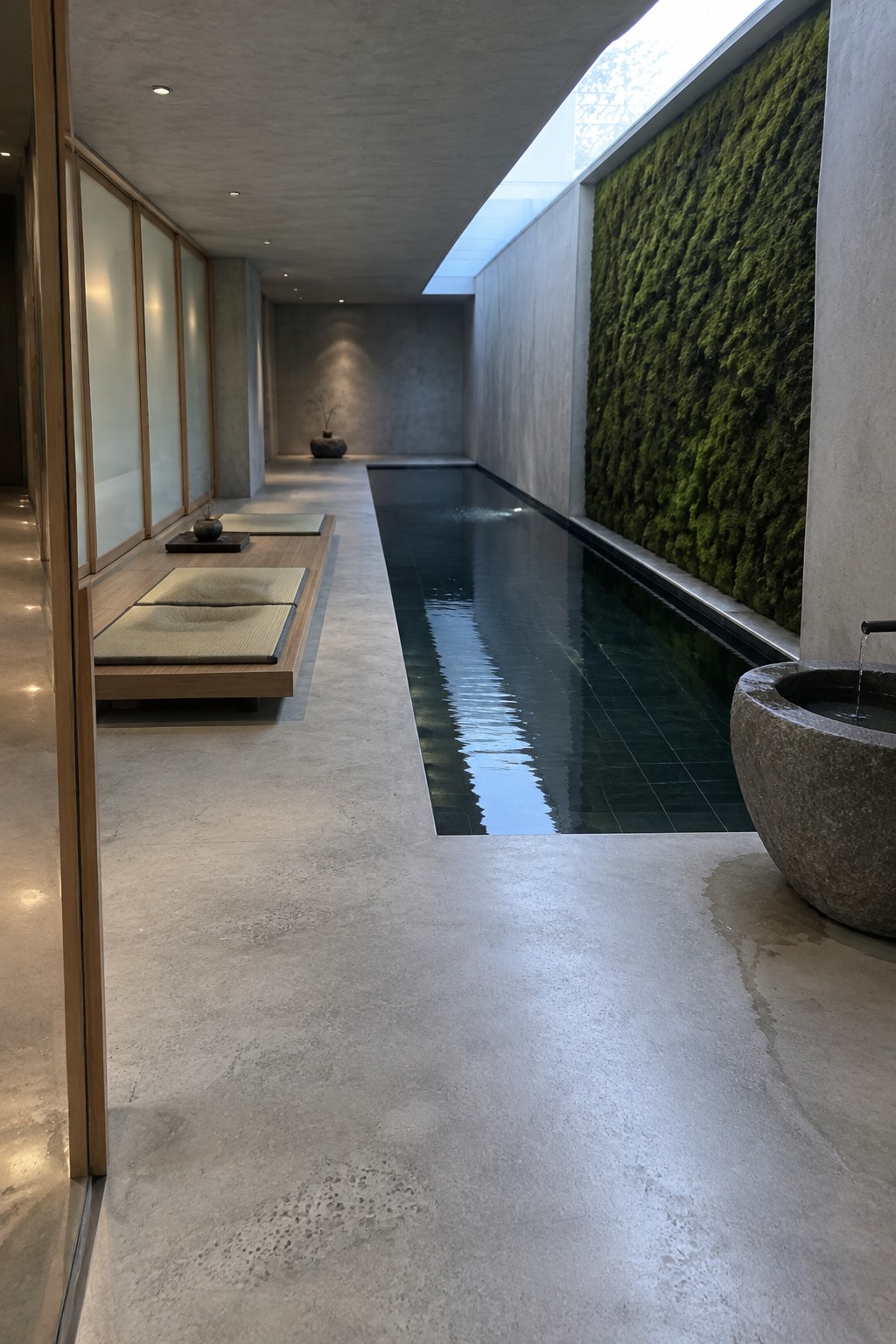
One way to make an indoor pool more usable is to run a low wooden platform along one side with simple mats on top. This creates a dedicated spot to sit or lie down without adding bulky furniture that would crowd the water.
The approach works best in concrete or minimalist rooms where you want the pool to stay the main feature. It suits homes that already have a narrow lap pool and need an easy place to rest between swims without extra visual noise.
Leather Sofas And Wood Tables For Indoor Pool Lounging
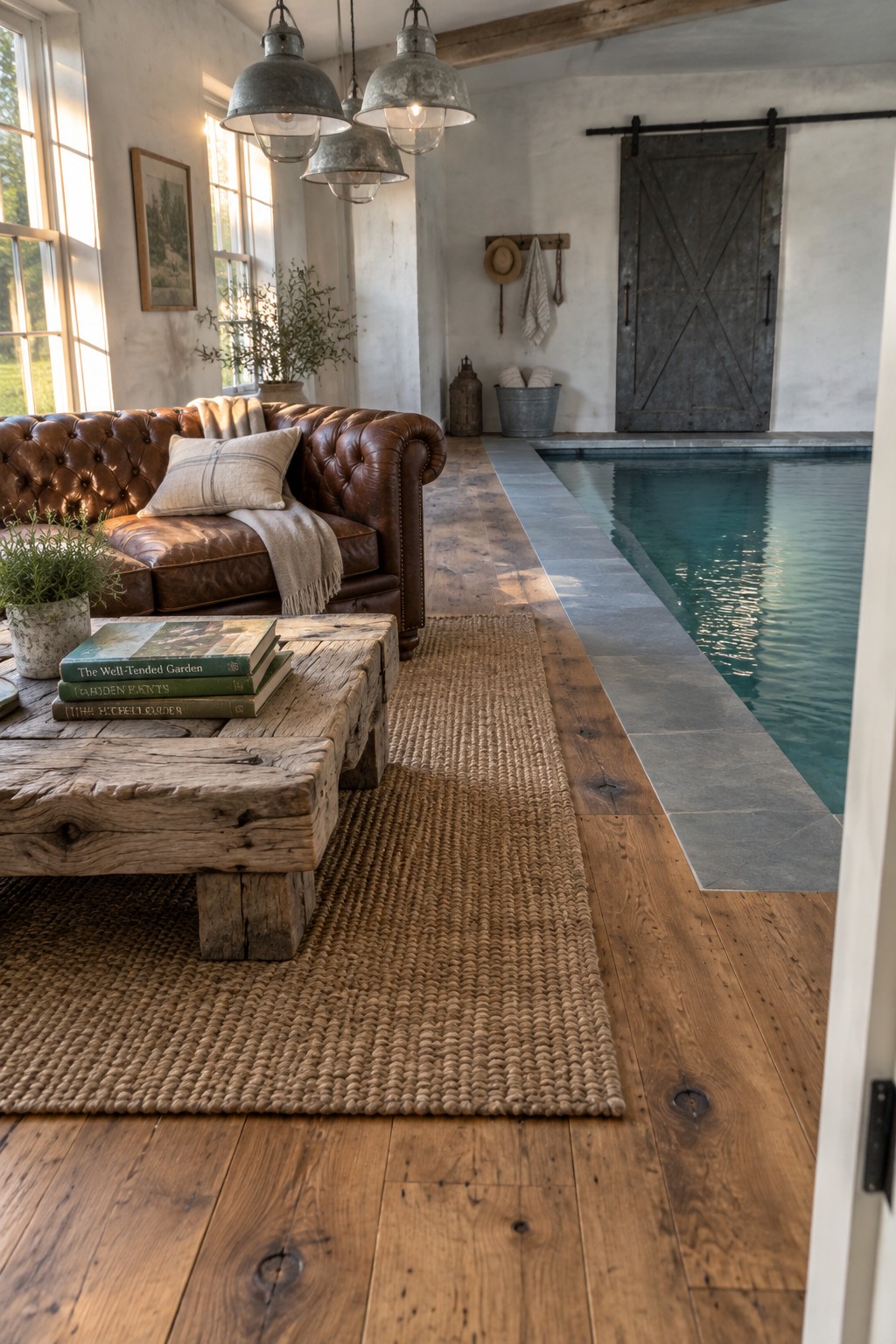
Placing a full sofa right beside an indoor pool gives the room a purpose beyond swimming. The seating turns the water into a backdrop for relaxing, reading, or just sitting with a cup of coffee, rather than a feature you only use for laps.
This works best in homes where the pool room also serves as living space. A sturdy leather sofa and low wood table hold up well near moisture, and the arrangement keeps the area from feeling like a hallway between the house and the water. Leave enough clearance for walking around the furniture without crowding the edge.
Low Seating Along the Pool Edge
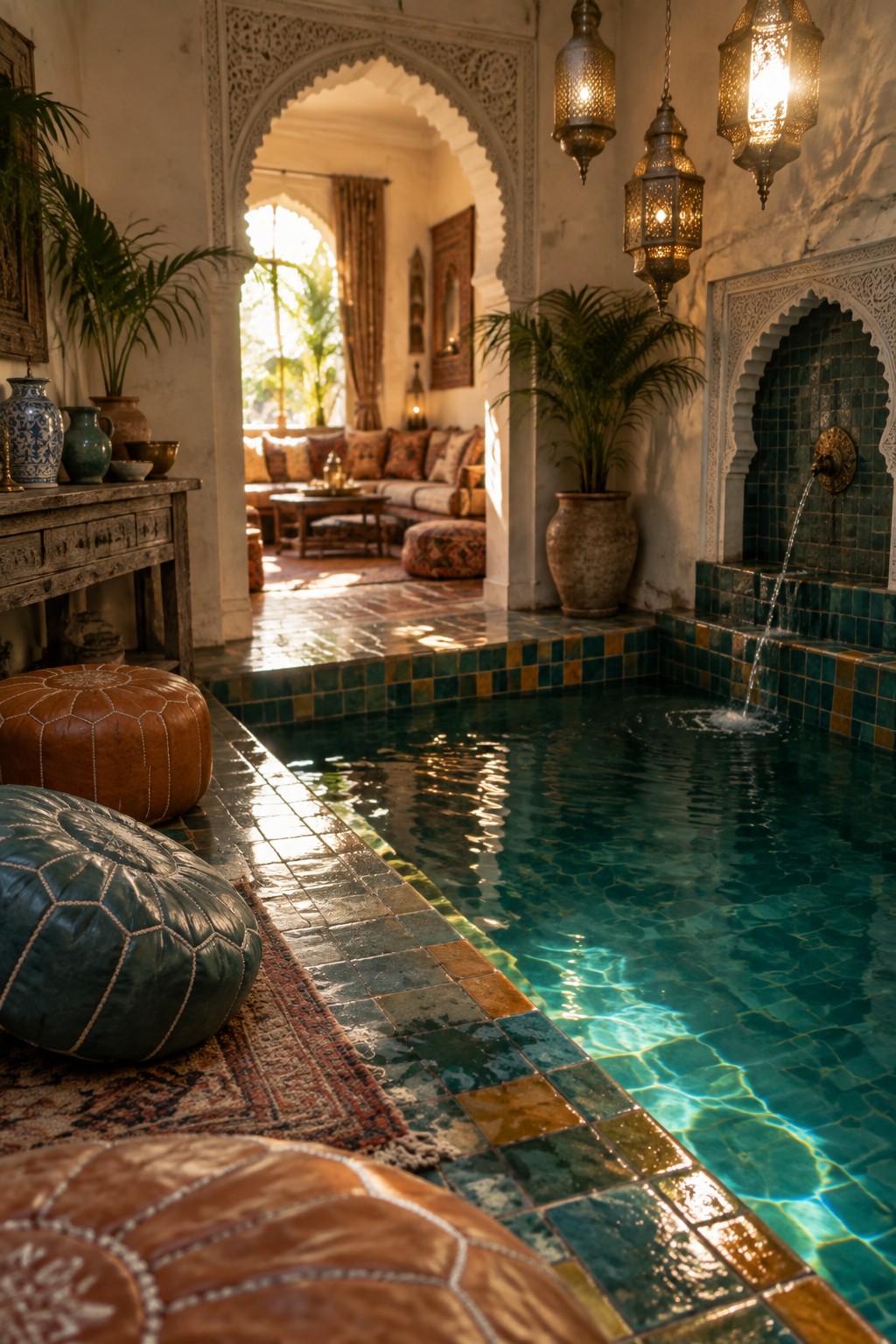
Placing low poufs right along the edge of an indoor pool gives people a simple way to sit close to the water without needing big chairs or raised platforms. The tiled border acts as a natural divider, so the seating feels connected to the pool but still stays dry and comfortable. This setup works especially well when the space has an eclectic or collected look rather than a strictly modern one.
It suits homes with smaller indoor pools or those trying to keep the room from feeling too formal. The poufs can be moved around as needed, which makes the area more flexible for different group sizes. Just make sure the floor surface stays non-slip near the water.
A Curved Lounge Chair With a Woven Rug and Side Table
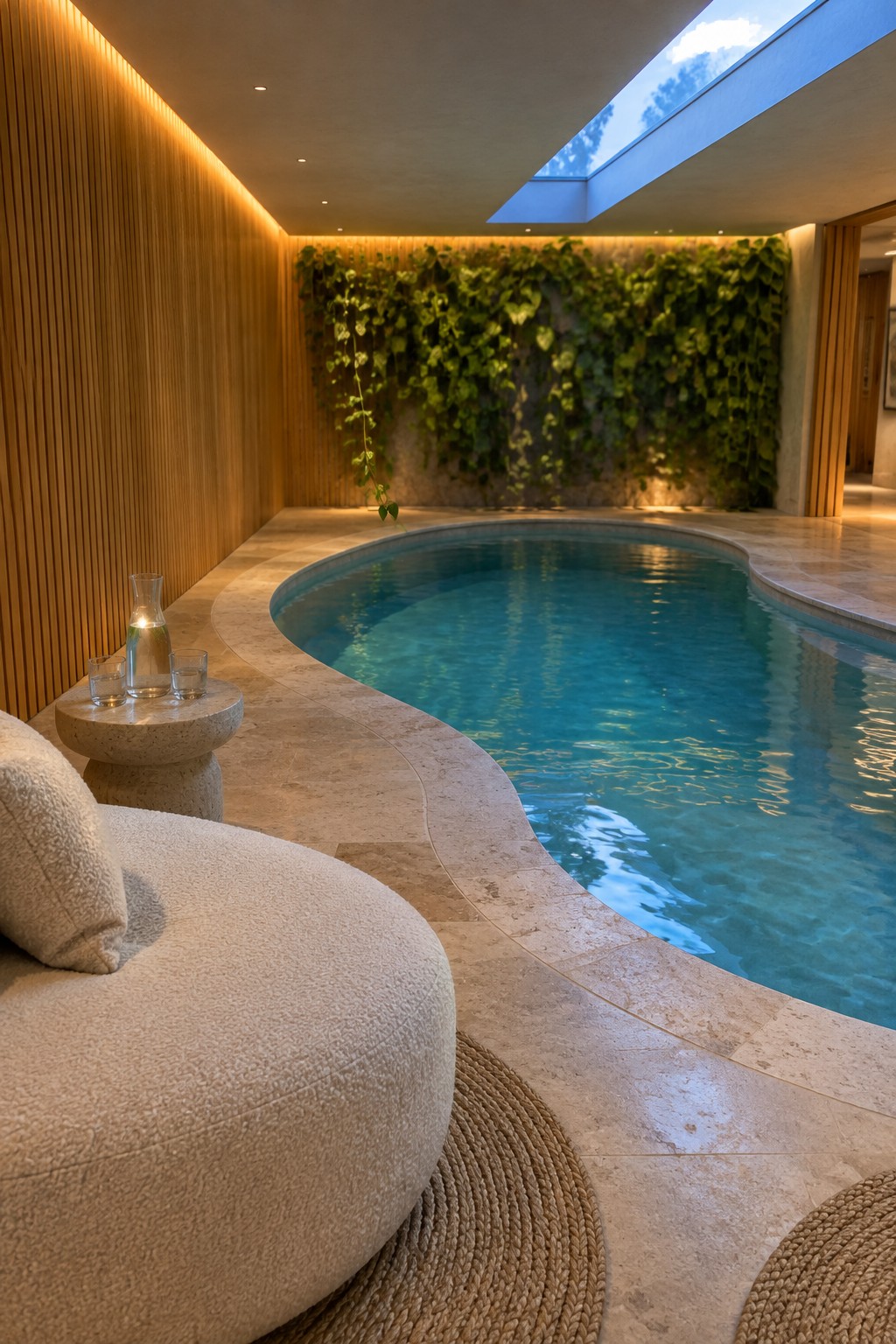
Placing a lounge chair directly beside an indoor pool creates a simple spot to relax without getting in the water. The soft texture of the chair contrasts nicely with the hard stone decking and makes the whole area feel more like a living space than just a pool room.
This works best in homes where the pool serves as a daily retreat rather than a lap lane. Keep the seating low and curved so it follows the pool shape, and add a small side table for drinks or towels. A woven rug underneath helps define the lounge zone without crowding the deck.
Frequently Asked Questions
Q: How do I stop the lounge cushions from getting damp near the pool? A: Pick quick-dry fabrics made for outdoor use and store a few spares in a sealed bench. Run a ceiling fan on low during the day to move air across the seating. This keeps everything usable without extra steps each time you swim.
Q: What works for lighting if I want to lounge after dark? A: Install dimmable sconces along the walls and a couple of waterproof floor lamps near the chairs. Set them on separate switches so you can keep the pool bright while the lounge stays softer. Test the setup at night before you finish the room.
Q: Do I need special flooring under the lounge chairs? A: Use textured tile or sealed concrete that drains well and stays cool under bare feet. Skip carpet or wood that warps from splashes. One solid surface around the whole area makes cleanup faster and feels more inviting.
Q: How close should the lounge sit to the water edge? A: Leave at least three feet so people can walk around without bumping chairs. This gap also gives you room to add a small side table without crowding the path.