When I think about creating a wellness space indoors, the first thing that comes to mind is how the pool area needs to blend with daily living areas without feeling separate.
Materials that resist humidity while still looking warm can make a big difference in whether you actually use the space regularly.
Good circulation around the water matters a lot.
I have noticed that placing the hot tub in a spot with easy access from the main living areas encourages more frequent use than tucking it away in a basement corner.
Some of these concepts seem worth adapting based on the size of the room and how it connects to other parts of the home.
Elevating the Hot Tub on a Platform
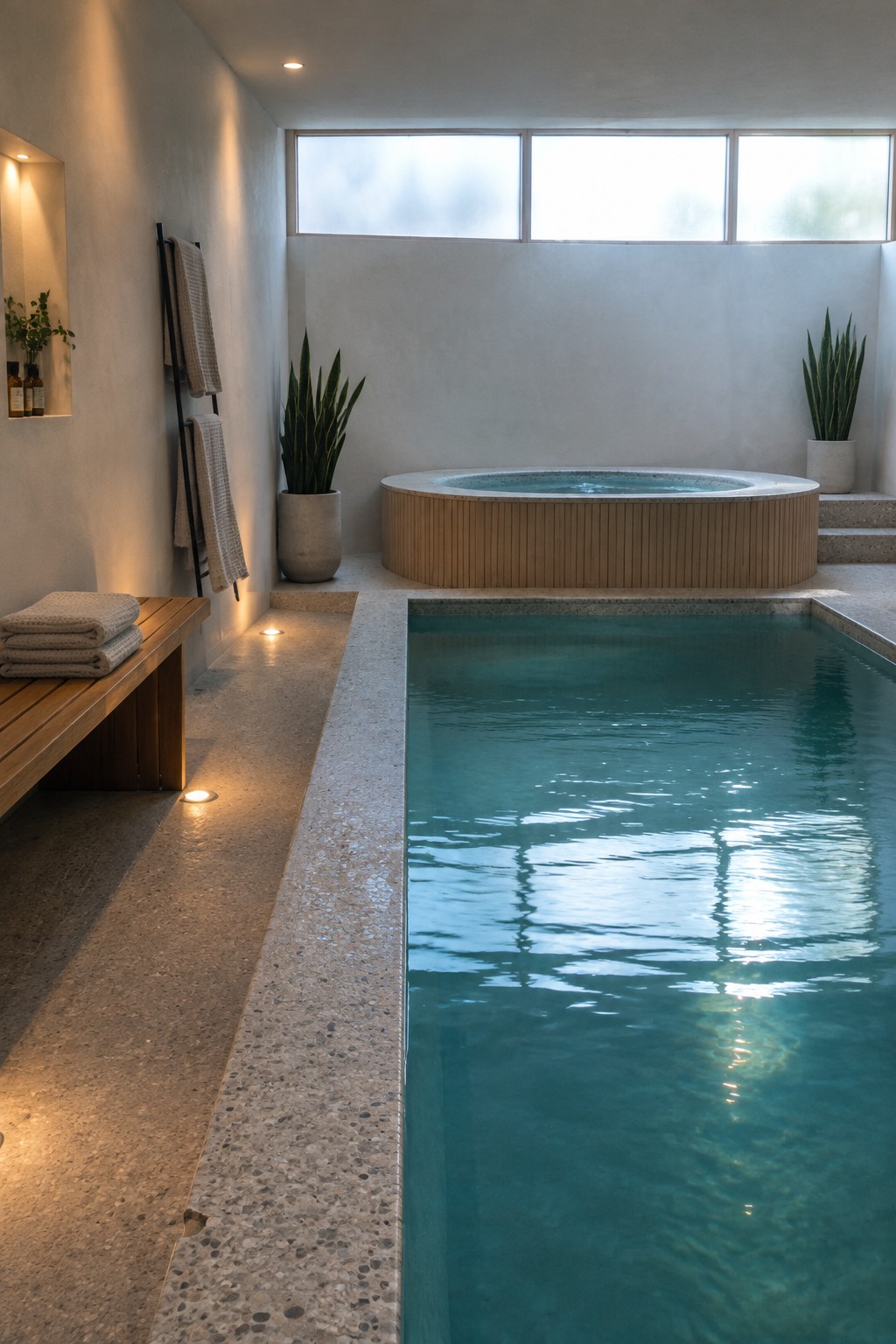
Raising the hot tub a step or two above the pool deck helps split the space into clear zones. One area stays for swimming and the other becomes a dedicated spot for soaking. The wood cladding on the tub adds a warmer touch that balances the concrete surfaces around it.
This works best in fairly open indoor pool rooms where you want separation without adding walls or screens. It suits homes that already lean toward simple finishes, and the slight height makes the tub easier to step into. Just make sure the platform material matches the surrounding floor so the whole area still feels connected.
Rustic Materials for an Indoor Pool Area
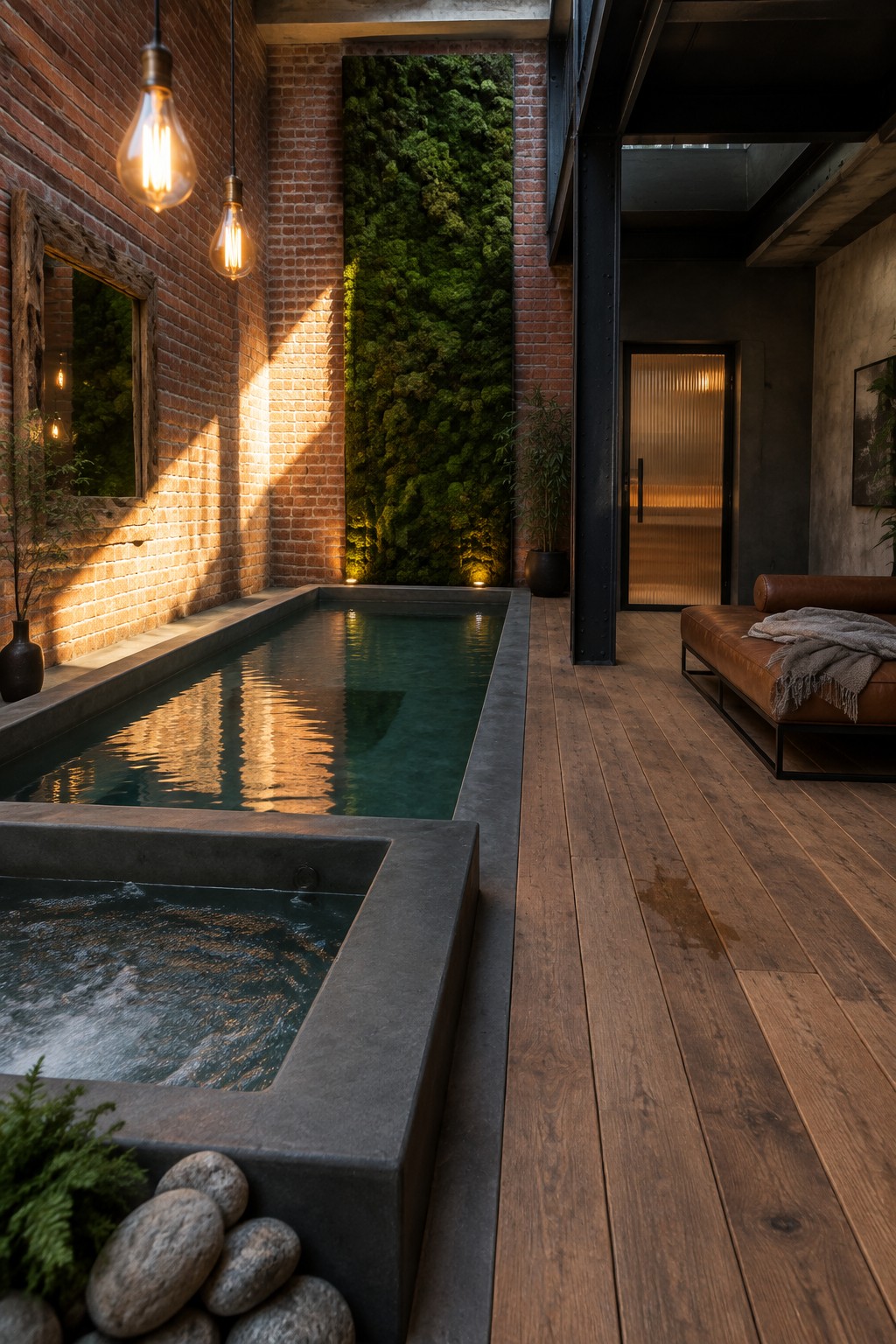
Exposed brick paired with dark wood flooring gives an indoor pool a grounded, home-like feel instead of the usual sleek tile look. The warmth of the materials makes the space feel calmer and more inviting, which works well when you want the pool to feel like part of the house rather than a separate facility.
This approach suits larger homes or converted industrial spaces where you have room for both a lap pool and a smaller hot tub. Keep an eye on ventilation and sealing, since brick and wood need protection from constant moisture.
Pairing An Indoor Pool With A Matching Hot Tub
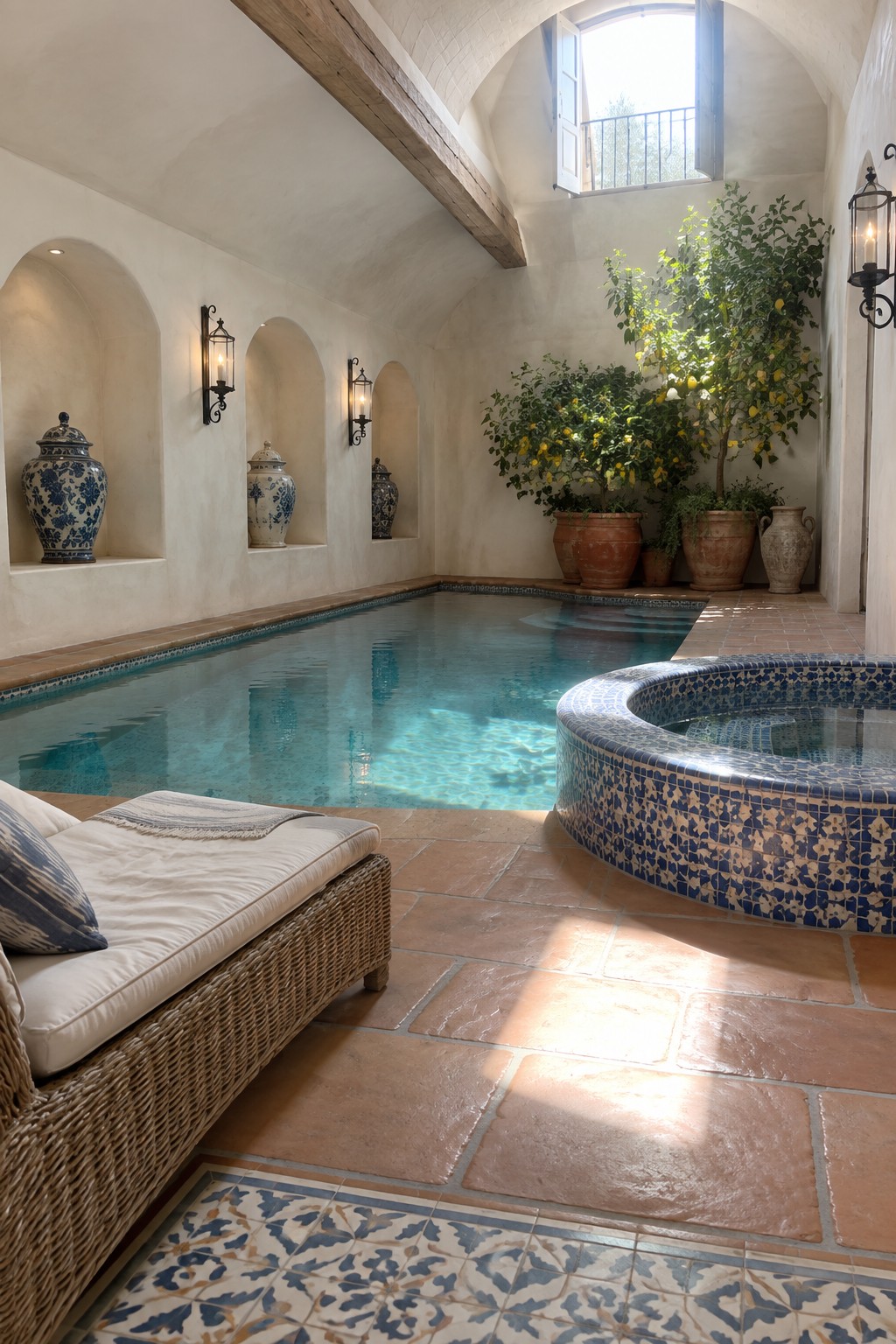
Many people like the idea of keeping the hot tub right beside the main pool in the same room. It creates an easy shift between swimming and soaking, and the shared space feels more like a small home spa than two separate features.
This works best in homes with high ceilings and room for both. Stick to the same tile border on the pool edge and hot tub to keep things simple, and use terracotta flooring to tie the whole area together without extra effort.
Add a Wooden Soaking Tub Next to the Indoor Pool
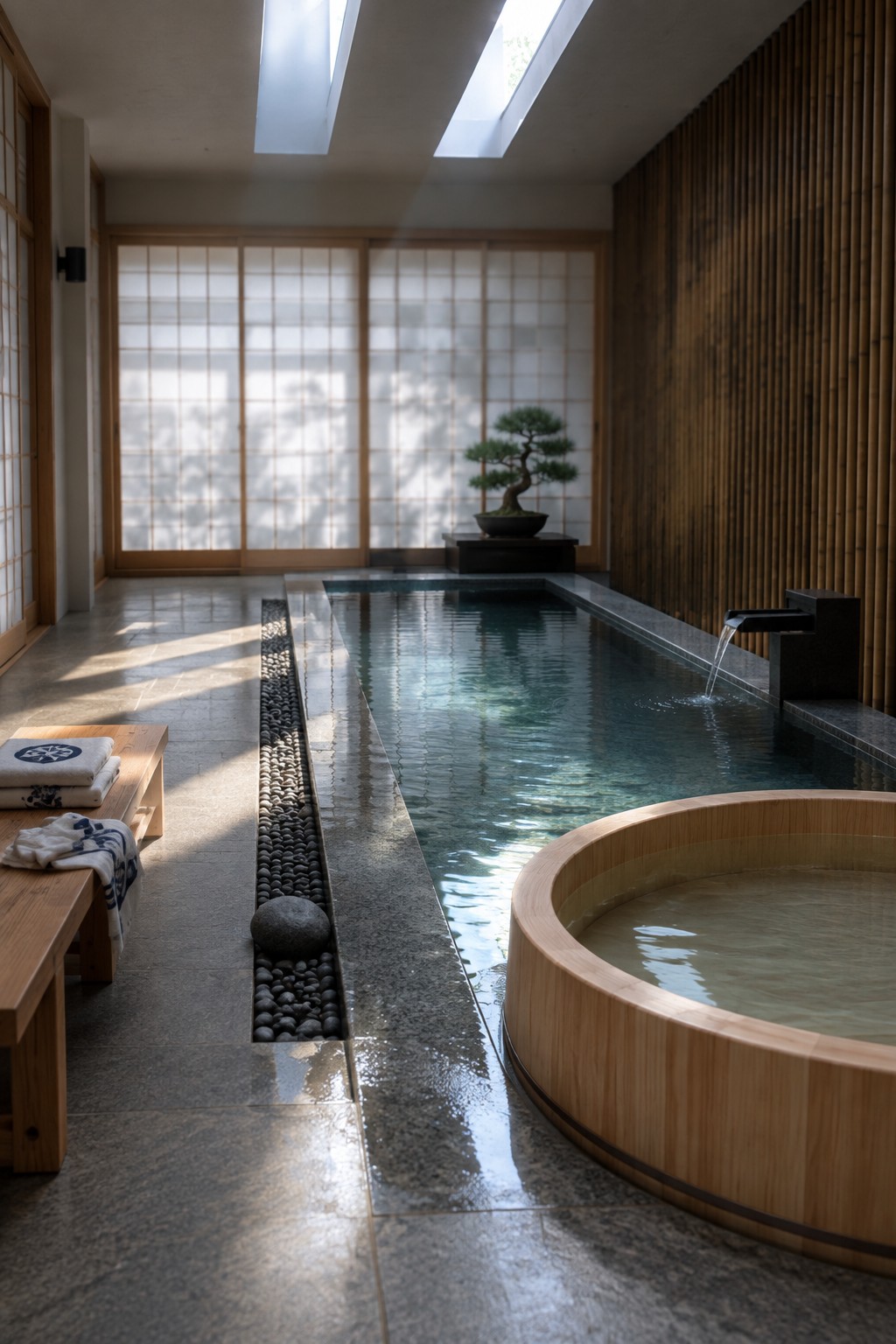
Many homes now include both a lap pool and a separate soaking tub in the same room. The wooden tub gives you a different temperature and a more enclosed feel, so you can move between the two without changing spaces.
This setup works best in a dedicated wellness room with good ventilation and a drain nearby. Keep the wood sealed and check it often, since moisture builds up fast in these areas.
Warm an Indoor Pool With a Fireplace
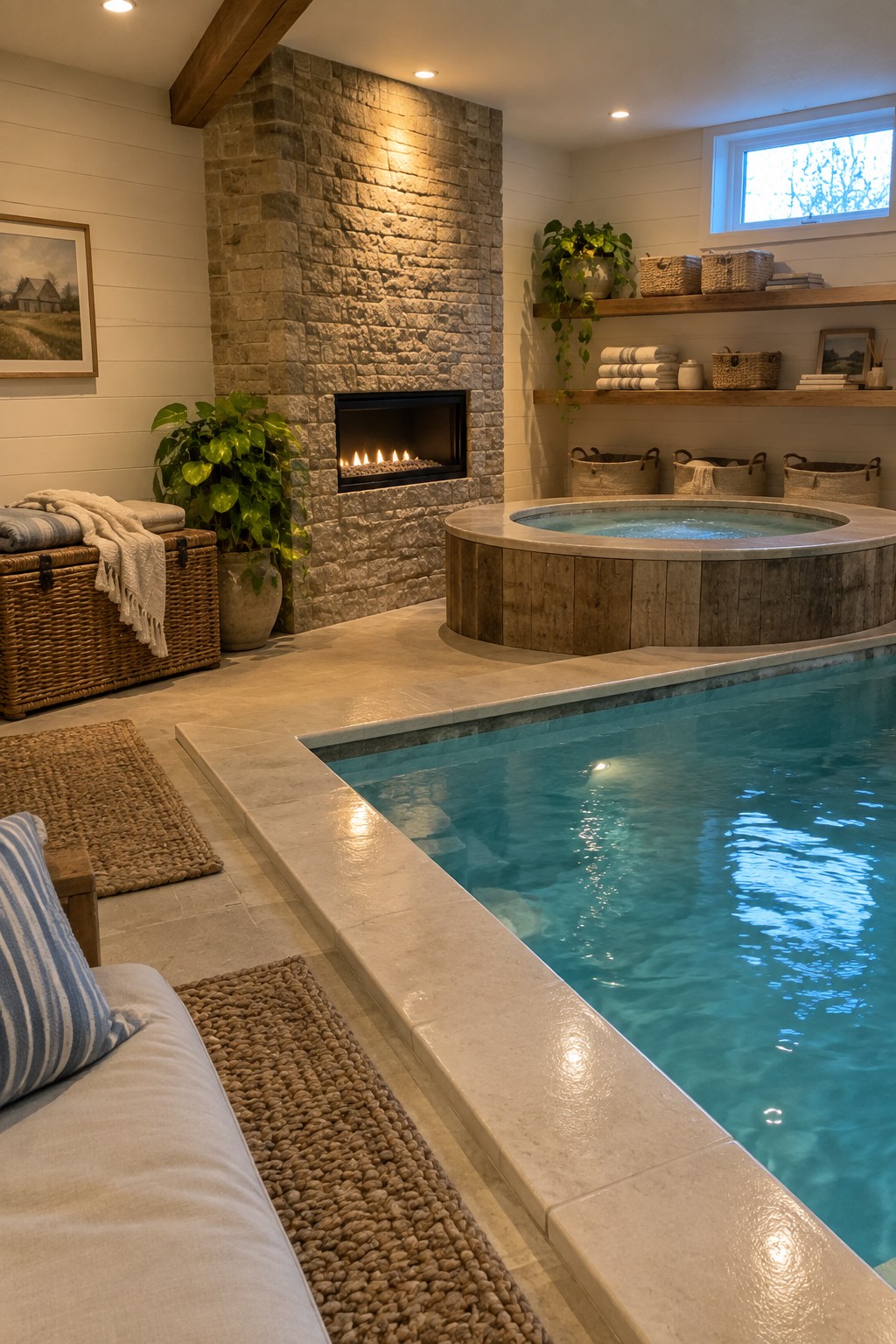
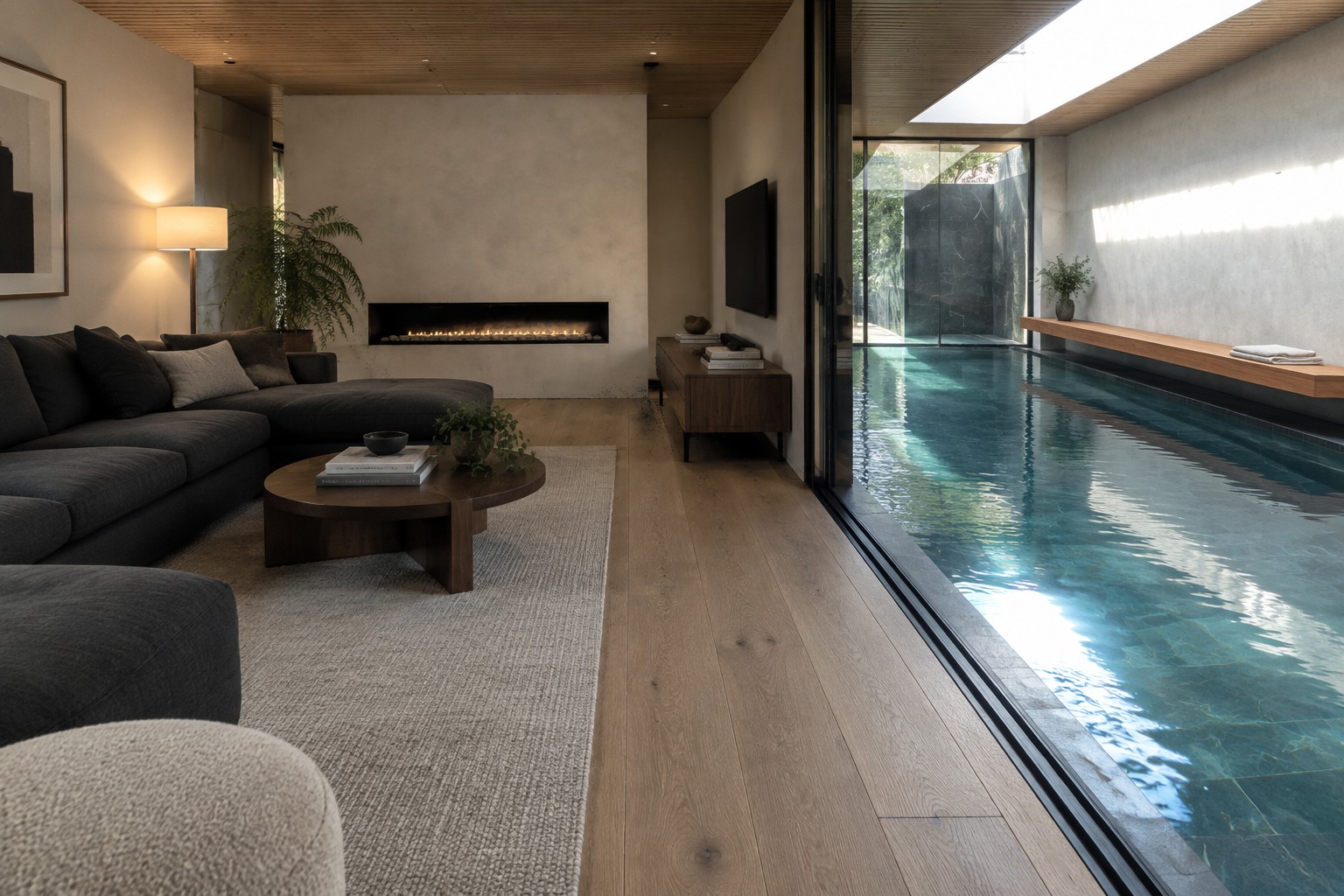
A fireplace next to an indoor pool gives the space a steady source of heat that makes swimming more comfortable in cooler months. The stone surround also adds texture that contrasts nicely with the water and helps the room feel less like a plain pool enclosure.
This setup works best in homes with enough floor space to keep the fire at a safe distance from the water. Stone or similar masonry holds up well in humid conditions, and the fire becomes the natural spot to gather after a swim.
Pairing an Indoor Pool with a Separate Hot Tub
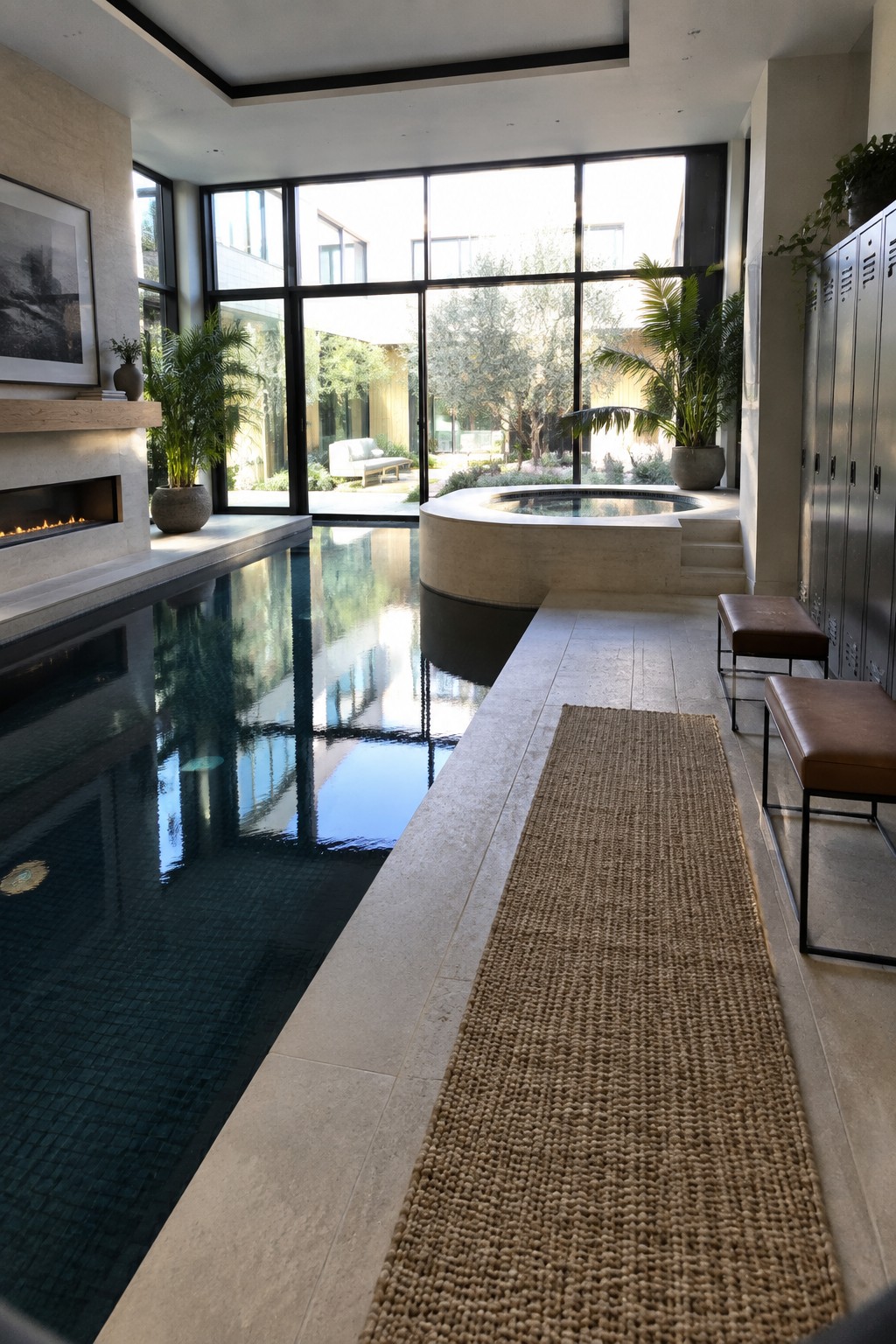
Many homes work well when the pool and hot tub sit side by side instead of trying to combine them into one feature. This keeps the lap area clear for swimming while giving the hot tub its own slightly raised spot with easy steps.
The setup suits bigger rooms that already have good natural light and solid flooring. Keep the surrounding space open with just a simple path and a few plants so the two zones stay distinct and the whole room does not feel crowded.
Adding a Hot Tub Next to an Indoor Pool
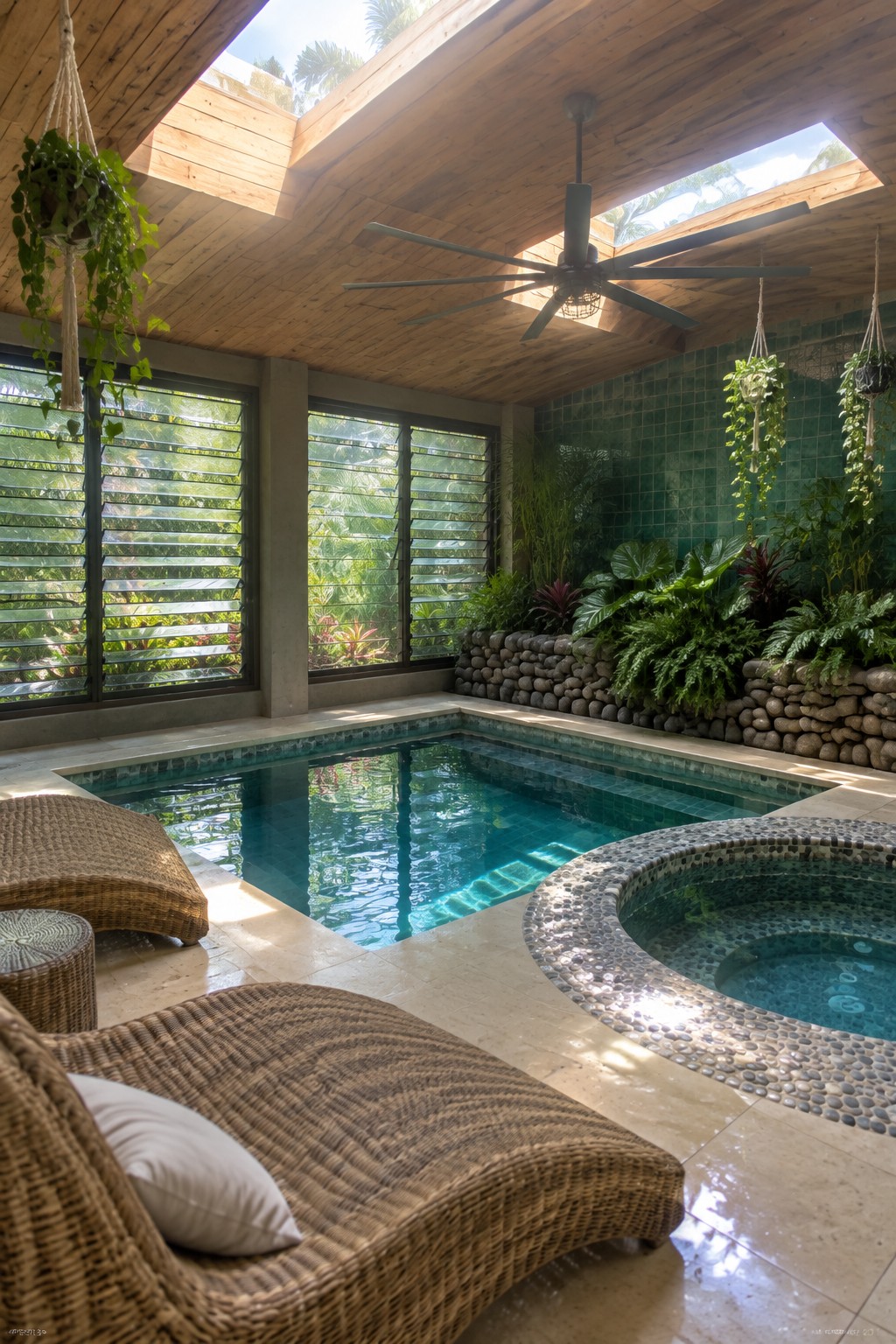
Many homes with indoor pools benefit from adding a smaller soaking area right beside the main water. It gives you two different ways to use the space without needing a second room. The setup feels practical because you can swim first and then move straight into warmer water.
This works well in homes that already have a large enough indoor area with high ceilings. Good airflow matters here, so plan for windows or vents that can handle the humidity. Natural touches like wood overhead and a few plants help keep the room from feeling too closed in.
Incorporate A Separate Soaking Area Next To The Pool

Many indoor pool rooms feel more useful when there is also a smaller soaking spot right beside the main pool. It lets people choose between a longer swim and a shorter warm soak in the same space.
This setup works best in homes that already have room for a wellness area. Keep the two water sections distinct in shape but connect them with matching tiles and simple seating like a wooden bench nearby. Good ventilation and separate temperature controls help the whole room stay comfortable over time.
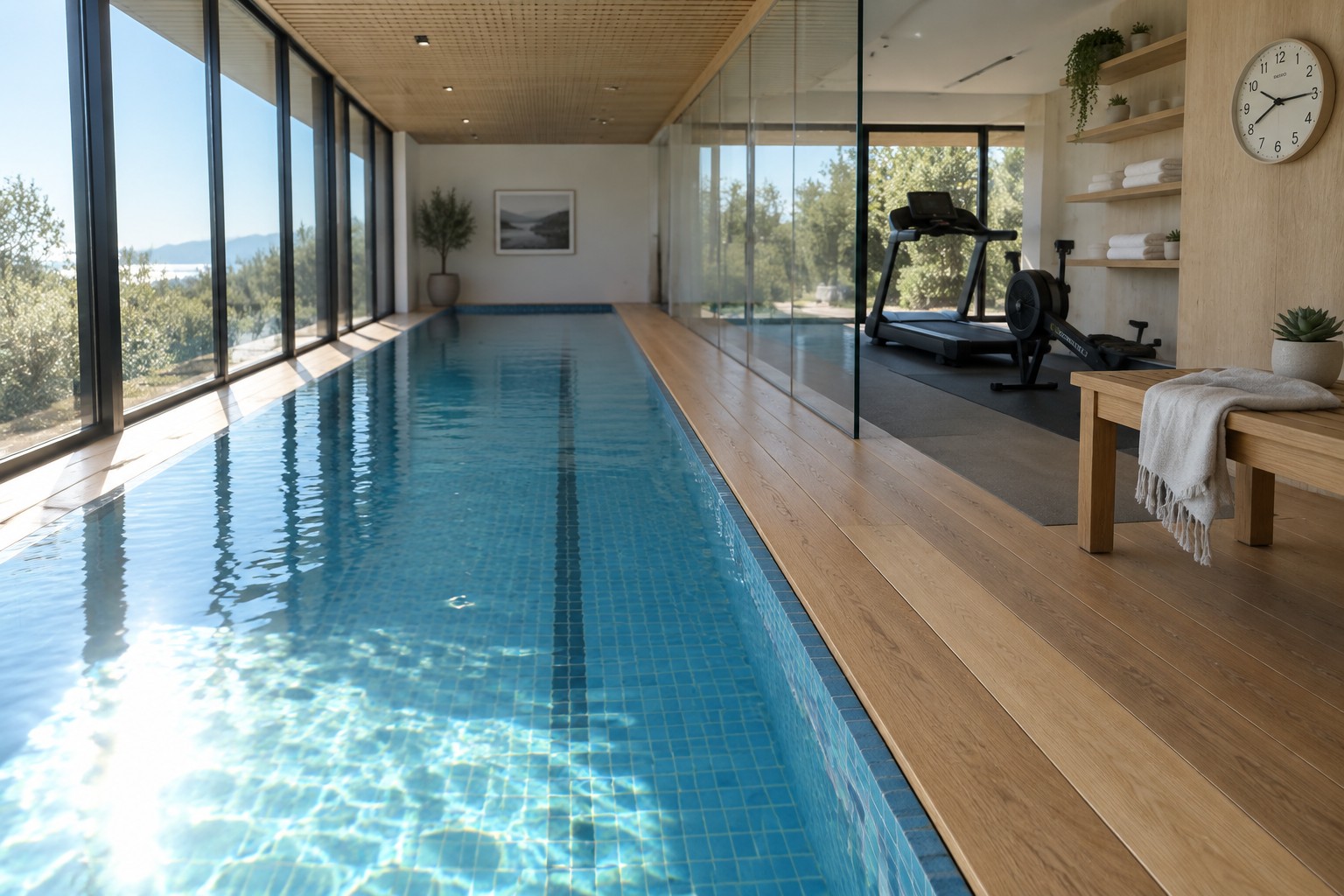
Wood Decking That Connects An Indoor Pool To Living Space
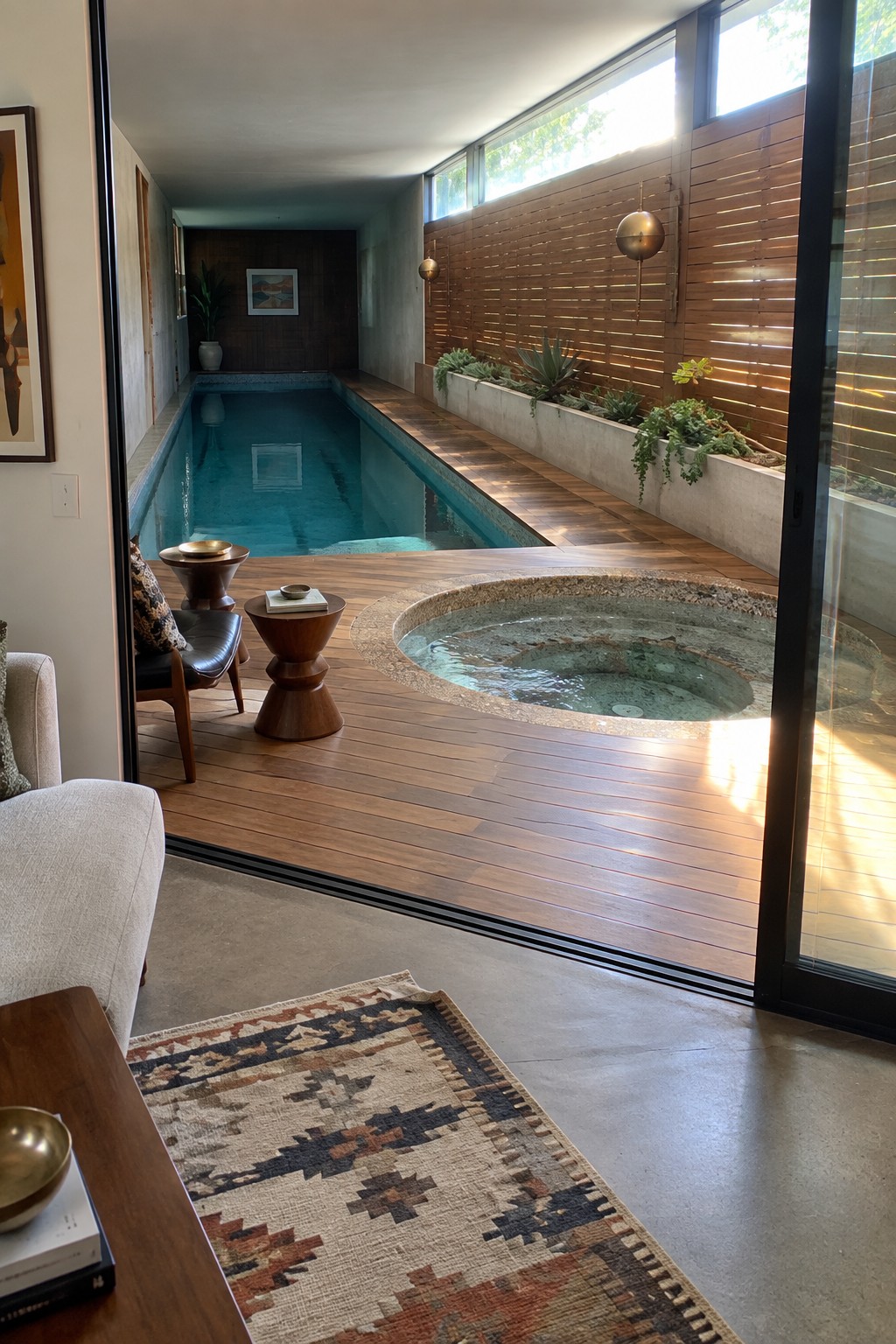
Many homes add an indoor pool for daily use, but the real comfort comes when the surrounding decking feels like part of the main floor rather than a wet zone. The wood surface lets furniture sit right at the edge and gives the whole room a warmer, more finished look instead of cold tile everywhere.
This layout works best in spaces with high ceilings and good airflow so moisture does not build up. Choose a decking material rated for humidity, and keep the pool and hot tub edges low so the floor flows without barriers.
Add a Simple Wooden Bench Near Your Indoor Pool
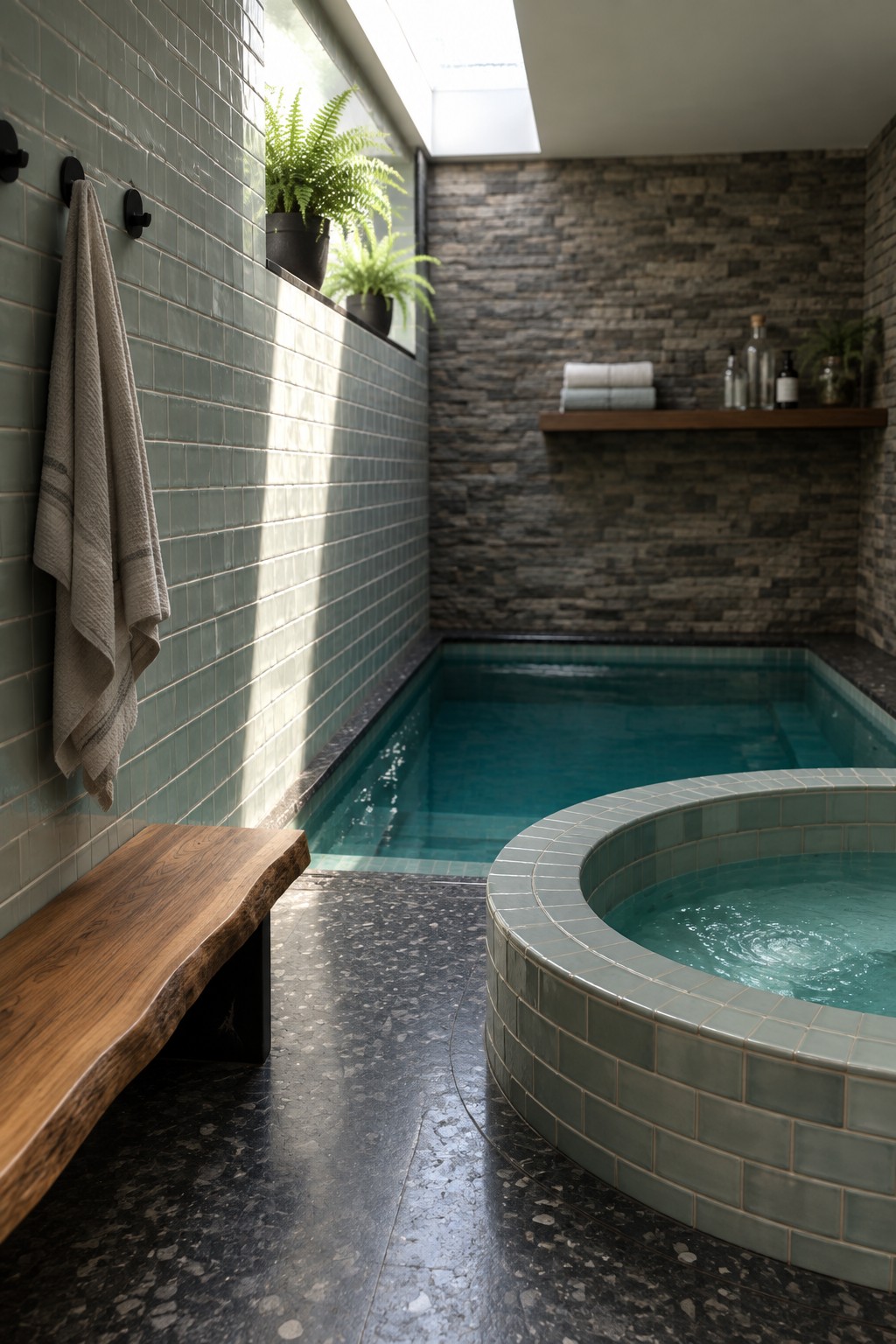
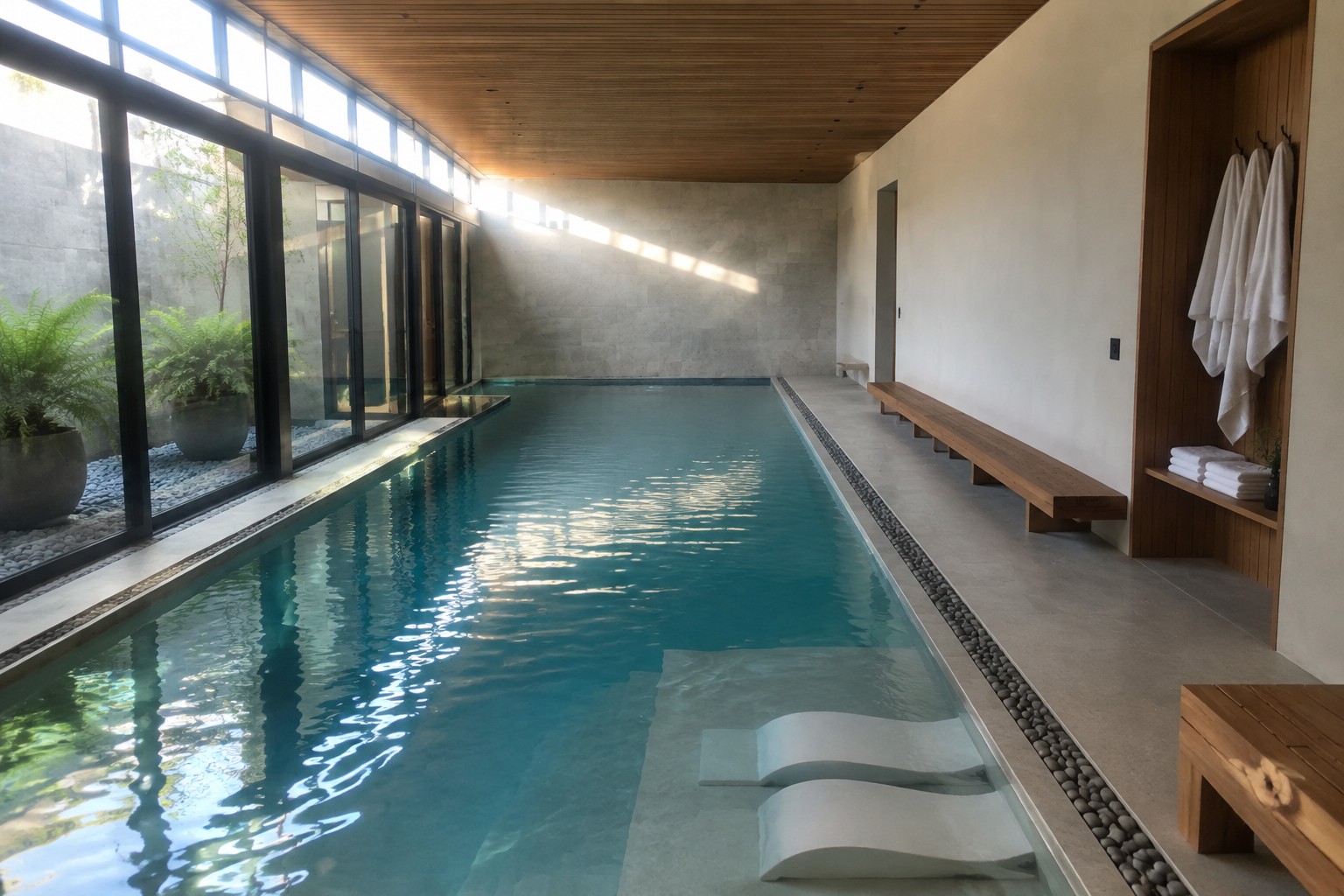
Many indoor pool rooms end up feeling cold because every surface is hard and wet. A wooden bench along the wall gives you one dry spot to sit, set down a towel, or rest for a minute without tracking water everywhere.
This works especially well in compact home wellness spaces where you do not want extra furniture that might not hold up. Keep the bench simple and unfinished so it ages gracefully with the moisture and pairs naturally with the tile.
Adding a Wooden Hot Tub Next to an Indoor Pool
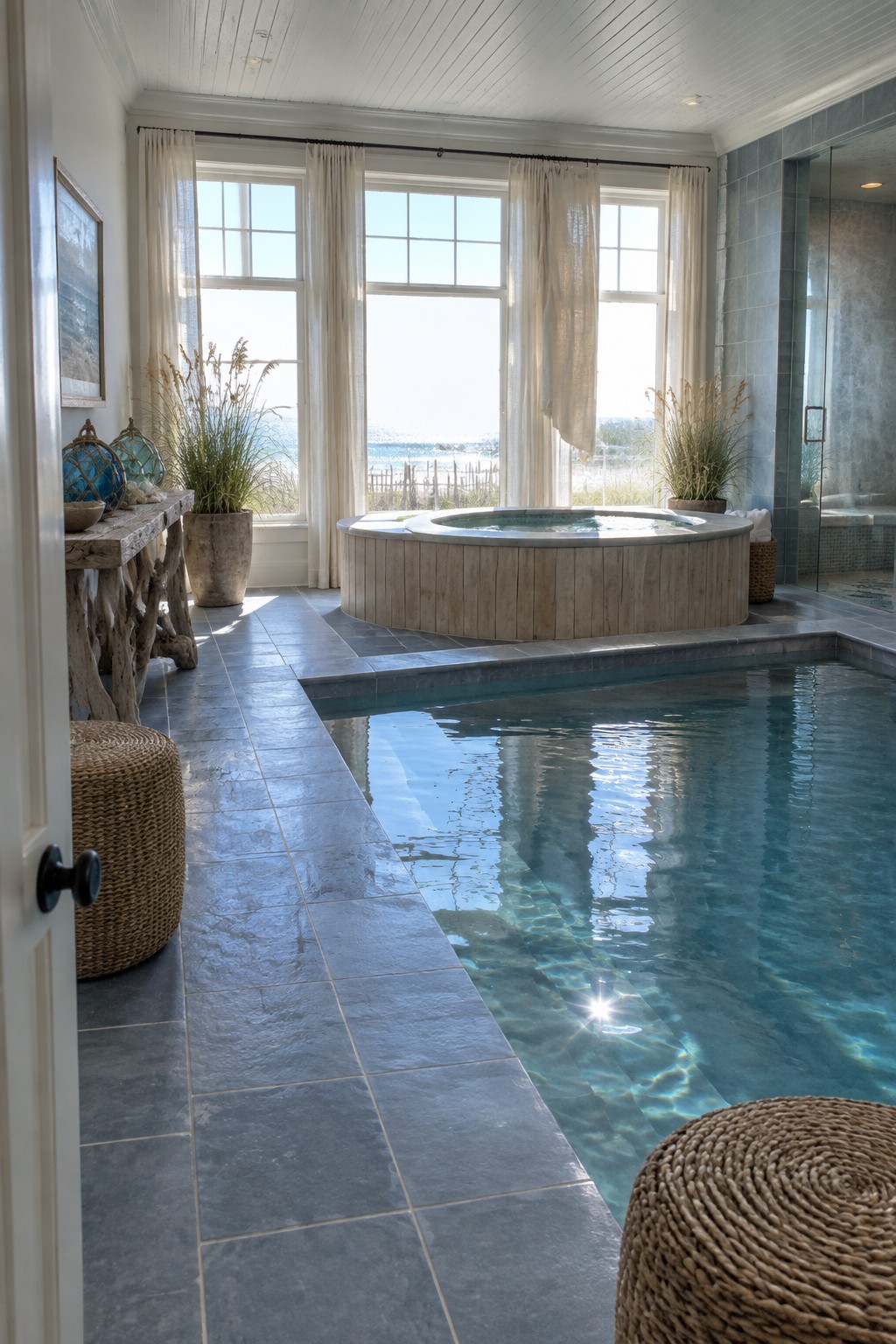
A light wood hot tub placed right at the edge of the pool gives the whole room a calmer, more natural feel. The wood softens the look of the water and tile, and it creates an easy spot to move between soaking and swimming without stepping out of the space.
This setup works best in rooms that already get good daylight. It suits homes that want a simple spa area rather than a high-contrast modern one, and it helps the hot tub feel like part of the pool instead of a separate feature.
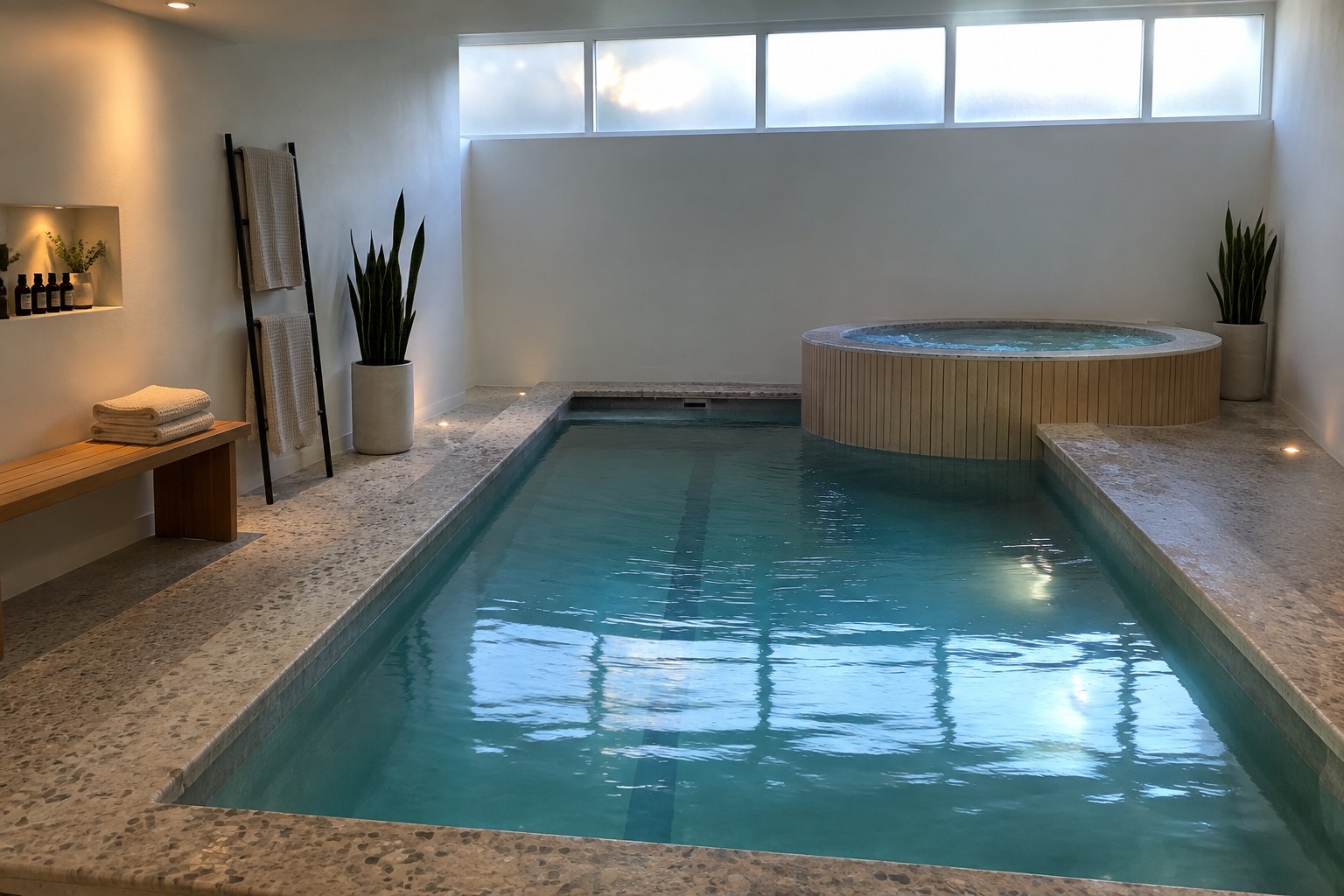
Pairing A Linear Pool With A Round Hot Tub
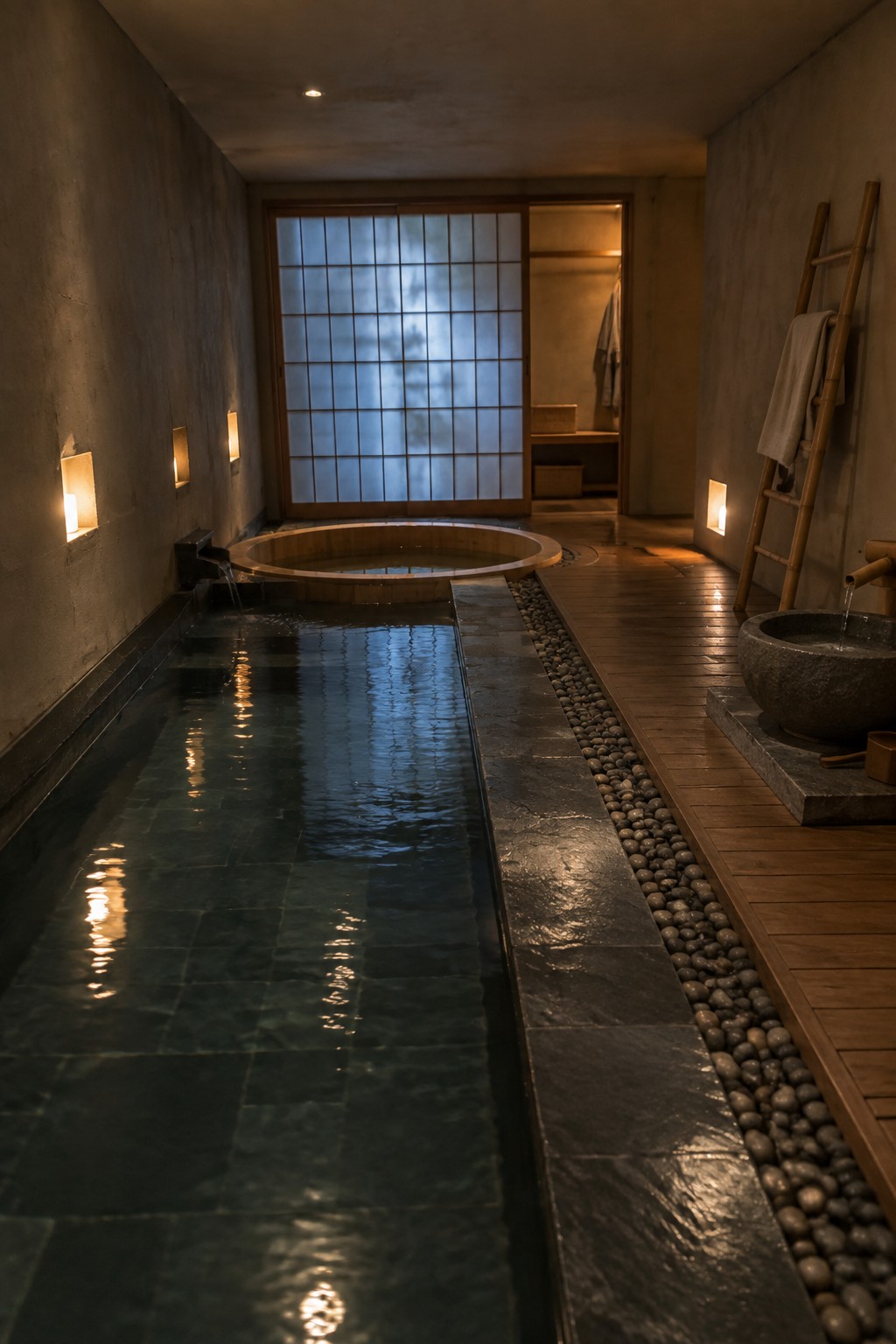
A long narrow pool next to a round soaking tub gives you two different ways to use the water in one space. The straight layout encourages slow movement or floating, while the circle works better for sitting still and warming up. This mix keeps the room from feeling like just one big tub.
It works well in a smaller dedicated room with stone or concrete walls and simple lighting. Keep the materials consistent so the two shapes do not compete. Many homes add a pebble border or low ledge between them to mark the zones without adding walls.
Adding a Lounge Area Next to the Indoor Pool
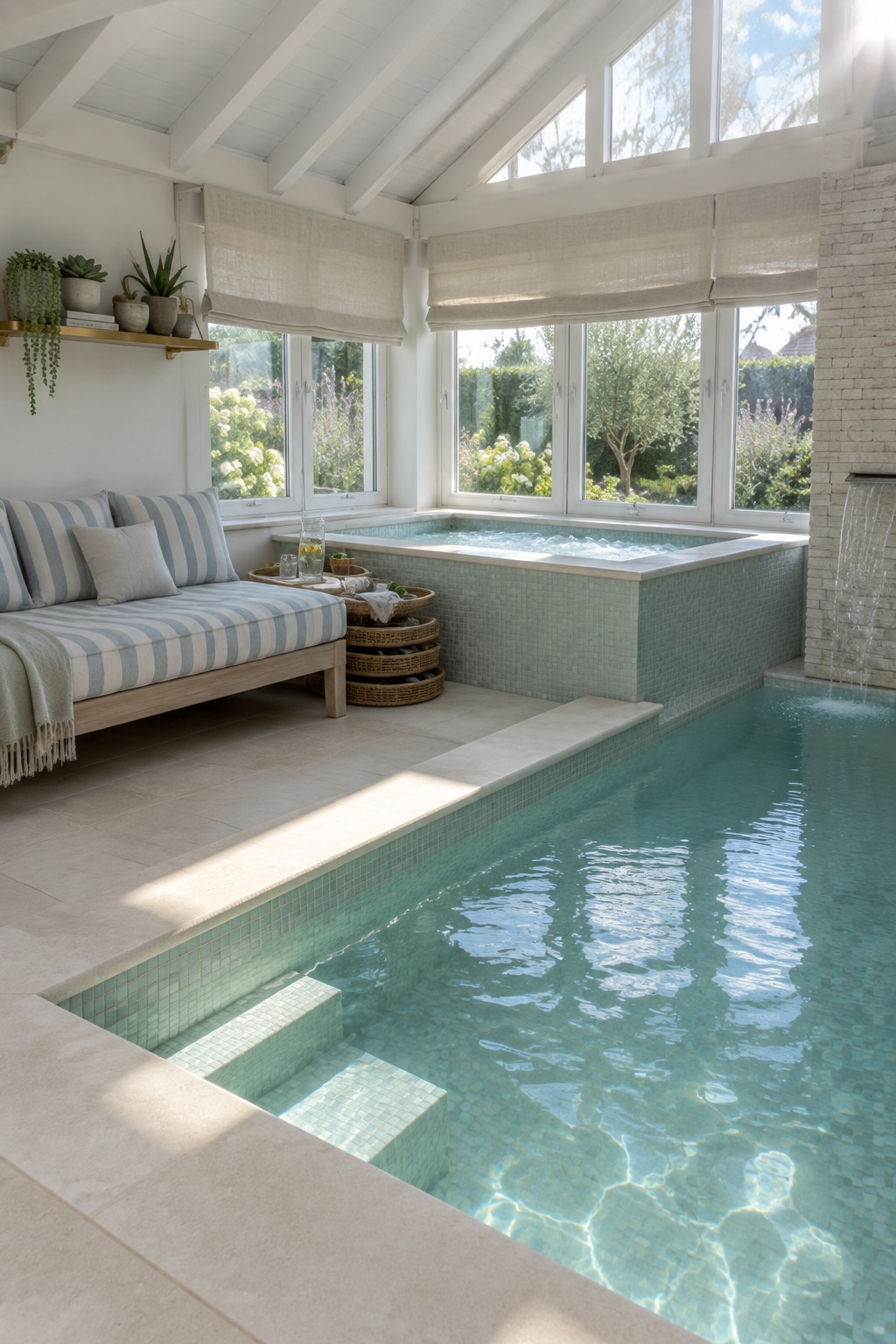
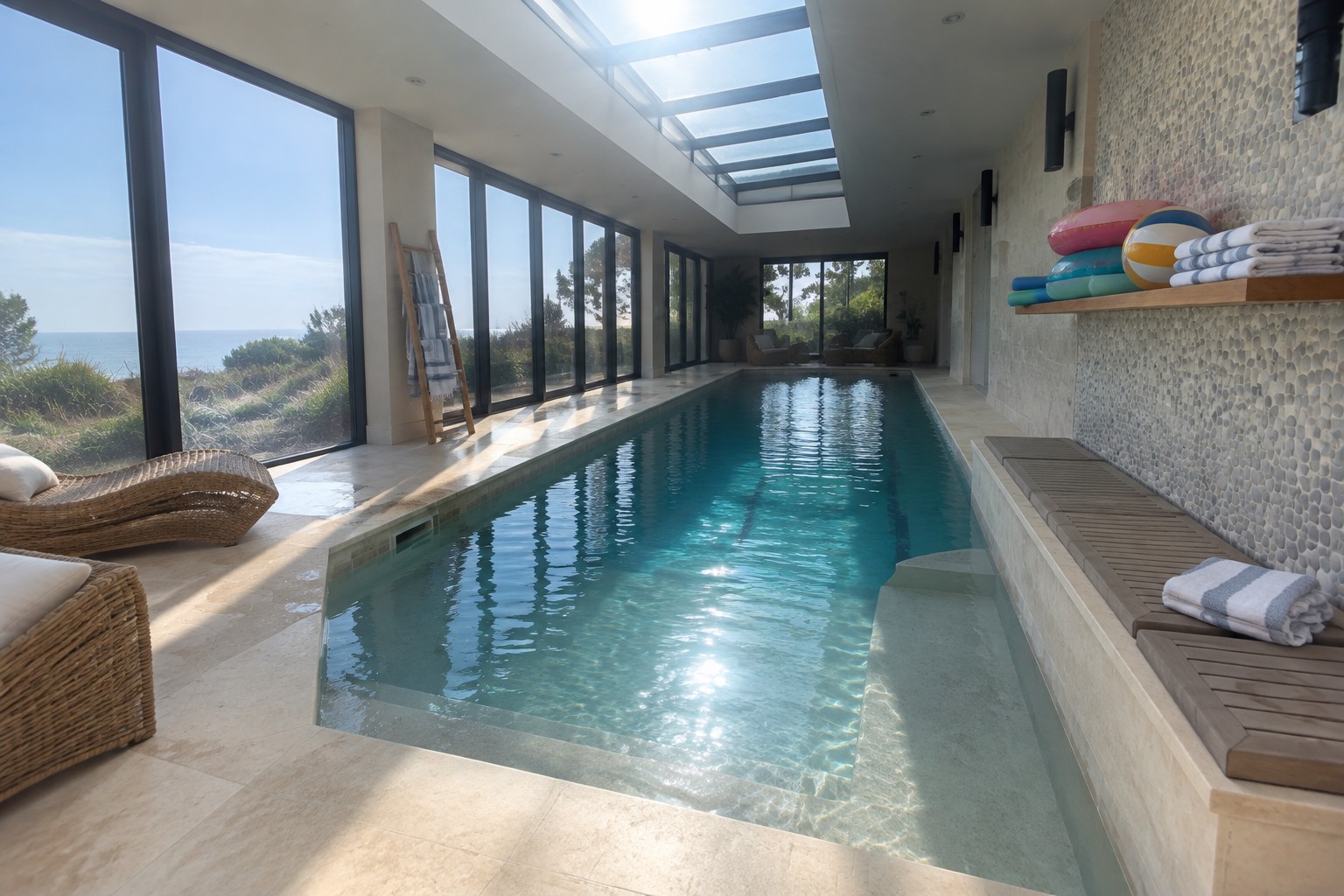
One simple way to make an indoor pool more useful for daily wellness is to place a lounge right beside it. A daybed with soft cushions gives you a spot to rest after swimming or while the hot tub runs, and it turns the room into a place where people actually want to spend time instead of just passing through.
This setup works best in rooms that already have good natural light and a bit of extra floor space along one edge. Light-colored fabrics and easy-to-move pieces keep the area from feeling cramped or damp. It suits homes where the pool room doubles as a quiet retreat rather than a strictly exercise space.
Raising The Hot Tub On A Stone Platform
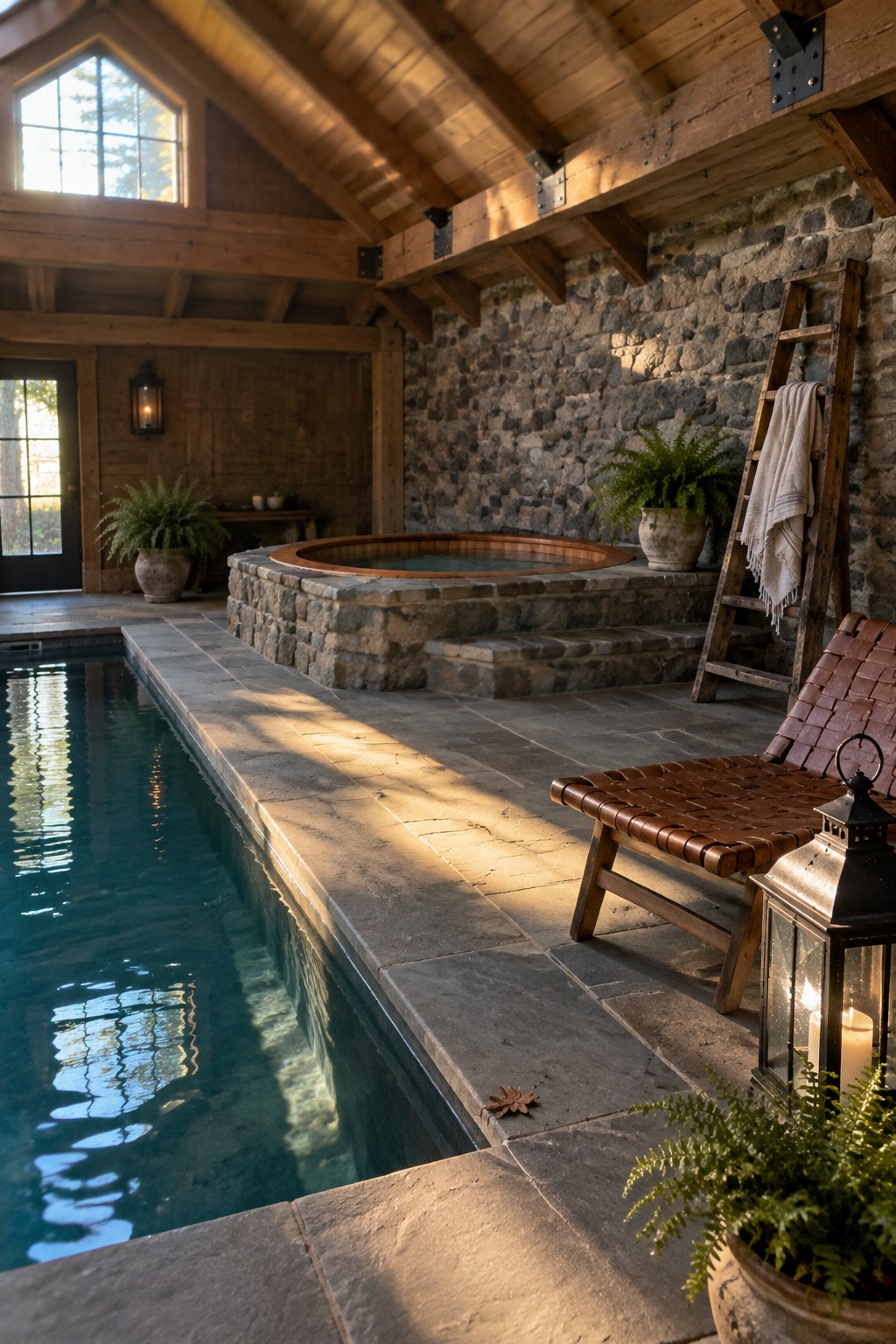
Placing the hot tub on a raised stone base next to the pool helps separate the two without breaking up the room. The height makes it easier to step in and out, and the stone gives a solid, grounded feel that works well with wood ceilings and walls.
This layout suits larger indoor spaces that already lean rustic or natural. It works best when the platform is wide enough for seating around the edge and when the materials match the rest of the room so nothing feels added on later.
Pairing a Linear Pool With a Circular Hot Tub
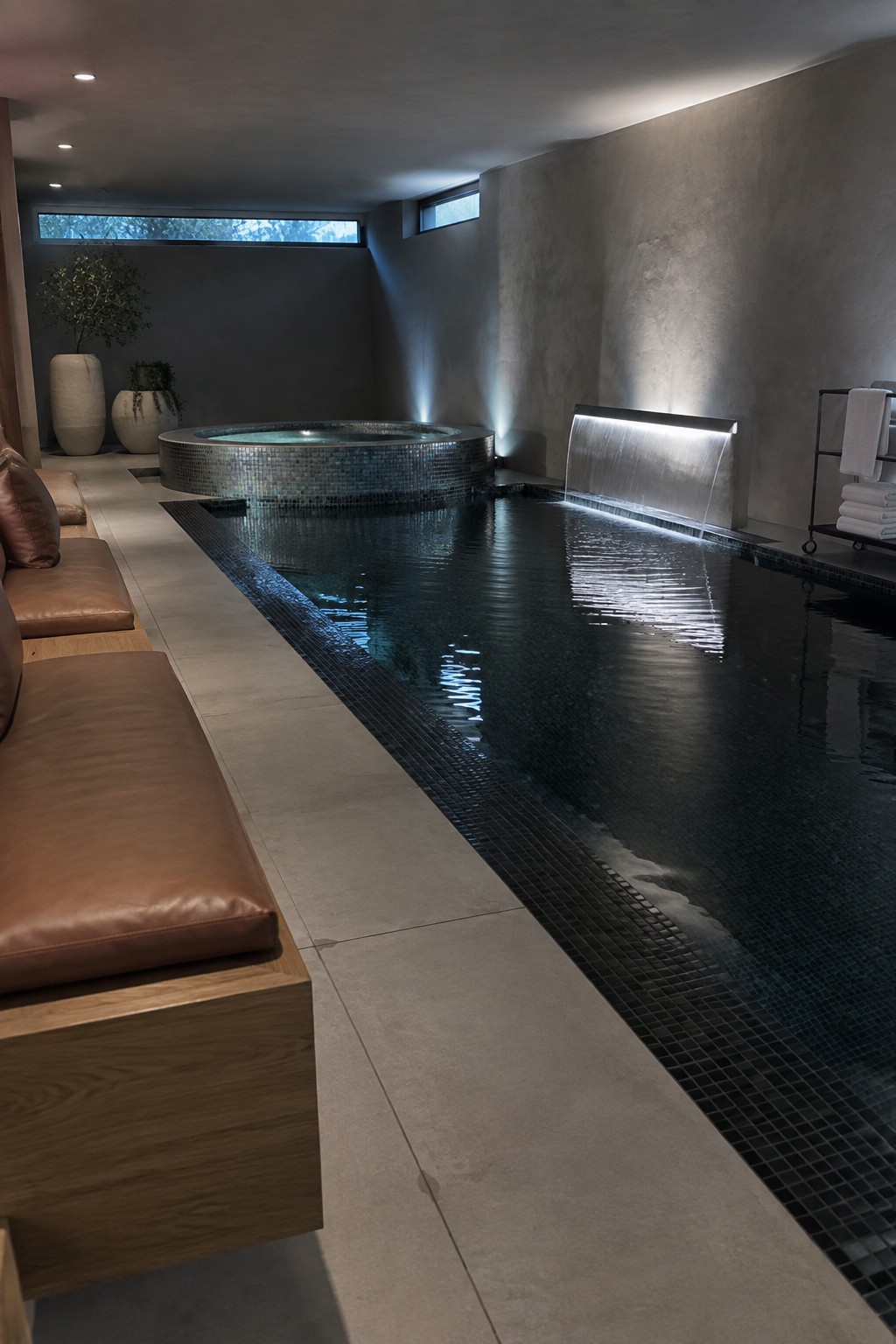
Many indoor pool setups feel limited when they only offer one type of water experience. Adding a round hot tub right next to the long pool gives people a clear choice between swimming and soaking without needing two separate rooms.
This works best in homes with enough floor space to keep the zones from crowding each other. Use simple materials like concrete and dark tile so the water stays the main feature and the seating stays close for easy access between the two.
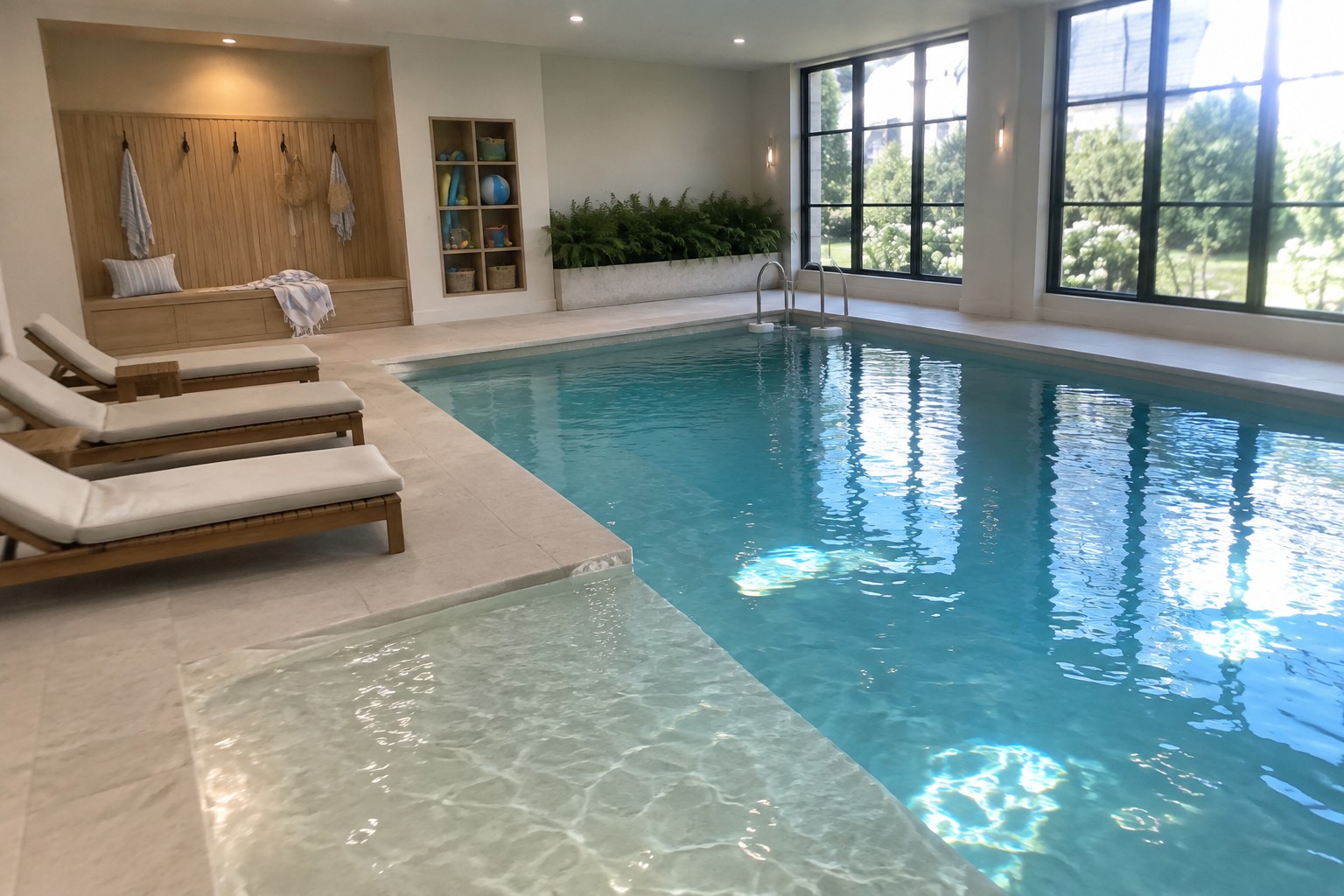
Surrounding Your Indoor Pool With Plants
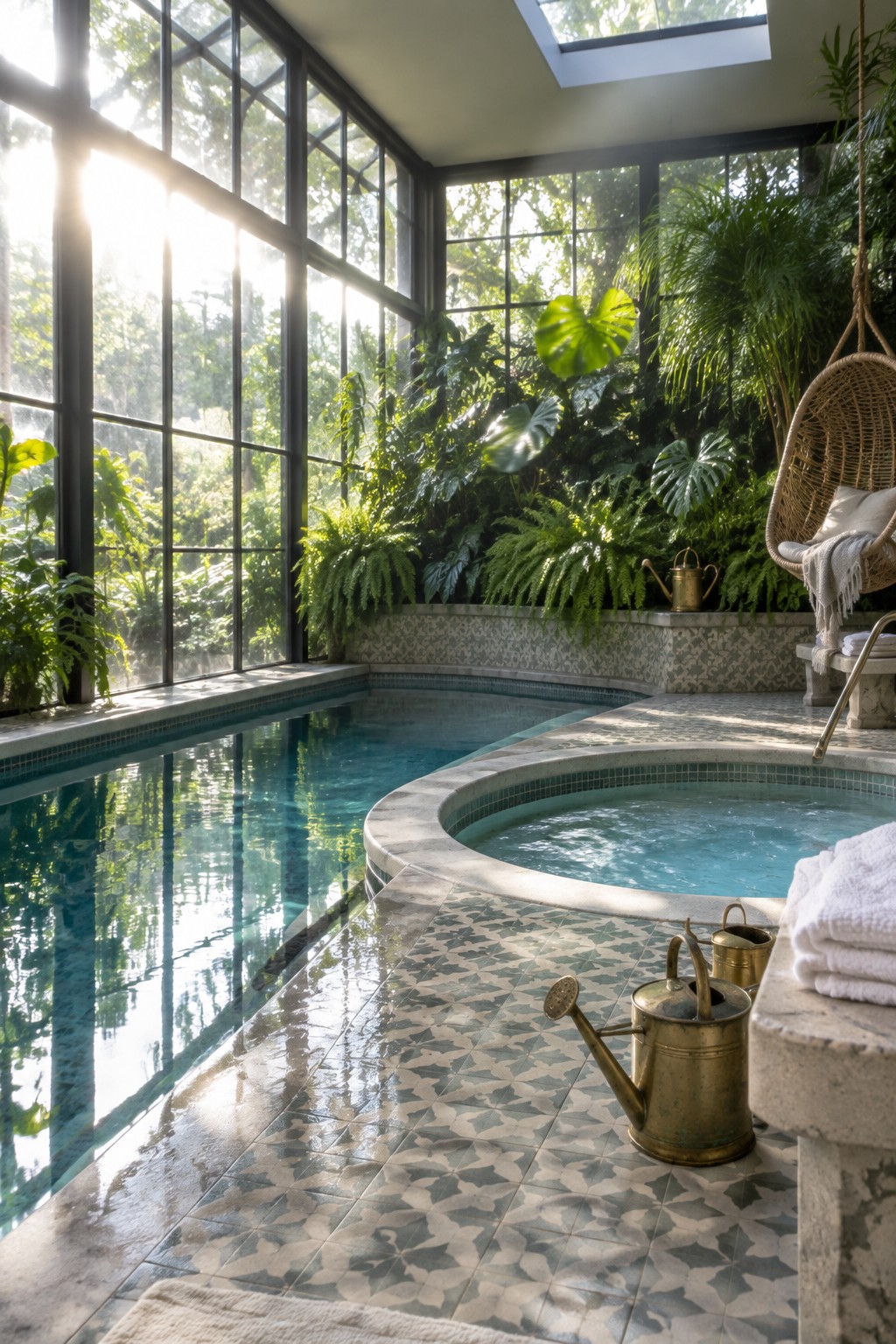
One simple way to make an indoor pool room feel calmer is to bring in plenty of plants. The greenery softens the hard edges of tile and water and gives the space a more natural feel that helps it read as a place to unwind rather than just exercise.
This idea works best in rooms that already get good light from large windows. Homes with enough floor space around the pool can layer in ferns and broad-leaf plants without blocking paths. Make sure the varieties you choose handle humidity well and that you have a plan for watering so the floor stays safe.
Attach the Hot Tub to the Pool Edge
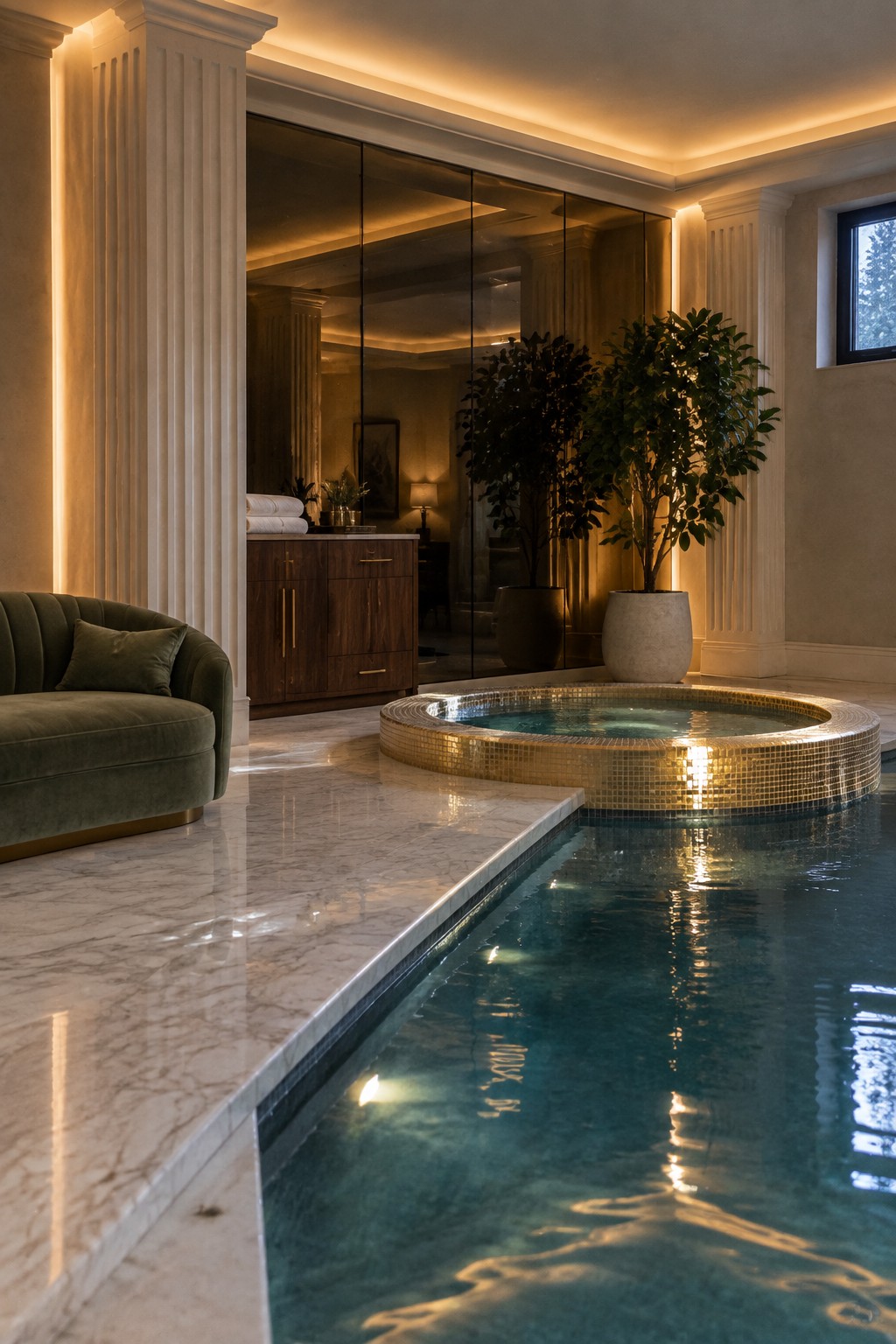
Attaching a hot tub right to the side of an indoor pool turns the whole area into one easy-to-use space. You can swim then move straight into warmer water without getting out or walking across the room. The setup feels natural because both sections share the same water level and materials.
This works well in larger rooms where the pool runs long enough to leave space for the round addition. Use a raised edge and different tile on the hot tub so the temperatures stay separate, and keep the surrounding floor simple so the water features stay the focus.
Raise the Hot Tub on a Wood Platform
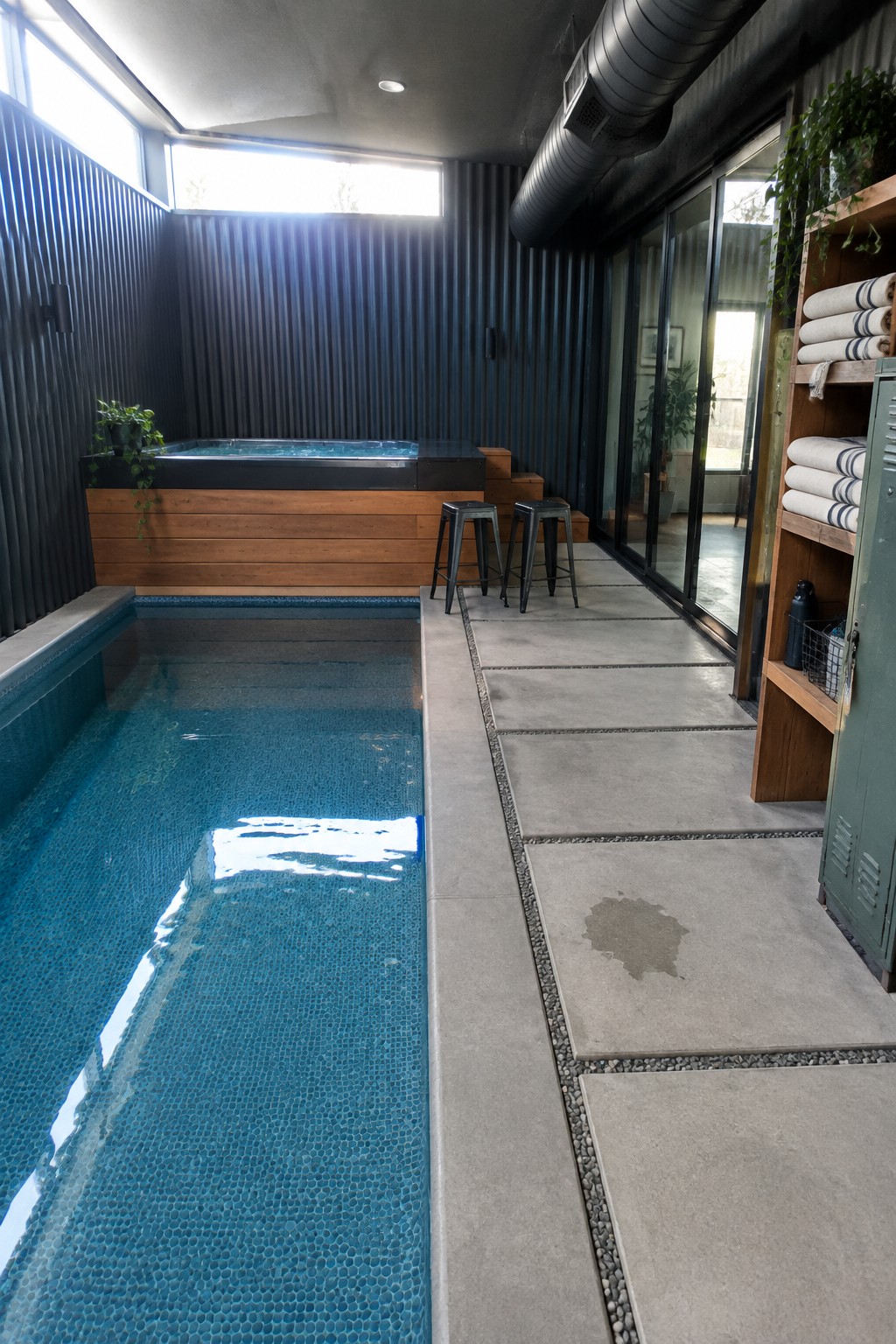
Lifting the hot tub onto a simple wood platform gives the whole room a clearer sense of order. The raised surface sets the tub apart from the pool without needing walls or dividers, and the wood adds a bit of warmth next to all the tile and concrete.
This works best in fairly large indoor spaces where you have room to step back and see both areas at once. Keep the platform height modest so the steps feel easy to use, and match the wood tone to any other built-ins in the room rather than trying to make it stand out.
Adding A Circular Window To Your Indoor Pool Room
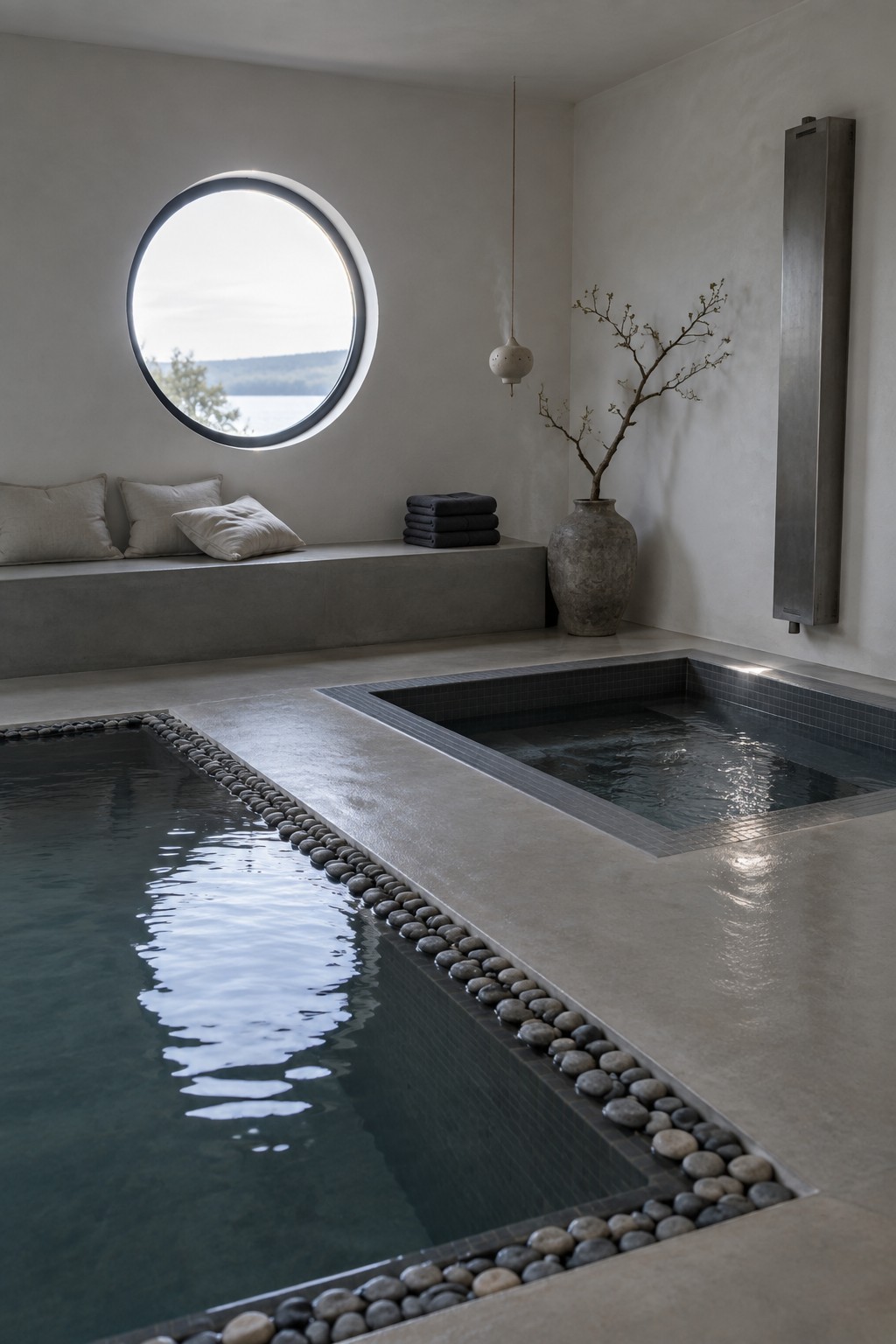
A circular window works well in an indoor pool space because it brings in steady natural light without making the room feel too open or exposed. The shape softens the look of the concrete walls and gives you a clear view that connects the pool area to whatever is outside.
This idea fits best in a minimalist setup where the rest of the room stays simple. It works in homes with a decent view of water or trees, and it helps the space feel less like a closed-off room and more like a quiet place to unwind. Just make sure the window is big enough to matter and that the frame does not compete with the rest of the surfaces.
Place a Hot Tub Beside an Indoor Pool
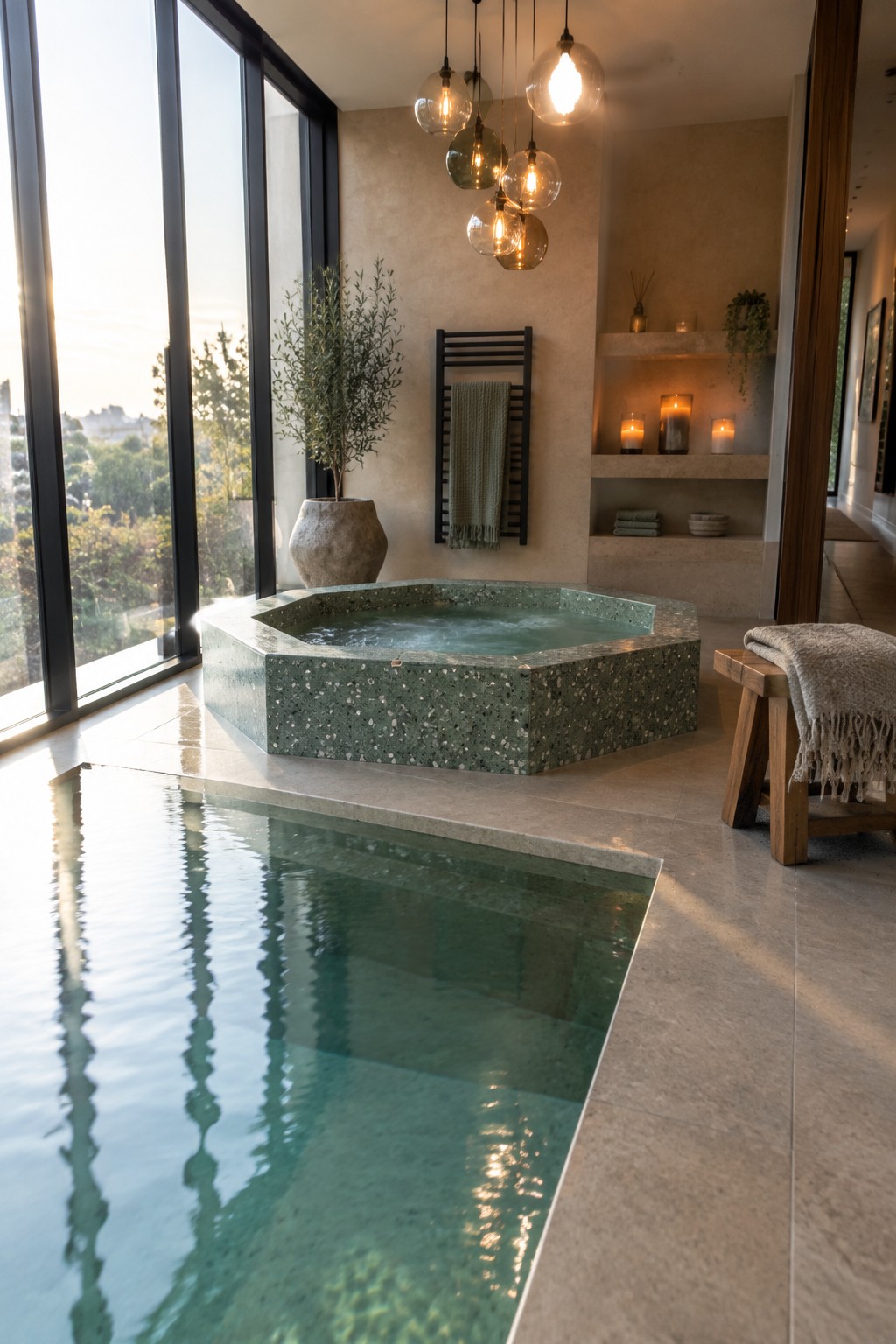
Having both a pool and a hot tub in the same indoor space gives you more ways to use the room throughout the year. You can swim laps when you want movement, then step right into the hot tub when you need to warm up and relax without changing rooms or going outside.
This layout works best in homes with high ceilings and good ventilation, since the moisture from both fixtures adds up. Large windows help keep the air feeling fresh and prevent the space from feeling closed in, but you still need proper drainage and slip-resistant flooring around the edges.
Frequently Asked Questions
Q: How do I stop mold from showing up around the edges? A: Wipe down wet surfaces right after each swim. Run a fan or vent system for an hour or two afterward too. This habit keeps things clean without big cleaning days.
Q: My room feels tight already. Can I still fit both a pool and hot tub? A: Look for compact models that share a wall. Place the hot tub at one end so you step from one to the other easily. Test the layout with tape on the floor first.
Q: Does running the heat all day cost a fortune? A: Set timers so the system only warms up before you plan to use it. Cover the pool and tub when not in use to hold the temperature.