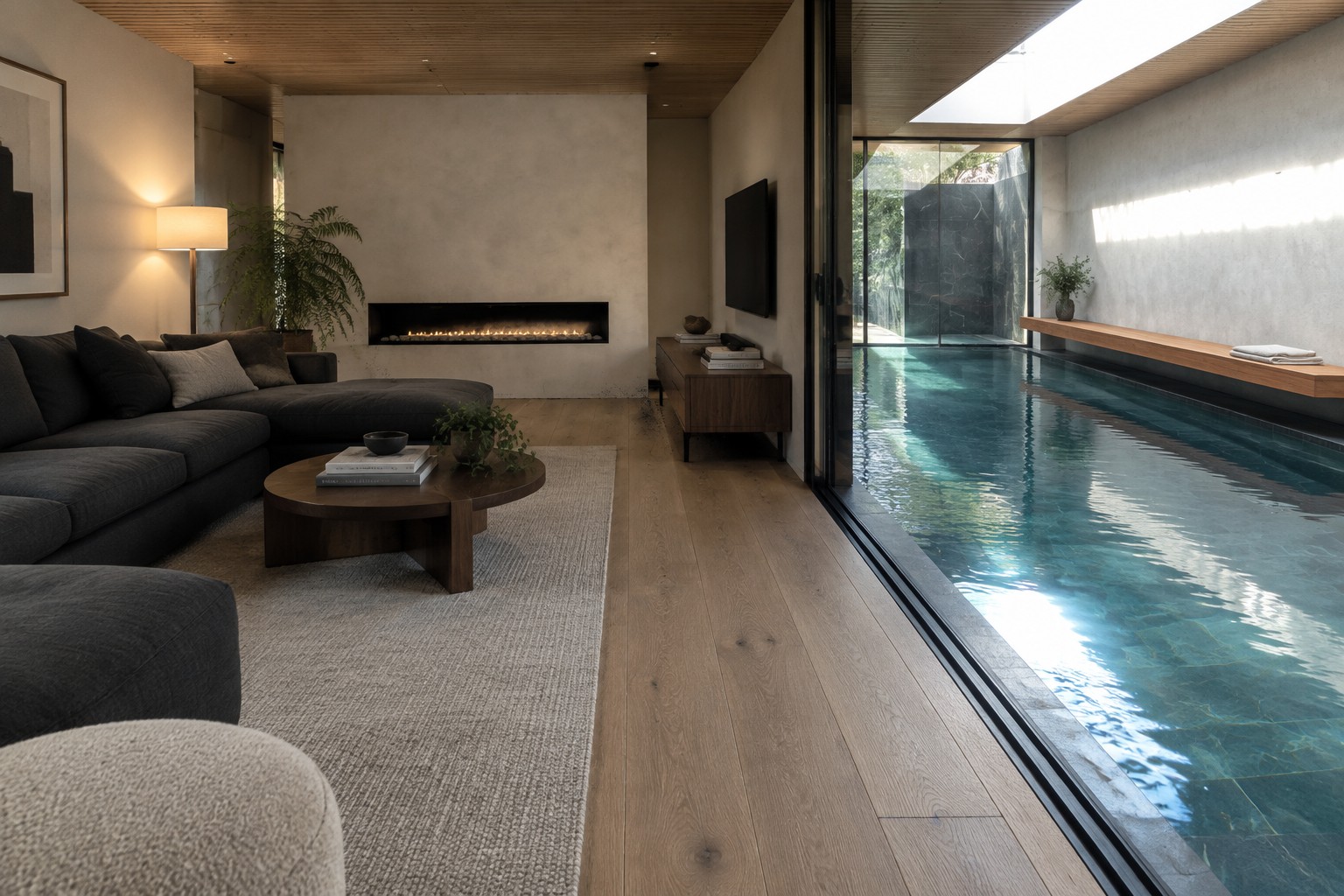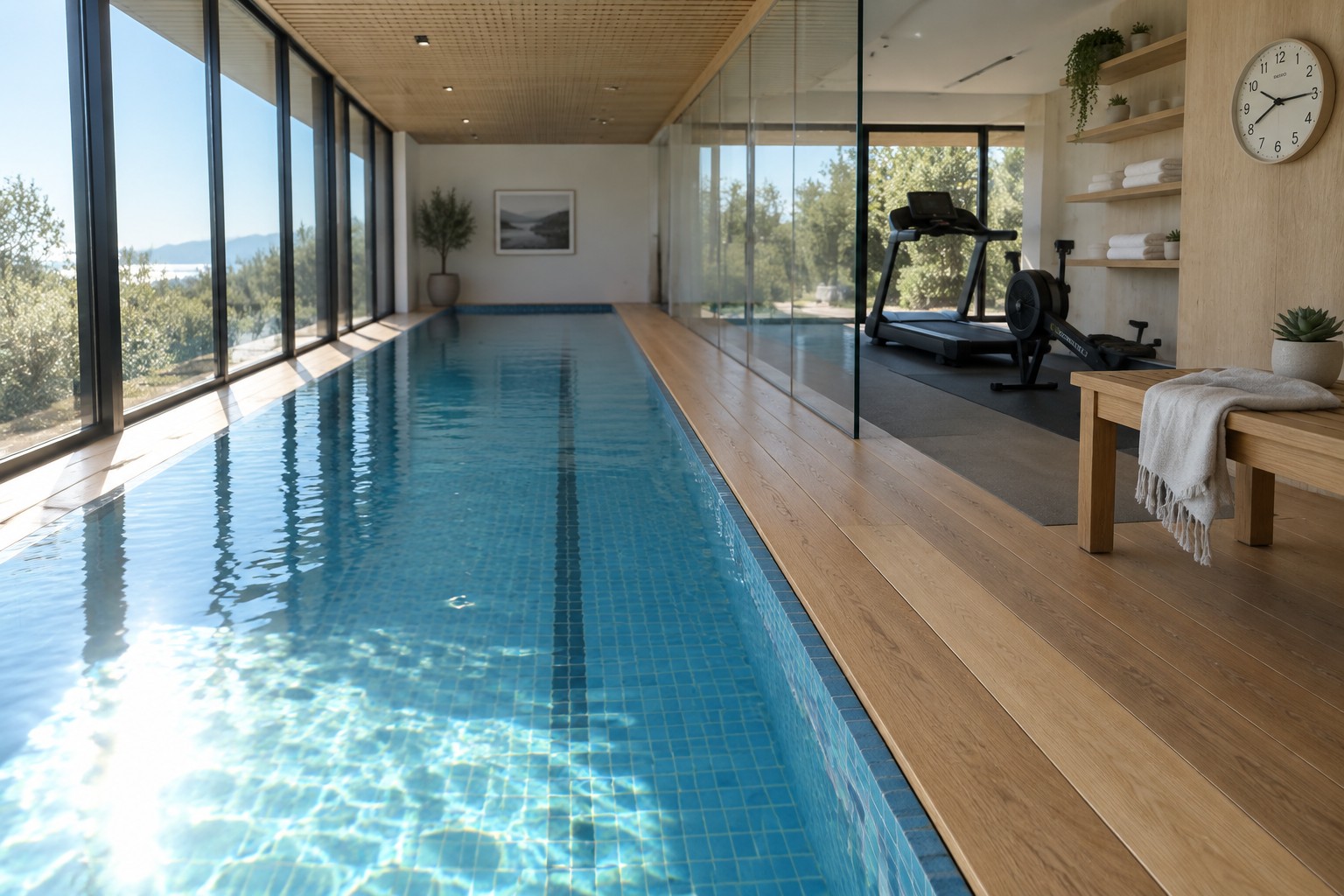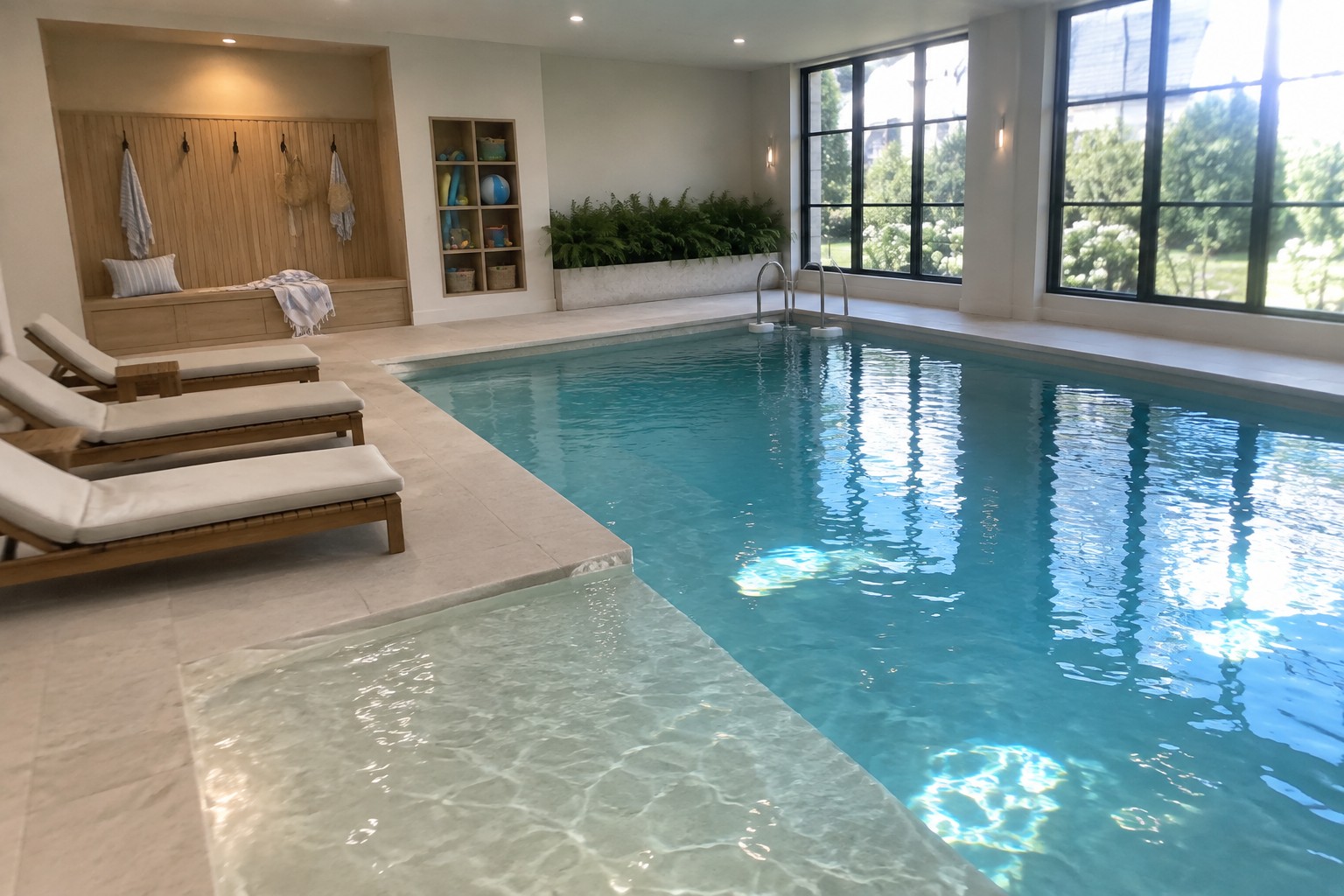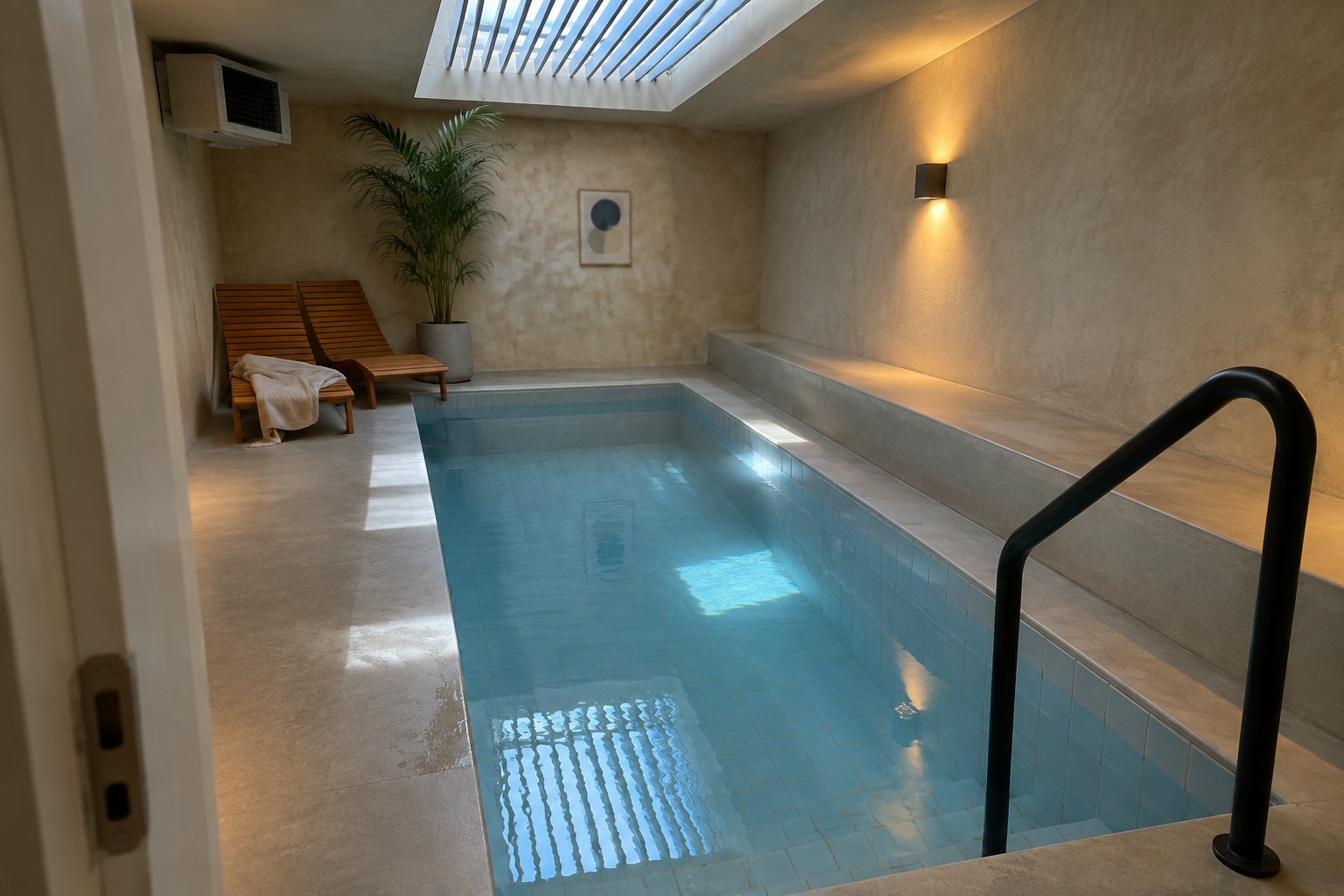
I have always thought that an indoor pool only feels right when the materials and layout tie into the rooms around it instead of standing apart.
Humidity and light patterns change how the whole area works day to day, so it helps to picture those details early.
I usually check how the space will hold up in winter before I get too far into any plan.
Simple choices like ventilation and floor finishes often decide whether the room stays pleasant or turns into a maintenance headache.
People tend to notice first whether the pool area looks like it belongs with the rest of the house.
Add a Simple Water Feature
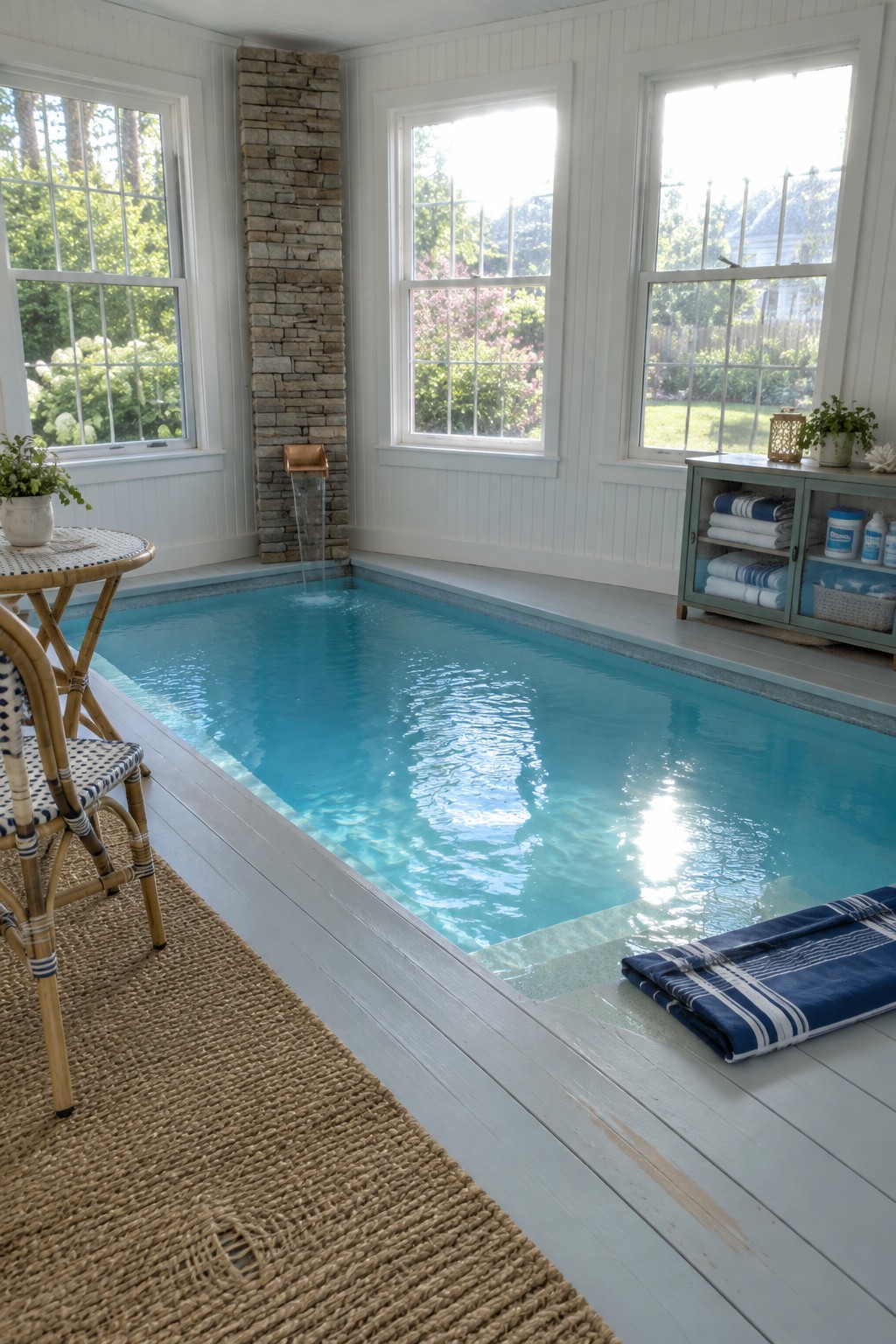
A small water feature can give an indoor pool more life without adding much expense. The gentle sound and movement draw attention and help the space feel more finished, especially when the rest of the room stays simple and light.
This works well at one end of the pool along a side wall. It suits smaller indoor setups or homes that want a spa-like feel on a budget, and basic materials keep the cost down while still giving a nice result.
Use a Skylight to Brighten an Indoor Pool
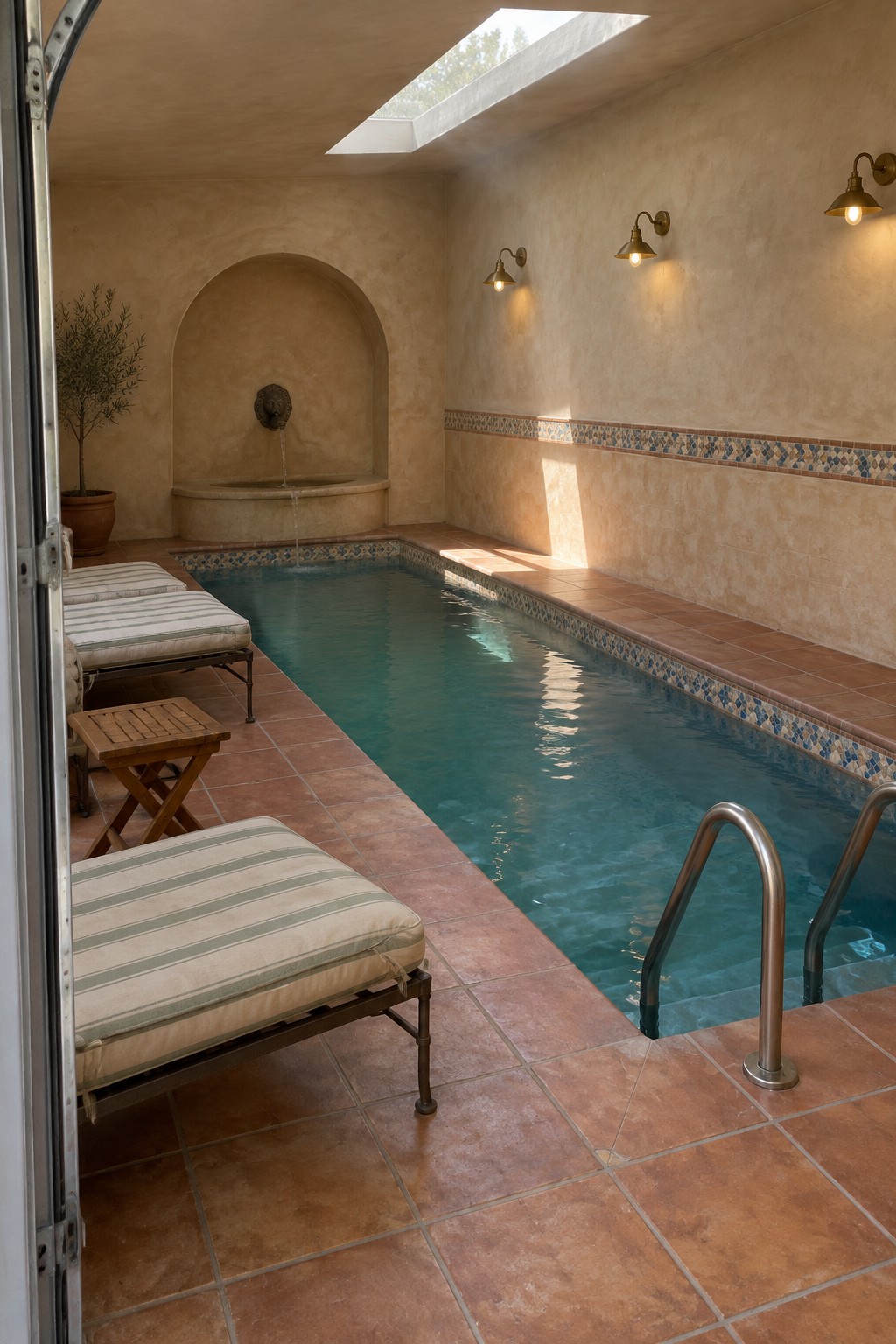
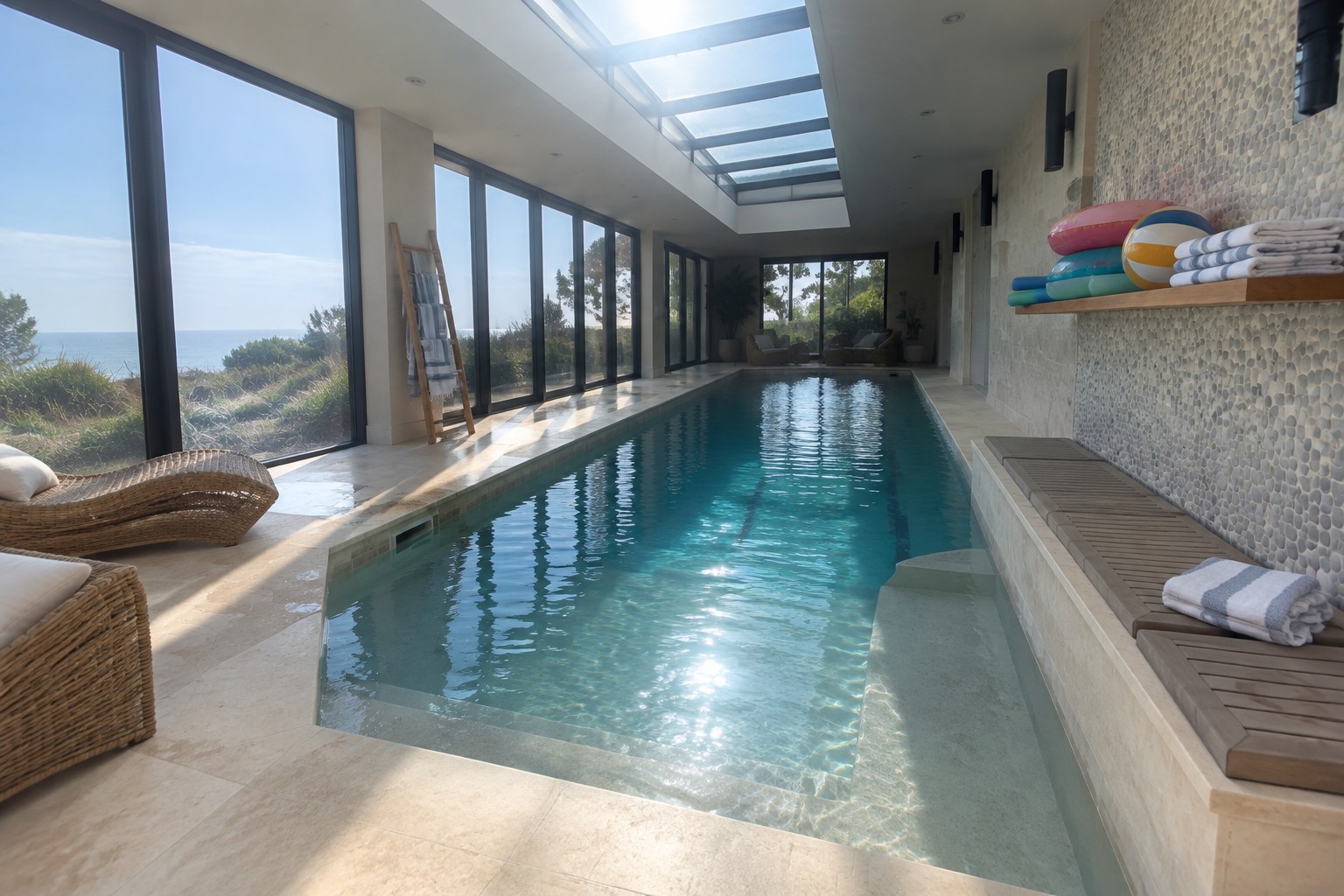
A skylight over the pool lets in plenty of daylight without needing extra fixtures or high ceilings. This keeps the space feeling open and cuts down on daytime lighting costs, which matters when you are watching the budget.
It works best in a dedicated room with good ventilation. Pair it with simple tile around the edge to handle moisture and add a bit of color without much expense.
Wood Deck Platforms for Indoor Soaking Pools
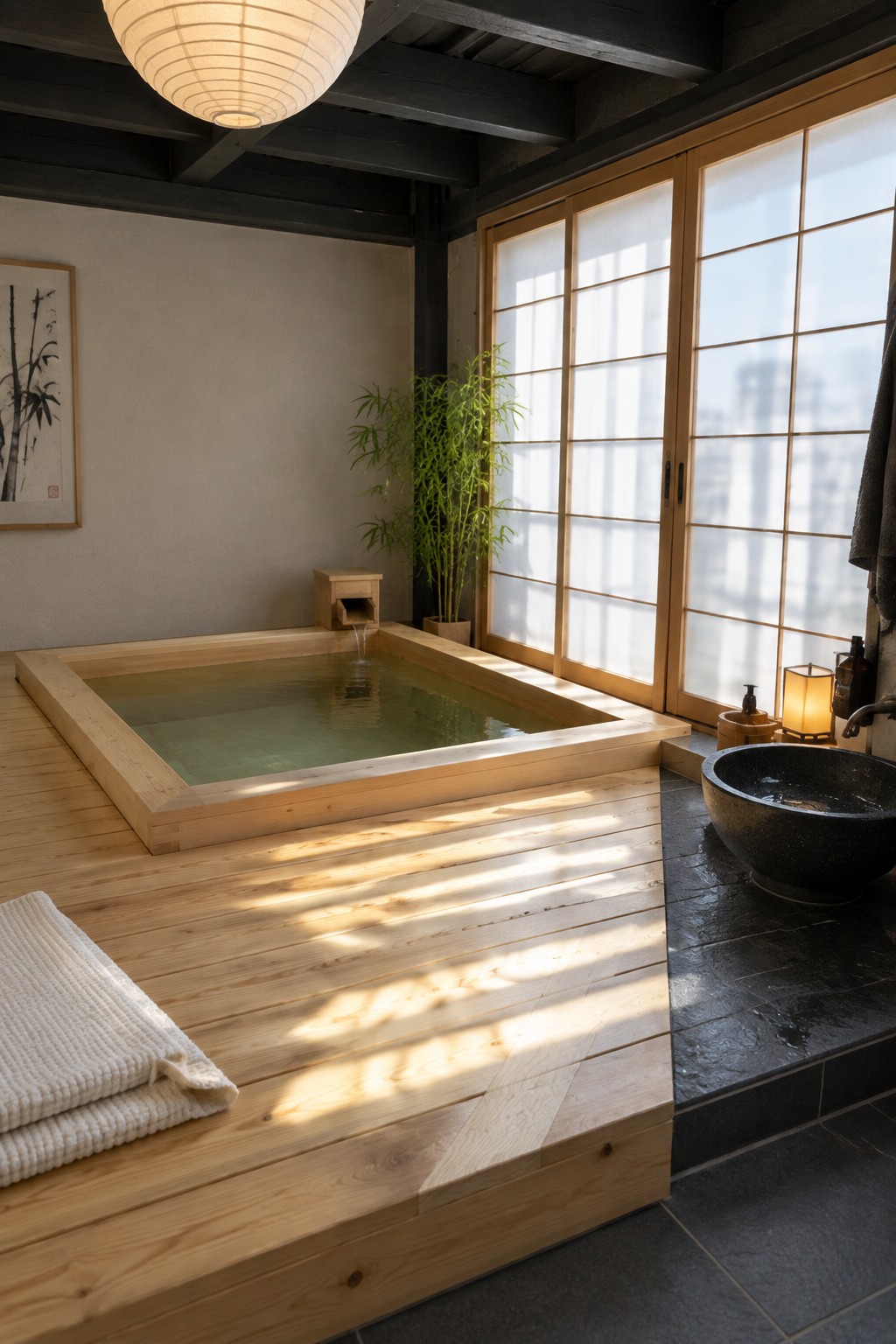
A wood deck platform gives an indoor soaking pool a clean, built-in look without needing heavy construction. The frame sits level with the floor and turns the pool into part of the room instead of a separate feature that stands out.
This setup suits smaller homes or converted spaces where a full tiled pool would cost too much. Use cedar or similar wood that handles moisture, seal it well, and place the pool near a window or screen for natural light and easier ventilation.
Open Your Indoor Pool With Large Folding Doors
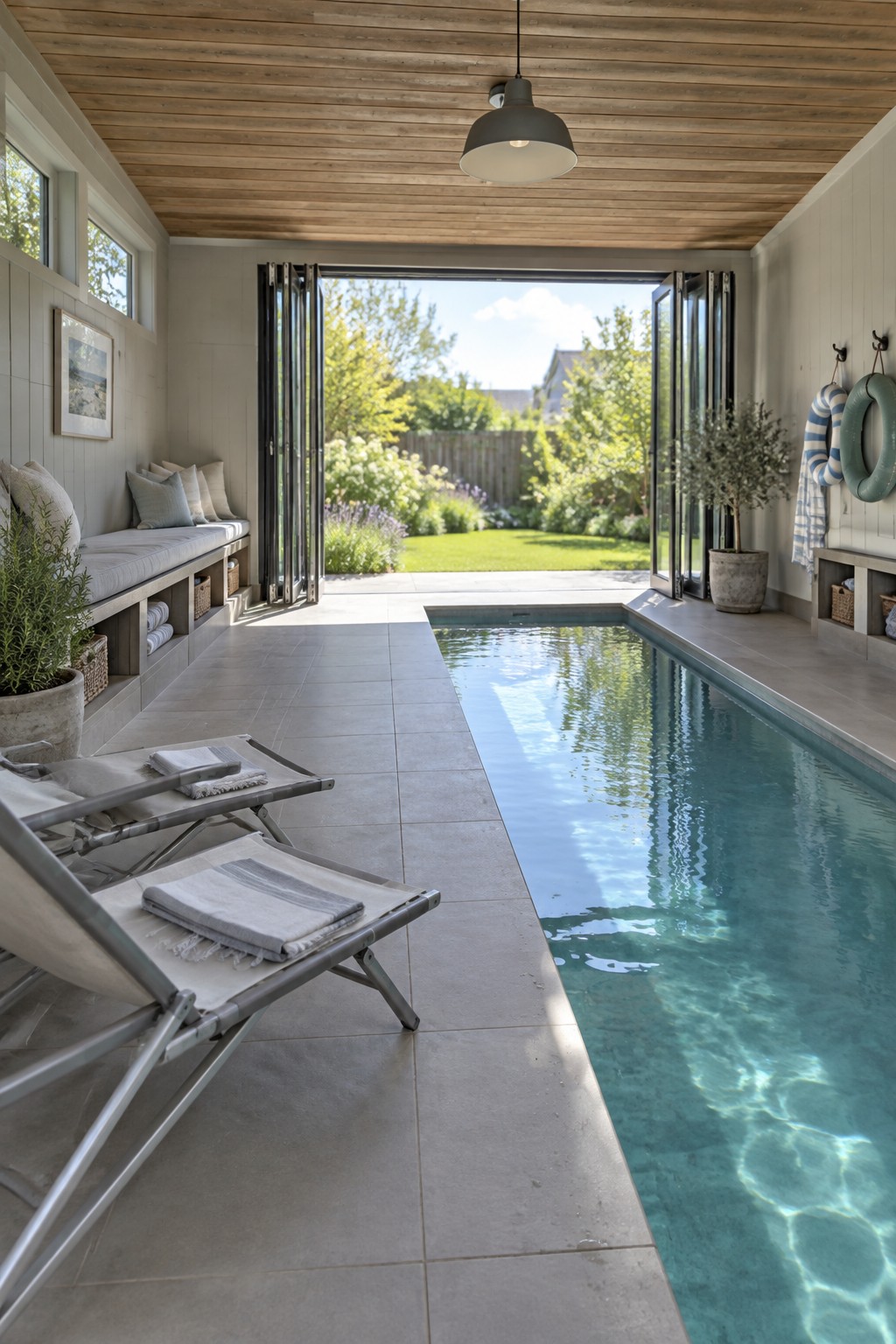
Large folding doors can turn a basic indoor pool into something that feels much bigger than it really is. By running the full height of the wall and stacking back completely, they pull in daylight and garden views without adding extra square footage or fancy finishes. The simple tile floor and wood ceiling stay practical and easy to maintain.
This setup works best on a home with a flat backyard where the pool room sits at ground level. It suits smaller lap pools or modest budgets because the doors do the heavy work of making the space feel open and connected. Just make sure the track system is sturdy and the doors seal well if you plan to use the pool in cooler months.
Narrow Lap Pools For Small Indoor Spaces
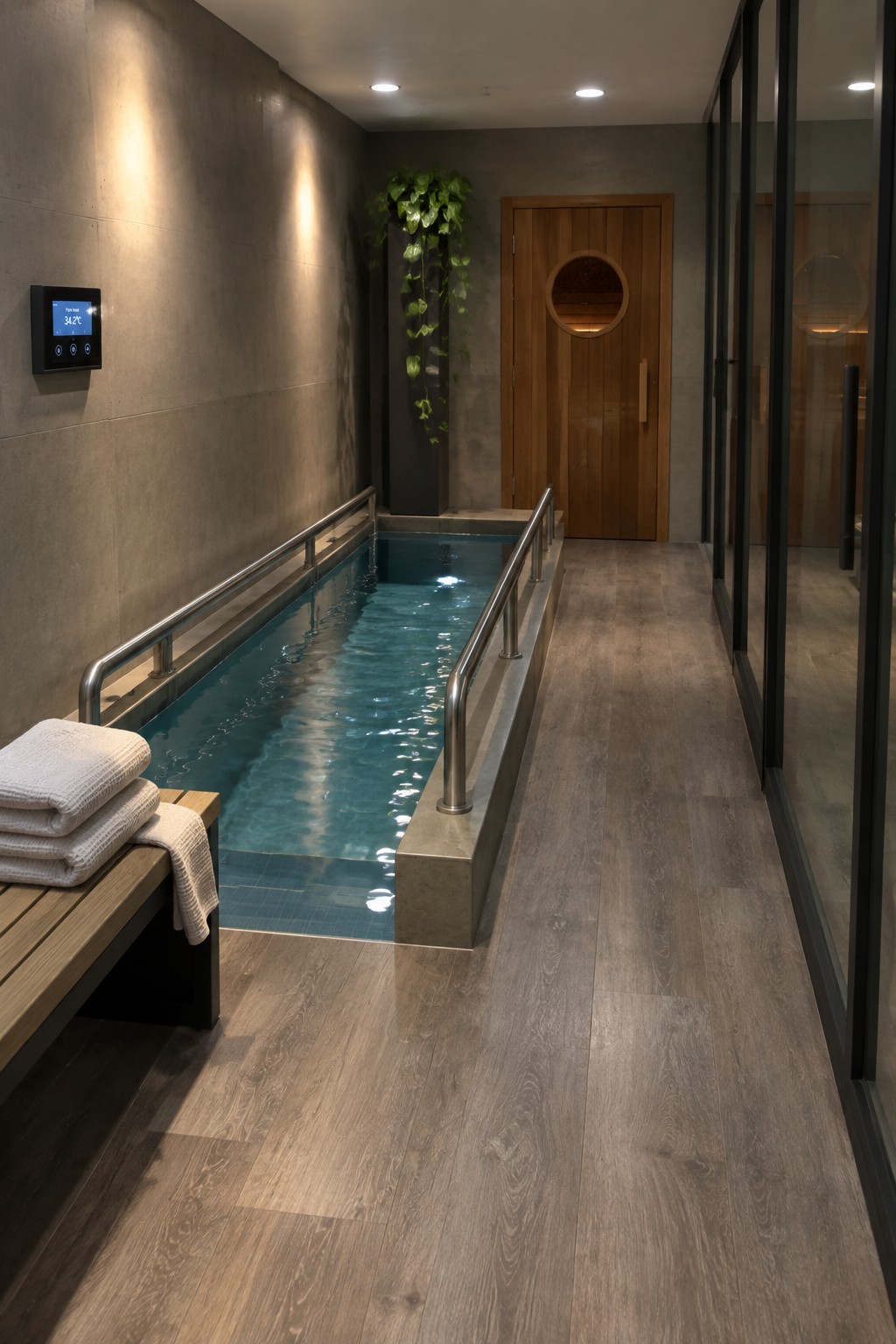
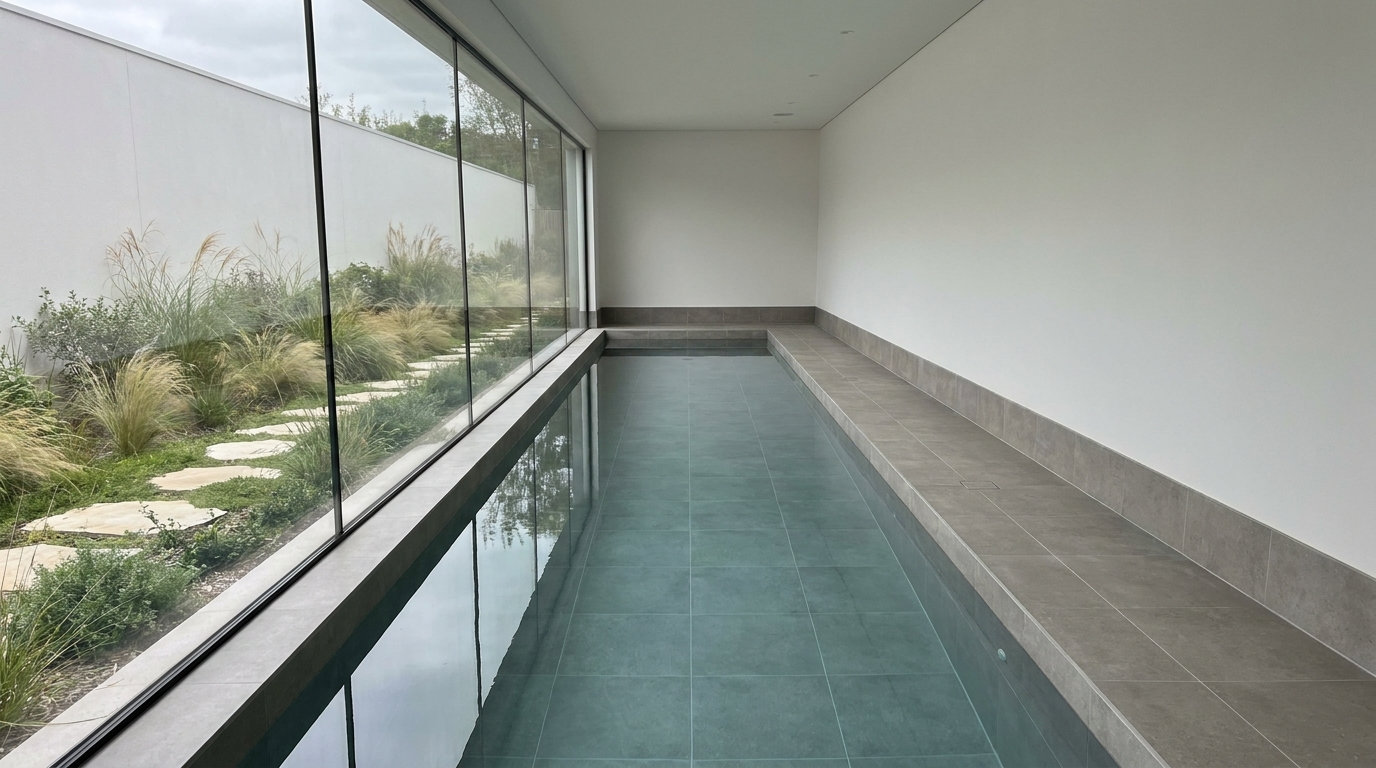
A narrow lap pool gives you a real place to swim without taking over an entire room. The long, slim shape fits into basements or converted spaces that would never work for a standard pool, and the simple concrete walls help keep building costs reasonable.
This layout works best in homes where space is tight but you still want regular use. Add a basic bench nearby for towels and a quick seat, and keep the finishes plain so the pool stays the main feature without extra spending.
Use Simple Wood Decking Around the Pool
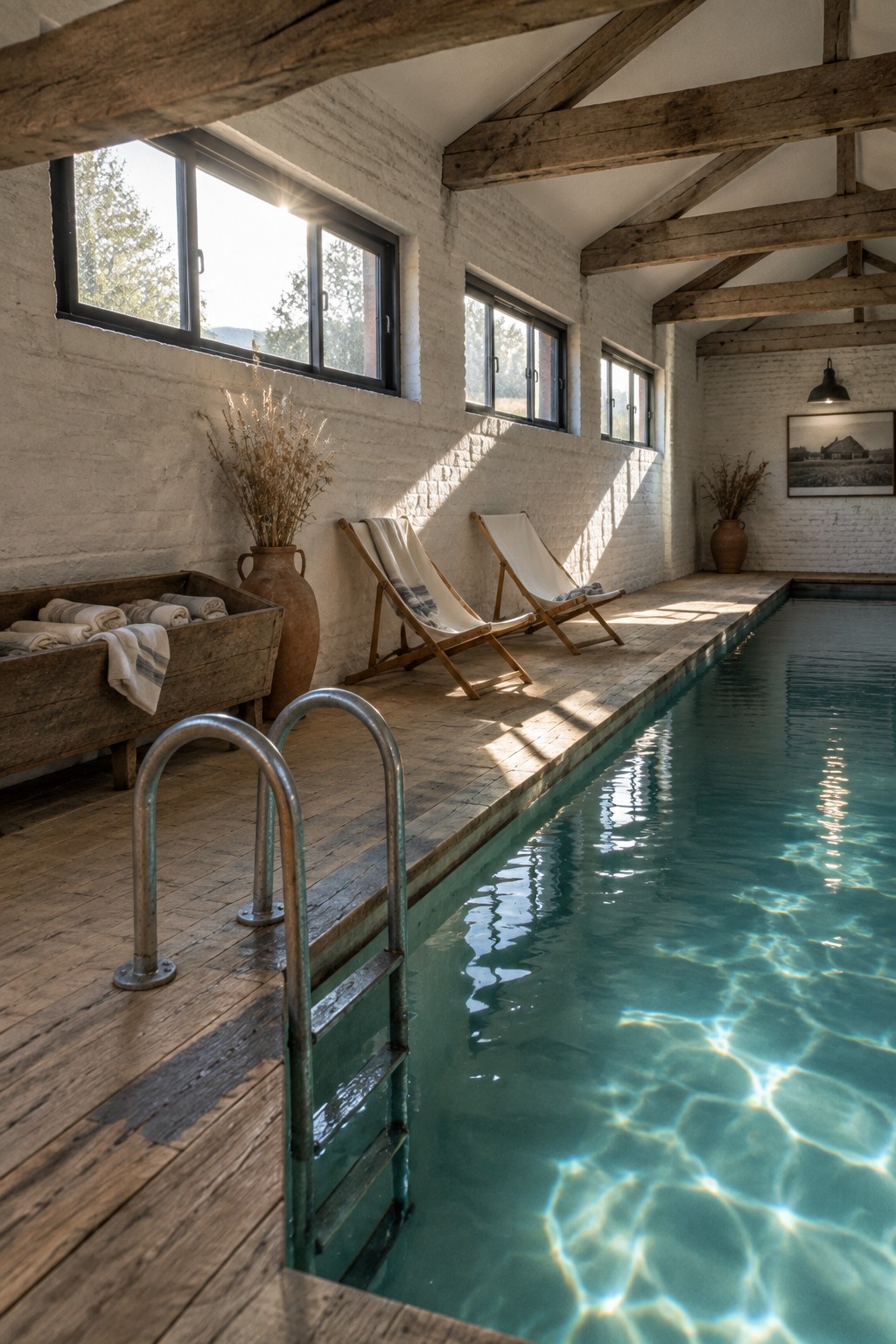
Many indoor pools end up costing more than they should because of fancy tile or stone surrounds. A basic wood deck keeps things straightforward and much more affordable while still giving you a clean, usable edge around the water.
This works especially well in converted spaces where you already have wood floors or beams. Just make sure the wood is sealed well for moisture and that the deck sits slightly above the waterline so it stays dry and safe to walk on.
Stone Pavers On Pebbles Keep Costs Down
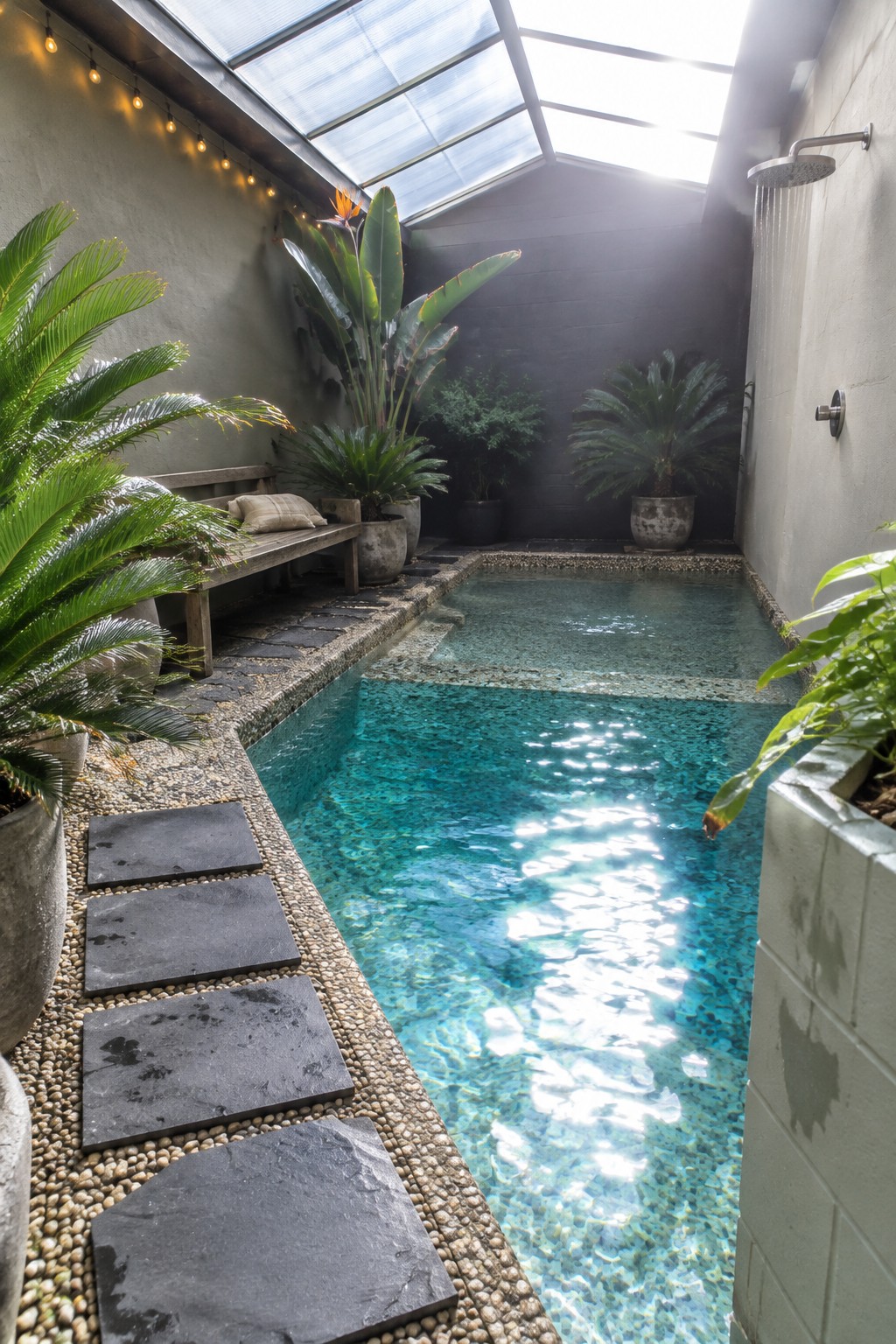
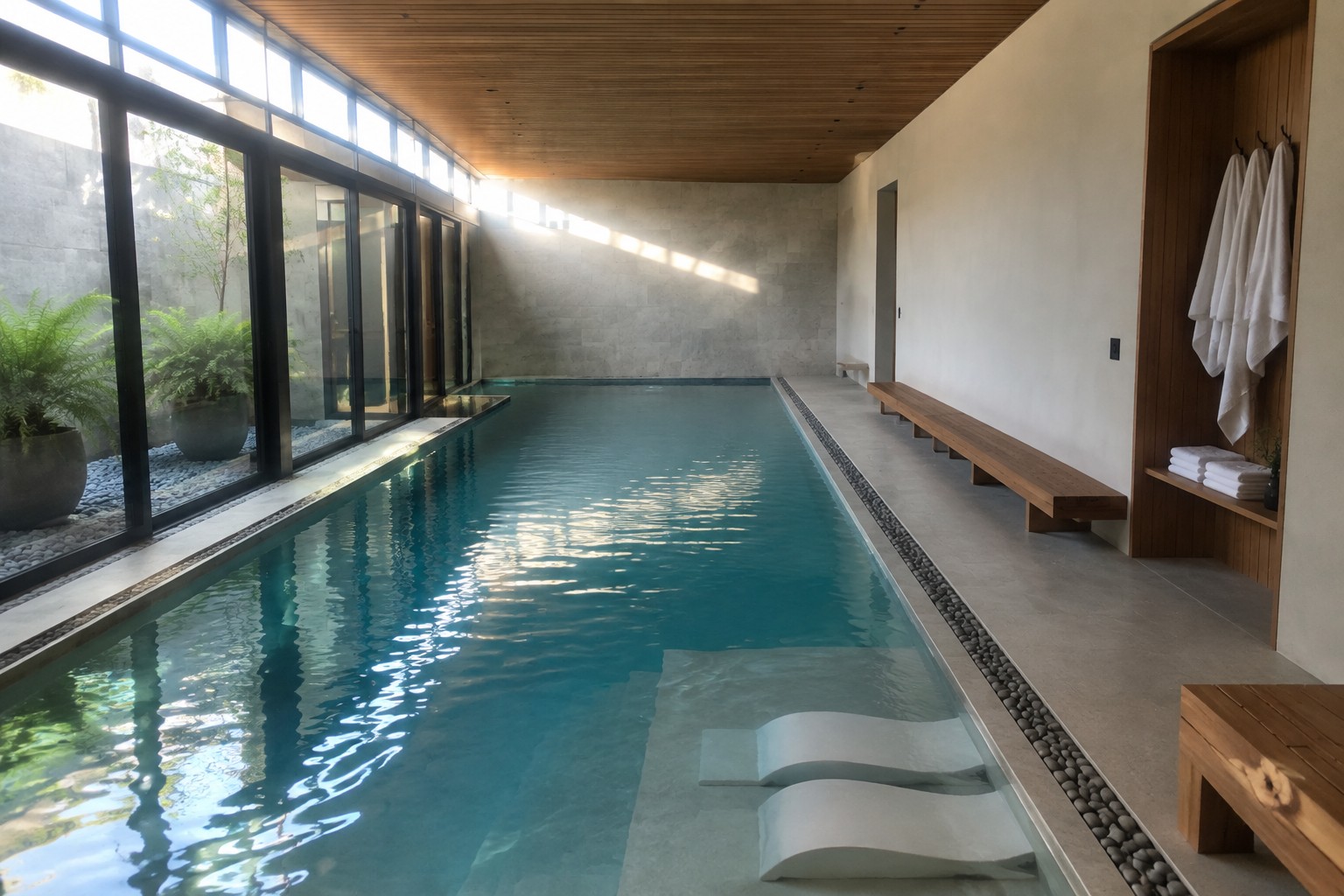
A simple path of large stone slabs set into loose pebbles gives an indoor pool a clean finished edge without the expense of full decking or custom tile. This approach works especially well in narrow spaces where you need a clear walking route but do not want to spend heavily on materials or labor.
It suits small enclosed pools in homes that already have basic concrete or block walls. Just level the ground, lay a weed barrier, spread the pebbles, and set the pavers in place. The look stays practical and easy to maintain even with regular splashing.
Built-In Platform Seating For A Small Pool
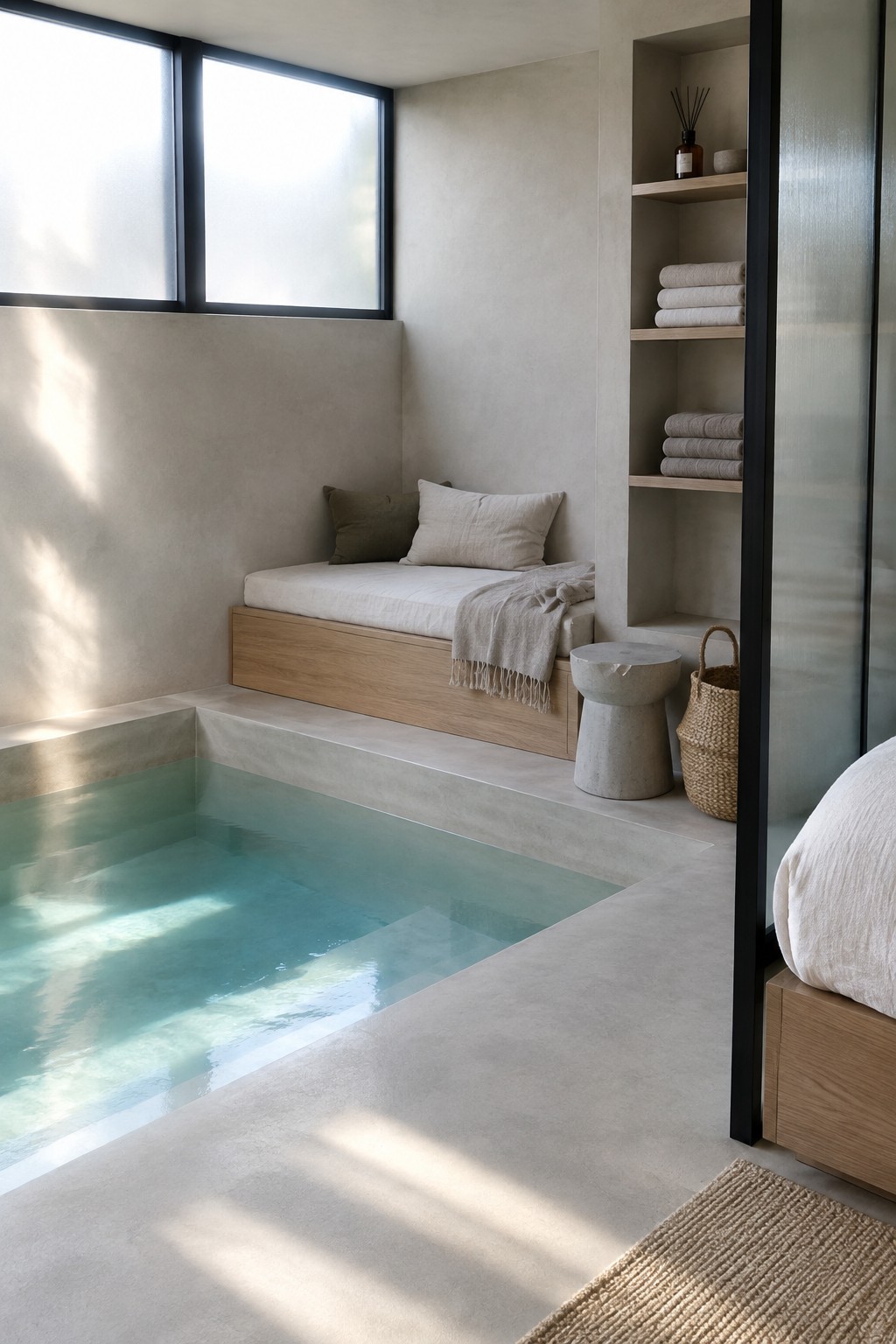
A built-in platform next to a small indoor pool gives you a place to sit and relax without adding extra furniture that takes up floor space. This approach works especially well when the room is modest in size, since the seating becomes part of the structure instead of something you have to move around or store.
It suits homes where the pool is tucked into a basement, addition, or converted room. Keep the platform simple with basic wood framing and a cushion on top, and you can add a few storage shelves nearby for towels so the whole area stays practical and low cost.
Fit A Compact Pool Into An Attic Space
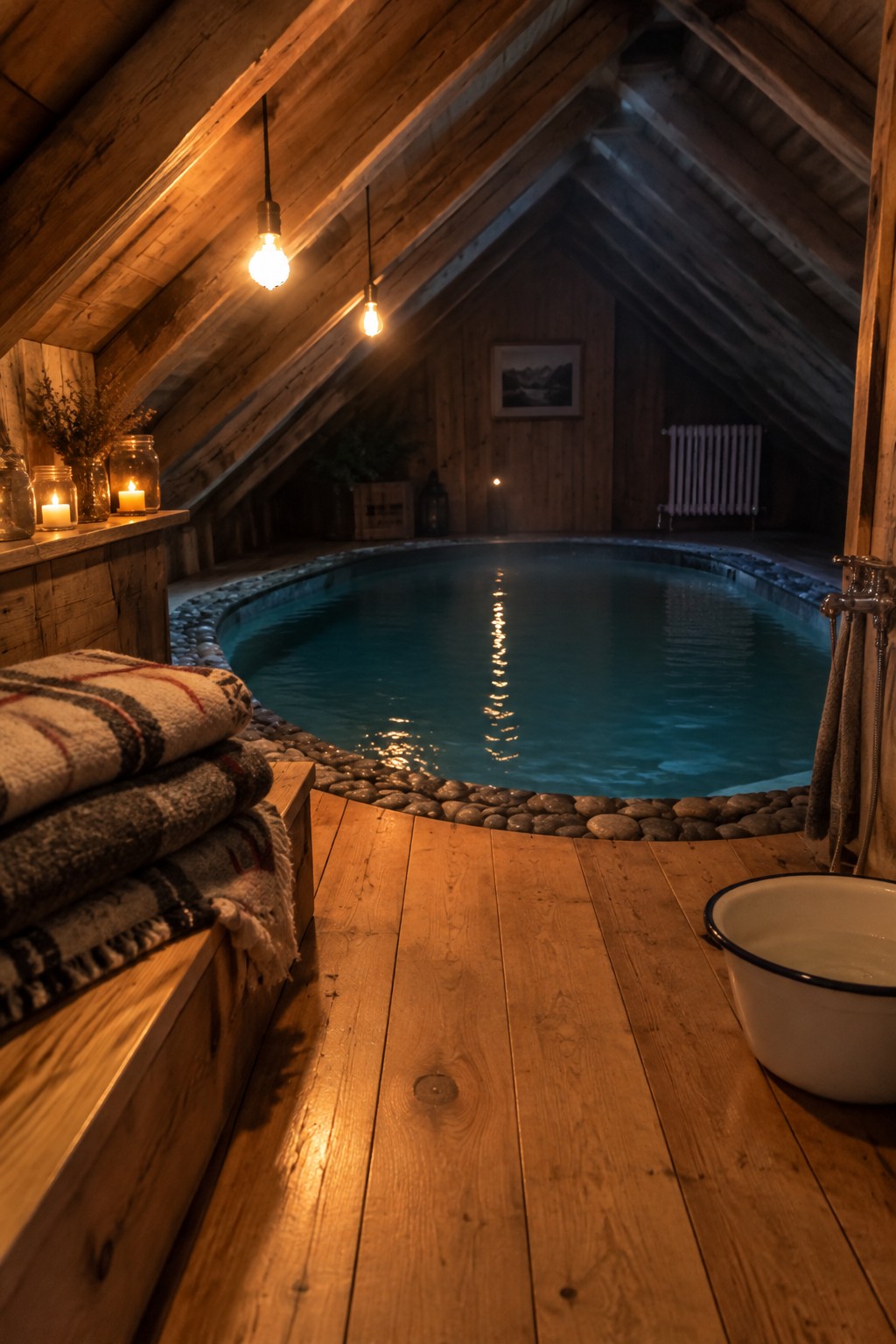
Many homes already have the shell they need for a small indoor pool. An unused attic with decent headroom can become the enclosure without major new construction, which helps keep the budget reasonable. The wood ceiling and beams stay visible, and the pool sits low so the space still feels open.
This approach suits older homes or any place where adding a full basement pool would be too expensive. Focus on solid waterproofing around the edges and a simple wood or stone border that matches what is already there. Avoid heavy finishes that add cost without changing how the room works day to day.
Tatami Mats Keep Poolside Seating Simple And Affordable
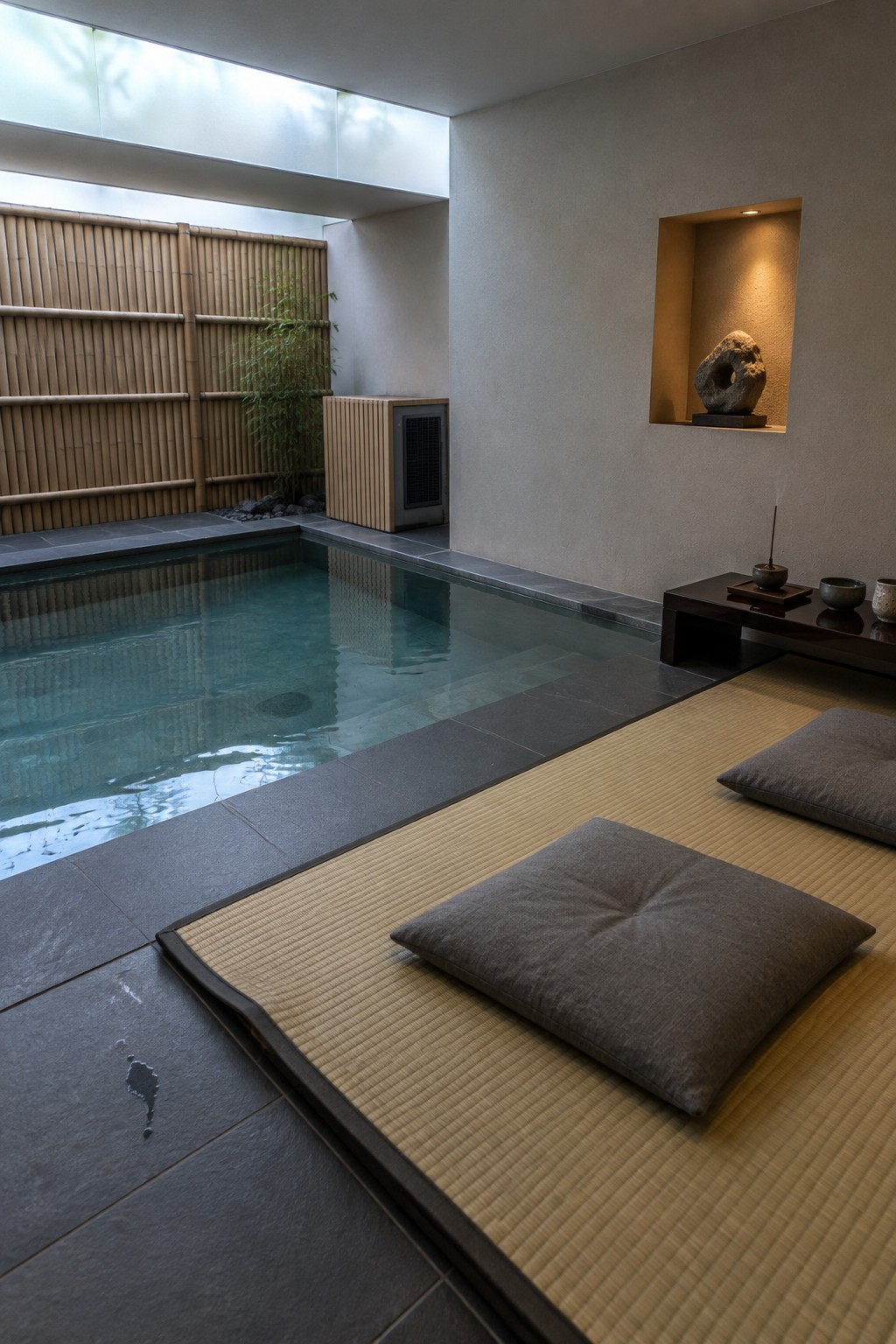
Tatami mats give you a clean, low cost way to add a quiet spot right next to an indoor pool. The flat woven surface feels calm and works without big chairs or sofas that can take up space and cost more.
This setup suits smaller homes or anyone trying to keep the budget down. Place the mats on a low platform, add a couple of cushions, and you have a place to rest after a swim. Just make sure the area stays dry enough since tatami does not handle constant moisture well.
Add A Bench With Under Lighting
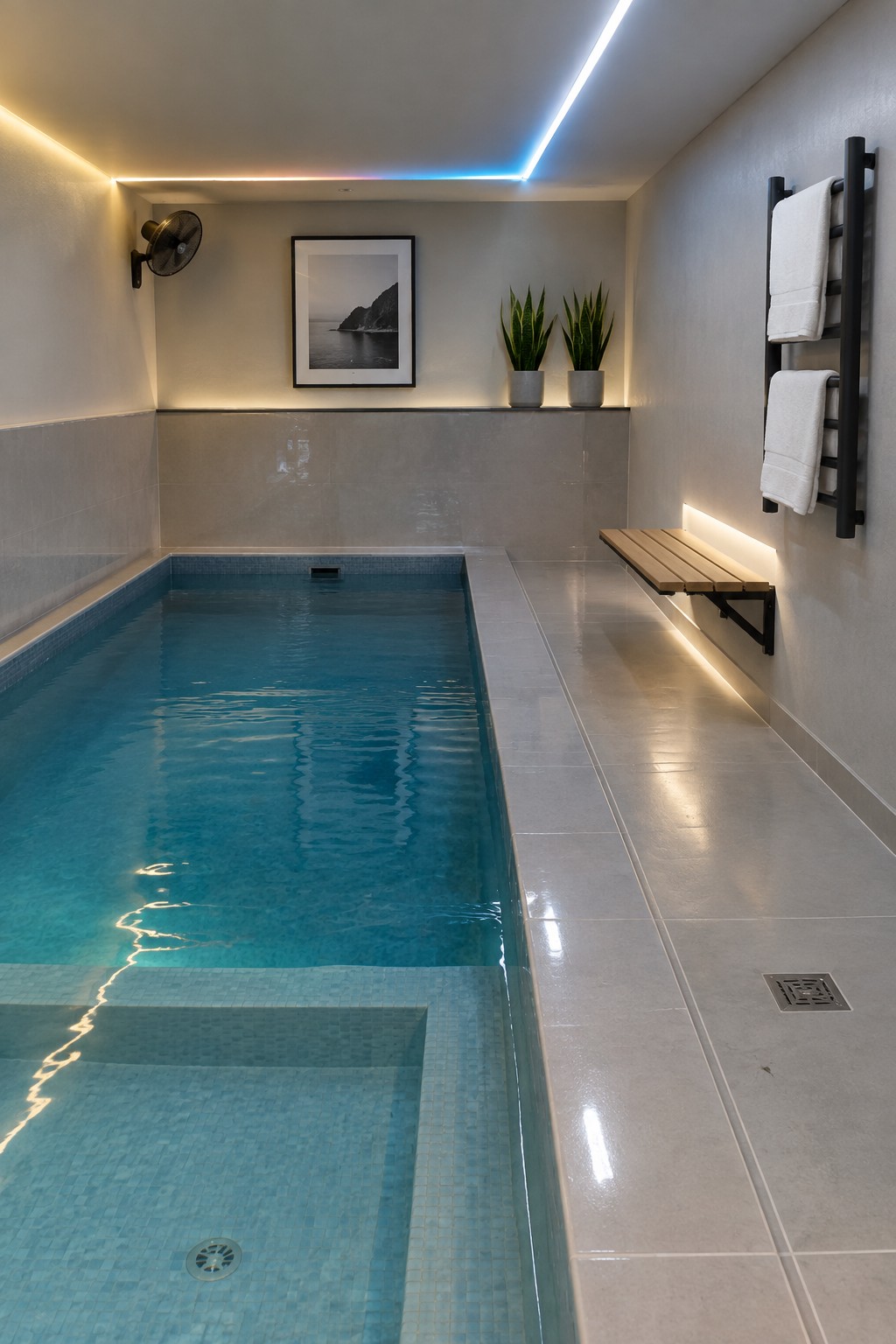
A wall-mounted bench with lighting tucked underneath gives an indoor pool a place to sit without crowding the floor. It turns the edge of the pool into a simple spot to rest, towel off, or watch kids swim, and the soft light adds warmth without needing extra lamps or fixtures.
This setup works especially well in narrow or basement pools where space is tight. Use a moisture-resistant wood or composite, keep the wiring simple and sealed, and place it opposite the main entry so it does not block traffic.
Pebble Aggregate Decks for Indoor Pools
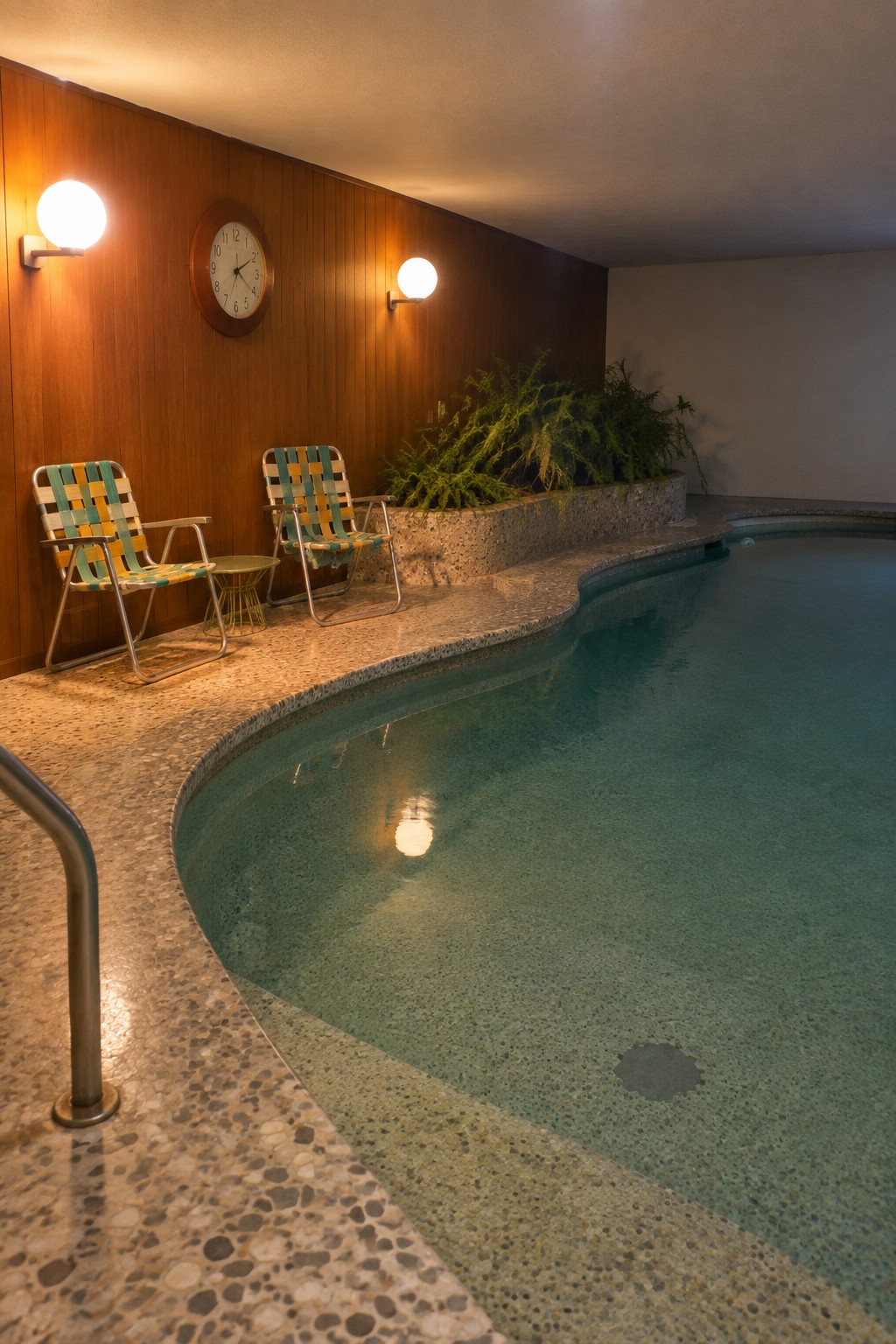
Pebble aggregate finishes show up often in older indoor pools because the surface hides scuffs and water marks better than smooth concrete. The speckled look also gives a bit of texture underfoot without needing extra rugs or mats. It pairs easily with simple wood walls and basic lighting, so the whole room stays practical instead of fussy.
This approach works well in basement pools or garage conversions where budget matters more than high-end tile. Seal the surface once a year and keep the surrounding deck sloped for drainage. It suits smaller homes that want a pool without constant upkeep or fancy materials.
Narrow Indoor Pools That Fit Long Rooms
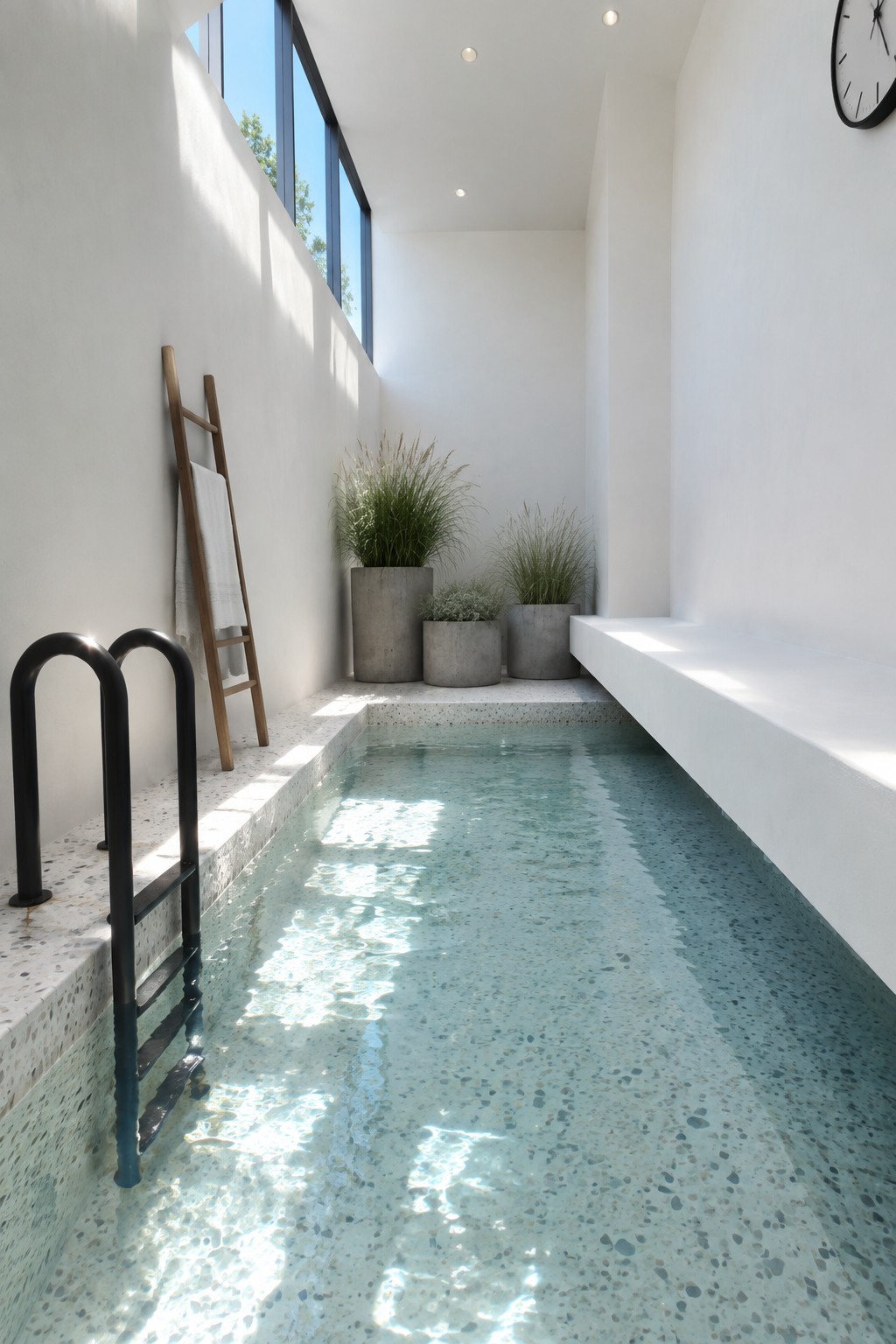
A long narrow pool makes good use of space that might otherwise sit empty. It avoids the need for a wide room, which helps keep construction costs down while still giving you a real swimming area.
This layout works best in homes with a spare hallway, basement corridor, or converted garage. Stick to simple finishes like terrazzo or basic concrete, add a built-in bench along one side, and keep extra features minimal so the project stays affordable.
Frequently Asked Questions
Q: Can I fit an indoor pool into a small home without major construction? A: Many people use above ground models placed in a large room or enclosed patio. You reinforce the floor first if needed. Then add simple barriers to contain splashes.
Q: How often do I need to treat the water in these budget pools? A: Test the chemicals every few days at first. Adjust based on usage and temperature. This prevents algae without constant monitoring.
Q: Will an indoor pool raise my energy bills a lot? A: Insulate the area well to hold heat in the water. Run the pump on a timer to cut costs.
Q: What about safety features for kids around the pool? A: Install a sturdy cover when not in use. Keep the door locked if the space is separate.