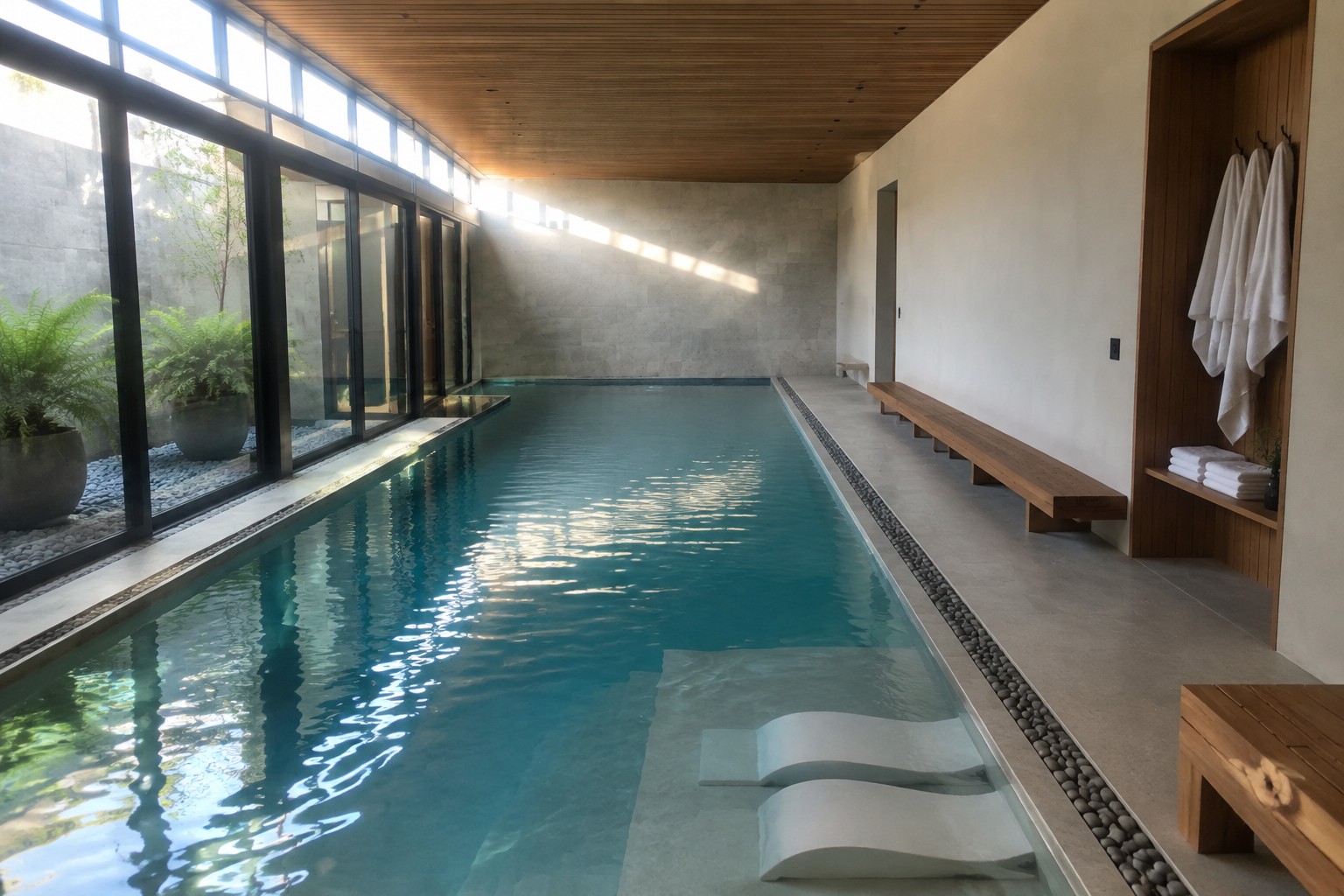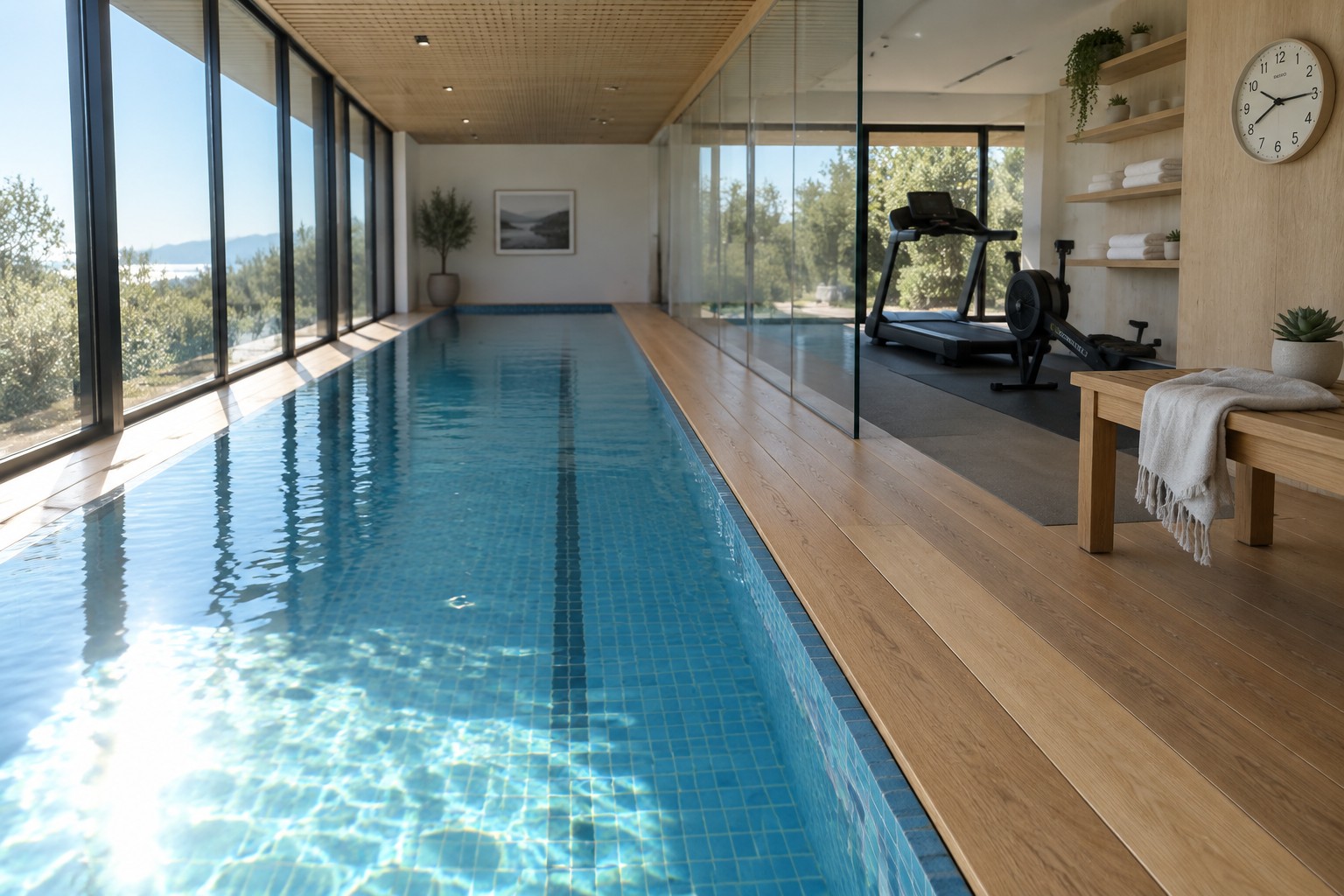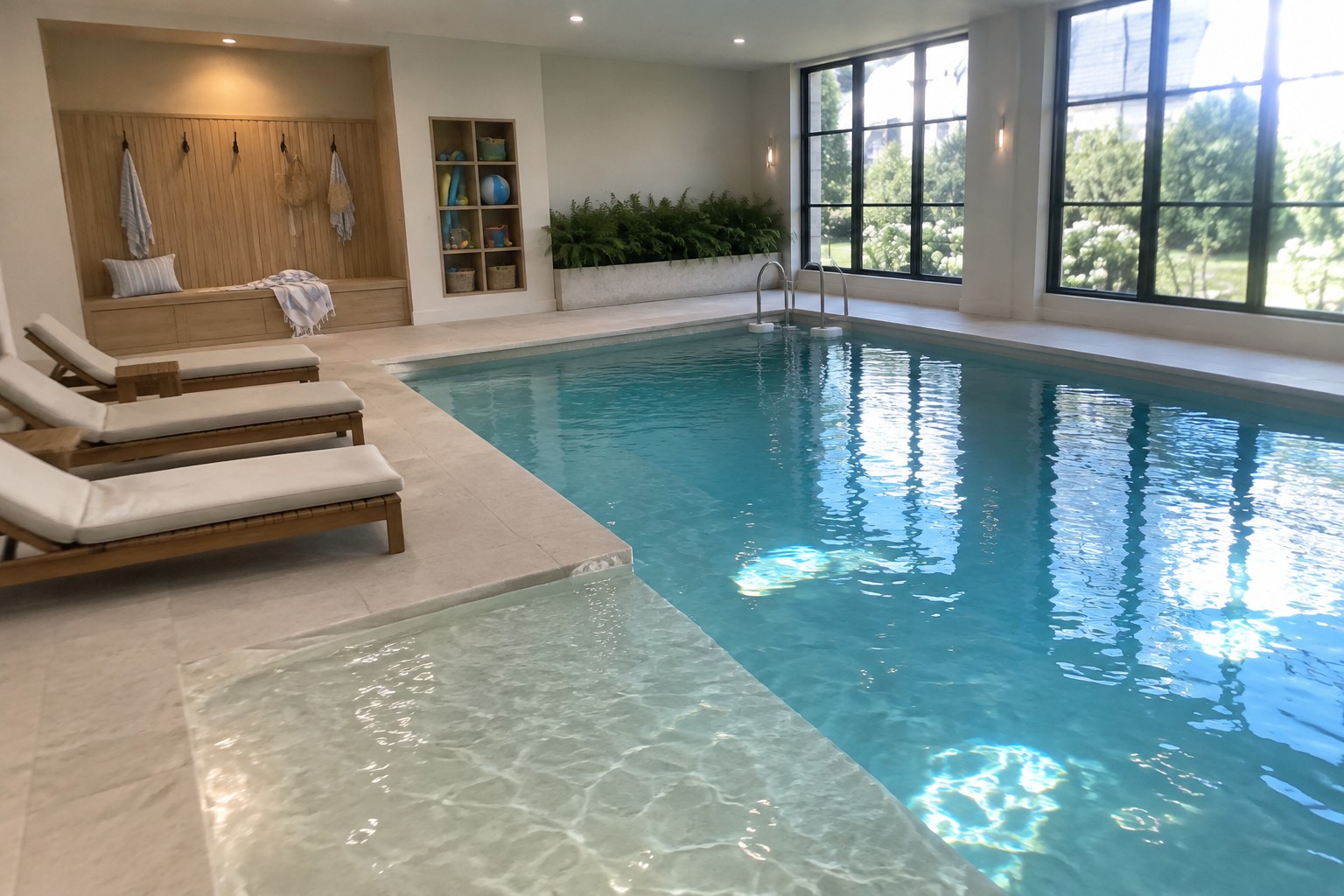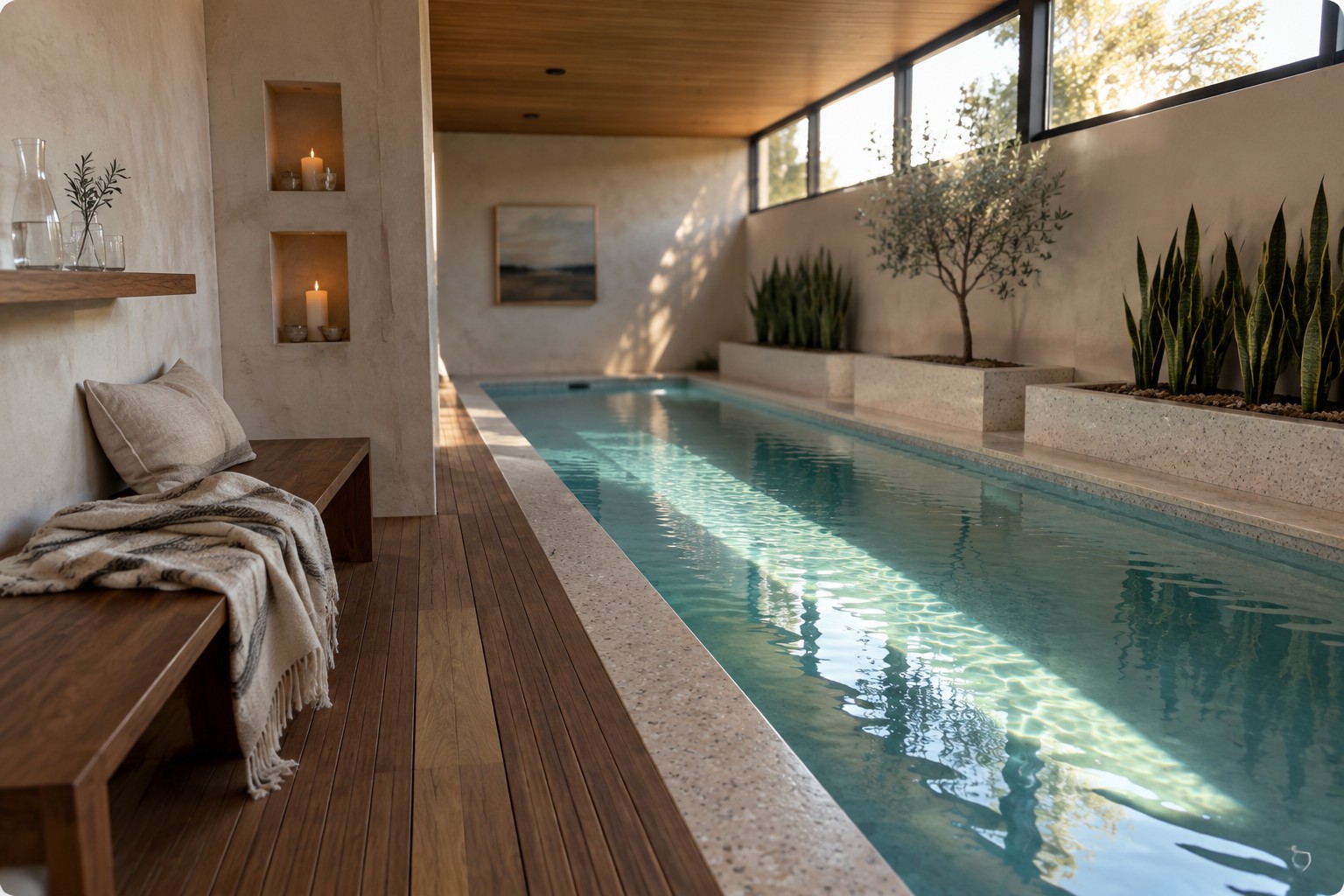
I’ve found that indoor pool rooms tend to feel off when the layout ignores how people actually move through them day to day.
Moisture and light play a bigger role than most plans account for, and small adjustments there often fix more than a full overhaul would.
Some changes simply hold up better once the space is in use.
I usually test ventilation upgrades or surface materials first because they affect comfort right away and keep the room from turning musty or echoey over time.
Paying attention to those practical details makes the whole renovation feel more settled instead of like an add-on.
Add a Built-In Planter Along the Pool
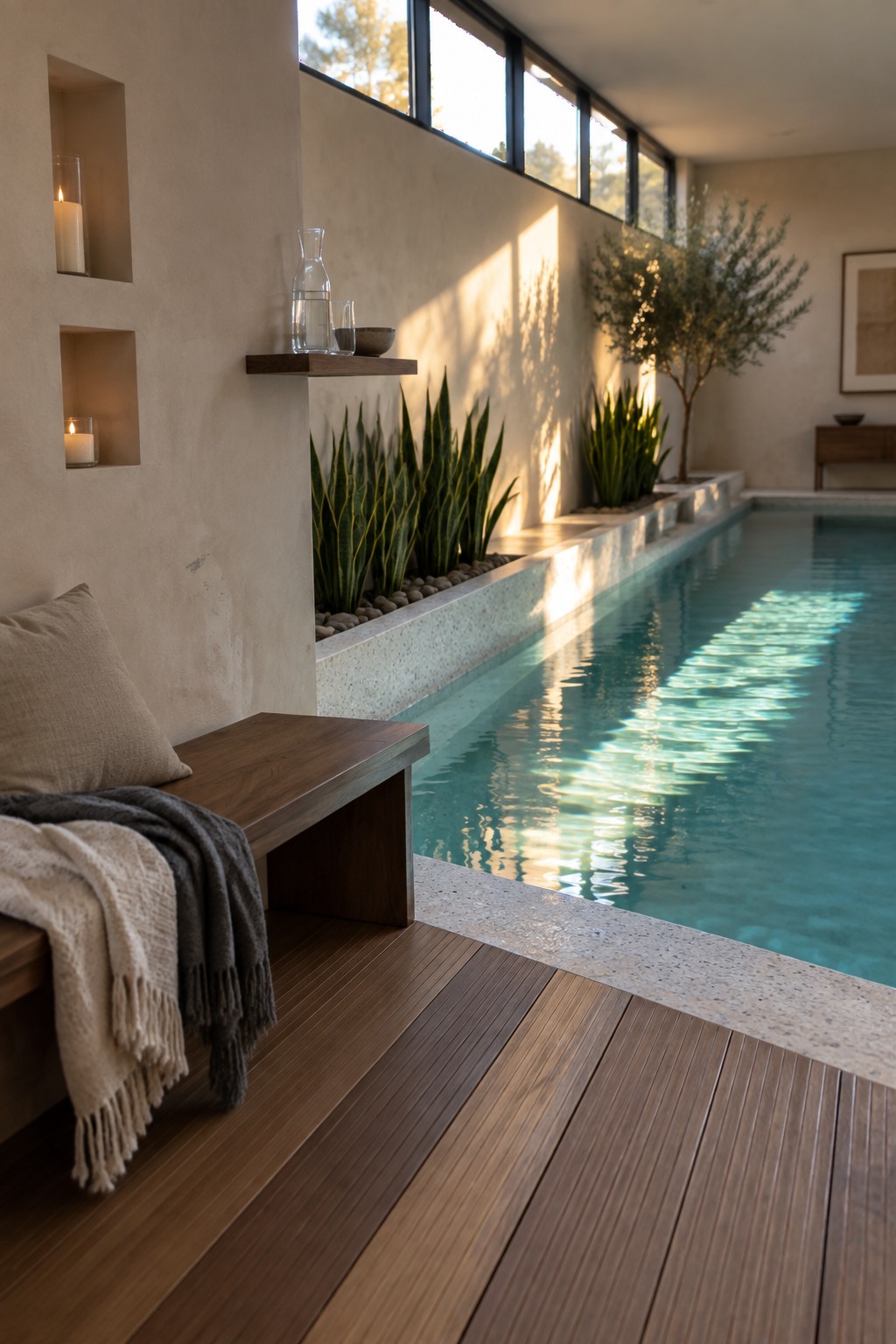
One simple way to update an indoor pool is to run a long planter right along the edge. The plants break up all the hard surfaces and bring a bit of life into what can otherwise feel like a big, cold room.
This works best in spaces that already get decent light from windows. You can fill the planter with tough varieties that handle humidity, and the wood decking beside it helps keep the area feeling warm underfoot. Just make sure the planter has solid drainage so moisture does not become an issue over time.
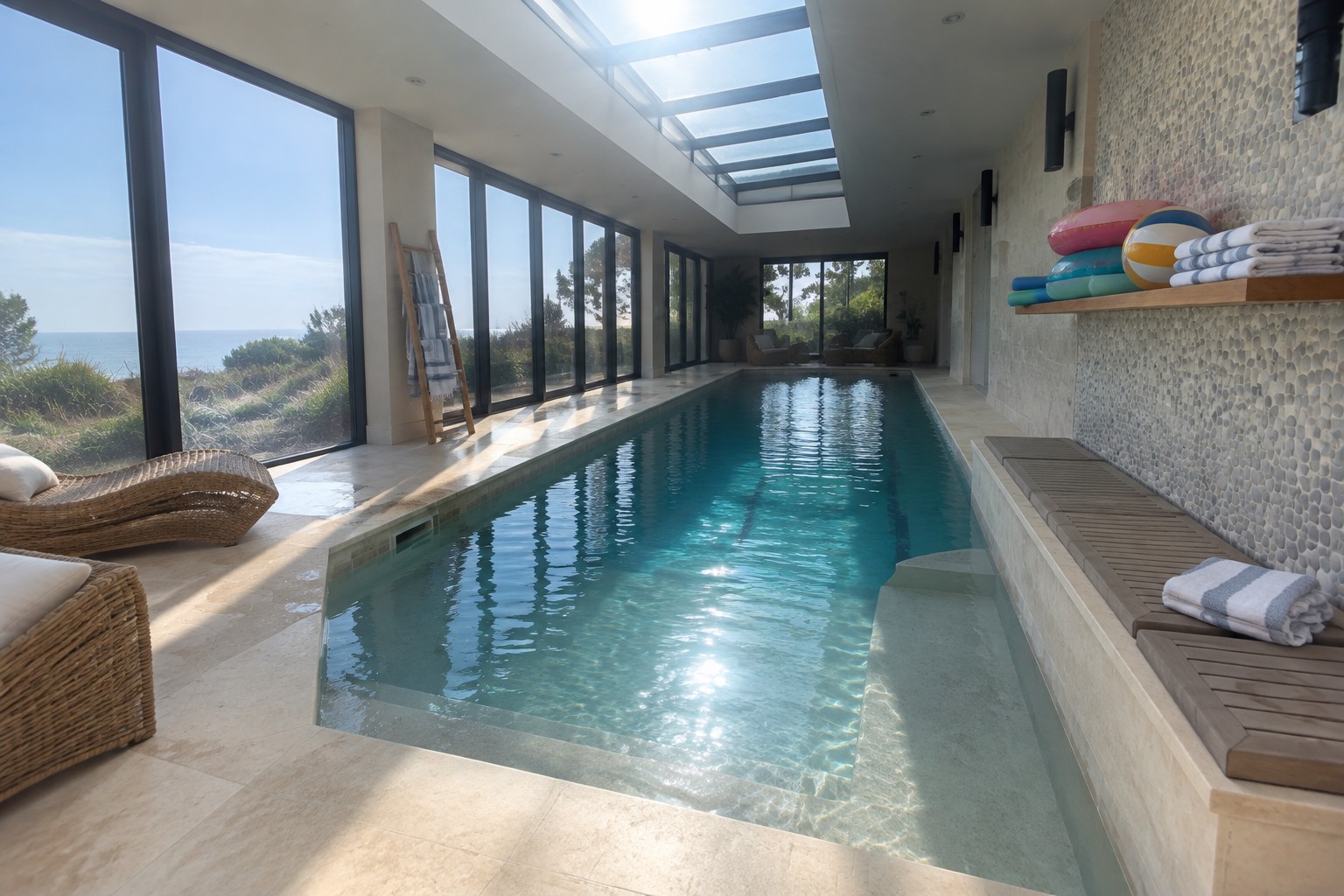
Let Sunlight In With a Skylight
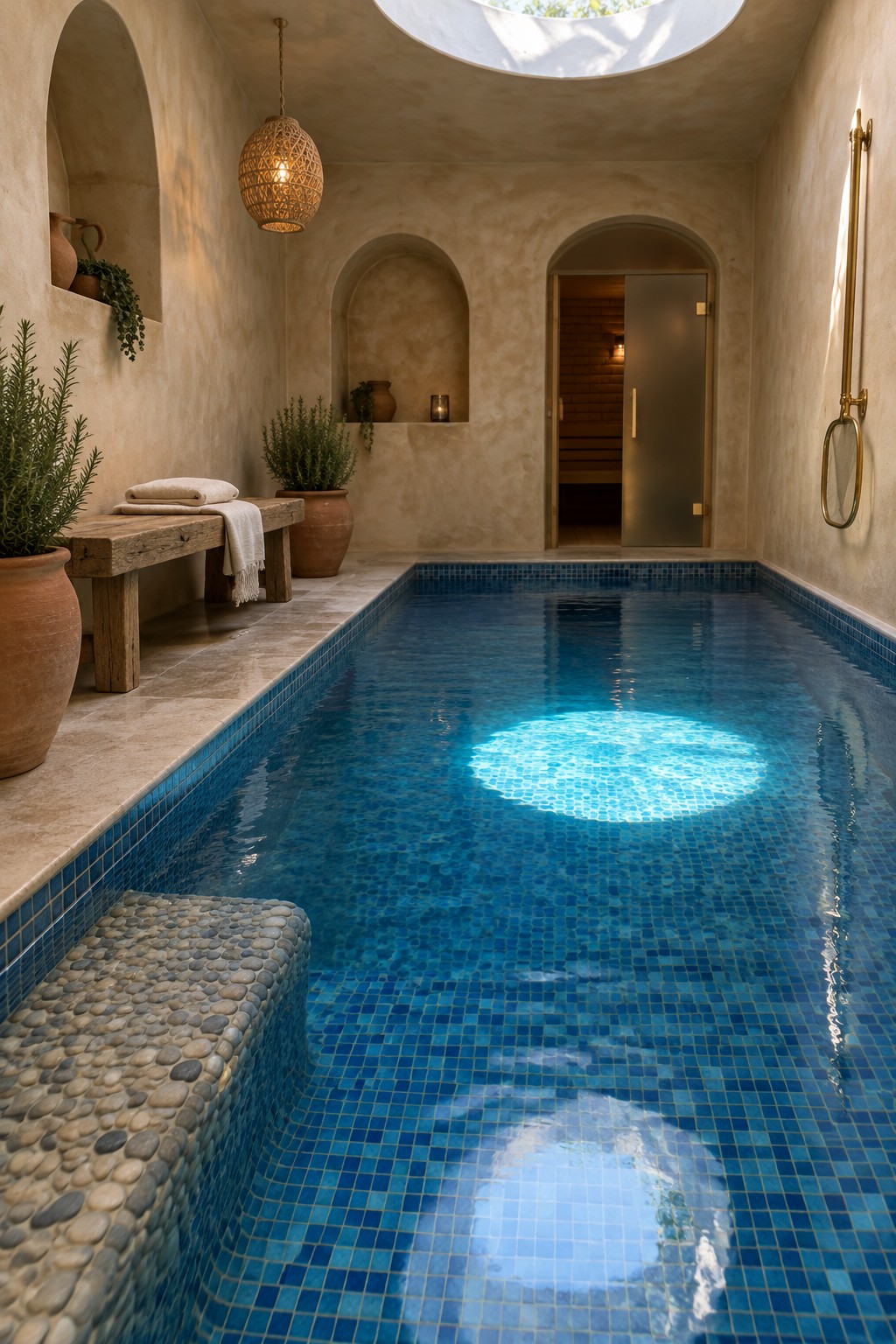
One simple way to improve an indoor pool is to add a skylight right above the water. The natural light that comes through creates moving reflections across the surface and keeps the space from feeling too enclosed during the day.
This works best in rooms that already have some height or in renovations where you can open up part of the ceiling. It suits homes that want a calmer, brighter pool area without adding more fixtures, though you will want to think about how the light lands on any seating or walkways around the edge.
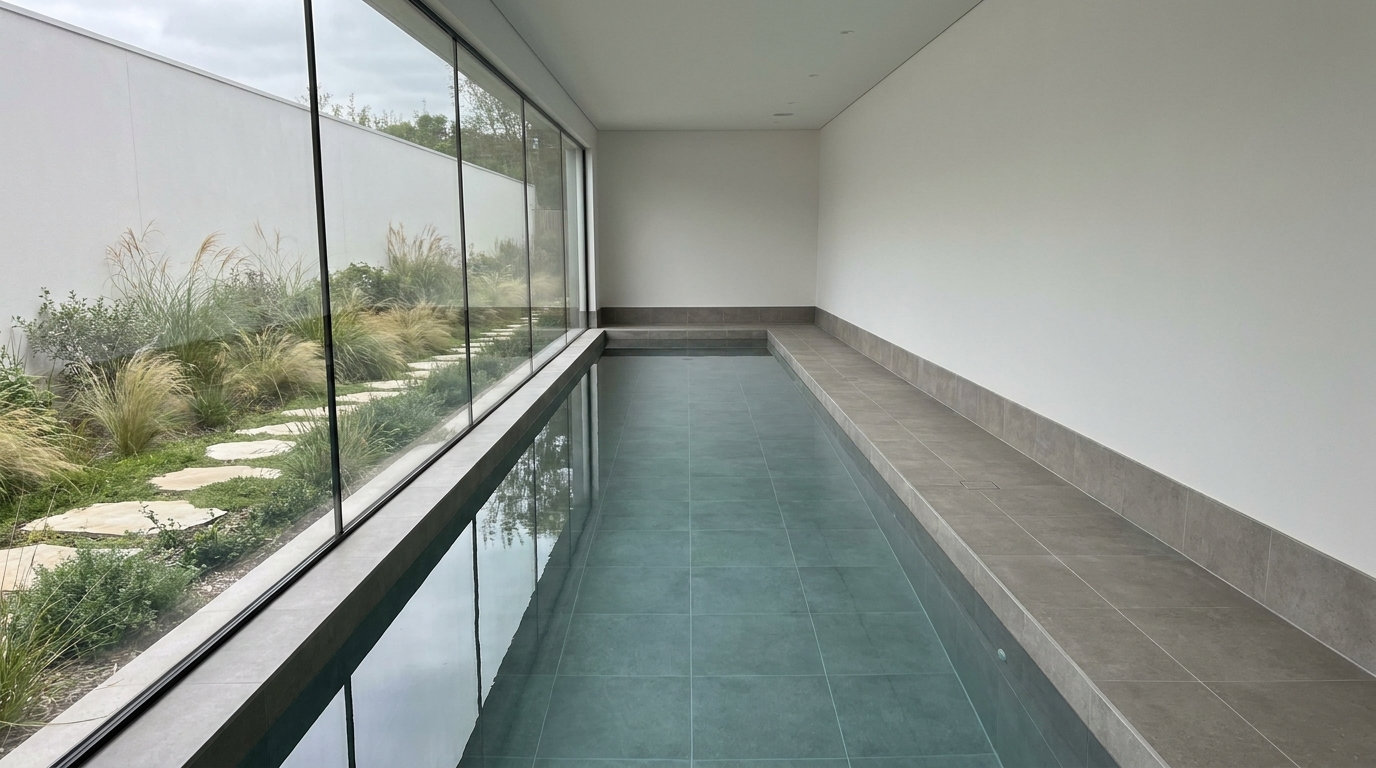
Built-In Seating Along The Pool
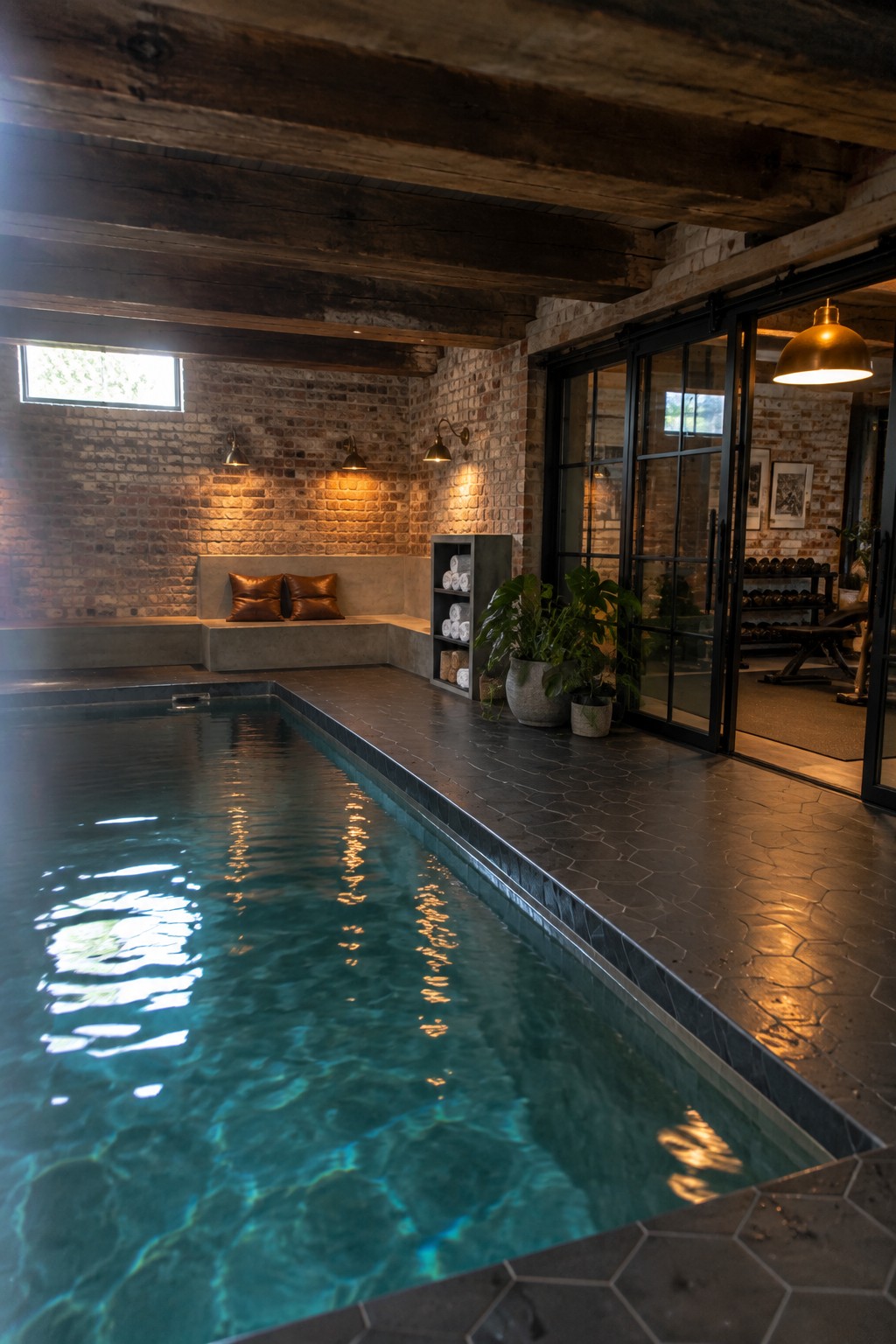
Adding a built-in bench right along the pool edge gives the space a simple way to relax without adding loose furniture that can get in the way. The concrete ledge blends into the floor and wall, so the whole area stays open and easy to move around.
This works best in homes where the pool room has limited floor space or when you want the pool to feel more like a place to linger than just swim. It suits older buildings getting updated because the bench can match existing concrete or brick details without looking added on later.
Bring Warmth With Wood Wall Paneling
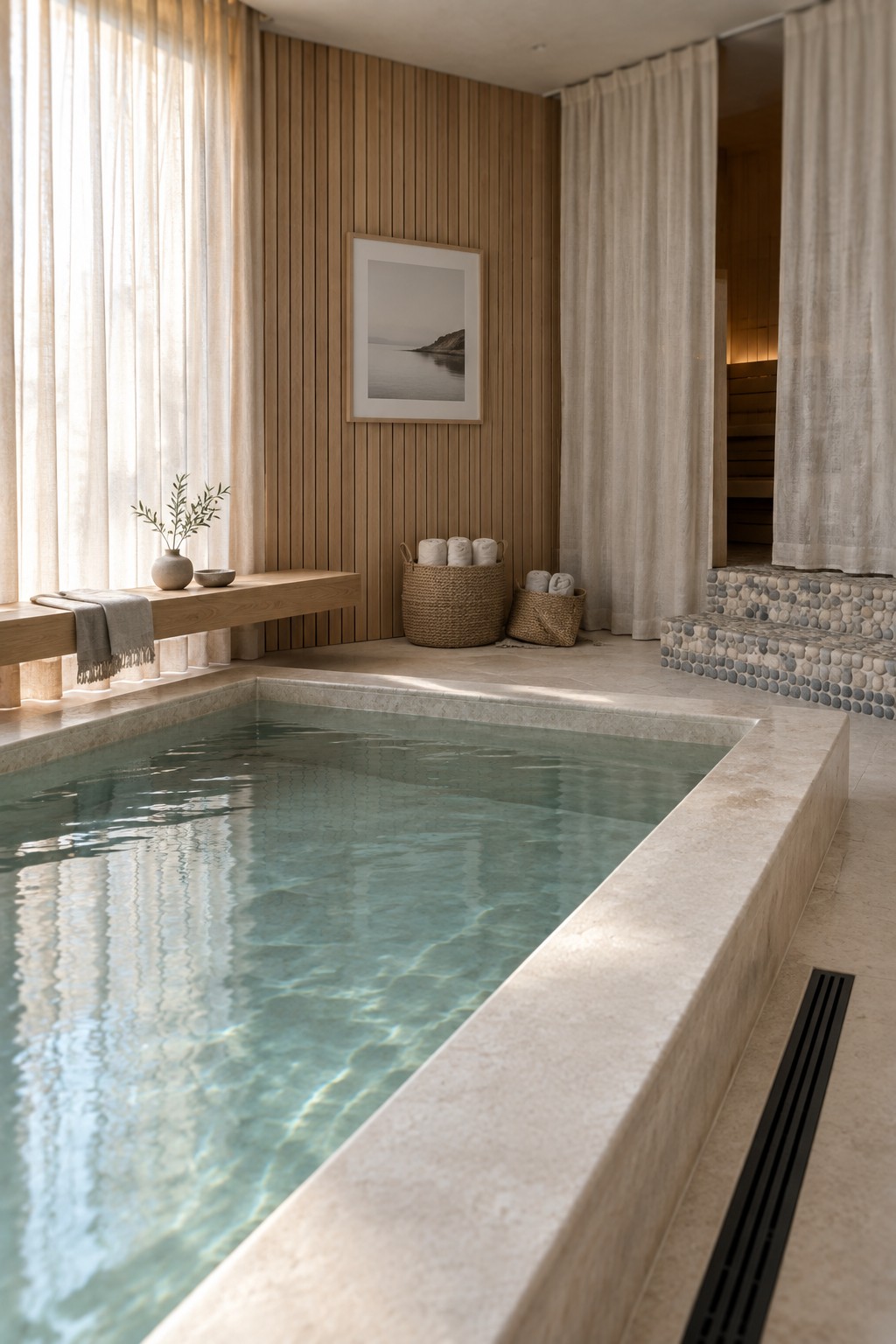
Wood paneling works well in indoor pool spaces because it softens the hard surfaces and keeps the room from feeling too stark. Vertical slats add quiet texture and help the area feel more like a home extension than a separate facility.
This approach suits homes that already have some wood tones elsewhere or want a simple way to add warmth without major structural changes. Keep the rest of the finishes light so the wood stands out without closing the space in.
Surround Your Indoor Pool With Large Potted Plants
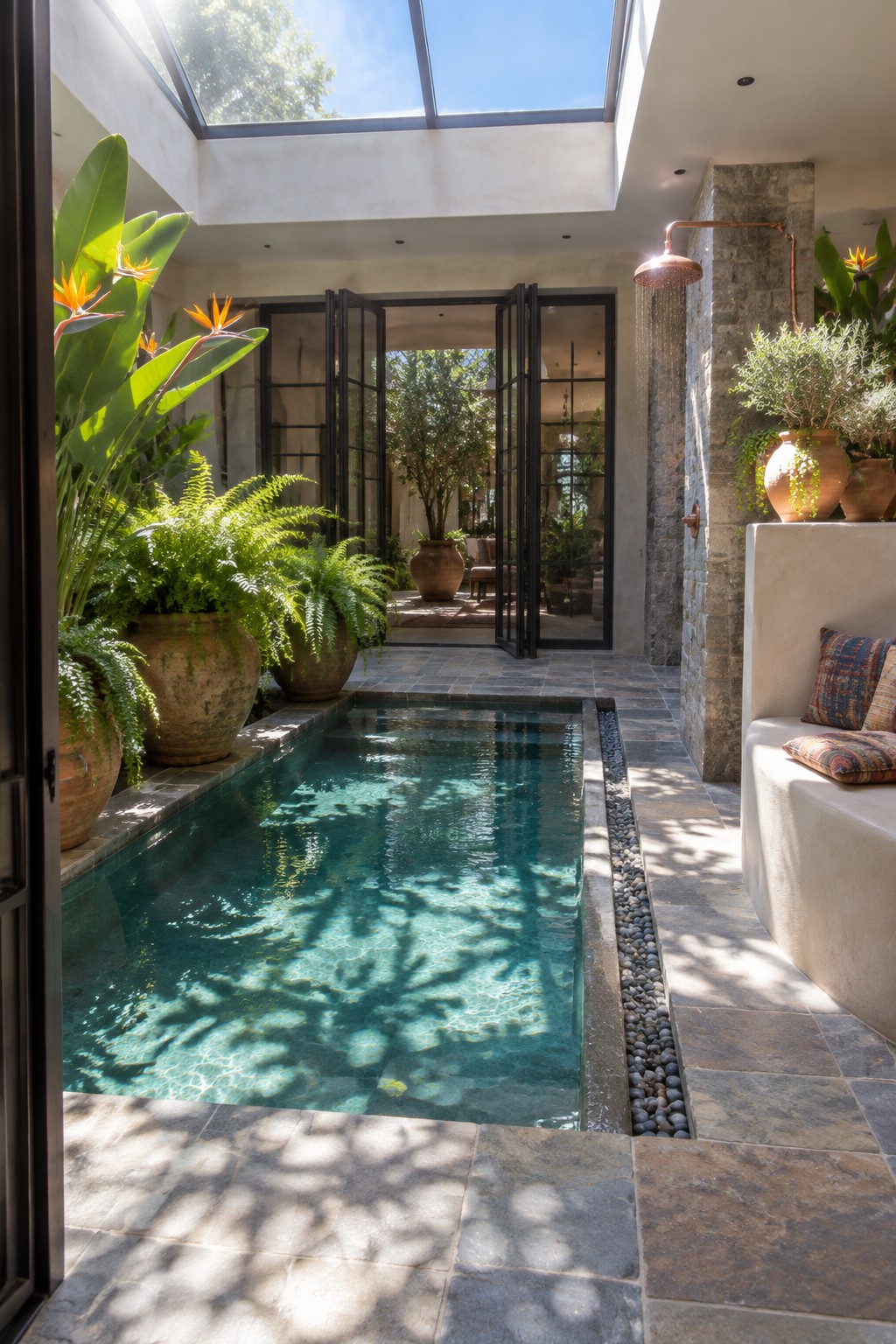
One simple way to improve an indoor pool space is to bring in plenty of large potted plants. They soften the hard tile and water surfaces and make the room feel less like a closed-off box and more like a living area. The greenery also helps balance the cool tones of the pool and adds texture without needing major structural changes.
This works best in pool rooms that get decent natural light, either from windows or a skylight. Place the pots along the edges where they won’t get splashed constantly, and pick varieties that tolerate humidity. The main thing to watch is maintenance, since the plants will need regular watering and occasional trimming to stay healthy.
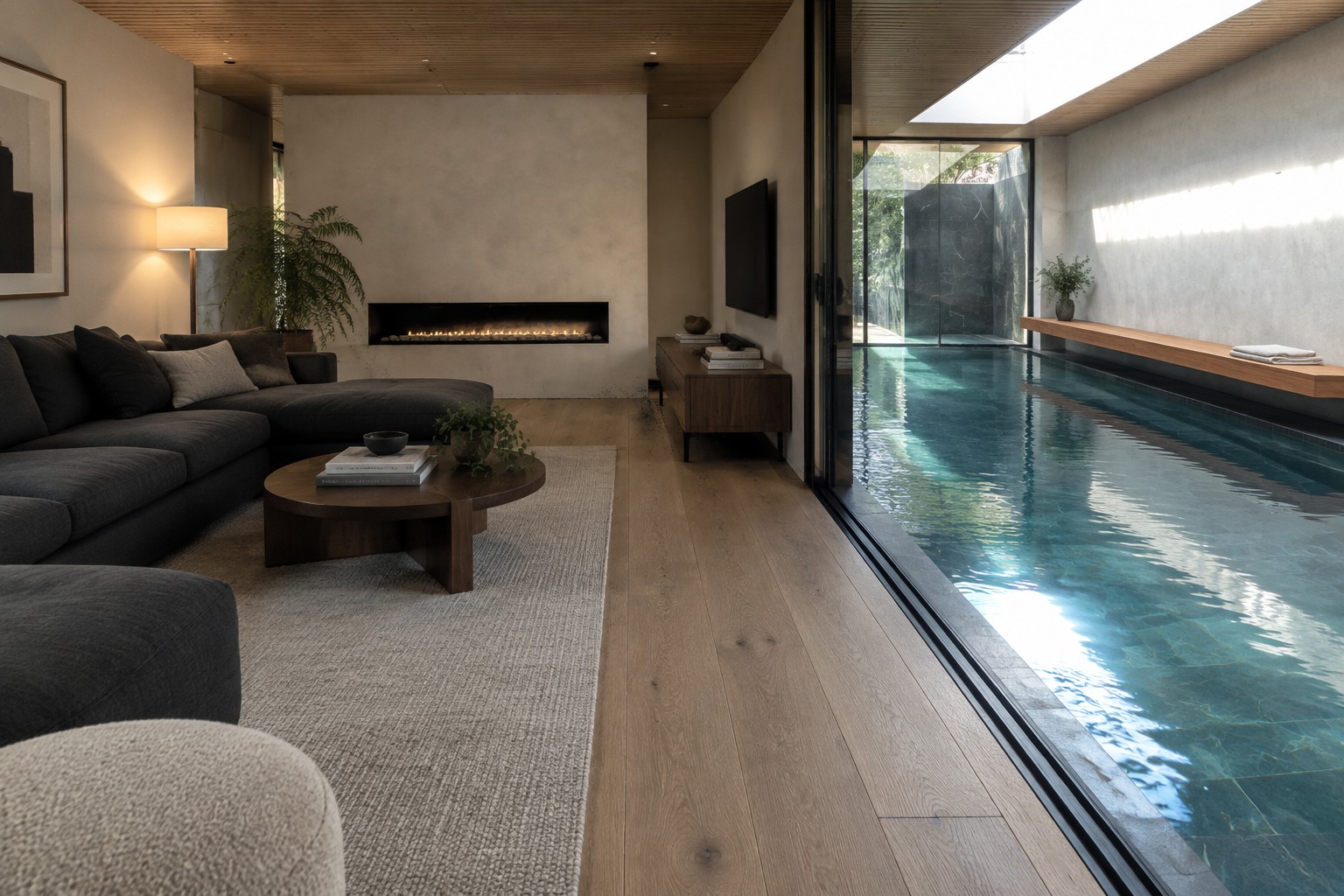
Use Glass Doors To Connect The Living Area To The Indoor Pool
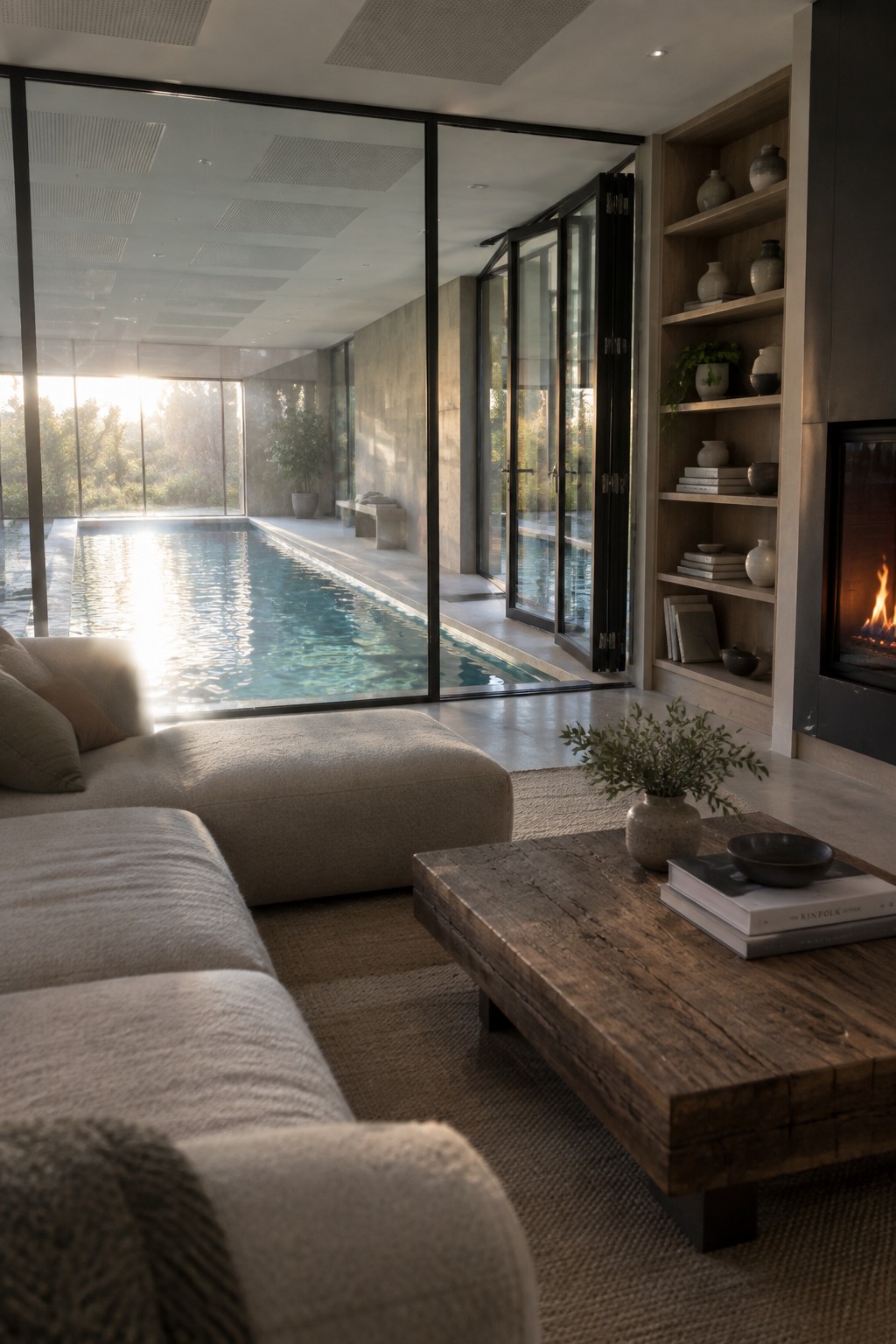
Large glass doors make an indoor pool feel like part of the main living space instead of a separate room. The pool stays visible from the sofa and the whole area feels brighter and more open without turning the living room into a full wet zone.
This approach works best in homes where the pool sits right beside an existing family room or lounge. The doors can stay closed for temperature control while still letting light and views pass through. Just keep the flooring consistent on both sides so the spaces read as one.
Add Wall Water Features For A Calmer Pool
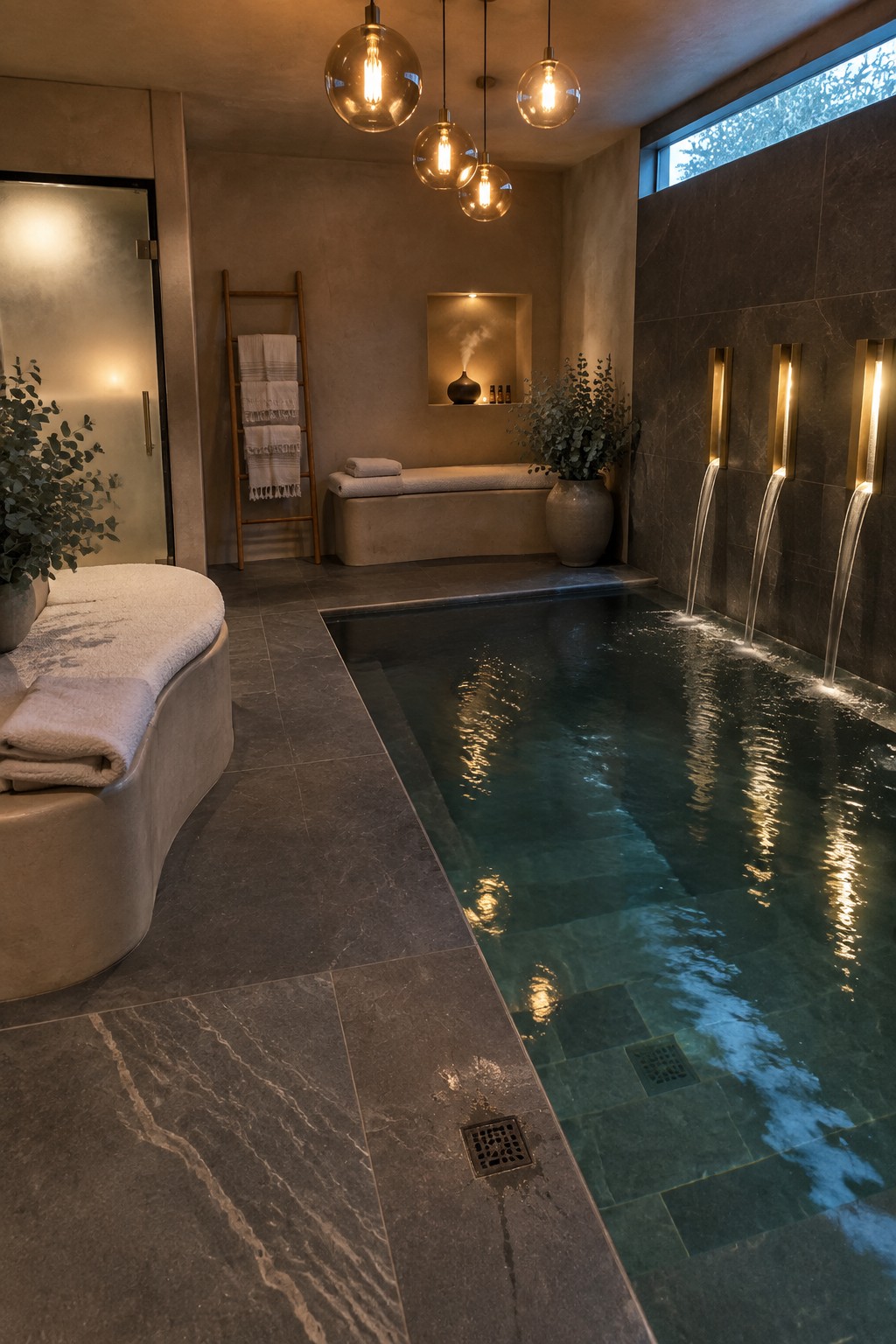
Wall water features bring a quiet sense of movement to an indoor pool without needing a lot of extra space. The steady sound and the way light catches on the falling water help the room feel less like a plain box and more like a place to unwind after a long day.
This approach works best in renovations where the pool shell stays in place but the walls can be updated. Keep the surrounding finishes simple and the lighting warm so the water stays the main focus instead of competing with bright overhead lights or busy tile patterns.
Add A Sloped Entry For Easier Access
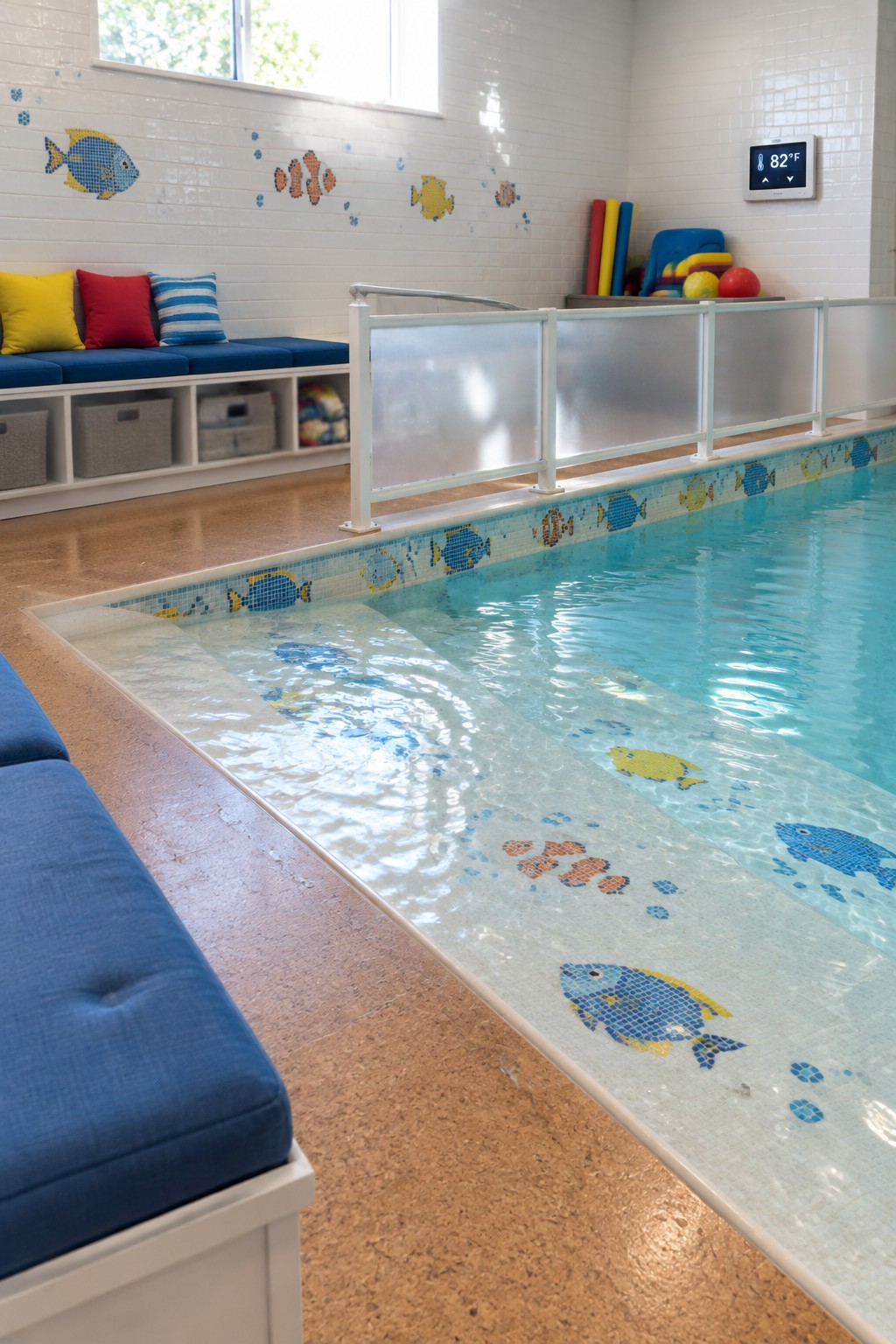
A sloped entry turns a standard indoor pool into something more usable for a wider range of people. The water starts very shallow and deepens slowly, so stepping in feels less abrupt and more natural.
This works especially well in family homes or spaces meant for regular use. You can keep the slope gentle and finish it with simple tile patterns that add some color without complicating the look. Just make sure the transition stays smooth underfoot.
Bring Greenery Indoors With a Living Wall
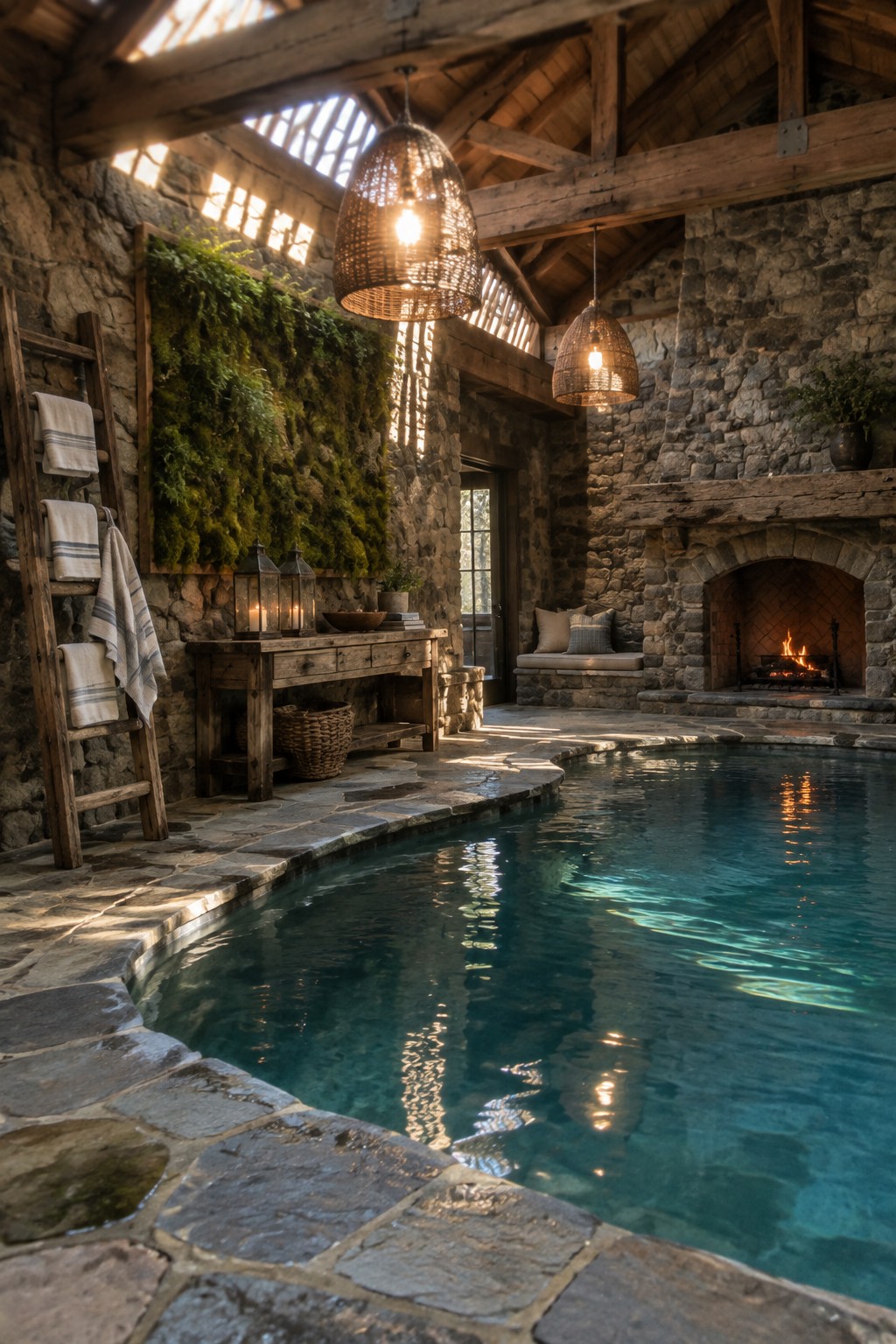
A living wall adds a soft, natural layer that works especially well around an indoor pool. The plants break up the hard surfaces of stone and water, and they keep the space from feeling too cold or cave-like even when the room has tall ceilings and heavy materials.
This idea suits homes with existing stone walls or a rustic structure that needs a bit of life. Start with a smaller framed panel if you want to test the look, and make sure the spot gets decent light and has easy access for watering.
Line the Pool Edge with LED Lighting
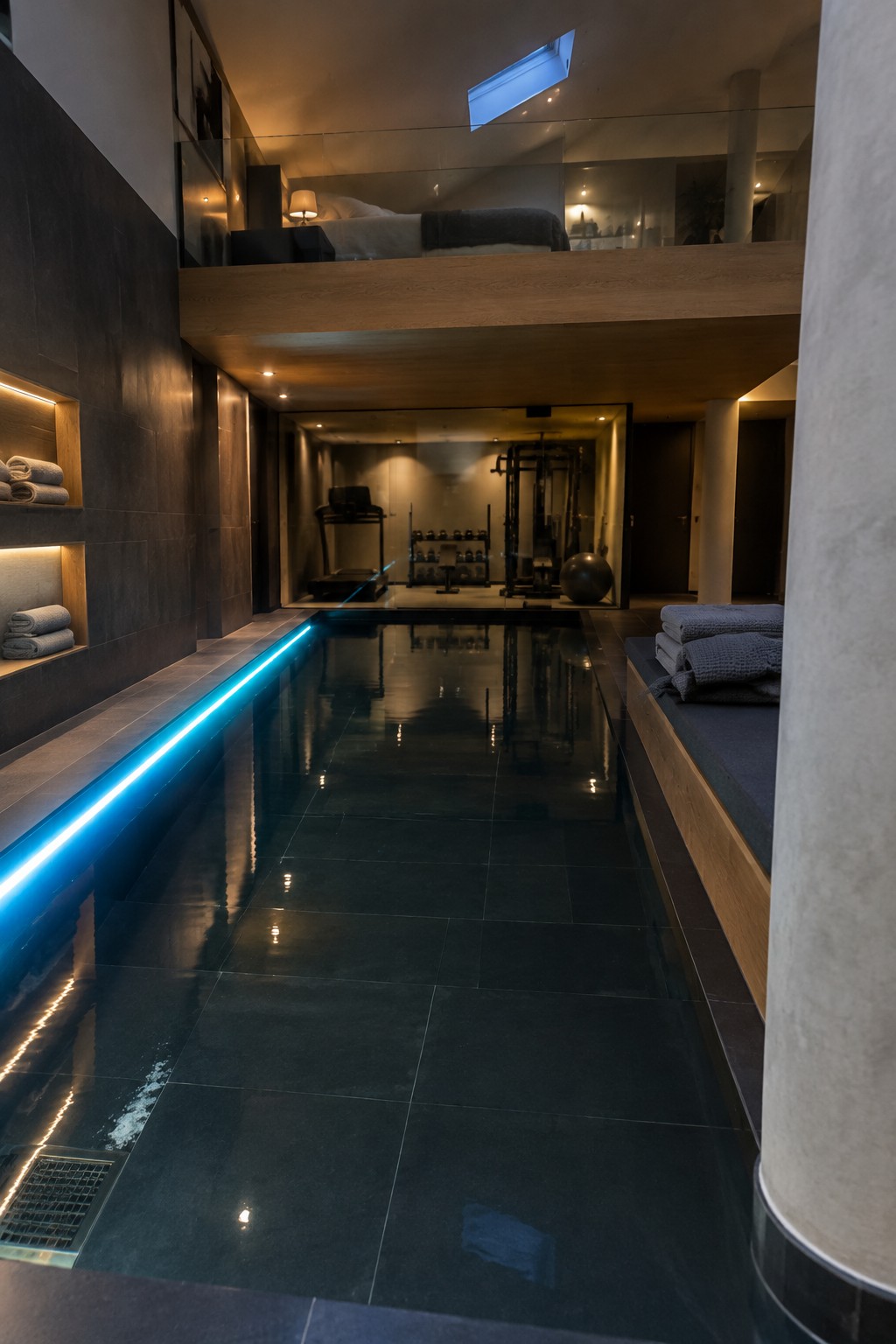
A narrow indoor lap pool can feel more inviting when you run a simple strip of LED lighting along one long edge. The light reflects on the water and helps the space feel calmer and a bit longer, especially once the sun goes down. It is a small change that makes a big difference in how the pool is used at night.
This works well in basement or lower-level renovations where you already have the height for a pool but want to avoid a heavy or closed-in look. Dark tile around the water lets the line of light stand out without needing much else. Just keep the strip low and even so it does not shine straight into anyone’s eyes when they swim.
Layering Plants Around an Indoor Pool
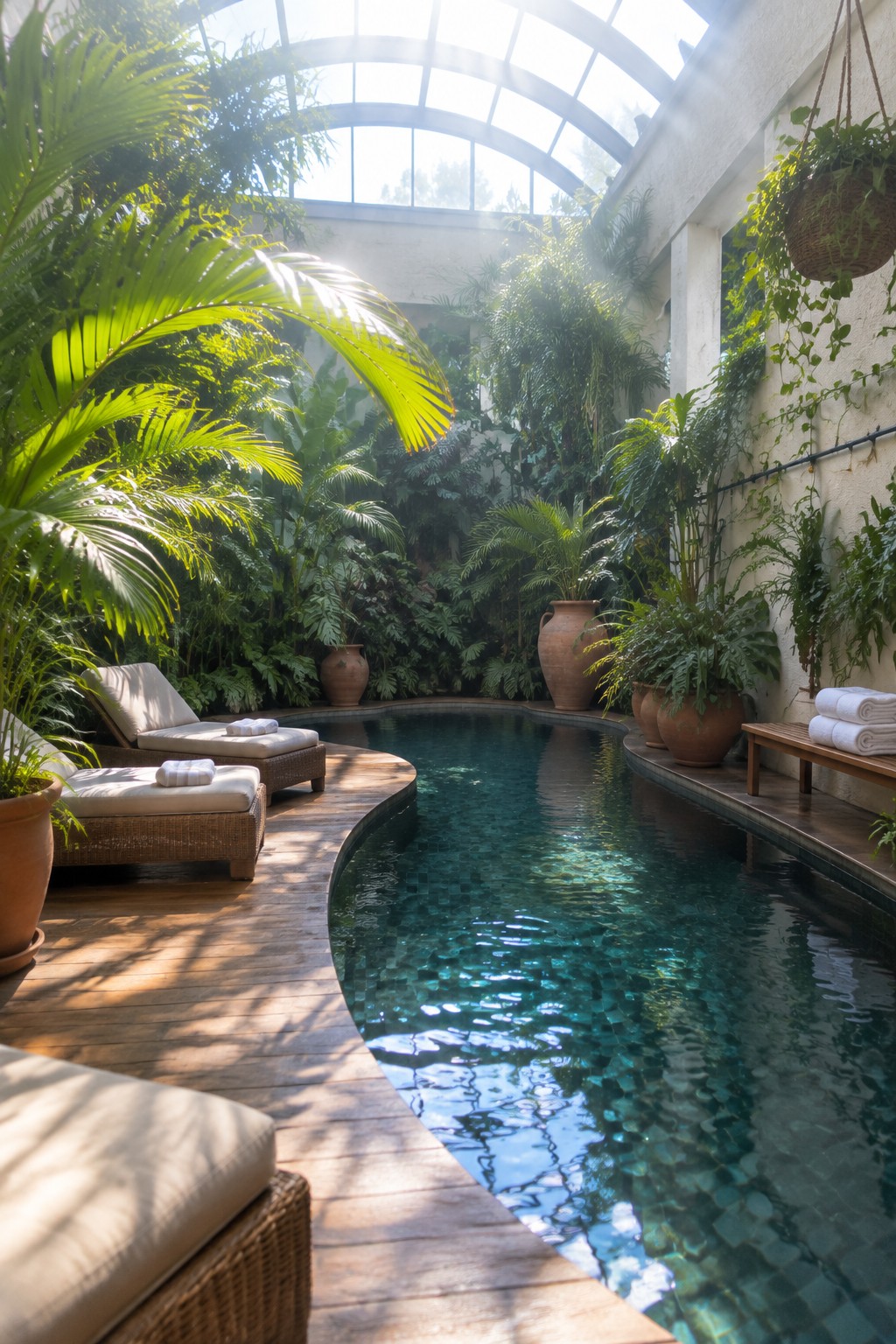
Many indoor pools still feel a bit bare once the tiling and lighting are done. Adding plenty of plants changes the whole feel without touching the structure. The greenery softens the hard edges of the pool and makes the water look calmer.
This works best in rooms with skylights or high windows that let in steady light. Group taller palms and big leafy plants along the sides, then tuck in a few trailing varieties where they can hang near the water. Keep the pots simple so the plants stay the main feature.
Add Folding Glass Doors to Your Indoor Pool
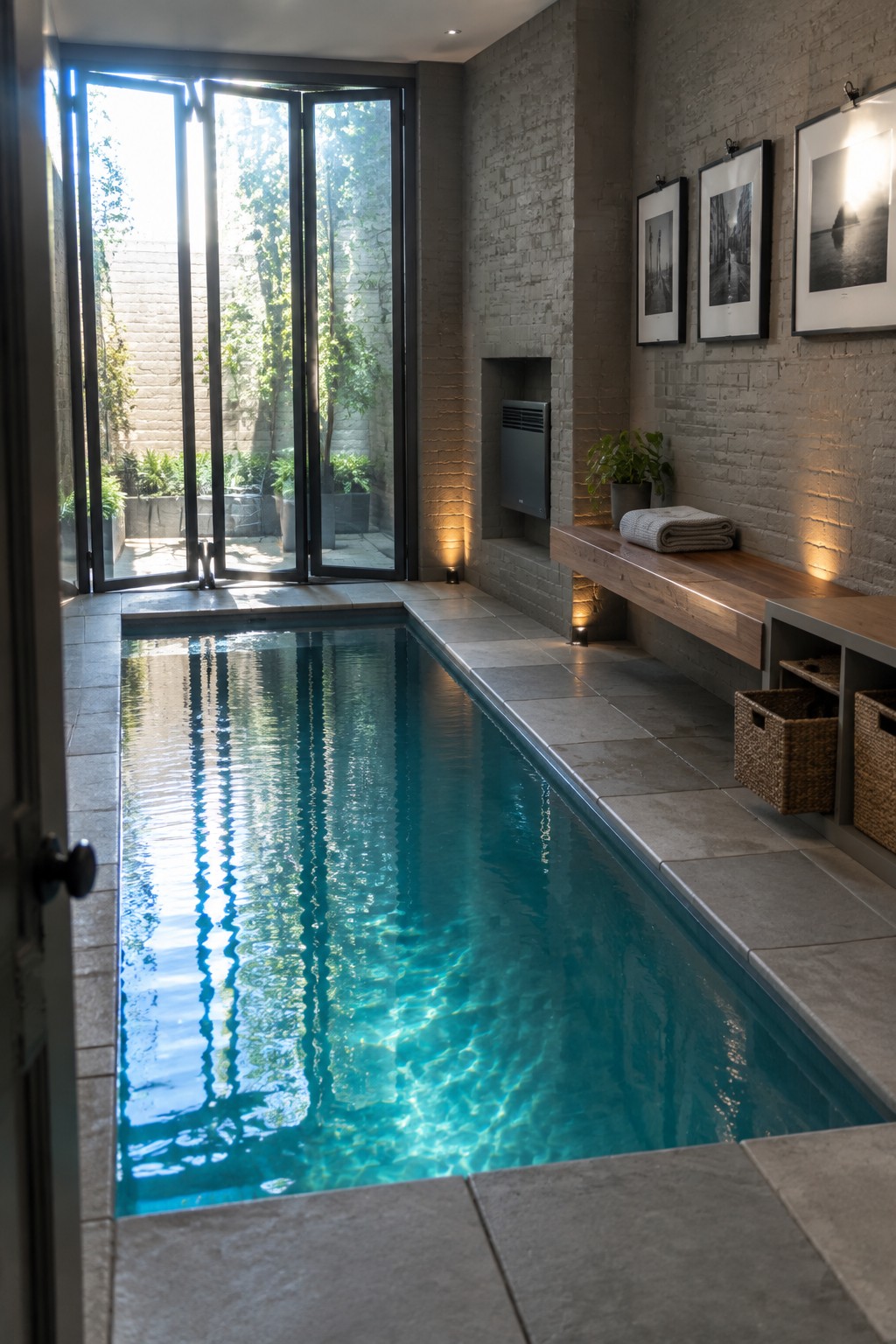
Large glass doors can turn an indoor pool into something that feels much more open. They pull in daylight and give you a direct view outside, so the space stops feeling like a closed-off room and starts working with the garden or patio right beside it.
This approach suits homes where the pool sits along an exterior wall. It works best when you already have some outdoor space to connect to, and it helps the pool area feel less separate from the rest of the house. Just make sure the doors are well sealed for temperature control.
Match Flooring Around an Indoor Pool
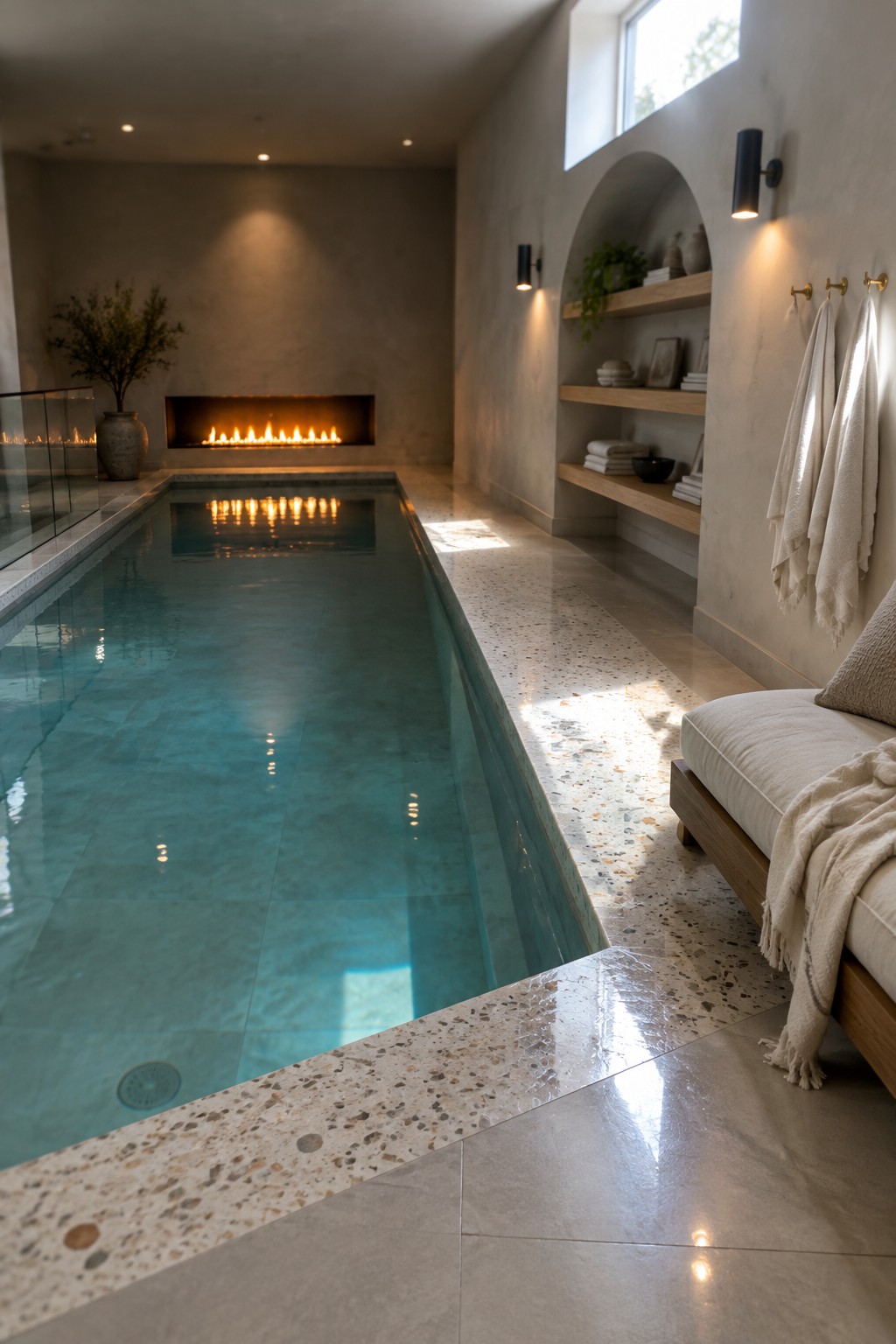
One way to make an indoor pool feel less like a separate feature is to carry the same flooring material right up to the water. This creates a single surface that flows through the space and avoids the usual hard break between the room and the pool edge.
Terrazzo works especially well for this because it handles moisture and gives the area a quiet, finished look. It suits homes where the pool sits inside the main living zones rather than in a dedicated wing, and it keeps the focus on the water instead of on extra trim or borders.
Set Up Dining Next to Your Indoor Pool
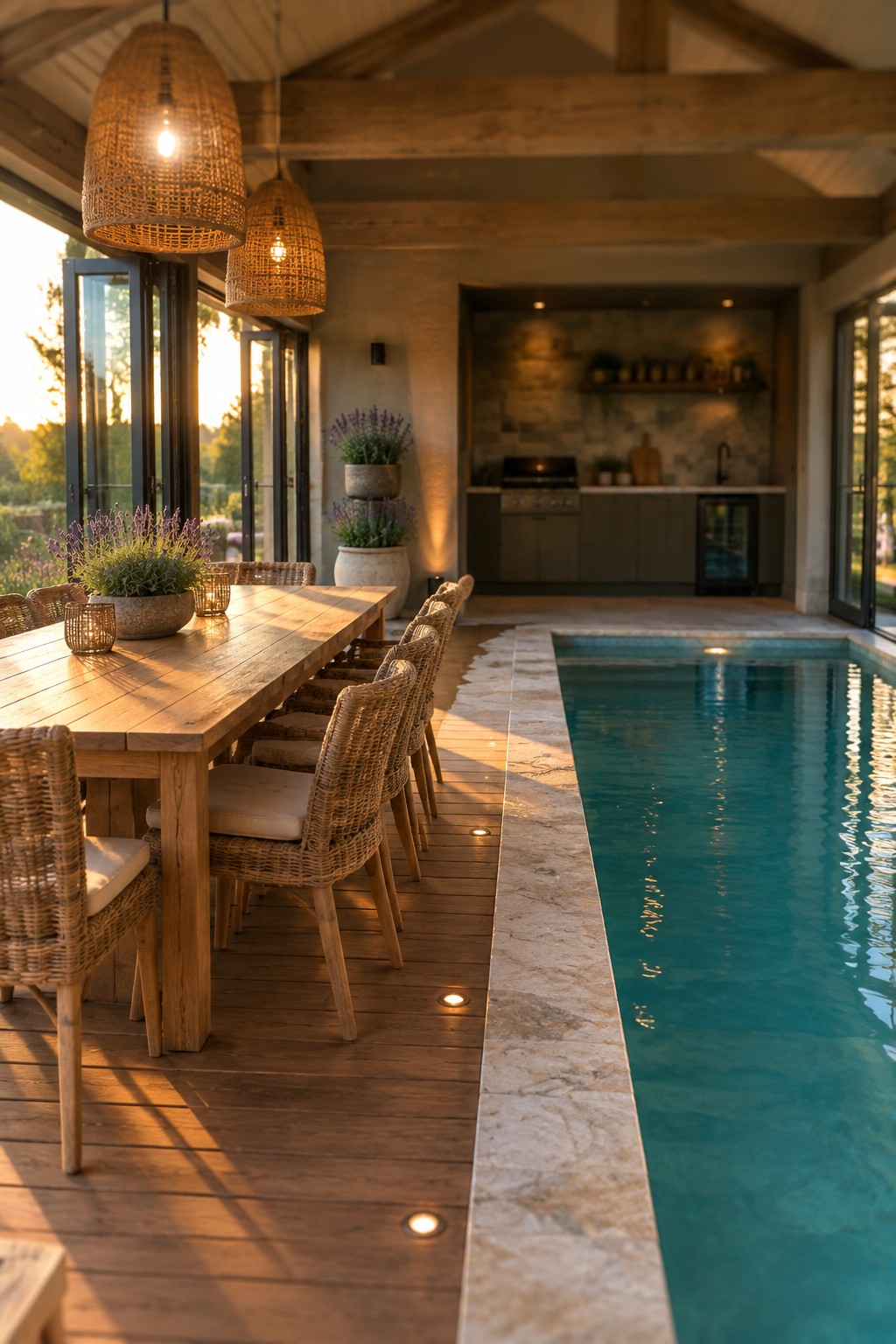
One useful way to refresh an indoor pool space is to place a long dining table right beside it under the same roof. This turns the pool into part of everyday living instead of a separate feature that only gets used for swimming. The setup works because the table and chairs stay protected while still feeling connected to the water.
This approach suits homes where the pool already sits inside a pavilion or covered structure. Keep the furniture simple and natural so the focus stays on the pool itself. Just watch moisture levels near the table and choose materials that hold up to humidity.
Frequently Asked Questions
Q: How do I stop moisture from spreading into nearby rooms during a pool renovation? A: Seal the area properly with good ventilation fans and vapor barriers. This keeps the rest of your home dry without major extra work.
Q: Are there simple ways to add better lighting without rewiring everything? A: Swap in LED fixtures that fit your current setup. They cut energy use and give you more control over the mood.
Q: What flooring option feels safest and easiest to clean around the pool? A: Go with textured porcelain tiles. They grip well when wet and wipe down fast.
Q: Do I need to change the pool’s heating system too? A: Not always. Check if your current heater handles the updated space first.