I have watched a few friends add small water features to their yards only to realize the layout left almost no room for chairs or easy access once the pool was in.
Thinking through daily use matters more than it seems at first because a plunge pool has to fit around how the rest of the backyard already functions.
Some ideas look simple on paper yet demand more upkeep than expected.
I would start by checking which options can be added without tearing up too much of the existing patio or lawn.
Homeowners tend to notice right away whether the new pool feels like a natural extension of the space or something that was just dropped in.
Raise A Plunge Pool With A Wooden Enclosure
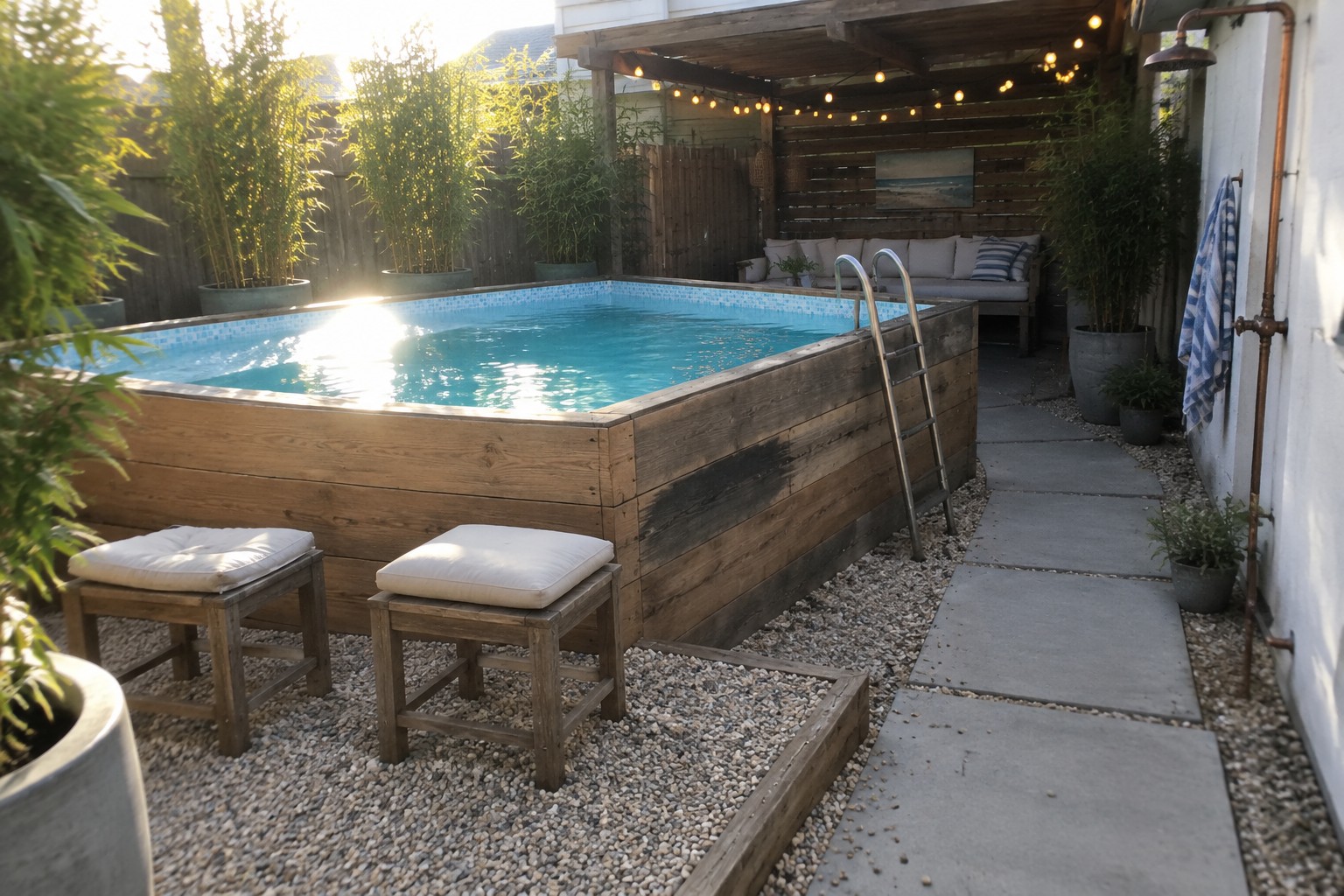
A wooden frame around a plunge pool keeps the project simple and affordable while giving the water a more finished look. The planks hide the basic structure underneath and create a surface you can lean against or mount a ladder on without extra hardware.
This setup works best in smaller yards where a full in-ground pool would not fit. Use pressure-treated lumber and make sure the base sits level on gravel so the frame stays solid once the pool is filled.
Stock Tank Plunge Pools With Pallet Platforms
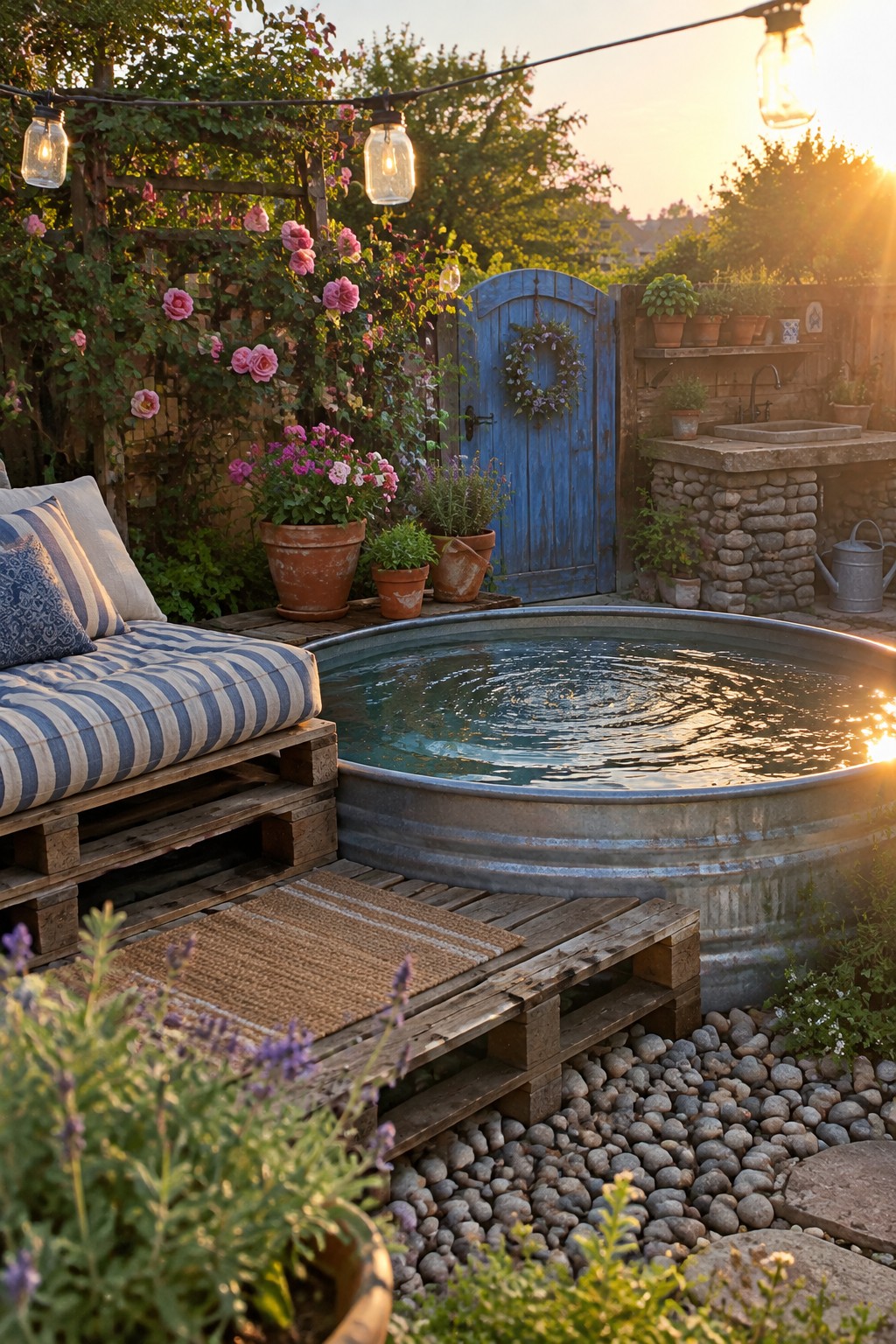
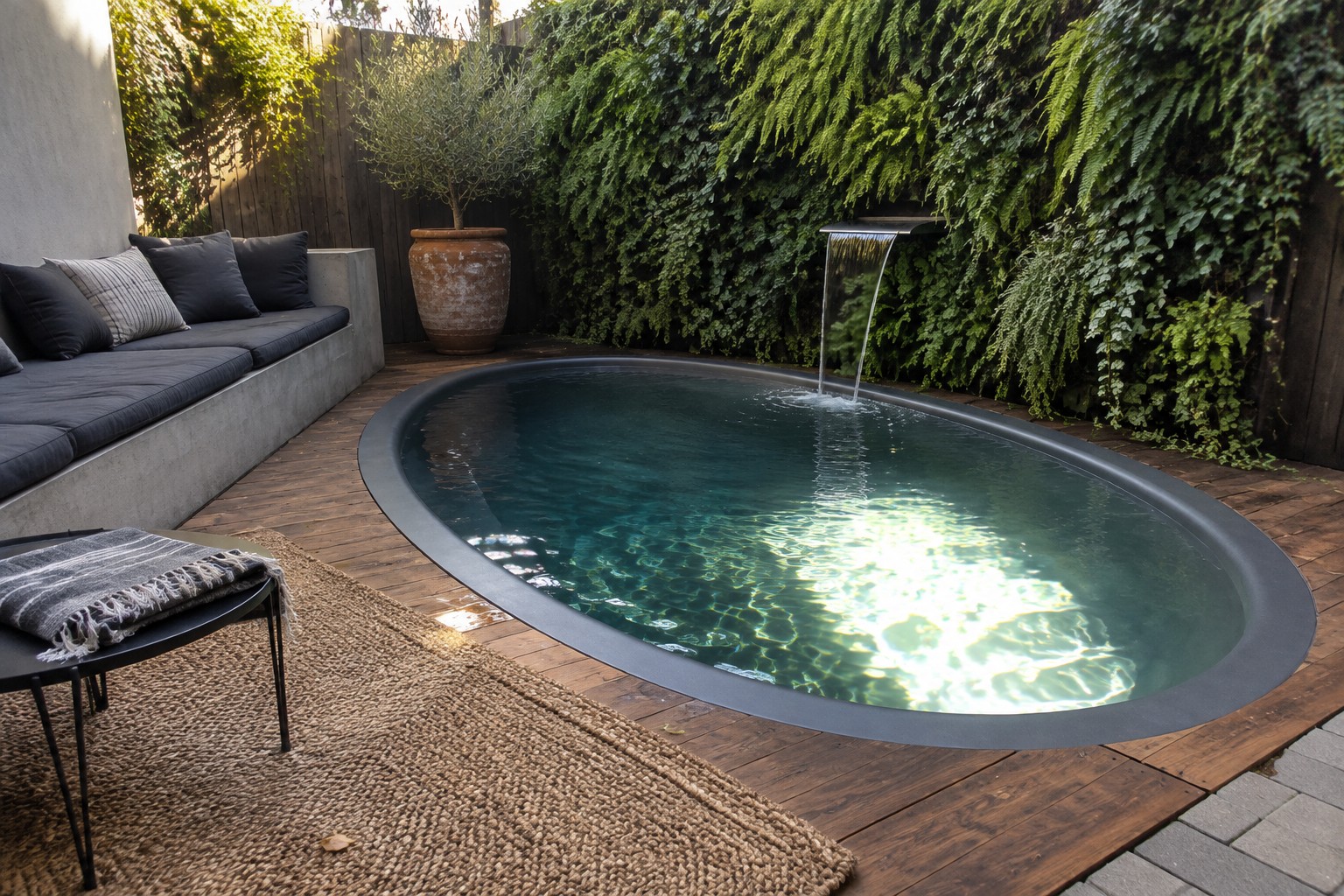
Many people like stock tanks for plunge pools because they are sturdy, hold water without much fuss, and cost far less than a built-in option. The metal sides stay cool and the round shape slips into tight backyard spots without needing major excavation.
Set the tank on a gravel base for drainage and level, then build simple pallet platforms around the edge for seating and a spot to step in and out. This works best in smaller yards or on patios where you want something functional that can be taken apart later if plans change.
Terrace Your Yard With Stone Steps
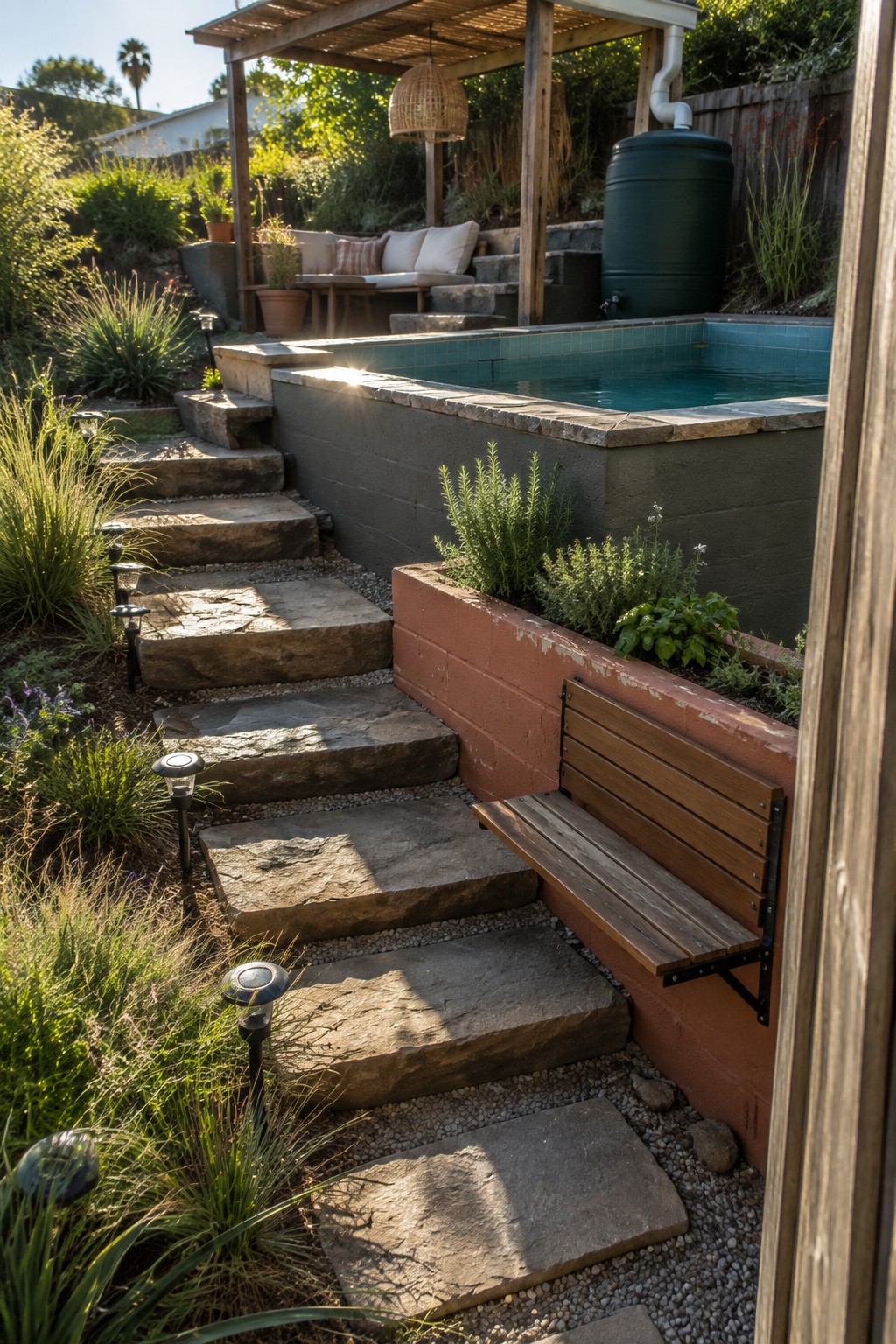
Stone steps make a big difference when you want a plunge pool in a yard that slopes. They turn a steep drop into something usable instead of awkward, and they keep the whole setup feeling grounded instead of like a hole cut into the hill.
This approach works best on properties with a moderate slope where you need to drop down a few feet to reach the water. You can source the stone affordably and build the steps in sections so the project stays manageable. A simple bench mounted on the retaining wall adds a place to sit without crowding the narrow path.
Narrow Plunge Pools For Small Yards
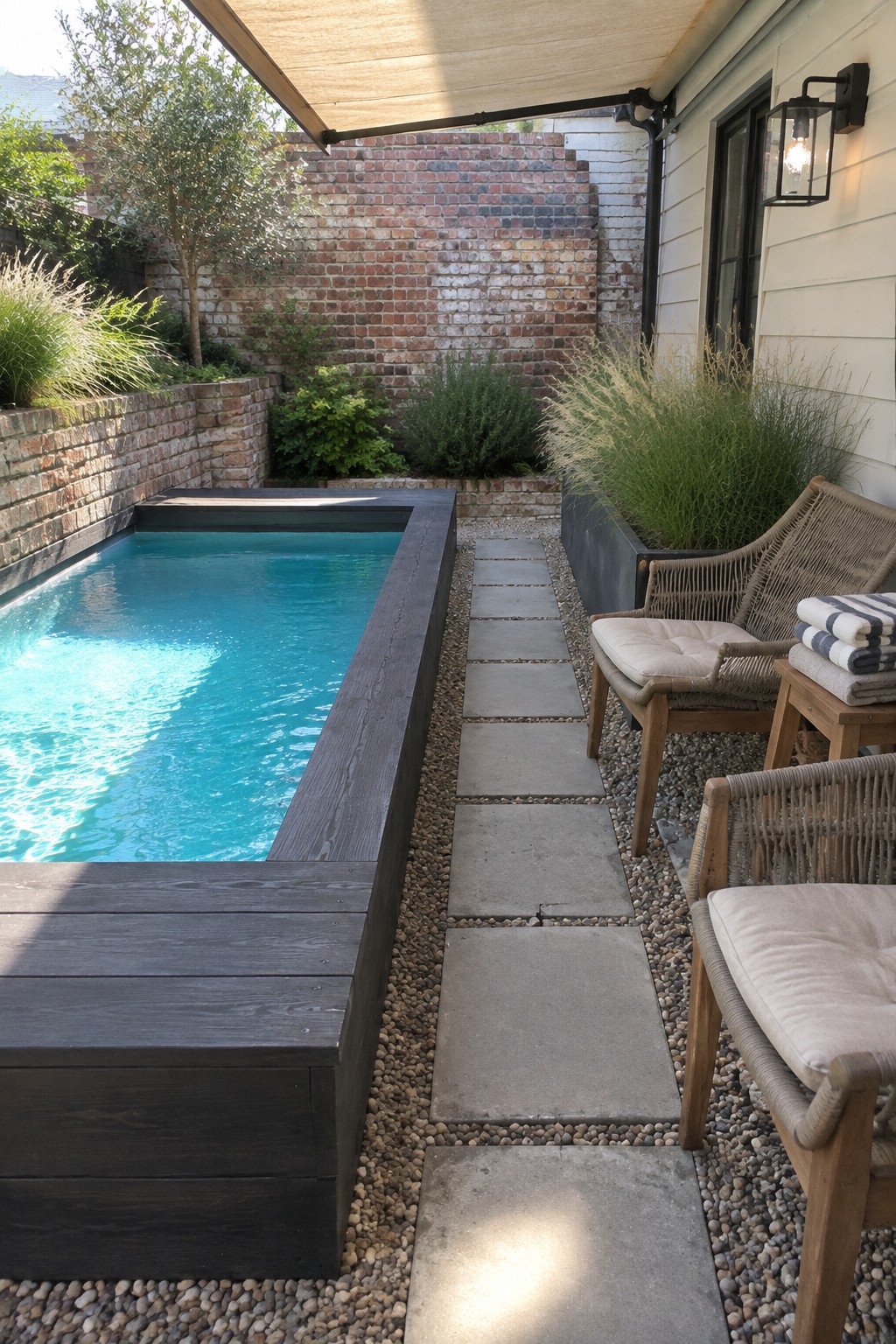
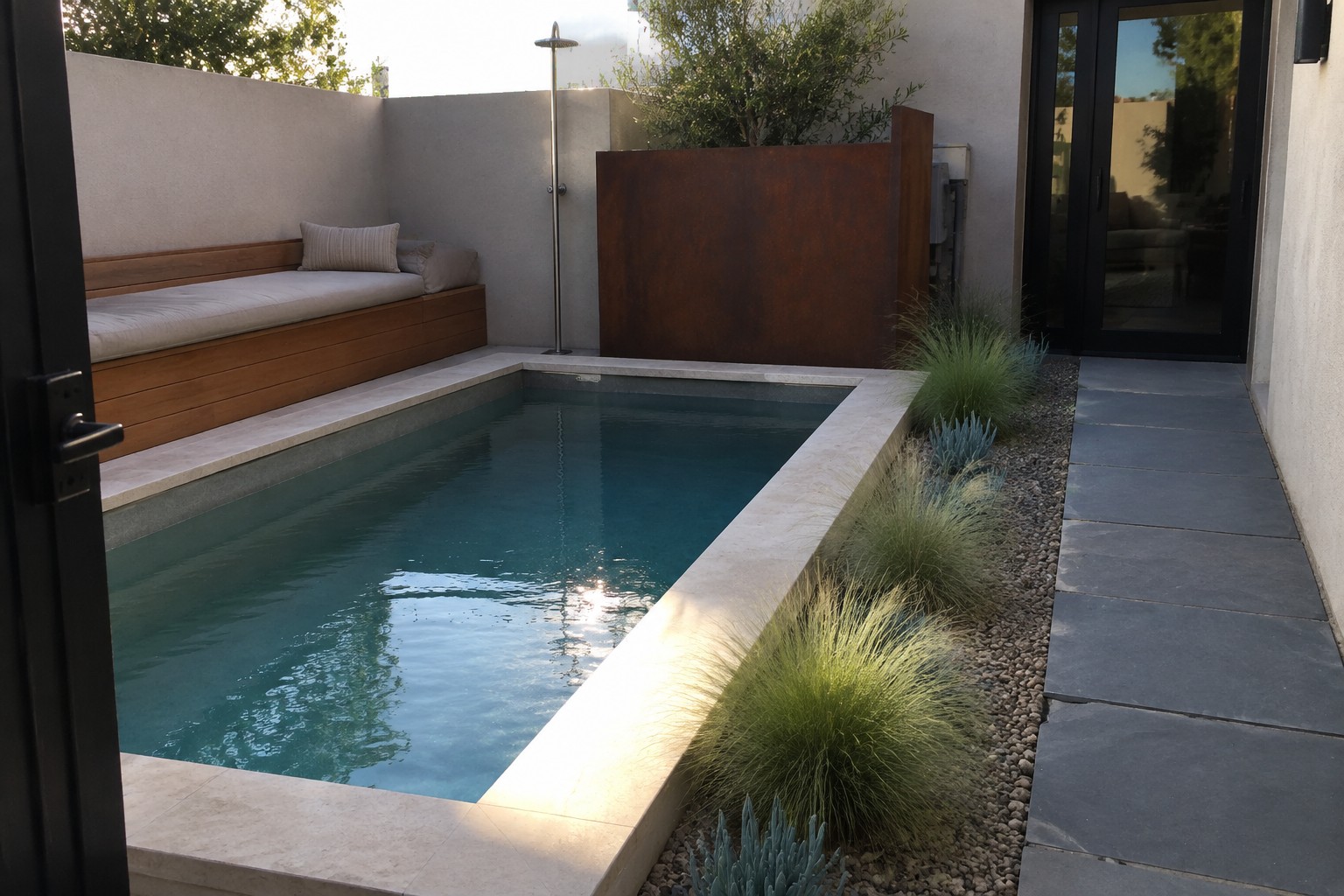
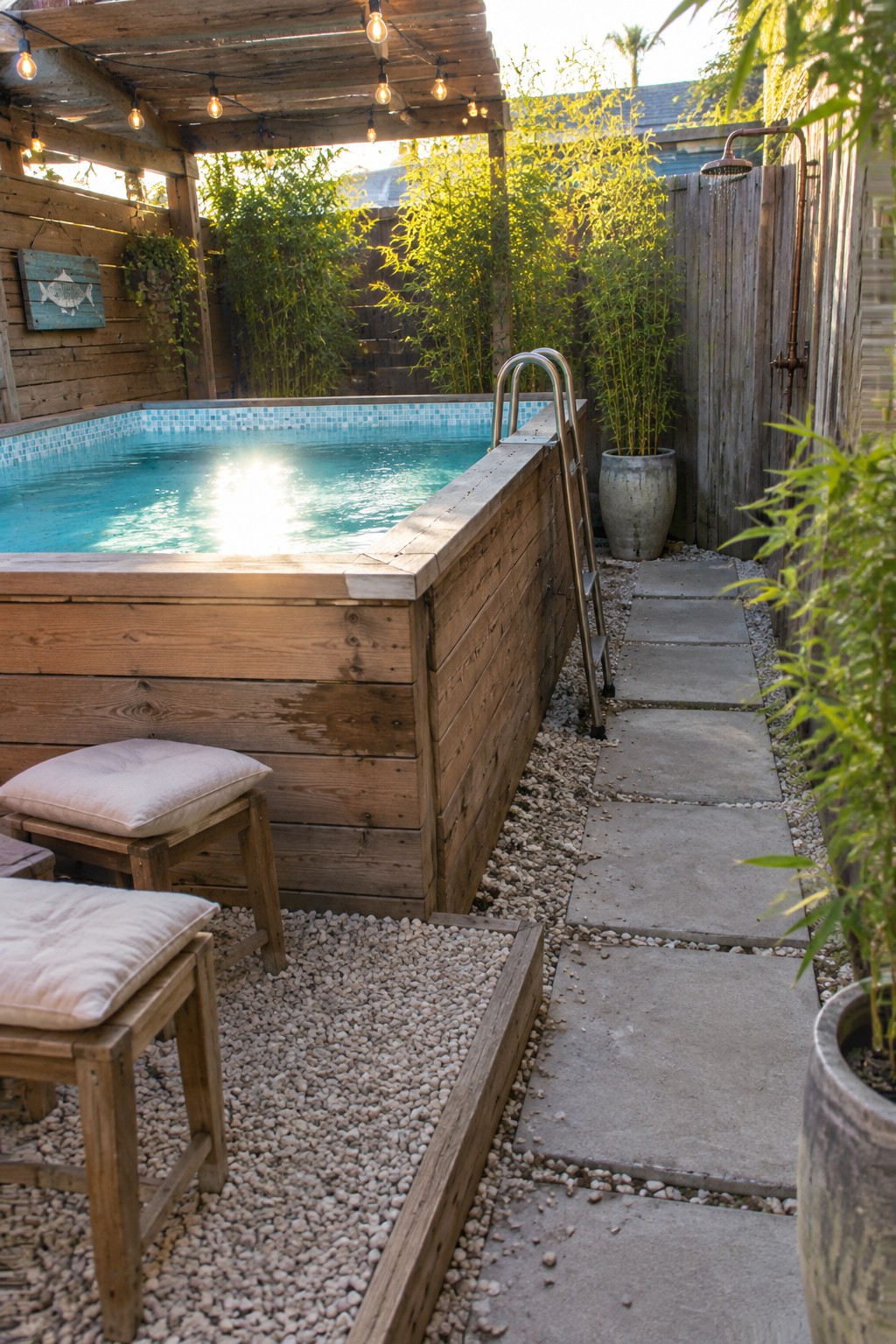
A narrow plunge pool can fit into a slim side yard where a wider pool would not work. The long rectangular shape runs along the house or fence line and still leaves space for a simple walkway right next to it.
This layout suits smaller lots or townhomes because the basic wood frame and gravel base keep the project affordable and easier to build yourself. Use stable pavers on the path so it stays dry and comfortable after swimming.
Wooden Frame Plunge Pools For Decks
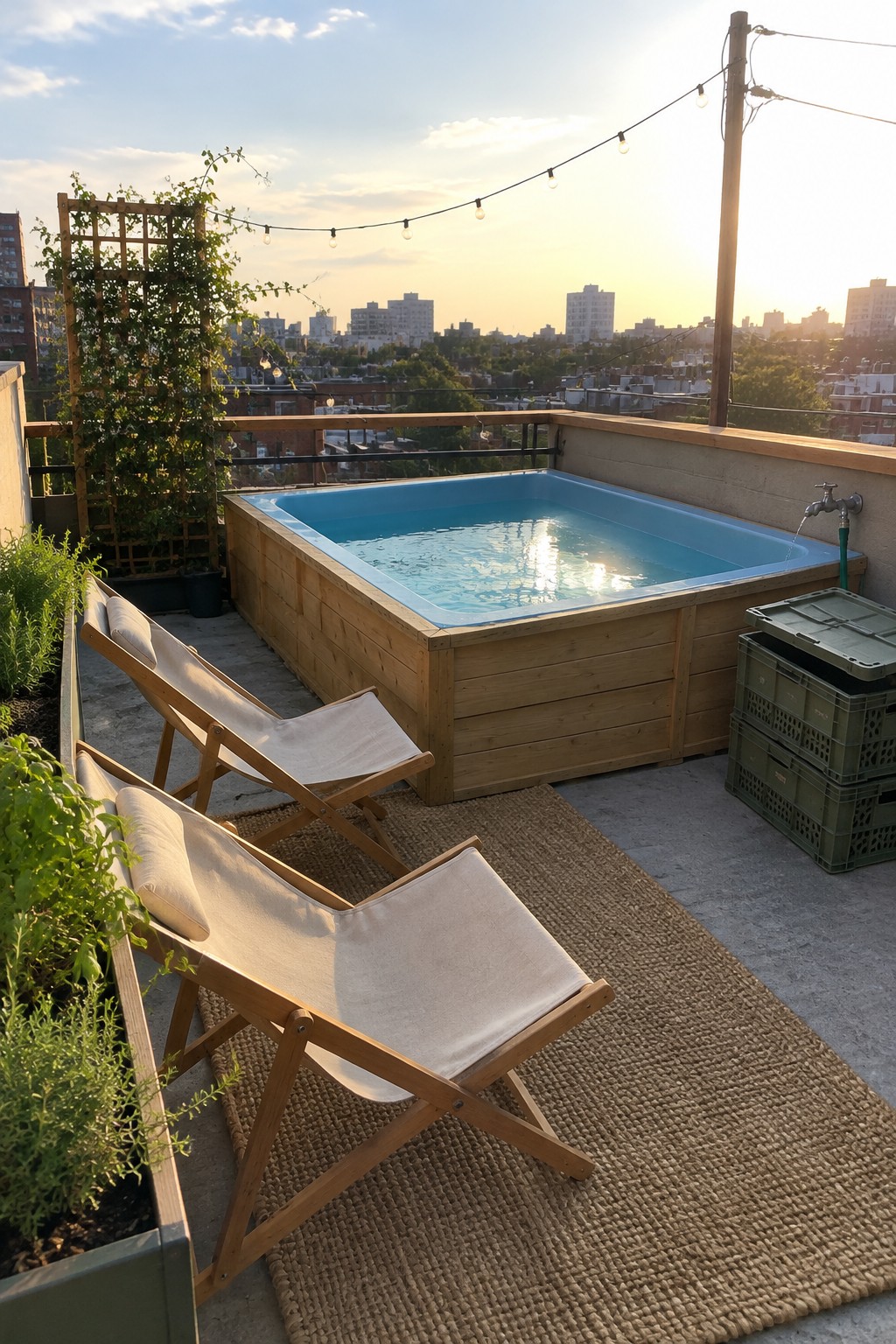
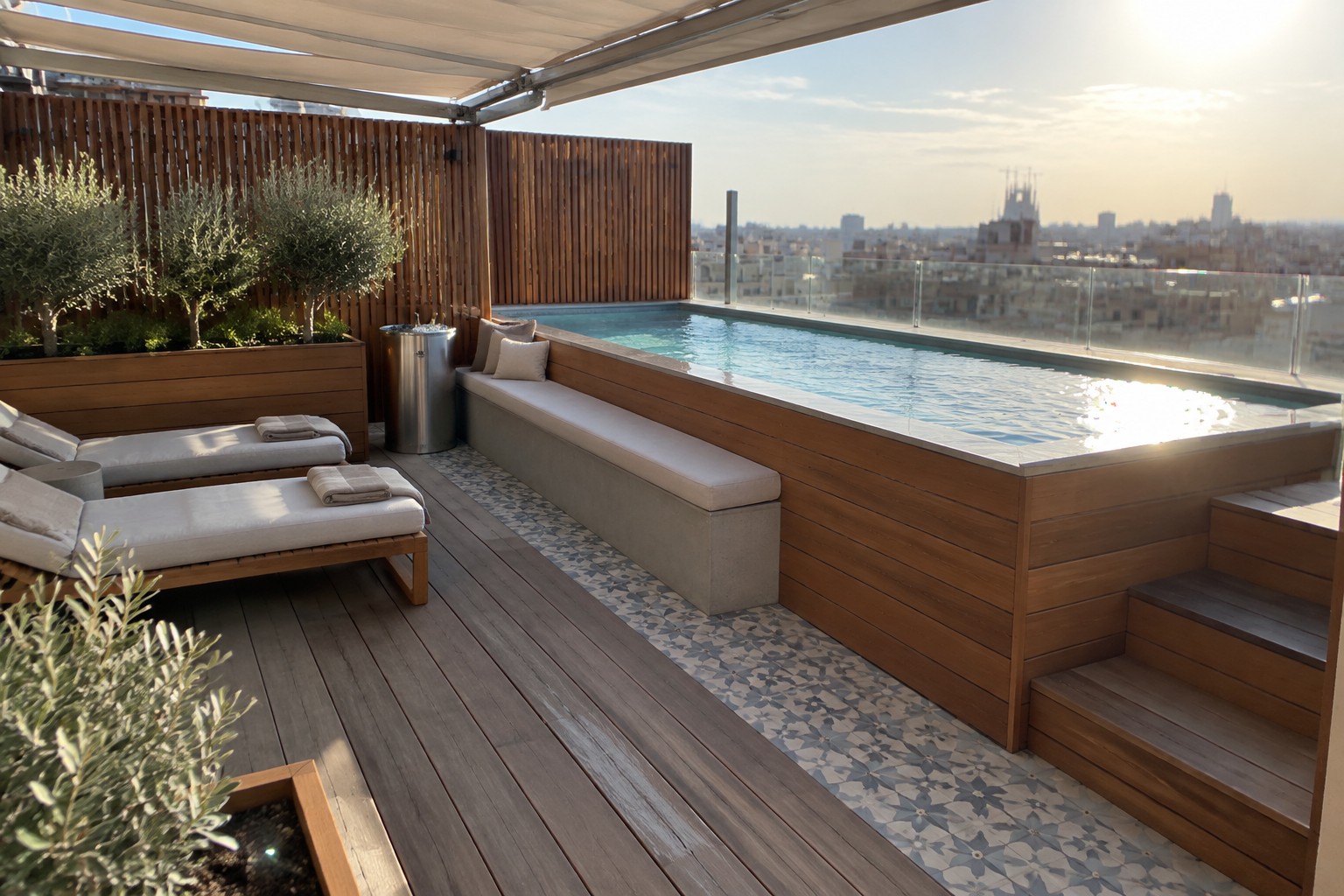
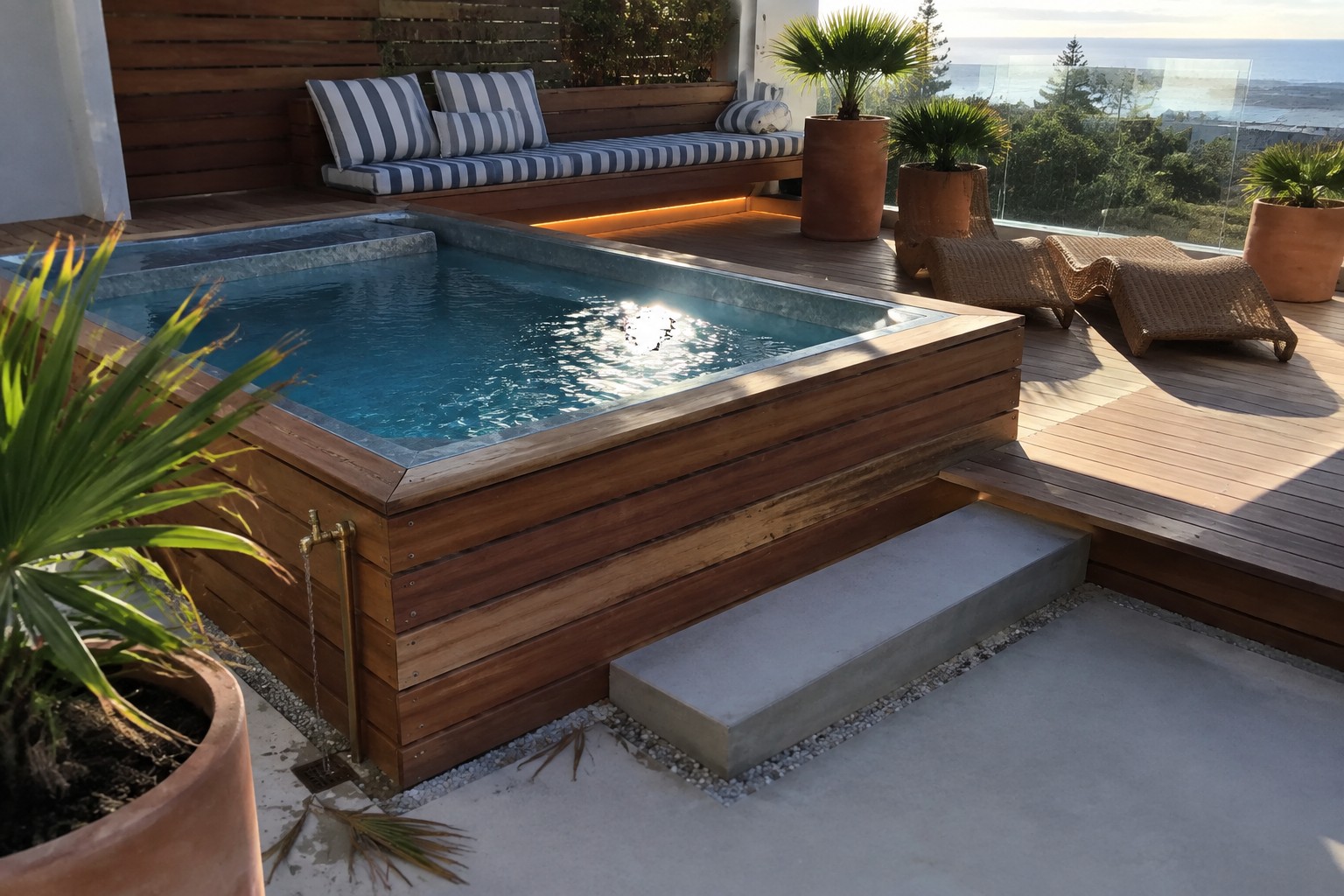
A wooden frame plunge pool is one of the simpler ways to add a small swimming spot without pouring concrete or spending a fortune. The box style keeps the build straightforward, and the wood can be stained or left natural so it blends with an existing deck or rooftop surface.
This approach works best on flat, sturdy outdoor spaces where weight and drainage are not an issue. Keep the pool near seating so the area feels like one usable zone, and make sure you have easy access to a water source for filling and topping off.
Built-In Benches Make A Narrow Plunge Pool More Practical
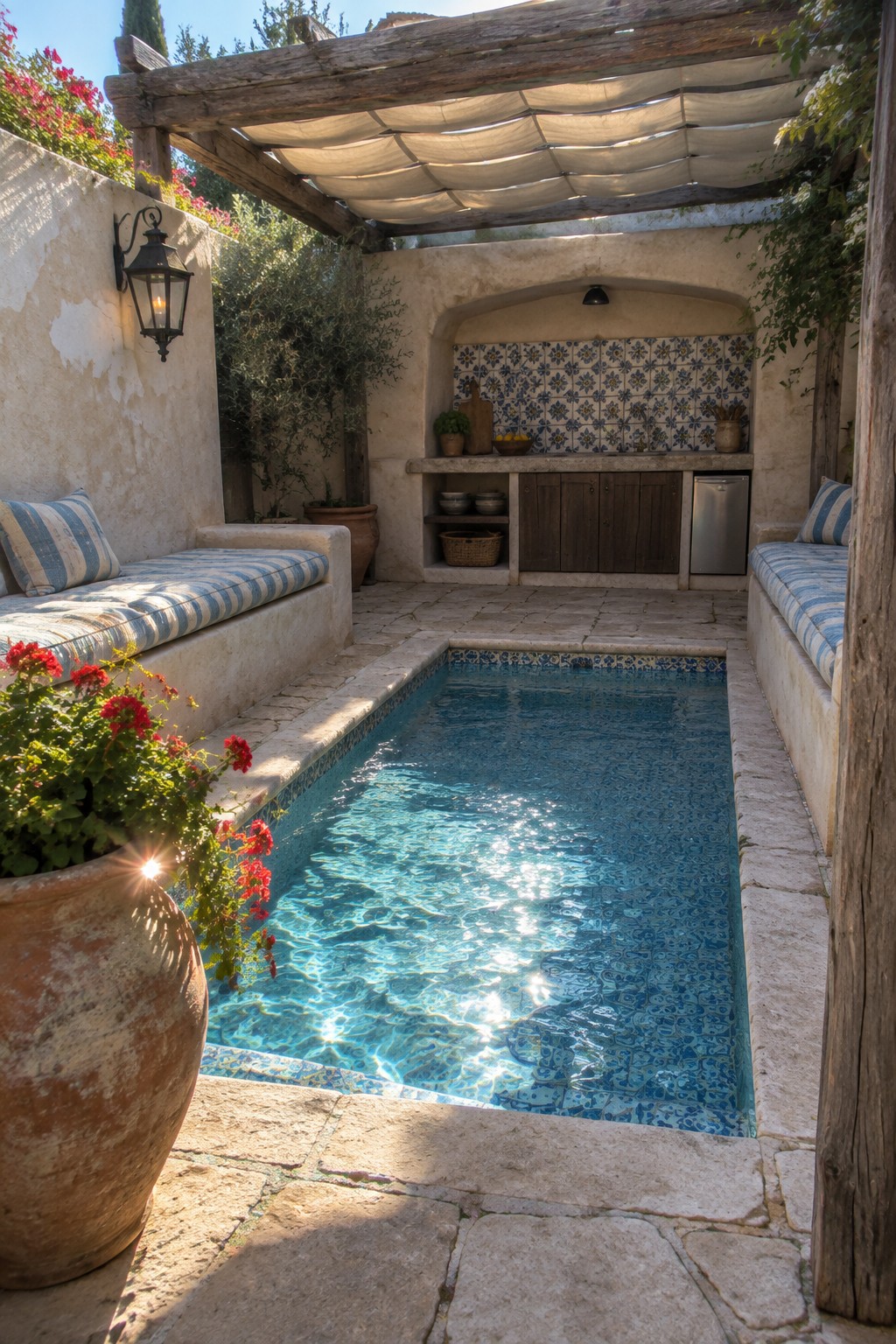
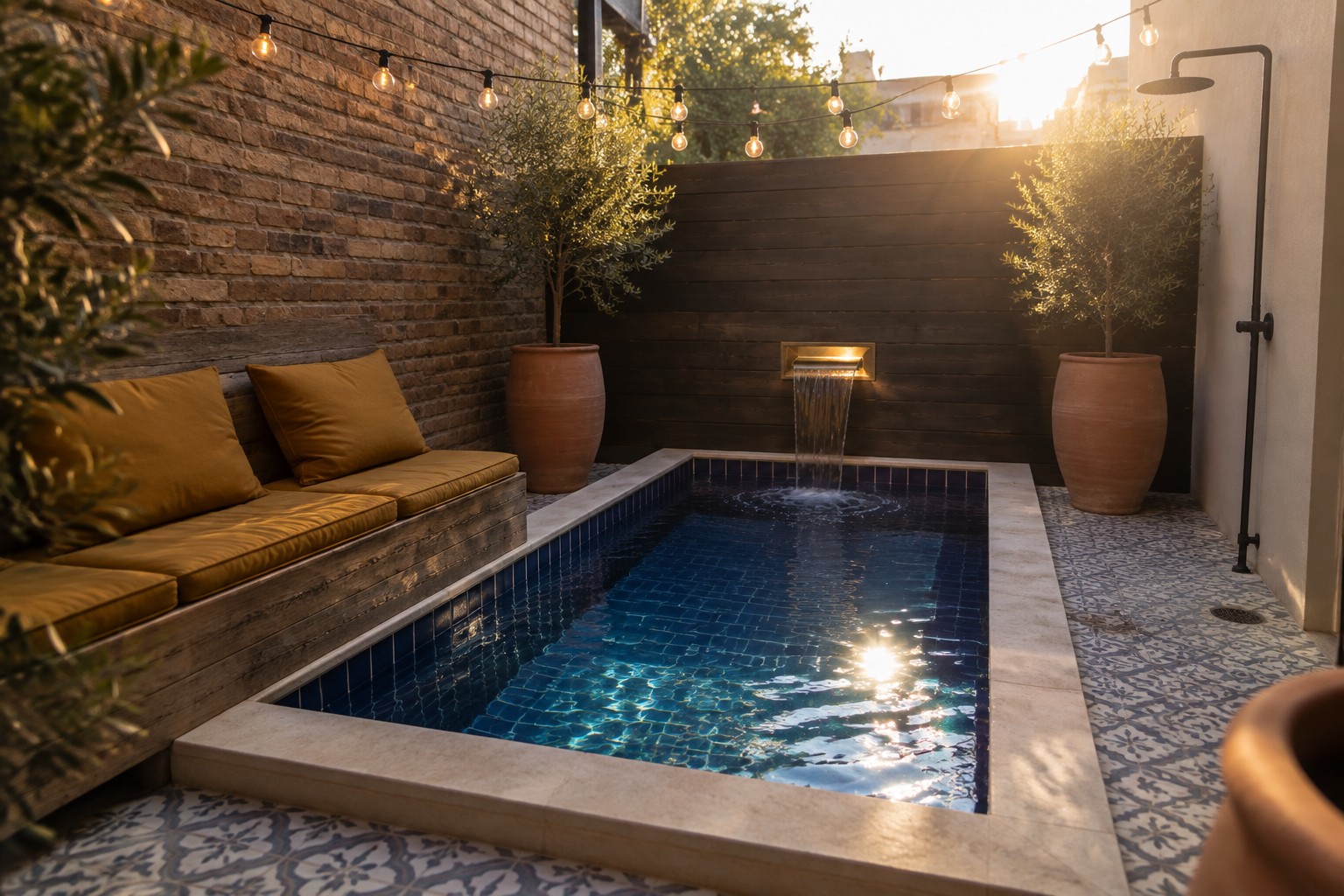
Adding built-in seating right along the edges of a plunge pool helps turn a small water feature into a complete outdoor spot. The benches give people a place to sit and cool off without needing extra chairs or loungers that would crowd the area.
This setup works especially well in compact courtyards or narrow side yards where space is limited. Keep the bench height level with the pool coping and use simple materials like stucco or concrete so the whole thing feels like one built structure rather than separate pieces.
Build a Brick Edge Around Your Plunge Pool
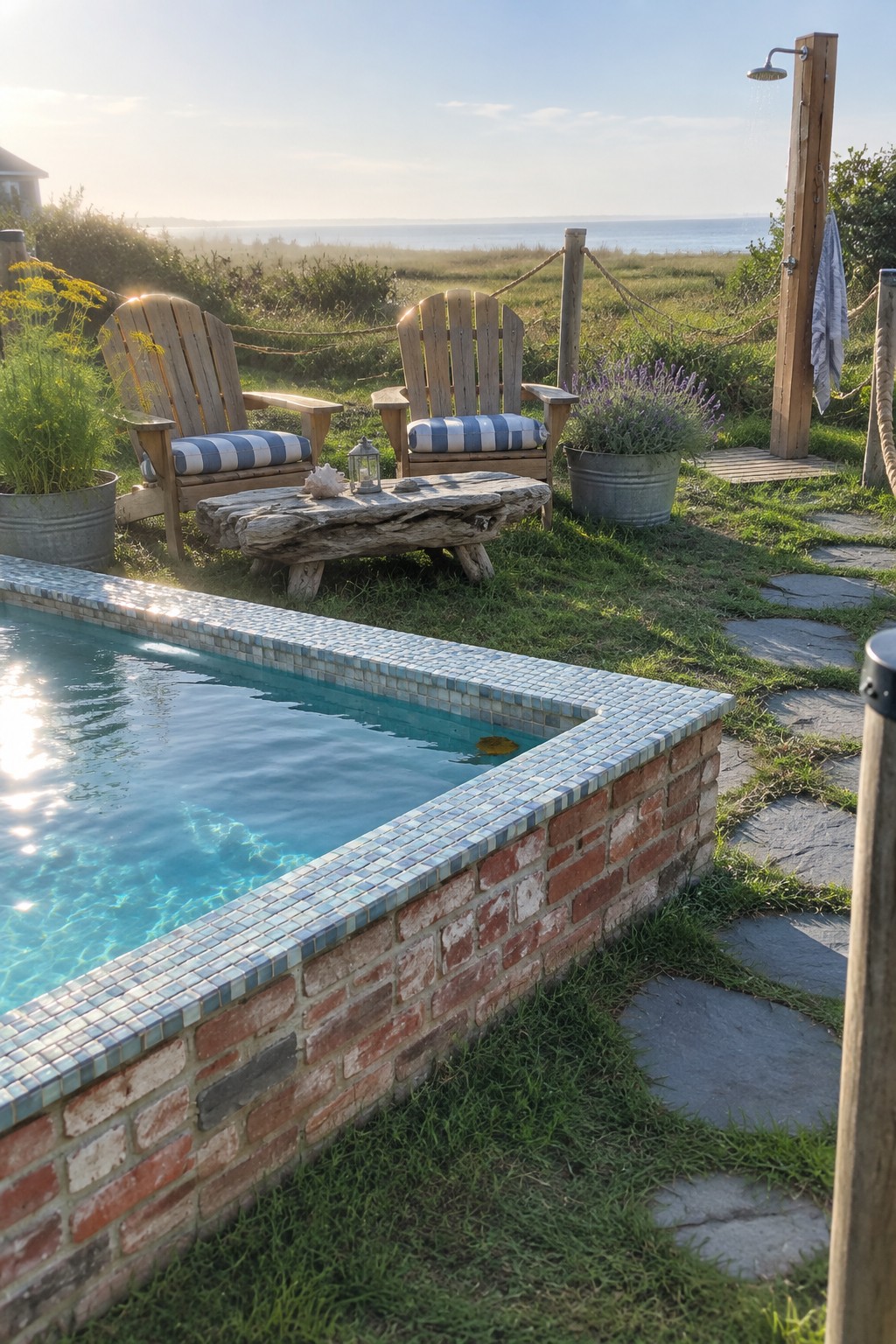
A low brick wall topped with mosaic tile gives a plunge pool real structure without costing much. The materials are easy to find, simple to work with, and they hold up well outside.
This approach works best in smaller yards where you want a clear pool border but still need room for grass and seating. Keep the wall short so it does not block the view, and use tile sheets on top for faster installation.
Add A Simple Dining Spot By The Pool
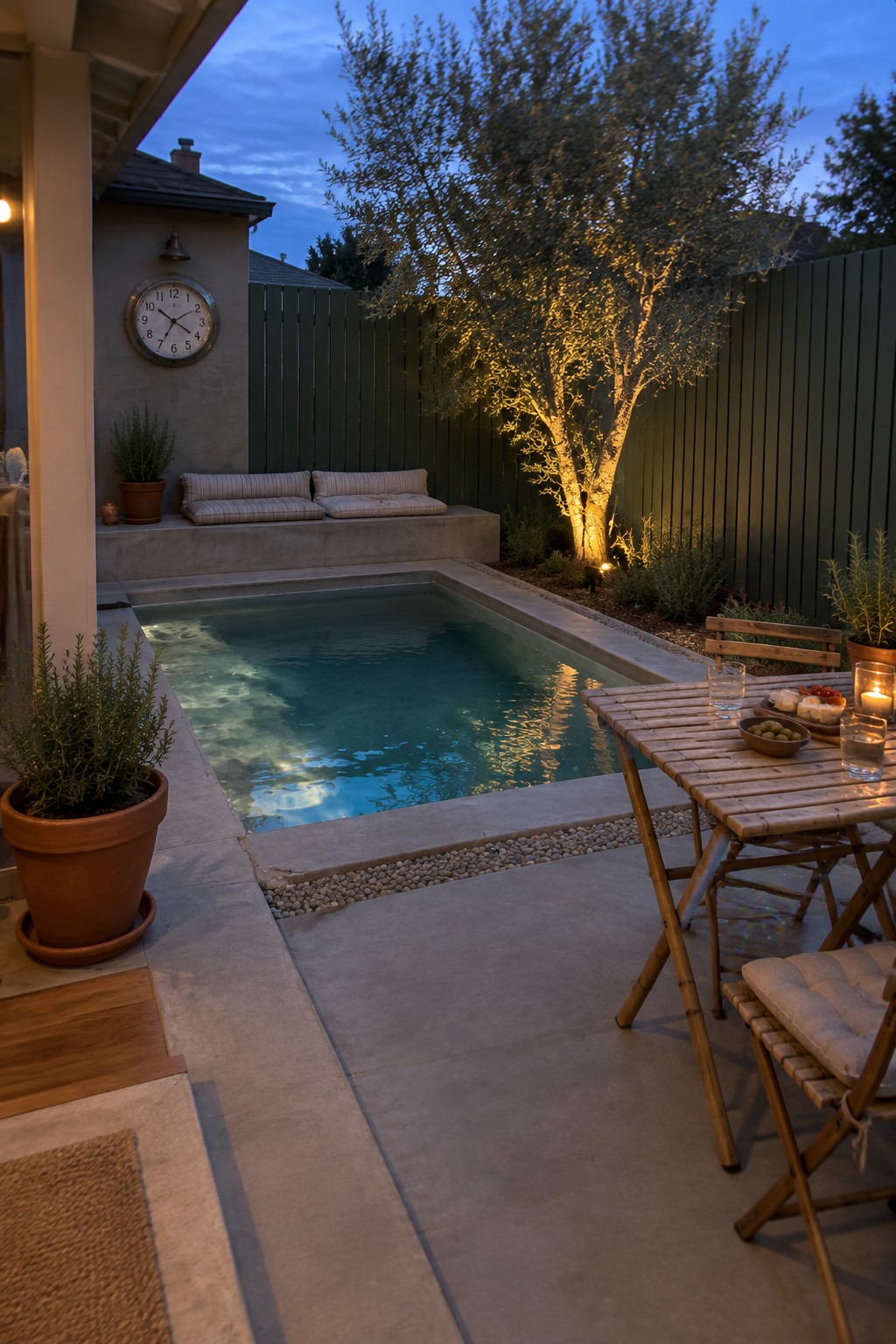
One easy way to get more use out of a small plunge pool is to set a table and chairs right beside it. This turns the area into a spot for meals as well as swimming, and it works especially well in tighter yards where every section needs to earn its keep. The concrete surround gives a clean base that keeps things simple and low cost.
Wood folding furniture works fine here since it can be moved around as needed and does not take up much room when stored. A few potted plants help soften the edges without a big planting project. This setup suits homes with modest outdoor space and gives you a practical place to eat without going far from the water.
Frame Your Plunge Pool With Gravel Instead Of Decking
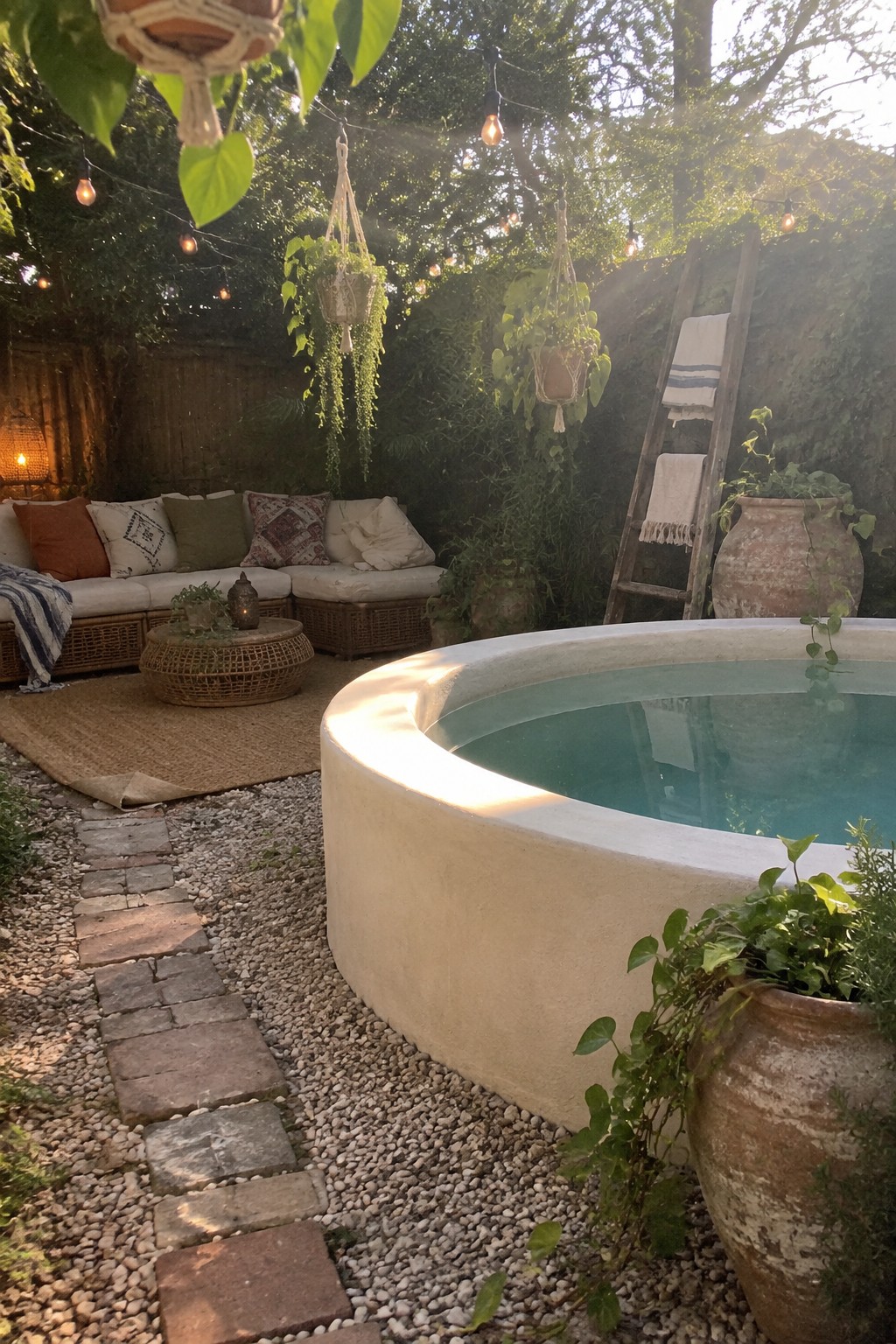
One simple way to keep a plunge pool project affordable is to skip the decking and use gravel with a few stone pavers instead. This approach gives the area a relaxed, garden-like feel while avoiding the cost and labor of building a full platform around the pool.
It works best in smaller yards where you want the water to feel like part of the landscape rather than the main event. Just add a clear edge to hold the gravel in place and make sure the path stays level for easy walking.
Add Stone Coping Around Your Plunge Pool
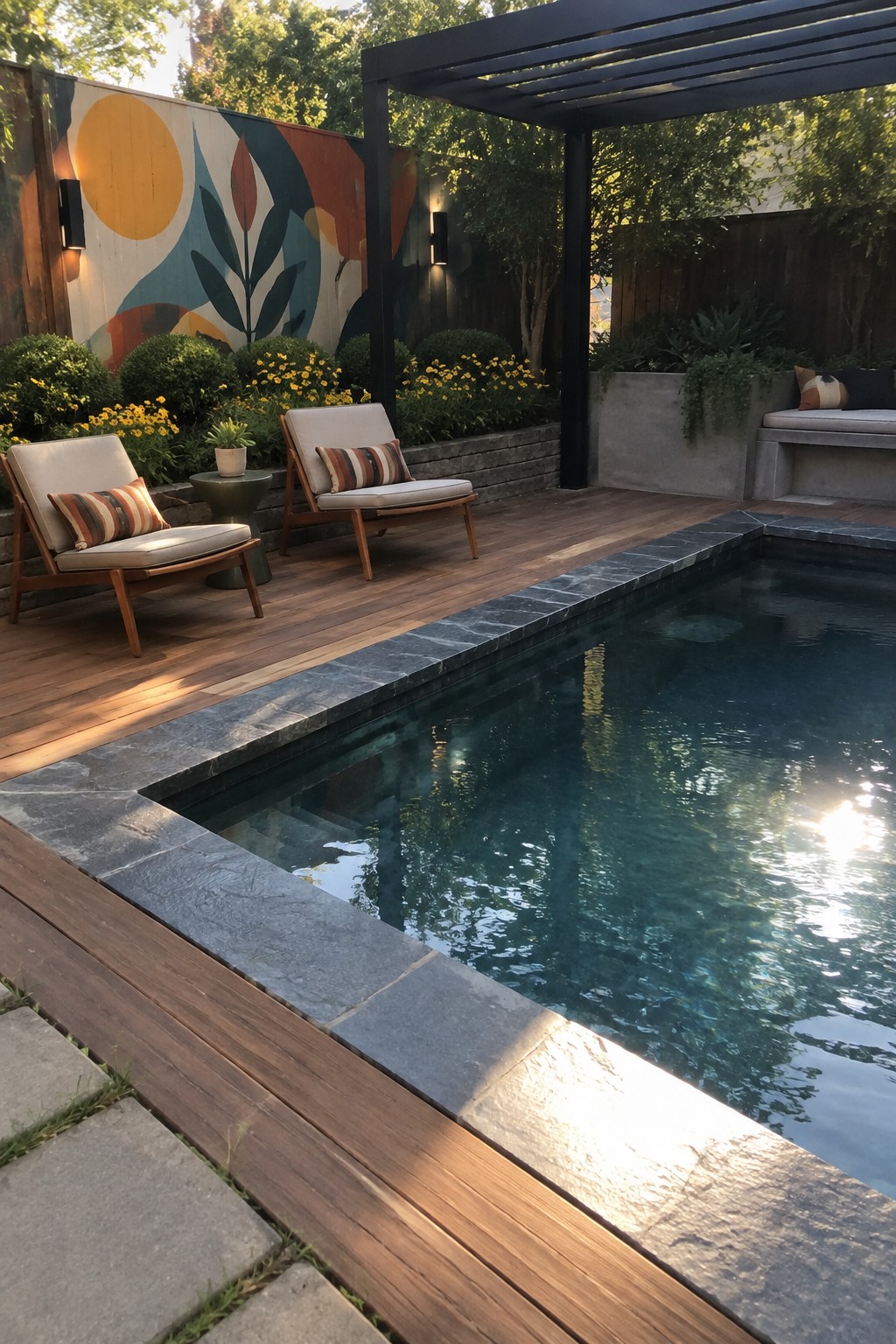
Stone coping gives a plunge pool a finished edge that holds up better than just leaving the rim raw. It also creates a clear break between the water and the deck so the whole area feels more put together instead of makeshift.
This works best on smaller backyard setups where the deck already runs close to the pool. Pick a stone color that sits well with the deck boards and keep the coping width narrow so it does not eat into the walking space.
Add a Simple Shade Structure to Your Plunge Pool
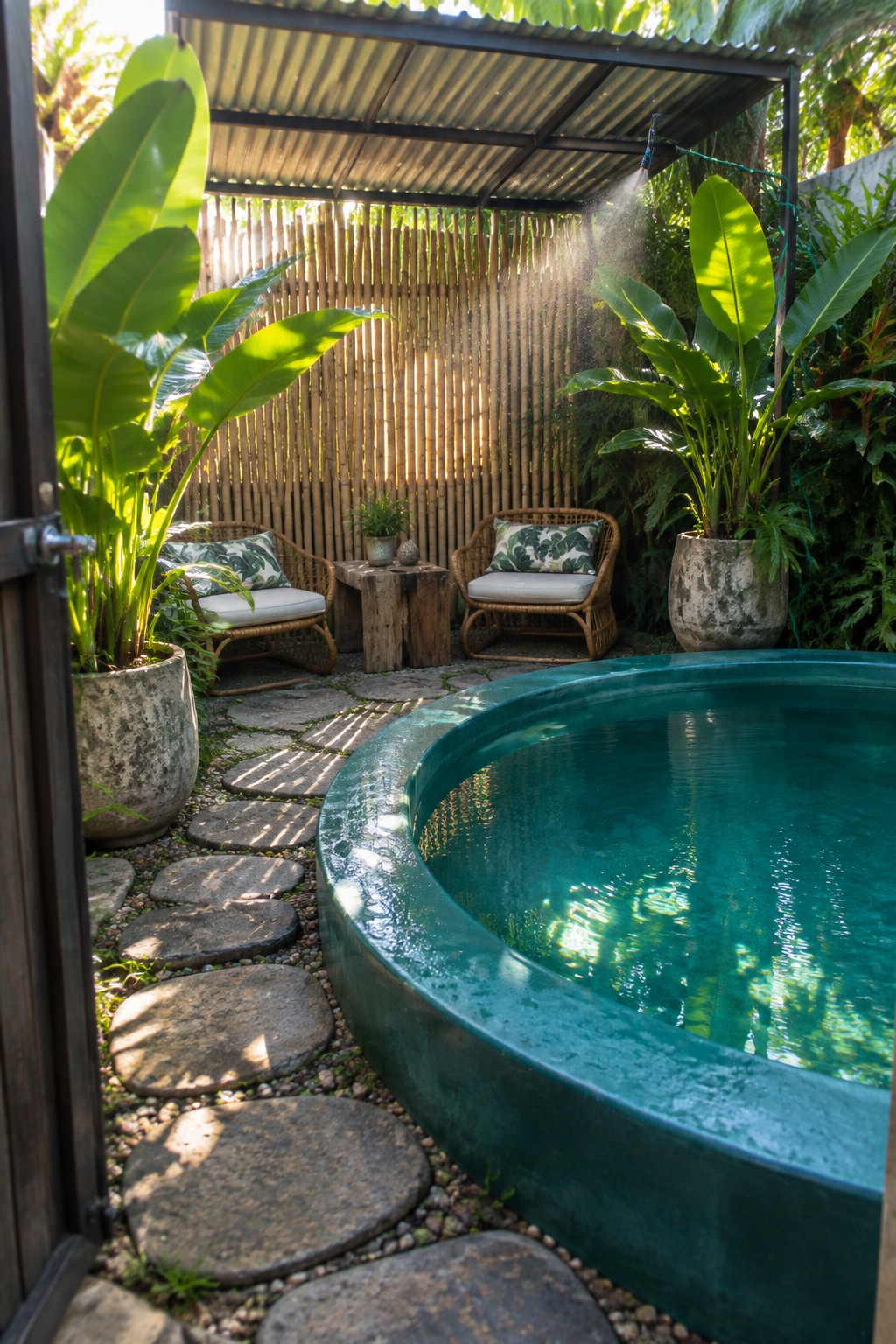
A basic roof over a small plunge pool can turn an open patch of yard into a spot you actually use during the day. It blocks harsh sun and gives the area a bit of definition without needing a big construction project.
This works best in tighter backyards where you want some privacy and relief from the heat. Keep the sides open or add plants and a simple screen so air still moves through, and the whole thing stays light and inexpensive to build.
Pallet Wood Makes A Budget Plunge Pool Deck

Many people use reclaimed pallets when they want a simple deck around a small plunge pool. The material is easy to find and keeps the cost low while giving the space a straightforward, natural feel that works with the water.
Lay the pallets flat for the main surface and save a few crates for side tables or low seating. This setup suits compact yards where you need something practical without spending much on new lumber.
Fit A Narrow Plunge Pool Along Your Deck
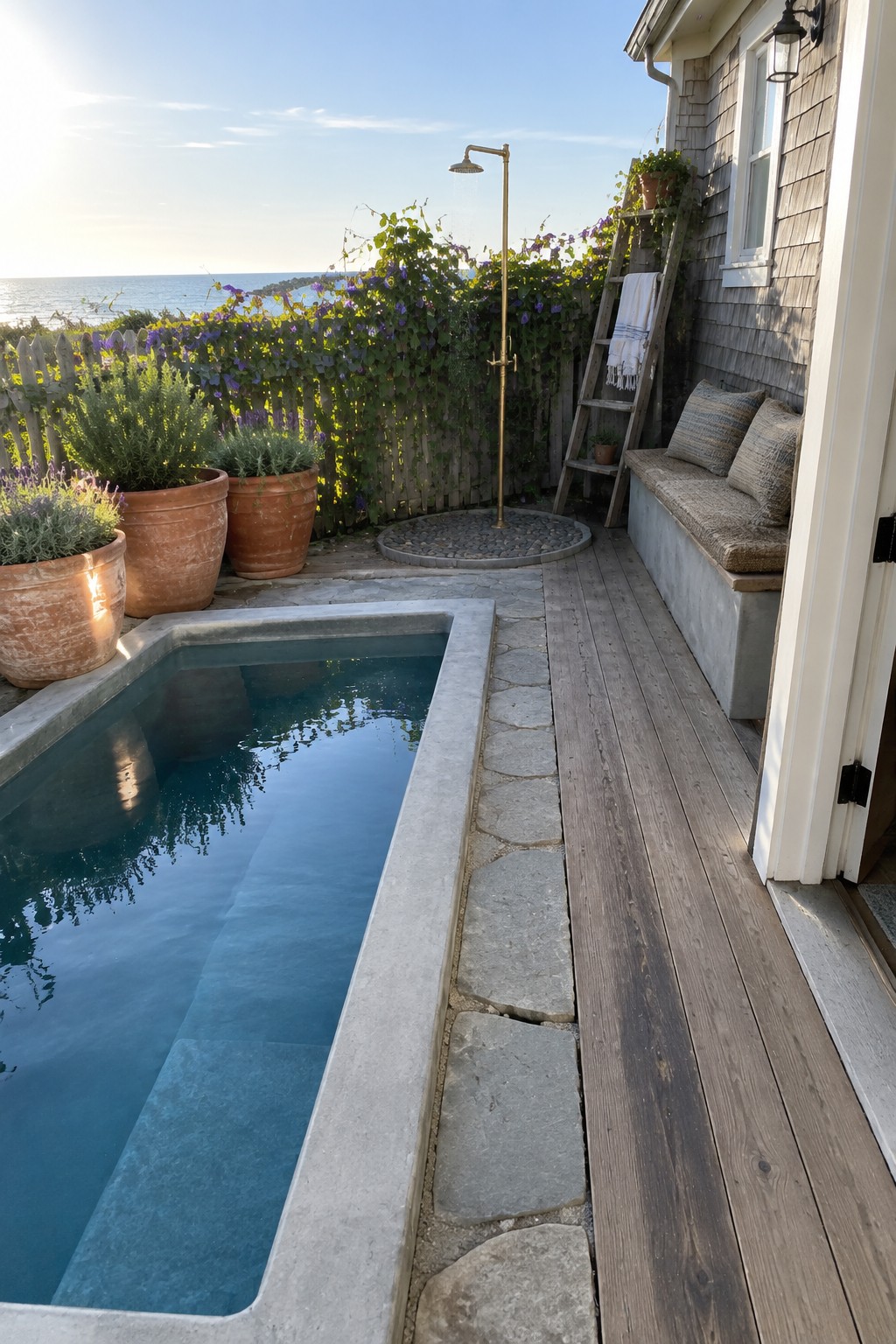
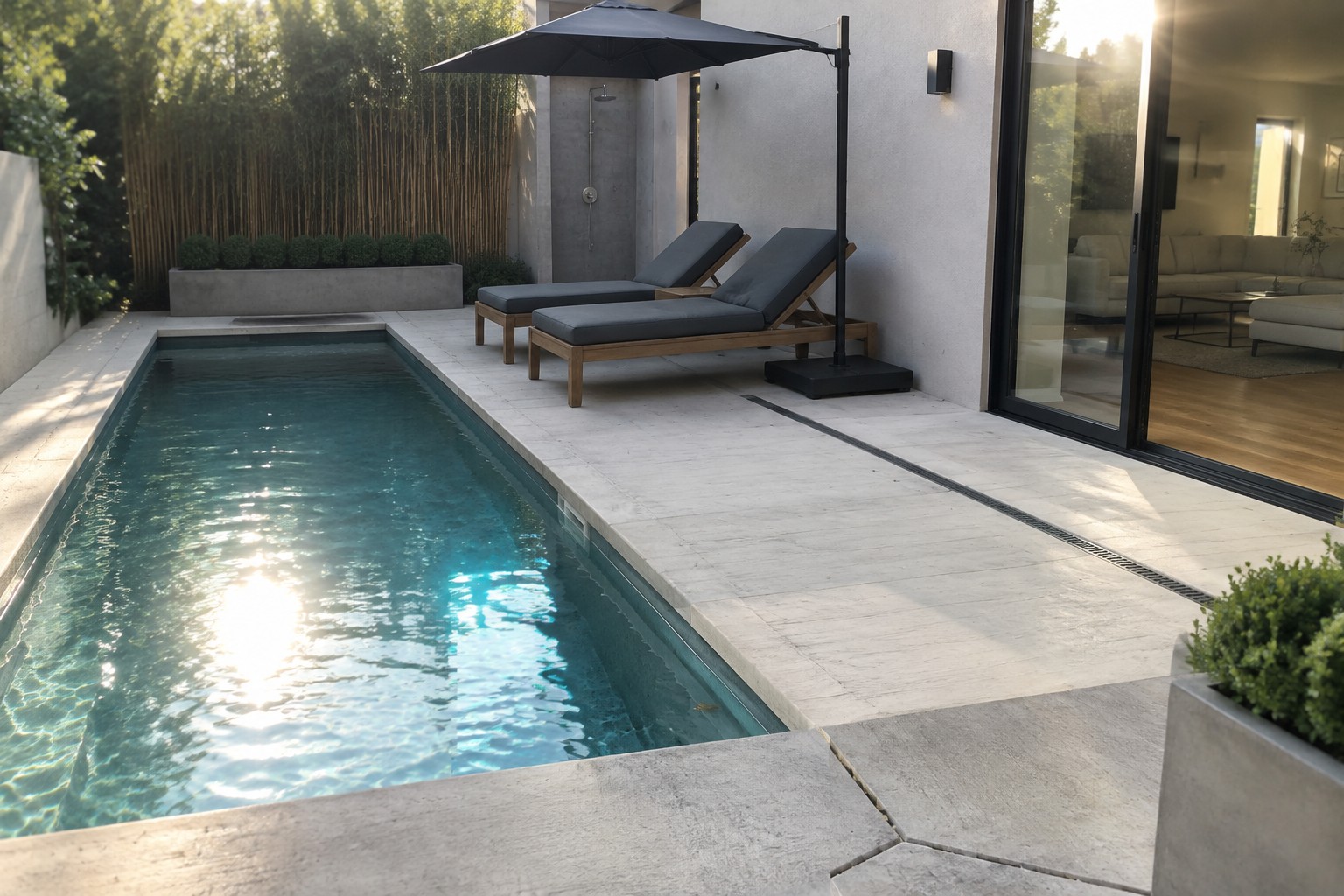
A narrow plunge pool works well when space is tight because it runs alongside the deck instead of eating into the middle of the yard. The simple concrete shell and stone border keep the build straightforward and less expensive than a wider custom shape.
This setup suits homes with a straight deck edge and some existing fencing or planting for privacy. Keep the pool length to match the deck run, add a basic outdoor shower at one end, and use the stone strip as a clean transition so you do not need extra paving.
Metal Stock Tanks Create Simple Plunge Pools
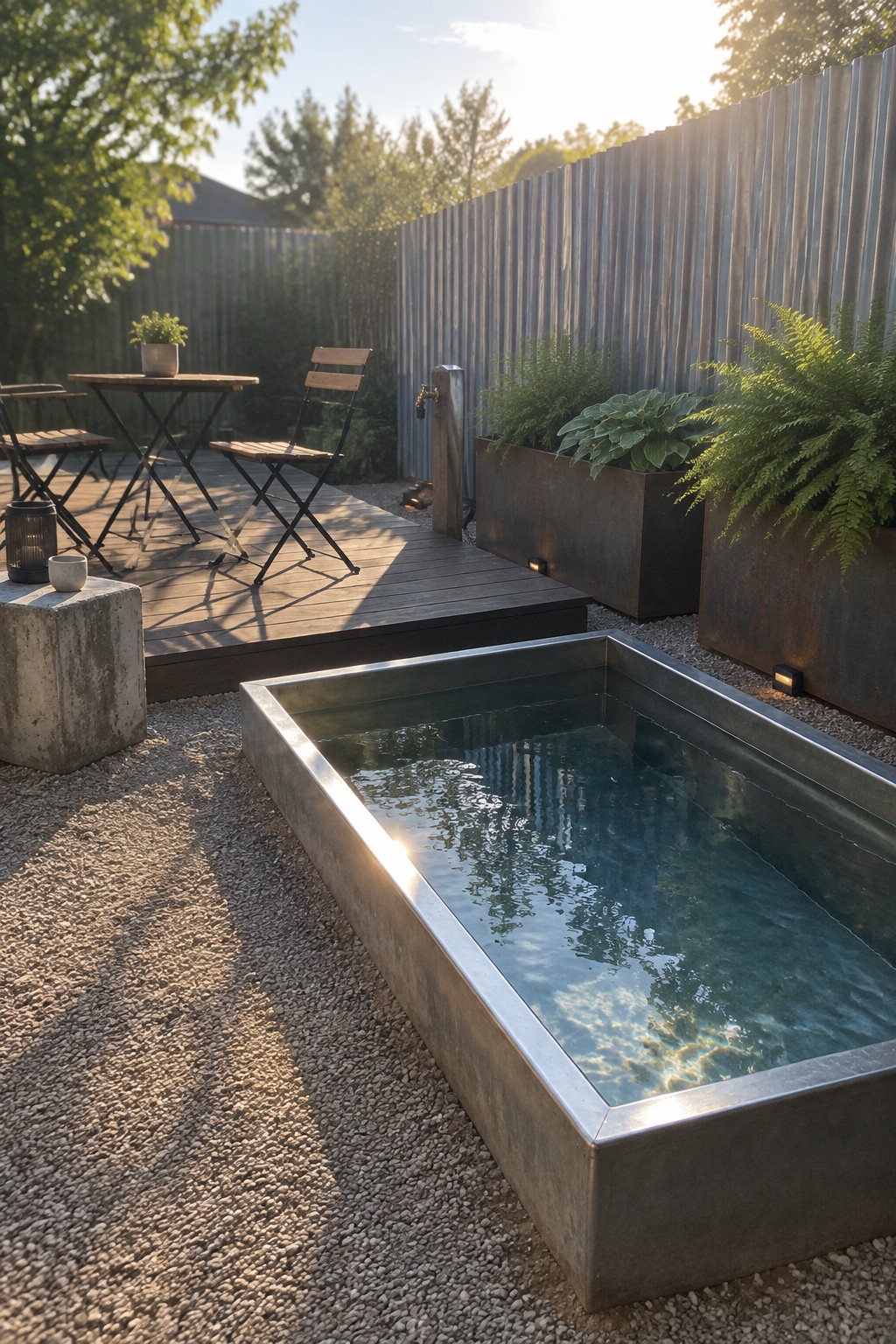
A metal stock tank gives you a plunge pool without digging up the whole yard. It stays affordable, sets up fast, and works in spaces where a full pool would never fit.
This approach suits smaller backyards or side areas that already have gravel or a simple deck. Level the ground first, add a liner if needed, and keep the surrounding gravel so water drains away from the tank edges.
Add Tile Edging To Your Plunge Pool
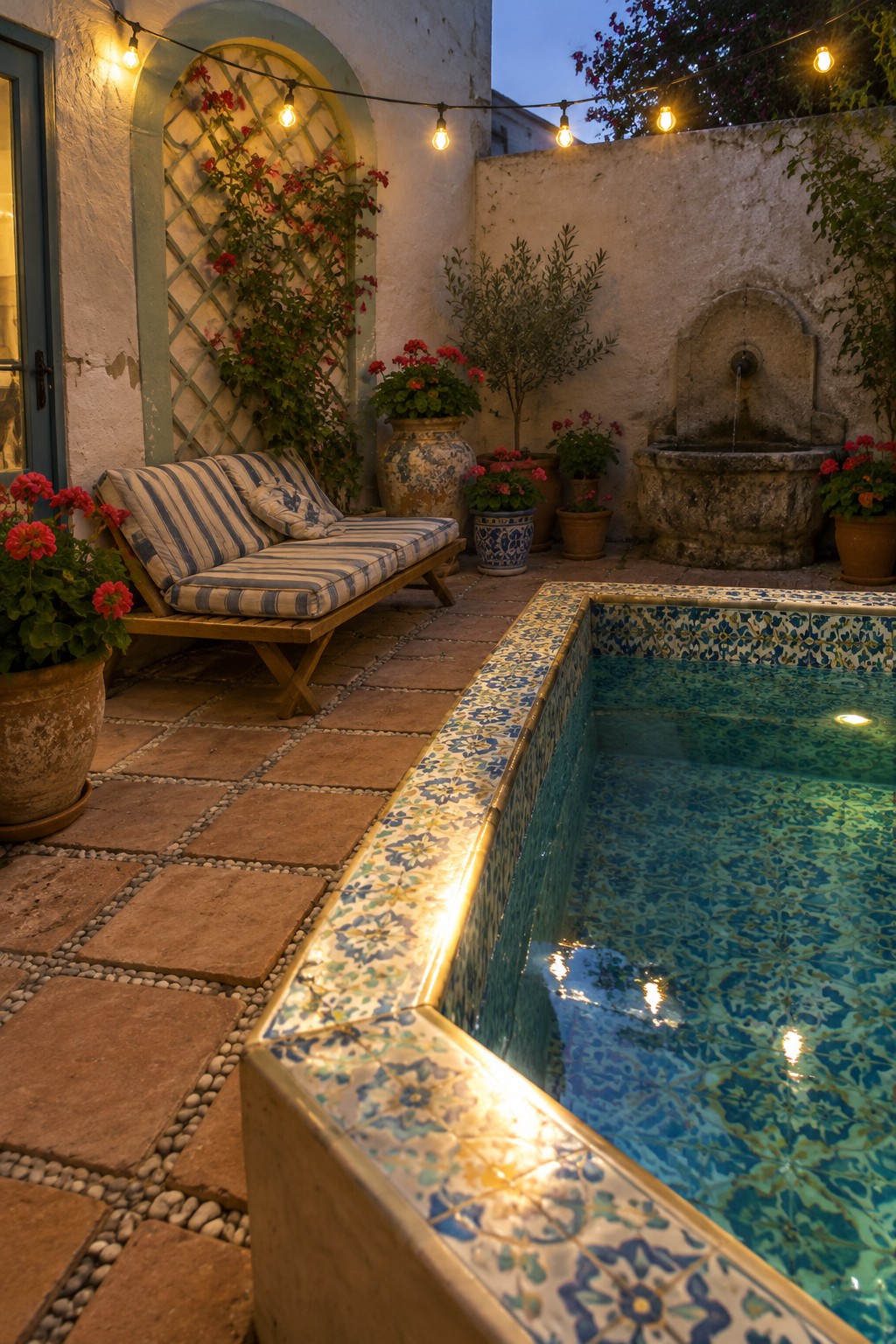
One simple way to make a small plunge pool look more finished is to run a border of patterned tiles around the rim. The tiles catch the light and give the water a cleaner edge, which helps the whole setup feel intentional instead of temporary.
This works best in a courtyard or tight patio where the pool sits right next to the paving. Pick tiles that are rated for outdoor use and set them on a solid base so they stay put through freeze and thaw cycles.
Narrow Plunge Pools Work In Tight Yards

A long narrow plunge pool takes up less ground space than a standard one, which helps when the yard is small or sits on a slope. It runs right beside the deck so the rest of the area stays open for seating, plants, and walking paths.
This shape works best on homes where flat space is limited. Use a basic concrete edge and a simple railing along the drop for safety. The narrower footprint also keeps digging and materials more manageable on a budget project.
Build Poolside Seating With Cinder Blocks
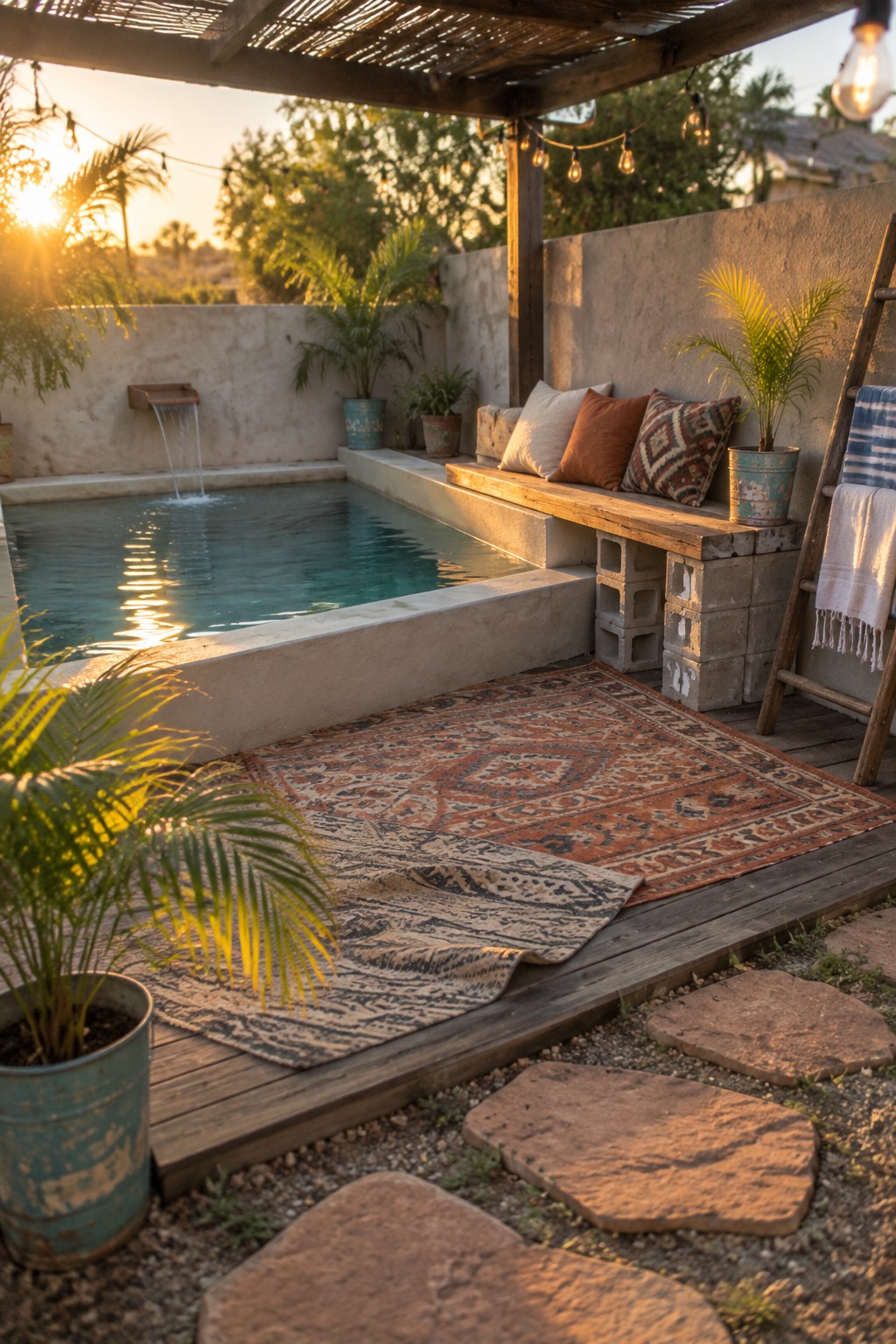
Many homeowners want a place to sit right next to a small plunge pool without spending a lot on furniture. Stacking concrete blocks and laying wood planks across the top creates a simple bench that stays put and matches the outdoor setting.
This setup works well on a wooden deck or concrete patio where you need something sturdy that can handle weather. Keep the bench low and add cushions for comfort, and make sure the blocks sit on a level base so the seat does not shift over time.
Gravel and Stone Pavers Around a Plunge Pool
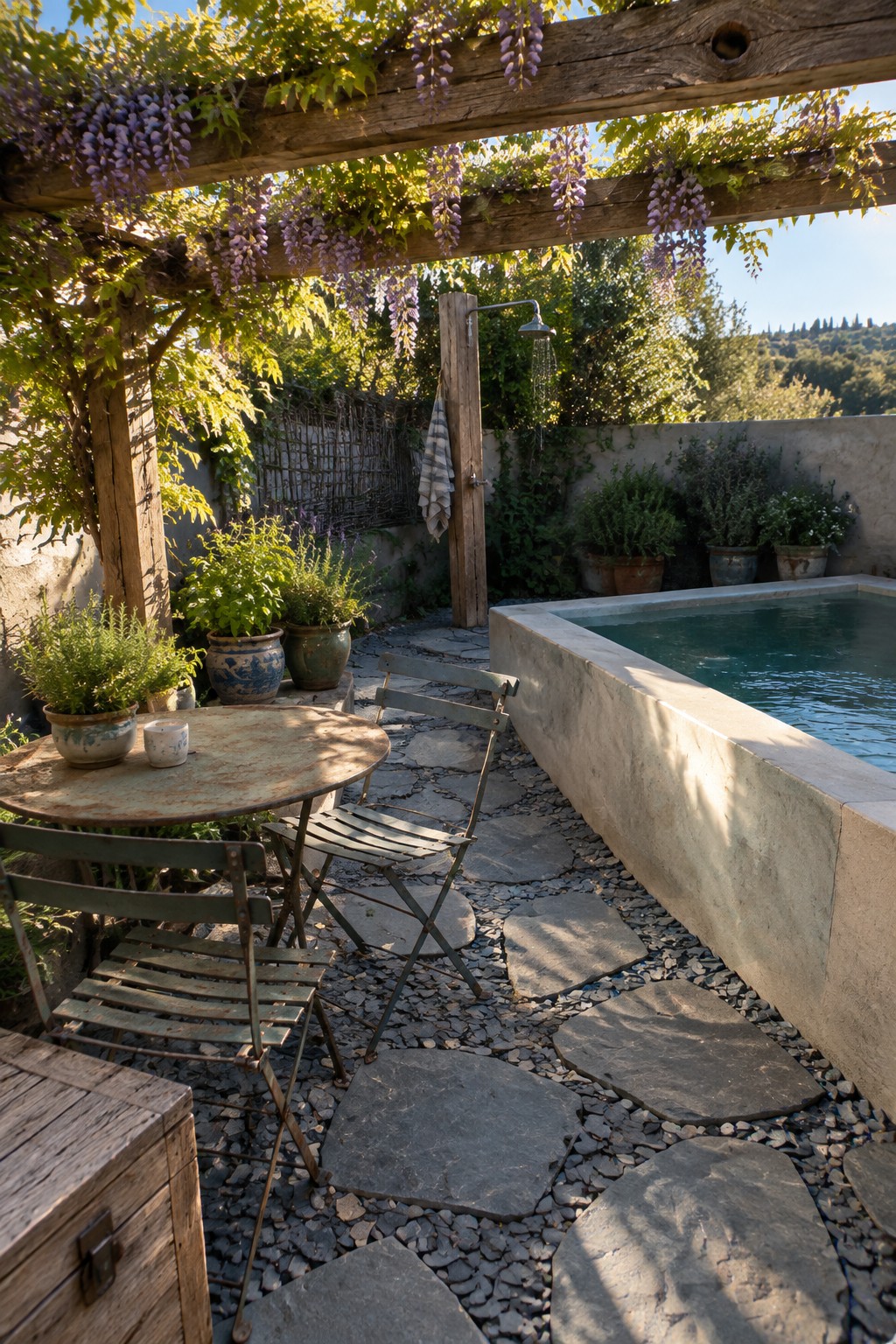
Many people choose gravel mixed with large stepping stones for the area right around a small plunge pool. It keeps costs down compared to full concrete or tile decks and gives the space a relaxed, natural feel that still stays practical for wet feet.
This approach works well in smaller backyards where you want room for a couple of chairs without building a big platform. Just make sure the gravel layer stays thick enough to avoid mud after rain and add a simple border to hold everything in place.
Line a Small Plunge Pool With Colorful Mosaic Tiles
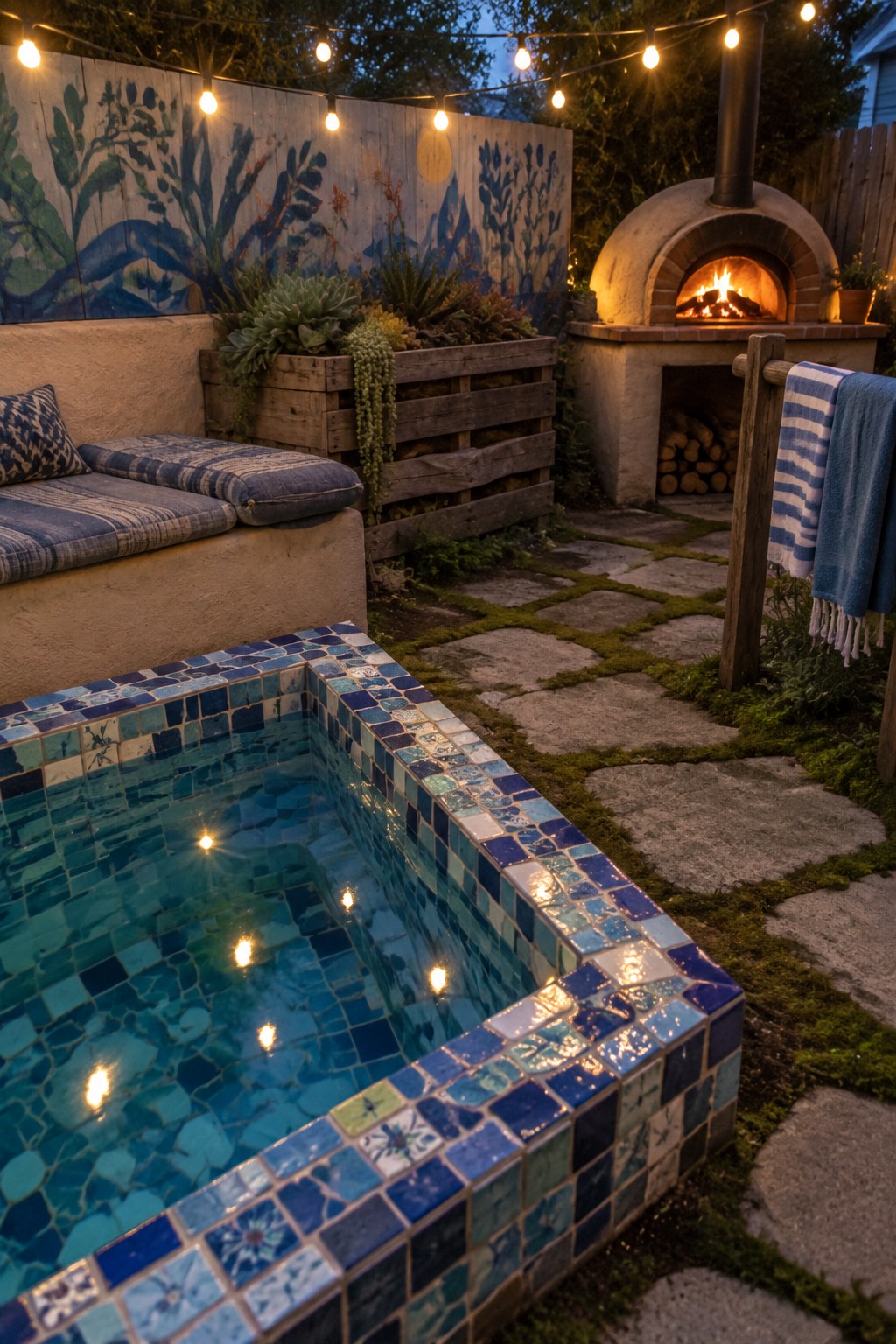
A small plunge pool gets more character when you cover the edges with colorful mosaic tiles. The mix of blues and greens makes the water look deeper and turns a basic concrete box into something that feels finished and personal.
This approach works best in smaller yards where space is tight. You can build the pool yourself and keep the rest of the patio simple with pavers and a few seats nearby so the pool becomes the main feature without crowding the area.
Use a Metal Trough as a Budget Plunge Pool
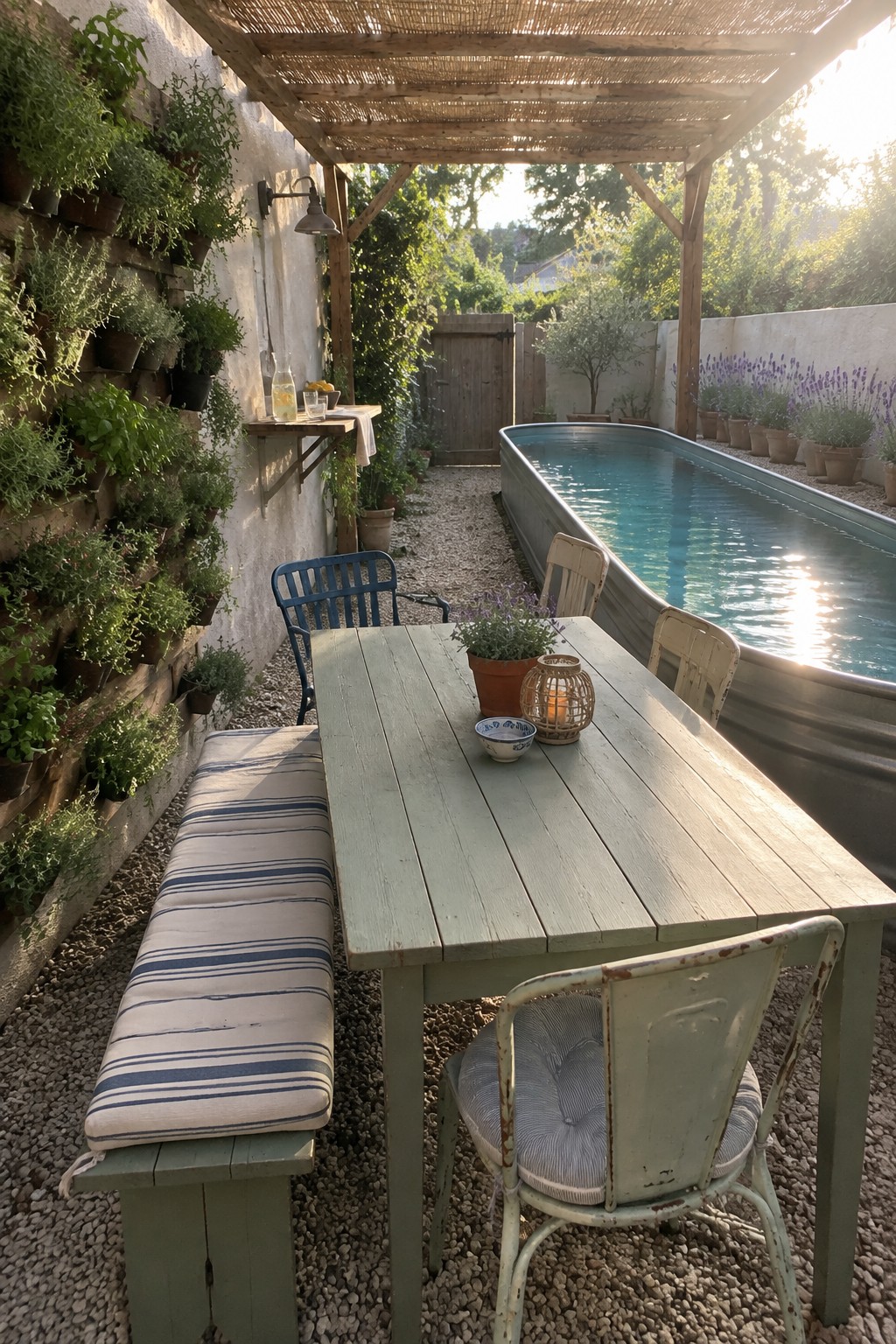
A long metal trough turns into a practical plunge pool without much work or expense. It slips into narrow yards where a built in pool would not fit, and the simple shape keeps the whole setup from feeling crowded.
Place the trough beside an outdoor table so the water stays close to daily seating and meals. This works well on gravel or a basic patio, though you may want to add a small pump to keep the water clean over time.
Frequently Asked Questions
Q: How long does it take to finish a basic plunge pool project?
A: Most people finish a simple stock tank setup in a weekend when they line up help for the digging step. Focus on getting the base level before anything else goes in. That keeps the rest of the work from dragging on.
Q: What happens if my yard slopes a bit?
A: You can build up a level spot with gravel and a few retaining blocks before placing the pool. Measure the ground with a basic level tool first. This stops water from sitting uneven once it fills.
Q: How do I keep the water from turning green?
A: Drop in a small pump and filter sized for the pool volume right away. Swap the water every few weeks if you skip heavy chemicals. A cover helps block sunlight that feeds algae.
Q: Is it worth doing this if I might move in a few years?
A: A stock tank model comes apart and travels with you for low cost. A more built-in version stays put but may draw in the next owner. Pick the style that matches how long you plan to stay.