I’ve noticed that above-ground plunge pools tend to work best when the deck actually connects the pool to the rest of the yard instead of cutting it off.
Most people end up using the space more often once there is a clear path from the house to the water and a spot to set down a towel or a drink.
The deck integration makes the difference.
I keep coming back to layouts where the wood or composite surface wraps the pool at the same level so you can move around without tripping over edges or feeling like the pool is an afterthought.
A few of these approaches have made me think about how my own backyard could handle a small pool without losing the open feel it has now.
Integrate the Plunge Pool Into the Deck
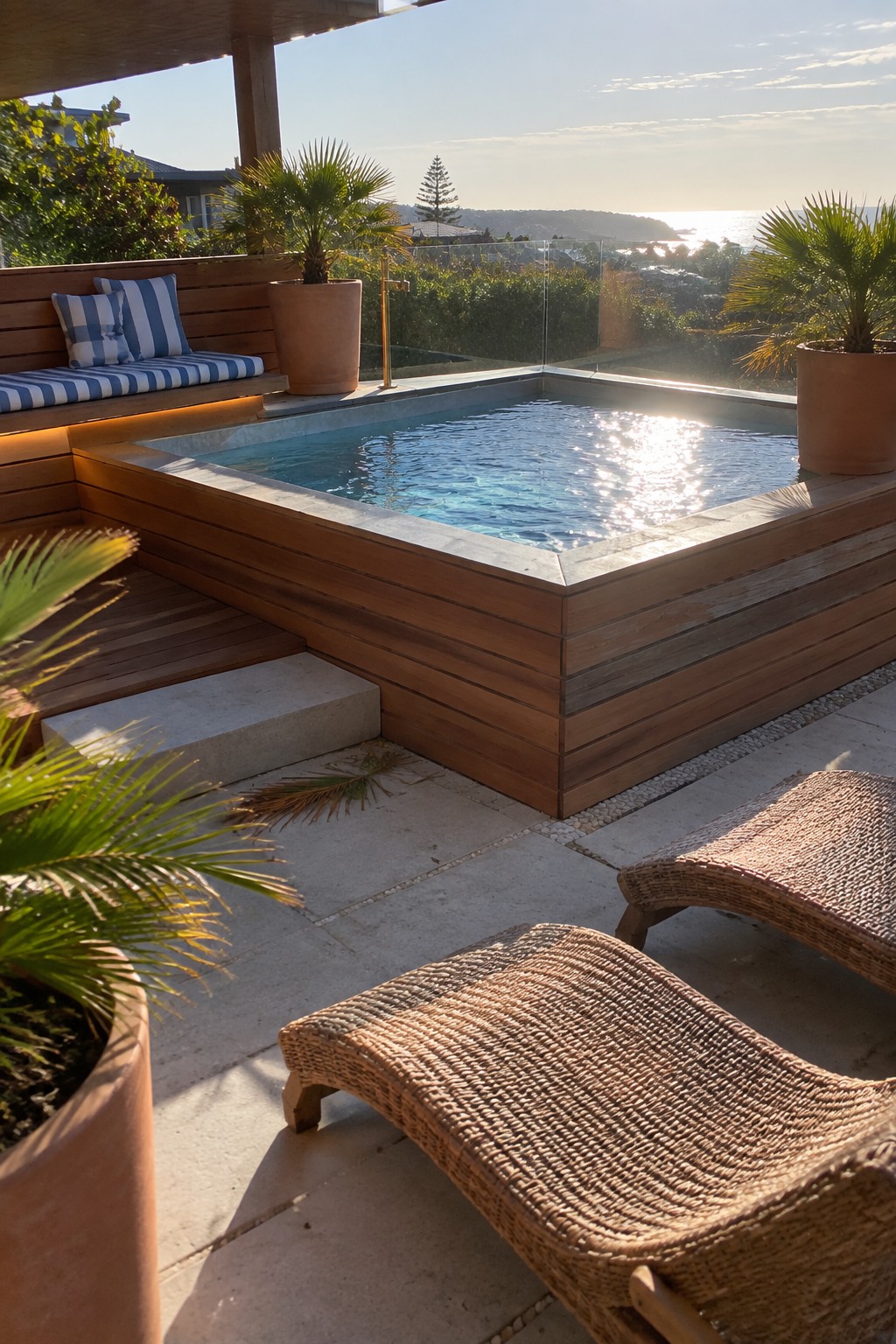
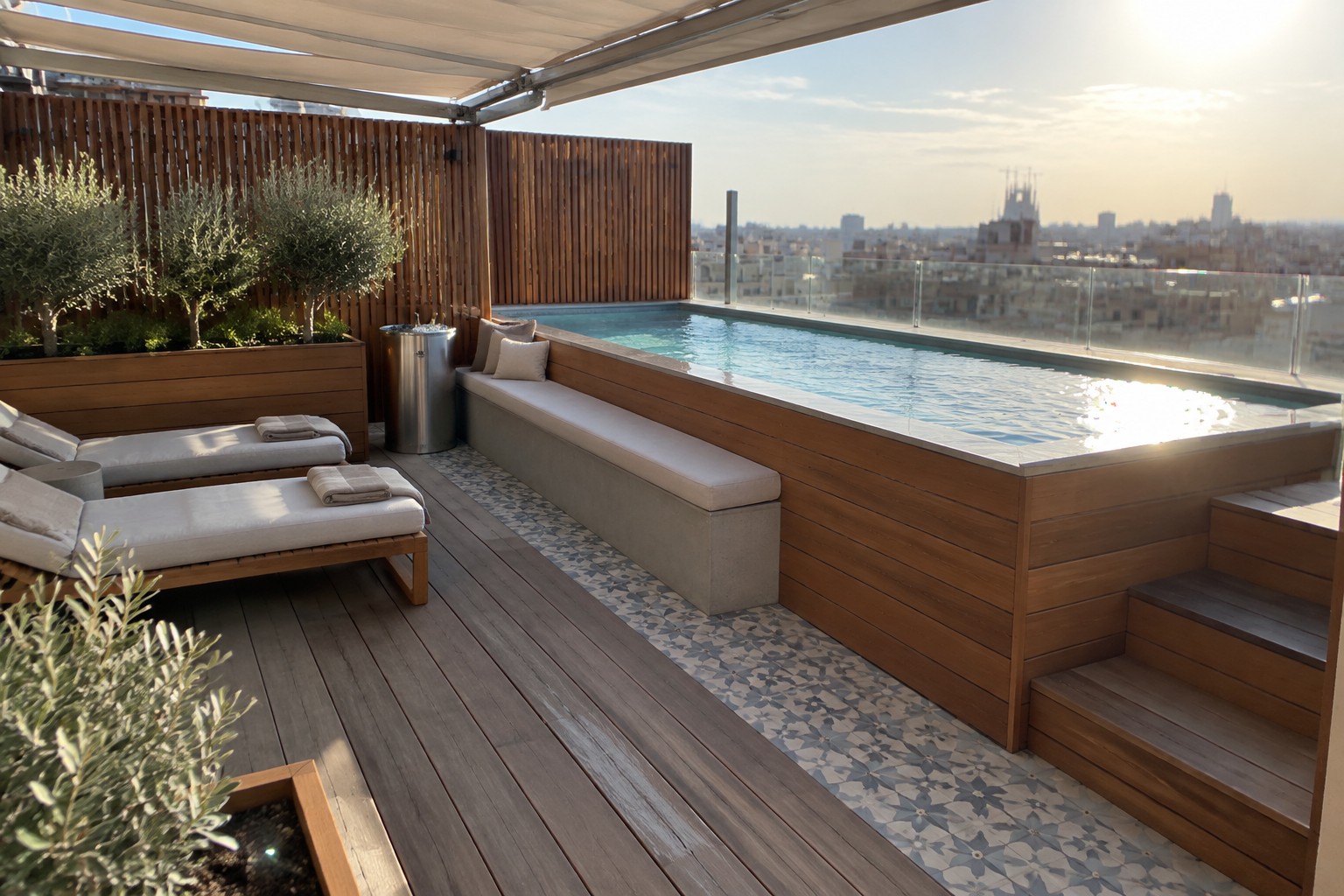
Building the deck right up around an above-ground pool makes the whole setup feel like one piece instead of a separate tub sitting on a patio. The wood hides the pool walls, adds steps for easy access, and creates a natural place to sit or set drinks without needing extra furniture right at the edge.
This approach suits homes with tight outdoor space or rooftops where you want the pool to blend in rather than stand out. Just plan for solid framing that can handle the weight and leave a couple of access points in case the pump or filter needs work down the road.
Set the Pool Into a Matching Deck Platform

Building the deck up around an above-ground plunge pool helps the whole setup feel like one surface instead of a separate tub dropped onto a deck. The dark decking in this example runs right up to the pool walls and creates a clean edge that keeps the area from looking chopped up.
This works best on flat rooftops or raised patios where you can match the pool height to the deck boards. Keep the lounging pieces close to the water so the space functions as both a swim spot and a place to sit without extra furniture crowding the area. Check load capacity first if the deck sits on a roof.
Build A Deck Around Your Above-Ground Pool
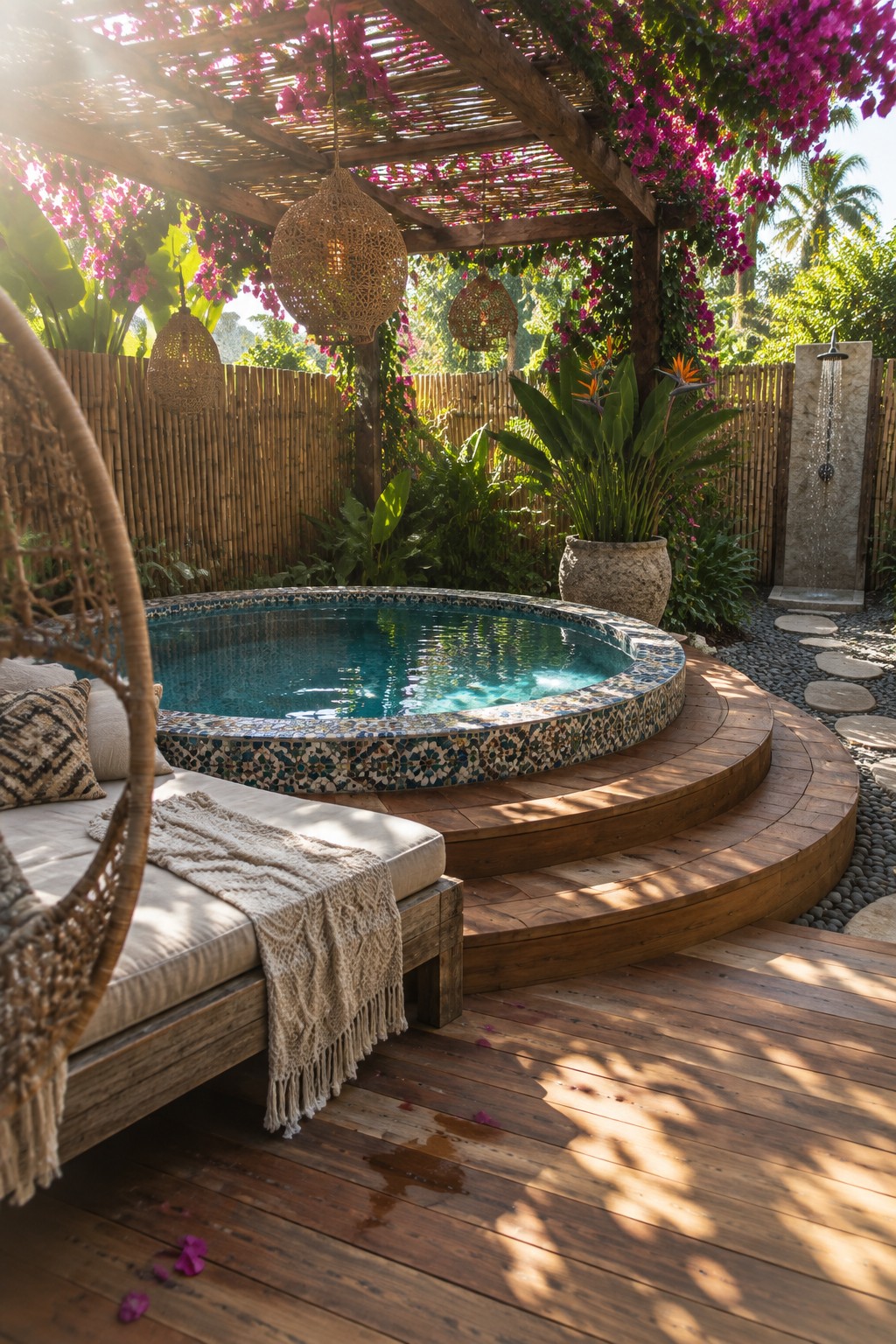
One simple way to make an above-ground plunge pool feel like part of the yard is to surround it with a wood deck. The raised platform creates easy access, gives you places to sit right at the edge, and helps the pool blend into the rest of the outdoor space instead of sitting on its own.
This approach works best in smaller backyards where you want one connected area for relaxing and cooling off. Use sturdy framing under the deck to support the weight of the pool and add steps or a curved edge so the whole setup feels natural to walk around. Just plan for drainage so water does not pool on the boards after use.
Integrating An Above-Ground Pool With The Deck
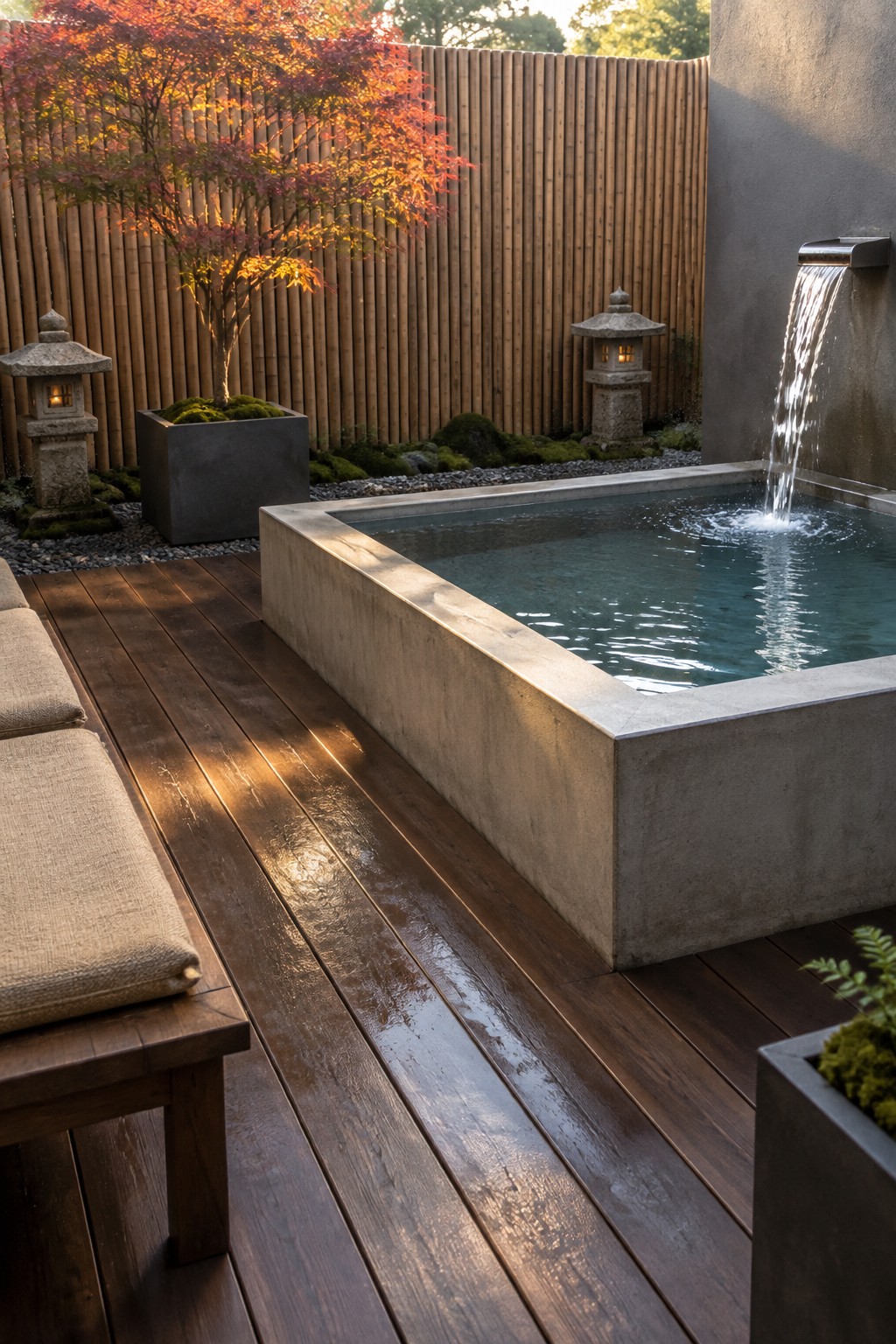
One simple way to make an above-ground plunge pool feel more permanent is to build the deck right up to the pool walls so everything sits on the same level. The concrete basin becomes part of the floor rather than a separate box dropped onto the yard. This approach keeps the pool accessible without adding steps or awkward gaps.
It works best on smaller lots or when you want the pool to serve as an extension of the main seating area. Match the pool height to standard deck boards and use the same material for the surrounding surface so the two read as one plane. Just make sure the pool structure can support foot traffic right at the edge and that drainage slopes away from the house.
Wrap the Pool Deck With Built-In Seating
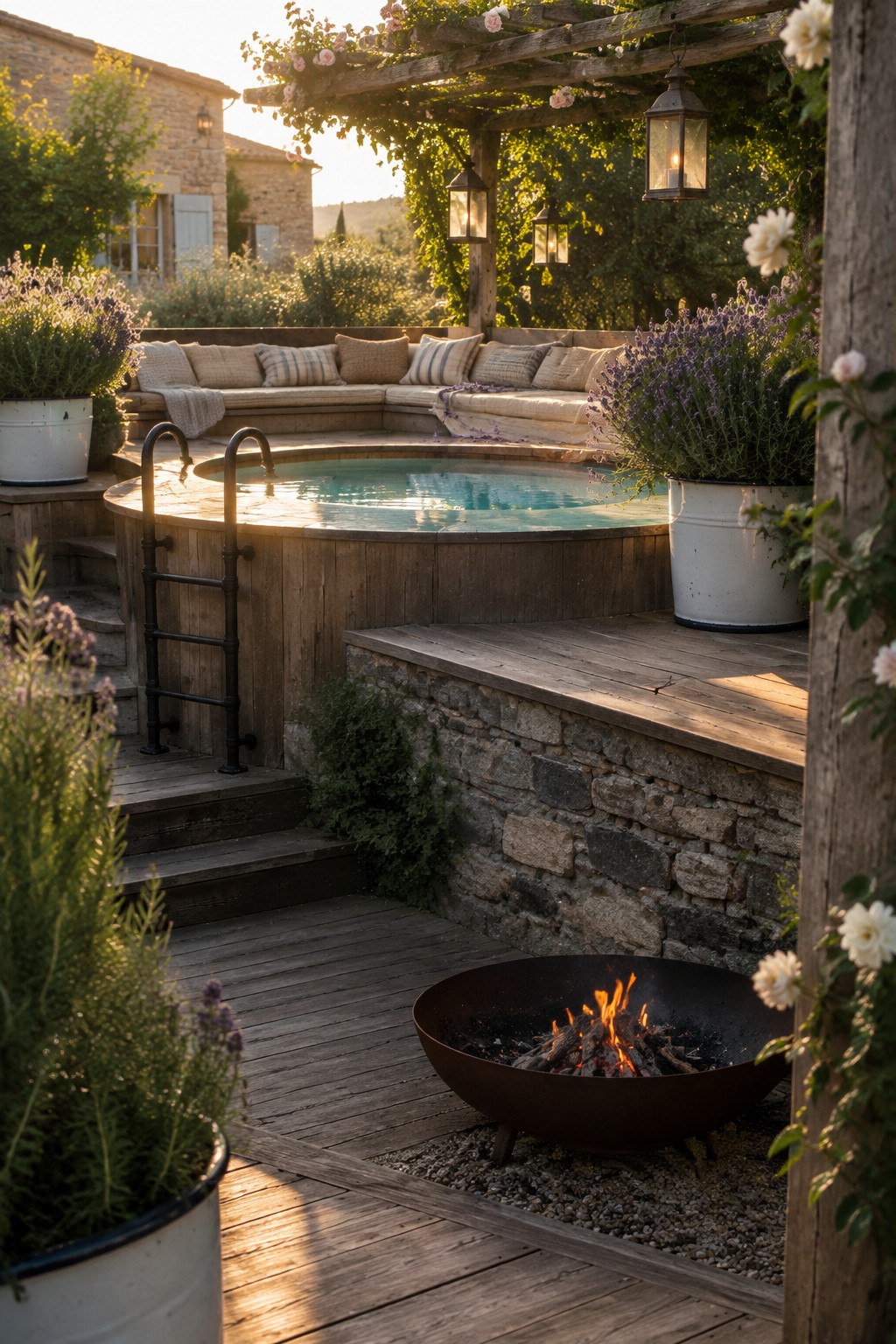
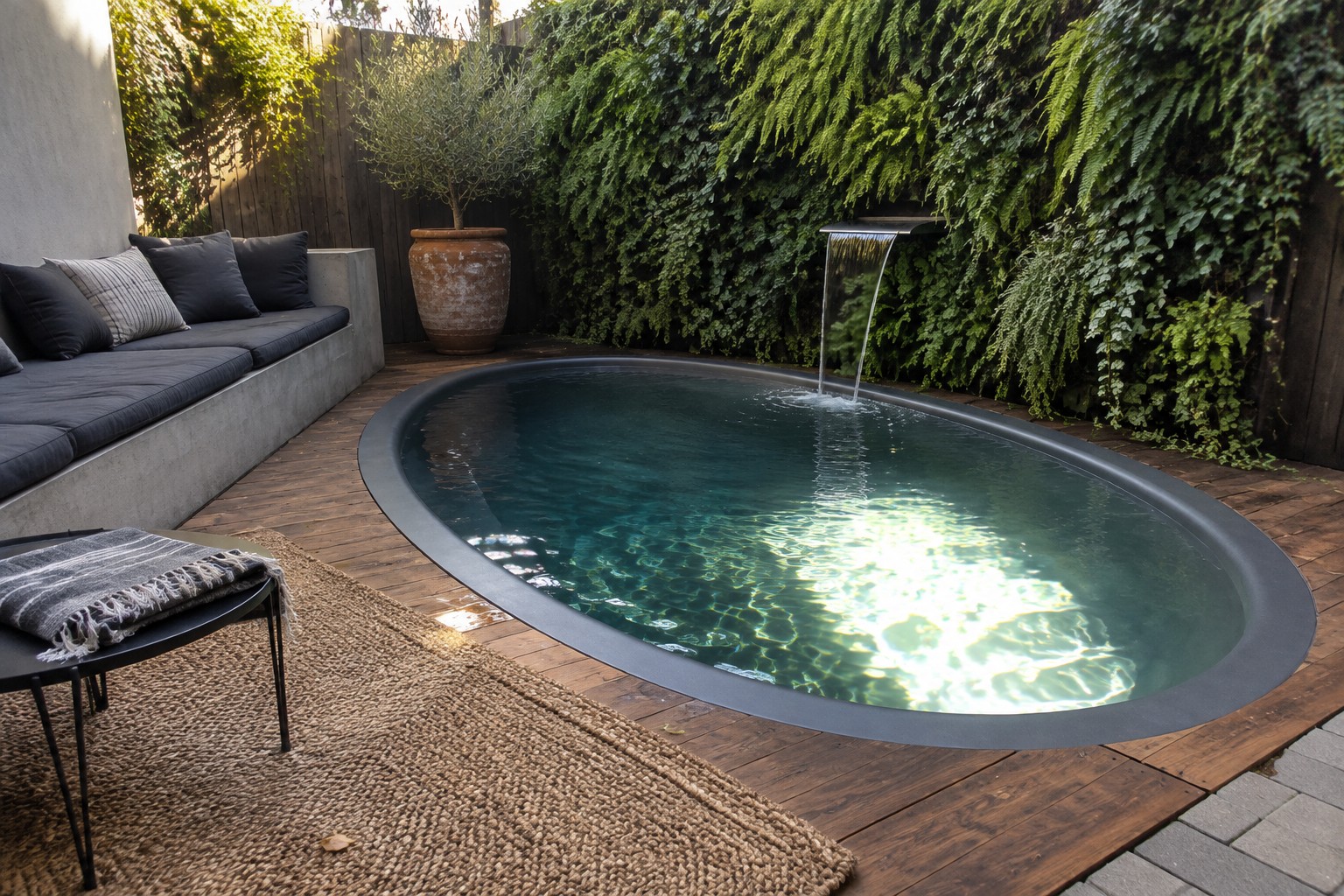
One of the simplest ways to make an above-ground plunge pool feel like it belongs is to bring the deck right up to the edge and add a bench that follows the curve. This turns the pool into the center of the seating area instead of something that sits apart on its own. The bench gives people a place to sit close to the water without needing extra furniture that would crowd the space.
This approach works best on smaller lots or in backyards where you want one defined zone rather than several separate pieces. It suits homes that already have wood decking or are willing to match the pool surround to the existing deck material. Just make sure the bench height lines up with the top of the pool so the whole thing reads as one surface.
Run Decking Straight To The Pool Edge

One simple way to make an above-ground plunge pool feel more settled is to bring the deck right up to the rim. The wood surface meets the pool wall without a big gap, so the whole thing reads as one connected area instead of a separate tub sitting on the ground.
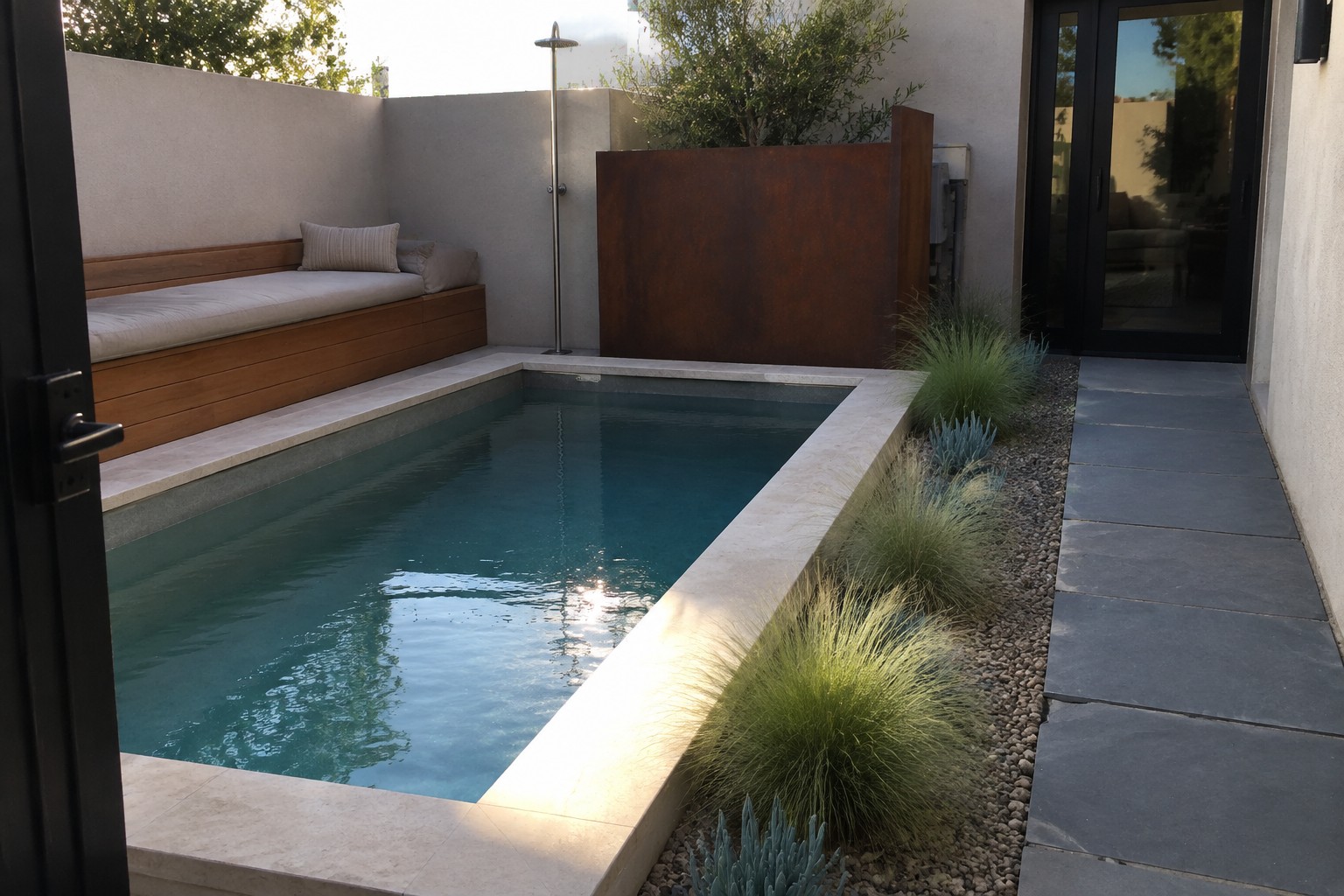
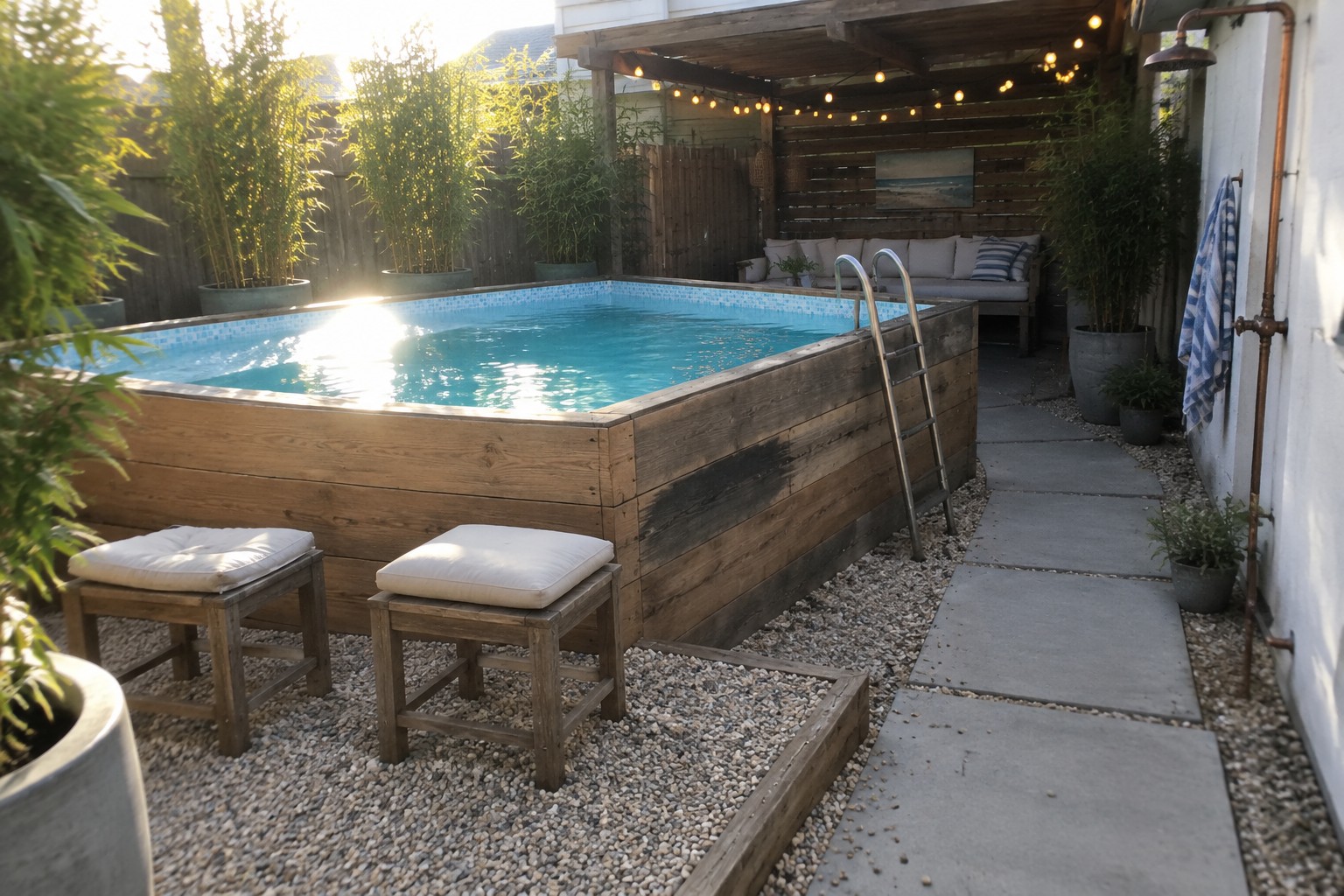
This approach works best in compact yards where you want the pool to take up less visual room. Keep the deck boards running parallel to the pool edge and leave a small drainage gap so water does not pool against the side. The gravel and pavers around the rest of the space help the deck feel like part of a larger outdoor floor.
Built-In Seating Along The Pool Edge
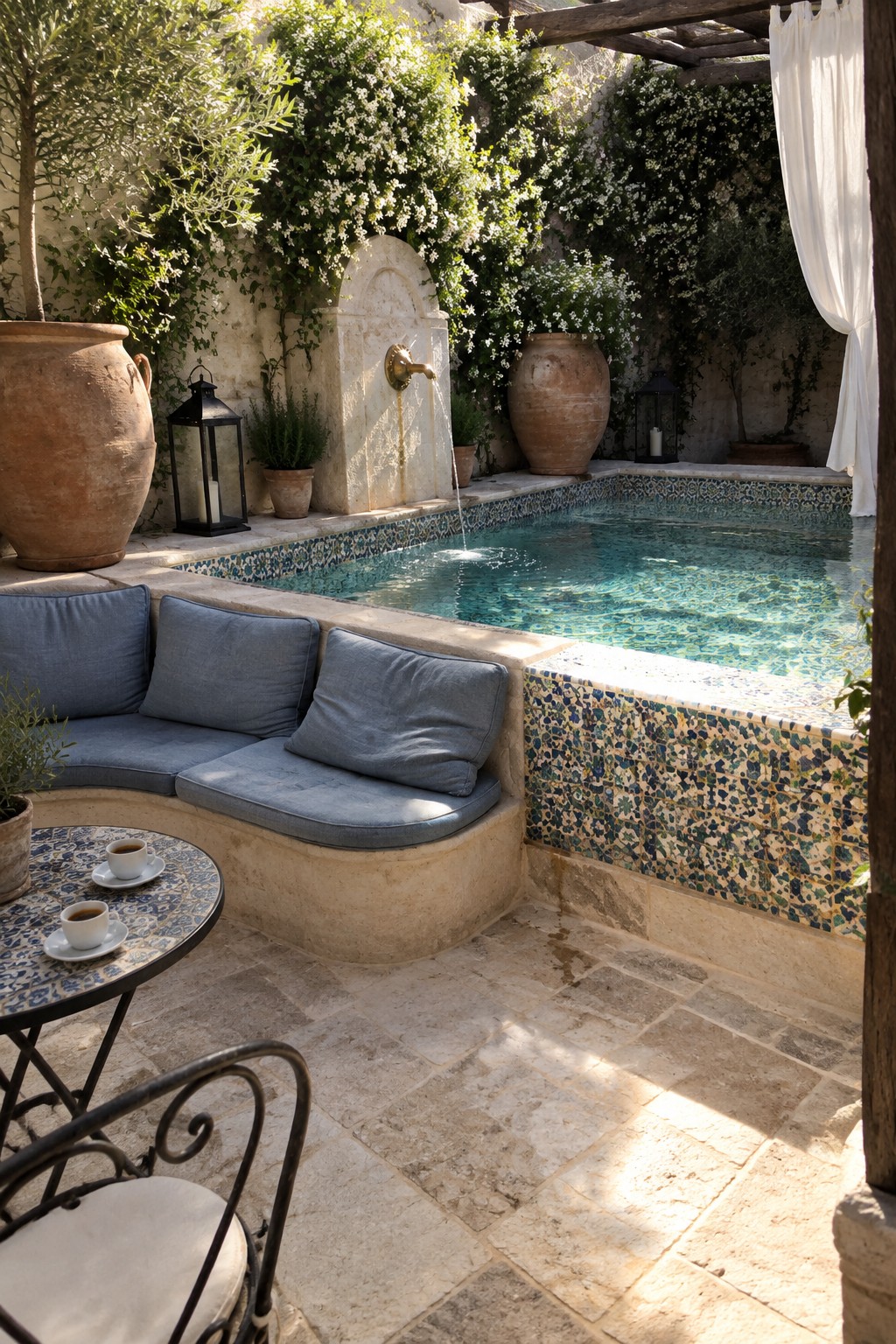
One simple way to tie an above-ground plunge pool into the deck is to run built-in bench seating right along the pool wall. The bench uses the raised edge as its back and gives you places to sit without adding extra furniture that would crowd the area.
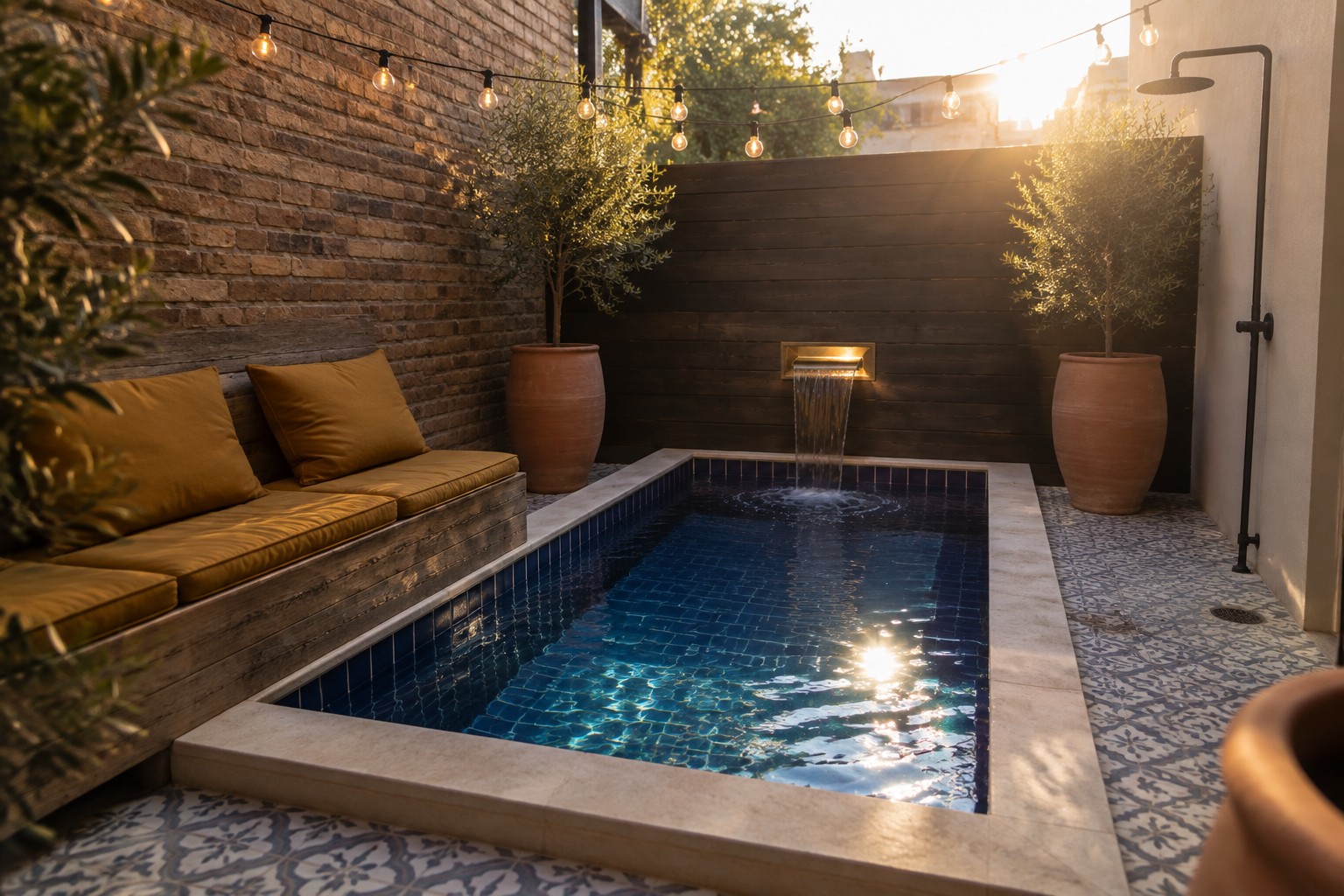
This approach suits smaller yards or homes where you want the pool to feel like part of the living space rather than a separate feature. Keep the bench height even with the pool coping so the whole thing reads as one built structure instead of two pieces placed side by side.
Set An Above-Ground Pool Into The Deck

One practical way to make an above-ground plunge pool feel more permanent is to set it right into the deck surface. The round metal tank sits flush with the boards so the whole area reads as one connected space rather than a pool with a deck built around it.
This works especially well on smaller lots or in coastal settings where you want easy access and simple upkeep. Keep the decking straightforward, add a few low seats nearby, and the pool becomes part of the everyday layout instead of a separate feature that needs its own surround.
Build a Deck Around an Above-Ground Pool
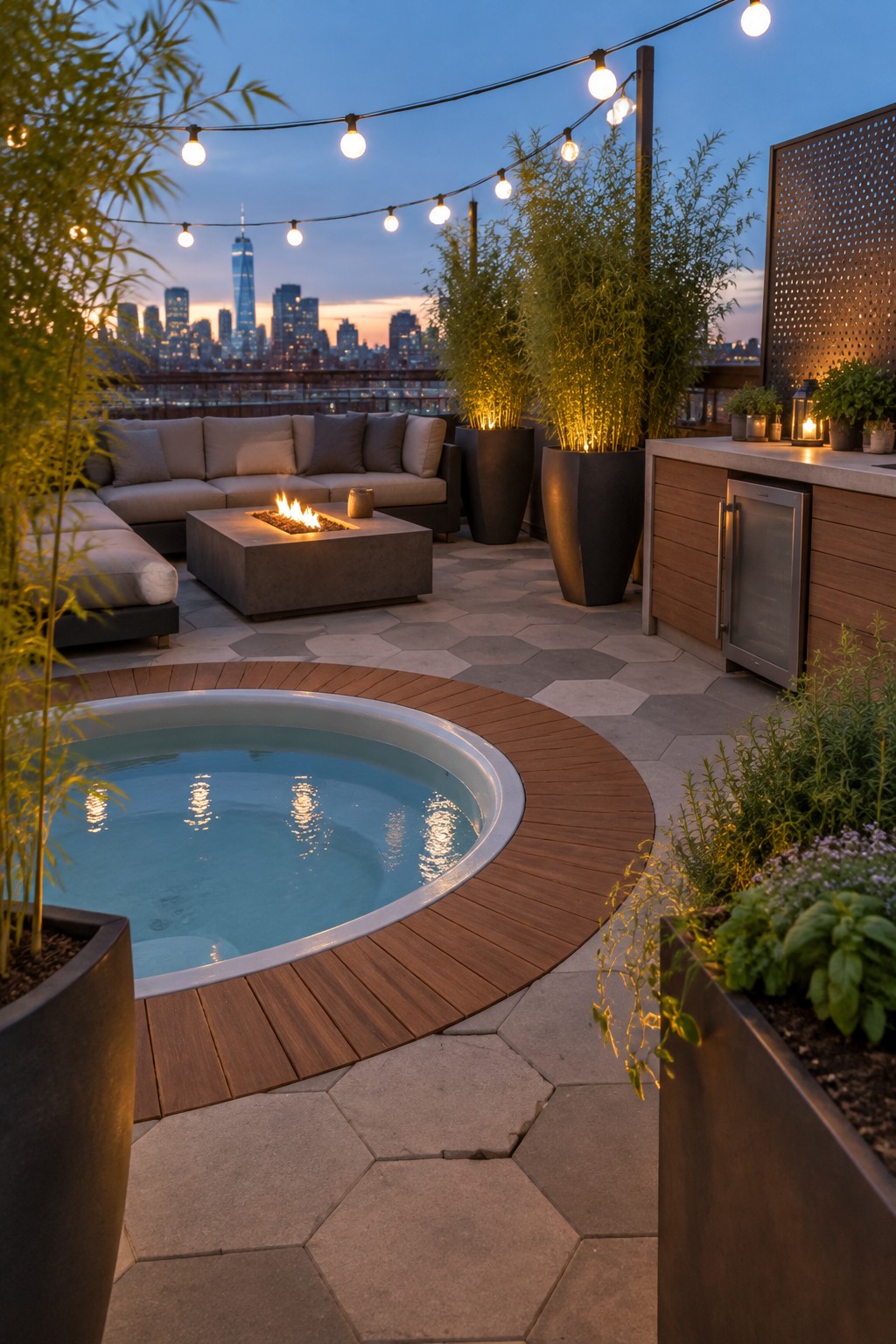
Wrapping decking around an above-ground plunge pool helps it blend into the rest of the patio instead of sitting on top like a separate piece. The wood creates a smooth transition between the water and the surrounding floor, which makes the whole area feel more connected and usable.
This approach works well on rooftops or small yards where you need to keep the surface level and avoid tall pool walls. Match the deck boards to your patio material so the pool edge does not break up the flow of the space.
Integrating An Above-Ground Pool Into A Deck
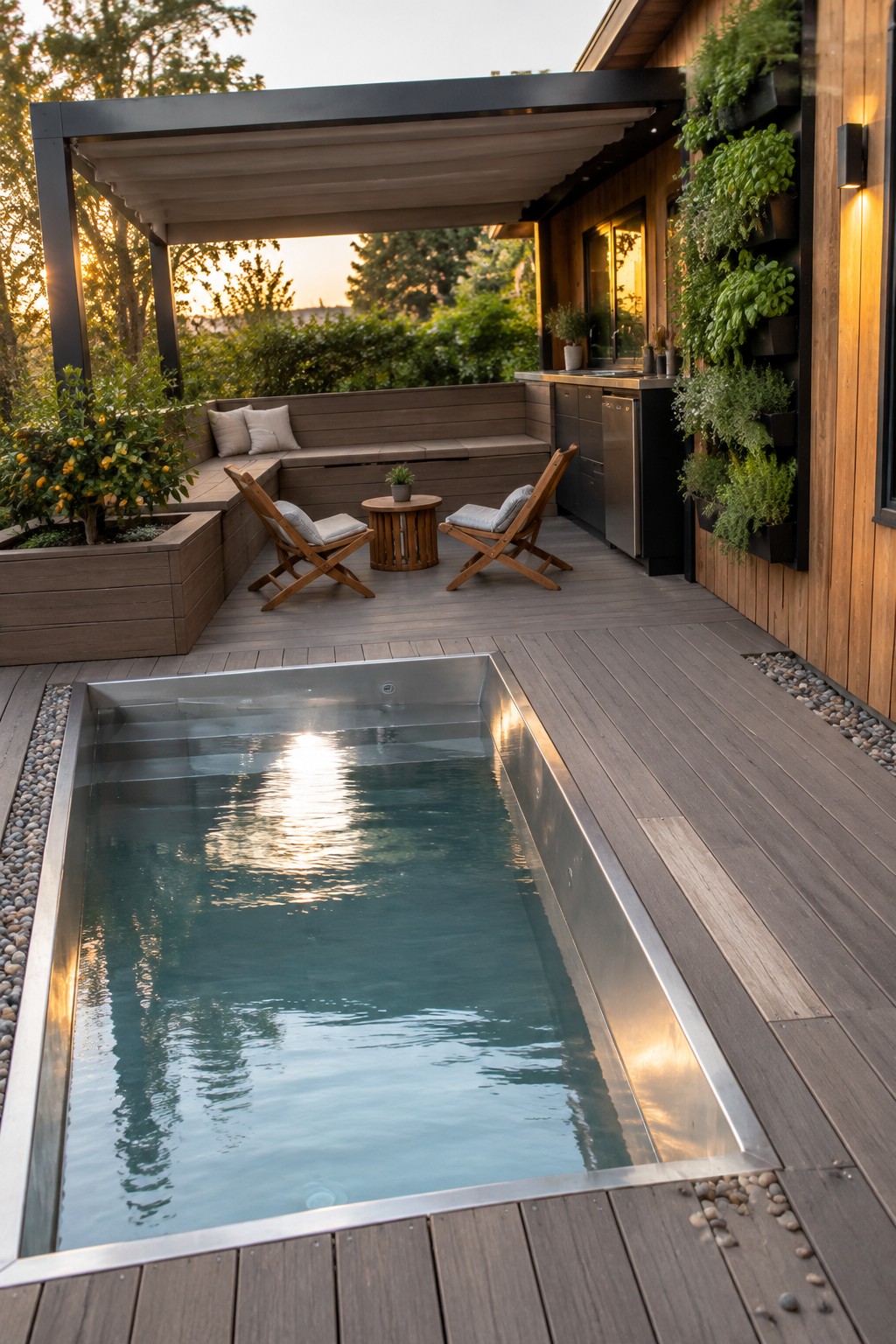
Setting an above-ground plunge pool directly into the deck surface creates a cleaner, more connected outdoor space. The pool becomes part of the floor rather than a separate box sitting on top, which makes the whole area feel more usable and intentional.
This works best on decks that can be built up or reinforced around the pool shell. It suits smaller yards where you want a modern pool without digging deep or spending on a full in-ground installation. Just make sure the deck framing can support the weight and that the pool edges sit flush for safety and easy movement around it.
Adding Deck Space Around an Above-Ground Plunge Pool

One practical way to handle an above-ground pool is to build a full deck around it. The deck hides the pool walls, creates a flat surface for walking and sitting, and turns the whole thing into one connected outdoor area. It also gives you room for loungers and side tables right at the water’s edge without needing extra patio space.
This setup works best on smaller lots or in backyards where you want the pool to feel like part of the main living area rather than something set off by itself. Use the same deck boards for both the main floor and any steps or ledges so the materials stay consistent. Just make sure the deck framing is built to handle the weight and that you leave access points for pool maintenance.
Setting An Above-Ground Pool Into The Deck Surface

One practical way to handle an above-ground plunge pool is to build the deck right up to the pool walls so everything sits on the same level. This approach turns the pool into part of the main outdoor floor instead of something that stands apart on its own.
It works best on homes near the coast or on flat lots where you already plan to add decking. The key is to plan the framing and supports early so the deck boards meet the pool cleanly and water can drain away from the base without pooling.
Build Decking Around an Above-Ground Pool

One simple way to make an above-ground plunge pool feel more permanent is to build the deck right up to its edge. The wood platform hides the pool walls and creates a clean transition from the surrounding deck to the water. This approach works especially well when the pool sits on a flat surface and you want the whole area to read as one connected space.
It suits smaller yards or homes where a full inground pool is not practical. The key is to match the deck height to the pool rim so the structure feels intentional rather than added on. Keep the rest of the deck open for seating and movement so the pool stays the main feature without crowding the area.
Blend An Above-Ground Pool Into A Wooden Deck
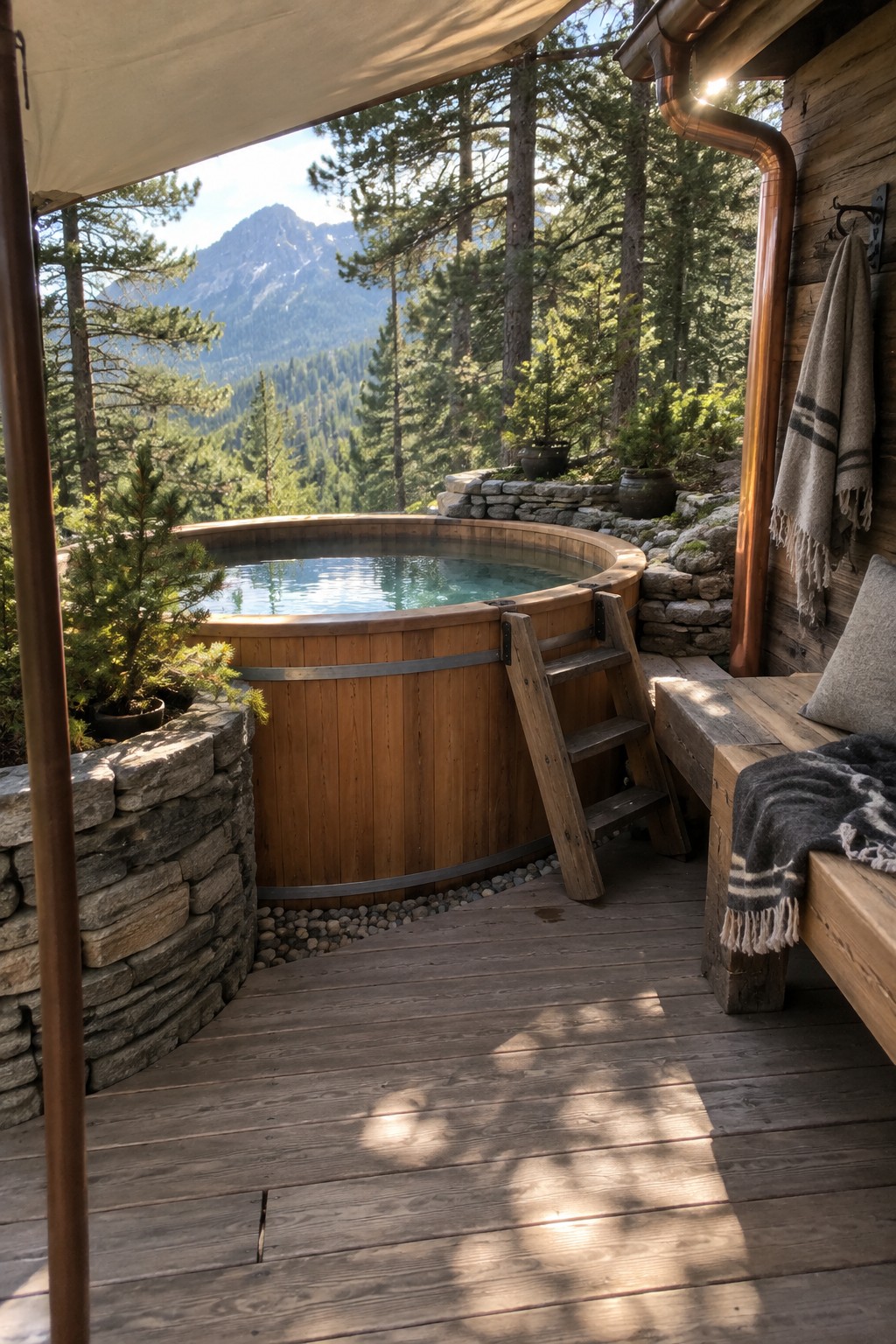
One practical way to make an above-ground plunge pool feel like it belongs is to run the deck boards right up to the sides. This turns the pool into part of the seating and walking area instead of something that sits apart on its own.
It works best on a back deck or side patio where you already have wood underfoot. Add a short set of steps for easy entry and keep a bench nearby so the whole spot functions as one outdoor living zone. Just check that the deck framing can handle the extra load.
Raised Pools Set Into The Deck

One practical way to handle an above-ground plunge pool is to build the deck right up to it so the pool sits at the same level as the flooring. This keeps the whole area feeling connected instead of having a separate box dropped in the middle. The deck then works as both circulation space and a place to sit without needing extra furniture everywhere.
This approach works best in smaller yards where you want to keep things simple and on one plane. You can add a few stools along the edge for casual use, and the pool sides can be finished to match the deck material so nothing stands out. Just check that the structure underneath can support the filled weight before you start.
Build Steps Right Into the Deck
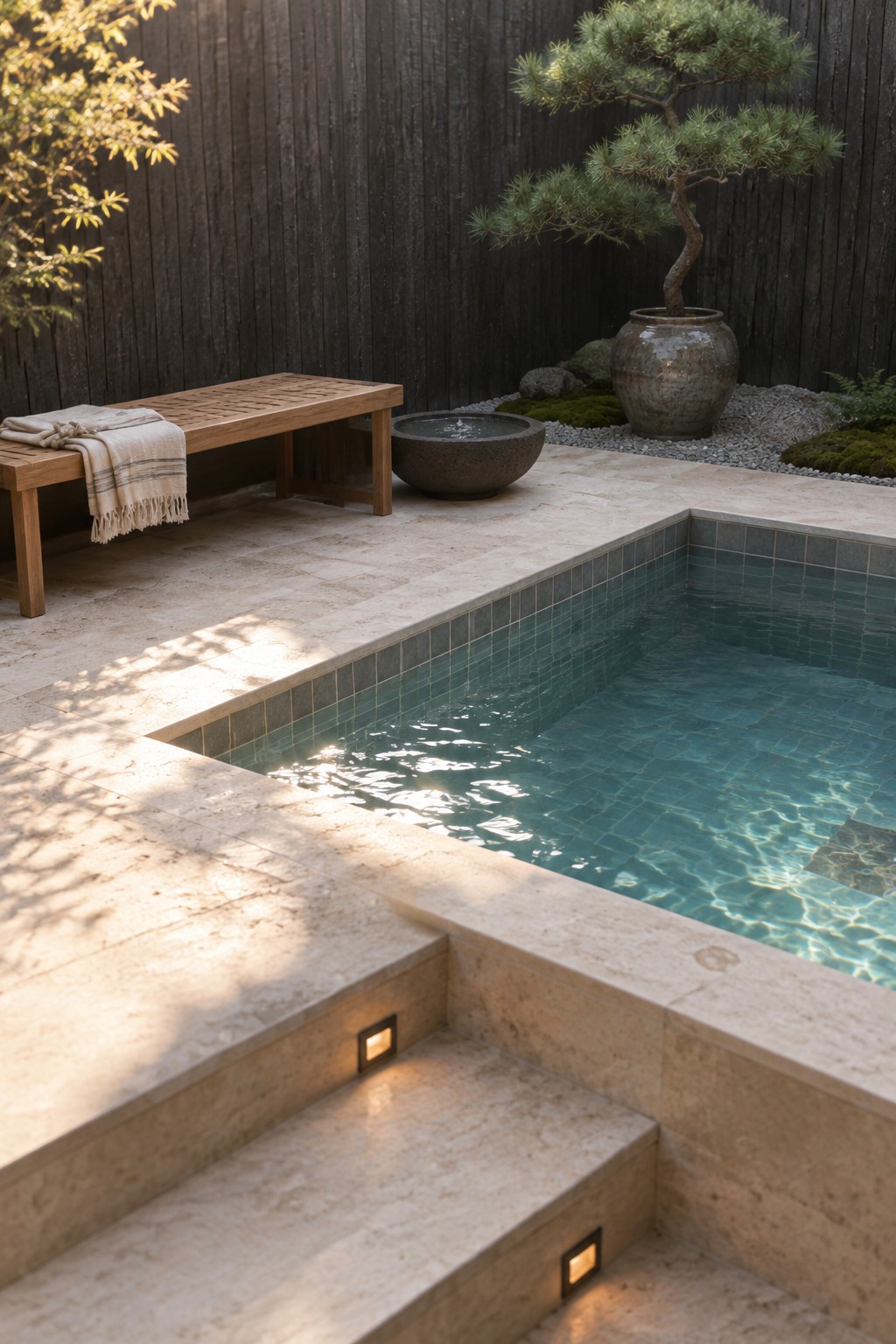
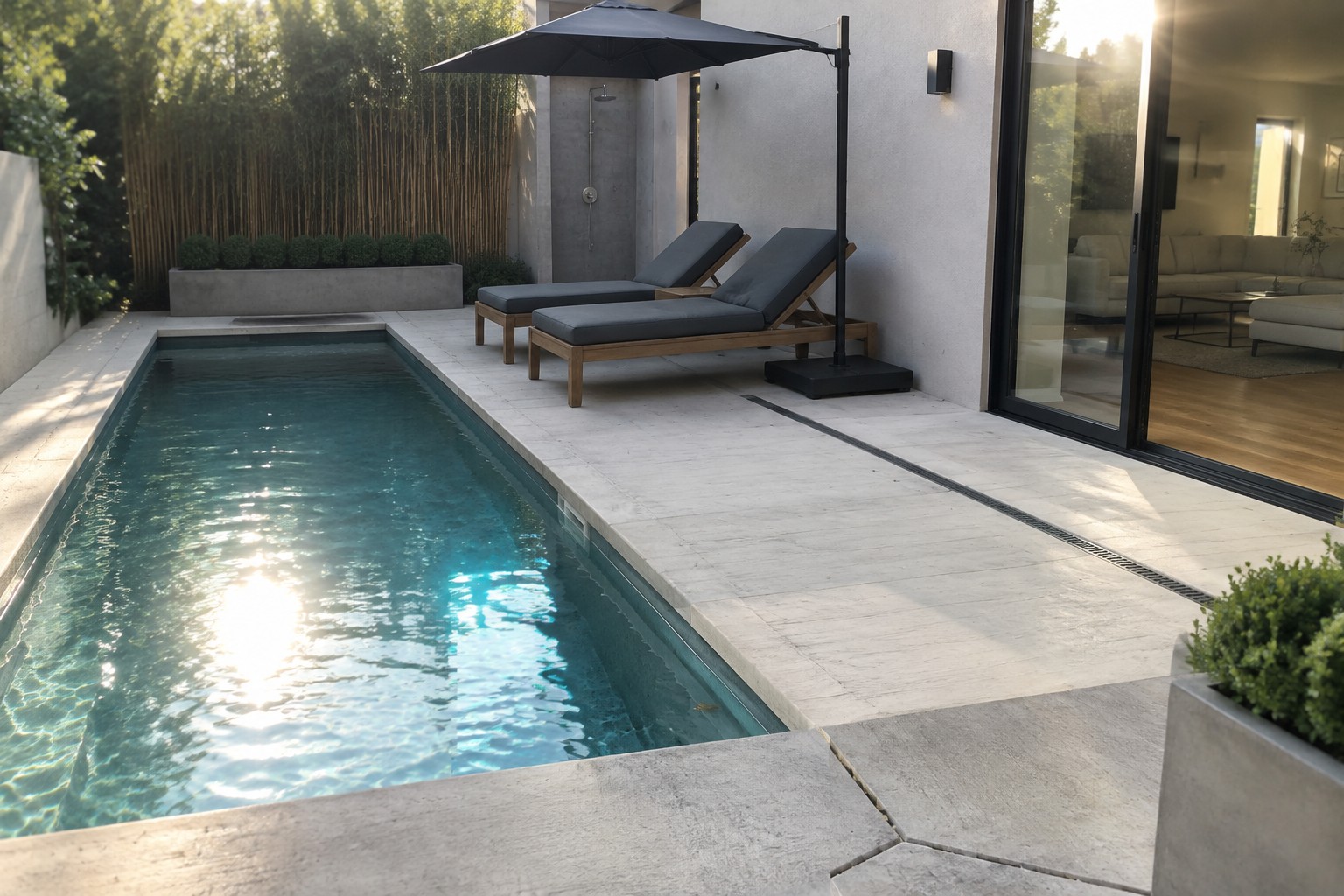
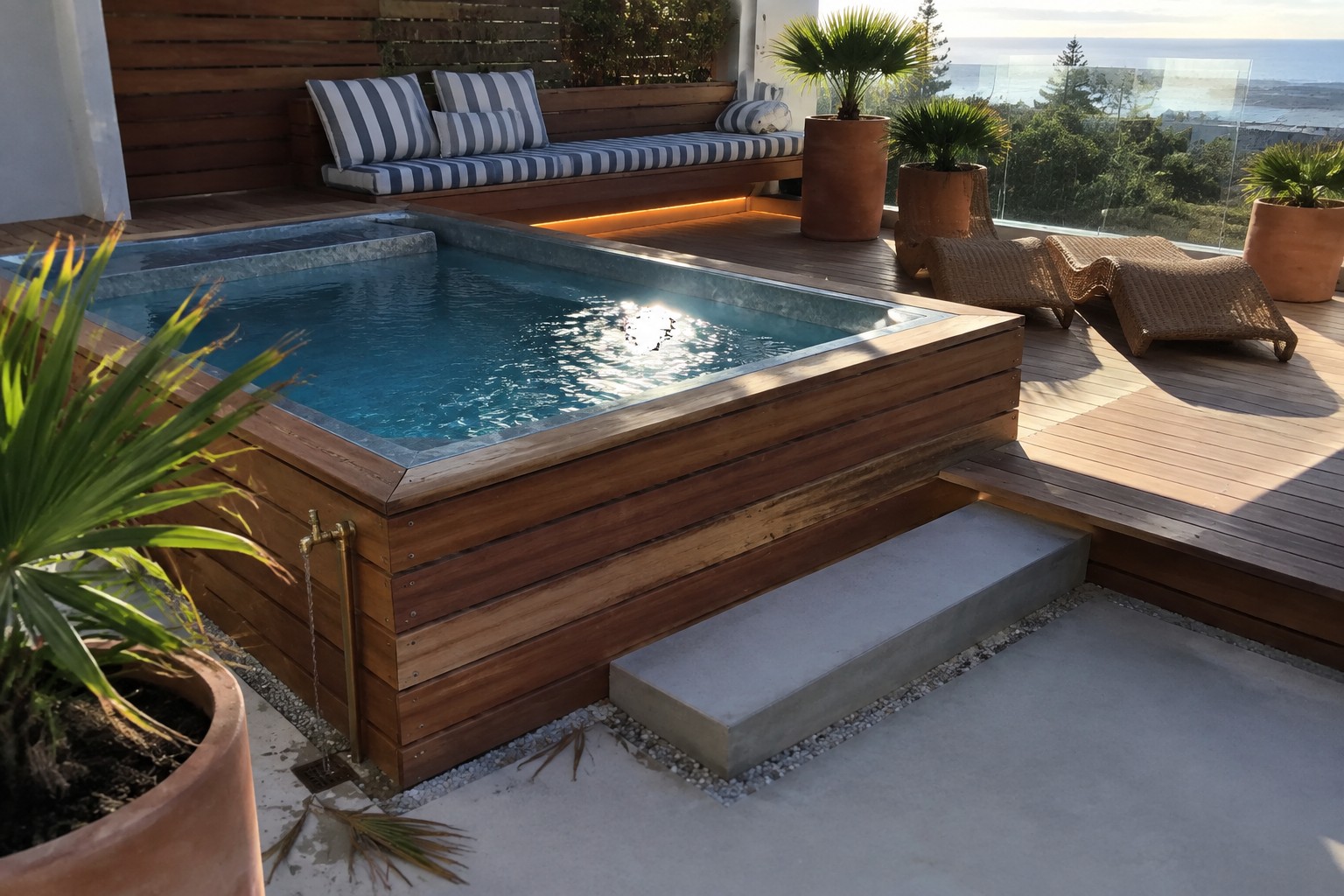
Adding steps that sit flush with the deck surface makes an above-ground plunge pool feel more like a natural part of the yard. The transition feels simple and practical, especially when the steps use the same material as the surrounding patio. It removes the awkward gap that often shows up between a pool wall and the deck.
This setup works best in smaller yards where you want the pool to take up less visual space. Keep the steps wide enough for comfortable footing and add low lighting if you plan to use the pool at night. Stone or concrete decking holds up well here, though you will want to check drainage around the base so water does not pool on the treads.
Frequently Asked Questions
Q: How wide should the deck run around an above-ground plunge pool? A: Aim for at least three feet of clear deck on every side. That gives you room to walk past without brushing the water and still leaves space for a small table or a couple of stools. Anything narrower starts to feel cramped once you add people and towels.
Q: Will the deck make it tough to reach the pump and filter? A: Build in a hinged hatch right over the equipment pad when you frame the deck. You can flip it open in seconds and reach everything without pulling up boards. Keep the hatch a bit larger than the gear so you never have to wrestle with tight fits later.
Q: How do I stop water from pooling under the deck after a swim? A: Slope the ground slightly away from the pool before you lay the deck frame. Add a few small gaps between boards near the base so any splash drains straight through. This keeps the underside dry and cuts down on mildew without extra fans or covers.