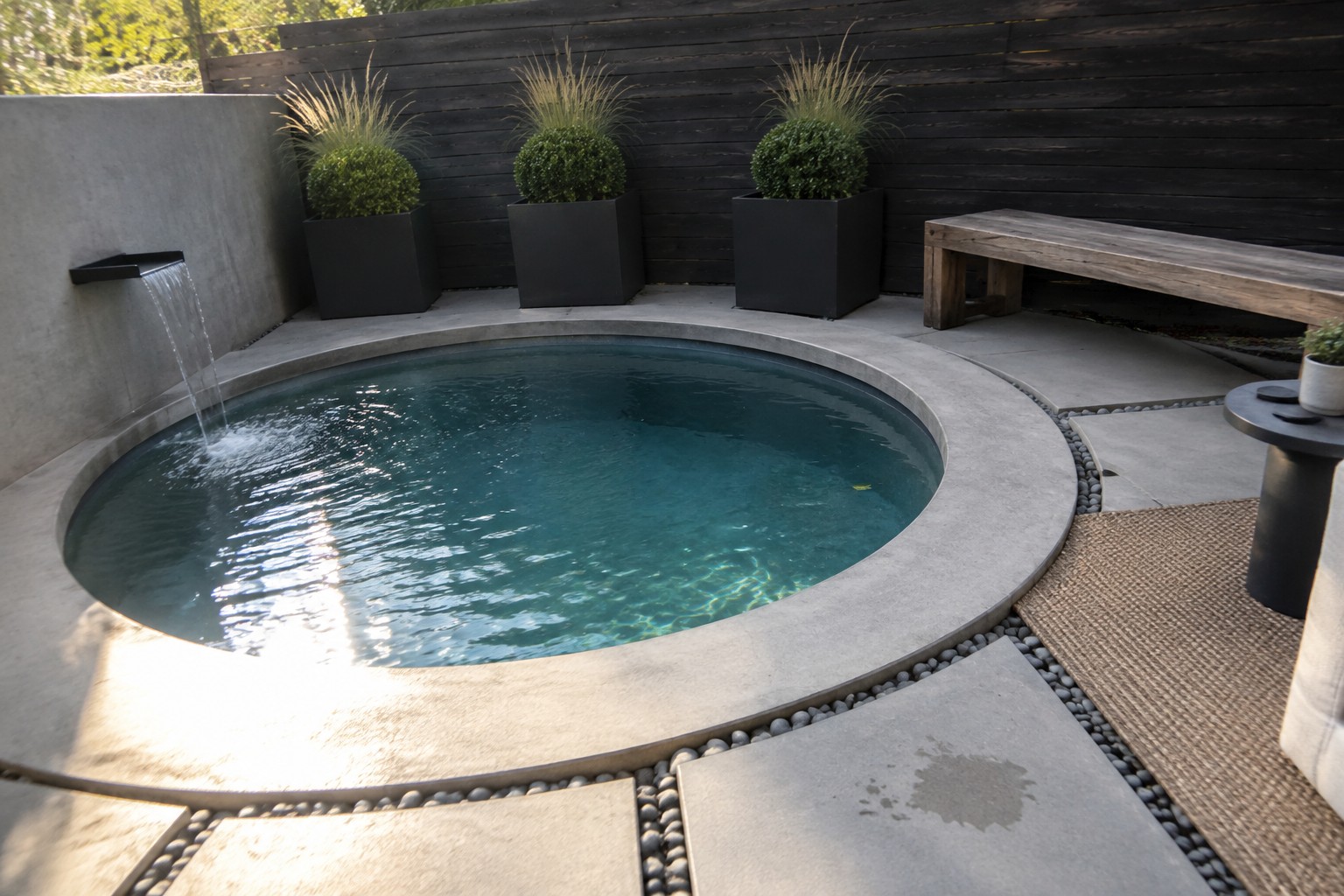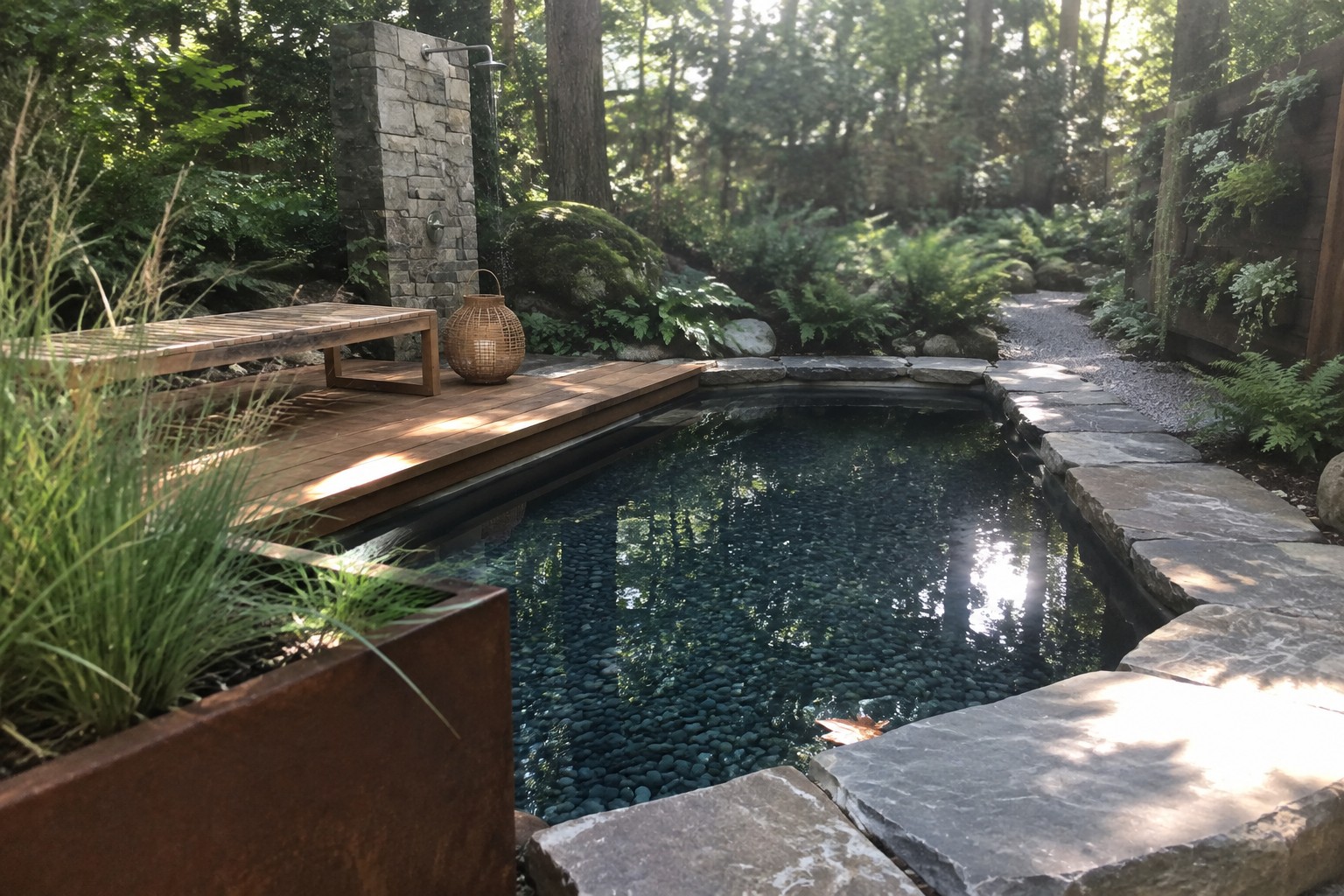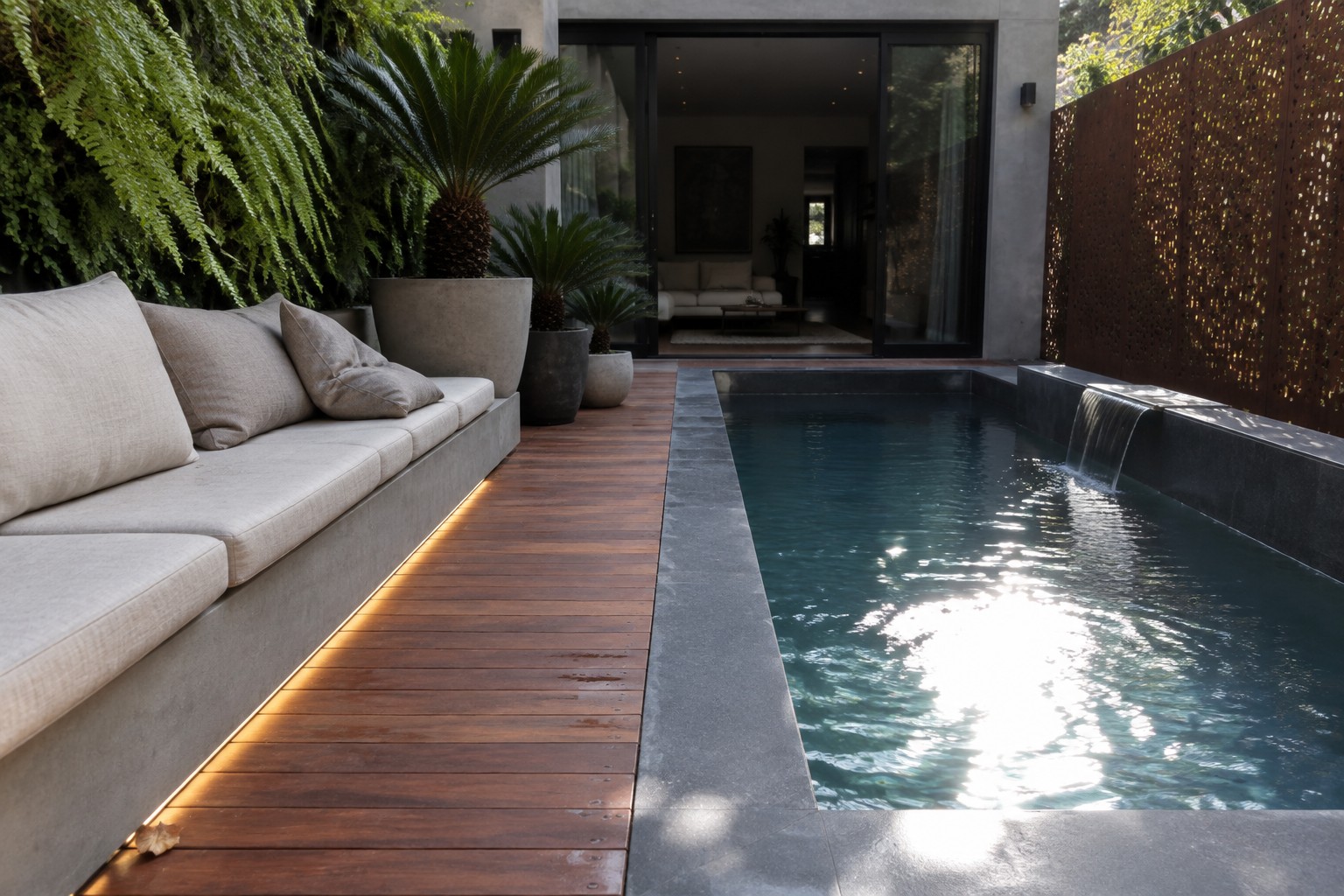
I often notice that plunge pools feel more natural when they sit right against the patio rather than tucked off to one side.
The best setups let you step straight from a lounge chair into the water without crossing any awkward paths.
Movement matters more than most people expect.
I would test a design with built-in seating along one edge before trying anything more elaborate.
That way the pool becomes an extension of the patio instead of something that takes over the whole space.
Extend the Patio Surface to the Pool Edge

Running the same stone paving right up to the water removes the usual raised lip that makes a pool feel separate from the rest of the yard. The result is a single level surface that lets people walk around the pool or pull up a chair without any awkward step or barrier in the way.
This approach suits compact outdoor spaces where you want the pool to feel like part of the living area rather than a separate feature. Just keep the coping low and choose a paving material that handles both foot traffic and occasional splashes without becoming slippery.
Extend the Deck Right to the Pool Edge
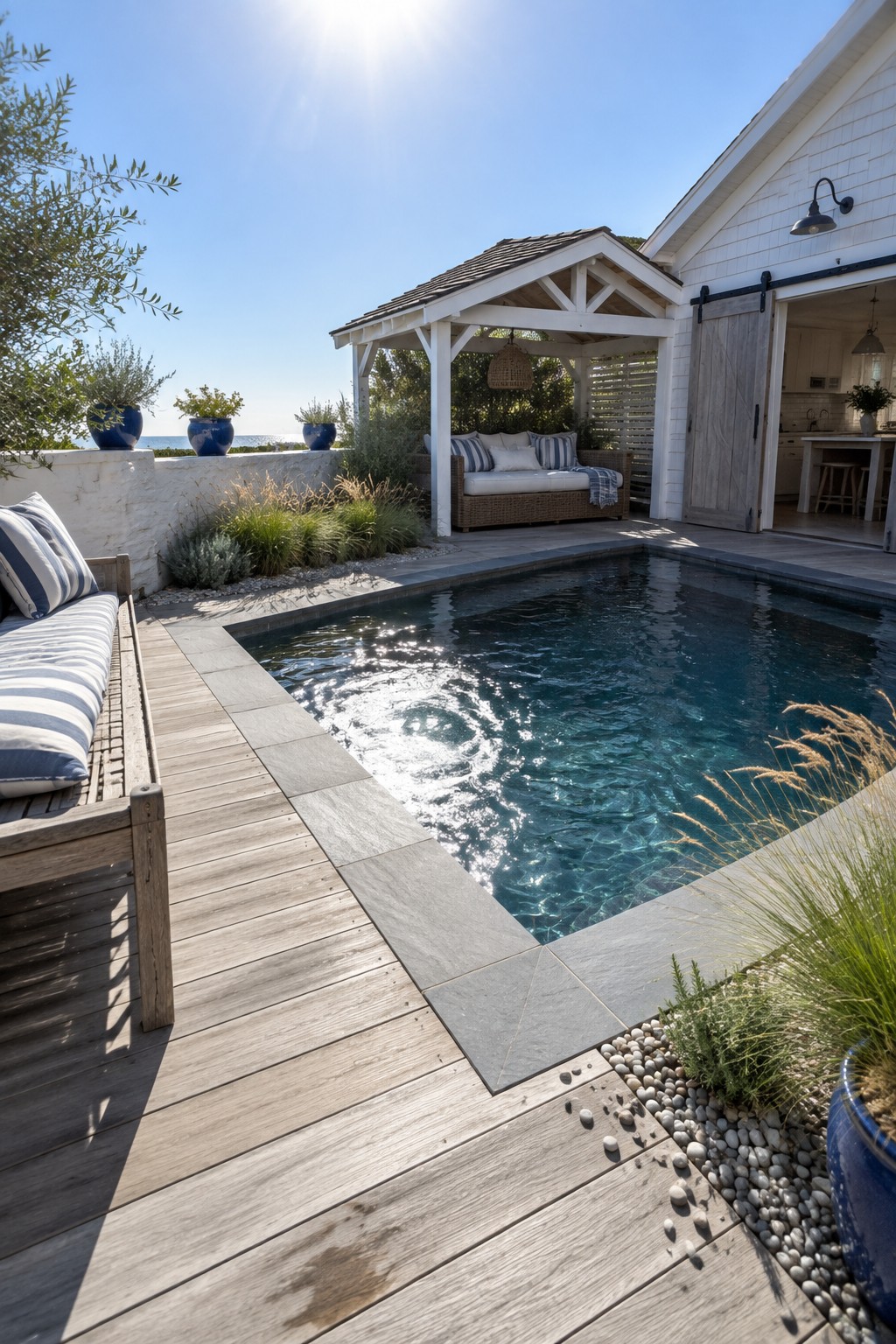
Running the deck planks straight up to the pool makes the whole space feel like one connected area instead of a separate pool tacked onto a patio. The wood carries the eye across the surface and gives you a comfortable place to walk barefoot without switching materials every few feet.
This layout works best when the pool sits close to the house and gets used often. Keep the stone coping simple so it does not fight with the wood, and choose a decking material that holds up to water and sun without looking worn after a couple of seasons.
Built-In Seating That Connects the Pool and Fire Pit

Built-in seating makes the space right next to a plunge pool feel like an actual room instead of just an open patio. The curve helps the seating follow the pool edge and creates a natural spot for the fire pit without adding separate furniture that might crowd the area.
This setup works best on flat patios where the pool and lounge zones sit at the same level. It suits homes that want one main outdoor area for both daytime swims and evening use. Keep the cushions in outdoor fabric and leave enough room around the fire pit for people to move through easily.
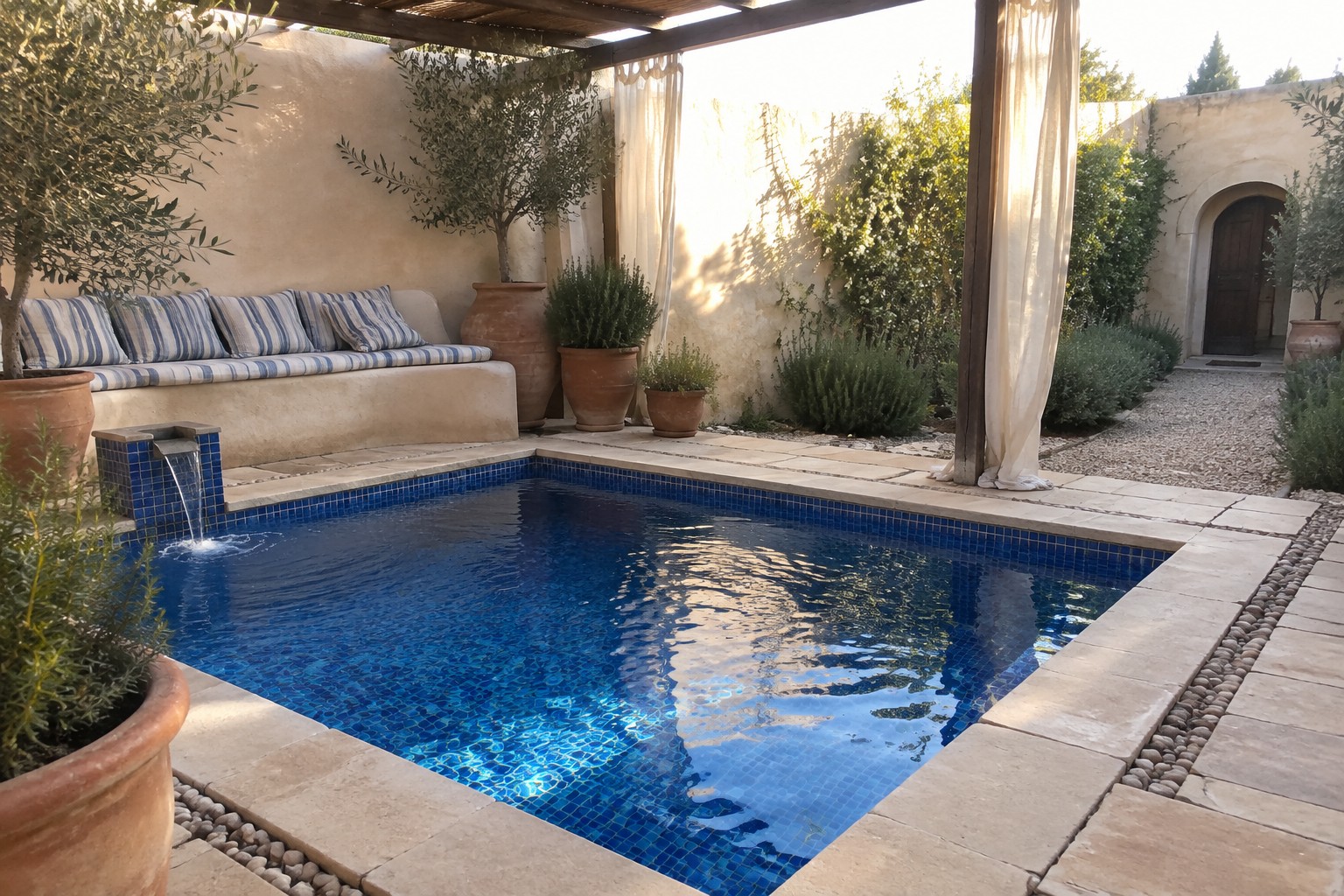
Add a Pergola With Curtains Next to the Pool
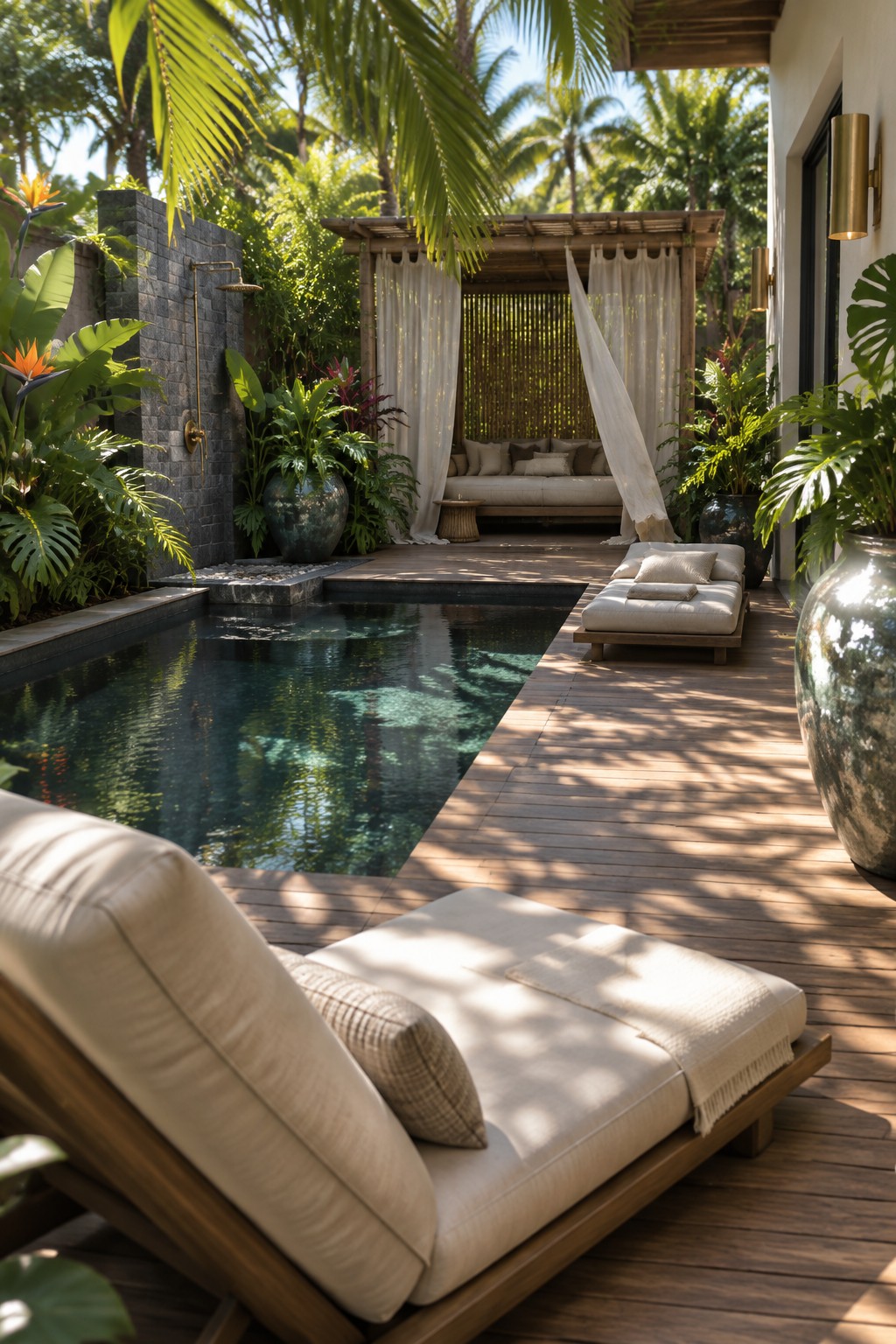
A pergola with loose curtains gives the pool deck a clear spot for sitting or napping without leaving the water behind. The fabric moves a little in the breeze and cuts the glare, so the whole area feels more settled and private even when the yard is open.
This setup works best on a medium-size deck where you want one defined corner rather than a big open stretch. Keep the frame simple, use washable fabric, and make sure the curtains can be pulled back on bright days or tied open when you want more air moving through.
Extend a Wood Deck Over the Pool
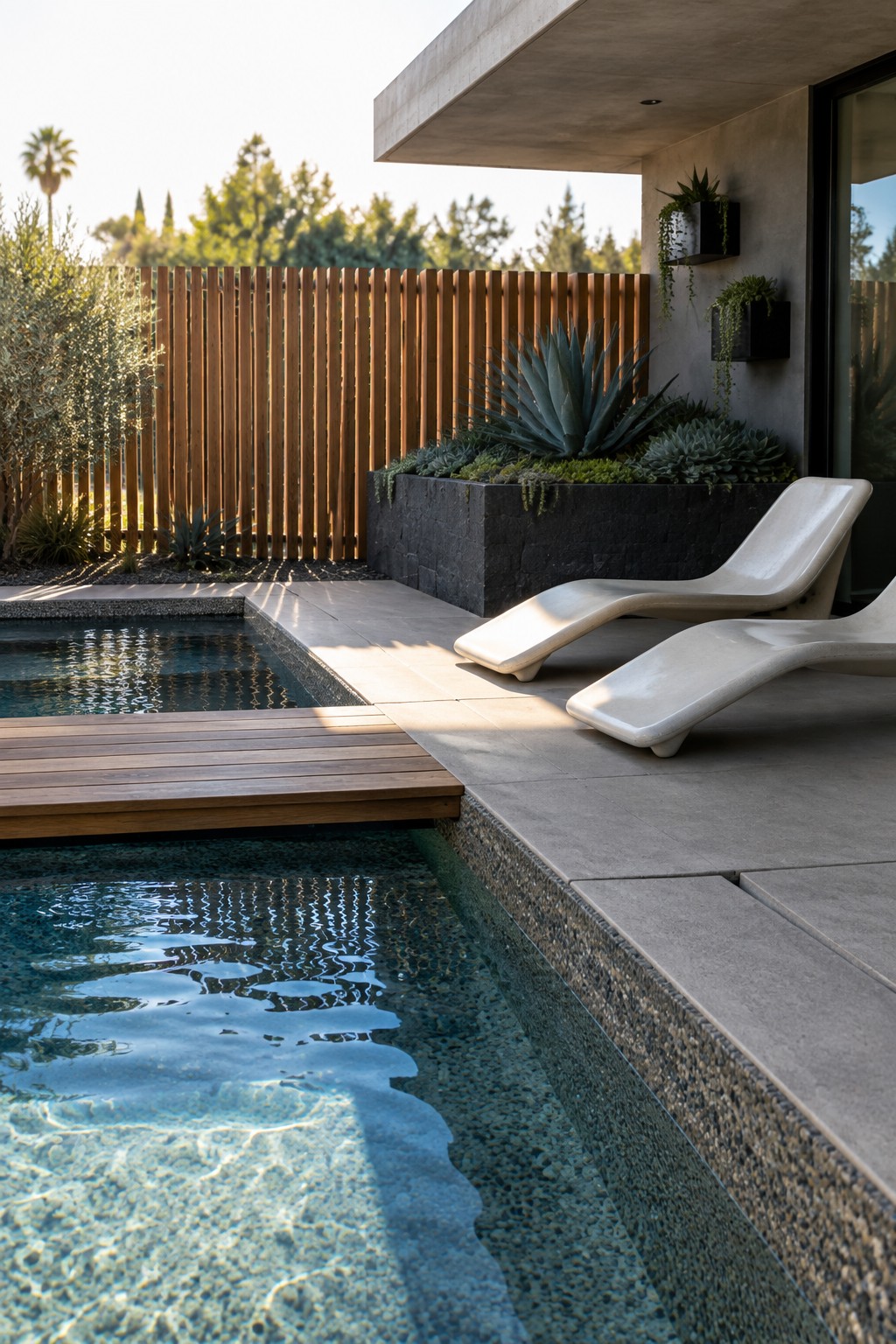
One simple way to make a plunge pool feel like part of the patio is to run a wood deck right over the water. The deck gives you a place to sit or step without adding another separate structure, and it softens the hard edge between the pool and the surrounding pavement.
This approach works best in smaller yards where you want the pool to blend in rather than stand alone. Use weather-treated wood and keep the overhang modest so the deck stays stable and easy to maintain.
Integrate the Plunge Pool Into the Deck

Placing a plunge pool flush with the deck surface keeps the whole patio usable instead of splitting it into separate zones. The water sits at the same level as the flooring, so the space still feels open for walking, dining, and lounging right up to the edge.
This approach works best on rooftops or compact yards where every square foot counts. Use a durable deck material that can handle splashing and leave at least a few feet of clear deck around the pool for chairs and tables.
Set the Pool Right Against the Patio

Running the patio surface straight to the water makes the pool feel like part of the seating area instead of something separate. People end up using the space more because the table, chairs, and water all sit on the same level with no gap or step between them.
This works best in smaller yards where you want dining and swimming in one zone. Keep the coping wide enough for chairs to pull back comfortably and choose paving that matches the pool edge so the two areas read as one surface.
Keep The Plunge Pool Level With The Patio

Setting the pool edge flush with the patio surface turns the water into part of the living area rather than a separate feature. The dark paving carries across both zones so the eye moves easily from seating to water without any visual break. This approach works especially well when the pool sits right beside a lounge zone.
It suits compact backyards where every square foot needs to count. Match the pool coping to the patio stone and keep the depth modest so the space still feels open. Just check local codes for barriers before you commit to a fully open edge.
Lounge Chairs Right Beside the Pool
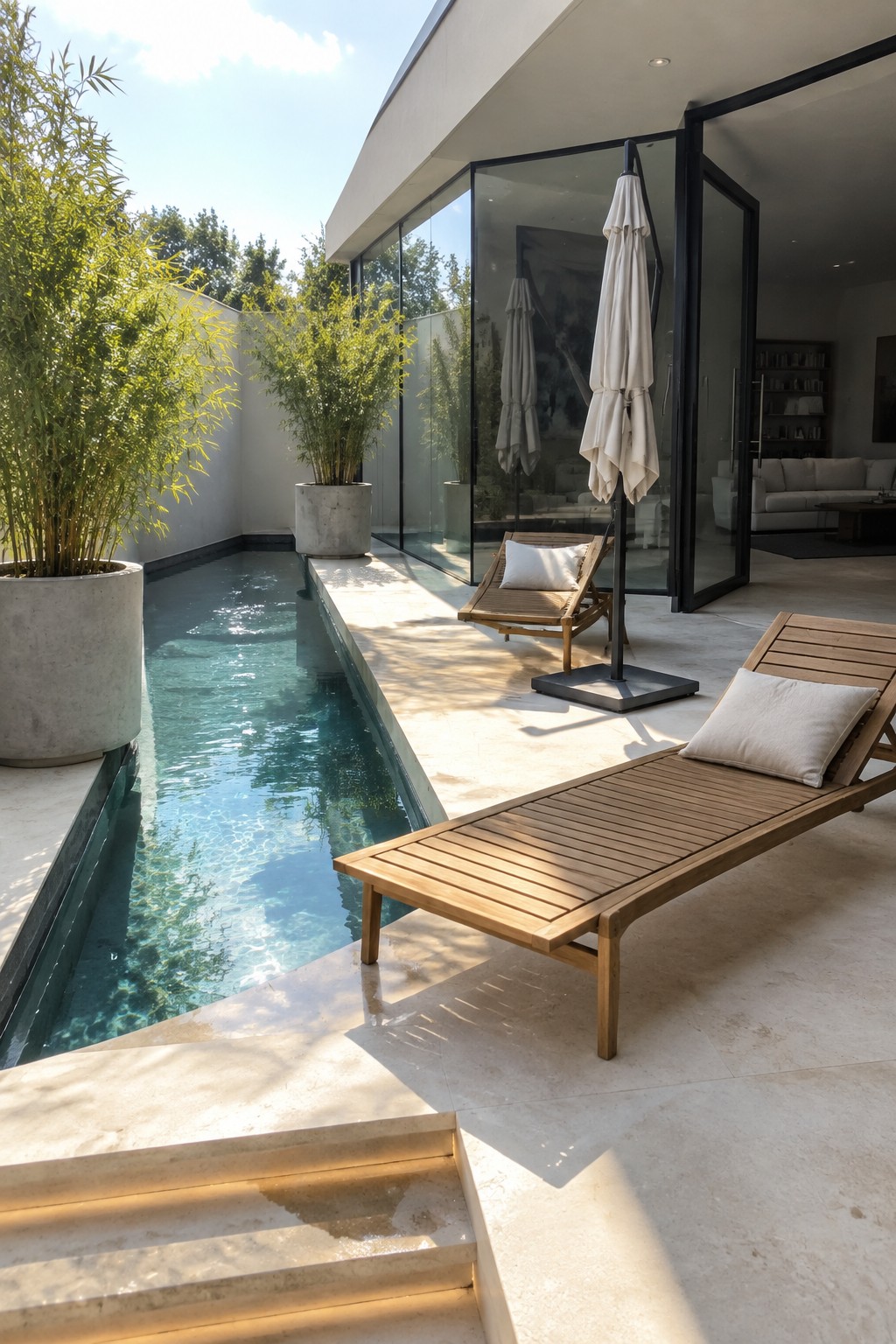
Many people find it useful to keep a couple of lounge chairs right at the edge of a plunge pool. The setup makes it easy to move between sitting in the sun and getting into the water without crossing extra deck space.
This works best on a flat patio that runs level with the pool coping. Choose chairs that can handle some splashing and leave enough room for walking around them. It suits smaller yards where the goal is simple access rather than a big separation between seating and water.
Hang Herb Planters on the Patio Wall

Wall-mounted planters filled with herbs give a plunge pool patio a practical edge without taking up floor space. The vertical rows keep basil, rosemary, and mint within reach while adding soft greenery against the wall.
This works best on smaller outdoor areas where you want fresh herbs close to the seating or cooking zone. Match the planter color to your pool tiles or pots so the whole setup feels tied together rather than scattered.
Continue the Patio Stone Right to the Pool

One of the simplest ways to make a plunge pool feel like part of an outdoor living space is to run the same stone paving around the edge instead of switching materials. The curve in the coping lets the water sit right next to the seating without a hard break, so the whole area reads as one surface rather than separate zones.
This approach works best on smaller lots or when the pool sits close to a lounge area. Keep the stone color and texture consistent, and let the edge follow a gentle arc so the water doesn’t feel boxed in. It keeps maintenance simpler too, since you’re not dealing with extra trim pieces or awkward transitions.
Match The Pool Coping To Your Patio Surface
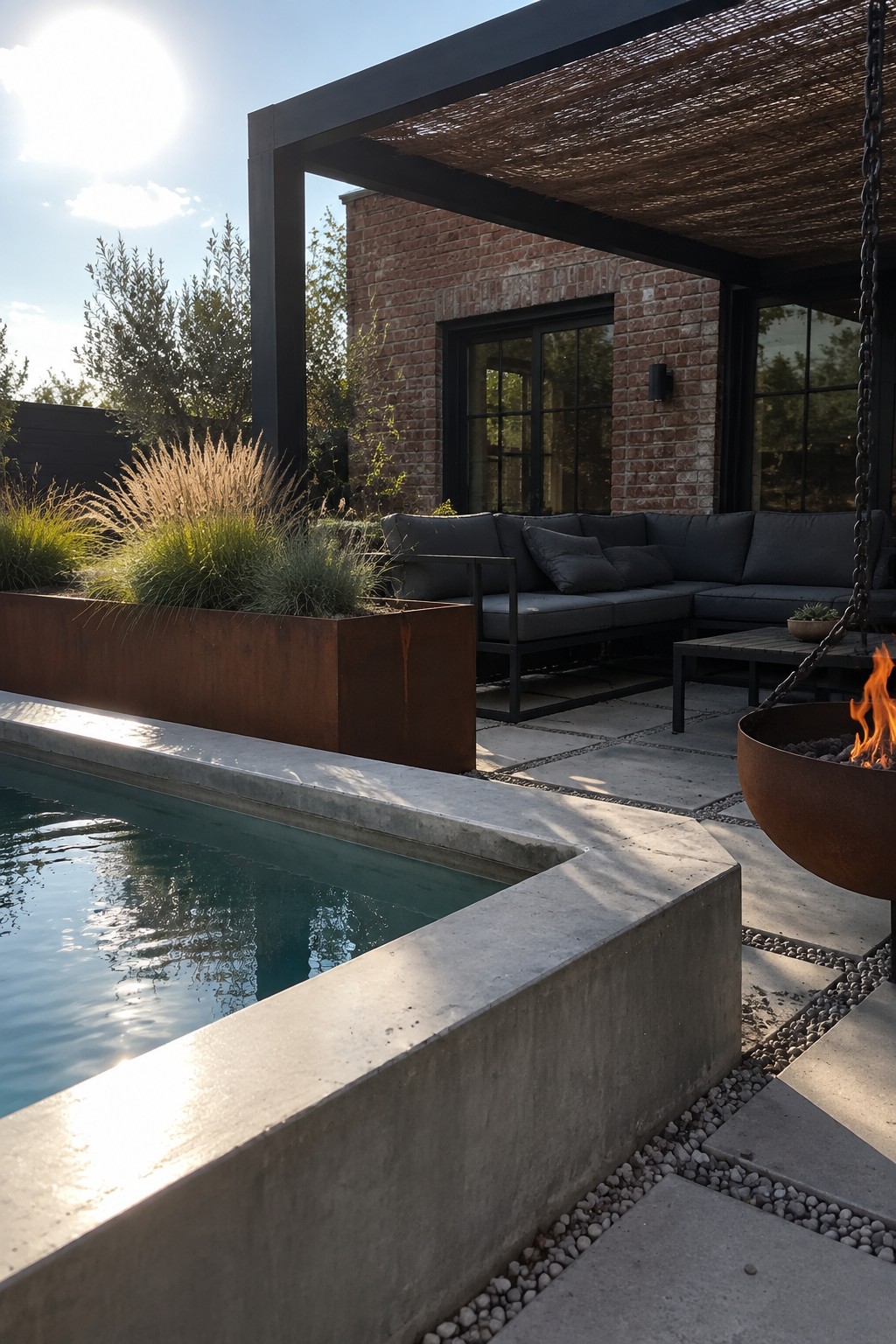
One simple way to make a plunge pool feel built into an outdoor living space is to run the same concrete material from the patio straight across the pool edge. This removes any hard line between the water and the seating area so the whole zone reads as one surface rather than separate features.
The approach works best on compact patios where you already plan to use concrete or a similar stone. Keep the coping wide enough for people to set drinks down but not so wide that it eats into walking space. Pair it with gravel or pavers at the outer edge if you want a softer border that still stays low maintenance.
Set the Pool Flush With the Deck
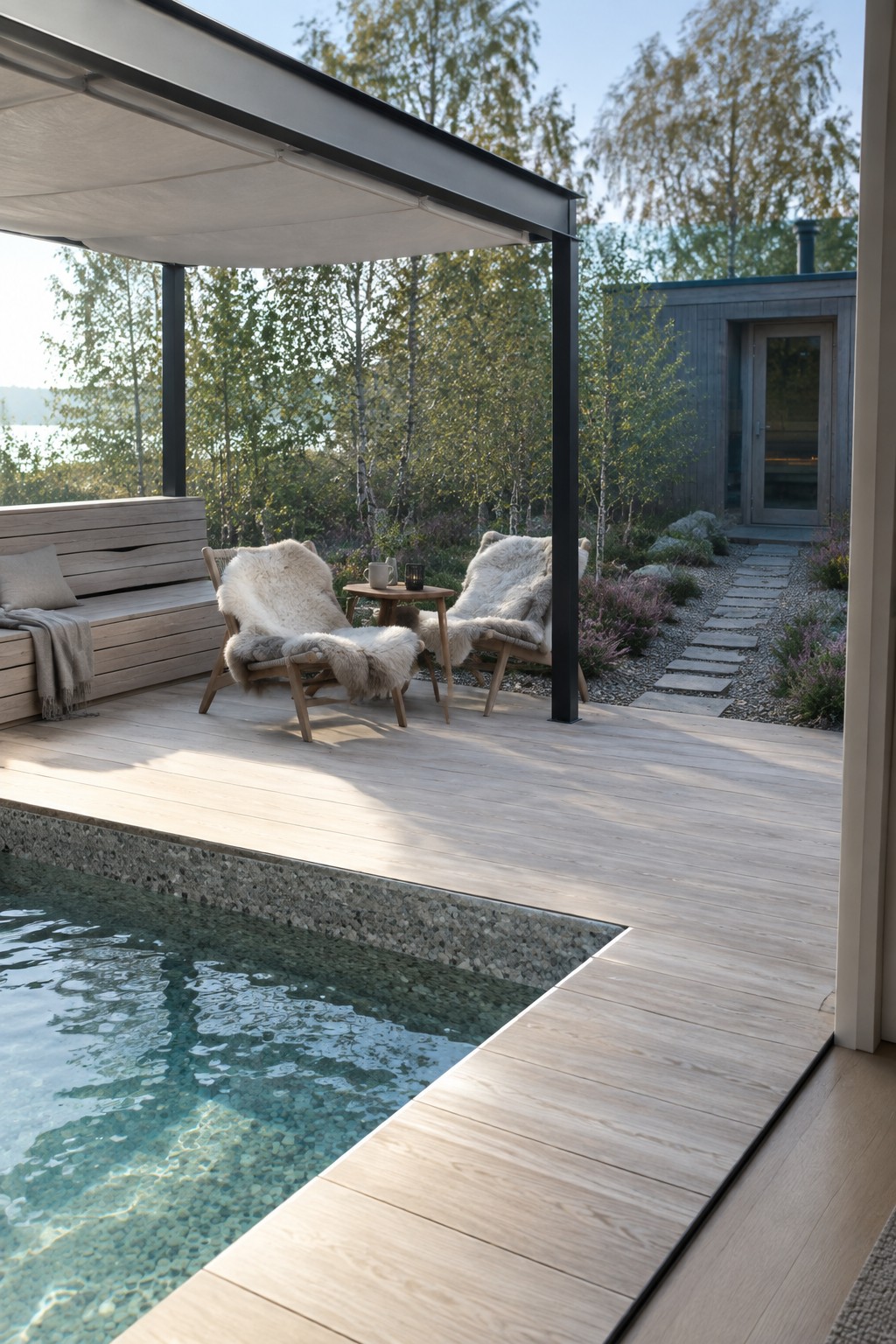
One of the cleanest ways to make a small plunge pool feel like part of the patio is to keep the edge level with the deck boards. The water sits right at the same plane as the wood, so the whole surface reads as one continuous area instead of a separate pool dropped into the yard. This works especially well on smaller lots where you want the water close without eating up extra space for coping or raised borders.
It suits homes with simple wood decks and a modern or Scandinavian lean. Just make sure the deck framing can handle the pool structure and that drainage runs properly along the seam. Keep the surrounding furniture low and light so the eye stays on the flat connection between wood and water.
Extending The Patio Deck Around The Pool
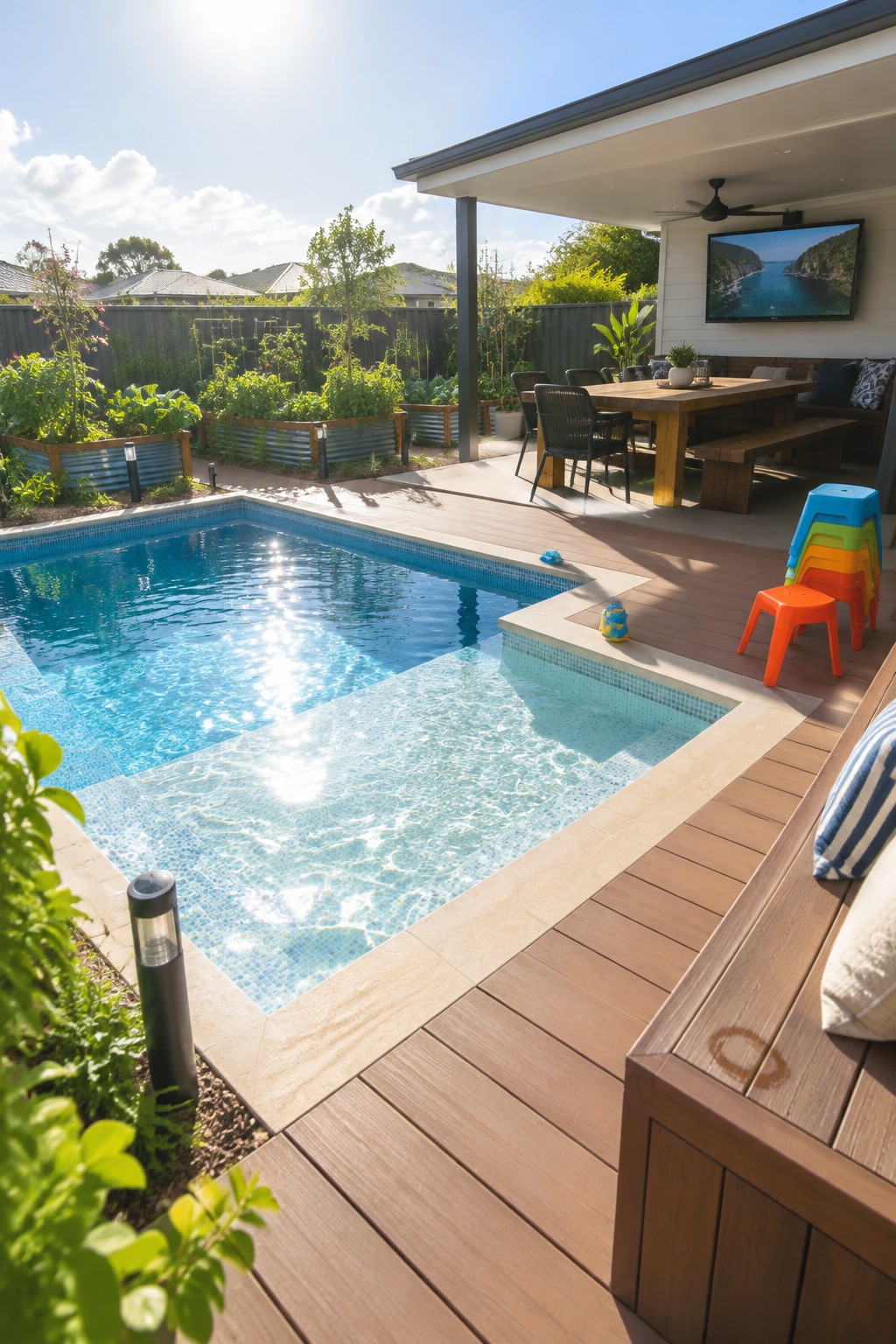
One simple way to make a small plunge pool feel like part of the main living area is to run the deck right up to the water. The continuous surface lets people move easily between swimming and sitting, and it keeps the whole backyard from feeling split into separate zones. Many people like this because it turns the pool into an extension of the patio instead of something you walk over to.
This setup works best on smaller lots where you want the space to feel larger without adding more structures. Use the same decking material on both sides of the pool edge and keep furniture close so the area reads as one room. Just watch the slope and drainage so water does not pool on the boards after rain.
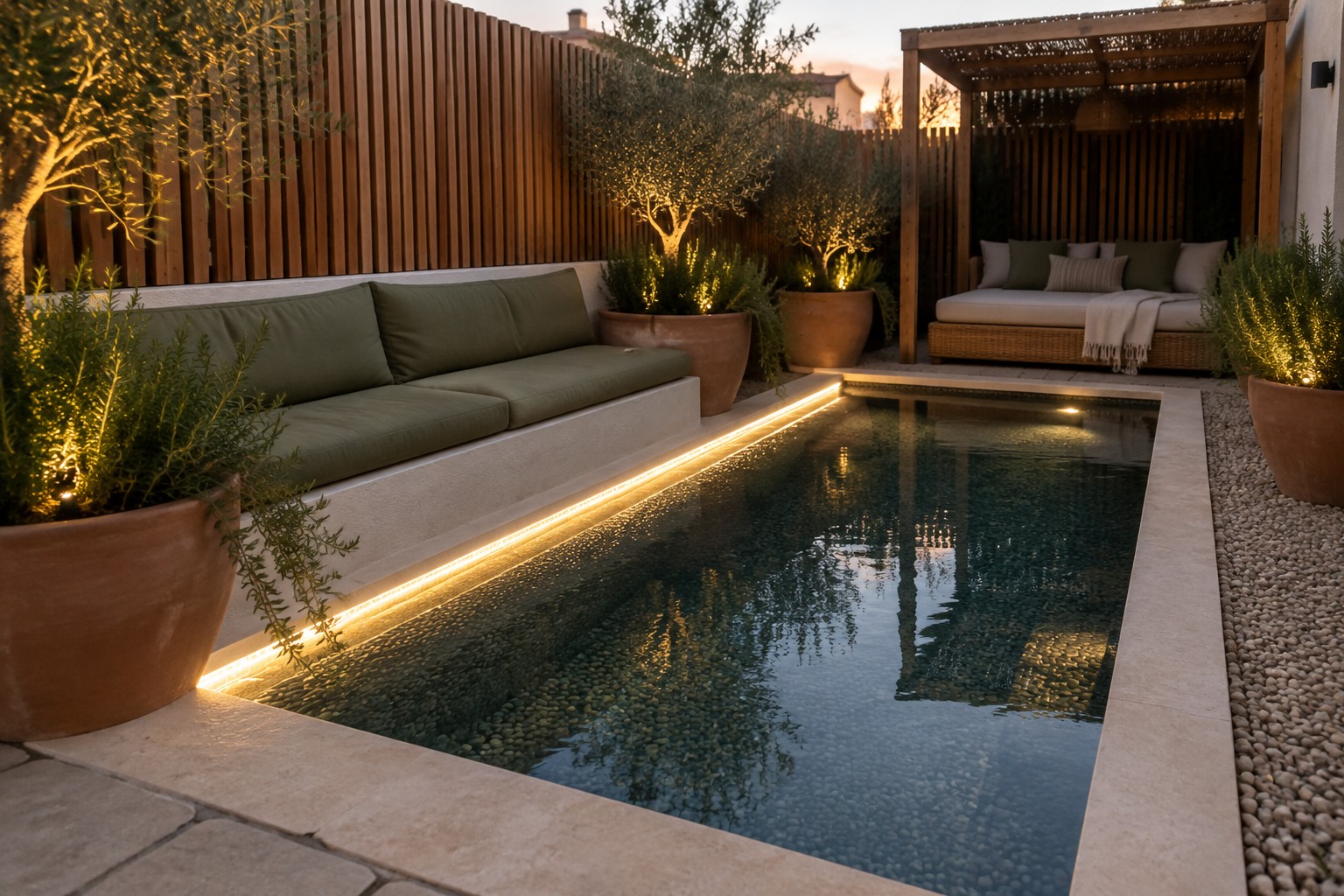
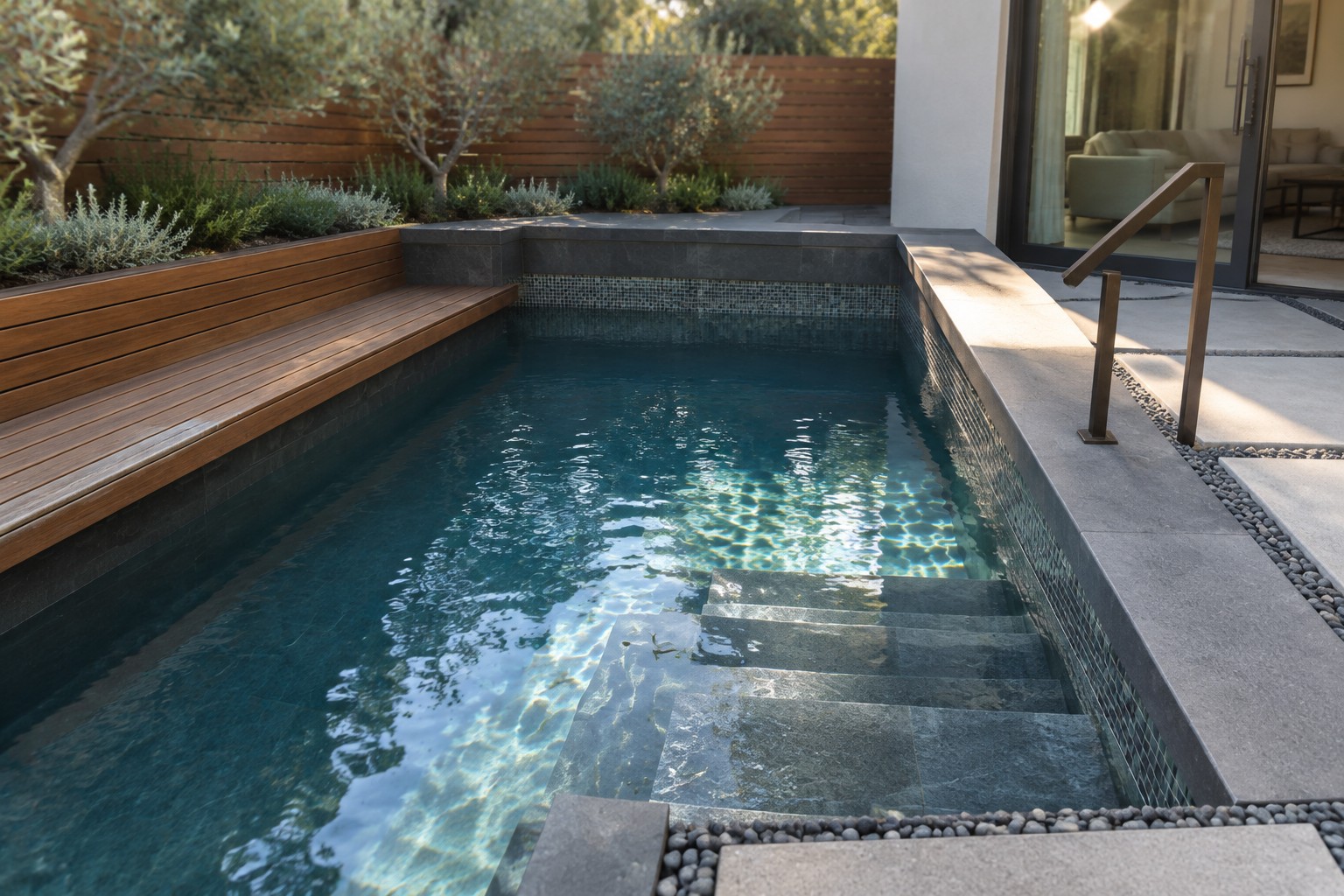
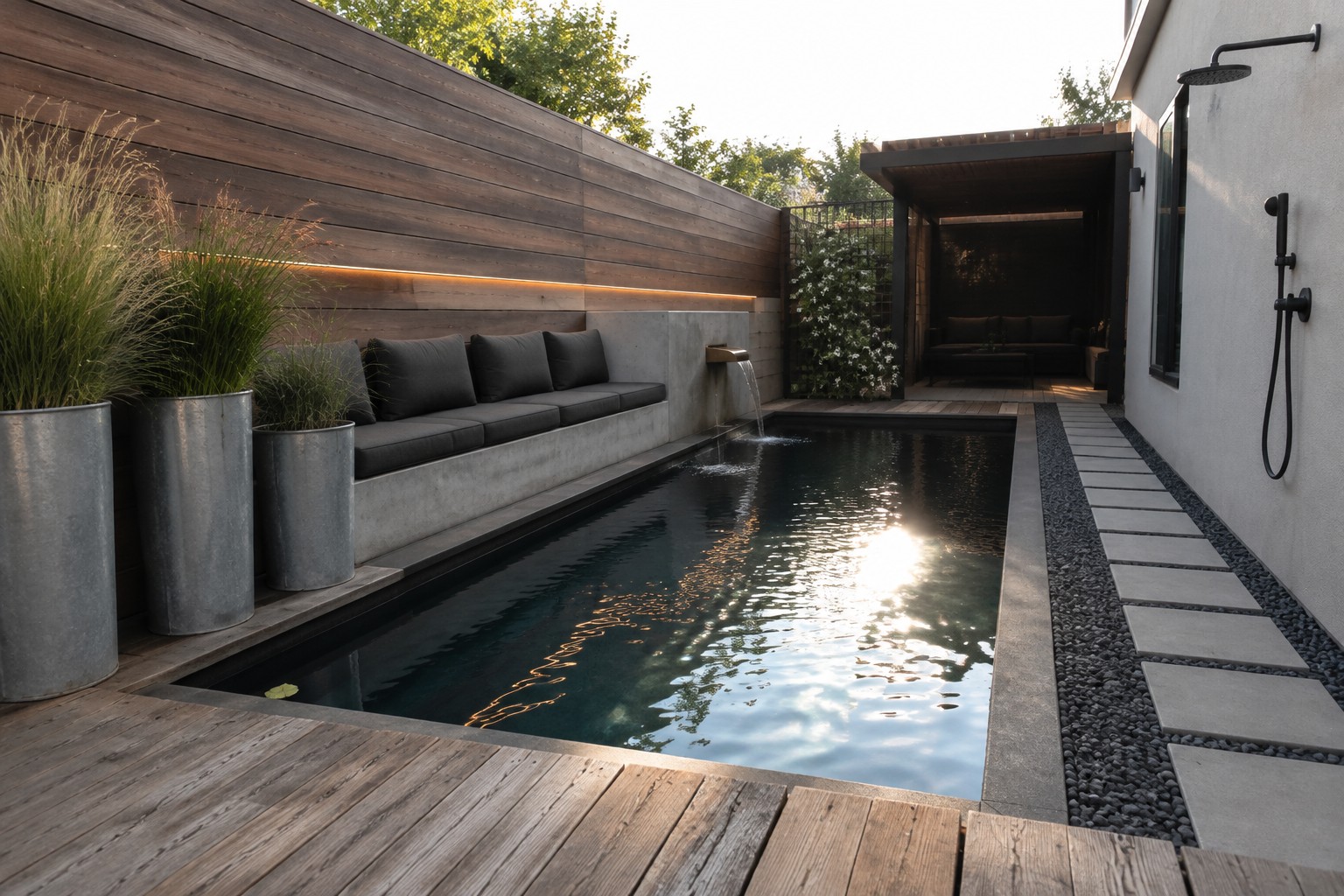
Built-In Bench Seating Along the Pool

Running a long bench right beside a plunge pool helps turn the water into part of the seating area instead of a separate feature. The bench gives people a place to sit and talk without needing extra chairs, and it makes the whole space feel more like one outdoor room.
This setup works best in smaller yards where you want both a pool and a place to relax without crowding the ground. A simple wood bench with a few cushions is usually enough, and gravel or pavers around it keep the look low-key and easy to maintain.
Setting The Plunge Pool Flush With The Patio

One simple way to make a small plunge pool feel like part of the living space is to keep the edge perfectly level with the surrounding concrete. The water sits right in the same plane as the floor, so there is no raised lip or separate border breaking up the area. This approach lets the pool read as an extension of the patio rather than an added feature.
It works best on homes where the outdoor space is tight and every square foot needs to serve more than one purpose. The same concrete can run straight to the waterline, which keeps the whole surface easy to clean and move across. Just make sure the pool equipment is tucked away so it does not interrupt the flat layout.
Frequently Asked Questions
Q: Can I fit a plunge pool into a small patio space? A: Scale down to a compact size that still feels inviting. Measure your area first and leave room for seating around it. A narrow design often works better than you might think.
Q: How do I clean the pool without daily effort? A: Install a basic filtration system that runs automatically. Skim the surface every few days and check the chemicals weekly at most. That keeps things clear with little fuss.
Q: Do plunge pools need much upkeep compared to regular pools? A: They use less water and chemicals overall. A quick weekly check usually covers it.