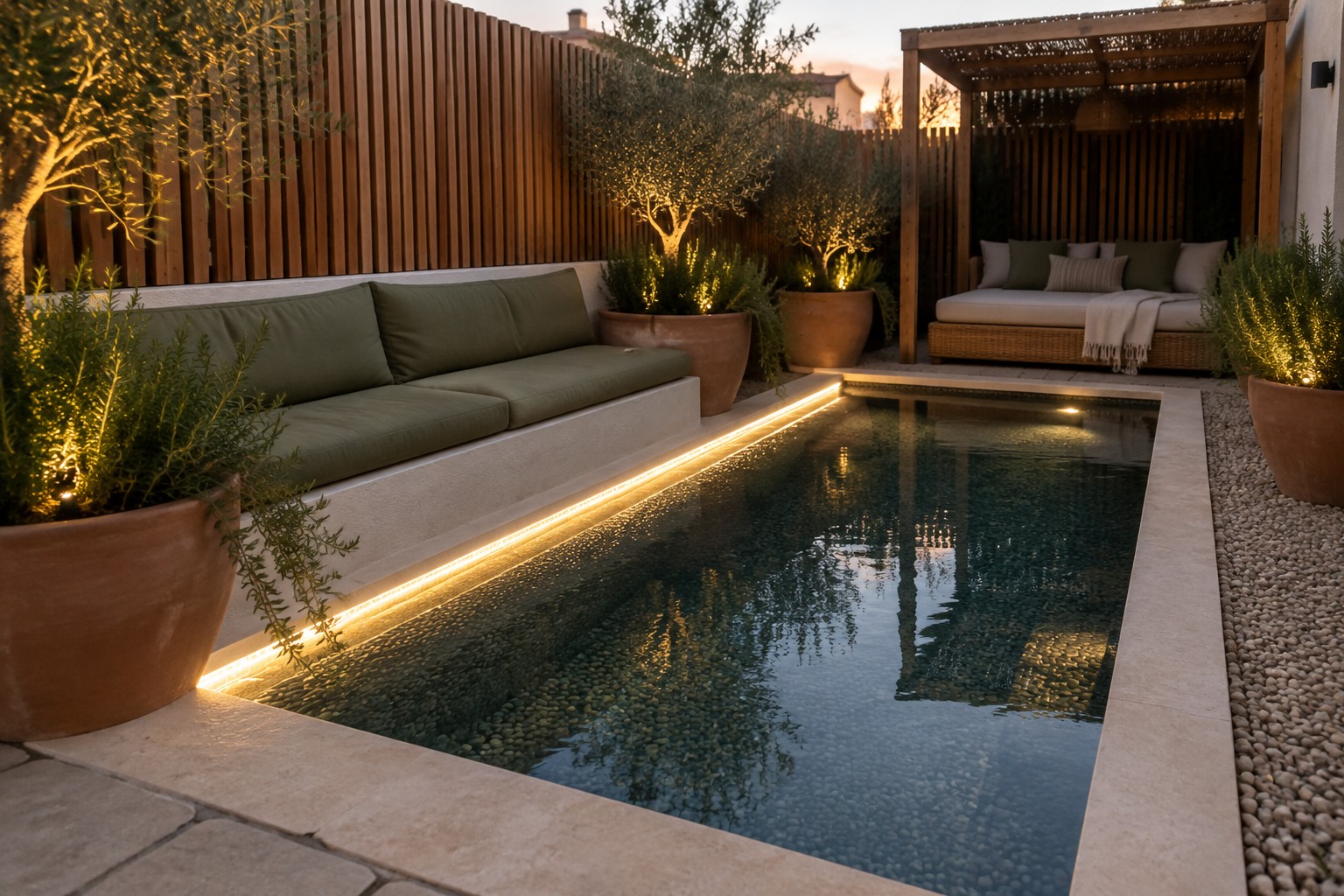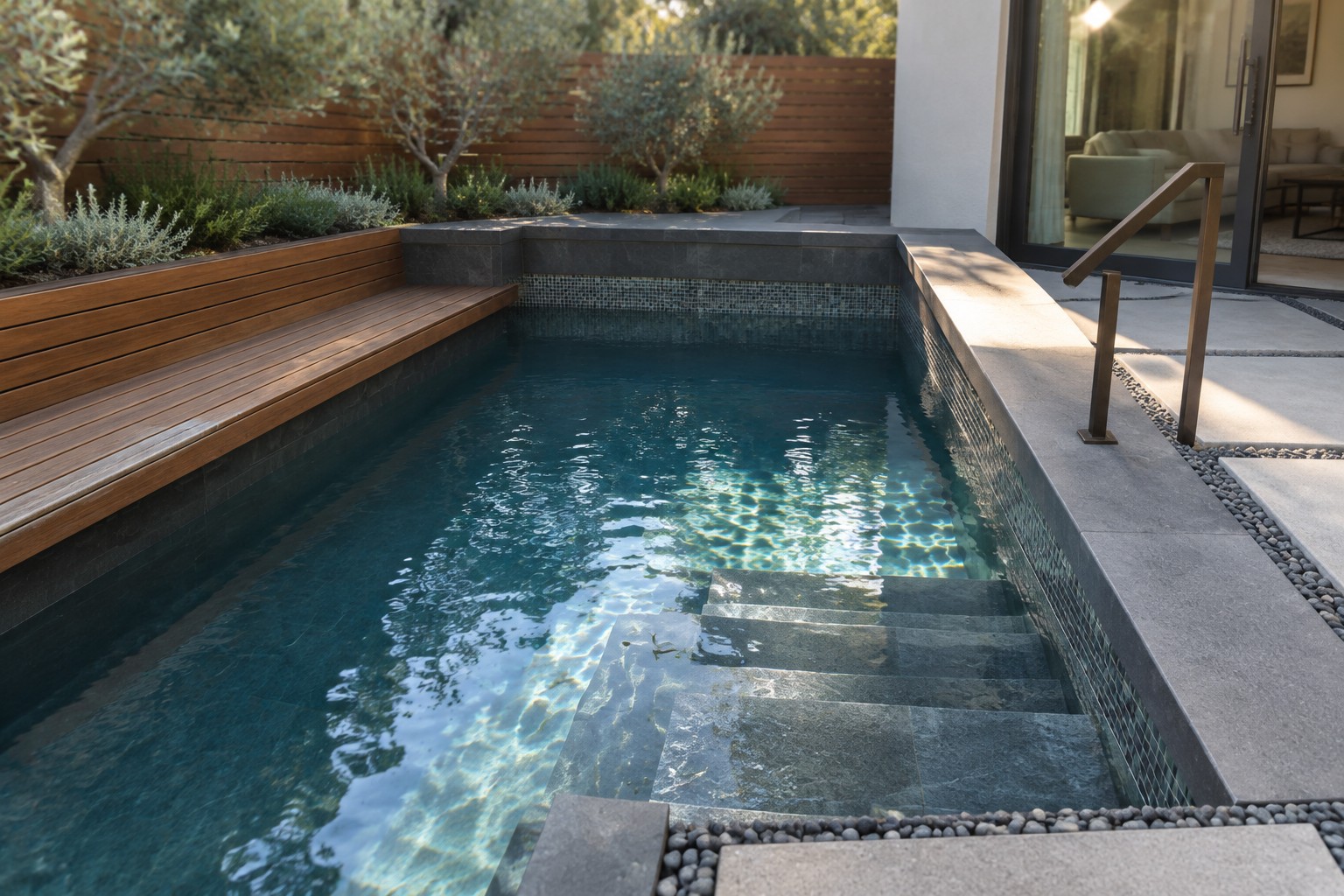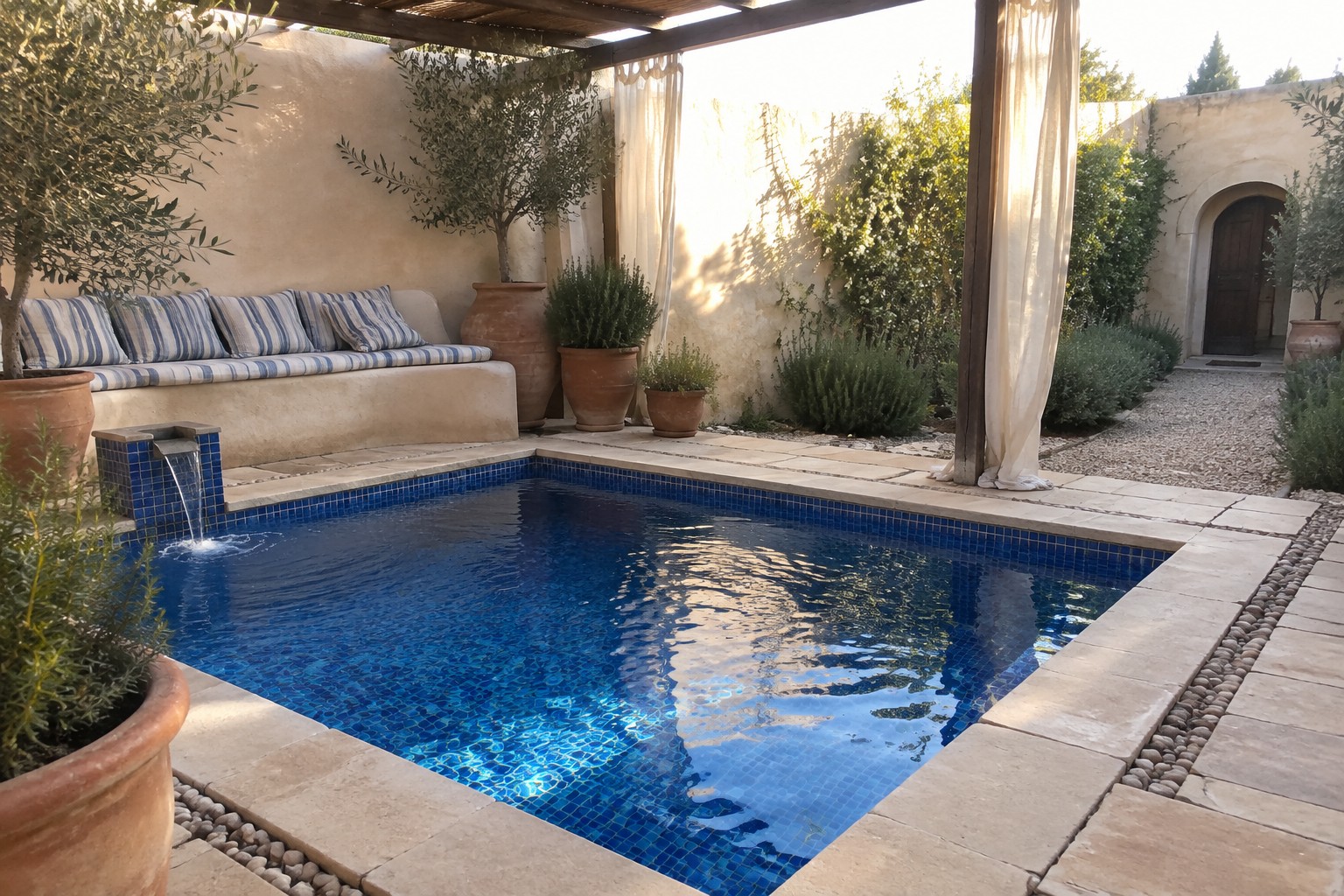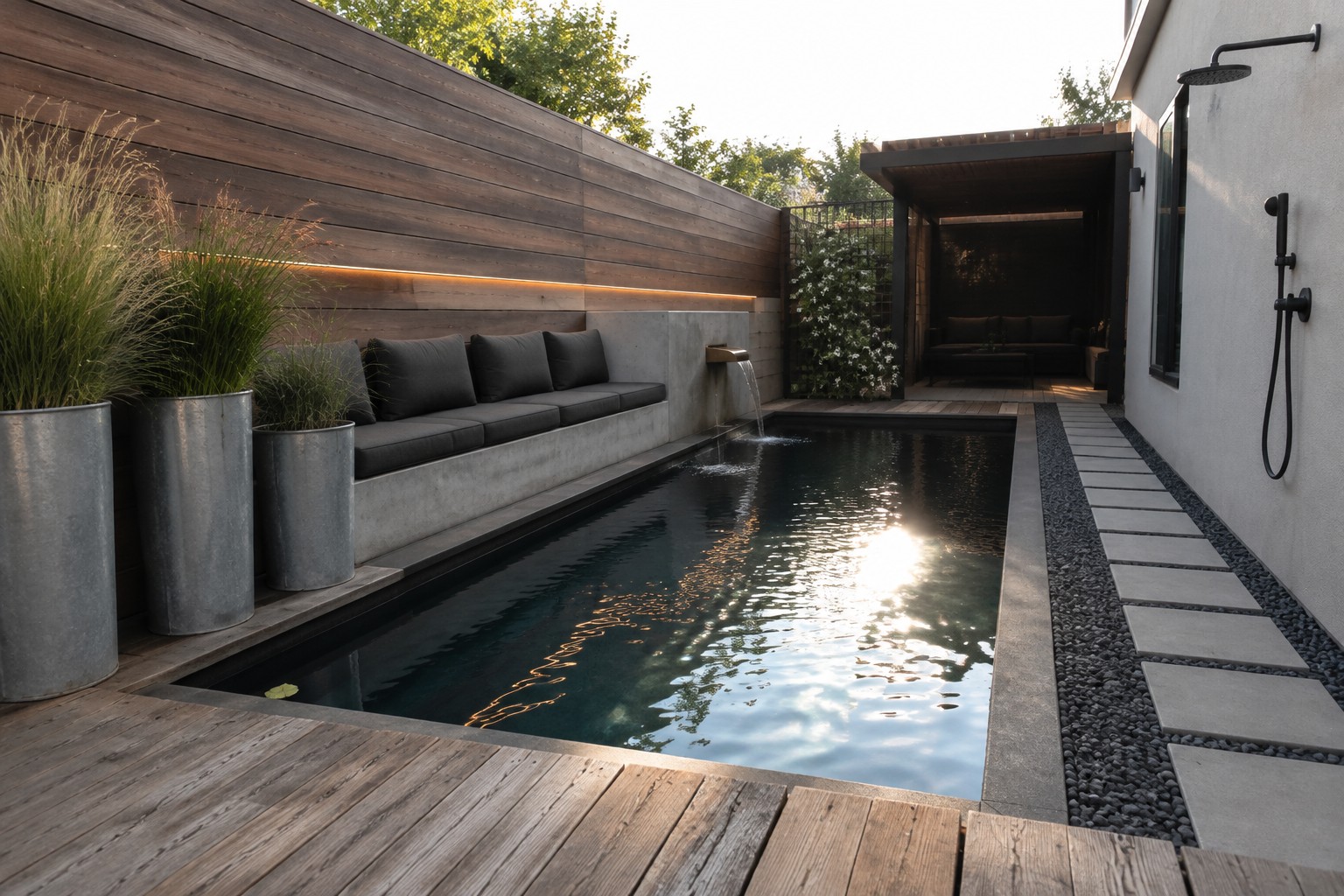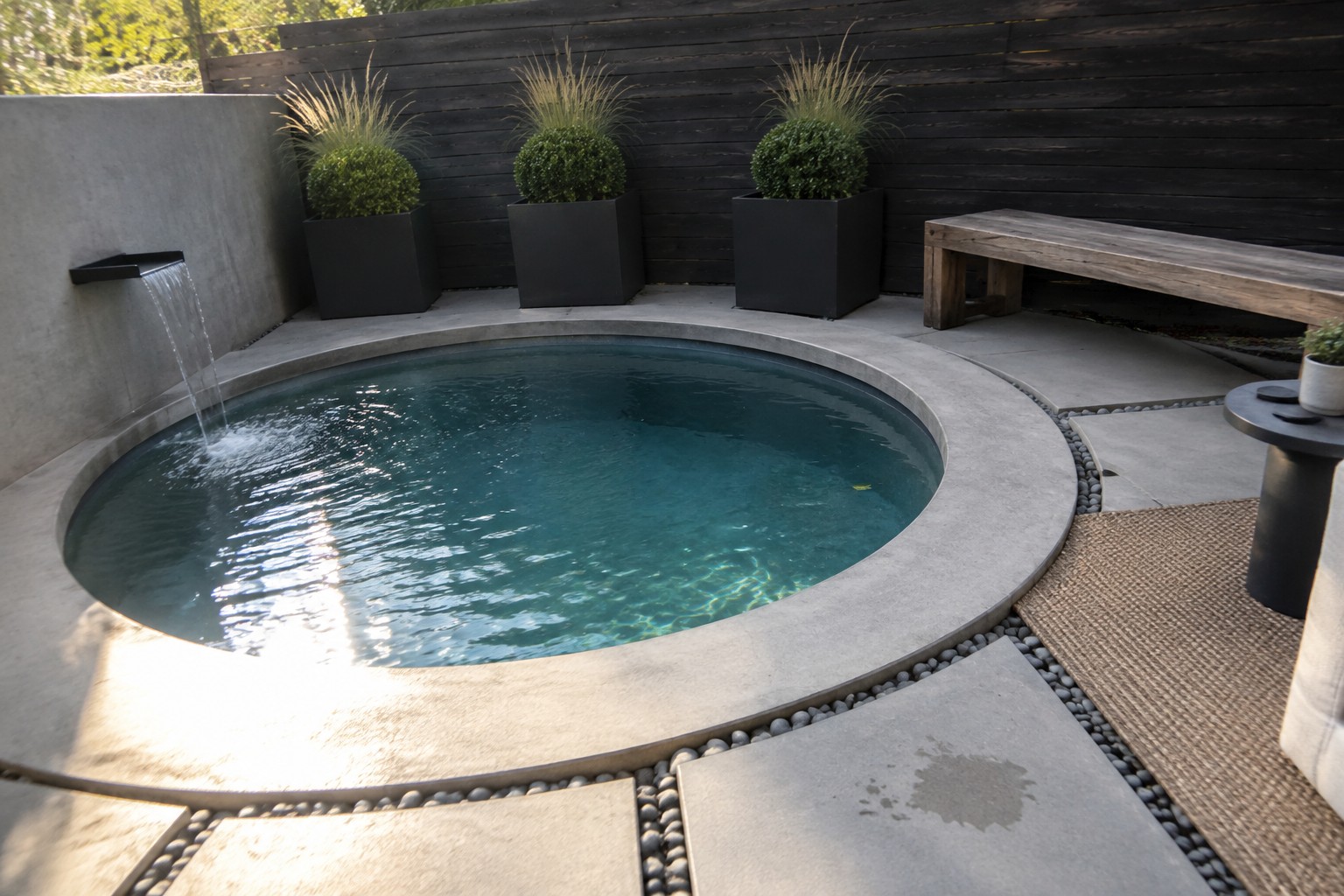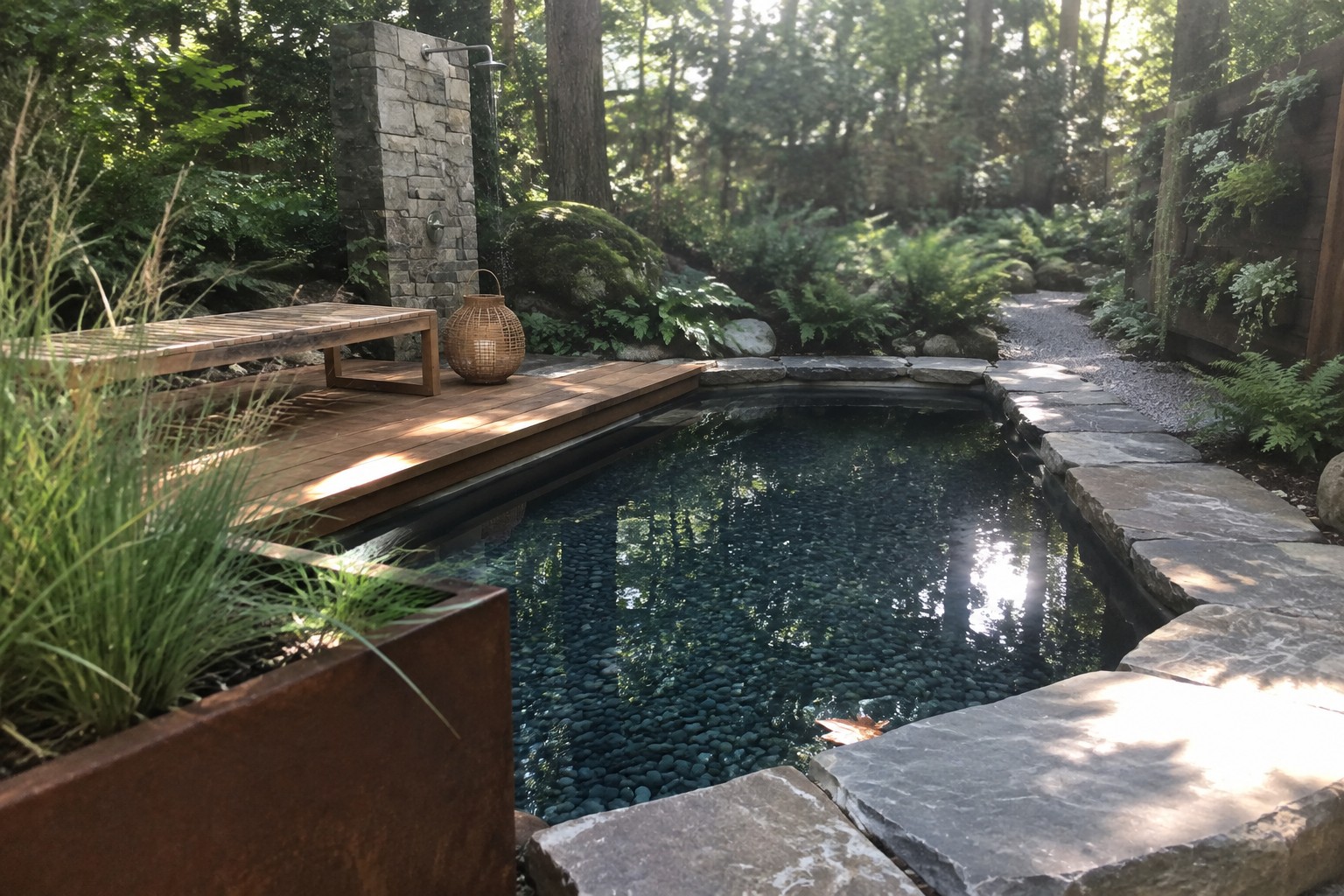
I have noticed that plunge pools often end up underused when the surrounding space feels too exposed to the rest of the yard or to neighbors.
Planting and screens can fix that by creating a clearer boundary while still letting the area feel like part of the larger outdoor layout.
The real test comes in how those elements hold up once you start using the pool every day.
I would probably try a simple row of taller shrubs first to see how the light and wind change before adding anything more permanent.
Small adjustments like that tend to make the difference between a spot that gets regular use and one that stays mostly decorative.
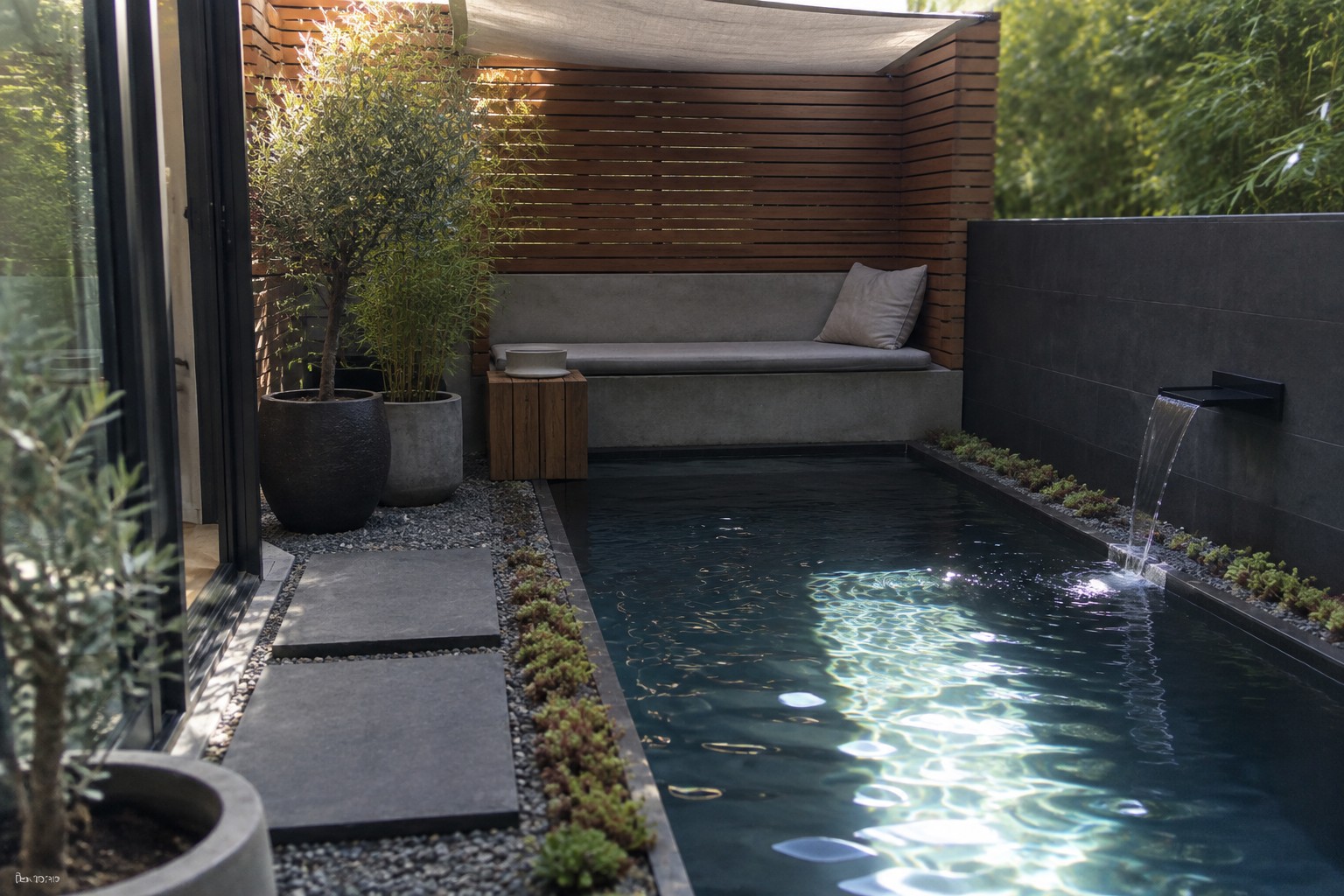
Horizontal Wood Screens for Pool Privacy

Many people add a wood screen along one side of a plunge pool to create privacy without building a solid wall. The horizontal slats let some light and air through while blocking the direct view from outside.
This setup works best in narrow side yards or small back gardens where full enclosure would feel too tight. Keep the screen height around eye level and layer a few taller plants in front of it so the space feels softer.
Train Fruit Trees on Walls for Pool Privacy
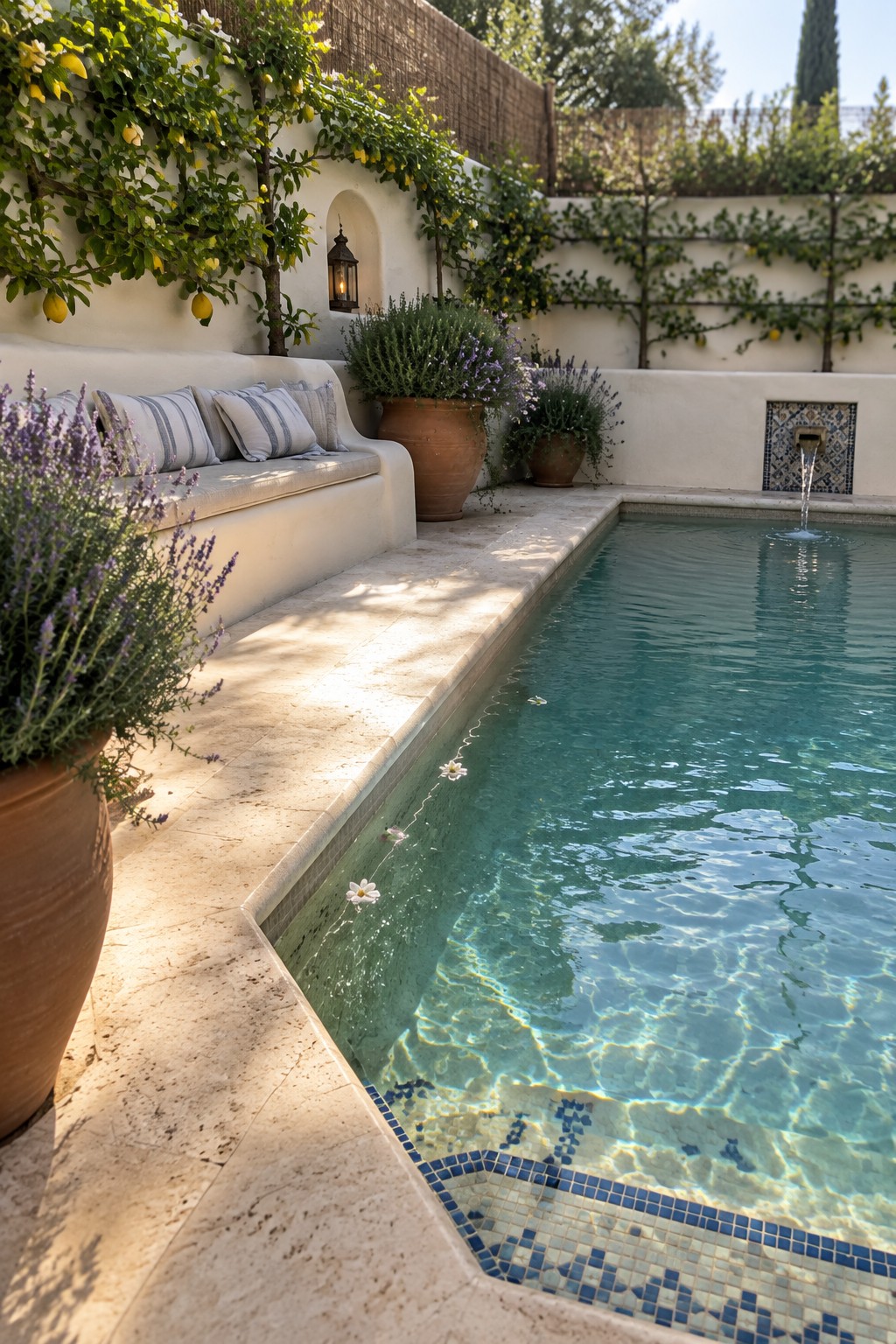
Training fruit trees flat against a wall gives you privacy without crowding the space around a small pool. The branches spread out and fill in over time, so you get a living screen that also produces lemons or other fruit in season. It feels lighter than putting up a tall fence right next to the water.
This works best in sunny courtyards or side yards where you need coverage on one or two sides. Use sturdy wires or a simple trellis, and choose trees that stay manageable with regular pruning. Keep the base clear so water can splash without hitting the trunks.
Add Privacy With Tall Screens And Layered Planting

One simple way to make a plunge pool feel more secluded is to combine a solid screen with dense planting along the edges. The tall bamboo fence here works with the thick greenery to block outside views while still letting in light and air. This approach keeps the space feeling open rather than boxed in.
It works especially well in smaller backyards or side yards where neighbors sit close by. Place the screen on the most exposed side and layer plants in front so the barrier looks natural. Avoid filling every inch with foliage or the area can start to feel heavy.
Privacy Planting Along the Pool Edge

A long raised planter running right beside the pool gives you solid privacy without needing a tall fence on every side. The mix of shrubs and grasses fills in the space at different heights, so the area feels sheltered from the path next to it while still letting light and air through.
This setup works best on narrow lots or side yards where you want separation from neighbors or a walkway. Keep the plants low enough on the pool side that they do not drop debris into the water, and use a simple screen or wall behind the taller pots to finish the enclosure.
Privacy Screens And Planting Around Plunge Pools

One simple way to make a small plunge pool feel more private is to combine a tall wooden screen with dense planting along the edges. The vertical slats block the view from one side while the thick hedge softens the other, so the space feels enclosed without looking boxed in. This mix keeps the area calm and lets you use the pool without worrying about neighbors.
This setup works best in compact yards where full fencing would feel too heavy. It suits homes that already lean modern or have a Japanese garden influence. Just make sure the plants can handle the shade from the screen and that the wood is sealed for wet conditions.
Woven Screens for Pool Privacy

A woven screen gives a plunge pool a quick sense of enclosure that still feels light and natural. The reeds or similar material block views without the weight of a solid wall, and tall grasses planted right behind it soften the edge and add movement through the seasons.
This approach works especially well in smaller yards or tight side yards where you need privacy but do not want to close the space in completely. Keep the screen to one or two sides and let the planting layer do most of the screening work so the pool area stays open to the sky.
Planted Screens For Pool Privacy
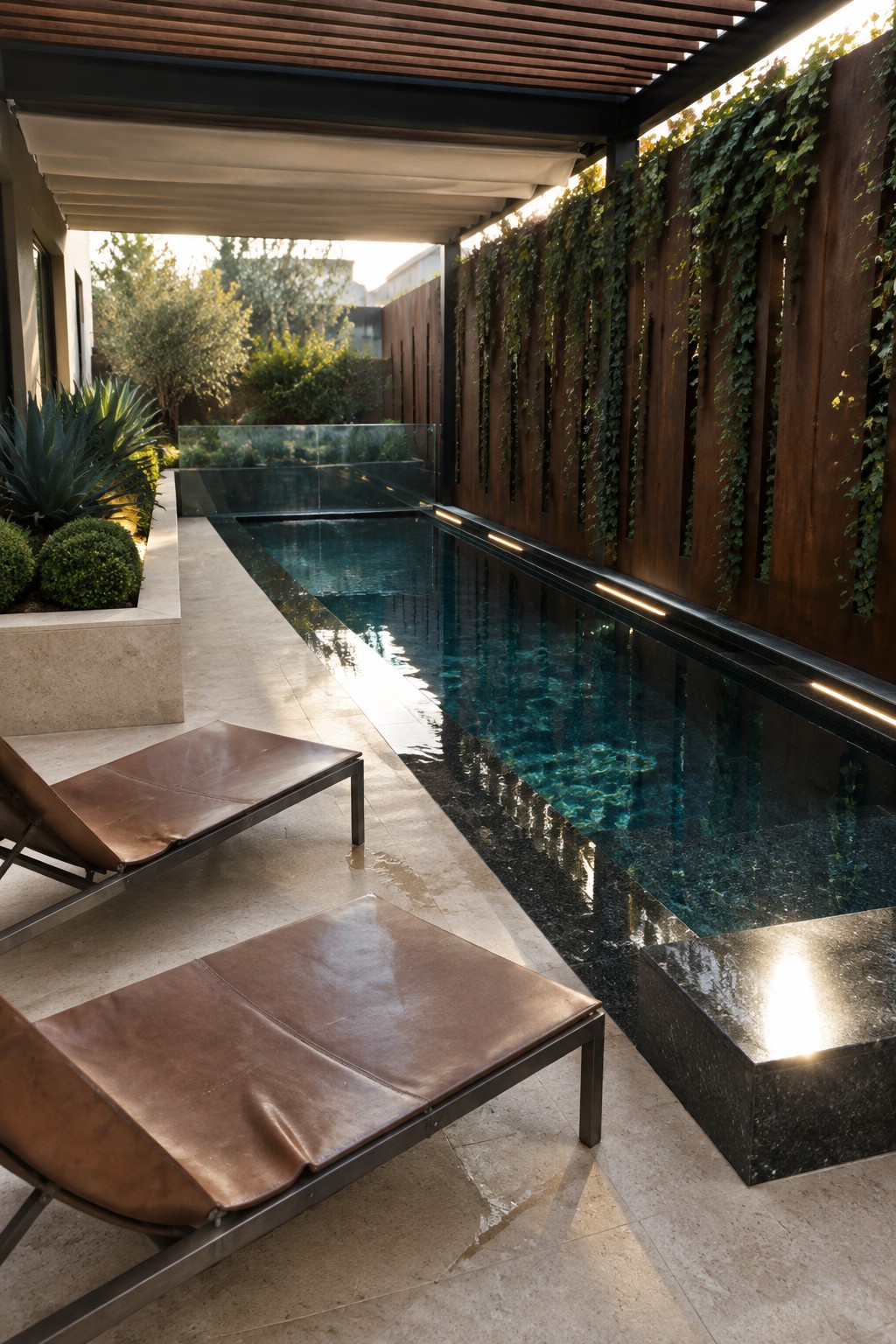
Tall screens covered in climbing plants give a plunge pool real seclusion without closing the space in completely. The metal panels here let vines grow vertically along the edge, which blocks sightlines from neighboring yards while still letting some light and air through.
This approach suits smaller backyards or side yards where a full hedge would take up too much room. Use rust-resistant metal or wood screens at least six feet high, and pick vigorous climbers like ivy or star jasmine that can cover the surface in a couple of seasons. Keep the planting bed narrow so it does not crowd the pool deck.
Screen the Pool Area with Woven Fencing and Pots

Many people add a woven screen along one side of a plunge pool to cut down on direct views from the yard or neighbors. Pairing that screen with a few large pots creates a soft barrier that still feels open and natural rather than closed off.
This setup works best on a deck or patio where you want a little separation without losing light or air flow. It suits smaller yards especially well because the pots can be moved around and the screen takes up almost no floor space.
Glass Screens With Planting For Pool Privacy

Clear glass screens give a plunge pool its own zone without cutting off light or views the way solid walls would. The panels sit right at the water edge and let the surrounding plants show through, so the space still feels open even when it is screened from neighbors.
This works especially well on rooftops or narrow side yards where you need separation but do not want heavy fencing. Tall grasses or shrubs planted behind the glass soften the line and add the privacy most people actually want.
Pair a Perforated Screen With Tall Hedges for Pool Privacy

A perforated metal screen behind a plunge pool gives you privacy without making the space feel boxed in. The holes let light and air through while the planting in front softens the look and fills any gaps. Many people like this setup because it blocks views from neighboring yards or windows without needing a solid fence that could feel heavy.
This approach works best in smaller yards or side gardens where space is tight. Keep the screen a warm tone so it blends with wood decking and concrete edges, and choose dense evergreen hedging that stays full year round. Make sure the plants get enough sun so they do not thin out over time.
Add a Fire Pit Lounge Next to the Plunge Pool

Placing a built-in fire pit lounge right beside the plunge pool creates a natural gathering spot that extends the use of the space into the evening. The seating sits low along the pool edge so the water and the fire feel connected without one overpowering the other. Tall planters and a screen behind the seating add privacy while still letting light and air through.
This layout works especially well on smaller lots or rooftops where you need the pool and lounge areas to share the same footprint. It also gives the space a clear purpose on cooler nights when swimming alone would not be enough reason to go outside.
Dense Planting for Pool Privacy

Tall vertical planting makes a small plunge pool feel much more private without needing solid walls or fencing. The thick layer of greens blocks views from the sides while still letting in light and air, which keeps the space from feeling closed in.
This works best in narrow yards or side gardens where you need screening but want to keep the ground area open for seating. Choose fast-growing evergreens or ferns that fill in densely, and plant them close to the pool edge so the foliage becomes the main boundary.
Let Climbing Vines Cover Your Pool Fence

One simple way to add privacy around a plunge pool is to grow climbing plants over a basic fence. The vines soften the look of the boundary and create a living screen that feels much more natural than a solid wall or tall hedge. Many people like this approach because it keeps the space feeling open while still blocking views from outside.
This works best in smaller yards where you want color and texture without losing light. Choose vines that grow quickly in your area and give them something sturdy to climb. Over time the fence disappears behind the greenery and the pool area starts to feel like its own little garden room.
Perforated Screens With Hanging Plants

A perforated metal screen with trailing plants gives a plunge pool real privacy without closing the space in. The holes let light through and the plants soften the look, so the area still feels open but sheltered from neighbors or the street.
This works well on a narrow side yard or small backyard where a solid fence would feel too heavy. Keep the screen dark so the plants stand out, and choose tough varieties that can handle the reflected light from water and paving.
Use Dense Planting for Pool Privacy

Layered greenery makes a small plunge pool feel much more private without needing walls or fences. Tall ferns along one side and a thick hedge at the back create a soft screen that blocks views while still letting in light and air.
This approach works best in compact yards where a full enclosure would feel too heavy. Keep the planting varied in height so it feels natural rather than like a solid wall, and choose evergreen varieties that hold their cover through the seasons.
Privacy Screens Help Small Pools Feel Secluded

A tall dark screen behind a plunge pool gives the space a sense of enclosure without making it feel boxed in. The screen blocks views from outside while still letting in some light and air, and it works especially well when paired with a few taller plants in front of it.
This approach suits smaller yards or homes where neighbors sit close by. Keep the screen simple in color and material so it fades into the background, and choose plants that grow tall enough to soften the edges over time.
Trellis Screens With Flowering Vines

A simple wooden lattice backed by climbing vines gives a small plunge pool the privacy it needs without turning the space into a closed box. The vines soften the hard lines of the pool edge and walls while still letting light and air through.
This setup works best in tight courtyards or side yards where full walls would feel too heavy. Choose a fast-growing flowering vine suited to your area, keep the trellis a few inches off the wall for airflow, and make sure it is anchored well so it can carry the weight once the plants mature.
Privacy Planting Along Pool Edges

One simple way to make a plunge pool feel more private is to line both sides with dense planting that blocks the view from outside. Tall leaves and climbing vines work together to create a natural screen without needing a solid fence the whole way around.
This setup works best in narrow yards where space is tight. Mix heights so the planting feels full but not crowded, and keep a path clear on one side for easy access. The bamboo screen and large-leaf plants in this example show how the greenery can soften the edges while still letting light reach the water.
Privacy Screens And Planting Around Plunge Pools

Many plunge pools sit right next to the house or along a property line, which can leave the space feeling too open. A simple mix of tall grasses in long planters and a few screen panels gives enough separation without making the area feel boxed in.
This approach works best on smaller yards or when neighbors sit close by. The plants add softness and movement while the screens handle the spots that need solid coverage, and both can be swapped out or rearranged as the garden grows in.
Frequently Asked Questions
Q: How do I pick plants that screen the pool without dropping mess into the water?
A: Go for evergreens with smaller leaves like boxwood or certain bamboo varieties. Place them on the side facing the neighbors and give each one room to grow outward. Water new plants well the first season so they fill in thick.
Q: Can screens really hide the pool if my yard slopes up toward the street?
A: Build the screens on the higher ground first. Angle them slightly inward to cut sight lines better than straight walls. Add a row of low shrubs in front to soften the base and add more cover.
Q: What happens if the plants grow slower than expected?
A: Fill gaps with temporary reed panels until the greenery catches up. Move the panels around as needed while you wait. This keeps things private without locking in a permanent fix too soon.