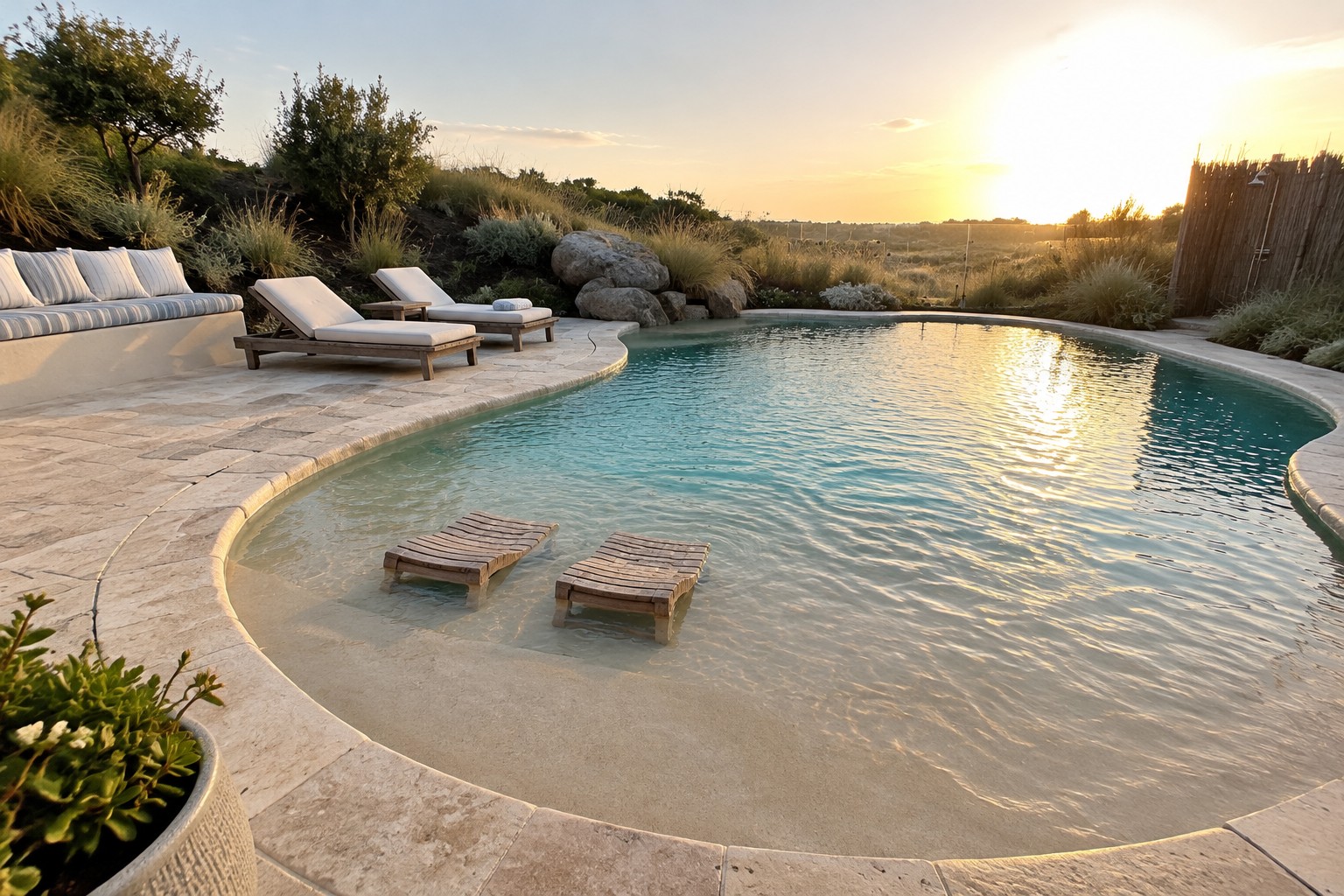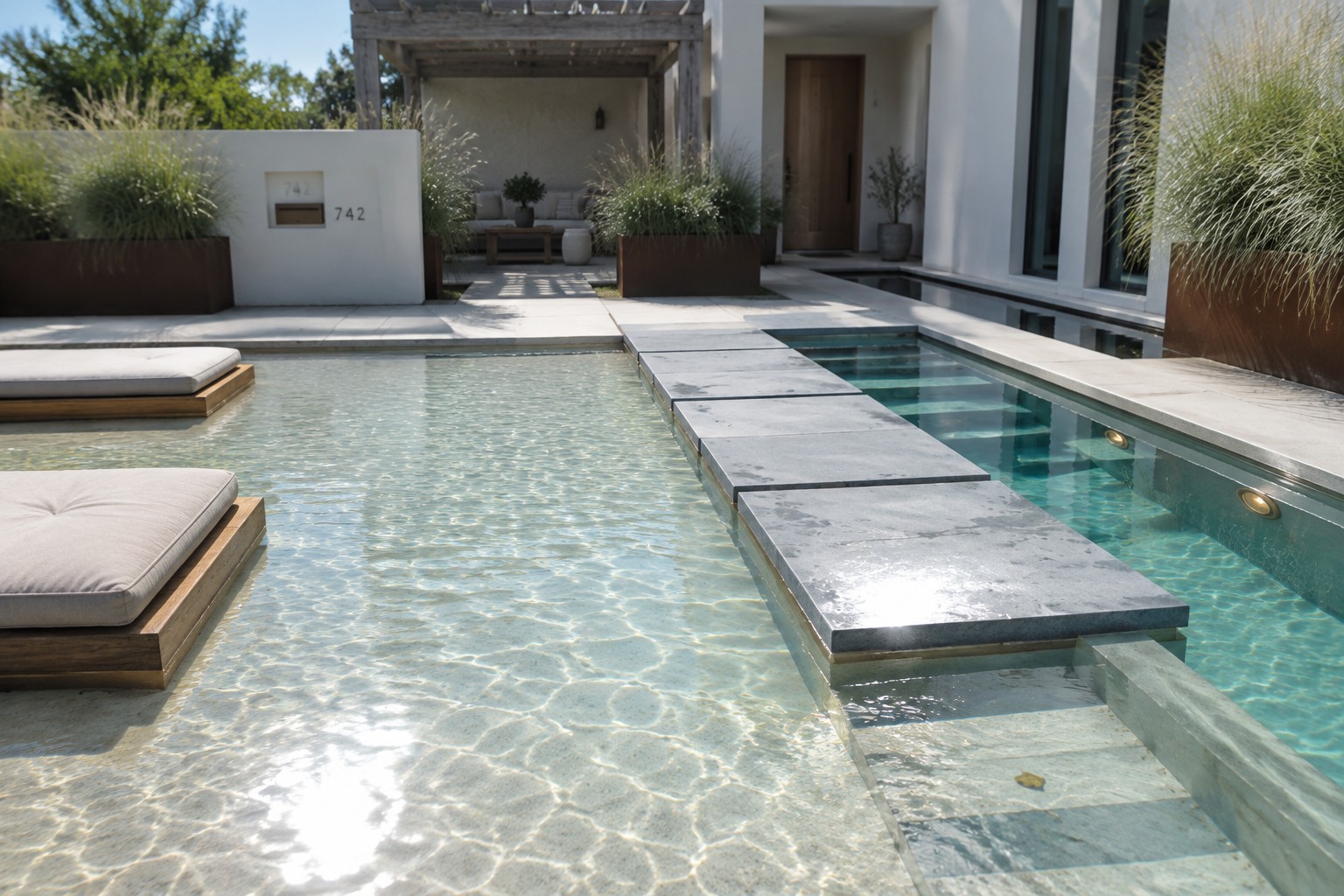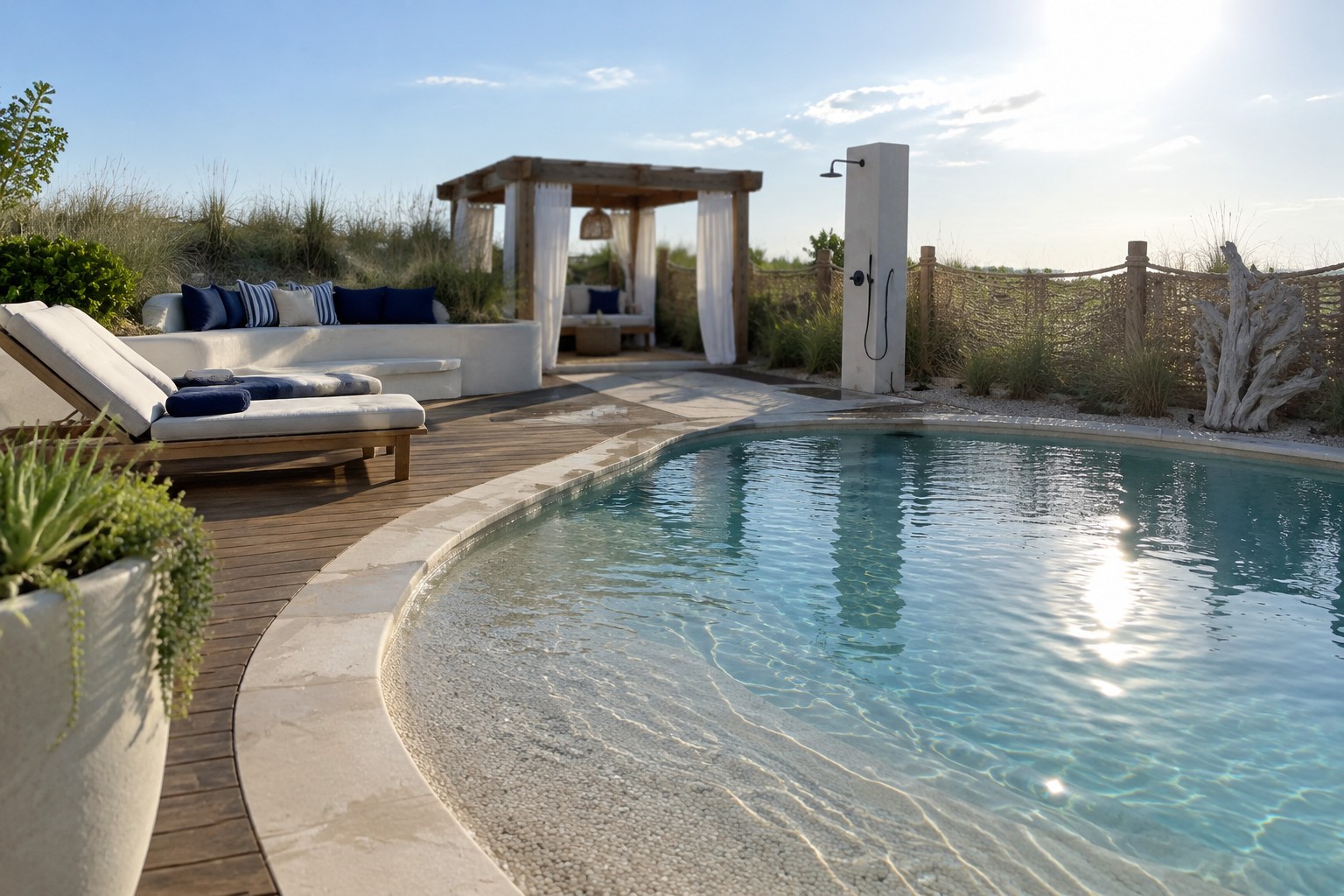
A beach-style pool can look relaxed, but its shape and entry need to work for the way people actually use the yard.
I notice the curved walk-in area first because it softens the pool’s outline and gives swimmers a gradual way into the water.
That curve also needs enough room around it, so the surrounding deck, planting, and paths do not feel crowded.
I’d pay attention to how each design balances an easy entrance with clear space for lounging and moving through the backyard.
Some of these ideas could be adapted with small changes to suit a real yard, whether that means adjusting the curve or simplifying the materials.
Make a Curved Pool Entry Part of the Layout

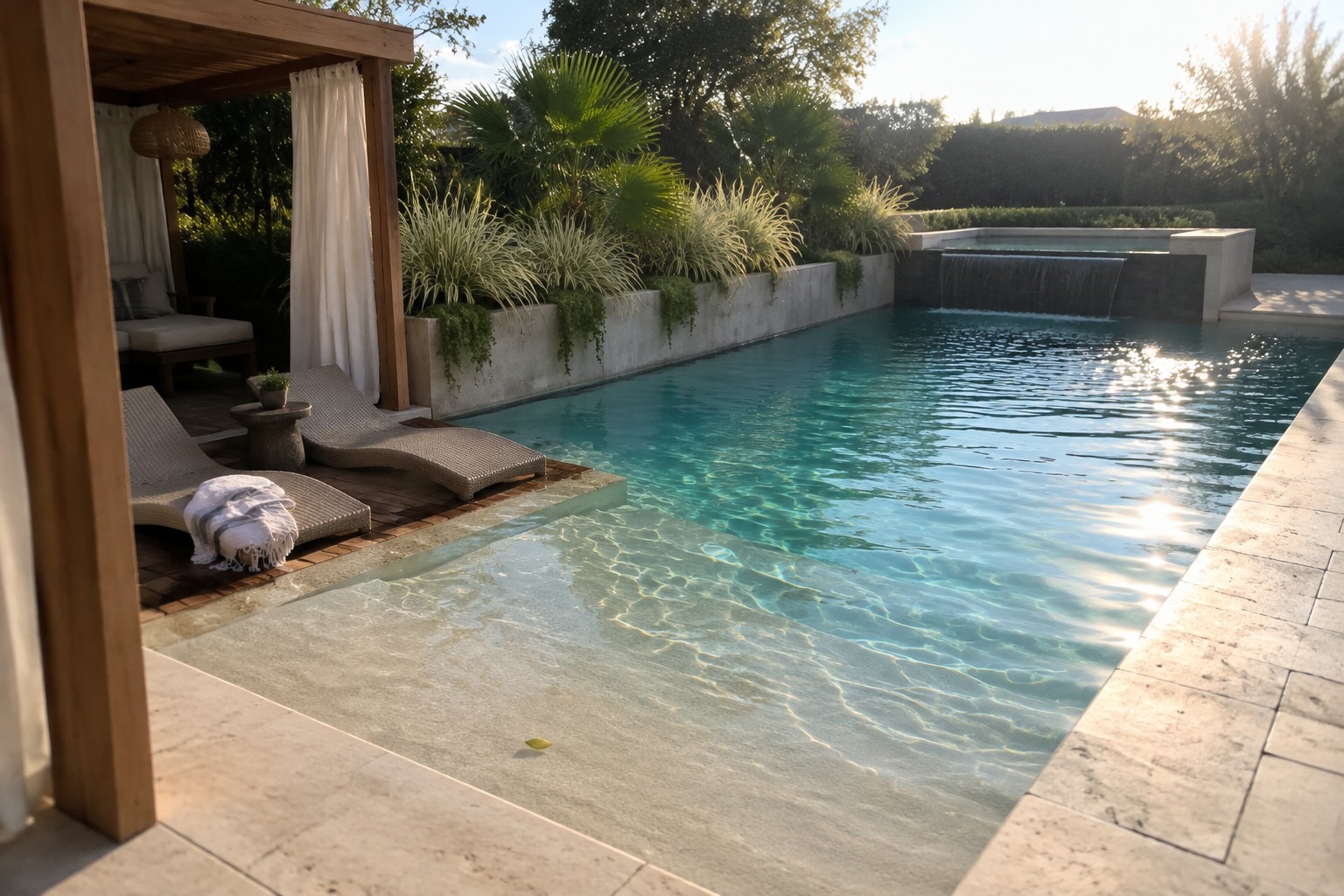
A wide, curved walk-in entrance makes this pool easier to enter and gives the shallow end a natural place to linger. The gradual curve also helps the pool edge feel less abrupt beside a deck.
This approach works well when you want a shallow area for sitting or for younger swimmers to play. Choose a slip-resistant finish for the submerged entry, and leave enough deck space nearby for loungers without narrowing the path.
Make the Pool Entrance Easy to Walk Into

A shallow, curved entry gives a pool a more gradual way in than a ladder or a steep set of steps. Here, the pale shelf follows the pool’s rounded edge, making it part of the pool layout rather than a separate platform.
This approach works well when you want a spot to sit or wade before moving into deeper water. Leave enough room for the shelf without narrowing the main swim area, and choose a slip-resistant finish for the surrounding deck.
Use a Curved Edge for a Walk-In Pool
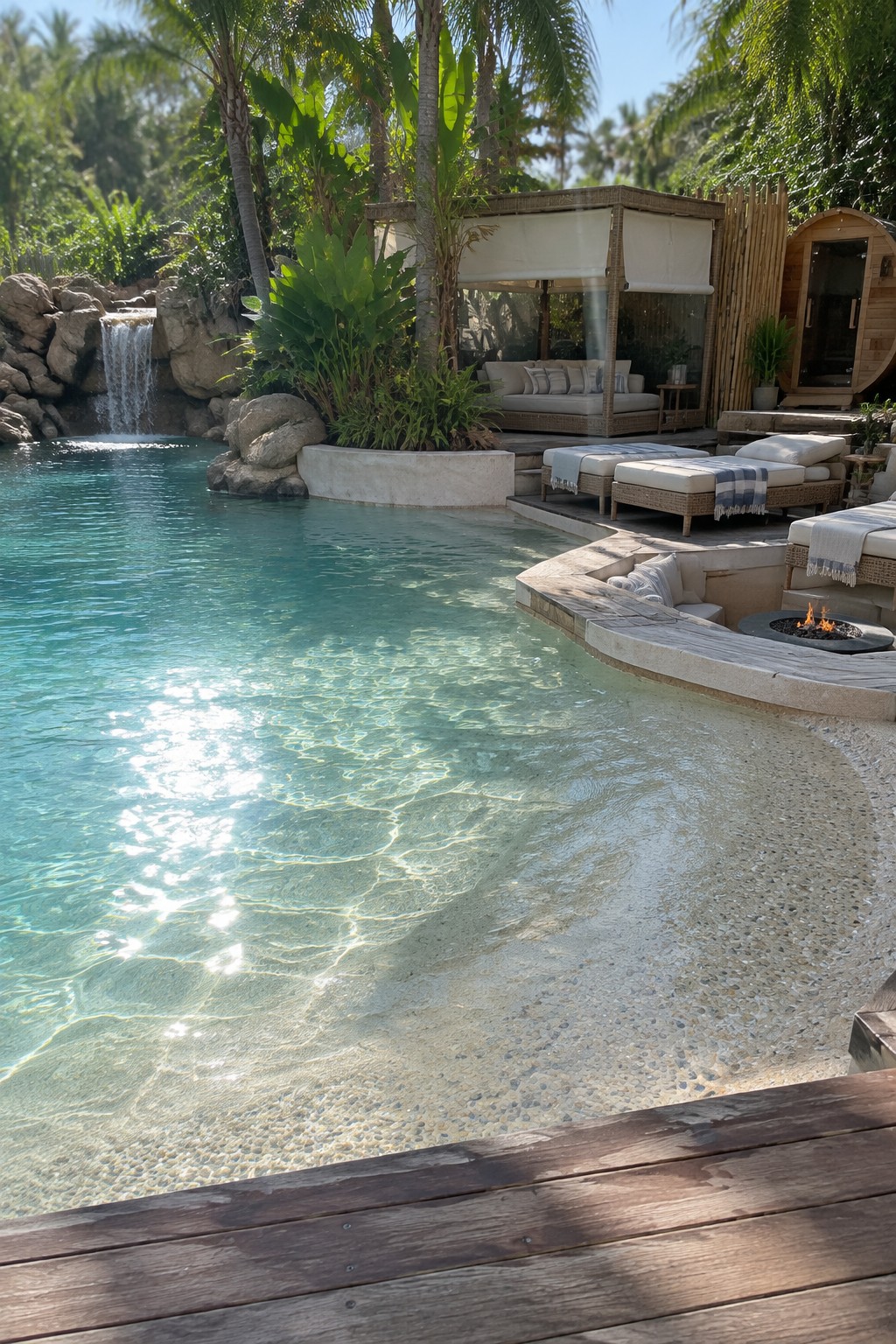
A gently curved pool edge makes a walk-in entrance feel like part of the pool rather than a separate set of steps. The shallow shelf can also give swimmers a place to sit and cool off, while keeping the transition from deck to water easy.
This layout works well in a beach-style pool, especially where the pool has room to widen gradually near the entry. Use a slip-resistant finish and make the shallow area broad enough to walk or sit comfortably.
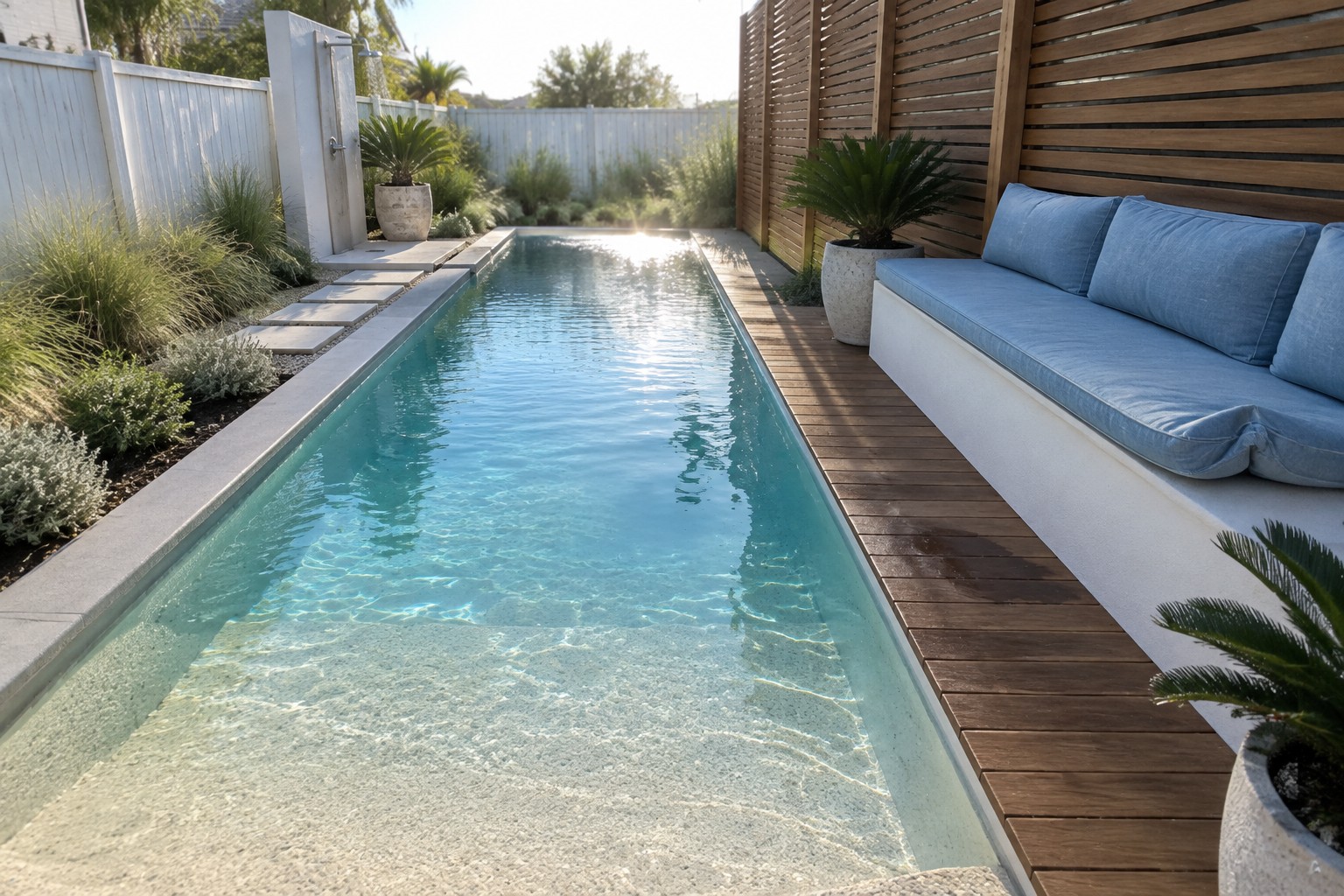
Build Seating Around The Pool
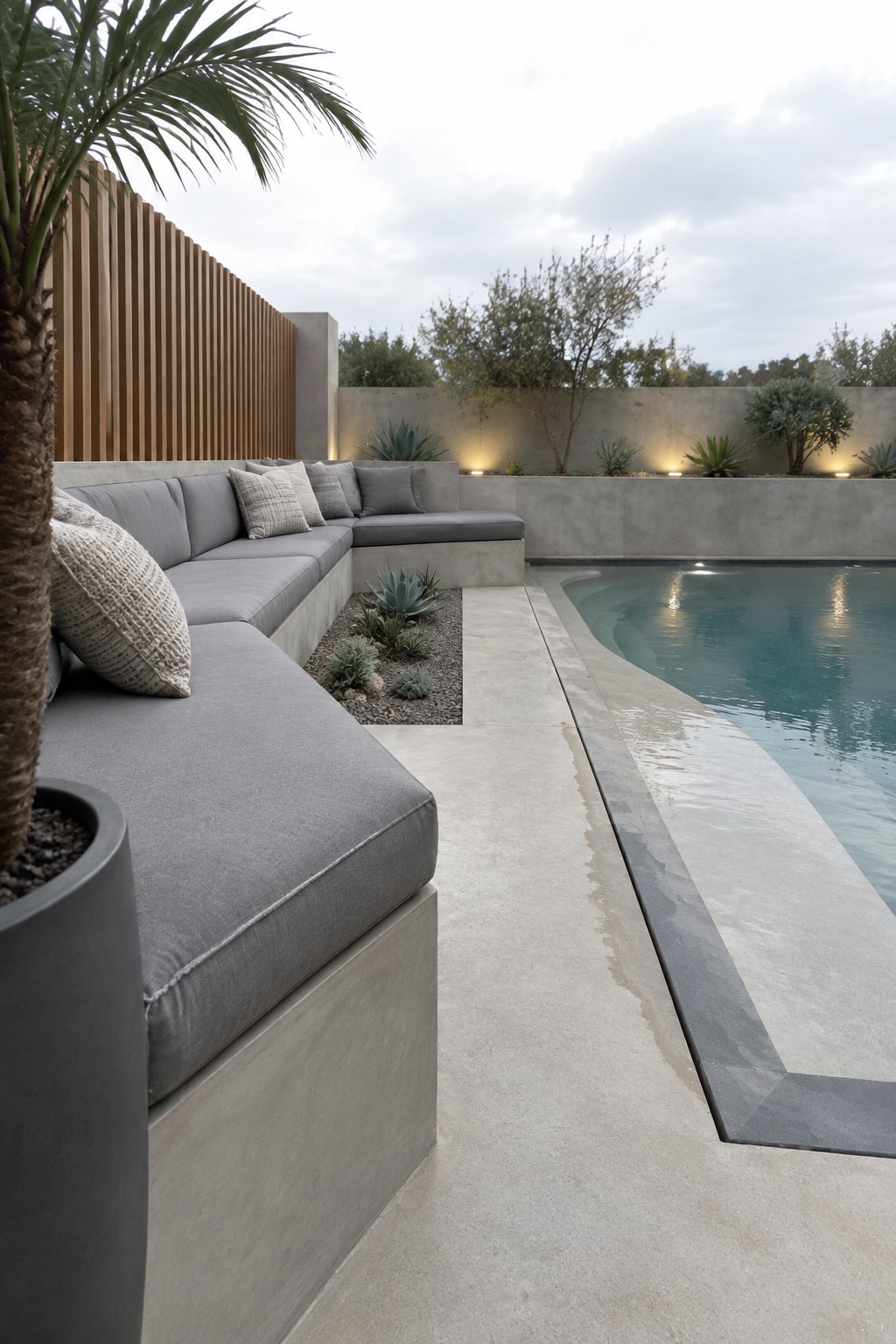
A built-in bench can make a pool area easier to use by keeping seating close to the water without filling the patio with loose furniture. Here, the long corner layout leaves a clear path beside the pool.
This approach suits compact patios and pool edges where space is limited. Keep the seat deep enough for comfortable lounging, and use outdoor cushions that can be stored when they get wet.
Use Curved Stone Edging Around a Walk-In Pool
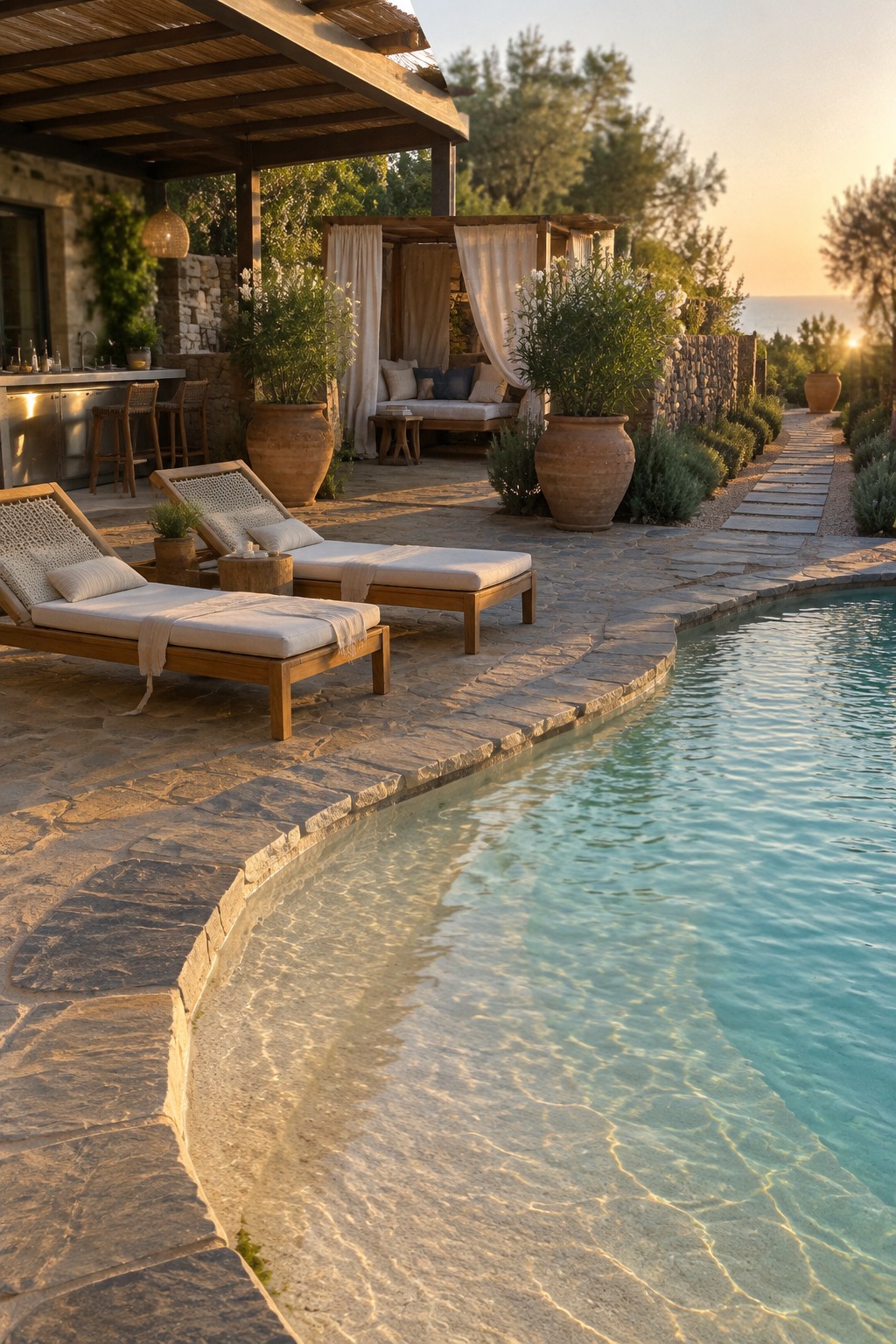
A gently curved stone edge helps a walk-in pool feel like part of the patio rather than a separate feature. The broad, shallow entry keeps the transition from paving to water comfortable for sitting or easing into the pool.
This approach suits patios where people move between loungers and the water throughout the day. Choose stone with a textured, slip-resistant surface, and keep the curve wide enough for easy movement.
Use a Shallow Shelf for Pool Entry
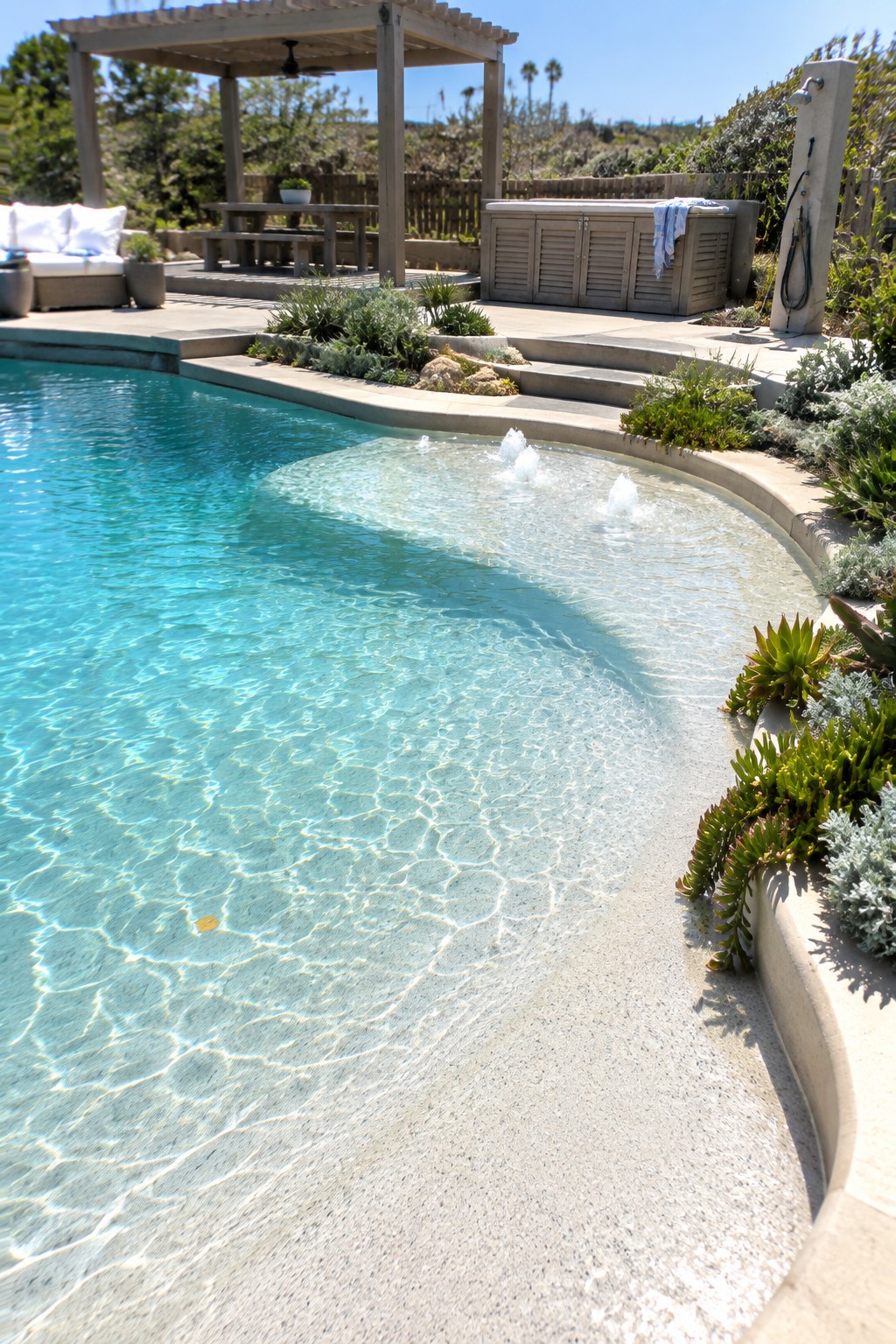
A broad, shallow shelf makes it easier to ease into the pool instead of stepping straight into deeper water. Here, the curved shelf follows the pool’s edge, giving the walk-in area a natural shape.
This works well in pools used by children or anyone who prefers a gradual entry. Keep the shelf wide enough to sit or stand comfortably, and check that it still leaves plenty of room for swimming.
Use a Shallow Curve for Easier Pool Access
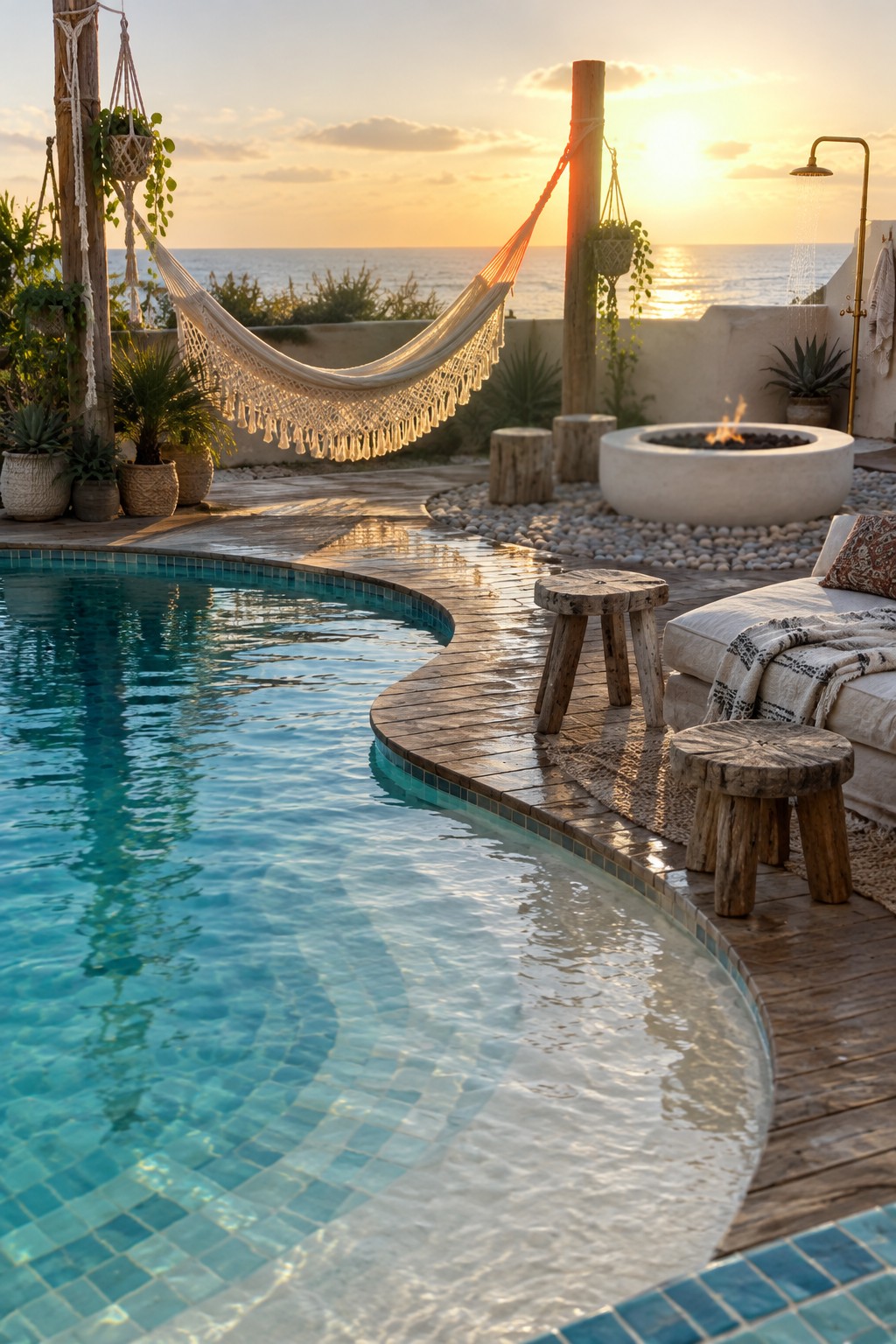
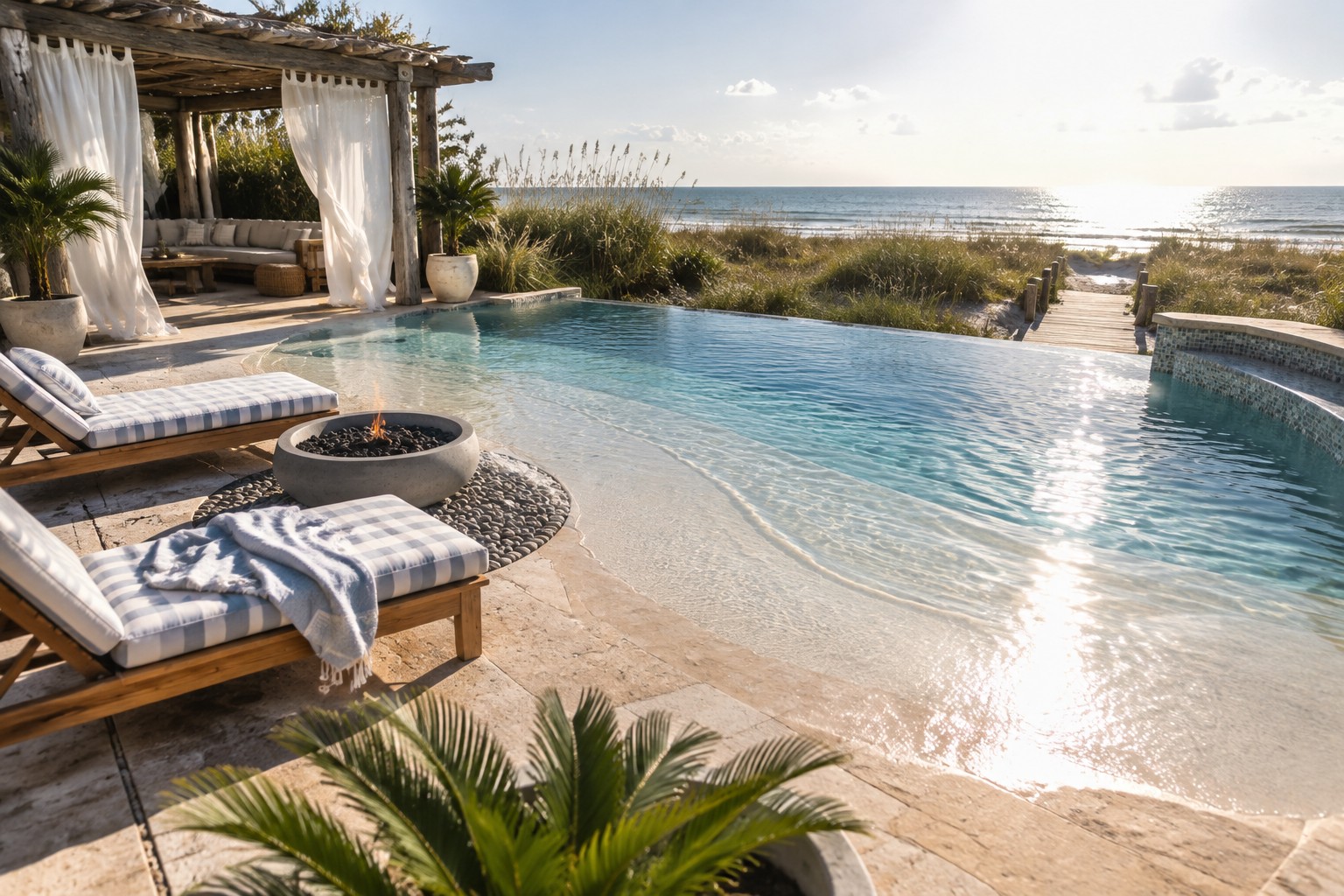
A curved walk-in entrance lets the pool edge become a gradual place to step in rather than a sharp drop. The broad shallow area in this design also gives swimmers room to pause before moving into deeper water.
This layout works well in a beach-style pool where people want an easy entry and a clear view of the water. Keep the transition gradual and use a slip-resistant surface around the entrance.
Let the Shallow Pool Entry Follow a Curve

A curved walk-in entrance can make a small pool easier to use without giving up much swimming space. Here, the shallow end sweeps around the edge, so swimmers can ease in gradually rather than step down a ladder.
This shape works well in compact courtyards, where a straight entry might interrupt the pool’s main length. Blue patterned tile can mark the curve clearly, but keep the shallow area wide enough for comfortable footing.
Use a Gradual Curve for Pool Access
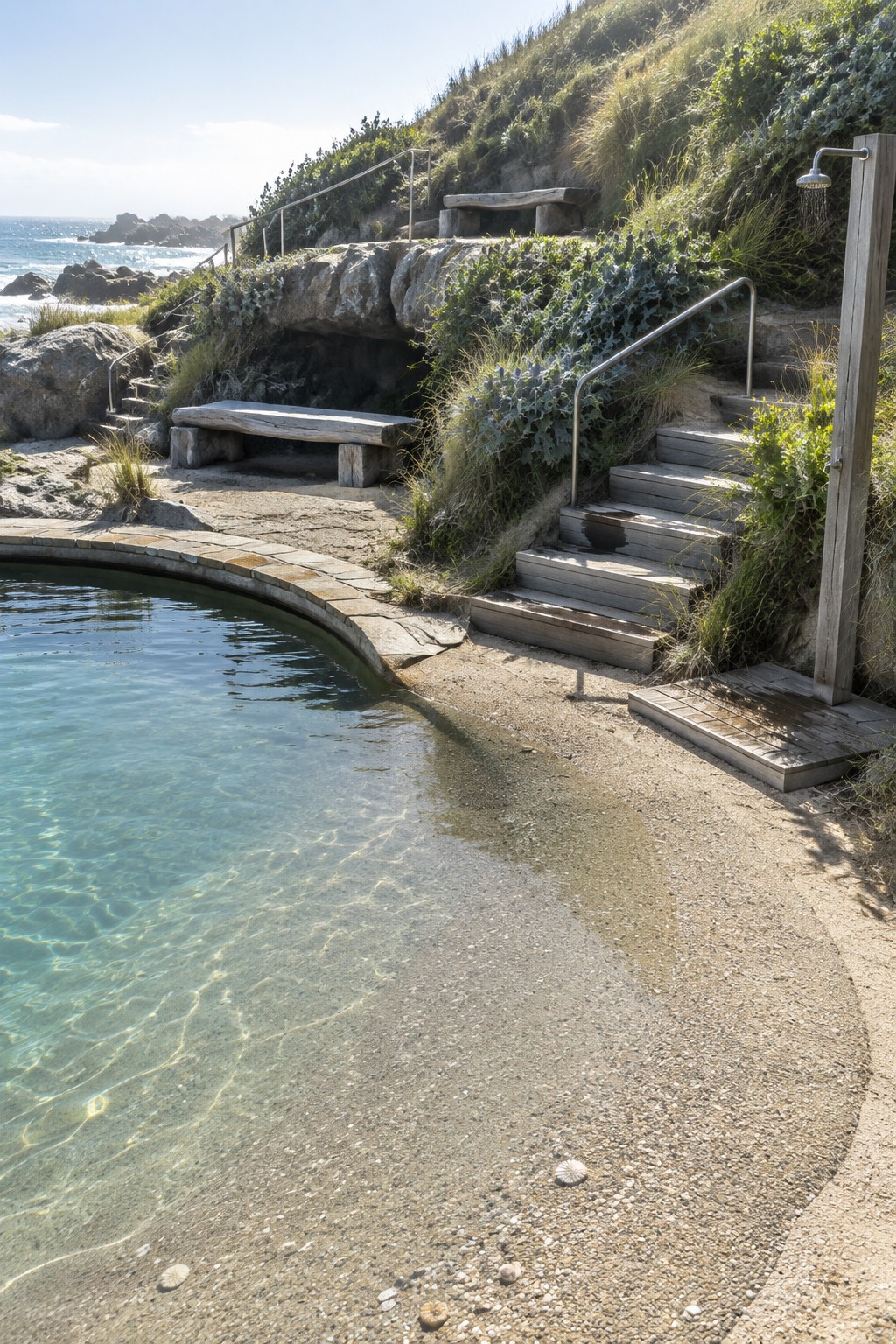
A curved, walk-in edge makes a beach-style pool easier to enter than a straight drop. The shallow slope also gives swimmers a little room to wade before the water gets deeper.
This approach works well in a coastal pool where a gradual entry can connect naturally to the surrounding stone or concrete. Keep the walking surface textured, and make sure the slope is gentle enough to use safely.
Add a Shallow Shelf Along the Pool Edge

A shallow shelf gives a walk-in pool a gradual place to enter and pause. Its curved shape can follow the pool’s outline, making the transition from deck to water feel natural rather than abrupt.
This approach works especially well in a pool with a generous shallow area. Keep the shelf wide enough for comfortable footing, and choose a non-slip finish for the underwater surface.
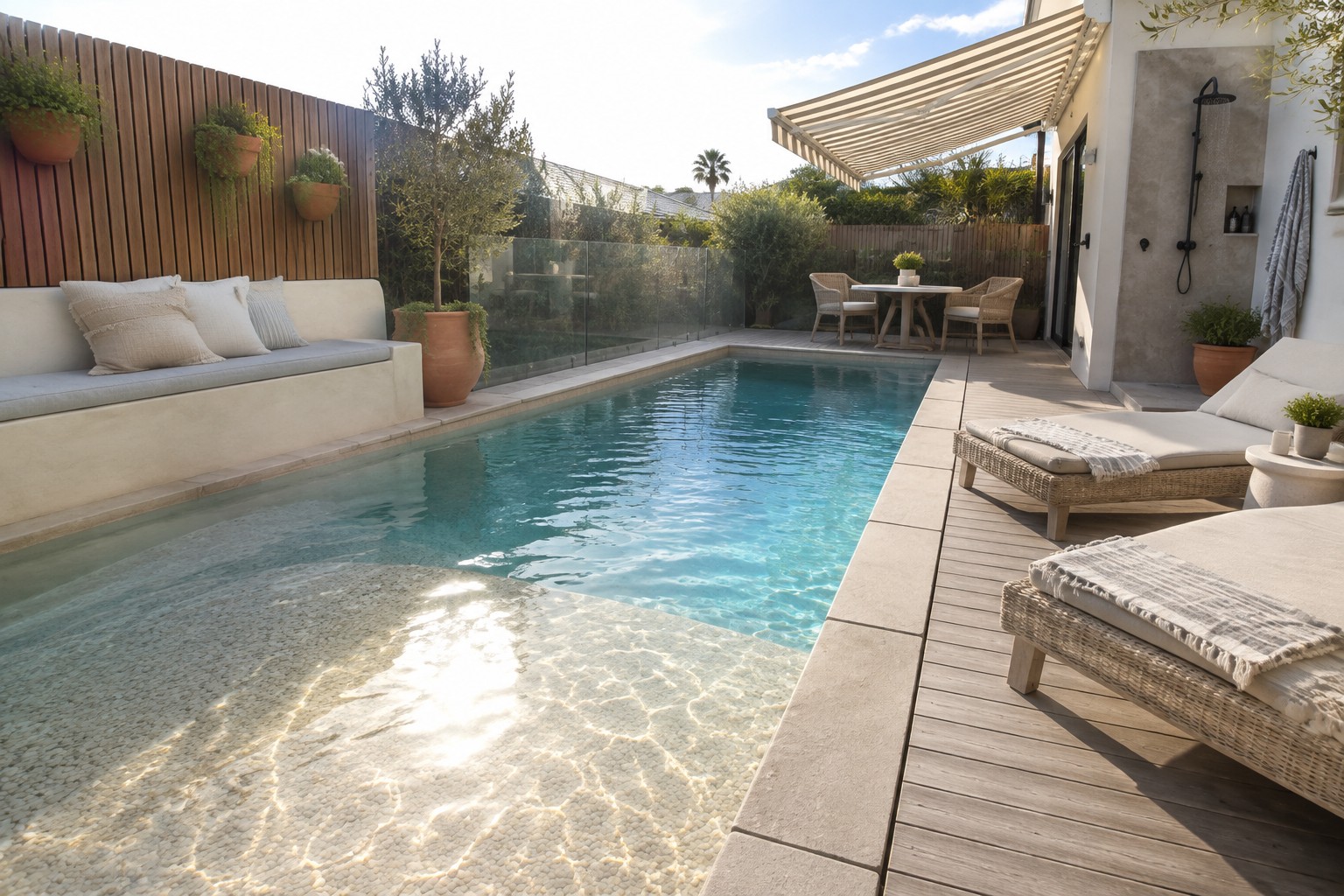
Use a Pebble Floor to Mark the Shallow Entry
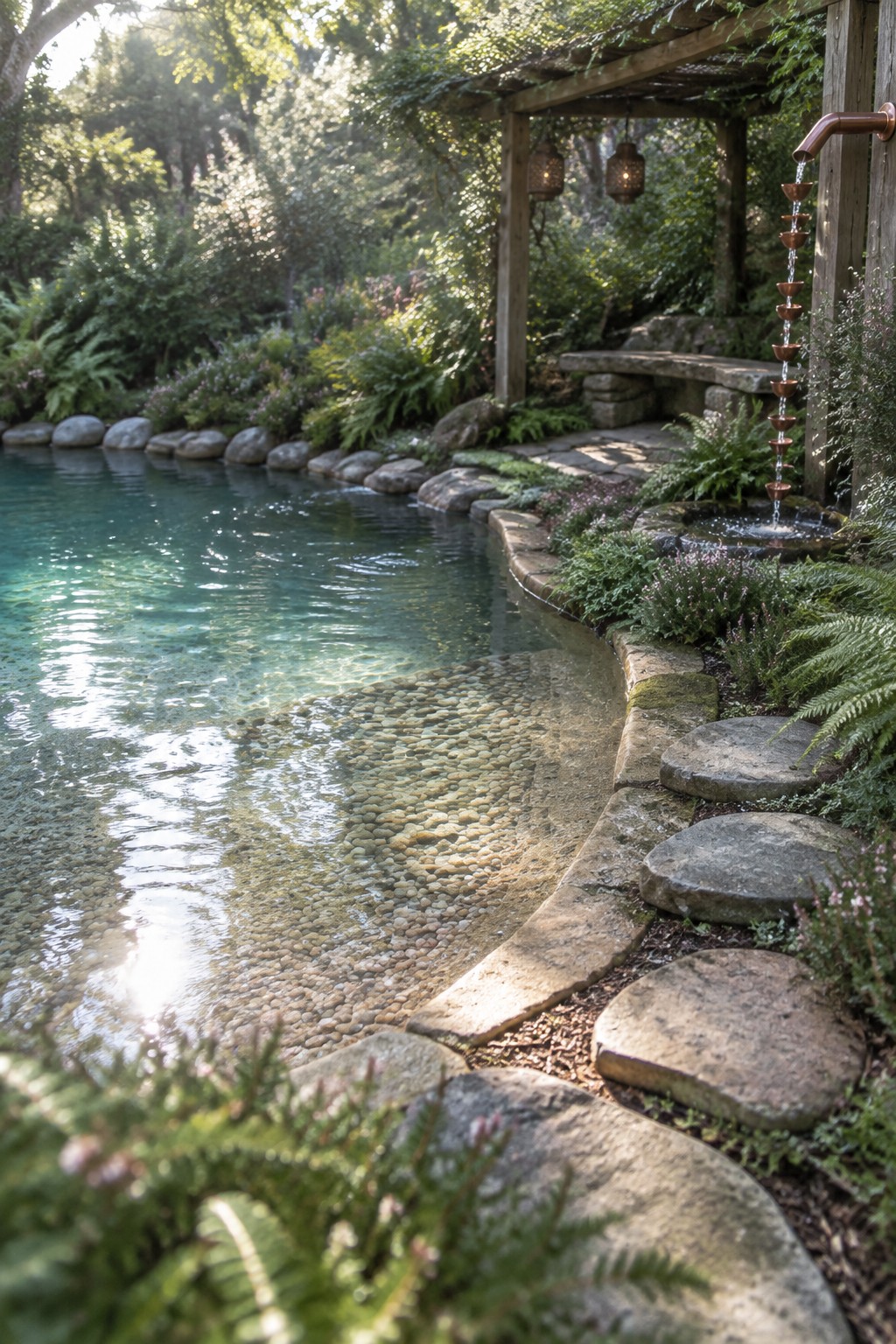
A pebble-finished shallow area can make a walk-in pool feel more like a natural shoreline. The change in texture helps define where the water is easiest to enter, while a gently curving edge keeps the transition from feeling abrupt.
This idea works well in a garden pool with stone coping. Choose smooth pebbles that are comfortable underfoot, and keep the entry gradual enough for safe footing.
Let the Pool Edge Curve Into a Walk-In Shelf
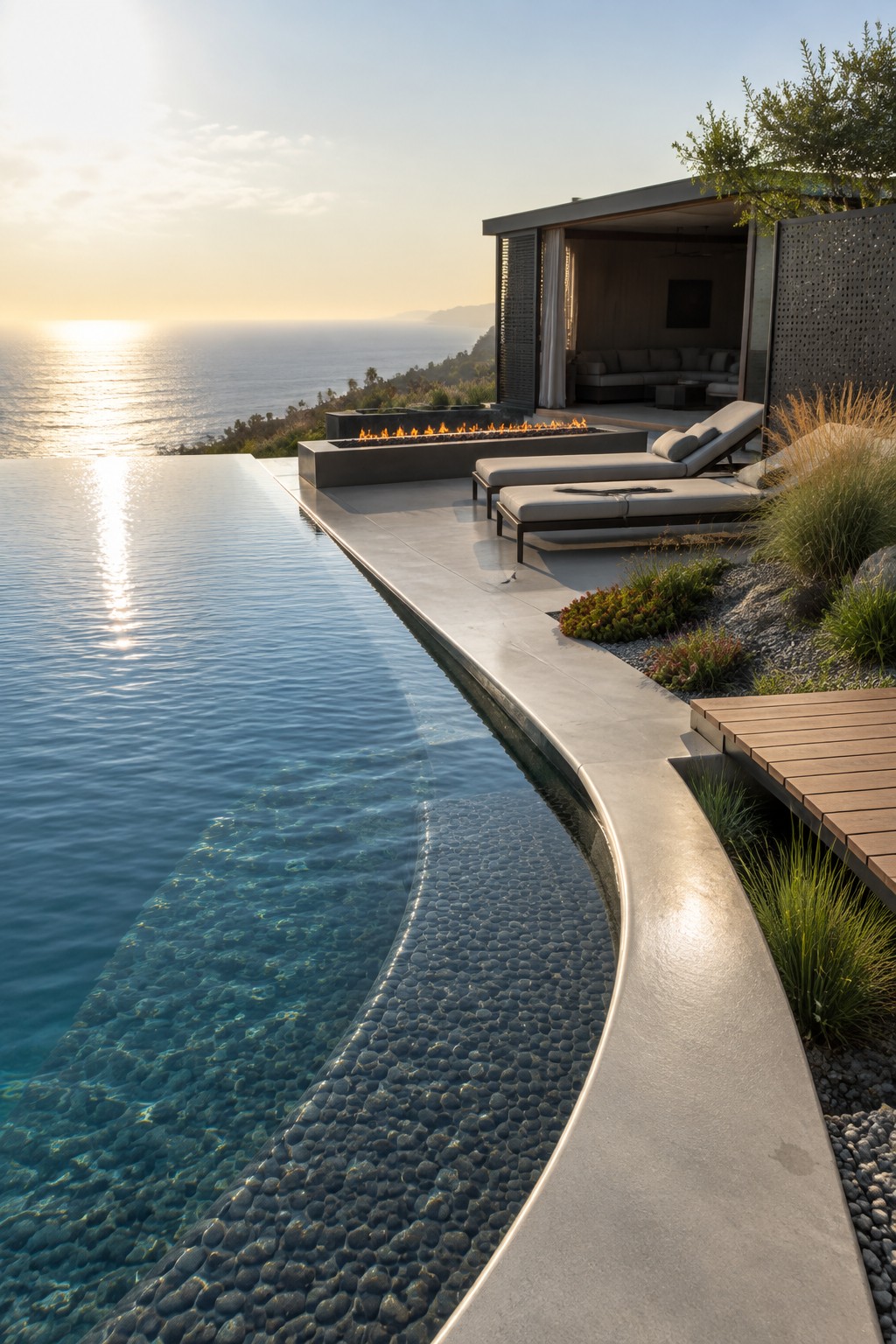
A curved walk-in shelf can make a beach-style pool feel easier to enter than a straight set of steps. The gradual shape also gives the shallow area a natural place to meet the deeper water.
For a clean look, continue the curve in the pool’s coping and keep the entry wide enough to walk across comfortably. Pebble finishes can help define the shallow section, but choose a surface that stays comfortable and slip-resistant underfoot.
Add a Curved Shallow Area to the Pool
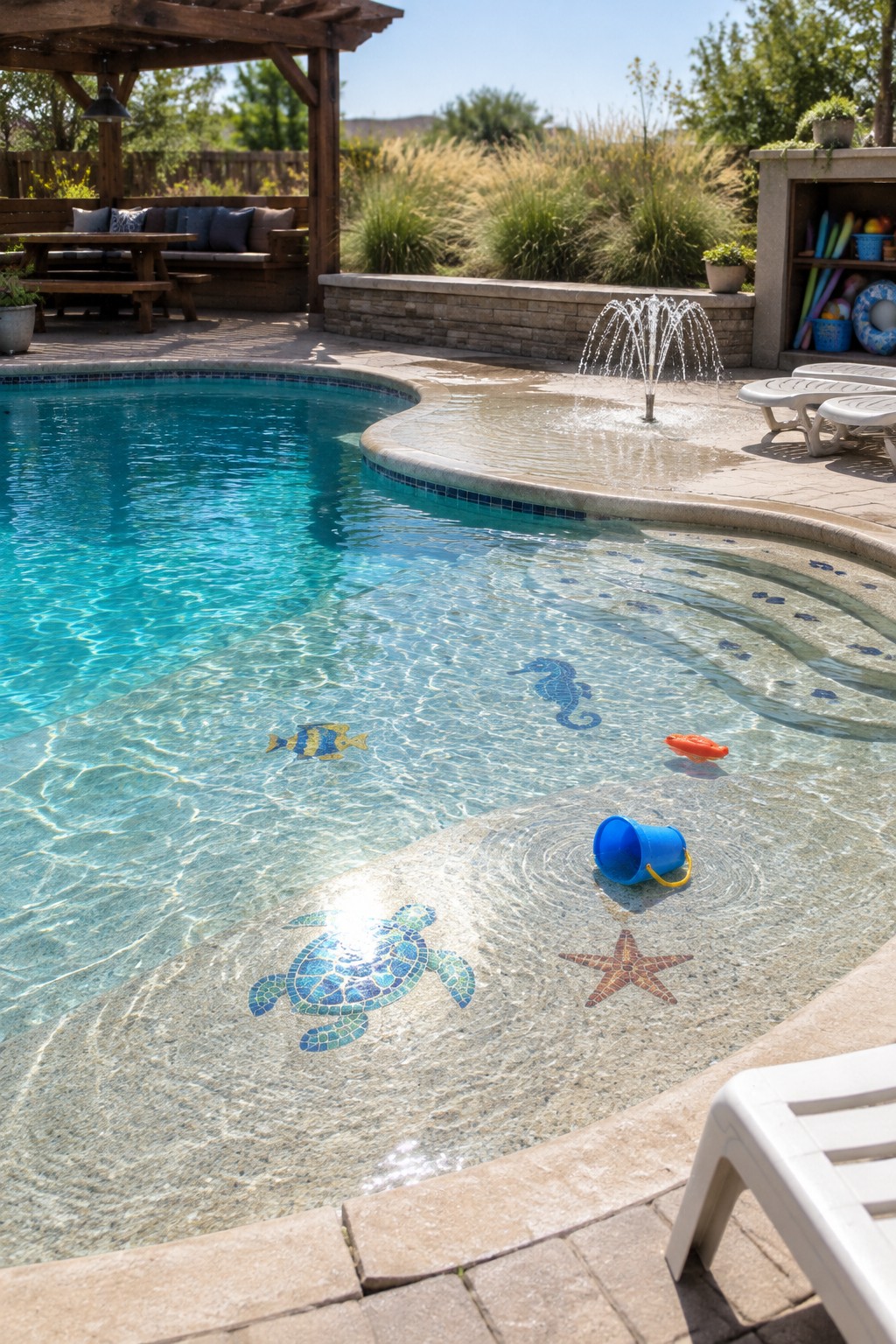
A curved walk-in area makes pool entry easier and gives children a place to play in shallow water. Here, the gradual edge also leaves room for small sea-life tile designs, which help mark the shallow section.
This layout works well in family pools, especially when you want a spot for sitting or supervising young swimmers without using a separate wading pool. Keep the transition gradual and check that the surface stays slip-resistant.
Plan the Pool Around a Walk-In Curve
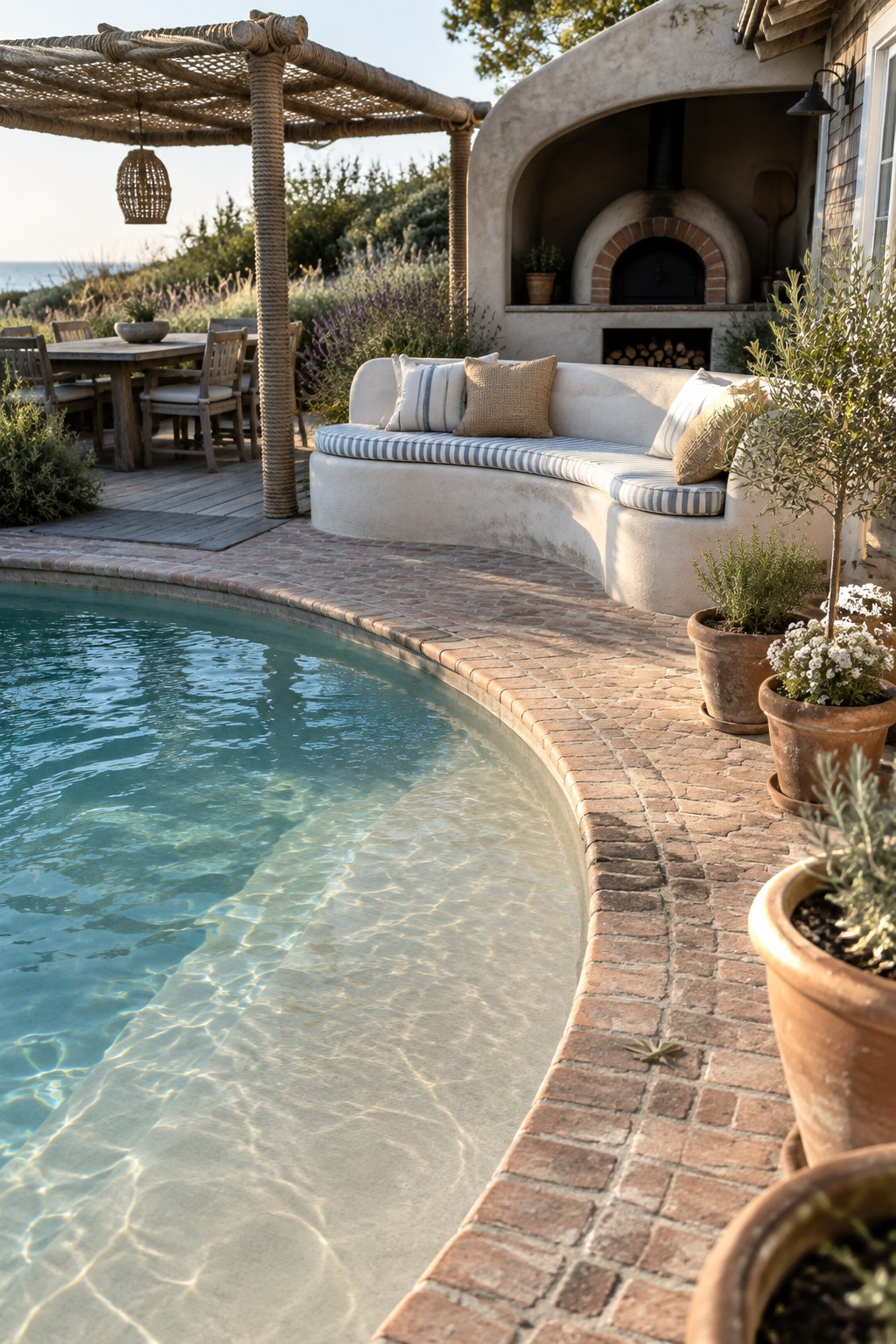
A curved walk-in entrance makes a pool easier to enter and gives the edge a softer shape than a straight set of steps. Here, the shallow area follows the curve of the brick coping, so the transition into deeper water feels natural.
This layout works especially well in a compact pool where broad steps might take up too much room. Keep the shallow section wide enough to walk through comfortably, and choose coping with a gently rounded edge.
Use a Curved Pool Edge for a Gentle Entry

A curved pool edge can make the transition from the water to the surrounding deck feel more natural. Here, the pebble border follows the pool’s rounded shape, giving the edge a clear, easy-to-follow line.
This approach can work well in a compact garden pool, especially when a gradual entry is part of the plan. Keep the curve wide enough for comfortable movement, and choose a slip-resistant finish for the surrounding surface.
Use a Curved Shallow Entry for Easier Pool Access
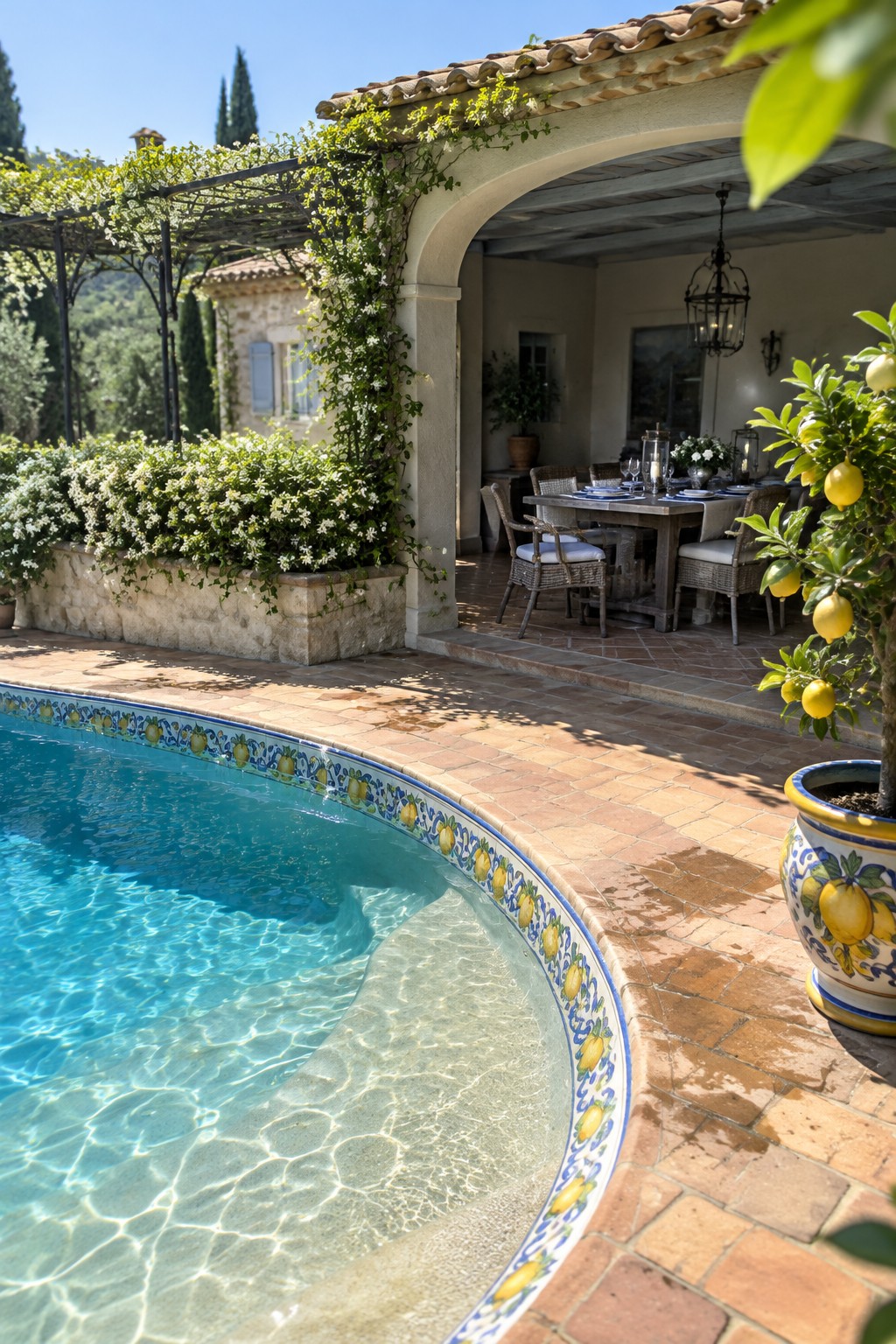
A broad, curved shallow area makes a pool easier to enter and gives people a place to pause before swimming into deeper water. The decorative tile along the edge helps the curve read clearly, too.
This approach works well in a family pool or anywhere people want a gentler entry than a ladder. Keep the shallow section wide enough to walk through comfortably, and choose a textured finish underfoot.
Add a Curved Walk-In Edge to a Narrow Pool

A curved entry can make a narrow pool easier to step into without giving up much swimming space. The gradual shape also keeps the pool from feeling like a plain straight-sided lap lane.
This works well in a compact courtyard, especially when the pool runs alongside a deck. Keep the shallow section wide enough for comfortable footing, and make sure the curve does not pinch the main swimming area.
Use Stone Edging to Define the Pool’s Curve
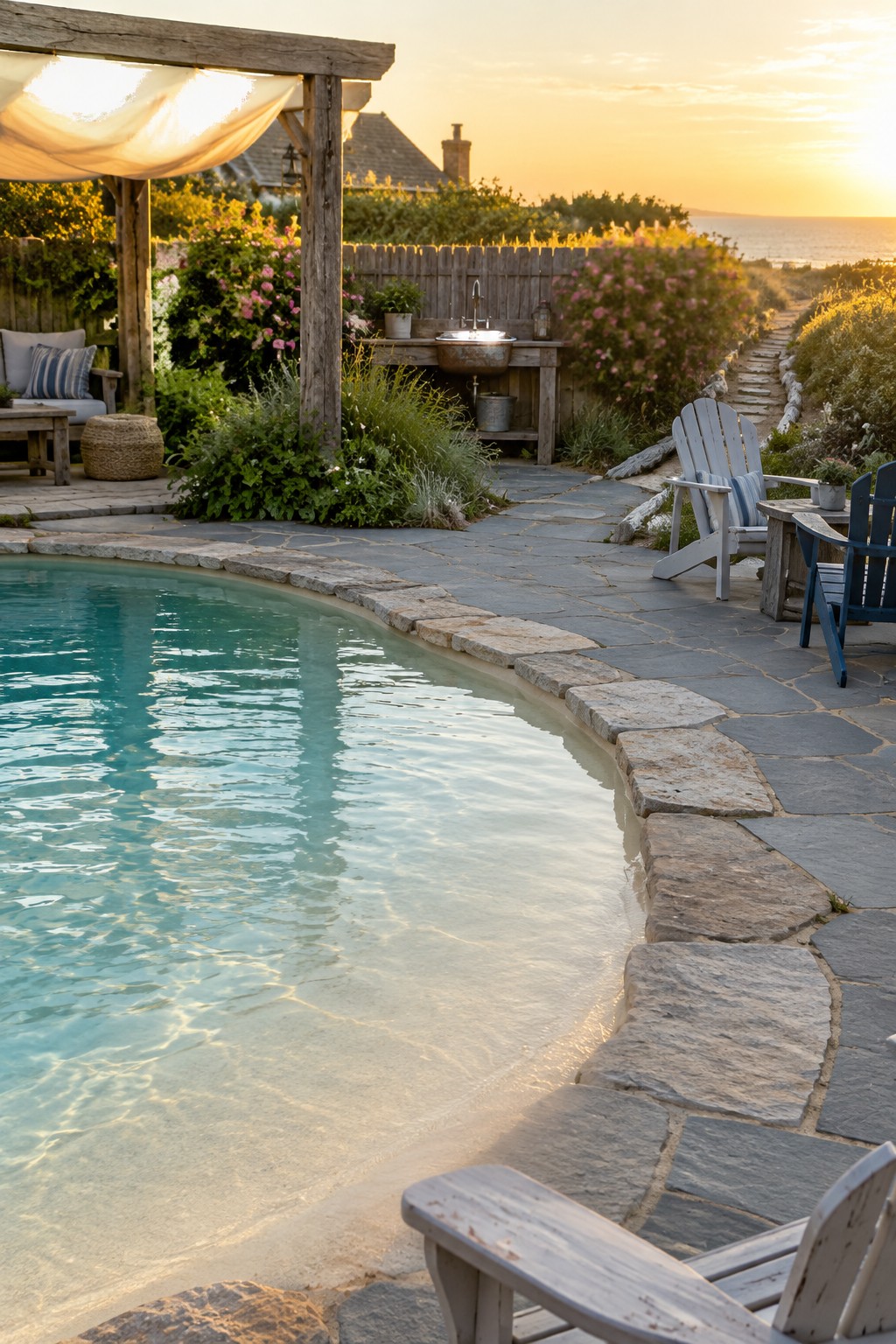
A curved pool edge is easier to use when the transition from water to patio is clear underfoot. Broad stone coping follows the bend and gives the walk-in area a distinct, sturdy border.
This approach suits a relaxed coastal patio, especially where the pool meets a stone path. Choose stones with a consistent, slip-resistant surface, and keep the edge smooth enough to walk along comfortably.
Shape a Walkway Along the Pool’s Curve
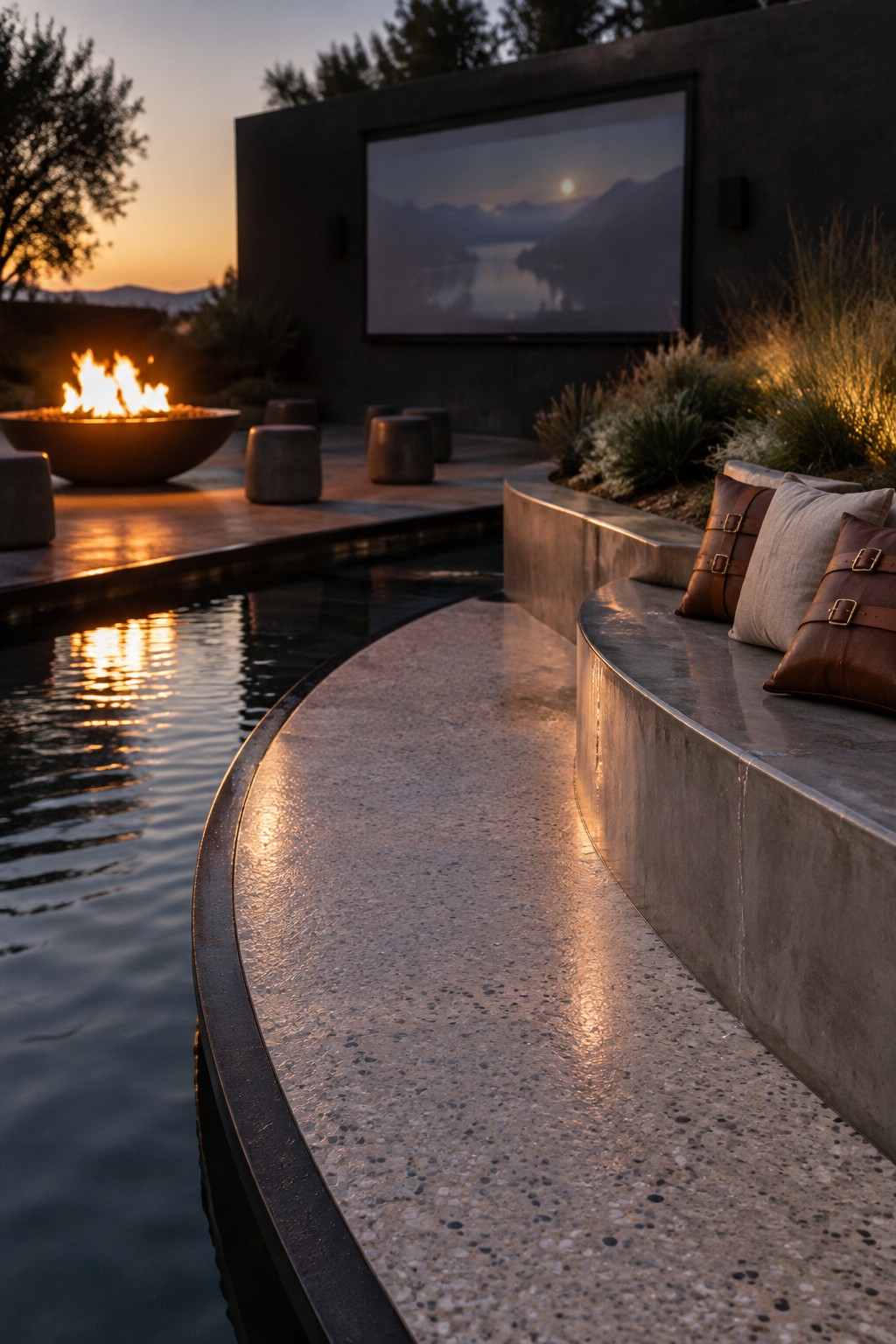
A curved poolside walkway can make a narrow space feel easier to move through. Here, the broad stone path follows the edge of the water, giving people room to pass without crowding the seating area.
This approach works well around pools with rounded edges or built-in benches. Keep the walking surface slip-resistant, and leave enough width for people to get around loungers and other furniture comfortably.
Create a Relaxed Poolside Seating Area
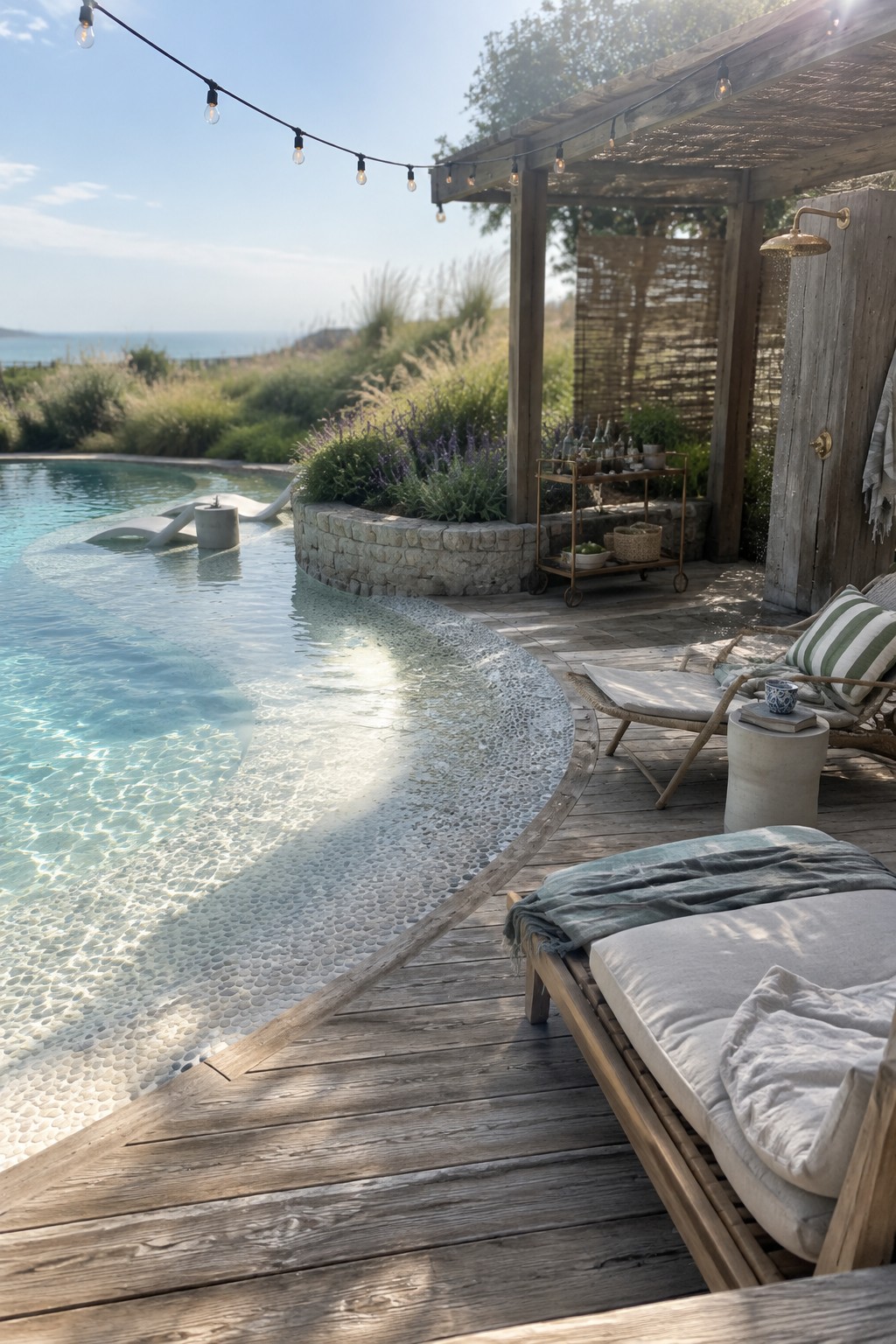
A poolside deck feels more useful when it leaves room for both swimming and lounging. Here, the curved pool edge meets a wood deck with a cushioned chaise nearby, making it easy to move between the water and a place to rest.
For a similar setup, keep seating just outside the main walking route and choose pieces that can handle sun and splashes. This works especially well on a deck with enough space to sit without crowding the pool entrance.
Frequently Asked Questions
Q: Can a curved beach entry work in a small pool?
A: Yes. A gently sloped entry can fit into a compact pool if you keep the curve simple and preserve enough room for swimming. Even a small stretch of shallow water gives the pool that easy, walk-in feel.
Q: Will leaves and dirt collect along the curved entrance?
A: They can, especially where the slope meets the pool floor. A good circulation plan and regular brushing help keep that area clean, and smooth finishes make it easier to sweep away grit.
Q: Is a beach entry safer than steps?
A: It offers a gradual way into the water, which can feel more comfortable for young children and people who find steps tricky. The slope can still get slippery, so choose a grippy surface and keep an eye on kids near the water.
Q: Can I add a beach entry to an existing pool?
A: Usually, that means changing the pool’s structure, not just reshaping the surrounding deck. Ask a pool builder to check whether the shell and layout can support the new slope before you plan the design.