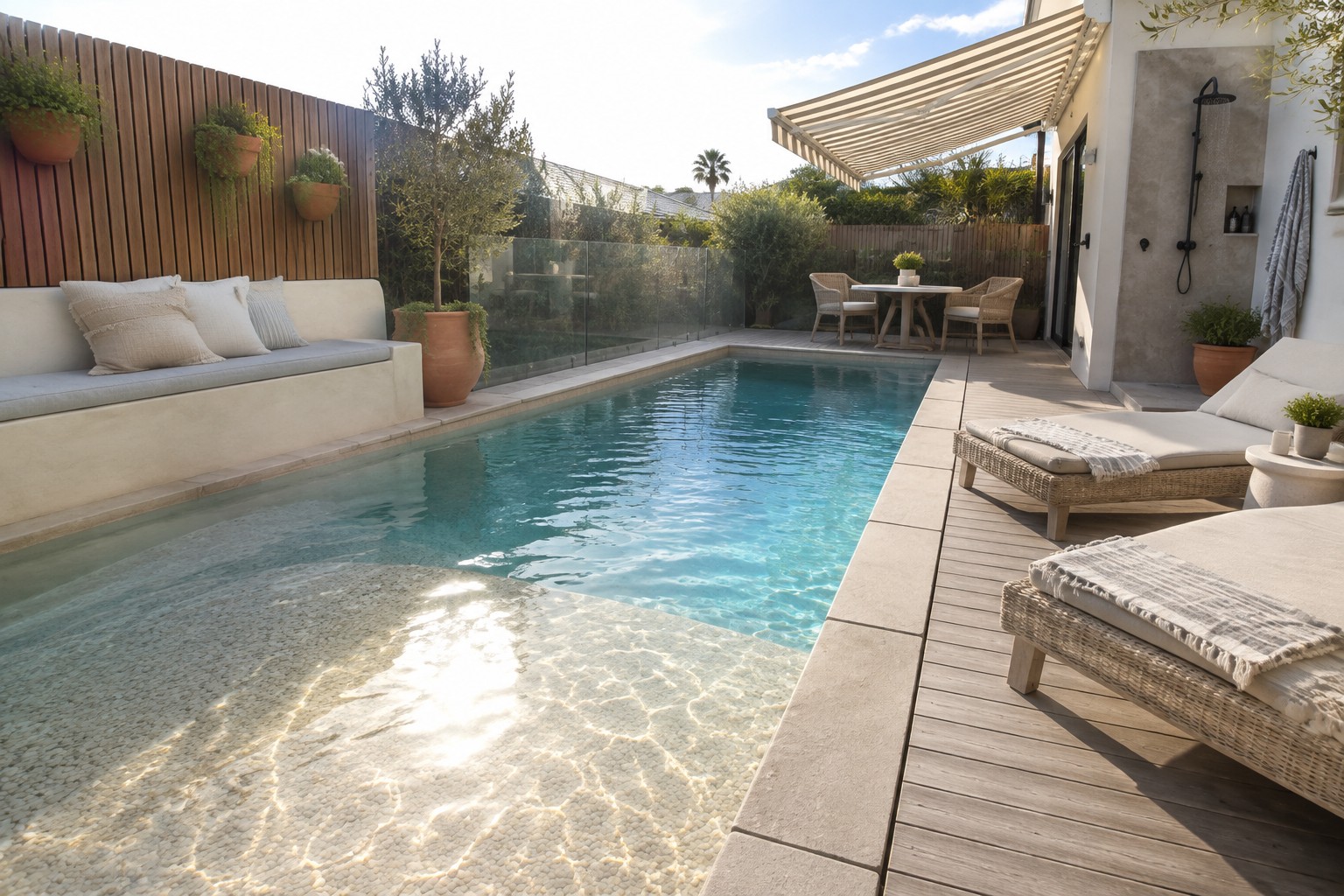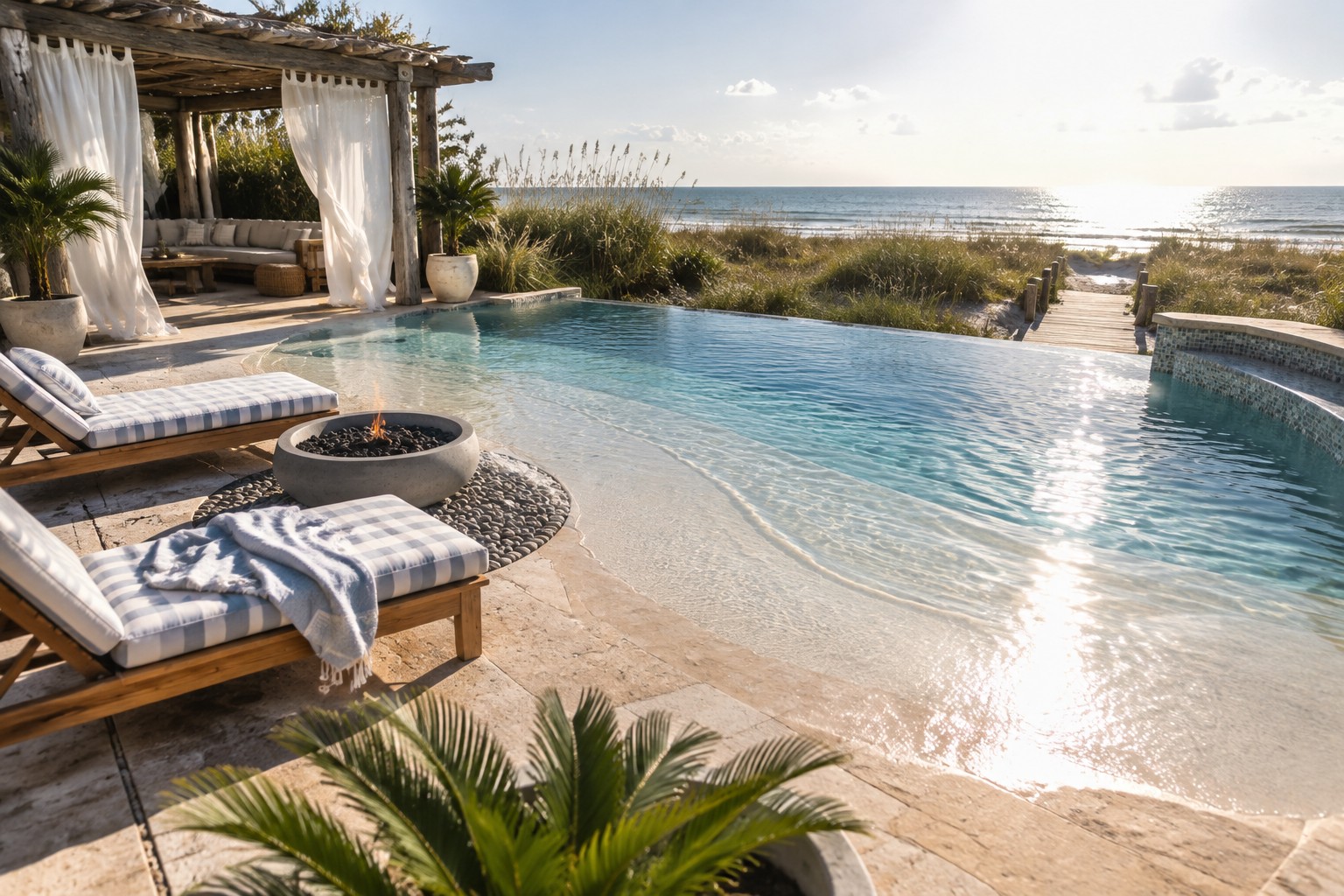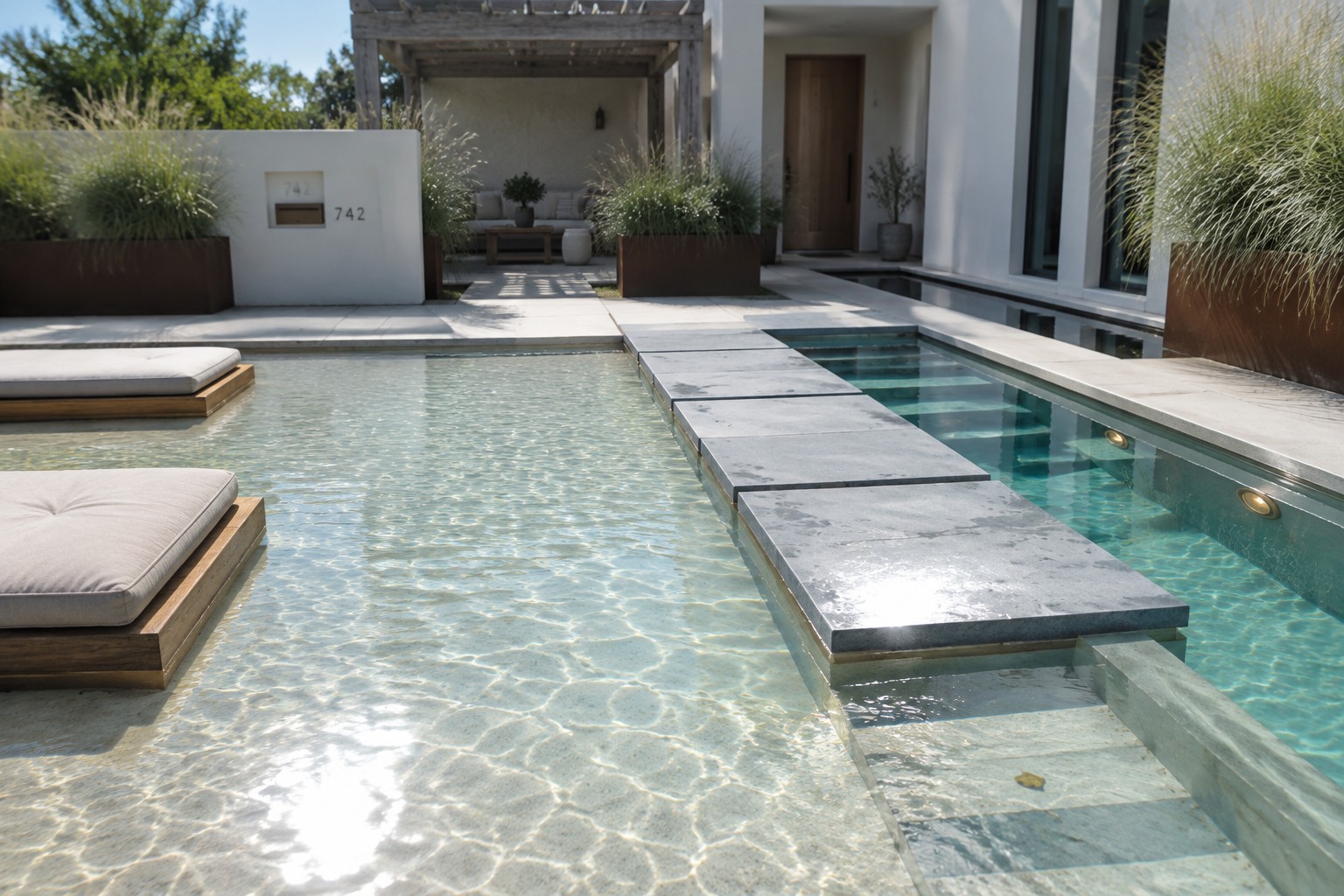
A beach-entry pool can make a backyard feel more connected to the landscape, but its shape needs to work with the space around it.
I find that the first thing people notice is how the shallow edge meets the deck, planting, and main swimming area.
Clean geometric lines can give the pool a modern look, while gentle slopes and practical paths keep it comfortable to use.
The best designs balance those crisp shapes with enough room to move, lounge, and keep an eye on the water.
I’d save ideas that suit the yard’s proportions, since even a small change in the entry or edge can make the whole setup feel more natural.
Use Stepping Stones to Cross the Pool
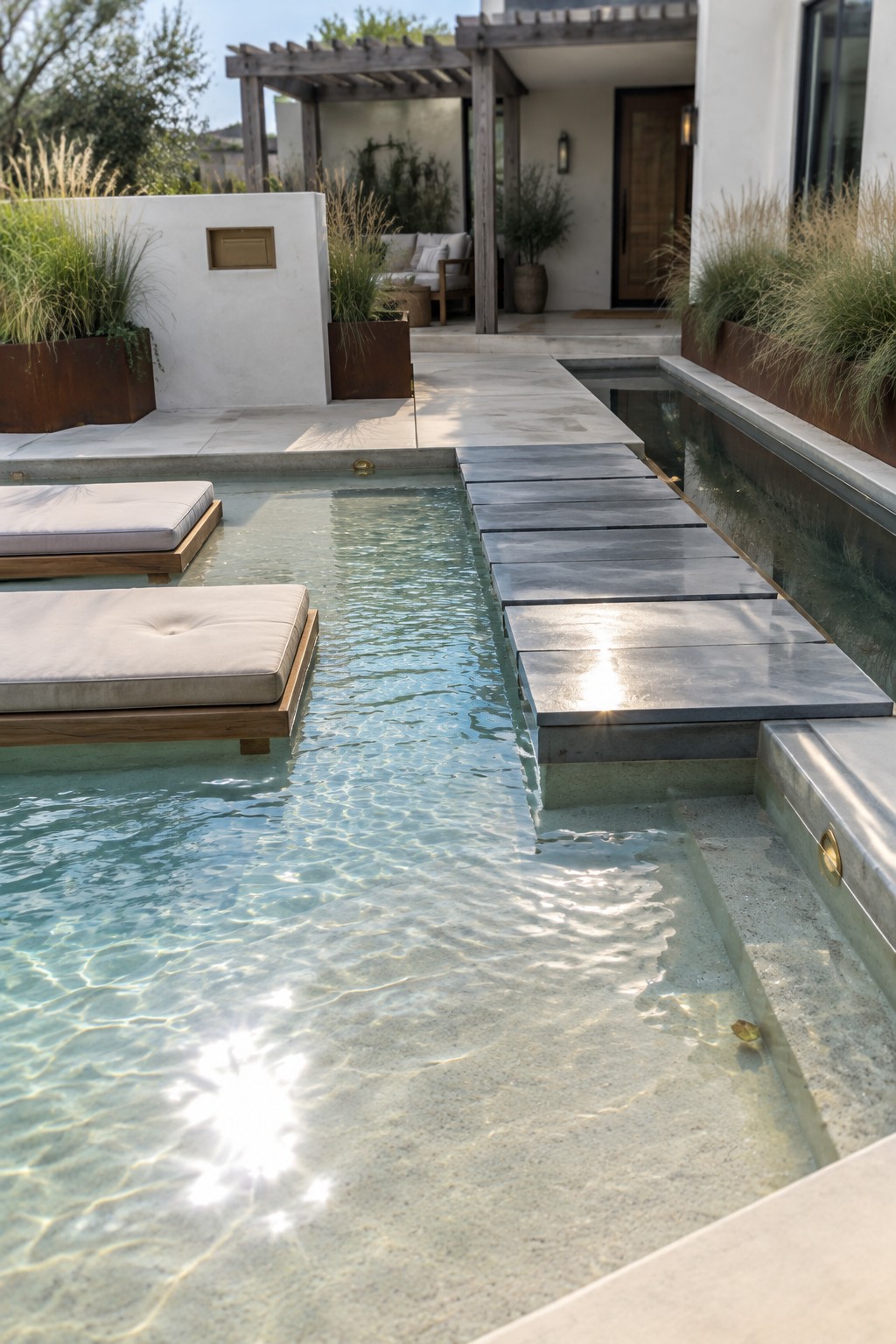
A row of broad stepping stones can make a pool easier to cross without breaking up its geometric layout. The open gaps keep the water visible, while the straight path gives the space a clear route from the patio to the house.
This approach works best when the stones are wide enough for a steady step and sit level above the water. Leave enough room around the path for safe movement, and choose a slip-resistant surface.
Use a Shallow Pool Entry for Lounging

A broad, shallow entry gives a pool a comfortable place to sit and cool off without heading straight into deeper water. Here, the pale stone floor extends beneath the water beside two loungers, making the entry part of the pool’s everyday seating area.
This layout works well in a modern pool with a clear, geometric shape. Leave enough shallow space for people to move around the loungers, and use a slip-resistant finish for the surrounding deck.
Use A Shallow Entry Shelf To Define The Pool

A shallow entry shelf gives a geometric pool a useful place to pause before the deeper water begins. It also makes the pool easier to use for sitting or keeping an eye on young swimmers. Here, the pale mosaic surface makes the change in depth easy to see.
This layout works well in compact pools where one area needs to serve more than one purpose. Keep the shelf broad enough to sit on, and make the transition to deeper water clear underfoot.
A Narrow Pool Beside the Entry

A long, narrow pool can make the route to a front door feel like part of the outdoor living space. Its straight edges give the area a clear shape, while the water adds interest without taking over the entry.
This layout works well where a home has a long side yard or a generous approach to the door. Keep a solid walkway beside the pool, and choose slip-resistant paving for the edges. A shallow ledge along one side can also make the water easier to enjoy and maintain.
Use a Long, Narrow Pool Beside the House

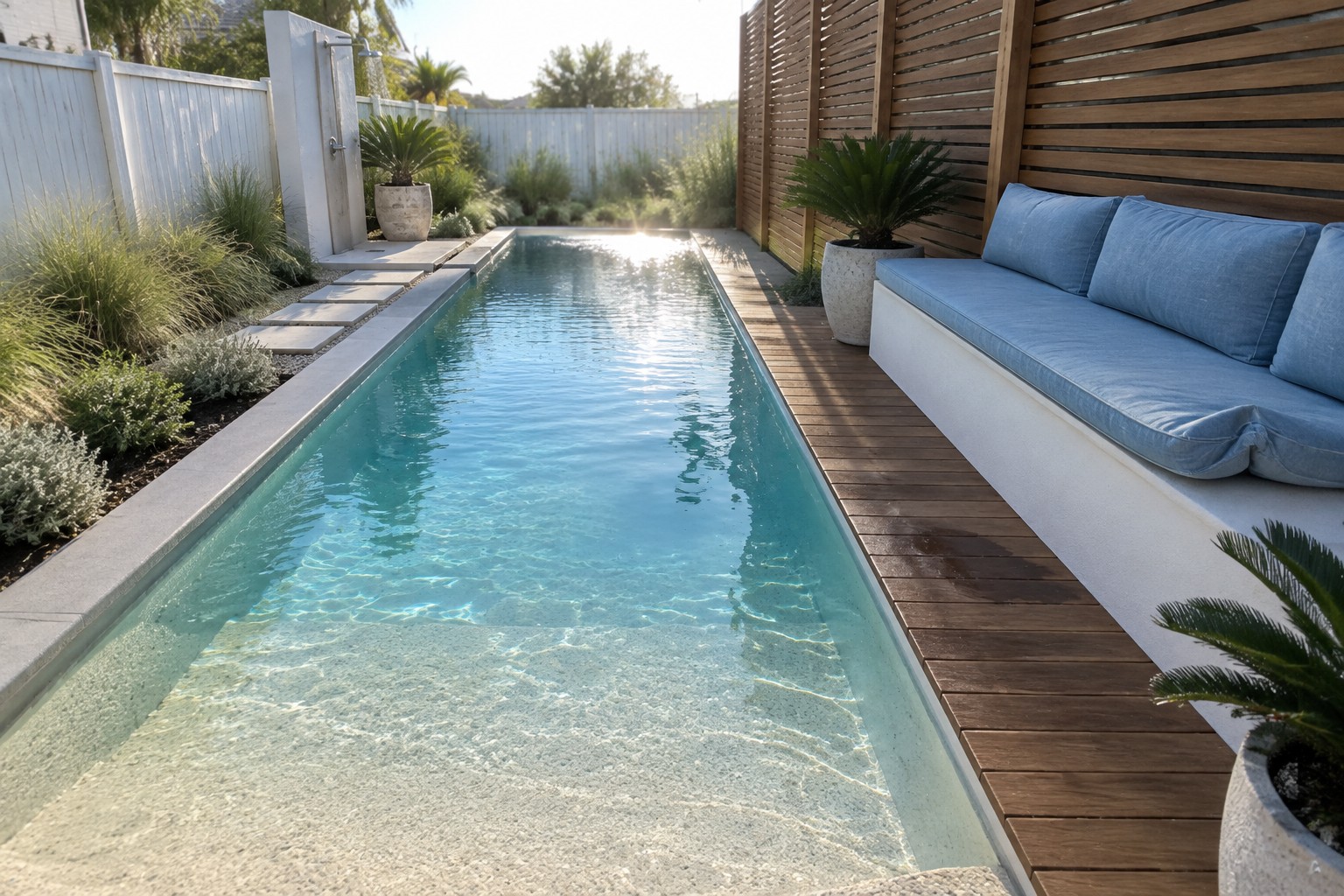
A narrow pool can make good use of the space between a home and its boundary, especially when a wider pool would crowd the yard. The long shape gives the water a clear path through the outdoor area and keeps the layout simple.
This arrangement works well in a compact coastal yard or a side courtyard. Keep a walking path beside the pool, and leave enough room at the ends for safe access and a place to sit.
Use a Straight Path to Lead Into the Pool
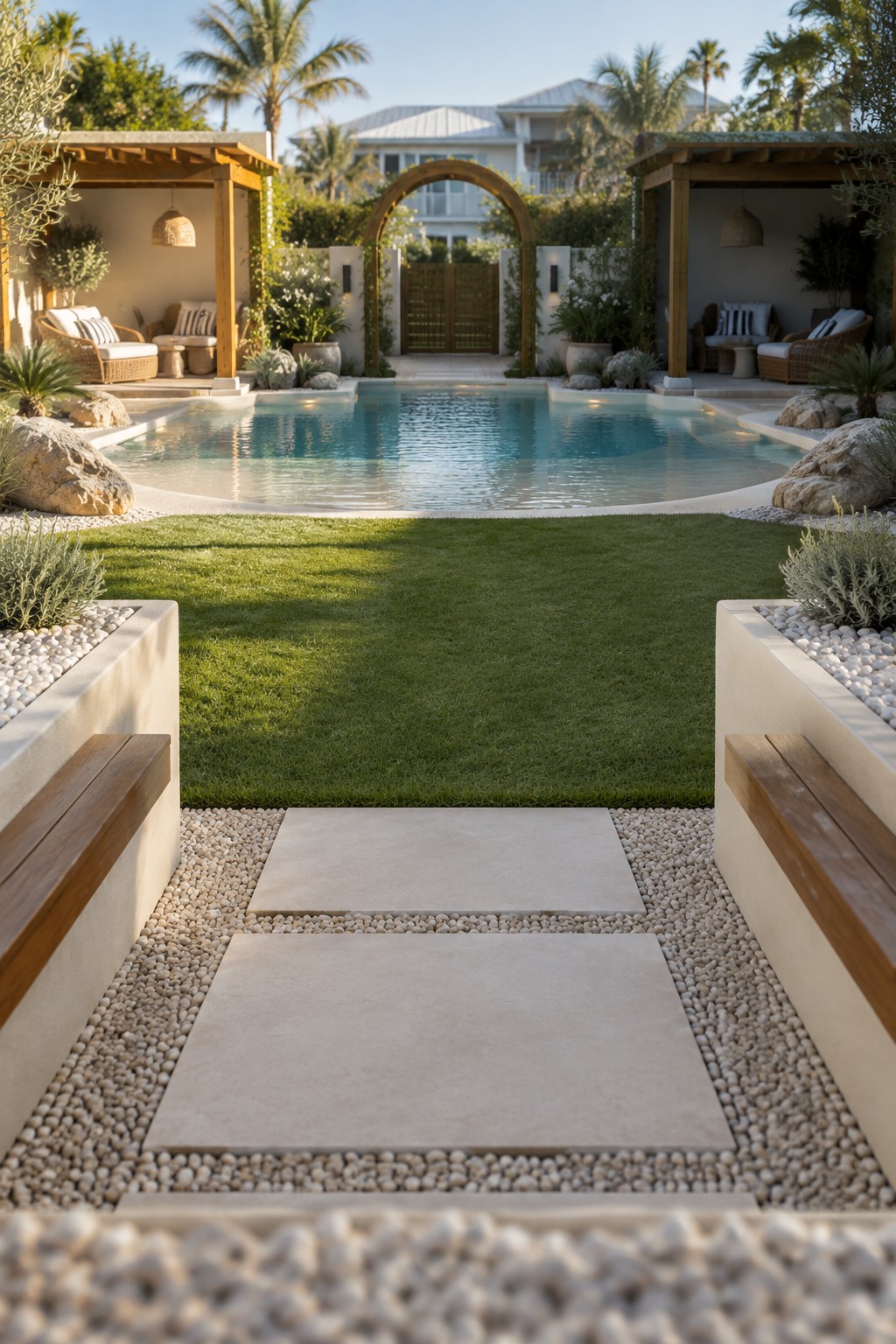
A direct path from the garden entrance to the pool makes the space easier to use and gives the yard a clear layout. Large rectangular pavers set in gravel are a simple way to mark the route without covering the whole ground in hard paving.
This approach works well in a compact courtyard or a larger backyard where you want a defined approach to the water. Keep the pavers level and leave enough room between them for comfortable steps.
Use a Geometric Pool to Shape the Patio

A long, straight-edged pool can help organize an outdoor living area. Its clean lines make the water feel like part of the patio layout, rather than a separate feature, while a shallow end gives people a place to sit or cool off.
This approach works well in a modern yard where there’s room to walk along the pool and gather nearby. Keep the pool edges and surrounding paving simple, and make sure the shallow area is large enough to use comfortably.
Use Separate Pool Levels to Define the Space
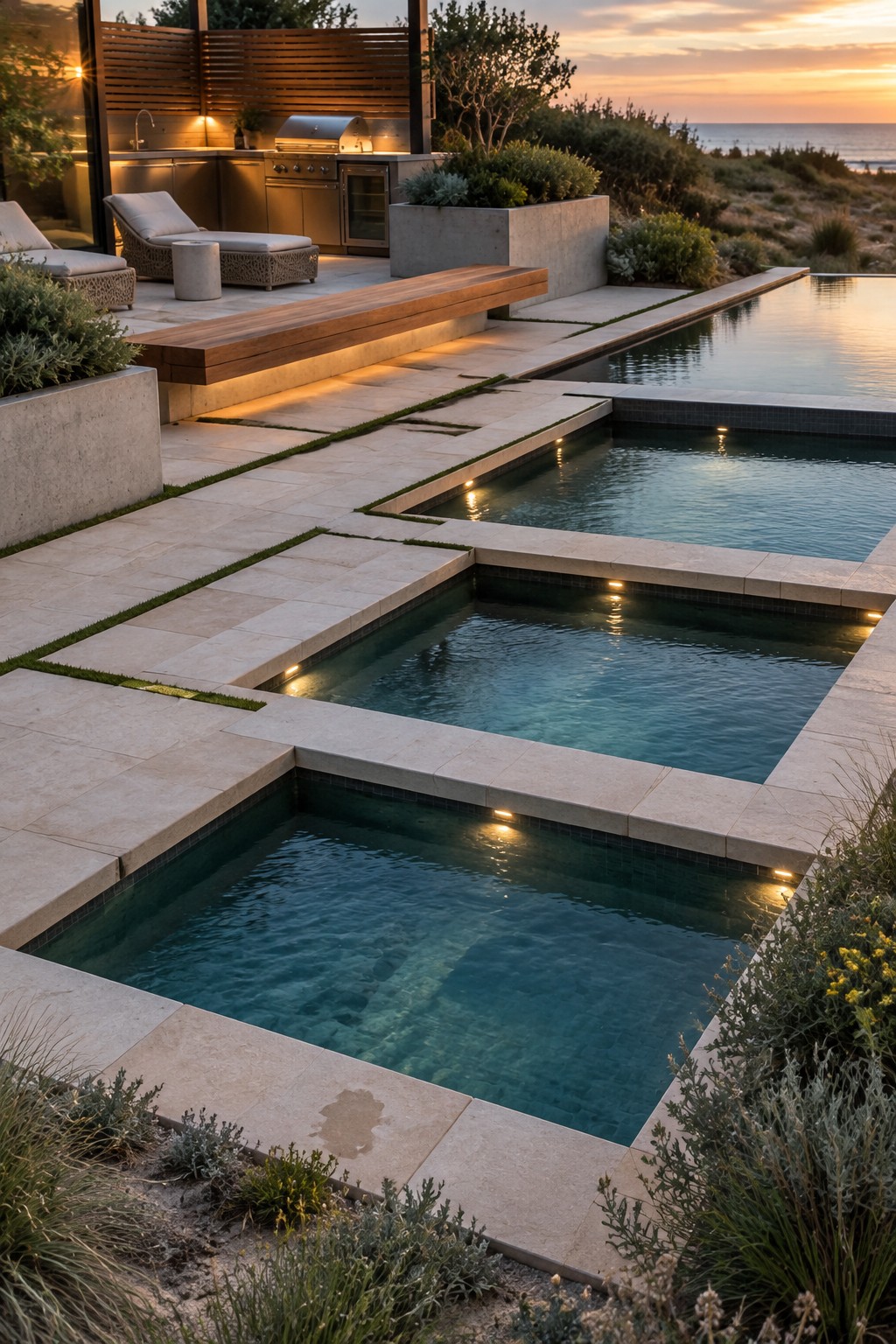
A pool made of connected geometric sections can give an outdoor area more than one place to swim or cool off. The changes in shape and level make each section feel distinct, while the shared stone coping keeps the layout connected.
This approach works well in a larger patio where one simple pool might feel too plain. Plan the sections around how you’ll use them, and keep the walking routes wide enough to move between the water and seating comfortably.
Use Large-Format Tile to Shape the Pool Floor
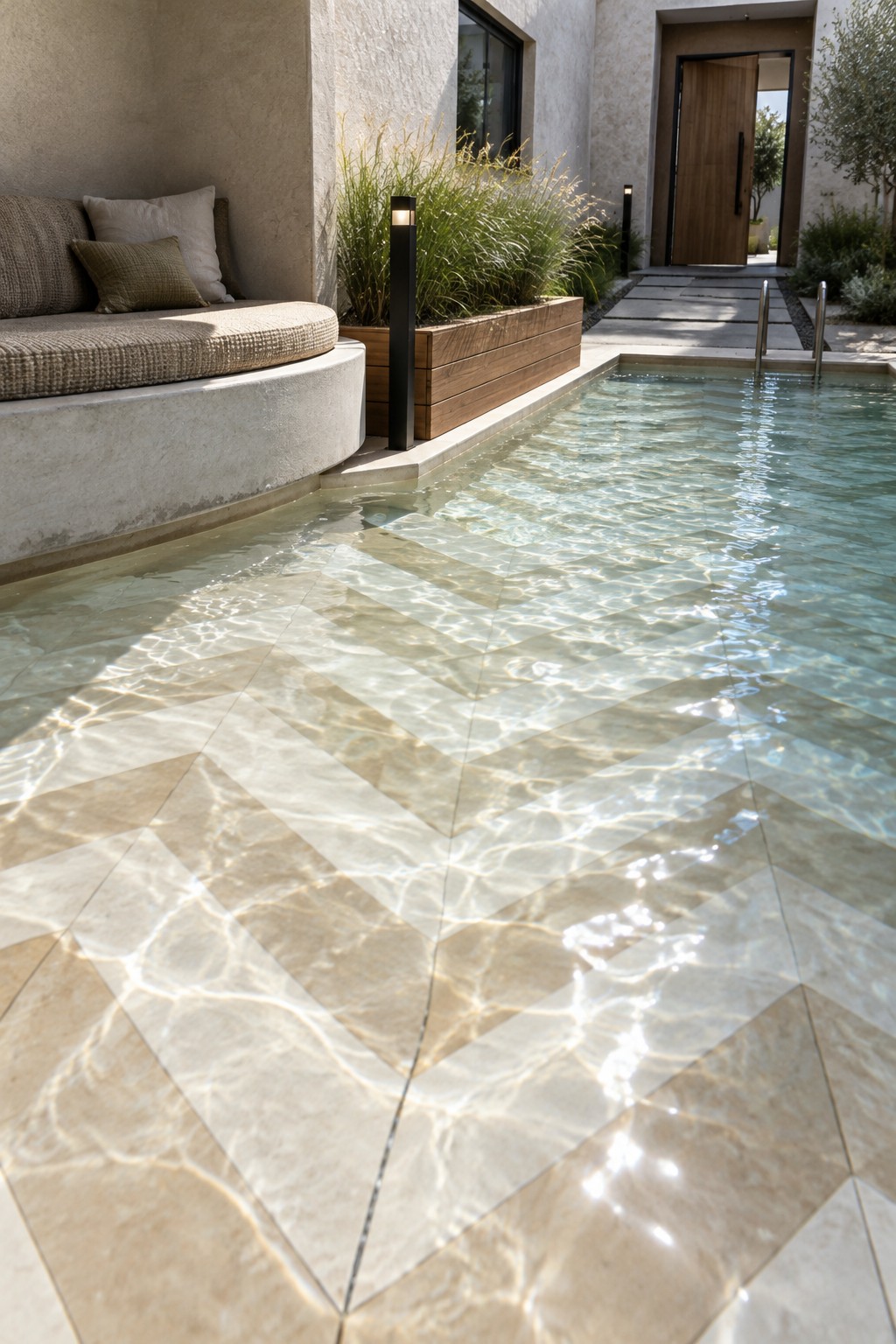
Large tiles can give a shallow entry pool a clear geometric pattern without adding extra features. The broad shapes remain easy to see through the water, making the pool floor part of the overall layout.
This approach works well in a compact courtyard or beside a modern entry, where the pool has a simple outline. Choose tile rated for submerged use, and keep grout lines even so the pattern stays neat.
Add a Shallow Shelf to the Pool
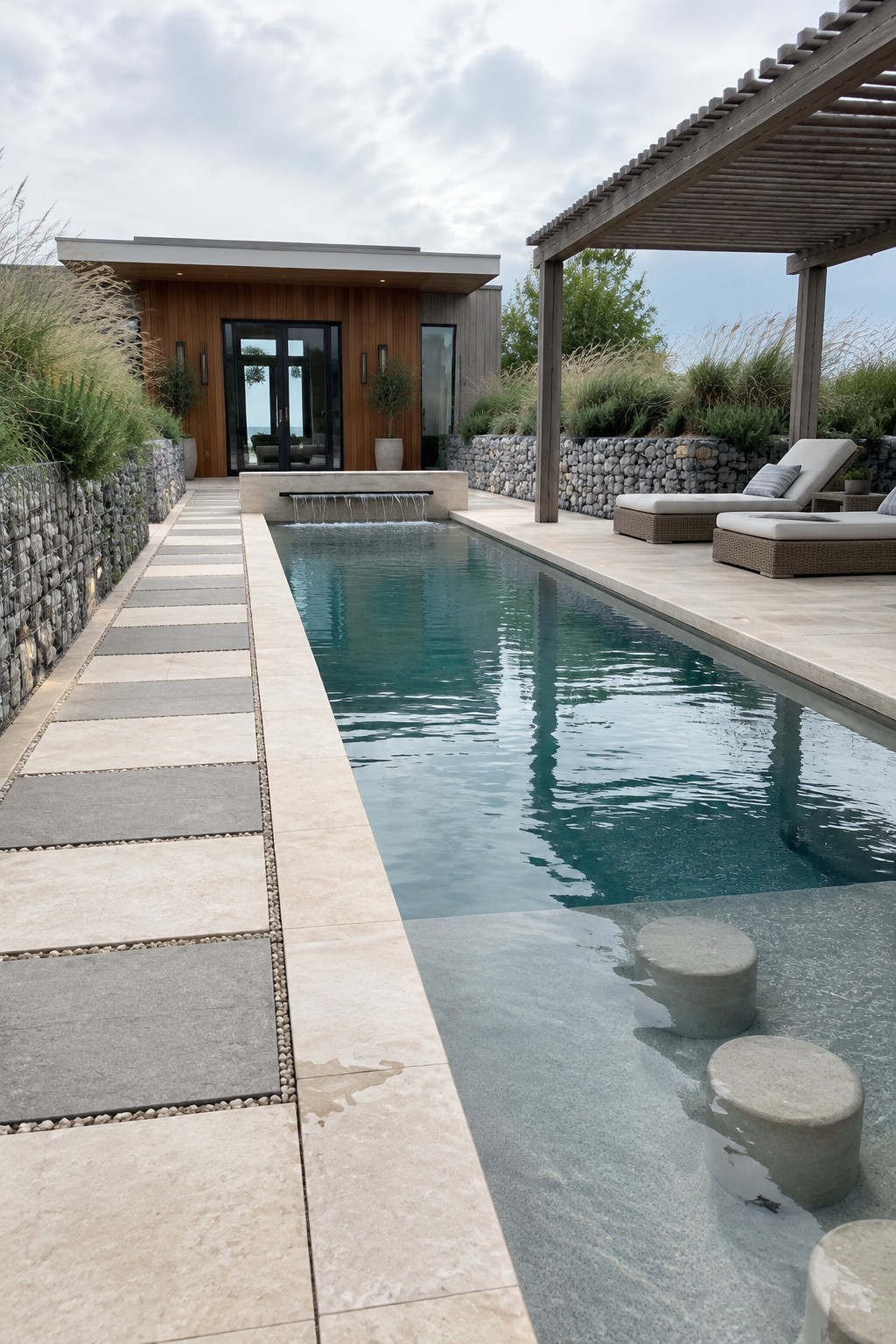
A shallow shelf at one end of a pool gives people a place to sit or cool off without entering the deeper water. It also makes a long, geometric pool more useful for different ages and comfort levels.
For a similar layout, keep the shelf wide enough for comfortable seating and make the change in depth easy to see. Built-in round stools can provide extra places to sit, but leave enough open shelf space to move around them.
Add a Pebble-Finished Shallow Pool Entry
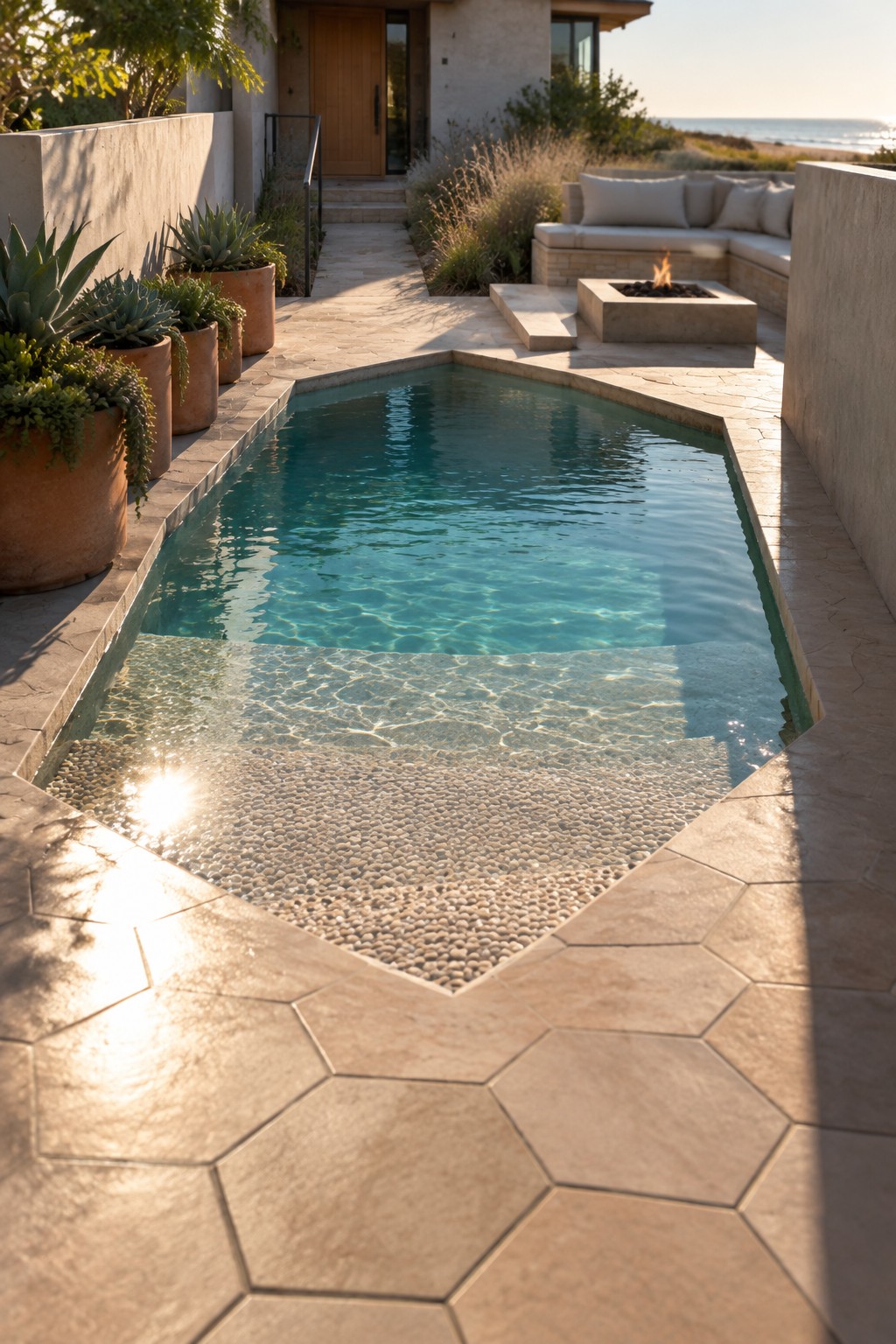
A shallow, pebble-finished entry gives a geometric pool a useful place to sit or cool off without taking up much patio space. The gradual change in depth also makes the pool feel easier to enter.
This approach works well in a compact beachside yard, especially when the main swimming area needs to stay clear. Use smooth pebbles underfoot, and keep the entry broad enough to be comfortable.
Use a Raised Pool Wall as a Water Feature
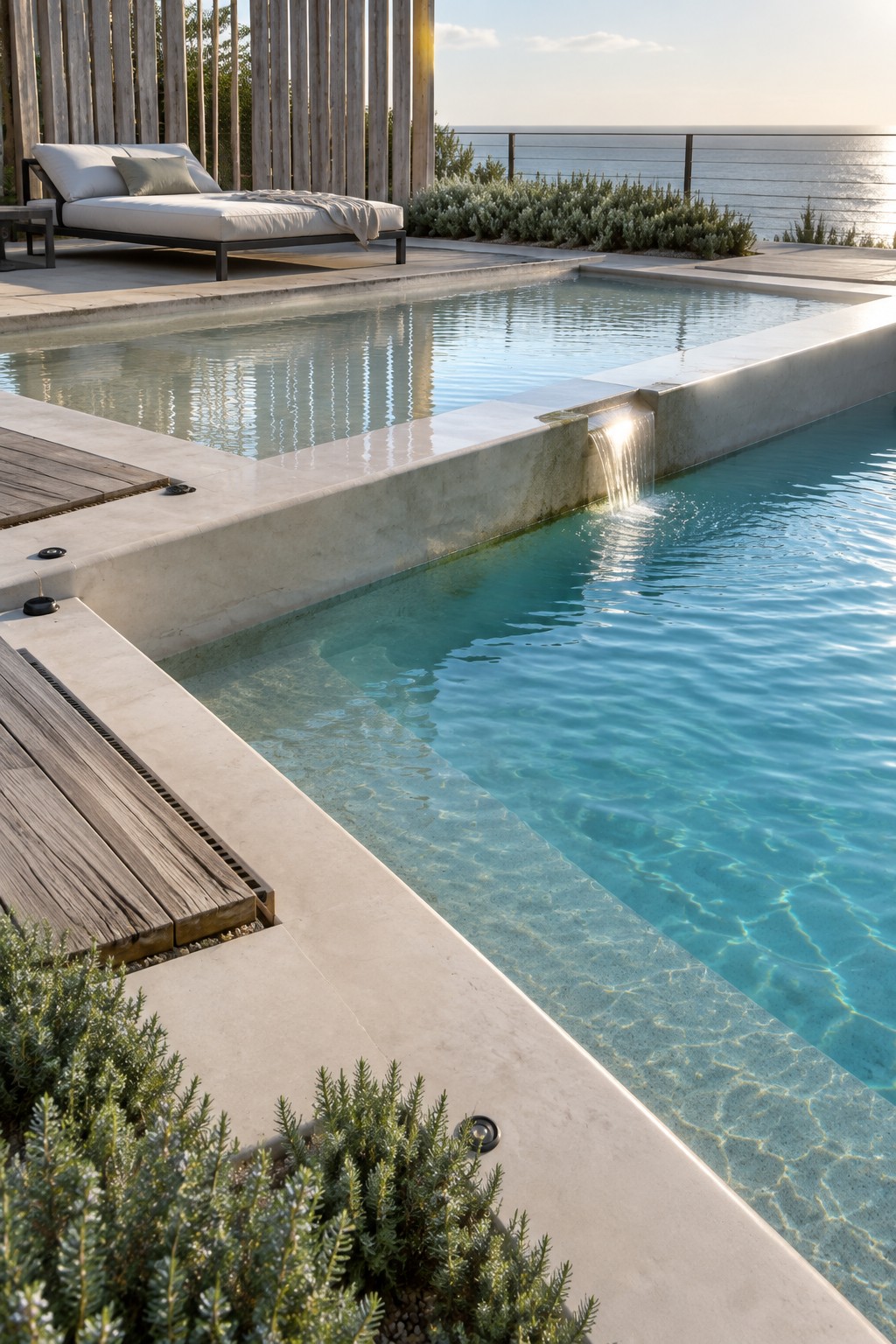
A raised wall can separate pool areas while giving the water a clear edge. Here, a small opening lets water spill into the lower section, making the change in pool level useful as well as attractive.
This layout works well when you want distinct zones without adding a fence or bulky divider. Keep the wall wide enough to sit or rest a drink on, and make sure the spillway is easy to reach for cleaning.
Use a Sun Shelf for Poolside Lounging
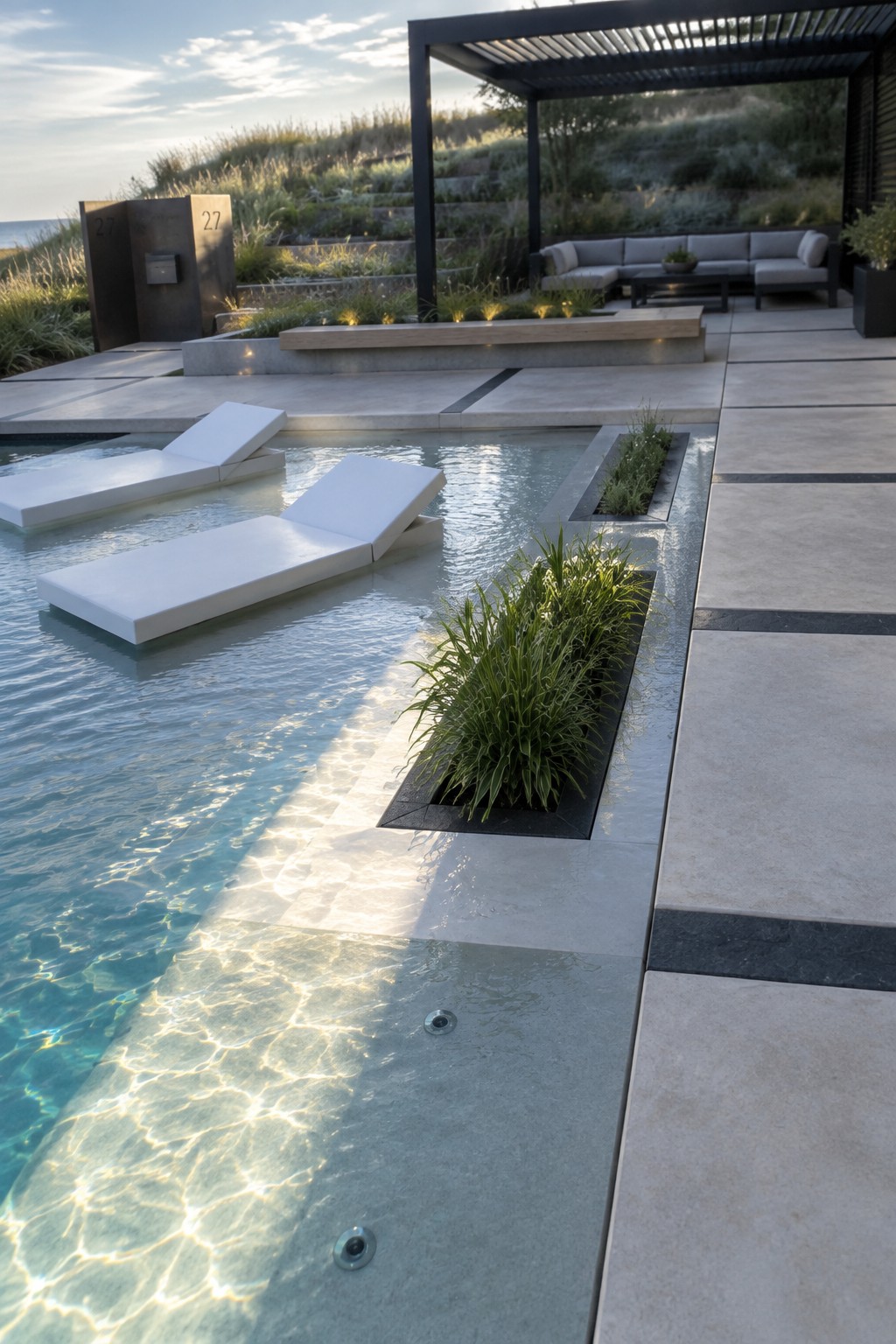
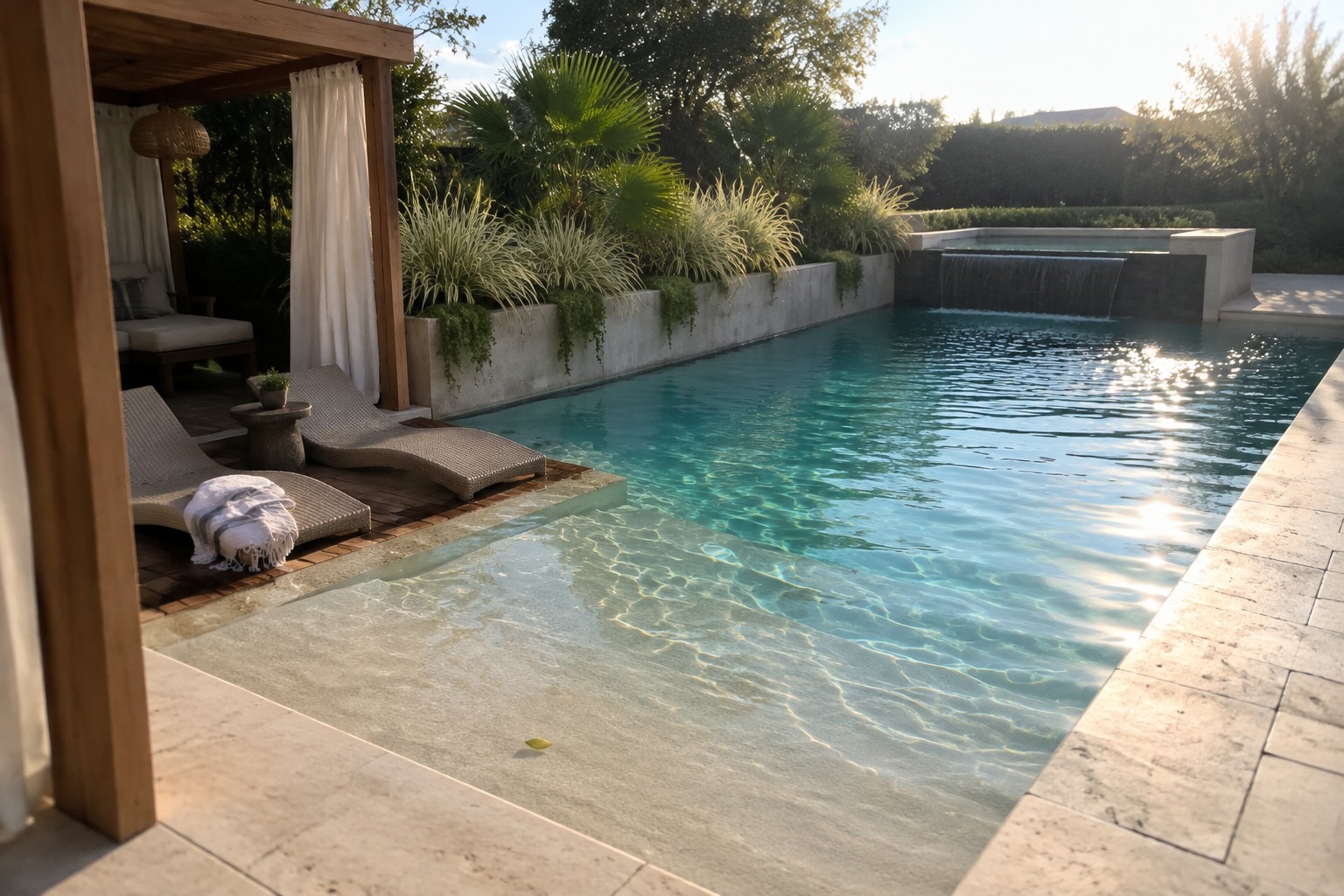
A shallow shelf lets you enjoy the pool without having to swim. Here, submerged loungers sit on the broad entry area, making the pool feel useful for relaxing as well as cooling off.
This works well in a modern beach entry pool, especially when there is room to keep the shelf separate from the deeper swimming area. Leave enough space around the loungers for people to move through the water comfortably.
Use a Narrow Pool to Extend the Entry

A long, narrow pool can make a small courtyard feel more purposeful by giving the space a clear direction. Here, the straight pool runs from the front of the patio toward the entry, making the geometric layout easy to follow.
This shape works well in a compact outdoor area where a wide pool would leave little room for walking or seating. Keep a clear tiled path along the water, and make sure the pool is wide enough for comfortable use.
Use Walkways to Connect Pool Levels
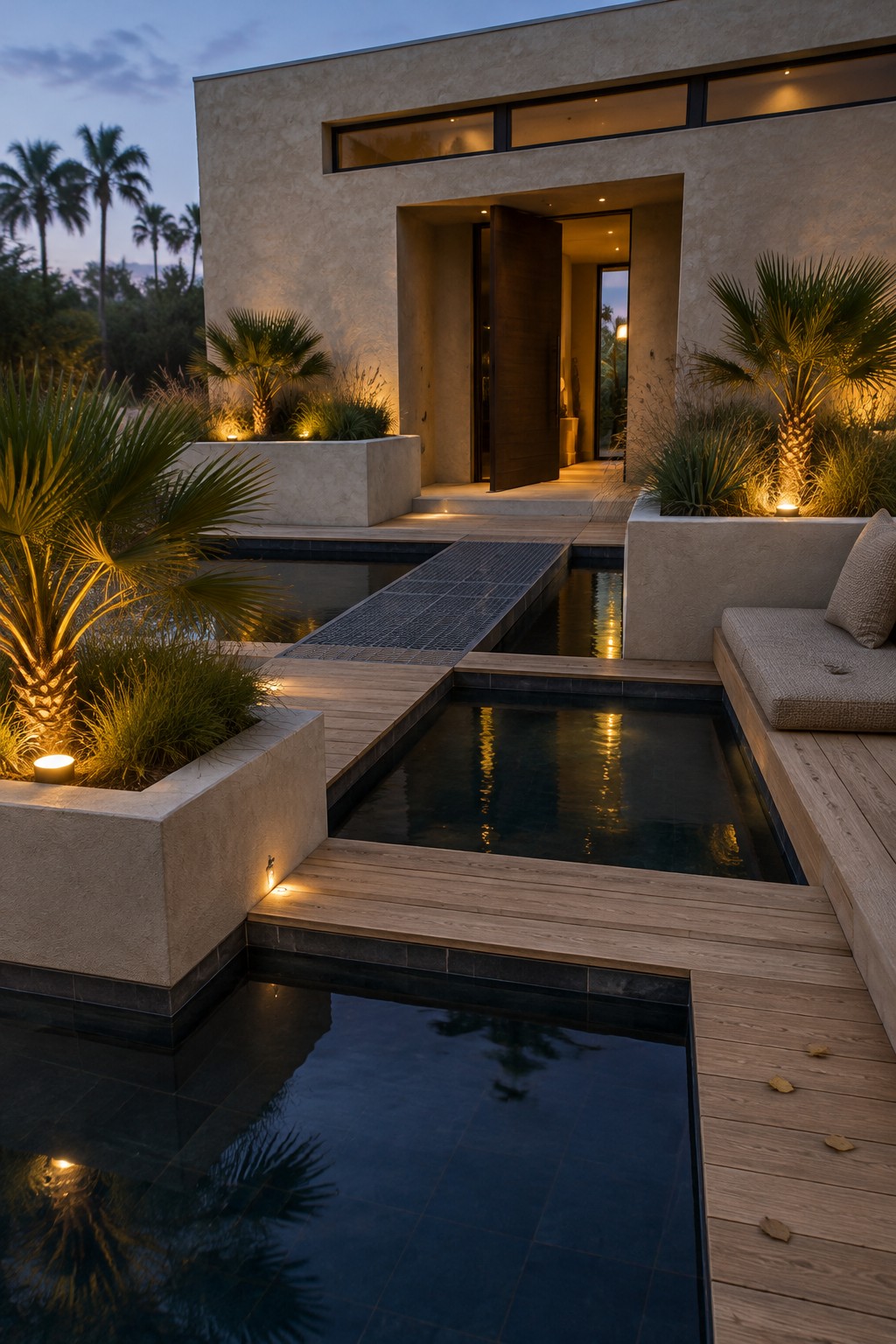
A walkway can make a geometric pool easier to move around and help the different water sections feel connected. Here, a narrow bridge crosses one pool channel, while wider wooden paths link the other sections to the entry.
This approach works well in a courtyard or compact pool area where a straight path would take up too much room. Keep the crossings wide enough for comfortable use, and choose a slip-resistant surface near the water.
Set the Pool Within a Curved Patio
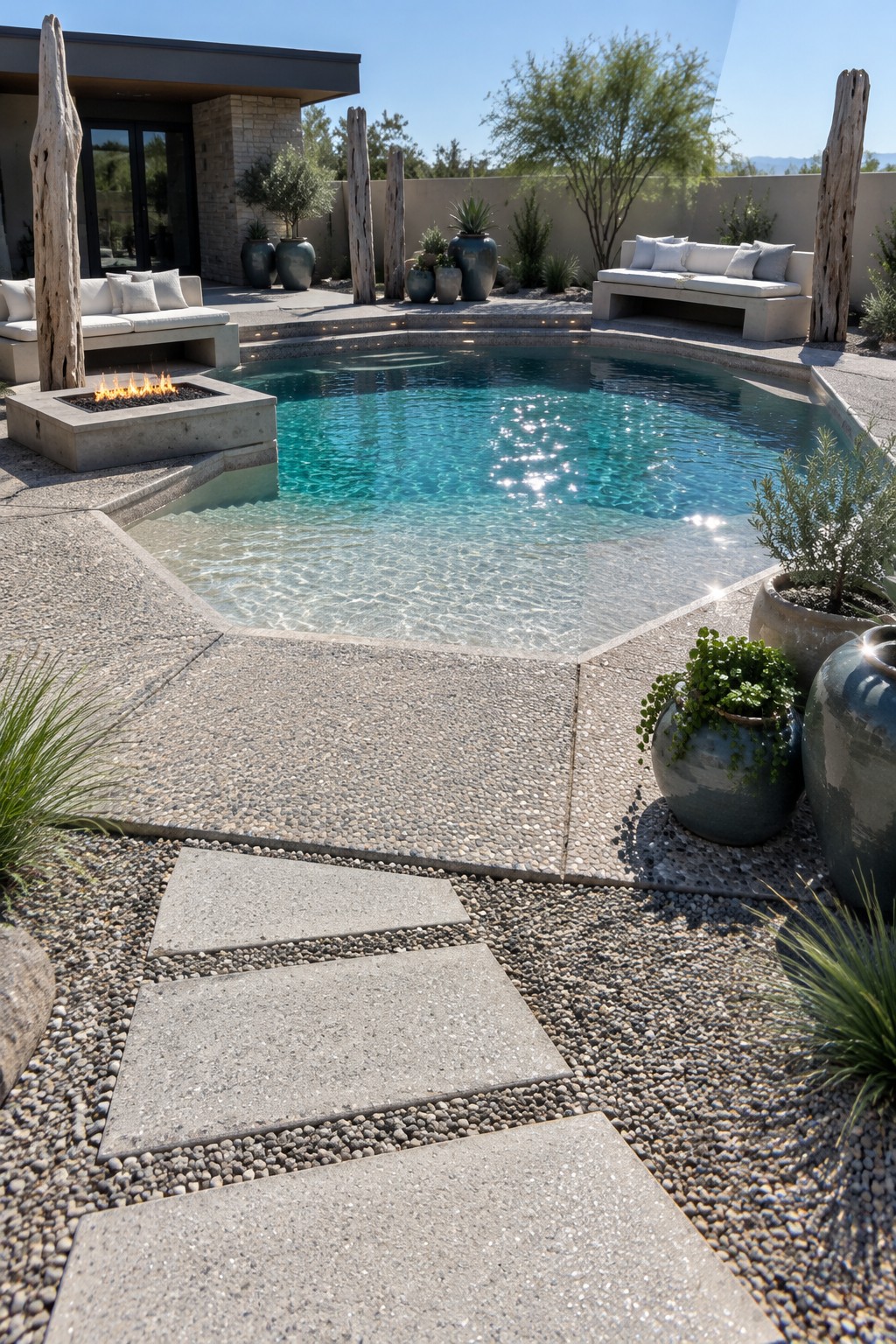
A curved pool edge can make a geometric layout feel less rigid. The rounded outline gives the water a softer shape, while the broad stone deck leaves room to move around it.
This approach suits a patio where people will swim and gather in the same space. Keep the pool edge and walking surface easy to navigate, and leave enough clear deck for seating or a small fire feature.
Use a Side Spillway Along the Pool
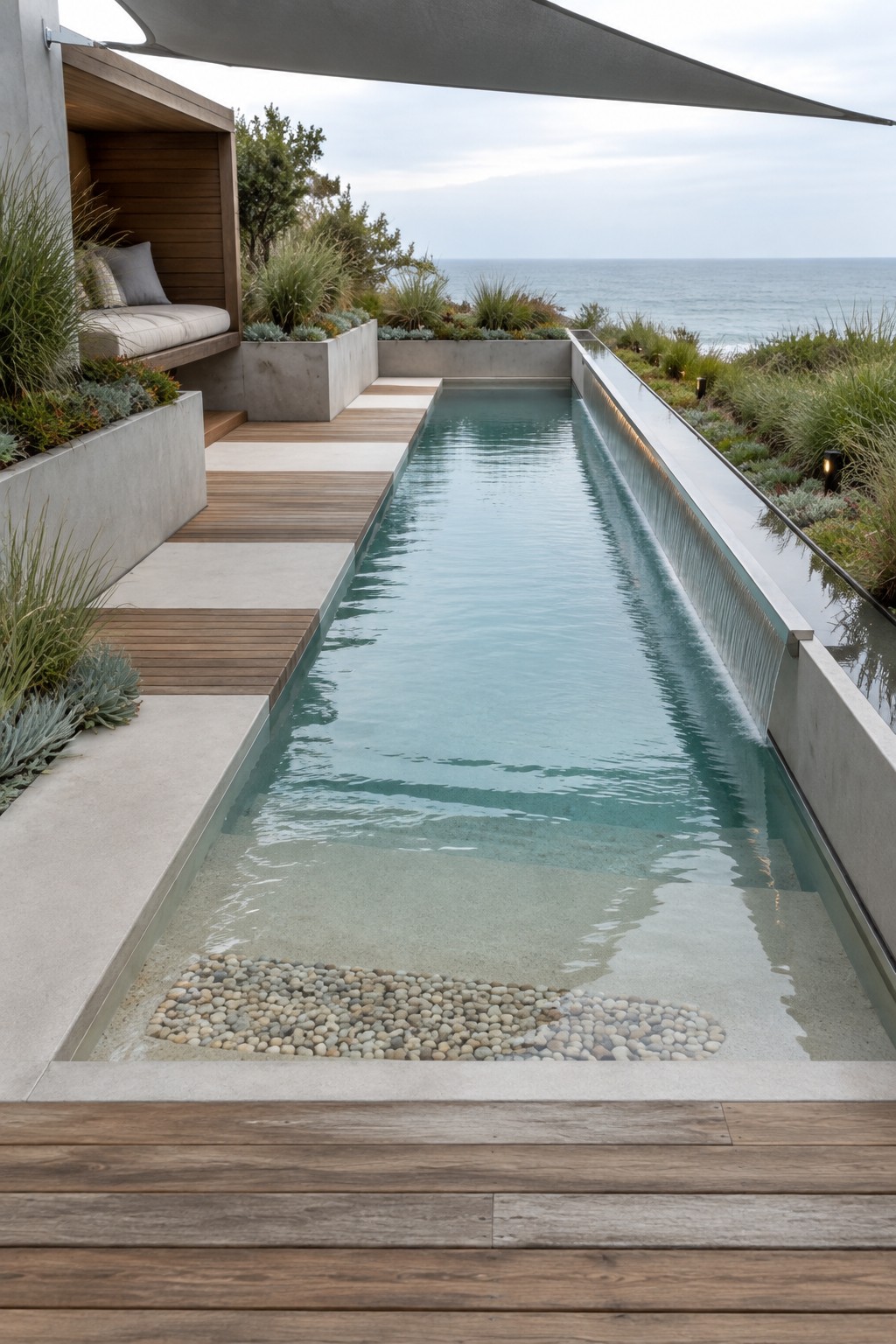
A narrow spillway built into the pool wall can give a straight-sided pool a gentle movement of its own. It also makes good use of the long edge without changing the pool’s simple shape.
This works best where the pool wall borders a deck or walkway, so the water can fall back into the pool rather than onto a busy path. Keep the spillway modest, and plan for the extra pump and upkeep it will need.
Add a Built-In Bench Along the Pool

A built-in bench gives a poolside area a place to pause without taking up room for separate chairs. Here, the long bench sits beside the water, making the edge useful for lounging as well as swimming.
This setup works well in a compact courtyard or beside a narrow pool, where loose furniture can crowd the walkway. Choose weather-resistant cushions and leave enough clear space for people to move safely around the pool.
Use Grass Edges to Separate Pool Levels

A narrow strip of grass between pool sections makes each level easy to read without adding a solid barrier. It gives a geometric pool layout a softer edge, while keeping the separate areas visually connected.
This approach works well in a long, narrow entry pool where a walkway crosses the water. Keep the grass borders slim and choose a variety that can handle regular trimming and splashes.
Use a Deck to Connect the Pool and Seating Area

A low deck that crosses part of the pool makes the seating area feel connected to the water without taking over the whole patio. It also gives a long, straight edge to work with, which suits a pool built around simple geometric lines.
This works best when the deck is wide enough for comfortable passage and leaves plenty of open water around it. Choose a durable, slip-resistant outdoor material, and plan the supports and lighting carefully so the underside stays safe and easy to maintain.
Use Curved Steps to Ease Into the Pool
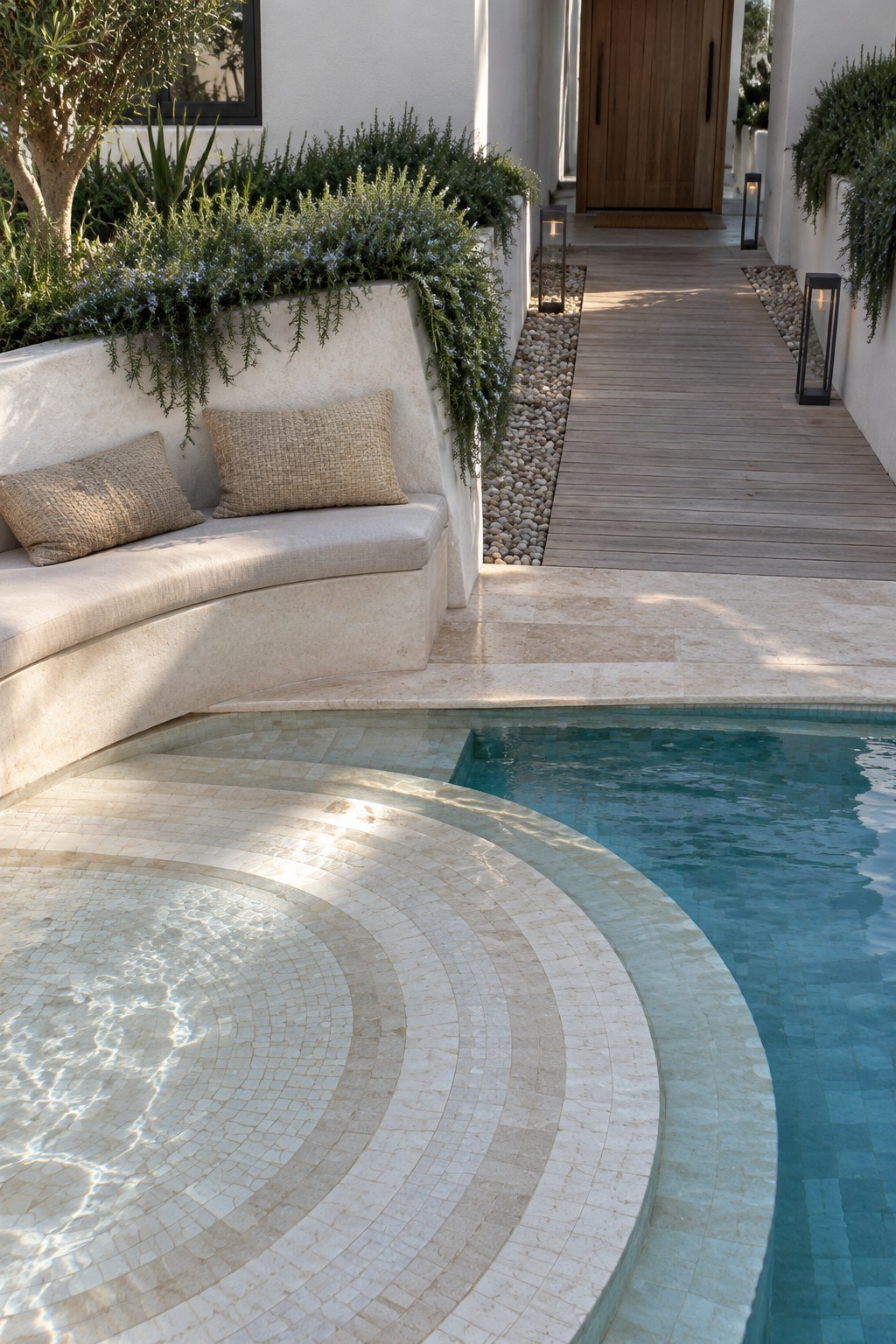
A rounded, shallow entry can make a geometric pool feel more comfortable to use. The curved steps create a gradual transition from the tiled deck into deeper water, and the pattern helps mark that change.
This approach works well when a pool has room for a broad entry shelf or steps along one side. Keep the curves simple so they fit the pool’s overall shape, and choose a slip-resistant tile for the steps.
Frequently Asked Questions
Q: Is a beach entry pool practical for everyday use, or is it mostly for looks?
A: It can be both. The gradual slope makes it easy to wade in, sit at the water’s edge, or help young kids get comfortable, though it takes up more pool space than steps.
Q: How do geometric layouts work with a curved or sloped beach entry?
A: Keep the main pool shape crisp, then let the entry form a clean wedge or broad curve at one end. A simple outline helps the transition feel intentional rather than like an awkward notch.
Q: Will a beach entry get slippery?
A: It can, especially where the water stays shallow. Choose a pool finish made for wet feet and keep the entry free of algae and grit.
Q: Can I add a beach entry to an existing pool?
A: It’s possible, but it usually means major structural work and may reduce the swimming area. If you’re planning a renovation, ask a pool builder to check the shell and layout before settling on the design.