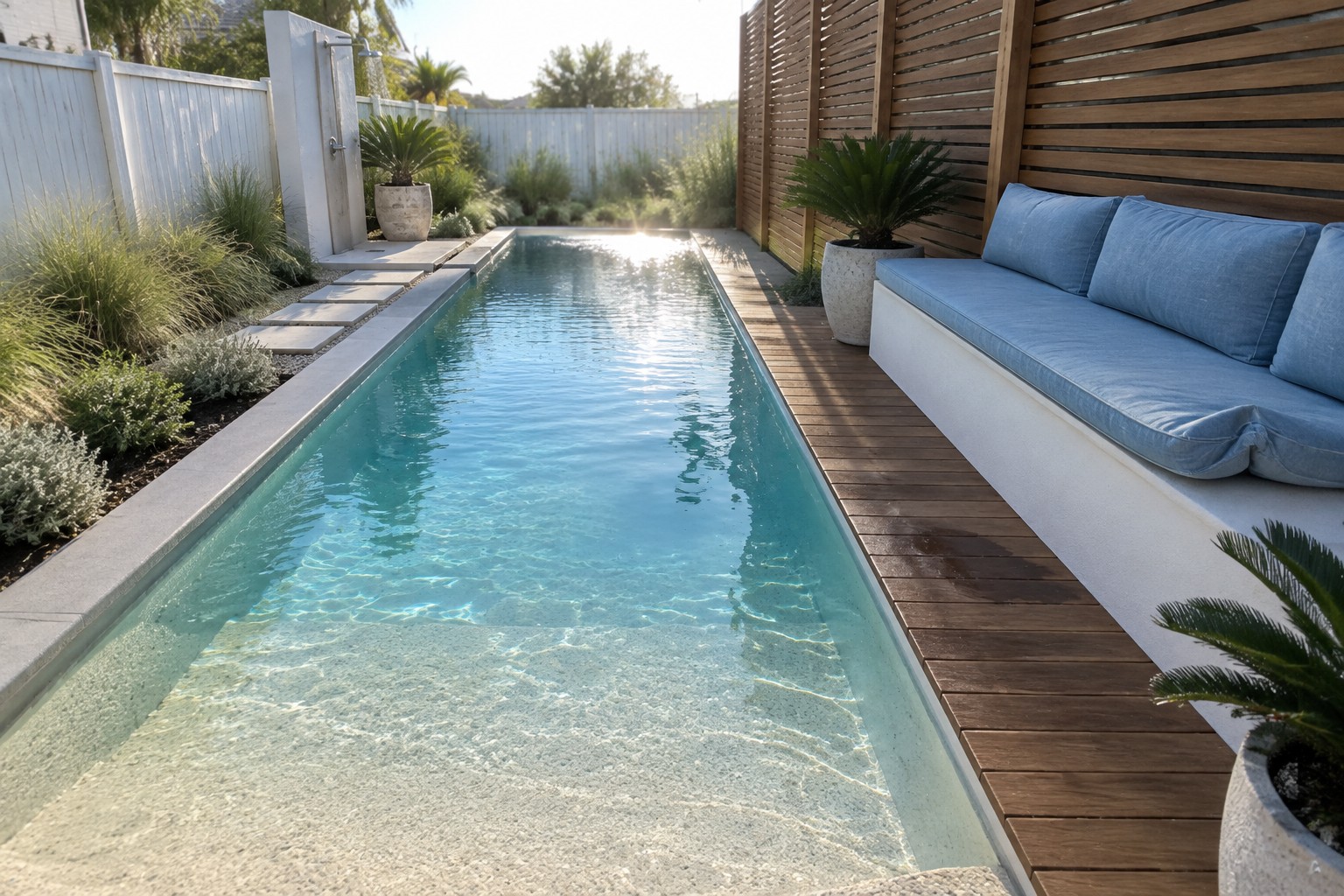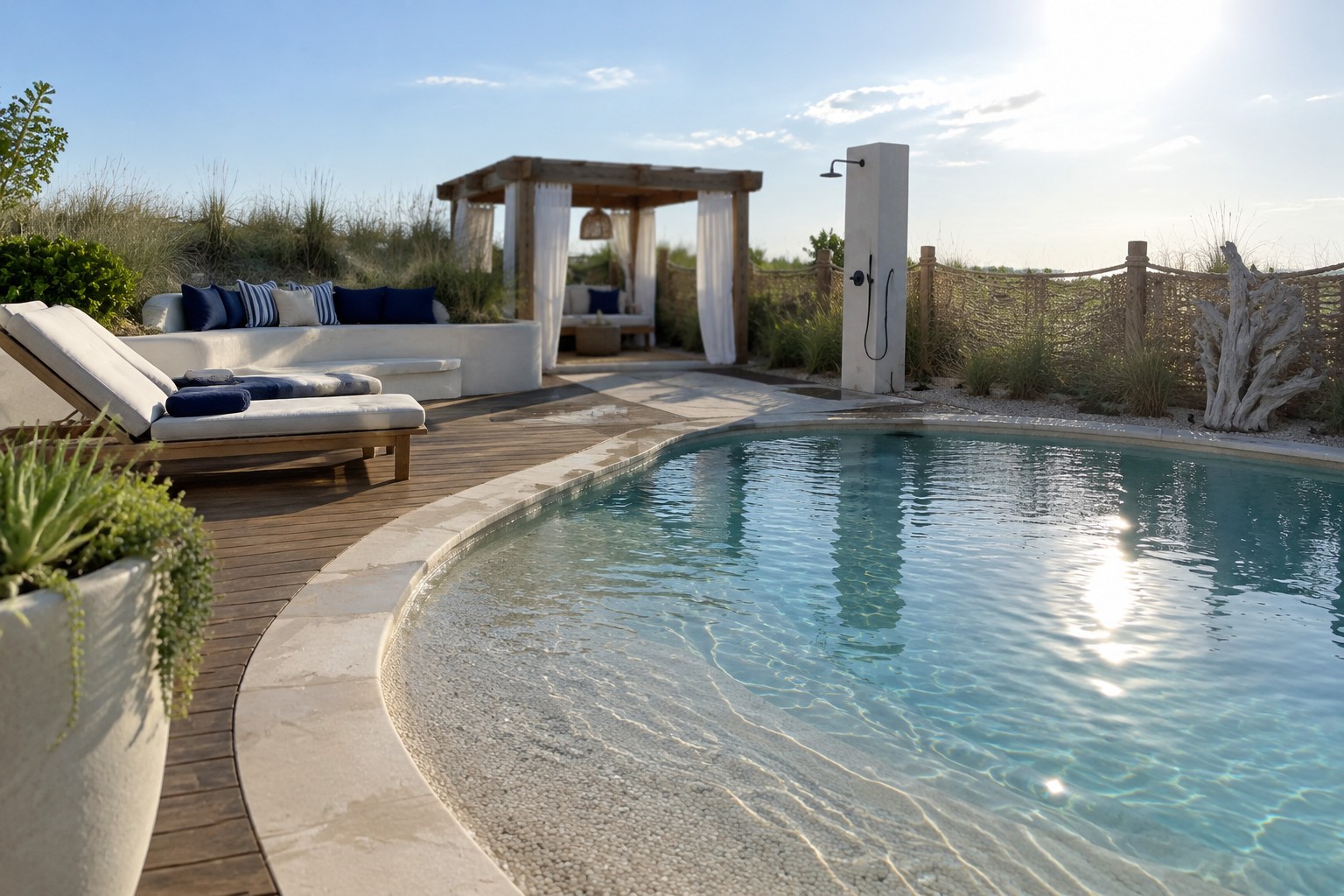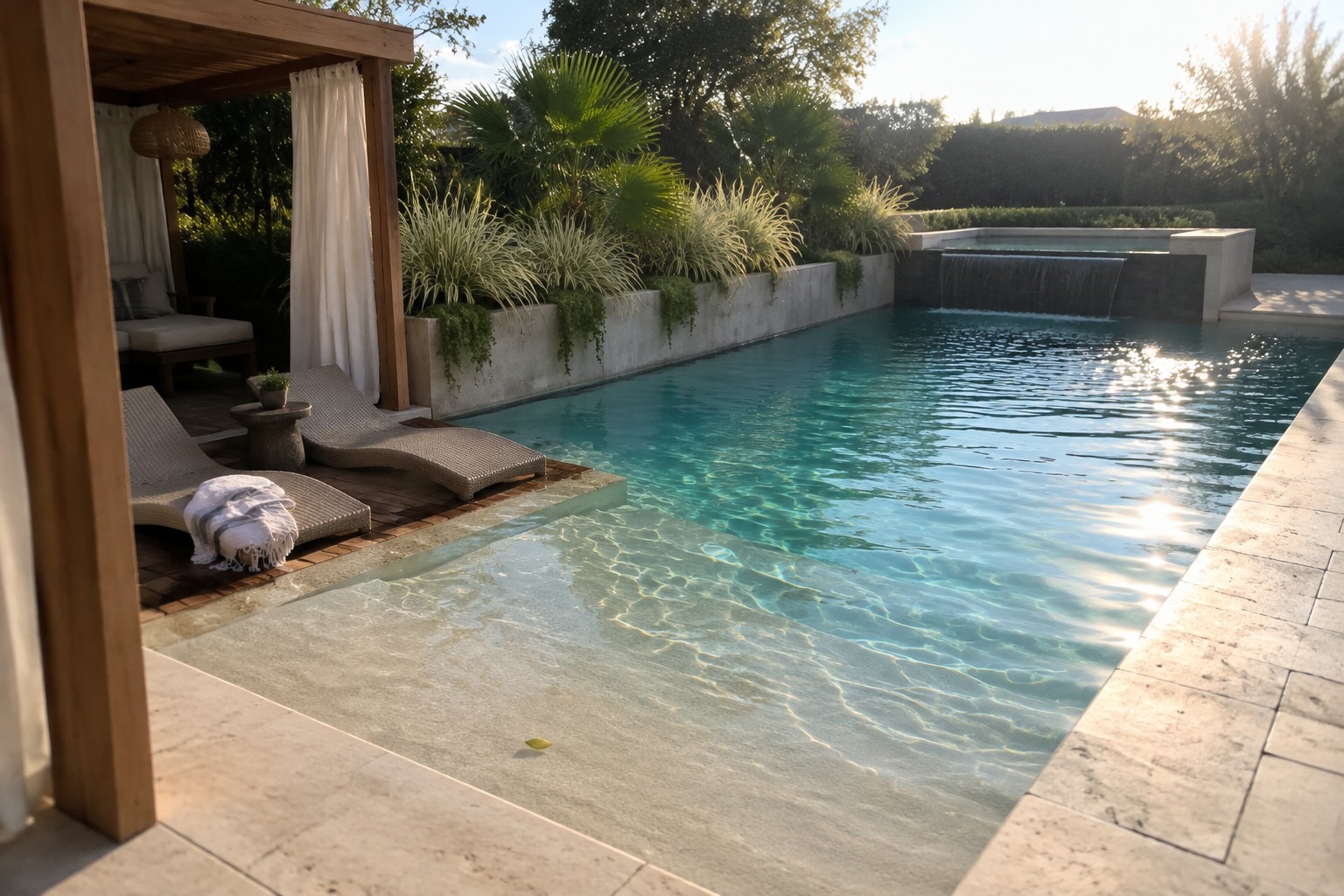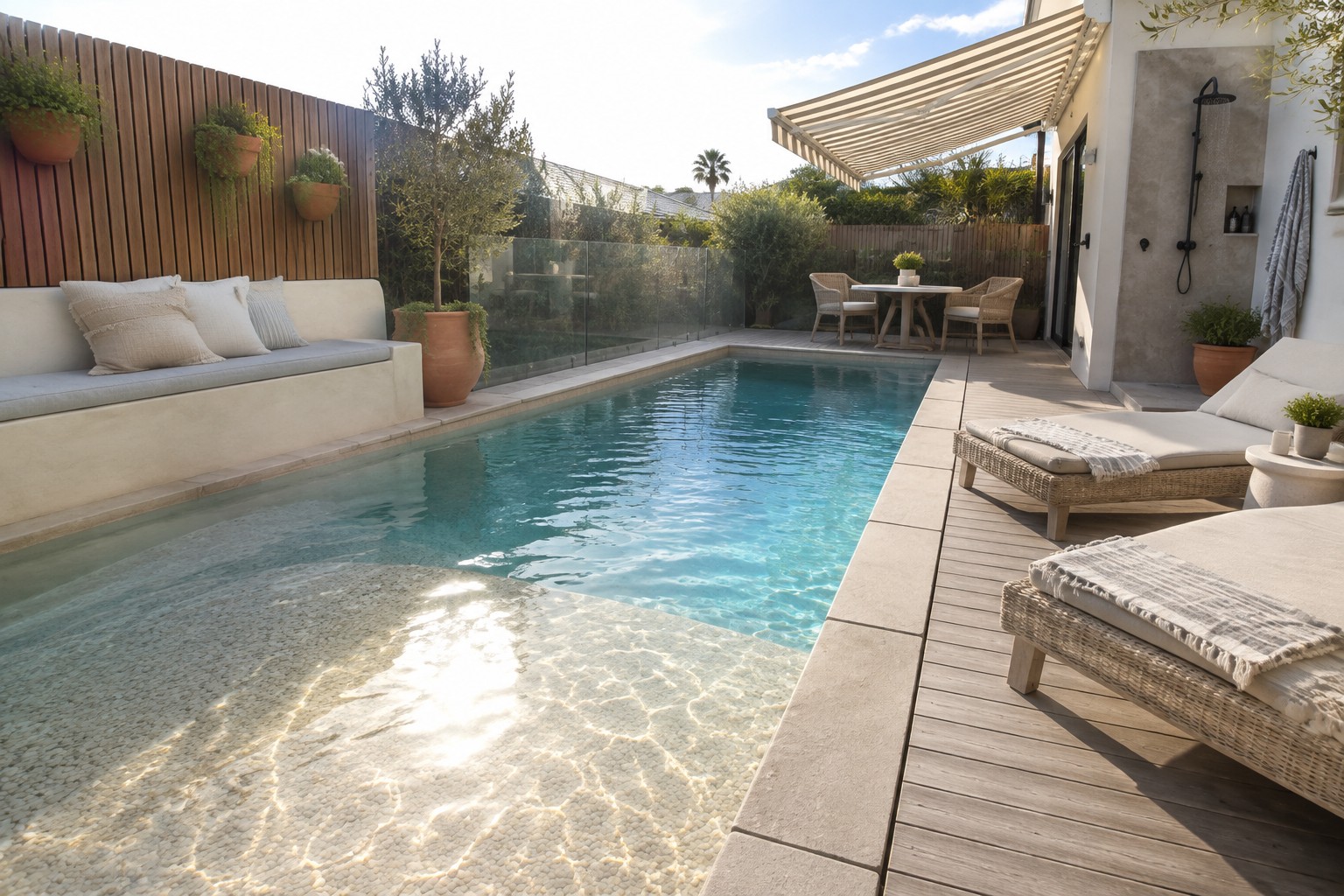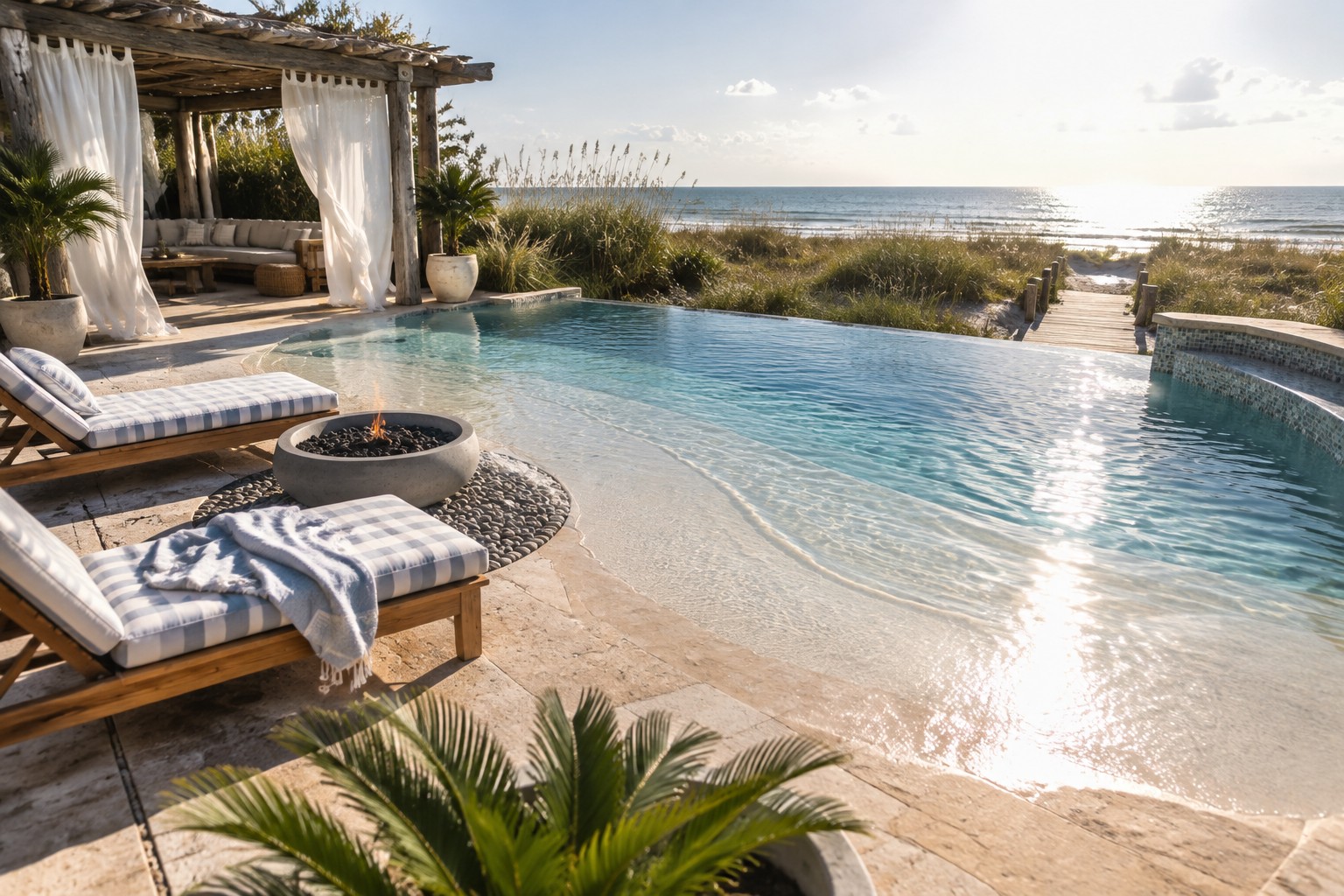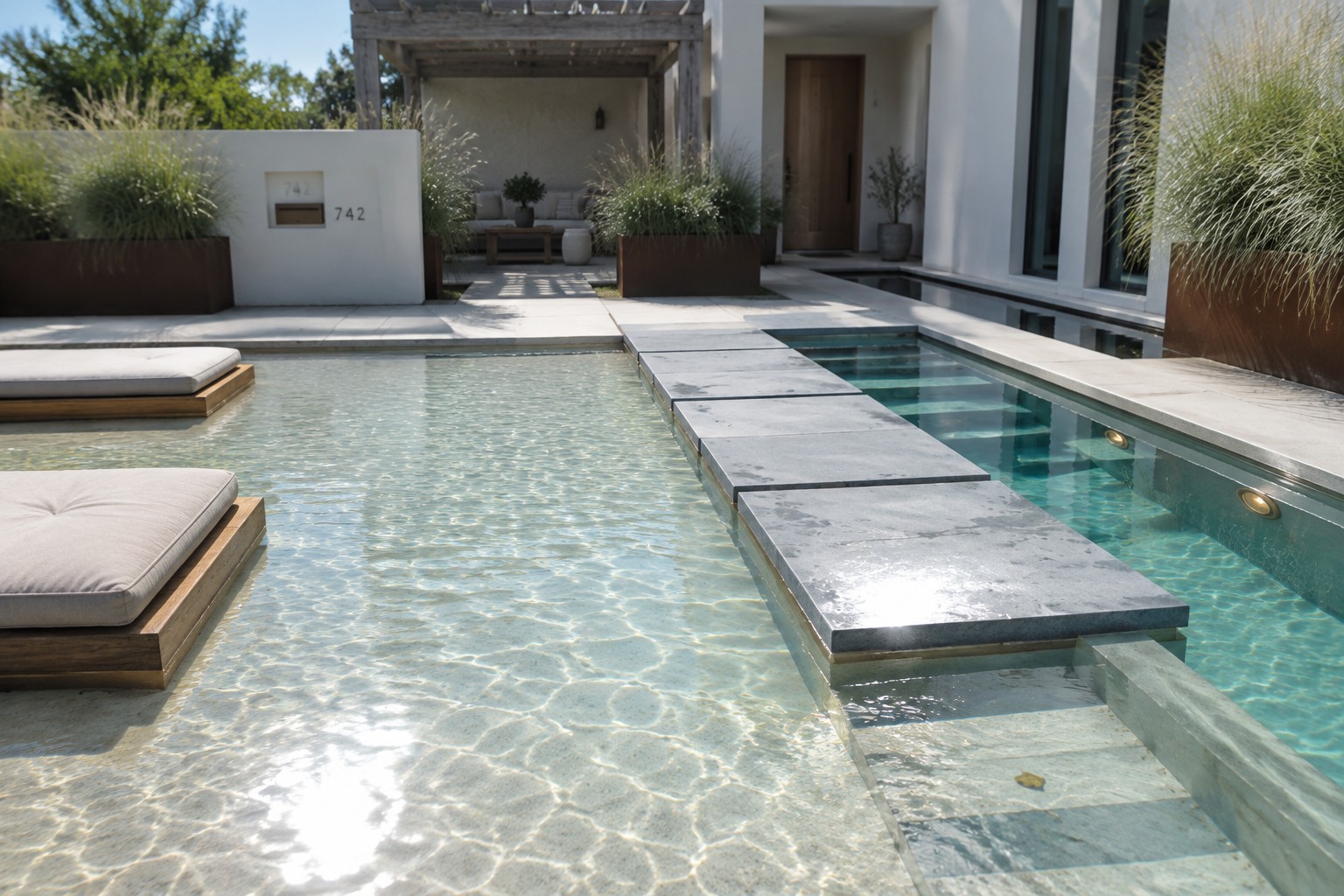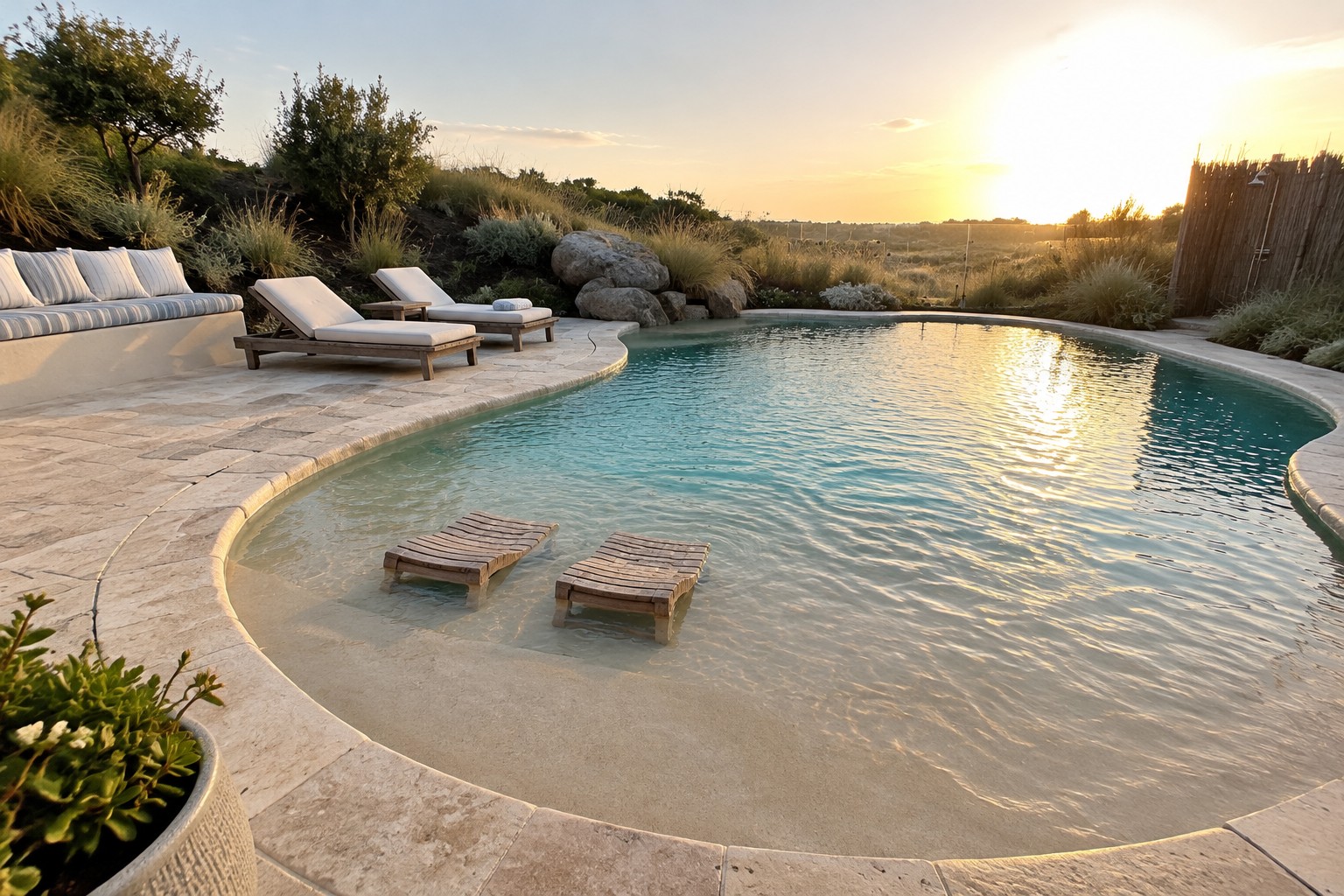
A beach-entry pool can make a backyard feel more connected to the landscape, especially when its edge curves naturally rather than following a rigid rectangle.
I’ve found that the shape matters as much as the water itself: a gradual slope needs enough room to feel comfortable, while the surrounding deck still has to work for lounging and getting around.
Planting, stone, and the pool’s outline all affect how the space looks from the house and how it settles into the yard.
The best designs balance those soft curves with practical choices, like clear pathways and a shallow area that is easy to use.
Some of these details are worth saving as starting points and adapting to the size and layout of your own backyard.
Make the Beach Entry Part of the Pool Layout
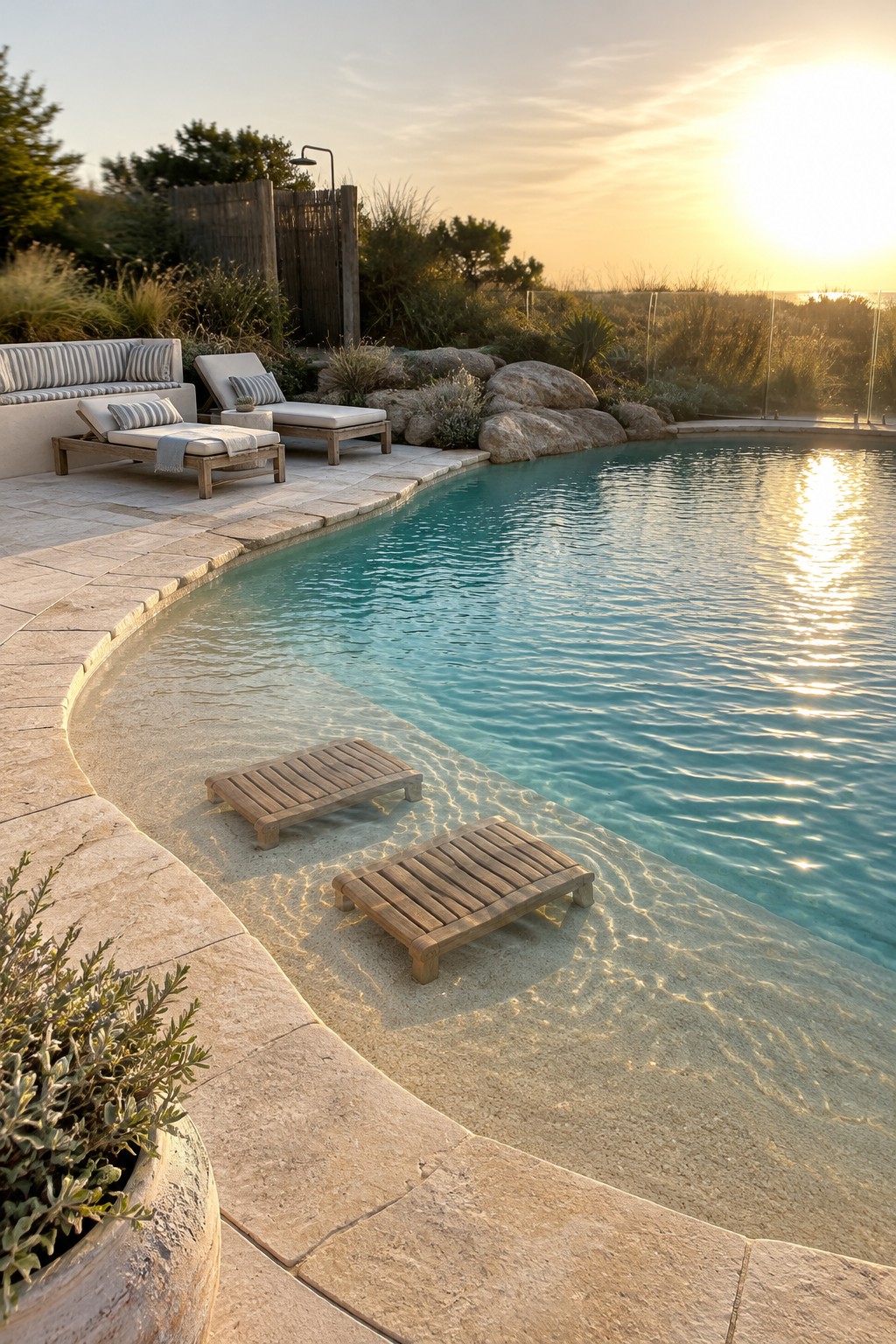
A gently sloped beach entry makes a pool easier to step into and gives it a more natural shape. The shallow section also creates a useful spot to sit or cool off without heading straight into deeper water.
For a relaxed look, let the entry curve into the pool rather than ending in a sharp line. Stone coping can follow that curve, and small submerged loungers work well in the shallow area. Keep enough clear space around the entry so people can move in and out comfortably.
Let the Pool Edge Follow a Natural Curve

A freeform pool feels more connected to the patio when its edge bends gradually instead of following a straight line. Here, the pale stone coping traces a rounded curve, making the shallow entry feel like part of the pool rather than a separate step.
This shape works well in a relaxed outdoor living area, especially when you want room to sit near the water or ease into it gradually. Keep the curve simple enough to leave practical space for walking and furniture.
Try a Beach Entry for Easier Pool Access
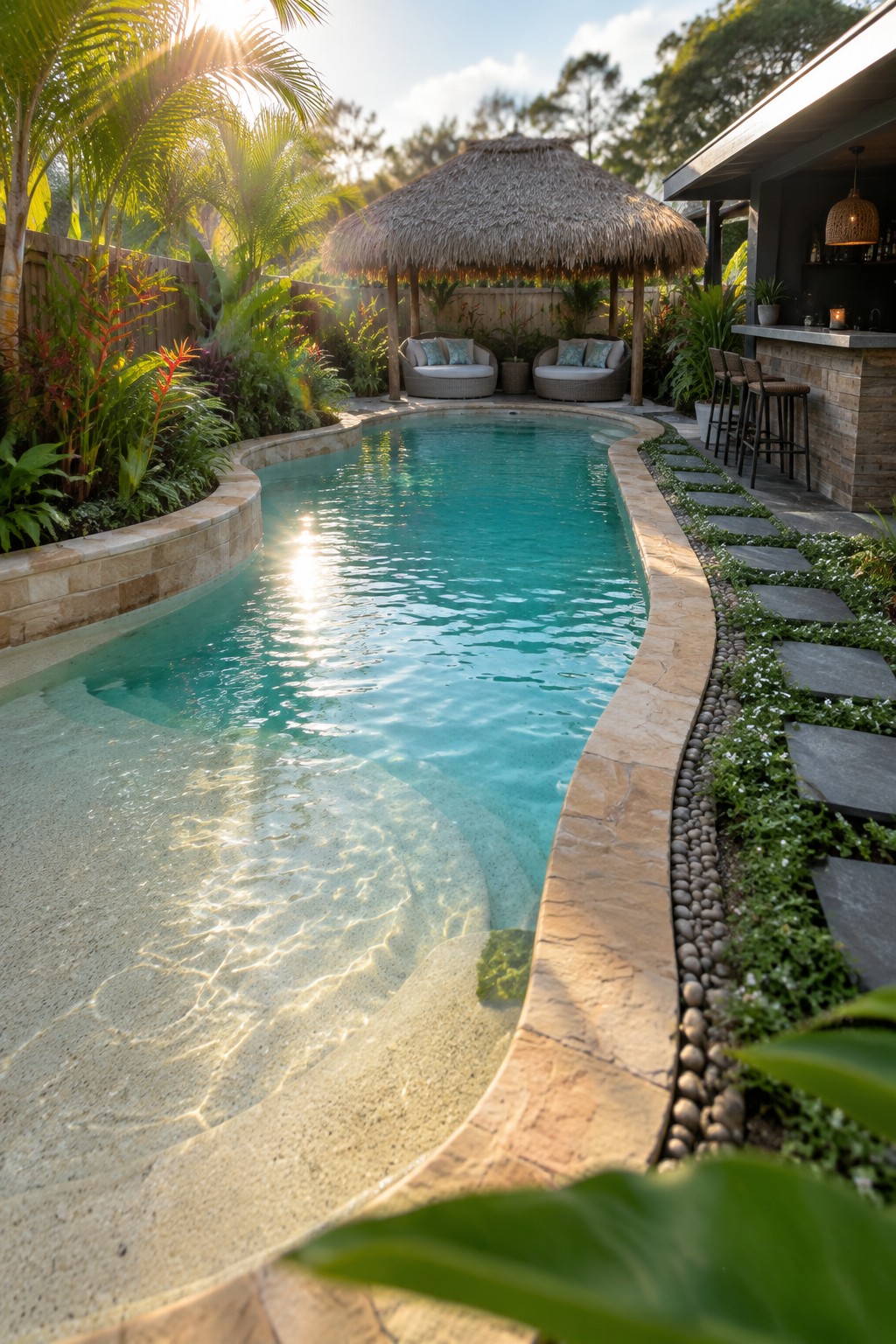
A beach entry lets the shallow end slope gradually into the pool instead of starting with steps. It gives the water a more natural edge and makes it easier for young children or anyone who prefers a gradual entrance to get in.
This shape works especially well in a freeform pool, where the entry can follow the same gentle curves as the rest of the design. Use a slip-resistant finish on the sloped area, and leave enough shallow space for people to sit or wade without blocking swimmers.
Make a Beach-Entry Pool Feel Natural
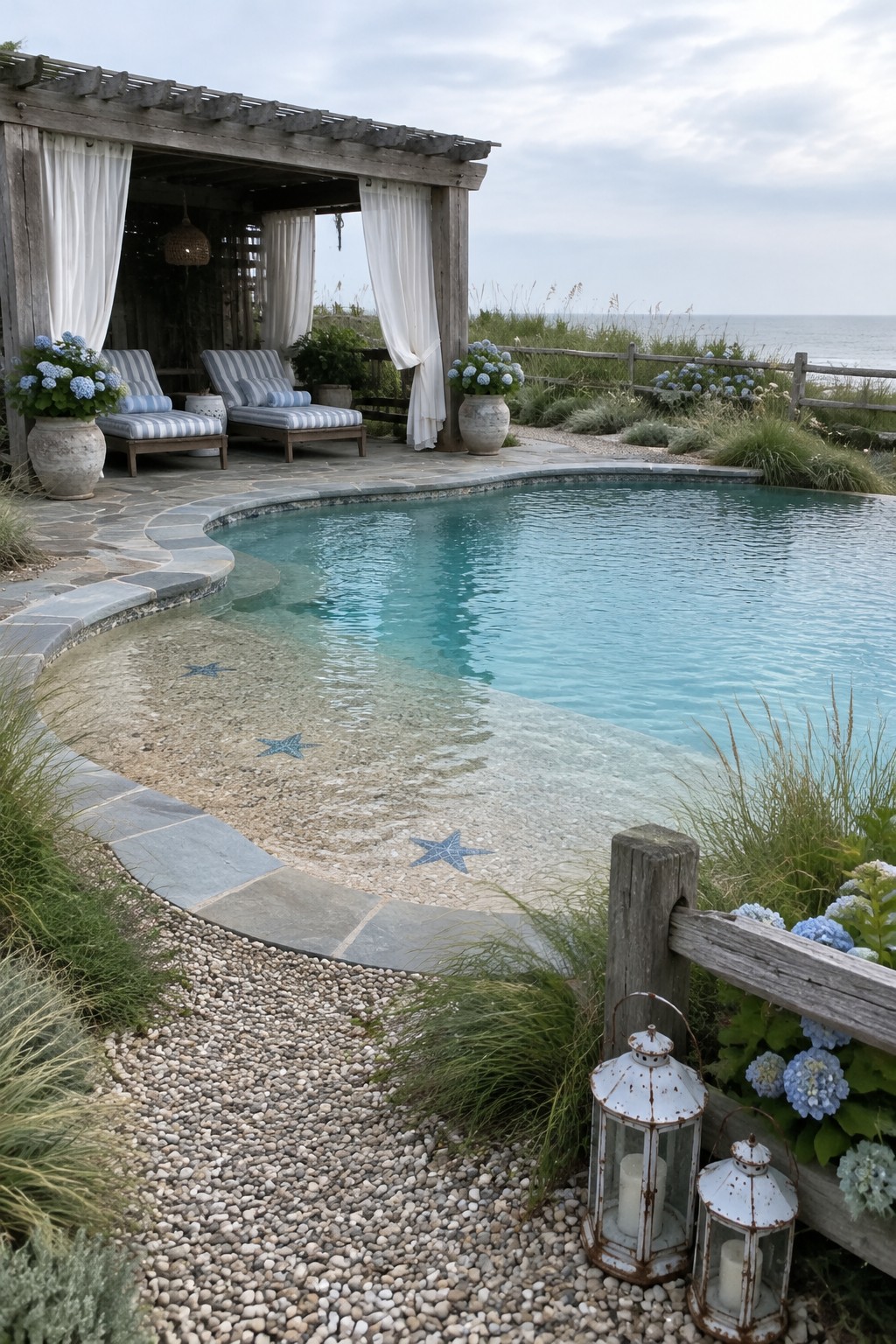
A gently sloped beach entry lets a pool meet the patio gradually instead of ending at a sharp edge. The broad, curving shallow area feels easy to approach and gives the pool a more relaxed shape.
This layout works especially well in a coastal yard, where an organic pool edge can echo the surrounding landscape. Use a slip-resistant surface in the shallow section, and leave enough room for the curve so it does not crowd the main swimming area.
Use Curves to Shape the Pool Edge
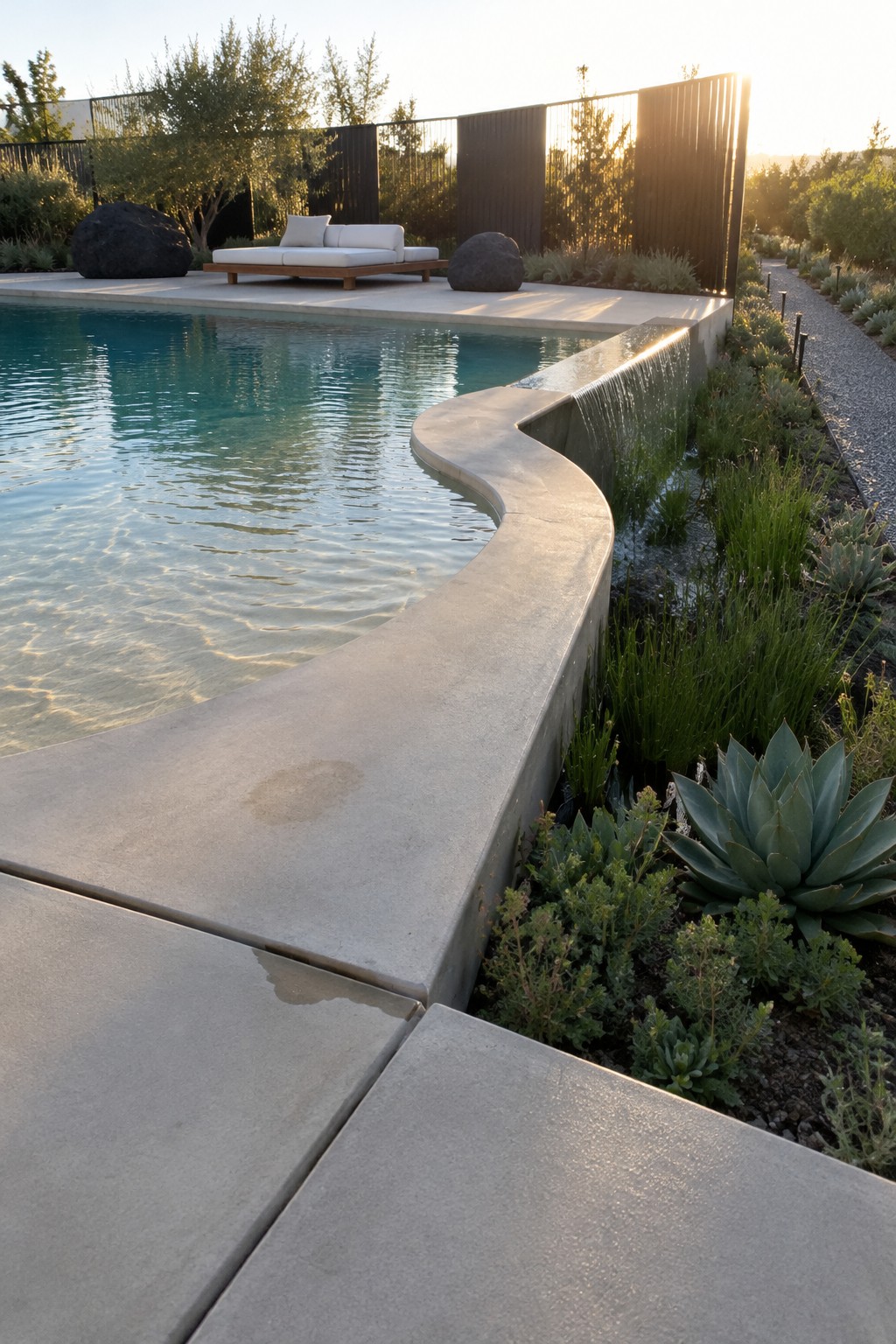
A freeform pool can feel more natural when its edge curves gently instead of following a straight line. The broad, rounded coping here makes the water’s outline feel relaxed while still giving people a clear place to walk or sit.
This approach works well in a beach-entry pool, where the gradual slope and curved perimeter can make access feel less abrupt. Keep the edge wide enough for comfortable footing, and choose a durable, slip-resistant finish.
Use a Beach Entry Beside the Seating Area
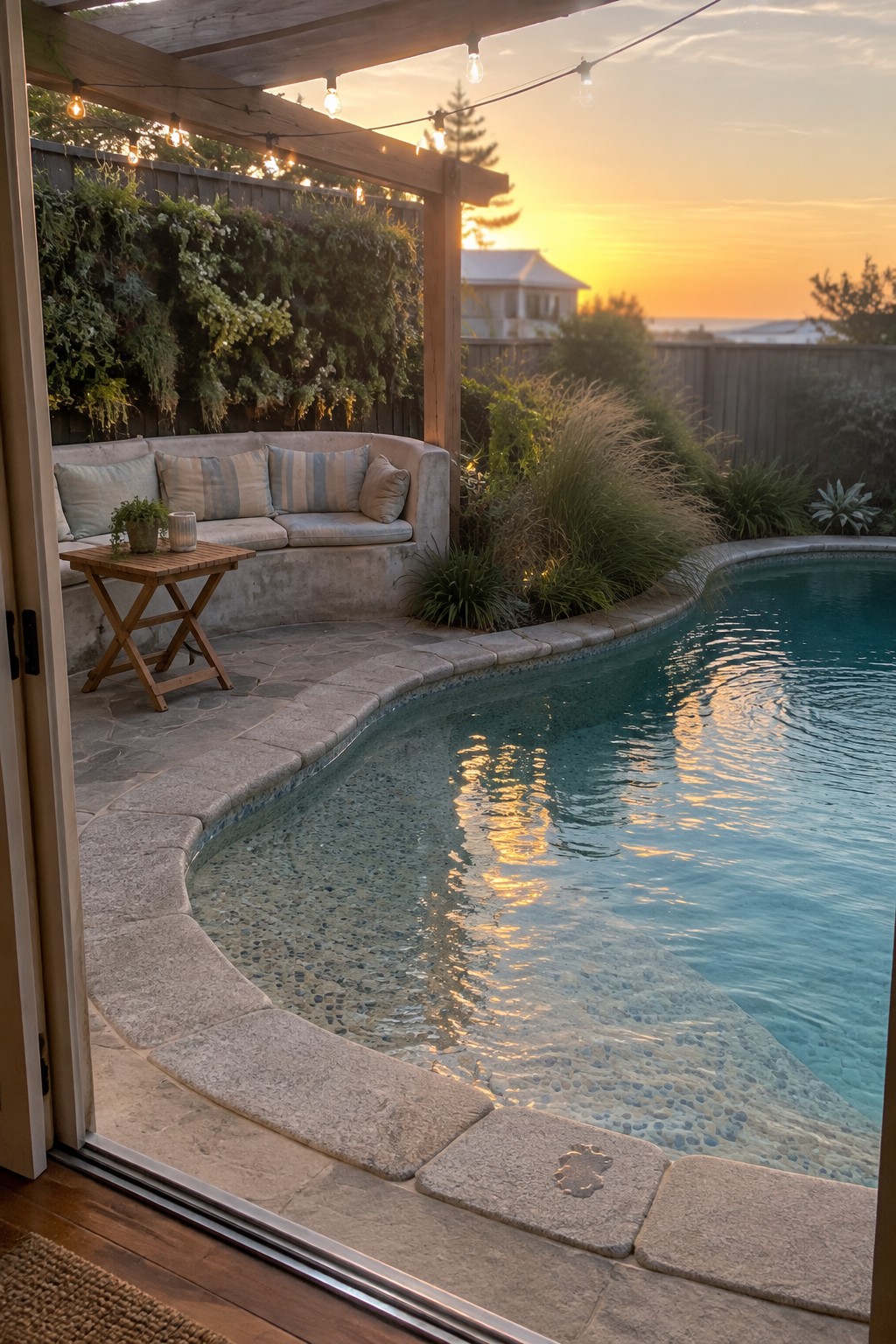
A shallow beach entry can make a freeform pool easier to step into and give the water’s edge a more gradual shape. It also works nicely near a seating spot, so people can move between relaxing by the pool and wading in.
This layout suits patios where there is room for a broad, gently sloped entry. Keep the nearby seating clear of the walking path, and choose a slip-resistant finish for the shallow area.
Add a Shallow Ledge to the Pool Layout

A gently sloping beach entry gives a freeform pool a more gradual way in than a set of steps. It also makes the shallow end useful for sitting or wading, rather than simply passing through.
Keep the slope broad enough for comfortable access and make sure the pool finish provides good footing. This approach suits pools meant for both relaxing and swimming, especially when you want an easy transition from the deck into the water.
Use a Pebble Floor to Continue the Beach Entry

A pebble floor helps a beach entry feel like a natural extension of the patio instead of a separate pool feature. The shallow, gently sloping area makes it easier to wade in gradually, while the small stones give the water a softer, more natural look.
This approach suits a freeform pool where people want an easy entry for children or anyone who prefers shallow water. Choose smooth, pool-safe stones, and make sure the entry has a gentle slope that stays comfortable underfoot.
Use a Bridge to Connect Poolside Seating
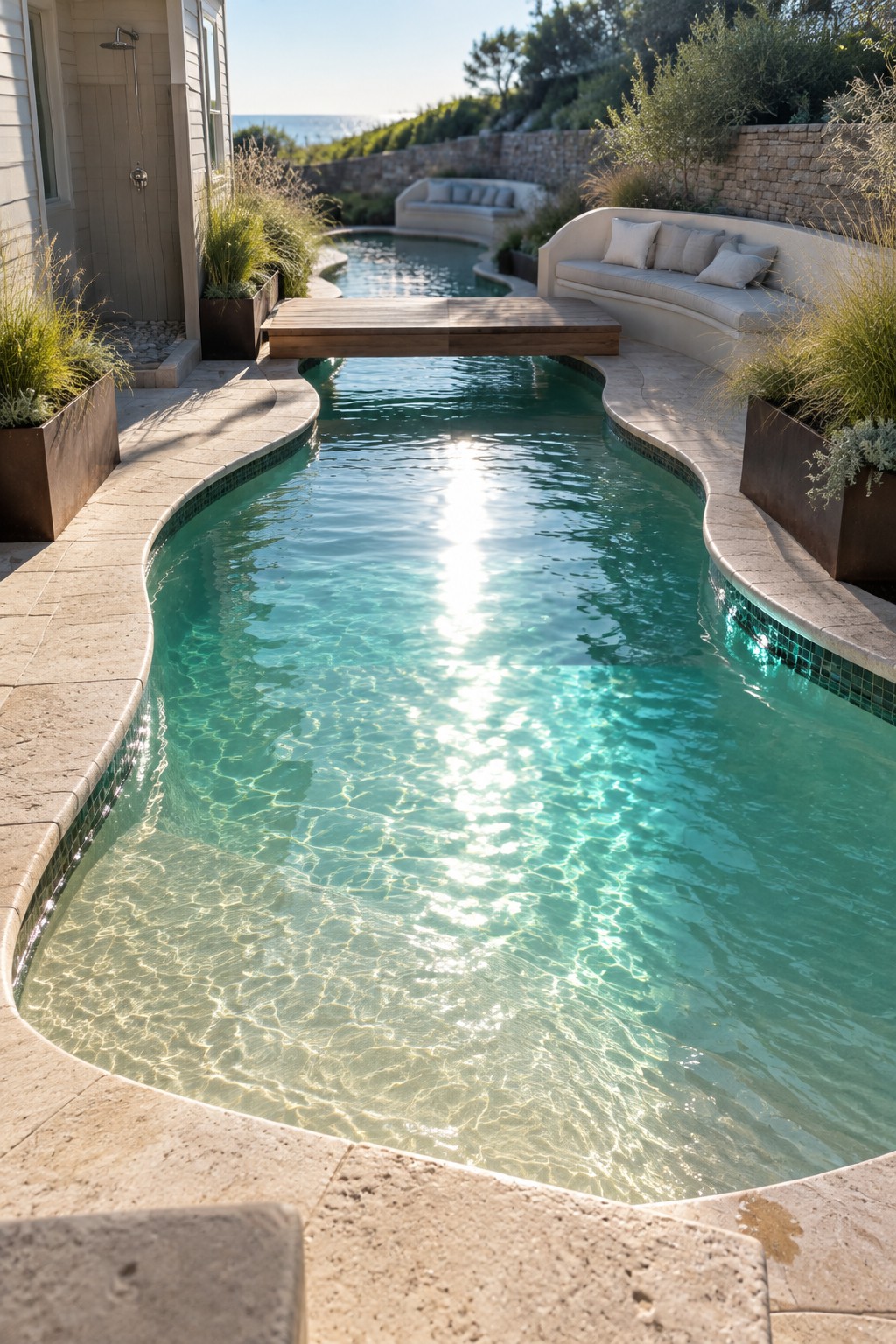
A small bridge can make a freeform pool easier to move around while giving the seating area a clear connection to the water. Here, a simple wooden span crosses a narrow part of the pool without hiding its curved outline.
This works best where the pool has a natural pinch point and there is room to walk around the bridge safely. Keep the surface slip-resistant and check that the crossing is wide enough for comfortable use.
Use a Beach Entry to Connect the Pool and Deck

A gradual beach entry makes a pool easier to step into and gives the shallow end a more relaxed feel. Here, the sandy-colored slope follows the pool’s curve, so the entry feels like part of the layout rather than a separate set of steps.
This approach works well in pools with room for a broad shallow area. Keep the slope gentle and use a slip-resistant finish, especially where swimmers move from the shallow section into deeper water.
Let the Shallow Entry Flow Into the Pool

A gently sloped beach entry makes getting into the water easier and gives a freeform pool a more natural shape. The gradual change in depth also creates a comfortable place to sit or wade before swimming.
This approach works especially well in a pool beside a deck or lounge area, where people can move between seating and the water without steps. Keep the slope gradual and allow enough shallow space for safe, easy access.
Use Stone to Shape an Organic Pool Edge
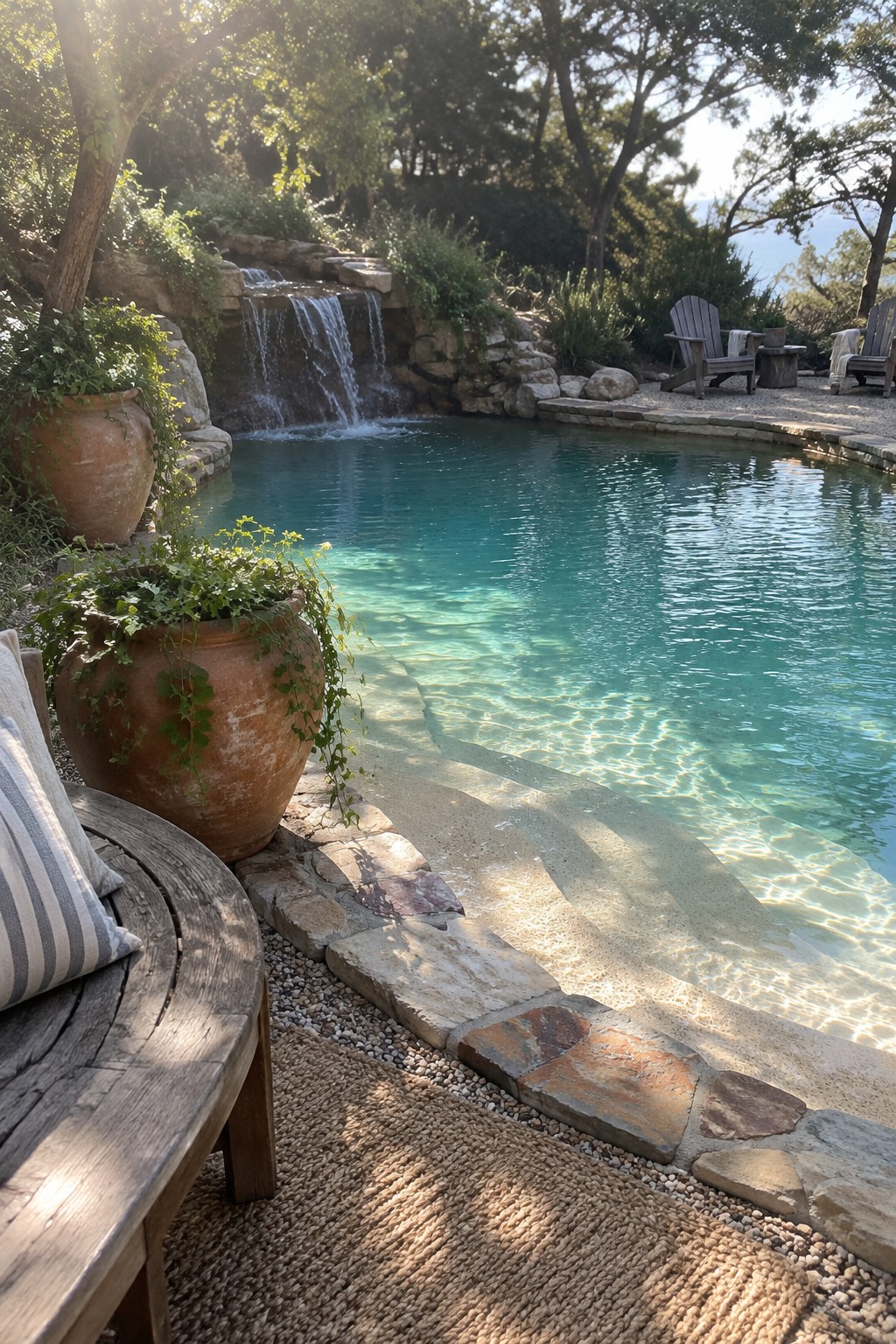
A freeform pool feels more at home in the yard when its edge follows a relaxed curve instead of a straight line. Here, irregular stone coping helps define the pool’s shape and gives the edge a natural look.
This approach works well around a beach-entry pool, where the stone can follow the gradual slope into the water. Choose pieces with fairly even tops for comfortable walking, and keep the joints secure so shifting stones do not become a tripping hazard.
Let the Beach Entry Continue Into the Pool

A gradual beach entry can make a freeform pool easier to step into and give the shallow end a natural place to sit or cool off. Here, the broad stone shelf follows the pool’s curved edge, so the entry feels like part of the overall layout rather than a separate step.
This approach works well when you want a shallow area that blends into deeper water. Keep the slope gentle and choose a textured, slip-resistant finish for the submerged surface.
Blend Curved Stone Coping With Garden Planting

A freeform edge can make a beach-entry pool feel less like a standard rectangle and more at home in a coastal garden. The curved stone border follows the water’s outline, giving the shallow entry a natural shape.
This approach works well when you want the pool to blend into an informal landscape. Keep the curve broad enough to leave room for walking, and choose coping that can be cut or laid neatly along the edge.
Use a Curved Beach Entry to Ease Into the Pool

A gently sloped entry makes a freeform pool feel more like a natural shoreline than a standard rectangle. The shallow water gradually deepens, so it works well for easing in, sitting near the edge, or letting small children play under supervision.
This approach suits pools with enough room for a gradual slope and a generous curve. Keep the entry wide and the underwater surface slip-resistant, and make sure the shallow area does not take up so much space that it limits swimming.
Shape the Pool Around a Gentle Curve

A freeform pool can feel more natural when its edge bends gradually instead of following a straight line. Here, the curved coping also traces the shallow beach entry, making the transition into the water feel like part of the pool’s overall shape.
This approach suits a garden pool where a softer outline fits the planting and stonework. Keep the curve comfortable to walk beside, and choose coping that can be cut or laid neatly around it.
Give a Freeform Pool a Separate Seating Area
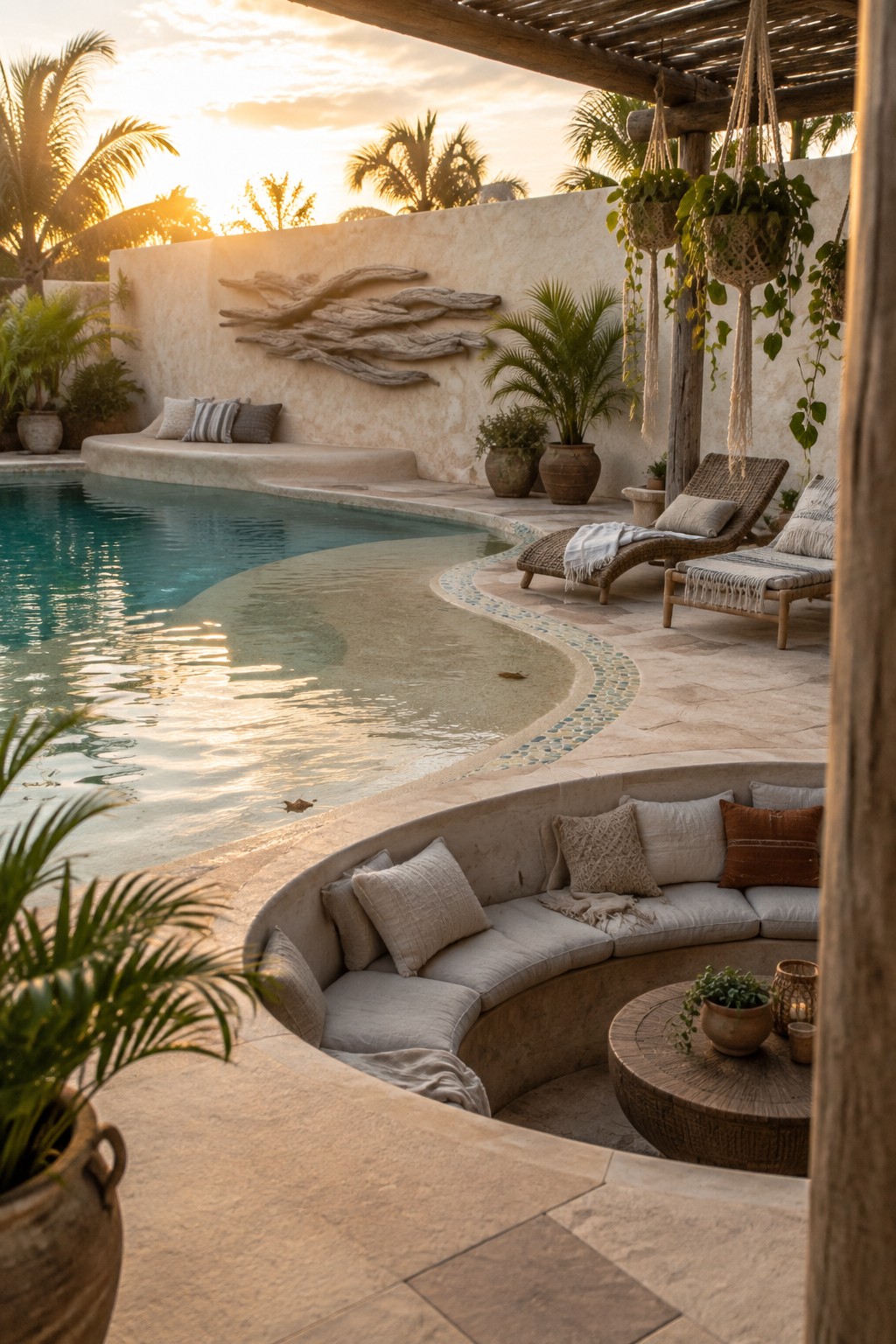
A curved pool edge can make room for a shallow beach entry and a comfortable spot to sit nearby. The gradual transition feels easy to use, while the organic outline keeps the pool from looking like a simple rectangle.
If you have space, place a built-in bench or lounge area alongside the shallow end so people can relax close to the water without crowding swimmers. A curved edge needs enough deck space around it, so leave a clear path between the seating and the pool.
Connect Pool Areas With a Short Bridge
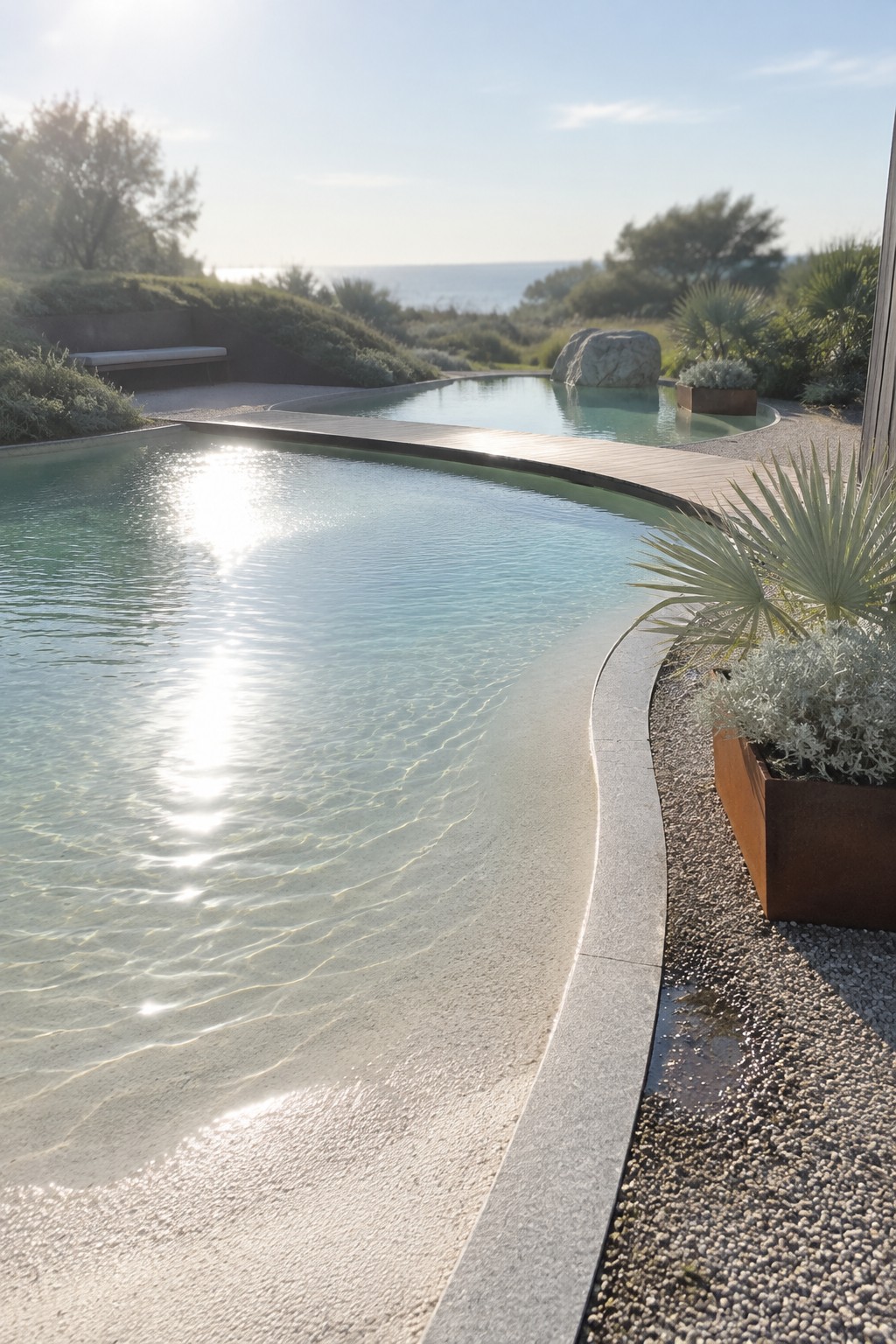
A narrow bridge can link two sections of a freeform pool while keeping the shallow entry open and easy to approach. Here, the wood walkway crosses between the curved pool areas, giving people a clear way to move across without interrupting the water’s shape.
This layout can work well when a pool has separate shallow and deeper zones. Keep the bridge wide enough for comfortable foot traffic, and choose a surface made for wet conditions so it stays practical as well as attractive.
Use a Beach Entry to Give the Pool a Softer Shape
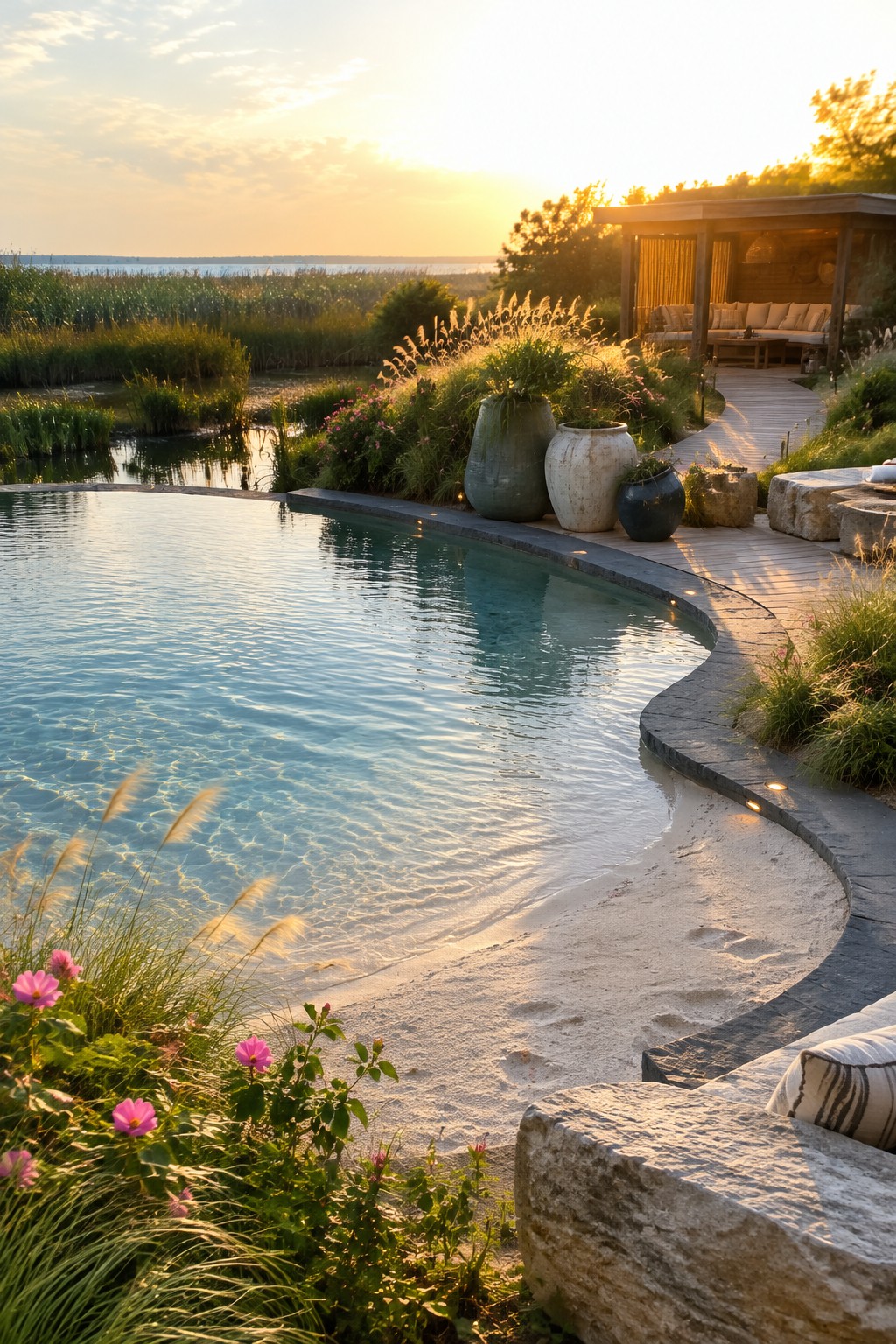
A beach entry lets the pool edge slope gradually into the water instead of starting with a sharp drop. Here, the curved shallow area makes the pool feel more like part of the garden, and it gives people a comfortable place to sit or wade.
This layout works especially well in a pool with an organic outline. Keep the entry wide enough to use comfortably, and make sure the transition to deeper water is clear underfoot.
Frequently Asked Questions
Q: What makes a beach-entry pool different from a regular shallow end?
A: Instead of steps or a ladder, the floor slopes gently from the deck into the water, much like a shoreline. That gradual entry can feel more welcoming for young kids and anyone who prefers an easy way in.
Q: Do freeform beach-entry pools need a lot of yard space?
A: Not always. A compact design can fit a smaller yard, though the gradual slope takes up more room than a set of steps. A pool designer can help shape the entry around your available space.
Q: Is a beach entry harder to keep clean?
A: It can collect leaves and grit near the shallow edge, especially if it sits close to landscaping. Regular skimming and a well-planned circulation system help keep the water clear.
Q: Can I add shade to a beach-entry pool?
A: Yes. An umbrella or nearby shade structure can make the shallow area more comfortable on sunny days. Just leave enough clear space for people to enter and move around safely.