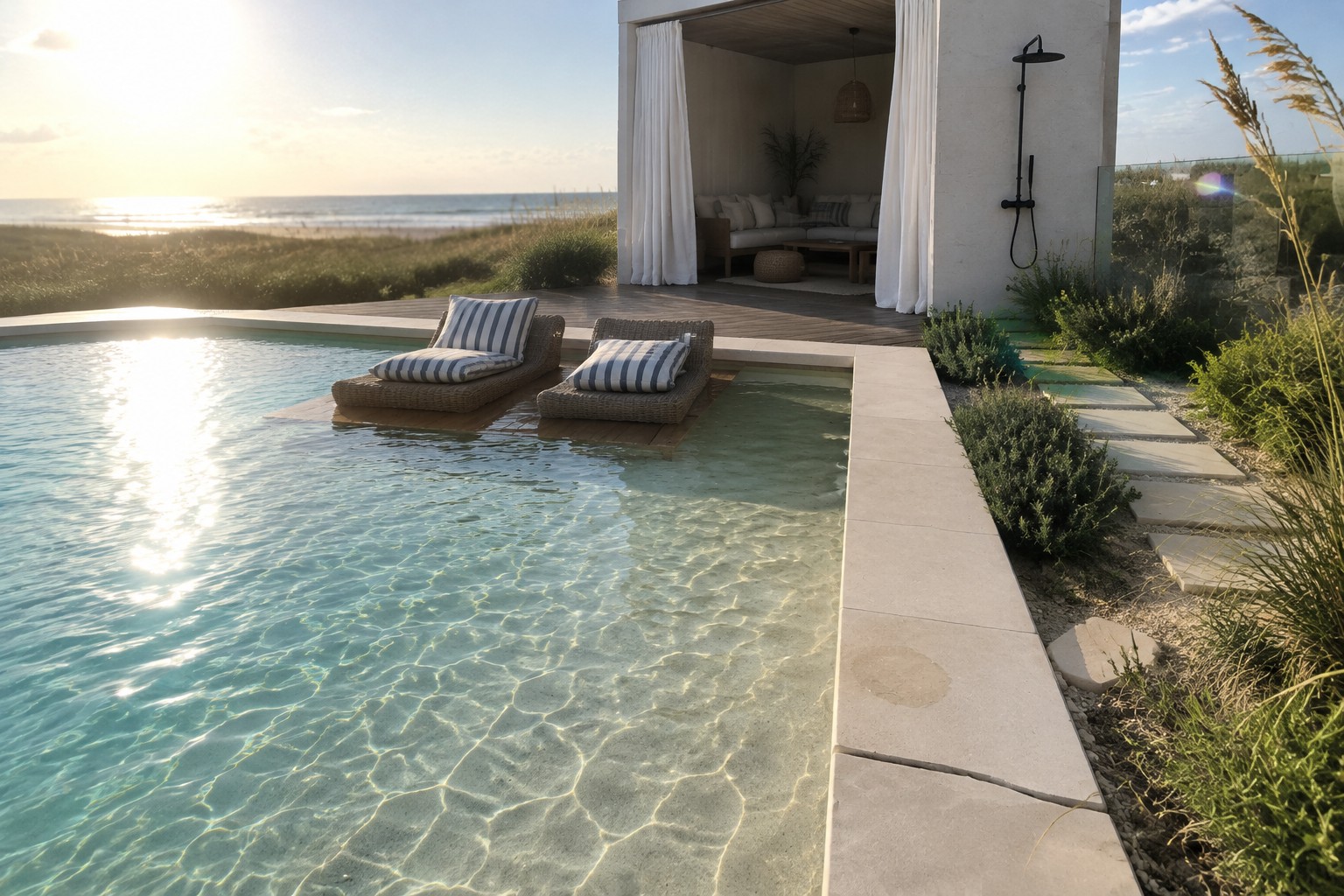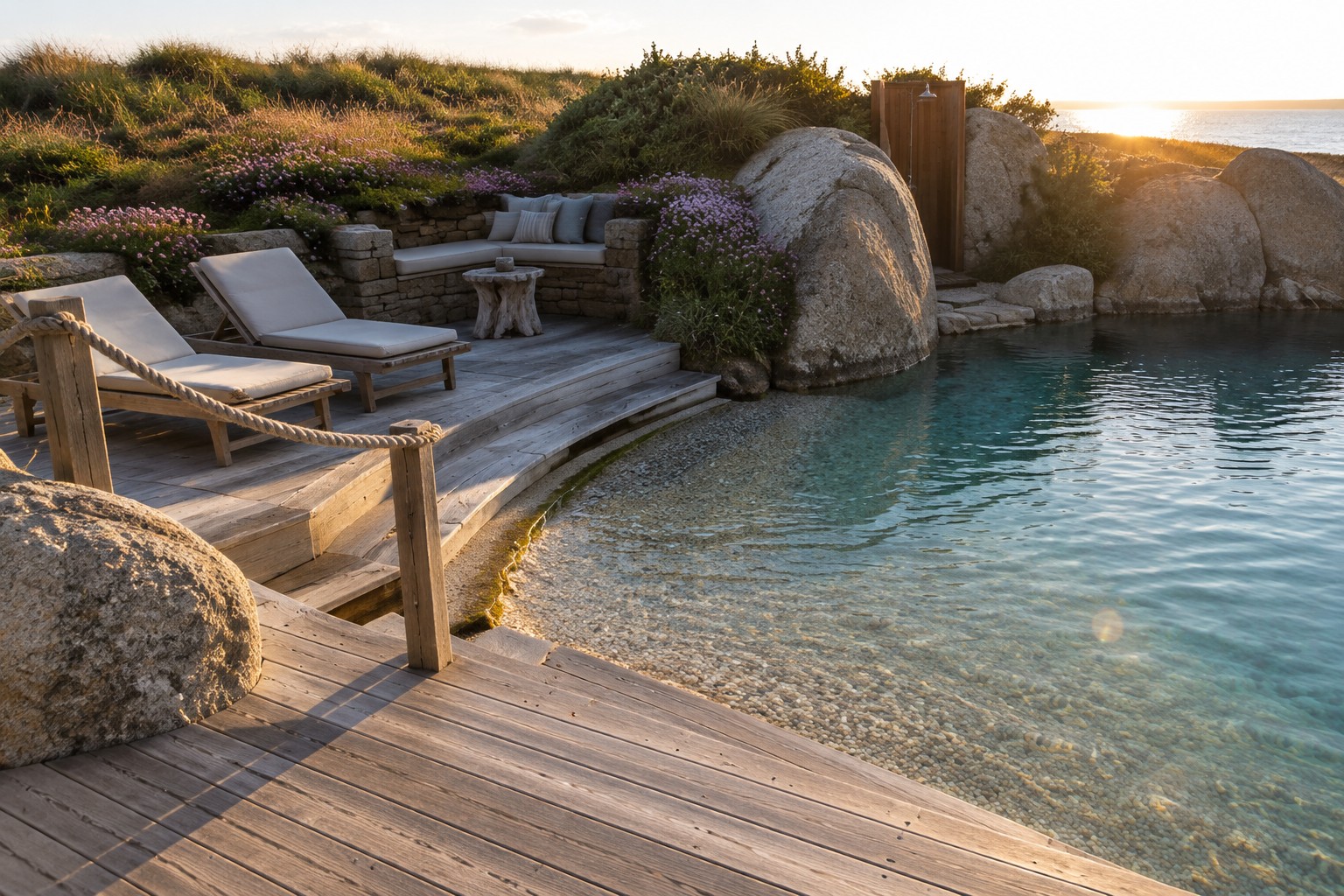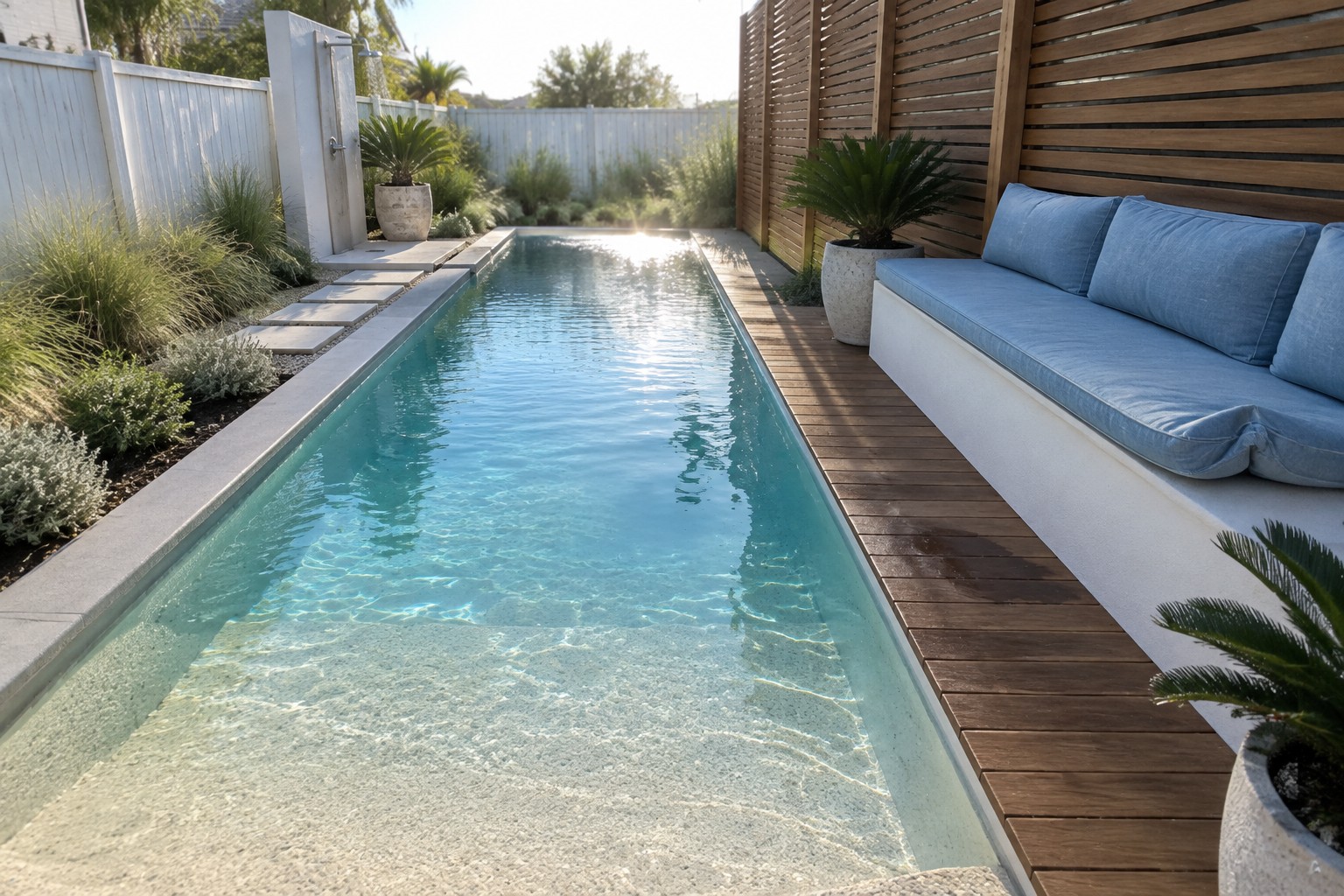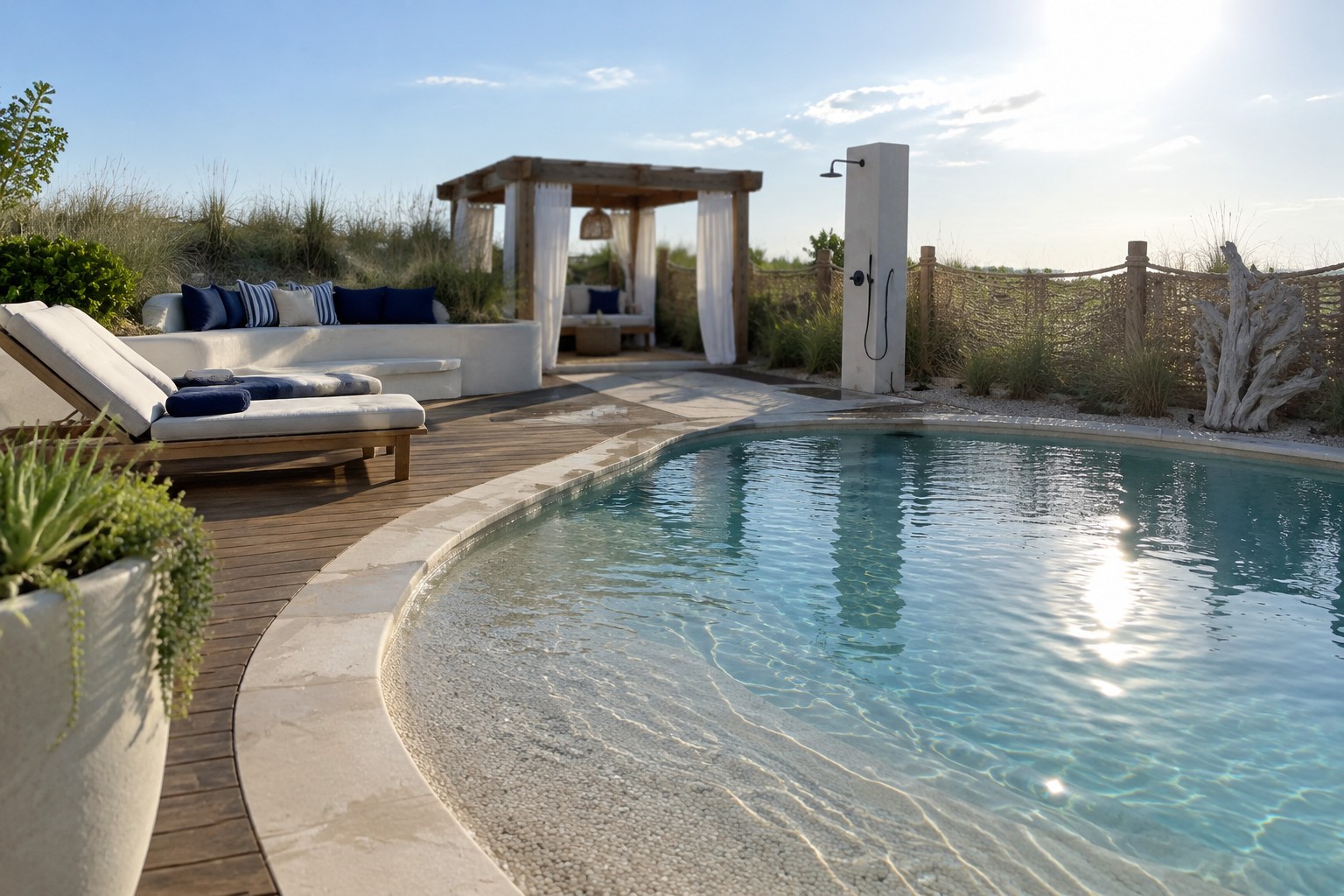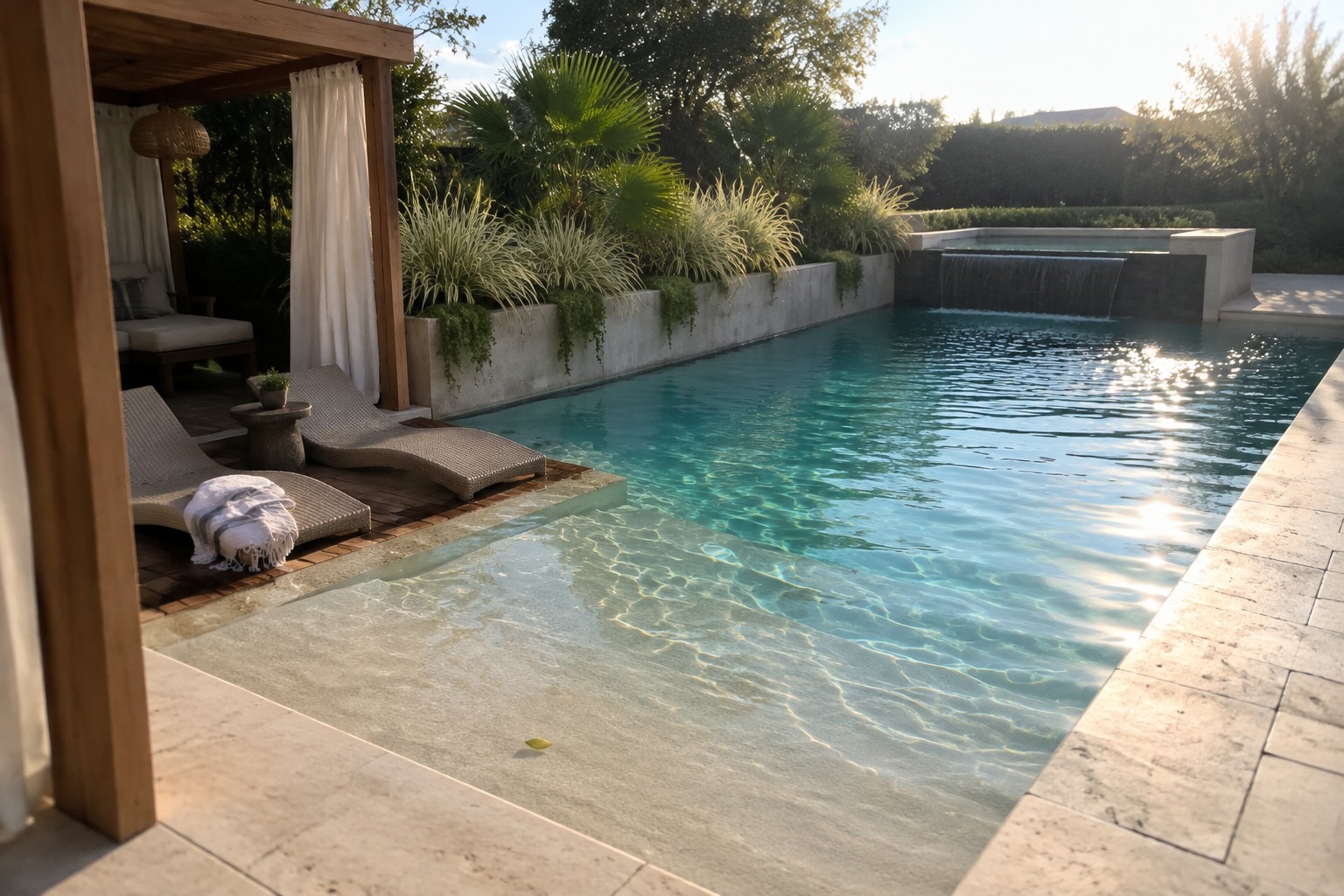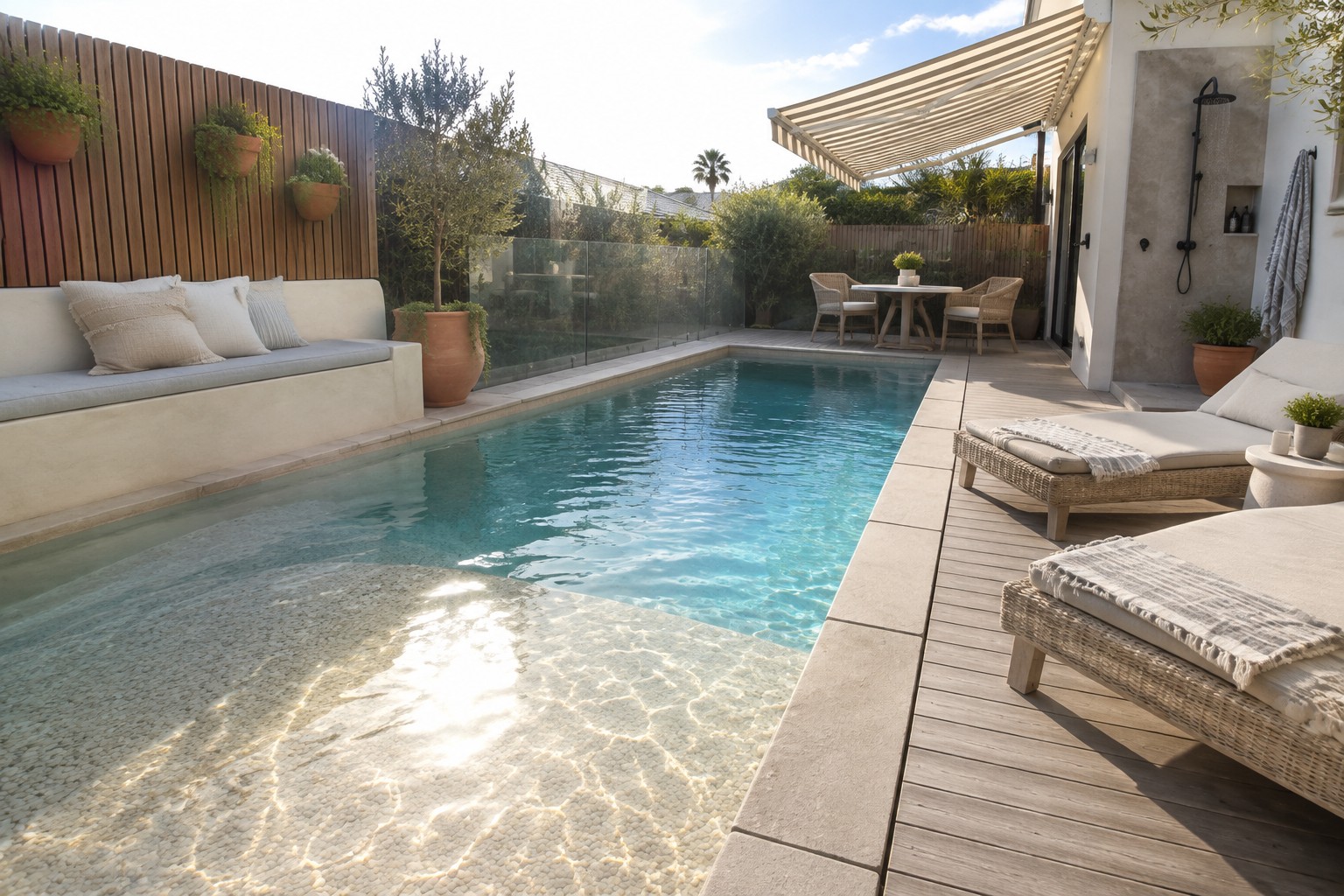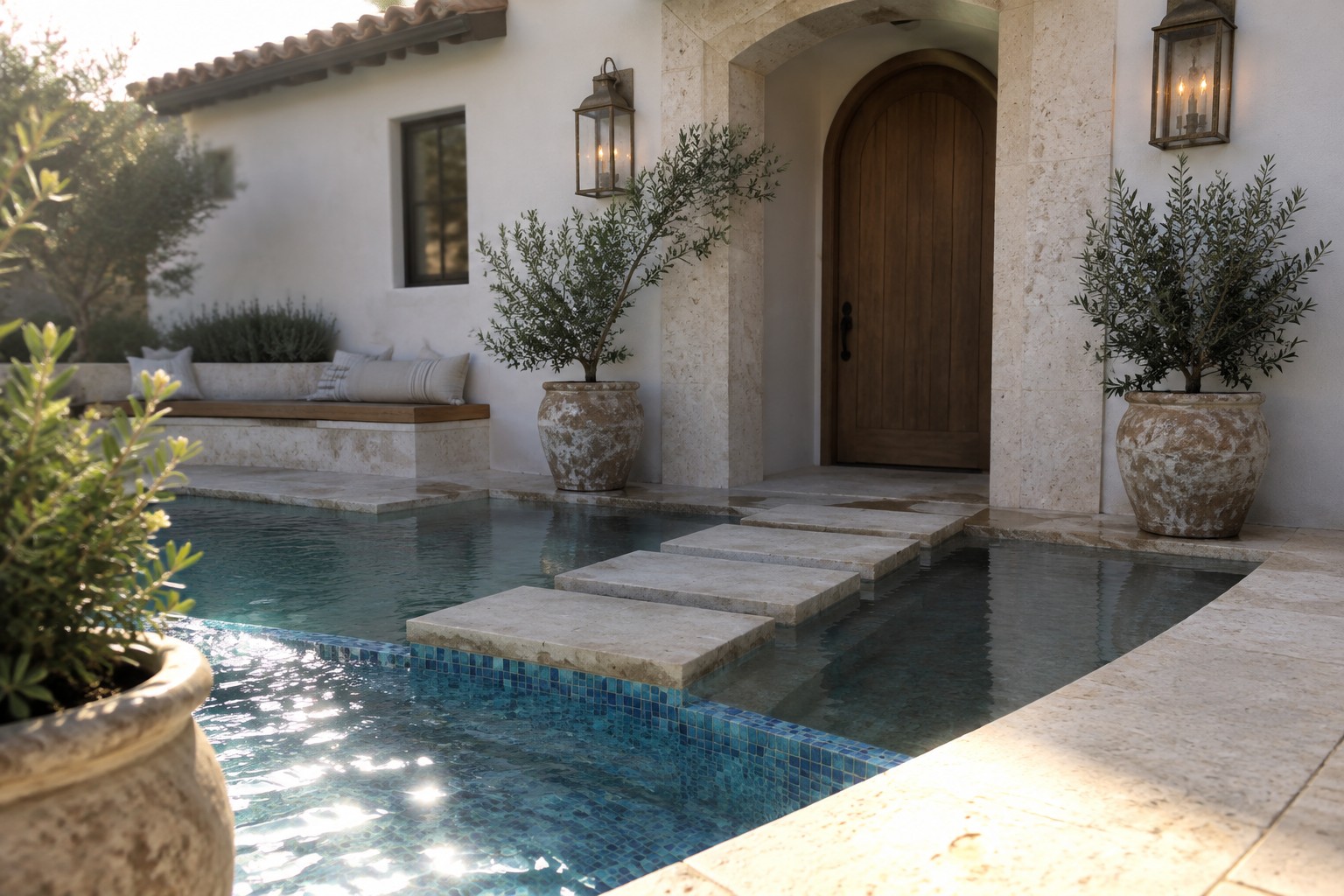
A beach-entry pool changes how the whole backyard feels, especially when the shallow edge meets the patio without a hard step down.
I find that pale stone can make this transition feel calm and grounded, but its texture and color matter just as much as its appearance.
The best designs keep the entry comfortable to walk across and leave enough room around the water for lounging, planting, and everyday movement.
A light finish also reflects the sun differently, so I’d consider shade and glare before settling on a material.
Some of these details are easy to adapt, even in a smaller yard.
Use Light Stone Around a Narrow Pool
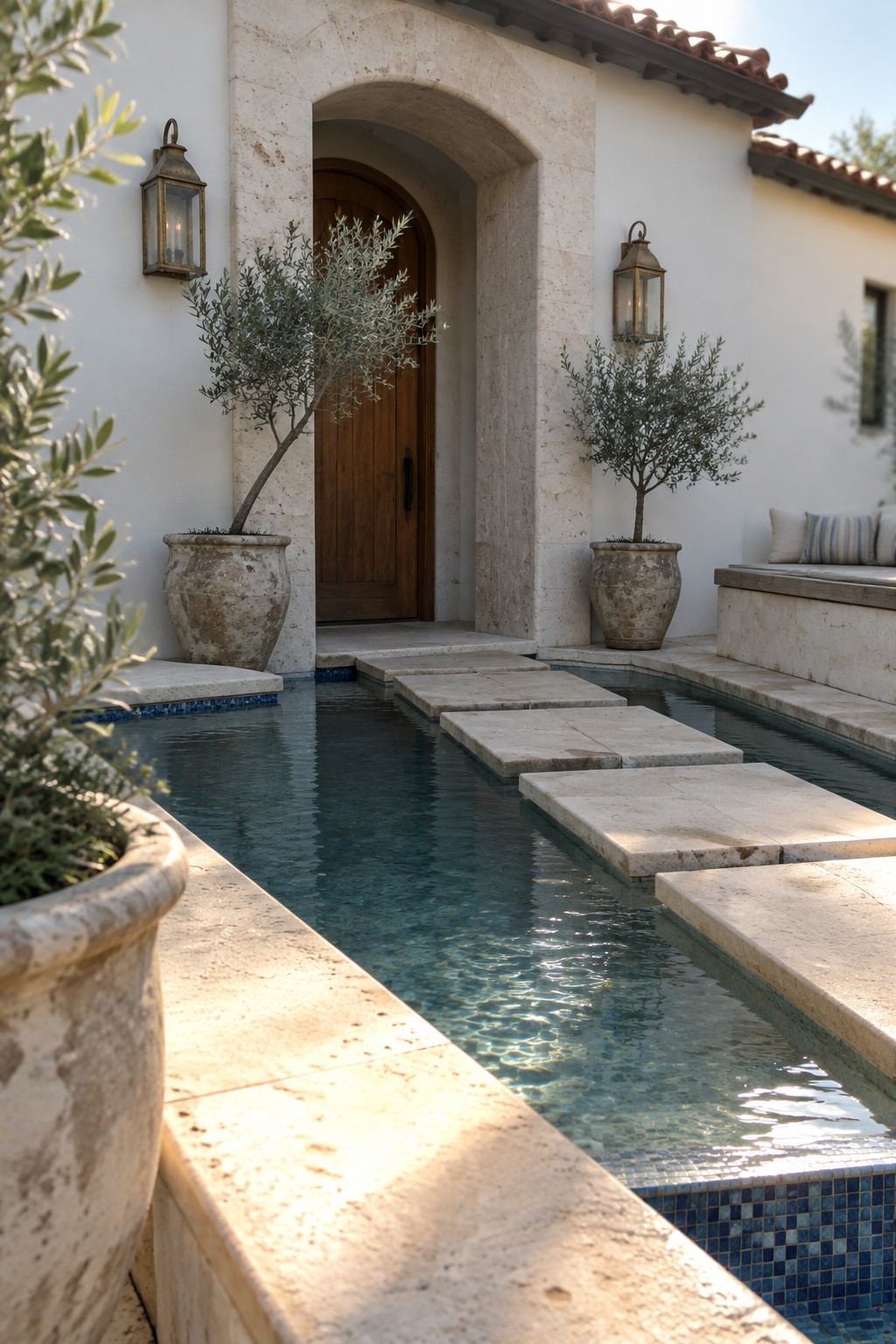
Light stone coping and stepping pads make a narrow entry pool feel connected to the house instead of like a separate feature. The broad, pale edges also give you a clear place to walk along the water.
This approach suits a courtyard or small patio where space is limited. Leave enough room between the stepping pads for safe footing, and choose stone with a textured finish so it is less slippery when wet.
Use Light Stone To Define The Pool Walkway
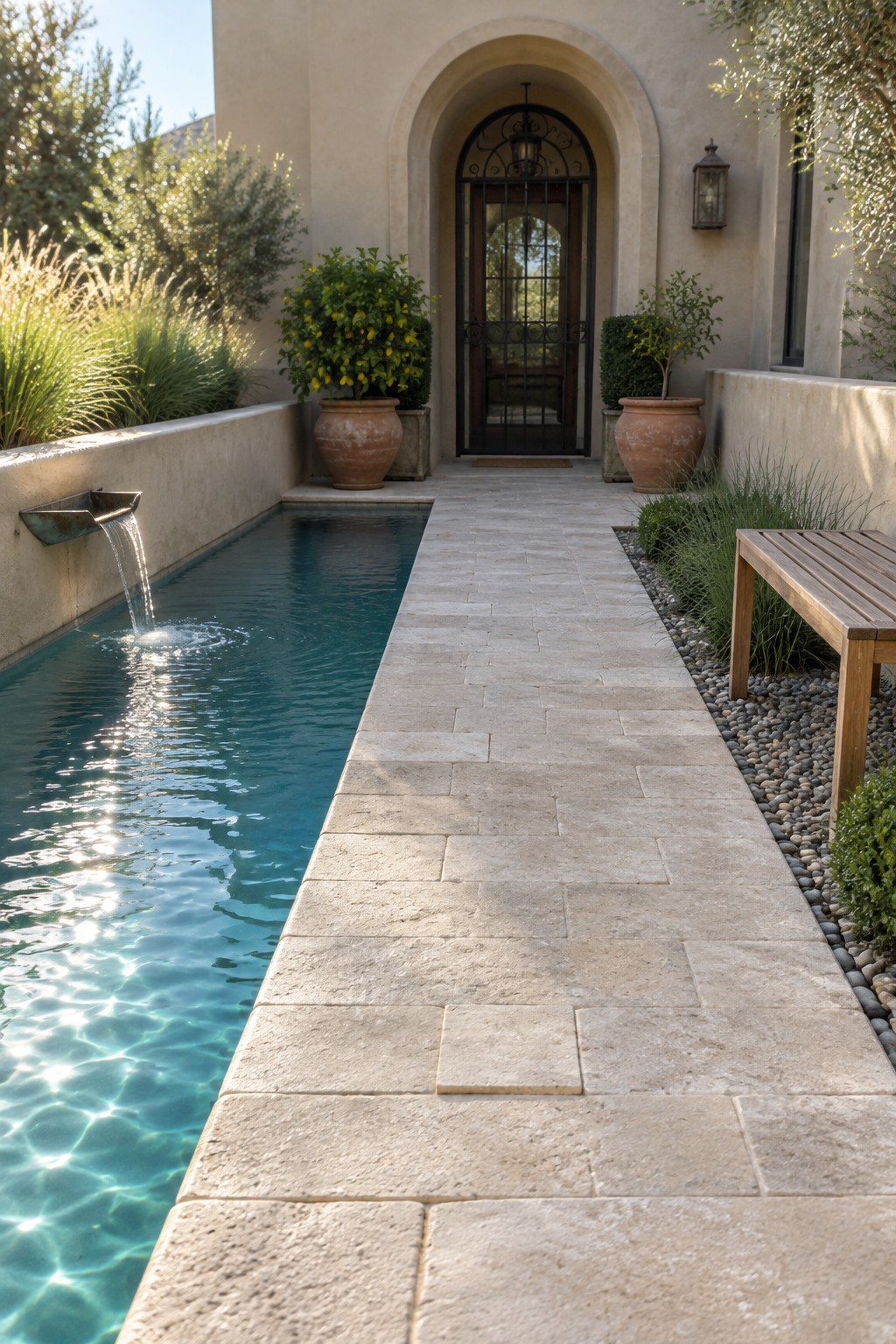
A light stone walkway gives an entry pool a clear, practical route to the door. It stands out against the water, and the pale surface suits the relaxed look of a Mediterranean-style home.
Use larger stone pavers for a steady path along the pool, with a slip-resistant finish for wet feet. Leave enough room to walk comfortably, especially if the pool edge is close to the path.
Use Light Stone Around a Small Entry Pool
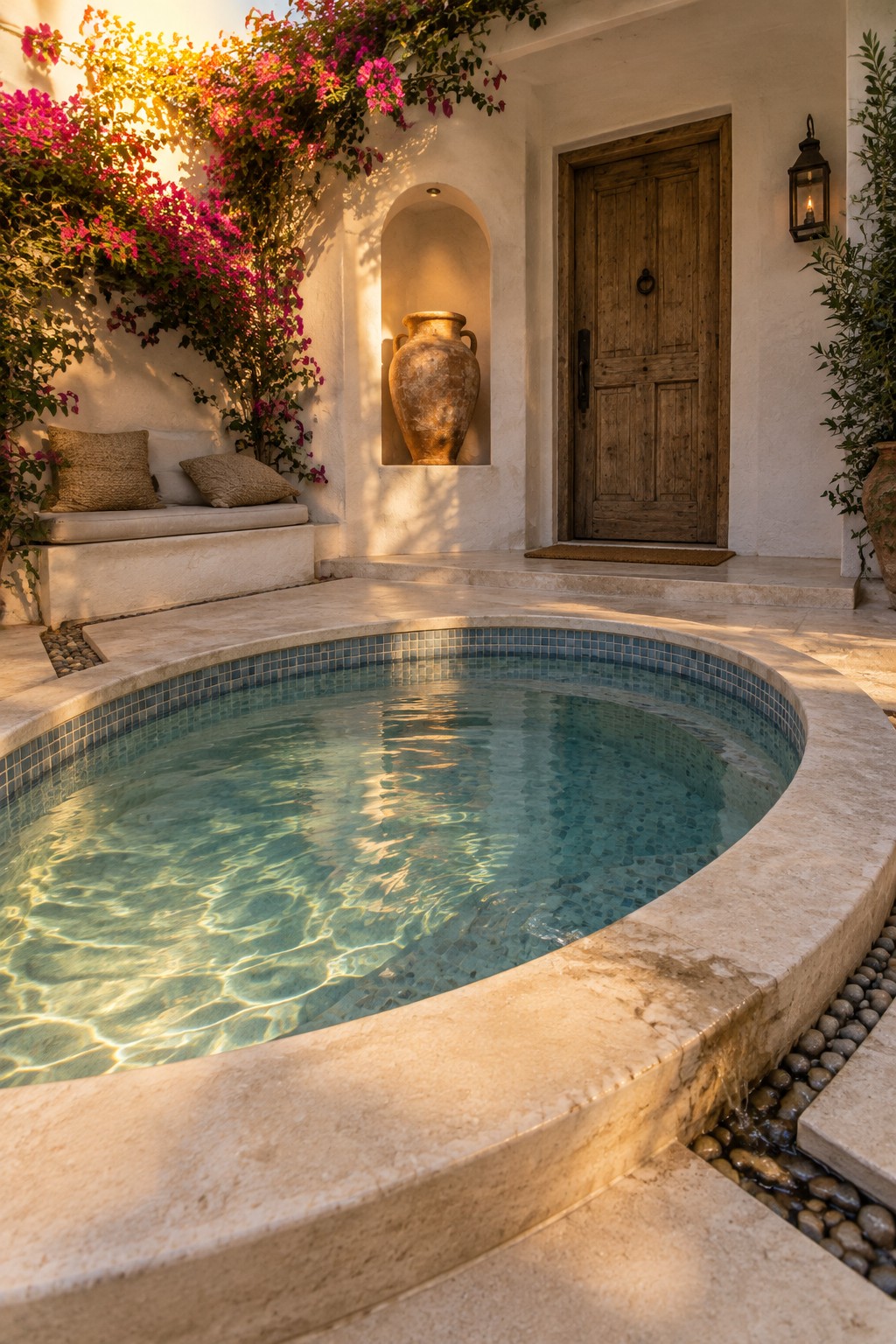
A compact pool near the entry can make a Mediterranean home feel more connected to outdoor living. Light stone is a practical choice for the coping and surrounding steps because it keeps the pool area visually simple and suits the home’s pale walls.
This layout works best where there is enough room to walk around the pool without crowding the doorway. Choose stone with a textured, slip-resistant finish, and keep the pool’s shape modest if the entry area is limited.
Use Light Stone Around the Pool
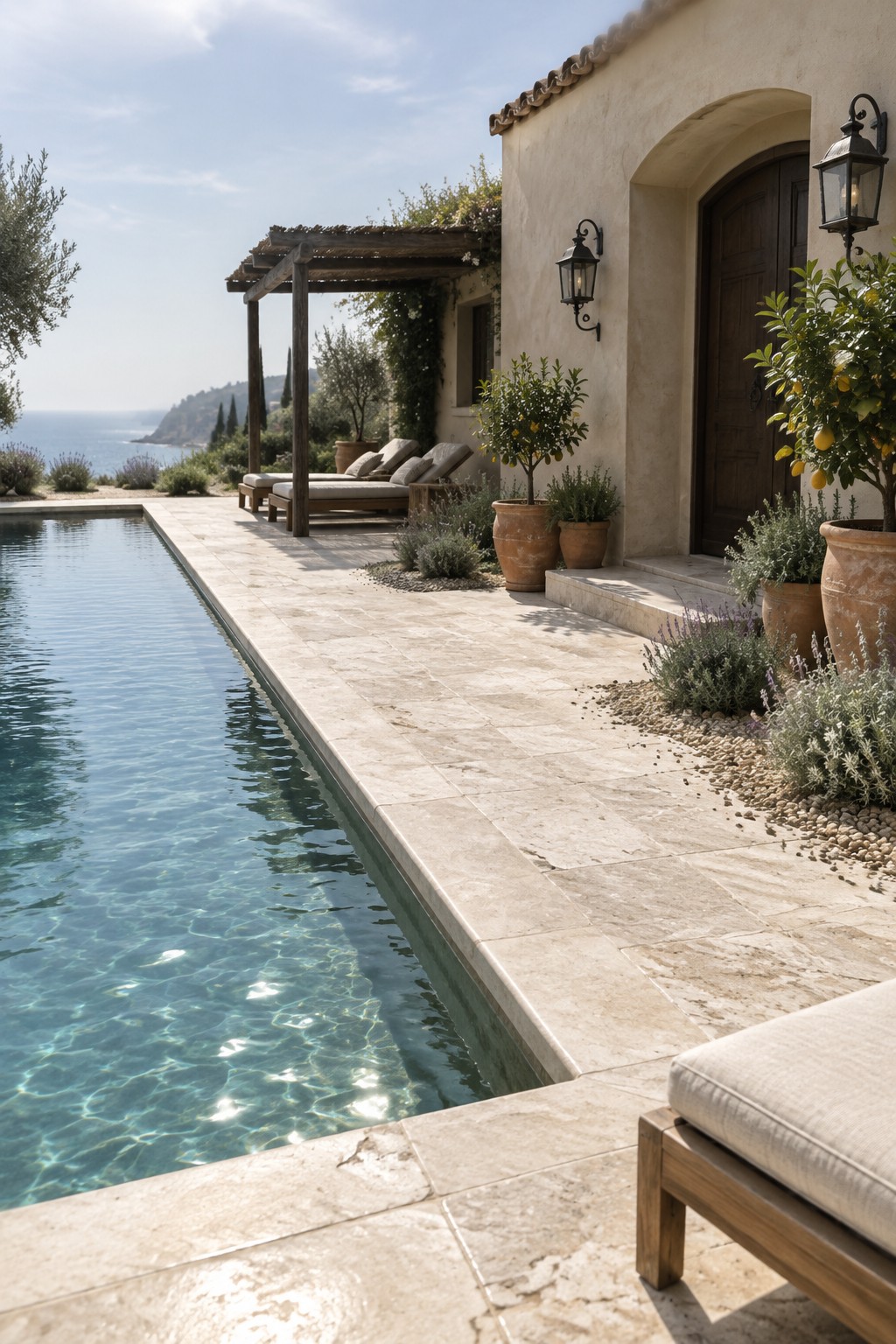
Light stone paving gives a pool area a calm, connected look and stays in keeping with Mediterranean homes. Here, the pale paving runs along the water and up to the house, making the pool edge feel like part of the patio rather than a separate feature.
For a similar effect, use stone with a textured, slip-resistant finish and choose a shade that works with the house exterior. It suits a narrow poolside walkway especially well, where a consistent surface helps the space feel orderly without adding extra decoration.
Make a Small Entry Pool Feel Connected
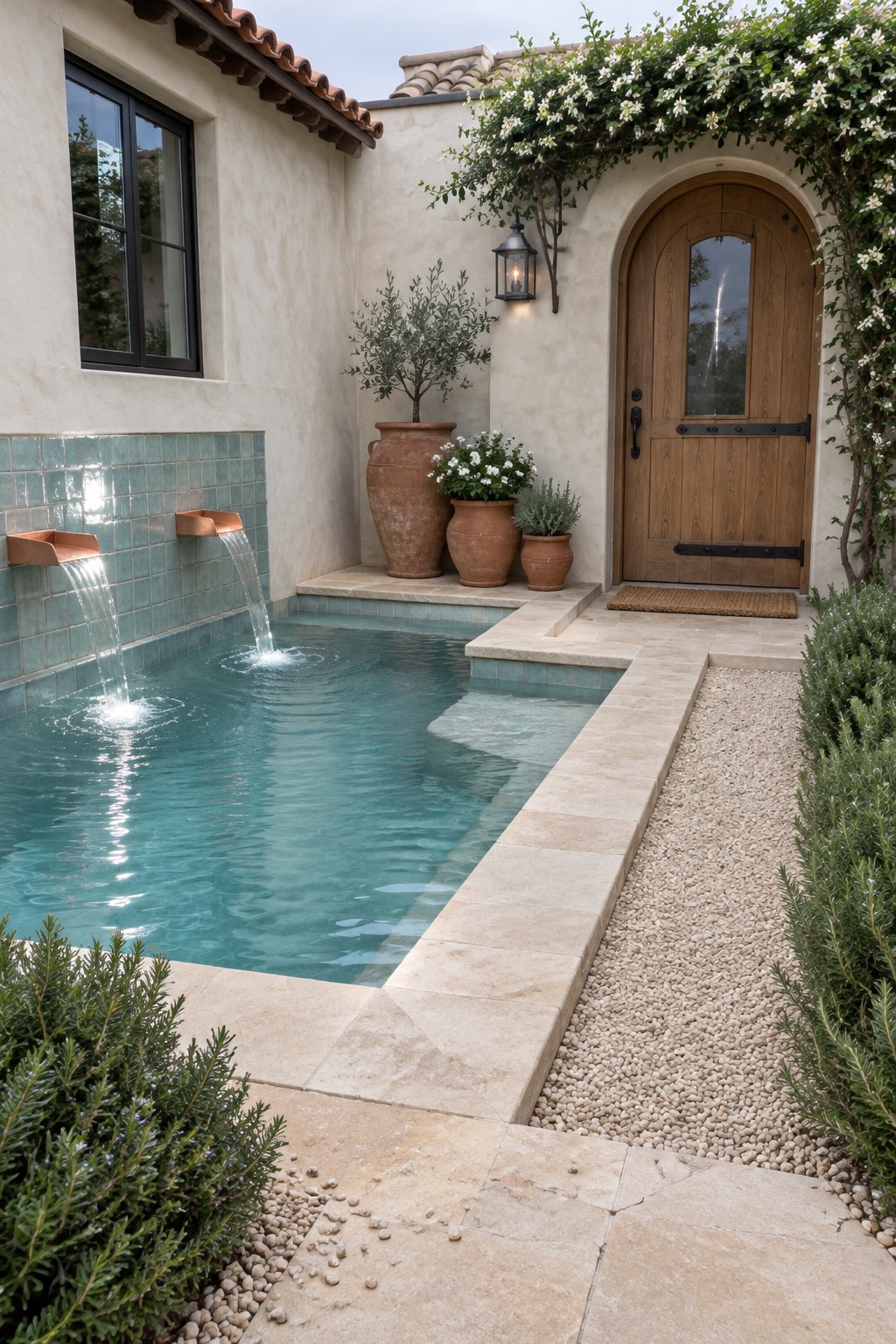
A compact pool beside the front door can feel like part of the home rather than an extra feature when its shape follows the entry path. Here, the light stone coping gives the narrow pool a clear edge and continues into the walkway.
This layout suits a courtyard where space is limited but a water feature still matters. Keep the path wide enough to walk comfortably, and choose a slip-resistant stone for the areas that may get wet.
Add a Wall Fountain To Your Entry Pool

A built-in fountain can make a small entry pool feel like part of the home rather than a separate water feature. Simple brass spouts set into a stone wall keep the design tidy while adding the gentle sound of moving water.
This works especially well beside a front door or along a narrow courtyard pool, where there may not be room for a larger feature. Keep the spouts and basin easy to reach for cleaning, and choose finishes that suit the home’s other outdoor materials.
Bridge a Narrow Pool With a Simple Walkway

A short bridge can make a narrow entry pool easier to cross while giving the patio a clear path to the door. Here, the broad timber boards span the water without taking up much room.
This works well when a pool sits between the home and the main walking route. Keep the crossing wide enough for comfortable steps, and choose sturdy, slip-resistant boards that can handle outdoor use.
Use a Pergola To Shade the Pool Entry
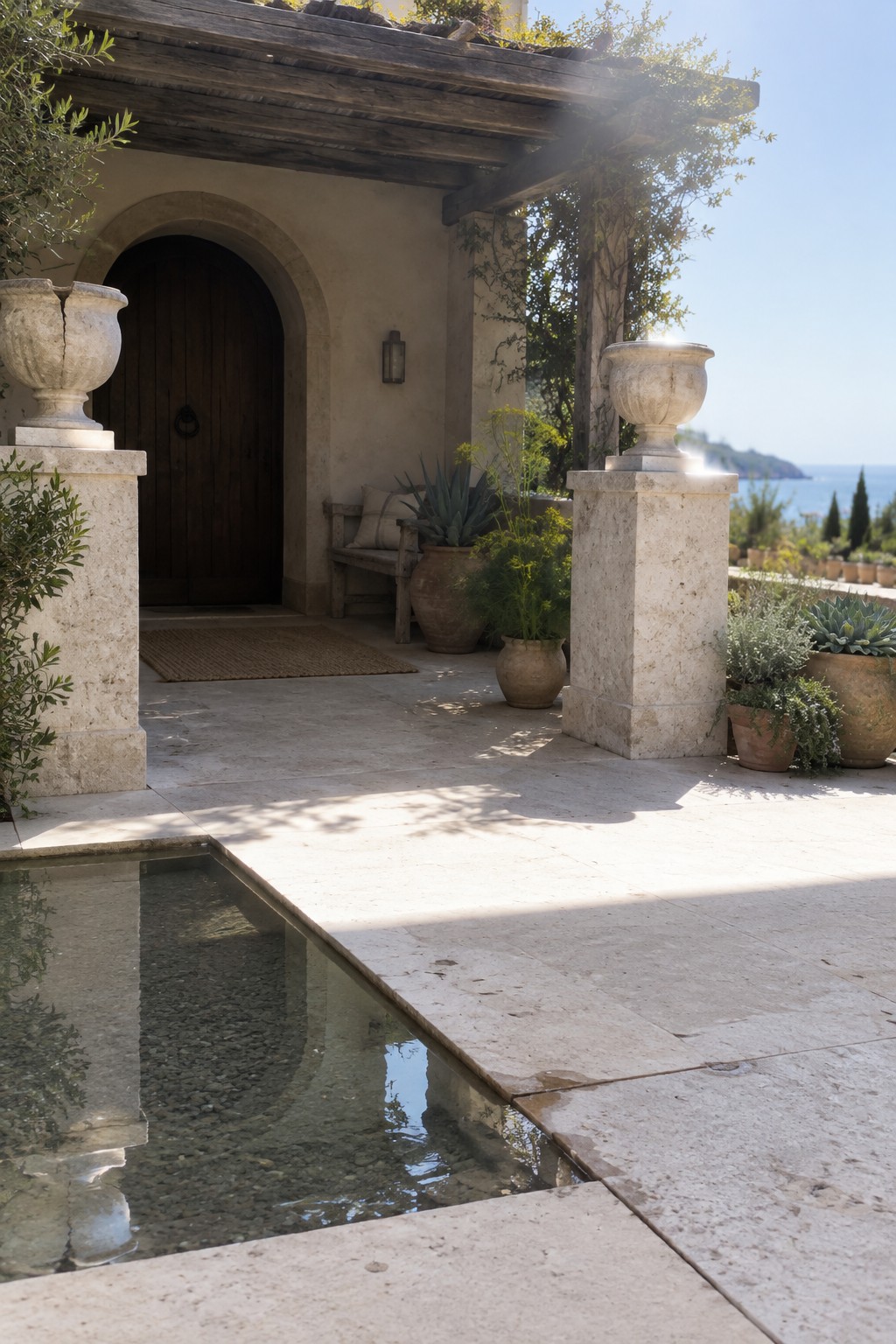
A pergola over the entry patio makes a small pool area more comfortable to use, especially where the stone gets hot in full sun. Its open roof gives some shade without closing off the view or making the space feel cramped.
This works well beside a narrow pool or along the approach to a home. Choose sturdy, weather-resistant wood, and let climbing plants grow across part of the beams if you want more coverage. Keep the walkway clear so the shade structure doesn’t crowd the entry.
Use a Built-In Shower Beside the Pool

A simple outdoor shower can make an entry pool more practical without taking up much space. Set into a tiled wall, it gives swimmers a place to rinse off and keeps the pool area connected to the home’s everyday routine.
This works especially well in a small courtyard where there isn’t room for a separate changing area. Choose tile that can handle regular water exposure, and include a floor drain so the shower area stays easy to use and maintain.
Add Stepping Stones Across the Entry Pool
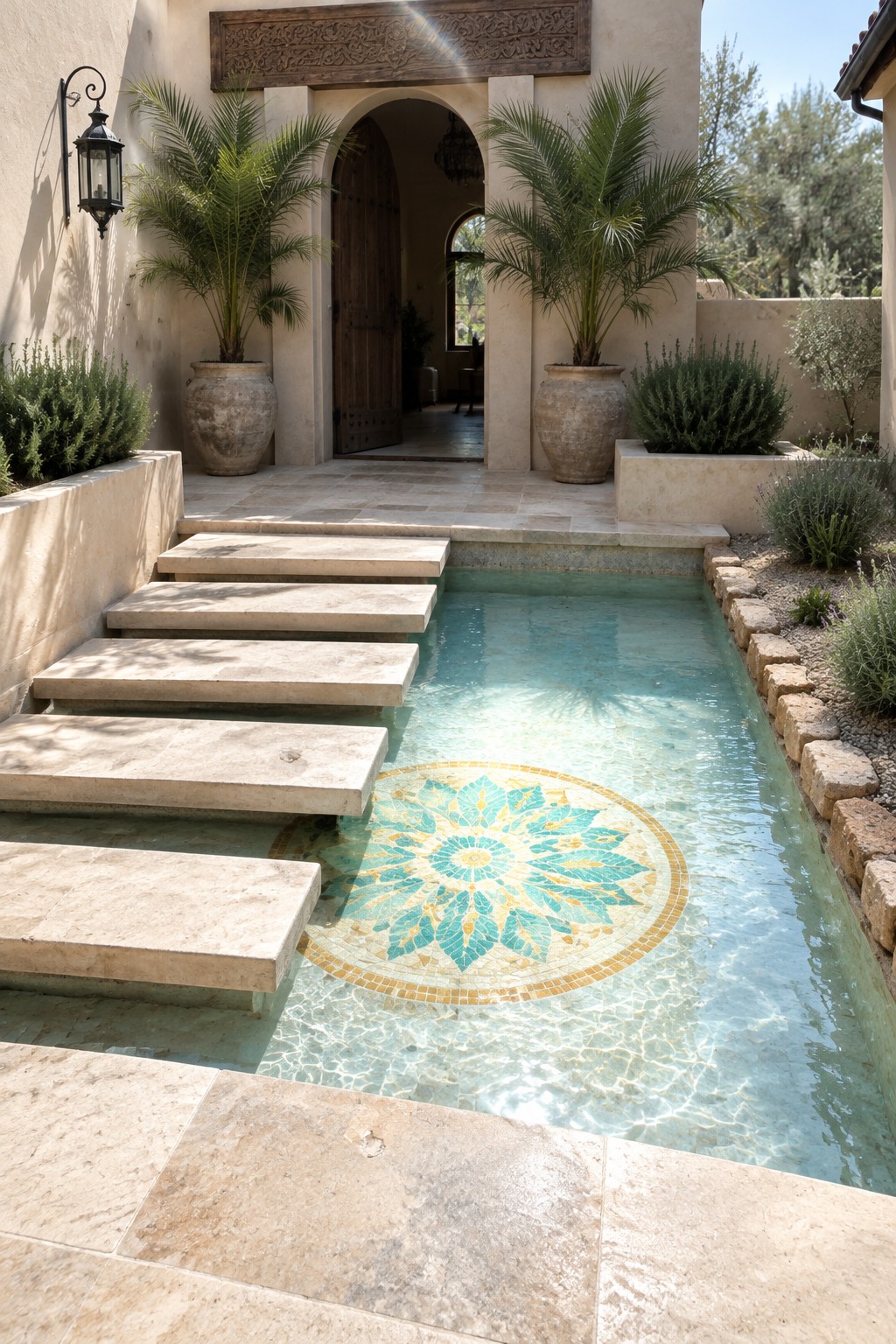
Oversized stone slabs make a narrow entry pool easier to cross while keeping the water visible between each step. This works especially well where the pool sits directly along the path to the front door.
Leave enough room between slabs for a comfortable stride, and use a nonslip finish that stays practical when wet. The light stone also suits a Mediterranean-style entry, where it can carry from the pool to the surrounding paving.
Use a Reflecting Pool Along the Entry Path
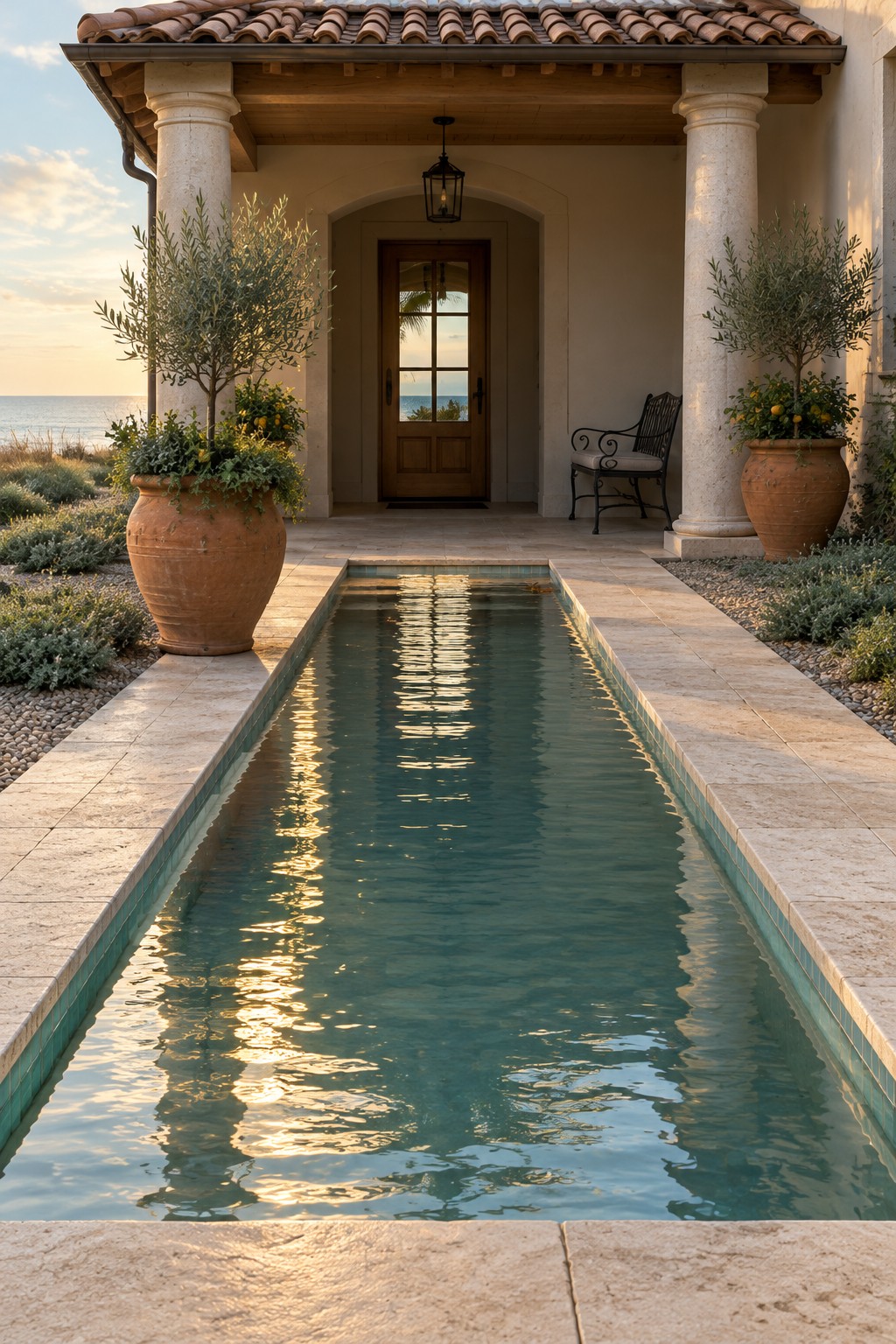
A narrow pool can turn the walk to the front door into part of the outdoor living space. Here, light stone edging gives the water a clear boundary and keeps the approach feeling connected to the covered entry.
This layout works well where a long, straight path leads to a porch or doorway. Leave enough room on both sides for comfortable walking, and choose a pool width that won’t make the entrance feel cramped.
Use Decorative Tile To Mark The Pool Edge
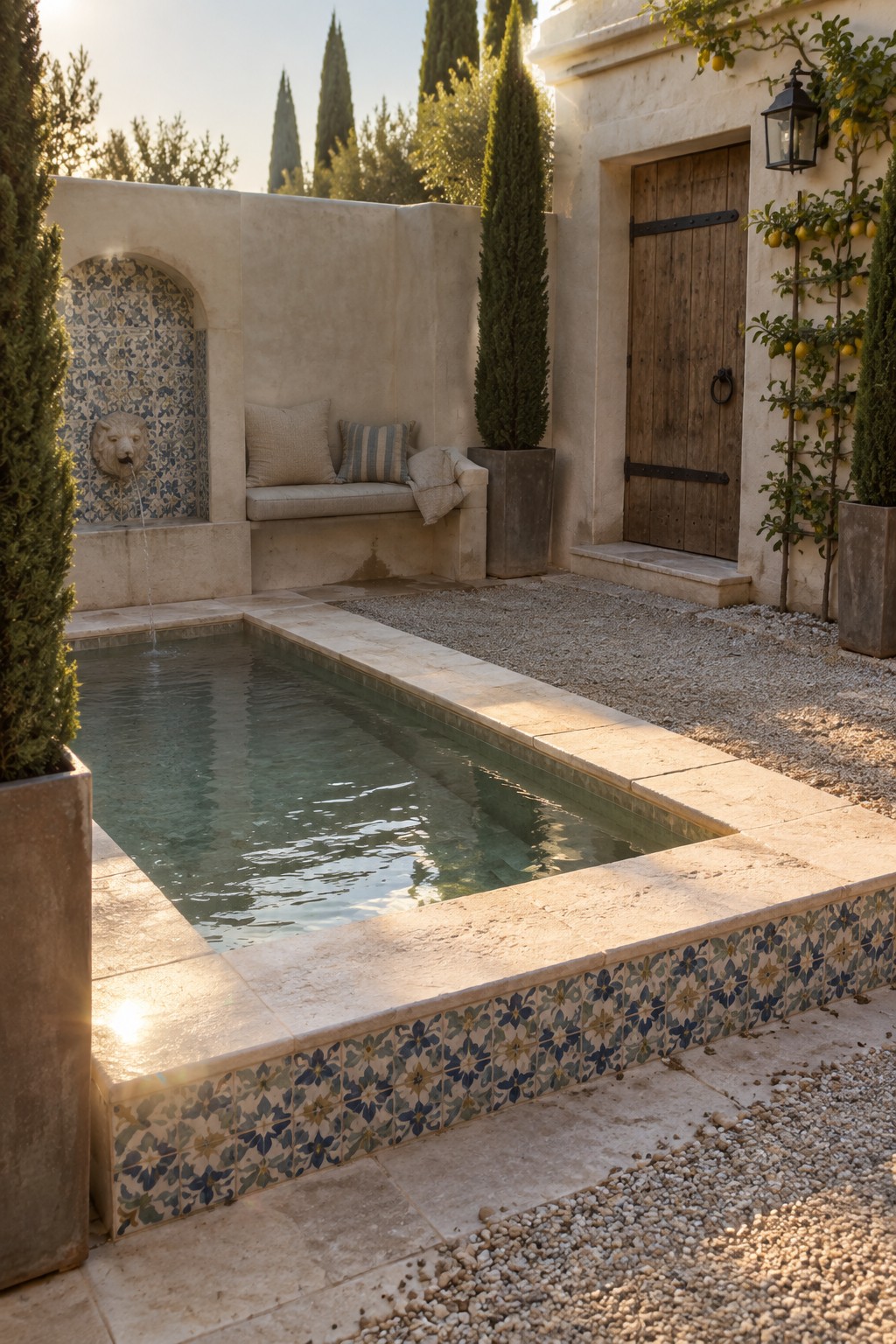
A band of patterned tile can give a small entry pool a clear, finished edge without covering the whole area in decoration. Here, blue-and-cream tiles line the pool wall and echo the tiled fountain niche, while light stone keeps the main surfaces simple.
This approach suits a compact courtyard where a little color can help define the pool as its own part of the layout. Choose outdoor-rated tile with a slip-resistant finish, and keep the surrounding stone fairly quiet so the pattern does not feel busy.
Let the Pool Edge Guide the Patio

A curved pool edge can make a small entry patio feel less boxy and give the space a natural flow. Here, the pale stone coping follows the pool’s shape and leaves a clear place to walk beside the water.
This approach works well where a pool sits close to steps or a doorway. Keep the coping wide enough for safe footing, and choose a finish that stays comfortable underfoot when wet.
Use a Wall Fountain Beside the Entry Pool

A small wall fountain can give an entry pool a clear focal point without taking up much space. A patterned tile panel behind it helps the feature feel built into the wall rather than added as an afterthought.
This works well in a courtyard or beside a front entrance, especially where a larger water feature would crowd the walkway. Keep the basin and surrounding stone simple so the fountain remains easy to notice and care for.
Frequently Asked Questions
Q: Does a light stone pool entry get slippery when wet?
A: It can, especially if the stone has a smooth finish. Choose a textured, pool-safe surface for the steps and shallow ledge, where people are most likely to walk.
Q: Will pale stone look dirty all the time?
A: Not necessarily. Dust and leaves may show up more than they would on darker stone, but regular brushing and rinsing usually keep the surface looking fresh. Ask how your chosen stone handles pool chemicals before you commit.
Q: What pool finish works well with light stone around the entry?
A: Soft blue or aqua water pairs naturally with pale limestone and travertine. If you want a calmer look, choose a muted water color and keep the stone tones warm rather than stark white.
Q: Can I use real limestone around a saltwater pool?
A: Yes, but choose a pool-rated stone and check that it suits salt exposure. Sealing can help protect it from stains, though you’ll still need to rinse and maintain it as recommended.