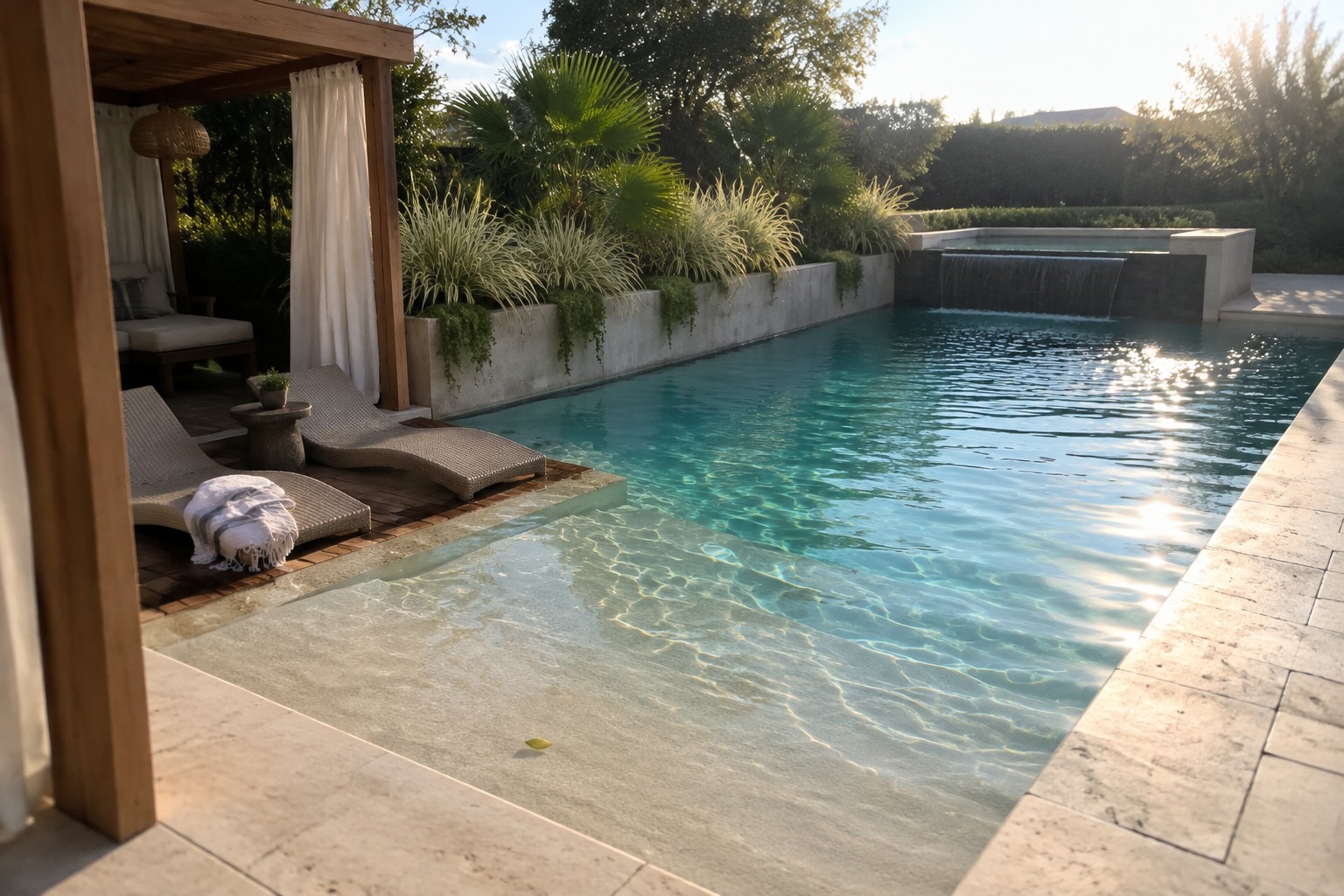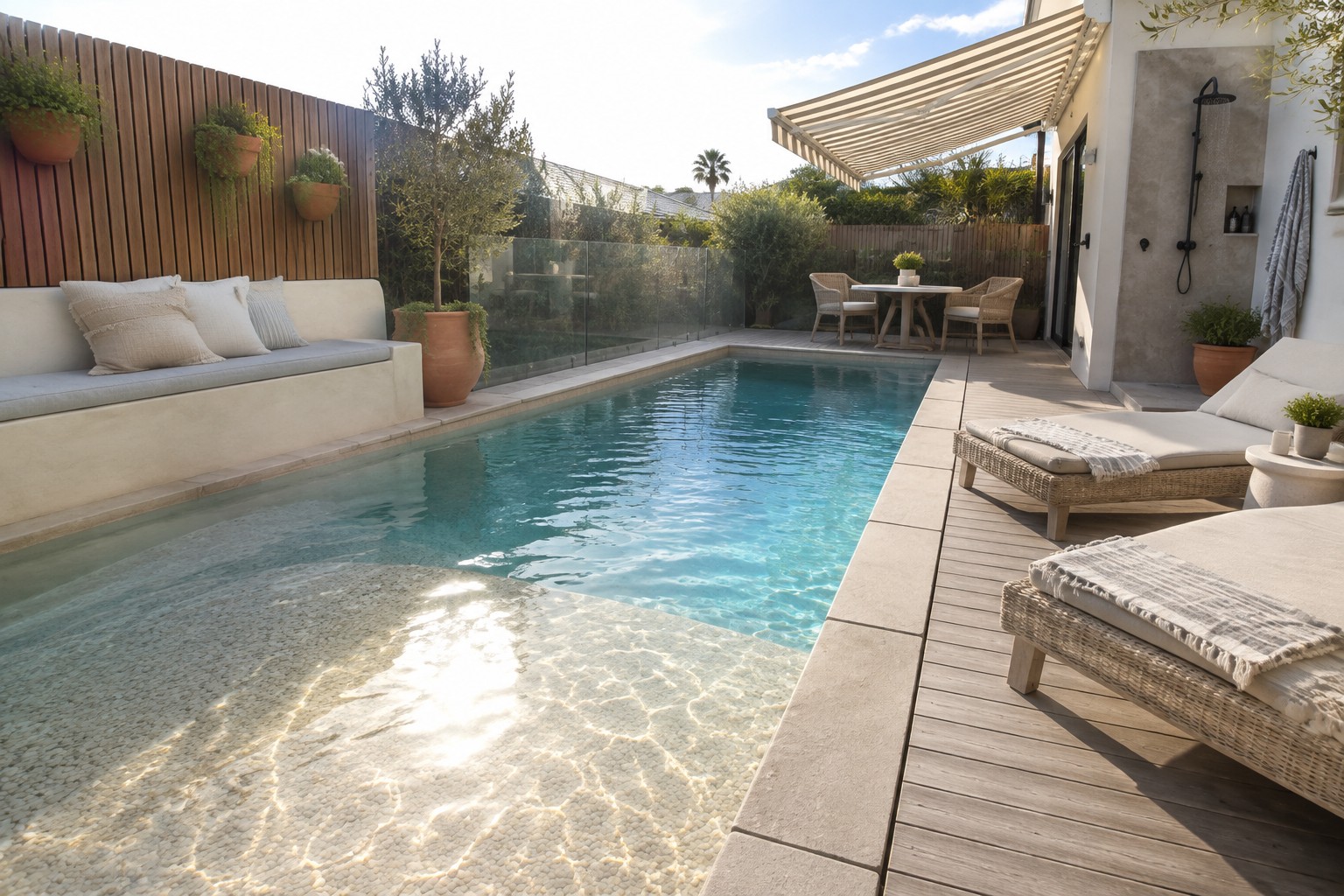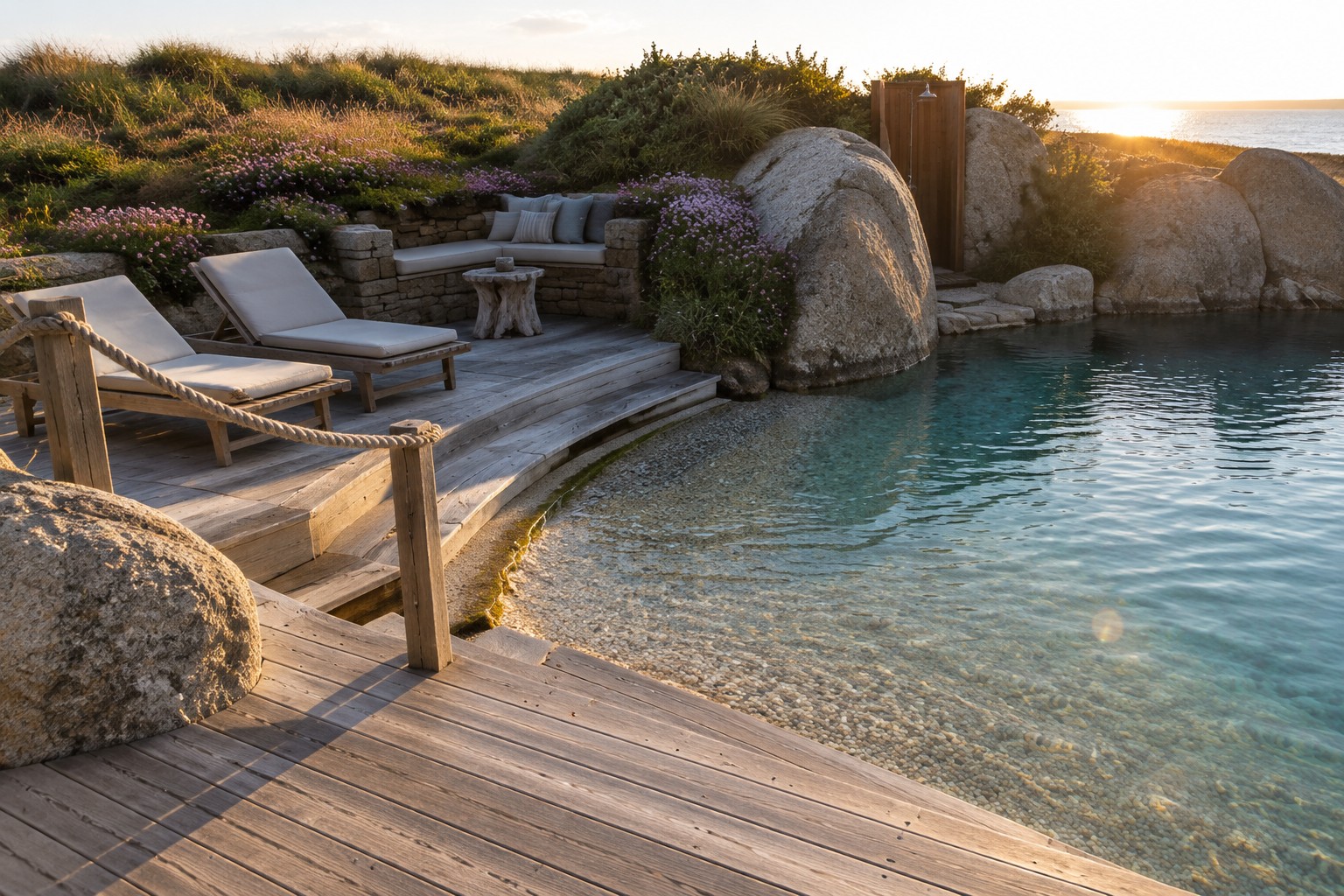
I’ve noticed that a beach-entry pool feels most natural when its shape follows the yard rather than looking dropped into it.
The first thing I’d pay attention to is how the shallow slope meets the boulders, since that edge sets the tone and affects how easily people can get in and out.
Natural stone can soften the pool’s outline, but the size and placement of each rock matter if the space is also meant for lounging, swimming, and moving around safely.
I’d also look at how the boulders relate to nearby planting and paths, so the pool feels connected to the rest of the landscape instead of crowded by decoration.
Some of these approaches are worth saving and adapting to the shape, soil, and everyday use of your own backyard.
Build The Pool Into The Natural Rock
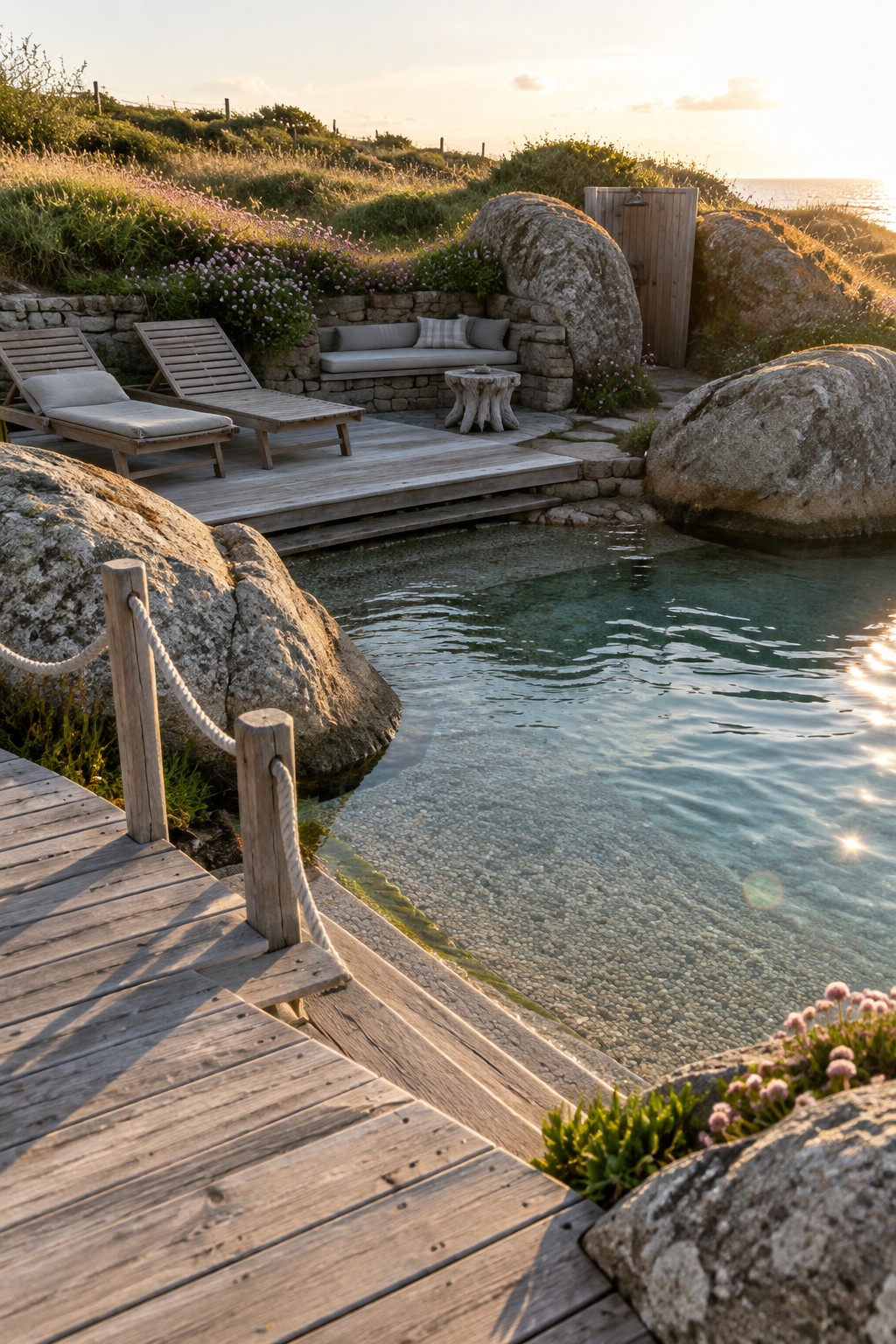
A pool edge that follows the shape of the land can feel more settled than a straight, formal border. Here, large boulders sit close to the water, making them part of the pool’s edge rather than separate decorations.
This approach suits a rocky coastal yard where moving every stone would mean a lot of extra work. Keep a clear, stable route to the water, and have a professional check that the boulders and pool edge are secure.
Make The Pool Entry Feel Natural
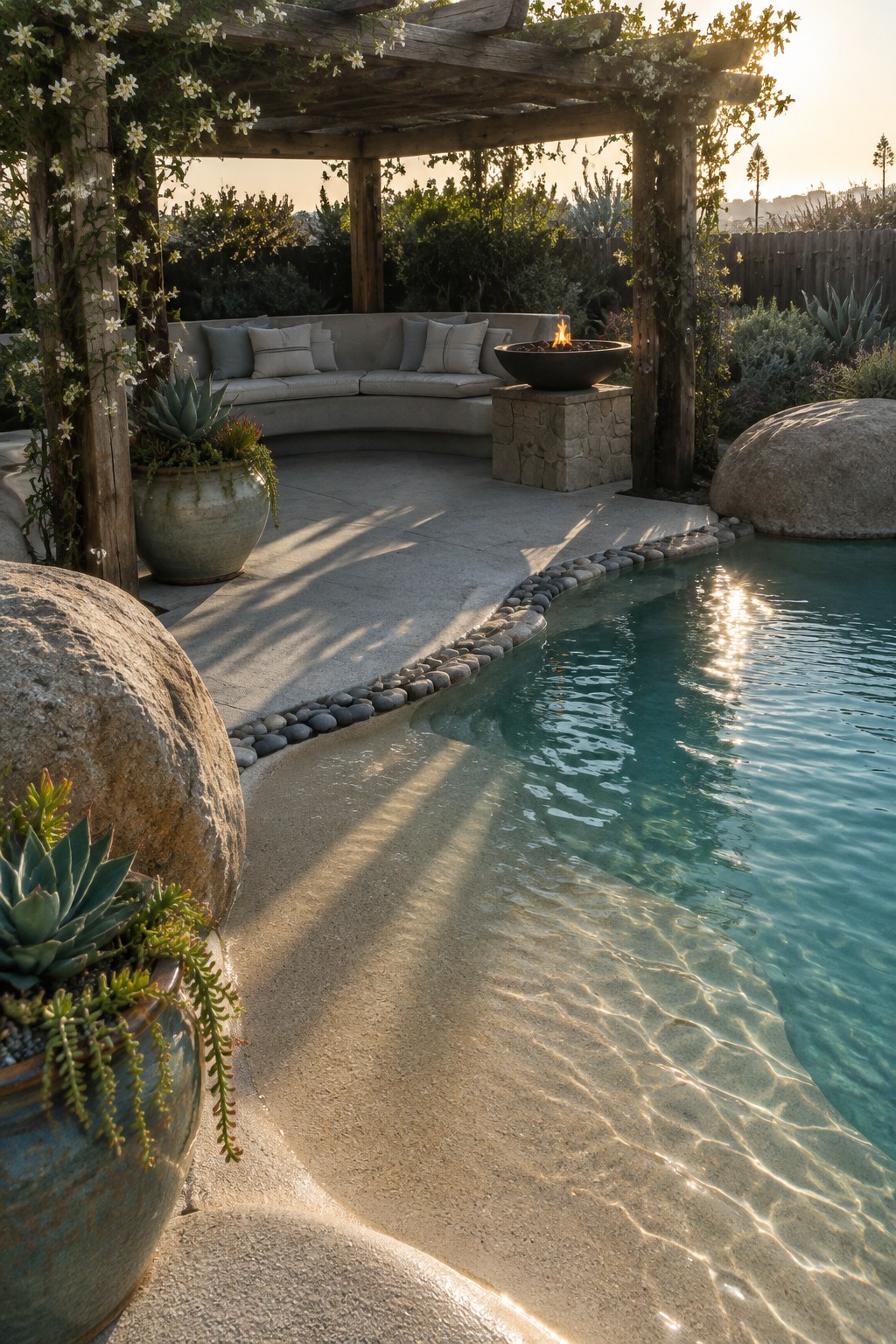
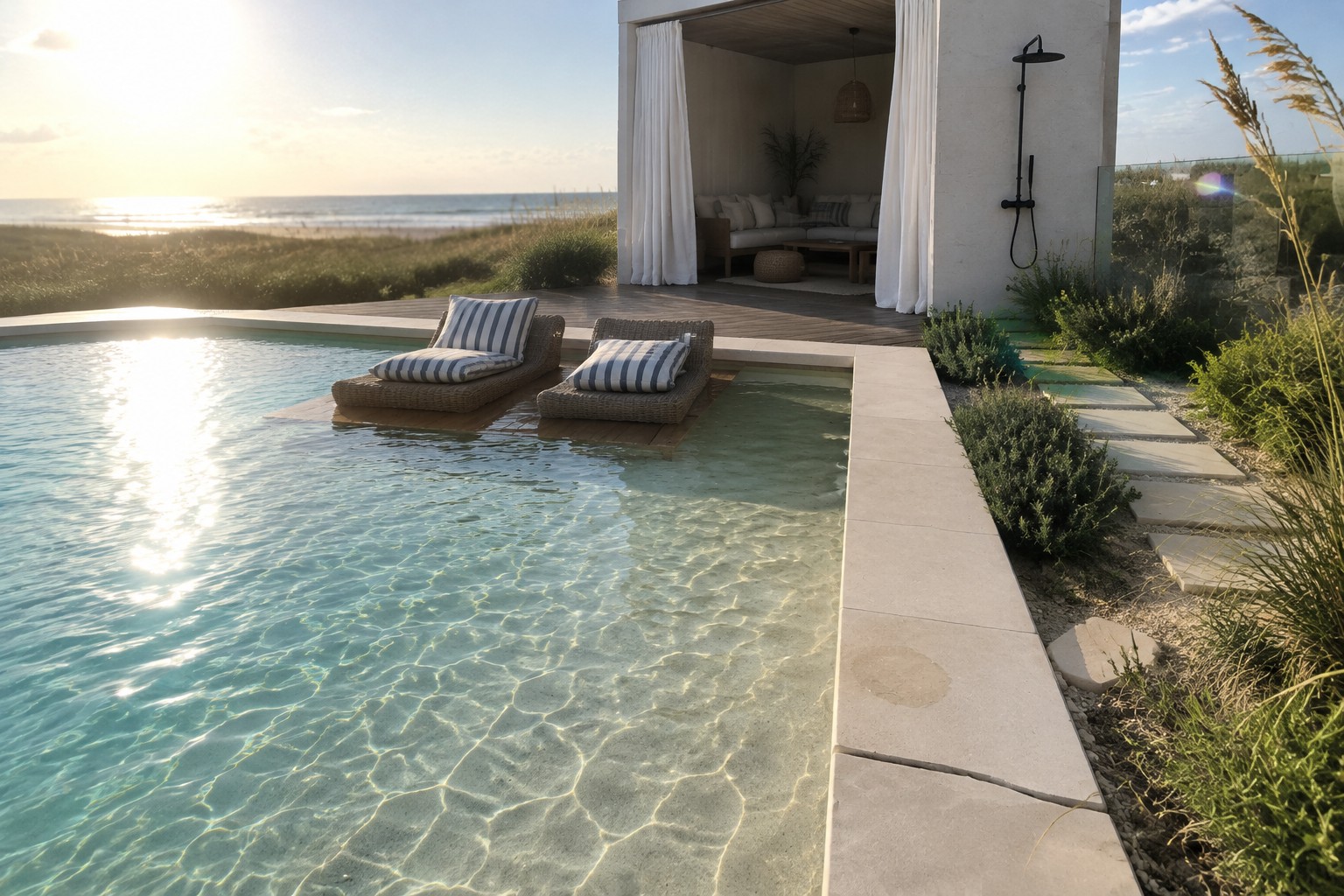
A shallow, gently sloped pool entry can make a backyard pool feel more connected to its surroundings. Here, the sandy-colored ledge meets the water beside rounded stones, so the transition looks softer than a straight tile edge.
This approach works well in a natural-style pool where people want an easy way to step in or sit near the water. Choose a durable, slip-resistant finish for the ledge, and make sure the slope is gradual enough to walk on comfortably.
Build a Pool Into the Natural Stone
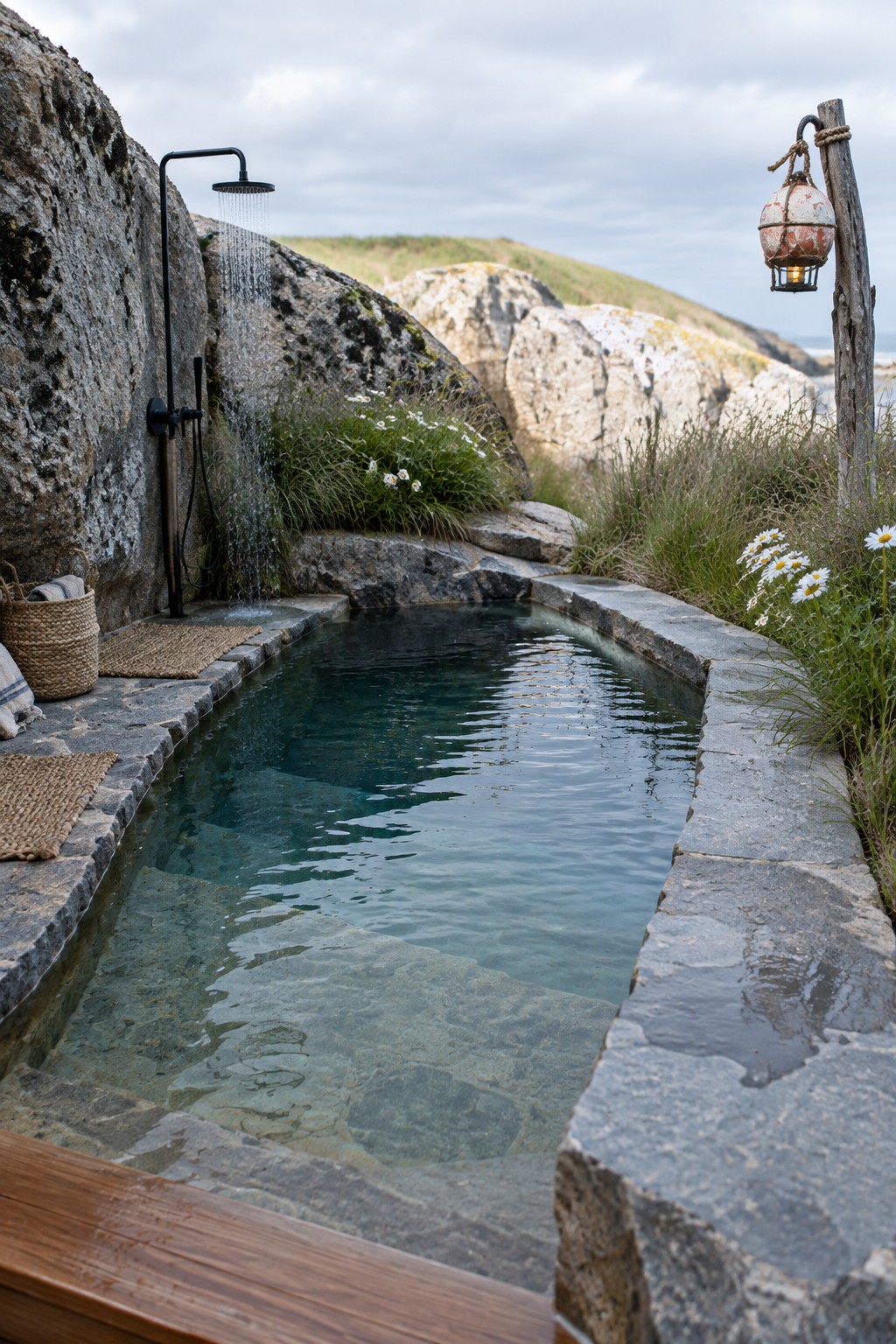
A small pool set directly into a rocky slope can feel like part of the landscape rather than a separate feature. Here, the stone edges give the water a clear shape while keeping the setting rustic.
This approach works well on a sloped or rocky lot where a conventional pool might feel out of place. Use sturdy, nonslip stone around the edge, and plan for a safe way to get in and out. The pool should fit the site, not force major changes to it.
Use Natural Boulders Along the Pool Edge
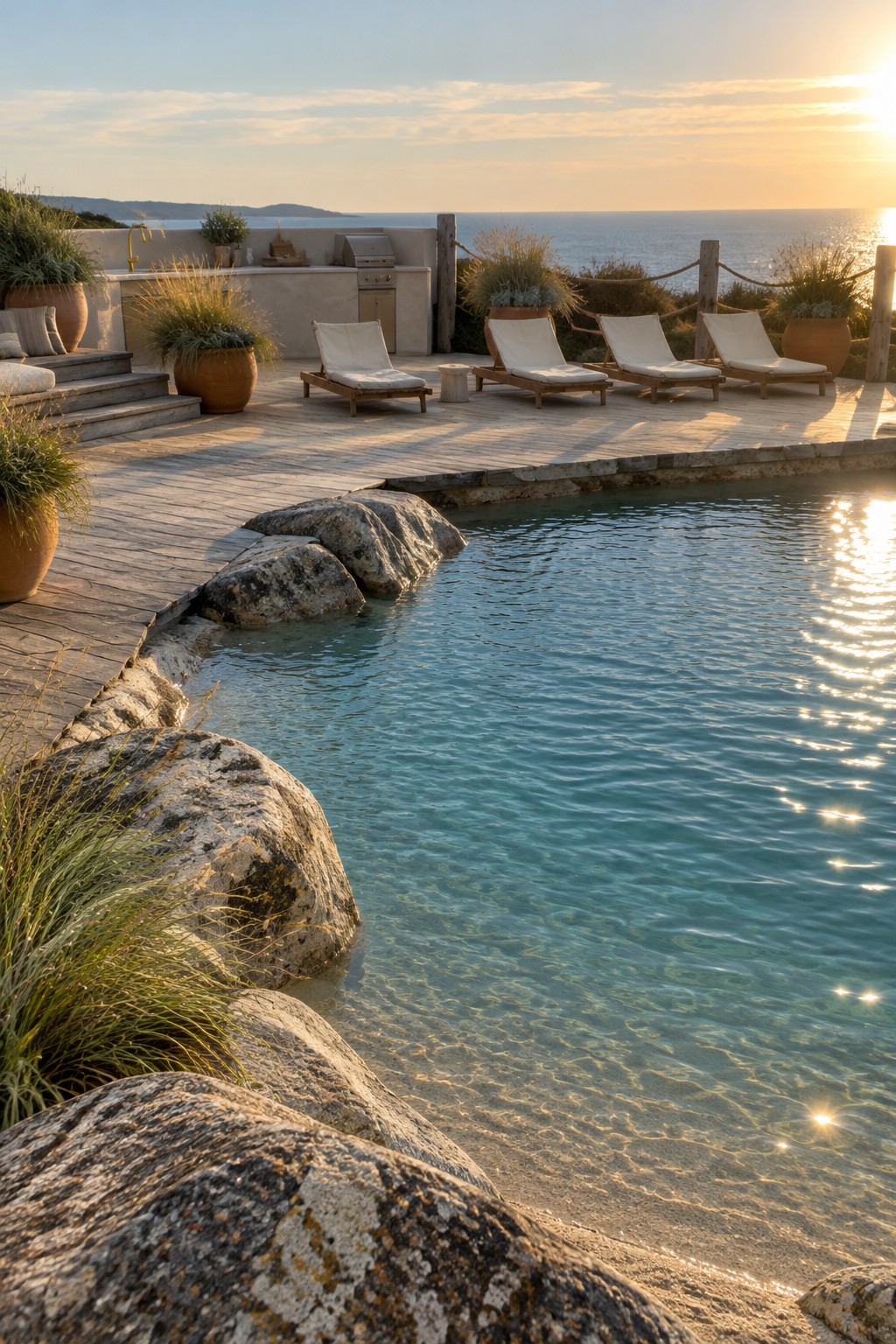
Large boulders make a pool feel more connected to its surroundings, especially where the edge meets a wood deck. They give the waterline a less formal look while still defining the pool’s shape.
For a similar setup, place a few sturdy stones along the entry side and keep the walking route clear. This works well in a coastal yard or a rustic garden, but choose stones with stable footing and avoid uneven gaps where people step in and out.
Add a Shaded Dining Spot Beside the Pool
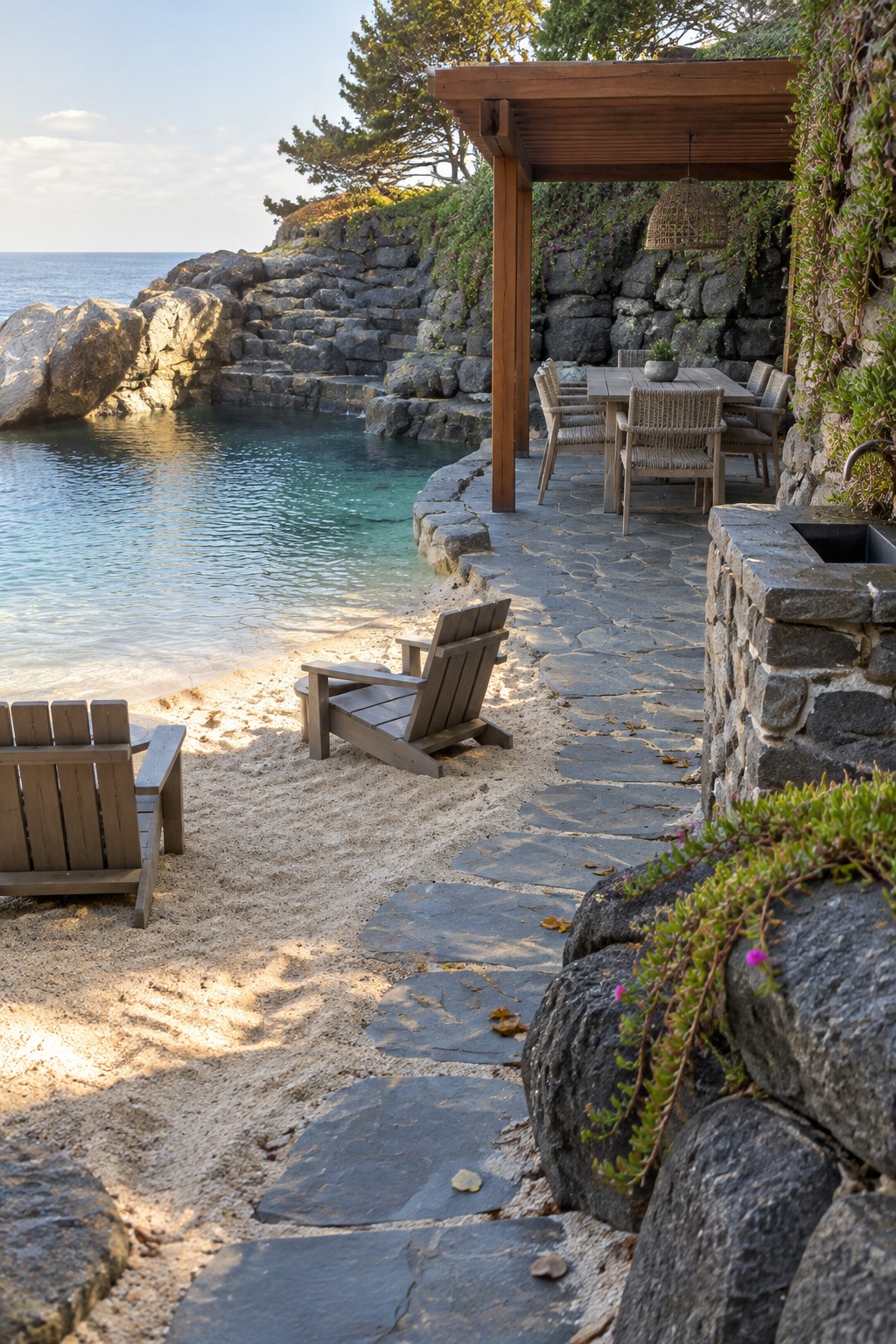
A small dining area beside a natural pool makes it easier to use the space beyond swimming. A simple pergola gives the table some shade, while the stone paving keeps the seating area connected to the pool edge.
This setup works well where there’s room for a separate dining zone without blocking the path to the water. Keep the table close enough for easy use, but leave a clear route around the chairs.
Create a Shallow Beach Entry
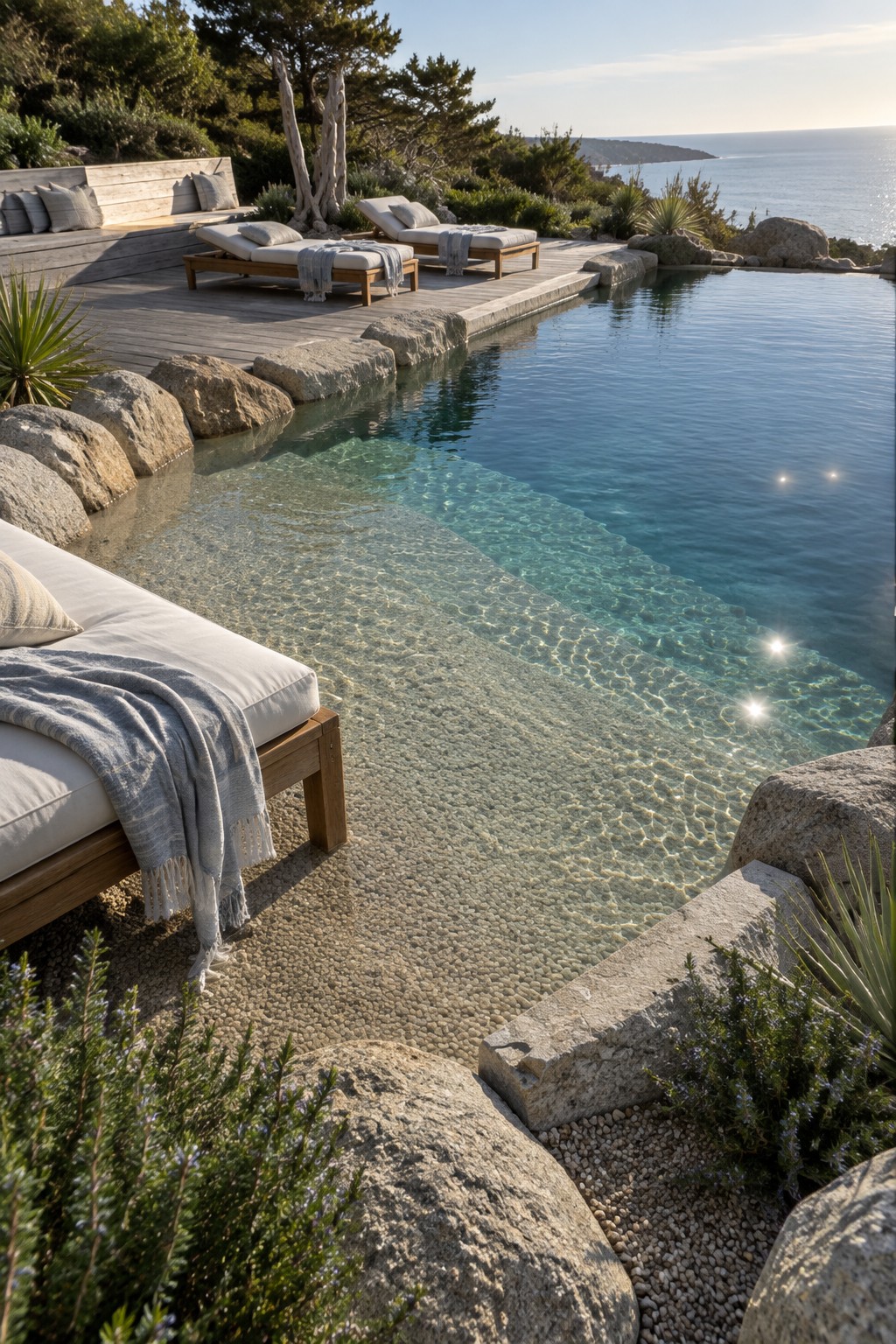
A gently sloping, pebble-bottom entry makes a pool feel more like a natural shoreline than a standard swimming pool. It also gives people a place to wade and cool off without needing to use steps.
This approach works especially well beside a rocky pool edge, where the gradual entry can meet the surrounding boulders naturally. Keep the slope comfortable and use small, smooth stones underfoot so the entry stays pleasant to walk on.
Add a Shaded Dining Spot Beside the Pool
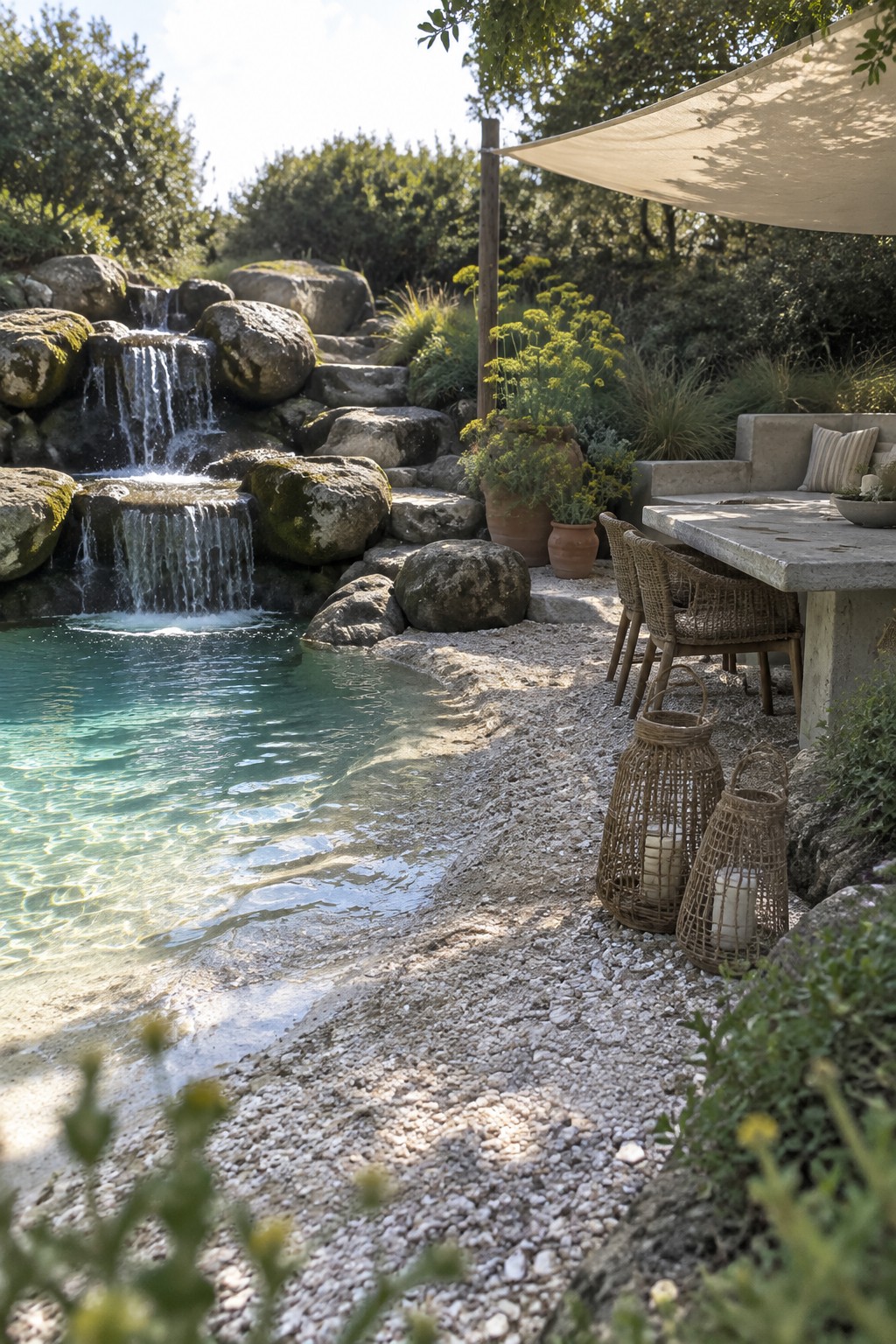
A small dining area beside the pool makes it easier to move between swimming and meals without leaving the yard. A simple table beneath a shade sail is a practical choice, especially when the poolside gets strong sun.
Leave enough room to pull out chairs and walk around the table, and keep the setup close to the pool without crowding the water’s edge. This kind of arrangement suits a naturalistic pool area where the dining space can sit neatly along a gravel or stone path.
Add a Shaded Seating Area Beside the Pool
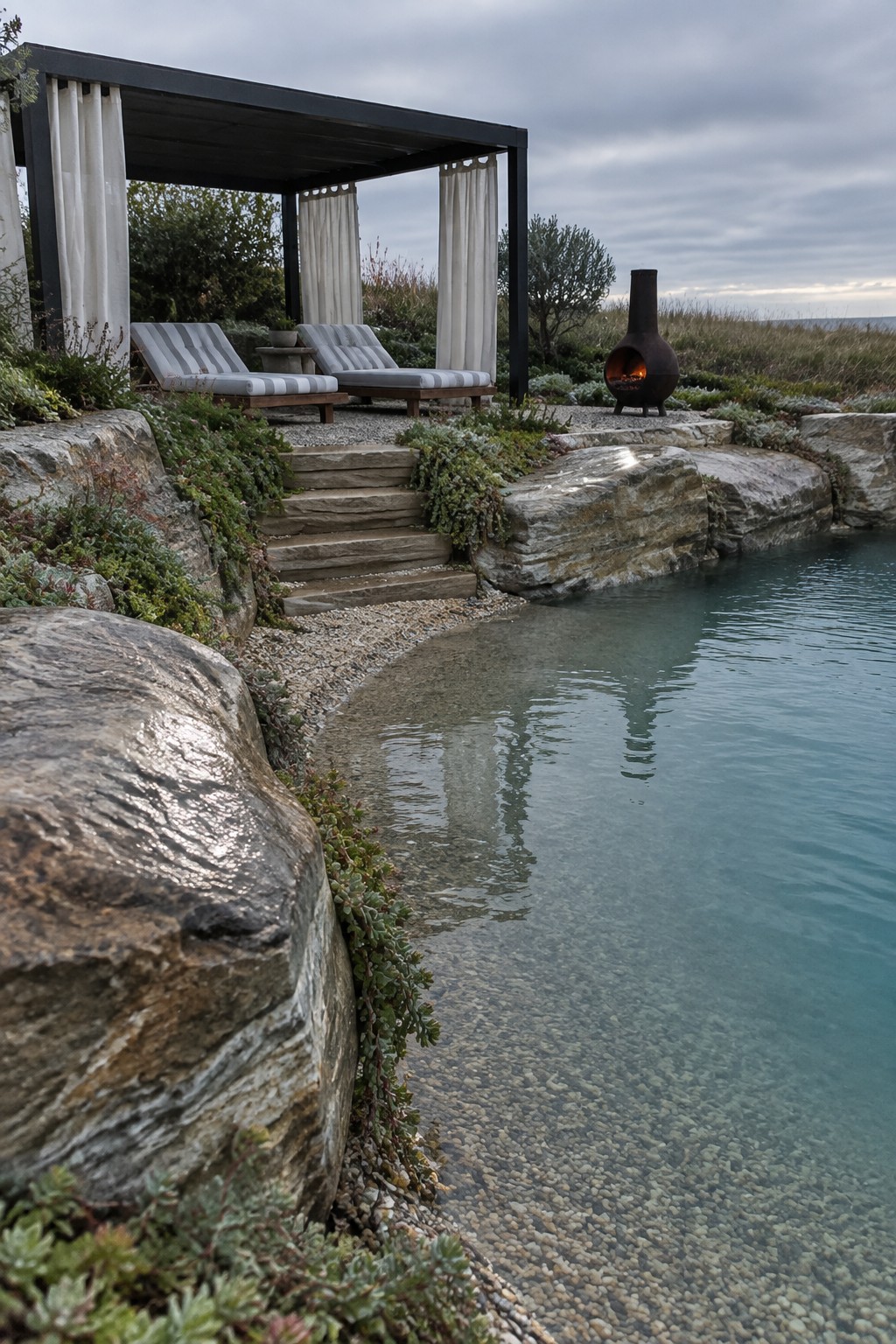
A simple shade structure can make a natural pool edge more useful for relaxing between swims. Here, two cushioned loungers sit beneath a pergola, close enough to the water to keep the seating area connected to the pool.
For a similar setup, place the shade where it offers a comfortable break from the sun without blocking the pool entrance. Choose outdoor cushions that can handle moisture, and leave a clear path between the seats and the steps.
Add Benches Along the Pool
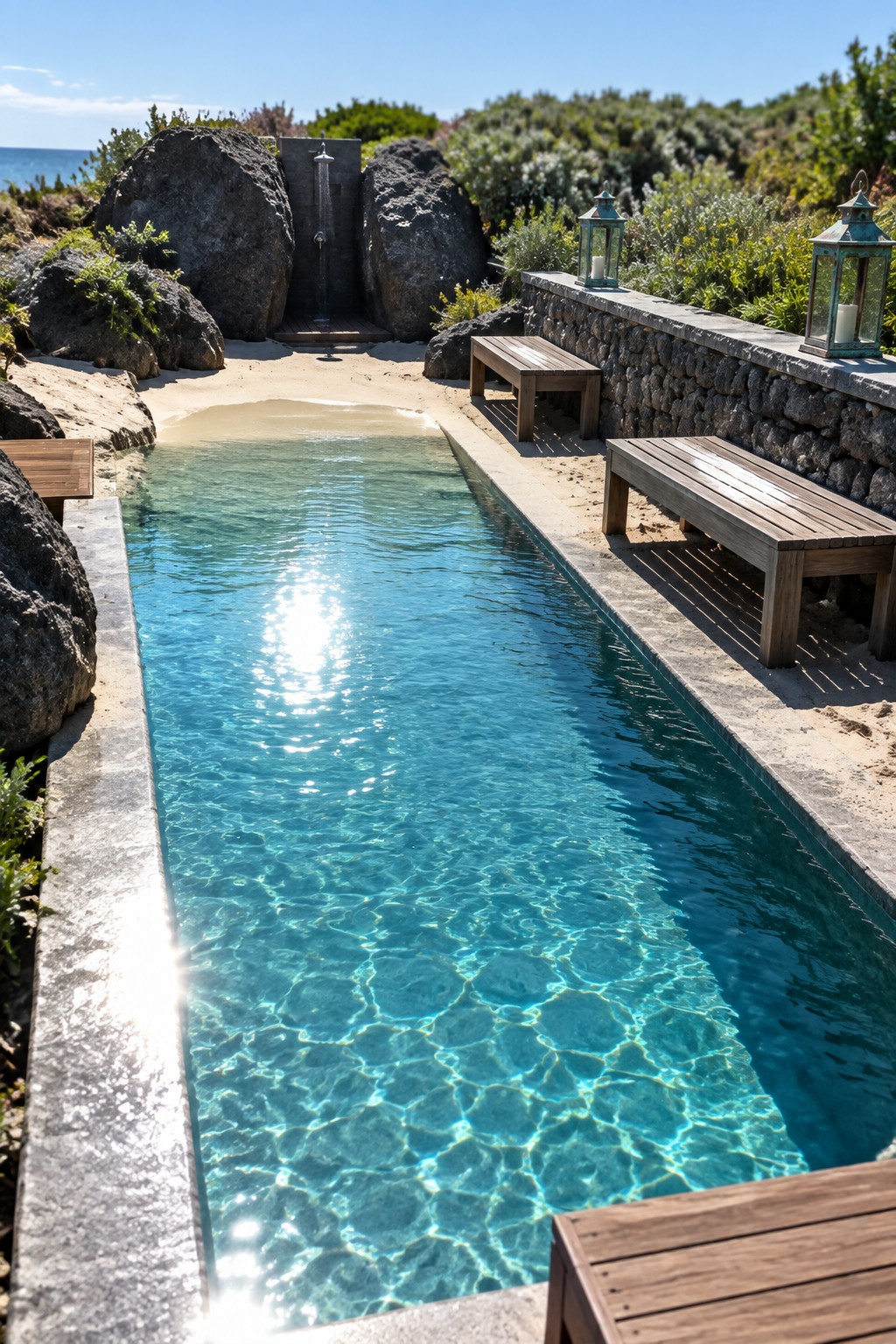
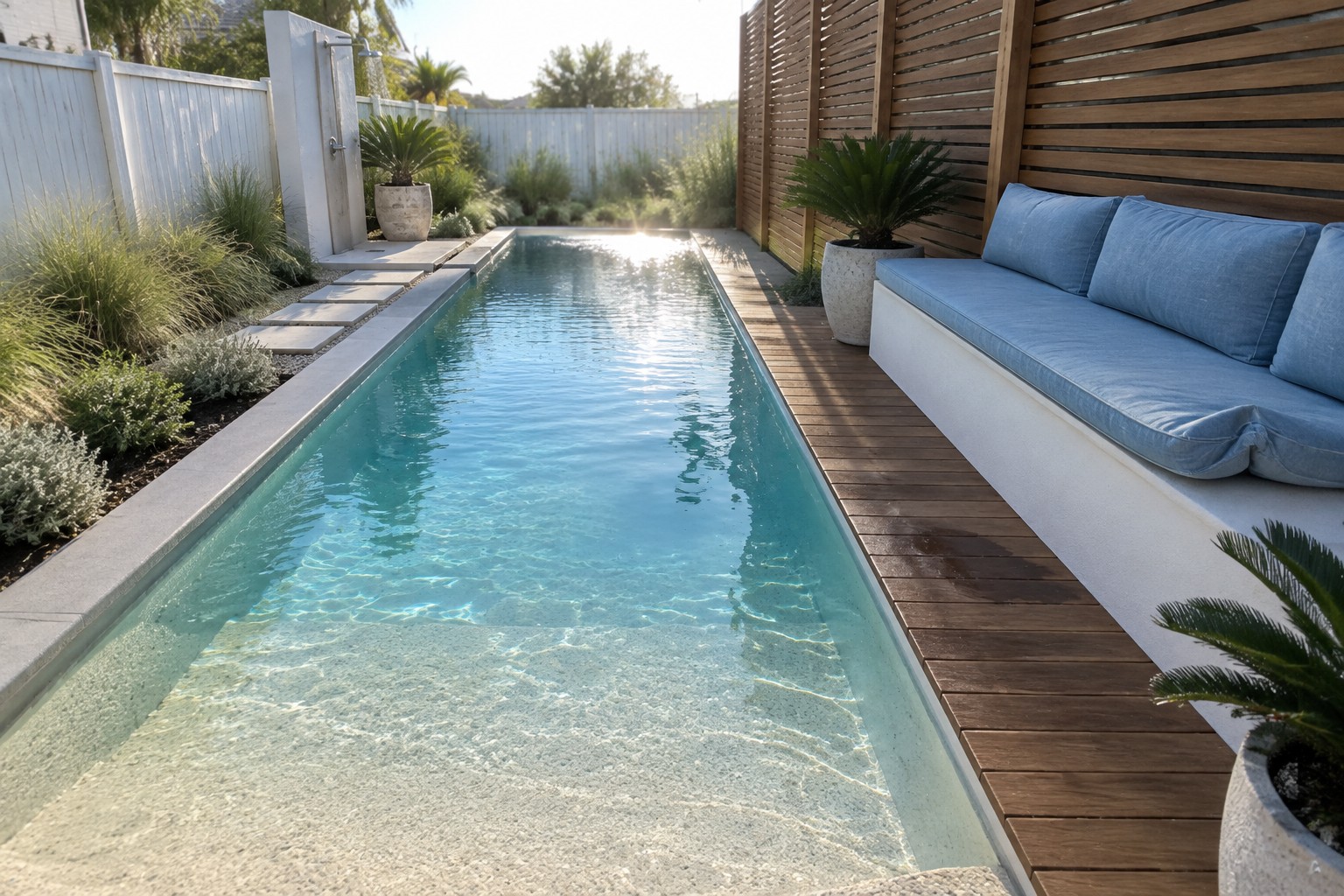
A narrow pool can still have room for a place to sit. Benches set along the edge give people somewhere to rest between swims without taking up much of the sandy area.
Use sturdy outdoor wood and leave enough space around each bench for easy walking. This layout suits a compact pool area, but keep the seats clear of the water’s edge so they do not make getting in and out awkward.
Add a Fire Pit Beside the Pool
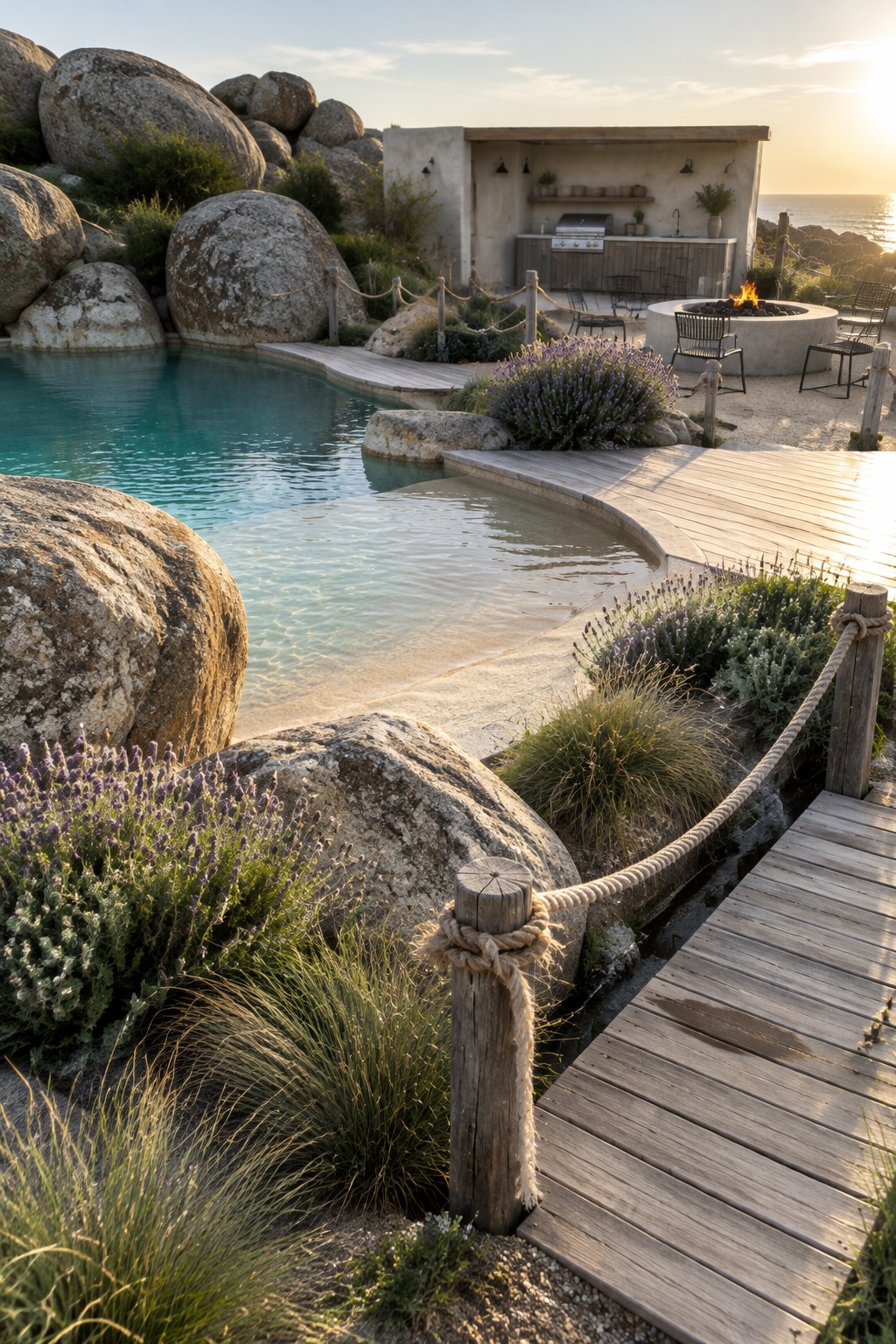
A fire pit gives a pool area a place to gather after swimming, so the space stays useful when no one is in the water. A round built-in pit works well beside a pool when there is enough room to keep seating and walkways clear.
Leave a comfortable gap between the fire and the pool edge, and choose chairs that can handle outdoor use. This setup suits a coastal yard with a generous stone or gravel patio.
Add a Built-In Bench Beside the Pool
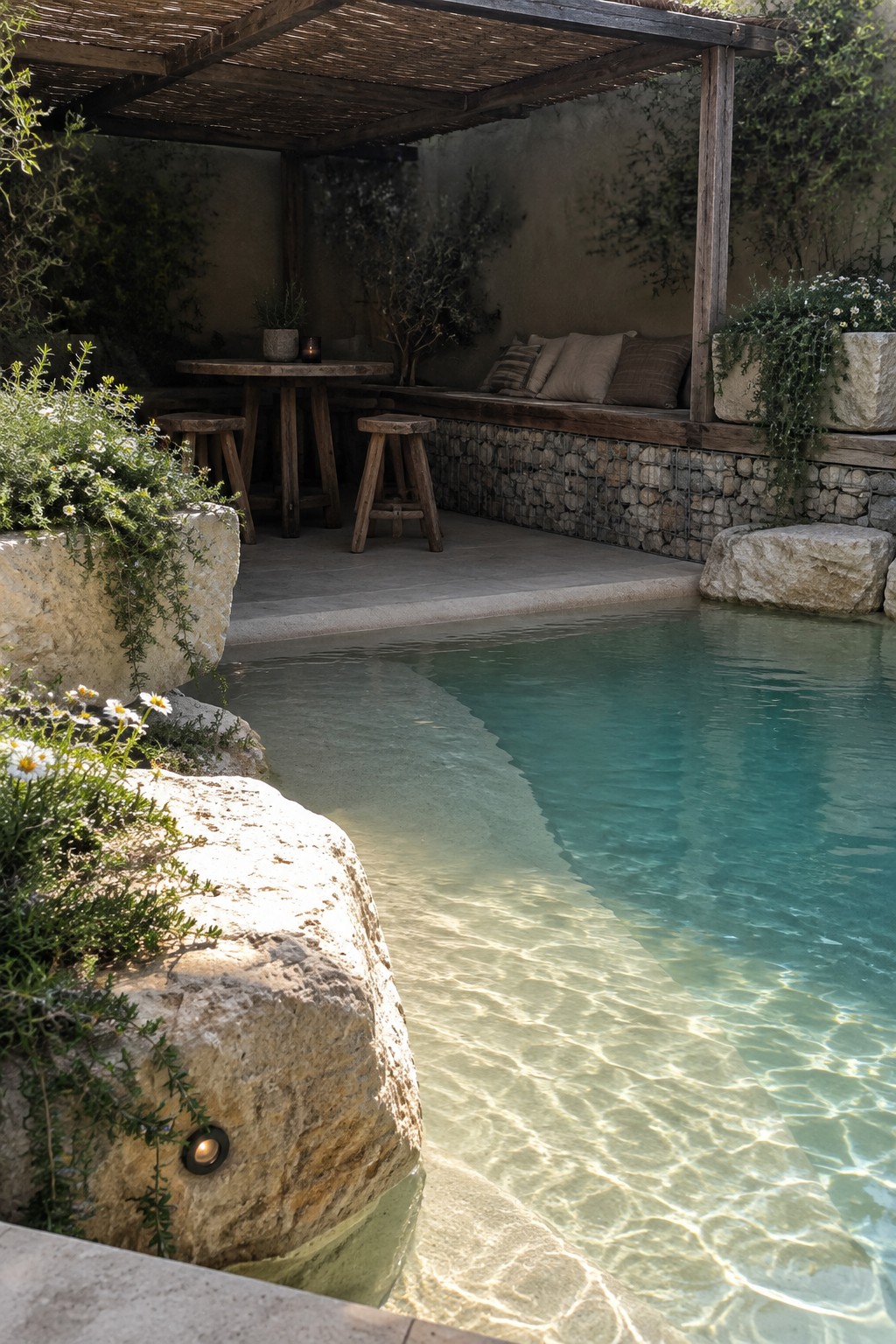
A built-in bench makes a poolside spot useful for more than swimming. Here, cushions turn the long ledge into a place to sit and rest, while keeping the seating close to the water.
This works well in a compact pool area where separate lounge chairs might crowd the walkway. A low stone base can support the bench, but leave enough room to move around the pool and choose cushions made for outdoor use.
Add a Wooden Deck Beside the Pool
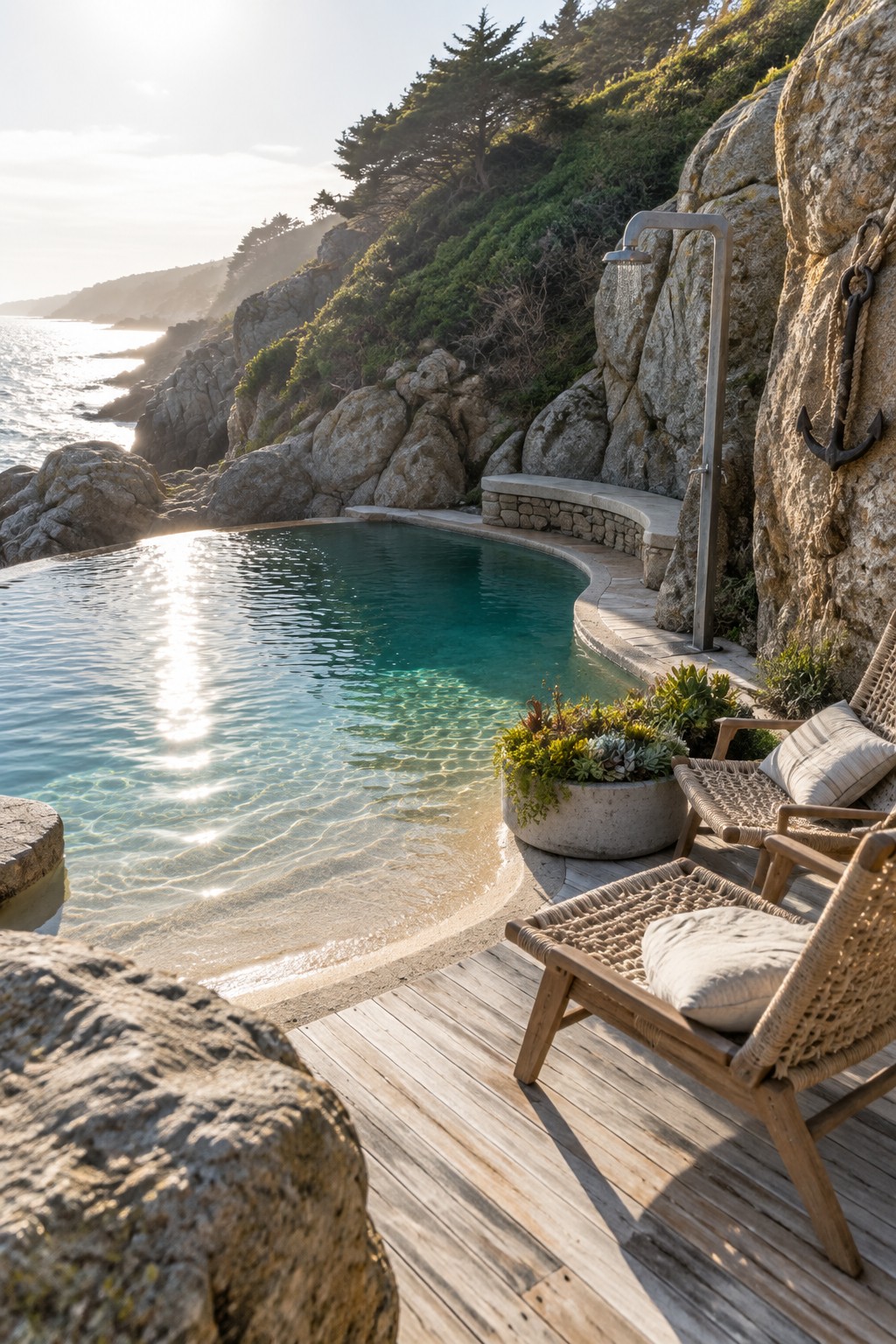
A small wooden deck can give a natural rock pool a comfortable place to sit and dry off. Here, it provides a clear spot for lounge chairs without taking attention away from the boulder-lined pool edge.
This works well where the ground is uneven or rocky, since a deck can create a level area beside the water. Choose boards suited to wet conditions, and leave enough room to move safely between the chairs and pool.
Keep Poolside Seating Close to the Water
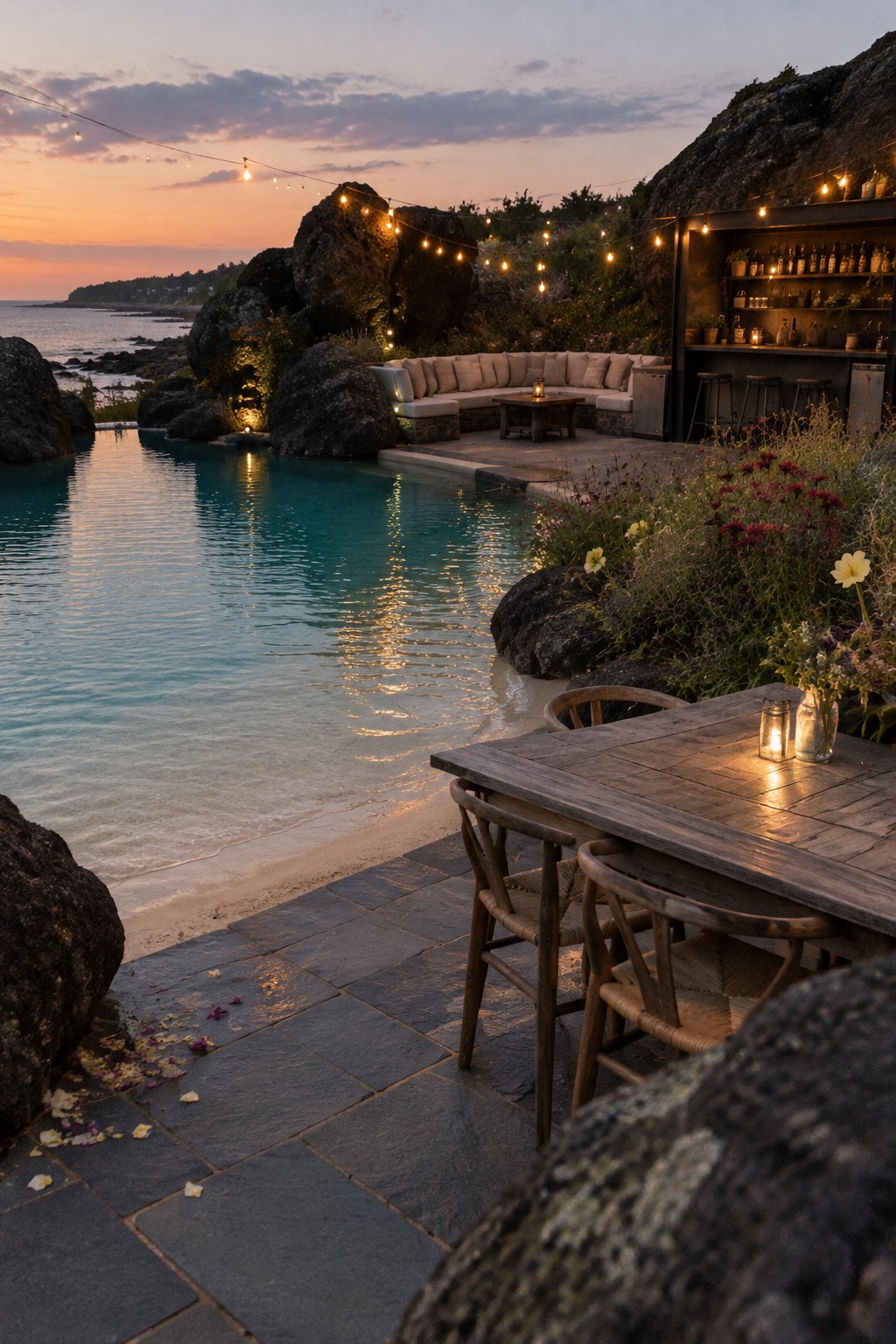
A seating area right beside the pool makes it easy to move between swimming and relaxing. Here, a built-in cushioned bench sits on a stone patio at the water’s edge, so the space feels connected without needing a large deck.
This setup works well in a rocky coastal yard where a broad, level patio may be hard to fit. Leave enough room to walk safely between the seating and pool, and choose outdoor cushions that can handle splashes and damp air.
Add a Poolside Shower
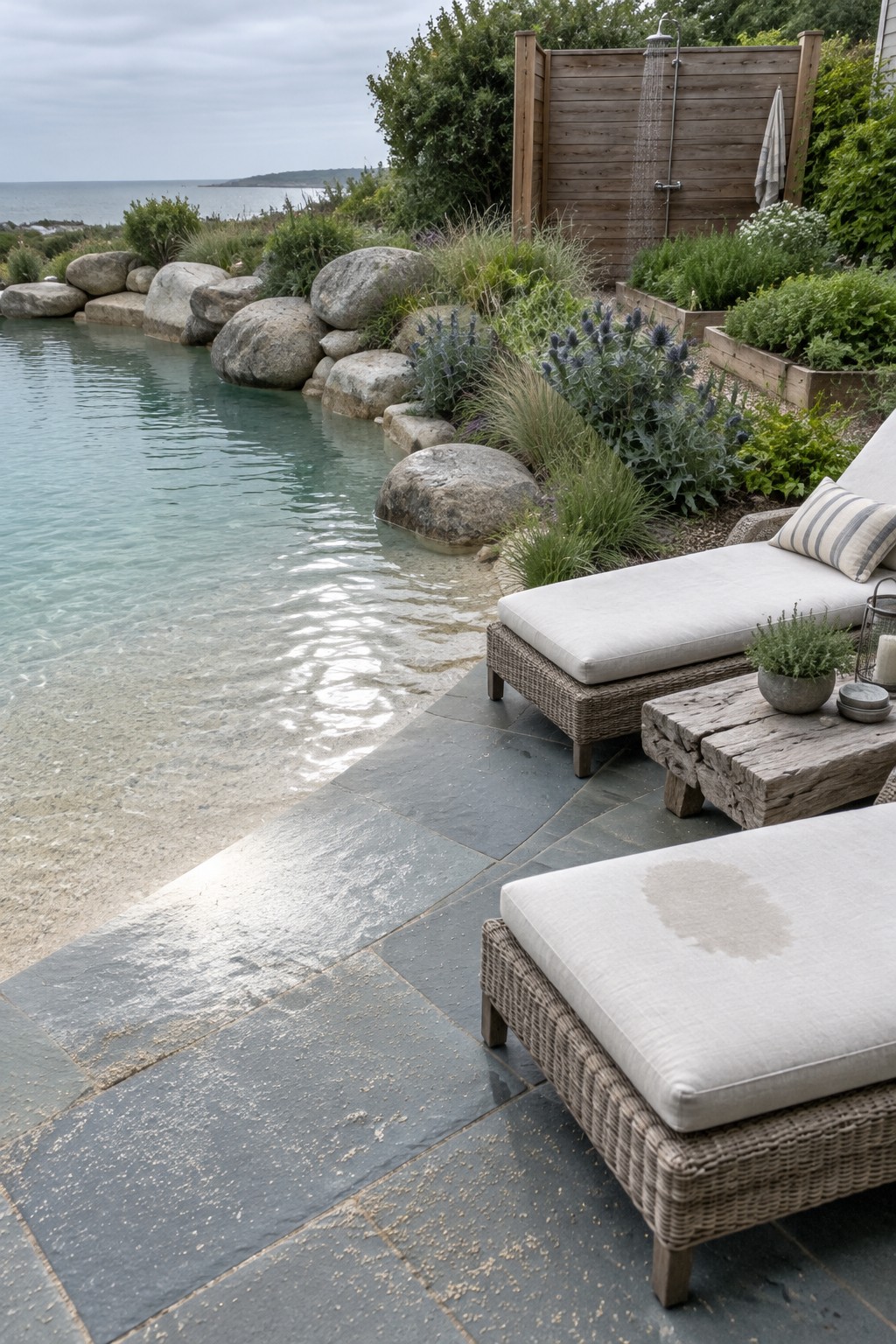
A simple outdoor shower makes it easier to rinse off before settling into the pool or heading indoors. A wooden privacy screen gives it a practical place near the water without making it feel like a separate utility area.
This works well beside a natural swimming pool, especially where swimmers come in from the beach or garden. Keep the shower floor slip-resistant and make sure water drains away from the pool seating.
Add a Natural Stone Edge to the Pool
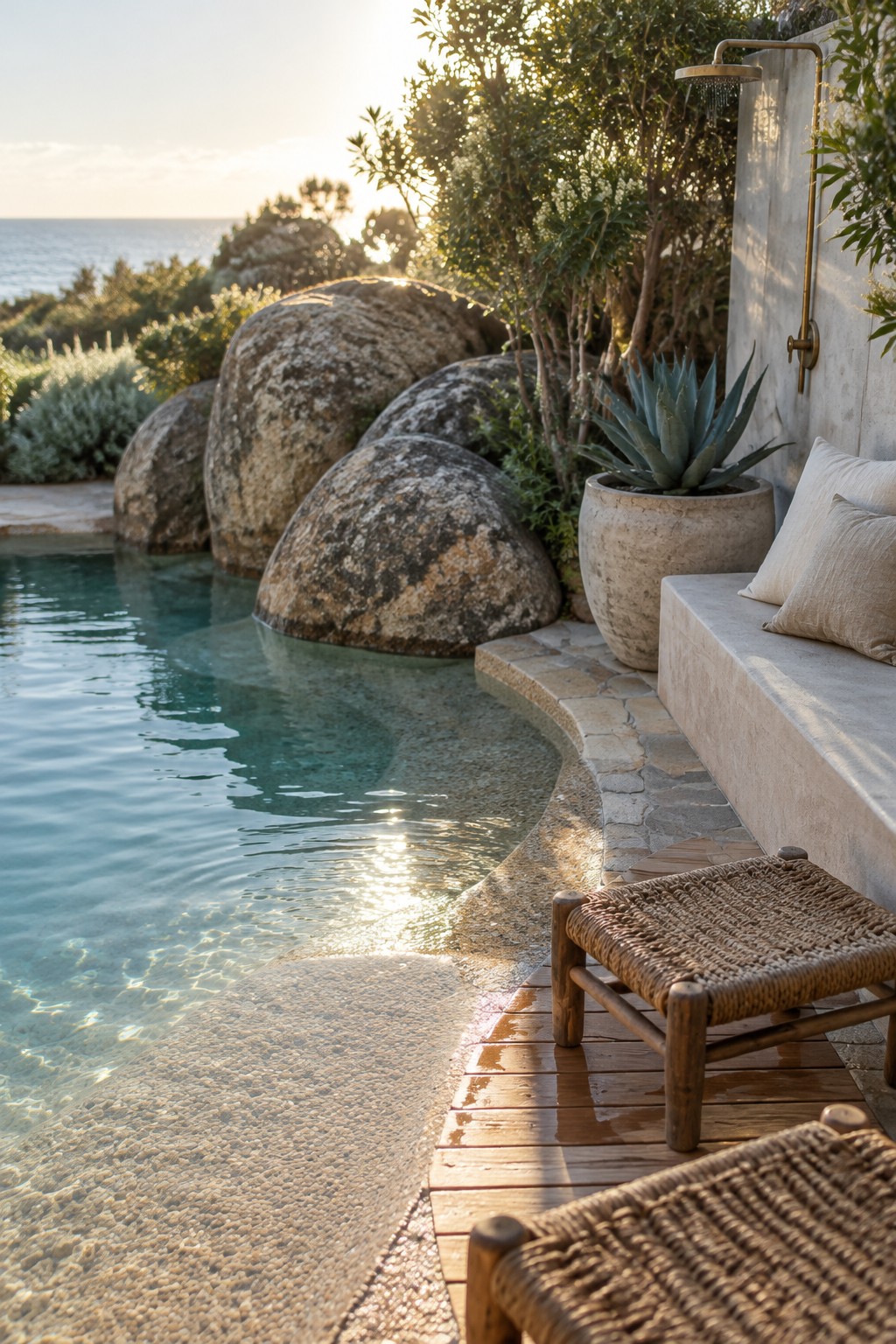
A stone edge can help a pool feel like part of the landscape rather than a separate feature. Here, large boulders sit beside the water, giving the pool a more natural outline and making the shallow entry feel at home in a coastal setting.
This approach works best where there is room to let the stones sit in varied shapes and sizes. Choose boulders with surfaces that suit the local surroundings, and keep the swimming path clear so the natural edge does not get in the way.
Add a Pergola Beside the Pool
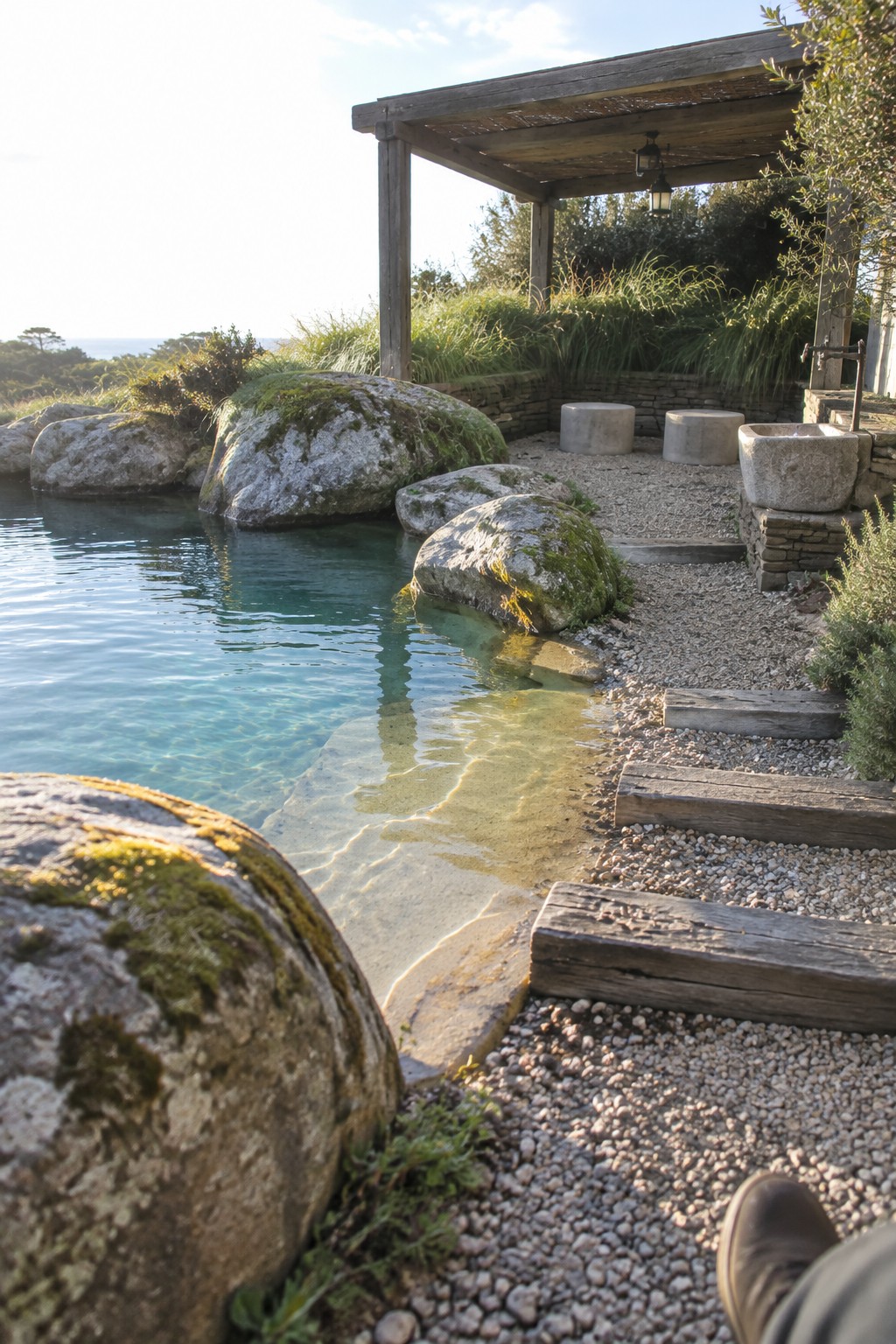
A pergola can make a poolside spot more useful by providing shade for a place to sit or pause between swims. Here, the simple timber structure gives the gravel area a clear purpose without taking attention away from the natural pool edge.
This approach works well beside a naturalistic pool where a paved patio might feel out of place. Keep the structure open and choose durable materials that can handle moisture, then leave enough room beneath it to move comfortably.
Use A Poolside Kitchen For Easy Outdoor Living
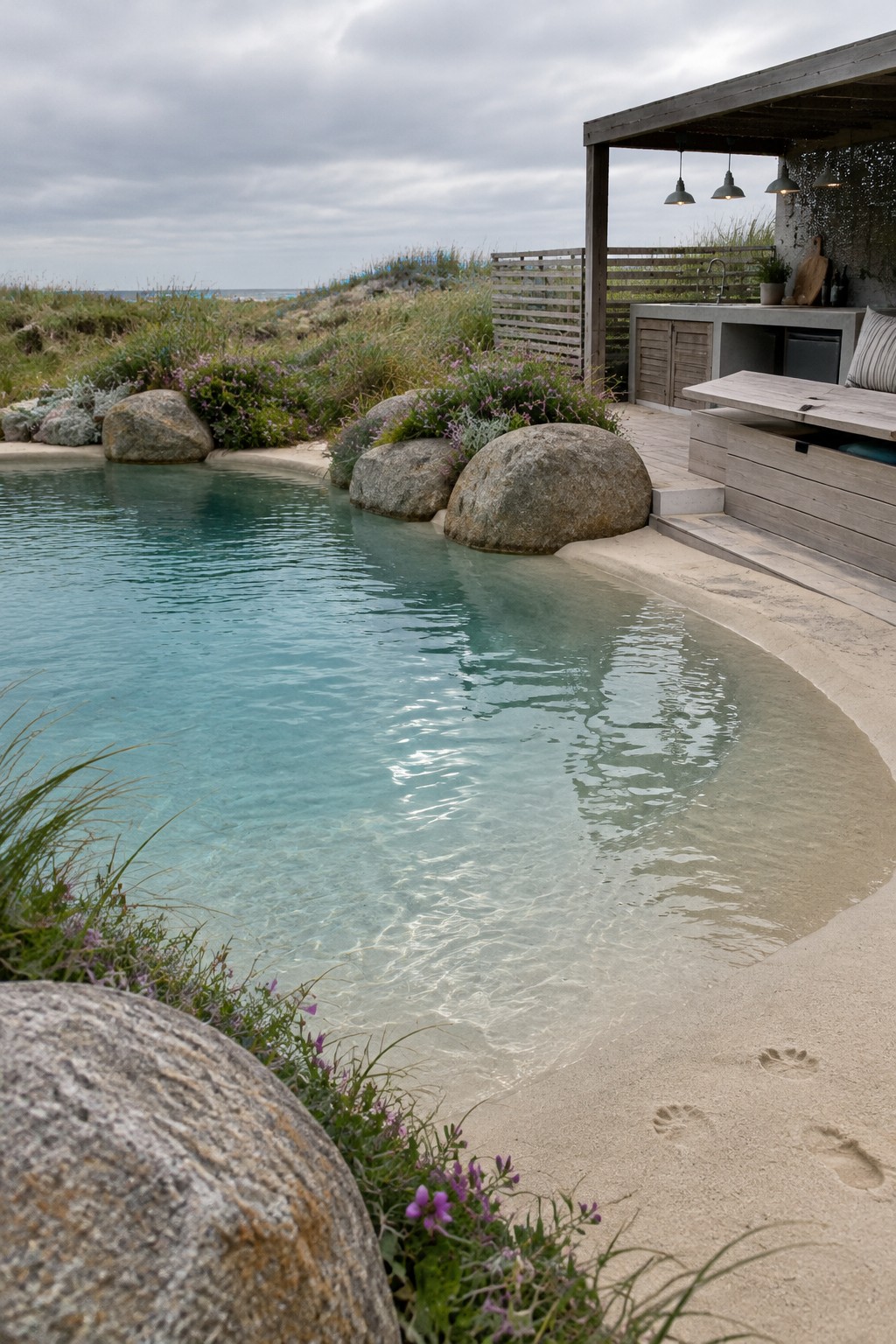
A small outdoor kitchen beside the pool makes it easier to serve snacks and drinks without going back inside. A simple counter and sink can be enough for casual use, especially when they sit close to a place to eat.
Choose weather-ready materials and keep the setup practical. A covered spot helps protect the work area, and a compact layout suits a poolside space where the water and seating should stay easy to reach.
Add a Wood Walkway Along the Pool
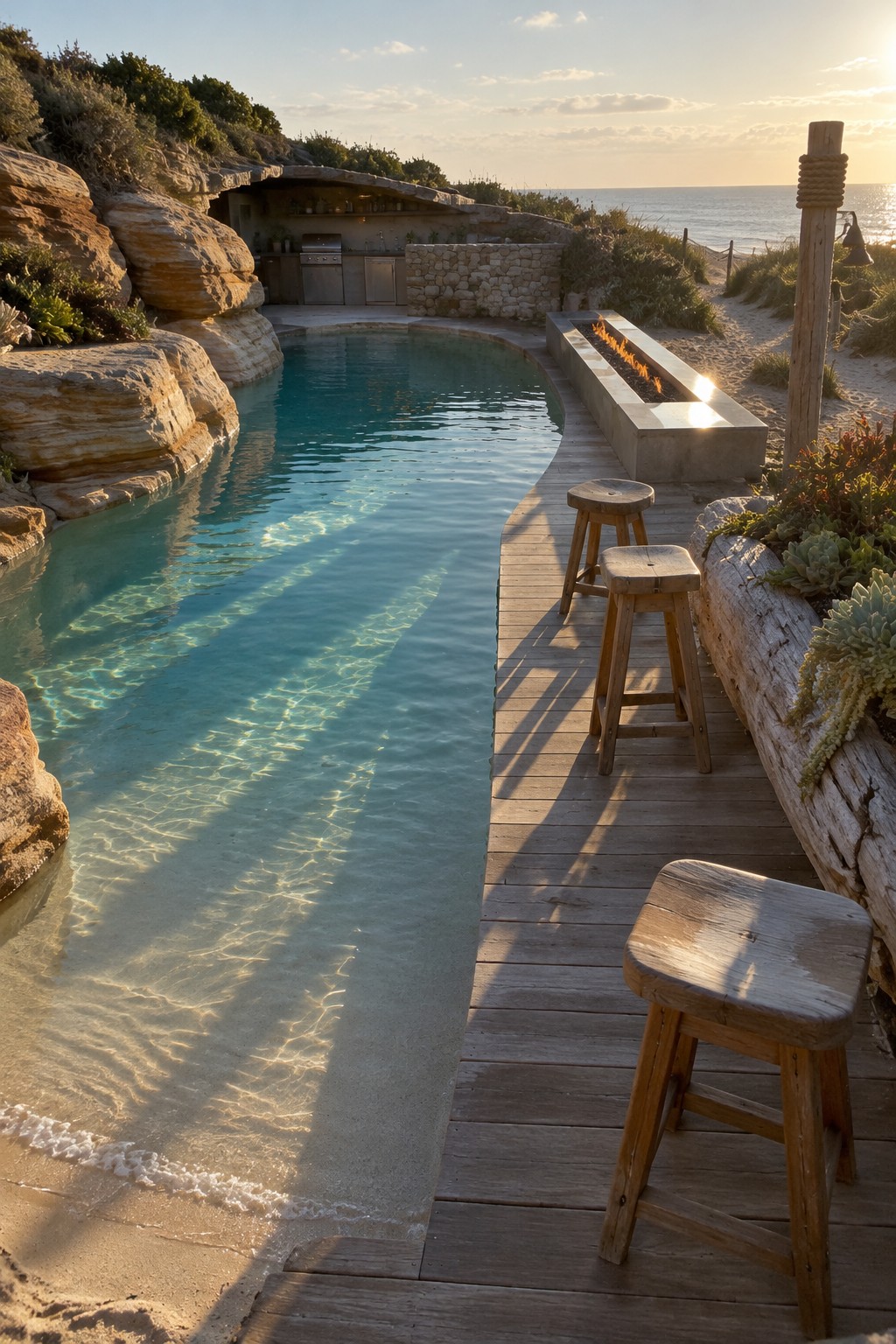
A narrow wood walkway gives people a dry, easy route beside the water without taking up much space. Here, it follows the pool’s curved edge, making the path feel like part of the pool area rather than a separate deck.
This layout works well in a compact coastal yard where a full deck might crowd the pool. Choose boards suited to wet conditions, and leave enough room to walk comfortably past stools or other seating.
Use Boulders to Shape a Natural Poolside Lounge
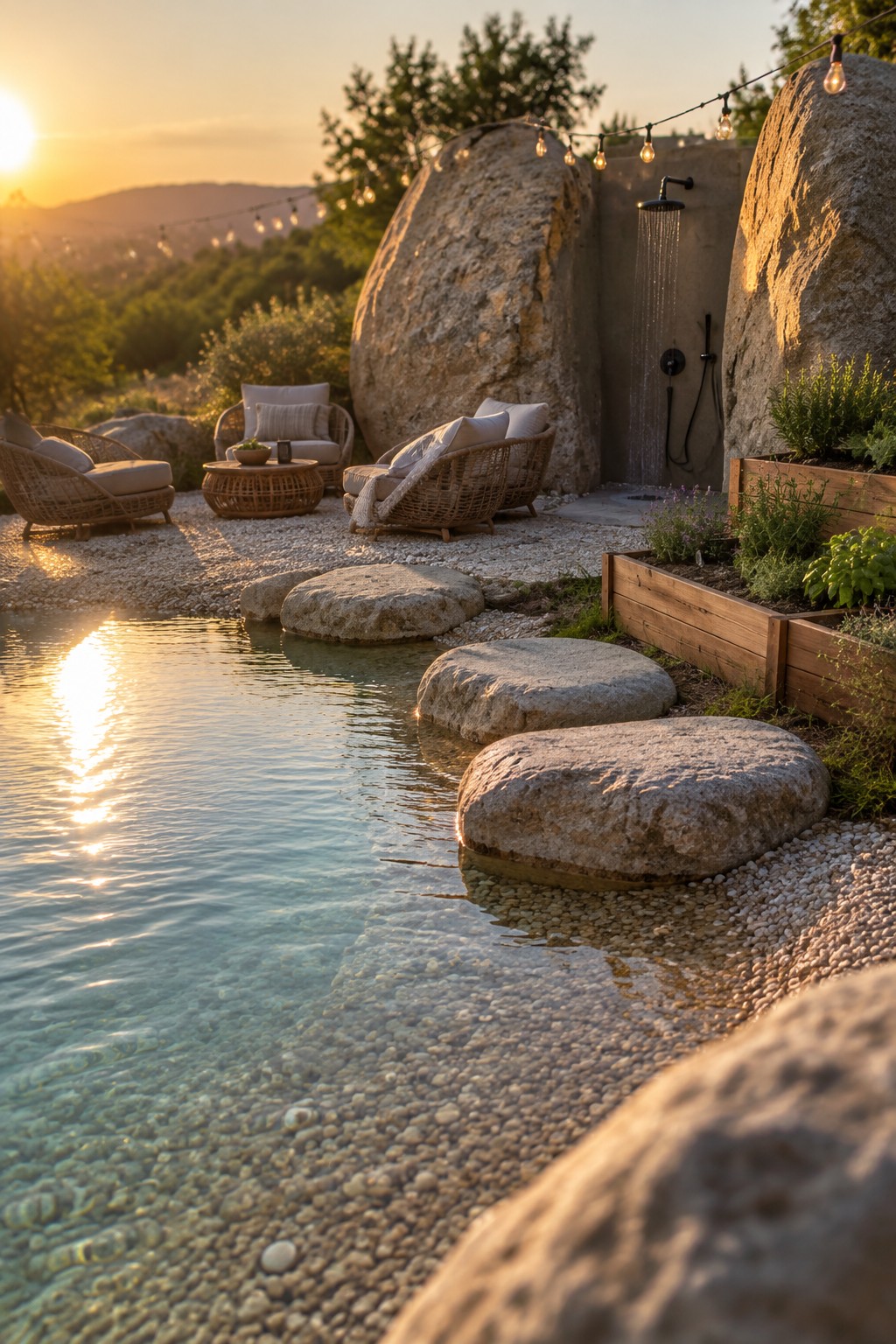
Large boulders can do more than edge a pool. Set them behind a few lounge chairs and they help the seating area feel like part of the landscape, rather than a separate patio.
This approach suits a rustic pool in a rocky or natural setting. Leave enough level space for chairs and a clear path to the water, and avoid crowding the seating with too many large stones.
Use a Curved Beach Entry Beside Natural Boulders
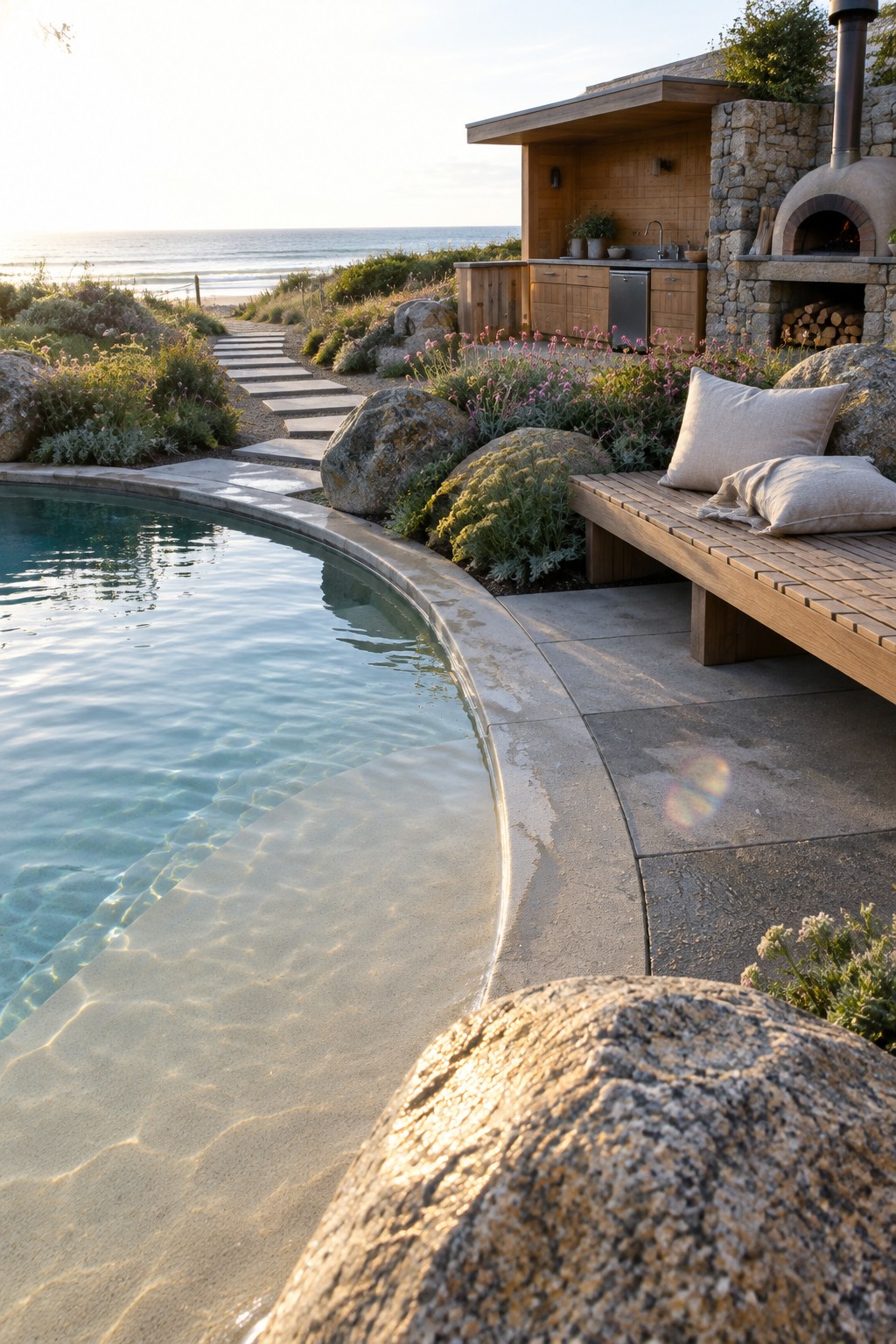
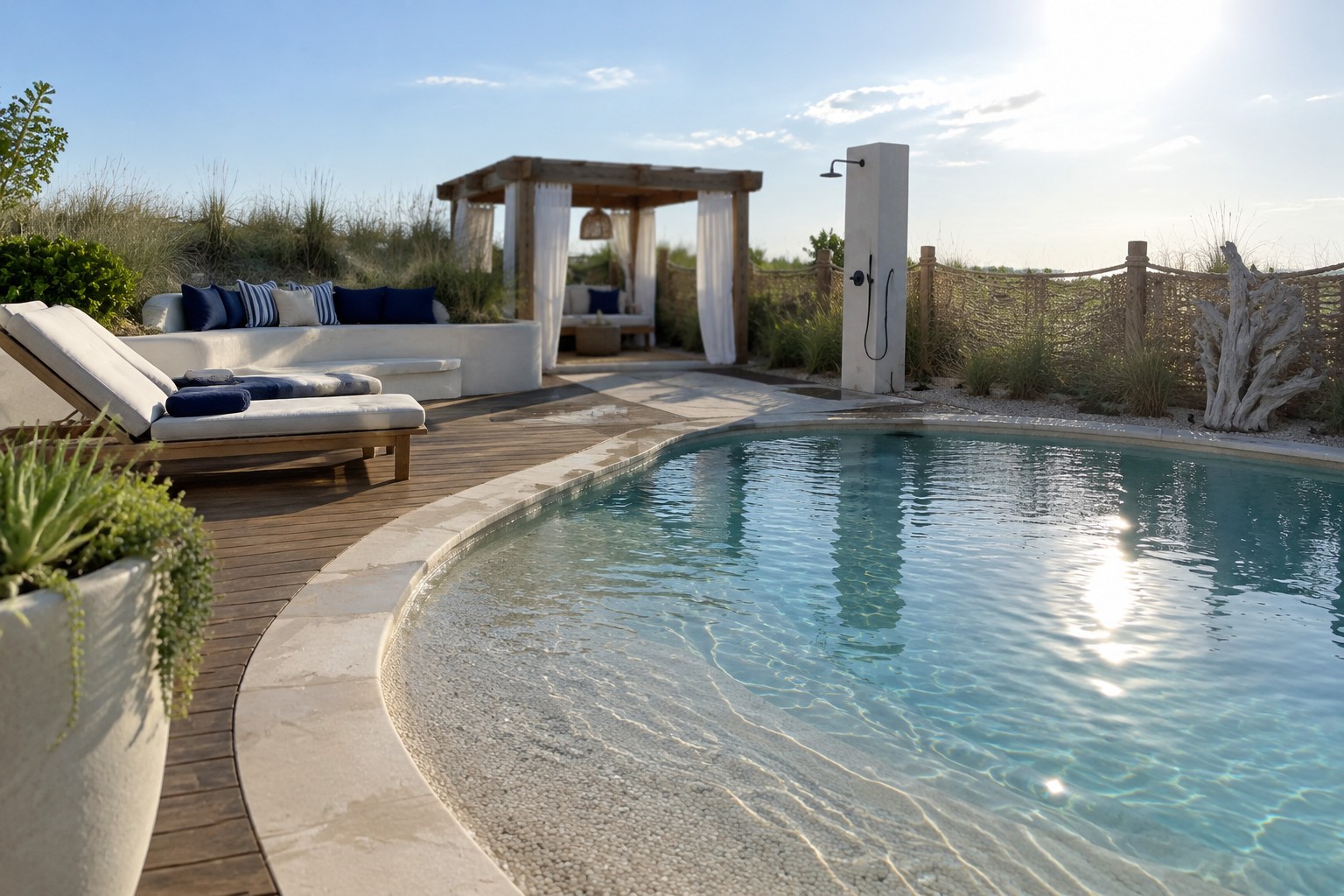
A shallow, gently sloped pool entry makes it easier to wade in than a standard set of steps. Here, the curved sandy-colored ledge follows the pool edge and sits naturally among the boulders.
This approach suits a pool designed for relaxed swimming and lounging. Keep the entry wide enough to use comfortably, and choose a nonslip finish that works well when wet.
Add Stone Steps to a Natural Pool
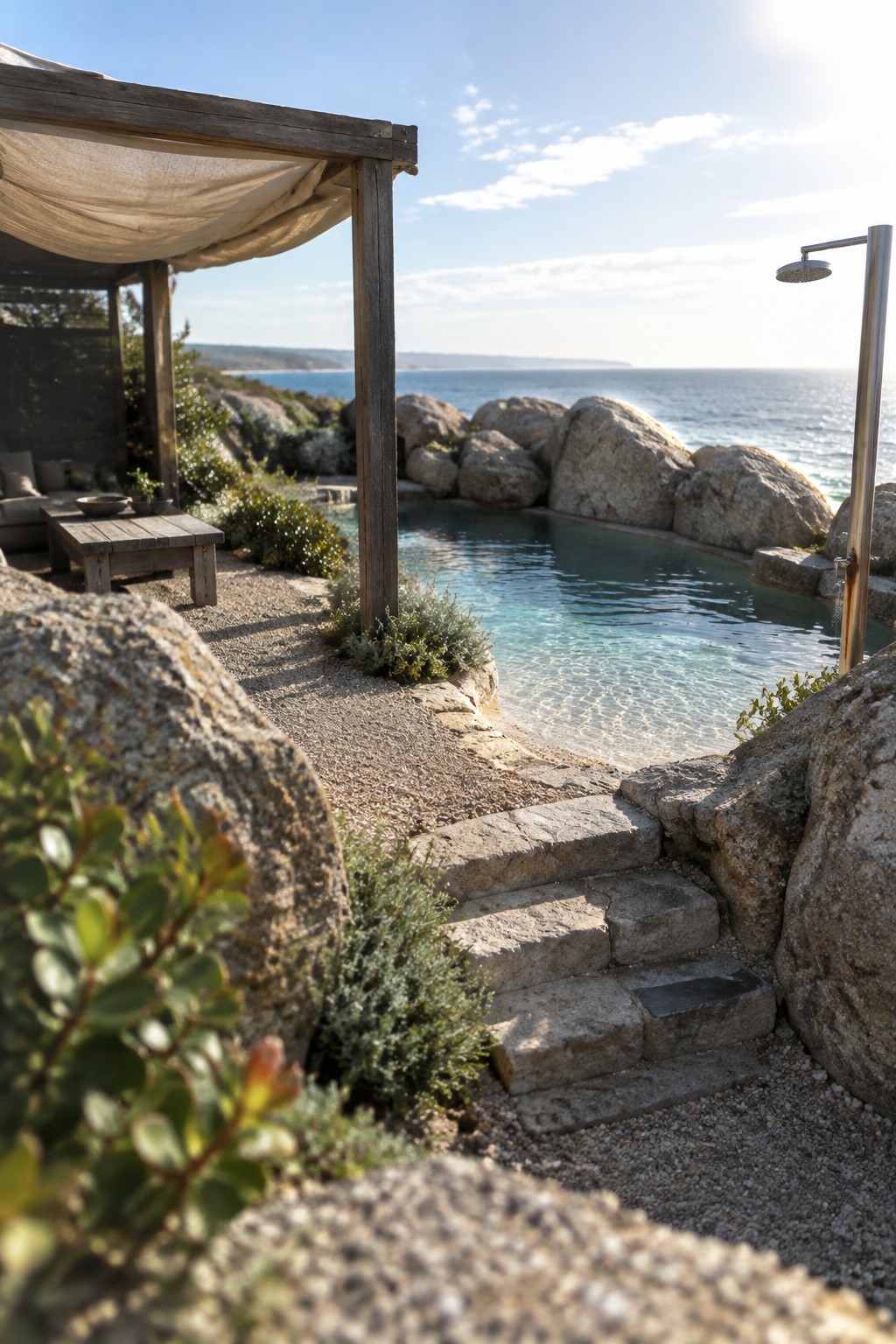
Stone steps make it easier to move between a gravel patio and a pool set into a rocky shoreline. They feel like part of the landscape rather than a separate pool deck, which suits a rustic beach setting.
Use broad, stable stones for the steps and keep the route easy to follow when wet. This approach works well on sloped sites, but the stones should be set securely and finished with slip-resistant surfaces.
Keep Poolside Seating Built Into the Stone
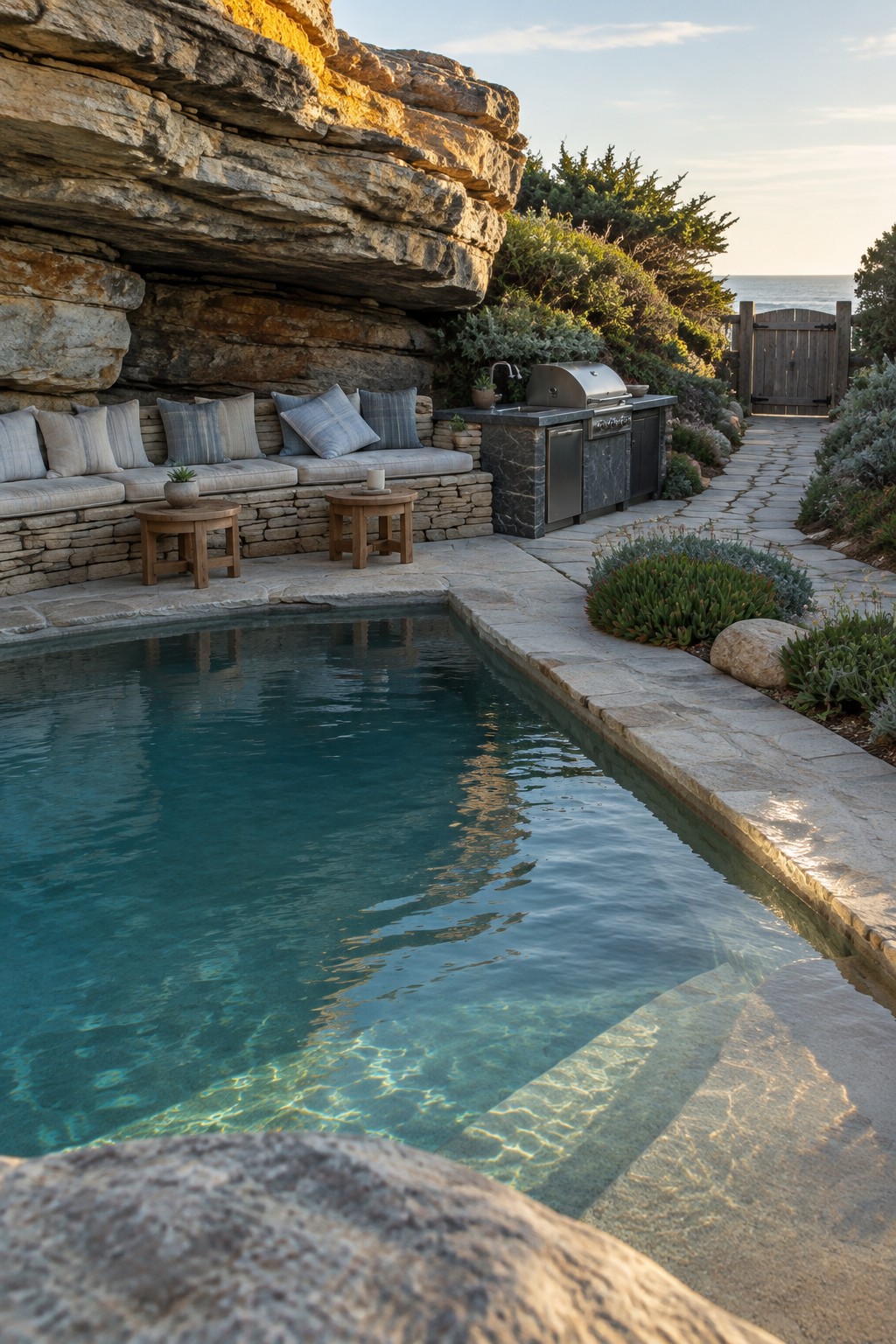
A low stone bench makes poolside seating feel like part of the setting rather than furniture added later. It also keeps the area tidy and gives swimmers a handy place to sit between dips.
This approach works especially well beside a pool with natural stone features. Add weather-resistant cushions for comfort, and leave enough clear space nearby for people to walk safely around the water.
Use a Pebble Path to Reach the Pool
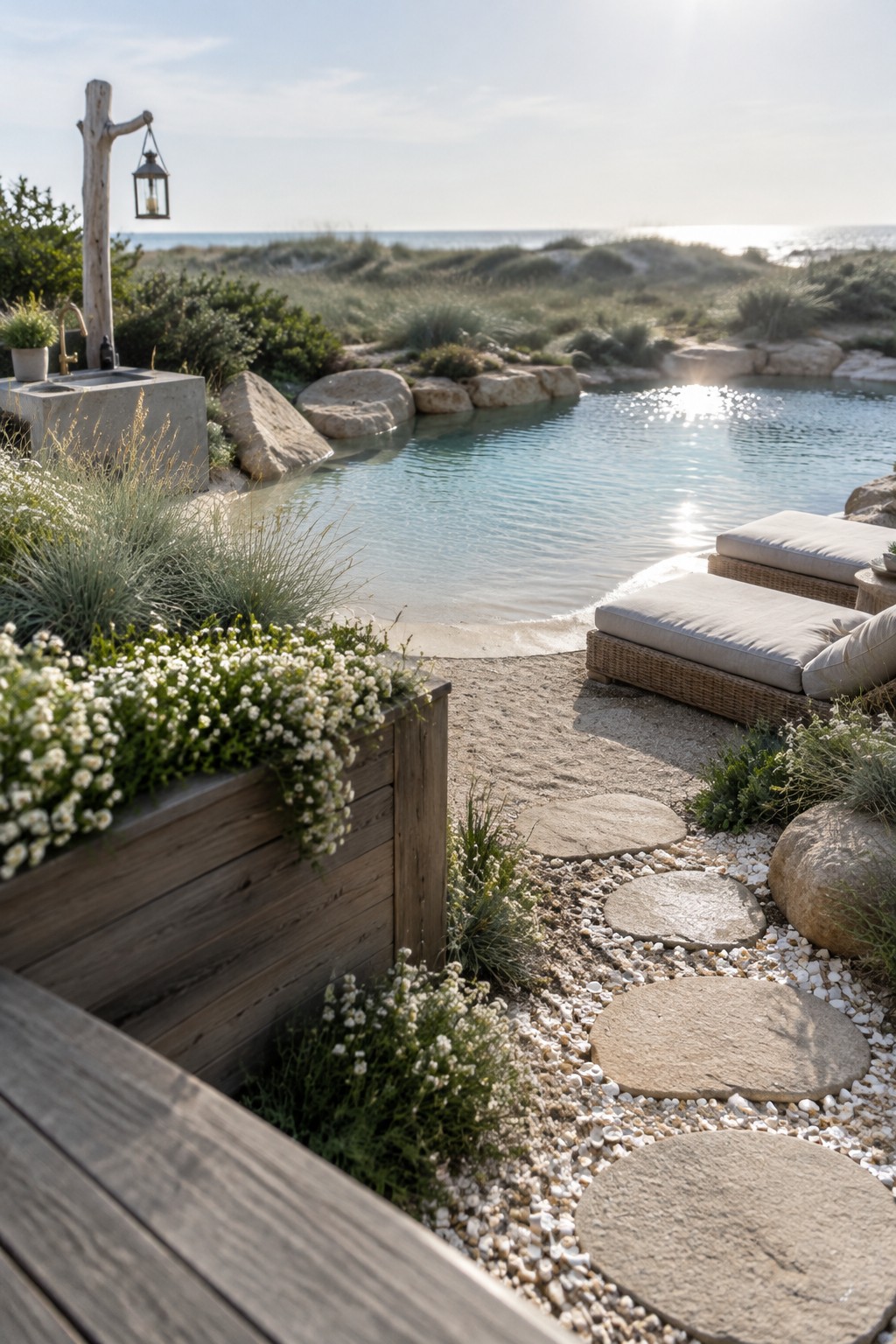
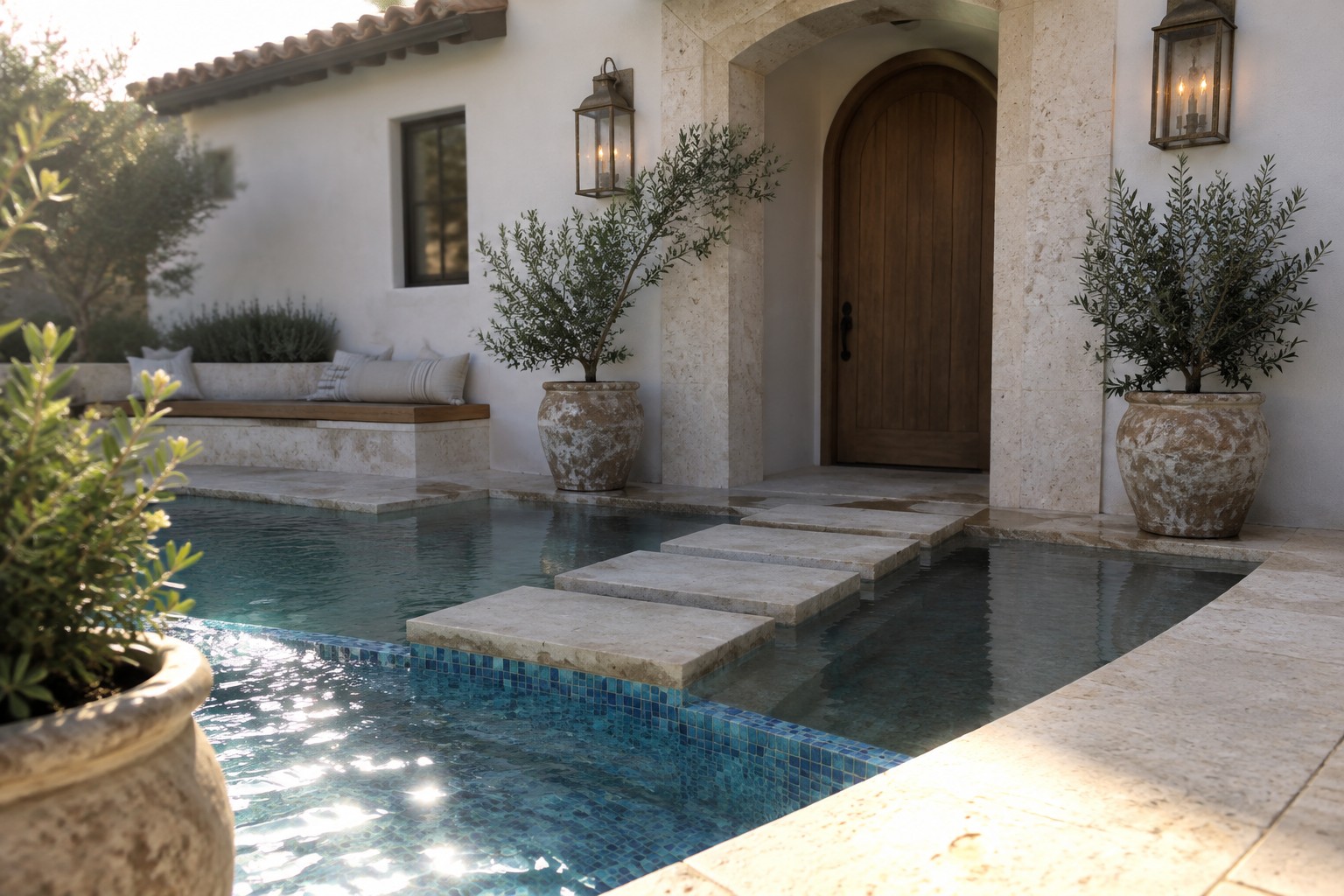
A stepping-stone path makes a pool entry feel like part of the garden instead of a separate paved area. Set broad stones into small pebbles, as shown here, to give people a clear route while keeping the surface informal.
This approach works well beside a natural-style pool, especially where space is tight. Leave enough room around each stone for steady footing, and choose stones with a rough, even surface when they may get wet.
Frequently Asked Questions
Q: Can I use natural boulders around a beach-entry pool without making the entry slippery?
A: Yes, but keep the walking surface textured and choose stones with broad, stable tops. Leave a clear, gently sloped path into the water, and avoid placing loose pebbles where people step.
Q: How do I keep sand and dirt from washing into the pool?
A: Add a narrow planting bed or drainage strip between the landscaping and the entry. A quick rinse of the beach area before swimming also helps keep grit out of the water.
Q: Will boulders make a small pool feel cramped?
A: They can if you crowd the entry. Use a few well-spaced stones along the edges, and keep the shallow area open.
Q: What plants look natural beside a rustic beach entry?
A: Grasses and low-growing plants usually fit the setting without blocking the view or spreading over the entry. Choose varieties suited to your climate, and keep them far enough back that leaves don’t fall into the pool.