Planning an outdoor pool area involves thinking about how the water’s edge will interact with the deck and the view beyond.
Good coping designs keep the surface practical for bare feet while still giving that clean line people expect from an infinity setup.
Small choices add up.
I have walked around enough pools to know that a poorly finished edge can make the whole space feel unfinished even when everything else is in place.
It is worth looking at different approaches to see what might fit the way a particular yard gets used throughout the year.
A Narrow Metal Coping For The Pool Edge
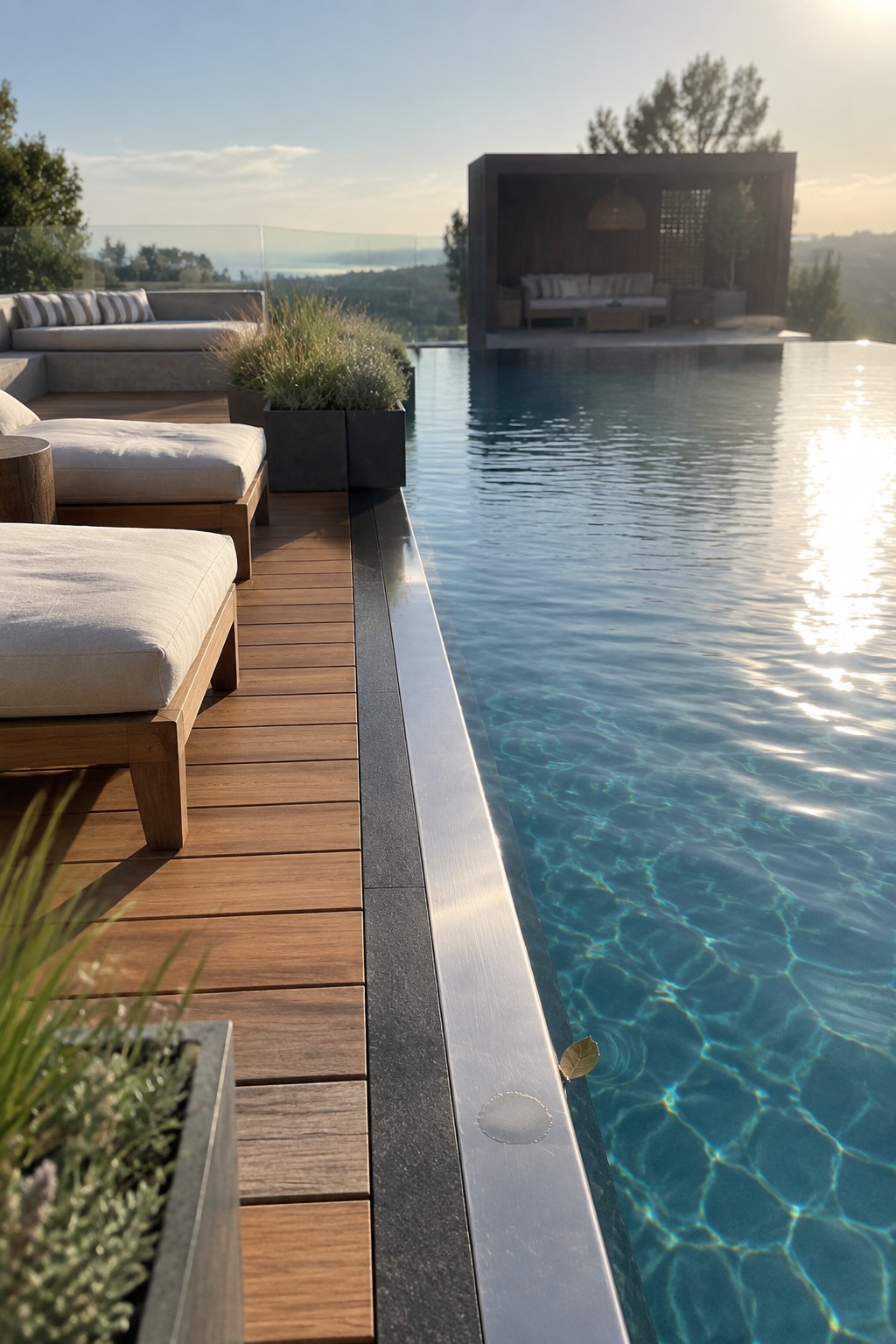
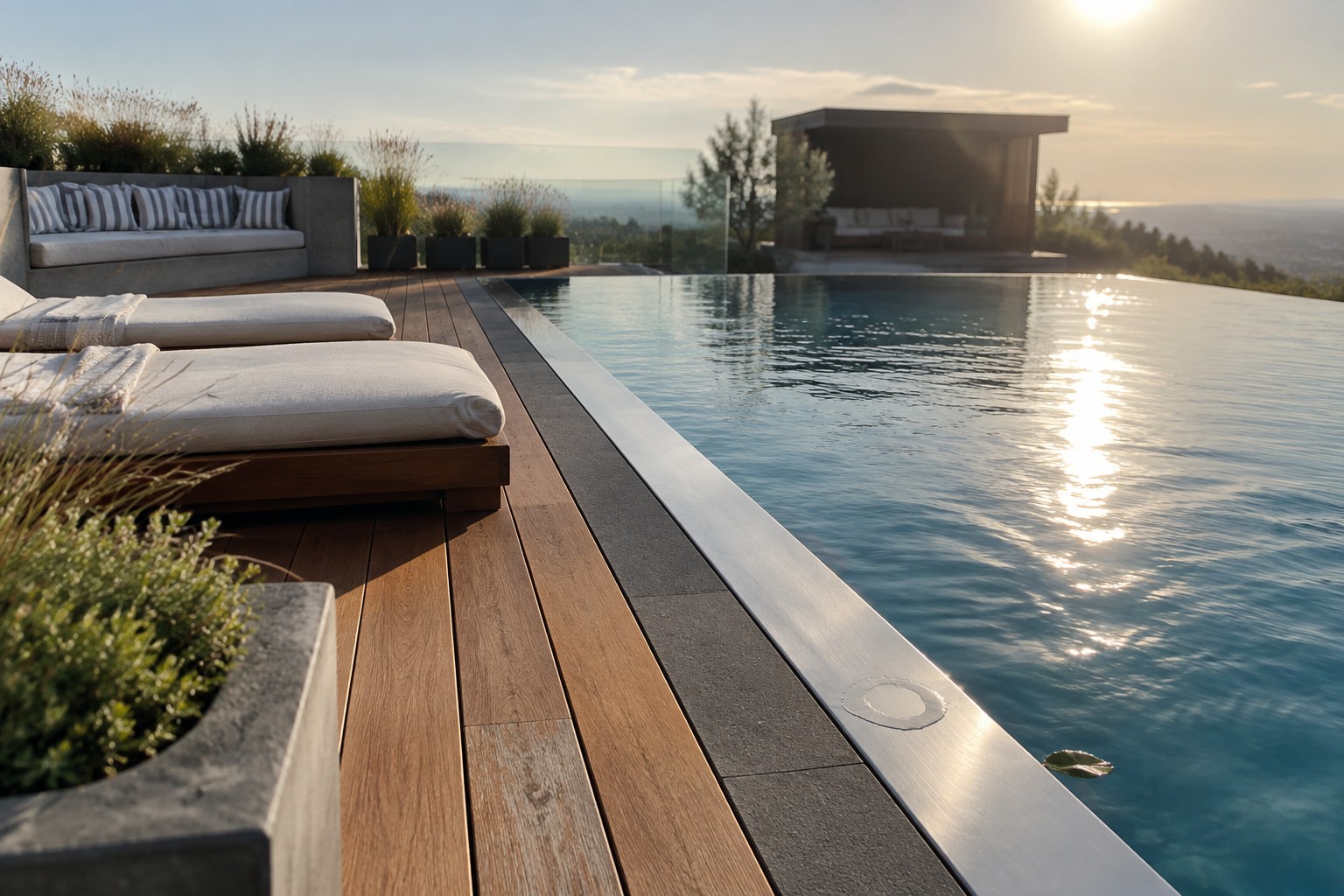
A thin metal strip along the waterline gives the pool a sharp finish without adding bulk. It creates a clean break between the deck and the water, which keeps the whole edge looking simple and intentional rather than built up.
This detail works best on modern homes where the decking runs close to the pool. Pair it with wood or concrete surrounds and keep the metal finish consistent with other outdoor hardware so the transition stays quiet.
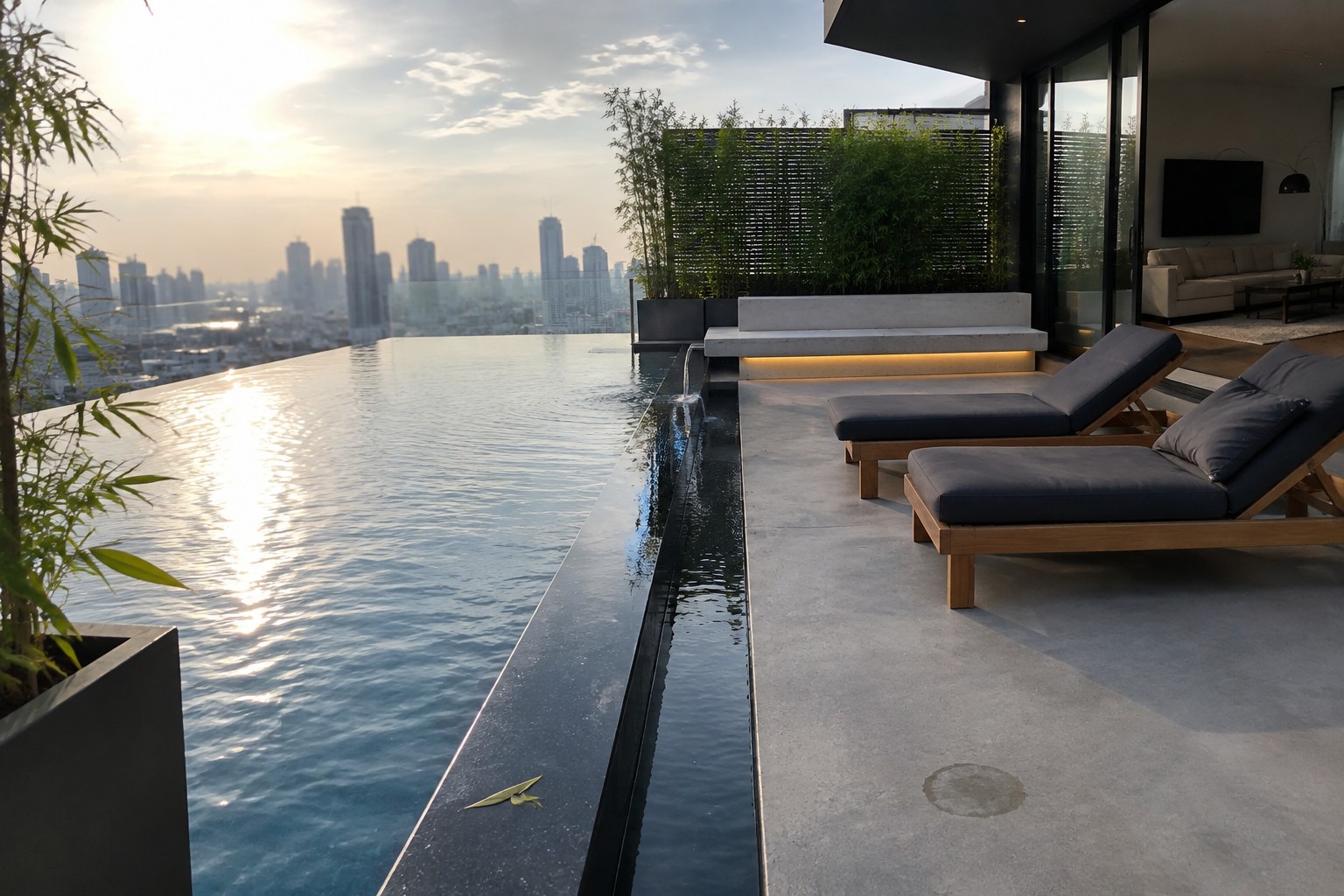
Coping Built To Double As A Bench
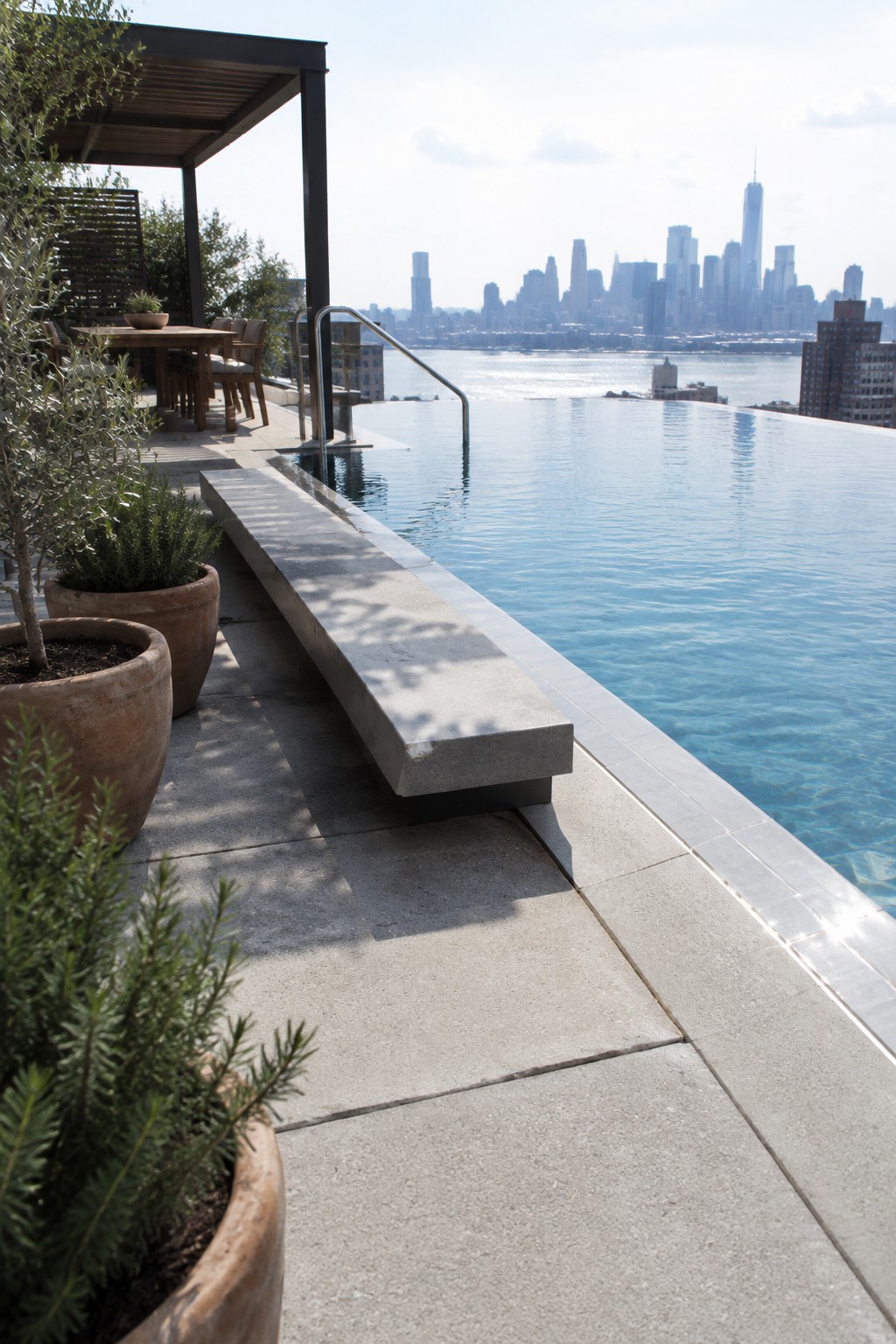
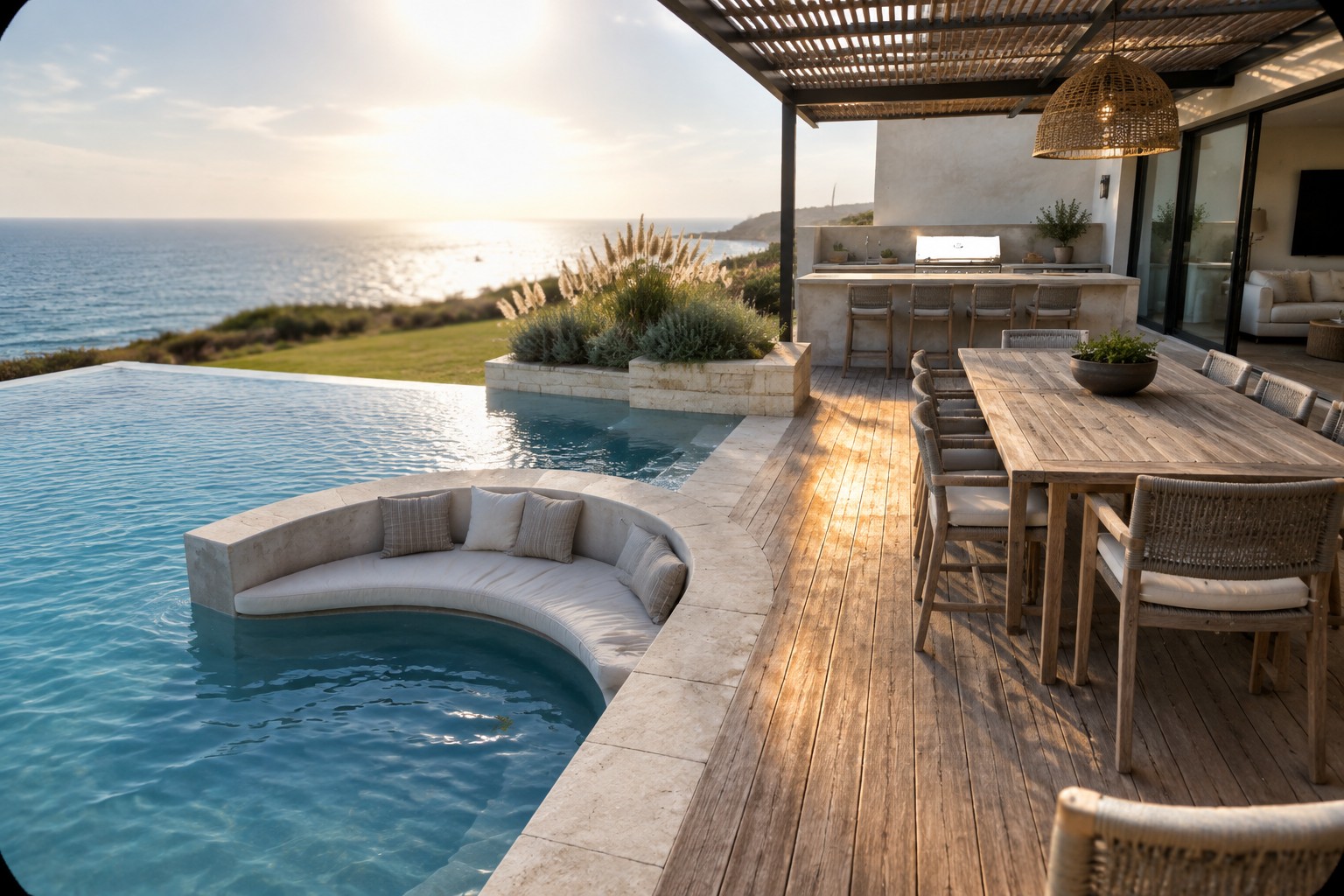
One useful approach is to make the coping itself wide enough to serve as a built-in bench. This turns the edge of the pool into a place where people can sit and enjoy the view without needing extra chairs or loungers right at the water. The material stays simple and consistent, so the whole area feels clean rather than crowded.
This works best on terraces or rooftops where space is limited and the pool already takes up a lot of room. It suits homes that want low-maintenance materials and fewer separate pieces of outdoor furniture. Just check that the ledge is properly supported and wide enough to feel comfortable for sitting.
Curved Coping For Pool Edges
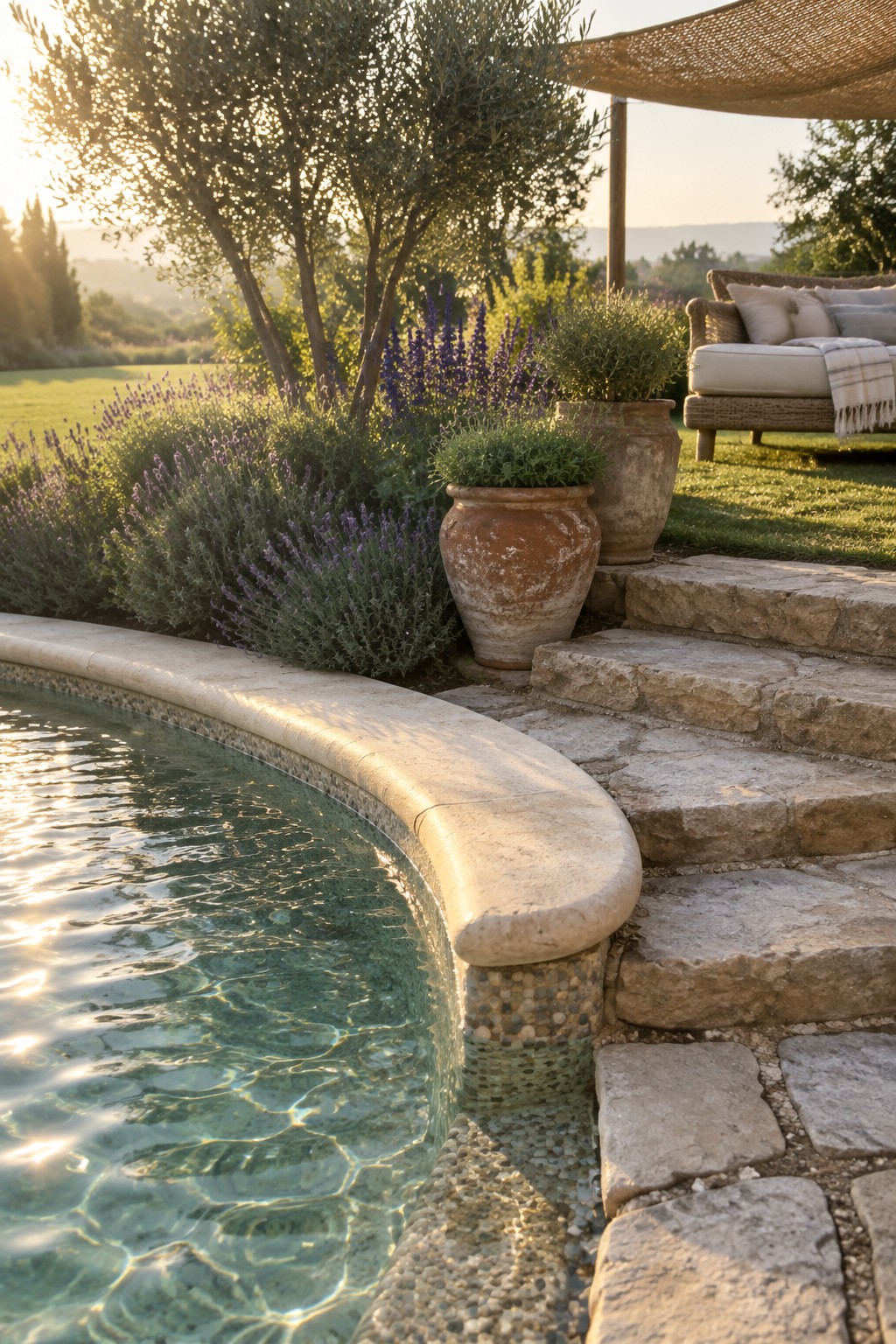
A curved coping profile gives the pool edge a softer transition to the surrounding paving. The rounded shape avoids a sharp drop and lets the water meet the stone in a way that feels more natural than a straight cut.
This approach works best on smaller or irregularly shaped pools where you want the edge to follow the landscape rather than fight it. It pairs well with mixed stone paving and planting beds right up to the pool, though the curve needs to stay consistent or the whole edge can look uneven.
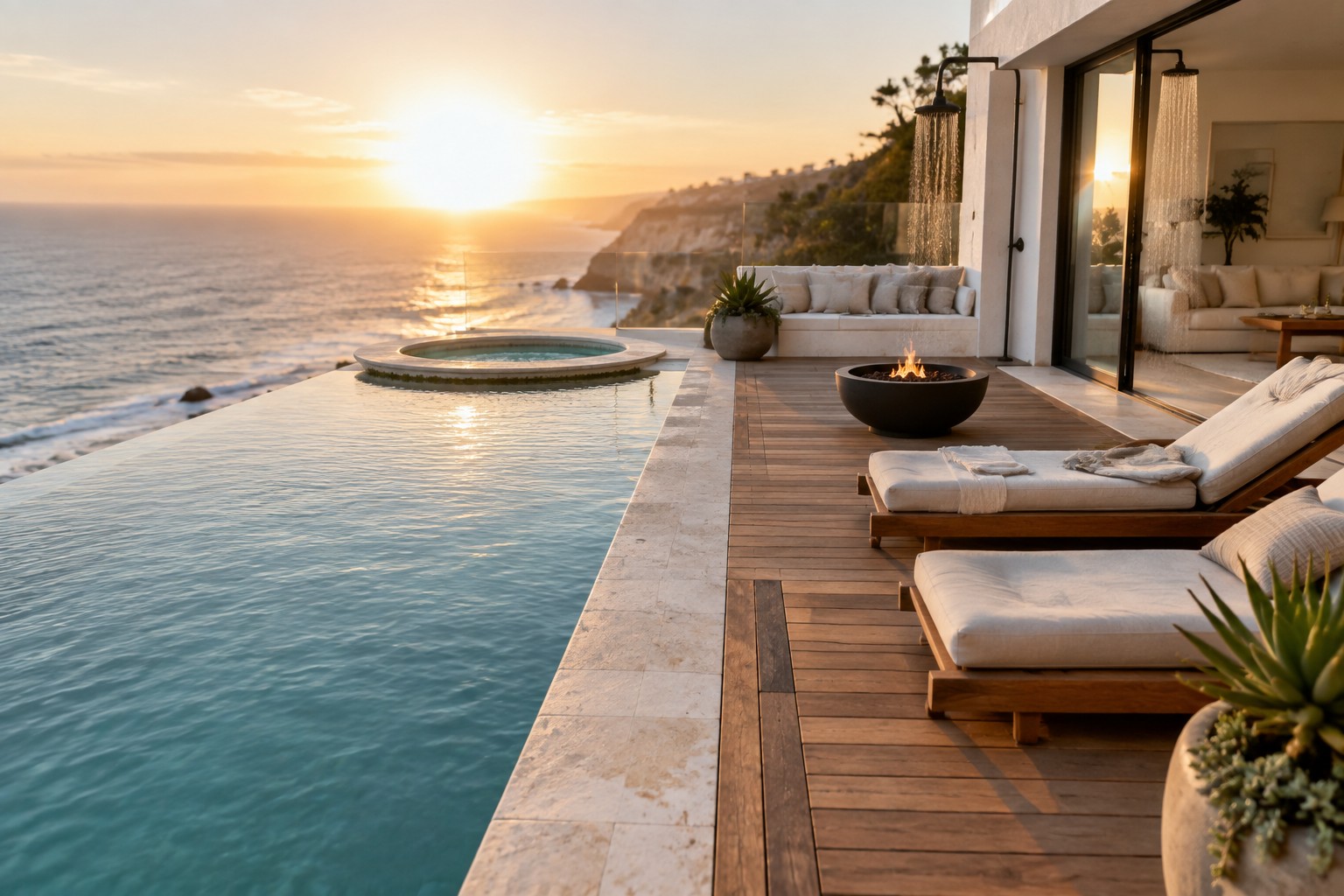
Marble Coping For Infinity Pool Edges
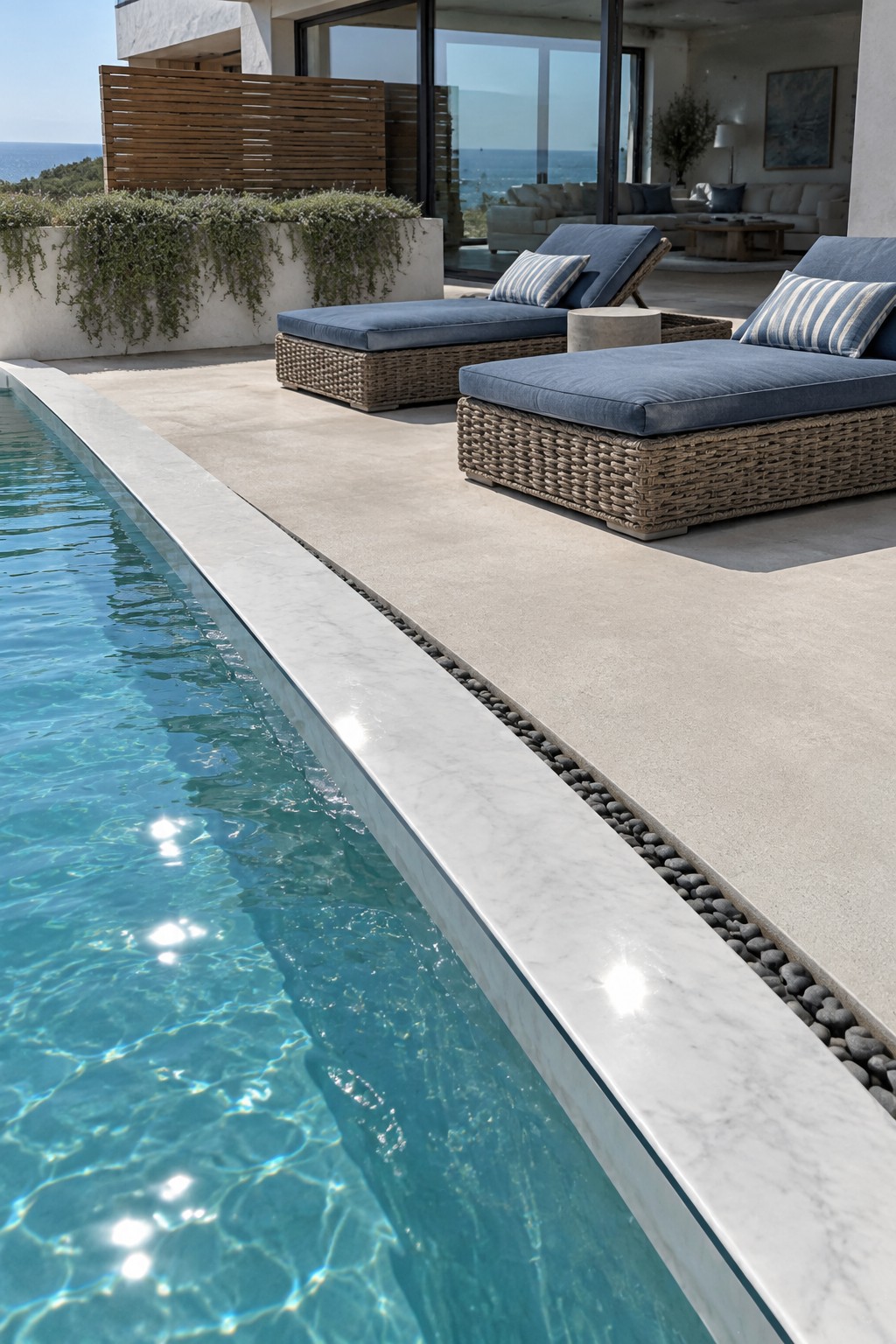
Marble coping gives an infinity pool a clean, finished edge that blends the water right into the deck. The light tone stands out against the blue without feeling heavy, and it helps the whole area look more pulled together than a basic concrete border would.
This detail suits modern or coastal homes where you want the pool to feel like an extension of the patio rather than a separate feature. Just check that the stone is properly sealed for outdoor use and that the profile matches the curve of your pool so the edge stays smooth.
Thick Concrete Coping On Infinity Pool Edges
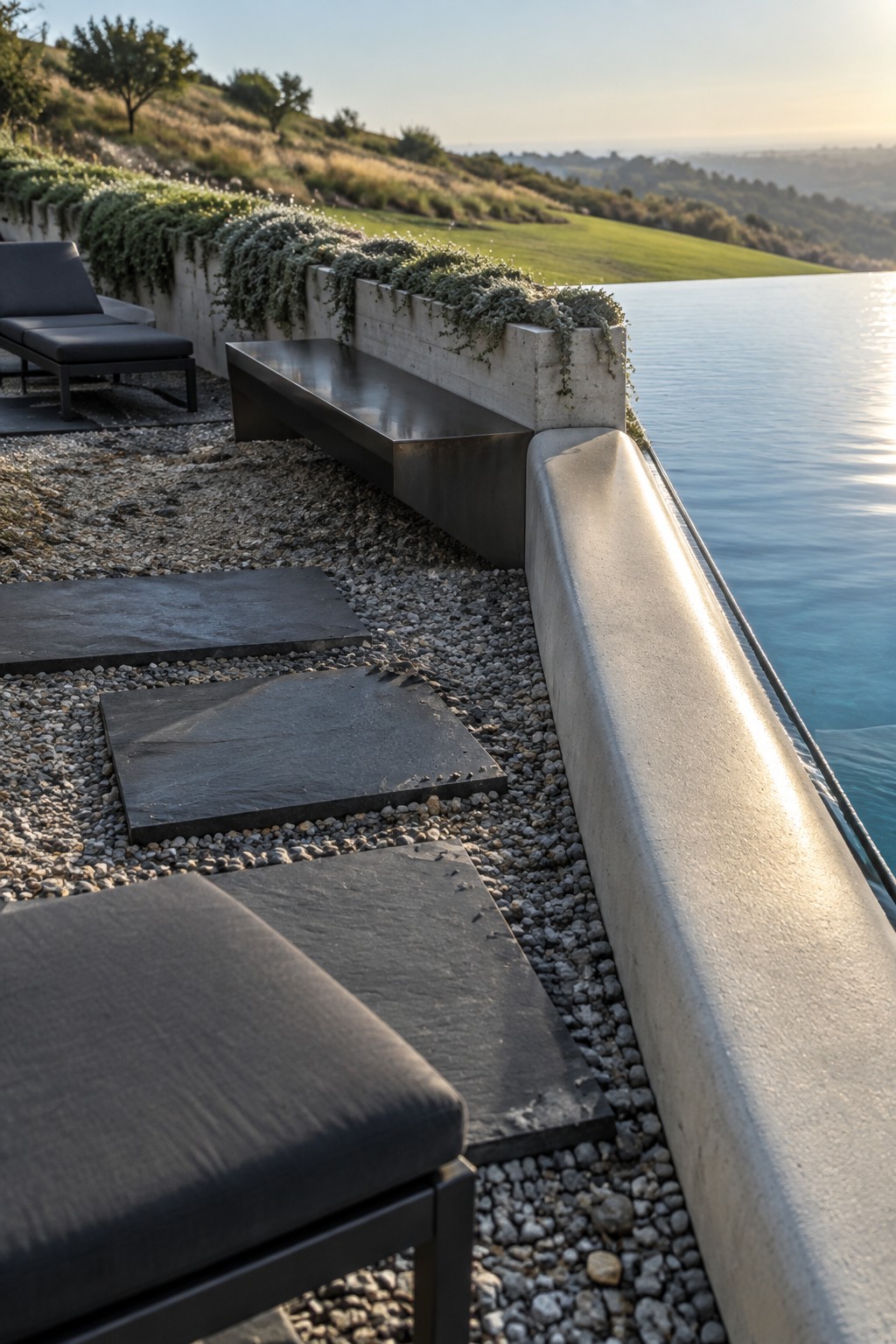
A heavy coping piece changes how an infinity pool reads from the deck. The rounded concrete edge here sits low and solid, giving the water a clear stop without breaking the view out to the hills.
This works best on sites where the pool sits near natural ground or gravel areas. Keep the coping width generous so it feels like part of the structure rather than a thin trim, and match the tone to nearby paving so the whole edge stays quiet.
Thick Natural Stone Coping For Curved Pool Designs
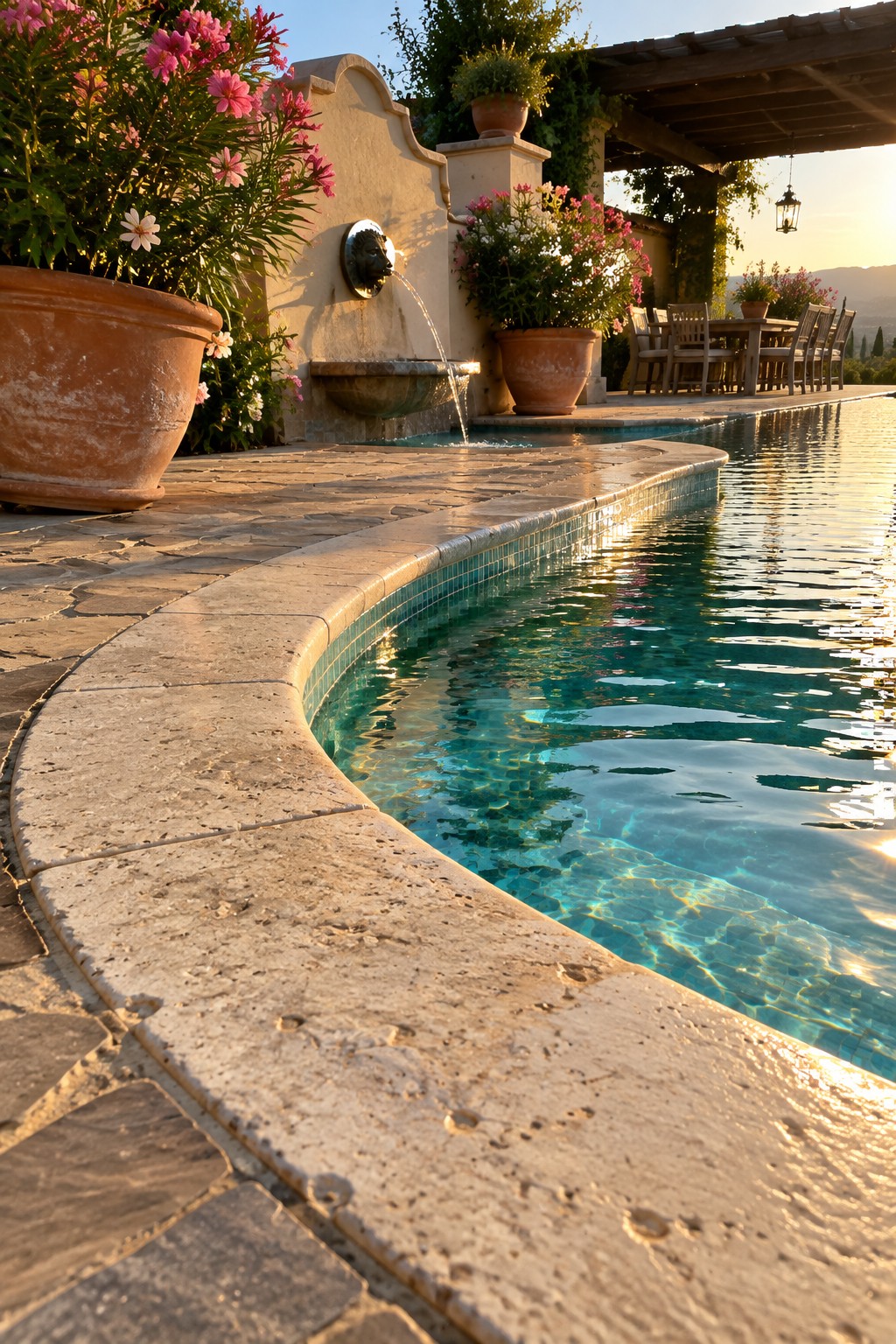
Thick natural stone coping gives a pool edge real substance. It creates a clear, finished border that feels grounded and holds up to daily use without looking thin or fragile.
This choice works best on pools with gentle curves, where the coping can follow the waterline in one continuous sweep. It suits Mediterranean or classic outdoor layouts and pairs well with stone patios or stucco walls nearby.
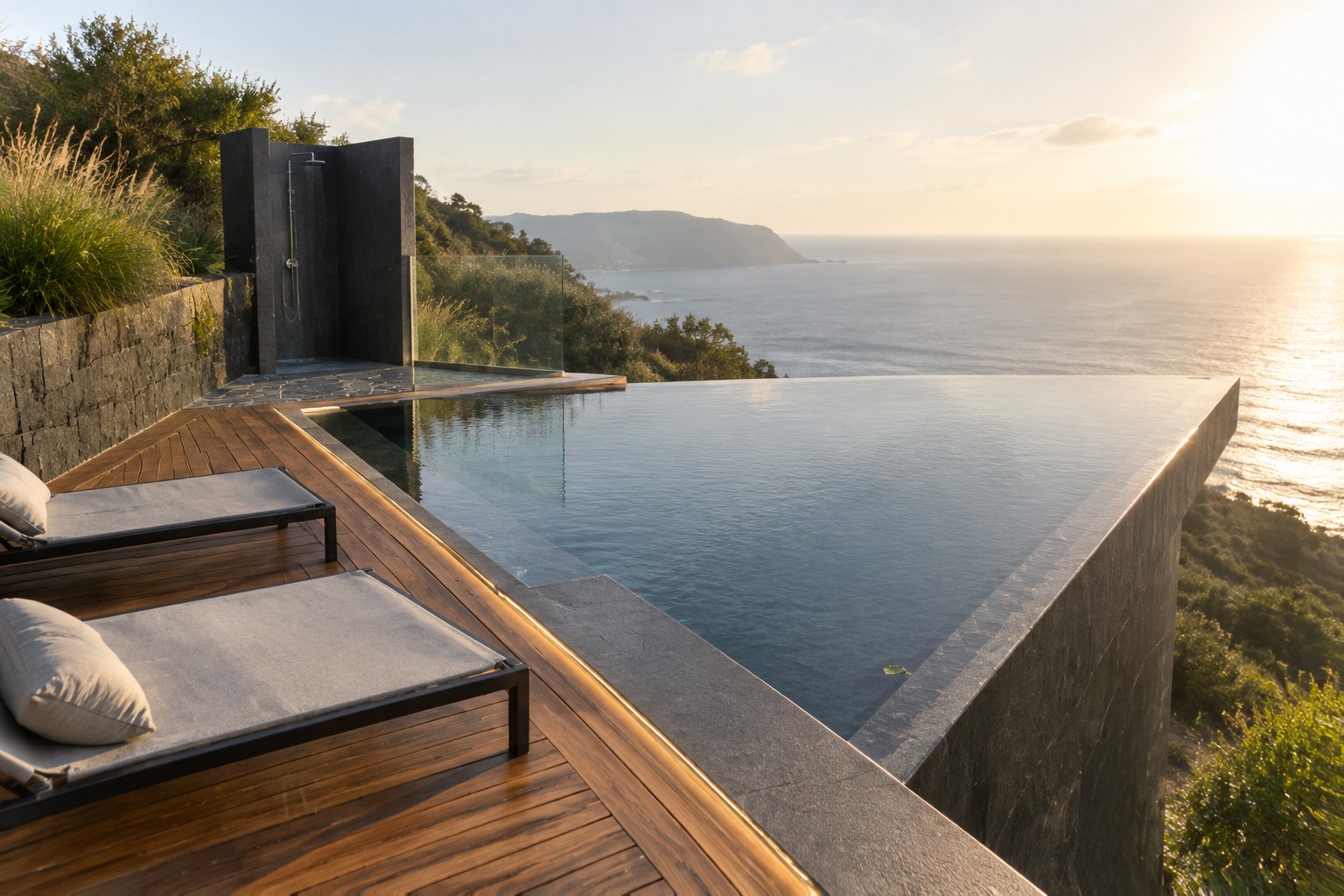
Warm Wood Coping With Moisture Protection
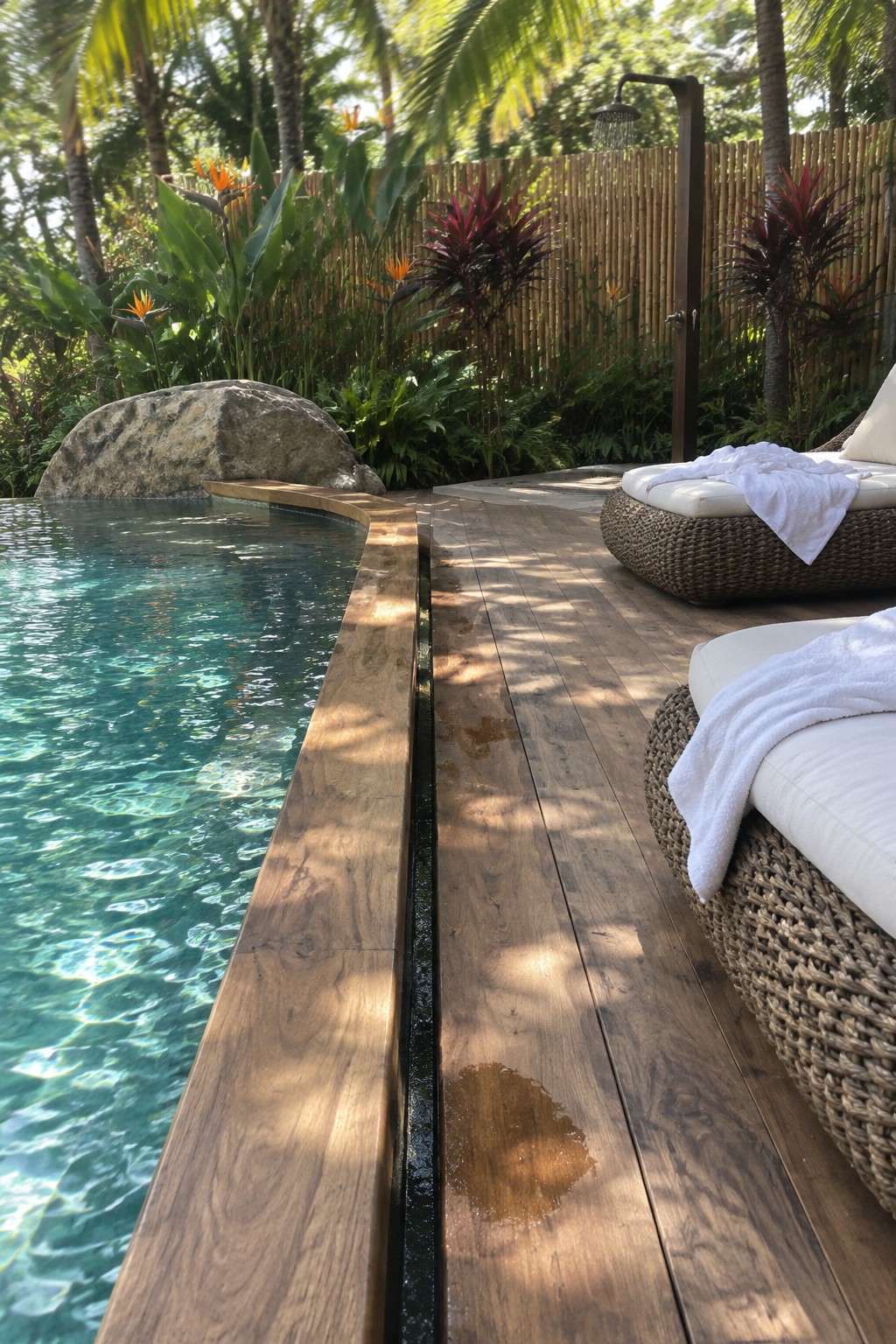
Wood coping gives an infinity pool edge a warmer, more natural finish than the usual stone or tile. It softens the transition between water and deck and helps the whole area feel like one connected space rather than separate zones.
This approach works best on homes with wood decking or tropical landscaping where you want the pool to sit quietly in the setting. Just be sure the wood is sealed well for constant moisture and pair it with a narrow drainage channel to keep the surrounding deck from staying wet.
Dark Coping Against Light Gray Pool Decking
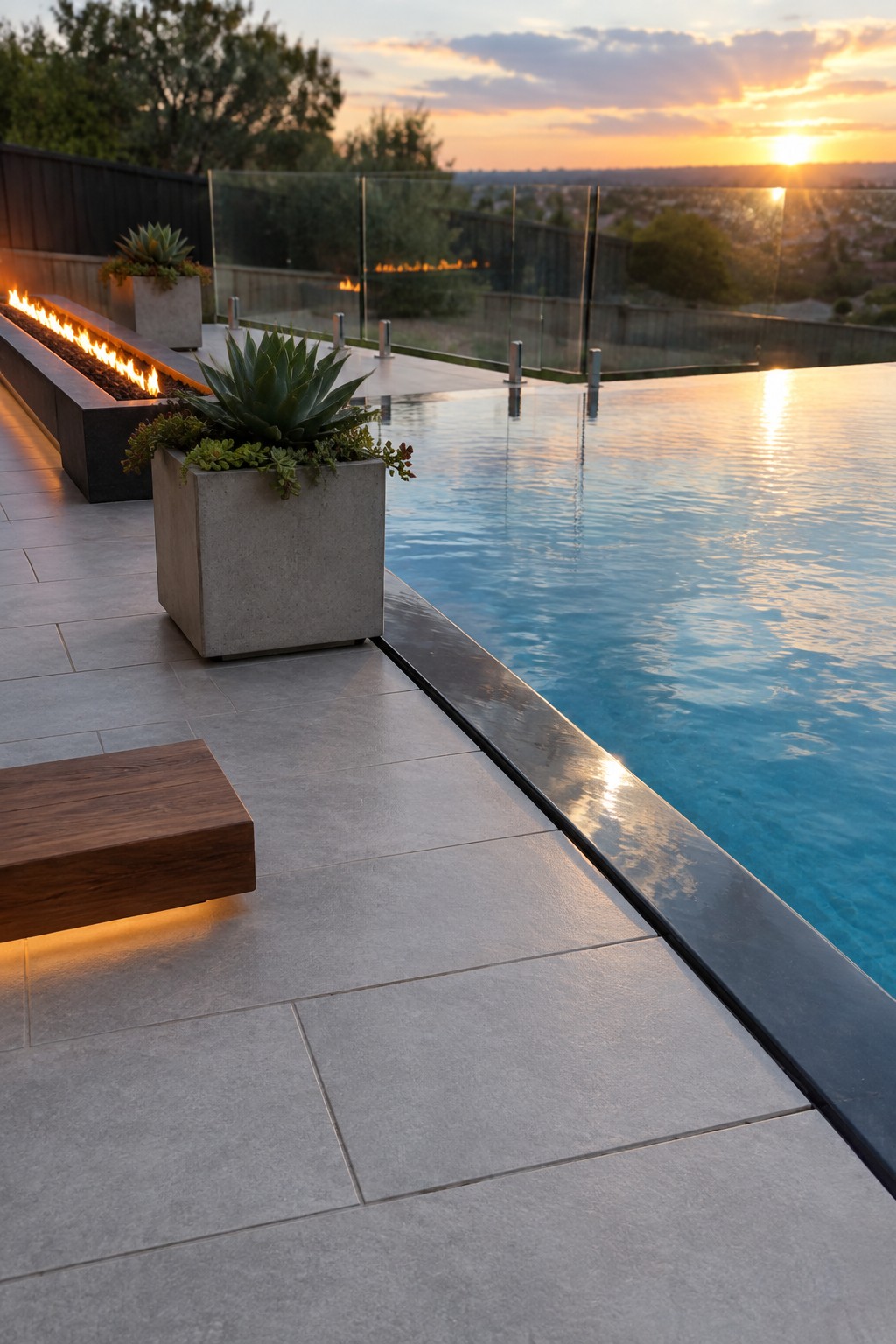
The dark coping gives the infinity pool a sharp, finished line that keeps the water looking calm and contained. It stands out against the light gray deck tiles and helps the edge feel intentional instead of just a transition point.
This detail works well on modern homes with simple paving and open views. Keep the surrounding materials quiet so the coping stays the main line, and test the color against your deck before committing since darker tones can make the water look deeper.
Metal Coping With Integrated Lighting
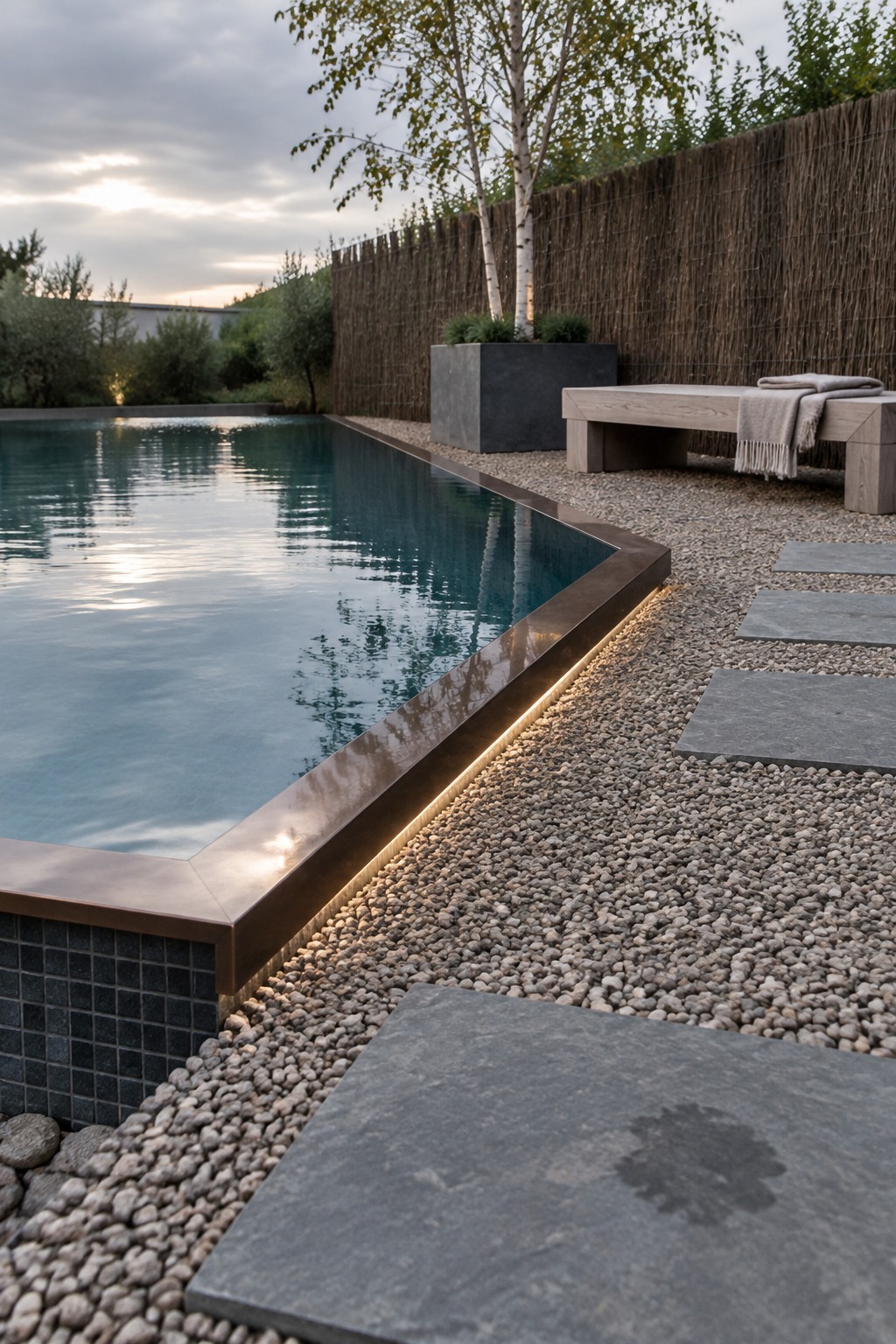
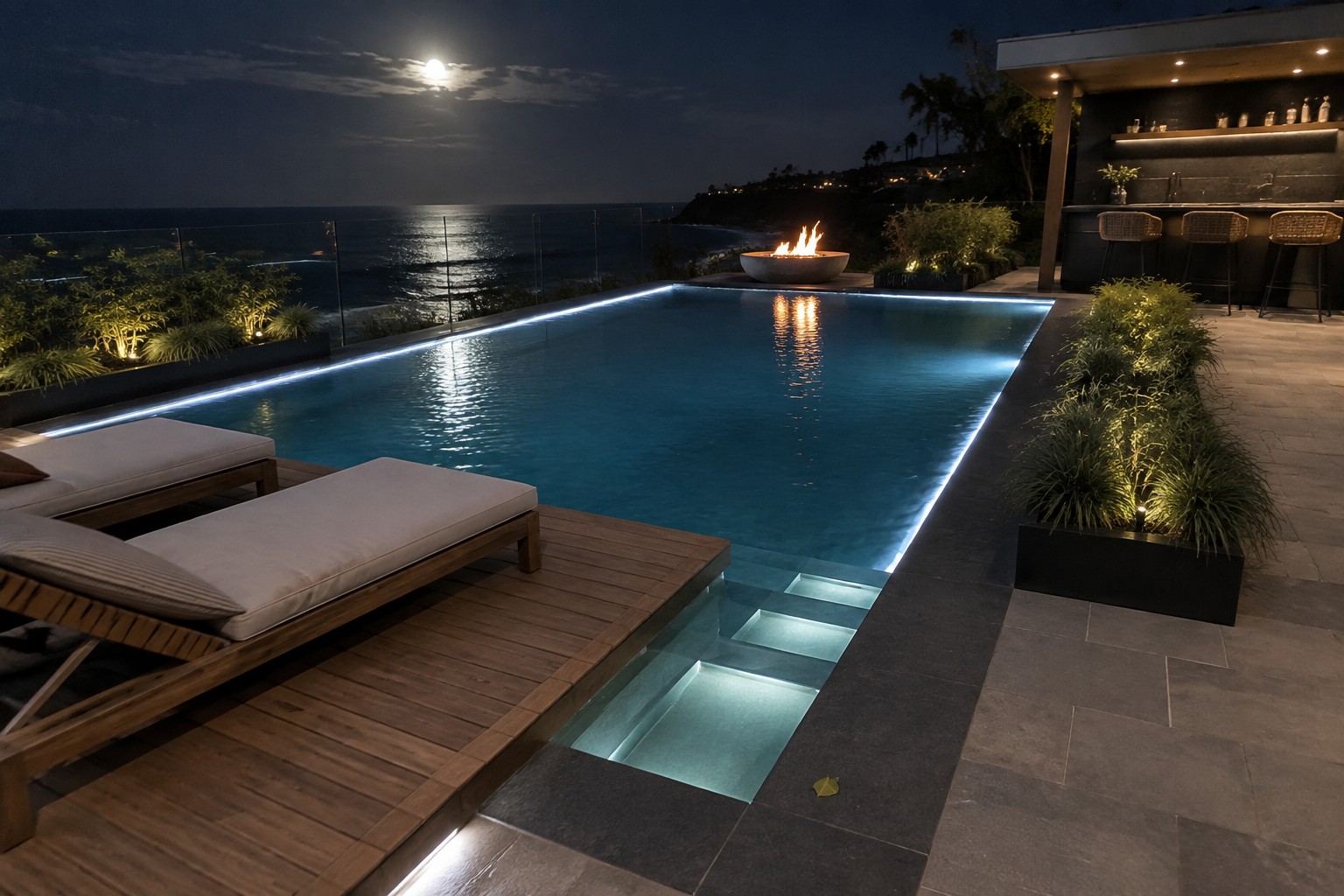
Many pool edges look sharper when the coping itself carries a thin line of light underneath. The glow stays low and even, outlining the water at night without separate fixtures that can clutter the surround.
This detail suits modern outdoor spaces with gravel or stone paving. Use a simple metal finish on the coping so the light reads as part of the edge rather than an added feature.
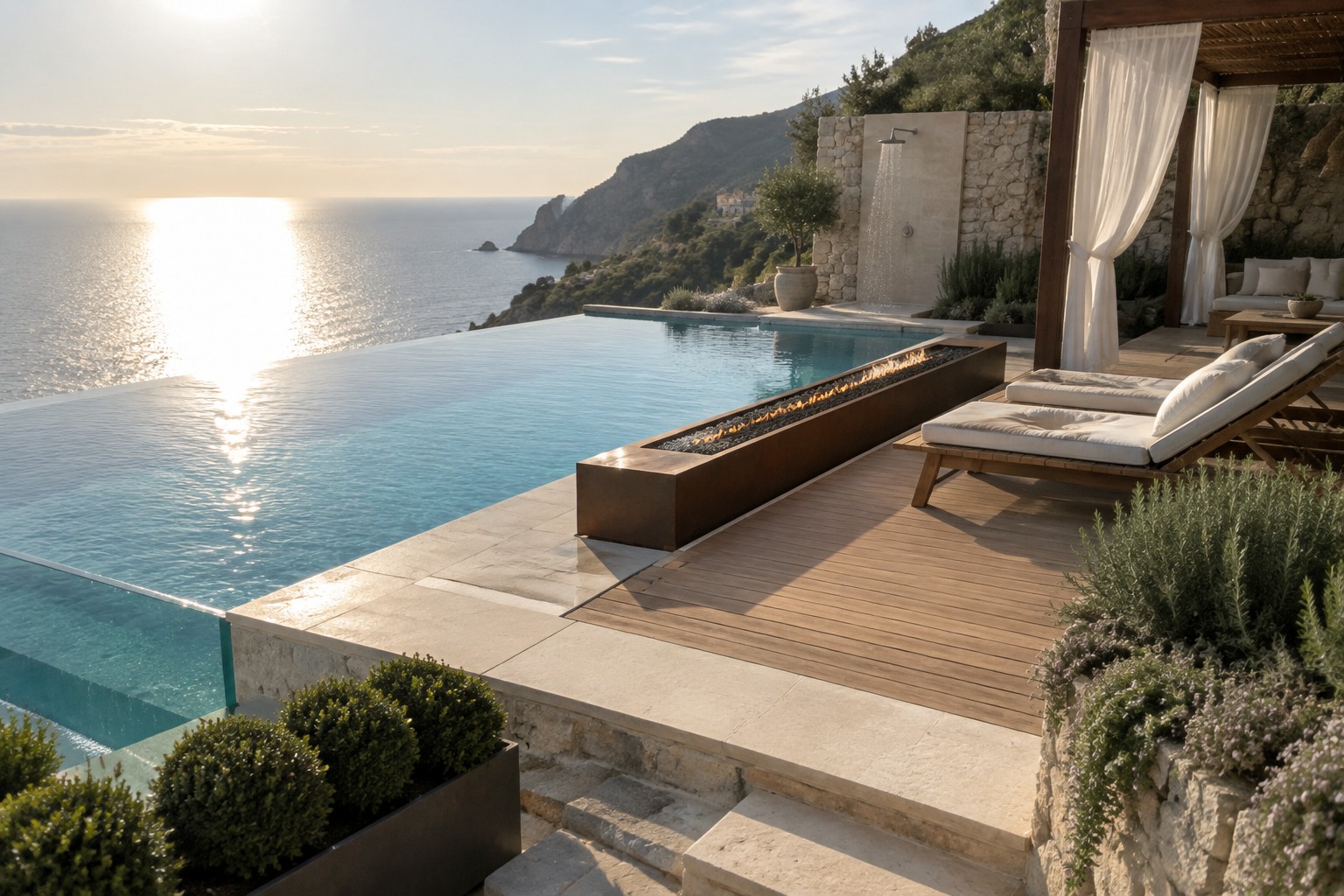
Marble Coping Accented With Slim Metal Trim
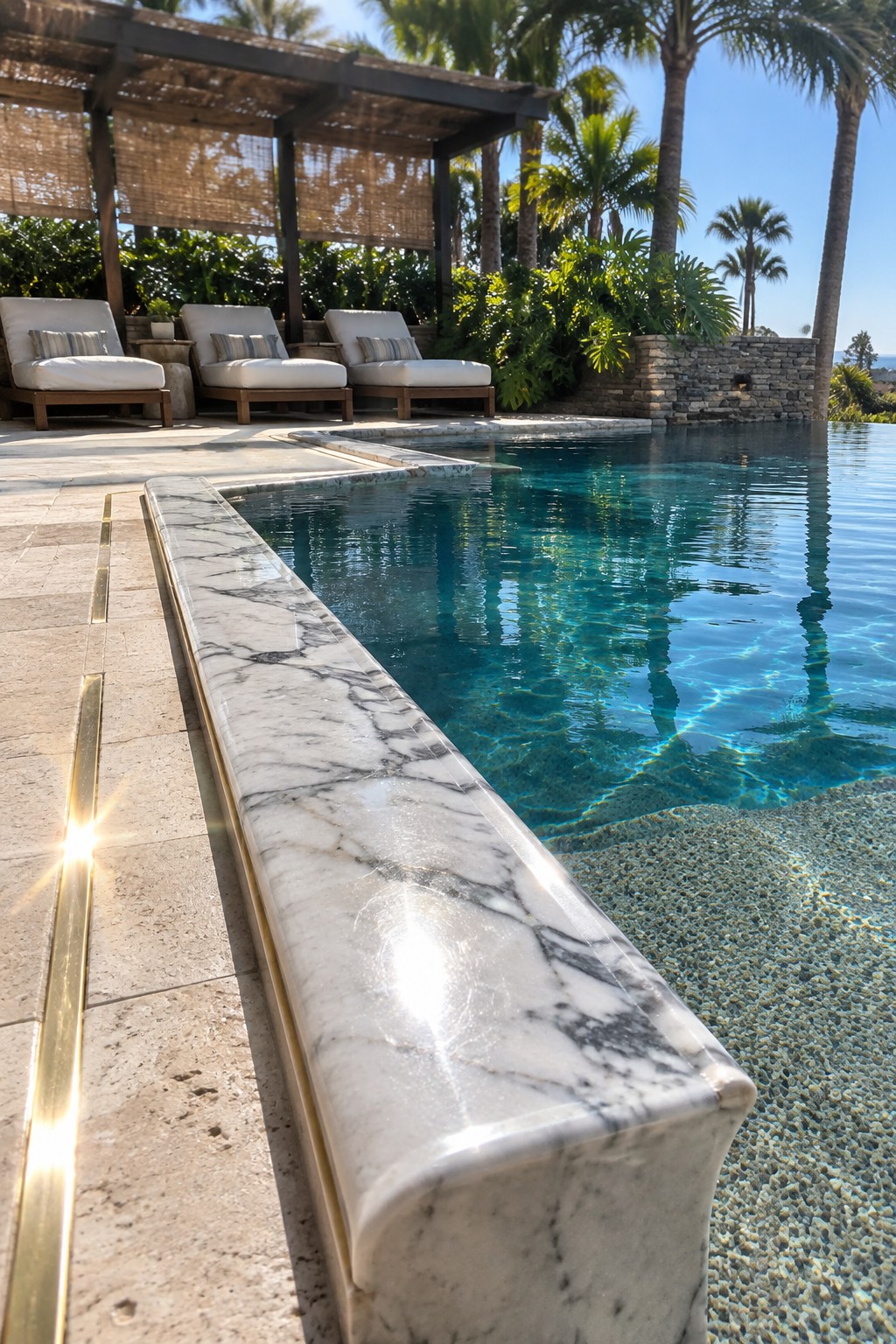
Many people like marble coping on an infinity pool because it feels solid and finished without looking heavy. The stone stays cool underfoot and the light color reflects the water nicely, which helps the whole edge look cleaner from a distance.
This works best on pools that already have a simple layout and plenty of sun. Keep the metal strip narrow so it does not compete with the stone, and make sure the coping thickness stays consistent all the way around the pool.
Light Coping for Pool Edges
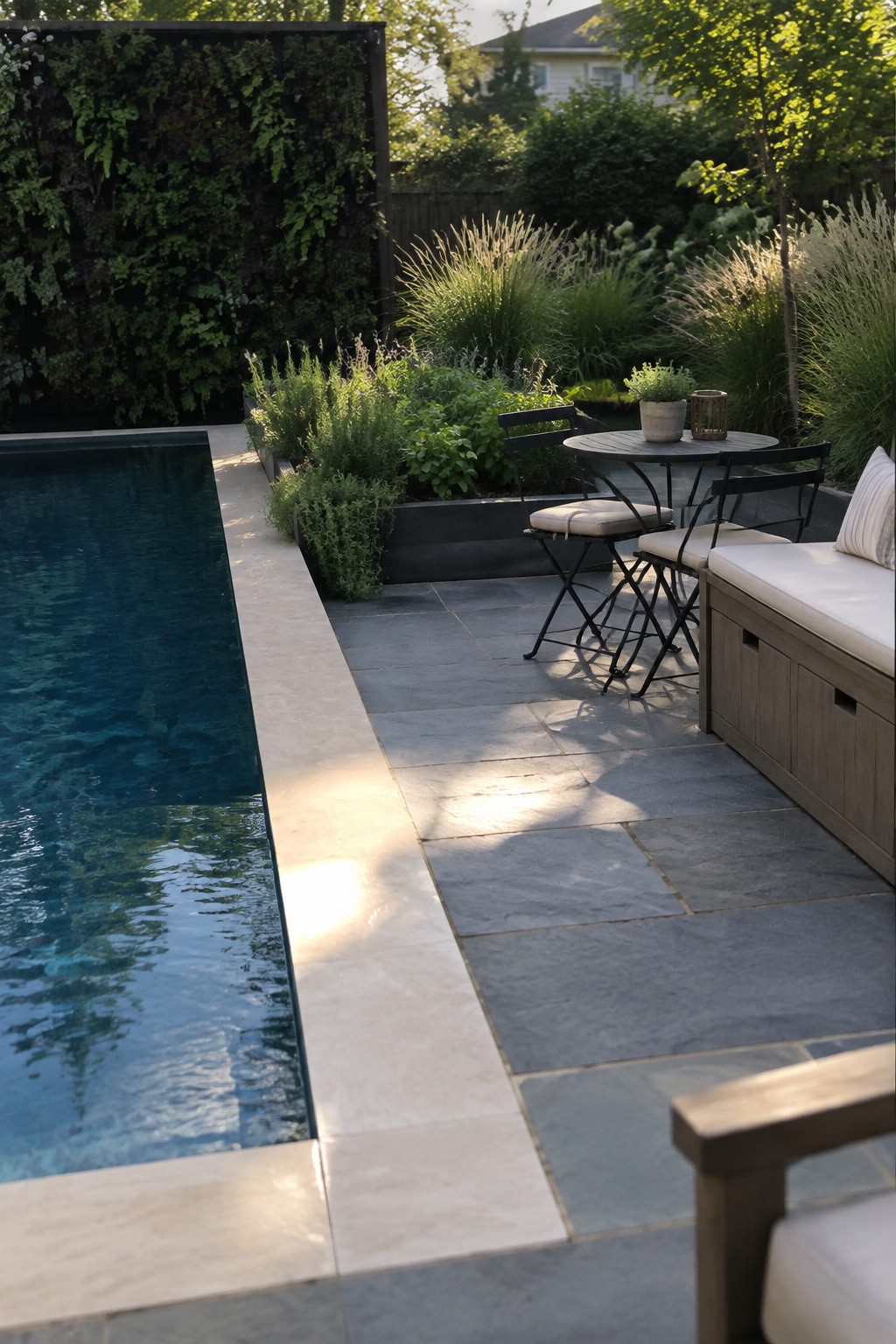
Light stone coping gives the pool a clean break from the surrounding patio. The pale tone stands out against the dark water and the gray slate tiles, so the edge reads as intentional rather than just a finishing strip. It keeps the whole area from feeling chopped up.
This approach works best on straightforward rectangular pools where you want the water to stay the main feature. It pairs well with darker hardscaping and simple furniture, though it can show stains more easily in shady spots.
Pebble Coping On Infinity Pool Edges
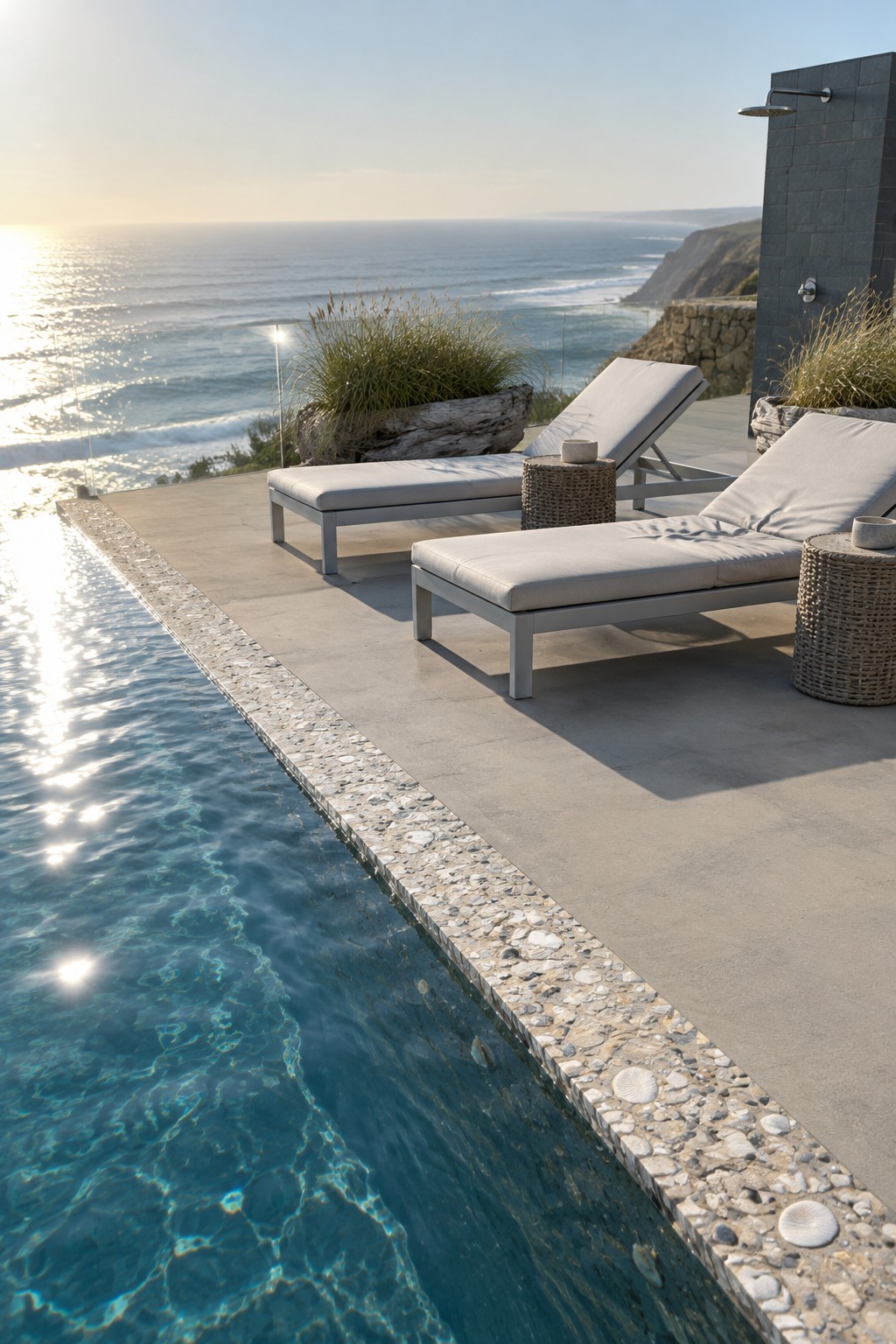
Pebble coping gives an infinity pool edge a textured, grounded look that helps the water feel connected to the surroundings instead of cut off by a sharp border. The small stones add subtle variation without drawing too much attention, which works especially well when the pool sits right at the edge of a view.
This detail suits coastal homes or properties with rocky landscapes. It pairs best with simple concrete decks and minimal furniture so the edge itself stays the focus. Just check that the stones are properly sealed and the slope is set right for water flow.
Rugged Natural Stone Coping For Rocky Landscapes
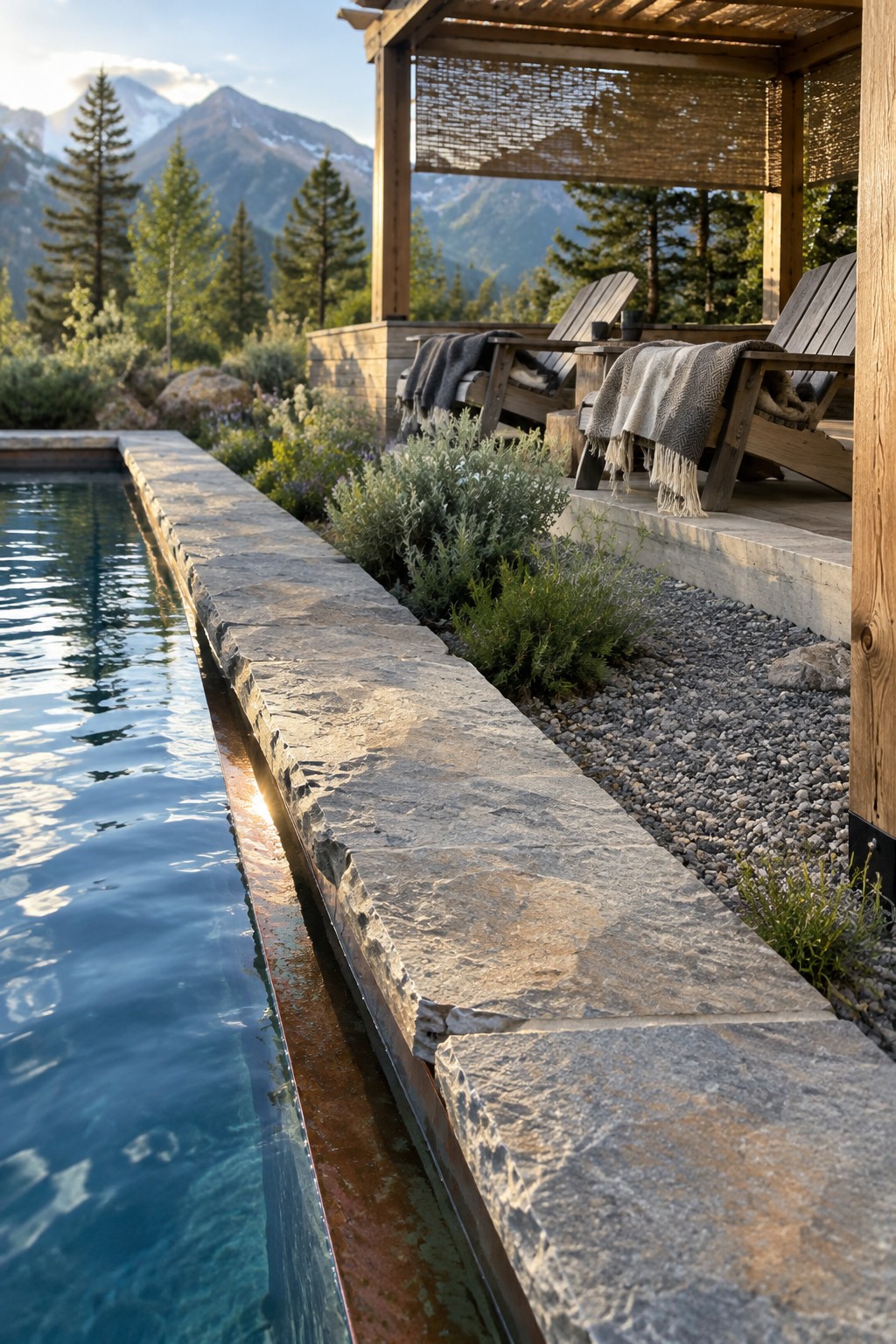
Thick natural stone coping gives an infinity pool a grounded edge that feels like part of the land rather than something added later. The rough texture and irregular shape help the water meet the surroundings without a hard line, which works especially well when the pool sits near gravel, native plants, or rocky terrain.
This choice suits homes in dry or mountainous areas where the stone can echo the local landscape. Keep the coping wide enough for seating and choose a finish that stays safe underfoot when wet.
Dark Coping For Modern Architectural Pool Designs

Dark coping gives an infinity pool a sharper, more intentional edge. It creates a clear break between the water and the surrounding deck, which keeps the whole area from feeling too blended or soft. In this setup the dark material also picks up reflections from the water, adding a bit of depth without extra decoration.
This approach works well on modern homes with concrete or stone hardscaping. It suits pool areas that sit close to the house and need to feel like an extension of the architecture rather than a separate feature. Just check that the coping material can handle constant moisture and sun exposure before committing to it.
Natural Stone Coping For Lakeside And Woodland Pools
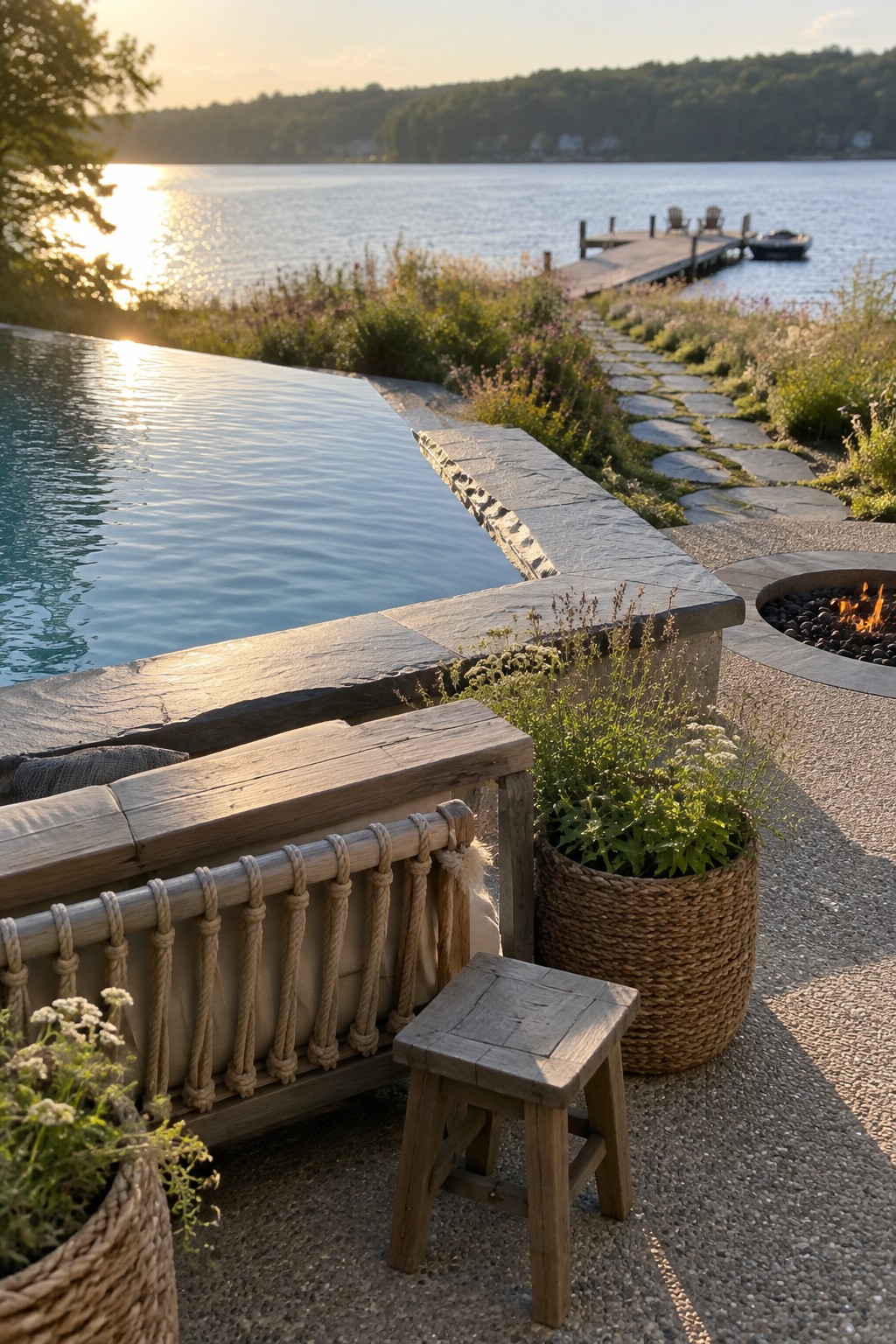
Natural stone coping gives an infinity pool edge a settled, grounded look that works well with water and plants. The material helps the pool sit into the landscape instead of standing out as a separate feature.
This choice suits homes near lakes or in wooded settings where you want the pool to feel like part of the yard. Pick stone that matches nearby paths or walls so the whole area stays consistent.
Recessed Linear Lighting Along Contemporary Pool Edges
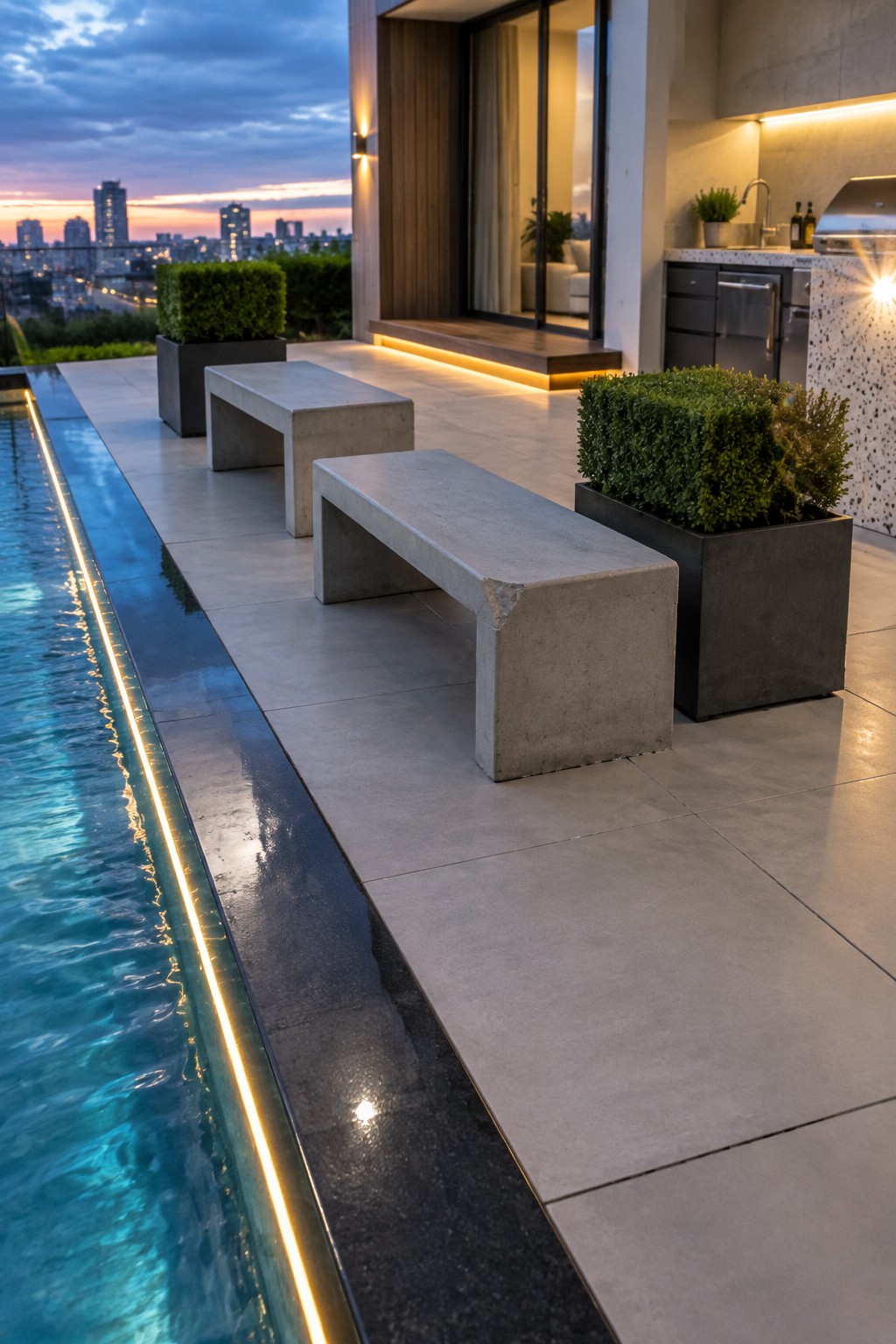
One way to sharpen an infinity pool edge is to run a thin strip of light right inside the coping itself. The glow traces the waterline without adding separate fixtures or breaking the flat surface. It turns the coping into both a visual stop and a subtle guide at night.
This approach suits modern terraces where the pool sits right next to seating. Keep the light warm and low so it does not bounce off the water. The concrete benches shown here sit at the same level, which keeps the whole edge zone simple and easy to walk around.
Wood Coping Blended With Stone Paving And Greenery
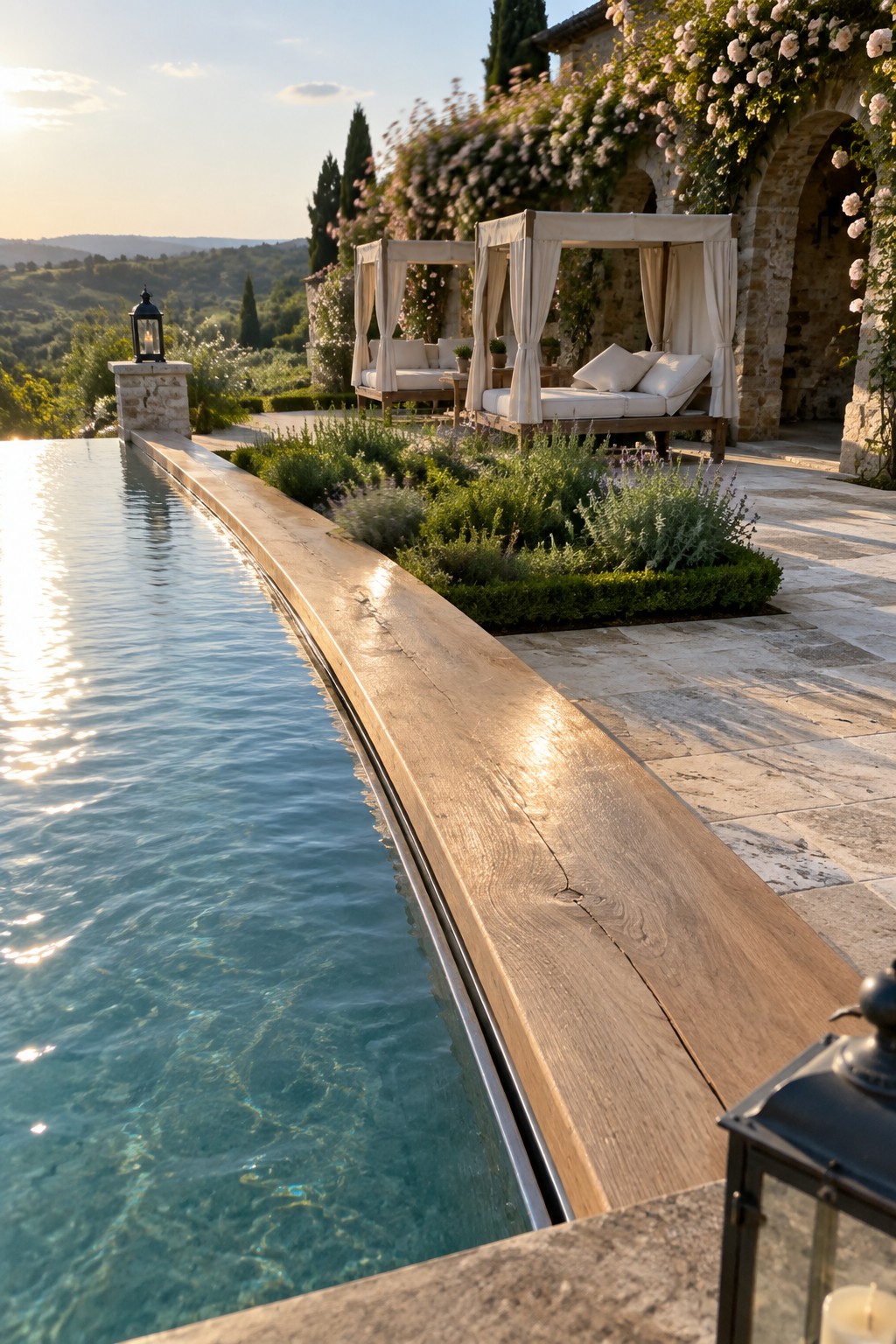
Wood coping gives an infinity pool a warmer, more grounded feel right where the water meets the deck. It softens the hard line of the edge and pairs naturally with stone paving and surrounding greenery without making the whole area feel too formal.
This choice works best on homes that already lean toward natural materials outdoors. It suits terraces or hillside settings where you want the pool to blend in rather than stand out, though the wood does need regular sealing to stay in good shape near water.
Light Marble Coping For Compact Outdoor Pools
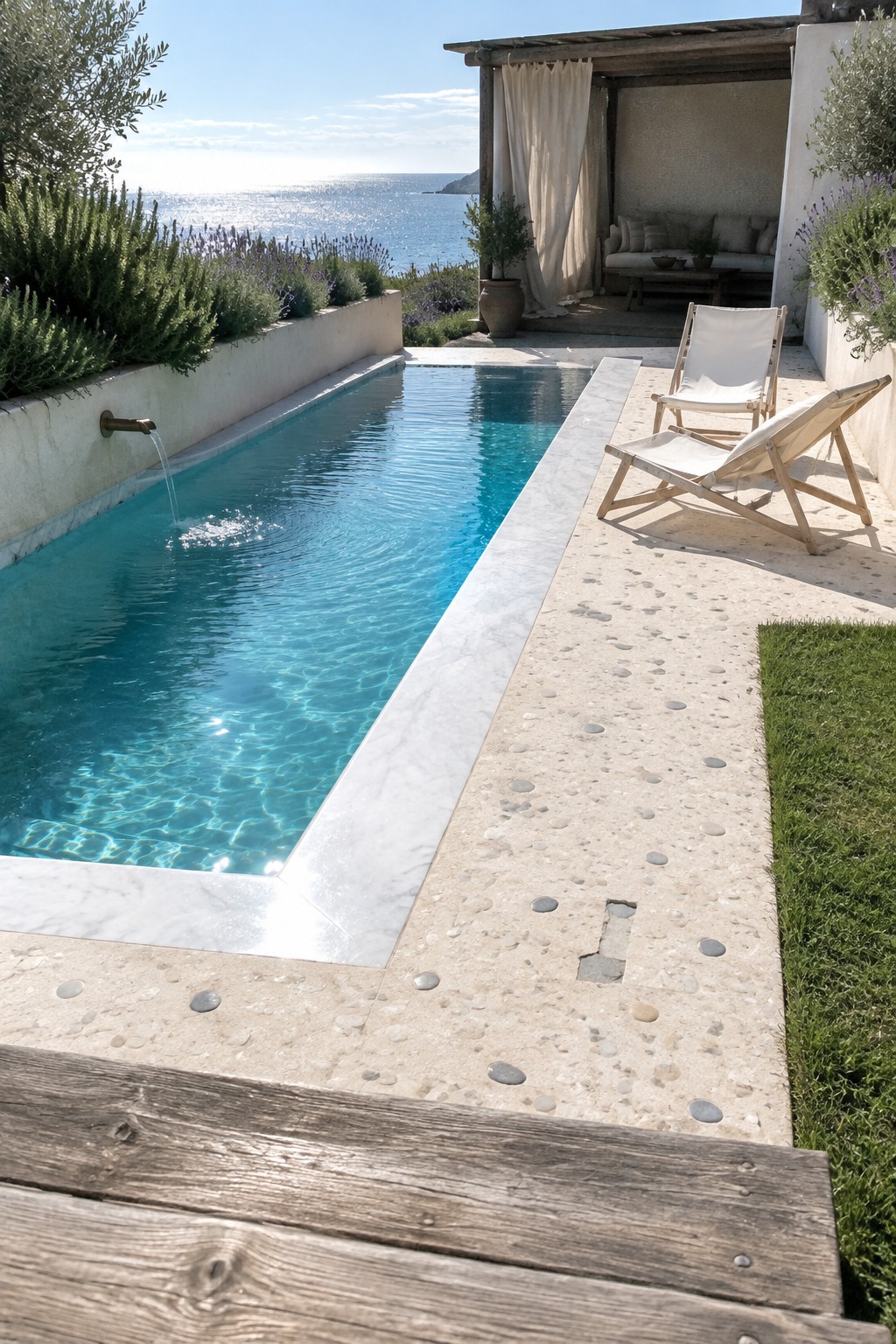
Marble coping gives a pool that finished look people notice right away. The light stone creates a clean line between the water and the deck, which keeps the whole area from feeling busy even when the surrounding paving has texture.
This works best on smaller or mid-size pools where you want the water to stay the main focus. It suits coastal homes or any space with light-colored hardscaping, though it helps to check how the stone holds up in sun and water over time.
Frequently Asked Questions
Q: What coping thickness gives the cleanest drop at the edge?
A: Go with at least two inches for most designs. Thinner slabs can look fragile once water flows over them. A solid thickness also hides any minor imperfections in the concrete base below.
Q: How do I stop algae from building up right at the waterline?
A: Scrub the coping monthly with a soft brush and pool water. The constant flow helps but does not replace regular attention.
Q: Does adding texture to the coping make it safer around kids?
A: A light texture grips better when wet. It cuts down on slips without changing the overall refined appearance much. Smooth options work fine for adult only pools though.