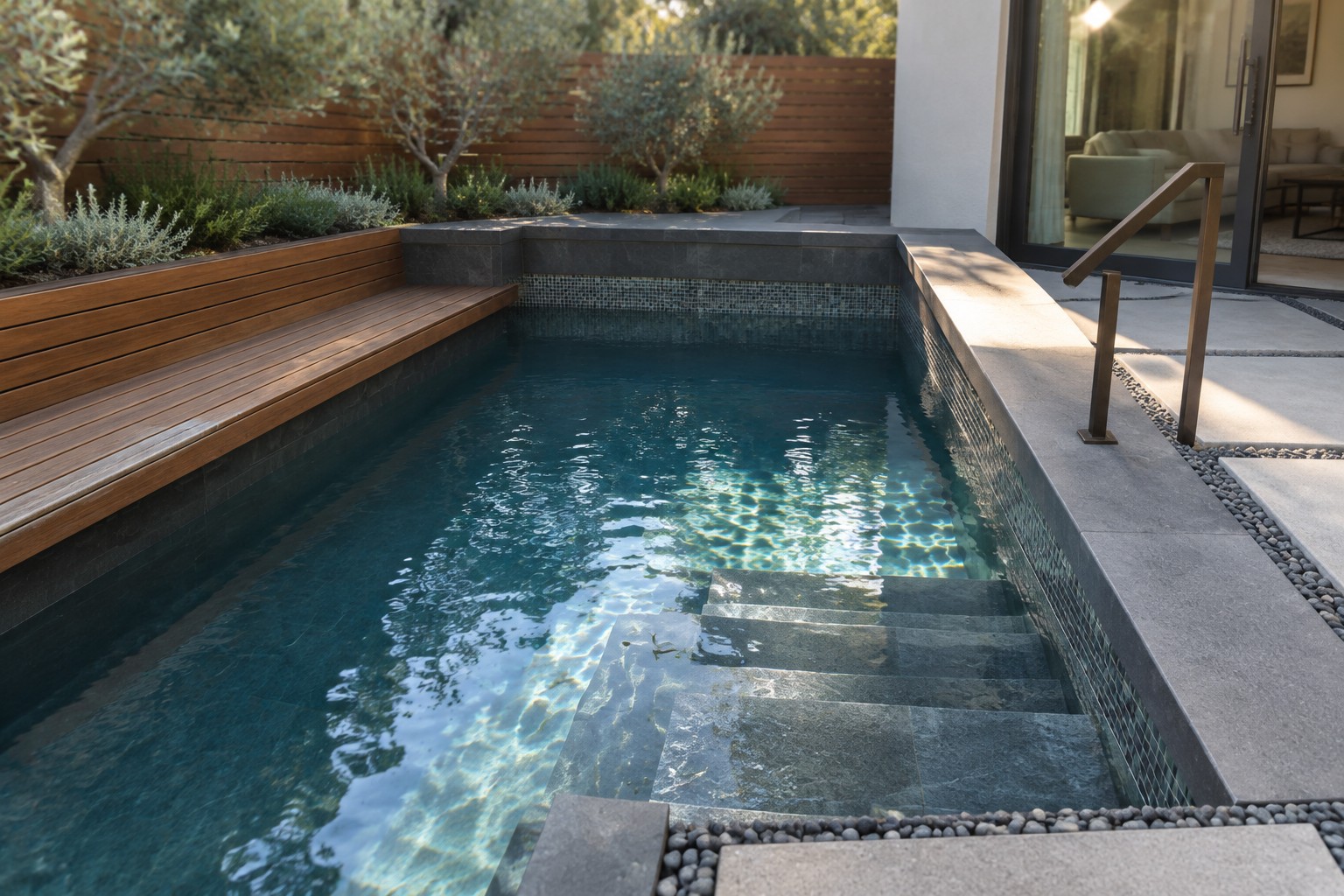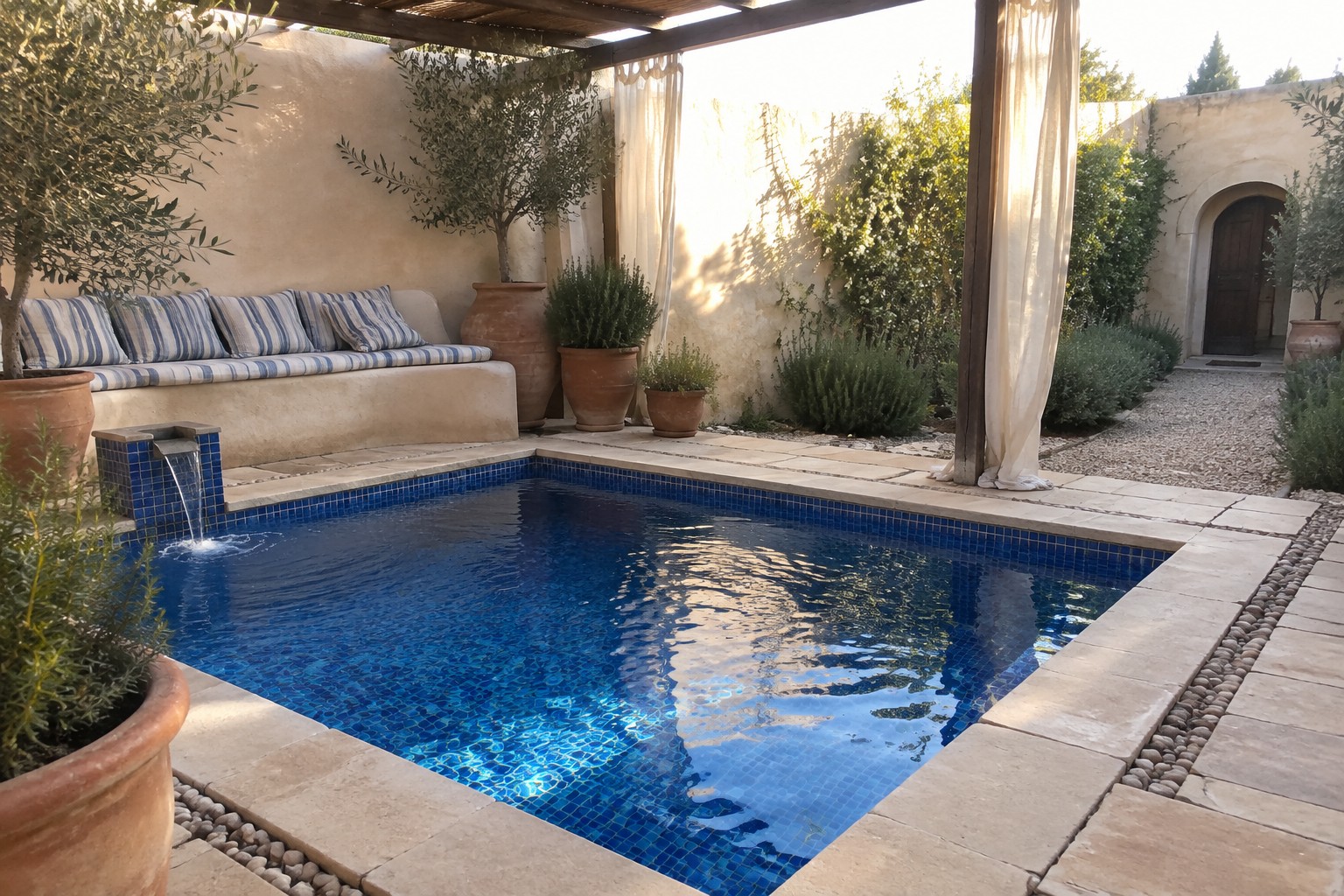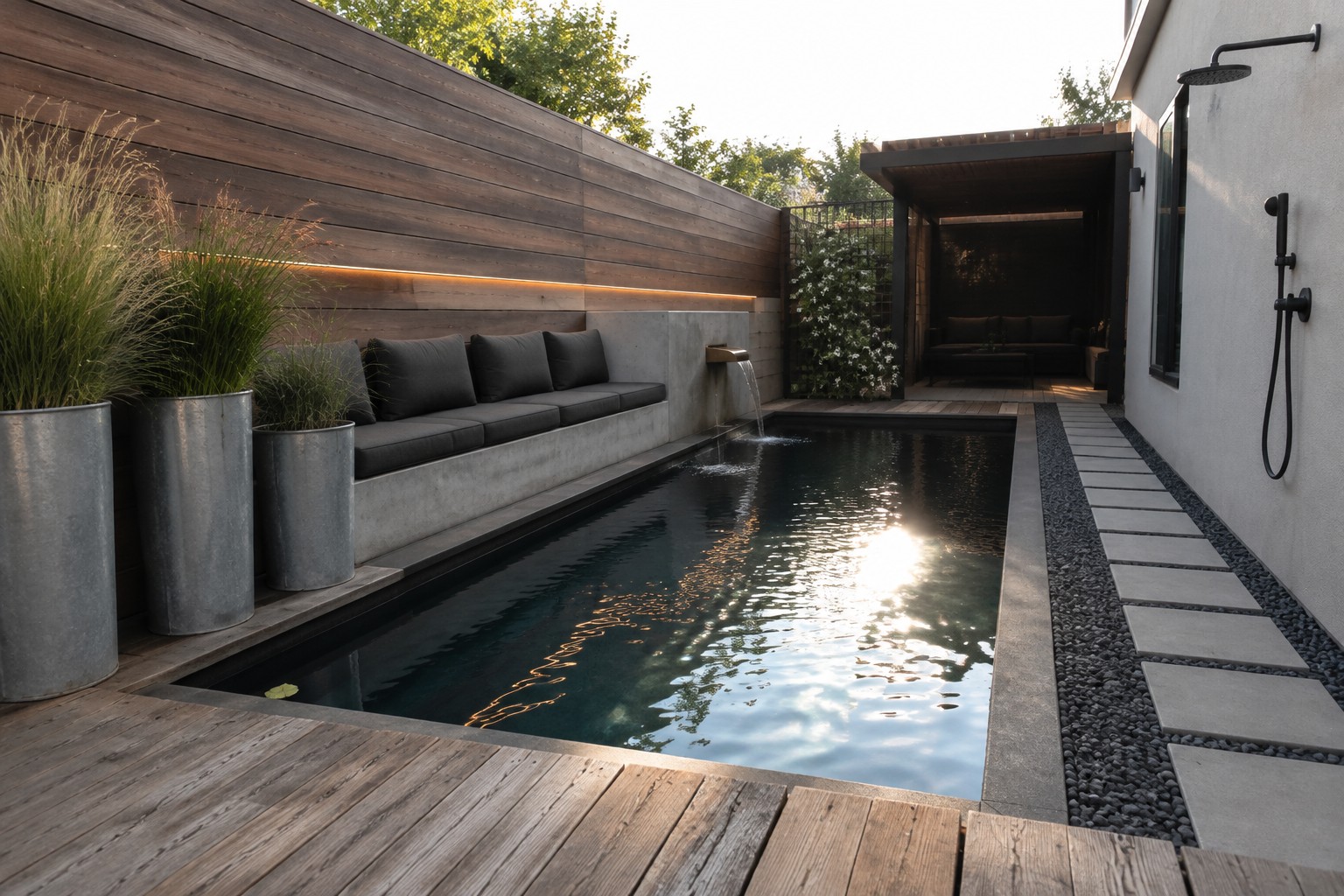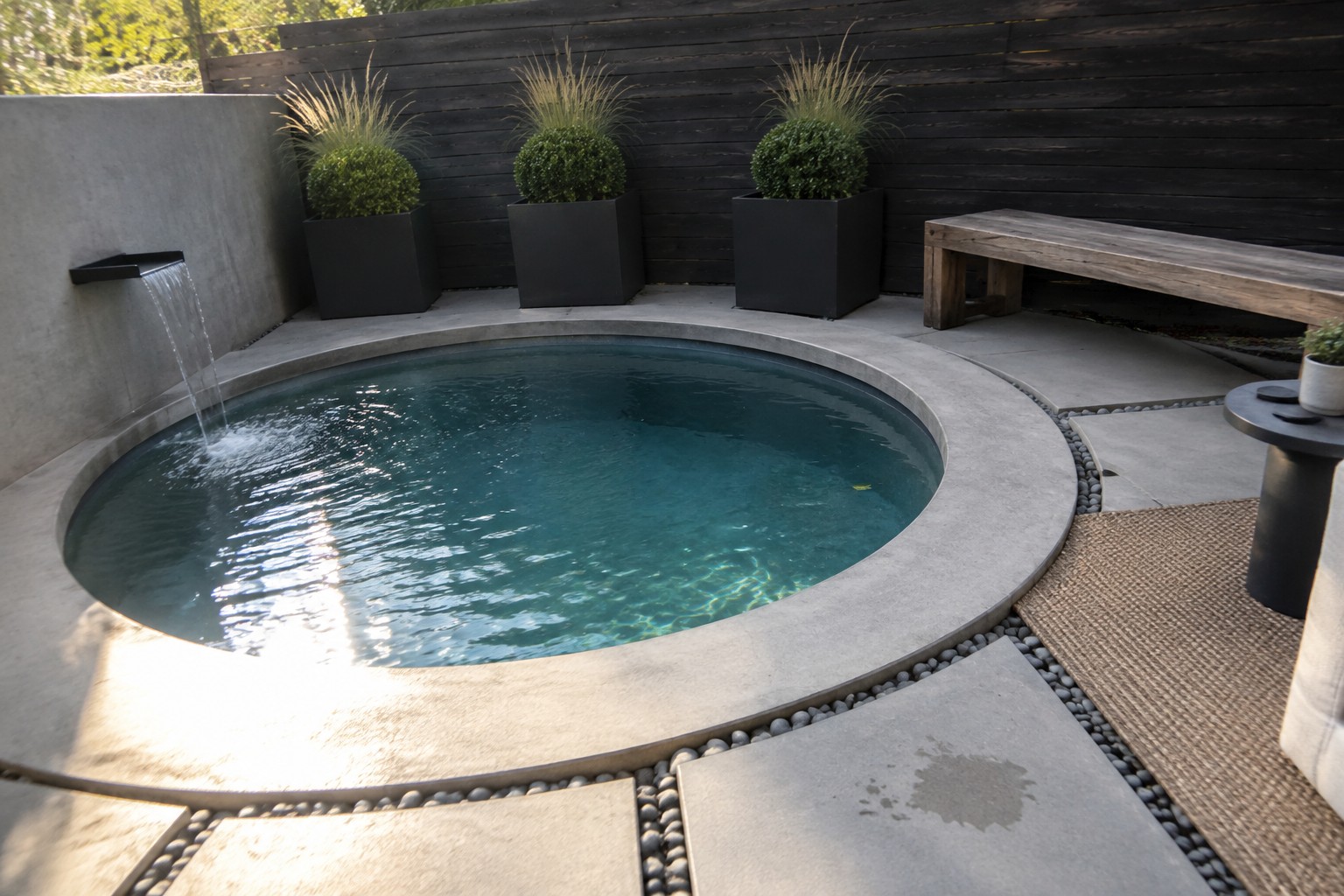
I have watched how the area around a plunge pool shapes the rest of the yard over a few seasons. Natural stone tends to ground the space better than smoother materials because it picks up the colors already in the soil and plants.
When I think about changes to my own yard I always start with how the edging will guide movement and keep the surrounding beds from washing out.
The layout matters more than most people expect once the pool is in and the first rains test the slopes.
A few patterns are worth sketching on site before committing.
Natural Stone Coping Around Plunge Pools
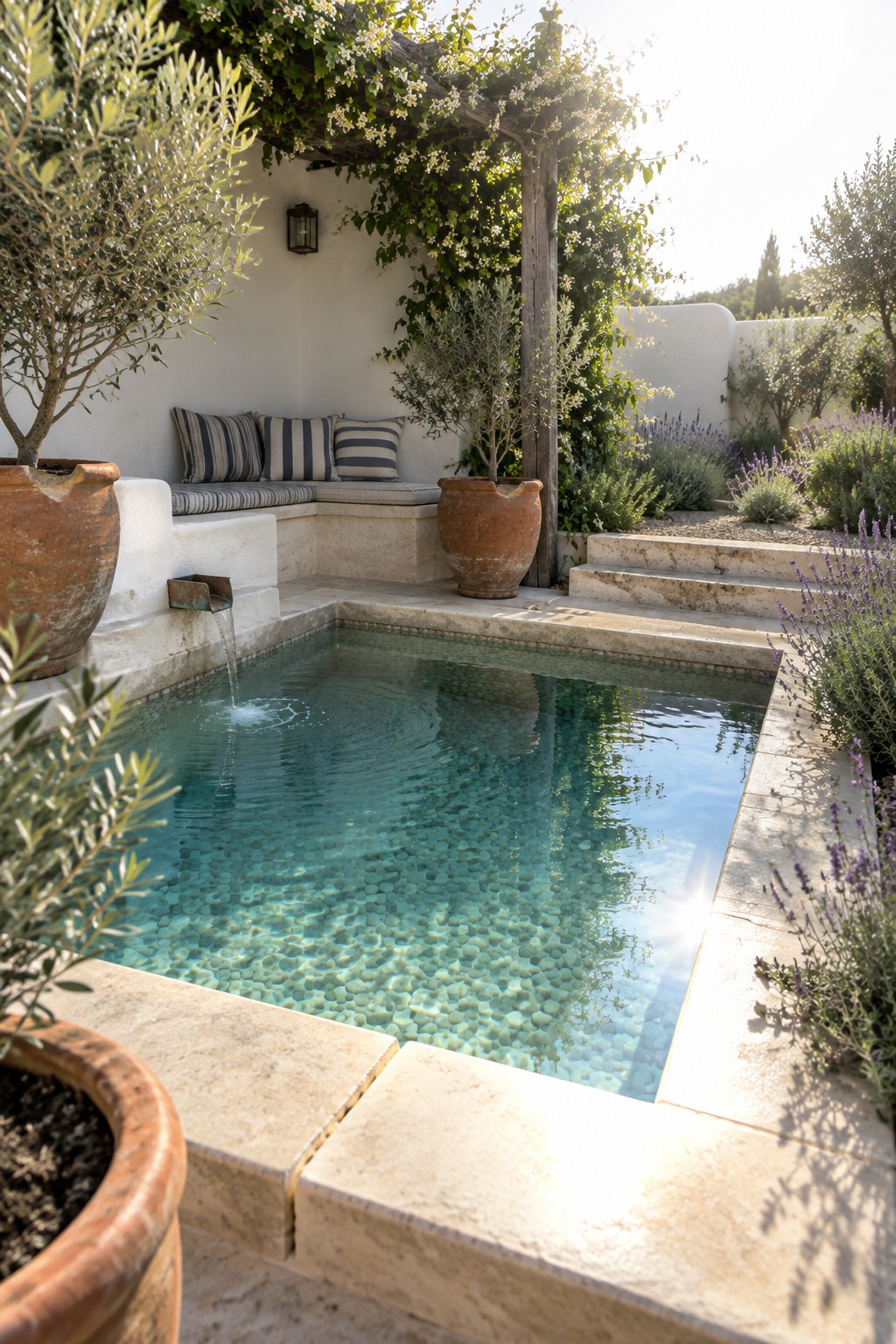
Natural stone coping gives a small plunge pool a settled look that fits into the garden rather than sitting on top of it. The light stone edges blend with the surrounding paving and make the water feel like a natural part of the landscape instead of a separate feature.
This works best in sunny, dry gardens where you can run planting right up to the stone. Large pots and low shrubs help soften the hard lines and keep the whole area feeling simple and easy to maintain.
Gravel Paths With Stepping Stones Next to Plunge Pools
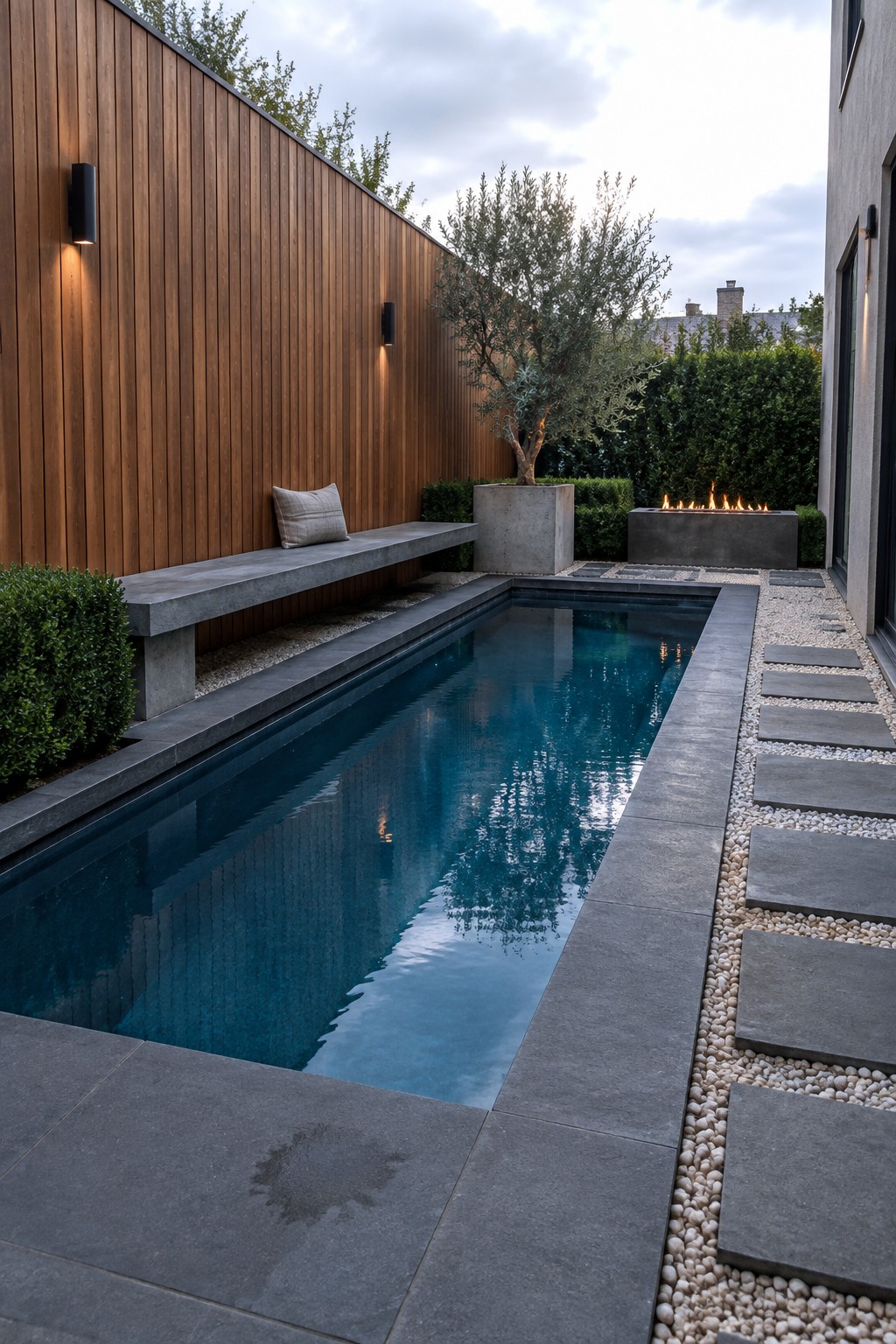
A gravel path lined with stepping stones gives a plunge pool a relaxed edge without the need for a full stone deck. It keeps the space open, makes walking around the water simple, and works especially well when the pool sits close to a house or fence.
This approach suits smaller yards and modern homes where you want low maintenance and good drainage. Keep the stones level and use edging to hold the gravel in place so the path stays neat over time.
Natural Stone Paving Around Plunge Pools
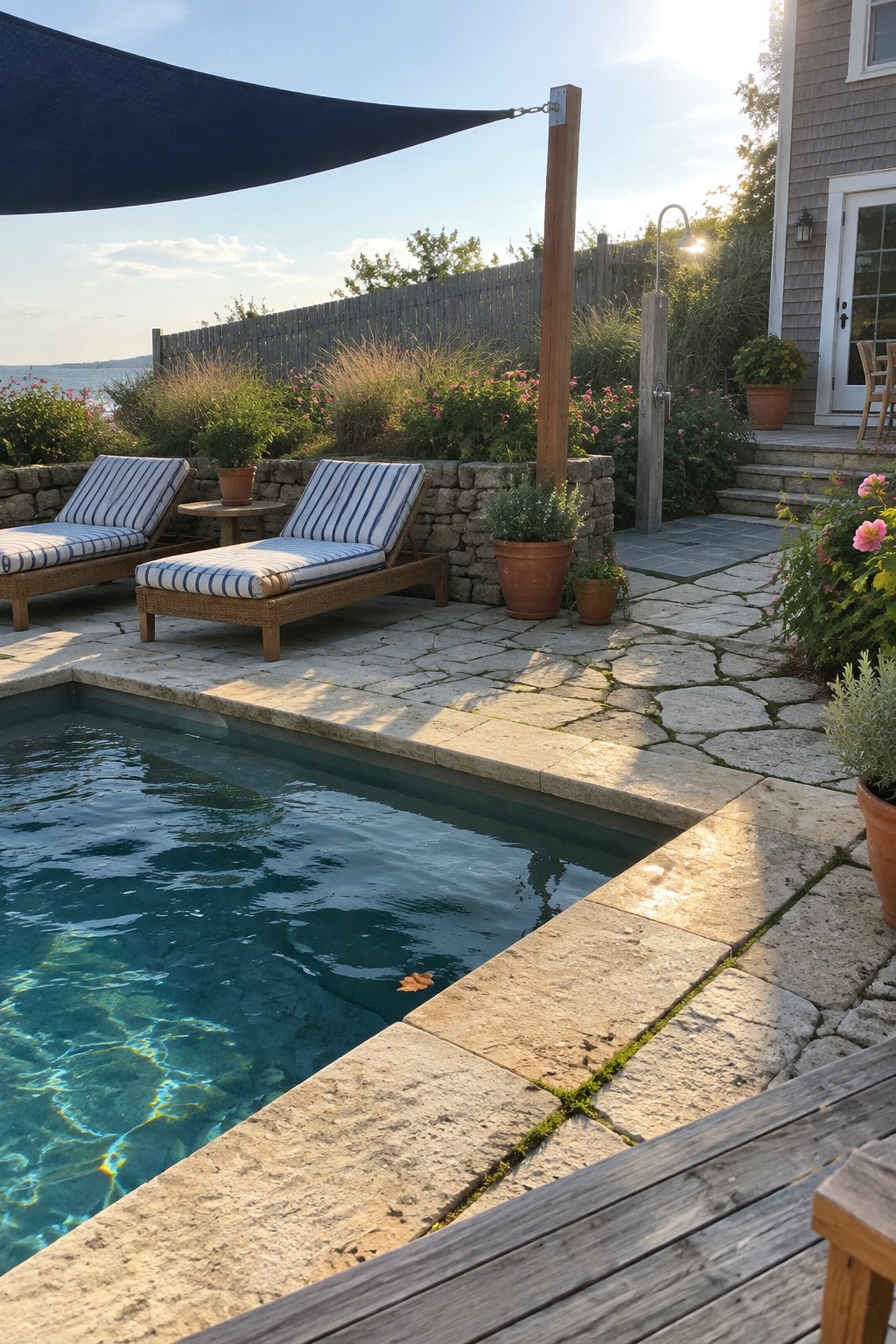
Natural stone paving gives a plunge pool a softer edge that feels more connected to the garden. The irregular slabs and warm tones let the water sit naturally in the landscape instead of looking like a separate box dropped into the yard.
This works best on smaller lots or properties that already have stone walls and paths. It pairs well with simple planting that can come right up to the pool edge, though the stone should be sealed and given a textured finish for safety.
Natural Stone Paths That Connect Plunge Pools to the Garden
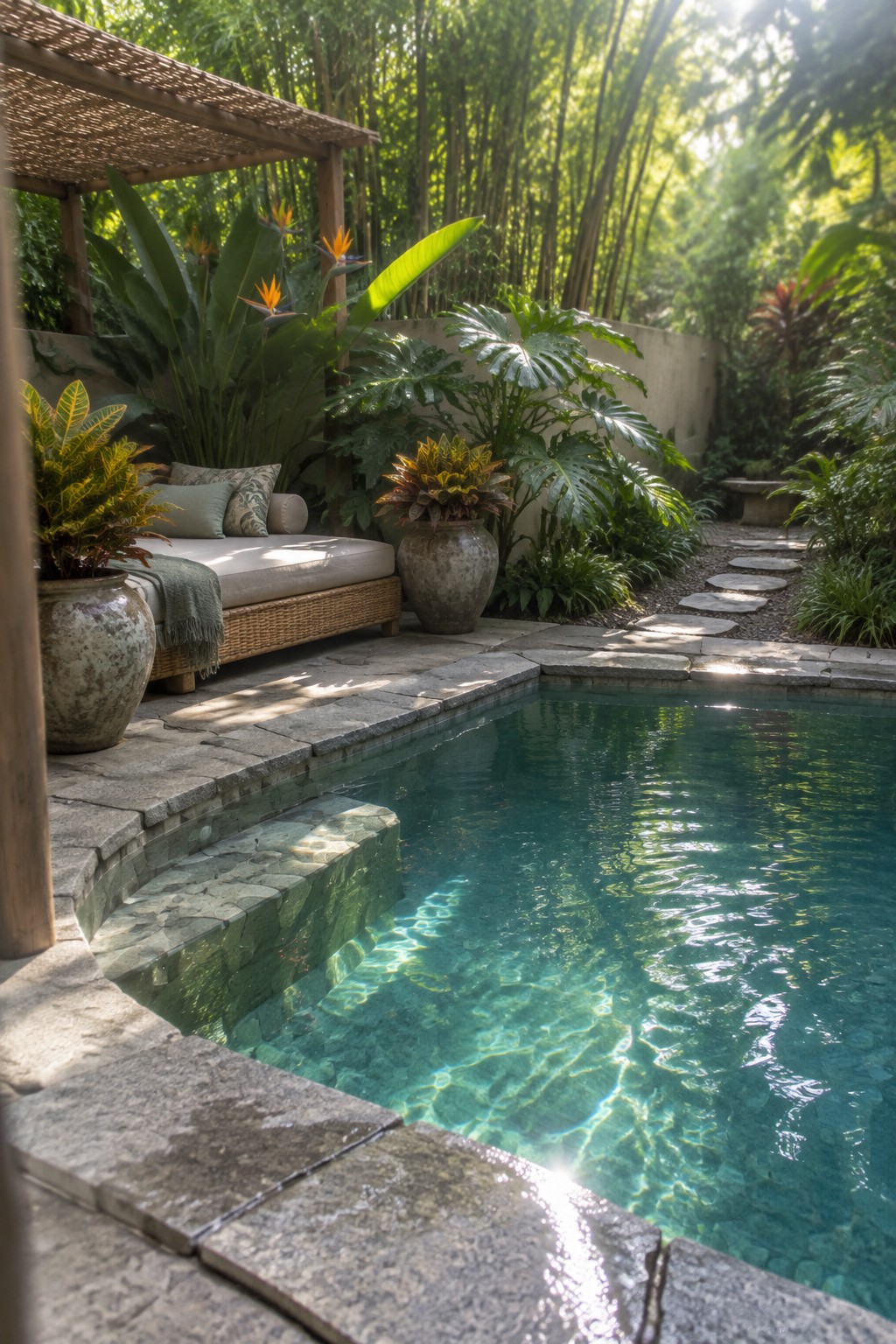
Using the same natural stone around the pool edge and then running it into nearby paths helps the pool feel like part of the landscape instead of something added on. The stone coping sits low and irregular, so it blends with the surrounding beds and does not create a hard line between water and garden.
This approach works best in smaller yards or spaces with heavy planting. Keep the stone color and texture consistent with any existing paths or walls, and let the plants soften the edges so the pool does not dominate the view.
Layered Stone Surrounds for a Natural-Looking Pool Border
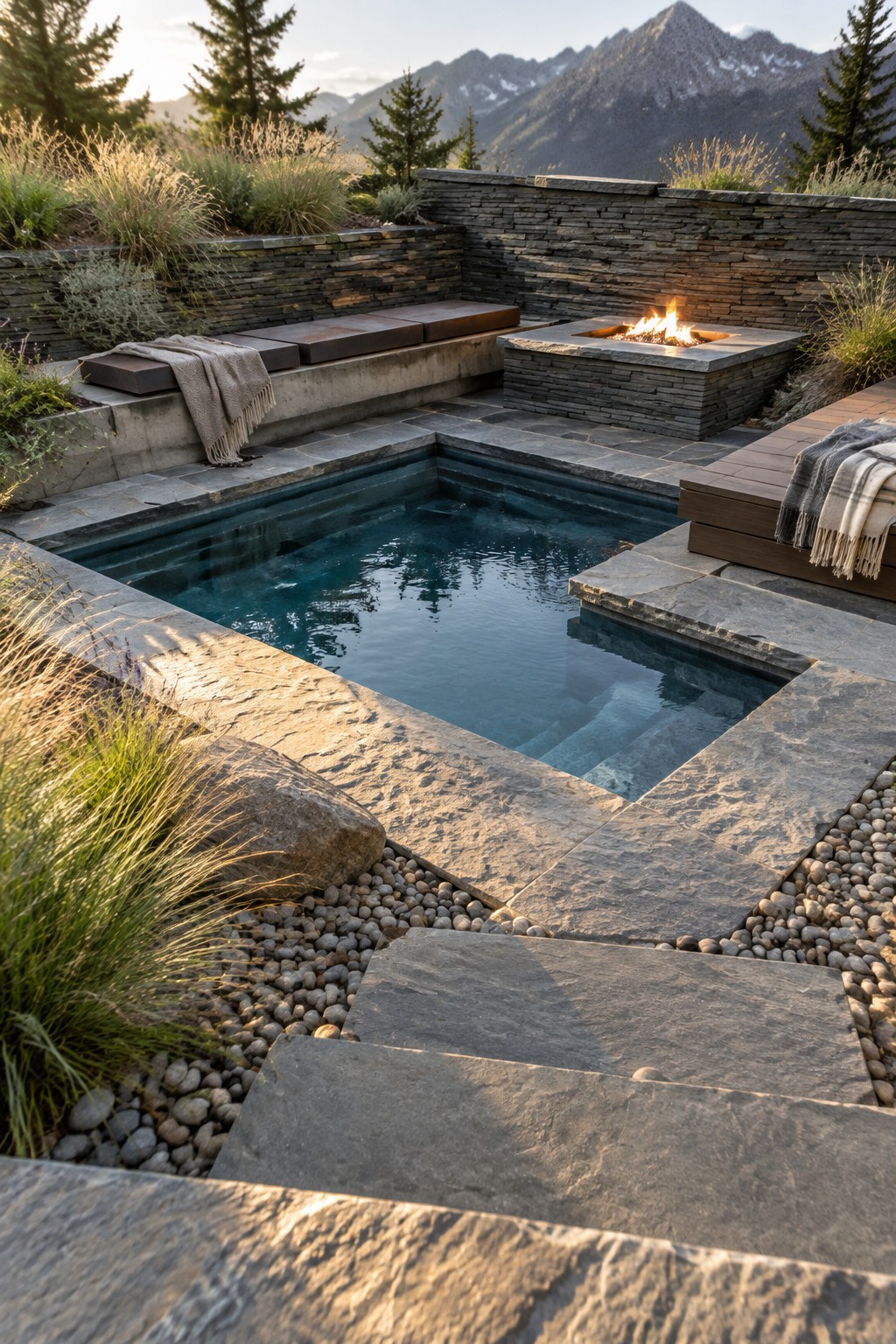
Natural stone works well around plunge pools because it avoids the sharp line that tile or concrete often creates. The rough slabs here sit at different heights and angles, letting the water edge feel more like part of the ground than something added later. Gravel and low grasses fill the gaps, so the whole border looks settled instead of finished.
This setup works best on sites with some slope or rocky ground, where the stone can follow the existing grade. Use larger pieces for the main walking areas and smaller ones to step down toward the water. Keep plantings close to the edge so they soften the stone over time without crowding the pool itself.
Rounded Stone Borders for Compact Plunge Pool Gardens
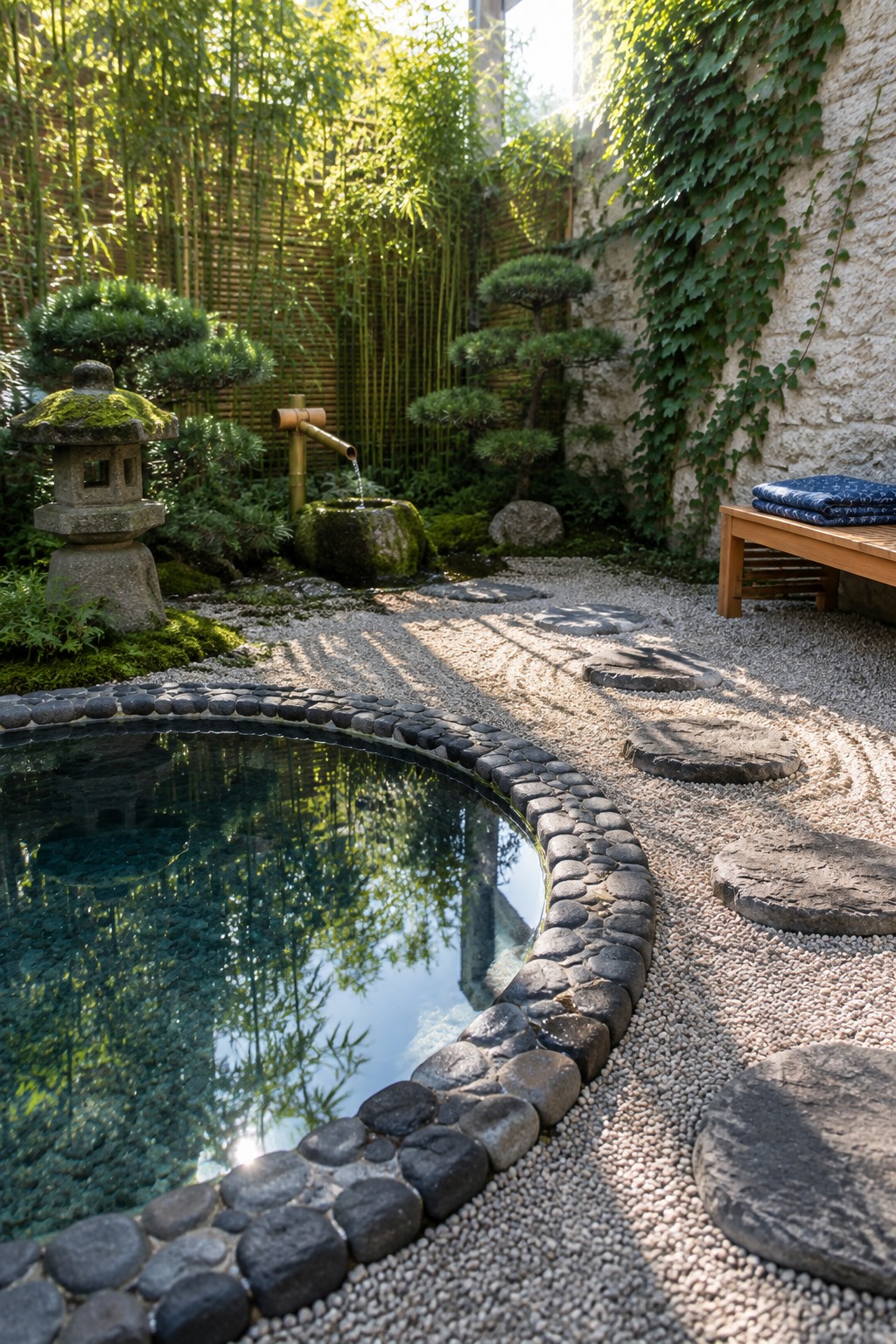
A simple border of dark rounded stones gives a plunge pool a settled look that fits right into the surrounding garden. It softens the edge between water and gravel while letting the pool sit low in the landscape instead of standing out as a separate feature.
This approach works best in smaller courtyards or compact backyards where you want the pool to feel like part of the planting rather than a big built element. Pair the stone with gravel and a few stepping stones so the whole area stays easy to walk around and low on maintenance.
Stone Surrounds That Hold Planting Pockets
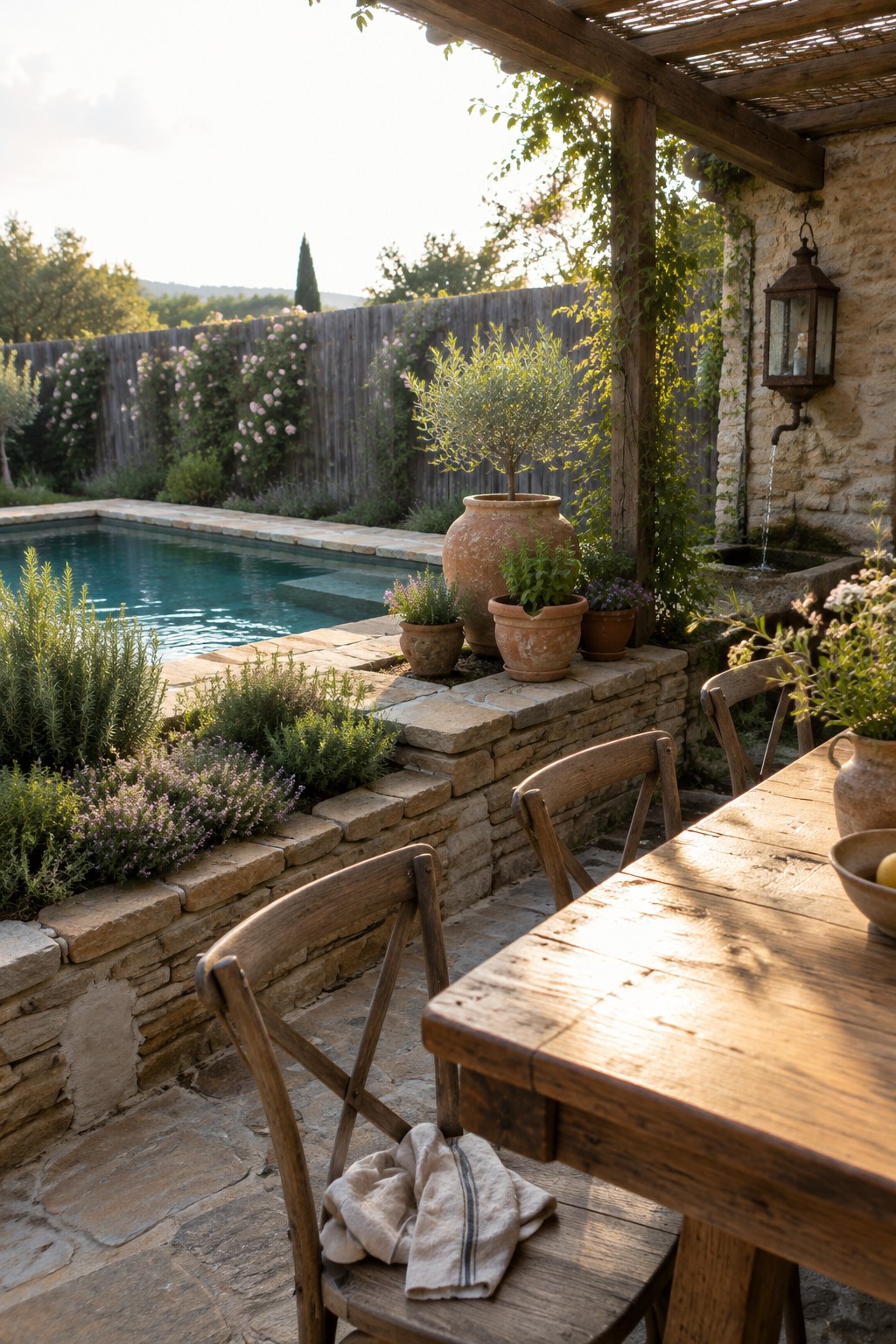
One simple way to make a plunge pool feel settled into the garden is to let the stone surround do double duty. Instead of a clean edge that stops at the water, the stone can be built with wider sections or low walls that naturally hold pots and small planting beds. This approach softens the look of the pool without adding extra structures.
It works especially well on older properties or in dry climates where stone already feels at home. Keep the pots in the same material and scale so they read as part of the wall rather than separate decoration, and choose plants that can take the reflected heat from the stone.
Match Pool Surrounds To Built In Planters
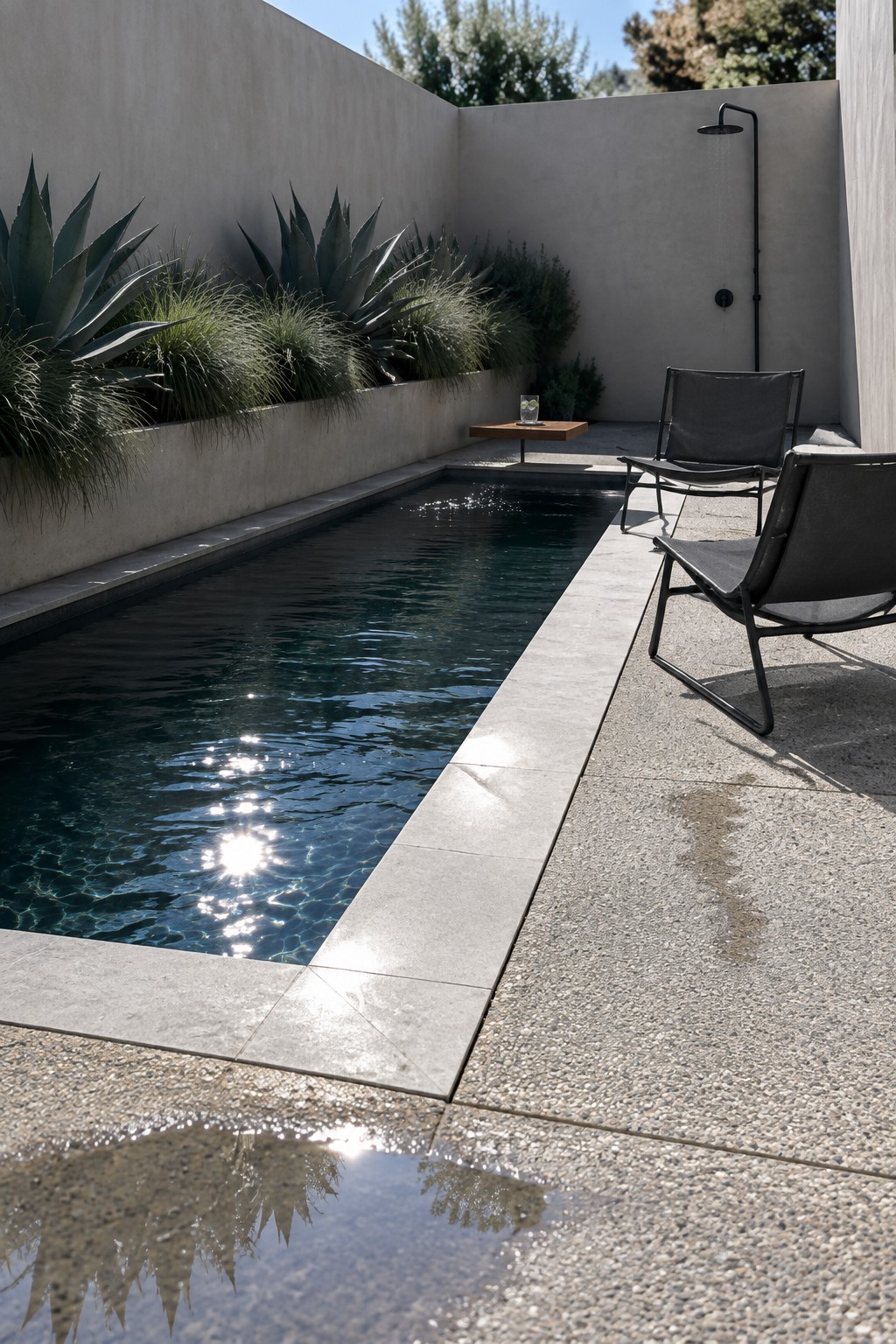
One simple way to keep a plunge pool from feeling like a separate box in the yard is to run a raised planter along one long edge using the same material as the deck. The plants soften the hard lines while the matching surface keeps everything tied together without extra trim or borders.
This approach suits smaller or narrow yards where you want low maintenance and a calm look. Choose drought tolerant plants that stay neat, and make sure the planter height lines up with the pool coping so the whole area feels like one continuous surface rather than separate pieces.
Natural Stone Pool Decks With Steps
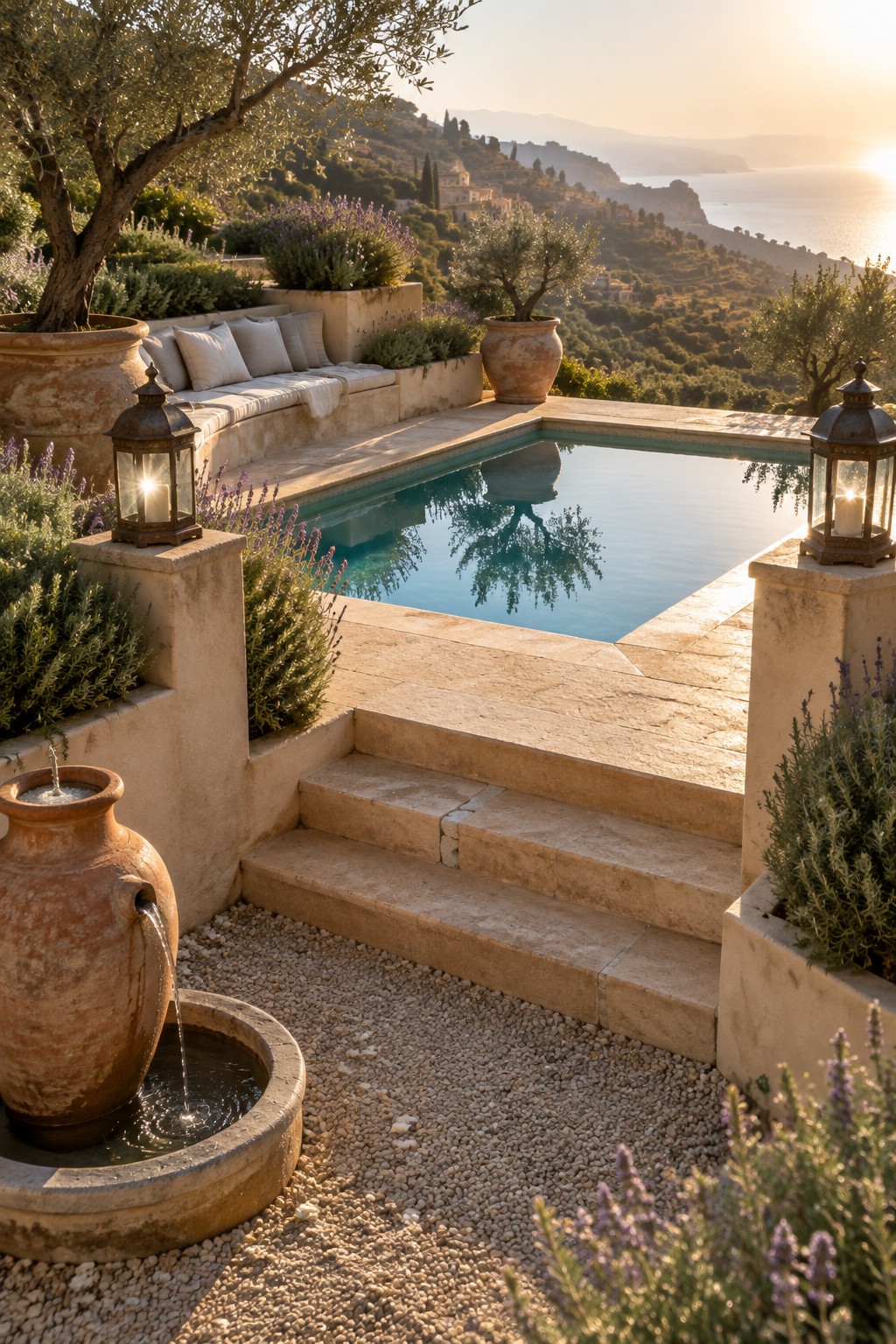
Natural stone works well around plunge pools because it handles water, sun, and foot traffic without looking harsh. In this setup the same stone runs from the pool edge straight into wide steps that drop down to a gravel garden, so the whole area feels like one surface instead of separate zones.
This approach suits sloped yards or hillside homes where you need a clean transition between the pool and lower planting beds. Keep the stone light in color and let a few large pots or low shrubs soften the edges so the deck does not feel too bare.
Boulder Borders and Irregular Stone Paths Around Plunge Pools
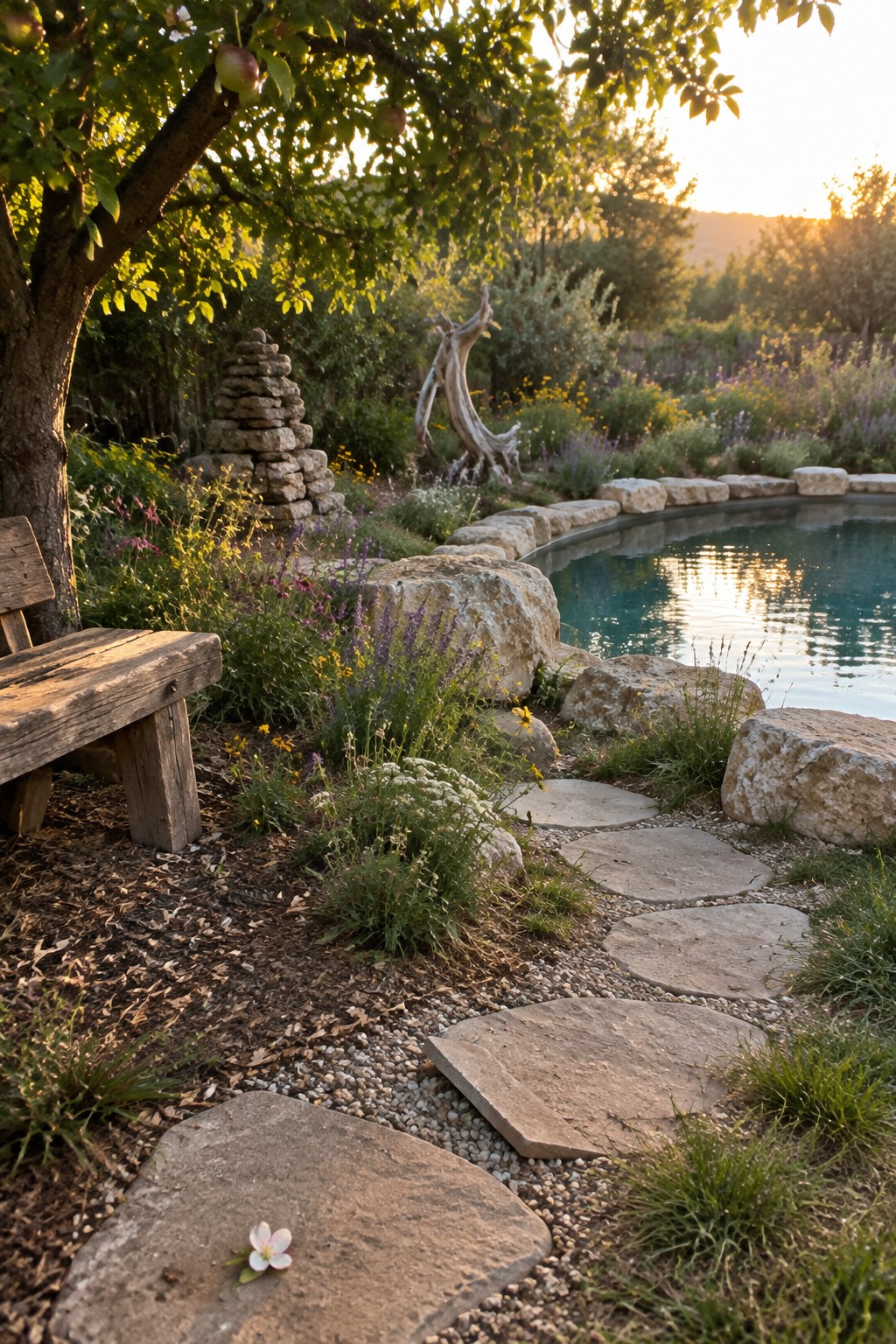
Natural stone edges help a plunge pool feel like it belongs in the garden instead of sitting on top of it. The rough boulders and flat stones create a soft transition between the water and the surrounding beds, so the whole area reads as one connected space.
This setup works best in yards that already have some slope or established planting. Keep the stones irregular and let the path wander a little rather than running in a straight line. It gives the pool a settled look without needing a lot of extra structure.
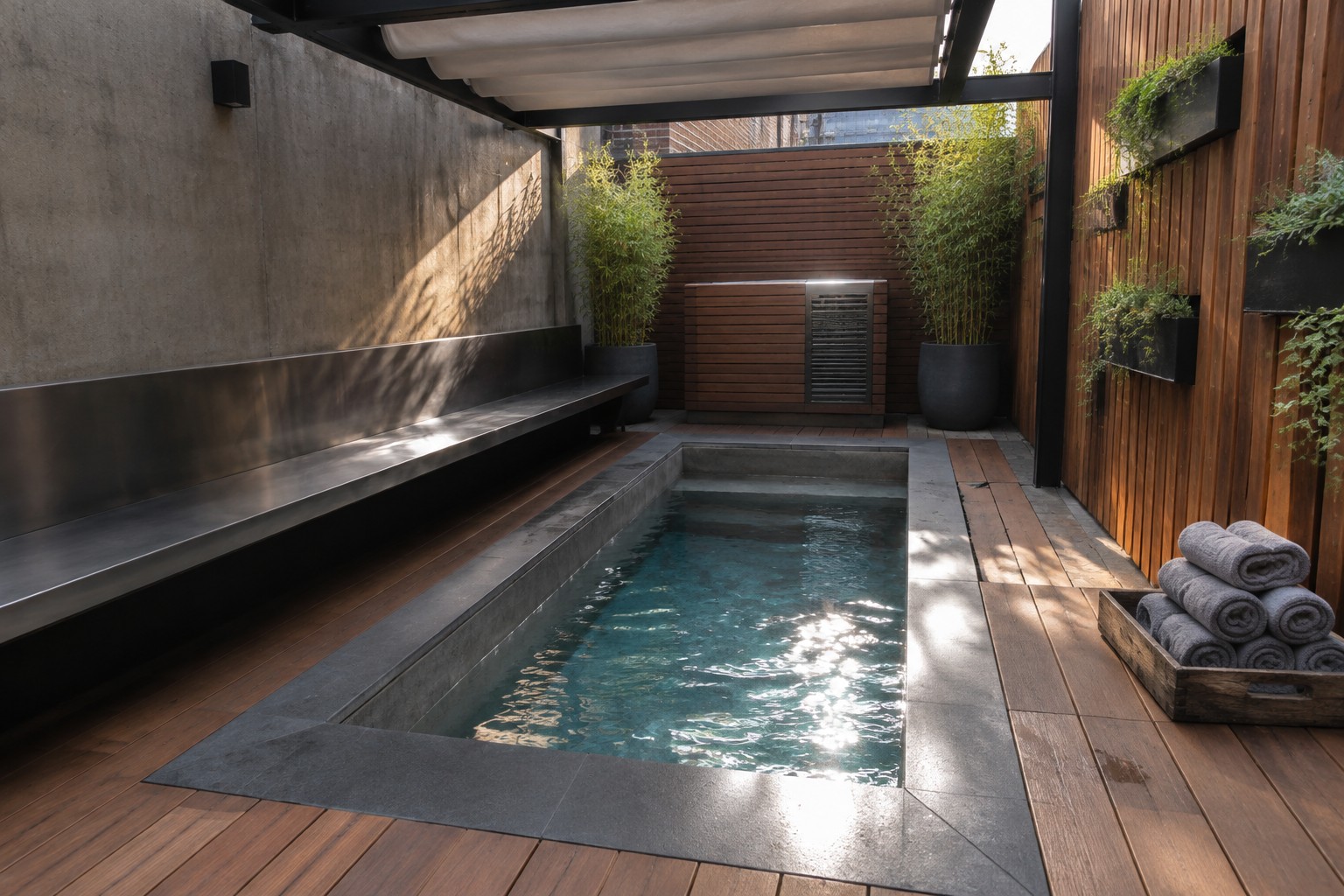
Light Stone Pool Coping for Rooftops and Small Backyards
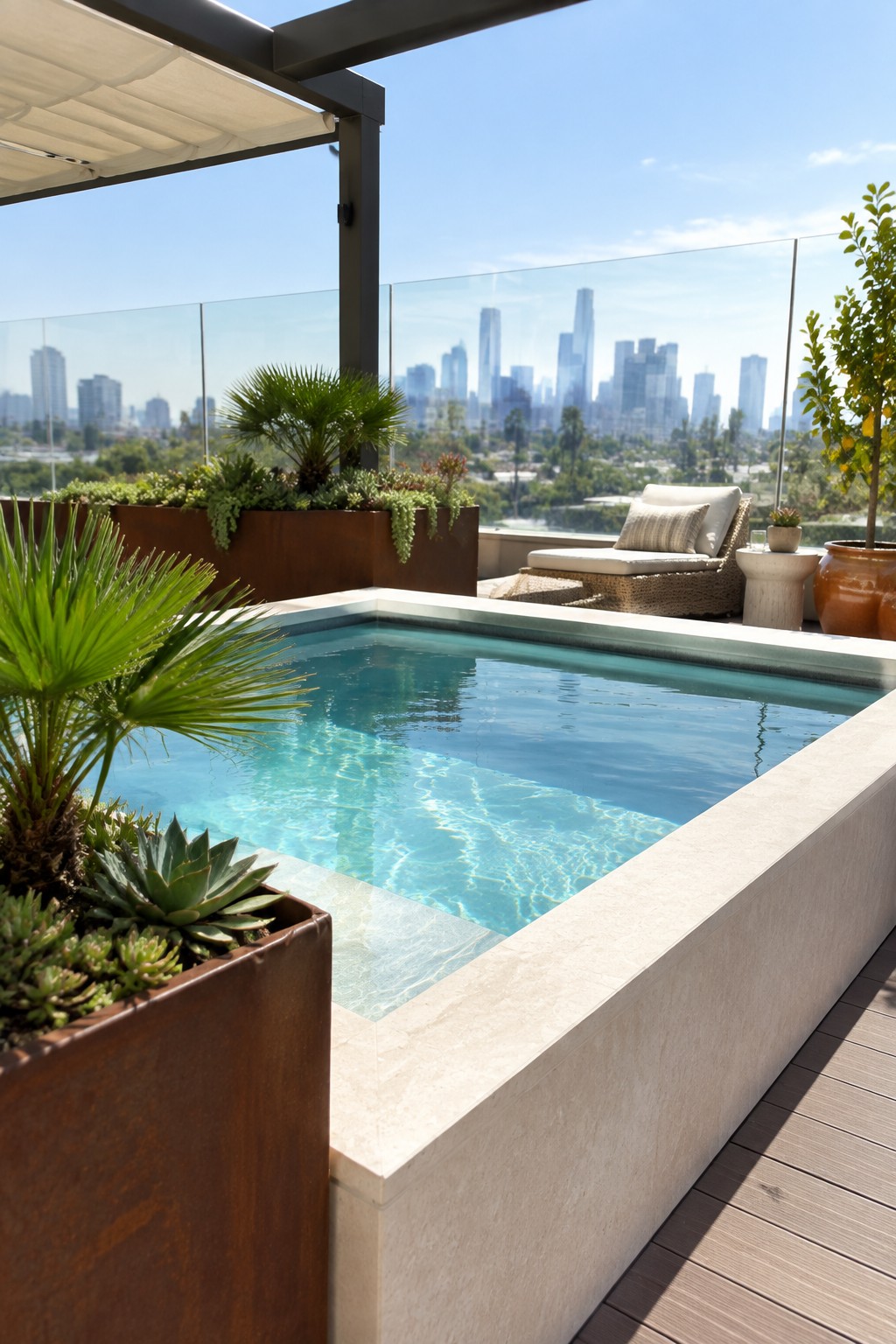
Natural stone coping gives a plunge pool a finished edge that feels like part of the deck rather than something dropped on top. The light color of the stone keeps the water looking cool and clear while the material itself handles weather and foot traffic without much fuss. It works especially well when the pool sits close to the ground level of the surrounding surface.
This approach suits rooftops, small backyards, or any spot where you want the pool to read as an extension of the hardscape instead of a separate feature. Keep the planting simple in a few large containers so the stone edge stays visible and the whole area does not feel crowded.
Stone Decking That Meets the Garden
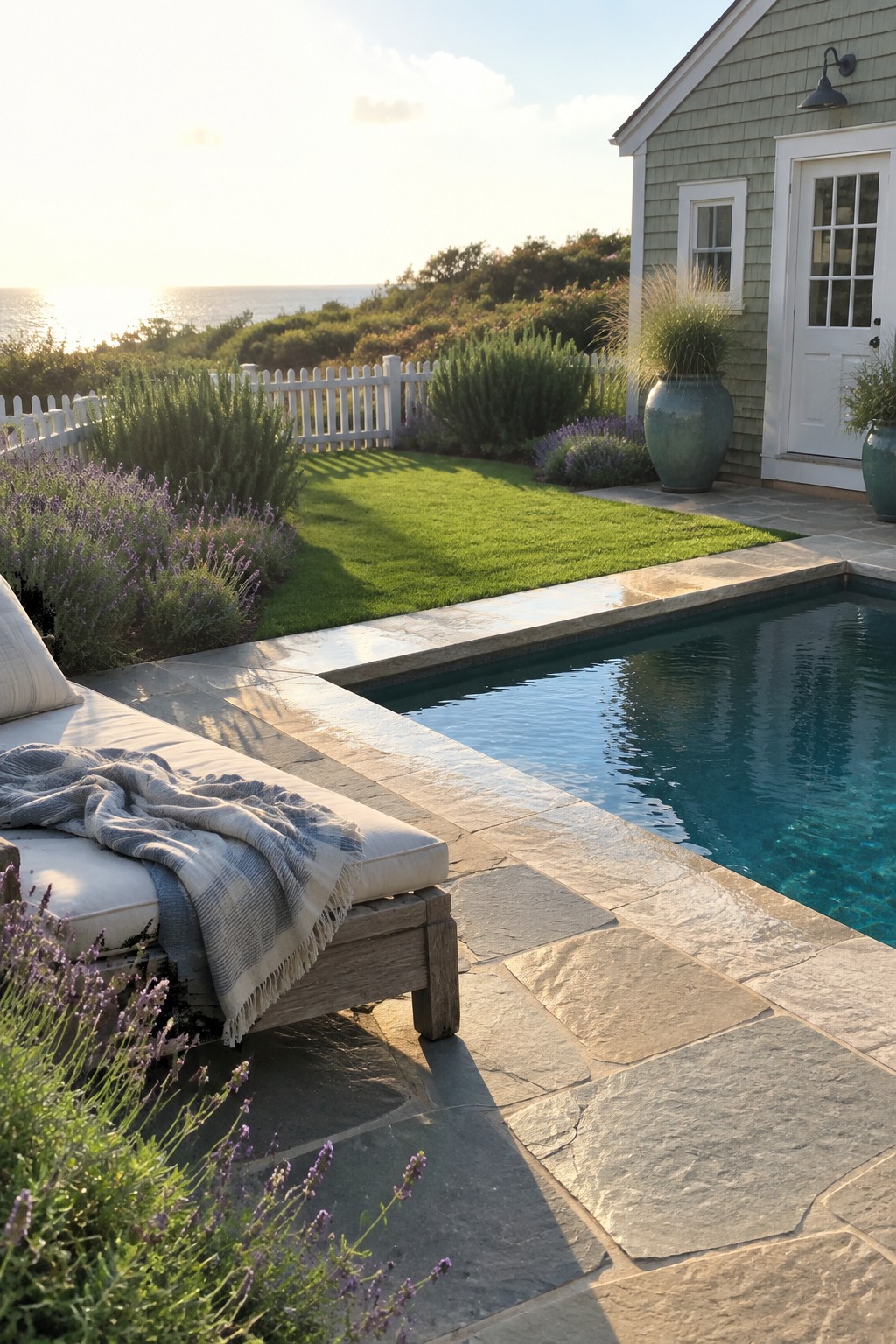
Natural stone works best around a plunge pool when it does not end in a hard line. Here the decking runs right up to the lavender beds, so the pool feels tied into the rest of the yard instead of sitting on its own.
This layout suits smaller yards or coastal homes where you want the pool to feel relaxed rather than formal. Use the same stone tone throughout the deck and let the planting come close to the edge. Just keep a clear path around the water so the space stays easy to use.
Wide Natural Stone Coping for Comfortable Poolside Seating
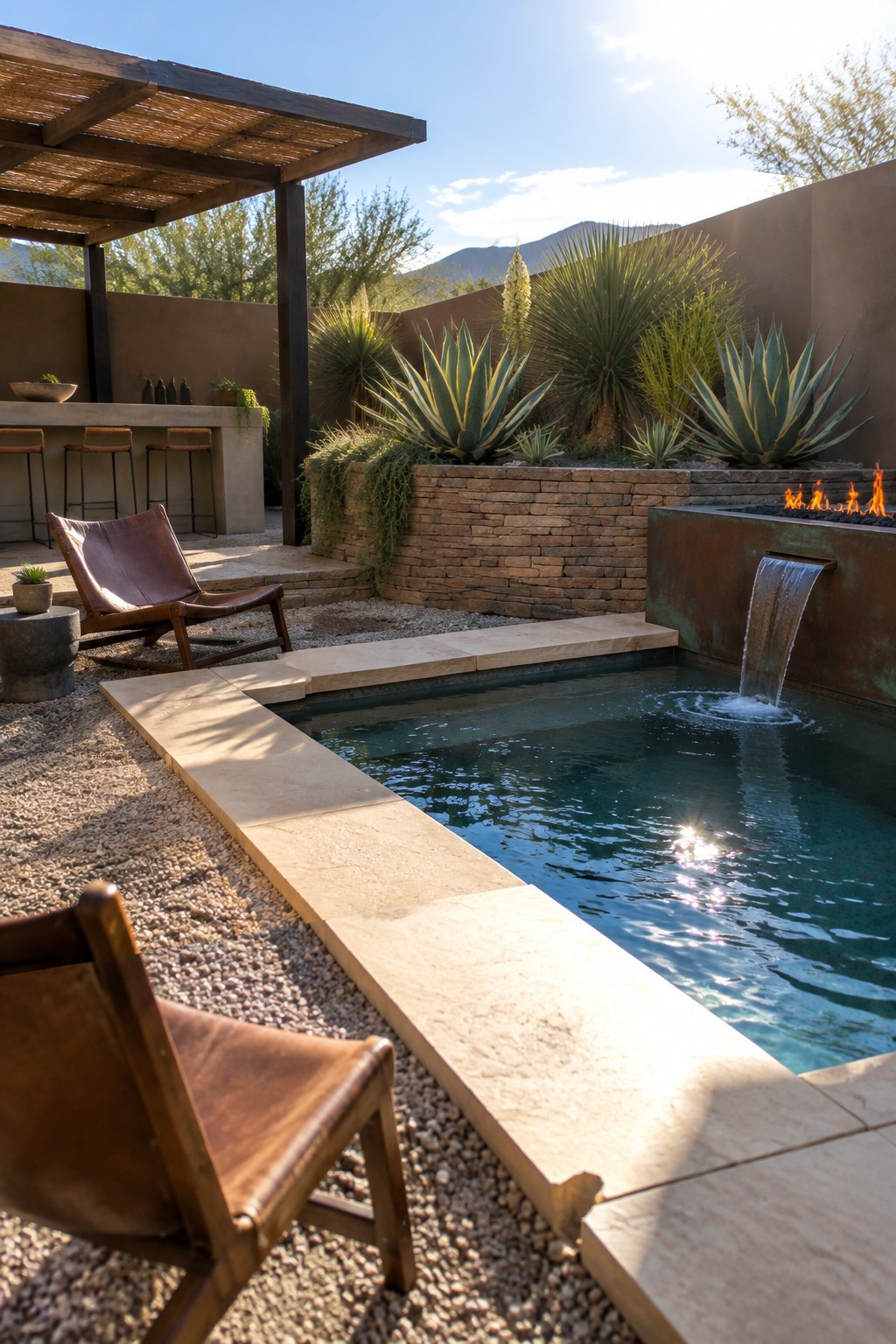
Natural stone coping gives a plunge pool a settled look that fits right into the surrounding ground. The flat stone edge creates a clean transition from water to gravel or planting beds without feeling like an add-on. It handles sun and heat well and ages into a softer tone over time.
This approach works best in drier yards where the stone can match the local rock and soil colors. Keep the plantings low and spaced so the stone stays visible, and make sure the coping has enough width for sitting or walking around the pool edge.
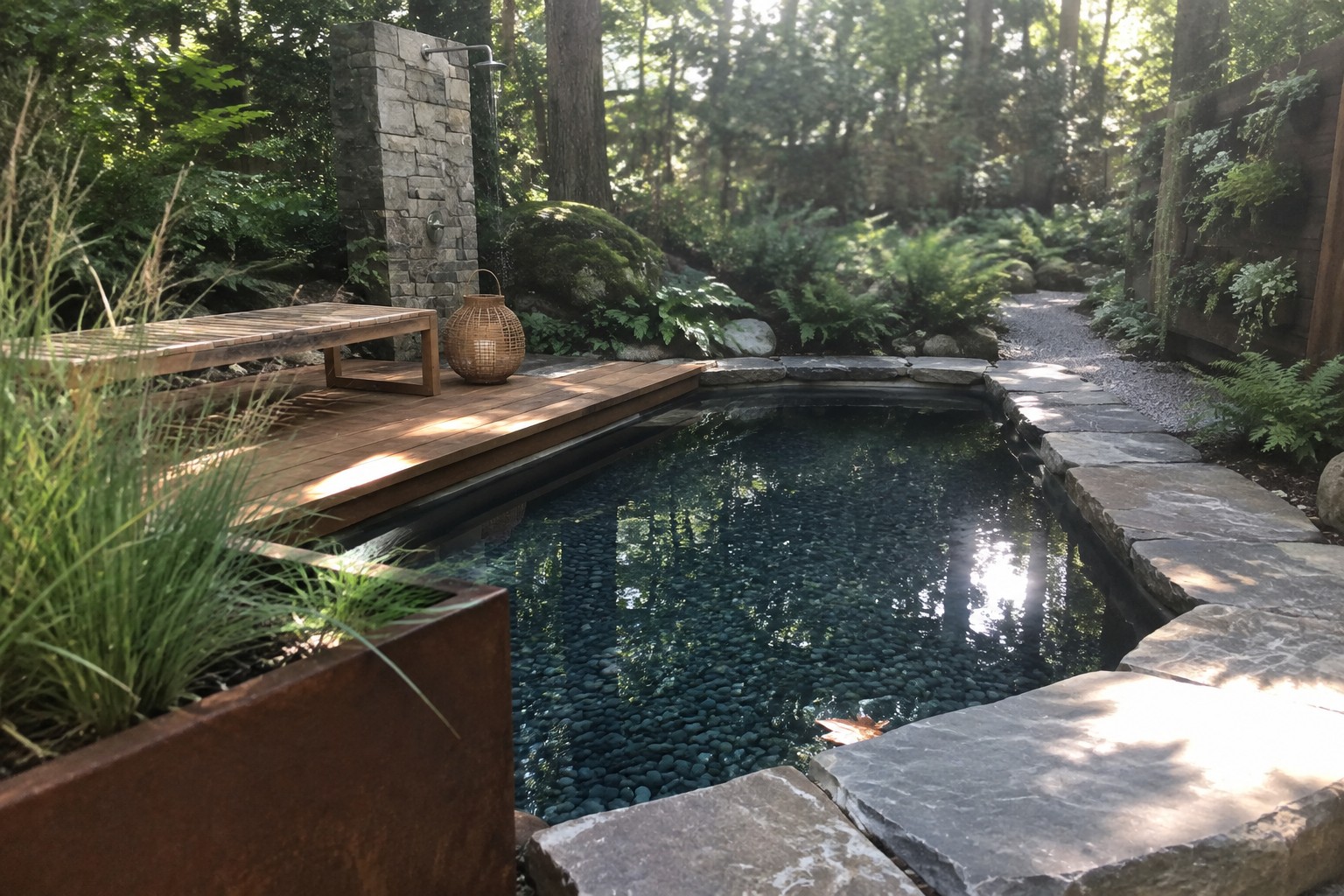
Large Natural Stone Borders for Wooded Plunge Pool Gardens
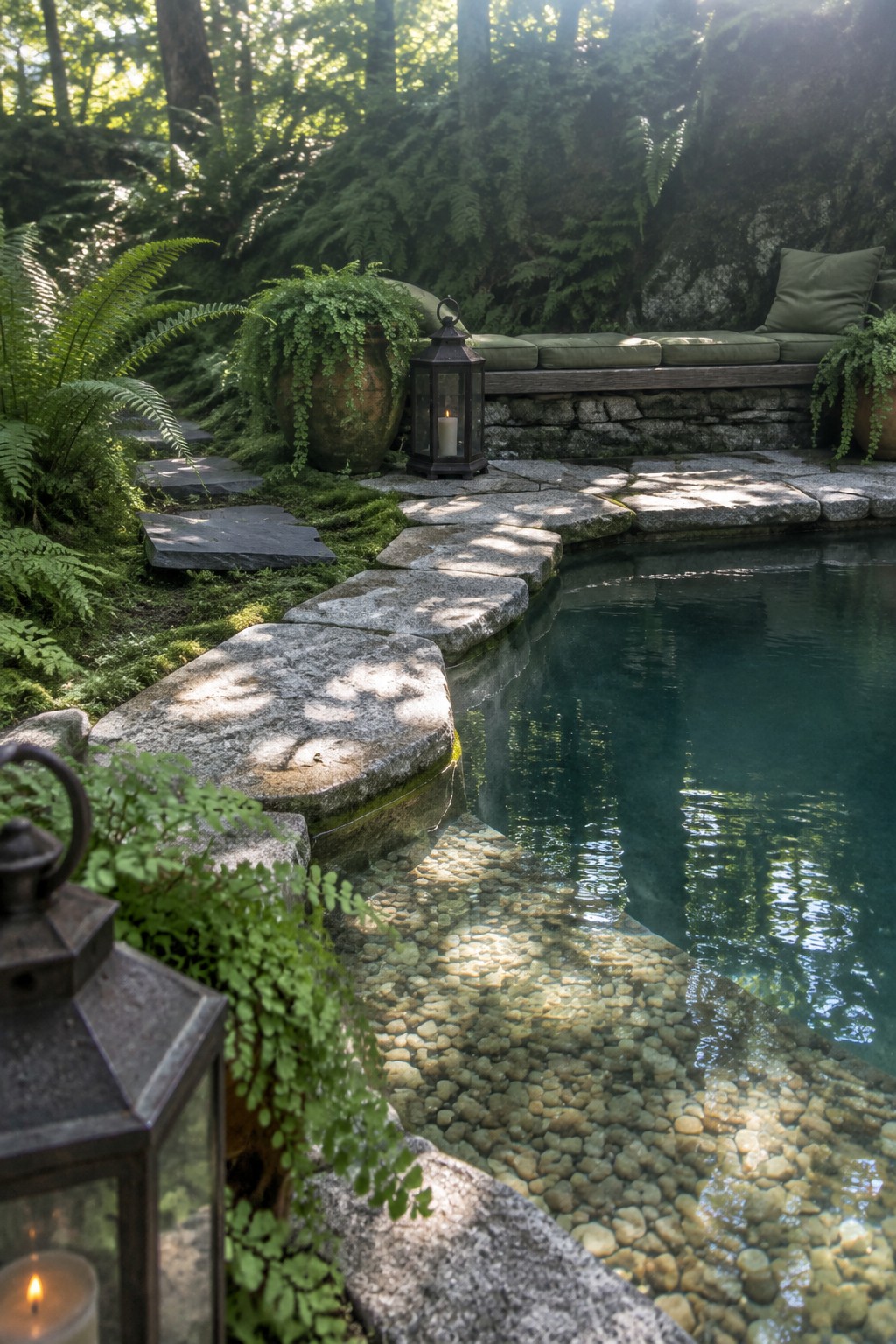
Natural stone works especially well around small plunge pools because it lets the water sit lower in the landscape instead of sitting on top of it. The irregular shapes and varied sizes help the edge disappear into the surrounding ground and plants. In this kind of setting the pool starts to feel more like a natural water feature than a built addition.
This approach suits wooded yards or gardens with existing rock and moss. Keep the stones fairly large and low so they do not crowd the water. A simple gravel or pebble bottom also helps the pool feel connected to the stone surround rather than separate from it.
Light-Colored Stone Pool Edges for Cooler Summer Footing
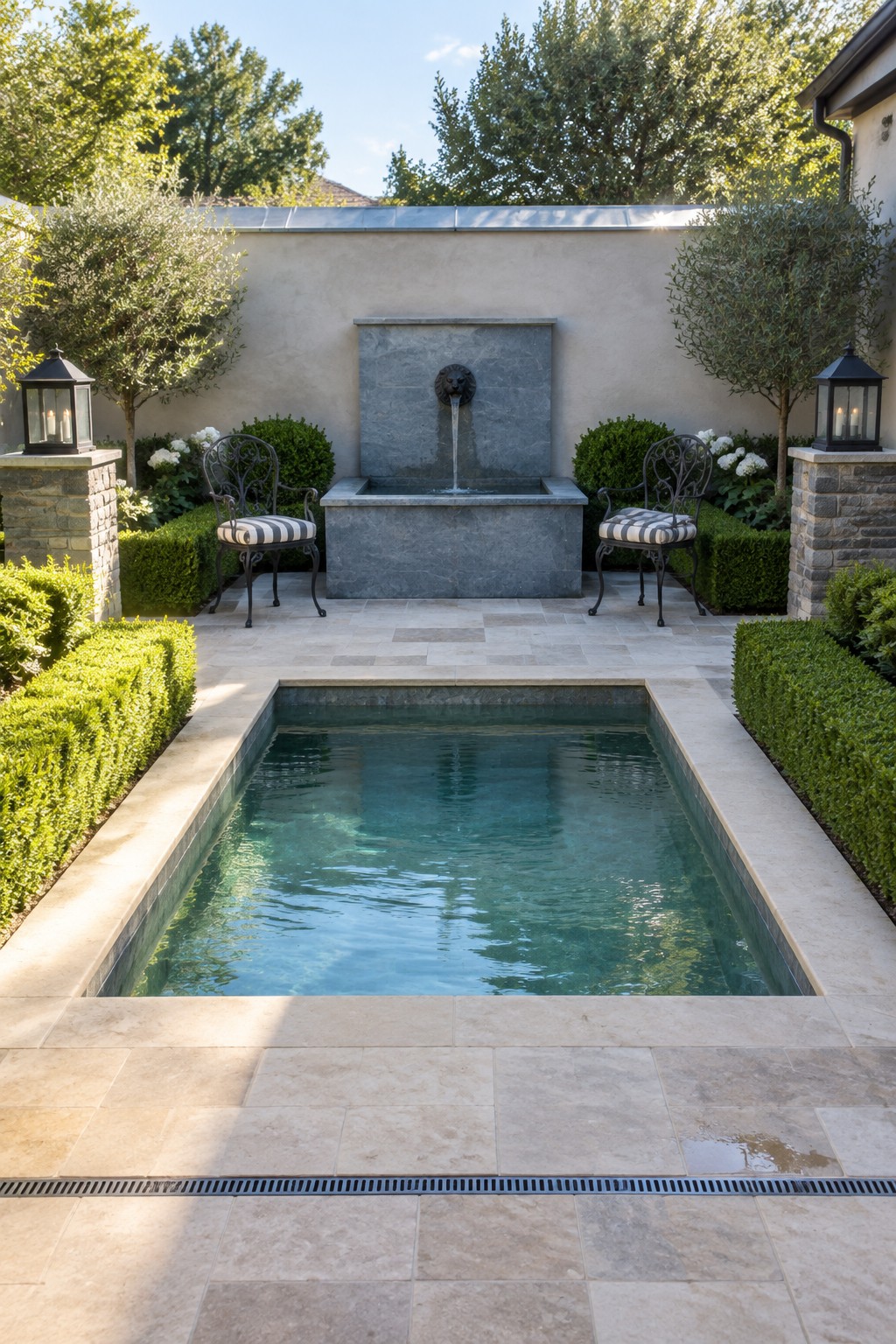
Natural stone coping gives a plunge pool a clean edge that feels like it belongs with the rest of the yard. The material handles water and sun without looking worn down quickly, and it creates a simple border that works with both the pool and the surrounding paving.
This approach suits smaller yards where the pool needs to sit comfortably with garden beds and paths. Stone in a light tone also helps reflect heat, which keeps the area from feeling too hot underfoot during warmer months.
Curved Natural Stone Edging for Small Garden Pools
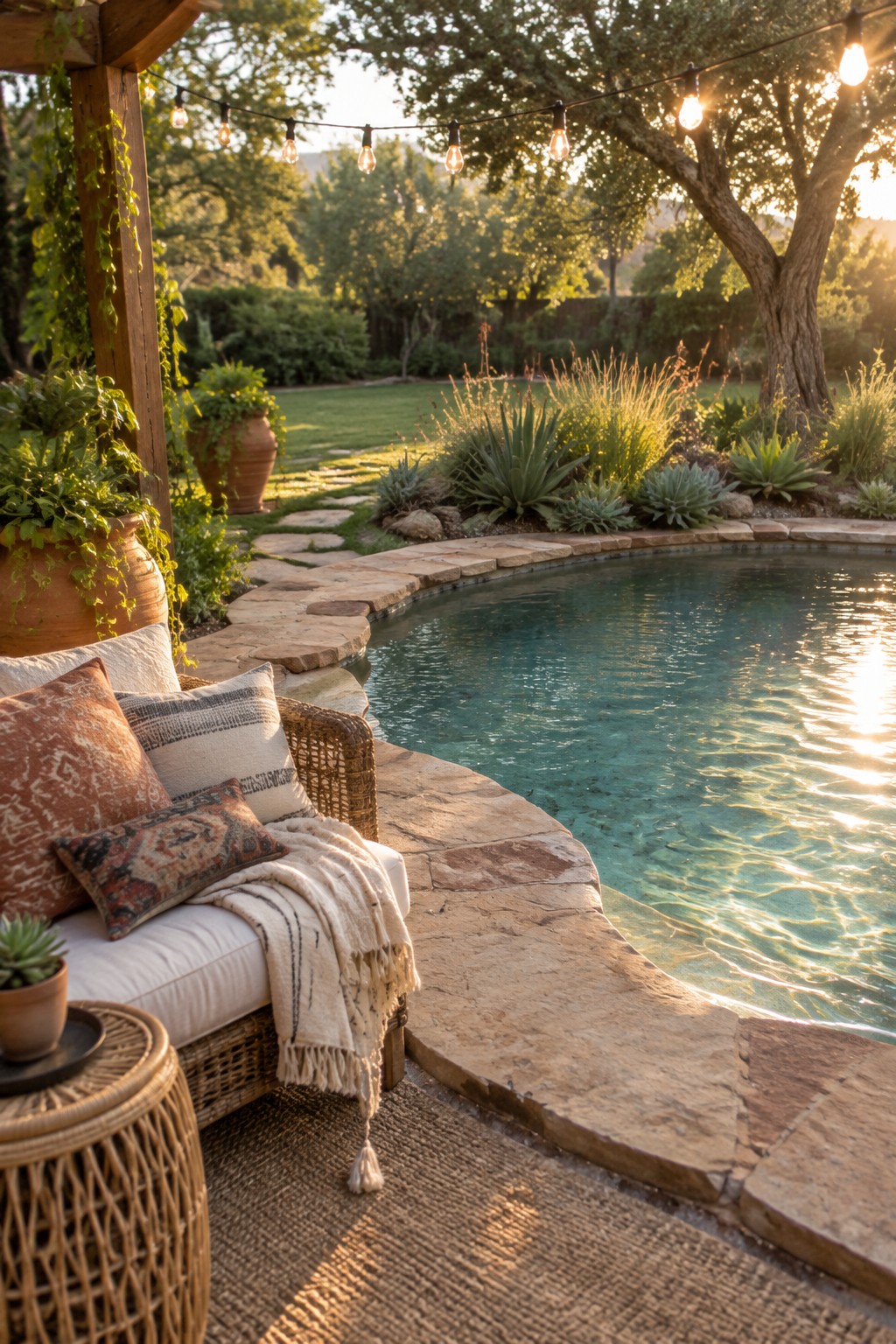
Natural stone edging gives a plunge pool a softer place in the yard. The irregular slabs follow the curve of the water and let the pool sit right into the garden instead of sitting apart from it. This keeps the whole area feeling connected to the planting beds and paths.
It works especially well in smaller yards where you want the pool to feel like part of the landscape rather than the main event. Use the same stone for nearby paths or low walls so everything ties together, and keep the plantings simple with grasses and succulents that handle the sun and splash.
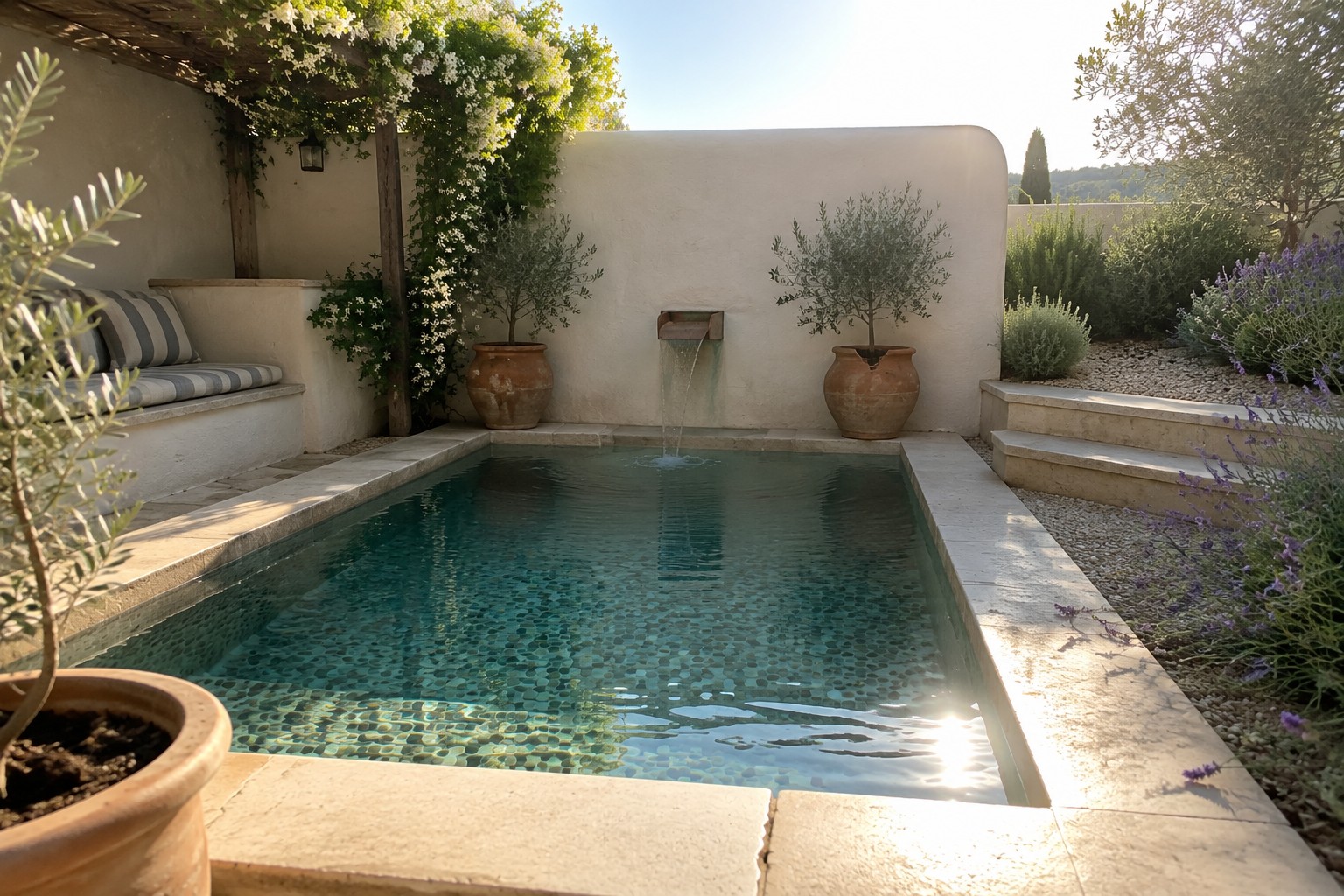
Mediterranean-Style Stone Surrounds for Compact Plunge Pools
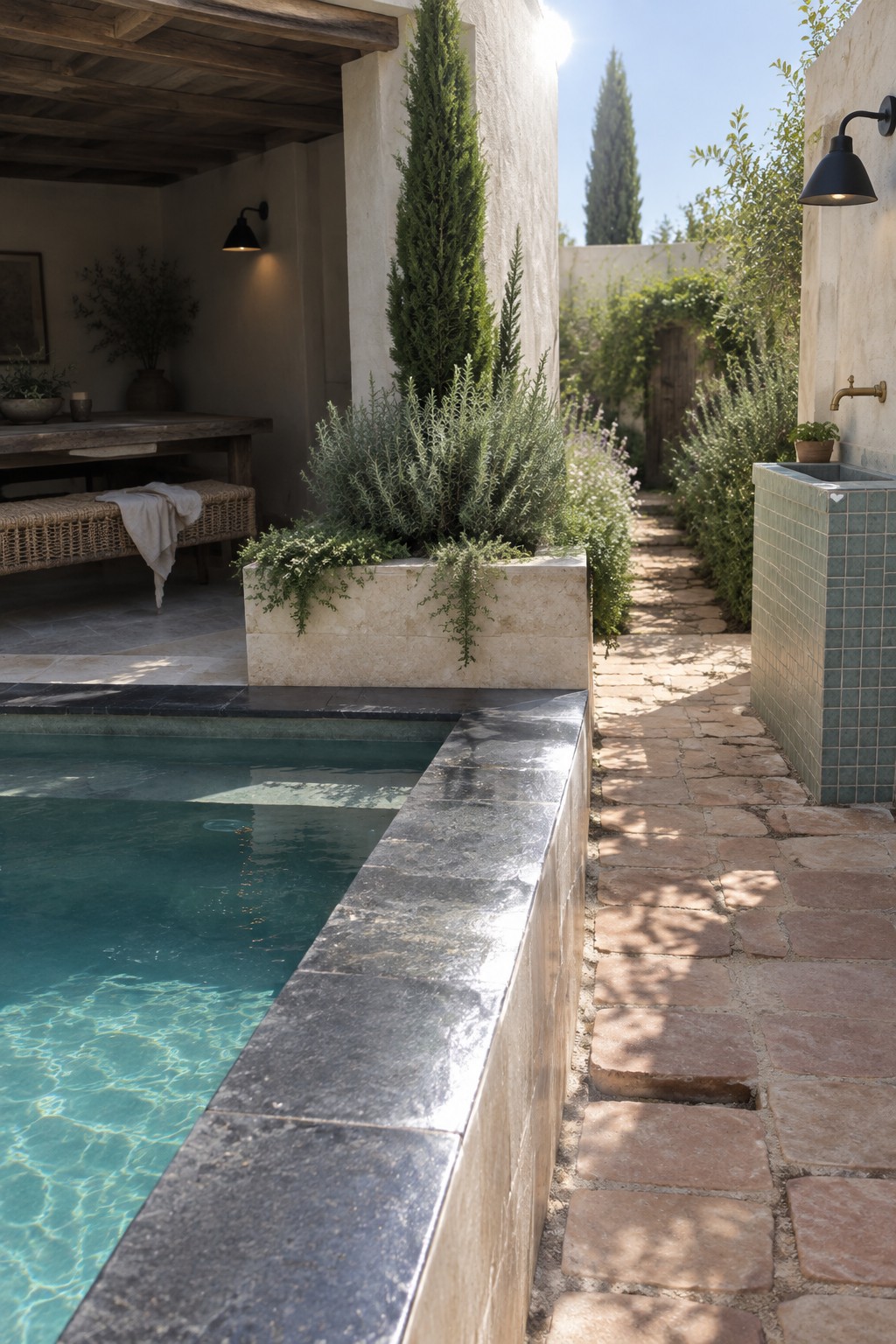
Natural stone coping gives a plunge pool a settled look that fits right into the surrounding garden. It holds up well outdoors and creates a clean edge that does not fight with the plants or paths nearby.
This works best in smaller yards or Mediterranean-style gardens where you want the pool to feel like part of the landscape instead of a separate addition. Match the stone tone to any raised planters or paving so the whole area stays simple and connected.
Terracotta Tiles Around A Plunge Pool
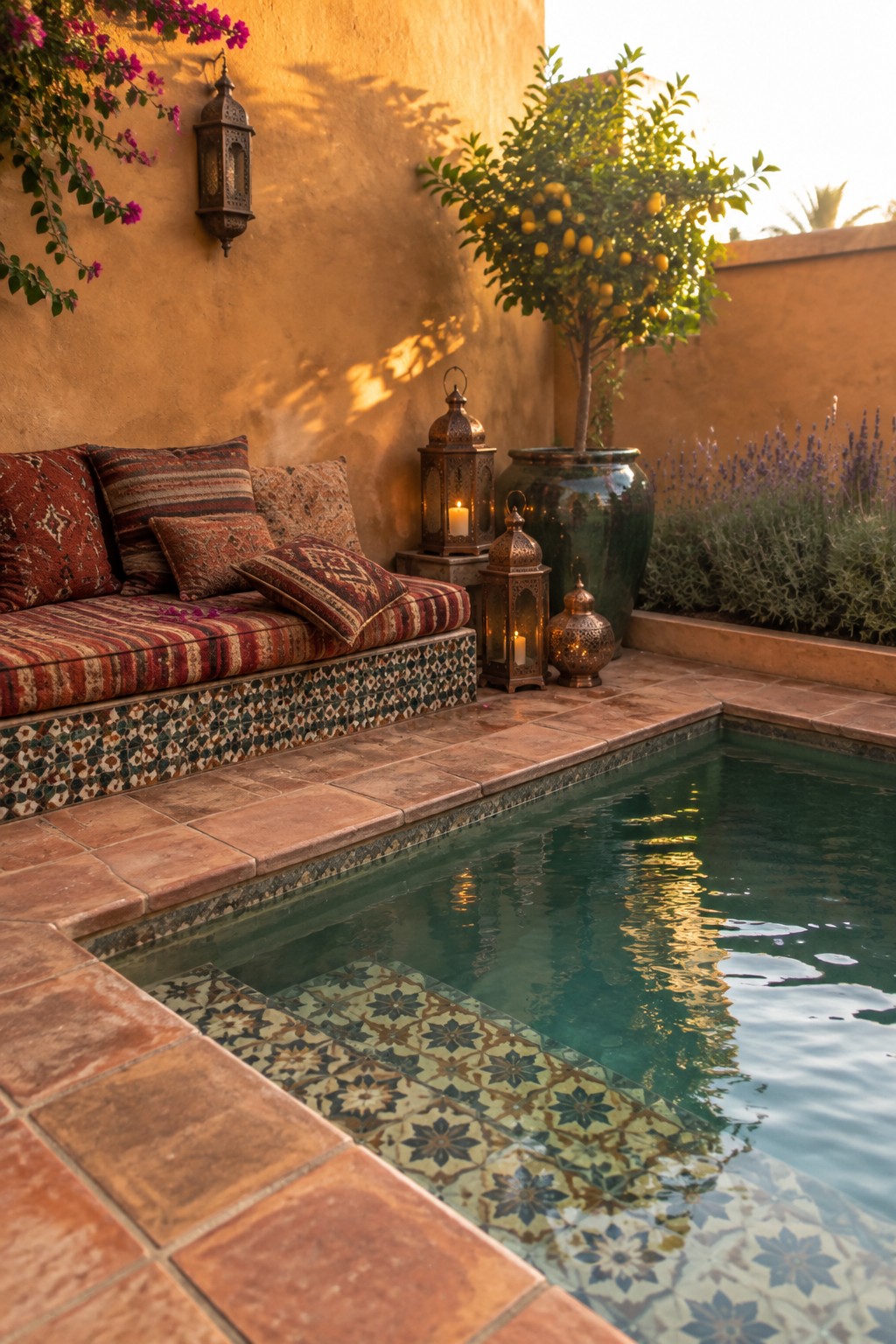
Terracotta tiles give a plunge pool a finished look that feels natural and easy to live with. The warm color works well with stucco walls and nearby planting, and the material stays comfortable under bare feet even in strong sun.
This approach suits small courtyards or compact backyards where the pool needs to sit comfortably next to seating. Use the same tile on the deck and any built in bench so the whole area reads as one surface instead of separate pieces.
Natural Stone Steps for Plunge Pools
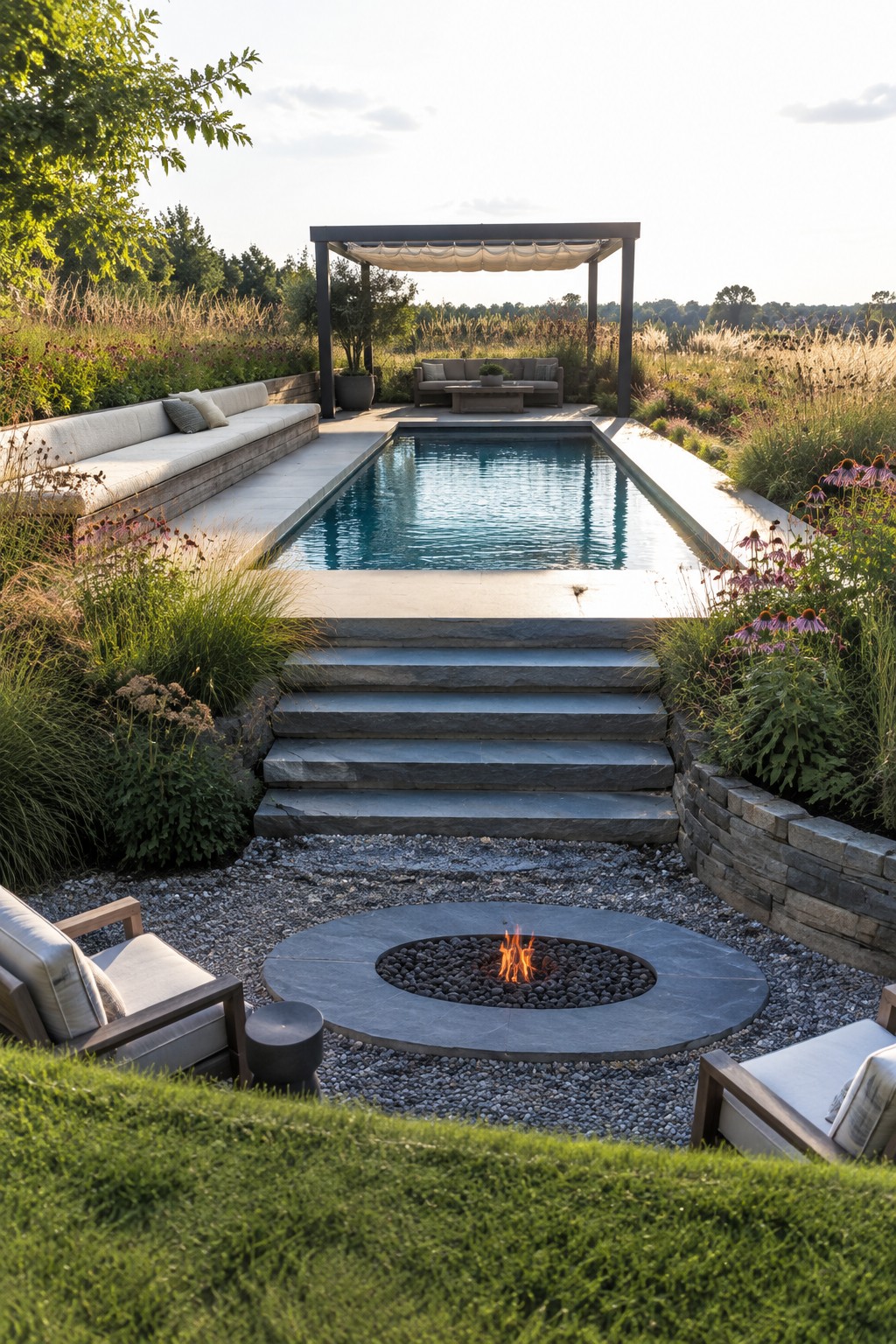
Natural stone steps give a plunge pool a grounded feel that blends it into the rest of the yard. The rough texture and irregular shapes help the pool area read more like part of the garden instead of a separate addition. Stone also holds up well outdoors and ages nicely without much work.
This approach works best on properties with a gentle slope or where the pool sits a bit lower than the main seating areas. Keep the stone color close to what already shows up in the surrounding walls or paths so the whole space feels connected.
Stone Pool Borders Integrated With Raised Planters and Seating
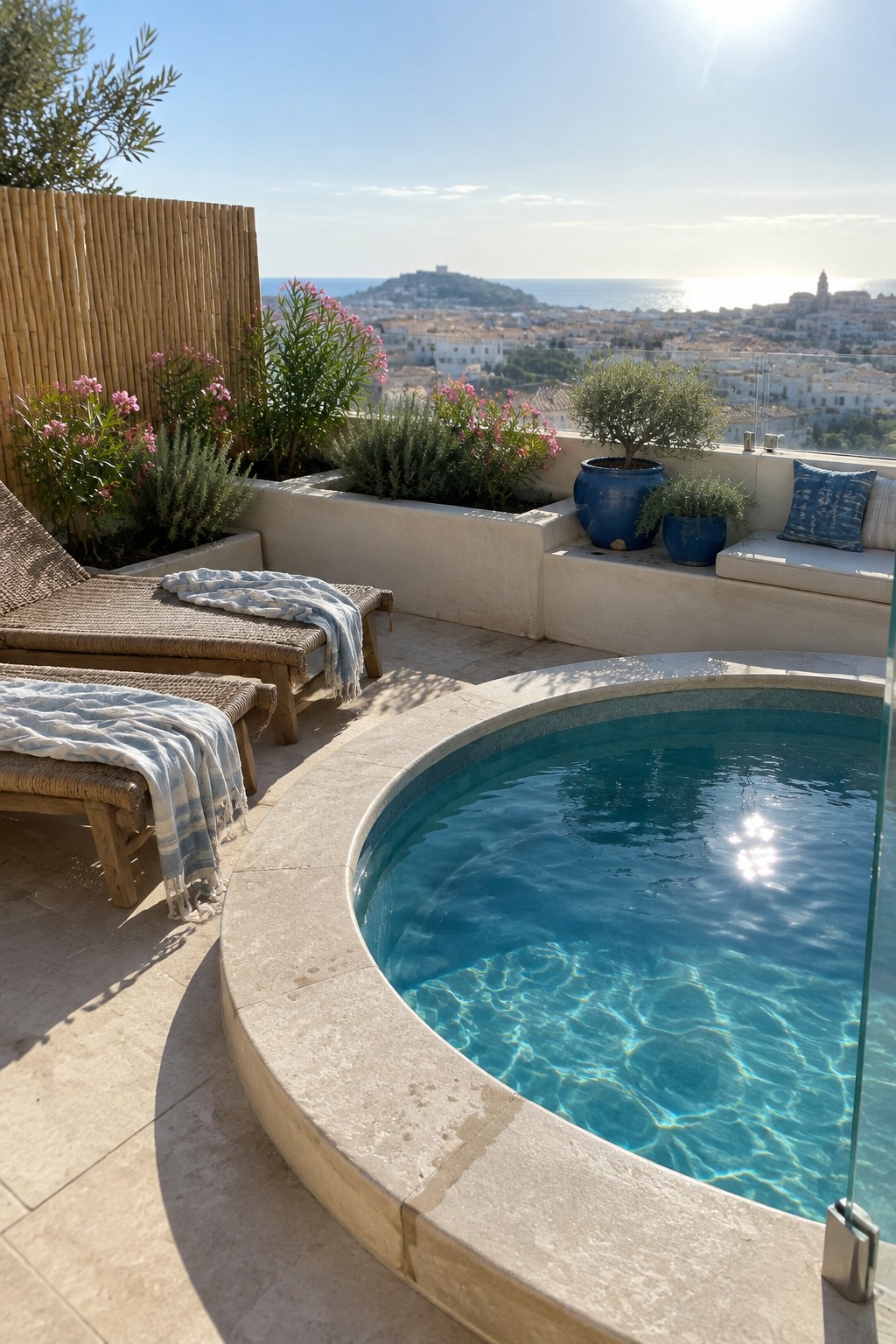
Natural stone gives a plunge pool a grounded look that helps it sit better with the surrounding garden. The material softens the edge between water and hardscape, and it works especially well when the pool sits close to raised planters or built-in seating.
This approach suits terraces or sloped yards where you want the pool to feel like part of the landscape rather than an add-on. It holds up in sunny spots and pairs easily with both drought-tolerant plants and simple lounge areas.
Irregular Stone Edging for Natural Garden Transitions
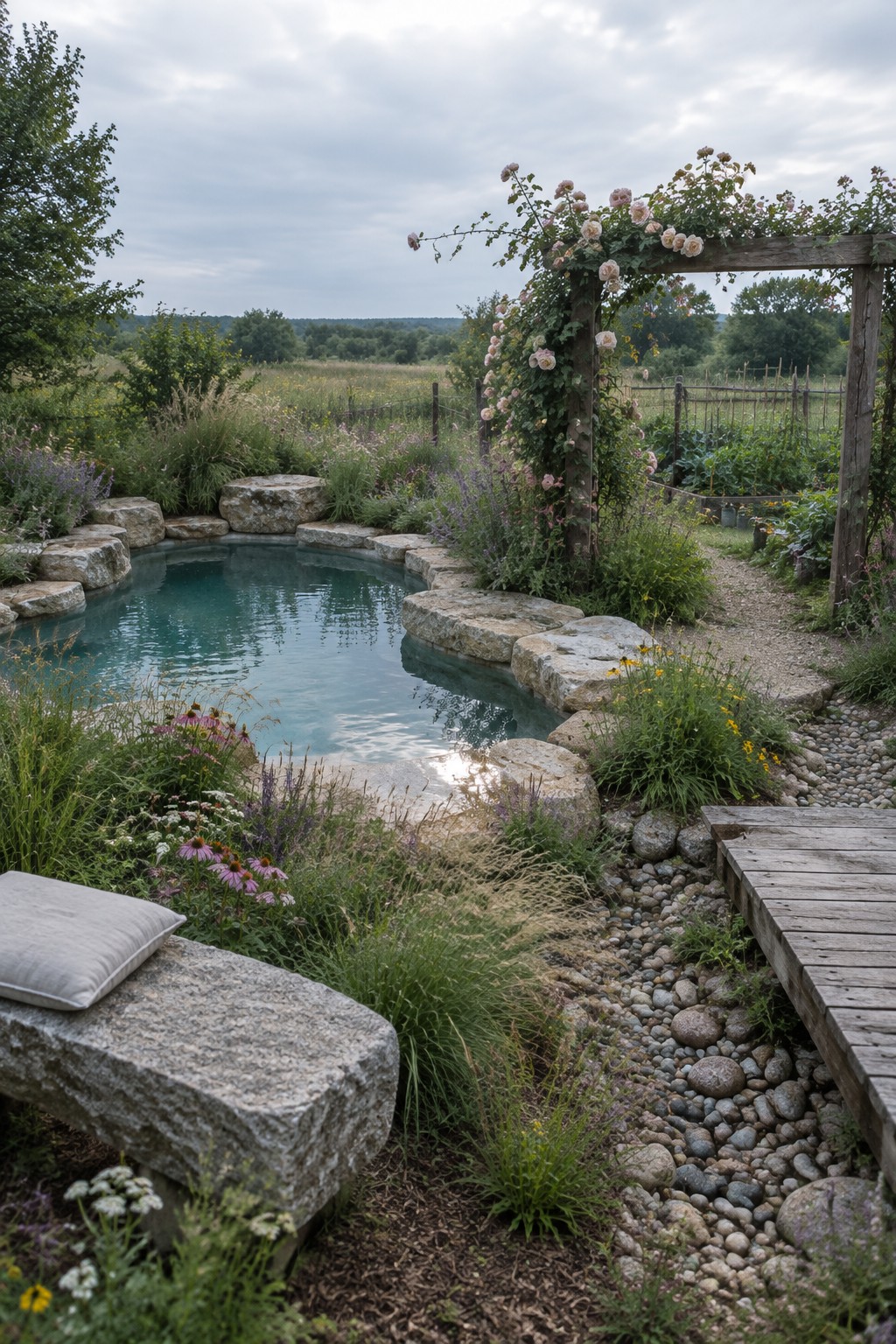
Natural stone edging helps a plunge pool settle into the garden instead of standing out as a separate feature. The irregular shapes and rough texture let the waterline blend with the surrounding beds and paths.
This works best on homes with room for planting right up to the edge. Set the stones firmly so they stay in place, and choose plants that can handle the occasional splash without looking messy.
Frequently Asked Questions
Q: Does the stone get too hot in summer for bare feet?
A: Natural stone stays cooler than concrete if you choose lighter colors. Test a sample in full sun before you commit. You can always add a few mats in the hottest spots.
Q: What if tree roots start pushing up the stones later?
A: Lay a solid base of compacted gravel first. That keeps most roots from shifting things around. Check under the edges every spring and reset any loose pieces right away.
Q: Can I install this stone surround myself or do I need help?
A: Start with a small section to see how it goes. Many people lay the stones in a weekend once the pool shell is in.