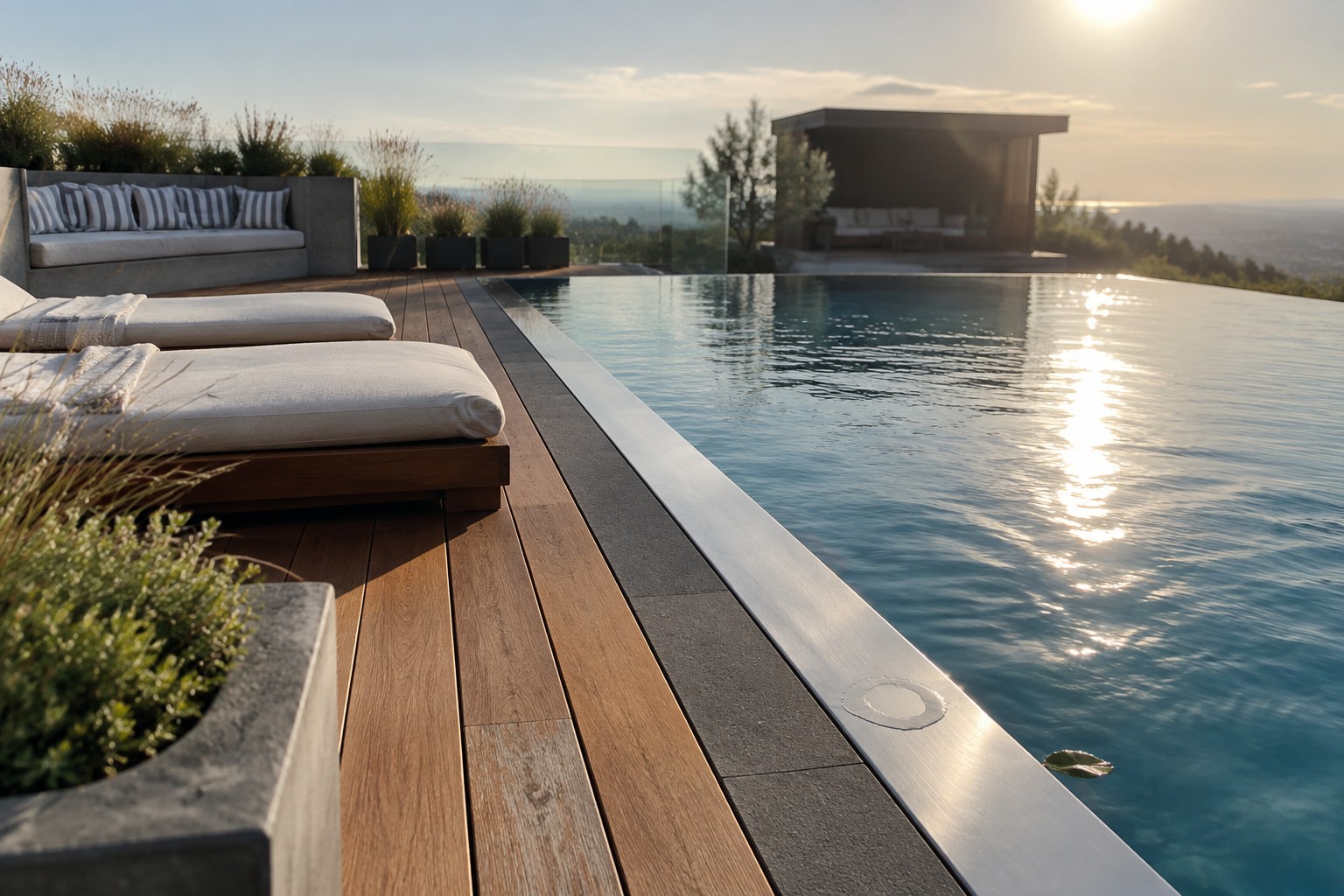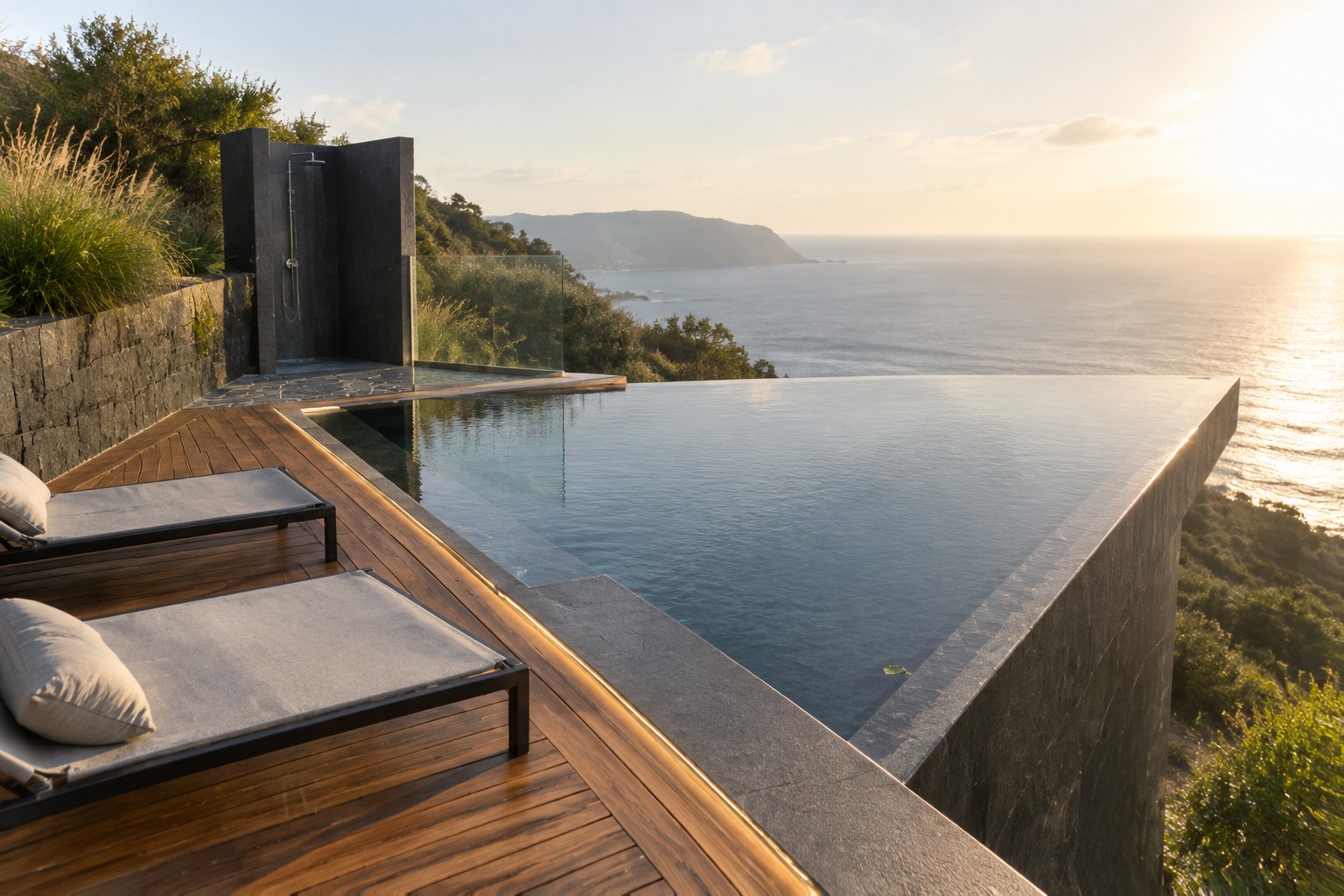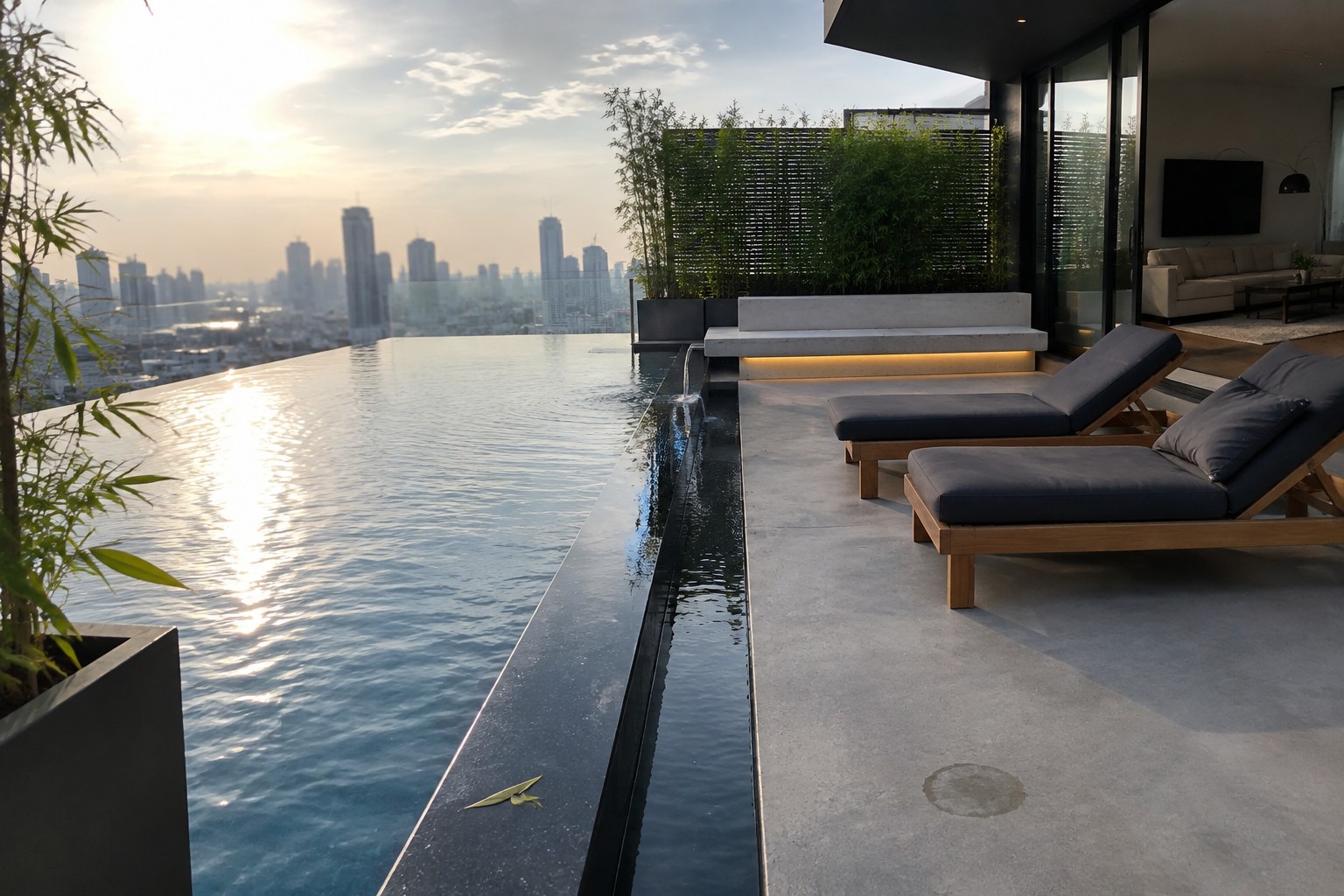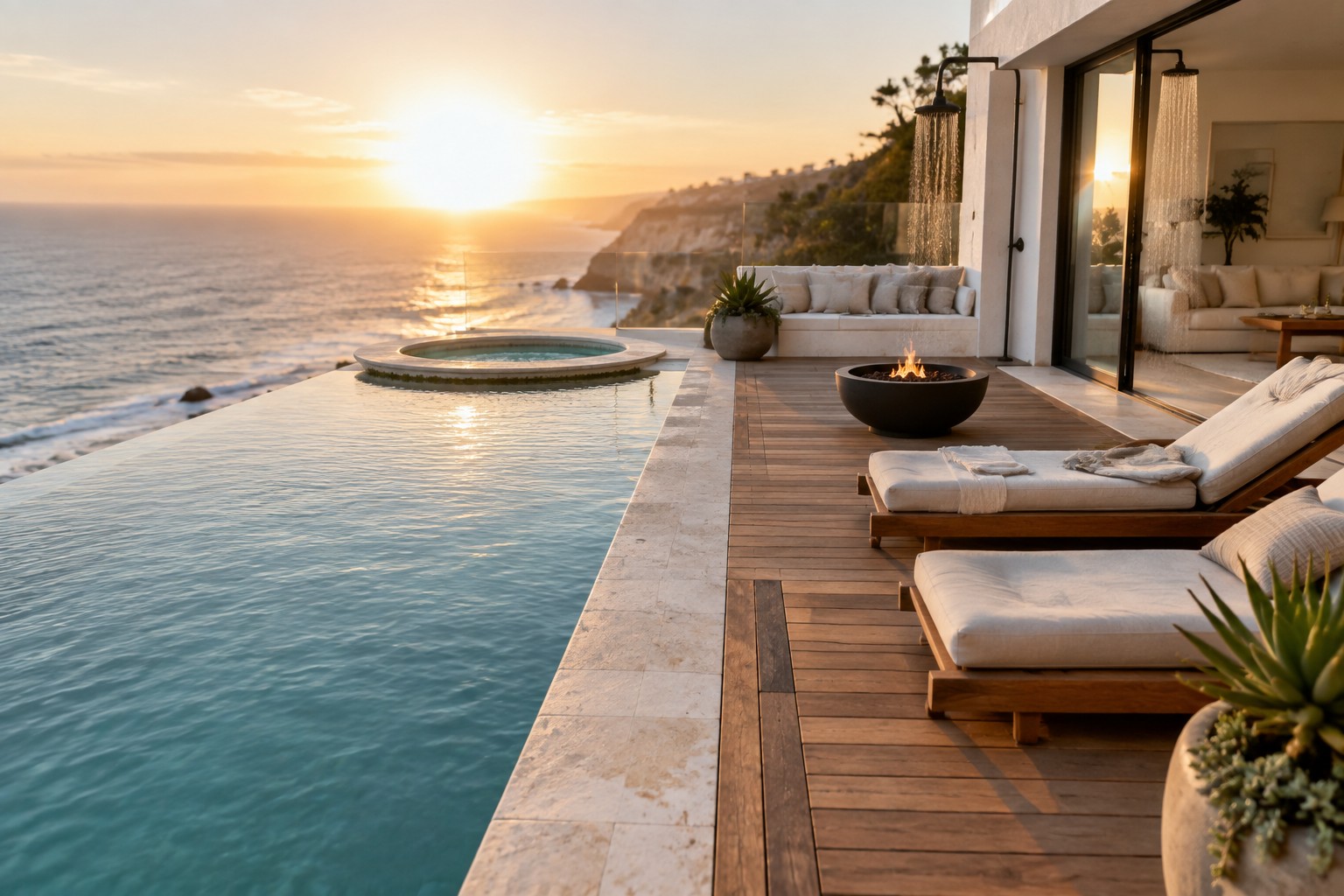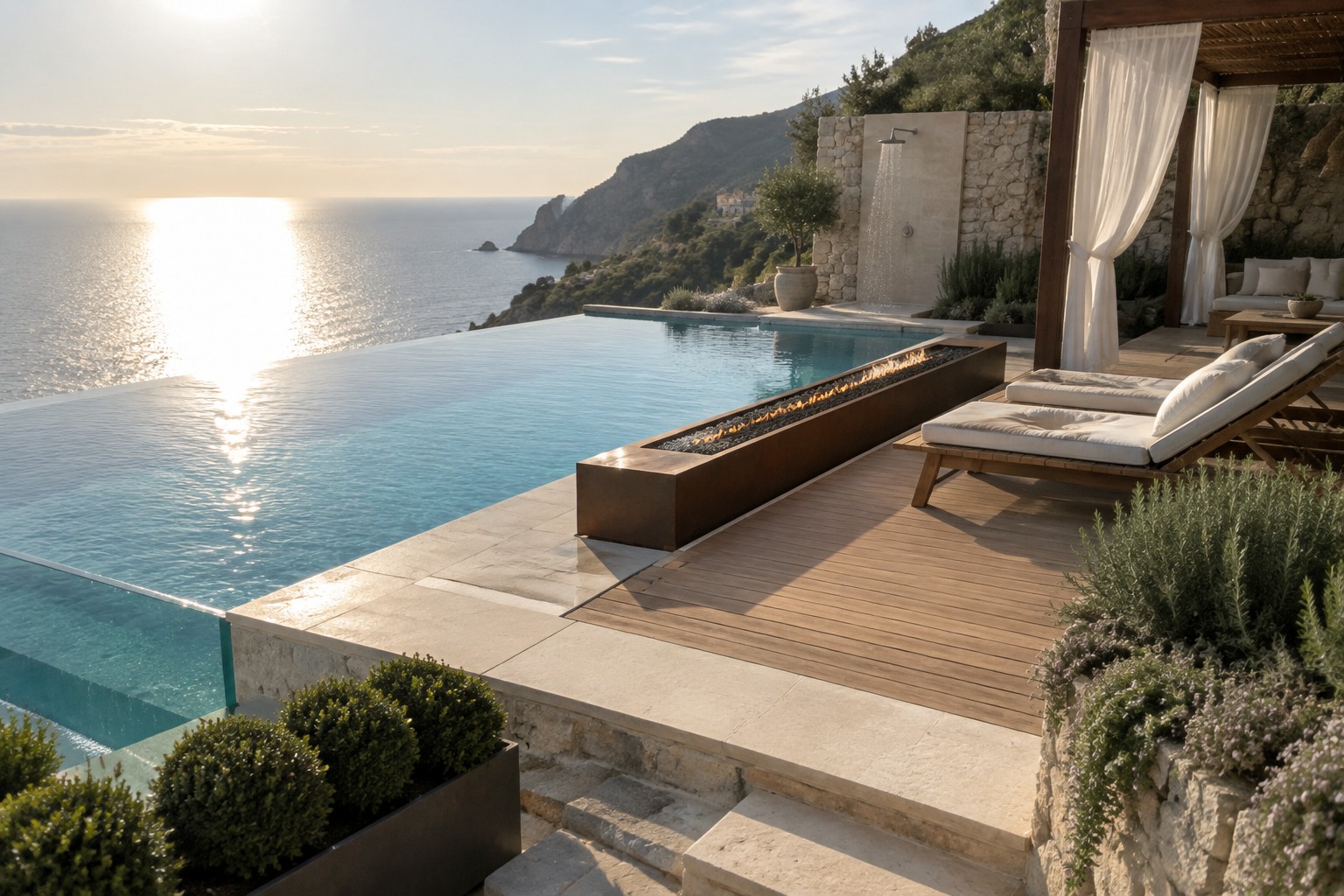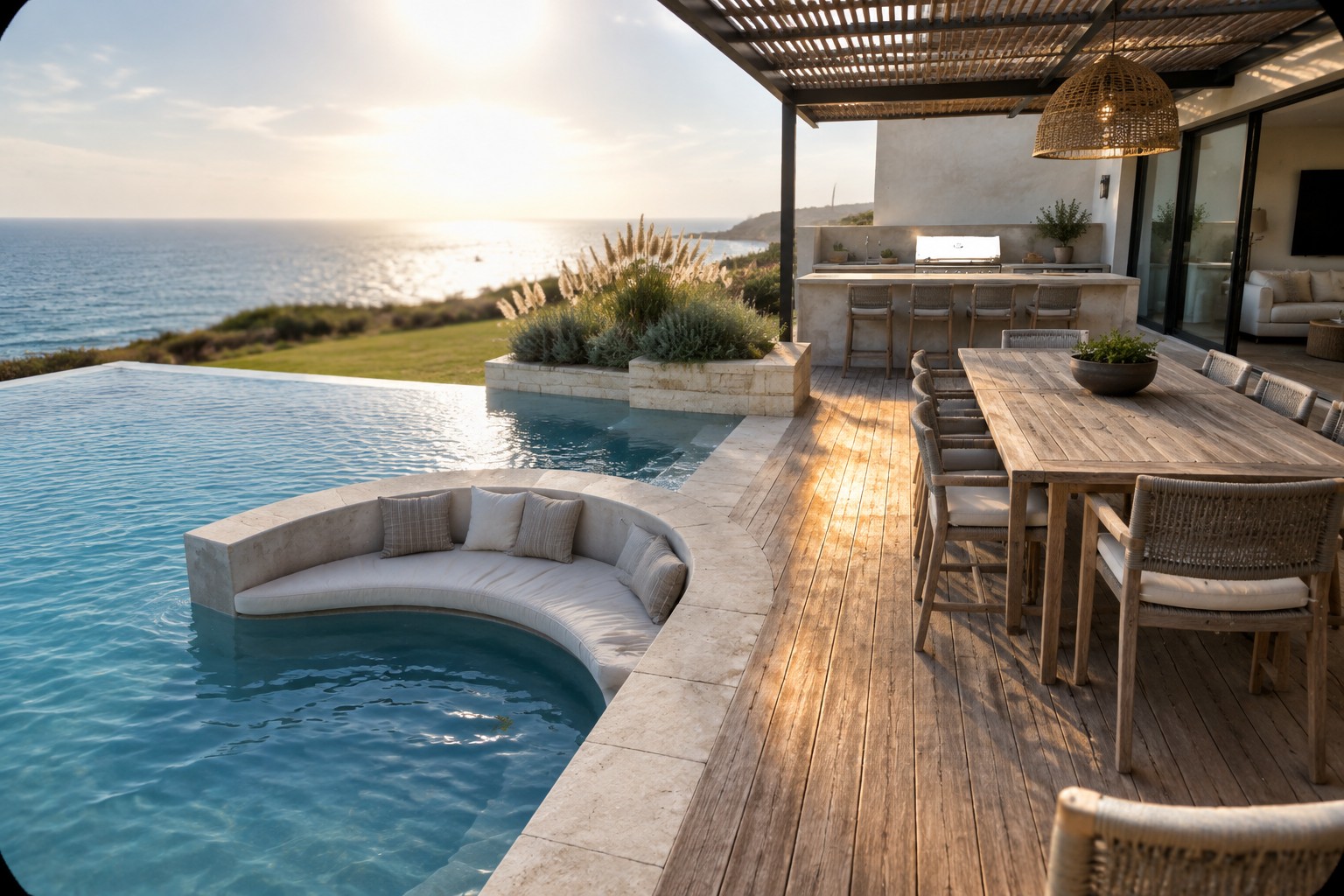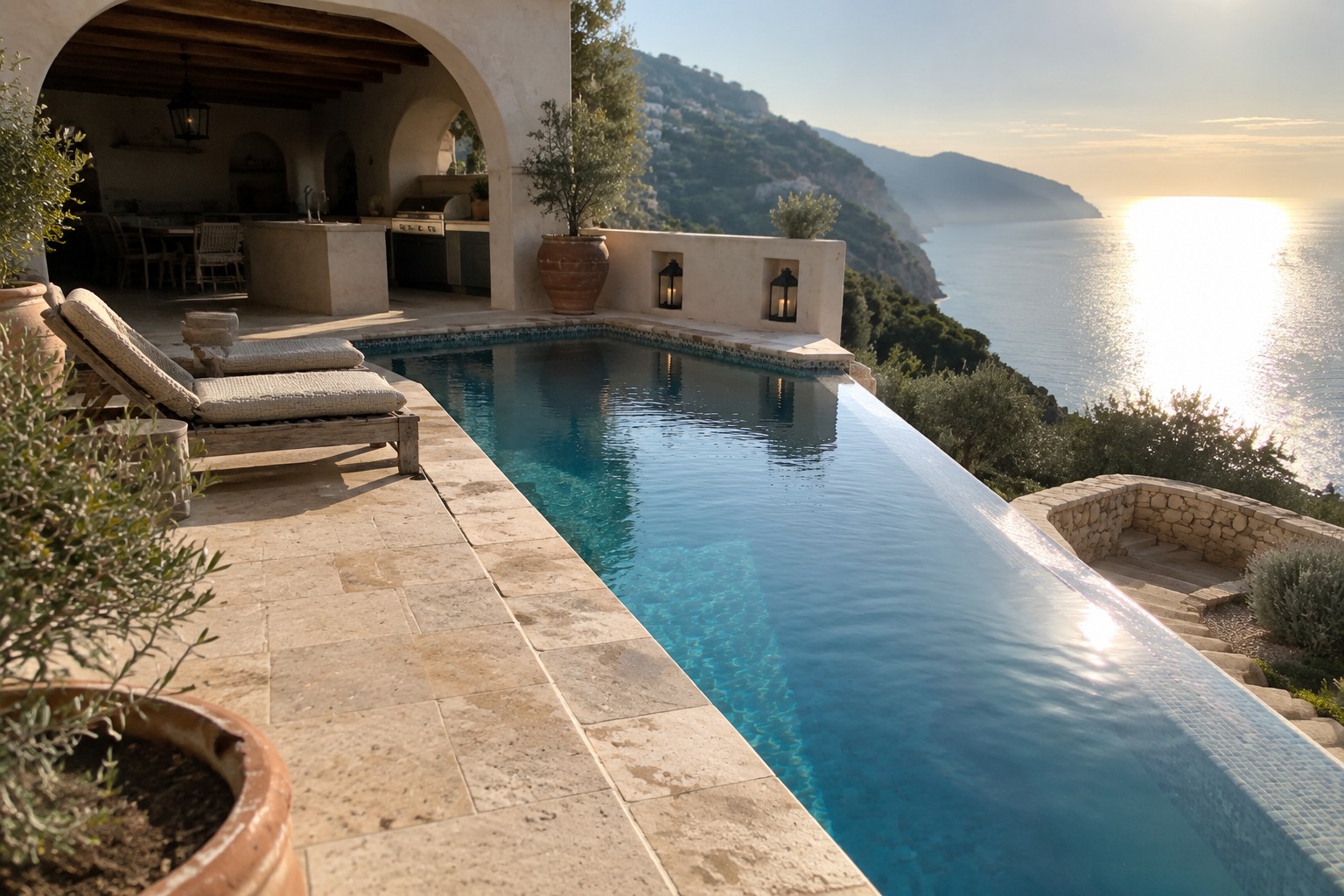
When I look at backyard pools that actually get used year after year, the way the stone and built elements connect to the house stands out as the real factor that keeps the space practical.
Infinity designs can create that sense of openness, yet without careful architectural ties they often end up feeling like a feature added on rather than lived in.
Materials age in ways that photos never show.
I keep coming back to examples where the detailing around the edge turns the pool deck into a place for morning coffee or evening gatherings instead of just a view from inside.
Testing a few of those stone patterns in a smaller section first might reveal whether they hold up to real foot traffic and weather before scaling up.
Stone Coping That Matches the Patio
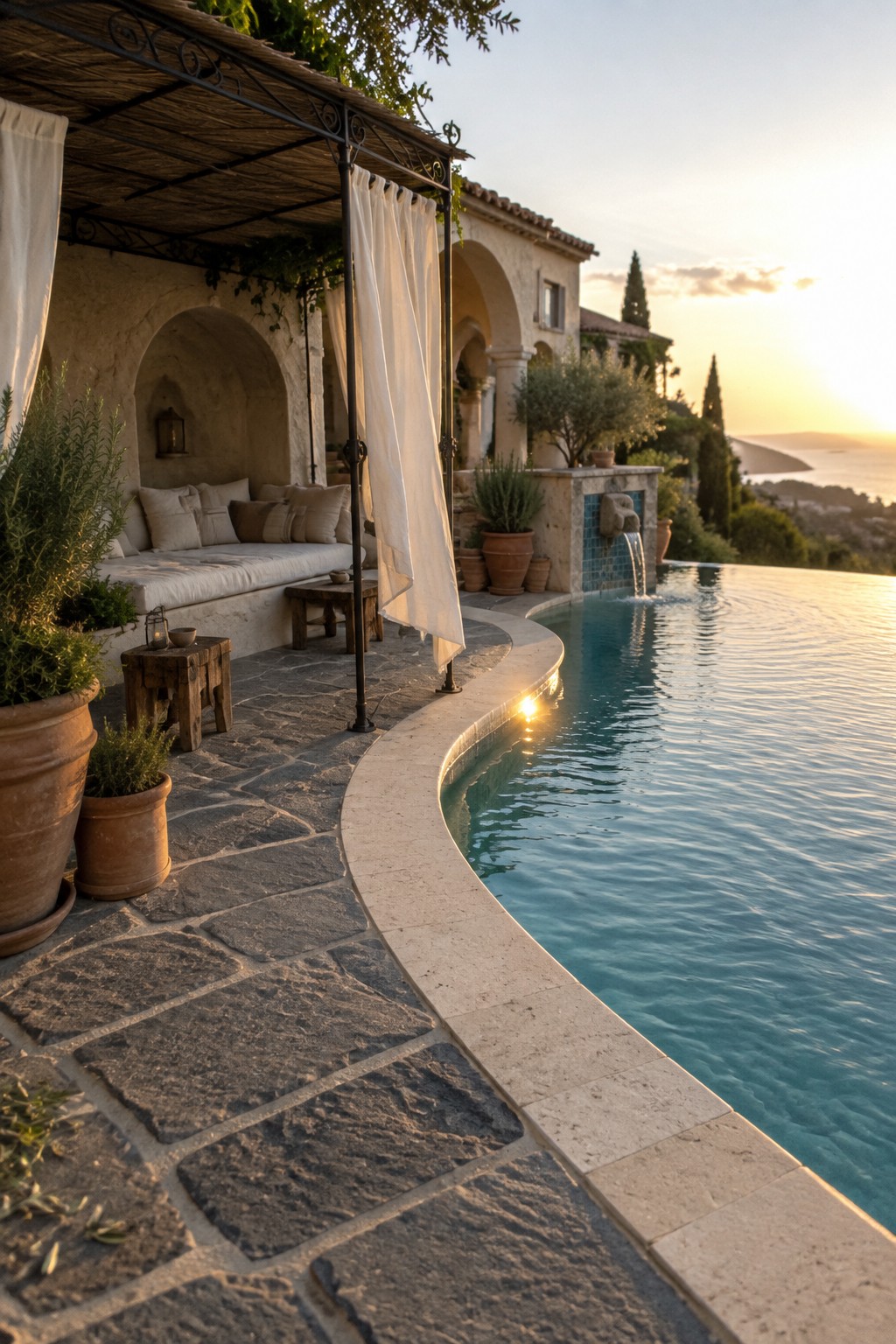
Carrying the same stone from the deck right onto the pool edge helps the whole area feel like one surface instead of separate pieces. The slight color shift between the darker pavers and lighter coping keeps the water line clear while still holding the materials together visually.
This approach suits homes with stucco walls and simple architectural lines. Use a slightly honed or tumbled finish on the coping so it does not get too slippery, and keep the joint pattern consistent where the deck meets the pool. It reduces visual clutter and lets the shape of the pool stand out on its own.
Stone Walls That Shape the Terrace
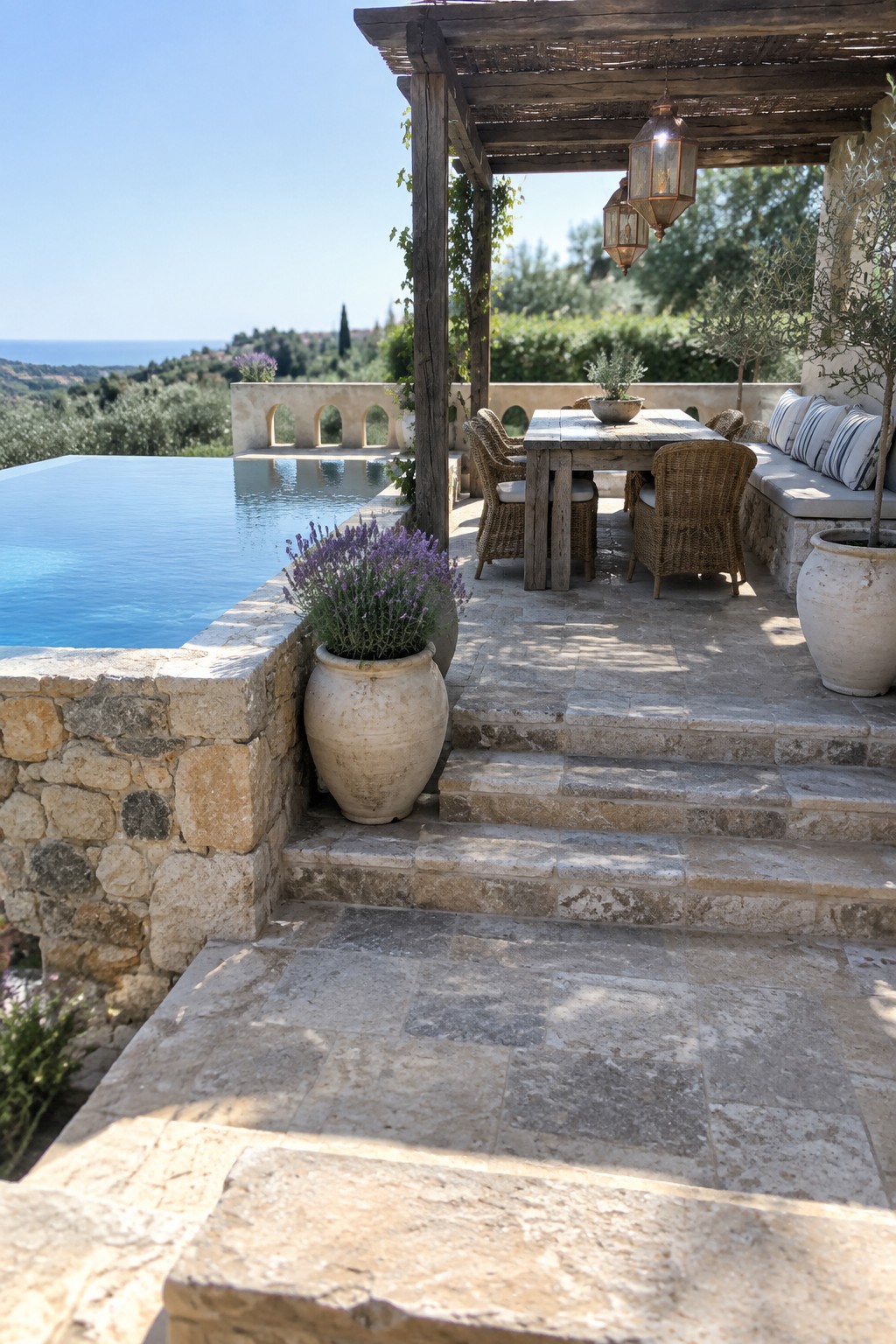
Low stone walls work well here because they give the pool a clear edge while extending the same material into the patio. The result feels solid and settled instead of like separate pieces added on later. It also helps hold the grade on a hillside site without needing tall barriers.
This approach suits Mediterranean homes on uneven lots where you want level spots for dining and lounging right beside the water. Keep the walls at seating height or lower so views stay open, and match the coping to the same stone for a quiet, continuous look.
Stone Arches Along the Pool Edge
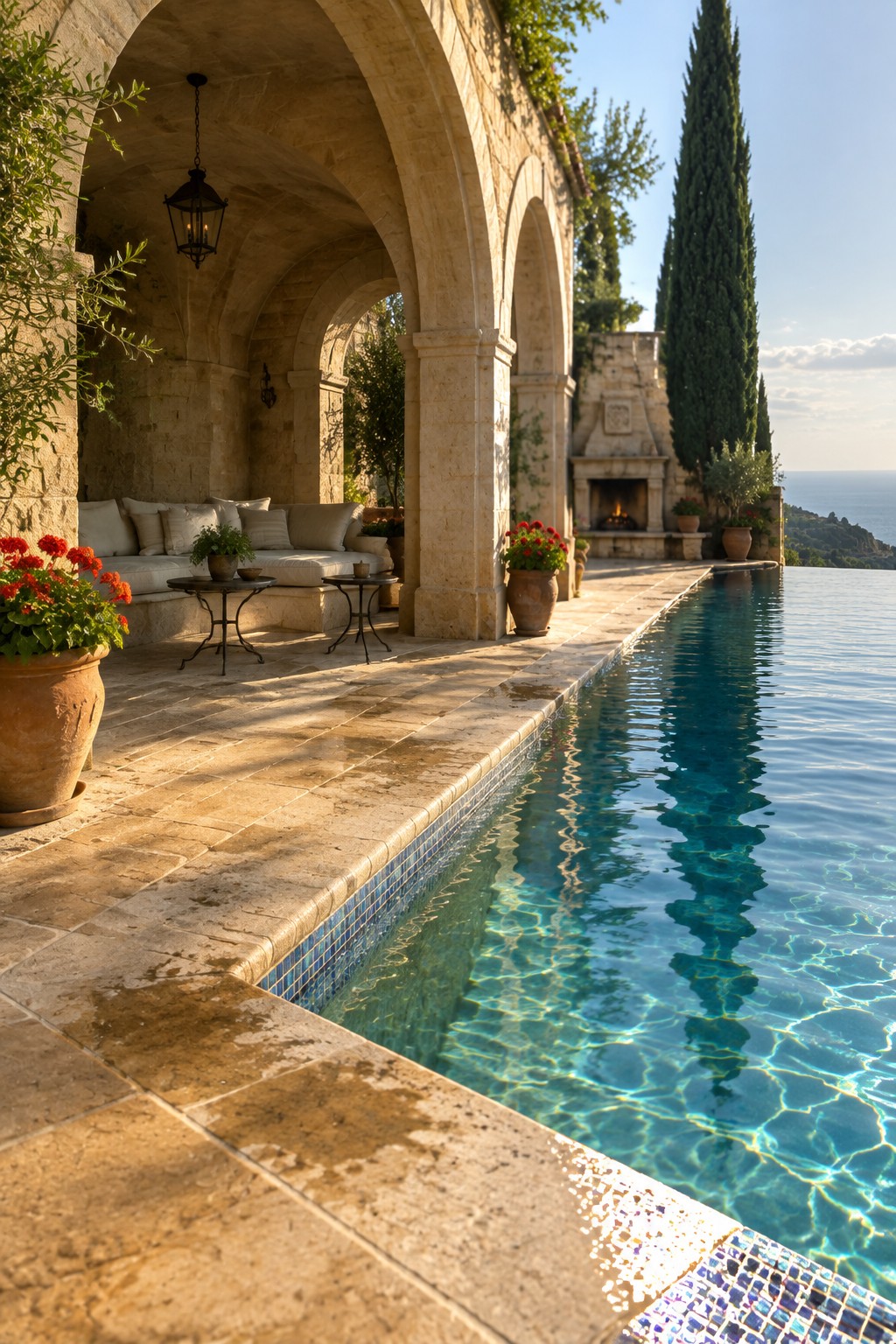
Stone arches work well here because they give the pool a solid architectural frame instead of leaving the water looking like it just ends at a flat patio. The covered walkway creates shade and a clear spot for seating without blocking the view over the water. It turns the edge of the pool into a usable living space rather than just a walkway.
This approach suits homes in warm climates where you want protection from sun during the day but still want to stay close to the water. Use the same local stone on the house and the arches so everything feels connected. Keep the planting simple so the arches stay the main feature.
Stone Bars Along The Pool Edge
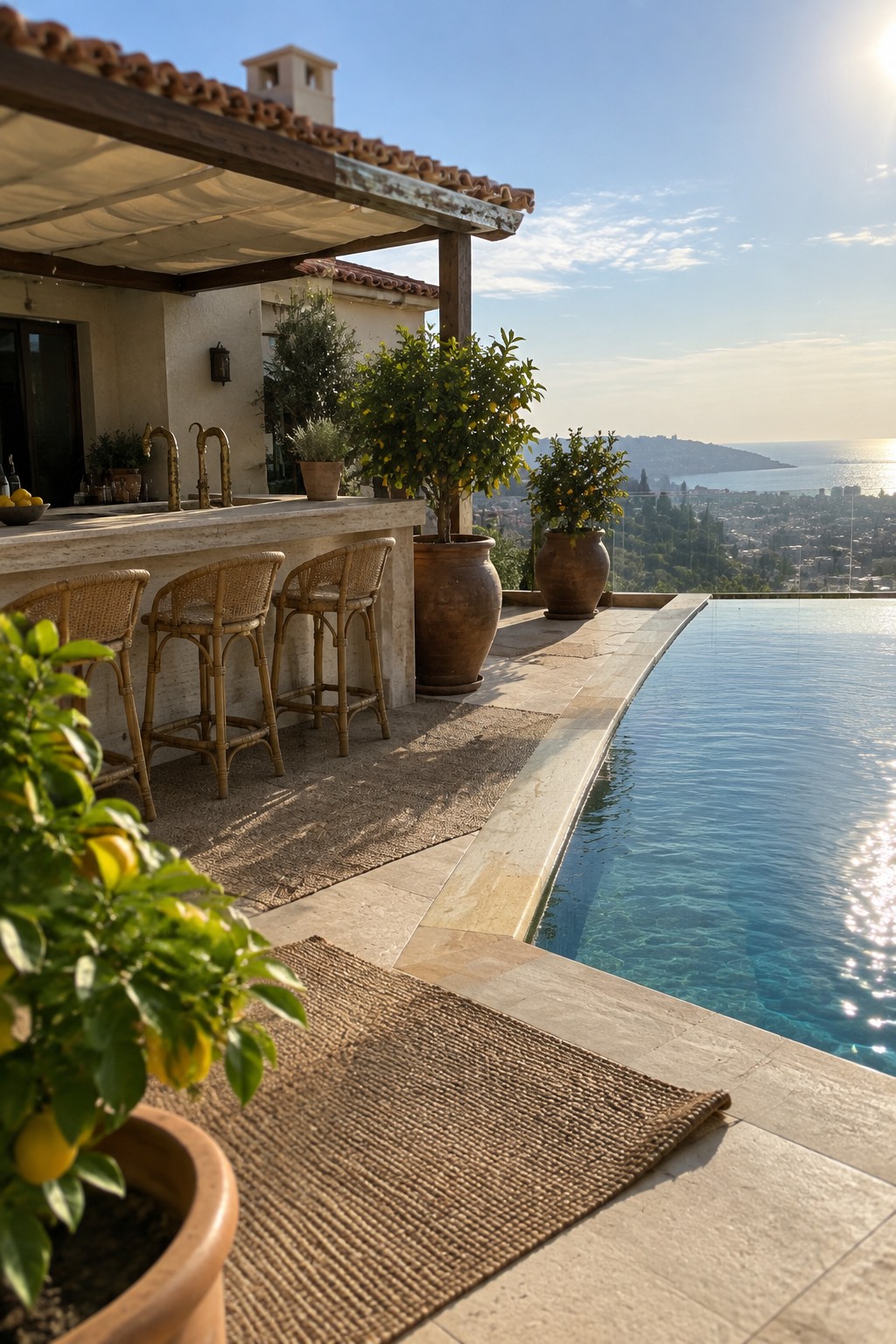
A stone bar counter placed right next to the pool deck gives you a practical spot to serve drinks without leaving the water. It keeps the space functional while matching the simple, solid materials already used in Mediterranean pool designs.
This works best on terraces that have enough room for a couple of stools and some shade overhead. Stone handles sun and water well, and the natural finish blends with the surrounding paving and architecture without needing extra decoration.
Stone Decking Around Infinity Pools
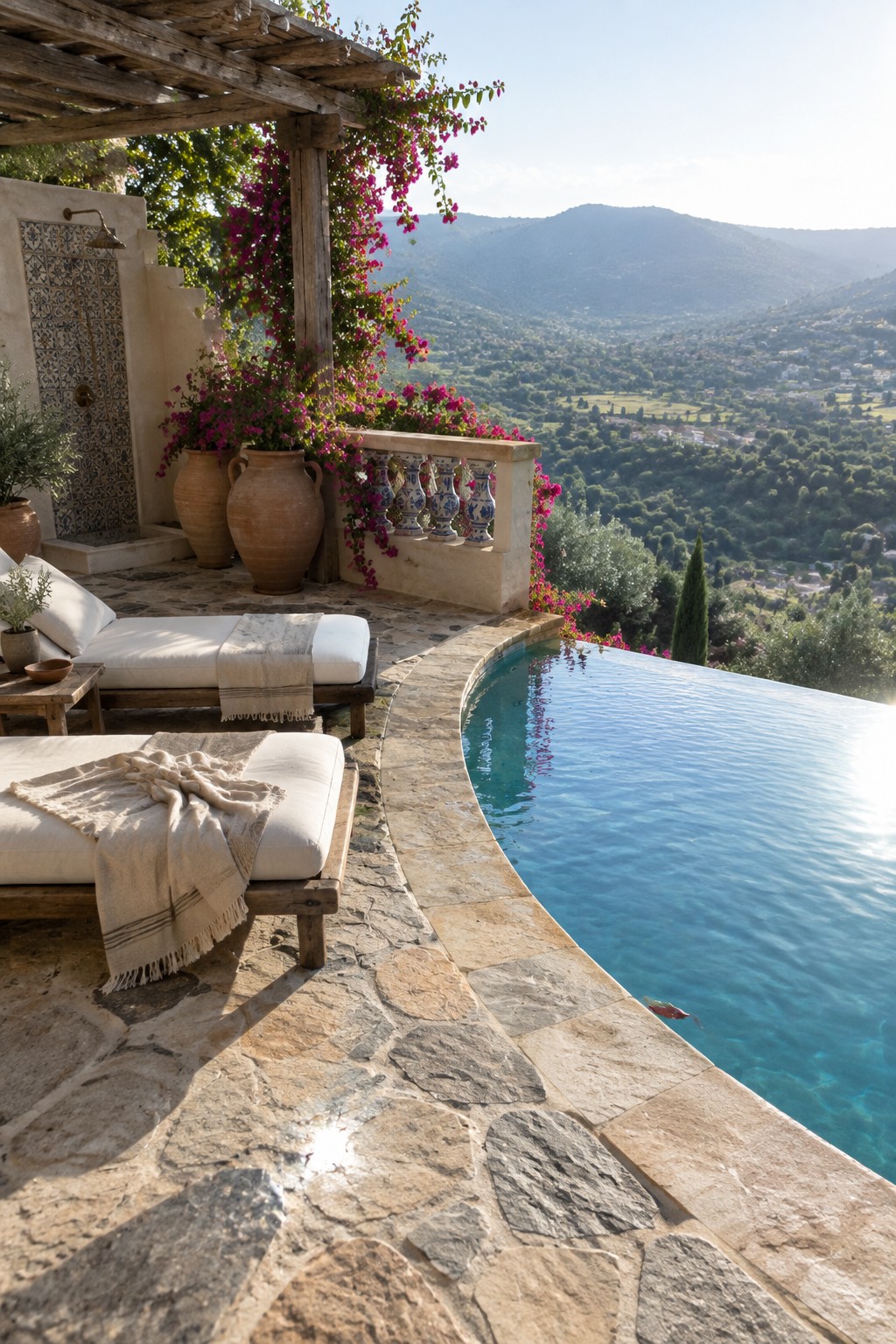
Natural stone decking gives an infinity pool a grounded feel that works especially well on sloped sites. The irregular shapes and warm tones help the pool edge blend into the terrace rather than stand out as a separate feature.
This material choice suits Mediterranean homes that already use stone or stucco. It pairs nicely with simple wood pergolas and built-in details like tiled showers. Just make sure the surface stays level and the coping has enough texture to prevent slipping when wet.
Stone Arches Anchor The Pool End
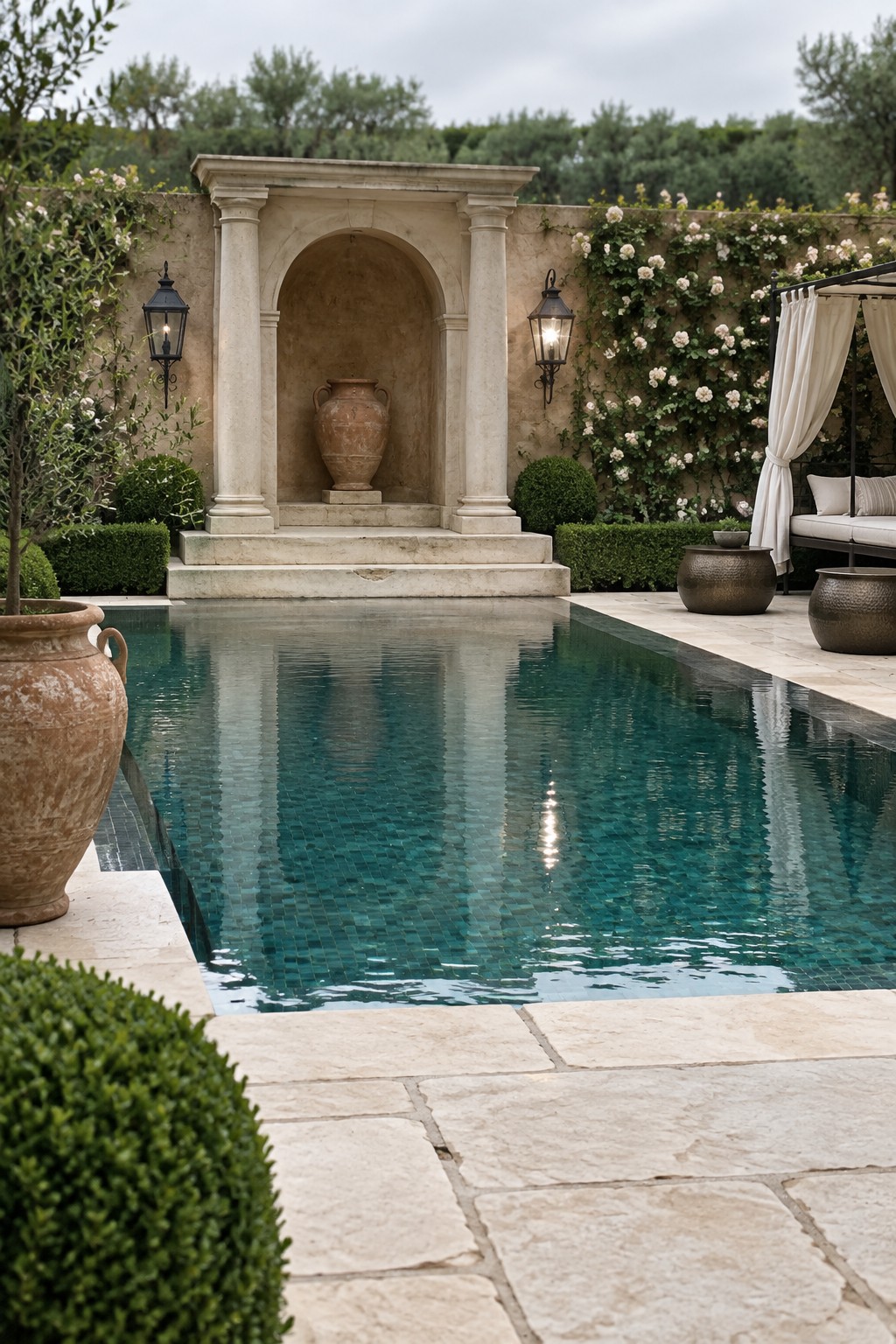
Many pool designs benefit from a solid architectural stop at one end rather than leaving the water open on all sides. A stone arch with columns gives the pool a clear focal point and makes the whole area feel more settled.
This approach works best on flat lots where the pool runs parallel to a wall or hedge. Keep the arch proportions simple and match the stone to the coping so the detail feels built in rather than added on later.
Stone That Ties The Pool And Kitchen Together
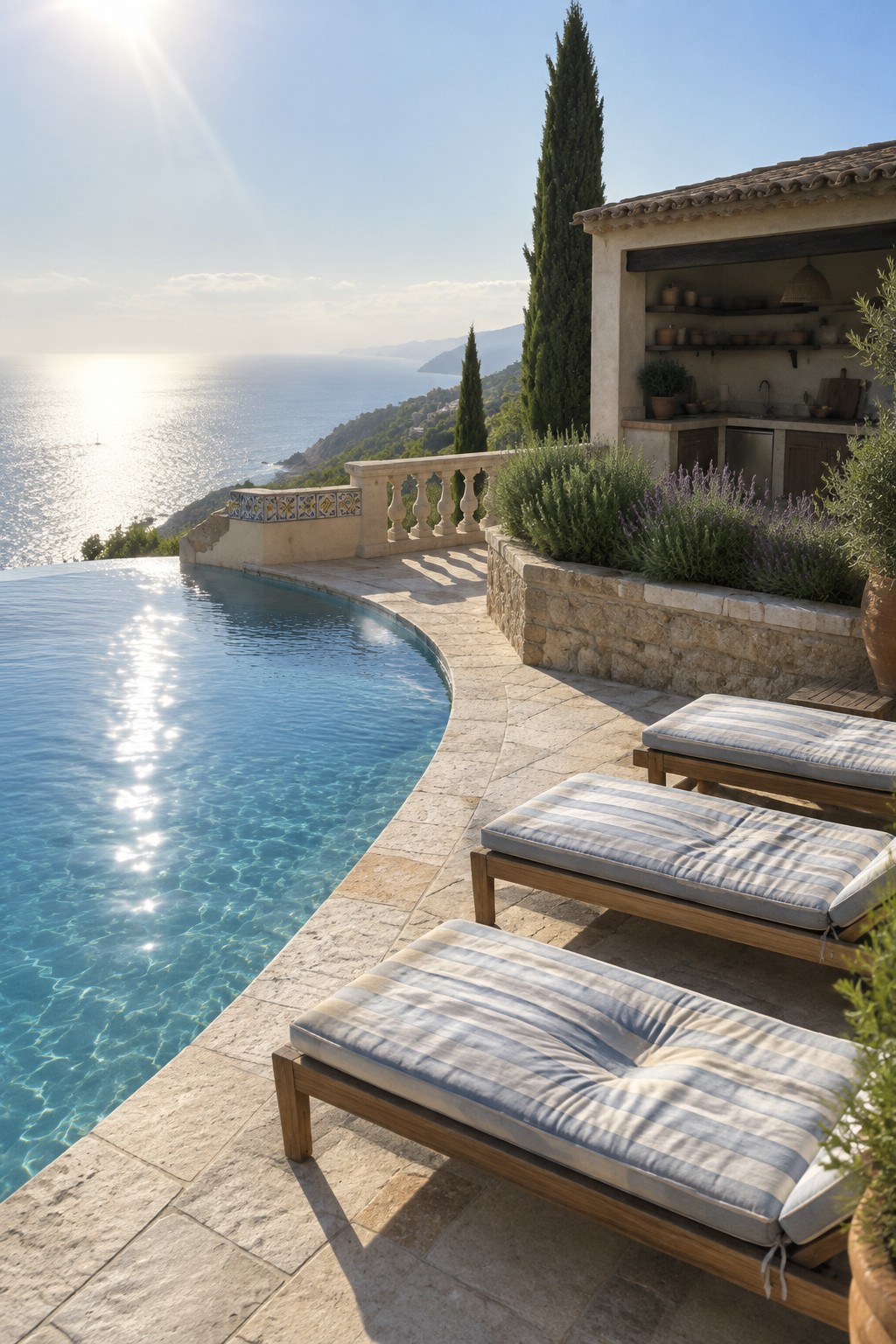
Using the same stone for the pool coping, deck, and the base of the outdoor kitchen creates a single, steady surface that feels grounded on the slope. It avoids the common problem of the pool area looking like it was added later, and instead makes the whole terrace read as one built element.
This approach works best on hillside lots where the ground drops away, since the stone can double as both a retaining wall and a visual anchor. Keep the stone color and finish consistent, and let the shape of the pool edge follow the natural curve of the land rather than fighting it.
Built-In Seating Along The Pool Edge
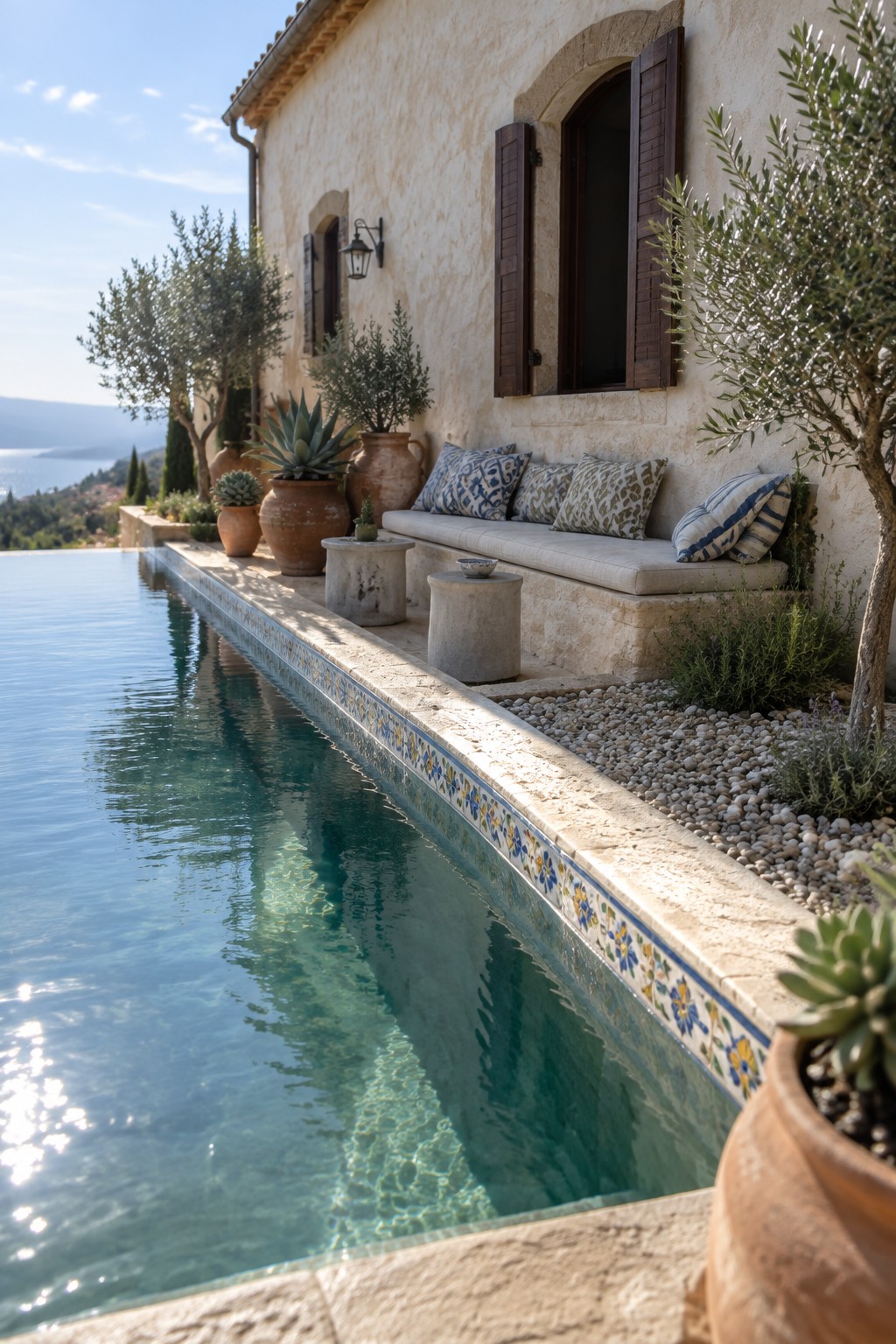
One idea that stands out in Mediterranean pool designs is building seating directly into the stone terrace that runs along the water. This keeps the space open and usable without adding extra furniture that can clutter the deck or get in the way.
It works especially well on homes where the pool sits close to the house and the terrace already uses natural stone. The cushions can be swapped out for weather resistance, and the low profile helps the whole area feel tied together rather than like separate zones.
Stone Waterfalls That Tie Pool And Garden Together
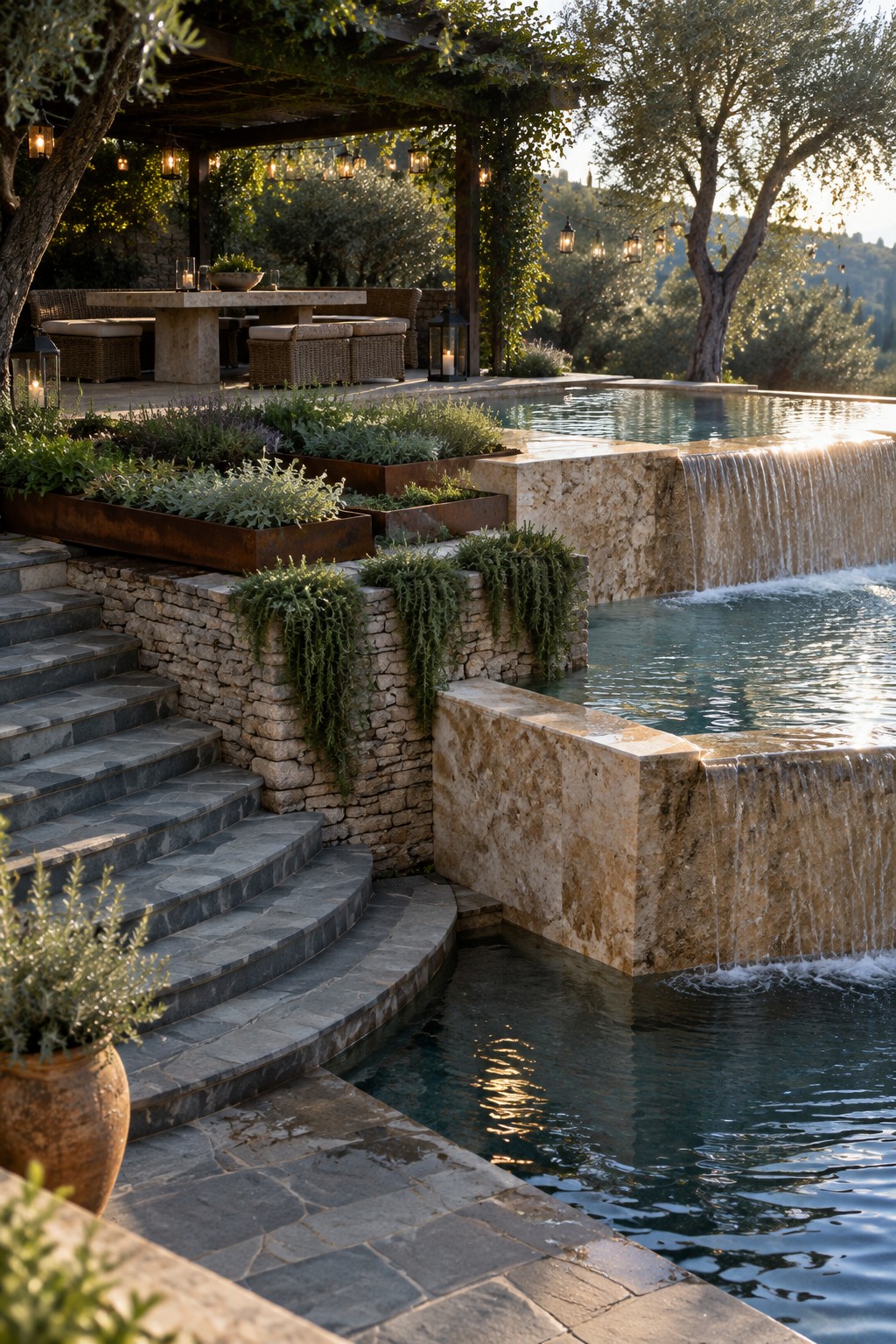
One idea worth copying in a Mediterranean pool is letting water run over rough stone edges in several places instead of one big drop. It keeps the pool from looking like a flat rectangle and makes the water feel like it belongs with the rest of the yard.
This works best on a gentle slope where you can build low stone walls and tuck planting beds right into the steps. The metal troughs in the photo show how simple containers can soften the stone without adding extra structures that get in the way.
Matching Stone Coping to the Patio
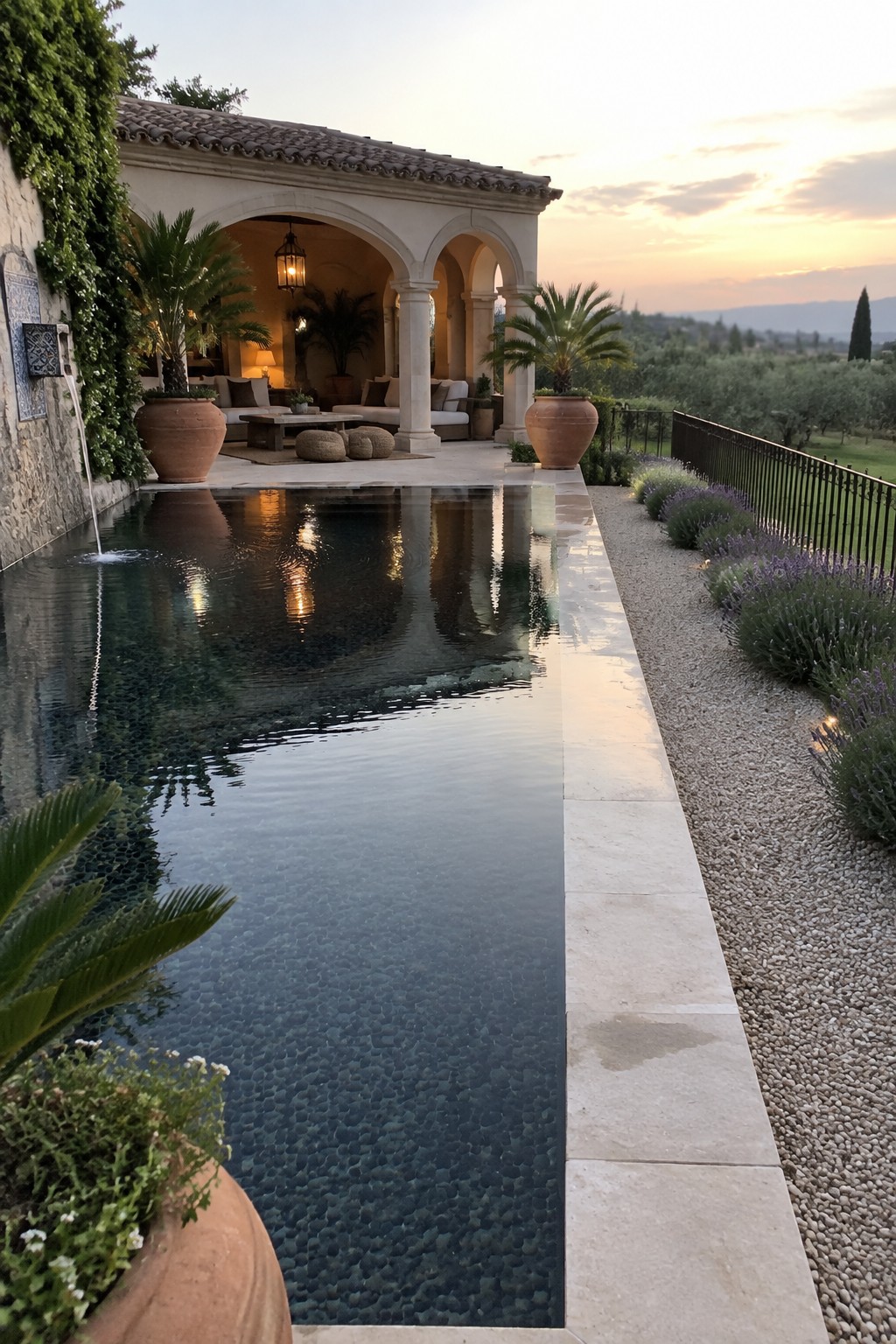
One simple move that works well here is carrying the same stone from the patio straight into the pool coping. It keeps the surfaces feeling connected instead of like two separate zones that just happen to sit next to each other. The light color also helps the water look calmer and more settled against the house.
This approach suits homes where the pool sits close to the main structure. It works best in warmer climates where you already use stone for durability, and it avoids the need for extra edging materials that can start to look busy over time.
Pergola Shade With Built-In Seating
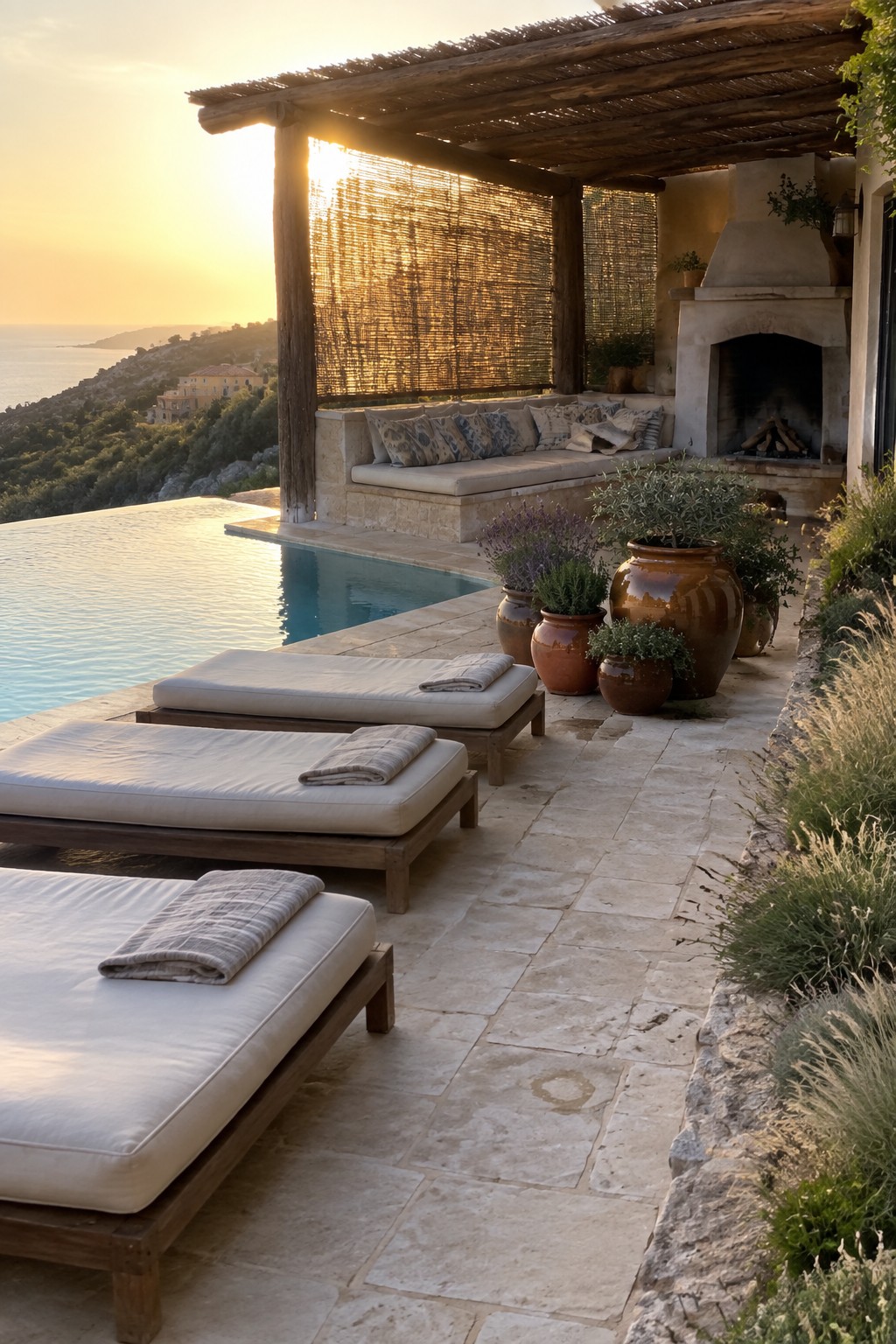
A pergola with woven reed panels can turn an open pool deck into a place that feels protected without blocking the view. The built-in stone bench underneath gives you permanent seating that stays put through wind and weather, and the cushions make it comfortable for long stretches. This setup works especially well when the pool sits close to the house and you want a clear spot to sit that still feels connected to the water.
It suits homes with a Mediterranean or coastal feel where stone paving already does most of the heavy work. Keep the structure simple, use natural materials that age well, and make sure the bench depth allows for both sitting and lounging. Avoid placing it too close to the pool edge if you want easy circulation around the water.
Stone Columns That Add Structure to Pool Areas
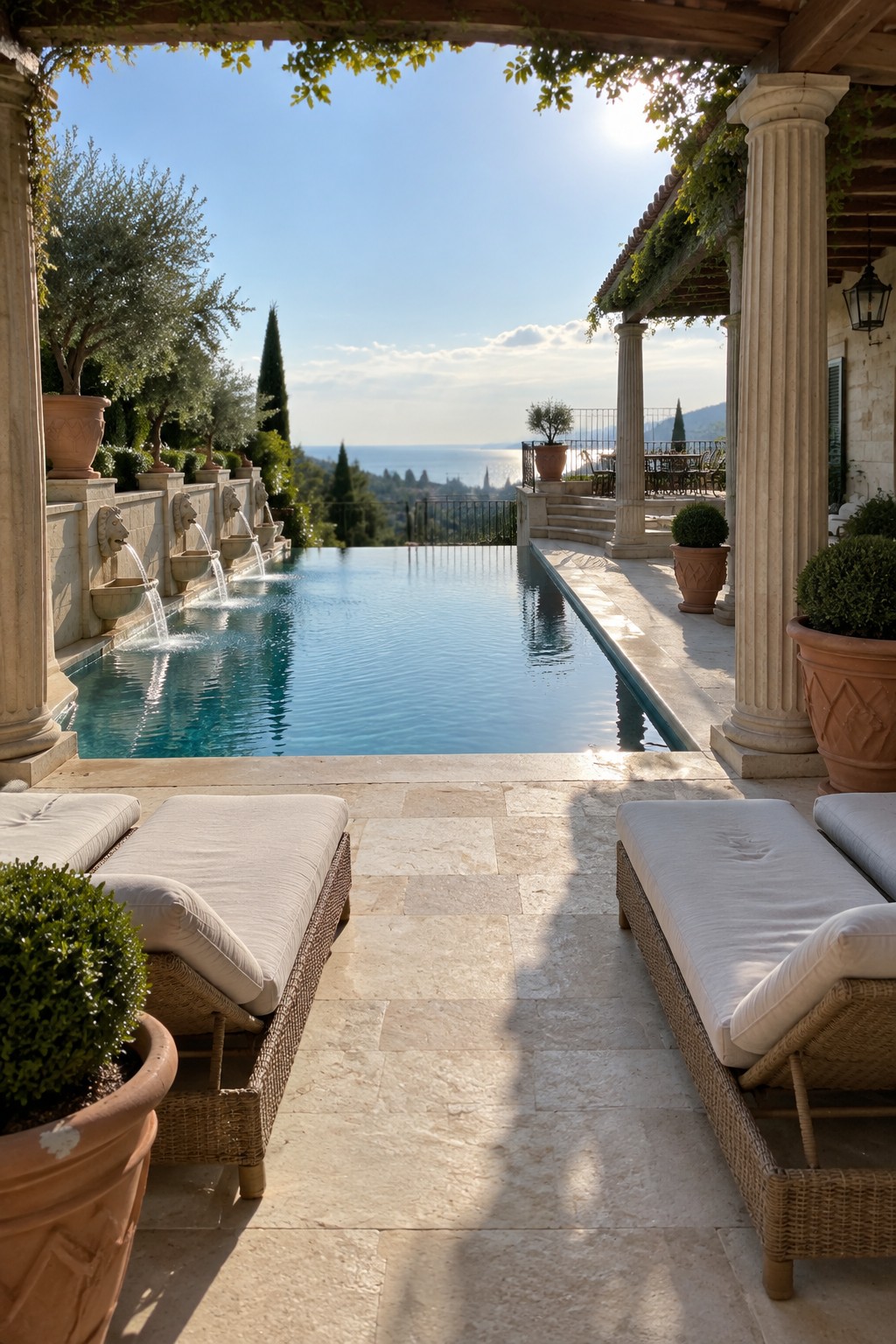
Stone columns give the pool area a more finished and permanent look. They help mark where the lounging space begins and can hold up a roof for shade on hot days.
This setup works best on larger lots where the pool sits away from the house. Match the column style to any existing stone on the property, and keep the rest of the deck simple so the columns stand out.
Using Stone for Pool Surrounds
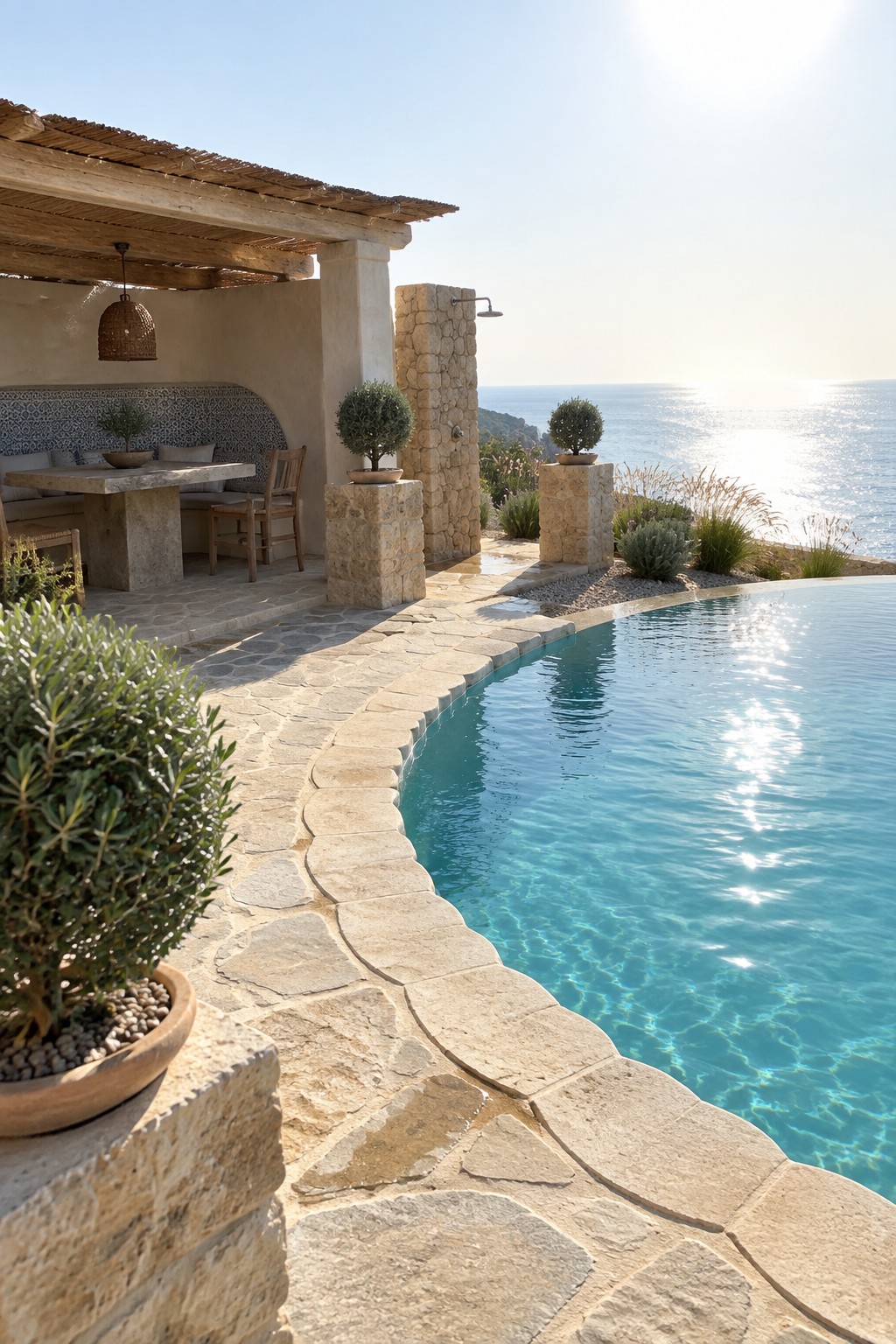
Natural stone coping works well around infinity pools because it softens the edge and helps the water area blend into the rest of the yard. The irregular shapes and warm tones keep the pool from looking like a separate addition. It also holds up to sun and water without needing much special care.
This approach suits homes near the coast or on slopes where you want the pool to feel part of the landscape. Match the stone to any nearby walls or paths so everything reads as one material. Just make sure the coping is wide enough to sit on and the surface stays nonslip when wet.
Stone Fire Pits Next to the Pool
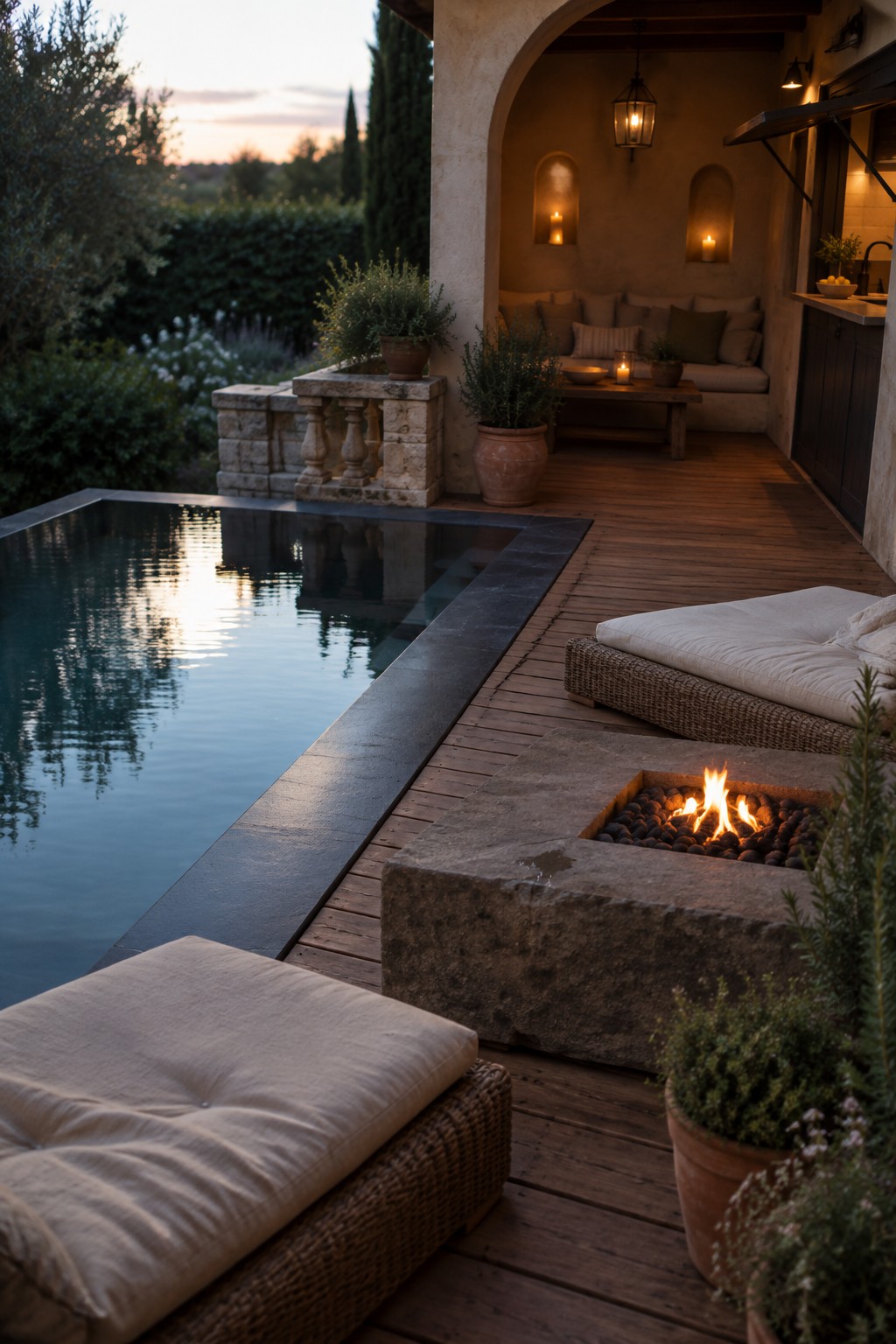
A stone fire pit placed right along the pool deck gives the space a natural spot to gather once the sun goes down. The solid stone construction holds heat well and pairs easily with the same materials already used around the pool edge and coping.
This setup works best on larger decks where the fire pit can sit a few feet back from the water without crowding the lounging area. It suits Mediterranean homes that already rely on stone for walls or trim, and it keeps the evening usable without adding much extra lighting.
Architectural Tile Details For Poolside Seating
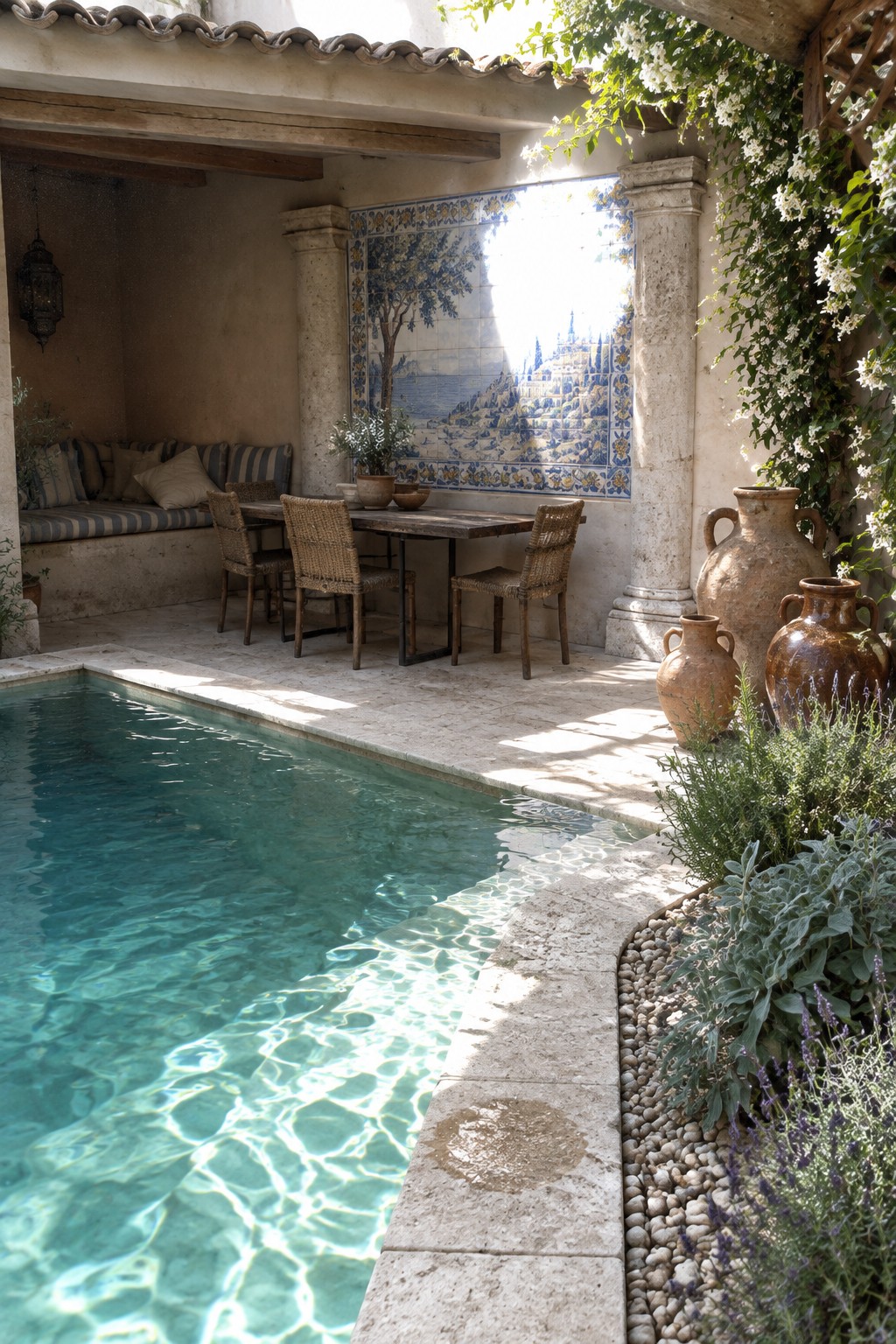
Many Mediterranean pool areas use a large tile mural on the back wall to give the space more structure. The mural acts as a natural backdrop for the table and chairs, so the seating feels settled instead of just placed outside.
This works best in smaller courtyards or when the pool sits close to the house. Keep the surrounding pots and plants low so the tile can stay the main point of interest.
Frequently Asked Questions
Q: How can I match the stone to my house without hiring a designer? A: Look at the colors already on your walls and roof. Choose similar shades for the pool surrounds and edges. Lay the stone in the same patterns you see around doorways or patios.
Q: Will heavy rain cause problems with the infinity edge? A: Build a slight slope into the stone decking. This moves water away from the edge quickly. Add a small channel if your area gets frequent storms.
Q: Is stone too cold for bare feet? A: Choose warmer stones like limestone. They heat up nicely in the sun.