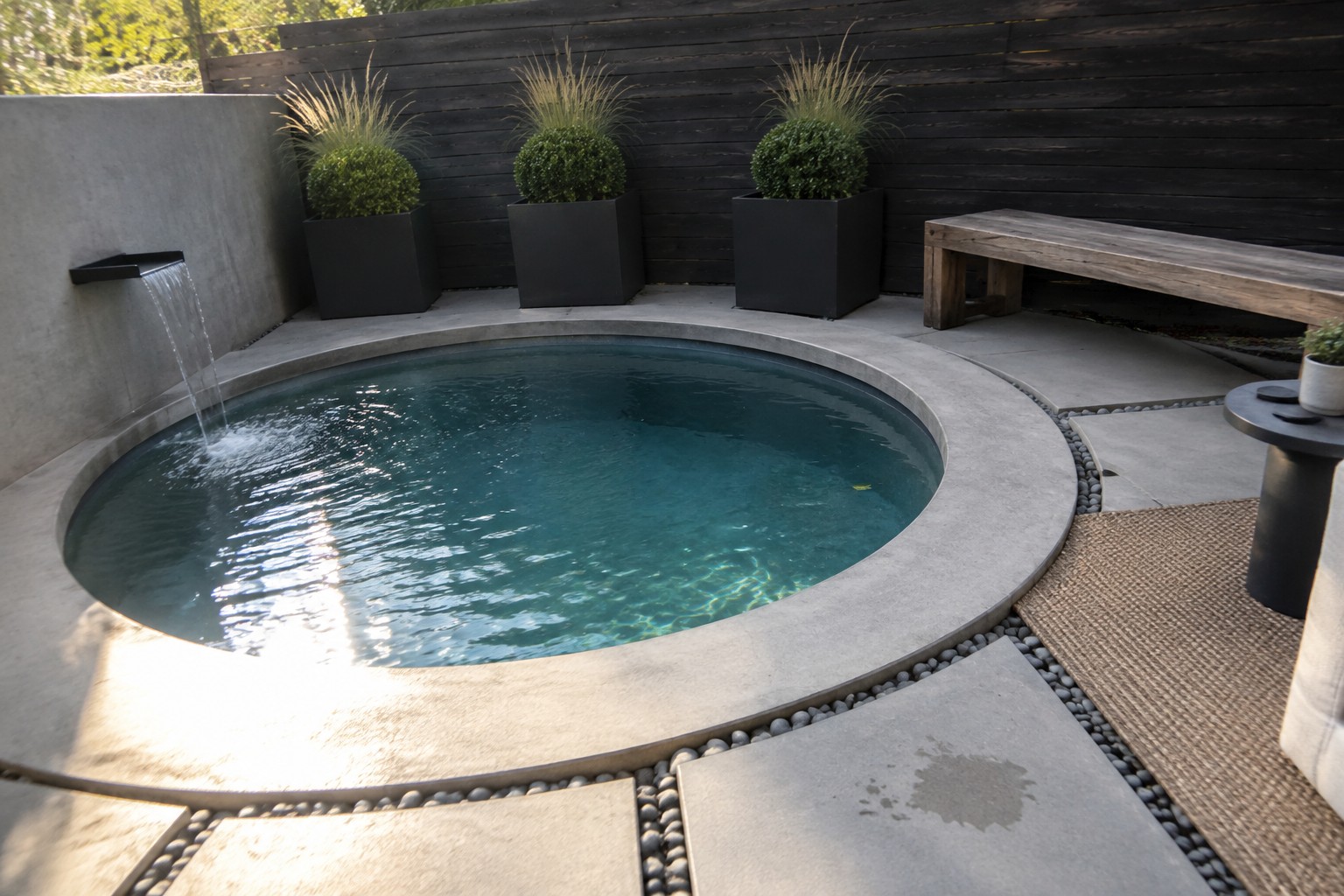
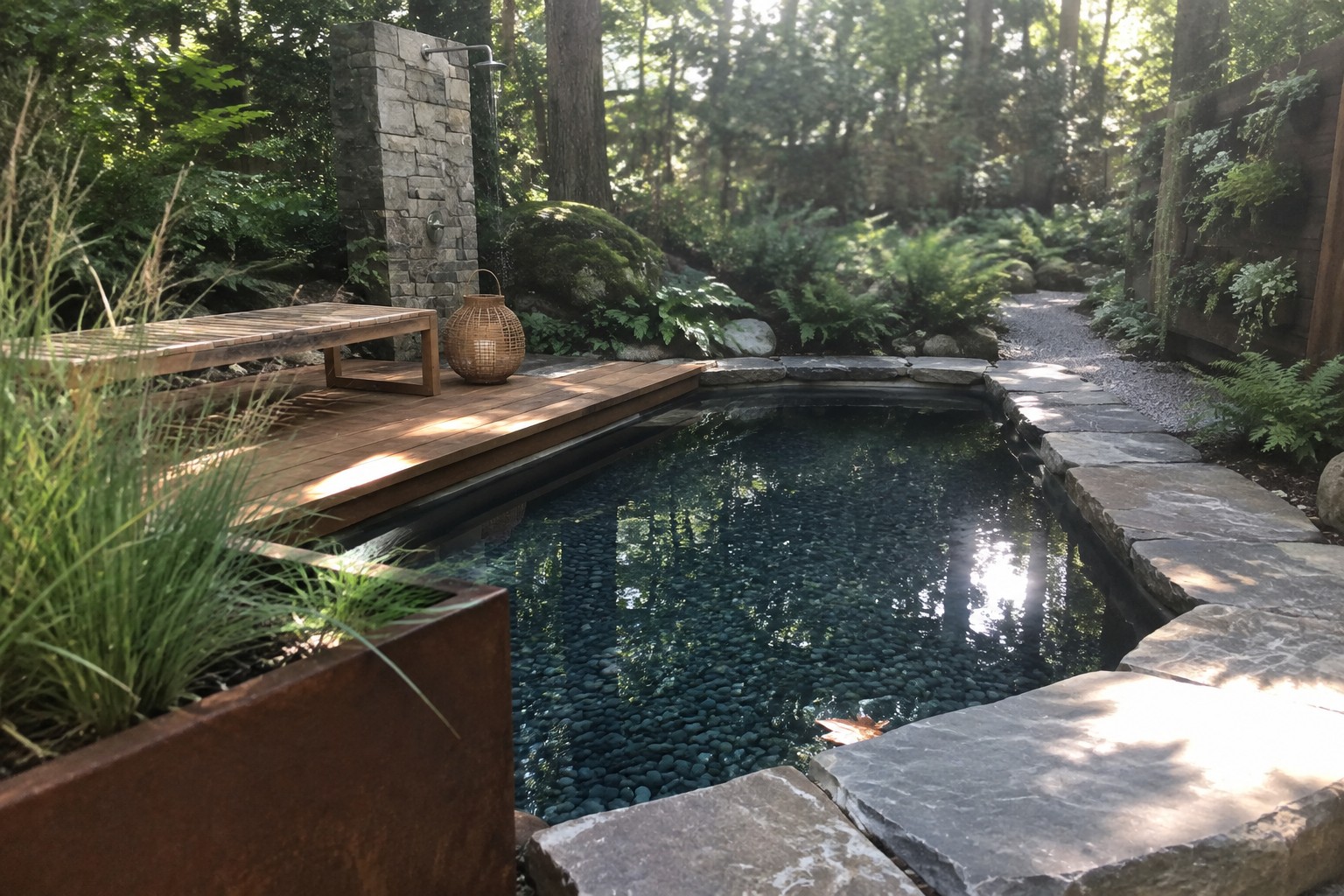
When I think about adding a plunge pool the materials end up shaping how the whole backyard feels day to day.
Natural stone and timber can help the water feature settle into the surrounding space instead of standing apart from it.
I have noticed that pools with no nearby seating or shade often stay unused even when they look right on paper.
It helps to picture how the edges will meet the grass or paving once everything has settled after a season or two.
A few of these material choices seem worth testing on a small patch first.
Natural Stone Pool Decking
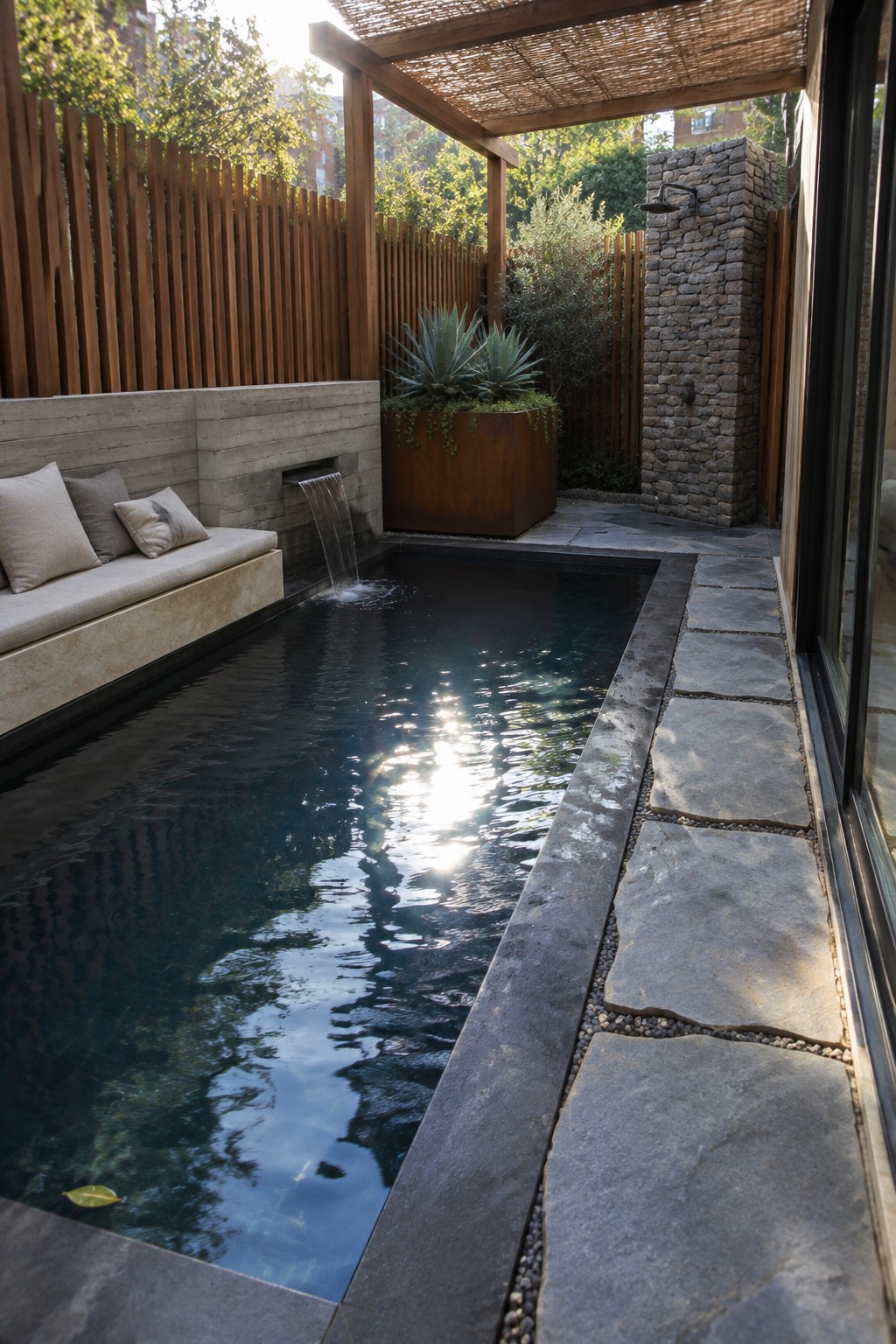
Natural stone works well around plunge pools because it feels solid underfoot and helps the water area settle into the rest of the yard. The flat pavers create a clean edge that still looks like part of the ground rather than something added later.
This choice suits smaller outdoor spaces where you want low maintenance and a simple material palette. It pairs easily with wood structures overhead and concrete seating walls, but the stones need a solid base so they do not shift with weather changes.
Irregular Natural Stone Decking for a Garden Pool

Natural stone decking gives a plunge pool a grounded feel that fits right into the surrounding garden. The irregular shapes and warm tones help the water look less like a separate box and more like part of the landscape.
This works best on smaller lots or in yards where you want the pool to feel tucked in rather than dominant. Pick a stone that stays comfortable under bare feet and pair it with simple planting in clay pots so the whole area stays easy to maintain.
Wood Decking Around The Plunge Pool
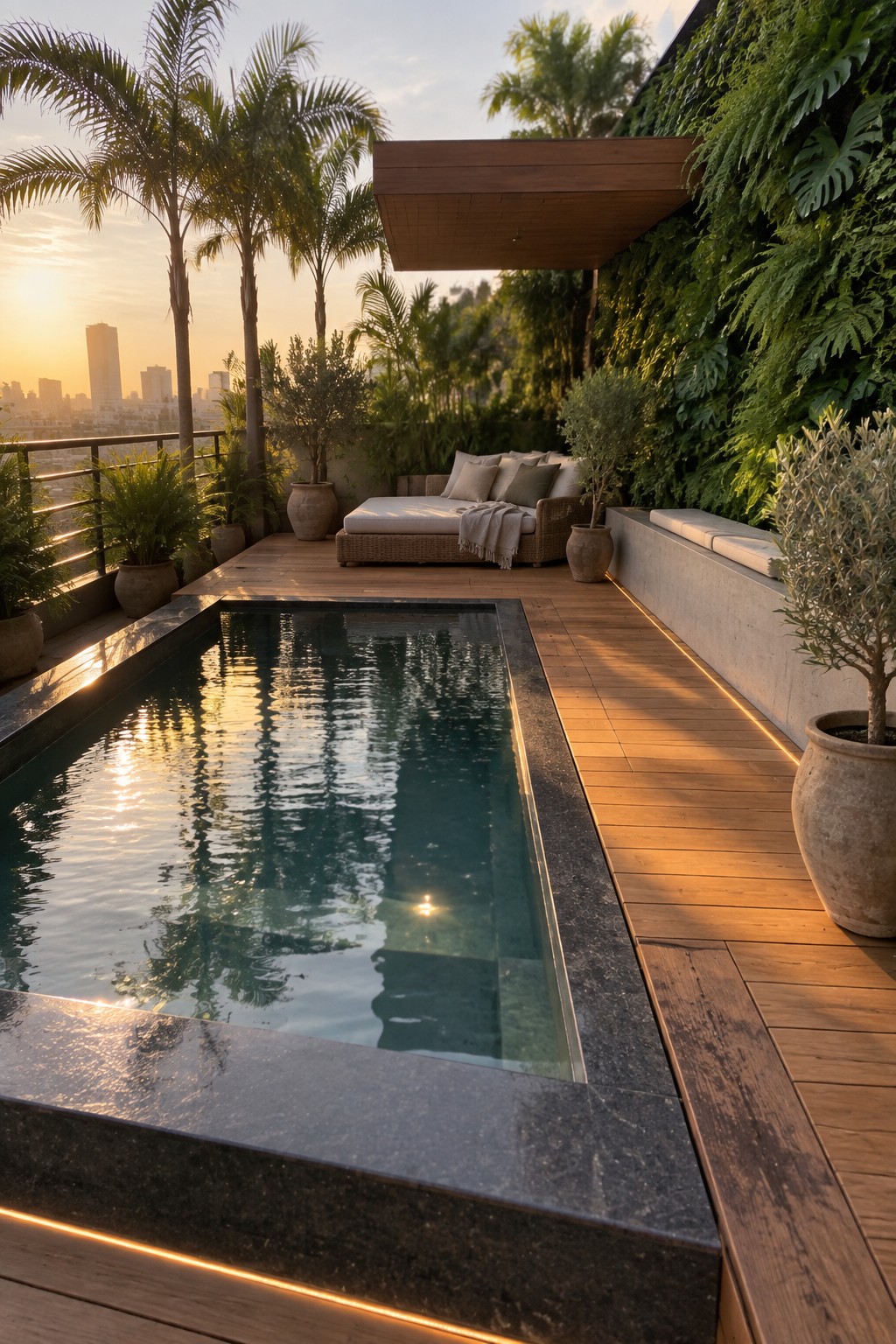
Wood decking gives a plunge pool a warmer, more grounded feel than concrete or tile alone. The natural grain and tone help the water element connect to the surrounding space instead of standing apart as a hard feature.
This works especially well on terraces or rooftops where the pool needs to feel like part of the living area. It suits homes that already lean on natural materials outdoors and pairs simply with potted greenery to keep the edges soft.
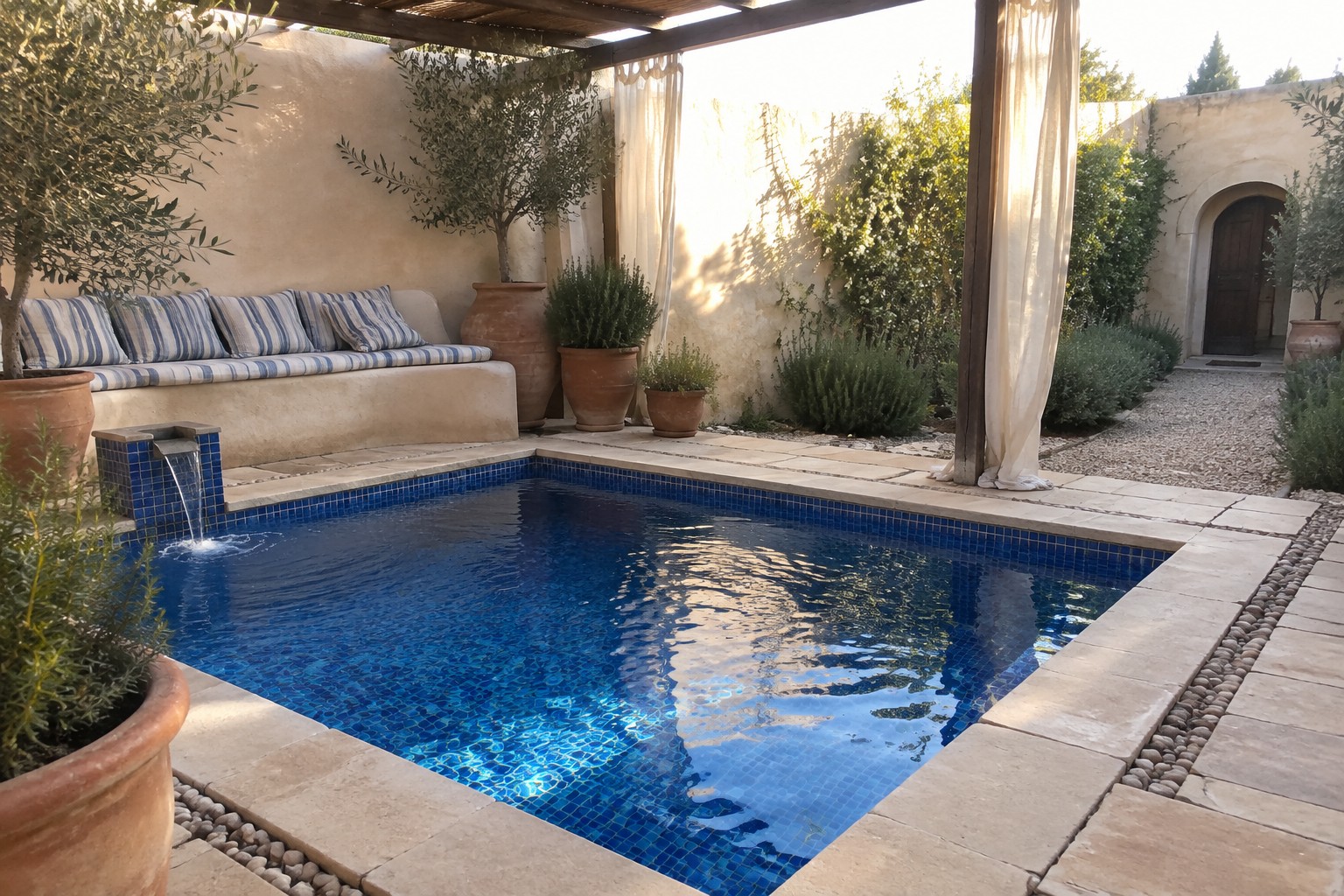
Natural Stone Edging for Plunge Pools
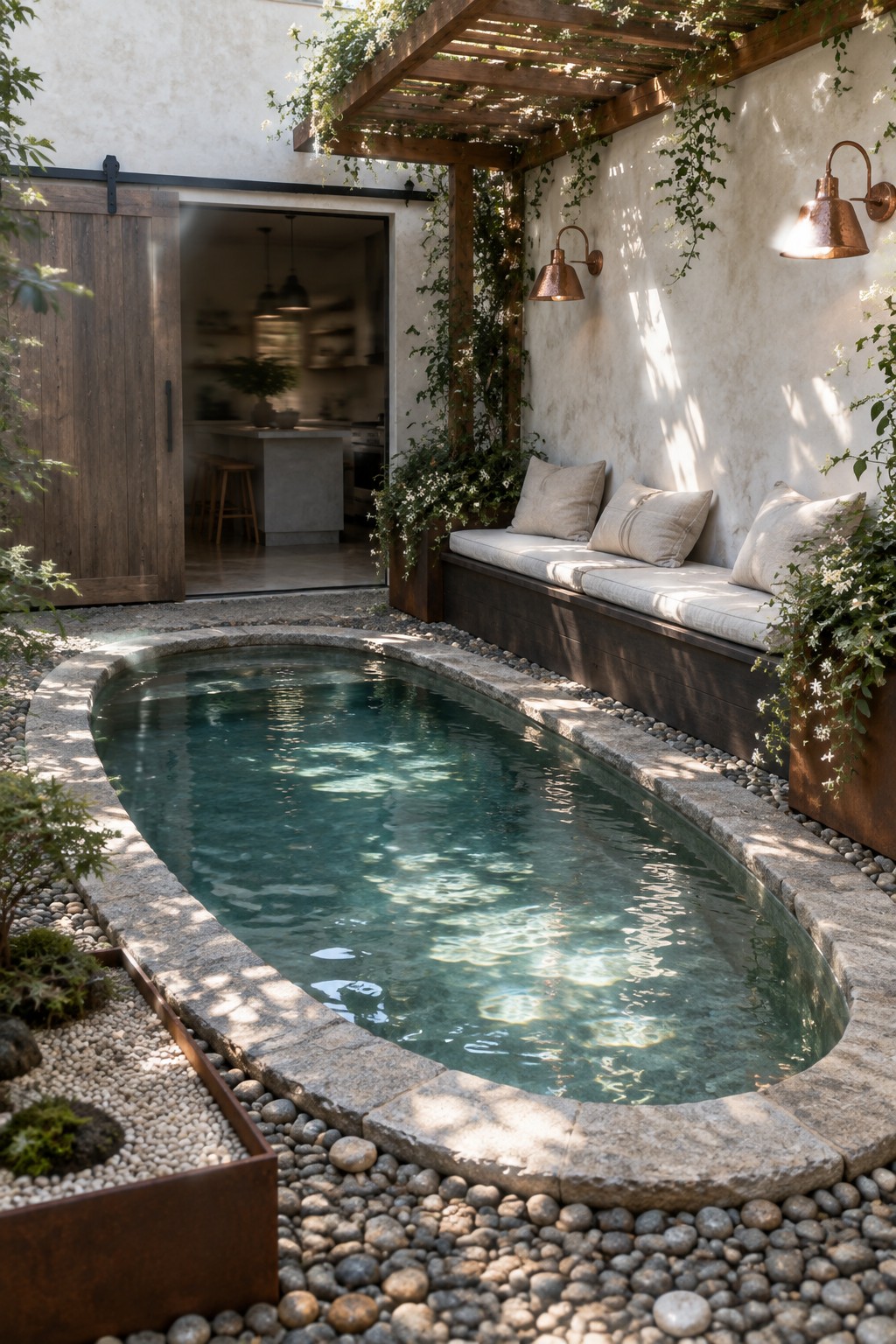
Stone coping gives a small plunge pool a settled, grounded look that works well with organic modern homes. The rough texture and irregular shapes keep the water from feeling too formal or stark against the rest of the yard. It also helps the pool sit more naturally with gravel or pebble surfaces around it.
This approach suits homes where the pool is meant to feel like part of the garden rather than a separate feature. It works best in smaller yards or side courtyards where you want the water to blend in without taking over. Just make sure the stone size stays in scale with the pool so the edge does not overwhelm the space.
Textured Stone Coping for a Seamless Pool Border
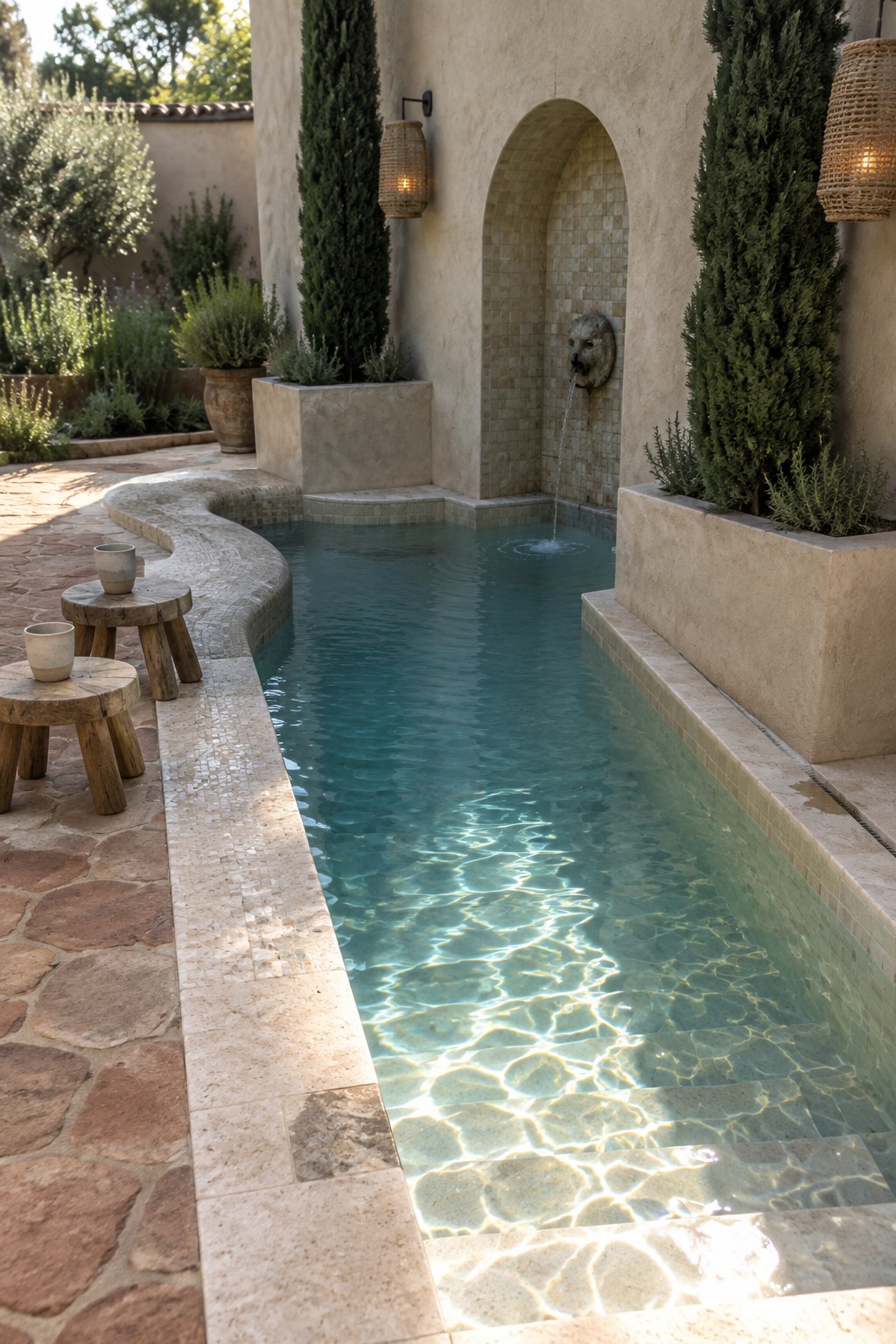
Natural stone coping gives a plunge pool a settled, grounded look that manufactured edges often miss. The irregular shapes and textured surface help the water feel like it belongs with the rest of the yard instead of sitting on top of it.
This approach works best on smaller properties or homes that already use stone in paths or walls. Keep the stone tones close to what is already on site so the pool blends rather than competes with the surrounding garden.
Woven Loungers on Stone Pool Decks

Natural woven chairs fit well beside a plunge pool because they add a soft texture without competing with the water or stone. The material feels light and relaxed, which helps the pool area blend into the surrounding rocks and plants instead of looking too built up.
This approach suits homes near the coast or in rocky landscapes where you want the pool to feel like part of the site. Use simple striped throws for comfort and choose pieces that can handle sun and moisture so they last without much fuss.
Natural Rock Features For Plunge Pools
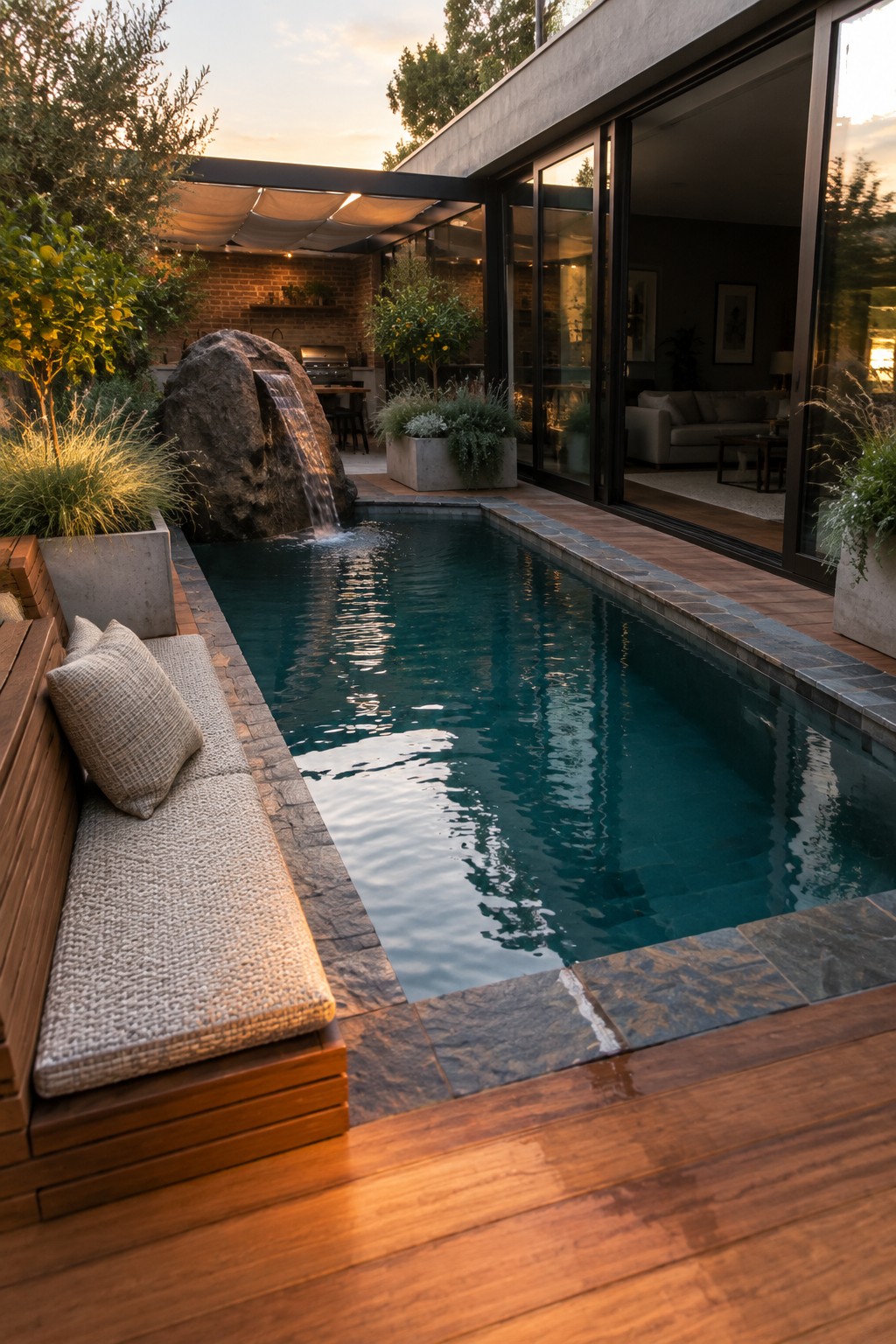
Natural rock gives a plunge pool a grounded feel that manufactured edges often miss. A large boulder with a small waterfall adds texture and movement without needing extra decoration or bright colors. The stone ties the water directly to the surrounding plants and hardscape.
This works best on properties that already have stone elsewhere in the yard or on the house. Keep the rest of the materials simple, like wood decking and concrete planters, so the rock stays the main focal point. Avoid oversized falls in small pools since they can make the space feel cramped.
Dark Stone With Woven Rugs On Pool Decks

Dark stone coping and steps give a plunge pool a solid, grounded base that works well with natural surroundings. The material feels substantial without looking heavy, and it holds up to weather while keeping the whole area looking clean. Woven rugs placed on top add a softer layer that brings in texture and a bit of warmth underfoot.
This approach suits homes built on slopes or near rough landscapes where you want the pool to feel connected to the site rather than dropped in. Keep the rugs simple and natural in tone so they do not compete with the stone. Watch the scale. Too many rugs can start to look cluttered on a small deck.
Natural Gravel And Pebble Surfaces Around The Pool

Mixing gravel paths with pebble beds gives a plunge pool a softer edge that blends into the garden instead of cutting it off. The different textures keep the area practical while still feeling relaxed and connected to the plants and wood around it.
This setup works best in smaller yards or modern homes that already use natural materials elsewhere. Keep the gravel contained with a low border so it stays neat and does not track into the water.
Gravel Paths with Stepping Stones for Plunge Pools
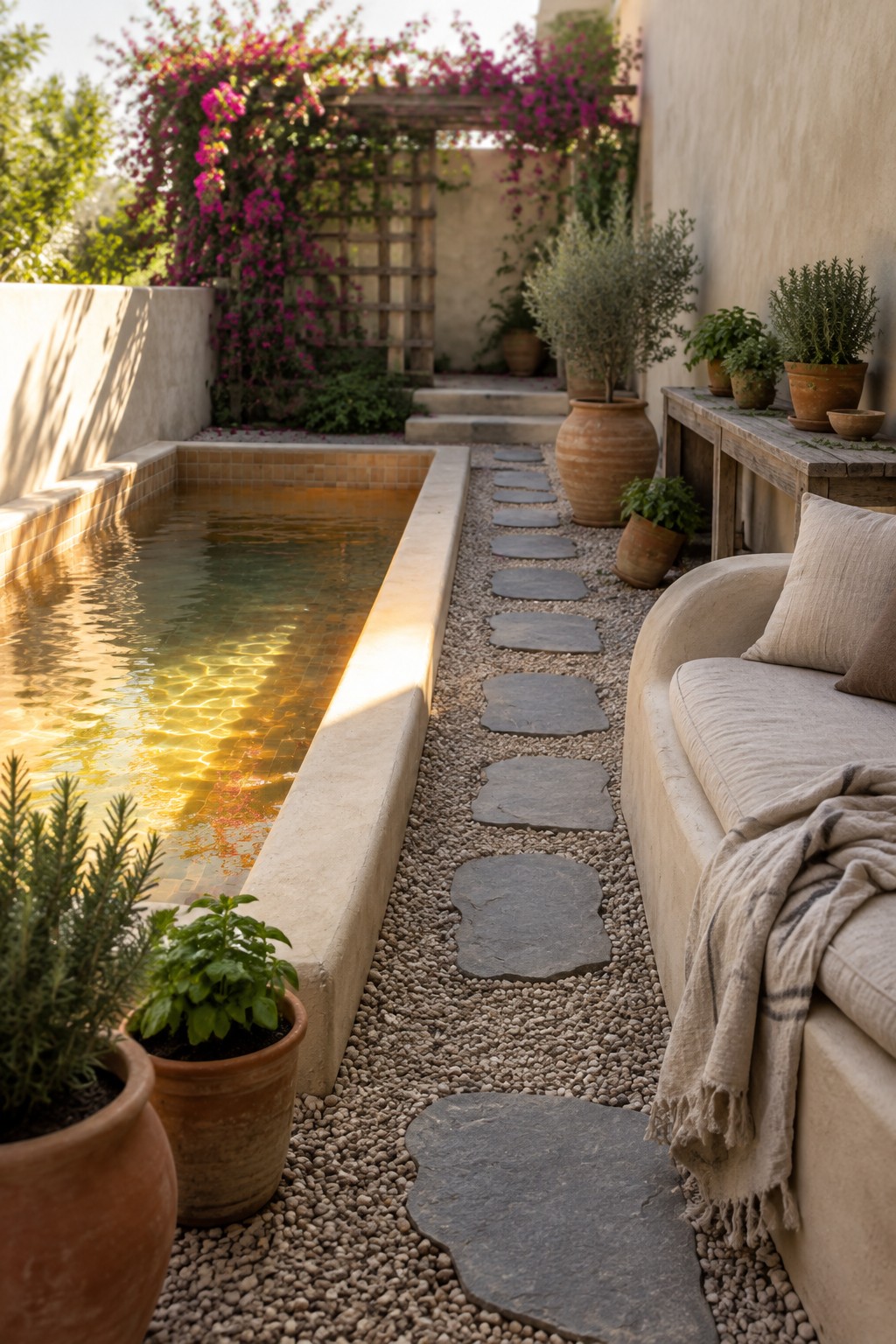
A gravel path with irregular stepping stones gives a plunge pool a relaxed connection to the rest of the garden. The loose material softens the edge of the water and avoids the need for a full paved deck, which can feel too heavy in a small space.
This approach works well in courtyard settings or narrow side yards where you want an organic modern look without high maintenance. It suits homes that already use terracotta pots and simple plantings, though the gravel will need occasional weeding to stay tidy.
Gabion Walls Using Local Stone

Gabion walls filled with local stone give a plunge pool a solid, grounded edge without looking built up. They let the pool sit into the landscape instead of sitting on top of it, and the rough texture pairs well with wood decking and simple stone paving.
This approach works best on sloped or rocky sites where you already have access to stone. Keep the wall height modest so it defines the space without closing it in, and let the same stone show up in the paving to tie everything together.
Natural Stone Pavers for a Grounded Pool Surround

Natural stone pavers give a plunge pool a settled, grounded feel that works especially well in smaller yards. The texture and color variations in the stone keep the water from looking too stark against the surrounding hardscape.
This approach suits homes that already lean modern but still want some connection to the garden. Pair the paving with simple concrete edges and a few built-in seats so the whole area stays practical without needing much extra furniture.
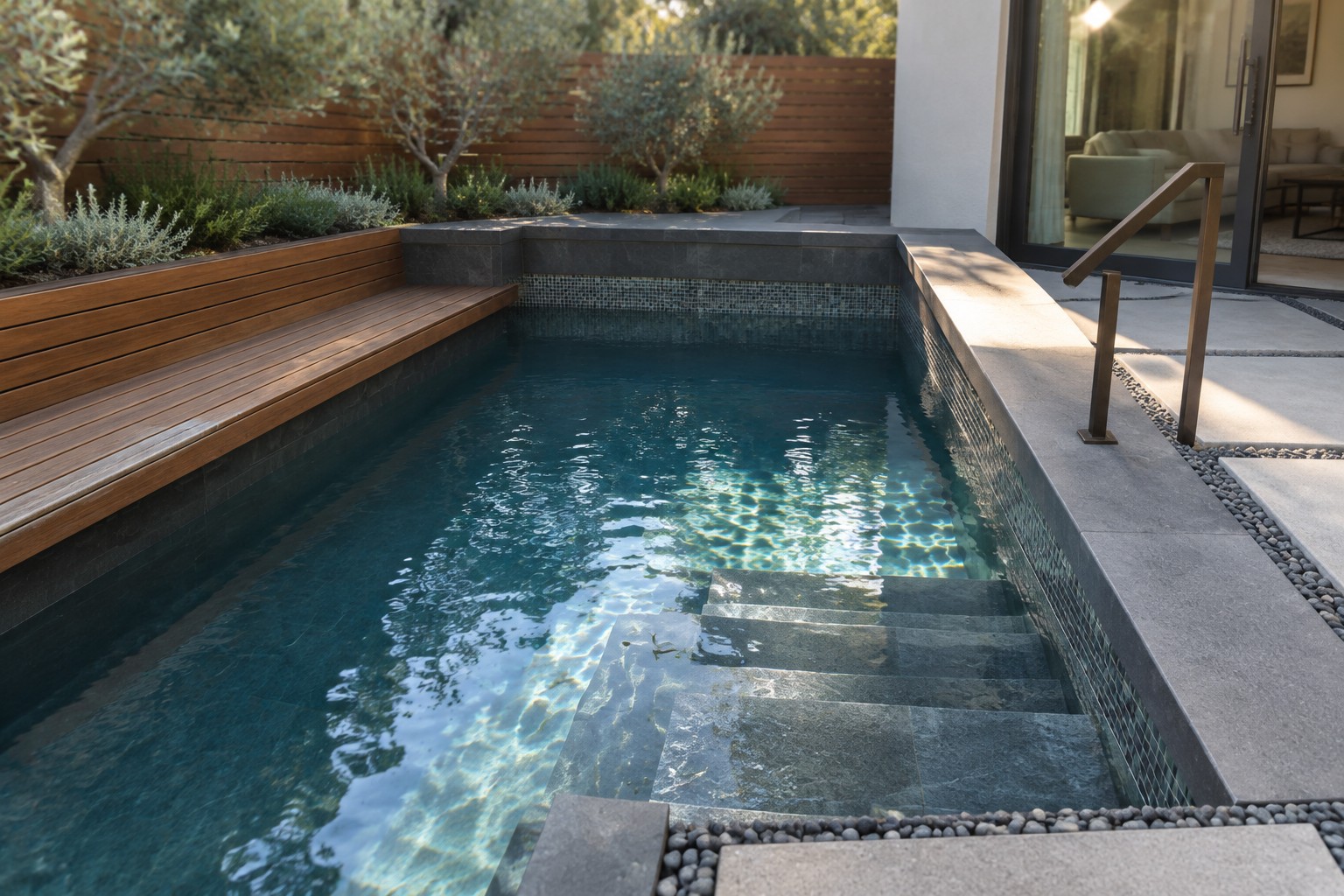
Add a Wooden Ledge Along the Pool Edge
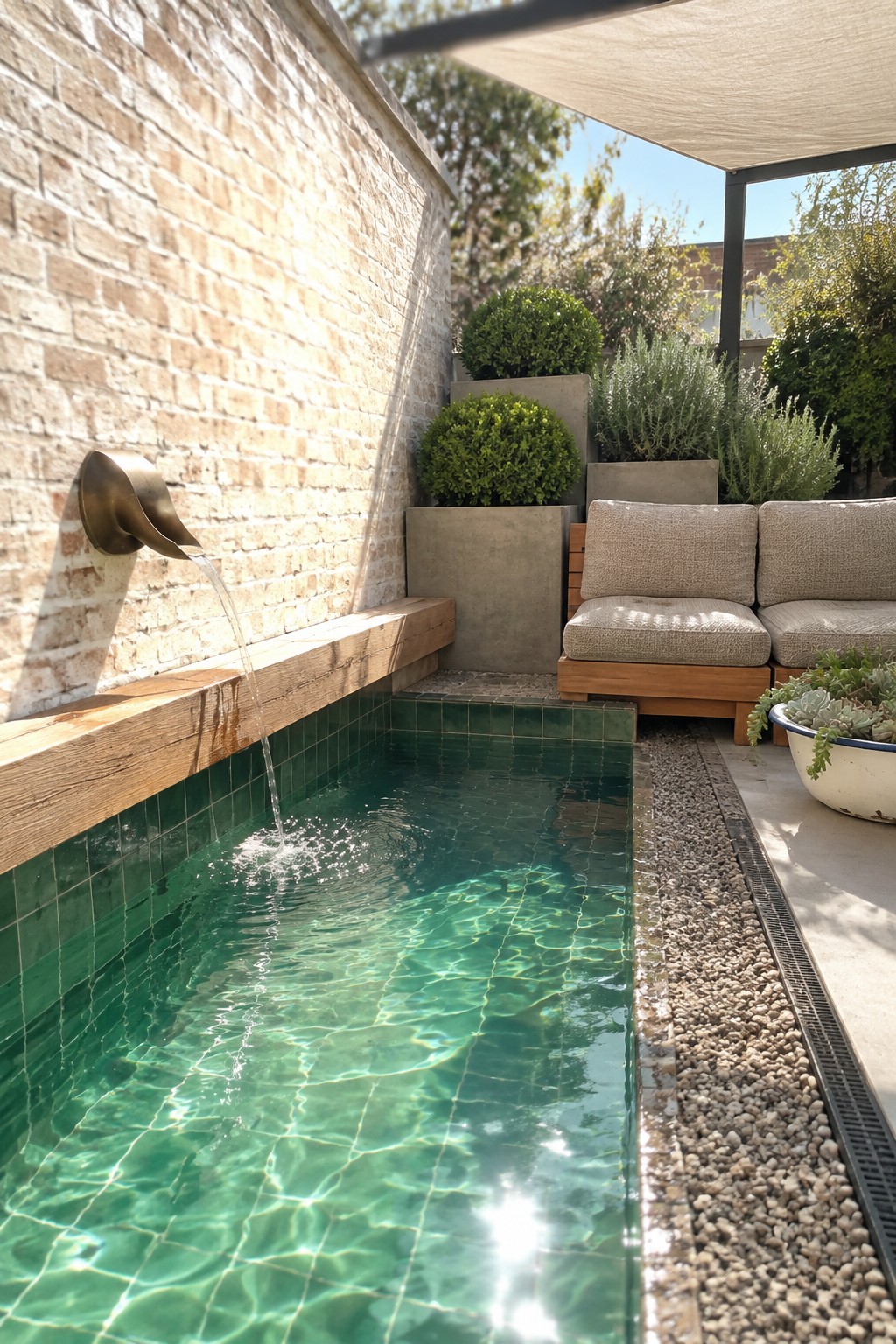
A wooden ledge built into the side of a plunge pool adds a simple place to sit while also bringing natural material into the design. The wood softens the look of brick and tile without adding much extra structure.
This approach works best in smaller yards where space is tight. Use weather-treated or reclaimed wood that matches other outdoor elements like planters or decking. Keep the ledge narrow so it does not crowd the water or the walkway beside it.
Weathered Wood Decking for Sloped Poolside Settings
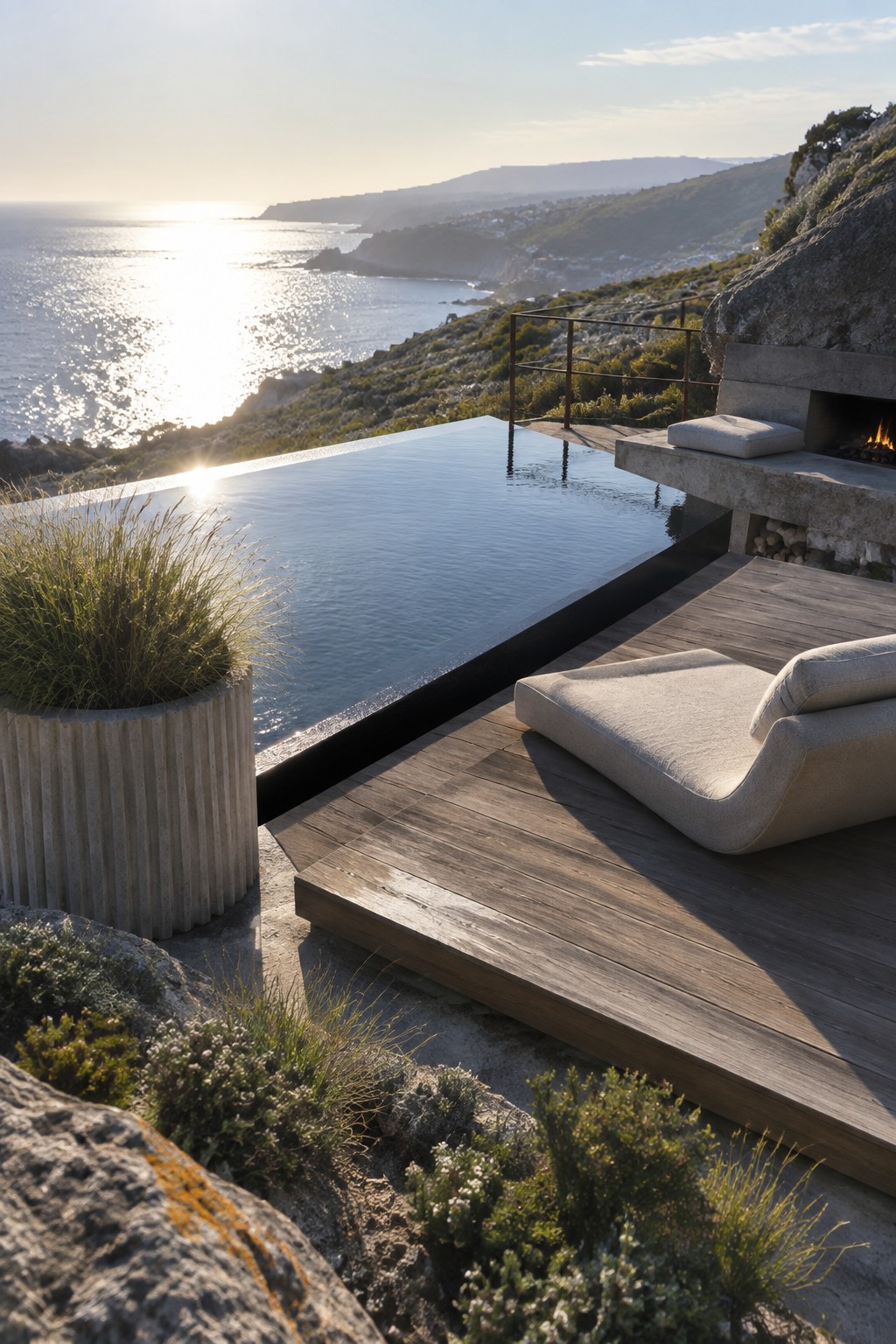
Wood decking works well around plunge pools because it adds warmth and texture that stone or concrete alone can lack. The material helps the whole setup feel more settled into the landscape rather than sitting on top of it.
This choice suits homes on slopes or near natural edges where you want the pool area to feel relaxed. Use a weathered finish and keep the layout straightforward so the decking supports the space without competing with the view.
Warm Wood Decking for a Seamless Poolside Transition

Wood decking next to the water adds a warm, grounded surface that balances the cool tones of the pool. It creates a simple transition between the swimming area and the rest of the yard without needing extra structures or barriers.
This works best on smaller properties where the deck serves as both walkway and lounge space. Stick with a mid to dark wood tone that holds up outdoors, and let it run the full length of the pool so the materials feel connected rather than added on.
Stone Paths That Tie A Plunge Pool Into The Landscape
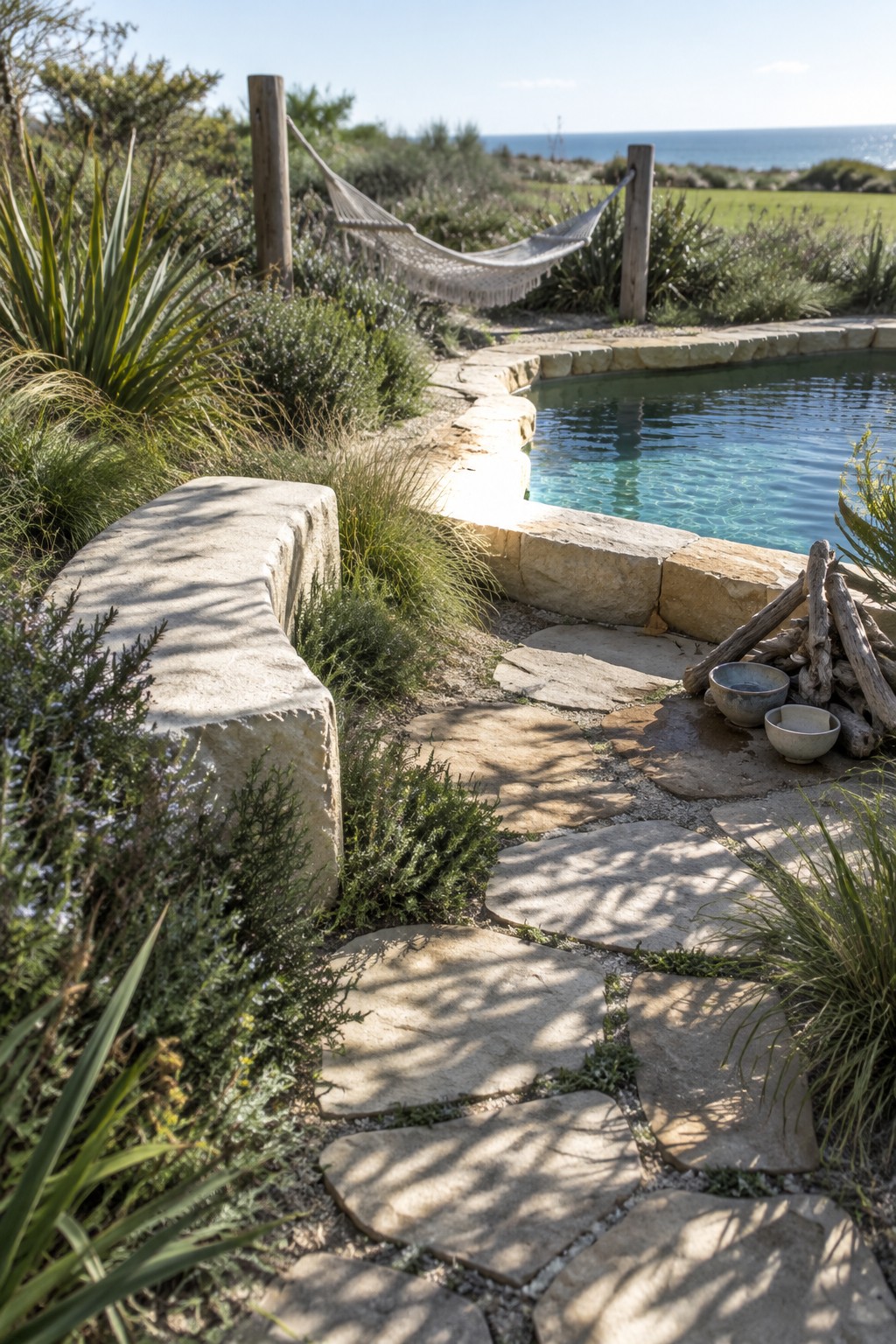
Natural stone paths and coping do a quiet job of making a plunge pool feel like it grew out of the site instead of being added later. The uneven shapes and warm tones help the water sit comfortably among the plants and ground cover rather than cutting across them.
This works best on properties that already have rock or a loose, natural setting. Match the stone to what is local, keep the layout slightly irregular, and let low plantings soften the edges so the whole area reads as one piece.
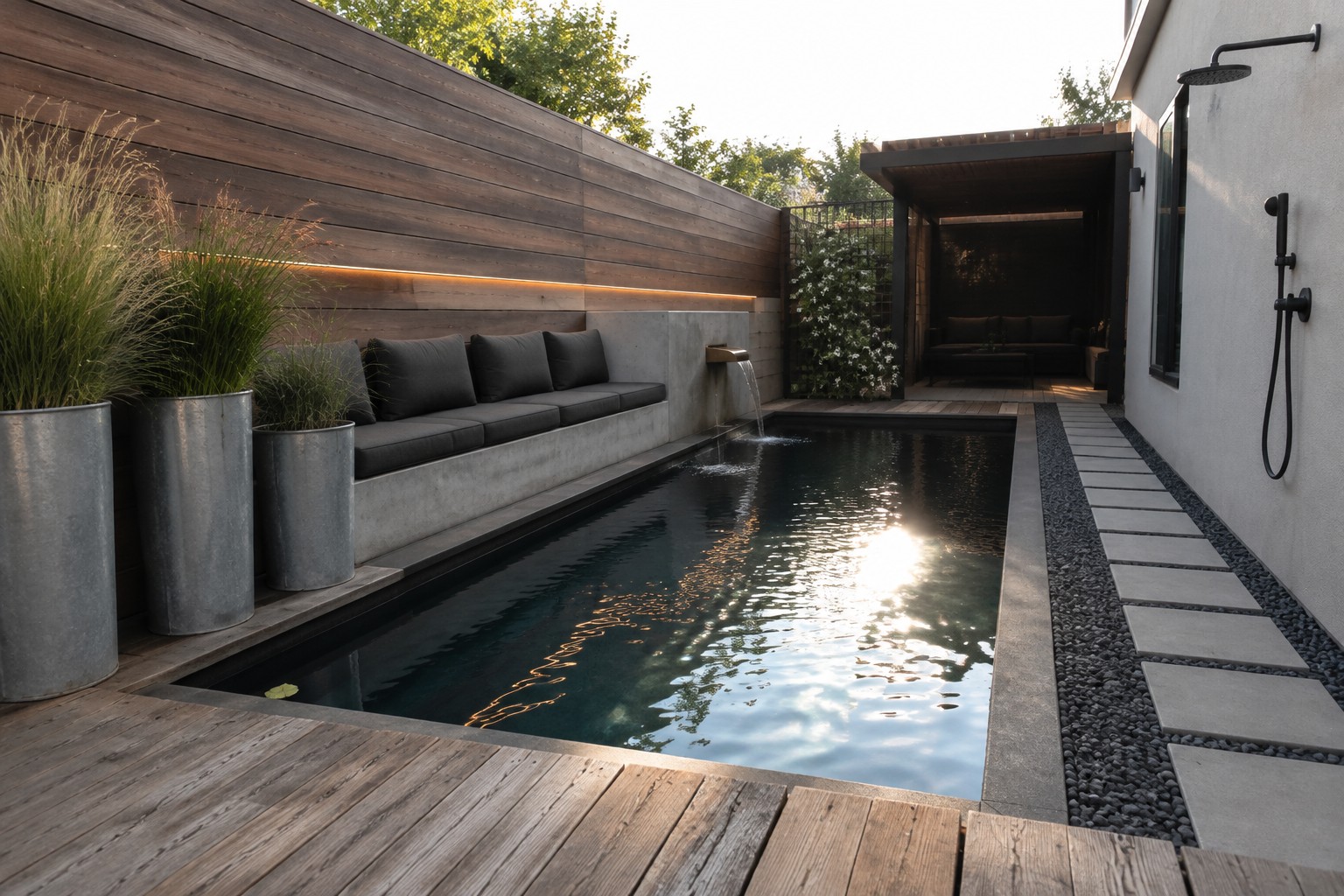
Use A Wooden Bench For Simple Poolside Seating
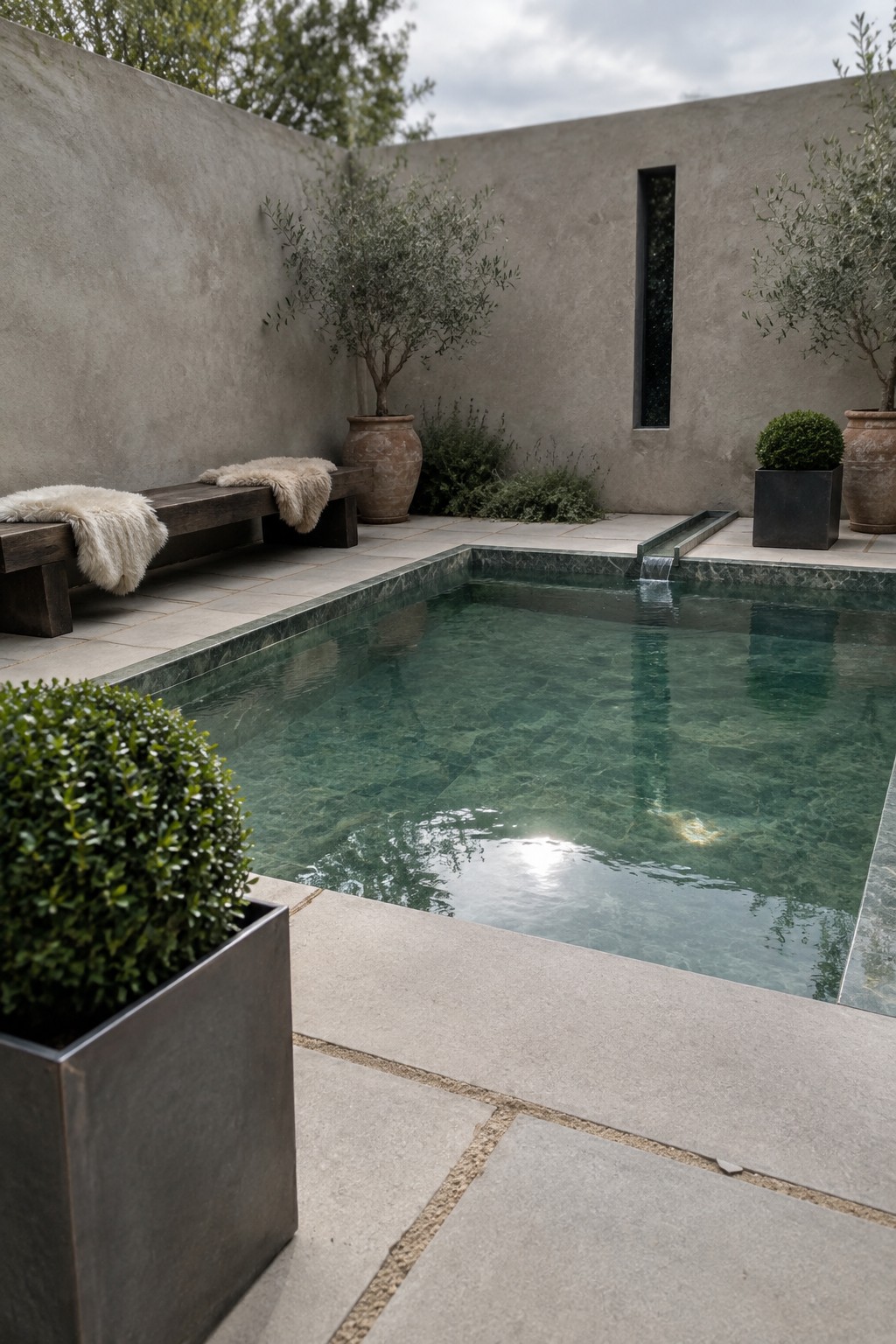
A wooden bench gives the pool area a grounded, natural feel that pairs well with concrete walls and stone paving. It offers a place to sit without crowding the space or adding bulky furniture, and the material adds warmth that softens the harder surfaces around the water.
This works best in compact outdoor living areas or modern homes where you want minimal upkeep. Set the bench against a wall, add a simple throw for comfort, and keep the finish sealed so it holds up to weather and splashes.
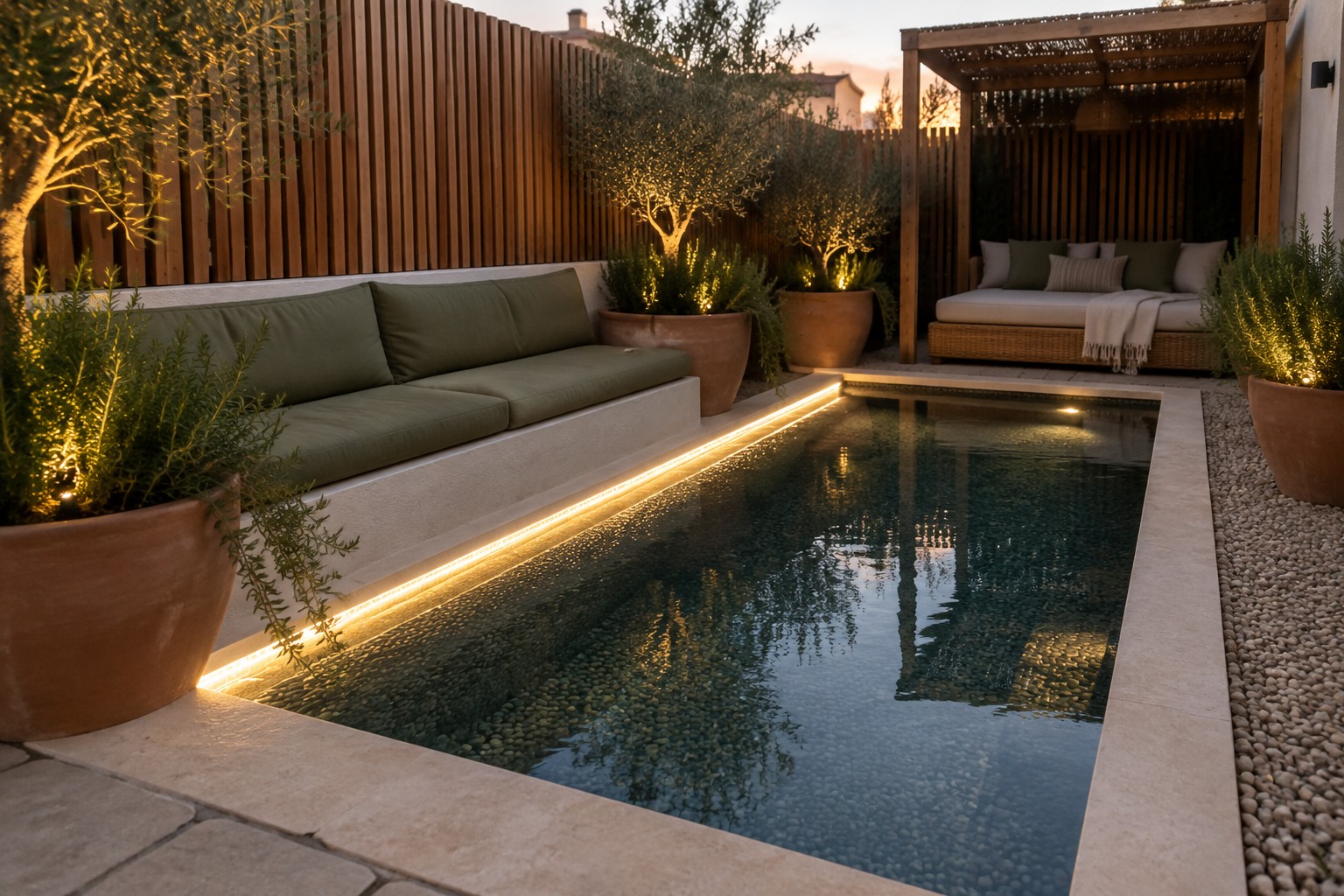
Concrete Bench Seating Around a Plunge Pool
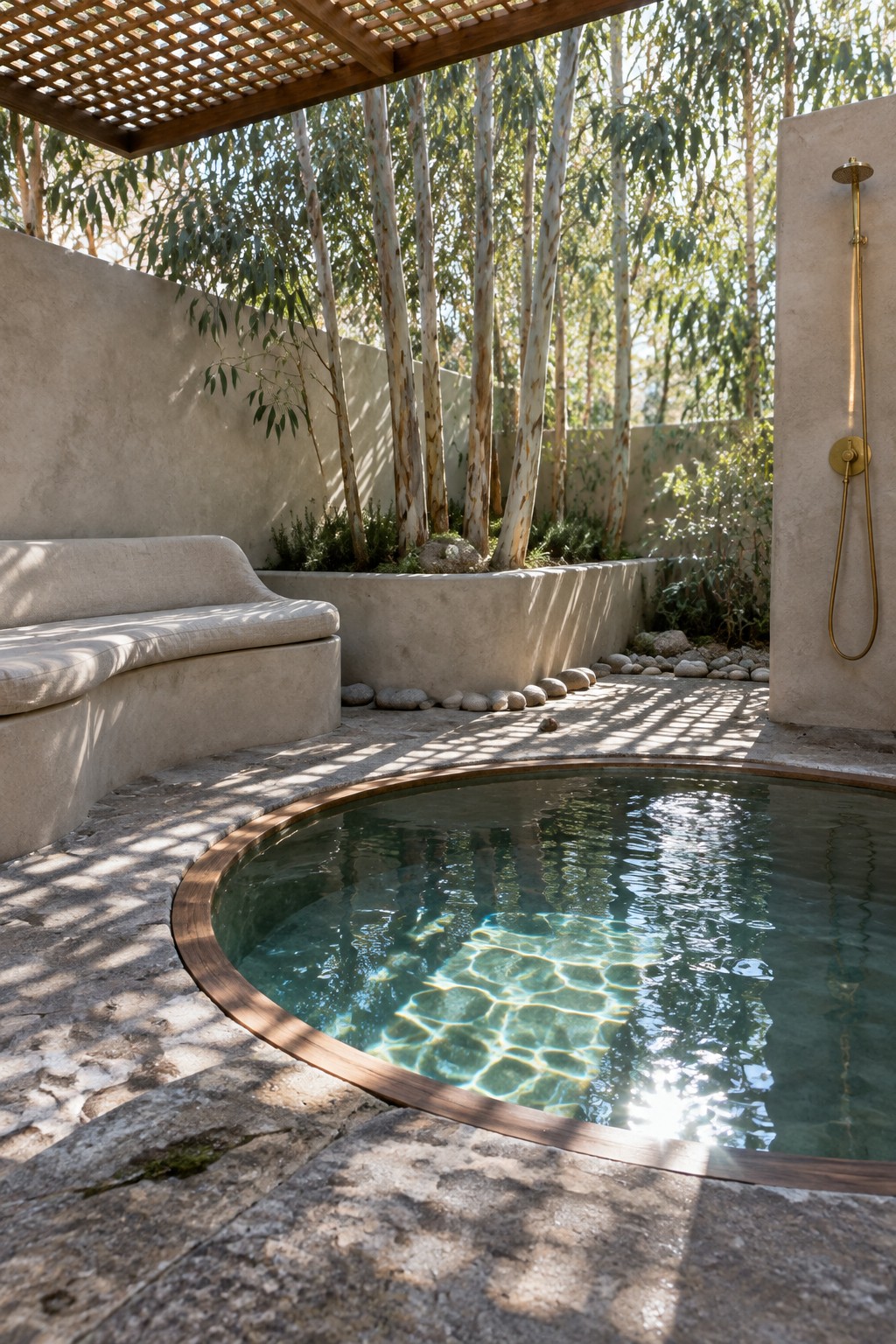
One simple way to make a plunge pool feel more grounded is to build the seating from the same concrete as the pool walls. The bench becomes part of the structure instead of something added later, which keeps the whole area feeling calm and connected. It also saves space and removes the need for extra furniture that might not hold up outside.
This works best in smaller yards or walled gardens where you want the pool to blend into the surroundings. Use the same finish on the bench and walls so the eye moves easily across the space. Just make sure the bench height stays comfortable for sitting, around 18 inches, and that the curve follows the pool edge without crowding the water.
Frequently Asked Questions
Q: How do I stop the stone from getting slippery when it’s wet?
A: Apply a light grit coating made for natural stone once a year. Walk on it after a rain to test the grip. This keeps everyone safe without changing the look.
Q: What size pump do these small pools need?
A: Pick a pump rated for your pool volume. Run it a few hours each day.
Q: Can the pool overflow naturally into a garden bed?
A: Set the water level so it spills gently over one edge. Direct the flow with a shallow stone channel. Your plants get a steady drink this way.
Q: How do I protect the wood from sun damage?
A: Oil the wood every six months with a natural finish. This prevents cracking and fading. Keep the pool cover on during peak summer heat to extend the life.