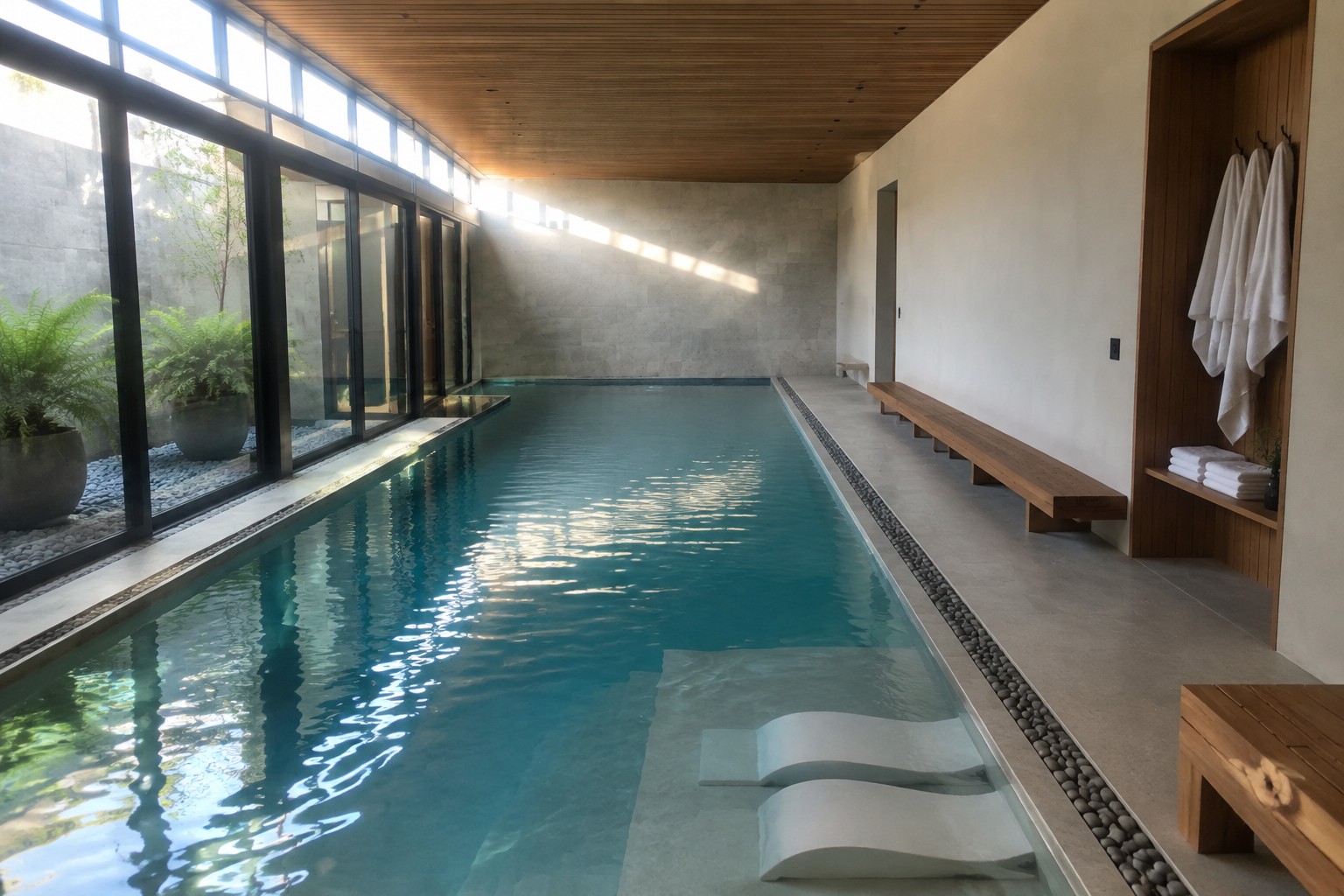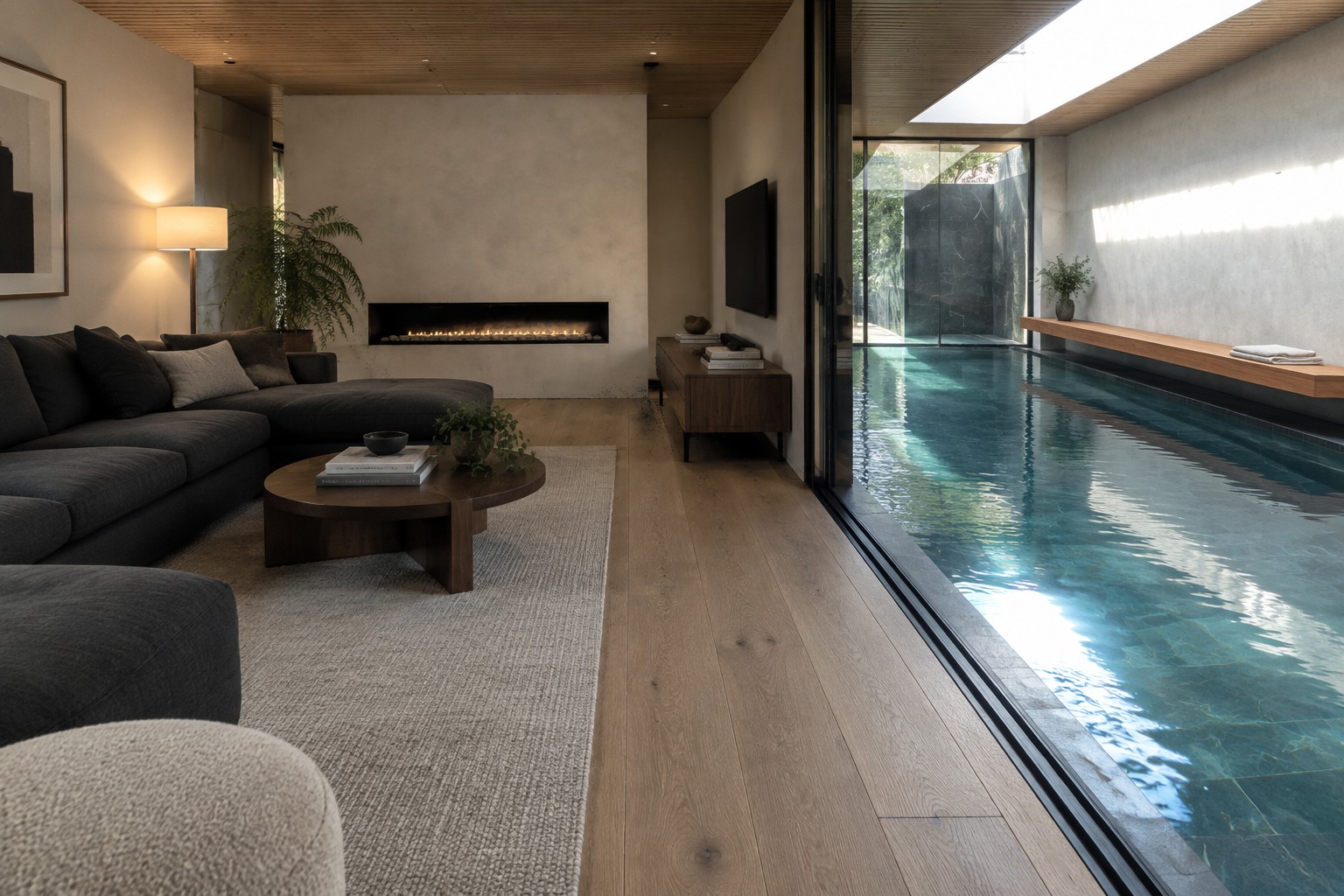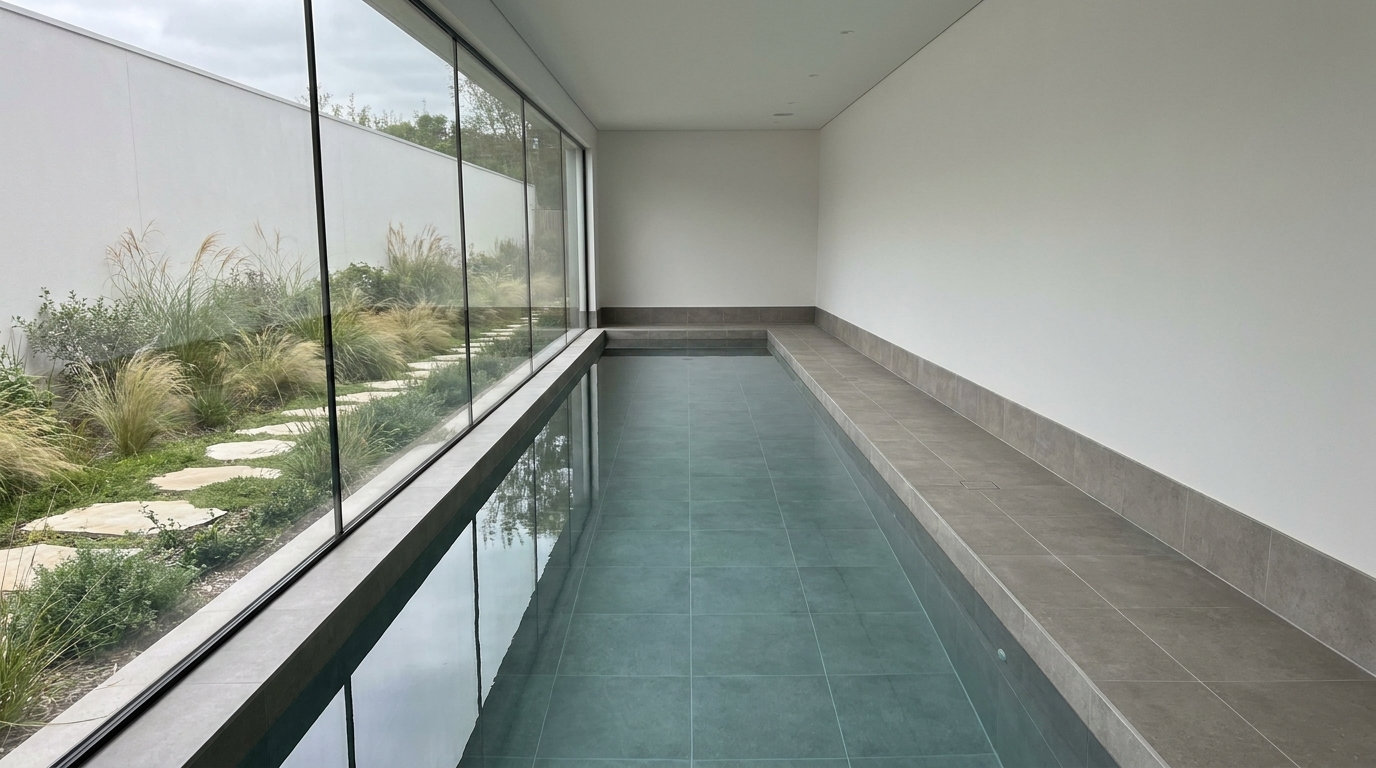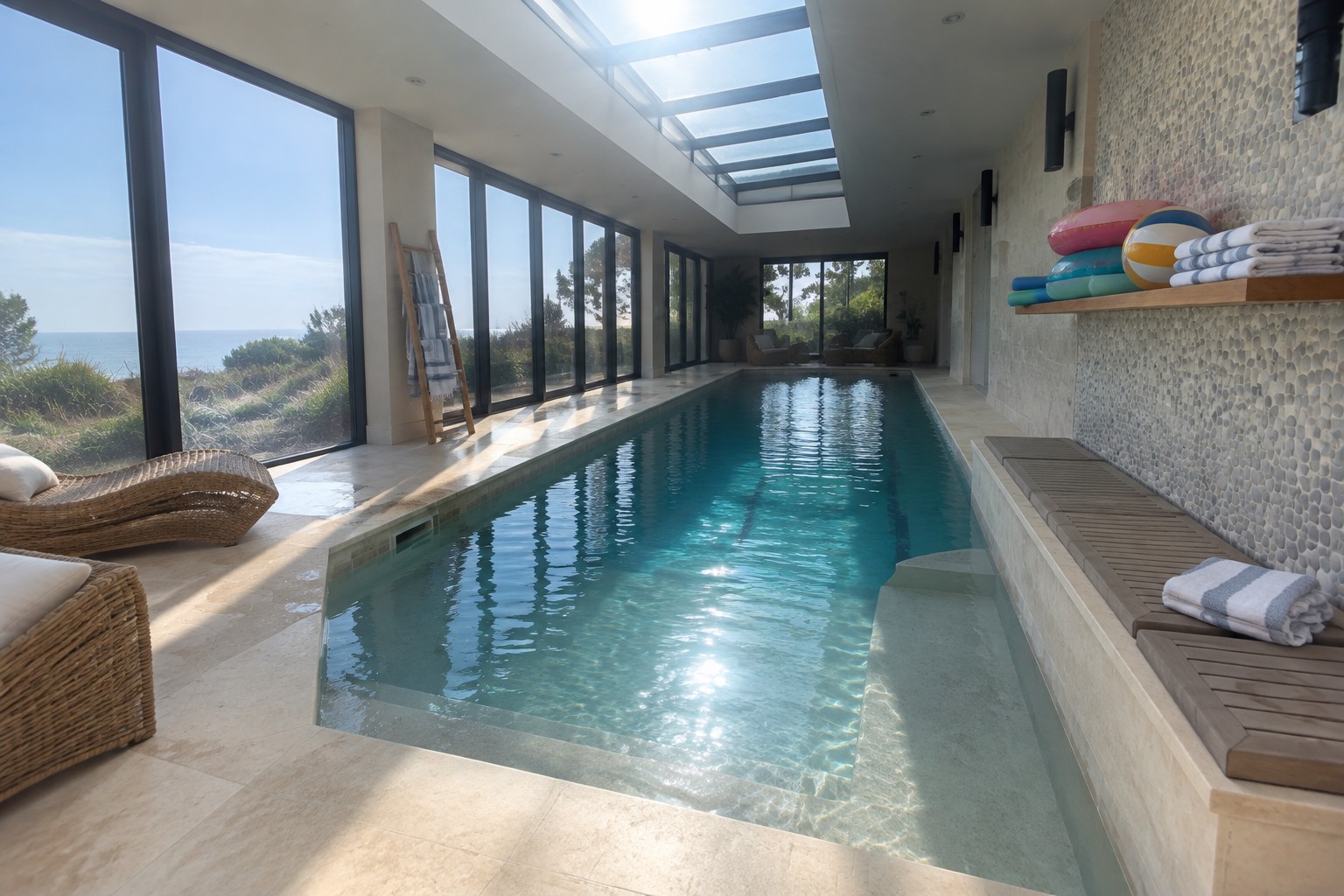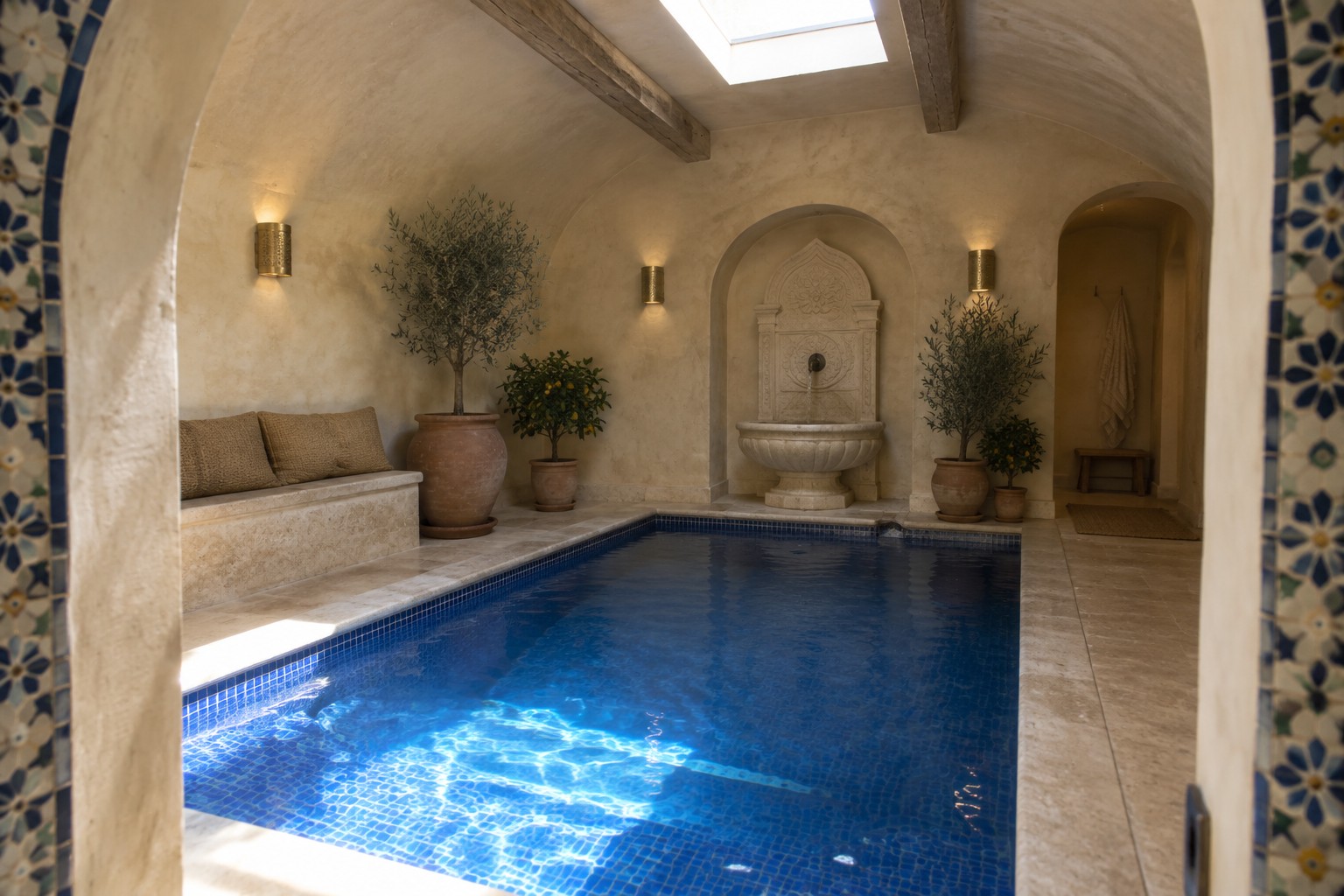
I often find that an indoor pool only feels like part of the house when the arches line up with existing doorways and ceiling heights rather than sitting at their own scale.
Tilework then becomes the next decision because it has to manage both the constant moisture and the way light moves across the surfaces throughout the day.
I keep thinking about how these details would actually hold up once the dehumidifier runs and the room sees regular foot traffic instead of staying a showpiece.
Arches come first.
The simpler tile layouts tend to look better after a few seasons because they do not highlight every water mark or cleaning streak the way busy patterns do.
Arched Fountain Niches for Indoor Pools
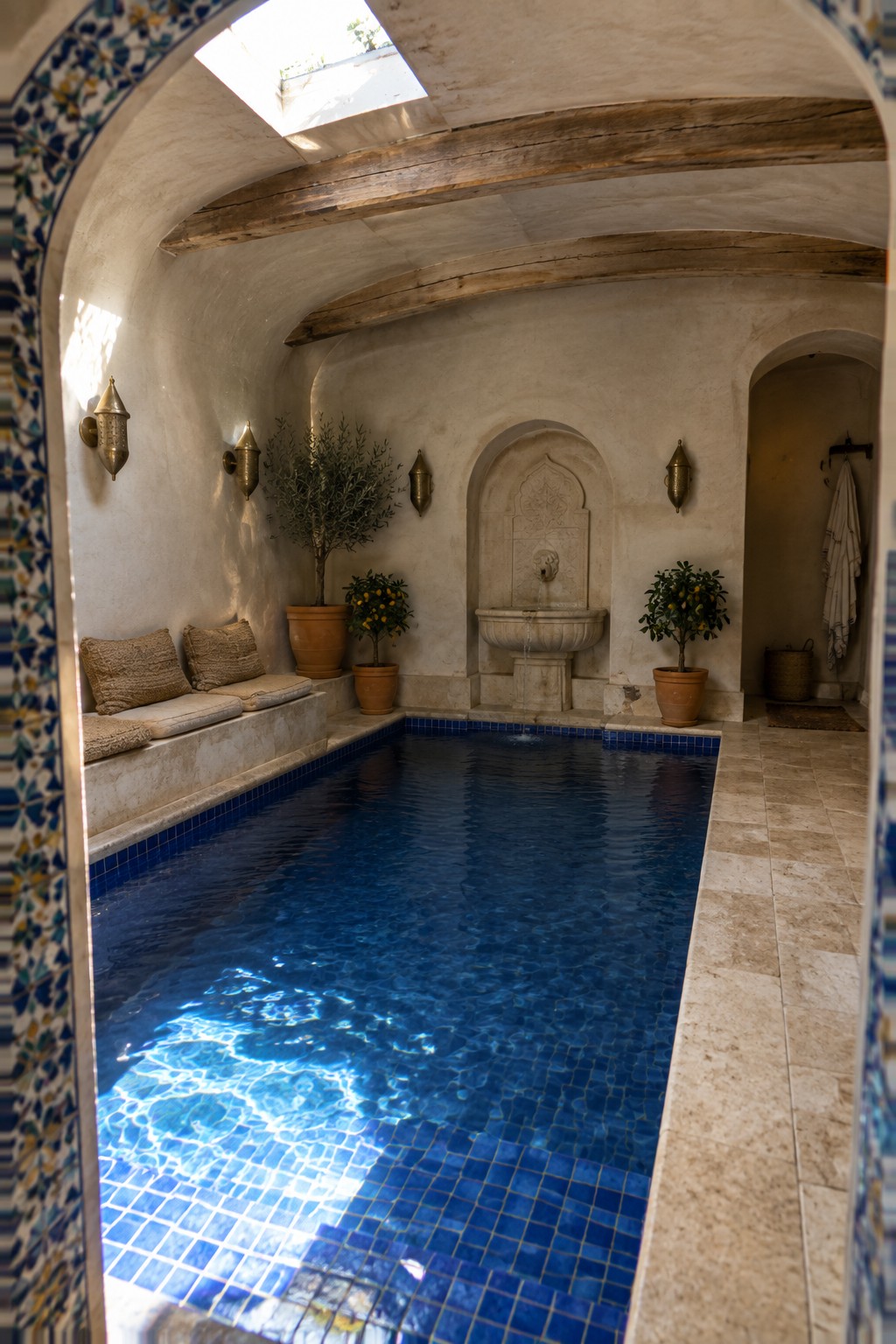
An arched niche with a fountain gives an indoor pool a clear stopping point at one end. The curve softens the long rectangle of water and adds a quiet sense of enclosure without closing the room in.
This detail works best in spaces with plain plaster walls and simple wood beams, where the arch can stand out on its own. Keep the fountain modest in height and pair it with a narrow tile border so the water feature feels like part of the architecture rather than a separate decoration.
Patterned Tiles Along Indoor Pools
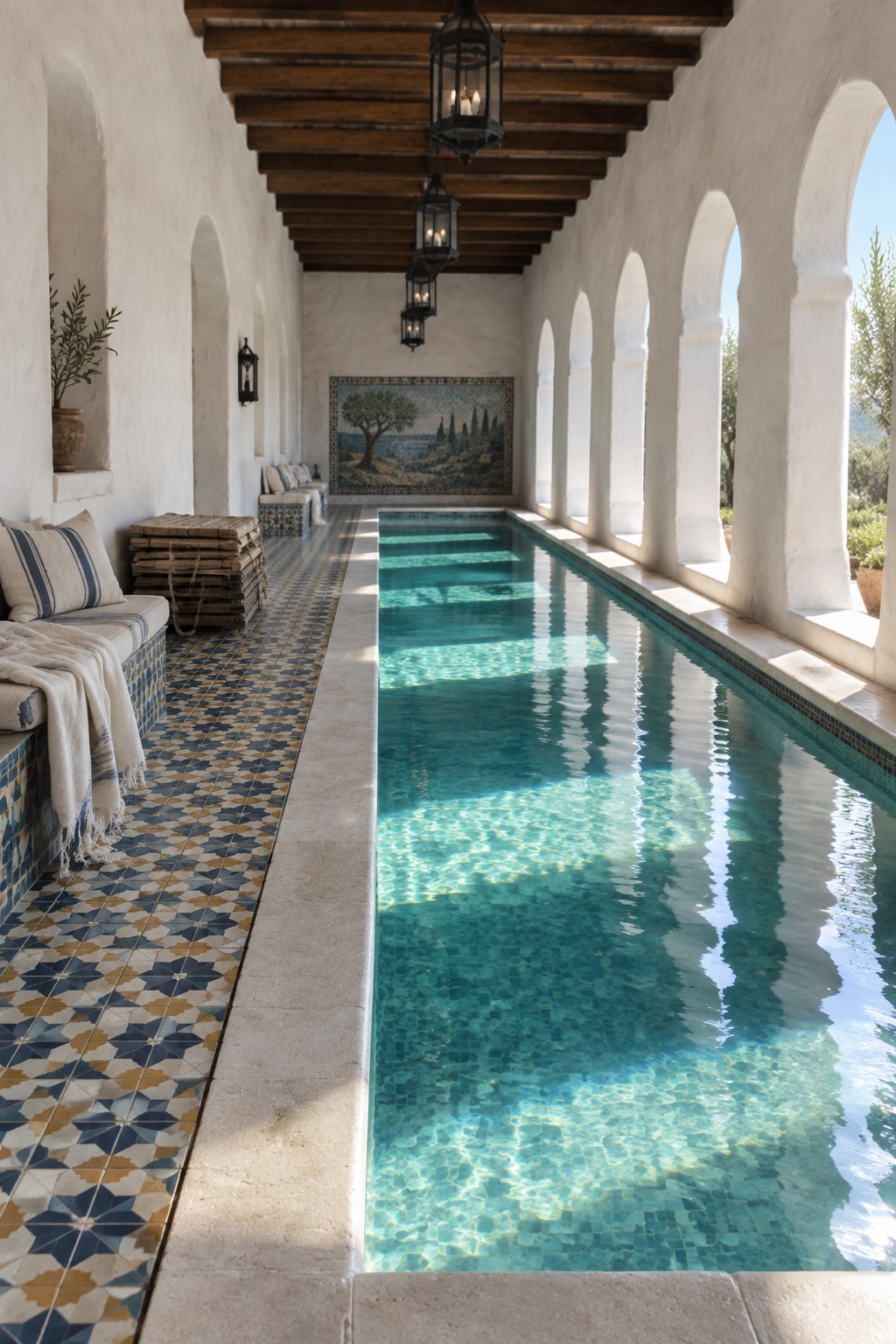
Patterned tiles give a long indoor pool a bit more structure and warmth. Instead of letting the water dominate everything, the tiles create a steady visual line that makes the space feel balanced and intentional.
This approach works well in Mediterranean homes with plenty of natural light and simple white walls. Stick to one strong pattern and let it run the full length, but keep the colors muted enough that the pool water still stands out.
Small Pools in Covered Courtyards
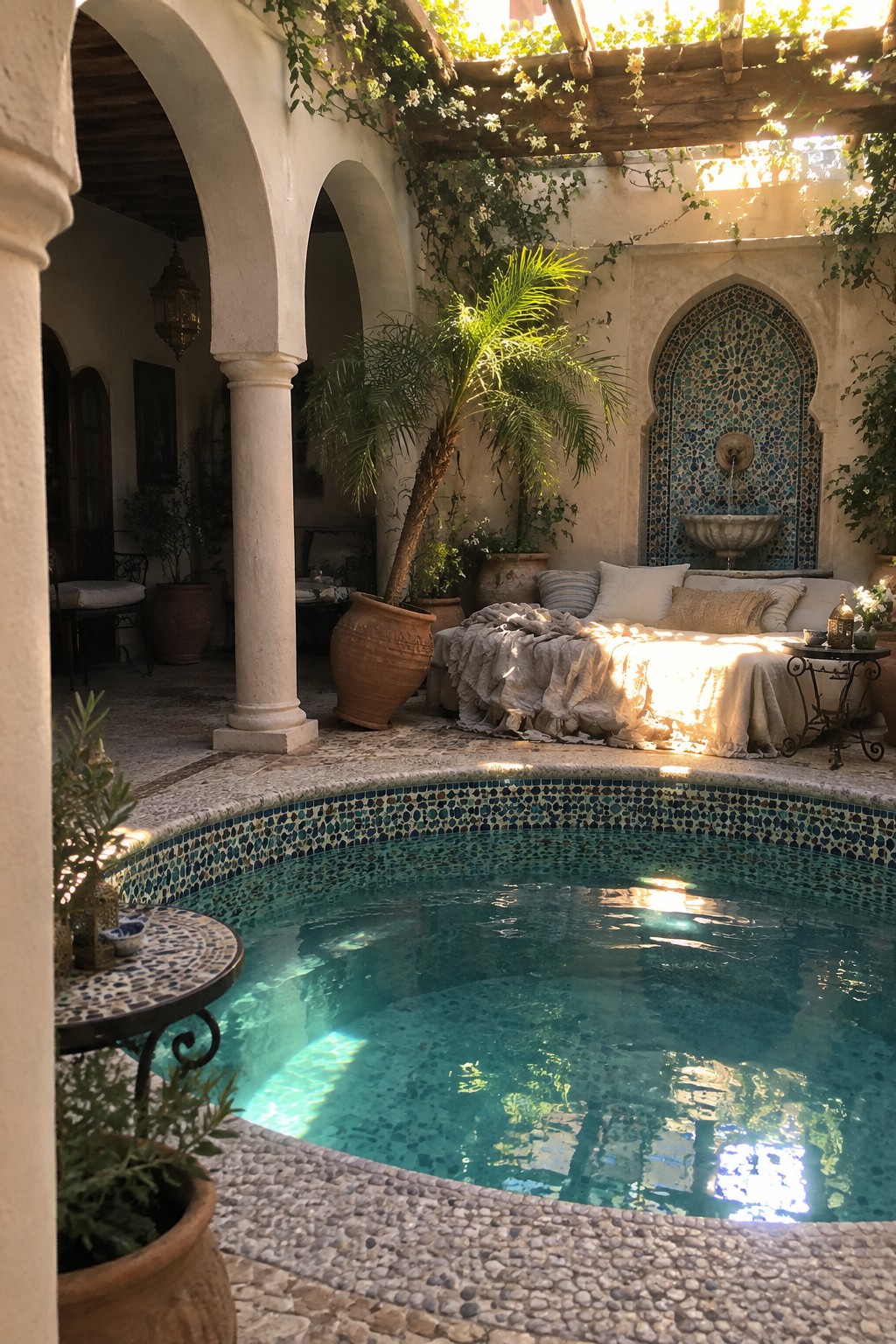
A small pool placed inside a covered courtyard gives the space a private feel without losing the open air. The arches help shape the area and keep it from feeling too exposed, while the tilework carries the same pattern from the walls down to the water’s edge.
This layout works best in homes that already have a central courtyard or a protected side yard. It suits Mediterranean designs where the same arch details and mosaic tiles can repeat from the house to the pool border. Keep the lounging pieces simple and covered so they hold up outdoors.
Patterned Tile Borders Around The Pool
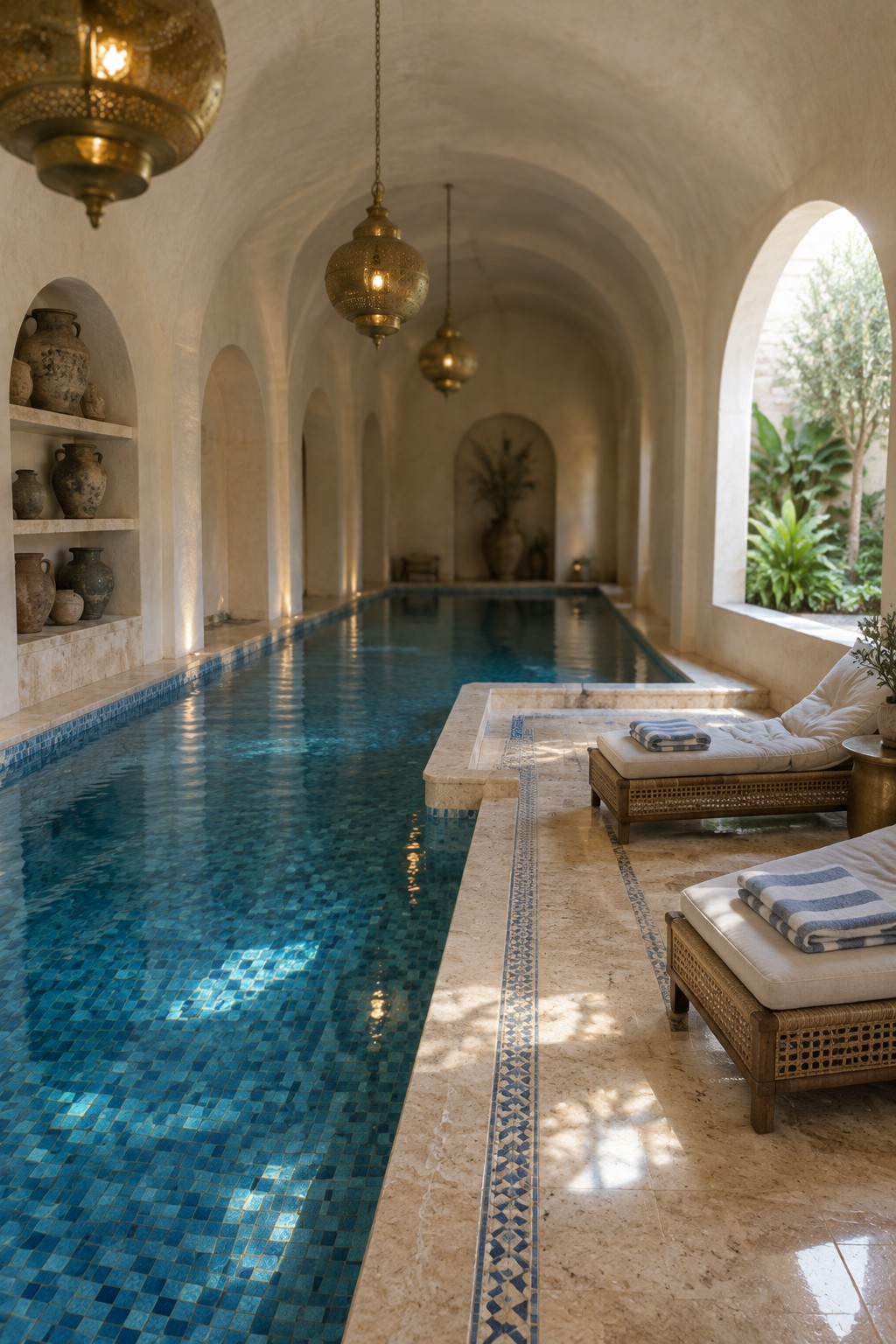
A simple patterned tile border can do a lot to organize a long indoor pool. It marks the edge clearly, adds a bit of color and rhythm, and keeps the surrounding stone floor from feeling too plain next to all that blue mosaic.
This works especially well in Mediterranean-style spaces where the pool runs through a vaulted room. Keep the border narrow so it frames the water without crowding the lounging area, and match the colors to the tile already inside the pool so everything feels connected.
Mosaic-Tiled Recesses for Mediterranean Pool Rooms
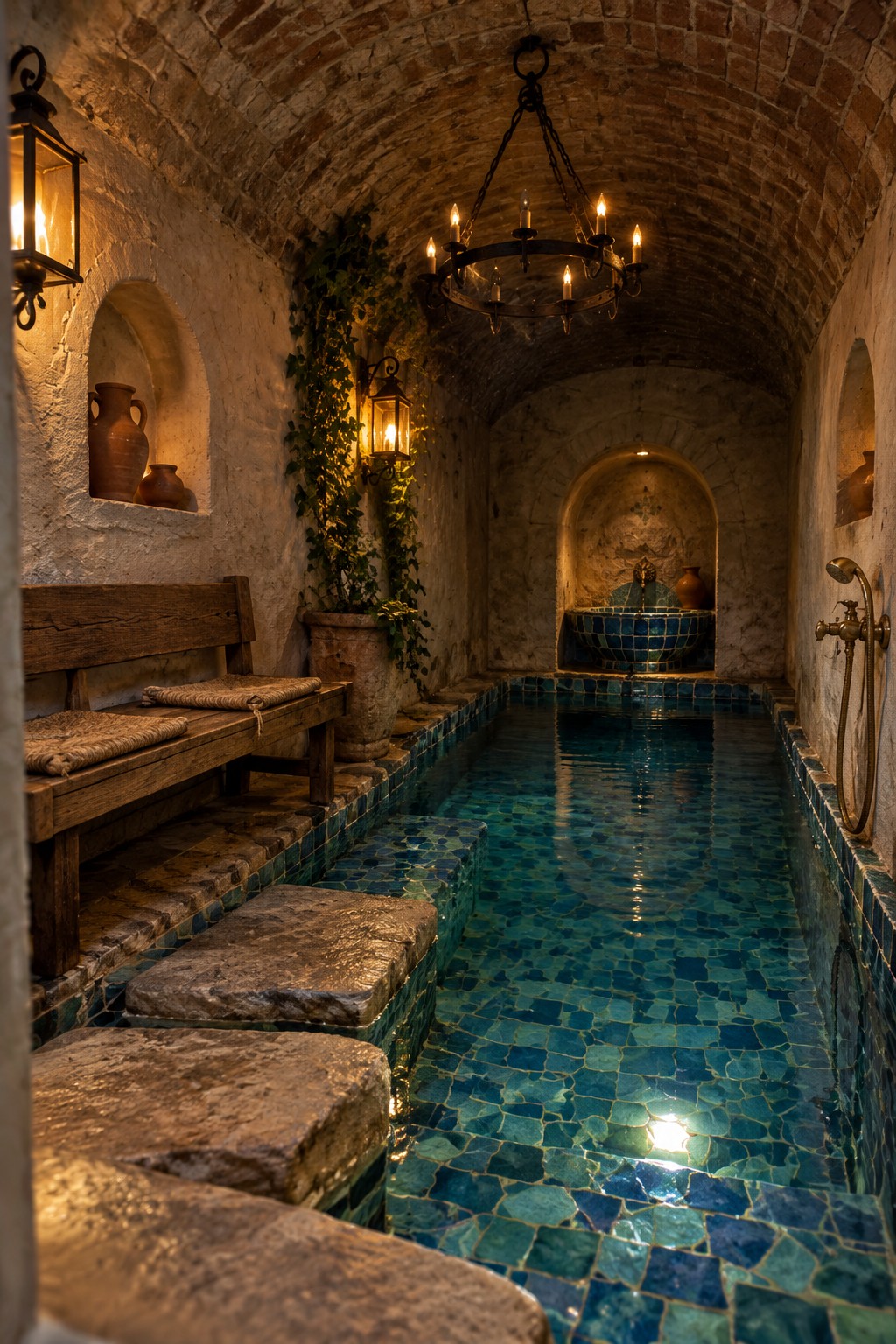
Arched recesses along the walls give an indoor pool real Mediterranean character without needing lots of extra decoration. The simple curves break up the long space and create natural spots for pottery or small lights while the blue mosaic tile wraps the pool and steps in one continuous pattern.
This works best in homes that already have some height or can add a vaulted ceiling. Match the tile color across the floor, steps, and pool edge so the whole room feels pulled together rather than busy.
Matching Tile Patterns From Floor to Pool Edge
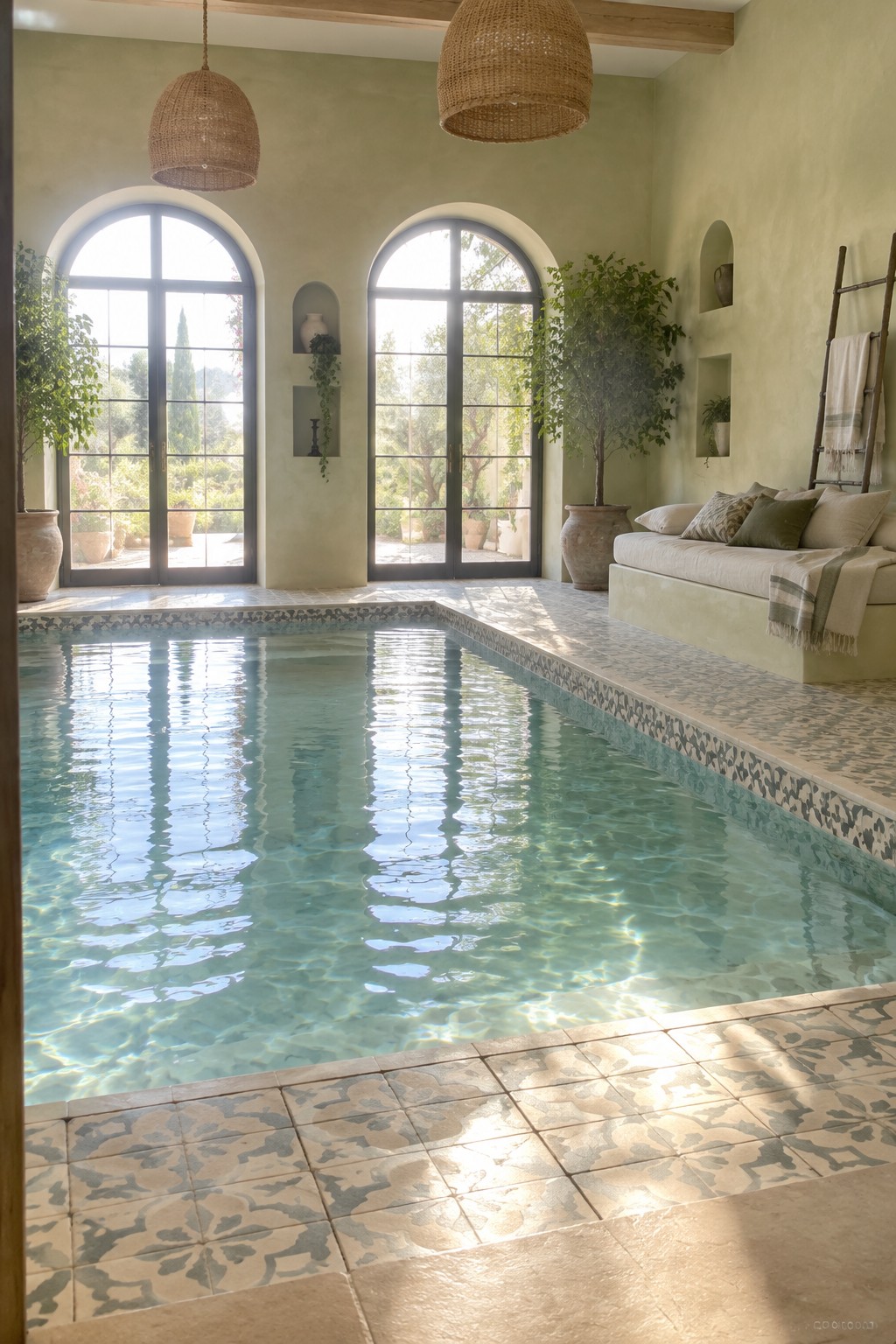
Patterned tiles that run from the surrounding floor right up to the water make the pool feel like part of the room instead of something dropped in. The design avoids a hard break between wet and dry areas, which keeps the space looking calm and pulled together even when the pool is in use.
This approach works best in homes where the pool sits inside living space rather than in a separate wing. Stick with one tile pattern or a close variation so the eye keeps moving across the surface without stopping. Too many competing patterns can start to feel busy once the water reflects light back up.
Wall Recesses That Highlight Poolside Tilework
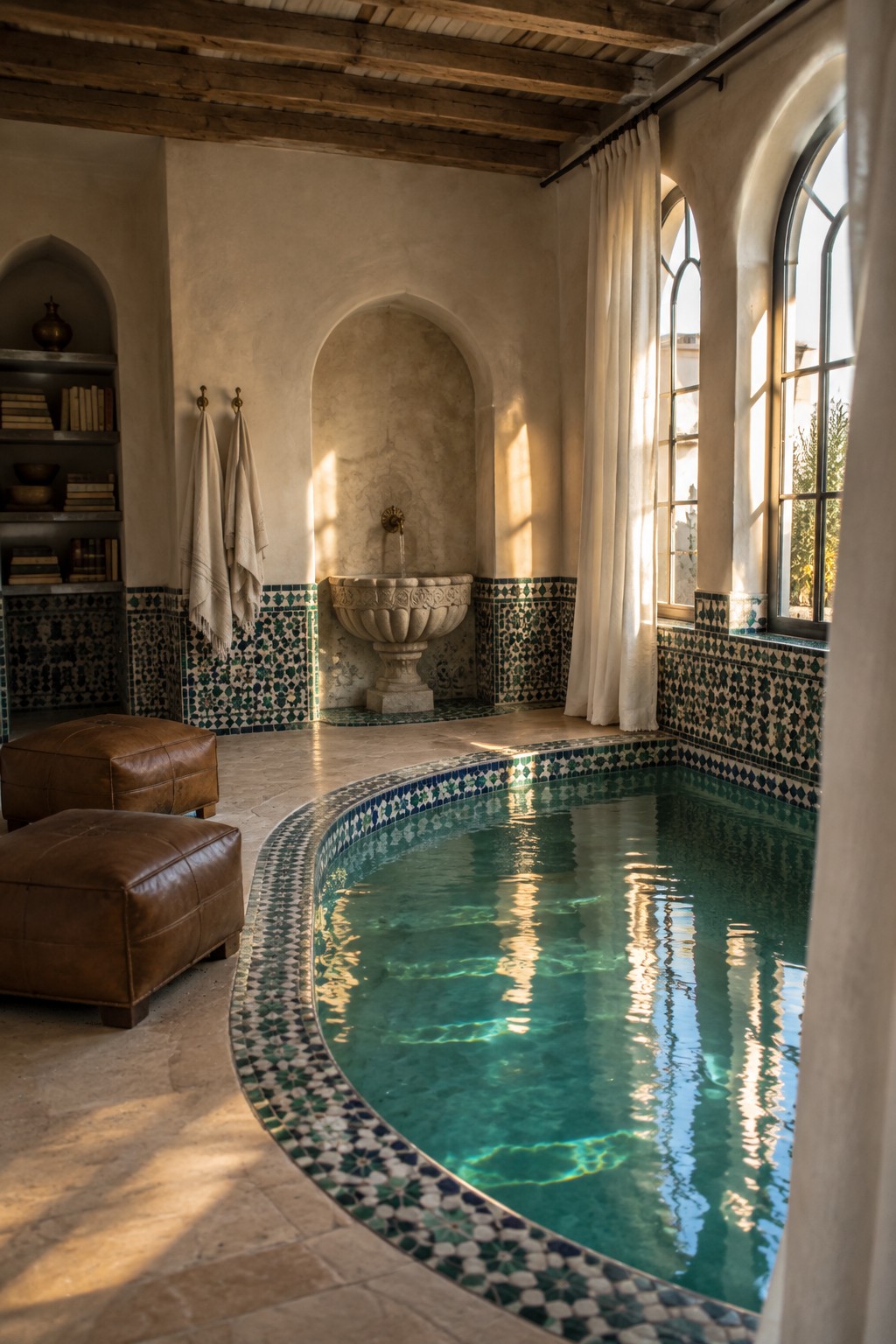
Arched recesses give an indoor pool a clear focal point without needing extra furniture or decor. The tile border running along the edge pulls the whole space together and keeps the look consistent from wall to water.
This works best in rooms with decent ceiling height and a simple plaster finish. It suits homes that already lean Mediterranean or Spanish in style, though the same idea can tone down in more neutral palettes if the tile stays simple.
Arched Tile Murals In Indoor Pool Rooms
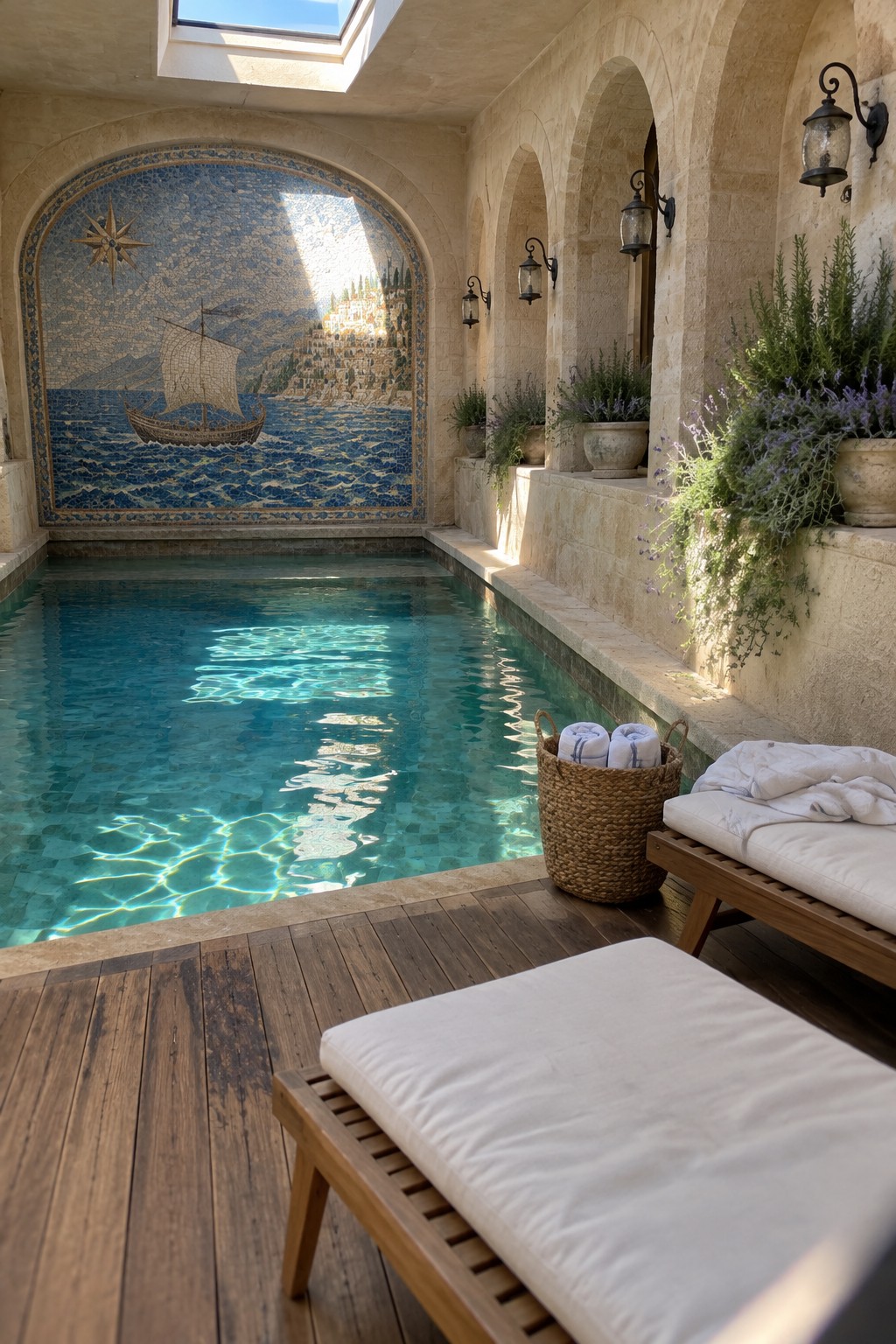
A large arched tile mural gives an indoor pool a clear focal point without needing much else around it. The curve frames the scene nicely and the tilework adds color and texture that holds up to moisture and changing light.
This works best in spaces with some height and stone or plaster walls already in place. Keep surrounding finishes quiet so the mural does the work, and make sure the scale fits the wall rather than fighting the room proportions.
Arched Details to Shape an Indoor Pool
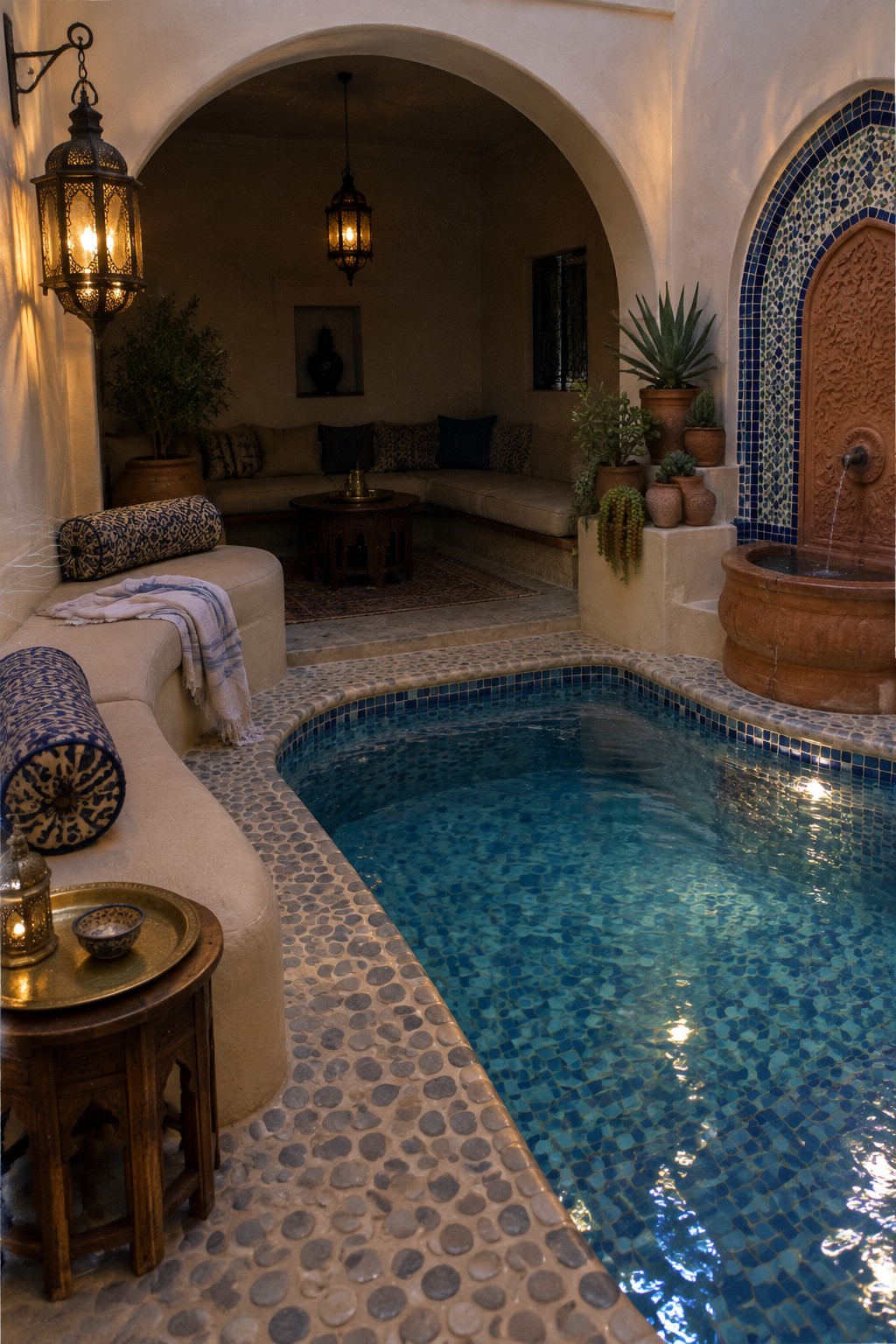
Arches give an indoor pool room a clear structure without making it feel closed in. They create natural spots for seating and features like fountains while letting the water stay the main focus. The rounded shapes also help balance the hard lines of the pool itself.
This works best in homes that already lean Mediterranean or want a softer architectural feel. Keep the arches fairly simple and let tilework on the pool edge and walls carry the color and pattern. Avoid crowding the space with too many curves or the room can start to feel busy.
Repeating Arches Along Indoor Pool Walls
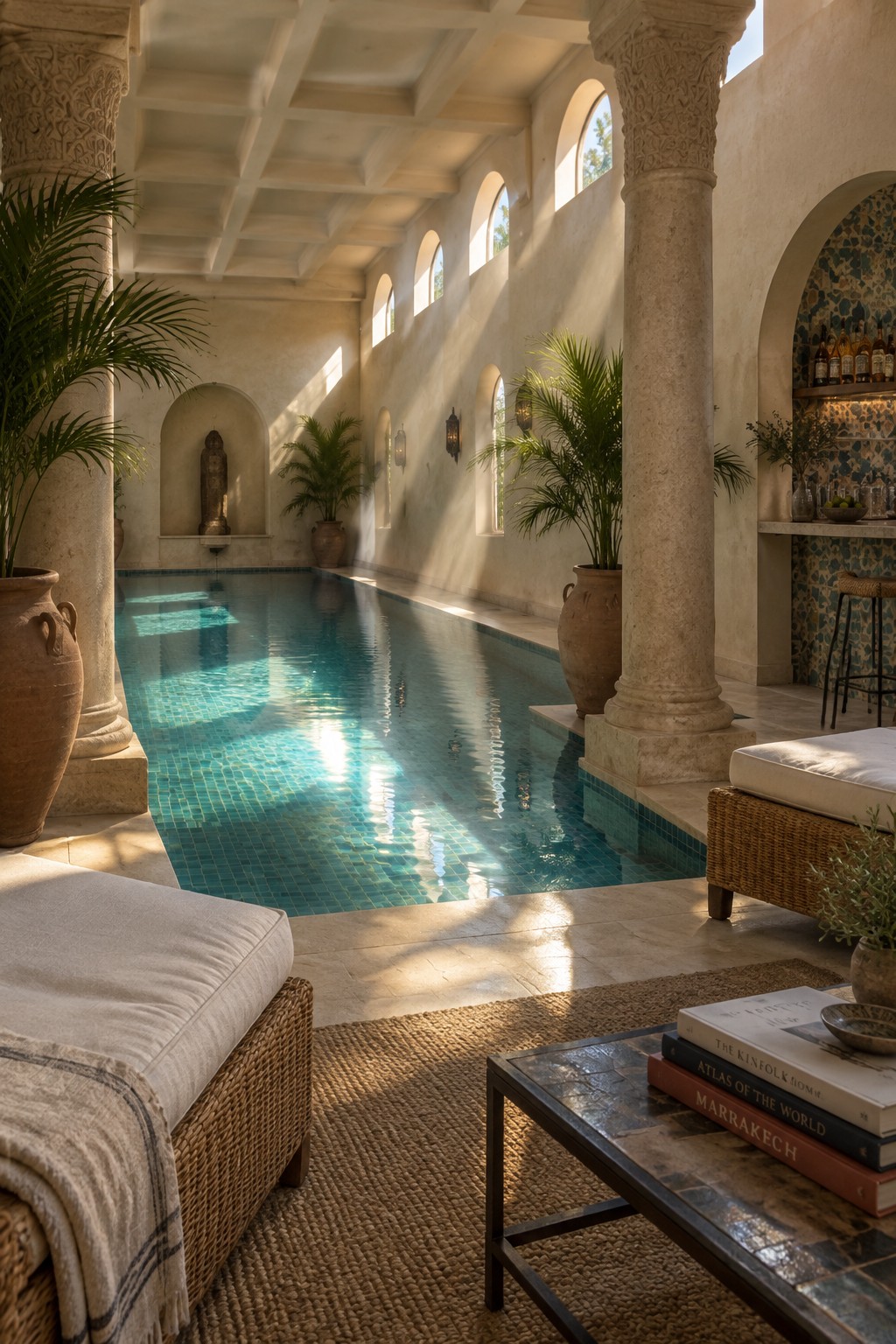
One simple way to handle a long indoor pool is to run a steady row of arches down the walls. The arches break up the length, bring in light from the side, and give the space a clear rhythm without needing much extra decoration.
This works best in rooms with decent height and a fairly open layout. Keep the arches in proportion to the pool length and leave the recesses simple so they can hold a plant or a small piece without crowding the view. It suits homes that already use stone, plaster, or tile and want that Mediterranean structure without overcomplicating the room.
Shallow Wall Niches for Poolside Decor
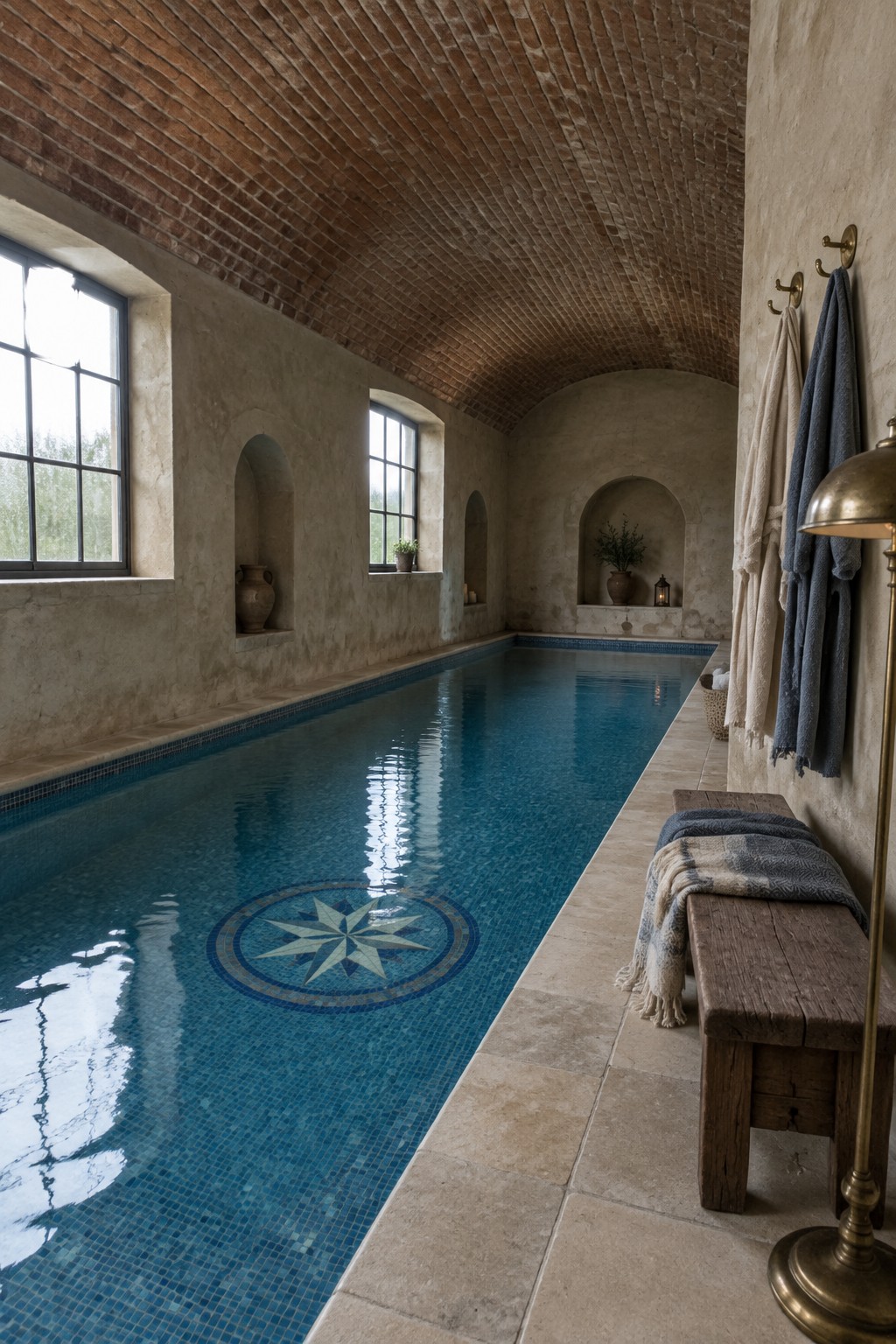
Arched niches give the long side walls something to hold without crowding the space. They break up the flat surface, create spots for a simple pot or lantern, and keep the room feeling open while still adding that Mediterranean structure.
This approach works best in rooms with enough wall depth and even light. Keep the niches shallow so they do not eat into the walkway, and repeat the same arch shape a few times rather than mixing sizes. The pool stays the main feature while the walls gain quiet rhythm.
Decorative Wall Recesses Beside Indoor Pools
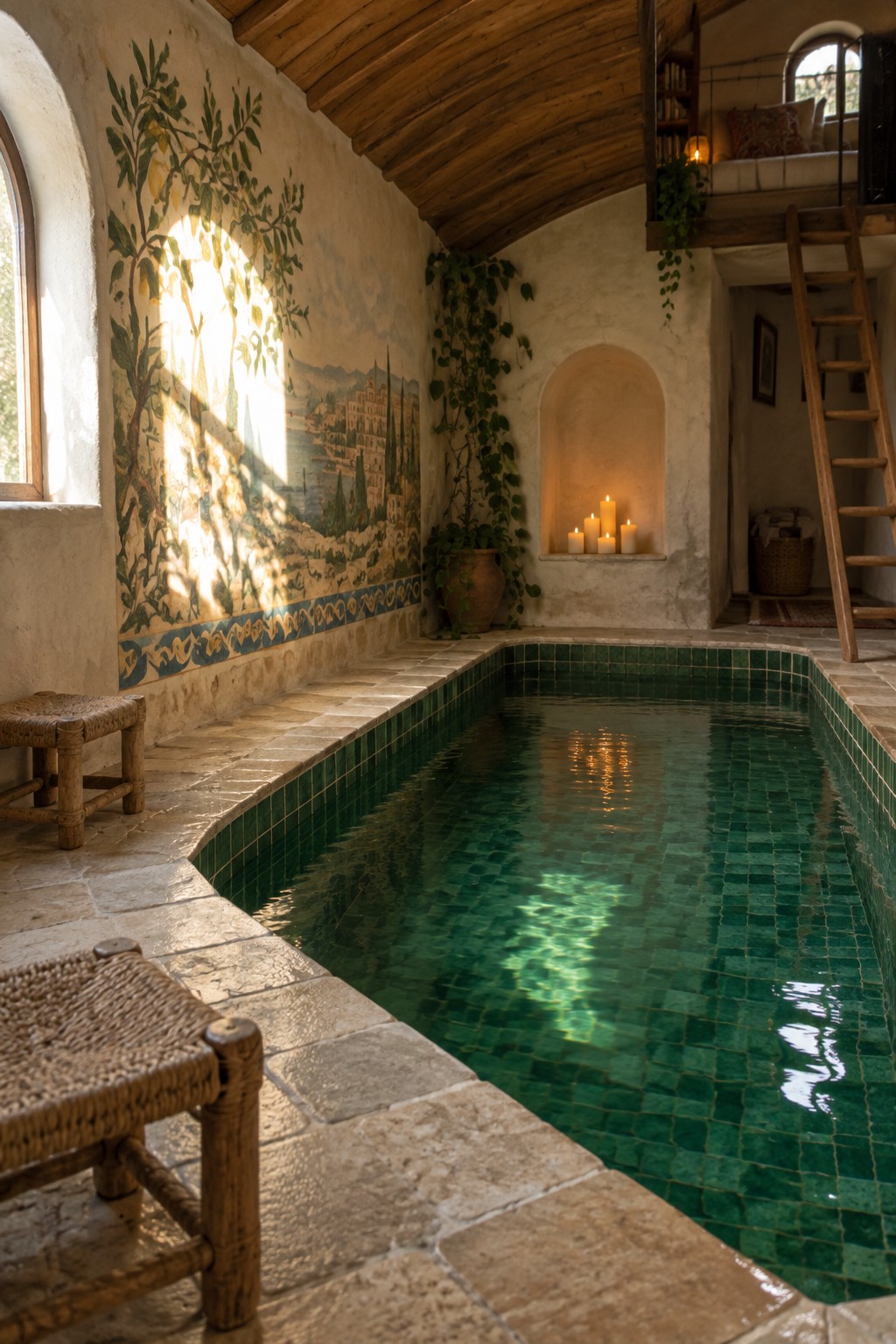
An arched niche set into the wall next to the pool creates a simple spot for candles or a small plant. It adds a bit of architecture without crowding the space and gives the room that softer Mediterranean feel people often want in an indoor pool area.
This detail works well in longer rooms where the walls can feel flat. Keep the niche shallow, place it at a comfortable height, and use it in homes with plaster or stone walls so the curve feels like a natural part of the structure rather than an add-on.
Built-In Display Niches for Mediterranean Pool Rooms
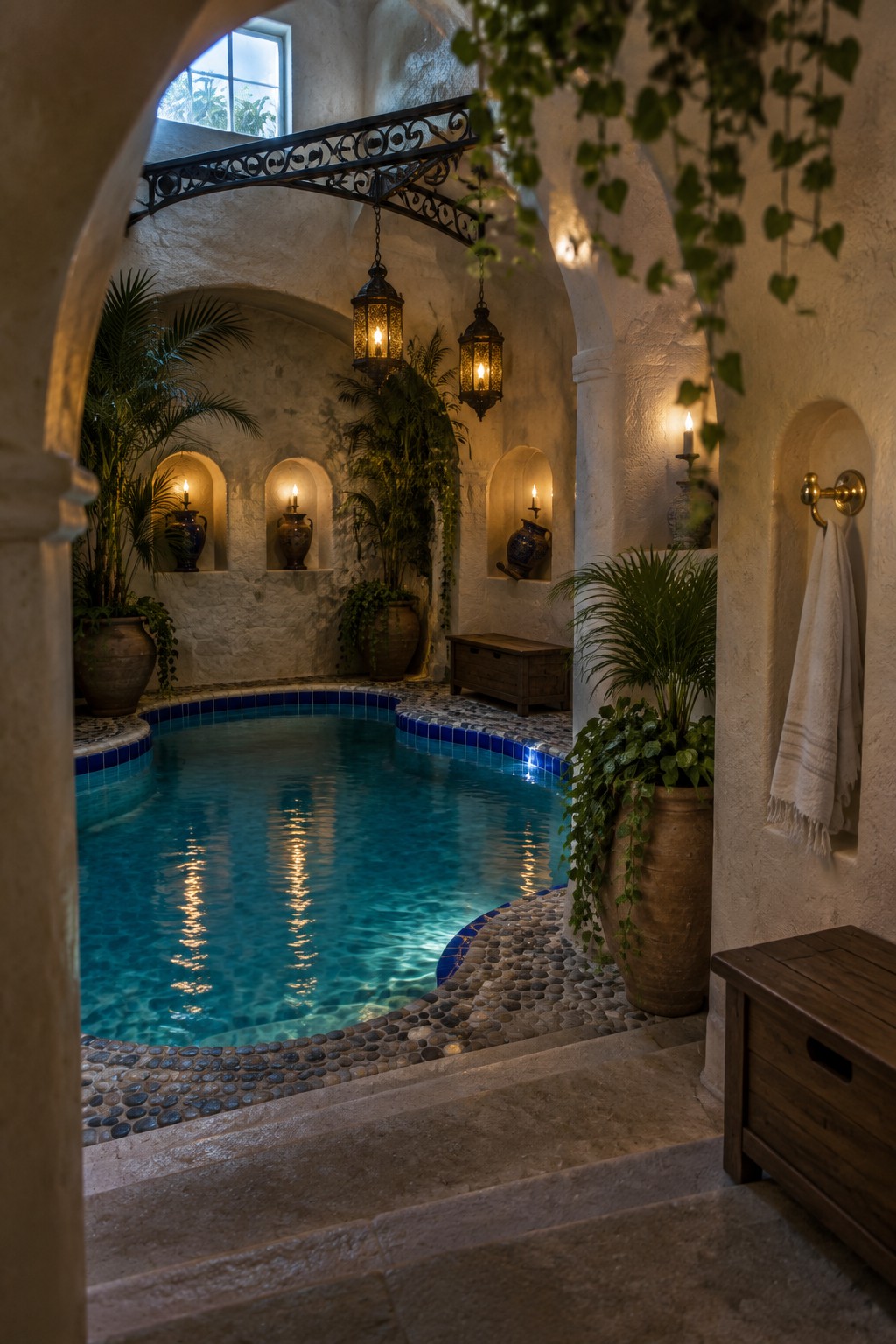
Arched niches built into the walls give an indoor pool a bit more character without adding clutter. They create natural spots for pottery, candles, or small plants, and the curves help tie the whole space together in a Mediterranean style. The detail feels simple but makes the room look more finished.
This approach works best in homes where the walls are thick enough to carve out the recesses. It suits spaces that already have arches or stone surfaces, and it keeps the focus on the pool itself rather than on extra furniture. Just be sure the niches stay shallow so they do not interfere with walking paths around the water.
Arched Niches With Built-In Seating
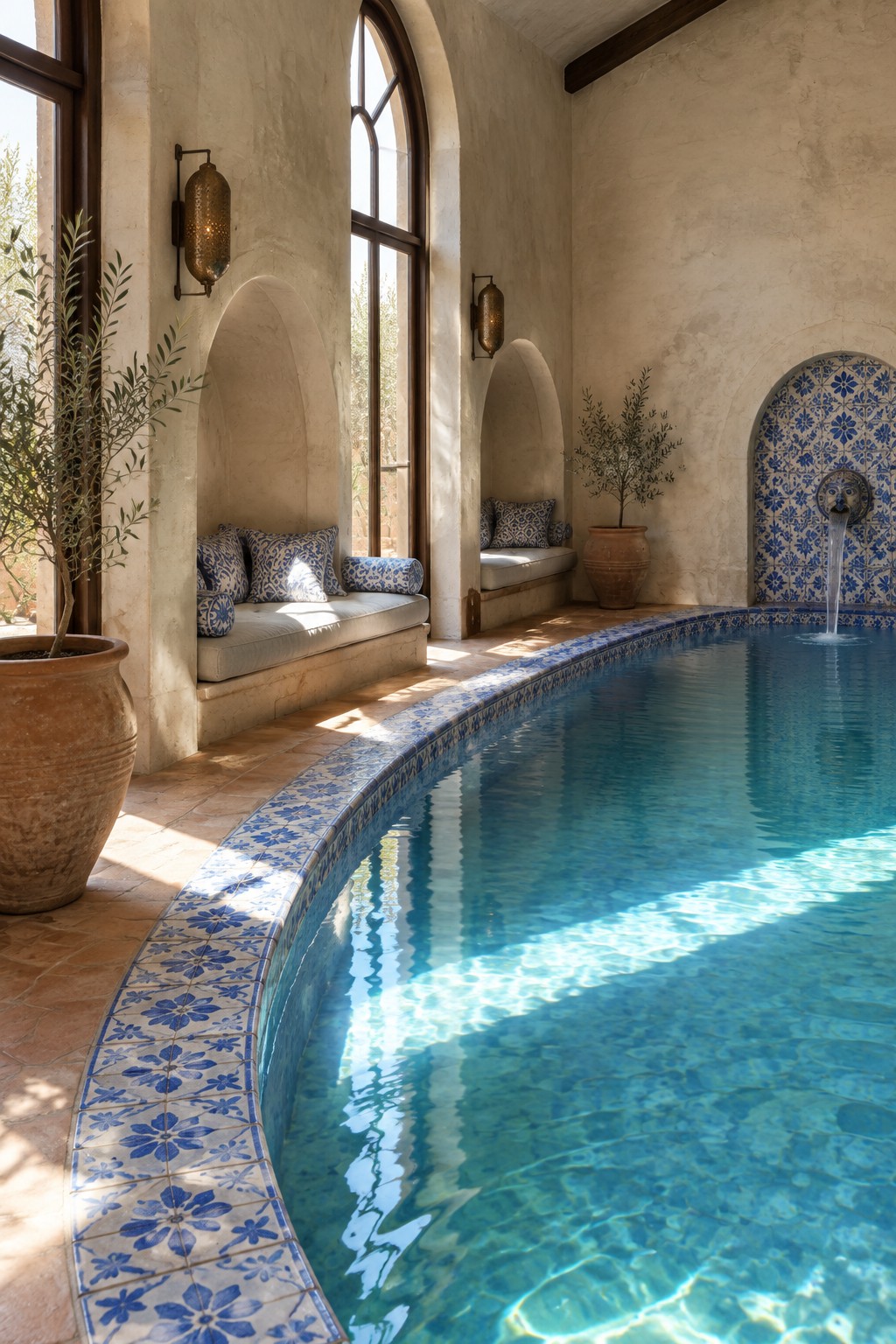
Arched wall recesses give you a way to add seating right beside an indoor pool without taking up floor space or breaking the flow of the room. The curves fit the Mediterranean look and keep the area feeling open even when the pool takes up most of the floor.
This works best in homes with tall ceilings and thick walls where you can carve out the niches without losing structure. Keep the cushions simple and let the tile on the pool edge carry the color so the whole space stays calm rather than busy.
Tile Patterns That Define Indoor Pool Walkways
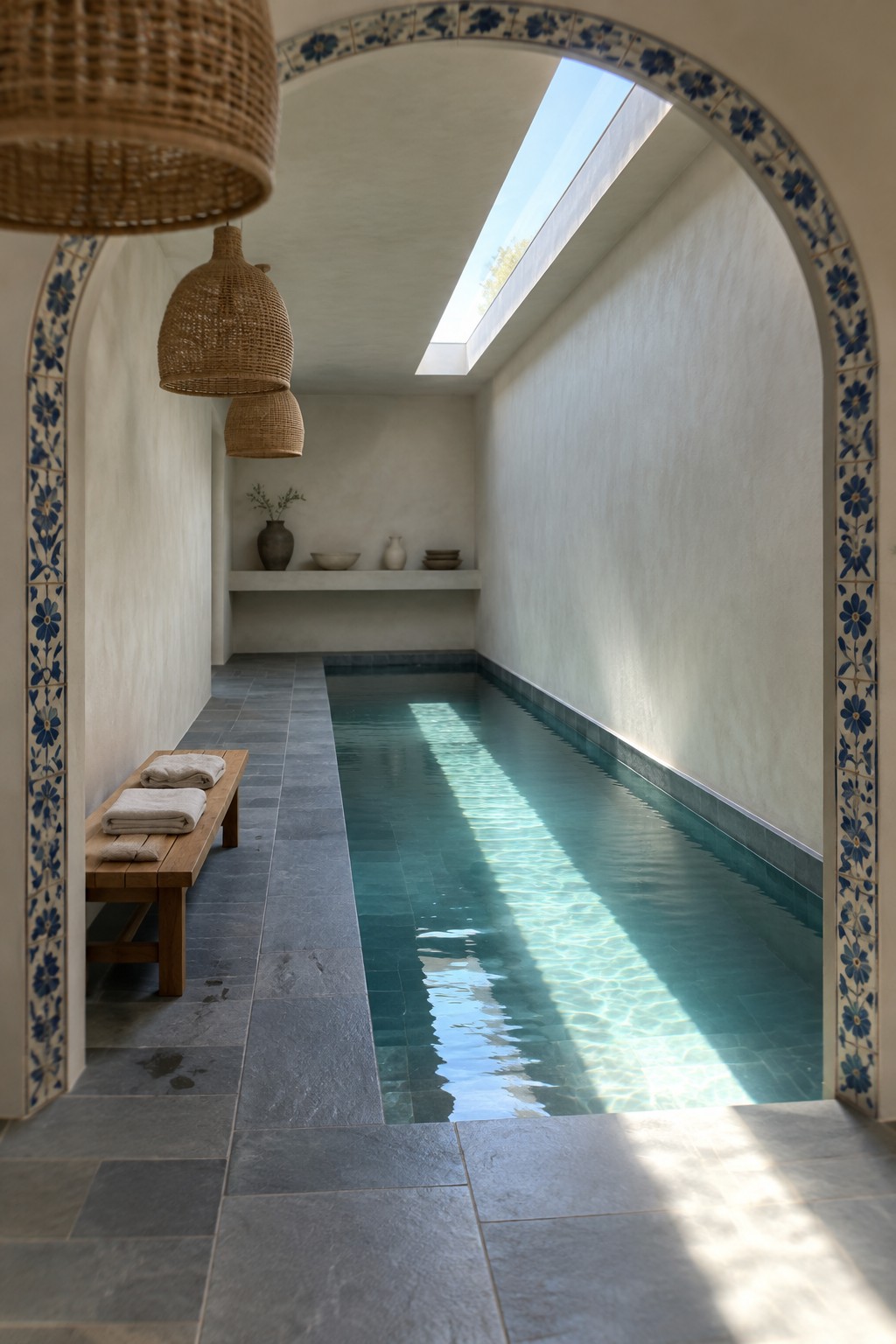
Arched tile borders give an indoor pool a clear Mediterranean structure without needing lots of extra decoration. The arches frame the water and create a natural division between the pool and the surrounding walkway, which helps the long narrow space feel more organized.
This approach works best in rooms with high ceilings where the arches can sit comfortably above eye level. It suits homes that already lean toward simple plaster walls and stone floors, since the tile pattern becomes the main point of interest. Keep the tile colors limited so the borders do not compete with the water or the light coming from above.
Space-Saving Recessed Seating Beside Indoor Pools
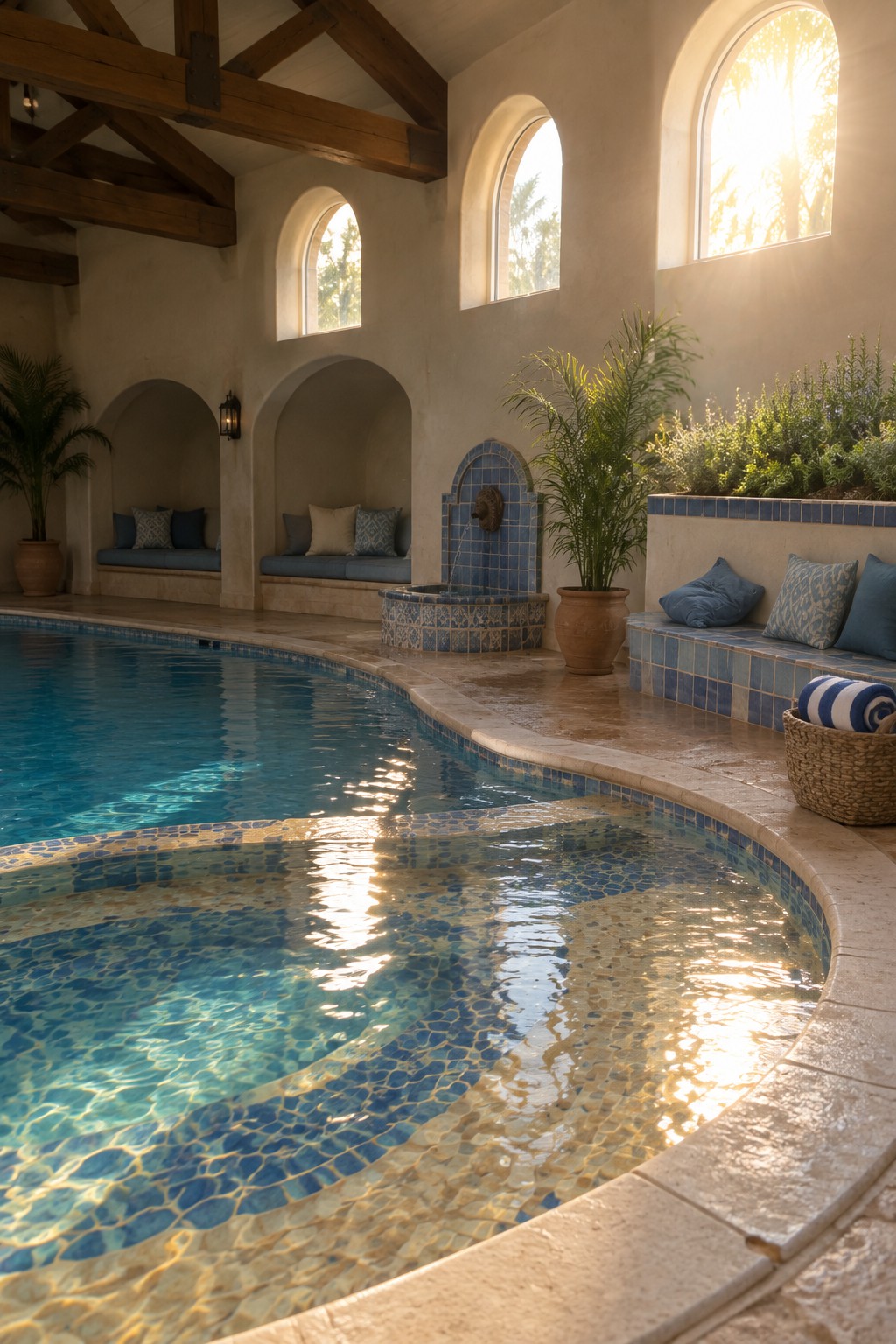
Many indoor pools feel empty because people hesitate to add furniture near the water. Arched recesses built into the walls solve this by giving you places to sit without anything movable taking up floor space or getting in the way.
This approach works best in homes that already use Mediterranean details like tile and plaster. Keep the cushions simple and let the blue tile around the pool and fountain do the rest of the work.
Recessed Benches and Seating Along Pool Walls
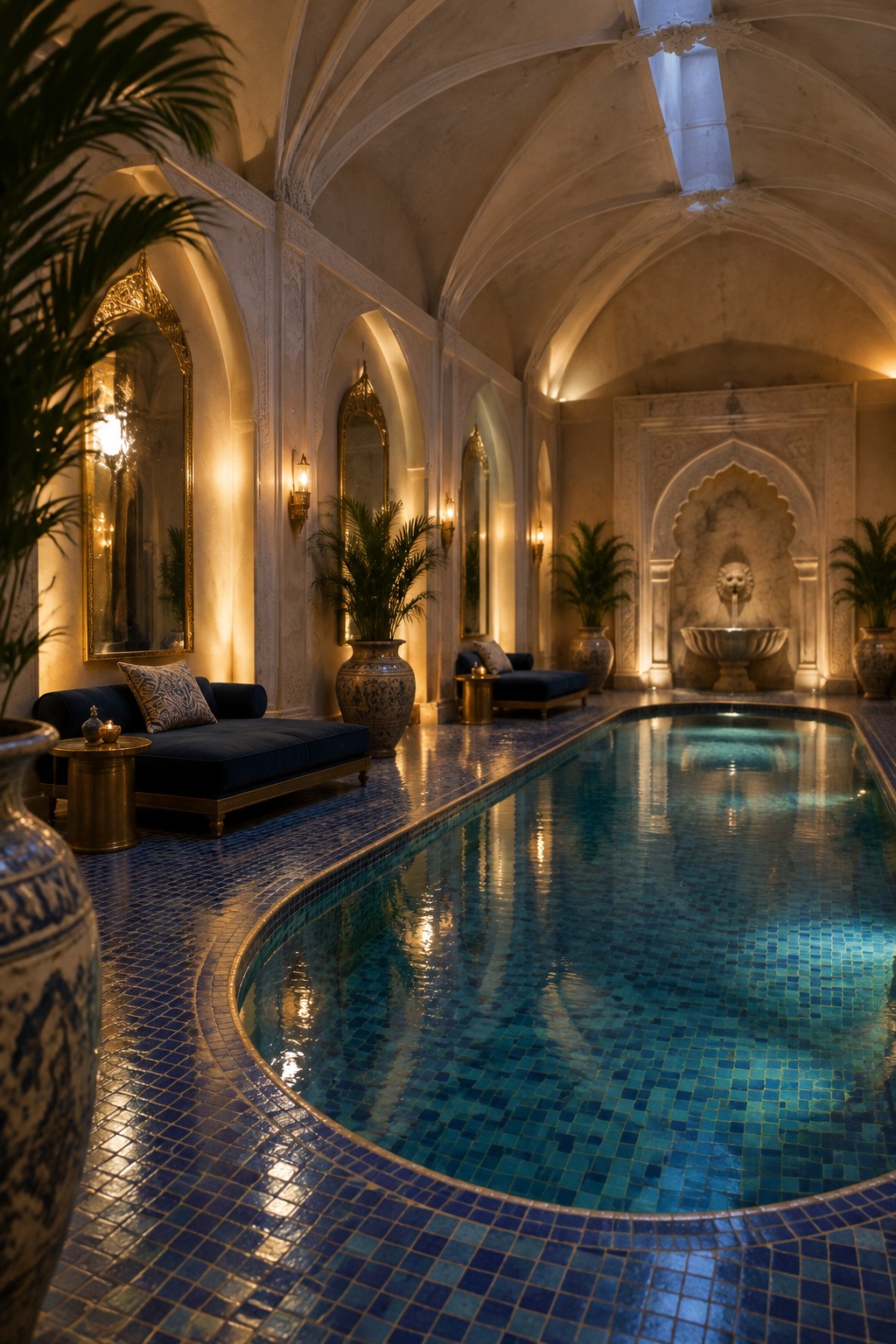
Arches work well in an indoor pool because they break up long walls without adding clutter. They create small recessed spots that can hold a bench or a pair of chairs right beside the water. The shape also gives the room that Mediterranean rhythm people often want in these spaces.
This approach suits larger rooms where the pool runs the length of the space. Keep the arches fairly shallow so the deck stays open for walking. Use the same tile family on the floor and pool walls so everything feels connected rather than busy.
Symmetrical Arches for Mediterranean Indoor Pools
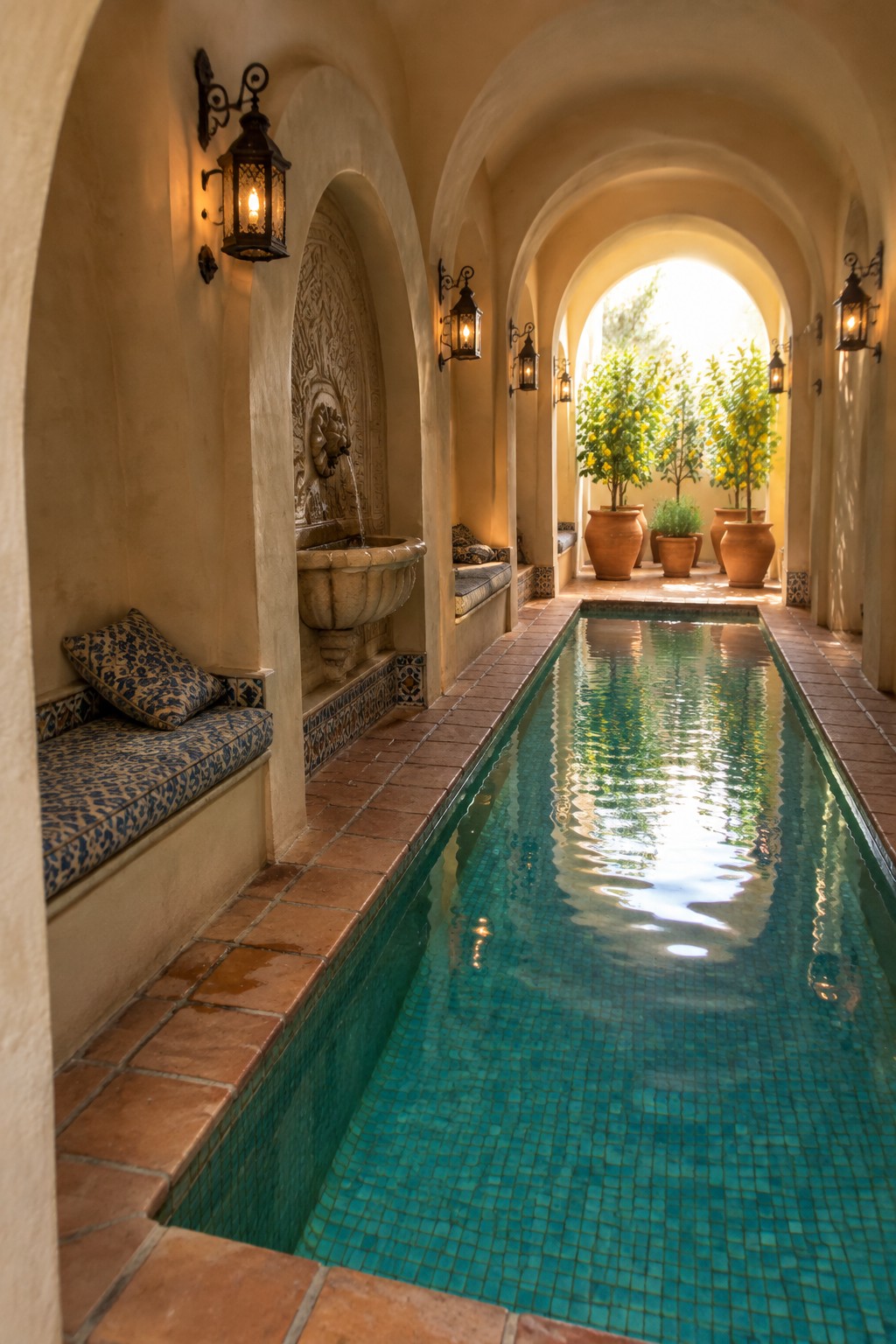
Repeating arches along both sides of a pool can turn the space into something more than just a room with water. The steady rhythm makes the pool feel grounded and connected to the rest of the house. It works especially well when the arches match the scale of the pool itself rather than feeling added on later.
This layout suits homes that already have some length to work with and a preference for Mediterranean or Spanish styles. Keep the tile consistent between the pool and the surrounding benches or walls so the whole area reads as one piece. Too many competing patterns will break the calm effect.
Frequently Asked Questions
Q: How can I adapt arched details if my indoor pool room has low ceilings?
A: Measure the space carefully before choosing the arch height. Low ceilings work with shallower curves that still frame the pool nicely (without blocking headroom).
Q: Which tiles resist mold best in a steamy pool area?
A: Go for larger format tiles with fewer grout lines. They clean easier and leave less room for mildew to settle in.
Q: What if I want to update an older pool with new Mediterranean tilework?
A: Remove the old surfaces first to get a solid base. Then lay fresh tiles in simple repeating patterns that follow the arch shapes.