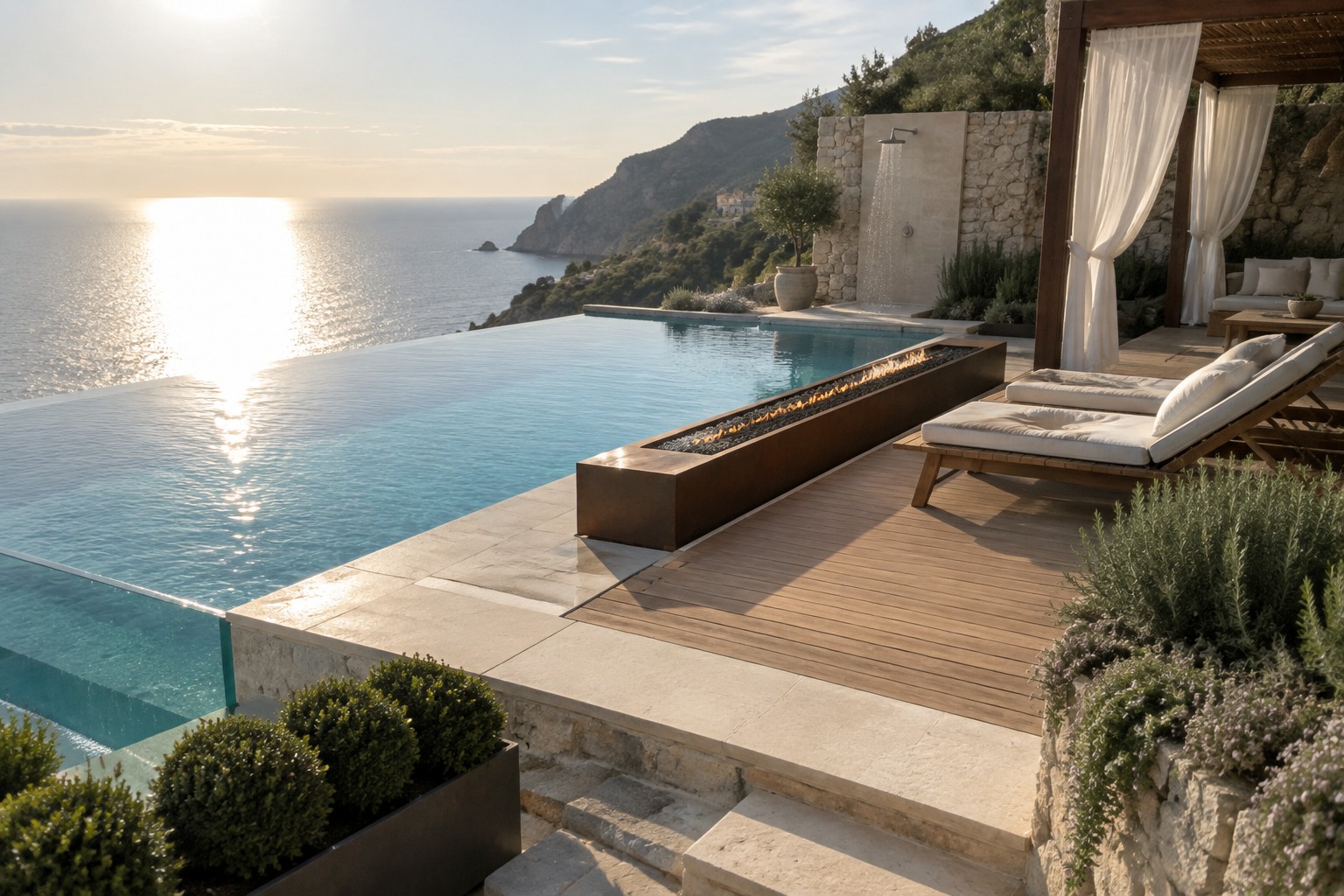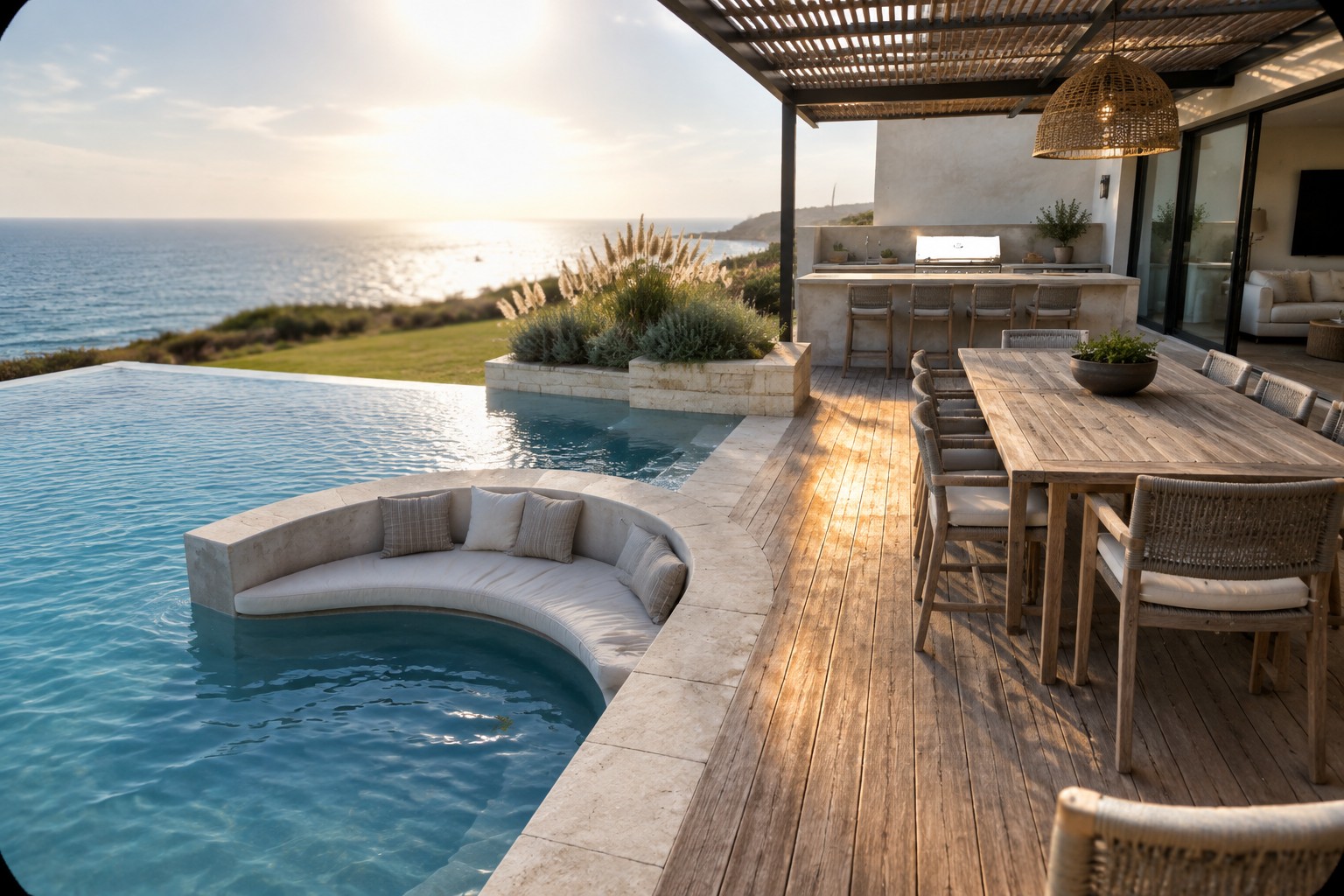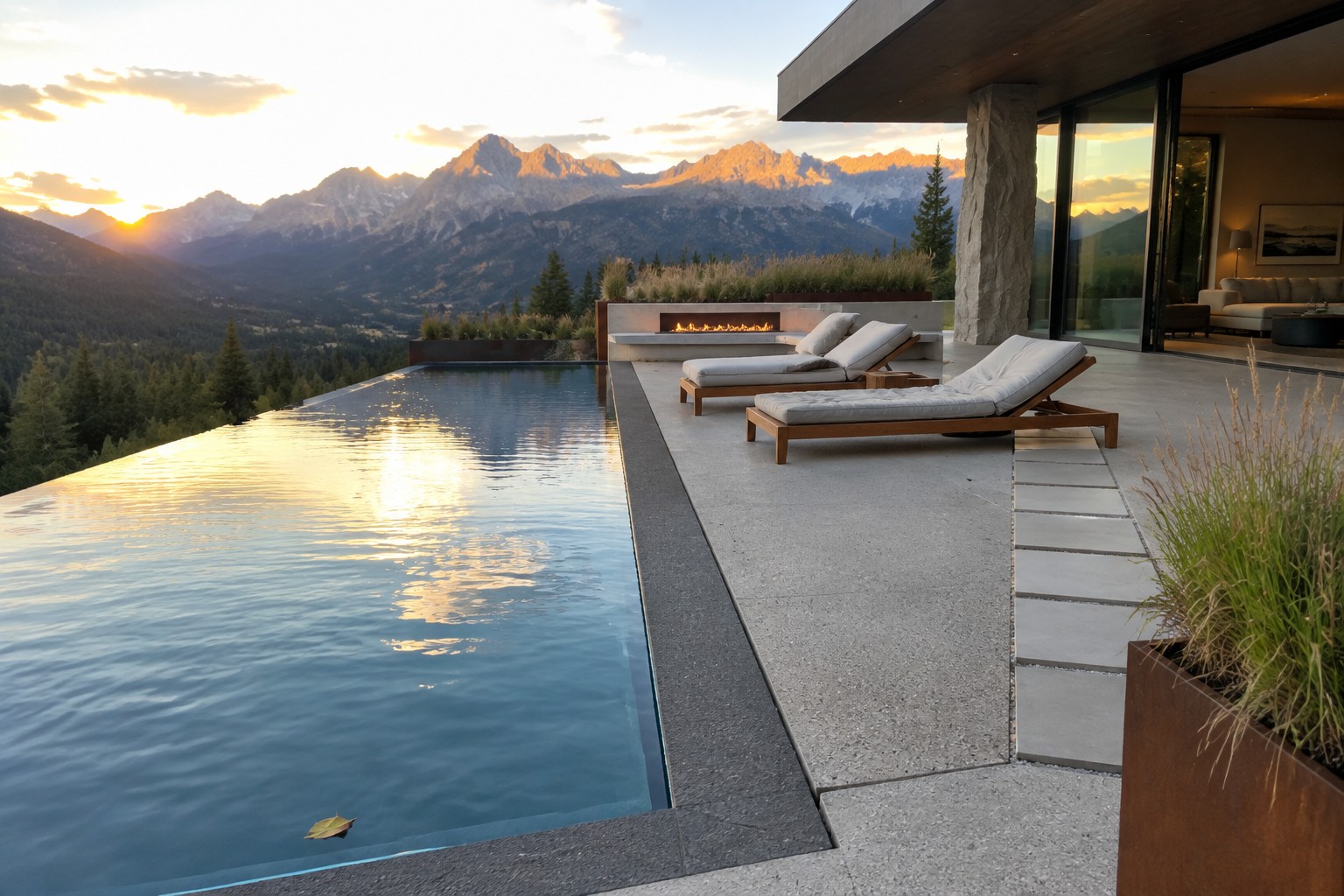
I have noticed that infinity pools with mountain views tend to succeed when the terrace around them feels like a natural extension of the house rather than an added feature.
The layouts that hold up over time usually account for how people actually move between the water, seating areas, and the edge of the property.
Some designs overlook how wind and sun hit an elevated spot all day.
I would want to test how the railing and paving materials age before committing to a similar setup on my own lot.
Paying attention to those small connections often makes the whole space feel more usable once the initial excitement wears off.
Cantilevered Infinity Pools
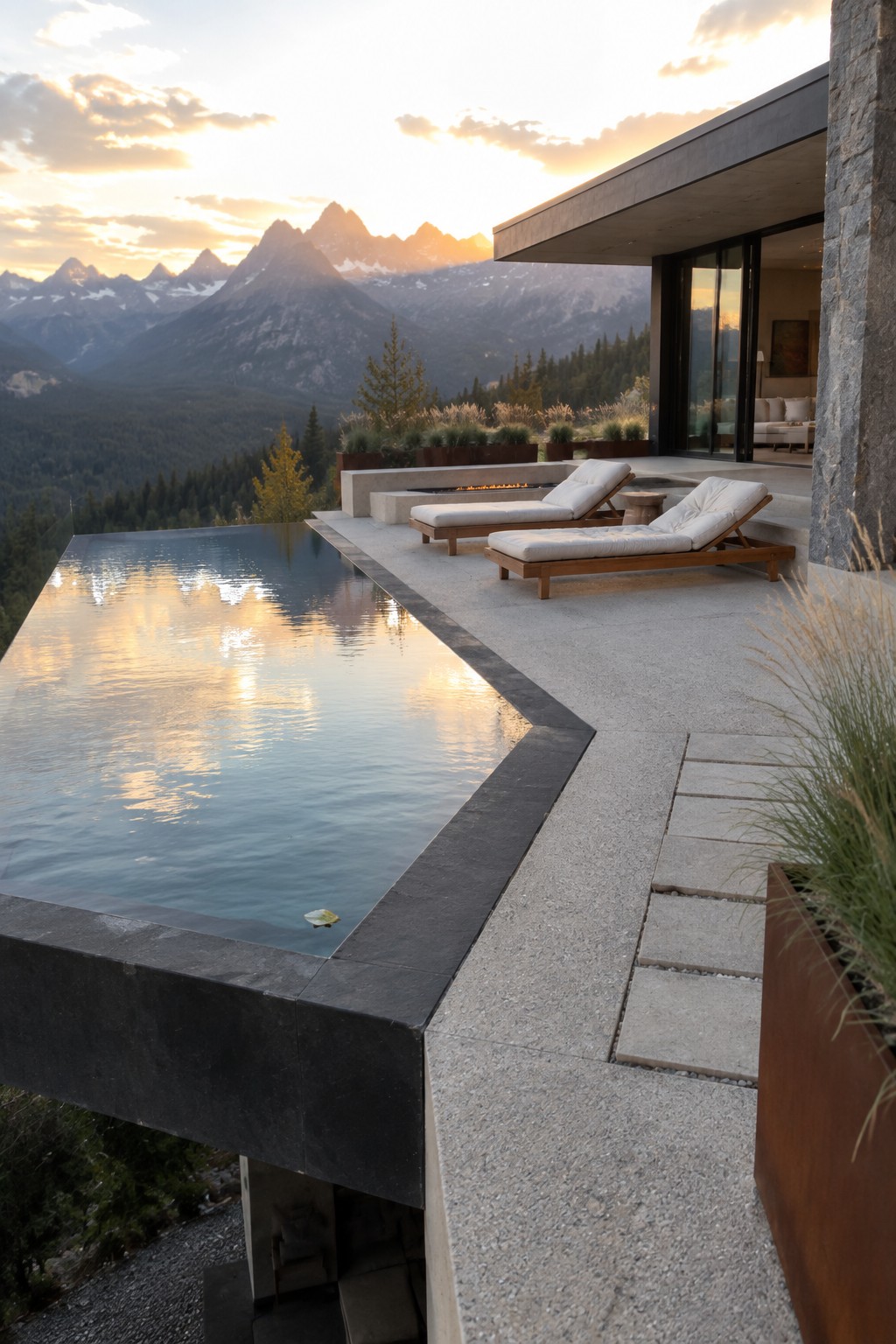
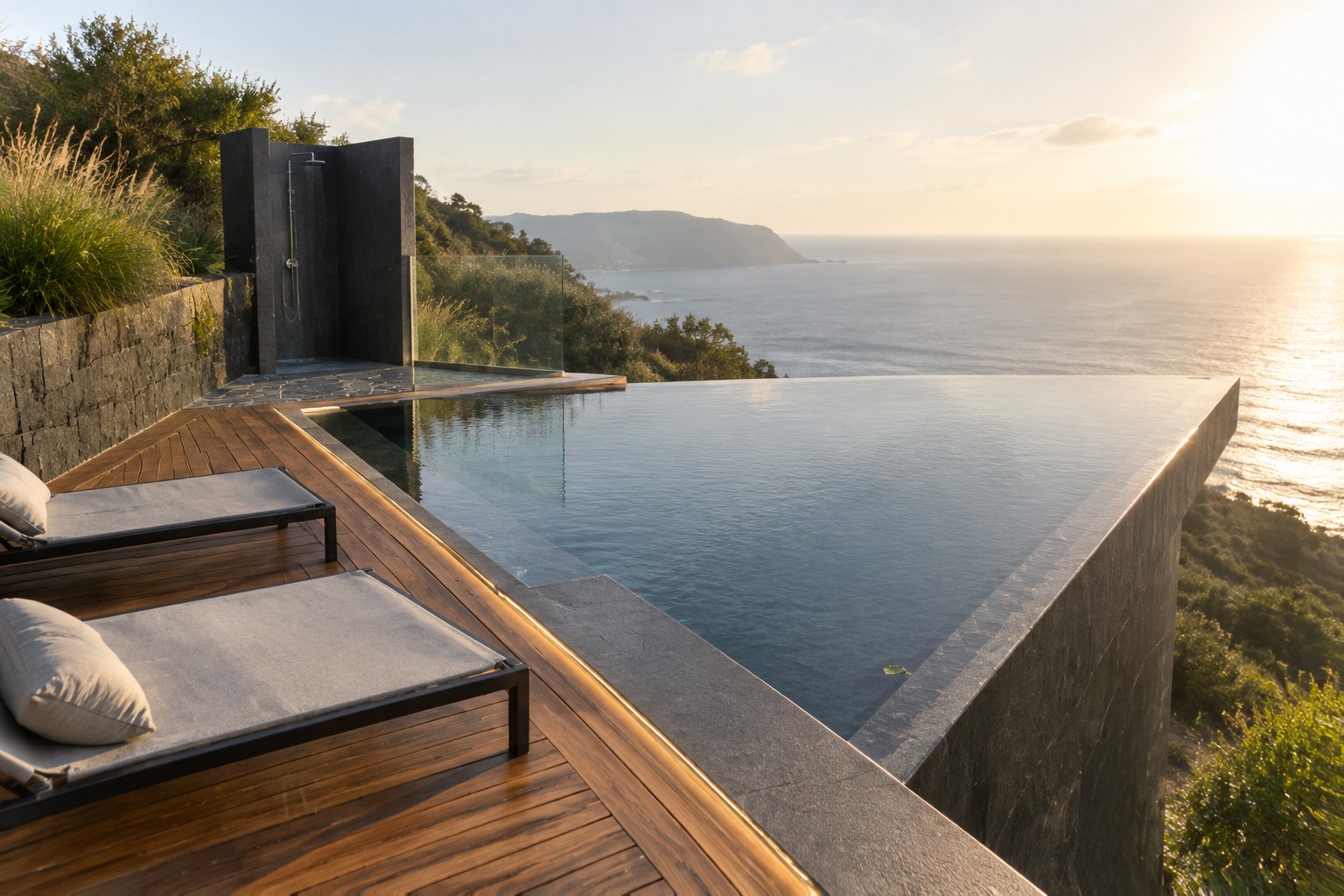
A cantilevered pool lets the water extend past the main deck and hang over the drop. This setup works especially well on sloped sites because it removes the visual barrier between the pool and the distant mountains.
It suits modern homes built on hillsides or ridges. The structure needs solid engineering to handle the load, and a dark coping helps the edge disappear so the view stays the main focus.
Place Lounge Chairs Along the Pool Deck
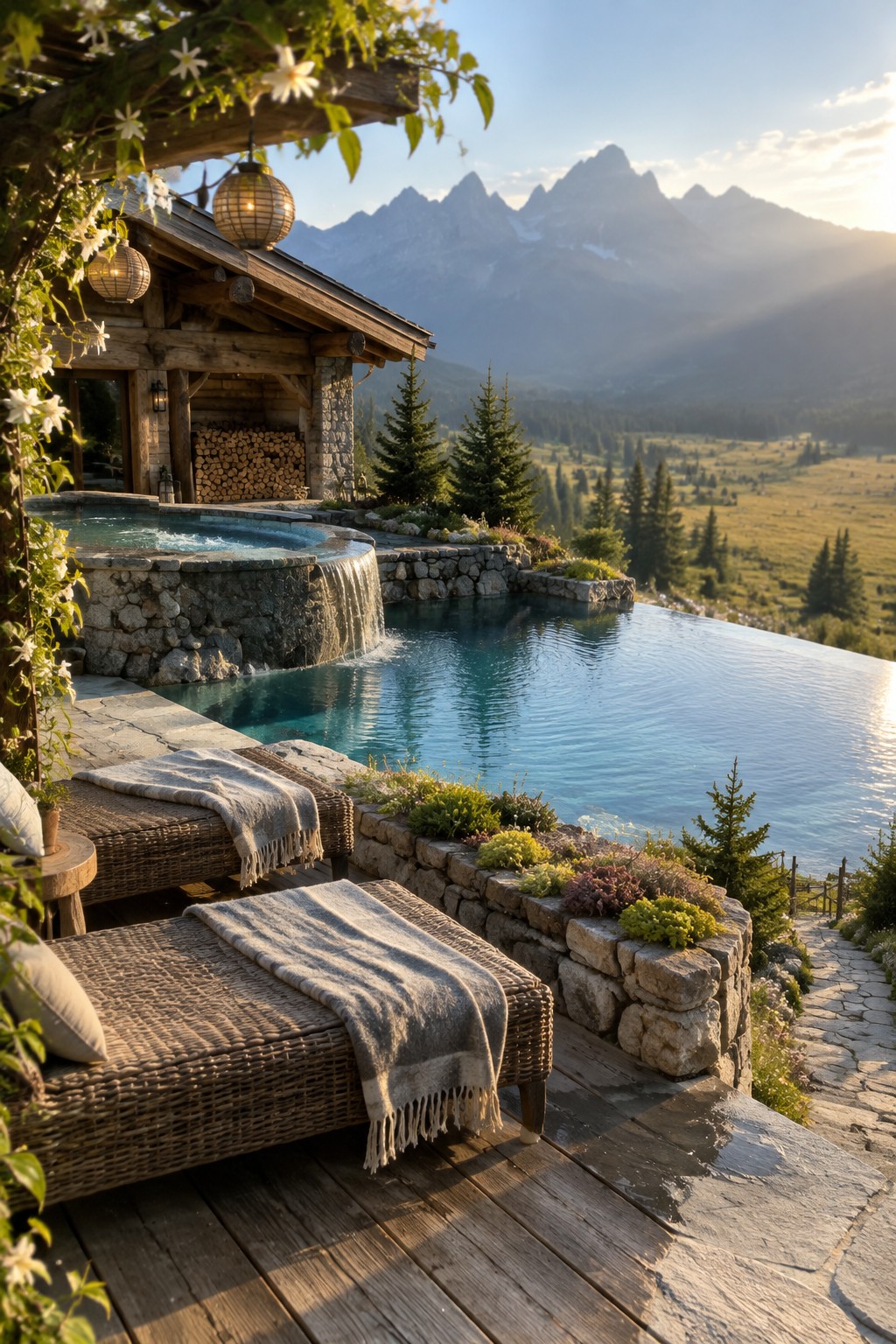
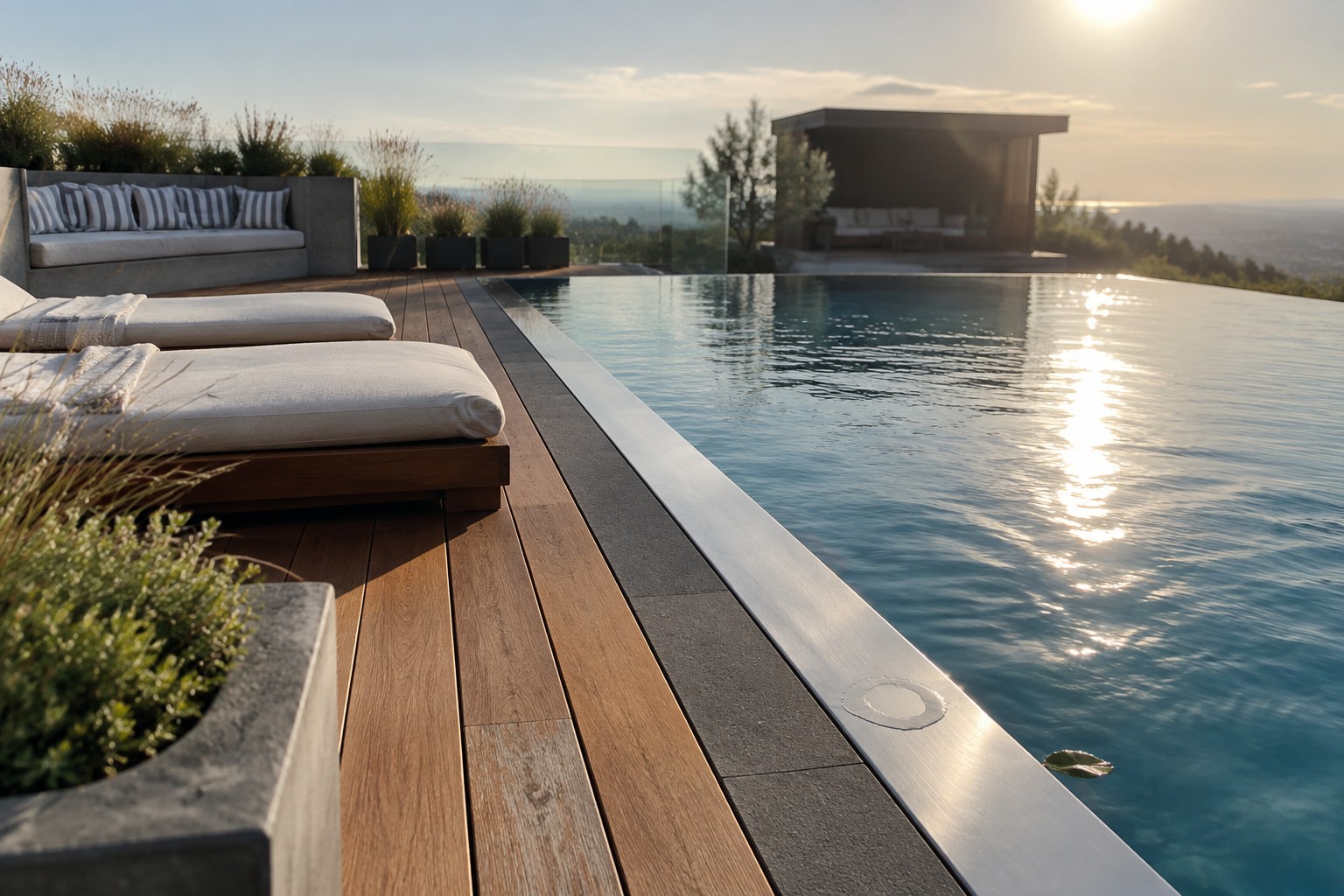
One thing that stands out here is the way the wooden deck runs straight to the pool edge and holds a pair of simple lounge chairs. It keeps the whole area feeling open and usable instead of just a place to swim and step away.
This works well on sites with a view, where you want to sit outside without adding walls or extra structures. It suits cabin-style homes or any sloped yard where the pool already sits a bit higher than the land beyond. Keep the chairs low and add a light throw if the evenings cool off.
Running the Pool Right Alongside the Patio
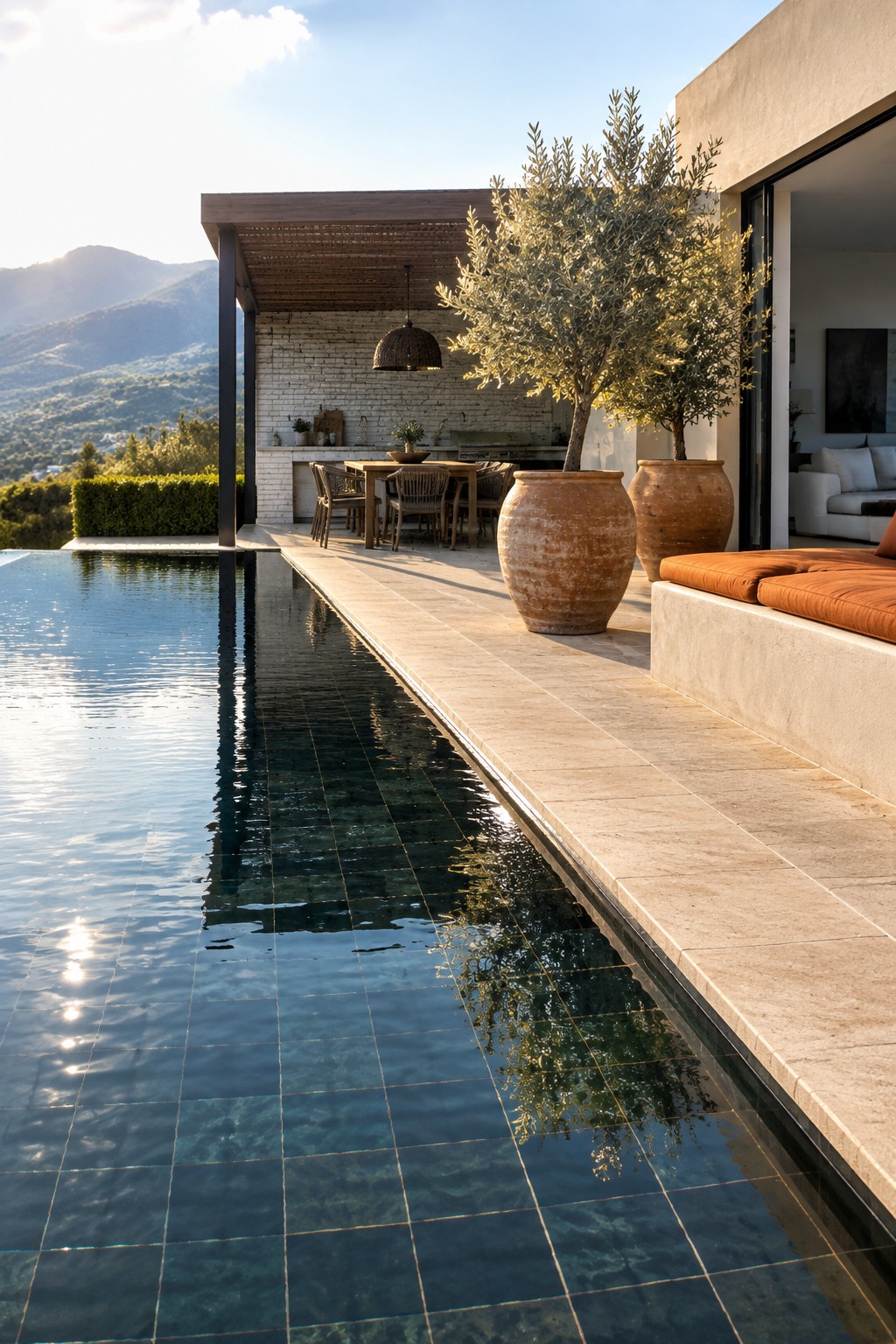
One way to make an outdoor living area feel more connected to the water is to run the pool edge right up against the patio. Here the long narrow pool sits just a step from the dining table and seating, so the water becomes part of the space instead of something separate. The layout turns the whole area into one continuous zone for eating and relaxing.
This works well on sloped sites where you want to keep the flat ground open for living rather than filling it with pool deck. It suits homes that already have a strong view because the water surface picks up the sky and hills without needing extra width. Just keep the paving material the same on both sides so the transition feels natural.
Running a Long Infinity Pool Along the Terrace
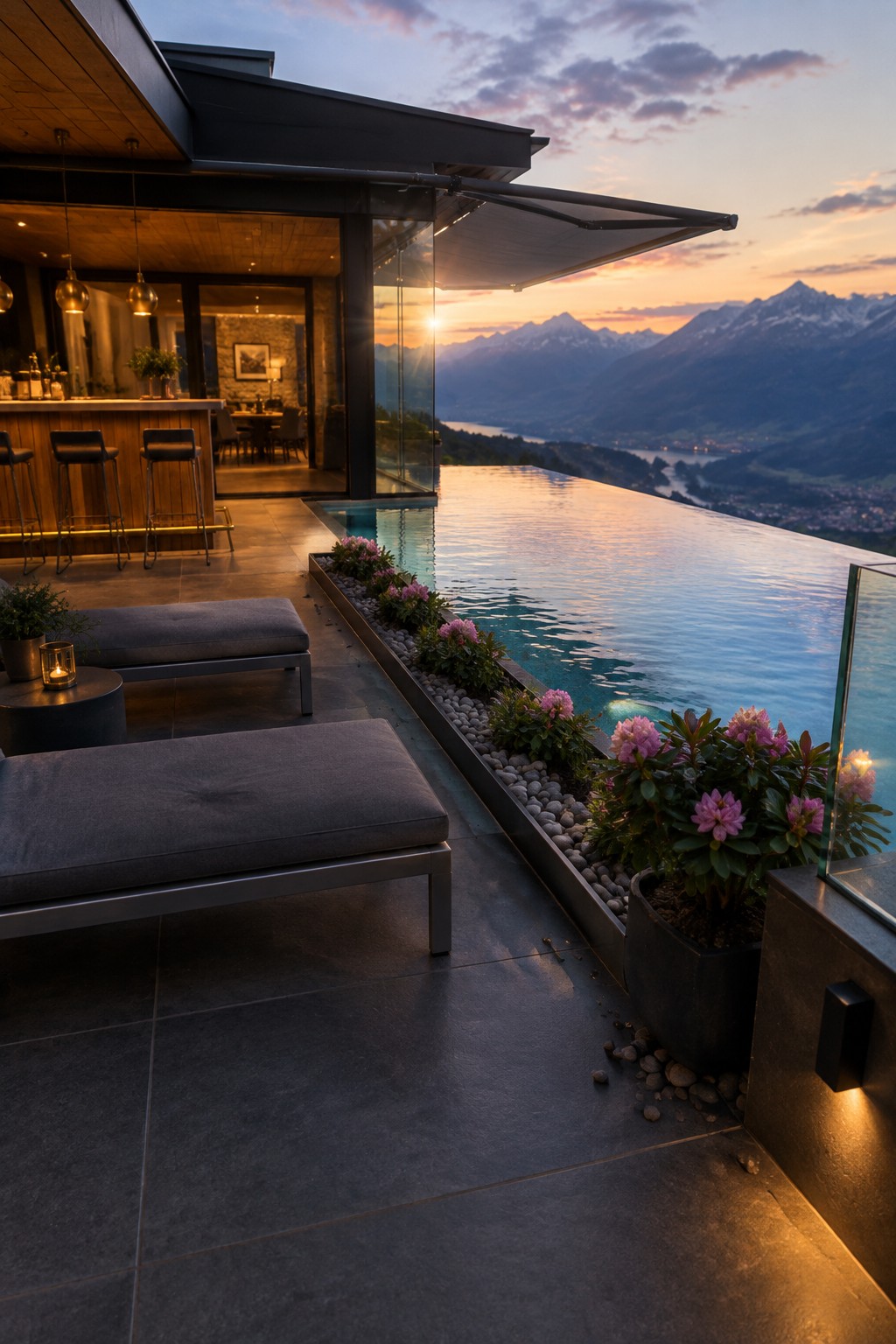
A long infinity pool set right along the outer edge of a terrace gives the water a clear path to the view. This layout keeps the pool from feeling tucked away and lets people on the patio stay connected to the landscape even when they are not in the water. The straight run also makes the space feel larger without adding extra width.
This approach works best on sites that slope away from the house, where the drop-off can be used to create the vanishing edge. It suits homes that already open wide to the outdoors, since the pool then becomes a natural extension of the living area. Just make sure the edge detailing stays low so nothing blocks the sight line once the pool is finished.
Built-In Seating That Follows The Pool Edge
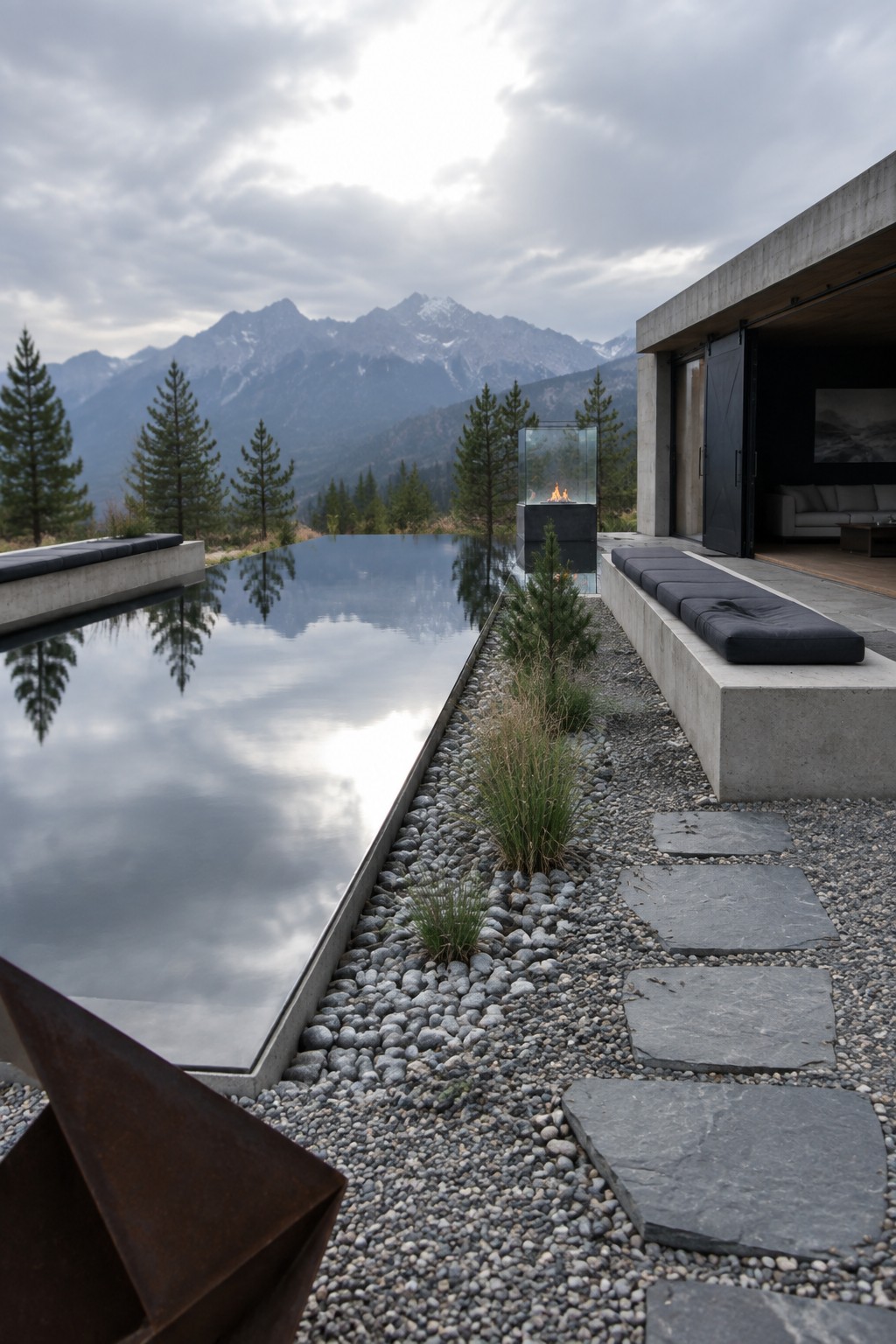
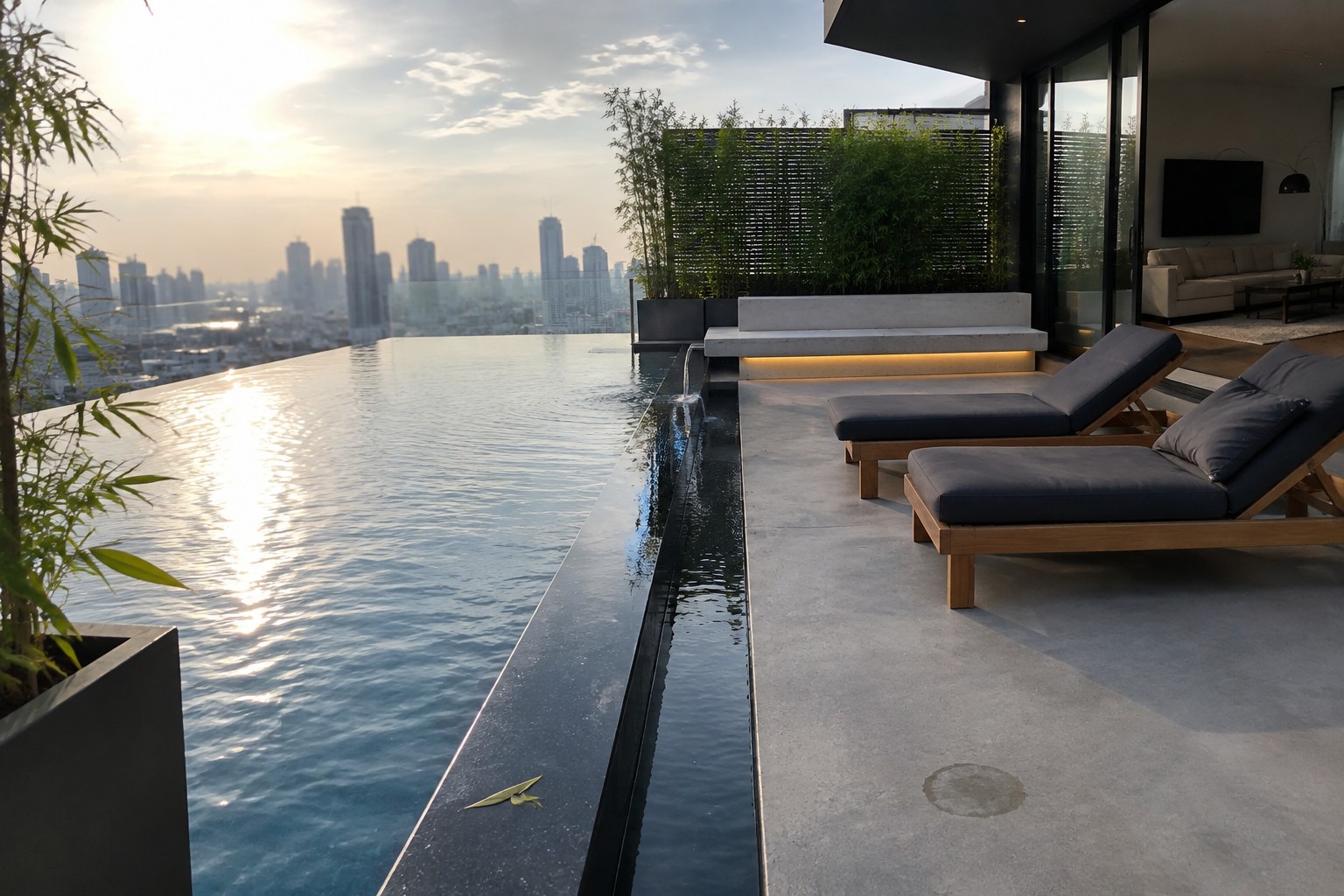
Running a long concrete bench right along the pool keeps the whole area simple and open. You get steady places to sit without adding extra furniture that might block the view or crowd the space. The bench stays low so the water and the mountains beyond stay the main focus.
This layout works best on homes where the pool sits close to the living areas. Match the bench material to the pool coping so the two feel like one surface. Use weatherproof cushions if you want them left out year round.
Terracotta Pots Along The Pool Wall
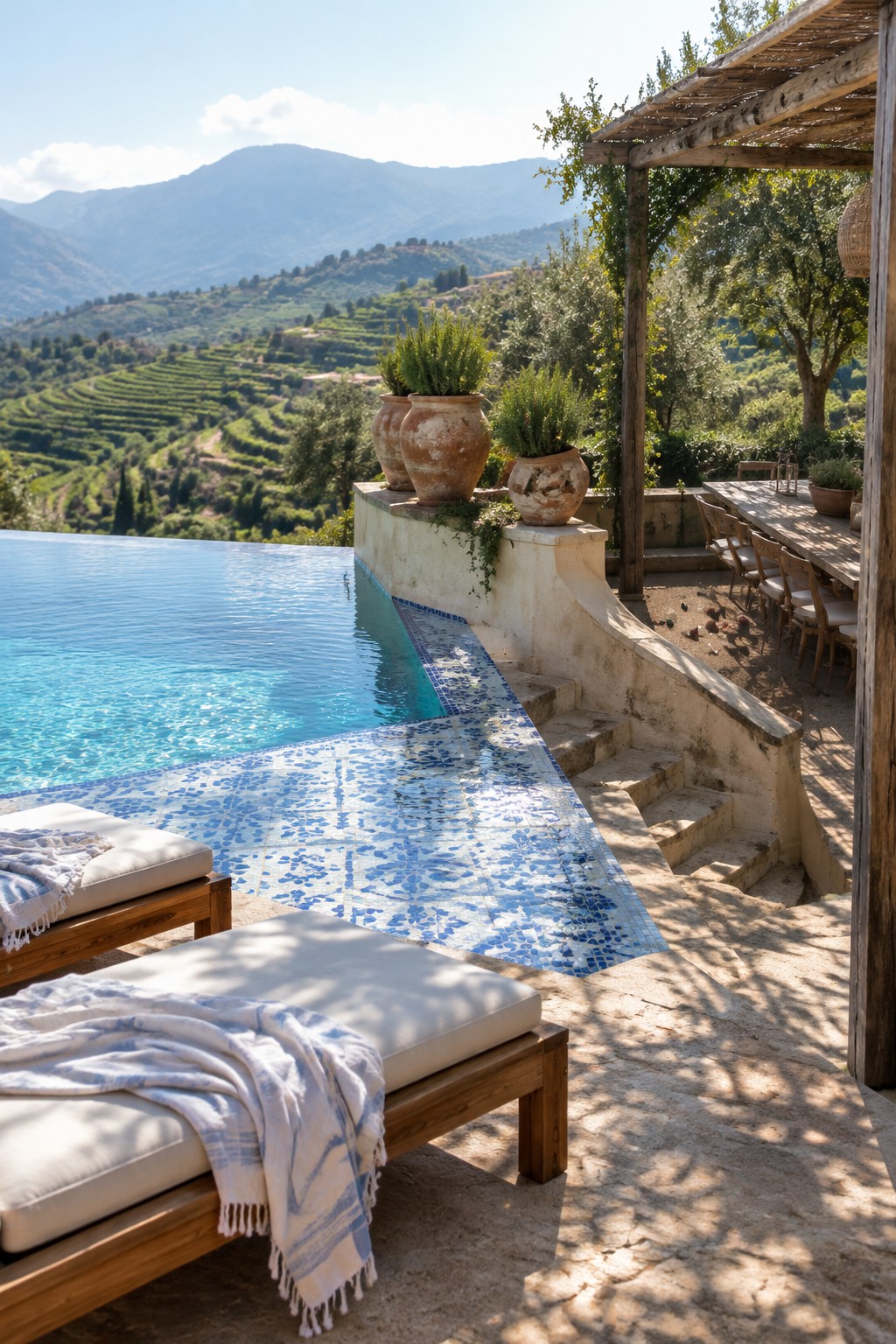
Large terracotta pots placed right at the edge of the pool deck add height and greenery without taking up floor space. They help the whole area feel more settled in its surroundings instead of just sitting on top of the stone.
This works best on terraces that already have some age or texture to them. Keep the pots simple and group them in odd numbers so they look natural rather than arranged. Avoid anything too small or fussy because it will get lost against the view.
Building a Spa Into the Deck
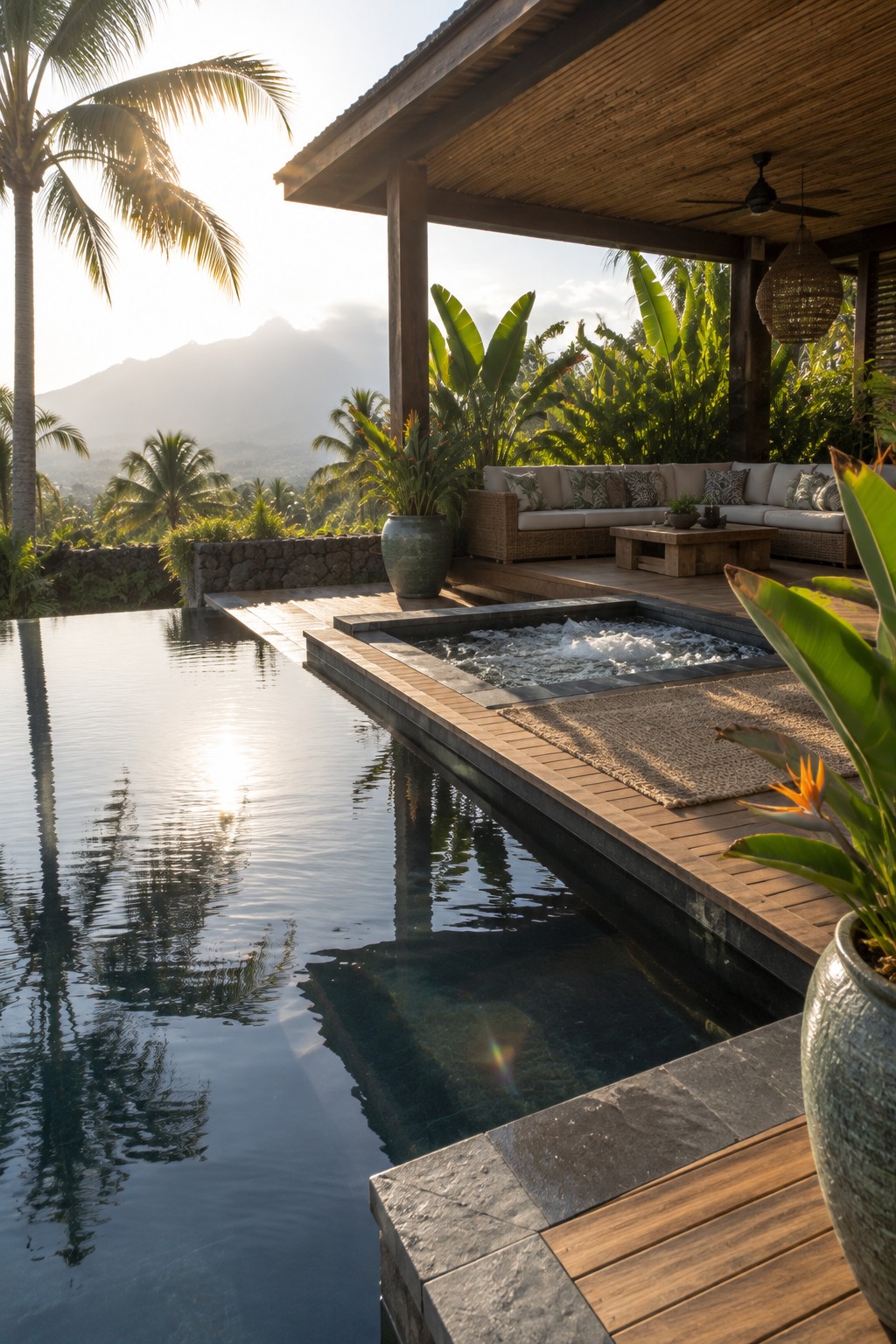
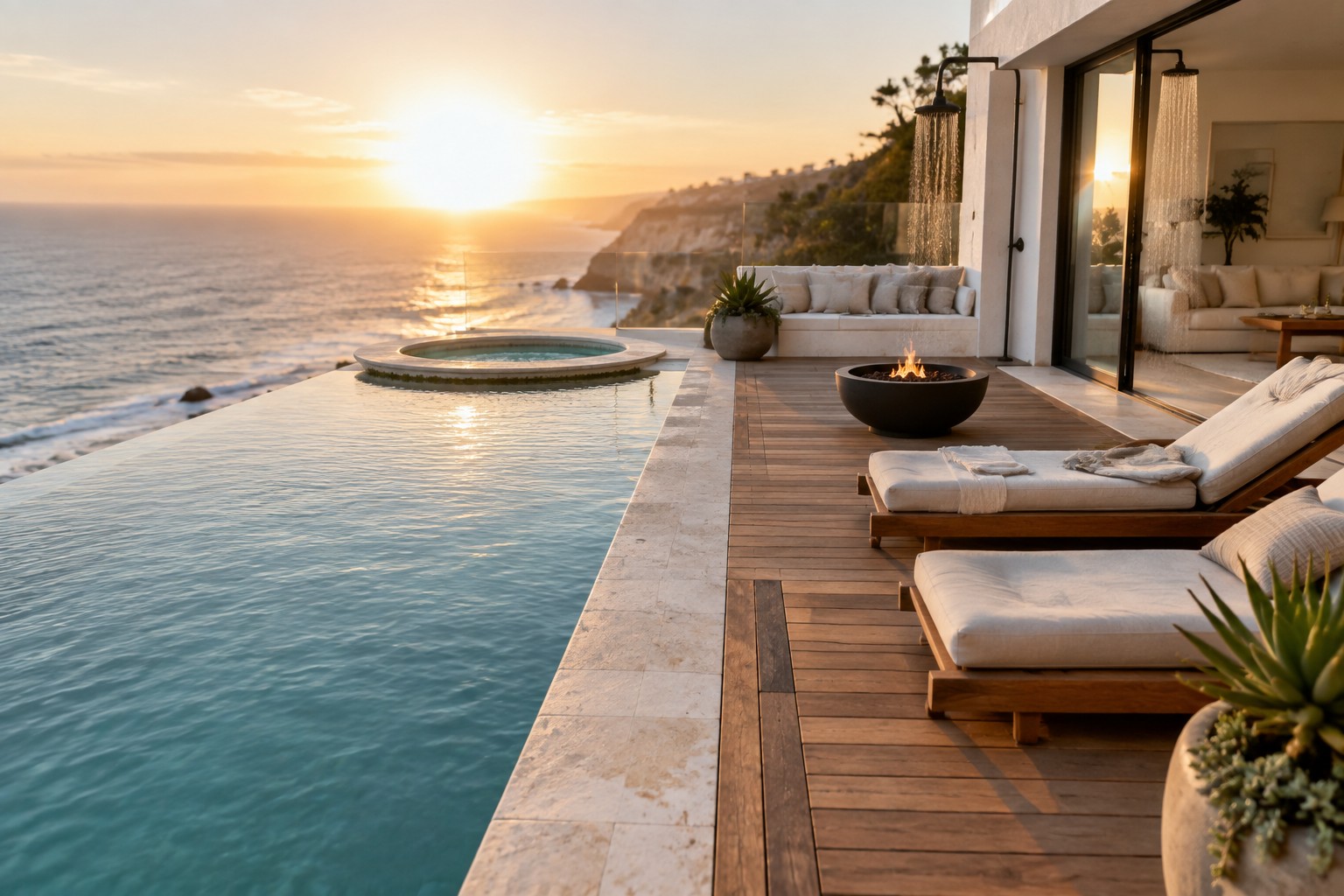
One useful move in outdoor pool areas is to set a small spa right into the deck surface instead of placing it off to the side. This keeps the soaking spot at the same level as the seating and walking areas, so everything feels connected without extra steps or separate platforms. The wood decking helps the spa read as part of the main space rather than an add-on.
This setup works best on homes where the main pool already takes up a lot of room but you still want two different water experiences. Just check that the deck framing can support the extra weight and that the equipment stays easy to reach for upkeep.
Adding A Bamboo Water Feature To The Pool Deck
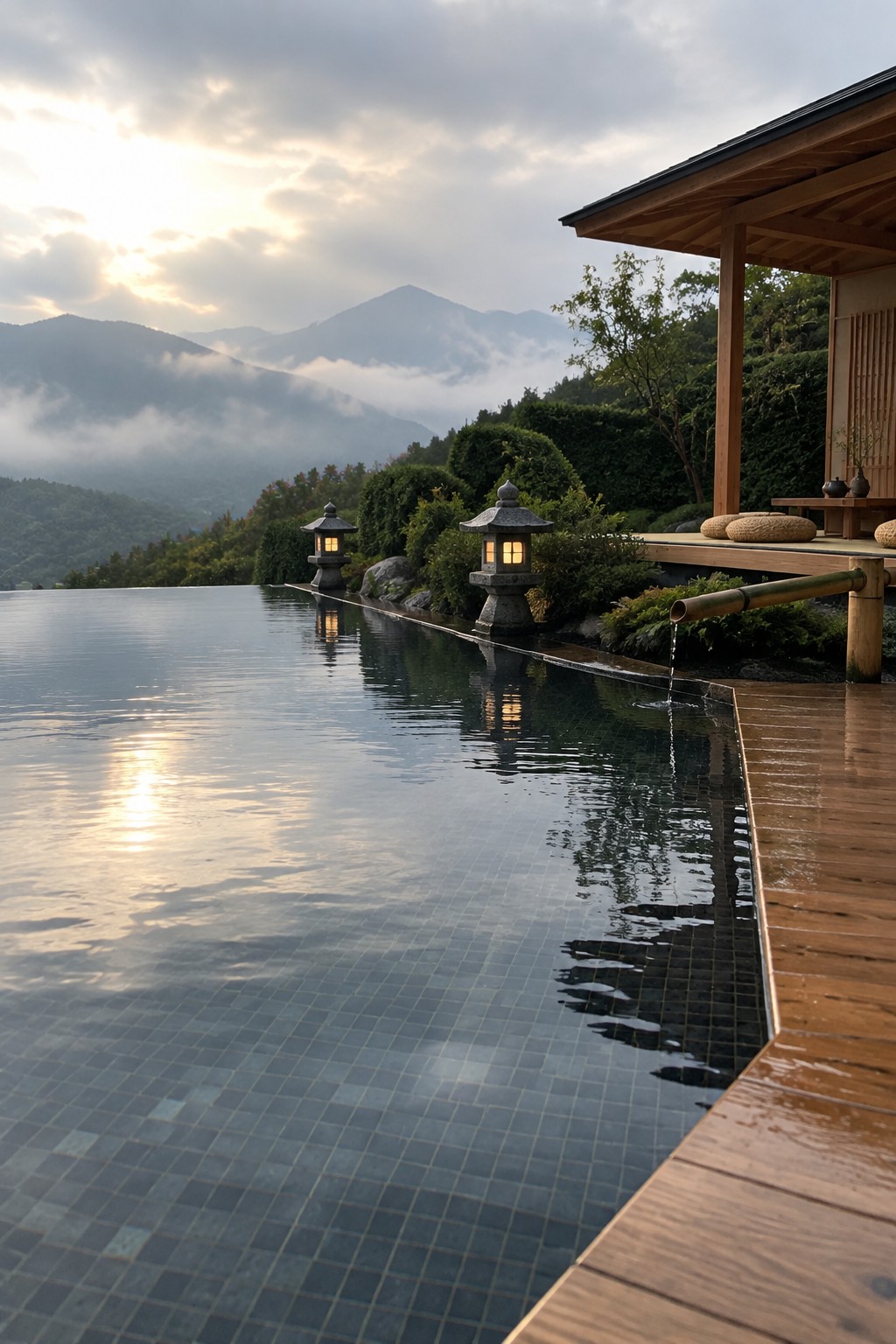
A bamboo water spout adds a gentle, steady sound that makes the pool area feel more connected to the surrounding landscape. It keeps things simple while giving the space a calm, lived-in quality that works well with mountain views.
This approach suits homes where the deck sits close to the pool edge. Place the spout low so the water drops cleanly into the pool, and keep nearby plantings and accents minimal so the sound and view stay the main focus.
Add a Fire Pit Next to the Pool
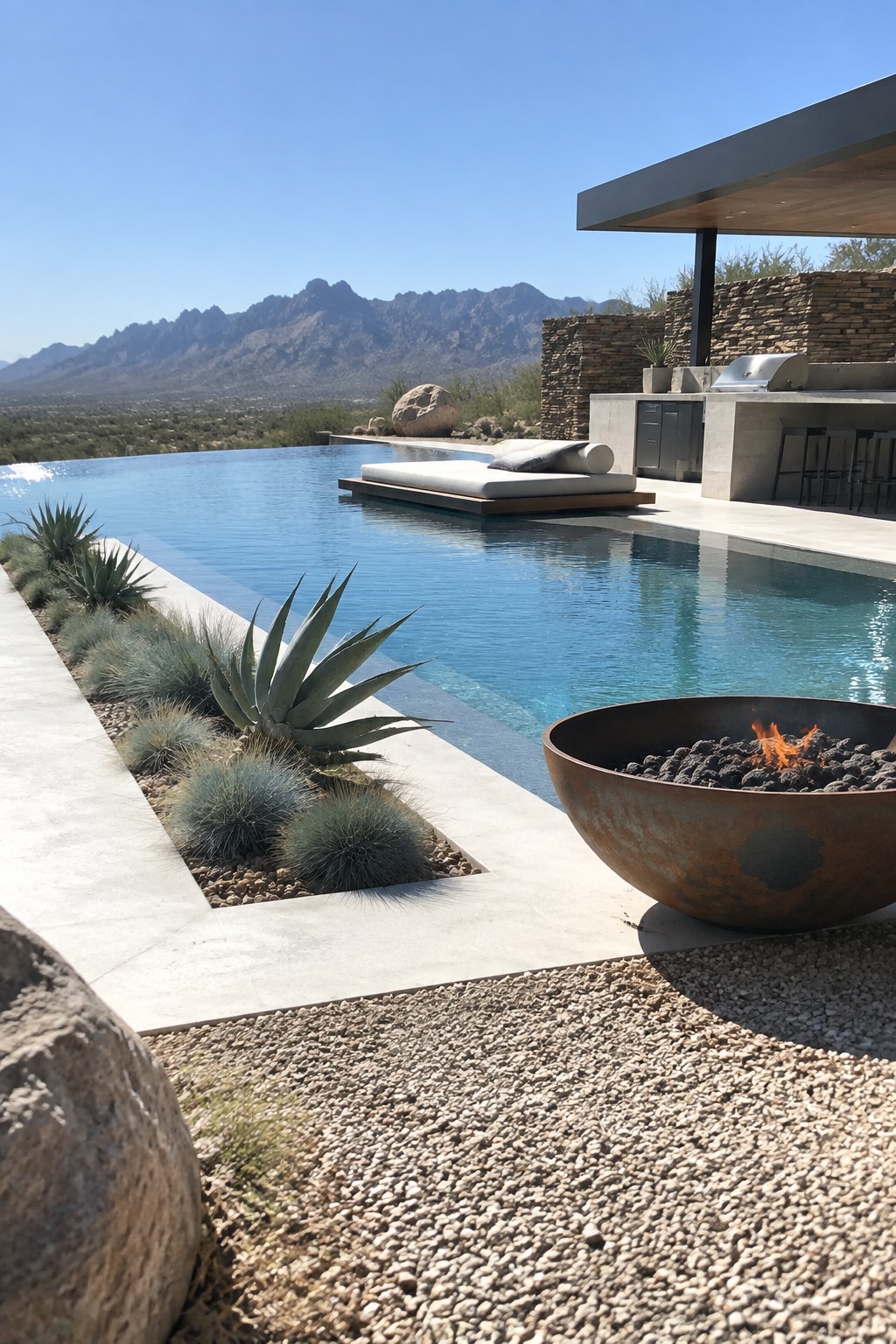
A fire pit placed close to the pool edge gives the whole area a second life once the sun drops. It turns the deck into a spot for gathering without needing to move inside, and the gravel base keeps the heat zone clearly defined while still feeling connected to the water.
This works best on homes with wide open views where evenings stay mild. Keep the pit low and simple so it does not compete with the pool itself, and make sure the surrounding hardscape can handle both wet feet and stray sparks.
Stepping Stones Through The Pool
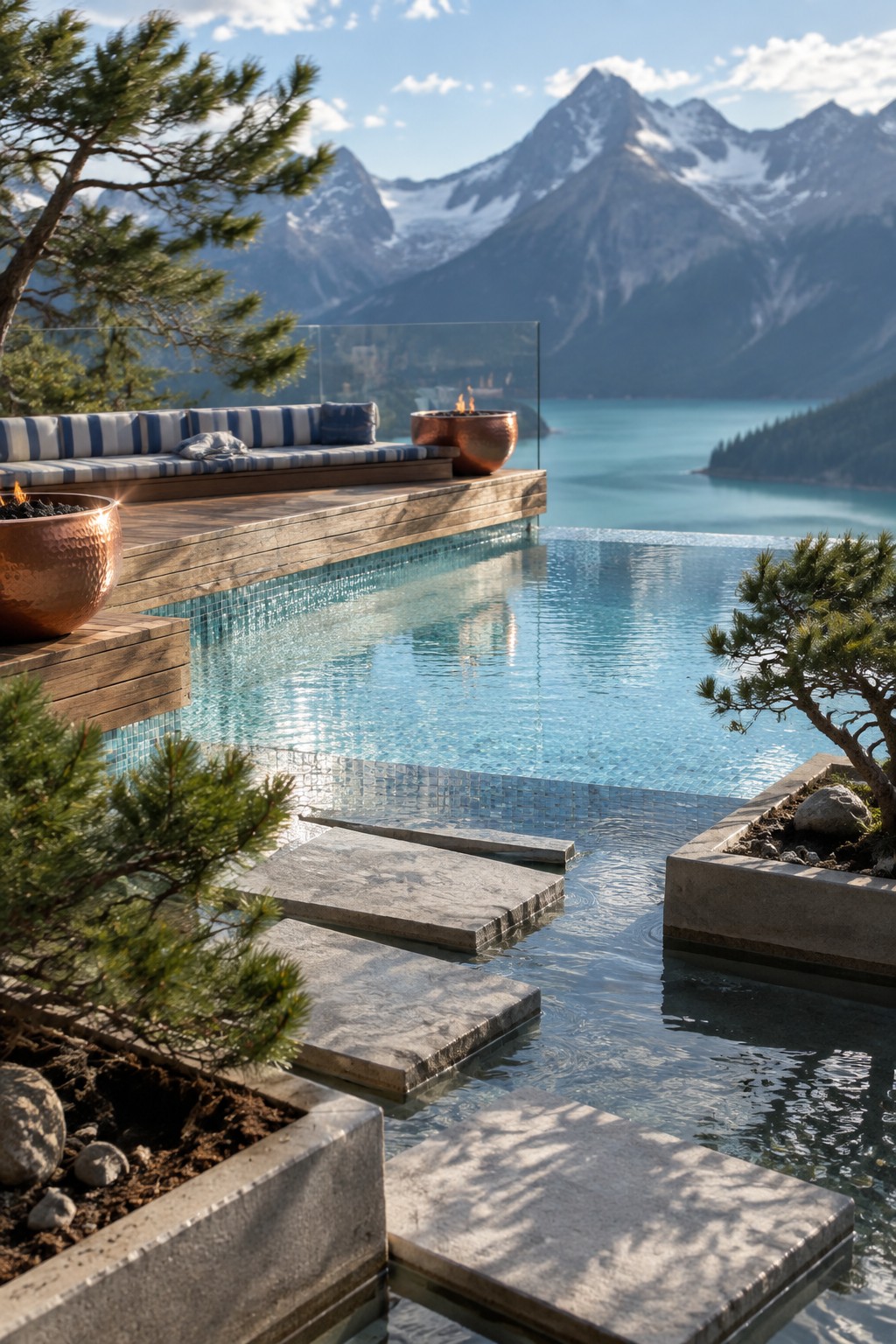
Stepping stones placed right in the water give you a simple way to cross from one side of the pool to the other. It keeps the open feel of an infinity edge while adding a practical path that does not require a full bridge or deck extension.
This layout works best on pools that are wide enough to leave plenty of swimming space on either side. It suits homes with level ground and strong views, since the stones stay low and do not block the horizon. Just make sure the stones are wide and stable enough for regular use.
Curved Seating Along Pool Decks
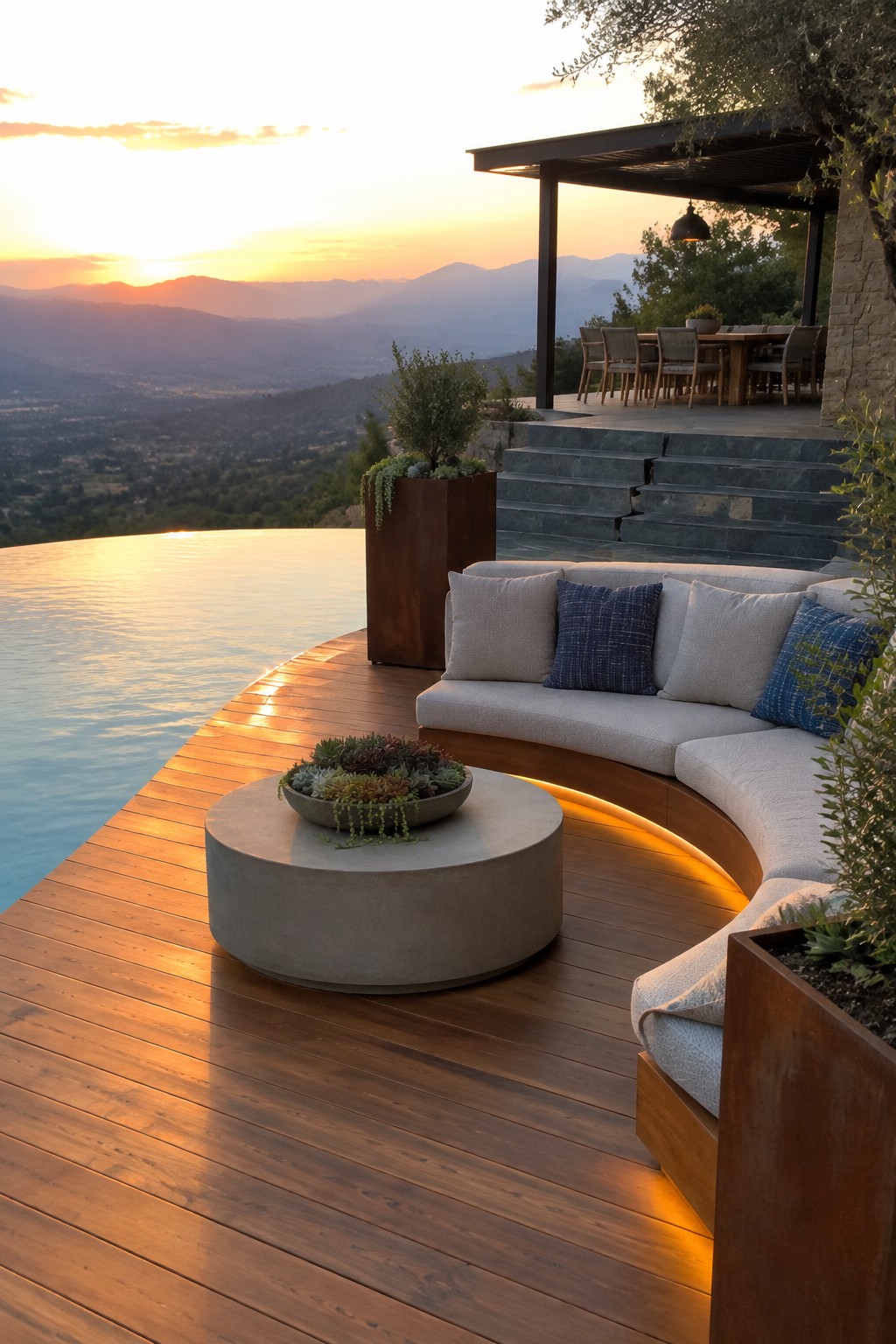
A curved sectional works well here because it follows the shape of the pool and turns the deck into one connected seating area. Instead of lining up chairs in a row, the curve lets everyone sit facing the water and the view at once, which feels more natural for groups.
This layout suits homes where the pool sits close to the edge of the property. It works best on wood decks with enough room to let the sofa wrap without crowding the walking space, and the low lighting built into the base keeps the area comfortable at night without extra fixtures.
Seating Right At The Pool Edge
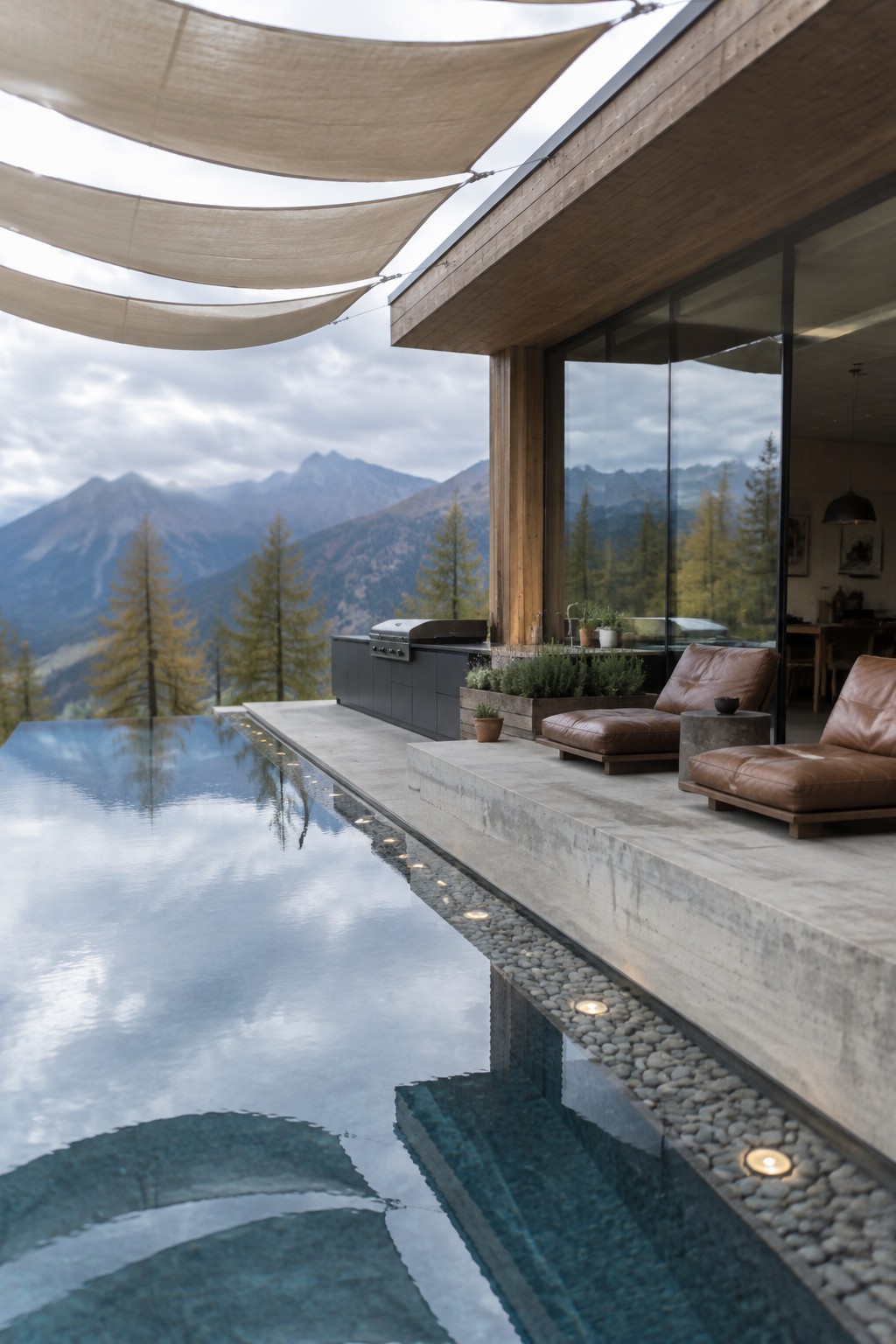
Placing lounge chairs directly on the terrace next to the pool makes the whole area feel like one space instead of two separate zones. The water sits almost level with the concrete, so you can sit and still feel connected to the pool without needing to step down or move to a different area.
This works best on homes where the main outdoor time happens near the house rather than across a large yard. Keep a clear path along the edge so people can walk past the chairs without stepping into the water or crowding the narrow strip between the pool and the seating.
Cascading Edges Over Rock Ledges
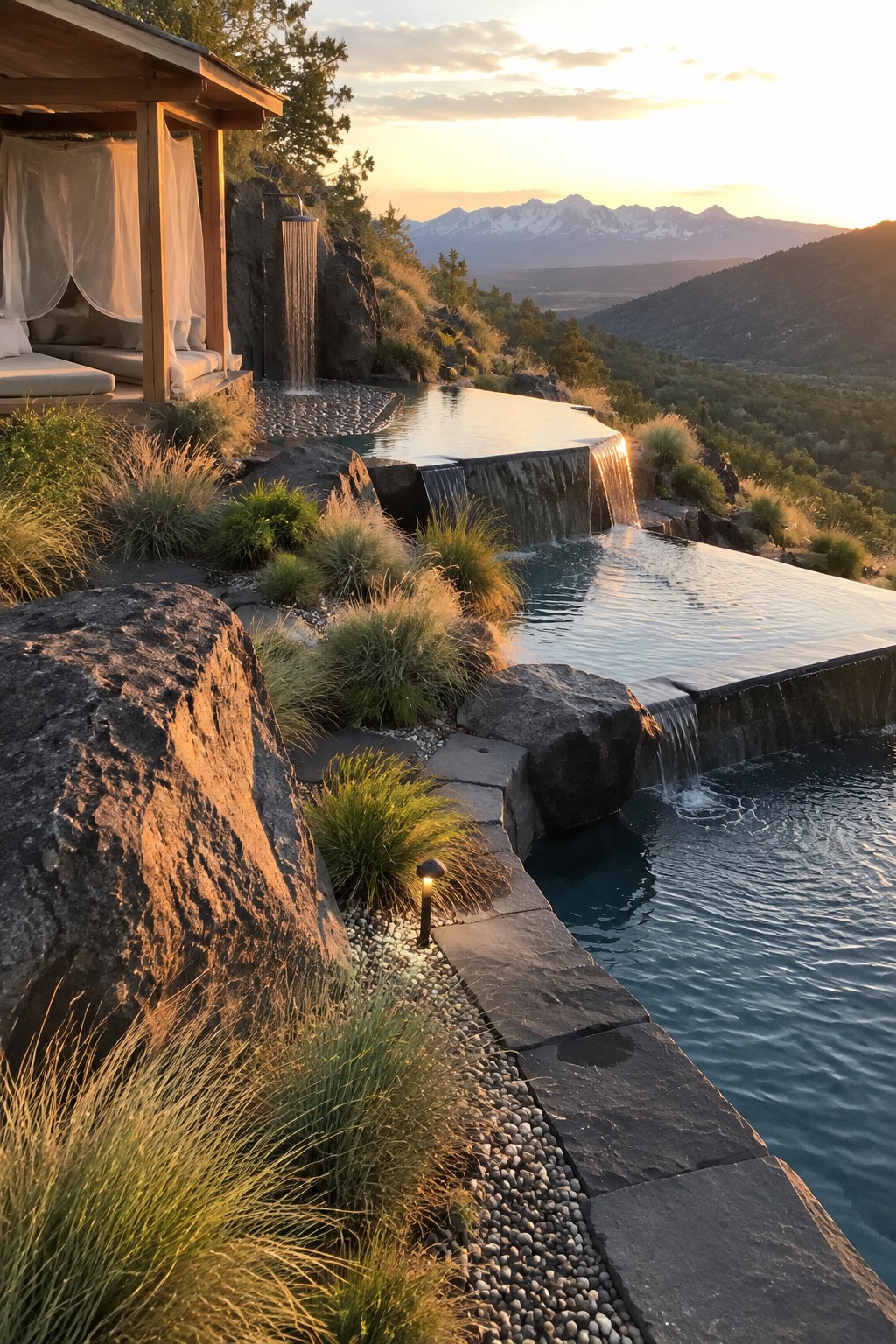
One way to make an infinity pool feel like it belongs on a hillside is to let the water spill in stages over natural rock. The stepped edges break up the long line of the pool and let it follow the slope instead of fighting it.
This works best on lots that already drop away from the house. Use local stone for the ledges and keep the surrounding plants simple and native so the pool reads as part of the existing terrain rather than something built on top of it.
Choose Dark Materials For The Pool Edge
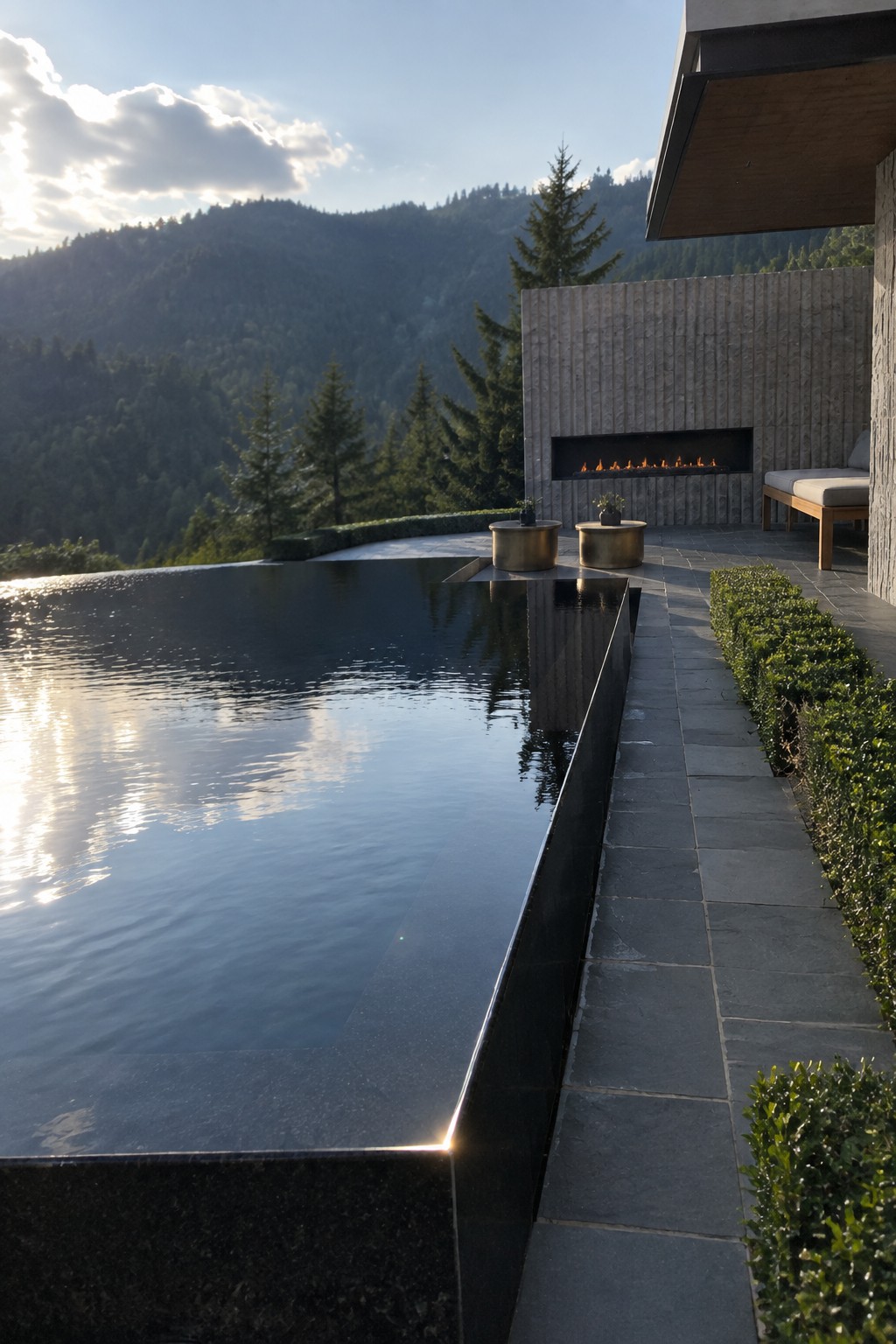
A dark stone border around an infinity pool helps the water pick up the sky and mountains without extra glare or reflection from the sides. It turns the pool into a quiet frame for the view instead of a bright blue box that fights with the landscape.
This works best on sites with strong natural scenery where you want the water to feel connected to the distance. Use matte or lightly textured stone so it stays cool underfoot and does not show every water spot. Keep the rest of the terrace simple in tone so the edge stays the main move.
Stepping Stones In Shallow Water
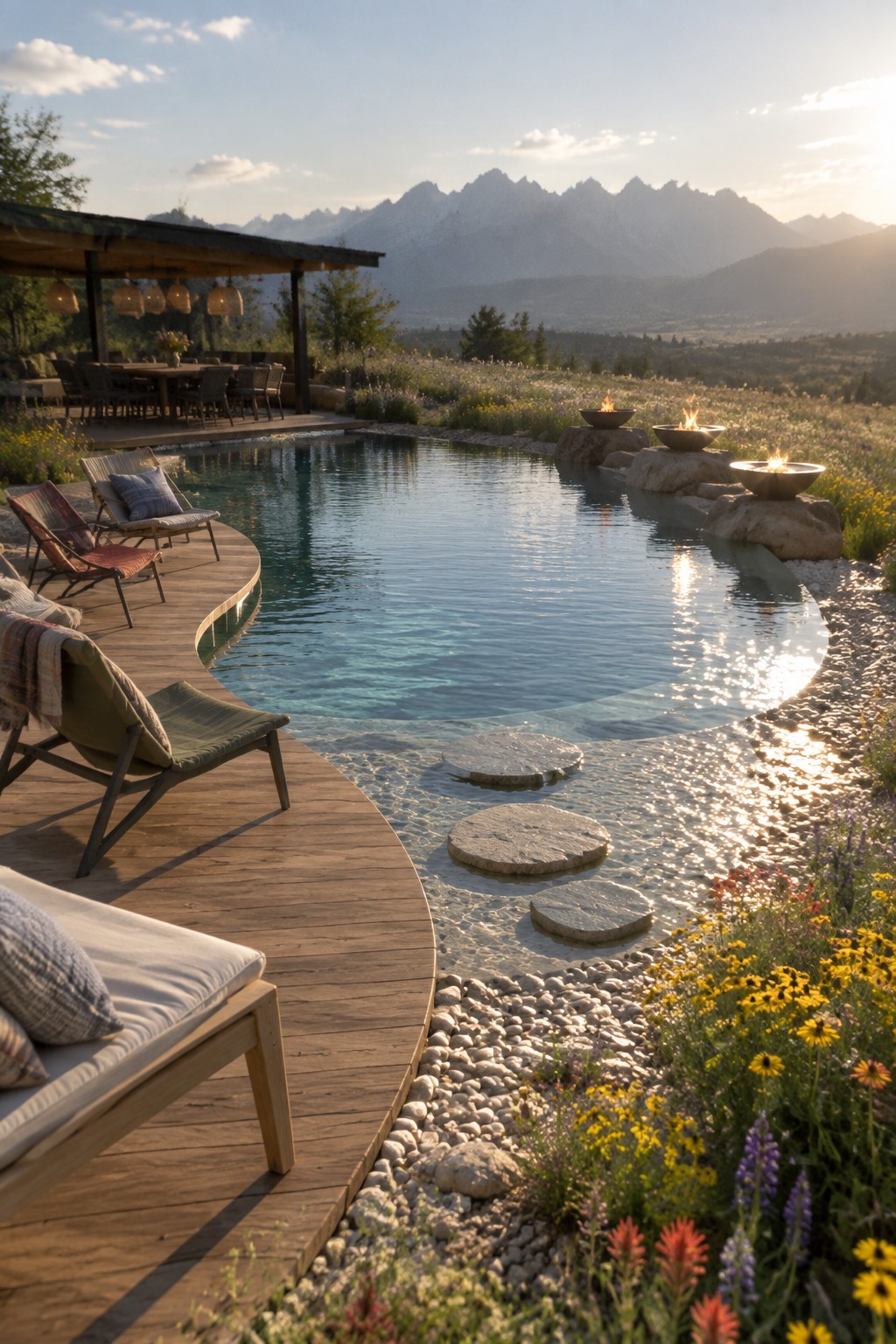
Stepping stones set into the shallow edge of a pool give you a simple way to move through the water without fully getting in. The stones add a bit of path and texture that makes the whole area feel more open and connected to the surrounding ground.
This idea works best on larger lots where the pool can have a wide shallow shelf. It suits homes that already lean toward natural materials and relaxed outdoor spaces. Just keep the stones level and textured so they stay safe underfoot.
Outdoor Bars Along the Pool Edge
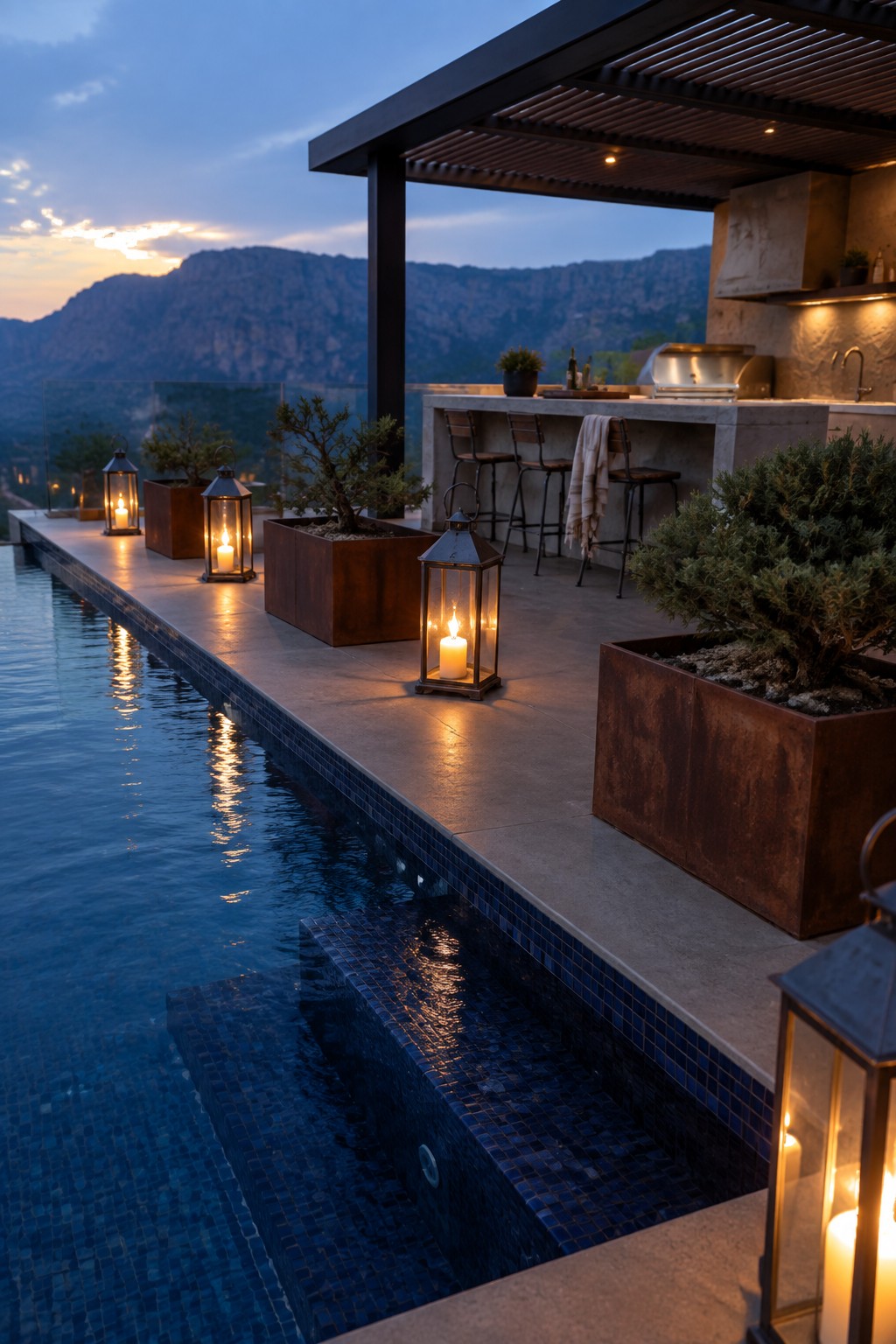
An outdoor bar next to the pool gives the whole deck a clear purpose. It turns the space into somewhere you can actually stay and use after the sun goes down instead of just looking at the water.
This works best on homes that already have a view worth keeping. Stick with simple materials like concrete and metal for the bar, and add just a few lanterns so the lighting stays soft and the focus stays on the pool and what is beyond it.
Frequently Asked Questions
Q: How do I stop leaves and dirt from collecting on the infinity edge?
A: Sweep the deck regularly and use a good skimmer system. The edge itself stays clear if you position the return jets right. Check the filter once a week during fall.
Q: Is it safe to swim right up to the edge with that big drop below?
A: Install a low glass barrier or rail that matches the design. It keeps kids and pets secure without blocking the view. Many owners swim up close once they get used to it.
Q: Do mountain views affect pool heating costs?
A: The wind cools things down fast. Add a simple windbreak on the exposed side.