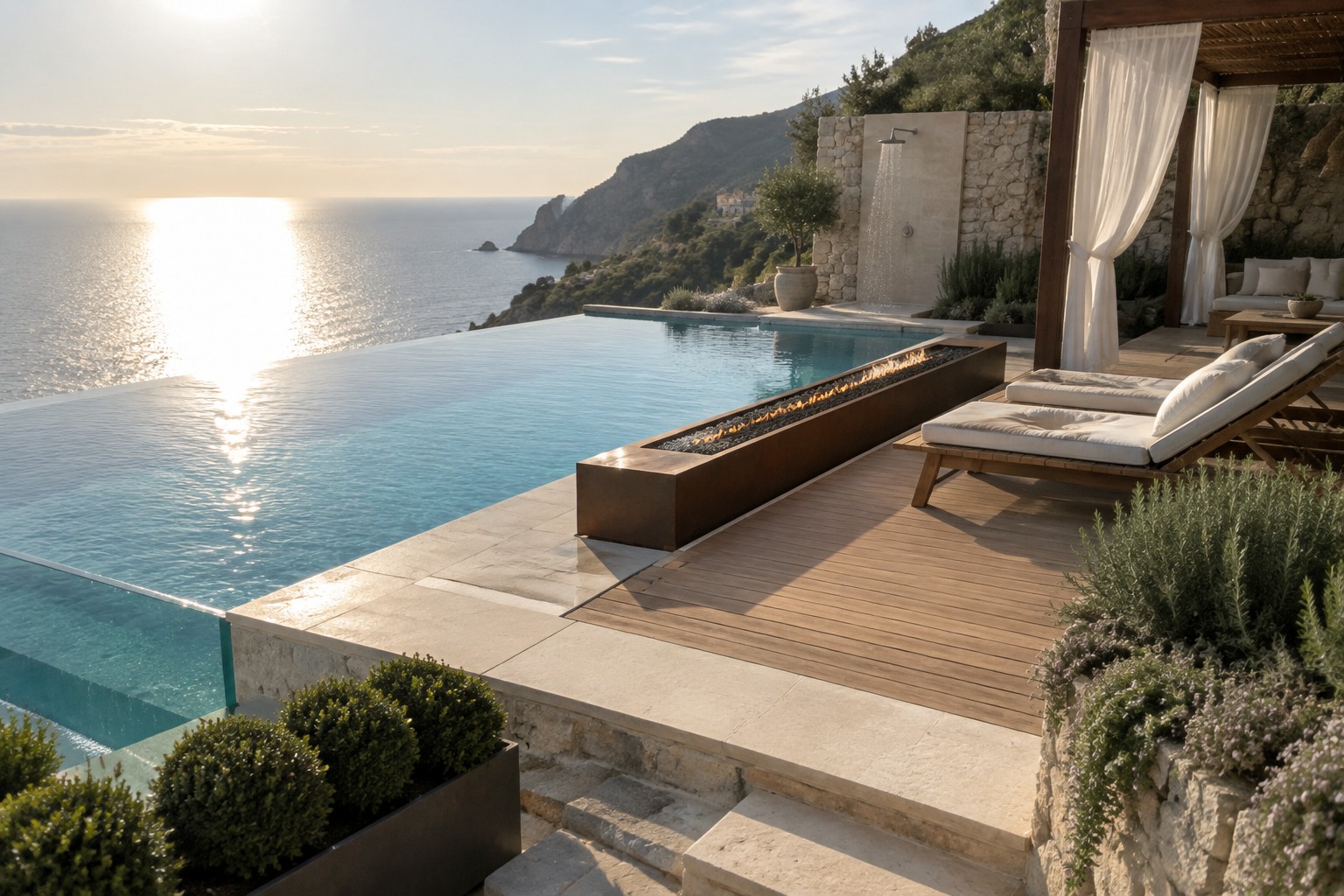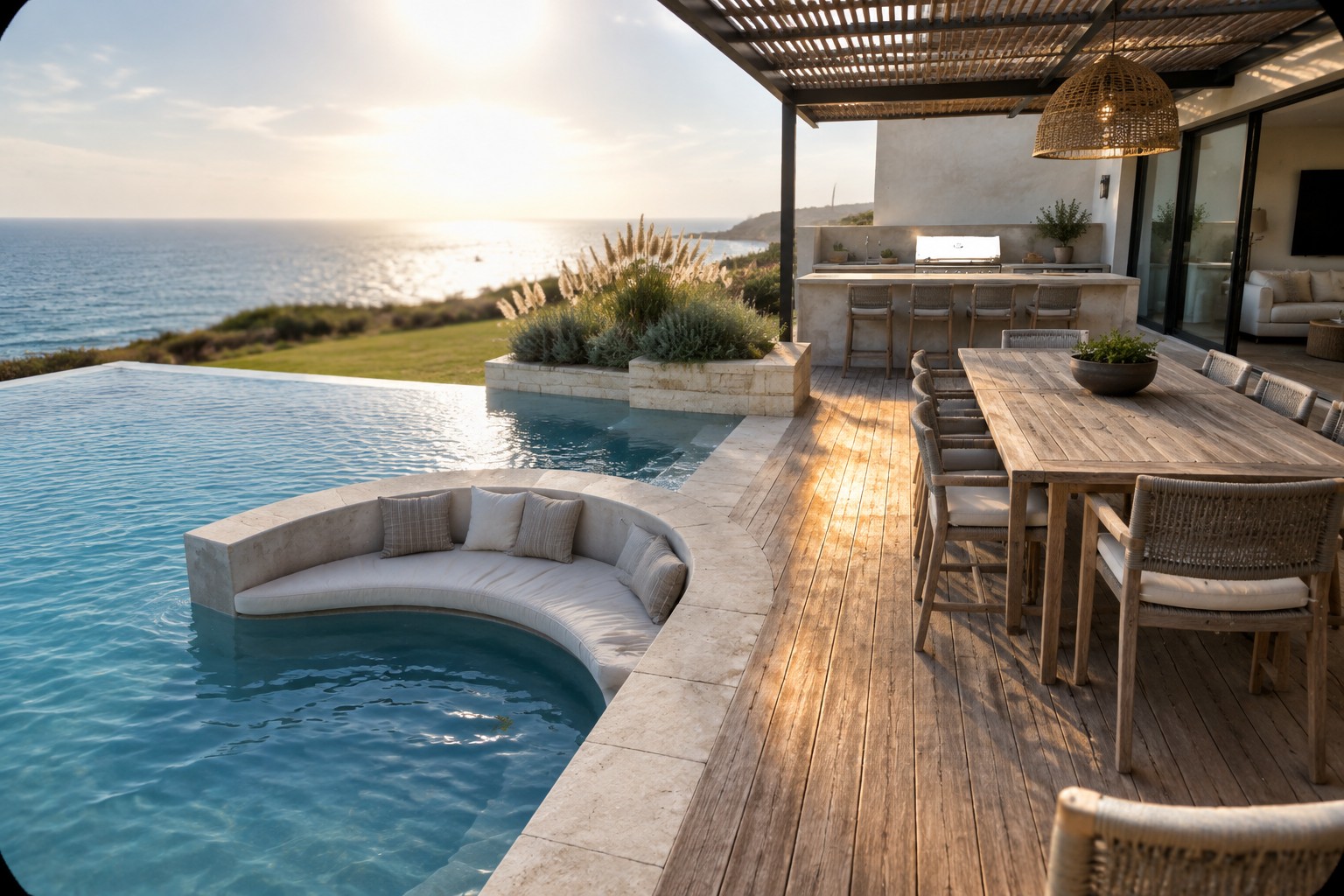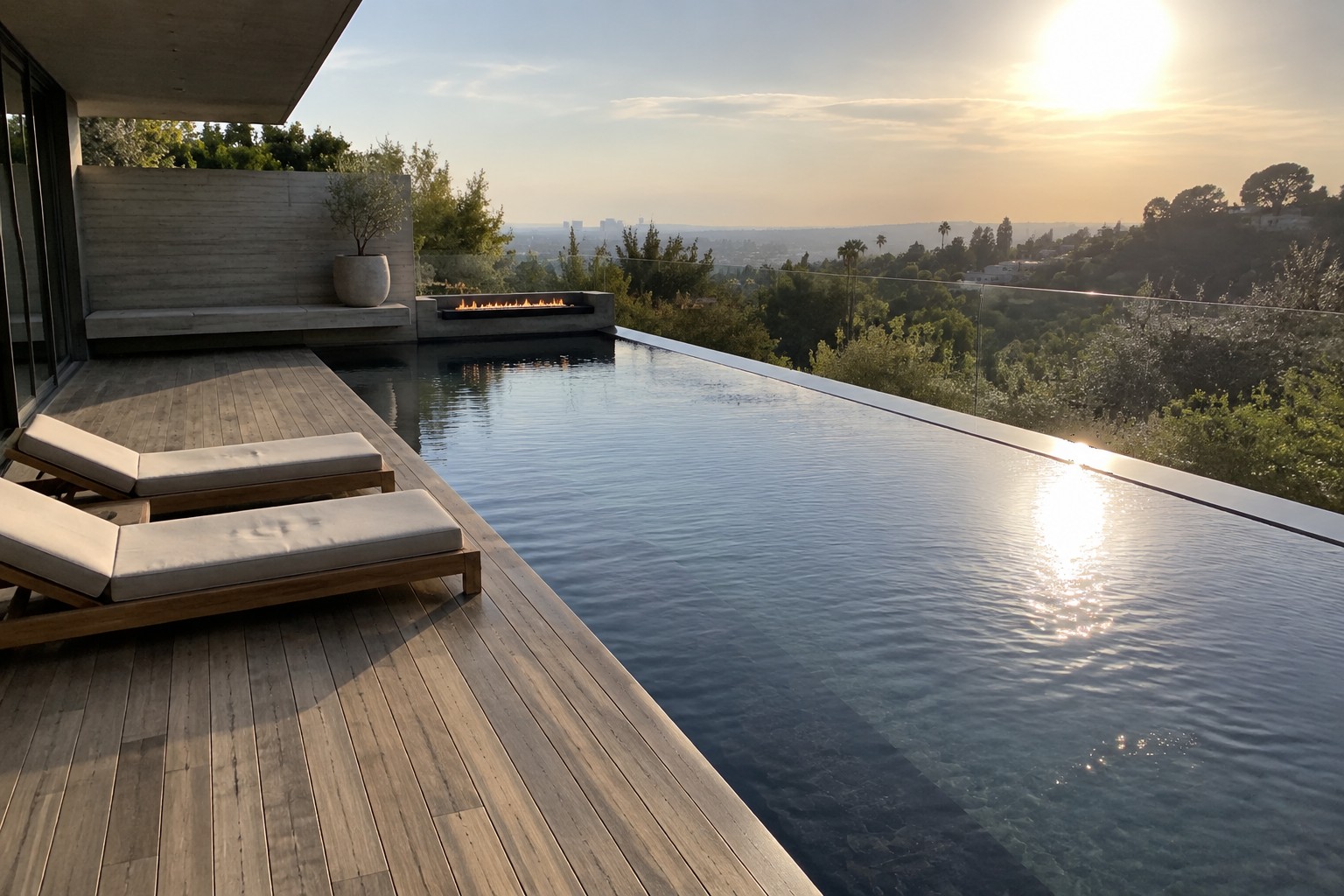
Many infinity pools look clean in renderings yet they only feel right in a backyard once the surrounding paving and planting settle into place.
I often find myself wondering how the edge detailing will hold up once leaves and weather start to test it every year.
Access matters most.
Some setups I have visited end up unused because the access feels awkward from the main living areas.
Trying one restrained detail at a time makes more sense than copying a whole look at once.
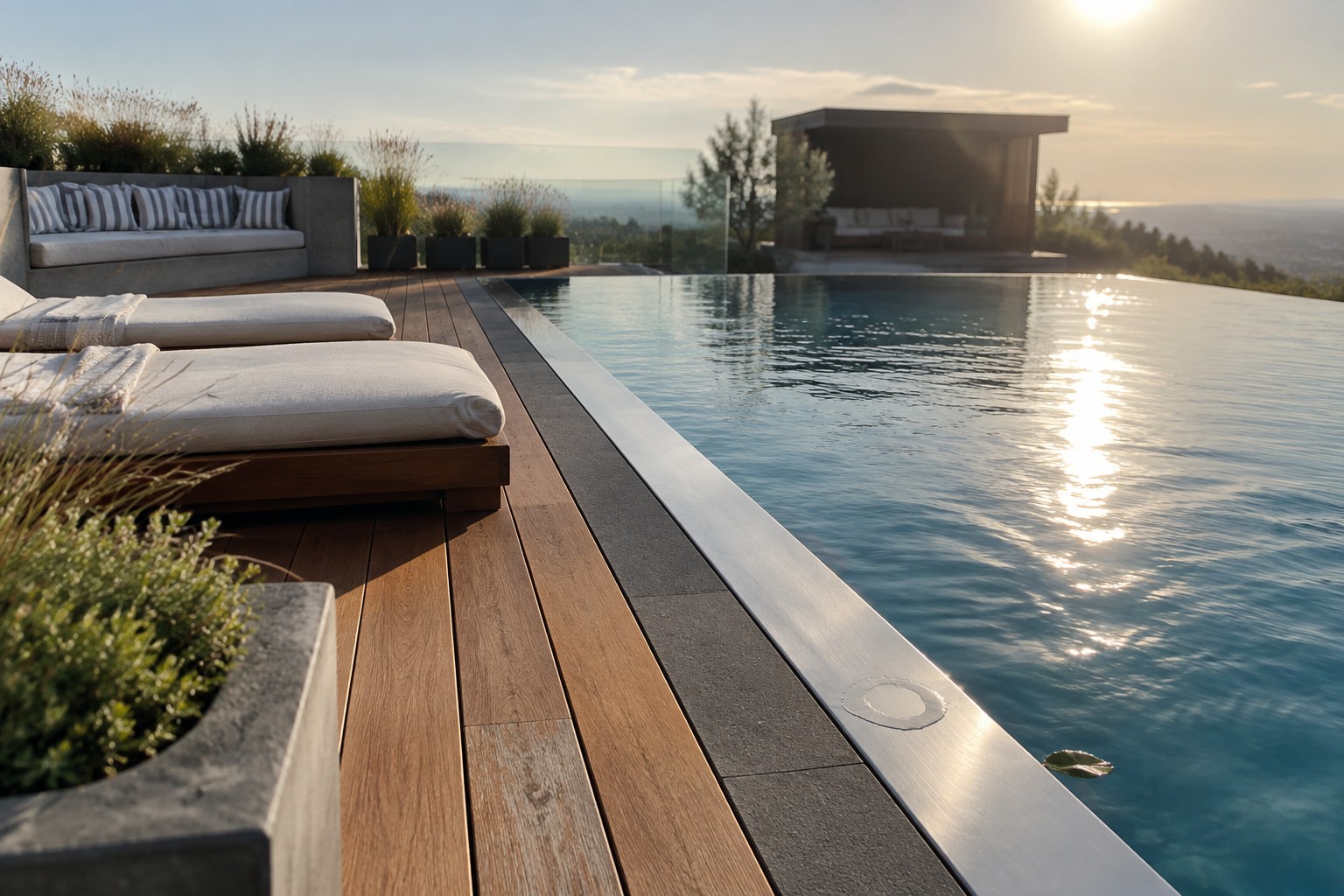
Natural Wood Decking For Infinity Pool Areas
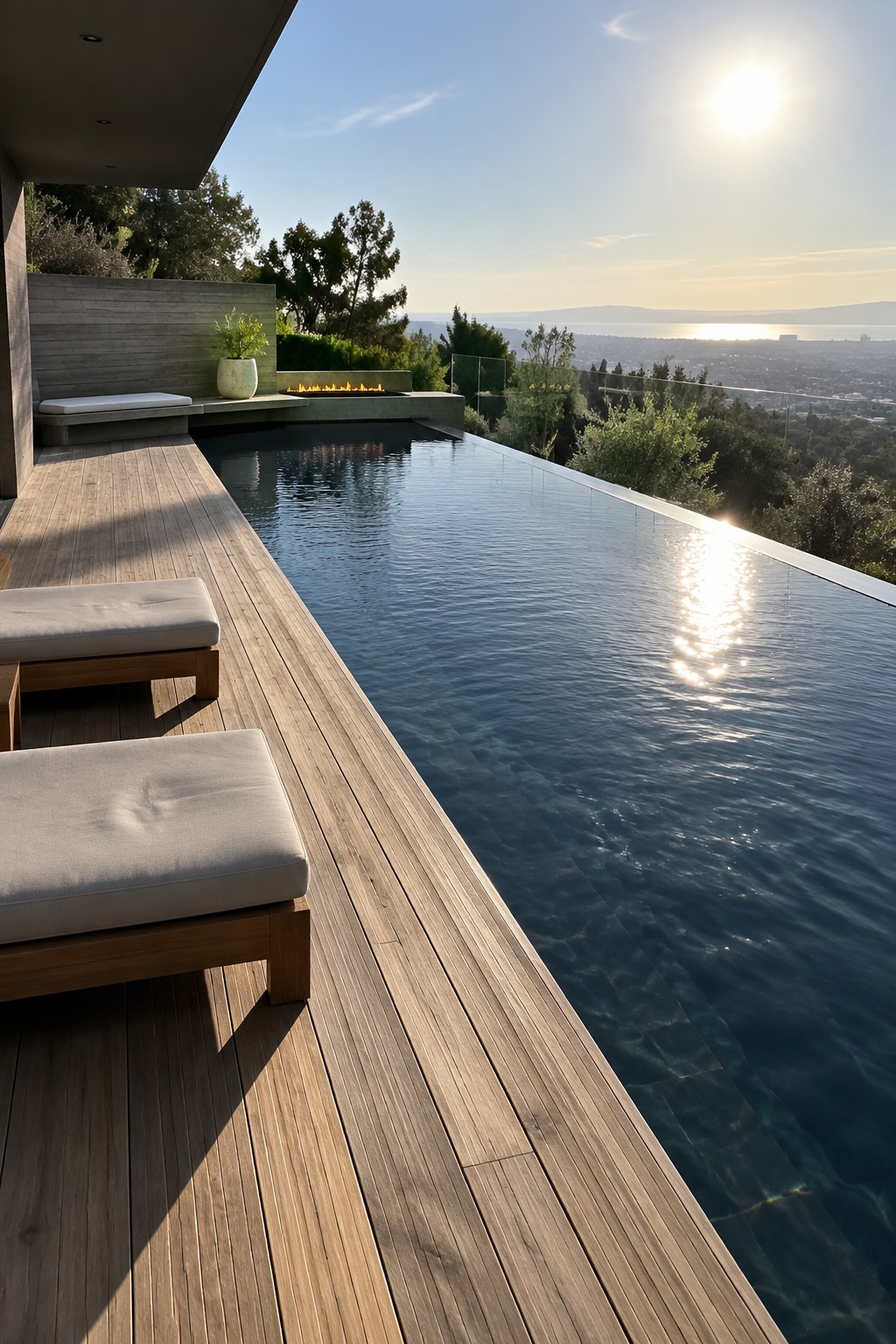
Natural wood decking works well beside a minimalist infinity pool because it brings in texture and warmth without adding visual noise. The planks run straight and simple along the water, giving just enough space for seating while letting the pool edge and the view stay the focus.
This setup suits homes on slopes or lots with strong scenery. Keep the wood tone light and the furniture low and sparse so the deck does not compete with the water or the horizon line.
Gravel Borders Keep Infinity Pool Areas Clean
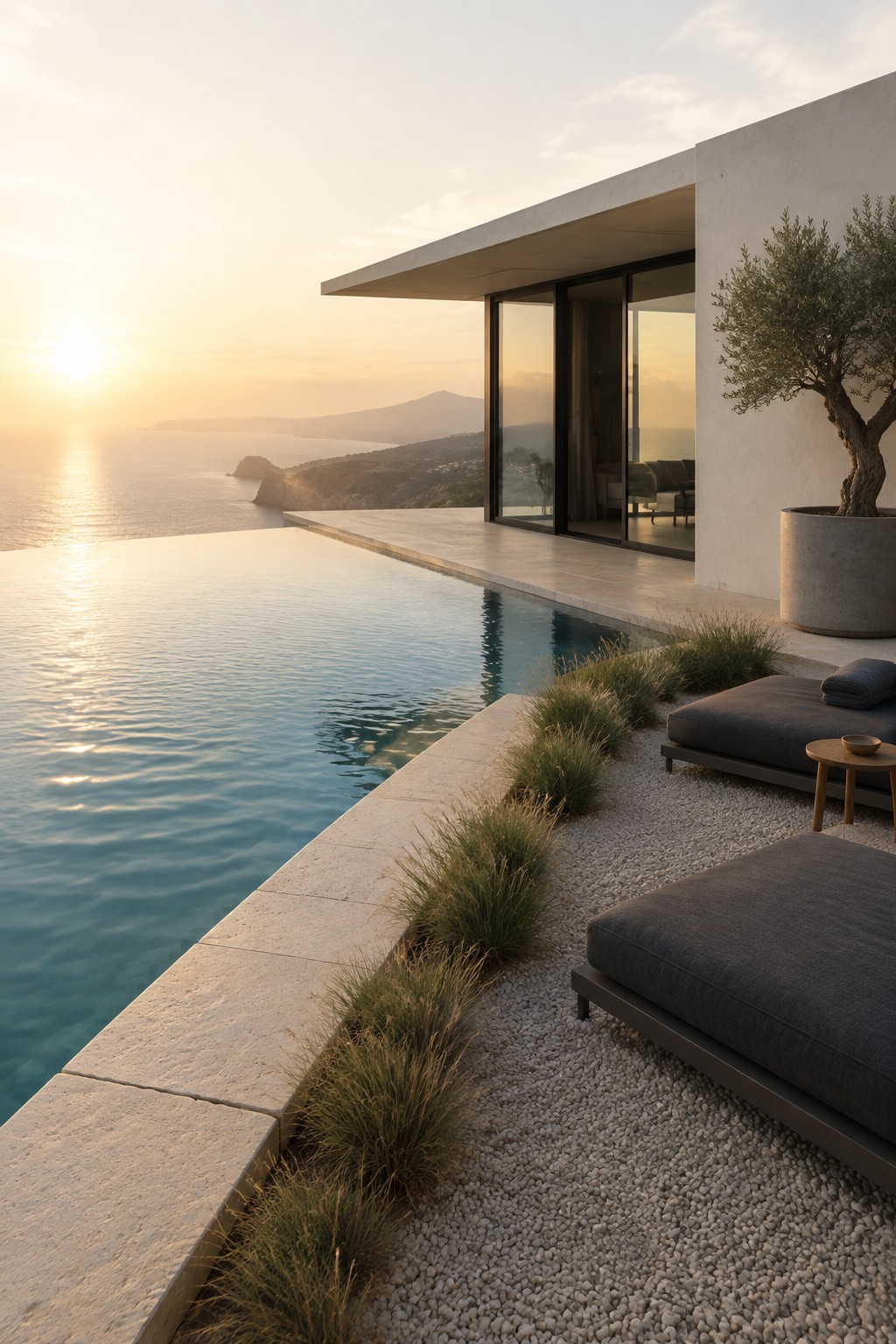
A gravel border along the pool edge gives the whole space a quiet, uncluttered feel. Instead of a wide paved deck that can look heavy, the loose stone creates a soft transition between the water and the house. It also lets the low planting sit naturally without fighting for attention.
This works best on modern homes where the pool sits close to the architecture. Use it when you want the water and the view to stay front and center. Just keep the gravel depth even and choose grasses that stay low so the line stays simple year round.
Linear Lighting Along The Pool Edge
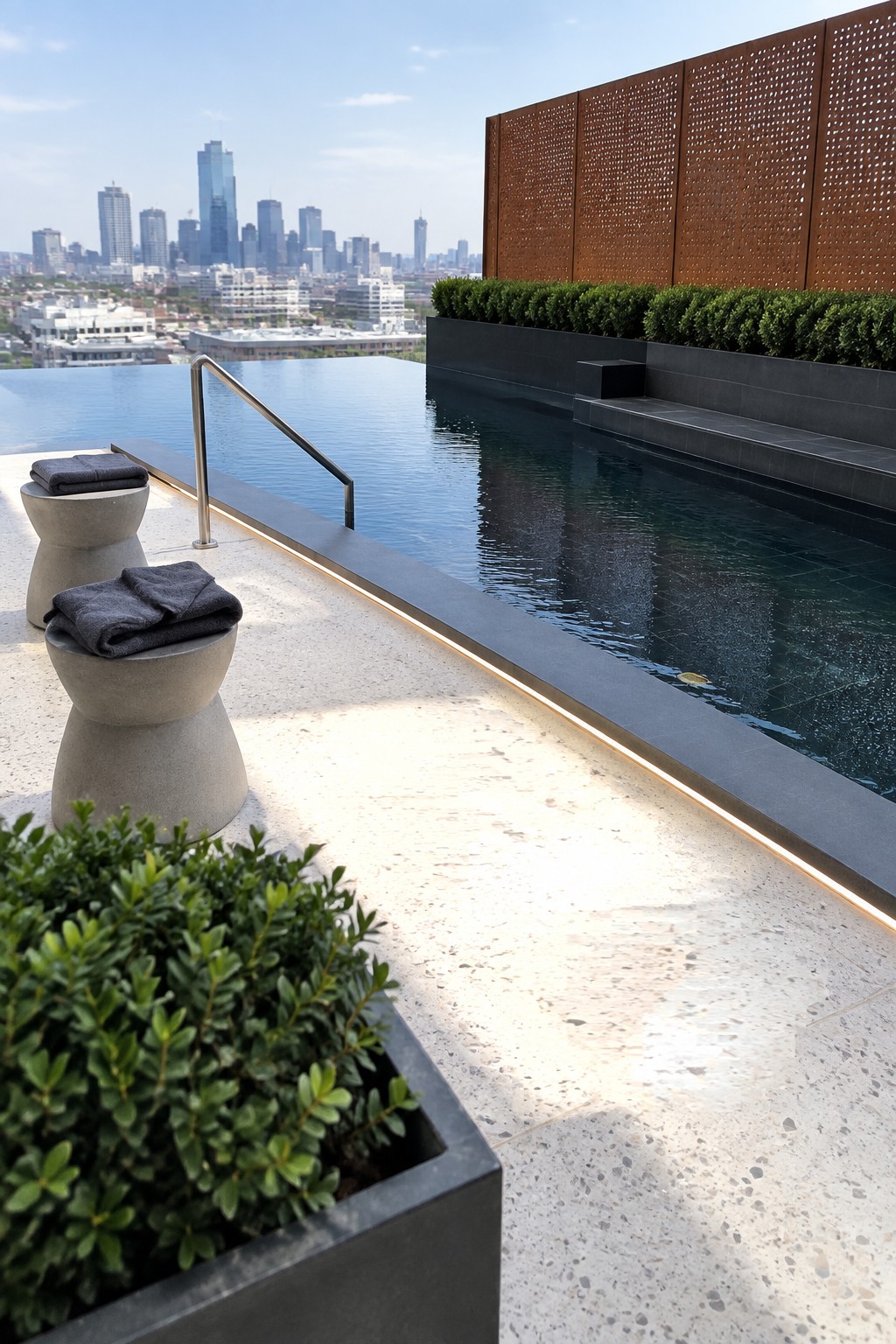
A thin strip of light tucked into the pool coping gives the edge a clear line at night without adding lamps or extra fixtures. It keeps the whole area feeling open and uncluttered while still making the water easy to see after dark.
This detail works well on minimalist pools that already have simple coping and dark finishes. It suits rooftops or terraces where you want low visual noise and a steady, even glow that does not compete with the view.
Floating Steps That Keep The Edge Clean
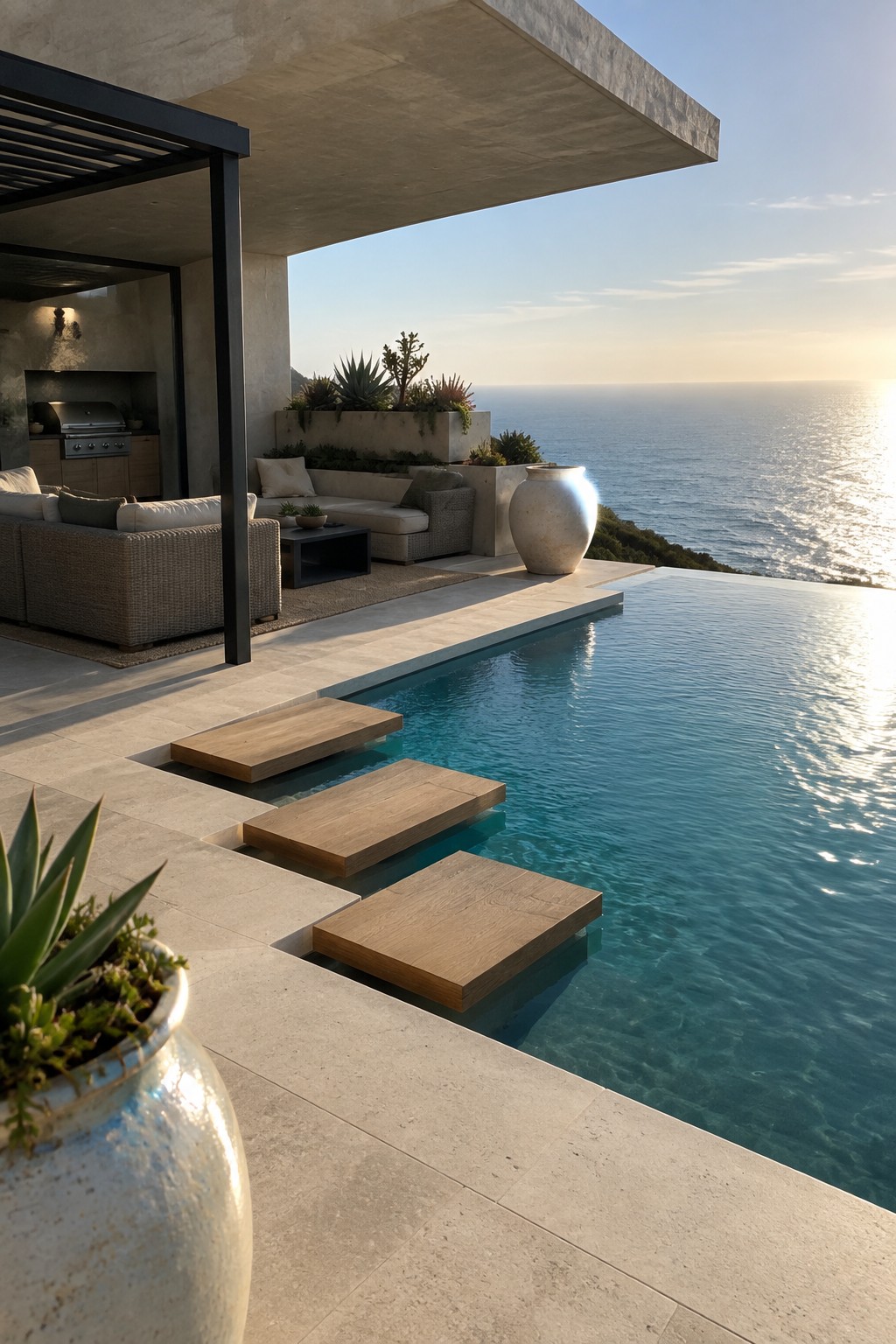
A few wooden platforms set just above the water make a simple path into an infinity pool without adding railings or extra structure. The steps sit low and let the long horizon line stay uninterrupted, which is exactly what keeps this kind of pool feeling calm rather than busy.
This works best on flat decks where you want easy entry but still need the water to read as one clean plane. Use the same wood tone as any nearby seating or planters so the steps feel like part of the deck rather than an added feature. Avoid too many platforms or bright finishes that would break the line of sight out to the water.
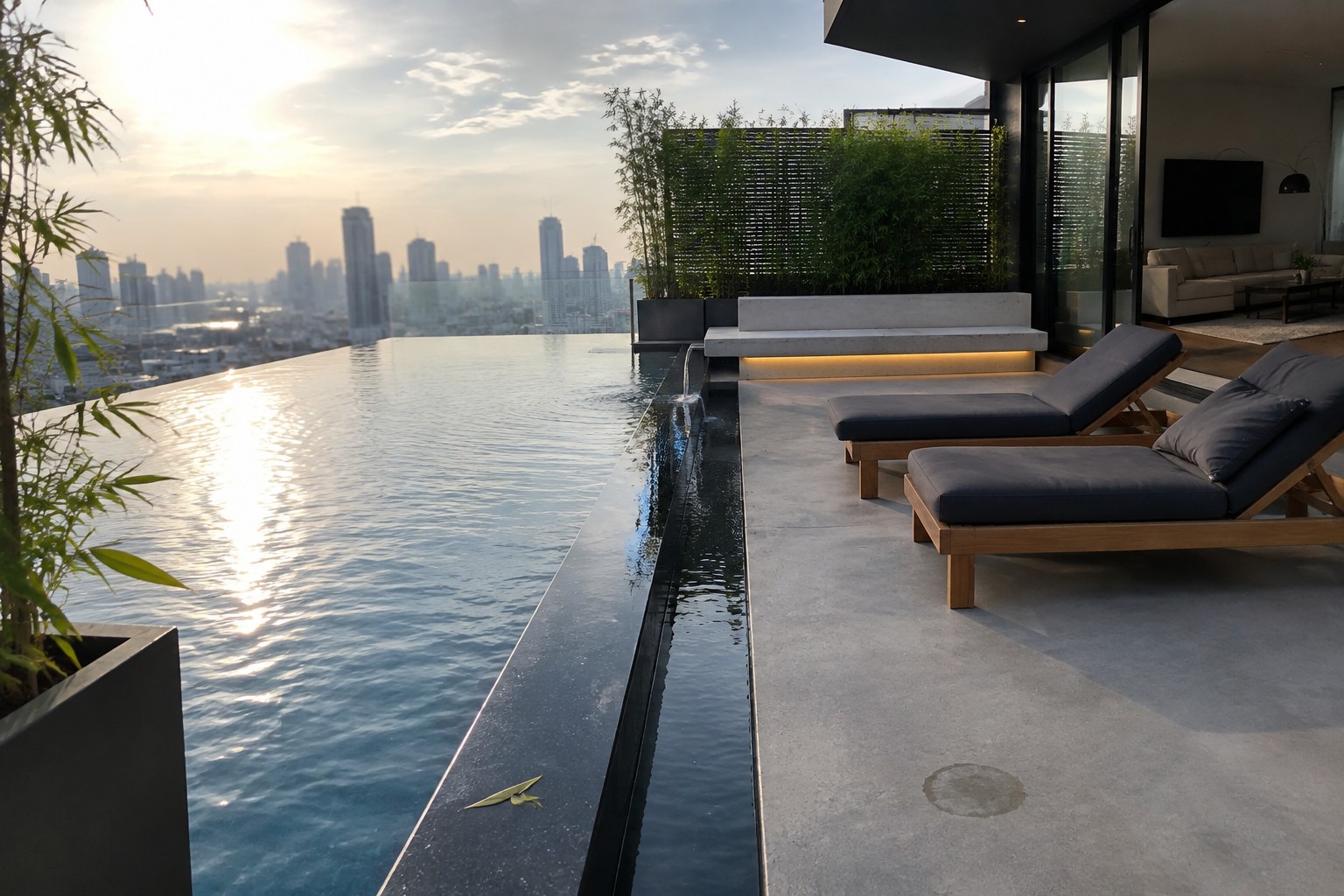
Extend One Surface Around the Pool Area
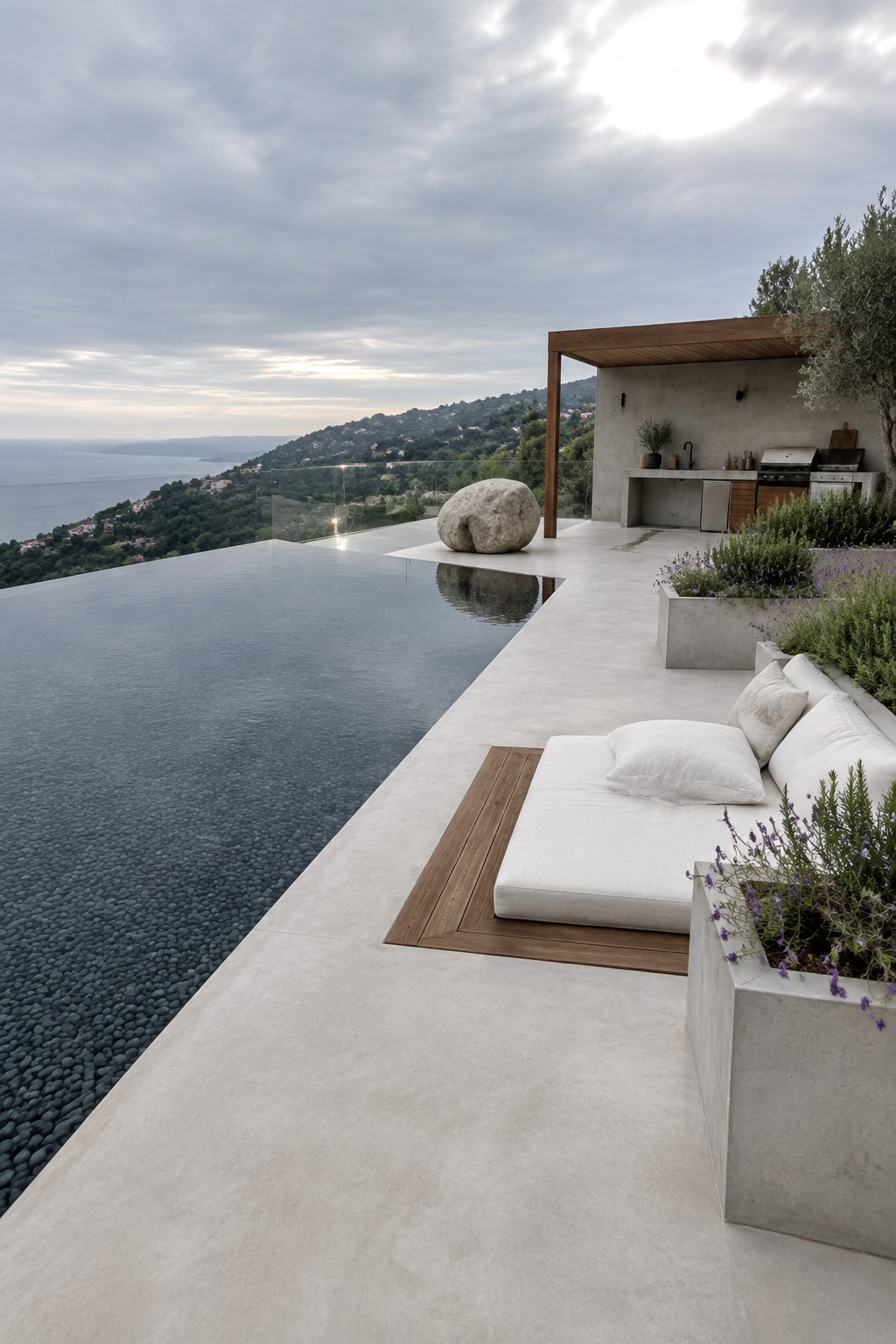
A single material across the pool deck and the seating zone makes the whole outdoor space feel larger and quieter. The concrete runs without breaks or extra trim, so the eye stays on the water and the view instead of jumping between different surfaces.
This approach works well on homes that already have a strong view and want the pool to sit quietly within it. Keep the concrete finish consistent and add just enough texture for safety, then let the seating and any built-in cooking areas sit directly on the same plane.
Dark Coping For The Infinity Edge
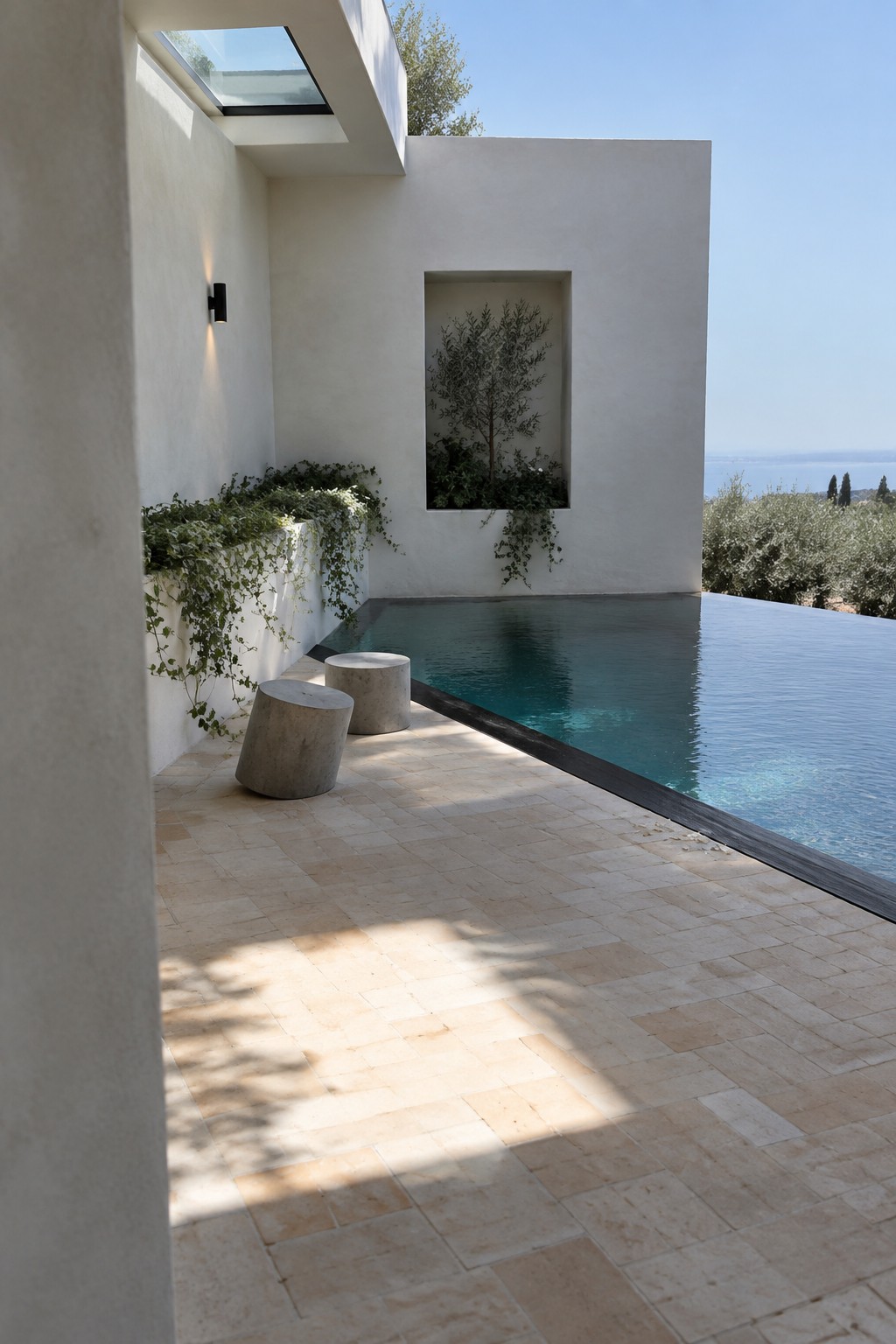
A dark coping along the pool edge gives the water a clean stop without any extra trim or fuss. It keeps the whole setup quiet and lets the view do the work instead of fighting with built-up details around the water.
This approach suits homes that already lean modern and open. Use it with simple stone decking and skip the planters or railings right at the lip. Just make sure the coping material holds up to sun and water so it stays sharp over time.
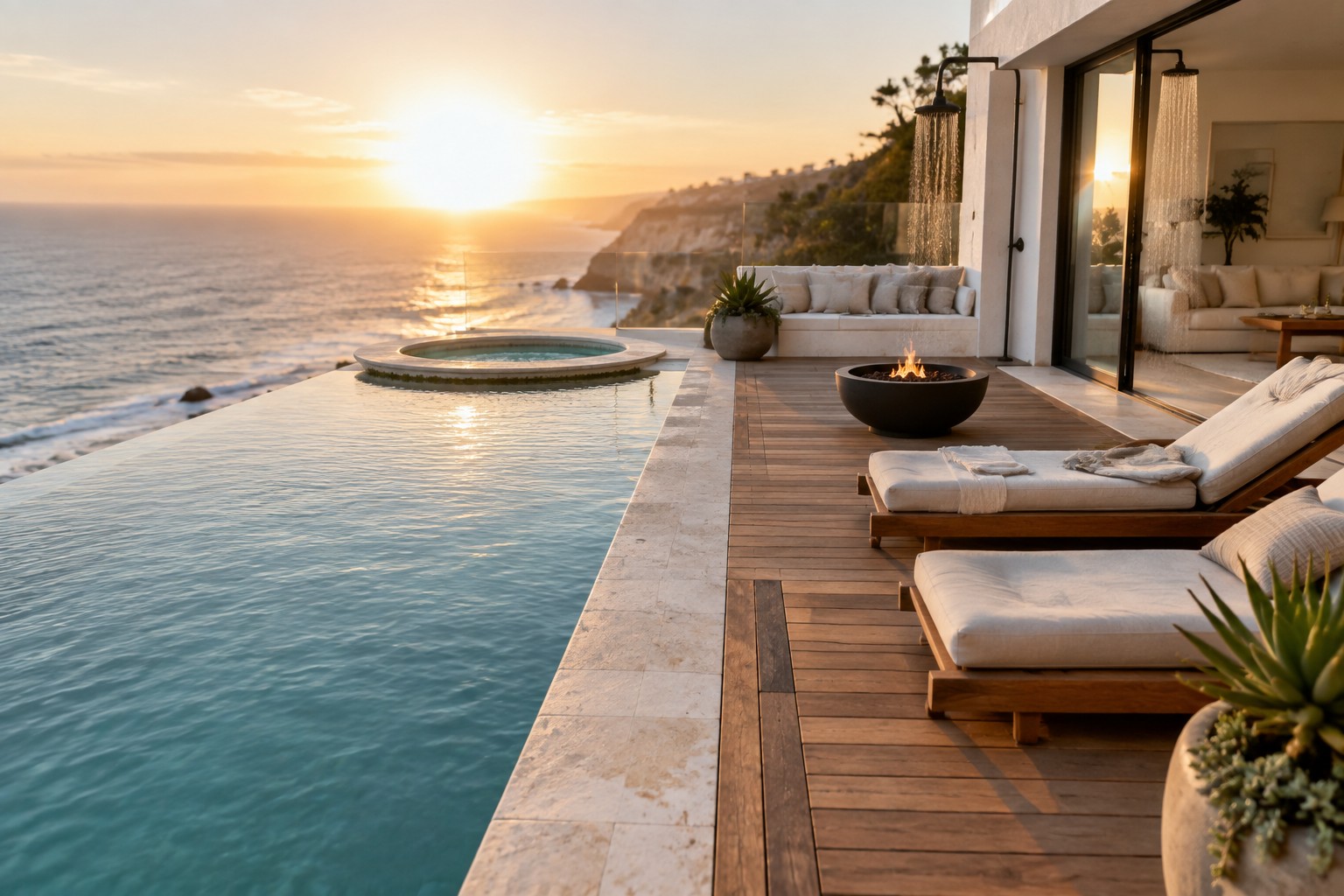
Carrying the Same Stone from Inside Out to the Pool
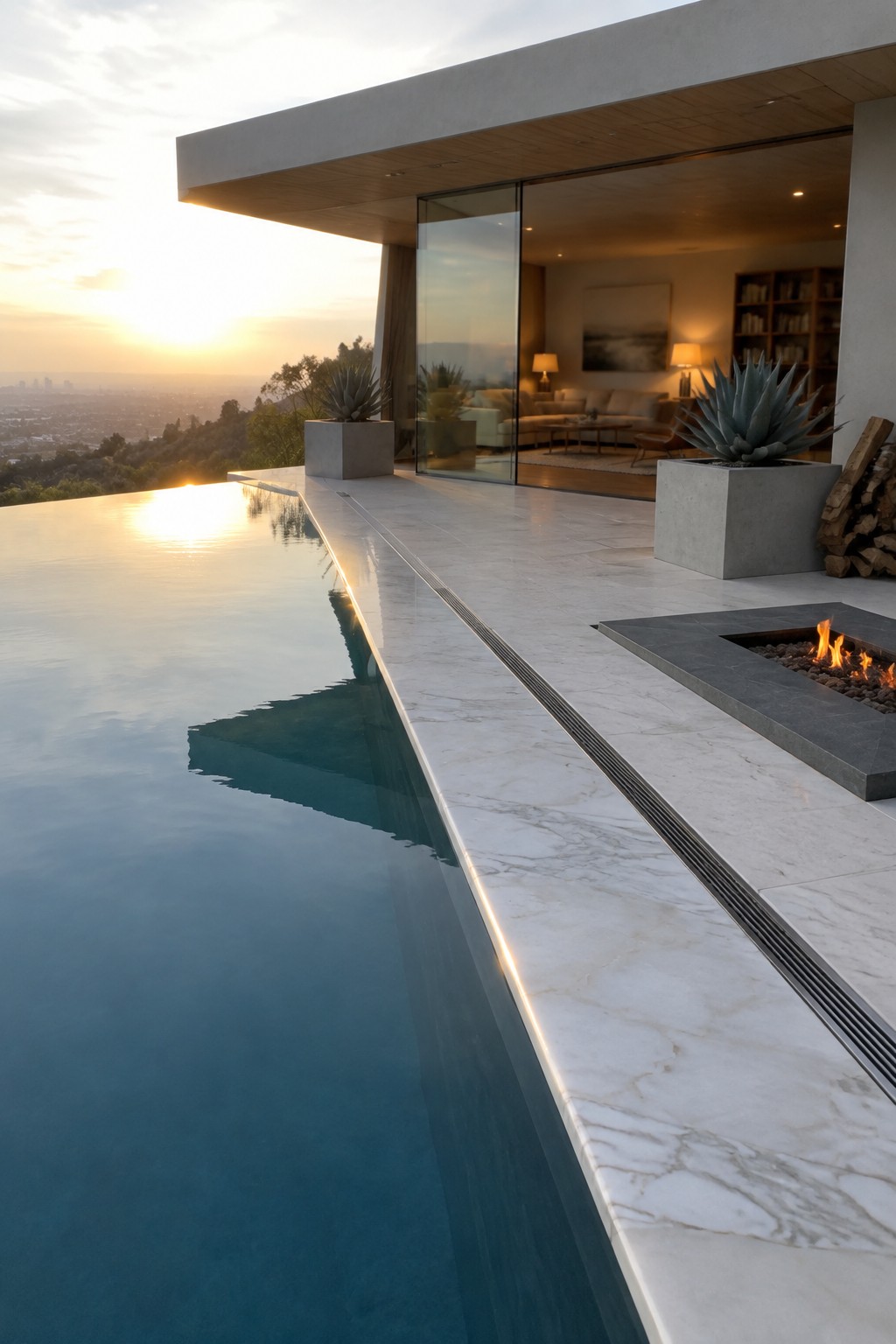
One material choice that keeps an infinity pool looking clean is to run the same stone from the living room straight out onto the deck. It removes any visual break at the doorway, so the pool feels like a natural extension of the house rather than a separate feature. The thin linear drain sits flush in the stone and does the work without adding extra trim or edges.
This works best on homes where the main living area opens directly to the pool, especially in milder climates where the doors stay open much of the year. Watch the thickness of the stone so the indoor and outdoor surfaces sit at the same level. Too much variation in finish or color can undo the simple effect you are after.
Using A Simple Overhead Frame For Poolside Shade
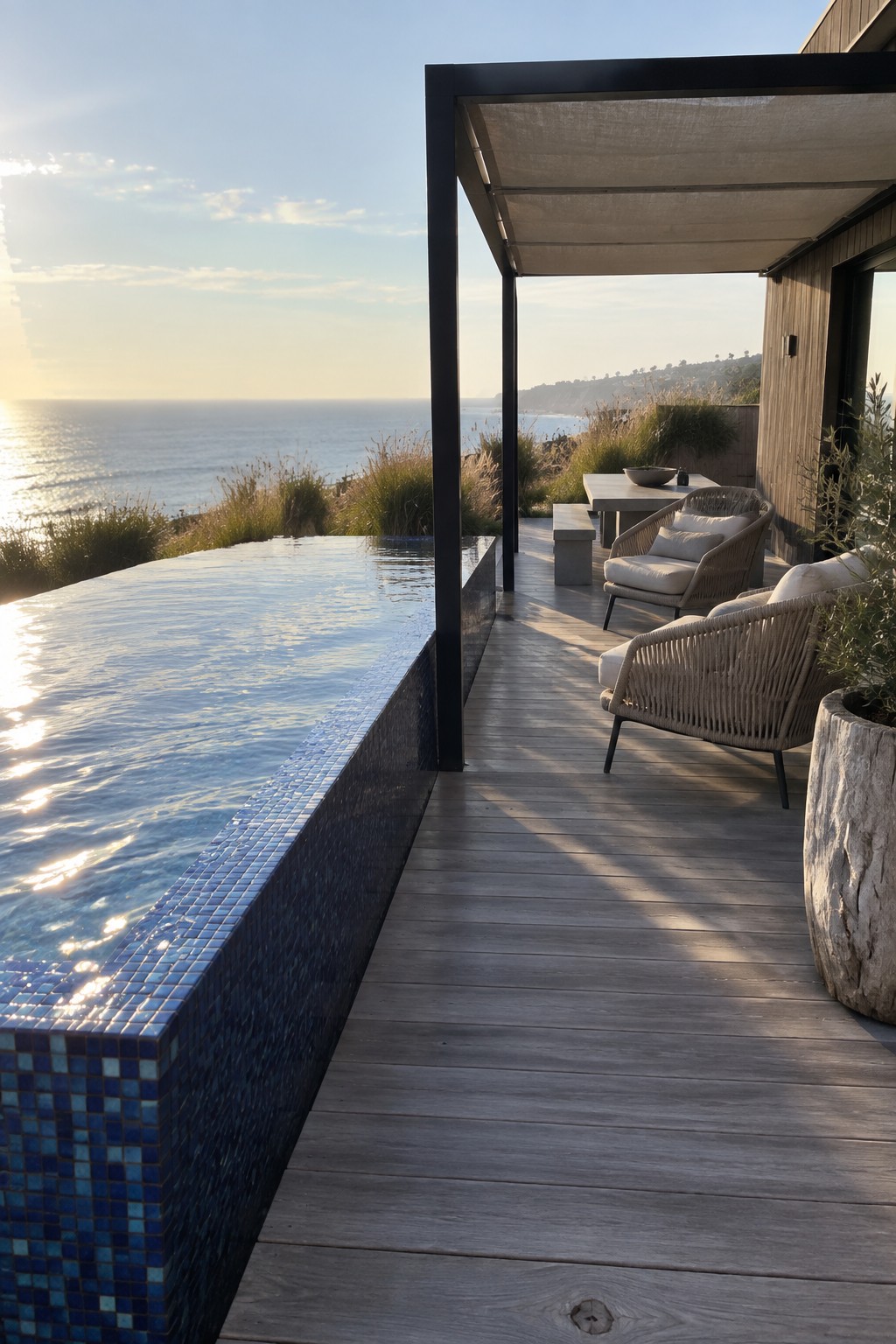
A basic shade structure with a dark frame and light fabric top can mark out a seating area right beside an infinity pool without crowding the space. It gives some relief from the sun while leaving the view open and letting the water edge stay the main focus. The wood decking underneath helps tie the seating zone to the pool in a quiet way.
This kind of frame works best on homes where the pool already has clean lines and you want to add comfort without extra walls or heavy posts. Keep the fabric neutral and the structure slim so it does not fight with the horizon or the water.
Built-In Seating That Stays Part Of The Architecture
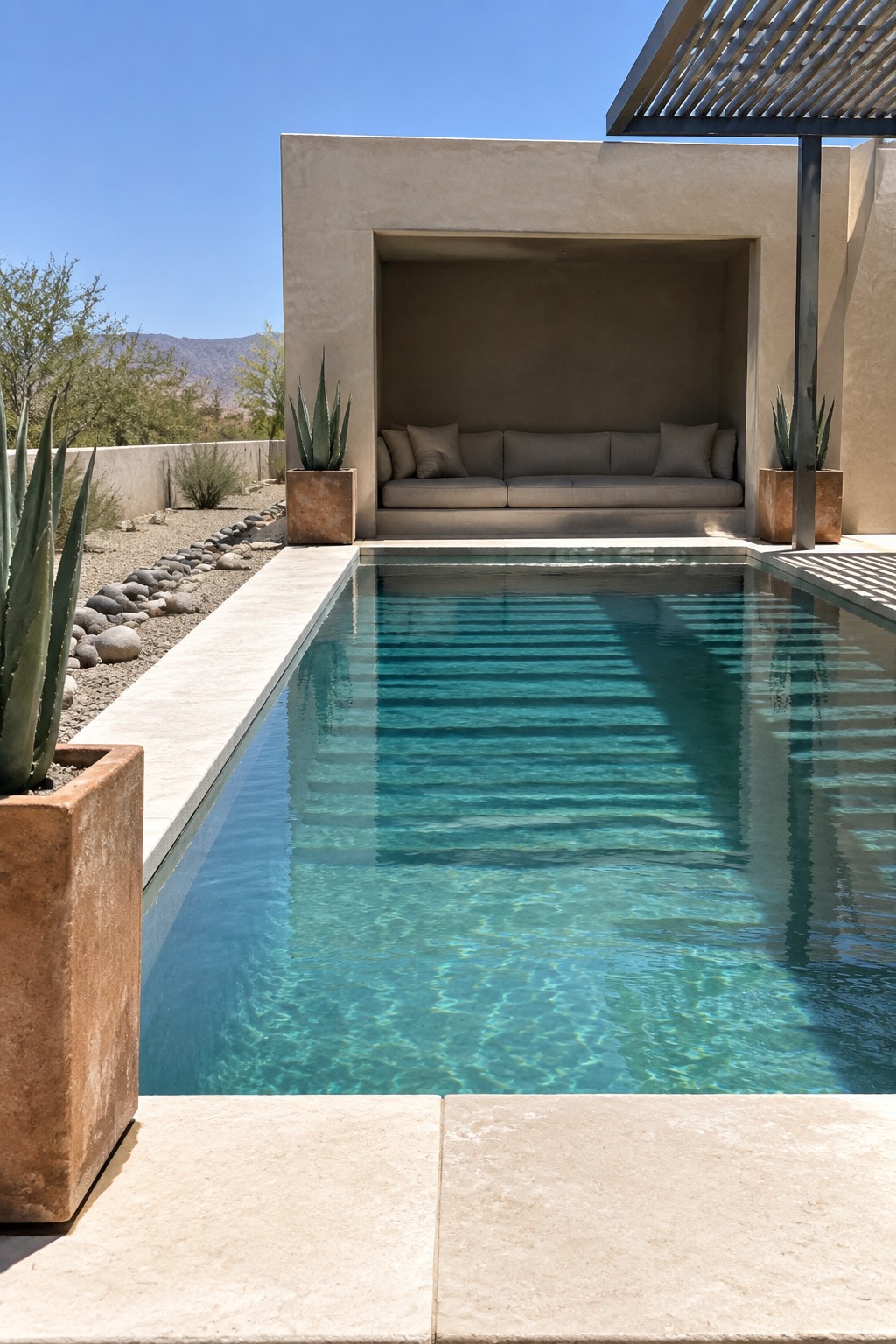
A recessed seating niche right at the pool edge cuts down on extra furniture and keeps the whole area looking clean. The cushions sit inside the wall itself, so nothing sticks out or breaks the flat lines around the water.
This approach works best on modern homes where the goal is to make the pool feel connected to the house rather than added later. Just check that the seat depth feels comfortable for sitting and that the material matches the surrounding deck so it reads as one surface.
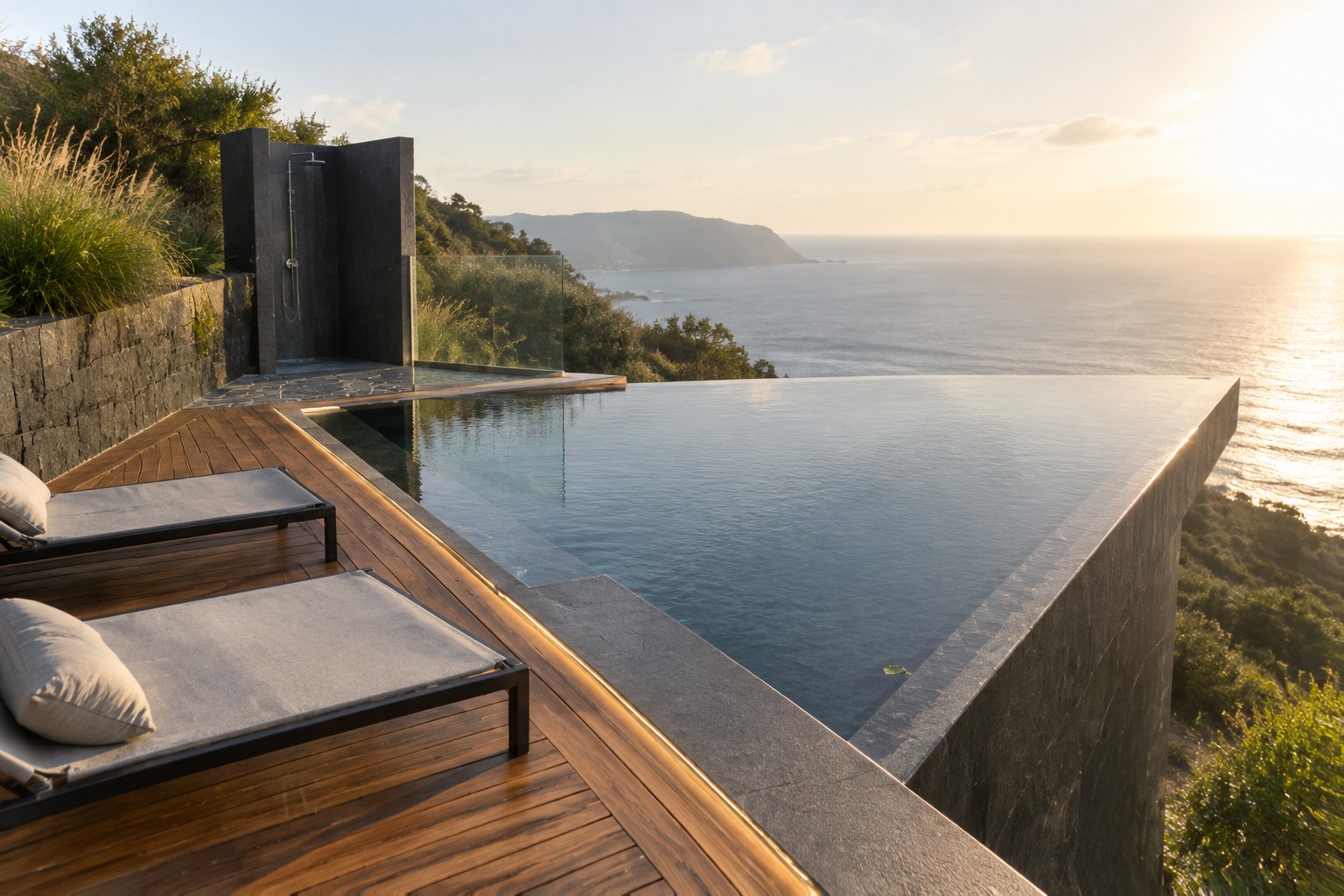
Dark Wood Decking Beside Infinity Pools
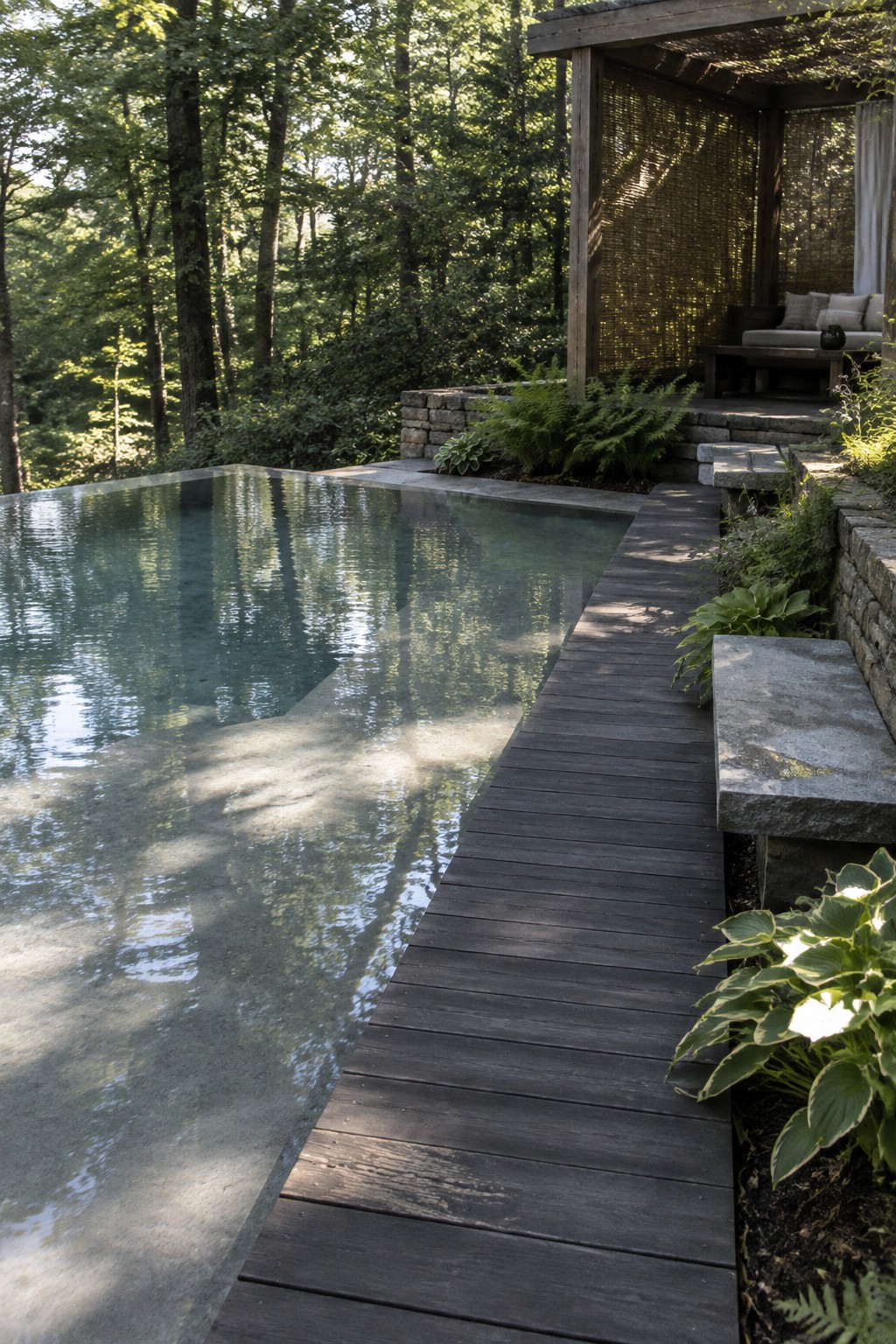
Dark wood decking works well next to an infinity pool because it stays quiet and lets the water and trees carry the view. The deep tone blends into the surroundings instead of pulling attention away from the pool edge itself.
This choice suits wooded sites where you want the pool to feel settled rather than added on. Keep the layout narrow and the material consistent so the deck acts as a simple bridge between the water and the landscape.
Keep The Concrete Deck Simple
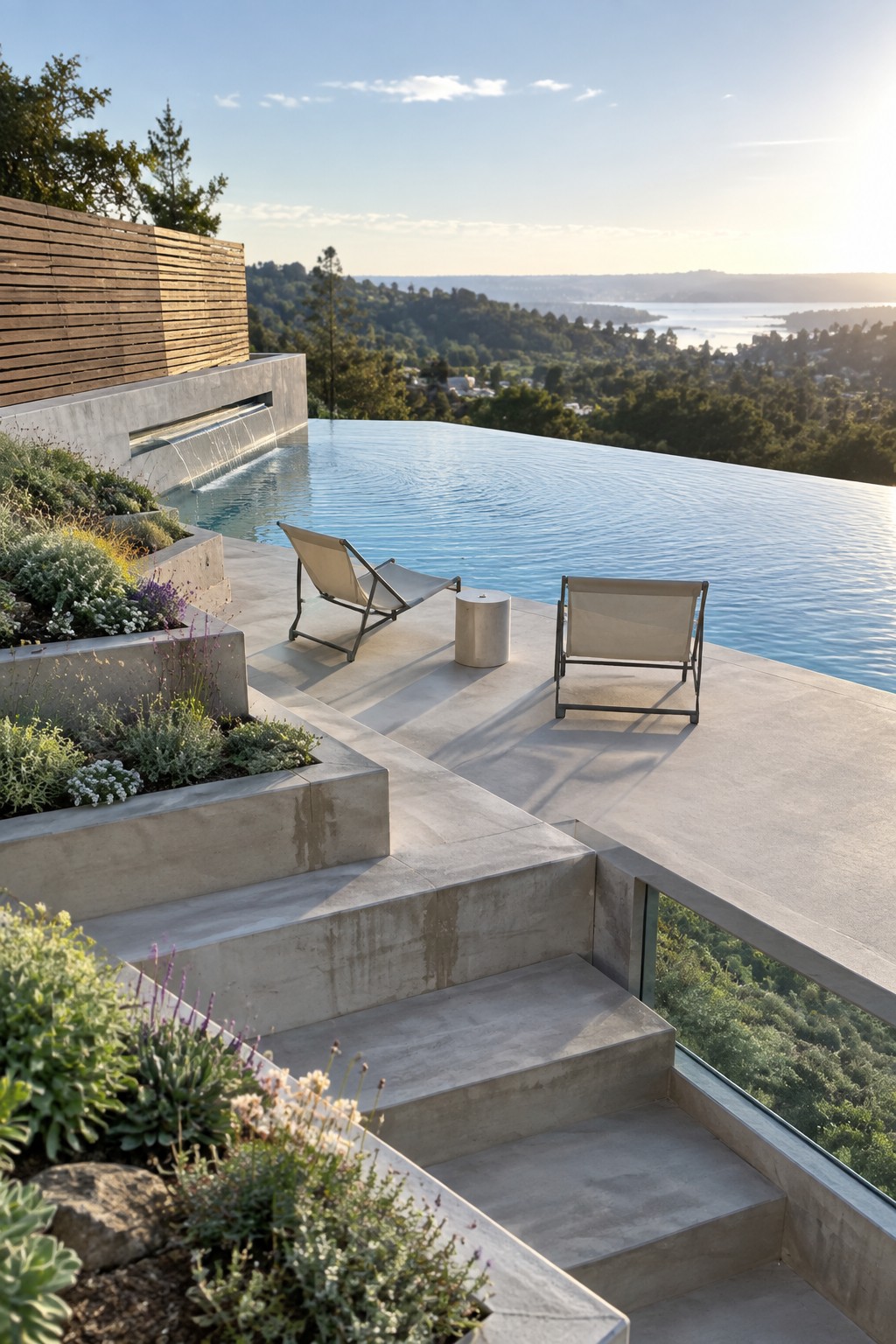
A plain concrete terrace around an infinity pool lets the water and view do the work. Two low chairs and a single side table are all that sit on the surface here, which keeps the whole area from feeling crowded or busy.
This setup works best on sites with a strong outlook. Add only what you need for sitting and skip extra pieces so the pool edge stays clean and the horizon stays visible.
Built In Seating That Shapes The Pool Area
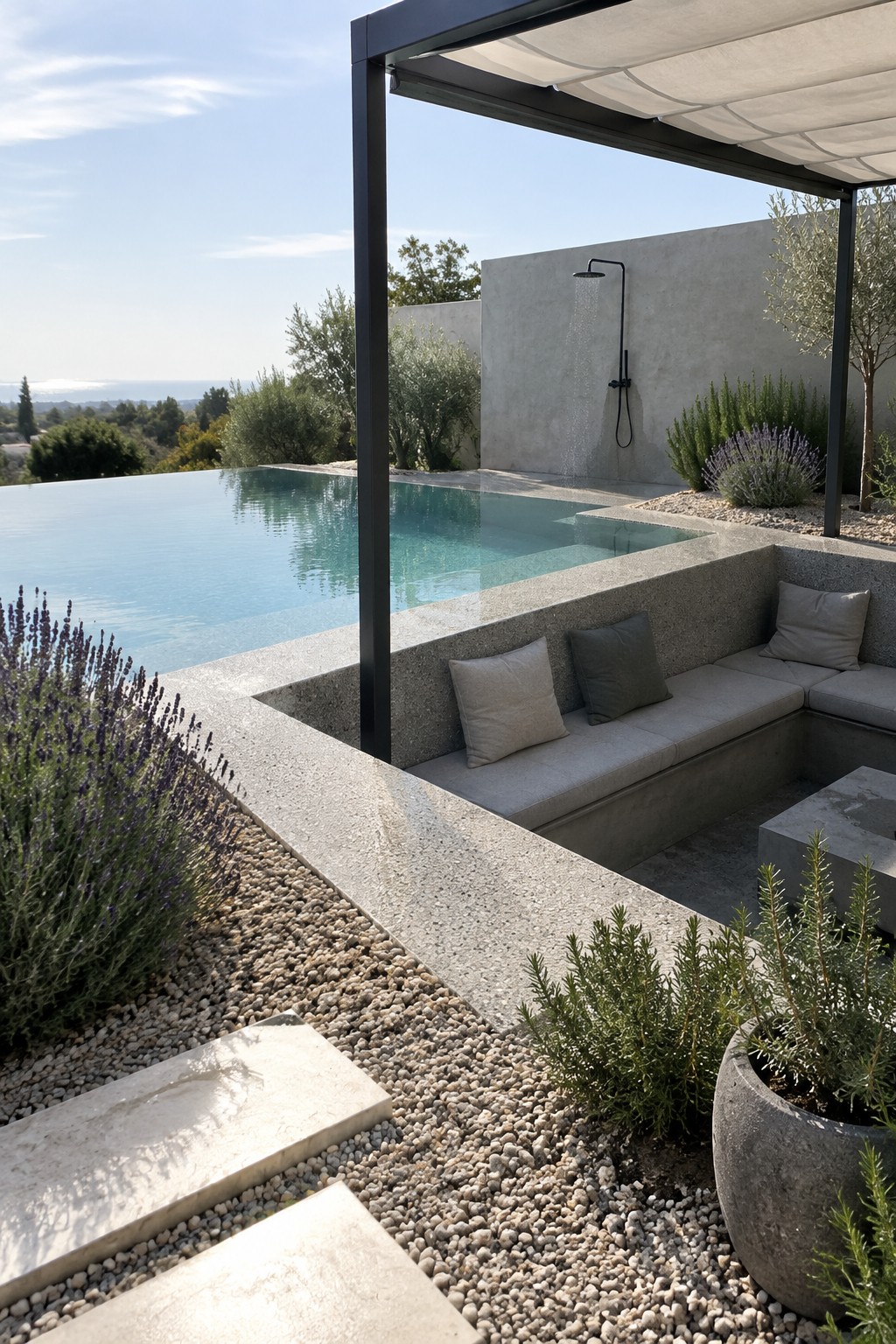
Built in concrete benches right at the water’s edge give the whole space a cleaner, more settled look. Instead of adding separate chairs or loungers that can crowd things up, the seating becomes part of the pool structure itself and keeps the focus on the water.
This approach works best on smaller lots or in modern homes where you want the pool to feel like an extension of the living space. Use weather resistant cushions in neutral tones and keep the surrounding planting low so the bench stays the main feature.
Simple Benches Keep the Pool Area Calm
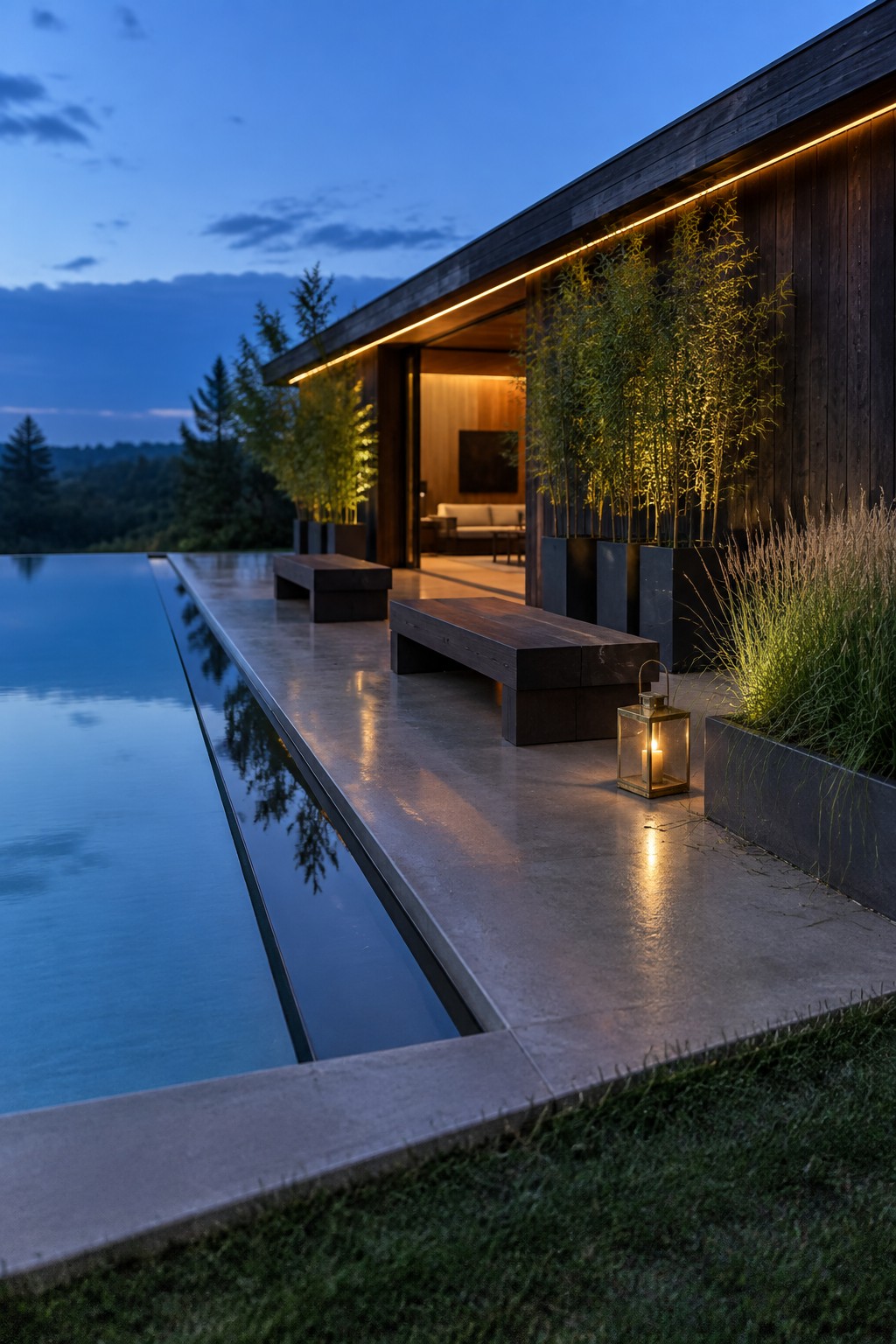
A few low wooden benches placed right along the pool edge do more than just give people a place to sit. They leave the water and the view as the main features without adding extra shapes or bulk that would break up the clean line of the deck.
This approach works best on long, narrow pool areas where you want the space to feel open rather than crowded. It suits modern homes that already use simple materials and avoids the usual problem of furniture taking attention away from the pool itself.
Pebble Edging Keeps The Pool Simple
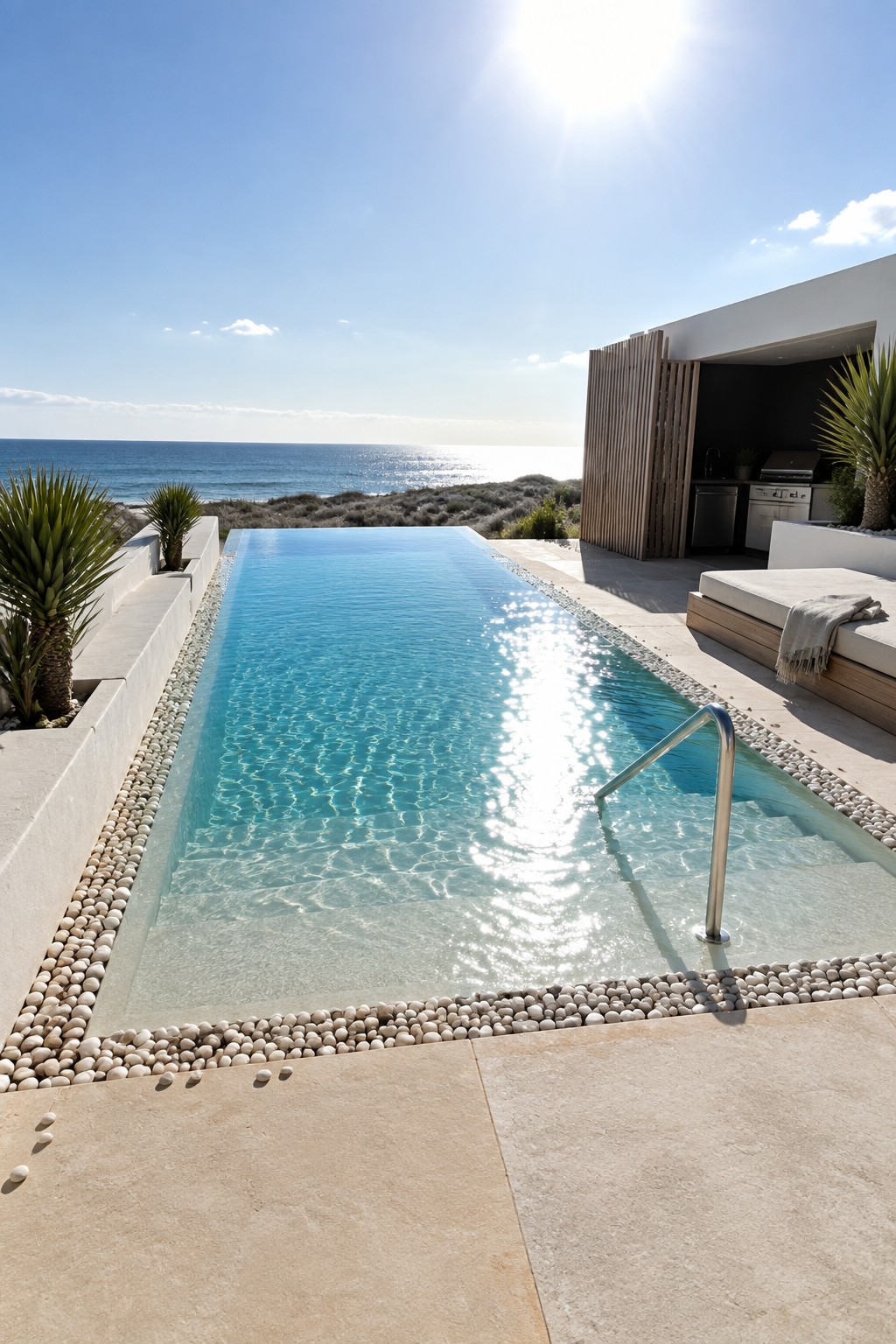
A narrow border of smooth pebbles around the pool gives the whole setup a finished edge without extra trim or coping. It softens the hard lines just enough while letting the water and the horizon stay the main features.
This kind of border works well on modern homes in dry or coastal areas where the stones match the natural ground. It also helps with water runoff and keeps the deck from looking too bare or overly built.
Gravel Surfaces Around Infinity Pools
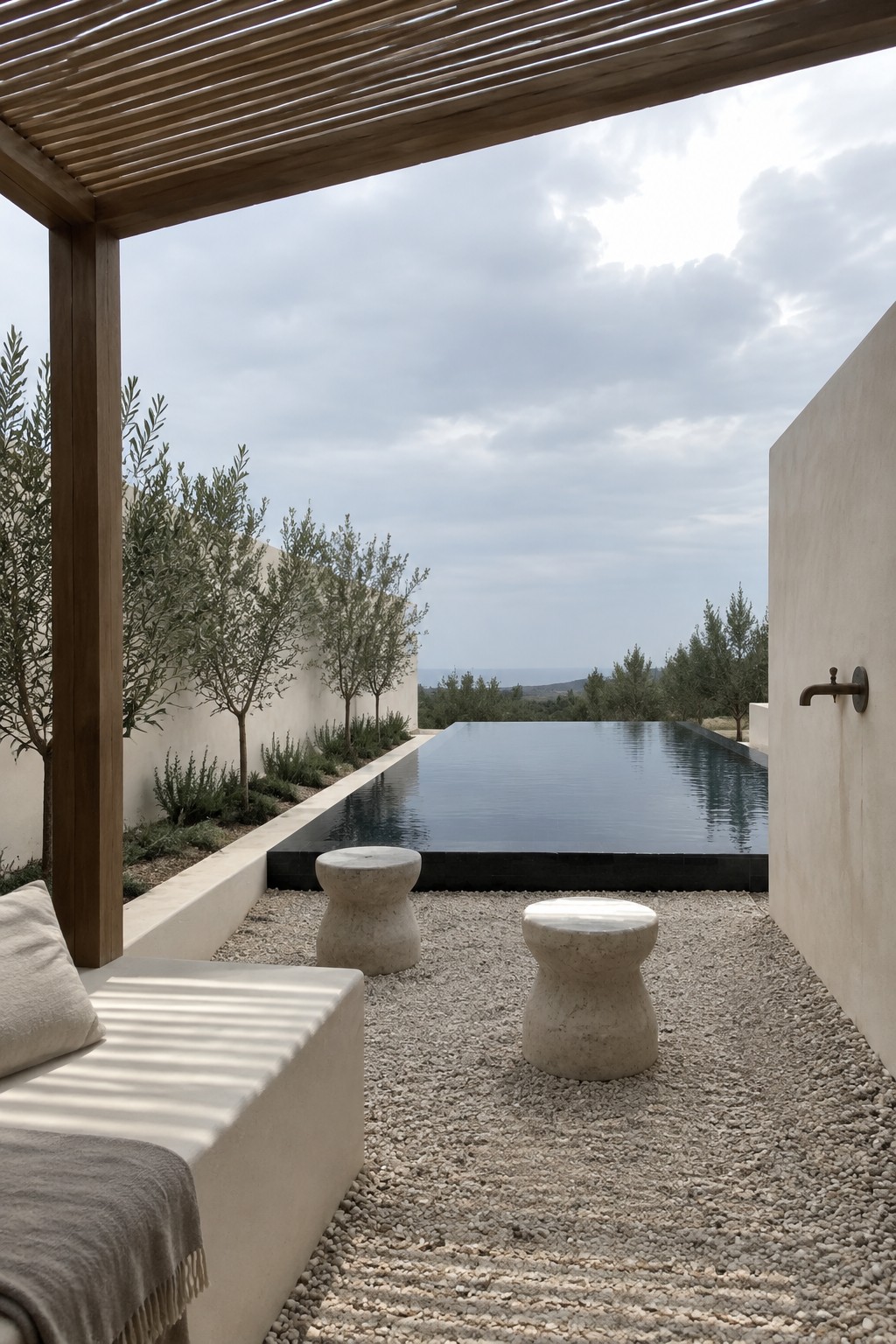
Gravel works well as a pool surround when the goal is to keep the overall look quiet and let the water edge do the main work. It creates a softer transition to the landscape than pavers or tiles and pairs naturally with simple concrete walls and minimal seating.
This approach suits homes in dry or Mediterranean climates where drainage is straightforward. Keep the gravel layer thin near the pool edge so it does not shift into the water, and limit other furnishings to just a few low pieces.
Simple Pebble Edges For Infinity Pools
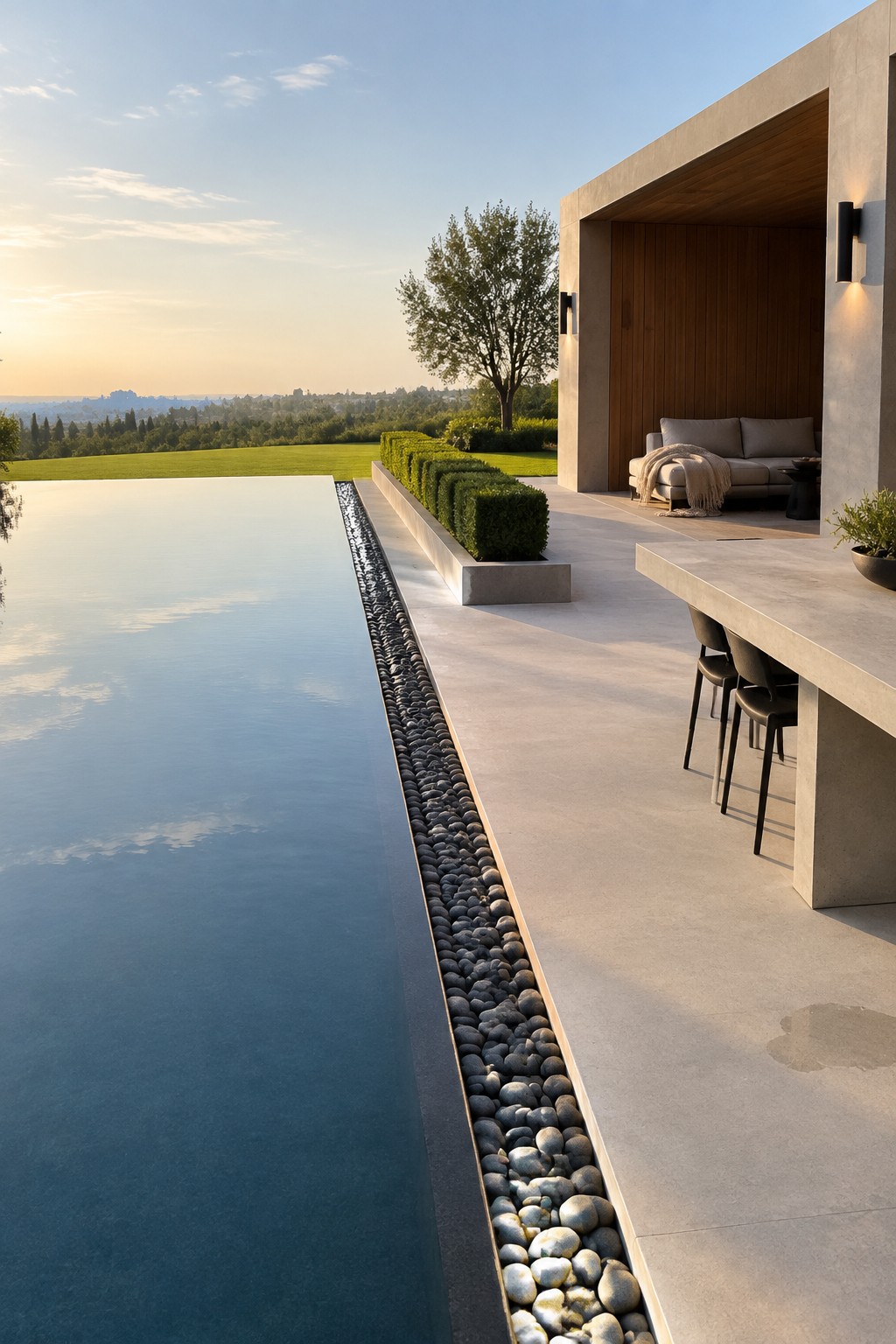
A narrow strip of dark pebbles running along the pool edge gives the water a clean stop without extra trim or visible hardware. It handles drainage quietly and keeps the concrete deck looking flat and open next to the water.
This works best on long, straight pool runs where you want minimal contrast. It suits flat sites with modern concrete finishes and pairs well with low planting or simple outdoor seating nearby. Just keep the pebble size consistent and the channel width narrow so it stays subtle rather than becoming its own feature.
Frequently Asked Questions
Q: How do you keep the water looking so clear in these setups?
A: Run the filtration system daily and skim debris from the surface each morning. Test the balance twice a week so nothing builds up and clouds the view.
Q: What if my yard slopes differently than the examples shown?
A: Grade the ground first to create a level base for the edge. Then set the pool rim to match the natural drop without extra walls or railings.
Q: Are these pools hard to heat in cooler months?
A: They lose warmth quicker along the open edge so use a thermal cover overnight. A simple heat pump tucked out of sight keeps the temperature steady without changing the look.