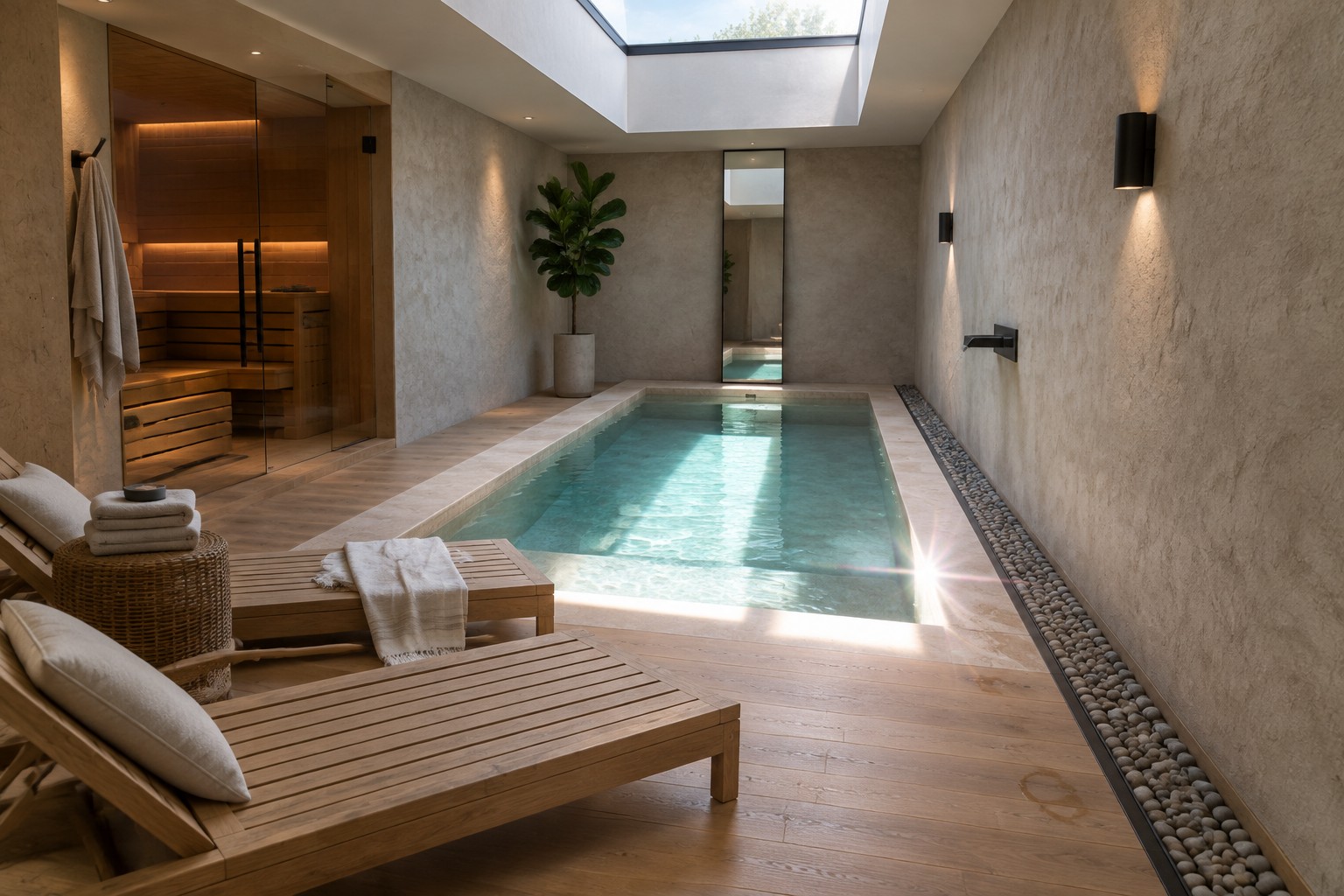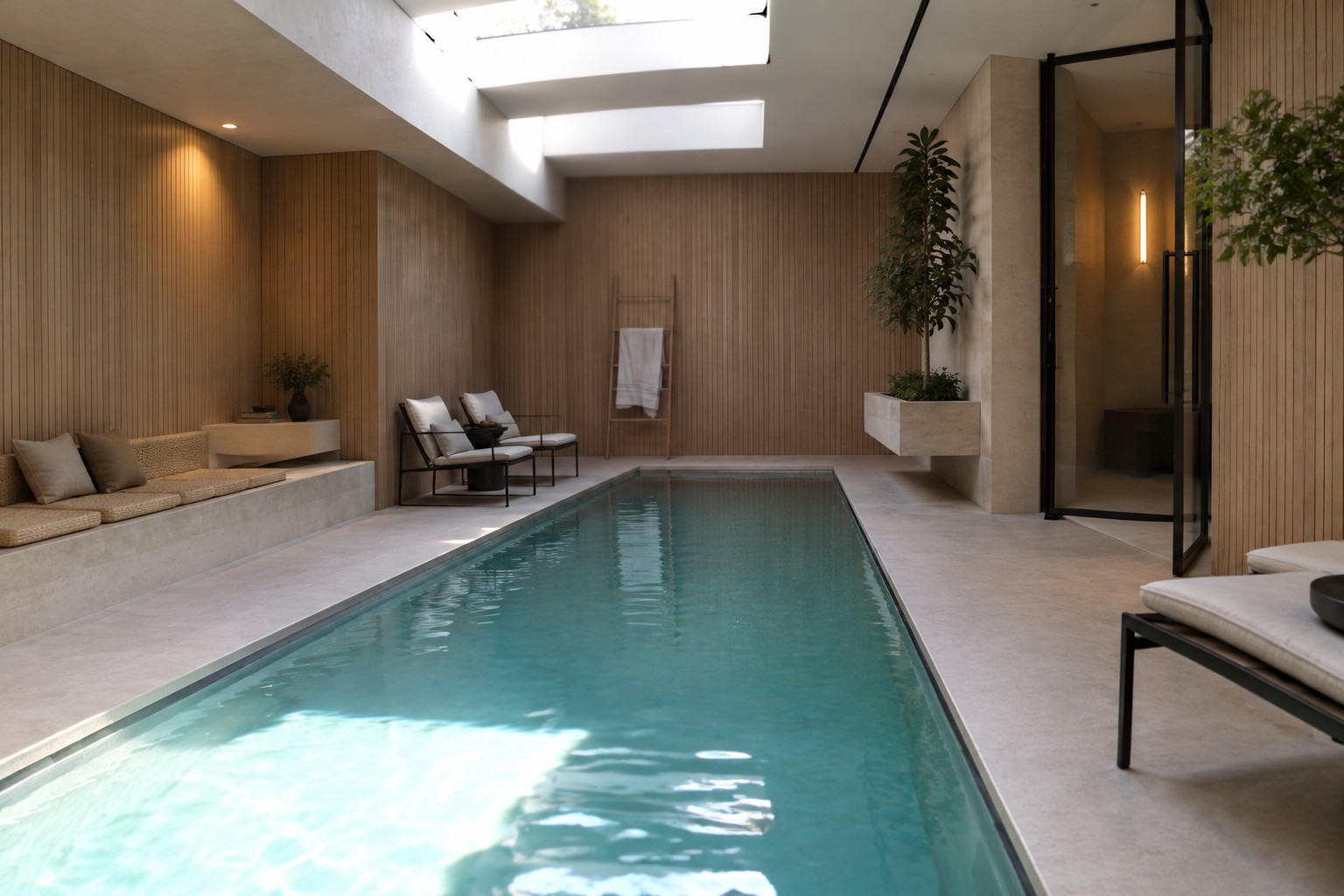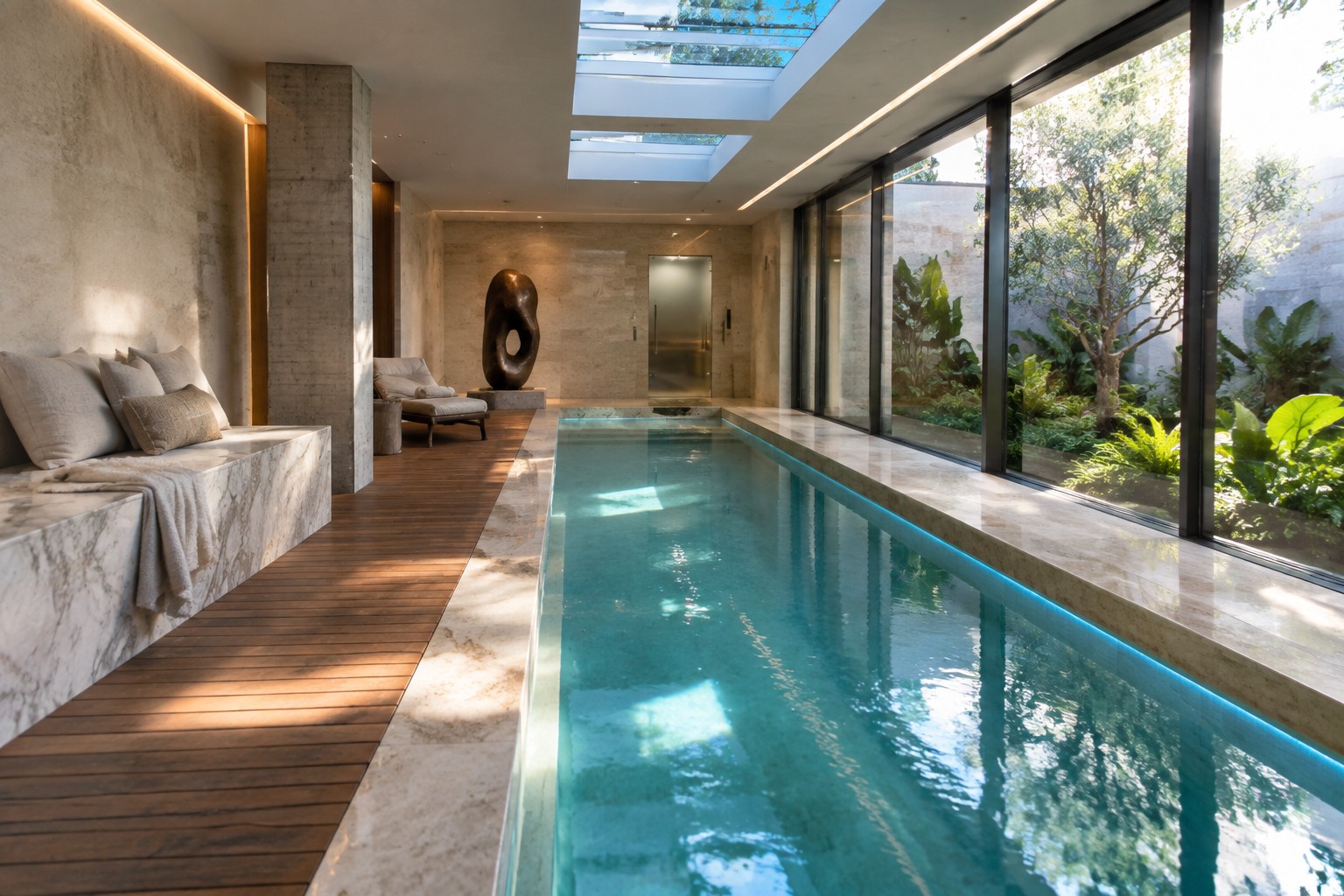
When I walk into a home with an indoor pool, the first thing I notice is whether the space feels like part of the house or like a separate resort area that was just dropped in.
The ones that work best usually share the same flooring tones or ceiling details with the living areas nearby so the transition feels seamless.
Scale changes everything.
Resort-inspired features like built-in lounges or water elements need careful placement so they do not overwhelm the room or create awkward sight lines from the main house.
A few of these ideas seem worth trying on a smaller level to see how they actually hold up in everyday use.
Adding A Side Deck To An Indoor Pool
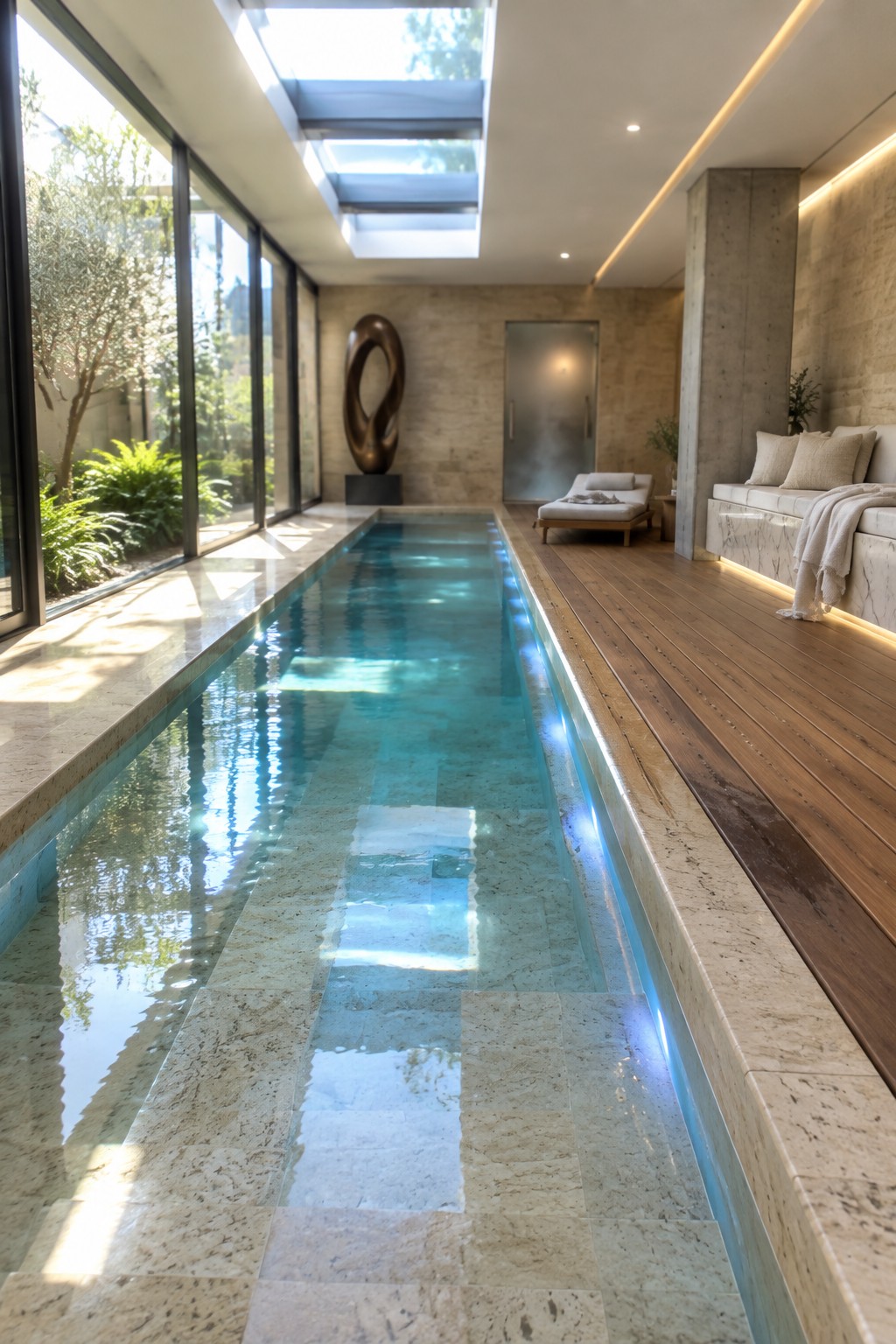
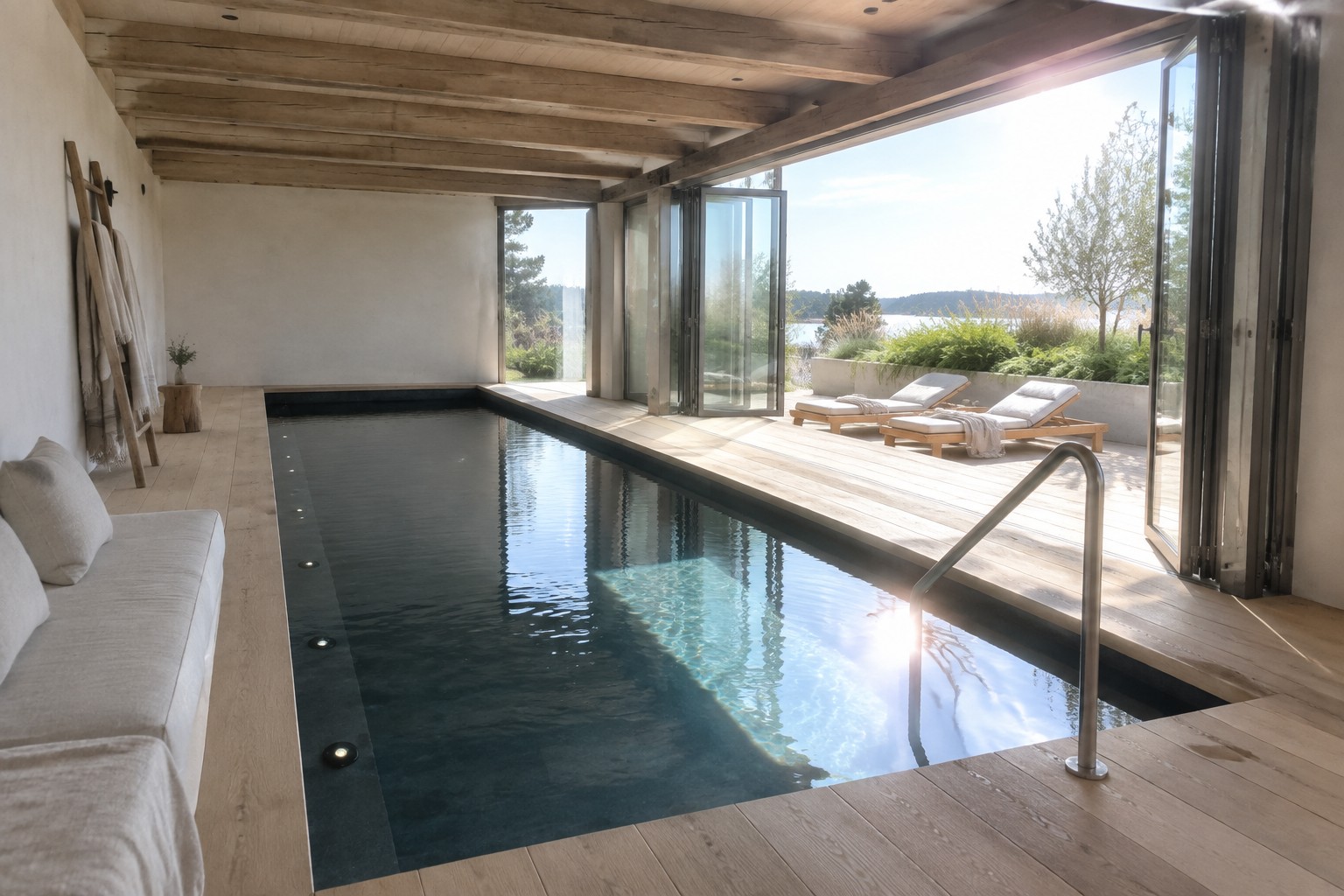
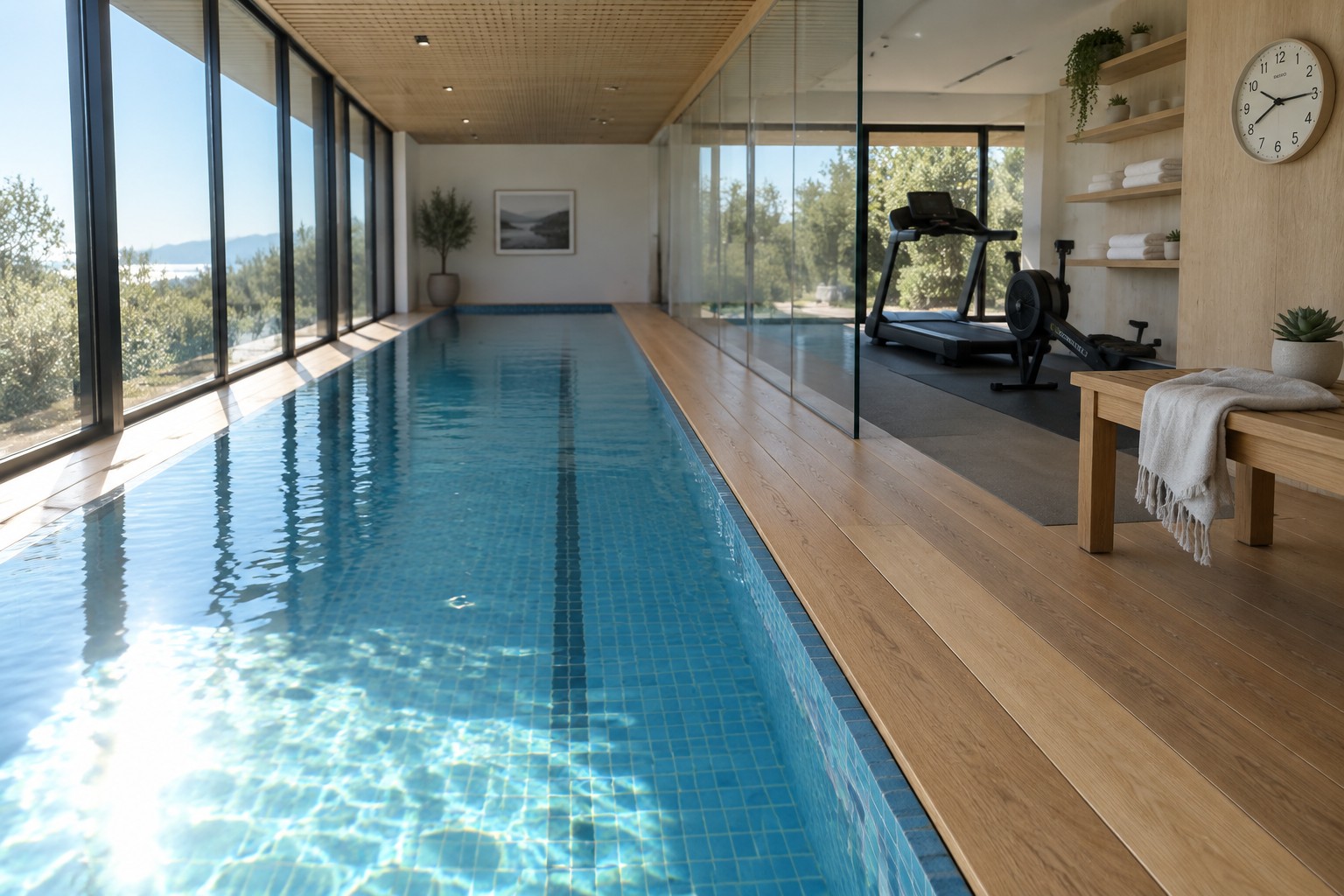
A long narrow pool gains a lot when you run a wood deck right alongside it. The deck gives you a dry place to sit or lie down without stepping away from the water, and it turns the pool into more of a living space than just a swim lane. Stone around the pool edge keeps things practical while the wood softens the feel.
This setup works best in homes with enough length to stretch the pool out. It suits people who want to use the pool area for both exercise and quiet time rather than just quick dips. Keep the deck wide enough for a lounge chair or two, and make sure the wood finish can handle the moisture in the room.
Metallic Water Walls Behind Indoor Pools
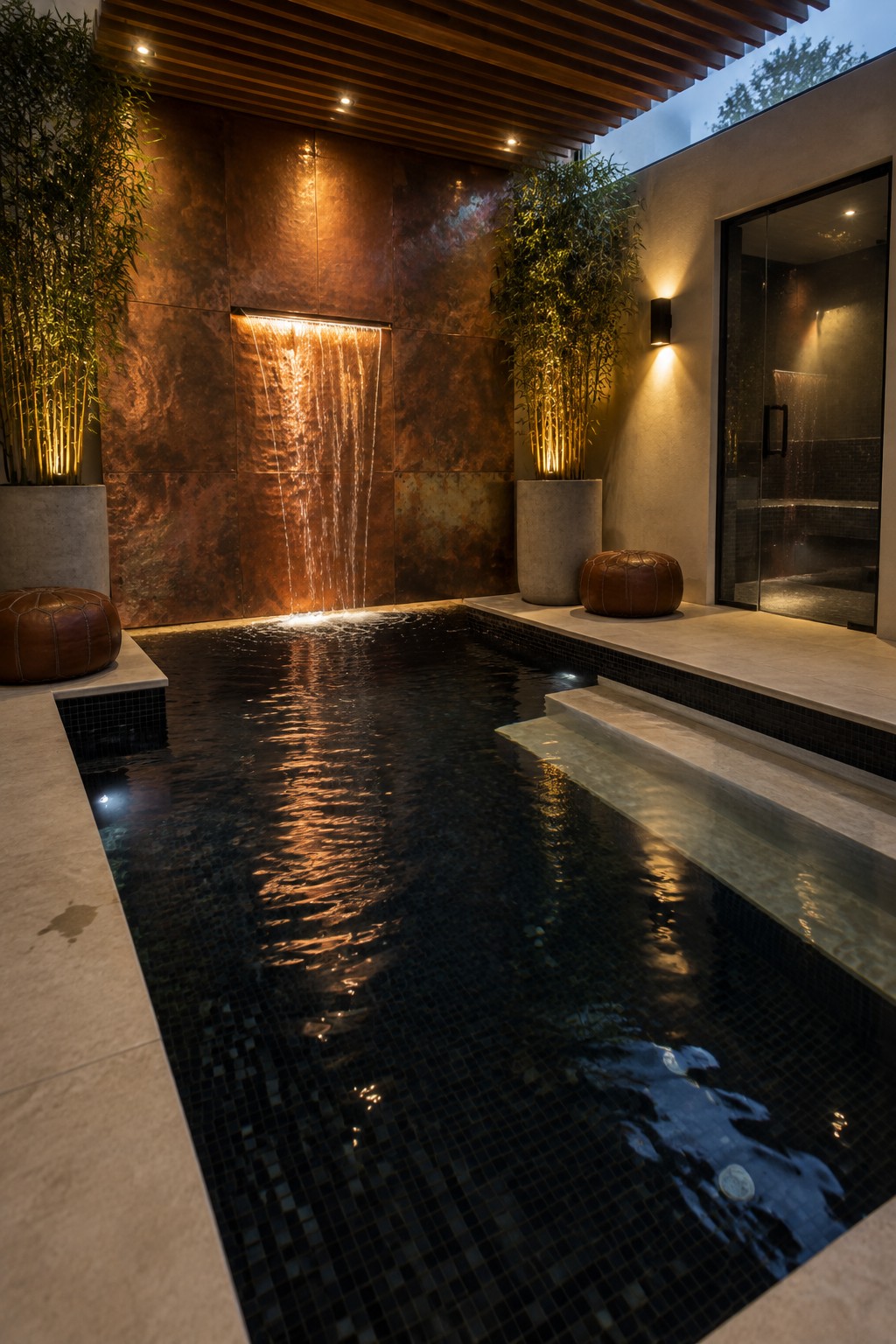
A metallic water wall gives an indoor pool that resort-style focal point without taking up extra floor space. The sheet of falling water catches the light and adds movement, which helps the room feel more alive even when no one is swimming.
This idea works best in modern homes with a dedicated pool room or high ceilings. Choose a material that handles humidity well, and keep the lighting simple so it highlights the water rather than competing with it.
Place A Kitchen Island Over The Indoor Pool
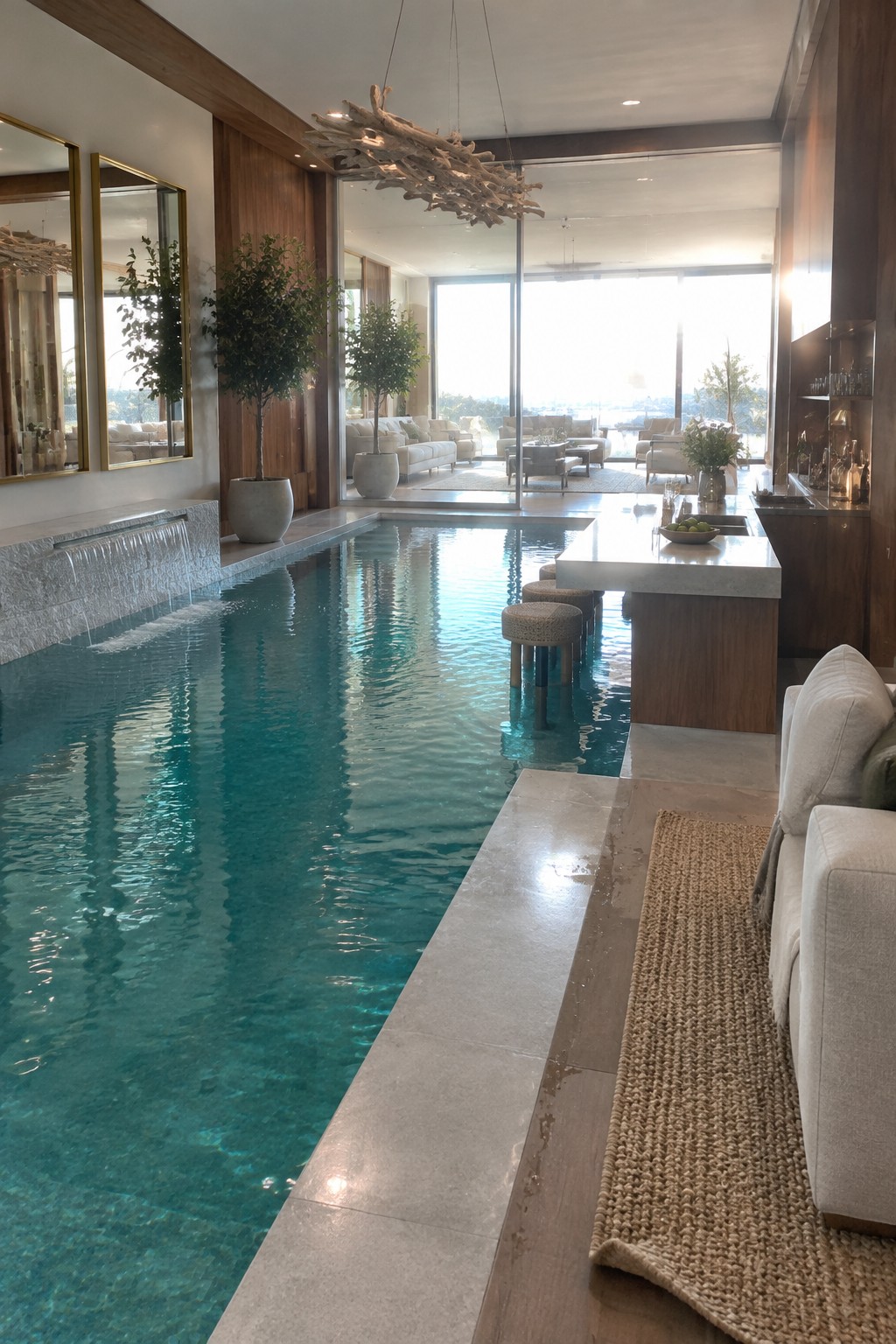
One way to make an indoor pool feel less like a separate room is to let it run right under a kitchen island or bar. The stools sit in the water so the pool becomes part of how the space is used instead of something you only look at from the edge.
This layout works best in larger homes where the main living areas can stay open and connected. Keep the island simple and make sure the pool depth stays consistent under the seating so it stays practical day to day.
Organic Pool Shapes
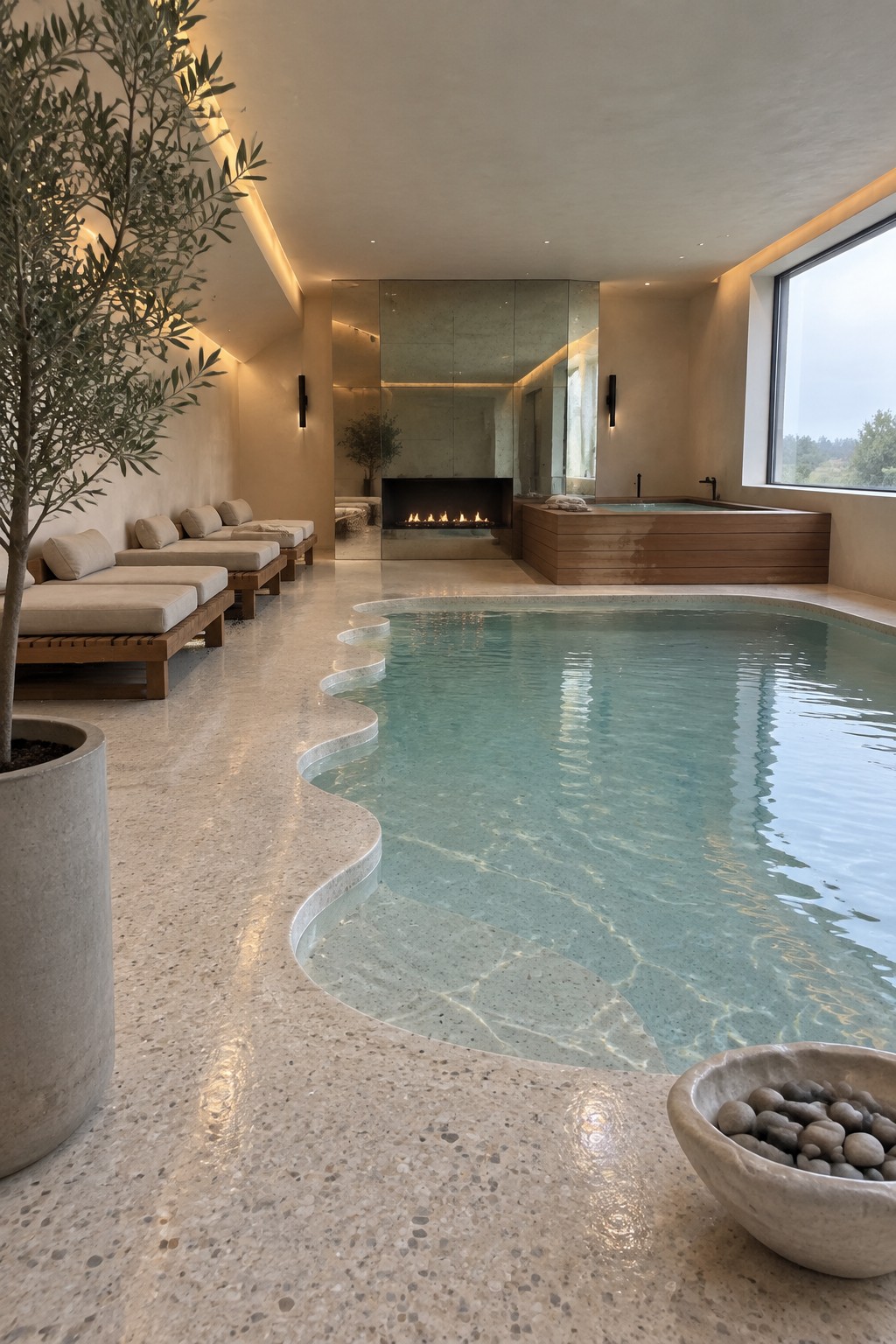
An organic pool edge gives an indoor space that relaxed resort feeling without trying too hard. The irregular curve breaks up the usual straight lines you see in most home pools and makes the water feel more like a natural pond. It works especially well when the surrounding floor continues the same soft, speckled material so the whole area feels connected.
This approach suits larger rooms where you have space to let the shape breathe. Keep the rest of the layout simple with low seating along one side and a few big plants so the pool stays the main feature. Just make sure the mechanical systems can handle the curves during construction.
Line Up Lounge Chairs Beside the Indoor Pool
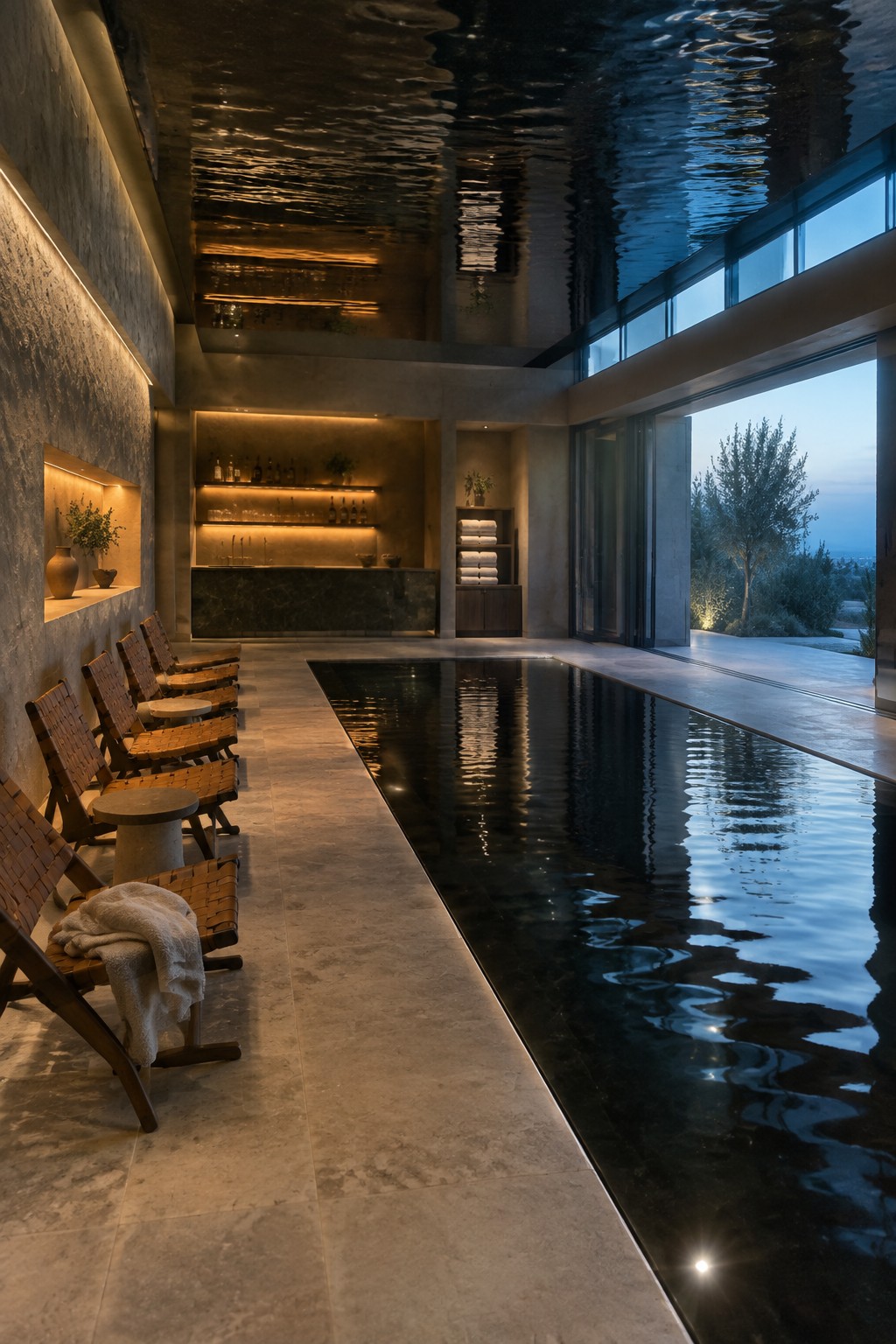
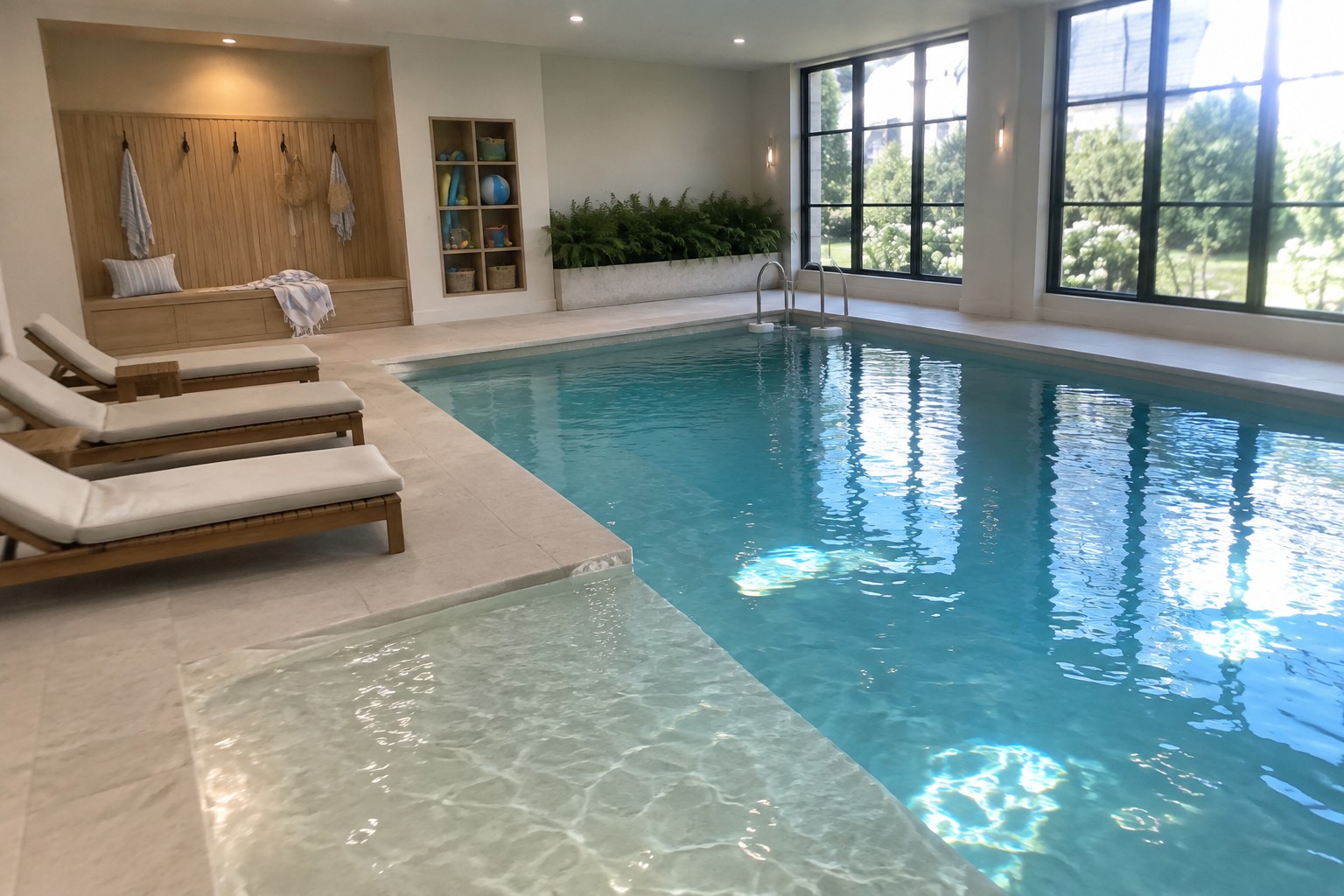
Placing a row of lounge chairs right next to the water turns an indoor pool into a place people actually want to spend time. The straight line of seating makes it simple to move from resting to swimming, and it gives the whole room a calm, organized feel without needing much else.
This layout works best in longer pool rooms where the chairs can follow the edge without blocking the space. Stick with low wooden or woven seats and add only a few small tables so the area stays open and easy to clean.
Glass Walls That Open An Indoor Pool To The View
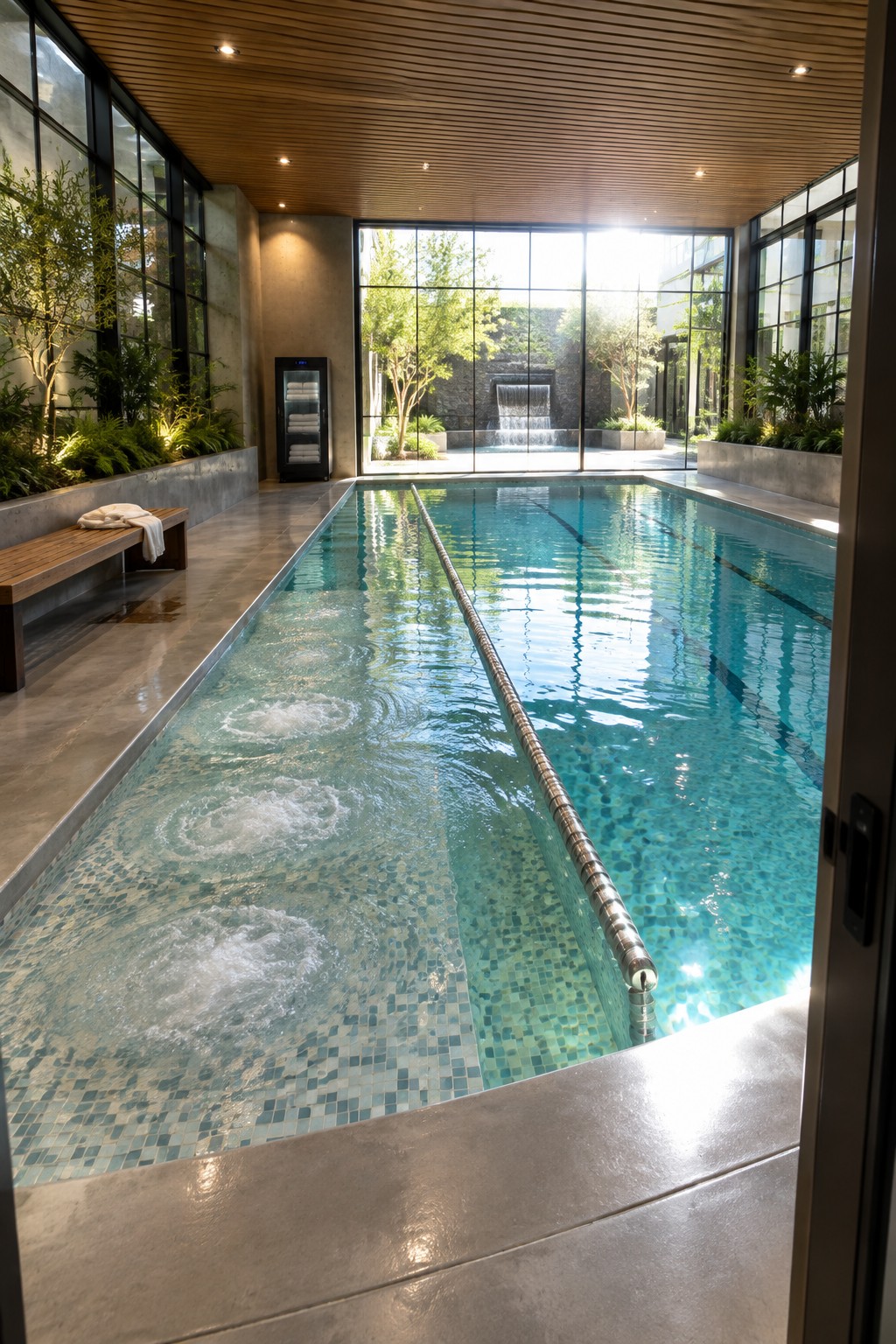
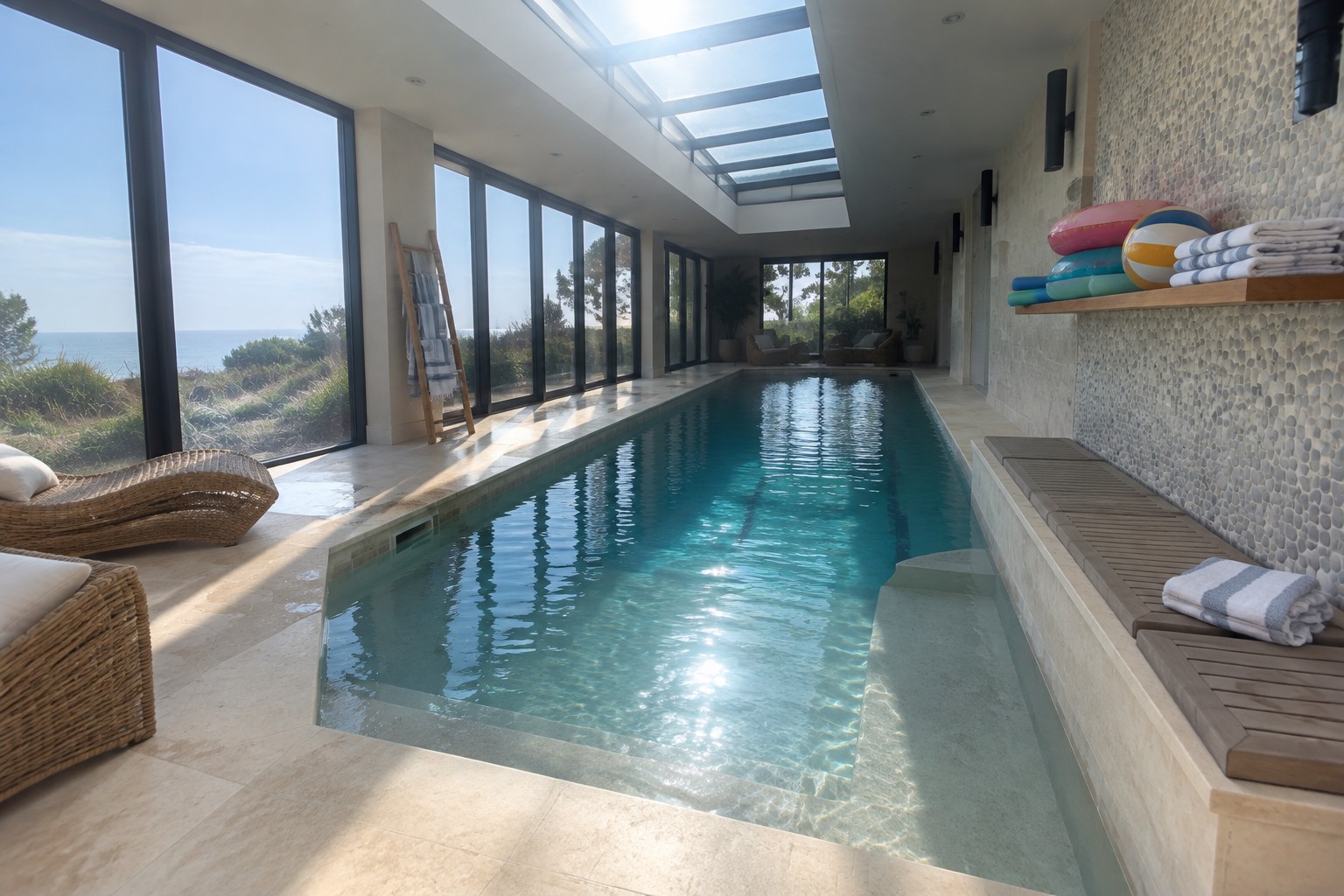
Large glass walls at the end of an indoor pool can change how the whole room feels. Instead of a closed-off space, the pool area picks up light and views from outside, which keeps it from feeling boxed in. The connection also makes the water look more inviting during the day.
This approach works best when the pool room faces a garden or water feature that stays attractive year round. Make sure the glass is energy efficient so the space does not get too cold in winter or overheat in summer. It fits well in modern homes that want a resort feel without building a fully outdoor pool.
Wooden Beams Over Indoor Pools
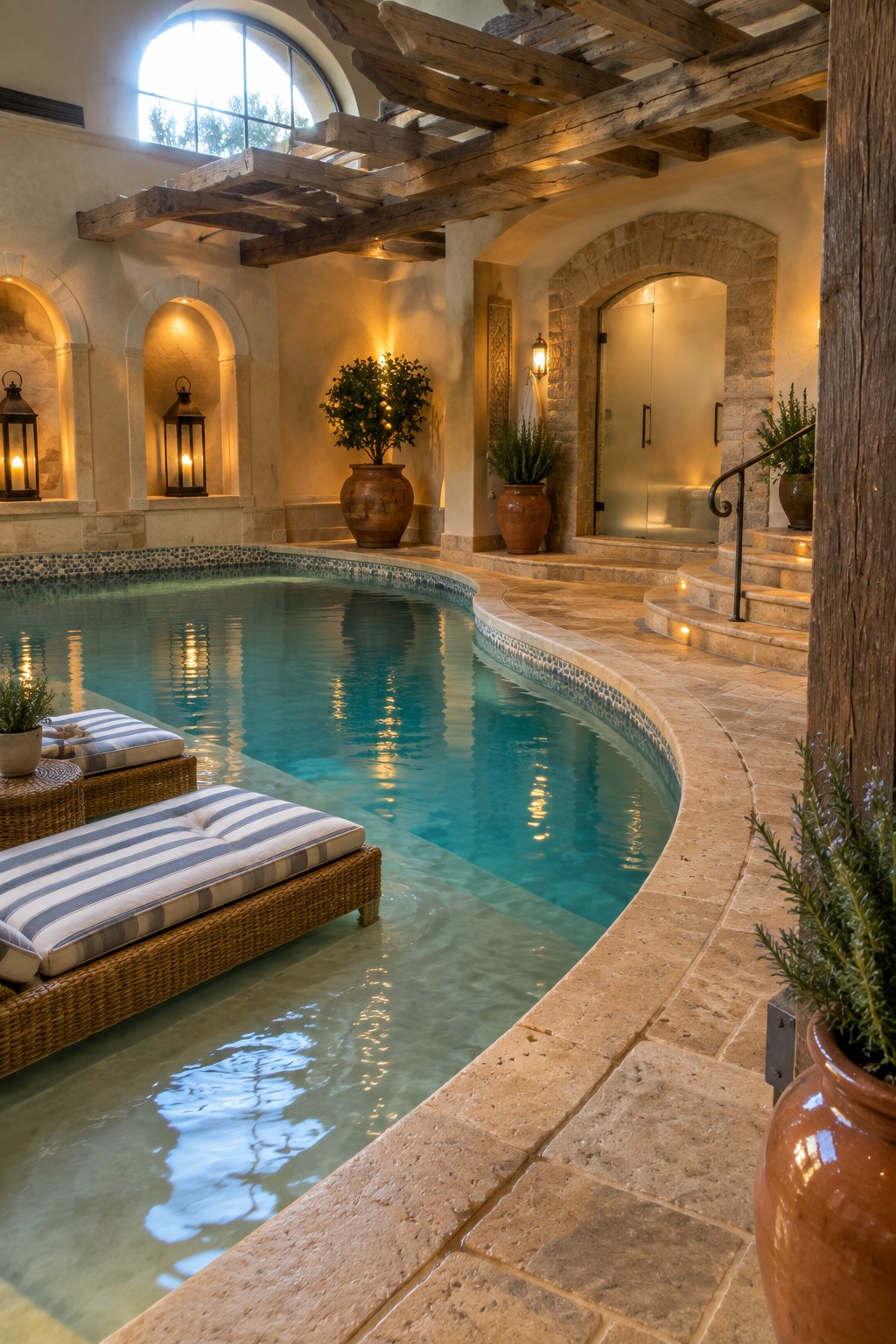
Many indoor pools end up feeling a bit stark because of all the tile and open space. Adding wooden beams overhead changes that quickly. The wood brings warmth and breaks up the height without making the room feel smaller.
This works especially well in homes with tall ceilings where you want a relaxed resort feel. Keep the rest of the materials simple, like stone walls or natural stone coping, so the beams stand out without competing.
Built-In Bench Seating With Storage Along The Pool
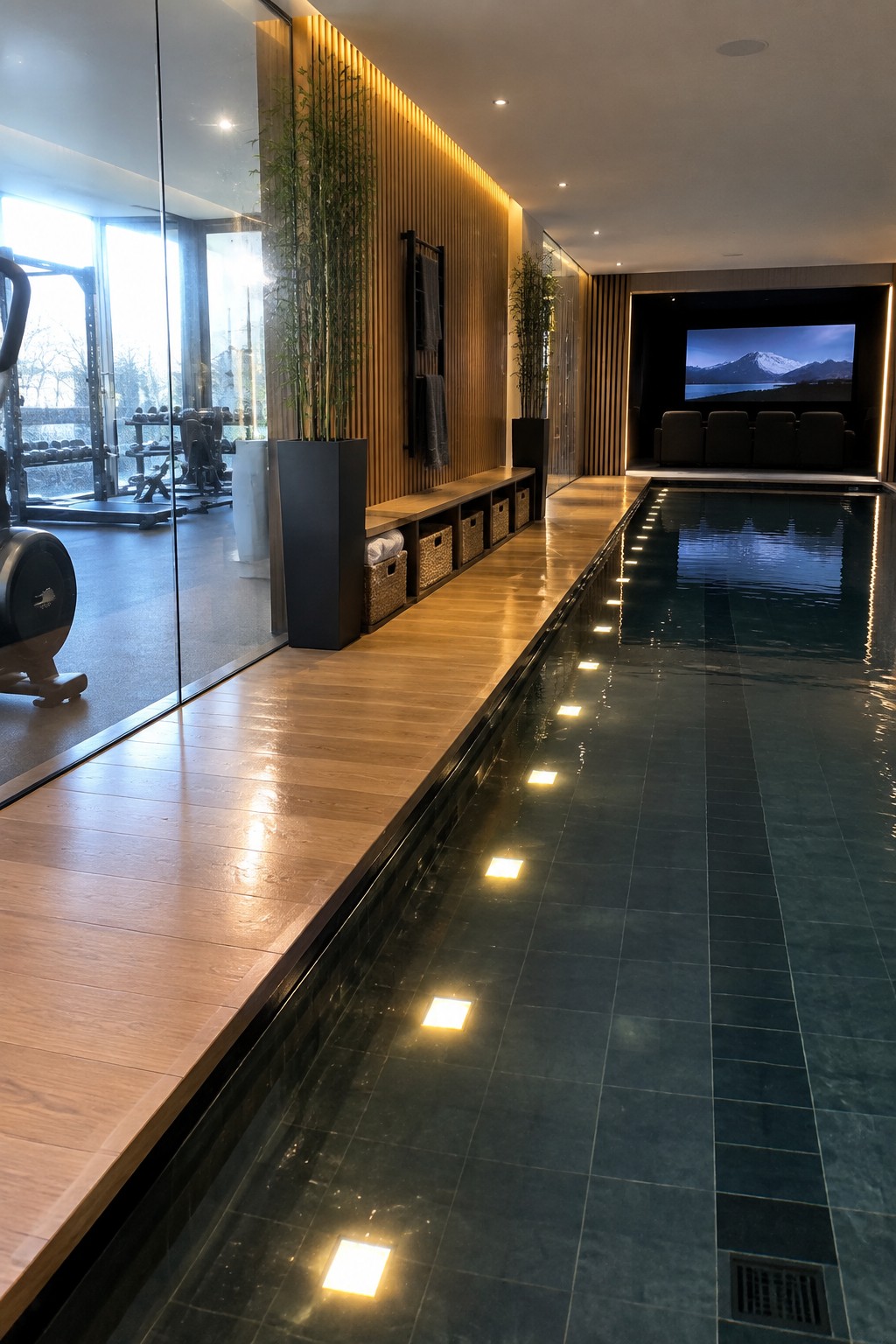
A built-in bench with storage underneath works well next to an indoor pool because it gives you a place to sit and keeps towels and other items out of the way. The wood adds some warmth to the tiled area too.
This kind of setup fits best in a larger room where the pool is part of a bigger wellness space. It helps the area feel more like a home spa without needing a lot of extra furniture.
A Stone Basin Brings Calm to the Pool Edge
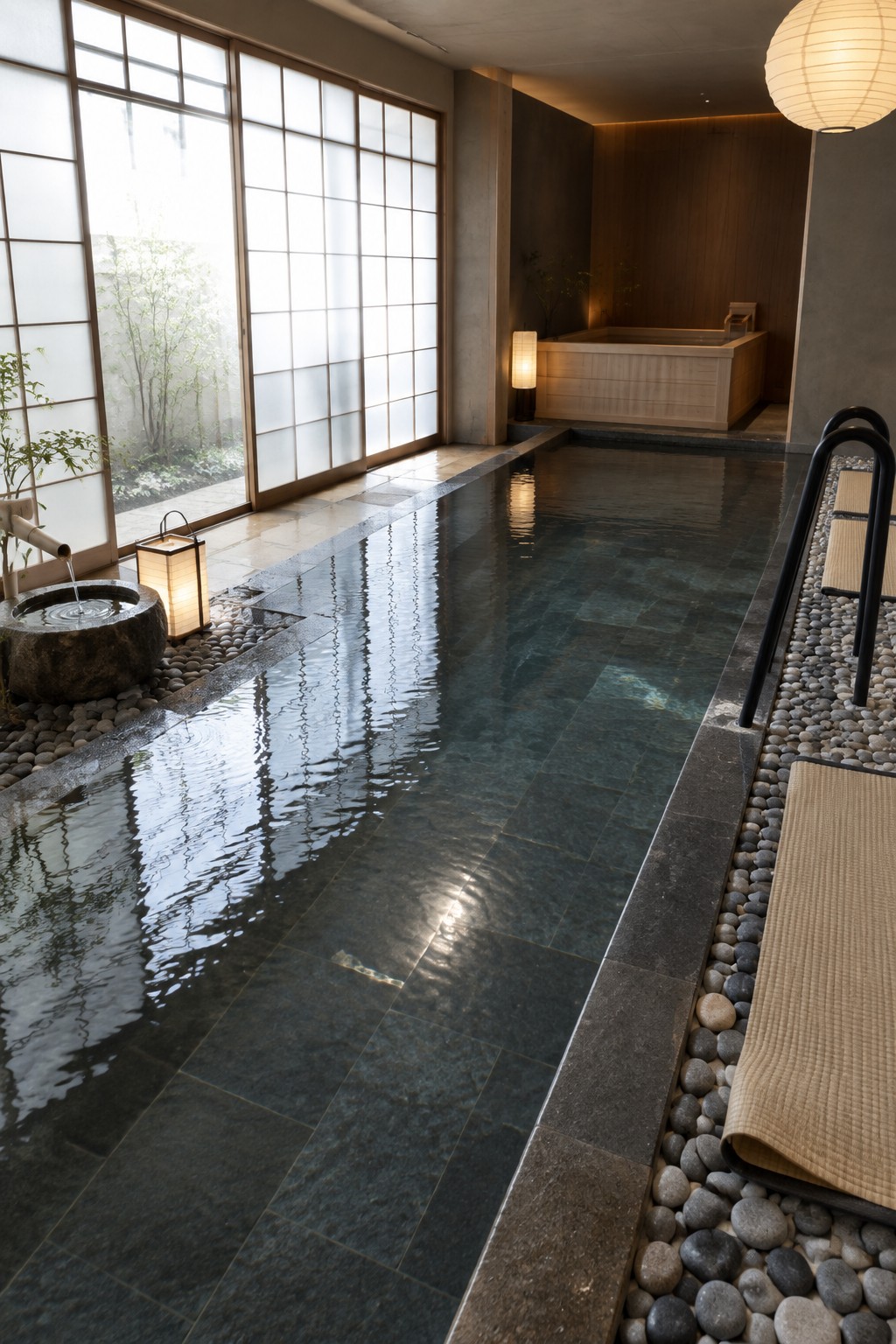
A simple stone basin with running water changes how an indoor pool feels. It adds a quiet, steady sound and a natural focal point that softens the hard surfaces around the water. The dark tile and pebble surround already keep things grounded, but the basin turns the space into something closer to a private spa than a standard lap pool.
This works best in homes where the pool room has enough width for a small transition zone along one side. It suits spaces that already lean toward natural materials and soft lighting. Just keep the basin scaled to the room so it feels like part of the layout rather than an added decoration.
Matching Pool Coping To The Surrounding Floor
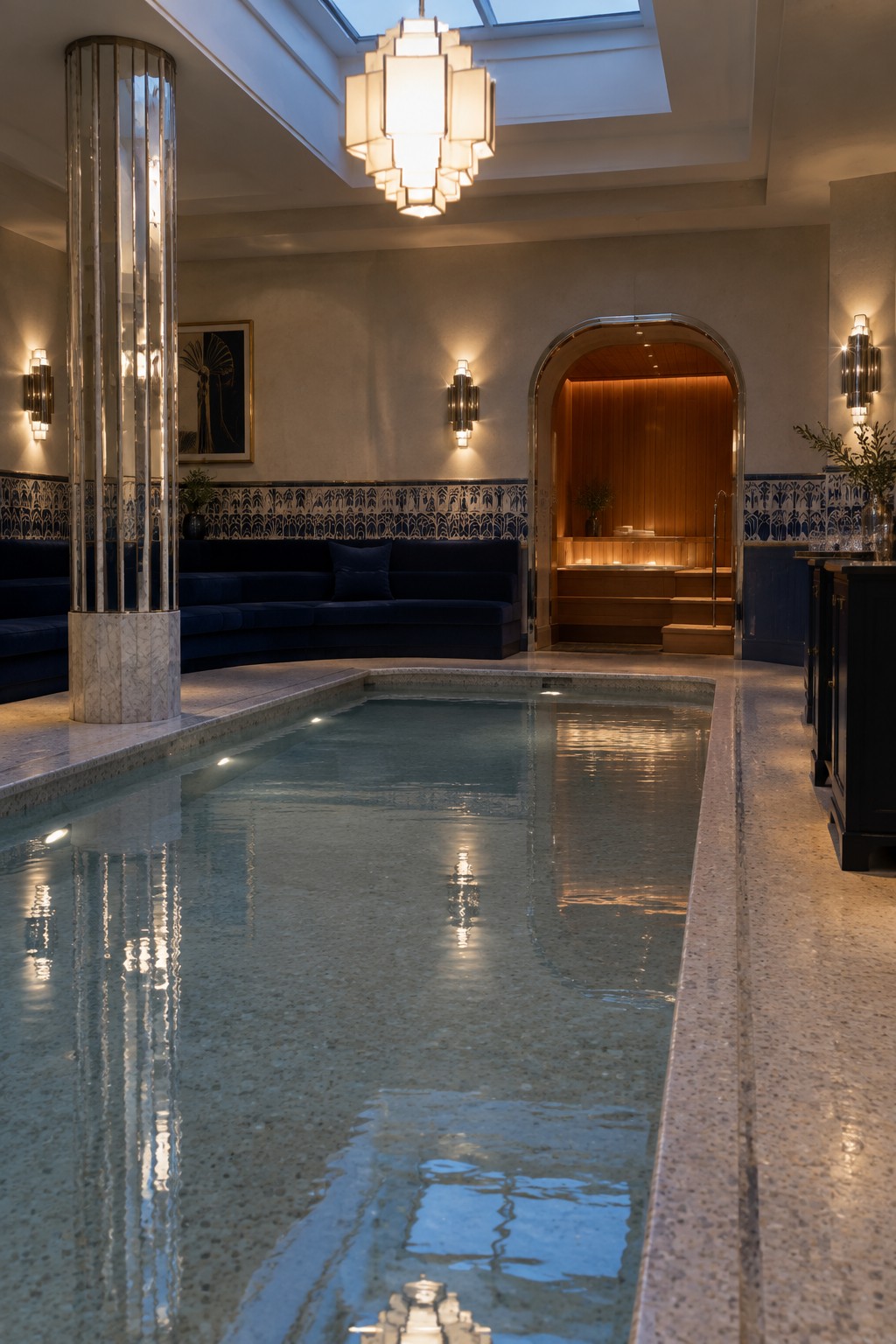
One way to keep an indoor pool from taking over a room is to run the same stone right up to the water. The coping sits flush with the floor, so the pool edge disappears into the rest of the surface instead of creating a hard border.
This approach works best in larger rooms where you want the water to feel like part of the living space rather than a separate feature. It helps the pool stay calm and quiet in the layout, especially when the rest of the room already uses similar natural materials.
Dining Right at the Pool’s Edge
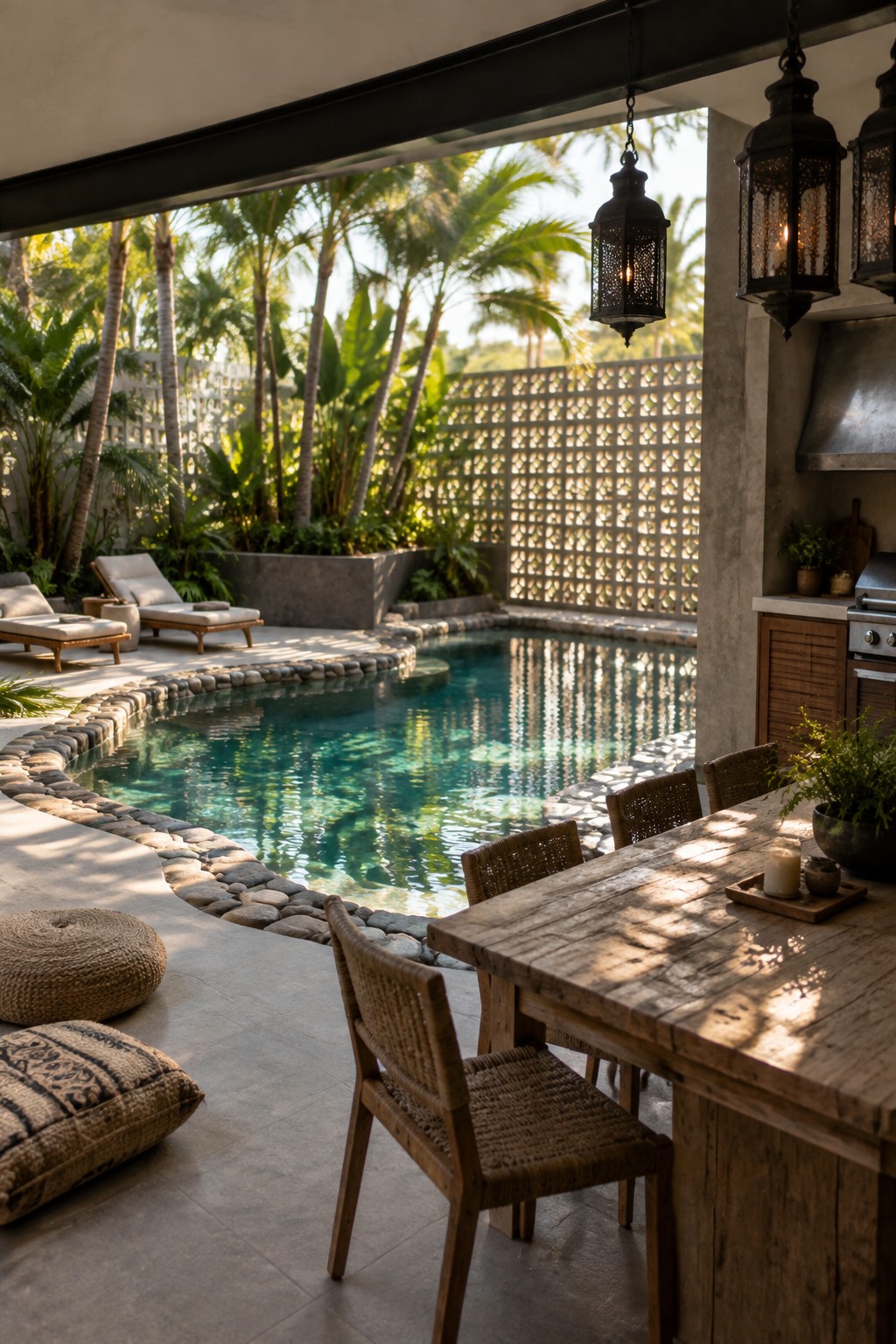
Placing a dining table close to the water makes the whole backyard feel more connected. Meals happen right where people already spend time swimming or relaxing, so the space gets used more often without needing extra rooms or structures.
This setup works best in mild climates where outdoor meals happen regularly. Use wood and woven seating so the table blends with the pool deck instead of standing out as a separate piece.
Living Walls in Indoor Pool Rooms
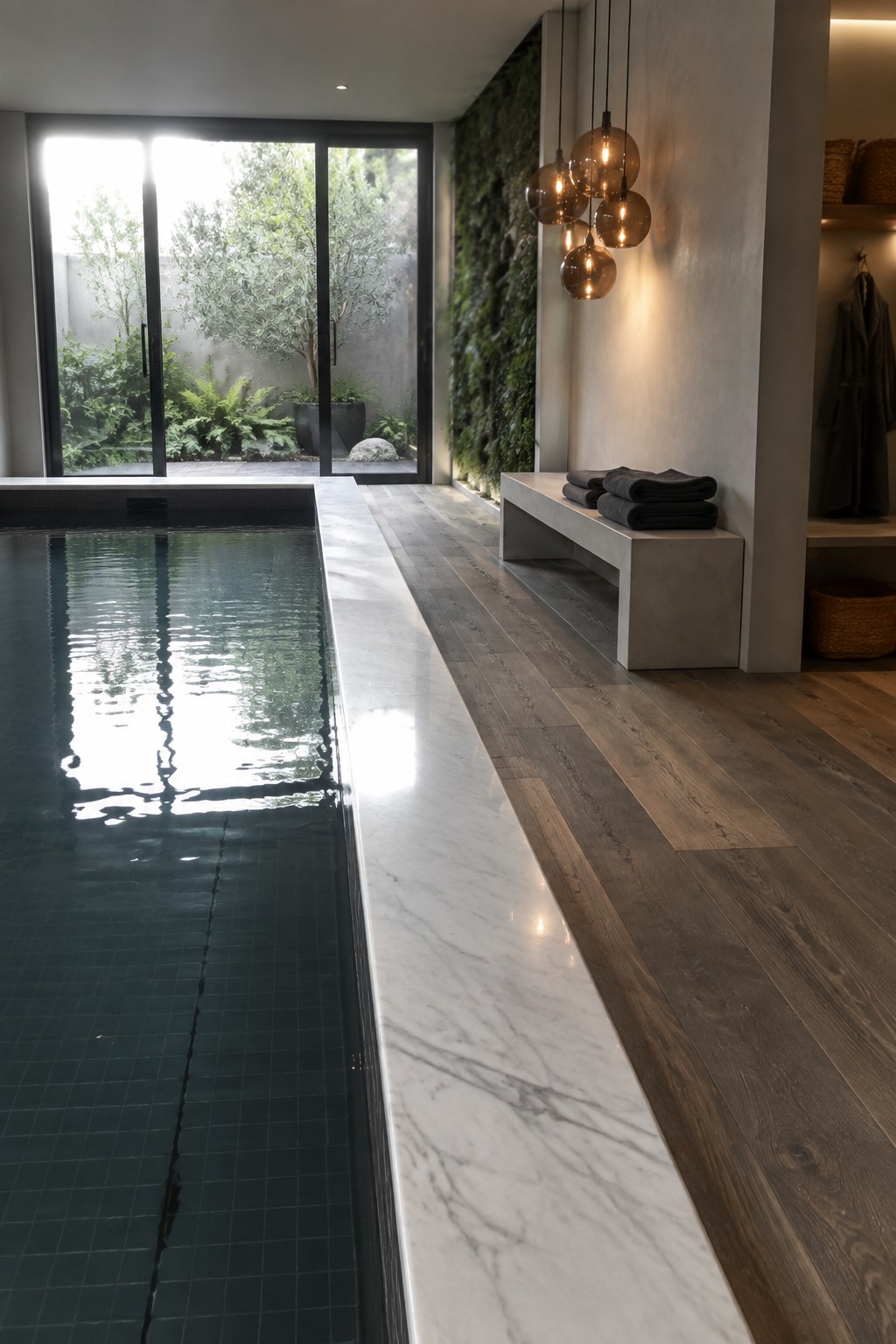
A living wall next to an indoor pool adds softness and a bit of nature to a space that can otherwise feel cold and hard. The plants bring texture and color that plays well against the water and stone, and they help the room feel less like a plain box.
This idea works best in homes where the pool room has decent ceiling height and access to some natural light. Choose plants that tolerate humidity and set up proper irrigation so the wall stays healthy without constant upkeep. It suits larger modern homes that want a resort feel without leaving the house.
Frequently Asked Questions
Q: How do I stop moisture from the pool from spreading to other rooms? A: Seal the pool area with proper doors and ventilation fans. Run a dehumidifier during humid months to keep things comfortable. This protects your furniture and walls from damage over time.
Q: Which resort-inspired feature adds the most impact? A: A waterfall along one wall brings in that spa sound right away. Position it near the lounge area so the noise feels private.
Q: Can the pool stay warm enough for year-round use? A: Heat the water steadily with a reliable heater. Cover it overnight to trap the heat. You end up using the pool more this way.