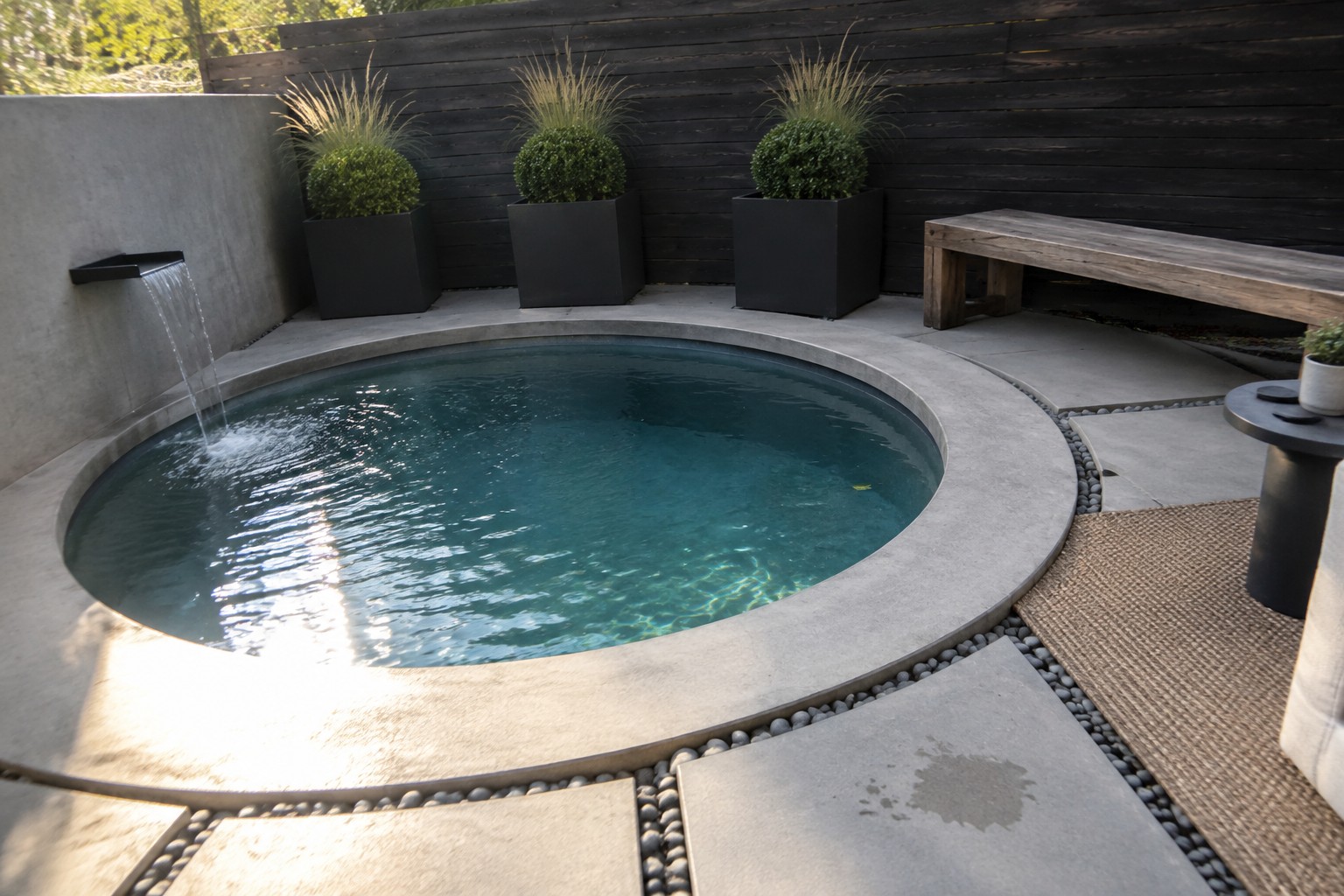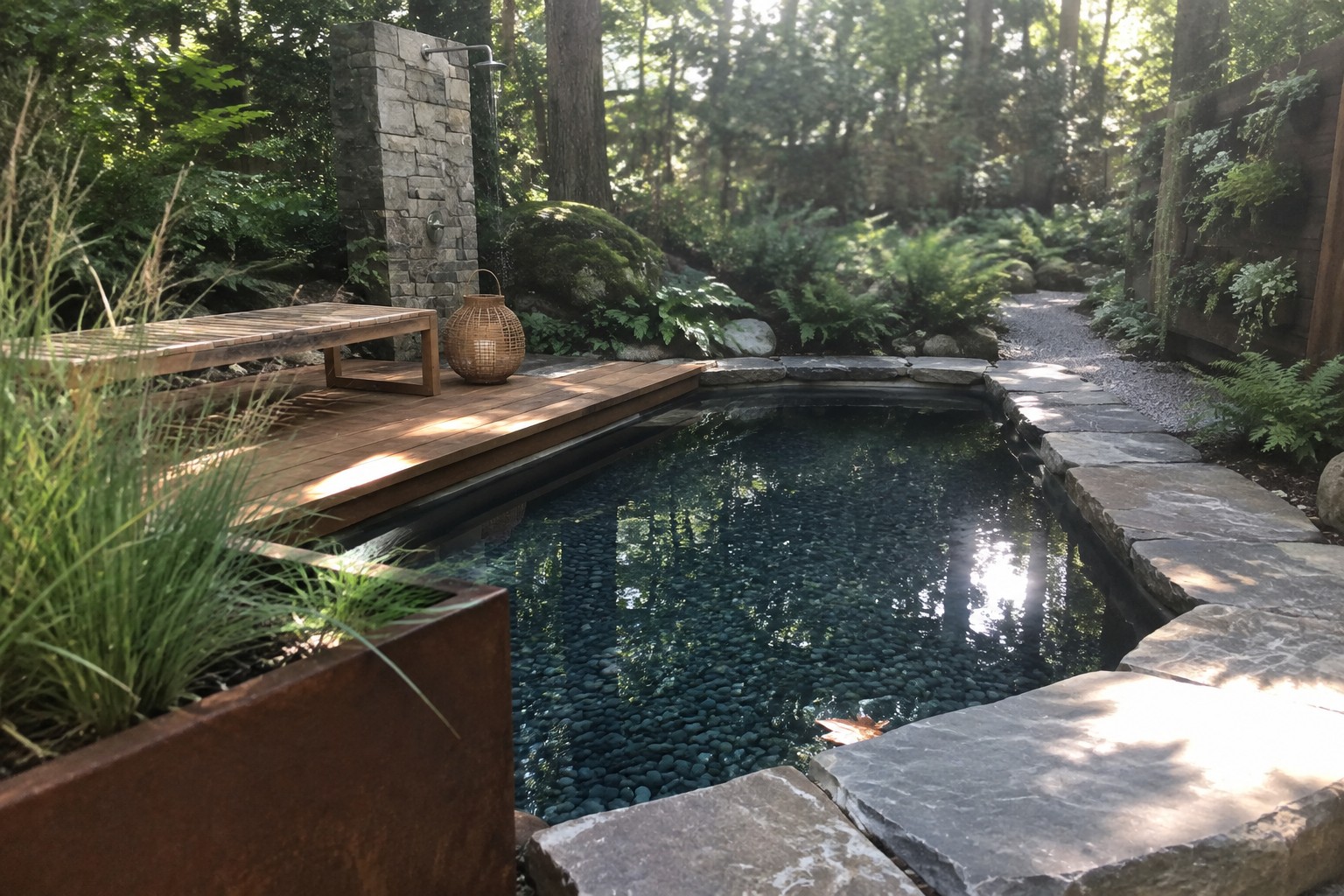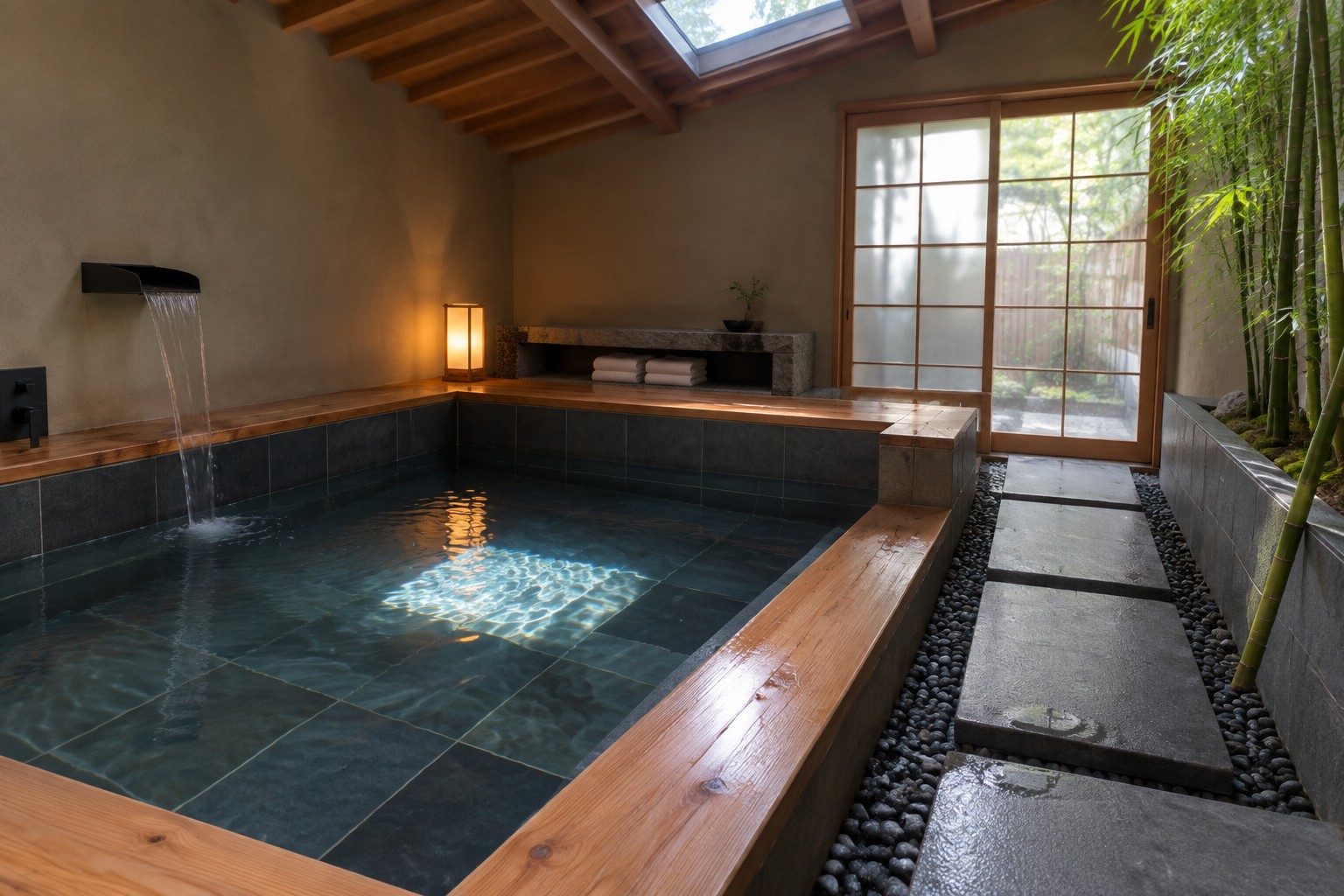
I have noticed that indoor plunge pools tend to change how a room feels day to day, especially once you factor in the extra humidity and the need for easy cleaning.
In real homes the best results usually come from treating the pool like another piece of the layout rather than something added at the end.
People often overlook how the surrounding floor and wall materials will hold up once water is in constant use.
Some setups work better than others once you live with them.
I would test the ideas that keep the pool tucked into a corner first because they seem less likely to disrupt normal traffic through the space.
Skylights Over Indoor Plunge Pools

A skylight changes how an indoor plunge pool feels during the day. Sunlight hits the water, bounces around the room, and keeps the space from feeling closed in even when the walls are dark stone and the pool sits low.
This works best in rooms that already have some wood or warm tones to balance the light. It suits homes where you want to use the pool in the daytime without turning on lights, though you need good ventilation and proper sealing to handle the moisture.
Light Wood Paneling Around Indoor Plunge Pools

Light wood paneling can make an indoor plunge pool feel much calmer and more connected to the rest of the house. Instead of cold tile or stark walls, the wood adds a natural warmth that softens the water and helps the space feel less like a separate facility and more like an extension of the home.
This works best in rooms with good natural light and moderate humidity control. It suits homes that already lean toward simple, Scandinavian, or modern styles, though you will want to pick a finish that handles moisture well and pair it with easy-to-clean flooring.
Concrete That Connects The Pool To The Rest Of The Room

Many indoor plunge pools end up feeling like a separate zone that was dropped into the house. Running the same concrete across the floor and up the walls makes the pool read as part of the main space instead of an add-on.
This works well in homes that already lean modern or minimalist. Keep other finishes quiet so the concrete can do the connecting without extra layers fighting for attention.
Built-In Seating Makes Sense For Indoor Plunge Pools

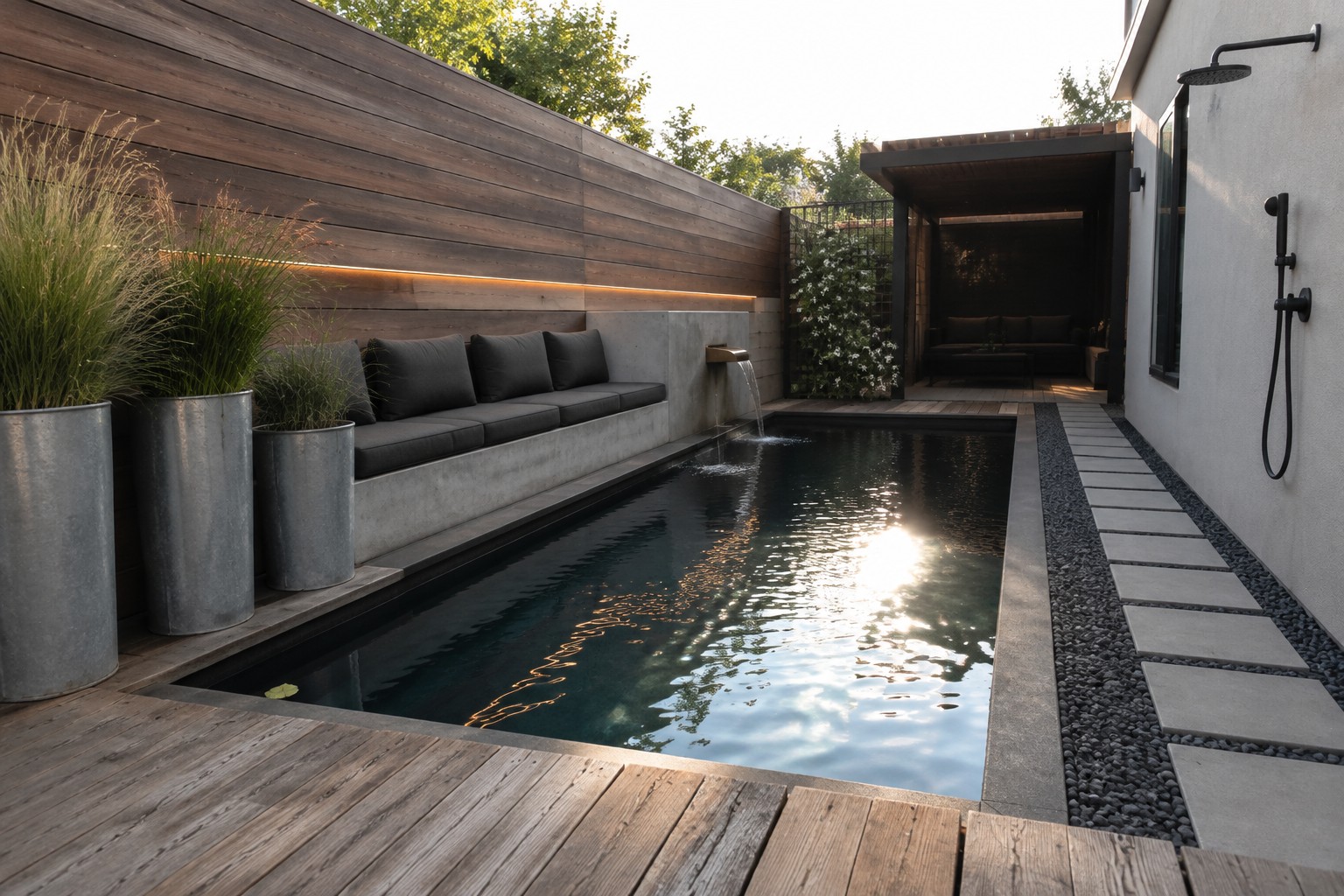
Built-in seating along the edge of an indoor plunge pool gives you a place to sit without adding extra furniture that takes up floor space. It keeps the area open and calm while still offering somewhere to relax or rest a book.
This works best in smaller homes or additions where the pool room needs to feel useful every day. Stick with simple cushions in easy-to-clean fabrics and keep the surrounding walls light so the space does not feel closed in.
Placing A Daybed Next To The Plunge Pool

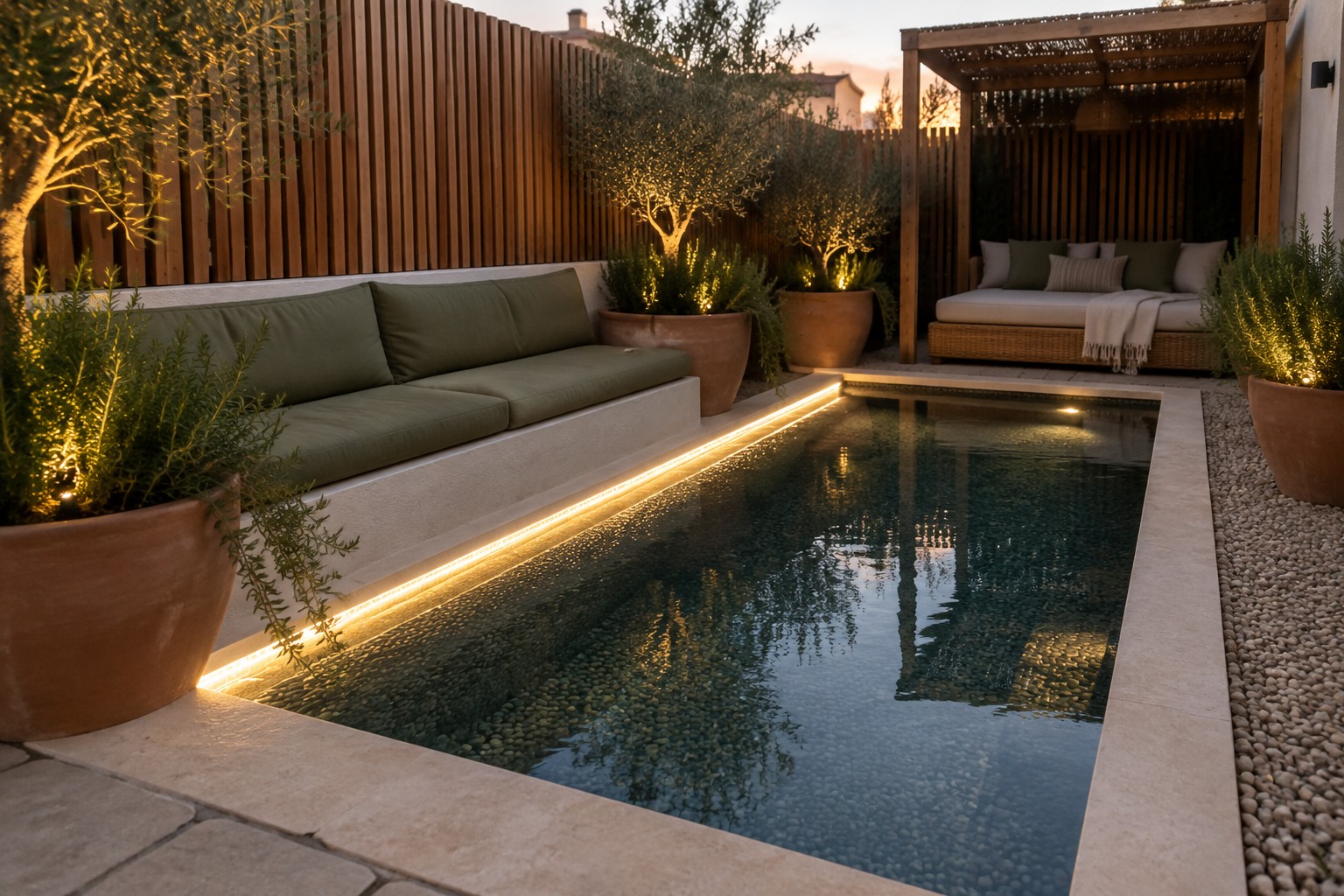
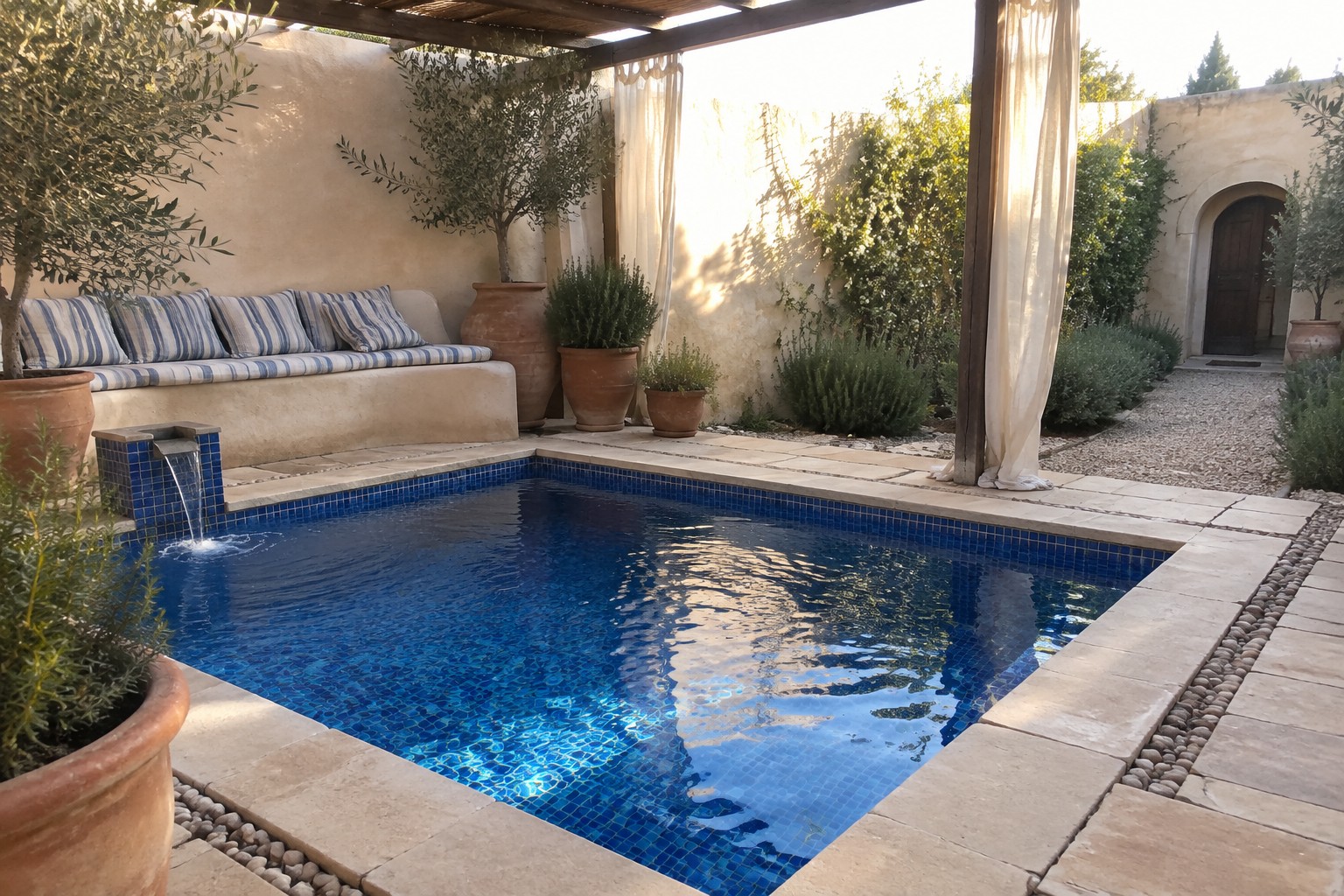
One simple way to make a small plunge pool feel more useful is to set a daybed right beside it. The close seating turns the water into something you can enjoy without getting in, and the whole spot starts to work like an outdoor room instead of just a feature.
This layout suits homes with a courtyard or enclosed patio where space is limited. Keep the surrounding pots and tiles in warm tones so nothing competes with the pool itself, and choose light fabrics that can handle some sun and moisture.
Dark Stone For Indoor Plunge Pools

Dark stone like marble gives an indoor plunge pool a quiet, enclosed feel. The deep color absorbs light instead of bouncing it around, which helps the space stay calm even when the pool sits inside a smaller home.
This works best in modern or minimalist bathrooms where you can keep other finishes simple. A floating wood bench or a few recessed shelves are enough to add function without breaking the mood.
Add a Wooden Deck Runner Next to the Pool

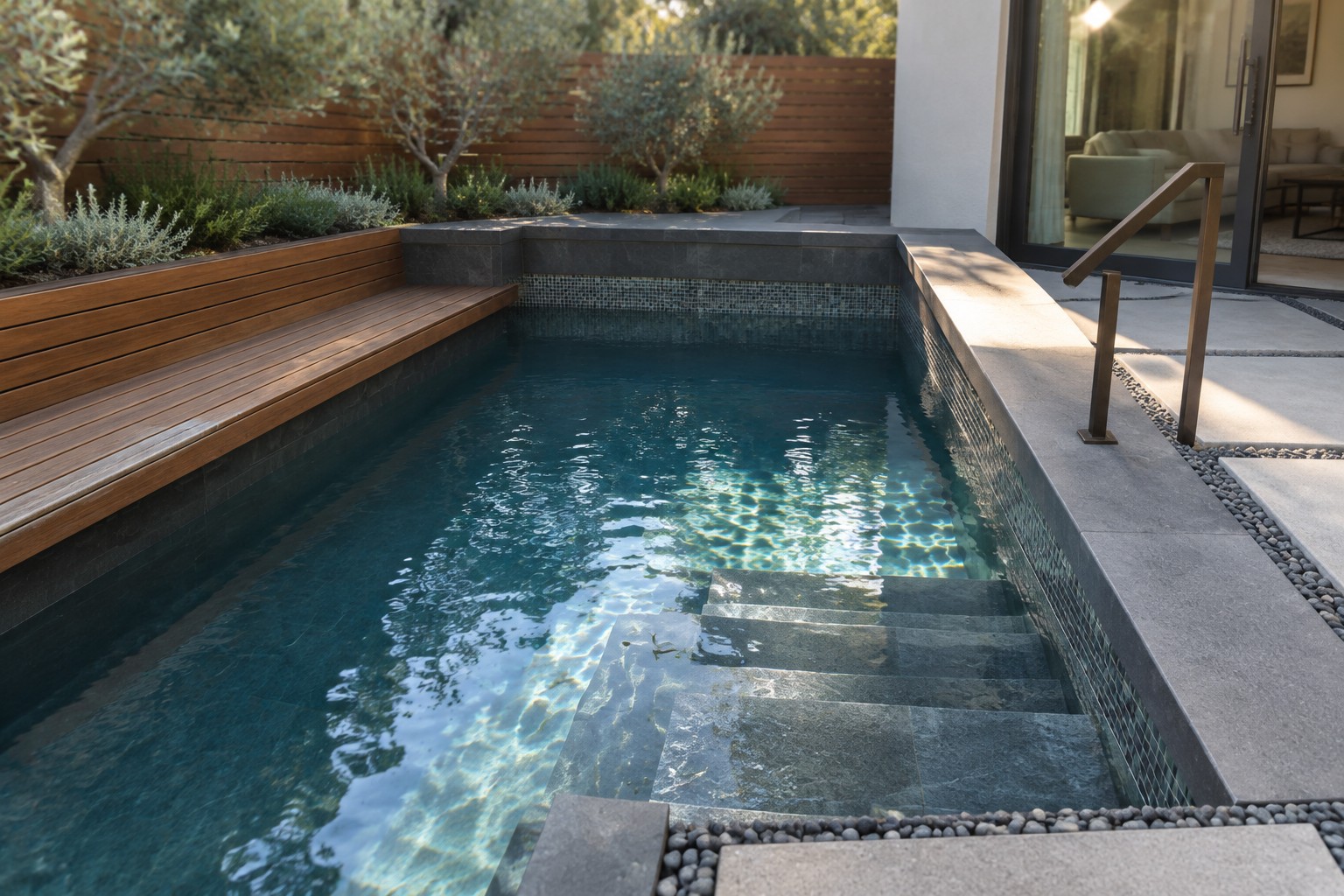
A narrow indoor plunge pool can feel much more usable when you run a simple wooden deck along one long edge. The slats give you a dry path for walking or sitting, and the natural material keeps the water from looking too stark against the surrounding plants.
This works best in a sunroom or glass-walled addition where light reaches the pool all day. Keep the wood sealed for humidity and leave enough space between the deck and any planting beds so leaves stay out of the water.
Pairing an Indoor Plunge Pool with Simple Lounge Seating

An indoor plunge pool works best when you give people a place to sit right beside it. The concrete room in this example keeps the focus on the water while the two lounge chairs turn the space into somewhere you can actually spend time. A throw blanket and a couple of plants soften the edges without cluttering the look.
This setup suits homes where the pool shares the room with other uses. Keep the seating low and neutral so it does not compete with the water. Avoid adding too many accessories or bright colors, since the calm comes from the simple materials and the open floor around the pool.
Brick Walls Around An Indoor Plunge Pool

Brick walls give an indoor plunge pool a steady, grounded look that feels calm without much effort. The rough texture pairs naturally with water and keeps the space from feeling too finished or polished.
This works best in homes that already have exposed brick or similar masonry. Keep the rest of the room simple with wood floors and one good window so the pool stays the main feature instead of competing with extra details.
Built-In Niches For Pool Storage
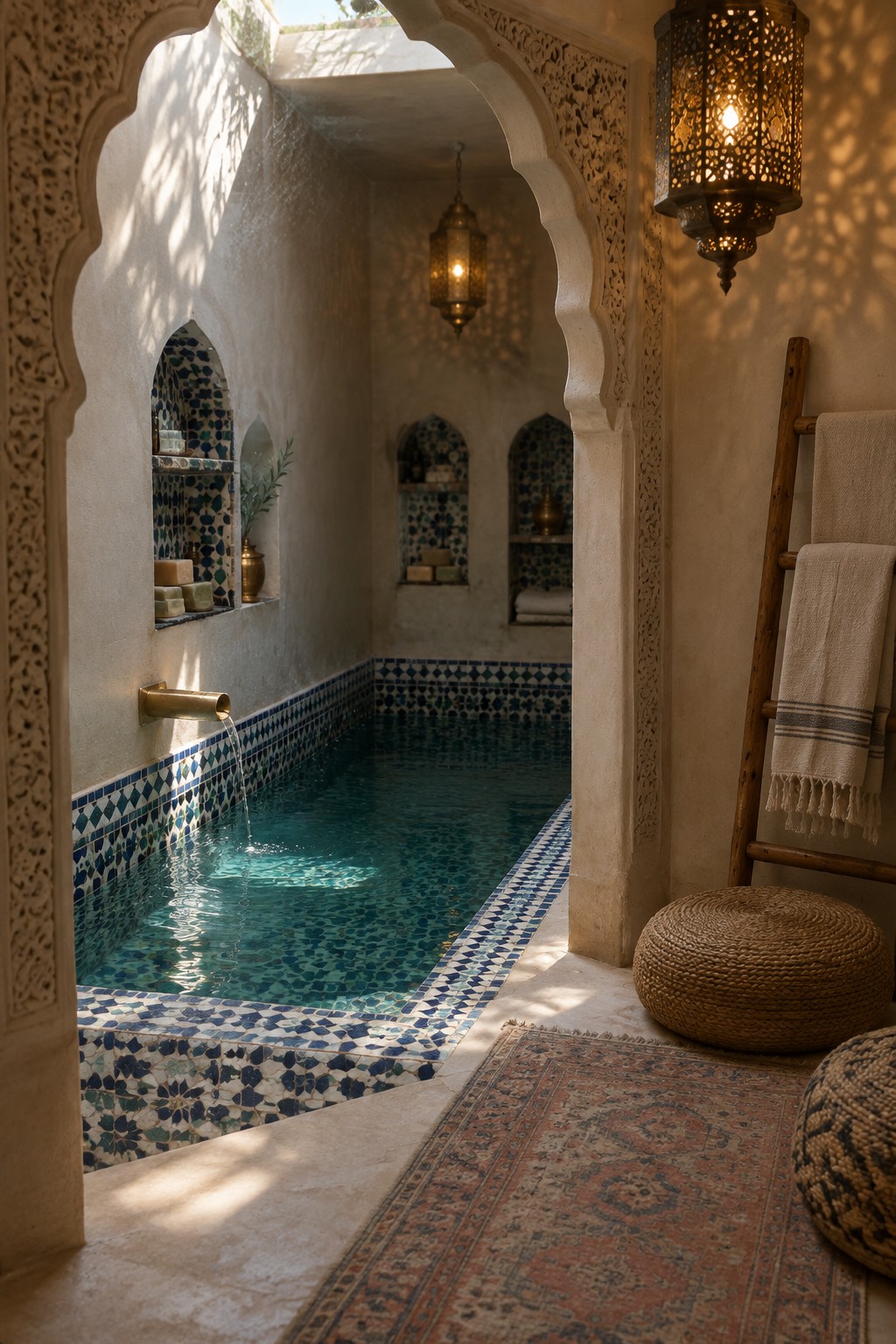
Recessed niches cut into the walls give you a place to keep soaps, towels, and small items right where you need them. This keeps the floor clear and helps the whole room feel less crowded around an indoor plunge pool.
They work best in smaller spaces or homes that want a simple spa setup. Line the niches with the same tiles as the pool edge so everything blends together without extra shelves or stands.
Add An Adjacent Shower To Your Indoor Plunge Pool
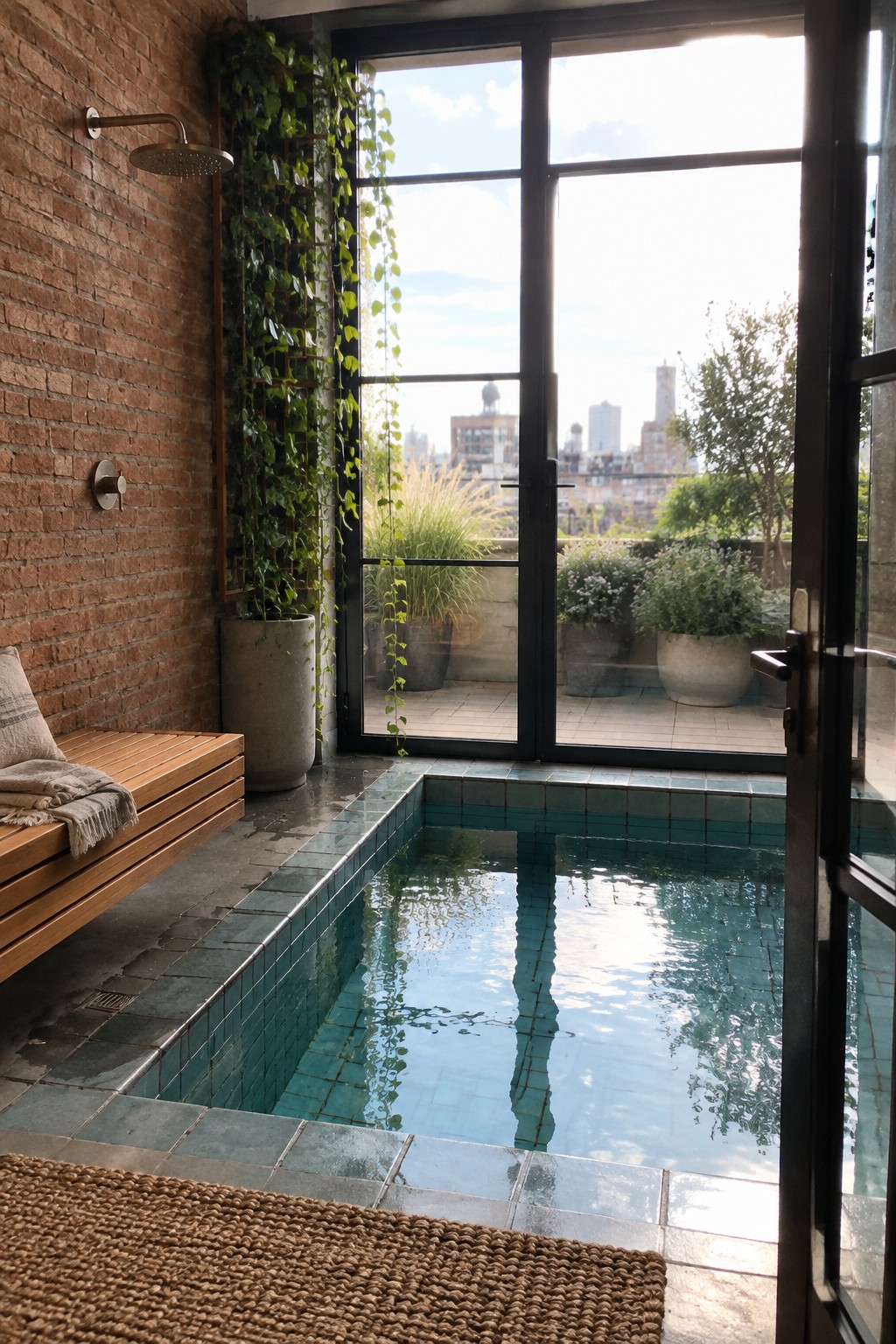
Putting a shower right next to an indoor plunge pool makes the whole setup more usable day to day. You can rinse off before and after without tracking water through the rest of the house, and it turns the pool into a proper little spa zone instead of just a tub in a room. The warm brick and simple bench help keep the space from feeling cold or clinical.
This works best in homes where you can dedicate a small wet area on the ground floor or in a basement addition. It suits city houses or townhomes that lack outdoor space but still want a place to cool off and relax. Just make sure the floor slopes properly for drainage and that the materials can handle constant moisture.
Adding A Window Seat Next To An Indoor Plunge Pool

One simple way to make an indoor plunge pool feel more inviting is to place a built-in window seat right beside it. The seat turns the pool into a spot where you can actually sit and relax without needing extra furniture, and the natural light from the window helps the water look brighter and the whole room feel less closed in.
This setup works best in homes that already have a decent view outside, even if it is just sky or trees. Keep the cushions in washable fabrics and use stone or tile that can handle splashing, since the seat will get some moisture from the pool.
Surround an Indoor Plunge Pool with Vines

Plenty of homes could use more greenery near the water, and wrapping an indoor plunge pool in climbing plants does exactly that. The vines soften the tile edges and stone walls while the glass roof keeps everything bright without needing extra windows.
This setup suits older homes or additions where a conservatory already exists or can be added. Pick hardy climbers that handle moisture and give them room to spread along the walls rather than crowding the water itself.
Built-In Niches For Poolside Storage
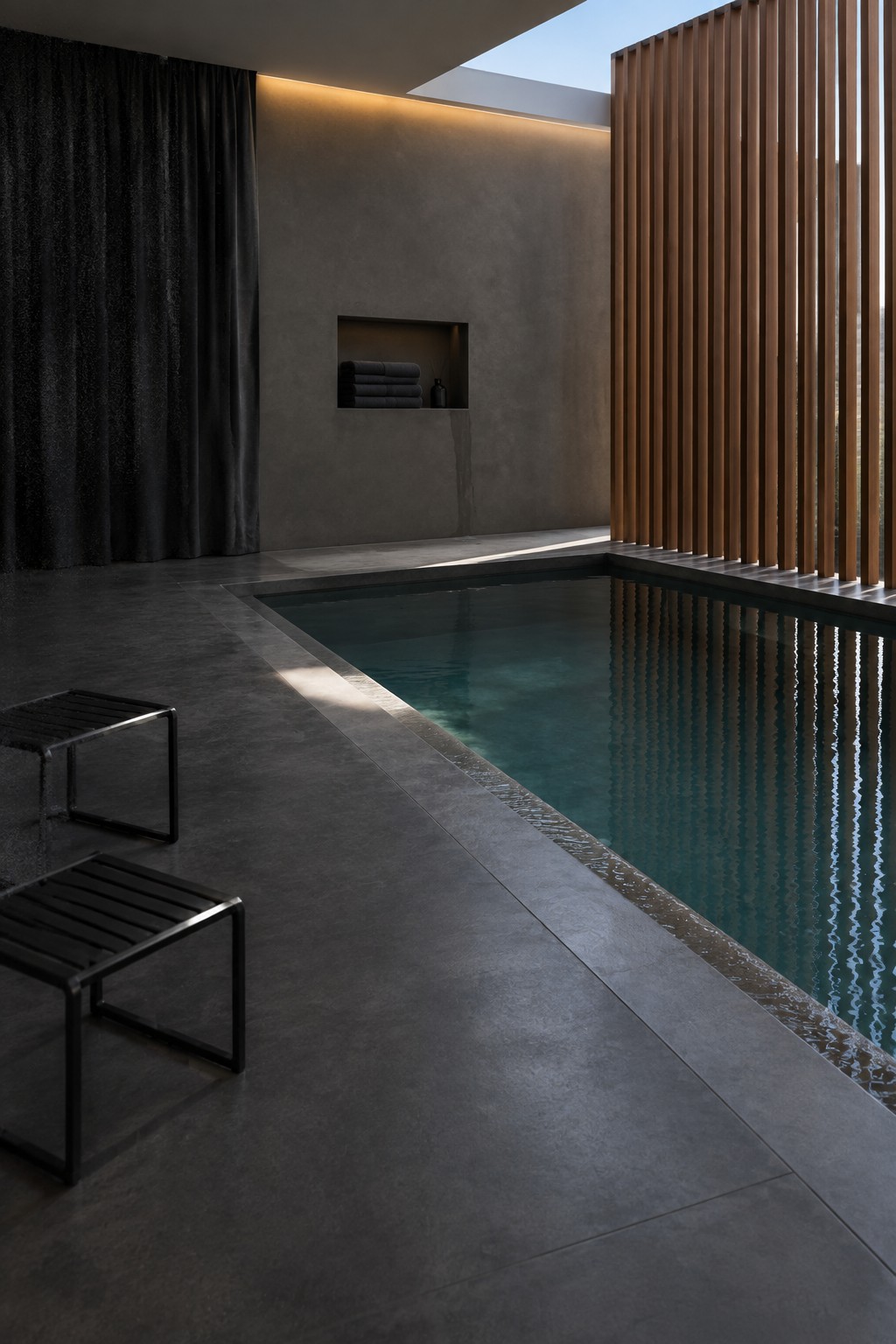
A recessed niche cut into the wall gives you a simple spot for towels and a bottle or two without adding furniture or shelves around the pool. It keeps the floor clear and the whole area feeling open even when the space is compact.
This works best in indoor pools with solid wall surfaces where you can build it in during construction. It suits homes that already lean toward minimal finishes and helps avoid the usual clutter of baskets or hooks along the edge.
Wood Walls Around An Indoor Plunge Pool

Wood paneling can make an indoor plunge pool feel more like a quiet cabin than a typical spa. The warm tones soften the water and stone, and the whole space ends up feeling calmer and more enclosed.
This setup works best in homes that already lean rustic or have a room that can be closed off for moisture control. It needs solid ventilation and sealed wood to hold up over time, but the result is a pool area that feels like part of the house rather than something added on.
Built-In Planters Around Indoor Pools

One simple way to make an indoor plunge pool feel calmer is to run built-in planters right along the edges. The plants soften all the tile and stone, and they help the space feel less like a strict pool room and more like a quiet spot to spend time.
This approach works best in rooms that already get good natural light from windows or skylights. It suits homes where the pool sits on the ground floor or in a converted space, and it is worth keeping the planting beds fairly narrow so they do not crowd the walkway around the water.
Frequently Asked Questions
Q: My living room has low ceilings. Will that work for an indoor plunge pool? A: Low ceilings can make the space feel cramped once the pool goes in. Pick a shallow design that sits low to the ground. Add good lighting to open things up.
Q: Does the pool need its own room or can it share space with my home gym? A: Sharing works if you plan the layout carefully. Place the pool along one wall so the rest stays open for equipment. A simple screen helps keep the areas separate.
Q: What happens to my heating bills with a plunge pool indoors? A: Your heating bills will go up. Insulate around the pool and use a cover to keep costs down.